



Beef sausage recipes solve one of the oldest weeknight problems: you need dinner to taste like more effort than you had time to give it. A pan of browned sausage, onions, and something starchy — potatoes, pasta, beans, rice — can carry a whole table without turning the kitchen into a disaster zone.
What I like about beef sausage is how it behaves in a skillet. It throws off enough fat to brown the onions, it brings salt and spice with almost no extra work, and it can go smoky, garlicky, peppery, or mild depending on the link you buy. If you give it a hot pan and room to sear, the edges go crisp before the inside dries out. That matters more than most people think.
You’ll see a pattern here: these dinners are built to stretch. Some lean creamy, some go tomato-heavy, some hide behind cheese, and some keep things rough and rustic with cabbage, beans, or potatoes. None of them need a fancy trick. They do need a little attention, a sharp knife, and the good sense to let the sausage brown before you start piling everything else in.
Why These Beef Sausage Dinners Earn a Spot on the Table
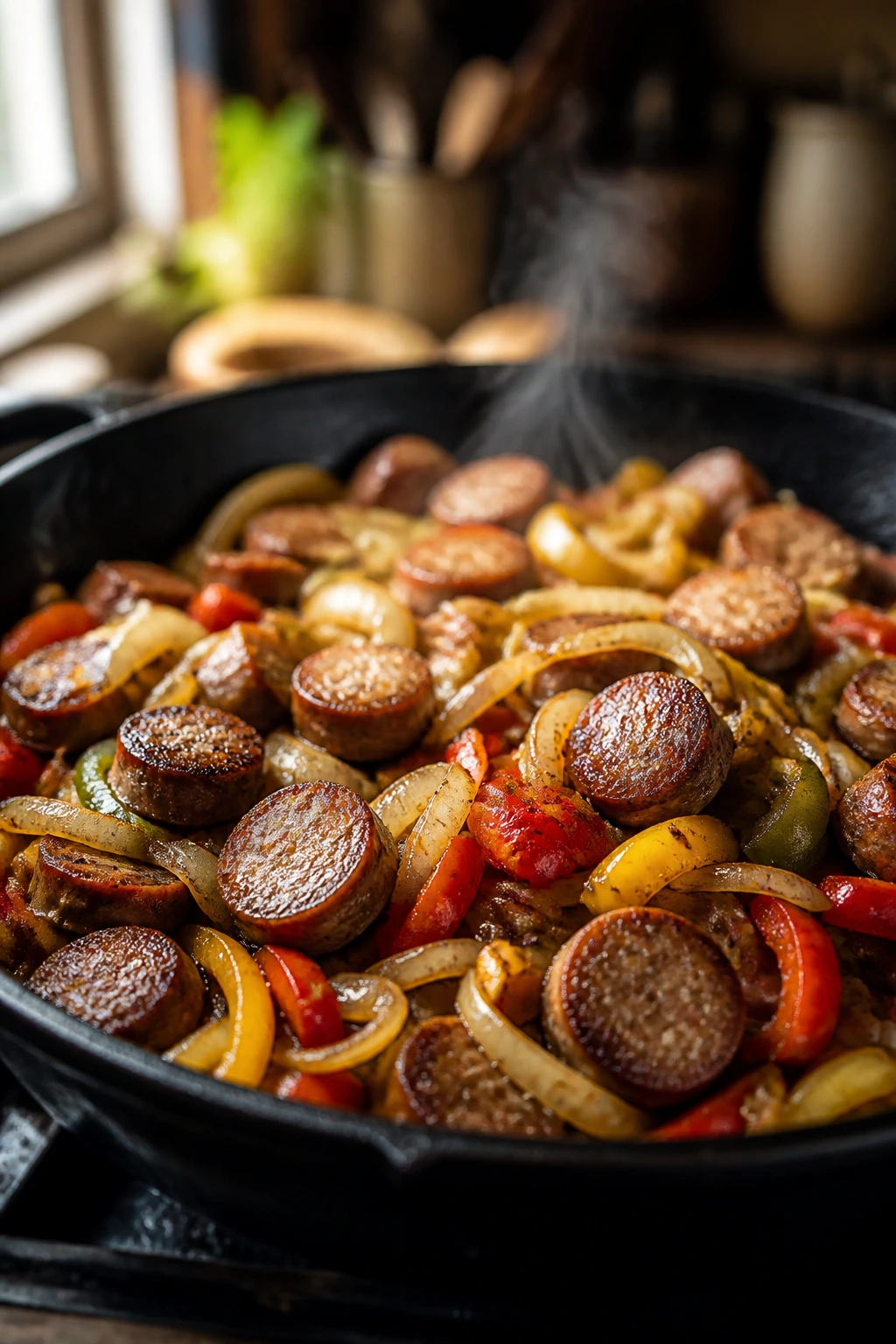
-
They start with real flavor: Beef sausage already comes seasoned, so one pound can do the work of garlic, pepper, herbs, and a little salt in the same pan.
-
They hold up to cheap, sturdy sides: Rice, noodles, potatoes, cabbage, beans, and bread all fit here because the sausage carries a strong enough flavor to make plain starch taste finished.
-
They reheat better than most quick dinners: A sausage-and-tomato skillet or a bean stew tastes even deeper the next day after the flavors settle together overnight.
-
They’re forgiving: If a pepper is a little soft, a tomato sauce is a little thin, or the sausage browns a bit too fast, you can usually steer the pan back on track with a splash of broth or a spoonful of water.
-
They feed a crowd without getting fussy: One pound of beef sausage goes a long way when it’s paired with pasta, tortillas, rice, or mashed potatoes and a vegetable that can stand up to the smoke.
1. Beef Sausage and Peppers Skillet Bake
A skillet of beef sausage, peppers, and tomato always looks like more work than it is. The sausage gets bronzed first, the peppers go soft at the edges, and the whole thing finishes under a blanket of melted mozzarella that pulls in little strings when you scoop it.
Why It Works:
The oven does the last part of the job, which keeps the peppers from turning limp and the sausage from drying out. Crushed tomatoes give the pan enough sauce to stay juicy, and the cheese seals in the heat so the whole dish lands on the table bubbling.
Key Ingredients:
- 1 pound smoked beef sausage, sliced into 1/2-inch coins — choose a firm link with visible browning potential.
- 2 bell peppers, sliced — one red and one green give you sweet and sharp in the same pan.
- 1 yellow onion, sliced thin — it softens into the sauce and keeps the dish from feeling heavy.
- 2 cloves garlic, minced — add near the end so it stays sweet.
- 1 can (14.5 ounces) crushed tomatoes — this is the sauce base, not just an add-on.
- 1 teaspoon Italian seasoning — enough to bridge sausage, tomato, and cheese.
- 1 cup shredded mozzarella — melts best when it’s not packed down.
- 1 tablespoon olive oil — just enough for the first sauté.
Quick Steps:
- Preheat the oven to 400°F and set a rack in the middle.
- Heat the olive oil in a large oven-safe skillet over medium-high heat, then brown the sausage for 4 to 5 minutes until the cut sides are deeply colored.
- Add the onions and peppers; cook for 6 to 7 minutes until the onions turn glossy and the peppers soften at the edges. Stir in the garlic for 30 seconds.
- Pour in the crushed tomatoes and Italian seasoning, return the sausage, top with mozzarella, and bake for 10 to 12 minutes until the cheese is melted and the sauce bubbles at the rim.
Equipment for This Recipe:
- 12-inch oven-safe skillet — the whole dish finishes in one pan.
- Wooden spoon — good for scraping up the browned bits.
- Sharp chef’s knife — thin slices cook evenly here.
How to Serve This Dish:
Pile it into shallow bowls with crusty bread or garlic toast to catch the tomato juices. A simple green salad with lemon keeps the plate from feeling too rich.
Pro Tips for This Recipe:
- Brown the sausage first and don’t crowd it; pale sausage makes the whole dish taste flat.
- If your peppers are thick-walled, slice them a little thinner than you think you need.
- Use pre-shredded mozzarella if that’s what you have — it melts fine here and saves time.
Variations on This Dish:
- Spicy Pepper Bake: Add sliced jarred pepperoncini and 1/2 teaspoon red pepper flakes for a sharper finish.
- Zucchini Swap: Stir in 2 medium zucchini coins during the last 5 minutes of stovetop cooking for a softer, greener version.
Common Mistakes to Avoid with This Dish:
- Skipping the first browning step: The sausage will steam instead of sear, and the whole pan loses depth.
- Using too much tomato: If the skillet turns soupy, you’ll end up with boiled peppers instead of a saucy bake.
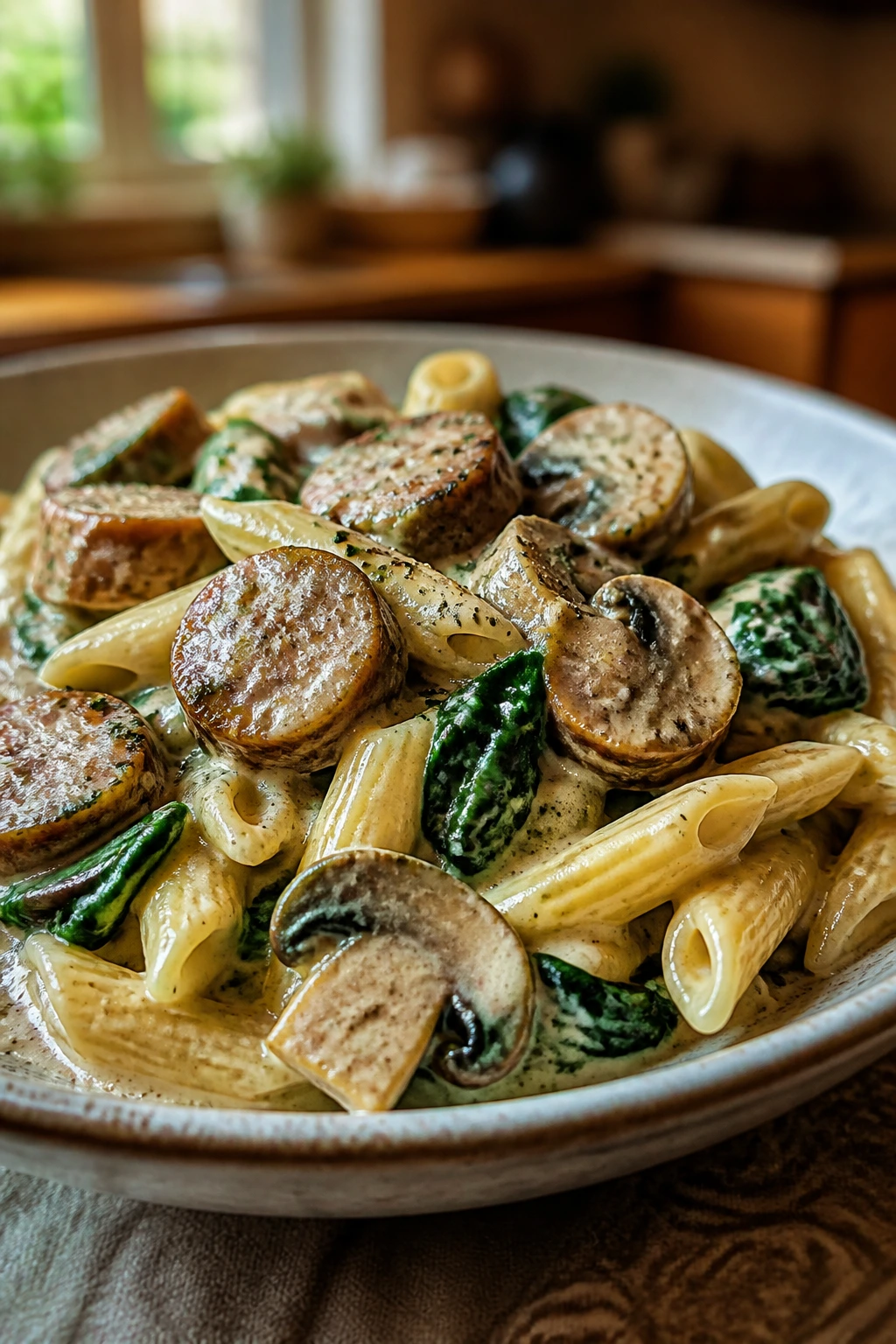
2. Creamy Beef Sausage Pasta with Spinach
This one smells like browned sausage, buttered mushrooms, and cream hitting a hot pan. The sauce clings to the pasta in a way that feels almost old-fashioned, but the spinach keeps it from tipping into the heavy side of the ledger.
Why It Works:
The starch from the pasta and a little reserved cooking water help the cream and broth turn silky instead of greasy. Mushrooms give the sauce a dark, savory edge, and the spinach wilts fast enough to stay green.
Key Ingredients:
- 12 ounces penne or rigatoni — tubes trap the sauce better than long noodles.
- 1 pound beef sausage, sliced into coins — smoked sausage is the easiest fit.
- 8 ounces cremini mushrooms, sliced — they bring an earthy base note.
- 1 small yellow onion, diced — keeps the sauce from feeling one-note.
- 3 cloves garlic, minced — enough to cut through the cream.
- 1 cup beef broth — helps the sauce stay rich without becoming thick paste.
- 3/4 cup heavy cream — enough for body without drowning the pasta.
- 1 cup grated parmesan — it melts in and thickens the sauce.
- 4 cups baby spinach — folds in at the end.
Quick Steps:
- Boil the pasta in well-salted water until just shy of al dente, about 1 minute less than the package says; reserve 1 cup of pasta water.
- Brown the sausage in a large skillet over medium-high heat for 4 minutes, then add the onion and mushrooms and cook 6 to 8 minutes until the mushrooms lose their raw smell.
- Stir in the garlic, broth, and cream; simmer for 3 minutes until the sauce lightly coats a spoon.
- Toss in the pasta, spinach, and parmesan, adding splashes of pasta water until the sauce slips into a glossy coat.
Equipment for This Recipe:
- Large skillet — wide enough to toss the pasta without spilling.
- Large pot — for boiling the noodles.
- Tongs — they make the final toss easier.
How to Serve This Dish:
Serve it hot in wide bowls with extra parmesan and black pepper on top. A slice of toasted bread is not optional in my house; it catches the last spoonfuls of sauce.
Pro Tips for This Recipe:
- Pull the pasta early by a minute; it will finish in the sauce and stay springy.
- Don’t let the cream boil hard. A gentle simmer keeps it smooth.
- A squeeze of lemon at the end wakes up the whole pan.
Variations on This Dish:
- Tomato Cream Version: Stir in 1/2 cup tomato paste with the garlic for a deeper, blush-colored sauce.
- Green-Heavy Version: Swap half the spinach for chopped kale and give it 2 extra minutes to soften.
Common Mistakes to Avoid with This Dish:
- Letting the sauce get too thick before the pasta goes in: You want loose and glossy, not gluey.
- Adding the spinach too early: It will vanish into a dull green heap and lose its fresh bite.
3. Beef Sausage and Potato Soup
The best bowls of soup have a little grease on the surface and a lot going on underneath. This one gives you soft potatoes, sweet carrot, and beef sausage that perfumes the broth without needing a stockpot full of bones.
Why It Works:
Potatoes break down just enough to thicken the broth naturally, so you don’t need flour or cream unless you want them. Beef sausage brings salt and smoke, and a splash of milk at the end rounds the edges.
Key Ingredients:
- 1 pound beef sausage, sliced into half-moons — the smoke needs to go into the broth early.
- 1 1/2 pounds Yukon Gold potatoes, cut into 3/4-inch chunks — they hold shape better than russets.
- 2 carrots, chopped — they soften into sweet pieces.
- 2 celery stalks, chopped — a quiet background note that matters.
- 1 yellow onion, diced — the soup starts here.
- 6 cups beef broth — strong enough to support the sausage.
- 1 teaspoon dried thyme — the herb that belongs here.
- 1 bay leaf — remove it before serving.
- 1 cup milk or half-and-half — stirred in at the end for a gentler bowl.
- 2 tablespoons chopped parsley — for the finish.
Quick Steps:
- Brown the sausage in a Dutch oven over medium-high heat for 4 to 5 minutes, then scoop it out, leaving behind a thin sheen of fat.
- Add the onion, carrots, and celery; cook for 6 minutes until the onion turns translucent and the carrots start to look glossy.
- Stir in the potatoes, broth, thyme, bay leaf, and sausage; bring to a boil, then lower to a steady simmer for 18 to 22 minutes until the potatoes are tender.
- Stir in the milk and parsley, warm for 2 minutes without boiling, then taste and adjust salt only if needed.
Equipment for This Recipe:
- Dutch oven or heavy soup pot — it holds heat evenly.
- Ladle — makes serving easier than pouring.
- Potato peeler — optional, but useful if your potatoes have thick skins.
How to Serve This Dish:
Ladle it into deep bowls and serve with buttered toast or crackers. A little extra parsley or black pepper on top keeps it from looking pale.
Pro Tips for This Recipe:
- Cut the potatoes evenly so they finish at the same time.
- If the sausage is very salty, hold back on added salt until the end.
- A spoonful of Dijon stirred in at the end gives the broth a sharper edge.
Variations on This Dish:
- Creamier Bowl: Mash a few potato chunks against the side of the pot before adding the milk.
- Green Bean Version: Add 2 cups chopped green beans with the potatoes for more texture.
Common Mistakes to Avoid with This Dish:
- Boiling after the milk goes in: That can split the soup and make the broth look grainy.
- Under-salting the vegetables: Sausage is salty, yes, but the potatoes still need the broth to be seasoned on purpose.
4. Sheet Pan Beef Sausage, Broccoli, and Baby Potatoes
A sheet pan dinner only works if every piece gets a little color. Here, the potatoes turn crisp where they touch the metal, the broccoli chars at the tips, and the sausage picks up all that roasted garlic and paprika from the pan.
Why It Works:
The vegetables roast at a high enough heat to get brown before they go mushy. Beef sausage stays juicy because it spends less time in the oven than the potatoes do, and the lemon at the end cuts through the fat.
Key Ingredients:
- 1 pound beef sausage, sliced into 1/2-inch rounds — choose a smoked link with plenty of seasoning.
- 1 1/2 pounds baby potatoes, halved — small enough to finish on schedule.
- 4 cups broccoli florets — dry them well before roasting.
- 3 tablespoons olive oil — enough to coat everything.
- 1 teaspoon garlic powder — more even than fresh garlic for roasting.
- 1 teaspoon smoked paprika — echoes the sausage.
- 1 teaspoon kosher salt — season the vegetables, not just the sausage.
- 1/2 teaspoon black pepper — enough for the whole tray.
- 1 lemon, cut into wedges — for finishing.
Quick Steps:
- Heat the oven to 425°F and line a rimmed sheet pan with parchment if you want easier cleanup.
- Toss the potatoes with 2 tablespoons of oil, salt, pepper, garlic powder, and paprika, then roast for 18 minutes.
- Add the broccoli and sausage tossed with the remaining oil; roast 15 to 18 minutes more until the broccoli has crisp edges and the sausage is browned.
- Finish with lemon juice right on the tray so the steam lifts the browned bits.
Equipment for This Recipe:
- Rimmed sheet pan — a flat cookie sheet will spill.
- Mixing bowl — for coating the vegetables evenly.
- Parchment paper — optional, but useful if you hate scrubbing roasted starch.
How to Serve This Dish:
Serve it straight from the tray with mustard on the side or spoon it over rice for a bigger meal. It also works with a dollop of sour cream if you want a cool, creamy contrast.
Pro Tips for This Recipe:
- Dry the broccoli after washing; wet florets steam instead of roast.
- Don’t crowd the pan. Use two trays if needed.
- Cut the potatoes small enough that they’re almost done before the broccoli goes in.
Variations on This Dish:
- Mustard-Herb Finish: Toss the hot tray with 1 tablespoon whole-grain mustard and chopped parsley.
- Spicy Roasted Tray: Add 1/2 teaspoon cayenne with the paprika.
Common Mistakes to Avoid with This Dish:
- Overloading the pan: The vegetables will pale and soft instead of getting crisp.
- Putting broccoli in too early: It burns before the potatoes finish.
5. Beef Sausage Jambalaya
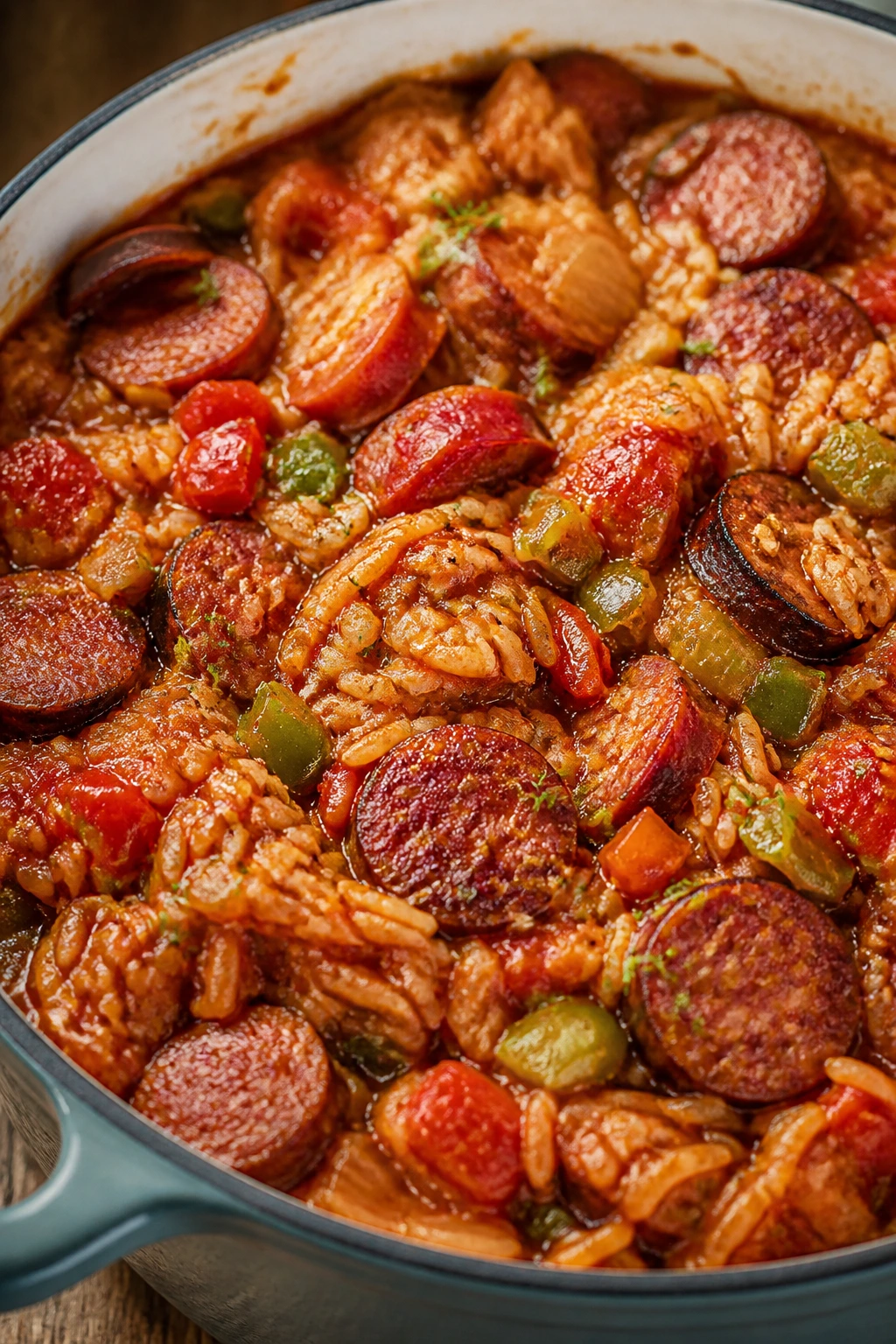
This is a pot that smells like the rice has been sitting next to smoked sausage all afternoon, even though it really hasn’t. The tomato, celery, and pepper base gives the whole thing a deep red color, and the rice comes out seasoned all the way through.
Why It Works:
Jambalaya likes a strong, savory sausage because the rice soaks up every drop of flavor. Cooking the rice in the same pot means the grains absorb the broth, tomatoes, and spices instead of sitting plain on the side.
Key Ingredients:
- 1 pound beef sausage, sliced into coins — the smoke drives the whole pot.
- 1 yellow onion, diced — the first layer.
- 1 green bell pepper, diced — classic and necessary.
- 2 celery stalks, diced — the background crunch.
- 3 cloves garlic, minced — keep it short in the pan.
- 1 1/2 cups long-grain white rice, rinsed — rinse it so the grains stay separate.
- 1 can (14.5 ounces) diced tomatoes — with juices.
- 3 cups beef broth — enough for the rice to cook without drying out.
- 1 teaspoon smoked paprika — pushes the color and flavor.
- 1/4 teaspoon cayenne — adjust to your heat level.
- 2 green onions, sliced — for the finish.
Quick Steps:
- Brown the sausage in a wide pot over medium-high heat for 4 minutes, then set it aside.
- Cook the onion, pepper, and celery in the same pot for 6 minutes until the onion softens and the bottom starts to brown.
- Stir in the garlic, rice, tomatoes, broth, paprika, and cayenne, then bring to a boil.
- Lower the heat, cover tightly, and simmer for 18 minutes; return the sausage in the last 5 minutes, then rest off heat for 10 minutes before fluffing.
Equipment for This Recipe:
- Heavy pot with a lid — it needs to hold steam.
- Wooden spoon — for scraping the fond off the bottom.
- Measuring cup — rice and broth matter here.
How to Serve This Dish:
Spoon it into bowls and scatter green onions over the top. A little hot sauce on the table is enough; the pot already carries the spice.
Pro Tips for This Recipe:
- Keep the lid on once the rice goes in. Steam is doing the work.
- Rinse the rice until the water runs mostly clear so it doesn’t glue together.
- Let it rest after cooking. That last 10 minutes makes the grains settle.
Variations on This Dish:
- Bean-Stretched Version: Stir in 1 can drained red beans during the last 5 minutes.
- Tomato-Forward Version: Add 1 tablespoon tomato paste with the garlic for a darker base.
Common Mistakes to Avoid with This Dish:
- Lifting the lid too often: The rice needs steam, not curiosity.
- Using instant rice: It turns soft before the pot develops the right texture.
6. Beef Sausage Stuffed Bell Peppers
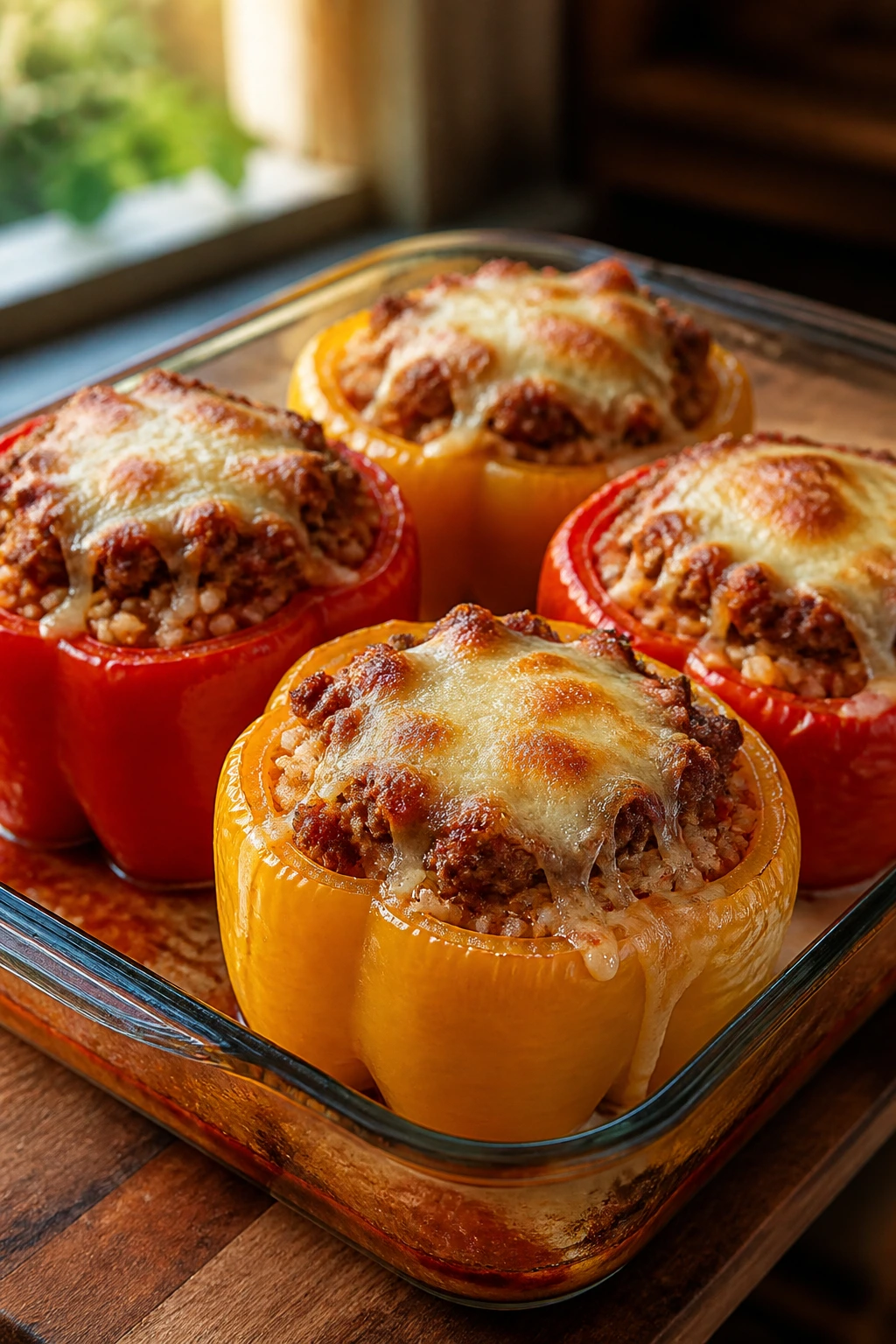
A stuffed pepper works when the filling tastes richer than the pepper shell, and this one does. The sausage, rice, and tomato sauce bake together until the tops get bronzed and the peppers collapse just enough to cut with a fork.
Why It Works:
The peppers act like little bowls that soften in the oven without losing all their shape. The sausage keeps the filling savory, and the rice stretches the meal so each pepper feels like a full plate.
Key Ingredients:
- 4 large bell peppers, tops removed and seeds cleared — choose ones that can stand upright.
- 1 pound beef sausage, crumbled — bulk sausage is easiest here.
- 1 cup cooked white rice — cooled, so it doesn’t turn gummy.
- 1 small onion, diced — cooks into the filling.
- 2 cloves garlic, minced — enough to keep it sharp.
- 1 cup tomato sauce — binds the mixture.
- 1 teaspoon Italian seasoning — keeps the filling cohesive.
- 1 cup shredded mozzarella — for the top.
Quick Steps:
- Heat the oven to 375°F and set the peppers upright in a baking dish.
- Brown the sausage in a skillet for 5 to 6 minutes, then stir in the onion and garlic for 2 minutes until fragrant.
- Mix in the rice, tomato sauce, and seasoning, then fill the peppers tightly and top with mozzarella.
- Cover with foil and bake for 30 minutes; uncover and bake 10 minutes more until the cheese bubbles and the peppers yield to a knife.
Equipment for This Recipe:
- 9×13-inch baking dish — keeps the peppers upright.
- Skillet — for the filling.
- Foil — helps the peppers steam before browning.
How to Serve This Dish:
Serve each pepper with a spoonful of the sauce from the bottom of the dish. A green salad or steamed green beans keeps dinner from feeling too soft all the way through.
Pro Tips for This Recipe:
- Par-cook the peppers for 5 minutes if you like them extra tender.
- Pack the filling firmly so the peppers hold their shape.
- A spoonful of Parmesan over the mozzarella gives the top a sharper finish.
Variations on This Dish:
- Mexican-Style Peppers: Swap the Italian seasoning for cumin and chili powder, then use pepper jack instead of mozzarella.
- Brown Rice Version: Use 1 cup cooked brown rice and add 5 extra minutes covered.
Common Mistakes to Avoid with This Dish:
- Leaving the peppers underfilled: They collapse and bake unevenly.
- Using raw rice in the filling without extra liquid: It won’t cook properly inside the pepper.
7. Beef Sausage Mac and Cheese Bake
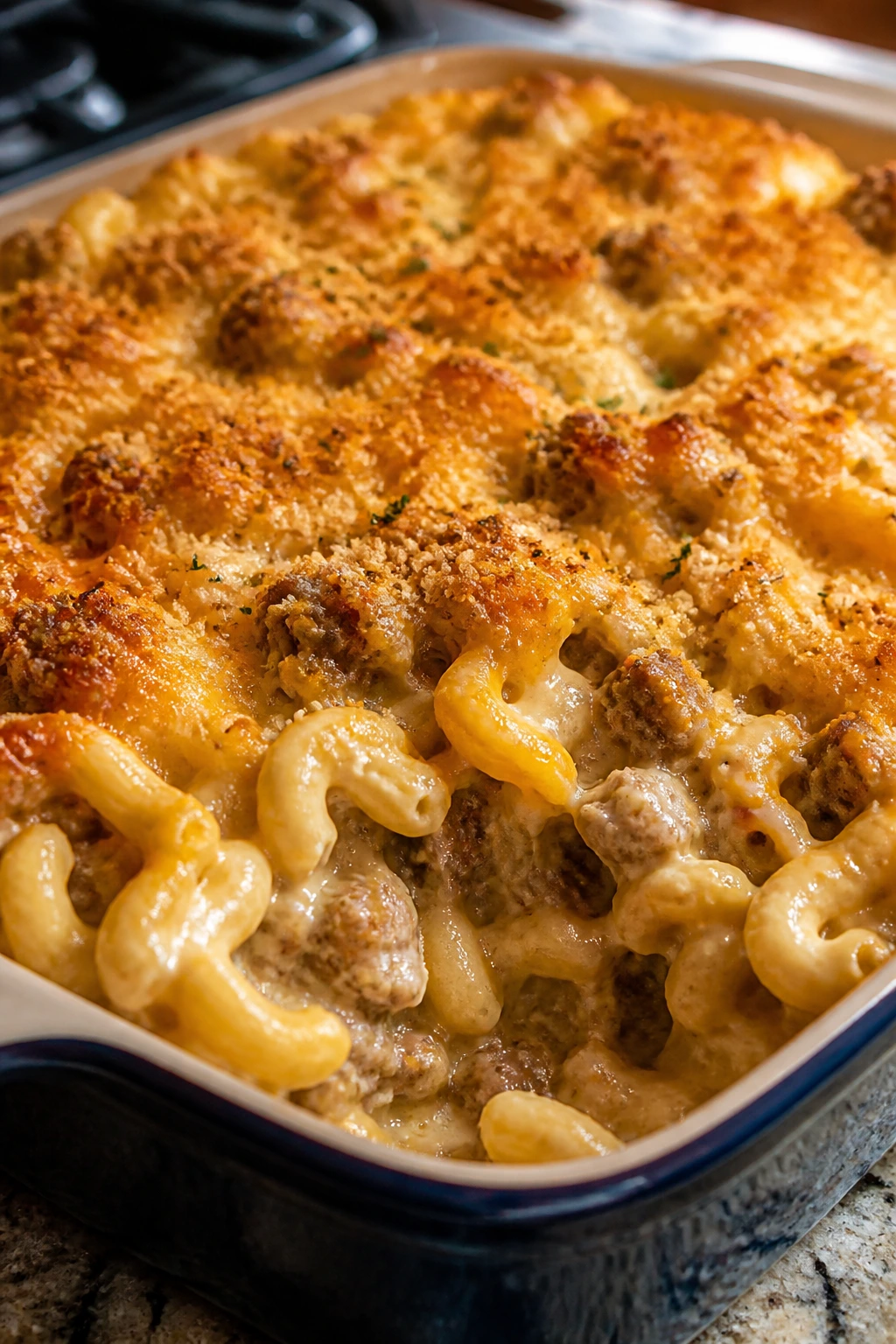
Mac and cheese gets more dinner-worthy when beef sausage is folded into it. The cheese sauce turns glossy, the sausage gives you little salty bites in every forkful, and the breadcrumb top breaks with a clean crack.
Why It Works:
Pasta and cheese already make a comforting base; sausage gives it structure and enough punch to stand up as a main dish. Baking it at the end sets the top so the casserole slices instead of slumping.
Key Ingredients:
- 12 ounces elbow macaroni — the classic shape here.
- 1 pound beef sausage, sliced and browned — use a smoky link.
- 3 tablespoons butter — for the roux.
- 3 tablespoons flour — thickens the sauce.
- 2 cups whole milk — gives the sauce body.
- 2 cups shredded sharp cheddar — flavor first, melt second.
- 1 cup shredded mozzarella — for stretch.
- 1/2 teaspoon dry mustard — sharpens the cheese.
- 1/2 cup breadcrumbs — the top layer.
Quick Steps:
- Cook the macaroni until just shy of al dente, then drain.
- Brown the sausage in a skillet and set it aside.
- Melt the butter, whisk in the flour for 1 minute, then slowly add milk and cook until the sauce thickens enough to coat a spoon. Stir in cheddar, mozzarella, mustard, pasta, and sausage.
- Pour into a baking dish, top with breadcrumbs, and bake at 375°F for 20 minutes until the edges bubble and the top is golden.
Equipment for This Recipe:
- Saucepan or skillet — for the cheese sauce.
- 9×13-inch baking dish — the casserole finish.
- Whisk — keeps the roux smooth.
How to Serve This Dish:
Serve square scoops with a vinegary salad or sliced tomatoes on the side. The brightness matters because the casserole is rich.
Pro Tips for This Recipe:
- Shred the cheese yourself if you can; it melts smoother than the bagged stuff.
- Don’t overcook the pasta before baking, or it turns soft.
- A pinch of smoked paprika on the breadcrumb top works nicely.
Variations on This Dish:
- Jalapeño Bake: Stir diced jalapeños into the sauce for heat.
- Broccoli Version: Fold in 2 cups small broccoli florets during the final mix.
Common Mistakes to Avoid with This Dish:
- Dumping the cheese into boiling milk: It can grain up and separate.
- Baking too long: The sauce tightens and the pasta loses its softness.
8. Beef Sausage Fried Rice
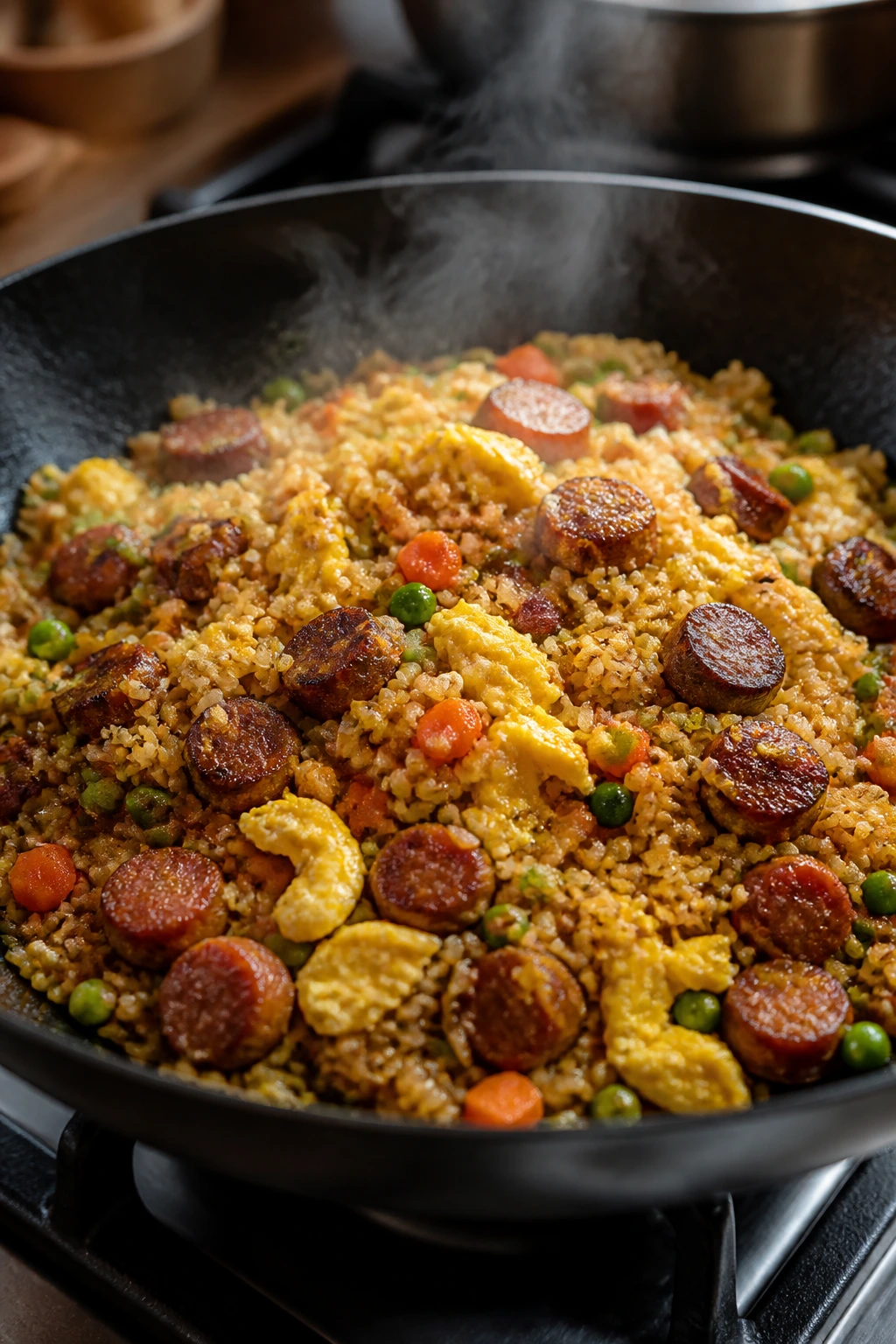
This is the kind of dinner that starts as leftover rice and ends up being the thing everyone asks for again. The sausage crisps in the pan, the eggs ribbon through the rice, and the soy sauce hits the hot metal with that unmistakable fried smell.
Why It Works:
Cold rice fries instead of steaming, which gives you separate grains with a little chew. Beef sausage adds enough fat that the rice tastes finished without needing a ton of oil.
Key Ingredients:
- 4 cups cooked, chilled rice — day-old rice is the best bet.
- 1 pound beef sausage, diced small — smaller pieces spread better.
- 2 eggs, beaten — for soft curds.
- 1 cup frozen peas and carrots — straight from the freezer is fine.
- 3 green onions, sliced — keep some for the top.
- 3 tablespoons soy sauce — add at the end so it doesn’t over-salt the pan.
- 1 teaspoon sesame oil — finish, don’t fry with it.
- 2 tablespoons neutral oil — for the hot pan.
Quick Steps:
- Heat a large skillet or wok over medium-high heat and add the neutral oil.
- Brown the sausage for 4 minutes, then push it to the side and scramble the eggs in the empty space until just set.
- Add the peas and carrots and cook 2 minutes, then stir in the rice and break up any clumps with your spoon.
- Pour in the soy sauce and sesame oil, toss for 2 to 3 minutes until the rice is hot and lightly toasted, then finish with green onions.
Equipment for This Recipe:
- Large skillet or wok — you need surface area.
- Spatula or wooden spoon — for breaking up rice.
- Bowl — to beat the eggs.
How to Serve This Dish:
Serve it in bowls with extra green onions or a little chili crisp. It’s complete on its own, but cucumber slices make a nice cool side.
Pro Tips for This Recipe:
- Chilled rice is not optional. Warm rice goes soft.
- Keep the heat fairly high so the rice picks up some toasted spots.
- Add soy sauce around the edges of the pan for better aroma.
Variations on This Dish:
- Garlic Fried Rice: Fry 2 minced garlic cloves in the oil before the sausage goes in.
- Veggie-Heavy Version: Add diced bell pepper and shredded cabbage for more crunch.
Common Mistakes to Avoid with This Dish:
- Using fresh rice: It clumps and steams.
- Pouring in too much soy sauce at once: The pan goes dark and muddy instead of savory.
9. Beef Sausage and White Bean Stew
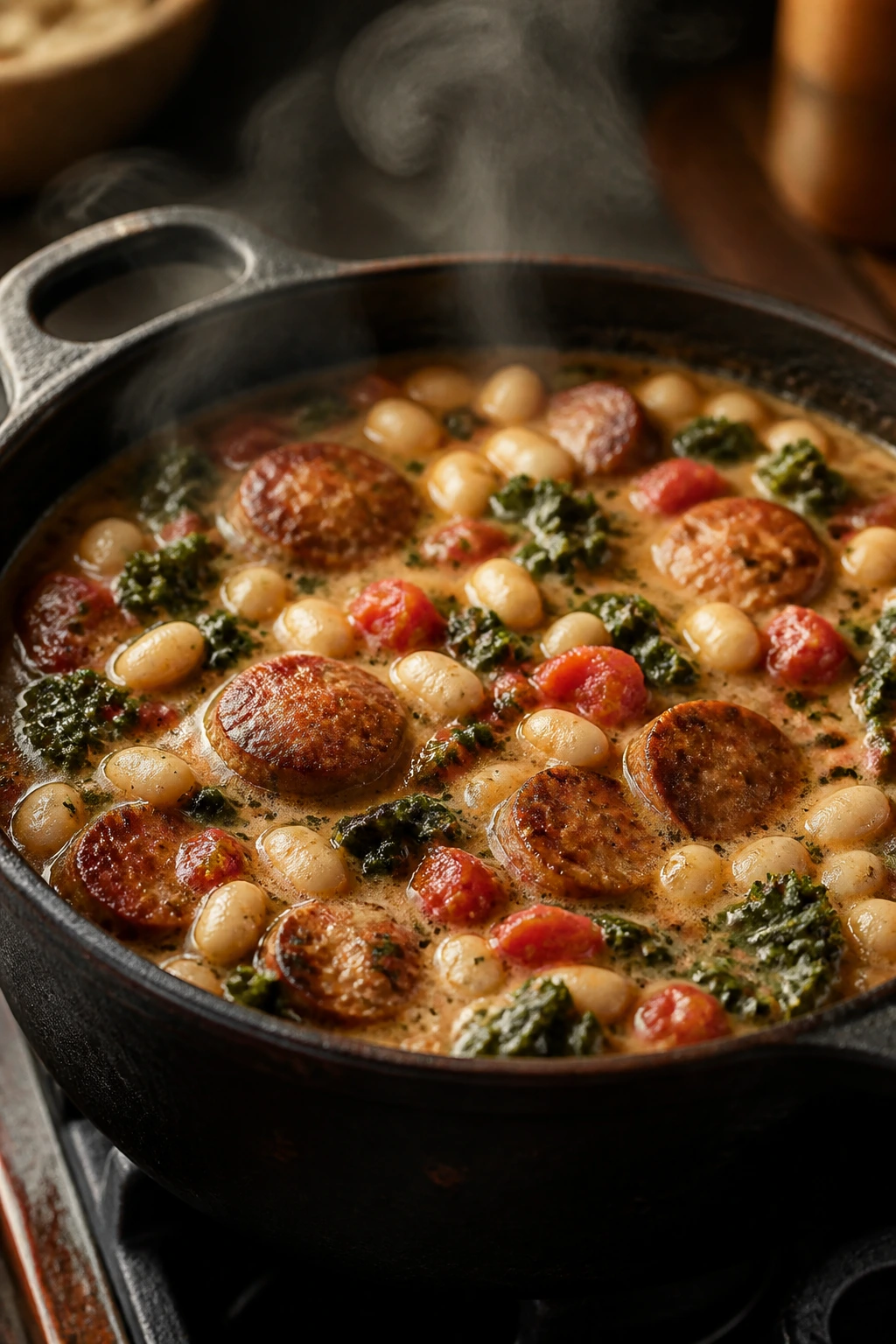
This stew tastes like something that took all afternoon, even though it mostly asks for a lid and a little patience. The beans soften into the broth, the sausage gives the pot its backbone, and the kale stays a little chewy on purpose.
Why It Works:
White beans bring creaminess without cream, which keeps the stew hearty but not heavy. A short simmer lets the sausage flavor spread through the broth and settle into the beans.
Key Ingredients:
- 1 pound beef sausage, sliced — the smoke needs to get in early.
- 1 yellow onion, diced — the base.
- 2 carrots, diced — they sweeten the broth.
- 2 celery stalks, diced — classic stew structure.
- 3 cloves garlic, minced — added after the vegetables soften.
- 2 cans cannellini beans, drained and rinsed — keep one can mostly whole, mash the other lightly if you want a thicker stew.
- 4 cups beef broth — the liquid backbone.
- 1 can diced tomatoes, 14.5 ounces — adds a little acid and body.
- 1 teaspoon dried rosemary — a strong herb that belongs here.
- 3 cups chopped kale — stirred in at the end.
Quick Steps:
- Brown the sausage in a soup pot over medium-high heat for 4 to 5 minutes, then set it aside.
- Cook the onion, carrots, and celery for 7 minutes until the onion softens and the carrots start to bend.
- Add the garlic, beans, broth, tomatoes, rosemary, and sausage; simmer uncovered for 20 minutes until the broth looks slightly thicker.
- Stir in the kale and cook 3 to 4 minutes more until it turns dark green and tender.
Equipment for This Recipe:
- Dutch oven or soup pot — steady heat matters.
- Can opener — the unsung hero.
- Potato masher — optional, if you want a thicker body.
How to Serve This Dish:
Serve it with warm bread or a hunk of cornbread. A drizzle of olive oil on top keeps the surface from looking dull.
Pro Tips for This Recipe:
- Rinse canned beans well so the broth stays clean, not cloudy.
- If the stew tastes flat, add a teaspoon of vinegar rather than more salt.
- Keep the kale at the end so it stays green and a little bouncy.
Variations on This Dish:
- Tuscan-Style Stew: Add chopped rosemary and a handful of chopped parsley before serving.
- Extra-Thick Version: Mash 1 cup of the beans against the side of the pot before the kale goes in.
Common Mistakes to Avoid with This Dish:
- Boiling the stew hard the whole time: The beans break apart and the broth turns muddy.
- Adding kale too soon: It goes dull and overly soft.
10. Beef Sausage Tacos with Charred Corn

These tacos have the kind of filling that makes people stand at the stove and steal bites. The sausage browns into little crumbles, the corn picks up smoky spots, and the cabbage gives each bite a clean crunch.
Why It Works:
Beef sausage already brings seasoning, so the taco filling only needs a little cumin, chili powder, and lime to feel complete. Charred corn adds sweetness that balances the sausage’s salt.
Key Ingredients:
- 1 pound bulk beef sausage or sausage removed from casings — crumbled small in the pan.
- 8 small flour or corn tortillas — warm them before filling.
- 2 cups corn kernels — frozen or fresh.
- 1 small red onion, diced — for sweetness and bite.
- 1 teaspoon chili powder — enough to steer the flavor toward tacos.
- 1/2 teaspoon ground cumin — the earthy note.
- 2 cups shredded cabbage — for crunch.
- 1 lime, cut into wedges — do not skip the lime.
- 1/2 cup shredded cheddar or crumbled queso fresco — your choice.
Quick Steps:
- Brown the sausage in a skillet over medium-high heat for 5 to 6 minutes, breaking it into crumbles.
- Add the onion and corn and cook 4 minutes until the corn gets a few dark spots. Stir in the chili powder and cumin.
- Warm the tortillas in a dry skillet for 20 seconds per side or wrap them in foil and heat at 350°F for 5 minutes.
- Fill each tortilla with sausage and corn, top with cabbage and cheese, and finish with lime juice.
Equipment for This Recipe:
- Large skillet — for the filling.
- Dry pan or foil-lined tray — for warming tortillas.
- Lime juicer — optional, but helpful.
How to Serve This Dish:
Set out the filling, tortillas, and toppings separately so everyone builds their own. A spoonful of salsa or crema works well if you want a saucier taco.
Pro Tips for This Recipe:
- If your sausage is very fatty, spoon off some grease before adding the corn.
- Warm tortillas before filling or they crack at the fold.
- A pinch of cilantro at the end brings the whole thing up.
Variations on This Dish:
- Street-Corn Version: Add mayo, chili powder, and cotija to the corn before filling.
- Black Bean Tacos: Stir 1 cup black beans into the skillet for extra bulk.
Common Mistakes to Avoid with This Dish:
- Overfilling the tortillas: They split or turn sloppy fast.
- Skipping acid: Without lime, the sausage and corn can taste heavy.
11. Beef Sausage Cabbage Skillet
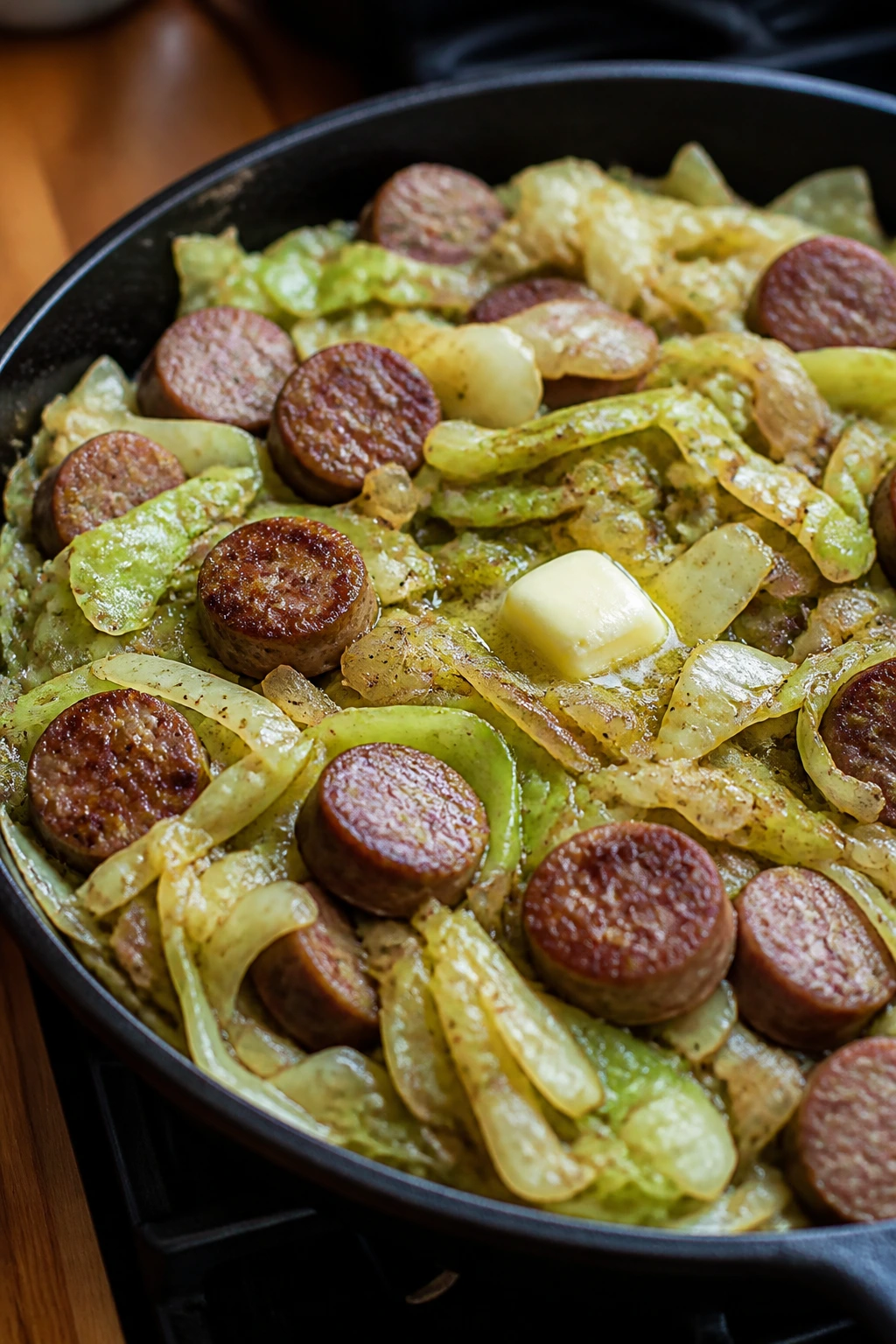
Cabbage gets a bad reputation from bad cooking, not from the vegetable itself. When it hits a hot pan with beef sausage, onion, and a little vinegar, it turns sweet, silky, and far less stubborn than people expect.
Why It Works:
Cabbage needs heat and fat to stop tasting raw. The sausage fat coats the shredded leaves, and the vinegar at the end sharpens the whole skillet so it doesn’t feel flat.
Key Ingredients:
- 1 pound beef sausage, sliced — browned first.
- 1 medium green cabbage, cored and thinly sliced — more surface area means faster softening.
- 1 yellow onion, sliced — gives the skillet sweetness.
- 2 tablespoons butter — for the cabbage.
- 1/2 cup beef broth — prevents scorching and helps steam the cabbage.
- 1 tablespoon Dijon mustard — pulls the flavors together.
- 1 tablespoon apple cider vinegar — added at the end.
- 1/2 teaspoon caraway seeds — optional, but excellent here.
Quick Steps:
- Brown the sausage in a large skillet over medium-high heat for 4 minutes and remove it.
- Melt the butter, then add the onion and cabbage and cook for 8 to 10 minutes, stirring often, until the cabbage softens and the edges catch color.
- Stir in the broth, mustard, caraway seeds, and sausage; cover for 5 minutes.
- Uncover, add the vinegar, and cook 1 more minute until the skillet smells bright and savory.
Equipment for This Recipe:
- Large deep skillet — cabbage takes space.
- Sharp knife — thin cabbage shreds cook best.
- Lid — useful for the short steam at the end.
How to Serve This Dish:
Serve it with mashed potatoes or buttered noodles if you want a fuller plate. A little mustard on the side makes sense here.
Pro Tips for This Recipe:
- Slice the cabbage thin enough that it wilts rather than steams in big chunks.
- Don’t add the vinegar too early or it fades.
- If you like more browning, let the cabbage sit undisturbed for a minute at a time.
Variations on This Dish:
- Apple Cabbage Skillet: Add 1 thinly sliced apple with the onion for a gentle sweet note.
- Pork-Free German-Style Version: Keep the caraway and add 1 teaspoon whole-grain mustard.
Common Mistakes to Avoid with This Dish:
- Treating cabbage like lettuce: It needs heat long enough to soften.
- Forgetting the acid: Without vinegar or mustard, the skillet tastes dull.
12. Beef Sausage and Mushroom Stroganoff
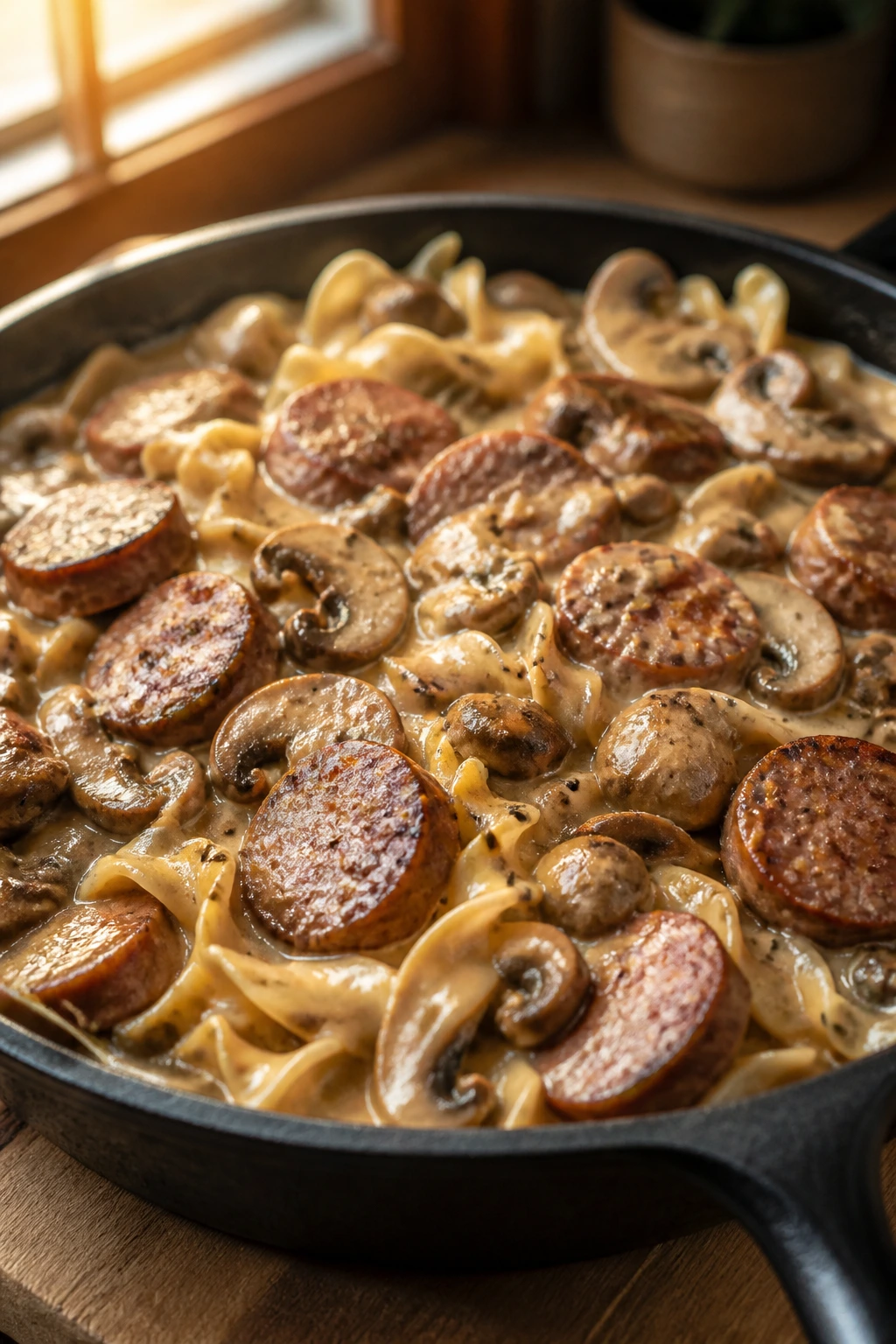
This is stroganoff with a little more edge and a little less fuss. The mushrooms go deep brown, the sausage carries the gravy, and the sour cream at the end makes the sauce smooth enough to coat every noodle.
Why It Works:
Beef sausage and mushrooms both like browning, which means the skillet can build a strong base before the liquid goes in. Sour cream adds the tang that stroganoff needs without making the sauce thin.
Key Ingredients:
- 1 pound beef sausage, sliced — smoked links work well.
- 8 ounces cremini mushrooms, sliced — they need room to brown.
- 1 small onion, diced — softens into the sauce.
- 2 cloves garlic, minced — added late.
- 12 ounces egg noodles — the classic partner.
- 2 cups beef broth — the gravy base.
- 1 cup sour cream — stirred in off heat.
- 1 tablespoon Dijon mustard — sharpens the sauce.
- 2 tablespoons chopped parsley — for the top.
Quick Steps:
- Cook the noodles until al dente and drain.
- Brown the sausage in a large skillet for 4 minutes, then add mushrooms and onion and cook 7 minutes until the mushrooms are deeply browned.
- Stir in garlic, broth, and mustard; simmer for 5 minutes until the liquid reduces a little.
- Turn off the heat, stir in sour cream, toss with noodles, and top with parsley.
Equipment for This Recipe:
- Large skillet — for the sauce.
- Pot for noodles — standard and necessary.
- Wooden spoon — for scraping browned bits into the gravy.
How to Serve This Dish:
Pile it into bowls with black pepper and a little more parsley. A side of green beans or peas keeps the plate from sinking into beige.
Pro Tips for This Recipe:
- Brown the mushrooms well; pale mushrooms make a weak sauce.
- Take the pan off the heat before adding sour cream or it can split.
- Save a splash of noodle water to loosen the sauce if needed.
Variations on This Dish:
- Garlic-Herb Version: Add thyme and a bit more parsley with the broth.
- Paprika Finish: Stir in 1 teaspoon sweet paprika for a deeper color.
Common Mistakes to Avoid with This Dish:
- Adding sour cream to a boiling pan: It can curdle and go grainy.
- Skipping the mushroom browning: The sauce loses a lot of its depth.
13. Beef Sausage Pizza with Onions and Peppers
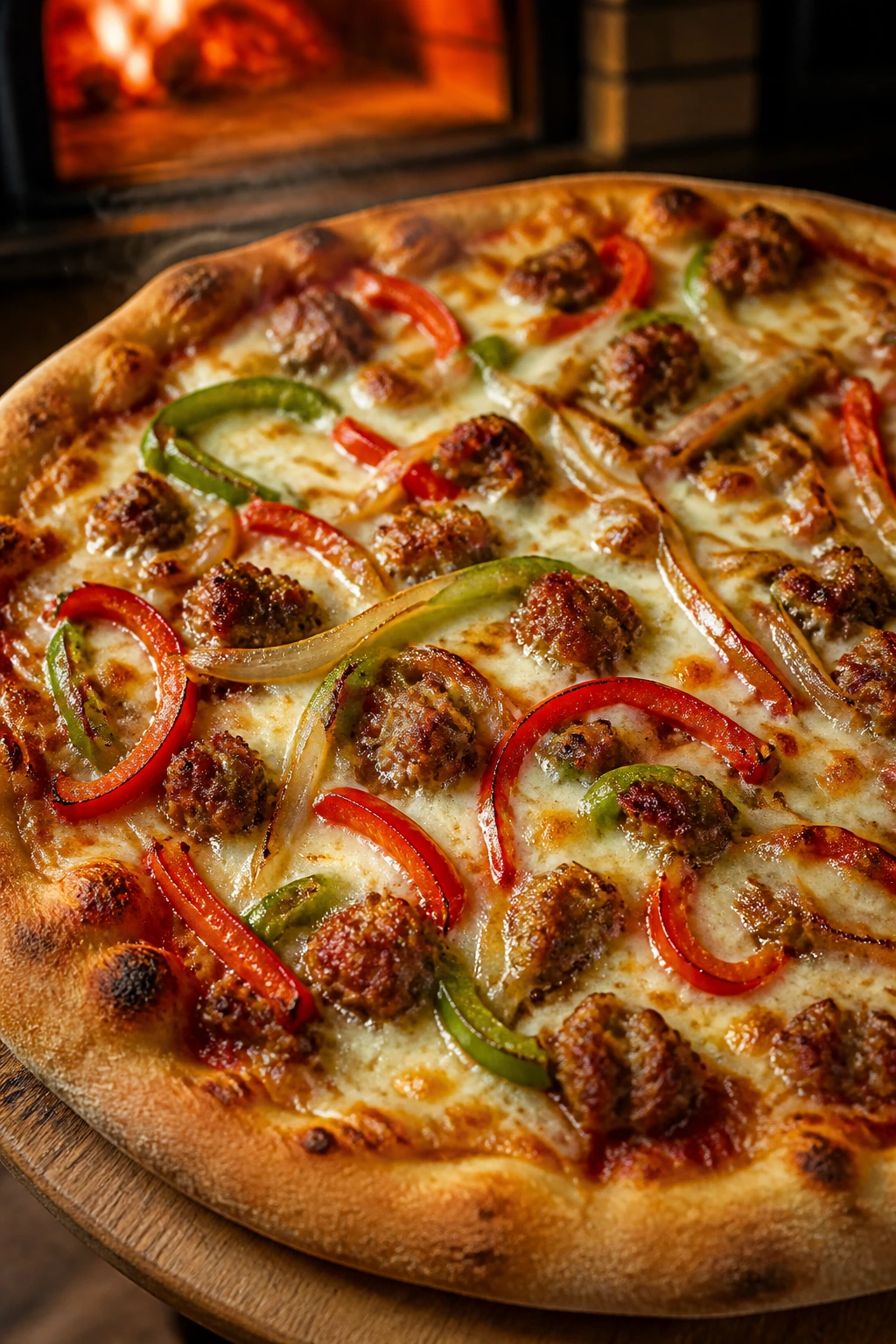
Pizza night gets better when the topping has enough weight to stand up to the crust. Beef sausage, peppers, and onions do exactly that, and the sausage fat runs into the mozzarella in the best possible way.
Why It Works:
The topping mix is sturdy, which means the pizza does not go soggy under the cheese. A hot oven browns the crust quickly while the sausage and vegetables finish just enough to stay juicy.
Key Ingredients:
- 1 pound pizza dough — homemade or store-bought.
- 1 cup marinara sauce — thinly spread.
- 1 pound beef sausage, browned and crumbled — cool it slightly before topping.
- 1 bell pepper, sliced thin — red or green.
- 1 small onion, sliced thin — sweetens in the oven.
- 2 cups shredded mozzarella — enough to cover, not bury.
- 1 teaspoon dried oregano — sprinkled over the sauce.
- 1 tablespoon olive oil — for the dough rim.
Quick Steps:
- Heat the oven to 475°F and stretch the dough onto a pizza stone or baking sheet.
- Brown the sausage in a skillet for 5 minutes and set it aside.
- Spread the marinara over the dough, leaving a 1-inch border; add oregano, sausage, peppers, onion, and mozzarella.
- Bake for 12 to 15 minutes until the crust is browned at the edges and the cheese is bubbling with a few tan spots.
Equipment for This Recipe:
- Pizza stone or sheet pan — either works.
- Rolling pin — optional, if the dough resists.
- Pizza cutter — easier than a knife on a hot pie.
How to Serve This Dish:
Slice it and serve with a bitter green salad or a bowl of pickles on the side. The acid helps cut through the cheese and sausage fat.
Pro Tips for This Recipe:
- Pre-baking the sausage topping keeps the pizza from leaking grease onto the crust.
- Don’t overload the sauce or the center will stay soft.
- If you want crisper onions, sauté them for 2 minutes before topping.
Variations on This Dish:
- Hot-Honey Version: Drizzle the baked pizza with hot honey before slicing.
- Garlic White Pizza: Skip marinara and use ricotta, garlic, and a little parmesan instead.
Common Mistakes to Avoid with This Dish:
- Putting raw sausage on the dough: It can over-saturate the crust.
- Using too much cheese: The center turns oily and heavy.
14. Beef Sausage Chili with Beans
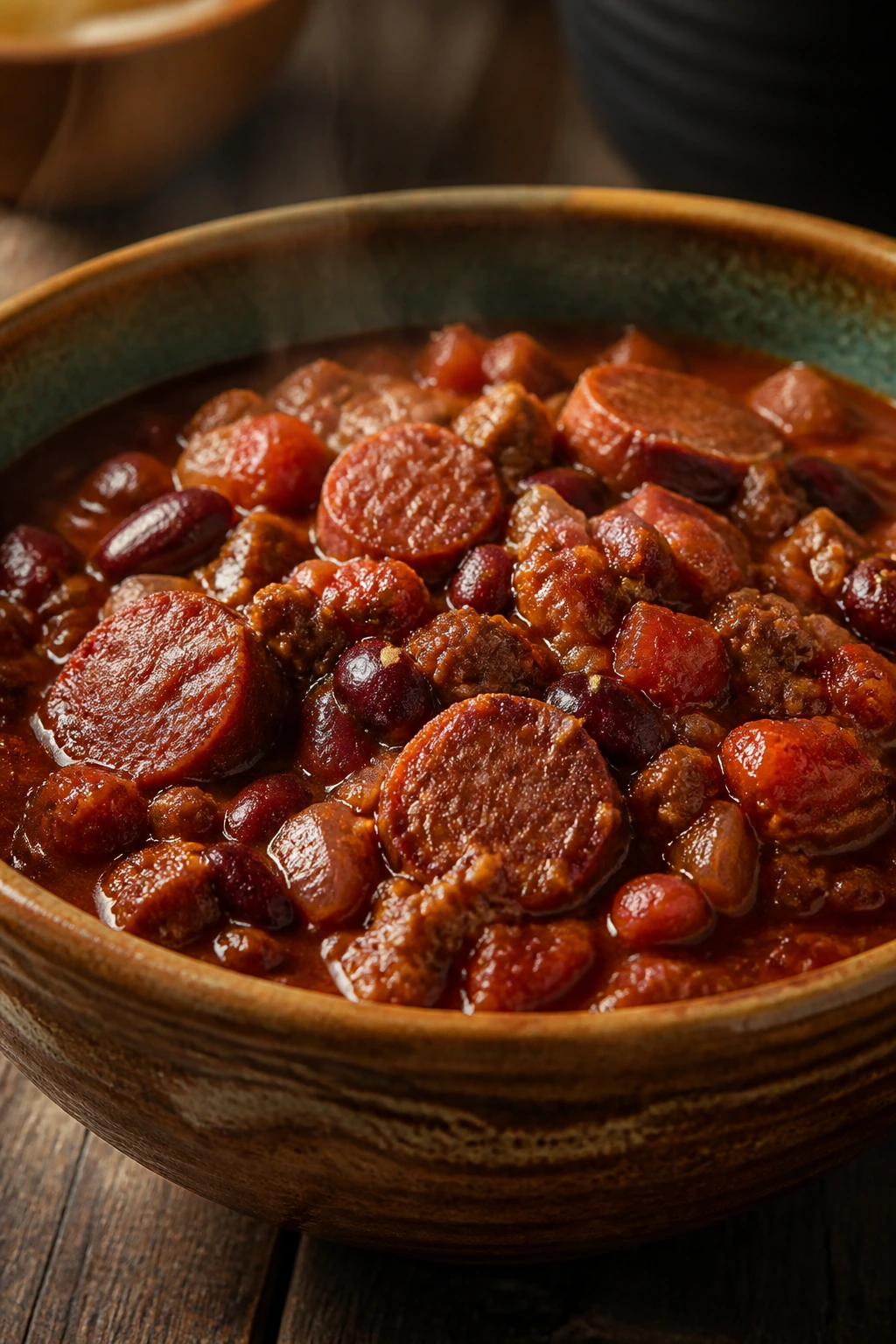
Chili is where beef sausage really earns its keep. The sausage gives you fat, spice, and smoke in one move, and the beans and tomatoes carry enough body that the pot tastes like it simmered all afternoon.
Why It Works:
This chili doesn’t need ground beef at all. Beef sausage brings enough seasoning to save you from building flavor from scratch, and a short simmer lets the beans take on the spice.
Key Ingredients:
- 1 pound beef sausage, sliced or crumbled — both work.
- 1 yellow onion, diced — the base.
- 3 cloves garlic, minced — added after the onion softens.
- 2 tablespoons chili powder — the main spice.
- 1 tablespoon ground cumin — for warmth.
- 2 cans beans, drained and rinsed — kidney, black, or pinto.
- 1 can diced tomatoes, 14.5 ounces — with juices.
- 1 cup beef broth — loosens the pot.
- 1 tablespoon tomato paste — deepens the color.
- 1 tablespoon cocoa powder — optional, but it gives the chili a darker edge.
Quick Steps:
- Brown the sausage in a heavy pot over medium-high heat for 5 minutes, then remove it.
- Cook the onion until soft, about 6 minutes, then stir in the garlic, chili powder, cumin, and tomato paste for 1 minute.
- Add the tomatoes, broth, beans, cocoa powder, and sausage; simmer uncovered for 25 minutes until the chili thickens.
- Taste, then serve with a final simmer of 5 minutes if you want it thicker.
Equipment for This Recipe:
- Dutch oven or soup pot — roomy and steady.
- Wooden spoon — for the bottom of the pot.
- Measuring spoons — chili depends on spice balance.
How to Serve This Dish:
Serve it with shredded cheddar, sour cream, or chopped onions. Cornbread on the side is almost too obvious, which means it belongs.
Pro Tips for This Recipe:
- Let the tomato paste darken in the pot before the liquid goes in.
- If the chili is too thin, simmer uncovered rather than adding thickeners first.
- A small splash of vinegar at the end can sharpen the whole bowl.
Variations on This Dish:
- Smokier Chili: Add 1 teaspoon smoked paprika with the spices.
- Beanless Version: Replace one can of beans with extra sausage or chopped peppers.
Common Mistakes to Avoid with This Dish:
- Not simmering long enough: The beans stay separate and the flavors don’t marry.
- Using too much broth early: You can add liquid, but taking it away is slower.
15. Beef Sausage Quesadillas with Cheddar
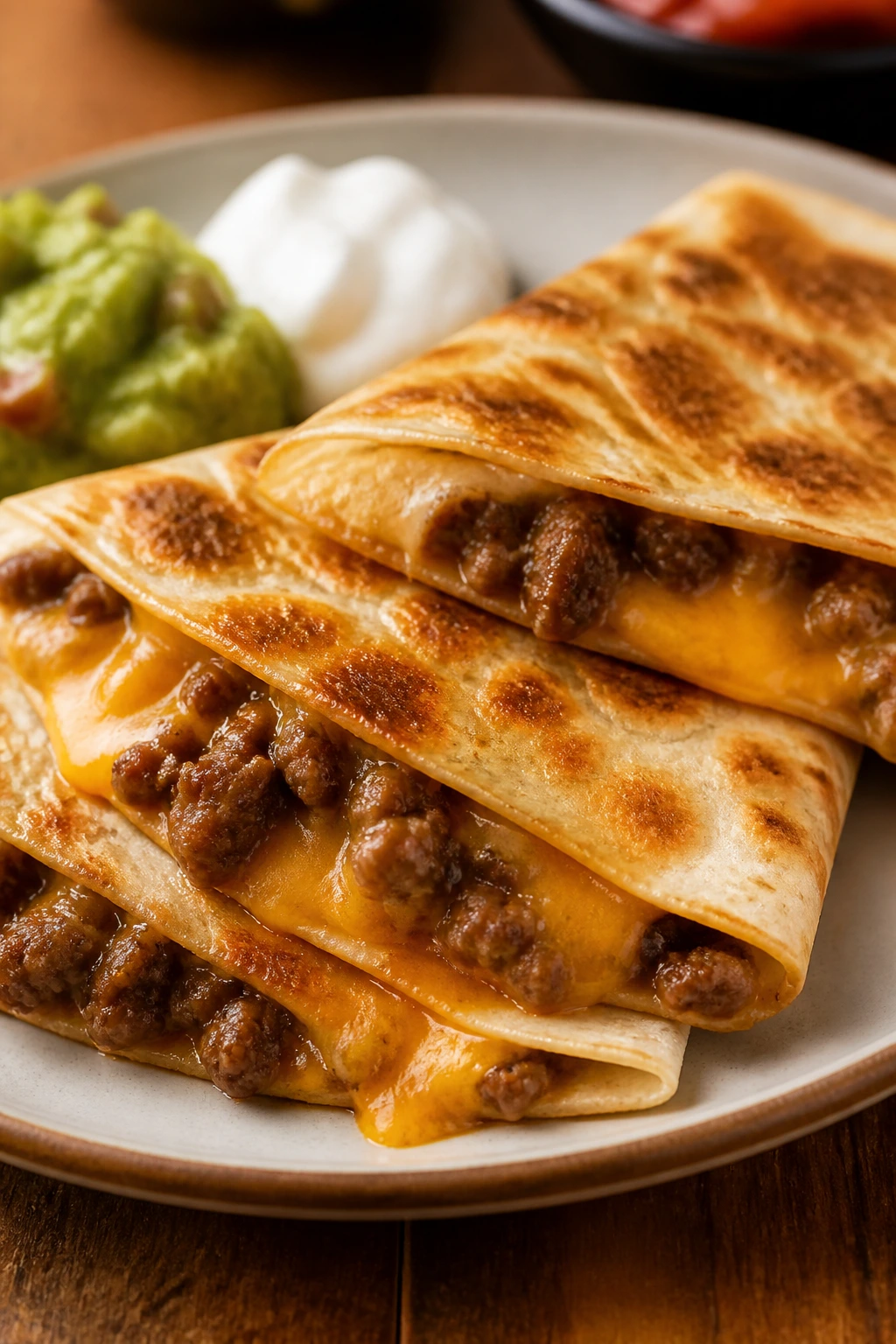
These quesadillas are what happens when dinner needs to be fast but still taste cooked on purpose. The sausage and peppers go into the tortilla with enough cheese to hold the whole thing together, and the skillet gives you that crisp, browned shell.
Why It Works:
The sausage filling is already savory, so the quesadilla only needs sharp cheddar and a little heat from the pan. A dry skillet makes the tortilla crisp before the cheese leaks out.
Key Ingredients:
- 1 pound beef sausage, crumbled — browned first.
- 1 bell pepper, diced — gives a little sweetness.
- 1 small onion, diced — softens with the pepper.
- 8 flour tortillas — medium size folds cleanly.
- 2 cups shredded cheddar — the glue.
- 1/2 teaspoon chili powder — just enough lift.
- Salsa, for serving — not optional in my kitchen.
- Sour cream or Greek yogurt, for serving — cools the filling.
Quick Steps:
- Brown the sausage in a skillet for 5 minutes, then add the onion and pepper and cook 4 minutes more until softened.
- Stir in chili powder and let the filling cool for 2 minutes so it doesn’t steam the tortillas.
- Lay cheese and filling on half of each tortilla, fold over, and cook in a dry skillet over medium heat for 2 to 3 minutes per side until golden and crisp.
- Rest for 1 minute, then slice into wedges.
Equipment for This Recipe:
- Large skillet — for both filling and quesadillas.
- Spatula — for flipping cleanly.
- Sharp knife or pizza cutter — for slicing.
How to Serve This Dish:
Serve wedges with salsa, sour cream, and a little chopped cilantro. A pile of simple salad greens on the side turns this from snack food into dinner.
Pro Tips for This Recipe:
- Let the filling cool a bit before assembling or the tortillas go damp.
- Don’t overfill. The cheese needs room to melt and seal.
- Press the quesadilla lightly with the spatula while it cooks to help the crust brown evenly.
Variations on This Dish:
- Pepper Jack Version: Swap part of the cheddar for pepper jack and add jalapeños.
- Bean-Cheese Version: Add 1/2 cup black beans to stretch the filling.
Common Mistakes to Avoid with This Dish:
- Cooking over high heat: The tortilla burns before the cheese melts.
- Using too little cheese: The quesadilla falls apart when you cut it.
16. Smoky Beef Sausage Hash with Kale
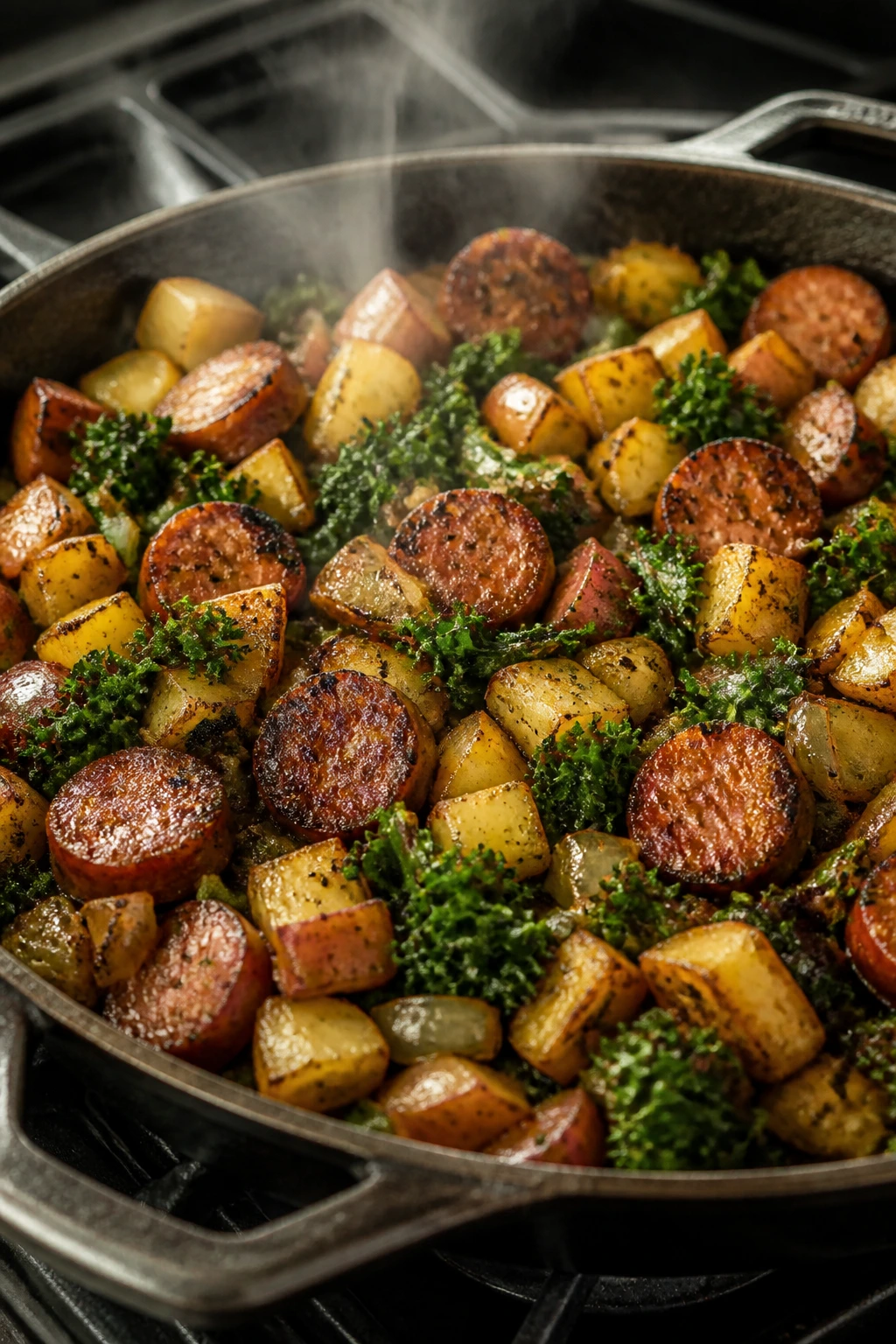
This hash lands somewhere between breakfast and dinner, which is exactly why it works. The potatoes crisp on the bottom, the sausage gives the pan its smoke, and the kale softens just enough to catch the oil and paprika.
Why It Works:
A hash rewards rough edges. The potatoes and sausage both brown well, and the kale adds enough green to keep the skillet from feeling too heavy. If you top it with eggs, the runny yolk turns the whole thing into dinner with a built-in sauce.
Key Ingredients:
- 1 pound beef sausage, sliced into coins — the browning matters.
- 1 1/2 pounds Yukon Gold potatoes, diced small — small cubes cook faster.
- 1 onion, diced — helps the potatoes brown.
- 3 cups chopped kale — stems removed.
- 1 teaspoon smoked paprika — plays off the sausage.
- 3 tablespoons oil or butter — for crisping.
- 4 eggs — optional, but they make it feel complete.
- Salt and pepper, to taste — season the potatoes directly.
Quick Steps:
- Par-cook the diced potatoes in salted water for 5 minutes, then drain well.
- Brown the sausage in a large skillet, add the onion and potatoes, and cook 10 to 12 minutes until the potatoes develop crisp edges.
- Stir in the paprika and kale and cook 3 minutes until the kale wilts.
- If using eggs, make 4 wells in the hash and cook covered for 4 to 5 minutes until the whites set.
Equipment for This Recipe:
- Large skillet with a lid — for crisping and egg-steaming.
- Slotted spoon — helpful if you par-boil the potatoes.
- Knife and cutting board — the dice size matters.
How to Serve This Dish:
Serve straight from the skillet with hot sauce or a spoonful of sour cream. If you want a fuller dinner, a green salad on the side is enough.
Pro Tips for This Recipe:
- Dry the potatoes well after boiling or they won’t crisp.
- Let the skillet sit undisturbed for a minute at a time so the bottom browns.
- Add the kale at the end; it only needs a short wilt.
Variations on This Dish:
- Sweet Potato Hash: Swap in sweet potatoes and reduce the par-cook time a little.
- Peppery Hash: Add diced red bell pepper with the onions.
Common Mistakes to Avoid with This Dish:
- Using too much oil: The hash turns greasy instead of crisp.
- Skipping the par-cook: The potatoes can brown outside and stay hard inside.
17. Beef Sausage Gnocchi Skillet
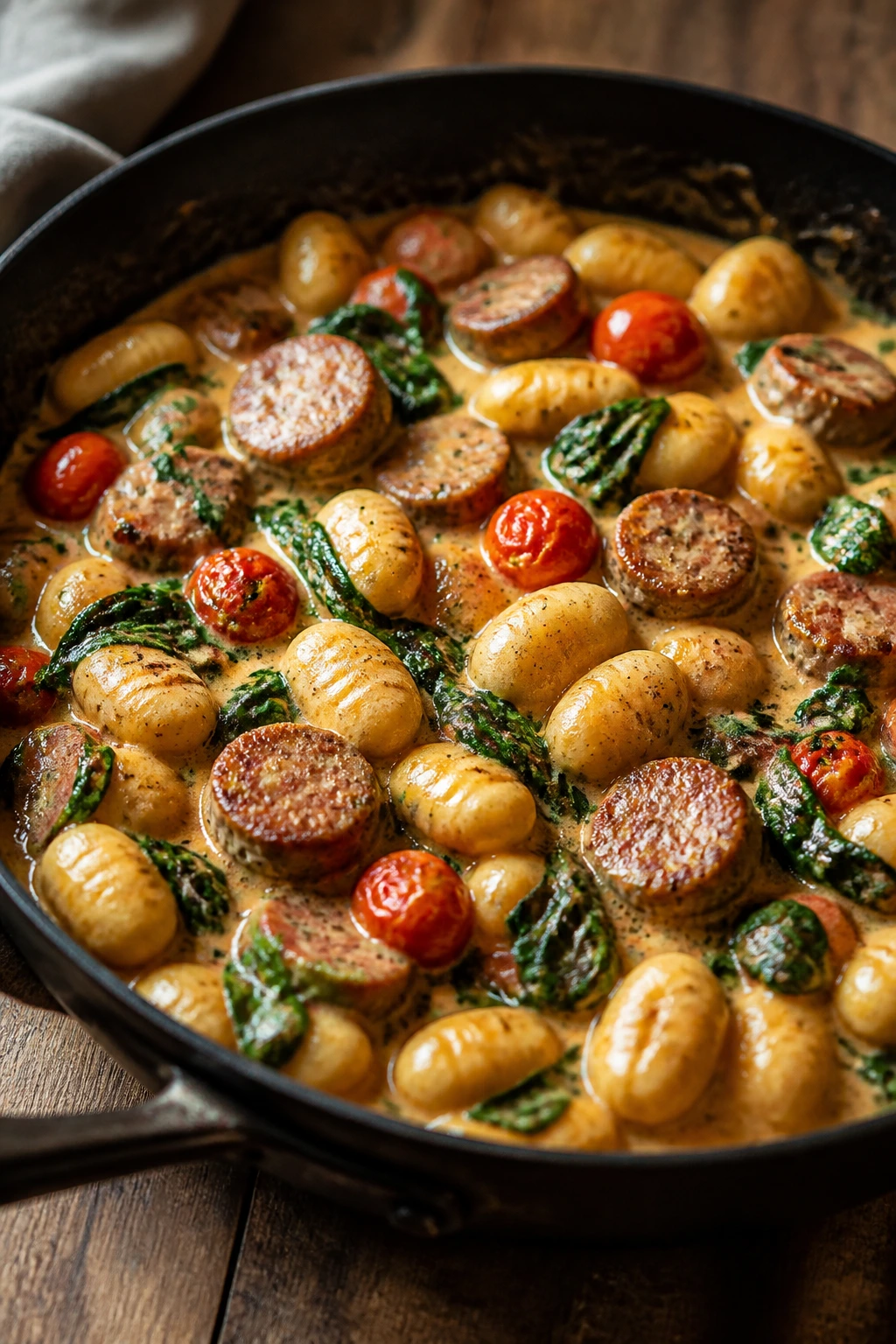
Gnocchi in a skillet gives you the fast satisfaction of pasta without the long boil. The little dumplings soak up the tomato-cream sauce, the sausage adds bite, and the spinach disappears into the gaps like it was meant to be there.
Why It Works:
Shelf-stable gnocchi browns quickly in the pan and turns pleasantly crisp before the sauce goes in. Beef sausage and cherry tomatoes make a sauce that tastes cooked down even though it stays quick.
Key Ingredients:
- 1 pound beef sausage, sliced — browned first.
- 1 package (16 ounces) potato gnocchi — shelf-stable or refrigerated.
- 1 pint cherry tomatoes, halved — they burst into the sauce.
- 3 cloves garlic, minced — added after the sausage browns.
- 3/4 cup heavy cream — enough for silk.
- 4 cups baby spinach — stirred in at the end.
- 1/2 cup grated parmesan — finishes the sauce.
- 1 tablespoon olive oil — for the gnocchi.
Quick Steps:
- Brown the sausage in a skillet over medium-high heat for 4 minutes, then add the gnocchi with olive oil and cook 3 to 4 minutes until lightly golden.
- Stir in the garlic and cherry tomatoes and cook 3 minutes until the tomatoes start to collapse.
- Pour in the cream and simmer 2 minutes until the sauce thickens slightly.
- Add the spinach and parmesan, stirring until the spinach wilts and the sauce turns glossy.
Equipment for This Recipe:
- Large skillet — gnocchi needs room to brown.
- Wooden spoon — for breaking tomatoes.
- Grater — for the parmesan.
How to Serve This Dish:
Serve it in bowls with extra parmesan and black pepper. A bitter salad or a few roasted broccoli florets on the side keep the plate balanced.
Pro Tips for This Recipe:
- Brown the gnocchi in the pan first; that little crust is the whole trick.
- If the tomatoes are stubborn, press them with the spoon instead of waiting.
- Add spinach right at the end so it stays bright.
Variations on This Dish:
- Sun-Dried Tomato Version: Swap half the cherry tomatoes for chopped sun-dried tomatoes.
- Basil Cream Version: Add torn basil after the heat goes off.
Common Mistakes to Avoid with This Dish:
- Boiling the gnocchi first: It can turn too soft and lose the pan crisping.
- Letting the cream boil hard: The sauce gets tight and less smooth.
18. Beef Sausage Lasagna Roll-Ups
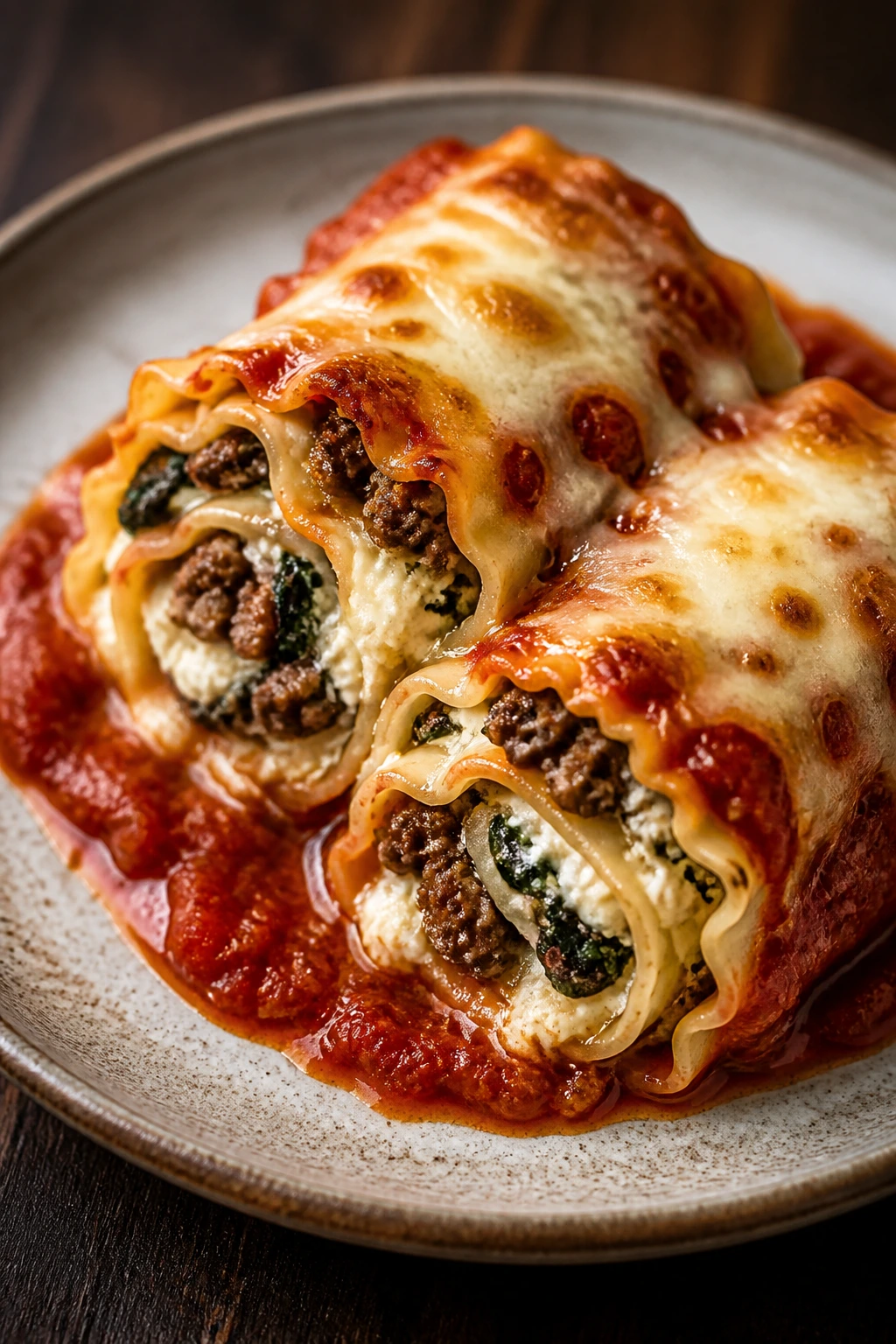
Lasagna roll-ups give you the layers of a baked pasta without needing to build a brick-sized casserole. Each noodle wraps around sausage, ricotta, and sauce, so every serving comes out neat and heavily sauced.
Why It Works:
Roll-ups bake more evenly than a deep lasagna pan. The sausage goes into the filling, which keeps the meat distributed instead of sinking to the bottom.
Key Ingredients:
- 9 lasagna noodles — cooked until flexible.
- 1 pound beef sausage, browned and crumbled — let it cool slightly.
- 15 ounces ricotta — the creamy layer.
- 1 egg — binds the filling.
- 1 cup shredded mozzarella — mixed in or sprinkled on top.
- 2 cups marinara sauce — enough for the bottom and top.
- 1 cup chopped spinach — optional, but useful.
- 1/2 cup grated parmesan — for the finish.
Quick Steps:
- Cook the lasagna noodles until just tender, then lay them flat on a lightly oiled surface.
- Mix the sausage, ricotta, egg, spinach, half the mozzarella, and a little parmesan.
- Spread the filling along each noodle, roll them up, and place seam-side down in a baking dish with a layer of marinara underneath.
- Spoon the rest of the sauce over the rolls, top with mozzarella, and bake at 375°F for 25 minutes until bubbling.
Equipment for This Recipe:
- 9×13-inch baking dish — ideal for the rolls.
- Large pot — for boiling noodles.
- Mixing bowl — for the filling.
How to Serve This Dish:
Serve two or three roll-ups per person with extra sauce spooned around the edges. Garlic bread and a salad are enough to finish the plate.
Pro Tips for This Recipe:
- Don’t overcook the noodles or they tear when you roll them.
- Let the sausage cool a little before mixing so it doesn’t thin the ricotta.
- A thin layer of sauce underneath keeps the rolls from sticking.
Variations on This Dish:
- Three-Cheese Roll-Ups: Add fontina or provolone to the filling.
- Spicy Roll-Ups: Use hot beef sausage and a pinch of chili flakes in the sauce.
Common Mistakes to Avoid with This Dish:
- Overfilling the noodles: The rolls split in the oven.
- Skipping the bottom sauce layer: The pasta can glue itself to the dish.
19. Beef Sausage and Rice Stuffed Zucchini Boats
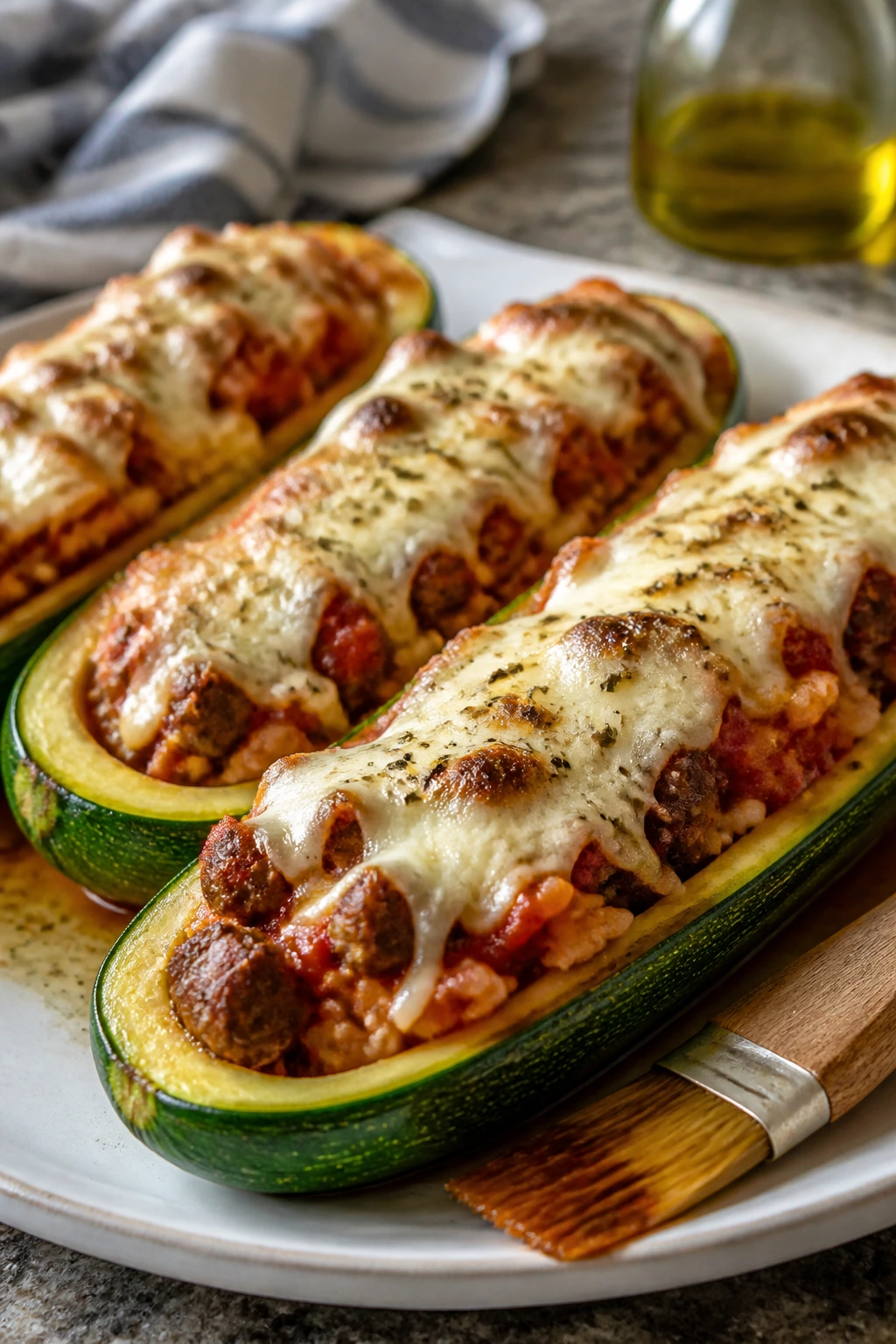
Zucchini boats are only worth making when the filling is strong enough to carry them. Beef sausage, rice, and tomato sauce do that job well, and the cheese browns at the top while the zucchini softens underneath.
Why It Works:
The zucchini provides a mild shell, not the main event. The sausage and rice make the center hearty, while baking the boats uncovered at the end gives you a browned finish instead of a watery one.
Key Ingredients:
- 4 medium zucchini, halved lengthwise and scooped — leave a sturdy border.
- 1 pound beef sausage, browned and crumbled — the filling core.
- 1 cup cooked rice — white or brown.
- 1 small onion, diced — cooked into the filling.
- 1 cup marinara sauce — binds the filling.
- 1 cup shredded mozzarella — for the top.
- 1 teaspoon Italian seasoning — keeps it cohesive.
- 1 tablespoon olive oil — for brushing the boats.
Quick Steps:
- Heat the oven to 400°F and brush the zucchini halves lightly with olive oil.
- Brown the sausage with the onion for 6 minutes, then stir in the rice, marinara, and seasoning.
- Fill the zucchini boats and top with mozzarella.
- Bake for 25 minutes until the zucchini is tender and the cheese is bubbly and lightly browned.
Equipment for This Recipe:
- Baking dish — keeps the boats snug.
- Spoon or melon baller — for scooping zucchini centers.
- Skillet — for the filling.
How to Serve This Dish:
Serve one or two boats per person with extra sauce from the baking dish. A simple tomato salad or roasted potatoes fits well if you need more food.
Pro Tips for This Recipe:
- Scoop enough zucchini to make a boat, but not so much that the shell collapses.
- If the zucchini is very watery, salt the halves for 10 minutes and blot them dry.
- Brown the filling until it looks a little dry before stuffing; that keeps the boats from flooding.
Variations on This Dish:
- Parmesan Top: Add 1/4 cup parmesan to the mozzarella for a sharper crust.
- Pepper Version: Mix diced roasted red pepper into the filling.
Common Mistakes to Avoid with This Dish:
- Leaving too much water in the zucchini: The bottoms go soggy.
- Under-seasoning the filling: The squash shell is mild and needs contrast.
20. Beef Sausage Coconut Curry
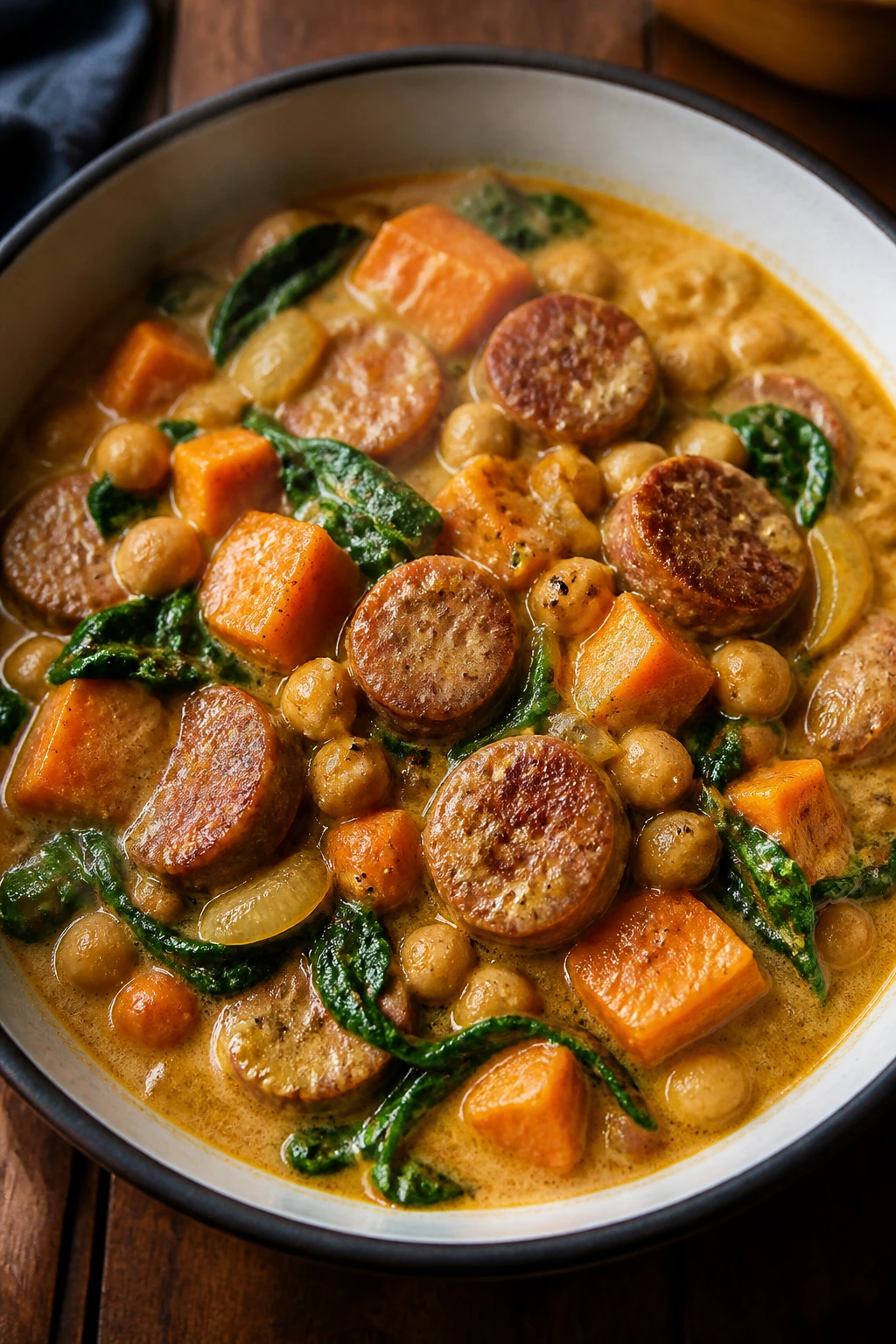
This curry has a creamy, spoonable sauce and enough warmth to feel like dinner in a bowl. The sausage, sweet potato, and chickpeas soak up the coconut milk and curry paste, and the spinach folds in at the end like it belongs there.
Why It Works:
Coconut milk softens the sharp edges of curry paste, while sweet potato brings body and a little sweetness. Beef sausage adds a savory layer that holds the dish together without making it taste like a basic stew.
Key Ingredients:
- 1 pound beef sausage, sliced — browned first.
- 1 yellow onion, sliced — the base.
- 1 sweet potato, peeled and cubed — about 2 cups.
- 2 tablespoons red curry paste — adjust to taste.
- 1 can coconut milk, 13.5 ounces — full fat gives the best texture.
- 1 can chickpeas, drained and rinsed — for substance.
- 2 cups baby spinach — stirred in at the end.
- 1 lime, juiced — for brightness.
Quick Steps:
- Brown the sausage in a deep skillet or pot for 4 minutes, then add the onion and cook 3 minutes more.
- Stir in the curry paste and sweet potato for 1 minute, then pour in the coconut milk and 1/2 cup water.
- Simmer covered for 15 to 18 minutes until the sweet potato is tender.
- Add the chickpeas and spinach, cook 2 minutes more, then finish with lime juice.
Equipment for This Recipe:
- Deep skillet or Dutch oven — curry needs depth.
- Lid — for softening the sweet potato.
- Citrus juicer — optional, but handy.
How to Serve This Dish:
Serve over rice or with naan to scoop the sauce. A handful of chopped cilantro or sliced scallions on top gives it a fresher look.
Pro Tips for This Recipe:
- Cook the curry paste briefly in the pan before adding liquid; it wakes up the spices.
- Use full-fat coconut milk or the sauce can thin out too much.
- Lime juice at the end matters more than people think.
Variations on This Dish:
- Mild Curry: Use 1 tablespoon curry paste and add extra coconut milk.
- Lentil Curry: Swap the chickpeas for cooked lentils if that’s what you have.
Common Mistakes to Avoid with This Dish:
- Skipping the lime: The curry tastes round but not alive.
- Cooking the sweet potato too hard: It can break apart and cloud the sauce.
21. Beef Sausage and Lentil Soup
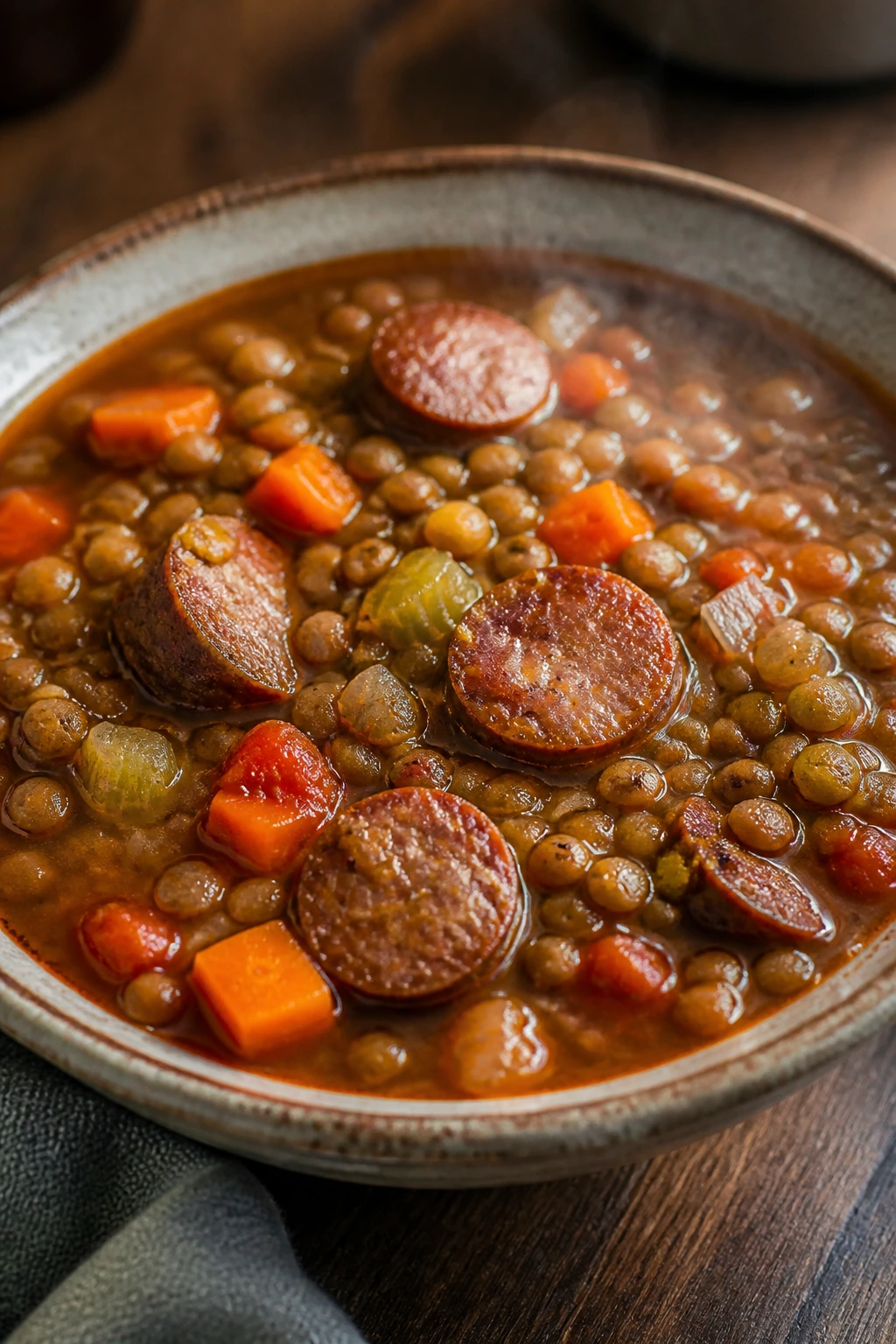
Lentils and beef sausage are a very old kind of partnership, and it still works. The lentils make the soup thick and earthy, the sausage adds smoke, and the tomatoes keep the bowl from getting too heavy.
Why It Works:
Lentils cook fast enough to fit a weeknight, but they still feel substantial in the bowl. A quick sauté of vegetables gives the soup enough sweetness before the broth takes over.
Key Ingredients:
- 1 pound beef sausage, sliced — the flavor anchor.
- 1 cup green or brown lentils, rinsed — they hold their shape best.
- 1 onion, diced — the base.
- 2 carrots, diced — for sweetness.
- 2 celery stalks, diced — for depth.
- 1 can diced tomatoes, 14.5 ounces — adds acidity.
- 6 cups beef broth — enough to simmer the lentils.
- 1 teaspoon dried thyme — classic and sturdy.
- 1 bay leaf — remove before serving.
Quick Steps:
- Brown the sausage in a soup pot for 4 to 5 minutes, then lift it out.
- Cook the onion, carrots, and celery for 6 minutes, then stir in garlic if you want a stronger base.
- Add the lentils, tomatoes, broth, thyme, bay leaf, and sausage; bring to a boil, then simmer uncovered for 25 to 30 minutes until the lentils are tender but not falling apart.
- Taste, remove the bay leaf, and serve hot.
Equipment for This Recipe:
- Soup pot or Dutch oven — sturdy heat matters.
- Fine spoon or ladle — for tasting and serving.
- Measuring cup — broth quantity matters.
How to Serve This Dish:
Serve with bread or biscuits and a few pickle spears on the side. A little grated parmesan on top works if you want a saltier finish.
Pro Tips for This Recipe:
- Don’t salt aggressively at the beginning; broth and sausage already bring plenty.
- Keep the simmer gentle so the lentils stay intact.
- If you like a thicker soup, mash a small scoop of lentils against the pot.
Variations on This Dish:
- Smoked Paprika Version: Add 1 teaspoon smoked paprika with the thyme.
- Greens Version: Stir in chopped kale for the last 5 minutes.
Common Mistakes to Avoid with This Dish:
- Using red lentils: They break down too fast and change the texture.
- Boiling the soup hard: The lentils split and the broth looks rough.
22. Beef Sausage Enchilada Casserole
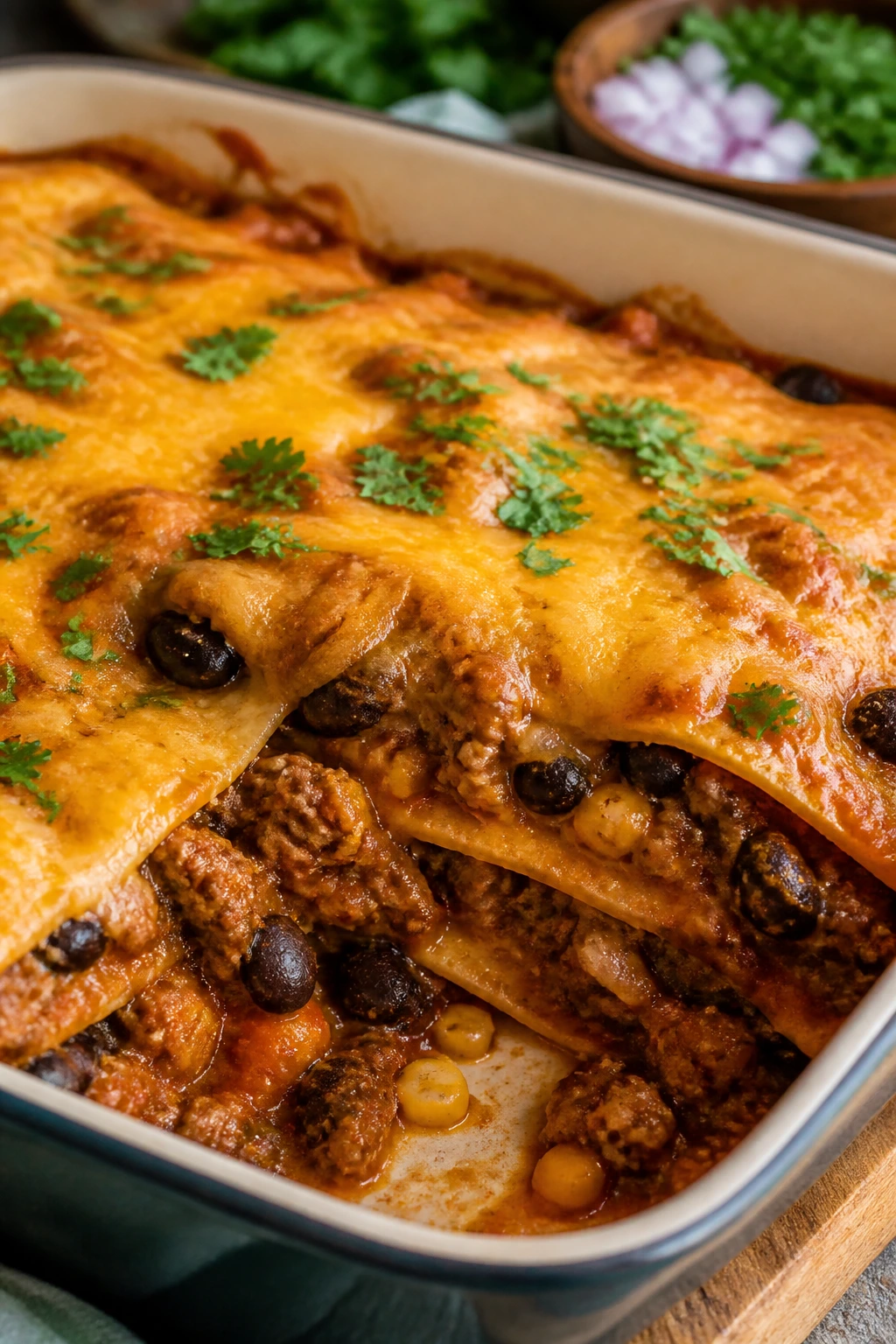
This casserole has the layered comfort of enchiladas without the rolling. Tortillas, sausage, beans, sauce, and cheese bake into a pan that cuts cleanly and smells like a very good idea from the first ten minutes.
Why It Works:
The tortillas absorb enough sauce to soften, but not so much that they disappear. Beef sausage gives the filling enough heft to stand up to the enchilada sauce and the beans.
Key Ingredients:
- 1 pound beef sausage, browned and crumbled — use bulk sausage or remove casings.
- 10 corn tortillas, cut into strips — they layer better this way.
- 2 cups enchilada sauce — red or green, depending on the mood.
- 1 can black beans, drained and rinsed — for body.
- 1 cup corn kernels — optional, but nice.
- 2 cups shredded cheddar or Mexican blend cheese — the top.
- 1 small onion, diced — cooked with the sausage.
- 1/2 teaspoon cumin — enough to round the sauce.
Quick Steps:
- Heat the oven to 375°F and grease a baking dish.
- Brown the sausage with the onion, then stir in the cumin, beans, and corn.
- Layer sauce, tortilla strips, sausage filling, and cheese in the dish, repeating until used up.
- Bake covered for 20 minutes, then uncover and bake 10 minutes more until the cheese bubbles and the edges darken.
Equipment for This Recipe:
- 9×13-inch baking dish — the right size for the layers.
- Skillet — for the filling.
- Foil — for the first covered bake.
How to Serve This Dish:
Let it sit for 10 minutes before cutting, then serve with sour cream, cilantro, or sliced avocado. A crunchy cabbage slaw beside it is a good move.
Pro Tips for This Recipe:
- Cut the tortillas into strips so they layer and absorb sauce evenly.
- Resting after baking keeps the casserole from collapsing.
- If the sauce tastes flat, add a squeeze of lime before serving.
Variations on This Dish:
- Green Enchilada Version: Use tomatillo sauce and pepper jack cheese.
- Rice-Stretch Version: Add 1 cup cooked rice to the filling.
Common Mistakes to Avoid with This Dish:
- Using too little sauce: The tortillas stay chewy instead of soft.
- Cutting immediately: The layers slide apart on the plate.
23. Beef Sausage Parmesan Ziti
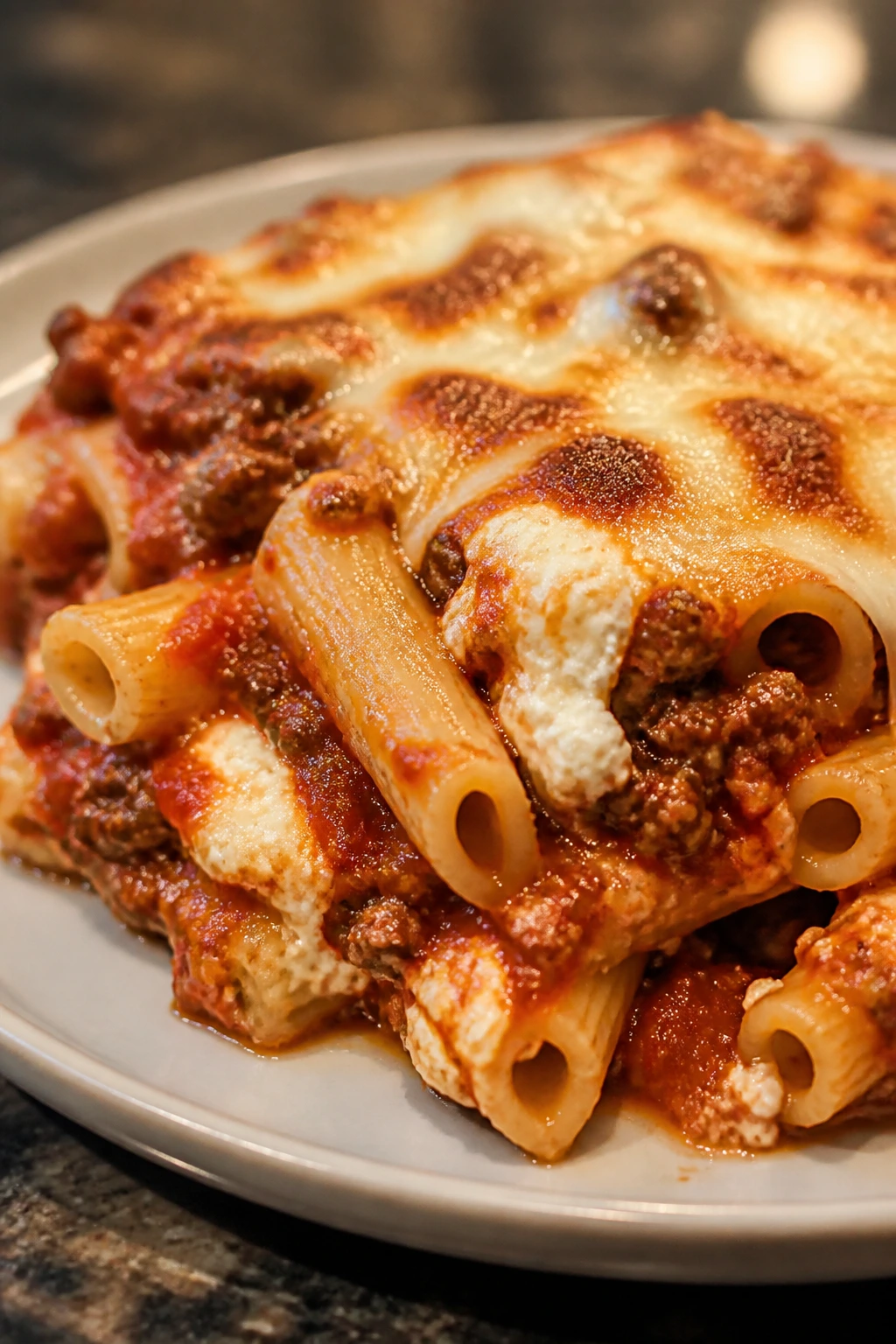
This is a bake with a little swagger. The sausage clings to the ziti, the tomato sauce bakes into the pasta, and the cheese top turns bronzed in spots that taste even better than they look.
Why It Works:
Ziti gives you tubes and ridges that catch sauce. The sausage cooks down into the marinara so every bite has meat, cheese, and tomato instead of one dominant layer.
Key Ingredients:
- 12 ounces ziti — or penne if that’s what’s in the cabinet.
- 1 pound beef sausage, browned and crumbled — cool slightly before mixing.
- 3 cups marinara sauce — enough to coat and bake.
- 1 cup ricotta — for creamy pockets.
- 1 1/2 cups shredded mozzarella — for melt.
- 1/2 cup grated parmesan — for sharpness.
- 1 teaspoon dried basil — keeps the sauce lively.
- 1/2 teaspoon black pepper — to finish the mix.
Quick Steps:
- Cook the ziti until just under al dente, then drain.
- Brown the sausage and stir it into the marinara with basil and pepper.
- Toss the pasta with the sauce and half the mozzarella, then dollop in the ricotta and gently fold once or twice.
- Bake at 375°F for 25 minutes, top with the remaining mozzarella and parmesan, and bake 10 minutes more until bubbling.
Equipment for This Recipe:
- Large pot — for the pasta.
- Baking dish — for the final bake.
- Mixing spoon — a big one, because the pasta is heavy.
How to Serve This Dish:
Scoop it into bowls with extra parmesan and a green salad. Garlic bread fits, though it hardly needs to be said.
Pro Tips for This Recipe:
- Leave the pasta a little firm so it doesn’t go soft in the oven.
- Fold gently after adding the ricotta; you want pockets, not complete blending.
- A few torn basil leaves over the top add freshness.
Variations on This Dish:
- Spicy Ziti: Add crushed red pepper to the sauce.
- Spinach Ziti: Stir in 3 cups chopped spinach before baking.
Common Mistakes to Avoid with This Dish:
- Overcooking the pasta first: It will go too soft in the oven.
- Using watery sauce: The casserole turns loose instead of sliceable.
24. Beef Sausage and Green Bean Skillet
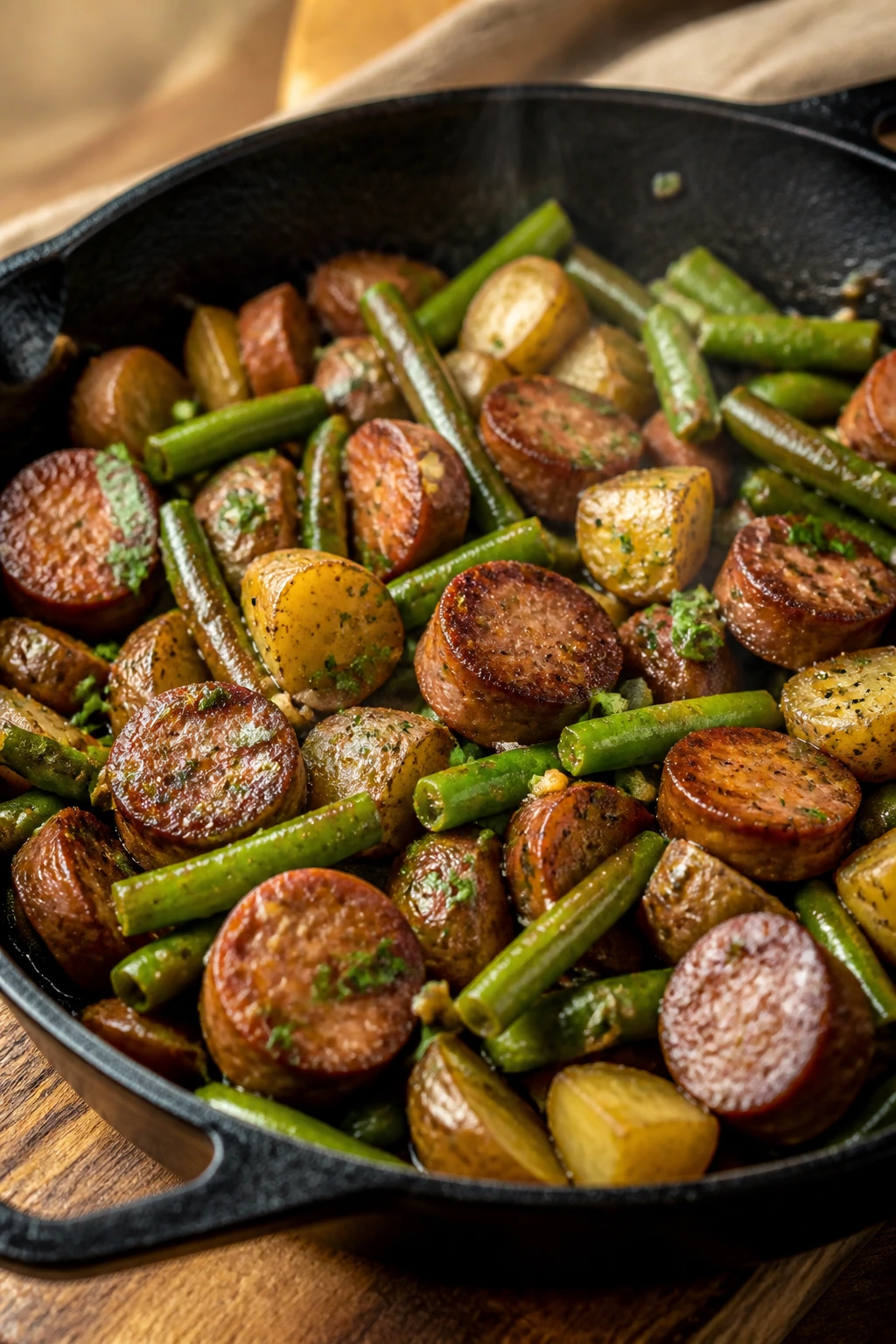
Green beans can feel like a side dish until they hit a skillet with sausage and potatoes. Then they turn into dinner, with enough garlic and butter to make the whole thing feel deliberate.
Why It Works:
The beans stay crisp-tender while the potatoes bring substance. Beef sausage adds smoke, and a little lemon at the end keeps the skillet from tasting too dense.
Key Ingredients:
- 1 pound beef sausage, sliced — browned first.
- 1 pound baby potatoes, halved — or cut larger potatoes into chunks.
- 1 pound green beans, trimmed — fresh is best here.
- 2 tablespoons butter — for the final toss.
- 3 cloves garlic, minced — stir in late.
- 1/2 cup beef broth — helps the potatoes finish.
- 1 teaspoon dried thyme — subtle and fitting.
- 1 lemon, juiced — for brightness.
Quick Steps:
- Brown the sausage in a large skillet over medium-high heat, then remove it.
- Add the potatoes and broth, cover, and cook for 10 minutes until the potatoes start to soften.
- Stir in the green beans, garlic, thyme, and sausage; cook uncovered for 7 to 8 minutes until the beans are crisp-tender and the broth has mostly evaporated.
- Finish with butter and lemon juice, tossing until glossy.
Equipment for This Recipe:
- Large skillet with lid — needed for the potatoes.
- Knife — green bean trimming goes faster with a sharp one.
- Citrus juicer — optional.
How to Serve This Dish:
Serve it as-is or with warm rolls. A little mustard on the side fits the sausage and the beans better than you’d expect.
Pro Tips for This Recipe:
- Cut the potatoes small enough that they actually soften in the covered stage.
- Add the garlic late so it doesn’t burn.
- Lemon at the end keeps the dish from feeling flat.
Variations on This Dish:
- Garlic Butter Version: Increase the butter to 3 tablespoons and add parsley.
- Mushroom Version: Stir in sliced mushrooms with the sausage.
Common Mistakes to Avoid with This Dish:
- Starting the beans too early: They turn dull and overcooked.
- Forgetting to cover the potatoes: They’ll brown before they soften.
25. Beef Sausage Baked Beans and Cornbread Skillet
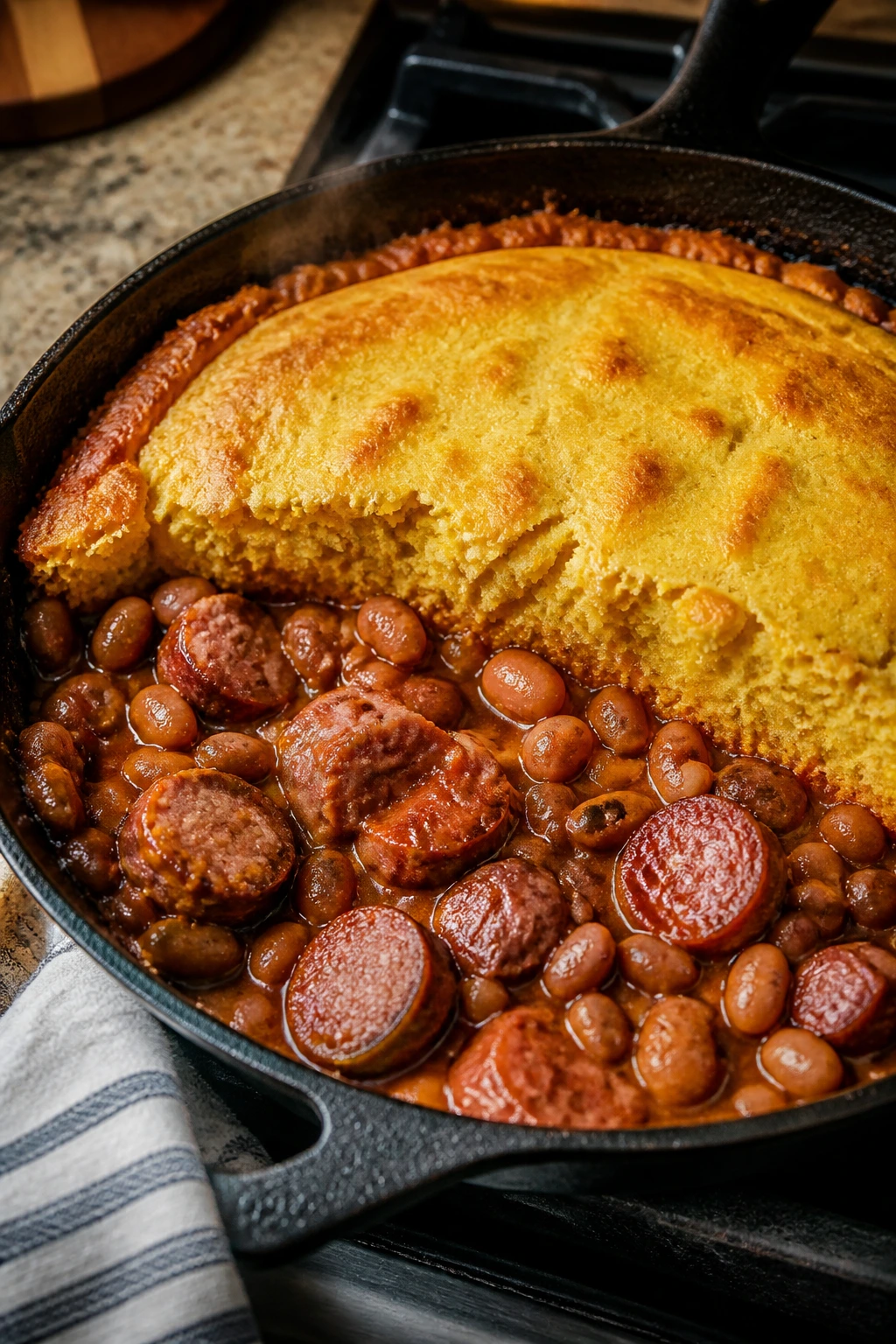
This is the kind of dinner that arrives smelling like smoke, molasses, and buttered bread. The beans simmer with sausage and barbecue sauce, then the cornbread bakes right on top and soaks up the steam underneath.
Why It Works:
The bean layer handles the savory side, while the cornbread top gives you a soft, slightly sweet lid. It’s a whole meal in one skillet, which is exactly the point.
Key Ingredients:
- 1 pound beef sausage, sliced — browned before the beans go in.
- 2 cans baked beans, 15 ounces each — the sturdy base.
- 1 small onion, diced — cooked with the sausage.
- 1/2 cup barbecue sauce — for depth and sweetness.
- 1 cup corn kernels — frozen is fine.
- 1 cup cornmeal — for the topping.
- 1 cup flour — gives the topping structure.
- 1 tablespoon sugar — just enough to echo the beans.
- 1 egg — binds the cornbread.
- 1 cup milk — to bring the batter together.
- 1/4 cup melted butter — for richness.
- 1 tablespoon baking powder — the lift.
Quick Steps:
- Brown the sausage with the onion in an oven-safe skillet for 5 to 6 minutes.
- Stir in the baked beans, barbecue sauce, and corn, and simmer for 3 minutes.
- Mix the cornmeal, flour, sugar, baking powder, egg, milk, and melted butter into a quick batter.
- Spoon the batter over the bean mixture and bake at 375°F for 25 to 30 minutes until the cornbread is golden and a toothpick comes out clean.
Equipment for This Recipe:
- Oven-safe skillet — required for the top-baked finish.
- Mixing bowl — for the cornbread batter.
- Whisk — keeps the batter smooth.
How to Serve This Dish:
Scoop it into bowls so the cornbread picks up some of the beans underneath. Pickles or coleslaw on the side help cut the sweetness.
Pro Tips for This Recipe:
- Let the bean mixture simmer a little before topping it so the flavors start blending.
- Don’t overmix the cornbread batter; a few lumps are fine.
- A brush of melted butter over the top after baking makes it shine.
Variations on This Dish:
- Jalapeño Cornbread Top: Add diced jalapeño to the batter.
- Smoky BBQ Version: Use a chipotle barbecue sauce for more heat.
Common Mistakes to Avoid with This Dish:
- Using a skillet that’s too small: The batter spills over.
- Baking without enough heat: The top stays pale and gummy.
26. Beef Sausage Alfredo Tortellini Bake
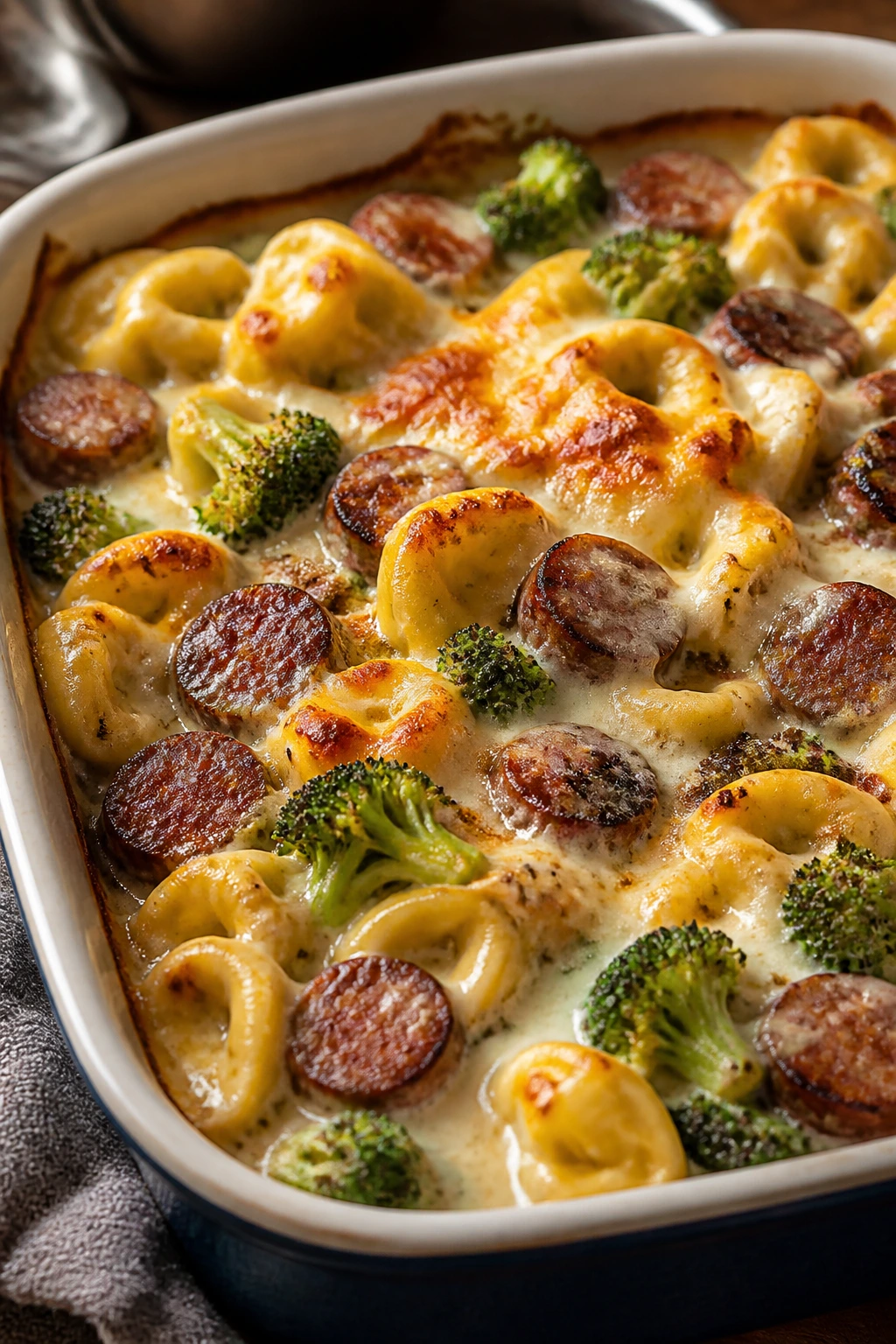
If you want dinner to disappear from the pan fast, this is a strong bet. The tortellini plump up under Alfredo sauce, the sausage adds salt and smoke, and the broccoli sneaks in enough green to keep the dish from feeling too rich.
Why It Works:
Cheese tortellini already carries part of the flavor load, which means the sausage and sauce only need to finish the job. Baking it gives the top a little color and lets the sauce settle into the pasta.
Key Ingredients:
- 20 ounces cheese tortellini — refrigerated is easiest.
- 1 pound beef sausage, sliced — browned first.
- 2 cups Alfredo sauce — store-bought or homemade.
- 2 cups small broccoli florets — steamed in the bake.
- 1 cup shredded mozzarella — for the top.
- 1/2 cup grated parmesan — for sharper flavor.
- 1/2 teaspoon black pepper — enough to cut the cream.
Quick Steps:
- Heat the oven to 375°F and lightly grease a baking dish.
- Brown the sausage in a skillet for 4 to 5 minutes.
- Toss the tortellini, sausage, Alfredo sauce, broccoli, and black pepper together, then spread into the dish and top with mozzarella and parmesan.
- Bake for 25 minutes until the sauce bubbles at the sides and the cheese turns lightly golden.
Equipment for This Recipe:
- Baking dish — wide enough for the tortellini.
- Skillet — for browning the sausage.
- Mixing bowl — for combining everything.
How to Serve This Dish:
Serve it with a crisp salad or roasted tomatoes, because the bake is rich and needs something sharp next to it. A little parsley over the top keeps it from looking too beige.
Pro Tips for This Recipe:
- If using frozen broccoli, thaw and drain it first so the bake doesn’t get watery.
- Don’t drown the tortellini in sauce; it should coat, not swim.
- Let it rest 5 minutes before serving so it thickens.
Variations on This Dish:
- Garlic Alfredo Version: Stir in roasted garlic or garlic powder to the sauce.
- Spinach Tortellini Bake: Swap broccoli for spinach if you want a softer vegetable.
Common Mistakes to Avoid with This Dish:
- Adding too much sauce: The bake turns loose and heavy.
- Skipping the rest time: It slides apart as soon as you scoop it.
27. Beef Sausage Fried Cabbage with Noodles
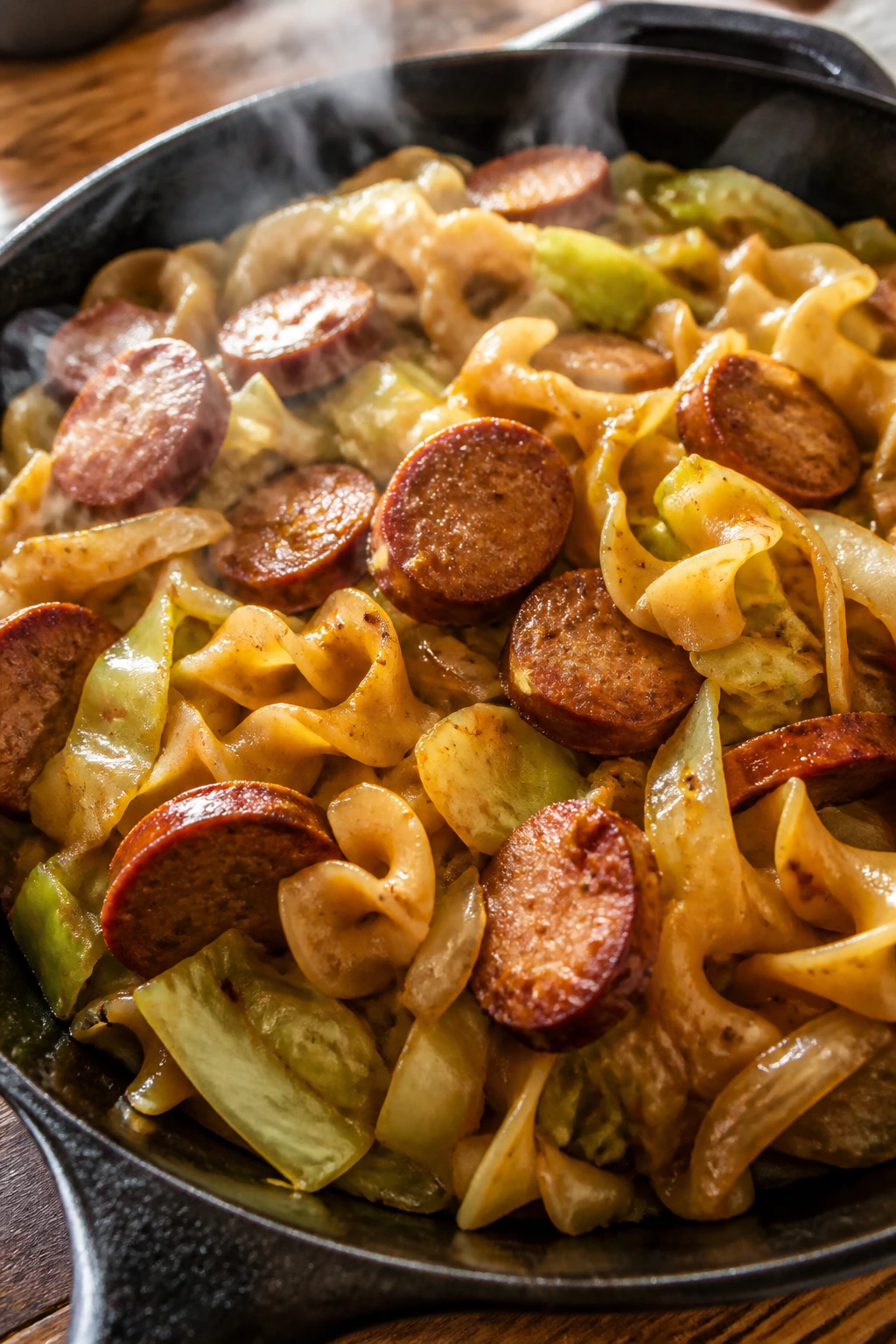
This is the kind of skillet that feels like it has been around forever. The cabbage softens into the noodles, the sausage gives the whole pan its smoke, and the butter picks up the browned bits at the bottom.
Why It Works:
Cabbage and noodles both soak up flavor fast, which makes them ideal for sausage. A splash of vinegar at the end stops the skillet from tasting flat or overly soft.
Key Ingredients:
- 1 pound beef sausage, sliced — browned until the edges darken.
- 1 medium green cabbage, thinly sliced — the star vegetable.
- 12 ounces egg noodles — cooked separately.
- 1 onion, sliced — for sweetness.
- 3 cloves garlic, minced — stirred in late.
- 2 tablespoons butter — for the cabbage and noodles.
- 1 teaspoon paprika — adds warmth.
- 1 tablespoon apple cider vinegar — finish with this.
Quick Steps:
- Cook the noodles until al dente and drain.
- Brown the sausage in a deep skillet, then add the onion and cabbage and cook 10 to 12 minutes until the cabbage softens and develops browned edges.
- Stir in the garlic, paprika, butter, and noodles; toss for 2 to 3 minutes until everything is coated and hot.
- Finish with apple cider vinegar and a little black pepper.
Equipment for This Recipe:
- Deep skillet or Dutch oven — cabbage needs room.
- Pot for noodles — separate cooking keeps texture better.
- Tongs — for tossing the cabbage and noodles.
How to Serve This Dish:
Serve it hot with a spoonful of mustard or sour cream if you want a cool contrast. It stands on its own, though bread never hurts.
Pro Tips for This Recipe:
- Cook the cabbage long enough to sweeten it a little; raw cabbage flavor is not the goal.
- Add vinegar at the end so it stays bright.
- If the skillet seems dry, add 1/4 cup of noodle water.
Variations on This Dish:
- Garlic Noodle Version: Add an extra clove of garlic and a little parsley.
- Caraway Cabbage Version: Stir in 1/2 teaspoon caraway seeds for a sharper, old-school flavor.
Common Mistakes to Avoid with This Dish:
- Using dry noodles straight from the package: They need the boil first.
- Skipping the vinegar: The dish becomes heavy and dull.
28. Beef Sausage Shepherd’s Pie
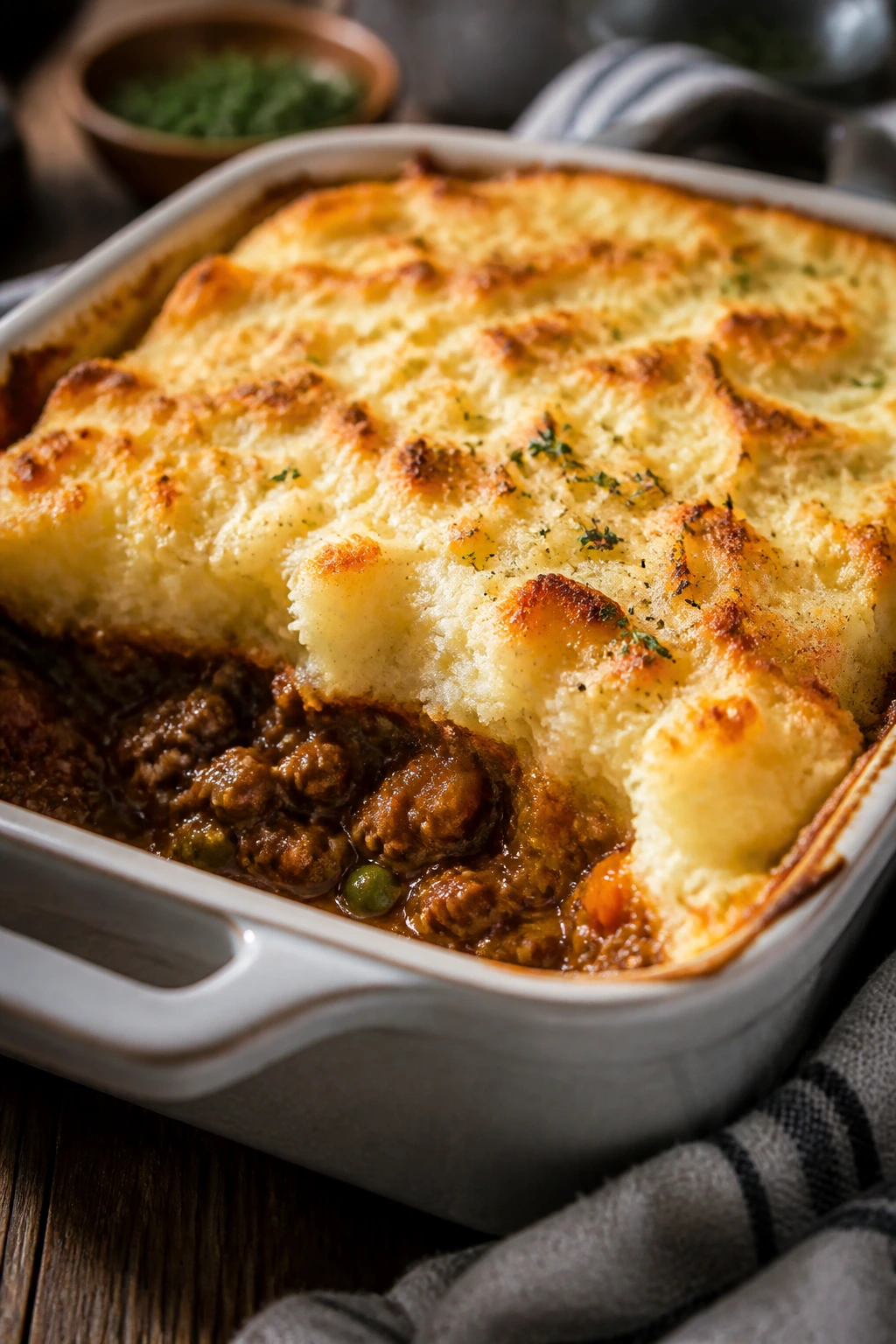
Shepherd’s pie is a practical dish disguised as comfort food. Here, beef sausage takes the place of the usual minced meat, the gravy gets thick and savory, and the mashed potatoes bake into a top that cracks just enough under a spoon.
Why It Works:
The sausage brings seasoning to the filling, so you don’t need to build a long gravy from scratch. The mashed potato top seals in the steam and gives the casserole a crisp, bronzed lid.
Key Ingredients:
- 1 pound beef sausage, crumbled — use bulk sausage or remove casings.
- 1 onion, diced — the filling base.
- 2 carrots, diced small — they soften into the gravy.
- 1 cup frozen peas — stirred in at the end.
- 2 tablespoons flour — for thickening.
- 1 cup beef broth — turns the filling into gravy.
- 1 tablespoon tomato paste — deepens the color.
- 4 cups mashed potatoes — fresh and sturdy, not loose.
- 1 cup shredded cheddar — optional on top.
Quick Steps:
- Heat the oven to 400°F and spread the mashed potatoes out so they’re ready.
- Brown the sausage with the onion and carrots for 7 minutes, then stir in the flour and tomato paste for 1 minute.
- Pour in the broth and simmer until the filling thickens, then add the peas and move the mixture into a baking dish.
- Top with mashed potatoes, rough up the surface with a fork, sprinkle cheddar if using, and bake for 20 to 25 minutes until the edges bubble and the top browns.
Equipment for This Recipe:
- Skillet — for the filling.
- Baking dish — to hold the pie.
- Fork — for making ridges in the potatoes.
How to Serve This Dish:
Let it sit for 10 minutes before serving so the filling settles. A little green salad or steamed beans is enough on the side.
Pro Tips for This Recipe:
- Use thick mashed potatoes so they don’t melt into the filling.
- Rough the top with a fork; those ridges brown better.
- If the filling seems loose, simmer another minute before topping.
Variations on This Dish:
- Cheddar Top: Add the cheddar under the broiler for the last 2 minutes if you want a sharper crust.
- Mushroom Filling: Stir in 1 cup chopped mushrooms with the carrots.
Common Mistakes to Avoid with This Dish:
- Using thin mashed potatoes: They sink and turn the casserole watery.
- Skipping the filling thickening step: The pie won’t slice cleanly.
Why Beef Sausage Keeps Working on Busy Nights
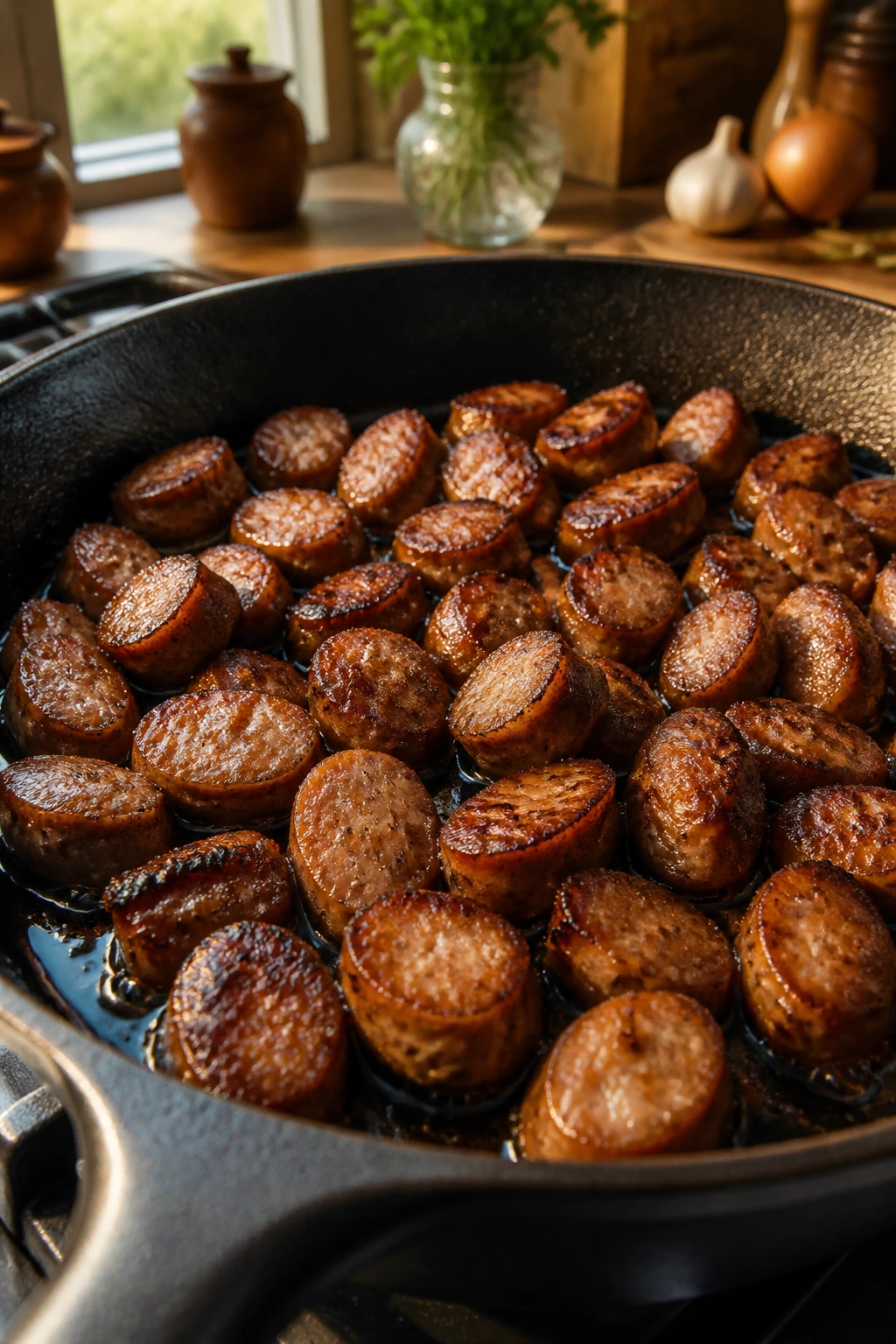
Beef sausage earns its place because it does more than one job at once. It seasons the pan, gives you fat for browning, and still leaves room for beans, pasta, potatoes, or rice to do the bulk of the feeding. That’s not a small thing when you’re trying to get dinner on the table without making three separate dishes and cleaning up like you ran a catering event.
The best part is how forgiving it is. A little extra onion, a little too much tomato, a handful of greens that need using — beef sausage can absorb all of that and still taste deliberate. It likes strong partners. It also likes a hot pan, which is half the battle with weeknight cooking anyway.
If you’ve ever stared at a package of sausage and wondered how far it can go, the answer is further than it looks. Brown it well, pair it with something sturdy, and it will keep handing you dinner after dinner without much complaint.
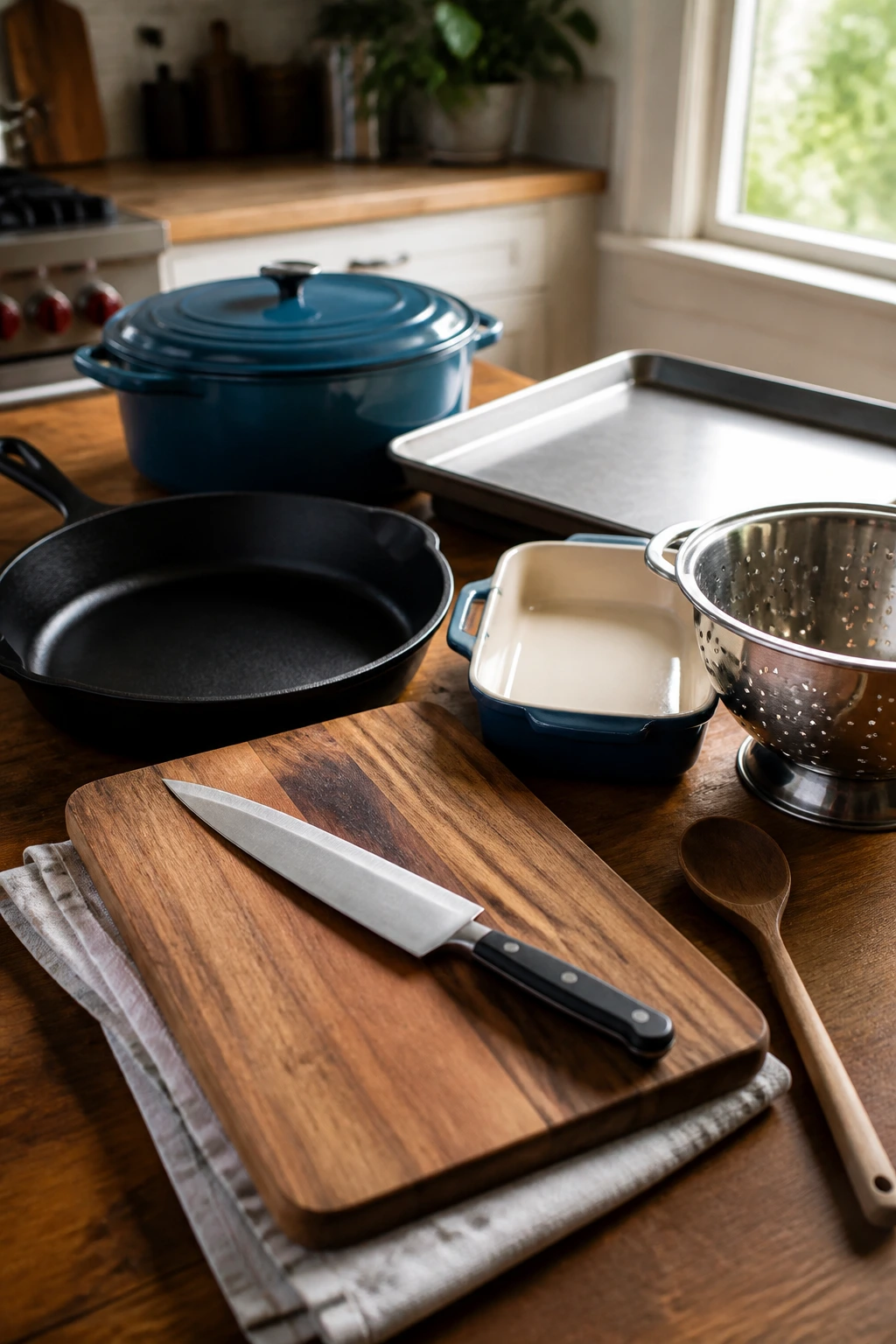
Essential Equipment for These Dinners
-
12-inch skillet: The workhorse for sausage, peppers, pasta sauces, and quick hash; choose one with enough surface area to brown instead of steam.
-
Dutch oven or heavy soup pot: Best for chili, soup, stew, and jambalaya because the heat stays steady and the bottom is less likely to scorch.
-
Rimmed sheet pan: Needed for roasted sausage-and-vegetable dinners; the rim keeps oil and juices from sliding off the pan.
-
9×13-inch baking dish: The right size for casseroles, baked pasta, stuffed peppers, and roll-up dishes.
-
Sharp chef’s knife: Sausage, peppers, onions, cabbage, and potatoes all cook better when the cuts are even.
-
Cutting board with a damp towel underneath: Keeps the board from skidding when you’re slicing slippery sausage or cabbage.
-
Colander: Necessary for pasta, rice rinsing, and par-cooked potatoes.
-
Wooden spoon or heatproof spatula: Useful for scraping browned bits, folding sauces, and keeping the bottom of the pan clean.
Smart Shopping and Ingredient Tips
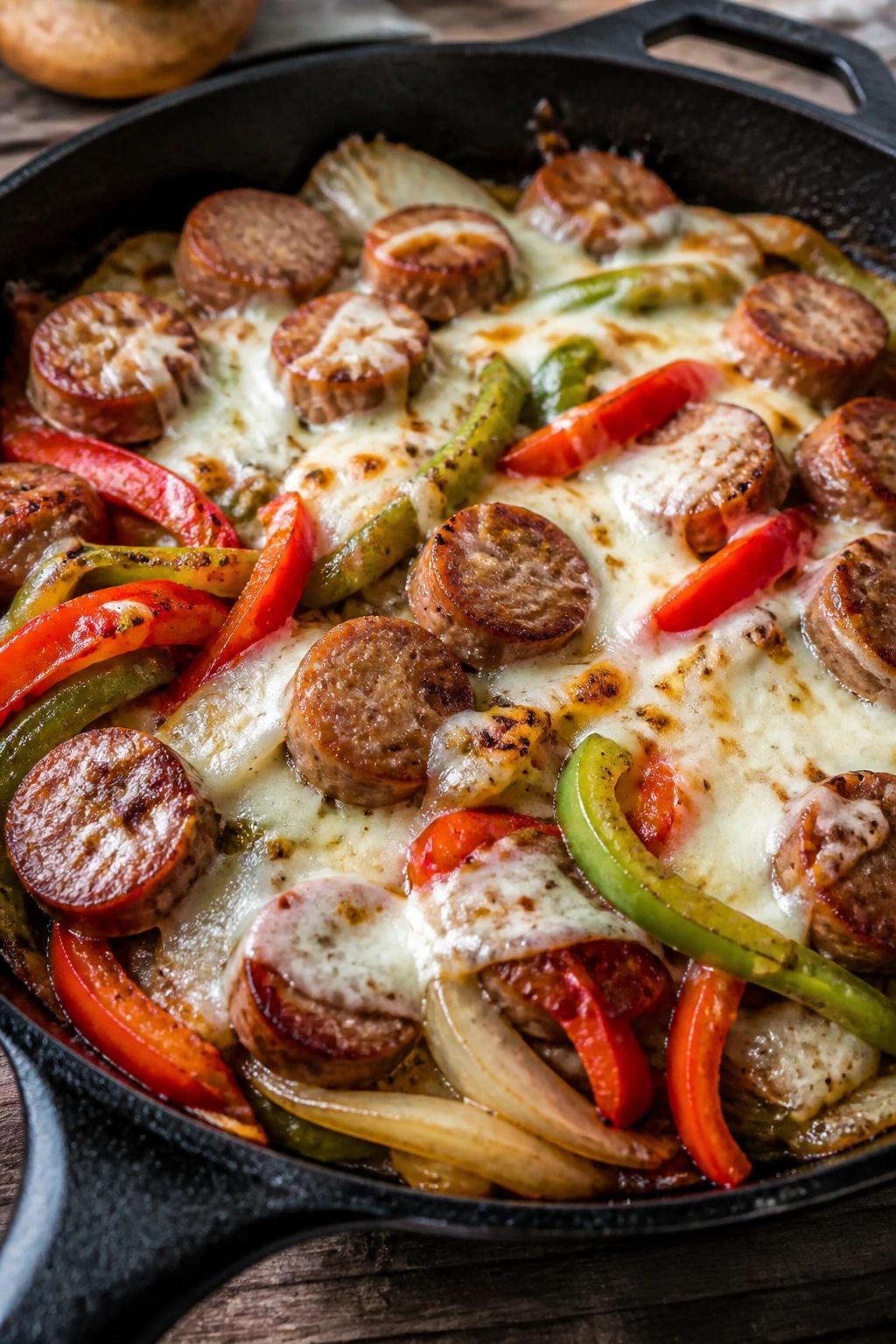
Choose the sausage with the recipe in mind. A smoked beef sausage gives you the fastest payoff in skillets, soups, and sheet-pan dinners because it only needs browning and reheating. Fresh beef sausage or bulk sausage makes more sense for tacos, casseroles, stuffed peppers, and anything where you want the meat to mix into a filling.
Check the fat and sodium on the package, not because either one is bad, but because they change how the dish behaves. A lean sausage can taste dry in pasta and baked casseroles, while a very fatty link may need a quick drain before you add vegetables. If the sausage is heavily seasoned, go easy on extra salt until the end. That’s where home cooks get tripped up — they season the pan like plain ground meat and end up with a salty bowl.
For vegetables, buy sturdier ones when the recipe bakes or simmers for a while. Broccoli, cabbage, carrots, onions, potatoes, mushrooms, and peppers all hold up better than delicate greens. Spinach and kale are different; they’re there for the last few minutes, not the long simmer. Frozen corn, peas, and chopped broccoli are fine when the recipe calls for them. No need to fight the freezer aisle.
Use canned tomatoes, beans, and broth as pantry helpers, not second-class ingredients. A good canned tomato with a short ingredient list can save a chili or stew, and rinsed canned beans are one of the easiest ways to make a sausage dinner more filling without more meat. If you’re buying cheese, shred blocks when you can. Bagged cheese works, but freshly shredded cheddar or mozzarella melts with less clumping.
How to Serve These Recipes
Presentation:
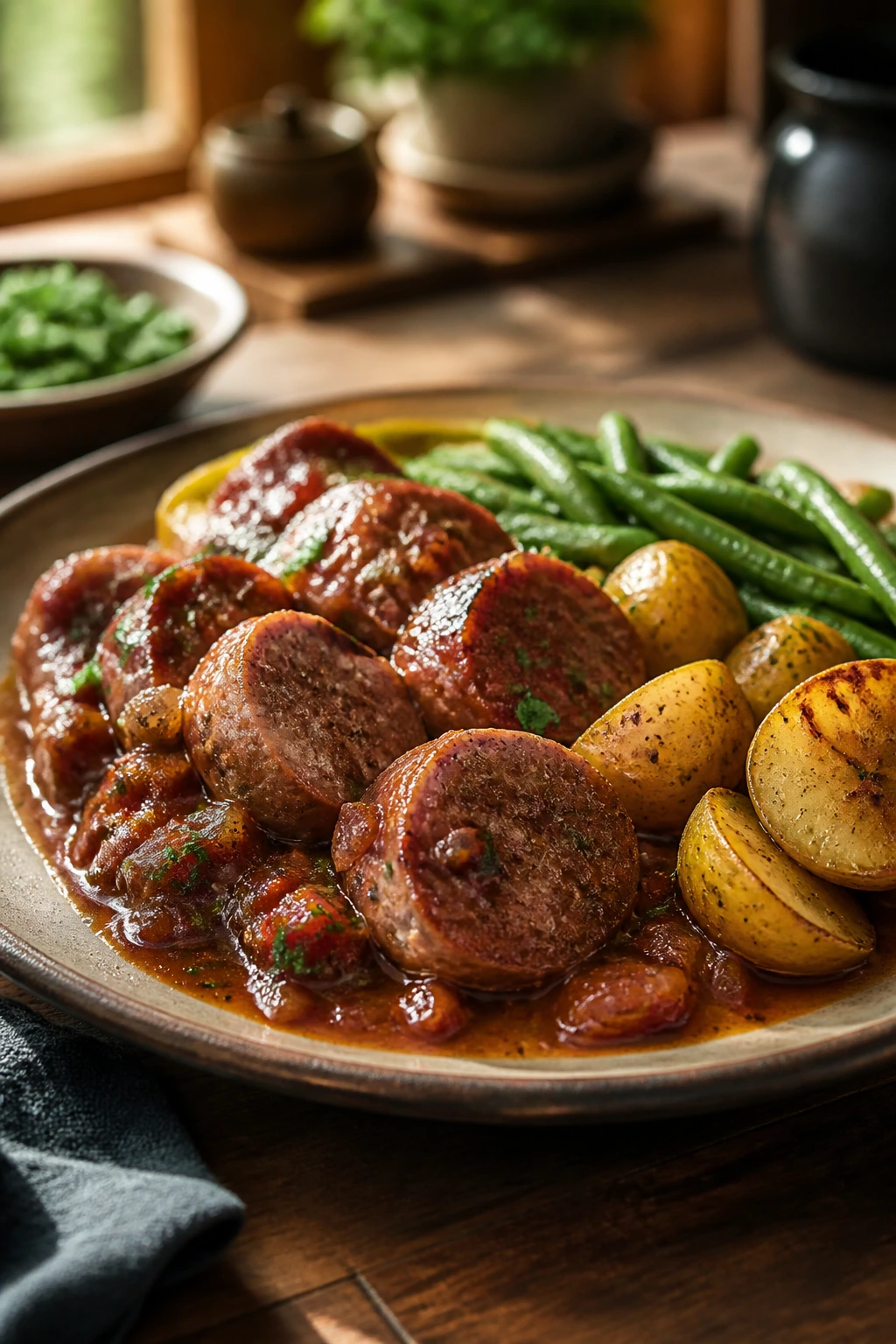
Serve sausage dinners in shallow bowls when there’s sauce, in wide plates when there’s a roast or sheet-pan mix, and in baking dishes that can come straight to the table when the top is browned. A final scatter of herbs, sliced scallions, or black pepper keeps the food from looking heavy and same-colored.
Accompaniments:
Use sturdy sides that can catch sauce: crusty bread, rice, mashed potatoes, buttered noodles, cornbread, cabbage slaw, green salad, roasted broccoli, or pickles. If the main dish already has pasta or potatoes, add something sharp or crunchy on the side instead of another soft starch.
Portions:
Most of these beef sausage dinners feed 4 with one pound of sausage, especially when pasta, rice, beans, or potatoes are doing some of the work. If you’re feeding very hungry eaters, stretch the pan with extra vegetables or a bigger starch layer rather than adding more sausage and calling it done.
Beverage Pairing:
Sparkling water with lemon works across the board. If you want something more fitting, try a dry cider, a light lager, or unsweetened iced tea. Creamy casseroles and tomato-heavy pans both appreciate a drink with a little bite.
Additional Tips and Flavor Boosters
Flavor Enhancement:
A spoonful of acid at the end changes more than people expect. Lemon juice, apple cider vinegar, or a little pickle brine can make a sausage skillet taste sharper and cleaner. The same goes for fresh herbs right before serving — parsley, basil, dill, or green onion all lift heavy dishes without making them fussy.
Customization:
If you want more vegetables, add them where the recipe already has moisture. Spinach into soup, kale into stew, broccoli into baked pasta, cabbage into hash, or peppers into tacos all work because the sausage flavor can carry them. If you want more heat, add red pepper flakes to tomato sauces or a chopped jalapeño to the skillet base.
Serving Suggestions:
Garnishes matter more than they get credit for. Grated parmesan on pasta, cilantro on tacos, chopped parsley on soup, sour cream on chili, or a spoon of mustard next to cabbage all change how the first bite lands. The pan might be simple, but the finish doesn’t have to be.
Make-It-Yours:
For a lower-dairy version, lean on broth, tomatoes, and greens instead of cream and extra cheese. For gluten-free dinners, use rice, potatoes, corn tortillas, polenta, or gluten-free pasta. If you need a milder plate for kids, choose a mild beef sausage and hold back the chili flakes until the table.
Make-Ahead, Storage, and Reheating Guidance
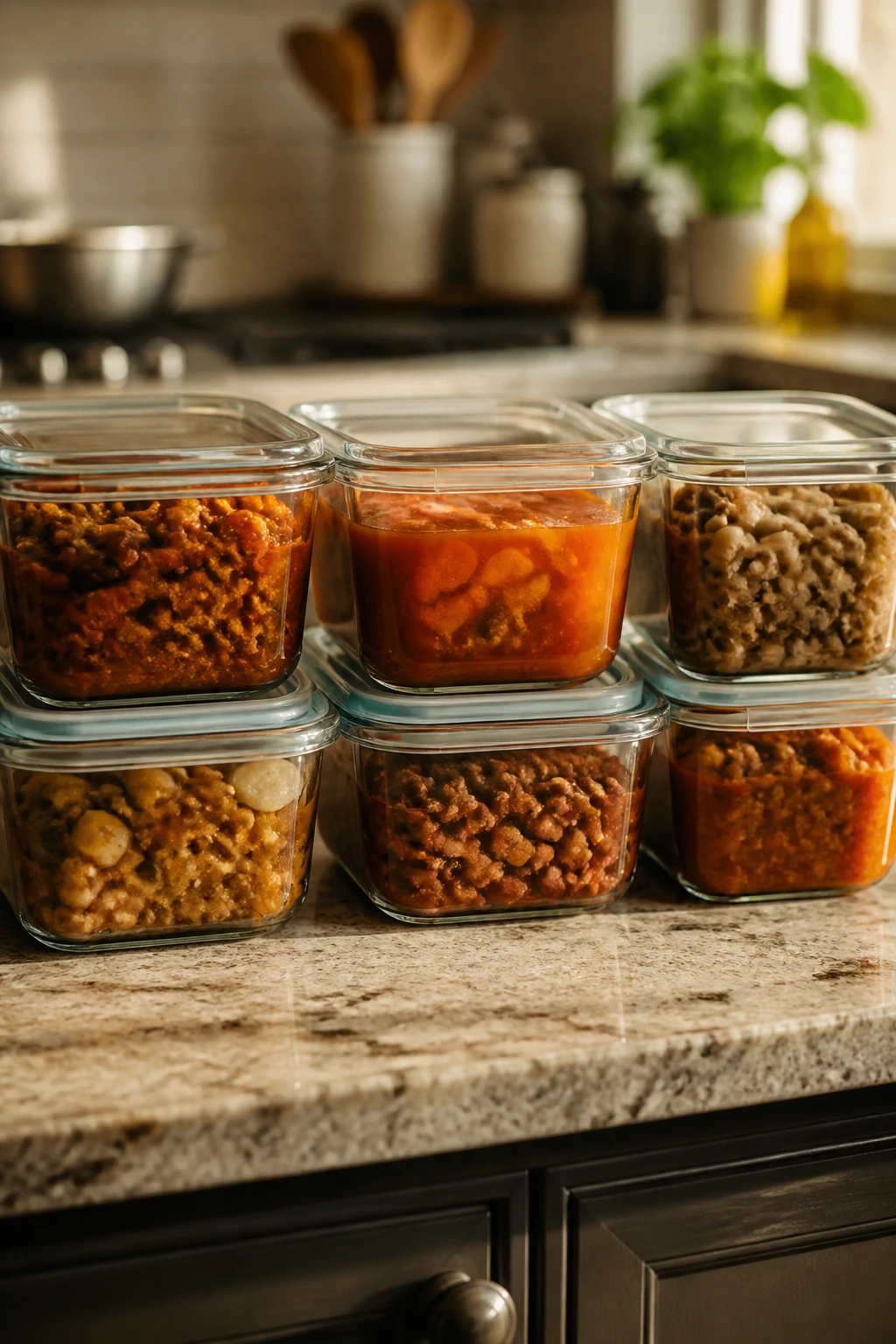
Most of these dishes keep well in the refrigerator for 3 to 4 days in shallow containers. Soups, stews, chili, and bean-based pans often taste even better the next day because the sausage seasoning has time to settle through the broth or sauce. Pasta bakes and creamy dishes also improve a little after a night in the fridge, though they’ll want a splash of liquid when reheated.
For the freezer, the sturdy ones are your best bet: chili, stew, soup, shepherd’s pie, casserole, and some tomato-based pasta bakes will hold for up to 2 to 3 months if wrapped well. Cream-heavy dishes can freeze, but the sauce may separate a little after thawing. It still tastes fine; it just won’t look as smooth. If you care about texture more than convenience, freeze those less often.
Reheat skillet meals in a pan over medium-low heat with a spoonful or two of broth, water, or sauce to loosen the bottom. Reheat casseroles and baked pasta in a 350°F oven, covered with foil, until hot through; uncover for the last few minutes if you want the top to crisp again. For soups and stews, a gentle simmer is better than a hard boil. Microwave reheating works in a pinch, but stop and stir every 60 to 90 seconds so the sausage doesn’t turn rubbery at the edges.
If you’re planning ahead, many of these recipes can be partly assembled earlier in the day. Chop the vegetables, slice the sausage, or mix the filling the night before and keep it cold. For baked dishes, hold back the cheese topping until right before baking if you want the top to melt cleanly instead of drying out in the fridge.
Variations and Adaptations to Try
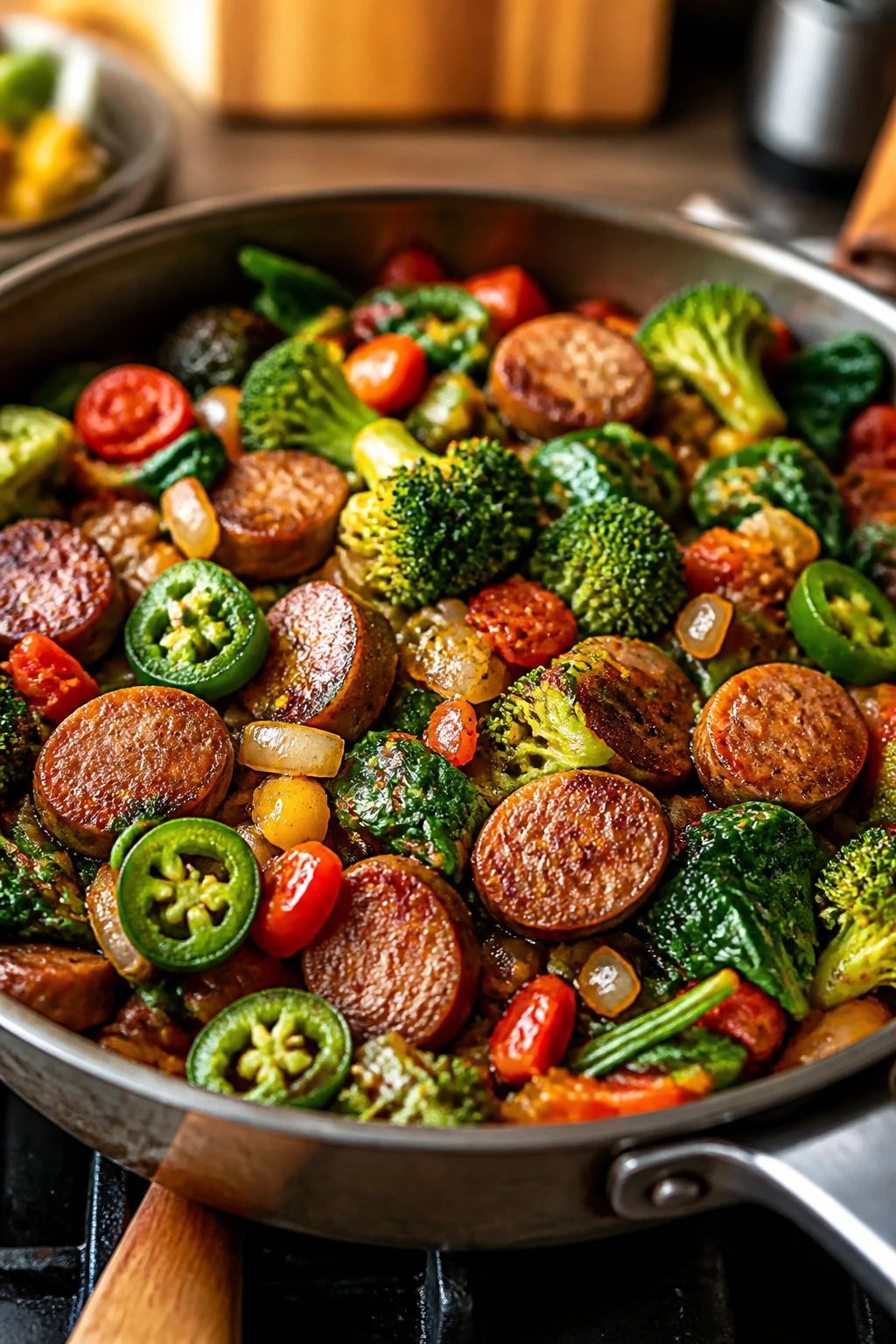
Lower-Sodium Route:
Use a lower-sodium broth, rinse canned beans well, and lean on lemon, vinegar, herbs, and garlic for flavor instead of extra salt. Beef sausage is already seasoned, so you usually have more room than you think.
Dairy-Free Comfort:
Skip the cream and cheese-heavy finish in the creamy pasta, casseroles, and bakes, then use tomato sauce, olive oil, broth, or a little coconut milk instead. The sausage still carries the dish; the dairy is there for texture, not identity.
Gluten-Free Swaps:
Use rice, corn tortillas, potatoes, polenta, or gluten-free pasta in place of wheat-based starches. For casseroles and gravies, choose a gluten-free flour blend or thicken with mashed beans or potato instead of a wheat roux.
Extra-Spicy Path:
Choose hot beef sausage, add chili flakes early in the pan, and finish with hot sauce or pickled peppers. This works especially well in tacos, chili, jambalaya, and cabbage skillet dinners.
Kid-Friendly Mild Version:
Pick a mild beef sausage and keep the onion, pepper, and tomato flavors in front of the heat. Cheese, pasta, rice, and potatoes usually make the whole plate easier for cautious eaters.
Vegetable-Heavy Version:
Increase the carrots, peppers, cabbage, broccoli, spinach, mushrooms, or zucchini in any skillet or bake. Beef sausage has enough personality to keep the meal from tasting like a vegetable tray that wandered into dinner.
Common Mistakes to Avoid

-
Starting with a cold, crowded pan: Sausage needs room and heat or it steams in its own fat. If the pan looks packed, cook in batches.
-
Over-salting too early: Beef sausage, broth, cheese, canned tomatoes, and beans can all bring salt. Taste after the dish has cooked down, not before.
-
Letting vegetables go to mush: Peppers, broccoli, zucchini, spinach, and cabbage all need different timing. Add the delicate ones late or they lose their texture and color.
-
Boiling creamy sauces hard: Cream, sour cream, and Alfredo all behave better at a gentle simmer. A hard boil can make the sauce split or turn grainy.
-
Using the wrong sausage form for the job: Sliced smoked links work best in sheet pans, soups, and skillet dinners. Bulk or casings-removed sausage fits better in tacos, stuffing, casseroles, and sauces.
-
Skipping the acid at the finish: A little lemon, vinegar, or tomato brightness keeps beef sausage dishes from tasting heavy. It’s the difference between “done” and “awake.”
Frequently Asked Questions
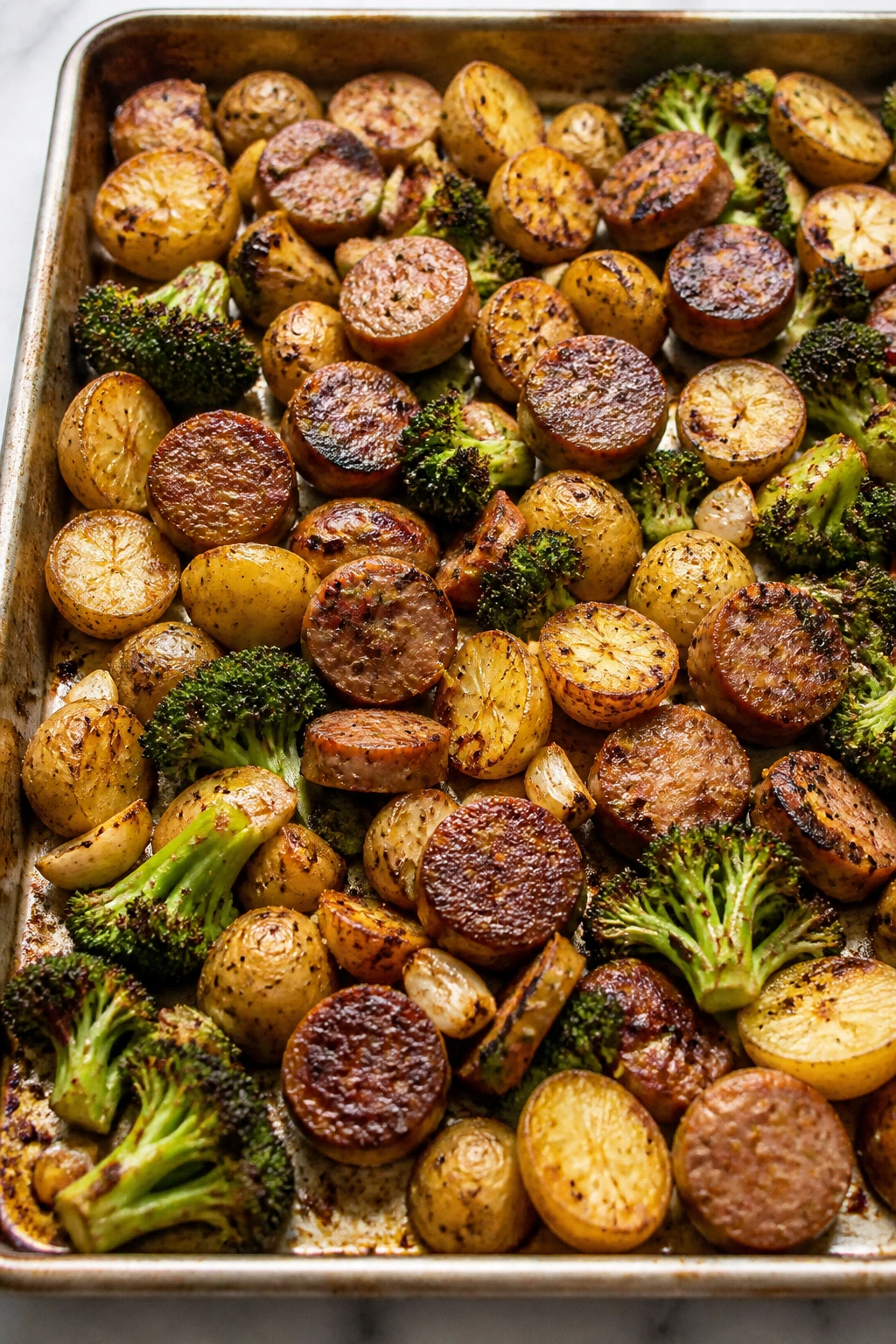
Can I use fully cooked beef sausage in all of these recipes?
Yes, and that’s part of why these dinners are so practical. Fully cooked sausage only needs browning and reheating, while raw sausage or bulk sausage needs to cook all the way through, so check the package and adjust the pan time.
What’s the difference between smoked beef sausage and fresh beef sausage?
Smoked sausage is already cooked and usually firmer, which makes it better for slicing into soups, sheet-pan dinners, and pastas. Fresh beef sausage is softer and usually more suited to crumbling into fillings, casseroles, or taco skillets.
Can I swap in ground beef sausage instead of links?
Absolutely. Ground beef sausage works well in chili, stroganoff, enchilada casserole, shepherd’s pie, and stuffed peppers because it blends into the sauce or filling more evenly. If you use links in a recipe that expects crumbles, just remove the casing and break it up in the pan.
How do I keep the dish from turning greasy?
Brown the sausage first, then spoon off some fat if the pan looks shiny and heavy. Using a leaner sausage and adding vegetables, beans, or broth also helps balance the richness.
Which of these recipes freezes best?
Chili, soup, stew, shepherd’s pie, and bean-based casseroles freeze the cleanest. Creamy pasta and cheese-heavy bakes still freeze, but the texture can change a little when they thaw.
What sides go best with beef sausage dinners?
Use sides that balance the sausage’s salt and smoke: green salad, coleslaw, bread, pickles, roasted vegetables, rice, or mashed potatoes. If the main dish is already heavy on starch, lean toward something crisp or acidic.
How do I keep the flavor from tasting flat?
Use enough browning, not just heat. Let the sausage, onions, mushrooms, or tomato paste darken a little, then finish with lemon juice, vinegar, mustard, or herbs so the last bite tastes as lively as the first.
Can I make any of these in a slow cooker?
Several soups, stews, and chilis adapt well, but you still want to brown the sausage first in a skillet. That step gives you the color and flavor the slow cooker won’t create on its own.
Why This Rotation Stays Useful
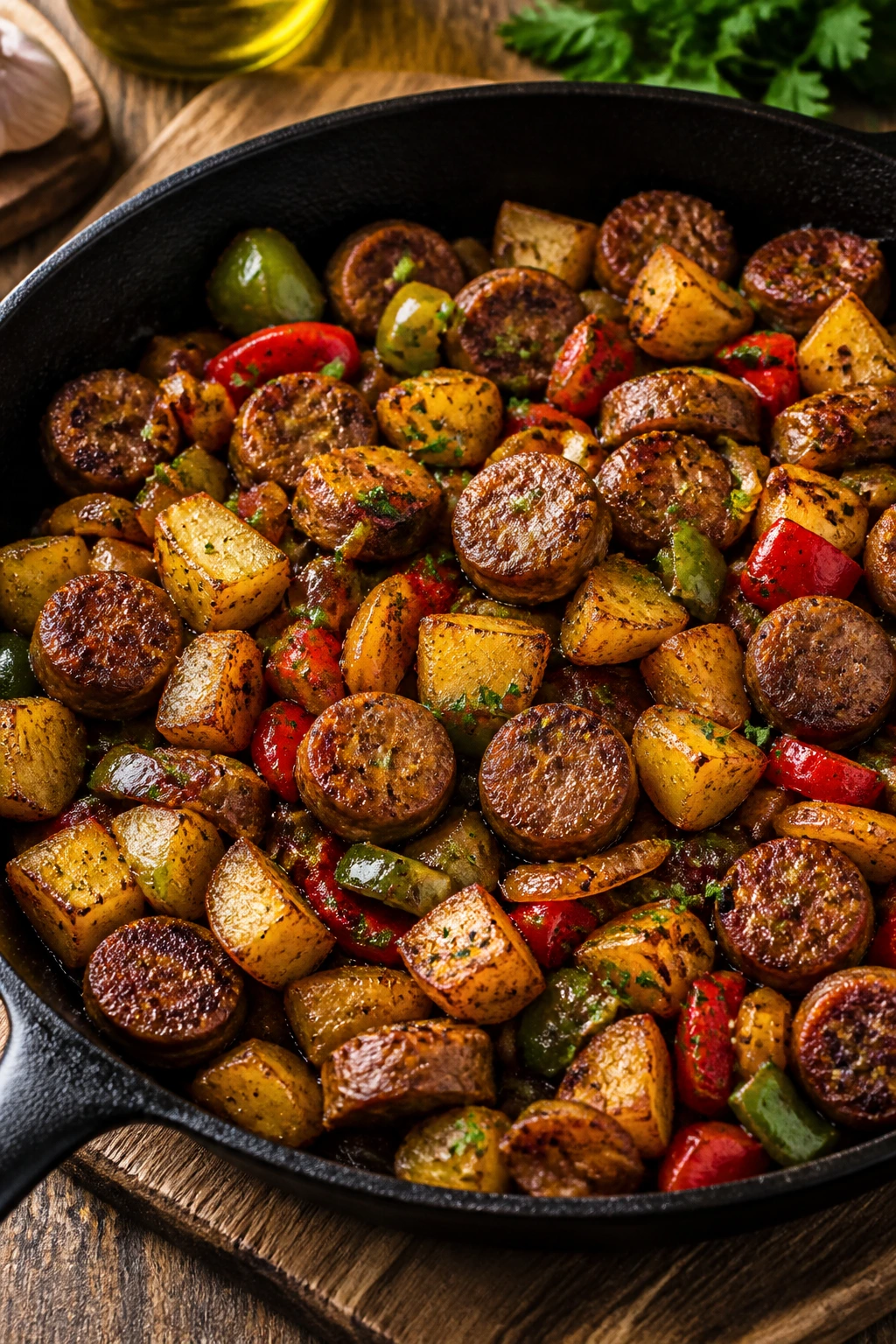
There’s a reason beef sausage keeps showing up in home kitchens: it turns ordinary ingredients into something that feels assembled on purpose. A bag of potatoes, a box of pasta, a can of beans, a few peppers, a head of cabbage — the sausage ties all of it together with smoke, fat, and seasoning.
The trick is not to overthink it. Brown it well, pair it with a sturdy starch or vegetable, and finish with one sharp note at the end. That’s the shape of a good sausage dinner, and it doesn’t really get old.
If you keep even three or four of these on rotation, weeknight dinner stops feeling like a rescue operation and starts feeling like a routine you actually trust.