



A tender veggie burger for a hearty dinner should smell like mushrooms hitting hot oil, not like a polite compromise. The patty ought to land on the plate with a dark, bronzed crust, a soft center, and enough chew to make the bun feel useful. When it crumbles into bean paste the second you pick it up, dinner gets annoying fast.
This version leans on black beans, brown rice, sautéed mushrooms, and a few smart binders. Not a random pile of leftovers. The mushrooms cook down until they lose their raw snap and turn almost meaty; the beans get partly mashed so the patties hold, but not so much that the texture goes gluey. That balance is the whole game.
I like burgers like this because they behave like dinner. You can build them high with tomato, lettuce, pickles, and a sharp sauce, or keep them plain and let the browned crust do the talking. Either way, the result feels substantial on the plate and still soft in the middle, which is the part most veggie burgers miss.
Why This Burger Earns Dinner Duty
Tender center: The mix uses cooked vegetables, mashed beans, and a little mayonnaise, so the patties stay soft inside even after a hard sear.
Real burger bite: Brown rice, oats, and panko give the patty enough structure to sit on a bun without turning into paste.
Deep savory flavor: Tomato paste, soy sauce, smoked paprika, and toasted walnuts build a browned, salty flavor that doesn’t taste like an afterthought.
Weeknight-friendly: The vegetables cook in one skillet, and the patties can rest in the fridge while you toast buns or stir together a quick slaw.
Flexible toppings: The burger can go smoky, sharp, creamy, or bright depending on what you pile on top, which makes it easy to repeat without getting bored.
Hearty without heaviness: It eats like a full dinner, but the texture stays light enough that you don’t need a nap afterward.
Yield: Serves 4
Prep Time: 25 minutes
Cook Time: 25 minutes
Total Time: 50 minutes
Chill/Rest Time: 20 minutes
Difficulty: Intermediate — the steps are straightforward, but shaping and cooking tender patties takes a little care.
Best Served: Warm, right after toasting the buns.
Why This Burger Stays Tender and Not Mushy
The first thing to understand is that a good veggie burger is a texture problem before it is a flavor problem. A lot of versions collapse because they’re built from wet ingredients that never had a chance to dry out. This one dodges that by cooking the mushrooms and onions until the skillet looks almost dry. That sounds fussy. It isn’t. It’s the difference between a burger that holds together and one that slumps onto the plate like damp stuffing.
Black beans do the heavy lifting here, but they don’t do it alone. Brown rice adds chew, oats drink up extra moisture, and panko keeps the inside from feeling dense. Toasted walnuts bring a little firmness and a toasty edge that reads as savory rather than sweet. When you put those pieces together, the patty feels substantial instead of squishy.
I also like that this burger doesn’t try to cosplay as beef. It tastes like mushrooms, toasted onion, smoky paprika, and a little mustard bite. That’s a better promise, in my opinion. Once you stop asking a veggie burger to be something else, it gets easier to make one that actually tastes good.
The other quiet win is the chill time. Ten or fifteen minutes in the fridge sounds boring, but it helps the oats hydrate and the mixture tighten up. Skip that and you’ll be nursing fragile patties with a spatula. Chill it, and the burgers behave.
What Goes Into the Bowl
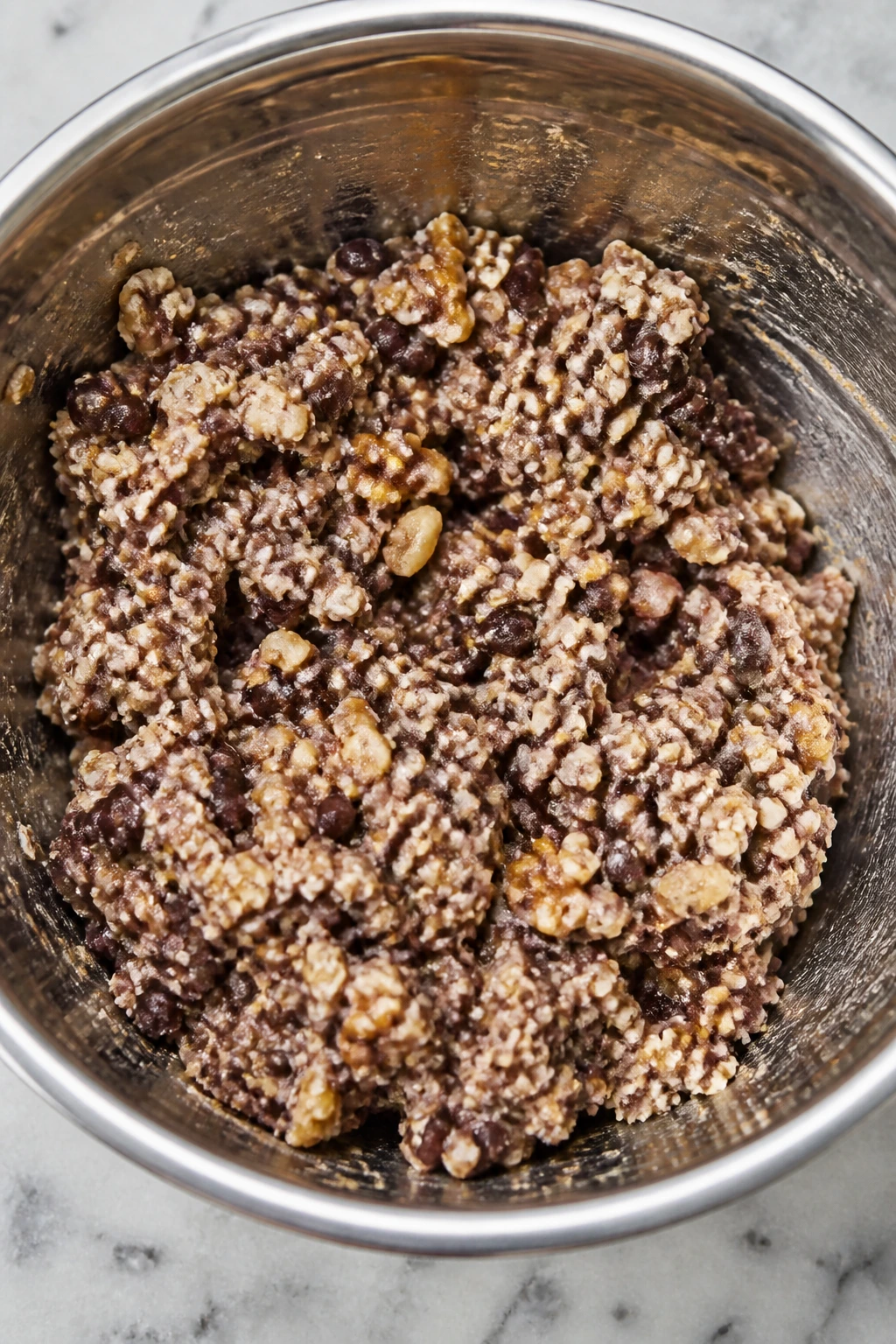
The ingredient list is built to keep the patty tender without making it loose. You don’t need a long grocery list, but you do need the right balance.
For the Burger Patties:
- 2 tablespoons olive oil, divided
- 1 small yellow onion, finely diced (about 1 cup)
- 8 ounces cremini mushrooms, finely chopped
- 1 medium carrot, grated on the fine side of a box grater
- 2 cloves garlic, minced
- 1 can (15 ounces) black beans, drained, rinsed, and patted dry
- 1 cup cooked brown rice, cooled
- 1/2 cup rolled oats
- 1/2 cup panko breadcrumbs
- 1/3 cup chopped walnuts, lightly toasted
- 1 large egg
- 2 tablespoons mayonnaise
- 1 tablespoon soy sauce or tamari
- 1 tablespoon tomato paste
- 1 teaspoon Dijon mustard
- 1 teaspoon smoked paprika
- 1 teaspoon ground cumin
- 1/2 teaspoon fine sea salt
- 1/4 teaspoon black pepper
- 2 tablespoons chopped fresh parsley
For Serving:
- 4 sturdy burger buns, split
- 1 tablespoon butter or neutral oil, for toasting the buns
- 4 slices cheddar or Monterey Jack, optional
- Lettuce leaves, tomato slices, dill pickles, red onion, and avocado, for topping
Why Each Ingredient Pulls Its Weight
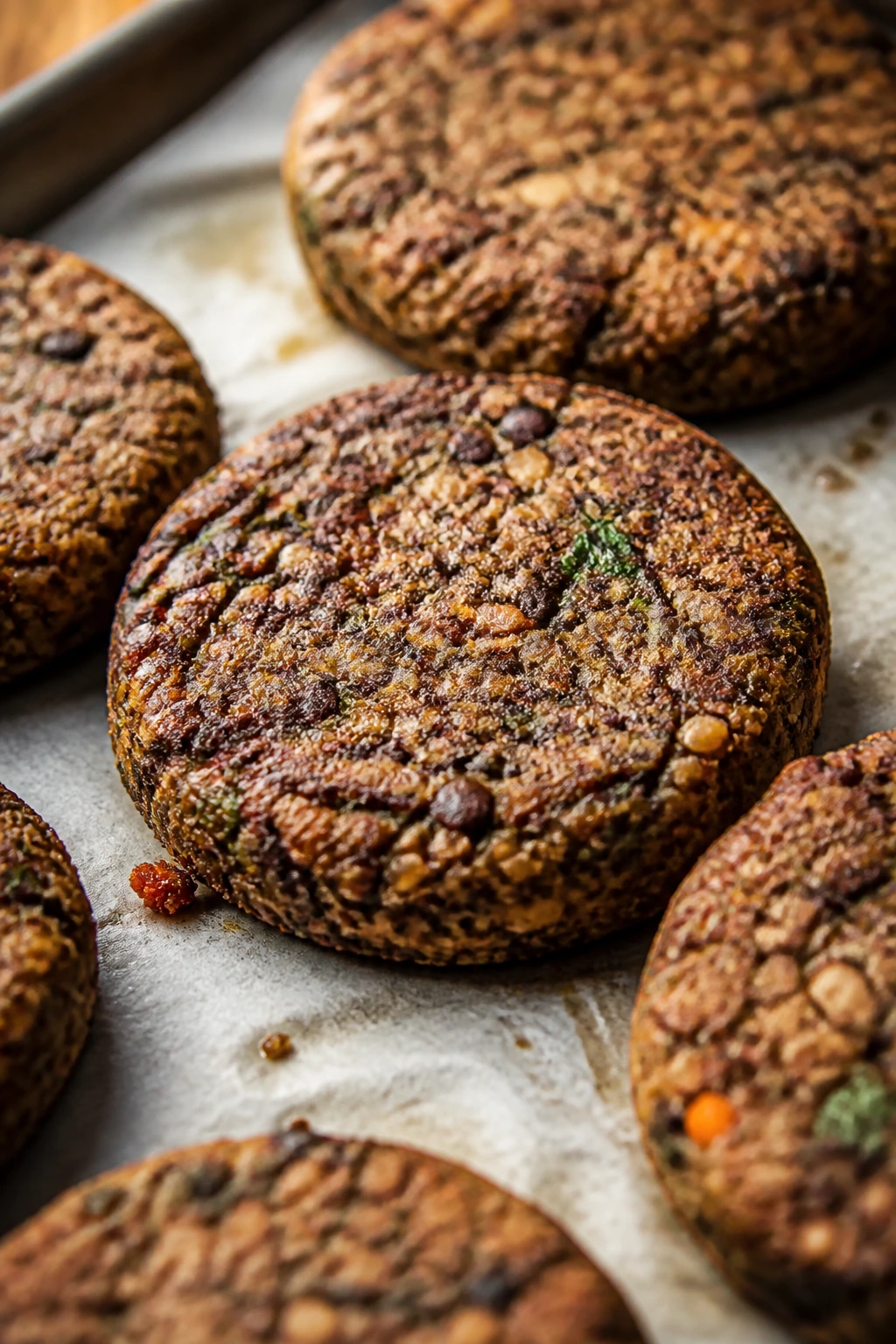
Bean-and-Grain Base
What to use: 1 can black beans, 1 cup cooked brown rice, 1/2 cup rolled oats, and 1/2 cup panko breadcrumbs.
Preparation: Drain and rinse the beans, then pat them dry with a towel so they don’t flood the bowl. Keep the rice cooled; warm rice softens the mix too fast.
Substitutions: Pinto beans work well if black beans aren’t in the pantry, and cooked quinoa can replace the brown rice for a slightly lighter texture. Certified gluten-free oats and crumbs make the recipe easy to adapt.
Tips: The beans should be mashed, not pureed. A few whole pieces left in the mix make the burger feel like food, not filling.
Vegetables and Moisture
What to use: 1 small yellow onion, 8 ounces cremini mushrooms, 1 medium carrot, and 2 cloves garlic.
Preparation: Chop the mushrooms finely so they cook down evenly, and grate the carrot on the fine side of the box grater. That keeps the carrot from forming harsh little shreds in the patty.
Substitutions: Shallots can replace the onion, and a handful of squeezed-dry grated zucchini can stand in for the carrot if that’s what you have. Portobello mushrooms work too, but they need extra time in the skillet because they carry more water.
Tips: Cook the vegetables until the pan looks almost dry. If they still look wet, they’ll loosen the patties later.
Binder and Structure
What to use: 1 large egg, 2 tablespoons mayonnaise, and the oats and panko already listed above.
Preparation: Beat the egg before adding it, and mix the mayonnaise in thoroughly so it disappears into the beans. If you prefer a finer burger, pulse the oats in a food processor for a few seconds.
Substitutions: For a vegan version, use 1 flax egg and 2 tablespoons vegan mayo or tahini. Crushed saltines or plain crackers can replace the panko in a pinch.
Tips: The binder should feel tacky, not wet. If the mixture clings to your fingers in thick clumps, add a tablespoon or two more panko before shaping.
Seasoning and Finish
What to use: 1 tablespoon soy sauce or tamari, 1 tablespoon tomato paste, 1 teaspoon Dijon mustard, 1 teaspoon smoked paprika, 1 teaspoon cumin, 1/2 teaspoon salt, 1/4 teaspoon black pepper, and 1/3 cup toasted walnuts.
Preparation: Measure the seasonings before you start cooking. Once the vegetables are hot, things move fast.
Substitutions: Coconut aminos can stand in for soy sauce if you want a soy-free option. If walnuts are out, toasted sunflower seeds give a similar crunch.
Tips: Tomato paste brings a deep, cooked flavor that keeps the burger from tasting flat. Don’t skip it unless you have a good reason.
Tools That Make the Patties Easier to Handle
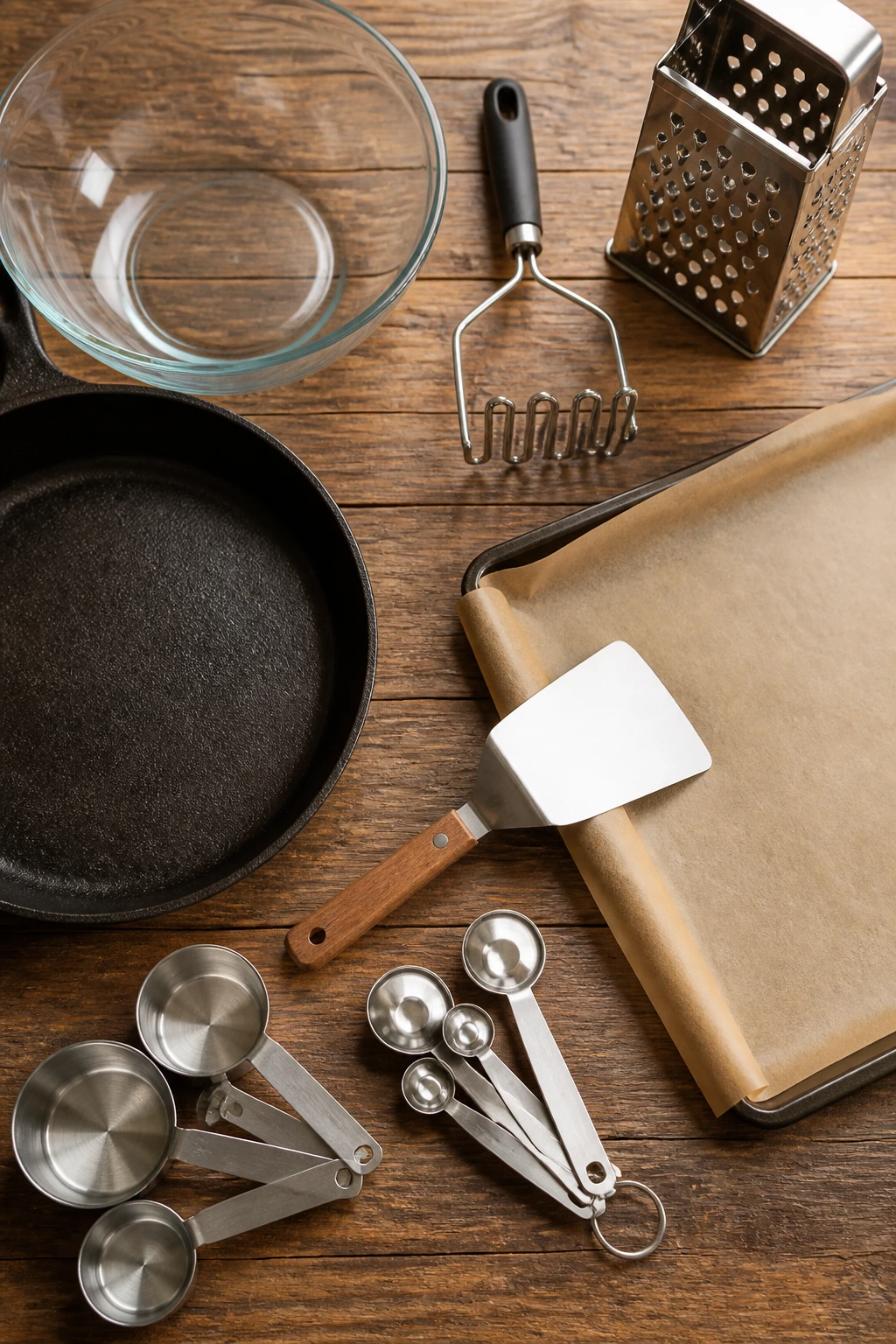
A few simple tools make this recipe smoother than it looks on paper.
- 12-inch skillet: A wide skillet gives the vegetables room to cook down instead of steaming.
- Large mixing bowl: You need room to mash the beans without sending bits over the edge.
- Potato masher or sturdy fork: Either one works for breaking down the beans while leaving some texture.
- Box grater: The fine side handles the carrot cleanly and keeps the shreds small.
- Parchment-lined sheet pan: This is where the shaped patties can rest before cooking or while they finish in the oven.
- Thin metal spatula: A flexible spatula slides under tender patties better than a thick one.
- Measuring cups and spoons: The mix depends on balance, so eyeballing it is a bad trade.
- Instant-read thermometer, optional: If you like a number, the center of the patties should reach about 160°F.
How to Mix, Shape, and Cook the Patties
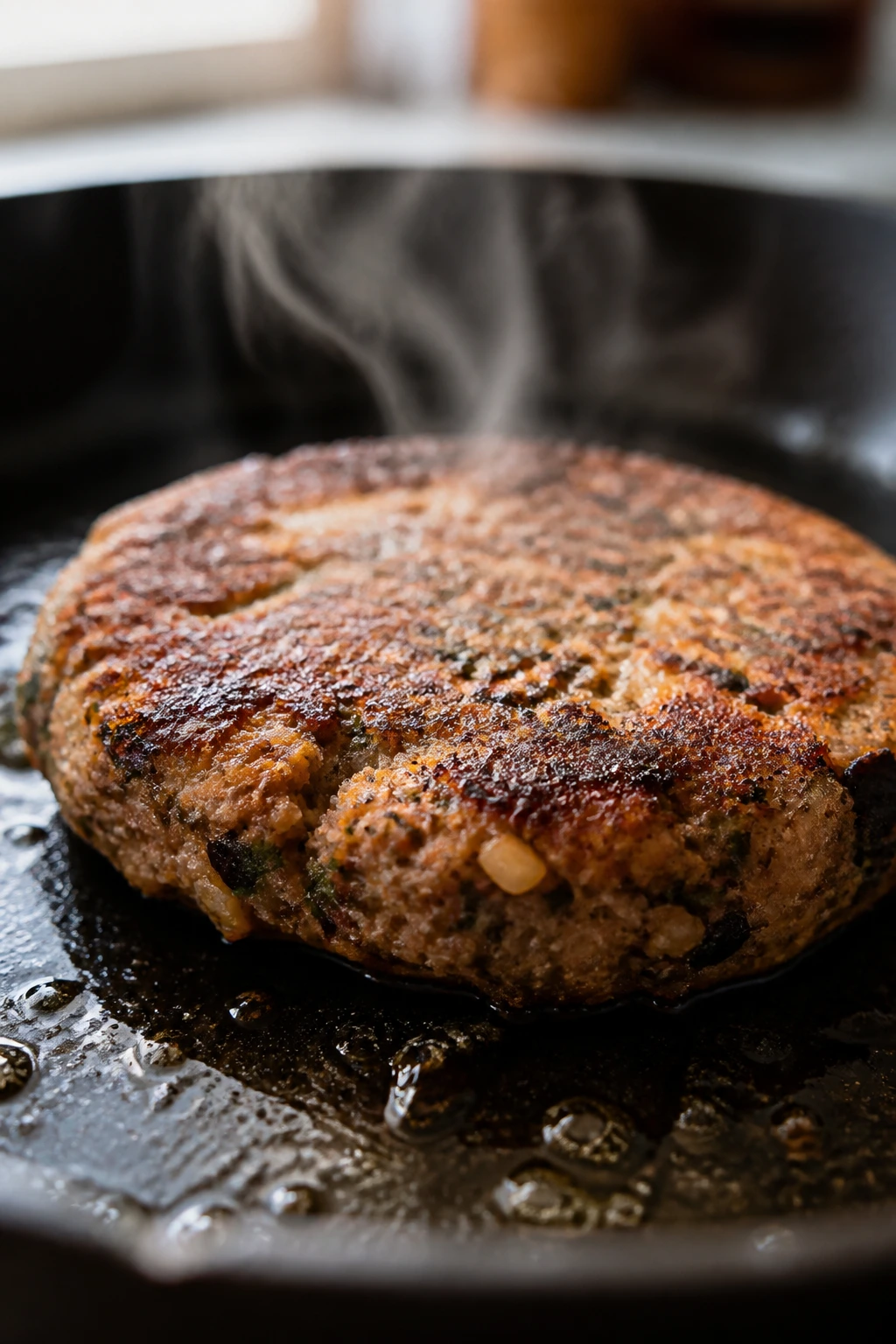
Cook and Dry the Vegetables
-
Heat 1 tablespoon olive oil in a 12-inch skillet over medium heat. Add the onion, mushrooms, and carrot with a pinch of the salt, and cook for 10 to 12 minutes, stirring often, until the mushrooms release their liquid and the pan looks nearly dry. The onion should soften and pick up a little gold at the edges, and the mushrooms should smell deep and earthy.
-
Add the garlic and cook for 30 seconds, just until fragrant. Do not let the garlic brown, or the whole mix will pick up a bitter note. Scrape the vegetables into a large bowl and let them cool for 5 minutes.
Build the Burger Mix
-
Add the black beans to the bowl and mash about two-thirds of them with a potato masher or fork. Leave a few whole beans in the mix so the texture stays open. Stir in the brown rice, oats, panko, walnuts, egg, mayonnaise, soy sauce, tomato paste, Dijon, smoked paprika, cumin, parsley, black pepper, and the remaining salt.
-
Mix until everything is evenly distributed, but stop before the bowl turns into paste. The mixture should hold together when you pinch a bit between your fingers. If it seems too wet, add 2 tablespoons more panko and stir again.
-
Let the mixture rest for 10 minutes so the oats drink up some of the moisture. If your kitchen is warm or the mix feels soft, chill it for 10 more minutes. This part is dull. It also matters.
Shape and Set the Patties
-
Divide the mixture into 4 equal portions and shape each one into a patty about 3/4 inch thick and 4 1/2 inches wide. Press a shallow thumbprint into the center of each patty so it cooks flat instead of doming up.
-
Set the patties on a parchment-lined sheet pan and chill them for 10 minutes. That short chill keeps them from cracking when they hit the skillet.
Sear and Finish
-
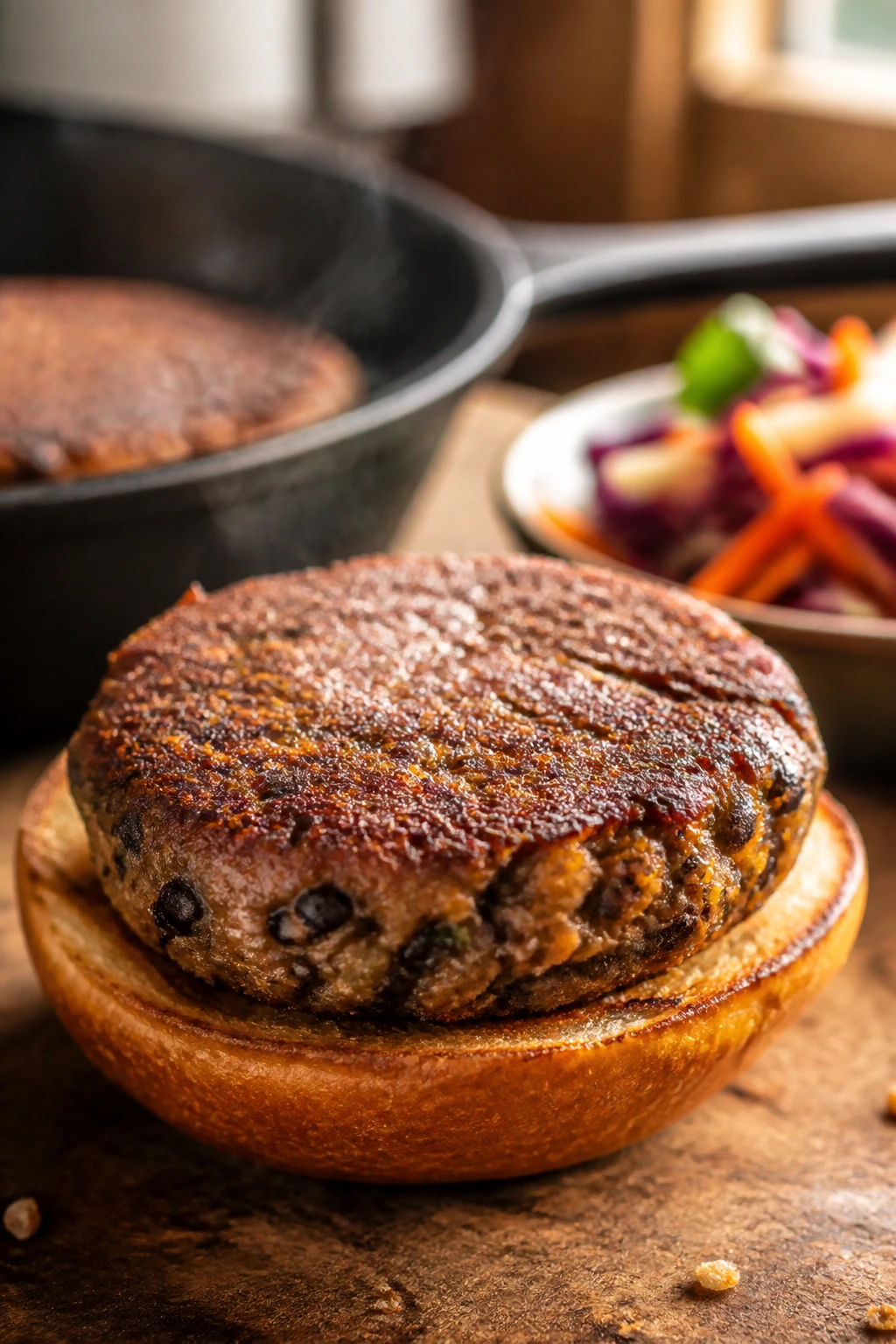
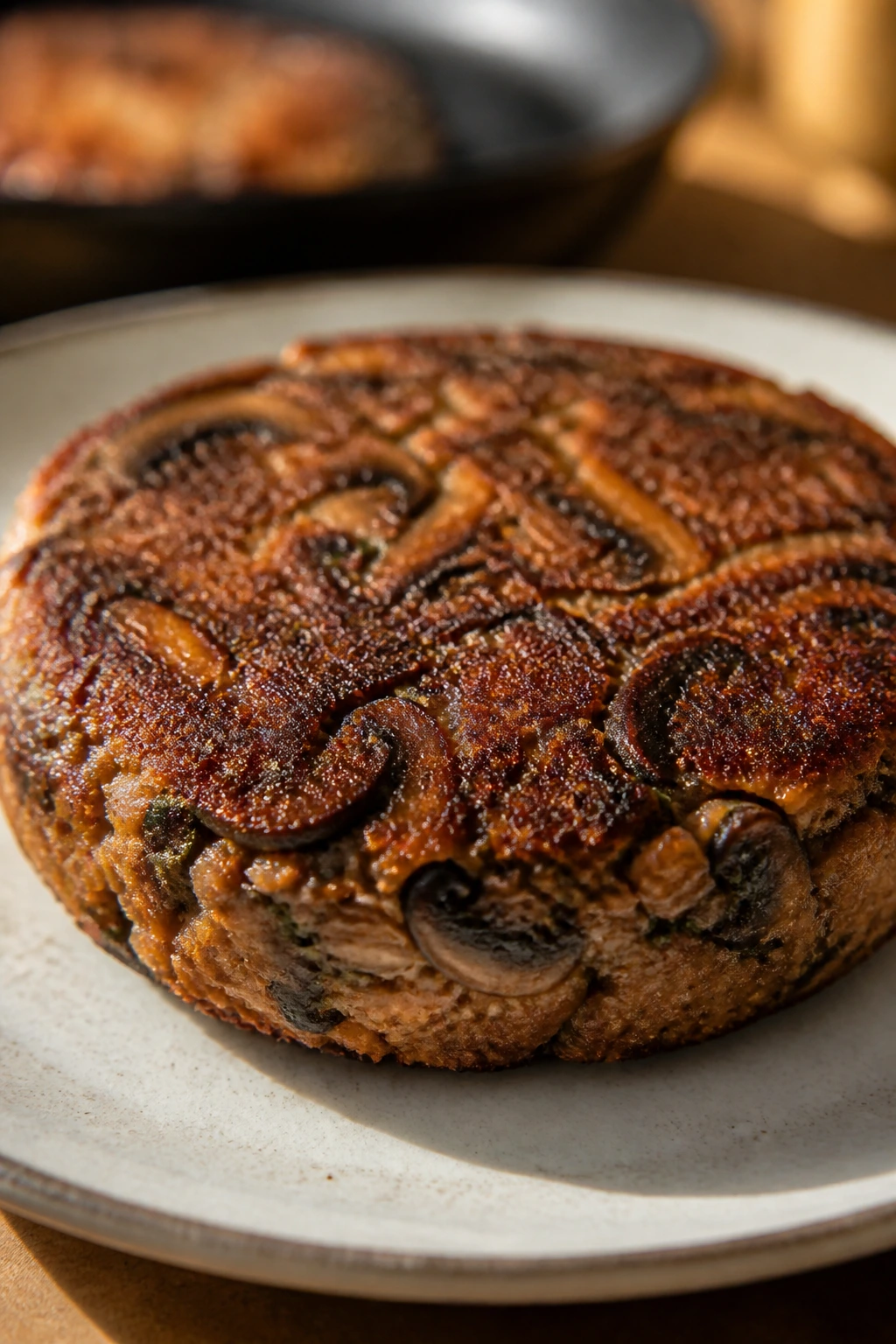
Heat the remaining 1 tablespoon olive oil in the same skillet over medium heat. Sear the patties for 3 minutes on the first side, until the bottom is dark brown and easy to lift without sticking.
-
Flip carefully with a thin metal spatula and cook for 3 minutes on the second side. If you want cheese, lay a slice on top during the last minute and cover the pan so it melts. If the patties still feel soft in the center, move them to a 400°F oven for 6 to 8 minutes until they are hot through and firm enough to lift cleanly. If you use a thermometer, aim for 160°F in the center.
-
Toast the buns cut-side down in a little butter or oil for 1 to 2 minutes, until the edges turn golden. Let the patties rest for 3 minutes before stacking them. That tiny pause keeps the juices where they belong.
How to Serve a Veggie Burger for Dinner
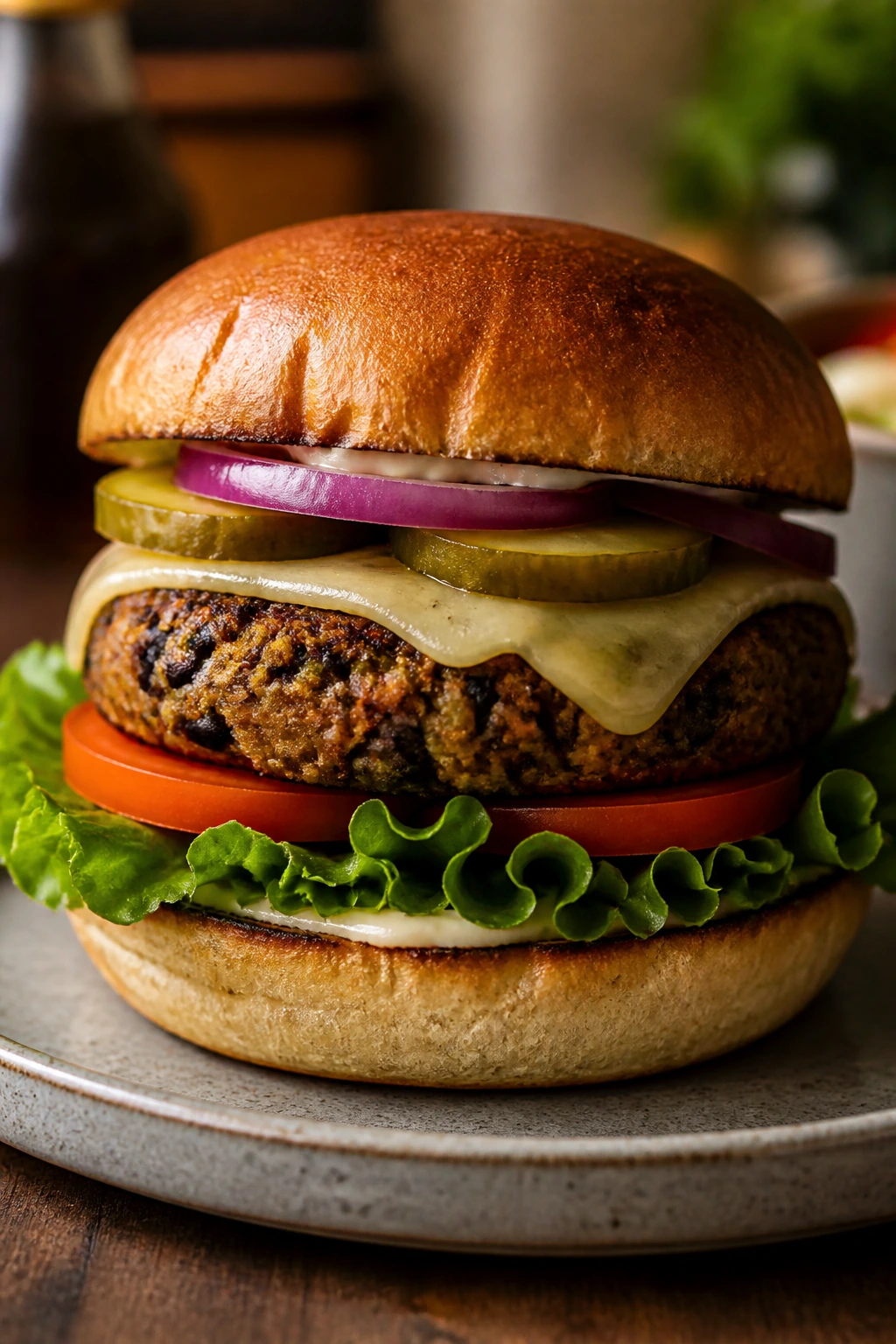
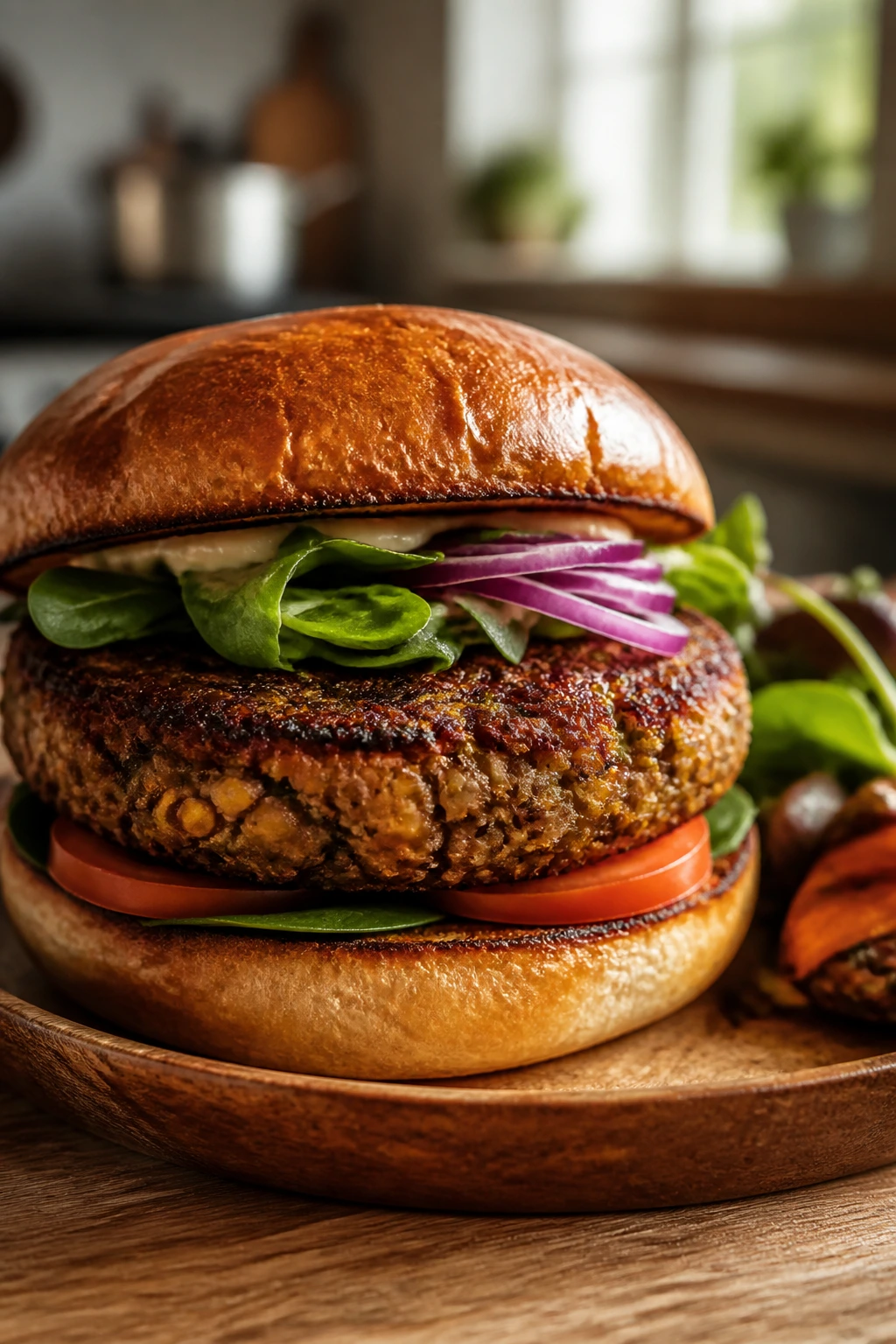
Presentation: Start with a toasted bun, then add a lettuce leaf before the patty so the bottom bun doesn’t go soft in the first minute. I like to stack the toppings in this order: sauce, burger, cheese if you’re using it, tomato, pickles, onion, and a few slices of avocado. It makes the burger look tall and orderly instead of lopsided and slippery.
Accompaniments: These patties want something crisp or sharp on the side. Oven fries, vinegar slaw, cucumber salad, or roasted broccoli all work, and a pile of dill pickles on the plate helps cut through the creamy middle. If you’re feeding bigger appetites, add corn on the cob or a simple potato salad.
Portions: One large patty per person is enough for most dinners, especially with buns and sides. If you’re serving kids or want a lighter plate, turn the mix into 5 smaller patties and tuck them into slider buns. They also do well on a plate without the bun, resting beside roasted potatoes and greens.
Beverage Pairing: A cold lager or pale ale fits the browned, smoky edges nicely. If you want something nonalcoholic, sparkling lemonade or iced tea with lemon keeps the whole meal bright. I’d avoid sweet soda here; it fights the savory filling instead of helping it.
Small Moves That Make the Burger Better
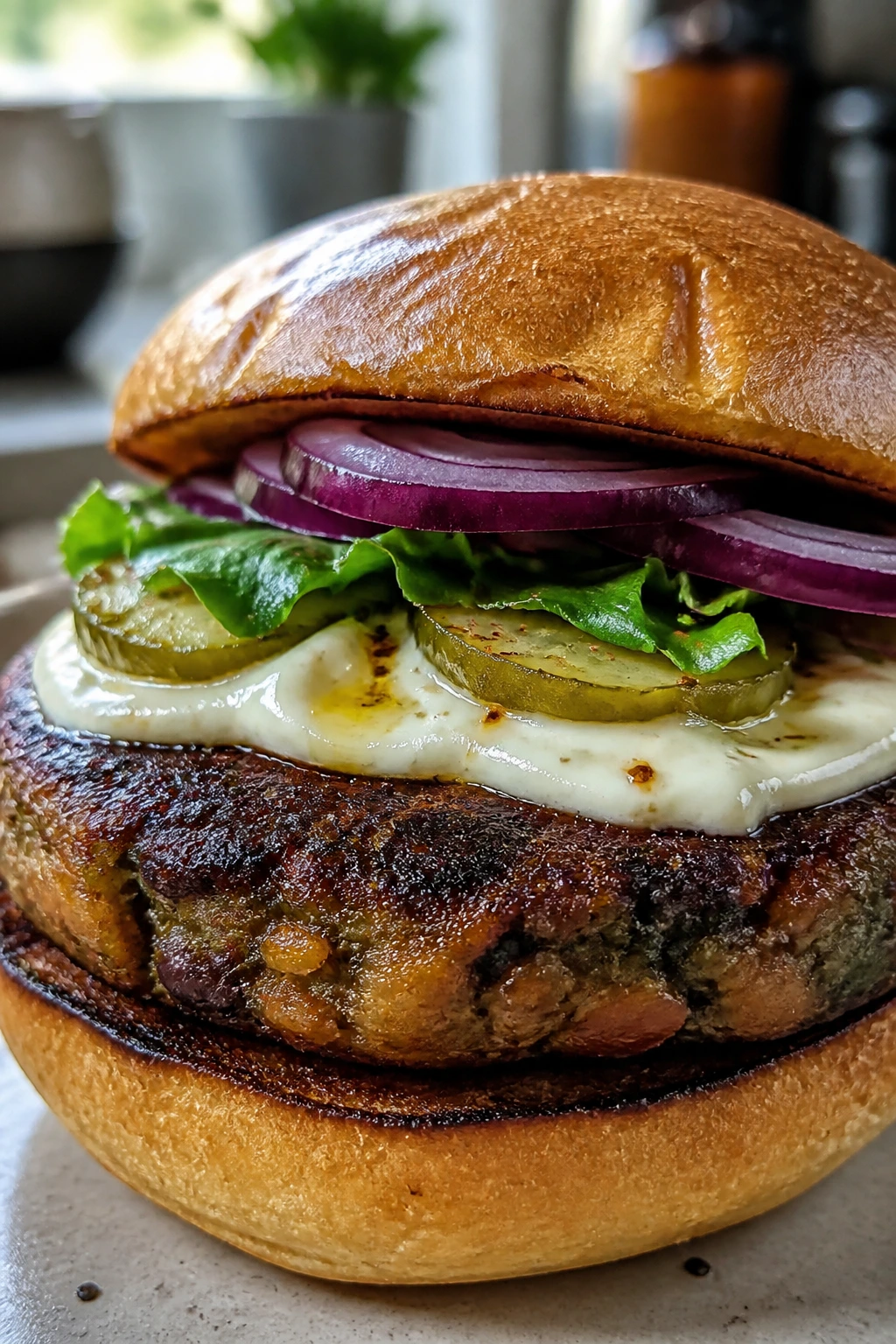
Flavor Enhancement: A spoonful of pickle brine stirred into the mayonnaise for serving gives the burger a sharp, salty edge that wakes up the beans. If you like a little heat, mix a pinch of chipotle powder into the sauce rather than dumping hot sauce over the top; the burger keeps its texture better that way.
Customization: Swap the walnuts for toasted sunflower seeds if you want a nut-free burger with a similar crunch. Quinoa can replace the brown rice if you want a slightly lighter bite, and finely chopped jalapeño can go into the vegetable mix if your family likes a little fire. The base is sturdy enough to handle it.
Serving Suggestions: Quick-pickled red onions are one of the best toppings here because they cut through the soft interior and the toasted bun. A smear of Dijon on the bottom bun, a crisp lettuce leaf, and a tomato slice that’s been salted for 2 minutes make the whole burger taste more deliberate. That sounds small. It isn’t.
Make-It-Yours: For gluten-free burgers, use certified gluten-free oats, gluten-free breadcrumbs, and tamari instead of soy sauce. For a vegan version, swap the egg for a flax egg and use vegan mayo or tahini. For a lower-sodium batch, rinse the beans well and lean harder on herbs, mustard, and pepper instead of extra salt.
Mistakes That Turn Good Burgers into Mush
-
Leaving the vegetables wet: If the onion and mushrooms still look glossy and loose when you pull them off the heat, the patties will slump. Cook them until the pan looks almost dry and the vegetables smell browned, not steamed.
-
Pureeing the beans: A smooth bean paste makes the texture heavy and sticky. Mash most of the beans, but leave a scattering of whole ones so the bite stays open and the patty doesn’t turn into a dense slab.
-
Skipping the chill time: Warm mixture is soft mixture. If you shape and cook immediately, the patties crack at the edges and smear in the pan instead of searing cleanly.
-
Flipping too soon: If the bottom hasn’t formed a brown crust, the patty will stick and tear. Wait until the spatula slides under with little resistance and the underside smells toasted.
-
Making them too thick: Tall patties often brown before the center sets. Keep them around 3/4 inch thick, and use a thumbprint in the center so they cook evenly.
-
Loading up on wet toppings: A burger buried under too much tomato, sauce, and avocado gets soggy fast. Toast the bun, use a lettuce barrier, and put the juiciest toppings in the middle rather than directly against the bread.
Smart Variations for Different Kitchens
Smoky Chipotle Burger: Stir 1 minced chipotle in adobo and 1 teaspoon of the sauce into the mix, then swap the smoked paprika for regular paprika. The burger gets deeper heat and a darker color that works well with pepper jack or Monterey Jack.
Vegan Pantry Burger: Replace the egg with 1 flax egg made from 1 tablespoon ground flaxseed and 3 tablespoons water, and use vegan mayo or tahini in place of the regular mayo. Chill the mixture a little longer, about 20 minutes, because the flax needs time to set.
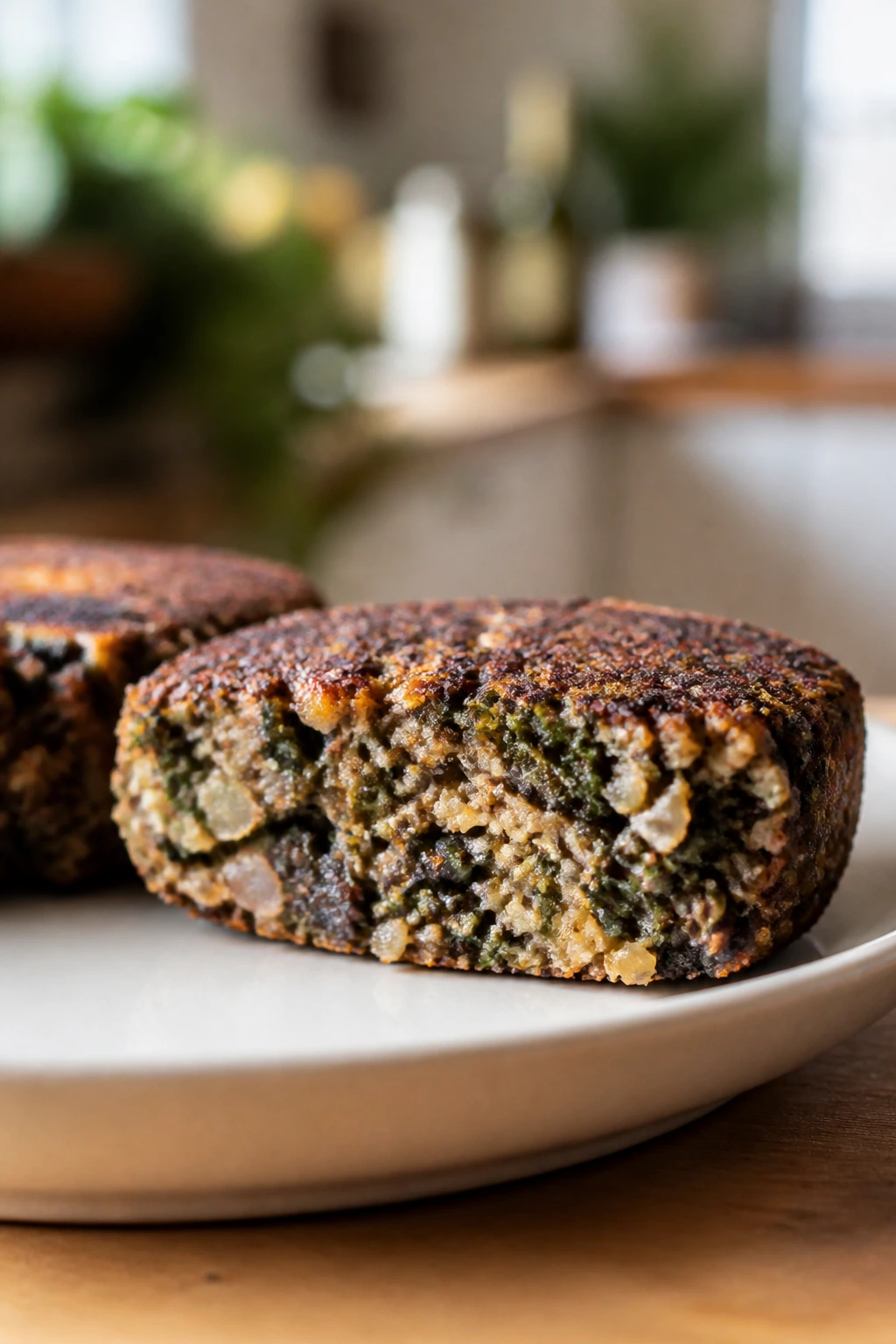
Quinoa and Greens Burger: Swap the brown rice for 1 cup cooked quinoa and fold in 1/2 cup finely chopped, squeezed-dry spinach. The patties feel a touch lighter and look a bit greener inside, which is nice if you want a fresher profile.
Diner-Style Double Patty: Shape the mix into 6 smaller patties instead of 4 and serve two on each bun with cheese, mustard, and pickle slices. That version feels closer to a classic diner stack and works well when the buns are on the smaller side.
Nut-Free Version: Replace the walnuts with 1/3 cup toasted sunflower seeds or leave them out and add 2 tablespoons more panko. You lose a little crunch, but the burger still holds together if the vegetable mix was cooked dry.
Storing, Freezing, and Reheating Without Losing Texture
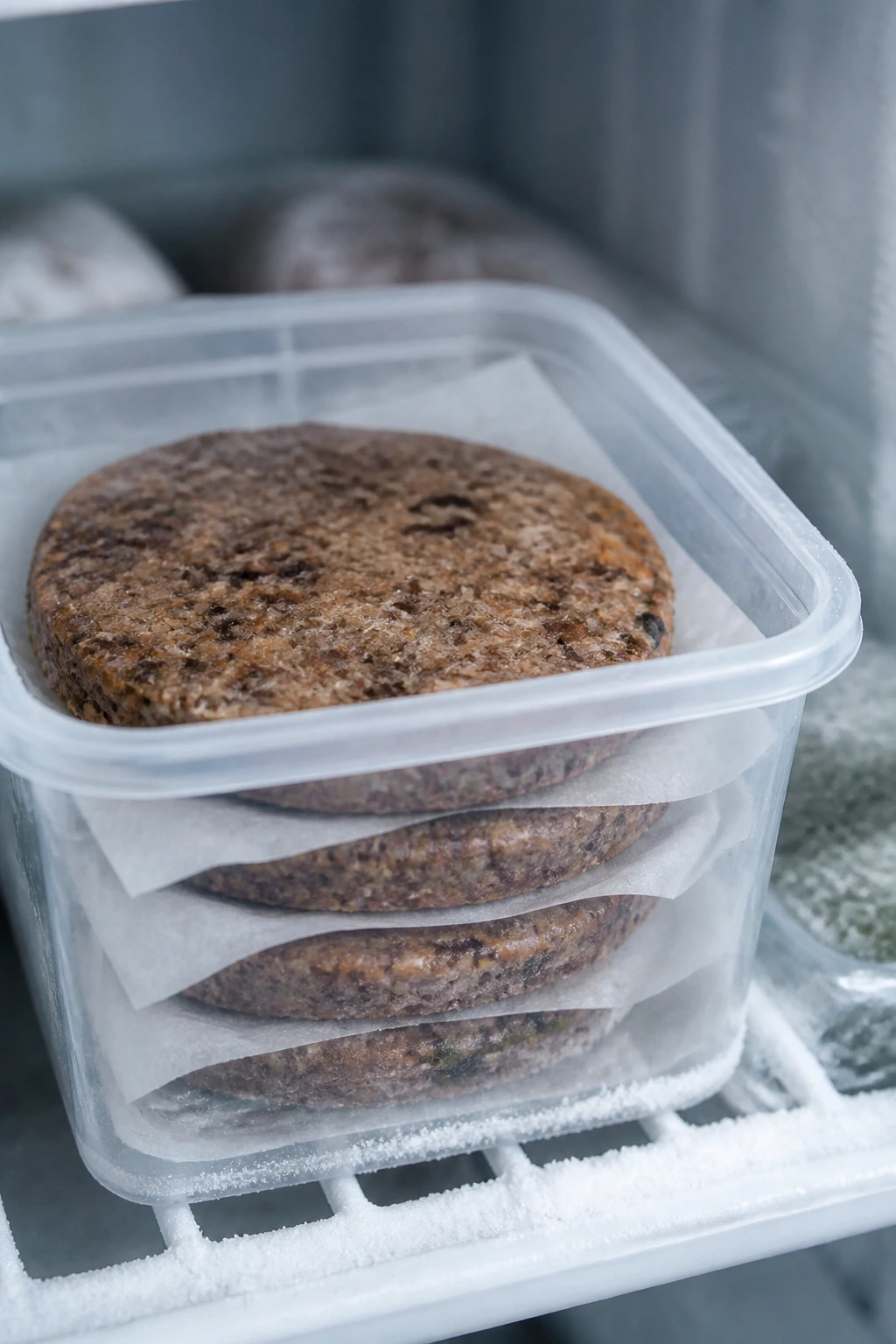
Cooked patties keep well in the refrigerator for 3 to 4 days if they cool and go into the fridge within 2 hours. That food-safety window matters more than people like to admit. Let them sit out on the counter forever and the texture gets worse anyway, so there’s no upside to waiting.
For the freezer, wrap the cooked patties individually or layer them between squares of parchment in an airtight container. They’ll hold for up to 2 months. Freeze them flat on a sheet pan first so they keep their shape, then stack them once they’re solid. That little extra step keeps them from welding together in one ugly block.
Reheat refrigerated patties in a skillet over medium-low heat for 3 to 4 minutes per side, or in a 375°F oven for 8 to 10 minutes until hot through. The skillet gives you back the crust; the oven is easier when you’re reheating several at once. Frozen cooked patties should thaw overnight in the fridge before reheating.
The uncooked mixture can also be made ahead. Shape the patties, chill them on parchment, and keep them covered in the fridge for up to 24 hours before cooking. Raw patties can be frozen too, separated by parchment, for up to 2 months. Cook them from frozen over lower heat and give them a few extra minutes in the oven so the center catches up.
Questions People Ask Before They Make Them
Can I make the patties ahead of time?
Yes, and I usually do. Shape them, set them on parchment, and keep them covered in the fridge for up to a day. The texture often improves after a short rest because the oats and breadcrumbs absorb excess moisture.
Why do my veggie burgers fall apart in the pan?
Usually the vegetables were too wet, the beans were mashed into paste, or the patties went into the skillet before chilling. The fix is simple: cook the moisture out, leave some texture in the beans, and give the shaped patties at least 10 minutes in the fridge.
Can I bake these instead of pan-frying?
Yes. Bake the shaped patties on a parchment-lined sheet pan at 400°F for 15 to 18 minutes, flipping once halfway through. You won’t get quite as much crust as with a skillet, but the texture stays steady and the cleanup is easier.
What can I use instead of black beans?
Pinto beans are the cleanest swap, and kidney beans work too if you mash them well. Chickpeas can work, but they need more mashing and usually a touch more mayo or olive oil because they’re drier and firmer.
Do I need the walnuts?
No, but they do add a toasty edge that makes the burger taste fuller. If you skip them, replace them with sunflower seeds or a couple of extra tablespoons of panko so the patties don’t feel too soft.
Can I freeze the burgers before cooking them?
Yes. Shape the patties, chill them until firm, then freeze them flat on a tray before moving them to a bag or container. Cook from thawed for the easiest results, or cook from frozen with a few extra minutes in the oven.
How do I keep the buns from getting soggy?
Toast them, then put lettuce or another dry leafy layer directly under the patty. Also keep the wet toppings in the middle of the burger rather than against the bread. That small bit of layering matters more than people expect.
A Burger Worth Putting on Repeat
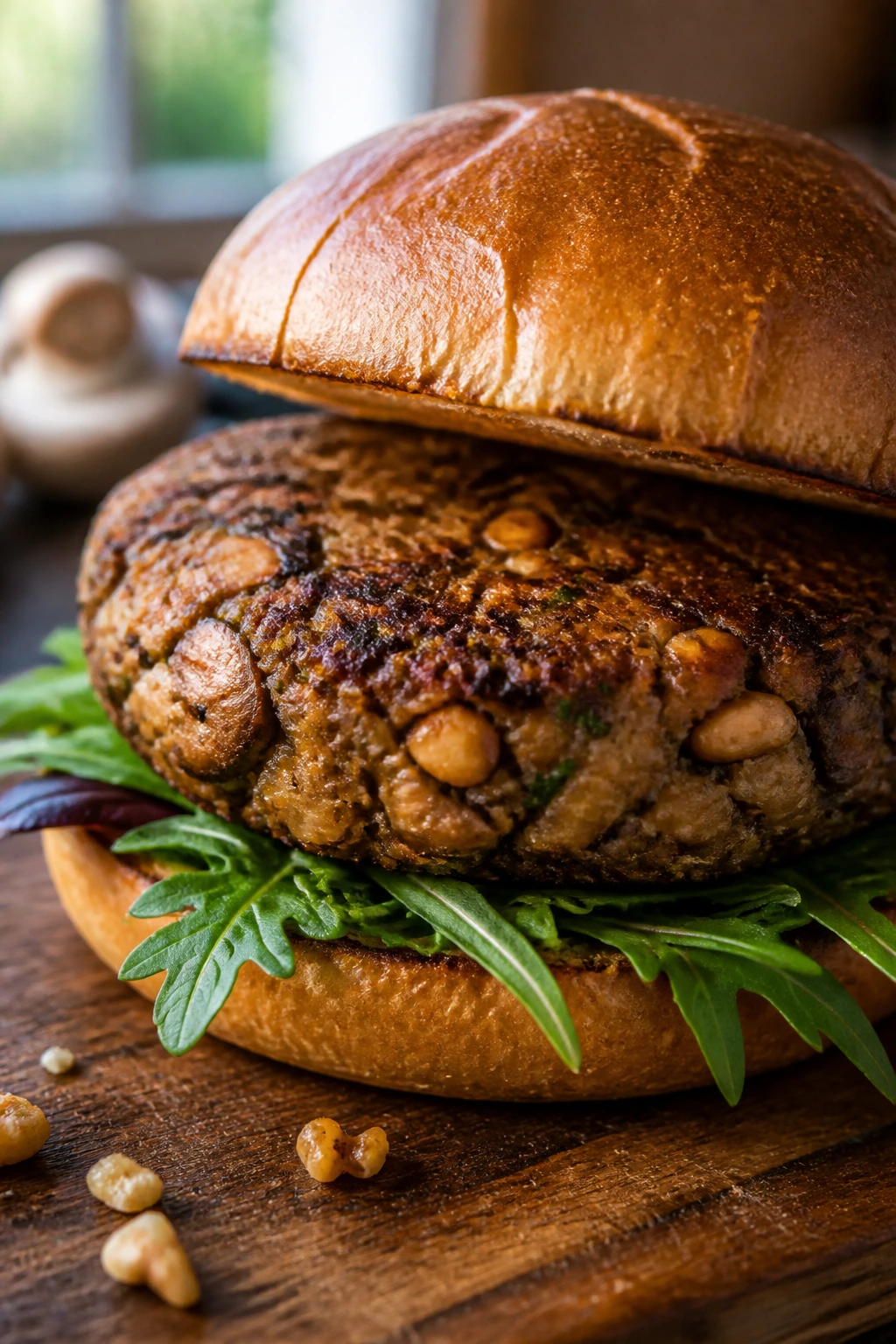
There’s a reason I keep coming back to this style of veggie burger. It isn’t trying to be a stunt. It tastes like dinner, holds together like dinner should, and still leaves you with a soft, savory center that feels generous on the plate.
Make it once with sharp cheddar and pickles, then make it again with avocado and chipotle mayo. The bones stay the same, which is the point. A good veggie burger should give you enough structure to trust it and enough flavor to want another one next week.
Tender Veggie Burger for a Hearty Dinner — Recipe Card
Recipe Name: Tender Veggie Burger for a Hearty Dinner
Description: A hearty vegetarian burger with black beans, mushrooms, brown rice, and toasted walnuts for a soft, flavorful center and a browned crust that holds up on a bun. It’s sturdy enough for dinner and flexible enough for whatever toppings you like.
Prep Time: 25 minutes
Cook Time: 25 minutes
Total Time: 50 minutes
Course: Main Course, Dinner
Cuisine: American
Servings: 4 servings
Calories: About 430 kcal per serving
Ingredients
For the Burger Patties:
- 2 tablespoons olive oil, divided
- 1 small yellow onion, finely diced
- 8 ounces cremini mushrooms, finely chopped
- 1 medium carrot, grated on the fine side of a box grater
- 2 cloves garlic, minced
- 1 can (15 ounces) black beans, drained, rinsed, and patted dry
- 1 cup cooked brown rice, cooled
- 1/2 cup rolled oats
- 1/2 cup panko breadcrumbs
- 1/3 cup chopped walnuts, lightly toasted
- 1 large egg
- 2 tablespoons mayonnaise
- 1 tablespoon soy sauce or tamari
- 1 tablespoon tomato paste
- 1 teaspoon Dijon mustard
- 1 teaspoon smoked paprika
- 1 teaspoon ground cumin
- 1/2 teaspoon fine sea salt
- 1/4 teaspoon black pepper
- 2 tablespoons chopped fresh parsley
For Serving:
- 4 sturdy burger buns, split
- 1 tablespoon butter or neutral oil, for toasting the buns
- 4 slices cheddar or Monterey Jack, optional
- Lettuce leaves, tomato slices, dill pickles, red onion, and avocado, for topping
Instructions
-
Heat 1 tablespoon olive oil in a 12-inch skillet over medium heat. Add the onion, mushrooms, and carrot with a pinch of salt and cook for 10 to 12 minutes until the pan looks nearly dry and the vegetables smell browned.
-
Add the garlic and cook for 30 seconds. Scrape the vegetables into a large bowl and cool for 5 minutes.
-
Add the black beans and mash about two-thirds of them. Stir in the rice, oats, panko, walnuts, egg, mayonnaise, soy sauce, tomato paste, Dijon, smoked paprika, cumin, parsley, black pepper, and the remaining salt.
-
Mix until combined but still textured. If the mixture feels wet, add 2 tablespoons more panko. Rest for 10 minutes.
-
Divide into 4 patties, each about 3/4 inch thick, and press a shallow thumbprint into the center. Chill on a parchment-lined sheet pan for 10 minutes.
-
Heat the remaining 1 tablespoon olive oil in the skillet over medium heat. Sear the patties for 3 minutes per side until browned.
-
If needed, transfer the patties to a 400°F oven for 6 to 8 minutes until hot through and firm enough to lift cleanly. Add cheese during the last minute if using.
-
Toast the buns in butter or oil for 1 to 2 minutes. Assemble with your favorite toppings and serve warm.
Notes: Chill the mixture before cooking if it feels soft. For a vegan version, use a flax egg and vegan mayo. The patties freeze well for up to 2 months.