



A pineapple smoothie should taste like cold fruit, not melted candy.
That’s the line I keep coming back to. The second a smoothie gets overloaded with ice, syrup, or random frozen odds and ends, pineapple turns shy. The bright, sharp edge disappears, and what you’re left with is pale sweetness with a vague tropical costume on top. Not much point in that.
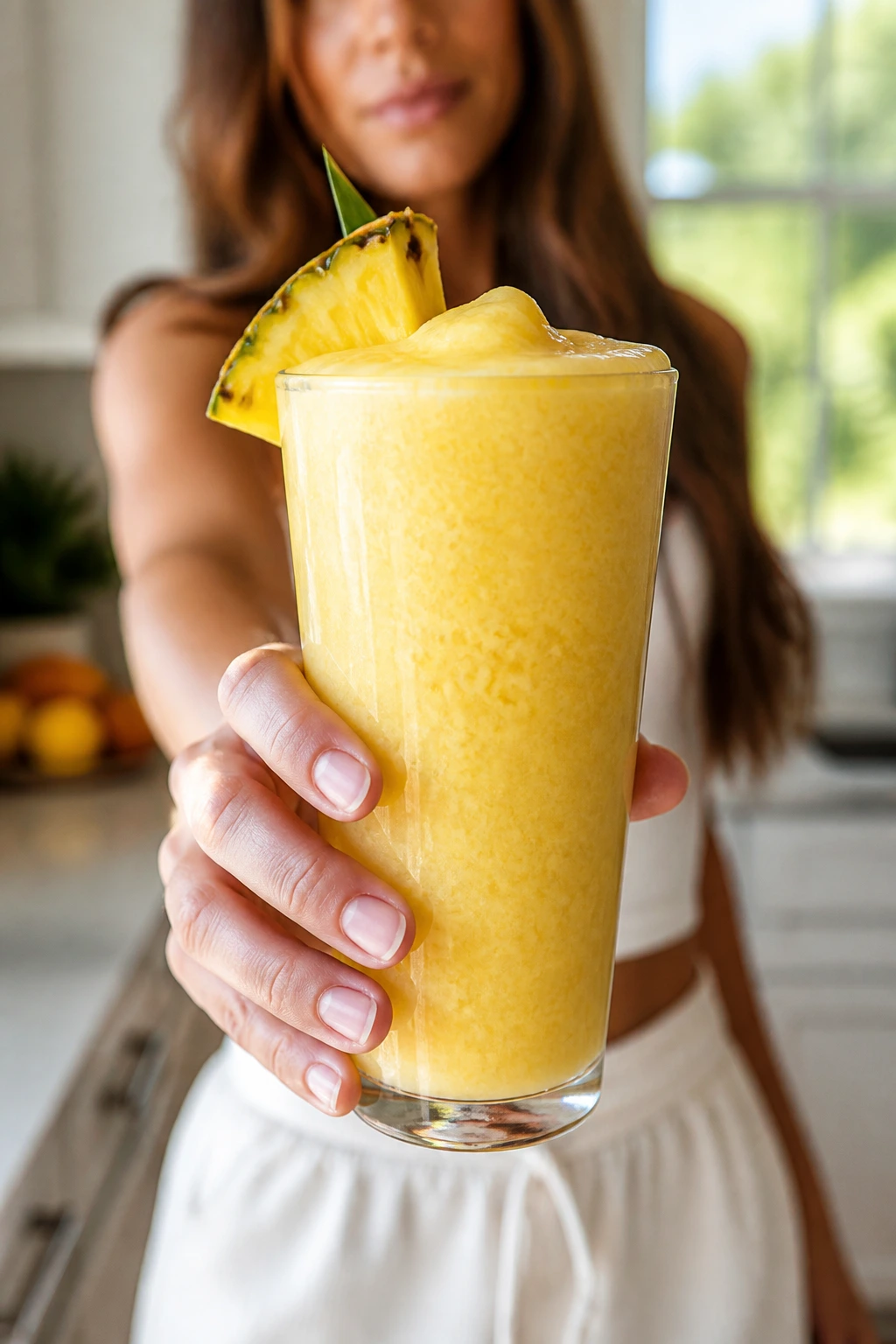
This pineapple smoothie for summer sipping keeps the fruit front and center. Frozen pineapple does the heavy lifting, a little banana gives body, lime keeps the flavor awake, and coconut water keeps the whole thing from feeling like a milkshake in disguise. I like smoothies that taste like something specific, and this one tastes like pineapple first, creaminess second, with a clean finish that makes you want another sip.
Ice is not the hero here. Frozen fruit is.
Why This Pineapple Smoothie Earns Its Keep
-
It tastes like pineapple, not sugar water: Using frozen pineapple chunks keeps the flavor concentrated, so every sip lands with a real tropical punch instead of a watered-down blur.
-
The texture stays drinkable: A little banana and yogurt make the smoothie thick enough to feel substantial, but it still pours cleanly into a glass instead of slumping like sorbet.
-
It’s fast when the fruit is already frozen: If you keep a bag of pineapple in the freezer, the whole thing comes together in about 10 minutes, with no stovetop and no mess beyond the blender jar.
-
It works at breakfast and later in the day: The coconut water and lime keep it light enough for daytime sipping, while the yogurt gives it enough body to count as more than just flavored ice.
-
It’s easy to tune by taste: One extra teaspoon of honey, another squeeze of lime, or a splash of coconut water can steer the drink in the right direction without changing the whole recipe.
-
It handles dairy-free swaps well: Coconut yogurt or even a plain non-dairy yogurt keeps the same shape and chill, which matters more here than chasing a perfect imitation.
The Bright, Cold Logic Behind a Better Pineapple Smoothie
Why does one pineapple smoothie taste vivid and another taste flat? Most of the time, it comes down to balance. Pineapple brings sweetness, acidity, and a little bite all at once, but it needs support. Give it too much ice and it gets thin. Give it too much dairy and it starts tasting like dessert. Skip acid altogether and it turns sleepy.
This version keeps the pineapple in the lead. The banana softens the edges without burying the fruit. Greek yogurt adds a creamy, almost sherbet-like body, but not so much that the smoothie feels heavy. Coconut water fills the gap where plain water would taste thin, and lime juice snaps the whole thing into focus. That’s the part a lot of recipes miss. They think “tropical” means more sweeteners, more fruit, more everything. It usually means less.
There’s also a small but useful food-science reason this combo works. Pineapple contains natural enzymes that can make the flavor feel sharp, and a pinch of salt helps round that off so the fruit tastes fuller. Not salty. Fuller. A teaspoon of lime juice does the same kind of work from the other direction, making the pineapple taste brighter instead of merely sweet.
Cold matters, too. A smoothie made with warm fruit or lukewarm yogurt never gets that crisp first sip you want from a summer drink. Chill the ingredients, chill the glasses if you can, and the whole drink feels sharper. That little extra chill is worth the thirty seconds it takes.
Yield, Timing, and What Goes Into the Blender
Yield: 2 generous smoothies
Prep Time: 10 minutes
Cook Time: 0 minutes
Total Time: 10 minutes
Difficulty: Beginner — the method is straightforward, and the only real skill is knowing when to stop blending.
Best Served: Immediately, while the texture is thick and the glass is still cold.
For the Smoothie:
- 2 1/2 cups frozen pineapple chunks, packed loosely (or fresh pineapple frozen in a single layer until firm)
- 1 medium ripe banana, peeled, sliced, and frozen if possible (or use room-temperature banana for a softer blend)
- 3/4 cup plain Greek yogurt, cold from the fridge (or plain coconut yogurt for dairy-free)
- 3/4 cup cold coconut water (or cold filtered water if you want a sharper pineapple flavor)
- 1/4 cup freshly squeezed orange juice
- 1 tablespoon fresh lime juice
- 1 tablespoon honey or maple syrup, plus more to taste
- 1/8 teaspoon fine sea salt
- 1/2 cup ice cubes, only if needed for a thicker texture
For Serving:
- 2 chilled glasses
- Fresh mint leaves, optional
- Lime wheels or wedges, optional
- Toasted coconut flakes, optional
Why These Ingredients Work in the Glass
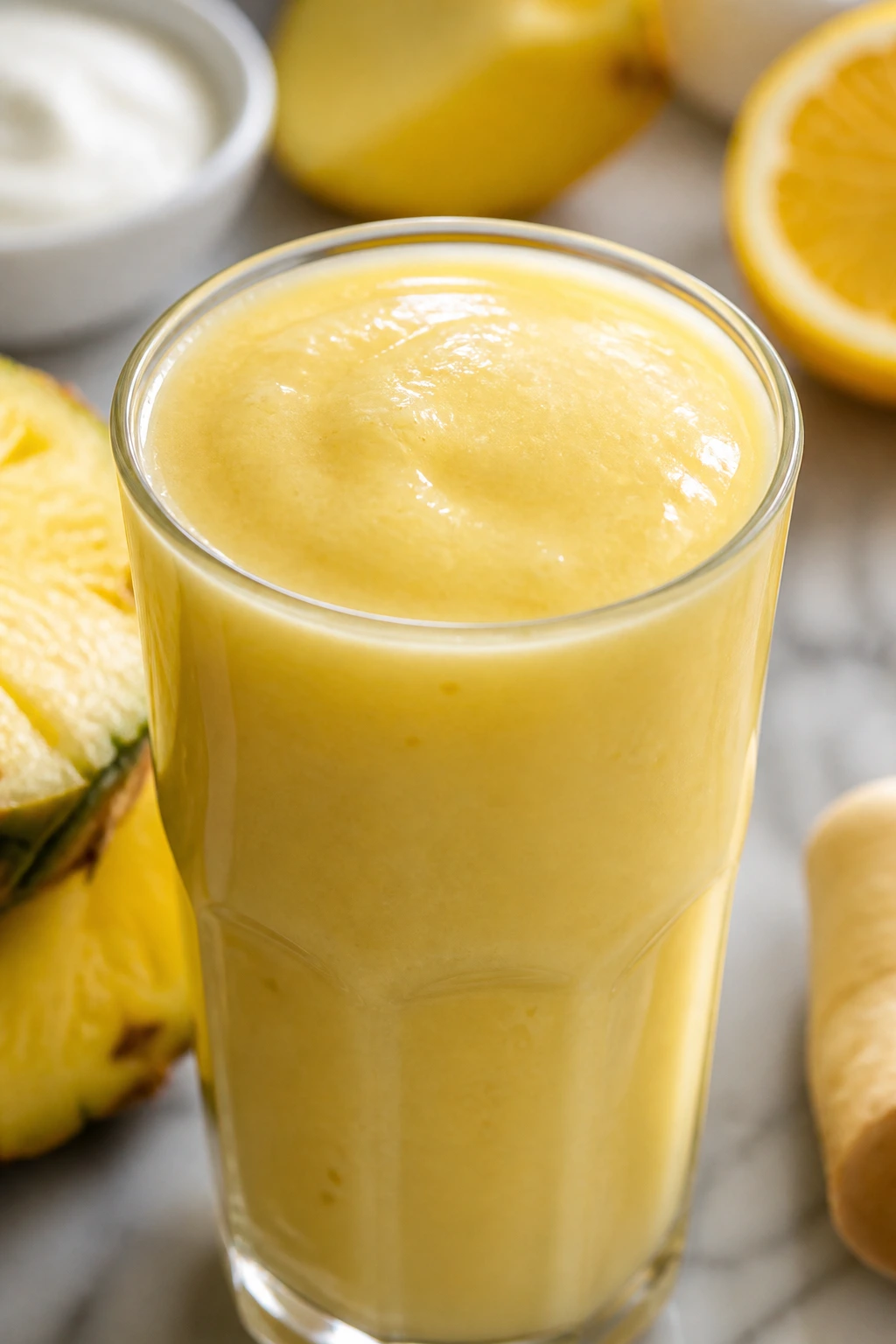
Frozen Fruit Base
- What to use: 2 1/2 cups frozen pineapple chunks and 1 medium banana, sliced before freezing if you can manage it.
- Preparation: Keep the pineapple frozen until the last minute so it stays firm and doesn’t bleed extra juice into the blender jar.
- Substitutions: If you don’t want banana, swap in another 1/2 cup of pineapple and 1/2 cup of frozen mango for a softer, still-creamy texture.
- Tips: Smaller frozen pieces blend faster. A brick of fruit the size of your fist takes patience and a lot of stopping and scraping.
The pineapple is the personality of the smoothie. The banana is the cushion. Without the banana, you get something lean and sharp; with it, the drink reads rounder and smoother, which is why I keep it in the recipe even though pineapple alone is already doing plenty.
Creamy Body
- What to use: 3/4 cup plain Greek yogurt, cold.
- Preparation: Use it straight from the fridge so the smoothie stays cold and thick from the first blend.
- Substitutions: Plain coconut yogurt works well for a dairy-free version, and unsweetened regular yogurt works if that’s what you have.
- Tips: Choose plain yogurt, not vanilla. Vanilla can be fine in a strawberry smoothie, but in pineapple it pushes the flavor toward dessert in a way I don’t love.
Greek yogurt gives the drink a cleaner finish than milk does. It also helps the smoothie hold together longer in the glass, which matters if you’re sitting outside and not drinking it in two quick gulps. Coconut yogurt brings a softer coconut note and a looser texture, so if you go that route, expect something a little lighter.
Liquid and Brighteners
- What to use: 3/4 cup cold coconut water, 1/4 cup orange juice, and 1 tablespoon lime juice.
- Preparation: Chill the liquids before blending if you can. Cold liquid buys you better texture and less melt.
- Substitutions: If coconut water isn’t in the pantry, cold filtered water works, though the smoothie will taste a little less round.
- Tips: Orange juice should support the pineapple, not steal the show. A quarter cup is enough to make the flavor bloom without turning the drink into a generic citrus blend.
I’m picky about liquid here. Coconut water gives a clean tropical note and enough sweetness that the smoothie doesn’t need much help. Orange juice adds warmth and a little depth. Lime keeps the whole thing awake. Skip the lime and the drink can taste sweet but dull. That’s the difference between a smoothie you finish and one you actually remember.
Sweetener, Salt, and Fine-Tuning
- What to use: 1 tablespoon honey or maple syrup and 1/8 teaspoon fine sea salt.
- Preparation: Add them to the blender with the liquids so they disperse evenly.
- Substitutions: Agave works if that’s your usual, and you can leave the sweetener out if your pineapple is very ripe.
- Tips: The salt won’t make the smoothie salty. It sharpens the pineapple and keeps the flavors from collapsing into one flat note.
That pinch of salt matters more than people think. Pineapple is bright enough to read almost sharp on its own, and salt gives the fruit a fuller edge. You won’t taste “salt” unless you overdo it, which is easy to do if you eyeball a heavy pinch. Don’t. Use the 1/8 teaspoon and move on.
Texture Control
- What to use: Up to 1/2 cup ice cubes, only if the smoothie still feels loose after blending.
- Preparation: Keep the ice ready, but don’t drop it in first.
- Substitutions: More frozen pineapple is better than a mountain of ice if you want a richer flavor.
- Tips: Ice thickens fast but dilutes faster. Use it like a trim, not a foundation.
I’d rather add another handful of frozen pineapple than lean on ice. The fruit gives body and flavor. Ice gives volume and not much else.
The Blender Setup That Makes the Texture Smooth
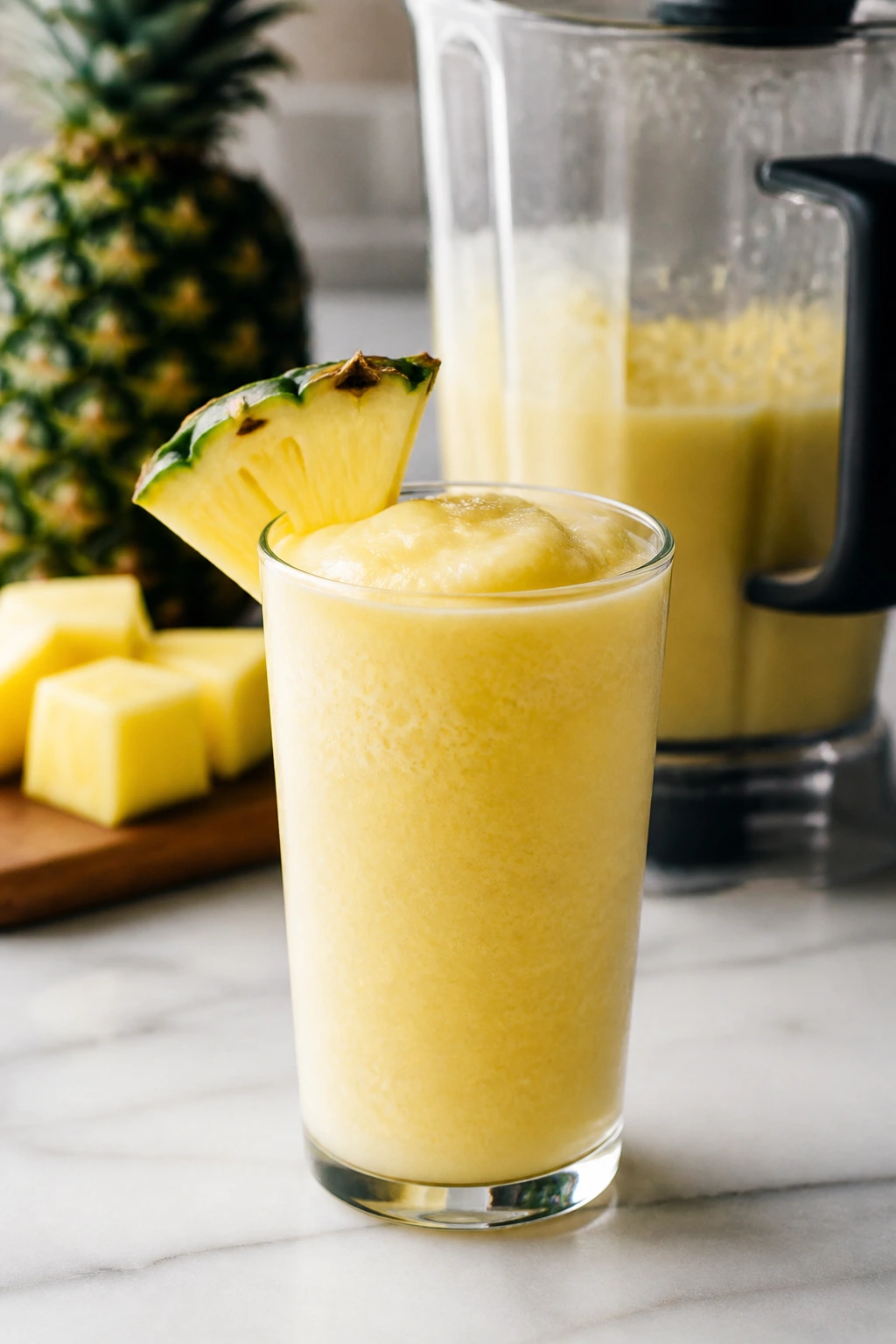
High-Speed Blender
A strong countertop blender makes a visible difference here. Frozen pineapple has a stubborn, fibrous bite, and a decent motor turns that into a smooth pour instead of little icy flecks. If your blender is older or weaker, cut the fruit into smaller chunks before freezing it.
Rubber Spatula
You’ll need one. Not for drama. For sanity. A spatula lets you scrape down the sides without digging around with a spoon or, worse, stopping every ten seconds to shake the jar like you’re trying to wake it up.
Liquid Measuring Cup
The liquid ratio matters in this smoothie, and a measuring cup keeps you from accidentally making pineapple soup. Eyeballing works fine for salad dressing. Not here.
Citrus Juicer or Fork
A juicer helps, but a fork is enough if that’s all you’ve got. Lime juice should be fresh, though. Bottled lime can taste stale and metallic in a drink this simple.
Chilled Glasses
Optional, technically. Worth it, absolutely. A cold glass buys you a few extra minutes of texture before the smoothie starts warming at the rim. It’s a small trick, but small tricks are the ones you notice when you’re drinking something cold on a hot day.
Freezer Tray or Sheet Pan
Handy if you’re freezing fresh pineapple yourself. Spread the chunks out in one layer first so they freeze separately instead of forming one big block. A block is fine if you enjoy hammering fruit before breakfast.
How to Blend the Pineapple Smoothie Without Watering It Down
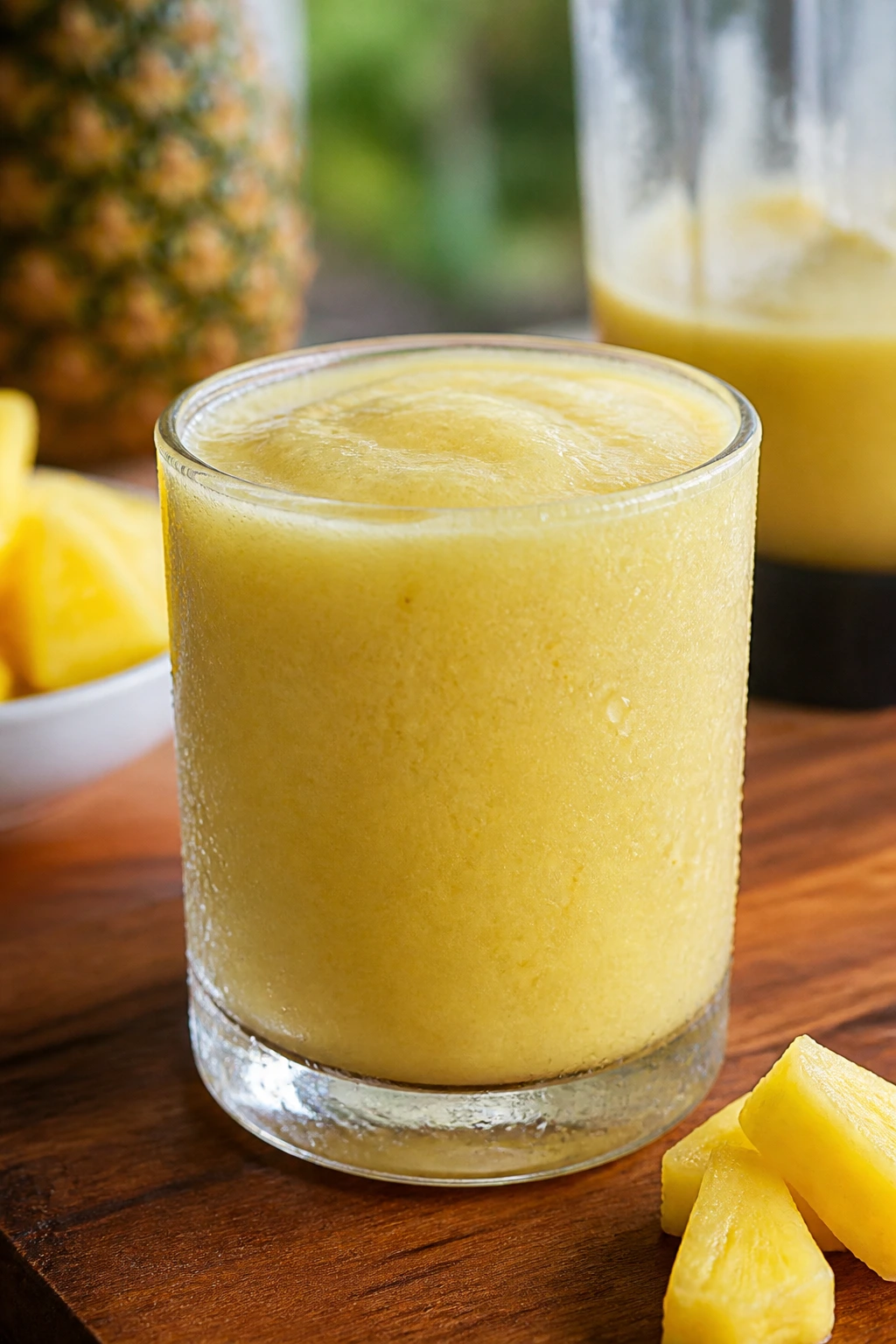
Prep the Fruit and Glasses:
- Put 2 tall glasses in the freezer for 5 to 10 minutes while you gather the ingredients.
- If you’re using fresh pineapple, freeze the chunks on a sheet pan in a single layer until firm, at least 2 hours. If the pieces are already frozen, keep them in the freezer until the blender is ready.
Load the Blender in the Right Order: 3. Pour the 3/4 cup coconut water, 1/4 cup orange juice, 1 tablespoon lime juice, 3/4 cup Greek yogurt, 1 tablespoon honey, and 1/8 teaspoon fine sea salt into the blender jar first. The liquid should sit on the bottom and give the blades something to catch. 4. Add the 2 1/2 cups frozen pineapple chunks and the sliced banana on top. If you’re using room-temperature banana instead of frozen, that’s fine; the smoothie will just come out a touch softer.
Blend and Adjust: 5. Start on low speed for about 10 seconds, then move to high and blend for 30 to 45 seconds, stopping once if needed to scrape down the sides with a rubber spatula. Do not pour in a big splash of extra liquid unless the blades are completely stuck. 6. If the mixture stalls in a dry pocket, add 1 tablespoon of coconut water at a time until the blades move again. A smoothie this cold should move slowly, but it should still move. 7. Taste the smoothie before you pour it. Add a little more honey if the pineapple is extra tart, another teaspoon of lime juice if it tastes flat, or up to 1/2 cup ice cubes if you want a firmer, more slushy finish.
Serve Right Away: 8. Pour the smoothie into the chilled glasses while it’s thick and frothy. Top with mint, toasted coconut, or a lime wheel if you want, then drink it before the texture loosens too much.
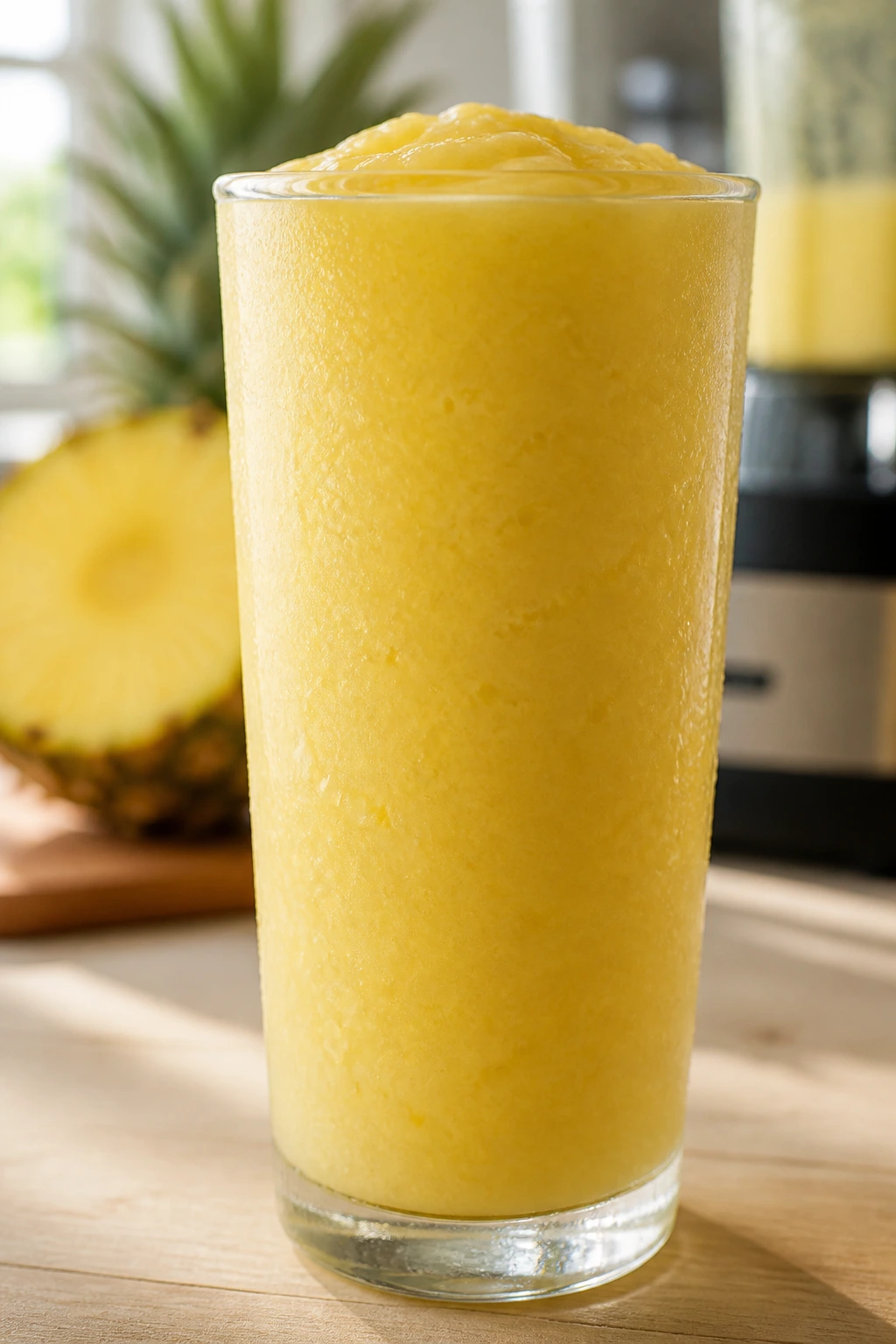
The finished smoothie should pour like a thick, pale-gold ribbon. If it lands with a soft mound in the glass and slowly settles, you’re in the right place. If it looks loose and glossy right away, the blender got too much liquid. You can fix that with a few ice cubes or another handful of frozen pineapple, but it’s easier to stay on the thicker side from the start.
How to Serve It Cold and Keep the Flavor Bright
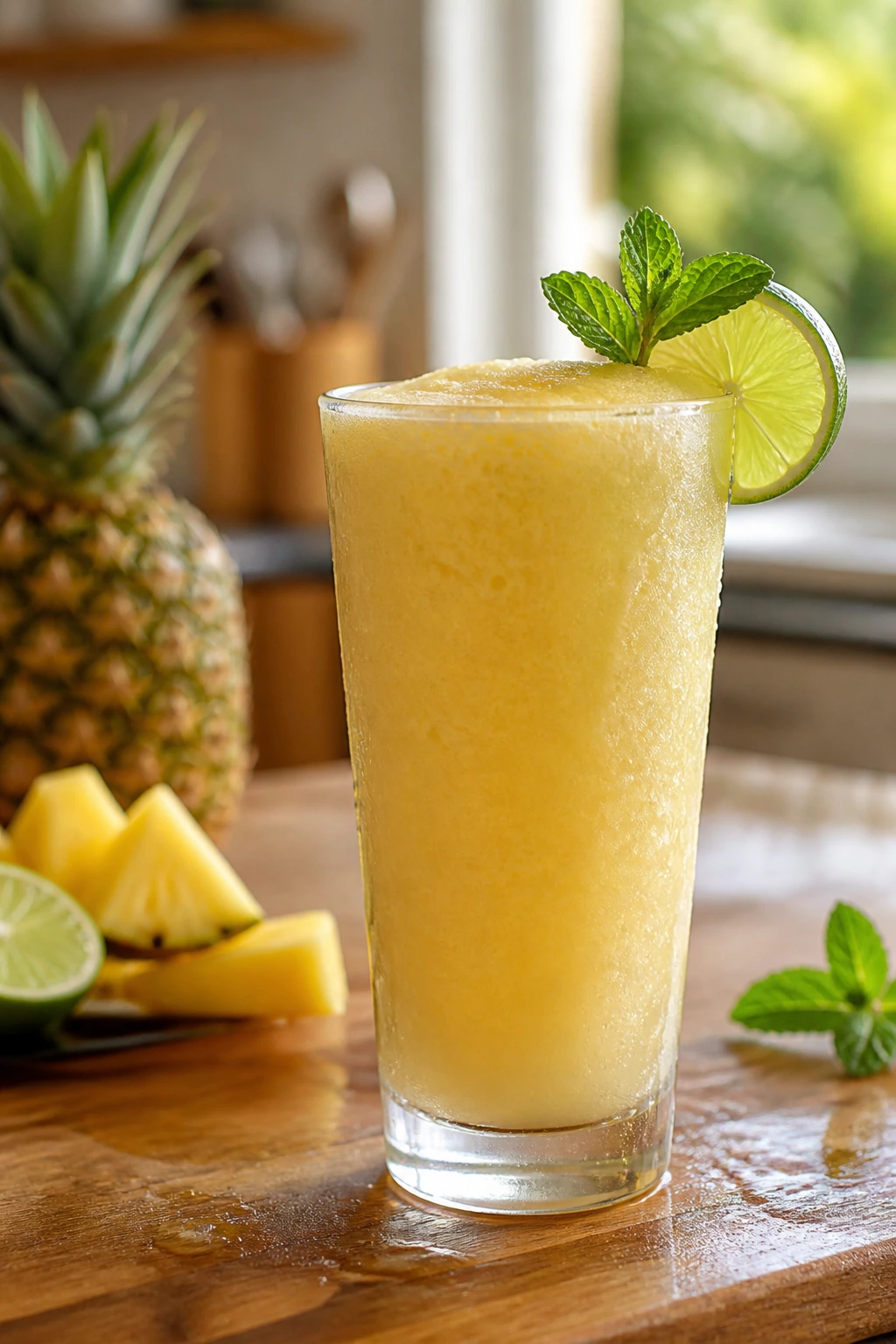
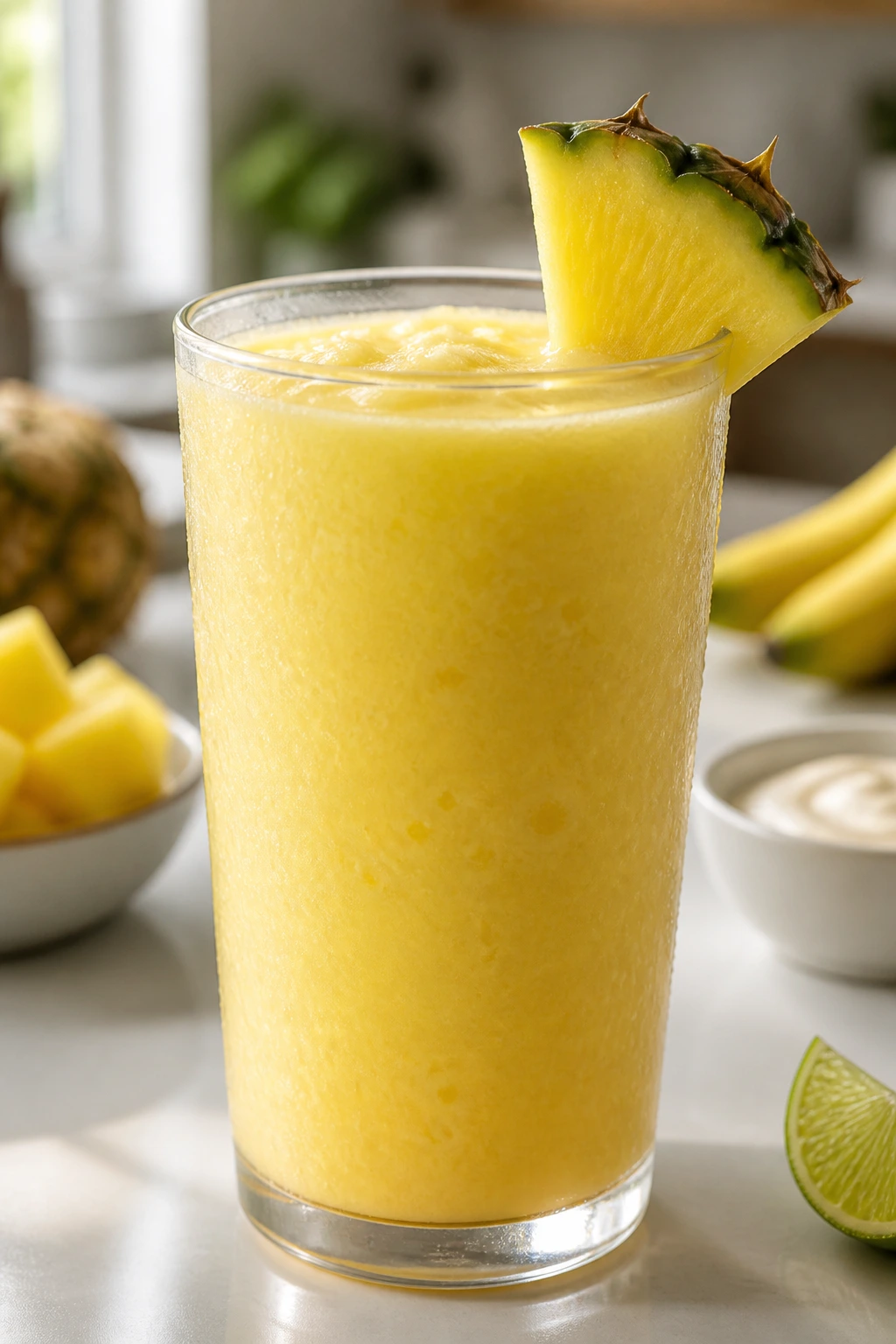
A pineapple smoothie wants a tall glass and a little restraint. I do not love it in a huge tumbler that lets it warm up slowly while you scroll through your phone. Give it a chilled glass, a wide straw if you use one, and a garnish that makes sense: mint, a lime wheel, or a sprinkle of toasted coconut. That’s enough.
Presentation: Pour the smoothie into cold glasses and leave a little room at the top for the garnish. The surface should look creamy and slightly frothy, not thin and glossy. If you want a cleaner finish, drag a lime wedge around the rim before you serve it, but skip any sugar rim. Pineapple already brings enough sweetness.
Accompaniments: This smoothie sits nicely beside a salty breakfast plate — scrambled eggs, toast with butter, or a bowl of plain granola with extra fruit. If you’re serving it as an afternoon drink, pair it with a handful of roasted cashews or a slice of coconut loaf rather than something heavy and frosted.
Portions: Two large servings is the sweet spot. If you’re pouring this as part of brunch, you can stretch it into three smaller glasses, but I’d keep the servings generous enough that the texture stays thick. A skinny, underfilled smoothie looks sad. There’s no reason to do that to yourself.
Beverage Pairing: Since this is already a drink, I’d keep the side beverage simple. Unsweetened iced tea, sparkling water with a squeeze of lime, or a small cup of cold brew fits nicely if you’re building out breakfast. Avoid anything creamy next to it. That just muddies the palate.
Practical Tips That Improve the Glass
Flavor Enhancement: Add 1/2 teaspoon of lime zest to the blender if you want the pineapple to taste sharper and more vivid. It’s one of those tiny additions that reads bigger than it looks on the measuring spoon.
Time-Saver: Freeze pineapple in 2-cup bags or containers so you can dump a single portion into the blender without weighing anything out. I like to keep the banana slices separate in a small freezer bag, because banana lumps are annoying and prevent the fruit from breaking down evenly.
Texture Move: If your banana is very ripe, freeze it in slices instead of whole chunks. Thin slices blend faster and leave fewer cold bits behind, which is helpful if you’re using a regular blender and not one of the loud, expensive beasts that can chew through anything.
Cost-Saver: Buy whole pineapples when they’re priced better than pre-cut fruit, then trim, core, and freeze the chunks yourself. It takes a little work upfront, but it usually buys you better flavor and less packaging.
Make-It-Yours: If you want the smoothie more breakfast-like, add 1 scoop of vanilla protein powder or 2 tablespoons of hemp hearts. If you want it lighter, leave the yogurt in the fridge and use coconut water plus extra pineapple instead. I prefer the first version when I want something with staying power, and the second when I want a drink that feels almost like a cool fruit punch.
Common Mistakes That Make Pineapple Smoothies Thin or Flat
Most bad pineapple smoothies are not too sweet. They’re too diluted.
That’s the real problem. People reach for ice, extra juice, or a long blend time, and the drink loses shape before it ever reaches the glass. Pineapple is one of the few fruits that can handle a bold, bright treatment, so when it turns bland, the recipe usually deserves the blame.
-
Using too much ice: The smoothie looks cold, but the flavor falls apart fast and the first sip tastes washed out. Fix it by using frozen pineapple as your main thickener and adding ice only if the blend is still too loose.
-
Skipping the acid: Without lime juice, pineapple can taste sweet but one-dimensional. The fix is simple: keep the 1 tablespoon of lime juice in the base, then add another teaspoon only if the fruit tastes especially ripe.
-
Pouring in too much liquid at once: The blender starts easily, but the finished smoothie becomes thin and slides like juice. Add the coconut water first, then only add more in 1-tablespoon splashes if the blades need help.
-
Blending far longer than necessary: Heat from the motor softens the fruit and thins the mixture. Stop as soon as the smoothie looks smooth and creamy; a few tiny flecks are better than a warm, overworked drink.
-
Using underripe or fibrous pineapple: The smoothie tastes sharp in the wrong way and leaves stringy bits on your tongue. If you’re buying fresh fruit, pick pineapple that smells sweet at the base. If it doesn’t smell like much, it’ll probably taste like not much, either.
-
Forgetting to taste before pouring: Pineapple ripeness varies wildly. Sometimes 1 tablespoon of honey is enough. Sometimes you need none. Taste, adjust with teaspoons, and don’t assume the first blend is the final blend.
Variations for Coconut, Protein, and Green Versions
Tropical Creamsicle Swap the plain Greek yogurt for vanilla yogurt and replace the orange juice with 1/3 cup fresh orange segments. The smoothie comes out softer and more dessert-like, with a slightly creamier citrus finish. I’d use this one when I want something sweet enough to feel like a treat without adding a scoop of ice cream.
Coconut-Lime Cooler Replace the Greek yogurt with plain coconut yogurt and add 1/4 cup canned coconut milk for extra body. The texture gets silkier, and the coconut note becomes more pronounced, which is a nice move if you like a stronger tropical profile. This is the version I’d make if I were serving the smoothie with grilled food or anything salty.
Protein Breakfast Blend Add 1 scoop of vanilla protein powder and increase the coconut water by 2 to 3 tablespoons if the blender tightens up. The drink gets more filling, though the texture changes a little — protein powder can make smoothies chalky if you use too much. Start with one scoop, taste, and stop there unless you want a thicker shake-like finish.
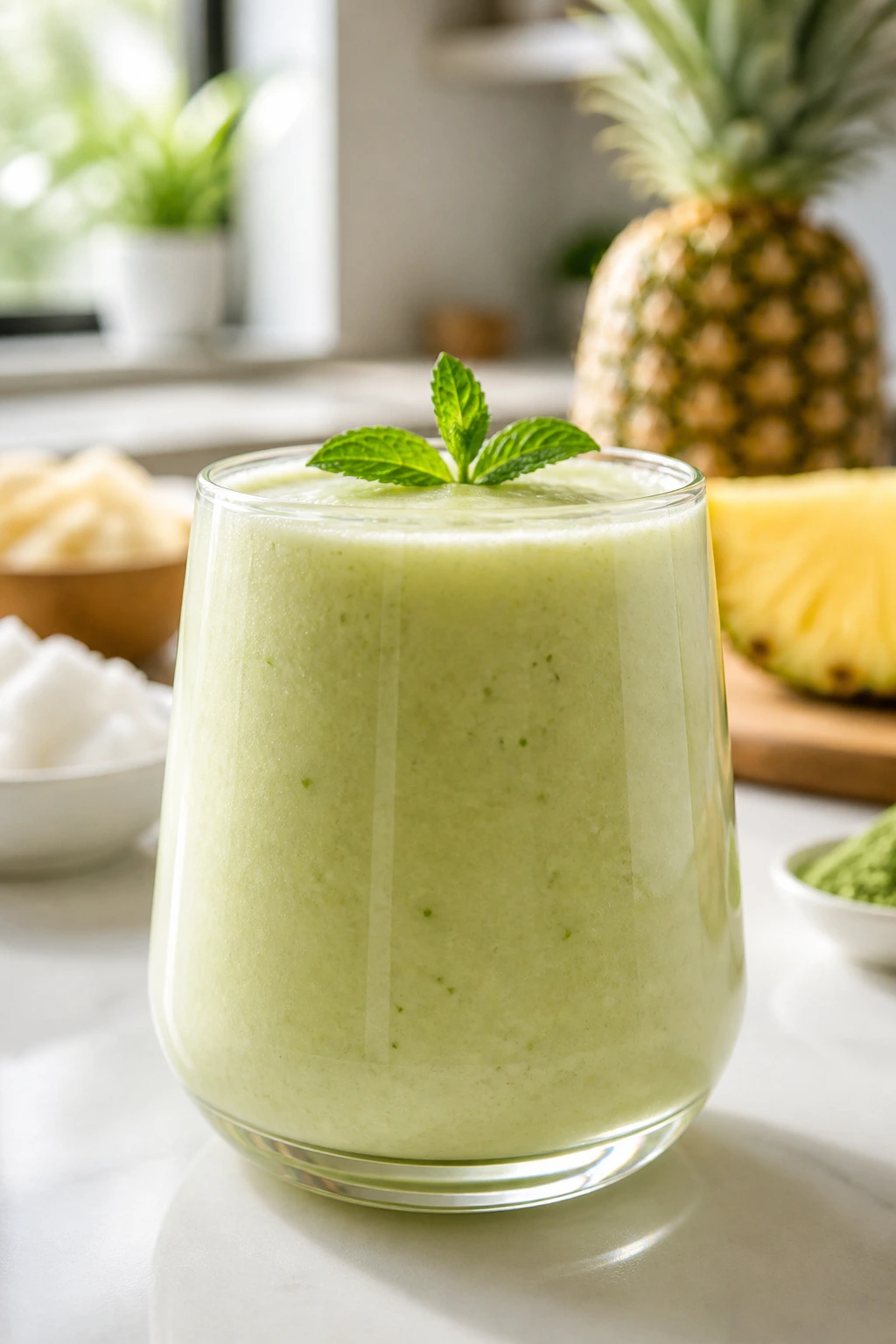
Green Pineapple Cooler Add 1 packed cup baby spinach and keep everything else the same. The color shifts, but the pineapple still leads the flavor, which is the whole point. Spinach is mild enough that it disappears under the fruit, especially when you keep the lime juice in the mix.
Ginger-Pineapple Kick Add 1/2 teaspoon finely grated fresh ginger to the blender. It gives the smoothie a faint heat at the back of the throat and makes the pineapple taste brighter, almost sparkling. I like this one in small doses. Too much ginger takes over fast.
Make-Ahead, Storage, and Reblending
A pineapple smoothie is at its best straight from the blender. That’s the honest answer. The texture starts to loosen after about 15 to 20 minutes, especially if the room is warm or the glass isn’t chilled. If you’re serving guests, blend close to the moment you pour.
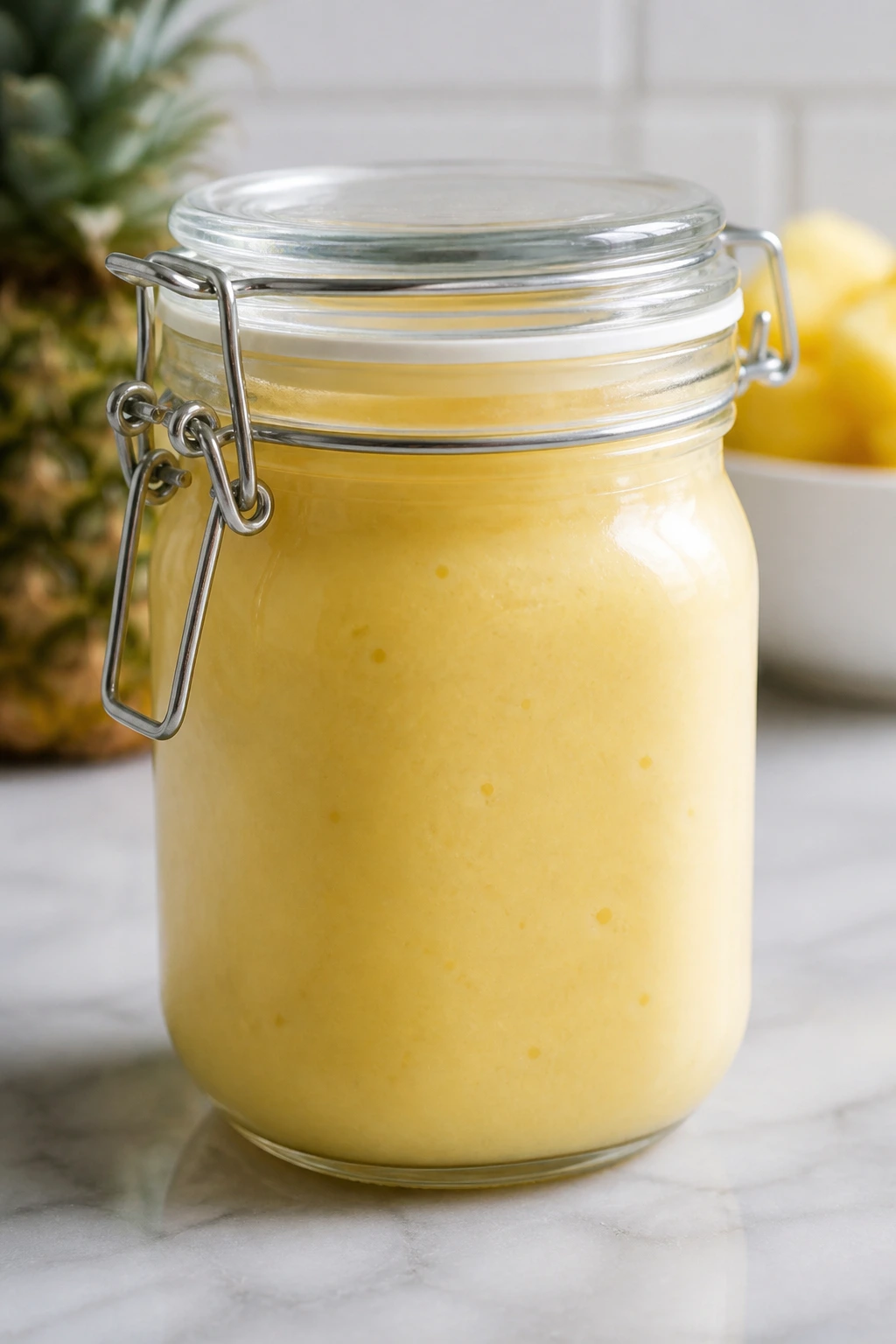
If you do need to store it, pour the smoothie into an airtight jar or bottle and refrigerate it for up to 24 hours. Separation is normal. The fruit and yogurt will settle a bit, and the top may look thinner than the bottom. Shake the container hard for 10 to 15 seconds, or reblend it briefly with a few ice cubes if you want the texture to bounce back.
For longer storage, freeze leftover smoothie in ice cube trays or silicone popsicle molds for up to 1 month. The cubes can go straight back into the blender with a splash of coconut water when you want a quick, frosty remake. That’s one of the better uses for leftover smoothie, honestly. It keeps the flavor from going stale in the fridge.
If you want to make ahead, prep freezer packs with the pineapple and banana portions already measured out. Keep them in freezer bags for up to 2 months, then add the liquids, yogurt, honey, salt, and lime when you’re ready to blend. That way the work is done, but the flavor still lands fresh.
One food-safety note: once the smoothie has been blended with yogurt, don’t leave it sitting out for more than 2 hours. If you’re carrying it outside or to the pool, use an insulated cup and keep it cold. It tastes better that way anyway.
Pineapple Smoothie Questions People Actually Ask
Can I make this pineapple smoothie without banana?
Yes, and the drink still works. Replace the banana with 1/2 cup extra frozen pineapple and 1/2 cup frozen mango if you want a similar creamy feel without the banana flavor. If you skip it entirely, expect a sharper, more fruit-forward smoothie that leans closer to a slush.
Is fresh pineapple or frozen pineapple better here?
Frozen pineapple is better for this recipe because it gives thickness without adding extra ice. Fresh pineapple can work, but you’ll usually need a handful of ice or another frozen fruit to keep the texture from turning loose. If you only have fresh fruit, freeze the chunks first. That extra step pays off.
Can I use canned pineapple?
You can, but drain it well and choose pineapple packed in juice rather than syrup. Canned fruit tends to be softer and sweeter, so the smoothie may need more lime and less honey to stay bright. I’d still freeze the canned chunks for a few hours if you want a thicker drink.
How do I make it thicker without adding more sugar?
Use less liquid, add more frozen pineapple, or toss in a few frozen banana slices. Ice thickens too, but it mutes the flavor faster than fruit does. If the smoothie is already blended and still too loose, a half-cup of ice will do the job in a pinch, though I prefer fruit first.
What should I do if my blender leaves little frozen bits?
Stop the blender, scrape down the sides, and let the mixture sit for 1 to 2 minutes so the fruit softens slightly. Then blend again in short bursts. A weak blender usually needs smaller fruit chunks and a little patience more than it needs more liquid.
Can I make it dairy-free without losing the creamy texture?
Yes. Plain coconut yogurt is the easiest swap, and it keeps the same chill and body without changing the fruit balance much. If you want a thinner drink, you can skip yogurt entirely and rely on frozen fruit plus coconut water, though the result will read more like a tropical slush.
Will this smoothie separate if I make it ahead?
It will, at least a little. That’s normal with fruit smoothies that contain yogurt and juice. Shake it hard or reblend it for a few seconds before drinking, and if the texture looks too thin, throw in one or two ice cubes and pulse it again.
Can I turn leftovers into something else?
Absolutely. Pour leftover smoothie into popsicle molds, or freeze it in cubes and reblend later with a splash of coconut water. I like the popsicle route better than trying to rescue a half-drunk smoothie the next day, because the flavor stays cleaner.
Bright, Cold, and Worth Making Again
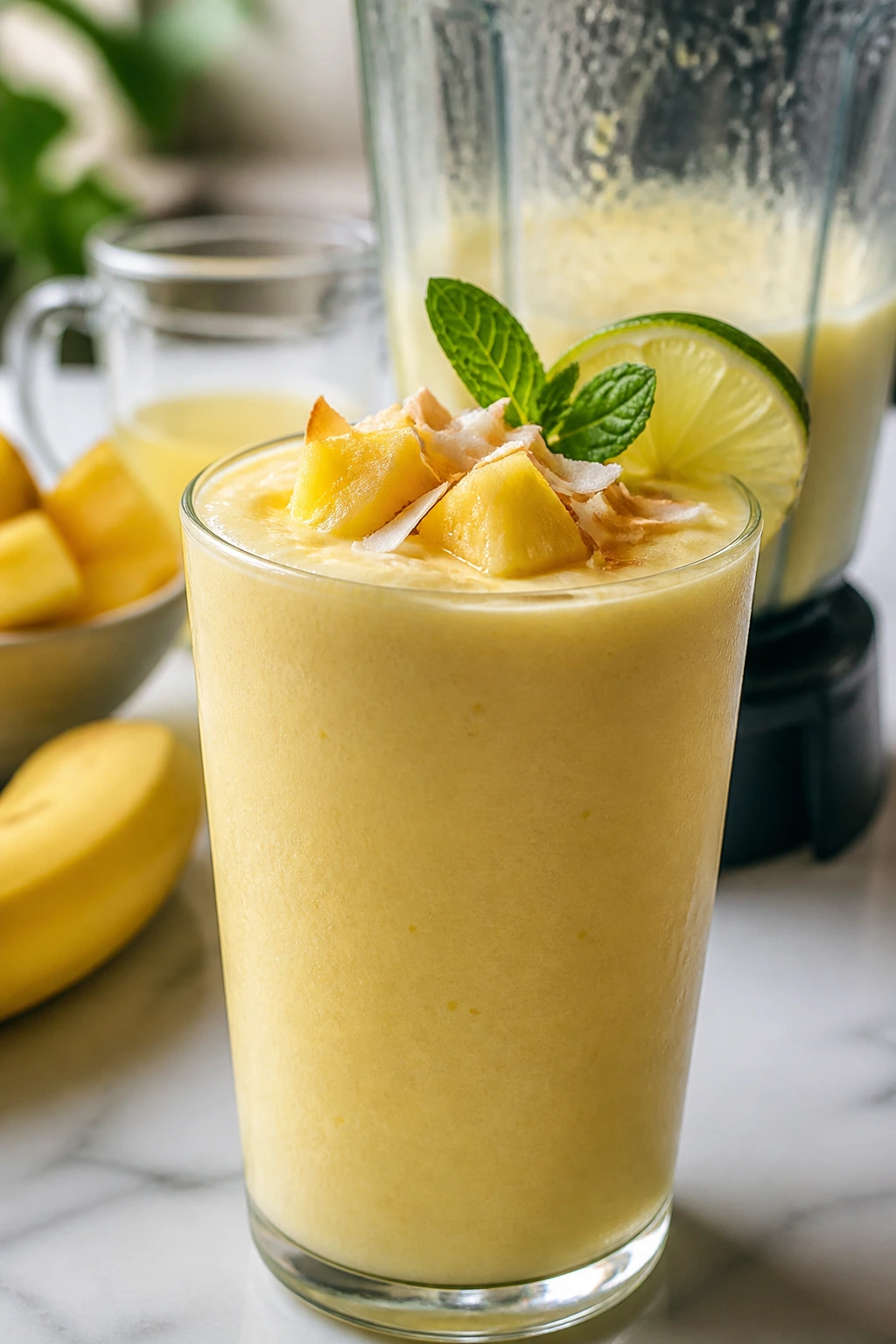
A good pineapple smoothie doesn’t need much persuasion. It needs cold fruit, a little acid, and enough body to feel like a proper drink. That’s the whole trick. Get those pieces in line and the first sip tastes sharp, creamy, and clean in the same breath.
I like this recipe because it doesn’t ask for much and doesn’t hide behind extras. Keep frozen pineapple in the freezer, lime in the drawer, and a carton of yogurt in the fridge, and the rest is easy. The blender does the rest of the work.
Pineapple Smoothie for Summer Sipping — Recipe Card
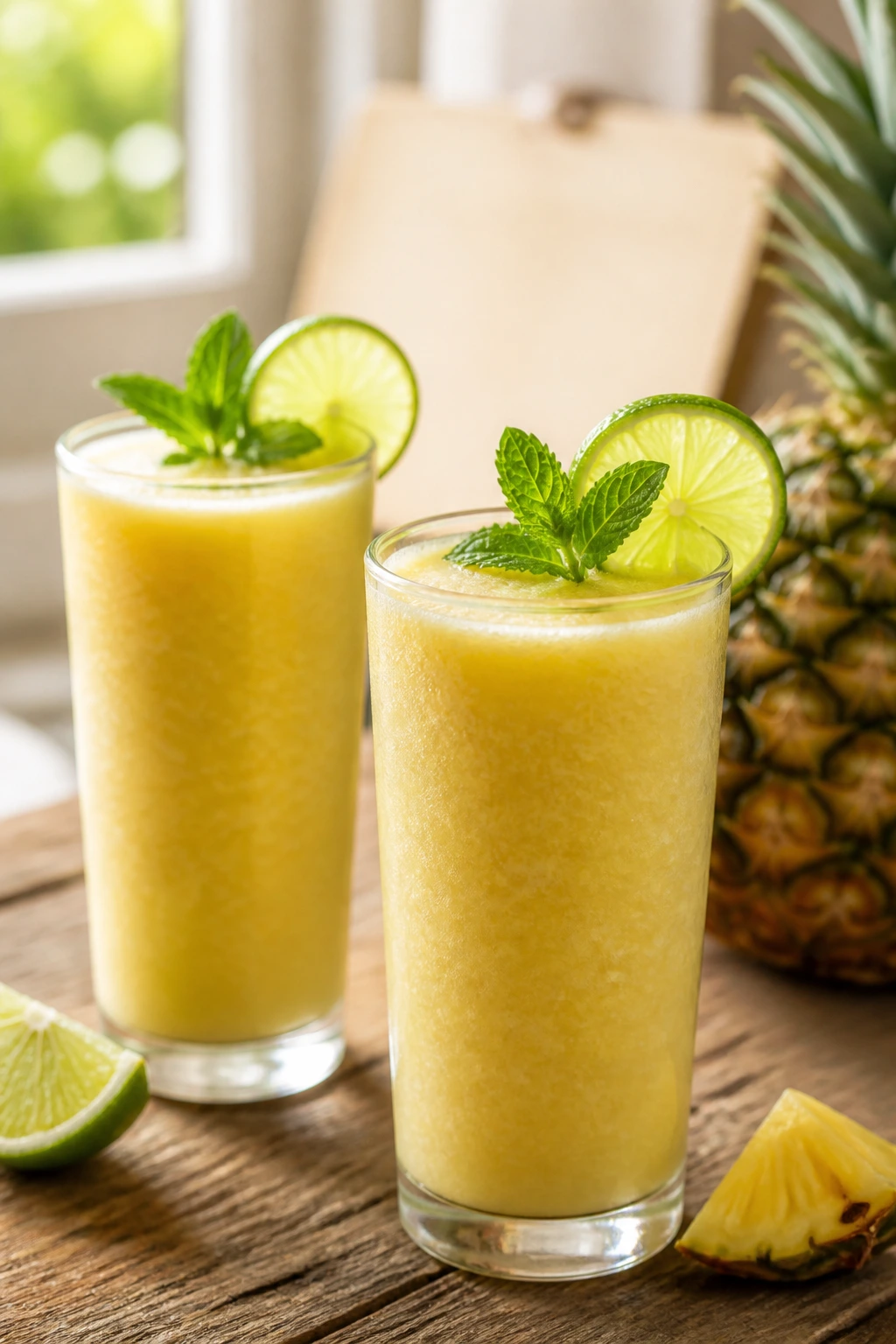
Recipe Name: Pineapple Smoothie for Summer Sipping
Description: A cold, pineapple-forward smoothie with banana, Greek yogurt, coconut water, orange juice, and lime. It’s creamy enough to feel substantial and bright enough to stay refreshing.
Prep Time: 10 minutes
Cook Time: 0 minutes
Total Time: 10 minutes
Course: Drink, Breakfast, Snack
Cuisine: Tropical-inspired, American
Servings: 2 servings
Calories: About 250 kcal per serving
Ingredients
For the Smoothie:
- 2 1/2 cups frozen pineapple chunks, packed loosely
- 1 medium ripe banana, peeled and sliced, frozen if possible
- 3/4 cup plain Greek yogurt, cold
- 3/4 cup cold coconut water
- 1/4 cup freshly squeezed orange juice
- 1 tablespoon fresh lime juice
- 1 tablespoon honey or maple syrup, plus more to taste
- 1/8 teaspoon fine sea salt
- 1/2 cup ice cubes, only if needed for thickness
For Serving:
- 2 chilled glasses
- Fresh mint leaves, optional
- Lime wheels or wedges, optional
- Toasted coconut flakes, optional
Instructions
- Chill 2 glasses in the freezer for 5 to 10 minutes.
- Add the coconut water, orange juice, lime juice, yogurt, honey, and salt to a blender.
- Add the frozen pineapple chunks and banana on top.
- Blend on low for about 10 seconds, then on high for 30 to 45 seconds, stopping once to scrape the sides if needed.
- Add a tablespoon or two more coconut water only if the blades stall. Add ice only if you want the smoothie thicker.
- Taste, adjust with a little more honey or lime if needed, then pour into the chilled glasses and garnish.
Notes: Frozen pineapple gives the best texture. Add liquid slowly if the blender struggles. Best served right away.