



The worst vegetarian Wellington fails at the exact moment it’s supposed to feel triumphant. The knife goes in, the crust gives a little crack, and then the bottom slumps because somebody trusted a wet filling to behave inside puff pastry.
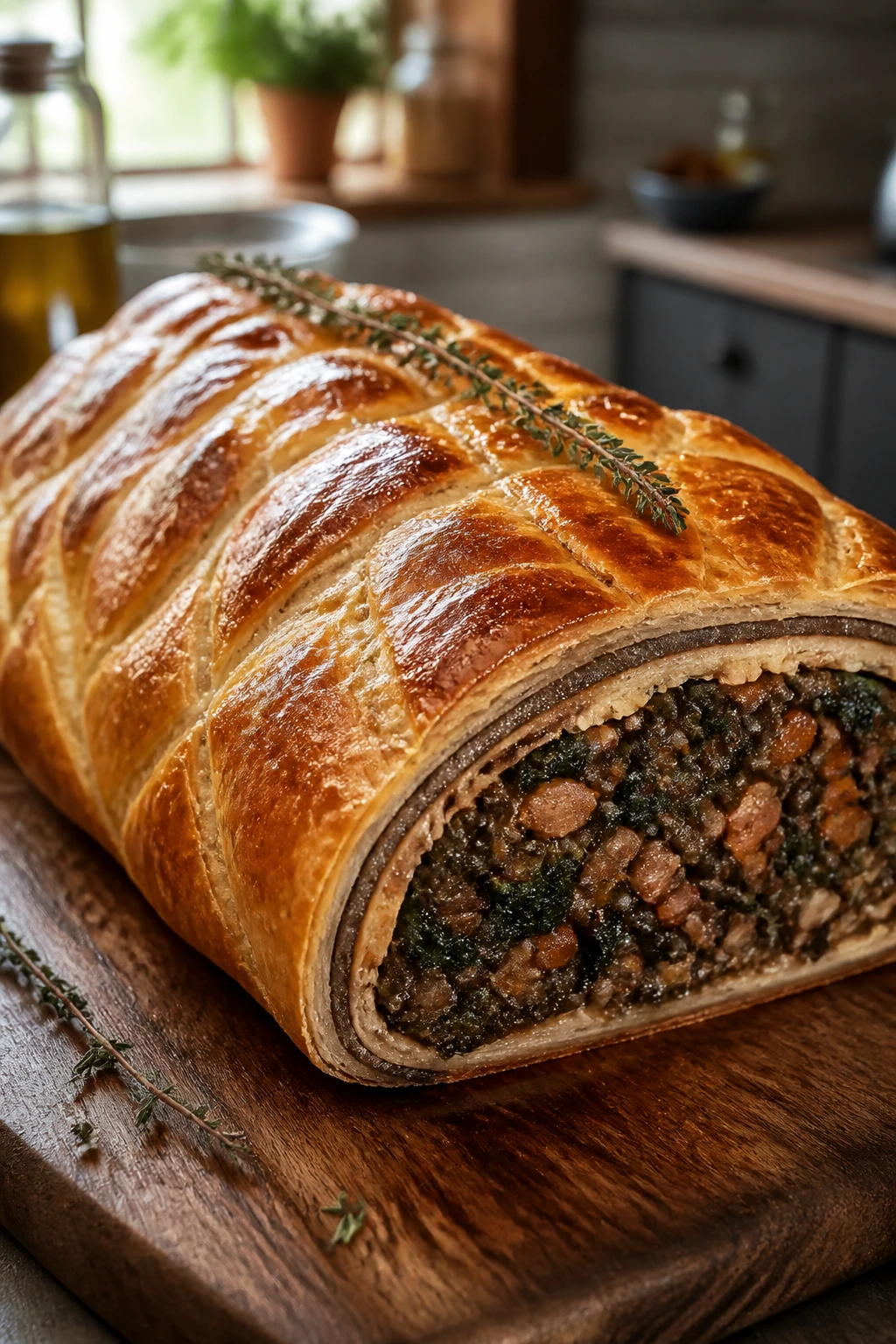
A good one does the opposite. The shell shatters into golden flakes, the middle slices cleanly, and the filling tastes deep and savory — mushrooms browned until nearly sticky, lentils with a little bite, walnuts for texture, thyme and Dijon for lift. That contrast is the whole point of a vegetarian Wellington: pastry on the outside, roast-dinner seriousness on the inside.
The version that earns a place at a hearty dinner table is the one that respects moisture. Dry mushrooms. Cool filling. Cold pastry. A short rest after baking. None of that is glamorous, but all of it matters. Skip those details and the dish turns soft at the edges. Do them well and the slice holds together like it knows exactly where it belongs.
Why This Vegetarian Wellington Earns Its Place at the Center of the Table
-
Crisp crust, not soggy pastry: the mushroom layer is cooked until the pan looks almost dry, so the bottom crust has a fighting chance to stay flaky instead of steaming itself limp.
-
Savory enough to stand in for a roast: lentils, walnuts, tomato paste, thyme, and soy sauce build the kind of brown, full flavor you want when the table expects a main event.
-
Slices with real structure: green or brown lentils hold their shape, walnuts give the filling some teeth, and the whole log firms up once it chills.
-
Make-ahead friendly without tasting like leftovers: the filling can be cooked ahead and chilled, which means assembly feels calm instead of frantic.
-
Looks like effort, eats like comfort: puff pastry does that trick where it makes the whole plate feel festive before anyone has even taken a bite.
-
Flexible enough for a proper dinner spread: it sits happily beside mashed potatoes and gravy, roasted carrots, or a sharp little salad, which is exactly what a good centerpiece should do.
A lot of meatless roast recipes try too hard to imitate meat. I don’t think that’s the right game. The better move is to build enough savory depth that nobody misses the steak-shaped idea in the middle, because they’re too busy eating the pastry and the mushrooms and the nutty, earthy filling underneath.
That’s where this dish gets interesting. It isn’t delicate. It isn’t trying to be dainty. A classic vegetarian Wellington should feel dense enough to satisfy people who want a real dinner, but clean enough to slice without the filling spilling like loose gravel. That balance is what makes it worth making.
The Roast-Dinner History Behind a Meatless Wellington
The original Wellington made its name as a showpiece: a rich filling wrapped in pastry, sliced in thick slabs, and served with the kind of confidence that says the cook expects people to sit up a little straighter. The vegetarian version borrows that same architecture, but it replaces the meat with ingredients that know how to carry flavor on their own.
Mushrooms do the heavy lifting. They have that dark, savory edge that comes from a long sauté, especially when they’re chopped finely enough to almost disappear into a paste. Lentils bring body. Walnuts add bite. Together, they create a filling that behaves more like a roast than a side dish.
Why mushrooms belong in the middle
Mushrooms are not just a “vegetarian replacement.” They’re the reason the dish tastes grown-up. Cremini mushrooms are especially useful here because they brown well, stay meaty, and don’t turn watery if you give them enough time in the pan. The trick is patience. Let them collapse. Let the moisture go. Let the pan look a little empty before you stop.
Why lentils and walnuts make a better slice
Lentils give the Wellington a clean slice instead of a crumbly one. Brown or green lentils hold their shape; red lentils turn to mash and blur the whole thing. Walnuts add a rough, pleasant bite that keeps the filling from feeling soft all the way through. It’s a small detail, but it changes how the finished slice feels on the fork.
Why the pastry is the point, not just the wrapper
Puff pastry is not decoration. It is the thing people remember when they hear the knife hit the crust. If the pastry stays crisp, the whole dish feels deliberate. If it goes soft, the magic fades. That’s why cold pastry and a dry filling are non-negotiable here — the shell needs to puff, not steam.
I’ve always thought the best vegetarian Wellington knows exactly what it is. It doesn’t apologize for not being beef. It gives you something else: a careful, layered roast with a flaky shell and a center that tastes like it was cooked by someone who pays attention.
The Clock, the Yield, and the Chill Time
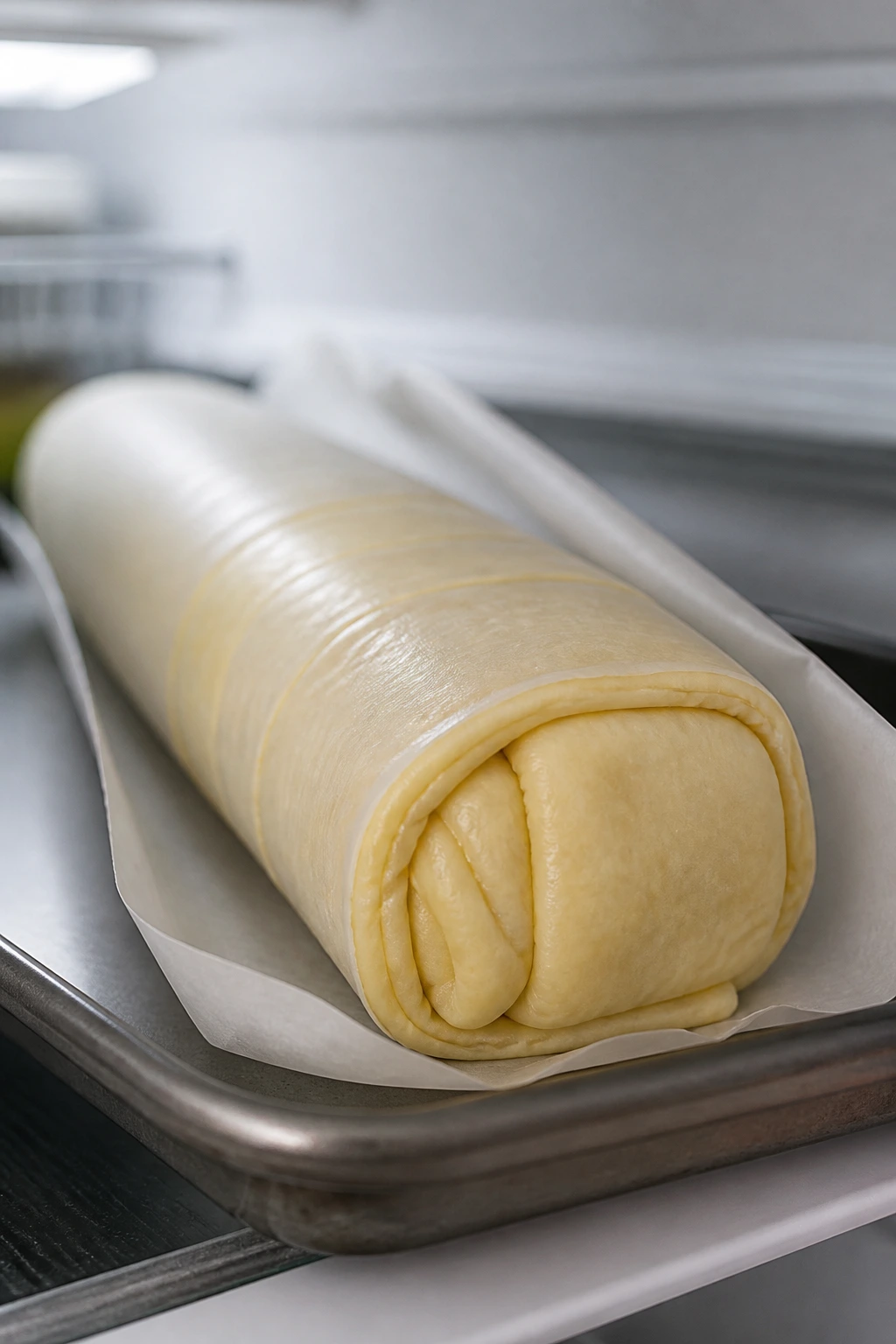
Yield: Serves 6
Prep Time: 35 minutes
Cook Time: 45 minutes
Total Time: 1 hour 20 minutes, plus 45 minutes chilling and resting
Difficulty: Intermediate — the process is straightforward, but the filling has to be cooked dry, cooled, and wrapped with enough care to keep the pastry crisp.
Chill/Rest Time: 45 minutes chilling before baking, plus 10 to 15 minutes resting after baking
Best Served: Warm, after a short rest, while the pastry is still crisp and the filling has settled
The timing here matters more than people expect. The filling is not something you rush straight into pastry while it’s still warm from the pan. Warm filling melts the butter in the puff pastry before the oven has a chance to do its work, and then the layers don’t lift properly. That’s the kind of mistake that makes a beautiful dish feel flat.
You can spread the work out. Cook the lentils ahead. Make the mushroom duxelles earlier in the day. Even the full filling can sit in the refrigerator overnight if you want the actual assembly to be quick and calm. The only thing that shouldn’t be relaxed is the pastry itself. Keep that cold. Always.
The Shopping List for a Crisp Crust and a Savory Slice
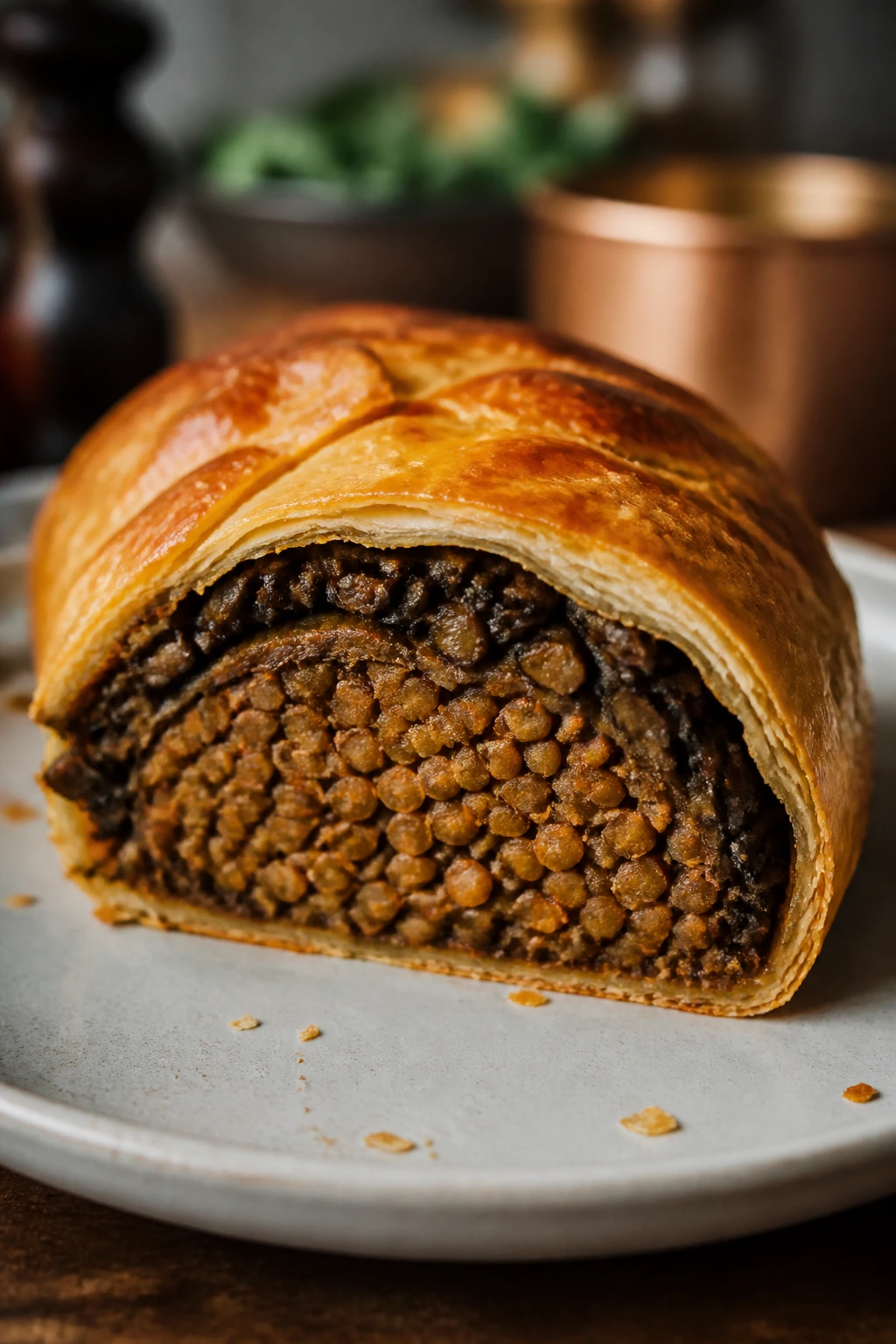
For the Lentil Filling:
- 2 tablespoons olive oil
- 1 medium yellow onion, finely diced
- 1 medium carrot, finely diced
- 1 celery stalk, finely diced
- 3 cloves garlic, minced
- 2 cups cooked brown or green lentils, very well drained and patted dry
- 1 cup walnuts, toasted and finely chopped
- 1/2 cup panko breadcrumbs
- 1 tablespoon tomato paste
- 1 tablespoon Dijon mustard
- 1 tablespoon soy sauce or tamari
- 1 teaspoon fresh thyme leaves
- 1 teaspoon fresh rosemary, finely chopped
- 1/2 teaspoon smoked paprika
- 1 teaspoon kosher salt, plus more to taste
- 1/2 teaspoon black pepper
- 1/4 cup grated vegetarian hard cheese or Parmesan-style cheese
- 2 tablespoons chopped flat-leaf parsley
For the Mushroom Duxelles:
- 1 pound cremini mushrooms, very finely chopped
- 1 shallot, very finely minced
- 2 tablespoons unsalted butter
- 1 tablespoon olive oil
- 1 teaspoon fresh thyme leaves
- 1 tablespoon dry sherry or dry white wine
- 1 tablespoon soy sauce or tamari
- 1/4 teaspoon black pepper
- Pinch of salt, only if needed
For Assembly and Baking:
- 2 sheets puff pastry, thawed but cold
- 1 tablespoon all-purpose flour, for rolling
- 1 tablespoon Dijon mustard, for brushing the pastry
- 1 large egg
- 1 tablespoon milk or water
- Flaky sea salt, for finishing
Buy the mushrooms with a bit of thought. Cremini are the steady choice, but if you spot a mix of cremini and shiitake or oyster mushrooms, that can push the flavor deeper without changing the structure. Avoid packages that look damp or slimy at the bottom. Wet mushrooms start you in the wrong place.
The lentils matter too. Brown and green lentils hold their shape. Red lentils do not belong here. They turn soft fast, and soft is the last thing you want in a Wellington filling that has to slice cleanly.
Why Each Ingredient Pulls Its Weight
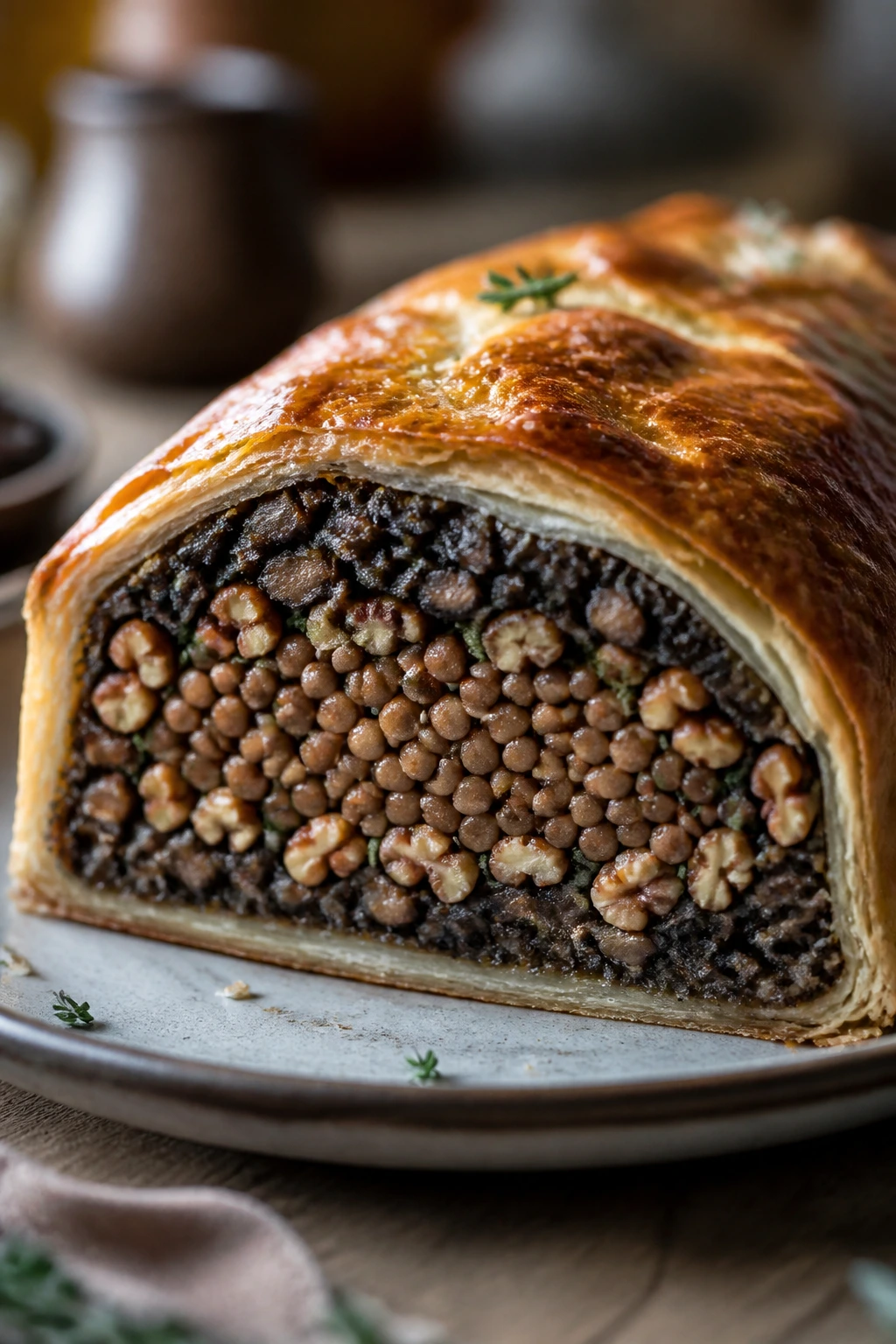
The Lentil Core
What to use: 2 cups cooked brown or green lentils, very well drained and patted dry. If you’re cooking from dry, start with about 3/4 cup dry lentils and simmer them until tender but still intact.
Preparation: Spread the cooked lentils on a tray or plate for a few minutes before mixing them in. A little surface drying helps them absorb flavor instead of turning the filling muddy.
Substitutions: Canned lentils work if you rinse and drain them well; just take an extra minute to blot them dry. Cooked beluga lentils also work nicely if you want the filling to look a little darker and more polished in the slice.
Tips: Skip red lentils. They break down too much and make the center soft in the wrong way. You want lentils that hold their shape when pressed between your fingers.
The Mushroom Duxelles
What to use: 1 pound cremini mushrooms, 1 shallot, butter, olive oil, thyme, sherry or white wine, soy sauce, pepper, and a pinch of salt if the pan needs it.
Preparation: Chop the mushrooms finely by hand or pulse them in a food processor in short bursts. You’re aiming for tiny pieces, not a paste. If the mushrooms turn to mush in the processor, they’ll release more water and take longer to dry out.
Substitutions: A mix of cremini and shiitake gives a deeper, woodsy flavor. If you don’t have sherry, use dry white wine, or skip it and add a teaspoon of extra soy sauce.
Tips: Cook until the mixture looks dark, reduced, and almost sticky. If the pan still looks shiny with liquid, keep going. That’s the difference between a crisp crust and a damp one.
The Pastry and the Wash
What to use: 2 sheets puff pastry, 1 tablespoon flour for rolling, 1 tablespoon Dijon mustard, 1 egg, and 1 tablespoon milk or water for the wash.
Preparation: Thaw the pastry in the refrigerator, not on the counter, so it stays cold and manageable. If the sheets are square, overlap them slightly on a floured surface and press the seam together before rolling into a larger rectangle.
Substitutions: For a vegan version, use vegan puff pastry and brush with unsweetened plant milk instead of egg wash. The pastry won’t brown quite as deeply, but it can still bake up well if you give it enough time.
Tips: Cold pastry puffs better. Warm pastry sticks, tears, and loses the distinct layers that make the crust worth eating in the first place.
The Seasonings and Structure
What to use: Dijon mustard, tomato paste, soy sauce, panko breadcrumbs, thyme, rosemary, parsley, smoked paprika, and vegetarian hard cheese.
Preparation: Measure everything before you start mixing. Once the mushrooms and vegetables are ready, the filling moves quickly, and you don’t want to be fumbling for the mustard while the pan cools.
Substitutions: Tamari works in place of soy sauce if you want the recipe gluten-free. You can swap parsley for chopped sage if you want a more wintery flavor, or use a little miso instead of some of the soy sauce for a rounder salty note.
Tips: Panko is there for structure, not filler. It soaks up a little excess moisture and helps the filling hold together, but too much will make the center bready. Start with the amount listed.
The Tools That Make the Assembly Less Fussy
-
Large skillet, 12-inch if you have it: A wide pan lets the mushrooms cook in an even layer instead of steaming in a pile.
-
Rimmed baking sheet: The rim keeps any butter or filling crumbs from sliding off. A heavy sheet browns the bottom more evenly than a flimsy one.
-
Parchment paper: This keeps the pastry from sticking and makes it easier to move the Wellington without a tense little panic at the end.
-
Mixing bowl: A large bowl gives you room to fold the lentil filling together without crushing the texture.
-
Chef’s knife: Fine chopping matters here. The smaller the mushroom pieces, the better the final slice holds.
-
Rolling pin: Helpful if your puff pastry sheets need to be joined or stretched into a larger rectangle.
-
Pastry brush: You need one for the egg wash. A spoon doesn’t give the same thin, even coat.
-
Serrated knife: Best for slicing the baked Wellington after resting. A smooth knife can drag the crust and flatten the filling.
-
Spatula or bench scraper: Useful for lifting and tucking the pastry around the filling without tearing it.
-
Food processor, optional: Fast for chopping mushrooms and walnuts, but only if you pulse in short bursts. Leave it out if you prefer tighter control over the texture.
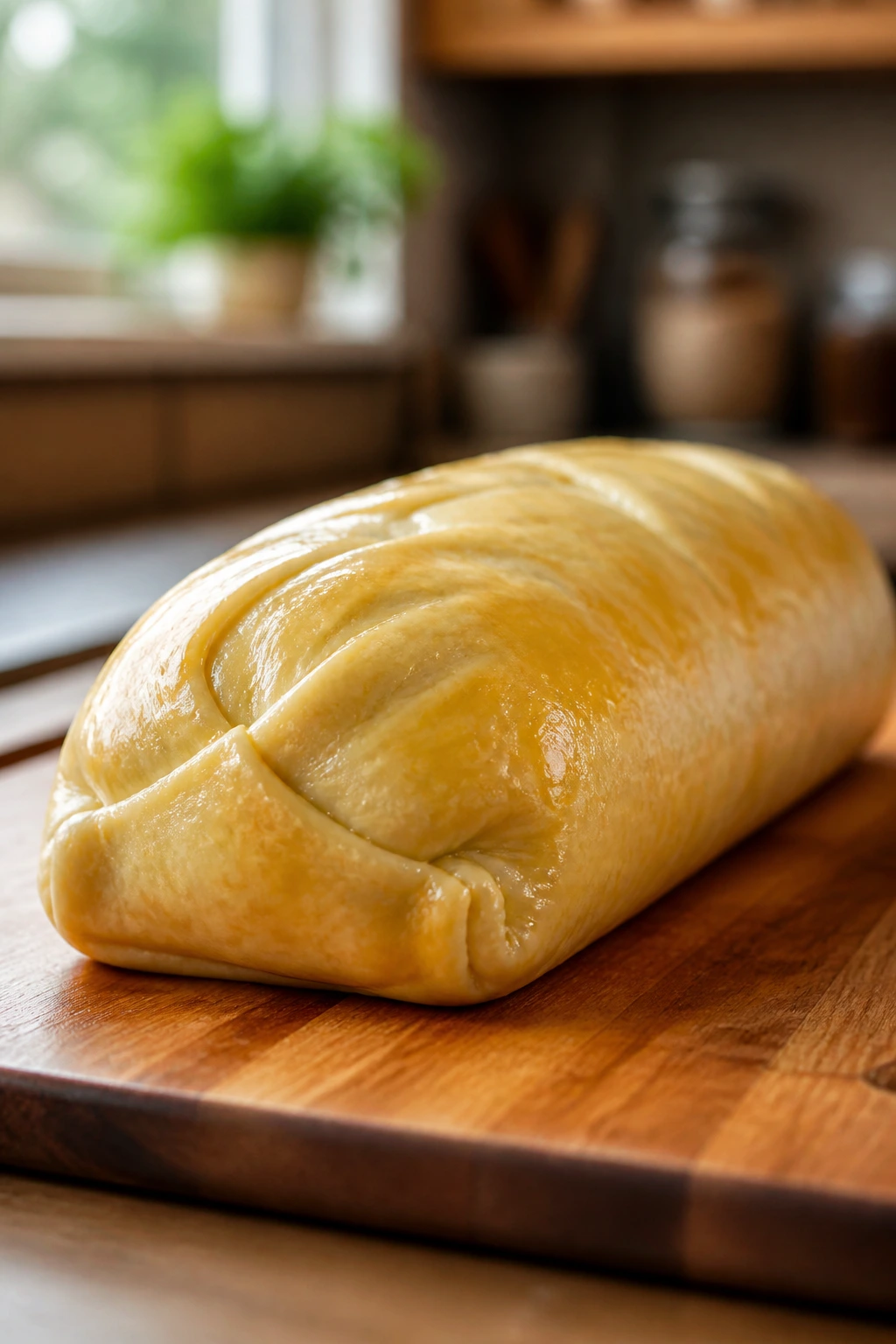
A lot of people think this dish demands fancy gear. It doesn’t. What it does demand is enough surface area to manage a moist filling and a cold pastry sheet without crowding either one.
Parchment paper is not optional in my book. It gives you insurance. It also lets you slide the assembled Wellington onto the tray without handling the whole thing too much, and handling is where pastry starts to get temperamental.
Building the Wellington, Step by Step
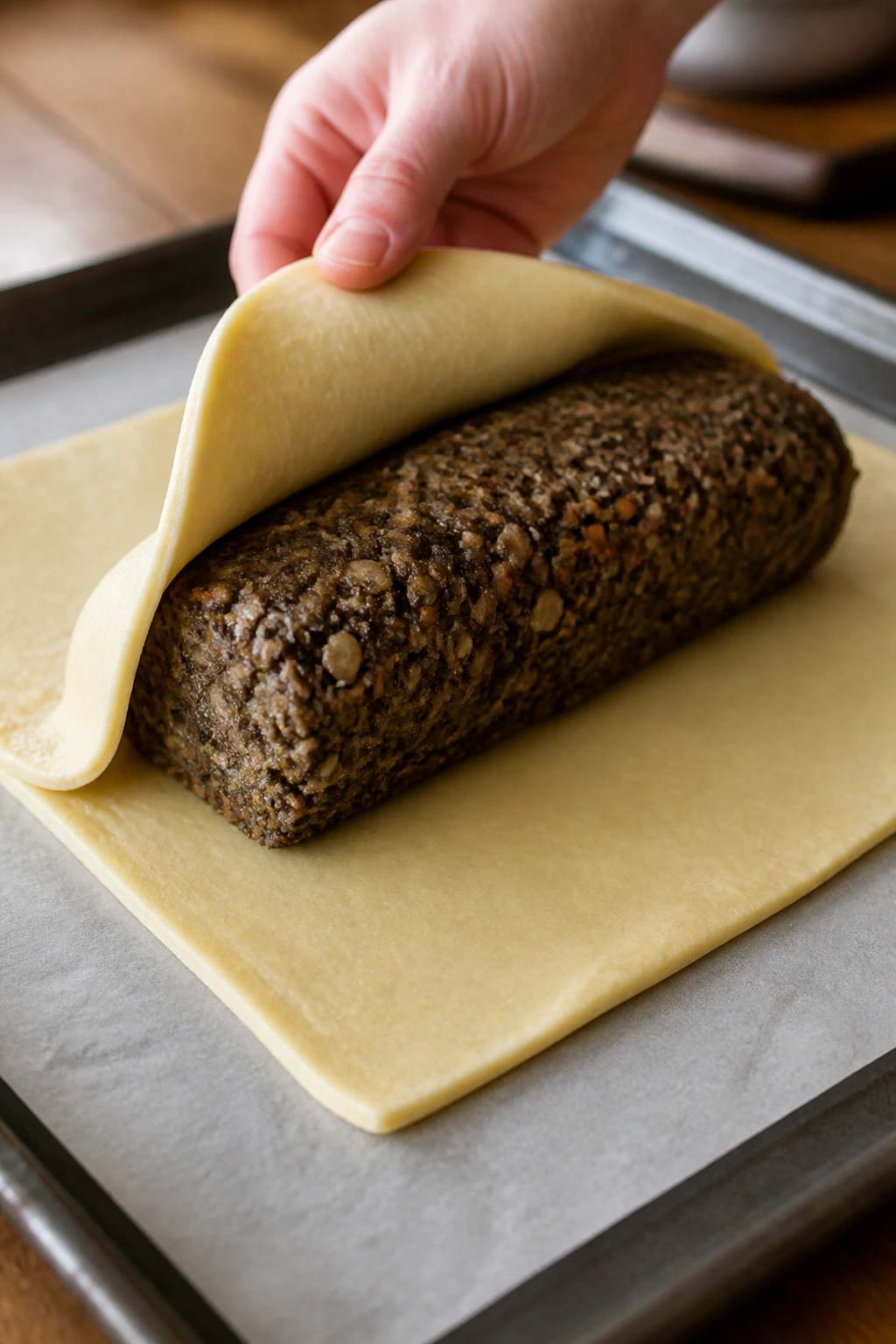
Cook the Filling Until It’s Dry Enough to Behave
-
Cook the lentils if needed. If you’re starting from dry, simmer about 3/4 cup brown or green lentils in salted water until tender but still intact, about 18 to 22 minutes. Drain them well, then spread them out to cool completely. If you’re using cooked or canned lentils, drain them until they look matte, not wet.
-
Preheat the oven. Set it to 400°F (200°C) and line a rimmed baking sheet with parchment paper. Keep the sheet ready on the counter so you’re not searching for it when the pastry is assembled.
-
Make the mushroom duxelles. Heat 2 tablespoons butter and 1 tablespoon olive oil in a large skillet over medium-high heat. Add the shallot and chopped mushrooms, and cook for 12 to 15 minutes, stirring often, until the mushrooms have collapsed and the pan looks nearly dry. Add thyme, sherry or white wine, soy sauce, and black pepper, then cook 2 to 3 minutes more until the mixture looks dark and sticky. Do not stop while the mushrooms still look wet.
-
Cook the vegetable base. In the same skillet, add the olive oil for the filling, then the onion, carrot, and celery. Cook over medium heat for 6 to 8 minutes, until the vegetables soften and the onion edges turn lightly golden. Add the garlic and cook for 30 seconds, just until fragrant.
-
Build the lentil mixture. Stir in the lentils, walnuts, panko, tomato paste, Dijon mustard, soy sauce, thyme, rosemary, smoked paprika, salt, pepper, grated cheese, and parsley. Cook for 2 to 3 minutes, stirring constantly, until the mixture looks cohesive and no liquid pools at the bottom of the pan. It should hold together when you press a spoon into it. If it looks loose, keep it on the heat another minute or two.
Chill, Shape, and Wrap Without Rushing
-
Cool the filling. Scrape the lentil mixture into a bowl or shallow dish and let it cool for 15 minutes, then refrigerate it for 30 minutes more until it feels firm and no longer warm. Warm filling softens puff pastry before the oven can set it, and that is exactly what you do not want.
-
Roll the pastry. Lightly flour a sheet of parchment and roll the puff pastry into a rectangle large enough to wrap the filling, about 12 by 16 inches if you’re joining two sheets. If the pastry comes as two squares, overlap them by about 1 inch and press the seam together before rolling. If the pastry starts getting soft, slide it onto the parchment-lined tray and chill it for 10 minutes.
-
Assemble the middle. Brush the center third of the pastry lightly with Dijon mustard, leaving a 1 1/2-inch border on all sides. Spread the mushroom duxelles in a thin layer down the center, then shape the lentil filling into a tight log about 10 inches long and place it on top. Press gently so it’s compact and even. Loose filling makes the pastry harder to seal.
Bake Until the Crust Turns Deep Gold
-
Wrap and seal. Fold the long sides of the pastry over the filling, then tuck the ends underneath like you’re wrapping a heavy package. Place the seam side down on the prepared baking sheet. Beat the egg with the milk or water, then brush the top and sides evenly. Score 3 to 5 shallow diagonal slashes across the top with a sharp knife. Sprinkle with flaky sea salt. Cut only through the top layer — not through to the filling.
-
Bake and rest. Bake for 35 to 45 minutes, until the pastry is deep golden brown, crisp to the touch, and the bottom feels set when lifted gently with a spatula. If the top is browning too quickly, tent loosely with foil after about 25 minutes. Let the Wellington rest for 10 to 15 minutes before slicing with a serrated knife. Use a gentle sawing motion so the crust doesn’t crush.
The smell at this stage is the good part: butter, toasted pastry, mushrooms, thyme, and a little bit of onion sweetness at the edges. If your kitchen smells like that, you’re on the right track.
How to Serve It So the First Slice Looks Clean
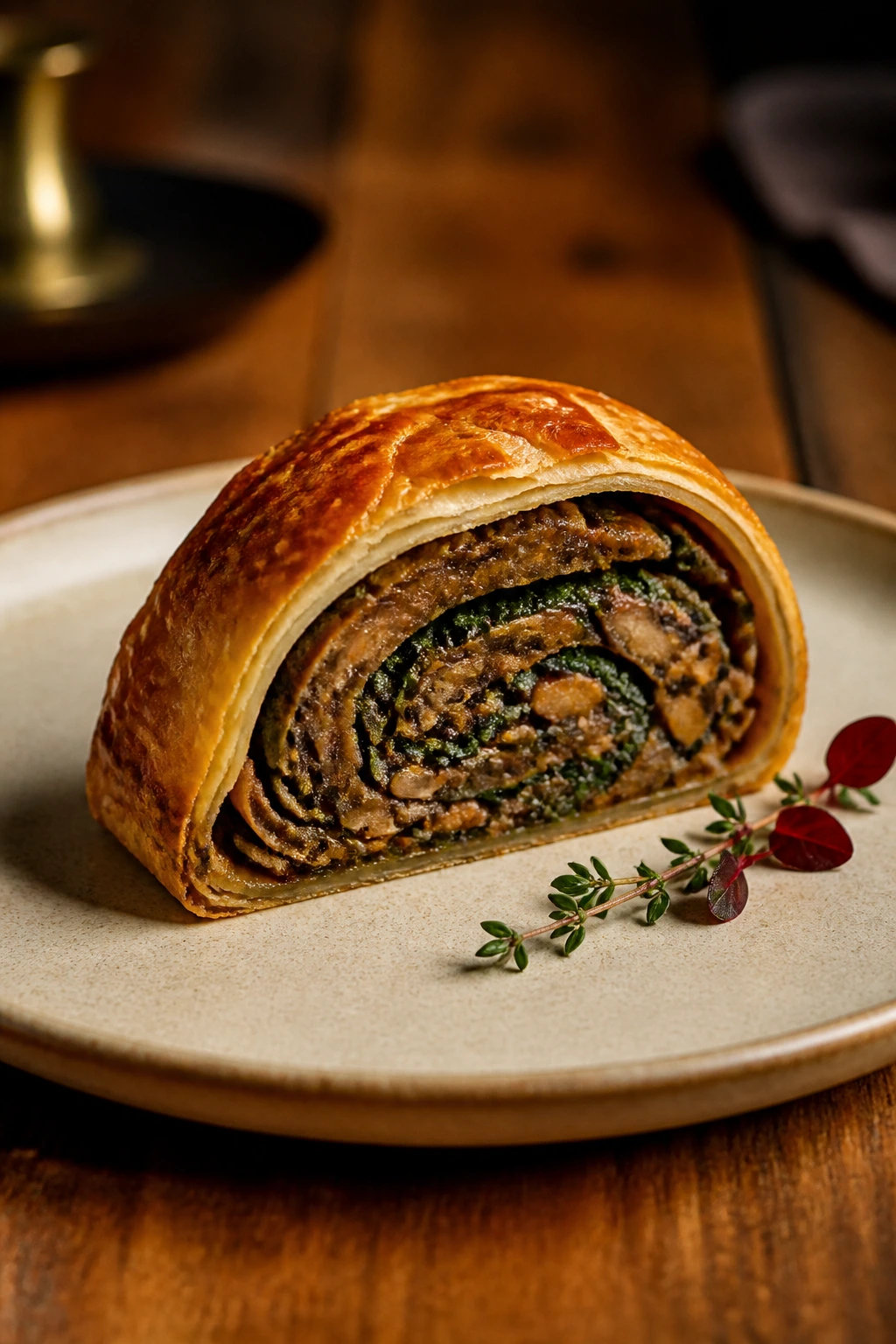
Presentation: Move the Wellington to a warm platter and wait before cutting. A serrated knife gives you the cleanest slice, especially if you wipe the blade between cuts. I like to angle the pieces slightly so the spiral of pastry and filling shows clearly, then spoon gravy or a mushroom jus around the plate rather than over the top.
Accompaniments: Keep the sides simple and earthy. Roasted carrots, green beans with lemon, mashed potatoes, or parsnip mash all make sense here. A sharp salad with bitter greens and mustard vinaigrette cuts through the pastry better than another creamy side. If you want gravy, a mushroom gravy or red wine onion gravy is the right sort of thing.
Portions: One Wellington serves 6 generous slices. With sides, you can stretch it to 8 smaller portions, though the center slices will always be the neatest. If you’re cooking for a crowd, it’s better to make two smaller logs than one giant one; the smaller shape bakes more evenly.
Beverage Pairing: A light red like Pinot Noir suits the mushroom flavor without bulldozing it. Dry cider works too, especially if the table leans more British roast dinner than wine bar. For a nonalcoholic drink, sparkling apple juice or chilled black tea with lemon keeps the plate from feeling too heavy.
This is one of those dishes where the first slice sets the tone. If you let it rest for a few minutes, the filling stops slumping and the pastry keeps its shape long enough for everyone to see that you paid attention.
Small Moves That Make a Big Difference
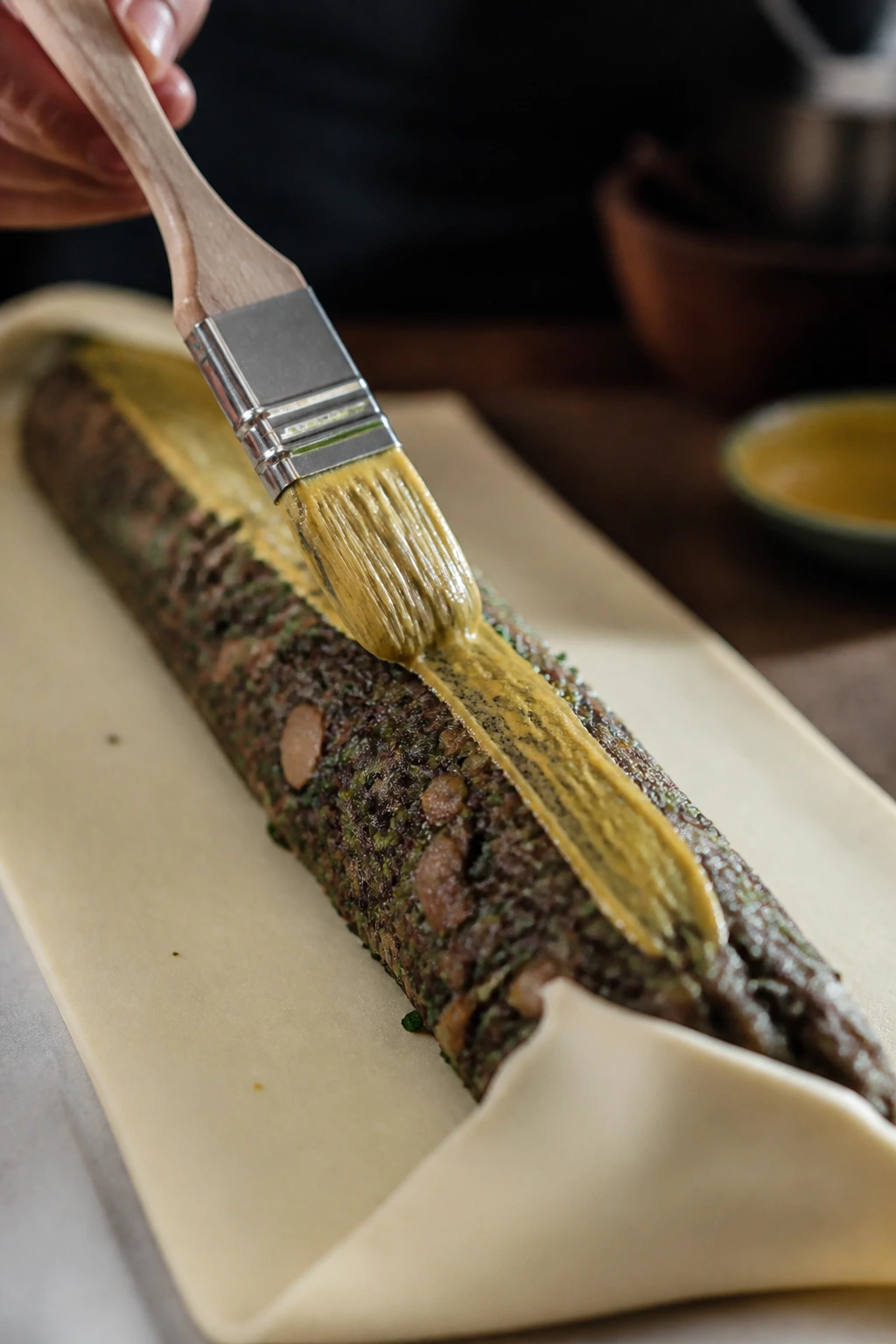
Flavor Enhancement: A thin smear of Dijon mustard under the duxelles wakes up the mushrooms without turning the dish sharp. If you want a deeper finish, stir 1 teaspoon of red wine vinegar into the mushroom pan at the very end, just enough to brighten the salt and butter.
Time-Saver: Cook the lentil filling and the mushroom duxelles a day ahead, then chill both separately. On assembly day, the whole process feels like folding, sealing, and baking instead of chasing hot pans around the kitchen. That one choice saves the most stress.
Crispness Trick: Put the Wellington on parchment over a heavy rimmed sheet pan, not a thin baking tray. If you own a preheated baking steel or stone, set the sheet pan on top of it for the last part of the bake. The bottom gets better color, which matters more than people admit.
Make-It-Yours: Swap half the walnuts for chopped toasted hazelnuts if you want a slightly sweeter, rounder nuttiness. For a softer herb note, use sage instead of rosemary. If you want more richness, a spoonful of crème fraîche or soft goat cheese can be folded into the lentil mixture, but keep the amount modest so the filling stays sliceable.
Finish Strong: A few sprigs of parsley or thyme on the platter do more than decoration. They tell the eye what the dish tastes like. That sounds small. It isn’t.
Common Mistakes That Leave You With a Soggy Bottom
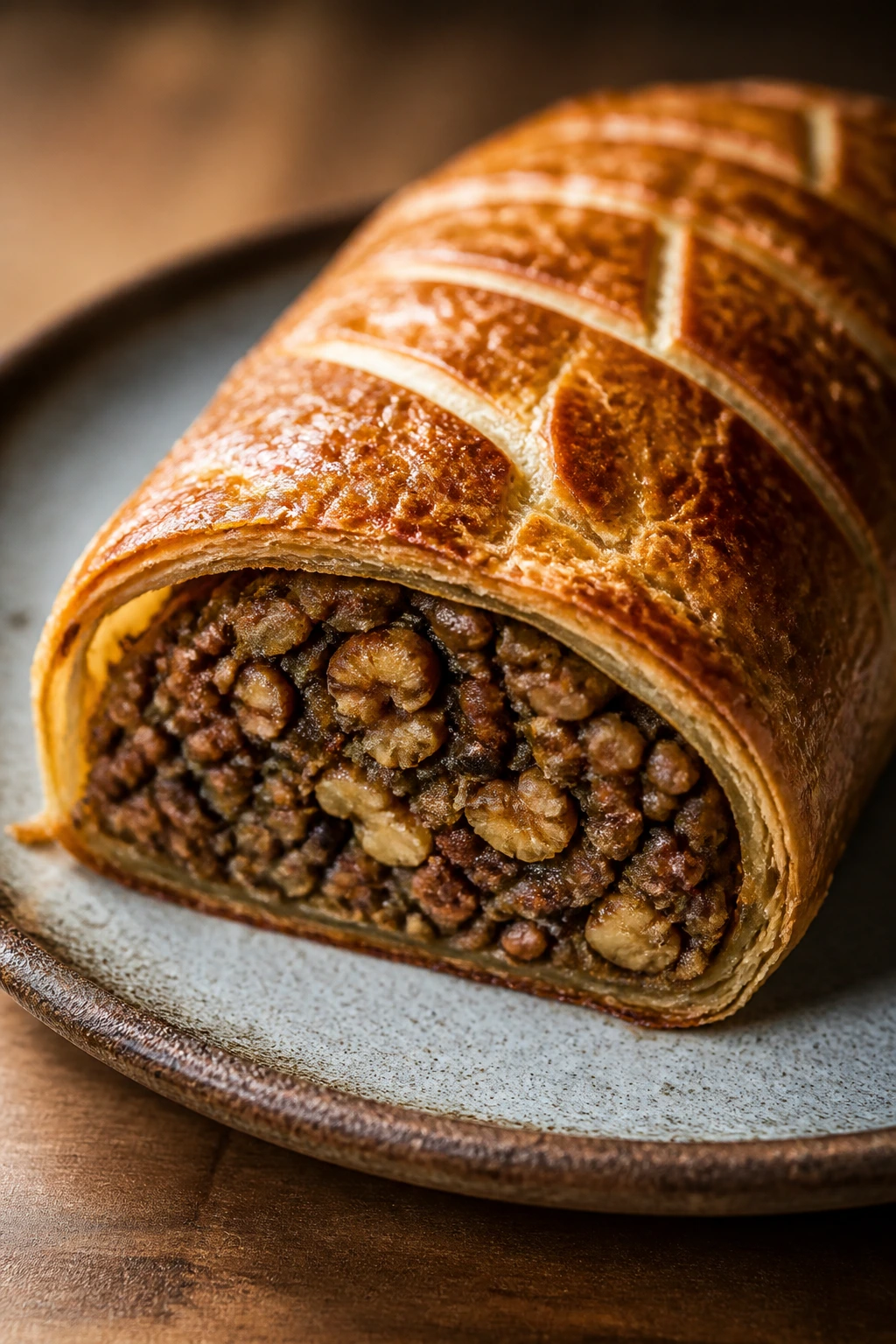
-
The mushrooms are still wet: If the duxelles looks glossy or leaves liquid in the pan, the pastry will steam instead of bake. Keep cooking until the mixture is dark and almost spreadable.
-
The filling goes in warm: Warm filling melts the pastry before the oven sets the layers. Chill it until it feels cool all the way through, not just room temperature on the outside.
-
The log is overstuffed: A too-fat Wellington splits at the seams or bursts at the ends. Shape the filling into a firm log with a little breathing room inside the pastry, and don’t try to cram in every crumb.
-
The bottom bakes pale: Puff pastry needs enough time and heat to cook all the way through. Use a sturdy sheet pan and bake until the bottom is browned, not just the top. If the top looks done before the bottom, keep baking and cover the top loosely with foil.
-
You slice it immediately: The filling needs a few minutes to settle. Cut too soon and it spills out in a soft heap. Wait 10 to 15 minutes, even if everyone is standing there with forks in their hands.
-
You use the wrong lentils: Red lentils vanish into mush and make the filling feel like paste. Green or brown lentils keep the structure intact and give the Wellington a proper bite.
Most soggy Wellington problems come from trying to save time in the wrong place. The mushrooms need full cooking, the filling needs cooling, and the pastry needs enough heat to rise properly. That’s the whole script.
Variations Worth Trying Without Losing the Spirit of the Dish
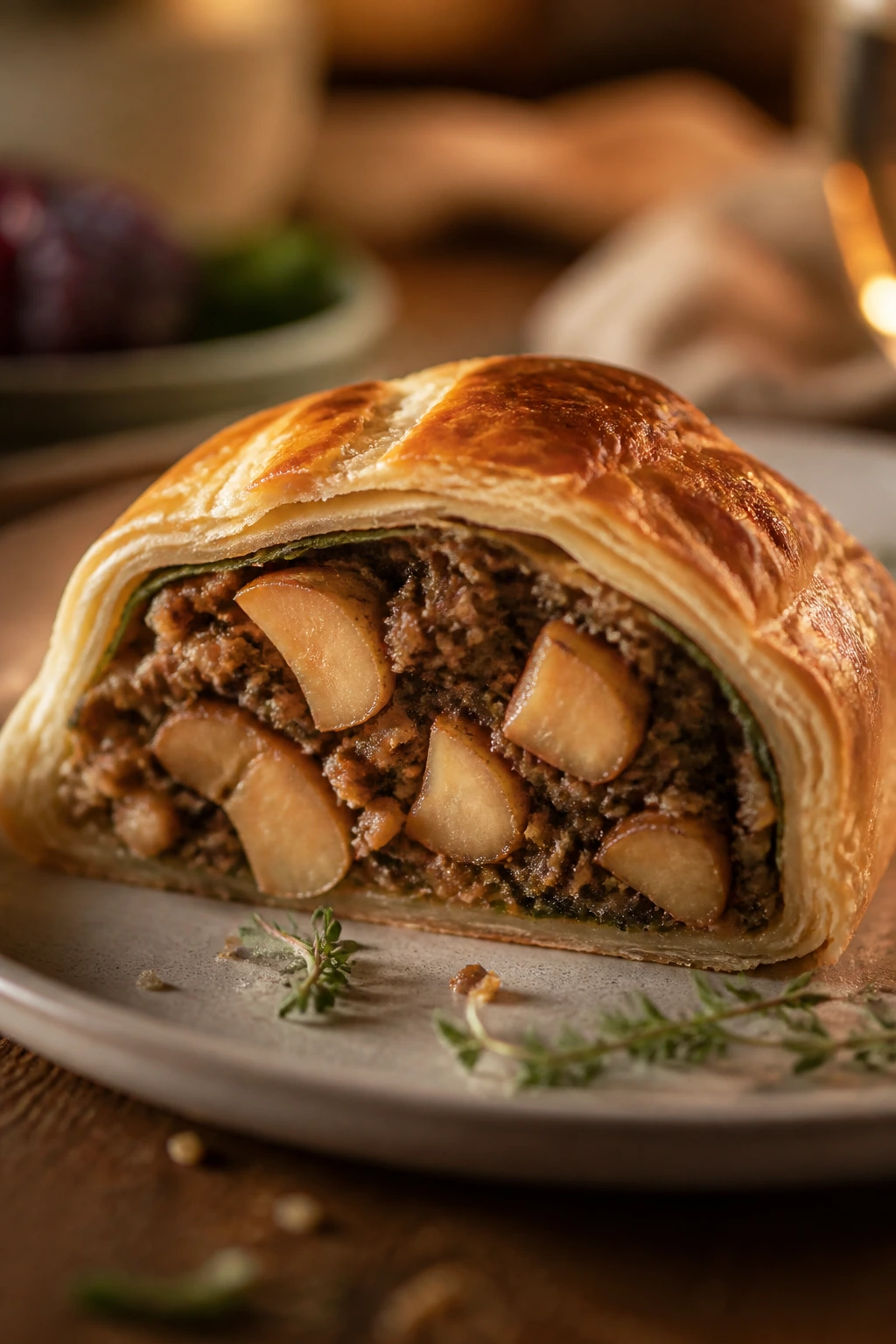
Chestnut and Thyme Wellington: Replace 1/2 cup of the walnuts with chopped cooked chestnuts for a softer, sweeter filling. The texture becomes a little smoother, which suits a holiday table nicely and takes the edge off the walnuts’ bitterness.
Wild Mushroom and Leek Version: Swap the onion for two trimmed leeks and use a mix of cremini and shiitake mushrooms. The leeks give the filling a sweeter, gentler base, and the mixed mushrooms deepen the flavor without changing the method.
Root Cellar Wellington: Add 1 cup of finely diced roasted parsnip or celeriac to the lentil filling. It makes the middle feel more wintry and brings a subtle sweetness that plays well with thyme and mustard.
Fully Vegan Version: Use vegan puff pastry, replace the butter with olive oil or vegan butter, leave out the cheese, and brush the top with unsweetened plant milk or aquafaba instead of egg wash. The crust may brown a little less deeply, so give it a bit more time in the oven and watch the color closely.
Each variation keeps the same basic rule: the filling has to be dry enough to hold its shape. Change the flavor profile if you like. Don’t change the moisture balance.
Make-Ahead, Storage, and Reheating Notes
Make Ahead
The filling can be cooked up to 2 days ahead and kept covered in the refrigerator. In fact, it often slices better when it’s fully chilled, because the lentils and walnuts firm up a bit overnight. You can also assemble the whole Wellington, wrap it tightly in plastic, and refrigerate it for up to 24 hours before baking.
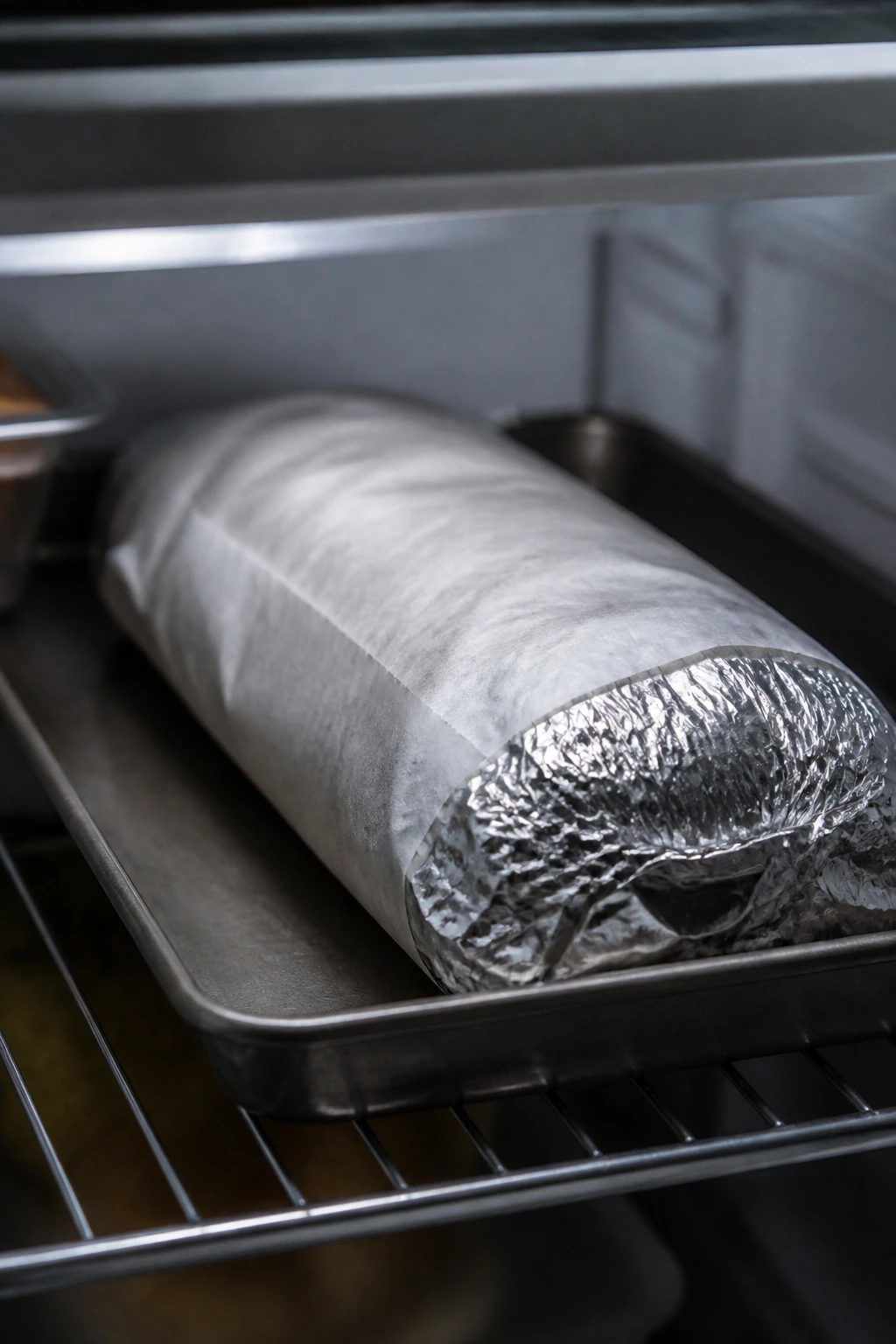
If you want to freeze it unbaked, wrap the assembled Wellington tightly in parchment and then foil. Freeze it on a tray until firm, then store it flat. Bake from frozen rather than thawing, and add 10 to 15 minutes to the baking time. That keeps the pastry layers from getting soggy during thawing.
Storage
Leftover baked slices keep in the refrigerator for 3 days in an airtight container. Let them cool fully before packing them up, or condensation will soften the crust. Room temperature is fine for about 2 hours during serving, but after that, leftovers should go back in the fridge.
Baked Wellington also freezes reasonably well for up to 2 months, especially if you wrap the slices individually. Whole frozen leftovers are harder to reheat evenly, so I prefer slicing first and freezing the pieces on their own.
Reheating
For the best texture, reheat slices in a 350°F (175°C) oven for 12 to 15 minutes from the refrigerator, or 25 to 30 minutes from frozen. A toaster oven works well for one or two slices. An air fryer at 320°F (160°C) for 8 to 10 minutes can crisp the pastry quickly, though you need to watch it closely so the crust doesn’t darken too fast.
Skip the microwave if you care about the pastry. It softens the crust and turns the bottom chewy. Fine for emergencies. Not fine for the best version of the dish.
Best Served
The Wellington tastes brightest when the crust is still crisp and the filling has had a short rest. It is a dish that tolerates a little planning and rewards it directly.
Questions People Ask Before They Bake One
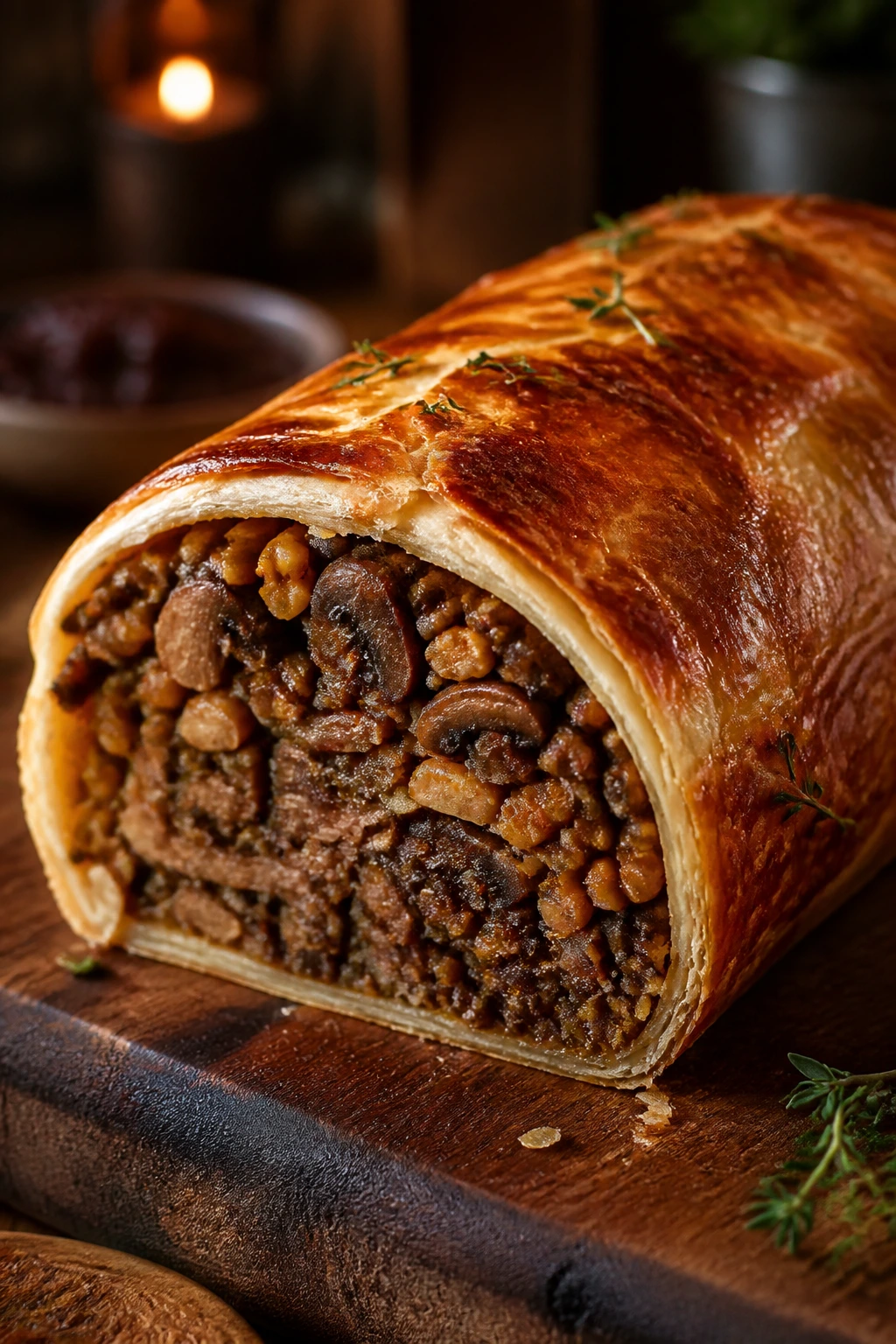
Can I make vegetarian Wellington the day before?
Yes. The filling can be made a day ahead, and the entire assembled Wellington can sit in the fridge overnight before baking. Keep it wrapped so the pastry doesn’t dry out, and brush with egg wash just before it goes into the oven.
What mushrooms work best if I can’t find cremini?
Button mushrooms will work, but they’re milder and need a little more seasoning. A mix of portobello, shiitake, and cremini gives the best depth. If you use very watery mushrooms, cook them longer until the pan dries out fully.
Why did my pastry stay pale on the bottom?
Usually the filling was too wet, the tray was too flimsy, or the oven ran cooler than expected. A heavy rimmed sheet pan helps, and baking on the lower-middle rack gives the bottom more heat. If needed, give it the last few minutes uncovered so the crust can finish browning.
Can I make it vegan?
Yes. Use vegan puff pastry, swap the butter for olive oil or vegan butter, leave out the cheese, and brush the top with plant milk or aquafaba. Just check the pastry label carefully; some brands contain butter.
What if the filling falls apart when I slice it?
That usually means the filling was too warm when assembled or the Wellington was cut too soon after baking. Chill the filling until firm, and let the baked loaf rest for at least 10 minutes. A serrated knife helps, too.
Can I use frozen puff pastry?
Absolutely. Thaw it in the refrigerator, not on the counter, so it stays cold and workable. If it feels sticky or soft when you’re assembling, chill it for 10 minutes before wrapping the filling.
Is it okay to add cheese inside the filling?
Yes, but keep the amount small. A little grated vegetarian hard cheese adds salt and richness, while too much soft cheese can loosen the filling and make slicing harder. If you want a creamy note, use just enough to disappear into the mixture.
A Slice Worth Putting in the Middle of the Table
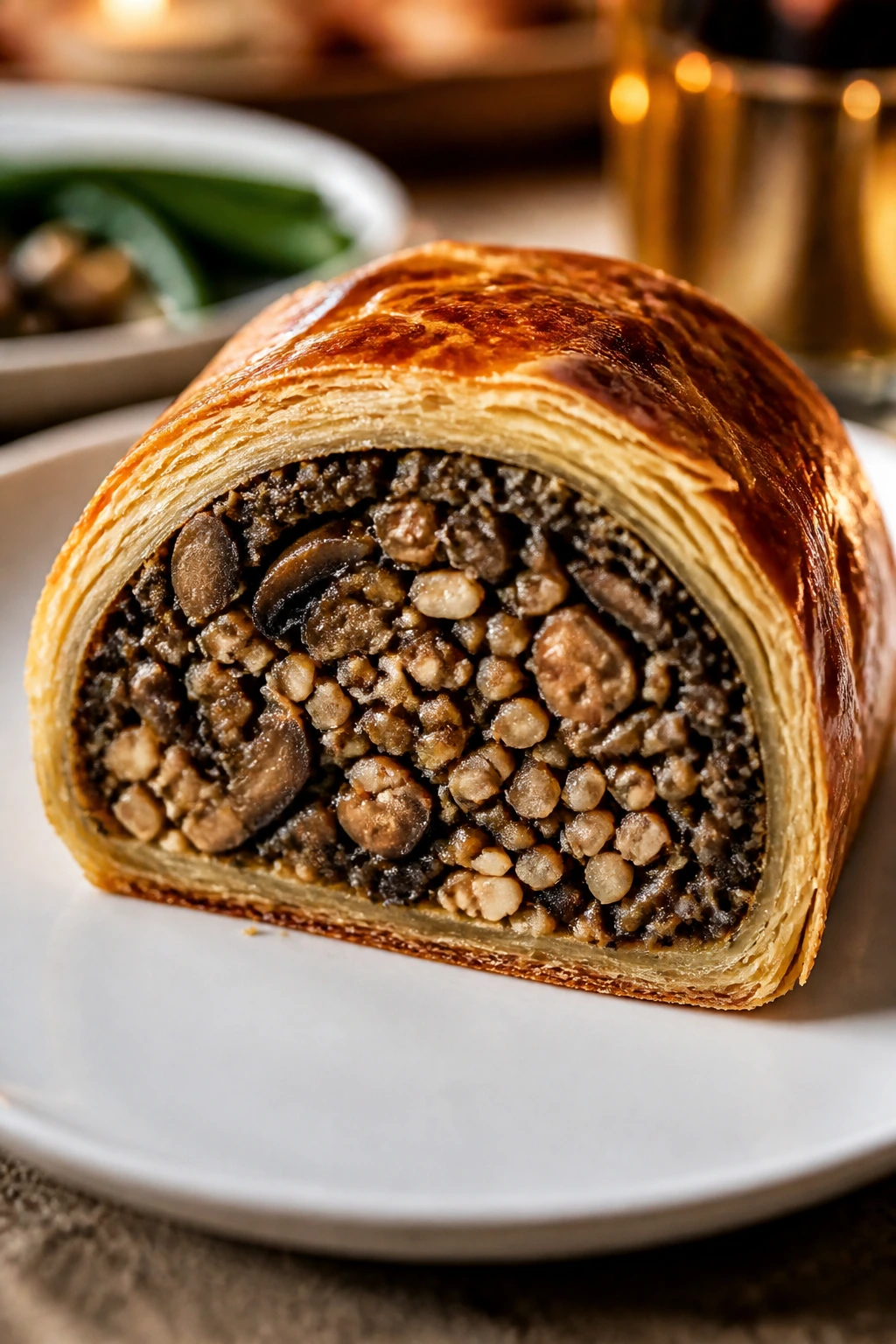
A vegetarian Wellington works best when it stops trying to be a substitute and starts behaving like its own thing. Mushrooms bring the depth, lentils bring the body, walnuts bring the crunch, and the pastry does that glorious job of turning dinner into a bit of theater. None of it is complicated. The hard part is giving the filling the time it needs to dry and cool.
That’s the part worth respecting. Once you do, the reward is obvious the second the knife meets the crust and the whole thing slices into neat, savory layers. Serve it with something green and something sharp, and it feels like a proper meal rather than a meatless compromise.
Classic Vegetarian Wellington — Recipe Card
Recipe Name: Classic Vegetarian Wellington for a Hearty Dinner
Description: A crisp puff pastry shell wrapped around a savory lentil-walnut filling and deep mushroom duxelles. It slices cleanly after a short rest and stands up to gravy, roasted vegetables, or a sharp salad.
Prep Time: 35 minutes
Cook Time: 45 minutes
Total Time: 1 hour 20 minutes, plus 45 minutes chilling and resting
Course: Main Course
Cuisine: British-inspired
Servings: 6 servings
Calories: About 540 kcal per serving
Ingredients
For the Lentil Filling:
- 2 tablespoons olive oil
- 1 medium yellow onion, finely diced
- 1 medium carrot, finely diced
- 1 celery stalk, finely diced
- 3 cloves garlic, minced
- 2 cups cooked brown or green lentils, very well drained and patted dry
- 1 cup walnuts, toasted and finely chopped
- 1/2 cup panko breadcrumbs
- 1 tablespoon tomato paste
- 1 tablespoon Dijon mustard
- 1 tablespoon soy sauce or tamari
- 1 teaspoon fresh thyme leaves
- 1 teaspoon fresh rosemary, finely chopped
- 1/2 teaspoon smoked paprika
- 1 teaspoon kosher salt, plus more to taste
- 1/2 teaspoon black pepper
- 1/4 cup grated vegetarian hard cheese or Parmesan-style cheese
- 2 tablespoons chopped flat-leaf parsley
For the Mushroom Duxelles:
- 1 pound cremini mushrooms, very finely chopped
- 1 shallot, very finely minced
- 2 tablespoons unsalted butter
- 1 tablespoon olive oil
- 1 teaspoon fresh thyme leaves
- 1 tablespoon dry sherry or dry white wine
- 1 tablespoon soy sauce or tamari
- 1/4 teaspoon black pepper
- Pinch of salt, only if needed
For Assembly and Baking:
- 2 sheets puff pastry, thawed but cold
- 1 tablespoon all-purpose flour, for rolling
- 1 tablespoon Dijon mustard, for brushing the pastry
- 1 large egg
- 1 tablespoon milk or water
- Flaky sea salt, for finishing
Instructions
-
If starting from dry, cook the lentils until tender but intact, then drain and cool completely. If using cooked or canned lentils, drain well and pat dry.
-
Preheat the oven to 400°F (200°C) and line a rimmed baking sheet with parchment paper.
-
Make the mushroom duxelles by cooking the shallot and mushrooms in butter and olive oil over medium-high heat for 12 to 15 minutes, until the mixture is dark and nearly dry. Stir in thyme, sherry or wine, soy sauce, and pepper; cook 2 to 3 minutes more.
-
Cook the onion, carrot, and celery in olive oil over medium heat for 6 to 8 minutes, then add the garlic and cook for 30 seconds.
-
Stir in the lentils, walnuts, panko, tomato paste, Dijon, soy sauce, thyme, rosemary, smoked paprika, salt, pepper, cheese, and parsley. Cook 2 to 3 minutes, until the filling holds together. Cool completely and chill 30 minutes.
-
Roll the puff pastry on lightly floured parchment into a large rectangle, or overlap two sheets and press the seam together before rolling. Keep the pastry cold.
-
Brush the center third of the pastry with Dijon mustard, spread the mushroom duxelles down the middle, and shape the lentil filling into a tight log on top.
-
Fold the pastry over the filling, tuck the ends underneath, and place seam-side down on the baking sheet. Brush with the egg wash and score 3 to 5 shallow slashes on top. Sprinkle with flaky sea salt.
-
Bake for 35 to 45 minutes, until the pastry is deep golden and crisp. If the top browns too fast, tent loosely with foil after about 25 minutes.
-
Rest for 10 to 15 minutes before slicing with a serrated knife and serving warm.
Notes: Keep the filling dry and cool before wrapping. Use brown or green lentils, not red. Reheat leftovers in the oven, not the microwave, if you want the crust to stay crisp.