



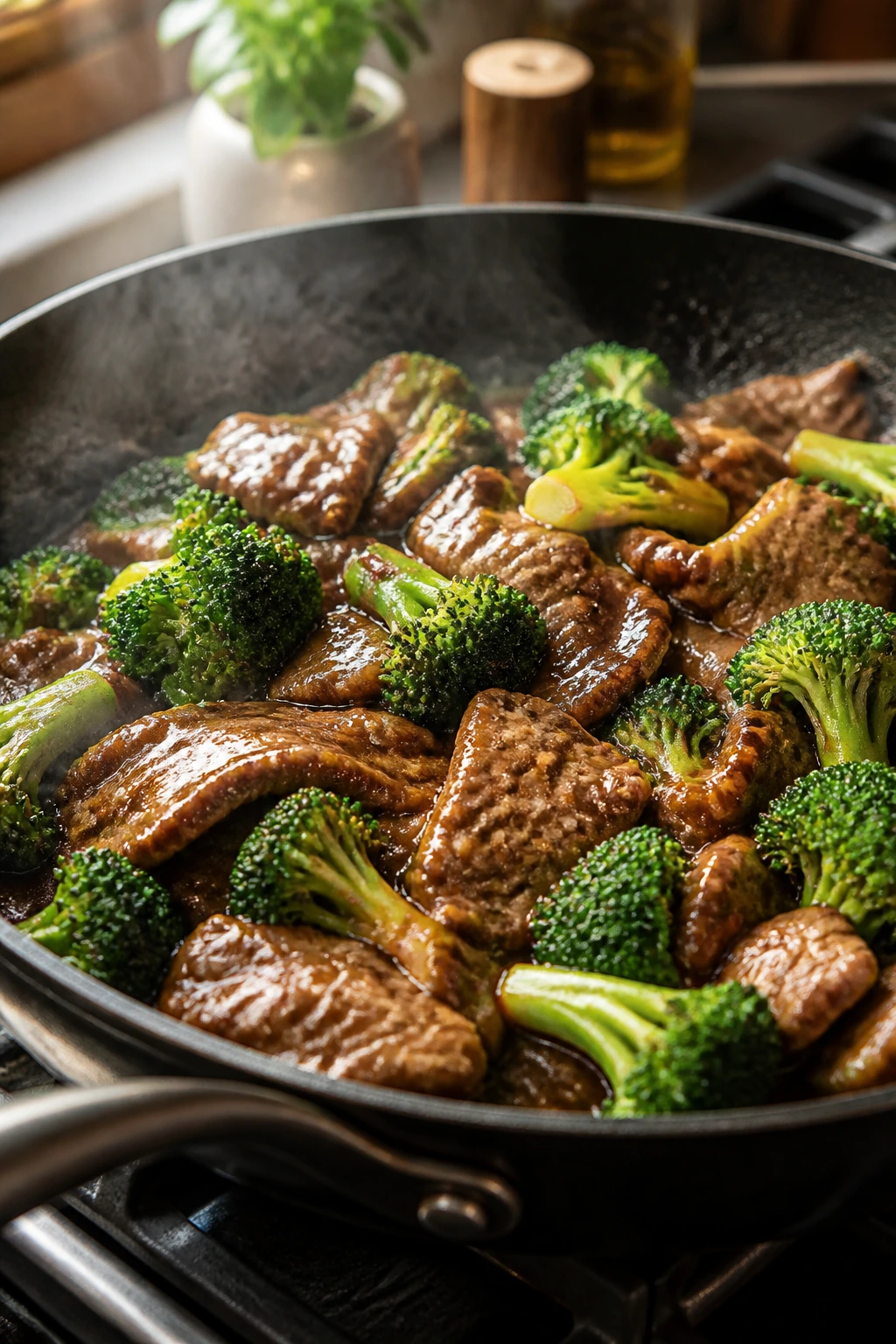
Beef and broccoli has a bad habit of sounding ordinary right up until it lands in a hot skillet. Then it turns glossy, savory, and a little dramatic: the beef browns at the edges, the broccoli stays bright green and toothsome, and the sauce tightens around everything instead of flooding the plate. When it’s done well, it feels like a proper dinner, not a rescue mission.
I like this version because it respects the two things that matter most in a stir-fry: heat and timing. The steak gets a quick cornstarch coat so it stays tender, the broccoli gets a short steam-stir-fry so it keeps some snap, and the sauce leans on soy sauce, oyster sauce, garlic, ginger, and beef broth for a flavor that tastes dark, savory, and full. The brown sugar is there, but only enough to round off the salt and edge, not enough to turn the whole pan sticky and sweet.
A bowl of it over jasmine rice does a lot of heavy lifting on a cold evening. Steam rises, the sauce slips into the rice, and every forkful hits with soft, crisp, and chewy at once. That contrast is the whole trick. Get the pan hot, slice the beef the right way, and this is one of those skillet dinners that keeps turning up because it works.
Why This Beef and Broccoli Feels Like a Real Dinner
This is not a wobbly takeout copycat. It’s a skillet meal with enough sauce to coat rice and enough broccoli to make the bowl feel like dinner, not an appetizer. The beef stays in actual slices instead of shreddy little ribbons, which matters more than people admit.
A lot of versions fail because they chase sweetness or speed and forget texture. You end up with gray meat, limp broccoli, and a sauce that tastes like it came from the back of the pantry. I prefer a deeper, darker sauce here — one that tastes like beef broth, garlic, ginger, and soy sauce first, then gives you a quiet hit of brown sugar at the end.
The dish has Chinese-American takeout roots, but home cooks have made it their own for years because it’s flexible. Use flank steak when you want a little chew and real beef flavor. Use sirloin when the store is out of flank. Serve it with rice, noodles, or a heap of both if the night calls for that kind of generosity.
It’s also a good reminder that comfort food does not have to be heavy in a clumsy way. The broccoli keeps the bowl bright. The sauce keeps it warm and savory. The whole thing lands in that useful space between fast and substantial, which is exactly where weeknight dinners earn their keep.
What You’ll Love About This Version
-
Glossy sauce, not soup: The sauce uses a cornstarch slurry, so it clings to the beef and broccoli instead of pooling under the rice.
-
Tender slices of beef: A thin cut, a brief cornstarch toss, and a very hot pan keep the steak juicy instead of tough and stringy.
-
Broccoli with actual bite: The florets cook just long enough to soften at the stem and stay bright at the tips.
-
Big flavor from pantry basics: Soy sauce, oyster sauce, beef broth, garlic, ginger, and brown sugar build depth without making you buy a dozen bottles.
-
Works hard over rice: The sauce seeps into the grains, so every spoonful tastes fuller than it looks in the pan.
-
Good leftovers, if you handle them right: The beef reheats cleanly and the sauce loosens with a splash of water, which is more than I can say for most stir-fries.
Serving Size, Timing, and Difficulty
Yield: 4 to 6 servings
Prep Time: 20 minutes
Cook Time: 15 minutes
Total Time: 35 minutes
Chill/Rest Time: 15 to 20 minutes optional, if you want the beef firmer for slicing
Difficulty: Intermediate — the steps are straightforward, but the beef needs a sharp knife, a hot pan, and a little attention so it browns instead of steaming.
Best Served: Right away, while the sauce is still glossy and the broccoli still has a little snap.
A wide skillet makes this much easier than a cramped one. If your pan is too small, the beef will crowd, the moisture will build, and the whole dish gets softer than it should. That’s the main thing to respect here.
The timeline is short, but the order matters. Get the sauce ready before the stove goes on. Slice the beef before you heat the pan. Once the skillet is hot, the cooking moves quickly, and there’s no room for rummaging through drawers looking for a whisk.
The Ingredients You Need for Beef and Broccoli
For the Beef
- 1 1/2 lbs flank steak, trimmed and sliced very thinly against the grain
- 1 tbsp low-sodium soy sauce
- 1 tbsp cornstarch
- 1 tsp toasted sesame oil
For the Stir-Fry
- 2 tbsp neutral oil, divided
- 1 small yellow onion, thinly sliced
- 5 cups broccoli florets, cut into bite-size pieces
- 3 garlic cloves, minced
- 1 tbsp fresh ginger, minced
- 1/4 cup water, for steaming the broccoli
For the Sauce
- 1/2 cup low-sodium beef broth
- 1/3 cup low-sodium soy sauce
- 2 tbsp oyster sauce
- 1 tbsp packed light brown sugar
- 1 tbsp rice vinegar
- 1 tbsp cornstarch
- 2 tbsp cold water
- 1/2 tsp black pepper
- 1/4 tsp crushed red pepper flakes, optional
- 1 tsp toasted sesame oil
To Finish
- 2 scallions, thinly sliced
- 1 tsp toasted sesame seeds, optional
The ingredient list looks simple because it should. Stir-fries are not the place for clutter. The trick is getting the balance right so the sauce tastes full and the vegetables still keep their shape.
Why Each Ingredient Pulls Its Weight
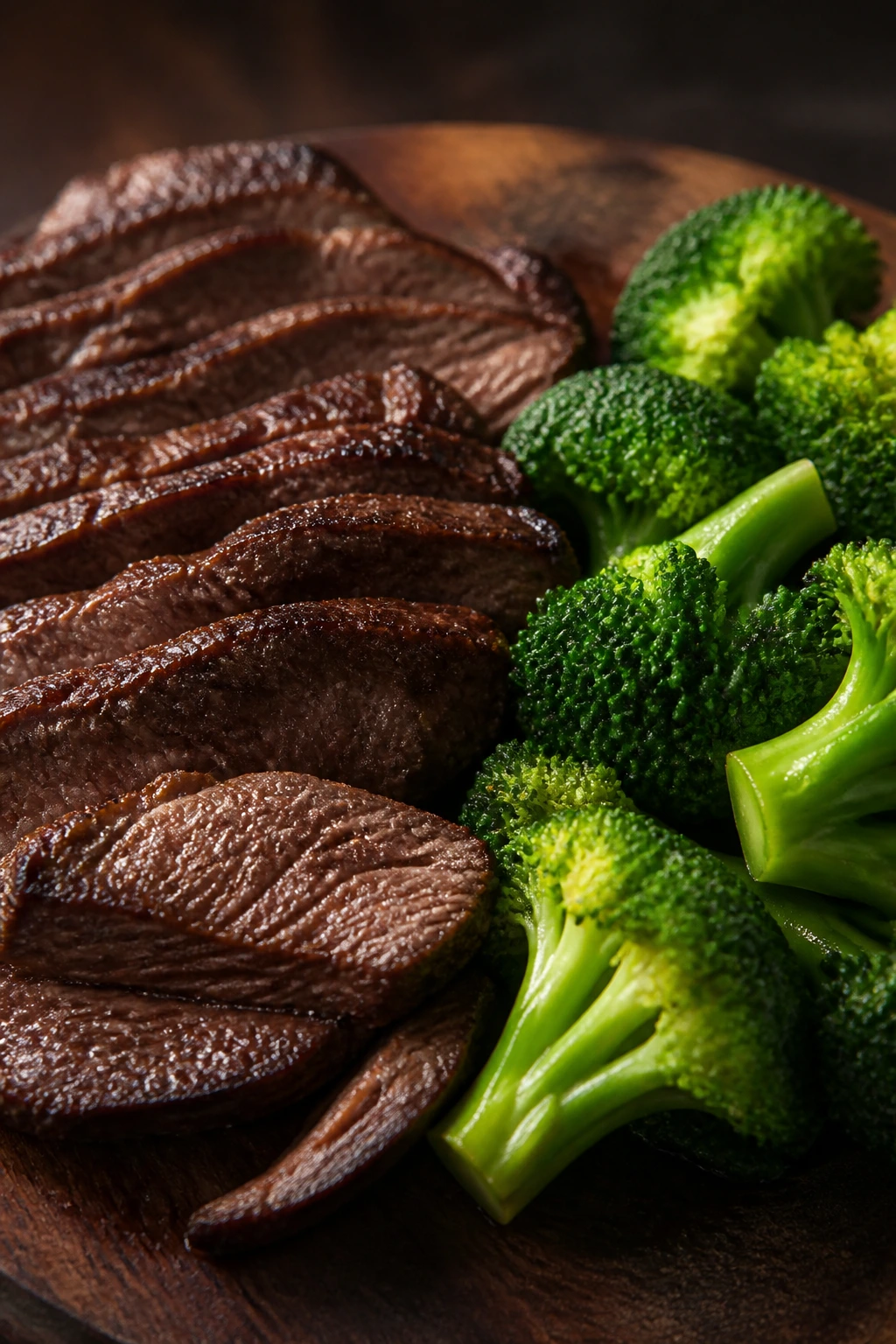
Flank Steak and the Short Marinade
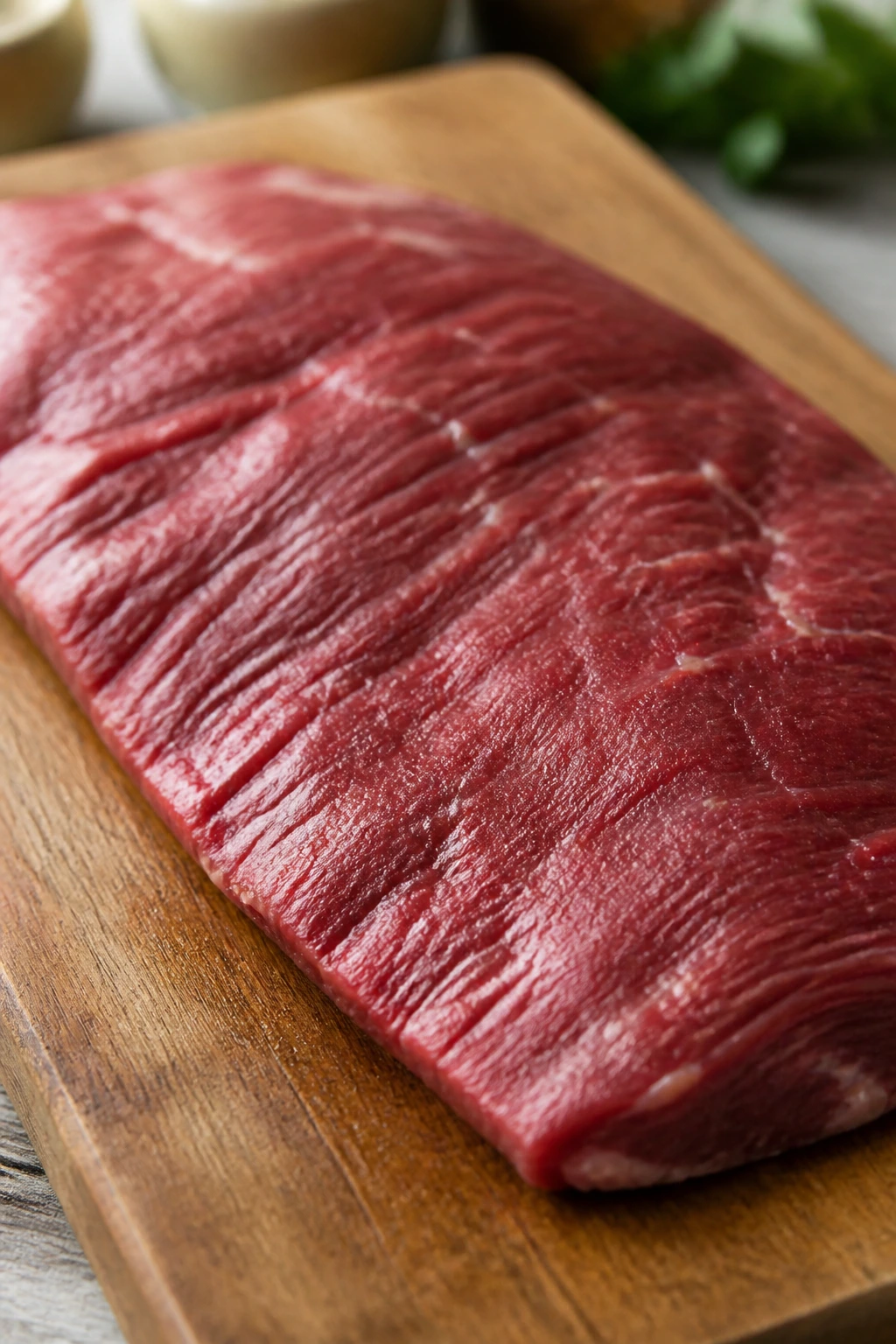
What to use: 1 1/2 lbs flank steak is the sweet spot here. It has enough beef flavor to stand up to the sauce, and it slices into broad, tidy strips that eat well over rice.
Preparation: Freeze the steak for 15 to 20 minutes before slicing. That little chill firms the meat up so you can cut it very thinly, which is the difference between tender beef and chewy beef.
Substitutions: Top sirloin works well if flank steak is expensive or sold out. Skirt steak can also work, though it needs even thinner slicing because the grain is looser.
Tips: Slice across the grain, not alongside it. If you can see long lines running through the meat, cut across them at a slight angle. That shortens the muscle fibers and makes every bite easier to chew.
Broccoli, Onion, Garlic, and Ginger
What to use: Five cups of broccoli florets sounds like a lot, and that’s the point. The broccoli should hold its own against the beef, not disappear into the sauce. The onion adds sweetness and bulk, while the garlic and ginger give the dish its sharp, warm edge.
Preparation: Cut the florets into even pieces so they cook at the same rate. Thin onion slices are best; thick wedges stay raw in the center. Mince the garlic and ginger finely so they bloom fast in the hot pan.
Substitutions: Broccolini works if that’s what you have, but it softens a little faster. Thin-sliced snow peas can be added with the broccoli, though they change the feel of the dish. A handful of mushrooms works too, especially cremini.
Tips: Dry the broccoli after washing it. Water clinging to the florets slows browning and makes the stir-fry taste steamed instead of seared.
The Sauce That Ties It All Together
What to use: Beef broth, low-sodium soy sauce, oyster sauce, brown sugar, rice vinegar, black pepper, and sesame oil make a sauce that tastes deep and savory without turning heavy. The cornstarch slurry gives it body so it coats the meat instead of running off.
Preparation: Whisk the sauce in a bowl before you turn on the burner. Whisk the cornstarch with cold water in a separate cup so it dissolves smoothly and doesn’t clump.
Substitutions: Tamari works for a gluten-free version. If you don’t keep oyster sauce around, use an extra tablespoon of soy sauce and a teaspoon of brown sugar, though the sauce will be a little flatter.
Tips: Use low-sodium soy sauce. Regular soy sauce can push the dish into salty territory fast, especially once the sauce reduces for a minute or two in the pan.
Finishing Touches That Keep the Bowl Fresh
What to use: Scallions and sesame seeds do the small job that matters. They cut through the brown sauce and keep the dish from tasting one-note.
Preparation: Slice the scallions thinly and scatter them over the finished skillet. Toast the sesame seeds if you want a nutty note, though plain ones work fine.
Substitutions: Chives can step in for scallions, and a drizzle of chili crisp can replace the sesame seeds if you want more heat and crunch.
Tips: Add the sesame oil at the end, not at the beginning. It smells best when it lands on hot food, and that last-second aroma is part of what makes the bowl feel complete.
The Tools That Make Stir-Frying Easy
-
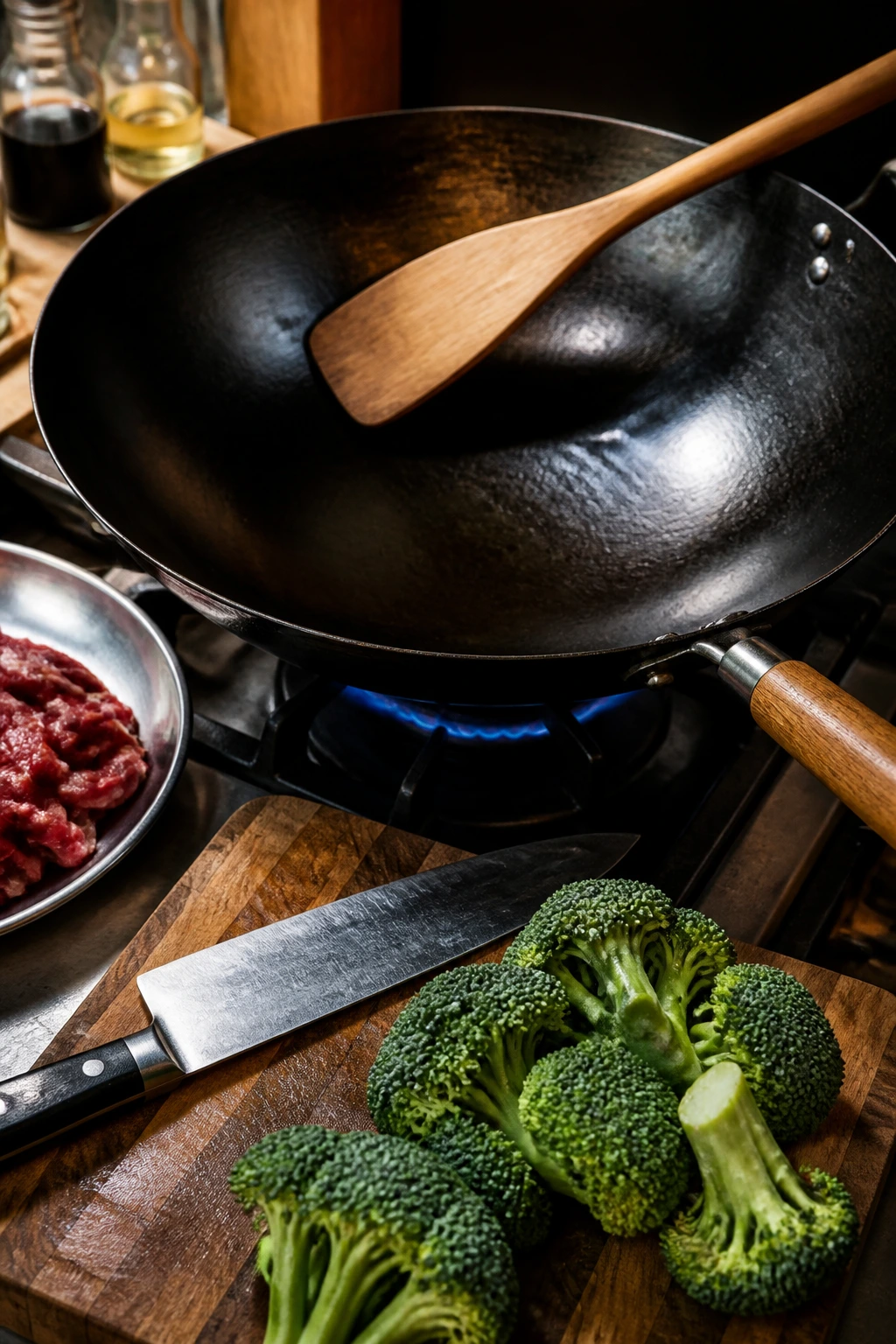
12-inch wok or large skillet: A wide surface gives the beef room to brown. A crowded pan steams the meat, which is the fastest route to disappointment.
-
Sharp chef’s knife: Thin slices are not optional here. A dull knife tears the meat and leaves ragged edges.
-
Cutting board: A sturdy board keeps the slices neat. I like to set a damp kitchen towel underneath mine so it doesn’t skid around while I’m working.
-
Medium bowl and small bowl: One for the beef, one for the sauce. Keeping them separate makes the short cooking window less chaotic.
-
Tongs or a thin spatula: Either one works for turning the beef quickly and keeping the pieces in a single layer.
-
Whisk: A simple wire whisk keeps the sauce smooth and helps the cornstarch disappear into the liquid without leaving specks.
-
Lid or sheet pan: Handy for briefly steaming the broccoli if your skillet doesn’t have a matching lid.
How to Cook Beef and Broccoli Step by Step
Prep the Beef and the Sauce
-
Place the steak in the freezer for 15 to 20 minutes, until it feels firmer but not frozen solid. Slice it very thinly across the grain into strips about 1/8 inch thick. Thin slices cook fast and stay tender; thick slices fight you the whole way.
-
In a medium bowl, whisk together the beef broth, soy sauce, oyster sauce, brown sugar, rice vinegar, black pepper, and red pepper flakes, if using. In a separate small cup, whisk the cornstarch with the cold water until smooth.
-
Toss the sliced beef with the soy sauce, cornstarch, and sesame oil in a bowl. Let it sit for 10 minutes while you finish the rest of the prep. The beef should look lightly coated and a little tacky, not wet.
Cook the Broccoli and Onion
-
Heat 1 tablespoon of the neutral oil in a large skillet or wok over medium-high heat until it shimmers. Add the broccoli and the 1/4 cup water, then cover the pan for 2 minutes. The florets should turn bright green and the stems should still give a little resistance.
-
Uncover the pan, add the sliced onion, and stir for 1 minute until the edges soften. Transfer the broccoli and onion to a plate. Do not leave them in the skillet too long or they’ll turn olive and soft.
Sear the Beef and Finish the Sauce
-
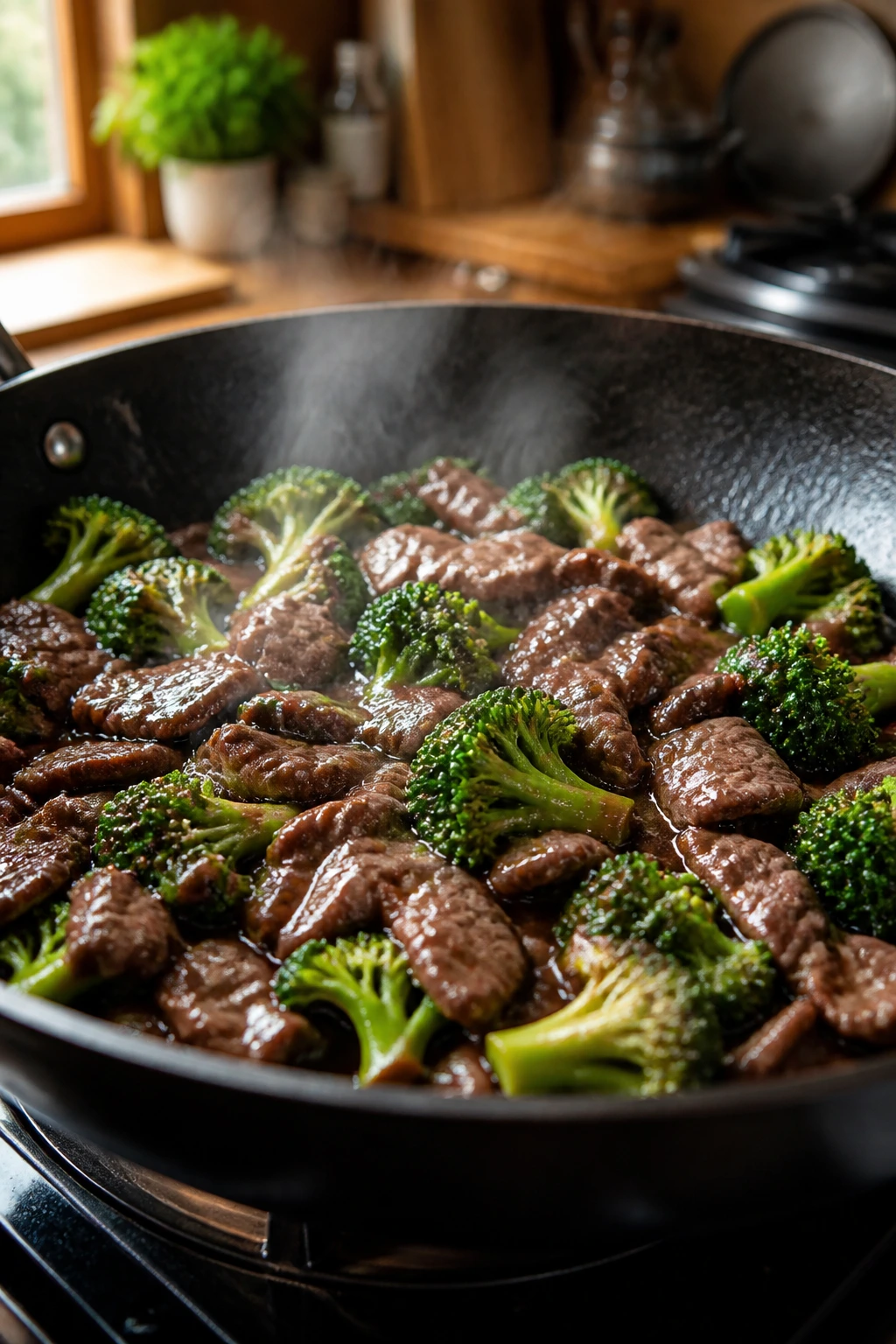
Add the remaining 1 tablespoon neutral oil to the skillet and turn the heat up to high. Add the beef in a single layer, working in batches if needed, and let it sear for 45 to 60 seconds per side. The edges should brown, and the centers can still look slightly pink. Crowding the pan will steam the meat instead of browning it.
-
Add the garlic and ginger to the hot skillet and stir for 20 to 30 seconds, just until fragrant. The smell should turn sweet and sharp at the same time; if the garlic starts to brown hard, move fast.
-
Return the broccoli and onion to the skillet, pour in the sauce, and stir well. Add the cornstarch slurry and cook for 1 to 2 minutes, stirring often, until the sauce turns glossy and thick enough to coat the back of a spoon. If it gets too thick, splash in 1 to 2 tablespoons water. If it still looks loose, give it another 30 seconds.
-
Remove the skillet from the heat and stir in the final teaspoon of sesame oil. Top with scallions and sesame seeds, then serve immediately over rice or noodles. The sauce should still be fluid enough to soak into the grains without turning soupy.
How to Serve Beef and Broccoli So It Eats Like a Meal
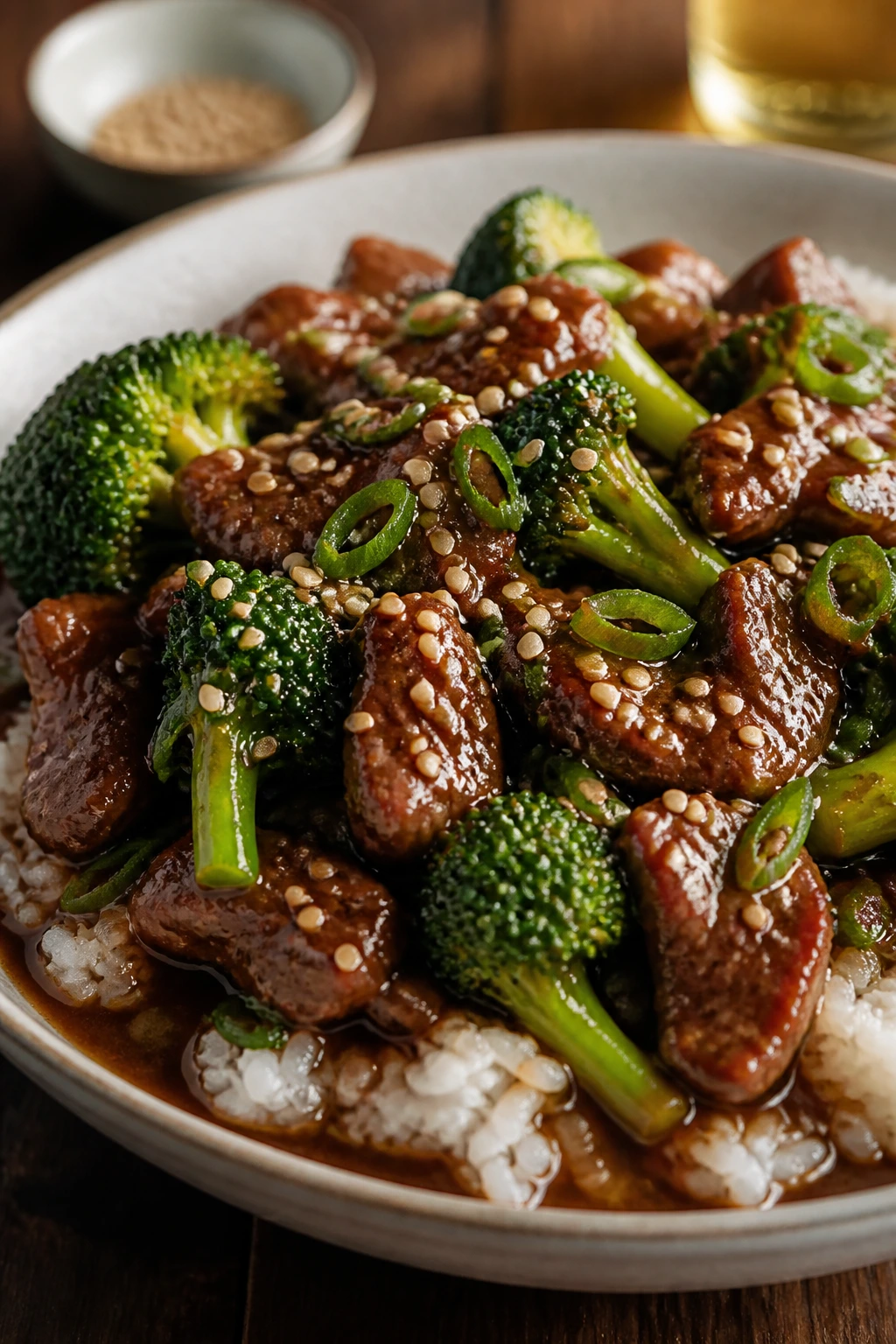
Presentation: Spoon the beef and broccoli over a mound of hot jasmine rice in wide bowls, not flat plates. The sauce should pool at the edges and soak into the rice a little, with scallions and sesame seeds scattered over the top so the bowl looks alive instead of brown.
Accompaniments: Steamed jasmine rice is the cleanest match, but short-grain rice, brown rice, or lo mein noodles all work. If you want a cooler side, a quick cucumber salad with rice vinegar and a pinch of sugar keeps the meal from feeling too heavy. Egg drop soup makes sense here too, especially if you’re serving more people.
Portions: Figure on about 1 1/2 cups of the stir-fry per adult, plus 3/4 to 1 cup cooked rice. If you want to stretch the dish, serve it with extra rice and a side vegetable instead of piling everything into one bowl and hoping it grows.
Beverage Pairing: Iced green tea cuts the sauce without fighting it. A dry lager or a crisp Riesling works nicely if you’re pouring something with dinner.
Tips That Make the Beef Tender and the Sauce Glossy
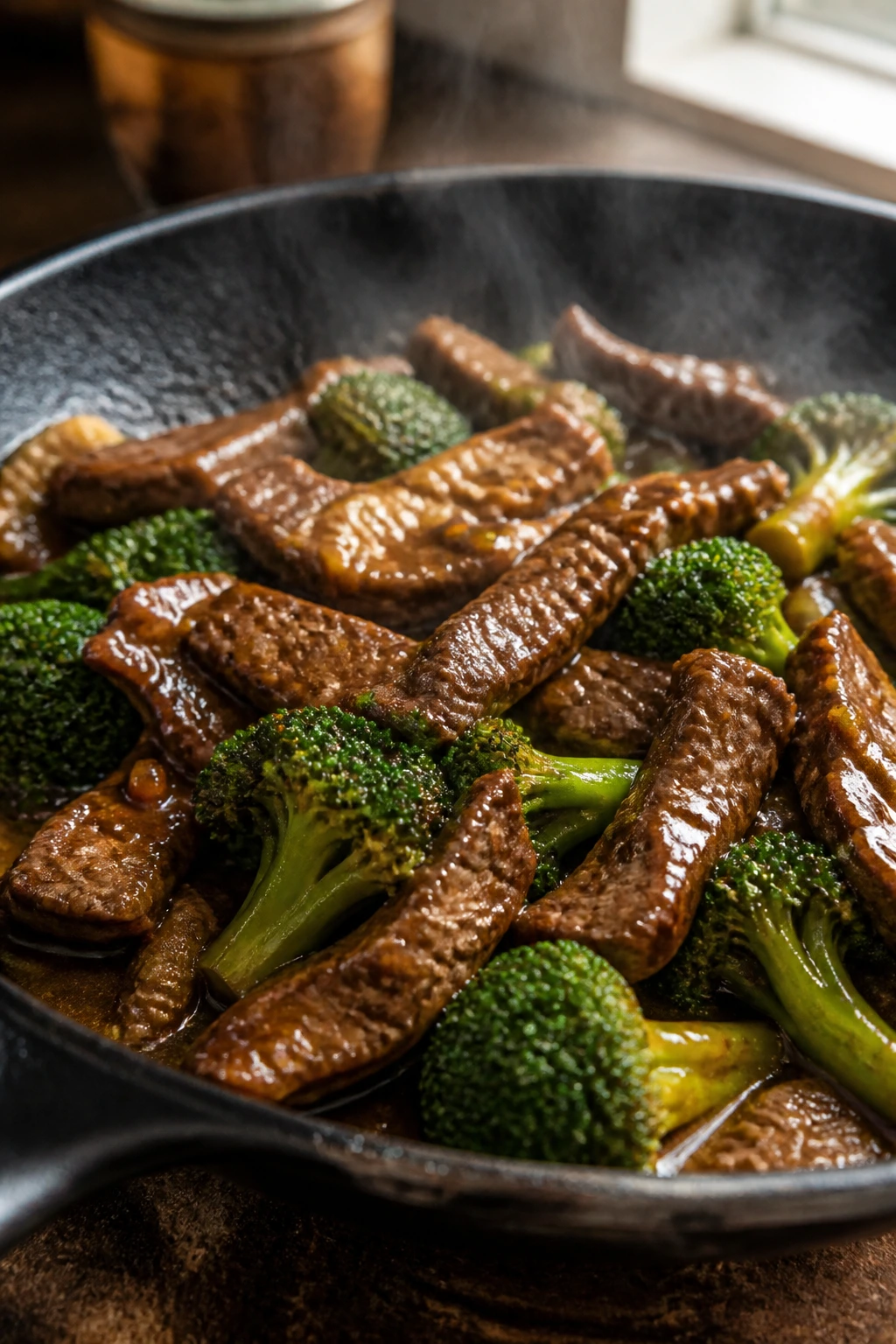
Flavor Enhancement: A tablespoon of Shaoxing wine or dry sherry in the sauce gives the whole pan a deeper smell and a rounder finish. If you keep one of those bottles in the kitchen, this is where it earns shelf space.
Time-Saver: Slice the beef and whisk the sauce ahead of time, then store both in the fridge for up to a day. When you’re ready to cook, the actual stove time drops to a few minutes, and the beef browns more cleanly because it starts cold.
Heat Control: A wide skillet beats a tiny one every time. If the pan loses heat after the beef goes in, wait a minute before adding the next batch; a hot pan keeps the edges seared and the sauce from thinning out too soon.
Cost-Saver: Top sirloin usually costs less than flank steak and still turns out tender if you slice it thin. I use it when the meat case looks rough and I don’t feel like paying extra for flank.
Texture Move: If you want a little char on the broccoli, leave it in the hot skillet uncovered for the last minute before the sauce goes in. The florets pick up brown spots at the edges, and that tiny bit of bitterness gives the dish more shape.
Common Mistakes That Throw Beef and Broccoli Off
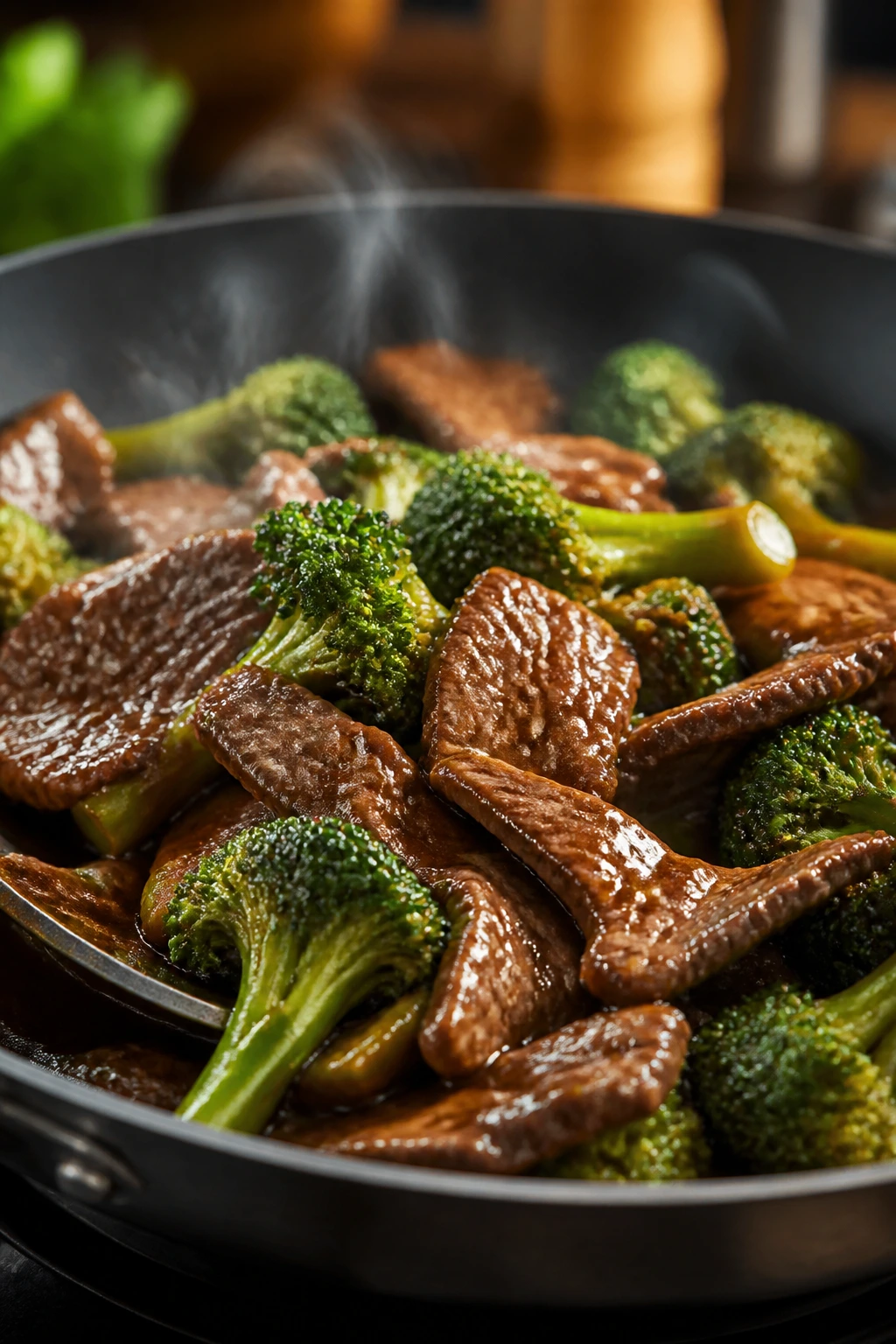
-
Slicing the beef with the grain: The strips come out chewy and stringy, even if you cooked them perfectly. Fix it by chilling the steak first and looking for the long muscle lines before you cut; your knife should cross them, not follow them.
-
Crowding the skillet: When too many pieces hit the pan at once, the beef releases moisture and goes gray instead of brown. Work in batches and let the pan recover between them.
-
Cooking the broccoli until it slumps: Overcooked broccoli turns olive, soft, and a little bitter in the wrong way. Pull it when the stems still have a slight snap; it will finish in the sauce for a minute later.
-
Adding cornstarch straight to the sauce: You’ll get little pale lumps that never fully disappear. Whisk it with cold water first, then pour that slurry into the hot pan.
-
Letting the sauce boil too long: The sauce gets sticky, salty, and too thick for rice. Once it coats the beef and broccoli, stop. A minute too far makes a bigger difference than people expect.
-
Using high-sodium soy sauce without adjusting anything else: The dish gets sharp and one-dimensional, especially after the sauce reduces. Low-sodium soy sauce gives you room to season without fighting the salt.
Variations Worth Trying on a Weeknight
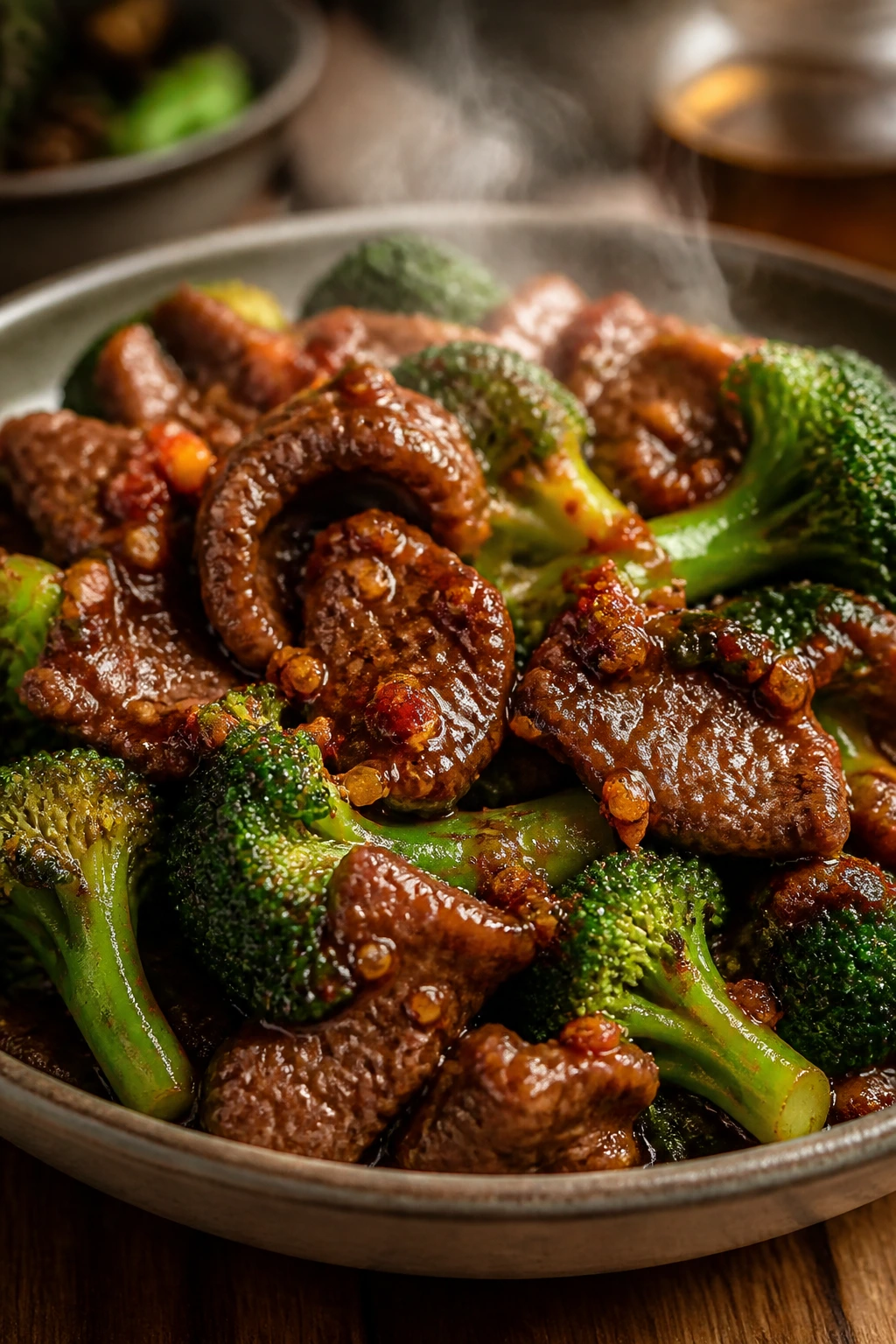
Spicy Chili-Crisp Beef and Broccoli
Stir 1 to 2 tablespoons of chili crisp into the finished sauce, then top each bowl with a little extra. It adds heat, crunch, and that slow burn that makes the second bite better than the first.
Mushroom-Heavy Skillet
Add 8 ounces of sliced cremini mushrooms with the onion and let them brown before the beef goes in. They soak up the sauce and make the whole pan feel more substantial, which is useful when you want a heavier dinner.
Gluten-Free Tamari Version
Swap the soy sauce for tamari and make sure your oyster sauce is labeled gluten-free, or use a gluten-free alternative. The flavor stays deep and savory, and the texture doesn’t change.
Garlic-Ginger Double Down
Use 2 tablespoons fresh ginger and 5 garlic cloves instead of the base amounts. This version is sharp and lively, and it’s the one I make when the sauce needs a louder nose.
Noodle Bowl Finish
Toss the finished beef and broccoli with cooked lo mein or udon noodles instead of serving it over rice. Add a splash of hot water or broth before mixing so the sauce coats the noodles evenly instead of clumping in one spot.
Storage, Reheating, and Make-Ahead Notes for Beef and Broccoli
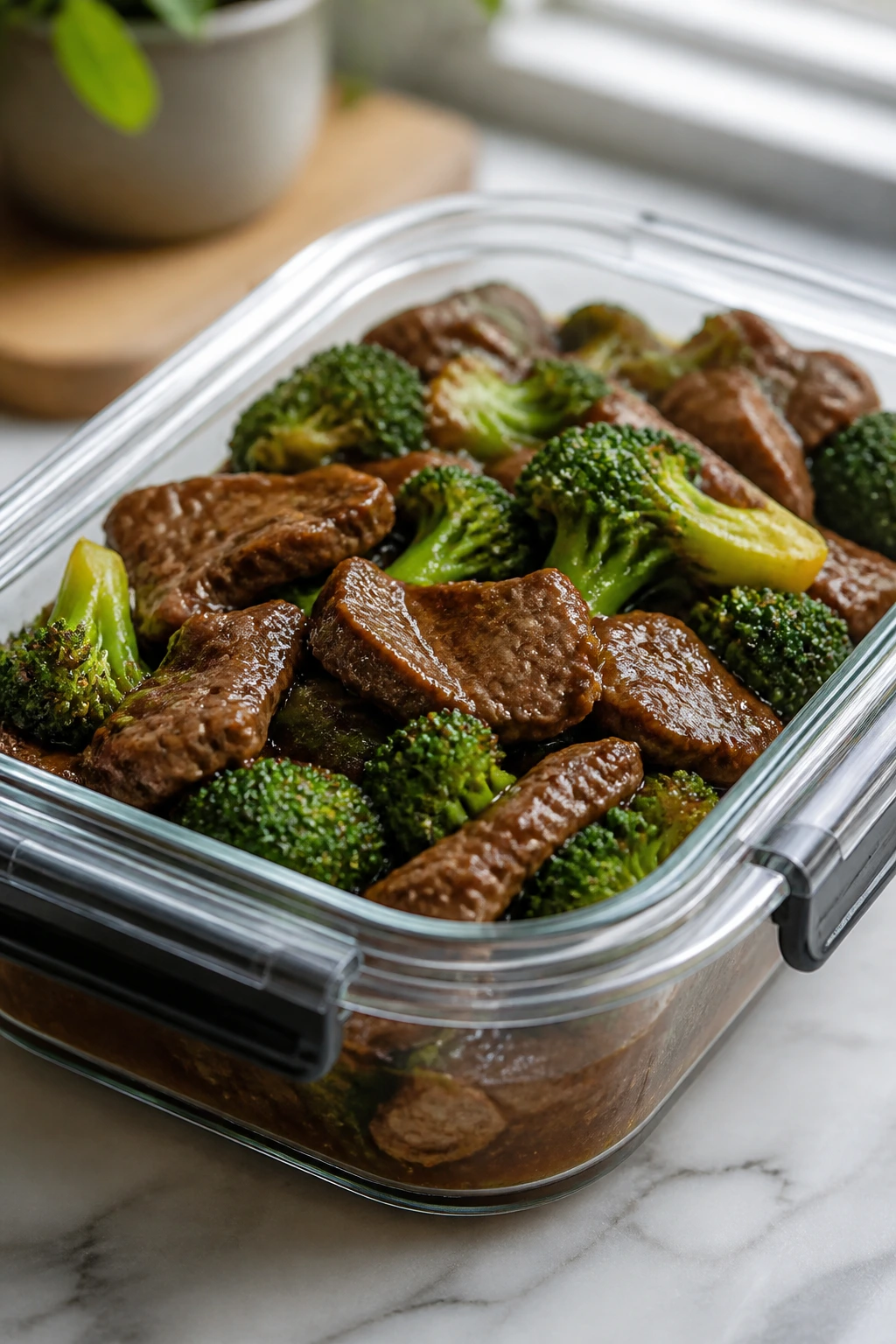
Room Temperature: Don’t leave the finished dish out for more than 2 hours. Stir-fry leftovers move into the danger zone faster than people think, especially if the rice is sitting beside them.
Refrigerator: Store the beef and broccoli in an airtight container for 3 to 4 days. Keep the rice in a separate container if you can; it helps the dish reheat with a cleaner texture and keeps the sauce from turning the grains gummy.
Freezer: Freeze the stir-fry for up to 2 months, though the broccoli will soften after thawing. If you know ahead of time that you want to freeze some, undercook the broccoli by about 1 minute so it has a little life left later.
Reheating: The best method is a skillet over medium heat with 1 to 2 tablespoons water or broth. Stir for 4 to 6 minutes until the sauce loosens and the beef is hot. A microwave works too, but use 45-second bursts and stir between them so the beef heats evenly instead of drying out around the edges.
Make-Ahead: The sauce can be mixed 3 days ahead and kept in the fridge. The beef can be sliced and tossed with the cornstarch mixture up to 8 hours ahead, though I wouldn’t push it much farther or the texture starts to tighten in a weird way. Broccoli can be trimmed a day ahead; dry it well and keep it wrapped in paper towels so condensation doesn’t turn it limp.
If you’re planning a dinner party or a packed week, cook the rice fresh and keep the stir-fry separate until the last minute. That one habit keeps the broccoli crisper and the beef from soaking in its own steam.
Questions Home Cooks Ask About Beef and Broccoli
What cut of beef works best for beef and broccoli?
Flank steak is the classic choice because it slices thinly and has a strong beef flavor. Top sirloin is my first substitute when flank steak looks pricey or thin in the case, and skirt steak can work if you slice it extra thin.
Can I use frozen broccoli?
Yes, but thaw it first and pat it very dry. Frozen broccoli releases more water than fresh, so it needs a hot pan and a shorter cook time to avoid turning soft.
Why did my sauce turn thin?
Usually the pan wasn’t hot enough, or the cornstarch slurry didn’t have enough time to activate. Let it bubble for at least 30 to 60 seconds after you add the slurry, and if needed, whisk a little more cornstarch with cold water and stir that in.
Can I make this without oyster sauce?
You can, though the flavor will be a little flatter. Add 1 extra tablespoon of soy sauce and 1 teaspoon of brown sugar to replace some of the lost depth, and finish with a little sesame oil for roundness.
How do I keep the beef tender?
Slice it very thinly across the grain, don’t crowd the pan, and stop cooking while the centers are still a little pink. The beef finishes in the sauce, and if you cook it through in the sear stage, it turns dry fast.
Can I make this ahead for lunches?
Yes, and it reheats better than most people expect. Store it in portions with the rice on the side, then warm the stir-fry in a skillet with a splash of water so the sauce loosens again.
Can I cook beef and broccoli in a slow cooker or oven?
You can force it, but I don’t recommend it. Slow cookers overdo the broccoli and blur the texture of the beef, while the oven doesn’t give you the fast sear this dish needs. A hot skillet or wok is the right tool here.
A Bowl Worth Repeating
Beef and broccoli works because it gives every bite a job to do. The beef needs to stay tender, the broccoli needs to stay awake, and the sauce needs to cling without drowning the pan. When those three things line up, the dish feels far bigger than the ingredients on the counter.
I think that’s why this skillet dinner earns repeat status in so many kitchens. It doesn’t ask for anything fancy, but it rewards attention in all the right places: a hot pan, a sharp knife, and the discipline to stop cooking before the beef goes past its best point. Keep those pieces in place, and the bowl takes care of the rest.
Comforting Beef and Broccoli for a Hearty Dinner — Recipe Card
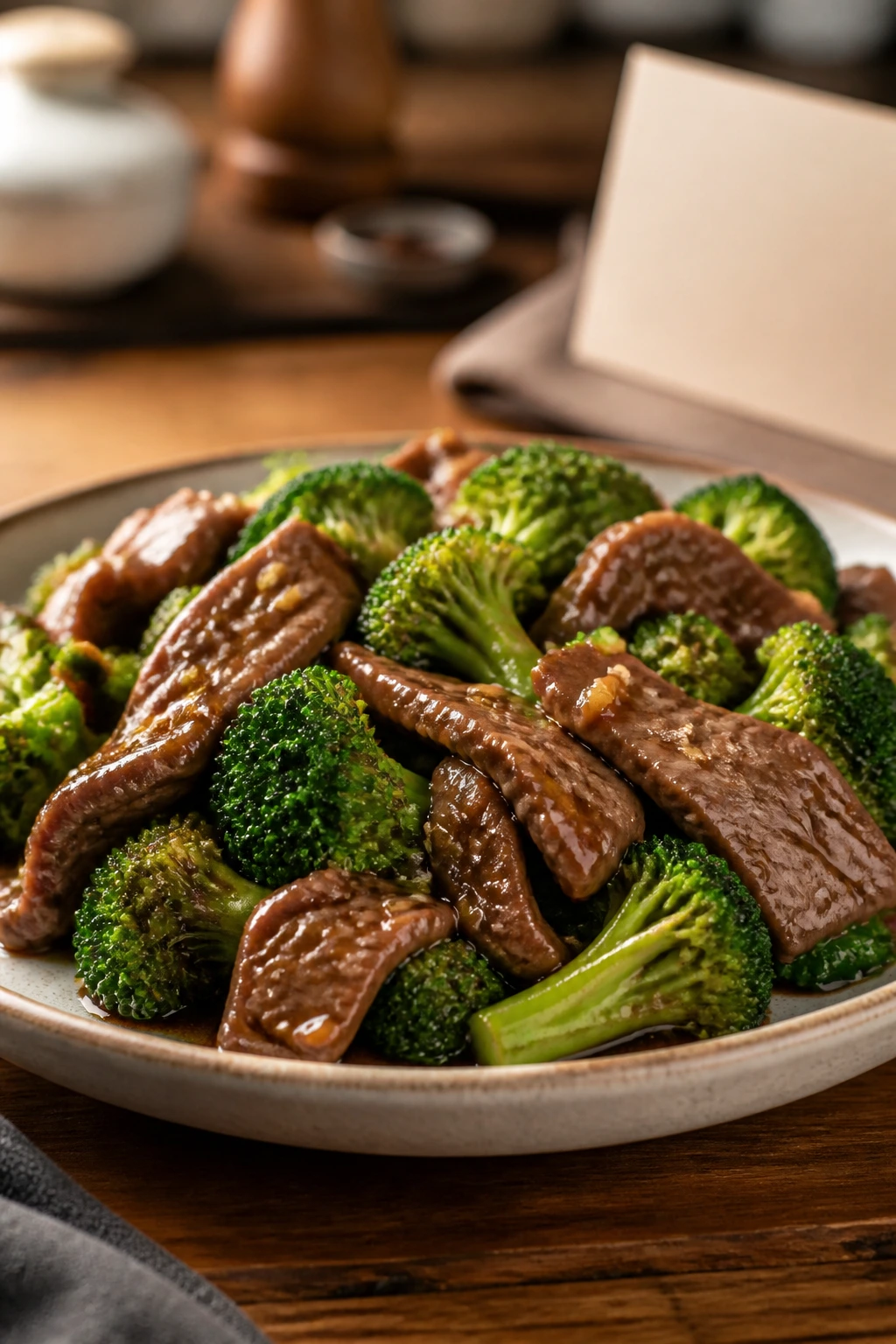
Recipe Name: Comforting Beef and Broccoli for a Hearty Dinner
Description: Tender flank steak, crisp-tender broccoli, and a glossy garlic-ginger sauce come together in one skillet. Serve it over hot rice for a dinner that feels substantial without getting fussy.
Prep Time: 20 minutes
Cook Time: 15 minutes
Total Time: 35 minutes
Course: Main Course, Dinner
Cuisine: Chinese-American
Servings: 4 to 6
Calories: About 390 kcal per serving
Ingredients
For the Beef
- 1 1/2 lbs flank steak, trimmed and sliced very thinly against the grain
- 1 tbsp low-sodium soy sauce
- 1 tbsp cornstarch
- 1 tsp toasted sesame oil
For the Stir-Fry
- 2 tbsp neutral oil, divided
- 1 small yellow onion, thinly sliced
- 5 cups broccoli florets, cut into bite-size pieces
- 3 garlic cloves, minced
- 1 tbsp fresh ginger, minced
- 1/4 cup water, for steaming the broccoli
For the Sauce
- 1/2 cup low-sodium beef broth
- 1/3 cup low-sodium soy sauce
- 2 tbsp oyster sauce
- 1 tbsp packed light brown sugar
- 1 tbsp rice vinegar
- 1 tbsp cornstarch
- 2 tbsp cold water
- 1/2 tsp black pepper
- 1/4 tsp crushed red pepper flakes, optional
- 1 tsp toasted sesame oil
To Finish
- 2 scallions, thinly sliced
- 1 tsp toasted sesame seeds, optional
Instructions
- Chill the steak for 15 to 20 minutes, slice it very thinly across the grain, and whisk the sauce ingredients together.
- Toss the beef with the soy sauce, cornstarch, and sesame oil.
- Stir-fry the broccoli and onion with water until crisp-tender, then transfer to a plate.
- Sear the beef in a hot skillet in batches until browned on the edges.
- Add the garlic and ginger, then return the vegetables and pour in the sauce.
- Cook until the sauce is glossy and thick enough to coat the beef, then finish with sesame oil, scallions, and sesame seeds.
Notes: Keep the pan hot, don’t crowd the beef, and serve immediately over rice for the best texture.