



A hot skillet of ground beef can make a kitchen smell like dinner before the first side dish is even chosen. That smell matters. It tells you the meat has browned, the onions are about to soften, and something filling is on its way without asking for much more than a pan, a spoon, and a little attention.
That is why a comforting ground beef dinner works so well when you want food that feels substantial but does not need a whole parade of steps. Ground beef carries salt, pepper, onion, tomato, garlic, broth, cheese, potatoes, noodles, rice — all the usual heavy hitters — and it does that job without getting fussy. The real difference between a flat weeknight pan and a hearty dinner people remember is not the brand on the package. It is how you brown it, how you season it, and what you let it soak up.
I have a soft spot for the dishes that start with a pound of ground beef and end with a plate that needs no apology. A skillet of beef and potatoes. A bubbling casserole with cheese browned at the edges. A thick soup with carrots and beans and a spoon that stands up on its own. Those meals have a directness I trust. No drama. No garnish pretending to be dinner.
Why Ground Beef Works So Well for a Hearty Dinner
-
Budget Stretch: One pound of ground beef can anchor four solid servings once you add potatoes, pasta, rice, beans, or cabbage, which is why it shows up so often in family-style dinners.
-
Fast Browning: In a wide skillet over medium-high heat, ground beef can go from pink to properly browned in about 6 to 8 minutes, which is faster than most cuts that taste this rich.
-
Flavor Sponge: The craggy bits pick up onion, garlic, tomato paste, Worcestershire, soy sauce, broth, and cheese in a way that makes the whole pan taste more complete than the meat alone.
-
Reliable Texture: It stays tender when you cook it right, and unlike a lean steak, it doesn’t need a careful resting ritual to stay juicy.
-
Leftover Friendly: Saucy ground beef reheats better than a lot of other proteins because the liquid protects it from drying out in the fridge or microwave.
-
Flexible Enough for Real Life: If all you have is a potato, a bag of rice, and some frozen peas, ground beef gives you a path to dinner without a grocery run.
Choosing the Right Ground Beef Package at the Store
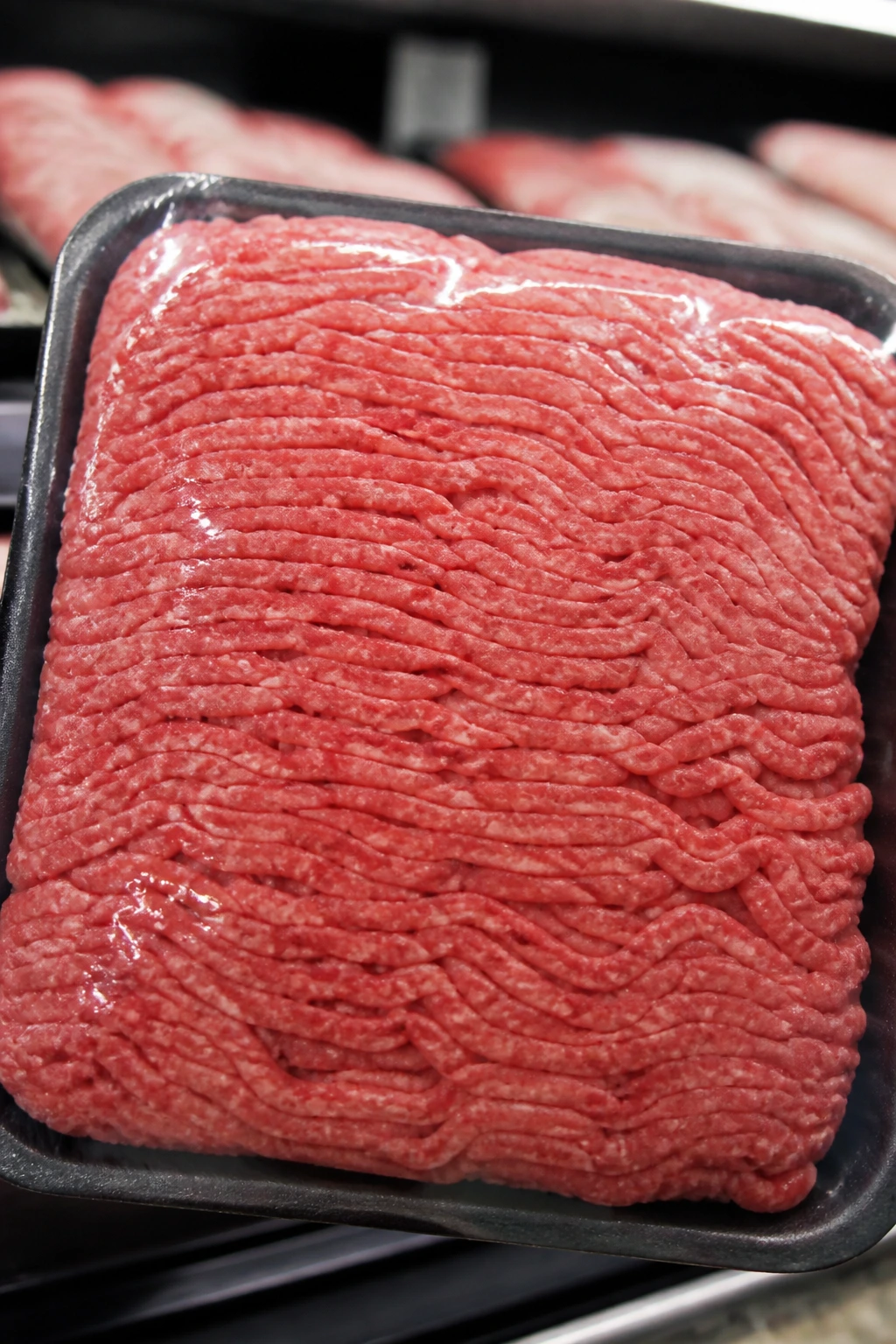
The package matters more than the brand. I know that sounds boring, but boring details decide whether your dinner tastes rich or thin. For most hearty ground beef dinners, the fat ratio is the first thing I look at, and I rarely wander far from 85/15 unless the dish tells me otherwise.
What the fat ratio really changes
80/20 gives you the most flavor and the most drippings. It is my pick for skillet dinners, cabbage-and-beef bowls, chili, and casseroles where some fat can be drained or absorbed by rice, noodles, or potatoes.
85/15 is the sweet spot for a lot of home cooking. You still get browning and a little gloss, but you are not swimming in grease.
90/10 works when the dish already has enough richness from cheese, broth, cream, or a thick tomato sauce. It can taste clean, but if you cook it too long or too hard, it turns dry fast.
Ground chuck, sirloin, and round
Ground chuck is the one I reach for most often. It usually has enough fat to brown well and enough beefy flavor to stand up in a casserole or sauce.
Ground sirloin is leaner and a little tighter in texture. Good meat, but it needs more help from oil, broth, or tomato.
Ground round can be fine for soup or a saucy dish, though it is the least forgiving of the three when you want a plush, hearty result.
A package that looks dark purple in a vacuum seal is not bad beef. It has usually just been starved of oxygen. Once you open it and let it sit for a few minutes, the color blooms. That part throws people off all the time.
What I check before the package goes in the cart
- Fresh smell: It should smell neutral or faintly metallic, not sour.
- Package seal: Skip anything with torn plastic, swollen trays, or leaks.
- Sell-by date: Pick the furthest date if you plan to cook later in the week, or freeze it the day you bring it home.
- Fat cap in the tray: A little visible fat is useful. A lot of liquid in the package is less useful.
- Color pattern: Red edges with a darker center can be normal. Gray slime is not.
If I know I will not cook it within a day or two, I freeze it immediately. Ground beef is too easy to keep for later to let it hang around on the fridge shelf and make me guess about it.
Browning Ground Beef Until the Pan Smells Nutty
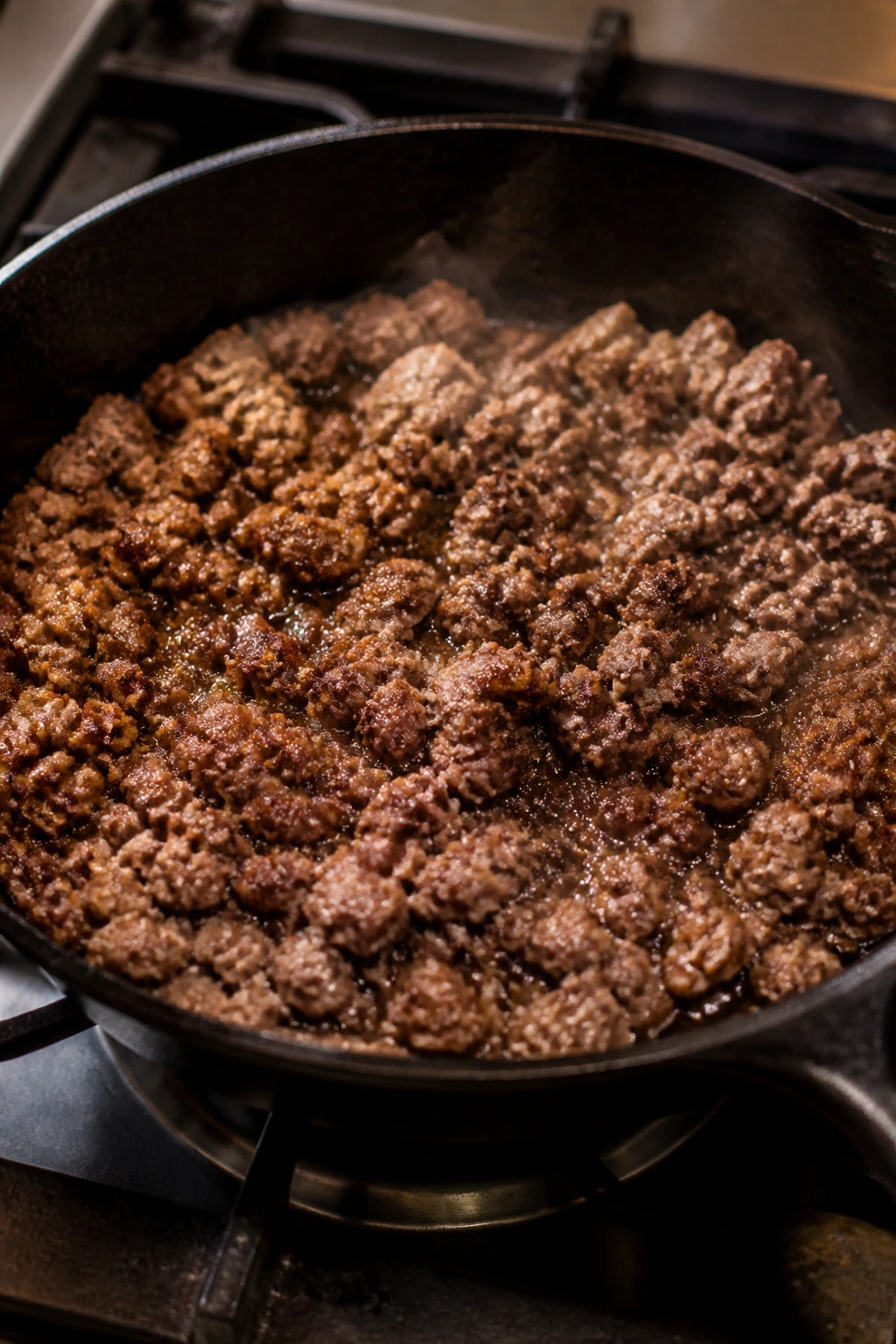
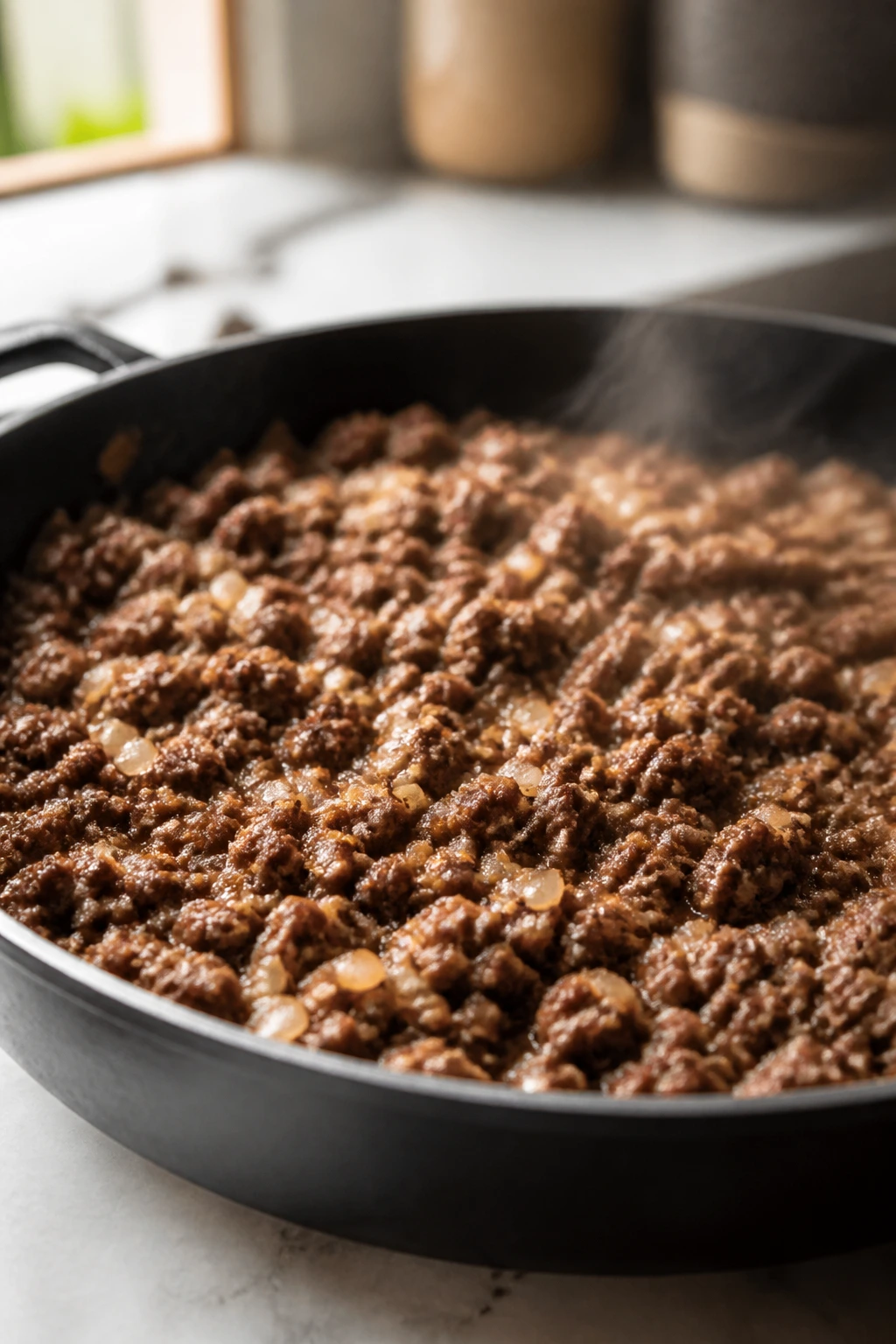
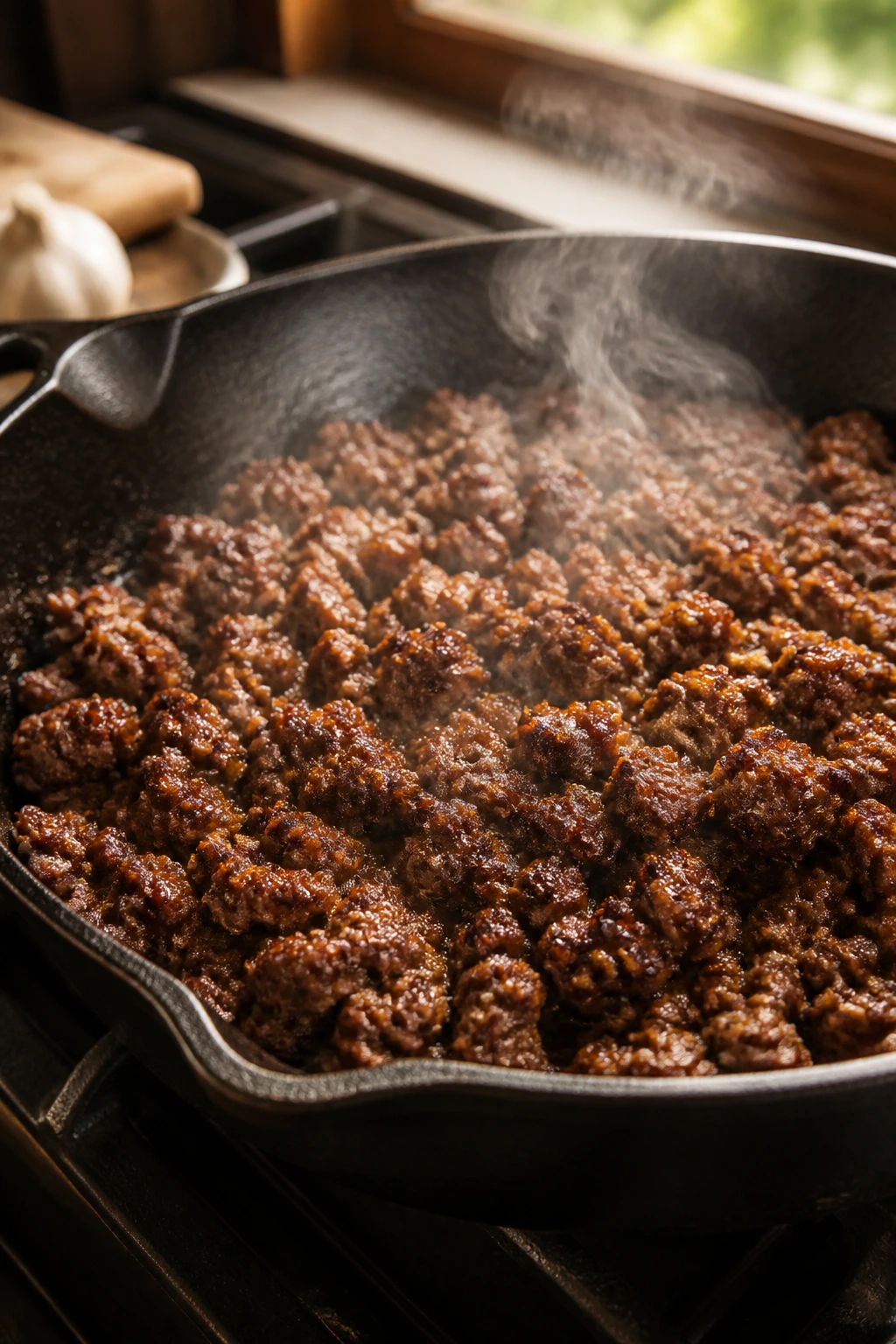
Why does some ground beef taste flat even after a generous shake of salt and pepper? Usually because it never browned hard enough. Gray cooked meat fills the stomach. Browned meat tastes like dinner. That distinction matters more than most recipes admit.
Put the skillet on the stove before the beef is ready. Let it get hot over medium-high heat. If the beef is lean, add a tablespoon of oil; if it is 80/20, you usually do not need any. Then add the meat in a loose layer and leave it alone for a minute or two. That first still moment is where the flavor starts.
The sound tells you a lot
You want an active sizzle, not a wet hiss. If the pan sounds like boiling water, the meat is crowded or the heat is too low. When the beef begins to release from the pan and the bottom takes on dark brown patches, you are in the right zone. If you stir too soon, you break up the surface before it has a chance to color.
Break the meat into larger chunks first. I know the tiny crumbles look tidy, but larger pieces brown better, then you can chop them down toward the end. That gives you a mix of tender bits and browned edges. The browned edges matter. They carry the savory, roasted note that makes ground beef taste deeper than a plain meat filling.
What to look for while it cooks
- Color: Move from pink to brown with some darker mahogany spots.
- Texture: The meat should look crumbly but not dry and dusty.
- Pan bottom: You want browned bits stuck to the skillet, not a clean surface.
- Steam: Some steam is normal; clouds of moisture mean the pan is too full.
Once the meat is mostly browned, season it. Salt early enough to reach the inside, but not so early that it pulls out too much moisture before browning has happened. If you are making a dish with onion, add the onion after the first round of browning so it can soften in the fat and catch those browned bits.
The USDA recommends cooking ground beef to an internal temperature of 160°F. That part is non-negotiable for safety. The good news is you do not need a punishing overcook to get there; if you stop at the right moment and use a thermometer in casseroles or thicker mixtures, the meat stays juicy enough to do its job.
Building a Sauce or Flavor Base That Actually Tastes Like Something
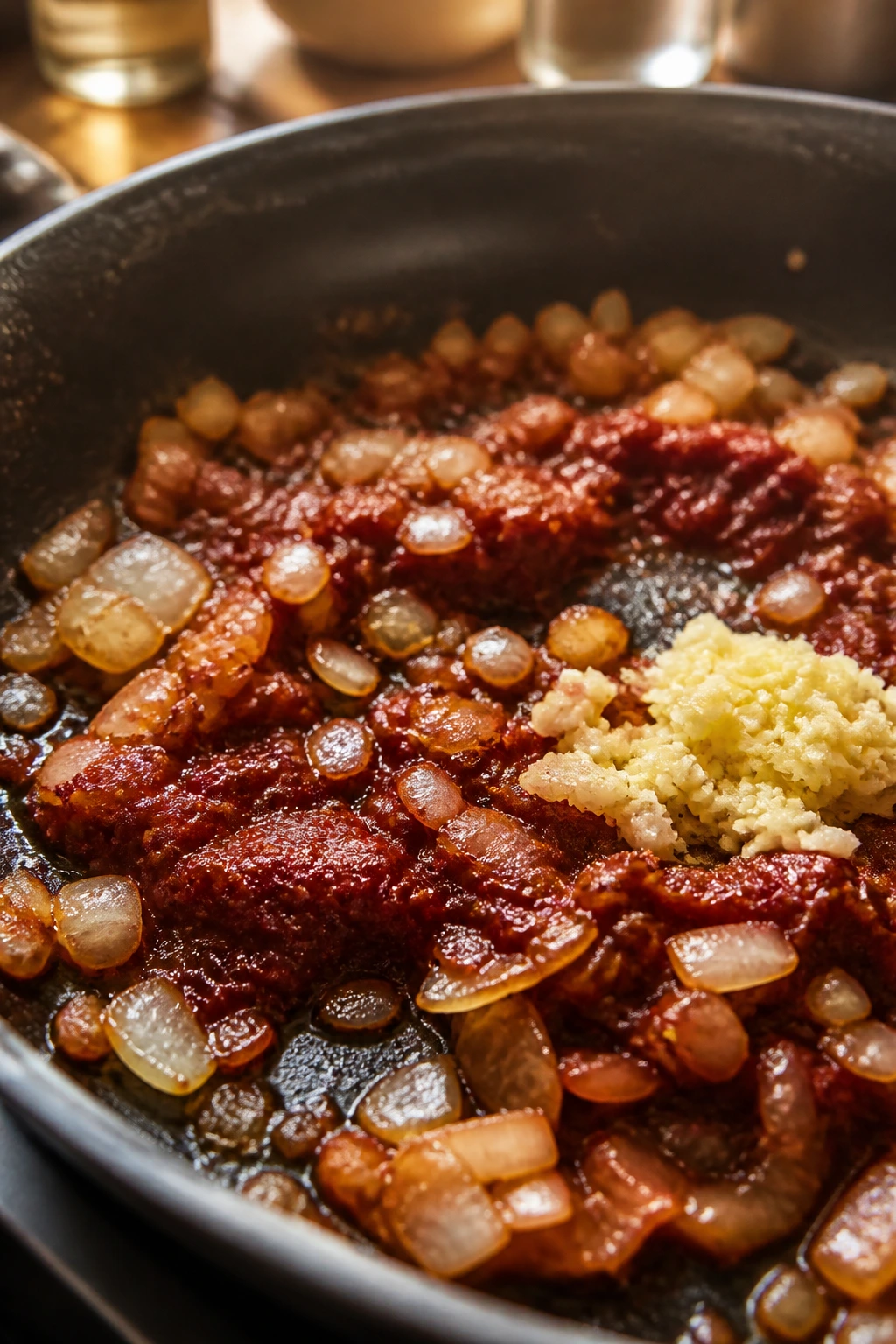
A good flavor base smells a little sweet at the edges. Not sugary. Just warm. That usually means onion has softened, garlic has gone fragrant instead of bitter, and something acidic or savory is starting to pull the whole pan together.
Start with onion in the rendered fat. If there is not enough fat in the pan, add a touch of oil. Cook the onion with a pinch of salt over medium heat until it turns translucent and the edges start to yellow, usually 5 to 7 minutes. Then add garlic for the last 30 to 45 seconds. Garlic goes from pleasant to harsh fast, and burned garlic can wreck a good pan of beef before you have time to react.
Tomato paste deserves heat
A spoonful of tomato paste looks like a tiny thing, but it changes the entire tone of the dish. Cook it for 1 to 2 minutes in the hot fat until it darkens from bright red to a brick-red smear that sticks a little to the pan. That step takes the raw, tinny edge off and gives you a deeper, sweeter tomato note.
Broth, water, beer, cream, or crushed tomatoes can all join the pan after that. If you want a looser sauce for noodles or rice, add broth and a splash of something acidic — tomato, vinegar, Worcestershire, or even a little pickle brine if the dish can handle it. If you want a thicker sauce for mashed potatoes or a casserole, simmer it a few minutes longer until the spoon leaves a clean trail across the bottom of the pan.
Small amounts make a big difference
- Worcestershire sauce: One or two teaspoons brings savory depth.
- Soy sauce: A teaspoon or two adds salt and umami without making the dish taste Asian unless you push it that way.
- Dried thyme or oregano: Best in tomato-based beef dishes.
- Paprika: Adds warmth and color, especially in cheesy or potato-heavy pans.
- Bay leaf: Good in soups and stews, pointless to leave in after it has done its work.
I like to think of this stage as turning beef into dinner instead of just cooked meat. Same pan. Very different result.
One-Skillet Ground Beef Dinners That Feel Complete
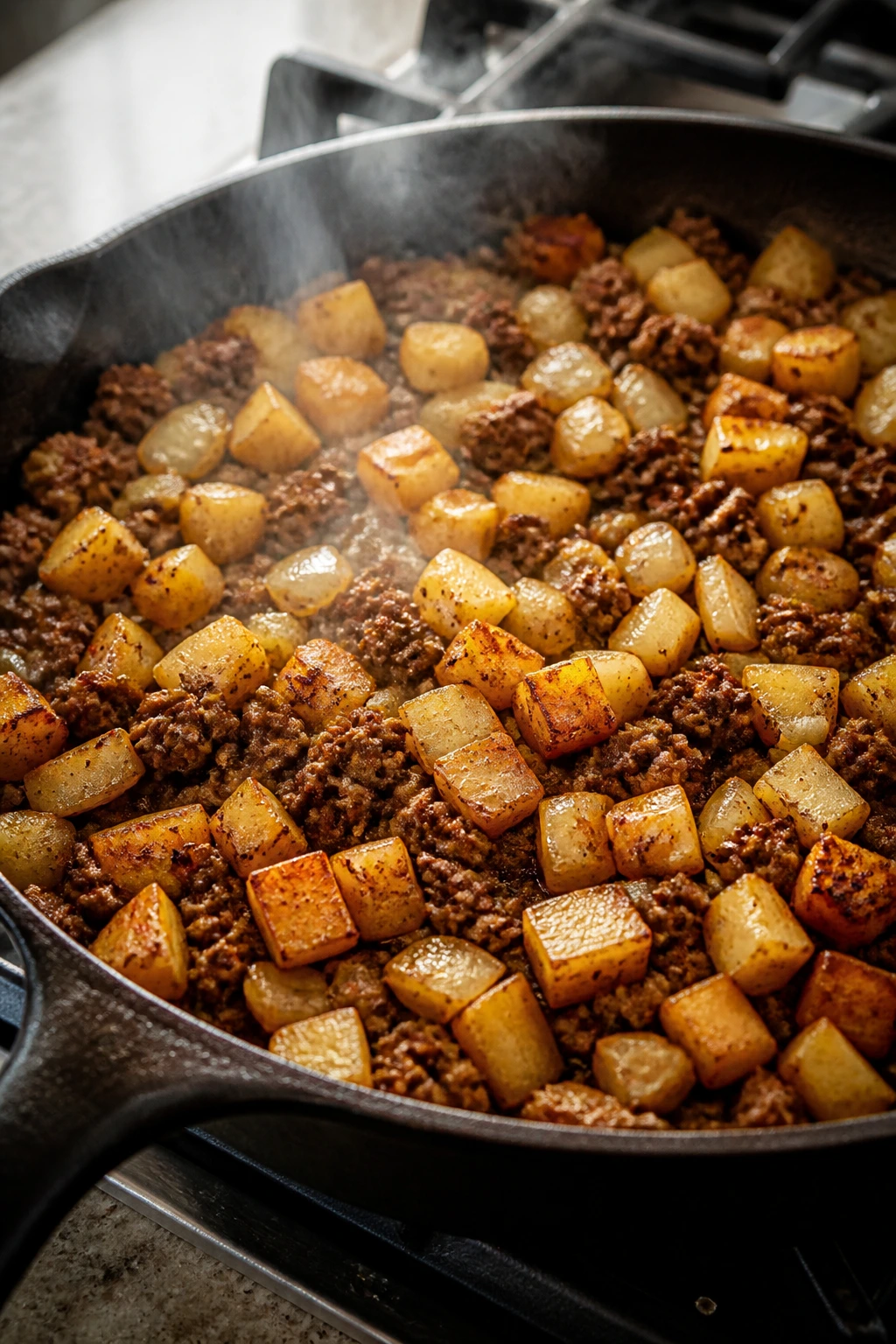
When there is a pound of beef, a potato, and one onion on the counter, the skillet route is usually the smartest move. You get fewer dishes, more browning, and a dinner that tastes like it happened on purpose. The trick is to build in all the pieces the pan needs: protein, starch, vegetable, and a little liquid to tie them together.
A potato-heavy skillet wants the beef to be browned first, then joined by onions, garlic, and diced potatoes that have enough time to soften in the fat. If the potatoes are small cubes, they will cook in 15 to 20 minutes with a lid and a splash of broth. If they are larger, parboil them first or you will be waiting forever. Thin-skinned potatoes like Yukon Gold hold together better than russets in a skillet dinner.
Pasta skillets need more care because the pasta drinks the liquid while it cooks. That means the sauce needs to be a little looser than you think at the start. By the time the noodles finish, the mixture tightens up. If you only add enough liquid for the first ten minutes, you end up with dry pasta and a sticky pan. I like a stronger tomato base or broth-heavy sauce here, because pasta can swallow flavor without blinking.
Rice-based dinners are the opposite. Rice needs measured liquid and a lid, and once it starts to steam, the whole skillet settles into itself. You can build a beef and rice pan with onion, garlic, peas, carrots, and a seasoned broth, then let it sit off the heat for 5 to 10 minutes so the grains finish their last bit of work. That resting time matters. Skip it and the rice can taste a little sharp in the middle.
Cabbage is one of the best things ever to happen to ground beef. It softens into ribbons, catches the fat, and brings a sweet edge that keeps the dish from feeling heavy in a dull way. Thinly sliced cabbage can go straight into the skillet after the beef and onion, and it usually collapses in 8 to 12 minutes. Add caraway, black pepper, and a splash of vinegar if you want the pan to wake up a little.
The best skillet dinners are not crowded. They are focused. One strong starch, one vegetable with backbone, and enough sauce to coat rather than drown. That balance is what keeps a pan of ground beef from tasting like leftovers before it has even left the stove.
Casseroles and Bakes With a Proper Crust
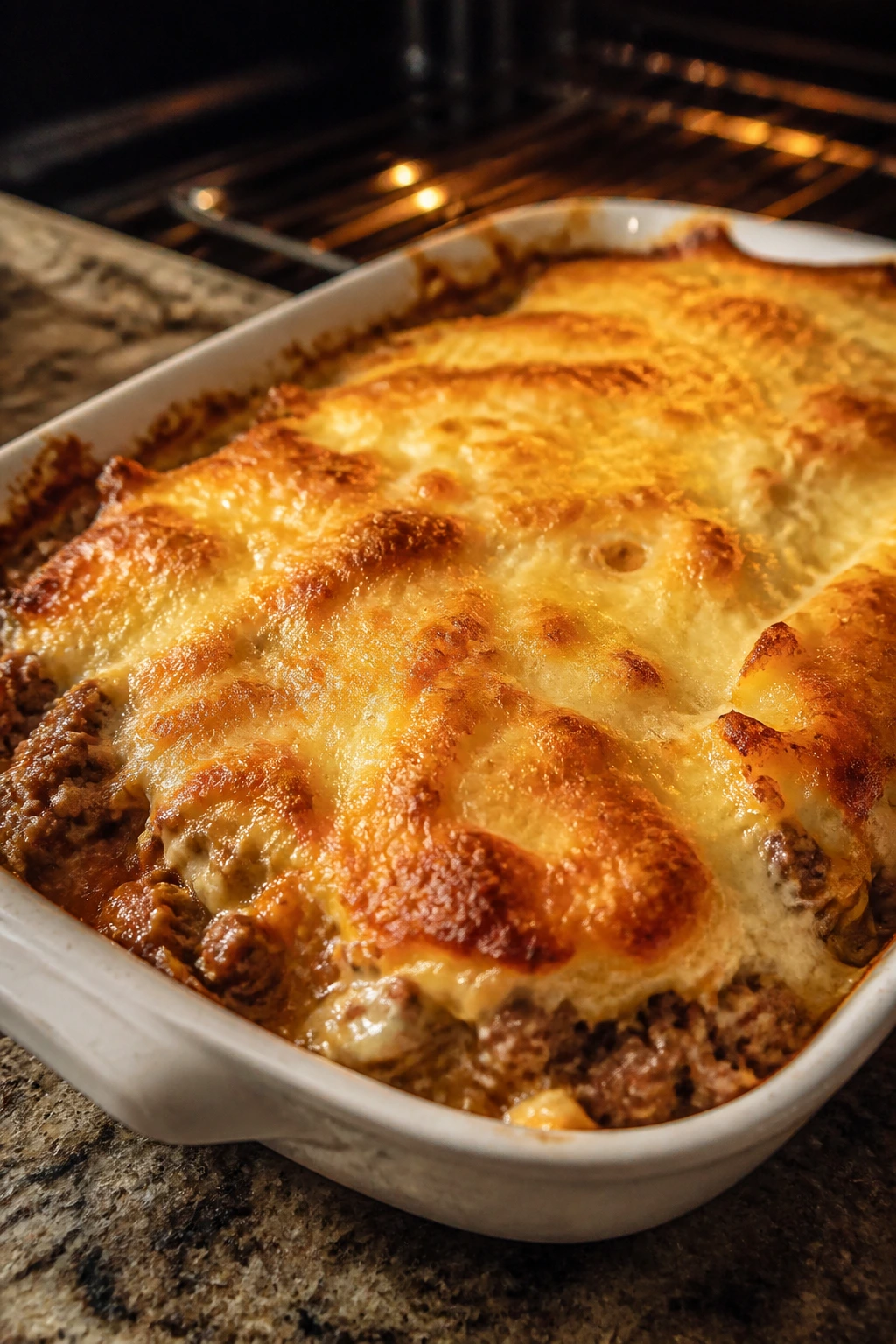
The oven changes the mood. On the stove, ground beef is practical. In a casserole, it becomes more layered. The edges brown, the top picks up heat, and the filling settles into itself in a way a skillet can’t quite copy. That is why beef bakes feel so deeply satisfying when the weather turns mean or the day has already taken too much out of you.
The failure point for a lot of casseroles is moisture. Too much liquid and you get soup in a pan. Too little and the noodles or potatoes dry out before the top browns. The filling should look a little loose when it goes into the dish — not watery, not stiff, just capable of spreading. It will set as it bakes. If it looks thick enough before it enters the oven, it may turn gluey by the time the center gets hot.
The bake temperatures I trust
For most beef casseroles, 375°F is the safest middle ground. It gives the filling time to heat through before the cheese or crumb topping burns. If the casserole already has fully cooked components and you want more browning on top, 400°F can work, but keep an eye on the edges. A foil cover for the first half of the bake helps if the top is browning faster than the middle is heating.
A casserole with mashed potatoes on top should go on until the surface has a few browned ridges and the filling bubbles at the edges. That bubbling matters. It tells you the center is hot enough, not just the top. Let it rest 10 to 15 minutes before serving, or the first scoop will collapse into a runny puddle and make you swear at the dish for no good reason.
What works well in baked dishes
- Beef and noodles: Egg noodles hold sauce and keep the texture soft.
- Beef and potatoes: Mashed or sliced, potatoes make the top feel complete.
- Beef and rice: Best when the rice has enough seasoning to carry the filling.
- Beef and vegetables: Peas, carrots, green beans, mushrooms, or corn all fit.
Cheese is not a requirement, but it helps with a crust. Cheddar browns sharply. Mozzarella melts softer and more elastic. Parmesan adds salt and a dry, craggy top. If you want the casserole to taste rich without being sloppy, mix some cheese into the filling and save the rest for the top. That gives you layers instead of a heavy lid of fat.
Soups, Stews, and Brothy Bowls
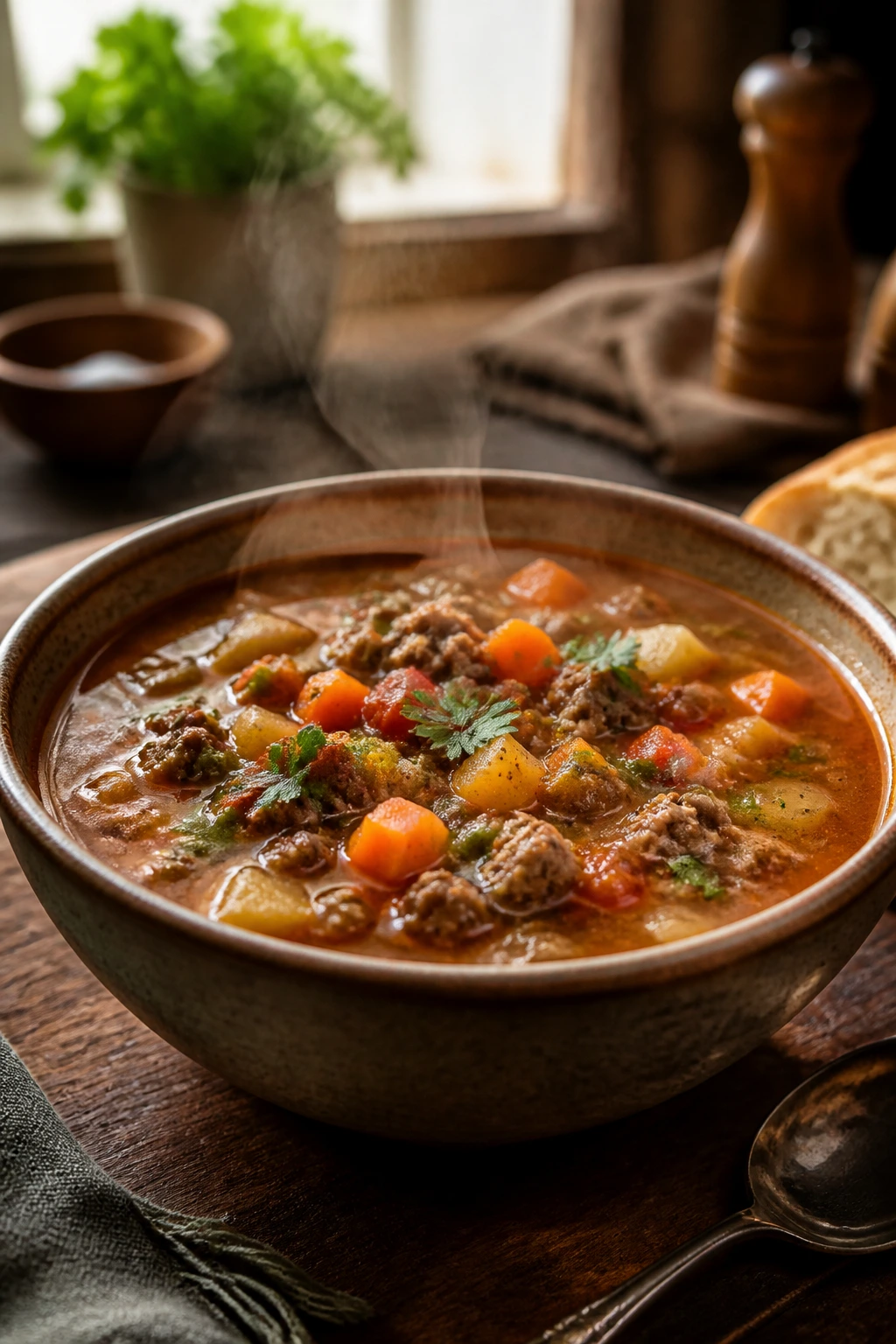
Brothy does not mean weak. A bowl of ground beef soup can be one of the most satisfying ways to use the meat because it gives you tenderness, salt, and body in the same spoonful. The trick is to treat the broth like a stage, not a shortcut. It still needs browning, aromatics, and a little patience.
Leaner ground beef tends to work better here because soup does not need as much rendered fat to carry flavor. I still like to brown it first, though. Even in a soup, that first sear makes the broth taste like it has depth instead of just salt. Once the beef is browned, onion, carrot, celery, and garlic can go into the pot to soften. Then add broth, tomatoes, potatoes, beans, or barley depending on where the soup wants to go.
Good soup additions for ground beef
- Potatoes: They thicken the broth a little as they break down.
- Beans: White beans, kidney beans, or black beans make the pot feel fuller.
- Rice or barley: Good in a hamburger-style soup if you want more chew.
- Cabbage: Slips into the pot and turns sweet after simmering.
- Crushed tomatoes: Add body and a little acid that keeps the soup awake.
If the broth tastes thin, do not panic and throw in more salt first. Let it simmer a little longer. Sometimes what it needs is evaporation, not seasoning. A spoonful of tomato paste or a parmesan rind can help too, depending on the direction of the soup. If you are making a chili-style bowl, cumin, chili powder, smoked paprika, and a touch of cocoa can make the beef taste deeper without making it taste like dessert. Tiny amount. No drama.
Soups and stews are where ground beef becomes the quiet workhorse of a cold evening. You can stretch it with vegetables and grains, and nobody feels shortchanged because the bowl is full, hot, and spoonable. That is a stronger kind of comfort than a lot of people give it credit for.
How to Plate a Hearty Ground Beef Dinner
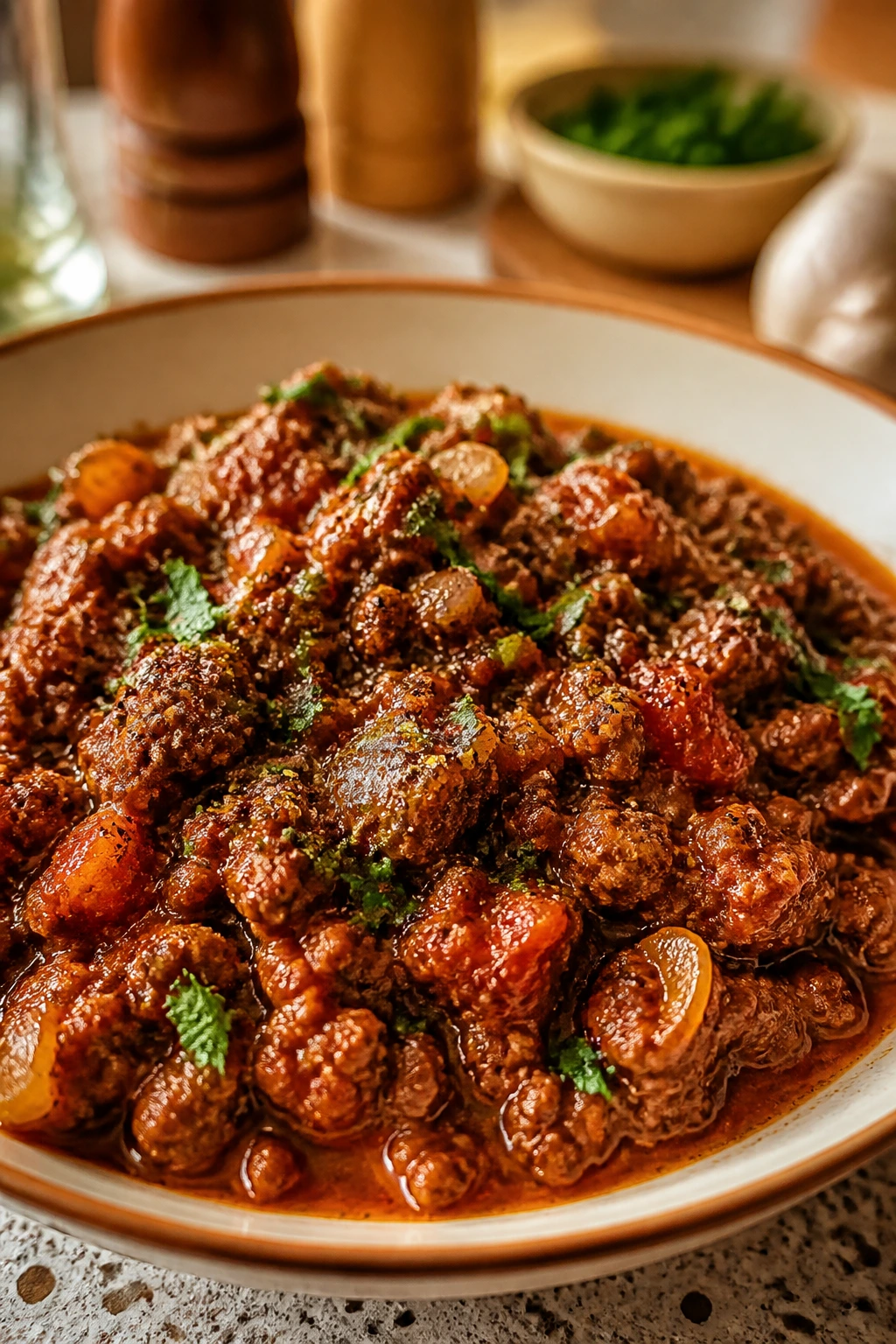
Presentation: Serve saucy ground beef dishes in warm shallow bowls if there is gravy, tomato sauce, or broth. Piled on cold plates, the food looks tired fast. A spoonful of chopped parsley, a dusting of black pepper, or a thin layer of shredded cheese on top gives the dish a finished look without making it fussy. If you are serving a casserole, let the first square hold its shape before moving it to the plate. Loose scoops make the whole dish look sloppier than it tastes.
Accompaniments: Mashed potatoes are the obvious partner, and for good reason — they catch every bit of beefy sauce. Buttered egg noodles, rice, crusty bread, roasted green beans, a sharp cucumber salad, or simple butter lettuce with a mustard vinaigrette all work too. I like one starchy side and one fresh side if the main dish is rich. That keeps the plate from feeling heavy in a stale way.
Portions: When ground beef is the center of the plate, plan on about 1/3 to 1/2 pound raw beef per adult depending on how much starch and vegetables are built in. If the meal has rice, pasta, or potatoes woven through it, the lower end usually feels right. For a casserole or soup that is stretched with beans or vegetables, you can serve a little more volume without making it look stingy. Kids often need less than you think once the side dishes are actually on the table.
Beverage Pairing: A cold glass of iced tea, sparkling water with lemon, or a dark beer like an amber ale handles rich beef well. If wine is on the table, a medium-bodied red with a little fruit — think cabernet, zinfandel, or a grenache blend — stands up to tomato and browned meat without bulldozing the meal. For non-alcoholic drinks, cola with ice and a squeeze of lemon is old-school for a reason. It cuts the fat better than plain water.
The plate should look like dinner, not a test of restraint. Warm food, a little sauce, one crisp element on the side, and enough contrast to keep you reaching back in for another bite. That is the whole game.
How to Get the Most Out of Ground Beef on Busy Nights
Flavor Enhancement: A spoonful of tomato paste, a teaspoon of Worcestershire, and a small pinch of smoked paprika can make a pound of beef taste far deeper than a salt-and-pepper-only pan. If the dish leans creamy, a little grated parmesan or a tiny splash of soy sauce gives it the salty backbone that cream alone can’t provide.
Time-Saver: Brown two or three pounds at once, drain them, and freeze the cooked beef in flat, one-cup portions. Later, you can thaw it straight into a soup, pasta sauce, or skillet dinner without waiting for raw meat to cook from scratch. That move saves more time than most shortcuts because the browning is already done.
Cost-Saver: Stretch the meat with finely chopped mushrooms, shredded cabbage, lentils, or beans. Mushrooms work best when they are chopped small and cooked until their moisture is gone; otherwise they just make the pan wet. Cabbage and beans are more forgiving and add a softer, fuller feel to the dish.
Texture Fix: If the finished pan looks greasy, spoon off some of the fat or blot the surface with a folded paper towel. If it looks dry, add a splash of broth, tomato sauce, or even water and simmer for another minute. Dry beef often just needs a little liquid to reawaken the seasoning.
Make-It-Yours: For a sharper flavor, add mustard and pickles in a burger-style beef skillet. For something softer, lean into thyme, gravy, and mashed potatoes. For a lighter plate, serve the beef over cauliflower mash, shredded cabbage, or roasted vegetables instead of pasta. The beef is the anchor; the rest can drift a little.
A lot of people try to make ground beef exciting by piling on more cheese. That works sometimes. It also hides sloppy cooking. A better move is one smart flavor booster and one smart texture choice. That’s enough.
Mistakes That Make Ground Beef Dinners Taste Flat or Greasy
-
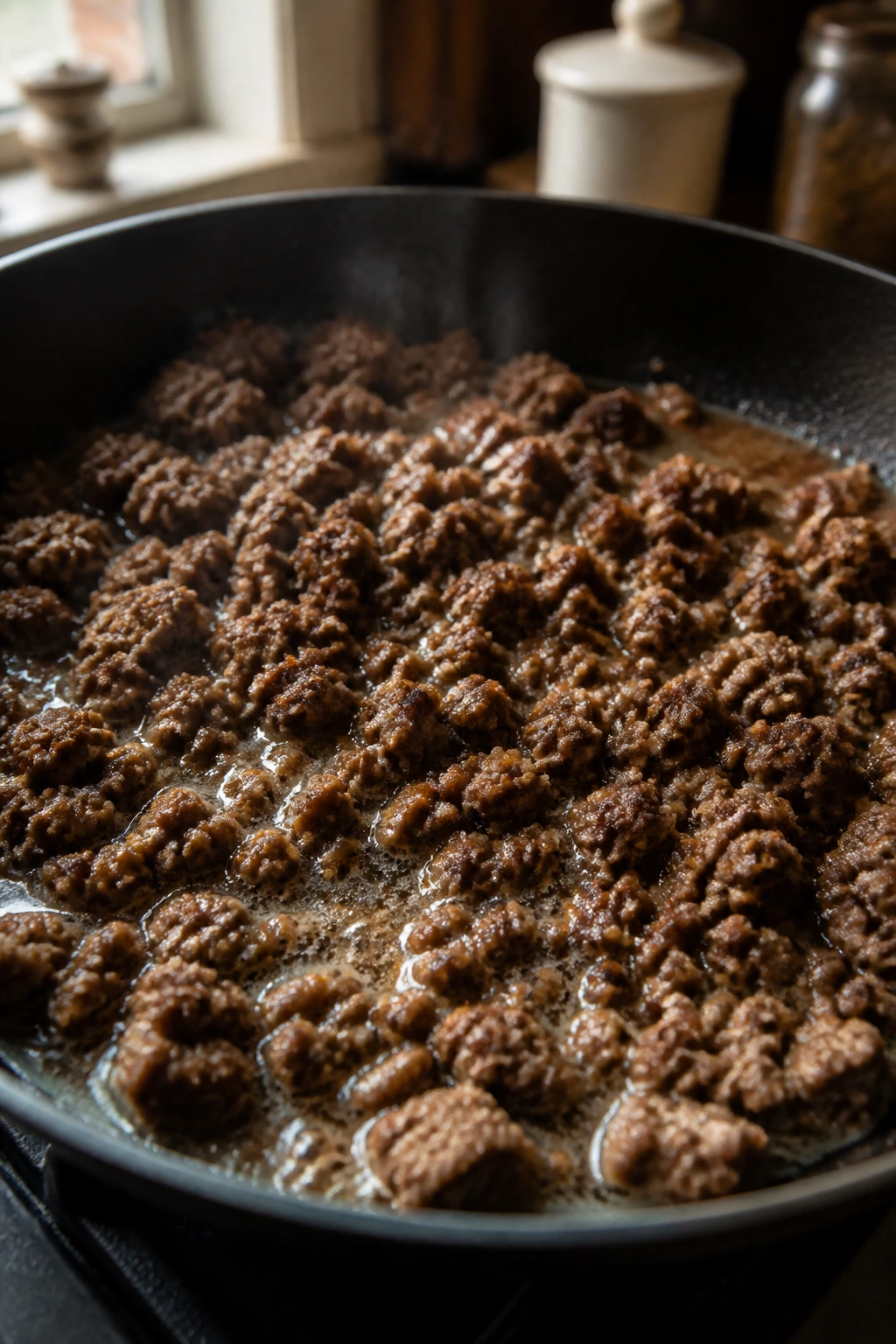
Crowding the skillet: If the beef sits in a pale heap and steams instead of browns, the pan is too full. Cook in two batches or use a wider skillet so the moisture can cook off.
-
Starting on low heat: A timid pan gives you gray meat with no crust. Preheat the skillet first, then add the beef and let it sit long enough to brown before you stir.
-
Using ultra-lean beef in a rich dish: 93/7 can work, but it is not my first pick for casseroles or skillet dinners that need richness. The result can taste dry even when it is technically cooked fine. Choose a little more fat, or add oil and broth to compensate.
-
Underseasoning in layers: Salting only at the end makes the beef taste like the spice shelf after a rainstorm. Season the meat, taste the sauce, then adjust again after the starch goes in. Beef needs more than one round of attention.
-
Dumping out all the fat: Some fat is flavor. If you remove every trace of it from a pan of 90/10 beef, the dish can lose the savory sheen that helps it coat noodles or potatoes. Drain the excess, leave a little behind.
-
Skipping the rest on baked dishes: A casserole cut the second it leaves the oven will spill across the plate. Give it 10 minutes, sometimes a little more, so the filling settles and the slices hold together.
The smell tells the truth long before the recipe card does. If the beef smells steamed, the pan was too crowded. If it smells flat, the seasoning came too late or the brown bits were never built. Fix those two things and a lot of dinner problems disappear.
Variations and Flavor Directions
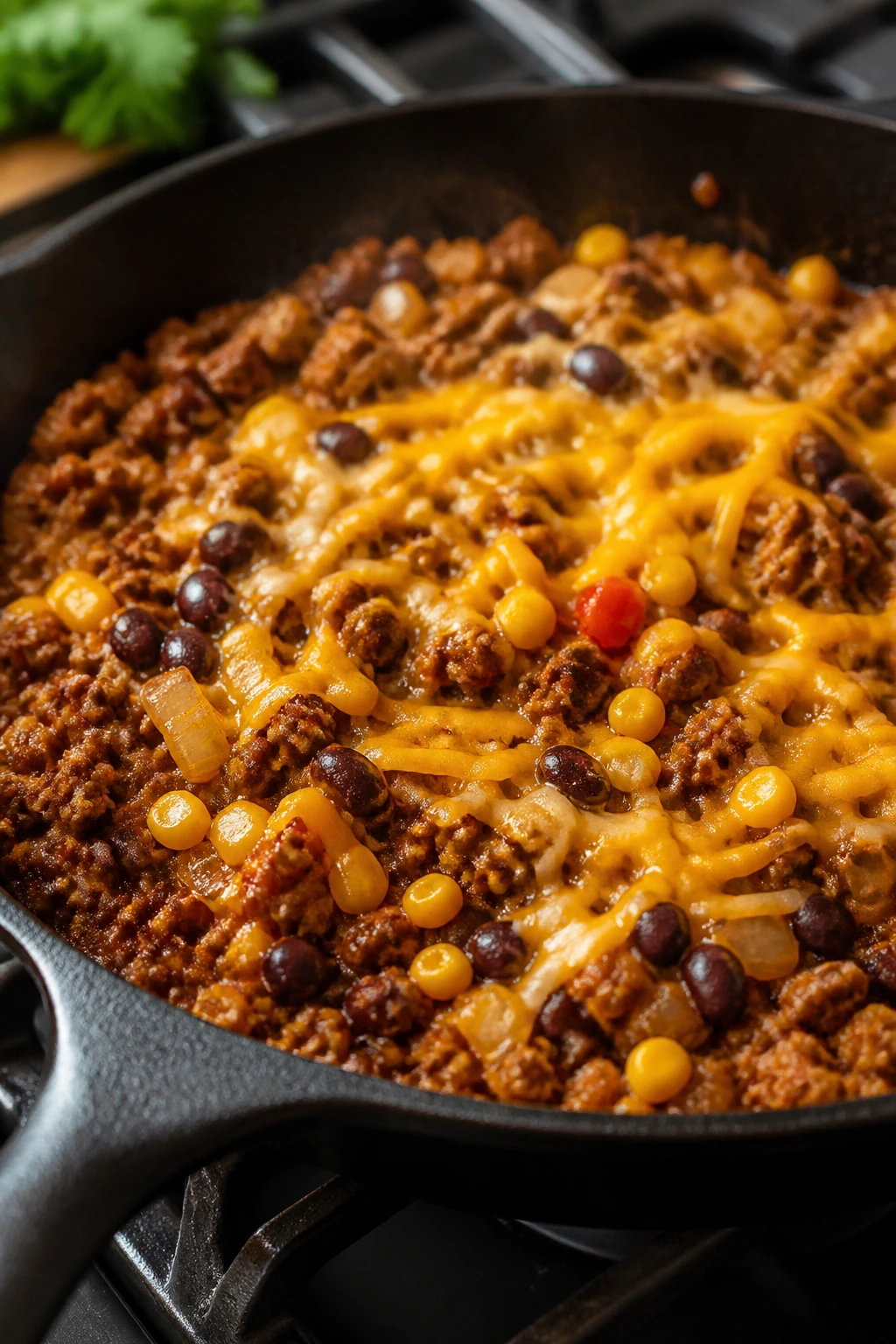
Tex-Mex Skillet Night: Brown the beef with onion, garlic, cumin, chili powder, and a little smoked paprika. Stir in black beans, corn, and a spoon of tomato paste, then finish with cheddar or pepper jack. Serve it over rice, tucked into tortillas, or scooped over crushed tortilla chips if you want dinner to feel closer to a skillet nacho situation.
Pub-Style Shepherd’s Pie: Use beef, onions, carrots, peas, thyme, and a splash of Worcestershire, then top the filling with mashed potatoes and bake until the top gets browned ridges. This version wants a little extra black pepper and a firmer mashed potato layer so it can hold up when sliced. It is one of the few casseroles that tastes even better after it cools for a few minutes.
Creamy Mushroom Beef Noodles: Brown the beef, then add mushrooms and let them cook until their liquid disappears. Stir in broth, a spoonful of sour cream or cream cheese, and egg noodles. The mushrooms bring an earthy note that keeps the cream from tasting one-note, and the whole thing lands in that good spot between stroganoff and weeknight pasta.
Cabbage and Caraway Beef Bowl: Sauté thin-sliced cabbage with the beef, onion, garlic, and a pinch of caraway or fennel seed. Finish with vinegar or lemon so the bowl tastes brighter, then serve it over potatoes, rice, or rye bread. This one is especially useful when you want dinner to feel sturdy but not heavy in the cheesy sense.
Dairy-Free Tomato Beef Bake: Skip the cheese and build the bake with tomato sauce, herbs, and a breadcrumb topping tossed with olive oil. It still browns well in the oven and keeps the center juicy. Good crust, no dairy, and none of the filling collapse that can happen when melted cheese is doing too much.
These are not wild reinventions. They are just different roads to the same place: a dinner with enough body to feel complete and enough flavor to make the leftovers worth saving.
Tools That Make Cooking Ground Beef Easier
-
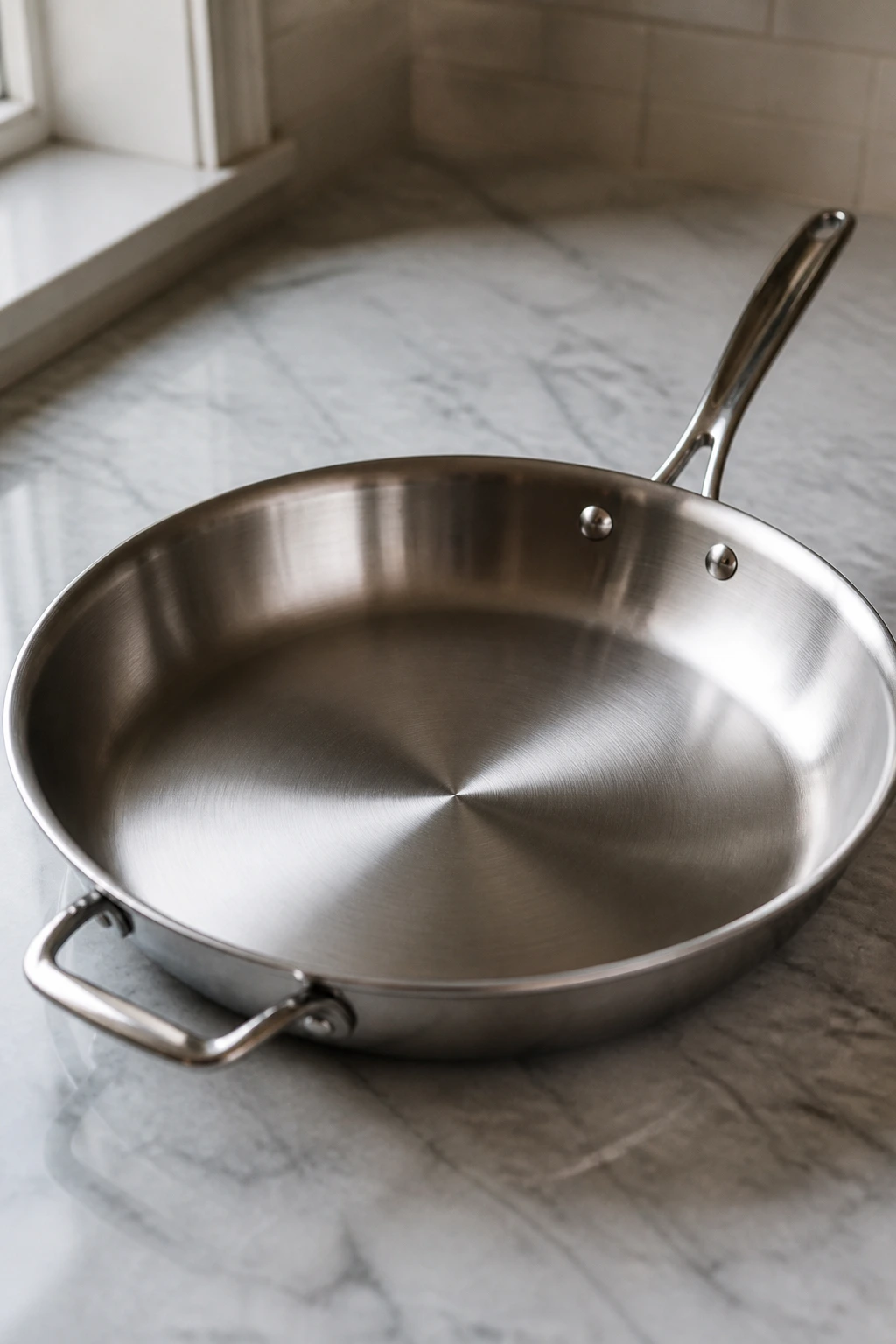
12-inch skillet: Wide enough to brown beef instead of steaming it; cast iron, stainless steel, or a heavy nonstick pan all work.
-
Dutch oven: Best for soups, stews, and one-pot dinners that need both browning and simmering.
-
Wooden spoon or heatproof spatula: Useful for breaking up beef without scraping the pan to death.
-
Instant-read thermometer: The easiest way to check that ground beef has reached 160°F, especially in casseroles and thick sauces.
-
Chef’s knife and cutting board: Onion, garlic, carrots, cabbage, and herbs all move faster when the knife is sharp enough to do clean work.
-
Sheet pan or 9×13-inch baking dish: Needed for casseroles, baked pasta, and any ground beef dinner that finishes in the oven.
-
Fine-mesh strainer or spoon: Helpful for draining excess fat without dumping the whole pan.
-
Airtight storage containers: Glass or BPA-free plastic containers keep leftovers from drying out in the fridge.
-
Potato masher: Optional, but handy if you like a smoother beef-and-potato skillet or want to mash some beans into a chili-style dinner.
A good setup does not need a drawer full of gadgets. It needs a few tools that can handle heat, volume, and a little bit of mess.
Make-Ahead, Storage, and Reheating
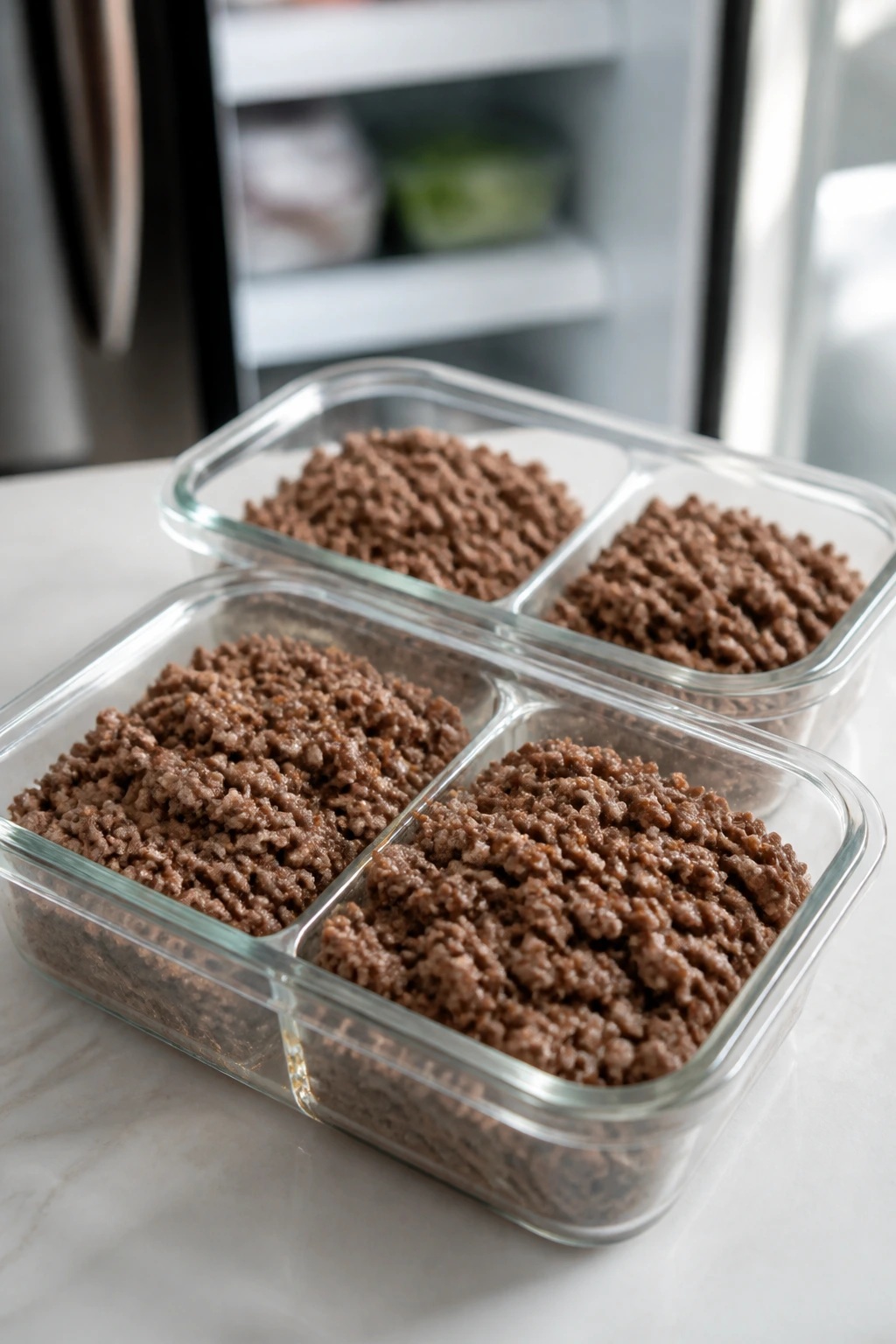
Raw ground beef is perishable fast. Keep it refrigerated for 1 to 2 days and cook or freeze it before that window closes. If it will not be used soon, freeze it the same day you buy it. Cooked ground beef keeps in the fridge for 3 to 4 days, and it freezes well for about 2 to 3 months when packed tightly and cooled quickly.
For cooked casseroles or saucy beef dishes, let them cool a bit first, then transfer to shallow containers so the heat leaves faster. That matters for safety and for texture. Big deep containers hold heat too long and make the center soggy. If you are freezing a casserole, wrap the dish well or portion it into smaller containers so thawing is less of a project later.
Reheating by style
Skillet beef: Reheat in a skillet over medium-low with a splash of broth, water, or sauce. Stir once or twice and stop when the meat is hot and glossy again. If you keep cooking after it is already hot, it turns dry in a hurry.
Saucy pasta or rice dishes: Microwave covered at medium power, stirring halfway through and adding a tablespoon of water if the sauce has thickened too much. The goal is steam, not a blasted-hot edge with a cold middle.
Casseroles: Cover with foil and warm in a 325°F oven until the center reaches 165°F. If the top has already browned a lot, keep the foil on for most of the reheating and uncover only at the end if you need a fresh crust.
Soup and stew: Reheat on the stove over medium-low until it simmers at the edges. Stir now and then so the meat and vegetables warm evenly. If the broth has thickened in the fridge, loosen it with a little stock or water.
A few make-ahead moves save real time. Chop onions and garlic the day before. Brown beef in advance and keep it in the freezer. Make a double batch of sauce and freeze half. Ground beef dinner gets easier every time you stop pretending you need to build it from scratch on the clock.
Frequently Asked Questions
What fat percentage is best for a hearty ground beef dinner?
For most skillet dinners, casseroles, and saucy bowls, 85/15 is my default because it gives enough flavor without leaving a slick of grease. If the recipe is very rich already, like a cheesy bake or cream sauce, 90/10 can work. For chili, shepherd’s pie, and potato-heavy dinners, 80/20 is often worth it.
Do I need to drain ground beef every time?
No. Drain only when the pan has more fat than the dish can absorb. If you are making soup, pasta sauce, or a casserole with potatoes or noodles, leaving a spoonful of fat behind can help the whole thing taste richer.
Can I cook ground beef from frozen?
Yes, but it browns less evenly and takes longer. Break the frozen block into chunks as it softens in a hot skillet, then cook until no pink remains and the pieces brown well. If you have the choice, thawing it in the fridge makes for a cleaner, better-tasting result.
How do I keep ground beef from tasting dry?
Use a pan that is hot enough to brown the meat quickly, then stop cooking once it reaches 160°F. Lean beef needs help from oil, broth, tomato sauce, or cheese, because it does not have much fat to carry moisture. Saucy dishes hide dryness better than plain crumbled beef.
What is the safest way to know it is done?
A thermometer is the cleanest answer. The USDA recommends ground beef reach 160°F. In crumbled beef, no pink color is a decent clue, but it is not as reliable as checking the temperature in a thicker section.
How can I stretch one pound of ground beef without making dinner feel skimpy?
Use mushrooms, cabbage, beans, lentils, pasta, rice, or potatoes. The trick is to make the add-ins taste like part of the main dish, not a side project. Season the whole pan well and keep the sauce strong enough to coat everything.
Can I make a ground beef dinner ahead of time?
Yes, and a lot of these dishes improve after a short rest because the sauce settles into the starch. Browned beef, soup, chili, and casseroles all hold up well when made a day ahead. Reheat gently so the meat does not dry out.
What if my sauce turns greasy?
Spoon off the excess fat with a large spoon, or blot the surface carefully with a folded paper towel. If the dish is already mixed with potatoes or pasta, a bit of rest in the fridge makes the fat easier to lift because it firms up on top.
Is ground turkey a good substitute here?
It can work, but it needs more help. Ground turkey is leaner, so add oil, onion, garlic, and a stronger seasoning hand. It will not taste exactly like beef, but it can still land in the same hearty dinner lane.
A Warm Plate at the End
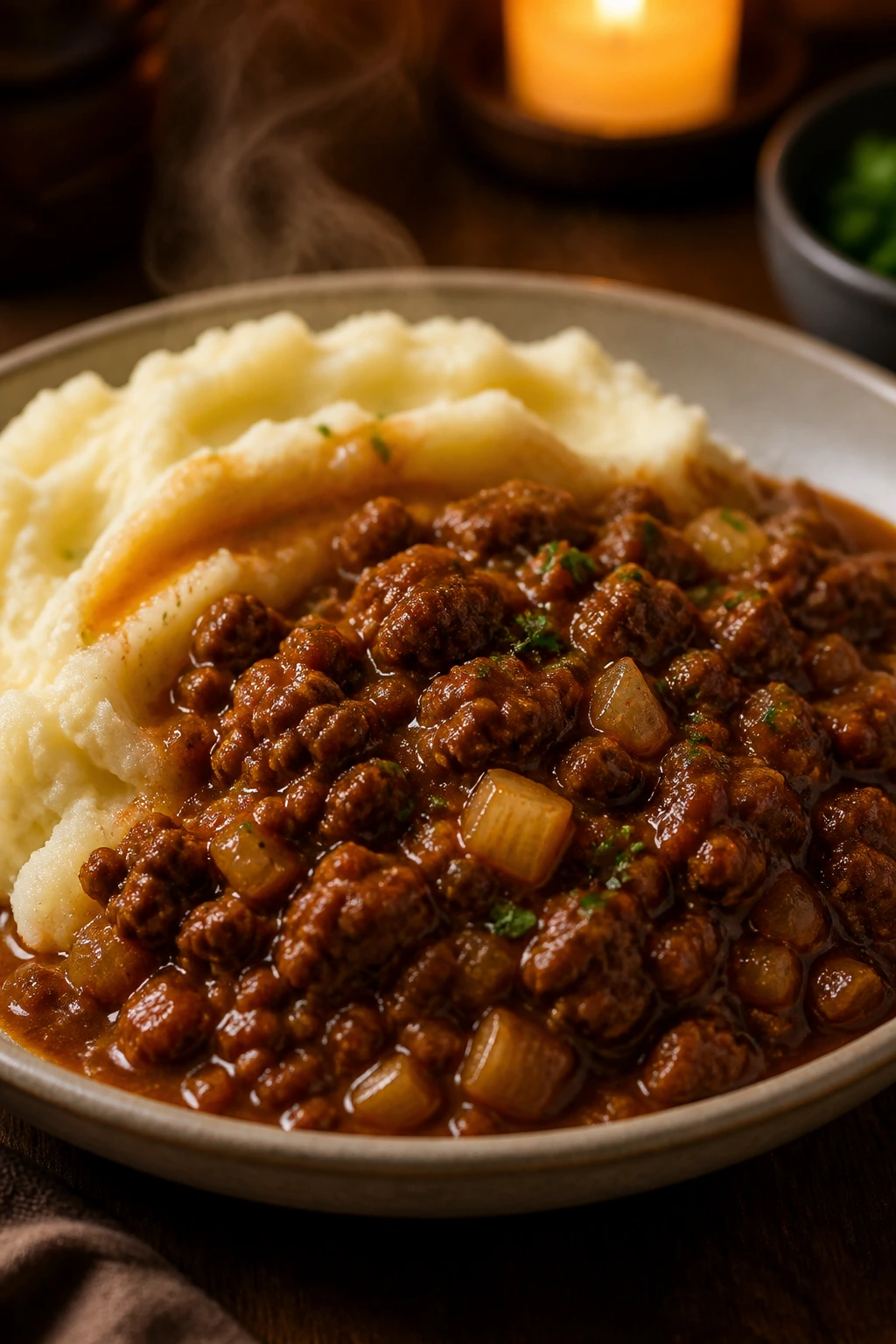
Ground beef earns its place in dinner because it does the unglamorous work well. It browns, it carries sauce, it plays nicely with starch, and it makes a kitchen smell like someone took supper seriously. That is enough. More than enough, most nights.
Keep one pack in the freezer, one onion on the counter, and a plan for either potatoes, noodles, or rice. That alone gets you most of the way to a hearty dinner, and the rest is just heat, salt, and knowing when to stop stirring.