



Some dinners arrive with a bang. This one comes with a hiss.
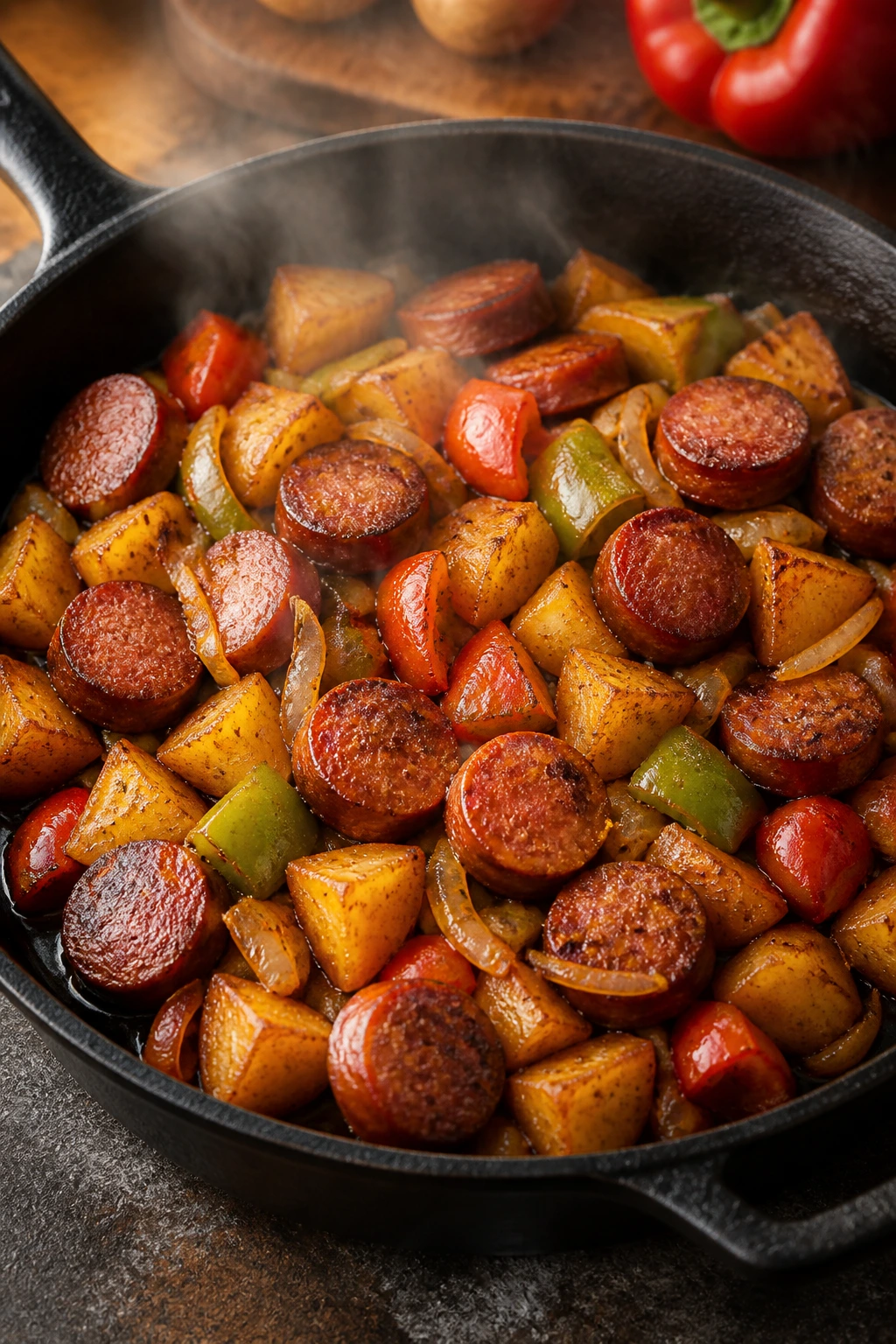
When beef smoked sausage hits a hot skillet, the smell is the first clue that you’re on the right track: a little smoke, a little pepper, browned edges that smell deeper than the package ever hinted at. Add potatoes, onions, and peppers, and the whole pan starts acting like a meal that can rescue a tired evening without asking much from you.
What keeps beef smoked sausage tender is not luck, and it’s not a fancy ingredient list. It’s heat control. Brown the slices fast enough to wake up the edges, then give the pan a little broth so the sausage stays plump and the potatoes finish soft instead of chalky. That small move changes everything.
I keep coming back to this style of dinner because it feels built, not improvised. The sausage does the heavy lifting, the potatoes soak up the drippings, and the vegetables keep the plate from feeling heavy in the wrong way. It’s a skillet meal with backbone, and the best part is that it doesn’t taste like you rushed it.
Why This Beef Smoked Sausage Dinner Earns Its Place
-
The sausage stays juicy: A quick sear plus a covered simmer keeps the slices from drying out or turning leathery around the edges.
-
The potatoes do real work: Yukon Golds hold their shape, pick up the smoky drippings, and turn creamy in the center without falling apart.
-
You get dinner in one pan: There’s no separate pot for a starch and no lonely side dish waiting on the stove while the main cools down.
-
The flavor is balanced, not muddy: Dijon, Worcestershire, and apple cider vinegar keep the smoke from flattening the whole skillet into one note.
-
Leftovers don’t feel like punishment: The next-day portions reheat cleanly with a splash of broth, which is more than I can say for a lot of one-pan dinners.
-
It scales up without drama: Double the vegetables or add a second pound of potatoes, and the method still holds together as long as your skillet is wide enough.
The Skillet at a Glance
Yield: Serves 6
Prep Time: 15 minutes
Cook Time: 30 minutes
Total Time: 45 minutes
Difficulty: Beginner — the sausage is already cooked, the vegetables are cut in chunks, and the skillet does most of the work.
Best Served: Hot from the pan after a 5-minute rest, when the sauce has thickened just enough to cling.
What Goes Into the Skillet
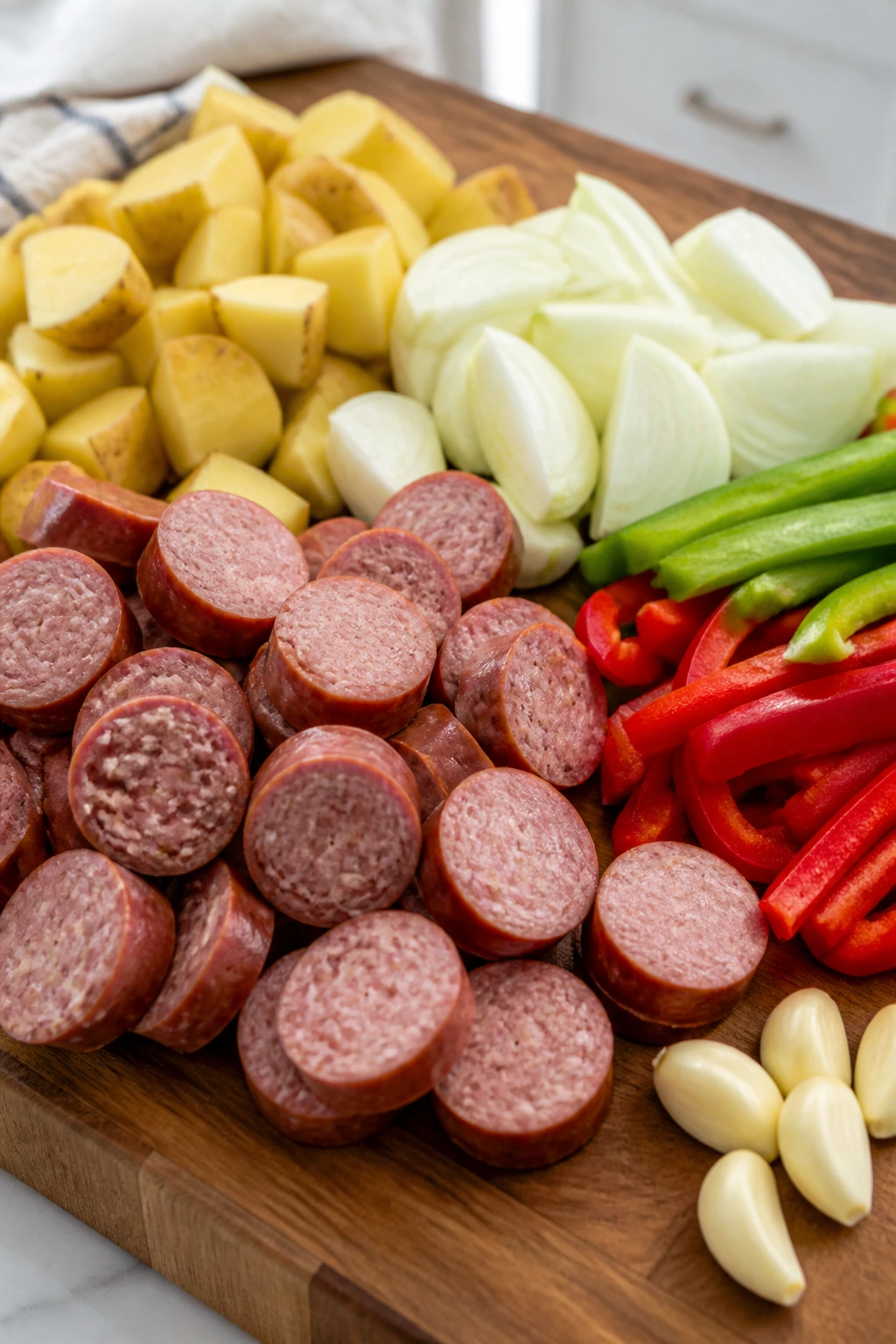
For the Beef Smoked Sausage Dinner:
- 2 pounds fully cooked beef smoked sausage, sliced into 1/2-inch coins
- 1 1/2 pounds Yukon Gold potatoes, scrubbed and cut into 3/4-inch cubes
- 2 tablespoons olive oil
- 1 large yellow onion, cut into thin wedges
- 2 bell peppers, sliced into strips
- 4 cloves garlic, minced
- 1 cup low-sodium beef broth
- 1 tablespoon Dijon mustard
- 1 tablespoon Worcestershire sauce
- 1 teaspoon smoked paprika
- 1 teaspoon dried thyme
- 1/2 teaspoon kosher salt
- 1/2 teaspoon black pepper
- 2 tablespoons unsalted butter
- 1 tablespoon apple cider vinegar
- 2 tablespoons chopped parsley
- Optional: pinch of red pepper flakes
Why These Ingredients Give You Tender Sausage Instead of Dry Coins
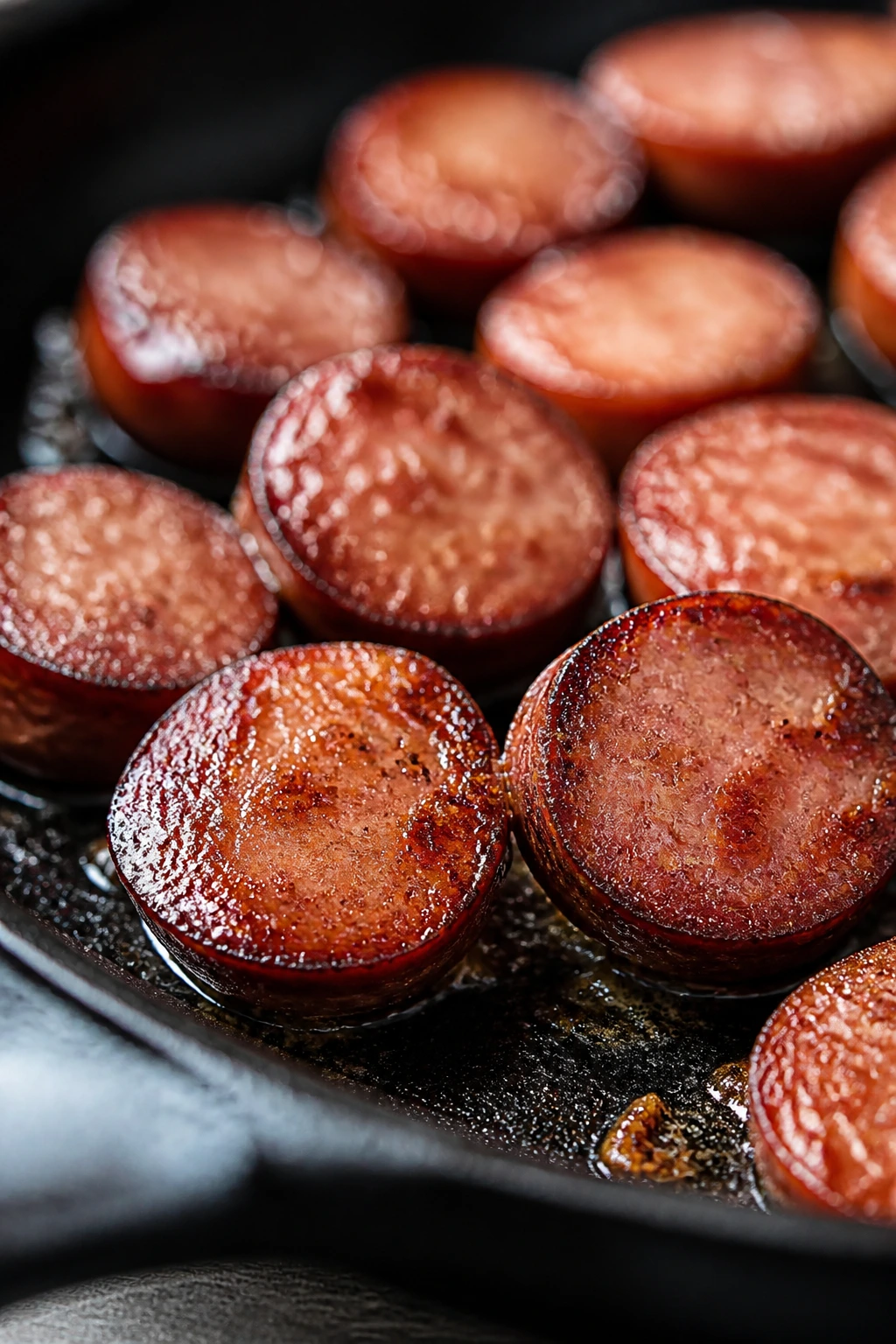
The Sausage
What to use: 2 pounds fully cooked beef smoked sausage, sliced into 1/2-inch coins.
Preparation: Slice on a slight bias if you want more browned surface area. That tiny angle gives you wider edges, which pick up more color in the skillet.
Substitutions: Turkey smoked sausage works well if you want a leaner pan, and chicken sausage can stand in if you choose one with a firmer casing. Kielbasa is the closest swap in texture and smoke level.
Tips: Buy sausage that feels firm through the casing, not soft or oily in the package. If the slices are cut too thin, they’ll dry faster and curl at the edges before the potatoes finish.
The Potatoes
What to use: 1 1/2 pounds Yukon Gold potatoes, scrubbed and cut into 3/4-inch cubes.
Preparation: Keep the cubes uniform. A mix of small and giant chunks leads to half the pan going soft while the rest stays stubborn in the middle.
Substitutions: Red potatoes hold their shape nicely, and baby potatoes can be halved or quartered if that’s easier. Russets work in a pinch, but they break down more and give the skillet a softer, less defined finish.
Tips: Yukon Golds are the sweet spot here because they get creamy without collapsing. If your cubes are larger than 3/4-inch, give them a few extra minutes under the lid.
The Onions and Peppers
What to use: 1 large yellow onion and 2 bell peppers.
Preparation: Slice the onion into thin wedges so it softens in long ribbons instead of disappearing into mush. Cut the peppers into strips that are wide enough to stay a little crisp around the edges.
Substitutions: A red onion brings more sweetness, while a green bell pepper adds a sharper note. If peppers are expensive or soft at the store, cabbage is a good backup and plays well with smoked sausage.
Tips: These vegetables are there to catch the sausage drippings and keep the skillet from tasting heavy. Don’t chop them so small that they lose their shape before the pan is finished.
The Broth and Seasoning
What to use: 1 cup low-sodium beef broth, 1 tablespoon Dijon mustard, 1 tablespoon Worcestershire sauce, 1 teaspoon smoked paprika, 1 teaspoon dried thyme, 1/2 teaspoon kosher salt, and 1/2 teaspoon black pepper.
Preparation: Stir the seasoning together in a small bowl before you start cooking. That saves you from trying to measure spice into a noisy skillet while the garlic is threatening to burn.
Substitutions: Chicken broth works if that’s what’s in the cupboard. Use gluten-free Worcestershire if needed, and choose a gluten-free beef sausage if the recipe has to stay fully gluten-free.
Tips: Low-sodium broth gives you room to adjust the salt at the end. Smoked sausage already brings a fair amount of seasoning, and too much salt early on can make the whole pan taste blunt.
The Finish
What to use: 2 tablespoons unsalted butter, 1 tablespoon apple cider vinegar, and 2 tablespoons chopped parsley.
Preparation: Cut the butter into small pieces so it melts fast when the skillet comes off the simmer. Chop the parsley right before serving so it stays bright and fragrant.
Substitutions: Lemon juice can replace the vinegar if you want a sharper finish. A spoonful of whole-grain mustard also works if you want the sauce a little thicker and less sharp.
Tips: That final hit of acid is not optional in spirit, even if the exact form changes. Smoke, fat, and starch need something bright to keep the last bite from feeling sticky.
The Gear That Keeps the Pan Moving
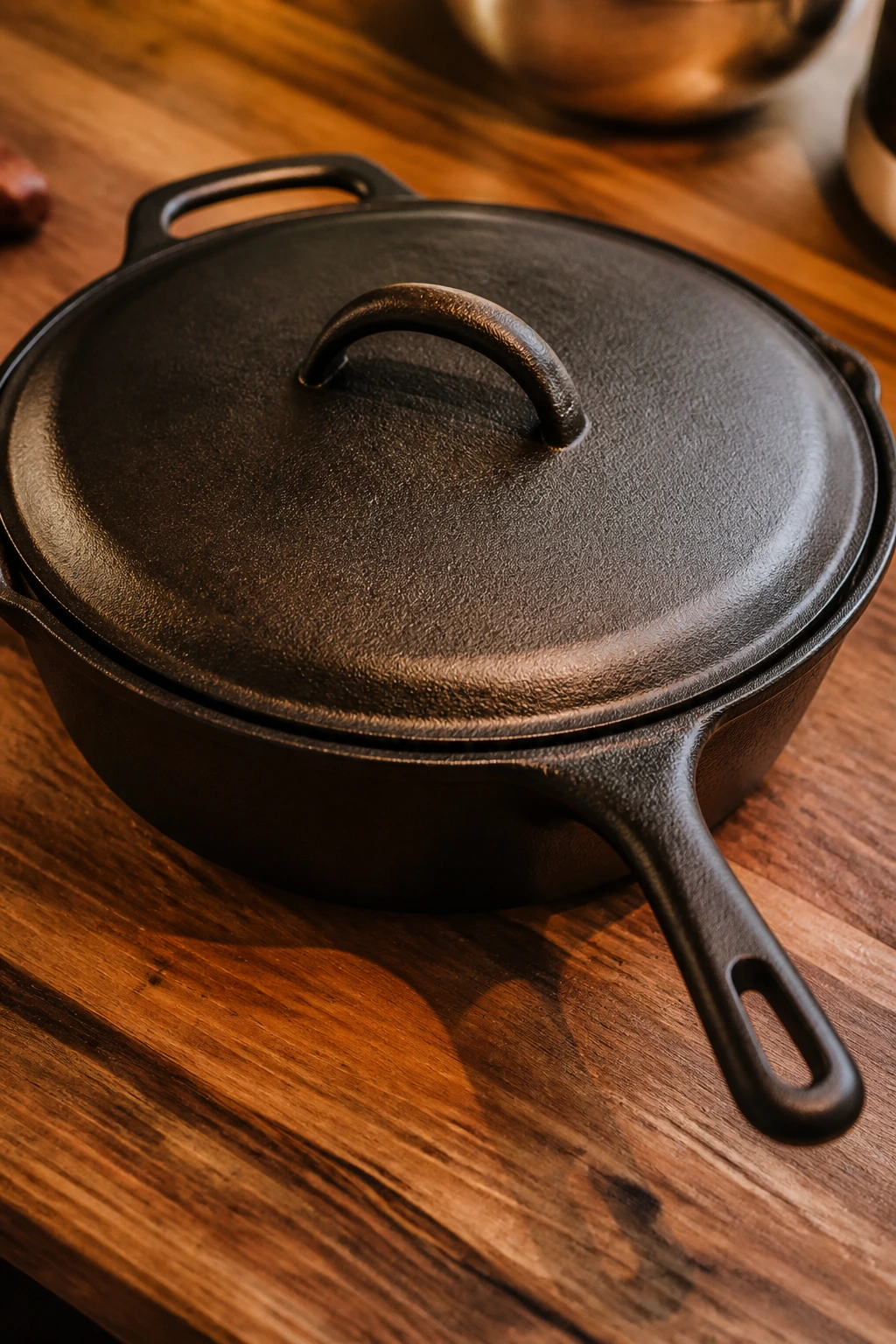
- 12-inch cast-iron skillet or heavy sauté pan with a lid — Wide enough to brown the sausage without crowding, and heavy enough to keep the potatoes from scorching.
- Sharp chef’s knife — Clean slices matter here, especially for the sausage and peppers.
- Cutting board — A large board gives you room to prep everything before the pan gets hot.
- Wooden spoon or heatproof spatula — Useful for scraping up browned bits and turning the potatoes without smashing them.
- Measuring spoons and measuring cup — The broth, mustard, vinegar, and spices are small amounts, and guessing gets sloppy fast.
- Instant-read thermometer, optional — Handy if you want to check that the sausage is piping hot in the center, especially after reheating leftovers.
- Lidded container or sheet pan, optional — Useful for holding browned sausage while the potatoes get their first turn in the pan.
How to Build the Dinner, Step by Step
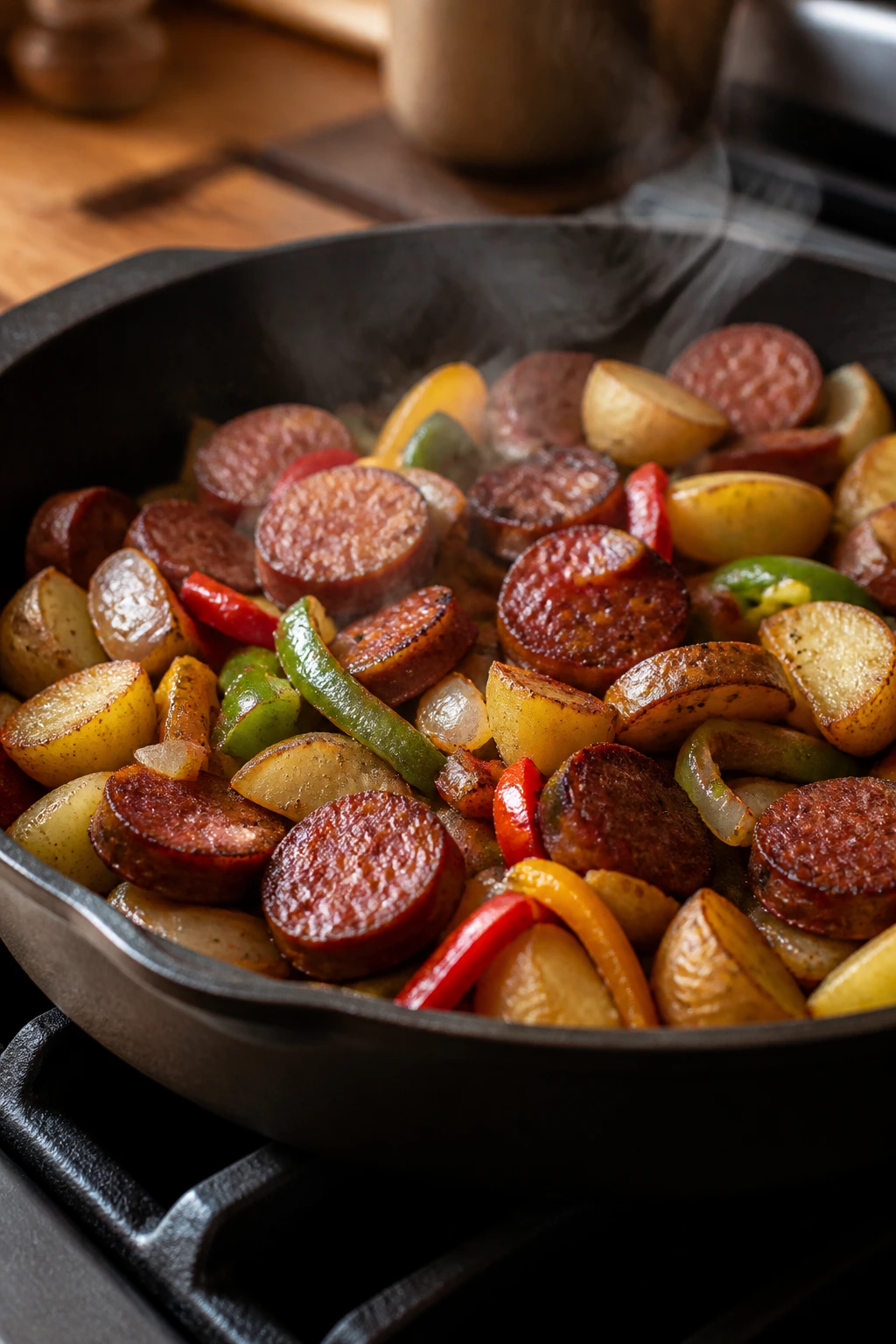
Prep the Ingredients
-
Slice and measure everything before the burner goes on. Cut the beef smoked sausage into 1/2-inch coins, cube the potatoes into 3/4-inch pieces, slice the onion into wedges, and cut the peppers into strips. Stir the broth, Dijon, Worcestershire, smoked paprika, thyme, salt, and black pepper together in a small bowl.
-
Set the sausage aside while the potatoes are ready to go. If you want the potatoes to cook faster, you can microwave the cubes with 2 tablespoons of water in a covered bowl for 3 minutes, then drain them well. That step is optional, but it helps when the potatoes are on the larger side.
Brown the Sausage
-
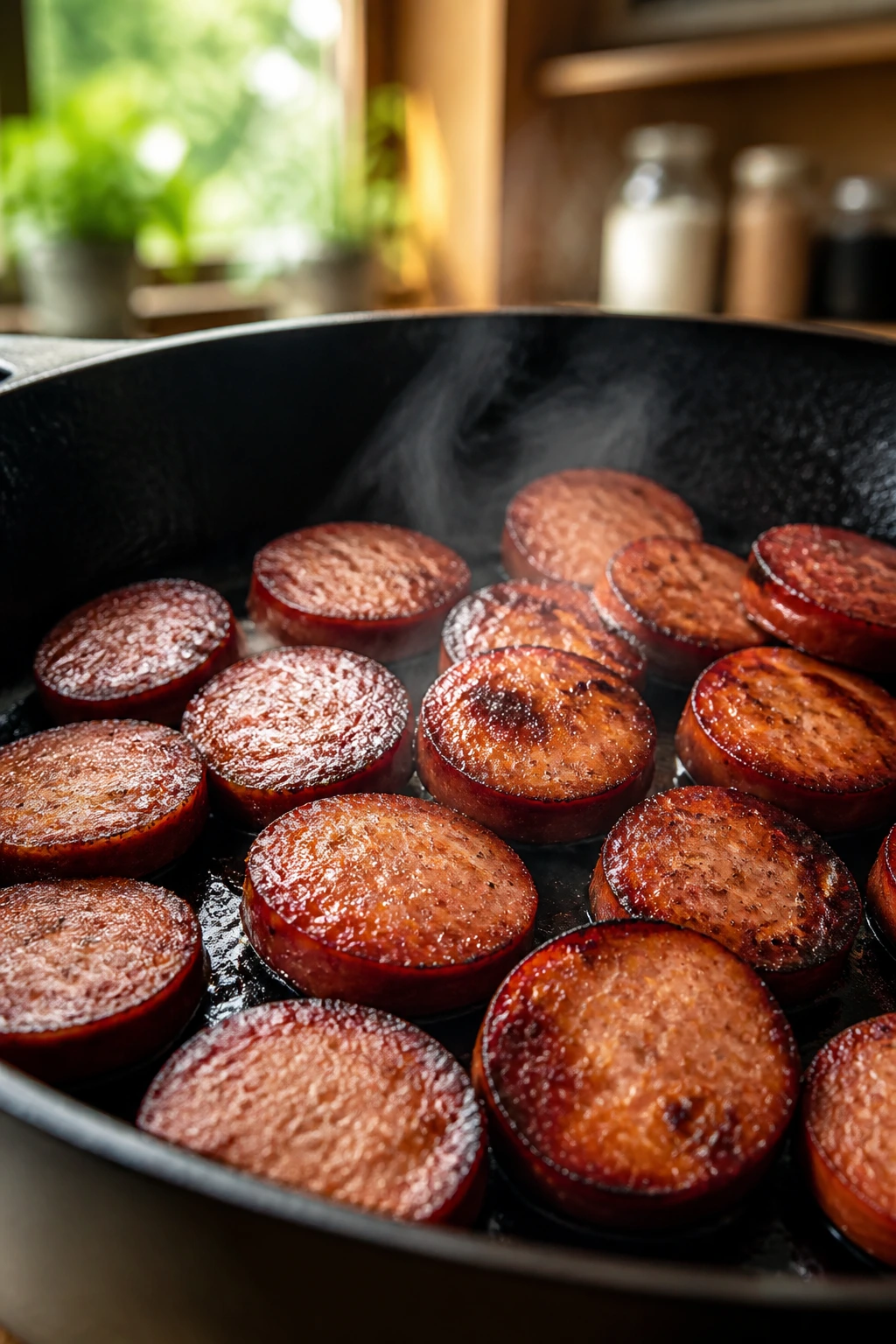
Heat the skillet over medium-high heat and add 1 tablespoon olive oil. Let the oil shimmer, then add the sausage in a single layer. Brown for 2 to 3 minutes per side, until the edges are deep gold and the centers are hot. Do not crowd the pan; if the slices pile up, they steam instead of browning.
-
Transfer the sausage to a plate. Leave the browned bits in the pan. That’s not mess. That’s flavor.
Cook the Potatoes and Vegetables
-
Add the remaining 1 tablespoon olive oil and the potatoes to the skillet. Season with a light pinch of salt and black pepper, then cook for 6 to 8 minutes, stirring every minute or so, until the cubes pick up color on 2 or 3 sides. If the pan looks dry, add a teaspoon of oil instead of cranking the heat higher.
-
Add the onion and bell peppers. Cook for 4 to 5 minutes, stirring often, until the onion turns translucent and the peppers start to soften at the edges. The pan should smell sweet and smoky at this point, not sharp or burnt.
-
Stir in the garlic and spice mixture. Cook for 30 to 45 seconds, just until the garlic smells fragrant and the paprika darkens slightly. Do not leave the garlic in the hot pan for long; it turns bitter fast.
Finish the Skillet
-
Pour in the broth and scrape the bottom of the pan. Stir in the sausage, cover the skillet, and reduce the heat to medium-low. Cook for 8 to 10 minutes, until the potatoes are tender when pierced with a fork and the sausage is heated through to the center. You want a gentle simmer, not a rolling boil.
-
Uncover and finish with butter and vinegar. Add the butter in pieces and the apple cider vinegar, then stir for 1 to 2 minutes until the sauce turns glossy and clings lightly to the vegetables. Taste and add a small pinch of salt only if the pan needs it.
-
Rest for 5 minutes, then garnish with parsley. The sauce thickens a little as it sits, and the sausage settles instead of leaking onto the plate. Spoon everything into bowls while it’s still hot.
How to Plate It So It Feels Like Dinner, Not Just Food
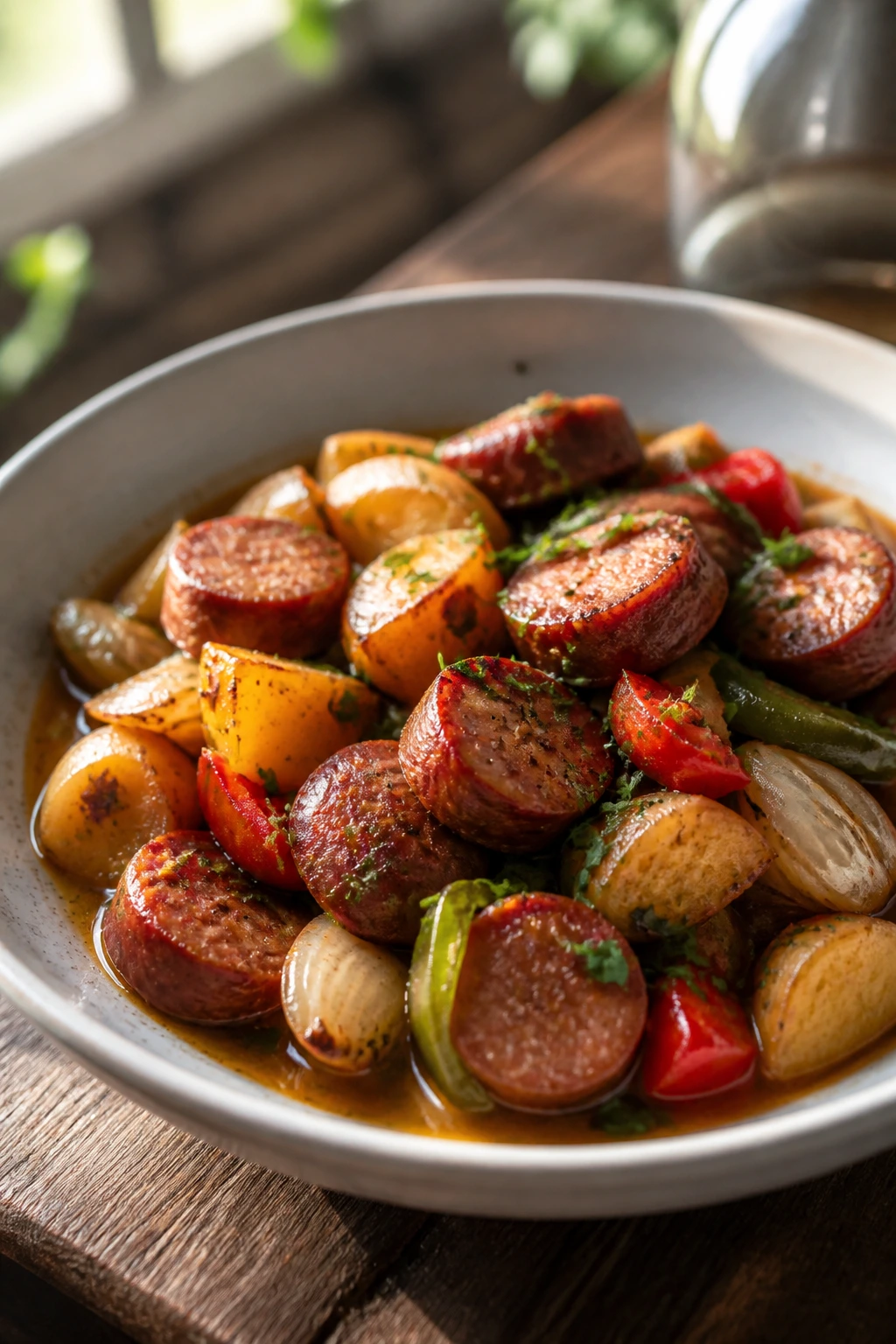
Presentation: Spoon the sausage, potatoes, peppers, and onions into shallow bowls so the glossy broth collects around the edges instead of disappearing. A scatter of chopped parsley or scallions on top gives the pan a fresh look and keeps the final plate from feeling brown-heavy.
Accompaniments: I like a chunk of crusty bread for dragging through the sauce, and a plain green salad with a sharp vinaigrette cuts through the smoke nicely. If you want the meal to feel even bigger, a side of buttered green beans or steamed cabbage fits without fighting the skillet.
Portions: As a standalone dinner, this feeds 6 people with normal appetites. If you’re serving it with salad, bread, and a second side, it stretches to 8 smaller portions. For big eaters, count on about 10 to 12 ounces of the finished skillet per person.
Beverage Pairing: A cold lager or a dry cider works well with the smoke and butter. If you want a nonalcoholic match, try unsweetened iced tea with lemon or sparkling water with a squeeze of lime.
Small Moves That Make the Pan Better
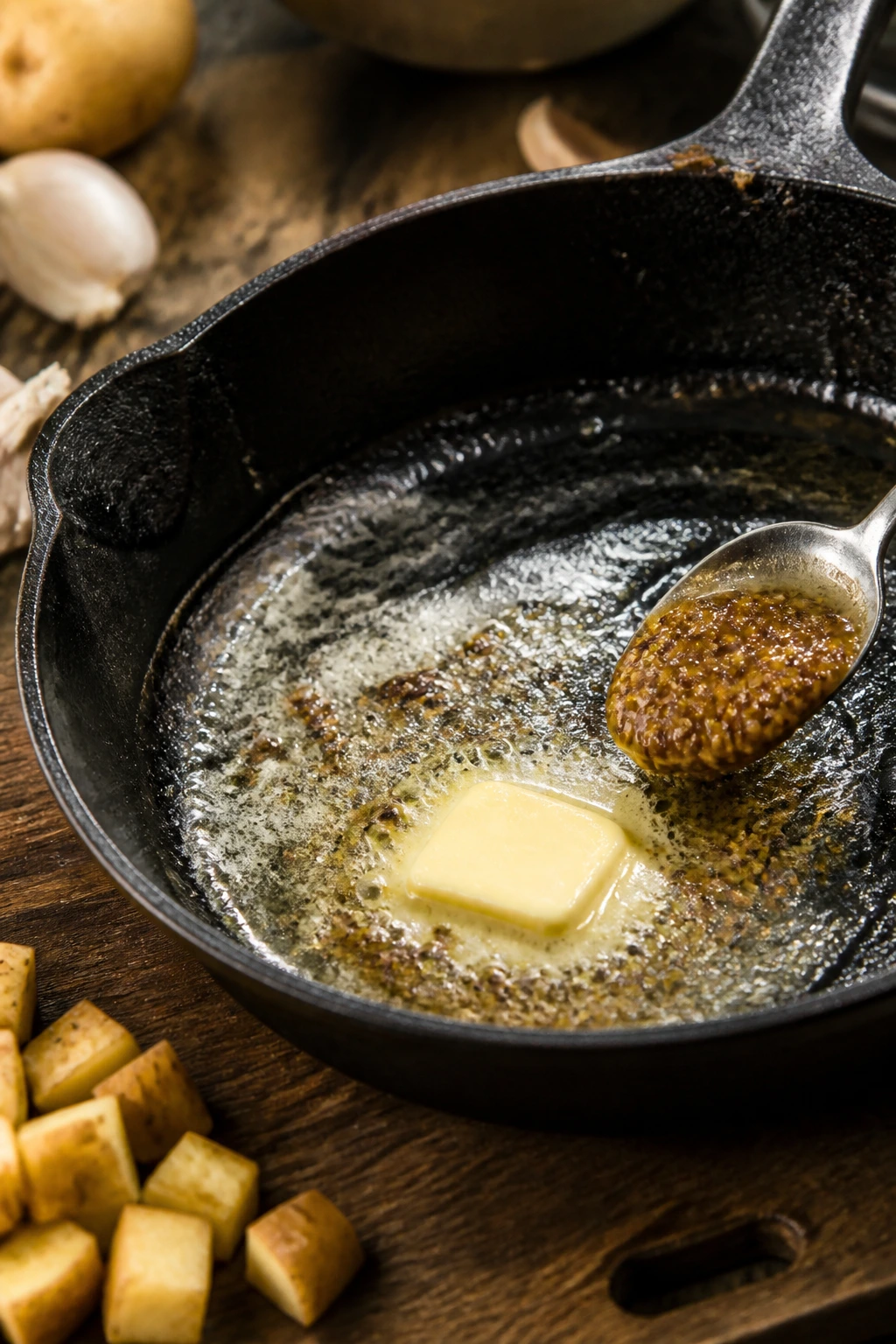
Flavor Enhancement: Stir a teaspoon of whole-grain mustard into the skillet with the butter and vinegar. It makes the sauce taste deeper, not mustardy, and gives the broth a little body without adding cream.
Time-Saver: Microwave the cubed potatoes for 3 minutes before they hit the skillet. You’ll shave off a few minutes of covered cooking, which matters when the rest of dinner is already sitting on the stove waiting.
Pro Move: Brown the sausage in two rounds if your skillet is packed. A little extra time up front gives you better color, and that color becomes the backbone of the sauce.
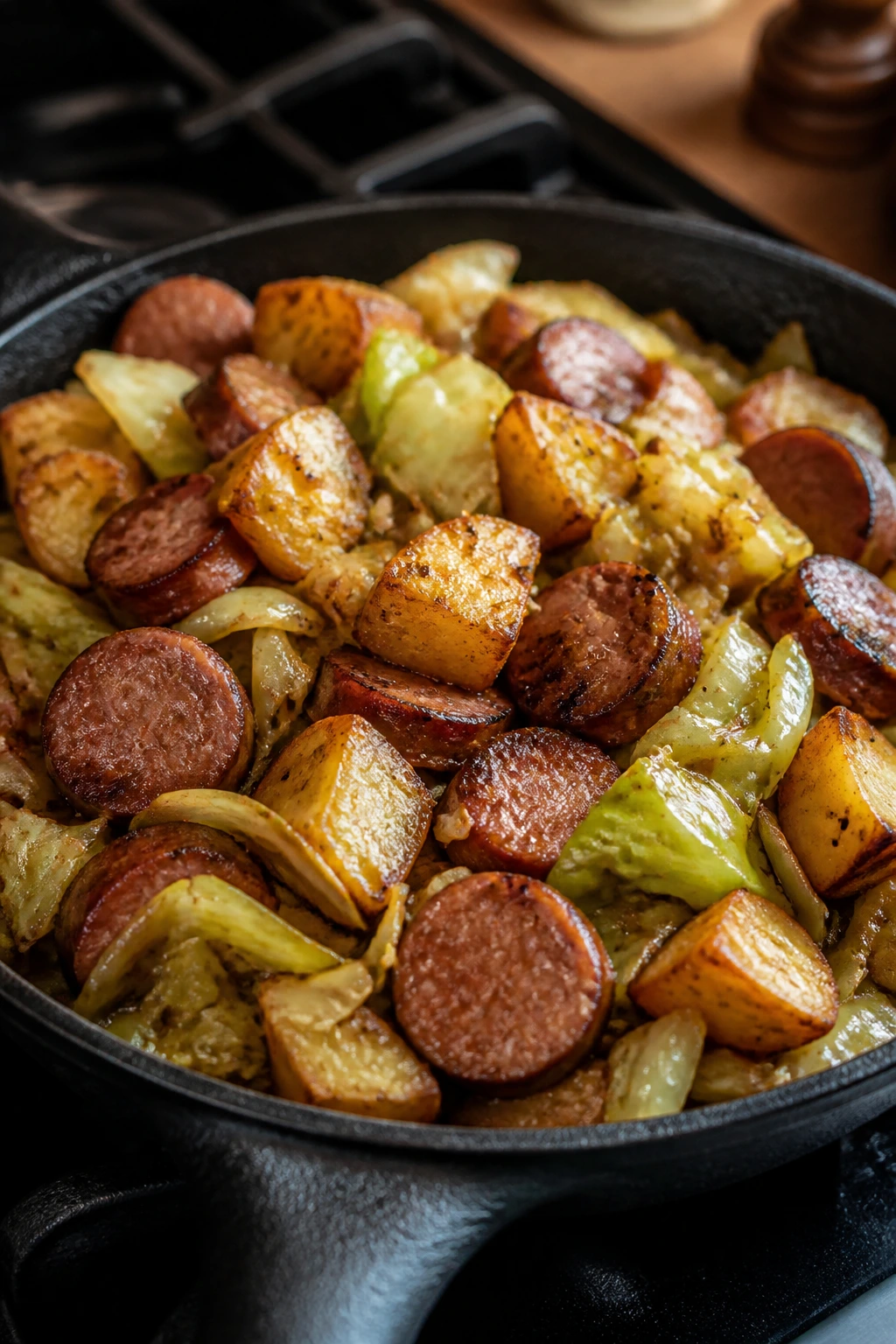
Cost-Saver: Swap one bell pepper for 2 cups of sliced cabbage if peppers are soft, pricey, or boring. Cabbage softens beautifully in the broth and soaks up the sausage drippings in a way that feels deliberate, not like a compromise.
Heat Control: Keep the last simmer gentle. A hard boil tears the potatoes, roughens the sausage casing, and throws broth onto the stove instead of into the dinner.
Mistakes That Make Smoked Sausage Tough or Flat
-
Crowding the skillet: If the sausage slices sit on top of one another, they steam and lose the browned edge that gives this dinner its depth. Use a wide pan or brown in batches.
-
Cutting the potatoes too large: Big chunks look fine at the cutting board and then betray you 15 minutes later when the outside is soft and the center still feels dense. Stick to 3/4-inch cubes, or shave a few minutes off with a quick microwave pre-cook.
-
Letting the garlic burn: Garlic that goes in too early or sits over high heat turns sharp and bitter, and that bitterness gets louder once the broth reduces. Add it after the onions have softened and cook it for less than a minute.
-
Boiling after the broth goes in: A hard boil rattles the potatoes apart and tightens the sausage casing. Keep the lid on, keep the heat at medium-low, and look for a soft, steady simmer.
-
Skipping the vinegar or lemon at the end: Without acid, the whole skillet can taste heavy and one-dimensional, even if the seasoning was right all along. The final spoon of vinegar is what wakes everything back up.
-
Using full-sodium broth without tasting first: Smoked sausage already brings salt. If the broth is aggressive too, the whole pan can go from savory to briny in one step. Low-sodium broth gives you room to finish the dish properly.
Variations Worth Trying Without Losing the Plot

Smoky Cheddar Finish: Stir in 1/2 cup shredded sharp cheddar after you turn off the heat, then let it melt for a minute before serving. It makes the potatoes taste richer and gives the sauce a thicker, clingier finish.
Cajun Skillet Swing: Replace the thyme and smoked paprika with 1 1/2 teaspoons Cajun seasoning and add a pinch of cayenne. The sausage can handle the extra heat, and the peppers stop feeling like background noise.
Cabbage and Potato Country Pan: Swap one bell pepper for 4 cups of sliced green cabbage and add it with the onions. It softens into ribbons that catch the broth, and the whole skillet lands somewhere between a sausage dinner and a braise.
Creamy Mustard Version: Stir 1/4 cup heavy cream into the skillet after the broth has reduced, then finish with a little extra Dijon. You get a softer, rounder sauce that works especially well if you’re serving the dinner over rice instead of eating it straight from the pan.
Rice Bowl Shortcut: Reduce the potatoes to 1 pound and serve the finished skillet over hot rice or buttered noodles. The sauce stretches farther, and the dish becomes even easier to spoon into bowls for a crowd.
Make-Ahead, Storage, and Reheating
This dinner keeps well, but there’s a difference between “keeps well” and “tastes exactly the same,” and I’d rather be honest about that.
For make-ahead prep, you can slice the sausage, cube the potatoes, and cut the peppers and onions up to 24 hours in advance. Store the sausage and vegetables separately in airtight containers in the fridge. If you cut the potatoes early, keep them submerged in cold water, then drain and dry them well before cooking. Don’t leave them soaking for more than a day; they start to taste watery and cook with a softer edge.
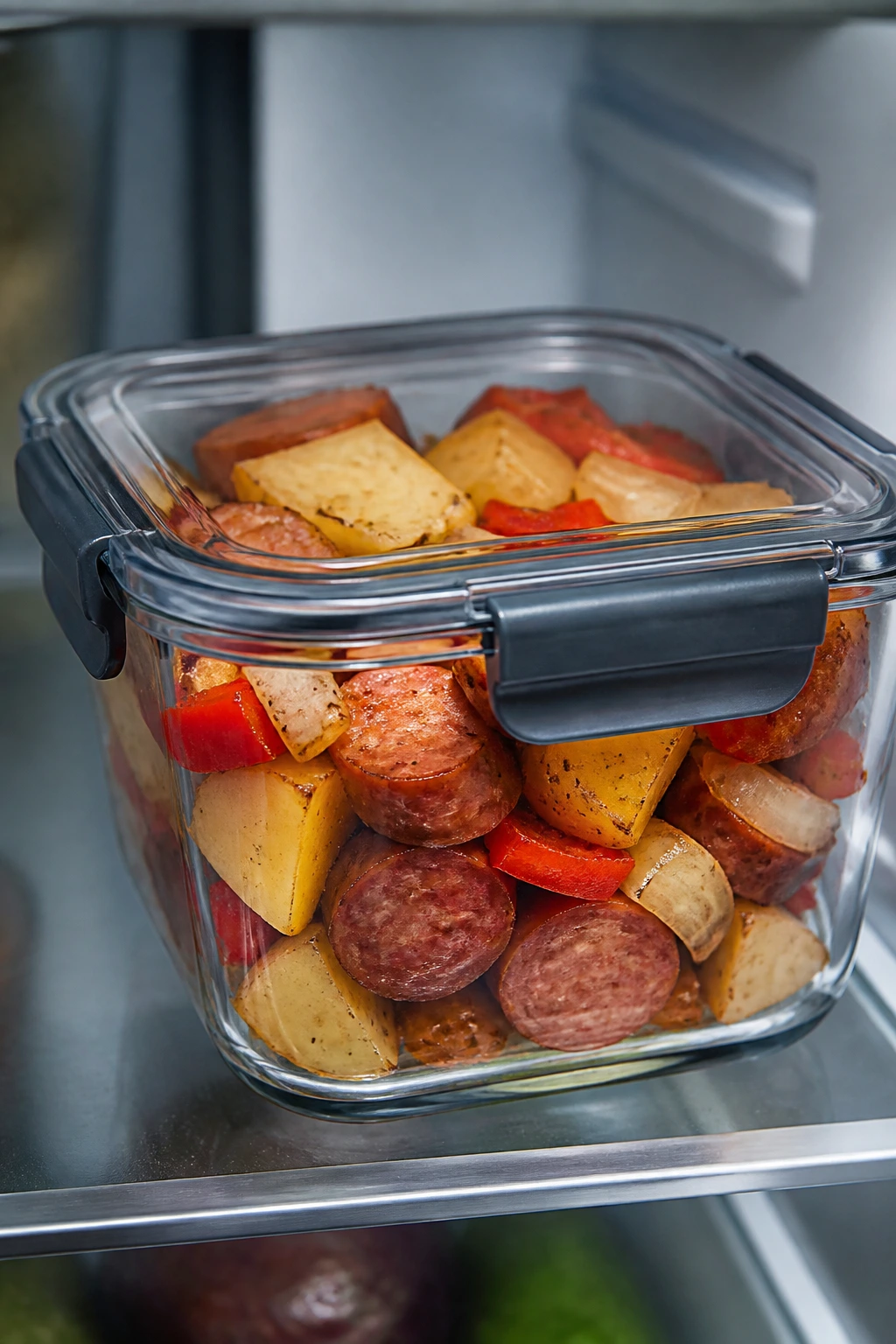
Once cooked, leftovers keep in the refrigerator for 3 to 4 days in a shallow, sealed container. Cool the skillet within 2 hours, then refrigerate. That timing matters for both safety and texture.
Freezing works, but the potatoes will soften after thawing. If that doesn’t bother you, freeze portions for up to 2 months in airtight containers. I like to freeze the sausage and vegetables together with some of the pan juices; the broth helps protect the meat from drying out.
For reheating, the skillet wins. Put the leftovers in a pan over medium heat with 1 to 2 tablespoons of broth or water, cover, and warm for 6 to 8 minutes, stirring once or twice. The lid traps steam and keeps the sausage from tightening. If you’re using the microwave, heat in 60- to 90-second bursts and stir between each one so the potatoes don’t go leathery in one spot and cold in another. Reheat to 165°F in the center if you want a clean food-safety check.
Frequently Asked Questions
Can I use turkey smoked sausage instead of beef smoked sausage?
Yes, and it works well if you want a leaner dinner. Turkey sausage usually has less fat, so add a touch more oil to the pan and keep the covered simmer gentle so it doesn’t dry out.
Do I need to peel the potatoes?
No. Yukon Gold skins are thin and soften nicely in the skillet. Leaving them on saves time and gives the dish a more rustic texture, which fits this dinner better than peeled cubes would.
What if my sausage is already sliced very thin?
Thin slices need less browning time, so cut the first sear down to about 1 minute per side. They can dry out faster, which means the broth step matters even more.
Can I make this in the oven instead of on the stove?
Yes, but the texture changes a bit. Roast the potatoes, onions, and peppers at 425°F on a sheet pan until they’re nearly tender, then add the sausage for the last 8 to 10 minutes so it warms through without overcooking.
Why did my potatoes stay firm even after the broth simmered?
They were probably cut too large, or the skillet stayed too hot and the liquid reduced before the potatoes finished cooking. Smaller cubes and a steady covered simmer fix most of that.
Can I add cabbage, green beans, or mushrooms?
Absolutely. Cabbage and mushrooms fit especially well because they handle the sausage drippings and the broth without turning mushy. Green beans need a shorter cook, so add them during the last 5 minutes.
Is this recipe gluten-free?
It can be. Use a gluten-free beef smoked sausage and a gluten-free Worcestershire sauce, since some brands include wheat or malt vinegar. The rest of the ingredients are already naturally gluten-free.
What’s the best way to keep leftovers from drying out?
Store them with a little of the pan juice, not in a bone-dry container. When you reheat, add a spoonful of broth and cover the pan so the steam brings the sausage back to life instead of tightening it up.
A Hearty Skillet Worth Keeping Around
This is the sort of dinner that earns repeat status because it solves a real problem: you want beef smoked sausage to stay tender, you want the potatoes to finish in the same pan, and you do not want to wash three pots to get there. The covered simmer and the vinegar finish are the quiet parts that make the whole thing work.
Make it once as written, then start shifting the vegetables around. Cabbage, mushrooms, green beans, even sliced carrots can slide in without breaking the method, and that’s the kind of recipe worth keeping on a handwritten card near the stove.
Tender Beef Smoked Sausage Skillet Dinner — Recipe Card
Recipe Name: Tender Beef Smoked Sausage Skillet Dinner
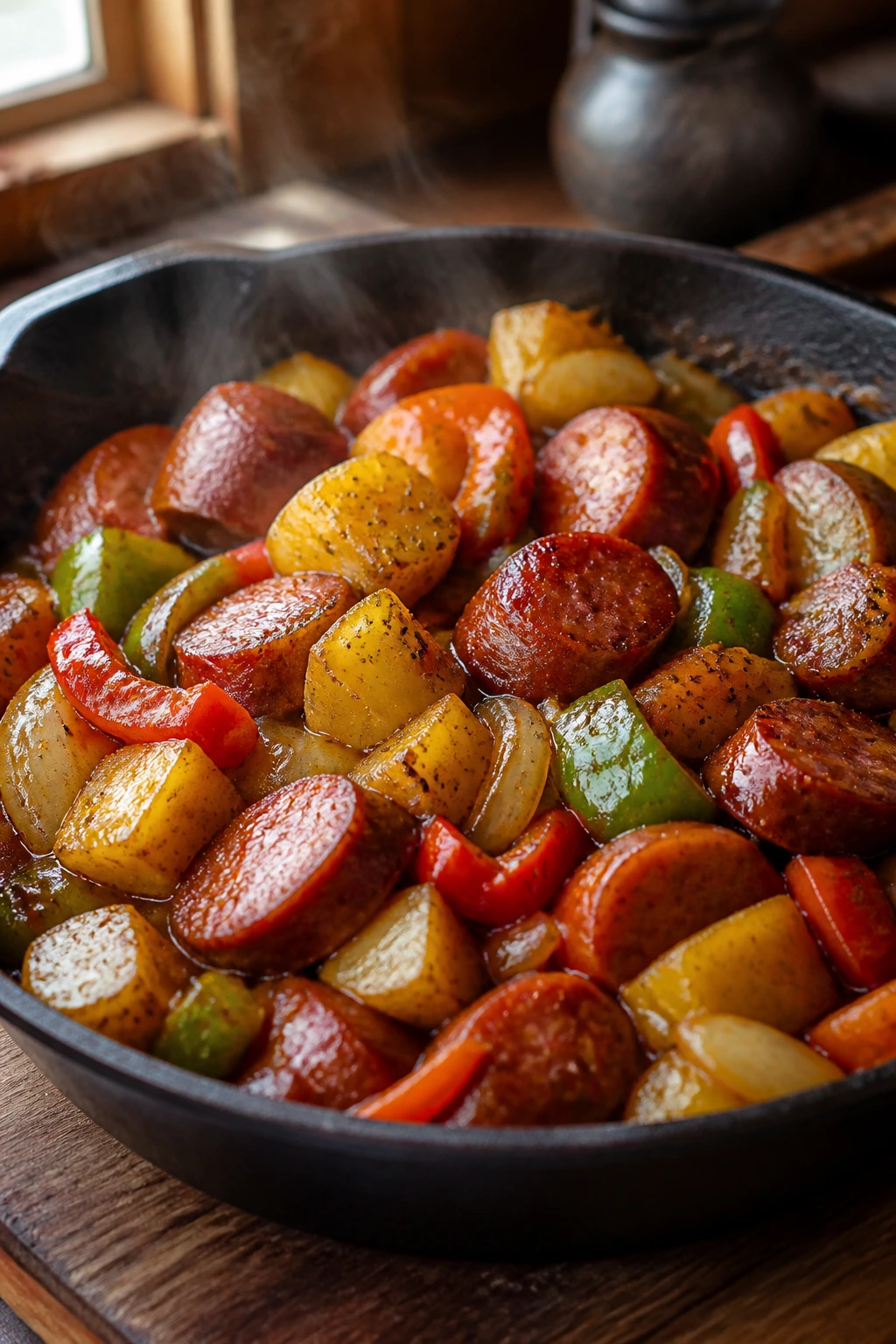
Description: A one-pan beef smoked sausage dinner with golden potatoes, sweet onions, bell peppers, and a light savory broth finished with butter and vinegar. The sausage stays juicy, the vegetables soften without turning mushy, and the pan sauce keeps everything tied together.
Prep Time: 15 minutes
Cook Time: 30 minutes
Total Time: 45 minutes
Course: Dinner, Main Course
Cuisine: American
Servings: 6 servings
Calories: About 520 kcal per serving
Ingredients
For the Beef Smoked Sausage Dinner:
- 2 pounds fully cooked beef smoked sausage, sliced into 1/2-inch coins
- 1 1/2 pounds Yukon Gold potatoes, scrubbed and cut into 3/4-inch cubes
- 2 tablespoons olive oil
- 1 large yellow onion, cut into thin wedges
- 2 bell peppers, sliced into strips
- 4 cloves garlic, minced
- 1 cup low-sodium beef broth
- 1 tablespoon Dijon mustard
- 1 tablespoon Worcestershire sauce
- 1 teaspoon smoked paprika
- 1 teaspoon dried thyme
- 1/2 teaspoon kosher salt
- 1/2 teaspoon black pepper
- 2 tablespoons unsalted butter
- 1 tablespoon apple cider vinegar
- 2 tablespoons chopped parsley
- Optional: pinch of red pepper flakes
Instructions
-
Slice the sausage, cube the potatoes, cut the onion and peppers, and mix the broth, Dijon, Worcestershire, paprika, thyme, salt, and black pepper in a small bowl.
-
Heat 1 tablespoon olive oil in a 12-inch skillet over medium-high heat. Brown the sausage for 2 to 3 minutes per side, then transfer it to a plate.
-
Add the remaining 1 tablespoon olive oil and the potatoes. Cook for 6 to 8 minutes, stirring often, until the potatoes start to brown.
-
Add the onion and peppers. Cook for 4 to 5 minutes, until the onion softens and the peppers begin to wilt at the edges.
-
Stir in the garlic and spice mixture. Cook for 30 to 45 seconds until fragrant.
-
Pour in the broth, return the sausage to the skillet, cover, and reduce the heat to medium-low. Simmer for 8 to 10 minutes, until the potatoes are tender and the sausage is hot throughout.
-
Uncover, add the butter and apple cider vinegar, and stir for 1 to 2 minutes until the sauce turns glossy. Taste and adjust salt if needed.
-
Rest for 5 minutes, garnish with parsley, and serve warm.
Notes: For a leaner version, use turkey smoked sausage. Keep the simmer gentle so the sausage stays tender. Leftovers reheat best with a splash of broth in a covered skillet.