



Comforting burger toppings are what turn a decent patty into a dinner that feels finished. A burger with warm onions, melted cheese, and a bun toasted in butter doesn’t eat like a snack; it eats like a plate you can lean into.
That matters because ground beef is rich, and rich food wants contrast. If everything on top is cold or raw, the burger can taste flat halfway through. If the onions are soft, the mushrooms are browned, and the sauce has a little tang, the beef tastes deeper and the bun holds together longer.
Not every burger needs a mountain of fixings. It needs the right ones, in the right temperature, with a little restraint. The trick is building a stack that tastes cozy from the first bite and still behaves when the juices start moving.
Why Comforting Burger Toppings Matter More Than a Bigger Patty
A bigger patty is not the answer to a thin-tasting burger. A well-chosen topping set is. When the beef is hot, the cheese melts into the grain of the meat, onions turn soft and sweet, and something sharp keeps the whole thing from feeling heavy. That’s the difference between a burger that disappears in three bites and one that feels like a real dinner.
- Heat changes the whole bite: Warm toppings soften the bun just enough and help the cheese melt into the meat instead of sitting in one stubborn slab.
- Salt needs a partner: Bacon, pickles, cheese, and seasoned mushrooms each bring salt in a different way, so the burger tastes layered instead of blunt.
- Acid keeps richness from dragging: A few pickles, a swipe of mustard, or a spoonful of pickled onions wake up all that beef fat.
- Texture keeps things interesting: Creamy cheese, soft onions, crisp bacon, and a toasted bun give each bite a small contrast.
- Make-ahead matters here: Caramelized onions, sautéed mushrooms, and burger sauce all improve the dinner flow because they can be cooked before the patties hit the pan.
- Hearty dinner needs structure: These toppings add enough body that you do not need three side dishes to make the plate feel full.
I also like that this style of burger is forgiving. If the patty is a little thinner than planned, the toppings cover it. If the beef is on the lean side, a melted cheese and onion combination gives back some juiciness. That’s useful cooking, not just decoration.
Caramelized Onions for Sweet, Soft Depth
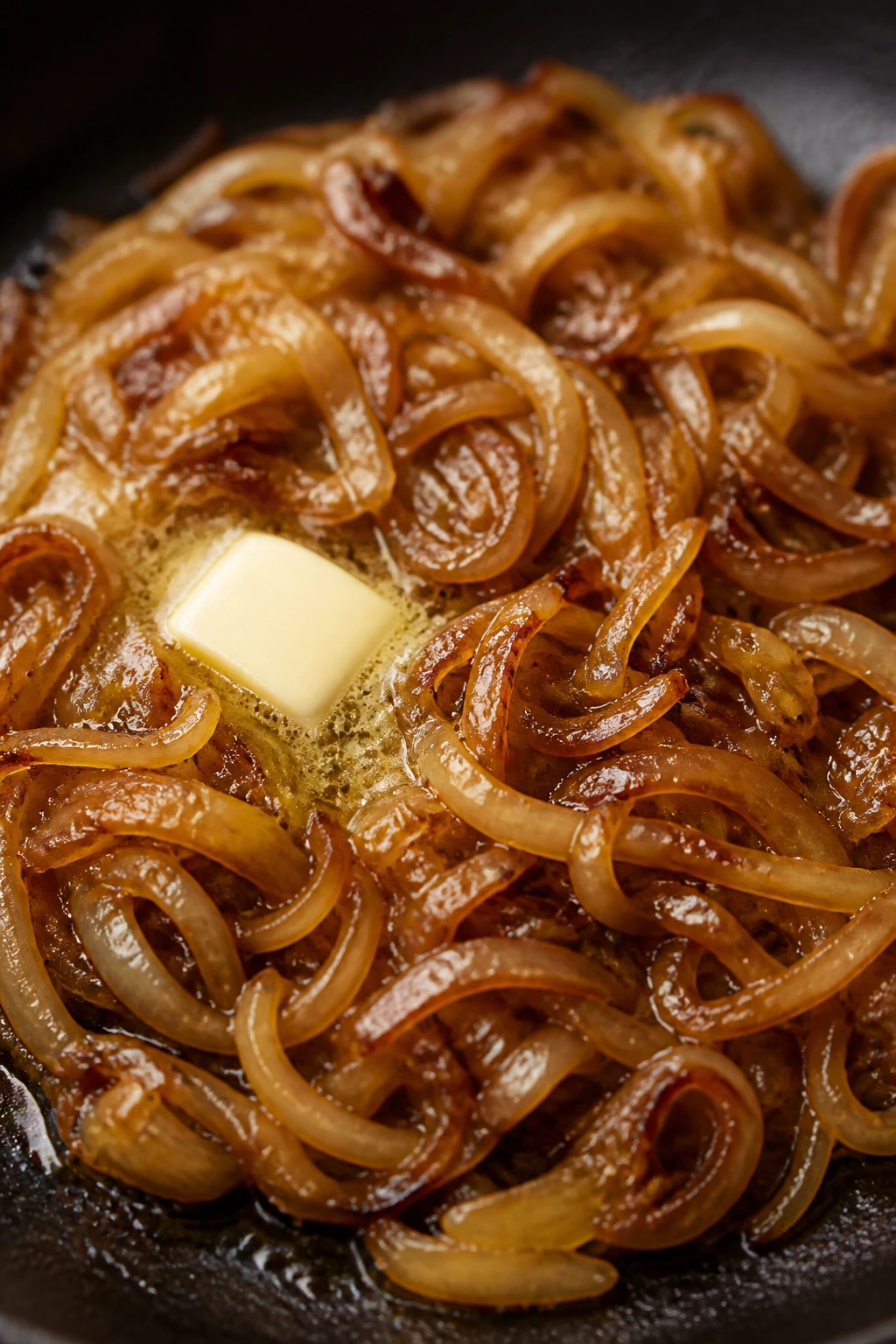
Caramelized onions are the first topping I reach for when a burger needs to taste like dinner instead of fast food. They collapse into glossy strands, go soft at the edges, and bring a sweet savor that feels almost stew-like when you stack them over hot beef.
The move here is patience. Yellow onions are the best choice because they turn sweet without getting muddy, and a wide skillet gives the slices room to soften instead of steaming in their own juice. A little butter helps, a little oil keeps the butter from browning too fast, and salt pulls the moisture out so the onions start to slump.
Slow Pan, Not Burnt Sugar
Two large onions, sliced thin, will shrink down to a small pile if you give them 25 to 40 minutes over medium-low heat. That sounds long until you taste the result. The onions should look deeply golden, a little sticky, and almost jammy around the edges, not blackened or dry.
If the pan looks dry before the onions are done, splash in a tablespoon of water and scrape up the browned bits. That tiny bit of steam loosens what’s stuck to the skillet and keeps the fond from burning. You can do the same with a spoonful of beef stock if you want a fuller, rounder flavor.
Fast Enough for Weeknights, Still Worth Doing
There’s a shortcut version, and I do use it when I’m pressed for time. Slice the onions a touch thinner, cook them in a wide pan, and keep the heat at medium instead of medium-low. They will brown faster, though they won’t get quite as deep and soft as the long version.
A pinch of sugar is not necessary. I almost never add it. The onions already carry enough natural sweetness, and what you want is depth, not candy. A tiny dab of balsamic at the end can work, but keep it faint; too much and the burger starts tasting like salad dressing.
Caramelized onions are especially good with cheddar, Swiss, or blue cheese. They also work with bacon if you want a burger that eats like a steakhouse plate with the edges trimmed off.
Sautéed Mushrooms and the Savory Middle
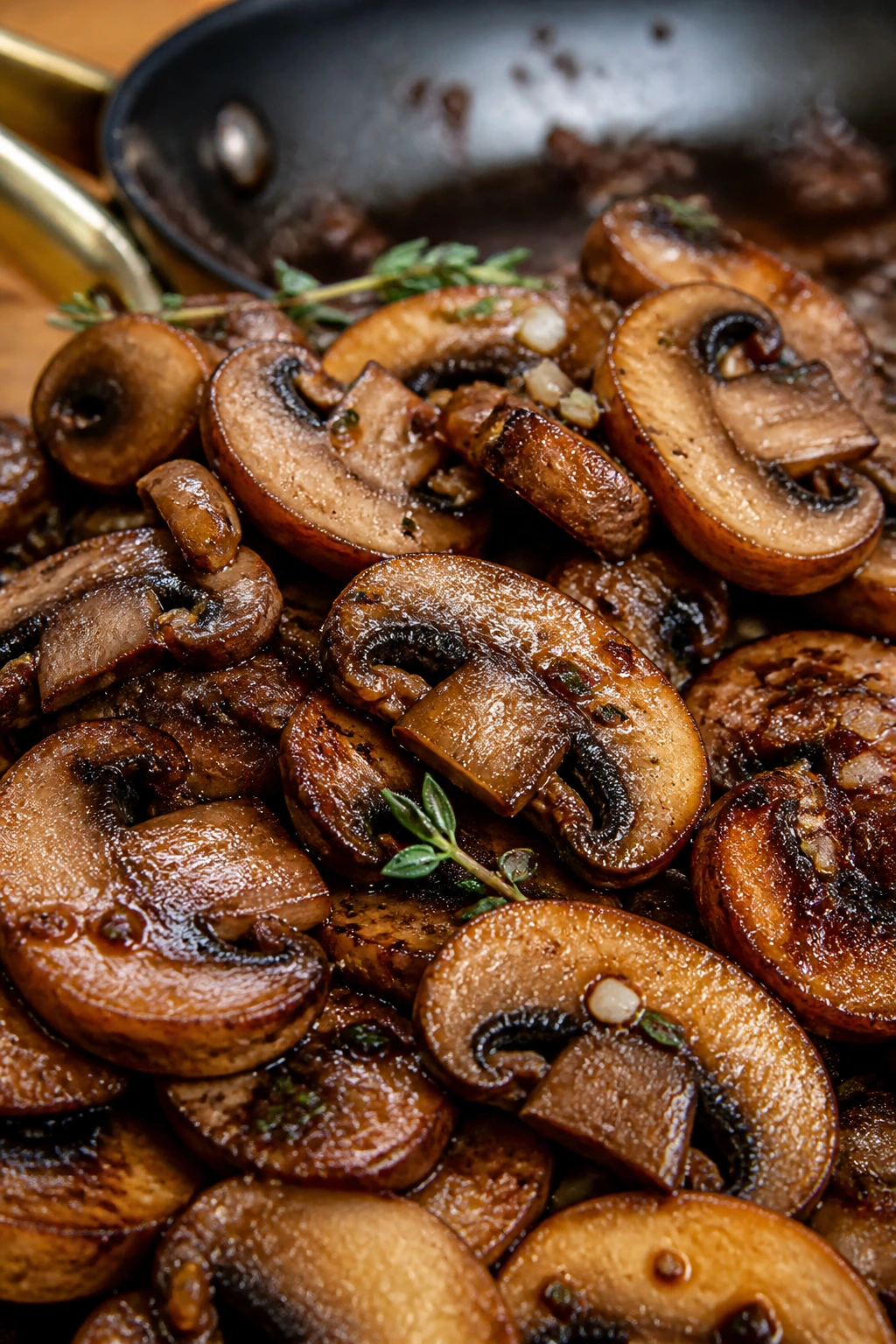
Mushrooms give a burger a dark, earthy middle that raw toppings cannot touch. They soak up butter, pepper, and a little Worcestershire, then settle into that meaty zone where they make the beef taste bigger than it really is. For a hearty dinner, that’s gold.
Cremini mushrooms are my default. They’re cheaper than fancy varieties, they brown well, and they hold their shape instead of turning into soft gray bits. Slice them thick enough to stay substantial, about 1/4 inch, so they keep a little chew after the moisture cooks off.
What Makes Them Worth It
The first minute in the pan is always messy. The mushrooms will seem crowded and wet, and you may wonder if they’re going anywhere. They are. Once the liquid evaporates, the edges start to brown, and that’s when the flavor moves from mild to deep and savory.
A little garlic goes in near the end, not at the start. Garlic burns faster than mushrooms brown, and burnt garlic is a dead weight on a burger. Thyme works well too, especially if you’re building a burger that leans toward steakhouse flavors or creamy Swiss cheese.
Worcestershire sauce is a smart move, but only a teaspoon or two for a skillet full of mushrooms. It adds the kind of salty, savory edge that makes people think the burger tastes richer than the ingredient list suggests. Soy sauce can do the same job in a pinch.
Best Pairings on the Bun
Mushrooms like Swiss, provolone, or American cheese. They also like caramelized onions, which is why that combination keeps showing up in diners and pub burgers. There’s a reason for the repetition. It works.
If you want the burger to stay clean to eat, pile mushrooms on top of the cheese rather than directly against the bun. The cheese catches some of the juices, and the bun lasts longer. That tiny structural choice matters more than people think.
One thing I avoid: damp mushrooms dumped straight onto a cold bun. They leak. They slide. They make the whole burger feel loose.
Cheese That Actually Melts into the Beef
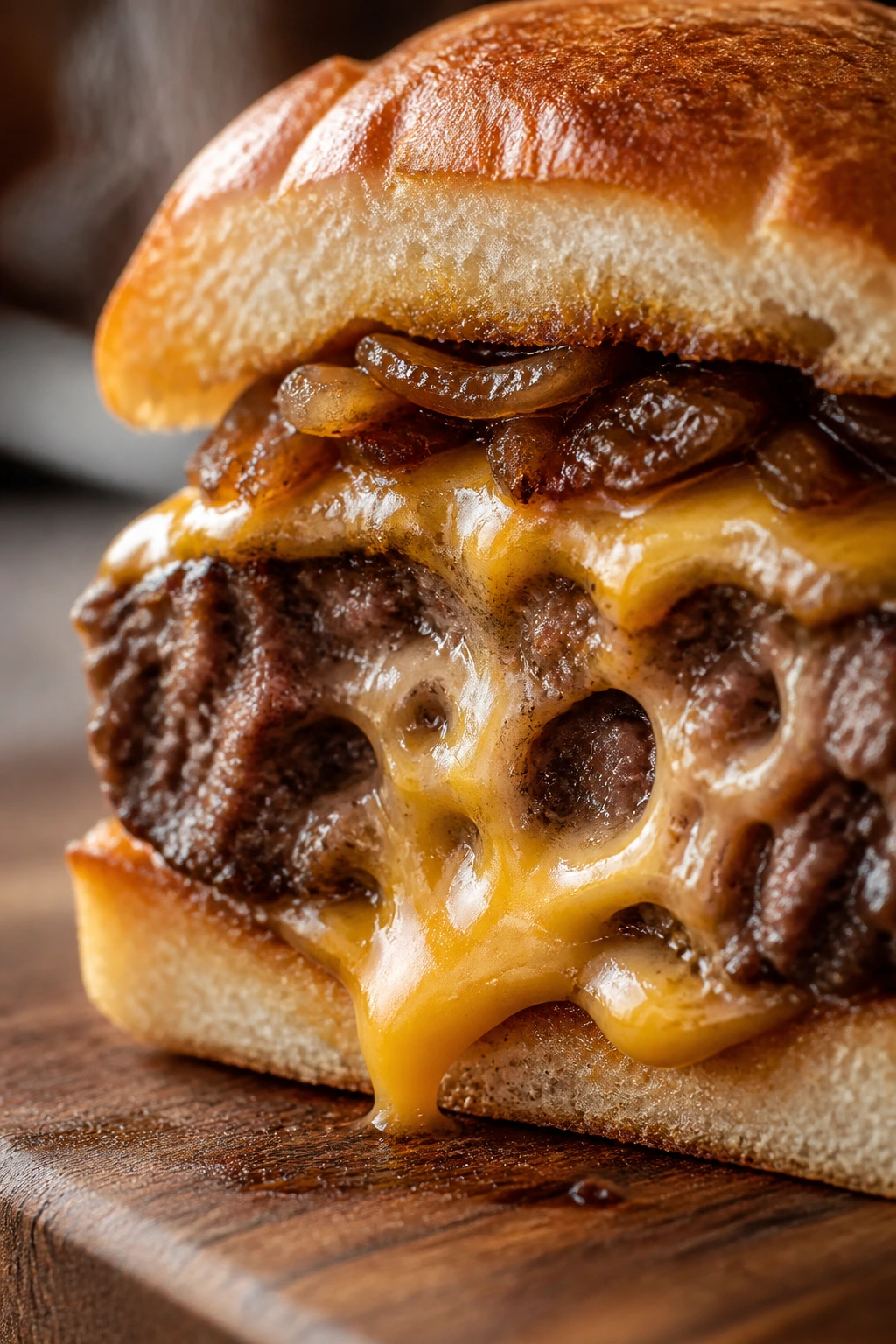
Cheese is not just a topping here. It’s the glue. Good melty cheese links the meat, the onions, and the bun so each bite feels like one thing instead of a pile of ingredients.
American cheese still wins for pure melt. I know that sounds plain, and it is. It also gives the smoothest melt, with no oily separation and no little rubbery seams. If your goal is a burger that eats like a diner favorite, American is the easiest answer.
Fast-Melt Favorites
Cheddar brings sharper flavor, but it melts best when it’s sliced thin or grated fine. A thick slab of extra-sharp cheddar can sit there like a decorative tile unless the patty is hot enough to coax it along. Mild cheddar melts more willingly than aged cheddar, and that’s why it shows up so often on burgers that need comfort more than bite.
Monterey Jack and fontina both melt fast and stay soft. Swiss gives a nutty note that plays nicely with mushrooms and onions. Smoked gouda can be terrific if you want a deeper, rounder flavor, though I’d keep it to one thin slice; too much and the burger can turn greasy.
How to Melt It Properly
If the patty is already on the grill or skillet, drop the cheese on during the last 30 to 45 seconds and cover the pan. Even a metal bowl flipped over the burger works in a pinch. The trapped steam does the work.
That trick matters more with ground beef burgers than people realize. Hot cheese should stretch a little when you bite, not sit in a cold sheet on top. If the burger has been resting too long, a spoonful of hot mushroom liquid or onion juice over the cheese can bring it back to life. Not pretty. Effective.
I’m opinionated about this part: one slice is usually enough. Two slices can be fine on a thick patty, but three is excess unless you’re making a double burger and have the bun to support it.
Bacon, Fried Onions, and Other Crispy Layers
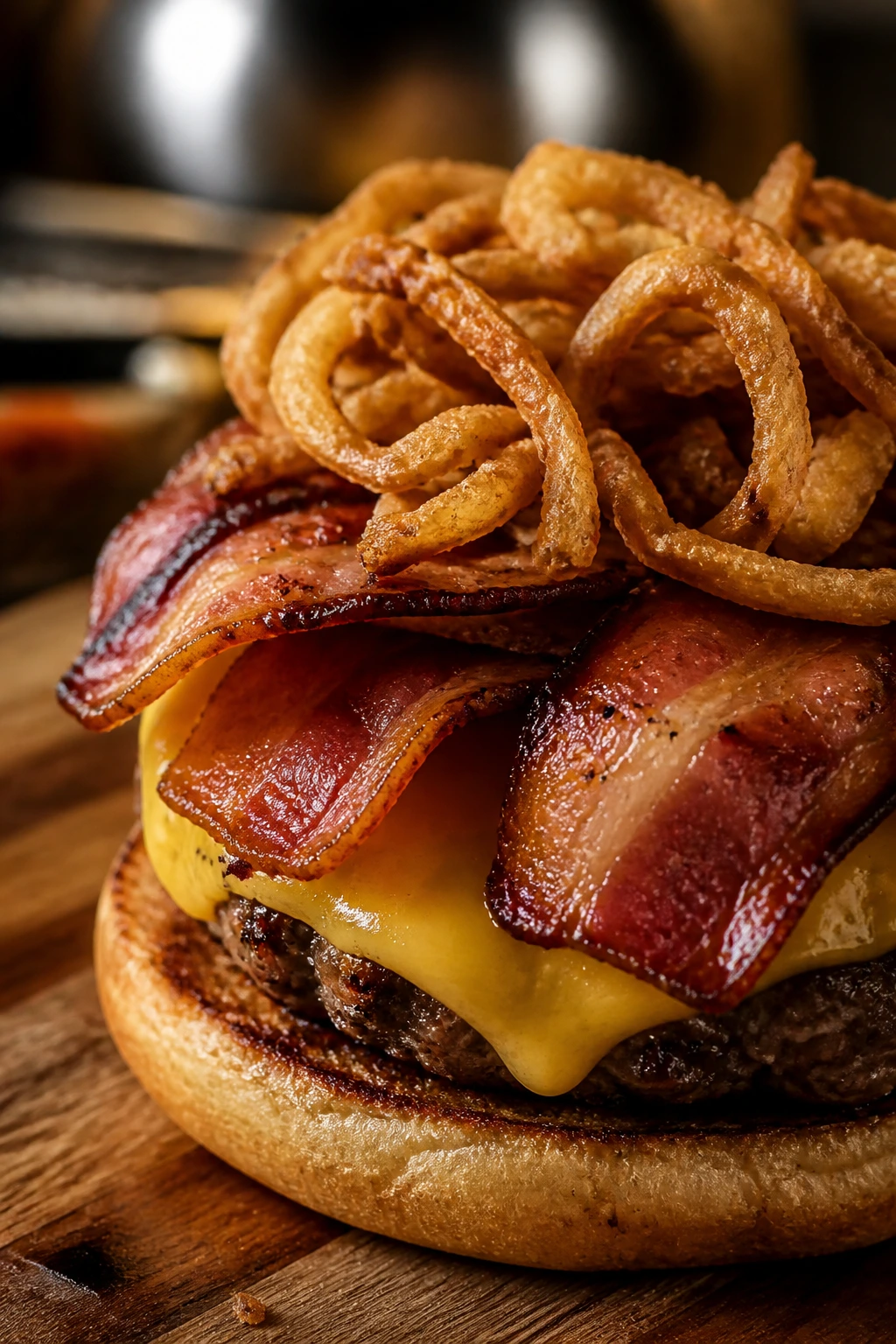
Comforting burger toppings need at least one crisp element, or the whole thing turns soft in a hurry. Bacon is the obvious answer, and for good reason. It brings salt, smoke, and a brittle snap that cuts through the richness of the beef and cheese.
Thick-cut bacon gives you more chew and a bigger smoky hit. Regular bacon gets crisp faster and is easier to shatter into little pieces that spread across the burger. Either works. What matters is that it’s cooked enough to hold texture after the burger is assembled.
Crunch That Feels Earned
Fried onions, whether they’re the homemade kind or the crunchy canned version, bring a diner-style feel. The homemade version is softer in flavor and a little more onion-forward; the canned kind is sharper and more brittle. Both work. Both can be too much if you pile them on like gravel.
Onion rings on a burger are a commitment. They push the burger from handheld to fork-and-knife territory, which is not a bad thing if that’s the mood. Hash brown patties do something similar, especially on a breakfast burger with egg and cheddar. That’s a full plate in one sandwich.
When Extra Crispy Works, and When It Doesn’t
Use one crisp layer, maybe two if one of them is tiny. Bacon and onion strings together can be too much unless the rest of the burger is very simple. The more crunchy things you add, the more the burger starts to unravel when you bite.
I like to think of crisp toppings as punctuation. One exclamation point is enough. Five is shouting.
Drain fried toppings on paper towels for at least a minute before they go on the burger. That removes the surface grease that makes buns slip. Small step. Big difference.
Sauces That Keep the Burger Rich Without Turning Heavy
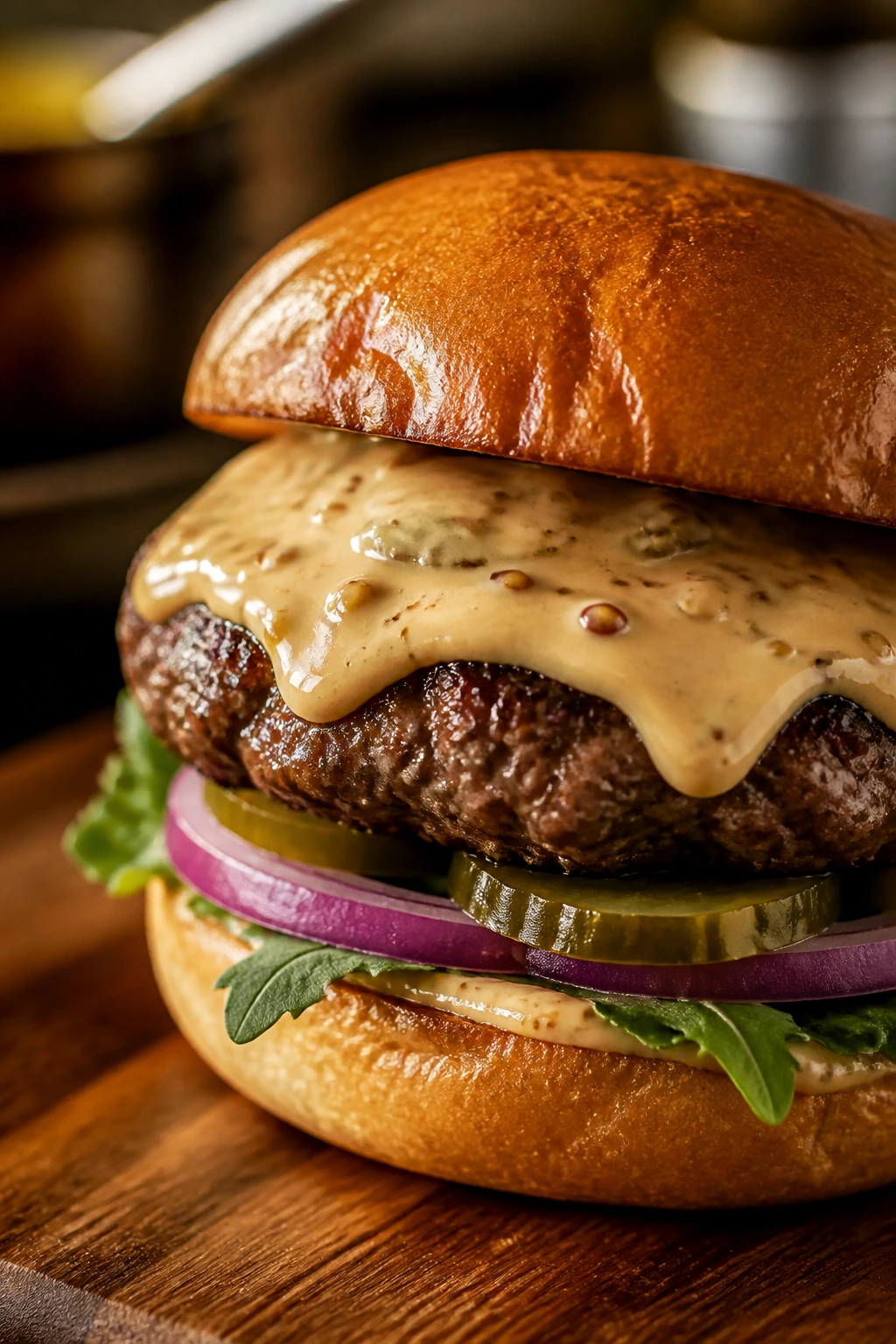
A burger sauce should do one job well: make the burger taste fuller without drowning the meat. Too many burgers fail here because the sauce is either timid or sloppy. A thin smear of mayo does nothing. A flood of mayo, ketchup, and relish turns the bun into a sponge.
My favorite burgers use a creamy base with one sharp note. Think mayo plus Dijon. Mayo plus pickle brine. Mayo plus horseradish. That little hit of acidity or heat stops the richness from feeling one-note.
Creamy Spreads That Behave
A classic burger sauce can be built from mayonnaise, ketchup, chopped pickles or relish, and a pinch of paprika. Keep it thick enough to cling to the bun. If it drips off the spoon, it’s too loose.
Horseradish mayo deserves more attention than it gets. It’s excellent with mushrooms and Swiss, and it gives the burger a steakhouse edge without turning it into a roast-beef sandwich. Garlic aioli works too, but only if the garlic is balanced. Raw garlic can bully everything else off the plate.
Sauces With a Darker Mood
Barbecue sauce fits best when the burger has bacon, cheddar, or onion rings. It adds sweetness and smoke, but it can get sticky fast, so use a light hand. A teaspoon or two on the bun is usually enough.
Brown gravy is more niche, but it has a place on a patty melt or a burger with caramelized onions and Swiss. That’s not a summer backyard burger. That’s a cold-night, eat-it-with-a-fork burger. Different mood. Same comfort.
I like to spread sauce on both bun halves. It acts like a moisture barrier and keeps the bread from drying out on top while also helping the bottom bun resist beef juices. A thin layer. Not a puddle.
Pickles, Slaw, and the Sharp Bite That Balances the Plate
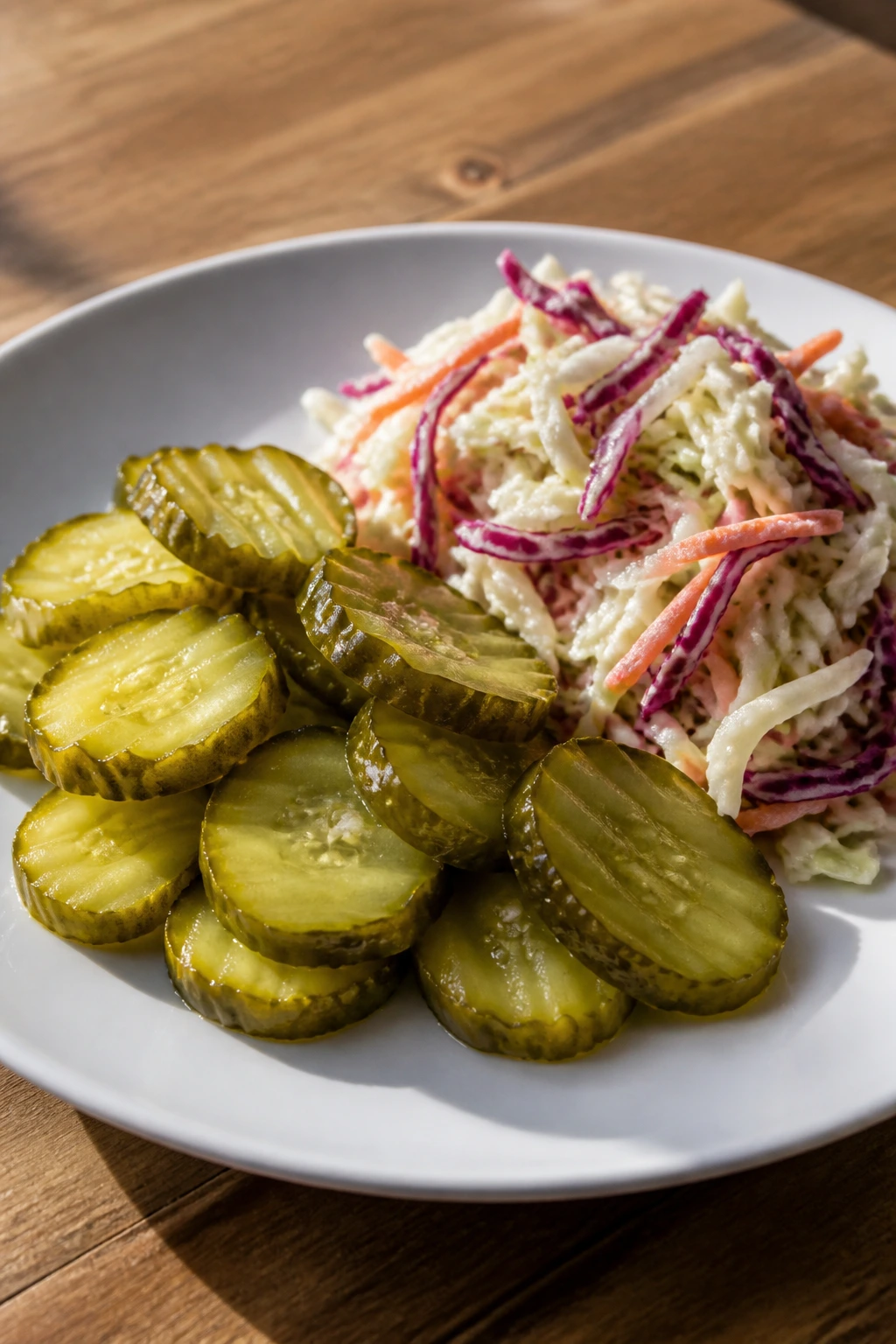
If a burger tastes too rich, too soft, or too sleepy, add something sharp. Pickles are the quickest fix. They bring acid, salt, and crunch, which is exactly what a beef-heavy burger wants when the cheese and onions are doing most of the work.
Dill pickles are my default. Bread-and-butter pickles lean sweeter, which can be excellent with bacon and barbecue sauce. Pickled red onions are a cleaner, brighter option when you want the burger to feel a little less heavy without losing the comfort.
Dill, Sweet, or Tangy?
Dill pickles are the best all-purpose choice for a hearty burger dinner because they cut the fat without fighting the beef. Bread-and-butter pickles work when the burger already has smoke or spice and could use a softer sweet edge. Pickled jalapeños can slide in when you want heat without changing the whole flavor profile.
A quick slaw can work too, but keep it dry. If the slaw is drowning in mayo, it turns the burger into a wet mess. A vinegar slaw with a little sugar, salt, and shredded cabbage behaves better. It stays crisp and gives the burger some lift.
Where the Sharp Stuff Goes
Pickles belong close to the top of the burger so the first bite gets the briny hit. I usually keep them away from the bottom bun, where they can release enough liquid to soften the bread before you’re ready.
If you’ve never salted tomato slices and let them drain for 10 minutes, that’s worth trying on a burger that needs a fresher note. Still, I don’t reach for tomato as often in this comfort lane. It can be fine, but pickles do the job more cleanly.
One good acidic topping is usually enough. Two is a choice. Three starts to taste like a deli tray.
Warm Vegetables and Diner-Style Extras
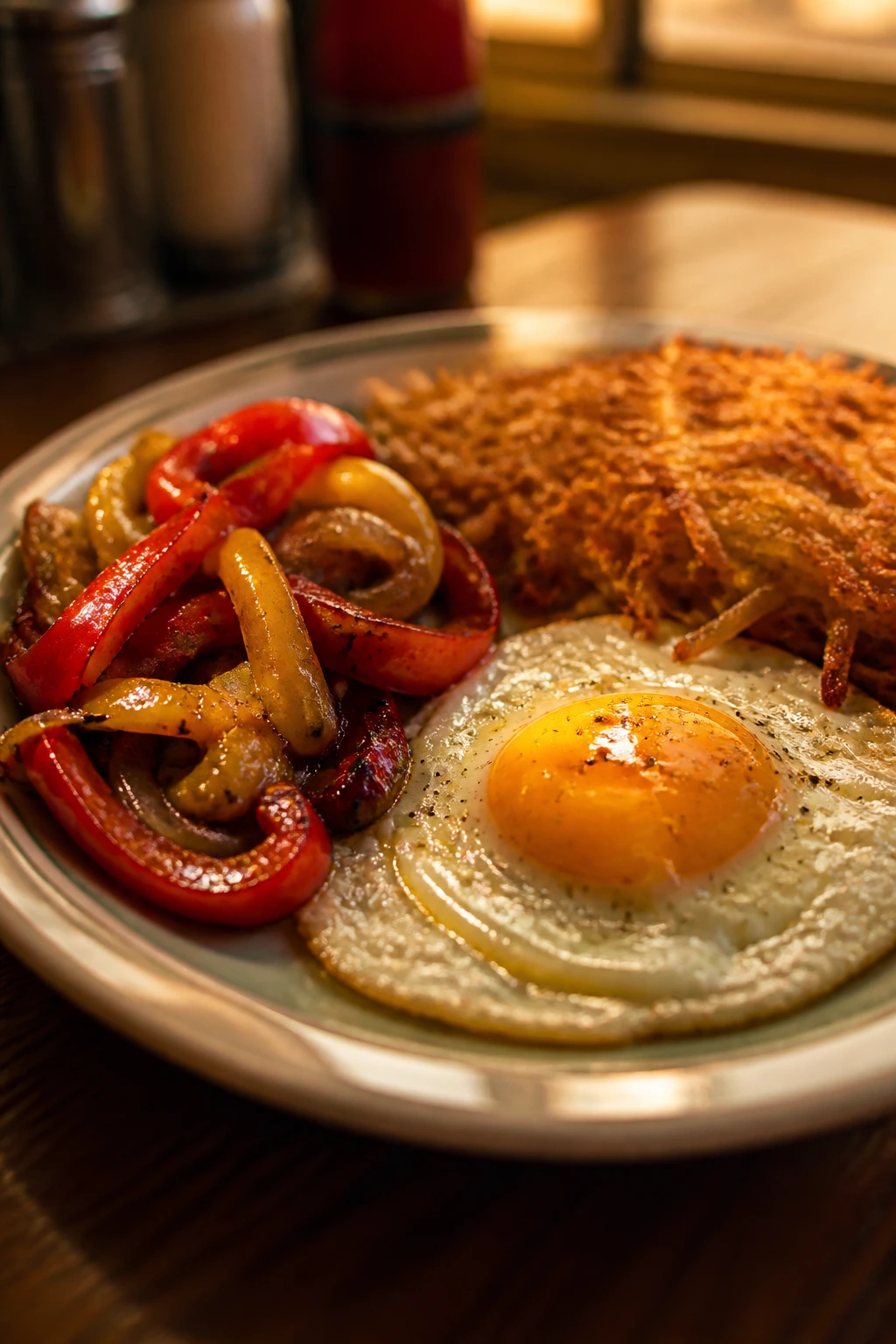
Some burgers need to eat like a full meal because, frankly, that’s the whole point. That’s where warmer extras come in: roasted peppers, fried eggs, hash browns, chili, even a spoonful of thick onion gravy if you’re heading toward patty melt territory.
A fried egg gives the burger a rich, runny sauce. The yolk slips into the crumb of the bun and clings to the beef in a way mayo cannot quite match. It’s a mess, but the good kind. If you’ve ever wanted a burger that feels like brunch and dinner at the same table, this is it.
When to Add the Starch
Hash browns on a burger are more than a stunt. They bring crunch, salt, and enough heft to make the whole sandwich feel closer to a plate-sized meal. Keep them thin and crisp; a soggy hash brown adds weight but no texture.
Chili burgers are their own category, and they make sense when you want the burger to feel old-school and filling. Thick chili, a little chopped onion, and cheddar turn the sandwich into a diner special. The only warning is structural: you will need a wide bun and probably a fork.
Roasted peppers are useful when you want sweetness and softness without the sugary note of onion jam. Green peppers are sharper, red peppers are sweeter. Either can work, but I’d keep them as a supporting player, not the star.
This is the section where people sometimes overbuild. Don’t. One warm vegetable, one cheese, one sharp accent, and one crisp layer is enough to make the burger feel complete.
How to Build a Burger That Holds Together
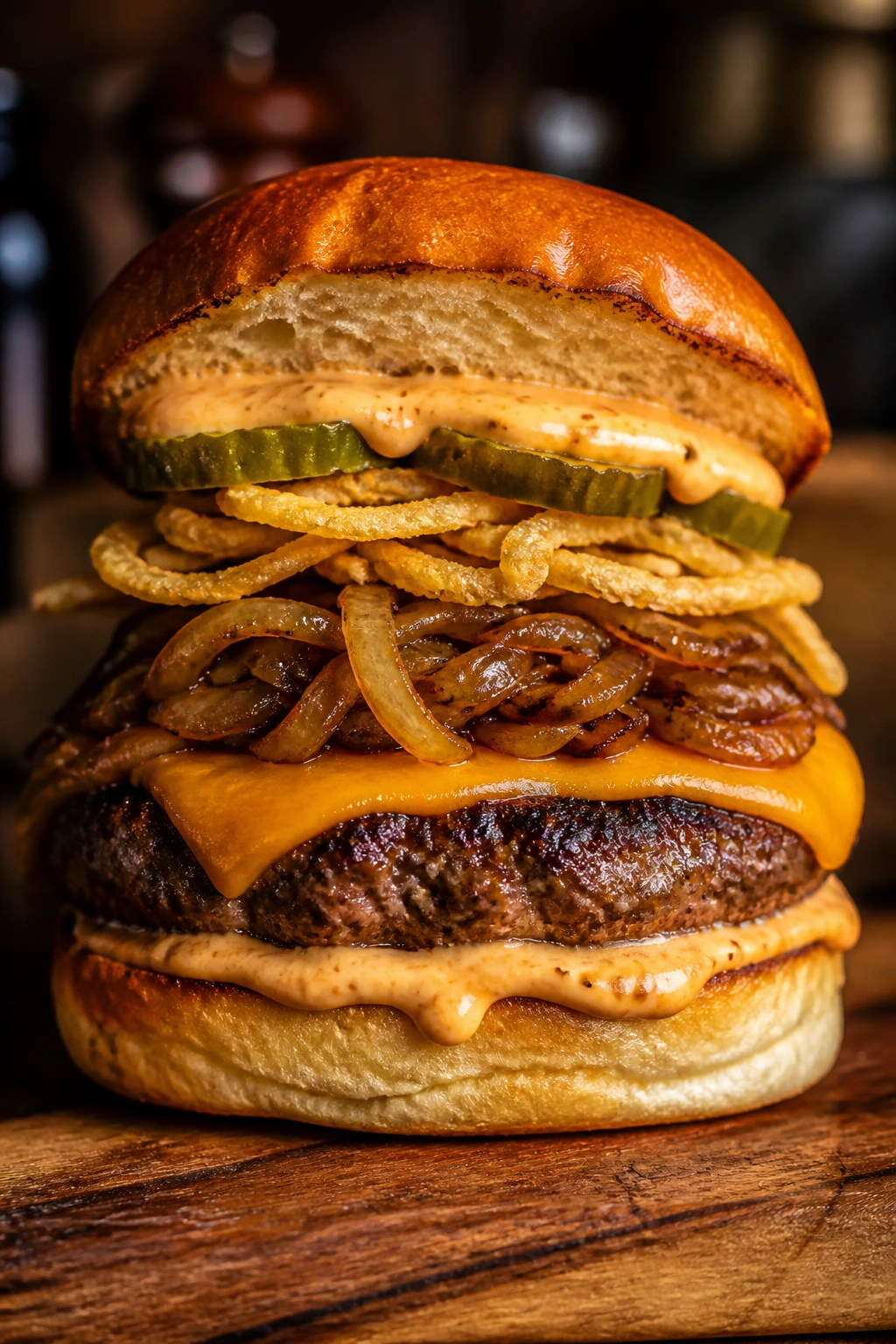
A burger stack is architecture. If you treat it like a junk drawer, it eats like one. If you think about where the wet ingredients go, where the heat goes, and what sits against the bun, the whole thing gets easier to handle.
Start with a toasted bun. Cut sides down in a skillet or on the griddle for 30 to 60 seconds, until they’re lightly browned and a little crisp. If you want extra security, brush the cut sides with butter before toasting. That small fat layer helps the bread stand up to juicy toppings.
The Order That Usually Works Best
For a classic comforting burger, I like bottom bun, sauce, patty, cheese, warm savory topping, crisp topping, pickles or another sharp bite, then top bun. The cheese acts like a seal. The warm onions or mushrooms sit on top of it. The pickles stay higher so their brine doesn’t flood the bread.
If you’re using bacon, it usually belongs above the cheese or just under the top bun. That keeps the bacon crisp longer. If you bury it under a lot of wet toppings, it softens fast and loses the thing you wanted from it in the first place.
Double burgers need a little more control. Keep the toppings thinner, and don’t mix too many sauces between the patties. One patty can handle a lot; two patties and the bottom bun start to complain.
The Quiet Details That Matter
Let the cooked beef rest for 2 to 3 minutes before assembly. That’s enough time for the juices to settle without cooling the burger too much. If the patties are piping hot, the cheese will melt faster and the toppings will settle into place.
Use a wide spatula for moving the burger. A wobbly burger is often just a poorly supported burger. Also, build it near the skillet or grill, not across the kitchen. Less travel, fewer losses.
If the burger feels too tall to bite safely, press it down gently once with your palm after the top bun goes on. Not enough to flatten it. Just enough to settle the stack.
How to Plate a Burger Dinner That Feels Complete
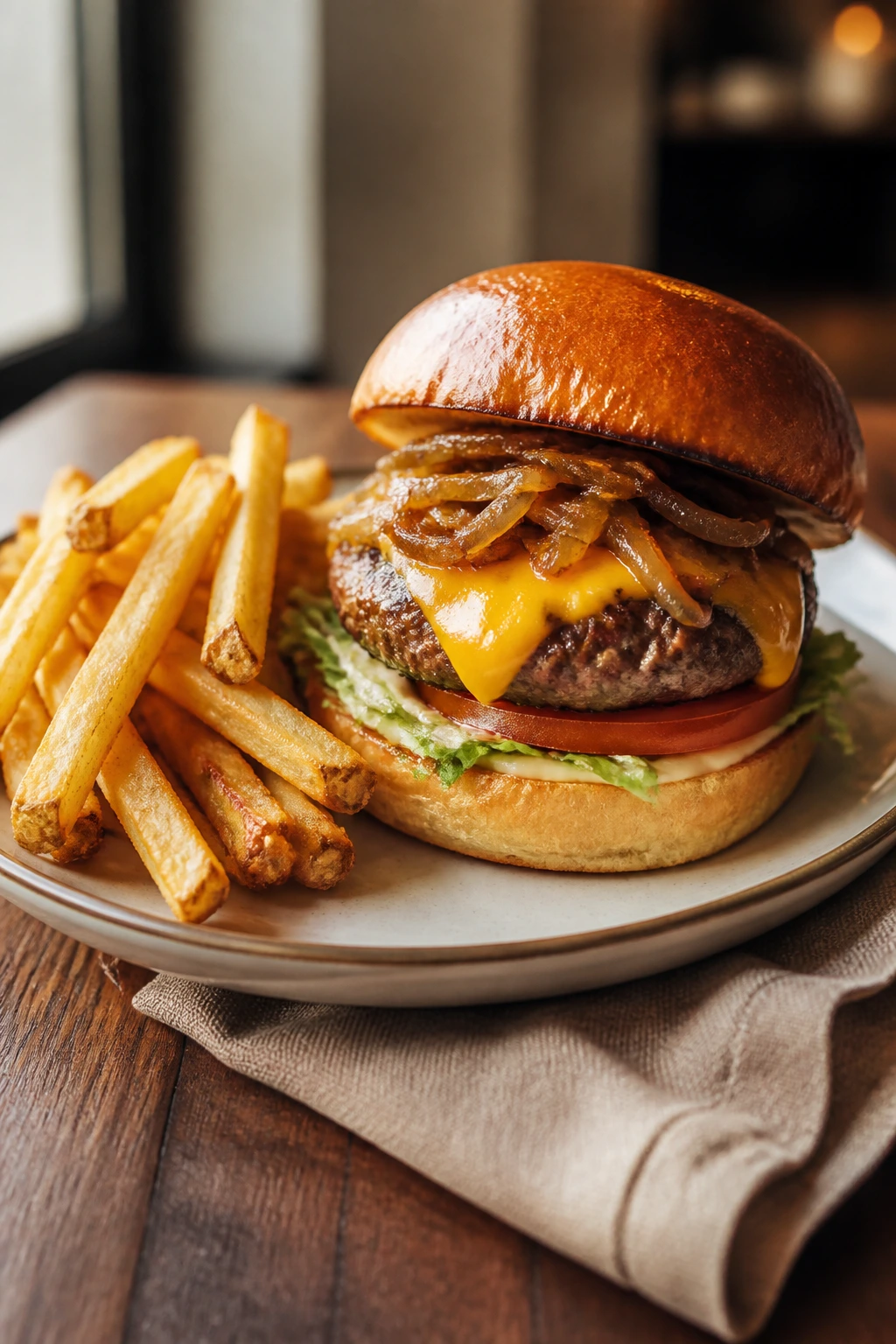
Presentation: Put the burger slightly off center on a warm plate, not dead in the middle like a school cafeteria tray. A few fries or roasted potatoes beside it make the plate feel intentional, and a napkin under the burger helps catch the first drips.
Accompaniments: Thick-cut fries, potato wedges, simple coleslaw, or a green salad with sharp vinaigrette all work beside comforting burger toppings. If the burger already has bacon and cheese, I lean toward a bright slaw or vinegar-dressed greens so the plate doesn’t turn heavy and flat.
Portions: One 4- to 6-ounce patty is enough for a standard dinner burger if the toppings are rich. If you’re making a very loaded burger, a double 4-ounce patty stack may be more comfortable than one oversized slab that’s hard to bite through. Serve one burger per adult and scale the sides down if the toppings are doing most of the work.
Beverage Pairing: Cold cola is a classic for a reason, but an iced black tea with lemon or a simple amber beer works especially well with caramelized onions and cheddar. If you want something richer, root beer has enough sweetness to stand beside bacon and barbecue sauce without getting lost.
A burger dinner feels more settled when the plate is hot and the drink is cold. That temperature contrast matters. It keeps the meal from feeling muddy.
Practical Tips for Better Burger Toppings
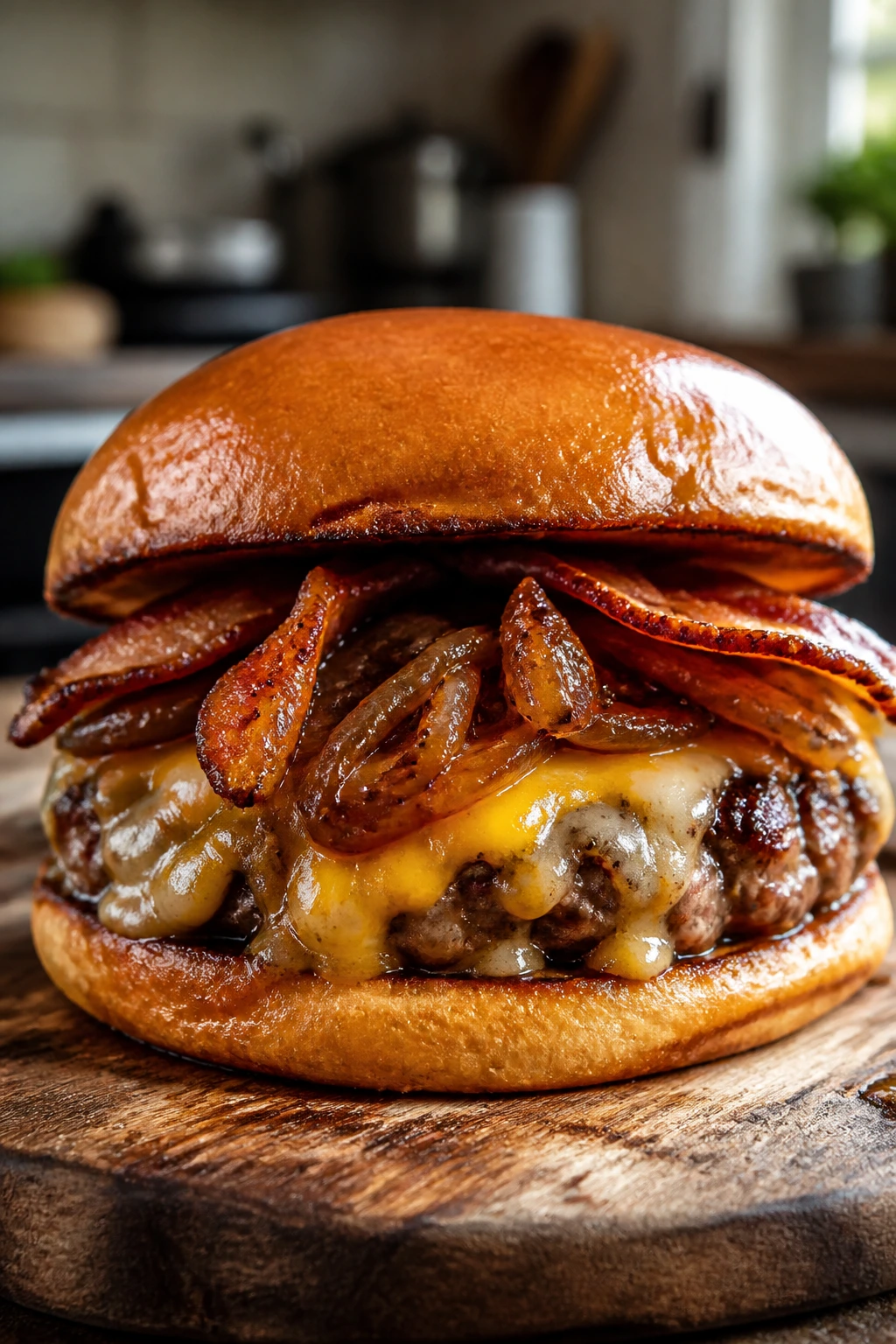
Temperature Control: Keep warm toppings warm. Caramelized onions and mushrooms can sit in a covered skillet over very low heat, or in a 200°F oven, while you finish the patties. If they cool off, rewarm them in the pan for 30 seconds before assembling; cold toppings blunt the burger fast.
Drain and Dry: Anything oily or wet needs a quick rest on paper towels. Bacon, fried onions, mushrooms, even pickled onions if they’ve been sitting in brine for a while — all of them carry extra liquid that will sneak into the bun if you skip this step.
Choose One Rich Move: A burger with bacon, fried onions, barbecue sauce, and double cheese can feel like too much of a good thing. Pick one rich move, one sharp move, and one textural move. That rule keeps the burger from turning muddy.
Toast the Bun Longer Than You Think: A warm bun is fine. A lightly crisp bun is better. The cut surface should have color and a little resistance, because soft bread collapses under hot toppings. Brioche, potato rolls, and bakery-style burger buns all behave better when they’re toasted.
Use a Little Salt on the Toppings: Caramelized onions, mushrooms, and even sliced tomatoes taste flatter than people expect without a pinch of salt. Taste as you go. One extra pinch can turn a topping from “fine” to useful.
Do a Dry Run With the Stack: Before building a tray of burgers for guests, make one and eat it. You’ll spot the weak point fast. Usually it’s too much sauce, not enough acid, or a bun that’s too soft.
Common Mistakes That Make Burgers Feel Flat
-
Pile everything on at once. The burger turns slippery, and every bite tastes like a different sandwich. Fix it by choosing one cooked topping, one crunchy topping, and one acidic topping instead of trying to use everything in the fridge.
-
Serve cold toppings on a hot burger. Cold onions, cold mushrooms, and cold cheese all mute the flavor of the beef. Warm the savory toppings first and toast the bun right before assembly.
-
Skip the acid. Bacon and cheese bring fat, but fat alone gets heavy after two bites. Add pickles, mustard, pickled onions, or a tangy sauce so the burger has lift.
-
Use raw onion when you wanted comfort. Raw onion can be sharp and a little rude in a burger built for a cozy dinner. If you want onion flavor without the bite, cook it down or quick-pickle it.
-
Overcrowd the pan while cooking mushrooms or onions. The vegetables steam instead of brown, and you end up with gray, wet toppings. Cook them in a wider skillet or in batches so the moisture can actually leave.
-
Choose a weak bun. A flimsy roll will give up under cheese, sauce, and beef juices. Use a sturdier bun with some spring, then toast it. That little bit of structure saves the whole meal.
Variations for Different Cravings
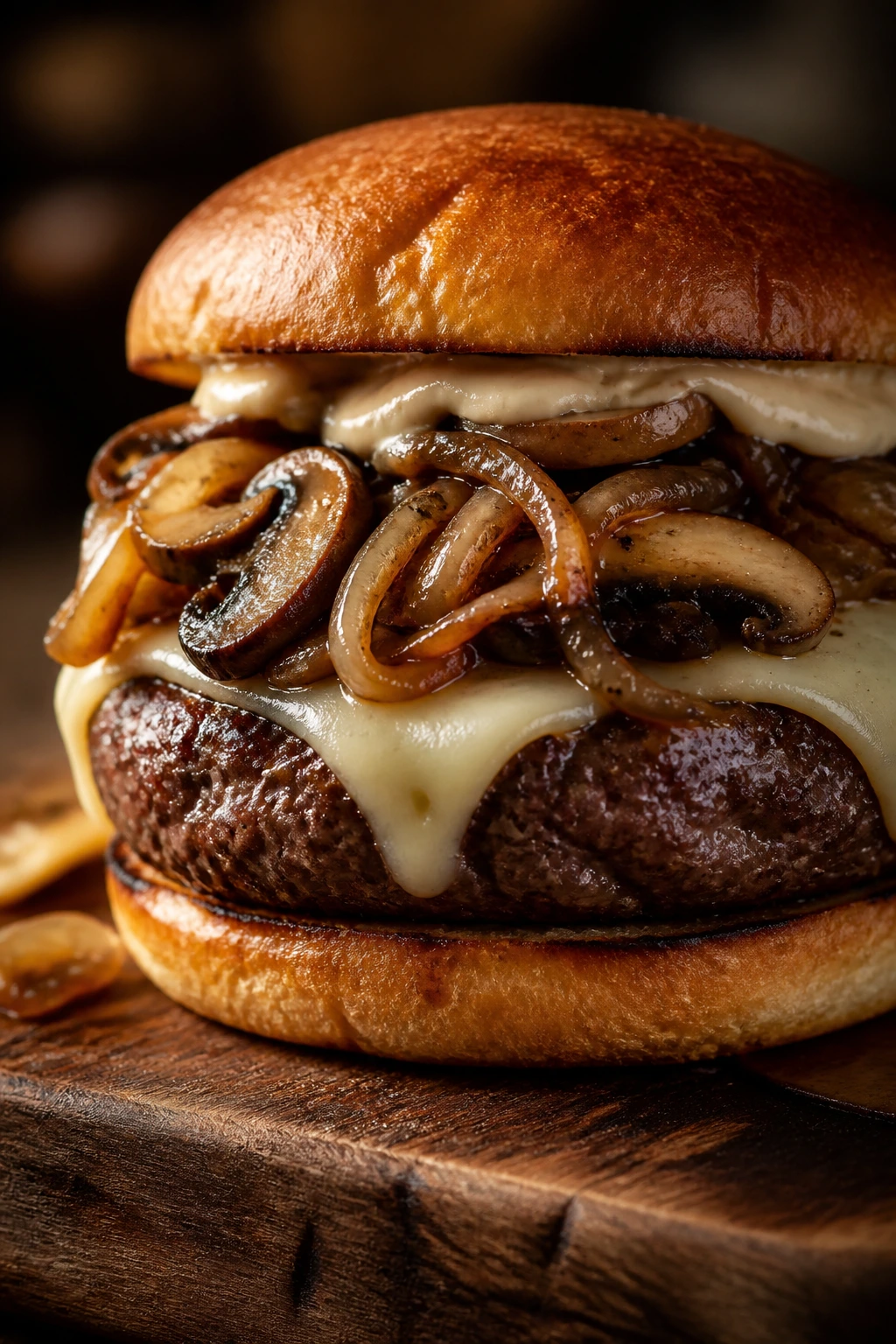
Steakhouse Burger: Caramelized onions, sautéed mushrooms, Swiss cheese, and horseradish mayo make the burger feel like a steakhouse plate squeezed into a bun. This version works especially well with thicker patties, because the mushroom-onion-cheese combination needs a little meat underneath it to stay balanced.
Diner Patty Melt: Swap the burger bun for buttery rye bread, add grilled onions and Swiss, then finish with a thin layer of mustard or a little burger sauce. It’s less of a traditional burger and more of a grilled sandwich with attitude, which is exactly why it hits so hard on a cold night.
BBQ Bacon Stack: Use cheddar, crispy bacon, barbecue sauce, and fried onions. The sauce should stay sticky, not wet, so brush it lightly on the bun or smear a thin layer over the patty. Too much and the burger starts tasting like a cookout gone sideways.
Breakfast-Style Burger: Add a fried egg, a hash brown patty, and American cheese. A little hot sauce or peppery mayo keeps it from getting bland, and the runny yolk replaces a separate sauce. This one eats like a full breakfast and dinner decided to share a table.
Mushroom Swiss Comfort Burger: Go heavy on sautéed mushrooms, use Swiss cheese, and add a little thyme mayo or Dijon. It’s the most restrained of the bunch, but also the one I reach for when I want the beef to stay the center of the plate.
Vegetarian Burger Build: A portobello or a sturdy plant-based patty can handle caramelized onions, pickles, cheddar, and a smoky sauce. The toppings do the heavy lifting here, so don’t be shy with acid and salt.
Tools and Equipment for Burger Night
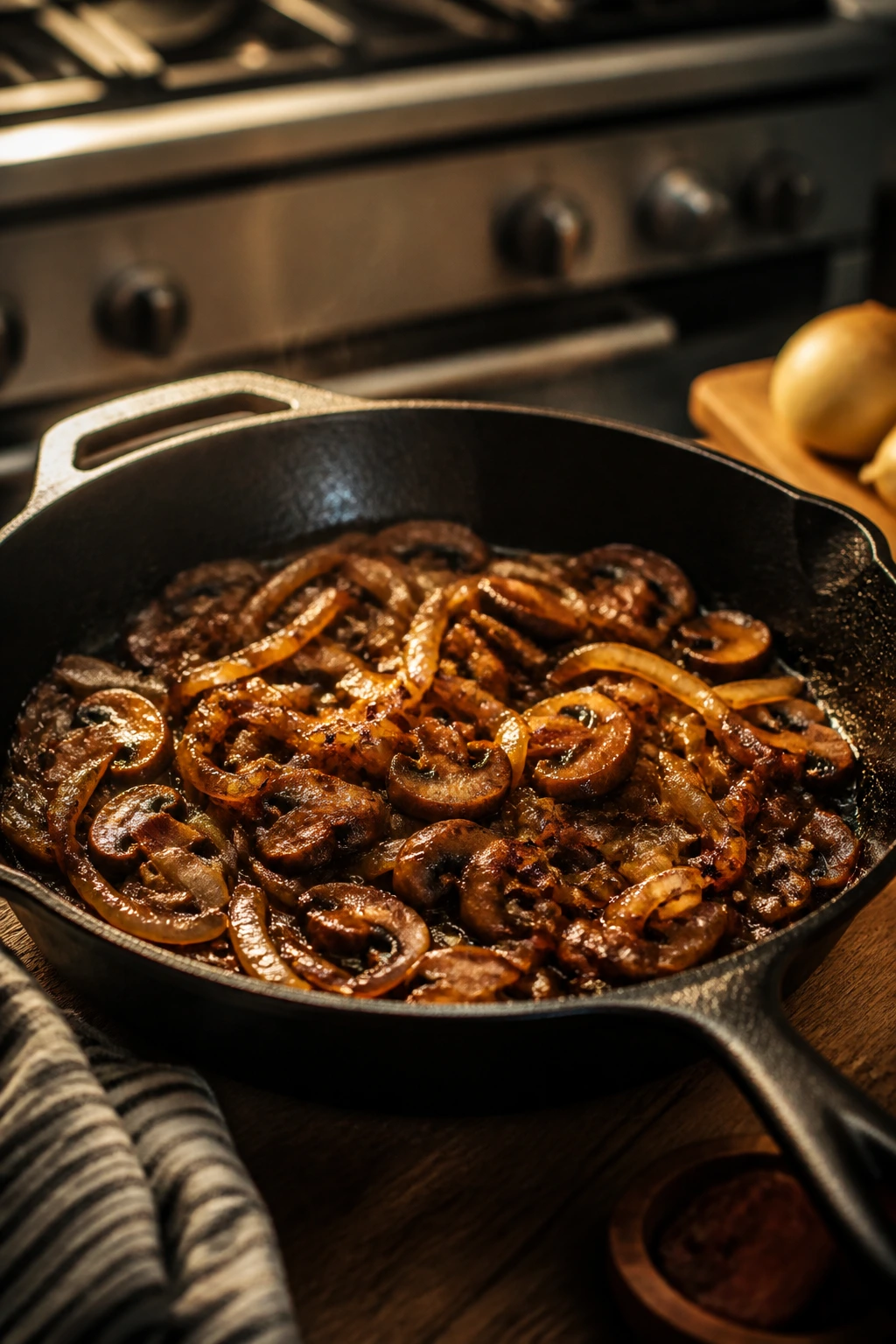
- 12-inch cast-iron skillet or heavy sauté pan — Best for browning onions, mushrooms, and patties without hot spots.
- Wide metal spatula — Helps flip patties cleanly and move them without breaking the crust.
- Lid or metal bowl — Handy for trapping steam so cheese melts in 30 to 45 seconds.
- Tongs — Better than a fork for bacon, mushrooms, and onions because they don’t puncture and spill juices.
- Cutting board and sharp knife — Thin, even slices of onion and mushrooms cook more evenly.
- Paper towels — Not glamorous, but useful for draining bacon and blotting pickles or slaw.
- Small bowls — Keeps sauces and toppings organized so assembly doesn’t turn frantic.
- Instant-read thermometer — Optional, but useful if you’re cooking ground beef patties and want the center at 160°F / 71°C.
- Sheet pan with a rack — Great for holding bacon or keeping cooked toppings warm without making them soggy.
Make-Ahead, Storage, and Reheating
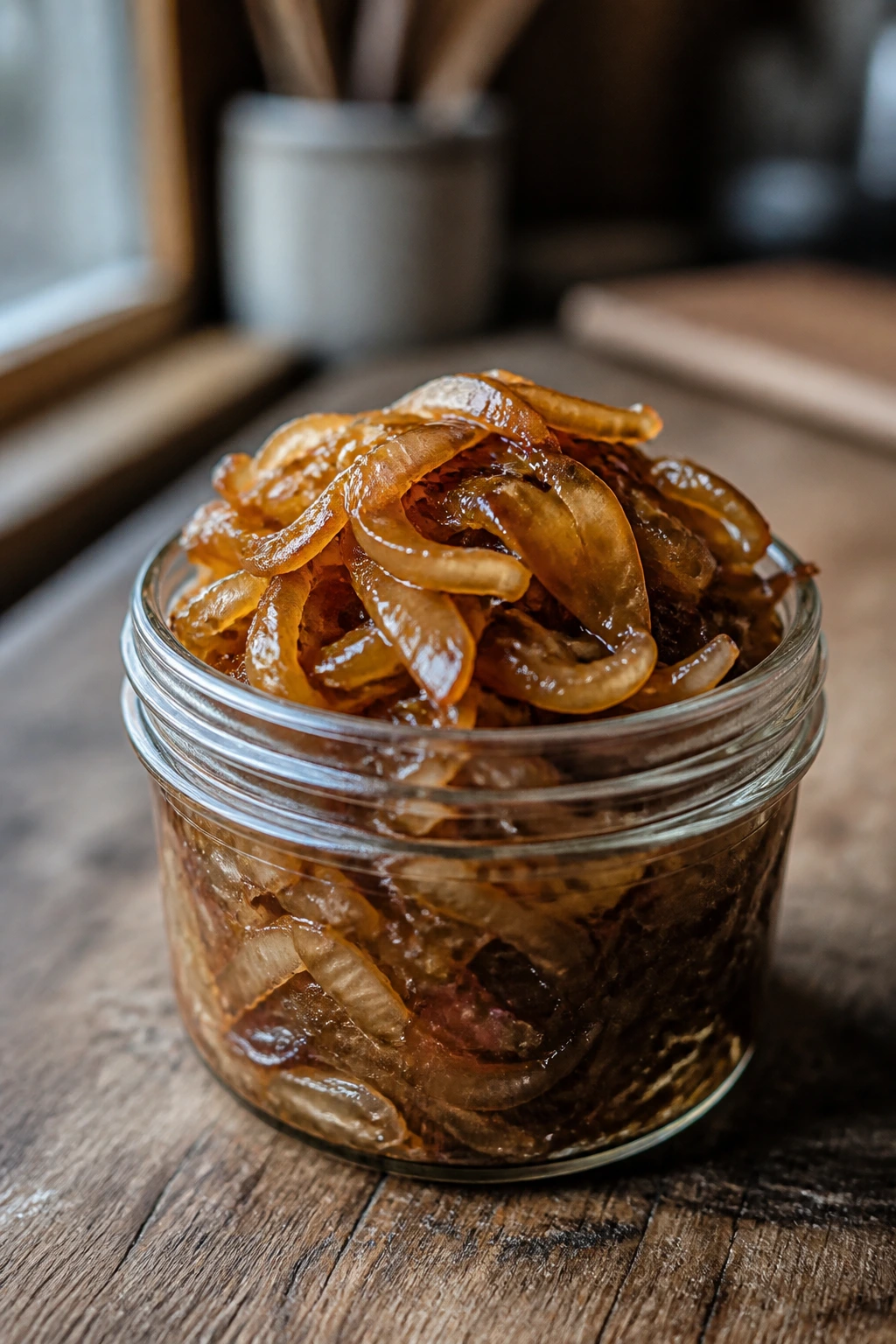
Caramelized onions keep well in the refrigerator for 3 to 4 days in a sealed container. They also freeze well for up to 2 months; spread them in a thin layer in a freezer bag so they thaw faster. Reheat in a skillet over medium-low heat with a teaspoon of water or butter until glossy again.
Sautéed mushrooms are best within 2 to 3 days. They’ll release some liquid as they sit, so rewarm them in a hot skillet rather than the microwave if you want to keep the texture decent. A quick stir in a dry pan usually evaporates the extra moisture and brings the browning back a little.
Bacon can be cooked ahead and stored in the fridge for up to 4 days. Reheat it in a 375°F oven for 5 to 8 minutes, or in an air fryer for a few minutes, until the edges crisp up again. Microwaving works only if you don’t mind softer bacon, which I usually do not.
Burger sauce will keep for 4 to 5 days refrigerated. Keep pickles, slaw, and other cold acidic toppings separate until serving. They stay brighter that way, and the buns stay dry until the last minute. If you’re making burgers for a crowd, cook the toppings first, hold them warm, and toast the buns right before the patties hit the plate.
Frequently Asked Questions
What toppings make a burger feel most comforting?
Warm toppings with salt and a little fat usually do the job best: caramelized onions, melted cheese, sautéed mushrooms, and bacon. Add one acidic element, like pickles or mustard, so the burger doesn’t turn heavy and dull.
Can I make caramelized onions ahead of time?
Yes. They’re one of the best make-ahead burger toppings because the flavor holds up for several days in the fridge. Reheat them gently in a skillet so they stay soft and glossy instead of turning dry.
Which cheese melts best on a burger?
American cheese melts the smoothest, which is why diners use it so often. Cheddar, Swiss, and Monterey Jack all work well too, but they need a hot patty and a quick lid-covering step to melt cleanly.
How do I keep burger toppings from making the bun soggy?
Toast the bun, drain wet toppings on paper towels, and keep the juiciest ingredients higher in the stack. Sauces should go on in a thin layer, not poured on in a puddle.
Do pickles go on top or bottom of the burger?
Top is better. That keeps their brine from soaking the bottom bun before you eat the first bite, and it gives you the sharp flavor hit earlier in the bite.
Can these toppings work with turkey or plant-based burgers?
Absolutely. Leaner patties and plant-based burgers often need even more help from cheese, onions, and sauce because they don’t bring the same beefy richness. Just keep an eye on moisture; some plant-based patties already have a soft texture.
What if I don’t have time for caramelized onions?
Use sautéed onions cooked a little faster over medium heat, or quick-pickled red onions if you want sharpness instead of sweetness. You’ll lose some of the deep soft flavor, but the burger will still feel finished.
Is it okay to pile on several rich toppings at once?
It’s okay if the burger is big enough and the bun is sturdy, but most of the time one rich topping is enough. Bacon, mushrooms, and extra cheese together can bury the beef unless there’s something sharp, like pickles or mustard, to keep things moving.
A Burger That Eats Like Dinner
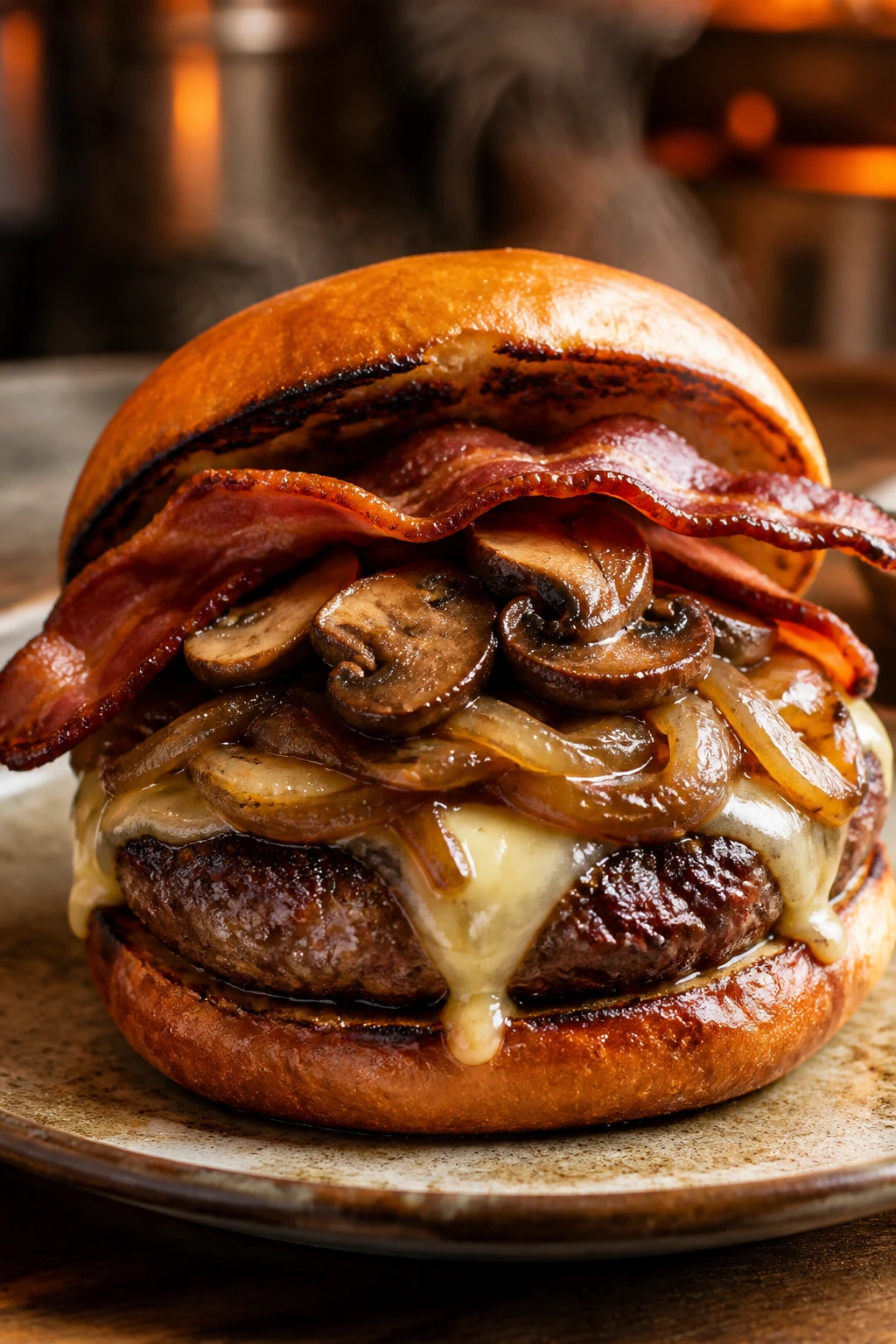
The best comforting burger toppings don’t shout. They settle in. They give the beef a sweet edge, a salty hit, a little tang, and enough texture that the burger feels like a full meal instead of a fast bite between errands.
That’s why the old combinations keep winning: onions and cheese, mushrooms and Swiss, bacon and pickles, sauce and toast. They’re not flashy. They just work, and they keep working after the second bite, which is where a burger dinner either earns its place or falls apart.
Build one burger with warm toppings, a toasted bun, and one sharp note that cuts through the richness. After that, the rest gets easier.