



Cold nights expose weak soup. A thin broth tastes fine for three spoonfuls, then it starts to feel like warm water with manners. A better bowl has more going on: ginger that blooms the second the steam hits your face, chicken that stays tender instead of stringy, noodles with a little chew, and a broth that turns silky without becoming heavy.
That’s where creamy Chinese chicken noodle soup for cold winter nights earns its keep. I like a soup that can stand up to an evening when your shoulders are stiff, your windows are rattling, and you want something hot enough to fog your glasses. This version leans on ginger, garlic, scallions, soy, white pepper, mushrooms, and bok choy, then finishes with evaporated milk and a cornstarch slurry for a broth that looks glossy in the bowl and clings lightly to the noodles.
And yes, creamy can work here. Not in a thick chowder way. More like a smooth, round broth that feels warmer and fuller than a standard chicken noodle soup, with enough body that each spoonful carries flavor all the way to the end. The trick is keeping the milk in its lane, which means adding it late, keeping the simmer gentle, and choosing noodles that still have some backbone after ten minutes in the pot.
Why This Bowl Feels Right on a Cold Night
- Silky Broth: A small amount of evaporated milk and a cornstarch slurry make the broth glossy and plush without drowning out the ginger, soy, or sesame.
- Built in Layers: Browning the chicken first, then sweating the aromatics, gives the soup a deeper base than just boiling everything together.
- Noodles That Still Have Bite: The noodles go in near the end, so they stay springy instead of swelling into soft, tired strands.
- Real Weeknight Pace: You get a pot that tastes slow-cooked in a little under an hour, which is exactly what I want when the weather turns mean.
- Flexible Pantry Logic: Bok choy, shiitakes, and egg noodles can be swapped around without wrecking the soup, as long as you keep the ginger and soy in place.
- Leftovers With a Plan: If you store the noodles separately, the soup reheats cleanly and keeps its texture for days instead of turning murky and dull.
Timing, Yield, and the Kind of Night This Soup Fits
Warm bowls matter here.
Yield: Serves 4 to 6
Prep Time: 20 minutes
Cook Time: 35 minutes
Total Time: 55 minutes
Difficulty: Intermediate — the steps are straightforward, but you do need to watch the noodles and keep the creamy broth from boiling hard at the end.
Best Served: Hot, right after finishing, with the noodles still springy and the broth glossy
What Goes Into the Pot
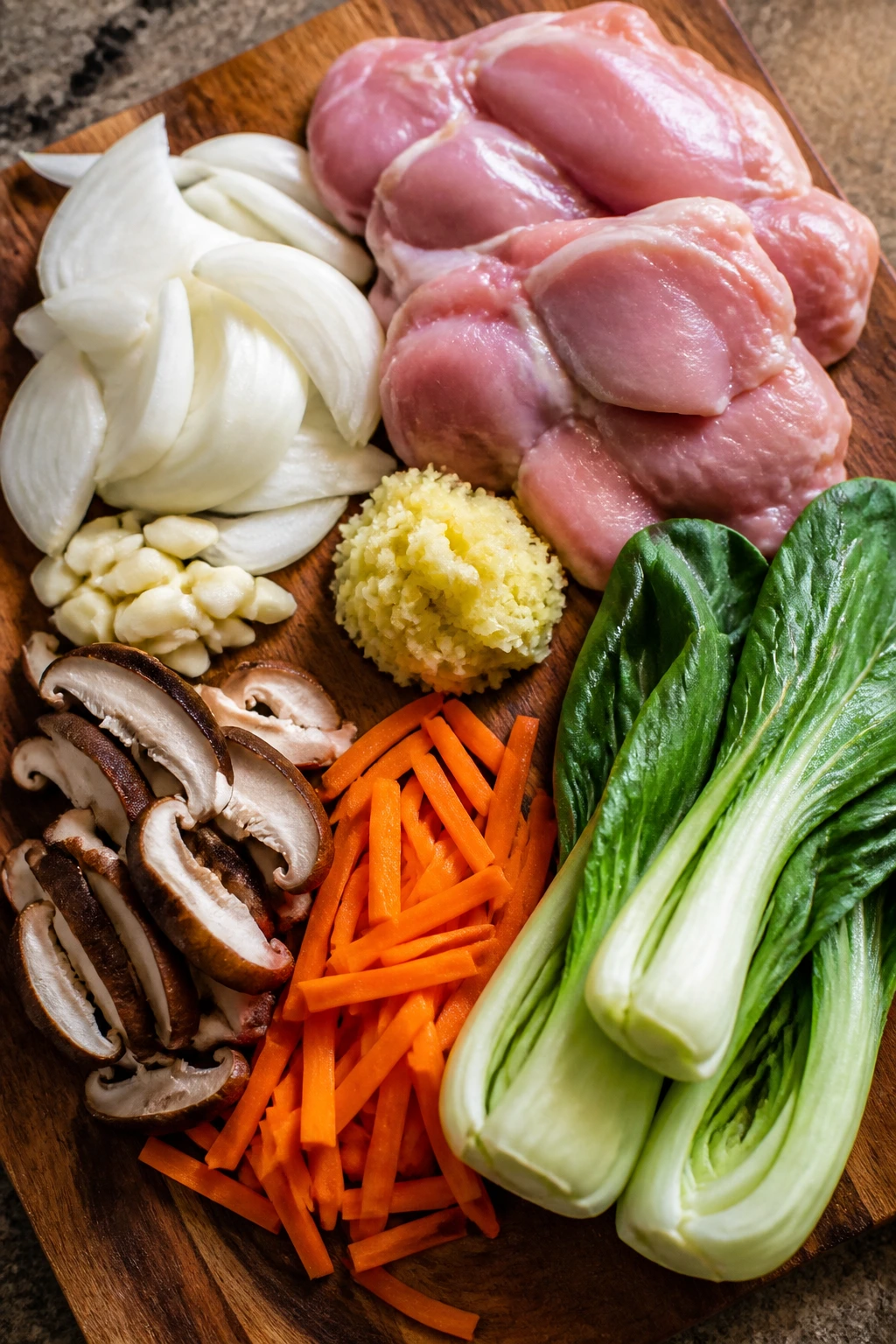
A measured ingredient list is not busywork here. It’s the difference between a broth that tastes balanced and one that needs fixing at the table.
For the Chicken and Seasoning:
- 1 1/2 pounds boneless, skinless chicken thighs, trimmed
- 1 teaspoon kosher salt
- 1/2 teaspoon white pepper
- 1 tablespoon cornstarch
- 2 tablespoons neutral oil, such as avocado, canola, or grapeseed
For the Broth:
- 1 large yellow onion, thinly sliced
- 4 garlic cloves, minced
- 1 tablespoon fresh ginger, finely grated
- 6 ounces shiitake mushrooms, stems trimmed and sliced
- 1 medium carrot, cut into thin matchsticks or half-moons
- 6 cups low-sodium chicken broth
- 1 cup water
- 2 tablespoons low-sodium soy sauce
- 1 tablespoon oyster sauce
- 1 tablespoon Shaoxing wine or dry sherry
- 1 whole star anise
For the Noodles and Vegetables:
- 6 ounces dried Chinese egg noodles or thin ramen noodles, seasoning packets discarded if present
- 3 baby bok choy, halved lengthwise, or 2 cups chopped bok choy leaves and stems
For the Creamy Finish:
- 1 cup evaporated milk
- 2 teaspoons cornstarch mixed with 2 tablespoons cold water
- 1 teaspoon toasted sesame oil
For Serving:
- 3 scallions, thinly sliced
- 1/4 cup fresh cilantro leaves
- Chili oil, to taste
Why Each Ingredient Has a Job
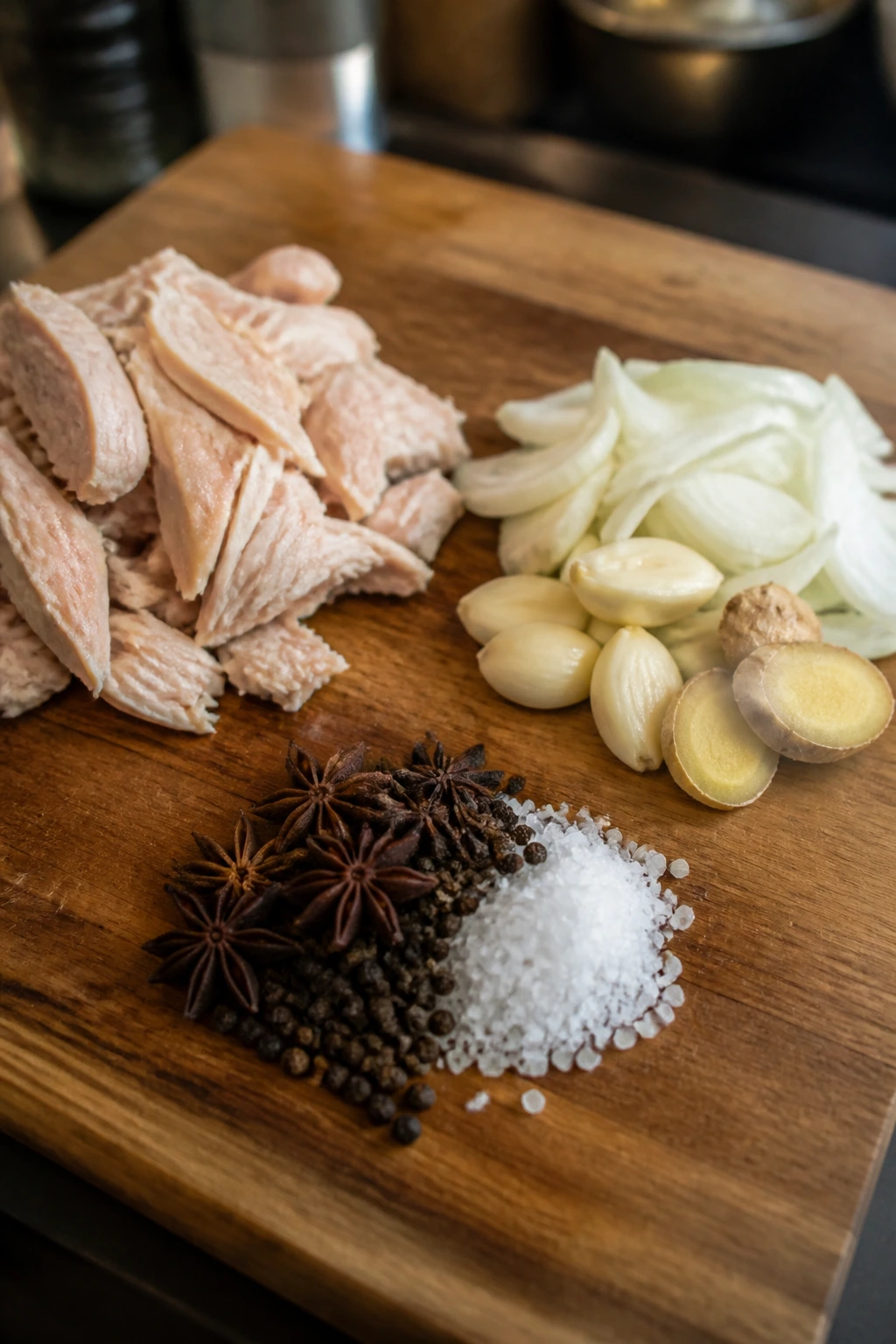
Chicken and Broth
What to use: 1 1/2 pounds boneless, skinless chicken thighs, plus 6 cups low-sodium chicken broth and 1 cup water.
Preparation: Pat the chicken dry before seasoning so it browns instead of steaming, and trim off any thick bands of fat that would melt into greasy patches.
Substitutions: Chicken breast works if that’s what you have, but it should come out of the pot earlier; shredded rotisserie chicken also works if you add it near the end.
Tips: Low-sodium broth gives you room to build flavor with soy sauce and oyster sauce, which matters more than most people think. If you start with salty broth, the soup can taste flat and sharp at the same time.
Aromatics and Seasoning
What to use: 1 large yellow onion, 4 garlic cloves, 1 tablespoon ginger, 2 tablespoons soy sauce, 1 tablespoon oyster sauce, 1 tablespoon Shaoxing wine or dry sherry, 1 whole star anise, 1 teaspoon white pepper, and 1/2 teaspoon kosher salt for the chicken.
Preparation: Slice the onion thinly so it melts into the broth, mince the garlic, and grate the ginger finely so it perfumes the pot in minutes rather than sitting there like rough shreds.
Substitutions: Shallots can stand in for the onion, tamari can replace soy sauce, and if Shaoxing wine is not on your shelf, dry sherry does the job better than white wine here.
Tips: White pepper is the quiet hero. It gives the soup that restaurant-style warmth without the sharp black-pepper specks that can make the broth look busy.
Noodles and Vegetables
What to use: 6 ounces dried Chinese egg noodles or thin ramen noodles, 3 baby bok choy, and 1 medium carrot.
Preparation: Keep the bok choy pieces big enough to hold shape, slice the carrot thin so it softens quickly, and separate noodles with your fingers before they hit the pot.
Substitutions: Thin rice noodles can work, but they need less time; napa cabbage can replace bok choy if that’s what’s in the crisper, and sliced cremini mushrooms can stand in for shiitakes.
Tips: If you want leftovers that still feel good the next day, cook the noodles shy of done or keep them in a separate container. The soup itself can handle a little waiting. The noodles cannot.
Creamy Finish
What to use: 1 cup evaporated milk, 2 teaspoons cornstarch mixed with 2 tablespoons cold water, and 1 teaspoon toasted sesame oil.
Preparation: Whisk the cornstarch with cold water until it looks like thin cream, and keep the evaporated milk nearby so you can add it right at the end.
Substitutions: Half-and-half works if you want a richer finish; unsweetened soy milk can replace the evaporated milk if you add a touch more slurry for body; silken tofu blended smooth with hot broth gives a very different but still silky result.
Tips: Do not boil the soup hard once the milk goes in. Gentle heat keeps the broth smooth; aggressive heat makes it look broken and grainy.
Fresh Garnishes
What to use: 3 scallions, 1/4 cup cilantro leaves, and chili oil to taste.
Preparation: Slice the scallions right before serving so they stay crisp and vivid, not watery and limp.
Substitutions: Chopped chives can replace scallions in a pinch, and if cilantro tastes soapy to you, leave it out and add extra scallion or a tiny drizzle of chili crisp.
Tips: Sesame oil and scallions are best as the final layer. If you cook them hard, you lose the part that makes the bowl smell inviting before the first bite.
The Tools That Keep the Pot Calm
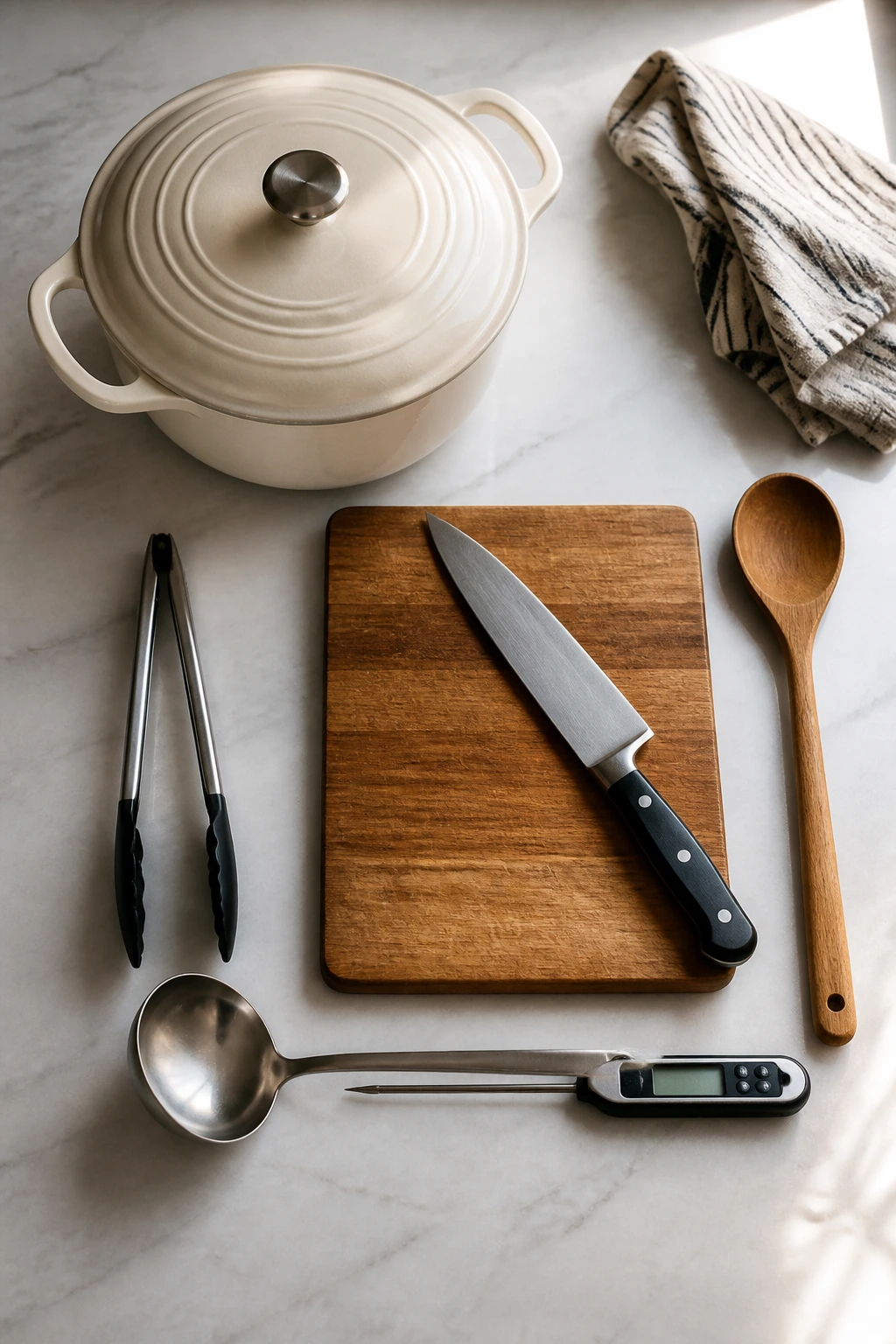
You do not need a pile of specialty gear, but the right few tools make this soup smoother to cook.
- 5- to 6-quart Dutch oven or heavy soup pot — The heavy bottom helps the onions and mushrooms cook evenly without scorching the ginger.
- Sharp chef’s knife — Thin slicing matters here; chunky onions and sloppy mushroom cuts make the broth feel rough.
- Cutting board — A large board gives you room to slice the chicken, bok choy, and scallions without crowding.
- Wooden spoon or heatproof spatula — Use it to scrape up the browned bits from the pot after the broth goes in.
- Tongs or a slotted spoon — Handy for removing the chicken so you can slice or shred it cleanly.
- Small bowl or liquid measuring cup — Best for whisking the cornstarch slurry before it goes into the soup.
- Ladle — Helps portion the broth and noodles evenly into bowls.
- Instant-read thermometer — Optional, but useful if you want to check that the chicken has reached 165°F without guessing.
Building the Soup, One Layer at a Time
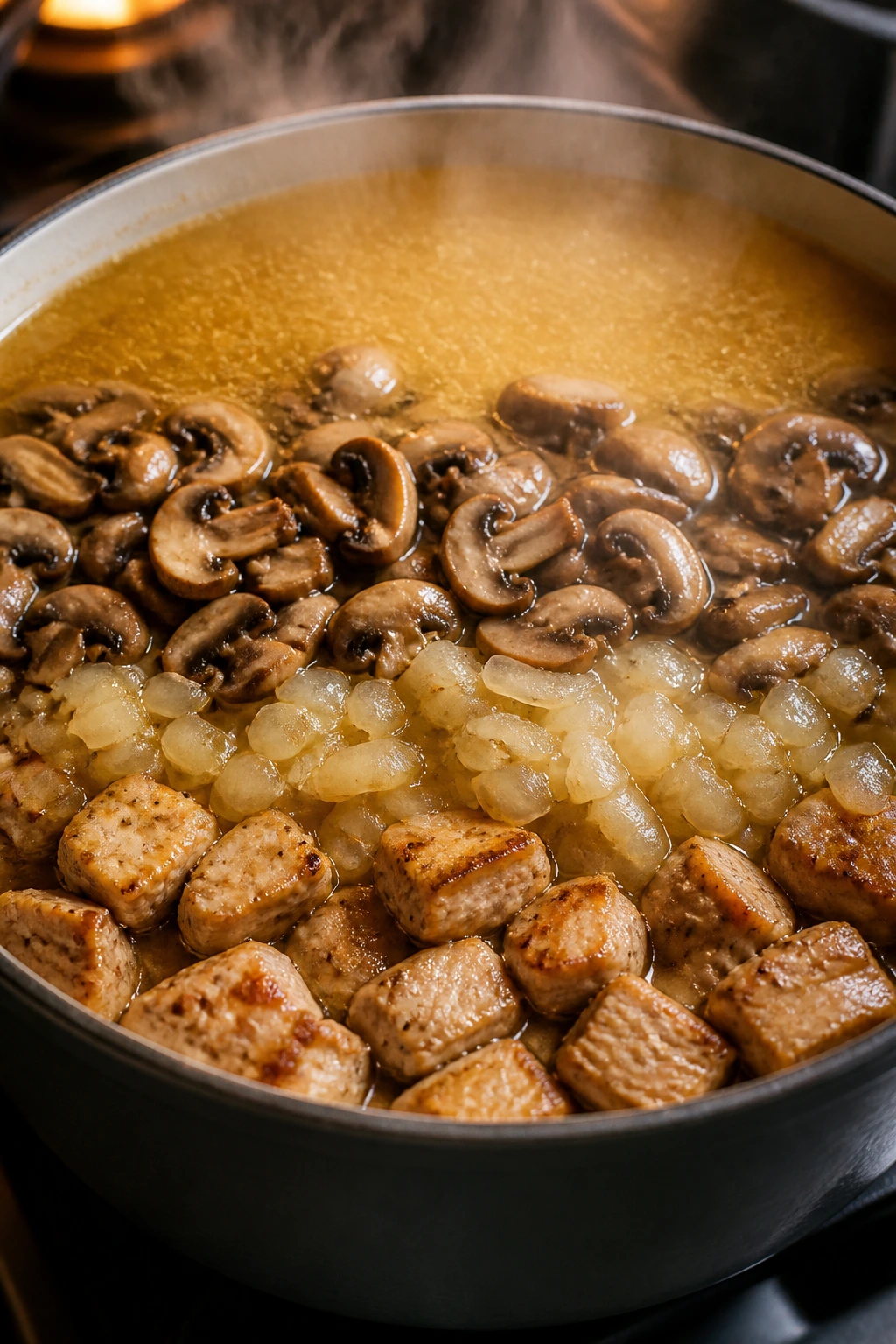
Prep the Chicken and Seasoning
- Pat the chicken thighs dry with paper towels and cut away any thick flaps of fat or connective tissue.
- Sprinkle the chicken with 1 teaspoon kosher salt, 1/2 teaspoon white pepper, and 1 tablespoon cornstarch, then toss until every piece looks lightly dusted.
- Let the chicken sit for 5 minutes while you prep the vegetables. The surface should look a little tacky, not pasty.
Sear the Chicken and Start the Base
- Heat 2 tablespoons neutral oil in a 5- to 6-quart Dutch oven over medium-high heat until the oil shimmers.
- Add the chicken in a single layer and sear for 3 to 4 minutes per side until lightly golden. Do not crowd the pot or the chicken will steam and turn pale.
- Transfer the chicken to a plate. It does not need to be cooked through yet; it will finish in the broth.
Build the Broth
- Reduce the heat to medium and add the onion, mushrooms, and carrot to the pot. Cook for 4 to 5 minutes, stirring often, until the onion turns translucent and the mushrooms go glossy and a little smaller.
- Stir in the garlic and ginger and cook for 30 to 45 seconds, just until fragrant. If the garlic browns hard, the broth picks up a bitter edge.
- Pour in the Shaoxing wine and scrape the bottom of the pot with a wooden spoon to lift the browned bits.
- Add the chicken broth, water, soy sauce, oyster sauce, and star anise. Bring the pot to a gentle boil, then drop the heat to a steady simmer.
Cook the Chicken and Noodles
- Return the chicken and any juices to the pot. Simmer for 12 to 15 minutes, uncovered, until the chicken reaches 165°F and feels firm but still springy when pressed.
- Lift the chicken onto a cutting board and let it rest for 2 minutes, then slice it into bite-size strips or shred it with two forks.
- Add the noodles to the simmering broth and cook according to the package, usually 3 to 5 minutes, until they are just shy of tender.
- Stir in the bok choy during the last 2 minutes so the stems stay bright and the leaves wilt without collapsing.
Make It Creamy and Finish Cleanly
- Stir the cornstarch slurry again, then pour it into the soup in a thin stream while stirring. Cook for 1 minute until the broth turns lightly thickened and glossy.
- Reduce the heat to low and stir in the evaporated milk. Keep the soup at a bare simmer for 1 to 2 minutes, but do not let it boil hard after the milk goes in.
- Return the sliced chicken to the pot and stir in the toasted sesame oil. Taste the broth and add a splash more soy sauce or a pinch more white pepper if it needs a little edge.
- Remove the star anise before serving. Ladle into bowls and finish with scallions, cilantro, and chili oil.
How to Serve It Without Diluting the Broth
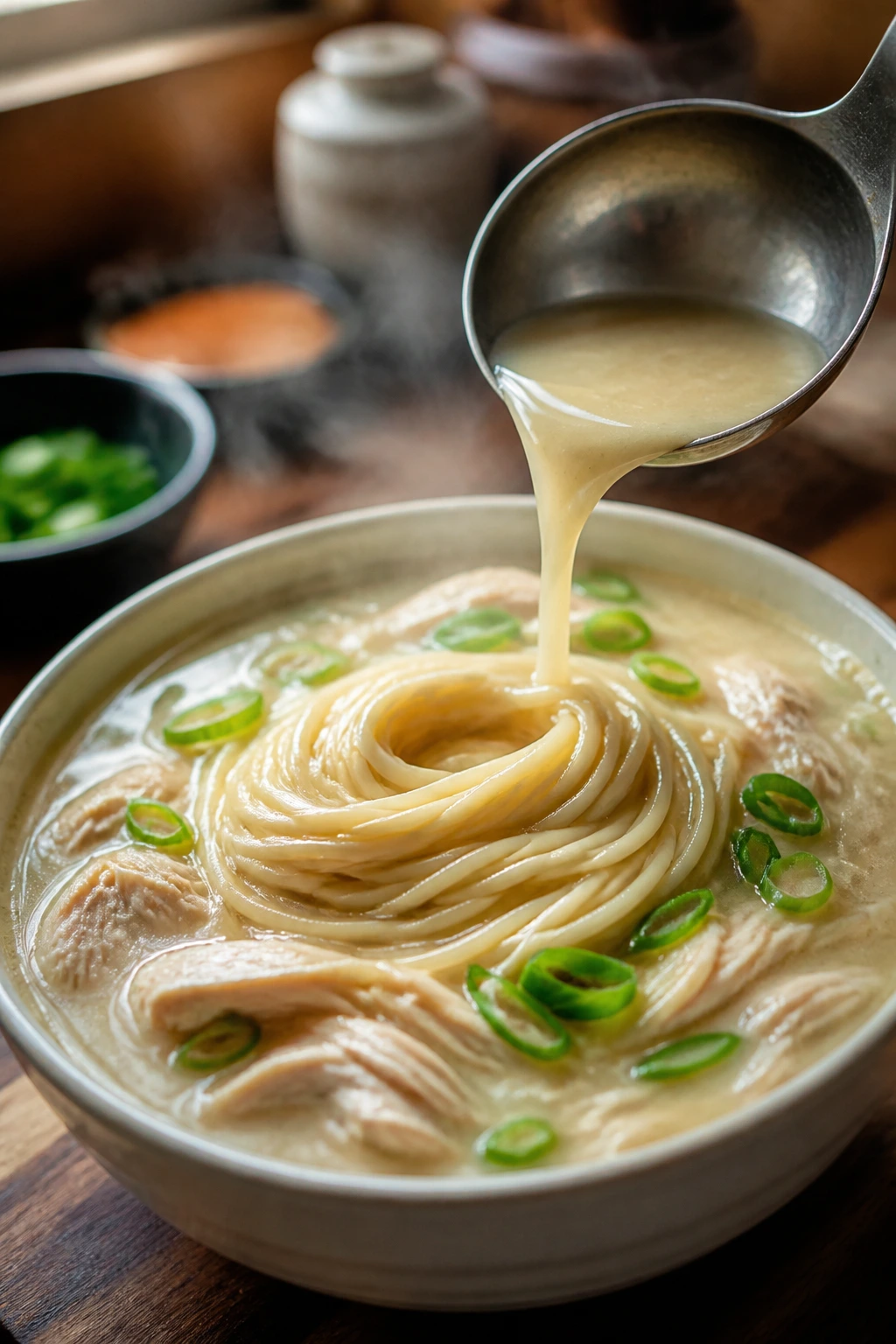
Presentation: Warm the bowls first if you can; hot soup in cold bowls loses its edge fast. Spoon a bundle of noodles into each bowl, then pour the broth around them so the top stays glossy and the scallions sit bright green on the surface.
Accompaniments: I like this with something crisp and salty rather than another soft starch. Quick cucumber salad, steamed dumplings, scallion pancakes, or even a plate of simple stir-fried greens work well because they give the meal a second texture without making the table feel crowded.
Portions: A generous bowl with noodles, chicken, and plenty of bok choy usually serves as a full dinner for one hungry adult. If you are stretching it, you can get 6 smaller servings by loading each bowl with broth and greens, then keeping the noodles a little lighter.
Beverage Pairing: Hot jasmine tea is the cleanest match. If you want something colder, a light lager or dry hard cider cuts through the creamy finish without fighting the ginger and sesame.
Small Moves That Make the Flavor Pop
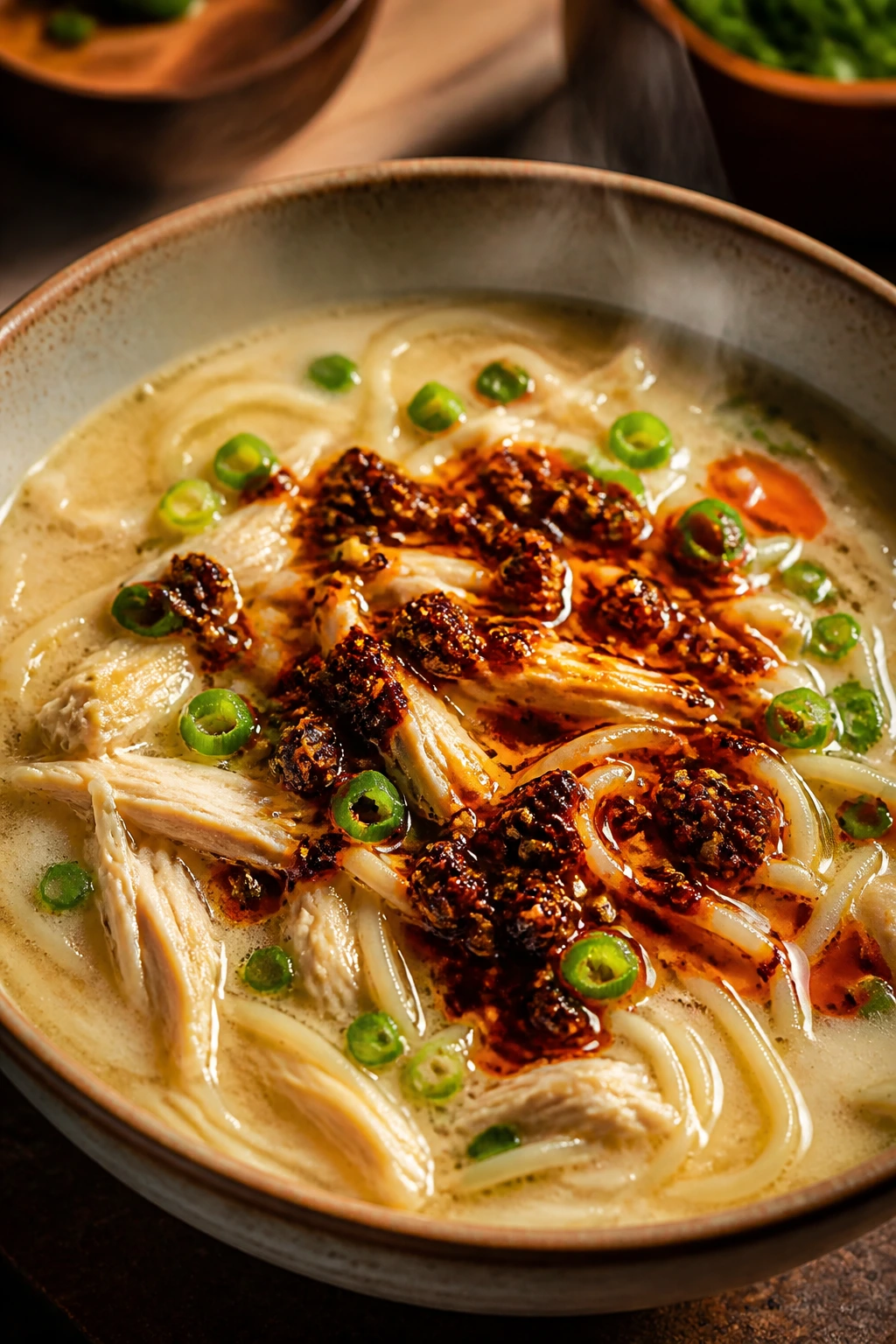
- Flavor Enhancement: A teaspoon of chili crisp over the top gives the broth heat, crunch, and a little garlic perfume that hangs around after the spoon is empty.
- Time-Saver: Shredded rotisserie chicken cuts the active time in half. Add it after the noodles are cooked, let it warm for 2 minutes, and skip the searing step entirely.
- Texture Move: If you want the broth thicker without more dairy, add another 1 teaspoon cornstarch mixed with 1 tablespoon cold water. Stir it in slowly and let it simmer for 30 seconds before judging.
- Make-It-Yours: A few drops of black vinegar at the table make the soup taste brighter. It is a small thing. It works.
Where This Soup Usually Goes Sideways
-
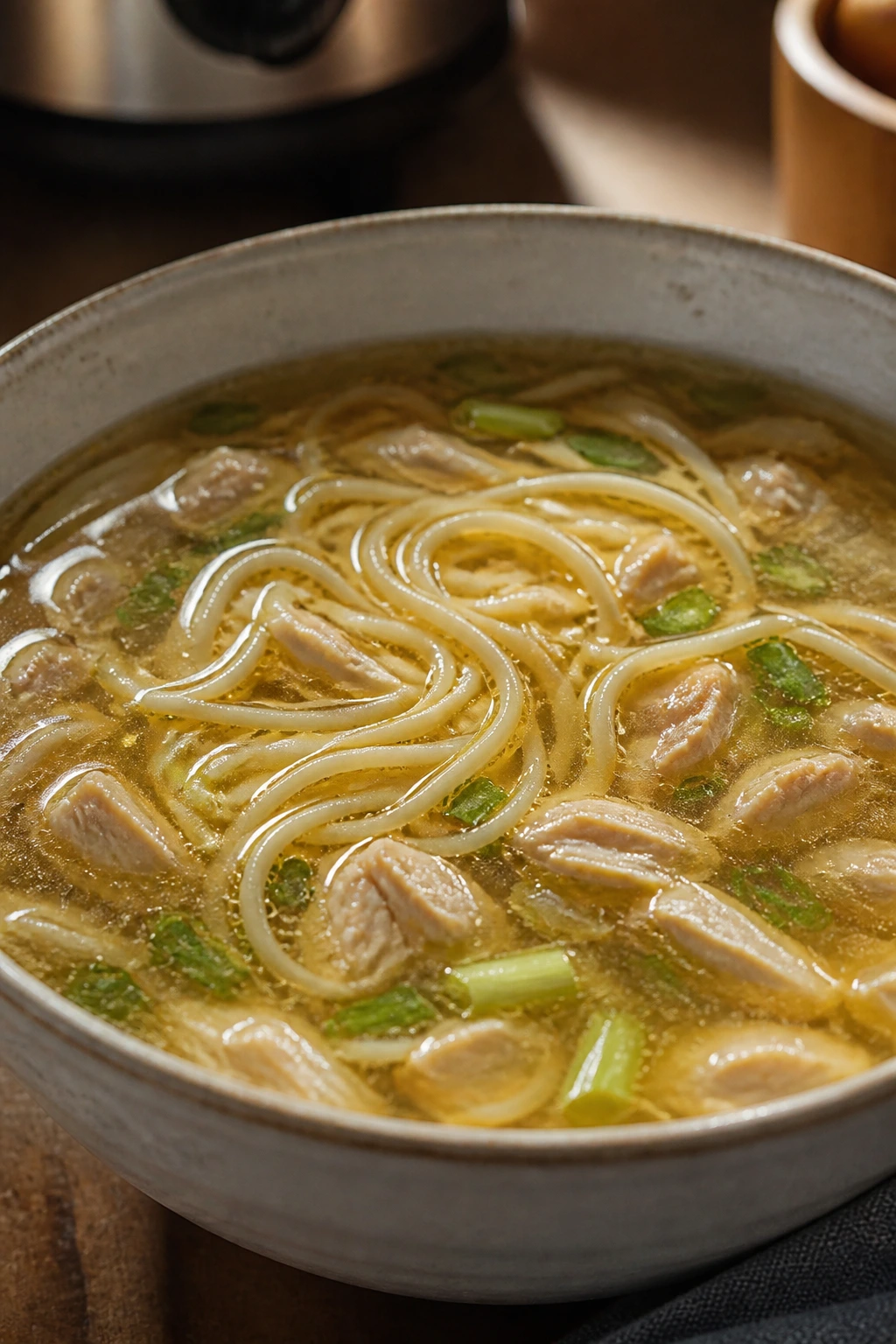
Cooking the noodles too early: They soak up broth, swell, and turn soft in a way that makes the whole bowl feel muddy. Fix it by adding them near the end and stopping when they still have a little bite.
-
Boiling after the evaporated milk goes in: Hard bubbling can make the broth look grainy or separated. The fix is simple: lower the heat first, then stir in the milk and keep the simmer gentle.
-
Skipping the browned bits on the bottom of the pot: Those caramelized spots are not dirt. They are flavor. If you do not scrape them up when the broth goes in, the soup tastes flatter than it should.
-
Using too much sesame oil: A heavy pour can take over the bowl and make everything taste oily instead of fragrant. One teaspoon is enough. Maybe a touch more in the bowl if you like, but not in the pot.
-
Underseasoning the broth before the dairy goes in: Milk softens flavor, so the broth needs to taste a little bold before you finish it. Taste for salt, soy, and white pepper before the final stir.
-
Crowding the chicken during searing: When the pieces sit too close together, they steam and go gray. Sear in batches if the pot is tight. It takes a few extra minutes and pays off in flavor.
Four Ways to Change the Bowl Without Losing the Plot
Chili Crisp Lantern Bowl
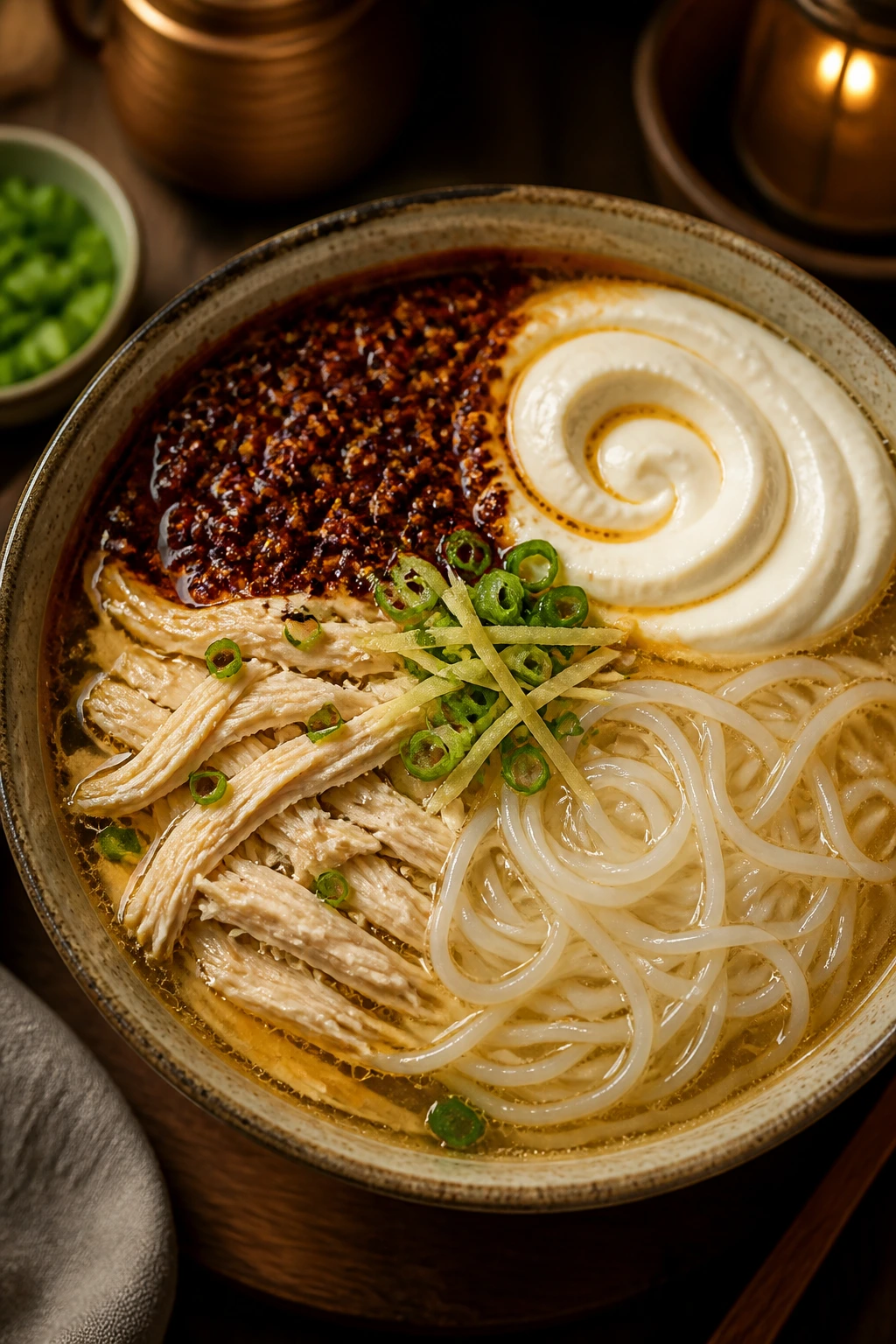
Add 1 to 2 tablespoons chili crisp to the finished soup and top each bowl with thinly sliced fresh chile if you want more heat. This version keeps the ginger base but pushes the bowl into sharper, hotter territory that’s especially good when your nose is cold and your appetite wants a little drama.
Silken Tofu Cream
Skip the evaporated milk and blend 6 ounces silken tofu with 1/2 cup hot broth until smooth, then stir it in at the end with the sesame oil. The broth turns softer and a little more delicate, and you still get that creamy finish without dairy.
Rotisserie Shortcut Bowl
Use 4 cups shredded cooked chicken instead of raw thighs, and build the broth as written except for the searing step. Add the chicken after the noodles and bok choy are almost done, then let it warm through for 2 to 3 minutes. It’s the fastest route that still tastes like you paid attention.
Rice-Noodle Drift
Swap the egg noodles for 6 ounces thin rice noodles if you want a lighter bowl with a cleaner chew. Soak or cook them separately according to the package, then tuck them into the bowls before ladling the broth over them. Rice noodles soften fast, so this version is best served right away.
What to Do with the Leftovers
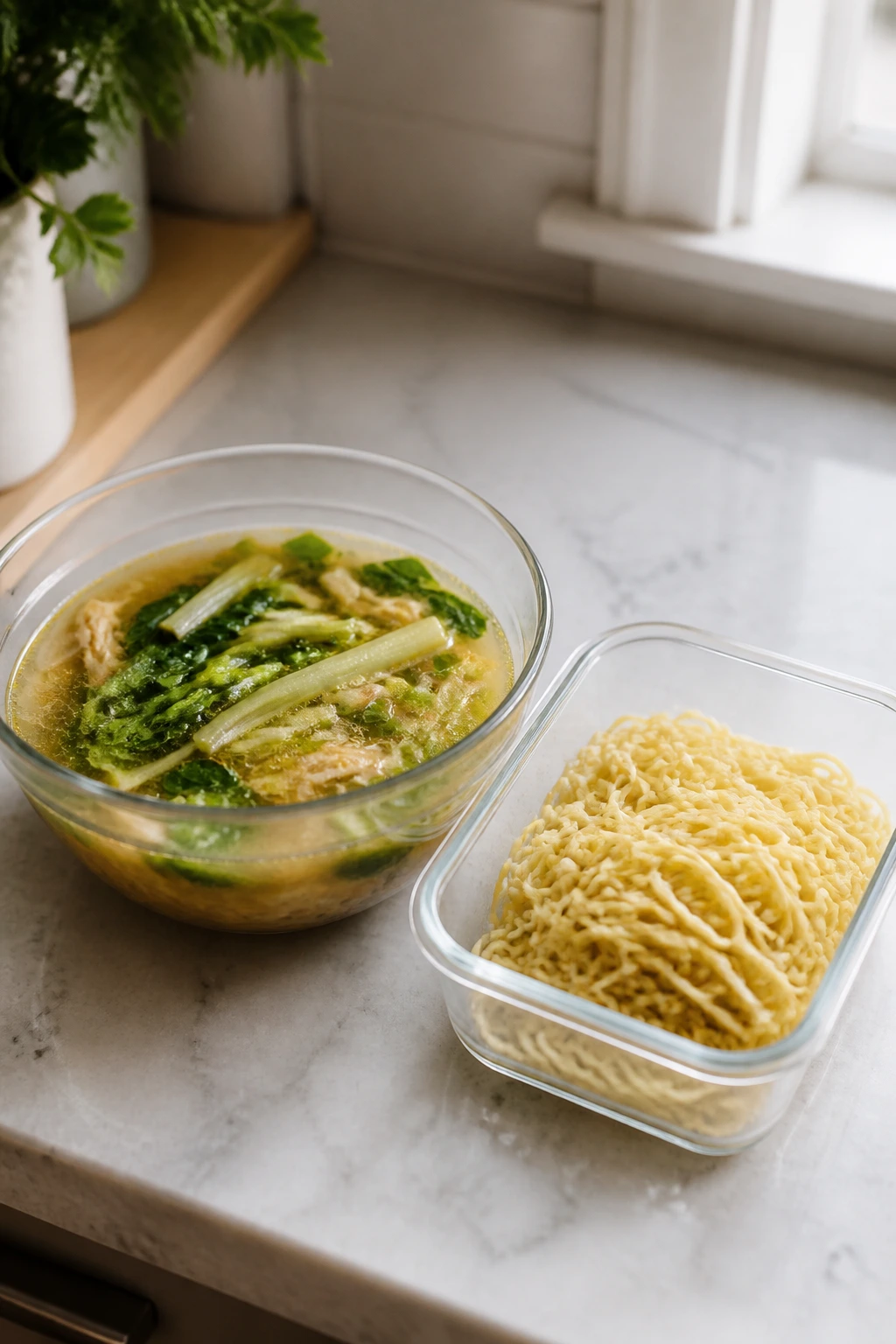
This soup keeps best when you treat the noodles like a separate issue, because they are the first thing to go soft.
If you plan to eat leftovers within 3 to 4 days, store the soup in an airtight container in the refrigerator. If you can, spoon the noodles into one container and the broth, chicken, and vegetables into another. That one small split makes the next meal taste fresher and keeps the noodles from turning into swollen ropes.
For the freezer, I would freeze the broth, chicken, and vegetables up to 2 months and cook fresh noodles later. Dairy and noodles both change texture in the freezer; the broth may still be fine, but the finished bowl will never be as nice as a freshly made one. If you know you are freezing it, stop before adding the evaporated milk, then stir it in after reheating.
Reheat gently on the stovetop over low to medium-low heat, stirring often. If the soup is too thick, add a splash of broth or water. If the noodles were stored separately, drop them into the hot broth for the last 30 to 60 seconds just to warm them through. Microwave reheating works in a pinch, but use 50% power and stir every minute so the dairy does not split at the edges.
For make-ahead, the broth base can be cooked a day or two ahead without any trouble. Chop the onion, mushrooms, ginger, garlic, and bok choy a day in advance if you want to move faster at dinner. The only part I would not rush is the noodles; they are best cooked close to serving.
Questions People Ask Before the Pot Goes On
Can I use chicken breast instead of thighs?
Yes, but pull it earlier. Chicken breast dries out faster, so simmer it only until it reaches 165°F, then slice it and return it to the soup at the very end just long enough to warm through. Thighs are more forgiving and taste richer, which is why I prefer them here.
What noodles hold up best in this soup?
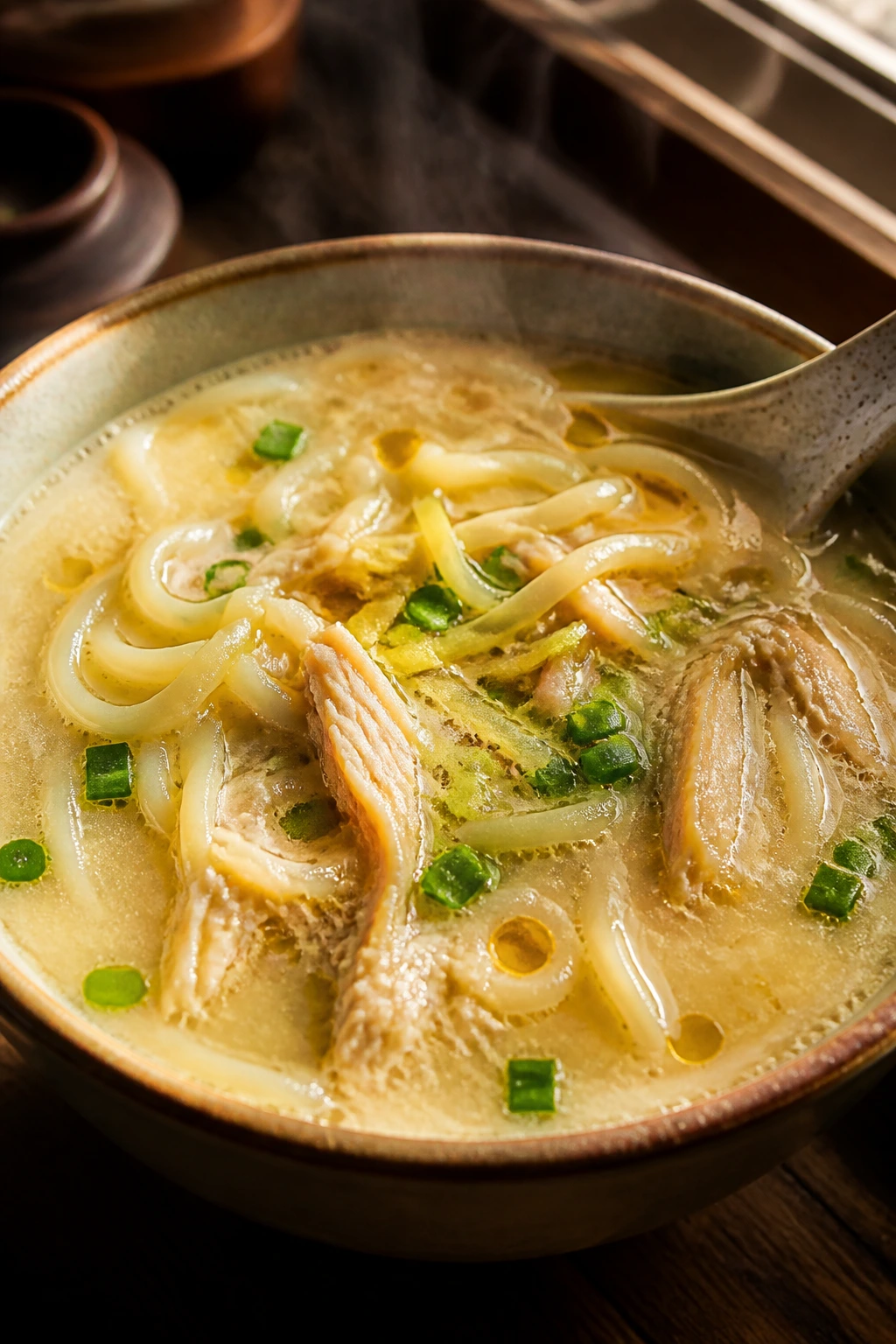
Dried Chinese egg noodles and thin ramen noodles hold their shape better than softer fresh noodles if you plan to serve the soup right away. For leftovers, no noodle survives beautifully in the broth for long, which is why I like to store them separately. Rice noodles work too, but they need the shortest cooking time and the fastest serving.
Can I leave out the evaporated milk?
You can, and the soup will still be good. Without it, the broth becomes clearer and a little sharper, more like a classic ginger chicken noodle soup with Chinese-style seasoning. If you want some creaminess without dairy, silken tofu blended smooth is the closest replacement I like.
What if I don’t have Shaoxing wine?
Dry sherry is the best swap. If you do not have that either, skip the wine and add an extra splash of broth instead. The soup will lose a little depth, but it will still taste balanced if the soy sauce and white pepper are in place.
How do I fix soup that turned out too thin?
Mix another 1 teaspoon cornstarch with 1 tablespoon cold water and stir it in while the soup is at a low simmer. Give it 30 to 60 seconds to thicken before deciding whether it needs more. If it still feels thin, a tiny bit more evaporated milk helps, but do that slowly.
Can I make this in a slow cooker?
Yes, with a few changes. Sear the chicken and sauté the aromatics first if you want the best flavor, then transfer everything except the noodles, bok choy, evaporated milk, and sesame oil to the slow cooker. Cook on low until the chicken is tender, add the noodles near the end, and finish with the dairy and sesame oil just before serving.
What if the broth tastes flat after I add the milk?
That usually means it needs salt, soy, or white pepper rather than more fat. Taste first, then add a small splash of soy sauce and a pinch of white pepper before reaching for anything else. If the broth still feels sleepy, a few drops of black vinegar can wake it up fast.
A Bowl Worth Making Twice
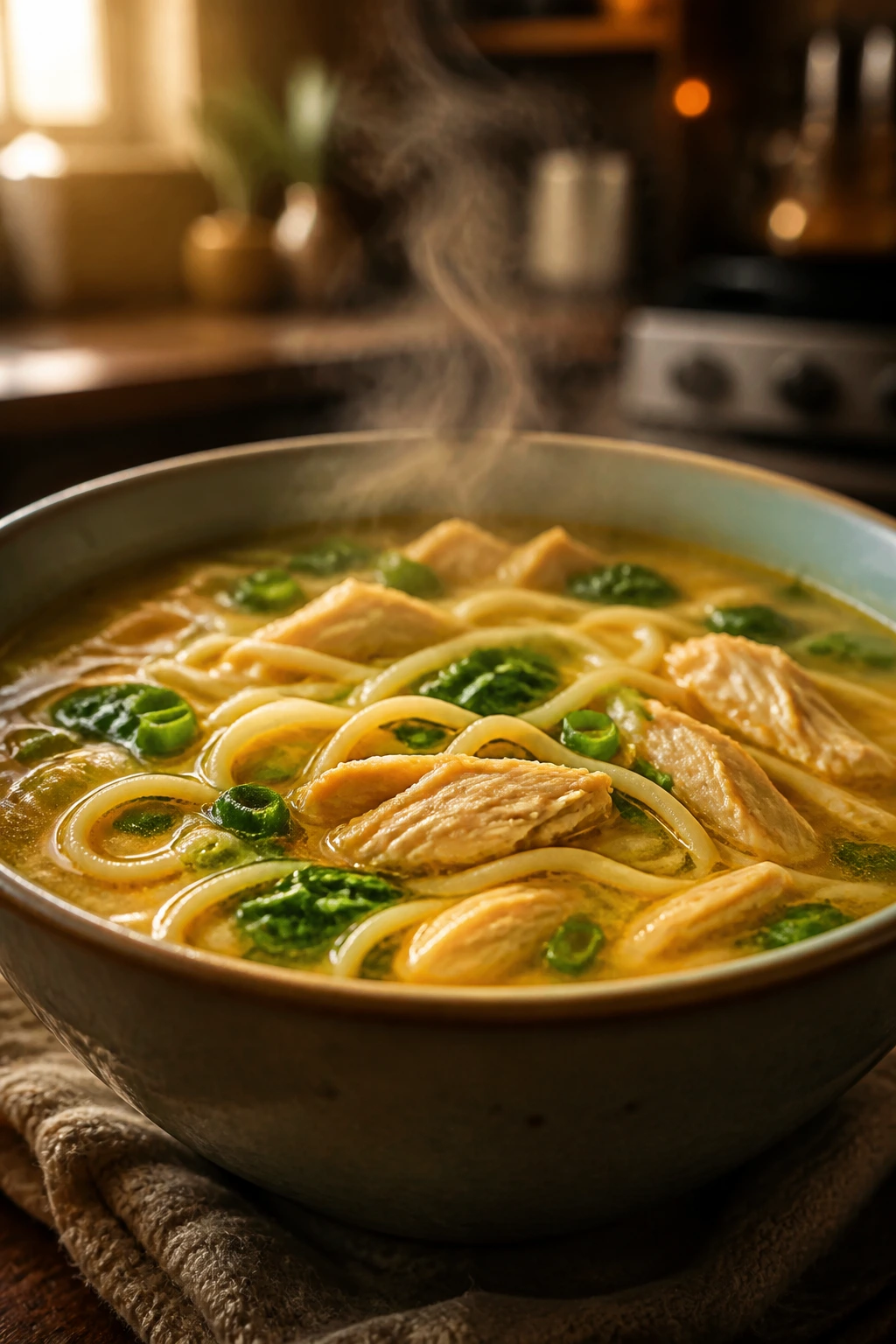
Some recipes ask for a very specific mood. This one asks for a cold night and pays you back with steam, texture, and a broth that feels fuller than the ingredient list suggests. The ginger keeps it awake, the sesame oil gives it a little shimmer, and the creamy finish makes the whole bowl feel settled and complete.
Once you’ve made it a time or two, you start to see the rhythm in it: brown the chicken, build the broth, keep the noodles honest, finish gently. That rhythm is the whole point. Keep the ginger on hand, keep a packet of noodles in the pantry, and this soup will be there when the weather gets sharp.
Creamy Chinese Chicken Noodle Soup for Cold Winter Nights — Recipe Card
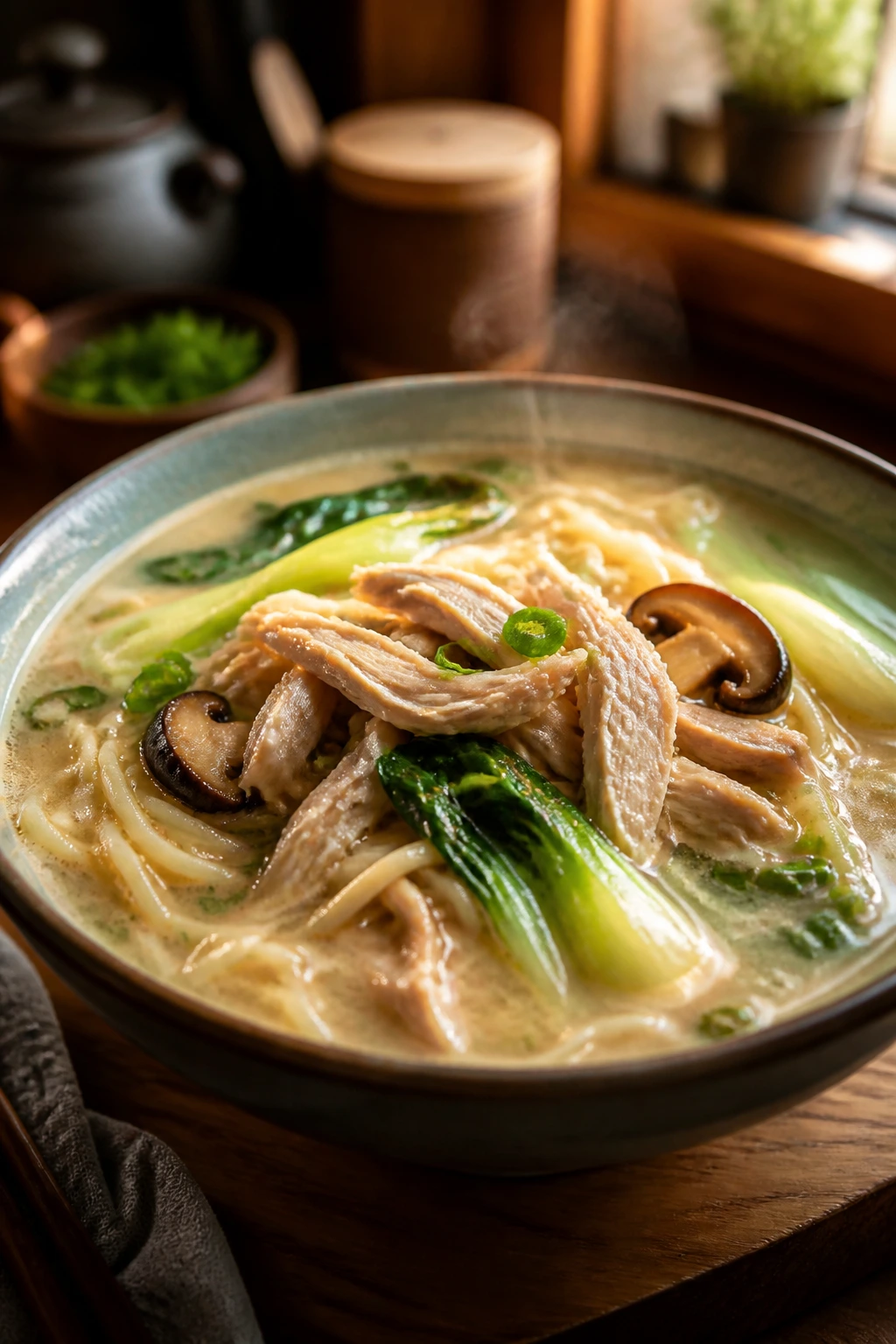
Recipe Name: Creamy Chinese Chicken Noodle Soup for Cold Winter Nights
Description: Ginger, garlic, soy, mushrooms, bok choy, and tender chicken simmer in a silky broth finished with evaporated milk and sesame oil. The noodles stay springy, the broth stays glossy, and the whole pot feels built for a cold evening.
Prep Time: 20 minutes
Cook Time: 35 minutes
Total Time: 55 minutes
Course: Dinner, Main Course
Cuisine: Chinese-American
Servings: 4 to 6
Calories: About 430 kcal per serving
Ingredients
For the Chicken and Seasoning:
- 1 1/2 pounds boneless, skinless chicken thighs, trimmed
- 1 teaspoon kosher salt
- 1/2 teaspoon white pepper
- 1 tablespoon cornstarch
- 2 tablespoons neutral oil, such as avocado, canola, or grapeseed
For the Broth:
- 1 large yellow onion, thinly sliced
- 4 garlic cloves, minced
- 1 tablespoon fresh ginger, finely grated
- 6 ounces shiitake mushrooms, stems trimmed and sliced
- 1 medium carrot, cut into thin matchsticks or half-moons
- 6 cups low-sodium chicken broth
- 1 cup water
- 2 tablespoons low-sodium soy sauce
- 1 tablespoon oyster sauce
- 1 tablespoon Shaoxing wine or dry sherry
- 1 whole star anise
For the Noodles and Vegetables:
- 6 ounces dried Chinese egg noodles or thin ramen noodles, seasoning packets discarded if present
- 3 baby bok choy, halved lengthwise, or 2 cups chopped bok choy leaves and stems
For the Creamy Finish:
- 1 cup evaporated milk
- 2 teaspoons cornstarch mixed with 2 tablespoons cold water
- 1 teaspoon toasted sesame oil
For Serving:
- 3 scallions, thinly sliced
- 1/4 cup fresh cilantro leaves
- Chili oil, to taste
Instructions
- Pat the chicken dry, season it with salt, white pepper, and cornstarch, and let it sit while you prep the vegetables.
- Heat the oil in a Dutch oven over medium-high heat and sear the chicken for 3 to 4 minutes per side until lightly golden; transfer to a plate.
- Cook the onion, mushrooms, and carrot over medium heat for 4 to 5 minutes, then add the garlic and ginger for 30 to 45 seconds.
- Add the Shaoxing wine, scrape the bottom of the pot, then pour in the broth, water, soy sauce, oyster sauce, and star anise. Bring to a gentle simmer.
- Return the chicken and simmer for 12 to 15 minutes, until cooked through. Remove the chicken, rest briefly, then slice or shred it.
- Add the noodles and cook until just shy of tender, then stir in the bok choy for the last 2 minutes.
- Stir in the cornstarch slurry and simmer for 1 minute until lightly thickened.
- Lower the heat and stir in the evaporated milk, then warm gently for 1 to 2 minutes without boiling.
- Return the chicken to the pot, stir in the sesame oil, remove the star anise, and serve with scallions, cilantro, and chili oil.
Notes: Keep the simmer gentle after the evaporated milk goes in. If you plan to store leftovers, cook the noodles separately or expect them to soften in the fridge.