



A good shrimp corn chowder has a certain honesty to it. It comes to the table looking modest — pale gold broth, a few freckles of black pepper, maybe some parsley on top — then it hits you with sweet corn, tender potato, and shrimp that taste faintly of the sea without turning fishy. On a cold night, that matters. You want something that warms the palms of your hands and still gives you a little bite, a little sweetness, a little salt.
Shrimp corn chowder is one of those pots that can go wrong in boring ways. Too much flour and it turns paste-thick. Too much heat and the dairy splits into a grainy mess. Leave the shrimp in too long and they curl into tight little commas that chew like rubber. The fix is not complicated. It’s mostly timing, a decent broth, and the discipline to add the shrimp at the very end, when the soup is already done and waiting for them.
What I like about this version is that it doesn’t lean on gimmicks. Corn does what corn should do: it brings sweetness and a little starch. Yukon Gold potatoes give body without turning the bowl muddy. Shrimp bring the clean, briny note that keeps the whole pot from feeling sleepy. And a small squeeze of lemon at the finish — not enough to make it sour, just enough to wake the cream up — keeps the chowder tasting like dinner instead of warmed milk.
Why This Shrimp Corn Chowder Works So Well on a Bitter Night
Sweet corn and shrimp pull in opposite directions, and that’s the point. Corn brings soft sweetness and little bursts of juice; shrimp bring a clean, salty snap. When the broth is creamy, those two flavors keep each other from getting flat.
The potatoes do more than fill the bowl. Yukon Golds release enough starch to thicken the chowder naturally, but they still hold their shape if you cut them small and simmer gently. That means you get body without having to dump in a heavy wall of cream.
A little bacon goes a long way here. Four slices, diced and cooked first, give the pot a smoky backbone. If you skip it, the chowder still works, but the butter-onion base needs an extra minute or two of cooking so the flavor lands with enough depth.
The shrimp stay tender because they enter late. That sounds obvious, but people mess it up all the time. Shrimp only need a couple of minutes in hot liquid; once they turn opaque and curl into loose C-shapes, they’re done. Any longer and they get tight, bouncy, and tired.
The final squeeze of lemon keeps the cream from feeling heavy. It doesn’t make the chowder taste lemony. It just sharpens the corn, brightens the shrimp, and makes the whole bowl taste finished instead of merely hot.
A Quick Look at Yield, Timing, and Difficulty
Yield: Serves 6 generous bowls
Prep Time: 20 minutes
Cook Time: 35 minutes
Total Time: 55 minutes
Difficulty: Intermediate — the steps are straightforward, but the shrimp timing and the gentle simmer matter more than people expect.
Best Served: Right after cooking, while the chowder is still glossy and the shrimp are tender
Chill/Rest Time: 5 minutes, just long enough for the broth to settle before ladling
A little advance prep makes this feel faster than the clock suggests. If the onion, celery, and potatoes are already cut, the active time drops fast, and the pot comes together with almost no waiting around. That matters on a night when you want dinner to feel warm and calm, not like a second shift.
The other thing worth knowing: chowder thickens as it sits. What looks a touch loose in the pot will usually settle into the right texture in the bowl after a few minutes. So if it seems slightly thinner than you expected at the stove, that’s not a mistake. It may be exactly right.
The Ingredient Lineup That Makes the Pot Taste Finished
For the Chowder Base
- 4 slices bacon, diced, or 2 tablespoons unsalted butter for a bacon-free version
- 2 tablespoons unsalted butter
- 1 medium yellow onion, diced
- 2 celery stalks, diced
- 2 cloves garlic, minced
- 1/4 cup all-purpose flour
- 3 cups low-sodium chicken broth or seafood stock
- 2 medium Yukon Gold potatoes, peeled or scrubbed and diced into 1/2-inch cubes
- 4 cups corn kernels, from 4 ears or frozen
- 1 cup whole milk
- 1 cup heavy cream
- 1 bay leaf
- 1 teaspoon kosher salt, plus more to taste
- 1/2 teaspoon black pepper
- 1 teaspoon smoked paprika
- 1/2 teaspoon dried thyme
- Pinch of cayenne, optional
For the Shrimp and Finish
- 1 pound medium shrimp, peeled and deveined, tails on or off
- 2 tablespoons chopped fresh parsley
- 1 tablespoon lemon juice
- Extra black pepper or hot sauce, for serving, optional
The ingredient list is short on purpose. There’s no need to crowd a chowder with six vegetables and three secret ingredients that all taste like paprika by the end. The sweetness should come from the corn, the creaminess from the potatoes and dairy, and the savory note from bacon, broth, or both.
What Each Ingredient Does Once It Hits the Pot
Shrimp
What to use: 1 pound medium shrimp, peeled and deveined, with tails on or off depending on how casual you want the bowl to feel.
Preparation: Thaw frozen shrimp in the fridge overnight, or under cold running water in a colander if you’re short on time. Pat them dry before they go into the pot so they don’t water down the chowder.
Substitutions: Lump crab, scallops cut in half, or chopped cooked lobster all work, but each one changes the tone. Crab makes the bowl sweeter and more delicate; scallops make it feel a little more luxurious and less rustic.
Tips: Don’t use tiny salad shrimp. They disappear into the broth and overcook before you can blink. Medium shrimp give you a real bite, and they’re easier to time.
Corn and Potatoes
What to use: 4 cups corn kernels and 2 medium Yukon Gold potatoes, cut into 1/2-inch cubes.
Preparation: If you’re using fresh corn, cut the kernels off the cob and scrape the cobs with the back of the knife to collect the milky pulp. That little bit of corn juice makes the chowder taste fuller. Cut the potatoes evenly so they soften at the same pace.
Substitutions: Frozen corn is the easiest swap and works well all year. Red potatoes can stand in for Yukon Golds, though they hold their shape a little more. Russets will thicken the chowder more aggressively, which is fine if you like a thicker spoon-coating broth.
Tips: Yukon Gold is my pick because it sits in the middle — creamy, but not mealy. If you want the chowder to feel more substantial, mash a few potato cubes against the side of the pot near the end. That gives you body without turning the whole thing to glue.
Broth, Milk, and Cream
What to use: 3 cups low-sodium chicken broth or seafood stock, 1 cup whole milk, and 1 cup heavy cream.
Preparation: Measure these before you turn on the heat. Once the flour goes in and the broth is waiting, you want to move without scrambling around for a carton of milk.
Substitutions: Half-and-half can replace the milk and cream if that’s what you have, though the final bowl will be a little lighter. If you need a dairy-free version, full-fat coconut milk is the best stand-in, and it brings a faint sweetness that plays well with corn.
Tips: Keep the heat modest once dairy enters the pot. Hard boiling is what causes a chowder to split or look oily around the edges. A lazy simmer — the kind with just a few bubbles at the perimeter — is enough.
Aromatics and Seasonings
What to use: 1 medium onion, 2 celery stalks, 2 cloves garlic, 1 teaspoon kosher salt, 1/2 teaspoon black pepper, 1 teaspoon smoked paprika, 1/2 teaspoon dried thyme, 1 bay leaf, and a pinch of cayenne if you like a little edge.
Preparation: Dice the onion and celery small so they melt into the base instead of staying crunchy. Mince the garlic finely so it disperses in the fat rather than clumping.
Substitutions: Old Bay can replace some or all of the paprika and thyme if you want a more classic seafood profile. White pepper works if you don’t want dark flecks in the broth.
Tips: Blooming the paprika and thyme in butter or bacon fat is worth the extra minute. Raw spices taste dusty; a quick sizzle in hot fat makes the whole kitchen smell like something worth eating.
The Tools I Reach For Before I Start
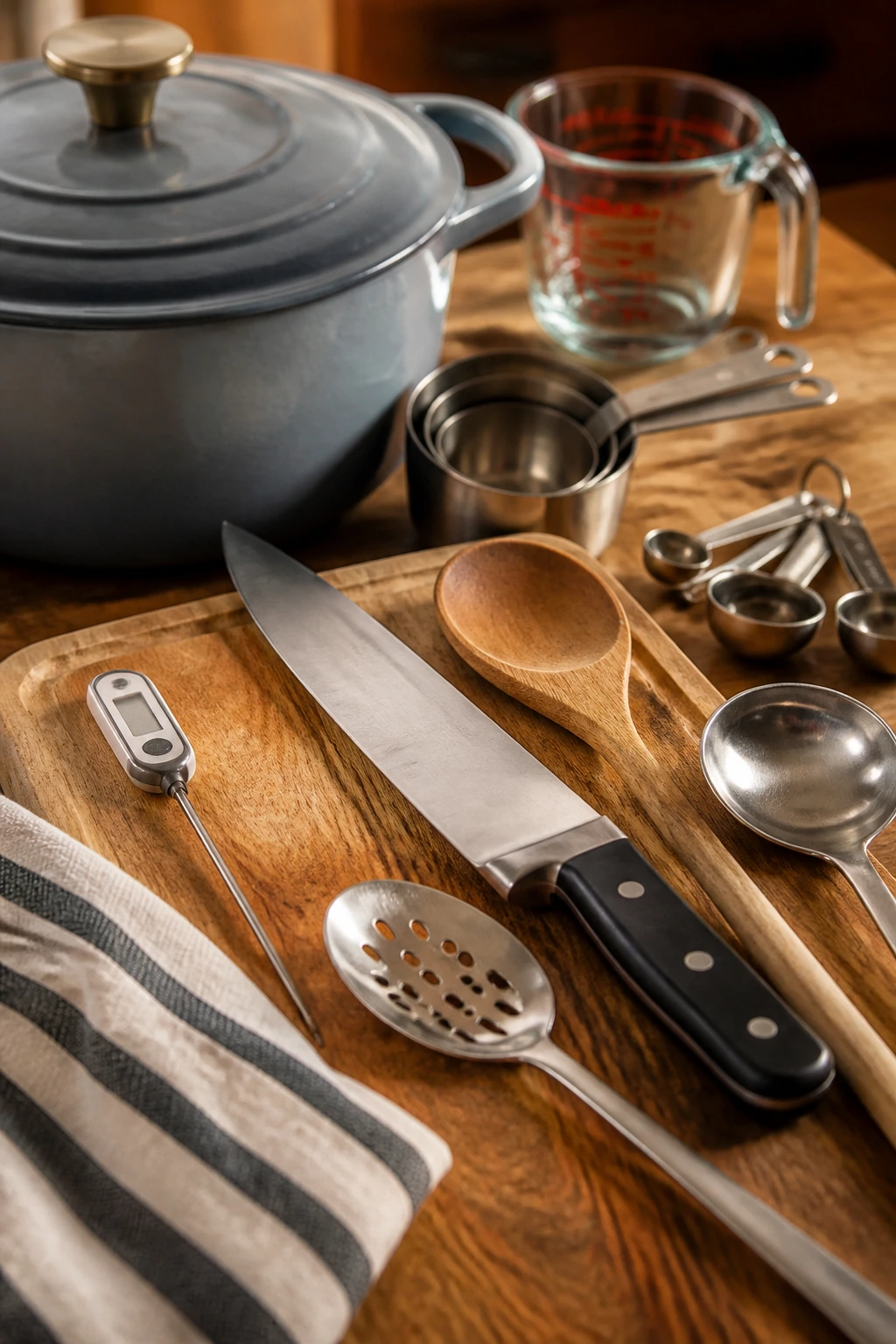
- 6-quart Dutch oven or heavy soup pot: Heavy bottoms keep the dairy from scorching on the way to a simmer.
- Chef’s knife: A sharp knife makes the onion and celery dice cleaner, which helps them cook evenly.
- Cutting board: A stable board matters more than people admit; put a damp towel under it if it tends to slide.
- Measuring cups and spoons: The flour, broth, milk, and cream need to be measured, not guessed.
- Wooden spoon or heatproof spatula: You’ll use it for stirring the flour into the fat and scraping the bottom of the pot.
- Ladle: A proper ladle keeps the bowl neat and lets you scoop a good balance of shrimp, potato, and broth.
- Slotted spoon: Useful for pulling bacon out of the pot without taking half the fat with it.
- Instant-read thermometer, optional: Handy if you want a hard stop at 145°F for the shrimp.
- Small bowl for the shrimp: Keeps them close at hand so you can add them at the right moment, not three minutes later when the pot has wandered off.
A heavy pot is not a luxury here. Thin cookware makes cream-based soups more touchy, and nobody needs to babysit a chowder with one hand on the burner dial. The whole job gets easier when the pan has some weight to it.
How to Cook the Chowder Without Overthinking It
Phase 1: Build the savory base
-
Crisp the bacon or melt the butter. Set a 6-quart Dutch oven over medium heat. Add the diced bacon and cook for 6 to 8 minutes, stirring now and then, until the fat renders and the pieces turn crisp at the edges. Use a slotted spoon to move the bacon to a plate. If you’re skipping bacon, melt the 2 tablespoons butter and move straight to the vegetables. Leave about 1 tablespoon of fat in the pot. Too much grease makes the chowder feel heavy, not rich.
-
Soften the onion and celery. Add the diced onion and celery to the pot. Cook for 4 to 5 minutes, stirring occasionally, until the onion turns translucent and the celery loses its raw bite. The vegetables should look glossy, not browned. If the pot seems dry, add the remaining butter.
-
Bloom the garlic and spices. Stir in the minced garlic, smoked paprika, thyme, cayenne if using, kosher salt, and black pepper. Cook for 30 to 45 seconds, just until fragrant. The garlic should smell sweet, not sharp. If the garlic starts to brown, lower the heat right away.
-
Coat everything with flour. Sprinkle the flour over the vegetables and stir for 1 to 2 minutes until no dry patches remain. The mixture should look a little like damp sand and smell faintly nutty. This step cooks out the raw flour taste and gives the chowder a smoother body later.
Phase 2: Turn it into chowder
-
Whisk in the broth slowly. Pour in the broth a little at a time, whisking or stirring constantly so the flour dissolves into the liquid without forming lumps. Scrape the bottom of the pot to lift up any browned bits. Add the bay leaf. Bring the pot to a gentle simmer over medium heat.
-
Cook the potatoes until nearly tender. Add the diced potatoes, then lower the heat to medium-low and cover the pot partially. Simmer for 12 to 15 minutes, stirring once or twice, until the potatoes are just tender when pierced with a fork but not falling apart. You want them soft enough to eat, not so soft that they vanish.
-
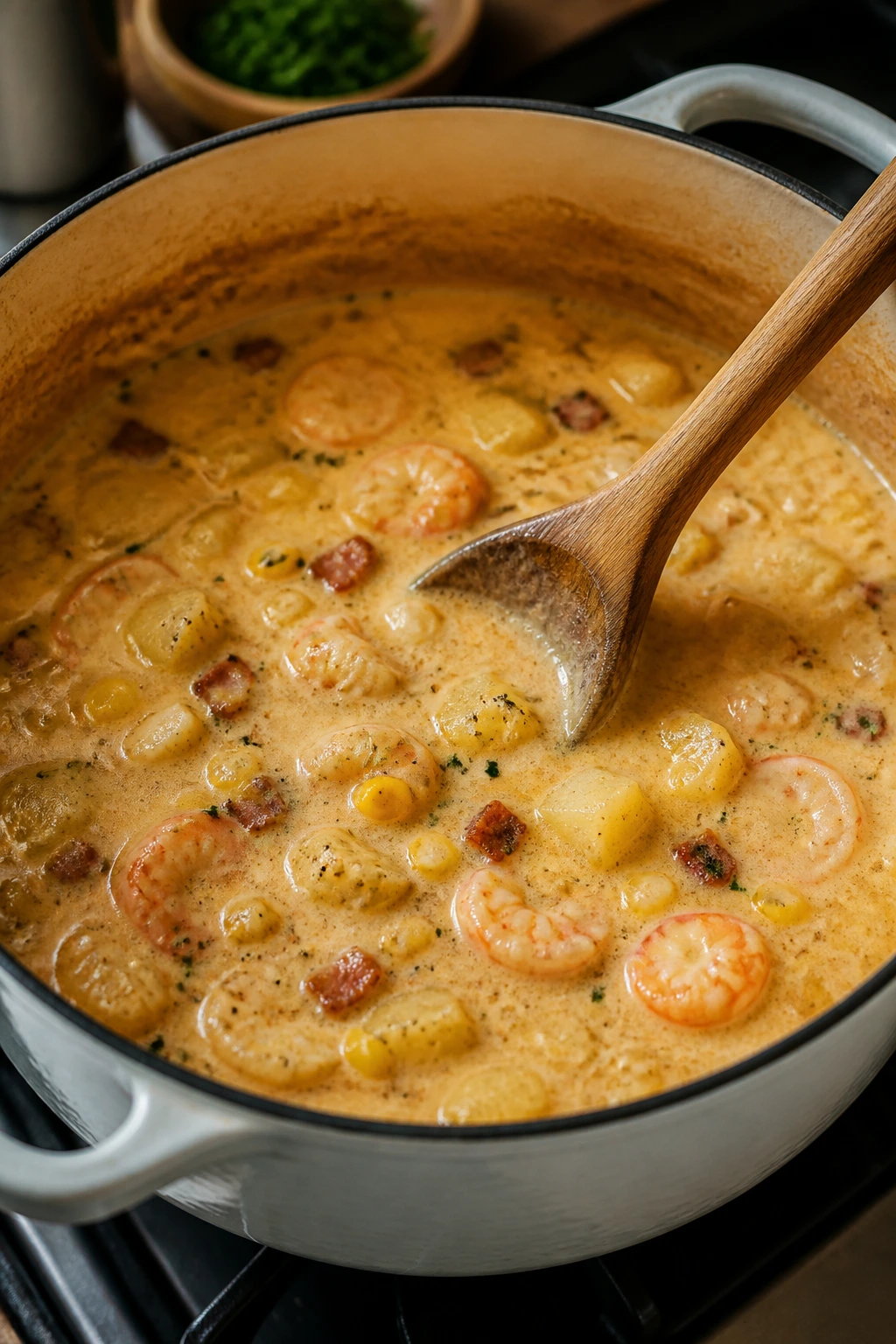
Add the corn, milk, and cream. Stir in the corn, milk, and cream. Keep the heat low and let the chowder come back to a lazy simmer for 5 to 7 minutes. The broth should thicken slightly and coat the spoon; the corn should taste sweet and the potatoes should be fully tender. Do not let the chowder boil hard once the dairy is in.
Phase 3: Finish with shrimp
-
Add the shrimp and cook just until opaque. Stir the shrimp into the pot in an even layer. Cook for 2 to 3 minutes, stirring gently once or twice, until the shrimp turn pink and opaque and curl into loose C-shapes. If you’re using a thermometer, aim for 145°F in the thickest shrimp. If the shrimp curl into tight little O-shapes, they’ve gone too far.
-
Finish with acid and herbs. Remove the bay leaf. Stir in the lemon juice and parsley, then taste and adjust with more salt or black pepper if needed. If the chowder feels too thick, loosen it with a splash of broth or milk. Ladle into warm bowls, top with the reserved bacon, and serve right away.
This method is simple, but the order matters. Bacon first. Flour second. Dairy later. Shrimp last. The chowder tastes balanced because each ingredient gets the right kind of heat for the right amount of time.
How to Serve It Without Making It Fussy
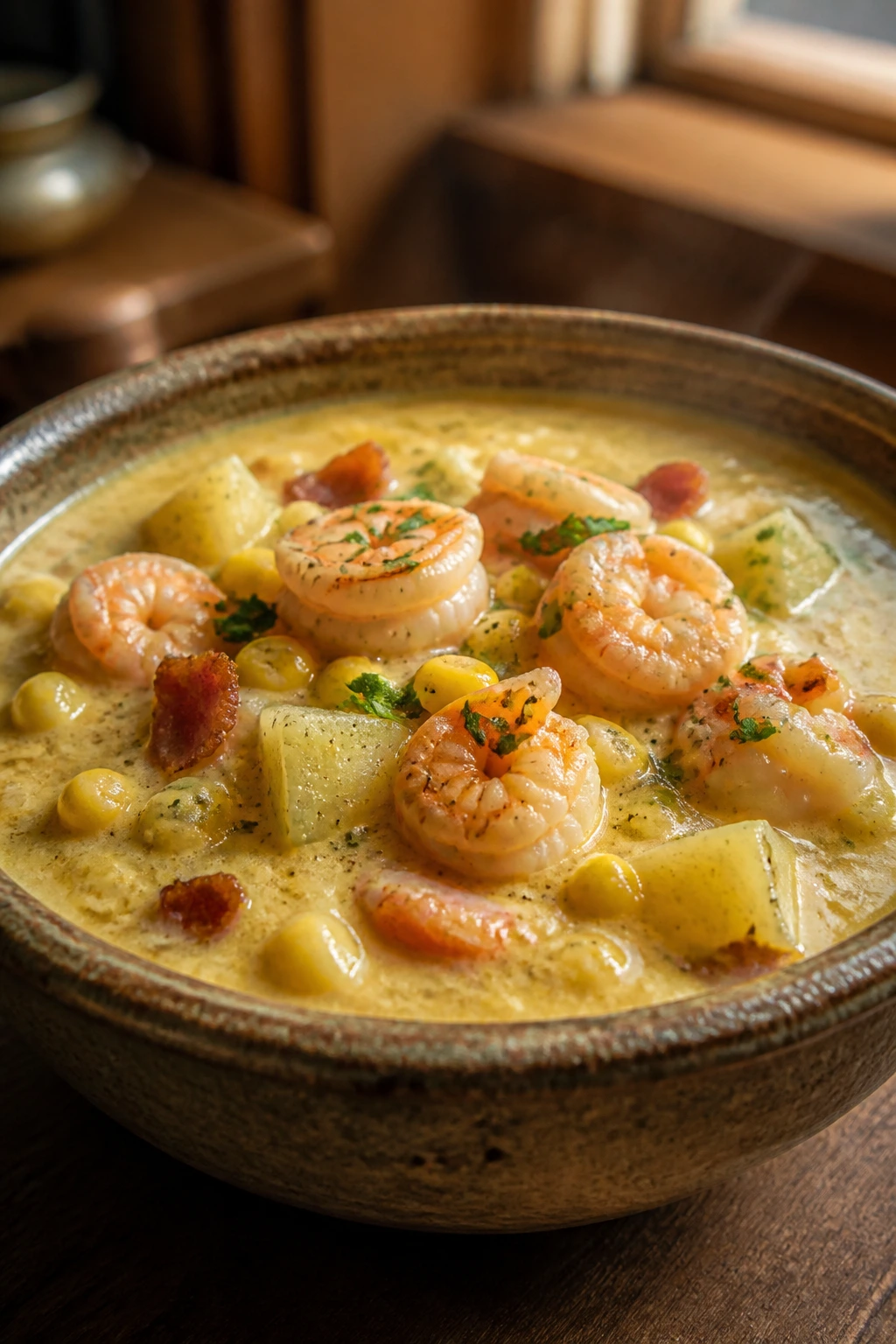
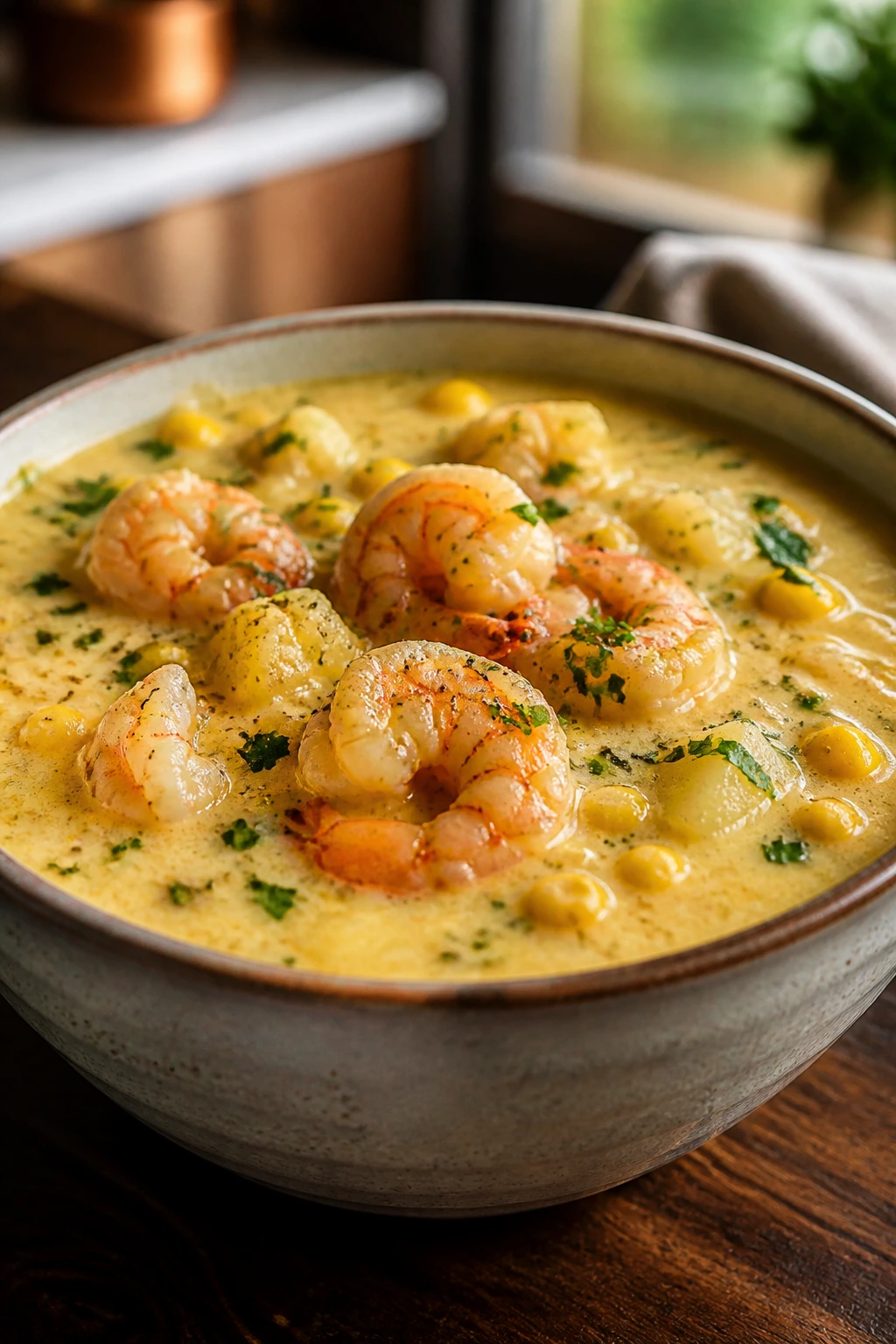
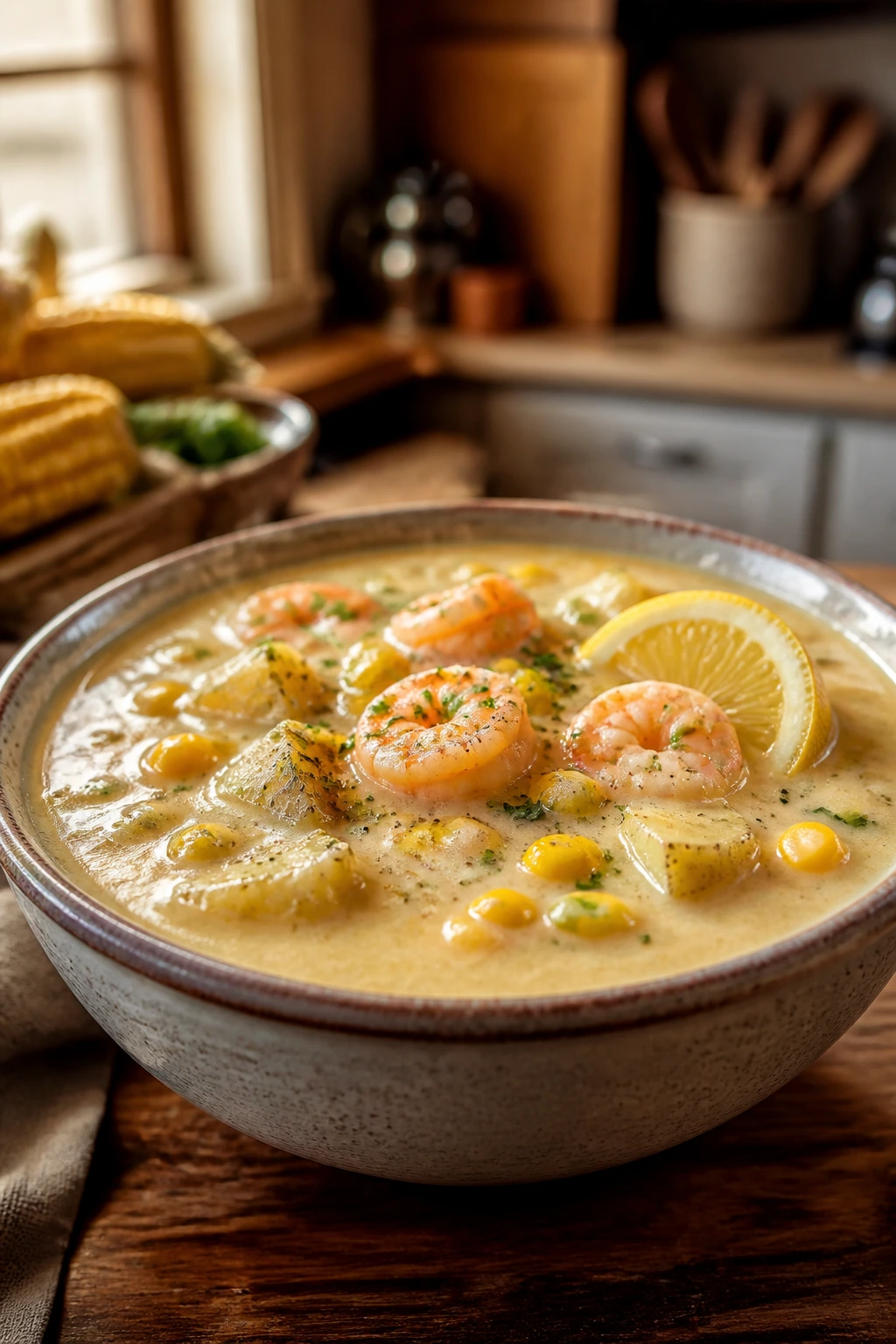
Presentation: Ladle the chowder into warm, shallow bowls so the shrimp and potato pieces sit close to the surface instead of sinking into the bottom. A little chopped parsley, black pepper, and the reserved bacon on top are enough. If you want a cleaner finish, add a tiny pinch of paprika over the center of each bowl — not enough to make a dusting, just enough for color.
Accompaniments: Thick toasted sourdough is the best thing to put next to this chowder. The crust catches the creamy broth and the chew gives the meal some structure. Oyster crackers are fine if you want something lighter and saltier. A simple green salad with lemon vinaigrette or a mustardy slaw cuts through the richness without fighting the corn. Cornbread works too, but keep it plain; honey-laden cornbread can push the bowl into dessert territory.
Portions: Plan on about 1 1/2 cups per person for dinner, or 1 cup if the chowder is opening a bigger meal. If you’re feeding very hungry people, especially after outdoor weather, 2 cups each is not excessive. The recipe doubles cleanly in a larger pot if you need to stretch it for a crowd.
Beverage Pairing: A dry hard cider is one of my favorite matches because its apple bite plays well with the corn’s sweetness. A crisp sauvignon blanc or a light lager also works. For a nonalcoholic option, sparkling water with a squeeze of lemon keeps the palate fresh between spoonfuls.
Serve the bowls while the chowder is still steaming and glossy. Once it sits for a few minutes, the texture gets even better, but the temperature drops fast — especially in wide bowls. Warm plates help more than people think.
Small Tweaks That Make a Big Difference
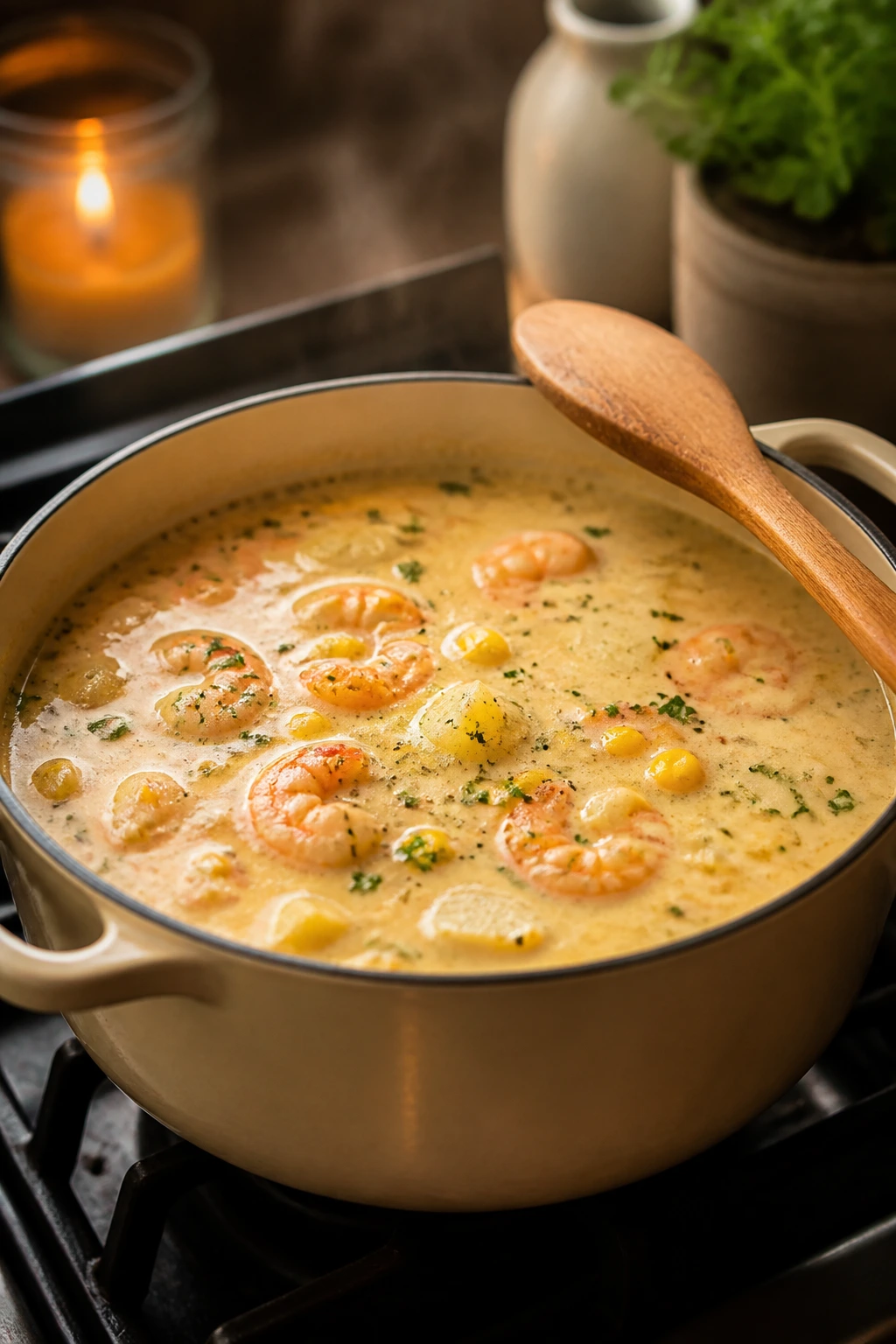
Flavor Enhancement: Stir 1 teaspoon of Old Bay into the flour stage if you want a more seafood-forward bowl. It gives the broth a little celery salt, paprika, and clove without shouting over the shrimp. A few drops of hot sauce at the table can also wake up the last spoonful.
Customization: Dice half a red bell pepper and cook it with the onion and celery if you want more sweetness and color. If you like a richer seafood profile, swap half the shrimp for 8 ounces of lump crab and stir the crab in during the final minute so it warms without shredding.
Serving Suggestions: A little lemon zest over the top is sharper than an extra squeeze of juice and keeps the bowl smelling fresh. Chopped chives, celery leaves, or a spoonful of reserved bacon each give a different finish. I’d pick one, not all three; too many toppers can make chowder feel fussy.
Make-It-Yours: For a lighter bowl, use 1 1/2 cups whole milk and 1/2 cup cream. For a dairy-free version, use full-fat coconut milk and extra stock. If you want the soup thicker without more flour, mash a few potato cubes against the side of the pot before adding the shrimp.
The biggest improvement, though, is restraint. One smart finish beats three competing ones. A good chowder should smell like corn and shrimp first, smoke second, and maybe lemon after that.
Troubleshooting the Mistakes That Ruin Chowder
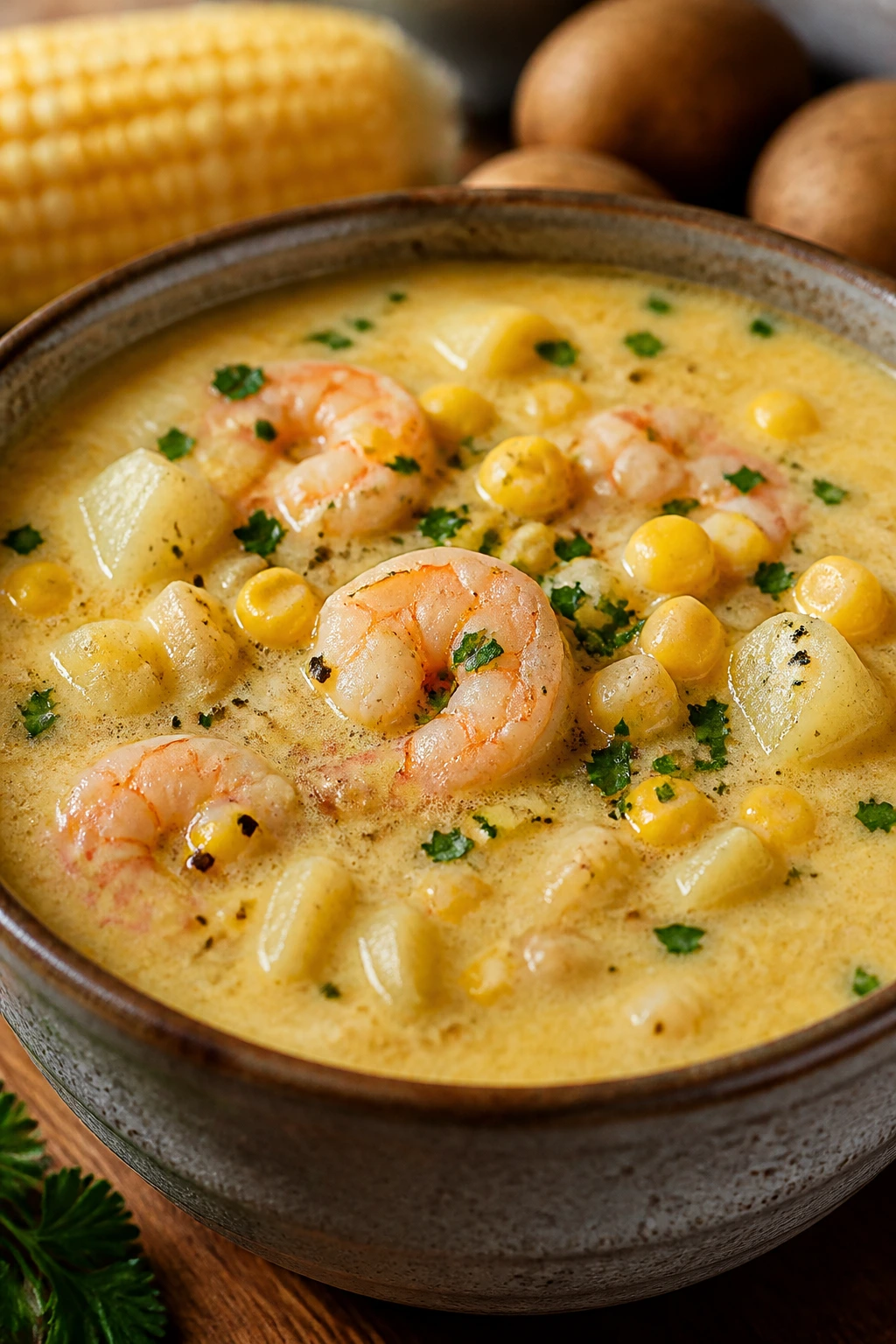
-
Boiling the chowder after the cream goes in. The surface can start to look slick or grainy, and the broth may separate around the edges. Keep the heat low once the milk and cream are added. A lazy simmer is enough; you are warming and thickening, not running a rolling boil.
-
Adding the shrimp too early. They turn tight and chewy, and the chowder gets that overcooked seafood texture that nobody likes. Wait until the potatoes are already tender and the broth is finished, then give the shrimp only 2 to 3 minutes in the hot liquid.
-
Skipping the flour cookout. Raw flour tastes pasty and can make the broth taste unfinished. Stir it through the fat for a full minute or two before the broth goes in. The mixture should smell a little nutty before you add liquid.
-
Cutting the potatoes too large. Big cubes take too long, and by the time they soften, the shrimp are at risk. Keep them around 1/2 inch so they cook through in the same window as the broth thickens.
-
Underseasoning the base. Cream blunts salt and makes blandness harder to notice until the end. Season the onion mixture early, then taste again after the lemon juice goes in. The broth should taste like corn, shrimp, and butter — not just cream.
-
Using a very thin pot. Thin cookware scorches the milk more easily and gives you hot spots that can make the bottom taste caught. If your soup pot is lightweight, lower the heat even more and stir from the bottom often.
A chowder doesn’t fail loudly. It fails by being a little dull, a little gummy, or a little overdone. The fixes are small, which is annoying in the best possible way.
Different Ways to Take the Same Bowl
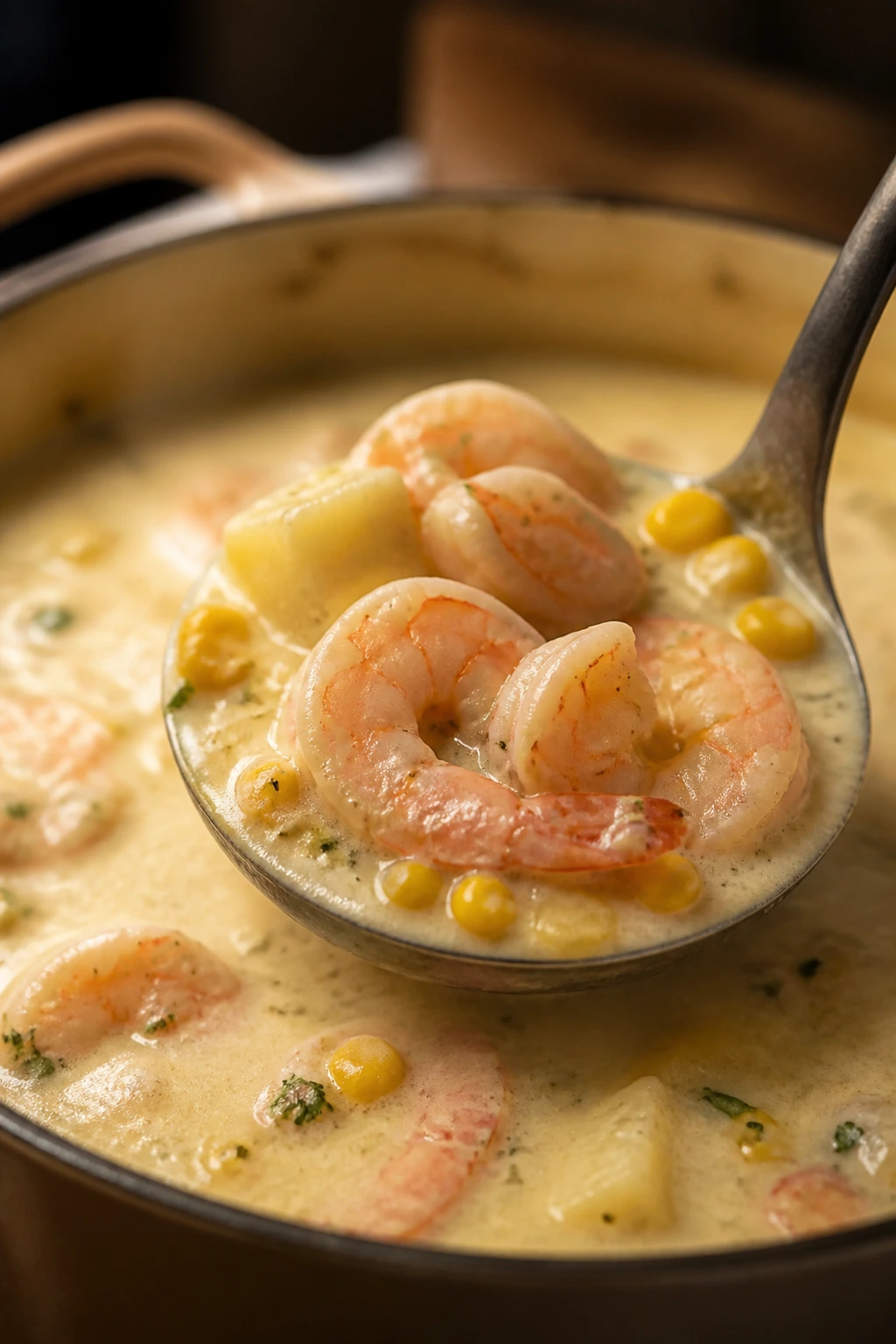
Smoky Harbor Chowder: Keep the bacon, then char 1 cup of the corn in a dry skillet for 3 to 4 minutes until it picks up brown spots before adding it to the pot. That extra step gives the chowder a deeper, almost grilled flavor that works especially well with the sweet shrimp.
Cajun Peppercorn Bowl: Add 1 to 1 1/2 teaspoons Cajun seasoning with the paprika, and toss in half a diced red bell pepper with the onion and celery. Finish with sliced scallions and a sharper hit of hot sauce. The broth gets spicier and a little more angular, which some people prefer with shrimp.
Coconut-Lime Coastline Chowder: Replace the milk and cream with one 13.5-ounce can of full-fat coconut milk plus 1 to 1 1/2 cups more broth. Swap lemon juice for lime juice and parsley for cilantro. The flavor turns rounder and slightly tropical, and the corn still keeps it grounded.
Crab-and-Shrimp Dockside Chowder: Use 12 ounces of shrimp and 8 ounces of lump crab. Add the crab at the very end, just long enough to warm through, so it stays in lumps instead of shredding into the broth. This version tastes sweeter and more delicate, and it feels a touch more special without becoming fussy.
Gluten-Free Corn Chowder: Replace the flour with 2 tablespoons cornstarch mixed with 3 tablespoons cold broth. Whisk that slurry into the simmering broth before the potatoes go in, then proceed as usual. It won’t taste different, but the texture will be a little silkier and less rustic.
Each variation keeps the same basic architecture: sweet corn, tender shrimp, and a creamy broth with enough backbone to hold a spoon. That’s the part that matters. The rest is seasoning and mood.
Storage, Reheating, and Make-Ahead Without Mushy Shrimp
The finished chowder keeps in the refrigerator for 3 to 4 days in a tightly sealed container. Cool it within 2 hours of cooking, then portion it into shallow containers so it loses heat quickly. If you leave a big pot sitting on the stove all evening, the dairy and seafood both suffer, and the texture gets sloppy before you even store it.
Freezing is a little trickier. The best freezer plan is to freeze the base before the shrimp go in and, if possible, before the cream is added. The vegetable-and-broth base freezes well for up to 2 months. Thaw it in the fridge overnight, bring it back to a gentle simmer, add the milk and cream, then cook the shrimp fresh. The fully finished chowder can be frozen in a pinch, but the cream may separate and the shrimp can turn firm.
For reheating, the stove wins. Warm the chowder over low heat in a saucepan, stirring often and adding a splash of broth or milk if it has thickened too much. A microwave works for single servings if you use 50% power and stop to stir every 45 to 60 seconds. High heat is the enemy here; it overcooks the shrimp and makes the dairy misbehave.
Make-ahead is where this recipe gets friendlier than people expect. You can dice the onion, celery, and potatoes up to 24 hours ahead and store them in separate airtight containers. If you peel the potatoes early, keep them submerged in cold water and drain them well before cooking so they don’t bring excess water into the pot. You can also make the chowder through the potato stage, refrigerate it, and then reheat gently before adding the shrimp at the last minute.
If you know you’ll have leftovers, the smartest move is to keep back a portion of the cooked shrimp and add them to each bowl as you reheat. That way the main pot stays tender, and the shrimp don’t spend a second round in hot liquid.
Questions People Ask Before They Make It
Can I use frozen shrimp?
Yes, and in many kitchens that’s the easier choice. Thaw them fully, pat them dry, and add them at the very end just like fresh shrimp. Frozen shrimp are often cleaner-tasting than shrimp that sat too long in a display case.
Do I have to use fresh corn?
No. Frozen corn works very well because it’s picked and frozen quickly, which keeps the sweetness intact. If you use canned corn, drain it first so the chowder doesn’t get tinny or overly salty.
What potatoes work best in shrimp corn chowder?
Yukon Gold potatoes are the sweet spot because they soften into a creamy texture without collapsing completely. Red potatoes also hold up nicely. Russets will make the chowder thicker, but they break down more and can make the broth look cloudier.
How do I thicken the chowder if it feels too thin?
Let it simmer a little longer before the shrimp go in, uncovered, so some liquid evaporates. You can also mash a few potato cubes against the side of the pot. If you need a faster fix, stir 1 tablespoon of flour or cornstarch into a little cold broth, then whisk it in and simmer briefly.
Can I make it without bacon?
Absolutely. Use the full 2 tablespoons of butter and let the onion and celery cook an extra minute or two so the base gets some color. A little smoked paprika helps replace the lost smoke.
Can I freeze leftover shrimp corn chowder?
You can, but the texture is never as good as the first day. If freezing matters, freeze the base before adding shrimp and dairy, then finish the soup after thawing. That keeps the shrimp from turning tough and the cream from separating.
What if my shrimp are tiny?
Tiny shrimp cook fast and can disappear into the broth. If that’s what you have, add them off the heat after the chowder is finished and let the residual heat cook them through. You’ll get a softer texture, so don’t overdo the final stir.
A Bowl Worth Repeating
A good chowder does not need to be loud to be memorable. It just needs enough sweetness from the corn, enough salt from the shrimp, and enough patience to let the pot build itself in stages. That’s what makes this bowl feel satisfying on a cold night: it’s creamy without getting lazy, hearty without turning leaden, and sharp enough at the end to make you want another spoonful.
I like recipes that leave a clean pot and a quiet kitchen behind them. This one does that, and it still tastes like you put in real care. Keep the heat low, watch the shrimp closely, and don’t skip the lemon at the finish. Those are the small things that make the difference when the bowl lands in front of you.
Cozy Shrimp Corn Chowder for Cold Winter Nights — Recipe Card
Recipe Name: Cozy Shrimp Corn Chowder for Cold Winter Nights
Description: A creamy shrimp corn chowder with sweet corn, tender Yukon Gold potatoes, and shrimp added at the end so they stay plump. The broth is rich, smoky, and finished with lemon and parsley to keep every bowl bright.
Prep Time: 20 minutes
Cook Time: 35 minutes
Total Time: 55 minutes
Course: Soup, Main Course
Cuisine: American
Servings: 6 servings
Calories: About 340 kcal per serving
Ingredients
For the Chowder Base:
- 4 slices bacon, diced, or 2 tablespoons unsalted butter for a bacon-free version
- 2 tablespoons unsalted butter
- 1 medium yellow onion, diced
- 2 celery stalks, diced
- 2 cloves garlic, minced
- 1/4 cup all-purpose flour
- 3 cups low-sodium chicken broth or seafood stock
- 2 medium Yukon Gold potatoes, peeled or scrubbed and diced into 1/2-inch cubes
- 4 cups corn kernels, from 4 ears or frozen
- 1 cup whole milk
- 1 cup heavy cream
- 1 bay leaf
- 1 teaspoon kosher salt, plus more to taste
- 1/2 teaspoon black pepper
- 1 teaspoon smoked paprika
- 1/2 teaspoon dried thyme
- Pinch of cayenne, optional
For the Shrimp and Finish:
- 1 pound medium shrimp, peeled and deveined, tails on or off
- 2 tablespoons chopped fresh parsley
- 1 tablespoon lemon juice
- Extra black pepper or hot sauce, optional
Instructions
-
Cook the bacon in a 6-quart Dutch oven over medium heat for 6 to 8 minutes until crisp, then remove it with a slotted spoon. Leave about 1 tablespoon of fat in the pot. If skipping bacon, melt the butter and move on.
-
Add the onion and celery and cook for 4 to 5 minutes until translucent and softened. Stir in the garlic, paprika, thyme, cayenne if using, salt, and black pepper for 30 to 45 seconds.
-
Sprinkle in the flour and stir for 1 to 2 minutes until the vegetables are coated and the flour smells slightly nutty.
-
Slowly whisk in the broth, scraping up any browned bits from the bottom of the pot. Add the bay leaf and bring to a gentle simmer.
-
Add the potatoes, lower the heat to medium-low, and simmer partially covered for 12 to 15 minutes until the potatoes are nearly tender.
-
Stir in the corn, milk, and cream. Keep the chowder at a lazy simmer for 5 to 7 minutes until slightly thickened.
-
Add the shrimp and cook for 2 to 3 minutes, stirring gently, until the shrimp are pink, opaque, and curled into loose C-shapes.
-
Remove the bay leaf. Stir in the lemon juice and parsley, taste for salt, and adjust if needed. Ladle into bowls and top with the reserved bacon, if using.
Notes: Keep the heat low once the dairy goes in. Add the shrimp at the very end so they stay tender. If the chowder thickens on standing, loosen it with a splash of broth or milk.