



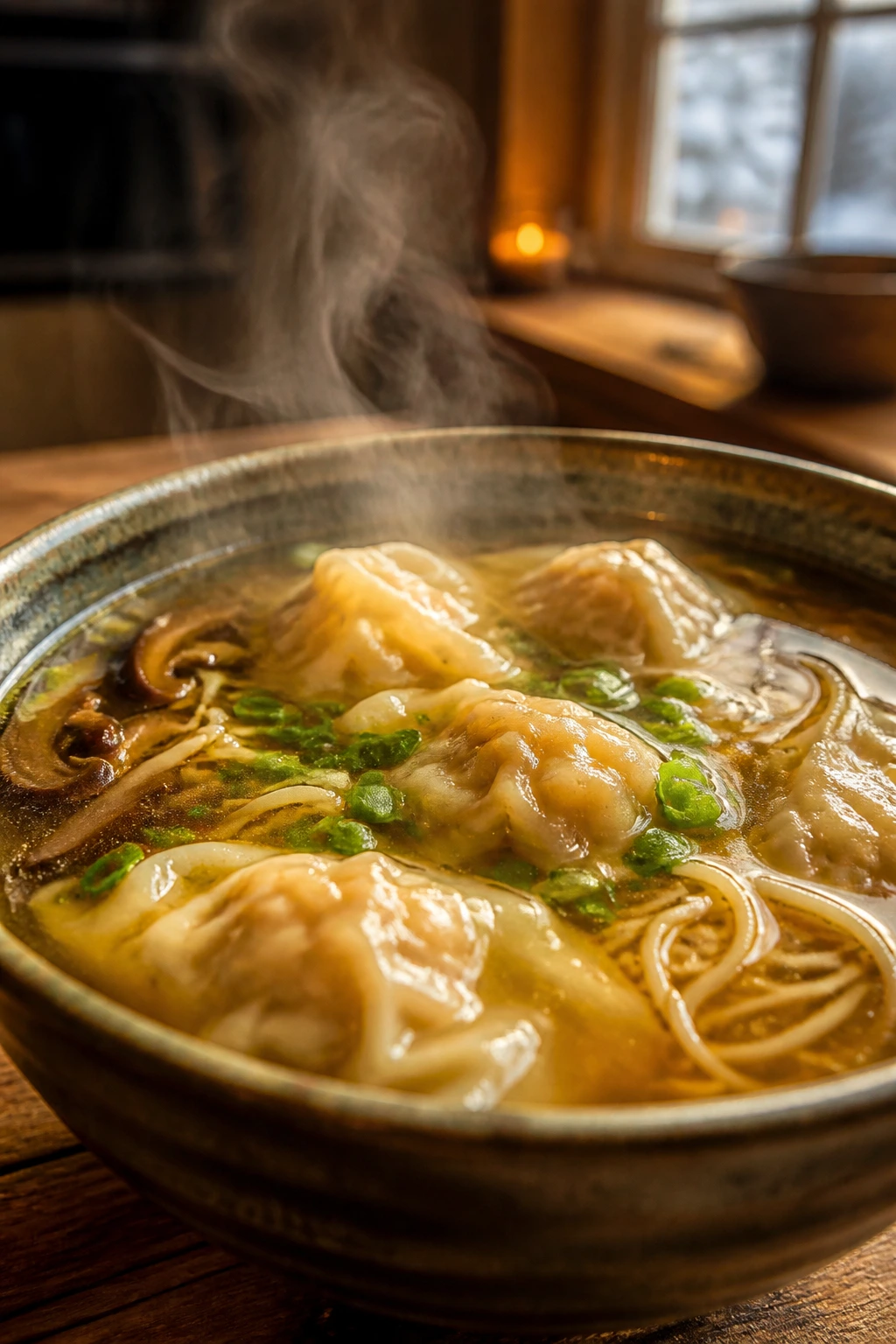
A good bowl of wonton noodle soup does a funny thing to a kitchen. The steam rises, the broth softens the edges of the room, and the whole place feels a little less sharp. On a night when the windows are cold and the light outside looks thin, this is the bowl I want: ginger in the nose, scallions in the background, noodles with a little bite, and wontons that stay plump instead of dissolving into the pot.
The trick is that the comfort here is not accidental. A weak broth tastes like warm water with ambition. A rushed wonton bursts. Noodles left to sit too long turn into little soaked ropes. When the bowl works, every part has a job, and none of them are trying to show off. The broth stays clear and savory, the filling stays springy, and the greens give you one clean, fresh bite after another.
That balance is what makes this dish worth making at home. You’re not chasing restaurant theatrics. You’re building something steady and deeply satisfying from ordinary things — stock, ginger, wrappers, noodles, a few greens — and the result tastes more thoughtful than the ingredient list looks. Start with the broth, and the rest falls into place.
Why This Bowl Earns Its Keep on a Windy Night
-
The broth tastes layered without needing hours of babysitting: chicken stock, ginger, scallion whites, dried shiitake, soy sauce, and white pepper simmer together for about 25 minutes, which is long enough to knit the flavors together but not long enough to turn dinner into a project.
-
The wontons stay tender because the filling is built to hold together: pork, shrimp, cornstarch, and egg white make a filling that firms up in the pot in 3 to 4 minutes instead of turning grainy or loose.
-
The noodles keep their bounce: cooking them separately and adding them at the last minute keeps the broth clean and the texture springy instead of starchy and slumped.
-
It tastes like a full meal in one bowl: you get protein, noodles, greens, and a hot broth with enough body to feel complete. No side dish is required unless you want one.
-
The whole thing scales cleanly: double the broth and filling, and you can feed a bigger table without changing the method. The folding takes longer, but the pot doesn’t care.
-
Leftovers don’t have to be sad: the broth gets deeper after a night in the fridge, and the uncooked wontons freeze well if you’d rather fold once and eat twice.
Timing, Yield, and the Shape of the Dinner
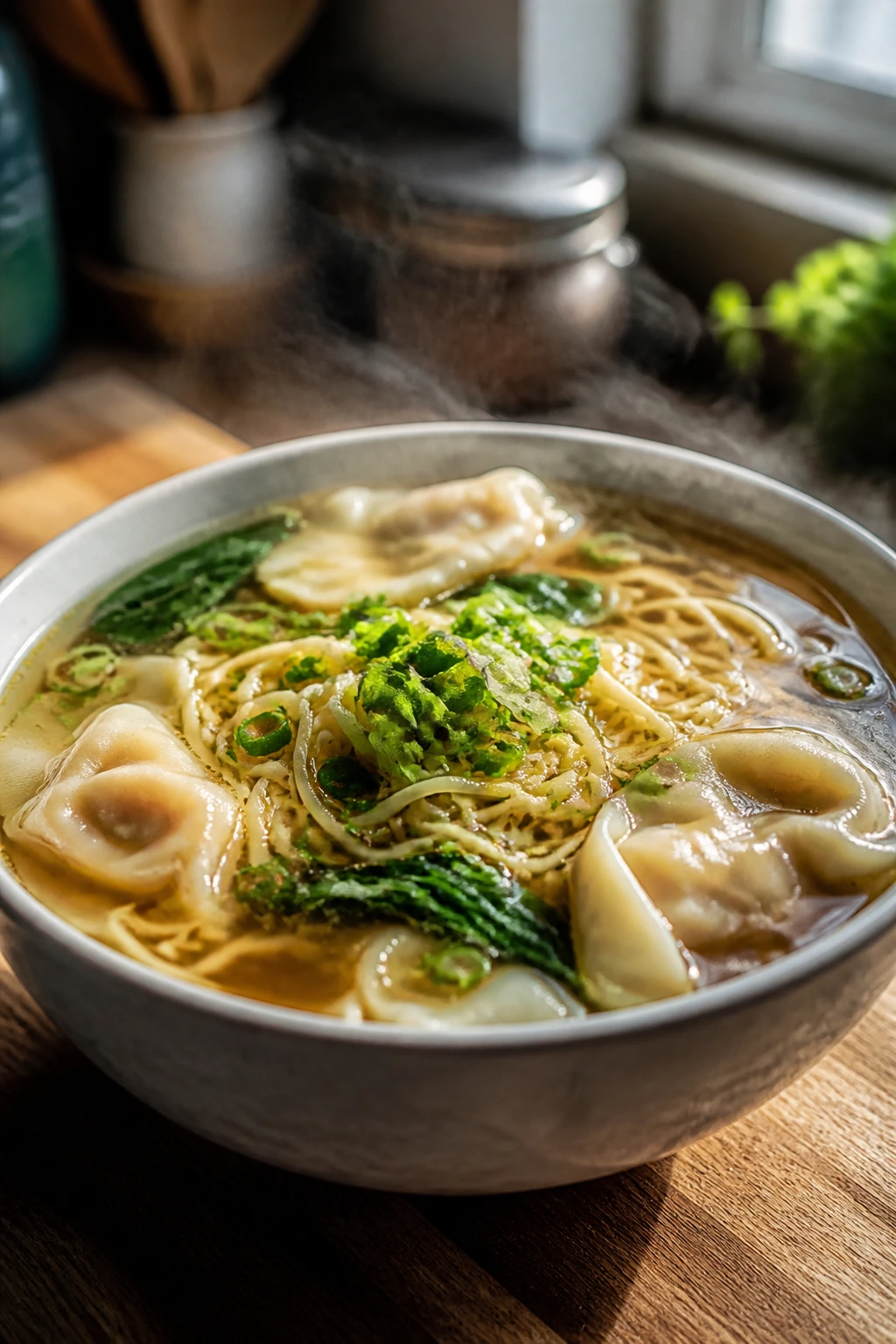
Yield: Serves 4
Prep Time: 35 minutes
Cook Time: 35 minutes
Total Time: 1 hour 10 minutes
Difficulty: Intermediate — the broth itself is simple, but folding neat wontons takes a little patience and a steady hand.
Chill/Rest Time: 15 minutes for the filling, if you want it firmer and easier to shape
Best Served: Right away, while the broth is hot and the noodles still have some spring
Ingredients That Carry the Bowl
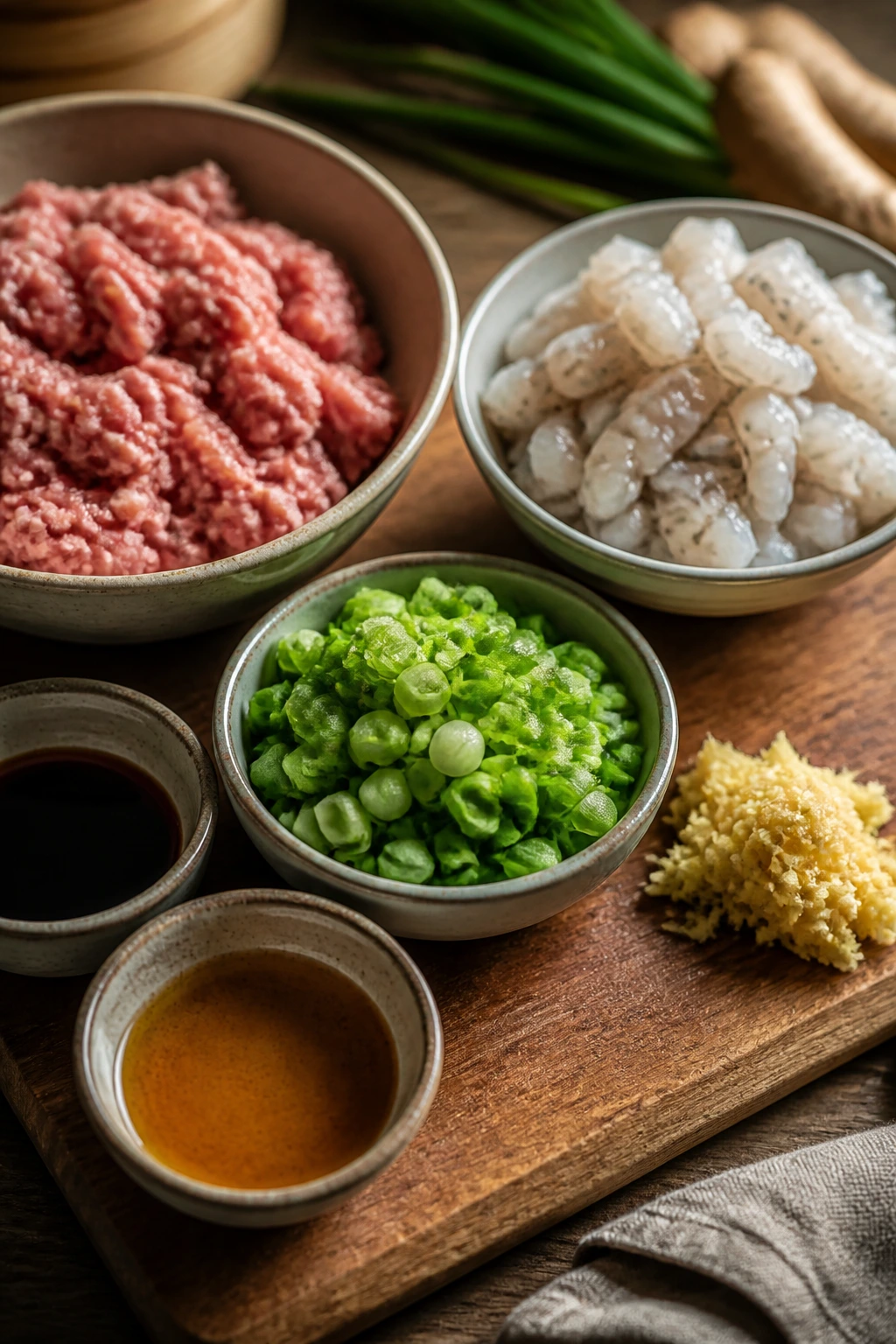
For the Wonton Filling:
- 8 oz ground pork
- 4 oz raw shrimp, peeled, deveined, and finely chopped
- 2 scallions, very finely minced
- 1 tablespoon fresh ginger, grated
- 1 tablespoon soy sauce
- 1 teaspoon Shaoxing wine or dry sherry
- 1 teaspoon toasted sesame oil
- 1 teaspoon cornstarch
- 1 large egg white
- 1/2 teaspoon granulated sugar
- 1/4 teaspoon white pepper
- 24 wonton wrappers
- Small bowl of water, for sealing
For the Broth:
- 8 cups low-sodium chicken stock
- 1 cup water
- 2-inch piece fresh ginger, sliced
- 4 scallions, whites only, smashed
- 2 garlic cloves, smashed
- 3 dried shiitake mushrooms
- 1 tablespoon soy sauce
- 1 tablespoon Shaoxing wine or dry sherry
- 1/2 teaspoon white pepper
- 1/2 teaspoon fine salt, plus more to taste
- 1 teaspoon toasted sesame oil
For the Noodles and Greens:
- 8 oz dried thin egg noodles
- 4 baby bok choy, halved lengthwise
- 2 scallions, green parts only, thinly sliced
- 2 tablespoons cilantro leaves
- Chili crisp or chili oil, for serving, optional
Why These Ingredients Make the Broth, Wontons, and Noodles Work
The Wonton Filling
What to use: 8 oz ground pork, 4 oz raw shrimp, 2 scallions, ginger, soy sauce, Shaoxing wine, sesame oil, cornstarch, egg white, sugar, white pepper, and 24 wonton wrappers. That mix gives you the classic bouncy filling with enough fat to stay juicy and enough starch to hold the shape.
Preparation: Chop the shrimp finely enough that it disappears into the pork, but do not mash it into paste. Mince the scallions very small, or they’ll poke holes in the wrappers and make folding annoying.
Substitutions: Ground chicken works if you want a lighter filling, and ground turkey works too, though it needs the sesame oil and egg white more than pork does. If shrimp isn’t your thing, use 12 oz ground pork and add another teaspoon of minced ginger.
Tips: The filling should look sticky and a little glossy when mixed. If it feels loose, let it sit in the fridge for 10 to 15 minutes before folding; cold filling is easier to handle and less likely to leak.
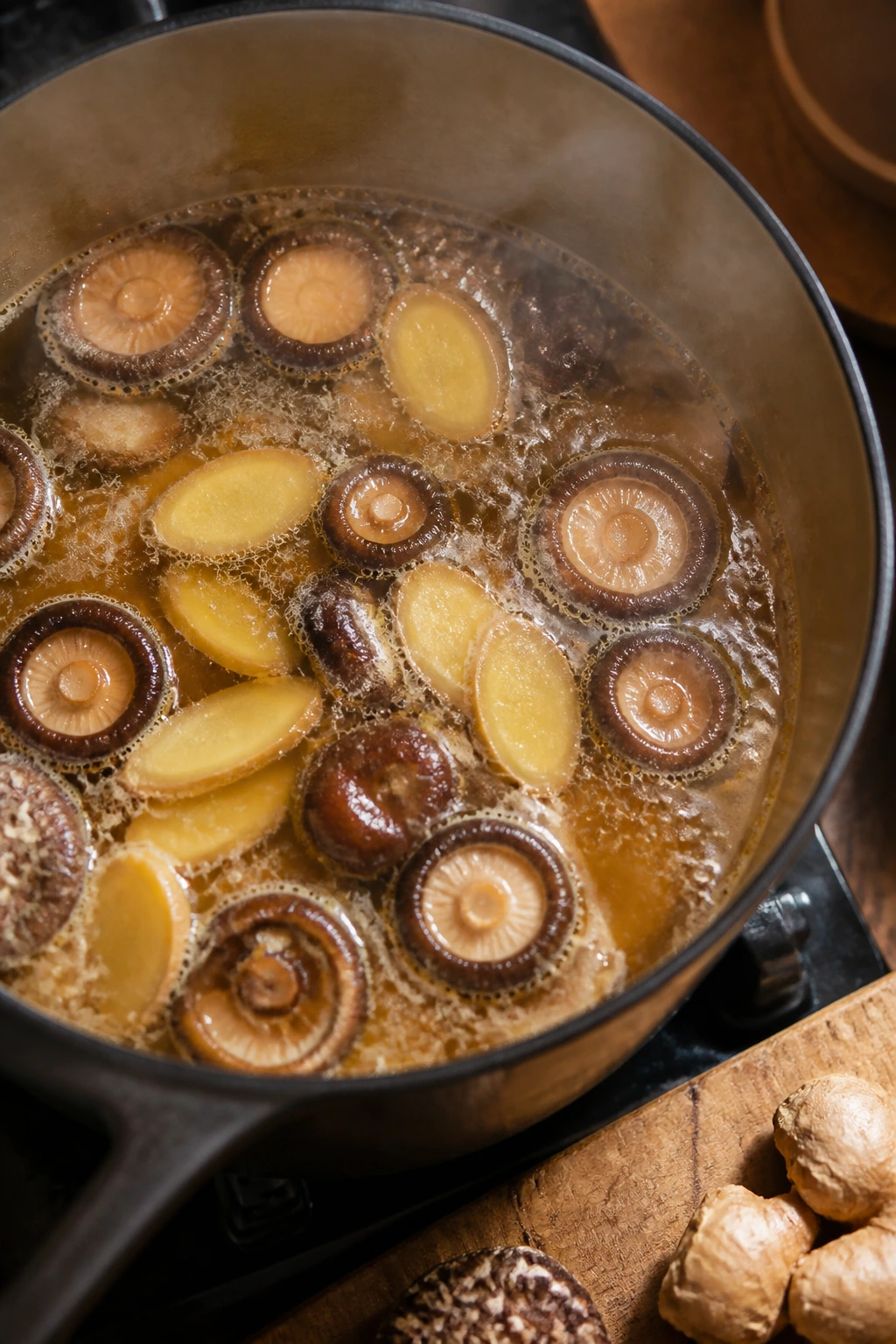
The Broth Base
What to use: 8 cups low-sodium chicken stock, 1 cup water, ginger, scallion whites, garlic, dried shiitake mushrooms, soy sauce, Shaoxing wine, white pepper, salt, and sesame oil. The shiitakes and ginger do the quiet heavy lifting here.
Preparation: Smash the scallions and garlic so their flavor opens up quickly in the pot. Slice the ginger so the broth can pull out its perfume without becoming muddy.
Substitutions: If you have homemade stock, use it. If all you have is boxed broth with a stronger salt level, cut the added salt in half and taste at the end. Vegetable stock can work, but the broth will need more shiitake and a more careful hand with seasoning.
Tips: Keep the broth at a bare simmer after the first boil. A hard boil makes the liquid cloudy and rough around the edges, and that’s not the mood here. Clear, clean, and hot is the goal.
The Noodles and Greens
What to use: 8 oz dried thin egg noodles and 4 baby bok choy. Thin egg noodles stay springy under hot broth and give the soup that proper restaurant feel without needing special equipment.
Preparation: Halve the baby bok choy lengthwise so the stems stay intact and the leaves can fan out in the bowl. Cook the noodles separately, then rinse them briefly so they don’t keep gluing themselves together.
Substitutions: Fresh wonton noodles are lovely if you can find them. Thin ramen noodles work in a pinch, and rice vermicelli works if you want a lighter bowl, though it changes the texture in a noticeable way.
Tips: Do not skip the greens. Even a small handful of bok choy changes the whole bowl, giving you crunch at the stem and softness at the leaf. That little contrast matters more than it sounds like it should.
The Finishing Touches
What to use: Scallion greens, cilantro, and chili crisp or chili oil if you want heat. The herbs lift the bowl at the end, when the broth is already doing most of the work.
Preparation: Slice the scallion greens thinly so they float instead of clumping. Pick the cilantro leaves from thicker stems unless you like a stronger green bite.
Substitutions: Chives work where cilantro doesn’t. A few drops of toasted sesame oil can stand in for chili crisp if you want fragrance without heat.
Tips: Finish the bowl after it’s already in front of you. If you add herbs too early, they vanish into the steam and lose the fresh, sharp edge that makes the last spoonful taste alive.
Tools That Make the Whole Thing Easier
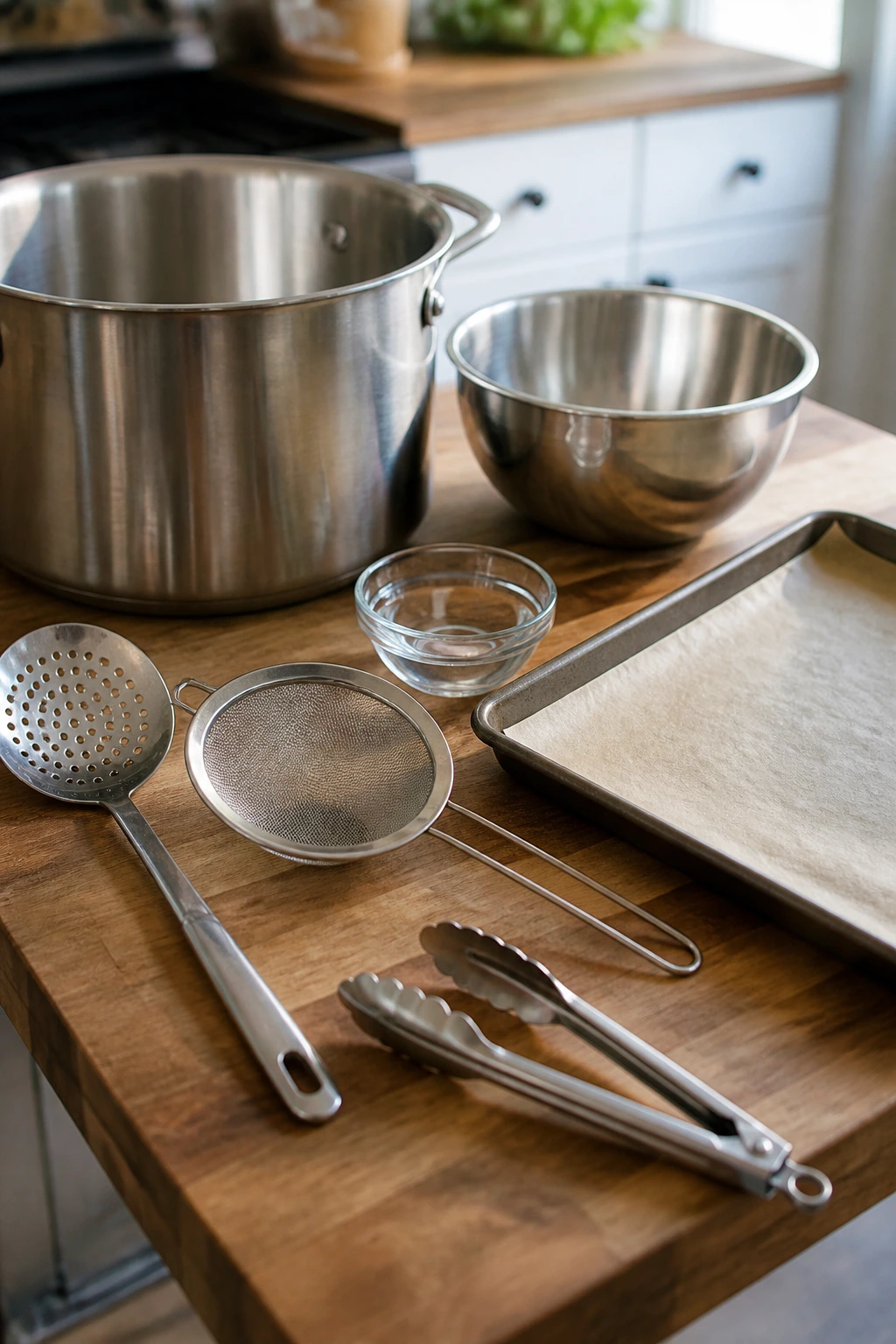
-
6-quart soup pot or Dutch oven — Large enough for the broth, the wontons, and the greens without feeling cramped.
-
Medium mixing bowl — You’ll use this for the wonton filling; a wider bowl makes mixing easier.
-
Small bowl of water — This is for sealing the wrappers. Keep it close.
-
Parchment-lined sheet pan — Set folded wontons here so they don’t stick before cooking.
-
Slotted spoon or spider skimmer — Useful for lifting wontons without tearing wrappers.
-
Fine-mesh strainer — Optional, but worth using if you want a cleaner broth after simmering the aromatics.
-
Medium saucepan — Handy for cooking the noodles separately so the broth stays clear.
-
Tongs — Makes moving bok choy and noodles less fiddly.
-
Soup bowls — Warmed bowls hold heat better. A quick rinse with hot water helps more than you’d think.
Building the Broth and Folding the Wontons
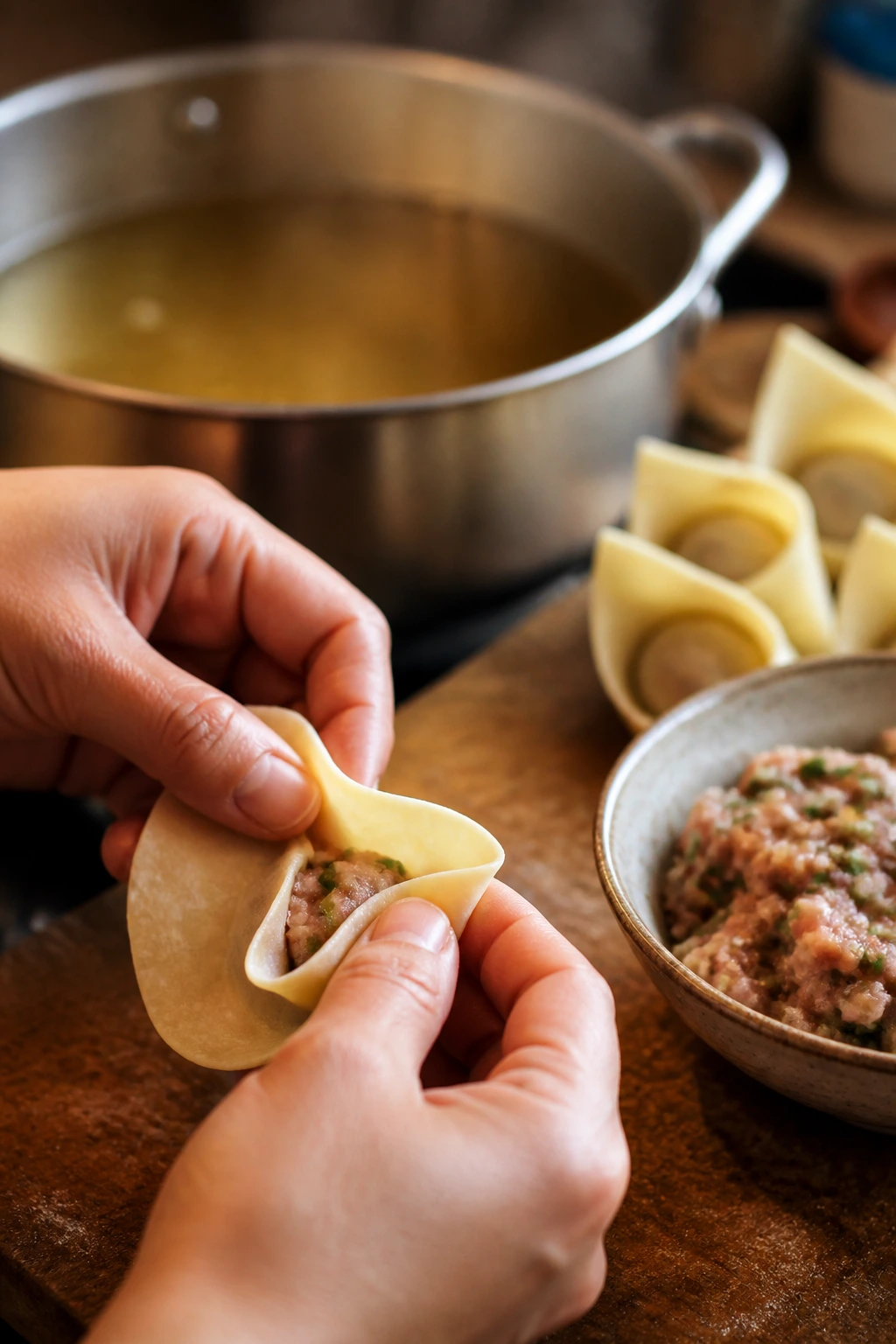
Make the Broth:
-
Combine the broth ingredients. In a 6-quart soup pot, add the chicken stock, water, ginger, scallion whites, garlic, and dried shiitake mushrooms. Bring the pot to a boil over medium-high heat, then lower it immediately to a gentle simmer.
-
Simmer until the broth smells round and savory. Cook for 25 minutes, uncovered, until the kitchen smells like ginger, stock, and a little bit of sweetness from the shiitakes. Do not let the pot boil hard; a hard boil makes the broth cloudy and strips away the clean finish.
-
Season the broth and strain it. Stir in the soy sauce, Shaoxing wine, white pepper, salt, and sesame oil. Taste carefully. The broth should taste savory and balanced, not salty. Strain it into a clean pot or bowl through a fine-mesh strainer, pressing the shiitakes lightly against the strainer to get the last bit of flavor out. Return the broth to low heat.
Mix and Shape the Wontons:
-
Mix the filling until it turns sticky. In a medium bowl, combine the ground pork, chopped shrimp, scallions, ginger, soy sauce, Shaoxing wine, sesame oil, cornstarch, egg white, sugar, and white pepper. Stir with chopsticks or a fork for about 1 minute, until the filling looks cohesive and tacky. If it still looks loose and wet, keep mixing. That sticky texture is what keeps the wontons intact.
-
Set up your folding station. Lay out 8 wrappers at a time and keep the rest covered with a slightly damp towel so they do not dry out. Fill a small bowl with water and place the sheet pan nearby.
-
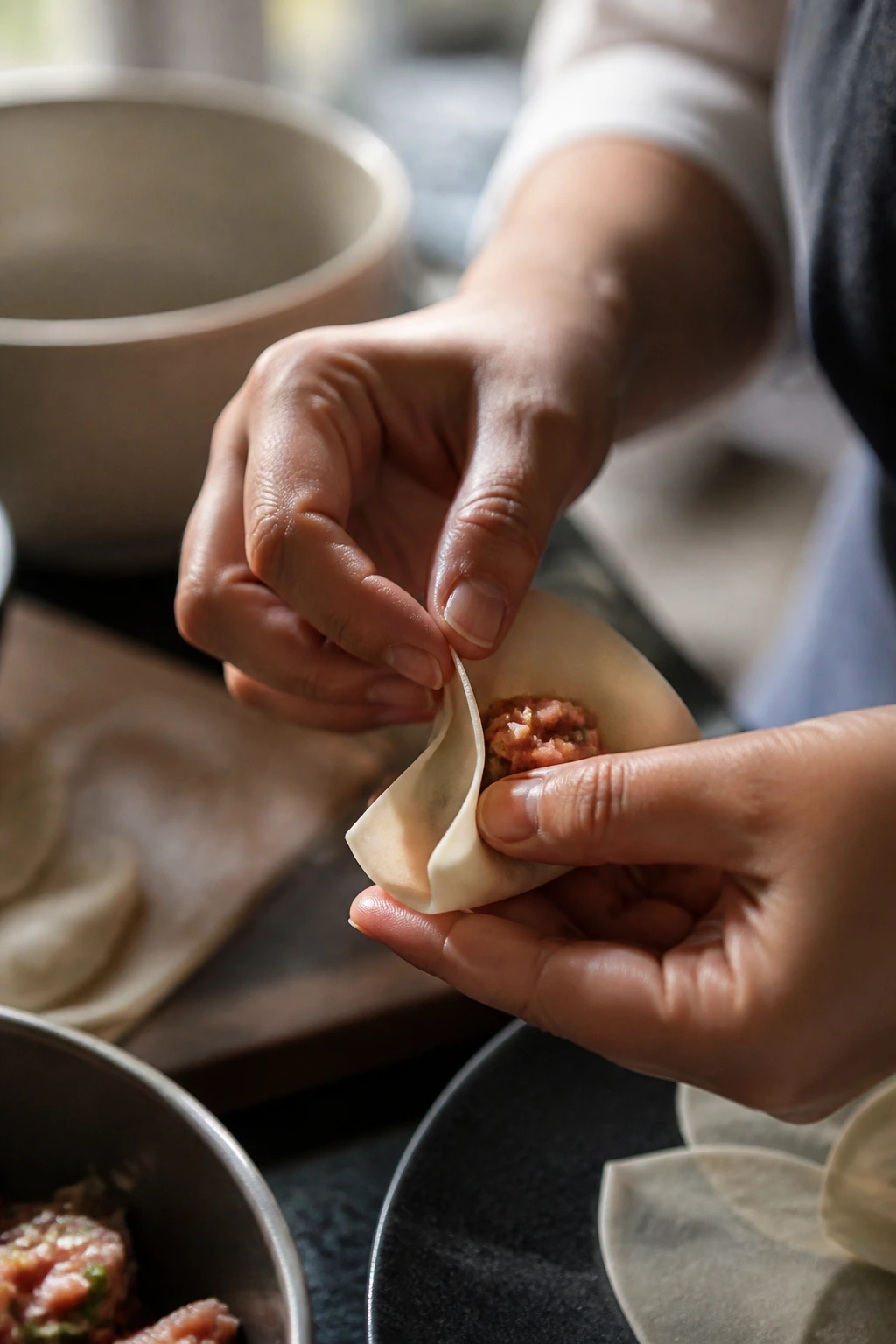
Fill and seal the wrappers. Place 1 teaspoon of filling in the center of each wrapper. Dip a finger in water and trace the edges, then fold into a triangle and press out the air. Bring the two bottom corners together and pinch them into a little parcel. Set each wonton on the lined sheet pan, leaving a bit of space between them. Do not overfill; too much filling is the fastest path to bursting wrappers.
-
Repeat until all 24 wrappers are used. If you want to work ahead, cover the folded wontons lightly and keep them chilled for up to 2 hours, or freeze them on the sheet pan for later.
Cook the Noodles and Greens:
-
Boil the noodles separately. Bring a medium saucepan of water to a rolling boil and cook the egg noodles for 1 to 2 minutes less than the package says, usually 2 to 3 minutes for dried thin noodles. Drain and rinse briefly under hot water. You want them just tender and still springy.
-
Blanch the bok choy in the broth. Slide the halved bok choy into the simmering broth and cook for 1 to 2 minutes, until the stems brighten and the leaves wilt just enough to bend at the tips. Lift them out with tongs and set aside.
Finish the Bowls:
-
Cook the wontons in the broth. Raise the broth back to a gentle simmer and add the wontons in batches. Cook for 3 to 4 minutes, stirring once very gently so they do not stick to the pot. The wrappers should turn slightly translucent, and the filling should feel firm when you press one with a spoon. If you cut one open, the center should no longer look raw.
-
Assemble the bowls quickly. Divide the noodles among 4 warmed bowls. Add the bok choy and 5 to 6 wontons to each bowl, then ladle in about 2 cups of hot broth per serving.
-
Finish and serve immediately. Top each bowl with scallion greens, cilantro, and a small drizzle of chili crisp or chili oil if you want heat. Serve right away while the broth is still steaming and the noodles still have some bite.
How to Serve It So the Broth Stays Bright
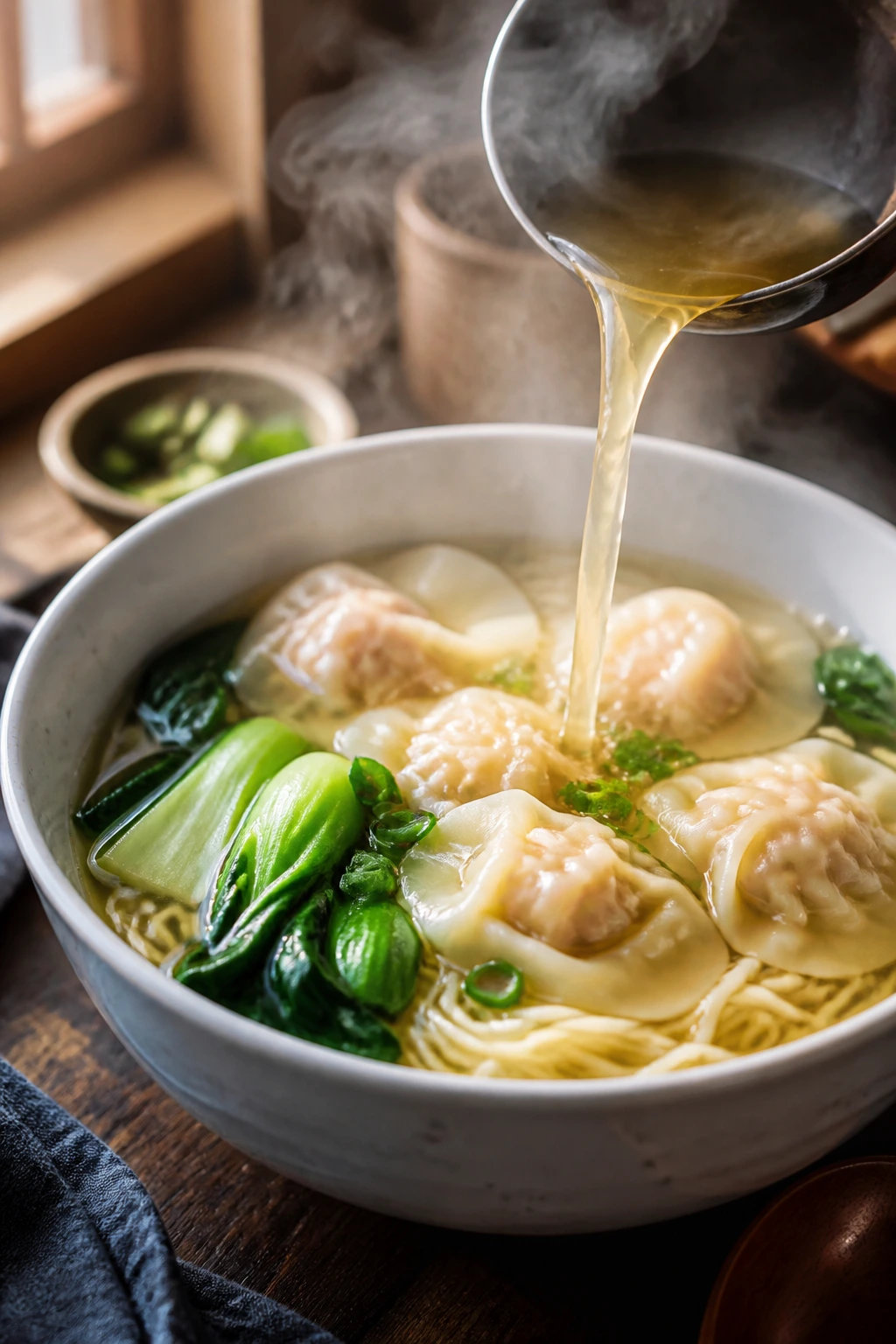
Presentation: Build each bowl in layers. Noodles go in first, then the bok choy, then the wontons, and only then does the broth pour over the top. That order keeps the wrappers from tearing and lets the garnishes sit where you can see them instead of disappearing under the surface.
Accompaniments: Keep the sides light. A small plate of smashed cucumber salad with rice vinegar and sesame oil makes sense here, as does a few pickled mustard greens or a simple tray of steamed dumplings if you’re feeding people who arrive hungry. Heavy sides fight with the soup. Crispy things are fine, but they should stay on the edge of the meal, not crowd the bowl.
Portions: Plan on 2 cups of broth, 5 to 6 wontons, and about 2 ounces of dry noodles per adult serving. If you want a first course instead of a full dinner, cut that in half and use 3 to 4 wontons per bowl. For a bigger appetite, add extra bok choy or a handful of mushrooms before you reach for more noodles.
Beverage Pairing: Hot jasmine tea is the cleanest match. Oolong tea works too, especially if you like a little toastiness next to the ginger and soy. If you’re leaning alcoholic, a dry lager or a light pilsner stays out of the way and cleans up the broth nicely.
Small Moves That Make a Big Difference
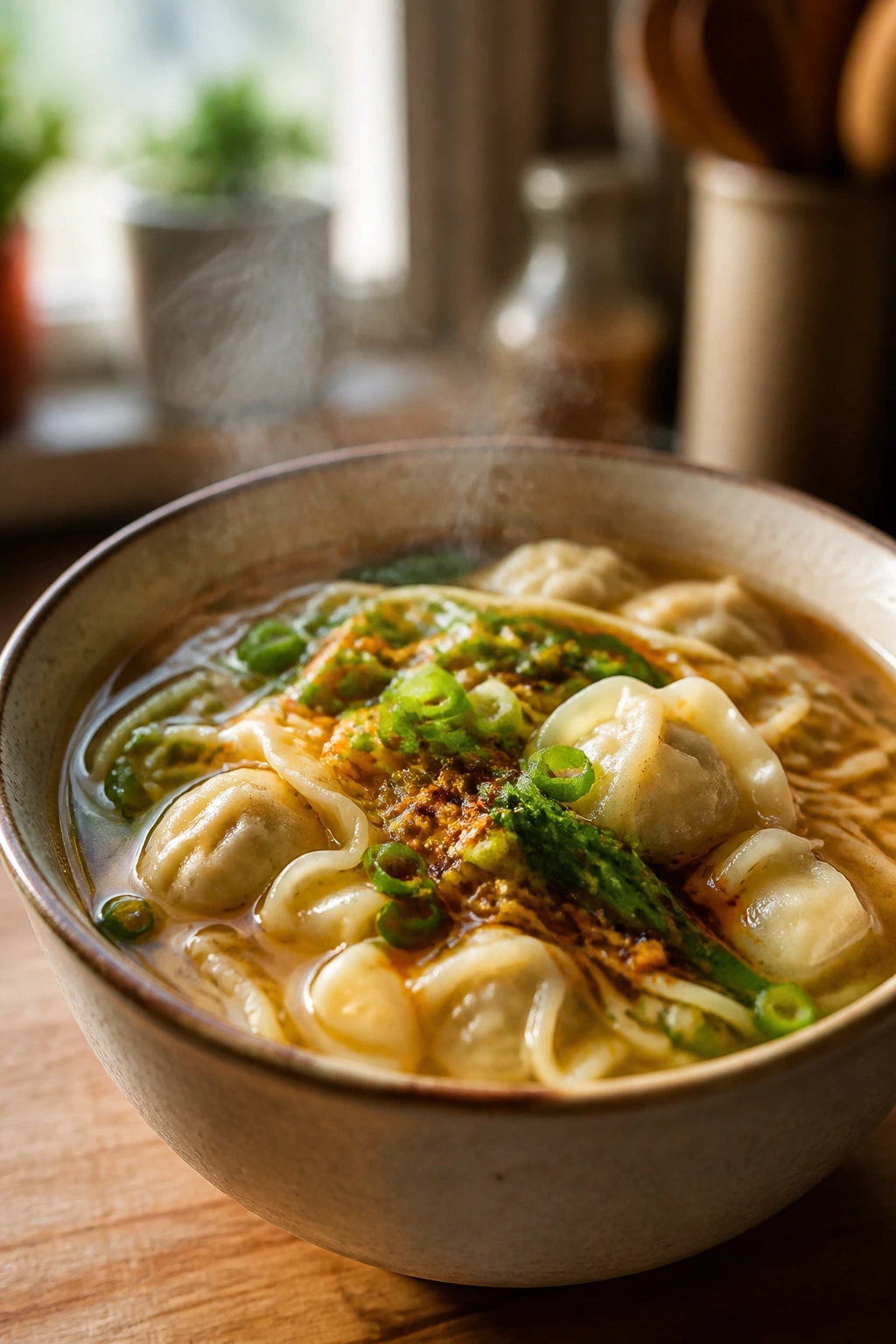
Flavor Enhancement: A teaspoon of fish sauce at the end can deepen the broth without making it taste fishy. Use it sparingly, and taste after each drop; the point is a rounder savoriness, not a louder one.
Time-Saver: Make the broth a day ahead and chill it overnight. The next day, the flavor is calmer and fuller, and you can lift off any solid fat from the top if you want a cleaner, lighter bowl.
Pro Move: Warm the bowls with hot tap water or a quick rinse before assembling. A hot bowl keeps the noodles from cooling down the broth in the first minute, which sounds small until you notice how much better the second spoonful tastes.
Customization: Add blanched napa cabbage, baby spinach, or thinly sliced mushrooms if you want more vegetables. Toss them into the broth during the last minute or two so they stay bright instead of going limp and dull.
Serving Suggestions: Keep the toppings small and sharp — sliced scallions, cilantro leaves, a few drops of sesame oil, and chili crisp on the side. Big handfuls of garnish can bury the flavor of the broth, and that’s a waste.
Make-It-Yours: For a gluten-free version, swap in rice noodles and use tamari in place of soy sauce, then use gluten-free dumpling wrappers if you can find them. If the wrappers are a pain to source, turn the filling into small pork-shrimp meatballs and drop them into the broth instead. The texture changes, but the comfort still lands.
What Usually Goes Wrong, and How to Fix It
-
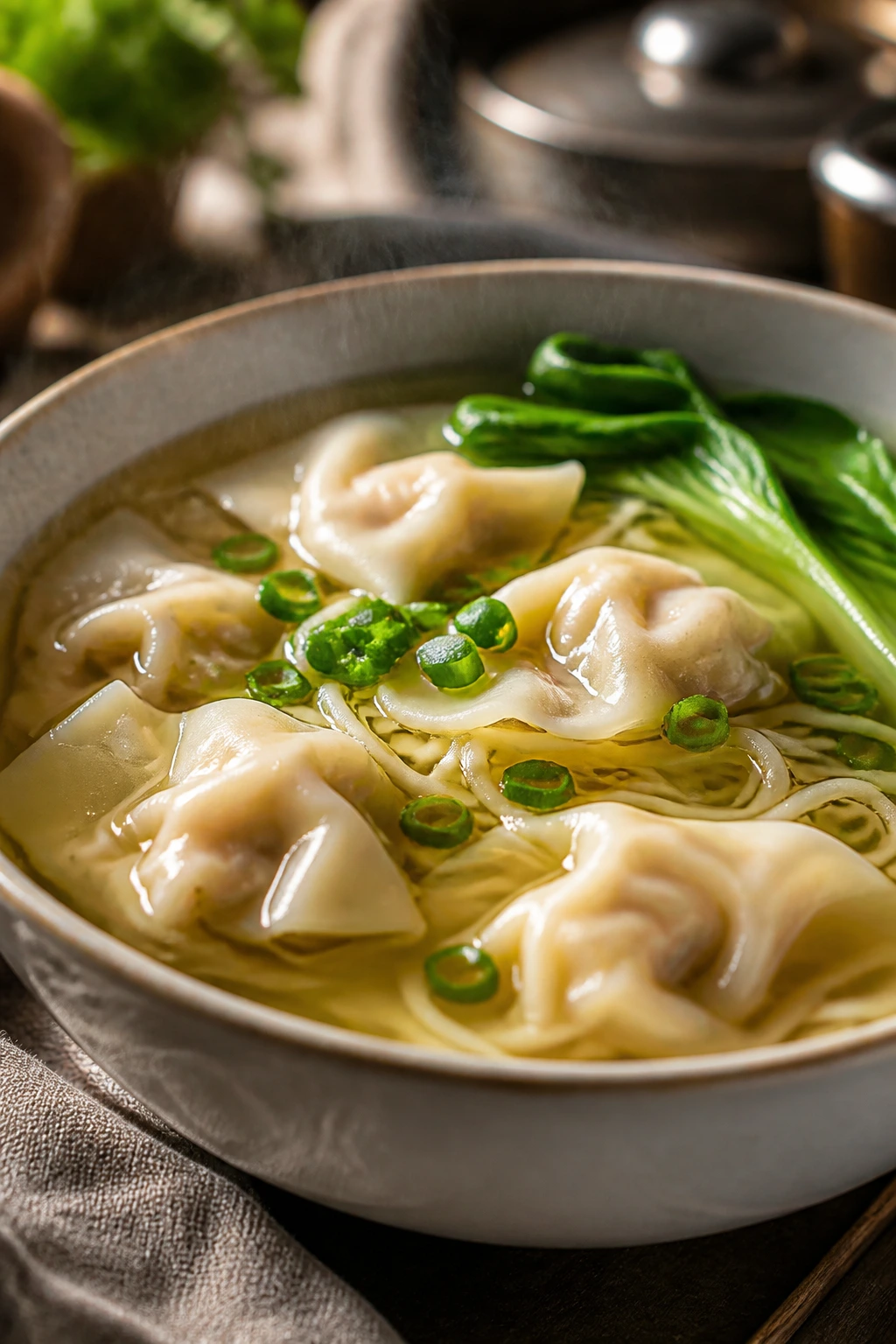
Overfilling the wontons. The wrappers split, the filling leaks, and the pot turns cloudy. Keep the filling at 1 teaspoon per wrapper, and press the air out before sealing. Air pockets are sneaky; they expand in the heat and pry the wrapper open.
-
Boiling the broth too hard once the wontons go in. A rolling boil tears wrappers and roughs up the broth. Keep it at a gentle simmer and stir once, softly, just to keep the wontons moving. If the pot is churning like pasta water, turn the heat down.
-
Cooking the noodles directly in the soup and letting them sit. The broth goes starchy and the noodles swell until they lose shape. Cook them separately, drain them, and add them right before serving. That one change saves the whole bowl.
-
Under-seasoning after straining. Aromatics do a lot, but they do not replace salt. Taste the broth after straining and season in small increments. If the bowl tastes flat, a few pinches of salt and a touch more soy sauce usually fix it.
-
Skipping the brief chill on the filling. Warm filling is soft and messy, which makes folding slower and leakier. A 10- to 15-minute rest firms it up enough to handle without fighting the wrappers.
-
Letting the finished bowls sit too long before eating. Wontons keep cooking in hot broth, and noodles keep drinking broth. The bowl is at its best the moment it hits the table, not 10 minutes later while someone looks for chopsticks.
Ways to Bend the Bowl Without Losing Its Shape
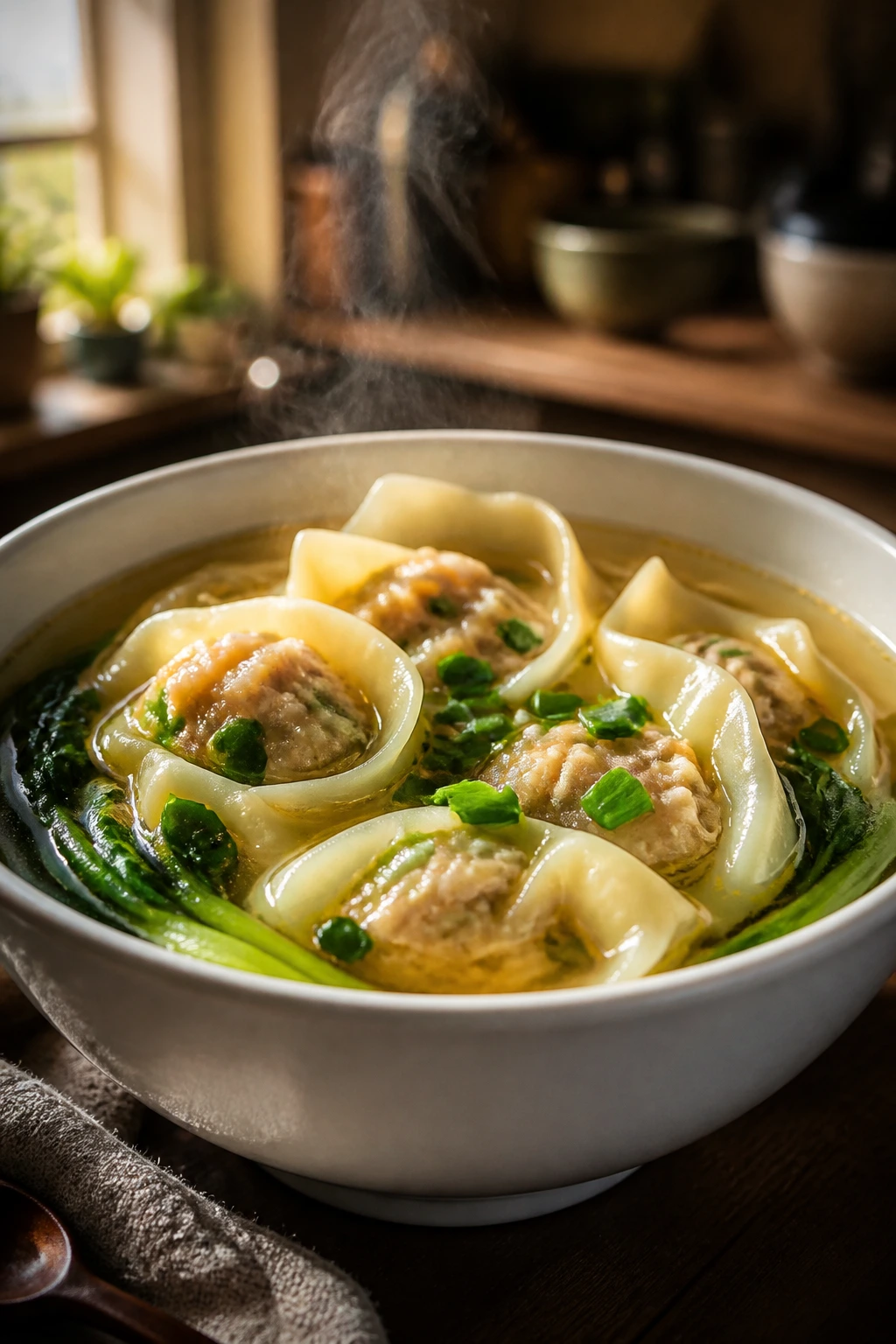
Chicken-and-Chive Comfort Bowl: Swap the pork and shrimp filling for 12 oz ground chicken and 1/4 cup finely chopped chives. Chicken is milder, so the broth needs a touch more white pepper and maybe a teaspoon of fish sauce to keep it from tasting thin.
Chili Crisp Night Bowl: Keep the base exactly the same, but add 1 to 2 teaspoons of chili crisp to each bowl at the table. The crunchy chili bits cling to the noodles and give the broth a smoky edge that cuts through the richness of the wontons.
Vegetable-Heavy Version: Add napa cabbage, thin mushrooms, and baby spinach in the last minute of cooking. This makes the bowl feel larger without making the broth heavier, and the extra vegetables soak up the ginger and soy nicely.
Shrimp-Forward Filling: Use 8 oz chopped shrimp and 4 oz ground pork, instead of the other way around. The dumplings come out lighter and a little sweeter, with more bounce in the bite. It’s the version I’d make when I want the bowl to taste a little brighter.
Rice-Noodle Pantry Bowl: If egg noodles are missing from the pantry, use thin rice vermicelli and cut the broth with a little extra sesame oil and scallion greens. It changes the chew, but it keeps the soup fast and calming to eat.
Keeping the Pieces Separate Until Dinner
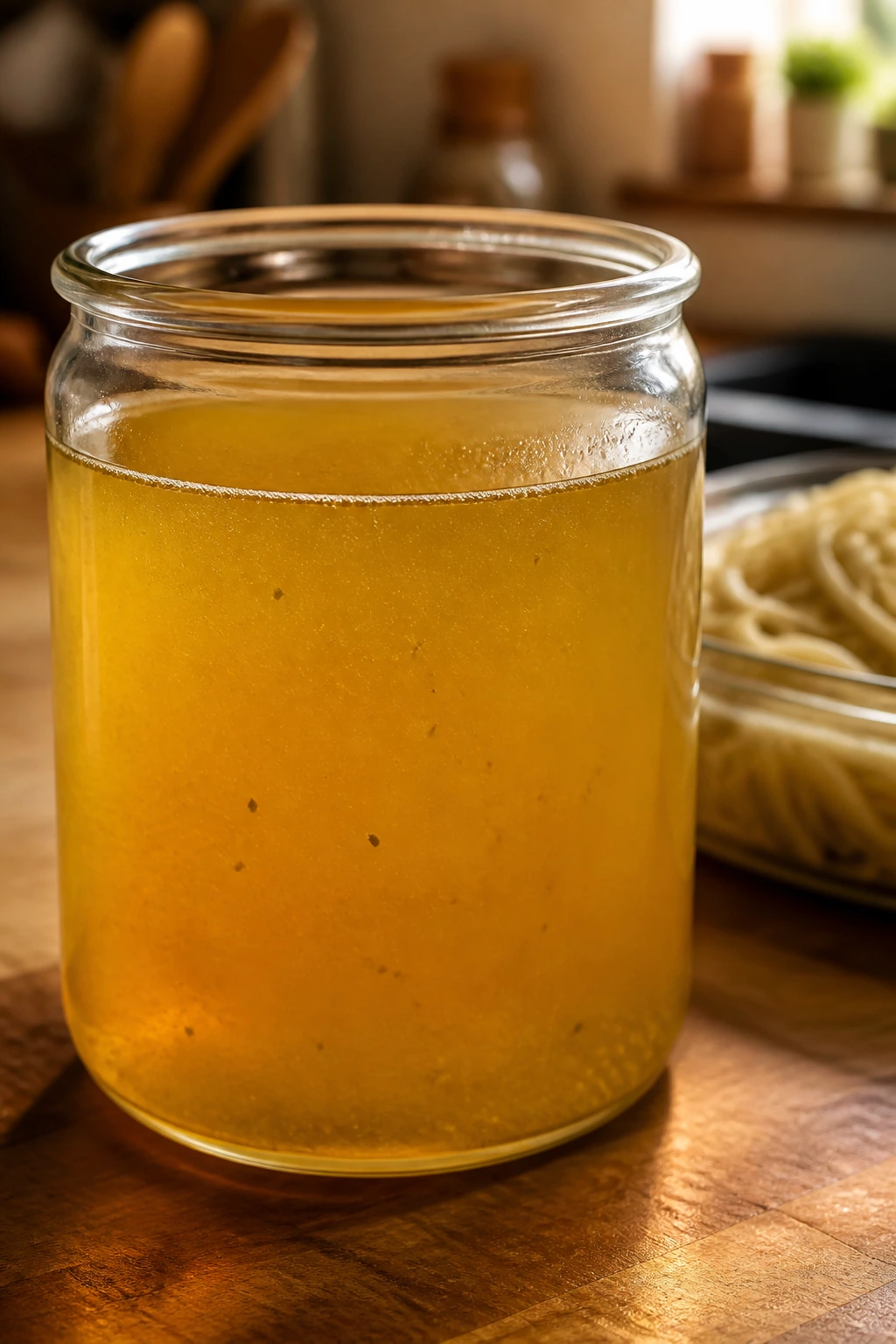
The broth keeps well, and the noodles do not. That’s the short version, and it’s the one worth remembering.
Cool the broth completely before storing it in an airtight container. It will keep in the fridge for up to 4 days and in the freezer for up to 2 months. Reheat it gently on the stove until it’s steaming, not furiously bubbling. If it has sat in the fridge overnight, you may see a layer of fat on top; you can skim that off for a cleaner bowl or stir a little back in if you want more body.
Uncooked wontons freeze better than cooked ones. Set them on a parchment-lined tray in a single layer, freeze until solid, then move them to a freezer bag. They’ll keep for up to 2 months. Cook them straight from frozen, adding about 1 to 2 extra minutes in the simmering broth. Do not thaw them on the counter; the wrappers get damp and sticky, and that’s when they start tearing.
Cooked wontons are still fine for a day or two in the fridge, but the wrapper softens. If you have leftovers, store the broth, noodles, and wontons separately whenever possible. Reheat the broth first, then warm the wontons in it for a minute or two, and add freshly cooked noodles if you can manage it.
The noodles are the most fragile part. If they sit in broth for an hour, they’ll soak up half the pot and turn heavy. If you know there will be leftovers, keep the noodles plain and toss them with a few drops of oil before chilling them. That buys you another day of decent texture.
And one more thing: the filling can be mixed a day ahead and held in the fridge, covered, which makes folding faster the next evening. That’s the part that turns this from a weekend dish into a realistic weeknight one.
Questions People Usually Ask Before Folding the First Wrapper
Can I use store-bought frozen wontons instead of making the filling?
Yes. Use them if the wrappers-and-filling part feels like too much for one night. Make the broth exactly as written, then cook the frozen wontons straight in the simmering broth until they float and the wrappers turn tender, usually a few minutes longer than fresh ones. The bowl will taste different, but the broth still carries the comfort.
What should I do if my wontons keep opening in the pot?
That usually means one of three things: too much filling, too much air trapped inside, or a boil that’s too hard. Use less filling, press the air out before sealing, and keep the broth at a gentle simmer instead of a rolling boil. If the wrapper edges are drying before you fold, cover them with a damp towel.
Can I freeze the uncooked wontons?
Absolutely, and they freeze better than most people expect. Freeze them in a single layer on a tray, then bag them once solid so they don’t glue together. Cook them from frozen, straight into simmering broth, and add a minute or two to the cooking time.
What noodles work if I can’t find thin egg noodles?
Fresh ramen noodles, thin lo mein noodles, or rice vermicelli all work in different ways. Ramen gives you chew, lo mein gives you a more familiar spring, and rice vermicelli makes the bowl lighter. Just keep the noodles separate from the broth until the very end, no matter which one you buy.
How do I make the broth richer without making it salty?
Add more depth, not more salt. A longer simmer with the shiitake mushrooms, a bit more ginger, or a splash of fish sauce can deepen the flavor without pushing the sodium too far. If you want more body, a homemade stock made from chicken wings or backs helps a lot.
Is there a vegetarian version that still feels substantial?
There is, though it won’t taste exactly the same. Use a strong mushroom-vegetable broth, add extra shiitake mushrooms, and swap the wontons for tofu-vegetable dumplings or small tofu puffs. White pepper and scallions matter a lot in that version, because they keep the broth from tasting flat.
Can I make the whole soup ahead and reheat it later?
Sort of, but I wouldn’t build the bowls in advance. Make the broth, prepare the filling, and fold the wontons ahead of time, then store everything separately. Reheat the broth, cook the noodles fresh, and simmer the wontons at the last minute if you want the best texture.
A Bowl Worth Repeating
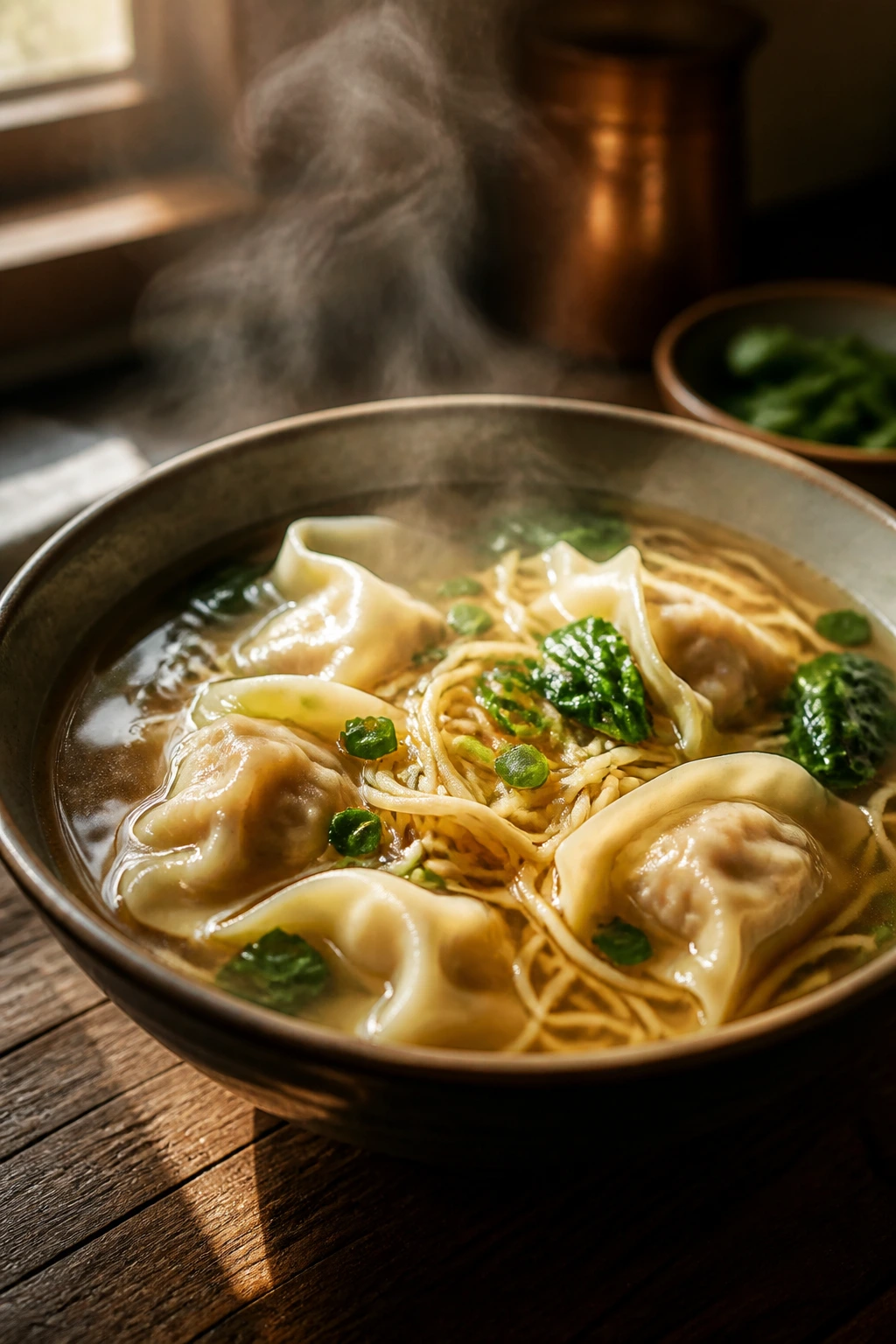
A soup like this rewards a little care in the places that matter. The broth shouldn’t rush. The wontons shouldn’t be stuffed until they split. The noodles should stay out of the pot until the last minute, because they have no business sitting around getting soft before you eat them.
That’s the whole appeal, really. Nothing here is flashy, but every part earns its place. A hot bowl of wonton noodle soup can make a rough evening feel organized again, and that’s not a small thing when the air outside has teeth.
Cozy Wonton Noodle Soup for Cold Winter Nights — Recipe Card
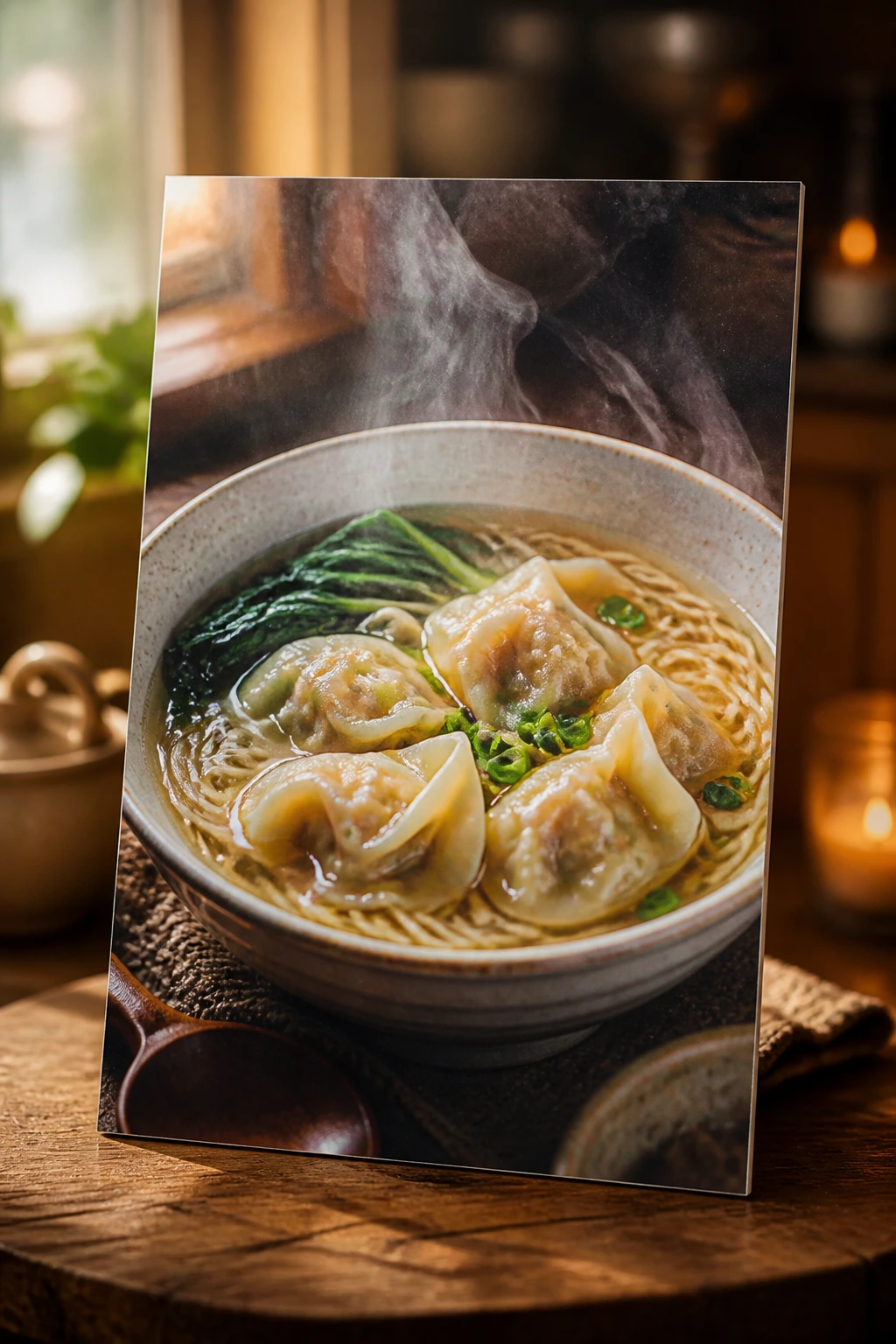
Recipe Name: Cozy Wonton Noodle Soup for Cold Winter Nights
Description: Ginger-scented chicken broth with pork-shrimp wontons, thin egg noodles, baby bok choy, and fresh scallions. The broth stays clear, the wrappers stay tender, and the noodles keep their bite.
Prep Time: 35 minutes
Cook Time: 35 minutes
Total Time: 1 hour 10 minutes
Course: Soup, Main Course
Cuisine: Chinese-inspired
Servings: 4 servings
Calories: About 520 kcal per serving
Ingredients
For the Wonton Filling:
- 8 oz ground pork
- 4 oz raw shrimp, peeled, deveined, and finely chopped
- 2 scallions, very finely minced
- 1 tablespoon fresh ginger, grated
- 1 tablespoon soy sauce
- 1 teaspoon Shaoxing wine or dry sherry
- 1 teaspoon toasted sesame oil
- 1 teaspoon cornstarch
- 1 large egg white
- 1/2 teaspoon granulated sugar
- 1/4 teaspoon white pepper
- 24 wonton wrappers
- Small bowl of water, for sealing
For the Broth:
- 8 cups low-sodium chicken stock
- 1 cup water
- 2-inch piece fresh ginger, sliced
- 4 scallions, whites only, smashed
- 2 garlic cloves, smashed
- 3 dried shiitake mushrooms
- 1 tablespoon soy sauce
- 1 tablespoon Shaoxing wine or dry sherry
- 1/2 teaspoon white pepper
- 1/2 teaspoon fine salt, plus more to taste
- 1 teaspoon toasted sesame oil
For the Noodles and Greens:
- 8 oz dried thin egg noodles
- 4 baby bok choy, halved lengthwise
- 2 scallions, green parts only, thinly sliced
- 2 tablespoons cilantro leaves
- Chili crisp or chili oil, for serving, optional
Instructions
-
In a 6-quart soup pot, combine the chicken stock, water, ginger, scallion whites, garlic, and dried shiitake mushrooms. Bring to a boil over medium-high heat, then lower to a gentle simmer for 25 minutes.
-
Stir in the soy sauce, Shaoxing wine, white pepper, salt, and sesame oil. Taste and adjust lightly with more salt if needed, then strain the broth and return it to a clean pot over low heat.
-
In a medium bowl, mix the ground pork, shrimp, scallions, ginger, soy sauce, Shaoxing wine, sesame oil, cornstarch, egg white, sugar, and white pepper until sticky and cohesive.
-
Place 1 teaspoon of filling in the center of each wonton wrapper, wet the edges with water, fold into a triangle, press out the air, and bring the corners together. Repeat until you have 24 wontons.
-
Bring a medium saucepan of water to a boil and cook the thin egg noodles for 1 to 2 minutes less than the package time. Drain and rinse briefly under hot water.
-
Add the baby bok choy to the simmering broth and cook for 1 to 2 minutes, until the stems are bright and the leaves are just wilted. Remove and set aside.
-
Raise the broth to a gentle simmer and add the wontons in batches. Cook for 3 to 4 minutes, stirring once gently, until they float and the wrappers turn slightly translucent.
-
Divide the noodles among 4 warmed bowls. Add the bok choy and 5 to 6 wontons to each bowl.
-
Ladle about 2 cups of broth into each bowl and finish with scallion greens, cilantro, and chili crisp or chili oil if you like heat. Serve immediately.
Notes: Freeze uncooked wontons on a tray for up to 2 months; cook from frozen, adding 1 to 2 minutes. Keep noodles separate from the broth until serving so they stay springy.