



A tropical Hawaiian mimosa with Malibu should taste like pineapple, orange peel, and cold coconut cream meeting a stream of sharp bubbles in a clean glass. Not syrup. Not candy. The good version lands somewhere between brunch cocktail and beachside spritz, with enough acidity to keep the coconut from turning clingy and enough fizz to make the whole thing feel awake.
That balance is the whole trick. Malibu brings that soft coconut note people either love on the first sip or distrust until they taste it with dry sparkling wine. Pineapple juice gives the drink its Hawaiian-style personality, orange juice rounds off the edges, and the bubbles do what bubbles do best: they lift the aroma so you smell the cocktail before you even take a sip.
I’ve always liked this drink more in a flute than a tumbler. Smaller bowl, colder glass, less wandering fizz. And if you keep the ingredients properly chilled and pour the sparkling wine last, the drink stays bright instead of turning flat and sugary halfway through the glass. That’s the version worth making, so let’s build it carefully.
Why You’ll Love This Recipe
- Bright Coconut-Pineapple Balance: Malibu can get sticky fast, but pineapple juice and brut sparkling wine keep the flavor clean instead of syrupy.
- Fast Without Feeling Thrown Together: There’s no stove, no syrup, and no muddling—just measured pouring and a gentle top-off with bubbles.
- Easy to Scale for Brunch: Multiply the juice and rum for a pitcher, then add the sparkling wine at the last minute so every glass still pops.
- Flexible Glassware: It works in champagne flutes, coupe glasses, or slim wine glasses, so you can serve it with what you already have.
- Built for Cold Weather? No. Built for Warm Days: The cocktail is at its best when everything starts cold, which is exactly what you want when the table’s already crowded with food.
Yield: Makes 4 cocktails
Prep Time: 10 minutes
Cook Time: 0 minutes
Total Time: 10 minutes
Difficulty: Beginner — the only real skill here is keeping the ingredients cold and not crushing the bubbles.
Chill/Rest Time: 20 to 30 minutes for the juices and glasses, optional but worth it
Best Served: Immediately after assembling, while the sparkle still feels lively
Why This Tropical Hawaiian Mimosa with Malibu Works So Well
A standard mimosa leans on citrus and bubbles. This version adds Malibu, and that one change shifts the drink from bright brunch staple to something softer, rounder, and a little more beachy without becoming heavy. Coconut rum sounds sweet on paper, but in a glass with pineapple juice and a dry sparkling wine, it reads as aroma first, sweetness second.
The Hawaiian part of the name is really about flavor memory. Pineapple juice is doing most of the work there, and it matters that the pineapple tastes like pineapple, not like a neon mixer from a plastic bottle. If you’ve ever had a tropical cocktail that felt like a melted popsicle, you know the difference. Fresh or high-quality chilled juice gives the drink a clean edge, which makes the coconut taste more natural.
The sparkling wine is the quiet hero. Brut prosecco, cava, or Champagne keeps the sweetness in check and gives the cocktail a crisp finish. Sweet sparkling wine can tip the whole thing into dessert territory, and that’s where a mimosa loses its shape. Dry bubbles are not fussy here. They’re necessary.
There’s also a simple sensory reason this cocktail works. Carbonation carries aroma upward. That means each sip hits your nose with coconut and citrus before the liquid even lands on your tongue. Cold ingredients sharpen that effect, which is why this drink tastes so much better when you don’t rush the chill.
The Ingredients You’ll Pour Into the Glass
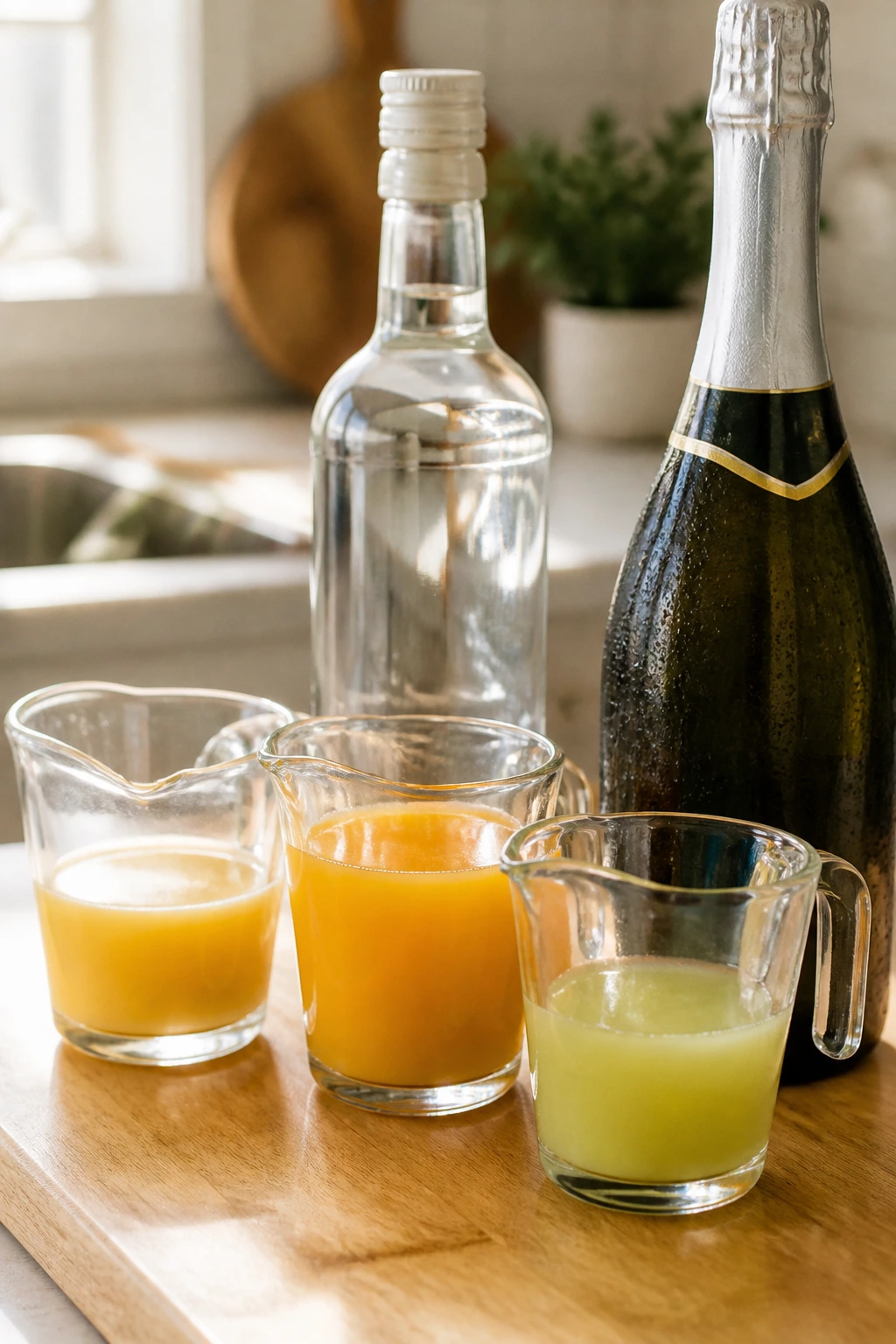
For 4 Cocktails
- 1 cup chilled pineapple juice, preferably unsweetened
- 1/2 cup chilled orange juice, pulp-free or lightly pulpy
- 1/2 cup Malibu coconut rum
- 1 tablespoon fresh lime juice
- 1 1/2 cups chilled brut sparkling wine, prosecco, or Champagne
- Ice, optional if serving in rocks glasses
- 4 pineapple wedges, for garnish
- 4 thin orange slices or wheels, for garnish
- 4 small mint sprigs, optional for a fresher finish
Optional Coconut Rim
- 2 tablespoons lime juice, for the glass rim
- 2 tablespoons toasted shredded coconut
- 1 tablespoon fine sugar, if you want a sweeter rim
Malibu, Pineapple, and Bubbles: What Each Part Does
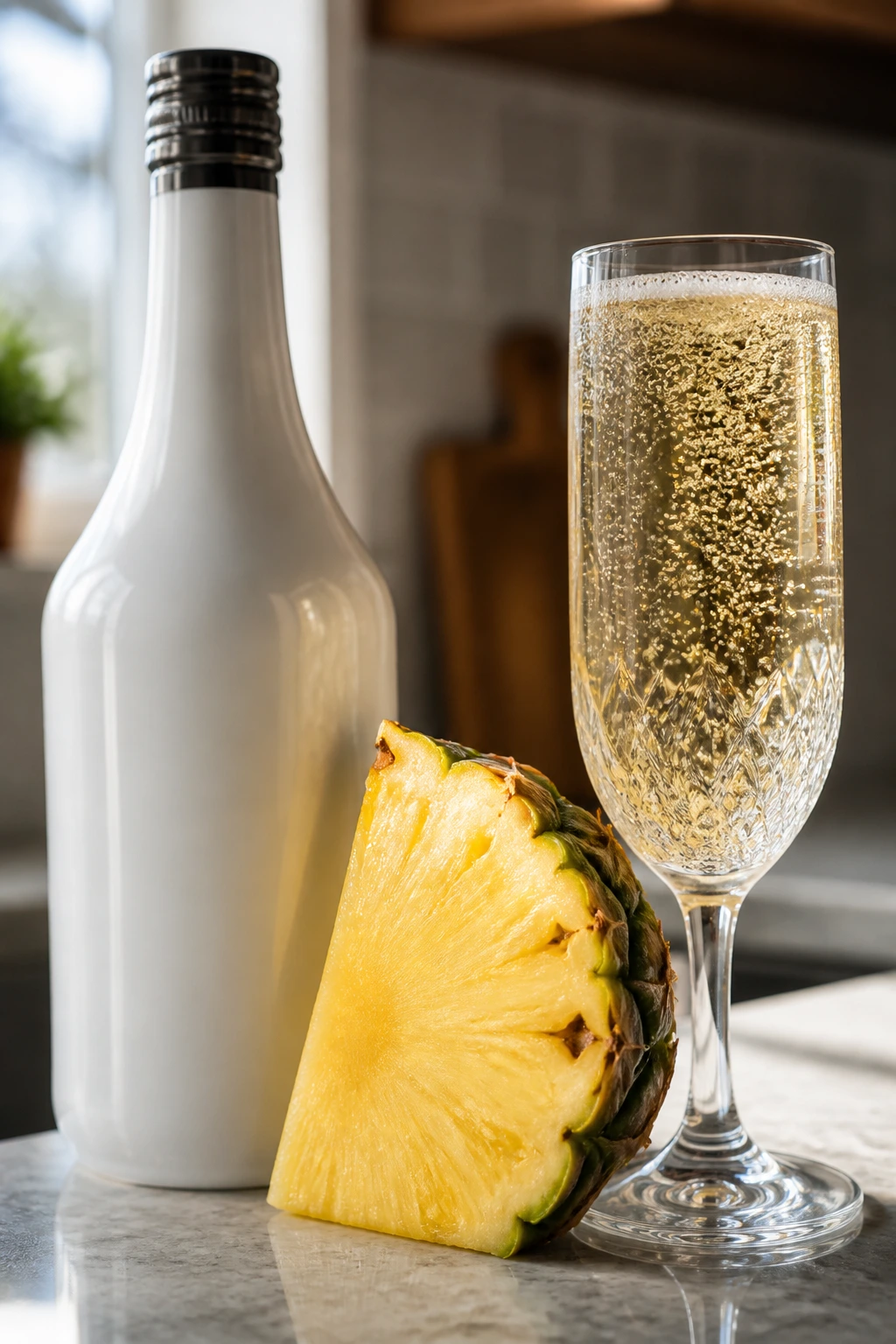
Malibu Coconut Rum
What to use: 1/2 cup Malibu coconut rum, which works out to about 2 tablespoons per drink.
Preparation: Keep it chilled, measure it before you pour, and stir it with the juices rather than shaking it. The rum blends fast, so there’s no need to beat it up.
Substitutions: Any coconut rum will work, though some run drier and some taste more candy-like. If you only have white rum, add 1 to 2 teaspoons coconut syrup or coconut water for aroma, but be careful—white rum plus too much syrup can get clumsy fast.
Tips: Malibu is sweet enough that you do not need extra sugar in the base. If you’re tempted to sweeten it further, taste the finished drink first. A lot of people confuse coconut flavor with sweetness and add too much of both.
Pineapple and Orange Juice
What to use: 1 cup pineapple juice and 1/2 cup orange juice for the batch, or about 3 ounces pineapple and 1 1/2 ounces orange juice per glass.
Preparation: Chill both juices fully. If your orange juice has a lot of pulp, strain it so the finished mimosa feels smooth instead of gritty at the bottom of the flute.
Substitutions: Pineapple nectar gives a thicker, sweeter body; tangerine juice can stand in for orange if you want a softer citrus note; blood orange juice gives the drink a deeper color and a slightly berry-like edge. Coconut water can replace part of the pineapple juice if you want a lighter drink.
Tips: Pineapple juice brings the tropical note, but orange juice keeps the drink from tasting flat and one-note. The two together do a better job than either one alone. That’s the version I keep coming back to.
Sparkling Wine
What to use: 1 1/2 cups chilled brut sparkling wine, prosecco, or Champagne.
Preparation: Chill it well before opening. If you’re serving a crowd, open it at the table or right before pouring. Once bubbles are gone, the drink turns sleepy.
Substitutions: Cava gives a lean, dry finish; prosecco is a little softer and fruitier; Champagne adds a finer bead and a slightly more serious feel. If you prefer a sweeter profile, extra dry prosecco can work, but don’t go all the way into sweet territory.
Tips: A dry wine is the safeguard here. Malibu and juice already bring sweetness, so the bubbles need to pull back, not lean in. That contrast is what keeps the drink from tasting like liquid candy.
Garnishes and the Finish
What to use: Pineapple wedges, orange wheels, and a few mint sprigs if you want a cooler aroma.
Preparation: Cut the fruit thin enough to sit on the rim or rest in the glass without stealing space from the drink. Pat the fruit dry so it doesn’t drip extra juice into the flute.
Substitutions: A lime wheel gives a sharper look and a brighter smell. A cherry works if you want a classic brunch vibe. Toasted coconut on the rim is optional, but use it sparingly or it starts to shed into the drink.
Tips: A garnish should give you one extra smell, not three extra chores. Keep it tidy. One good wedge beats a pile of fruit that slides into the bubbles and sinks like a small raft.
The Glasses and Tools That Keep It Crisp
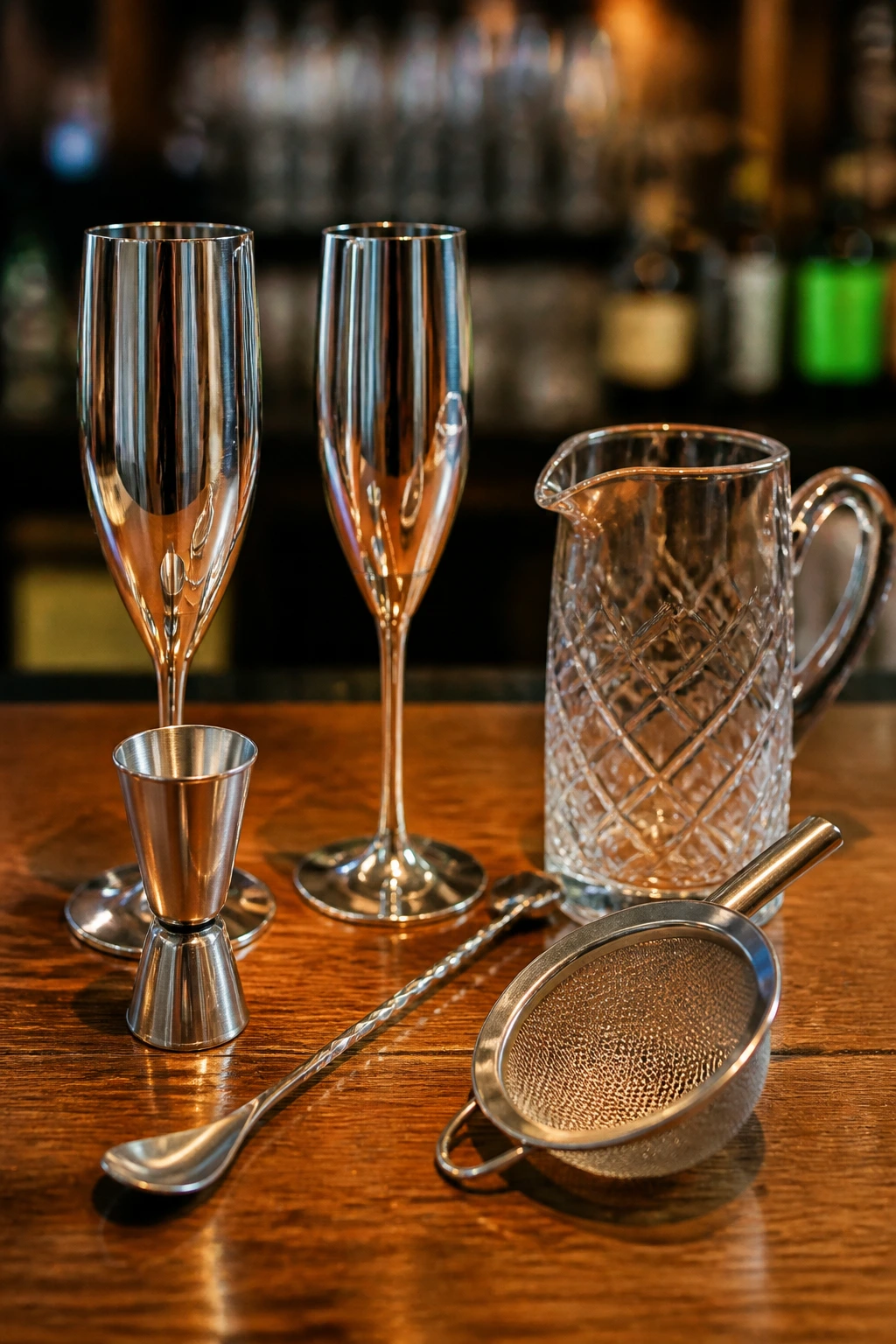
The right tool in this drink is less about flash and more about control. You want cold, measured, and gentle. That’s the whole game.
- Champagne flutes: Best for preserving bubbles and keeping the drink compact. A coupe works too, though it loses carbonation a little faster.
- Small pitcher or mixing jug: Use this for the juice-and-rum base. A narrow spout helps with clean pours.
- Jigger or liquid measuring cup: Precision matters here because Malibu is sweet, and a heavy hand throws off the balance fast.
- Long bar spoon or teaspoon: For stirring the base without whipping air into it.
- Fine-mesh strainer: Useful if you squeeze fresh citrus or use pineapple juice with a lot of pulp.
- Small plate for rimming glasses: Only needed if you’re doing the toasted coconut edge.
- Citrus knife and cutting board: Thin orange wheels and neat pineapple wedges make the final drink look finished, not improvised.
- Ice bucket or freezer space for glasses: Optional, but a cold glass does more for a mimosa than most people realize.
I’d skip a cocktail shaker here. Shaking juice and rum is fine. Shaking anything that’s about to meet sparkling wine is a bad habit. You want the base blended, not aerated into foam.
How to Mix a Tropical Hawaiian Mimosa with Malibu
Prepare the Glasses and Garnish
- Chill 4 champagne flutes or coupe glasses in the freezer for 10 minutes, or fill them with ice water while you mix the base.
- If you want a coconut rim, brush the rims lightly with lime juice, then dip them in a shallow plate of toasted coconut mixed with a little sugar. Set the glasses aside for a minute so the rim clings.
Build the Flavor Base
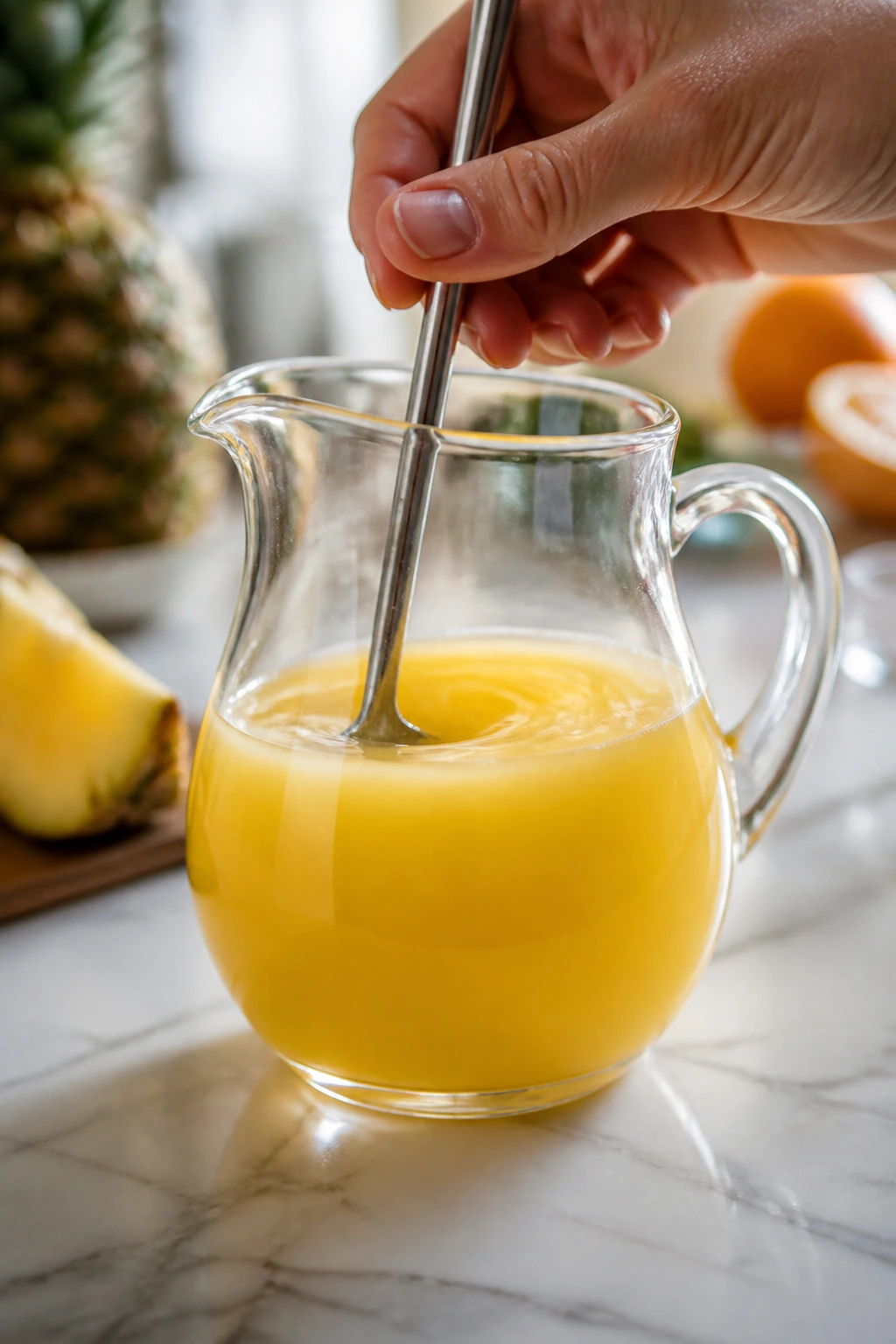
- In a small pitcher, combine 1 cup chilled pineapple juice, 1/2 cup chilled orange juice, 1/2 cup Malibu coconut rum, and 1 tablespoon fresh lime juice.
- Stir slowly for about 10 seconds until the liquid looks uniform and cold. Do not shake—you want the drink mixed, not frothy.
Finish with Bubbles
- If you used ice water to chill the glasses, empty them and dry them quickly. Pour about 4 to 4 1/2 ounces of the juice-and-rum base into each glass.
- Top each glass with about 3 ounces of chilled brut sparkling wine, pouring slowly down the side of the glass so the bubbles stay lively.
- Garnish with a pineapple wedge, a thin orange slice, or a mint sprig, then serve at once. Wait too long and the sparkle fades.
A small note on the pour: if you’re making this for guests, pour the base into every glass first, then top each one with bubbles individually. That keeps the drink from sitting around in a pitcher, which is where a lot of good mimosas go to die.
How to Serve It for Brunch, Lunch, or a Backyard Toast
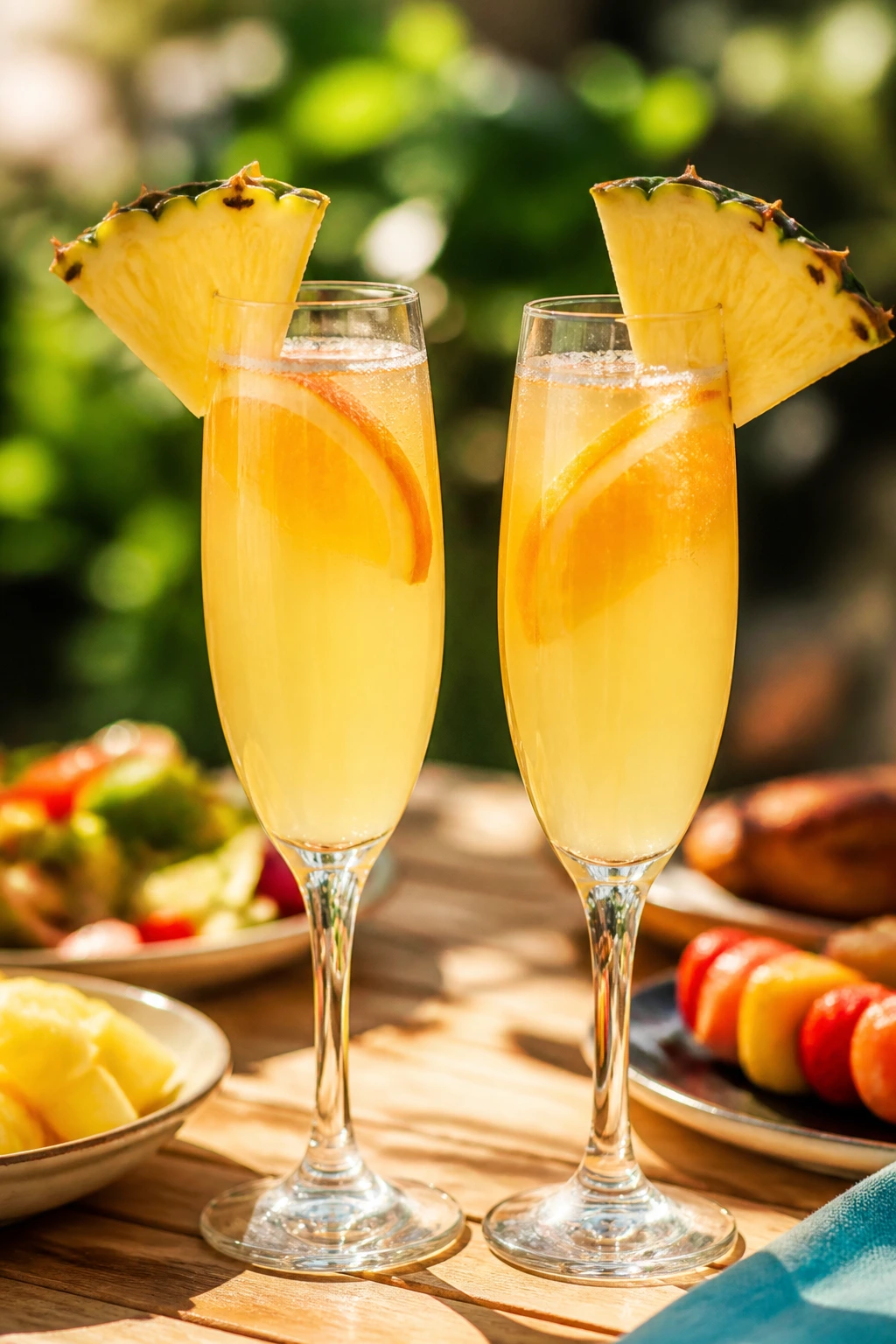
Presentation: Serve the cocktail in chilled flutes with a thin pineapple wedge perched on the rim and an orange wheel tucked just inside the glass. If you’re using coupes, keep the garnish small so it doesn’t crowd the surface and drag the bubbles down.
Accompaniments: This drink loves salty food. Thick-cut bacon, fried eggs, coconut shrimp, ham and cheese sliders, toasted brioche, or a bowl of pineapple and berries all make sense beside it. I also like it with something sharp and a little plain—think cucumber salad with lime, or a simple plate of sliced melon and salty cheese.
Portions: One drink per person works for a light toast or early brunch. If the table is full of food, two rounds is usually enough. To scale the recipe, keep the ratio of juice to rum steady and add the sparkling wine only when you’re ready to serve.
Beverage Pairing: For a larger brunch spread, I’d set out cold brew coffee or unsweetened iced tea alongside it. The bitter edge of coffee or tea cuts through the coconut and citrus, which gives the table a better rhythm than serving only sweet drinks.
Small Tweaks That Make the Drink Taste More Awake
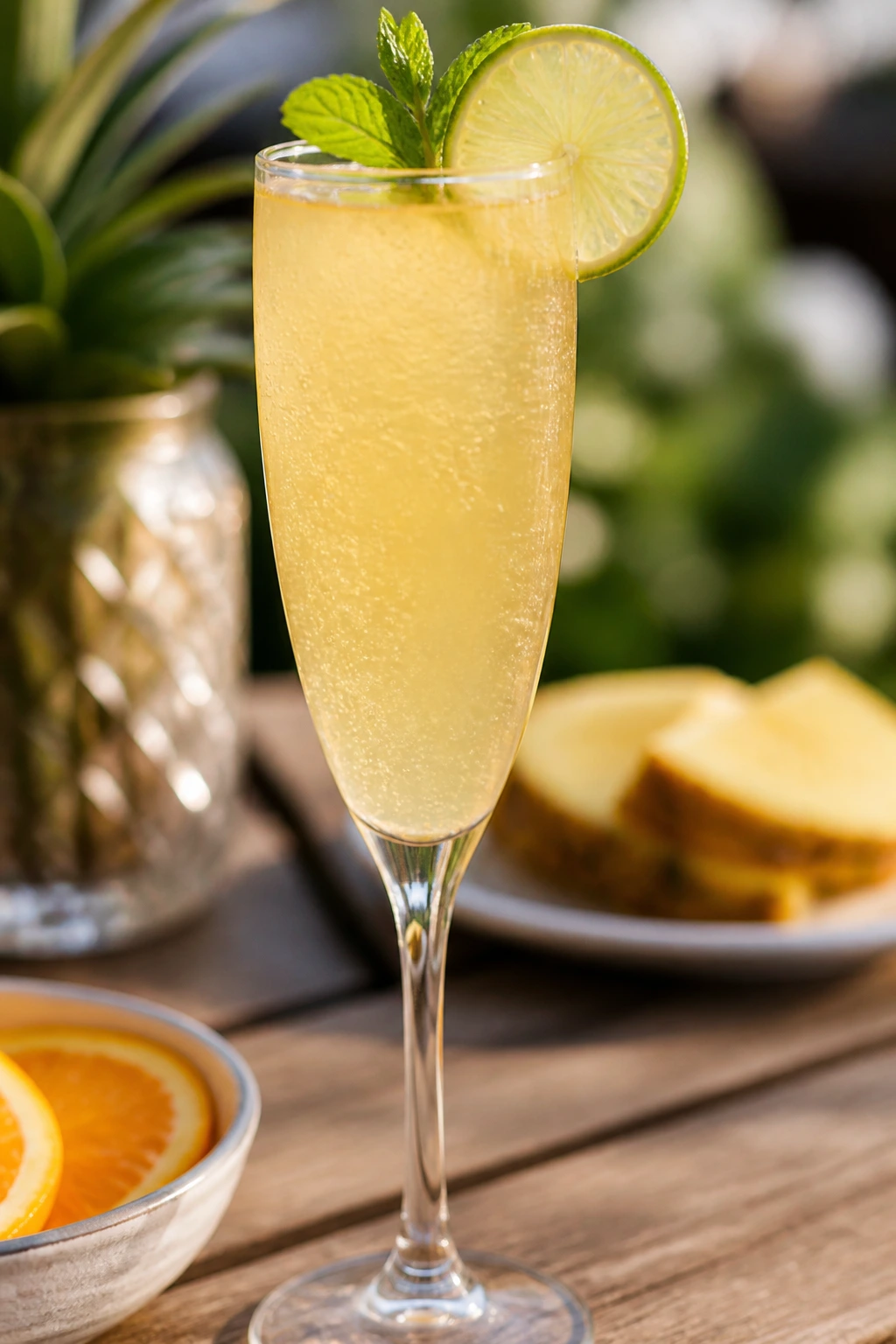
Flavor Enhancement: A few drops of orange bitters in the base add a dry, peel-like note that keeps the Malibu from reading too soft. If you like a sharper finish, add another teaspoon of lime juice per glass. Tiny move. Big difference.
Customization: Swap half the pineapple juice for mango nectar if you want a heavier tropical profile, or use passion fruit juice for more tang. Coconut water lightens the drink without losing the island feel, though it does make the flavor a little less full.
Serving Suggestions: A thin mint sprig does more than look tidy; it gives the first sip a cooler smell. If you’re using a coconut rim, keep the toasted coconut finely shredded so it doesn’t shed into the wine and clog the surface.
Make-It-Yours: For a lower-alcohol version, cut the Malibu back to 1/4 cup and add more pineapple juice plus an extra splash of sparkling wine. For a nonalcoholic version, use coconut water or coconut-flavored sparkling water in place of the rum, then top with alcohol-free sparkling wine or plain brut-style soda water.
I’m also partial to a tiny pinch of salt in the garnish rim when the drink is served with fried food. Not enough to taste salty. Just enough to sharpen the pineapple.
Common Mistakes That Flatten the Drink
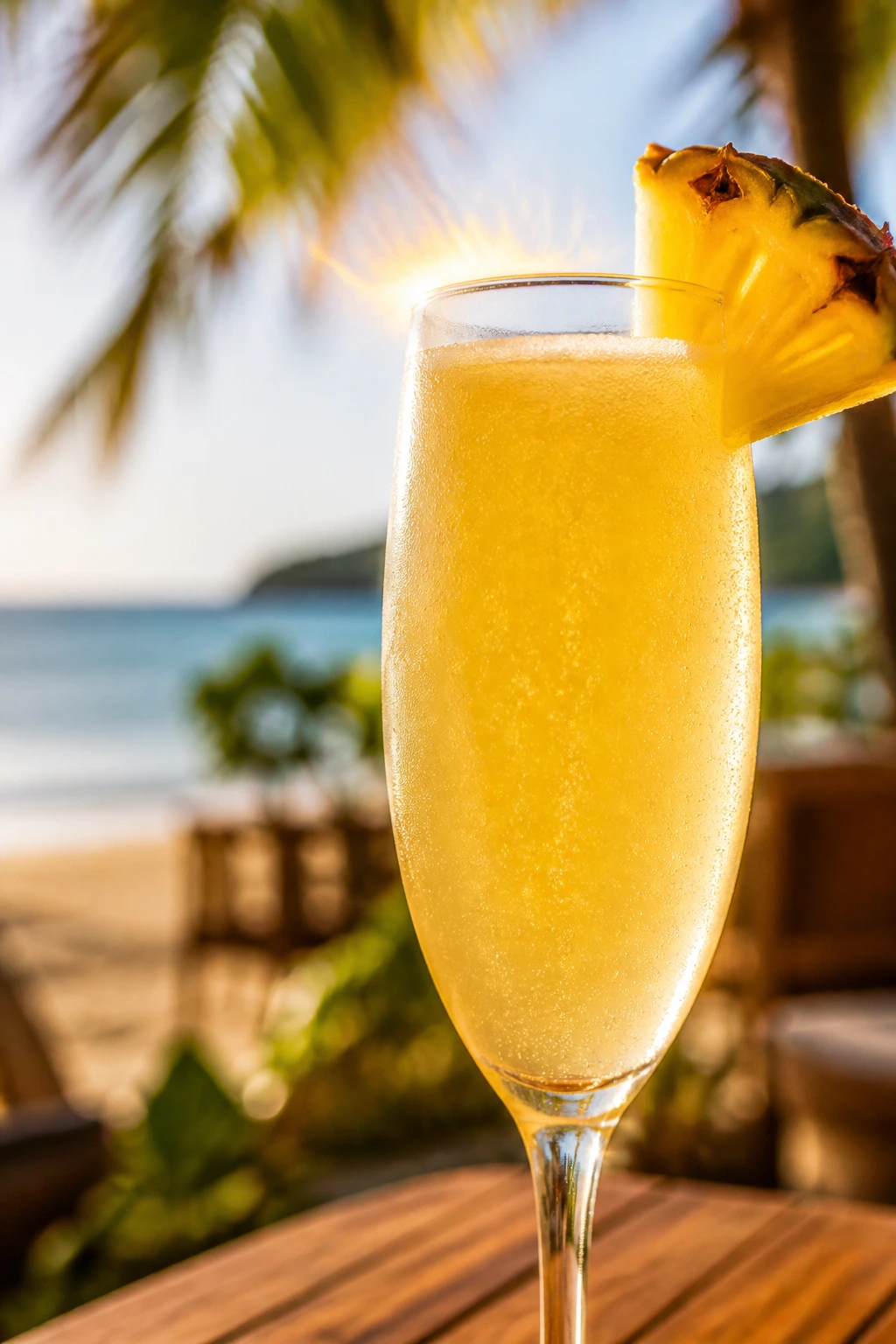
- Using sweet sparkling wine: The cocktail starts tasting like syrup by the second sip, and the coconut disappears into the sugar. Fix it with brut prosecco, cava, or Champagne. Dry bubbles are doing a job here.
- Adding the bubbles too early: If you mix the sparkling wine into the pitcher and leave it sitting, the drink goes flat before the first round reaches the table. Build the base ahead of time, then top each glass just before serving.
- Pouring everything warm: Warm juice makes the wine foam up too fast and the drink tastes loose and tired. Chill the rum, juice, wine, and glasses. Cold ingredients buy you time.
- Too much Malibu: One extra splash sounds harmless until the drink turns heavy and coconut-sweet. Measure the rum. Don’t freestyle it.
- Using pulpy juice in a narrow flute: The texture gets thick and muddy, and the pulp collects at the bottom. Strain the juice if it’s chunky, or choose a cleaner bottled version.
- Overloading the garnish: Too many fruit pieces sink into the drink and water it down. Keep the garnish small and useful. One wedge, one wheel, maybe one mint sprig. That’s enough.
Tropical Variations and Flavor Swaps
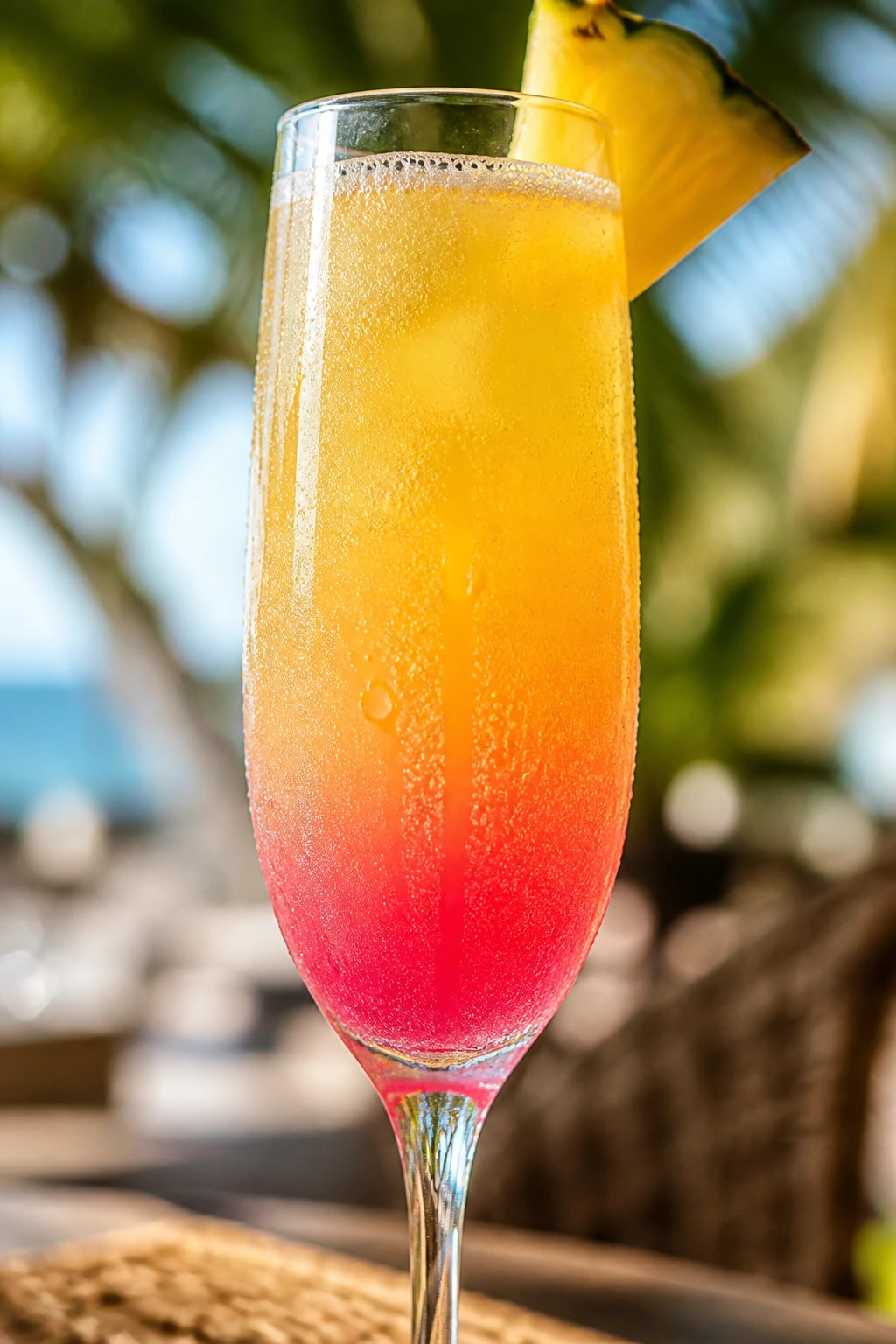
Pineapple Sunrise Mimosa
Add 1 teaspoon grenadine to the bottom of each flute before pouring the base. It sinks into a blush-colored layer that looks festive, and it tastes best when you keep the rest of the drink dry and citrusy rather than adding more sweetness.
Mango Coconut Mimosa
Replace 1/2 cup of the pineapple juice with mango nectar. The texture becomes a little silkier, and the mango gives the coconut a rounder, softer edge that works well if you like fruit-forward drinks.
Lime-Forward Island Fizz
Increase the lime juice to 2 teaspoons per batch and use extra-dry sparkling wine. This is the version for people who want the coconut note without the sugary finish. It lands cleaner, with a sharper snap.
Virgin Tropical Mimosa
Skip the Malibu and use coconut water plus another 1/4 cup pineapple juice. Top with alcohol-free sparkling wine or plain club soda. The result is lighter, less sweet, and easy to drink through a long brunch.
Pink Guava Brunch Pour
Swap the orange juice for guava nectar and add a squeeze of lime. The color turns softer and the flavor gets more floral, which is a nice change if you’ve made pineapple-orange drinks to death.
Make-Ahead, Batch Mixing, and Short-Term Storage
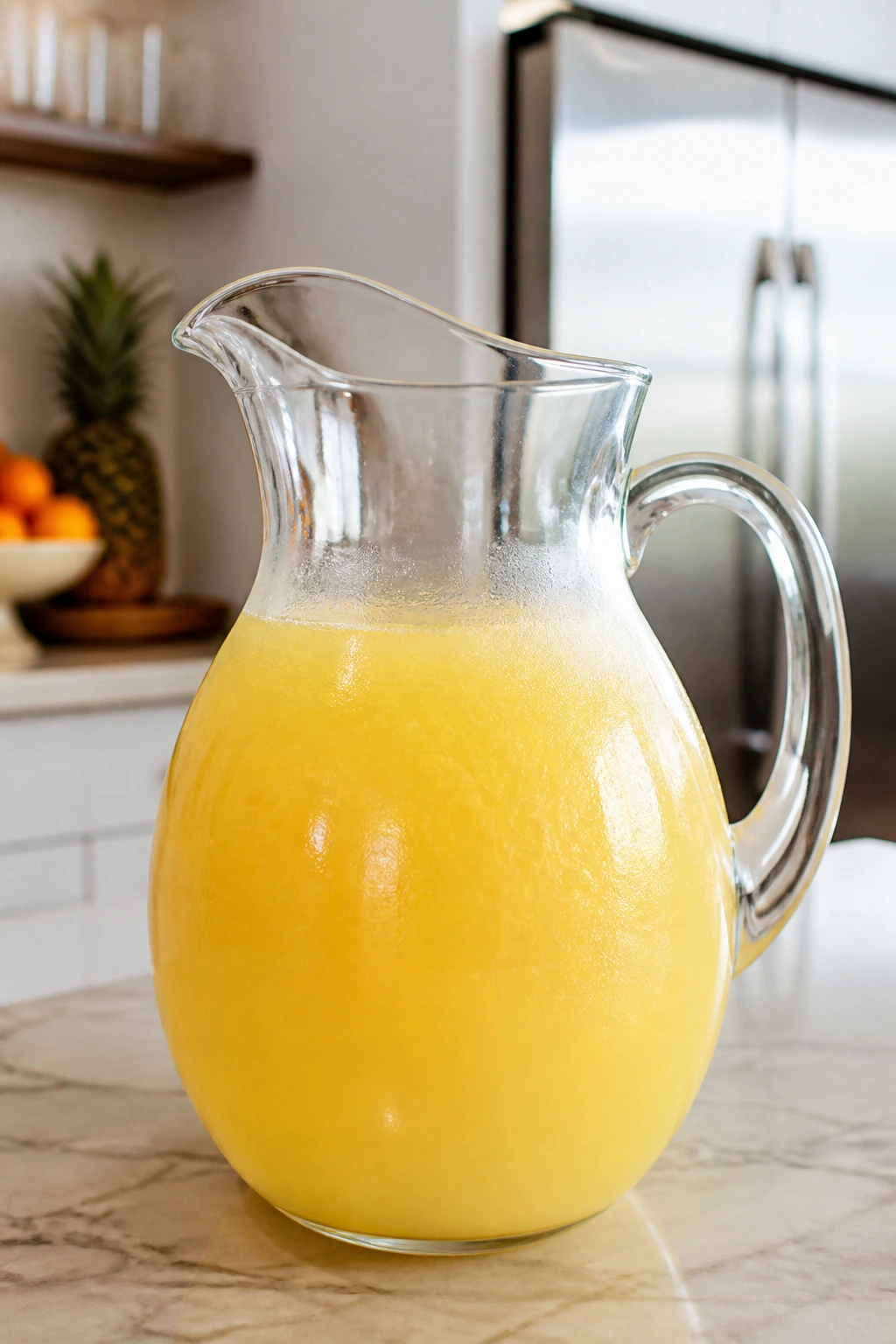
A cocktail like this is best served fresh, but the base can be prepped ahead without turning sad. Mix the pineapple juice, orange juice, Malibu, and lime juice up to 24 hours in advance and keep it covered in the refrigerator. If you’re using fresh-squeezed juices, I’d aim for the same day or overnight at most, because citrus starts to lose its bright edge and the pineapple can taste dull after too long.
The sparkling wine should wait until the last minute. Always. If you pour it too early, you lose the point of the drink. For a party, line up the chilled glasses, measure the base into each one, then add the wine as guests arrive or just before you carry the tray out.
Leftovers are a mixed bag. An assembled mimosa tastes best within 15 to 20 minutes, and after that the fizz starts to collapse. You can refrigerate leftovers for a few hours, but the drink will taste softer and a little more blended. I would not freeze it. The texture goes strange, and no amount of stirring brings it back.
If you want a true batch option, make the juice-and-rum base in a pitcher and keep it icy cold. When it’s time to pour, add the sparkling wine in a slow stream to each glass. That’s the cleanest way to serve a crowd without sacrificing the sparkle.
Questions People Actually Ask About a Malibu Mimosa
Can I use Champagne instead of prosecco?
Yes, and it makes the drink feel a little tighter and finer on the tongue. Champagne tends to be drier than many proseccos, so it’s a smart move if you want the cocktail to feel crisp rather than fruity-sweet.
Is Malibu too sweet for a mimosa?
It can be if you pour it heavy-handedly or pair it with sweet wine. Measured carefully and balanced with brut bubbles plus citrus, it adds coconut aroma without taking over the glass.
Can I make this in a pitcher for brunch?
You can mix the juice, lime, and Malibu ahead of time, but do not add the sparkling wine until serving. If you’re hosting, keep the base chilled in one pitcher and the wine on ice beside it so each glass can be topped individually.
What if I only have bottled juice?
Use it. Just buy the cleanest, least sweet version you can find and chill it well. Bottled juice is much better in this cocktail when it’s cold and balanced with dry bubbles than when it’s fresh-squeezed but warm.
Do I need orange juice, or can I use pineapple only?
You can use pineapple only, but the orange juice gives the drink more shape and a less one-note finish. If you skip it, add a little extra lime juice so the cocktail doesn’t taste flat.
How do I keep the drink cold without watering it down?
Chill the ingredients and the glasses instead of relying on ice in the flute. If you must use ice, use large cubes in a separate serving glass, then strain the drink into a clean glass so you don’t dilute the fizz.
Can I make a nonalcoholic version that still feels close?
Yes. Use coconut water or coconut-flavored sparkling water in place of Malibu, then finish with alcohol-free sparkling wine or club soda. A squeeze of lime helps it taste composed rather than like juice in a fancy glass.
Why did mine taste flat even though I used sparkling wine?
Usually the wine was too warm, too sweet, or poured too early. Flatness isn’t just about carbonation disappearing; it’s also about sweetness burying the sharp edges that make bubbles taste alive.
A Bright Finish for Slow Sipping
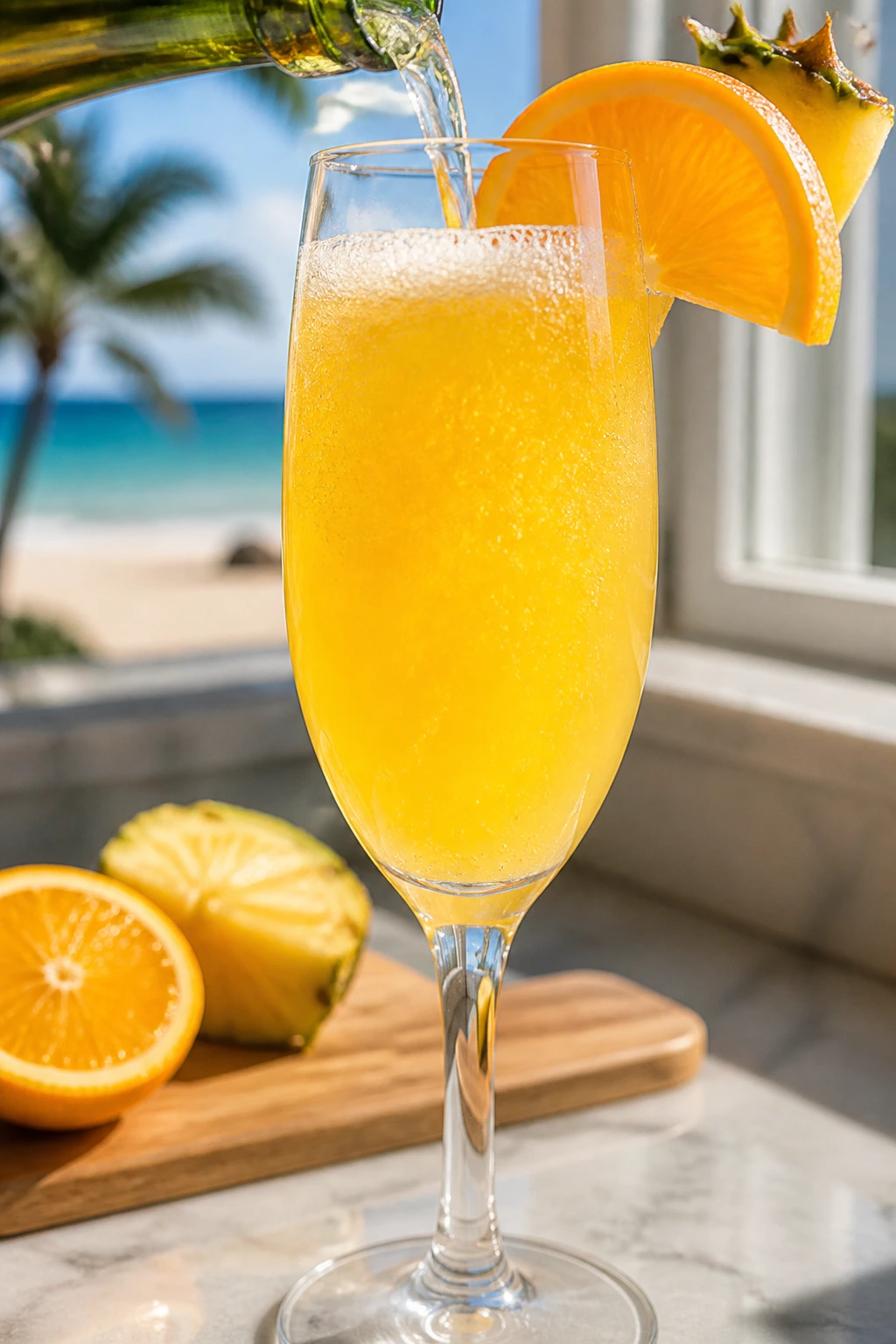
A tropical Hawaiian mimosa with Malibu works because it knows what to keep and what to cut. Keep the coconut. Keep the pineapple. Keep the wine dry enough to pull the whole drink back from the edge. Lose the extra sugar, the warm juice, and the heavy pour, and the glass suddenly feels lighter, cleaner, and far more interesting.
That’s the part I like most: it looks relaxed, but it rewards a little attention. Cold ingredients. Gentle pouring. A measured hand with the rum. Nothing dramatic. Just enough care to make the drink taste like a beach day instead of a bottle of mixer.
Tropical Hawaiian Mimosa with Malibu — Recipe Card
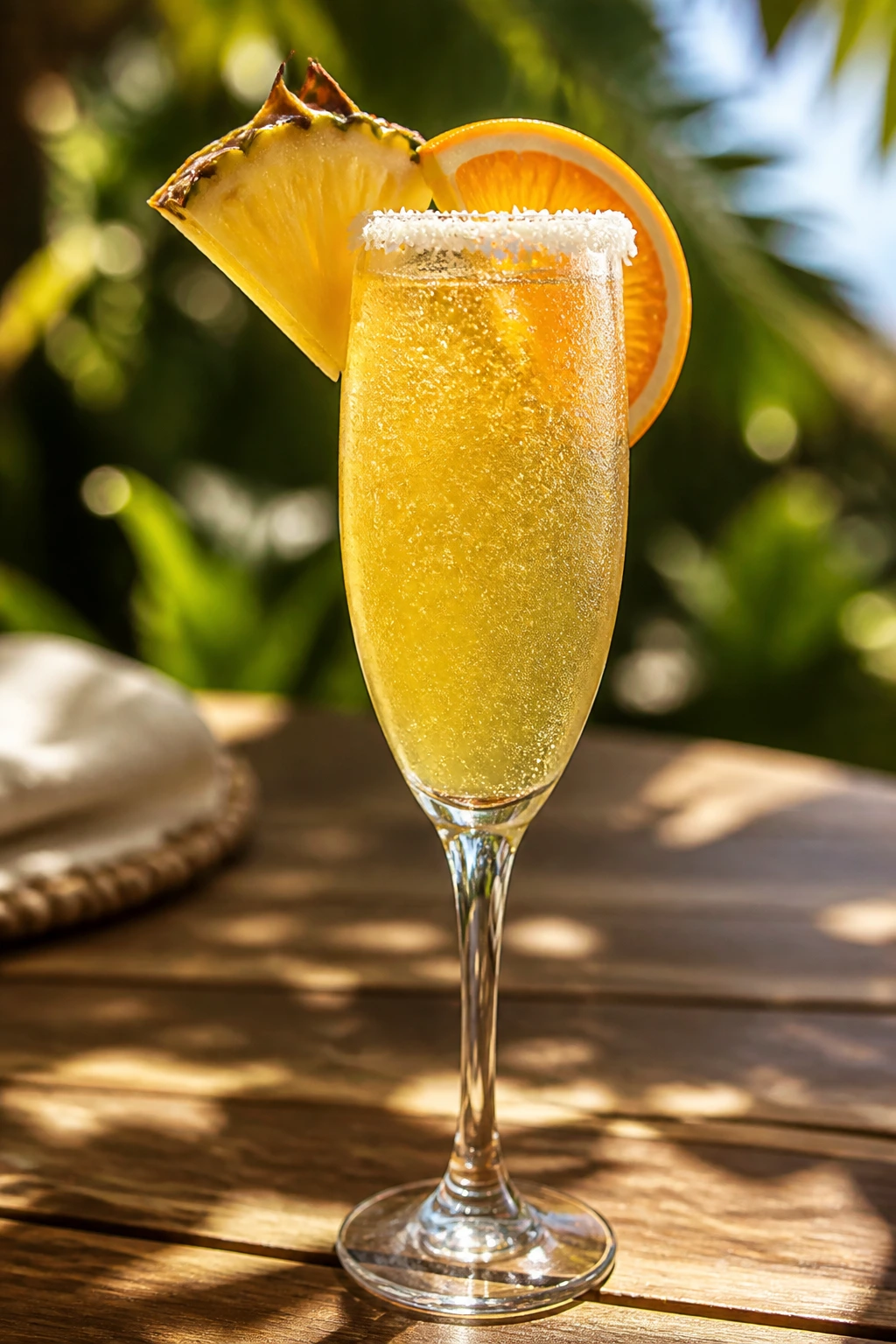
Recipe Name: Tropical Hawaiian Mimosa with Malibu
Description: A bright, coconut-pineapple mimosa made with Malibu coconut rum, orange juice, pineapple juice, and dry sparkling wine. It’s light, cold, and sharply fragrant when served right away.
Prep Time: 10 minutes
Cook Time: 0 minutes
Total Time: 10 minutes
Course: Brunch, Drinks
Cuisine: American-inspired tropical
Servings: 4 cocktails
Calories: About 155 kcal per serving
Ingredients
For the Mimosa Base:
- 1 cup chilled pineapple juice, preferably unsweetened
- 1/2 cup chilled orange juice, pulp-free or lightly pulpy
- 1/2 cup Malibu coconut rum
- 1 tablespoon fresh lime juice
For Finishing:
- 1 1/2 cups chilled brut sparkling wine, prosecco, or Champagne
- 4 pineapple wedges, for garnish
- 4 thin orange slices or wheels, for garnish
- 4 small mint sprigs, optional
Optional Coconut Rim:
- 2 tablespoons lime juice
- 2 tablespoons toasted shredded coconut
- 1 tablespoon fine sugar
Instructions
- Chill 4 champagne flutes or coupe glasses for 10 minutes.
- If using a coconut rim, brush the rims with lime juice and dip them in toasted coconut mixed with sugar.
- In a small pitcher, stir together the pineapple juice, orange juice, Malibu coconut rum, and lime juice.
- Fill each glass about halfway with the chilled base.
- Top slowly with sparkling wine, pouring down the side of the glass.
- Garnish with pineapple, orange, or mint and serve immediately.
Notes: Use brut sparkling wine for the cleanest finish; keep everything cold; add the bubbly wine last so the drink stays lively.