



Nothing ruins a tropical smoothie faster than standing in front of an open freezer with a half-thawed mango, a bruised banana, and no clean knife.
Tropical freezer smoothie packs fix that mess. You do the cutting once, when the board is clean and your patience still exists, then the whole thing waits in the freezer like a small, useful promise. Later, it goes straight from bag to blender. No peeling. No sticky hands. No “where did I put the coconut milk?” scavenger hunt.
I keep coming back to this method because it changes the texture in a way that matters. Mango freezes into a soft, creamy chunk. Pineapple keeps its bright edge. Banana brings body without making the drink feel heavy, and coconut water or yogurt can be added at blending time, where they belong, instead of turning the freezer bag into a brick. That small shift makes summer sipping feel easy instead of fussy.
Why Tropical Freezer Smoothie Packs Earn Their Space in the Freezer
- The prep happens once: A cutting board session turns into several breakfasts or afternoon drinks, which means you stop negotiating with future-you before every blend.
- The texture stays cleaner: Fruit frozen flat in a bag blends more evenly than fruit tossed in loose and left to form one giant icy clump.
- The flavor tastes more tropical: Pineapple, mango, banana, lime, and coconut each keep their own job when they’re frozen separately and blended later.
- Waste drops fast: That soft mango that’s two days from collapse can be diced and frozen instead of sliding into the compost bin.
- You control the sweetness: A pack can lean bright and tart with pineapple and lime, or creamy and mellow with banana and coconut milk, without any mystery additives.
- The blender gets an easier job: Frozen packs are portioned on purpose, so you can make a thick smoothie without dumping in a whole tray of ice and hoping for the best.
The Pack Formula That Keeps the Blend Thick Instead of Watery
A good tropical smoothie pack does three things at once: it gives body, it gives flavor, and it doesn’t freeze into a single frozen rock. That sounds obvious until you start filling bags with too many soft fruits or too much liquid. Then the whole thing turns slushy on the counter and icy in the blender.
The basic balance I reach for
For one smoothie, I like 1½ to 2 cups total fruit. That’s enough to make a full 12- to 16-ounce drink without turning it into soup. If the fruit is very watery — pineapple, orange, watermelon-adjacent stuff — stay closer to the lower end and lean on mango or banana for structure.
The sweet spot is usually one creamy fruit, one bright fruit, and one backup fruit. Mango plus pineapple plus banana is the workhorse combination. Papaya plus pineapple plus lime makes a softer, more floral drink. Dragon fruit with mango looks striking in the blender, but dragon fruit tastes mild, so I treat it as a color and texture piece, not the main event.
What belongs in the bag now, and what waits for later
Dry ingredients are safe in the pack. Wet ingredients are not always worth the trouble. If you toss coconut water or milk into the bag before freezing, you get a frozen block with fruit trapped in it, which defeats the entire point of a pack.
Keep the pack mostly solid. Add the liquid when you blend.
That rule sounds fussy for about ten seconds. Then you try it both ways and notice how much easier the blender runs when the bag holds fruit chunks instead of a giant ice slab. A pack should slide around, not cling to itself like a frozen lasagna.
My rough build for one pack
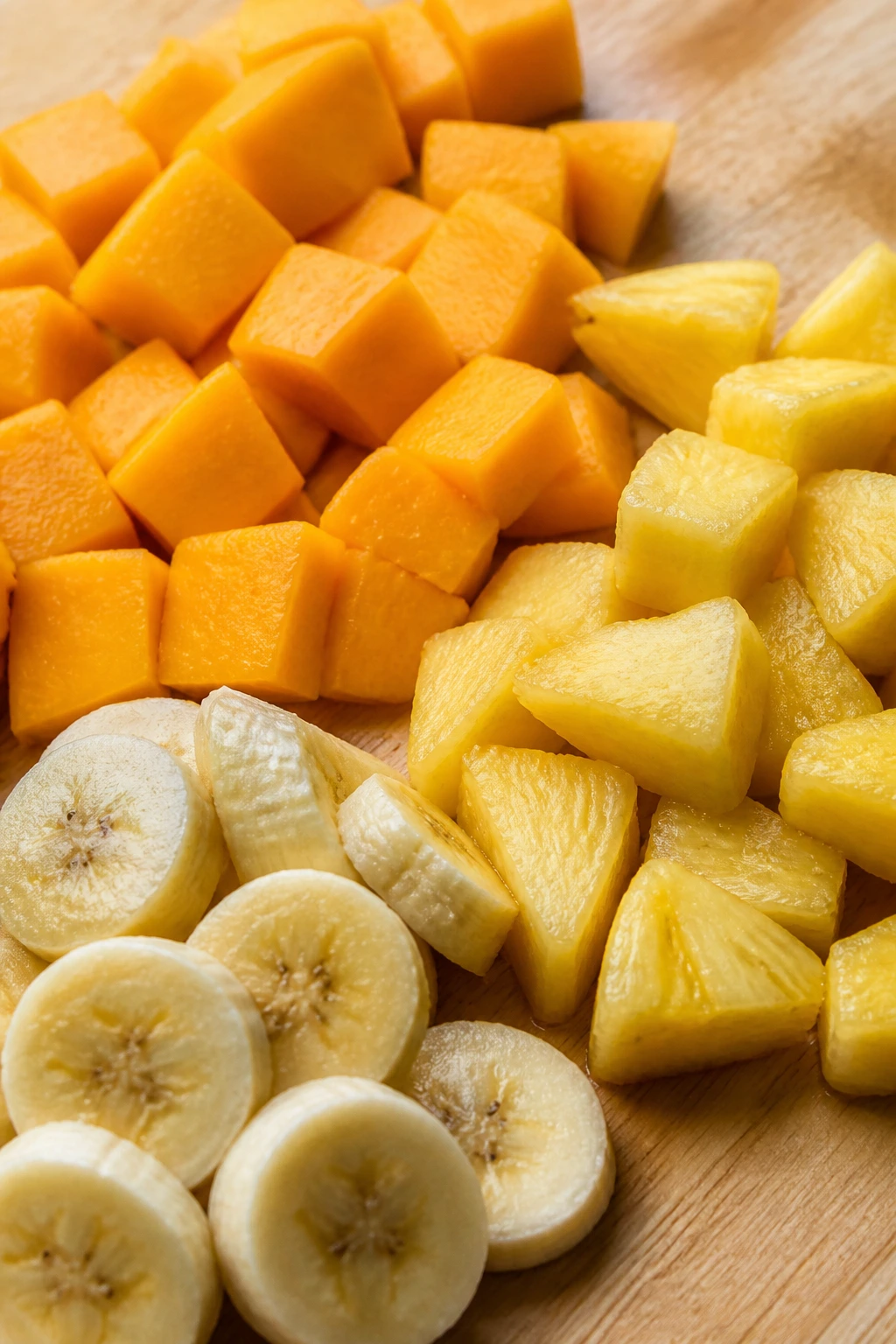
- 1 cup mango chunks for creaminess and sweetness
- ½ to 1 cup pineapple chunks for brightness
- ½ banana, sliced for body
- 1 teaspoon lime juice or zest if you want the flavor to pop
- 1 tablespoon shredded coconut, chia, or hemp seeds if you want more texture or staying power
That formula is flexible, but it should never feel crowded. Too many ingredients and the flavor gets muddy. Three fruits and one small booster usually beat six different things piled into a bag because each piece still tastes like itself.
Tropical Fruits That Freeze with the Best Texture
Mango is the quiet hero here. It freezes into soft, almost custardy chunks if you cut it into bite-size cubes and freeze it flat. The sweet spot is ripe fruit that gives slightly when you press it, but not so soft that it collapses when you peel it. Under-ripe mango turns fibrous and woody after freezing, and nobody wants that in a cold drink.
Pineapple brings the sharpness. It wakes the whole glass up, but it also has enough acid to bully every other flavor if you use too much. I like it in smaller pieces — about 1-inch chunks — and I keep it to a supporting role unless the goal is a bold, punchy smoothie. If the pineapple is very juicy, pat the pieces dry with a paper towel before freezing. That tiny step matters more than people think.
Banana is the texture tool. Frozen banana turns smooth, thick, and almost milkshake-like when blended, which is useful if you want a spoonable smoothie or you don’t plan to use yogurt. Slice it before freezing. Whole bananas freeze into awkward little clubs, and unless you enjoy attacking fruit with a knife at 7 a.m., don’t do that to yourself.
Papaya, guava, passion fruit pulp, and dragon fruit all fit the tropical lane, but they behave differently.
The fruits that act like they belong in the blender
- Papaya is soft and mellow. It blends silkier than pineapple, but it needs another fruit to avoid tasting flat.
- Guava has a perfume-like flavor that reads tropical fast, even in small amounts.
- Passion fruit pulp is a flavor grenade. A spoonful is enough; use too much and the smoothie swings sour.
- Dragon fruit gives color more than flavor, which is useful if you want a vivid pink or magenta glass.
- Coconut meat can be frozen and blended, but I use it sparingly because it turns the smoothie rich fast.
Citrus is a little different. Orange segments can go in if they’re patted dry and pith-free, but I often prefer to save citrus for the blending stage as juice or zest. The pith can go bitter when frozen, and the peel can muddle the flavor in a way that feels more medicinal than refreshing.
One more thing: fresh and frozen fruit are not equal in how they behave. Frozen fruit holds its shape in the freezer, but once you blend it, the fruit should taste familiar — just colder and denser. That’s the goal. Not a milkshake. Not sorbet. A drink with enough structure to matter.
Creamy Add-Ins, Bright Finishers, and Body Builders
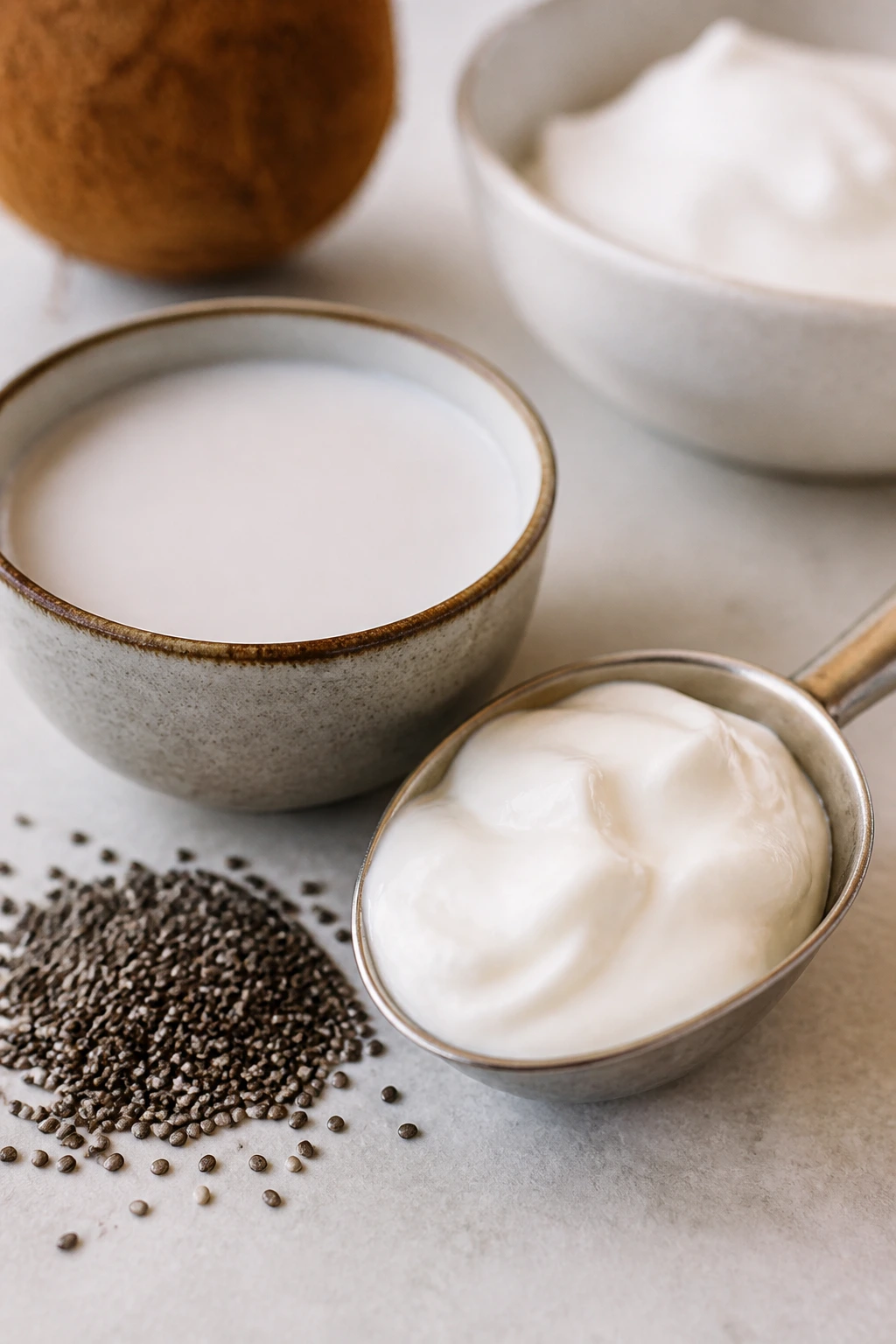
Coconut milk does more than make a smoothie taste “tropical.” It changes the mouthfeel. A few spoonfuls of canned coconut milk make the drink taste richer and slower on the tongue, which is excellent if you want something that feels closer to a café smoothie. Use the canned version when you want body; use carton coconut milk or coconut water when you want a lighter finish.
Greek yogurt is the quickest way to add thickness and a slight tang. Plain yogurt works too, though it’s looser. I like yogurt with mango and pineapple because the tartness keeps the fruit from feeling syrupy. If dairy isn’t your thing, coconut yogurt brings a similar creaminess, though it usually tastes sweeter and a little more coconut-forward.
Chia seeds and hemp seeds are more subtle. Chia thickens after a minute or two, which is handy if you like a spoonable glass, and hemp seeds disappear into the blend while adding a nutty note. Oats can help too, but only in small amounts — about 1 to 2 tablespoons per smoothie — or the texture starts to feel like breakfast porridge wearing a tropical shirt.
The boosters I use when the flavor needs a little more shape
Lime juice or zest: A teaspoon or two sharpens mango and pineapple fast. It makes the drink taste colder, too, which is a neat trick.
Fresh ginger: A thin slice or ¼ teaspoon grated ginger wakes up papaya and pineapple. Too much and it turns into ginger tea, which is not the mood here.
Pinch of salt: Tiny, not dramatic. Salt makes fruit taste more like itself. It’s the move most people skip, and then they wonder why the smoothie tastes flat.
Spinach: A small handful blends in quietly with mango or pineapple. It turns the smoothie green, yes, but not swamp-green if you keep the portion modest.
Avocado: Half a small avocado adds silky body without much flavor. Use it when you want a richer drink and don’t want banana to dominate.
There’s a line between “enhanced” and “heavily meddled with,” and tropical smoothies can cross it fast. Once you’ve got a ripe fruit base, keep the extras small. A good smoothie should taste like fruit first, not like a pantry dump.
How to Pack, Seal, and Freeze Smoothie Bags Without Clumps
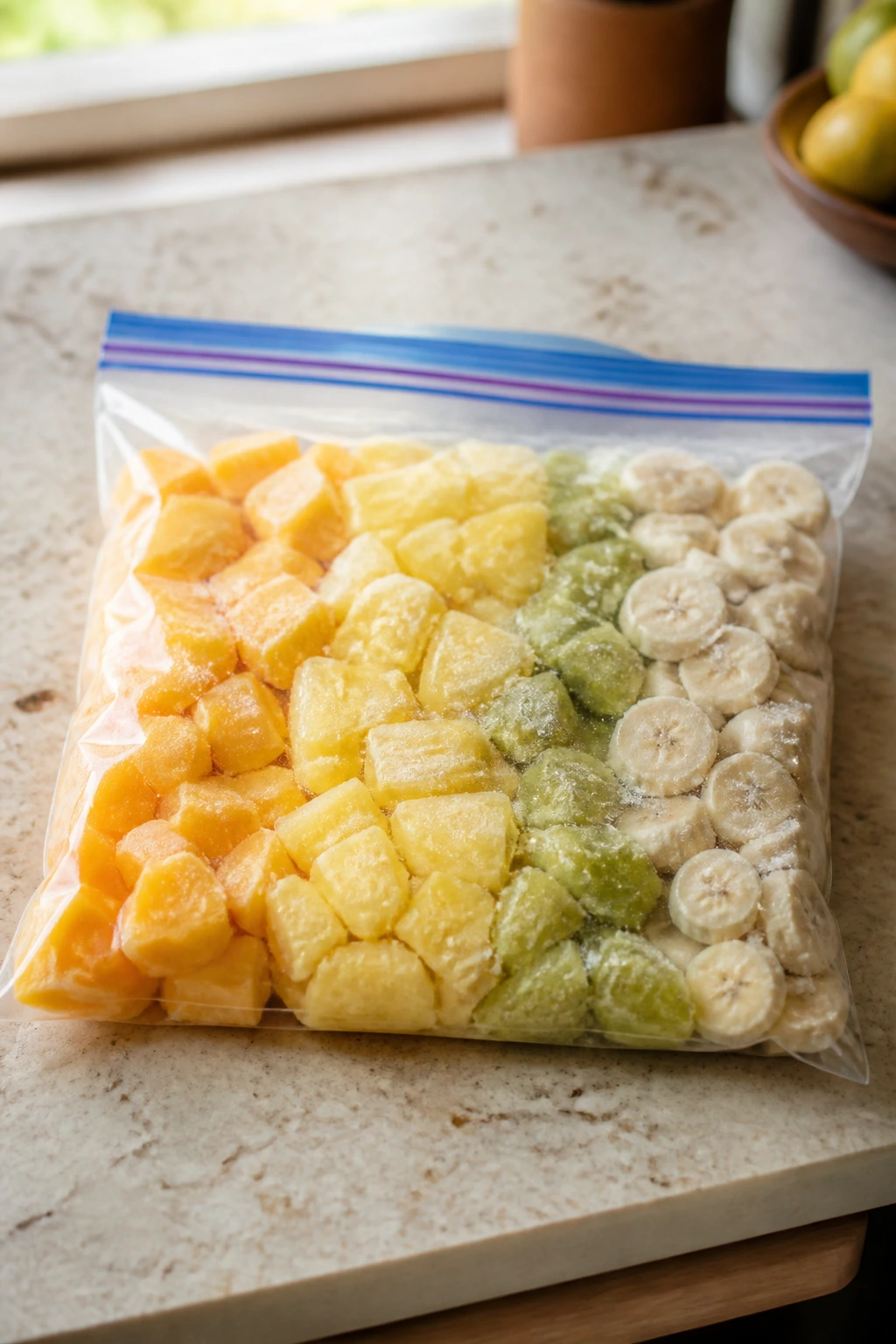
The packing step is where most people accidentally make their future smoothie harder to blend. They toss everything into a bag in random order, squeeze out almost no air, and pile the bags on top of each other while the fruit is still damp. A few hours later, they’ve got one giant frozen mass and a freezer drawer full of regret.
Start with dry fruit. Wash what needs washing, then pat it dry before cutting. Juicy fruit likes to form ice crystals around the edges, and those crystals turn into freezer burn if the bag has too much air. Mango, pineapple, and papaya especially do better when they’re dry and cut into even pieces.
Then portion the fruit by smoothie. If you’re making single servings, use quart-size freezer bags or silicone freezer bags that can lay flat. If you’re making family packs, use a larger bag, but don’t overstuff it. The bag should still flatten a little when you press it with your hand.
The best freezing routine
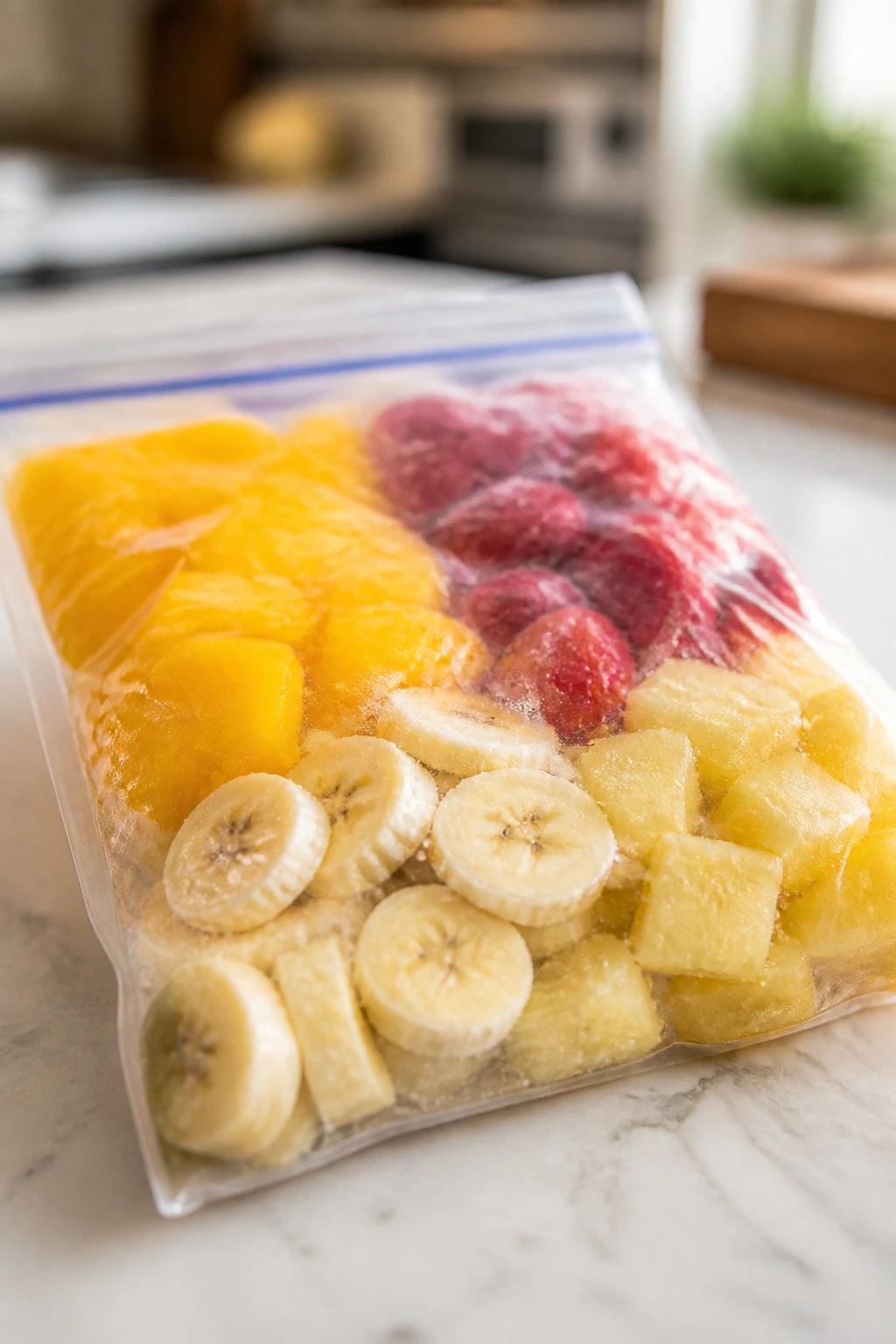
- Cut the fruit into even pieces. Aim for chunks that are roughly 1-inch wide so they freeze and blend at the same speed.
- Portion one smoothie per bag. A single pack should hold about 1½ to 2 cups of fruit, plus any dry boosters like chia or shredded coconut.
- Press the fruit into a flat layer. A thin bag freezes faster and thaws more evenly when it hits the blender.
- Squeeze out extra air. Less air means less freezer burn and less weird ice fog inside the bag.
- Label the bag. Write the contents and the date. If you’re making different combos, label the liquid you plan to add later too.
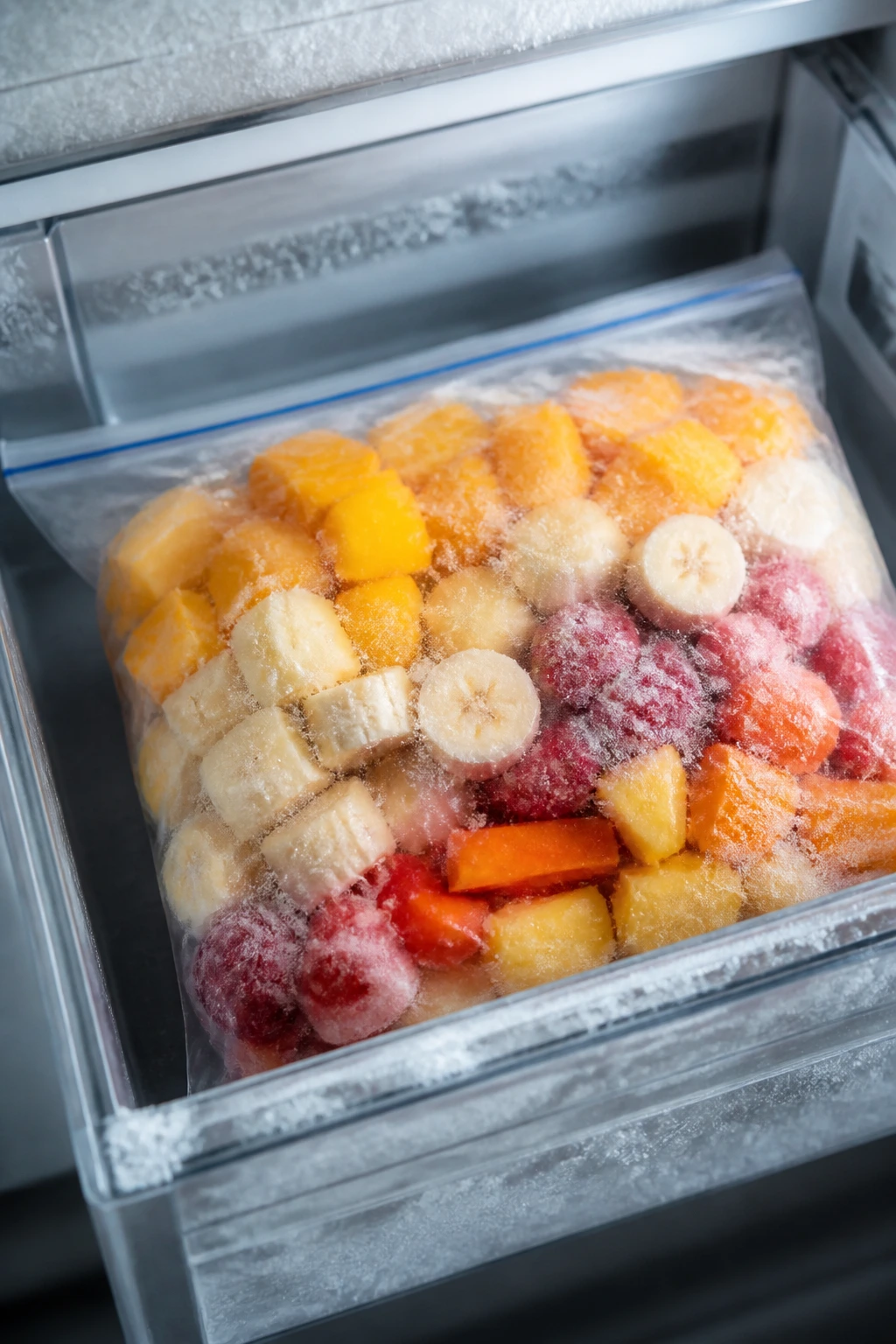
- Freeze the bags flat on a sheet pan. Give them 2 to 4 hours before stacking. Overnight is even better if you’re batch-prepping a full set.
If you use reusable silicone bags, stand them open in a bowl or measuring cup while filling them. They flop around otherwise, which is not charming when your hands are sticky with mango juice. Once frozen, keep the packs near the back of the freezer, not in the door. The temperature swings in the door are rough on fruit texture.
How to Blend a Frozen Pack Without Beating Up Your Blender
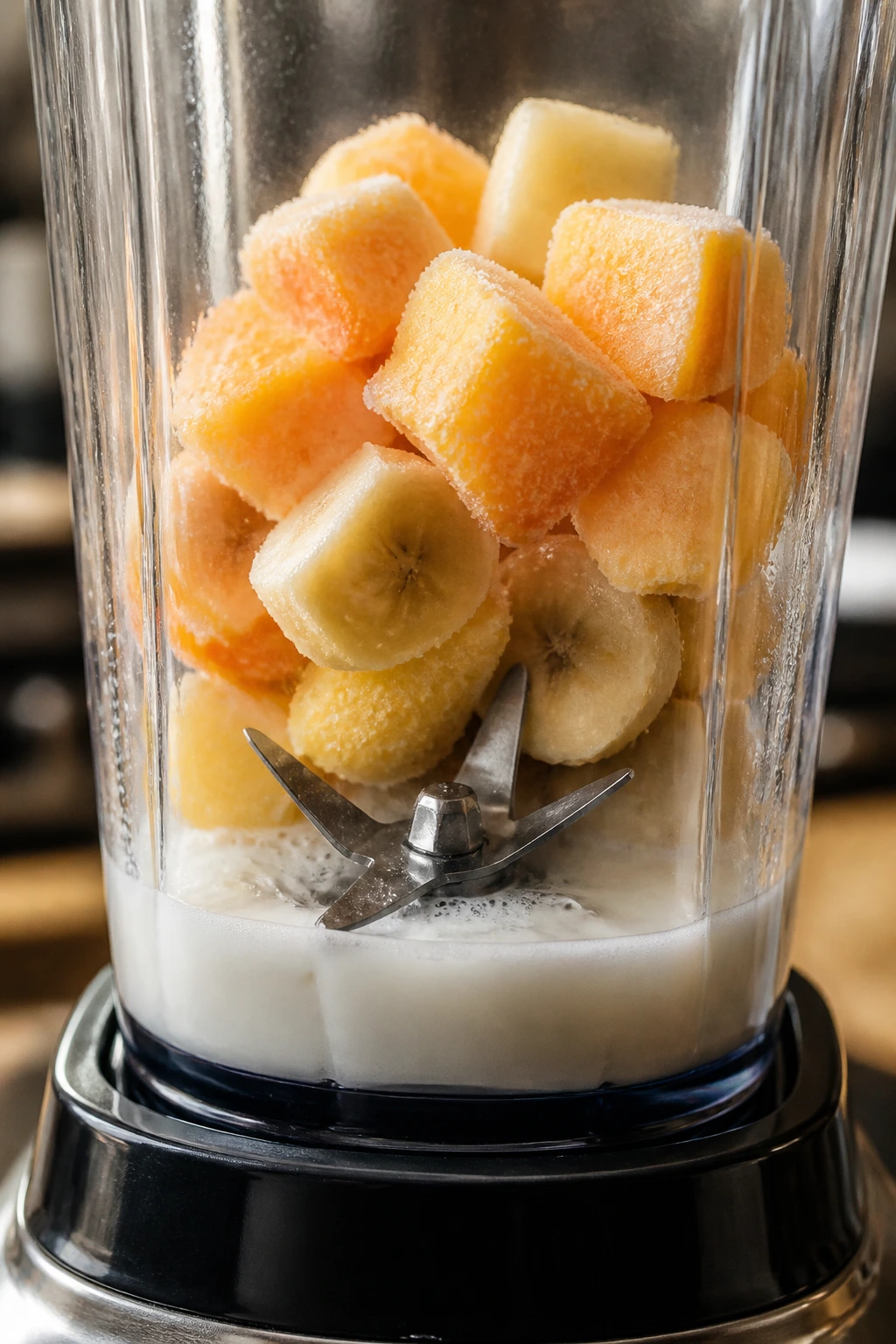
A weak blender is not a moral failure. It just needs a smarter starting point.
The easiest way to avoid a stalled motor is to pour the liquid in first. Then add the frozen pack on top. That gives the blades something to grab before they start fighting with the frozen fruit. If you’re using a high-speed blender, you still benefit from this order. If you’re using a smaller countertop blender, it matters even more.
I like to begin with ¾ cup liquid for a thick smoothie and work up to 1 cup if the fruit is dense or the blades are struggling. Coconut water makes the drink lighter and cleaner. Coconut milk makes it creamier. Plain water works in a pinch, but it leaves the flavor thin, so I only use it when I’m also adding yogurt or banana.
A blending rhythm that works
- Add the liquid first.
- Tip in the frozen pack.
- Let the bag sit for 2 to 3 minutes if it’s rock-hard.
- Start on low or pulse a few times to break the chunks.
- Blend for 30 to 45 seconds, stopping once to scrape the sides if needed.
- Add more liquid by the tablespoon only if the blades stop moving.
That last part matters. People often keep pouring in liquid because the smoothie looks stubborn, and then the drink goes from thick to soupy in one sad minute. Give the blender a chance to catch up first. If it still won’t move, pulse. If it still won’t move, add a splash more liquid. Don’t flood it.
For extra-thick smoothies, use a tamper if your blender has one. If it doesn’t, stop the machine and use a spatula to nudge the fruit down. Never shove a spoon into a running blender. Seriously. That’s a fast way to damage both the blender and your afternoon.
If the smoothie sits for more than a few minutes after blending, it will loosen. That’s normal. Tropical fruit drinks separate faster than people expect, especially if they’re built with coconut water instead of yogurt. A quick stir or shake fixes it. If it still feels too loose, freeze the next pack with a little more banana or mango.
How to Serve a Tropical Smoothie So It Feels Intentional
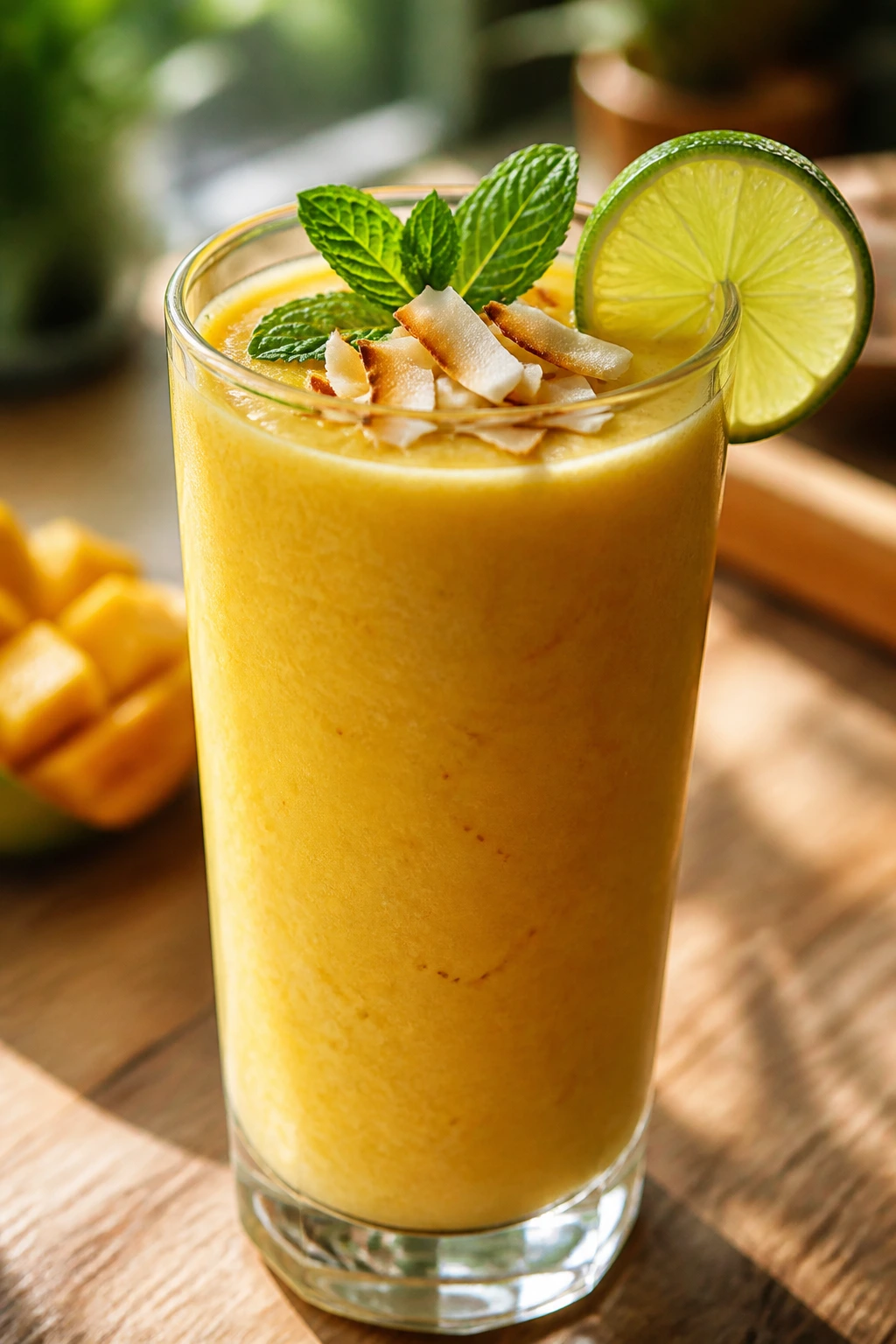
A smoothie can look like a rushed breakfast, or it can look like you meant to make something cold and bright and worth drinking slowly. The difference is mostly in the glass and the garnish. A chilled glass helps more than people expect. Pop it in the freezer for 10 minutes while you blend, and the smoothie stays cold longer without extra ice.
Presentation: Pour the smoothie into a tall glass or a wide-mouthed tumbler so the color shows off. I like a pinch of toasted coconut on top, a thin lime wheel on the rim, or a little mint if the smoothie leans pineapple-heavy. A paper straw is optional. A spoon is sometimes better, especially if you made the pack thick with banana or chia.
Accompaniments: For breakfast, I like a slice of toast with peanut butter, a small bowl of granola, or a couple of eggs on the side if the smoothie is replacing a full meal. For a snack, keep it simpler — a handful of salted nuts or a rice cake with almond butter is enough. If you’re serving a brunch spread, a platter of sliced fruit gives the smoothie a little company without crowding the glass.
Portions: One pack usually makes 12 to 16 ounces, which is a solid single serving. If you want a lighter afternoon drink, split one pack between two glasses and keep the liquid modest. If you want breakfast to hold longer, add yogurt, chia, or oats instead of just making a bigger sweet drink.
Beverage Pairing: I usually don’t pair a smoothie with another drink unless it’s part of a larger brunch. In that case, unsweetened iced coffee or sparkling water with lime keeps things from feeling cloying. A tropical smoothie already has a lot going on. It doesn’t need a sugary sidekick.
Serve it right away. Tropical smoothies lose their sharpness as they sit, and the top layer starts to separate sooner than you’d think. That’s not a defect. It’s just fruit doing fruit things.
Practical Tips That Make Every Pack Taste Brighter
Flavor Enhancement: Add a small pinch of salt to the blender, not the bag. Salt makes mango taste deeper and pineapple taste cleaner, and you’ll notice the difference in the first sip. A teaspoon of lime juice does the same kind of work from the bright side.
Time-Saver: Freeze bananas peeled and sliced on a parchment-lined tray before bagging them. They stop sticking to the knife, and you can grab half a banana or a full one without wrestling a whole peel. I do the same thing with mango cubes if the fruit is very ripe and slippery.
Cost-Saver: Buy frozen mango and pineapple when the fresh stuff is overpriced or pale. Frozen fruit is usually picked at a decent stage of ripeness, so it’s often more dependable than fresh fruit that was harvested early and stored too long. You can mix store-bought frozen fruit with your own cut fruit and no one will know which pieces came from where.
Texture Trick: If you want a creamier finish, freeze yogurt in tablespoon scoops or ice-cube trays and add those at blending time. That gives you the body of yogurt without letting it glue the fruit together in the bag. Coconut milk cubes work the same way.
Make-It-Yours: For dairy-free packs, coconut yogurt and coconut water are the easy route. For a higher-protein version, use Greek yogurt or silken tofu at blending time. For kids, skip the ginger, keep the pineapple modest, and lean harder on banana and mango, which read sweeter and softer on the palate.
One more small habit helps more than it should: make the pack just a little smaller than you think you need. You can always pour a second glass if the blender makes more than expected. What you cannot do is untangle an overstuffed bag after it freezes solid. That’s a garbage-can problem, not a smoothie problem.
Common Mistakes That Flatten the Flavor or Ruin the Texture
-
Making the pack too watery: If you use too much pineapple, orange, or juicy fruit, the smoothie comes out thin and aggressive instead of creamy. The fix is simple: add more mango, banana, avocado, or yogurt, and keep the liquid measured instead of poured by instinct.
-
Freezing liquid inside the bag: Coconut milk, coconut water, and juice sound like they belong in the pack, but they freeze into hard blocks that trap the fruit. Add them when you blend, not before.
-
Skipping the dry step: Wet fruit clumps faster and picks up icy frost. Pat everything dry after washing, especially mango, pineapple, papaya, and berries if you’re mixing them in.
-
Packing too much banana: Banana is useful, but it can take over. Too much and the drink tastes heavy, almost like banana pudding trying to impersonate a smoothie. Keep it to half a banana unless banana is the flavor you actually want.
-
Blending on high right away: That forces a frozen clump to fight the blades all at once. Start low, pulse, and give the blender a chance to catch the chunks before you crank it up.
-
Leaving too much air in the bag: Air means freezer burn and stale fruit. Press the bag flat, squeeze out the air, and store it where the freezer stays coldest.
A lot of bad smoothie texture comes from trying to rescue a pack after it’s already gone wrong. That’s backward. The fix usually happens at the cutting board: even pieces, dry fruit, small portions, and no liquid in the bag. Once you do those things a few times, they stop feeling like steps and start feeling like common sense.
Variations and Smart Swaps Worth Trying
Mango-Coconut Cream Pack: Use mango, banana, and a spoonful of shredded coconut, then blend with coconut milk instead of water. This is the richest version here, and it tastes closest to something you’d buy from a beach café that takes its blender seriously.
Pineapple-Ginger Bright Pack: Pack pineapple, a little mango, and a thin slice of fresh ginger. Blend with coconut water and a squeeze of lime. The ginger gives the drink a clean edge, which is useful if you want something sharper than the usual sweet-tropical profile.
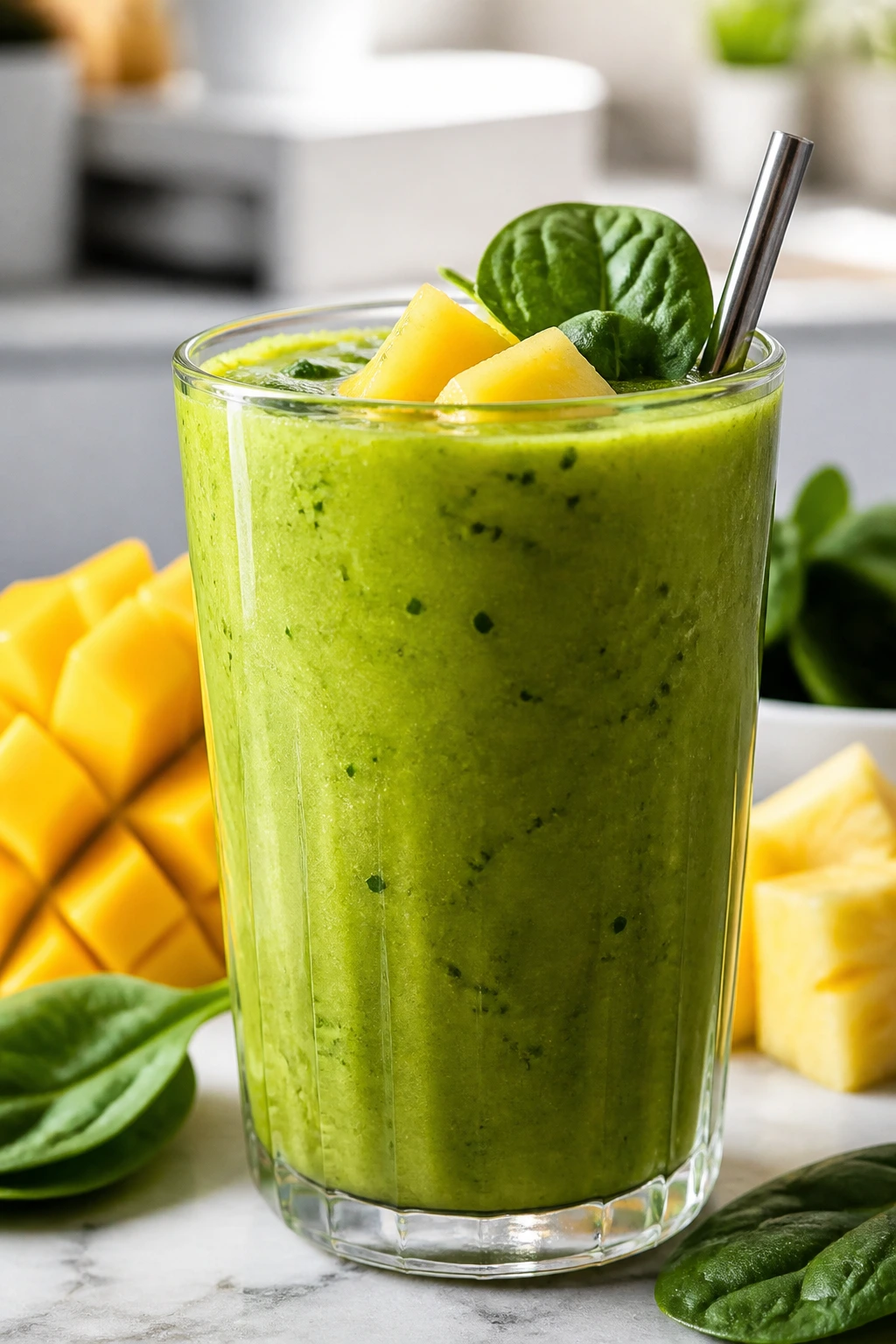
Green Tropic Pack: Use mango, pineapple, and a handful of spinach. If you want more body, add half an avocado at blending time. Spinach is the easiest leafy green to hide here because mango and pineapple do a decent job of covering the flavor.
Guava-Berry Sunrise Pack: Combine frozen guava pulp, strawberries, and pineapple. The berries darken the color, the guava adds perfume, and the pineapple keeps the whole thing from tasting too soft. This is the pack I’d make when I want something tart and a little less predictable.
Banana-Free Creamy Pack: If banana isn’t your thing, use mango, avocado, and coconut yogurt instead. The avocado keeps the body thick, and the yogurt gives the smoothie enough structure that you don’t miss the banana at all.
Poolside Rum Splash: Blend the pack normally, then add 1 to 1½ ounces of white rum or coconut rum per glass if you want an adult version. Keep the alcohol out of the freezer bag itself; the texture is better when you add it after blending, and the freezer won’t have to deal with it.
The nice part about these swaps is that they keep the basic system intact. You’re not building a new method every time. You’re just changing the flavor profile, which is a lot more fun than starting from zero.
Tools, Containers, and Labels That Save Time
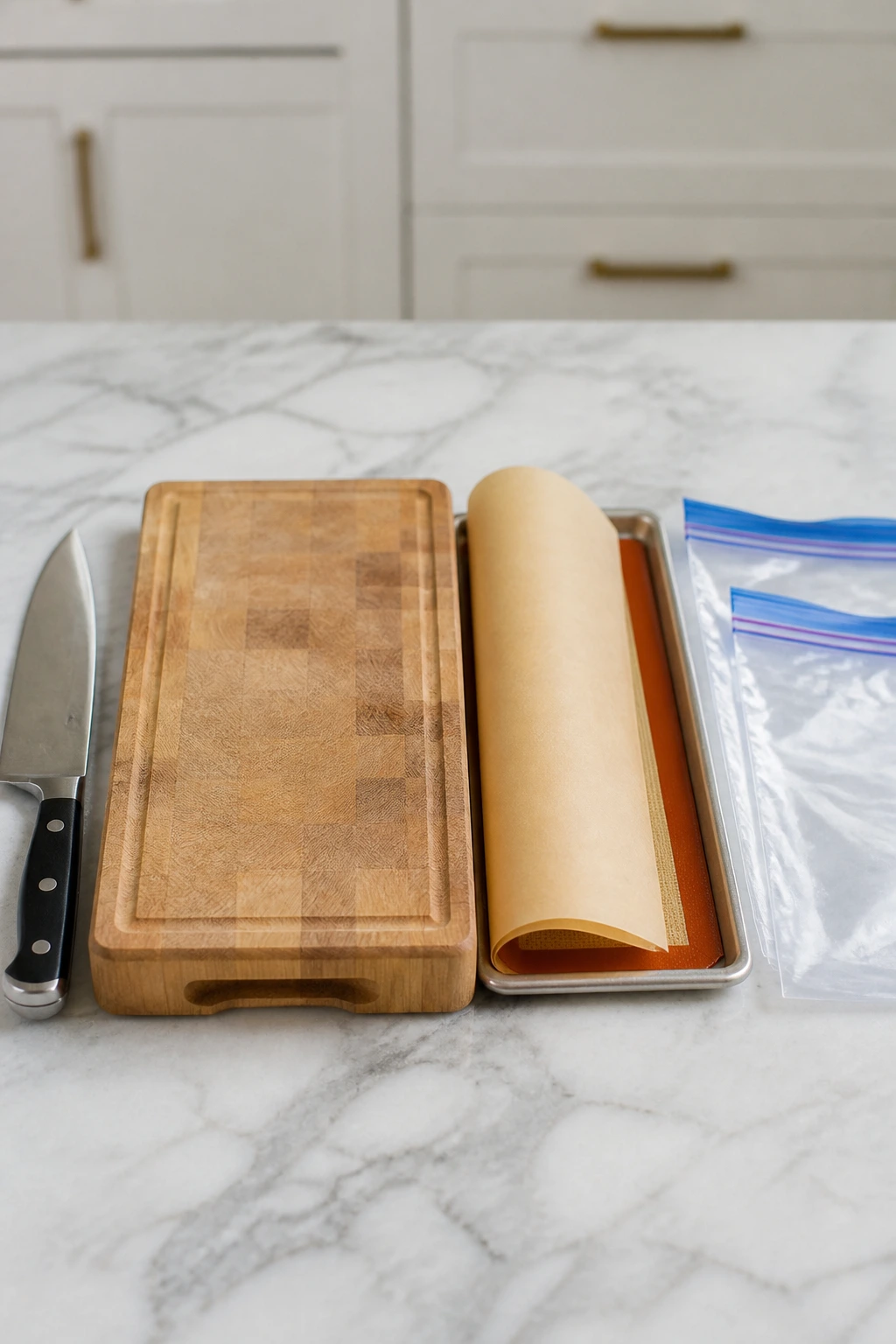
- Chef’s knife: A sharp knife makes mango, pineapple, and banana much easier to cut into even pieces, which helps with freezing and blending.
- Cutting board with a stable grip: Pineapple juice makes boards slippery. A damp kitchen towel underneath keeps the board from sliding around.
- Sheet pan: This is the easiest way to freeze packs flat before stacking them.
- Parchment paper or a silicone mat: Useful if you want to keep sticky fruit from fusing to the pan while you flash-freeze.
- Quart-size freezer bags or reusable silicone bags: One serving fits neatly in a quart bag; silicone bags are nice if you’re trying to cut down on waste.
- Permanent marker and label tape: Write the fruit combo and the liquid you plan to add later. Frozen mystery bags are not charming.
- Measuring cups: Helpful if you want consistent pack sizes instead of eyeballing everything and wondering why one smoothie is tiny and another is a fruit avalanche.
- Blender with a tamper, if possible: Not required, but it makes thick frozen packs much easier to handle.
- Ice cube tray: Handy for freezing coconut milk, yogurt, lime juice, or ginger in small portions when you want boosters ready to go.
I’d also keep one small bowl or measuring cup near the prep area if you use reusable bags. They stand up better when you’re filling them, and the whole process gets less annoying fast.
Make-Ahead, Storage, and Freezer-Life Guidance
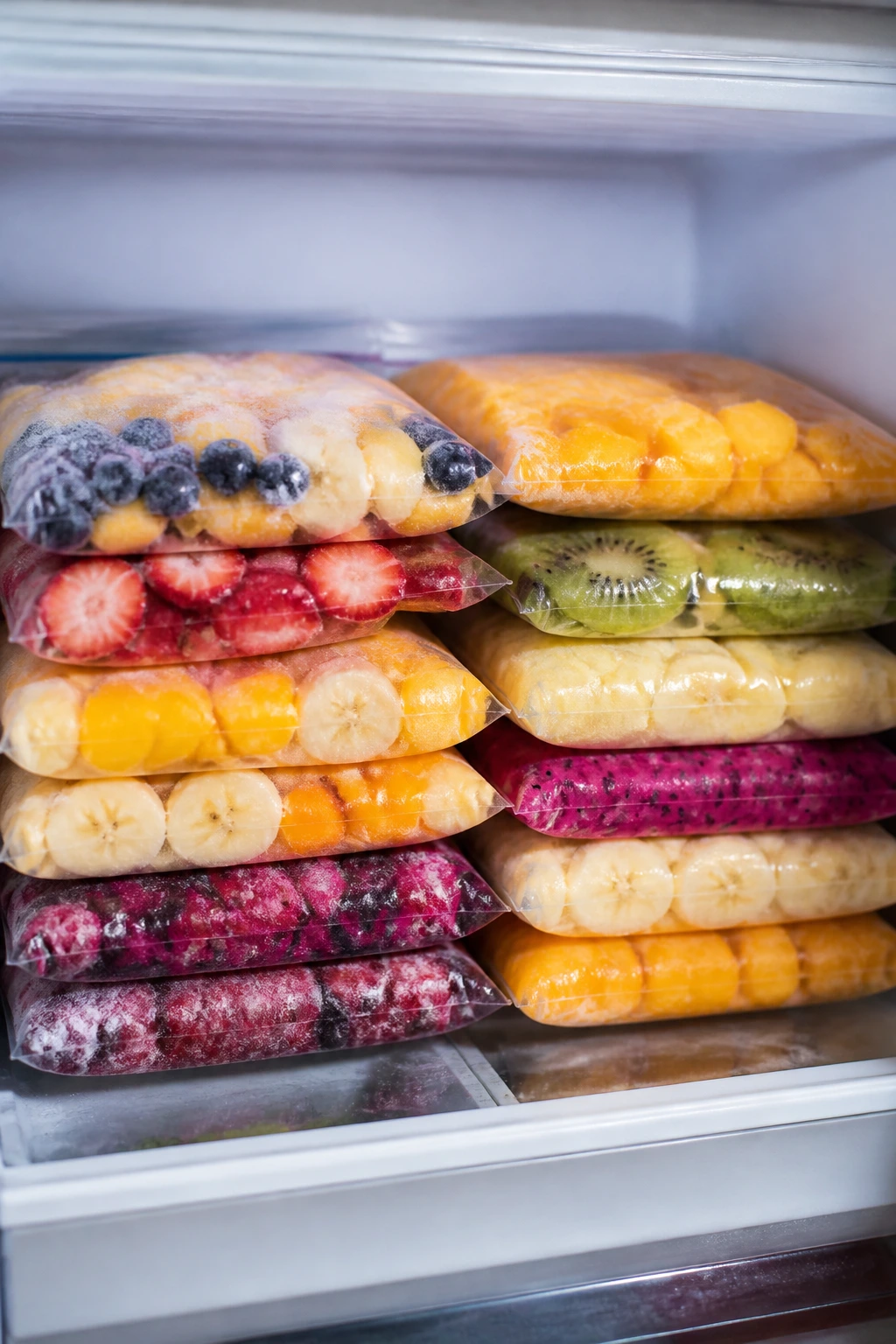
A well-packed tropical smoothie bag keeps its best flavor for about 2 to 3 months in a standard freezer at 0°F (-18°C). If the bag is airtight, the fruit was dry when packed, and the freezer stays cold, you can stretch that a bit longer. The texture starts to soften before the fruit becomes unsafe; freezer burn is the real enemy here, not spoilage.
Banana-heavy packs are a little more delicate. They’re still fine after a couple of months, but the banana flavor can drift softer and more starchy with time. Mango, pineapple, and coconut-heavy packs hold their shape better. If you’re making a stack, use the older bags first and keep the newest ones in the back.
Keep the packs away from the freezer door. The temperature swings near the front matter more than people realize, especially if your freezer gets opened all day. The back wall is steadier. It’s also the place less likely to become a forgotten cave of frost and mystery leftovers.
If you’re adding yogurt or coconut milk cubes, use those packs within 6 to 8 weeks for the cleanest flavor. Dairy and coconut dairy alternatives freeze well, but they don’t love endless storage. They start tasting flat before they become unsafe, which is a different problem but an annoying one.
A few storage habits that help
- Freeze flat first, then stack. Flat packs thaw more evenly when you blend them.
- Press the air out before sealing. Less air means less freezer burn.
- Write the liquid right on the bag. “1 cup coconut water” is a useful note when you’re half-awake.
- Keep a rough rotation. Older packs go in front, newer packs go behind.
Once blended, a smoothie is best drunk right away. If you have leftovers, pour them into a tightly sealed jar and refrigerate for up to 24 hours. The texture will separate a bit, so shake hard or reblend with a splash of liquid before drinking. It will never be quite as bright as the first pour, which is the price of making more than you can finish.
Frequently Asked Questions
Can I put liquid in the smoothie pack before freezing?
You can, but I don’t recommend it for this kind of pack. Liquid turns the bag into a frozen block, which is harder to portion and rougher on the blender; it’s better added right before blending.
Do I need banana in every tropical smoothie pack?
No. Banana helps with body, but mango, avocado, Greek yogurt, or coconut yogurt can fill that role too. If you don’t like banana flavor, build your pack around mango and coconut instead.
Which fruit freezes best for tropical smoothie packs?
Mango and pineapple are the easiest wins. Mango gives creaminess, pineapple brings brightness, and both hold up well when cut into even pieces and frozen flat.
Can I use store-bought frozen fruit instead of fresh?
Absolutely. In fact, frozen mango, pineapple, and guava are often easier because they’re already portioned and usually frozen at a decent ripeness. Just check the bag for added sugar or syrup if you want a cleaner flavor.
How do I keep the smoothie from tasting bland?
Use a pinch of salt, a little lime juice, and a fruit combo with both sweet and sharp notes. A smoothie made only from very sweet fruit can taste flat, even when it’s cold.
What if my blender can’t handle the frozen pack?
Let the bag sit for 2 to 3 minutes, add liquid first, and pulse before you blend. If the machine still stalls, add liquid by the tablespoon, not the cup. That small adjustment usually fixes the problem.
Can I make these packs dairy-free?
Yes. Coconut water, coconut milk, coconut yogurt, and avocado all work well. You can also use silken tofu if you want creaminess without dairy flavor.
Are tropical smoothie packs good for kids?
They’re one of the easier make-ahead drinks for kids because the fruit can be cut small and the flavor can be adjusted. Keep ginger and strong citrus light, and lean on mango, banana, and pineapple if you want a sweeter, softer taste.
How long can I leave a frozen pack on the counter before blending?
Not long. Two to five minutes is plenty if the fruit is rock-hard and your blender needs a head start. If the fruit starts sweating and softening at the edges, you’ve waited too long and the smoothie will lose some thickness.
Can I make these in a big batch for the week?
Yes, and that’s where the method shines. Portion the fruit into individual bags, freeze them flat, and stack them by date so you can grab one without thinking. The whole point is to make the next drink almost boring to assemble.
A Cold Habit Worth Keeping
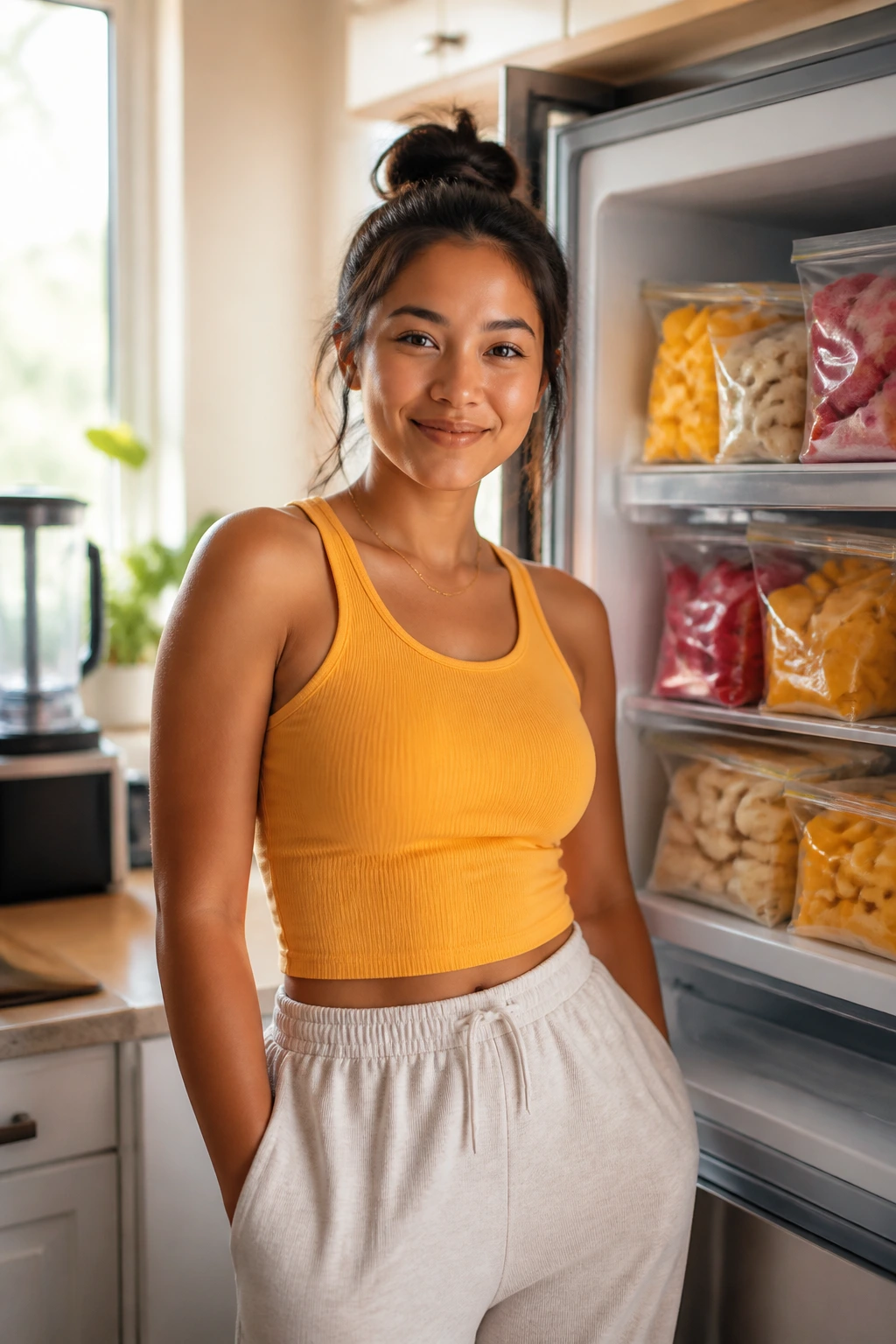
Hot afternoons have a way of making planning feel impossible. A freezer full of tropical smoothie packs takes some of that friction away, because the hard part is already done: the mango is cut, the pineapple is portioned, and the next drink is waiting without making a mess of the counter.
I like systems that work when I’m half-awake, and this is one of them. When the pack is built well, the smoothie tastes bright, thick, and cold in a way that feels more deliberate than the usual “throw fruit in blender and hope” routine. Keep a few of these lined up at the back of the freezer, and the next heatwave feels a little less bossy.