



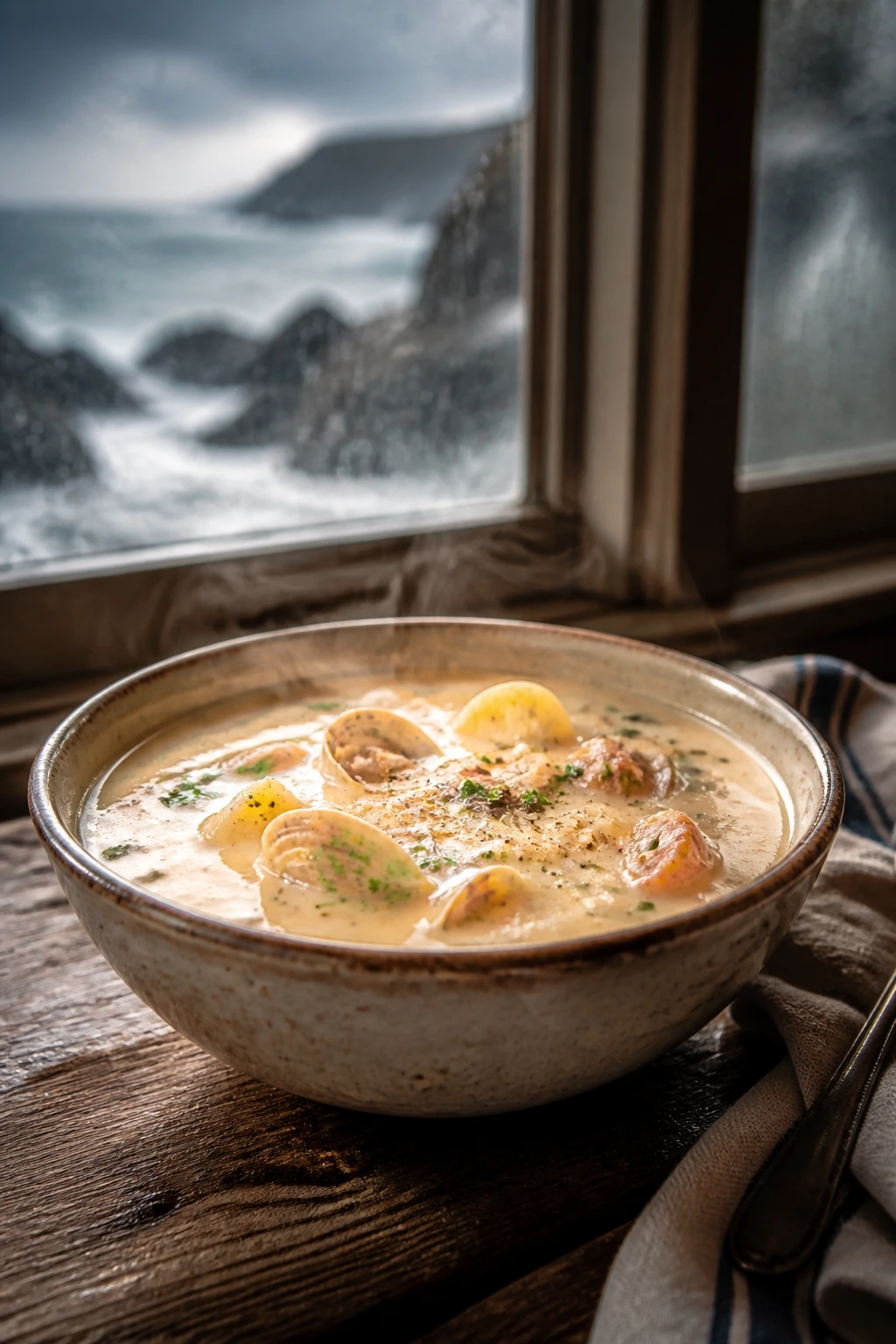
A good chowder dinner has a way of making a hard night feel smaller. The windows fog, the bowl warms your hands, and the first spoonful lands with butter, salt, and a little sweetness from onions or corn. On a cold coastal night, that’s not a side dish. That’s dinner doing its job.
Chowder dinners work because they sit on a useful edge: part soup, part stew, always thick enough to feel substantial, but loose enough to spoon up without ceremony. They can be creamy and rich, briny and lean, smoky and potato-heavy, or bright with tomatoes and white wine. A pot of chowder also forgives the week a little. Potatoes soften, fish flakes, shellfish poach gently, and the broth picks up depth in a way that feels earned.
This collection leans into that range. Some bowls are old-school and heavy with cream, some keep the broth clear and let the seafood do the talking, and a couple skip the fish entirely but still feel like they belong near the water. If you cook these with a loaf of bread and a little patience at the stove, you’ll have the sort of dinner people remember when the weather turns sharp.
Why These Chowders Earn Their Spot on a Wet, Windy Table
-
Built for cold evenings: Every recipe here is sturdy enough to stand as a full meal, with potatoes, seafood, beans, sausage, or corn doing the heavy lifting.
-
Flexible with what you have: Frozen seafood, pantry broth, leftover vegetables, and canned shellfish all work in more than one of these pots.
-
Different moods, same comfort: You get classic cream-based chowder, tomato-forward broth, coconut milk richness, and smoky, rustic bowls that taste like a harbor café after dark.
-
Easy to scale up: Most of these chowders double cleanly for company, and a few taste even better the next day after the flavors settle.
-
Bread-friendly by design: These are the dinners that ask for sourdough, rye, oyster crackers, or a thick heel of sandwich bread.
-
Not all seafood, not all cream: There’s room here for fish, shellfish, chicken, sausage, and a meatless bowl that still feels like a real meal.
1. Classic New England Clam Chowder
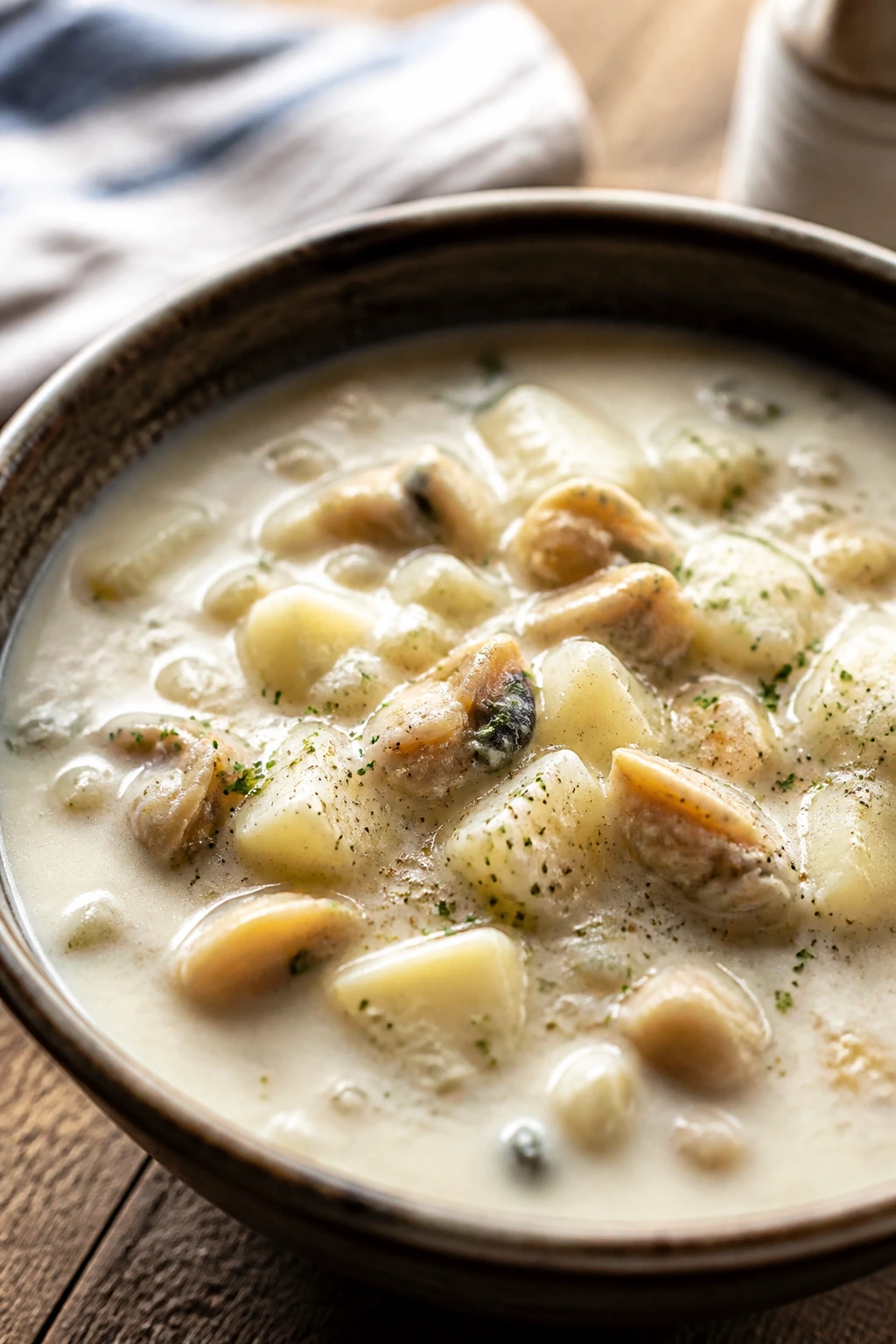
This is the bowl people picture first, whether they say so or not. Thick, pale, and studded with tender clams and soft potatoes, it has that unmistakable mix of brine and comfort that makes the whole room smell like butter, bacon, and the sea. Done well, it should taste rich without feeling gluey.
The version I like keeps the texture chunky. You want potato cubes that still hold their shape, a broth that clings to the spoon, and clams that stay tender because they go in at the very end. Too many chowders drown the clams in the beginning and turn them into tiny rubber bands. Don’t do that.
Why It Works
Clam chowder works because it layers fat, starch, and salt in a very controlled way. Bacon gives you the base, onions and celery soften the edges, and potatoes thicken the broth naturally as they simmer. The clam juice adds a clean briny note, while the cream rounds out the sharpness without erasing it. Keep the pot at a bare simmer and the whole thing stays silky instead of splitting.
Key Ingredients
- 6 slices thick-cut bacon, diced
- 1 medium yellow onion, finely diced
- 2 celery stalks, finely diced
- 2 tablespoons all-purpose flour
- 2 cups Yukon Gold potatoes, peeled and cut into 1/2-inch cubes
- 2 cups bottled clam juice
- 1 cup water
- 2 cans (10 ounces each) chopped clams, drained, juice reserved
- 1 cup heavy cream
- 1 bay leaf
- 1 teaspoon fresh thyme leaves
- 1/2 teaspoon black pepper
- 2 tablespoons chopped parsley, for serving
Quick Steps
-
Render the bacon. Cook the diced bacon in a heavy pot over medium heat for 6 to 8 minutes, until the fat is out and the pieces are crisp at the edges. Remove half the bacon for topping and keep the rest in the pot.
-
Soften the vegetables. Add the onion and celery to the bacon fat and cook for 4 to 5 minutes, stirring often, until the onion is translucent and smells sweet.
-
Build the base. Sprinkle in the flour and stir for 1 minute so it loses its raw taste. The mixture should look pasty, not browned.
-
Add the liquid and potatoes. Pour in the clam juice, water, potatoes, bay leaf, thyme, and black pepper. Bring to a gentle simmer and cook for 12 to 15 minutes, until the potatoes are tender when pierced.
-
Finish with cream and clams. Stir in the cream and reserved clam juice, then add the clams. Heat for 2 to 3 minutes more, just until the clams are warm. Do not boil after the cream goes in.
-
Serve. Remove the bay leaf, taste for salt, and ladle into warm bowls. Top with parsley and the reserved bacon.
Tips and Variations
- For a thicker chowder, mash a few potatoes against the side of the pot before adding the cream.
- Canned clams are fine here. Fresh clams are lovely, but they are not required for a good bowl.
- If you want a lighter finish, replace half the cream with whole milk, but keep the heat low.
2. Smoky Salmon and Dill Chowder
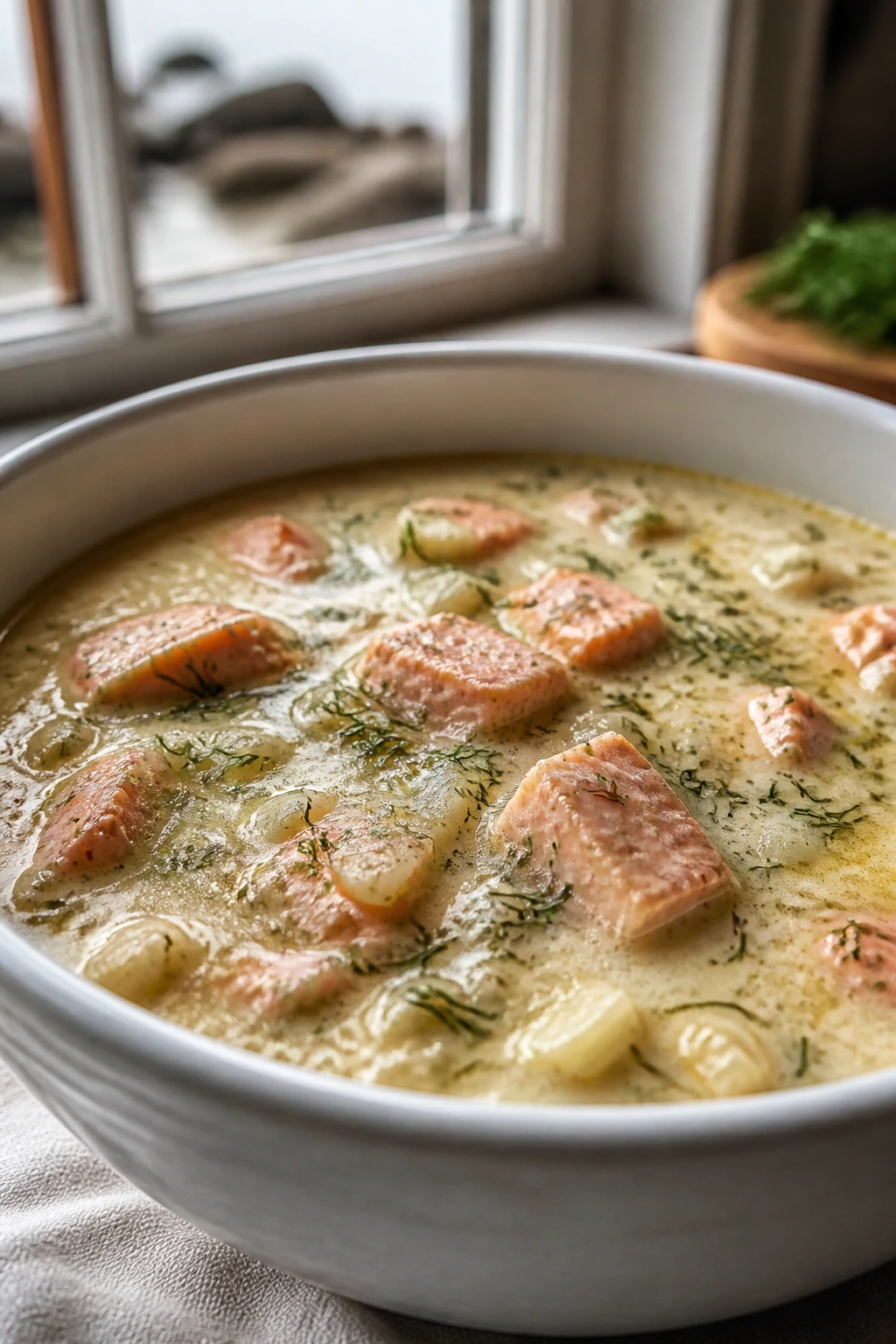
Salmon chowder is the bowl that feels a little more relaxed than clam chowder, and I like that. The salmon brings richness, the dill brings lift, and the lemon at the end keeps the whole thing from becoming heavy. If you’ve got leftover roasted salmon, this is one of the best ways to make it feel new again.
The best version has soft leeks, a few potatoes, and a broth that’s creamy but not thick enough to sit like paste. You should taste smoke if the salmon was cured or roasted over wood, but it shouldn’t dominate. This is still a chowder, not a fish spread pretending to be soup.
Why It Works
Salmon has enough fat to stand up to cream, which is why this chowder tastes plush without needing a long list of tricks. Leeks give you a sweeter, gentler base than onion alone, and dill pulls the seafood flavor forward instead of covering it. A small squeeze of lemon at the end keeps the bowl lively. Add the salmon near the end so it flakes in big, soft pieces instead of breaking down into grainy bits.
Key Ingredients
- 1 1/2 pounds skinless salmon fillet, cut into 1 1/2-inch chunks
- 2 tablespoons unsalted butter
- 2 leeks, white and light green parts only, thinly sliced and rinsed
- 2 celery stalks, diced
- 2 medium Yukon Gold potatoes, peeled and cut into 1/2-inch cubes
- 3 cups fish stock or low-sodium vegetable broth
- 2 cups whole milk
- 1 cup half-and-half
- 2 tablespoons chopped fresh dill, plus more for serving
- 1 teaspoon lemon zest
- 1 tablespoon lemon juice
- 1/2 teaspoon salt
- 1/2 teaspoon black pepper
Quick Steps
-
Start with the leeks. Melt the butter in a pot over medium heat. Add the leeks and celery, then cook for 5 minutes until softened and fragrant.
-
Add the potatoes and stock. Stir in the potatoes, fish stock, salt, and pepper. Bring to a simmer and cook for 10 to 12 minutes, until the potatoes are almost tender.
-
Pour in the milk and half-and-half. Lower the heat and add the dairy. Keep the pot at a gentle steam, not a boil.
-
Poach the salmon gently. Add the salmon chunks and cook for 4 to 6 minutes, just until they turn opaque and begin to flake. Stir with a light hand.
-
Finish with dill and lemon. Add the dill, lemon zest, and lemon juice. Taste and adjust salt.
-
Serve hot. Ladle into bowls and finish with a few dill fronds or a crack of black pepper.
Tips and Variations
- Smoked salmon works, but use less salt and add it at the very end.
- A handful of frozen peas is welcome here if you want a little color.
- If the chowder gets too thick, loosen it with a splash of stock or milk.
3. Crab and Corn Chowder with Old Bay
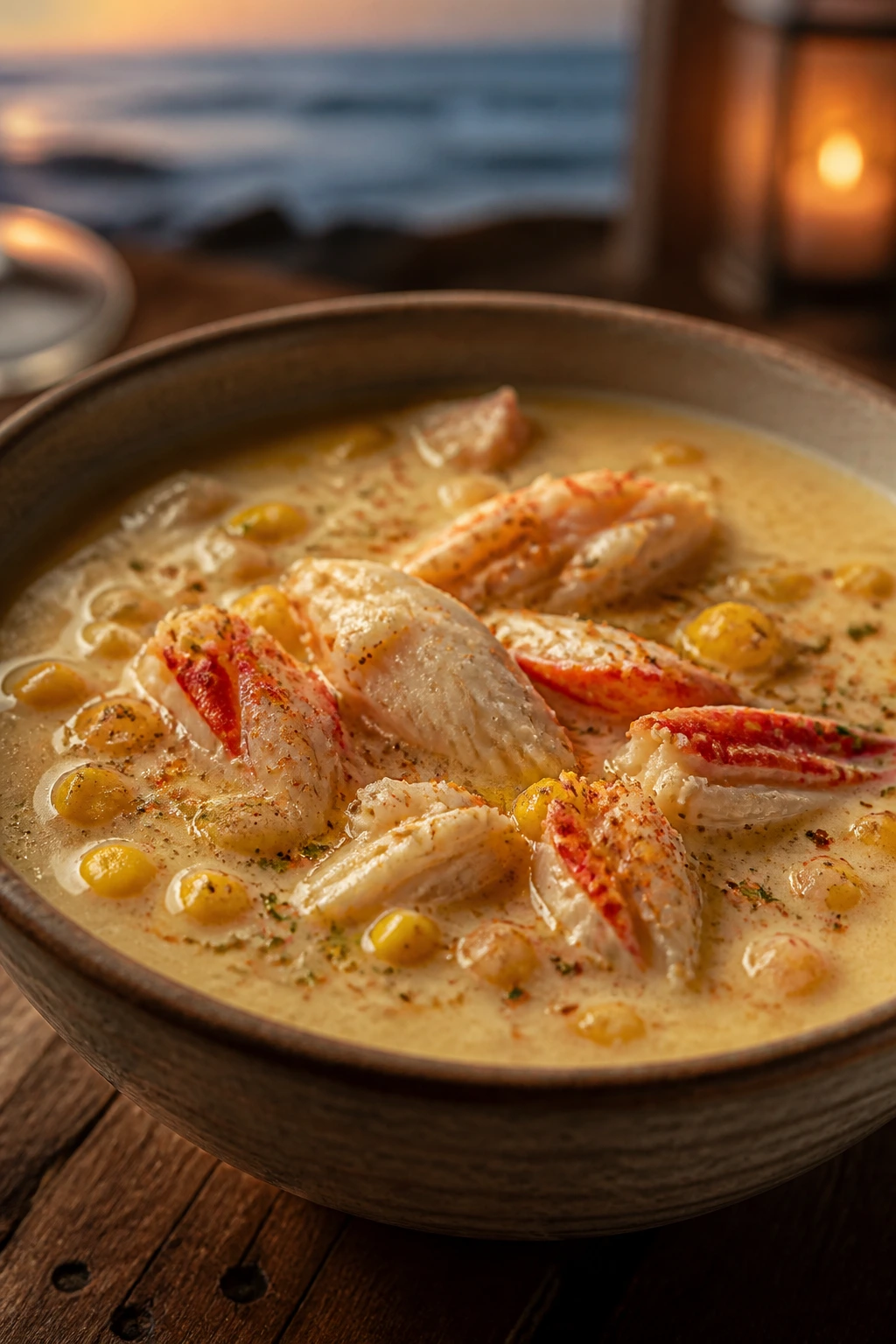
Crab and corn is one of those pairings that feels almost unfair. The crab brings sweet, delicate flavor, the corn adds its own little pop of sweetness, and the Old Bay gives the bowl a familiar coastal edge. It tastes like summer and winter shook hands in the same pot.
This one should never be overly mashed or overly fussy. Leave some whole corn kernels for texture. Keep the crab meat in larger pieces so every spoonful gives you a few real bites instead of a uniform paste. That’s the whole point.
Why It Works
Corn lends body without stealing the spotlight, and crab meat is delicate enough that it benefits from a gentle, creamy base. Old Bay does a lot of work here; it gives the chowder that seasoned-shellfish taste people associate with docks, steamers, and paper-lined baskets. The trick is to cook the base first and fold in the crab only after the potatoes are done. If the crab simmers hard, you lose both flavor and texture.
Key Ingredients
- 2 tablespoons unsalted butter
- 4 slices bacon, diced
- 1 small yellow onion, diced
- 1 celery stalk, diced
- 2 tablespoons all-purpose flour
- 2 medium Yukon Gold potatoes, peeled and cut into 1/2-inch cubes
- 3 cups low-sodium chicken broth or seafood stock
- 2 cups corn kernels, fresh or frozen
- 1 pound lump crab meat, picked over for shell fragments
- 1 cup half-and-half
- 1 teaspoon Old Bay seasoning
- 2 tablespoons chopped chives
- Salt and black pepper to taste
Quick Steps
-
Cook the bacon. Render the bacon in a pot over medium heat until crisp. Remove half for garnish, leaving the fat behind.
-
Build the aromatic base. Add the butter, onion, and celery. Cook for 4 minutes, until softened and glossy.
-
Thicken the pot. Stir in the flour and Old Bay. Cook for 1 minute.
-
Simmer the potatoes and corn. Add the broth, potatoes, and corn. Bring to a simmer and cook for 12 to 14 minutes, until the potatoes are tender.
-
Add the crab and dairy. Lower the heat, stir in the half-and-half, then fold in the crab meat. Warm for 2 to 3 minutes only. Do not break the crab into shreds.
-
Finish and serve. Taste for salt and pepper, then top with chives and the reserved bacon.
Tips and Variations
- Frozen corn is excellent here; thaw it first so it doesn’t drop the pot temperature.
- A pinch of cayenne gives the chowder more edge without burying the crab.
- Serve with crackers, but don’t crush them too fine. You want some bite left.
4. Cod, Leek, and Potato Chowder
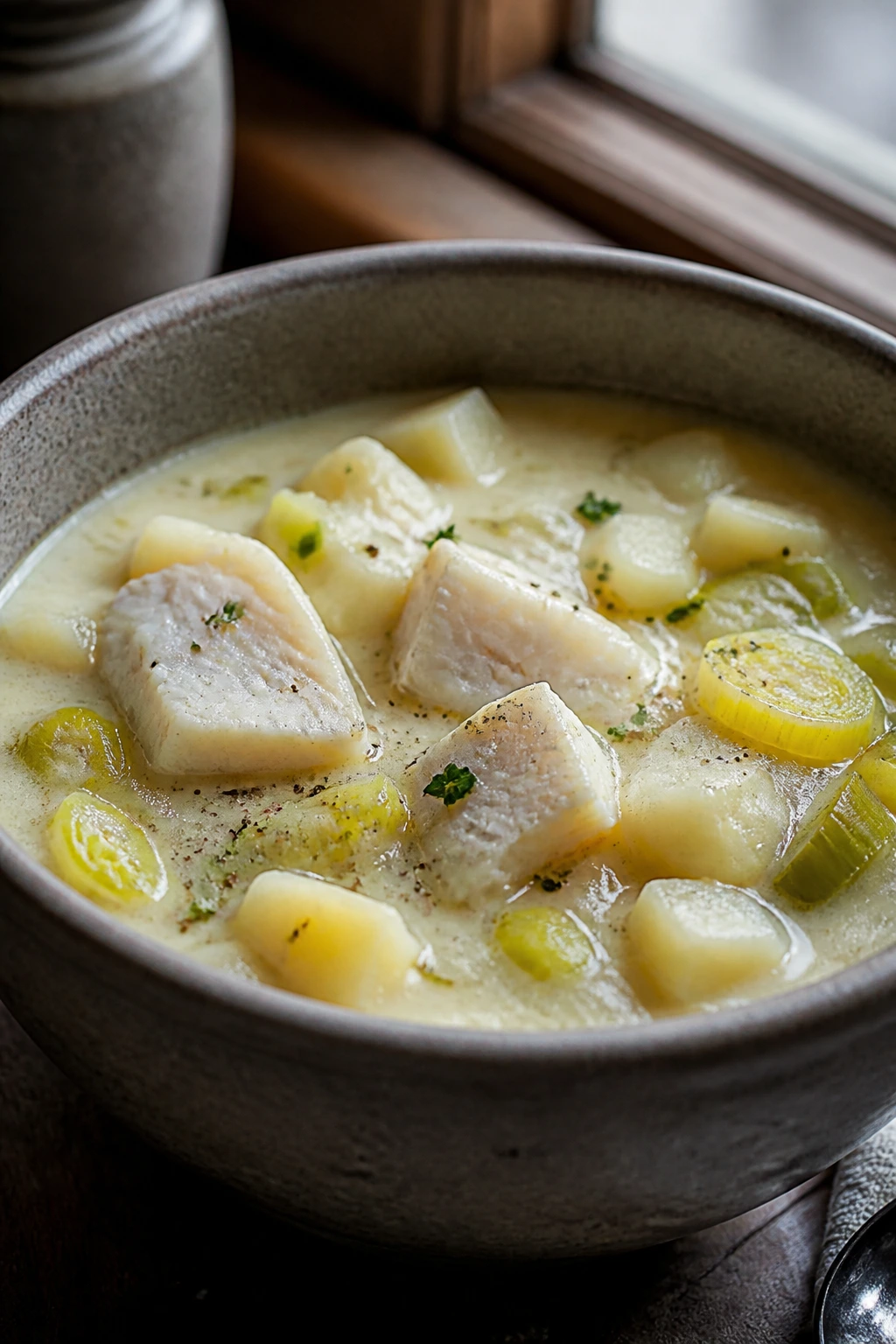
Cod is the quiet fish in the room. It doesn’t shout, and that’s exactly why this chowder works so well on a windy night. The fish flakes into clean white pieces, the leeks melt down into sweetness, and the potatoes make the broth feel fuller than it really is.
This is the bowl I make when I want something gentle but still substantial. White wine helps the pot taste brighter. A little thyme and a bay leaf make the broth taste like it had more work than it actually did. That’s one of the nicest things about chowder: a few thoughtful ingredients go a long way.
Why It Works
Cod has a lean, delicate texture, so it needs a broth that protects it instead of battling it. Leeks are softer than onions, which keeps the flavor round and the texture smooth. Potatoes give the chowder enough body to make it a main meal, while a splash of white wine lifts the flavor and keeps the cream from tasting flat. Keep the cod in larger chunks and add it near the end so it flakes rather than disappears.
Key Ingredients
- 1 1/2 pounds cod fillets, cut into 2-inch pieces
- 2 tablespoons unsalted butter
- 2 leeks, thinly sliced and well rinsed
- 1 carrot, diced
- 2 medium Yukon Gold potatoes, peeled and cubed
- 1/2 cup dry white wine
- 3 cups fish stock or low-sodium vegetable broth
- 1 cup whole milk
- 1 cup heavy cream
- 1 bay leaf
- 1 teaspoon fresh thyme
- 1 tablespoon chopped parsley
- Salt and black pepper to taste
Quick Steps
-
Sweat the leeks and carrot. Melt the butter in a pot over medium heat. Cook the leeks and carrot for 5 minutes, until the leeks look silky.
-
Add the wine. Pour in the white wine and let it bubble for 1 minute, scraping up the bottom of the pot.
-
Simmer the potatoes. Add the potatoes, stock, bay leaf, thyme, salt, and pepper. Cook for 12 minutes, until the potatoes are tender.
-
Add the milk and cream. Lower the heat and stir in both dairy ingredients.
-
Poach the cod. Add the cod pieces and cook for 4 to 5 minutes, until the fish turns opaque and flakes with light pressure.
-
Finish cleanly. Remove the bay leaf, taste, add parsley, and serve right away.
Tips and Variations
- Haddock can stand in for cod if that’s what looks freshest.
- If you like a thicker pot, mash a few potato cubes before adding the cod.
- A spoonful of chopped dill at the end works well here, even if it’s not traditional.
5. Chicken, Bacon, and Potato Chowder
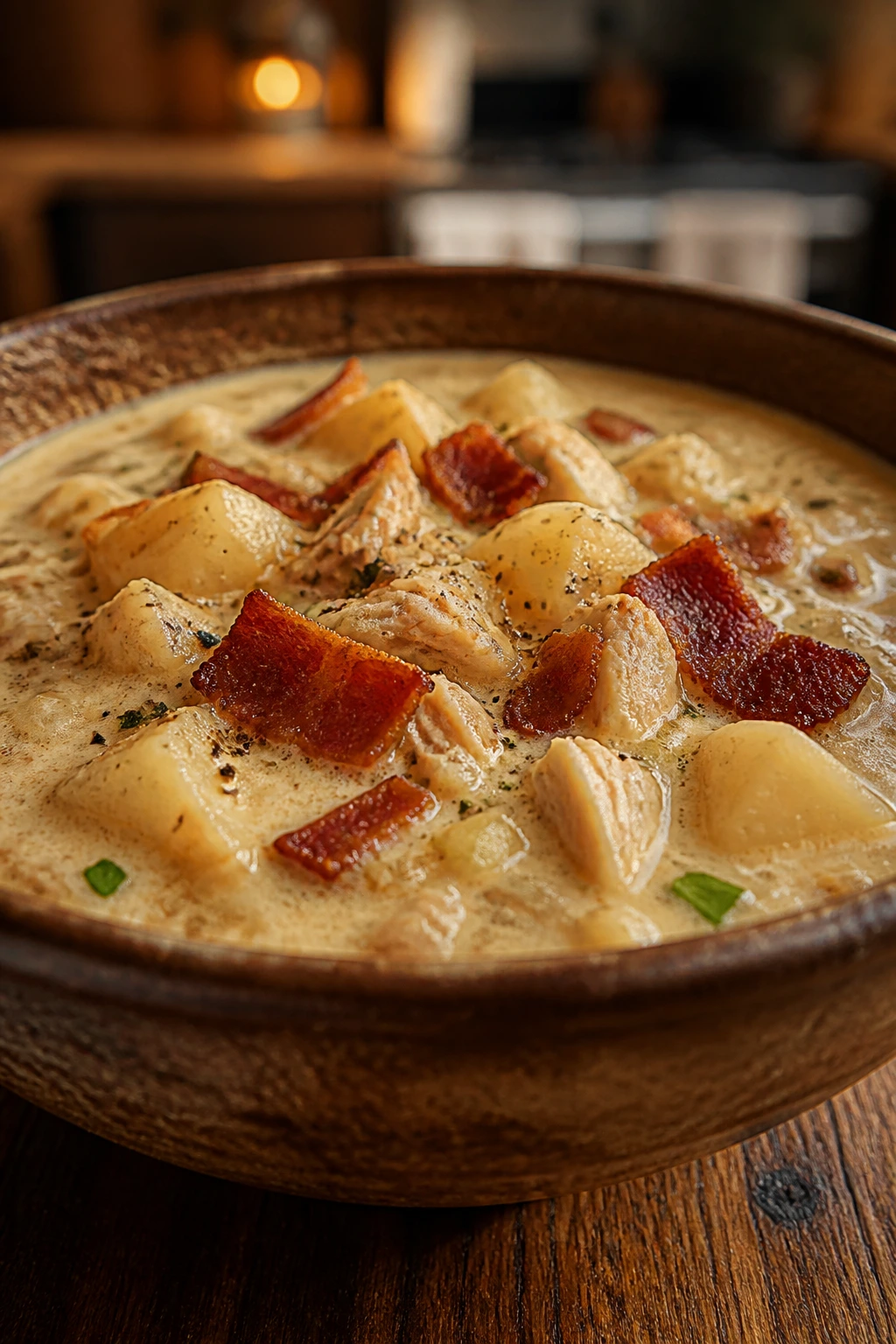
Not every chowder needs to come from the sea to feel like a harbor dinner. Chicken, bacon, and potato gives you that same thick, spoonable comfort with a little more weekday practicality. It’s smoky, filling, and friendly to leftovers, which is not a small thing on a cold night.
This is the kind of pot that can rescue a tired refrigerator. If you have cooked chicken, use it. If you need to start from raw thighs, that works too. The chowder gets its flavor from bacon, onion, celery, and a bit of smoked paprika, so the chicken doesn’t have to do all the heavy lifting.
Why It Works
Bacon gives the pot salt and smoke right away, which is useful because chicken can taste a little plain in creamy soups unless you build the base carefully. Potatoes make the chowder filling enough to stand as dinner on their own, and corn adds a small sweet pop that keeps the bowl from feeling one-note. The smoked paprika matters more than you’d think; it gives a marine-adjacent depth without turning the chowder into barbecue.
Key Ingredients
- 6 slices bacon, diced
- 1 1/2 pounds boneless, skinless chicken thighs, cut into bite-size pieces
- 1 medium onion, diced
- 2 celery stalks, diced
- 2 medium Yukon Gold potatoes, peeled and cubed
- 2 cups chicken broth
- 1 cup corn kernels
- 1 cup half-and-half
- 1 teaspoon smoked paprika
- 1 teaspoon dried thyme
- 1 tablespoon all-purpose flour
- 2 tablespoons chopped scallions
- Salt and black pepper to taste
Quick Steps
-
Brown the bacon. Cook the bacon in a large pot until crisp. Remove half for serving.
-
Sear the chicken. Add the chicken pieces to the bacon fat and cook for 4 to 5 minutes, until lightly golden on the outside. They do not need to be cooked through yet.
-
Add the vegetables. Stir in the onion and celery and cook for 4 minutes, until softened.
-
Thicken and simmer. Sprinkle in the flour and smoked paprika, then add the potatoes, broth, thyme, salt, and pepper. Simmer for 15 minutes, until the potatoes are tender and the chicken is cooked through.
-
Finish with dairy and corn. Stir in the corn and half-and-half. Cook for 2 to 3 minutes more.
-
Serve. Top with scallions and the reserved bacon.
Tips and Variations
- Rotisserie chicken works well if you want a shorter path to dinner.
- A small handful of chopped parsley brightens the whole bowl.
- If you want more heat, add a pinch of cayenne with the paprika.
6. Mussel, Tomato, and Fennel Chowder
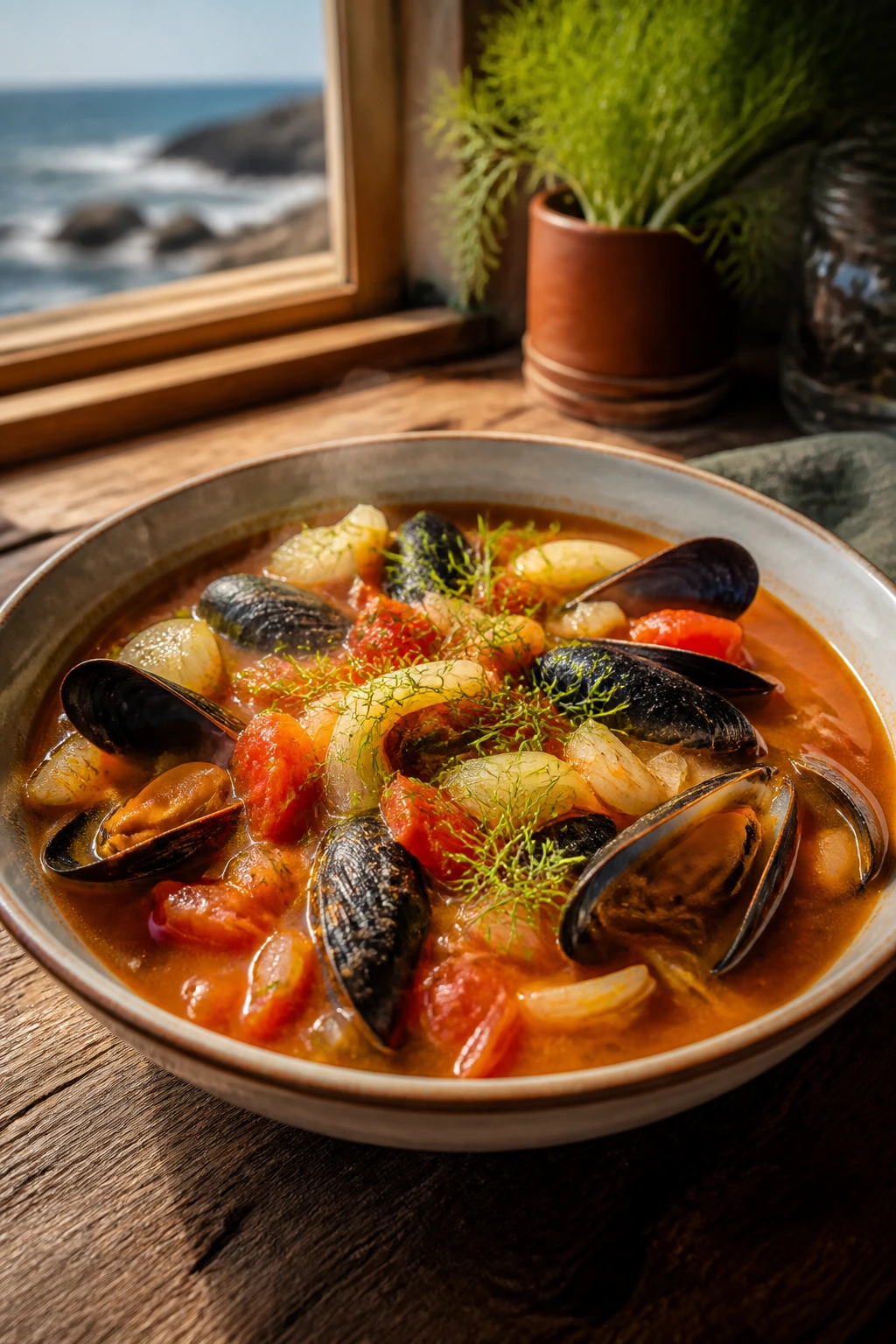
Mussels make a chowder taste like you planned a better night than you really did. They’re briny, fast-cooking, and surprisingly generous when paired with fennel and tomato. The finished pot is red-gold and fragrant, with broth that tastes like seawater got dressed up for dinner.
This is not a heavy cream chowder, and that’s part of its charm. Tomato keeps the pot bright, fennel adds a clean anise note, and white wine gives the broth a little snap. It feels coastal in a more direct way than a cream-heavy bowl. Less blanket, more windbreaker.
Why It Works
Mussels release flavorful cooking liquid as they open, so the chowder gets a built-in boost from the shellfish itself. Fennel adds sweetness and a faint licorice note that plays nicely with tomato and wine. The potatoes give the broth enough body to qualify as dinner, and a small splash of cream at the end softens the edges without hiding the mussels. The key is to steam the mussels only until they open, then stop. Fast shellfish wants respect, not extra heat.
Key Ingredients
- 2 pounds mussels, scrubbed and debearded
- 2 tablespoons olive oil
- 1 small fennel bulb, diced, fronds reserved
- 1 medium onion, diced
- 2 garlic cloves, minced
- 1 tablespoon tomato paste
- 1 cup dry white wine
- 1 can (14 ounces) diced tomatoes
- 2 medium Yukon Gold potatoes, peeled and diced
- 1 cup seafood stock or water
- 1/2 cup heavy cream, optional
- 1 tablespoon chopped parsley
- Salt, black pepper, and red pepper flakes to taste
Quick Steps
-
Soften the fennel and onion. Warm the olive oil in a wide pot over medium heat. Cook the fennel and onion for 5 minutes, until glossy and softened.
-
Build the tomato base. Add the garlic and tomato paste and cook for 1 minute, stirring until the paste darkens slightly.
-
Add the wine and tomatoes. Pour in the white wine, let it bubble for 1 minute, then add the diced tomatoes, potatoes, stock, salt, pepper, and a pinch of red pepper flakes.
-
Simmer the potatoes. Cook for 12 to 15 minutes, until the potatoes are tender.
-
Steam the mussels. Add the mussels, cover the pot, and cook for 4 to 6 minutes, shaking the pan once, until the mussels open. Discard any that stay closed.
-
Finish and serve. Stir in the cream if using, add parsley, and top with fennel fronds.
Tips and Variations
- Mussels should smell clean and briny before cooking. If they smell sour, skip them.
- A slice of toasted sourdough does more for this bowl than crackers do.
- If you want the broth sharper, finish with a few drops of vinegar or extra wine.
7. Lobster and Sherry Chowder
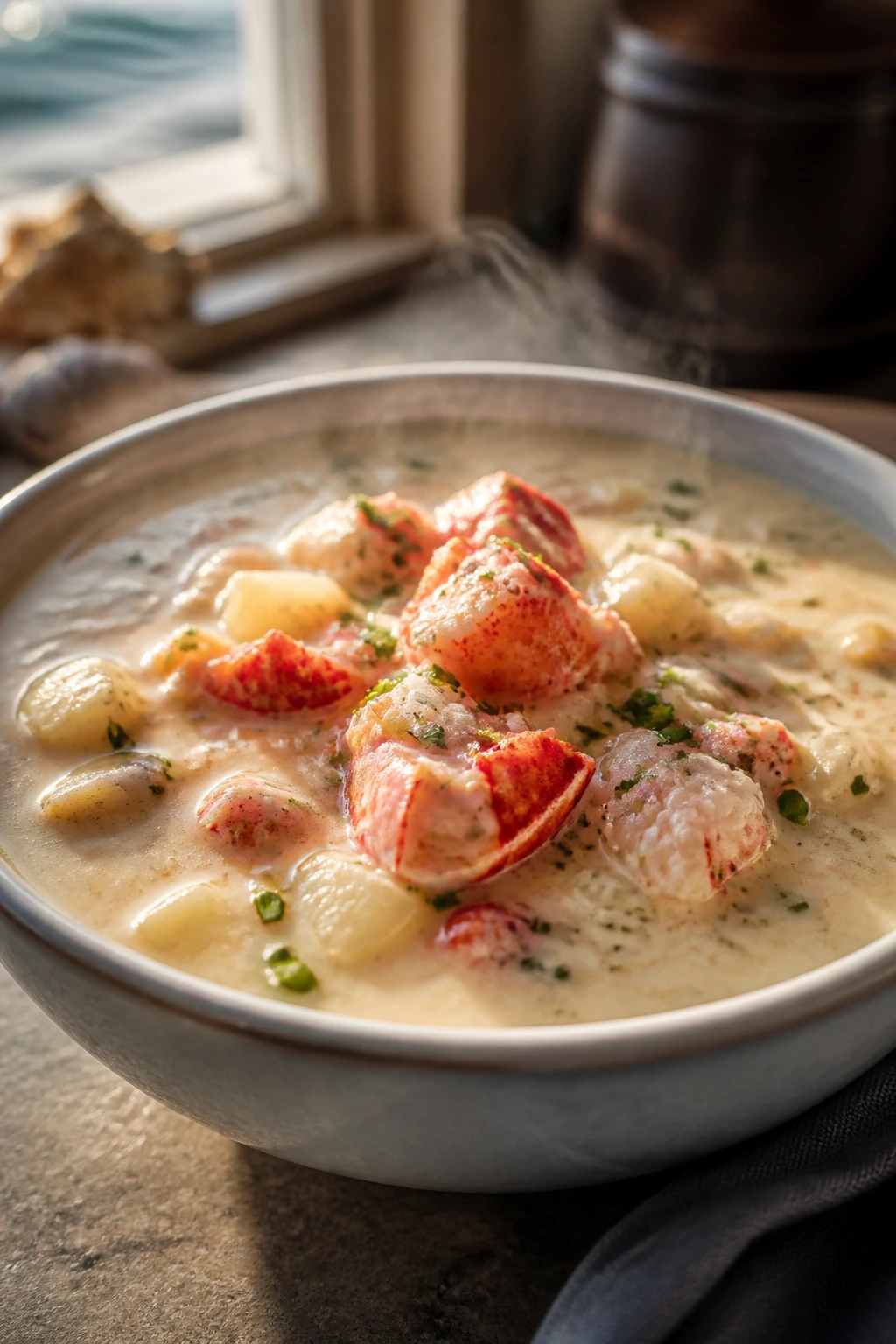
Lobster chowder is the dinner that makes the table go quiet for a second. The meat is sweet, the broth is creamy and a little glossy, and the sherry gives the whole thing a grown-up edge that still feels cozy. It’s luxurious, yes, but not stiff.
I like lobster chowder with enough potato to make it feel honest. Otherwise you end up with something too delicate for a cold night. The broth should be rich, but the lobster still has to taste like lobster, not like it got hidden under cream and flour.
Why It Works
Sherry adds a dry, nutty note that lifts the sweetness of lobster without making the chowder boozy. Potatoes give the bowl structure, while cream rounds everything into a smooth finish. Lobster meat cooks fast, so you keep it tender by warming it only at the end. That timing matters more here than fancy stock ever will.
Key Ingredients
- 1 pound cooked lobster meat, chopped into bite-size pieces
- 4 tablespoons unsalted butter
- 1 small onion, finely diced
- 1 celery stalk, finely diced
- 2 medium Yukon Gold potatoes, peeled and cubed
- 1/4 cup dry sherry
- 3 cups seafood stock
- 1 cup heavy cream
- 1/2 teaspoon smoked paprika
- 1 teaspoon fresh tarragon or thyme
- 2 tablespoons chopped chives
- Salt and black pepper to taste
Quick Steps
-
Sweat the aromatics. Melt the butter in a pot over medium heat. Add the onion and celery and cook for 4 minutes.
-
Add the potatoes and stock. Stir in the potatoes, seafood stock, smoked paprika, herbs, salt, and pepper. Simmer for 12 to 15 minutes, until tender.
-
Pour in the sherry. Let it bubble for 1 minute so the alcohol cooks off and the flavor settles into the broth.
-
Add the cream. Lower the heat and stir in the cream. Keep the pot at a bare simmer.
-
Warm the lobster. Fold in the lobster meat and cook for 2 minutes, just until heated through.
-
Serve with chives. Taste and adjust seasoning, then ladle into bowls.
Tips and Variations
- Frozen cooked lobster meat is fine if you thaw it slowly in the fridge.
- A little cayenne gives the broth a nice tail-end warmth.
- A splash of dry vermouth can stand in for sherry if that’s what’s in the cabinet.
8. Smoked Haddock Chowder with Parsnip
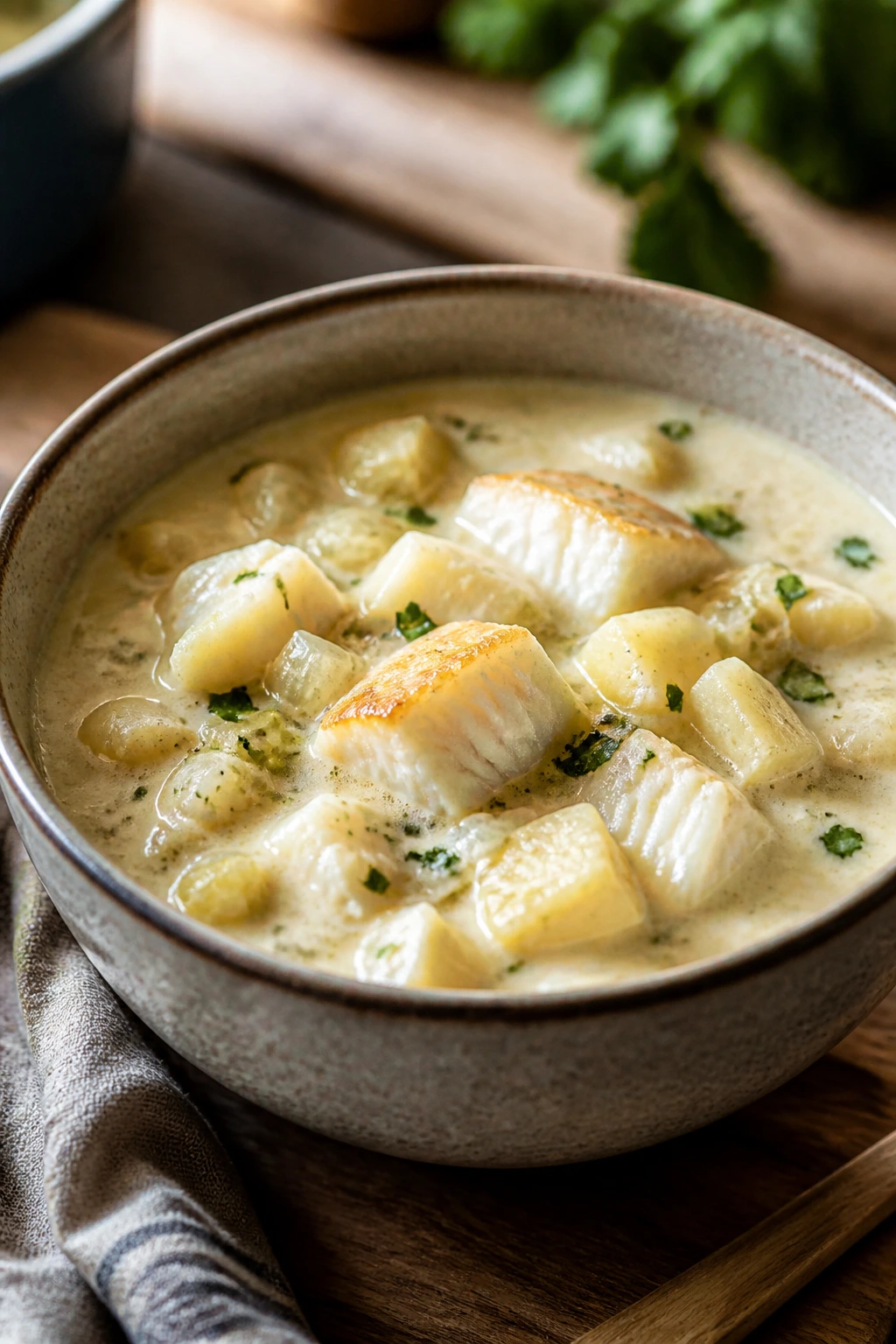
Smoked haddock brings its own weather to the bowl. It’s salty, smoky, and firm enough to flake into large pieces, which makes it feel like more than just a fish soup. Pair it with parsnips and potatoes and you get a chowder that tastes earthy, warm, and a little old-fashioned in the best way.
This one leans more into milk than cream, which is part of the charm. The smoked fish carries plenty of flavor, so the dairy only needs to soften the edges. Parsnip gives a quiet sweetness that plays beautifully against the smoke. It’s not flashy. It doesn’t need to be.
Why It Works
Smoked haddock is already seasoned by the smoking process, which means the chowder gets a deep flavor base without needing bacon or a long list of spices. Parsnips add a mild, nutty sweetness, and potatoes make the broth spoon-thick. The fish is usually gently poached in the milk or broth, which keeps it tender and lets the smoke flavor seep into the liquid. That’s the whole trick: low heat, patient timing.
Key Ingredients
- 1 1/2 pounds smoked haddock fillets, skin removed if needed
- 2 tablespoons butter
- 1 onion, diced
- 1 parsnip, peeled and diced
- 2 medium potatoes, peeled and diced
- 3 cups whole milk
- 1 cup fish stock or water
- 1 bay leaf
- 1 teaspoon Dijon mustard
- 1 tablespoon chopped parsley
- 1 tablespoon chopped chives
- Black pepper to taste
Quick Steps
-
Cook the onion and parsnip. Melt the butter in a pot over medium heat. Add the onion and parsnip and cook for 5 minutes.
-
Add the potatoes and liquid. Stir in the potatoes, milk, fish stock, bay leaf, and Dijon mustard. Bring to a very gentle simmer.
-
Poach the haddock. Lay the smoked haddock into the liquid and cook for 6 to 8 minutes, until it flakes easily.
-
Break it into chunks. Lift the fish out carefully, flake it into large pieces, then return it to the pot.
-
Adjust the texture. If you want a thicker chowder, mash a few potato cubes against the side of the pot.
-
Finish with herbs and pepper. Remove the bay leaf, add parsley and chives, and serve with plenty of black pepper.
Tips and Variations
- A little nutmeg in the milk gives the chowder a softer finish.
- If the smoked fish is very salty, use water instead of stock.
- This bowl loves dark rye bread more than white bread.
9. Coconut Shrimp and Sweet Potato Chowder
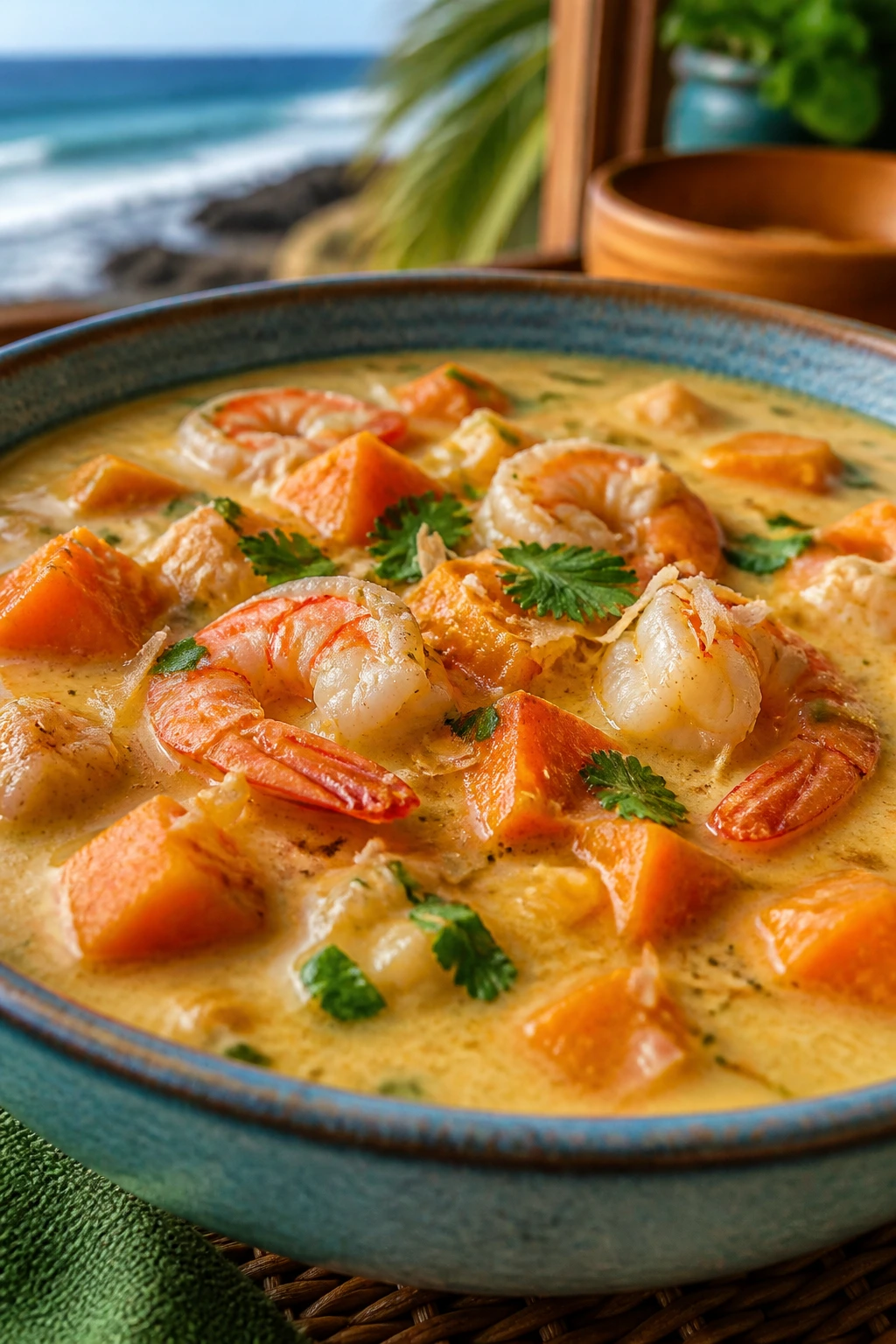
This chowder takes a different path and I’m glad it does. Coconut milk makes the broth silky without using dairy, sweet potato brings body and color, and shrimp cooks so fast that the whole pot comes together before you’ve finished slicing bread. It’s warm, bright, and a little sweet.
A squeeze of lime at the end keeps the coconut from making the bowl too soft. Ginger and garlic give it a sharper backbone. You could call it tropical if you wanted, but that can sound misleading. It still eats like a proper dinner when the wind is rattling the windows.
Why It Works
Shrimp needs barely any cooking time, which is a gift on a weeknight. Sweet potato thickens the broth in a natural way, and coconut milk adds richness without dairy. Ginger and curry powder build a flavor bridge between the sweet potato and the shrimp, while lime wakes the whole bowl up at the end. If you let the shrimp simmer too long, they’ll toughen fast. That’s the only part worth guarding.
Key Ingredients
- 1 1/2 pounds raw shrimp, peeled and deveined
- 1 tablespoon coconut oil
- 1 yellow onion, diced
- 2 garlic cloves, minced
- 1 tablespoon fresh ginger, grated
- 2 medium sweet potatoes, peeled and diced
- 1 can (13.5 ounces) coconut milk
- 3 cups seafood stock or vegetable broth
- 1 teaspoon curry powder
- 1 tablespoon lime juice
- 2 tablespoons chopped cilantro
- Salt and red pepper flakes to taste
Quick Steps
-
Soften the aromatics. Heat the coconut oil in a pot over medium heat. Cook the onion for 4 minutes, then add the garlic and ginger for 30 seconds.
-
Add the sweet potatoes. Stir in the sweet potatoes, curry powder, salt, and red pepper flakes.
-
Pour in the liquids. Add the coconut milk and broth, then bring the pot to a simmer. Cook for 12 to 15 minutes, until the sweet potatoes are tender.
-
Add the shrimp. Stir in the shrimp and cook for 2 to 3 minutes, until they turn pink and opaque. Do not overcook.
-
Finish with lime. Add lime juice and cilantro, then taste and adjust seasoning.
-
Serve hot. Ladle into bowls and finish with a few extra cilantro leaves if you like.
Tips and Variations
- Frozen shrimp work well if thawed in the fridge first.
- A spoonful of fish sauce adds depth, but use it lightly.
- If you want more heat, add sliced fresh chili with the ginger.
10. Rustic Tomato Fish Chowder
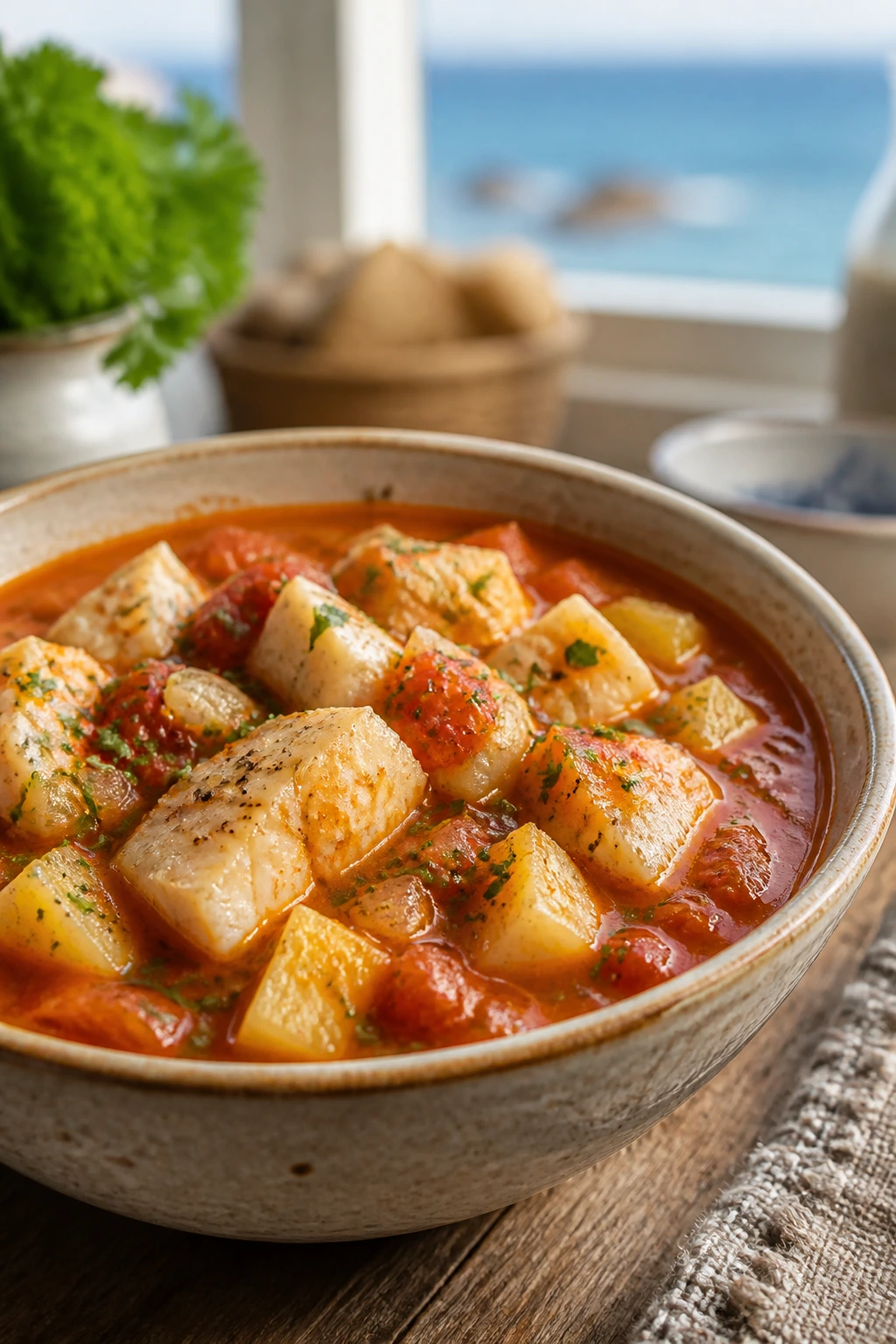
Tomato-based chowder gets overlooked because cream gets all the attention. That’s a shame. A red chowder can be bracing and comforting at the same time, with enough acidity to keep the bowl lively and enough potato to make it filling. This one tastes like fish stew and chowder shook hands halfway through dinner.
The flavor comes from onion, fennel seed, garlic, tomato paste, and a good white fish that flakes into soft chunks. A little cream is optional, but not necessary. I actually like this version with a lighter broth because the tomato does the heavy lifting. It feels clean and sturdy, not thin.
Why It Works
Tomato gives you acidity, color, and body, which means the chowder doesn’t depend on dairy for flavor. Fennel seed quietly echoes the sweetness of the tomatoes and fish, while potatoes keep the broth from feeling too sharp. The fish should go in near the end so it stays intact. If you’re tempted to simmer fish the way you’d simmer beans, resist. White fish needs a shorter path.
Key Ingredients
- 1 1/2 pounds cod or halibut, cut into large chunks
- 2 tablespoons olive oil
- 1 onion, diced
- 2 celery stalks, diced
- 2 garlic cloves, minced
- 1 tablespoon tomato paste
- 1 teaspoon fennel seed, lightly crushed
- 1 can (14 ounces) diced tomatoes
- 2 medium potatoes, peeled and diced
- 3 cups fish stock or low-sodium vegetable broth
- 1/2 teaspoon red pepper flakes
- 1 tablespoon chopped basil or parsley
- Salt and black pepper to taste
Quick Steps
-
Start the base. Warm the olive oil in a pot over medium heat. Cook the onion and celery for 5 minutes.
-
Add garlic and tomato paste. Stir in the garlic, tomato paste, fennel seed, and red pepper flakes. Cook for 1 minute.
-
Add the tomatoes, potatoes, and stock. Bring to a simmer and cook for 12 to 15 minutes, until the potatoes are tender.
-
Add the fish. Lower the heat and nestle in the fish chunks. Cook for 4 to 5 minutes, until the fish flakes.
-
Adjust the broth. Taste and add salt, pepper, and herbs. If you want cream, stir in 1/2 cup warm cream now.
-
Serve right away. Ladle into bowls with bread on the side.
Tips and Variations
- A spoonful of chopped olives gives the red broth a sharper edge.
- Use halibut for a firmer bite, cod for a softer one.
- If the tomatoes taste flat, a tiny splash of vinegar sharpens them fast.
11. Sausage, Kale, and White Bean Chowder
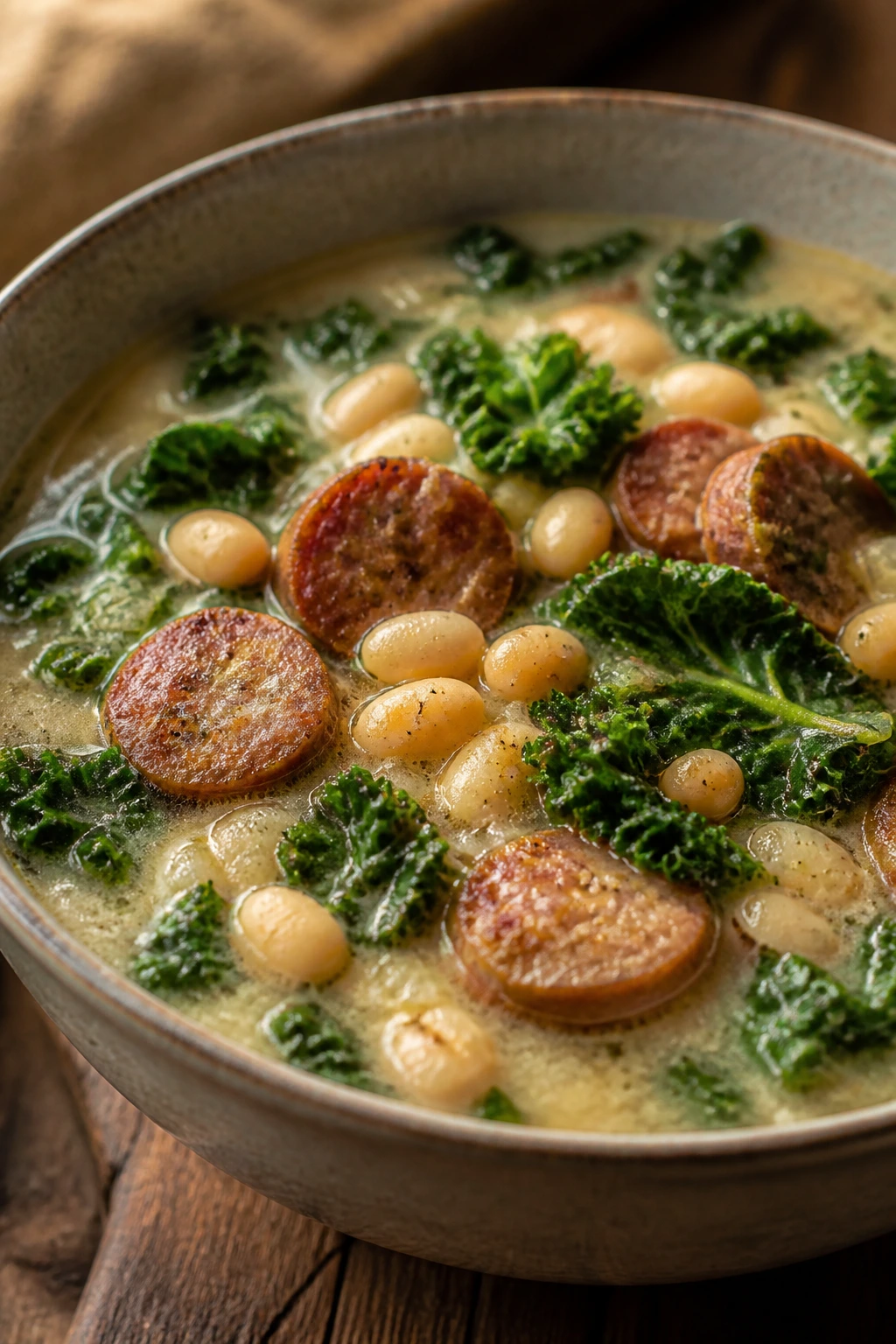
This is the chowder for nights when seafood isn’t the answer but warmth still is. Sausage gives the pot smoke and spice, white beans make it creamy without much effort, and kale brings a green note that keeps the bowl from getting too heavy. It eats like a full meal because it is one.
This one is especially useful when you want something rustic and filling. The beans thicken the broth almost on their own, and the kale holds up better than spinach or delicate herbs. I like to finish it with a little cream, but it doesn’t need much. The sausage already brings enough personality.
Why It Works
Italian sausage seasons the whole pot from the beginning, which is why the chowder tastes deeper than the ingredient list suggests. White beans break down a little and naturally thicken the broth, while potatoes give it more body. Kale adds a slight bitterness that cuts through the richness. This is the kind of chowder that improves as it rests for a short while, because the beans and potatoes keep soaking up flavor.
Key Ingredients
- 1 pound Italian sausage, casings removed if needed
- 1 tablespoon olive oil, if the sausage is lean
- 1 yellow onion, diced
- 2 celery stalks, diced
- 2 medium potatoes, peeled and diced
- 2 cans (15 ounces each) cannellini beans, drained and rinsed
- 4 cups chicken broth
- 1 bunch kale, stems removed and leaves chopped
- 1 cup half-and-half
- 1 teaspoon dried rosemary
- 1 tablespoon chopped parsley
- Black pepper to taste
Quick Steps
-
Brown the sausage. Cook the sausage in a pot over medium heat until browned and cooked through. Break it up as it cooks.
-
Add the onion and celery. Cook for 4 minutes, until softened.
-
Simmer the potatoes and beans. Stir in the potatoes, beans, broth, rosemary, and black pepper. Cook for 15 minutes, until the potatoes are tender.
-
Add the kale. Stir in the kale and cook for 3 to 4 minutes, until wilted.
-
Finish with half-and-half. Lower the heat and stir in the dairy. Warm for 2 minutes.
-
Serve with parsley. Taste, adjust seasoning, and ladle into deep bowls.
Tips and Variations
- A spicy sausage gives the pot a nice edge, but mild sausage works too.
- If the chowder gets too thick, add a splash of broth before serving.
- Toasted garlic bread makes this one feel even more like dinner.
12. Roasted Cauliflower and Corn Chowder with Cheddar
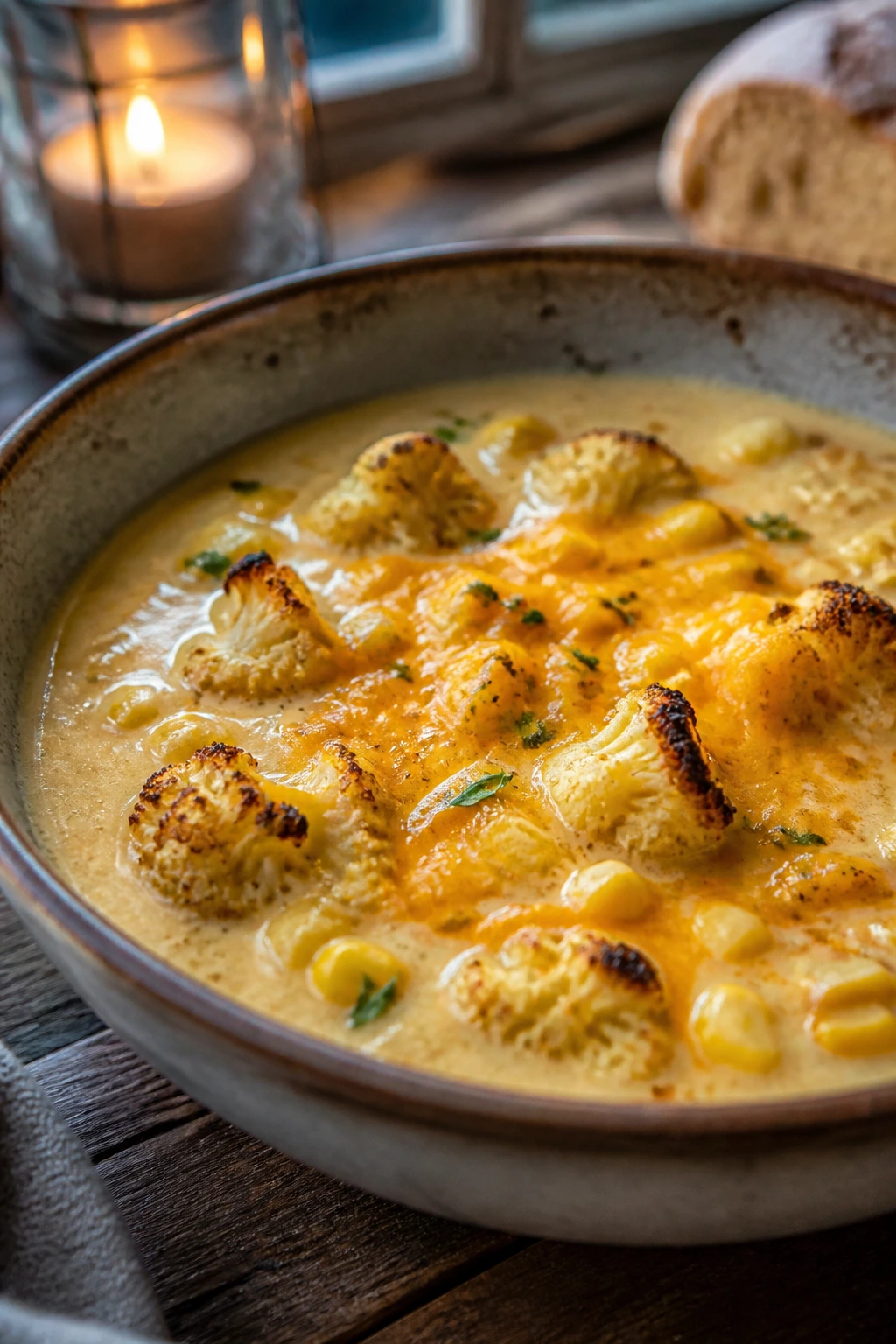
Vegetarian chowder has a tendency to either taste too thin or lean too hard on dairy. Roasted cauliflower fixes that problem. It brings a nutty, browned flavor that makes the bowl taste like it spent more time on the stove than it actually did, and the corn gives it that coastal sweetness that fits the whole theme.
Cheddar gives this chowder a sharp finish, but the real trick is roasting the cauliflower until the edges brown. That step does more than adding a vegetable ever could. It gives the broth a warm, almost toasty depth that holds up well against bread and cold weather.
Why It Works
Cauliflower needs help if you want it to taste like more than steamed brassica. Roasting concentrates its flavor, and a portion of it can be mashed into the broth for thickness without flour. Corn adds sweet pops, potatoes make the chowder hearty, and cheddar finishes it with a sharp, salty note. This is a good example of how a meatless chowder can still feel fully dinner-sized.
Key Ingredients
- 1 large head cauliflower, cut into florets
- 2 tablespoons olive oil
- 1 teaspoon kosher salt, divided
- 1 yellow onion, diced
- 2 celery stalks, diced
- 1 medium potato, peeled and diced
- 2 cups corn kernels, fresh or frozen
- 3 cups vegetable broth
- 2 cups whole milk
- 1 1/2 cups shredded sharp cheddar
- 1 teaspoon dry mustard powder
- 1/2 teaspoon smoked paprika
- 2 tablespoons chopped chives
Quick Steps
-
Roast the cauliflower. Heat the oven to 425°F (220°C). Toss the cauliflower with olive oil and 1/2 teaspoon salt, then roast for 20 to 25 minutes until browned at the edges.
-
Cook the onion and celery. While the cauliflower roasts, cook the onion and celery in a pot over medium heat for 5 minutes.
-
Simmer the potato and corn. Add the potato, corn, broth, remaining salt, mustard powder, and smoked paprika. Cook for 12 minutes, until the potato is tender.
-
Add the roasted cauliflower. Stir most of it into the pot and mash a few florets against the side of the pot to thicken the chowder.
-
Pour in the milk and cheese. Lower the heat, add the milk, then stir in the cheddar a handful at a time until melted.
-
Finish and serve. Top with chives and the reserved cauliflower florets.
Tips and Variations
- A spoonful of miso adds a deeper savory note if you want more complexity.
- Frozen corn works perfectly, and you do not need to thaw it first.
- If you want a smoother bowl, blend about one-third of the chowder before adding the cheese.
What Makes Chowder the Right Dinner for a Cold Shoreline Evening
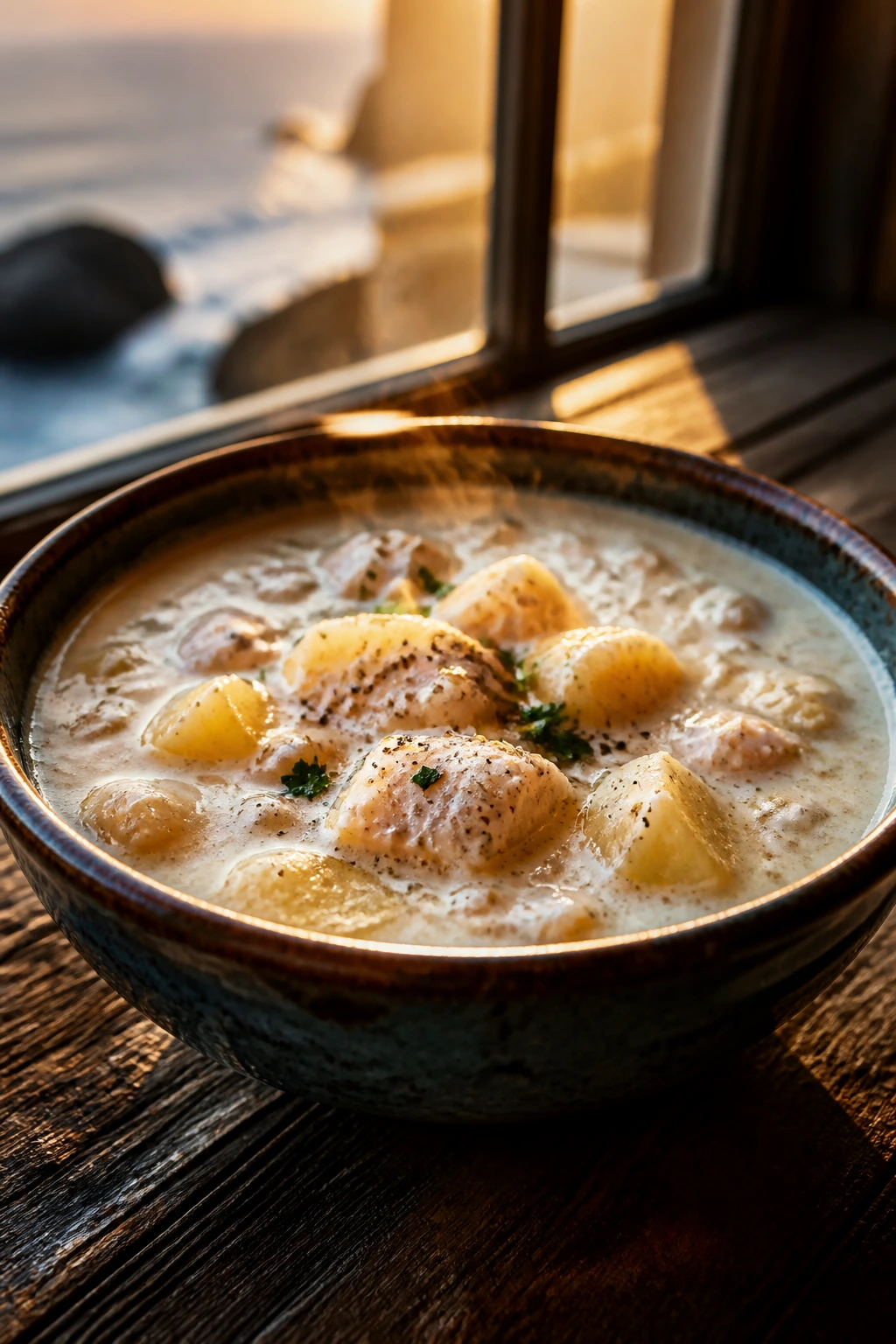
A chowder works on a cold coastal night because it doesn’t try to be delicate. It lands heavy in the bowl, warms fast, and keeps its shape long enough to eat slowly. That matters. Soup can feel like a prelude. Chowder feels like the main event.
The base usually comes from one of three places: bacon fat, butter, or olive oil. From there, the building blocks are familiar. Onion, celery, leek, or fennel soften the edges. Potatoes bring body. Cream, milk, coconut milk, or tomato broth carries the flavor. Fish and shellfish get added near the end, which is why the best chowders taste clean instead of overcooked.
Cream, Broth, and the Middle Ground
Cream-based chowders are the plush ones. They cling to the spoon and taste especially good with crusty bread, but they also need a steady hand at the stove. Tomato and wine-based chowders feel sharper and brighter. Then there’s the middle ground, where milk or stock carries enough body without turning the bowl rich enough to slow you down. I’m fond of that middle ground. It gives you comfort without making every spoonful feel like a dare.
Why Potatoes Matter So Much
Potatoes are not filler here. They’re structure. Cut them too small and they vanish; cut them too big and they stay chalky in the center. Half-inch cubes are the sweet spot for most of these recipes. Yukon Golds are the safest choice because they stay creamy and hold shape. Russets work when you want a thicker broth, but they break down faster, so keep an eye on them.
Gentle Heat Wins Every Time
A chowder is not a boiling pot. That’s where people get into trouble. Dairy can split, fish can dry out, and shellfish can turn rubbery if you rush it. A bare simmer is enough. Small bubbles at the edge. Steam rising. That’s your sign. If the pot starts shouting, turn it down.
Essential Equipment for These Recipes
-
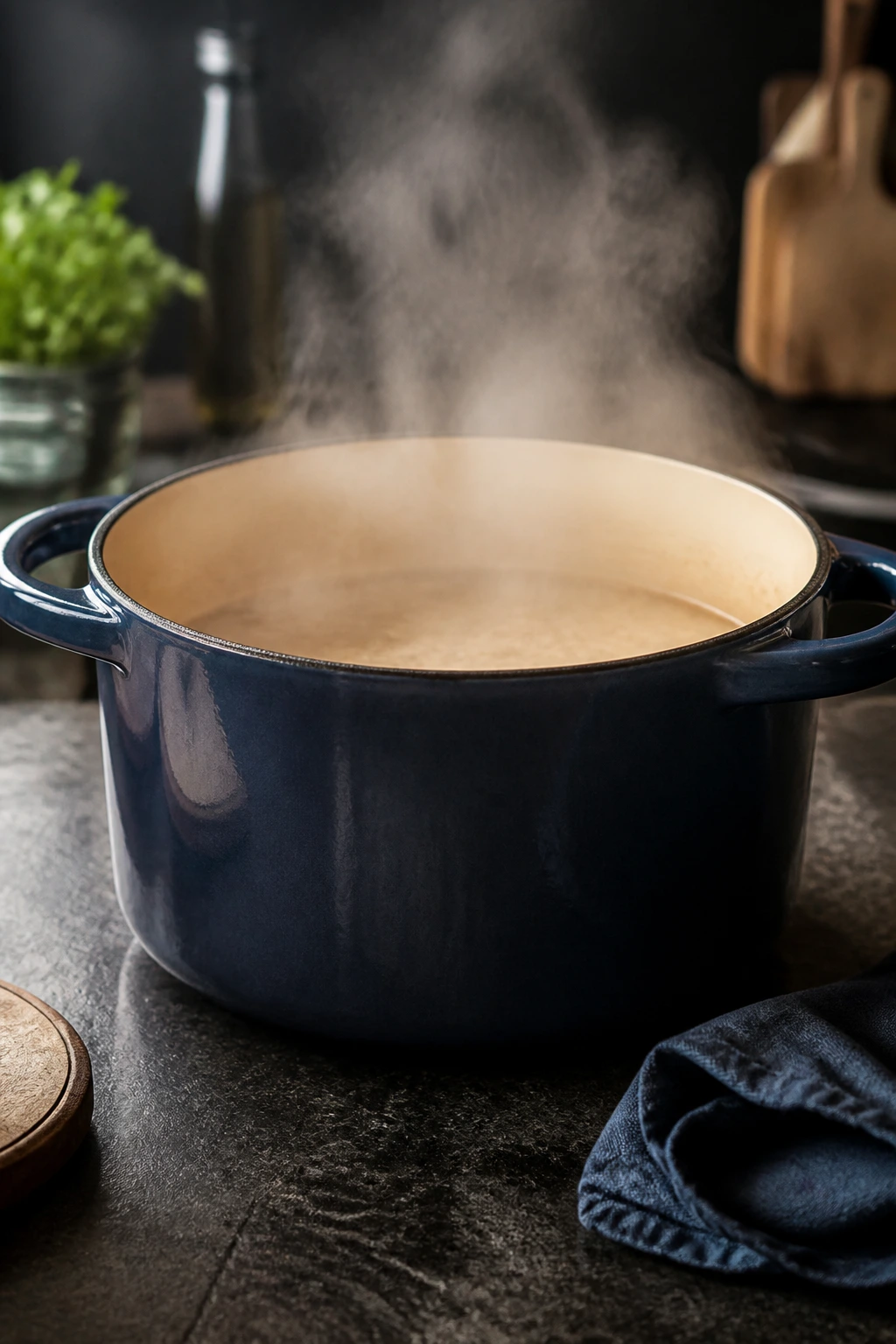
Heavy-bottomed Dutch oven or soup pot: This keeps the heat even and gives you space for potatoes, stock, and seafood without crowding.
-
Sharp chef’s knife: A dull knife makes onions, leeks, and potatoes harder to cut cleanly, and sloppy cuts cook unevenly.
-
Cutting board with a damp towel underneath: Sounds small, but it keeps the board from skating while you work.
-
Wooden spoon or silicone spatula: Better than a metal spoon for stirring thick chowders without scraping the pot too hard.
-
Ladle: Helpful for serving without breaking up flaky fish or crusty potato pieces.
-
Fine-mesh strainer: Useful for rinsing leeks, checking crab meat for shell, or straining broth if you want a cleaner finish.
-
Fish spatula or slotted spoon: Makes it easier to lift cod, salmon, or haddock without tearing the pieces apart.
-
Microplane or zester: Handy for lemon zest, which shows up in more than one chowder and wakes up the bowl fast.
-
Airtight storage containers: Make leftovers easier to chill quickly and reheat later without picking up fridge smells.
-
Immersion blender, optional: Useful if you like a thicker, partially blended chowder, especially for cauliflower or potato-heavy bowls.
Smart Shopping and Ingredient Tips
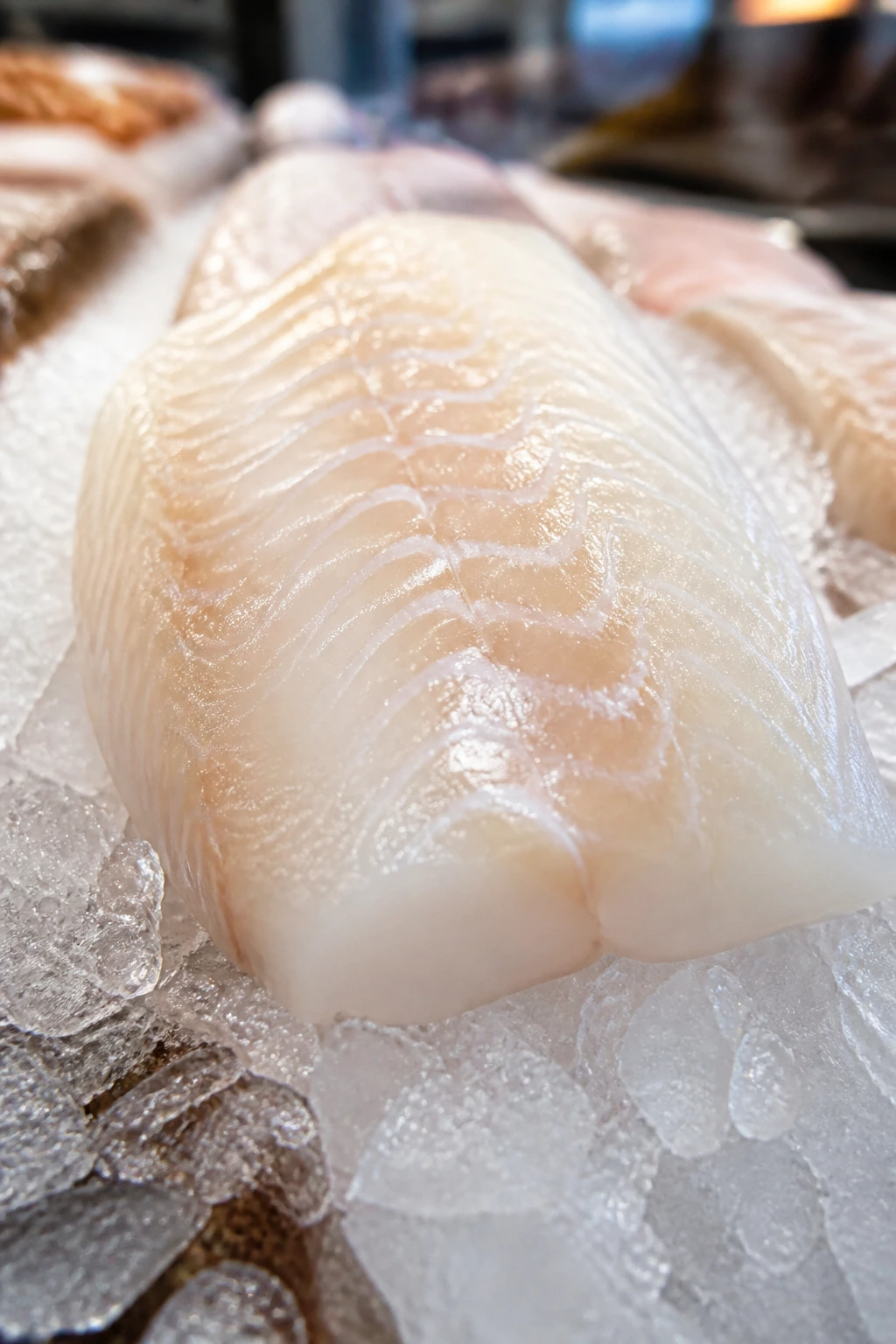
Seafood chowder lives or dies on the quality of the seafood, but that doesn’t mean you need the fanciest thing at the counter. Cod, haddock, salmon, and shrimp are forgiving if they’re fresh or properly thawed. They should smell clean, not fishy, and feel firm to the touch. Shellfish is the one place I’d be stricter: clams, mussels, and crab meat need to smell like the sea on a good day, not like the dock after rain.
Frozen seafood is often a smart buy. Good frozen shrimp and fish are usually handled well and chilled fast, which helps preserve texture. Thaw them in the refrigerator, not on the counter, and pat them dry before they hit the pot. Wet seafood steams instead of cooks cleanly, and it can water down a chowder that was already carefully balanced.
For potatoes, Yukon Golds are the most reliable all-purpose choice. They hold shape, taste buttery, and thicken the broth just enough. Russets are fine if you want a more broken-down, rustic texture, especially in a chowder that benefits from starch. For creamy bowls, choose heavy cream or half-and-half; for lighter bowls, whole milk still works, but low-fat milk can make the finish taste thin and a little flat.
Clam juice, seafood stock, and chicken broth should all be low-sodium if possible. That gives you room to season at the end, especially because bacon, sausage, smoked fish, and shellfish all bring salt of their own. Canned tomatoes should be plain diced tomatoes or crushed tomatoes without a pile of added herbs. You want control over the seasoning. And if a recipe calls for fresh dill, parsley, chives, fennel fronds, or lemon, buy them the same day if you can. Herb flavor drops fast once the leaves start looking tired in the fridge drawer.
How to Serve These Recipes
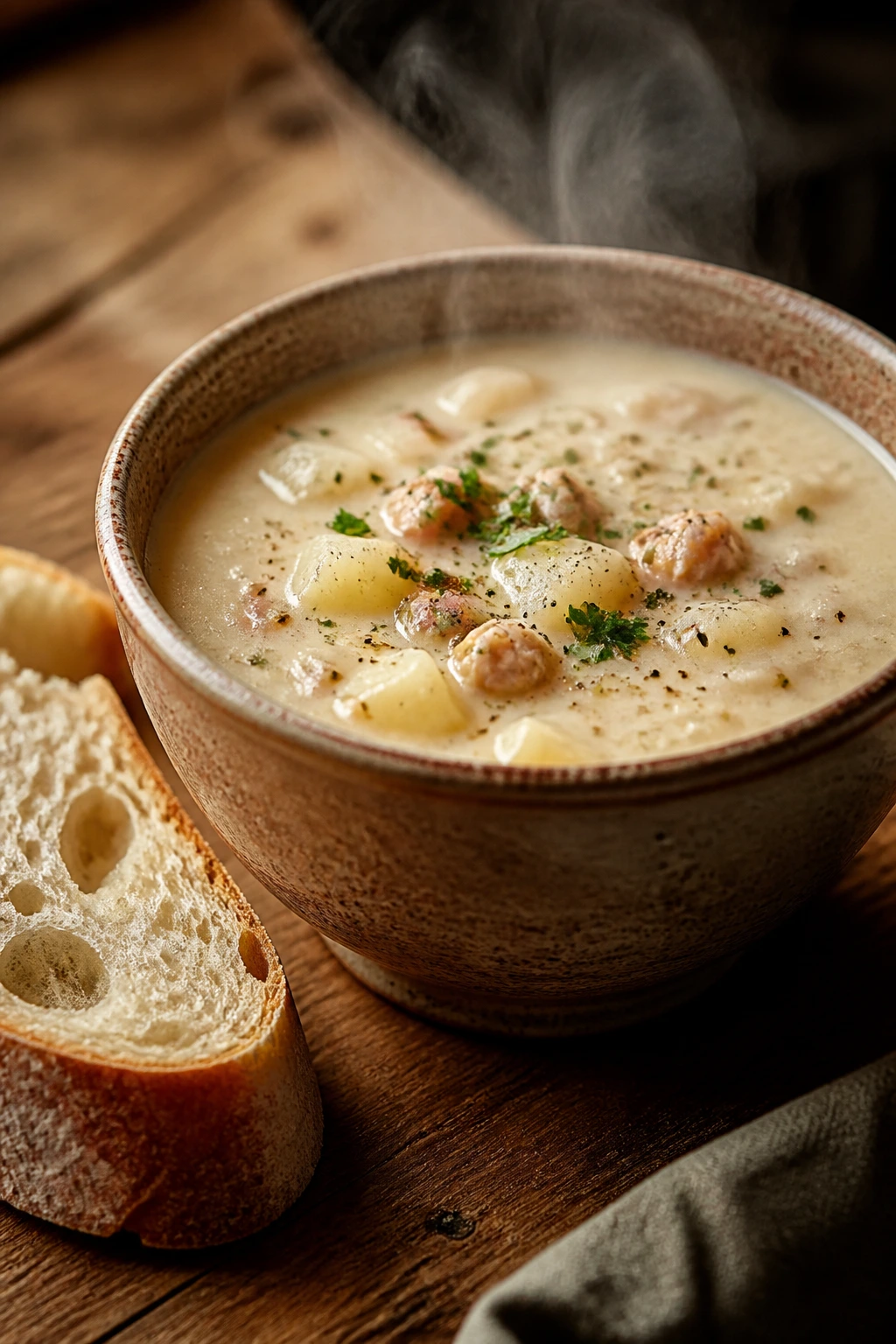
Presentation: Ladle chowder into warmed bowls so the top stays glossy longer. Finish each bowl with a few herbs, a crack of black pepper, or a small drizzle of cream if the recipe suits it. A thick, rustic bowl looks best with a spoon left in the side and a rough, torn piece of bread on the plate.
Accompaniments: Sourdough, rye, oyster crackers, saltines, and cornbread all make sense here, depending on the bowl. For a sharper side, use a simple green salad with lemon vinaigrette or a cabbage slaw with a little dill. Tomato chowders like grilled cheese. Shellfish chowders like plain buttered bread because they’re already doing enough.
Portions: Most of these recipes serve as a main course in the 1 1/2 to 2 cup range per person. If you’re pairing with bread and salad, lean toward the smaller end. If the chowder is the only thing on the table, serve generous bowls and keep extra crackers or bread close by.
Beverage Pairing: Dry cider works with the creamier chowders, especially clam, salmon, and crab. A crisp pilsner or pale lager suits the smoky and sausage-based bowls. For a nonalcoholic option, strong black tea or sparkling water with lemon keeps the meal from feeling too heavy.
Additional Tips and Flavor Boosters
Flavor Enhancement: A small finishing acid makes a big difference. A teaspoon of lemon juice, a splash of sherry, or a few drops of vinegar can keep a creamy chowder from tasting dull at the end. With seafood bowls, I lean toward lemon or sherry. With sausage or chicken chowders, I like vinegar or a sharper mustard note.
Customization: If you want more vegetables, add corn, peas, fennel, or chopped kale in the last few minutes of cooking. If you want more smoke, use smoked paprika or a little smoked salt instead of adding another cured meat. And if you want more body without extra cream, mash a few potatoes or beans against the side of the pot. That trick works better than a lot of flour-heavy shortcuts.
Serving Suggestions: Top creamy chowders with bacon crumbles, chives, dill, or parsley. Tomato-based bowls take well to basil, olive oil, and black pepper. Seafood chowders with a lemon squeeze and cracked pepper taste brighter than they look in the pot. Small details. Big payoff.
Make-It-Yours: Dairy-free chowders can lean on coconut milk or a cashew cream blend. Gluten-free versions can thicken with mashed potato, cornstarch, or a bit of blended beans instead of flour. For heat, add chili flakes or cayenne. For a softer bowl, skip the spice and finish with herbs instead.
Make-Ahead, Storage, and Reheating Guidance
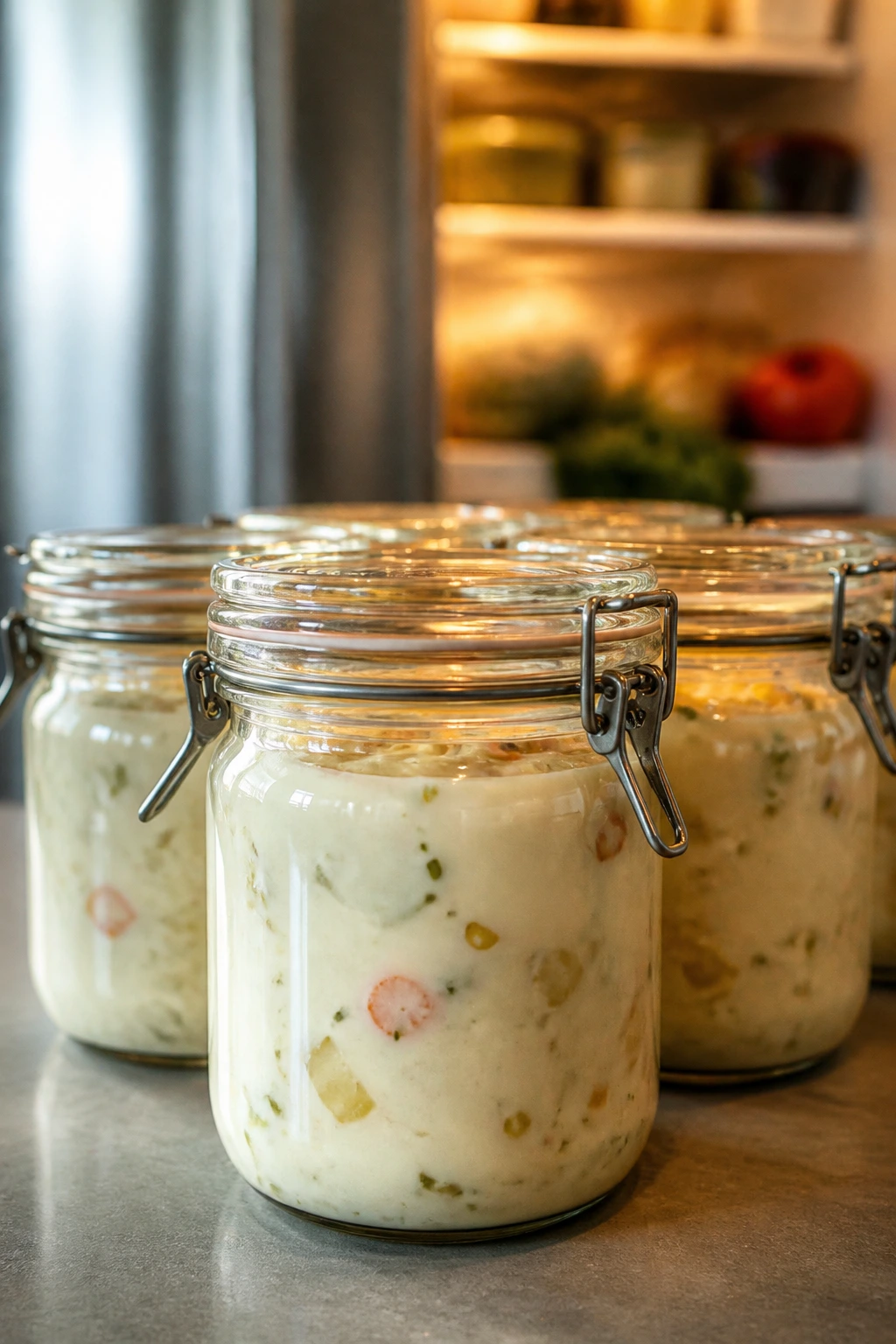
Most chowders keep well in the fridge for 3 to 4 days in an airtight container. Seafood-heavy chowders are best within 2 days, especially if they contain delicate fish, crab, lobster, or mussels. Cool the pot quickly after cooking, then portion it into shallow containers so the center doesn’t stay hot for too long. That matters more than people think.
Freezing is a mixed bag, and the texture tells the truth. Broth-based chowders and sausage or chicken chowders usually freeze well for up to 2 months. Cream-heavy or potato-heavy chowders can still be frozen, but the texture softens and may separate a little when reheated. Lobster and clam chowders are the least forgiving in the freezer, so I’d treat them as short-term leftovers rather than freezer projects.
Reheat chowder slowly over low heat on the stove, stirring often. Add a splash of broth, milk, or water if it seems too thick. If the chowder has fish or shellfish in it, keep the heat gentle and stop once it’s steaming hot; don’t boil it. For cauliflower or bean-based chowders, you can also reheat in the microwave in short bursts, stirring between each one.
A practical trick: make the base ahead, then add the seafood right before serving. That works beautifully for cod, salmon, shrimp, and mussels. The broth gets a head start, and the seafood stays tender instead of overdone. If you know you’ll want leftovers, hold back a portion of the seafood and add it fresh to the reheated base the next day.
Variations and Adaptations to Try
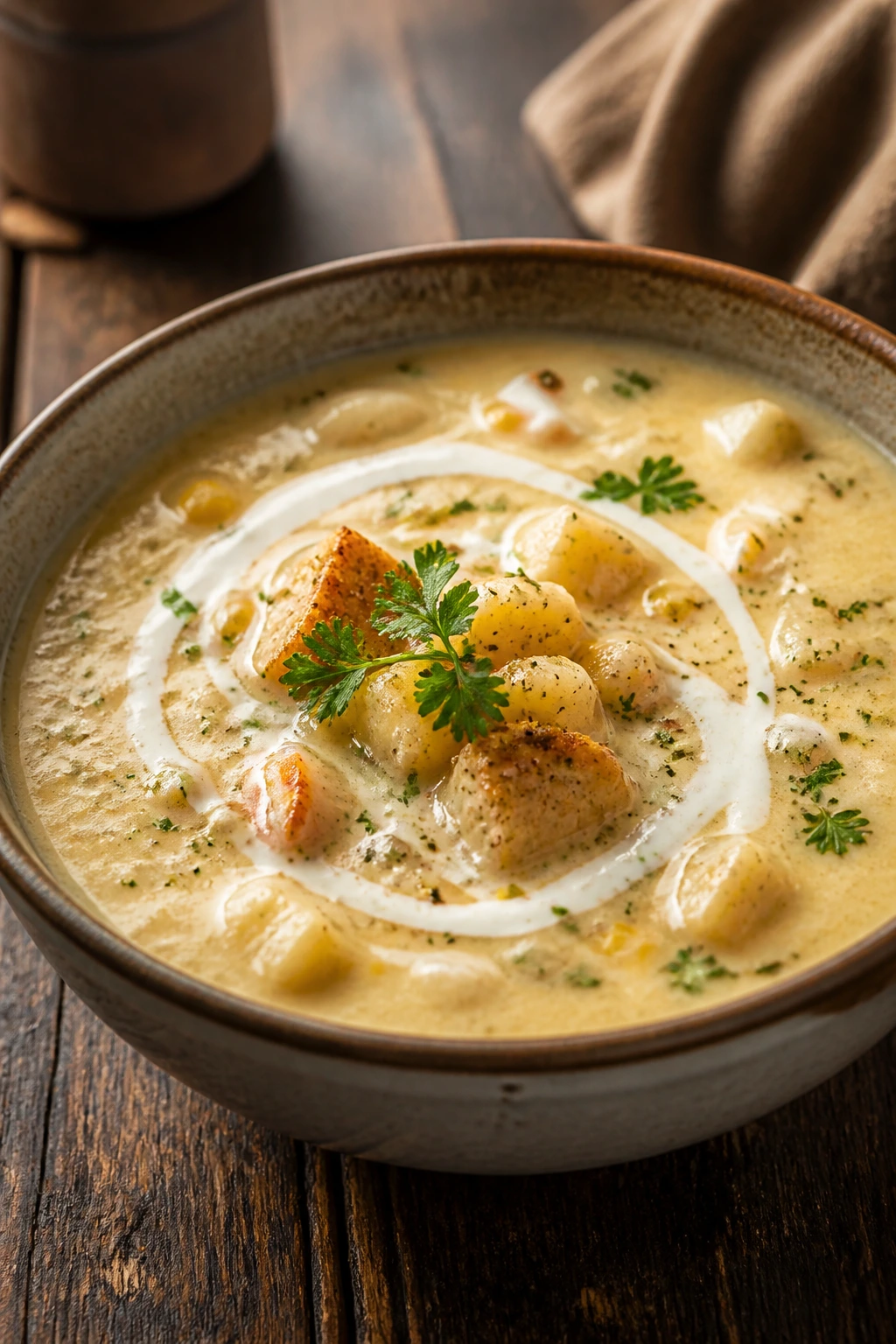
Dairy-Free Dockside Bowl: Swap cream and milk for full-fat coconut milk, or use a blend of olive oil and broth with mashed potatoes for body. This works especially well in shrimp, fish, and sweet potato chowders, where the coconut flavor has somewhere to go. Keep the heat low so the broth stays smooth.
Gluten-Free Harbor Thickener: Skip the flour and thicken with diced potatoes, mashed beans, or a cornstarch slurry stirred in near the end. This is an easy fix for most of the chowders here, and it doesn’t make the broth taste starchy if you keep the amount modest. A little goes far.
Low-Sodium Shoreline Version: Use unsalted stock, rinse canned beans and shellfish, and lean harder on herbs, lemon, and fennel for flavor. Seafood and bacon both carry salt, so you can often cut the added seasoning by half and still end up with a full-tasting bowl. Finish at the end rather than early.
Spice-Forward Harbor Pot: Add red pepper flakes, cayenne, or a spoonful of chili crisp to the shrimp, tomato fish, or sausage chowders. A little heat works especially well with creamy chowders because the dairy softens the burn. Keep it balanced; you want warmth, not a dare.
Pantry Catch Chowder: Use frozen fish, canned clams, frozen corn, and bottled clam juice to build a good bowl without a long shopping list. This is one of those cases where pantry ingredients do real work, and the result is still worth serving to people you like. A few fresh herbs at the end keep it from tasting canned.
Vegetable-Heavy Coastal Bowl: Add fennel, kale, leeks, celery, or cauliflower to any of the lighter chowders. If you’re trying to make the meal stretch further, extra vegetables are a better answer than extra flour. They keep the bowl interesting and hold up well in leftovers.
Common Mistakes to Avoid
-
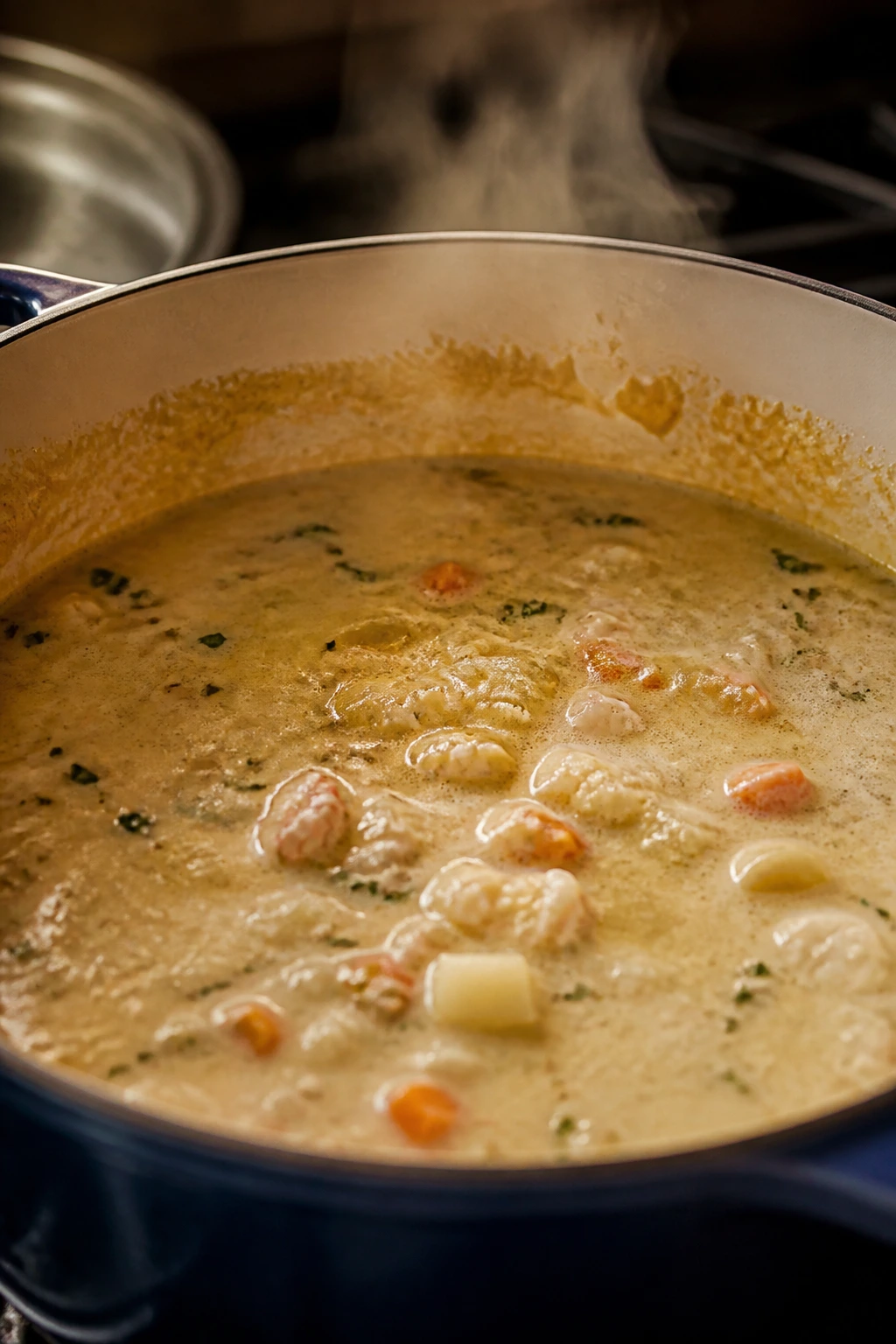
Boiling the chowder hard: The symptom is split dairy, broken fish, and a pot that looks rough around the edges. The fix is simple: keep the heat at a bare simmer once cream, milk, or seafood goes in.
-
Adding seafood too early: Overcooked shrimp turn rubbery, cod turns dry, and crab gets stringy. Add delicate seafood in the final minutes only, then stop as soon as it’s opaque or heated through.
-
Cutting potatoes unevenly: If some cubes are tiny and others are large, the pot cooks in patches. Keep the pieces close to 1/2 inch so they finish at the same time and help thicken the broth evenly.
-
Under-seasoning the base: Cream and potatoes can flatten flavor fast. Season in layers, then taste again at the end, and don’t be shy about finishing with lemon, vinegar, herbs, or black pepper.
-
Using watery milk or low-fat substitutes without adjusting: The chowder can end up thin and oddly bland. If you need a lighter dairy option, support it with a little extra potato, a handful of corn, or a spoonful of mashed beans.
-
Skipping the aromatic base: Raw onion and celery undercut the whole bowl. Take the extra few minutes to soften them well; that step gives the chowder its backbone.
Questions Readers Usually Ask

Can I use frozen seafood in chowder?
Yes, and in some cases it’s the smarter buy. Thaw it in the refrigerator, pat it dry, and add it late in the cooking process so it stays tender. Frozen shrimp, cod, salmon, and crab meat can all work well when handled gently.
What potatoes are best for chowder?
Yukon Golds are the safest all-purpose choice because they stay creamy and hold their shape. Russets break down more and make the broth thicker, which can be useful if you want a looser, more rustic texture. I’d avoid waxy potatoes that stay too firm.
How do I thicken chowder without flour?
Mash some of the potatoes against the pot, blend a small portion of the soup, or use a spoonful of cornstarch slurry near the end. Beans also work well in sausage or vegetable chowders. You do not need a floury base to get body.
Why did my chowder curdle?
Usually the heat was too high after the dairy went in, or the dairy was added too fast to a very hot pot. Keep the chowder at a bare simmer and warm the milk or cream a little before adding it if your base is scorching. Slow wins here.
Can I make chowder in a slow cooker?
You can make the base in a slow cooker, especially for potato, sausage, or chicken chowders. Seafood is better added near the end on the stove or during the last short stretch in the slow cooker so it doesn’t overcook. Cream also tends to work better when stirred in at the end.
What if my chowder gets too thick?
Add warm broth, milk, or water a little at a time until the spoon moves easily again. Potatoes keep absorbing liquid as the pot sits, so leftovers often need a splash of something before reheating. That’s normal, not a failure.
Can I freeze chowder with cream in it?
You can, but the texture may separate a bit when reheated. Broth-based chowders freeze better than cream-heavy ones, and seafood chowders are best eaten fresh or within a couple of days. If freezing matters a lot, keep the dairy out until reheating.
What’s the best bread to serve with chowder?
Sourdough is the best all-around answer because it handles thick broth and salty seafood well. Rye works especially well with smoked fish, and plain crusty white bread is perfect when the chowder itself is rich. Oyster crackers are fine, but a real slice of bread is better.
A Pot That Keeps Its Promise
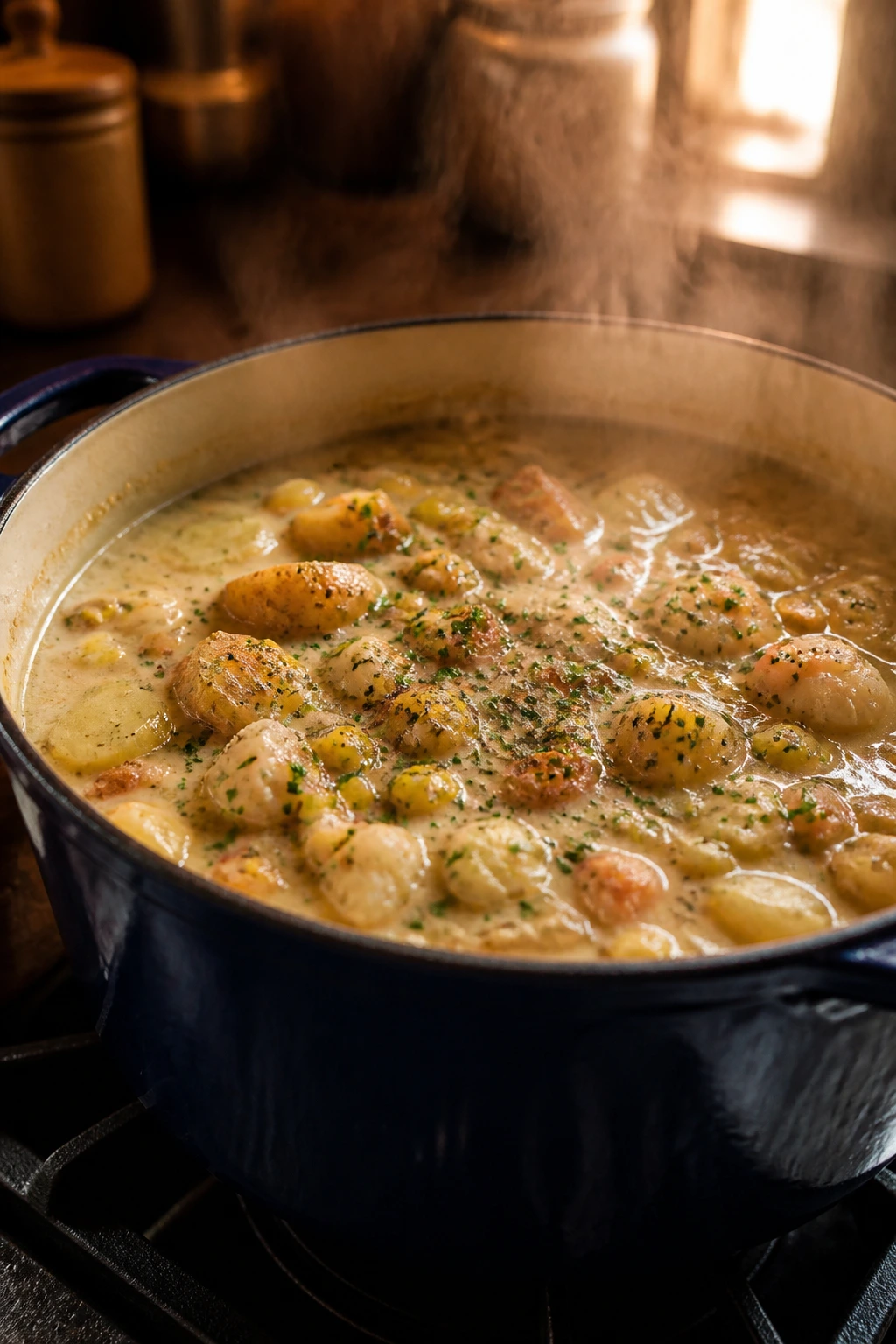
Chowder is one of those dinners that pays you back for paying attention. You chop the onions a little more carefully, keep the heat a little lower, and add the seafood when the pot is ready instead of forcing it. The reward is a bowl that tastes thick, warm, and honest.
That’s why these recipes belong on cold coastal nights. They don’t need a lot of drama. They need good timing, a steady hand, and something sturdy to sop up the last spoonful. Keep one pot, one loaf of bread, and a few of these in your rotation, and the next rough evening won’t feel quite so rough.
| Recipe | Prep Time | Cook Time | Total Time | Servings | Standout Detail |
|---|---|---|---|---|---|
| Classic New England Clam Chowder | 20 minutes | 30 minutes | 50 minutes | 4 servings | Bacon-thick broth and tender clams |
| Smoky Salmon and Dill Chowder | 15 minutes | 30 minutes | 45 minutes | 4 to 6 servings | Dill and lemon finish |
| Crab and Corn Chowder with Old Bay | 20 minutes | 25 minutes | 45 minutes | 4 to 6 servings | Sweet crab chunks with coastal seasoning |
| Cod, Leek, and Potato Chowder | 20 minutes | 30 minutes | 50 minutes | 4 to 6 servings | Soft leeks and flaky cod |
| Chicken, Bacon, and Potato Chowder | 20 minutes | 35 minutes | 55 minutes | 6 servings | Weeknight comfort with smoky bacon |
| Mussel, Tomato, and Fennel Chowder | 20 minutes | 25 minutes | 45 minutes | 4 servings | Briny broth and fennel brightness |
| Lobster and Sherry Chowder | 20 minutes | 30 minutes | 50 minutes | 4 to 6 servings | Sherry lift and lobster sweetness |
| Smoked Haddock Chowder with Parsnip | 15 minutes | 35 minutes | 50 minutes | 4 to 6 servings | Smoke-forward and silky |
| Coconut Shrimp and Sweet Potato Chowder | 20 minutes | 25 minutes | 45 minutes | 4 to 6 servings | Dairy-free coconut broth |
| Rustic Tomato Fish Chowder | 20 minutes | 30 minutes | 50 minutes | 4 to 6 servings | Red chowder with pantry tomatoes |
| Sausage, Kale, and White Bean Chowder | 15 minutes | 30 minutes | 45 minutes | 6 servings | Sturdy bean-thickened bowl |
| Roasted Cauliflower and Corn Chowder with Cheddar | 20 minutes | 40 minutes | 1 hour | 4 to 6 servings | Roasted cauliflower depth |