



Sausage soup recipes that freeze well are the kind of dinners I trust when the fridge looks half-empty and the weather has made everyone cranky. They do not ask for ceremony. They ask for a pot, a knife, and about an hour of attention, then they repay you later with bowls that reheat without sulking.
The best ones have a shared personality: smoky sausage, a broth that tastes like it spent time thinking, and enough beans, grains, potatoes, or vegetables to stay satisfying after a trip through the freezer. Creamy soups can be touchy. Noodle soups can go soft. But a broth-based soup with sausage at the center usually comes back with its shape intact, which is why these freezer-friendly soup recipes are such dependable pantry workhorses.
I like soups like this because they behave. They brown well, they simmer well, and they don’t punish you for making a double batch. If you keep the add-ins smart—greens at the end, dairy later, pasta handled with care—you can stock the freezer with meals that still taste cooked, not merely thawed.
Why These Soups Earn Freezer Space
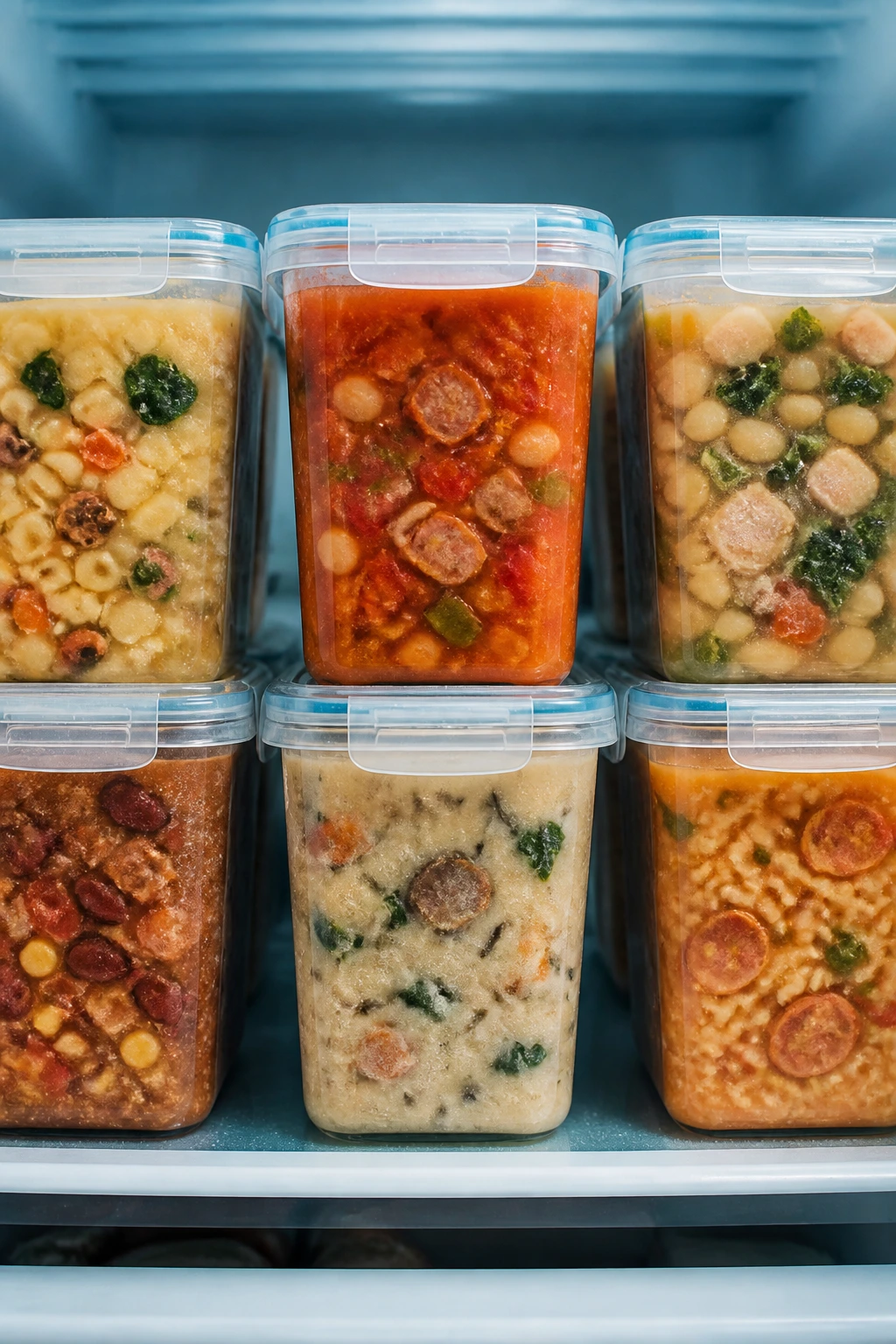
- They’re built on sturdy bases: Broth, beans, lentils, rice, barley, potatoes, and tomatoes hold up far better than cream-heavy soups after freezing.
- Sausage does the heavy lifting: One good browned sausage base gives you salt, fat, and depth before the pot has even started simmering.
- They reheat without drama: Most of these pots can go straight from freezer to fridge to stovetop with only a splash of broth or water.
- They stretch well: A single pound of sausage can anchor six to eight servings once beans or grains join the party.
- They’re easy to portion: These freeze neatly in 2-cup containers, which is the sweet spot when you want lunch or a small dinner.
- They’re adaptable: You can swap greens, beans, or grains without wrecking the whole bowl, which matters when the pantry is in charge.
1. Italian Sausage, White Bean, and Kale Soup
This is the soup I make when I want something that tastes like it simmered longer than it actually did. The sausage browns into little caramelized bits, the beans soften the broth, and the kale keeps enough bite that the bowl never turns mushy. It freezes cleanly, reheats well, and somehow tastes even more settled the second time around.
Why It Works:
Italian sausage gives the broth a built-in seasoning base, so you do not need a long list of spices. Cannellini beans add body without turning pasty, and kale holds its shape better than spinach after freezing. A spoonful of tomato paste and a finish of lemon make the broth taste deeper and brighter at the same time.
Key Ingredients:
- 1 lb hot or mild Italian sausage, casings removed
- 1 yellow onion, diced
- 2 carrots, diced
- 2 celery stalks, diced
- 4 garlic cloves, minced
- 2 tbsp tomato paste
- 2 cans (15 oz each) cannellini beans, drained and rinsed
- 6 cups low-sodium chicken broth
- 1 bunch kale, stems removed and leaves chopped
- 1 tsp fennel seeds
- 1/4 tsp red pepper flakes
- 1 tbsp lemon juice, plus more to taste
Quick Steps:
- Brown the sausage in a large pot over medium-high heat for 6 to 8 minutes, breaking it into crumbles until it has some deep brown edges.
- Add the onion, carrots, and celery. Cook for 5 minutes, stirring, until the onion turns translucent and the carrots start to soften.
- Stir in the garlic, tomato paste, fennel seeds, and red pepper flakes. Cook for 1 minute until the tomato paste darkens slightly.
- Pour in the broth and beans. Bring to a boil, then lower the heat and simmer for 15 minutes.
- Add the kale and cook for 4 to 6 minutes, just until the leaves turn tender but still look green and lively.
- Turn off the heat, add lemon juice, and taste for salt and pepper before serving or freezing.
Equipment for This Recipe:
- 6-quart Dutch oven or heavy soup pot
- Wooden spoon
- Chef’s knife and cutting board
- Ladle
- Freezer-safe containers
How to Serve This Dish:
Ladle it into deep bowls with a drizzle of olive oil and a few shavings of Parmesan. A slice of toasted sourdough works better than crackers here because it catches the broth and the beans in one bite. Serve 1 1/2 to 2 cups per person if you want it to feel like dinner.
Pro Tips for This Recipe:
- Drain excess fat only if needed: A tablespoon or two of sausage fat makes the broth richer; too much makes it greasy.
- Add lemon at the end: Acid dulls in the freezer, so hold back a little and freshen each reheated bowl.
- Keep the kale coarse: Large ribbons stay pleasant after reheating; tiny shreds disappear.
- Cool before freezing: Hot soup in a sealed container makes ice crystals and a watery thaw.
Variations on This Dish:
- Tomato-Forward Version: Add one 14.5-ounce can of diced tomatoes with the broth for a redder, sweeter broth.
- Turkey Sausage Swap: Use turkey Italian sausage and add 1 extra tablespoon olive oil to the pot.
- Escarole Switch: Replace the kale with chopped escarole for a softer, slightly bitter finish.
Common Mistakes to Avoid with This Dish:
- Skipping the browning: Pale sausage tastes flat after freezing. Brown it well.
- Overcooking the kale: Limp, olive-green kale turns tired fast. Stop when it is just tender.
- Freezing before tasting: Beans and broth mute each other in the freezer, so season the pot a little more than you think before packing it away.
2. Smoky Sausage and Red Lentil Soup
Red lentils are the shortcut here. They cook quickly, thicken the broth on their own, and thaw into a silky base instead of a muddy one. Smoked sausage does the rest, giving the soup a campfire edge that stays steady even after a long freezer stay.
Why It Works:
Red lentils break down just enough to make the soup feel fuller without needing cream. That is useful because cream can separate after freezing, while lentils settle down neatly. Smoked paprika echoes the sausage and keeps the whole pot from tasting one-note.
Key Ingredients:
- 12 oz smoked sausage, sliced into 1/4-inch rounds
- 1 onion, chopped
- 2 carrots, diced
- 2 celery stalks, diced
- 3 garlic cloves, minced
- 1 cup red lentils, rinsed
- 1 can (14.5 oz) diced tomatoes
- 6 cups chicken or vegetable broth
- 1 tsp smoked paprika
- 1 tsp ground cumin
- 1 bay leaf
- 2 cups baby spinach, optional
Quick Steps:
- Brown the sausage slices in a soup pot over medium heat for 4 to 5 minutes until the edges darken.
- Add the onion, carrots, and celery. Cook for 6 minutes until softened, then stir in the garlic, paprika, and cumin for 30 seconds.
- Add the lentils, tomatoes, broth, and bay leaf. Bring to a boil.
- Reduce to a steady simmer and cook for 18 to 22 minutes, stirring once or twice, until the lentils are soft and starting to fall apart.
- Stir in spinach, if using, and cook for 1 minute until wilted.
- Remove the bay leaf and taste for salt and pepper before serving or freezing.
Equipment for This Recipe:
- Medium stockpot
- Wooden spoon
- Measuring cups
- Fine-mesh strainer for rinsing lentils
How to Serve This Dish:
This soup likes a hunk of bread with a sturdy crust, or a bowl of rice if you want to stretch it further. A spoonful of yogurt on top is fine for serving, but skip it before freezing. Serve it hot and thick, almost stew-like.
Pro Tips for This Recipe:
- Rinse the lentils well: Dusty lentils can cloud the broth and make the pot taste muddy.
- Stir near the end: Lentils settle and can cling to the bottom if you ignore the pot.
- Freeze in flat portions: The soup thaws faster in a shallow container than in a tall mound.
- Add spinach fresh if you can: If you plan to freeze it, pack the soup without spinach and stir in fresh greens when reheating.
Variations on This Dish:
- Chipotle Heat: Swap the smoked paprika for 1 minced chipotle in adobo for a darker, warmer heat.
- Sausage and Potato Version: Add 1 diced Yukon Gold potato with the lentils for a thicker bowl.
- Lighter Broth: Use turkey smoked sausage and vegetable broth for a less heavy finish.
Common Mistakes to Avoid with This Dish:
- Boiling too hard: Red lentils can scorch if the pot rages. Keep it at a gentle simmer.
- Over-salting early: Smoked sausage varies a lot in salt. Taste after the lentils soften.
- Adding too much spinach: A mountain of greens can overwhelm the lentil texture. Keep it modest.
3. Kielbasa Cabbage Soup with Tomato Broth
Cabbage is one of those vegetables that gets better on the stove than it looks in the drawer. In this soup, it turns silky at the edges, the kielbasa brings smoke and salt, and the tomato broth gives the whole pot a deep rust-red color that holds up after freezing.
Why It Works:
Cabbage and potatoes survive the freezer better than people expect, especially when they are simmered in tomato broth rather than cream. Kielbasa adds enough fat that the soup tastes complete even after a thaw. Caraway seeds keep the flavor pointed toward Eastern European comfort instead of plain vegetable soup.
Key Ingredients:
- 14 oz kielbasa, sliced into half-moons
- 1 onion, chopped
- 2 carrots, sliced
- 2 celery stalks, sliced
- 4 cups green cabbage, shredded
- 2 medium Yukon Gold potatoes, diced
- 1 can (28 oz) crushed tomatoes
- 6 cups beef or chicken broth
- 1 tsp caraway seeds
- 1 bay leaf
- 2 tbsp chopped dill
Quick Steps:
- Brown the kielbasa in a large pot over medium heat for 3 to 4 minutes until some of the fat renders.
- Add the onion, carrots, and celery. Cook for 5 minutes until the onion softens.
- Stir in the cabbage, potatoes, caraway, and bay leaf. Pour in the tomatoes and broth.
- Bring to a boil, then lower to a simmer and cook for 25 minutes until the potatoes are tender and the cabbage is soft at the edges.
- Remove the bay leaf, stir in dill, and season with salt and pepper.
- Cool and package for freezing in portions that fit your usual bowl.
Equipment for This Recipe:
- Large soup pot
- Sharp knife for slicing cabbage cleanly
- Wooden spoon
- Ladle
How to Serve This Dish:
A slice of rye bread or pumpernickel is the right move here. The soup is hearty enough to stand alone, but a little mustard on the side makes the kielbasa taste sharper. Two cups per bowl is a comfortable serving.
Pro Tips for This Recipe:
- Slice cabbage in wide ribbons: Thin shreds turn soft too quickly and disappear on reheating.
- Use waxy potatoes: Yukon Golds or red potatoes hold their shape better than russets.
- Let it rest before freezing: A 20-minute rest helps the cabbage and potatoes settle into the broth instead of floating apart.
- Hold back extra dill: Add fresh dill to each bowl after reheating so the flavor stays lively.
Variations on This Dish:
- Tangier Bowl: Stir in 1/2 cup rinsed sauerkraut near the end for extra bite.
- Paprika Version: Add 1 teaspoon sweet paprika with the caraway for a rounder, softer flavor.
- Turkey Kielbasa Swap: Use turkey kielbasa and add 1 tablespoon olive oil at the browning stage.
Common Mistakes to Avoid with This Dish:
- Cutting the cabbage too fine: Tiny shreds turn limp and stringy after freezing.
- Boiling the potatoes hard: Rapid boiling can break them apart and make the broth cloudy.
- Forgetting to taste the broth: Tomato broth can need more salt than you expect once the cabbage softens.
4. Sausage, Potato, and Corn Chowder
This is a chowder that stays honest after freezing because the body comes from potatoes, not a pile of dairy. The corn stays sweet, the sausage gives you savory bits in every spoonful, and the broth gets thick enough to feel like chowder without turning gluey.
Why It Works:
Potatoes are the secret here, but only if you leave them slightly chunky and mash a few to thicken the pot. That gives you a creamy feel without relying on milk, which can separate in the freezer. Corn adds sweetness and little bursts of texture that keep the bowl from getting heavy.
Key Ingredients:
- 1 lb mild or hot sausage, casings removed
- 1 onion, diced
- 2 celery stalks, diced
- 3 medium Yukon Gold potatoes, peeled and diced
- 2 cups corn kernels, fresh or frozen
- 1 tbsp all-purpose flour
- 5 cups chicken broth
- 1 tsp dried thyme
- 1/2 tsp black pepper
- 1 cup half-and-half, added after reheating if freezing
- Chopped chives, for serving
Quick Steps:
- Brown the sausage in a soup pot over medium-high heat for 6 minutes, breaking it into small crumbles.
- Add the onion and celery, then cook for 4 minutes until softened. Sprinkle in the flour and stir for 1 minute.
- Pour in the broth, add the potatoes and thyme, and bring to a simmer.
- Cook for 15 to 18 minutes until the potatoes are tender. Mash a few pieces against the side of the pot to thicken the broth.
- Stir in the corn and black pepper. Cook for 3 more minutes.
- If serving right away, add the half-and-half off the heat. If freezing, leave it out and stir it in after reheating.
Equipment for This Recipe:
- Heavy stockpot
- Potato masher or sturdy spoon
- Ladle
- Measuring spoon for the flour
- Freezer containers
How to Serve This Dish:
This wants something starchy on the side, like a biscuit, a slab of cornbread, or a toasted roll. If you are serving it fresh, a little half-and-half makes it feel richer. Keep the portions at about 2 cups; it fills a bowl quickly.
Pro Tips for This Recipe:
- Use Yukon Golds: They mash enough to thicken but do not disintegrate the way russets can.
- Freeze before adding dairy: The chowder keeps its texture better if the milk goes in after thawing.
- Mash only part of the pot: Leave enough chunks so it still reads as chowder, not potato puree.
- Taste after reheating: Corn dulls a little in the freezer, so a pinch more salt often wakes the pot up.
Variations on This Dish:
- Dairy-Free Chowder: Finish with unsweetened oat milk or skip the dairy entirely and mash more potatoes.
- Smoky Corn Version: Add 1 teaspoon smoked paprika with the flour.
- Bacon-Sausage Mix: Swap 4 ounces of sausage for chopped bacon if you want a saltier base.
Common Mistakes to Avoid with This Dish:
- Adding dairy before freezing: The texture can split and look grainy.
- Mashing every potato: You lose the chowder texture. Leave chunks.
- Using a very lean sausage: The soup can taste flat. You need a little fat for the broth to feel full.
5. Andouille Okra and Rice Soup
This one tastes like a pot that knows how to handle smoke and heat. Andouille brings a peppery edge, okra thickens the broth just enough, and rice gives the soup some substance without making it stodgy. It freezes well because the body comes from the rice and vegetables, not cream.
Why It Works:
Okra can be tricky if you overwork it, but here it does the useful job of giving the broth a light, silky texture. Rice is forgiving if you pull the soup off the heat while the grains are still a touch firm. The andouille seasons the whole pot so you do not need a long spice list.
Key Ingredients:
- 12 oz andouille sausage, sliced
- 1 onion, chopped
- 2 celery stalks, chopped
- 1 green bell pepper, chopped
- 3 garlic cloves, minced
- 1 cup sliced okra, fresh or frozen
- 3/4 cup long-grain white rice, rinsed
- 1 can (14.5 oz) diced tomatoes
- 6 cups chicken broth
- 1 tsp dried thyme
- 1/4 tsp cayenne, optional
- Hot sauce, for serving
Quick Steps:
- Brown the andouille in a soup pot over medium heat for 4 minutes until the edges darken.
- Add the onion, celery, and bell pepper. Cook for 5 minutes, then add garlic, thyme, and cayenne for 30 seconds.
- Stir in the tomatoes, broth, and rice. Bring to a boil.
- Lower the heat and simmer for 12 minutes, stirring once so the rice does not stick.
- Add the okra and cook for 8 to 10 minutes until the rice is tender and the broth looks slightly silky.
- Taste, adjust salt, and cool before freezing.
Equipment for This Recipe:
- Medium-large soup pot
- Wooden spoon
- Fine-mesh strainer for rinsing rice
- Ladle
How to Serve This Dish:
Serve it with cornbread or a warm baguette if you want something to mop the bowl. A few drops of hot sauce are enough; the sausage is already doing part of the work. This is a good 1 3/4-cup serving per person.
Pro Tips for This Recipe:
- Rinse the rice: It helps the broth stay clean instead of cloudy and gluey.
- Do not over-stir the okra: Gentle stirring keeps the texture pleasant.
- Undercook the rice slightly: It will continue softening after reheating.
- Freeze in meal-size portions: Rice soups are easier to manage in 2-cup containers than in one huge tub.
Variations on This Dish:
- Shrimp-Free Gumbo Feel: Add a bay leaf and 1 teaspoon filé powder after reheating if you like a gumbo-adjacent flavor.
- Brown Rice Version: Use brown rice and simmer 20 to 25 minutes longer.
- Milder Pot: Cut the cayenne and use mild smoked sausage instead of andouille.
Common Mistakes to Avoid with This Dish:
- Cooking the rice to mush: It can cross that line fast. Pull the pot when it still has a little chew.
- Using too much okra at once: A mountain of okra can turn the soup slimy instead of silky.
- Freezing without cooling: Rice soup needs to cool fast so the grains do not clump together.
6. Tuscan Sausage, Chickpea, and Spinach Soup
If you like a soup that turns meaty and plush without cream, this is it. Chickpeas give the broth some body, spinach disappears into tender ribbons, and the sausage keeps everything grounded. The Parmesan rind is the detail that makes the pot taste older than it is.
Why It Works:
Chickpeas are one of the best freezer beans because they keep their shape and do not break down into grit. Spinach is added late, which keeps it from turning swampy. A Parmesan rind or two gives you that long-simmered savory note without any extra fuss.
Key Ingredients:
- 1 lb Italian sausage, casings removed
- 1 onion, diced
- 2 carrots, diced
- 2 celery stalks, diced
- 3 garlic cloves, minced
- 2 cans (15 oz each) chickpeas, drained and rinsed
- 1 can (14.5 oz) crushed tomatoes
- 6 cups chicken broth
- 1 Parmesan rind
- 1 tsp chopped rosemary
- 4 cups baby spinach
- Olive oil and black pepper
Quick Steps:
- Brown the sausage in a pot over medium-high heat for 6 minutes, then remove the excess fat if there is more than a tablespoon.
- Add the onion, carrots, and celery. Cook for 5 minutes, then stir in garlic and rosemary for 30 seconds.
- Add the chickpeas, tomatoes, broth, and Parmesan rind. Bring to a boil.
- Simmer for 20 minutes so the broth picks up the chickpea starch and the rind has time to do its job.
- Stir in spinach and cook for 1 to 2 minutes until just wilted.
- Remove the rind, season, and freeze or serve.
Equipment for This Recipe:
- Large soup pot
- Wooden spoon
- Ladle
- Box grater or microplane if you want Parmesan on top
How to Serve This Dish:
A toasted slice of country bread is enough, though I like a little olive oil drizzled across the bowl. This soup looks especially good with a few chickpeas spooned on top and black pepper over everything. Plan on 2 cups per serving.
Pro Tips for This Recipe:
- Save the rind: A real Parmesan rind is worth keeping in the freezer for soups like this.
- Add spinach at the end: It only needs a minute to wilt.
- Use low-sodium broth: Parmesan and sausage bring plenty of salt.
- Freeze without extra cheese on top: Reheated cheese turns grainy if it goes in before storage.
Variations on This Dish:
- White Bean Swap: Replace chickpeas with cannellini beans for a softer, creamier spoonful.
- Spicy Tuscan Pot: Use hot Italian sausage and add red pepper flakes with the rosemary.
- Kale Version: Swap spinach for chopped kale and simmer it 4 extra minutes.
Common Mistakes to Avoid with This Dish:
- Skipping the rind: The soup will still be fine, but the broth loses a lot of depth.
- Overcooking spinach: It should disappear gently, not collapse into dark threads.
- Using dry rosemary by the tablespoon: Rosemary can take over fast. Keep it modest.
7. Spicy Chorizo Black Bean Soup
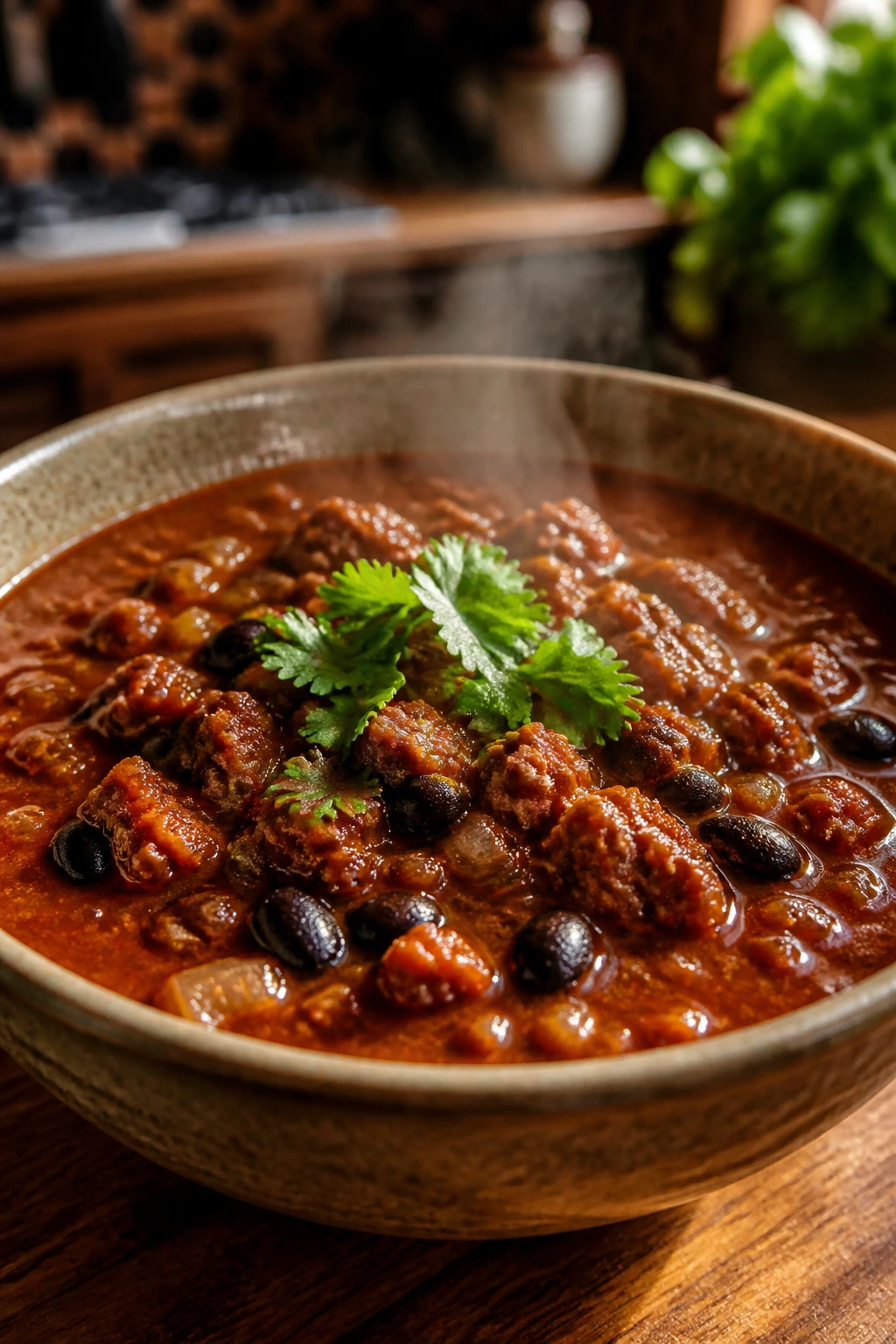
The chorizo turns the broth brick red and gives the whole pot a warm, slow burn. Black beans hold their shape after freezing, chipotle adds smoke, and a squeeze of lime at the end sharpens everything enough that you want another spoonful. This is one of those soups that gets better after a night in the fridge.
Why It Works:
Fresh Mexican chorizo melts into the broth and seasons it from the inside, which means the pot tastes finished without a long spice list. Black beans freeze well and make the soup thick enough to stand on its own. Lime and cilantro are best added after reheating because both lose energy in the freezer.
Key Ingredients:
- 1 lb fresh Mexican chorizo
- 1 onion, diced
- 1 red bell pepper, diced
- 3 garlic cloves, minced
- 2 cans (15 oz each) black beans, drained and rinsed
- 1 can (14.5 oz) diced tomatoes
- 6 cups chicken broth
- 1 chipotle pepper in adobo, minced
- 1 tsp ground cumin
- 1 tsp dried oregano
- 1 lime, cut into wedges
- Chopped cilantro, for serving
Quick Steps:
- Cook the chorizo in a soup pot over medium heat for 6 to 8 minutes, breaking it up until browned and cooked through.
- Add the onion and bell pepper. Cook for 5 minutes until softened, then stir in garlic, cumin, oregano, and chipotle for 30 seconds.
- Add the beans, tomatoes, and broth. Bring to a boil.
- Lower the heat and simmer for 20 minutes so the beans pick up the chile flavor.
- For a thicker soup, mash a cup of beans against the side of the pot.
- Finish with lime juice and cilantro after reheating or just before serving.
Equipment for This Recipe:
- Soup pot
- Wooden spoon
- Potato masher or sturdy spoon
- Citrus juicer, optional
How to Serve This Dish:
Serve it with tortilla chips, warm tortillas, or a scoop of rice. A little avocado on top is good when the bowl is fresh, but I would save it for serving day, not storage day. This one takes well to a generous 2-cup portion.
Pro Tips for This Recipe:
- Drain excess chorizo fat: A little stays in the pot; too much makes the soup greasy.
- Use chipotle sparingly: One pepper is enough for heat and smoke.
- Mash only part of the beans: You want body, not bean paste.
- Add lime after thawing: Acid can taste muted if it sits too long.
Variations on This Dish:
- Pinto Bean Version: Swap in pinto beans for a softer, earthier bowl.
- Corn Addition: Stir in 1 cup corn kernels for sweetness.
- Milder Pot: Use half chorizo and half mild sausage if you want less heat.
Common Mistakes to Avoid with This Dish:
- Using cured Spanish chorizo by accident: It will not cook or behave like fresh Mexican chorizo.
- Freezing with cilantro mixed in: The herb loses its fresh finish. Add it at serving.
- Skipping the lime: The soup needs that sharp edge to balance the richness.
8. Sausage Barley and Mushroom Soup
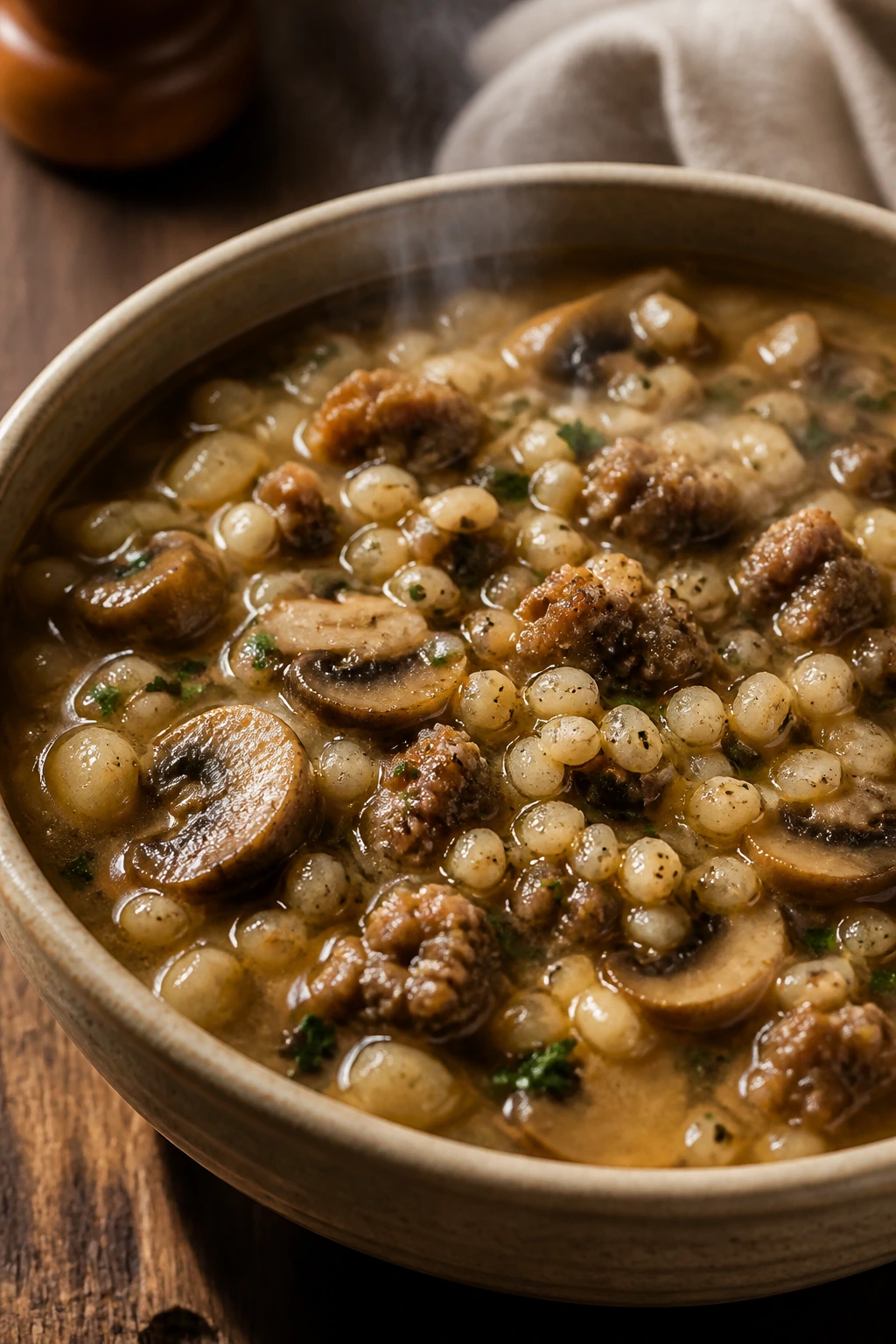
Earthy, chewy, and a little more serious, this soup tastes like it belongs in a heavy ceramic bowl. Barley holds its texture better than pasta, mushrooms deepen the broth, and the sausage gives you enough richness that it never feels spare. It freezes without losing its shape.
Why It Works:
Pearl barley stays pleasantly chewy even after reheating, which is the main reason I reach for it in freezer soups. Mushrooms bring a darker, meaty note that complements sausage rather than competing with it. A good browning step on the mushrooms makes the broth taste richer than any extra spice could.
Key Ingredients:
- 1 lb sausage, sliced or crumbled
- 8 oz cremini mushrooms, sliced
- 1 onion, diced
- 2 carrots, diced
- 2 celery stalks, diced
- 3/4 cup pearl barley, rinsed
- 6 cups beef broth
- 1 tsp dried thyme
- 1 bay leaf
- 2 tbsp chopped parsley
Quick Steps:
- Brown the sausage in a soup pot over medium heat, then scoop it out if it is releasing a lot of fat.
- Add the mushrooms and cook for 6 to 8 minutes until they lose their moisture and start to brown.
- Stir in the onion, carrots, and celery. Cook for 5 minutes, then add the barley, thyme, and bay leaf.
- Pour in the broth and bring to a boil. Lower to a simmer and cook for 35 to 40 minutes until the barley is tender but still chewy.
- Return the sausage if you removed it, then stir in parsley and taste for salt.
Equipment for This Recipe:
- Heavy soup pot
- Wooden spoon
- Measuring cup for barley
- Ladle
How to Serve This Dish:
This is a soup that likes plain toast or a buttered roll more than fancy sides. A small splash of vinegar in each bowl can sharpen the mushrooms if the broth feels soft. Serve about 2 cups per bowl.
Pro Tips for This Recipe:
- Brown the mushrooms hard: Pale mushrooms taste watery after freezing.
- Rinse barley first: It removes dust and keeps the broth cleaner.
- Let the soup cool uncovered for a bit: Barley thickens as it rests, so cooling helps you judge the final texture.
- Add broth on reheating if needed: Barley keeps soaking up liquid overnight.
Variations on This Dish:
- Farro Swap: Use pearled farro if you want a slightly nuttier bite.
- Tomato Finish: Stir in 1/2 cup crushed tomatoes for a deeper color.
- Herby Version: Add a little rosemary with the thyme if you want a woodsier note.
Common Mistakes to Avoid with This Dish:
- Using hulled barley without changing the cook time: It takes much longer than pearl barley.
- Not browning the mushrooms: The broth tastes dull if the mushrooms just steam.
- Freezing before the barley is tender: It can stay hard in the center and never fully recover.
9. Split Pea and Sausage Soup

This is the old-school pot that earns its keep. Split peas melt into the broth on their own, so the soup turns thick and spoonable without needing cream or flour. Smoked sausage gives you the salty, meaty backbone that makes each bowl feel finished.
Why It Works:
Split peas are one of the strongest freezer legumes because they break down into a naturally creamy texture. That means the soup thickens as it cooks and still reheats well later. Smoked sausage keeps the flavor from becoming flat or one-dimensional.
Key Ingredients:
- 12 oz smoked sausage, sliced
- 1 lb dried split peas, rinsed
- 1 onion, chopped
- 2 carrots, chopped
- 2 celery stalks, chopped
- 3 garlic cloves, minced
- 6 cups chicken broth
- 1 bay leaf
- 1 tsp dried thyme
- Black pepper, to taste
Quick Steps:
- Brown the sausage slices in a large pot for 3 to 4 minutes.
- Add the onion, carrots, and celery. Cook for 5 minutes, then stir in garlic for 30 seconds.
- Add the split peas, broth, bay leaf, and thyme. Bring to a boil.
- Lower to a simmer and cook for 45 to 60 minutes, stirring now and then, until the peas are broken down and the soup is thick.
- Remove the bay leaf, add black pepper, and thin with a little broth if you want a looser texture.
Equipment for This Recipe:
- Large stockpot
- Wooden spoon
- Fine strainer for rinsing peas
- Ladle
How to Serve This Dish:
Serve it with rye toast, a crusty roll, or nothing at all if you want a thick, filling bowl. This soup tends to thicken as it cools, so I like to leave it a little looser than I think it needs. About 1 1/2 cups per serving is plenty.
Pro Tips for This Recipe:
- Rinse the peas well: Any grit will show up in a thick soup like this.
- Stir near the end of cooking: Split peas can stick when the pot gets thick.
- Add broth after reheating: It often needs loosening.
- Use smoked sausage, not sweet sausage: The smoky salt is what gives the soup its backbone.
Variations on This Dish:
- Ham-Style Version: Use kielbasa if that is what you have.
- Herbier Bowl: Add a little marjoram along with the thyme.
- Carrot-Heavy Pot: Add an extra carrot or two if you want a slightly sweeter broth.
Common Mistakes to Avoid with This Dish:
- Not enough liquid: Split peas soak up broth as they cook. Start with enough.
- Walking away from the pot: Thick pea soup can scorch on the bottom.
- Oversalting early: The soup reduces and the sausage adds salt later.
10. Sausage Minestrone with White Beans and Farro
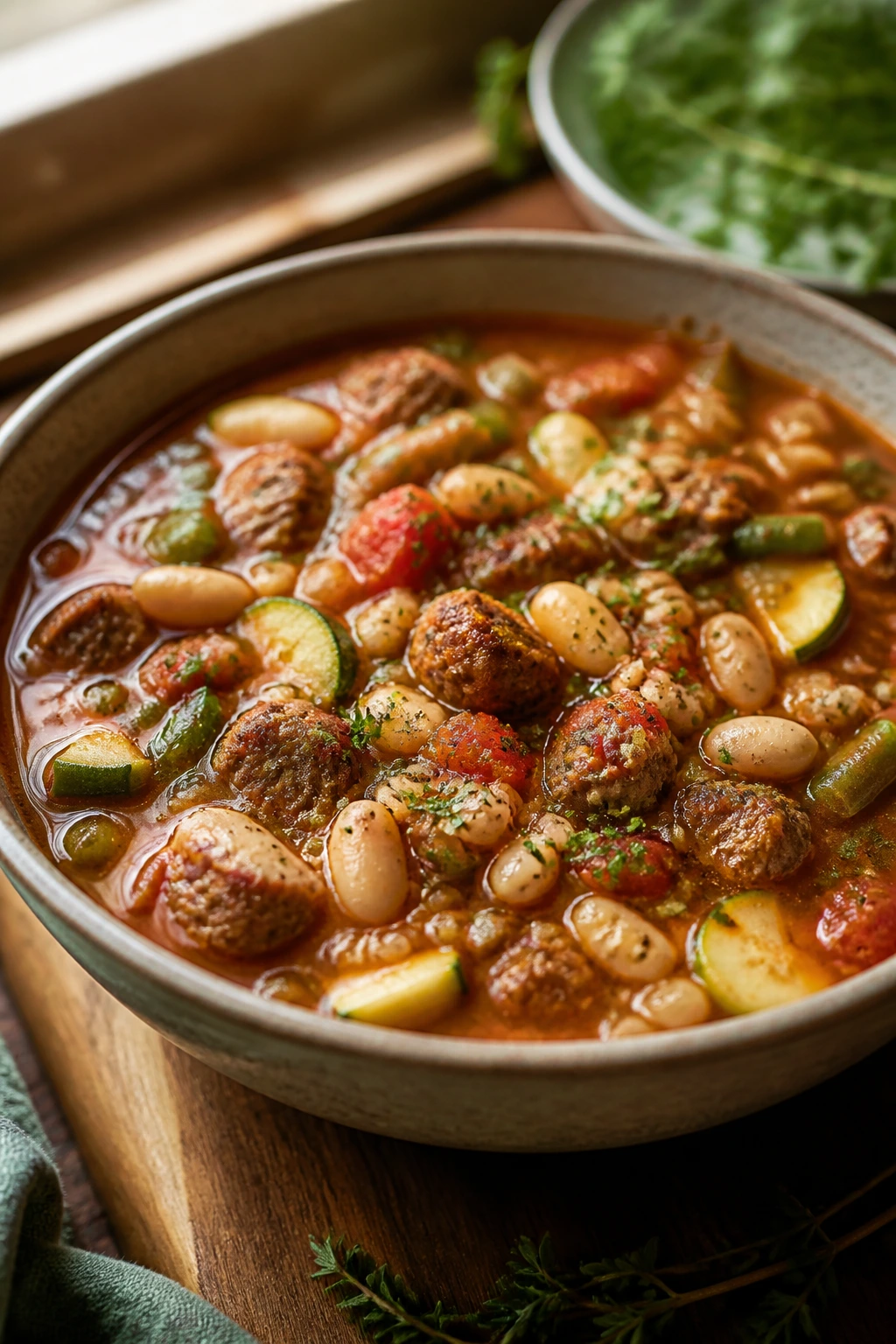
This is the minestrone I make when I want something sturdier than noodle soup. Farro gives it chew, white beans bring the creamy feel, and the sausage means the broth never tastes like a side dish. It freezes better than pasta-based minestrone, which is part of why I like it so much.
Why It Works:
Farro handles freezing better than short pasta because it keeps a pleasant bite instead of turning floppy. White beans thicken the broth without making it heavy, and the tomato base carries the whole pot. Zucchini and green beans add enough freshness that the soup does not read as dense.
Key Ingredients:
- 1 lb Italian sausage, crumbled
- 1 onion, diced
- 2 carrots, diced
- 2 celery stalks, diced
- 2 zucchini, diced
- 3 garlic cloves, minced
- 1 can (28 oz) crushed tomatoes
- 3/4 cup pearled farro, rinsed
- 2 cans white beans, drained and rinsed
- 1 cup green beans, cut into 1-inch pieces
- 6 cups broth
- 2 cups spinach
- 1 tsp dried basil
Quick Steps:
- Brown the sausage in a soup pot over medium-high heat for 6 minutes.
- Add the onion, carrots, and celery. Cook for 5 minutes, then stir in garlic and basil for 30 seconds.
- Add the tomatoes, farro, and broth. Bring to a boil, then simmer for 20 minutes.
- Stir in the white beans, green beans, and zucchini. Cook for 10 minutes until the farro is tender and the zucchini is soft but not collapsing.
- Add spinach and cook for 1 minute until wilted.
- Taste and adjust salt before freezing or serving.
Equipment for This Recipe:
- Large soup pot
- Wooden spoon
- Measuring cup for farro
- Ladle
How to Serve This Dish:
A spoonful of Parmesan and a loaf of crusty bread are enough. If you want a more Italian feel, finish with a drizzle of good olive oil. Two cups per serving works well because the farro makes it filling.
Pro Tips for This Recipe:
- Use pearled farro: It cooks faster and freezes more predictably than whole farro.
- Keep zucchini in larger dice: Small cubes disappear too quickly.
- Cool fast before freezing: Farro thickens the broth as it sits.
- Add extra broth on reheating: This soup tightens up overnight.
Variations on This Dish:
- Barley Version: Swap farro for pearl barley if that is what you have.
- Kale Swap: Replace spinach with chopped kale for a greener, sturdier bowl.
- No-Bean Pot: Leave out the beans and add 1 extra cup farro for a grainier soup.
Common Mistakes to Avoid with This Dish:
- Using pasta instead of farro without changing the method: Pasta softens too much in the freezer.
- Overcooking the zucchini: It should hold a little shape.
- Freezing without tasting first: Tomatoes and beans can flatten the salt level.
11. Sausage, Escarole, and Cannellini Soup
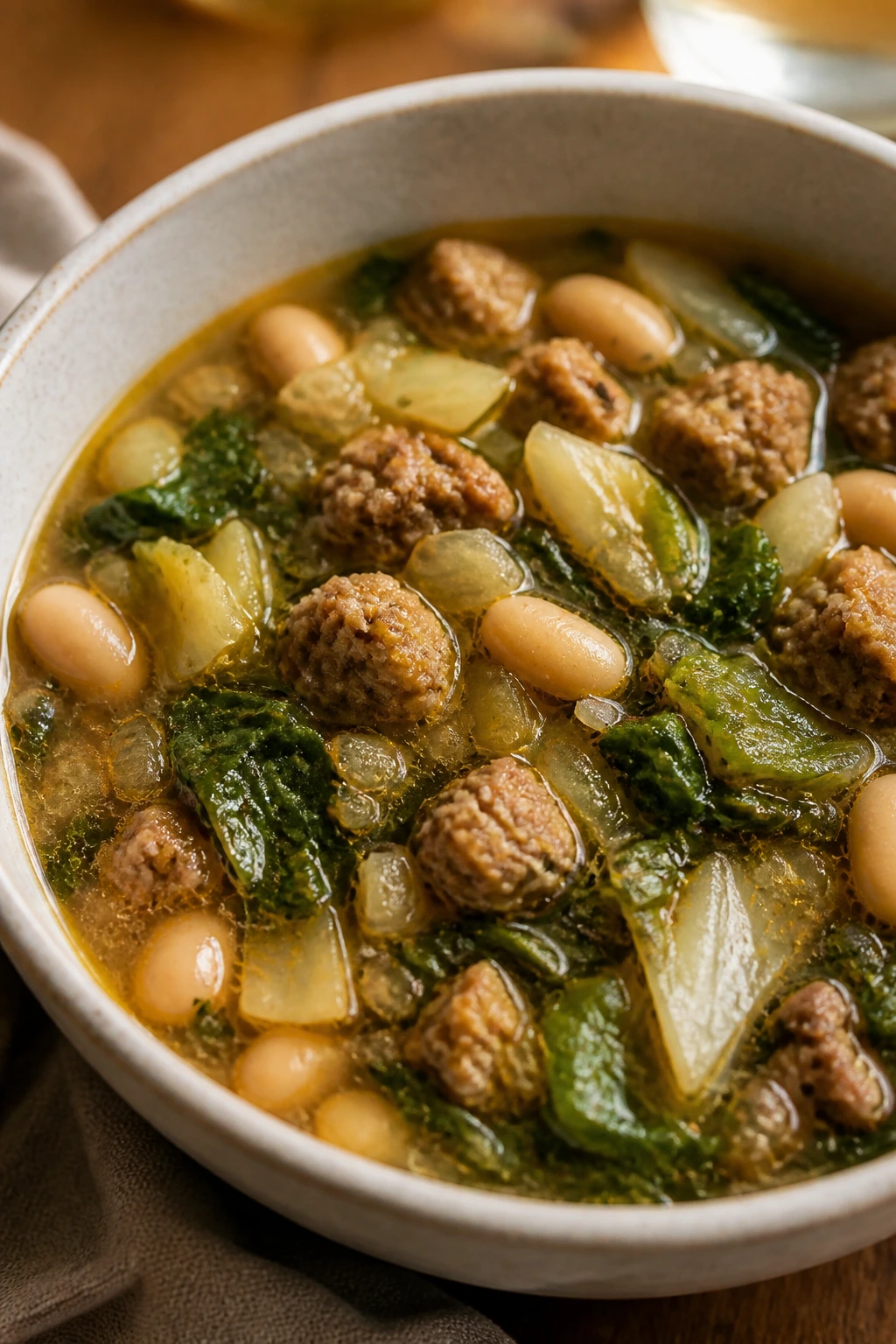
Escarole gets soft and a little bitter in the best way. Cannellini beans make the broth creamy without cream, and sausage gives the pot enough fat that the greens taste lively instead of stern. This is one of those soups that feels built for the freezer from the start.
Why It Works:
Escarole is sturdier than spinach, so it handles freezing and reheating with less collapse. Cannellini beans add a soft, velvety texture that makes the broth feel richer than it is. The whole pot benefits from a little lemon at the end, which keeps the greens from tasting heavy.
Key Ingredients:
- 1 lb Italian sausage, casings removed
- 1 onion, diced
- 2 carrots, diced
- 2 celery stalks, diced
- 3 garlic cloves, minced
- 2 cans cannellini beans, drained and rinsed
- 1 large head escarole, washed and chopped
- 6 cups chicken broth
- 1 Parmesan rind
- 1 tbsp lemon juice
- Black pepper, to taste
Quick Steps:
- Brown the sausage in a soup pot over medium heat for 6 minutes.
- Add onion, carrots, and celery, then cook for 5 minutes until softened.
- Stir in the garlic, beans, broth, and Parmesan rind. Simmer for 15 minutes.
- Add the escarole and cook for 4 to 5 minutes until wilted and tender.
- Remove the rind, finish with lemon juice, and season with black pepper.
Equipment for This Recipe:
- Soup pot
- Wooden spoon
- Ladle
- Salad spinner or clean towels for washing escarole
How to Serve This Dish:
Serve this with garlic toast or plain focaccia. It likes a clean bowl and a few turns of black pepper on top. A generous 2-cup portion feels right.
Pro Tips for This Recipe:
- Wash escarole well: The leaves can hide grit between the ribs.
- Trim the tough core: It cooks unevenly if you leave too much of it in.
- Use the rind if you have it: It gives the broth a deeper, rounded finish.
- Freeze without extra lemon: Add acid after reheating so the greens taste bright.
Variations on This Dish:
- Spinach Version: Replace escarole with spinach and reduce the final simmer to 1 minute.
- Spicy Pot: Use hot Italian sausage and a pinch of red pepper flakes.
- Tomato Touch: Add 1 cup crushed tomatoes for a rosier broth.
Common Mistakes to Avoid with This Dish:
- Overcooking the escarole: It should wilt, not dissolve.
- Skipping the wash: Grit in leafy soup is a hard no.
- Adding too much lemon too early: The flavor gets dull after freezing.
12. Polish Kielbasa and Sauerkraut Soup
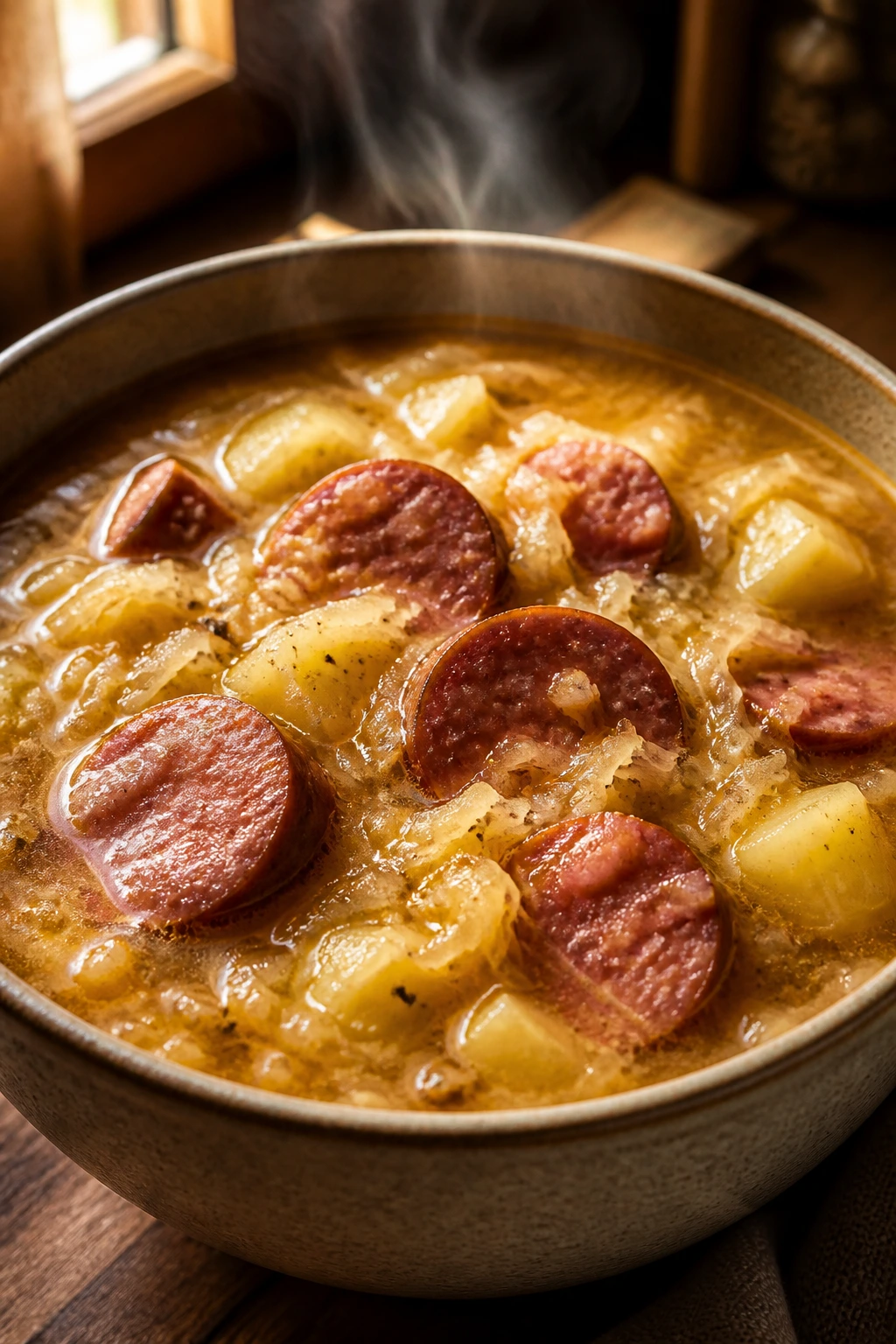
Tangy, smoky, and impossible to mistake for anything else, this soup has a sharp little edge that keeps each bowl lively. Sauerkraut gives the broth its signature bite, potatoes soften it, and kielbasa carries the smoke. It freezes well because the sauerkraut stays punchy while the potatoes mellow everything out.
Why It Works:
Sauerkraut is already fermented and stable, so it keeps its character after freezing better than many fresh vegetables. Potatoes and carrots absorb some of the tang, which keeps the broth from turning harsh. Caraway seeds and dill help the whole thing taste intentional instead of merely sour.
Key Ingredients:
- 14 oz kielbasa, sliced
- 1 onion, chopped
- 1 carrot, diced
- 2 medium Yukon Gold potatoes, diced
- 2 cups sauerkraut, drained
- 6 cups beef broth
- 1 tbsp tomato paste
- 1 tsp caraway seeds
- 1 bay leaf
- 2 tbsp chopped dill
- Black pepper, to taste
Quick Steps:
- Brown the kielbasa in a soup pot for 4 minutes.
- Add the onion and carrot. Cook for 4 minutes, then stir in tomato paste and caraway for 30 seconds.
- Add the broth, potatoes, and bay leaf. Simmer for 15 minutes until the potatoes start to soften.
- Stir in the sauerkraut and cook for another 10 minutes.
- Remove the bay leaf, add dill, and season to taste.
Equipment for This Recipe:
- Soup pot
- Wooden spoon
- Ladle
- Cutting board and knife
How to Serve This Dish:
Rye bread is the obvious move, but boiled potatoes on the side are good too if you want the meal to feel old-fashioned. A little mustard on the table is not out of place. Serve 1 1/2 to 2 cups per bowl.
Pro Tips for This Recipe:
- Drain the sauerkraut: Too much brine can take over the broth.
- Taste before salting: Both kielbasa and kraut bring plenty of salt.
- Keep the potatoes in dice, not chunks: Smaller pieces absorb the flavor better.
- Add dill after cooking: It tastes cleaner and fresher.
Variations on This Dish:
- Sharp Version: Add a splash of pickle brine for extra tang.
- Creamy Finish: Stir in a spoonful of sour cream after reheating, not before freezing.
- Mustard Pot: Whisk in 1 teaspoon Dijon for a little extra bite.
Common Mistakes to Avoid with This Dish:
- Not draining the kraut enough: The broth gets too sour and salty.
- Overcooking the potatoes: They should hold shape.
- Adding sour cream to the freezer container: It tends to separate.
13. Sausage, Butternut Squash, and Sage Soup
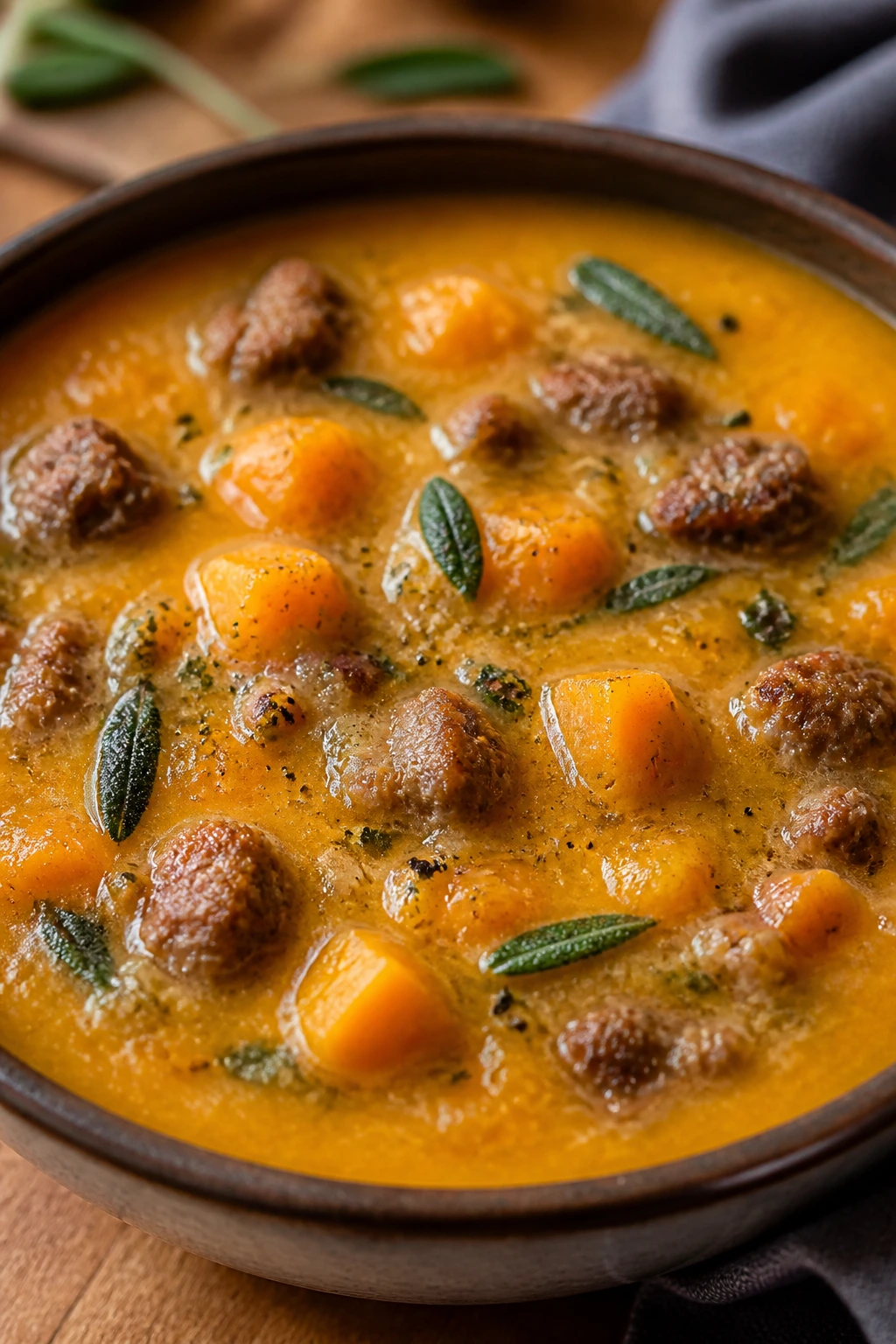
This one lands in that sweet spot between cozy and bright. Butternut squash turns silky, sage gives the broth a dry herbal note, and sausage keeps the soup from drifting into dessert territory. It freezes well because the squash base actually improves with a little rest.
Why It Works:
Butternut squash purees into a smooth base without needing cream, which is a big advantage for freezer soups. Sausage adds salt and fat, so the sweetness of the squash never gets out of hand. White beans can be added for extra body if you want the bowl to eat more like dinner than a side.
Key Ingredients:
- 1 lb Italian sausage
- 1 onion, chopped
- 3 garlic cloves, minced
- 4 cups butternut squash cubes
- 1 small apple, peeled and chopped, optional
- 2 cans white beans, drained and rinsed
- 6 cups chicken broth
- 1 tsp chopped fresh sage or 1/2 tsp dried sage
- 1/2 tsp ground thyme
- Pinch of nutmeg
Quick Steps:
- Brown the sausage in a soup pot over medium heat, then set it aside if you want a cleaner puree.
- Add the onion and cook for 4 minutes, then stir in garlic, sage, and thyme for 30 seconds.
- Add the squash, apple if using, beans, and broth. Bring to a boil, then simmer for 20 to 25 minutes until the squash is very tender.
- Blend half the soup with an immersion blender, or mash some of the squash against the side of the pot.
- Return the sausage if removed, add nutmeg, and taste for salt before serving or freezing.
Equipment for This Recipe:
- Large soup pot
- Immersion blender or potato masher
- Ladle
- Sharp peeler and knife for the squash
How to Serve This Dish:
A drizzle of olive oil and a handful of toasted pepitas work well on top. Serve it with crusty bread if you want more structure, or keep it as a smooth, bowl-only dinner. A 2-cup portion is comfortable.
Pro Tips for This Recipe:
- Roast the squash if you have time: It adds a deeper, less watery flavor.
- Blend only part of the pot: A little texture keeps it from feeling baby-food smooth.
- Use sage lightly: Too much sage tastes dusty after freezing.
- Add the apple only if you like a softer sweetness: It is optional, not required.
Variations on This Dish:
- Pumpkin Swap: Use canned pumpkin in place of some squash if that is what you have.
- Coconut Finish: Stir in a little coconut milk after reheating for a smoother bowl.
- Spiced Version: Add a pinch of curry powder for a warmer, more aromatic version.
Common Mistakes to Avoid with This Dish:
- Undercooking the squash: It will not puree smoothly.
- Using too much nutmeg: It should whisper, not shout.
- Freezing with a full puree and no texture: The soup can turn heavy. Keep some chunks.
14. Sausage, Rice, and Roasted Pepper Soup
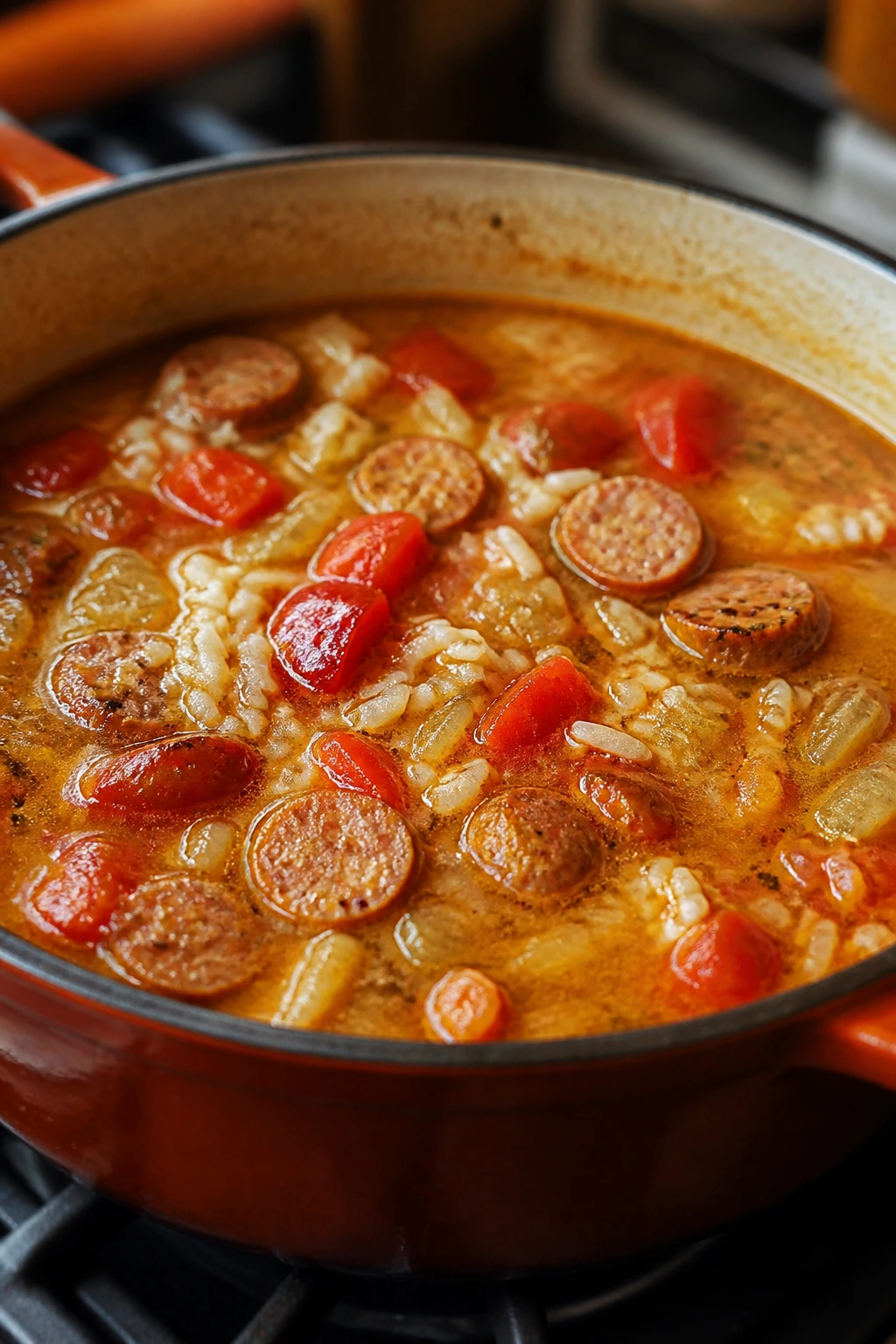
This one tastes like a pantry rescue with a little smoke and sweetness. Roasted peppers do a lot of the flavor work, rice gives the soup body, and sausage keeps the bowl from feeling thin. It is a good freezer soup because the broth stays clear and the rice holds up better than pasta.
Why It Works:
Roasted peppers carry a concentrated flavor that survives freezing better than raw peppers. Long-grain rice stays separate if you do not overcook it, and sausage anchors the whole pot. A little paprika gives the broth a darker edge without asking for much effort.
Key Ingredients:
- 1 lb sausage, crumbled
- 1 onion, diced
- 3 garlic cloves, minced
- 1 jar roasted red peppers, drained and chopped
- 1 can (14.5 oz) diced tomatoes
- 3/4 cup long-grain white rice, rinsed
- 6 cups chicken broth
- 1 tsp paprika
- 1 tsp dried oregano
- 2 tbsp chopped parsley
Quick Steps:
- Brown the sausage in a soup pot for 6 minutes.
- Add the onion and cook for 4 minutes, then stir in garlic, paprika, and oregano for 30 seconds.
- Add roasted peppers, tomatoes, rice, and broth. Bring to a boil.
- Reduce to a simmer and cook for 18 to 20 minutes until the rice is tender but not bloated.
- Stir in parsley and taste for salt.
Equipment for This Recipe:
- Soup pot
- Wooden spoon
- Measuring cup for rice
- Ladle
How to Serve This Dish:
This soup goes well with grilled bread or a simple green salad. If you want to lean into the pepper flavor, top each bowl with a few extra roasted pepper strips. Serve around 2 cups per person.
Pro Tips for This Recipe:
- Use long-grain rice: Short-grain rice can turn sticky after freezing.
- Drain the roasted peppers well: Too much jar liquid can flatten the flavor.
- Undercook the rice a little: It will finish softening during reheating.
- Freeze promptly: Rice soups hold best when they are cooled and packed soon after cooking.
Variations on This Dish:
- White Bean Version: Add one can of cannellini beans for more body.
- Spicy Pepper Pot: Stir in red pepper flakes or Calabrian chile paste.
- Brown Rice Swap: Works fine, but add 15 to 20 minutes to the simmer.
Common Mistakes to Avoid with This Dish:
- Overcooking the rice: It can turn soft fast.
- Using too much jar brine: Drain those peppers well.
- Skipping the parsley: The fresh finish keeps the soup from tasting heavy.
15. Sausage, Navy Bean, and Carrot Soup

This is one of the quiet workhorse soups in the bunch. Navy beans give the broth a creamy feel without cream, carrots add sweetness, and sausage makes sure the pot never slips into bland territory. It freezes cleanly because the beans and broth settle into each other instead of separating.
Why It Works:
Navy beans soften enough to thicken the soup but keep their shape better than some other beans. Carrots add just enough sweetness to balance the sausage and tomato paste. A little thyme and bay leaf make the pot taste built, not improvised.
Key Ingredients:
- 1 lb sausage, crumbled
- 1 onion, diced
- 2 carrots, diced
- 2 celery stalks, diced
- 3 garlic cloves, minced
- 2 cans navy beans, drained and rinsed
- 1 tbsp tomato paste
- 6 cups broth
- 1 tsp dried thyme
- 1 bay leaf
Quick Steps:
- Brown the sausage in a soup pot over medium heat for 6 minutes.
- Add onion, carrots, and celery. Cook for 5 minutes, then stir in garlic and tomato paste for 1 minute.
- Add beans, broth, thyme, and bay leaf. Bring to a boil.
- Lower the heat and simmer for 20 minutes.
- Mash about 1 cup of beans against the side of the pot for a thicker broth, then remove the bay leaf.
Equipment for This Recipe:
- Soup pot
- Wooden spoon
- Potato masher or spoon
- Ladle
How to Serve This Dish:
Crackers, toast, or cornbread all work. I like this one with a small spoon of mustard on the side if the sausage is especially mild. A 2-cup serving is enough to feel full.
Pro Tips for This Recipe:
- Mash some beans, not all: The soup thickens without turning pasty.
- Rinse canned beans well: It keeps the broth cleaner.
- Use low-sodium broth: Beans and sausage bring salt.
- Cool in shallow containers: The soup sets up thick, and shallow cooling helps it freeze better.
Variations on This Dish:
- Great Northern Swap: Use Great Northern beans if that is what you have.
- Kale Addition: Stir in chopped kale during the last 5 minutes.
- Smokier Pot: Add a little smoked paprika with the tomato paste.
Common Mistakes to Avoid with This Dish:
- Forgetting to mash some beans: The soup can taste thin.
- Using too much tomato paste: One tablespoon is enough.
- Adding too much salt before tasting after simmering: The broth concentrates.
16. Sausage, Tomato, and Spinach Soup
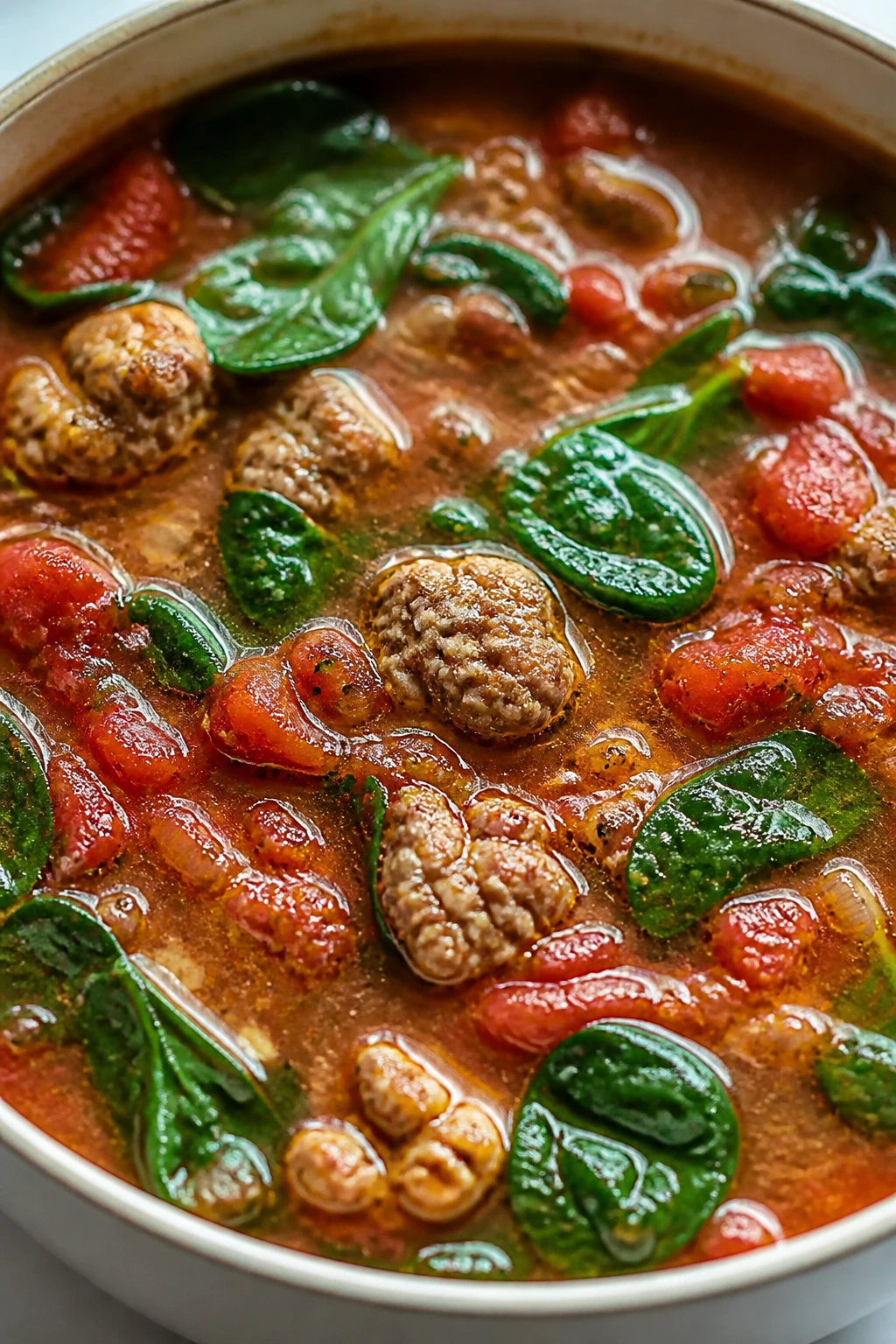
Bright, lean, and freezer-proof, this soup is the sort of thing I like when the pantry needs to feel clean again. Tomato broth freezes without complaint, spinach gives the bowl a fresh finish, and sausage keeps the whole thing from becoming a simple tomato soup. It is straightforward in the best way.
Why It Works:
Tomato-based soups usually freeze well because the texture stays stable and the flavor deepens. Spinach is a last-minute addition, which keeps it green instead of dull. Sausage brings enough richness that you do not need cream to make it feel like dinner.
Key Ingredients:
- 1 lb sausage, crumbled
- 1 onion, diced
- 2 celery stalks, diced
- 2 carrots, diced
- 3 garlic cloves, minced
- 1 can (28 oz) crushed tomatoes
- 6 cups broth
- 4 cups baby spinach
- 1 tsp dried oregano
- 1 tsp dried basil
- 1/4 tsp red pepper flakes
Quick Steps:
- Brown the sausage in a soup pot over medium heat for 6 minutes.
- Add onion, celery, and carrots. Cook for 5 minutes, then add garlic, oregano, basil, and red pepper flakes for 30 seconds.
- Stir in tomatoes and broth. Bring to a boil.
- Simmer for 20 minutes until the vegetables are tender and the broth tastes rounded.
- Add spinach and cook for 1 minute until wilted.
Equipment for This Recipe:
- Soup pot
- Wooden spoon
- Ladle
- Freezer-safe containers
How to Serve This Dish:
A grilled cheese sandwich is the obvious side, and I am not going to argue with it. If you want to keep it lighter, serve it with toasted bread and olive oil. One to two cups per bowl is comfortable, depending on how much bread you bring to the table.
Pro Tips for This Recipe:
- Choose good canned tomatoes: Since tomatoes carry the flavor, quality matters here.
- Add spinach last: It only needs a minute.
- Taste for acidity: If the tomatoes are sharp, a pinch of sugar or a little butter after reheating can smooth them.
- Pack without bread: Bread belongs on the plate, not in the freezer container.
Variations on This Dish:
- White Bean Boost: Add a can of cannellini beans for more bulk.
- Kale Swap: Replace spinach with kale for a sturdier green.
- Italian Cheese Finish: Top with Parmesan after reheating, not before freezing.
Common Mistakes to Avoid with This Dish:
- Overcooking the spinach: It should just wilt.
- Using watery tomatoes: The soup ends up thin and flat.
- Freezing with cheese stirred in: It can separate and grain.
17. Sausage, Mushroom, and Wild Rice Soup
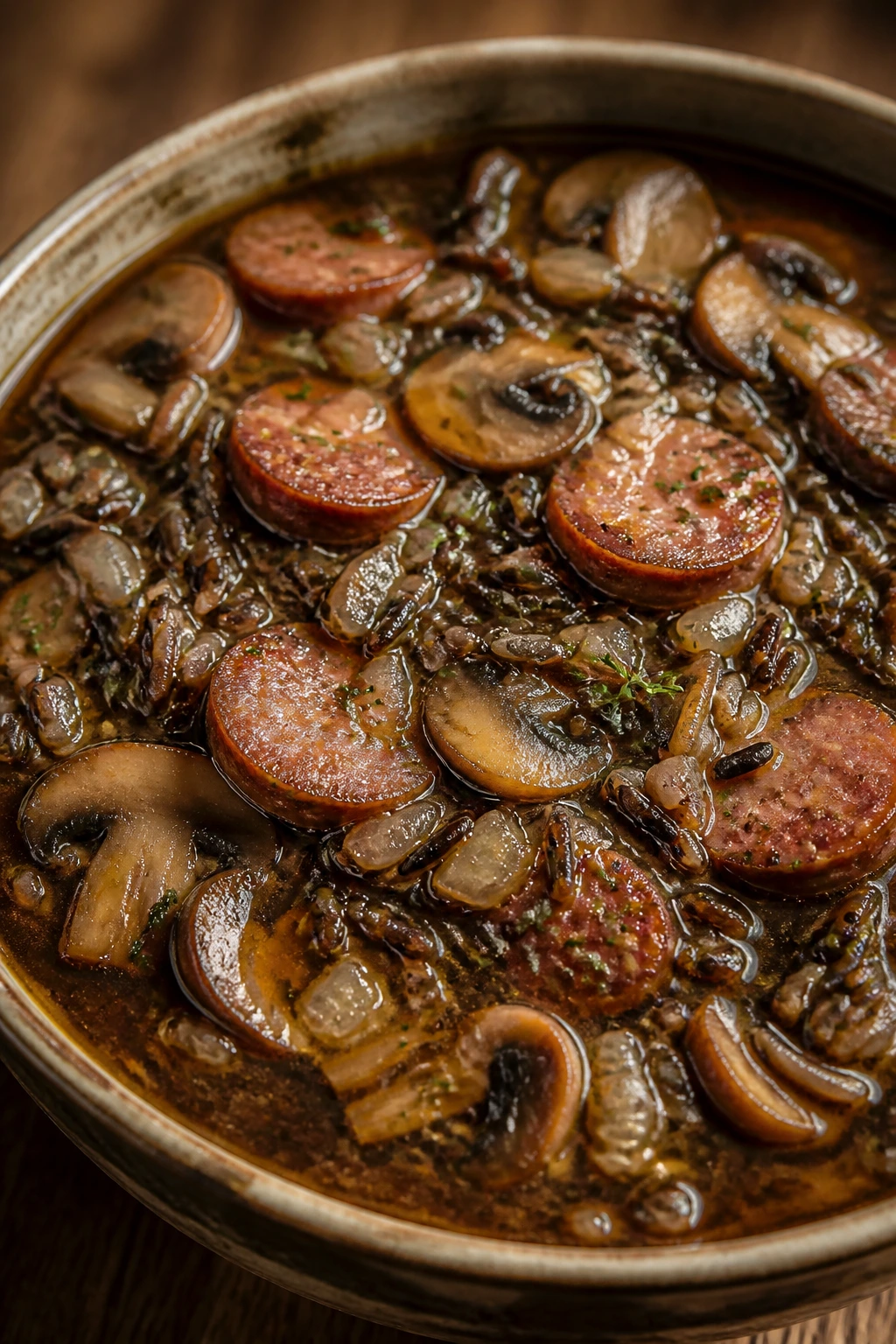
Woodsy, chewy, and a little more serious, this soup tastes like it belongs in a heavy bowl on a cold table. Wild rice holds its shape, mushrooms deepen the broth, and sausage gives the pot enough richness that it does not need cream to feel complete. It freezes well because every main component stays sturdy.
Why It Works:
Wild rice is one of the better grains for freezer soups because it keeps a distinct bite. Mushrooms like cremini or baby bella add a darker background note once they are browned properly. The sausage fat and broth keep the soup from tasting lean after a thaw.
Key Ingredients:
- 1 lb sausage, sliced or crumbled
- 8 oz cremini mushrooms, sliced
- 1 onion, diced
- 2 carrots, diced
- 2 celery stalks, diced
- 3/4 cup wild rice blend, rinsed
- 6 cups chicken broth
- 1 tsp dried thyme
- 1 bay leaf
- 2 tbsp chopped parsley
Quick Steps:
- Brown the sausage in a large pot for 5 minutes, then remove if there is too much rendered fat.
- Add the mushrooms and cook for 6 to 8 minutes until browned and most moisture is gone.
- Stir in onion, carrots, and celery. Cook for 5 minutes, then add wild rice, thyme, bay leaf, and broth.
- Simmer for 45 minutes, or until the rice is open and tender.
- Return the sausage if needed, stir in parsley, and season before freezing.
Equipment for This Recipe:
- Large soup pot
- Wooden spoon
- Measuring cup for rice
- Ladle
How to Serve This Dish:
This soup is happy with good bread and a sharp salad on the side if you want something fresh next to the bowl. A little lemon juice at the table can brighten the mushrooms after reheating. Serve about 2 cups per portion.
Pro Tips for This Recipe:
- Brown the mushrooms well: It adds depth you cannot fake later.
- Use a wild rice blend if you want shorter cooking: Pure wild rice takes longer.
- Do not rush the simmer: The rice needs time to split and soften.
- Add extra broth when reheating if needed: Wild rice continues to drink liquid.
Variations on This Dish:
- Creamy After Reheating: Stir in a splash of oat milk or half-and-half only when serving.
- Kale Addition: Add chopped kale for the last 5 minutes.
- Herb Forward: Add a little rosemary with the thyme if you like a piney note.
Common Mistakes to Avoid with This Dish:
- Using plain white rice instead of wild rice blend: The texture changes completely.
- Not browning the mushrooms: The soup loses a lot of flavor.
- Overcooking until the rice bursts into mush: Stop when it is tender but still has shape.
18. Sausage, Zucchini, and White Bean Soup
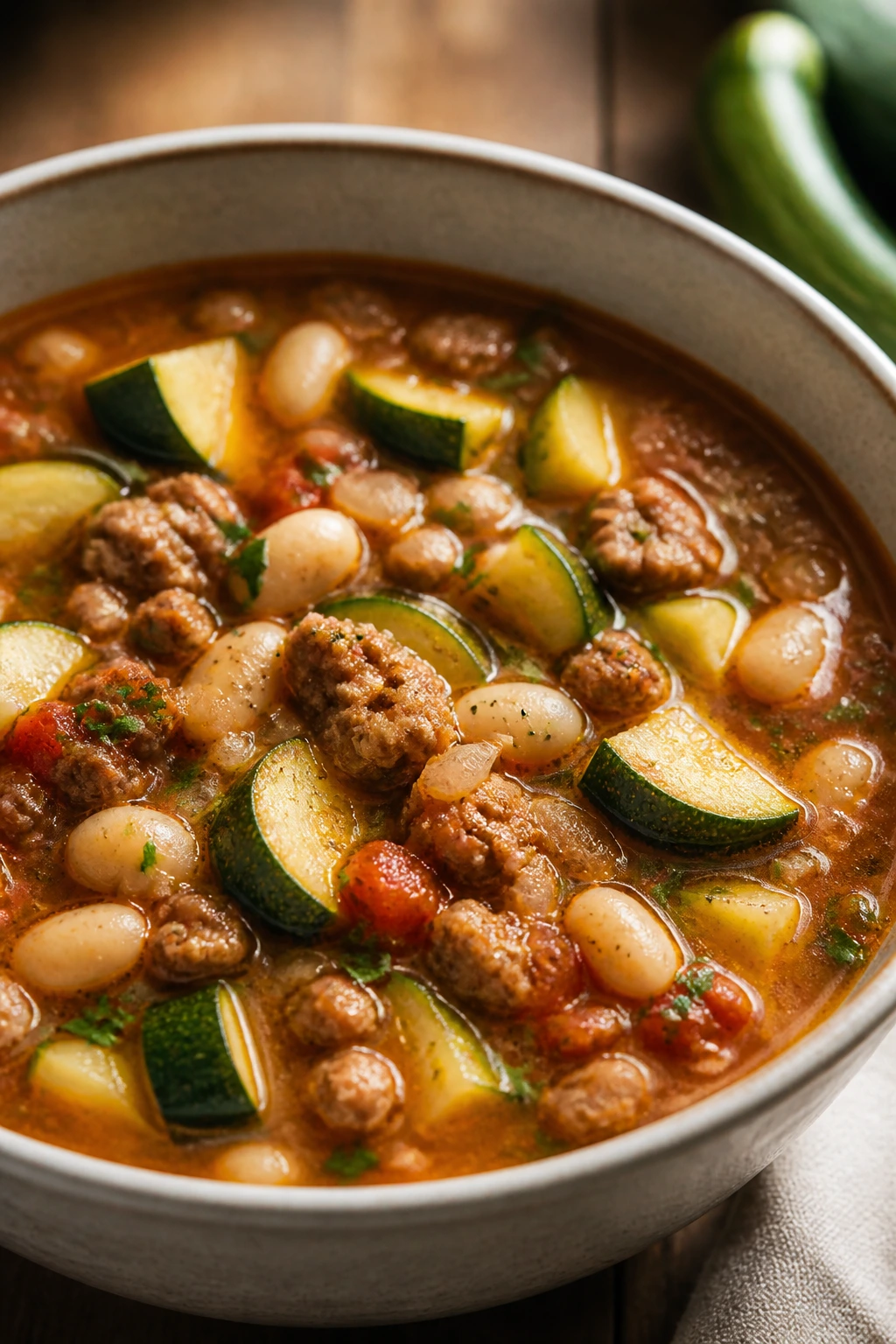
This is a late-summer soup that still freezes without drama. Zucchini softens into the broth, white beans give the pot its body, and sausage keeps the whole thing from tasting watery. It is one of the easiest soups in this group to build from a random fridge haul.
Why It Works:
Zucchini disappears into the broth just enough to add body without becoming stringy. White beans keep the texture creamy, and tomatoes give the soup a stable, freezer-friendly base. This is the kind of pot that tastes better after resting overnight.
Key Ingredients:
- 1 lb sausage, crumbled
- 2 zucchini, diced
- 1 onion, diced
- 2 carrots, diced
- 3 garlic cloves, minced
- 2 cans cannellini beans, drained and rinsed
- 1 can (14.5 oz) diced tomatoes
- 6 cups broth
- 1 tsp dried oregano
- 2 tbsp chopped parsley
Quick Steps:
- Brown the sausage in a soup pot over medium heat for 6 minutes.
- Add the onion and carrots, then cook for 5 minutes. Stir in garlic and oregano for 30 seconds.
- Add tomatoes, beans, and broth. Bring to a boil and simmer for 10 minutes.
- Stir in zucchini and cook for 8 to 10 minutes until just tender.
- Finish with parsley and season before freezing or serving.
Equipment for This Recipe:
- Soup pot
- Wooden spoon
- Ladle
- Sharp knife for the zucchini
How to Serve This Dish:
Serve it with Parmesan, black pepper, and a piece of toasted bread. It is good with a green salad if you want to lean lighter. Two cups per bowl works well because the beans make it filling.
Pro Tips for This Recipe:
- Cut zucchini larger than you think: Small dice vanish after freezing.
- Add zucchini late: It keeps a little texture that way.
- Drain beans well: Extra bean liquid can dull the broth.
- Taste after reheating: Zucchini mutes salt a bit in the freezer.
Variations on This Dish:
- Basil Finish: Add basil at the end for a fresher, sweeter edge.
- Yellow Squash Swap: Use yellow squash instead of zucchini.
- Spicy Version: Hot sausage and red pepper flakes give it more bite.
Common Mistakes to Avoid with This Dish:
- Overcooking zucchini: It should still look like zucchini when you serve it.
- Using tiny bean cuts: The soup can become too soft.
- Freezing with fresh herbs mixed in too early: They lose their spark.
19. Sausage, Cauliflower, and Potato Soup
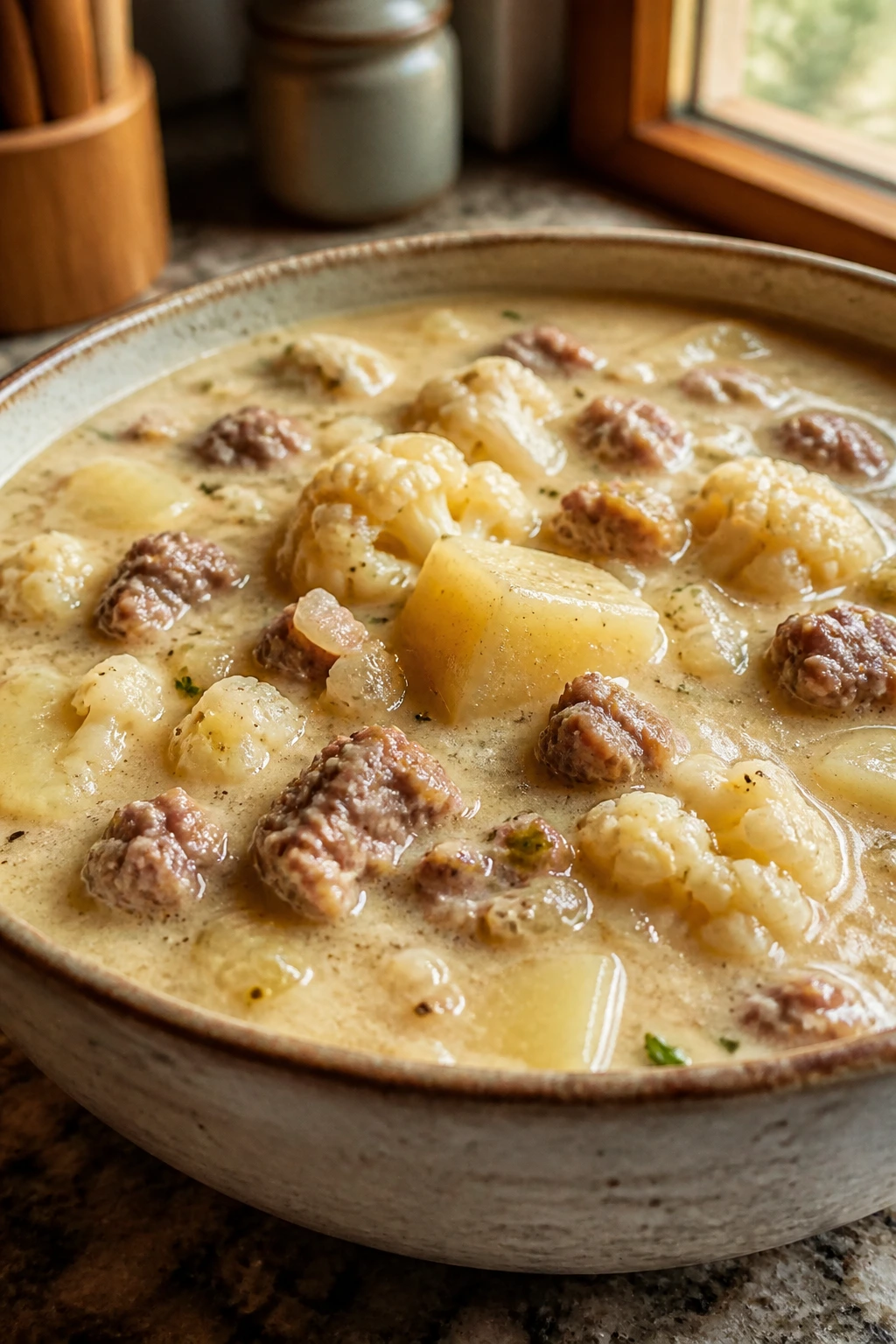
Thick enough to eat with a spoon, light enough to freeze cleanly, this soup gets its creamy feel from vegetables, not a carton of dairy. Cauliflower and potato puree into a soft base, sausage adds fat and salt, and the whole pot comes back from the freezer without splitting.
Why It Works:
Cauliflower and potato make a smooth, stable texture that is friendly to freezing. Since the creaminess comes from vegetables, you do not have to worry about dairy separating in the thaw. A little mustard powder gives the broth a sharper edge and keeps the flavor from feeling sleepy.
Key Ingredients:
- 1 lb sausage, crumbled
- 1 head cauliflower, cut into florets
- 2 medium Yukon Gold potatoes, diced
- 1 onion, chopped
- 3 garlic cloves, minced
- 6 cups chicken broth
- 1 tsp dried thyme
- 1/2 tsp mustard powder
- 2 tbsp chopped parsley
- Black pepper, to taste
Quick Steps:
- Brown the sausage in a soup pot over medium heat for 6 minutes.
- Add the onion and cook for 4 minutes, then stir in garlic, thyme, and mustard powder for 30 seconds.
- Add cauliflower, potatoes, and broth. Bring to a boil.
- Lower the heat and simmer for 20 minutes until both vegetables are very tender.
- Mash half the pot or blend part of it, then return the sausage if needed and finish with parsley.
Equipment for This Recipe:
- Large soup pot
- Potato masher or immersion blender
- Ladle
- Chef’s knife for the cauliflower
How to Serve This Dish:
A little cracked pepper and a few parsley leaves are enough on top. Serve with a warm roll or a slice of sourdough if you want something to drag through the thick broth. Two cups per serving feels right.
Pro Tips for This Recipe:
- Do not puree everything: Some texture keeps the soup from feeling heavy.
- Use waxy potatoes: They blend smoothly without turning gluey.
- Add mustard powder carefully: It should sharpen the flavor, not taste like mustard.
- Freeze in shallow containers: Thick soups benefit from faster cooling.
Variations on This Dish:
- Cheddar Finish: Stir in shredded cheddar after reheating if you want a richer bowl.
- Broccoli-Cauliflower Mix: Replace half the cauliflower with broccoli florets.
- Smoky Version: Add paprika with the thyme for a little extra warmth.
Common Mistakes to Avoid with This Dish:
- Overblending into baby food: Leave some structure.
- Using russet potatoes: They can turn grainy.
- Underseasoning after blending: Pureed vegetables can mute salt.
20. Sausage, Roasted Red Pepper, and Bean Soup
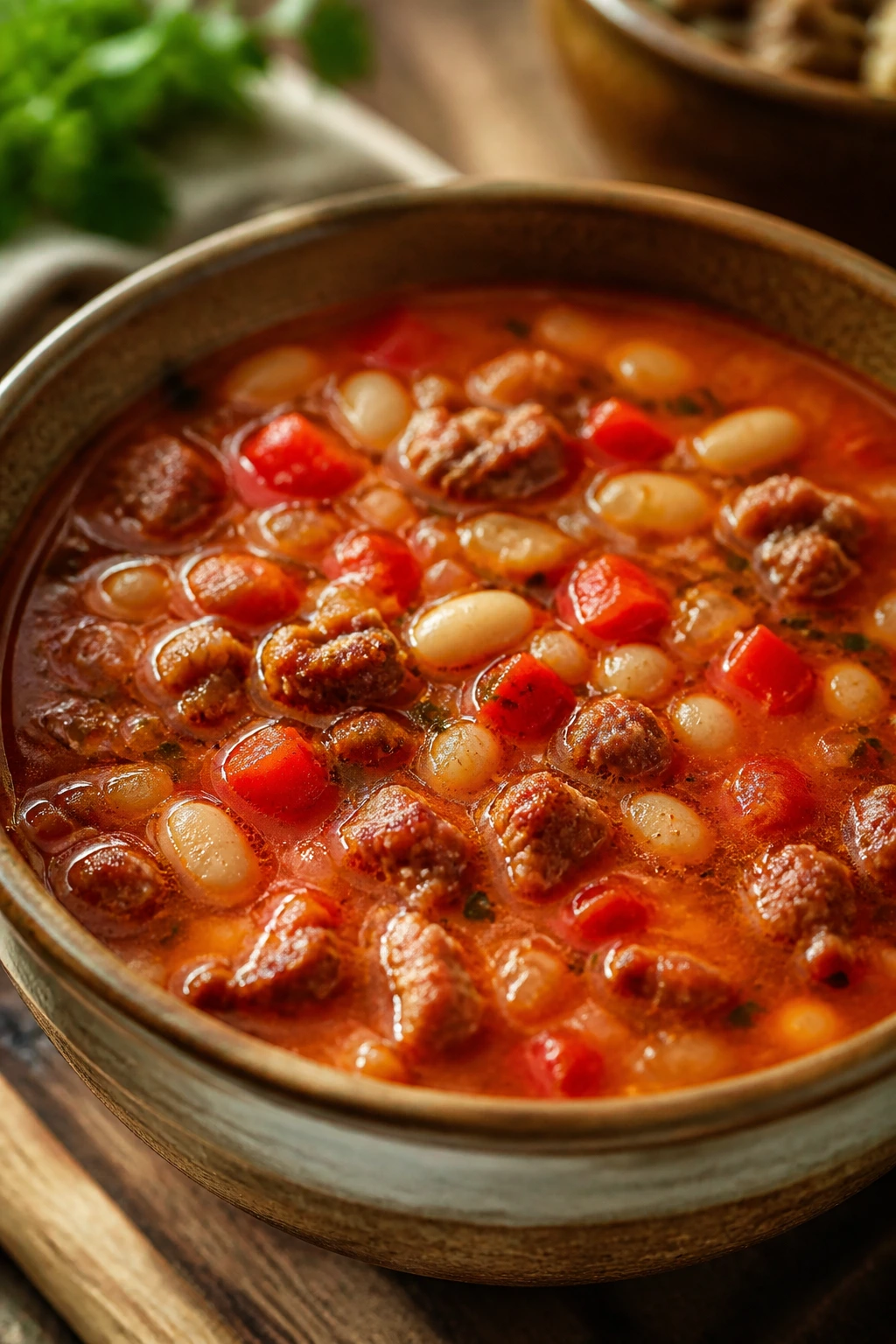
Sweet peppers and sausage are a low-effort match that tastes like more work than it is. Roasted red peppers bring concentrated flavor, beans make the broth thicker, and sausage keeps the bowl from reading as a simple vegetable soup. It freezes well because the base stays stable and bold.
Why It Works:
Roasted peppers survive freezing better than raw peppers because their flavor is already concentrated. Beans add body and make the soup more filling, while tomatoes and paprika carry the red-pepper sweetness through the broth. A little blending is optional, but it helps if you want a smoother bowl.
Key Ingredients:
- 1 lb sausage, crumbled
- 1 onion, diced
- 3 garlic cloves, minced
- 1 jar roasted red peppers, drained and chopped
- 2 cans cannellini beans, drained and rinsed
- 1 can (14.5 oz) diced tomatoes
- 6 cups broth
- 1 tsp paprika
- 1 tsp dried basil
- 1/4 tsp red pepper flakes, optional
Quick Steps:
- Brown the sausage in a soup pot for 6 minutes.
- Add the onion and cook for 4 minutes, then stir in garlic, paprika, basil, and red pepper flakes for 30 seconds.
- Add roasted peppers, beans, tomatoes, and broth.
- Simmer for 20 minutes so the beans absorb the flavor.
- Blend a portion if you want a thicker texture, then taste and season.
Equipment for This Recipe:
- Soup pot
- Wooden spoon
- Immersion blender, optional
- Ladle
How to Serve This Dish:
This soup likes crusty bread and a little grated Parmesan, though neither is necessary. If you keep it slightly chunky, it makes a very good lunch in a deep mug. Plan on 2 cups per serving.
Pro Tips for This Recipe:
- Drain roasted peppers well: Jar liquid can make the soup flat.
- Blend only part of the pot: That gives body without losing texture.
- Use cannellini beans if possible: They make the broth softer and smoother.
- Add basil at the end if you want a fresher finish: Dried basil can go in early, fresh basil should wait.
Variations on This Dish:
- Chickpea Version: Swap cannellini beans for chickpeas if you want a firmer bite.
- Smokier Pot: Add a pinch of smoked paprika alongside the sweet paprika.
- Creamy After Reheating: Stir in a spoonful of yogurt or cream only when serving.
Common Mistakes to Avoid with This Dish:
- Leaving pepper jar liquid in the pot: It can water down the flavor.
- Over-blending everything: You lose the pleasant bean texture.
- Forgetting the salt after simmering: Beans need a final seasoning check.
21. Sausage, Corn, and Green Chile Soup
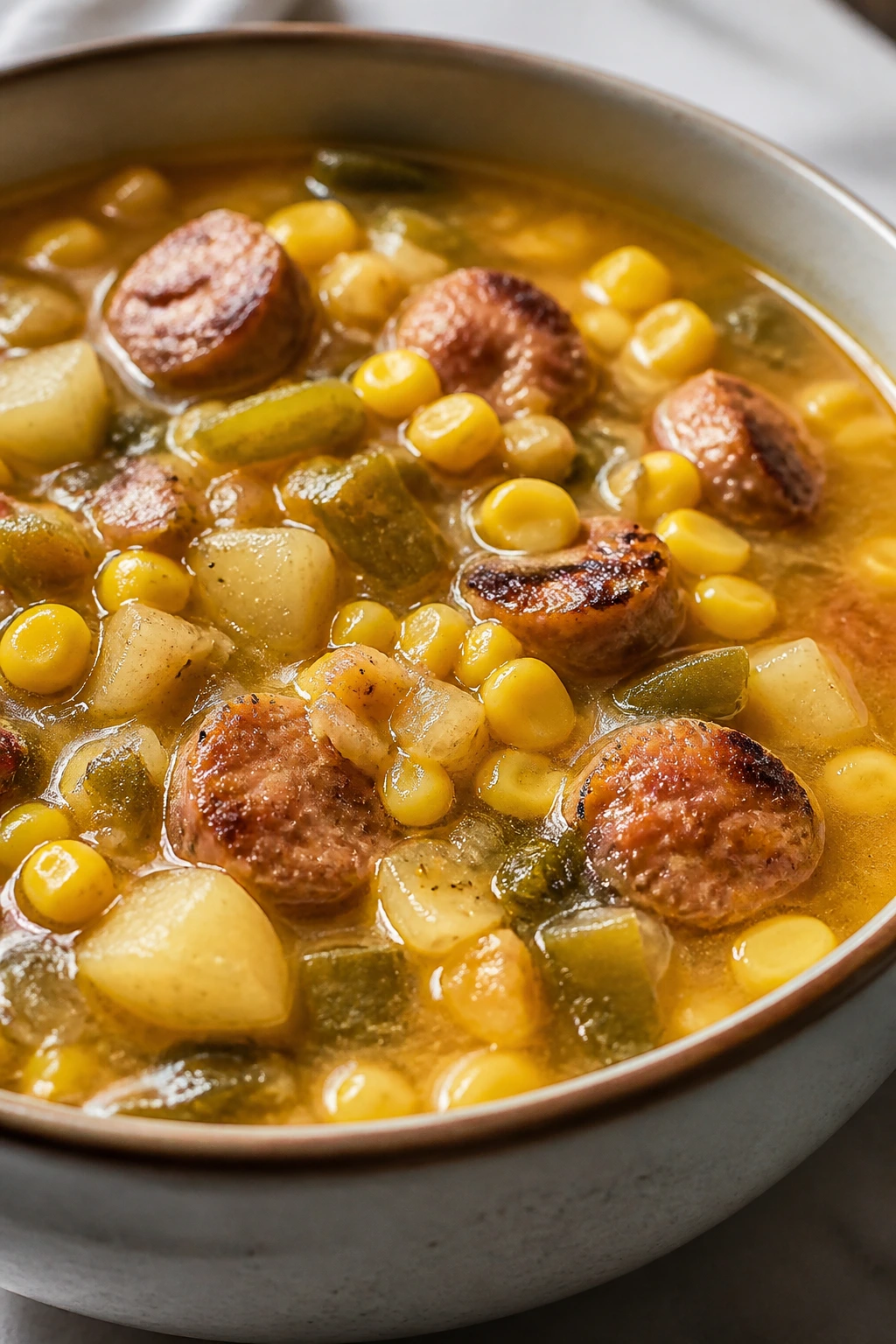
Bright, a little smoky, and built for freezer containers, this soup knows how to keep dinner simple. Corn stays sweet, green chiles add bite without making the broth heavy, and potatoes make it feel almost chowder-like without the usual dairy baggage. It reheats cleanly and keeps its shape.
Why It Works:
Corn and green chiles both handle freezing well because they are already sturdy ingredients. Potatoes add thickness without relying on cream, which makes the soup easier to store. The sausage brings enough richness that the broth tastes round even after thawing.
Key Ingredients:
- 1 lb sausage, crumbled
- 1 onion, diced
- 3 garlic cloves, minced
- 2 cups corn kernels, fresh or frozen
- 1 can (4 oz) diced green chiles
- 2 medium Yukon Gold potatoes, diced
- 6 cups chicken broth
- 1 tsp ground cumin
- 1 tsp dried oregano
- 1 lime, cut into wedges
- Chopped cilantro, for serving
Quick Steps:
- Brown the sausage in a soup pot over medium heat for 6 minutes.
- Add onion and cook for 4 minutes, then stir in garlic, cumin, and oregano for 30 seconds.
- Add corn, green chiles, potatoes, and broth. Bring to a boil.
- Simmer for 18 to 20 minutes until the potatoes are tender and the broth has picked up the chile flavor.
- Finish with lime juice and cilantro after reheating or just before serving.
Equipment for This Recipe:
- Soup pot
- Wooden spoon
- Ladle
- Citrus juicer, optional
How to Serve This Dish:
Warm tortillas on the side if you want the meal to feel fuller. A squeeze of lime at the table is worth doing every time. This is a generous 2-cup bowl, especially if you add toppings.
Pro Tips for This Recipe:
- Use fire-roasted corn if you have it: It adds a deeper sweet-smoky note.
- Add lime after reheating: It tastes fresher that way.
- Cut potatoes evenly: Small pieces keep the texture balanced.
- Keep cilantro for the bowl, not the freezer: It fades fast once frozen.
Variations on This Dish:
- Black Bean Addition: Stir in a can of black beans for more body.
- Jalapeño Heat: Add one chopped jalapeño with the onion.
- Chicken Sausage Swap: Mild chicken sausage works if you want a lighter soup.
Common Mistakes to Avoid with This Dish:
- Adding lime too early: Acid loses its edge in the freezer.
- Using tiny potato dice: They can disappear.
- Over-salting before tasting after the corn softens: Corn changes the balance.
22. Sausage, Fennel, and Tomato Soup
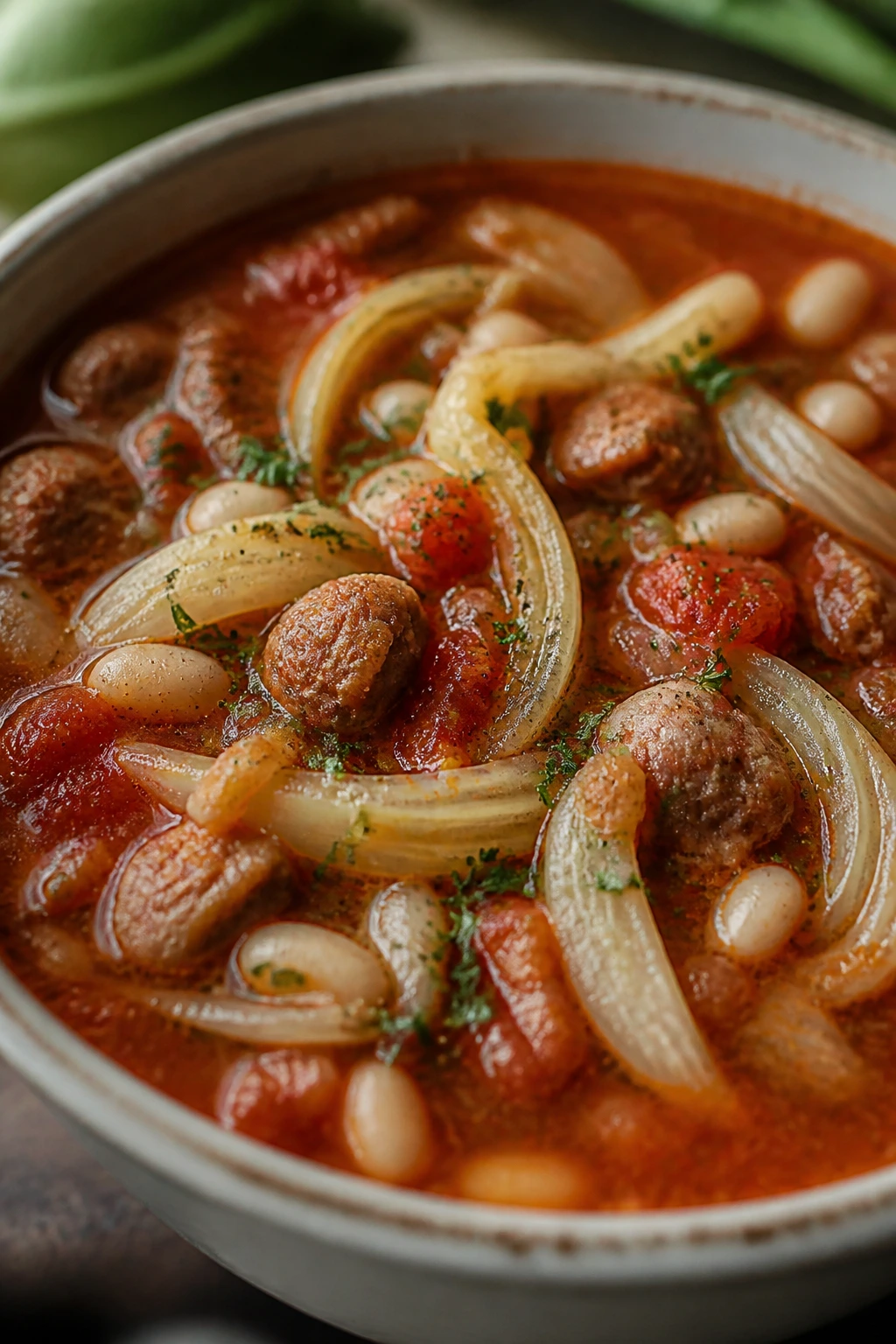
The fennel softens into something sweet and almost floral, which is exactly why this pot feels a little different. Tomato keeps the broth grounded, sausage brings the savory note, and white beans fill out the middle so the soup freezes and reheats without losing its shape.
Why It Works:
Fennel and tomato are a natural pair, but sausage keeps them from drifting too delicate. White beans add body and help the broth cling to the spoon. A few fennel seeds reinforce the bulb’s flavor without making the soup taste like licorice.
Key Ingredients:
- 1 lb sausage, crumbled
- 1 fennel bulb, thinly sliced
- 1 onion, diced
- 3 garlic cloves, minced
- 1 can (28 oz) crushed tomatoes
- 2 cans cannellini beans, drained and rinsed
- 6 cups broth
- 1 tsp fennel seeds
- 1 tsp dried oregano
- 2 tbsp chopped fennel fronds or parsley
Quick Steps:
- Brown the sausage in a soup pot over medium heat for 6 minutes.
- Add fennel and onion, then cook for 6 minutes until the fennel softens and starts to turn sweet at the edges.
- Stir in garlic, fennel seeds, and oregano for 30 seconds.
- Add tomatoes, beans, and broth. Bring to a boil, then simmer for 20 minutes.
- Taste, adjust seasoning, and finish with fennel fronds or parsley.
Equipment for This Recipe:
- Large soup pot
- Sharp knife for the fennel bulb
- Wooden spoon
- Ladle
How to Serve This Dish:
Rosemary bread or garlic toast fits the fennel nicely. If the broth tastes a little sweet, a splash of red wine vinegar at serving can sharpen it. Two cups per person works well.
Pro Tips for This Recipe:
- Slice fennel thin: It softens faster and blends better into the soup.
- Save the fronds: They make a better garnish than extra dried herbs.
- Do not overdo the fennel seeds: The bulb already brings plenty of flavor.
- Freeze in portions with broth to spare: Beans and fennel both drink up liquid after thawing.
Variations on This Dish:
- Leek Swap: Replace half the fennel with leeks for a softer onion flavor.
- Potato Addition: Add diced potatoes if you want a thicker, stew-like bowl.
- Spicy Version: Use hot sausage and red pepper flakes for more edge.
Common Mistakes to Avoid with This Dish:
- Using too much fennel seed: The flavor can turn sharp.
- Skipping the browning step: Sausage needs color to taste full.
- Forgetting the vinegar option: Tomatoes can use a little lift after freezing.
Why These Pots Freeze So Cleanly
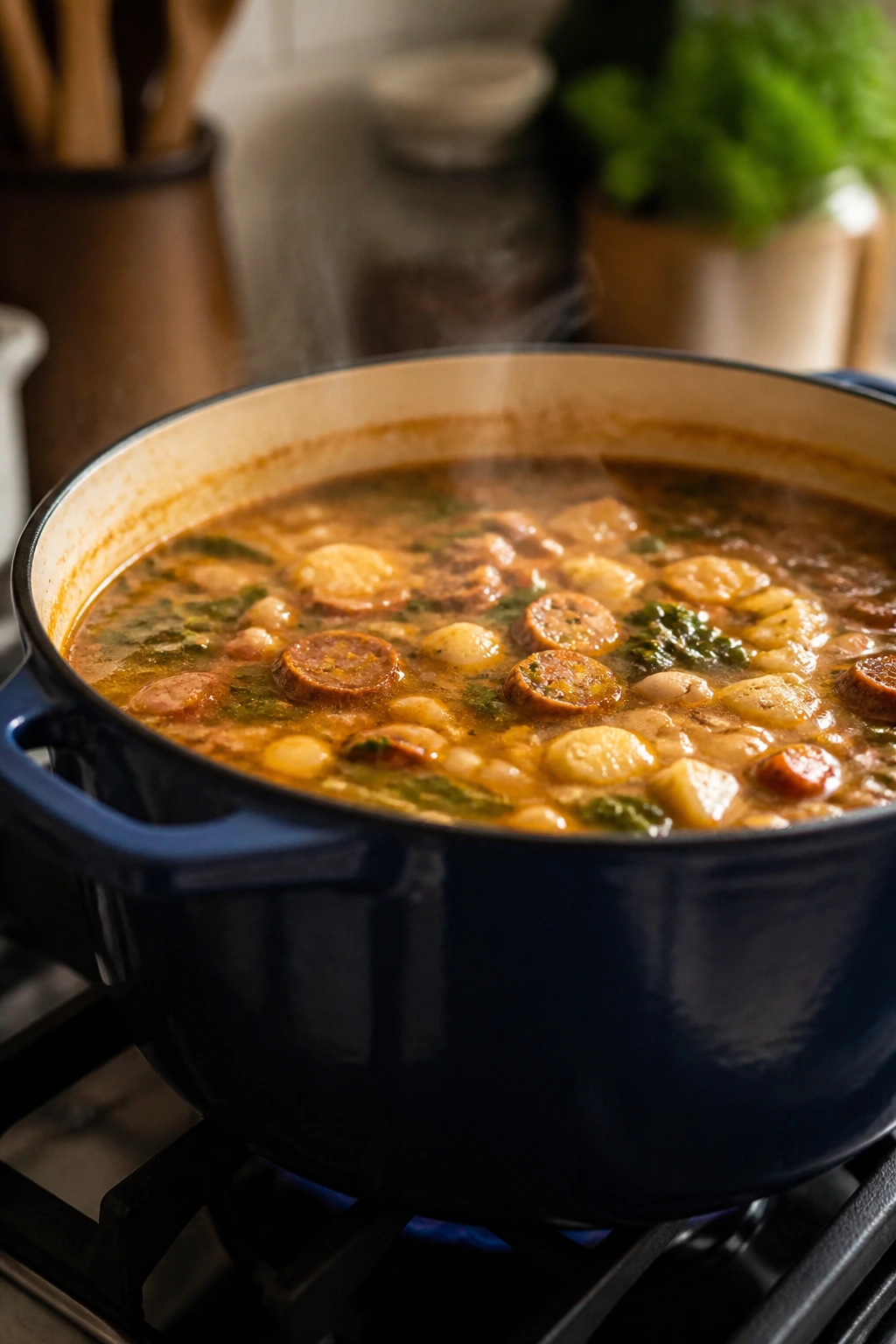
The trick with freezer soup is not mystery, it is structure. Brothy soups with sausage, beans, lentils, barley, rice, potatoes, or squash hold together better than cream-heavy pots because those ingredients already bring body. They do not need emulsions or delicate dairy to feel complete, which is why they thaw back into dinner instead of into a sad, split puddle.
Sausage helps more than people give it credit for. Browned sausage fat clings to onions, garlic, and spices, and that little coating carries flavor through a freeze-thaw cycle. The other useful thing sausage does is hide the fact that you are cooking with pantry ingredients. Beans, tomatoes, greens, and grains taste intentional when a good sausage base is in the pot.
I also like these soups because they reward restraint. Add dairy later. Add pasta carefully, or not at all. Put bright herbs and lemon on at serving time, where they belong. That small bit of discipline is what keeps freezer soup from tasting tired.
Essential Equipment for These Recipes
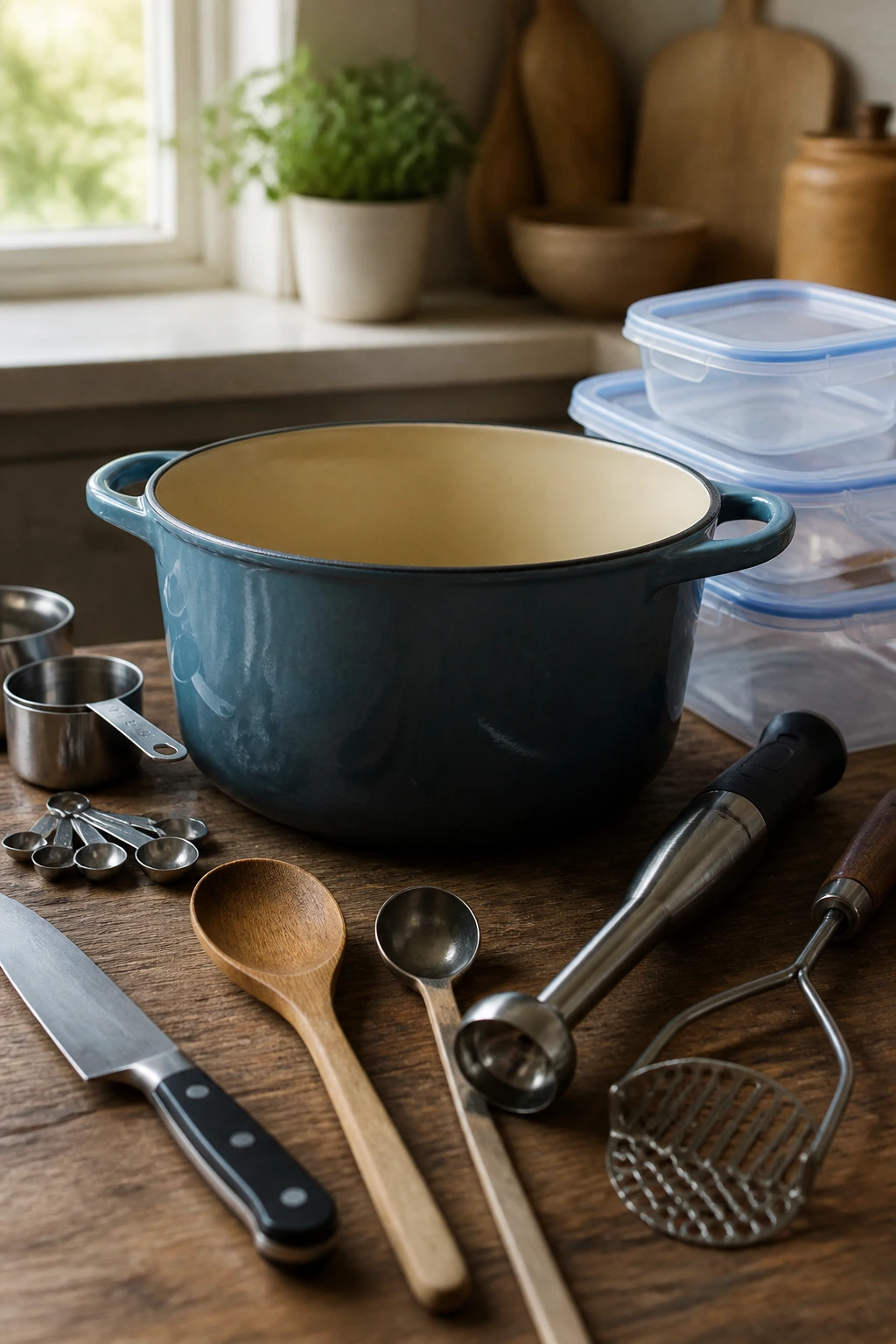
- 6-quart Dutch oven or stockpot: Big enough for a full batch without slopping over when the broth boils.
- Sharp chef’s knife: A clean cut on onions, celery, cabbage, and fennel matters more than people think.
- Wooden spoon: Better than a whisk for browning sausage and scraping the bottom of the pot.
- Ladle: Helpful for portioning into containers without making a mess.
- Immersion blender: Optional, but handy for squash, cauliflower, or bean-thickened soups.
- Potato masher: A low-tech way to thicken chowders and bean soups without pureeing everything.
- Measuring cups and spoons: Especially useful for grains, lentils, and seasonings.
- Freezer-safe containers or heavy freezer bags: Flat bags save space and thaw faster.
- Freezer labels and marker: Write the soup name and date; guessing later is a bad habit.
- Fine-mesh strainer: Nice to have for beans, lentils, and rice.
Smart Shopping and Ingredient Tips
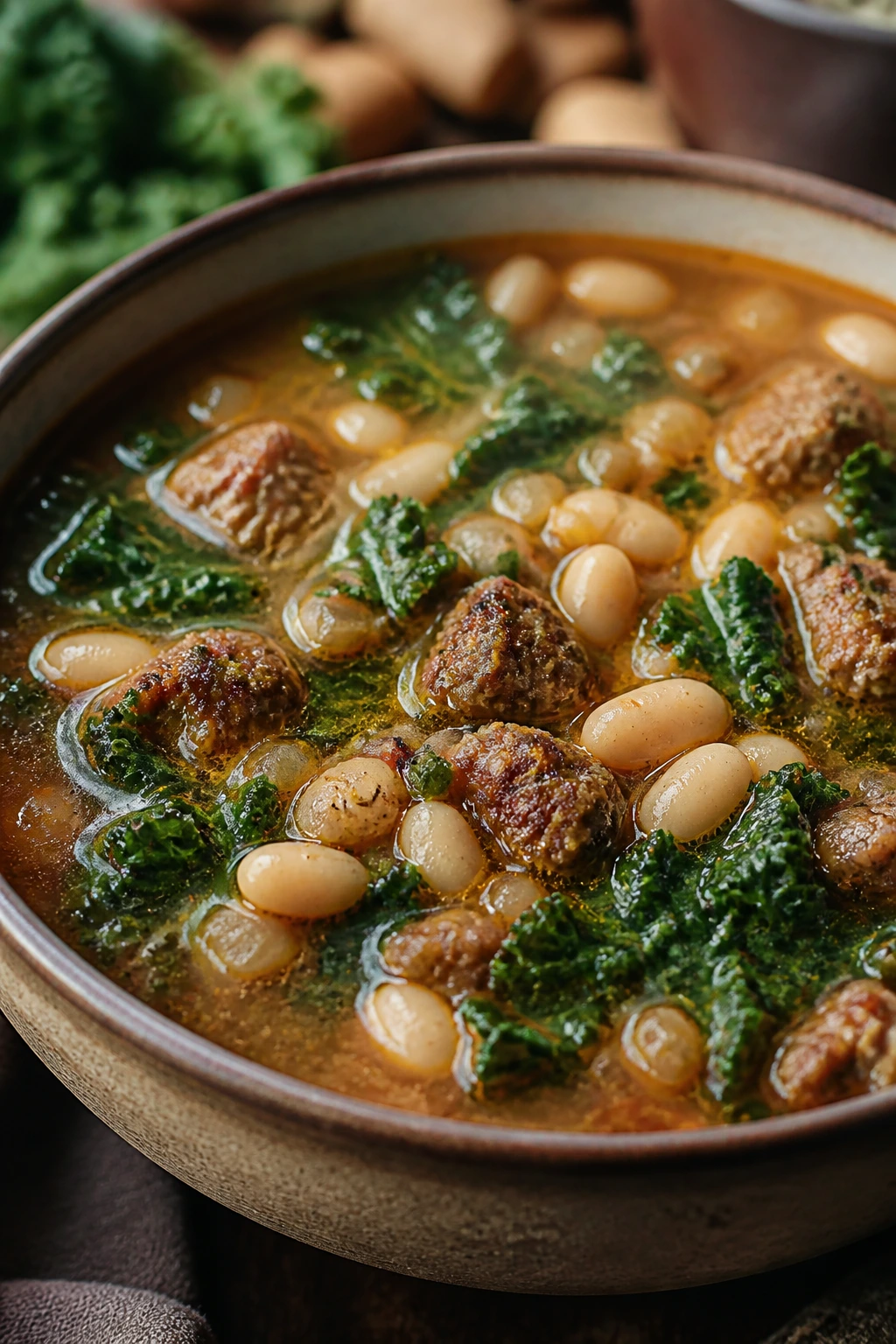
Buy sausage with intention, not at random. Italian sausage, kielbasa, and andouille each bring a different personality, and the one you pick will steer the whole pot. If you want the soup to feel rich without needing extra fat, choose sausage with visible seasoning and enough fat to brown properly, then drain off only what is excessive.
Low-sodium broth is worth the tiny bit of extra seasoning work. Sausage, canned beans, tomatoes, and sauerkraut all bring salt of their own, and it is easier to add more than to rescue an oversalted freezer batch. The same goes for canned beans: rinse them unless the recipe needs their liquid for texture.
For vegetables, think about what survives the freezer with some dignity. Kale, escarole, cabbage, fennel, cauliflower, carrots, and squash usually behave better than delicate lettuces or watery cucumbers. Potatoes are fine, but choose waxy types like Yukon Gold when you want pieces that stay intact instead of disintegrating into the broth.
Grains and pasta need a little more caution. Barley, farro, rice, and split peas freeze much better than most noodles. If you want pasta in the soup, keep it slightly undercooked or cook it separately and add it to the bowl after reheating.
How to Serve These Bowls Without Making Dinner Complicated
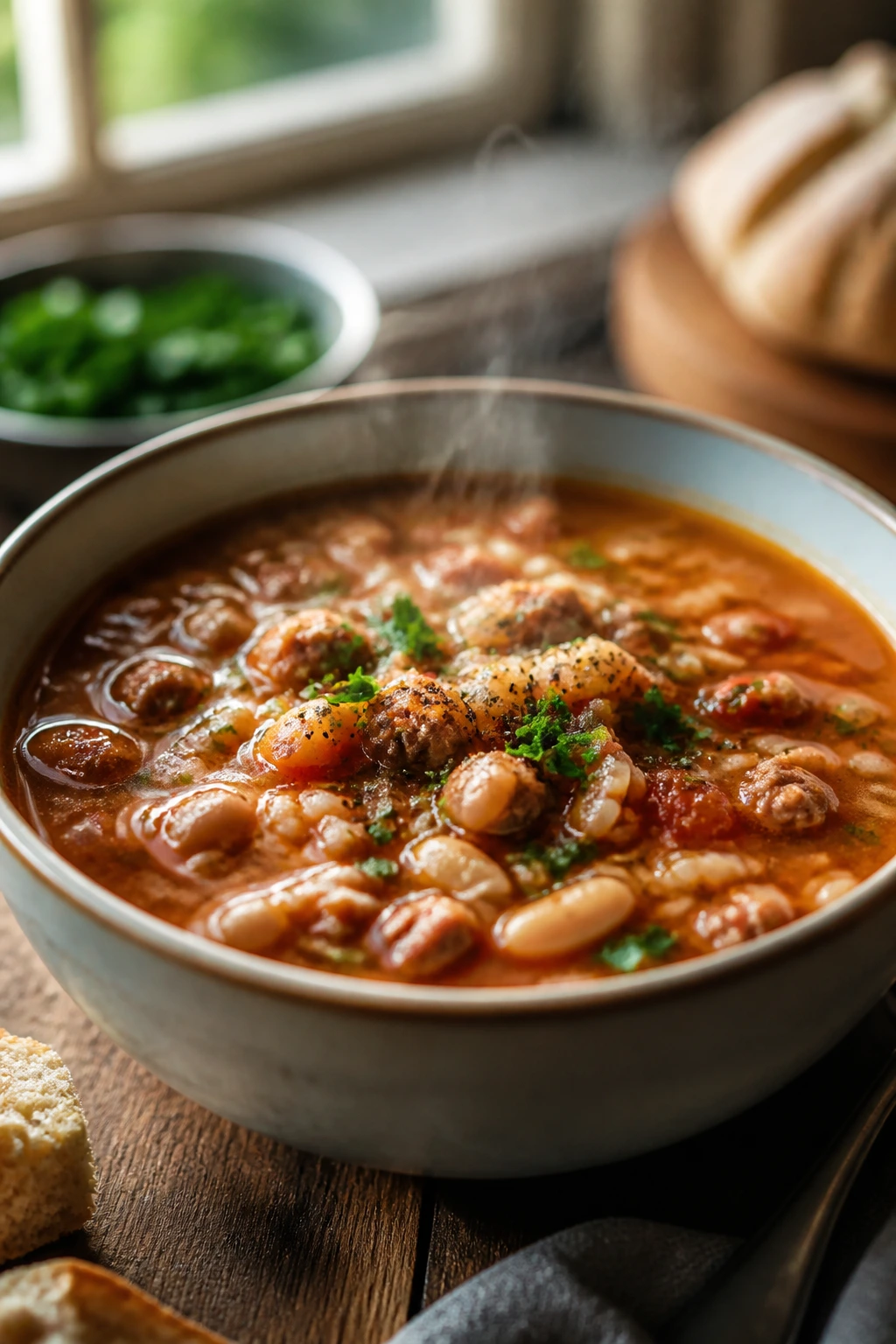
Presentation:
Deep bowls work better than shallow ones because these soups are built around broth, beans, or grains that need room to settle. Finish with something fresh on top—parsley, dill, chives, black pepper, or a little grated cheese—so the bowl looks and tastes alive instead of reheated.
Accompaniments:
Crusty bread, rye toast, cornbread, biscuits, or warm tortillas fit the different flavors here without much effort. For tomato-heavy or bean-heavy soups, a simple green salad with lemon vinaigrette is enough. For chowders and potato soups, lean into bread with real structure so you can scoop up the thick bits.
Portions:
Most of these recipes work as 1 1/2- to 2-cup servings for lunch and 2 to 2 1/2 cups for dinner. If you are feeding bigger appetites, pair the soup with bread and keep the serving size a little smaller; the sausage and beans do a lot of the heavy lifting already.
Beverage Pairing:
A cold pilsner, dry cider, or a simple sparkling water with lemon works across most of the collection. For tomato and fennel soups, a glass of red wine with low tannin or even a tart iced tea keeps the broth from feeling heavy. Nothing needs to be fussy.
Additional Tips and Flavor Boosters
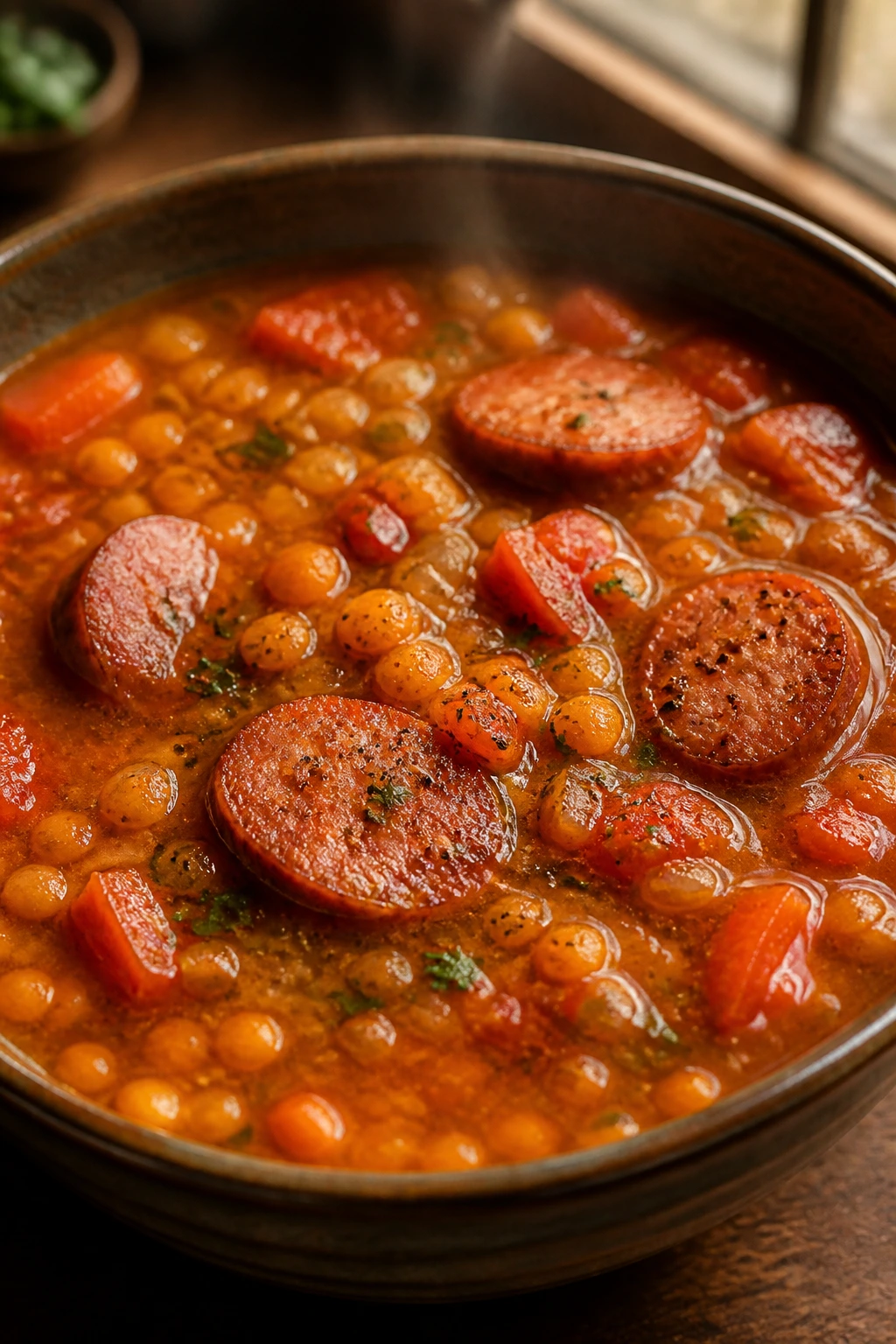
Flavor Enhancement:
A teaspoon of vinegar or a squeeze of lemon at the end can wake up a pot that tastes fine but flat. I reach for red wine vinegar with cabbage, lemon with greens, and lime with chile soups.
Customization:
If the soup feels too lean, add another can of beans or a diced potato. If it feels too thick after freezing, loosen it with broth or water and let it simmer for 3 to 5 minutes before serving.
Serving Suggestions:
Top bean soups with Parmesan, lentil soups with olive oil, and chile soups with chopped cilantro or scallions. A little crunch helps too—croutons, toasted seeds, or broken tortilla chips change the bowl more than you would expect.
Make-It-Yours:
For a lighter version, use turkey or chicken sausage and lean on herbs for depth. For dairy-free bowls, skip cream entirely and build texture from beans, potatoes, cauliflower, or squash. For gluten-free versions, stick with rice, potatoes, lentils, and beans instead of barley or farro.
Make-Ahead, Storage, and Reheating Guidance
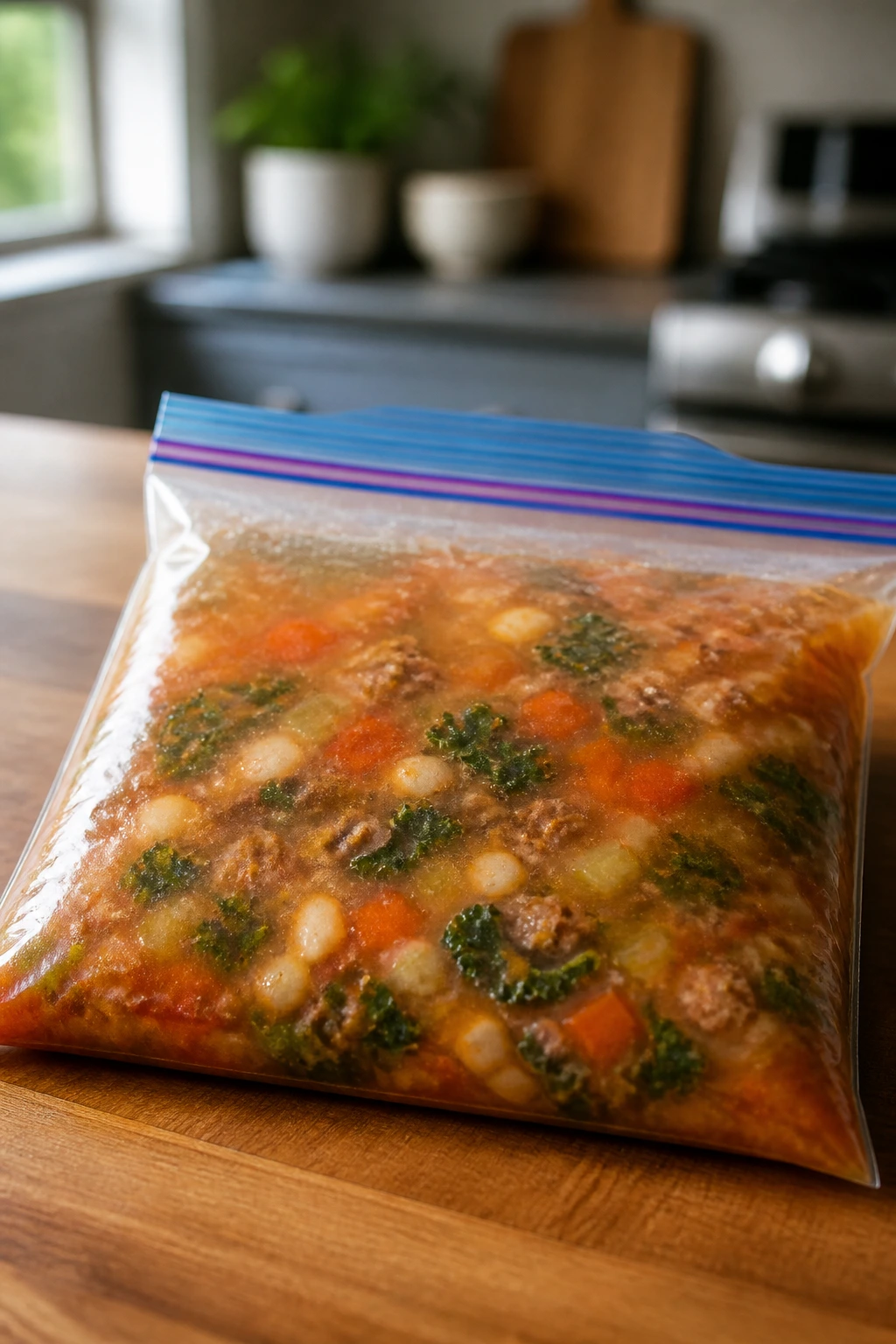
Most sausage soups keep well in the refrigerator for 3 to 4 days if they are cooled and packed promptly. In the freezer, 2 to 3 months is the sweet spot for best texture, though many of these will still be fine longer if sealed well. Shallow containers or flat freezer bags thaw faster and reduce the chance of icy spots.
Cool the soup before freezing, but do not leave it out forever. Once it stops steaming heavily, portion it into containers, leave a little headspace for expansion, and label the top. That small step saves a lot of guesswork later. If a soup has rice, barley, potatoes, or beans, freezing in 1 1/2- to 2-cup portions makes reheating much easier.
Reheat broth-based soups on the stovetop over medium-low heat, stirring once or twice as they loosen. If the pot is thick with beans or grains, add a splash of broth or water at the start and another at the end if needed. Microwave reheating works too, but stop and stir halfway through so the center does not stay cold while the edges overcook.
Soups with spinach, kale, escarole, lemon, lime, or fresh herbs are better if those finishing ingredients are added after reheating. Creamy-looking soups made from potatoes, squash, or cauliflower usually reheat fine as they are, though a little extra broth helps if they thicken too much in the freezer. If you made a chowder with dairy, add the dairy after reheating rather than before freezing for the cleanest texture.
Variations and Adaptations to Try
The Broth-First Pantry Pot:
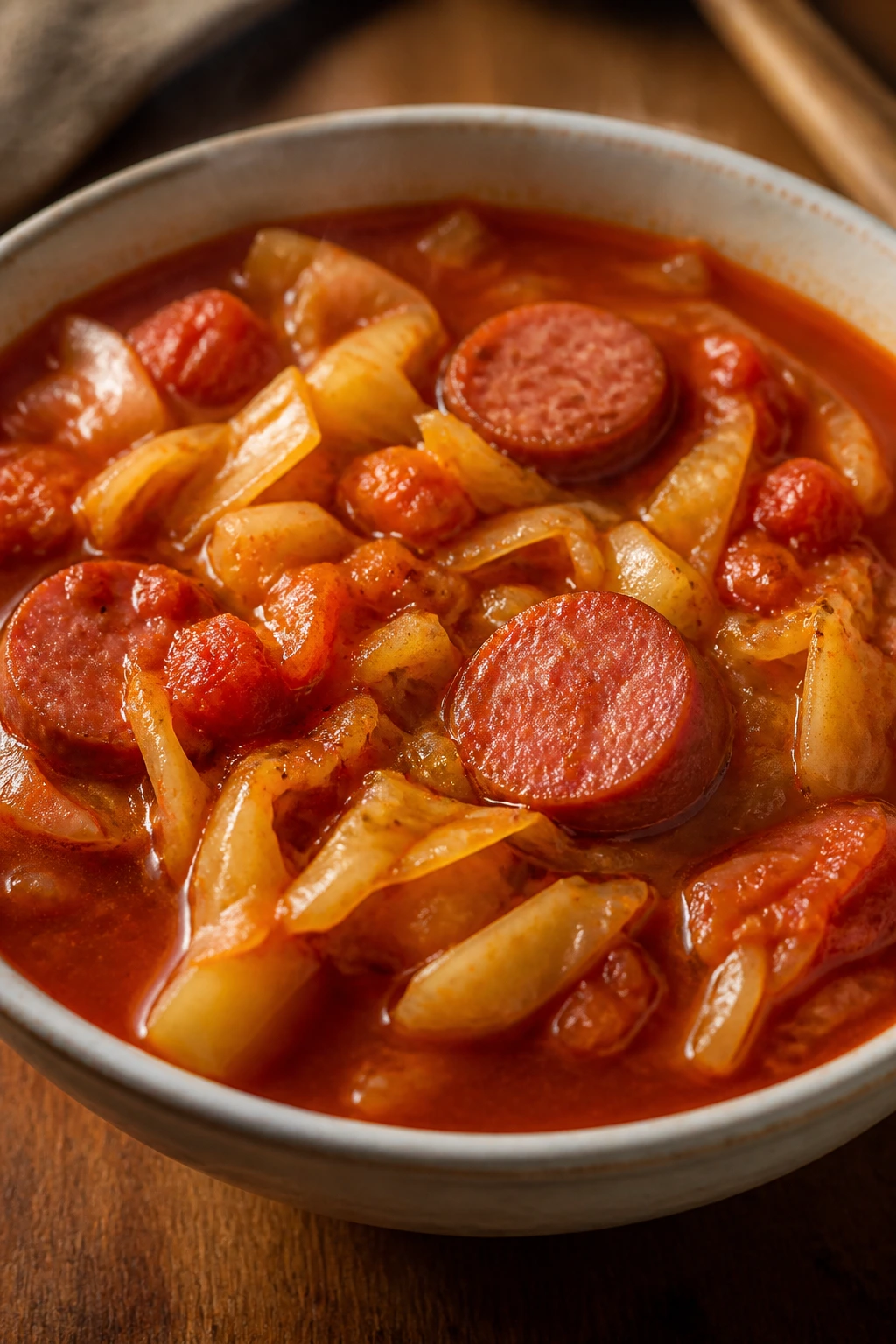
Build the soup around sausage, onion, broth, beans, and whatever sturdy vegetable is already in the kitchen. Cabbage, carrots, potatoes, and tomatoes all fit this lane without much trouble. It is the easiest way to use what you have without making the soup taste thrown together.
Creamy Without Cream:
Use potatoes, cauliflower, squash, or blended beans to make the soup feel rich. This keeps the freezer behavior predictable and avoids the split texture that dairy can cause. I reach for this approach any time I want a chowder-like bowl that still freezes cleanly.
Dairy-Free Finish:
Skip sour cream, half-and-half, and heavy cream, then finish with olive oil, lemon, or a spoonful of pesto instead. The soups in this collection already have enough fat from the sausage to feel satisfying. You do not lose much by leaving dairy out.
Spice-Forward Pots:
Use hot Italian sausage, andouille, chorizo, jalapeño, chipotle, or green chiles to push the flavor toward the front. Keep the rest of the recipe simple so the heat does not fight with a crowded spice cabinet. A little smoke goes a long way here.
Gluten-Free Grain Swaps:
Choose rice, potatoes, beans, lentils, or certified gluten-free grains if you need a gluten-free pot. Farro and barley are off the table in that case, but most of the collection does not depend on them. The flavor holds just fine without wheat-heavy grains.
Kid-Friendly Versions:
Use mild sausage, reduce the chile, and chop the vegetables smaller so they disappear more easily into the broth. A slightly sweeter tomato broth or a chowder with corn often gets a better reception than a bitter green soup. The trick is not hiding the vegetables completely—just making the texture less stubborn.
Common Mistakes to Avoid

The first mistake is freezing soup that is still too hot. That traps steam, creates ice crystals, and gives you a watery thaw later. Let the pot cool until it is no longer steaming hard, then portion it.
The second mistake is loading the freezer with dairy, pasta, or fresh greens that should have waited. Cream splits, noodles turn limp, and delicate greens get dull. If you want those ingredients, add them after reheating or keep them separate.
A third problem is underseasoning before freezing. Cold mutes salt and acid, which means a pot that tastes fine on the stove can taste flat after thawing. Season a little more boldly than you would for same-day serving, then correct again once the soup is hot.
The fourth issue is overfilling containers. Soup expands, and a packed-full tub can warp or leak. Leave some headspace, especially with bean-heavy or grain-heavy soups that thicken as they freeze.
The fifth mistake is using the wrong texture for the ingredient. Tiny cabbage shreds disappear. Overcooked potatoes crumble. Mushrooms that never browned taste watery. Good freezer soup rewards a little attention to the first 15 minutes of cooking.
Frequently Asked Questions
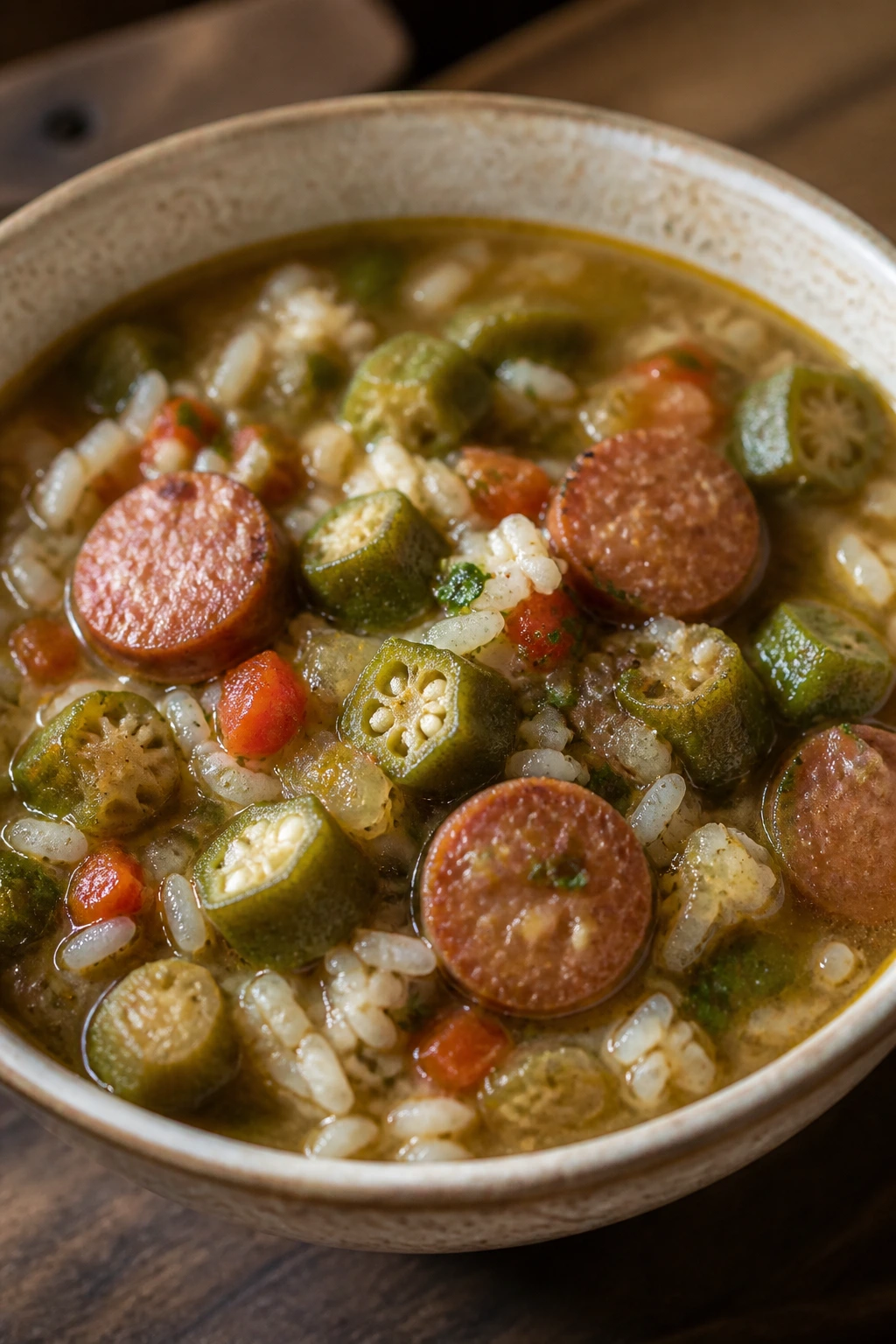
Can I freeze sausage soup with potatoes in it?
Yes, especially if you use waxy potatoes like Yukon Gold or red potatoes. They hold together better than russets, though they will still soften a bit after thawing.
Which sausage freezes best in soup?
Italian sausage, kielbasa, and andouille all freeze well because they keep enough flavor and fat after reheating. Fresh chorizo also works, but it should be fully cooked and well browned first.
Do I need to brown the sausage before simmering?
Absolutely. Browning gives you fond in the pot, and that browned layer is where a lot of the flavor comes from. A pale sausage soup tastes much flatter after freezing.
Can I freeze soup with rice or barley in it?
Yes, and both hold up better than most noodles. Rice can soften a little more than you want, so undercook it slightly if you know the soup is going into the freezer.
What if my soup gets too thick after freezing?
Add broth or water while reheating, a little at a time, until it loosens. Beans, grains, and potatoes all keep absorbing liquid as they sit, so this is normal rather than a mistake.
Can I add cream after freezing if the recipe feels too lean?
Yes, and that is usually the smarter move. Reheat the soup first, then stir in cream, half-and-half, or coconut milk at the end so the texture stays smooth.
How long should I cool soup before freezing it?
Long enough that it is no longer steaming hard and the pot feels warm rather than scorching. That usually means about 20 to 30 minutes on the counter, then into containers.
Can I use frozen vegetables instead of fresh?
Yes, especially for corn, spinach, and some chopped greens. Frozen vegetables are often a good fit for freezer soups because they are already handled gently and go straight into the pot without much fuss.
The Pot That Pays You Back
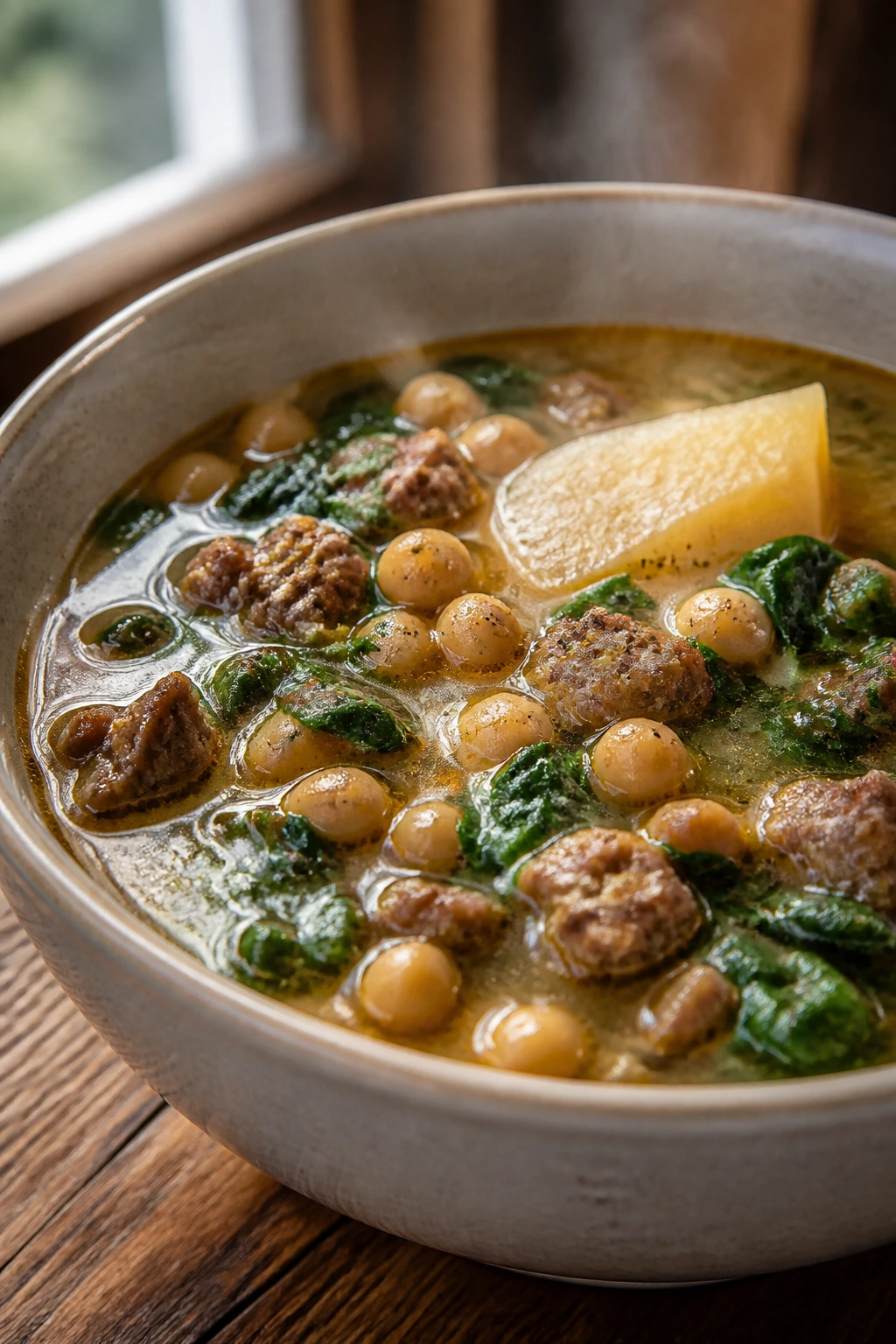
A good freezer soup does more than feed you once. It buys back a night when you do not want to cook, or a lunch that tastes like you meant to do something useful with your weekend. Sausage makes these soups practical, but the real trick is the structure around it: beans, potatoes, grains, tomatoes, and greens that can handle a little time.
Keep a few of these in rotation and the freezer stops being a dumping ground for random leftovers. It starts acting like a backup plan with taste. And that is a small kind of luxury that never gets old.