



The best corn chowder doesn’t shout. It comes in quietly, smells like butter and onion and sweet corn, and then sits on the stove doing the kind of work a winter dinner needs: warming the room, feeding everybody, and making a plain gray evening feel less punishing. This creamy corn chowder has that old kitchen feel to it — the one where a soup starts with bacon fat, thickens with flour and potatoes, and finishes with milk and cream that take the edge off the cold without turning the whole pot heavy.
What makes a corn chowder worth keeping around is balance. Too much dairy and it turns sleepy. Too little and it tastes like thin vegetable soup with good intentions. The version I trust leans on Yukon Gold potatoes for body, sweet corn for the bright pop, and just enough bacon to give the broth a savory backbone. You get spoon-coating richness, but the bowl still tastes like corn first, which is the whole point.
And yes, this is the kind of soup that improves the next day if you don’t overcook it the first time. That matters. A chowder that tastes good on day one and still holds together on day two earns its place in a real home kitchen, not just in a photo. The trick is in the order, the heat, and a few small decisions that keep the cream silky instead of grainy.
Why This Bowl Belongs in Your Cold-Weather Rotation
- Sweet corn stays the star: The potatoes add body, but the corn still tastes like corn, not like a filler buried under dairy.
- The texture lands in the sweet spot: It’s thick enough to cling to a spoon without turning gluey, which is harder to pull off than it sounds.
- One pot does the heavy lifting: Bacon, vegetables, broth, potatoes, and cream all build in the same Dutch oven, so cleanup stays sane.
- Frozen corn works without apology: You do not need peak-season ears to get a bowl that tastes warm and full.
- It reheats with grace: A gentle reheat brings the soup back nicely, especially if you leave the dairy finish a little looser than you think you need.
- It eats like a full meal: Add bread and a salad, and you’ve got dinner. Add a fried egg on toast beside it, and nobody complains.
Why Grandma-Style Corn Chowder Still Feels Right
Corn chowder has always lived in the practical part of soup-making. It’s not trying to be refined. It wants to be filling, forgiving, and built from ingredients that behave well in a pot. That’s part of why it lasts: corn, potato, onion, milk, and a little fat are humble ingredients, but they know how to get along.
The “grandma’s” part usually means a few things in the kitchen, even if every family’s version looks a little different. It means the soup isn’t shy about butter. It means the base gets cooked until the onion softens all the way, not just until it goes translucent and everyone moves on too fast. And it usually means the chowder has some body — maybe from potatoes, maybe from a spoonful of flour, maybe from a little mash at the end. No one wants a bowl that tastes like corn-flavored milk.
I also like that this style of chowder doesn’t need fancy garnish to feel finished. Chopped chives, cracked pepper, bacon on top if you’re using it, and a piece of toasted bread are enough. The soup should carry the meal. The bowl should smell sweet from the corn and savory from the bacon and stock, with a little earthy note from thyme that keeps the dairy from feeling flat.
A Quick Look at Yield, Timing, and Difficulty
Yield: Serves 6 generous bowls
Prep Time: 20 minutes
Cook Time: 35 minutes
Total Time: 55 minutes
Difficulty: Beginner to intermediate — the steps are straightforward, but the simmering and dairy finish do reward a little attention.
Best Served: Hot, with bread on the side and a final shower of chives or black pepper
The Ingredients That Build the Bowl
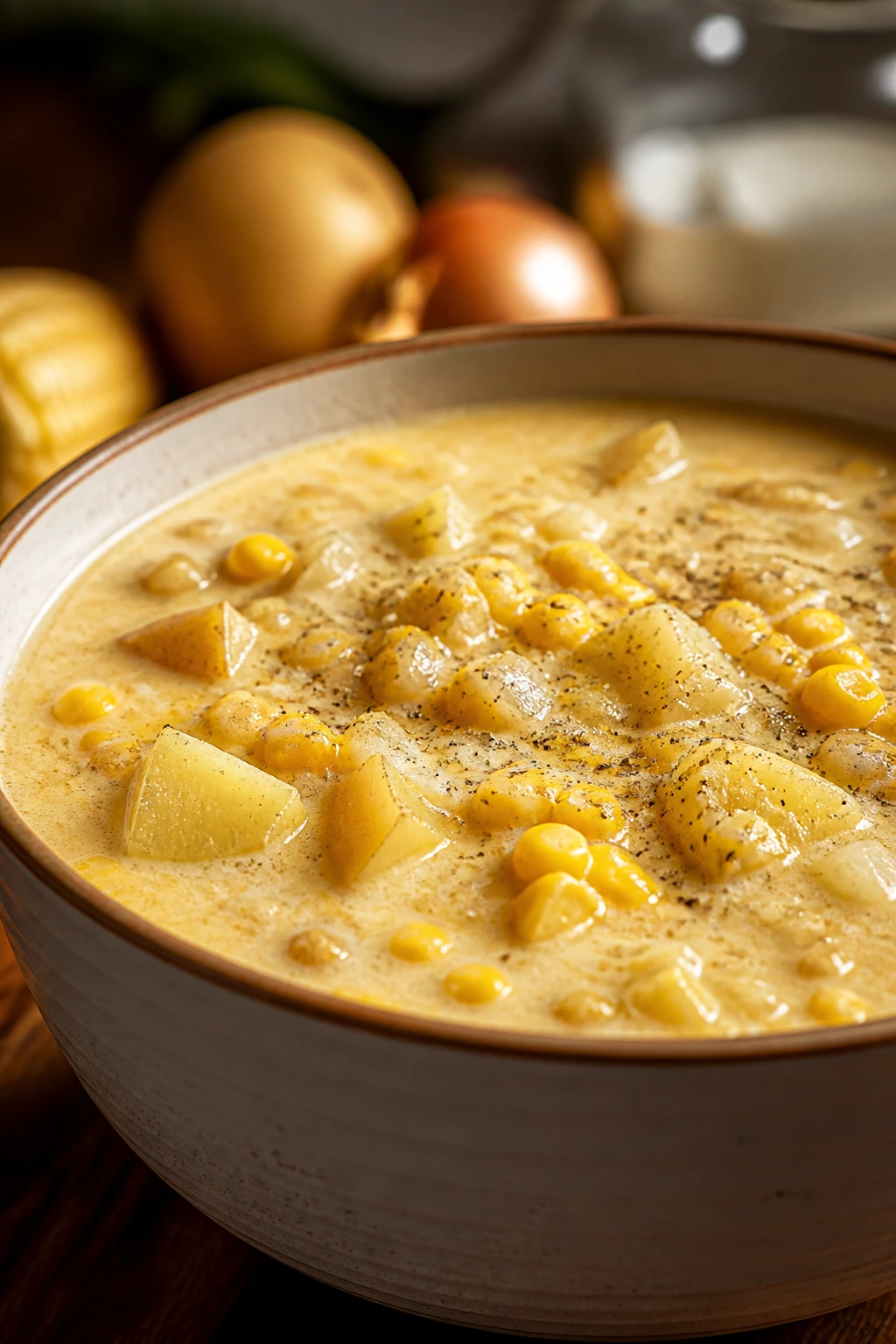
For the Savory Base:
- 6 slices thick-cut bacon, chopped into 1/2-inch pieces
- 2 tablespoons unsalted butter
- 1 large yellow onion, diced
- 2 celery stalks, diced
- 2 cloves garlic, minced
For the Thickener and Broth:
- 1/4 cup all-purpose flour
- 4 cups low-sodium chicken broth, or vegetable broth for a meatless version
For the Chowder Body:
- 1 1/2 pounds Yukon Gold potatoes, scrubbed or peeled and cut into 1/2-inch cubes
- 4 cups corn kernels, from 5 to 6 ears or from frozen corn
- 1 teaspoon kosher salt, plus more to taste
- 1/2 teaspoon black pepper
- 1 teaspoon dried thyme
- 1 bay leaf
- 1/4 teaspoon smoked paprika
For the Dairy Finish:
- 2 cups whole milk
- 1 cup heavy cream
For Serving:
- 2 tablespoons chopped chives or parsley
- Pinch of cayenne or a few drops of hot sauce, optional
Why Each Ingredient Earns Its Spot

The Savory Base
What to use: 6 slices thick-cut bacon, 2 tablespoons unsalted butter, 1 large yellow onion, 2 celery stalks, and 2 cloves garlic.
Preparation: Chop the bacon before it goes in so it renders evenly. Dice the onion and celery into small, even pieces; the goal is for them to soften into the soup, not sit there like separate little cubes.
Substitutions: If you want a meatless chowder, skip the bacon and use 3 tablespoons butter instead. Pancetta works too, though it brings a saltier edge, so cut back on the added salt.
Tips: Start the bacon over medium heat and let it render patiently. If you rush it, the fat doesn’t pull out cleanly, and you lose that savory base the whole pot depends on.
The Thickener and Broth
What to use: 1/4 cup all-purpose flour and 4 cups low-sodium chicken broth.
Preparation: Measure the flour before you start adding liquid. Once the roux goes in, the pace matters, and you don’t want to be hunting for the cup while the pot waits.
Substitutions: Vegetable broth works if you’re making a meatless version. If you need gluten-free, use a 1:1 gluten-free flour blend that handles roux well, or thicken later with more potato mashing.
Tips: Low-sodium broth gives you room to season properly. A salty broth plus bacon can shove the chowder in the wrong direction fast.
The Chowder Body
What to use: 1 1/2 pounds Yukon Gold potatoes, 4 cups corn kernels, 1 teaspoon kosher salt, 1/2 teaspoon black pepper, 1 teaspoon dried thyme, 1 bay leaf, and 1/4 teaspoon smoked paprika.
Preparation: Cut the potatoes into 1/2-inch cubes so they cook evenly and hold shape. If you use frozen corn, keep it frozen until the pot is ready for it.
Substitutions: Russet potatoes will thicken the soup more, but they break down faster. White potatoes work too. If fresh corn is in the fridge, cut it right off the cob and scrape the cobs with the back of your knife for extra sweetness.
Tips: Yukon Golds are the sweet spot here. They get tender, but they don’t collapse into dust unless you overcook them.
The Dairy Finish
What to use: 2 cups whole milk and 1 cup heavy cream.
Preparation: Measure the milk and cream before you lower the heat. Cold dairy is fine, but the pot should already be off the boil when you add it.
Substitutions: Half-and-half can replace both milk and cream if that’s what you have, though the soup will be a little thinner. You can also use evaporated milk for a slightly cooked, old-fashioned flavor.
Tips: Keep the heat gentle after the dairy goes in. Hard boiling is the fastest way to split a creamy chowder and ruin the texture you worked for.
For Serving
What to use: Chopped chives or parsley, plus a pinch of cayenne or hot sauce if you want a little lift.
Preparation: Chop the herbs right before serving so they stay bright and smell clean.
Substitutions: Green onion tops work well. Dill is lovely if you want a sharper, greener finish.
Tips: Garnish matters here. That last hit of green and pepper wakes up the bowl and keeps the cream from feeling sleepy.
The Tools That Make It Easier
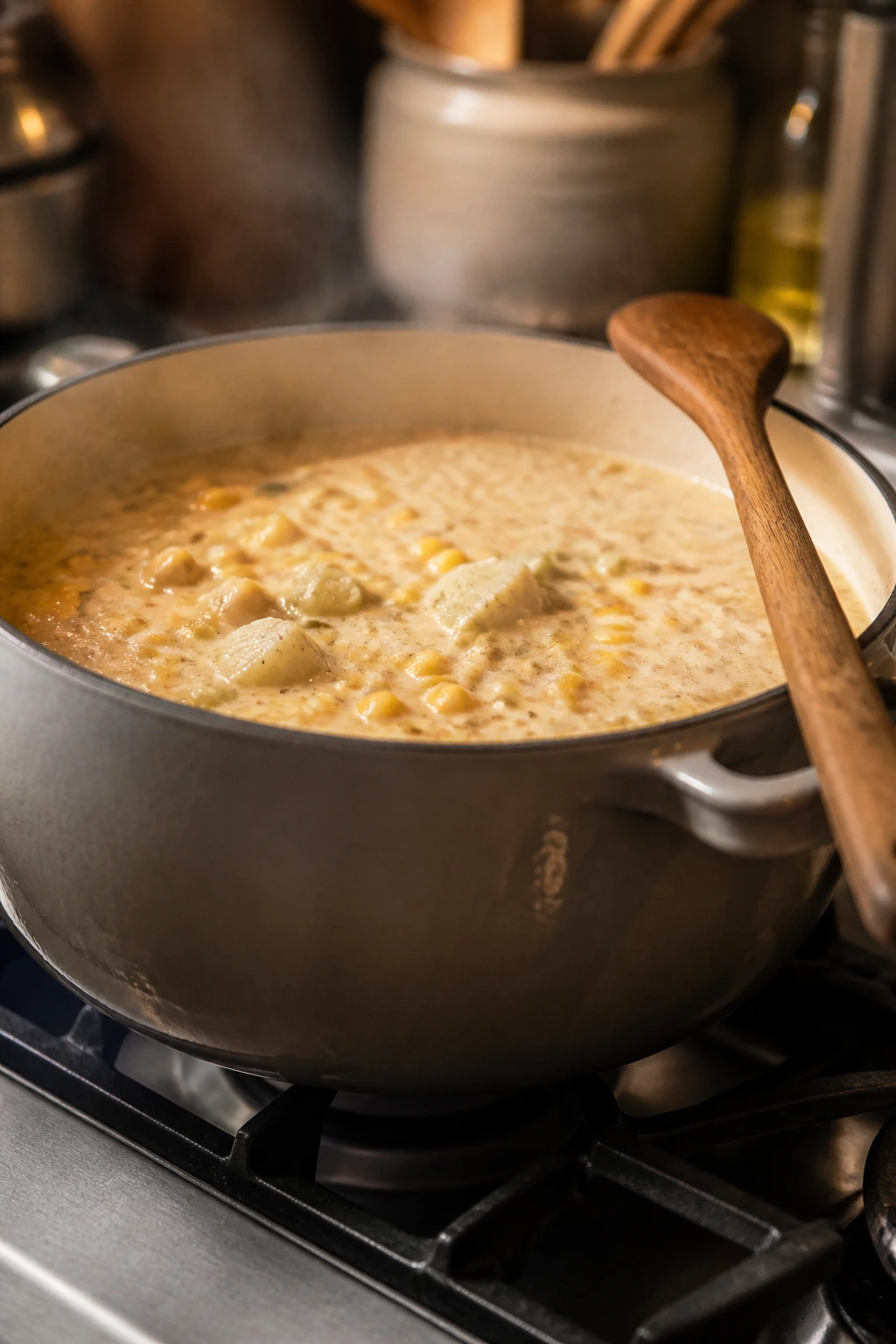
- 5- to 6-quart Dutch oven or heavy soup pot: The thick bottom helps keep the roux and dairy from scorching.
- Sharp chef’s knife: You need clean, even dice on the onion, celery, and potatoes.
- Cutting board with a damp towel underneath: Keeps the board from slipping while you chop bacon and vegetables.
- Wooden spoon or heatproof spatula: Better than a whisk for stirring the vegetables and scraping the bottom.
- Measuring cups and spoons: The flour, broth, milk, and cream all matter in this soup.
- Ladle: Makes serving easier and keeps the potato chunks intact.
- Potato masher or immersion blender: Optional, but useful if you want a thicker chowder without adding more flour.
- Slotted spoon: Handy for moving the bacon out without dragging all the fat with it.
How to Make the Chowder Step by Step
Prepare the Bacon Base:
-
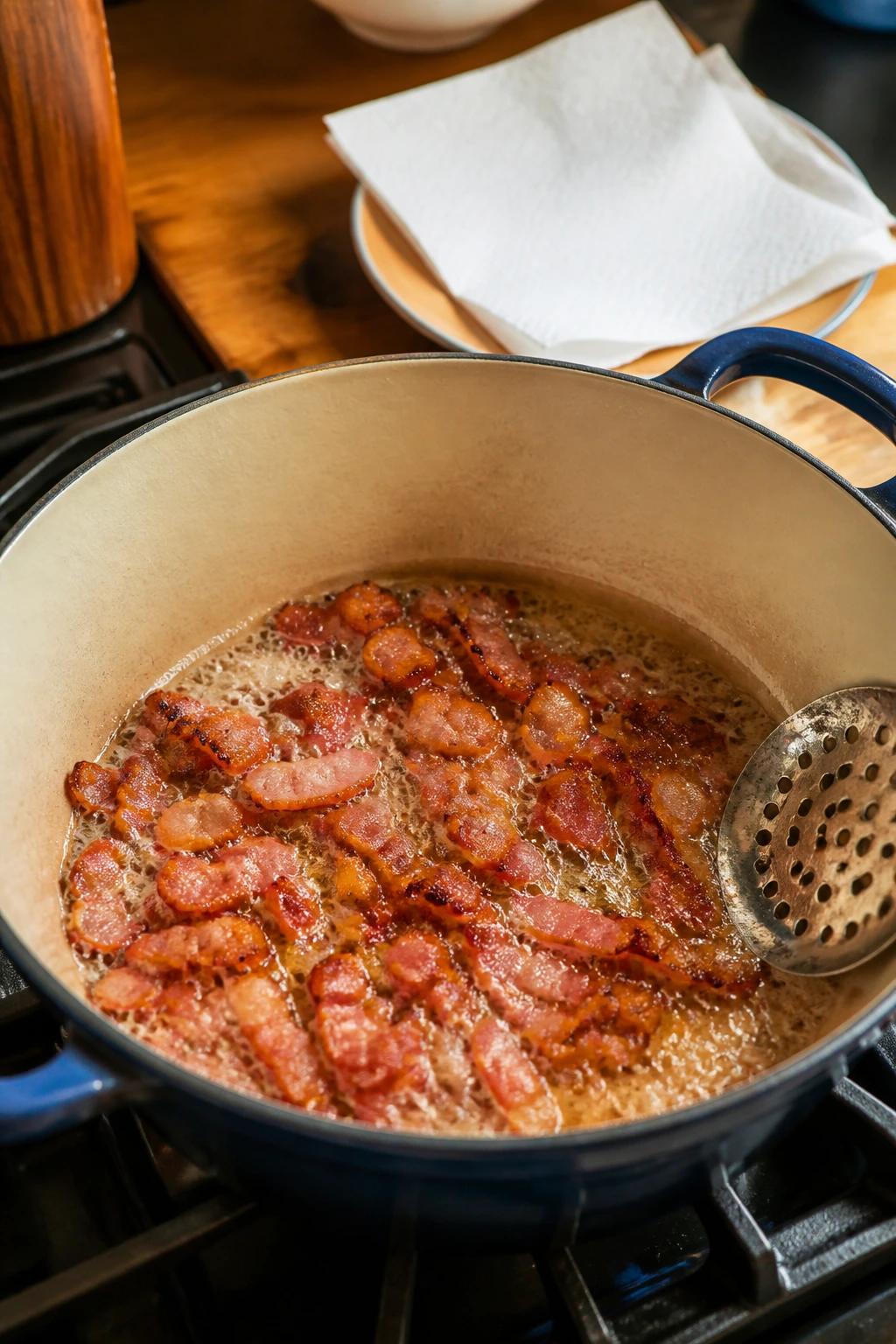
Place a 5- to 6-quart Dutch oven over medium heat. Add the chopped bacon and cook for 6 to 8 minutes, stirring occasionally, until the fat renders and the bacon edges turn browned and crisp.
-
Use a slotted spoon to transfer the bacon to a plate lined with paper towels. Leave about 2 tablespoons of fat in the pot. If there is more than that, pour off the extra; if there is less, add enough butter to reach the right amount.
Build the Aromatics and Roux:
-
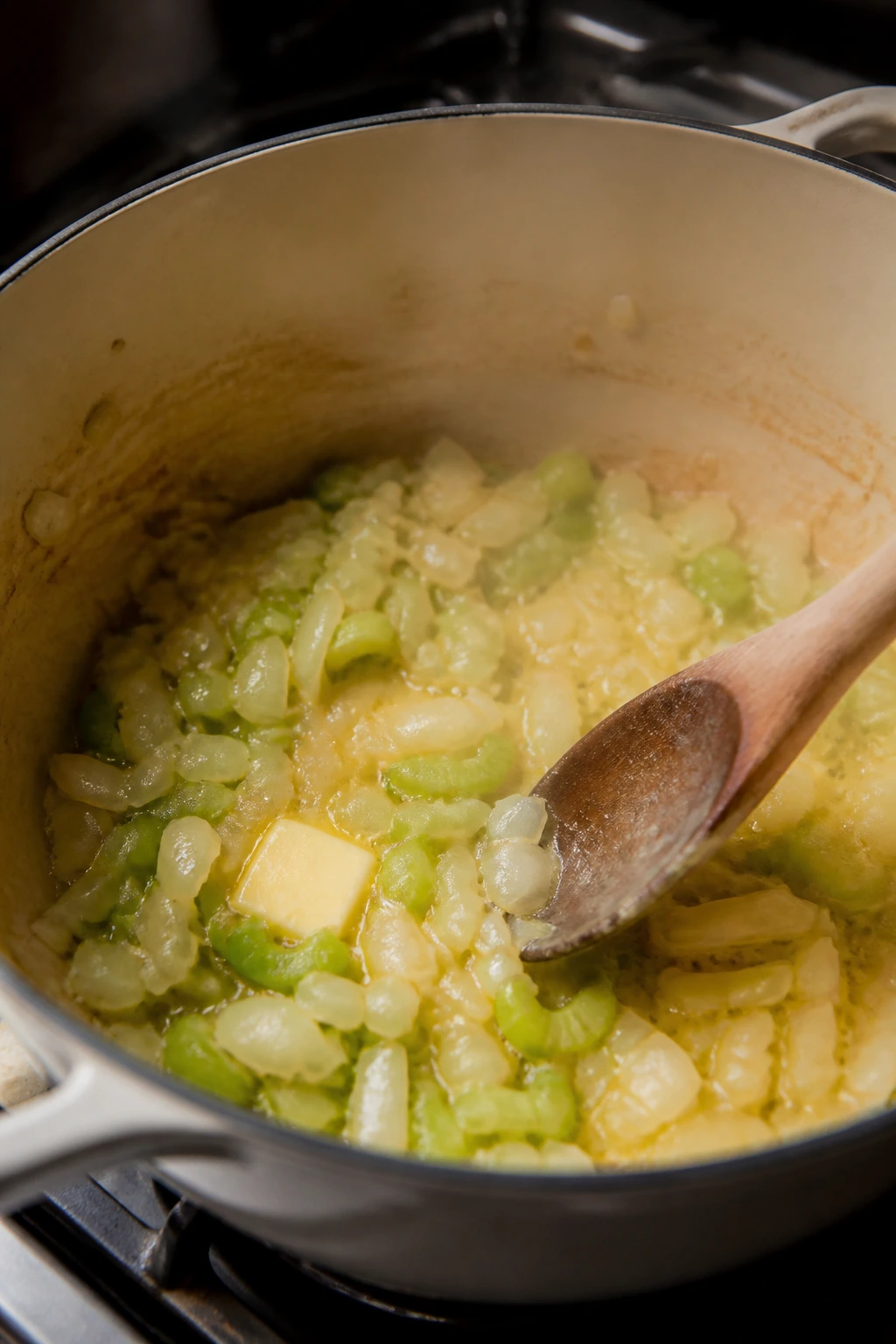
Add the 2 tablespoons butter to the bacon fat. Stir in the onion and celery and cook for 5 to 7 minutes, until the onion turns translucent and the celery softens.
-
Add the garlic and cook for 30 seconds, stirring constantly, until it smells sweet and sharp, not bitter.
-
Sprinkle the flour over the vegetables and stir for 1 to 2 minutes. The flour should look coated and slightly pasty, with no dry white spots left. Do not let it sit still or it can scorch on the bottom.
Add the Broth and Potatoes:
-
Slowly pour in the broth while stirring and scraping the bottom of the pot. Add the potatoes, thyme, bay leaf, smoked paprika, salt, and black pepper.
-
Raise the heat to medium-high and bring the soup to a gentle boil. Once it bubbles, reduce the heat to maintain a steady simmer. Cook for 12 to 15 minutes, stirring once or twice, until the potatoes are just tender when pierced with a fork.
Finish the Chowder:
-
Stir in the corn and simmer for another 5 to 7 minutes, until the kernels are tender and the soup looks a little thicker.
-
Turn the heat down to low. Stir in the milk and cream. If you want a thicker finish, mash about 1 to 2 cups of the potatoes against the side of the pot with a potato masher or the back of a wooden spoon. You can also use an immersion blender for 2 to 3 quick pulses. Stop before the soup turns smooth; chowder should still have visible bits of potato and corn.
-
Taste and adjust with more salt, black pepper, or a tiny splash of hot sauce if needed. Remove the bay leaf.
-
Ladle the chowder into bowls and top with the reserved bacon, chives, and a final grind of black pepper. Let it sit for 5 minutes before serving so it settles into a thicker, silkier texture.
How to Serve It on a Cold Night

Presentation: Spoon the chowder into wide bowls so the corn, potatoes, and bacon show on top instead of disappearing into the broth. A small pile of chives in the center and a few cracked pepper flecks make the bowl look finished without making it fussy.
Accompaniments: Thick toast, buttered sourdough, oyster crackers, or a split biscuit all work. I also like a simple green salad with a sharp vinaigrette, because the acid cuts through the cream and keeps the meal from feeling heavy.
Portions: Plan on about 1 1/2 cups per person for a light dinner with bread, or 2 cups if the soup is the whole meal. If you’re serving a crowd, the recipe scales up cleanly in a larger pot; just keep the simmer gentle so the potatoes don’t break apart.
Beverage Pairing: A dry hard cider fits this soup neatly. So does a light amber ale. If you want something nonalcoholic, black tea with a little milk has the same warm, steady effect.
Practical Tips That Make the Pot Better
Flavor Enhancement: If your corn is bland or the broth tastes a little flat, add 1 teaspoon of apple cider vinegar at the very end. It won’t make the soup sour; it just brightens the corn and wakes up the dairy.
Time-Saver: Frozen diced onion and celery can stand in if you’re short on knife time. I’d still take the minute to chop the bacon and cube the potatoes myself, because those are the parts that matter most for texture.
Thicker Texture: If you like a chowder that holds a spoon upright for a second, mash a few more potatoes after the dairy goes in. That trick does more than extra flour, and it tastes cleaner.
Smoky Edge: A tiny pinch of smoked paprika in the flour stage gives the soup a quiet campfire note. Too much, and it takes over. One quarter teaspoon is enough.
Fresh Finish: Chives beat dried herbs at the end. Dried thyme belongs in the pot; chives belong on top. That split keeps the soup from tasting dusty.
Common Mistakes and Easy Fixes

Boiling after the cream goes in: This is the big one. If the soup gets to a rolling boil after the milk and cream are added, the dairy can split and leave a grainy surface. Keep the heat low and stop at a gentle steam.
Cutting the potatoes too small: Tiny cubes disappear before the soup is ready, and then the chowder loses body. Aim for 1/2-inch pieces so they cook through but still hold shape.
Adding too much salt too early: Bacon, broth, and even the potatoes can shift the salt level as the soup cooks. Season lightly at the start, then taste at the end and adjust once the flavors have settled.
Leaving the roux undercooked: Raw flour tastes chalky and can make the chowder feel heavy in the wrong way. Stir it with the vegetables for a full minute or two until it smells a little nutty and looks glossy.
Expecting corn alone to thicken the soup: Corn adds sweetness and texture, but it does not carry the whole body of the chowder. Use the potatoes, the roux, and a small mash at the end if you want that spoon-coating texture.
Variations and Adaptations

Vegetarian Porchlight Chowder
Skip the bacon and use 3 tablespoons butter as the base fat. Swap in vegetable broth and add 1 teaspoon smoked paprika plus a pinch of cayenne for a little more depth, since you lose the bacon’s savory note.
Ham-and-Corn Family Pot
Use 1 cup diced ham instead of bacon, and fold it in with the corn so it warms through without getting tough. Ham brings salt, so cut the added salt down by about 1/2 teaspoon and taste carefully at the end.
Chicken Corn Chowder
Stir in 2 cups shredded cooked chicken after the potatoes are tender and before the dairy goes in. This turns the soup from a starter into a full supper, especially if you’re feeding people with large appetites.
Green Chile Corn Chowder
Add 1 diced poblano or 1 small roasted green chile when the onion and celery go in. The pepper gives the sweet corn a sharper edge, and a pinch of cumin can fit here if you want a slightly southwestern turn.
Make-Ahead, Storage, and Reheating
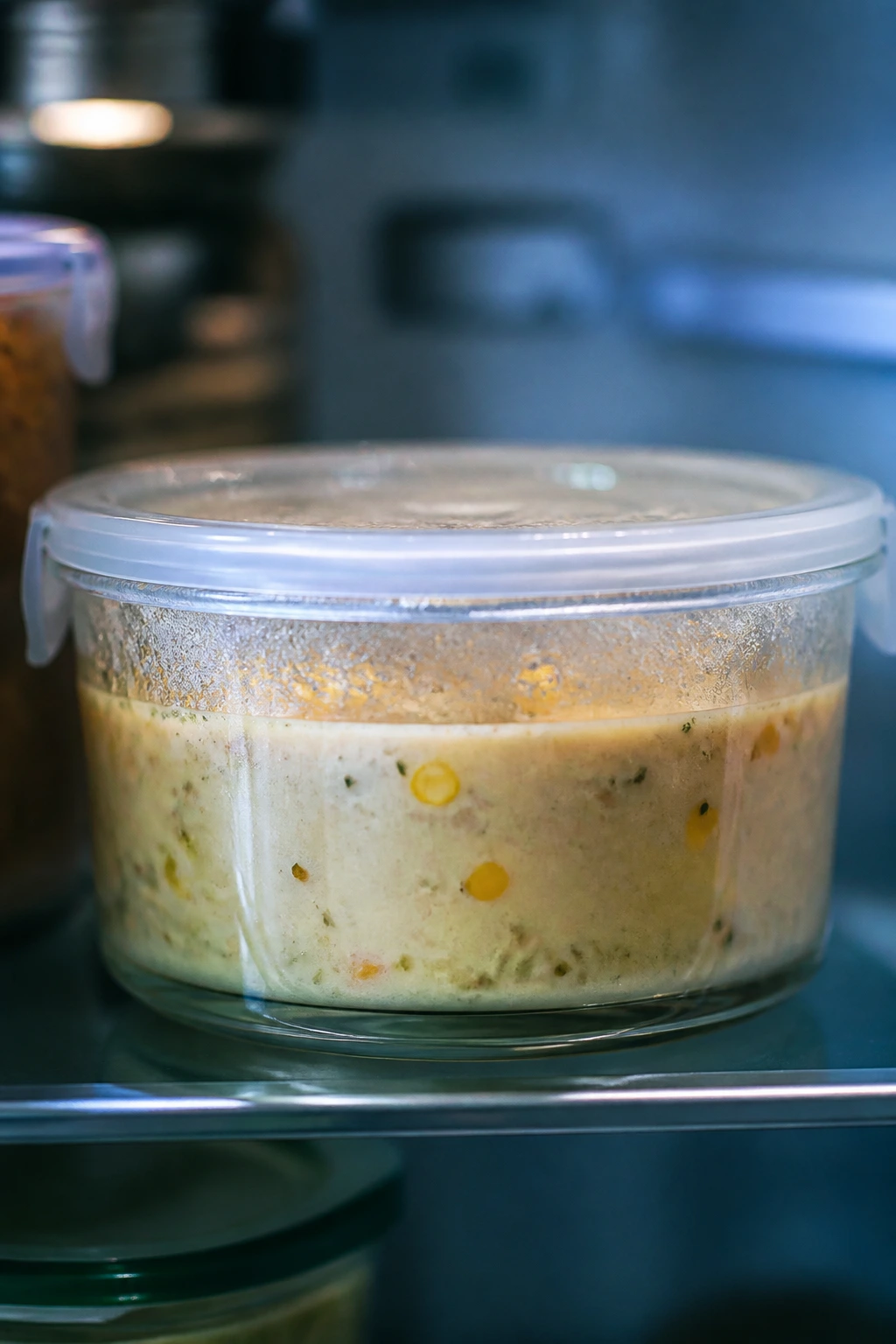
Corn chowder keeps best in the refrigerator for 3 to 4 days in a covered container. Let it cool for about 30 minutes before packing it away so the lid doesn’t collect condensation and drip back into the soup.
If you want to freeze it, the texture is best when you freeze the soup before the milk and cream go in. The base — bacon, vegetables, broth, potatoes, and corn — can be frozen for up to 2 months. Thaw it overnight in the refrigerator, reheat it gently, and stir in the dairy at the end.
If you’ve already made the finished chowder, you can still freeze it, but the dairy may separate a bit when it thaws. That’s not the end of the world. Warm it slowly on the stove over low heat and whisk in a splash of milk if it looks broken. A quick blitz with an immersion blender can smooth it out, though I’d use that only if the texture really needs help.
For reheating, the stovetop is the best route. Pour the soup into a pot, add a small splash of broth or milk if it has tightened up, and heat it over low to medium-low, stirring often, until it’s hot all the way through. The microwave works in a pinch, but use 60-second bursts and stir between them so the dairy doesn’t overheat in spots.
The soup does thicken as it sits. That’s normal. If it feels too thick the next day, loosen it with 2 to 4 tablespoons of milk or broth per bowl and heat until the texture looks smooth again.
Corn Chowder Questions People Ask

Can I use frozen corn instead of fresh?
Yes, and it works well. Frozen corn brings steady sweetness and a clean kernel pop, which is what you want in this soup anyway. Add it straight from the freezer; there’s no need to thaw it first.
What potatoes work best in corn chowder?
Yukon Golds are my first choice because they stay creamy and still hold their shape. Russets will make the chowder thicker, but they can break down faster and give you a softer, more rustic texture.
Can I make this without bacon?
Absolutely. Use butter or olive oil for the base, then lean on smoked paprika and black pepper for a deeper flavor. If you want more savoriness without meat, a spoonful of grated Parmesan stirred in at the end can help, though that pushes the soup a little away from the classic profile.
Why did my chowder turn grainy?
Usually the heat was too high after the dairy went in, or the milk got shocked into a boiling pot. Pull it off the heat, whisk gently, and thin it with a splash of milk or broth if needed. If it’s badly split, an immersion blender can save the texture.
How do I thicken chowder if it seems thin?
Mash more potatoes against the side of the pot, or blend a small portion of the soup and stir it back in. If you still want more body, simmer it uncovered for a few extra minutes before adding the cream next time.
Can I make this in a slow cooker?
You can, but the stovetop texture is better. If you do use a slow cooker, cook the bacon and aromatics first, add the potatoes, corn, broth, and seasonings, then finish with the dairy during the last 20 to 30 minutes on low.
Will half-and-half work instead of milk and cream?
Yes. It makes the soup a little lighter but still creamy. Use 3 cups half-and-half in place of the milk and cream, then keep the heat low so it doesn’t separate.
A Bowl Worth Repeating
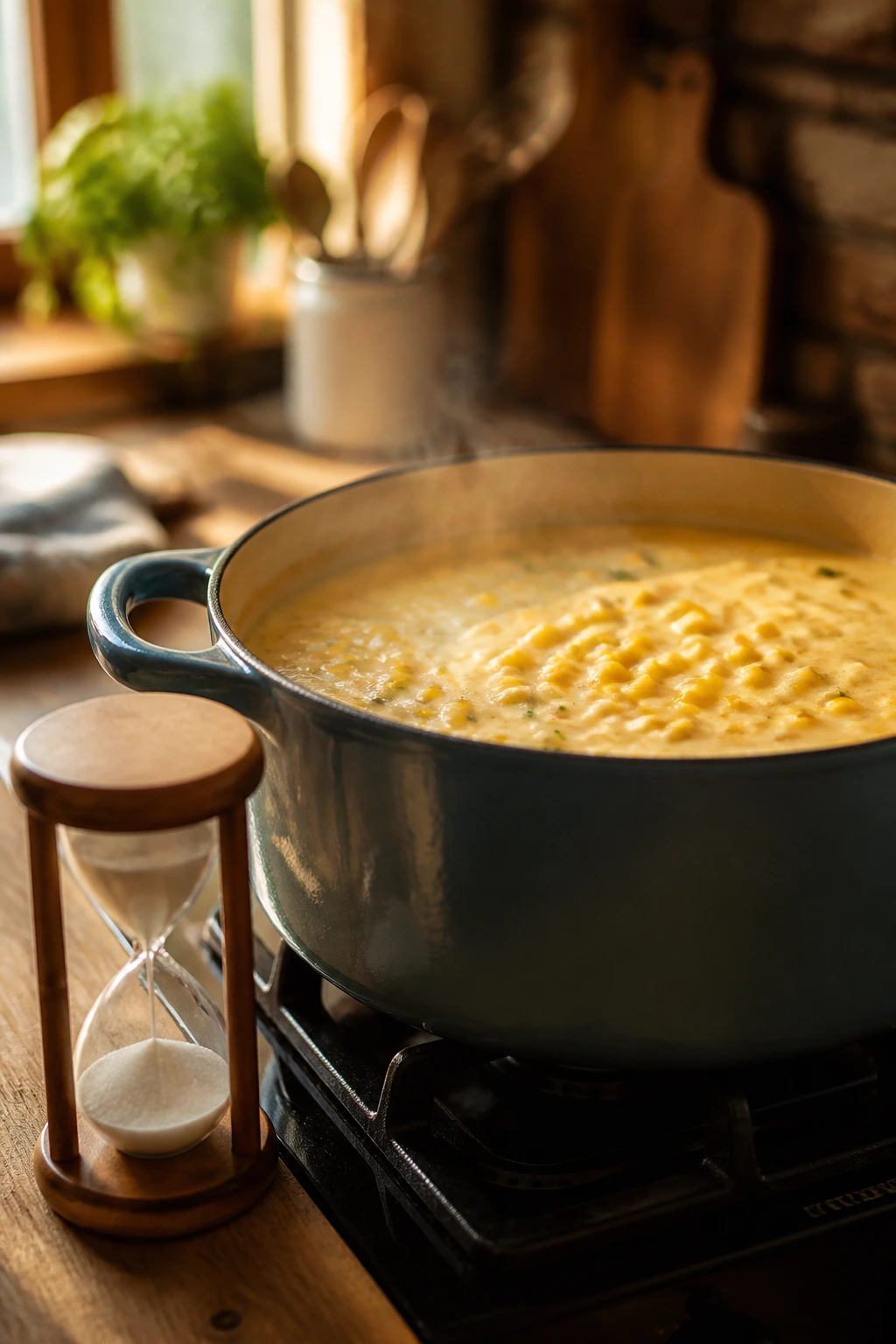
Some soups are weekend projects. This one isn’t. It’s the sort of dinner that can move from chopping board to bowl without drama, and that matters on a cold night when nobody wants a fussy kitchen performance. The sweet corn, the soft potatoes, the bacon, and the cream each play a specific role, and none of them has to dominate.
Make it once and you’ll probably start adjusting it the second time — a little more thyme, a little more corn, maybe a touch of vinegar at the end, maybe not. That’s the real mark of a good chowder. It gives you a sturdy base and then leaves room for your own hand, which is exactly how family soups tend to become family recipes.
Creamy Grandma’s Corn Chowder — Recipe Card

Recipe Name: Creamy Grandma’s Corn Chowder
Description: A thick, creamy corn chowder with bacon, Yukon Gold potatoes, sweet corn, and a gentle dairy finish. It’s cozy, filling, and built for cold nights when a plain bowl of soup won’t do enough work.
Prep Time: 20 minutes
Cook Time: 35 minutes
Total Time: 55 minutes
Course: Soup, Main Course
Cuisine: American
Servings: 6 servings
Calories: About 390 kcal per serving
Ingredients
For the Savory Base:
- 6 slices thick-cut bacon, chopped into 1/2-inch pieces
- 2 tablespoons unsalted butter
- 1 large yellow onion, diced
- 2 celery stalks, diced
- 2 cloves garlic, minced
For the Thickener and Broth:
- 1/4 cup all-purpose flour
- 4 cups low-sodium chicken broth, or vegetable broth
For the Chowder Body:
- 1 1/2 pounds Yukon Gold potatoes, scrubbed or peeled and cut into 1/2-inch cubes
- 4 cups corn kernels, from 5 to 6 ears or frozen corn
- 1 teaspoon kosher salt, plus more to taste
- 1/2 teaspoon black pepper
- 1 teaspoon dried thyme
- 1 bay leaf
- 1/4 teaspoon smoked paprika
For the Dairy Finish:
- 2 cups whole milk
- 1 cup heavy cream
For Serving:
- 2 tablespoons chopped chives or parsley
- Pinch of cayenne or a few drops of hot sauce, optional
Instructions
-
Cook the chopped bacon in a large Dutch oven over medium heat for 6 to 8 minutes until crisp. Transfer it to a paper towel-lined plate and leave about 2 tablespoons of fat in the pot.
-
Add the butter, then cook the onion and celery for 5 to 7 minutes until soft. Stir in the garlic for 30 seconds.
-
Sprinkle in the flour and stir for 1 to 2 minutes until coated and slightly pasty.
-
Slowly whisk in the broth. Add the potatoes, corn, salt, pepper, thyme, bay leaf, and smoked paprika.
-
Bring to a gentle boil, then reduce to a steady simmer for 12 to 15 minutes until the potatoes are tender.
-
Stir in the corn and simmer for 5 to 7 minutes more.
-
Lower the heat and stir in the milk and cream. Mash a small portion of the potatoes for a thicker texture, if desired.
-
Taste and adjust seasoning. Remove the bay leaf, then serve topped with bacon, chives, and black pepper.
Notes:
Use low heat after adding the dairy. For freezing, freeze the soup before the milk and cream go in, then finish with dairy after reheating. If you want more brightness, add 1 teaspoon of apple cider vinegar at the end.