



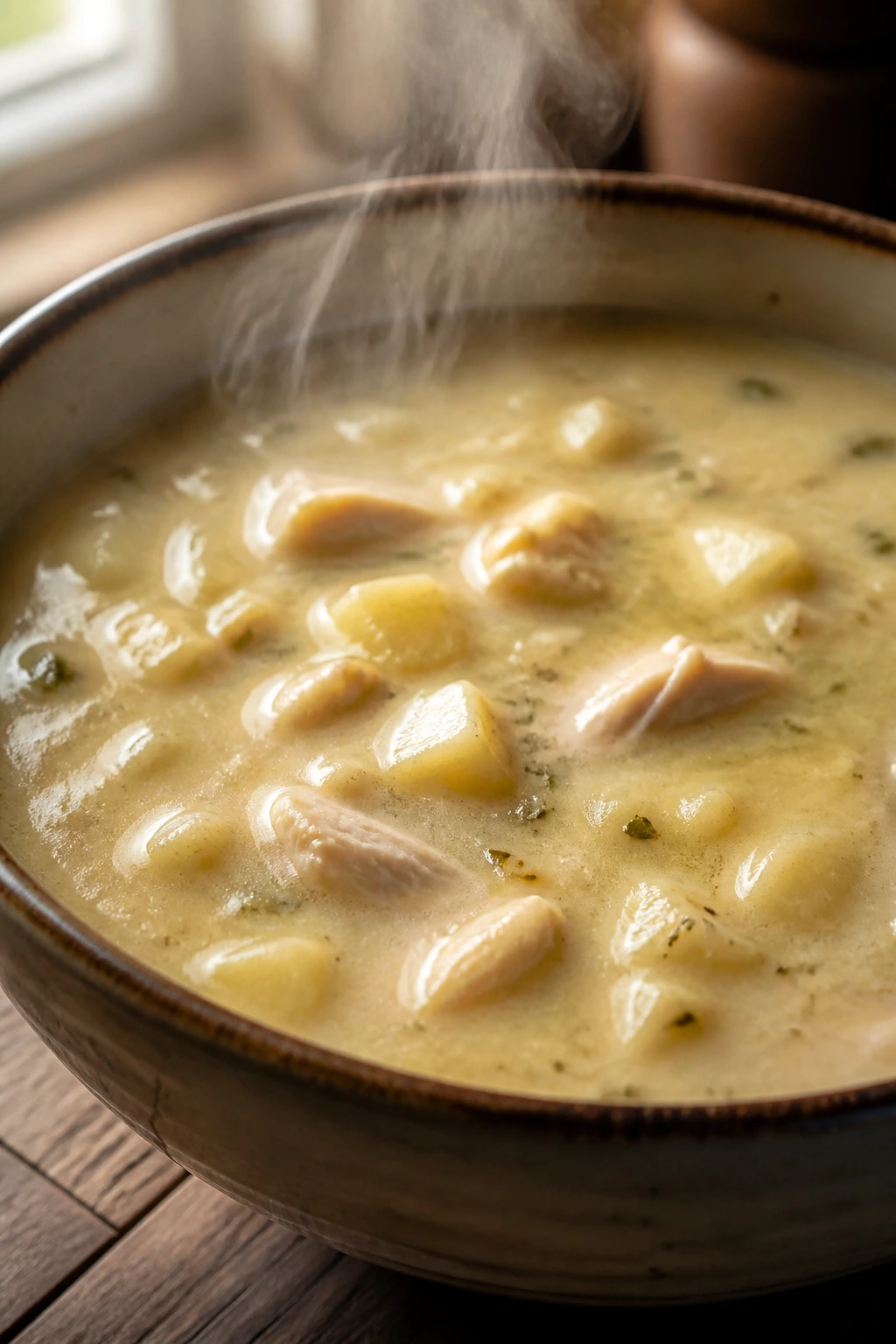
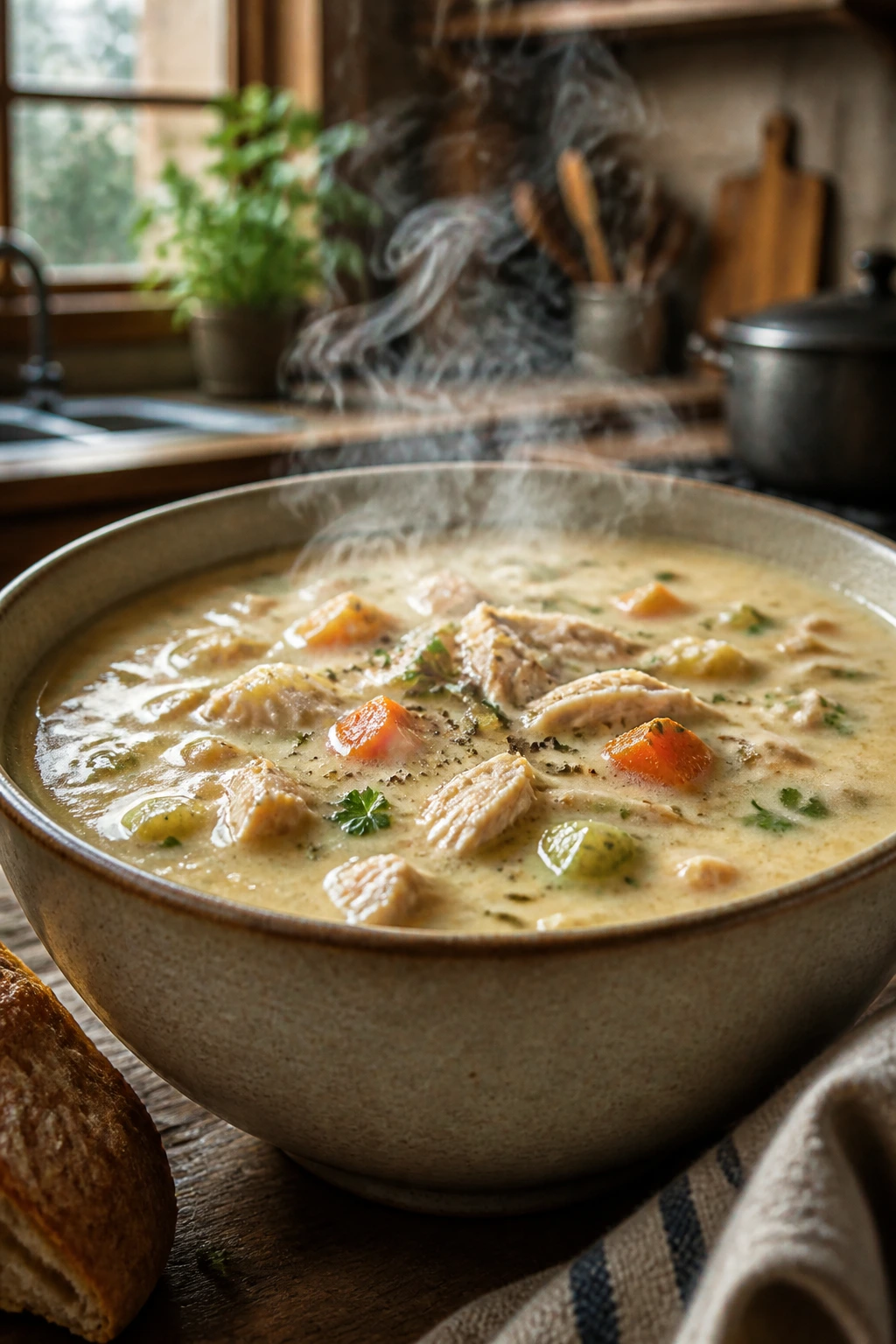
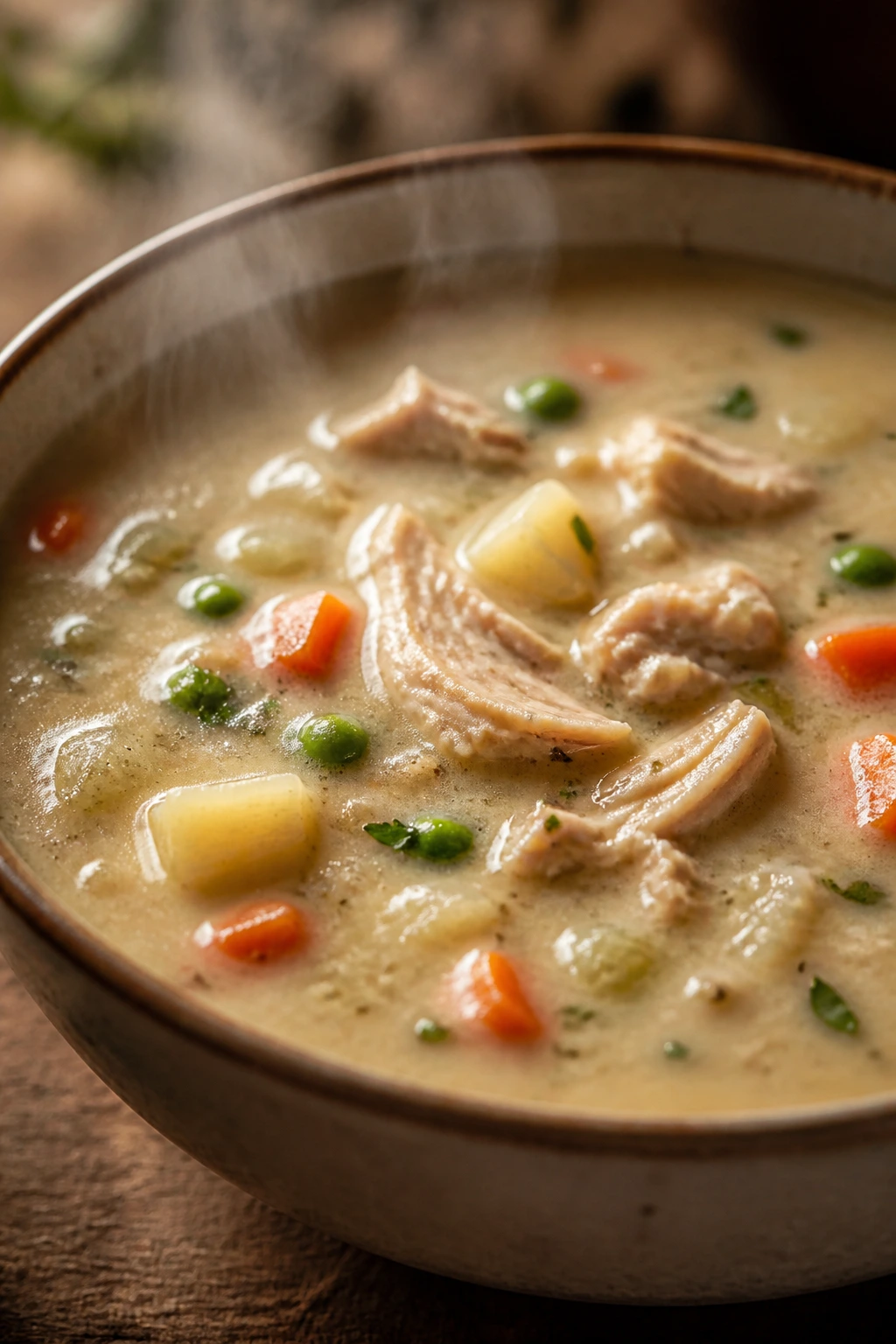
Steam hangs over a bowl of cream of chicken soup in a way that plain broth never can. It softens the edges of the kitchen, fogs the window above the sink, and makes the spoon feel like a small, practical answer to a rough night. The best version is never stiff or gluey. It’s glossy, spoonable, and full of little things worth finding: tender chicken, soft potato cubes, sweet carrot, and broth that clings to the bowl in a thin, silky coat.
A lot of recipes promise comfort and stop there. That’s not enough for a soup like this. If the dairy gets too hot, it can break. If the flour isn’t cooked long enough, the soup tastes dusty. If the chicken is overcooked, the whole pot starts to feel tired. The difference between a good bowl and a forgettable one is usually made in those tiny moments, especially when the weather outside is rude.
I like this soup because it behaves like dinner, not a side note. One pot can carry the whole meal if you give the base enough body and the seasoning enough confidence. It’s the sort of recipe that rewards attention without demanding drama. The first thing to sort out is what makes this version work so well.
Why This Cream of Chicken Soup Works So Well on a Cold Night
- It eats like a full meal, not a starter: Potatoes and chicken give the soup enough weight that one bowl can stand on its own with a piece of bread or a biscuit.
- The broth stays smooth when you keep the heat low: Milk and cream taste richest when they’re warmed through gently, not bullied into a hard boil.
- Browned chicken adds more than protein: Those little golden bits on the bottom of the pot bring a savory depth that plain simmering never quite reaches.
- The vegetables do real work: Onion, carrot, celery, and potato turn the soup from “creamy” into something with shape, bite, and a little sweetness.
- It reheats better than most creamy soups: The broth thickens as it sits, which means tomorrow’s lunch can be even better with a splash of broth and a short, gentle stir.
Yield: Serves 6
Prep Time: 20 minutes
Cook Time: 35 minutes
Total Time: 55 minutes
Difficulty: Intermediate — the steps are straightforward, but the roux and dairy need a careful hand.
Chill/Rest Time: 5 minutes
Best Served: Hot, within 10 minutes of finishing, while the broth is still glossy and the chicken is tender.
The Story Behind a Bowl That Tastes Familiar but Better
Cream of chicken soup sits in that old, slightly underappreciated lane of home cooking where milk, broth, butter, and flour do honest work. It shows up in church cookbooks, handwritten recipe cards, and the kind of family notebooks that have a few tomato stains and a lot of trust. The canned version made it famous in casseroles, but the homemade bowl has a different job. It’s not pretending to be a shortcut. It’s dinner.
There’s a reason the classic formula keeps returning to a roux-thickened base. Flour cooked in fat gives the soup body without turning it heavy in the wrong way. Once broth and milk are whisked in, the pot takes on that softly opaque look that says the spoon will come back up with something on it. That’s the texture people usually want, even if they do not say it out loud.
A cold-night soup needs more than cream. It needs contrast. Soft potatoes against the chicken. Sweet carrot against the butter. A little thyme to keep the dairy from drifting into blandness. Lemon at the end to cut the richness just enough that the last spoonful tastes as alive as the first.
If you grew up with canned cream of chicken soup folded into rice bakes or chicken casserole, the homemade version can feel almost startling the first time. It tastes cleaner, but not lean. Richer, but not clumsy. And yes, it takes a few more minutes than opening a can. Those minutes buy you a pot that tastes like someone stood at the stove and paid attention.
The Ingredient List, Measured for a Deep, Silky Pot
For the Chicken and Vegetables
- 1½ pounds boneless, skinless chicken thighs, trimmed and cut into 1-inch pieces
- 1 teaspoon kosher salt, divided
- ½ teaspoon black pepper, divided
- 1 tablespoon olive oil
- 2 tablespoons unsalted butter
- 1 medium yellow onion, diced small
- 2 medium carrots, peeled and diced into ½-inch pieces
- 2 celery stalks, diced into ½-inch pieces
- 2 medium Yukon Gold potatoes, peeled and cut into ½-inch cubes
- 3 garlic cloves, minced
For the Creamy Broth
- ⅓ cup all-purpose flour
- 4 cups low-sodium chicken broth
- 1½ cups whole milk
- 1 cup heavy cream
- 1 teaspoon dried thyme
- 1 bay leaf
To Finish
- 1 cup frozen peas
- 2 tablespoons chopped fresh parsley
- 1 tablespoon fresh lemon juice, plus more to taste
Why Each Ingredient Matters Before the Pot Hits the Stove
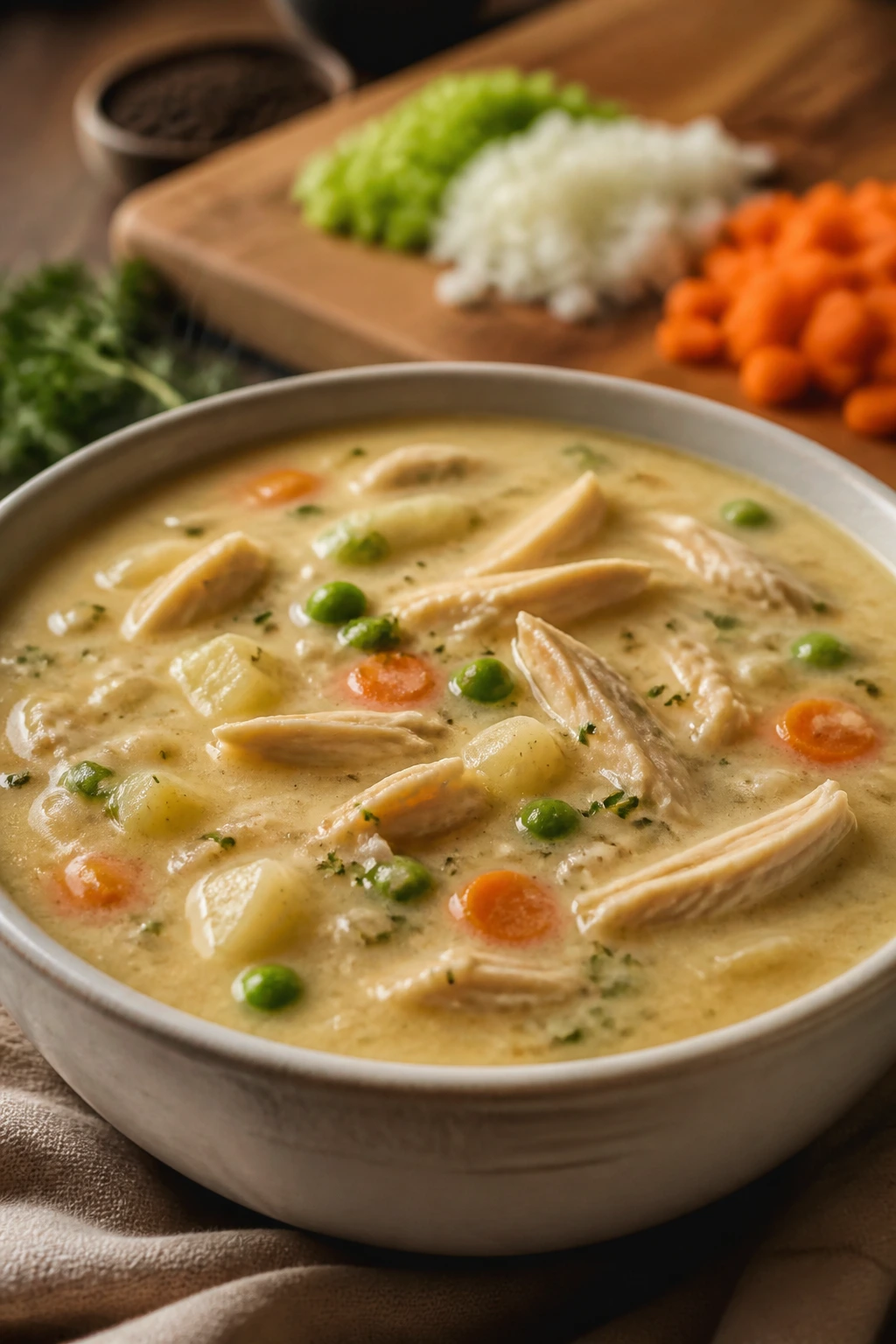
Chicken and Potatoes That Keep the Soup Substantial
What to use: 1½ pounds boneless, skinless chicken thighs and 2 medium Yukon Gold potatoes are the backbone here. Thighs stay juicy after a simmer, and Yukon Golds hold their shape while still softening enough to thicken the broth a little.
Preparation: Cut the chicken into 1-inch pieces so it browns quickly and cooks evenly. Dice the potatoes to match the chicken size; that keeps the spoonfuls balanced and stops the bowl from turning into a pile of giant potato chunks with some soup around them.
Substitutions: Boneless chicken breasts work if that’s what you have, but cut the simmer time by a few minutes so they do not dry out. Russet potatoes will thicken the soup more, though they break down faster and give the broth a cloudier look.
Tips: Pat the chicken dry before it hits the pot. Wet chicken steams. Dry chicken browns, and browned chicken is what keeps the soup from tasting flat.
The Vegetable Base That Builds the Flavor From the Bottom Up
What to use: 1 medium onion, 2 carrots, 2 celery stalks, and 3 garlic cloves make the base. It’s the classic trio plus garlic, and I would not skip any of it unless the pantry has staged a mutiny.
Preparation: Keep the dice small, about ½-inch or smaller. Big chunks stay stubborn when the dairy is already in the pot, and nobody wants a carrot that still feels raw when the soup is supposedly done.
Substitutions: Leeks can stand in for part of the onion if you want a gentler flavor. Parsnips can replace one carrot for a sweeter, slightly earthy note.
Tips: Let the onion cook until it looks glossy and a little translucent before adding flour. The vegetables should smell sweet, not sharp, before you move on.
The Broth, Milk, and Cream That Make It Cream of Chicken Soup
What to use: 4 cups low-sodium chicken broth, 1½ cups whole milk, and 1 cup heavy cream give the soup its body. Low-sodium broth matters here because the dairy softens salt perception, and a salty broth can get pushy fast.
Preparation: Measure the broth and dairy before you start the roux. Once the flour is cooking, you want the liquids within arm’s reach, not still in the fridge.
Substitutions: Half-and-half can replace the milk and cream in a pinch, though the soup will be a little lighter. If you want a slightly leaner bowl, use 2 cups milk and ½ cup cream, then add a little extra broth if needed.
Tips: Warm dairy blends in more smoothly than ice-cold dairy. You do not need to heat it separately, but taking the chill off the milk while the vegetables cook makes the soup less likely to seize when the liquids go in.
Thickener, Herbs, and the Last Little Moves That Matter
What to use: ⅓ cup all-purpose flour, 1 teaspoon dried thyme, and 1 bay leaf thicken and season the pot. The flour gives the soup that spoon-coating texture; the thyme and bay leaf keep it from tasting like warmed milk with chicken in it.
Preparation: Sprinkle the flour over the vegetables and stir it for a full minute or two before adding liquid. That cooks out the raw flour taste and keeps the thickening power smooth instead of chalky.
Substitutions: A cornstarch slurry can replace the flour for a gluten-free version, but the texture will be a little more glossy and less velvety. Fresh thyme can replace dried thyme; use 1 tablespoon chopped fresh leaves.
Tips: Remove the bay leaf before serving. It’s a small thing, but leaving it in the bowl is an easy way to ruin a perfect spoonful with one bitter surprise.
Finishers That Wake the Bowl Up
What to use: 1 cup frozen peas, 2 tablespoons fresh parsley, and 1 tablespoon lemon juice bring the soup back to life at the end. The peas add color and a pop of sweetness; the parsley and lemon stop the cream from feeling heavy.
Preparation: Keep the peas frozen until the end. They only need a minute or two to heat through, and adding them too early turns them dull.
Substitutions: Chopped dill is a good stand-in for parsley if you want a more classic chicken-soup note. A tiny splash of white wine vinegar can replace the lemon juice if the lemon bowl is empty.
Tips: Taste after the lemon goes in. Sometimes one tablespoon is enough. Sometimes the broth wants another squeeze because dairy can flatten salt and acid in a way that’s sneaky.
The Tools That Make This Soup Easier to Control
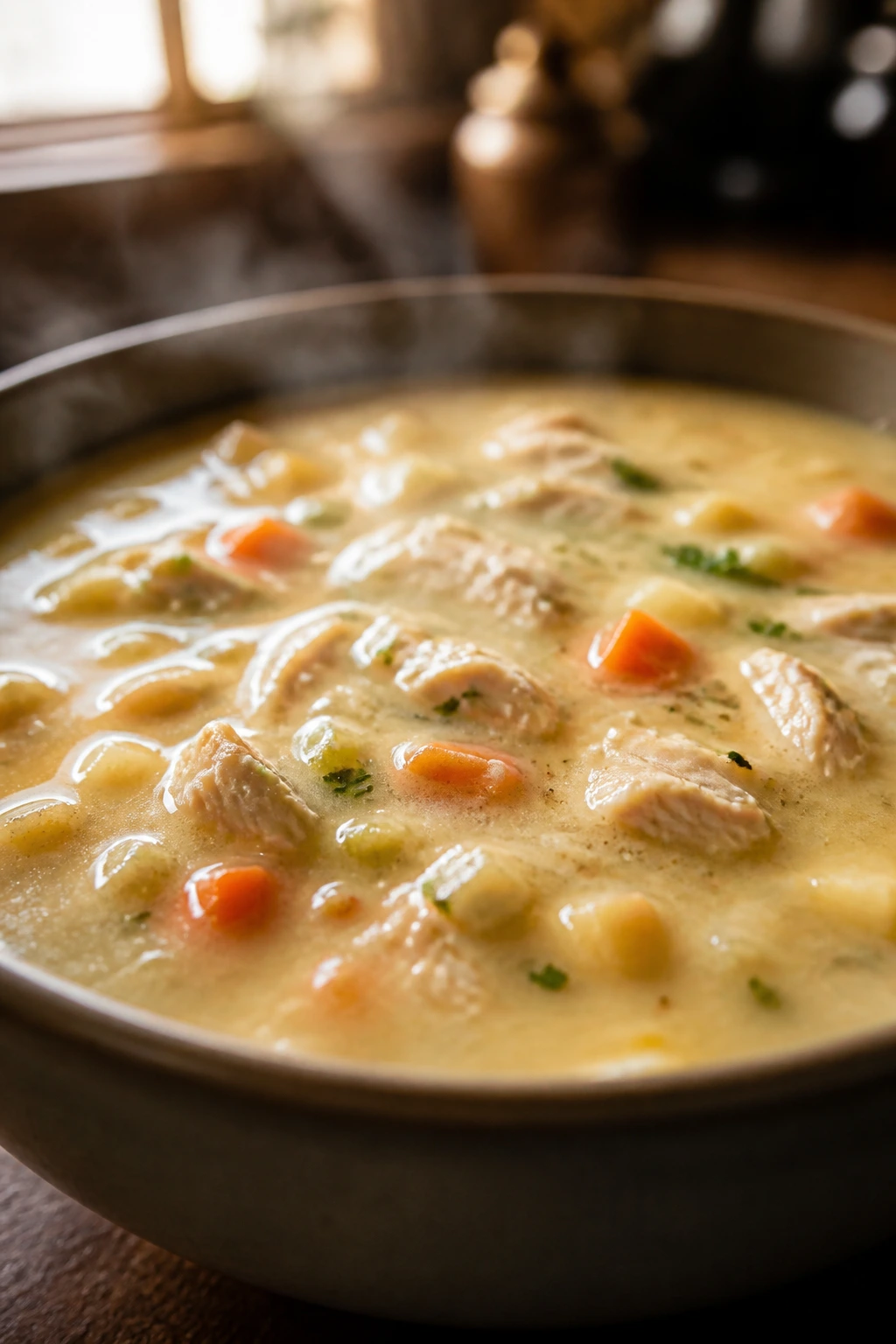
- 6- to 8-quart Dutch oven or heavy soup pot: The thick bottom keeps the flour from scorching and gives you more control once the dairy goes in.
- Sharp chef’s knife: Small, even cuts on the vegetables matter more than people think here.
- Cutting board with a damp towel underneath: It keeps the board from skidding when you’re dicing onions and potatoes in a hurry.
- Wooden spoon or heatproof spatula: Good for scraping up browned bits without scratching the pot.
- Whisk: Essential for blending the flour into the liquid without lumps.
- Ladle: A wide ladle makes serving easier and helps you scoop a balanced bowl.
- Instant-read thermometer: The cleanest way to check chicken doneness; aim for 165°F in the thickest piece.
- Measuring cups and spoons: The broth-to-dairy ratio matters, and this is not the place to eyeball everything.
- Airtight storage containers: Leftovers keep better when the soup cools quickly in shallow containers instead of sitting in the pot overnight.
How the Soup Comes Together on the Stove
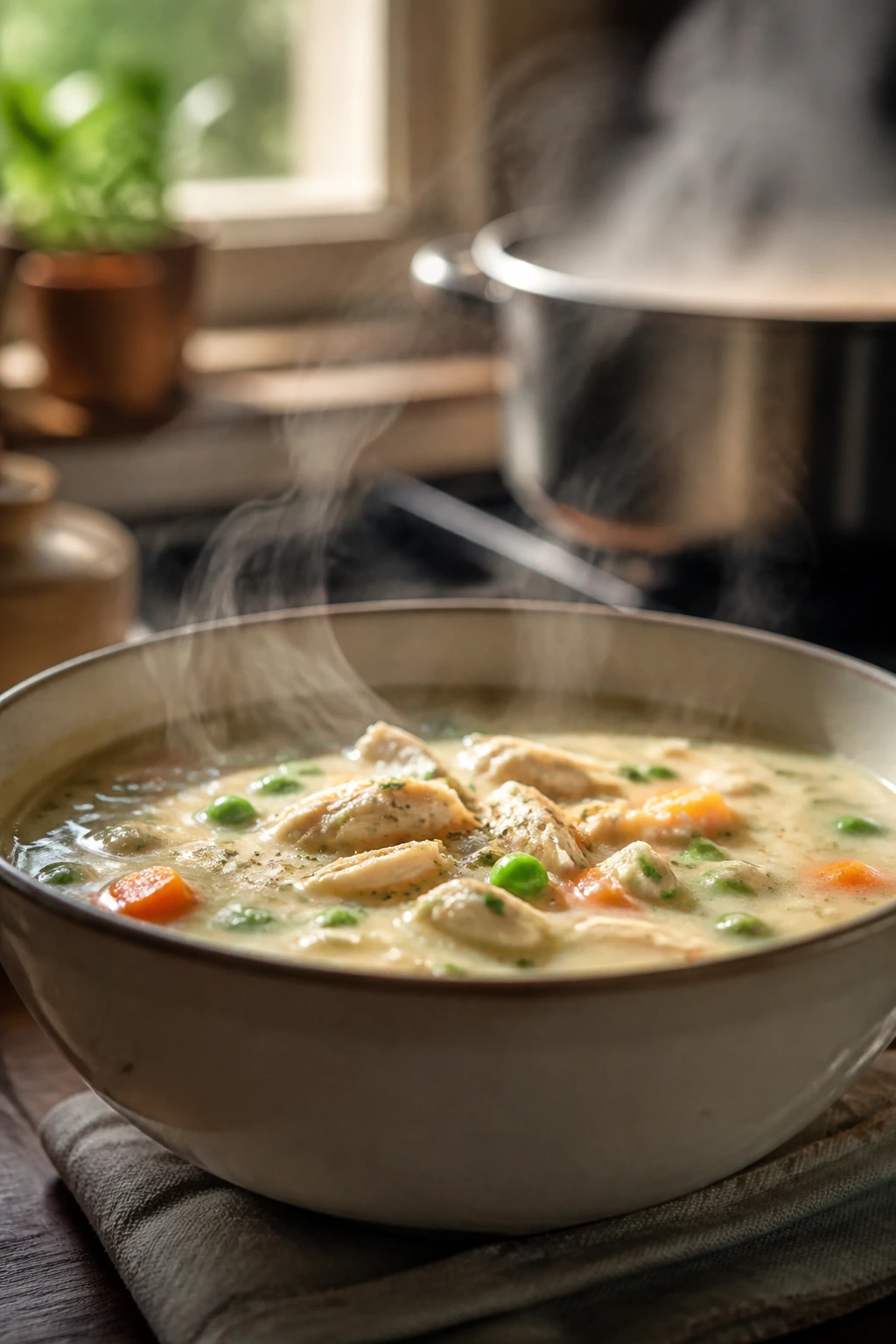
Brown the Chicken
-
Season the chicken pieces with ½ teaspoon of the kosher salt and ¼ teaspoon of the black pepper. Toss them lightly so the seasoning clings to every piece.
-
Heat the oil and butter in a Dutch oven over medium-high heat until the butter foams and the fat looks hot but not smoking. The pot should be ready before the chicken goes in. That matters.
-
Add the chicken in a single layer and sear for 3 to 4 minutes per side, working in batches if needed. You want golden edges and a little browning on the bottom of the pot, not a gray steam bath. Do not crowd the pan or the chicken will release water and go pale.
-
Transfer the chicken to a plate once it has good color on the outside. It does not need to be cooked through yet; it will finish in the soup.
Build the Vegetable Base
-
Add the onion, carrots, celery, and potatoes to the pot. Stir and cook over medium heat for 6 to 8 minutes, until the onion turns translucent and the carrots start to soften at the edges.
-
Stir in the garlic and cook for 30 seconds, just until fragrant. The garlic should smell sweet and warm, not sharp or browned. If it starts to brown fast, lower the heat immediately.
Make the Creamy Broth
-
Sprinkle the flour over the vegetables and stir constantly for 1 to 2 minutes. The mixture will look a little pasty, and that’s fine. You’re cooking out the raw flour taste here.
-
Whisk in the chicken broth slowly, a little at a time at first, scraping the bottom of the pot as you go. Once the flour loosens, pour in the rest of the broth, then the milk and cream. Keep whisking until the broth looks smooth and no flour streaks remain.
-
Add the thyme and bay leaf, then bring the soup to a gentle simmer over medium heat. Small bubbles should rise around the edges, not a full rolling boil. Once the dairy is in, keep the heat controlled. Boiling can make the soup grainy.
-
Return the chicken and any juices to the pot. Reduce the heat to low and simmer for 10 to 12 minutes, stirring every few minutes, until the potatoes are tender and the chicken reaches 165°F in the thickest piece.
Finish and Serve
-
Stir in the peas, parsley, and lemon juice and cook for 1 to 2 minutes more, just until the peas are hot and the soup looks bright again. Taste and adjust with the remaining salt and pepper. If the soup feels too thick, add broth a splash at a time.
-
Remove the bay leaf and rest the pot for 5 minutes before serving. That short pause lets the broth settle into its final texture. It also keeps the first bowl from being molten enough to silence everyone at the table.
How to Serve a Bowl That Feels Complete
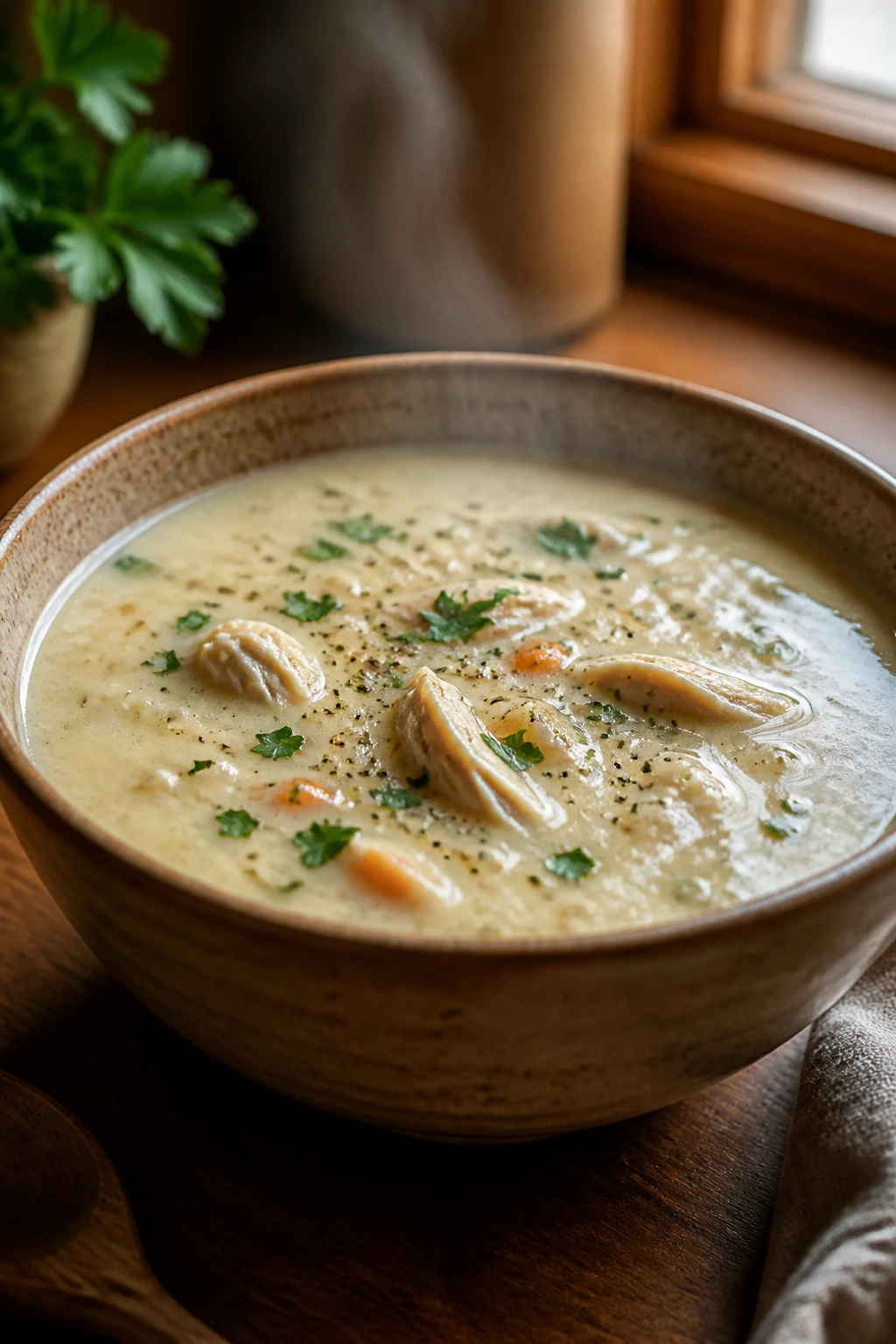
Presentation: Ladle the soup into warmed bowls so it stays hot long enough to matter. I like a little parsley on top, a twist of black pepper, and a few chicken pieces sitting near the surface instead of hidden at the bottom. The bowl should look full and a little rustic, not styled into something too polished for a weeknight.
Accompaniments: Thick slices of sourdough, split-top biscuits, or a buttered baguette are the obvious answers, and they’re obvious for a reason. If you want a sharper edge on the plate, add a small salad with lemony vinaigrette or a few dill pickles on the side. That hit of acid keeps the cream from feeling sleepy.
Portions: A serving is about 1½ cups for an adult meal, a little more if you’re serving it with bread and a salad. If you want to stretch it across more people, do not thin it to death; instead, add another diced potato or a bit more broth and keep the seasoning steady.
Beverage Pairing: A dry cider works well because it cuts the cream without fighting the herbs. If you want something nonalcoholic, hot black tea or sparkling water with lemon both do the job without getting in the way.
Small Upgrades That Make the Flavor Richer

Flavor Enhancement: A tablespoon of dry sherry or white wine stirred in after the garlic cooks gives the broth a quieter, deeper note. It does not make the soup taste boozy. It just fills in the middle where cream soups sometimes go blank.
Texture Move: Mash three or four potato cubes against the side of the pot before serving. That tiny bit of broken potato thickens the broth naturally and gives the soup a fuller feel without another spoonful of flour.
Time-Saver: If dinner needs to happen fast, use 3 cups of shredded rotisserie chicken and skip the browning step. Build the vegetable base and creamy broth first, then stir in the chicken during the last 5 minutes so it stays tender and does not dry out.
Make-It-Yours: A pinch of smoked paprika makes the soup taste warmer without turning it into something else. Dill makes it brighter. Chopped chives bring a mild onion bite that sits nicely on top of the cream.
The Common Mistakes That Break Cream of Chicken Soup
-
Boiling the soup after the dairy goes in: The symptom is a grainy or slightly broken texture, sometimes with little greasy beads on top. Keep the heat at a gentle simmer once the milk and cream are added, and lower it sooner than feels necessary.
-
Adding flour without cooking it first: Raw flour tastes dusty and can make the whole pot feel chalky. Give it a full minute or two with the vegetables and fat before adding liquid, and stir until the mixture smells a little nutty.
-
Cutting the vegetables too large: Big carrot chunks stay hard when the chicken is already cooked and the cream base is ready. Keep everything small and even, about ½-inch pieces, so the bowl feels balanced from the first spoonful to the last.
-
Underseasoning at the end: Cream softens salt, pepper, and herbs more than people expect. Taste after the peas and lemon go in, then adjust with the remaining salt and a little extra pepper if the bowl tastes flat.
-
Skipping the acid finish: Without the lemon juice, the soup can land as heavy instead of rich. That single tablespoon wakes up the butter, chicken, and herbs and keeps the last bite from feeling dull.
Variations for Different Kitchens and Eating Styles
Rotisserie Shortcut Bowl: Use 3 cups of shredded rotisserie chicken instead of raw thighs. Build the broth and vegetables as written, then stir the chicken in during the final 5 minutes just to warm it through. The flavor is a little different, but it’s still a proper bowl of soup and not a compromise.
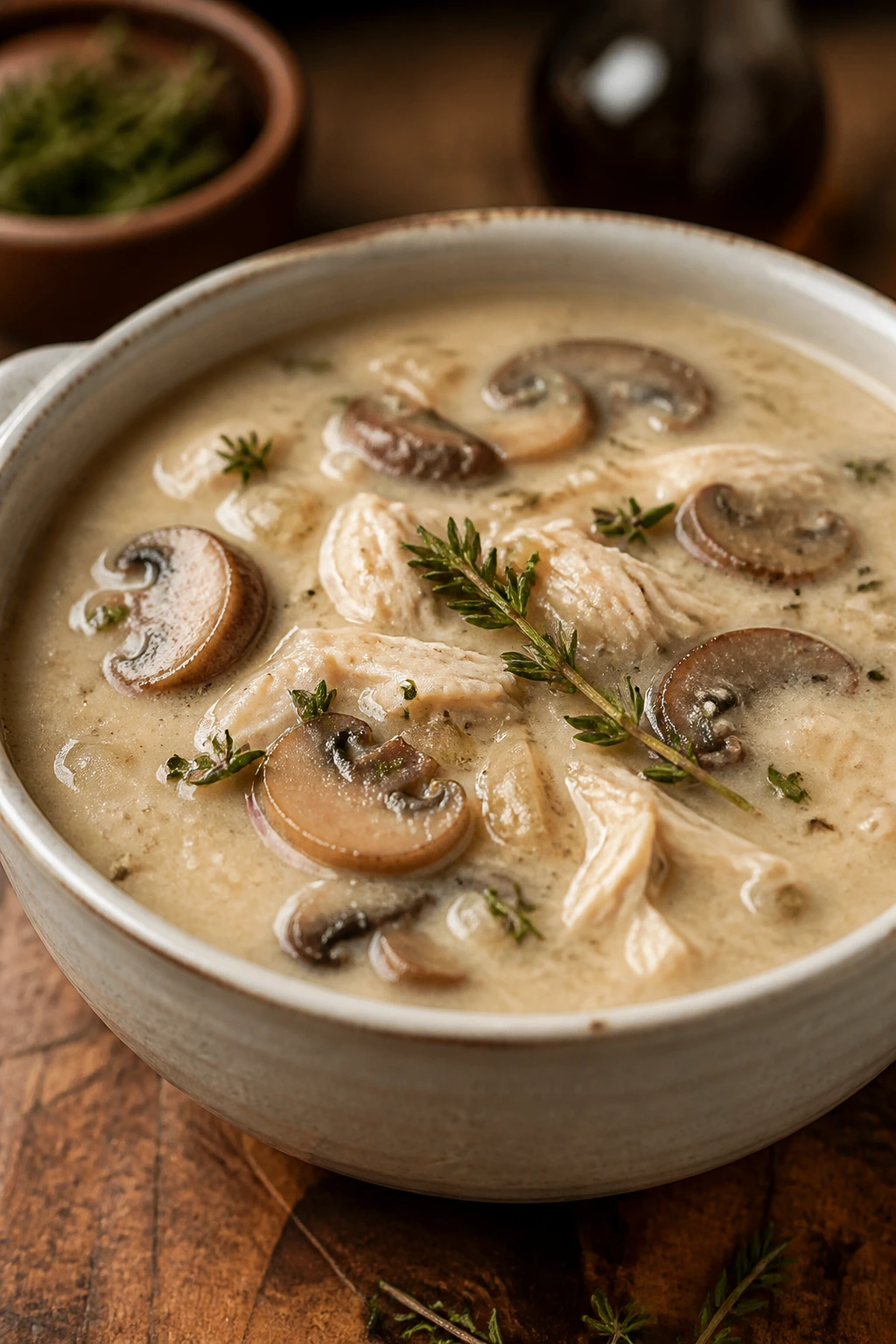
Mushroom-and-Thyme Version: Add 8 ounces of sliced cremini mushrooms after the onion has softened and cook them until their liquid evaporates and they start to brown. The mushrooms bring a deep, earthy note that makes the soup taste darker and more winter-minded.
Dill-and-Potato Bowl: Swap the parsley for 2 tablespoons of chopped fresh dill and add a little extra lemon at the end. This version tastes sharper and more old-world, with the dill cutting through the cream in a way that feels especially good with rye toast.
Gluten-Free Pot Soup: Replace the flour with 3 tablespoons of cornstarch whisked into 3 tablespoons of cold broth. Stir that slurry into the simmering soup before the milk and cream go in, then let it bubble gently for a minute to thicken. The texture is a little glossier, but it still eats well.
Dairy-Lighter Bowl: Use 2 cups whole milk and ½ cup half-and-half instead of the full cream measure. The soup will be lighter and a touch less lush, but a small knob of butter at the end gives it back some roundness.
Storage, Freezing, and Reheating Without Ruining the Texture
In the Fridge
Cool the soup within 2 hours of cooking, then store it in shallow airtight containers. It keeps well in the refrigerator for 3 to 4 days, and the texture often improves by the next day because the chicken and vegetables have more time to settle into the broth. The soup will thicken as it chills. That’s normal.
In the Freezer
Cream soups can freeze, but dairy-based soups are always a little touchy. For the best texture, freeze the soup before adding the cream, then add the cream after thawing and reheating. If you freeze the finished soup, store it for up to 2 months and expect a slight change in texture; a quick whisk after reheating usually brings it back into line.
Reheating
Reheat on the stovetop over low heat, stirring often so the dairy doesn’t separate at the bottom of the pot. Add a splash of broth or milk if the soup has tightened up in the fridge. Microwave reheating works in a pinch, but use 50% power and stop to stir every 60 to 90 seconds. Gentle heat is the whole trick.
Make-Ahead Notes
You can chop the vegetables up to 2 days ahead and keep them sealed in the fridge. If you want to get even more done early, brown the chicken and refrigerate it separately for a day before building the soup. The base can also be cooked ahead without the dairy, then finished with milk and cream when you’re ready to serve.
Cream of Chicken Soup Questions People Ask at the Counter
Can I use chicken breasts instead of thighs?
Yes. Chicken breasts work, but they dry out faster, so keep the pieces a little larger and stop simmering as soon as they hit 165°F. Thighs still win on tenderness, especially if you expect leftovers.
What if my soup gets too thick after it sits?
That’s normal with a flour-thickened cream soup. Stir in warm broth a few tablespoons at a time over low heat until the texture loosens enough to coat the spoon instead of plastering it.
Can I make this without flour?
You can, but the texture will change. Use a cornstarch slurry or puree a few potato cubes into the broth for body, then add the dairy slowly and keep the simmer gentle.
How do I stop the milk from curdling?
Keep the heat at a bare simmer once the milk and cream go in, and do not let the pot boil hard. A heavy-bottomed pot helps, and adding dairy after the vegetables and broth have warmed together makes everything more stable.
Can I add noodles or rice?
Yes, but do it with intent. Cooked egg noodles or white rice can turn the soup into a fuller meal, though they’ll soak up liquid fast. If you add them, hold back a cup of broth so the pot doesn’t turn too stiff.
Is this good for freezing with potatoes in it?
It freezes, but potatoes soften after thawing, so the texture gets a little less tidy. If freezing is part of your plan, slightly undercook the potatoes or freeze the soup base without them and add fresh potatoes when you reheat.
Can I make it in a slow cooker?
Sort of, but the texture is better on the stove. If you want a slow-cooker route, cook the chicken and vegetables first or at least sear the chicken before it goes in, then add the dairy near the end so it doesn’t split.
What bread goes best with this soup?
Anything that can handle a thick scoop without collapsing. Sourdough, a crusty baguette, or a soft biscuit all work, but I’d pick the one with the best crust because this soup wants a little chew on the side.
A Bowl Worth Making Again
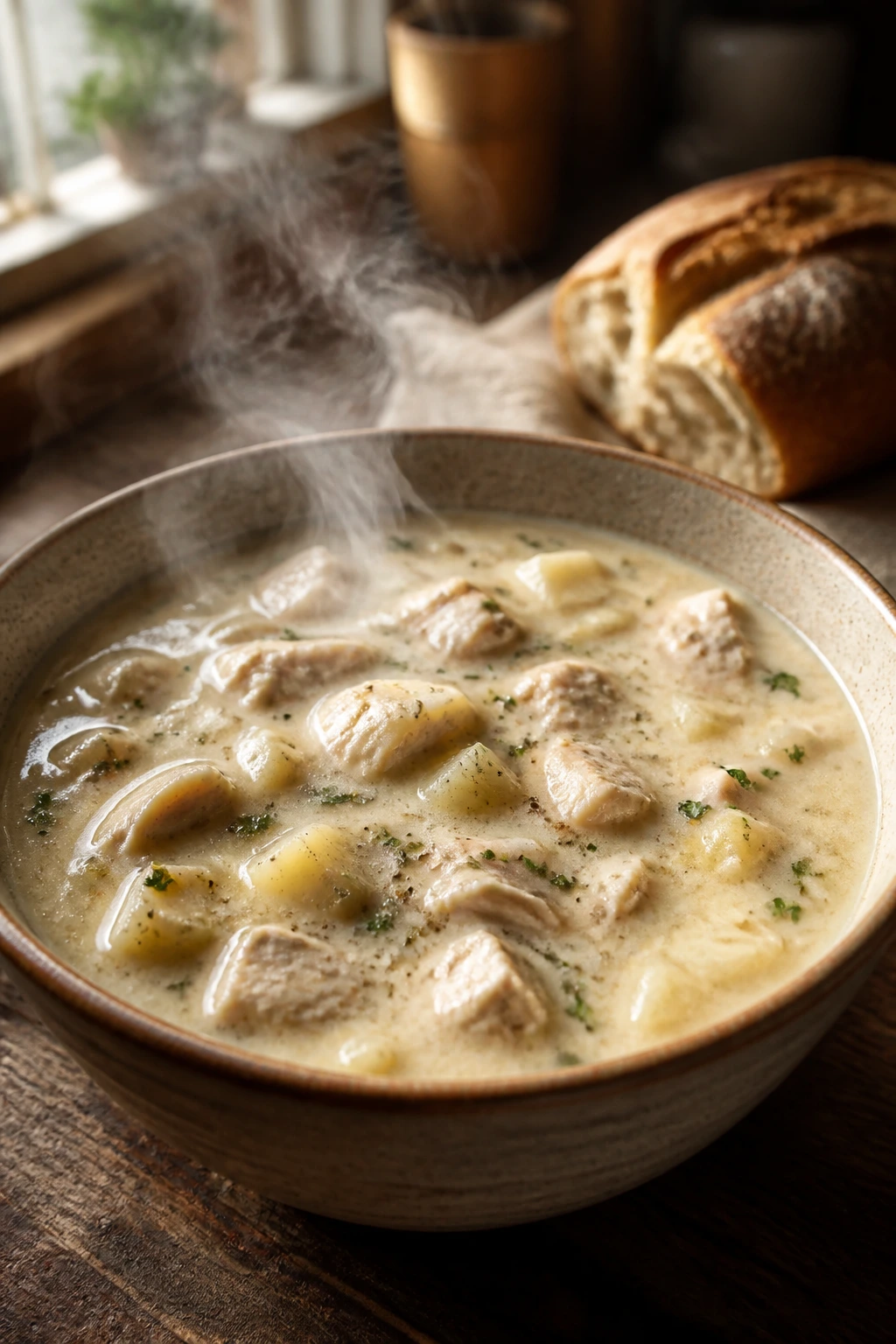
A good cream of chicken soup does not need theatrics. It needs steady heat, decent broth, and enough attention to keep the dairy smooth while the chicken stays tender. Get those pieces right, and the bowl takes on a kind of quiet authority. It’s rich without being tiring, sturdy without feeling heavy, and familiar enough to make sense on the first spoonful.
What I like most is how the pot changes as it sits. The flavors settle. The broth thickens a little. The chicken and potatoes give up their edges and become part of the same soft, savory whole. Keep a loaf of bread nearby and the night gets easier from there.
Hearty Cream of Chicken Soup for Cold Winter Nights — Recipe Card
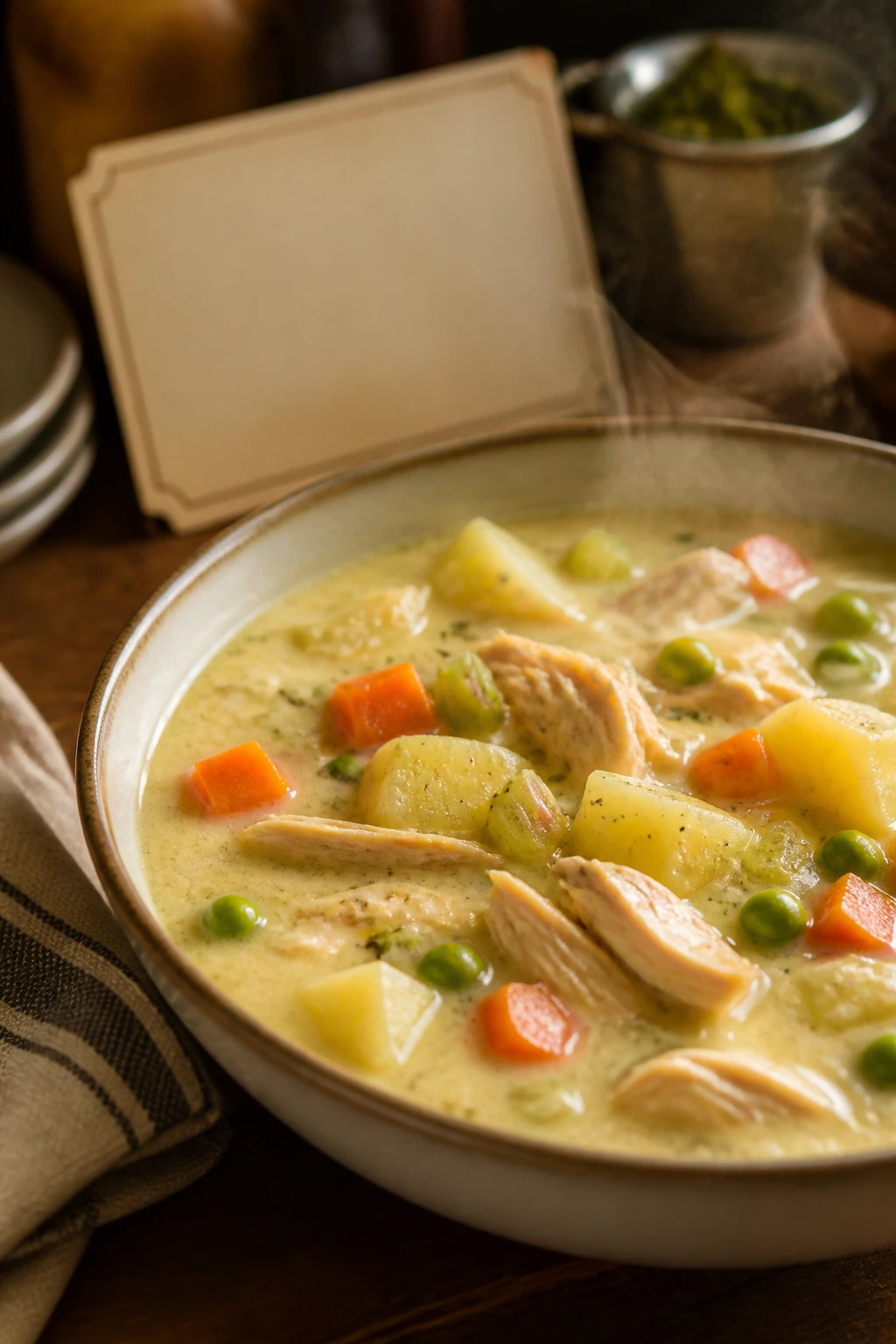
Recipe Name: Hearty Cream of Chicken Soup for Cold Winter Nights
Description: A thick, silky cream of chicken soup with tender chicken thighs, Yukon Gold potatoes, carrots, celery, peas, and a gentle thyme finish. It eats like a full meal and reheats with real grace.
Prep Time: 20 minutes
Cook Time: 35 minutes
Total Time: 55 minutes
Course: Dinner, Main Course
Cuisine: American
Servings: 6 servings
Calories: About 430 kcal per serving
Ingredients
For the Chicken and Vegetables:
- 1½ pounds boneless, skinless chicken thighs, trimmed and cut into 1-inch pieces
- 1 teaspoon kosher salt, divided
- ½ teaspoon black pepper, divided
- 1 tablespoon olive oil
- 2 tablespoons unsalted butter
- 1 medium yellow onion, diced small
- 2 medium carrots, peeled and diced into ½-inch pieces
- 2 celery stalks, diced into ½-inch pieces
- 2 medium Yukon Gold potatoes, peeled and cut into ½-inch cubes
- 3 garlic cloves, minced
For the Creamy Broth:
- ⅓ cup all-purpose flour
- 4 cups low-sodium chicken broth
- 1½ cups whole milk
- 1 cup heavy cream
- 1 teaspoon dried thyme
- 1 bay leaf
To Finish:
- 1 cup frozen peas
- 2 tablespoons chopped fresh parsley
- 1 tablespoon fresh lemon juice, plus more to taste
Instructions
-
Season the chicken with ½ teaspoon salt and ¼ teaspoon black pepper.
-
Heat the olive oil and butter in a Dutch oven over medium-high heat, then sear the chicken in batches for 3 to 4 minutes per side until browned. Transfer to a plate.
-
Add the onion, carrots, celery, and potatoes to the pot. Cook over medium heat for 6 to 8 minutes until the onion softens.
-
Stir in the garlic and cook for 30 seconds.
-
Sprinkle in the flour and stir for 1 to 2 minutes to cook out the raw taste.
-
Whisk in the chicken broth slowly, then add the milk and heavy cream, stirring until smooth.
-
Add the thyme and bay leaf, then bring the soup to a gentle simmer.
-
Return the chicken and any juices to the pot. Simmer on low for 10 to 12 minutes until the chicken reaches 165°F and the potatoes are tender.
-
Stir in the peas and cook for 1 to 2 minutes until heated through.
-
Remove the bay leaf, stir in the parsley and lemon juice, then taste and adjust seasoning with the remaining salt and pepper.
-
Let the soup rest for 5 minutes before serving.
Notes: Keep the heat gentle once the milk and cream go in. If the soup thickens too much after chilling, loosen it with a splash of broth over low heat. Frozen peas, a squeeze of lemon, and a crusty loaf on the side make the bowl feel finished.