



Cauliflower soup recipes get dismissed a little too easily. Too many people remember the bland, watery bowl that showed up at the end of some health-kick dinner and decide the vegetable has nothing to offer except politeness. That’s a shame, because when cauliflower gets roasted, salted properly, and given the company it likes — garlic, cheddar, coconut milk, bacon, curry, miso, lemon, herbs — it turns into one of the best cold-weather bases in the pantry.
Winter wants soup with presence. Not thin broth pretending to be dinner. A good cauliflower soup should steam the windows, coat the spoon, and smell like something worth staying in for. The vegetable itself helps more than people think: it’s naturally mild, which means it takes on browning, spice, acid, and dairy without getting muddy. That blank-slate quality is the trick. You can steer it toward silky and elegant, or rustic and chunky, or smoky and sharp, and the soup still feels like itself.
I like cauliflower soups best when they do one clear job. Some should be smooth enough to pour around a pile of crisp croutons. Some should keep enough texture to feel like a real supper, with beans, barley, potatoes, or gnocchi keeping things grounded. The worst versions are timid. The best ones taste like somebody actually salted the pot, browned the vegetables, and paid attention when the cream went in.
These 25 bowls lean into that range hard. If your pantry is crowded and your weather is rude, there’s probably a version here that will behave.
Why These Cauliflower Soup Recipes Earn Their Spot on a Cold-Night Table
-
Roasting changes everything: A 425°F tray of cauliflower turns nutty and sweet at the edges, which gives the soup more depth than boiling ever will.
-
One vegetable, many personalities: Cauliflower takes on cheddar, curry, miso, bacon, herbs, and coconut without fighting back, so each bowl tastes distinct instead of vaguely “healthy.”
-
Most of these soups freeze well: The blended ones hold up especially well if you freeze them before adding cream, cheese, or yogurt.
-
You can make them thick without flour: Potato, white beans, lentils, barley, and gnocchi all pull their weight here, which matters if you want body without a roux.
-
They work with pantry and fridge leftovers: A half onion, a lone leek, a nub of cheese, or the end of a bag of spinach can turn into dinner without much drama.
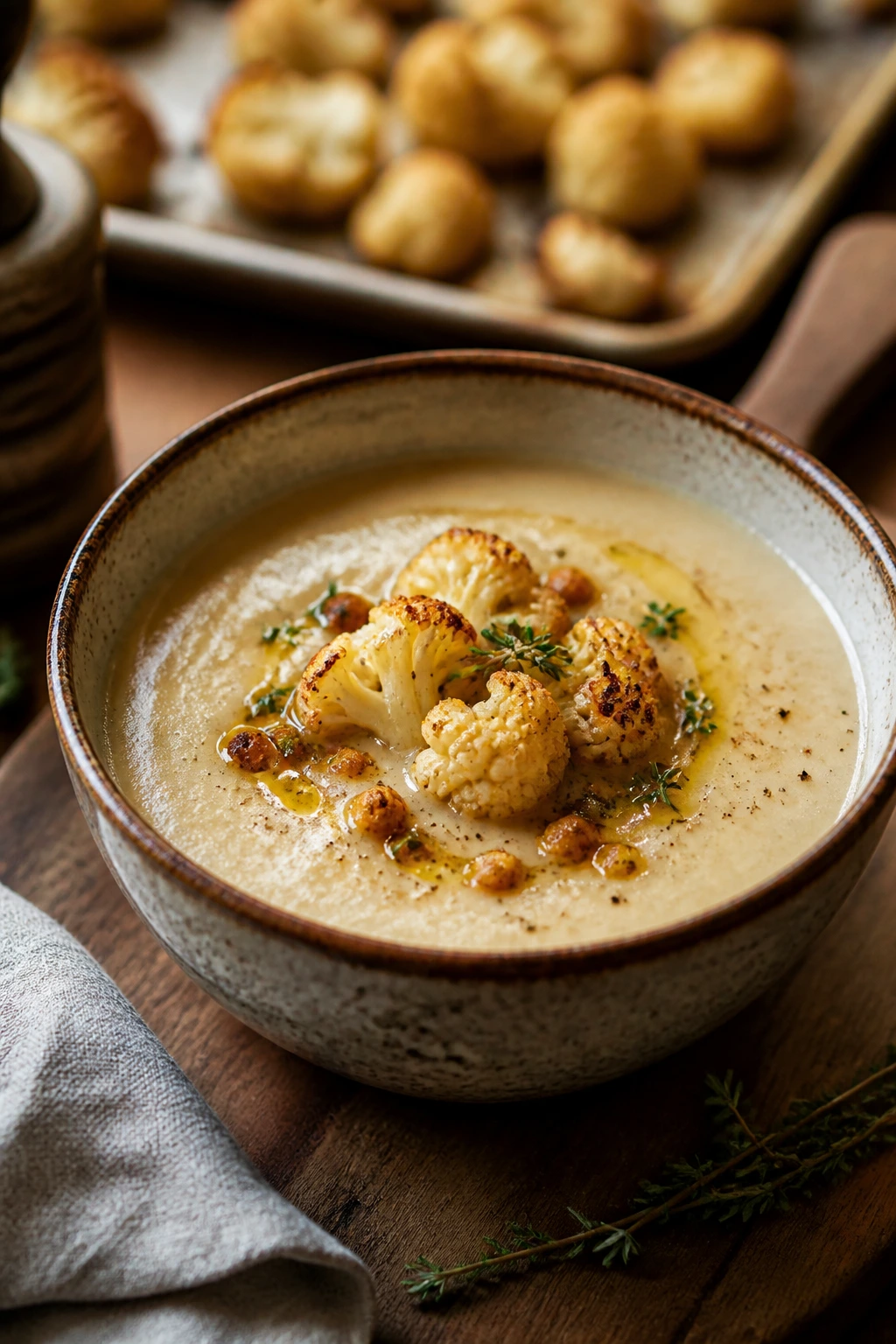
1. Roasted Garlic Parmesan Cauliflower Soup
The smell alone is half the reason I make this version. Roasted cauliflower and a whole head of garlic turn sweet in the oven, and when they hit hot broth with parmesan, the soup lands somewhere between cozy and quietly polished. It’s the kind of bowl that looks plain until you spoon it up and realize how much work the roast pan did.
Why It Works:
Roasting at 425°F pulls moisture out of the cauliflower and gives the edges a little color, which makes the final soup taste fuller and less one-note. Parmesan adds salt and body without making the texture heavy. A splash of whole milk keeps the soup smooth, but the garlic is what keeps it interesting after the second spoonful.
Key Ingredients:
- 1 large head cauliflower, about 2 1/2 lb, cut into florets — choose a firm head with tight white curds.
- 1 whole head garlic — roast it right alongside the cauliflower until soft and spreadable.
- 1 medium yellow onion, chopped — this gives the base a sweet edge once it softens.
- 2 tablespoons olive oil — helps the vegetables brown instead of dry out.
- 4 cups low-sodium vegetable or chicken broth — use a broth you would actually sip.
- 1 cup whole milk — adds creaminess without turning the soup gluey.
- 1/2 cup finely grated parmesan — grate it yourself so it melts cleanly.
- 1 tablespoon unsalted butter — gives the onions a rounder flavor.
- 1 teaspoon kosher salt, plus more to taste — season in layers, not all at once.
- 1/2 teaspoon black pepper — keep it gentle; the garlic does the heavy lifting.
Quick Steps:
- Preheat the oven to 425°F and line a rimmed sheet pan with parchment. Toss the cauliflower florets with olive oil, salt, and pepper, then cut the top off the garlic head, drizzle it with oil, and wrap it loosely in foil.
- Roast the cauliflower and garlic for 25 to 30 minutes, stirring once halfway through, until the florets are browned at the edges and the garlic feels soft when squeezed.
- Melt the butter in a Dutch oven over medium heat. Add the onion and cook for 5 to 6 minutes, stirring often, until it turns glossy and pale gold.
- Add the broth, roasted cauliflower, and squeezed garlic cloves. Simmer for 10 minutes so everything softens and the flavor settles.
- Blend until smooth with an immersion blender, or in batches in a countertop blender. Stir in the milk and parmesan, then warm for 2 minutes over low heat until silky.
Equipment for This Recipe:
- Rimmed sheet pan — gives the cauliflower space to brown.
- Dutch oven or heavy soup pot — holds heat evenly.
- Immersion blender or countertop blender — either one works, but vent the lid if blending hot soup.
- Microplane or fine grater — helps the parmesan melt cleanly.
How to Serve This Dish:
Ladle it into warm bowls and finish with a small pile of parmesan, black pepper, and a drizzle of olive oil. A hunk of sourdough or a buttered baguette is the right move here; you want something sturdy enough to chase the last spoonful around the bowl.
Pro Tips for This Recipe:
- Roast until you see browned corners on the cauliflower. Pale florets make a pale soup.
- Add the parmesan off the highest heat so it melts instead of turning grainy.
- If the soup tastes flat, add 1 teaspoon of lemon juice before reaching for more salt.
- A tablespoon of cream can replace part of the milk if you want a richer finish.
Variations on This Dish:
- Herb-Flecked Finish: Stir in 1 tablespoon chopped chives and 1 teaspoon thyme at the end for a fresher, greener bowl.
- Dairy-Free Silk: Swap the milk for unsweetened cashew milk and the parmesan for 2 tablespoons nutritional yeast plus extra salt.
- Extra-Roasty Version: Roast the onion wedges on the sheet pan too, then blend them in for a deeper, almost caramelized base.
Common Mistakes to Avoid with This Dish:
- Skipping the roast: Boiled cauliflower gives you a thin, flat soup. Browned cauliflower gives it character.
- Dumping in the parmesan over a hard boil: The cheese can get stringy or grainy. Keep the heat low.
- Over-salting before blending: Parmesan and broth both carry salt, so taste after the soup is blended and warm.
2. Cauliflower Cheddar Potato Soup
This is the bowl that eats like a sweater. The potato gives it a soft, comforting thickness, while sharp cheddar brings the kind of salt and tang that makes cauliflower taste like it has a backbone. It’s a little more rustic than the roasted garlic version, and I mean that as a compliment.
Why It Works:
A Yukon Gold potato melts just enough to thicken the soup without turning it pasty. Cauliflower keeps the texture lighter than a straight potato-cheddar soup, which means the bowl stays spoonable instead of heavy. Sharp cheddar, stirred in off the heat, gives you that elastic, savory finish people usually want from the boxed version — but with real body.
Key Ingredients:
- 1 large head cauliflower, about 2 lb, cut into florets — keep the florets close in size.
- 1 medium Yukon Gold potato, peeled and diced — this is the thickener.
- 1 medium yellow onion, chopped — the base layer.
- 2 cloves garlic, minced — enough to sharpen the flavor without taking over.
- 4 cups low-sodium vegetable broth — start with less salt than you think you need.
- 1 cup whole milk — keeps the soup smooth.
- 2 cups sharp cheddar, shredded from a block — pre-shredded cheese melts less cleanly.
- 2 tablespoons unsalted butter — gives the onion a rounder, fuller taste.
- 1/2 teaspoon dry mustard powder — makes the cheddar taste sharper.
- 1 teaspoon kosher salt and 1/2 teaspoon black pepper — season gradually.
Quick Steps:
- Melt the butter in a soup pot over medium heat. Add the onion and cook for 5 minutes, then stir in the garlic for 30 seconds.
- Add the cauliflower, potato, broth, salt, pepper, and mustard powder. Bring to a boil, then lower the heat and simmer for 18 to 20 minutes, until the potato breaks apart with a fork.
- Blend the soup until mostly smooth, leaving a few soft bits if you like texture.
- Stir in the milk and warm the soup over low heat for 2 minutes.
- Remove the pot from the heat, add the cheddar in handfuls, and stir until melted and glossy. Taste, then adjust the salt.
Equipment for This Recipe:
- Large soup pot — wide enough to stir without splashing.
- Immersion blender — easiest for a thick soup like this.
- Box grater or food processor — for shredding the cheddar.
- Wooden spoon — better than a whisk for folding in cheese.
How to Serve This Dish:
Serve it with cracked black pepper on top and a scatter of scallions if you want a little bite. A slice of toasted rye or a plain baked potato on the side makes sense here, because this soup is already carrying a lot of the meal.
Pro Tips for This Recipe:
- Dice the potato small so it softens at the same pace as the cauliflower.
- Add cheddar only after the soup leaves the boil. High heat can make it grainy.
- If you want a thicker bowl, mash a few potato chunks against the pot before blending.
- A teaspoon of hot sauce at the end sharpens the cheddar without making the soup spicy.
Variations on This Dish:
- Broccoli-Cauliflower Blend: Replace 2 cups of the cauliflower with broccoli florets for a greener, slightly earthier pot.
- Smoked Cheddar Swap: Use smoked cheddar for a campfire edge, but cut the amount to 1 1/2 cups so it doesn’t overwhelm the soup.
- Baconed-Up Version: Crisp 4 slices of bacon, crumble them, and use a spoonful of the fat to cook the onion.
Common Mistakes to Avoid with This Dish:
- Using too much cheese at once: Add it in handfuls or it can clump.
- Undercooking the potato: The soup will stay thin and a little chalky if the potato isn’t soft enough to mash.
- Overblending after the cheddar goes in: Blend the vegetables first; then stir in the cheese by hand.
3. Coconut Curry Cauliflower Soup
This one smells like comfort from the moment the ginger hits hot oil. Coconut milk makes the cauliflower taste round and lush, while curry powder and lime keep the bowl from getting sleepy. It’s the soup I make when I want warmth with a little lift at the end.
Why It Works:
Cauliflower is a good match for curry because it doesn’t bully the spice mix. Ginger, garlic, and curry powder bloom in oil before the broth goes in, which keeps the flavor from tasting raw or dusty. Coconut milk gives the soup a soft, creamy finish, and lime juice brightens the whole thing before serving.
Key Ingredients:
- 1 large head cauliflower, about 2 1/2 lb, cut into florets — roast or simmer, either works.
- 1 medium onion, sliced — helps build sweetness under the spice.
- 3 cloves garlic, minced — use fresh garlic, not jarred.
- 1 tablespoon fresh ginger, grated — the sharp note makes the soup feel brighter.
- 2 tablespoons curry powder — toast it briefly so it smells fragrant.
- 4 cups vegetable broth — low-sodium gives you control.
- 1 can coconut milk, 13.5 oz — full-fat makes the best texture here.
- 1 tablespoon olive oil — enough to bloom the aromatics.
- 1 tablespoon lime juice — add at the end, not early.
- 1/4 cup chopped cilantro — for the finish.
- 1/2 teaspoon kosher salt and 1/4 teaspoon red pepper flakes — adjust to taste.
Quick Steps:
- Heat the olive oil in a soup pot over medium heat. Add the onion and cook for 4 to 5 minutes, until softened.
- Stir in the garlic, ginger, curry powder, and red pepper flakes. Cook for 30 seconds, just until the spices smell warm and the garlic loses its raw edge.
- Add the cauliflower, broth, and salt. Bring to a boil, then reduce to a simmer and cook for 15 to 18 minutes, until the florets are tender.
- Blend the soup until smooth, then stir in the coconut milk.
- Warm gently for 2 minutes, add the lime juice, and finish with cilantro.
Equipment for This Recipe:
- Medium soup pot — thick enough to hold a steady simmer.
- Microplane or grater — for the ginger.
- Immersion blender — easy for a silky result.
- Citrus juicer — helpful, though a spoon works too.
How to Serve This Dish:
This soup likes jasmine rice on the side or a warm flatbread for dipping. I also like a small spoonful of chili crisp or toasted coconut on top, because the soup is soft and needs a little crunch to wake it up.
Pro Tips for This Recipe:
- Bloom the curry powder in oil for 20 to 30 seconds. That tiny step matters.
- Use full-fat coconut milk if you want the soup to stay lush after blending.
- Add lime only after the heat goes down; boiling it dulls the flavor.
- If you want more depth, roast half the cauliflower before simmering.
Variations on This Dish:
- Red Curry Version: Swap the curry powder for 2 tablespoons red curry paste and simmer it with the ginger.
- Turmeric Glow Bowl: Add 1 teaspoon ground turmeric and 1/2 teaspoon black pepper for a deeper golden color.
- Protein-Packed Finish: Stir in a can of drained chickpeas or cubes of baked tofu at the end.
Common Mistakes to Avoid with This Dish:
- Burning the curry powder: It only needs half a minute in the oil. Past that, it turns bitter.
- Using light coconut milk: The soup can feel thin and papery.
- Adding lime too early: The flavor gets flat if it cooks too long.
4. Cauliflower Leek and Thyme Soup
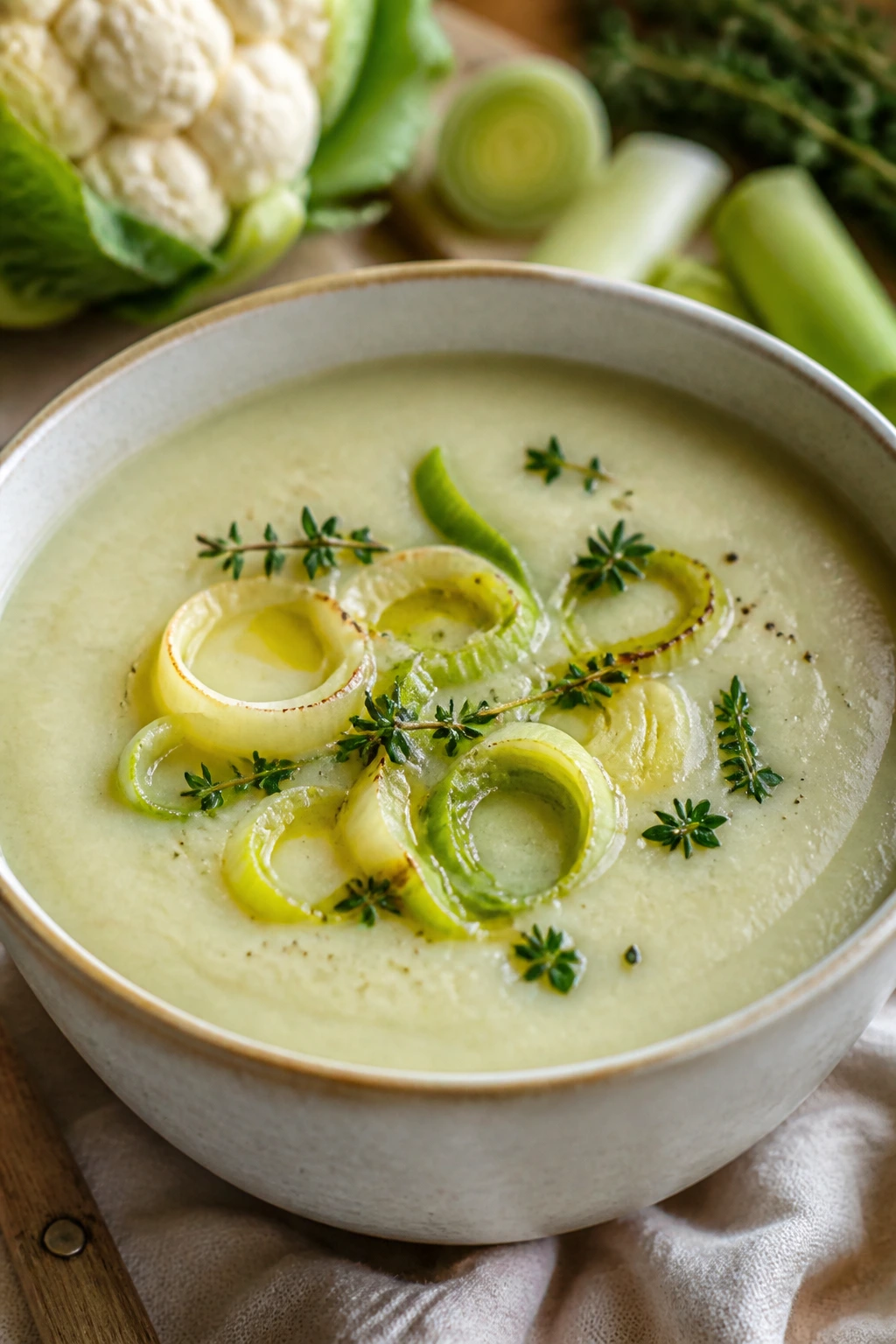
Leeks give cauliflower a softer, sweeter backbone than onion alone. Thyme keeps it from drifting into bland territory, and a small potato makes the texture silky without asking for cream at every turn. This is the bowl I reach for when I want something quiet but not boring.
Why It Works:
Leeks have a gentler flavor than onions, so they let cauliflower stay at the center. A potato adds enough starch to make the soup feel plush once blended, while thyme gives a woody, winter scent that reads as savory the second the lid comes off. A little lemon at the end keeps the whole pot from feeling sleepy.
Key Ingredients:
- 1 large head cauliflower, about 2 lb, cut into florets — trim the stem and use it too.
- 2 large leeks, white and light green parts only, sliced and rinsed well — grit ruins a good soup fast.
- 1 small Yukon Gold potato, peeled and diced — just enough for body.
- 3 cloves garlic, minced — use all of them.
- 4 cups vegetable broth — a lighter broth lets the leeks show.
- 2 tablespoons unsalted butter — for the leeks.
- 1 teaspoon fresh thyme leaves, or 1/2 teaspoon dried — thyme and cauliflower belong together.
- 1/2 cup half-and-half or whole milk — adds softness at the end.
- 1 tablespoon lemon juice — brightens the finish.
- 1 teaspoon kosher salt and 1/4 teaspoon white pepper — white pepper keeps the color pale.
Quick Steps:
- Melt the butter in a soup pot over medium heat. Add the leeks and cook for 6 to 8 minutes, stirring often, until they collapse and turn glossy.
- Add the garlic and thyme and cook for 30 seconds more.
- Add the cauliflower, potato, broth, salt, and pepper. Bring to a boil, then lower the heat and simmer for 18 minutes, until the cauliflower and potato are tender.
- Blend until smooth and return the soup to low heat.
- Stir in the half-and-half and lemon juice, then taste and adjust the salt.
Equipment for This Recipe:
- Soup pot — wide enough for the leeks to soften evenly.
- Fine sieve or bowl of water — for washing the sliced leeks.
- Immersion blender — best for keeping the texture silky.
- Sharp chef’s knife — leeks need clean, straight cuts.
How to Serve This Dish:
A spoonful of chopped chives or parsley on top makes the bowl look fresh. Serve it with buttered toast or a plain grilled cheese; the soup is delicate enough to let a sharp sandwich do the louder work.
Pro Tips for This Recipe:
- Wash the leeks after slicing, not before. The grit hides between layers.
- Use white pepper if you want the soup to stay pale and smooth-looking.
- Don’t skimp on the thyme; the soup needs that wintery edge.
- If the soup tastes too restrained, add another small squeeze of lemon before more salt.
Variations on This Dish:
- Creamier Leek Bowl: Replace the milk with 1/2 cup heavy cream for a richer finish.
- Potato-Free Version: Use 1/2 cup cooked white beans instead of the potato if you want a lighter bowl.
- Garlic-Herb Finish: Stir in a teaspoon of chopped tarragon at the end for a sharper herbal note.
Common Mistakes to Avoid with This Dish:
- Leaving grit in the leeks: It gives the soup a sandy texture. Rinse well.
- Cooking the leeks too fast: Browned edges can go bitter before the centers soften.
- Skipping the acid: Without lemon, the soup can taste sleepy.
5. Broccoli-Cauliflower Cheddar Soup

Two brassicas, one pot, and a lot of cheddar. This soup has more color than a straight cauliflower blend, which helps on dark days when pale bowls feel a little too quiet. Broccoli adds a grassy bite, cauliflower keeps the texture smooth, and cheddar ties it together with real momentum.
Why It Works:
Broccoli and cauliflower cook on nearly the same timeline, so the soup comes together without fuss. A carrot adds sweetness, which matters because cheddar likes a little balance. The key is blending the base first and then folding the cheese in off the heat so the texture stays smooth instead of grainy.
Key Ingredients:
- 2 cups cauliflower florets, about 8 oz — keep them bite-size.
- 2 cups broccoli florets, about 8 oz — include some stem, peeled and sliced.
- 1 medium carrot, diced — a small sweetener.
- 1 small onion, chopped — the main base flavor.
- 2 cloves garlic, minced — enough for depth.
- 4 cups vegetable broth — gives the vegetables room to soften.
- 1 1/2 cups whole milk — the soup needs this to stay plush.
- 2 cups sharp cheddar, shredded — the sharper the cheese, the better the payoff.
- 2 tablespoons butter — for the onion and carrot.
- 1/2 teaspoon paprika and 1/2 teaspoon kosher salt — simple seasoning keeps it clean.
Quick Steps:
- Melt the butter in a soup pot over medium heat. Add the onion and carrot and cook for 5 minutes, stirring often.
- Stir in the garlic and paprika and cook for 30 seconds.
- Add the cauliflower, broccoli, broth, and salt. Simmer for 12 to 15 minutes, until both vegetables are tender.
- Blend the soup until mostly smooth, leaving a little texture if you like.
- Stir in the milk and cheddar over low heat, then cook just until the cheese melts.
Equipment for This Recipe:
- Soup pot — roomy enough for the greens.
- Immersion blender — easiest for a slightly textured soup.
- Box grater — for the cheddar.
- Measuring cups — the milk matters here.
How to Serve This Dish:
Top each bowl with a few tiny broccoli florets that you blanched for 1 minute and some extra shredded cheddar. I like it with a thick slice of country bread, because the soup is soft and the bread gives it a bit of chew.
Pro Tips for This Recipe:
- Cut the broccoli stems thin so they soften at the same rate as the florets.
- Shred your own cheese; bagged cheese often has starch that can make the soup clump.
- Blend the soup before adding the cheddar.
- If it tastes flat, add a teaspoon of Dijon mustard instead of more salt.
Variations on This Dish:
- Smoky Cheddar Version: Add 1/2 teaspoon smoked paprika and use smoked cheddar for a deeper flavor.
- Cauliflower-Heavy Bowl: Use 3 cups cauliflower and 1 cup broccoli if you want the broccoli to stay in the background.
- Baked Potato Finish: Top with bacon bits and scallions if you want the bowl to lean indulgent.
Common Mistakes to Avoid with This Dish:
- Overcooking the broccoli: It turns muddy fast. Pull the pot once the stems are tender.
- Adding cheddar while the soup is boiling: The cheese can split.
- Using weak seasoning: Broccoli and cauliflower both need salt to taste like something.
6. Smoky Bacon Cauliflower Chowder
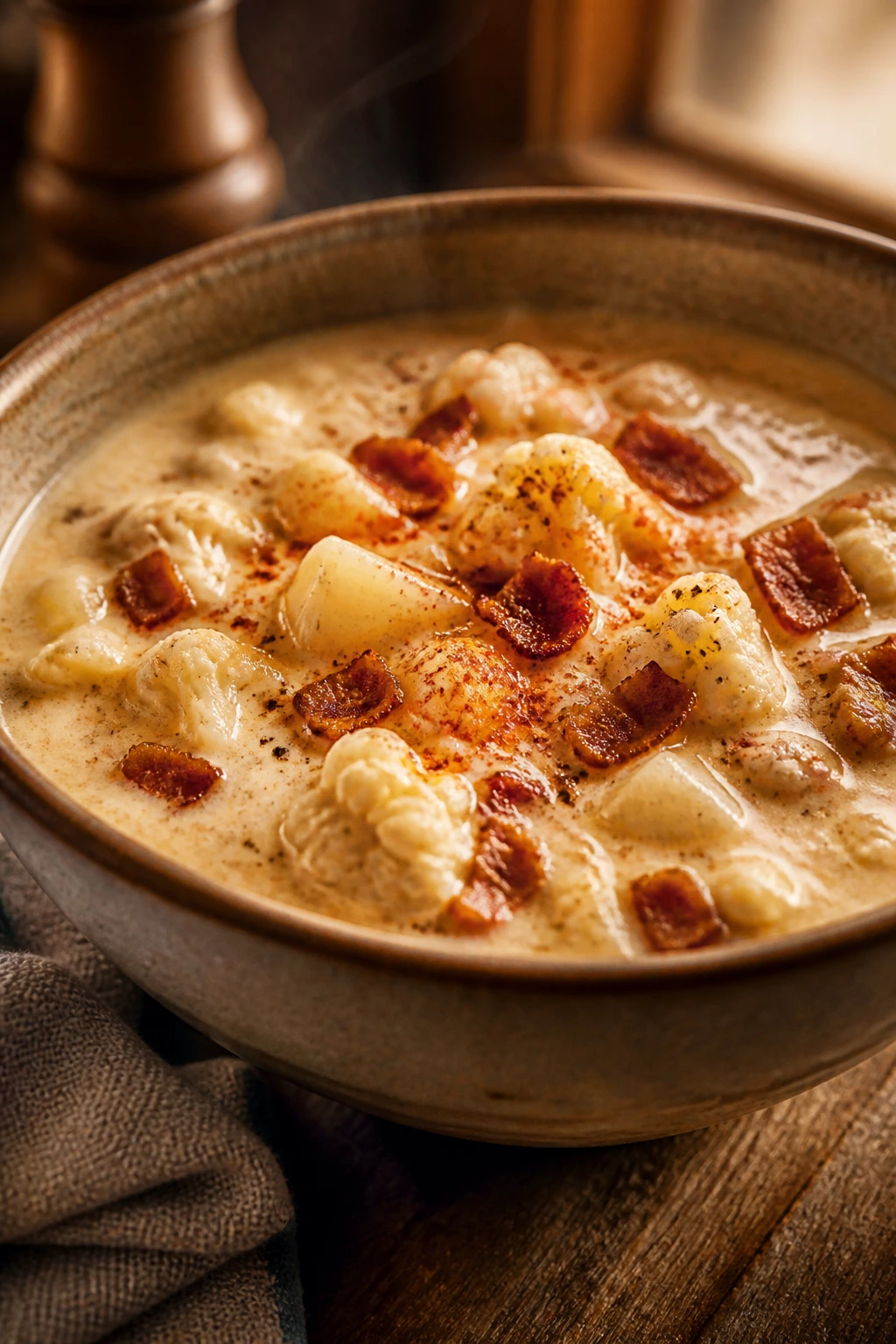
This is the loudest bowl in the bunch. Bacon fat, tender potato, and cauliflower give you a chowder that feels substantial enough for a spoon and a piece of bread, and smoked paprika keeps the smoke note going even after the bacon is gone. It’s not subtle. That’s the point.
Why It Works:
Bacon renders the fat that cooks the vegetables, so the whole pot starts savory before the broth even goes in. Potato gives the chowder its body, while cauliflower keeps the texture lighter than a classic corn-heavy chowder. A little flour helps the soup cling without making it stodgy, and milk at the end softens the edges.
Key Ingredients:
- 6 slices thick-cut bacon, chopped — cook it low enough to render the fat.
- 1 large head cauliflower, about 2 lb, cut into small florets — smaller pieces cook faster.
- 1 medium russet potato, peeled and diced — this gives the chowder body.
- 1 celery stalk, diced — a small savory note.
- 1 small onion, diced — the base aromatics.
- 2 tablespoons all-purpose flour — thickens the broth.
- 4 cups chicken broth — a good fit for the bacon flavor.
- 2 cups whole milk — use whole milk, not skim.
- 1 teaspoon smoked paprika — keeps the smoke flavor going.
- 2 scallions, sliced — for the finish.
- 1/2 teaspoon black pepper — bacon handles the salt.
Quick Steps:
- Cook the bacon in a Dutch oven over medium heat until crisp. Transfer it to a paper towel-lined plate and leave 2 tablespoons of fat in the pot.
- Add the onion and celery to the bacon fat and cook for 4 minutes. Stir in the flour and paprika and cook for 1 minute.
- Add the cauliflower, potato, broth, and black pepper. Simmer for 18 minutes, until the potato is soft.
- Stir in the milk and cook over low heat for 3 minutes; do not let it boil.
- Mash a few potato chunks against the side of the pot or blend part of the soup for a thicker chowder, then stir in the bacon and scallions.
Equipment for This Recipe:
- Dutch oven — bacon, vegetables, and liquid all fit comfortably.
- Wooden spoon — better for scraping up the flour.
- Knife and board — bacon and vegetables both need clean cutting.
- Ladle — this soup is thick enough to need one.
How to Serve This Dish:
Serve it in wide bowls with the bacon crumbled on top and a few scallion rings for color. A chunk of warm cornbread or a plain saltine pile works well because the soup is rich and salty already.
Pro Tips for This Recipe:
- Cook the bacon slowly so it renders enough fat without burning.
- Stir the flour for a full minute so the chowder doesn’t taste raw.
- Add the milk after the vegetables soften; boiling milk can split the texture.
- A splash of cider vinegar at the end sharpens the smoke in a good way.
Variations on This Dish:
- Turkey Bacon Version: Use turkey bacon and 1 tablespoon butter to replace some of the missing fat.
- Corn Chowder Twist: Add 1 cup frozen corn with the cauliflower for a sweeter bowl.
- Creamier Finish: Swap half the milk for 1/2 cup heavy cream if you want a heavier chowder.
Common Mistakes to Avoid with This Dish:
- Boiling after the milk goes in: That’s how you get a broken, grainy chowder.
- Skipping the flour step: The soup can turn thin and brothy.
- Adding too much salt early: Bacon and broth both bring salt, so taste at the end.
7. Cauliflower White Bean Soup with Rosemary
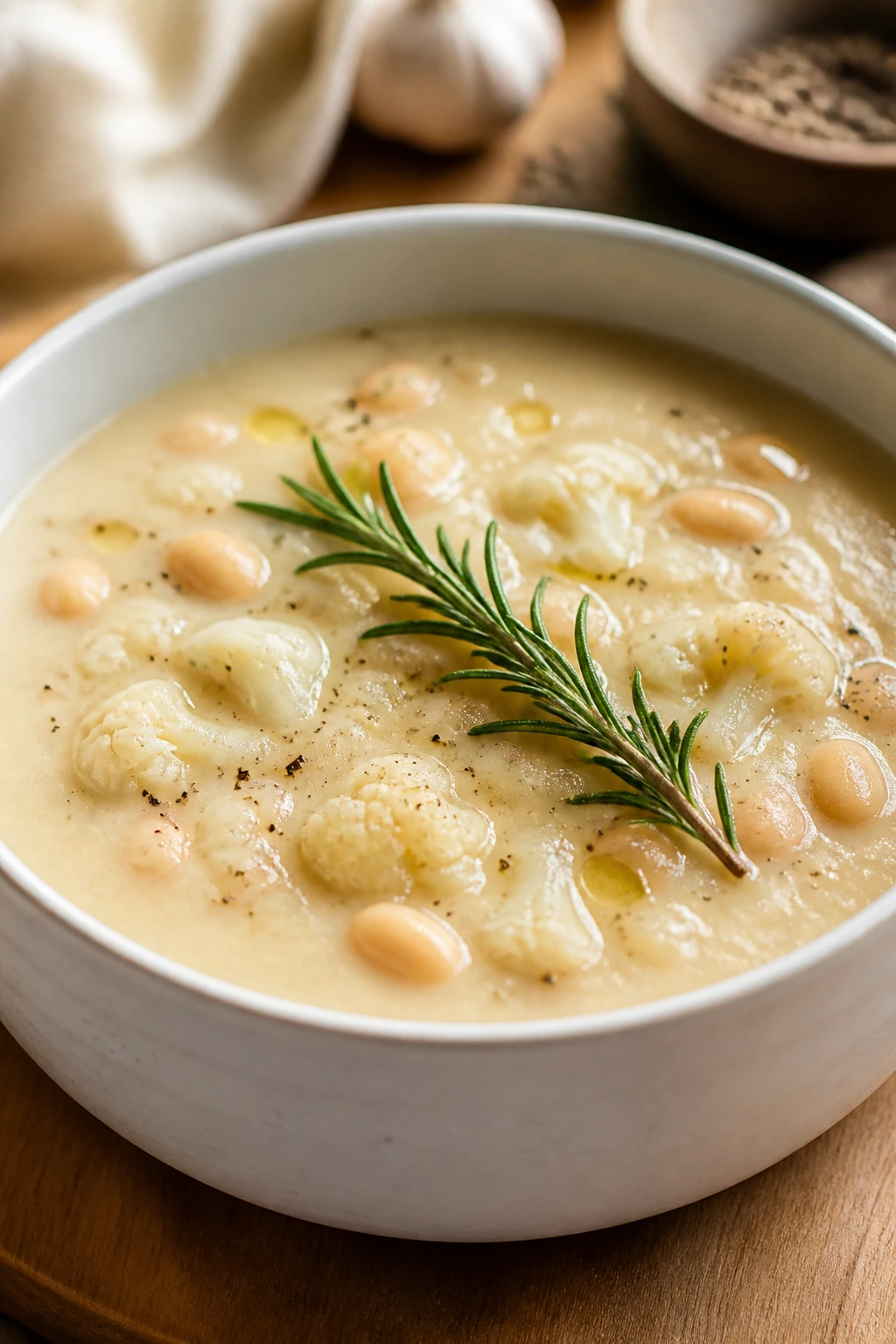
White beans give cauliflower a little muscle. Rosemary brings a piney, winter smell that makes the pot feel older and more grounded, and lemon keeps the whole thing from tasting like a beige bowl of caution. This is one of the best pantry soups in the set.
Why It Works:
White beans make a naturally creamy soup without much dairy, which is useful if you want a bowl that still feels rich after reheating. Cauliflower and beans both blend smoothly, but leaving a few beans whole gives the soup a little shape. Rosemary needs a light hand; too much and it turns medicinal, too little and the bowl tastes unfinished.
Key Ingredients:
- 1 large head cauliflower, about 2 lb, cut into florets — trim the stem and chop it too.
- 2 cans cannellini beans, 15 oz each, drained and rinsed — the starch helps thicken the soup.
- 1 medium onion, chopped — the first layer.
- 3 cloves garlic, minced — use fresh.
- 4 cups vegetable broth — low-sodium gives you control.
- 2 tablespoons olive oil — for the onion and rosemary.
- 1 tablespoon chopped fresh rosemary — use less if dried.
- 1 tablespoon lemon juice — the finish matters here.
- 1/4 cup grated parmesan, optional — good if you want more savoriness.
- 1 teaspoon kosher salt and 1/2 teaspoon black pepper — season in layers.
Quick Steps:
- Heat the olive oil in a soup pot over medium heat. Add the onion and cook for 5 minutes, then add the garlic and rosemary for 30 seconds.
- Add the cauliflower, 1 can of beans, broth, salt, and pepper. Bring to a boil, then simmer for 15 minutes until the cauliflower is tender.
- Blend the soup until smooth, then stir in the second can of beans and mash a few against the pot for texture.
- Warm for 2 minutes, then add lemon juice and parmesan if using.
- Taste and adjust the salt before serving.
Equipment for This Recipe:
- Soup pot — simple, but it needs to hold a steady simmer.
- Immersion blender — easy to control texture.
- Colander — for rinsing the beans well.
- Citrus juicer — optional, but handy.
How to Serve This Dish:
A drizzle of olive oil and a few rosemary leaves fried crisp in a tablespoon of oil make the bowl look finished. Serve with toast rubbed with garlic or a chopped kale salad if you want something bright beside it.
Pro Tips for This Recipe:
- Rinse the beans until the water runs mostly clear; it keeps the soup from tasting tinny.
- Add one can whole and blend the other for a nicer texture.
- Rosemary should be chopped fine so you don’t hit woody bits.
- Lemon belongs at the end, not in the simmer.
Variations on This Dish:
- Tuscan-Style Bowl: Add 1 cup chopped kale in the last 3 minutes of cooking.
- No-Dairy Version: Skip the parmesan and finish with 1 tablespoon extra olive oil.
- Smoky Bean Swap: Add 1/2 teaspoon smoked paprika if you want a deeper winter note.
Common Mistakes to Avoid with This Dish:
- Using too much rosemary: It can taste like pine cleaner if you overdo it.
- Not rinsing the beans: The soup can come out murky.
- Blending the entire pot smooth: Leaving a few whole beans gives the bowl more life.
8. Curried Cauliflower Lentil Soup

Red lentils and cauliflower make a soup that thickens almost by itself. Curry powder, garlic, and ginger turn the pot fragrant fast, and coconut milk smooths out the edges without making the bowl sleepy. It’s hearty enough to stand alone.
Why It Works:
Red lentils break down in about 20 minutes, so they create body without needing a blender trick. Cauliflower softens at the same pace, which keeps the soup moving together. Curry powder and ginger give the broth more direction than plain salt and pepper ever could, and a squeeze of lime wakes everything up at the end.
Key Ingredients:
- 1 large head cauliflower, about 2 lb, cut into florets — keep the pieces modest.
- 1 cup red lentils, rinsed — they cook fast and thicken the pot.
- 1 medium onion, diced — the base.
- 3 cloves garlic, minced — enough to support the spice.
- 1 tablespoon fresh ginger, grated — brightens the curry.
- 2 tablespoons curry powder — bloom it in oil.
- 4 cups vegetable broth — low-sodium is best.
- 1 can coconut milk, 13.5 oz — makes the soup smooth.
- 1 tablespoon lime juice — add after the heat drops.
- 1 tablespoon olive oil — for the aromatics.
- 1 teaspoon kosher salt — add more only after tasting.
Quick Steps:
- Heat the olive oil in a soup pot over medium heat. Add the onion and cook for 5 minutes.
- Stir in the garlic, ginger, and curry powder and cook for 30 seconds until fragrant.
- Add the cauliflower, lentils, broth, and salt. Bring to a boil, then simmer for 18 to 20 minutes, stirring once or twice, until the lentils break apart and the cauliflower is tender.
- Blend half the soup if you want a creamier texture, or leave it rustic. Stir in the coconut milk.
- Finish with lime juice and taste for salt.
Equipment for This Recipe:
- Soup pot — wide enough for the lentils to move around.
- Box grater or microplane — for ginger.
- Immersion blender — optional, if you want some smoothness.
- Ladle — the soup gets thick.
How to Serve This Dish:
Serve it over a scoop of rice if you want to stretch the meal, or with naan on the side for dipping. A little cilantro or sliced scallion on top adds freshness against the curry.
Pro Tips for This Recipe:
- Rinse lentils until the water looks clearer. It helps the broth stay clean-tasting.
- Stir once or twice during simmering so the lentils don’t catch on the bottom.
- Lime juice at the end sharpens the coconut milk.
- If the soup gets too thick, loosen it with 1/2 cup hot broth.
Variations on This Dish:
- Red Curry Heat: Swap the curry powder for 2 tablespoons red curry paste.
- Spinach Finish: Stir in 2 big handfuls of spinach after blending; it wilts in a minute.
- Tomato-Coconut Version: Add 1 cup crushed tomatoes for a tangier, deeper bowl.
Common Mistakes to Avoid with This Dish:
- Adding the coconut milk too soon: It can mute the spice if it cooks forever.
- Under-seasoning the lentils: They soak up salt fast.
- Skipping the lime: The bowl can feel heavy without acid.
9. Mushroom Barley Cauliflower Soup
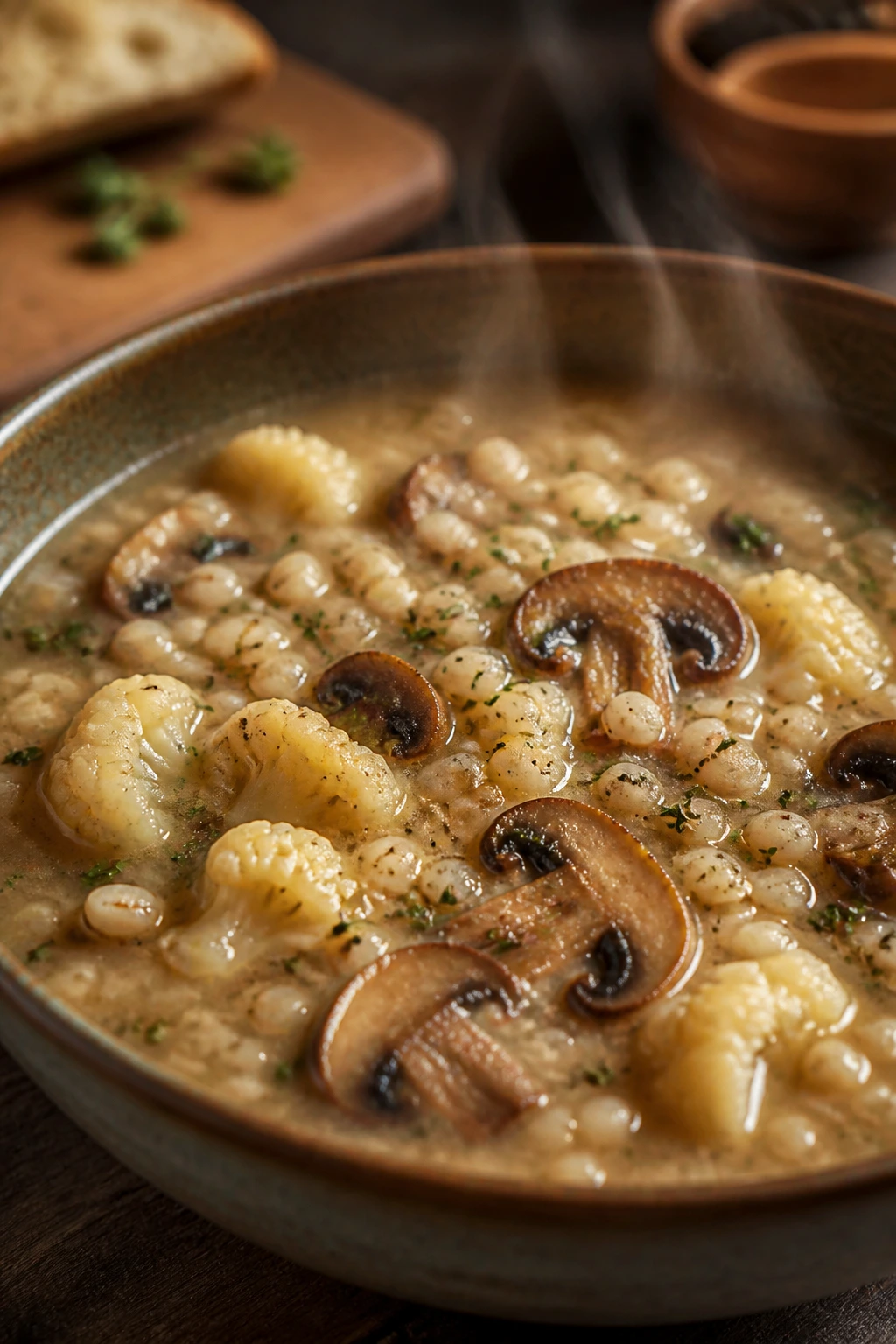
This one tastes like a pot that has been simmering since noon, even if you made it on a Tuesday. Mushrooms bring the deep savory note, barley adds chew, and cauliflower softens into the broth without disappearing. It is earthy in the best way.
Why It Works:
Mushrooms need browning to taste like themselves in soup, so this recipe starts by giving them enough heat to shed moisture and pick up color. Barley brings a gentle chew that makes each spoonful feel complete. Cauliflower helps thicken the broth without leaning on cream, which keeps the bowl feeling sturdy rather than heavy.
Key Ingredients:
- 1 large head cauliflower, about 2 lb, cut into florets — smallish pieces help it cook evenly.
- 8 oz cremini mushrooms, sliced — brown them well.
- 3/4 cup pearl barley, rinsed — it needs a little time.
- 1 medium onion, diced — the starting point.
- 2 carrots, diced — add sweetness.
- 3 cloves garlic, minced — support the mushrooms.
- 6 cups vegetable or beef broth — barley needs more liquid than some soups.
- 1 teaspoon fresh thyme leaves — earthy, not loud.
- 1 tablespoon soy sauce — deepens the mushroom flavor.
- 2 tablespoons olive oil — for browning.
- 1 teaspoon kosher salt and 1/2 teaspoon black pepper — adjust at the end.
Quick Steps:
- Heat the olive oil in a soup pot over medium-high heat. Add the mushrooms and cook for 6 to 8 minutes, until they drop their liquid and begin to brown.
- Add the onion and carrots and cook for 4 minutes. Stir in the garlic and thyme for 30 seconds.
- Add the cauliflower, barley, broth, soy sauce, salt, and pepper. Bring to a boil, then simmer for 25 minutes, stirring once or twice, until the barley is tender.
- Blend a cup or two of the soup if you want it thicker, or leave it chunky.
- Taste and adjust the seasoning before serving.
Equipment for This Recipe:
- Soup pot — needs enough surface area to brown mushrooms.
- Wooden spoon — useful for scraping browned bits.
- Measuring cup — for the barley and broth.
- Immersion blender — optional.
How to Serve This Dish:
A spoonful of chopped parsley on top gives the bowl some lift. I like it with a dark bread or even just a buttered cracker, because the soup is already busy with texture.
Pro Tips for This Recipe:
- Brown the mushrooms fully before adding liquid; that’s where the flavor lives.
- Barley keeps absorbing broth, so add more water if the soup sits a while.
- Use soy sauce instead of more salt if the broth tastes thin.
- A splash of sherry vinegar at the end works better than extra pepper.
Variations on This Dish:
- Chicken Broth Version: Use chicken broth for a deeper, meatier flavor.
- Herby Green Bowl: Stir in chopped kale during the last 5 minutes.
- Creamy Mushroom Finish: Add 1/2 cup cream at the very end if you want a softer bowl.
Common Mistakes to Avoid with This Dish:
- Skipping mushroom browning: If they stay pale, the soup tastes flat.
- Using quick barley without adjusting time: It cooks faster, so watch the pot.
- Forgetting extra liquid: Barley keeps thickening the soup after it rests.
10. Silky Cauliflower and Celery Root Soup
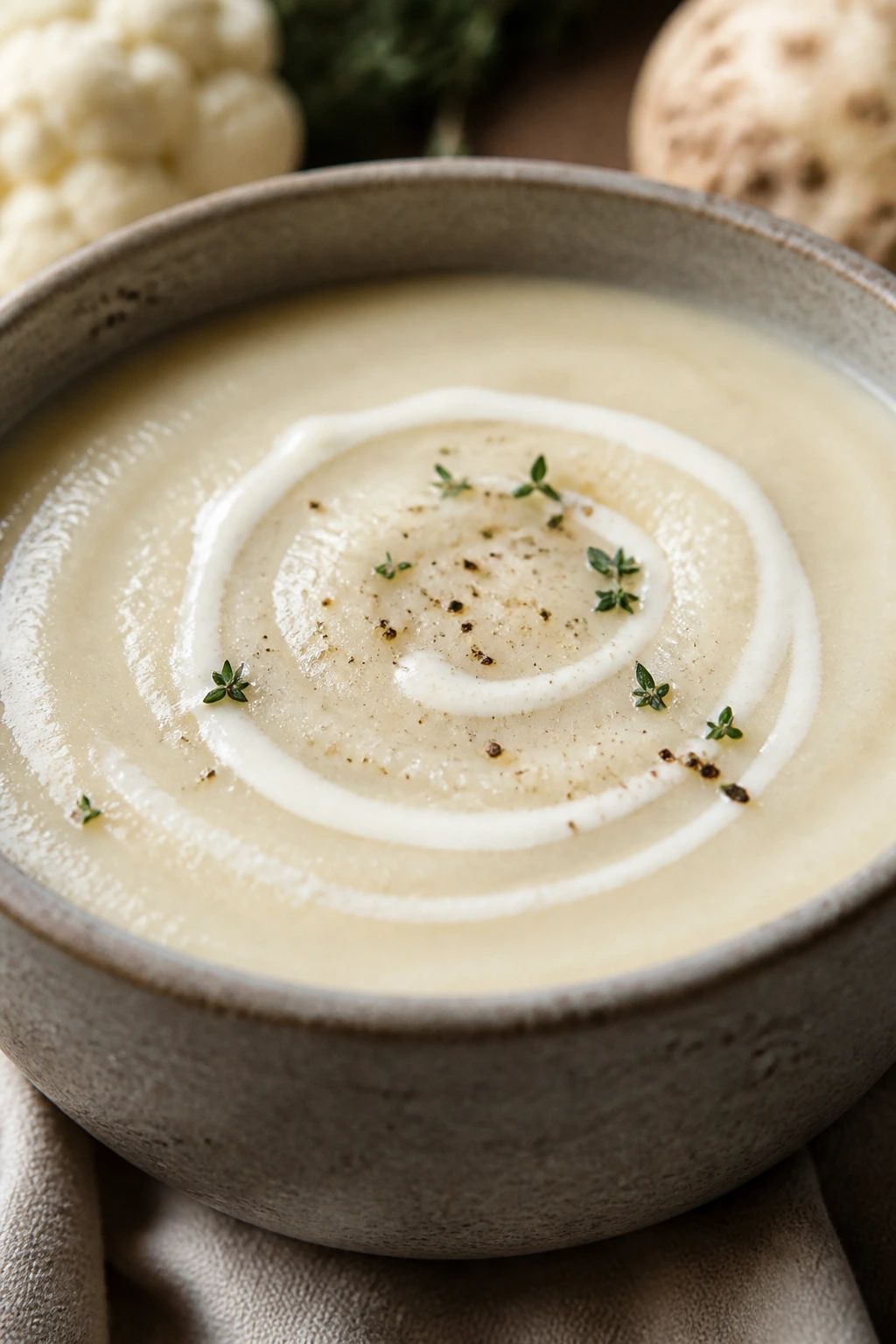
Celery root is the quiet overachiever of the root-vegetable shelf. Paired with cauliflower, it gives you a soup that tastes delicate at first and then hangs around with a clean, nutty finish. This one is especially good when you want a bowl that feels refined without acting fussy.
Why It Works:
Celery root and cauliflower both blend into a very smooth texture, but celery root adds a faint celery-like perfume that keeps the soup from tasting one-note. A little cream rounds the edges, and nutmeg gives the bowl a gentle warmth that reads as winter more than spice. This is one of those soups that gets better after a short rest because the flavors settle down together.
Key Ingredients:
- 1 large head cauliflower, about 2 lb, cut into florets — include the stem.
- 1 medium celery root, peeled and diced, about 1 lb — peel it well, the skin is rough.
- 1 medium onion, chopped — the base.
- 3 cloves garlic, sliced — sliced garlic softens fast.
- 4 cups vegetable broth — enough to cover the vegetables.
- 2 tablespoons unsalted butter — for the onion.
- 1/2 cup heavy cream — this version likes a little richness.
- 1/8 teaspoon nutmeg — tiny amount, big effect.
- 1 teaspoon kosher salt and 1/2 teaspoon white pepper — keep the color pale.
- Chopped chives, for serving — the green finish helps.
Quick Steps:
- Melt the butter in a soup pot over medium heat. Add the onion and cook for 5 minutes, then add the garlic for 30 seconds.
- Add the cauliflower, celery root, broth, salt, white pepper, and nutmeg. Bring to a boil, then simmer for 20 minutes until both vegetables are fork-tender.
- Blend the soup until very smooth.
- Stir in the cream and warm over low heat for 2 minutes.
- Taste and adjust the salt, then serve with chives.
Equipment for This Recipe:
- Vegetable peeler — celery root needs a firm hand.
- Soup pot — wide enough for the root pieces.
- High-speed blender or immersion blender — this soup benefits from a smooth finish.
- Fine mesh strainer, optional — if you want an especially polished texture.
How to Serve This Dish:
Serve it in shallow bowls with a few chives and a tiny drizzle of cream on top. A simple buttered toast point or a crisp little cheese cracker is enough beside it; the soup should stay the main event.
Pro Tips for This Recipe:
- Peel celery root deeply so no gnarly bits make it into the pot.
- A high-speed blender gives this soup a noticeably silkier texture.
- Nutmeg should stay in the background. Too much and the bowl turns perfumed.
- If the soup tastes too sharp, a splash of cream can round it out faster than more salt.
Variations on This Dish:
- Apple-Celery Root Mix: Add half a peeled apple for a faint sweetness.
- Dairy-Free Silk: Swap the cream for 1/2 cup oat cream or cashew cream.
- Truffle Finish: Add a few drops of truffle oil at the end if you want the bowl to feel more formal.
Common Mistakes to Avoid with This Dish:
- Not peeling celery root well: The skin is too rough to leave on.
- Overdoing nutmeg: It can take over quickly.
- Stopping the blend too early: A lumpy celery root soup loses the whole point.
11. Cauliflower Apple Soup with Sage
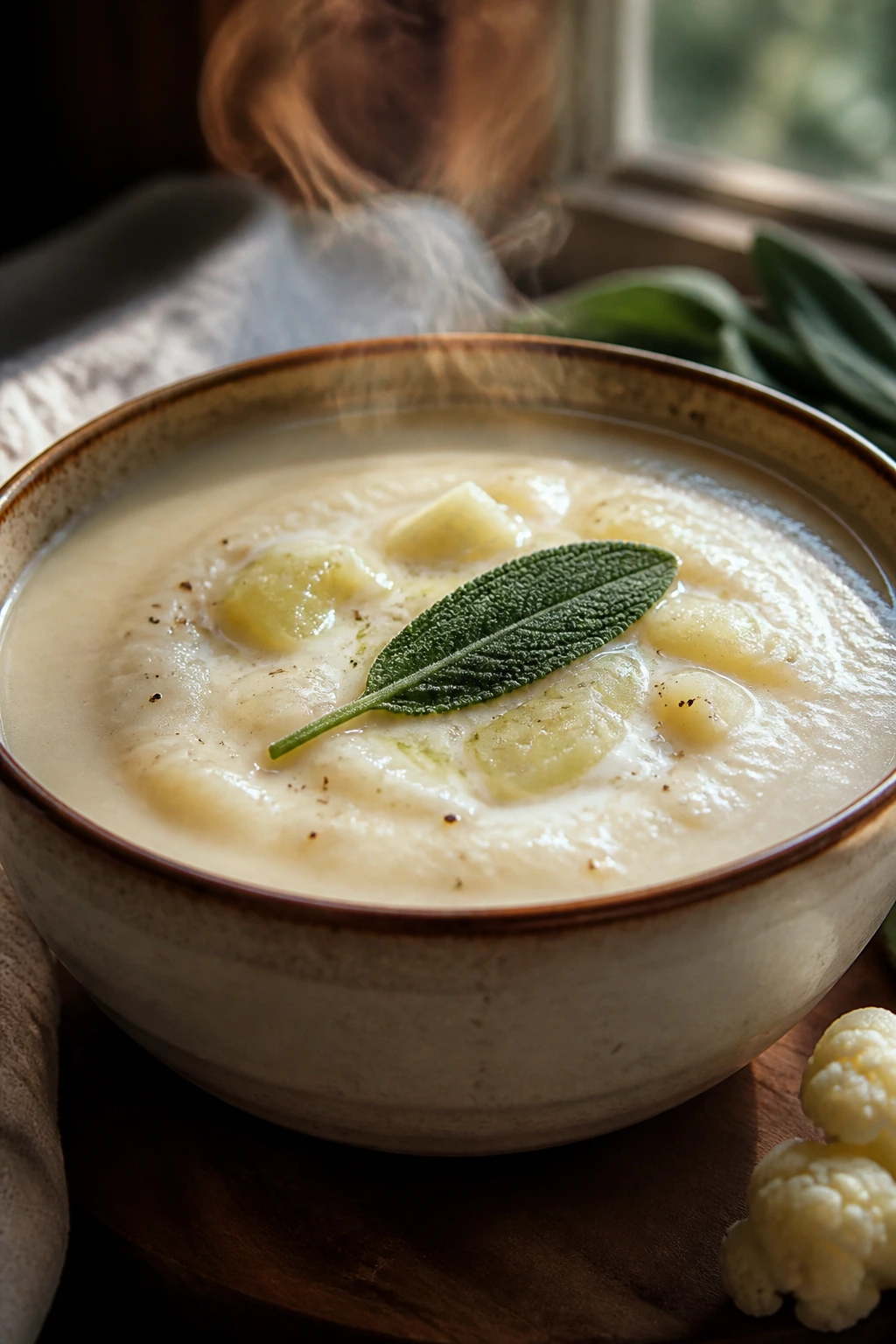
A tart apple in cauliflower soup sounds odd until you taste it. Then it makes perfect sense. The fruit adds a soft sweetness that sage cuts through, and the result is brighter than most winter soups without tipping into dessert territory.
Why It Works:
Cauliflower and apple both soften quickly, but they bring different kinds of sweetness to the pot. Sage adds a savory, almost woodsy note that keeps the soup from wandering. A little cream or milk smooths the texture, and a splash of cider vinegar at the end makes the apple taste more deliberate.
Key Ingredients:
- 1 large head cauliflower, about 2 lb, cut into florets — keep the stem pieces.
- 1 tart apple, peeled and chopped — Granny Smith or Pink Lady both work.
- 1 medium onion, chopped — the savory anchor.
- 2 cloves garlic, minced — enough to keep the soup from feeling soft.
- 4 cups vegetable or chicken broth — both work.
- 1 tablespoon fresh sage, chopped — use fresh if you can.
- 1 tablespoon butter — for the onion and sage.
- 1/2 cup half-and-half or whole milk — for the finish.
- 1 teaspoon apple cider vinegar — adds a bright edge.
- 1 teaspoon kosher salt and 1/4 teaspoon black pepper — season carefully.
Quick Steps:
- Melt the butter in a soup pot over medium heat. Add the onion and cook for 4 minutes, then add the sage and garlic for 30 seconds.
- Add the cauliflower, apple, broth, salt, and pepper. Bring to a boil, then lower to a simmer for 15 minutes.
- Blend until smooth.
- Stir in the milk or half-and-half and warm over low heat for 2 minutes.
- Finish with apple cider vinegar and taste for salt.
Equipment for This Recipe:
- Soup pot — nothing fancy required.
- Immersion blender — easy for a smooth soup.
- Peeler and knife — the apple should be peeled.
- Measuring spoon — the vinegar matters.
How to Serve This Dish:
A few fried sage leaves on top look nice and give you a crisp bite. Serve it with rye toast or a slice of sharp cheddar on the side, because the soup has sweetness that likes a salty partner.
Pro Tips for This Recipe:
- Use a tart apple, not a mealy sweet one.
- Fry the sage in the butter for a few seconds before the onion if you want a deeper herb flavor.
- Add vinegar at the end or the apple note can flatten.
- If the soup tastes too sweet, a pinch more salt and a squeeze of lemon usually fix it.
Variations on This Dish:
- Pear and Sage Bowl: Swap the apple for a firm pear for a softer fruit note.
- Curried Apple Version: Add 1 teaspoon curry powder with the garlic for a warmer spice.
- Bacon-Sage Upgrade: Crisp 3 slices of bacon and crumble them over the top.
Common Mistakes to Avoid with This Dish:
- Using sweet apples: The soup can taste dessert-like instead of savory.
- Too much sage: It can become bitter and dusty.
- Skipping the acid: Without vinegar or lemon, the bowl can feel dull.
12. Cauliflower Tortilla Soup

This is tortilla soup with a cauliflower backbone, and it works better than you might expect. The cauliflower softens into the tomato broth, the chipotle adds smoke, and the tortilla strips on top give you the crunch that makes the bowl feel finished. It’s bright, salty, and a little messy in the best way.
Why It Works:
Cauliflower bulks up the soup without burying the tomato and chile flavor. Black beans add heft, while cumin and chipotle keep the broth moving in a smoky direction. The tortilla strips are not decorative; they matter, because the soup needs crunch against all that soft texture.
Key Ingredients:
- 1 large head cauliflower, about 2 lb, cut into small florets — small pieces hold the broth better.
- 1 medium onion, diced — the savory base.
- 3 cloves garlic, minced — bring real garlic, not powder.
- 1 can diced tomatoes, 14.5 oz — the body of the broth.
- 1 to 2 chipotle peppers in adobo, chopped — start with one if you want control.
- 4 cups chicken or vegetable broth — use enough to keep it spoonable.
- 1 can black beans, 15 oz, drained and rinsed — for heft.
- 1 teaspoon cumin — pairs with tomato and chipotle.
- 1 tablespoon olive oil — for the onion.
- 2 cups tortilla strips or crushed baked tortilla chips — added at serving.
- 1 lime, cut into wedges — squeeze at the end.
- 1/4 cup chopped cilantro — fresh finish.
Quick Steps:
- Heat the olive oil in a soup pot over medium heat. Add the onion and cook for 5 minutes, then stir in the garlic and cumin for 30 seconds.
- Add the tomatoes, chipotle, cauliflower, broth, and a pinch of salt. Simmer for 15 to 18 minutes, until the cauliflower is tender.
- Stir in the black beans and cook for 2 more minutes.
- Taste and adjust the salt or chipotle.
- Ladle into bowls and top with tortilla strips, cilantro, and a squeeze of lime.
Equipment for This Recipe:
- Soup pot — wide enough for toppings to land later.
- Sharp knife — chipotle peppers can be sticky, so chop carefully.
- Can opener — obvious, but necessary.
- Ladle — good for getting beans and cauliflower into each bowl.
How to Serve This Dish:
Pile the tortilla strips on at the table so they stay crisp. Avocado slices, queso fresco, or a dollop of sour cream all fit here if you want to dress the bowl up a little.
Pro Tips for This Recipe:
- Use one chipotle first, taste, then add more. They can jump fast.
- Crush the tortilla chips only right before serving.
- If the broth tastes thin, simmer it uncovered for 5 extra minutes.
- A pinch of oregano works well here if you want a more classic tortilla-soup note.
Variations on This Dish:
- Chicken Tortilla Version: Add 2 cups shredded cooked chicken at the bean stage.
- Vegetarian Black Bean Bowl: Keep it meatless and add an extra half-can of beans.
- Extra-Smoky Version: Use a second chipotle and 1/2 teaspoon smoked paprika.
Common Mistakes to Avoid with This Dish:
- Adding chips too early: They turn limp fast.
- Using too much chipotle: The smoke can flatten the tomatoes.
- Forgetting the lime: The soup needs acid to wake up the broth.
13. Corn, Poblano, and Cauliflower Soup
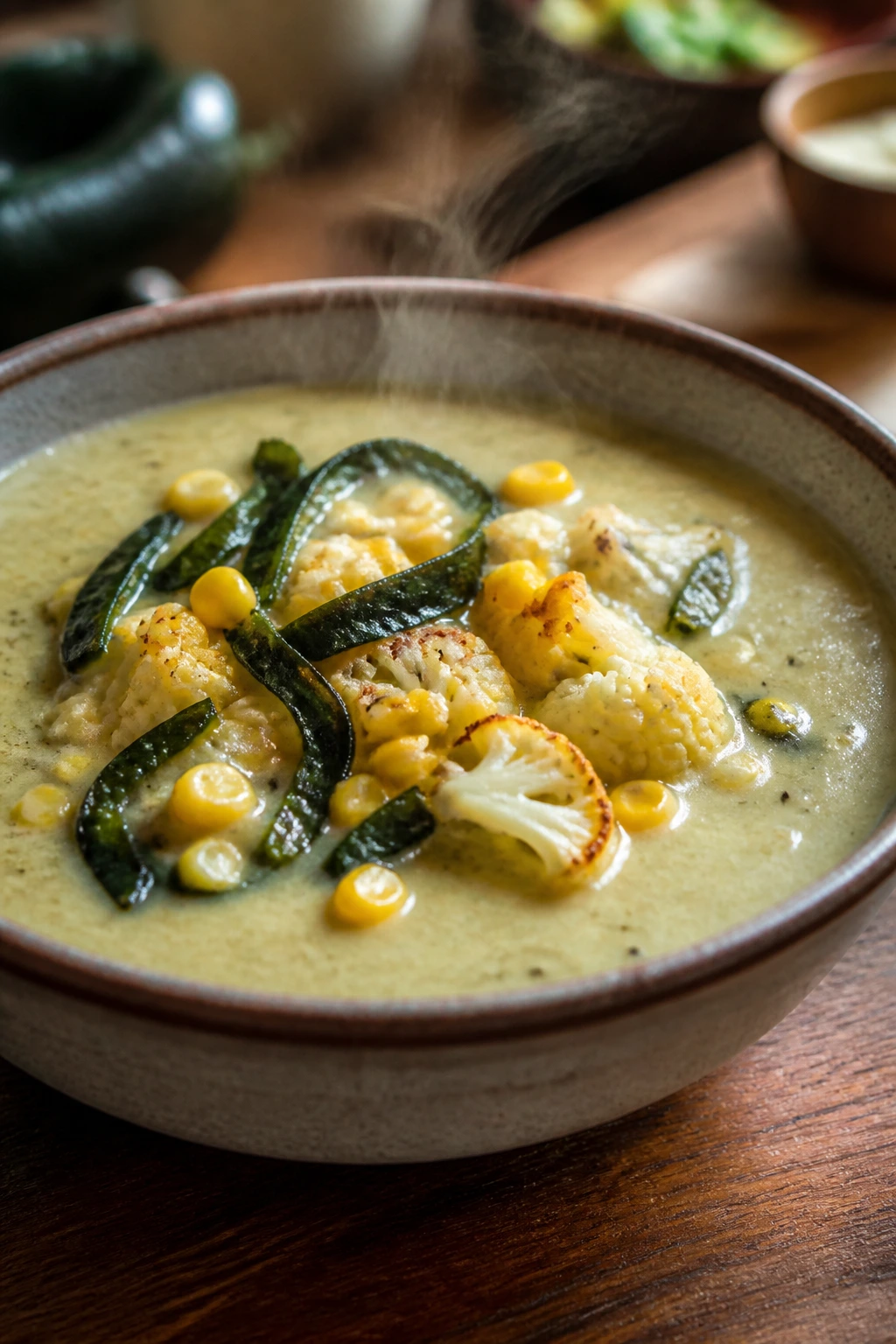
Corn gives this soup a sweet, almost creamy feel, while poblano adds a mild chile note that never gets rude. Cauliflower makes the base thicker than a standard corn soup, so the bowl lands in the cozy middle: warm, green, and just a little smoky.
Why It Works:
Poblanos are gentle enough to bring chile flavor without burning the table down. Corn adds sweetness and texture, and cauliflower gives the soup enough body that you don’t need flour. A little cream at the end rounds out the green chile edge and makes the whole bowl feel smoother.
Key Ingredients:
- 1 large head cauliflower, about 2 lb, cut into florets — keep the pieces small.
- 2 poblano peppers — roast and peel them for best flavor.
- 1 1/2 cups corn kernels, fresh or frozen — thaw frozen corn first.
- 1 medium onion, chopped — the base.
- 3 cloves garlic, minced — needed for depth.
- 4 cups vegetable broth — enough to cover the cauliflower.
- 1/2 cup heavy cream — adds richness at the finish.
- 1 tablespoon olive oil — for the onion.
- 1 teaspoon kosher salt and 1/2 teaspoon black pepper — season carefully.
- 1 tablespoon lime juice — brightens the corn.
- Chopped cilantro, for serving — optional but helpful.
Quick Steps:
- Roast the poblanos over a gas flame or under the broiler until blackened. Cover them for 10 minutes, peel, seed, and chop.
- Heat the olive oil in a soup pot over medium heat. Add the onion and cook for 5 minutes, then add the garlic for 30 seconds.
- Add the cauliflower, broth, salt, pepper, chopped poblanos, and corn. Simmer for 15 minutes until the cauliflower is tender.
- Blend the soup until smooth or leave it partly chunky.
- Stir in the cream and lime juice, then serve with cilantro.
Equipment for This Recipe:
- Broiler-safe sheet pan or gas flame tongs — for the poblanos.
- Soup pot — the main stage.
- Immersion blender — handy if you want a smooth bowl.
- Knife and cutting board — for peeling the poblanos after roasting.
How to Serve This Dish:
This soup looks good with a spoonful of crema or sour cream and a little cilantro on top. A warm tortilla or cornbread on the side feels right, because the bowl has enough sweetness to welcome both.
Pro Tips for This Recipe:
- Roast the poblanos until the skins are well blistered. Under-roasted peppers taste flat.
- Frozen corn works fine here, but thaw it first so it doesn’t drag the temperature down.
- Lime juice at the end keeps the corn tasting fresh.
- If you want more smoke, add a pinch of chipotle powder, not more salt.
Variations on This Dish:
- Street-Corn Style: Top with cotija, lime, and a dusting of chile powder.
- Jalapeño Kick: Add 1 seeded jalapeño with the onion if you want more heat.
- No-Cream Version: Use 1/2 cup blended white beans instead of cream.
Common Mistakes to Avoid with This Dish:
- Leaving poblano skins on: They can turn leathery in the soup.
- Skipping the lime: Corn needs acid or it can taste one-dimensional.
- Overblending if you want texture: Leave some corn kernels whole if you like a little bite.
14. Buffalo Cauliflower Soup with Blue Cheese

This bowl is rowdy in a good way. Buffalo sauce gives the cauliflower a sharp, tangy kick, blue cheese adds salty depth, and celery on top gives you the familiar wing-night shape without the mess of actual wings. It’s a soup with attitude.
Why It Works:
Roasting the cauliflower first keeps the vegetable from getting lost under the hot sauce. A bit of cream cheese smooths the base so the buffalo flavor doesn’t feel thin or harsh. Blue cheese is best used as a finish, not a core ingredient, because its salt and funk can take over if you stir it in too early.
Key Ingredients:
- 1 large head cauliflower, about 2 lb, cut into florets — roast it for more flavor.
- 1 medium onion, chopped — the base.
- 3 cloves garlic, minced — keeps the soup from tasting flat.
- 4 cups chicken or vegetable broth — low-sodium works best.
- 1/2 cup buffalo sauce — use a brand you like on its own.
- 4 oz cream cheese, softened — makes the texture smooth.
- 1/2 cup crumbled blue cheese — for serving.
- 2 celery stalks, thinly sliced — the classic crunch.
- 1 tablespoon butter — for the onion.
- 1 tablespoon olive oil — for roasting.
- 1/2 teaspoon black pepper — salt may not be needed.
Quick Steps:
- Heat the oven to 425°F. Toss the cauliflower with olive oil and roast for 25 minutes until browned at the edges.
- Melt the butter in a soup pot. Add the onion and cook for 5 minutes, then add the garlic for 30 seconds.
- Add the broth and roasted cauliflower. Simmer for 10 minutes.
- Blend until smooth, then stir in the cream cheese and buffalo sauce over low heat.
- Ladle into bowls and top with blue cheese and celery.
Equipment for This Recipe:
- Sheet pan — for roasting the cauliflower.
- Soup pot — for the base.
- Immersion blender — gives the smoothest finish.
- Spoon or spatula — helpful for working the cream cheese in.
How to Serve This Dish:
Serve it with celery sticks and a few extra blue cheese crumbles. If you want to lean all the way in, add toasted bread or pretzel bites on the side; the soup already knows it’s the loud one.
Pro Tips for This Recipe:
- Roast the cauliflower well or the buffalo sauce can taste one-note.
- Use softened cream cheese so it melts without lumps.
- Add the buffalo sauce gradually and taste as you go.
- Celery should stay raw for crunch; don’t cook it into the soup.
Variations on This Dish:
- Ranch Finish: Swirl in a spoonful of ranch at serving.
- Milder Bowl: Cut the buffalo sauce with 1/4 cup broth if you want less heat.
- Extra Protein: Add shredded chicken if you want the soup to eat like a full dinner.
Common Mistakes to Avoid with This Dish:
- Adding blue cheese into the pot: It can overpower the buffalo flavor fast.
- Using cold cream cheese: It tends to leave little lumps.
- Skipping the roast: Boiled cauliflower under buffalo sauce tastes mushy.
15. Miso Cauliflower Soup with Tofu and Scallions

Miso gives cauliflower a savory depth that feels almost sneaky. Tofu adds softness and enough protein to turn the bowl into a meal, while scallions and sesame oil keep the finish clean and sharp. This is the one I make when I want soup that tastes calm but not dull.
Why It Works:
White miso brings salt, funk, and a little sweetness, which suits cauliflower better than heavier dairy in this style. Tofu absorbs the broth and gives you a soft, spoonable texture that feels filling without weighing the bowl down. The key is to dissolve the miso off the heat so it stays fragrant instead of tasting cooked out.
Key Ingredients:
- 1 large head cauliflower, about 2 lb, cut into florets — keep it bite-size.
- 1 block firm tofu, 14 oz, pressed and cubed — press it for better texture.
- 1 medium onion, chopped — the base.
- 3 cloves garlic, minced — needed for depth.
- 1 tablespoon fresh ginger, grated — gives the broth lift.
- 4 cups vegetable broth — mild and clear is best.
- 2 tablespoons white miso paste — whisk it in at the end.
- 1 tablespoon sesame oil — a little goes far.
- 2 tablespoons soy sauce — only if the broth needs more salt.
- 2 scallions, sliced — for the finish.
- 1 cup sliced mushrooms, optional — adds more body.
Quick Steps:
- Heat the sesame oil in a soup pot over medium heat. Add the onion and cook for 4 minutes, then add the garlic and ginger for 30 seconds.
- Add the cauliflower, broth, and mushrooms if using. Simmer for 12 to 15 minutes until the cauliflower is tender.
- Blend half the soup if you want a creamier texture, or leave it brothy.
- Lower the heat to off or very low and whisk the miso with a ladle of hot broth in a small bowl, then stir it back into the pot.
- Add the tofu cubes and scallions, then taste before adding any soy sauce.
Equipment for This Recipe:
- Soup pot — a medium one works.
- Small bowl and whisk — for dissolving the miso.
- Knife and cutting board — for tofu and scallions.
- Immersion blender — optional.
How to Serve This Dish:
Serve it with rice on the side or pour it over a small bowl of noodles if you want more heft. A few sesame seeds, a drizzle of chili oil, or some torn nori all fit the mood.
Pro Tips for This Recipe:
- Press the tofu for at least 15 minutes so it stays intact.
- Never boil miso hard. The flavor goes dull fast.
- If the broth tastes too sharp, add a splash of water before more soy sauce.
- Thinly sliced mushrooms work well, but they’re optional, not mandatory.
Variations on This Dish:
- Udon Bowl: Add cooked udon noodles at serving for a fuller meal.
- Spicy Miso Version: Stir in a teaspoon of chili paste with the miso.
- Sesame-Green Finish: Top with chopped bok choy that’s been quickly wilted.
Common Mistakes to Avoid with This Dish:
- Adding miso while boiling: It loses its fragrance.
- Skipping the tofu press: Watery tofu turns soft in the wrong way.
- Over-salting early: Miso and soy sauce both bring salt, so taste at the end.
16. Tomato Chickpea Cauliflower Soup
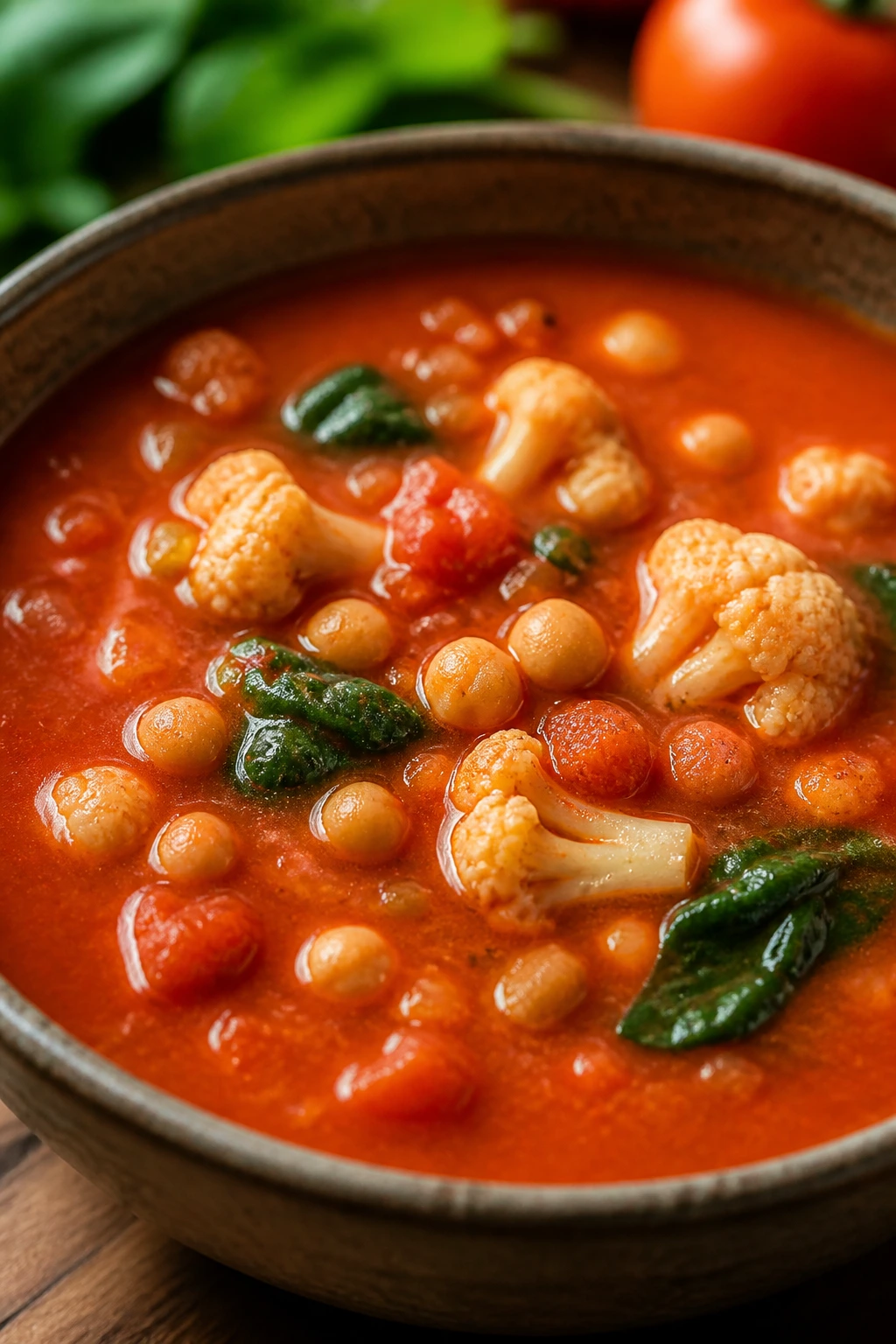
Tomatoes and cauliflower sound plain until chickpeas enter the pot and turn the whole thing into a real meal. The tomatoes give the broth brightness, the chickpeas give it weight, and cauliflower slips in as the quiet thickener that makes every spoonful feel more substantial. This is a good weeknight bowl that still tastes like it got attention.
Why It Works:
Chickpeas add a creamy, nutty texture without needing dairy. Tomato gives the soup enough acidity to keep cauliflower from tasting flat, and cumin and paprika keep the whole pot grounded. A handful of spinach at the end adds color and a little freshness that the soup needs.
Key Ingredients:
- 1 large head cauliflower, about 2 lb, cut into florets — small pieces cook cleanly.
- 1 can chickpeas, 15 oz, drained and rinsed — the body of the soup.
- 1 can diced tomatoes, 14.5 oz — gives the broth brightness.
- 1 medium onion, chopped — the base.
- 3 cloves garlic, minced — use fresh.
- 1 teaspoon cumin — a small amount carries far.
- 1 teaspoon smoked paprika — gives warmth.
- 4 cups vegetable broth — enough to keep it soupy.
- 2 cups baby spinach — stir in at the end.
- 2 tablespoons olive oil — for the onion.
- 1 teaspoon kosher salt — then taste again.
Quick Steps:
- Heat the olive oil in a soup pot over medium heat. Add the onion and cook for 5 minutes, then add the garlic, cumin, and paprika for 30 seconds.
- Add the cauliflower, chickpeas, tomatoes, broth, and salt. Bring to a boil, then simmer for 16 to 18 minutes until the cauliflower is tender.
- Blend about half the soup if you want it thicker, or leave it chunky.
- Stir in the spinach and cook for 1 minute until wilted.
- Taste and adjust the seasoning before serving.
Equipment for This Recipe:
- Soup pot — simple and sturdy.
- Immersion blender — for partial blending.
- Can opener — not glamorous, but necessary.
- Wooden spoon — for the tomatoes and spices.
How to Serve This Dish:
A spoonful of yogurt or a drizzle of good olive oil over the top makes the tomato base feel richer. Serve it with pita, flatbread, or rice if you want to stretch it into a bigger dinner.
Pro Tips for This Recipe:
- Let the tomatoes simmer with the cauliflower long enough to lose their raw edge.
- Rinse the chickpeas well so the broth stays clean-tasting.
- Add spinach at the end so it stays green.
- A little lemon at the finish can sharpen the tomato without extra salt.
Variations on This Dish:
- Harissa Chickpea Version: Add 1 teaspoon harissa paste with the spices.
- Rice Bowl Swap: Stir in 1 cup cooked rice if you want the soup thicker and more filling.
- Herbed Finish: Use parsley or dill instead of spinach for a fresher finish.
Common Mistakes to Avoid with This Dish:
- Not rinsing canned chickpeas: The liquid can muddy the broth.
- Adding spinach too early: It turns drab and overcooked.
- Forgetting to taste after blending: The flavor often needs a second salt check.
17. Spinach Orzo Cauliflower Soup
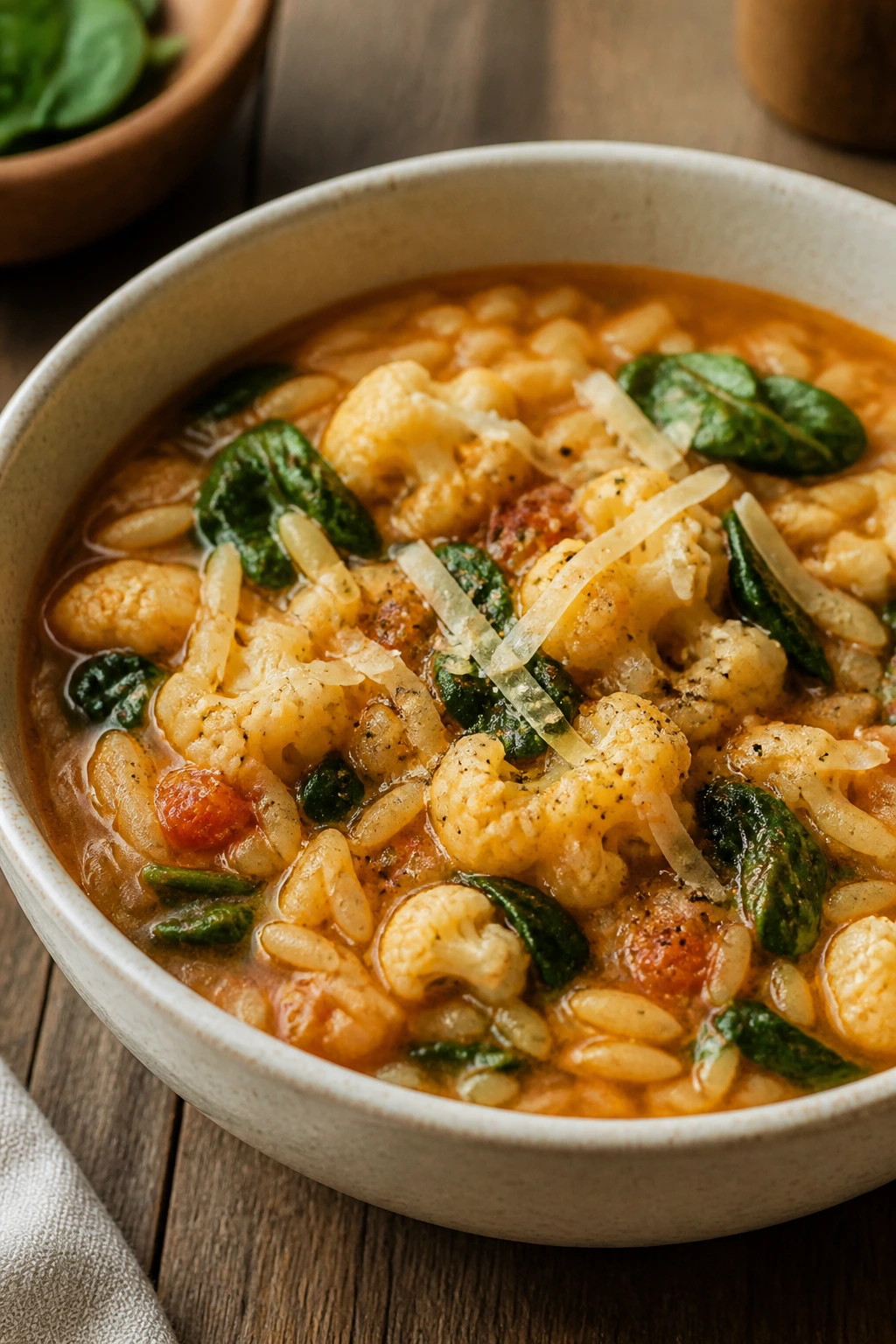
Orzo gives this soup a pleasant, slurpable middle ground between broth and pasta. Cauliflower melts into the background in a good way, spinach brings the color, and parmesan ties the whole thing together without making it heavy. It’s the kind of soup that disappears faster than you planned.
Why It Works:
Orzo cooks directly in the broth, so it thickens the soup as it goes. Cauliflower softens into the base and helps the broth feel fuller, while spinach adds freshness right at the end. Lemon and parmesan are the finishing pieces that keep the pasta from making everything taste flat.
Key Ingredients:
- 1 large head cauliflower, about 2 lb, cut into small florets — small florets cook evenly.
- 3/4 cup orzo — rinse if it looks dusty.
- 4 cups vegetable broth — more if you want it soupier.
- 2 cups baby spinach — stir in just before serving.
- 1 medium onion, chopped — the base.
- 3 cloves garlic, minced — necessary.
- 1/2 cup grated parmesan — for the finish.
- 1 tablespoon olive oil — for the onion.
- 1 tablespoon lemon juice — brightens the broth.
- 1 teaspoon kosher salt and 1/2 teaspoon black pepper — add more at the end if needed.
Quick Steps:
- Heat the olive oil in a soup pot over medium heat. Cook the onion for 5 minutes, then add the garlic for 30 seconds.
- Add the cauliflower, broth, salt, and pepper. Simmer for 12 minutes.
- Stir in the orzo and cook for 8 to 10 minutes until tender, stirring once or twice so it doesn’t stick.
- Add the spinach and cook for 1 minute until wilted.
- Turn off the heat, stir in the parmesan and lemon juice, and taste.
Equipment for This Recipe:
- Soup pot — needs room for the orzo to move.
- Wooden spoon — stir orzo before it sticks.
- Ladle — helpful because the soup thickens as it sits.
- Microplane — if you want very fine parmesan.
How to Serve This Dish:
Serve it with extra parmesan and a grind of black pepper. A side salad with lemon dressing works well, because the soup already carries the starch and the greens.
Pro Tips for This Recipe:
- Orzo keeps drinking broth, so have extra hot broth nearby.
- Don’t overcook the pasta or the soup turns mushy.
- Add the lemon at the end so the spinach stays bright.
- If you want a creamier bowl, blend a cup of the cauliflower before adding orzo.
Variations on This Dish:
- Chicken Orzo Version: Add shredded chicken with the spinach.
- Lemon-Herb Bowl: Stir in dill and parsley at the end for a fresher flavor.
- Tomato Orzo Twist: Add 1 cup crushed tomatoes with the broth for a rosier broth.
Common Mistakes to Avoid with This Dish:
- Leaving the orzo unattended: It can stick fast.
- Adding parmesan while boiling: The cheese can clump.
- Not accounting for thickening: The soup gets thicker after a few minutes off the heat.
18. Ham and Cauliflower Soup
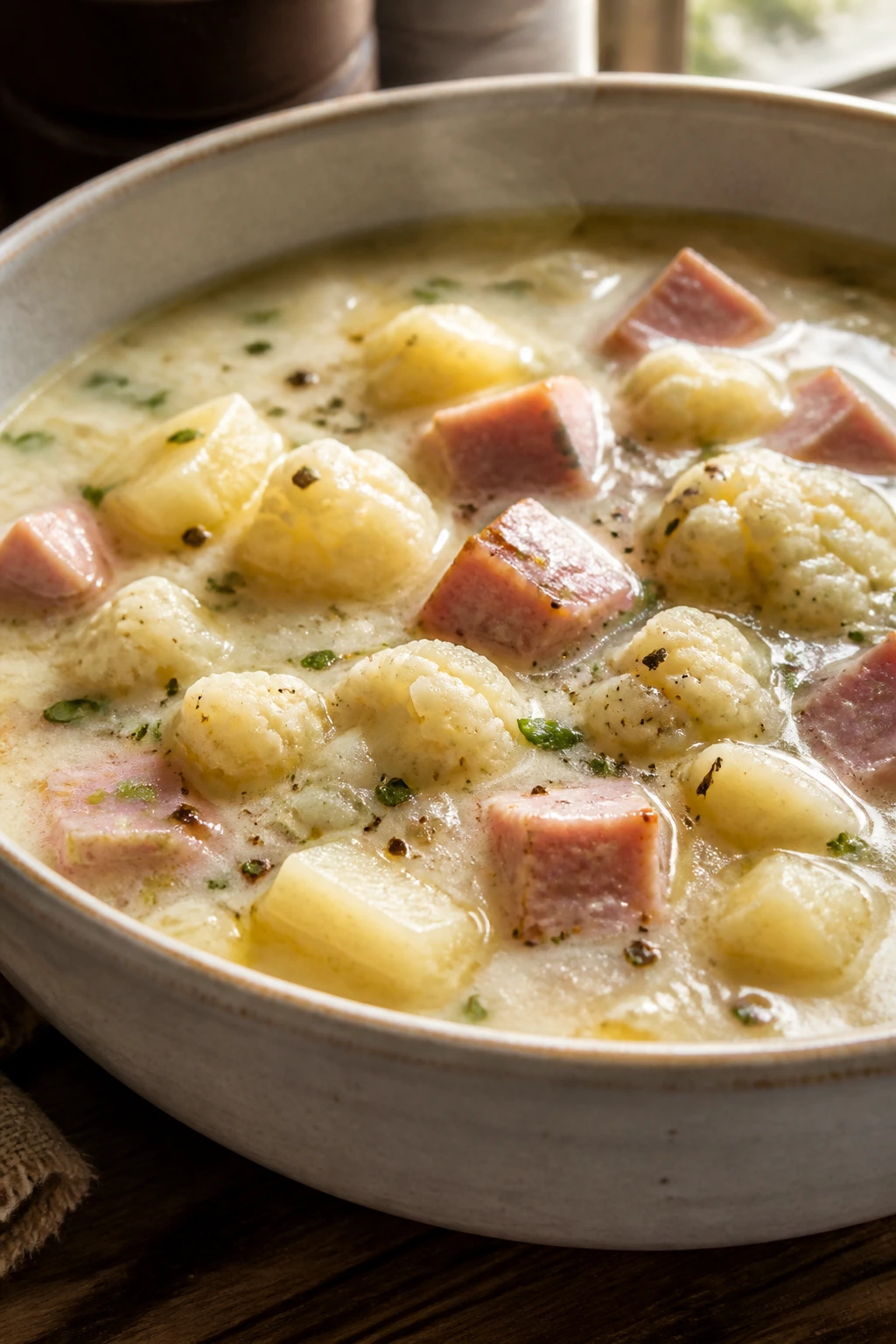
This bowl tastes like a smart use of leftovers, which is usually when soup is at its best. Ham gives the broth a salty backbone, cauliflower softens into the pot, and potato makes the texture sturdy enough for real hunger. It’s old-school in the best way.
Why It Works:
Ham is already seasoned, so the soup needs less work than people think. Cauliflower adds volume without making the bowl dense, and potato gives the broth enough body to feel like dinner. A little milk at the end softens the salt from the ham without muting it.
Key Ingredients:
- 1 large head cauliflower, about 2 lb, cut into florets — keep the pieces small.
- 2 cups diced cooked ham — cut it into bite-size cubes.
- 1 medium russet or Yukon Gold potato, peeled and diced — thickens the broth.
- 1 medium onion, chopped — the base.
- 2 celery stalks, diced — classic soup flavor.
- 4 cups chicken broth — ham and chicken broth work well together.
- 1 cup milk — for a softer finish.
- 2 tablespoons butter — for the vegetables.
- 1 teaspoon thyme — a natural fit with ham.
- 1/2 teaspoon black pepper — ham often handles the salt.
Quick Steps:
- Melt the butter in a soup pot over medium heat. Add the onion and celery and cook for 5 minutes.
- Stir in the cauliflower, potato, ham, broth, thyme, and pepper. Bring to a boil, then simmer for 18 minutes until the potato is soft.
- Blend part of the soup if you want a thicker base, or leave it chunky.
- Stir in the milk and warm for 2 minutes over low heat.
- Taste before adding salt; the ham may have already done that job.
Equipment for This Recipe:
- Soup pot — standard and sturdy.
- Knife and board — for the ham and vegetables.
- Immersion blender — optional if you want a creamier soup.
- Measuring cup — for the milk and broth.
How to Serve This Dish:
Serve it with rye bread or warm biscuits, both of which make sense with ham. A few chopped parsley leaves on top give the bowl a fresh look and keep it from feeling too beige.
Pro Tips for This Recipe:
- Taste the soup before salting. Ham can be surprisingly salty.
- Dice the potato small so it softens on schedule.
- A splash of mustard at the end can wake up the ham flavor.
- If the soup tastes flat, a small squeeze of lemon helps more than extra butter.
Variations on This Dish:
- Split Pea Direction: Add 1 cup split peas for a thicker, more legume-heavy bowl.
- Cheesy Ham Bowl: Stir in 1/2 cup cheddar at the end if you want more richness.
- Smoked Paprika Finish: Add 1/2 teaspoon smoked paprika for a deeper ham note.
Common Mistakes to Avoid with This Dish:
- Salting too early: The ham may make the soup salty enough on its own.
- Overcooking the milk: It should warm, not boil.
- Cutting the ham too large: Big chunks make the bowl clumsy.
19. Almond-Herb Cauliflower Soup
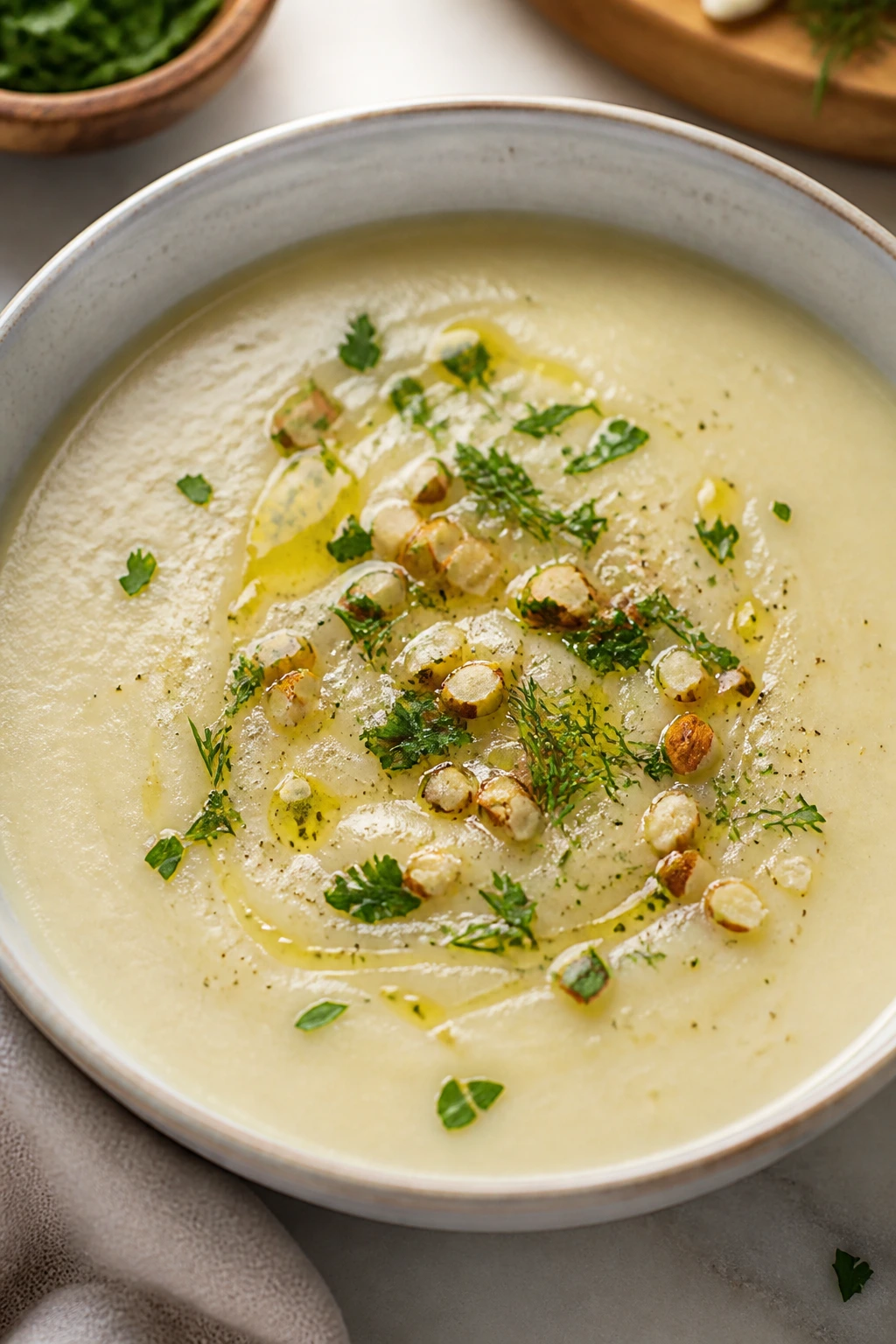
Almonds give cauliflower a soft, almost marzipan-like nuttiness without turning the soup sweet. Herbs keep it grounded, and lemon keeps the whole bowl from feeling heavy. This is the one I make when I want something elegant but not precious.
Why It Works:
Ground almonds or almond butter thicken the soup in a very gentle way, which is useful if you want creaminess without dairy. Parsley and dill bring green flavor that sits nicely against cauliflower’s mild base. Lemon is non-negotiable here; without it, the almonds can taste flat.
Key Ingredients:
- 1 large head cauliflower, about 2 lb, cut into florets — include the stem.
- 2 tablespoons almond butter — smooth and unsweetened.
- 1 medium onion, chopped — the base.
- 3 cloves garlic, minced — the savory anchor.
- 4 cups vegetable broth — use low-sodium.
- 2 tablespoons olive oil — for the onion.
- 1/4 cup chopped parsley — fresh and bright.
- 2 tablespoons chopped dill — use less if you’re not a dill person.
- 1 tablespoon lemon juice — brightens the almond note.
- 1 teaspoon kosher salt and 1/4 teaspoon white pepper — keep the color clean.
Quick Steps:
- Heat the olive oil in a soup pot over medium heat. Cook the onion for 5 minutes, then add the garlic for 30 seconds.
- Add the cauliflower, broth, salt, and white pepper. Simmer for 15 minutes until tender.
- Whisk the almond butter with a ladle of hot broth in a small bowl, then stir it back into the pot.
- Blend until smooth.
- Stir in parsley, dill, and lemon juice, then taste and serve.
Equipment for This Recipe:
- Soup pot — standard.
- Small bowl and whisk — for the almond butter.
- Immersion blender — makes the texture silky.
- Citrus juicer — optional.
How to Serve This Dish:
Finish with a few chopped herbs and a drizzle of olive oil. Serve it with seeded crackers or a slice of toasted sourdough, because the soup is already soft and needs a little crunch.
Pro Tips for This Recipe:
- Use smooth, unsweetened almond butter.
- Whisk the almond butter with hot broth first or it can stay in little streaks.
- Dill and parsley taste fresher if you add them after blending.
- Lemon belongs at the end so it stays vivid.
Variations on This Dish:
- Toasted Almond Version: Add 1/4 cup toasted sliced almonds on top.
- Creamy Herb Swap: Use chives instead of dill for a milder finish.
- No-Nut Option: Replace the almond butter with 1/2 cup white beans.
Common Mistakes to Avoid with This Dish:
- Using sweetened almond butter: It makes the soup taste strange.
- Adding herbs too early: They lose their green flavor.
- Skipping the lemon: The bowl can taste dull without acid.
20. Sweet Potato Cauliflower Soup with Smoked Paprika
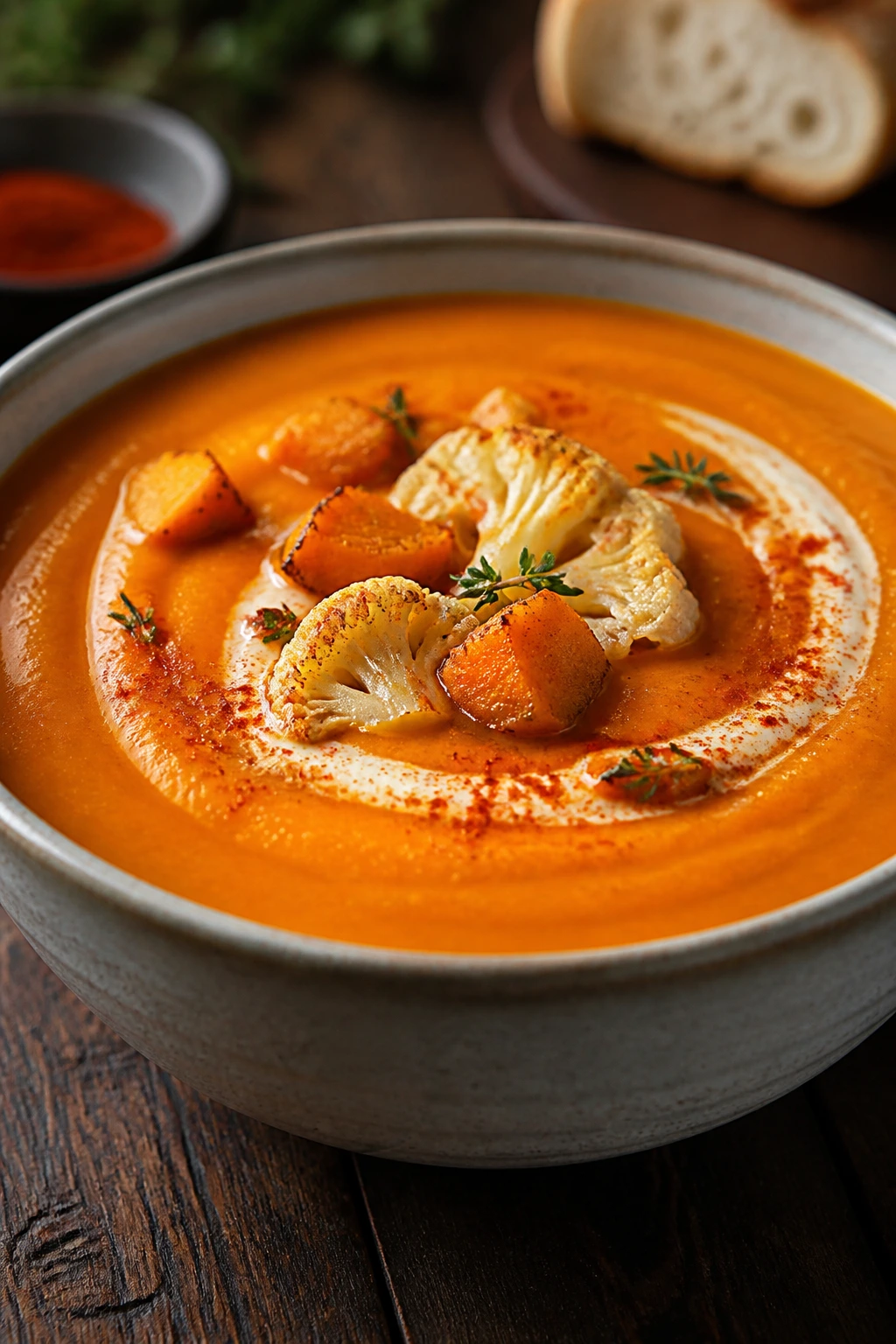
Sweet potato gives cauliflower a richer color and a faint sweetness that feels natural in winter. Smoked paprika keeps the soup from leaning too soft, and a little cream or coconut milk can finish it off depending on what you have nearby. This bowl is comforting without getting stuck in one note.
Why It Works:
Sweet potato thickens the soup while adding enough sweetness to balance cauliflower’s mild flavor. Smoked paprika gives a woodsy, savory edge that stops the bowl from tasting like a side dish. A touch of maple or honey works only if the pot needs it; often the vegetables already bring enough sweetness.
Key Ingredients:
- 1 large head cauliflower, about 2 lb, cut into florets — keep the florets compact.
- 1 medium sweet potato, peeled and diced, about 10 oz — the main thickener.
- 1 medium onion, chopped — the base.
- 3 cloves garlic, minced — needed for depth.
- 1 teaspoon smoked paprika — gives the bowl its warmth.
- 4 cups vegetable broth — low-sodium works best.
- 1/2 cup cream or coconut milk — choose based on your pantry.
- 2 tablespoons olive oil — for the onion.
- 1 teaspoon kosher salt and 1/2 teaspoon black pepper — season at the end too.
- 1 teaspoon maple syrup, optional — only if the bowl tastes flat.
Quick Steps:
- Heat the olive oil in a soup pot over medium heat. Add the onion and cook for 5 minutes, then stir in the garlic and smoked paprika for 30 seconds.
- Add the cauliflower, sweet potato, broth, salt, and pepper. Bring to a boil, then simmer for 18 minutes until both vegetables are tender.
- Blend until smooth.
- Stir in the cream or coconut milk and warm over low heat for 2 minutes.
- Taste and add maple syrup only if needed.
Equipment for This Recipe:
- Soup pot — medium to large.
- Immersion blender — easiest.
- Peeler — for the sweet potato.
- Ladle — thick soup likes a proper scoop.
How to Serve This Dish:
A dollop of yogurt or sour cream and a sprinkle of smoked paprika look right on top. Serve it with grilled bread or a hunk of cheddar toast, because the soup is sweet enough to welcome salty sides.
Pro Tips for This Recipe:
- Dice the sweet potato small so it softens with the cauliflower.
- Start with a light hand on maple syrup; the sweet potato may already be enough.
- Coconut milk gives a softer finish than cream, but both work.
- If you want more smoke, add an extra pinch of paprika, not liquid smoke.
Variations on This Dish:
- Gingered Version: Add 1 tablespoon fresh ginger with the garlic.
- Chili Heat Twist: Stir in a pinch of cayenne or chili flakes.
- Roasted Base: Roast the cauliflower before simmering for a nuttier bowl.
Common Mistakes to Avoid with This Dish:
- Too much added sweetness: The soup should taste savory first.
- Not cooking the sweet potato fully: It needs to be soft enough to blend smooth.
- Overdoing the paprika: It can turn bitter if you use too much.
21. Fennel and Cauliflower Soup
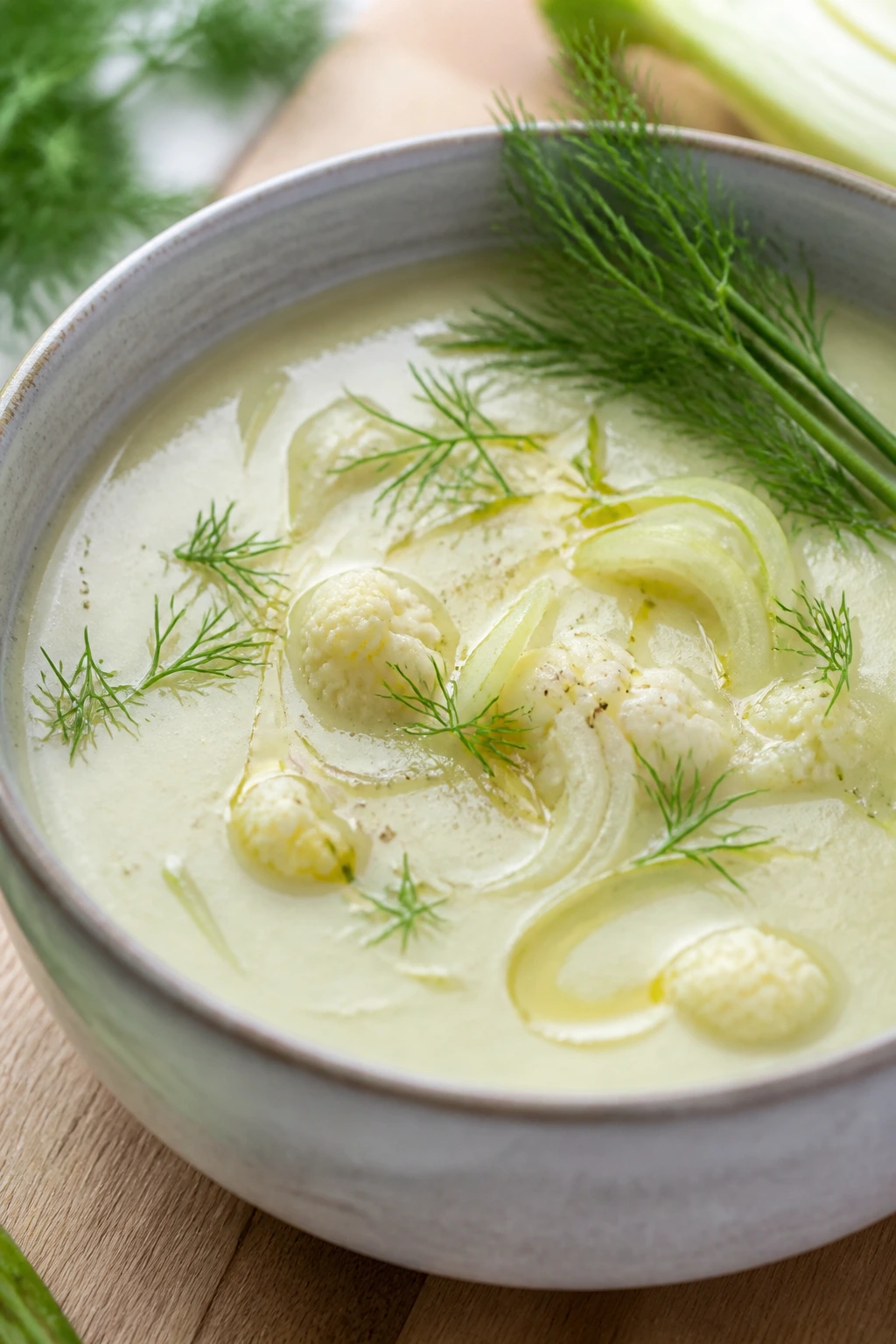
Fennel changes the mood fast. It brings a light anise note that makes cauliflower taste more elegant and a little sharper, which is useful if you’ve had too many heavy bowls in a row. This soup feels clean, but not thin.
Why It Works:
Fennel softens into a sweet, aromatic base that pairs cleanly with cauliflower. Because both vegetables cook down well, the soup blends into a very smooth texture without much effort. Lemon and fennel fronds at the end keep the bowl bright and unmistakably fennel-forward.
Key Ingredients:
- 1 large head cauliflower, about 2 lb, cut into florets — keep the stem.
- 1 large fennel bulb, trimmed and chopped — save the fronds.
- 1 medium onion, chopped — the base.
- 3 cloves garlic, minced — enough to support the fennel.
- 4 cups vegetable broth — simple and low-sodium.
- 2 tablespoons olive oil — for the vegetables.
- 1/2 cup heavy cream or whole milk — optional, but nice.
- 1 tablespoon lemon juice — brings the fennel forward.
- 1 teaspoon kosher salt and 1/2 teaspoon black pepper — season to taste.
- Chopped fennel fronds, for serving — the fresh top note.
Quick Steps:
- Heat the olive oil in a soup pot over medium heat. Add the onion and fennel and cook for 8 minutes until softened.
- Stir in the garlic for 30 seconds.
- Add the cauliflower, broth, salt, and pepper. Simmer for 15 to 18 minutes until tender.
- Blend until smooth.
- Stir in the cream or milk and lemon juice, then serve with fennel fronds.
Equipment for This Recipe:
- Soup pot — needs enough space for the fennel.
- Immersion blender — ideal.
- Knife and cutting board — fennel needs a clean trim.
- Citrus juicer — useful for the lemon.
How to Serve This Dish:
Serve it with a few fennel fronds and a drizzle of good olive oil. A slice of toasted sourdough or a little bowl of olives on the side fits the sharp, clean flavor.
Pro Tips for This Recipe:
- Don’t toss the fennel fronds; they’re the best garnish.
- Cook the fennel slowly so it turns sweet, not seared.
- A small pinch of white pepper keeps the soup pale.
- If the flavor feels too licorice-like, more lemon usually balances it.
Variations on This Dish:
- Potato Fennel Bowl: Add 1 small diced potato for more body.
- Lemon-Anise Finish: Add a little lemon zest at serving.
- Garlic-Lovers Version: Roast the garlic first for a softer, sweeter flavor.
Common Mistakes to Avoid with This Dish:
- Burning the fennel: It turns bitter fast.
- Skipping the fronds: You lose the freshest part of the plant.
- Adding too much cream: Fennel tastes best when it still feels clean.
22. Ginger Carrot Cauliflower Soup

Carrots and cauliflower make sense together, but ginger is what wakes the pot up. The result is warm, orange, and a little sharp at the end, with coconut milk smoothing the edges if you want it. This one feels especially good when the weather has been mean all week.
Why It Works:
Carrots and cauliflower both soften into a smooth base, so the soup blends easily. Fresh ginger gives the broth a bright heat that keeps the sweetness from running away. Coconut milk adds creaminess, but lime at the end keeps the bowl from feeling heavy.
Key Ingredients:
- 1 large head cauliflower, about 2 lb, cut into florets — small pieces cook quickly.
- 3 large carrots, peeled and sliced — the color and sweetness.
- 1 medium onion, chopped — the base.
- 1 tablespoon fresh ginger, grated — don’t skimp here.
- 3 cloves garlic, minced — needed for depth.
- 4 cups vegetable broth — enough to simmer the vegetables.
- 1 can coconut milk, 13.5 oz — full-fat gives the best texture.
- 1 teaspoon ground turmeric — adds color and a warm finish.
- 1 tablespoon olive oil — for the onion.
- 1 tablespoon lime juice — brighten at the end.
- 1 teaspoon kosher salt — then taste and adjust.
Quick Steps:
- Heat the olive oil in a soup pot over medium heat. Add the onion and cook for 5 minutes, then add the garlic and ginger for 30 seconds.
- Stir in the turmeric.
- Add the carrots, cauliflower, broth, and salt. Simmer for 18 minutes until the carrots are soft.
- Blend until smooth.
- Stir in the coconut milk and lime juice, warm gently, and serve.
Equipment for This Recipe:
- Soup pot — standard.
- Microplane — makes quick work of ginger.
- Immersion blender — smooths the vegetables fast.
- Measuring spoon — turmeric is small but important.
How to Serve This Dish:
A spoonful of cilantro and a crack of black pepper are enough. Serve it with rice crackers or a toasted pita if you want crunch on the side.
Pro Tips for This Recipe:
- Fresh ginger tastes sharper and cleaner than powdered ginger here.
- Add turmeric before the broth so it blooms a little in the oil.
- Lime juice at the end keeps the carrot sweetness in check.
- If the soup tastes too sweet, another pinch of salt usually fixes it.
Variations on This Dish:
- Red Lentil Boost: Add 1/2 cup red lentils for extra body.
- Thai-Coconut Direction: Add 1 teaspoon red curry paste with the ginger.
- Apple-Carrot Twist: Use half a tart apple for a fresher sweetness.
Common Mistakes to Avoid with This Dish:
- Using old ginger: It turns woody and dull.
- Adding lime too early: The acid loses its brightness.
- Under-salting carrots: They need more salt than people expect.
23. Cauliflower Gnocchi Soup
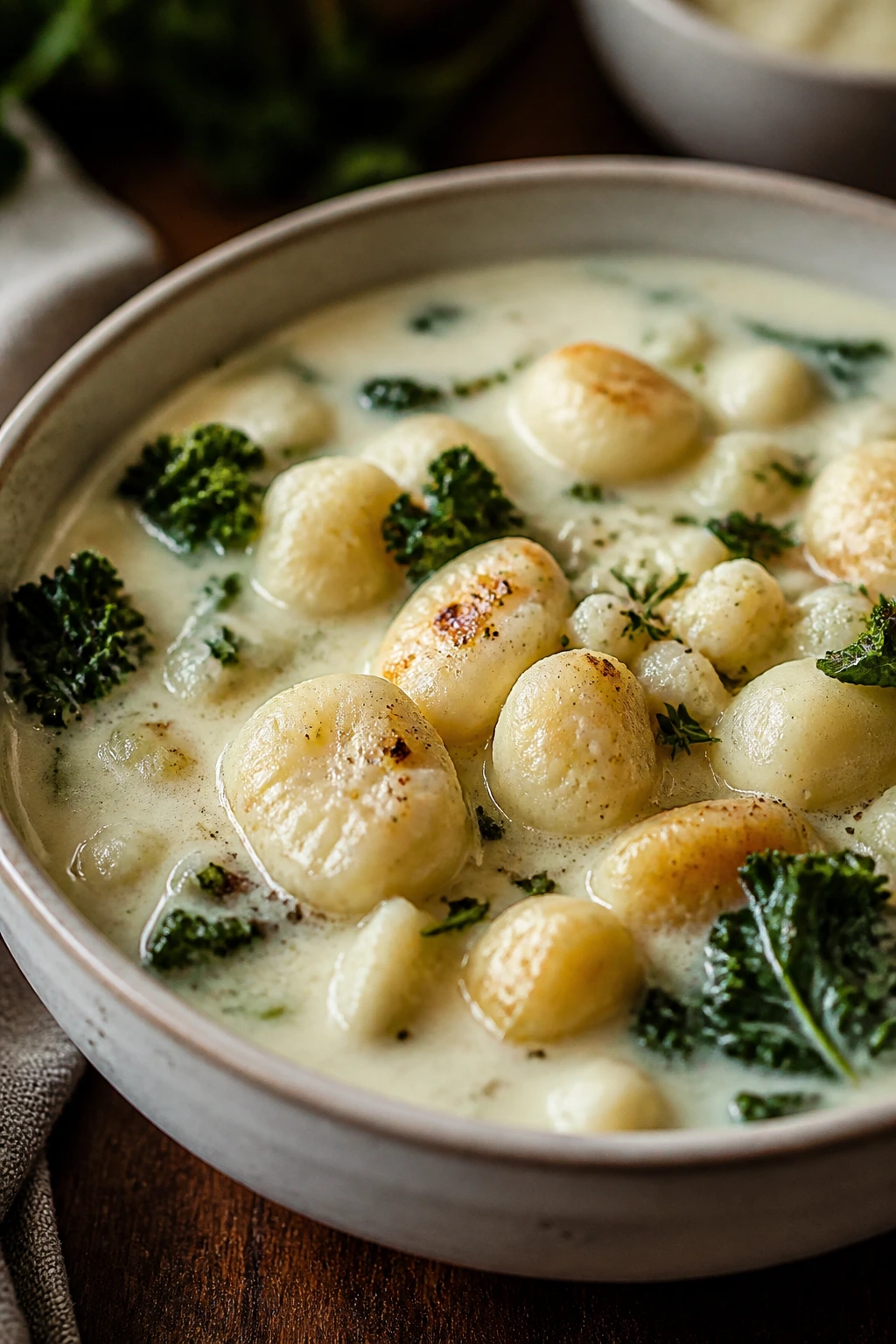
This one is almost unfairly comforting. Gnocchi swells in the broth, cauliflower gives the soup a smooth base, and kale or spinach makes the bowl feel complete without a separate side dish. It’s hearty in a soft, pillowy way.
Why It Works:
Gnocchi turns the soup from starter to main course almost by itself. Cauliflower blends into the broth and keeps the texture from feeling too heavy, while parmesan and cream create a familiar finish. A handful of greens at the end keeps the bowl from feeling too rich.
Key Ingredients:
- 1 large head cauliflower, about 2 lb, cut into florets — keep the pieces small.
- 1 package potato gnocchi, 16 oz — shelf-stable or refrigerated both work.
- 1 medium onion, chopped — the base.
- 3 cloves garlic, minced — for depth.
- 4 cups chicken or vegetable broth — the gnocchi will thicken it.
- 2 cups chopped kale or spinach — stir in at the end.
- 1/2 cup heavy cream — adds body.
- 1/2 cup grated parmesan — finish the soup.
- 1 tablespoon olive oil — for the onion.
- 1 teaspoon kosher salt and 1/2 teaspoon black pepper — taste before adding more.
Quick Steps:
- Heat the olive oil in a soup pot over medium heat. Cook the onion for 5 minutes, then add the garlic for 30 seconds.
- Add the cauliflower, broth, salt, and pepper. Simmer for 15 minutes until the cauliflower is tender.
- Blend until smooth, then return the soup to low heat.
- Stir in the gnocchi and simmer according to package directions, usually 3 to 5 minutes, until they float and feel tender.
- Add the greens, cream, and parmesan, then serve right away.
Equipment for This Recipe:
- Soup pot — must be large enough for the gnocchi.
- Immersion blender — best before the gnocchi goes in.
- Wooden spoon — for gentle stirring.
- Ladle — the soup gets thick fast.
How to Serve This Dish:
Serve it in deep bowls with extra parmesan and black pepper. A small side salad with lemony dressing works well, because the soup already carries the starch and cream.
Pro Tips for This Recipe:
- Add gnocchi near the end so it stays tender, not bloated.
- If you want the soup thicker, blend in a few extra cauliflower florets before adding the gnocchi.
- Use kale if you want a sturdier green that holds up better than spinach.
- Serve right away; gnocchi keeps soaking up broth as it sits.
Variations on This Dish:
- Sausage Gnocchi Bowl: Brown 8 oz Italian sausage with the onion.
- Tomato Gnocchi Version: Add 1 cup crushed tomatoes with the broth.
- No-Cream Swap: Use 1/2 cup white beans blended into the cauliflower base instead of cream.
Common Mistakes to Avoid with This Dish:
- Overcooking the gnocchi: It can go bloated fast.
- Letting the pot sit too long: The gnocchi drinks the broth.
- Adding greens too early: They lose color and texture.
24. Loaded Baked Cauliflower Soup

This tastes like a baked potato had a good idea and then cauliflower helped it behave. Bacon, cheddar, sour cream, and scallions give you the loaded-baked-potato flavor profile, while cauliflower keeps the soup lighter than the name suggests. It’s indulgent, but it still eats like soup.
Why It Works:
A russet potato gives the soup the familiar baked-potato body, and cauliflower stretches that base so the bowl doesn’t become a starch bomb. Bacon fat flavors the onion, cheddar gives sharpness, and sour cream at serving keeps the finish tangy. This is the version people ask about after the bowl is empty.
Key Ingredients:
- 1 large head cauliflower, about 2 lb, cut into florets — use the stem too.
- 1 medium russet potato, peeled and diced — the baked-potato part.
- 6 slices bacon, chopped — crisp and reserve the fat.
- 1 small onion, chopped — for the base.
- 4 cups chicken broth — a good fit for the bacon and potato.
- 1 cup whole milk — smooths the soup.
- 1 cup shredded sharp cheddar — mix some in, save some for the top.
- 1/2 cup sour cream — the classic finish.
- 2 scallions, sliced — for color and bite.
- 1 tablespoon butter — optional if the bacon is lean.
- 1/2 teaspoon black pepper — season at the end.
Quick Steps:
- Cook the bacon in a soup pot until crisp. Remove it, leaving 1 to 2 tablespoons of fat.
- Add the onion and cook for 5 minutes. Stir in the cauliflower, potato, broth, and pepper. Simmer for 18 minutes until the potato is soft.
- Blend until smooth.
- Stir in the milk and half the cheddar over low heat. Warm gently without boiling.
- Ladle into bowls and top with bacon, the rest of the cheddar, sour cream, and scallions.
Equipment for This Recipe:
- Soup pot — enough room for toppings later.
- Immersion blender — makes the texture smooth.
- Knife and board — for bacon and scallions.
- Spoon — you’ll want one that can scrape the bottom.
How to Serve This Dish:
Serve it in deep bowls with the toppings separated so people can load their own. A hunk of warm bread is enough on the side, because the bowl already carries the bacon, cheese, and potato.
Pro Tips for This Recipe:
- Let the bacon render fully or the soup misses the smoky depth.
- Add the cheddar gradually so it melts into the soup instead of clumping.
- Sour cream belongs on top, not in a boiling pot.
- If the soup gets too thick, thin it with a splash of hot broth.
Variations on This Dish:
- Turkey Bacon Swap: Use turkey bacon and a little extra butter for richness.
- Skin-On Potato Version: Leave the potato skin on if you want a more rustic bowl.
- Chive-Forward Finish: Use chopped chives instead of scallions for a softer onion bite.
Common Mistakes to Avoid with This Dish:
- Boiling after cheese goes in: The texture can separate.
- Using too little salt: Potato soups need more seasoning than people expect.
- Adding all toppings before serving: They lose their texture if they sit in the soup.
25. Thai Cauliflower Soup with Lime and Lemongrass

This is the brightest bowl in the collection. Lemongrass, ginger, curry paste, and lime make cauliflower taste lively instead of quiet, while coconut milk keeps the finish smooth. It smells like a kitchen that knows what it’s doing.
Why It Works:
Thai red curry paste already carries garlic, chile, and aromatics, so the soup gets a strong base in one spoonful. Lemongrass and ginger lift the cauliflower, and lime juice keeps the coconut milk from feeling heavy. A little fish sauce or soy sauce at the end gives the broth the savory edge it needs.
Key Ingredients:
- 1 large head cauliflower, about 2 lb, cut into florets — small pieces cook evenly.
- 2 stalks lemongrass, bruised and cut into 3-inch pieces — smash them first.
- 1 tablespoon fresh ginger, sliced — not grated this time.
- 2 tablespoons red curry paste — adjust for heat.
- 1 can coconut milk, 13.5 oz — full-fat is best.
- 4 cups vegetable broth — or chicken broth if you prefer.
- 1 tablespoon fish sauce or soy sauce — pick one.
- 1 tablespoon lime juice — add at the end.
- 1 tablespoon neutral oil — for the curry paste.
- 1/4 cup basil or cilantro leaves — for serving.
- 1 small handful sliced mushrooms, optional — if you want more body.
Quick Steps:
- Heat the oil in a soup pot over medium heat. Stir in the curry paste for 30 seconds until fragrant.
- Add the lemongrass and ginger, then pour in the broth, cauliflower, and mushrooms if using.
- Simmer for 15 minutes until the cauliflower is tender.
- Remove the lemongrass pieces, then blend the soup until smooth.
- Stir in the coconut milk, fish sauce or soy sauce, and lime juice. Warm gently and serve with basil or cilantro.
Equipment for This Recipe:
- Soup pot — needs a steady simmer.
- Immersion blender — easiest way to get the texture smooth.
- Knife or rolling pin — for bruising the lemongrass.
- Slotted spoon — useful for fishing out the lemongrass pieces.
How to Serve This Dish:
Serve it with jasmine rice or crisp-edged roti if you want something on the side. A little basil, a few chili slices, or a drizzle of chili oil makes the bowl look and taste finished.
Pro Tips for This Recipe:
- Bruise the lemongrass so its flavor actually gets into the broth.
- Pull the lemongrass pieces out before blending; they’re fibrous and unpleasant.
- Lime juice should go in at the end so it stays sharp.
- If you want more depth, roast half the cauliflower first and simmer the rest.
Variations on This Dish:
- Green Curry Version: Use green curry paste and add a handful of spinach.
- Peanut Finish: Stir in 1 tablespoon peanut butter for a richer, satay-like feel.
- Extra-Chunky Bowl: Leave some cauliflower florets whole after blending for texture.
Common Mistakes to Avoid with This Dish:
- Leaving the lemongrass in the blender: It will not become pleasant.
- Boiling the coconut milk hard: The texture can turn oily.
- Using too little lime: The soup needs a bright edge to balance the coconut.
Why Cauliflower Takes on Flavor So Well in Soup
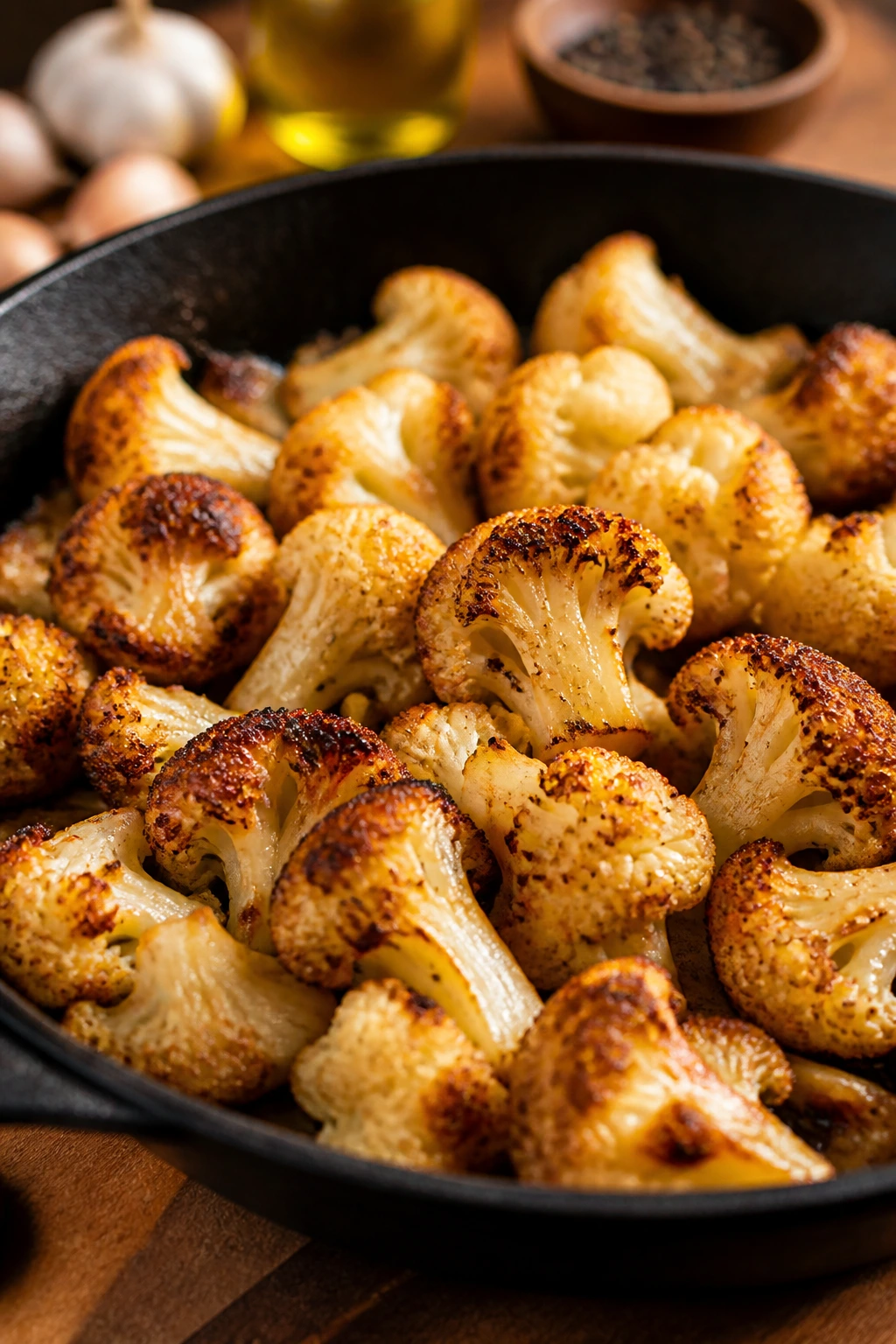
Cauliflower is one of those vegetables that rewards a little effort and punishes laziness. Left plain, it can taste mild to the point of forgettable. Give it heat, salt, and a strong partner, though, and it turns into a base that feels far more luxurious than its grocery-store reputation suggests.
The first thing cauliflower needs is browning. Roasting drives off water and gives you those nutty, slightly sweet edges that no amount of simmering can fake. The second thing it needs is seasoning in layers. Salt in the pot, salt in the broth, salt at the finish. Cauliflower is soft enough to take on whatever you give it, so if the soup tastes flat, that usually means the seasoning never had a chance to build.
Texture matters too. A cauliflower soup can be a smooth puree, a thick chowder, or a brothy bowl with beans or pasta. The vegetable plays nicely with all three because its own flavor stays calm. That calmness is a feature, not a flaw. It lets the garlic be sharper, the curry be warmer, the cheese be louder, and the herbs stay visible instead of getting swallowed by the base.
That’s why cauliflower soup keeps showing up in cold-weather kitchens. It’s not the loudest ingredient in the room. It doesn’t need to be.
Essential Equipment for These Recipes
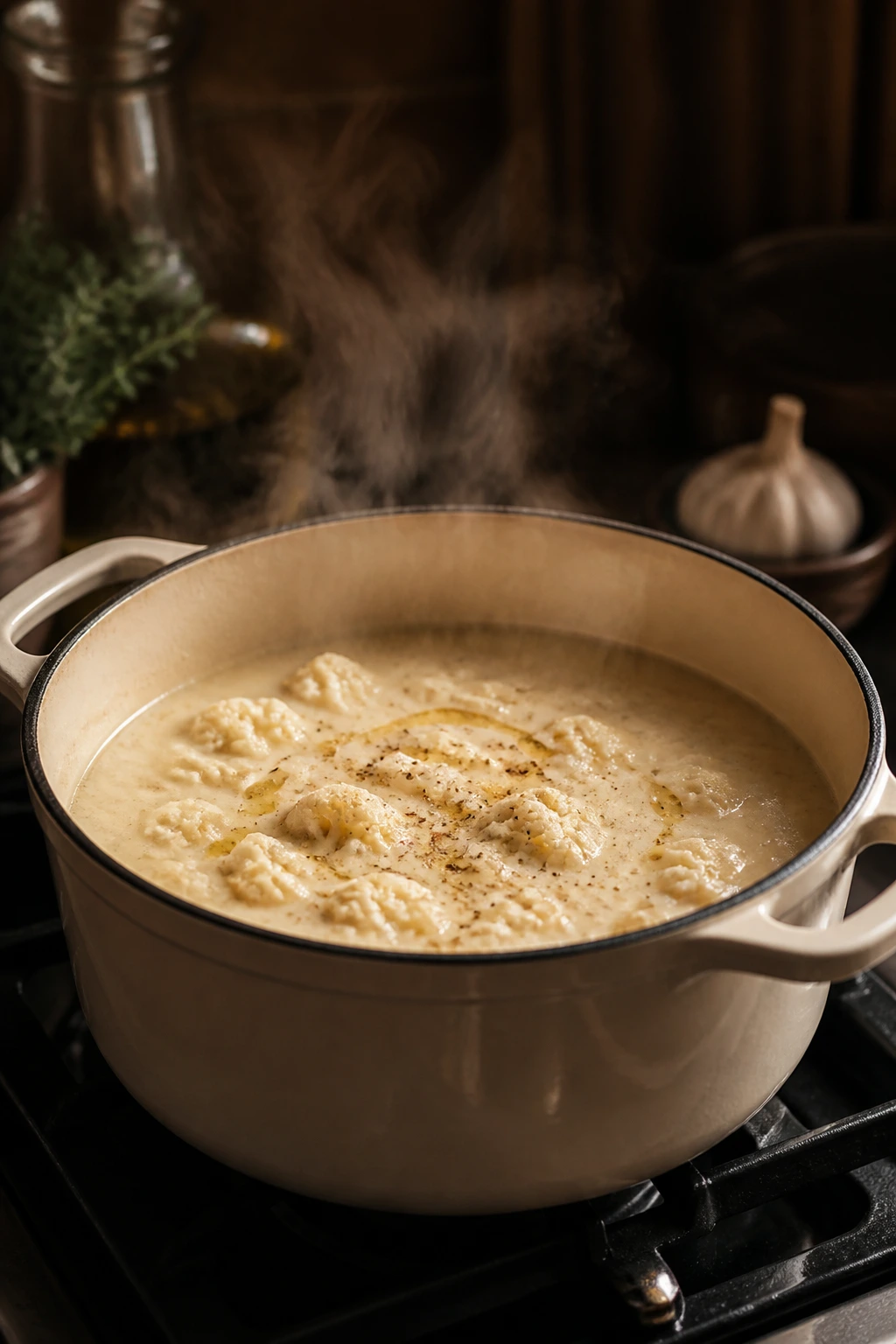
-
Large Dutch oven or heavy soup pot: Holds heat evenly, which helps cauliflower soften without catching on the bottom.
-
Rimmed sheet pan: Useful for the roasted recipes; cauliflower needs space or it steams instead of browns.
-
Immersion blender: The easiest way to get a smooth soup without moving hot liquid around.
-
Countertop blender: Best for the silkiest bowls, though you’ll need to blend in batches and vent the lid.
-
Sharp chef’s knife: Cauliflower, leeks, fennel, potatoes, and onions all need clean cuts.
-
Cutting board with a damp towel underneath: Keeps the board from sliding when you’re chopping a lot of vegetables.
-
Fine grater or microplane: Handy for garlic, ginger, parmesan, and lemon zest.
-
Measuring cups and spoons: Essential for broth, coconut milk, cream, and spice balance.
-
Wooden spoon or silicone spatula: Better than a whisk for stirring thick soup bases and scraped-up bits from the pot.
-
Ladle: Makes serving easier, especially with the thicker chowders and blended soups.
-
Colander or mesh strainer: Important for rinsing beans, lentils, leeks, and barley.
-
Airtight storage containers: Wide, shallow containers cool soup faster and store more cleanly.
Smart Shopping and Ingredient Tips
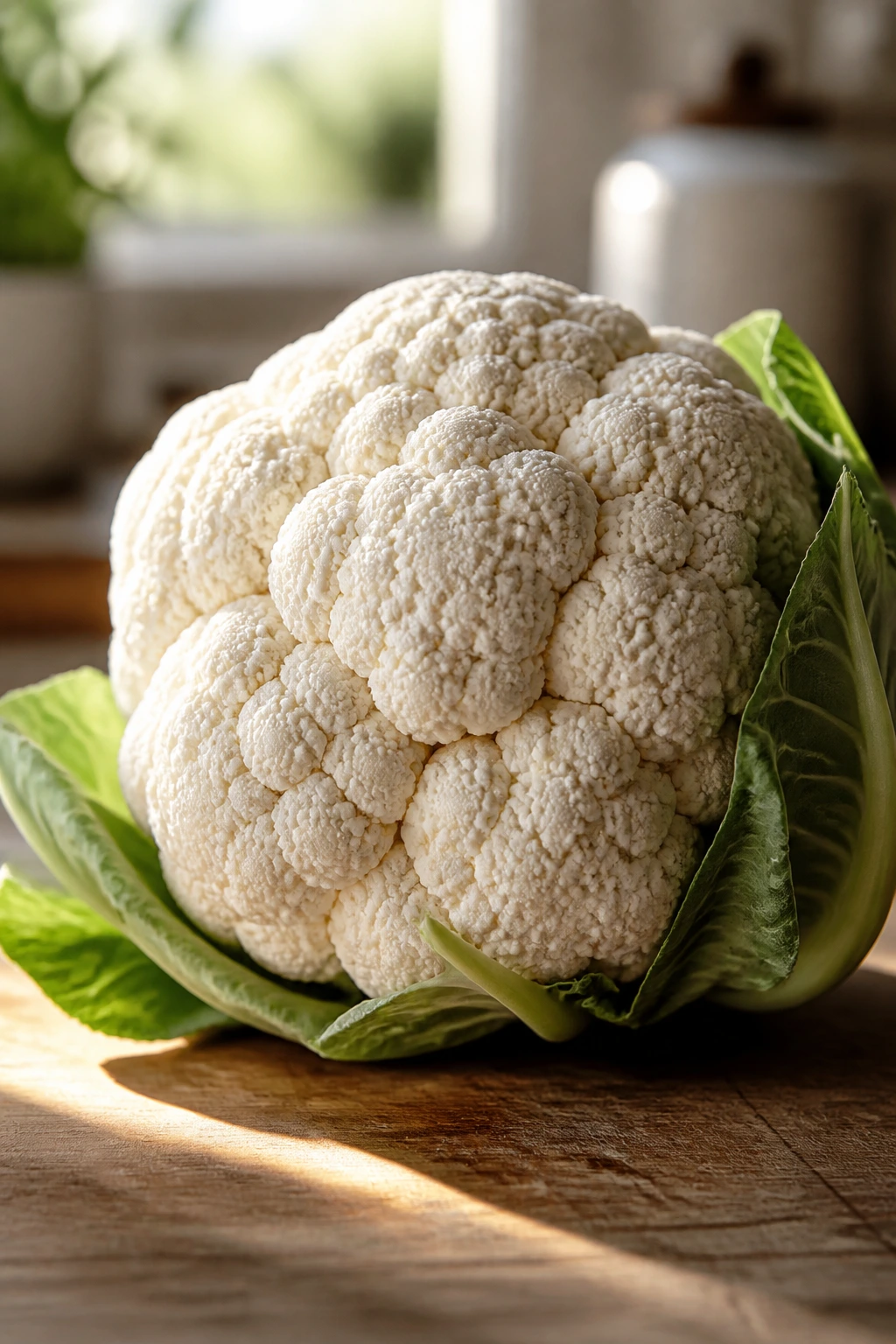
Choose cauliflower heads that feel heavy for their size and have tight, pale curds. A few green leaves are a good sign. Brown specks are not the end of the world, but a head with lots of soft spots usually means the soup will taste tired before it hits the pot. If the stem is firm, keep it. It’s good soup material.
Frozen cauliflower can save the day. For blended soups, it works especially well in recipes that don’t depend on roasting for flavor. Use it straight from frozen for simmered soups, or roast it from frozen on a hot sheet pan if you want a little browning, though fresh still wins when the recipe depends on caramelized edges.
Broth matters more than people admit. A weak broth makes cauliflower taste thin, and a very salty one can throw the whole pot off balance. Low-sodium broth gives you room to season properly. That matters even more in cheddar, bacon, or miso soups, where multiple salty ingredients are already lining up for attention.
For dairy-based soups, buy whole milk, half-and-half, or cream with a purpose. Whole milk is enough for many blended soups. Half-and-half gives a softer finish. Cream is best used in smaller amounts, where it can smooth the bowl without making it clumsy. If you’re shredding cheese, do it yourself. Pre-shredded cheese often has starch on it, which makes melting less clean.
Leeks should be washed after slicing. Fennel should be trimmed deeply enough to remove the tough outer ribs. Ginger should be firm and juicy, not wrinkled and dry. Garlic should feel heavy in the hand. The small shopping details matter because soup magnifies them.
How to Serve These Recipes
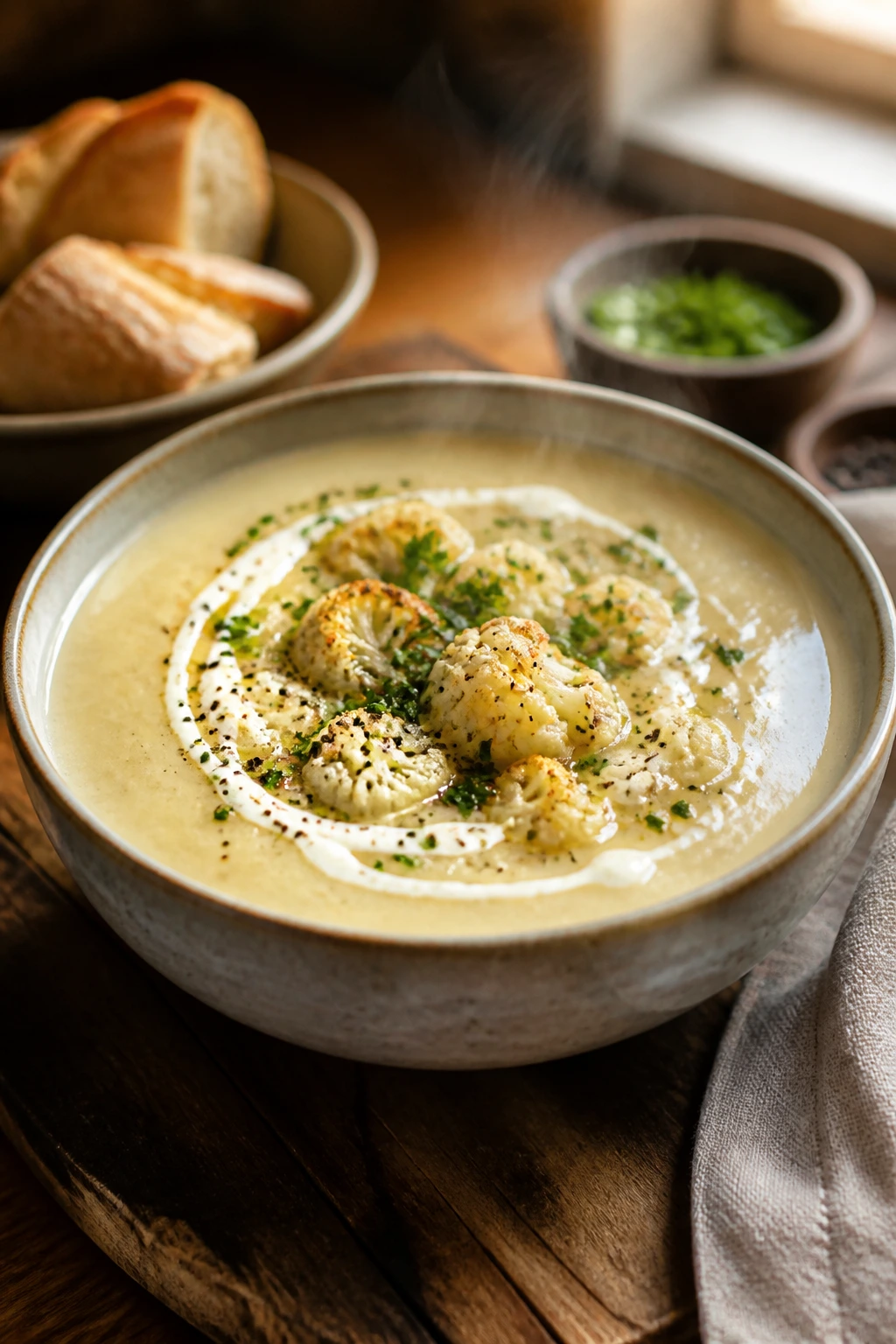
Presentation:
Use warm bowls whenever you can. A cold bowl steals heat faster than people expect, and cauliflower soup tastes better when it arrives steaming. A swirl of cream, olive oil, yogurt, or coconut milk gives the top a little movement, and chopped herbs, scallions, crispy bacon, toasted seeds, or crumbled cheese make the surface look finished instead of flat.
Accompaniments:
Crusty bread is the obvious answer, but not the only one. Sourdough, rye, naan, flatbread, cornbread, buttered crackers, garlic toast, and simple grilled cheese all fit different versions of the soup. For lighter bowls, a sharp green salad with lemon dressing works well. For thicker chowders, keep the side simple and salty so the main bowl stays in charge.
Portions:
Most of these recipes serve 4 to 6 people as a main course, or 6 to 8 as a starter. A 2-pound head of cauliflower usually gives enough body for four hearty bowls, especially when beans, potato, or pasta join in. If you’re scaling up, do not just double the salt blindly — broth, cheese, and bacon all change how the seasoning behaves in a bigger pot.
Beverage Pairing:
A crisp pilsner or pale ale works with the cheese and bacon bowls. For the lighter or more herb-driven soups, dry white wine or sparkling water with lemon keeps the palate clean. Coconut, curry, and Thai-style versions do well with chilled lager or ginger tea, depending on whether you want the pairing to lean savory or quiet.
Additional Tips and Flavor Boosters
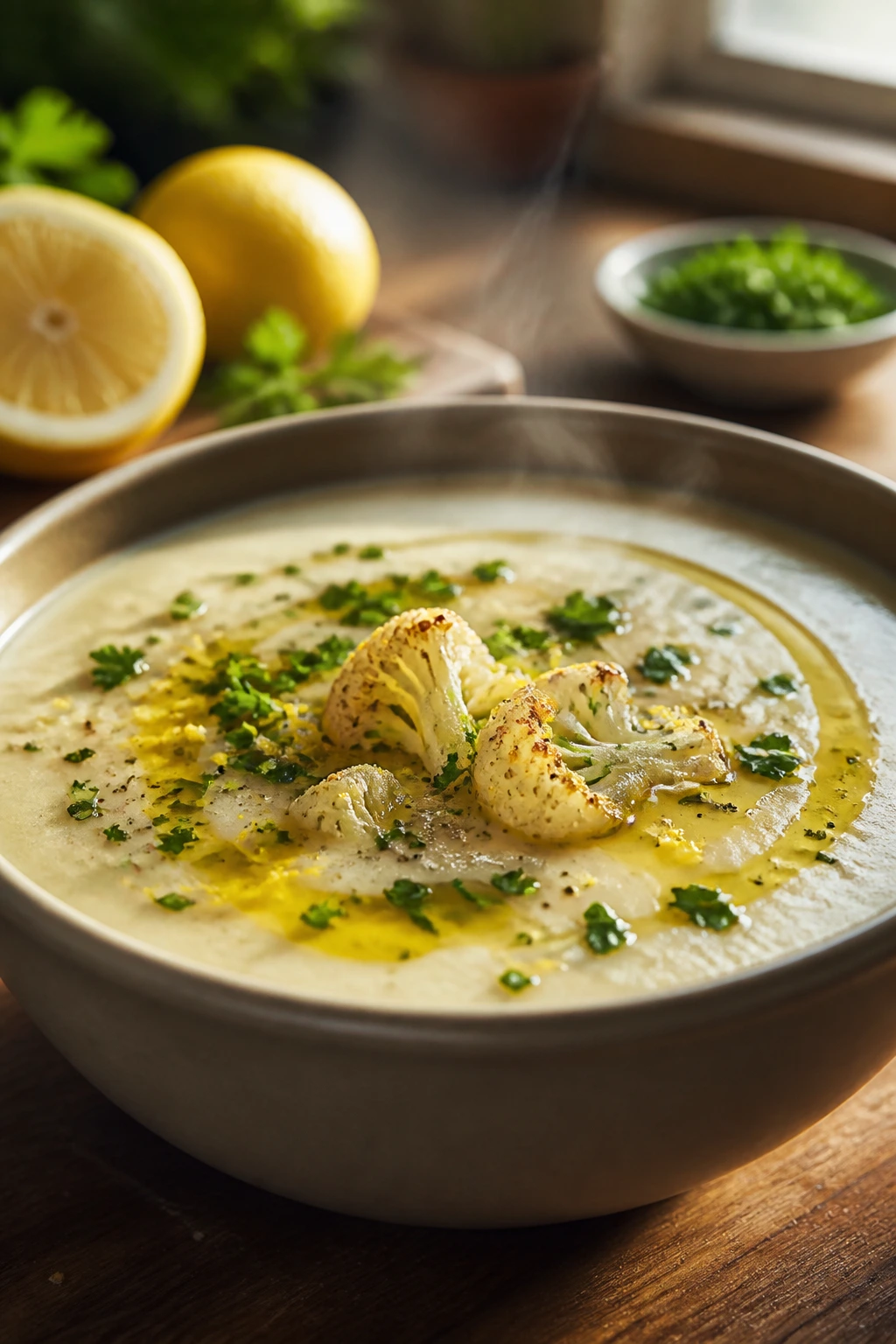
Flavor Enhancement:
A little acid at the finish can save a cauliflower soup that tastes sleepy. Lemon juice, lime, cider vinegar, or a small splash of sherry vinegar all do the job. Use them in the last minute or two after the heat drops. They make the vegetables taste fresher and the salt taste more deliberate.
Customization:
If you want more body, blend in white beans, red lentils, a potato, or a handful of cooked rice. If you want more texture, hold back a cup of roasted florets and stir them in after blending. For a smoky note, lean on smoked paprika, chipotle, bacon, or even roasted garlic. For a cleaner bowl, keep the seasoning simple and let herbs and lemon do the lifting.
Serving Suggestions:
Toasted seeds, croutons, fried sage, scallions, chives, chili oil, yogurt, sour cream, and a few grates of parmesan all work as finishing moves. The trick is to match the topping to the soup’s main flavor. Coconut and curry soups want herbs and lime. Cheddar soups want scallions or bacon. Miso and Thai bowls want sesame seeds or chili oil.
Make-It-Yours:
If you need dairy-free, use olive oil, coconut milk, cashew cream, or blended white beans instead of cream. If you want the soup to eat like dinner, add chicken, ham, tofu, chickpeas, or gnocchi. If you need lower-carb bowls, skip the potato, orzo, and barley versions and lean on roasted cauliflower, beans, and broth instead. Small changes shift the bowl without wrecking the recipe.
Make-Ahead, Storage, and Reheating Guidance

Most cauliflower soups keep well in the refrigerator for 3 to 4 days in sealed containers. A few taste even better after a night in the fridge, especially the roasted garlic, bean, lentil, and curry versions. Let the soup cool for about 20 to 30 minutes before packing it up, but don’t leave it out long enough for the dairy to wander into danger. Shallow containers cool faster than deep ones, and that matters.
Freezing works best for soups that are blended before the dairy goes in. Plain cauliflower bases, curry soups, tomato versions, and bean soups usually freeze well for up to 2 to 3 months. Soups with a lot of cream, milk, cheese, or sour cream can separate a bit when thawed. They’re still safe and still useful, but the texture may need help. A quick whisk while reheating often brings them back.
Reheat blended soups over medium-low heat, stirring often. If they’ve thickened in the fridge, add broth, water, or milk a splash at a time. Chowders and potato-based soups should be warmed slowly so the dairy doesn’t break and the starch doesn’t seize. Gnocchi soups are best eaten the day they’re made, because the pasta keeps soaking up liquid. If you must save them, store the gnocchi separately when possible and add it back at reheating.
For soups with miso, lime, lemon, herbs, or fresh scallions, add those after reheating, not before freezing. They lose their snap if they sit in the freezer too long. Bacon can be stored separately and added on top when serving. That keeps it crisp and keeps the soup from tasting like a lunchbox.
Variations and Adaptations to Try
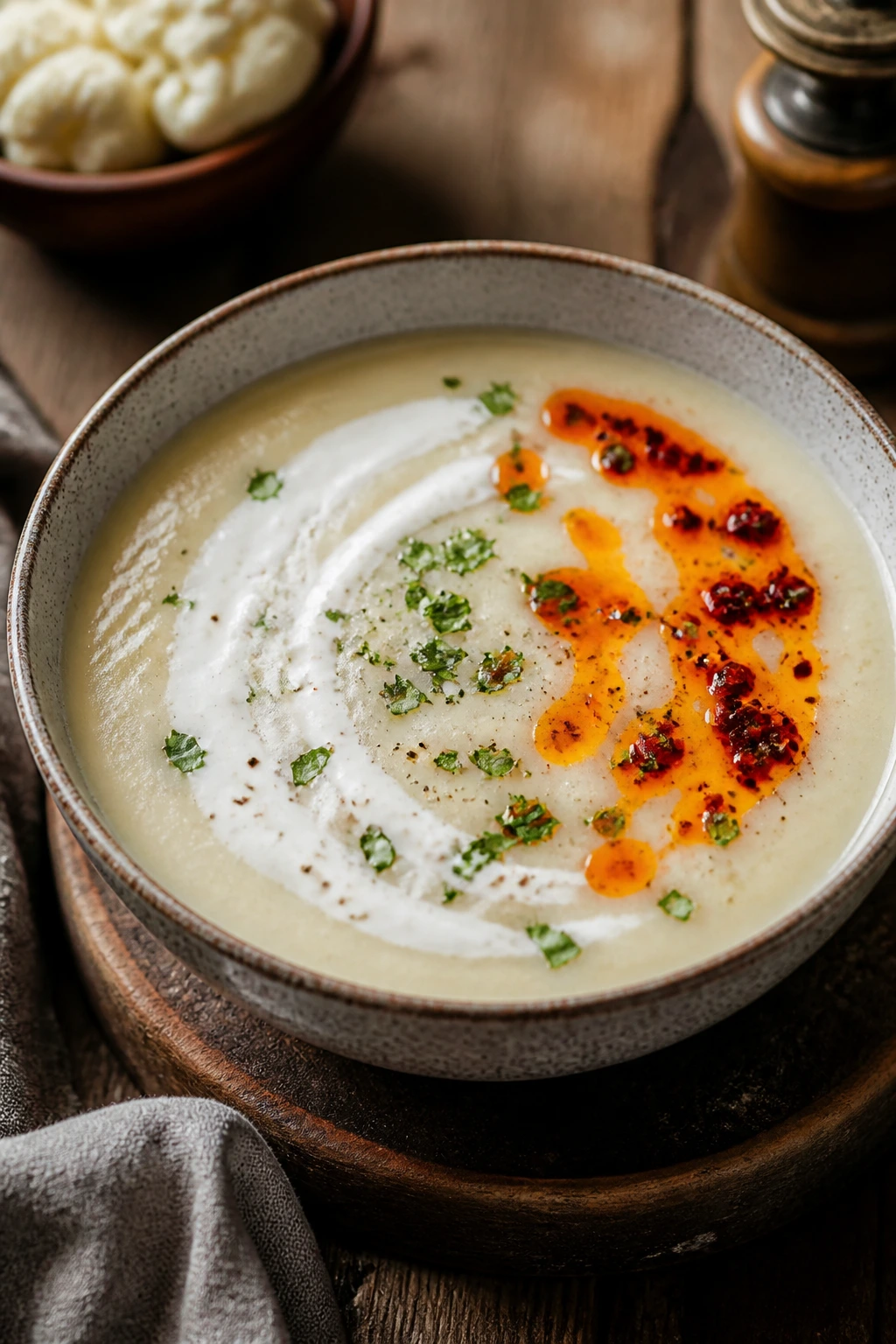
Dairy-Free Silk:
Use olive oil or coconut oil for the base, then finish with coconut milk, oat cream, or cashew cream. This works especially well in roasted cauliflower, curry, Thai, and ginger-carrot soups. Skip the cheese-heavy recipes unless you’re willing to replace that salty finish with nutritional yeast or extra herbs.
Protein-Packed Bowls:
Add white beans, chickpeas, red lentils, shredded chicken, ham, tofu, or crisp bacon depending on the flavor profile. A protein addition works best when it makes sense with the soup’s seasoning instead of fighting it. Chickpeas fit tomato and curry. Tofu fits miso. Bacon belongs in chowder. Keep it simple.
Chunky Comfort Route:
Leave a few florets whole, add diced potato or barley, and blend only half the soup. This gives you a bowl that feels more like dinner and less like a puree. It works especially well in mushroom, ham, leek, and bacon versions, where texture adds part of the pleasure.
Heat-Lover’s Batch:
Use chipotle, red curry paste, jalapeño, buffalo sauce, or chili oil to turn the soup sharper. The trick is to layer heat with something else — lime, tomato, coconut milk, or cheddar — so the bowl doesn’t just taste hot. Heat needs a shape.
Low-Carb Focus:
Build the soup on roasted cauliflower, leeks, herbs, broth, and a little cream or cheese, then skip the higher-starch additions like potato, barley, or orzo. Beans are still fair game if you want fiber and body. The result is lighter, but it still tastes like dinner.
Regional Turn:
Push the soup toward another kitchen with a few strategic changes. Coconut, lime, and curry paste steer it toward Thai flavors. Chipotle, tomato, and tortilla strips pull it toward a Mexican-style bowl. Miso, sesame oil, and scallions make it feel Japanese-inspired. The cauliflower stays put; the accents do the traveling.
Common Mistakes to Avoid
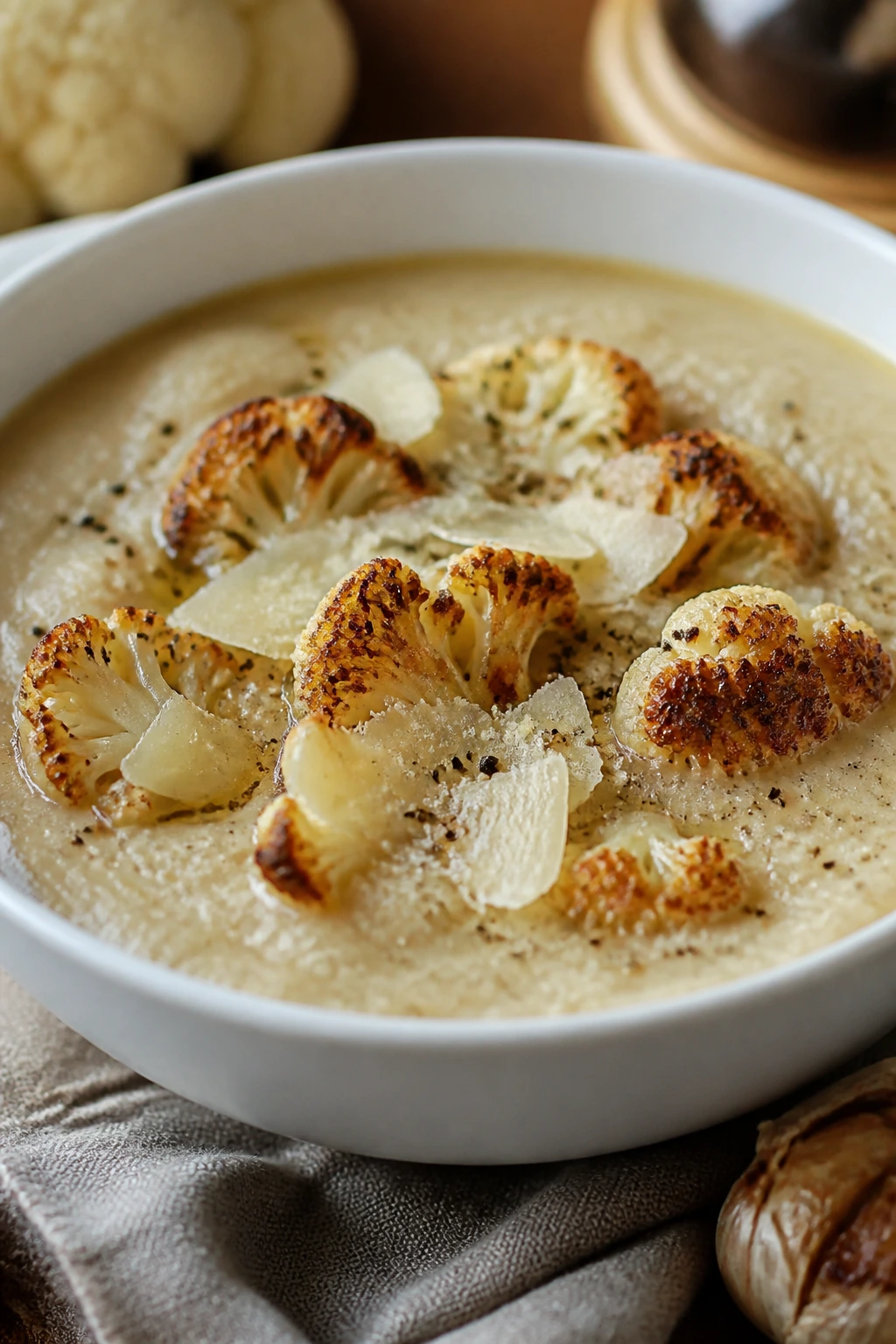
-
Treating cauliflower like a filler: It needs salt, heat, and a real flavor partner. Boiled cauliflower with a little broth is not the same thing as soup.
-
Adding dairy too aggressively: Milk, cream, and cheese should go in gently and off a hard boil. High heat can split the texture or make the cheese grainy.
-
Forgetting acid at the end: Lemon, lime, or vinegar often makes the difference between “fine” and “I want another bowl.” Cauliflower likes brightness.
-
Undercooking the vegetables: If the florets or potatoes aren’t fully tender, the soup won’t blend cleanly and the texture will feel rough.
-
Using too much salt too early: Broth, cheese, bacon, miso, and soy sauce all bring their own salt. Taste near the end so you don’t overshoot.
-
Blending with a sealed lid: Hot soup expands. If you use a countertop blender, leave the lid slightly vented and cover it with a towel.
Frequently Asked Questions

Can I use frozen cauliflower in these soups?
Yes, especially in the blended and simmered recipes. Frozen cauliflower works well in curry, bean, tomato, and cheese soups, though roasted versions taste best with fresh florets. If you want browning, give frozen florets enough space on the pan and roast them hot.
How do I keep cauliflower soup from tasting bland?
Brown some of the cauliflower, salt the onions early, and finish with acid. Those three moves do more than any fancy garnish. A flat cauliflower soup usually means one of those steps got skipped.
Can I make these soups dairy-free?
You can, and some of them barely need any adjustment. Coconut milk, oat cream, cashew cream, olive oil, and white beans all help carry the texture. In cheese-heavy recipes, you’ll need another salty finish, like nutritional yeast, miso, or extra herbs.
What if my soup is too thin?
Simmer it uncovered for 5 to 10 more minutes, or blend in part of the cauliflower, a potato, white beans, or cooked rice. Thickening the soup with more solids usually tastes better than adding flour at the end. The exception is chowder, where a roux can be useful from the start.
What if my soup is too thick?
Add hot broth, water, or milk a splash at a time and stir well between additions. Thick soups often loosen up a little after standing for 10 minutes, so don’t overcorrect too fast. Give it a minute before you keep pouring.
Can I freeze cauliflower soup with cream or cheese in it?
You can, but the texture may separate a little. The safer move is to freeze the soup base before adding dairy, then finish it when you reheat. If you already froze a finished soup, whisk it well as it warms and add a splash of broth.
What’s the best way to reheat leftover cauliflower soup?
Use medium-low heat on the stove and stir often. Microwaving works for a single bowl, but use short bursts and stir between them. If the soup has thickened in the fridge, loosen it before it gets too hot.
Which soups in this collection make the best meal on their own?
The potato-cheddar, bacon chowder, lentil, chickpea, gnocchi, and ham versions eat like full dinners without much help. The lighter roasted garlic, leek, and fennel soups are better with bread, salad, or a sandwich on the side.
Can I make the soup smoother than an immersion blender allows?
Yes. A high-speed countertop blender gives a finer texture, especially for celery root, almond, and roasted cauliflower soups. Blend in batches, vent the lid, and strain if you want a very polished finish.
How far ahead can I roast the cauliflower?
Roasted cauliflower keeps in the fridge for about 3 days. That makes it useful for busy nights, because you can roast the florets earlier and turn them into soup fast once the onions are ready.
A Bowl Worth Repeating

Cauliflower soup earns its place because it can be many things without losing its shape. It can be roasted and garlicky, smoky and cheesy, bright with curry or lime, thick with beans or barley, or plain enough to let herbs do the talking. That range is what makes it worth keeping around when the kitchen feels tired and the weather does not.
The best part is how forgiving the vegetable is once you treat it properly. Brown it. Salt it. Give it acid at the end. After that, the bowl takes care of the rest.