



Some Sundays are made for staying in socks, letting the house go quiet, and leaning hard on crockpot recipes for lazy Sundays instead of fussing over a stove all afternoon. That’s the real appeal here: one plug, one lid, and hours later the kitchen smells like onions, herbs, pepper, garlic, and something slowly turning tender in its own juices. You don’t have to hover. You don’t have to babysit. You can read, nap, fold laundry badly, or ignore the laundry entirely.
The best slow cooker food has a specific kind of comfort to it. Not the soft, vague kind. I mean the kind that starts with a chuck roast yielding under a spoon, a pot of white beans thickened by starch, or chicken that shreds with almost no effort because it spent the day bathing in broth and spice. Crockpot cooking rewards patience in a way that oven cooking sometimes doesn’t. The flavors don’t stay separate. They blur together on purpose.
A good lazy Sunday recipe also has to earn its place. If the prep is fussy, the payoff better be worth it. If it needs a dozen hard-to-find ingredients, I’m out. The recipes below are the ones I’d keep on repeat when I want the day to feel easy but still eat like I meant it. Some are braises, some are soups, some are brunch dishes, and a few lean into dessert because the slow cooker can absolutely handle that if you respect it.
Why These Crockpot Recipes Make Sundays Easier
- Hands-off timing: Most of these dishes need 6 to 8 hours on low, which means you can start them after breakfast and stop thinking about dinner.
- One-pot cleanup: Brown the meat if you want, toss in the rest, and you’re left with one insert, one spoon, and fewer dishes stacked in the sink.
- Built-in leftovers: Roast, chili, soup, and pulled pork usually taste even better the next day after the flavors settle.
- Flexible pacing: A lot of these recipes forgive a 30-minute delay, which matters when Sunday runs long and nobody wants to eat at a strict hour.
- Real Sunday food: These aren’t tiny, dainty recipes. They’re the kind of meals that make the house smell lived-in and warm by late afternoon.
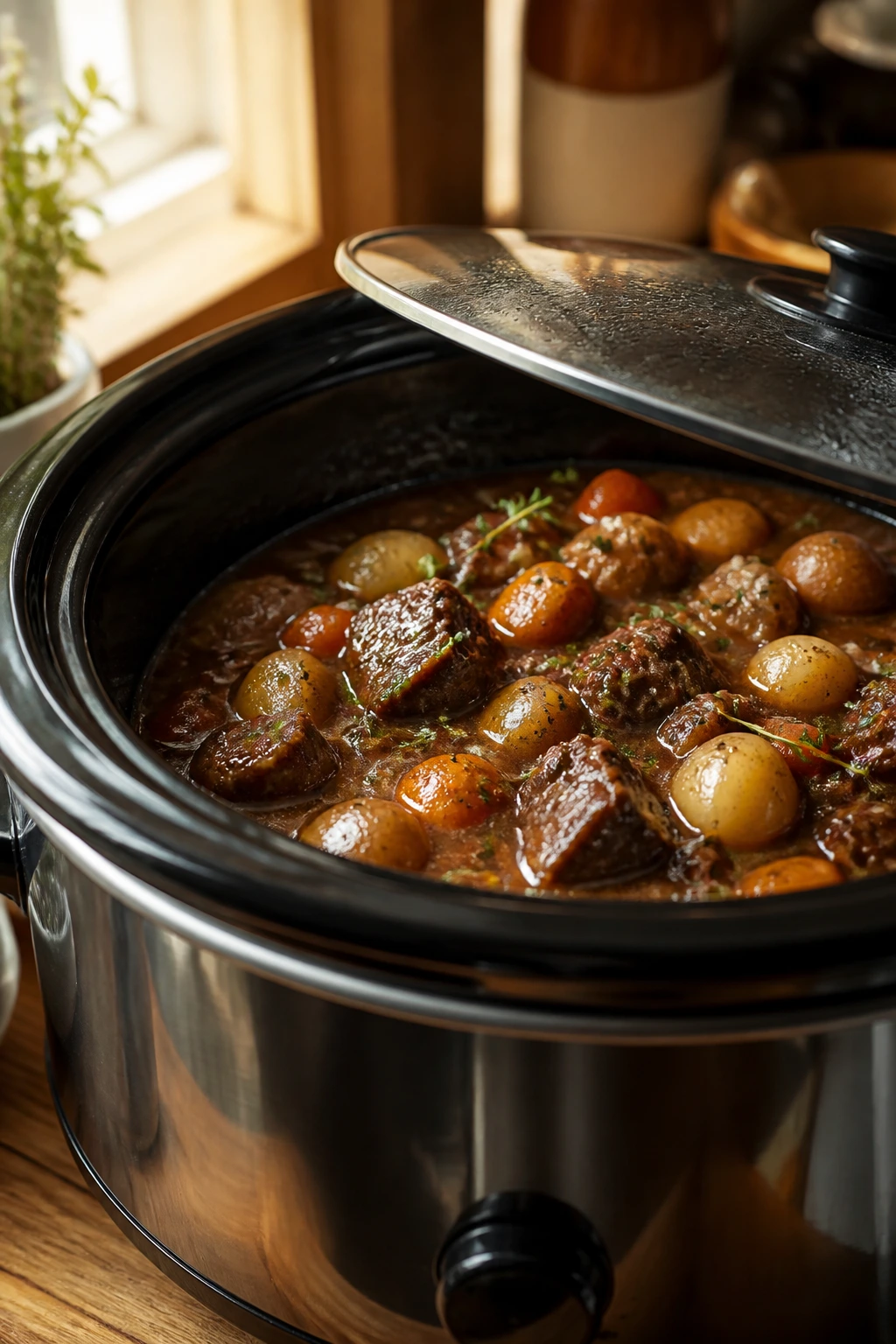
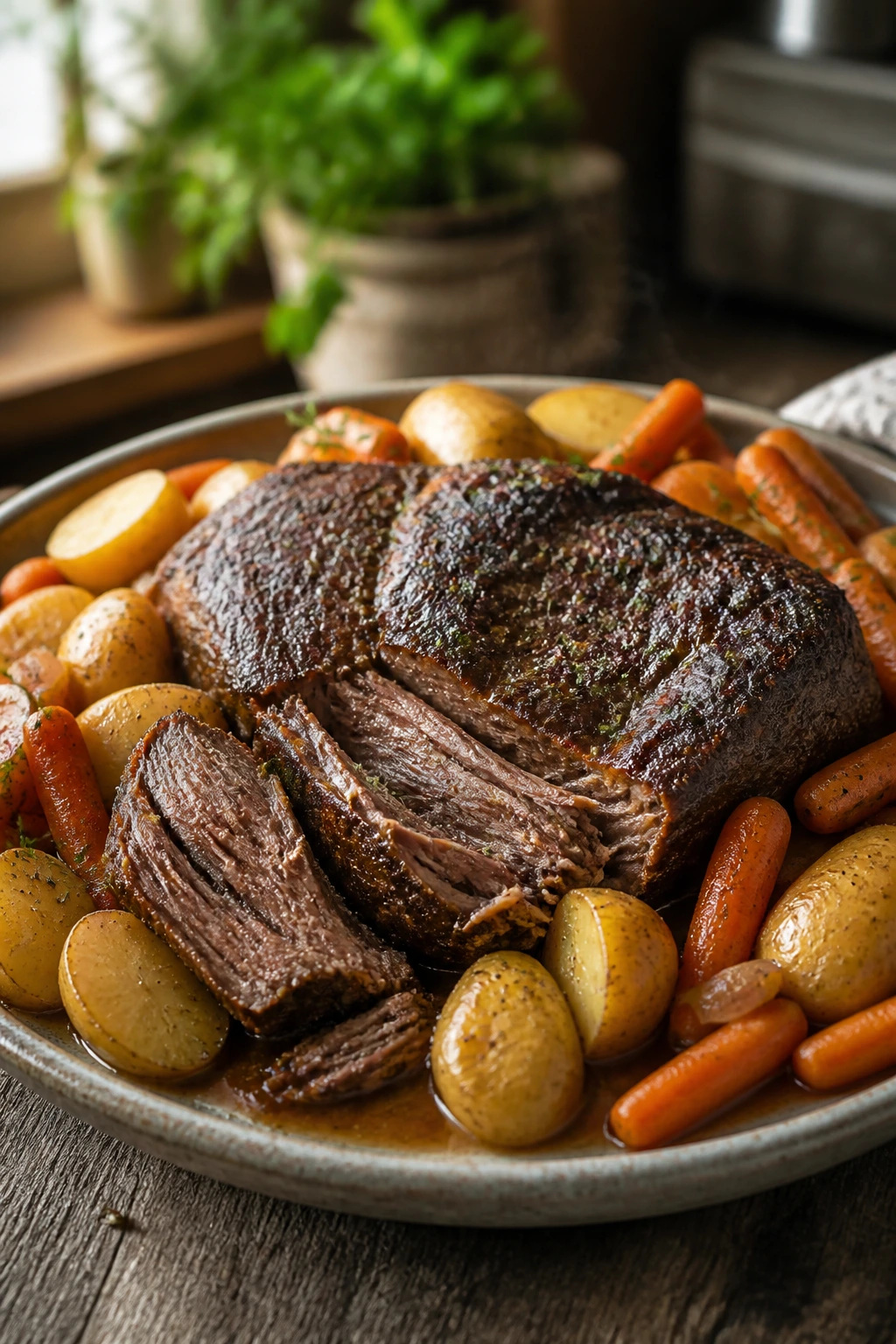
1. Classic Pot Roast with Carrots and Yukon Golds
Intro:
This is the smell that makes people wander into the kitchen asking if dinner’s ready. A well-made pot roast gives you beef that pulls apart in thick ribbons, carrots that taste sweet instead of bland, and potatoes that soak up the broth at the edges. It’s the slow cooker at its most honest: inexpensive cut, long cooking time, big reward.
Why It Works:
Chuck roast is packed with connective tissue, and the slow cooker gives that tissue time to melt into rich, silky meat. The carrots and Yukon Golds hold their shape better than floury potatoes, so you don’t end up with a pile of mash. A quick sear first gives the broth more depth, and a splash of Worcestershire keeps the whole pot from tasting flat.
Key Ingredients:
- 3 to 4 lb chuck roast
- 1½ teaspoons kosher salt
- 1 teaspoon black pepper
- 2 tablespoons vegetable oil
- 1 large yellow onion, sliced
- 4 carrots, cut into 2-inch pieces
- 1½ lb Yukon Gold potatoes, halved
- 3 cups beef broth
- 2 tablespoons Worcestershire sauce
- 4 garlic cloves, smashed
Quick Steps:
- Season and sear: Pat the roast dry, season it well, and sear in hot oil for 3 to 4 minutes per side until deeply browned.
- Build the base: Put the onion, carrots, potatoes, and garlic in the slow cooker.
- Add the beef: Nestle the roast on top, then pour in broth and Worcestershire.
- Cook low and slow: Cover and cook on low for 8 to 9 hours, until the beef shreds easily with a fork.
- Finish and serve: Taste the broth, adjust salt, and slice or shred the roast before spooning broth over the top.
Equipment for This Recipe:
- 6-quart slow cooker
- Large skillet for searing
- Tongs for turning the roast
- Cutting board and sharp knife
How to Serve This Dish:
Pile the beef high and spoon the carrots and potatoes around it. A little chopped parsley on top helps the plate look less brown, which I say with affection because pot roast is proudly brown food. Add crusty bread if you want to chase the broth.
Pro Tips for This Recipe:
- Sear the roast even if you’re tired. That browned crust gives the broth a deeper flavor.
- Cut the potatoes large enough to survive 8 hours without collapsing.
- If the broth tastes thin, stir in 1 tablespoon tomato paste during the last hour.
- Don’t overfill the cooker. The beef should sit partly in the liquid, not swim in it.
Variations on This Dish:
- Red Wine Roast: Swap 1 cup of broth for dry red wine.
- Mushroom Pot Roast: Add 8 ounces sliced cremini mushrooms for a woodsy note.
Common Mistakes to Avoid with This Dish:
- Using a lean roast: Eye of round dries out; chuck roast has the fat and collagen this dish needs.
- Adding vegetables too small: Tiny carrot coins go soft and mealy.
- Cooking on high the whole time: You’ll get firmer meat and less developed flavor.
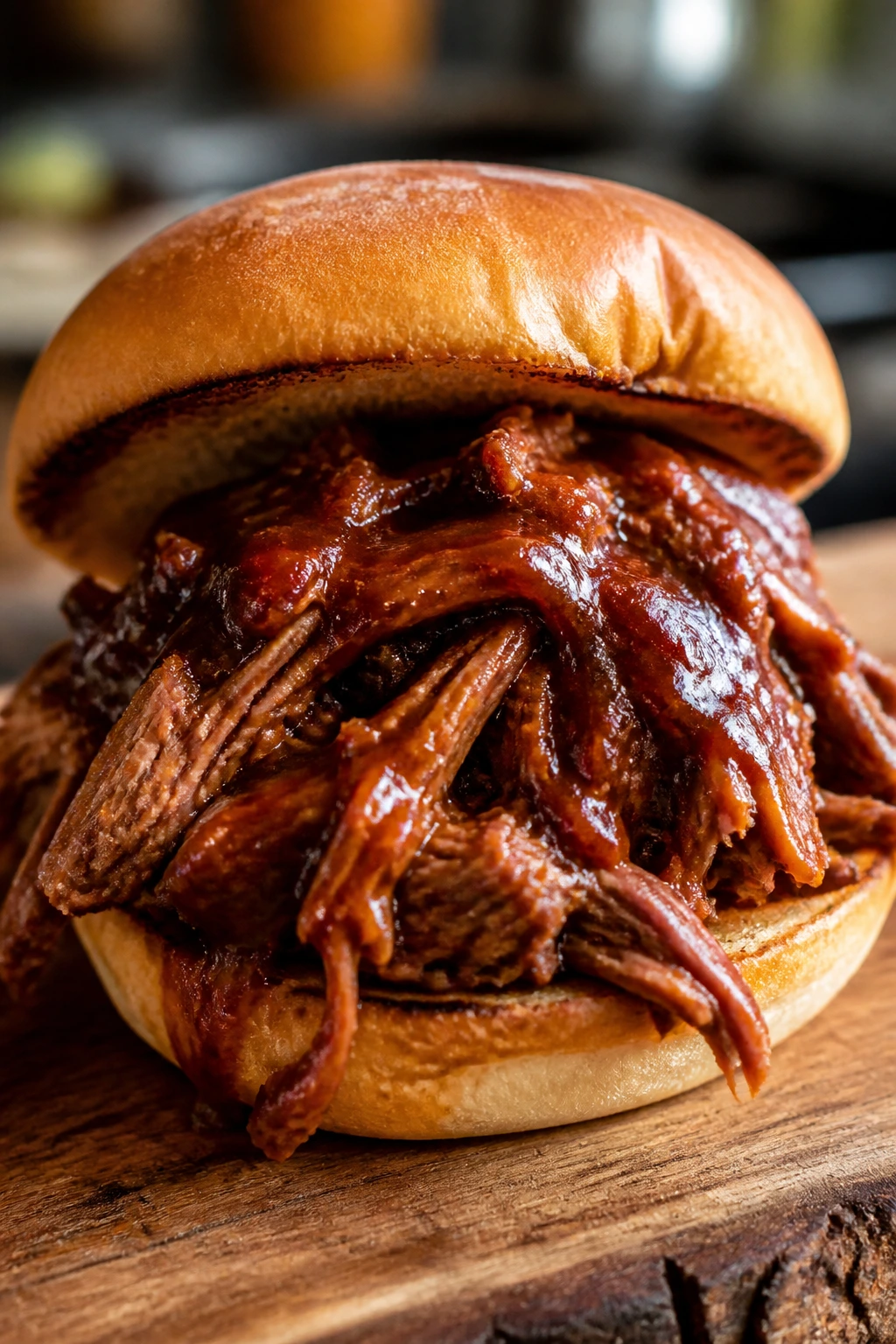
2. BBQ Pulled Pork Sandwiches
Intro:
Pulled pork is the kind of Sunday recipe that makes you look more organized than you feel. The shoulder becomes shreddable, the edges pick up spice, and the sauce clings to the meat in sticky strands. On a bun, it’s messy in the best possible way.
Why It Works:
Pork shoulder has enough fat to stay juicy through a long cook, and the slow cooker gives you that low, steady heat that breaks the meat down without drying it. A little brown sugar in the rub helps the outside taste rounded instead of harsh. The vinegar in the sauce keeps the final sandwich from feeling heavy.
Key Ingredients:
- 4 lb boneless pork shoulder
- 2 tablespoons brown sugar
- 1 tablespoon smoked paprika
- 2 teaspoons kosher salt
- 1 teaspoon black pepper
- 1 cup BBQ sauce
- ½ cup apple cider vinegar
- 1 onion, sliced
- 4 hamburger buns
- Pickles for serving
Quick Steps:
- Rub the pork: Mix brown sugar, paprika, salt, and pepper, then coat the pork shoulder all over.
- Set the bed: Put the onion in the slow cooker and place the pork on top.
- Pour the sauce: Combine BBQ sauce and vinegar, then pour it around the meat.
- Cook until shred-worthy: Cover and cook on low for 8 hours, or until the pork pulls apart easily.
- Shred and moisten: Shred the pork in the cooker and stir it through the sauce before piling it onto buns.
Equipment for This Recipe:
- 6-quart slow cooker
- Forks for shredding
- Mixing bowl for the rub
- Slotted spoon
How to Serve This Dish:
Serve the pork on toasted buns with pickles and a crisp slaw. The contrast matters. Soft bread, sharp pickle, juicy meat. That’s the whole game.
Pro Tips for This Recipe:
- If your BBQ sauce is sweet, use a sharper vinegar.
- Toast the buns. Soggy buns are a small tragedy.
- Save some shredded pork without sauce if you plan to freeze it.
- A quick broil on a sheet pan gives the edges more bite.
Variations on This Dish:
- Carolina-Style: Use more vinegar and cut the BBQ sauce in half.
- Spicy Chipotle Pork: Stir chipotle in adobo into the sauce.
Common Mistakes to Avoid with This Dish:
- Starting with too little seasoning: Pork shoulder can take a bold rub.
- Skipping the onion: It melts into the sauce and adds body.
- Leaving it in the cooker too long after shredding: The meat can turn mushy.
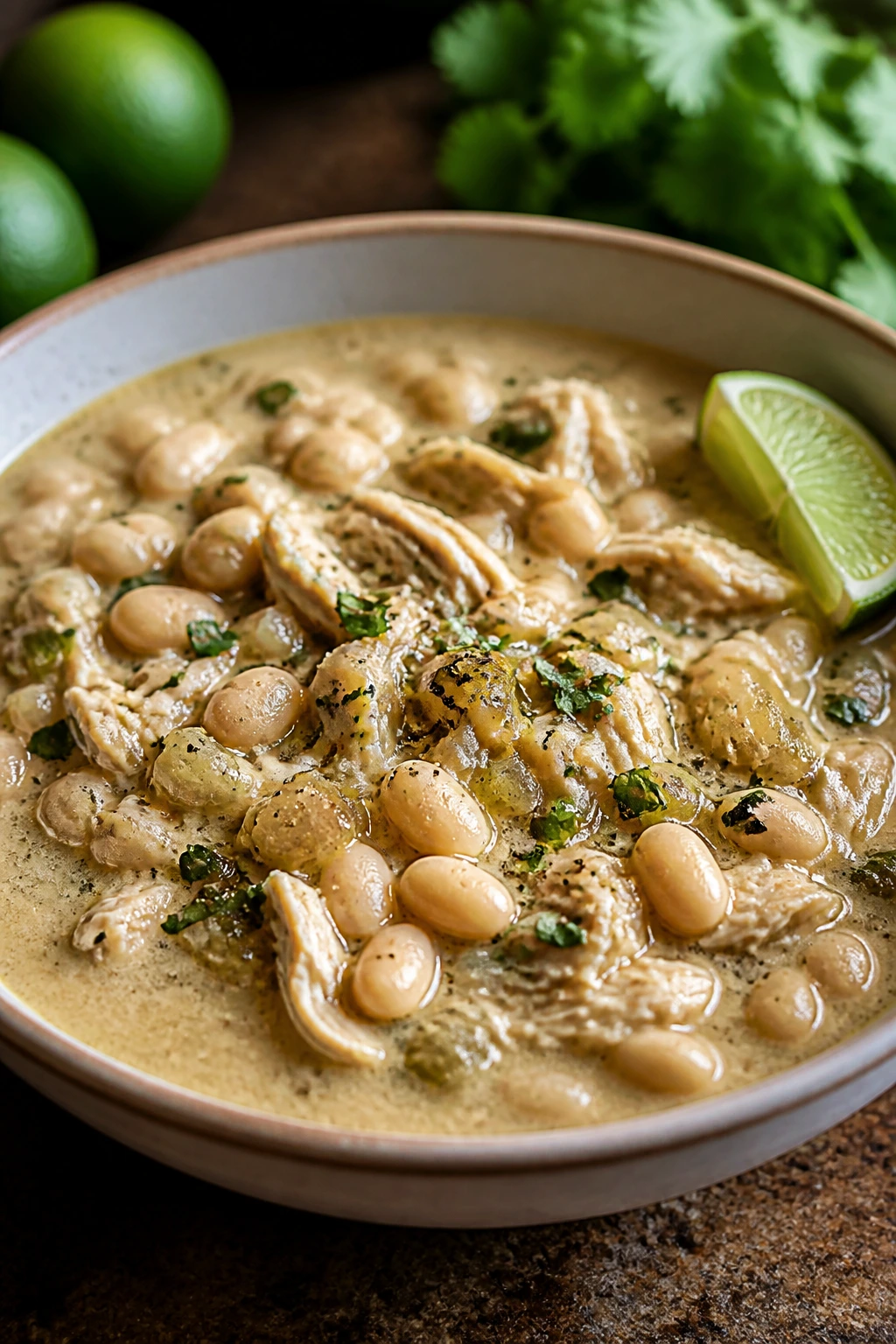
3. White Chicken Chili
Intro:
This is the chili I make when I want comfort without the heavy tomato base. The broth stays pale and creamy, the beans give it body, and the shredded chicken carries cumin and green chile in a way that feels clean, not bland. A squeeze of lime at the end wakes the whole bowl up.
Why It Works:
White chicken chili leans on texture instead of tomato reduction. Cannellini beans and a little mashed bean puree thicken the broth without flour, and the slow cooker keeps the chicken from drying out while the spices bloom. Green chiles bring warmth without making the pot hot enough to scare people away.
Key Ingredients:
- 2 lb boneless skinless chicken breasts or thighs
- 2 cans cannellini beans, drained
- 1 can diced green chiles
- 1 yellow onion, diced
- 4 cups chicken broth
- 2 teaspoons ground cumin
- 1 teaspoon oregano
- 4 ounces cream cheese
- Lime wedges and cilantro for serving
Quick Steps:
- Load the pot: Add chicken, beans, chiles, onion, broth, cumin, and oregano.
- Cook gently: Cover and cook on low for 6 to 7 hours, until the chicken shreds easily.
- Thicken the base: Remove the chicken, shred it, and mash 1 cup of beans against the side of the cooker.
- Add creaminess: Stir in cream cheese until melted and smooth.
- Finish with acid: Return the chicken, stir, and serve with lime and cilantro.
Equipment for This Recipe:
- Slow cooker
- Forks for shredding
- Potato masher or spoon
- Ladle
How to Serve This Dish:
Use deep bowls and top with tortilla strips, cilantro, and a little shredded Monterey Jack. I like a lime wedge on the side because the citrus sharpens the creamy broth.
Pro Tips for This Recipe:
- Thighs stay juicier than breasts if you’re cooking past the minimum.
- Mash more beans if you want a thicker bowl.
- Add cream cheese at the end so it melts smoothly.
- Don’t skip the lime. It changes the whole pot.
Variations on This Dish:
- Corn and Pepper Chili: Add 1½ cups frozen corn and diced poblano.
- Extra-Spicy Version: Stir in minced jalapeño and a pinch of cayenne.
Common Mistakes to Avoid with This Dish:
- Boiling the cream cheese in early: It can turn grainy.
- Using too much broth: The chili should coat a spoon, not behave like soup.
- Forgetting the acid at the end: Without lime, the flavor feels dull.
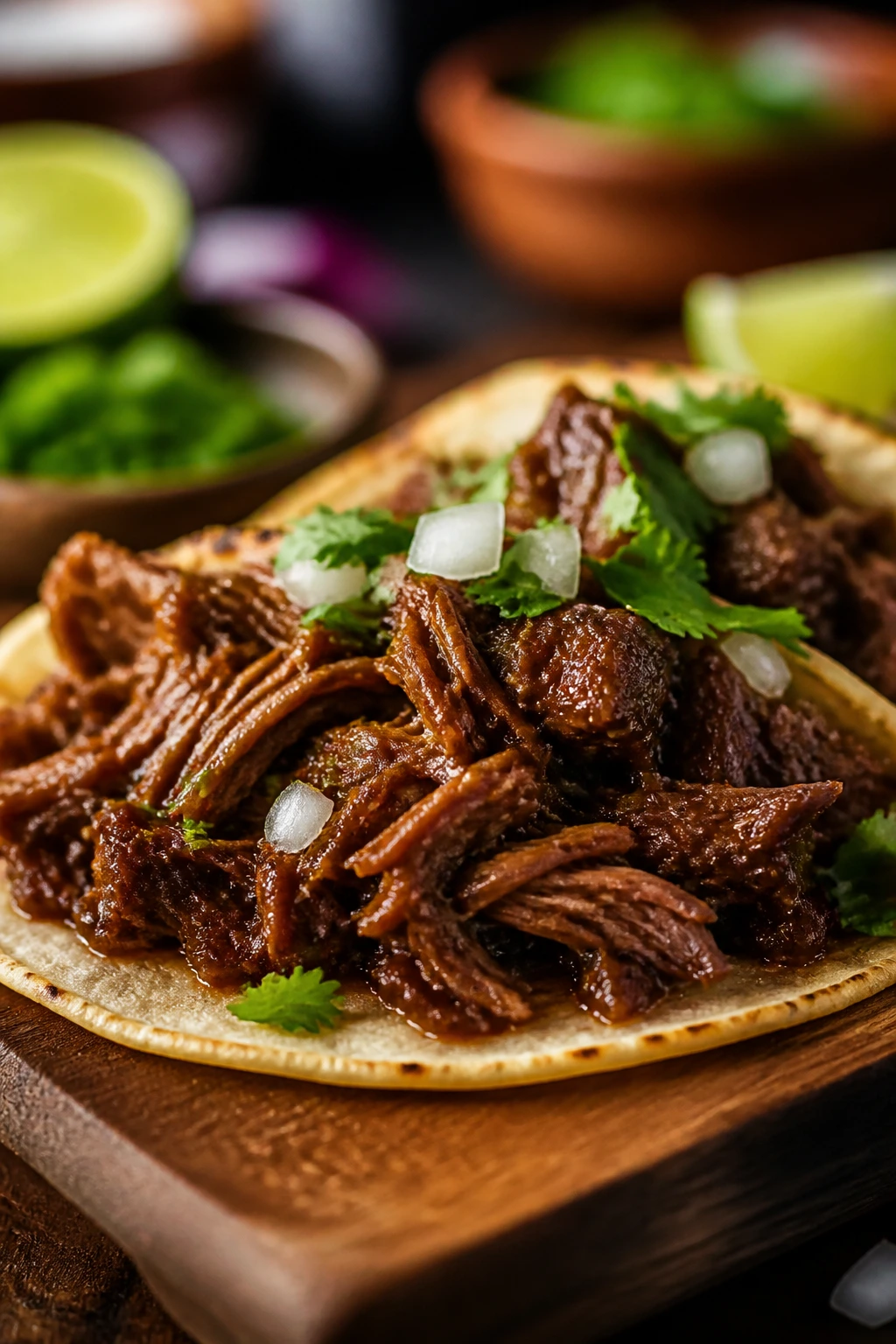
4. Beef Barbacoa for Tacos
Intro:
Barbacoa is what happens when beef gets a long, slow bath in chipotle, garlic, and citrus. The texture lands somewhere between shredded and silky, and the flavor has enough smoke to stand up to onions, cilantro, and warm tortillas. It’s a taco filling that doesn’t need much help.
Why It Works:
A beef chuck roast or brisket cut has the fat and collagen needed for shredding. Chipotle in adobo adds smoke and heat, while lime and vinegar cut through the richness so the tacos don’t taste greasy. The slow cooker handles the long braise better than a rushed stovetop simmer.
Key Ingredients:
- 3 lb beef chuck roast
- 2 chipotle peppers in adobo
- 3 garlic cloves
- 1 teaspoon cumin
- 1 teaspoon dried oregano
- ½ cup beef broth
- 2 tablespoons lime juice
- 1 tablespoon apple cider vinegar
- Corn tortillas
- Diced onion and cilantro
Quick Steps:
- Blend the sauce: Puree chipotles, garlic, cumin, oregano, broth, lime juice, and vinegar.
- Add the beef: Put the roast in the slow cooker and pour the sauce over it.
- Cook until tender: Cover and cook on low for 8 hours.
- Shred and absorb: Shred the beef in the cooker so it drinks up the juices.
- Serve hot: Spoon into tortillas and top with onion, cilantro, and extra lime.
Equipment for This Recipe:
- Slow cooker
- Blender or food processor
- Forks
- Tongs
How to Serve This Dish:
Warm corn tortillas on a dry skillet, then pile in the beef with onion and cilantro. Add a spoon of salsa if you like, but don’t drown the barbacoa. It already has enough going on.
Pro Tips for This Recipe:
- Chipotles vary in heat, so start with two.
- Let the shredded beef sit in the juices for 10 minutes before serving.
- If the sauce seems thin, crack the lid for the last 20 minutes.
- Leftovers make excellent burrito bowls.
Variations on This Dish:
- Orange Barbacoa: Add ¼ cup orange juice for a softer citrus note.
- Beef and Poblano Bowl: Stir in roasted poblano strips near the end.
Common Mistakes to Avoid with This Dish:
- Not blending the sauce smooth enough: Big chile pieces can stay harsh.
- Using flour tortillas only: Corn tortillas handle the rich beef better.
- Pulling it too early: Chuck roast needs time to go fully tender.
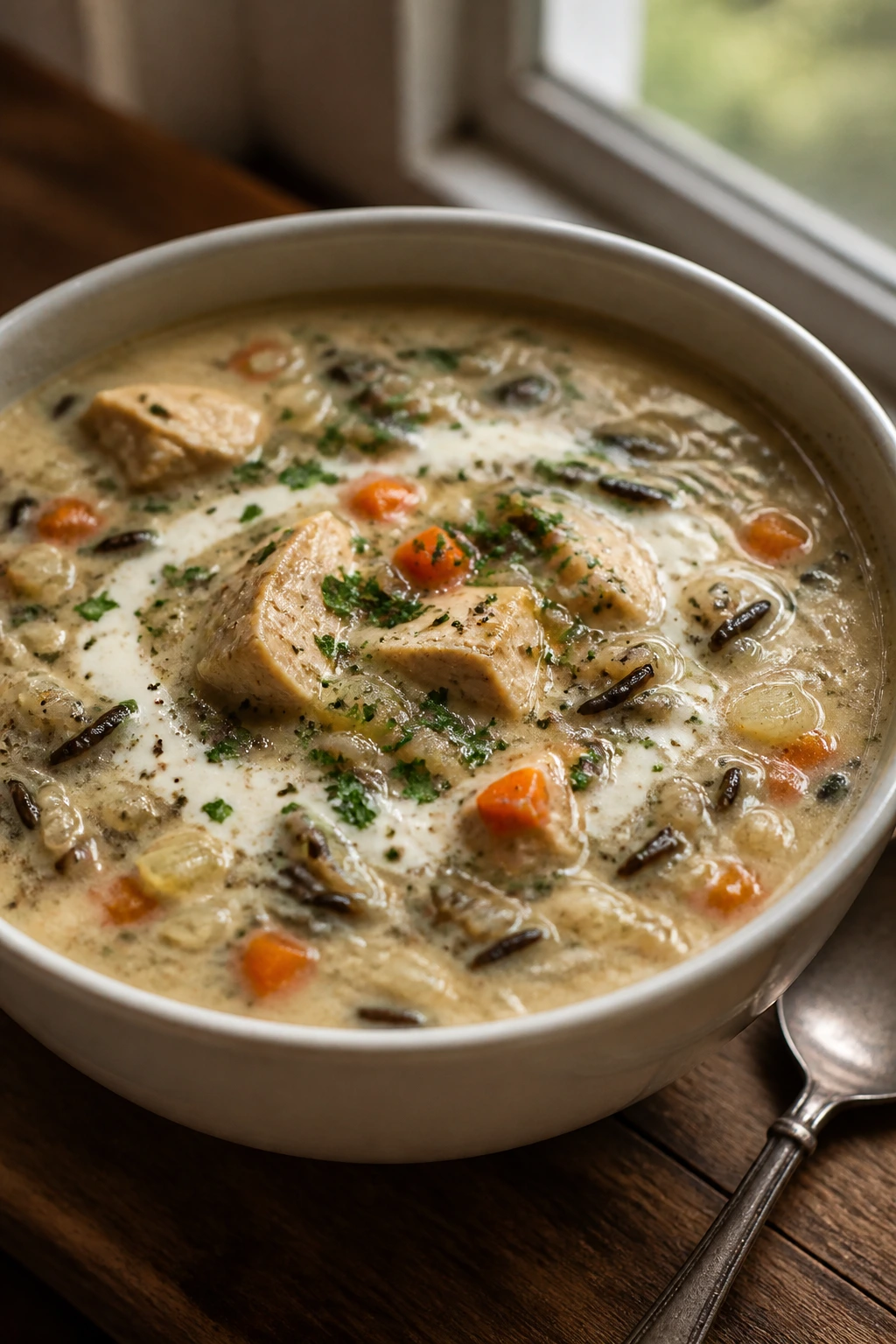
5. Creamy Chicken and Wild Rice Soup
Intro:
This is the soup you want when the house feels chilly and the couch looks suspiciously inviting. Wild rice gives you that nutty chew, the chicken stays tender, and the broth turns creamy without becoming gluey. It tastes like a long afternoon in a bowl.
Why It Works:
Wild rice holds its shape in the slow cooker better than many grains, so the soup stays interesting instead of turning to mush. A bit of cream added at the end rounds it out without breaking. The vegetables soften slowly, which lets the broth pick up their sweetness.
Key Ingredients:
- 1½ lb boneless skinless chicken thighs
- 1 cup wild rice blend, rinsed
- 2 carrots, diced
- 2 celery stalks, diced
- 1 onion, diced
- 6 cups chicken broth
- 1 teaspoon thyme
- 1 cup half-and-half
- 2 tablespoons flour or cornstarch slurry
- Salt and pepper
Quick Steps:
- Add everything but the cream: Put chicken, rice, vegetables, broth, and thyme in the slow cooker.
- Cook until the rice opens: Cover and cook on low for 7 to 8 hours.
- Shred the chicken: Lift it out, shred it, and return it to the pot.
- Thicken lightly: Stir in a flour slurry or cornstarch slurry and cook 15 minutes more.
- Finish with cream: Stir in half-and-half just before serving.
Equipment for This Recipe:
- Slow cooker
- Forks
- Measuring cups
- Small whisk for slurry
How to Serve This Dish:
Serve in wide bowls with cracked black pepper and a piece of crusty bread. If you want it to feel extra cozy, add a little chopped parsley right at the end.
Pro Tips for This Recipe:
- Rinse the wild rice so the broth stays cleaner.
- Add the cream at the end so it doesn’t split.
- Thighs are less likely to dry out than breasts.
- If the soup thickens too much after chilling, loosen it with broth.
Variations on This Dish:
- Mushroom Wild Rice Soup: Add sliced mushrooms with the vegetables.
- Dairy-Free Version: Finish with unsweetened oat cream.
Common Mistakes to Avoid with This Dish:
- Using only white rice: It softens too much over long cooking.
- Adding the cream too early: It can separate.
- Underseasoning the broth: Rice drinks up salt.
6. Tuscan Sausage and White Bean Soup
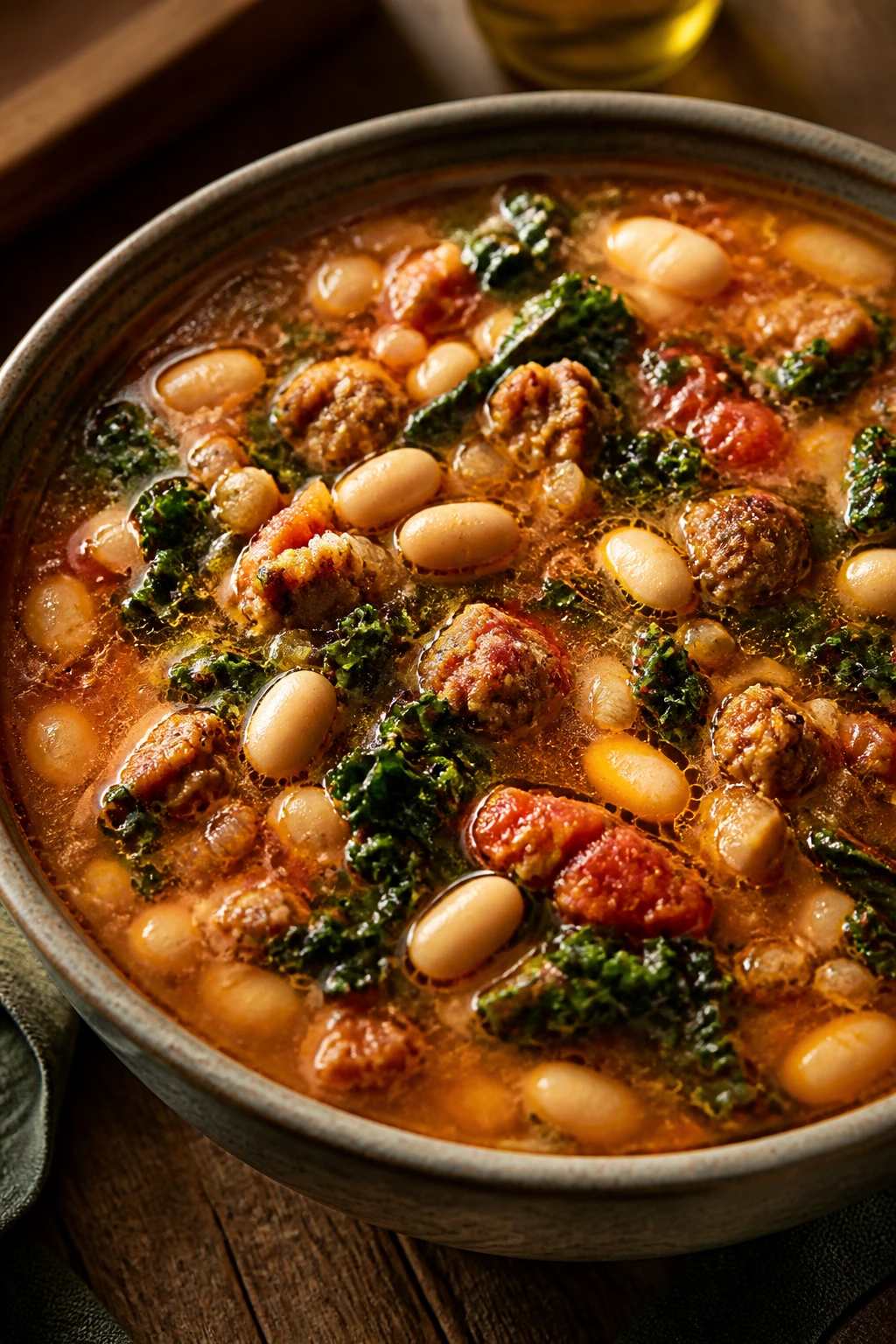
Intro:
Sausage, white beans, kale, tomato, broth. That’s the blueprint, and it works because each part does a different job. The sausage gives fat and spice, the beans give body, and the kale keeps some bite even after hours in the cooker. It’s rustic in the best sense.
Why It Works:
Italian sausage seasons the entire pot from the inside out, so you don’t have to build flavor from scratch. White beans break down just enough to make the broth creamy without cream. A little tomato paste gives the soup a darker, deeper edge.
Key Ingredients:
- 1 lb Italian sausage, removed from casing if needed
- 2 cans cannellini beans, drained
- 1 onion, chopped
- 3 garlic cloves, minced
- 1 tablespoon tomato paste
- 6 cups chicken broth
- 1 teaspoon Italian seasoning
- 3 cups chopped kale
- 1 tablespoon olive oil
- Parmesan for serving
Quick Steps:
- Brown the sausage: Sear it in a skillet until browned.
- Build the soup: Add sausage, beans, onion, garlic, tomato paste, broth, and seasoning to the cooker.
- Cook slowly: Cover and cook on low for 6 to 7 hours.
- Add the kale: Stir in kale during the last 20 to 30 minutes.
- Serve with cheese: Ladle into bowls and finish with Parmesan.
Equipment for This Recipe:
- Slow cooker
- Skillet for browning sausage
- Wooden spoon
- Ladle
How to Serve This Dish:
This soup wants a thick slice of bread or a small hunk of garlic toast. Parmesan on top is not optional in my house. It melts into the broth and sharpens the sausage.
Pro Tips for This Recipe:
- Brown the sausage first if you want a less greasy bowl.
- Use lacinato kale if you want a softer leaf.
- Mash a few beans before serving for extra body.
- Taste before salting; sausage can carry a lot of salt already.
Variations on This Dish:
- Spicy Calabrian Version: Add Calabrian chili paste.
- Creamier Finish: Stir in ¼ cup heavy cream at the end.
Common Mistakes to Avoid with This Dish:
- Throwing in raw sausage without breaking it up: You’ll get clumps.
- Adding kale too early: It turns drab and soft.
- Skipping the Parmesan: The soup wants that salty finish.
7. Mississippi Pot Roast
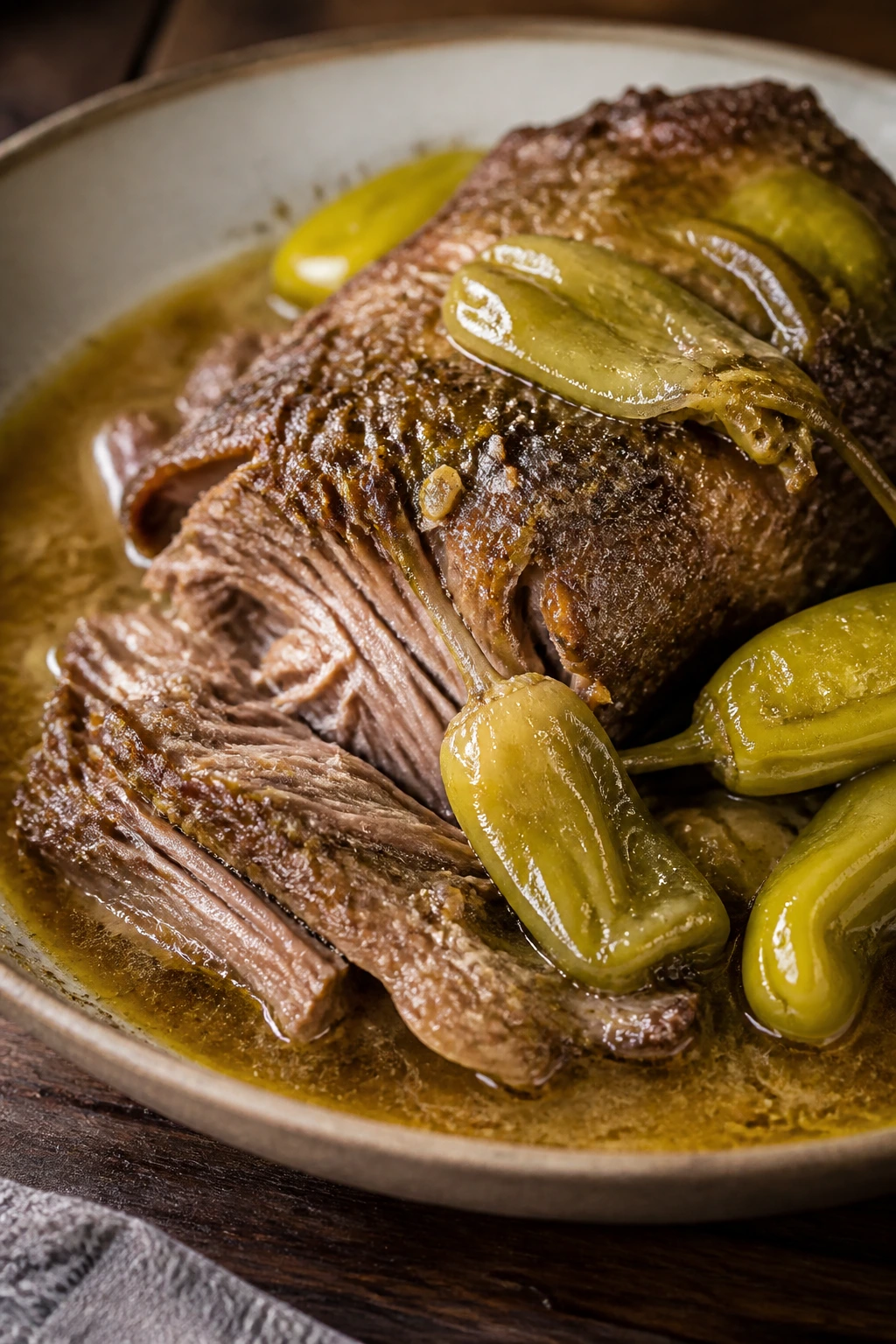
Intro:
This one is famous for a reason. The roast gets salty, tangy, buttery, and almost absurdly tender with barely any effort. Pepperoncini give the broth its bite, and the whole thing feels a little old-school diner, a little potluck table, and a little bit like cheating.
Why It Works:
The acid from pepperoncini wakes up the beef, while ranch seasoning and au jus mix do the heavy lifting on flavor. The butter sounds excessive until you taste the sauce; it softens the sharp edges and helps the roast stay rich after hours of cooking.
Key Ingredients:
- 3 to 4 lb chuck roast
- 1 packet ranch seasoning
- 1 packet au jus gravy mix
- 6 pepperoncini peppers
- ¼ cup pepperoncini brine
- ½ cup unsalted butter
- 1 onion, sliced
- Mashed potatoes for serving
Quick Steps:
- Place the roast: Set the chuck roast in the slow cooker.
- Season the top: Sprinkle ranch mix and au jus over the meat.
- Add the tang: Lay pepperoncini and onion around it, then pour in brine.
- Top with butter: Put the butter on top of the roast.
- Cook until it falls apart: Cover and cook on low for 8 hours, then shred.
Equipment for This Recipe:
- Slow cooker
- Forks for shredding
- Measuring cup
- Serving spoon
How to Serve This Dish:
I like this over mashed potatoes, where the peppery broth can soak in. Egg noodles work too, but mashed potatoes feel right. Add one or two pepperoncini on the side if you like sharpness.
Pro Tips for This Recipe:
- Use chuck roast, not a lean cut.
- Don’t add extra water; the butter and brine are enough.
- Shred the meat in the pot so it absorbs the juices.
- If the sauce tastes too salty, stir in a spoonful of sour cream when serving.
Variations on This Dish:
- Mild Version: Use fewer pepperoncini and less brine.
- Extra-Zesty Version: Add a splash of red wine vinegar at the end.
Common Mistakes to Avoid with This Dish:
- Using too much butter with a salty gravy mix: The pot can turn heavy fast.
- Cooking on high until dry: Low heat is better for texture.
- Serving without starch: You need something to catch the sauce.
8. Chicken Tikka Masala
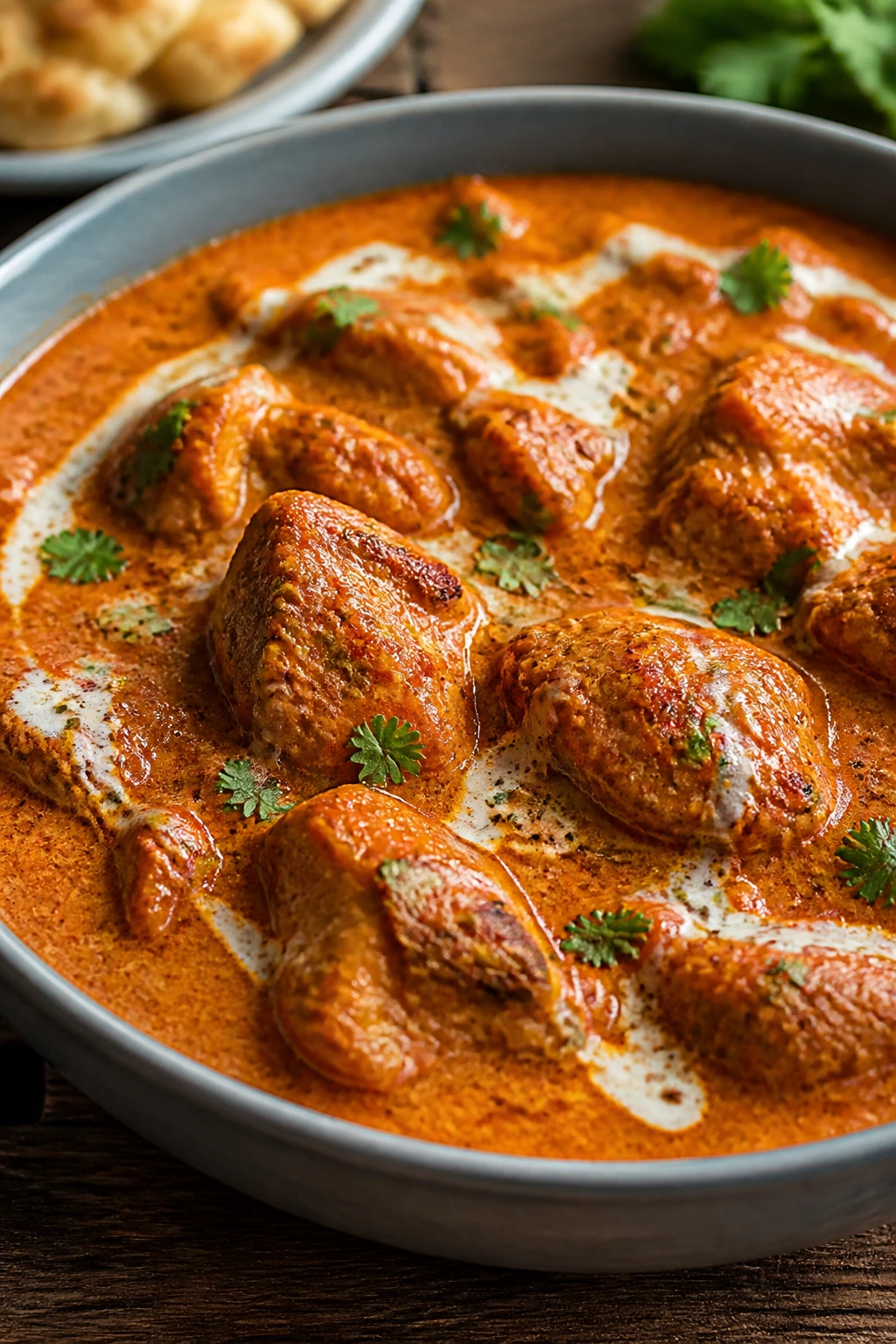
Intro:
Slow cooker tikka masala is not a restaurant clone, and that’s fine. It gives you tender chicken in a spiced tomato-cream sauce with enough ginger, garlic, and garam masala to taste alive. On a Sunday, that’s more than enough.
Why It Works:
The long cook lets the spices bloom into the tomatoes, while the chicken stays soft enough to shred or cut into chunks. Adding cream at the end keeps the sauce smooth. A short broil on the chicken first gives a little color and keeps the flavor from flattening out.
Key Ingredients:
- 2 lb boneless skinless chicken thighs
- 1 cup plain yogurt
- 2 tablespoons tikka masala or garam masala
- 1 onion, finely chopped
- 3 garlic cloves, minced
- 1 tablespoon grated ginger
- 1 can crushed tomatoes
- 1 cup heavy cream or coconut milk
- 1 teaspoon salt
- Cooked rice and naan
Quick Steps:
- Marinate briefly: Coat chicken with yogurt and half the spice mix.
- Add the sauce base: Put onion, garlic, ginger, tomatoes, and remaining spice in the slow cooker.
- Cook the chicken: Nestle the chicken in and cook on low for 5 to 6 hours.
- Finish creamy: Stir in cream or coconut milk during the last 20 minutes.
- Serve with rice: Spoon over basmati rice with naan on the side.
Equipment for This Recipe:
- Slow cooker
- Mixing bowl
- Spoon or tongs
- Rice pot or rice cooker
How to Serve This Dish:
This wants a mound of rice and a warm piece of naan for dragging through the sauce. A little chopped cilantro helps, though not everyone loves it. Use what you like.
Pro Tips for This Recipe:
- Brown the chicken briefly if you want a deeper edge.
- Use thighs; they stay more forgiving than breasts.
- Add a small knob of butter at the end for shine.
- Salt after the cream goes in, since dairy softens perception of seasoning.
Variations on This Dish:
- Paneer Version: Swap the chicken for cubed paneer added near the end.
- Coconut Tikka: Use coconut milk instead of cream.
Common Mistakes to Avoid with This Dish:
- Adding cream too early: It can dull the spices.
- Using too much yogurt: The sauce can turn loose.
- Skipping rice or bread: The sauce is half the point.
9. Lentil and Sweet Potato Curry
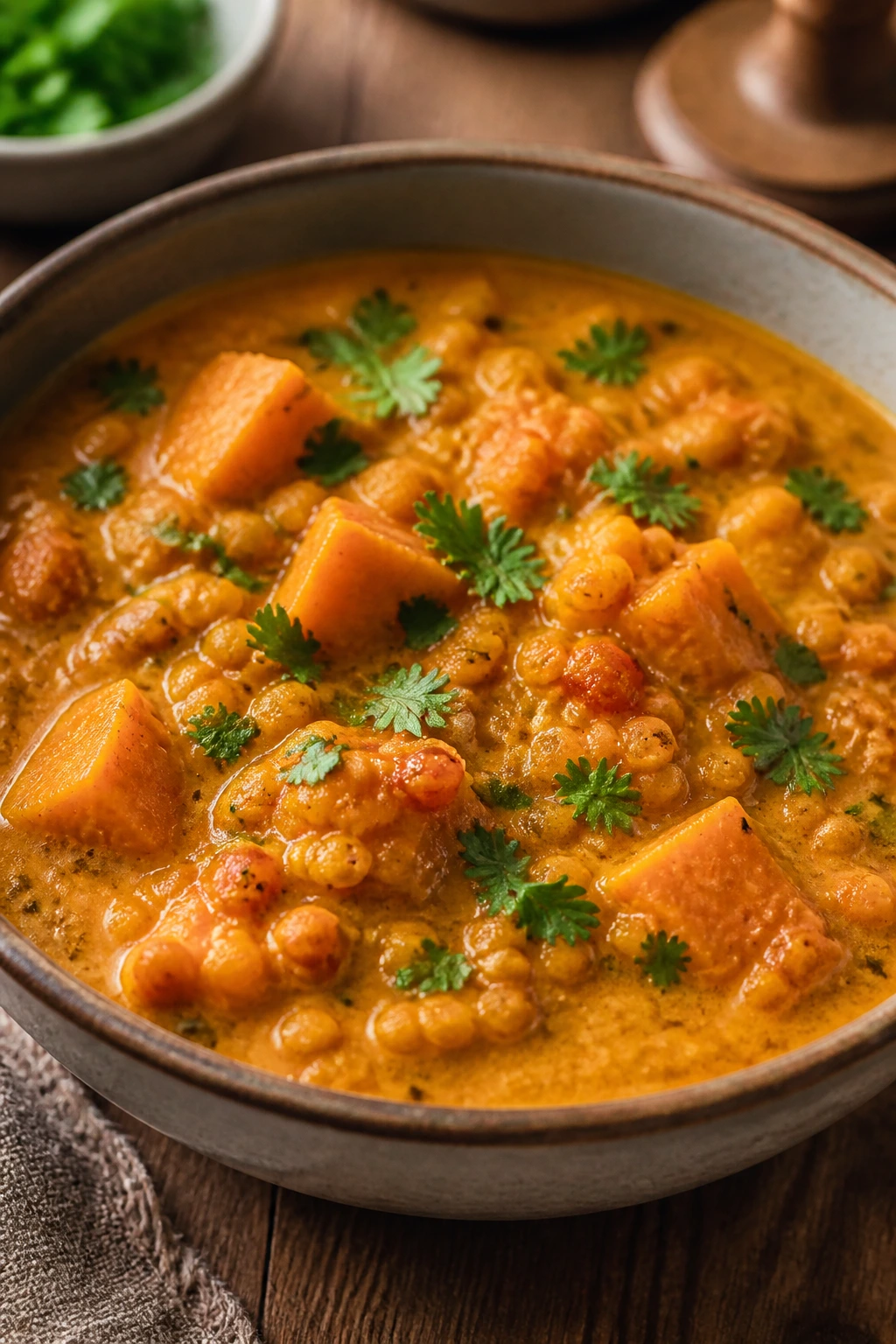
Intro:
This is the kind of vegetarian dinner that doesn’t apologize for being vegetarian. The sweet potatoes soften into the broth, the lentils make the pot thick, and the curry spices linger in a way that feels warm without becoming muddy. A squeeze of lime at the end keeps it sharp.
Why It Works:
Red lentils break down into a creamy base during long cooking, which means you don’t need dairy to get body. Sweet potatoes add natural sweetness that plays well against curry powder and ginger. Coconut milk at the end keeps the whole thing from tasting flat.
Key Ingredients:
- 1½ cups red lentils, rinsed
- 2 sweet potatoes, peeled and cubed
- 1 onion, diced
- 3 garlic cloves, minced
- 1 tablespoon grated ginger
- 2 tablespoons curry powder
- 4 cups vegetable broth
- 1 can coconut milk
- 1 teaspoon salt
- Lime and cilantro for serving
Quick Steps:
- Load the cooker: Add lentils, sweet potatoes, onion, garlic, ginger, curry powder, broth, and salt.
- Cook until soft: Cover and cook on low for 6 hours.
- Stir in coconut milk: Add it during the last 20 to 30 minutes.
- Adjust texture: If it’s too thick, loosen with broth.
- Finish bright: Serve with lime and cilantro.
Equipment for This Recipe:
- Slow cooker
- Measuring cups
- Wooden spoon
- Ladle
How to Serve This Dish:
Serve it over rice or with naan if you want something more filling. A spoon of yogurt on top is nice, but not required. The lime does a lot of the heavy lifting.
Pro Tips for This Recipe:
- Rinse lentils well so the broth stays clean.
- Cube the sweet potatoes evenly so they cook at the same pace.
- Add spinach near the end if you want greens.
- Coconut milk should go in late to preserve its flavor.
Variations on This Dish:
- Chickpea Curry: Replace half the lentils with chickpeas.
- Extra-Ginger Version: Add another teaspoon of grated ginger.
Common Mistakes to Avoid with This Dish:
- Using green or brown lentils without adjusting time: They hold their shape more and need longer.
- Adding too much liquid at the start: The lentils thicken as they cook.
- Forgetting salt: Curry spices need it to bloom.
10. Ham and Potato Chowder
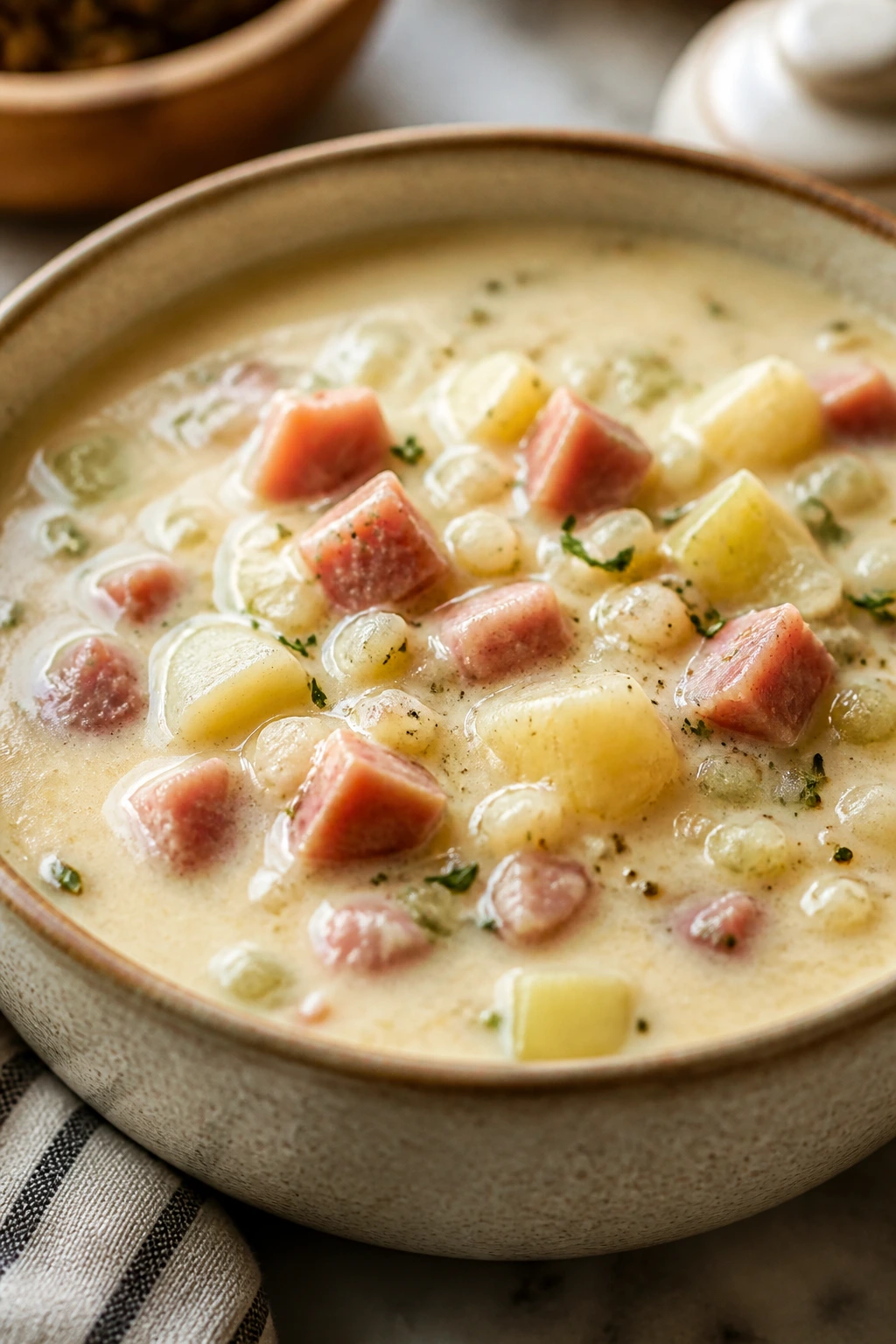
Intro:
Ham and potato chowder is what happens when a soup decides to be a meal. The potatoes soften into the broth, the ham seasons everything with salty smoke, and the finish lands creamy without feeling heavy-handed. It’s a very practical pot.
Why It Works:
Ham already brings seasoning, so the slow cooker only has to coax the potatoes and onions into softness. A little cream or milk at the end turns the broth into chowder. If you have leftover ham, this is where it shines.
Key Ingredients:
- 3 cups diced cooked ham
- 4 russet or Yukon Gold potatoes, peeled and cubed
- 1 onion, diced
- 2 carrots, diced
- 4 cups chicken broth
- 1 teaspoon thyme
- 1 cup milk or half-and-half
- 2 tablespoons flour or cornstarch
- Black pepper
Quick Steps:
- Combine the base: Add ham, potatoes, onion, carrots, broth, and thyme.
- Cook until tender: Cover and cook on low for 6 to 7 hours.
- Thicken the chowder: Stir in a flour slurry or cornstarch slurry.
- Add dairy last: Pour in milk or half-and-half and warm through.
- Season and serve: Add pepper and taste for salt before serving.
Equipment for This Recipe:
- Slow cooker
- Whisk for slurry
- Potato masher if you want a thicker bowl
- Ladle
How to Serve This Dish:
This is best in a mug-like bowl with bread for dunking. A few chives on top make it look fresher than it is, which is a good thing here.
Pro Tips for This Recipe:
- Dice the potatoes evenly so they don’t cook unevenly.
- Use leftover ham with some smoky edges.
- Mash a few potatoes in the pot if you want a thicker chowder.
- Add frozen corn if you want a little sweetness.
Variations on This Dish:
- Corn Chowder Spin: Add 1½ cups corn kernels.
- Cheddar Finish: Stir in a handful of shredded cheddar after cooking.
Common Mistakes to Avoid with This Dish:
- Using raw dairy too early: It can split.
- Over-salting before tasting the ham: Ham can be saltier than expected.
- Cutting potatoes too small: They vanish.
11. French Onion Soup
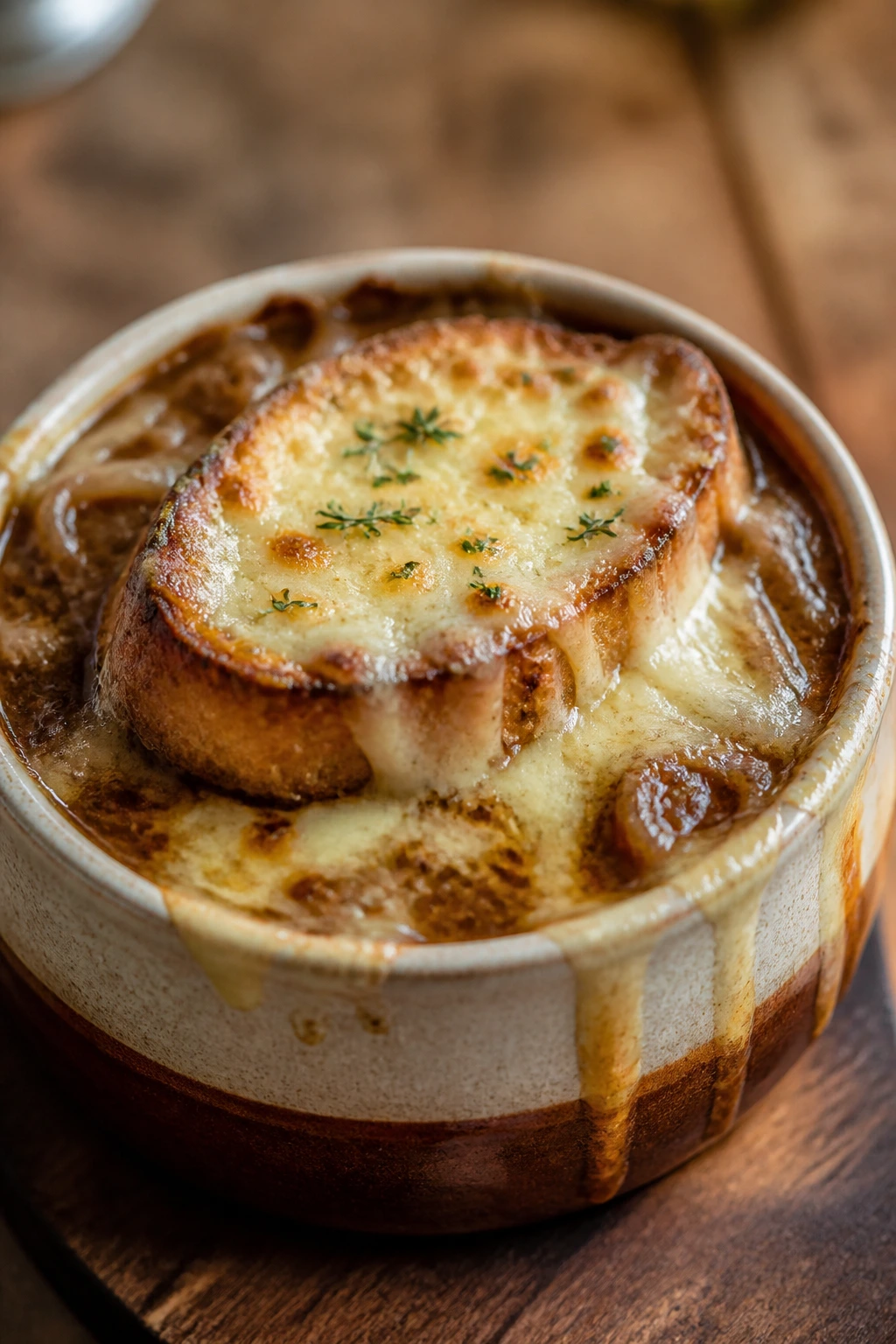
Intro:
French onion soup is a slow cooker trick that feels almost unfair. You get long-cooked onions without standing over a pot for an hour, and the result is sweet, dark, and a little broody. The bread and melted cheese on top turn the whole bowl into a small event.
Why It Works:
The onions need time to soften and darken, and the slow cooker gives them that time without scorching. Beef broth, a splash of wine, and thyme make the liquid taste layered. The toast on top adds the crisp contrast the soup needs.
Key Ingredients:
- 5 large yellow onions, thinly sliced
- 3 tablespoons butter
- 1 teaspoon sugar
- 6 cups beef broth
- ½ cup dry white wine
- 2 teaspoons thyme
- Baguette slices
- 1½ cups grated Gruyère or Swiss
Quick Steps:
- Cook the onions: Add onions, butter, and sugar to the slow cooker.
- Let them soften: Cook on low for 8 hours until dark and sweet.
- Add broth and wine: Stir in the liquid and thyme, then cook 30 minutes more.
- Toast the bread: Broil baguette slices with cheese until melted.
- Serve together: Float the cheese toast on top of each bowl.
Equipment for This Recipe:
- Slow cooker
- Sheet pan
- Broiler-safe bowls
- Sharp knife
How to Serve This Dish:
Serve it in bowls that can handle heat, because the broiled cheese crust is half the charm. The top should sag a little when pierced. That’s the good part.
Pro Tips for This Recipe:
- Slice onions evenly so they cook at the same pace.
- Don’t rush the onion stage.
- Use sturdy bread that won’t dissolve in seconds.
- If you want a darker broth, add a teaspoon of soy sauce.
Variations on This Dish:
- Sherry Onion Soup: Swap wine for dry sherry.
- Vegetarian Version: Use rich mushroom broth.
Common Mistakes to Avoid with This Dish:
- Skipping the broiled cheese topping: Then it’s just onion soup.
- Using weak broth: The soup will taste thin.
- Serving in fragile bowls: Hot cheese and glass bowls are a bad mix.
12. Slow Cooker Lasagna Soup
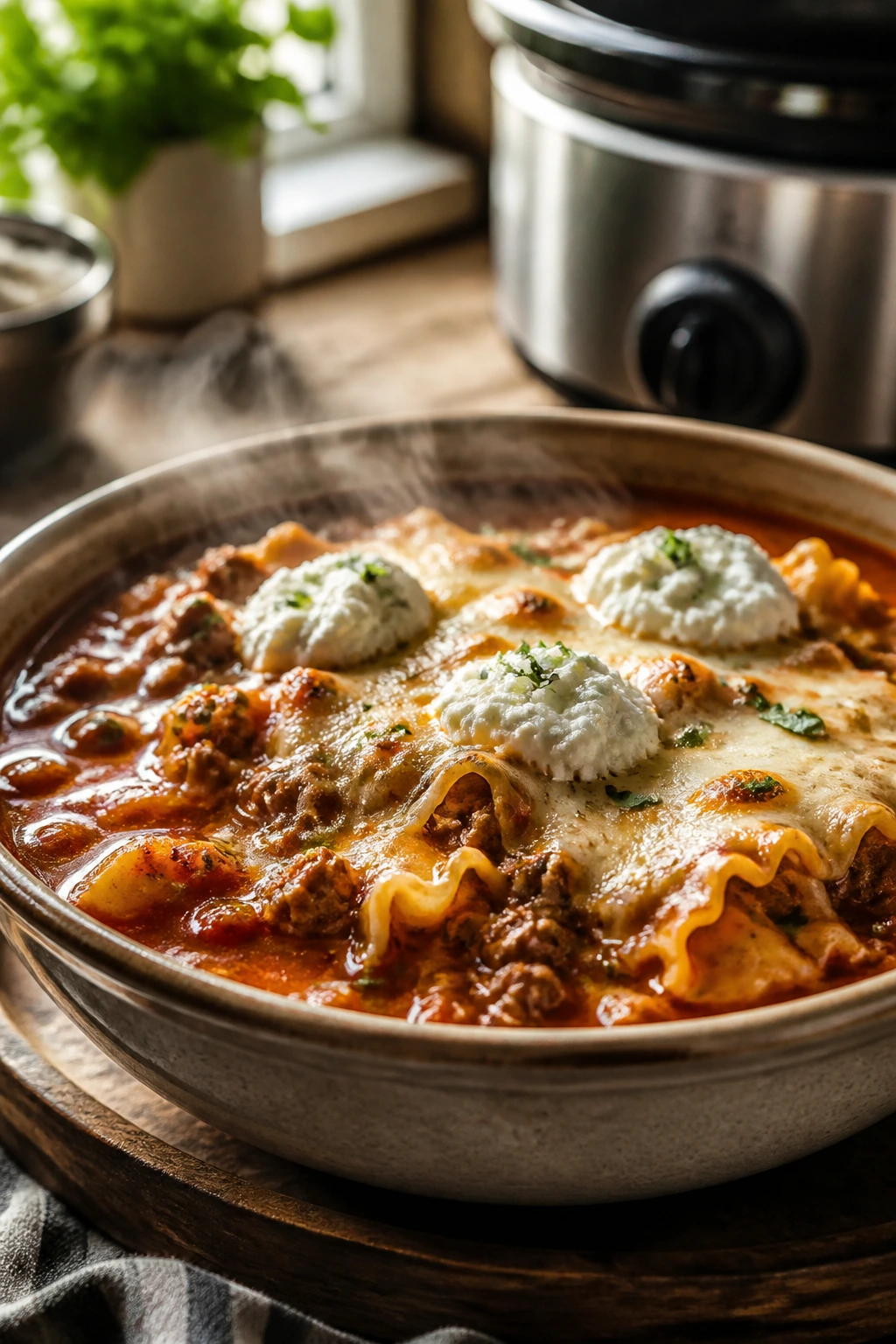
Intro:
Lasagna soup is for people who want the cheese pull without assembling a casserole. You get tomato broth, Italian sausage, broken noodles, and ricotta on top. It tastes like lasagna after someone relaxed the rules a little.
Why It Works:
The slow cooker lets the sausage flavor spread through the tomato base, and the pasta cooks directly in the broth near the end so it stays toothsome. Ricotta and mozzarella give you the creamy lasagna finish without layers. It’s less fussy and, frankly, more useful on a Sunday.
Key Ingredients:
- 1 lb Italian sausage
- 1 onion, diced
- 3 garlic cloves, minced
- 1 can crushed tomatoes
- 5 cups chicken broth
- 2 teaspoons Italian seasoning
- 8 lasagna noodles, broken into pieces
- 1 cup ricotta
- 1 cup shredded mozzarella
- Basil for serving
Quick Steps:
- Brown the sausage: Cook it until no longer pink.
- Build the soup: Add sausage, onion, garlic, tomatoes, broth, and seasoning.
- Cook the base: Cover and cook on low for 6 hours.
- Add noodles late: Stir in broken lasagna noodles during the last 30 minutes.
- Top and serve: Spoon ricotta and mozzarella on each bowl.
Equipment for This Recipe:
- Slow cooker
- Skillet for sausage
- Ladle
- Slotted spoon
How to Serve This Dish:
Serve it in wide bowls with basil and extra mozzarella. Garlic bread is the obvious side, and I’m not going to pretend otherwise.
Pro Tips for This Recipe:
- Add noodles late or they’ll turn soft.
- Keep ricotta cold until serving for better contrast.
- A spoon of pesto on top changes the whole bowl.
- If the soup gets too thick, splash in broth.
Variations on This Dish:
- Veggie Lasagna Soup: Use mushrooms and zucchini instead of sausage.
- Spicy Version: Add red pepper flakes with the garlic.
Common Mistakes to Avoid with This Dish:
- Cooking noodles from the start: They collapse.
- Not draining sausage fat: The soup gets greasy.
- Skipping fresh basil: The top needs something bright.
13. Salsa Verde Chicken
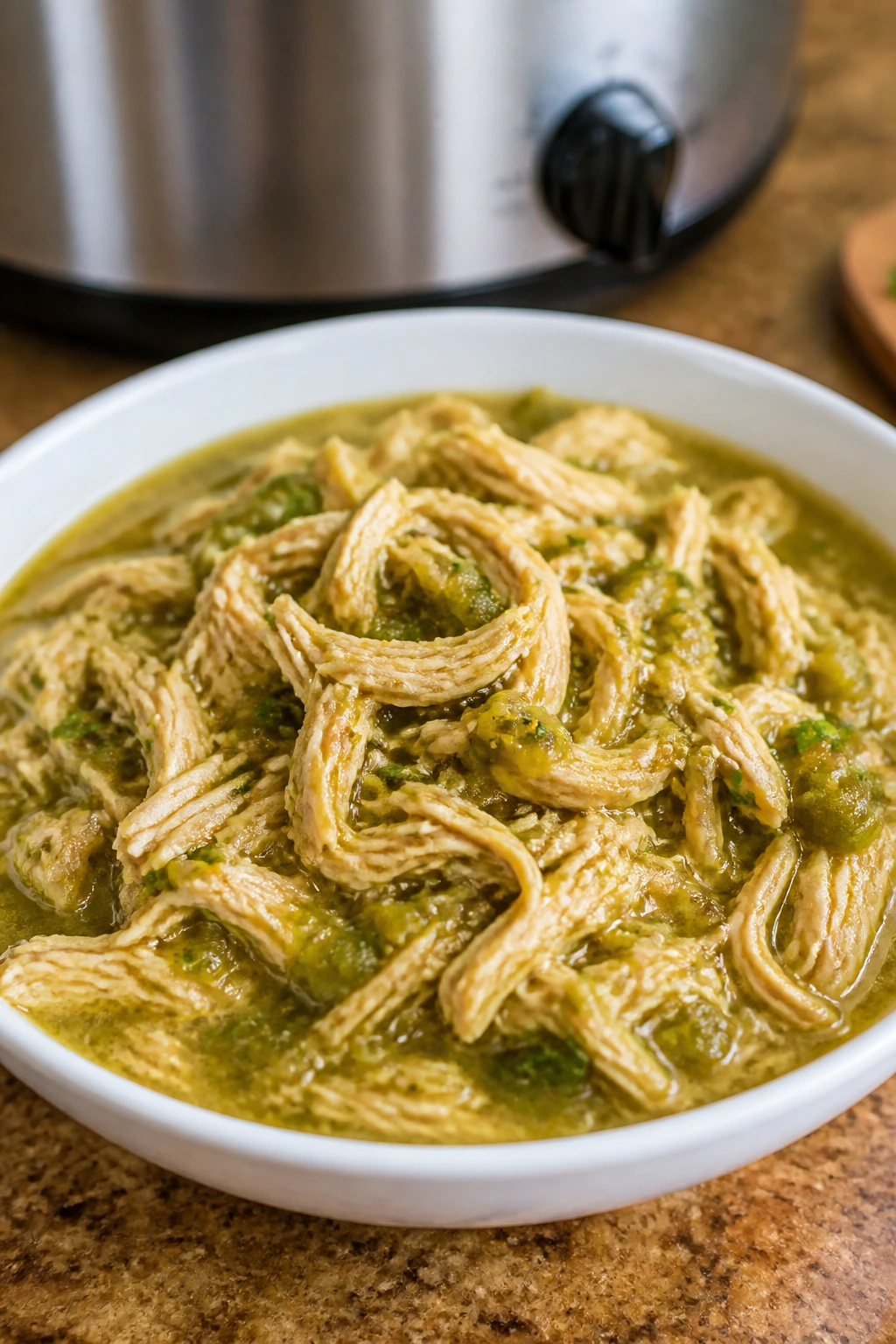
Intro:
This is one of those recipes that barely feels like work but still gives you a full dinner’s worth of flavor. Salsa verde keeps the chicken bright and tangy, and the meat shreds into something you can use for tacos, rice bowls, or quesadillas the next day. Sunday cooking with a clear exit plan.
Why It Works:
Tomatillo salsa has acid, salt, and heat already built in, so the slow cooker mostly needs to soften the chicken and concentrate the flavors. Thighs stay more forgiving than breasts. If you use a thick salsa, the sauce clings better and doesn’t turn watery.
Key Ingredients:
- 2 lb boneless skinless chicken thighs
- 2 cups salsa verde
- 1 onion, sliced
- 3 garlic cloves, minced
- 1 teaspoon cumin
- 1 teaspoon salt
- ½ cup chicken broth
- Lime and cilantro for serving
Quick Steps:
- Set the base: Put onion and garlic in the slow cooker.
- Add chicken and sauce: Lay the thighs on top, then pour over salsa verde, broth, cumin, and salt.
- Cook until tender: Cover and cook on low for 5 to 6 hours.
- Shred the chicken: Pull it apart in the cooker so it absorbs the sauce.
- Serve with lime: Spoon over rice, tortillas, or salad.
Equipment for This Recipe:
- Slow cooker
- Forks
- Measuring cup
- Tongs
How to Serve This Dish:
Tacos are the easy answer, but this also works over rice with black beans. A little crumbled cotija on top helps. So does a squeeze of lime.
Pro Tips for This Recipe:
- Use a salsa verde you already like the flavor of.
- Don’t overdo broth; salsa should remain the main sauce.
- Shred while the chicken is hot so it picks up more liquid.
- Add roasted corn for texture.
Variations on This Dish:
- Creamy Salsa Verde Chicken: Stir in sour cream after cooking.
- Bean Bowl Version: Add drained black beans during the last hour.
Common Mistakes to Avoid with This Dish:
- Using watery salsa: The sauce gets thin.
- Cooking breasts too long: They dry out faster than thighs.
- Forgetting acid at serving: Lime sharpens the whole dish.
14. Crockpot Mac and Cheese

Intro:
Slow cooker mac and cheese is not subtle. It’s creamy, stretchy, and a little indulgent in the way Sunday food ought to be. The trick is letting the pasta cook in enough liquid to stay tender while the cheese melts into a sauce that actually coats the noodles.
Why It Works:
Uncooked elbow macaroni absorbs the dairy as it cooks, which means the sauce thickens from the starch as well as the cheese. Evaporated milk helps the texture stay smooth. Sharp cheddar does the heavy lifting, while a little mustard powder keeps the flavor from going flat.
Key Ingredients:
- 1 lb elbow macaroni, uncooked
- 4 cups shredded sharp cheddar
- 2 cups shredded Monterey Jack
- 1 can evaporated milk
- 2½ cups whole milk
- 4 tablespoons butter
- 1 teaspoon mustard powder
- 1 teaspoon salt
Quick Steps:
- Grease the insert: Butter the slow cooker well.
- Add pasta and dairy: Put macaroni, milk, evaporated milk, butter, mustard powder, and salt in the cooker.
- Cook gently: Cover and cook on low for about 2 hours, stirring once or twice.
- Add cheese late: Stir in cheddar and Monterey Jack until melted.
- Serve right away: The sauce thickens as it sits.
Equipment for This Recipe:
- Slow cooker
- Wooden spoon
- Measuring cups
- Cheese grater
How to Serve This Dish:
Serve as a main with a salad, or alongside roast chicken or ham. A little black pepper on top helps. So does a spoon, because forks struggle here.
Pro Tips for This Recipe:
- Grate the cheese yourself if you want smoother melting.
- Stir once during cooking so the edges don’t overcook.
- Don’t walk away for the full time without checking at the end.
- A handful of breadcrumbs on top is nice if you want crunch.
Variations on This Dish:
- Smoked Gouda Version: Replace part of the cheddar with smoked gouda.
- Jalapeño Mac: Add minced pickled jalapeños near the end.
Common Mistakes to Avoid with This Dish:
- Overcooking the pasta: It turns pasty fast.
- Using pre-sliced cheese: It melts poorly.
- Adding all the cheese too early: The sauce can turn grainy.
15. Steel-Cut Apple Cinnamon Oatmeal
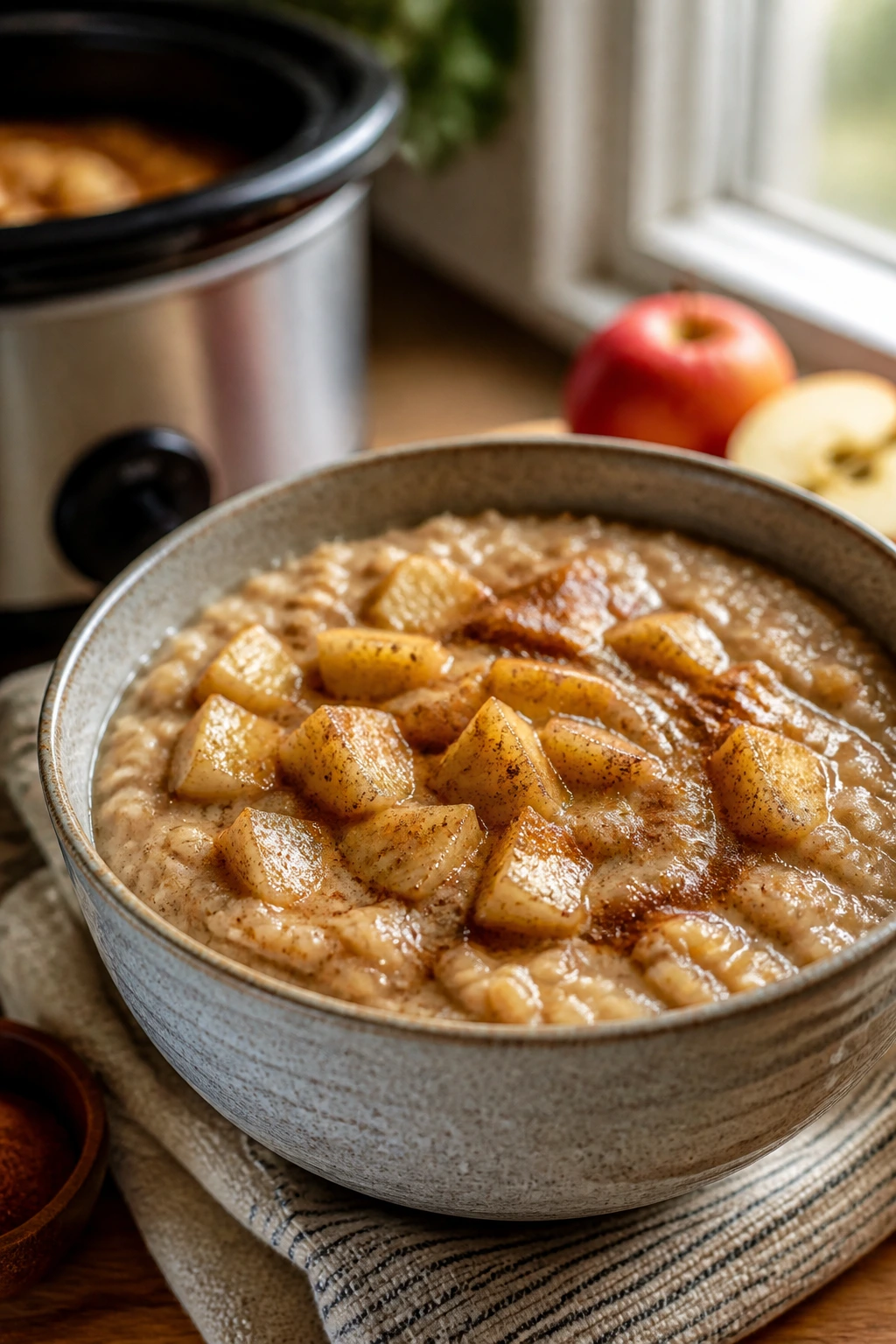
Intro:
If you want a Sunday breakfast that doesn’t need attention, this is the move. Steel-cut oats go creamy around the edges and keep a little chew in the middle, while apples and cinnamon make the whole kitchen smell like a bakery. It’s breakfast that cooks itself while you do everything else or nothing at all.
Why It Works:
Steel-cut oats hold up better than rolled oats in the slow cooker, so they don’t dissolve into paste. Apples bring sweetness and moisture, and a pinch of salt keeps the bowl from tasting one-note. The long cook softens the grain without turning it gluey.
Key Ingredients:
- 1½ cups steel-cut oats
- 2 apples, peeled and diced
- 4 cups milk or water
- 2 cups water
- 1 teaspoon cinnamon
- ¼ teaspoon salt
- 2 tablespoons maple syrup
- Butter for serving
Quick Steps:
- Combine everything: Add oats, apples, liquids, cinnamon, salt, and maple syrup.
- Cook overnight or 6 hours low: Stir once if you can, but don’t panic if you can’t.
- Check the texture: It should be creamy with a slight bite.
- Stir before serving: Add a splash of milk if needed.
- Top as you like: Butter, nuts, or more maple syrup all work.
Equipment for This Recipe:
- Slow cooker
- Measuring cups
- Spoon
- Ladle
How to Serve This Dish:
Serve in bowls with walnuts, pecans, or a spoon of yogurt if you want more protein. A little extra cinnamon on top smells nice and looks even better.
Pro Tips for This Recipe:
- Grease the cooker well to prevent sticking.
- Use tart apples if you want more contrast.
- Add raisins only if you like them plump and soft.
- Don’t use quick oats here; they break down too much.
Variations on This Dish:
- Pumpkin Spice Oats: Add ½ cup pumpkin puree and nutmeg.
- Pear and Ginger Oats: Swap apples for pears and add grated ginger.
Common Mistakes to Avoid with This Dish:
- Using rolled oats: They cook too fast and turn mushy.
- Too much liquid: The oats can become soupy.
- Forgetting salt: Sweet breakfast needs it.
16. Breakfast Sausage and Egg Casserole
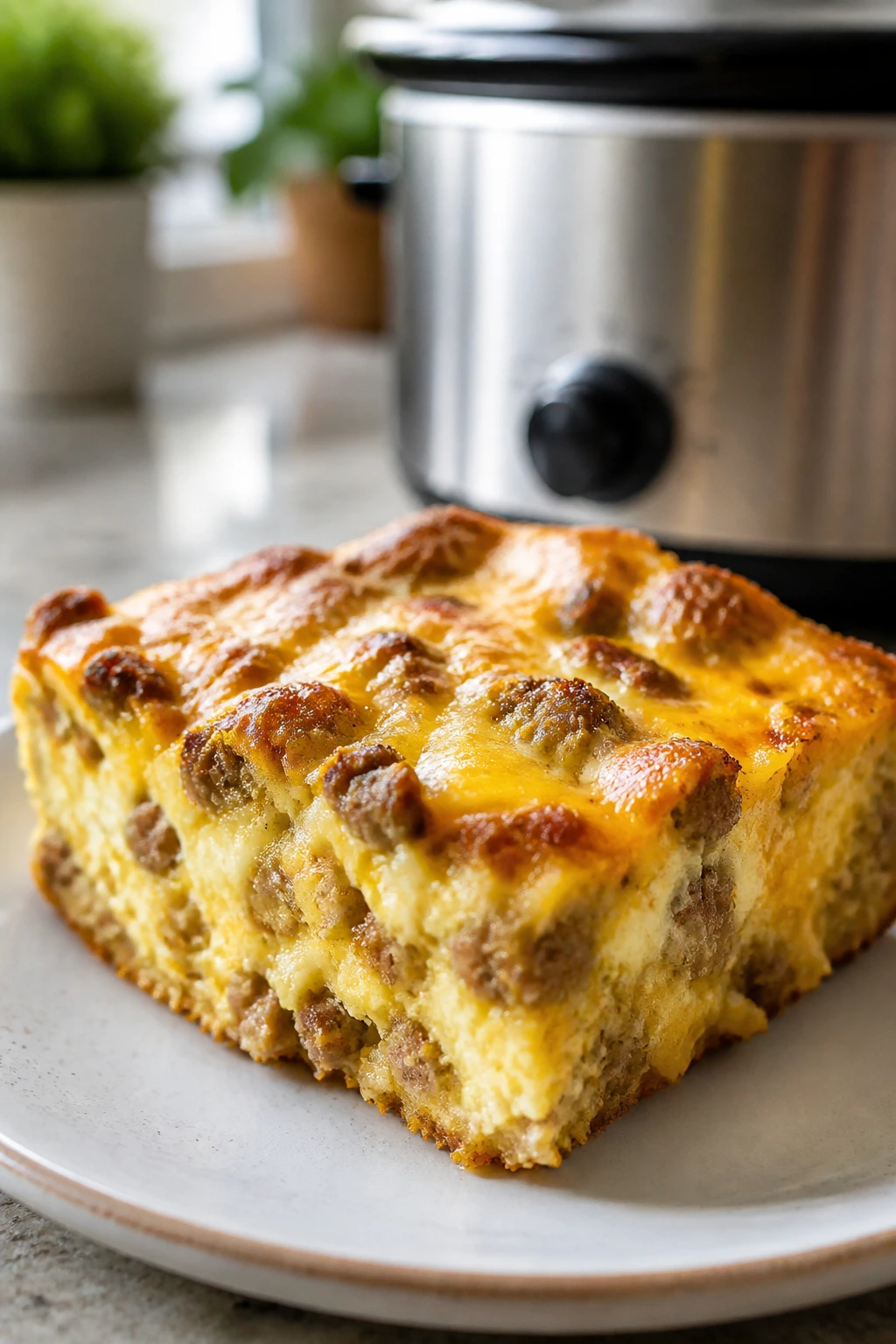
Intro:
This is brunch without the stovetop scramble. Sausage, bread, eggs, and cheese settle into the slow cooker and turn into a sliceable casserole that tastes like a diner breakfast had a long nap. Good news for anyone feeding people at different wake-up times.
Why It Works:
Eggs set gently in the slow cooker, so you get a tender texture instead of a rubbery one if you time it right. Bread cubes absorb the custard and keep the casserole from becoming watery. Browning the sausage first adds a real flavor base.
Key Ingredients:
- 1 lb breakfast sausage
- 8 large eggs
- 2 cups milk
- 6 cups cubed bread
- 2 cups shredded cheddar
- ½ teaspoon salt
- ¼ teaspoon black pepper
- 2 tablespoons chopped chives
Quick Steps:
- Brown the sausage: Cook until browned, then drain excess fat.
- Whisk the custard: Beat eggs, milk, salt, and pepper.
- Layer the cooker: Add bread, sausage, and cheese to the slow cooker.
- Pour and cook: Add the egg mixture and cook on low for 2½ to 3 hours.
- Finish and slice: Let it rest 10 minutes, then serve with chives.
Equipment for This Recipe:
- Slow cooker
- Skillet
- Mixing bowl
- Whisk
How to Serve This Dish:
Serve in thick squares with fruit on the side. A splash of hot sauce is excellent if you like a little kick in the morning.
Pro Tips for This Recipe:
- Use sturdy bread like sourdough or brioche.
- Don’t overcook; eggs set fast.
- Add spinach or peppers if you want vegetables.
- Grease the sides well so slices release cleanly.
Variations on This Dish:
- Ham and Swiss Version: Swap sausage for diced ham and use Swiss.
- Vegetable Brunch Bake: Use sautéed mushrooms and spinach instead of meat.
Common Mistakes to Avoid with This Dish:
- Using fresh soft bread: It can collapse.
- Leaving it in too long after it’s set: The eggs dry out.
- Skipping the rest time: It falls apart when sliced.
17. Spaghetti and Meatballs
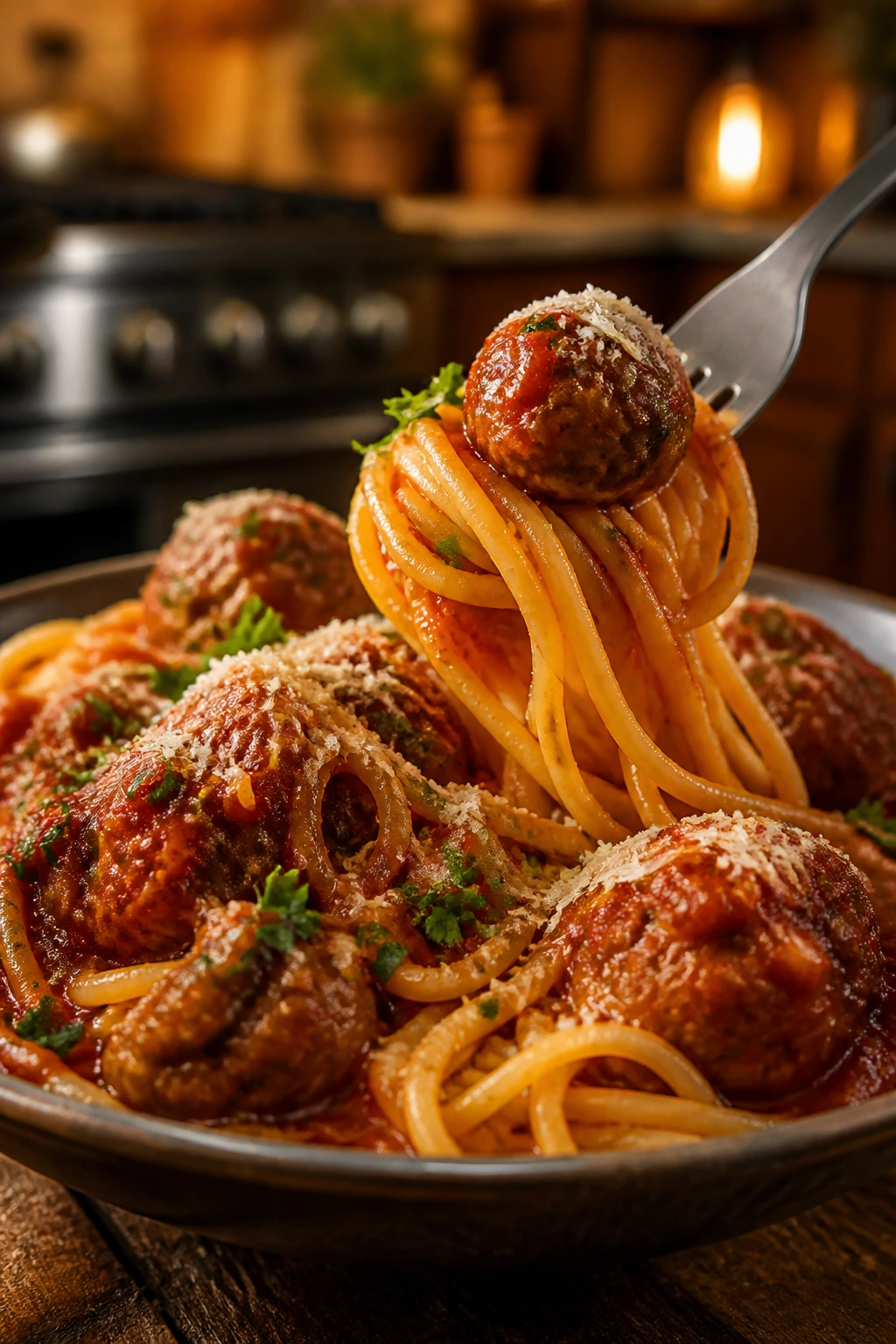
Intro:
Yes, the slow cooker can handle spaghetti and meatballs, and it’s better than it has any right to be. The sauce gets time to deepen, the meatballs stay tender, and the pasta can be added near the end so it doesn’t go limp. It’s a Sunday dinner that feels a little old-world and a little practical.
Why It Works:
The long simmer lets garlic, tomato, and meatball seasoning meld into a fuller sauce. Using pre-browned or baked meatballs keeps the structure intact. Adding spaghetti late keeps the texture closer to al dente instead of soft mush.
Key Ingredients:
- 1½ lb meatballs, homemade or frozen
- 1 onion, diced
- 3 garlic cloves, minced
- 2 jars marinara sauce
- 1 can crushed tomatoes
- 8 oz spaghetti
- 1 teaspoon Italian seasoning
- Parmesan for serving
Quick Steps:
- Build the sauce: Add onion, garlic, marinara, crushed tomatoes, and seasoning.
- Add meatballs: Nestle them into the sauce and cook on low for 5 to 6 hours.
- Cook the spaghetti separately or in the pot late: If in the pot, add during the last 20 minutes.
- Toss gently: Coat the pasta without breaking the meatballs.
- Serve with Parmesan: Finish with a heavy shower of cheese.
Equipment for This Recipe:
- Slow cooker
- Pot for pasta if cooking separately
- Wooden spoon
- Tongs
How to Serve This Dish:
Twirl onto plates with extra sauce and a little basil if you have it. Garlic bread feels like the right partner here, and I’d argue for a simple salad too, just to cut through the richness.
Pro Tips for This Recipe:
- Bake meatballs first if you want better shape.
- Don’t overcook spaghetti in the slow cooker.
- Stir gently so the meatballs stay whole.
- Use a sauce you already like, since it sets the flavor tone.
Variations on This Dish:
- Spicy Arrabbiata Style: Add red pepper flakes and a sharper sauce.
- Turkey Meatball Version: Use turkey meatballs for a lighter result.
Common Mistakes to Avoid with This Dish:
- Cooking pasta for hours: It falls apart.
- Using watery sauce: The dish gets thin.
- Stirring aggressively: Meatballs break.
18. Chicken and Sausage Jambalaya

Intro:
Jambalaya brings a little rhythm to a slow Sunday. You get smoky sausage, chicken, rice, peppers, and tomatoes with a dark Cajun edge that feels lively instead of sleepy. It’s one of the few slow cooker dishes that can still taste bright.
Why It Works:
The sausage seasons the rice as it cooks, and the chicken releases juices that help everything stay moist. Long-grain rice is the key; it stays separate instead of collapsing. A squeeze of lemon at the end gives the pot a lift it really needs.
Key Ingredients:
- 1 lb chicken thighs, diced
- 12 oz smoked sausage, sliced
- 1 onion, chopped
- 1 bell pepper, chopped
- 3 garlic cloves, minced
- 1½ cups long-grain rice
- 3 cups chicken broth
- 1 can diced tomatoes
- 2 teaspoons Cajun seasoning
Quick Steps:
- Brown the sausage if you want extra flavor: A few minutes in a skillet helps.
- Add the base: Put chicken, sausage, vegetables, broth, tomatoes, and seasoning in the cooker.
- Cook until the meat is tender: Low for about 5 hours.
- Add rice late: Stir in the rice during the last 45 to 60 minutes.
- Fluff and serve: Let it rest 10 minutes before serving.
Equipment for This Recipe:
- Slow cooker
- Skillet for browning
- Wooden spoon
- Rice-safe ladle
How to Serve This Dish:
Serve in bowls with sliced scallions or parsley. Hot sauce on the table is welcome. This dish likes heat, but it doesn’t need to be shouted at.
Pro Tips for This Recipe:
- Add rice near the end or it’ll absorb too much liquid.
- Use andouille if you want more smoke.
- If your Cajun seasoning is salty, hold back on extra salt.
- Resting after cooking helps the rice settle.
Variations on This Dish:
- Seafood Finish: Stir in shrimp during the last 15 minutes.
- Vegetable Jambalaya: Skip the chicken and add more peppers, okra, and beans.
Common Mistakes to Avoid with This Dish:
- Adding rice at the start: It turns gluey.
- Using short-grain rice: Wrong texture.
- Not seasoning enough: Jambalaya should have a little edge.
19. Split Pea Soup with Ham
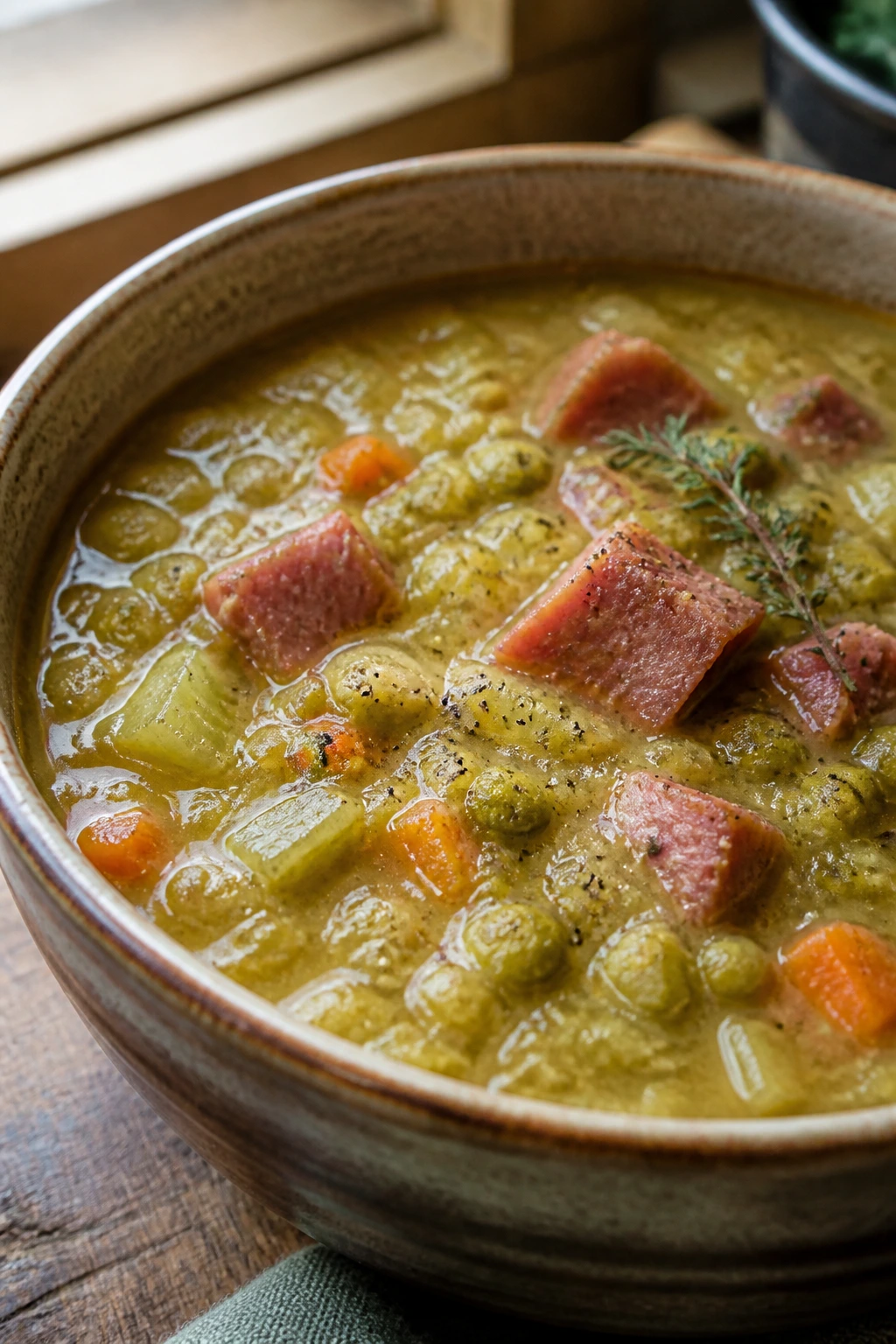
Intro:
Split pea soup doesn’t win beauty contests. It wins on body, smoke, and that dense, spoon-coating texture that feels like old-fashioned kitchen sense. The ham bone or diced ham gives the pot its backbone, and the peas break down into something thick enough to eat with a fork if you had to.
Why It Works:
Split peas dissolve as they cook, which naturally thickens the soup. Ham adds salt and smoke, and carrots plus celery bring balance so the soup doesn’t taste like plain green mush. A slow cooker handles the long softening without scorching the bottom.
Key Ingredients:
- 2 cups split green peas, rinsed
- 2 cups diced ham or 1 ham bone
- 2 carrots, diced
- 2 celery stalks, diced
- 1 onion, chopped
- 6 cups chicken broth
- 1 bay leaf
- 1 teaspoon thyme
- Black pepper
Quick Steps:
- Rinse the peas: Remove dust and grit.
- Load the pot: Add peas, ham, vegetables, broth, bay leaf, and thyme.
- Cook low and slow: Cover and cook on low for 8 hours.
- Stir and adjust: Remove the bay leaf and thin with broth if needed.
- Finish with pepper: Serve hot and peppery.
Equipment for This Recipe:
- Slow cooker
- Ladle
- Spoon
- Cutting board and knife
How to Serve This Dish:
A bowl of split pea soup likes rye bread or toasted sourdough. A little chopped parsley helps the color, which otherwise trends toward military green. I say that with affection.
Pro Tips for This Recipe:
- If you want a smoother soup, blend part of it.
- Ham bone gives deeper flavor than diced ham alone.
- Salt carefully until the end.
- Add a splash of vinegar if the soup tastes heavy.
Variations on This Dish:
- Smokier Version: Add a pinch of smoked paprika.
- Vegetarian Split Pea Soup: Skip ham and use vegetable broth with extra herbs.
Common Mistakes to Avoid with This Dish:
- Not rinsing peas: You’ll get a dusty bowl.
- Adding too much liquid: It should be thick.
- Underseasoning at the end: The soup needs pepper and salt.
20. Vegetarian Bean Chili
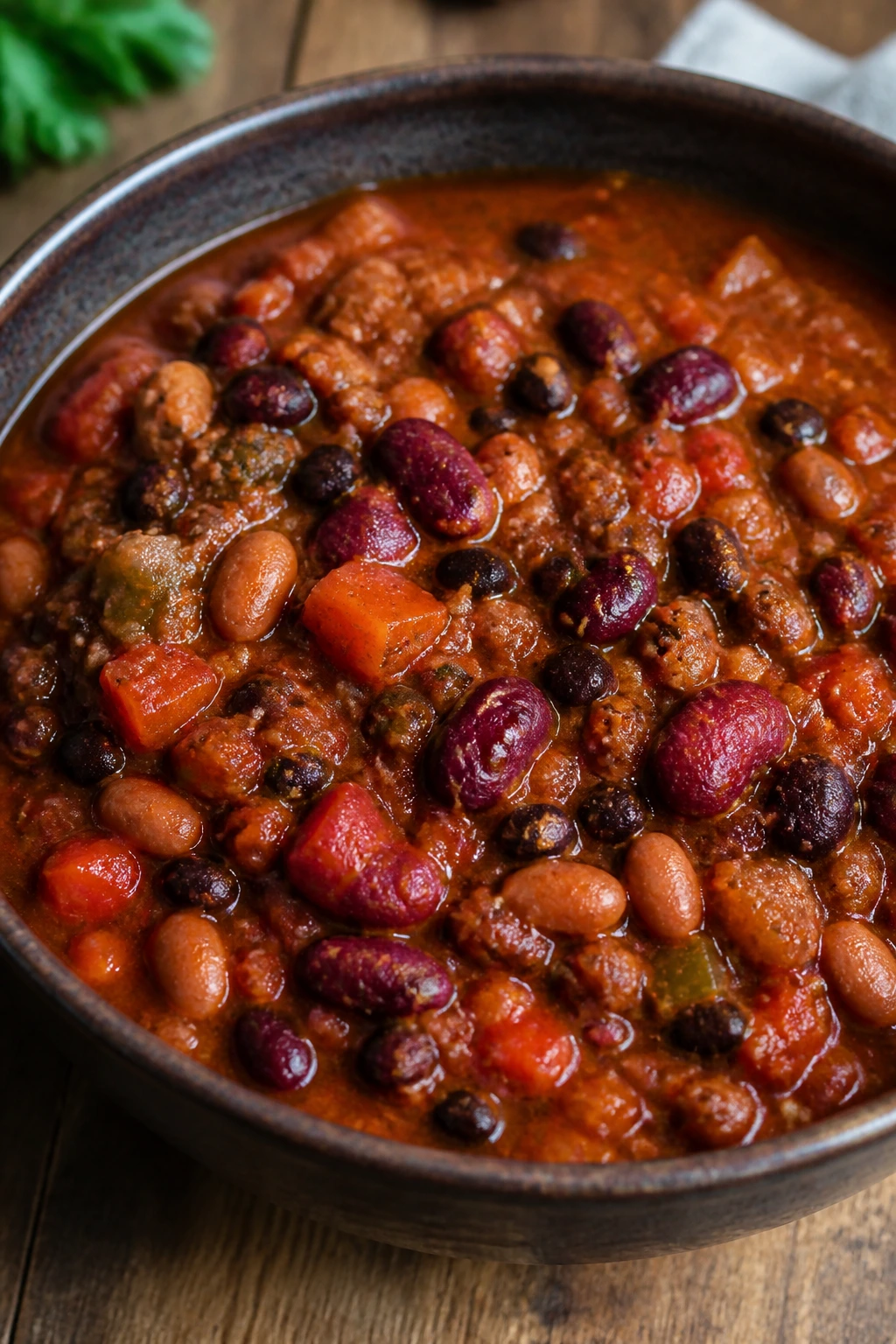
Intro:
A good bean chili doesn’t miss meat because it isn’t trying to imitate it. It leans on texture, spice, tomato, and slow-cooked beans to make a bowl with real weight. Sunday is exactly the right day for that kind of pot.
Why It Works:
A mix of beans gives you different textures, and the tomatoes reduce into a base that tastes fuller after hours in the cooker. Cocoa powder or coffee, used sparingly, can deepen the chili without making it taste like dessert. That little trick is worth keeping in your pocket.
Key Ingredients:
- 2 cans kidney beans, drained
- 1 can black beans, drained
- 1 can pinto beans, drained
- 1 onion, diced
- 1 bell pepper, diced
- 1 can crushed tomatoes
- 2 cups vegetable broth
- 2 tablespoons chili powder
- 1 teaspoon cumin
- 1 teaspoon cocoa powder
Quick Steps:
- Combine the chili base: Add beans, vegetables, tomatoes, broth, and spices.
- Cook until unified: Cover and cook on low for 6 to 7 hours.
- Taste and thicken: Mash a cup of beans if you want more body.
- Adjust seasoning: Add salt, pepper, or more chili powder.
- Serve with toppings: Sour cream, cheese, and scallions all work.
Equipment for This Recipe:
- Slow cooker
- Potato masher
- Ladle
- Measuring spoons
How to Serve This Dish:
Serve it with tortilla chips, rice, or cornbread. I like a little avocado on top when I have it, though it’s not mandatory. The chili is doing enough already.
Pro Tips for This Recipe:
- Rinse canned beans so the chili doesn’t taste tinny.
- Cocoa should be subtle, not obvious.
- Add a splash of vinegar at the end for brightness.
- Let it sit 10 minutes before serving so the texture settles.
Variations on This Dish:
- Smoky Chipotle Chili: Add minced chipotle in adobo.
- Sweet Potato Bean Chili: Stir in 2 cups diced sweet potato early on.
Common Mistakes to Avoid with This Dish:
- Using only one bean type: The texture gets one-note.
- Adding too much liquid: Chili should be thick.
- Skipping toppings: The bowl needs contrast.
21. Pork Carnitas
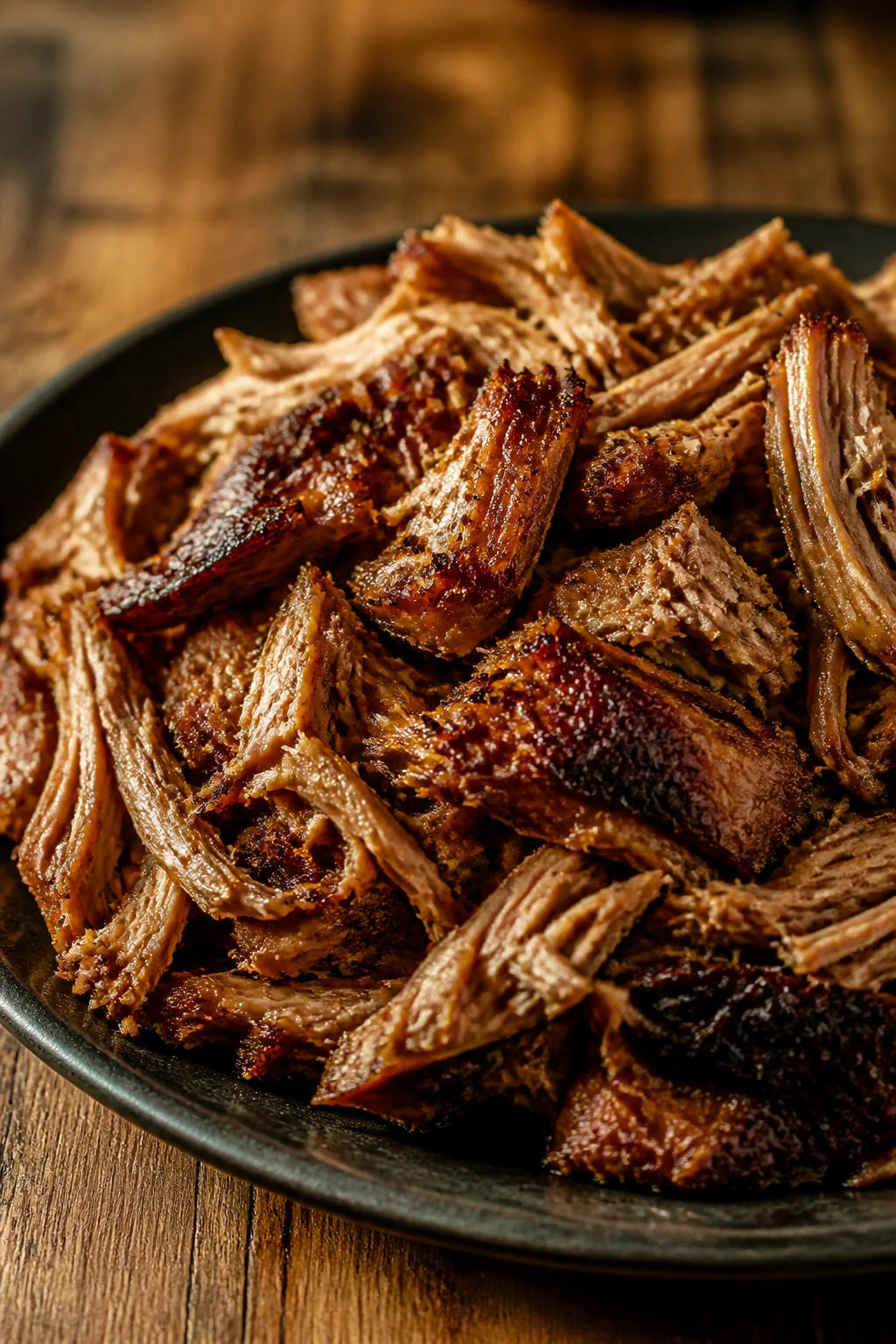
Intro:
Carnitas are what you make when you want tacos that have both tenderness and crisp edges. The pork becomes shreddable in the slow cooker, then gets a quick blast of heat so some pieces turn bronzed and a little crunchy. That contrast is the whole point.
Why It Works:
Pork shoulder has enough fat to survive a long cook, and orange juice plus spices give the meat a rounded, savory-sweet edge. Slow cooking makes it fall apart; a quick broil afterward makes it memorable. Skip the crisping step and you lose half the charm.
Key Ingredients:
- 4 lb pork shoulder
- 1 onion, quartered
- 4 garlic cloves
- 1 orange, juiced
- 1 teaspoon cumin
- 1 teaspoon oregano
- 1 teaspoon salt
- Corn tortillas
- Cilantro and onion for serving
Quick Steps:
- Season the pork: Rub with salt, cumin, and oregano.
- Add aromatics: Place onion, garlic, and orange juice in the slow cooker.
- Cook until shred-ready: Low for 8 hours.
- Shred and broil: Shred the pork, spread it on a sheet pan, and broil until the edges crisp.
- Serve hot: Spoon into tortillas with onion and cilantro.
Equipment for This Recipe:
- Slow cooker
- Sheet pan
- Forks
- Broiler
How to Serve This Dish:
Warm tortillas first. Then load in pork, onion, cilantro, and a little salsa. A squeeze of lime and a cold drink are both welcome.
Pro Tips for This Recipe:
- Keep some cooking liquid for moistening after shredding.
- Broil in a thin layer so the edges crisp.
- Use orange juice, not too much extra liquid.
- Carnitas taste even better with pickled onions.
Variations on This Dish:
- Lime Carnitas: Add lime zest for sharper citrus.
- Pineapple Version: Replace some orange juice with pineapple juice.
Common Mistakes to Avoid with This Dish:
- Skipping the broiler: Then it’s just pulled pork.
- Overcrowding the pan when crisping: No browning happens.
- Using pork loin: Too lean.
22. Mushroom Stroganoff
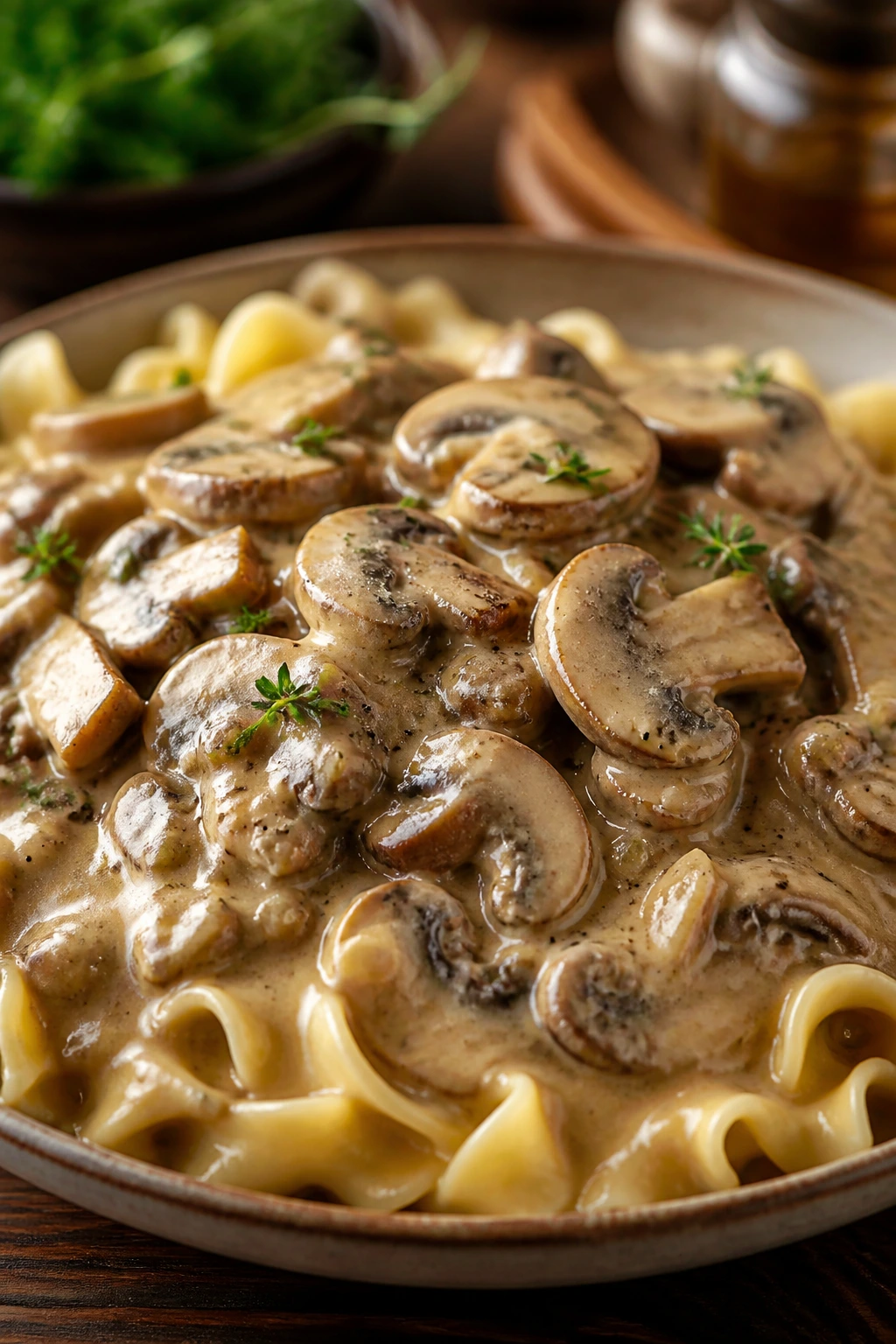
Intro:
Mushroom stroganoff is the vegetarian dish that still feels lush and substantial. The mushrooms release their own juices, the sauce turns silky, and the sour cream finish gives it the tang you expect from stroganoff. It works over noodles, mashed potatoes, or rice if that’s what the fridge offers.
Why It Works:
Cremini and button mushrooms bring different textures, and a little soy sauce deepens the savory base. Sour cream goes in at the end so it doesn’t split. The slow cooker coaxes the mushrooms into a concentrated, almost meaty flavor.
Key Ingredients:
- 2 lb mushrooms, sliced
- 1 onion, sliced
- 3 garlic cloves, minced
- 2 cups vegetable broth
- 1 tablespoon soy sauce
- 1 teaspoon paprika
- 1 cup sour cream
- 1 tablespoon flour
- Egg noodles or mashed potatoes
Quick Steps:
- Add the mushrooms: Put mushrooms, onion, garlic, broth, soy sauce, and paprika in the cooker.
- Cook until soft: Low for 4 to 5 hours.
- Thicken the sauce: Stir in flour mixed with a little liquid.
- Finish with sour cream: Add it at the end and warm through gently.
- Serve over noodles: Spoon generously over a starch.
Equipment for This Recipe:
- Slow cooker
- Skillet if you want to pre-brown mushrooms
- Whisk
- Ladle
How to Serve This Dish:
Egg noodles are the classic move, and I’m not going to fight that. A little dill or parsley on top keeps it from looking too beige, which this dish can otherwise become if nobody is paying attention.
Pro Tips for This Recipe:
- Browning half the mushrooms first adds better flavor.
- Add sour cream off the heat if possible.
- Salt after the soy sauce settles in.
- A squeeze of lemon can sharpen the sauce.
Variations on This Dish:
- Beefy Version: Add shredded leftover roast.
- Dairy-Free Version: Use cashew cream instead of sour cream.
Common Mistakes to Avoid with This Dish:
- Adding sour cream to a boiling pot: It can curdle.
- Not salting enough: Mushrooms need it.
- Using only one mushroom type: The texture gets monotonous.
23. Sausage and Peppers
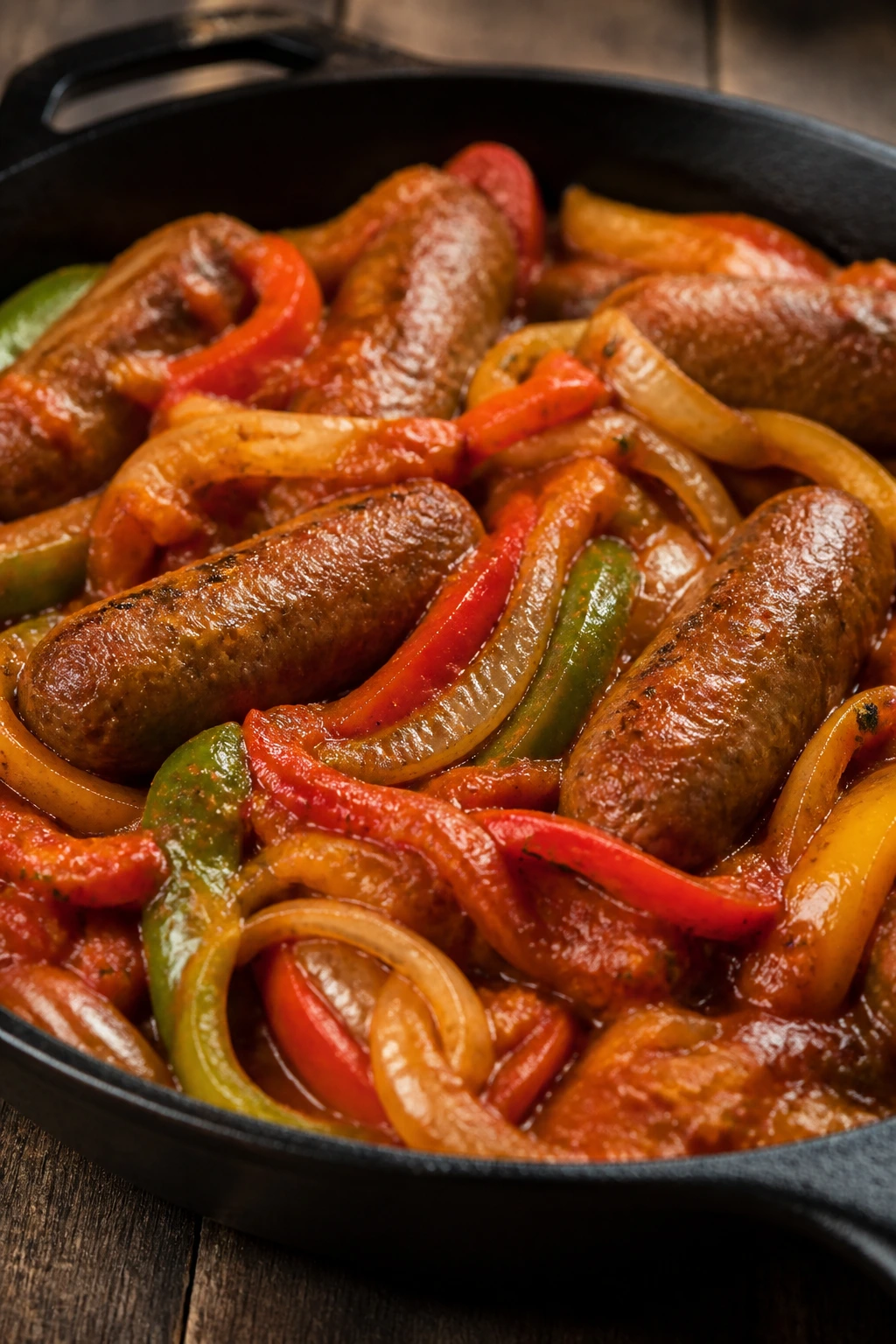
Intro:
Sausage and peppers is one of those dishes that seems too simple until you smell it after six hours. The peppers soften and sweeten, the onions melt, and the sausage leaves enough fat behind to coat everything in its own flavor. It’s a sandwich filling, a pasta topping, or dinner on its own.
Why It Works:
The slow cooker gives peppers time to soften without turning to paste. Sausage seasons the liquid and the vegetables at the same time. A little tomato sauce helps bind the whole thing without turning it into a stew.
Key Ingredients:
- 2 lb Italian sausage links
- 3 bell peppers, sliced
- 2 onions, sliced
- 3 garlic cloves, minced
- 1 can crushed tomatoes
- 1 teaspoon Italian seasoning
- Sandwich rolls or pasta for serving
Quick Steps:
- Brown the sausage lightly: A quick sear adds color.
- Layer the vegetables: Add peppers, onions, garlic, and tomatoes.
- Nestle in the sausage: Place the links on top.
- Cook low and slow: About 6 hours until everything is tender.
- Serve in rolls or over pasta: Spoon with some sauce.
Equipment for This Recipe:
- Slow cooker
- Skillet
- Tongs
- Sharp knife
How to Serve This Dish:
For sandwiches, toast the rolls so they can hold the juices. For pasta, use a short shape or wide noodles. A little provolone on top is never a bad idea.
Pro Tips for This Recipe:
- Use sweet, hot, or mixed sausage depending on who’s eating.
- Slice peppers thick enough to keep some bite.
- Drain excess fat if the sausage is especially rich.
- Add a splash of balsamic at the end for lift.
Variations on This Dish:
- Spicy Hoagie Style: Use hot sausage and extra red pepper flakes.
- Pizza-Style: Add oregano and mozzarella before serving.
Common Mistakes to Avoid with This Dish:
- Using raw sausage and expecting browning in the cooker: It won’t happen.
- Slicing peppers too thin: They disappear.
- Skipping the toast on the rolls: Soggy bread loses the plot.
24. Thai Peanut Chicken
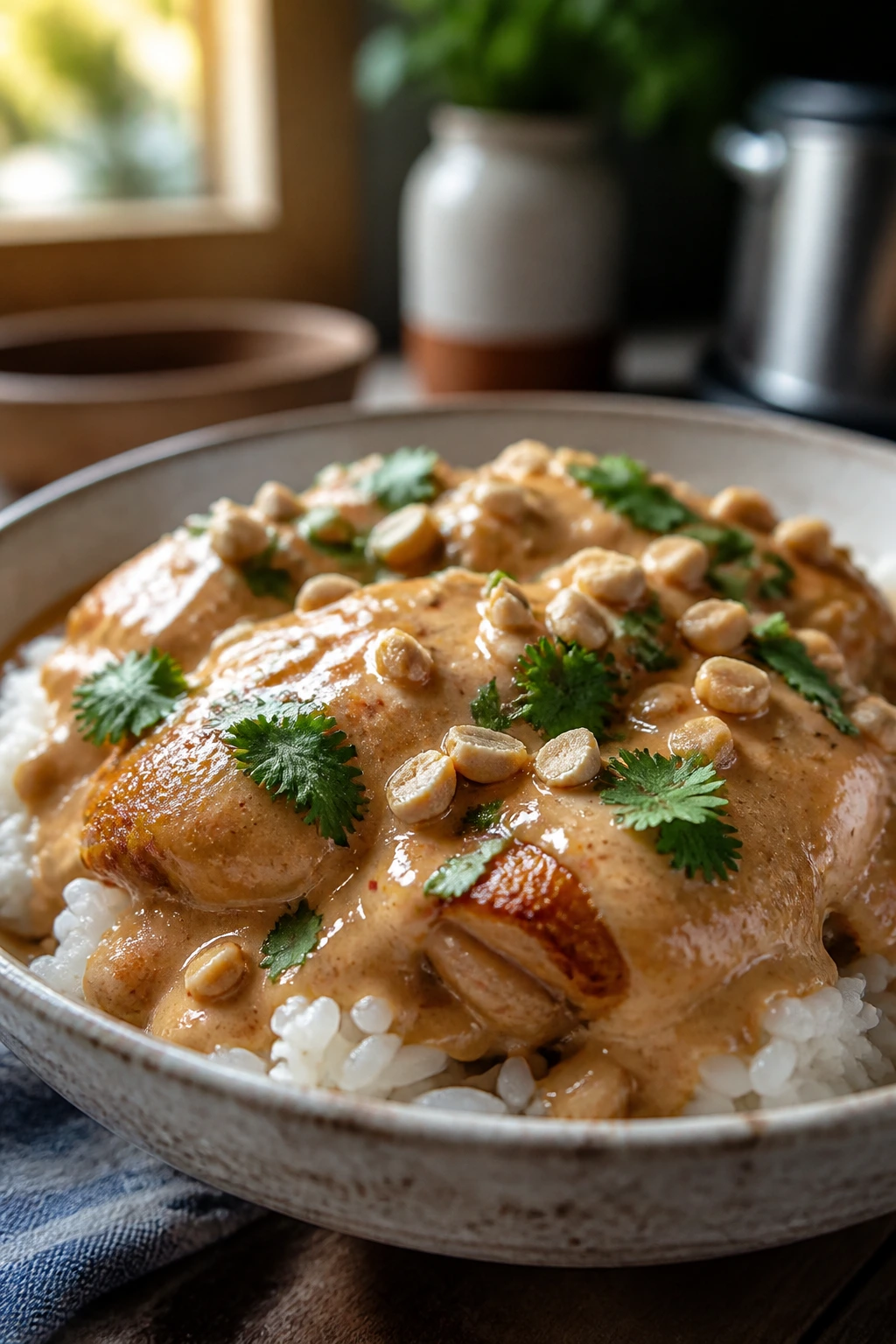
Intro:
This is the one to make when you want something a little different without turning Sunday into a project. Peanut butter, coconut milk, soy sauce, and ginger turn into a sauce that clings to chicken and rice in the most satisfying way. It’s rich, salty, and just sharp enough.
Why It Works:
Peanut butter gives the sauce body, coconut milk keeps it smooth, and soy sauce adds depth. Ginger and lime prevent the whole thing from tasting heavy. The slow cooker gives the chicken time to absorb the sauce instead of sitting on top of it.
Key Ingredients:
- 2 lb boneless chicken thighs
- ½ cup peanut butter
- 1 can coconut milk
- ¼ cup soy sauce
- 2 tablespoons lime juice
- 1 tablespoon grated ginger
- 3 garlic cloves
- Cooked rice
- Chopped peanuts and cilantro
Quick Steps:
- Whisk the sauce: Combine peanut butter, coconut milk, soy sauce, lime, ginger, and garlic.
- Add the chicken: Put thighs in the slow cooker and pour over the sauce.
- Cook until tender: Low for 5 to 6 hours.
- Stir and shred lightly: Leave it chunky or shred it, depending on preference.
- Serve over rice: Top with peanuts and cilantro.
Equipment for This Recipe:
- Slow cooker
- Whisk
- Measuring cups
- Rice pot
How to Serve This Dish:
Serve with jasmine rice and something crisp on the side if you can manage it, even sliced cucumbers. The peanuts on top give needed crunch. Without them, the bowl feels a little too soft.
Pro Tips for This Recipe:
- Use natural peanut butter only if you stir it smooth first.
- Add lime at the end if you want brighter flavor.
- Chicken thighs are safer than breasts here.
- Thin the sauce with a splash of broth if it gets too thick.
Variations on This Dish:
- Vegetable Peanut Curry: Add bell peppers and broccoli near the end.
- Spicy Satay Style: Stir in sriracha or chili garlic sauce.
Common Mistakes to Avoid with This Dish:
- Using crunchy peanut butter: The sauce won’t be smooth.
- Too much soy sauce: It can take over.
- Skipping the garnish: Peanuts and herbs matter here.
25. Balsamic Chicken Thighs with Tomatoes
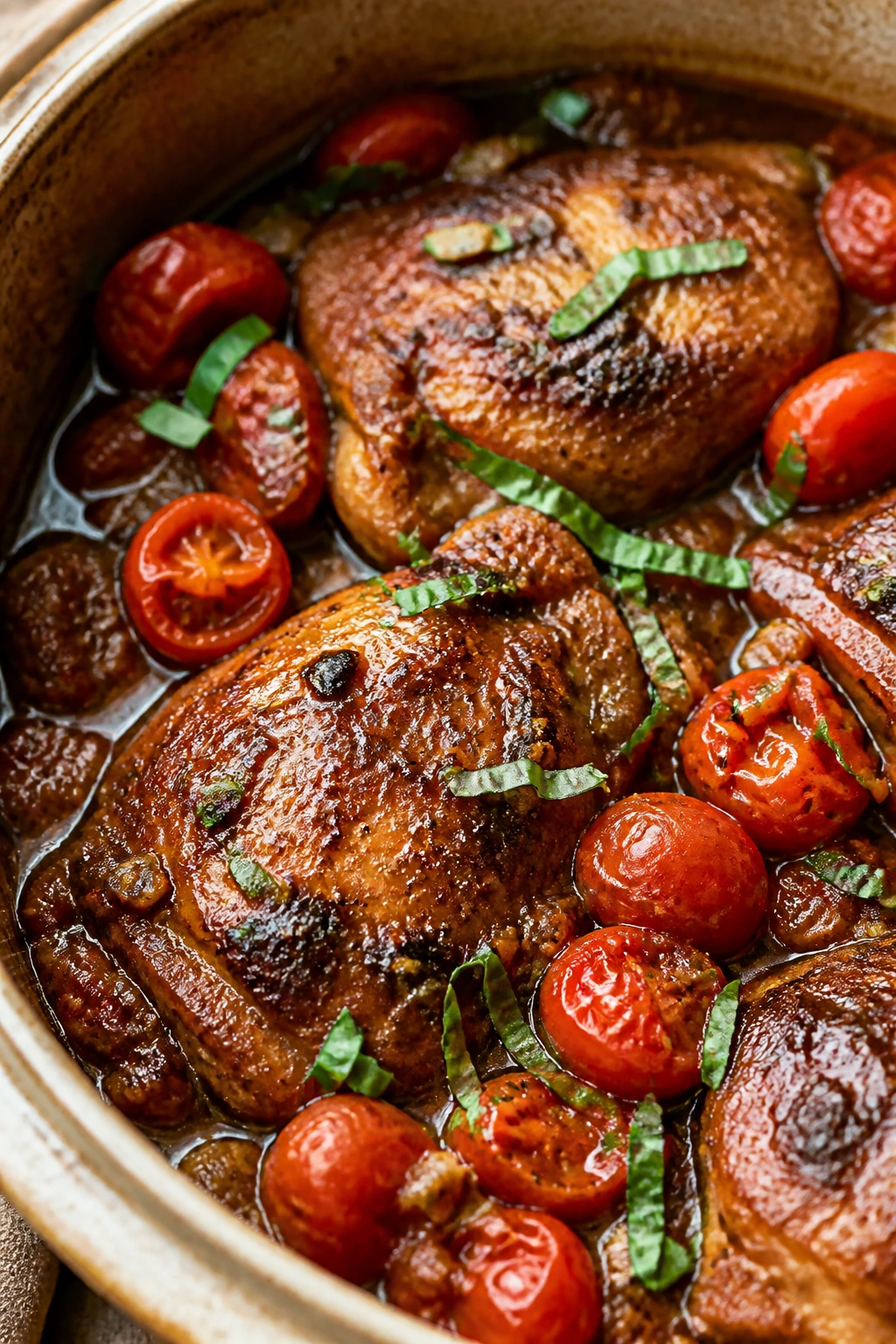
Intro:
This is one of those recipes that tastes more careful than it is. Chicken thighs braise in balsamic, tomatoes, garlic, and herbs until they’re tender and slightly sticky at the edges. The sauce lands somewhere between savory and sweet, which makes it work over rice, polenta, or mashed potatoes.
Why It Works:
Balsamic reduces into a glossy sauce during the long cook, while the tomatoes add moisture and acid. Chicken thighs stay juicy and benefit from the slow braise. Fresh basil at the end keeps the dish from tasting too cooked.
Key Ingredients:
- 2 lb chicken thighs
- 1 pint cherry tomatoes
- 4 garlic cloves, sliced
- ½ cup balsamic vinegar
- 1 tablespoon honey
- 1 teaspoon Italian seasoning
- 1 teaspoon salt
- Basil for serving
Quick Steps:
- Arrange the chicken: Put thighs in the slow cooker with tomatoes and garlic.
- Mix the sauce: Stir balsamic, honey, seasoning, and salt together.
- Pour and cook: Add the sauce and cook on low for 5 to 6 hours.
- Check tenderness: The chicken should be easy to cut with a spoon.
- Finish with basil: Spoon sauce over the top and garnish.
Equipment for This Recipe:
- Slow cooker
- Measuring cup
- Spoon
- Tongs
How to Serve This Dish:
Rice catches the sauce well. Polenta is even better if you want something softer and more comforting. A green vegetable on the side keeps the plate from leaning too sweet.
Pro Tips for This Recipe:
- Don’t use too much honey or the sauce turns sticky-sweet.
- Cherry tomatoes burst better than large chunks.
- Add spinach at the end if you want a vegetable in the pot.
- Let the sauce sit uncovered for a few minutes if it needs to reduce.
Variations on This Dish:
- Olive and Herb Version: Add pitted olives and rosemary.
- Mediterranean Twist: Finish with feta and lemon zest.
Common Mistakes to Avoid with This Dish:
- Using breast meat and cooking too long: It dries out.
- Adding basil at the start: It loses its freshness.
- Over-sweetening the sauce: Balsamic already has body.
26. Corned Beef and Cabbage
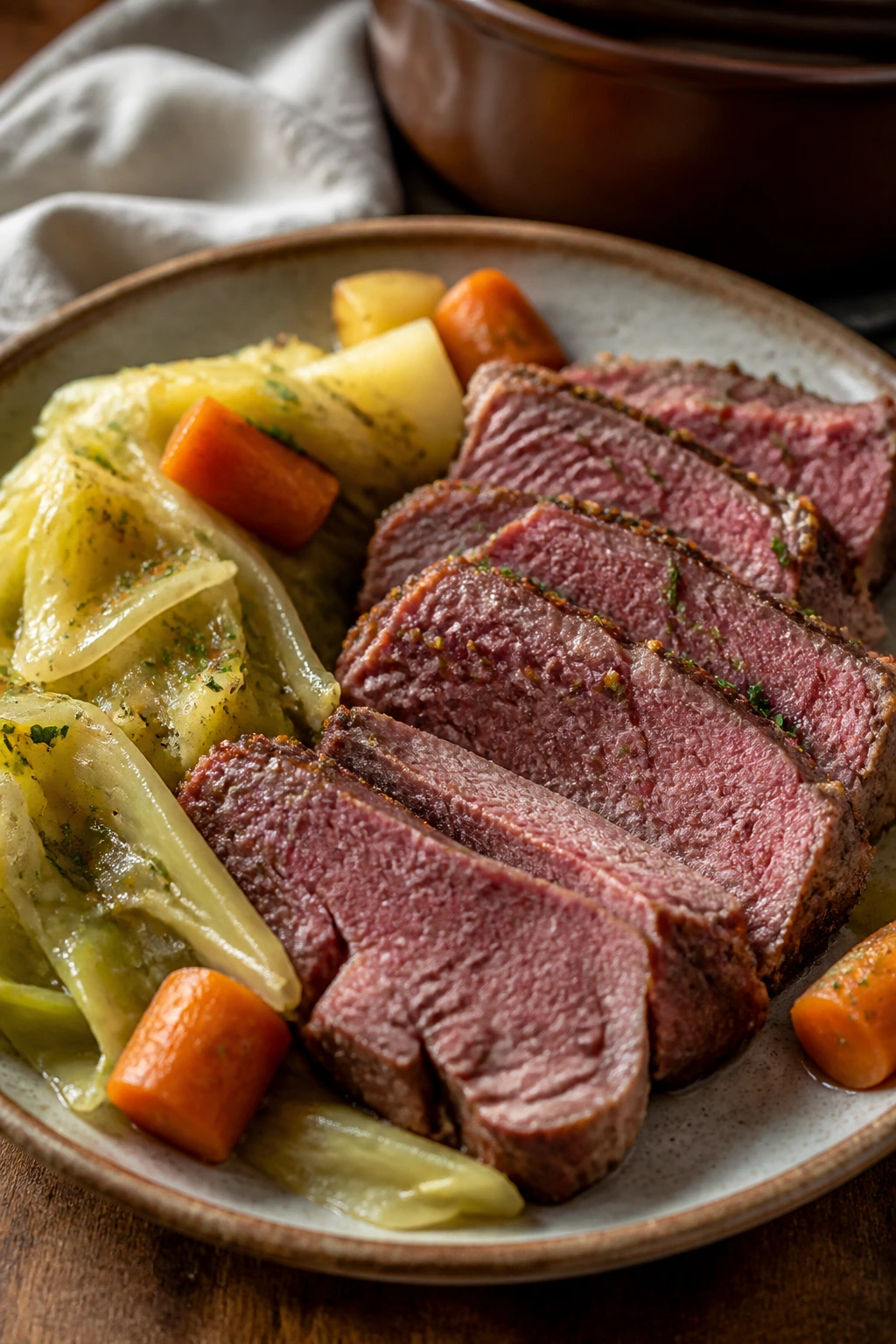
Intro:
Corned beef and cabbage is one of those dishes that feels like a proper Sunday whether or not anybody asked for ceremony. The brisket gets salty and tender, the cabbage softens without disappearing, and the carrots and potatoes soak up the broth. Straightforward food. No tricks.
Why It Works:
Corned beef is already cured and seasoned, which makes it well suited to slow cooking. The long braise softens the brisket’s dense fibers and lets the spice packet do its job. Cabbage goes in later so it doesn’t collapse into the liquid.
Key Ingredients:
- 3 lb corned beef brisket with spice packet
- 1 onion, sliced
- 4 carrots, cut into chunks
- 1½ lb baby potatoes
- 1 small cabbage, cut into wedges
- 4 cups water or broth
- 1 tablespoon mustard for serving
Quick Steps:
- Set the brisket: Put onion at the bottom, then corned beef on top.
- Add liquid and spices: Pour in water or broth and add the spice packet.
- Cook until tender: Low for 8 to 9 hours.
- Add vegetables late: Stir in potatoes, carrots, and cabbage for the last 2 to 3 hours.
- Slice and serve: Cut against the grain and serve with mustard.
Equipment for This Recipe:
- Slow cooker
- Sharp knife
- Cutting board
- Tongs
How to Serve This Dish:
Arrange the brisket in slices with vegetables spooned around it. A spoonful of whole-grain mustard on the side cuts the richness better than anything else I know.
Pro Tips for This Recipe:
- Slice against the grain for tenderness.
- Add cabbage later so it keeps shape.
- Don’t rinse away the cure unless the brisket seems overly salty.
- Leftovers make strong hash the next day.
Variations on This Dish:
- Beer-Braised Version: Swap part of the liquid for a dark beer.
- Mustard-Forward Style: Add whole-grain mustard to the cooking liquid.
Common Mistakes to Avoid with This Dish:
- Cooking vegetables the whole time: They’ll turn too soft.
- Slicing with the grain: The meat seems tougher.
- Using too much liquid: Brisket doesn’t need submersion.
27. Slow Cooker Peach Cobbler
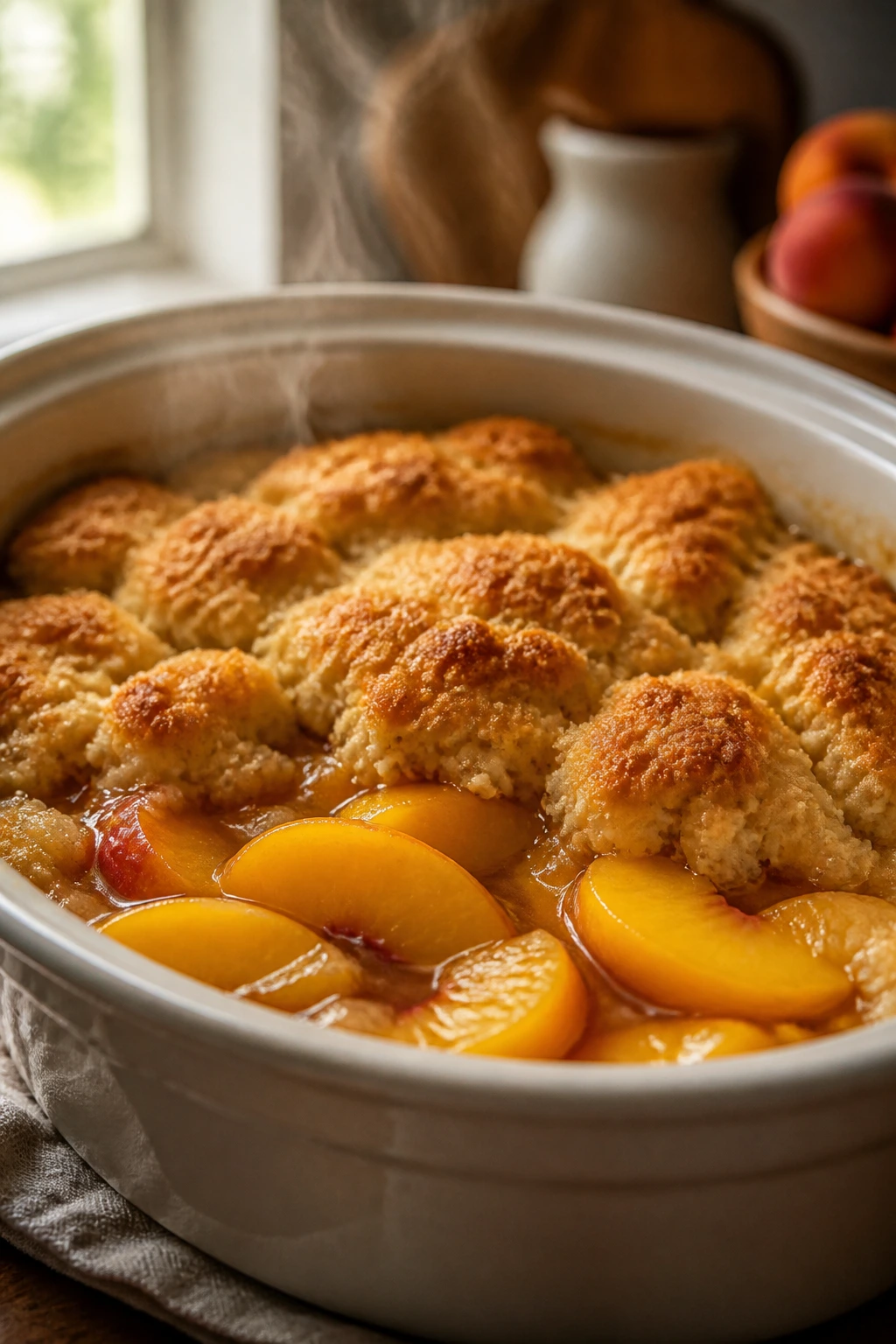
Intro:
A slow cooker dessert sounds suspicious until you taste this. Peaches turn syrupy, the topping goes tender with a little edge around the edges, and the whole thing lands somewhere between cobbler and pudding cake. It’s best spooned into bowls while still warm.
Why It Works:
Peaches release a lot of juice as they cook, and the slow cooker keeps that juice from evaporating too quickly. The topping cooks on top of the fruit and absorbs some of the syrup, which gives you a soft but not soggy finish. A little cinnamon makes the peaches taste deeper.
Key Ingredients:
- 6 cups sliced peaches, fresh or frozen
- ½ cup sugar
- 1 teaspoon cinnamon
- 1 tablespoon lemon juice
- 1 cup biscuit mix or homemade topping
- ½ cup milk
- 4 tablespoons melted butter
- Vanilla ice cream for serving
Quick Steps:
- Mix the fruit: Combine peaches, sugar, cinnamon, and lemon juice.
- Add to the slow cooker: Spread the peaches evenly in the insert.
- Make the topping: Stir biscuit mix, milk, and butter into a thick batter.
- Spoon over the fruit: Drop the topping across the peaches.
- Cook until set: Low for about 2½ to 3 hours, then serve warm.
Equipment for This Recipe:
- Slow cooker
- Mixing bowl
- Spoon
- Ice cream scoop
How to Serve This Dish:
Warm bowls, cold vanilla ice cream. That’s the move. The contrast matters because the cobbler is soft and syrupy on its own.
Pro Tips for This Recipe:
- Fresh peaches taste brightest, but frozen works well.
- Don’t stir the topping into the fruit.
- Let it rest a few minutes before serving so the syrup settles.
- A pinch of nutmeg gives the peaches more depth.
Variations on This Dish:
- Berry Peach Cobbler: Add a cup of blueberries.
- Ginger Peach Cobbler: Stir grated ginger into the fruit mixture.
Common Mistakes to Avoid with This Dish:
- Using too much topping batter: The center can stay gummy.
- Serving too soon: The fruit syrup needs a few minutes.
- Skipping the lemon juice: It keeps the peaches from tasting flat.
28. Chocolate Bread Pudding
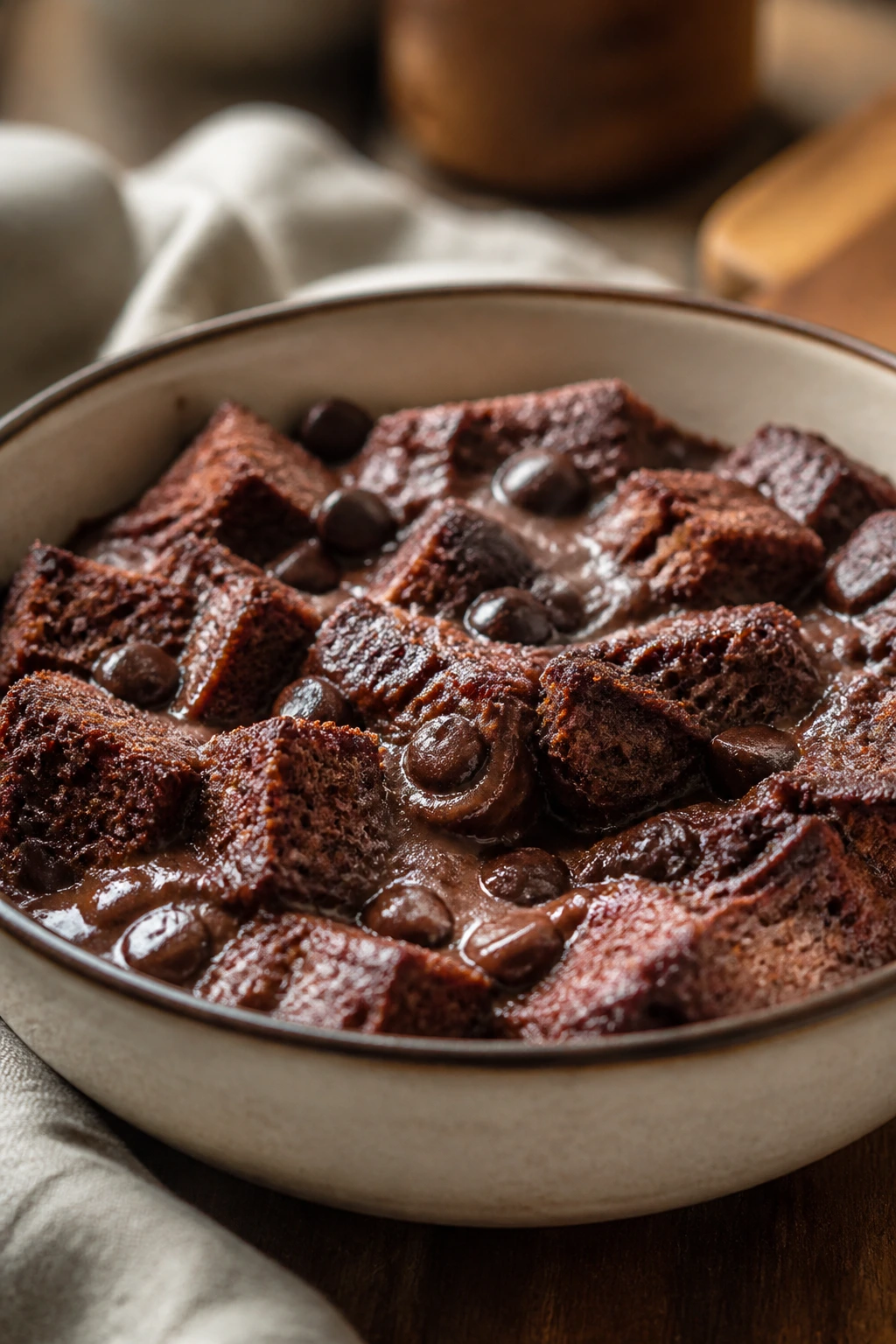
Intro:
Chocolate bread pudding is the dessert for a Sunday when the house already smells like dinner and you want one more thing to feel finished. Cubes of bread soak up custard, chocolate melts into pockets, and the top turns tender in the slow cooker while the center stays soft. It’s not elegant. It’s better than elegant.
Why It Works:
Day-old bread soaks up the custard without falling apart, and the slow cooker gives the pudding a gentle set. Chocolate chips melt into little puddles throughout the dish, which means every spoonful gets a mix of soft bread and rich chocolate. A touch of vanilla keeps the custard from tasting eggy.
Key Ingredients:
- 8 cups cubed day-old bread
- 2 cups milk
- 3 large eggs
- ½ cup sugar
- 1 teaspoon vanilla extract
- 1 cup chocolate chips
- 2 tablespoons melted butter
- Pinch of salt
Quick Steps:
- Prepare the bread: Put cubed bread in the slow cooker.
- Whisk the custard: Combine milk, eggs, sugar, vanilla, butter, and salt.
- Add chocolate: Stir chips into the bread or scatter them between layers.
- Pour and press: Pour custard over the bread and press gently so it absorbs.
- Cook until set: Low for about 2 to 3 hours, until the center is just set.
Equipment for This Recipe:
- Slow cooker
- Mixing bowl
- Whisk
- Serving spoon
How to Serve This Dish:
Serve warm with whipped cream or ice cream. If you want a little extra shine, dust the top with powdered sugar after it cools for a minute. It’s a soft dessert, so spooning is the right attitude.
Pro Tips for This Recipe:
- Use bread that’s stale enough to hold shape.
- Don’t overcook or the custard gets rubbery.
- Dark chocolate chips give a deeper flavor than milk chocolate.
- A splash of bourbon in the custard is a fine adult move.
Variations on This Dish:
- Banana Chocolate Version: Add sliced bananas between the bread layers.
- Orange Chocolate Pudding: Stir in orange zest for brightness.
Common Mistakes to Avoid with This Dish:
- Using fresh bread: It gets mushy.
- Cooking too long: The custard tightens up.
- Skipping the salt: Chocolate tastes flatter without it.
Why Crockpot Cooking Wins on Slow Sundays
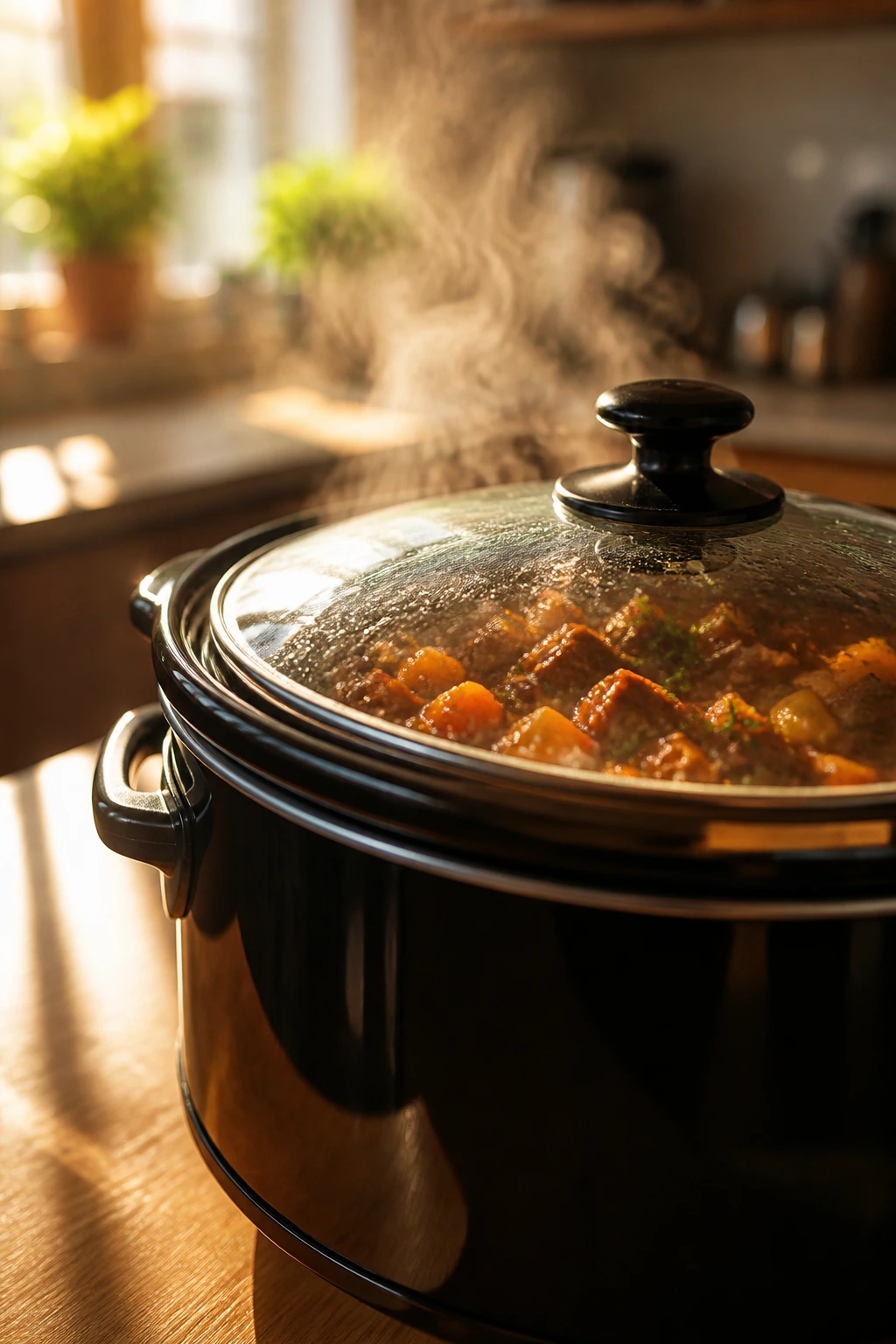
A slow cooker changes the shape of a day. That sounds dramatic, but it’s true. When dinner is already on the counter by midmorning, the rest of the afternoon gets softer around the edges. You can leave the house. You can stay home. You can let the house smell like onion and broth and spice for hours, which is one of the underrated pleasures of cooking. The meal becomes part of the day instead of a deadline at the end of it.
The best crockpot recipes for lazy Sundays also do something a little sneaky: they make ordinary ingredients taste expensive. Chuck roast becomes spoon-tender. Dried beans turn plush. Chicken thighs take on sauce instead of fighting it. That long, low heat does not just “cook food.” It changes texture, deepens seasoning, and turns cheap cuts into something people ask for again.
There’s a catch, though. The slow cooker is not magic. It likes moisture, patience, and ingredients that can stand up to time. If you throw delicate pasta, lean chicken breast, or dairy in too early, the result will remind you who’s in charge. Treat it like a braising pot with a lid and it pays you back.
Essential Equipment for These Recipes
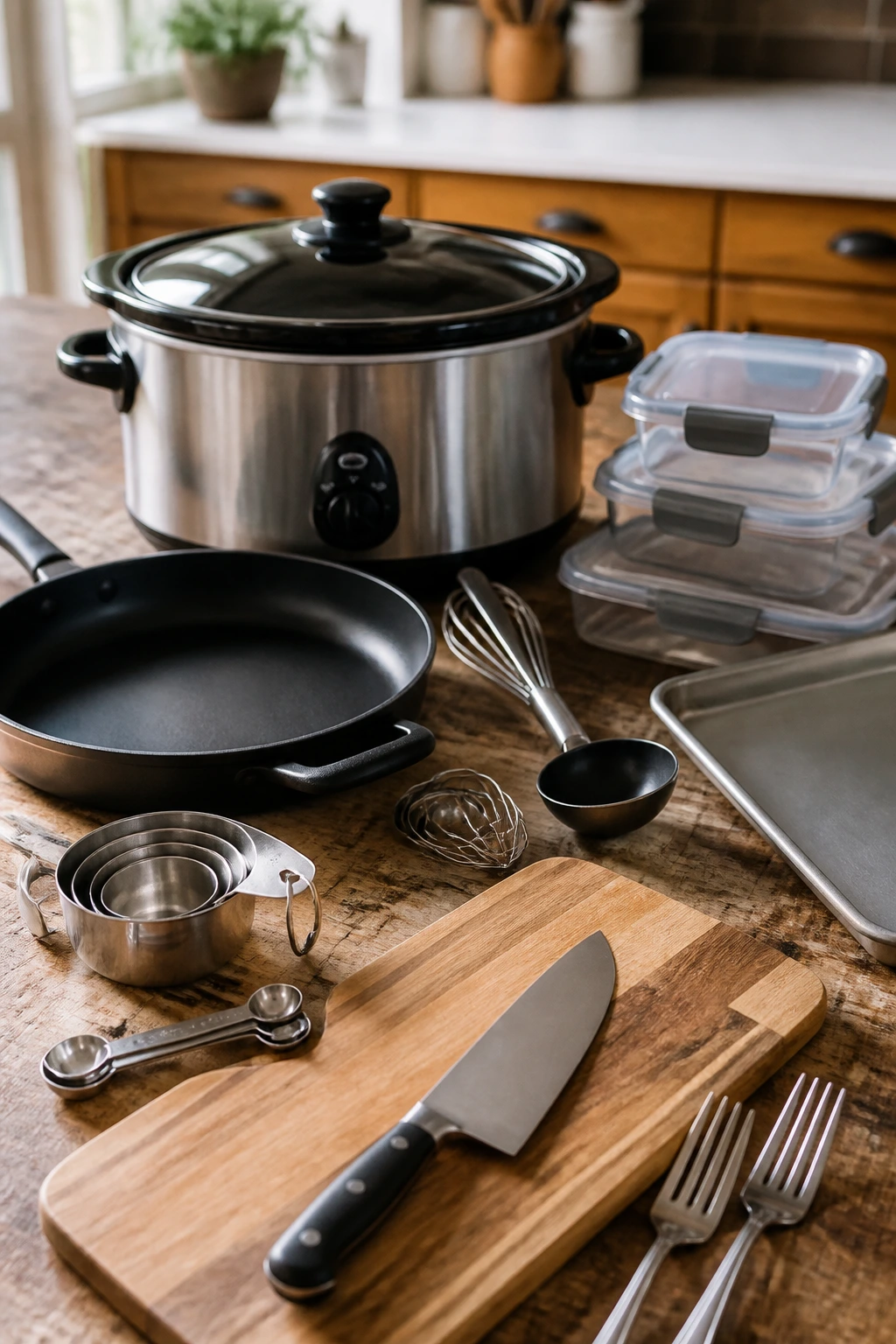
- 6-quart slow cooker: The workhorse size for most roast, chili, and soup recipes here.
- Large skillet: Useful for browning meat before it goes into the cooker; that step adds real flavor.
- Sharp chef’s knife: You’ll use it more than you want to for onions, carrots, peppers, and cabbage.
- Cutting board: A roomy board keeps prep faster and safer.
- Forks or meat claws: Handy for shredding pork, chicken, and beef without turning it into paste.
- Measuring cups and spoons: Slow cooker food can taste flat if the seasoning is guessed.
- Whisk: Best for smooth sauces, custards, and slurry mixtures.
- Ladle: Soups and stews need one. A big spoon can work, but a ladle is easier.
- Sheet pan: Useful for broiling carnitas or melting cheese on French onion soup.
- Airtight storage containers: Leftovers keep better when they’re cooled and packed properly.
Smart Shopping and Ingredient Tips
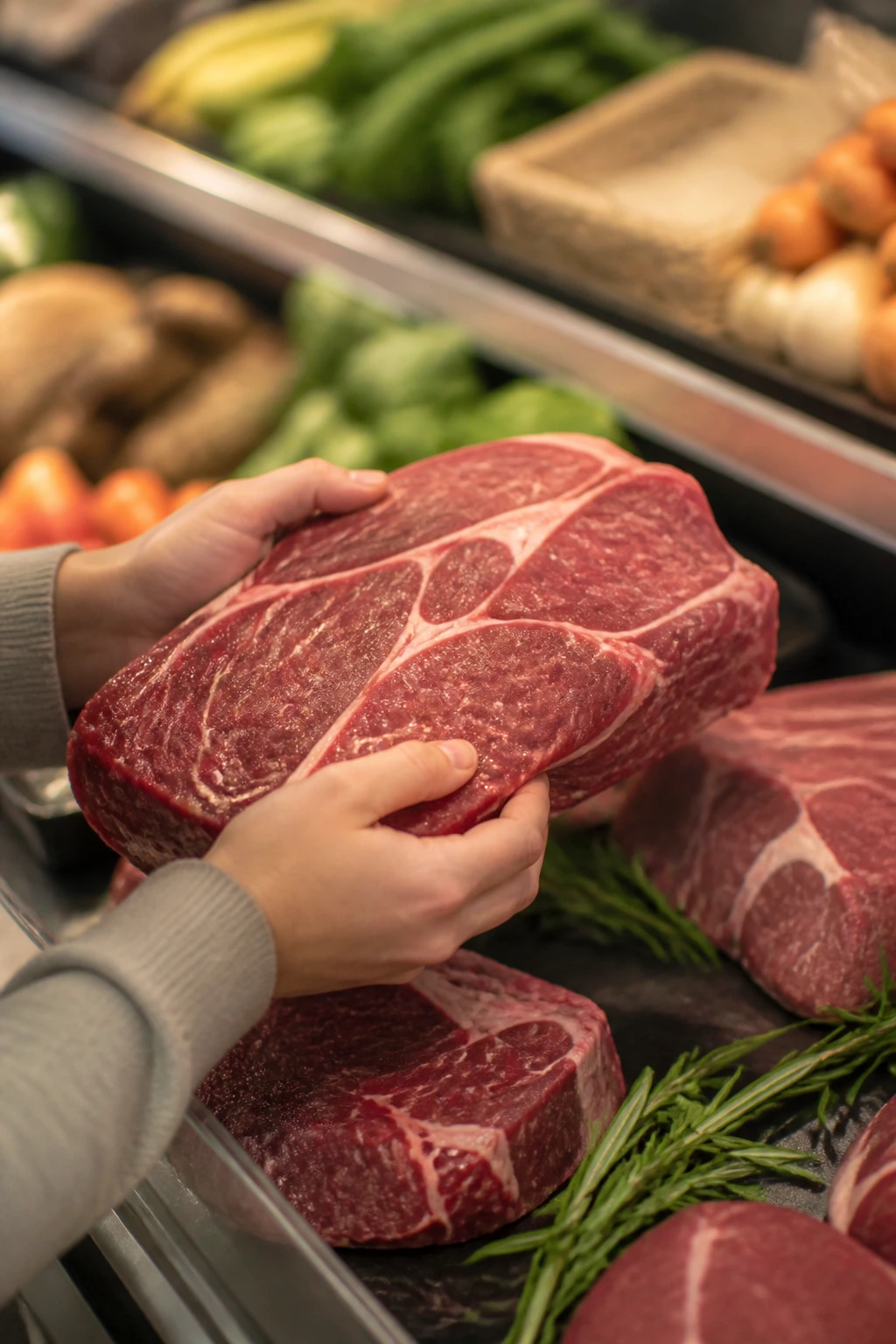
A slow cooker punishes weak ingredients less than a quick-cook recipe does, but that doesn’t mean every grocery choice is equal. For beef dishes, chuck roast is usually the sweet spot because of its fat and connective tissue. For pork, shoulder beats loin almost every time. Chicken thighs stay juicier than breasts in long cooking, especially in sauces that get left alone for hours. That’s not theory. It’s the difference between meat that shreds and meat that feels stringy.
Beans and grains need a little attention too. Steel-cut oats, wild rice, and long-grain rice behave much better in a slow cooker than quick-cooking versions. Canned beans are fine in chili and soups, but rinse them so the broth doesn’t taste metallic or overly thick. For tomatoes, crushed tomatoes tend to give better body than diced ones, unless you want a looser texture.
Dairy needs timing. Add cream, sour cream, milk, and yogurt late unless the recipe specifically says otherwise. Heat and long exposure can make them separate or take on a cooked taste that nobody asked for. Cheese is the same story. Buy a block and grate it yourself if you want the smoothest melt, especially for mac and cheese or casserole-style dishes.
How to Serve These Recipes
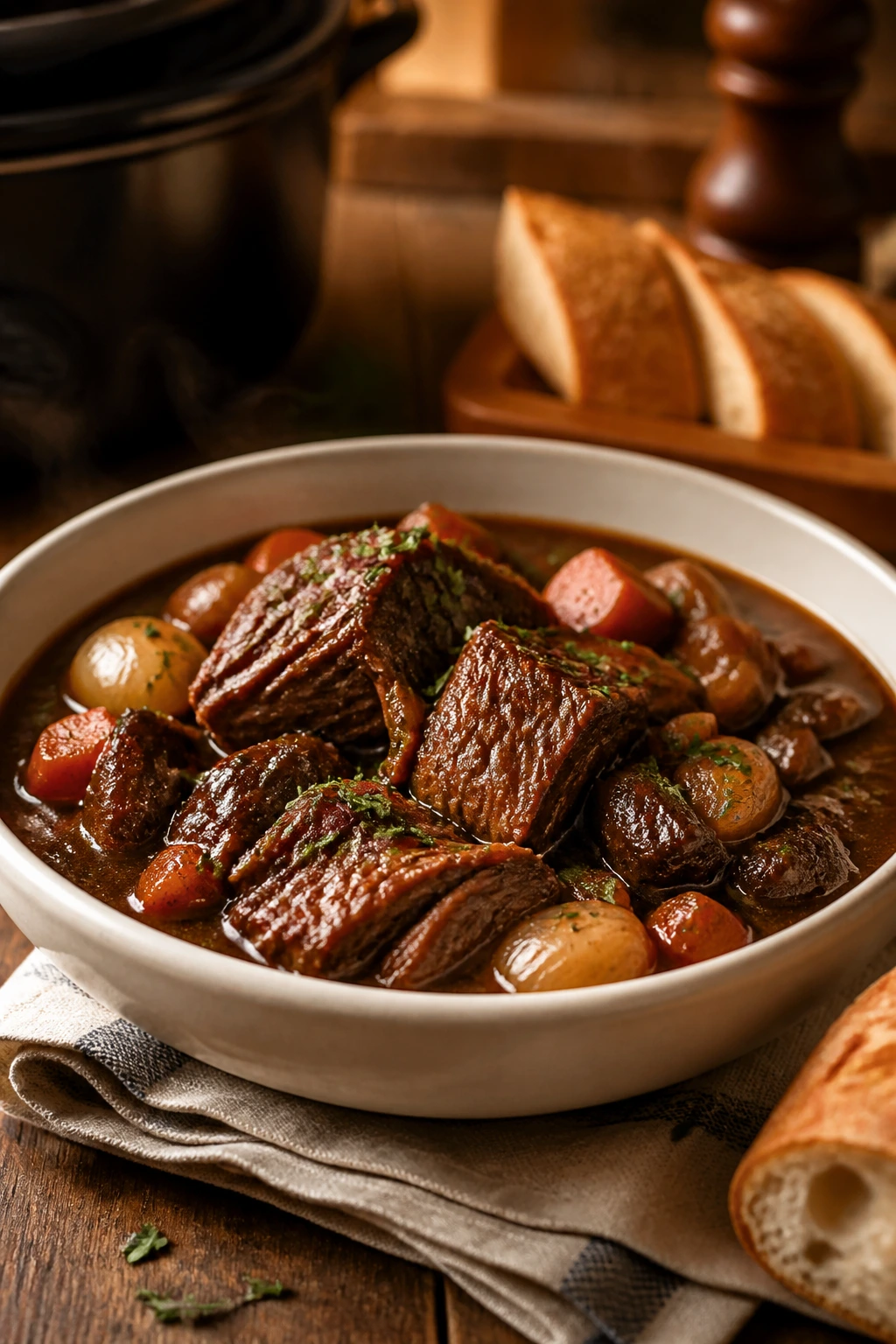
Presentation:
Serve braises and stews in deep bowls so the sauce settles around the meat instead of spreading out thin on a plate. For shredded dishes like pulled pork or barbacoa, warm the tortillas or buns first; cold bread makes the whole meal feel smaller. A little chopped parsley, cilantro, chives, or basil goes a long way when the food is dark or creamy.
Accompaniments:
The collection leans heavily on bread, rice, potatoes, tortillas, and simple salads. Pot roast wants mashed potatoes or crusty bread. Chili and soups are happier with cornbread or tortilla chips. Pasta dishes need garlic bread. Brunch casseroles like fruit beside them. Keep the side simple so the slow cooker dish stays the star.
Portions:
Most of these recipes serve 4 to 8 depending on the cut of meat and the starch around it. A roast or pulled pork will stretch farther than a casserole. Soups usually look modest in the pot and generous in the bowl, which is half the magic. If you want to feed more people, add a side starch before doubling the protein blindly.
Beverage Pairing:
For rich savory dishes, a cold lager, dry cider, or unsweetened iced tea works well. For spicy food, lime soda or a pale ale keeps the heat from taking over. Dessert recipes like peach cobbler or chocolate bread pudding pair with coffee, black tea, or cold milk. Nothing fancy required.
Additional Tips and Flavor Boosters
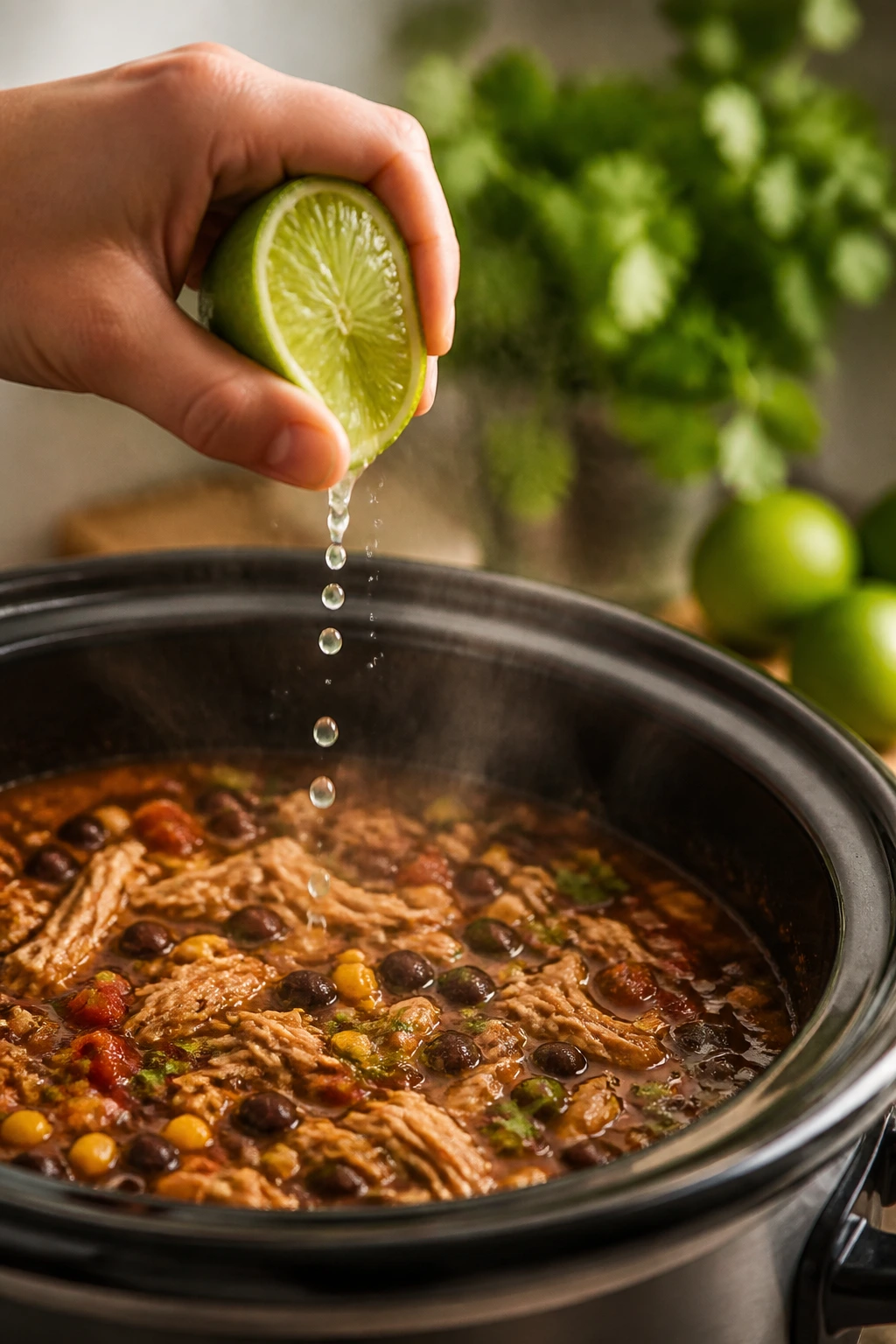
Flavor Enhancement:
A small spoonful of acid at the end does more than people think. Vinegar, lime juice, lemon juice, or pepperoncini brine can wake up a pot that tastes heavy after hours of cooking. Use it late so the flavor stays bright instead of cooked out.
Customization:
Keep a few finishers in the fridge: pickled onions, chopped herbs, hot sauce, sour cream, shredded cheese, and toasted nuts. They change the texture on the plate without asking you to rebuild the recipe. I’m partial to adding crunch, because slow cooker food can get a little soft by itself.
Serving Suggestions:
For soups, serve with something crisp on top — croutons, tortilla strips, toasted seeds, or even a fried breadcrumb mix. For braises, a little fresh herb or lemon zest keeps the dish from looking and tasting too brown. For breakfast recipes, fruit on the side makes the meal feel intentional.
Make-It-Yours:
Need lower dairy? Use coconut milk, oat cream, or a little olive oil in recipes that allow it. Want more heat? Add red pepper flakes, chipotle, or cayenne near the end so you can control the burn. Feeding kids? Pull back on the spice and put condiments on the table instead of in the pot.
Make-Ahead, Storage, and Reheating Guidance
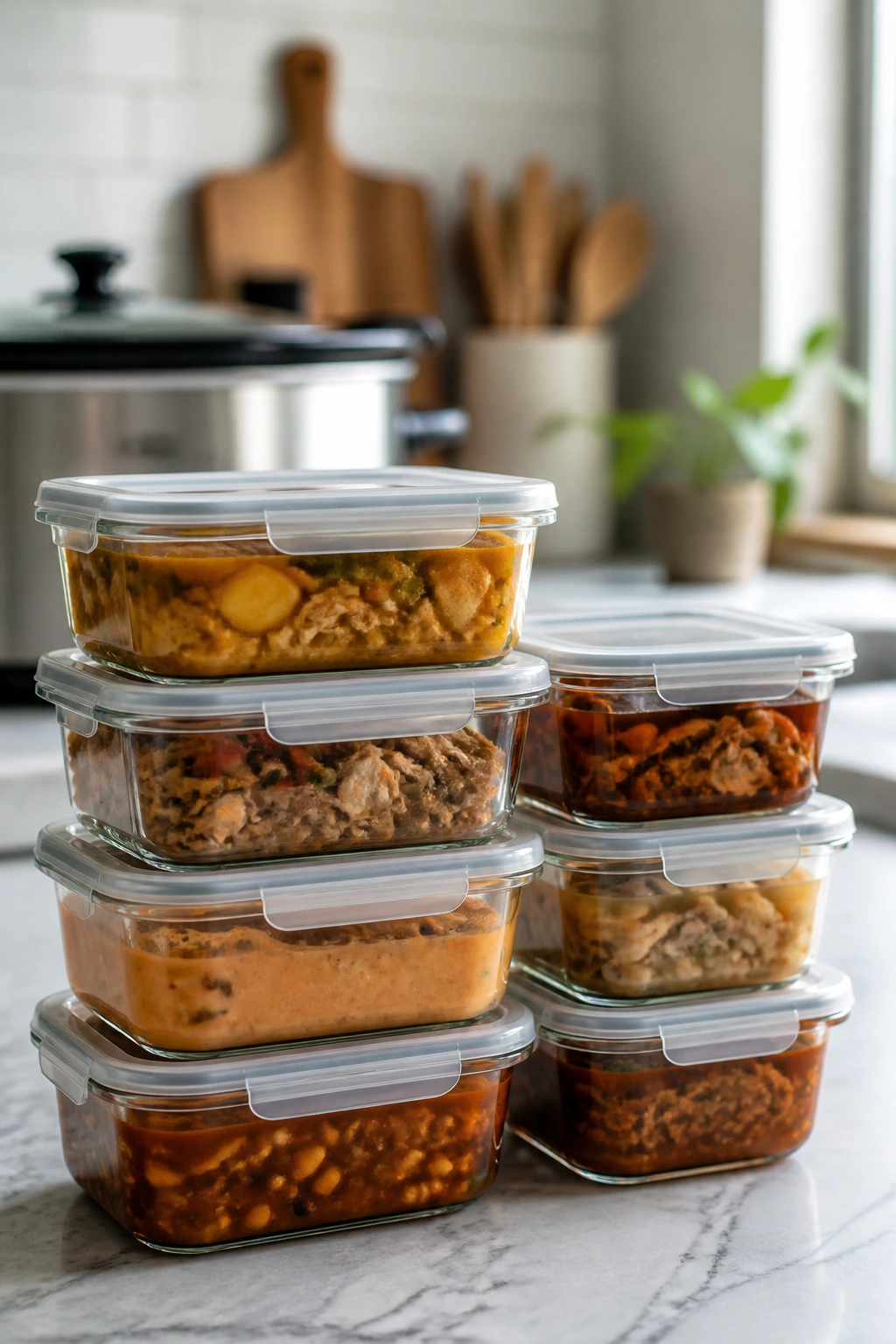
Most of these dishes keep 3 to 4 days in the refrigerator in airtight containers, and many soups, chilis, pulled meats, and braises freeze well for up to 2 to 3 months. Cream-based dishes and egg-based casseroles are fussier, so I’d keep those on the shorter end of the fridge window and skip freezing if the texture matters to you. Peach cobbler and bread pudding can be refrigerated for a couple of days, but they’re best warm, not icy.
For reheating, a low oven or stovetop is usually kinder than the microwave. Soups and chili can go into a pot over medium-low heat with a splash of broth or water to loosen them. Pulled pork, pot roast, and barbacoa reheat well covered in a baking dish at 300°F until hot, then uncovered for a few minutes if you want the edges to dry a bit. Rice-based dishes need a little extra moisture and gentle heat so they don’t go chalky.
Slow cooker leftovers sometimes taste better the next day because the seasoning settles in. That’s especially true for chili, braises, and shredded meat. Mac and cheese is the exception; it’s best fresh or gently reheated with a splash of milk. If you know you’ll freeze something, portion it flat in freezer bags or small containers so it thaws fast instead of sitting in a cold block for half the day.
Variations and Adaptations to Try
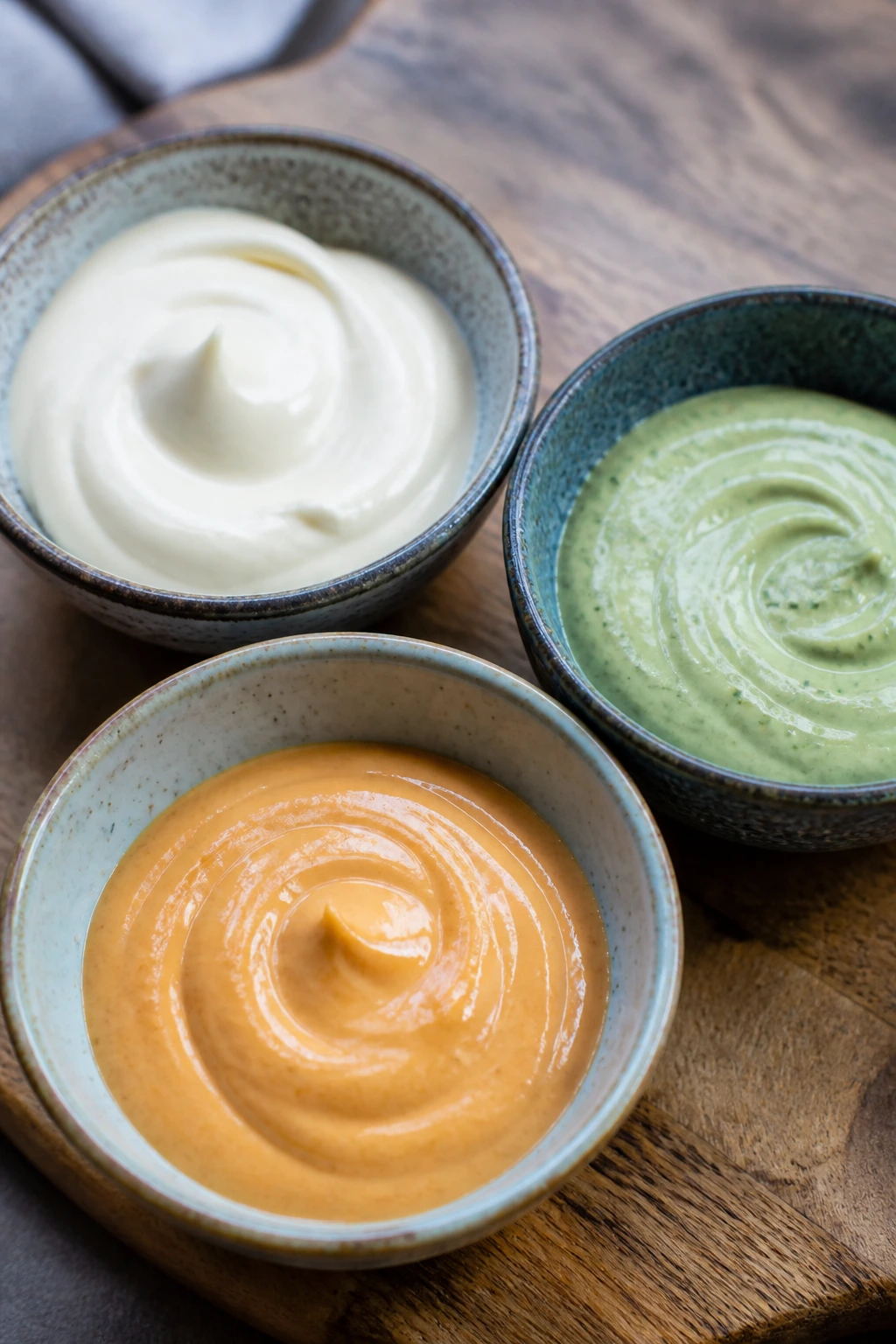
Gluten-Free Sunday Pot:
Pot roast, pulled pork, soups, and chilis are easy to keep gluten-free if you check spice packets, broths, and sauces. Use cornstarch or a gluten-free flour blend to thicken instead of regular flour. For mac and cheese, swap in gluten-free pasta but shorten the cook time a bit.
Dairy-Free Comfort Bowl:
Several recipes here adapt cleanly with coconut milk, oat cream, or cashew cream. White chicken chili, tikka masala, lentil curry, and Thai peanut chicken all hold up well without dairy. Skip sour cream finishes and lean on lime, herbs, or a little olive oil instead.
Lower-Salt Cook:
Buy low-sodium broth and season in layers rather than dumping salt into the pot at the start. Skip salty seasoning packets when you can and use garlic, onion, herbs, and acid to carry the flavor. This matters most in ham, sausage, and corned beef dishes, where the meat already brings plenty of salt.
Kid-Friendly Sunday Pot:
Pull back on chili heat, keep pepperoncini or jalapeños on the side, and choose sweeter sauces like BBQ, peach, or balsamic-tomato. Mac and cheese, breakfast casserole, and pulled pork usually win the easiest crowd. Let people add their own hot sauce or pickles at the table.
Weeknight Leftover Makeover:
Shredded chicken becomes tacos, quesadillas, or grain bowls. Pot roast turns into hash. Pulled pork goes on baked potatoes. Soup gets a new life with fresh herbs and a squeeze of citrus. That second meal is often where slow cooker food earns its keep.
Regional Swap:
A few recipes can lean smoky Southern, more Tex-Mex, or a little Italian-American with one or two changes. Barbacoa, carnitas, and salsa verde chicken are especially easy to steer toward taco night. French onion soup, lasagna soup, and sausage and peppers can shift toward a more Italian pantry with ease.
Common Mistakes to Avoid
The biggest slow cooker mistake is thinking everything can go in at the same time and come out perfect. It can’t. Pasta, dairy, and quick-cooking vegetables need late timing. If you dump them in at the start, they go past their best texture and never come back.
Another common miss is using the wrong cut of meat. Lean cuts sound healthy but often turn dry and stringy under long heat. Chuck, shoulder, thighs, brisket, and sausage have the fat and structure needed for slow cooking. That’s not a moral lesson. It’s just how the texture works.
People also underseason early and forget to taste late. Slow cooker food needs salt, but it needs it in context. Broth reduces, sausage adds salt, sauces concentrate, and cheese brings its own seasoning. Taste after cooking, then adjust with salt, acid, or heat before serving.
Then there’s the issue of overfilling the cooker. If the insert is packed too tightly, the food cooks unevenly and the center can lag behind. Leave some room, especially for soups that bubble and rise. A full cooker is not the same as a well-cooked one.
Last, don’t ignore finishers. Slow cooker dishes can taste a little one-note because the lid traps everything inside. Fresh herbs, lemon, lime, hot sauce, cracked pepper, or a broiled top give you contrast. That final little move is often the difference between “fine” and “I want this again.”
Questions People Usually Ask About Lazy Sunday Crockpot Meals
Can I put raw chicken in the slow cooker?
Yes, and many of these recipes do. Use boneless thighs or breasts, make sure the cooker reaches a full simmer over time, and cook until the chicken is no longer pink and shreds easily. For best texture, thighs are more forgiving.
Do I really need to brown the meat first?
You don’t need to, but it helps. Browning adds a deeper flavor and better color, especially for pot roast, sausage, and pulled pork. If you’re short on energy, skip it; if you want a richer result, do the sear.
Why does my slow cooker meal come out watery?
Usually because the lid traps moisture and the recipe started with too much liquid. Leave the lid cracked for the last 20 to 30 minutes if a soup or sauce needs to reduce, and keep an eye on watery vegetables like tomatoes and zucchini.
Can I cook pasta or rice in the slow cooker?
Yes, but timing matters. Pasta and rice should go in near the end so they stay intact. Long-grain rice, wild rice, and sturdy pasta shapes work better than delicate noodles or quick-cook rice.
What if my slow cooker runs hot?
That’s common. Start checking food earlier than the recipe suggests, especially with dairy, rice, or chicken breasts. If the edges tend to scorch, add a little extra liquid and avoid high heat unless the recipe specifically calls for it.
Can I make these recipes ahead and reheat them?
Absolutely. Soups, chili, shredded meat, and braises reheat well and often taste better the next day. Add fresh herbs, cheese, or a splash of acid after reheating so the food tastes lively again.
Which recipes freeze best?
Pulled pork, pot roast, barbacoa, chili, soup, and carnitas freeze nicely. Mac and cheese, egg casseroles, and dairy-heavy soups are less forgiving. Freeze in smaller portions so thawing and reheating go more smoothly.
How do I keep leftovers from tasting dull?
A little acid and a fresh garnish help more than people expect. Lemon juice, lime juice, vinegar, scallions, cilantro, parsley, or hot sauce can bring leftovers back to life without changing the whole dish.
Can I cook these on high instead of low?
Sometimes, yes, but low heat usually gives better texture. High works for shorter cooking windows or when you’re in a rush, but roasts, briskets, and shoulder cuts are usually better after a long, gentle cook.
The Slow Cooker at Its Best
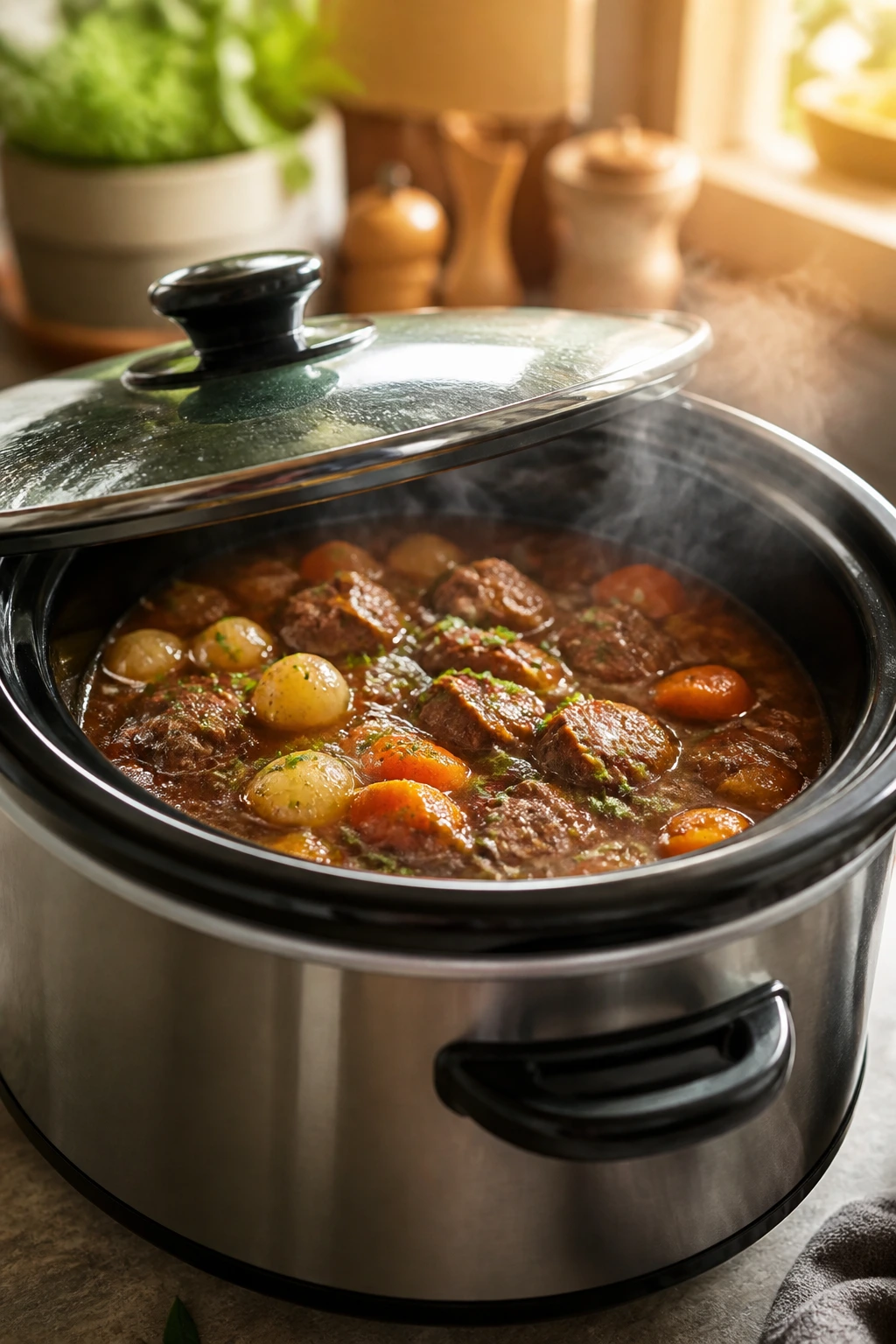
Lazy Sundays are not a culinary failure. They’re often the best time to cook well without making it a performance. A slow cooker fits that mood perfectly because it asks for a few minutes of attention and gives back hours of steady, useful heat. That’s why the recipes above work: they’re built for patience, not pressure.
The dishes that hold up best are the ones that know what the slow cooker does well. Tough cuts soften. Beans thicken. Spice settles in. Broth gets rounder. And when you finish with a squeeze of citrus, a handful of herbs, a broiled top, or a little crunch, the food stops tasting merely cooked and starts tasting finished.
Pick one recipe, start it early, and let the day get easier from there.