



A full table and a slow cooker tend to get along better than people think. Asian crockpot meals are what I reach for when I need dinner to smell like ginger, garlic, soy, and toasted sesame instead of plain steam. Give the pot a few hours, and even an inexpensive cut starts behaving like it had a long, lazy braise somewhere else.
What makes these dinners worth knowing is the way they solve two problems at once. They feed a crowd without turning the kitchen into a circus, and they keep their shape at the table: shredded beef that soaks up sauce, chicken thighs that stay silky, curries that settle into something spoonable and deep. The trick is not trying to force stir-fry behavior out of a slow cooker. Let the pot do slow work, then wake everything up at the end with lime, vinegar, scallions, herbs, or a hit of chili crisp.
That last part matters more than most recipes admit. Long heat gives you body; fresh finishing gives you lift. Skip the finish and a lot of these dishes can taste dark and heavy. Do it well, and the whole room smells alive.
Why These Crowd-Sized Crockpot Meals Work So Well
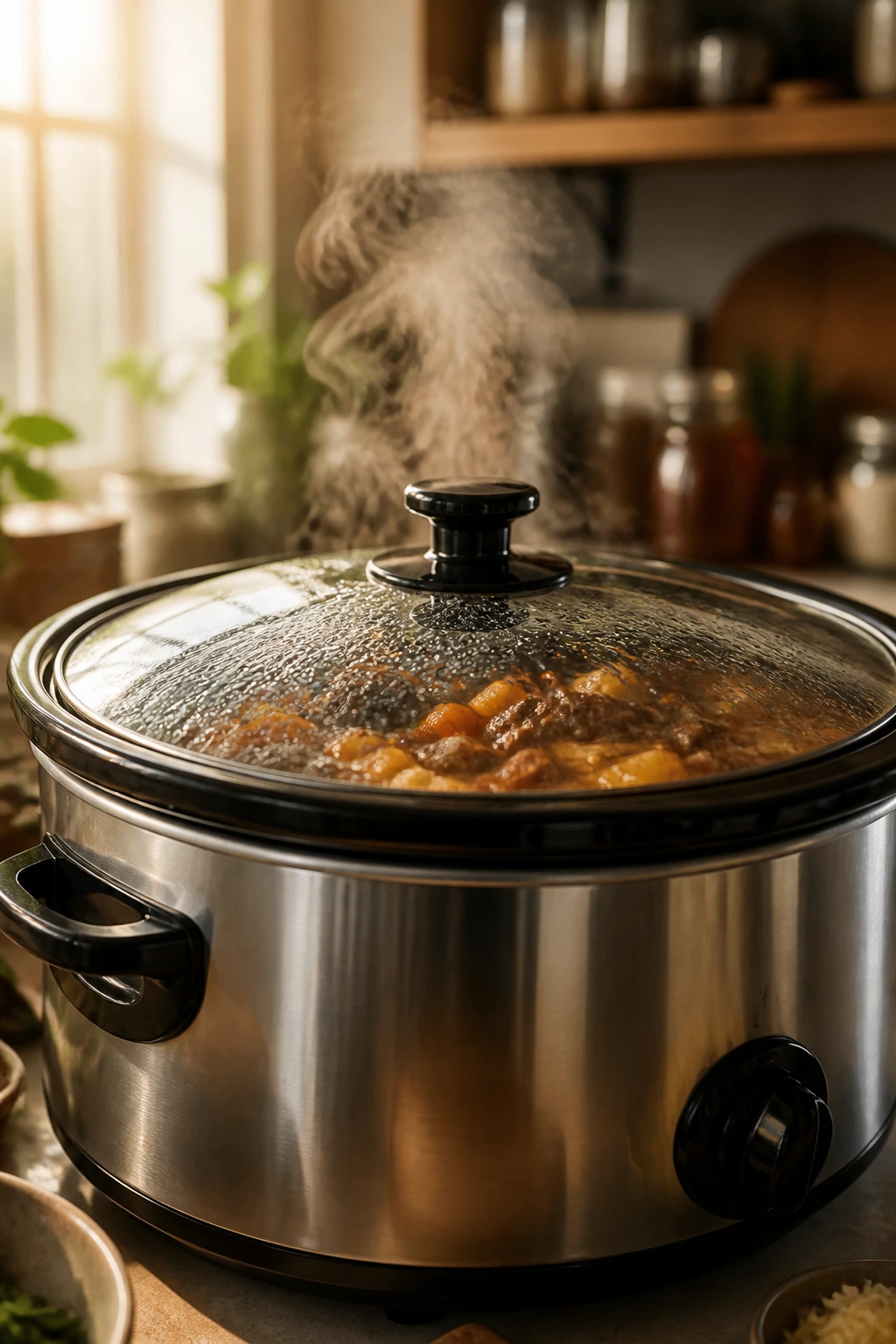
- Tough cuts become useful: beef chuck, pork shoulder, and bone-in chicken thighs have enough fat and connective tissue to survive hours of heat without drying out.
- Sauce ingredients do the heavy lifting: soy sauce, fish sauce, curry paste, coconut milk, hoisin, and vinegar build flavor in layers, then mellow into a sauce that clings instead of pooling.
- Rice, noodles, and lettuce all fit: these pots can slide onto jasmine rice one night, rice noodles the next, and lettuce cups when you want a lighter plate.
- The flavors keep their shape: ginger stays sharp, garlic turns sweet, and spices like five-spice, garam masala, and black pepper keep their edge through a long cook.
- Most of them taste better after a rest: a night in the fridge lets the sauce settle and the seasoning even out, which is handy when you’re cooking for a group.
1. Sticky Korean BBQ Beef for Rice Bowls and Lettuce Cups
A pot of this feeds eight without making a mess of the schedule. The beef turns dark and glossy, with edges that shred into the sauce and a gentle heat from gochujang that doesn’t shout. Spoon it over rice, tuck it into lettuce, or pile it into soft buns if you want the table to go quiet for a minute.
Why It Works: Beef chuck has enough collagen to turn tender after a long low cook, and the soy-brown sugar-vinegar base reduces into something sticky instead of watery. A quick cornstarch finish gives the sauce the cling that makes rice bowls worth the bowl.
Key Ingredients:
- 3 lbs beef chuck roast, trimmed and cut into 3-inch chunks
- 1/2 cup low-sodium soy sauce
- 1/3 cup packed brown sugar
- 1/4 cup rice vinegar
- 2 tbsp gochujang
- 1 tbsp sesame oil
- 6 garlic cloves, minced
- 1 tbsp grated fresh ginger
- 1 large yellow onion, sliced
- 2 tbsp cornstarch
- 3 tbsp cold water
- 4 scallions, sliced
- 2 tsp sesame seeds
Quick Steps:
- Whisk the soy sauce, brown sugar, rice vinegar, gochujang, sesame oil, garlic, ginger, and onion in the slow cooker.
- Add the beef chunks and turn them to coat.
- Cook on low for 8 hours or high for 4 to 5 hours, until the beef pulls apart with almost no resistance.
- Shred the beef, skim off excess fat, then stir in the cornstarch slurry.
- Cook 10 to 15 minutes more, until the sauce turns glossy and coats a spoon.
- Finish with scallions and sesame seeds.
Equipment for This Recipe:
- 6-quart slow cooker
- Whisk
- Two forks for shredding
- Small bowl for the slurry
How to Serve This Dish: Pile it over jasmine rice with cucumber slices and a handful of kimchi, or serve it in lettuce cups with shredded carrot. It wants something cool and crisp beside it.
Pro Tips for This Recipe:
- Sear the beef first if you have 10 extra minutes; the browned bits deepen the sauce.
- Use low-sodium soy so the sauce stays balanced after long cooking.
- Broil the shredded beef on a sheet pan for 3 to 4 minutes if you want sticky edges.
Variations on This Dish:
- Pineapple Brightness: Stir in 1 cup crushed pineapple during the last 30 minutes for a sweeter, fruitier sauce.
- Extra Heat Bowl: Add 1 to 2 tsp chili flakes or an extra tablespoon of gochujang if you want the sauce hotter and darker.
Common Mistakes to Avoid with This Dish:
- Using too much liquid: The beef releases its own juices, so a flooded pot gives you soup instead of glaze. Keep the sauce tight.
- Skipping the cornstarch finish: Without it, the sauce slides off the rice. Add the slurry near the end.
- Shredding before it’s tender enough: If the meat still fights the fork, give it another 30 minutes and check again.
2. Honey-Soy Garlic Chicken Thighs That Shred Cleanly
This one is a straight shot to a full pot of sweet-savory chicken that works on rice, noodles, or little slider rolls. Chicken thighs stay juicy after a long cook, and the sauce lands somewhere between teriyaki and a glossy takeout glaze. It’s the kind of tray people keep returning to with a spoon.
Why It Works: Chicken thighs handle slow heat far better than breasts, and honey gives the sauce body while soy and vinegar keep it from turning cloying. The garlic softens into sweetness, which is the whole point here.
Key Ingredients:
- 3 lbs boneless, skinless chicken thighs
- 1/2 cup low-sodium soy sauce
- 1/3 cup honey
- 1/4 cup rice vinegar
- 2 tbsp oyster sauce
- 6 garlic cloves, minced
- 1 tbsp grated ginger
- 1 large onion, sliced
- 1 tsp chili flakes
- 1 tbsp cornstarch
- 2 tbsp water
- 3 scallions, sliced
- 1 tbsp sesame seeds
Quick Steps:
- Stir the soy sauce, honey, vinegar, oyster sauce, garlic, ginger, onion, and chili flakes in the slow cooker.
- Nestle in the chicken thighs and coat them in the sauce.
- Cook on low for 4 to 5 hours or high for 2 1/2 to 3 hours, until the thighs shred easily.
- Shred the chicken, then stir in the cornstarch slurry.
- Cook 10 minutes more, until the sauce tightens and looks lacquered.
- Finish with scallions and sesame seeds.
Equipment for This Recipe:
- 6-quart slow cooker
- Sharp knife
- Tongs or forks for shredding
- Small whisk
How to Serve This Dish: Serve it in bowls with steamed jasmine rice and broccoli, or stuff it into toasted rolls with quick pickles. A spoonful of the sauce over the rice is half the pleasure.
Pro Tips for This Recipe:
- Boneless thighs shred more evenly than breasts and stay tender even if the pot runs long.
- Add the scallions only at the end; they stay fresher and brighter that way.
- If the sauce tastes too sweet, a splash more rice vinegar fixes it fast.
Variations on This Dish:
- Sesame Ginger Version: Add 1 extra tablespoon sesame oil and 1 tablespoon fresh ginger at the end for a deeper aroma.
- Orange-Honey Twist: Replace 1/4 cup water with orange juice for a softer, citrusy finish.
Common Mistakes to Avoid with This Dish:
- Cooking chicken breasts the same way: They dry out fast in long heat. Thighs are the safer move.
- Adding cornstarch too early: It can thicken unevenly and turn pasty. Use it only near the end.
- Forgetting the vinegar: Without acid, honey-heavy sauce can taste flat. Keep the tang.
3. Thai Red Curry Chicken with Coconut Milk and Bamboo Shoots
Red curry in a slow cooker is about patience and restraint. The coconut milk softens the heat, the curry paste spreads through the chicken, and the bamboo shoots keep a little snap so the whole pot doesn’t turn mushy. It feeds a crowd cleanly, especially over rice.
Why It Works: Coconut milk carries fat-soluble flavor from the curry paste, while chicken thighs soak up the aromatics without drying out. Adding the peppers and bamboo shoots near the end keeps the texture alive.
Key Ingredients:
- 3 lbs boneless, skinless chicken thighs
- 2 cans coconut milk, 13.5 oz each
- 3 tbsp Thai red curry paste
- 1 cup chicken broth
- 1 tbsp fish sauce
- 1 tbsp brown sugar
- 1 large onion, sliced
- 2 red bell peppers, sliced
- 1 can bamboo shoots, drained
- 1 cup Thai basil leaves
- 1 lime, cut into wedges
Quick Steps:
- Whisk the coconut milk, curry paste, broth, fish sauce, and brown sugar in the slow cooker.
- Add the onion and chicken thighs, turning the chicken to coat.
- Cook on low for 4 to 5 hours or high for 2 1/2 to 3 hours.
- Stir in the peppers and bamboo shoots for the last 30 minutes.
- Finish with Thai basil and a squeeze of lime.
Equipment for This Recipe:
- 6-quart slow cooker
- Measuring spoons
- Wooden spoon
- Citrus juicer, optional
How to Serve This Dish: Spoon it over jasmine rice, with extra basil on top and lime wedges on the side. A little cucumber salad beside it keeps the meal from feeling heavy.
Pro Tips for This Recipe:
- Use full-fat coconut milk. The thin carton stuff won’t give you the same body.
- Check the curry paste label; some brands run saltier and hotter than others.
- Stir basil in at the end, not the beginning, or it loses its smell.
Variations on This Dish:
- Green Curry Swap: Use green curry paste and add sliced green beans in the last 20 minutes.
- Vegetable-Heavy Pot: Replace half the chicken with cauliflower florets and zucchini chunks added near the end.
Common Mistakes to Avoid with This Dish:
- Overcooking the peppers: They turn limp and dull. Add them late.
- Using too much fish sauce: A little gives depth; a lot takes over. Start small.
- Skipping the lime: Red curry needs that bright finish to wake up the coconut.
4. Filipino Chicken Adobo with Vinegar and Bay Leaf
Adobo is one of those dishes that looks plain until the first bite lands. The soy and vinegar turn into a dark, sharp sauce that clings to chicken skin and soaks straight into rice. It’s a crowd dish because it doesn’t fuss, and it tastes even better after a rest.
Why It Works: Vinegar and soy work together instead of fighting; the vinegar keeps the sauce lively while soy brings salt and color. Chicken thighs and drumsticks hold up to long cooking and keep their shape.
Key Ingredients:
- 3 lbs bone-in, skin-on chicken thighs or drumsticks
- 3/4 cup low-sodium soy sauce
- 1/2 cup cane vinegar or apple cider vinegar
- 8 garlic cloves, smashed
- 2 bay leaves
- 1 tsp whole black peppercorns
- 1 small onion, sliced
- 1 tbsp brown sugar
- 1 tbsp cornstarch
- 2 tbsp water
- 2 scallions, sliced
Quick Steps:
- Place the chicken, soy sauce, vinegar, garlic, bay leaves, peppercorns, onion, and brown sugar in the slow cooker.
- Turn the chicken once so it’s coated.
- Cook on low for 5 to 6 hours or high for 3 to 4 hours, until the chicken is tender and nearly falling from the bone.
- Remove the lid for 15 minutes, or stir in the cornstarch slurry if you want a thicker sauce.
- Finish with scallions and serve with rice.
Equipment for This Recipe:
- 6-quart slow cooker
- Tongs
- Small bowl for slurry
- Slotted spoon
How to Serve This Dish: Put the chicken and sauce over white rice, then add steamed greens or a quick cabbage slaw. The sauce wants something plain under it, not a competing side.
Pro Tips for This Recipe:
- Use bone-in pieces; they hold flavor and stay juicy.
- Keep the vinegar in the mix from the start. It softens during cooking and won’t taste harsh.
- If you like a darker adobo, let the sauce reduce uncovered on the stove for 5 minutes before serving.
Variations on This Dish:
- Coconut Adobo: Stir in 1 cup coconut milk during the last 30 minutes for a softer, rounder sauce.
- Peppery Adobo: Add another teaspoon of cracked black pepper if you want a sharper edge.
Common Mistakes to Avoid with This Dish:
- Using only breasts: They go stringy before the sauce develops. Thighs or drumsticks are better.
- Over-salting the pot: Soy sauce brings plenty. Taste before adding extra salt.
- Pulling it too early: Adobo needs time for the vinegar and soy to settle into the meat.
5. Butter Chicken That Holds Up on the Buffet
Butter chicken in a slow cooker can go sideways if you dump the dairy in too early. Done right, it gives you a tomato-rich sauce with warm spice and a finishing swirl of cream that makes the whole pot look smooth and rich. It’s one of the easiest ways to feed a crowd that wants something familiar but not boring.
Why It Works: Chicken thighs stay tender through the cook, and the tomato-spice base benefits from long simmering. Cream and butter added at the end keep the sauce from splitting.
Key Ingredients:
- 3 lbs boneless, skinless chicken thighs
- 1 large onion, finely diced
- 4 garlic cloves, minced
- 1 tbsp grated ginger
- 2 tbsp garam masala
- 1 tsp ground cumin
- 1 tsp turmeric
- 1 tsp paprika
- 1 can tomato puree, 15 oz
- 4 tbsp butter
- 1/2 cup heavy cream
- 1/2 cup plain yogurt
- 1 tsp salt
- 1 tbsp brown sugar
Quick Steps:
- Stir the onion, garlic, ginger, spices, tomato puree, salt, and brown sugar in the slow cooker.
- Add the chicken thighs and coat them well.
- Cook on low for 4 to 5 hours or high for 2 1/2 to 3 hours.
- Stir in the butter, cream, and yogurt after turning the cooker off or setting it to warm.
- Let it sit 10 minutes, then serve.
Equipment for This Recipe:
- 6-quart slow cooker
- Wooden spoon
- Sharp knife
- Measuring cups
How to Serve This Dish: Serve it with basmati rice and naan, plus sliced cucumber or a tomato salad. A little cilantro on top makes the bowl look finished.
Pro Tips for This Recipe:
- Add dairy at the end. That single move keeps the sauce smooth.
- If the sauce tastes sharp, let it sit 10 minutes; the acidity softens.
- A spoon of tomato paste can deepen the color if you want a darker pot.
Variations on This Dish:
- Lighter Version: Swap half the cream for plain Greek yogurt added off heat.
- Cashew Cream Version: Use 1/2 cup cashew cream instead of heavy cream for a dairy-free finish.
Common Mistakes to Avoid with This Dish:
- Cooking the yogurt: It can curdle if it sits in long heat. Stir it in at the end.
- Leaving the sauce too thin: If needed, uncover for 10 minutes before the cream goes in.
- Using too much garam masala: It can get dusty fast. Measure it.
6. Mongolian Beef with Onions and Scallions
This is the kind of slow cooker beef that people assume came from a takeout box. The sauce is sweet, salty, and thick enough to coat rice without running off the plate. The onions melt down, the beef shreds in long strands, and the scallions at the end keep it from tasting sleepy.
Why It Works: Beef chuck has the structure Mongolian-style sauce needs, and the brown sugar-hoisin-soy mix turns shiny during the final reduction. Scallions give the dish its snap.
Key Ingredients:
- 3 lbs beef chuck roast, cut into large chunks
- 1/2 cup low-sodium soy sauce
- 1/3 cup hoisin sauce
- 1/3 cup brown sugar
- 1/2 cup beef broth
- 6 garlic cloves, minced
- 1 tbsp grated ginger
- 1 large onion, sliced
- 1 tsp red pepper flakes
- 2 tbsp cornstarch
- 3 tbsp water
- 4 scallions, sliced
Quick Steps:
- Whisk the soy, hoisin, brown sugar, broth, garlic, ginger, onion, and red pepper flakes in the slow cooker.
- Add the beef chunks and spoon some sauce over the top.
- Cook on low for 7 to 8 hours or high for 4 to 5 hours.
- Shred the beef, then stir in the cornstarch slurry.
- Cook 10 to 15 minutes more, until the sauce thickens and clings to the meat.
- Scatter on the scallions before serving.
Equipment for This Recipe:
- 6-quart slow cooker
- Two forks
- Whisk
- Small saucepan, optional for extra thickening
How to Serve This Dish: Serve it over steamed rice with blanched broccoli or green beans. It also makes a strong noodle bowl if you want a change in texture.
Pro Tips for This Recipe:
- Don’t use a lean cut. Chuck gives you the body this sauce expects.
- Add scallions only at the end so they stay green and sharp.
- If you want extra gloss, let the sauce sit on warm for 10 minutes after thickening.
Variations on This Dish:
- Broccoli Mongolian Beef: Stir in broccoli florets during the last 20 minutes.
- Black Pepper Version: Add 1 teaspoon coarse black pepper for a more direct, peppery finish.
Common Mistakes to Avoid with This Dish:
- Using too much hoisin: The sauce gets sticky-sweet fast. Keep the amount measured.
- Skipping the final thickening: Without it, the beef sits in a thin broth.
- Adding broccoli too early: It goes swampy. Keep it for the finish.
7. Japanese Curry Beef and Potatoes with a Deep Brown Gravy
Japanese curry is built for a slow cooker because it likes long, gentle heat and a thick finish. The beef turns tender, the potatoes soak up the gravy, and the roux cubes melt into a sauce that tastes like comfort without turning bland. It feeds a crowd easily because the pot gets bigger as the starches soften.
Why It Works: Beef stew meat becomes soft and shreddable with time, while the curry roux brings its own thickener and seasoning. Potatoes and carrots help bulk out the pot without stealing the spotlight.
Key Ingredients:
- 3 lbs beef stew meat
- 4 medium Yukon gold potatoes, cut into chunks
- 3 carrots, cut into thick slices
- 1 large onion, sliced
- 4 cups beef broth
- 2 tbsp soy sauce
- 2 tbsp ketchup
- 6 oz Japanese curry roux cubes
- 1 tbsp butter
- 2 scallions, sliced
Quick Steps:
- Put the beef, potatoes, carrots, onion, broth, soy sauce, and ketchup into the slow cooker.
- Cook on low for 8 hours or high for 4 1/2 to 5 hours, until the beef is soft and the potatoes are tender.
- Break the curry roux cubes into the pot and stir until they melt.
- Cook 15 to 20 minutes more, until the gravy looks thick and glossy.
- Stir in butter and finish with scallions.
Equipment for This Recipe:
- 6-quart slow cooker
- Wooden spoon
- Chef’s knife
- Measuring cups
How to Serve This Dish: Spoon it over short-grain rice and serve with pickled cucumbers or a simple cabbage salad. A fried egg on top is not a bad move.
Pro Tips for This Recipe:
- Cut the potatoes large so they don’t vanish.
- Add the roux at the end; it clumps if it cooks all day.
- A splash more broth loosens the gravy if it thickens too far.
Variations on This Dish:
- Apple Curry Note: Stir in 1 grated apple for a softer, sweeter edge.
- Chicken Version: Swap in 3 lbs bone-in chicken thighs and cut the cook time to 4 hours on low.
Common Mistakes to Avoid with This Dish:
- Adding roux too soon: It can stick to the bottom and burn.
- Cutting the potatoes too small: They collapse before the beef is done.
- Expecting a brothy stew: This one should be thick enough to mound on rice.
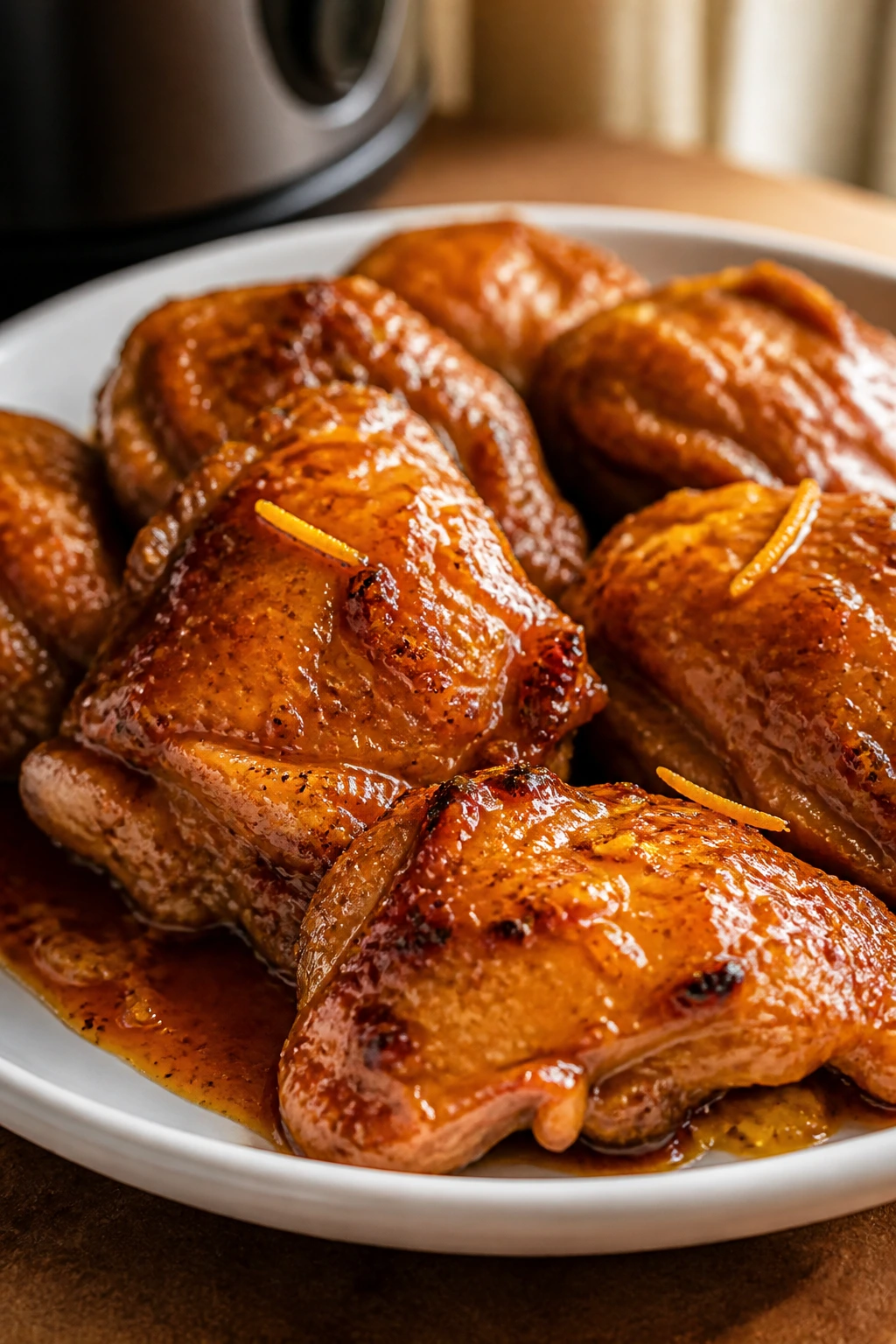
8. Orange Chicken Thighs with Sticky Citrus Sauce
This slow cooker orange chicken tastes best when the sauce gets a little lacquered at the end. Orange zest gives it perfume, soy and vinegar keep the sweetness in check, and the chicken thighs shred into pieces that hold onto every bit of glaze. It’s one of the easier pots to put in front of a crowd that wants a familiar, bright flavor.
Why It Works: Orange juice alone can taste thin, but zest, soy, and a vinegar finish build a sauce with actual shape. Chicken thighs give you juicy strands that don’t dry out during the cook.
Key Ingredients:
- 3 lbs boneless, skinless chicken thighs
- 3/4 cup orange juice
- Zest of 2 oranges
- 1/3 cup low-sodium soy sauce
- 1/4 cup honey
- 2 tbsp rice vinegar
- 4 garlic cloves, minced
- 1 tbsp grated ginger
- 1 tsp chili flakes
- 2 tbsp cornstarch
- 3 tbsp water
- 3 scallions, sliced
Quick Steps:
- Whisk the orange juice, zest, soy, honey, vinegar, garlic, ginger, and chili flakes in the slow cooker.
- Add the chicken thighs and coat them in the sauce.
- Cook on low for 4 to 5 hours or high for 2 1/2 to 3 hours.
- Shred the chicken, then stir in the cornstarch slurry.
- Cook 10 minutes more, until the sauce turns sticky and bright.
- Finish with scallions.
Equipment for This Recipe:
- 6-quart slow cooker
- Citrus zester
- Tongs or forks
- Small bowl for slurry
How to Serve This Dish: Serve it over rice with steamed snap peas or broccoli. It also works in lettuce cups with shredded carrot if you want more crunch.
Pro Tips for This Recipe:
- Use fresh orange zest; that aroma does not come from bottled juice.
- Taste before thickening. If it leans too sweet, add another splash of rice vinegar.
- A quick broil after shredding gives the edges a takeout-style finish.
Variations on This Dish:
- Sesame Orange: Add 1 tablespoon sesame oil at the end for a warmer aroma.
- Spicy Citrus: Stir in a tablespoon of chili crisp during the final 10 minutes.
Common Mistakes to Avoid with This Dish:
- Using only juice, no zest: The flavor turns flat. Zest is where the orange actually wakes up.
- Over-thickening too early: The sauce tightens as it cools, so stop a little sooner than you think.
- Leaving the chicken in huge pieces: Shredded strands grab the sauce better.
9. Vietnamese Lemongrass Pork for Rice Bowls and Banh Mi
Lemongrass changes the whole smell of the kitchen. It’s sharp, grassy, and clean, and when it meets pork shoulder over a long cook, you get meat that tastes fragrant instead of heavy. This is the kind of pot that can feed a crowd at lunch and still feel fresh at the end of the day.
Why It Works: Pork shoulder breaks down into tender shreds, and lemongrass, fish sauce, and lime keep the flavor bright through long heat. A final squeeze of lime pulls the whole bowl into focus.
Key Ingredients:
- 3 lbs pork shoulder, cut into large chunks
- 4 stalks lemongrass, trimmed and bruised
- 1/2 cup fish sauce
- 1/4 cup low-sodium soy sauce
- 1/3 cup brown sugar
- 6 garlic cloves, minced
- 2 shallots, sliced
- 2 tbsp lime juice
- 1 tsp black pepper
- 2 scallions, sliced
- Cilantro for serving
Quick Steps:
- Put the pork, lemongrass, fish sauce, soy sauce, brown sugar, garlic, shallots, and black pepper into the slow cooker.
- Turn the pork a few times so the seasoning gets into the cracks.
- Cook on low for 8 hours or high for 4 to 5 hours.
- Shred the pork, remove the lemongrass pieces, and stir in the lime juice.
- Finish with scallions and cilantro.
Equipment for This Recipe:
- 6-quart slow cooker
- Tongs
- Two forks
- Sharp knife
How to Serve This Dish: Serve it over rice with cucumber slices, pickled carrots, or tuck it into crusty rolls with mayo and herbs. It also does fine on rice noodles with extra lime.
Pro Tips for This Recipe:
- Bruise the lemongrass hard so it actually gives up its aroma.
- Use the bright, tender inner part of the stalk; the woody outer layers are too stiff.
- Pull the pork while the sauce is still hot so it drinks more of it.
Variations on This Dish:
- Charred Onion Version: Add one halved onion, browned in a skillet first, for a deeper base.
- Spicy Banh Mi Style: Add sliced fresh chilies or 1 teaspoon chili flakes for sharper heat.
Common Mistakes to Avoid with This Dish:
- Leaving lemongrass in big hard pieces: They’re unpleasant to bite into. Smash and remove them.
- Skipping the lime at the end: The pork needs that lift.
- Using pork loin: It dries out. Shoulder is the right cut.
10. Thai Peanut Chicken That Tastes Better the Next Day
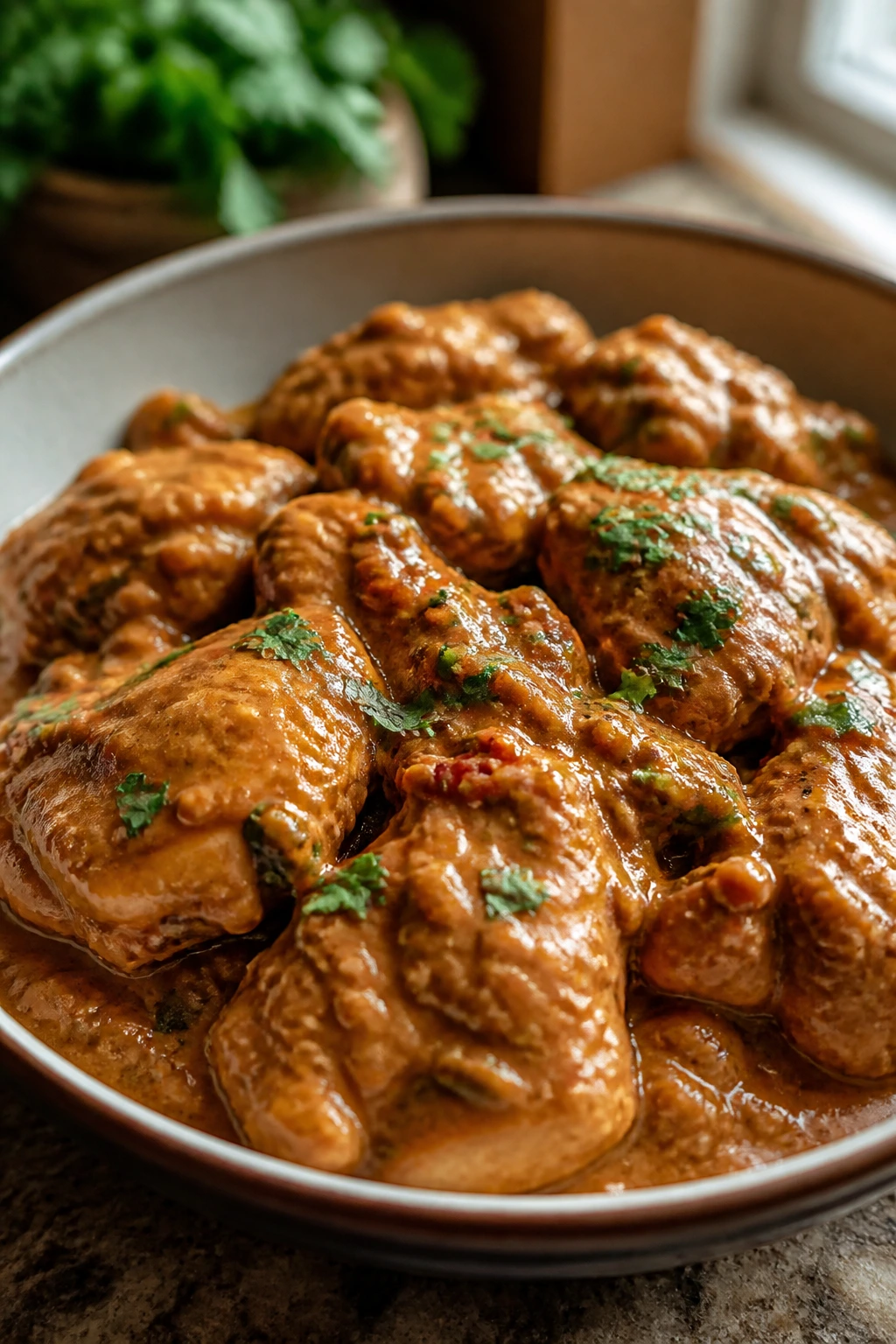
Peanut sauce in a slow cooker can turn rich and clingy fast, which is exactly the point. Coconut milk, peanut butter, lime, and curry paste make a sauce that tastes full and round, while chicken thighs shred into pieces that hold every drop. This is a strong day-after meal, which matters when you’re feeding people in shifts.
Why It Works: Peanut butter gives the sauce body without a flour roux, and coconut milk smooths out the spice from the curry paste. The lime at the end keeps the pot from going dull.
Key Ingredients:
- 3 lbs boneless, skinless chicken thighs
- 1 can coconut milk, 13.5 oz
- 1 cup chicken broth
- 1/2 cup creamy peanut butter
- 2 tbsp red curry paste
- 3 tbsp low-sodium soy sauce
- 2 tbsp brown sugar
- Juice of 2 limes
- 1 large onion, sliced
- 1/4 cup chopped cilantro
- 1/4 cup chopped peanuts
Quick Steps:
- Whisk the coconut milk, broth, peanut butter, curry paste, soy, and brown sugar in the slow cooker.
- Add the onion and chicken thighs.
- Cook on low for 4 to 5 hours or high for 2 1/2 to 3 hours.
- Shred the chicken, then stir in the lime juice.
- Finish with cilantro and peanuts.
Equipment for This Recipe:
- 6-quart slow cooker
- Whisk
- Forks for shredding
- Citrus juicer, optional
How to Serve This Dish: Spoon it over rice noodles or jasmine rice, then add cucumber ribbons and extra peanuts. A squeeze of lime on each bowl keeps it bright.
Pro Tips for This Recipe:
- Stir the peanut butter into the liquid before adding the chicken so it dissolves cleanly.
- Crunchy peanut butter is fine, but it makes a rougher sauce.
- A splash of hot water loosens the sauce if it tightens too much.
Variations on This Dish:
- Veggie Bulk-Up: Add cauliflower florets during the last 30 minutes.
- Lime-Heavy Finish: Double the lime juice if you want a sharper, less rich sauce.
Common Mistakes to Avoid with This Dish:
- Dumping in peanut butter in a clump: It won’t smooth out. Whisk it first.
- Adding peanuts too early: They lose crunch fast.
- Letting the sauce sit without lime: It gets heavy quickly.
11. Teriyaki Meatballs for Party Trays and Rice
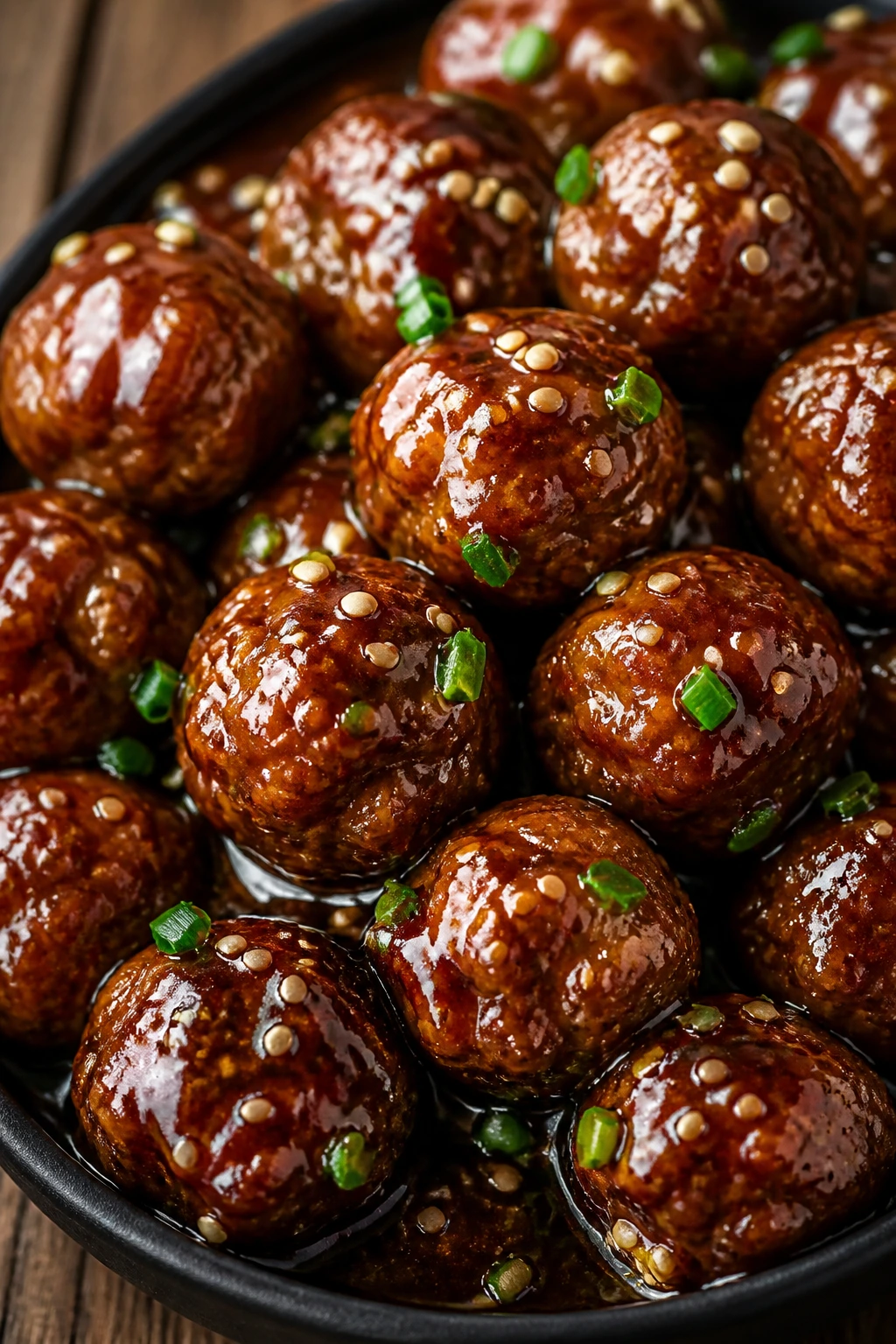
This is the easiest sort of crowd food to underestimate. Frozen meatballs sound plain until they spend a few hours in a soy-mirin-sugar glaze and come out shiny, warm, and ready for toothpicks or rice bowls. They disappear fast because they fit anywhere.
Why It Works: Fully cooked meatballs hold their shape in the slow cooker, and the teriyaki sauce thickens around them instead of sliding off. It’s a buffet-friendly dish with almost no drama.
Key Ingredients:
- 3 lbs frozen fully cooked meatballs
- 1 cup low-sodium soy sauce
- 1/2 cup mirin or pineapple juice
- 1/3 cup brown sugar
- 2 tbsp rice vinegar
- 3 garlic cloves, minced
- 1 tbsp grated ginger
- 2 tbsp cornstarch
- 3 tbsp water
- 3 scallions, sliced
- 1 tbsp sesame seeds
Quick Steps:
- Whisk the soy sauce, mirin, brown sugar, vinegar, garlic, and ginger in the slow cooker.
- Add the frozen meatballs and stir to coat.
- Cook on low for 3 to 4 hours or high for 1 1/2 to 2 hours.
- Stir in the cornstarch slurry and cook 10 minutes more, until the glaze thickens.
- Finish with scallions and sesame seeds.
Equipment for This Recipe:
- 6-quart slow cooker
- Whisk
- Slotted spoon
- Small bowl for slurry
How to Serve This Dish: Serve as a toothpick tray with steamed rice on the side, or pile the meatballs over noodles for a fast dinner. A small dish of chili crisp on the table helps the people who want heat.
Pro Tips for This Recipe:
- Use fully cooked meatballs so they don’t fall apart during the long hold.
- Pineapple juice gives a softer sweetness if you don’t have mirin.
- Keep the pot on warm after thickening so the glaze stays glossy.
Variations on This Dish:
- Spicy Teriyaki: Add 1 teaspoon chili flakes or a spoon of chili crisp.
- Pineapple Teriyaki: Stir in 1/2 cup crushed pineapple for a sweeter finish.
Common Mistakes to Avoid with This Dish:
- Using raw meatballs: They need a different cook time and can crumble.
- Skipping the thickener: The sauce gets too thin for party trays.
- Holding them too long on high: The glaze can darken and taste burnt.
12. Chinese Five-Spice Pork Shoulder with Star Anise
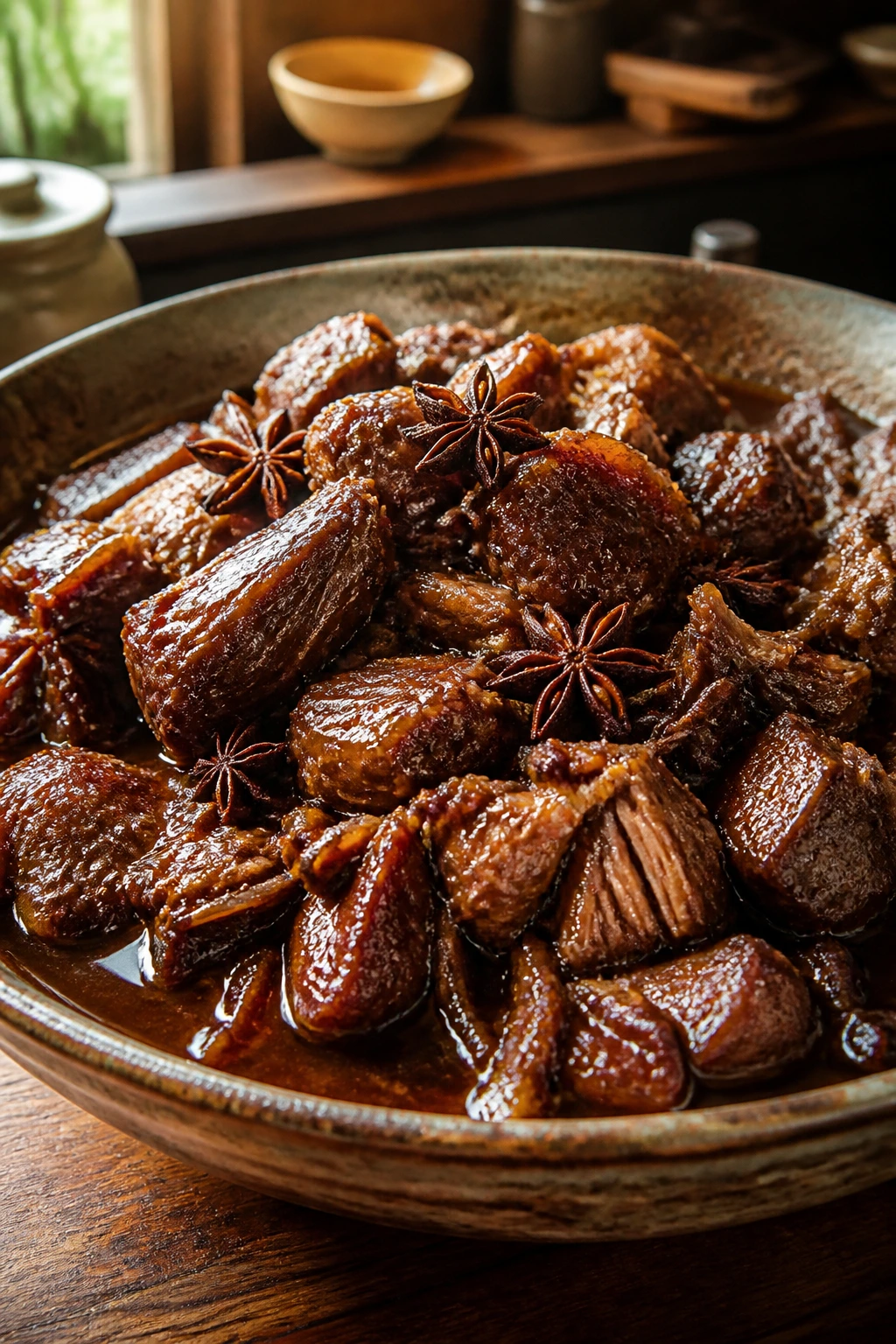
Five-spice and pork shoulder are old friends. The spice mix leans warm and perfumed, the star anise adds a quiet licorice note, and the long cook turns the pork into strands that feel rich without needing much else. It’s a strong pot for rice bowls and steamed buns.
Why It Works: Pork shoulder has enough fat to stay juicy, and the sweet-salty braising liquid slowly concentrates into a sauce that tastes deeper than the ingredient list looks. Five-spice needs time to bloom.
Key Ingredients:
- 4 lbs pork shoulder, cut into large chunks
- 1/2 cup low-sodium soy sauce
- 1/4 cup hoisin sauce
- 1/4 cup honey
- 2 tbsp Chinese five-spice powder
- 2 star anise
- 6 garlic cloves, smashed
- 2 tbsp grated ginger
- 1 large onion, sliced
- 1/2 cup chicken broth
- 3 scallions, sliced
Quick Steps:
- Stir the soy, hoisin, honey, five-spice, star anise, garlic, ginger, onion, and broth in the slow cooker.
- Add the pork shoulder and turn it over once.
- Cook on low for 8 to 9 hours or high for 4 to 5 hours.
- Shred the pork and spoon some of the sauce over it.
- Finish with scallions.
Equipment for This Recipe:
- 6-quart slow cooker
- Two forks
- Measuring spoons
- Tongs
How to Serve This Dish: Serve it over rice with sautéed bok choy, or stuff it into steamed buns with cucumber. A little pickled radish on the side makes the plate pop.
Pro Tips for This Recipe:
- Don’t overdo the five-spice. It’s loud if you use too much.
- Fish out the star anise before shredding so nobody bites into it.
- Broil the shredded pork for a few minutes if you want crisp, caramelized edges.
Variations on This Dish:
- Garlic-Hoisen Version: Add 2 extra garlic cloves and 1 extra tablespoon hoisin if you want a rounder sauce.
- Orange Five-Spice: Replace 1/4 cup of the broth with orange juice for a fruitier finish.
Common Mistakes to Avoid with This Dish:
- Using a lean cut: It gets dry and stringy.
- Leaving whole spices in the serving bowl: They’re easy to miss. Remove them.
- Expecting it to taste like barbecue: This is braise food, not grill food.
13. Massaman Beef with Potatoes and Peanuts
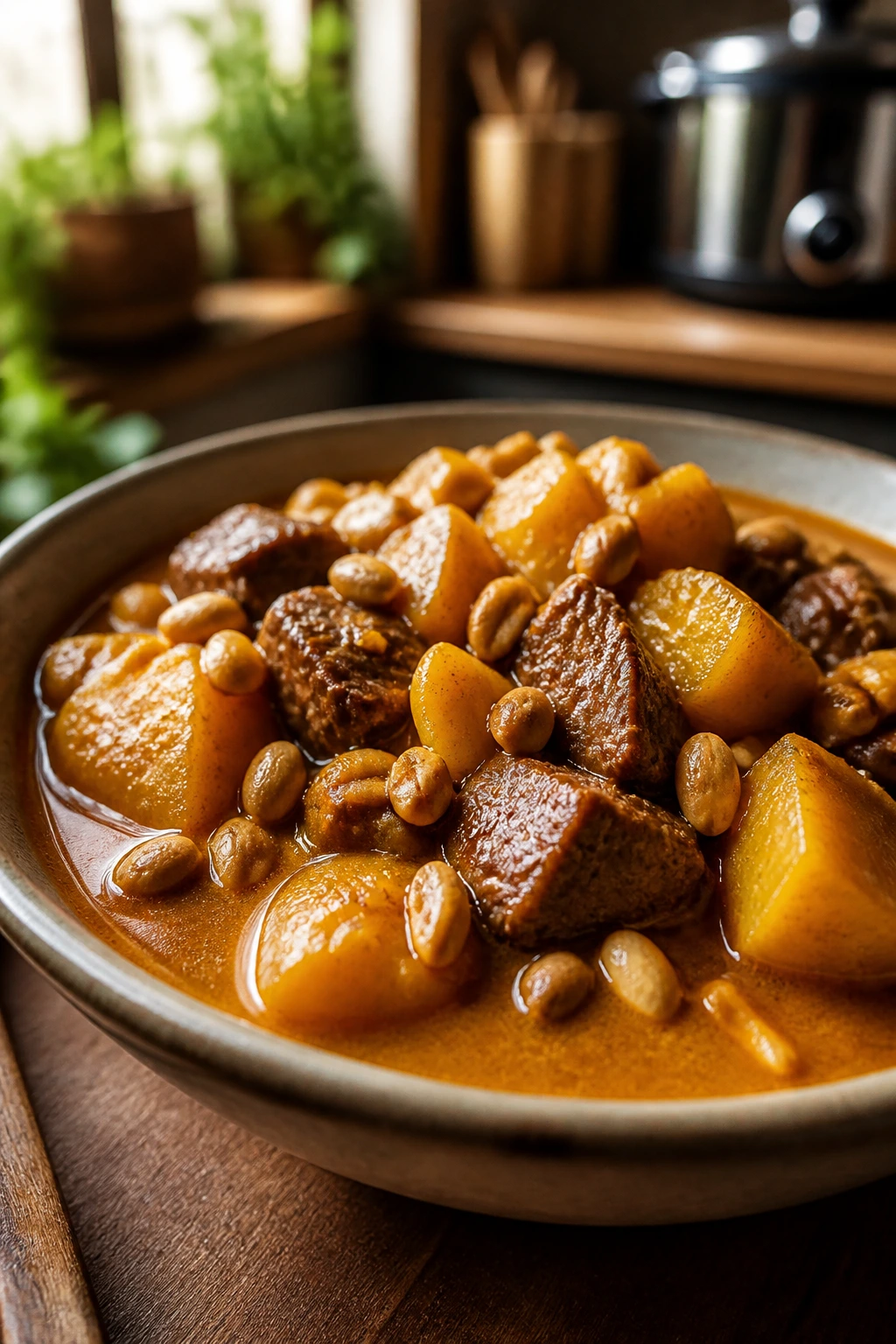
Massaman curry sits in a lovely middle ground: warm spices, coconut milk, and enough sweetness to round off the edges. In a slow cooker, beef chuck turns soft, potatoes pick up the sauce, and peanuts bring a little crunch at the end. It is the kind of dish people keep asking about between bites.
Why It Works: Massaman curry paste carries cinnamon-like warmth, while coconut milk and beef broth create a gravy that gets richer over time. Potatoes bulk it out without making it feel heavy.
Key Ingredients:
- 3 lbs beef chuck roast, cut into chunks
- 3 tbsp massaman curry paste
- 2 cans coconut milk, 13.5 oz each
- 1 lb baby potatoes, halved
- 1 large onion, sliced
- 1 cup beef broth
- 2 tbsp fish sauce
- 2 tbsp brown sugar
- 1/2 cup roasted peanuts
- Juice of 1 lime
Quick Steps:
- Stir the curry paste into the coconut milk in the slow cooker until smooth.
- Add the beef, potatoes, onion, broth, fish sauce, and brown sugar.
- Cook on low for 8 hours or high for 4 1/2 to 5 hours.
- Stir gently so the potatoes stay whole.
- Finish with peanuts and lime juice.
Equipment for This Recipe:
- 6-quart slow cooker
- Wooden spoon
- Measuring cups
- Sharp knife
How to Serve This Dish: Serve it in shallow bowls over jasmine rice, with extra peanuts and cilantro on top. A crisp cucumber salad keeps the meal balanced.
Pro Tips for This Recipe:
- Add the lime at the end or the curry can taste muted.
- Keep the potatoes in larger halves so they don’t break apart.
- If the curry paste is very salty, use less fish sauce.
Variations on This Dish:
- Chicken Massaman: Swap in boneless thighs and cut the cook time to about 4 hours on low.
- Sweet Potato Version: Use sweet potatoes for a softer, sweeter result.
Common Mistakes to Avoid with This Dish:
- Stirring too hard after the beef softens: The potatoes can break.
- Using watery coconut milk: The sauce loses body.
- Skipping the peanuts: They matter here. They give the dish its finish.
14. Szechuan Chili Chicken with Numbing Heat
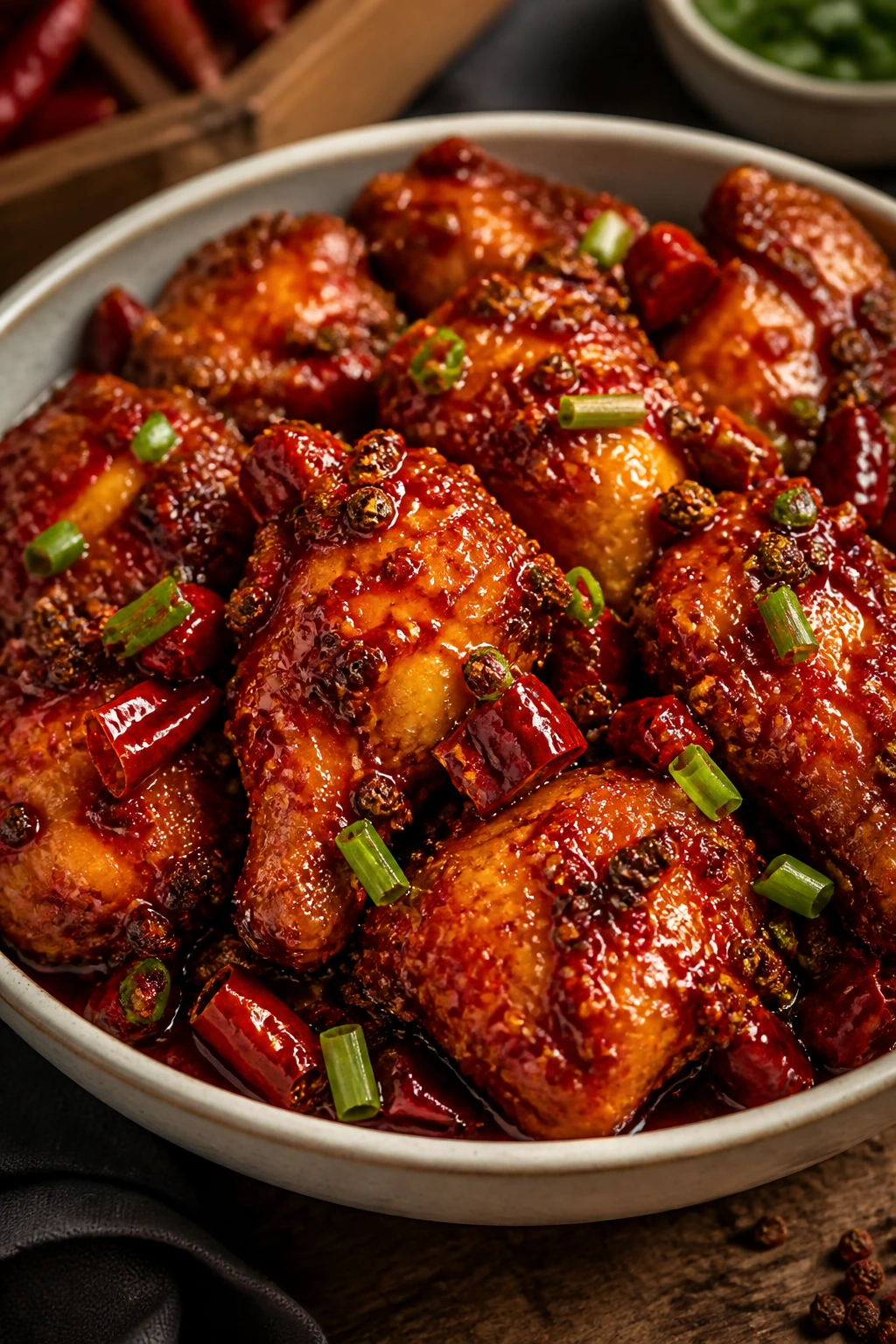
This pot brings heat that builds rather than hits all at once. The chili bean paste gives depth, the peppercorns add that buzzy sensation, and the chicken thighs stay tender enough to carry the sauce. It’s a smart choice when you want something punchy for a big table.
Why It Works: Doubanjiang adds fermented salt and chili flavor, while Sichuan peppercorns bring the tingle that makes the dish feel alive. Chicken thighs absorb the sauce without drying out.
Key Ingredients:
- 3 lbs boneless, skinless chicken thighs
- 1/4 cup doubanjiang
- 1/4 cup low-sodium soy sauce
- 2 tbsp black vinegar
- 2 tbsp chili crisp or chili oil
- 4 garlic cloves, minced
- 1 tbsp grated ginger
- 1 cup chicken broth
- 1 tsp crushed Sichuan peppercorns
- 2 bell peppers, sliced
- 2 tbsp cornstarch
- 3 tbsp water
- 3 scallions, sliced
Quick Steps:
- Whisk the doubanjiang, soy sauce, black vinegar, chili crisp, garlic, ginger, broth, and peppercorns in the slow cooker.
- Add the chicken thighs and turn them to coat.
- Cook on low for 4 to 5 hours or high for 2 1/2 to 3 hours.
- Stir in the bell peppers for the last 30 minutes.
- Thicken with the cornstarch slurry, then finish with scallions.
Equipment for This Recipe:
- 6-quart slow cooker
- Whisk
- Tongs
- Small bowl for slurry
How to Serve This Dish: Serve over rice with simple steamed greens. If you want more crunch, add chopped peanuts or cucumber ribbons at the table.
Pro Tips for This Recipe:
- Crush the Sichuan peppercorns lightly; you want fragrance, not grit.
- Chili crisp at the end keeps the heat brighter.
- Bell peppers go in late so they still taste like peppers.
Variations on This Dish:
- More Tang: Add another tablespoon black vinegar if you like sharper heat.
- Milder Pot: Halve the doubanjiang and skip the chili crisp for a softer sauce.
Common Mistakes to Avoid with This Dish:
- Using too much peppercorn: It can turn bitter and dusty. Keep it measured.
- Cooking the peppers all day: They lose all texture.
- Forgetting the starch finish: The sauce should cling, not pool.
15. Coconut Chickpea Curry for a Meatless Crowd
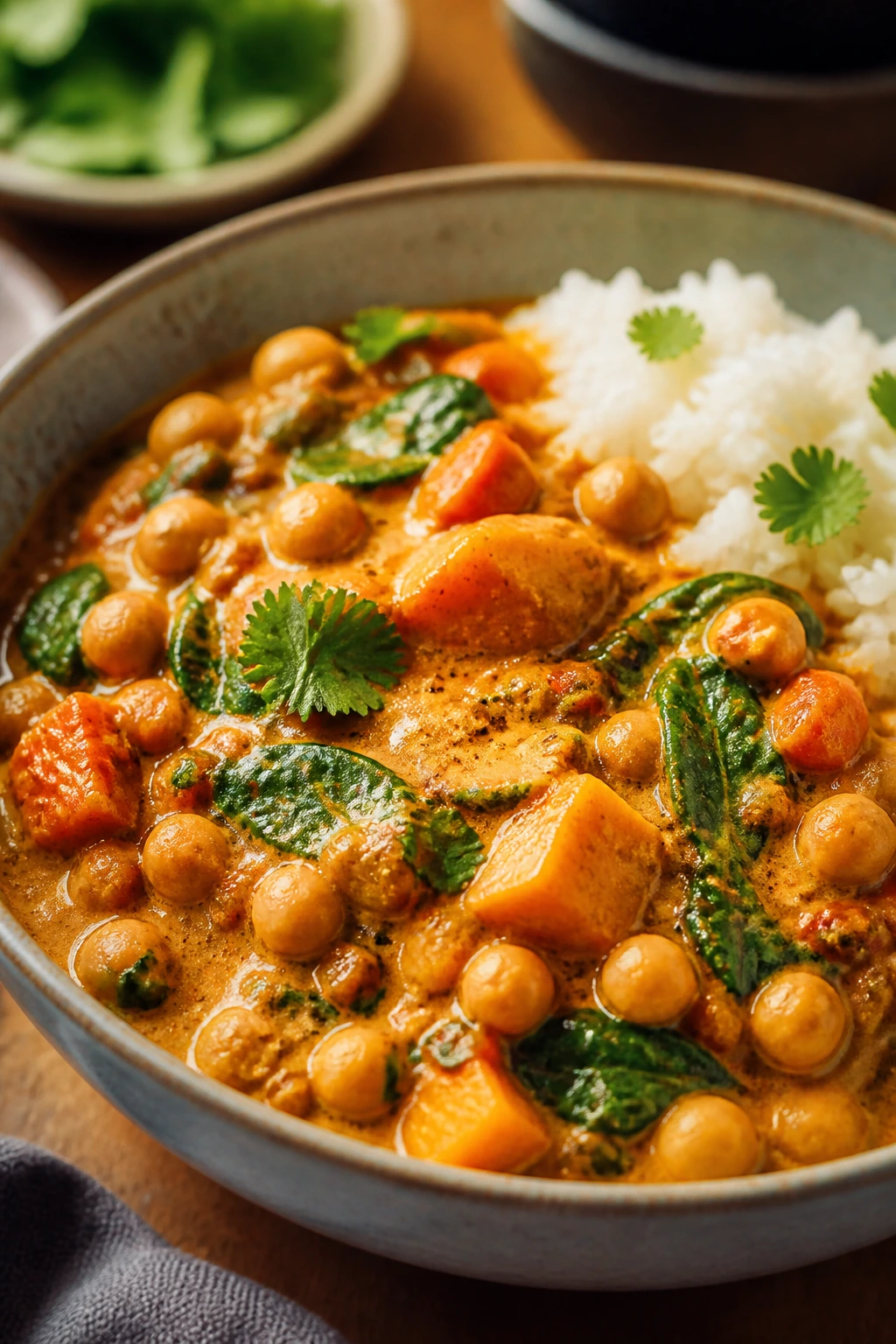
A meatless slow cooker meal has to earn its place, and this one does. Chickpeas bring body, coconut milk smooths out the spice, and tomato plus curry paste create a sauce that tastes built, not thrown together. It’s reliable on rice, but also good with flatbread if people want to tear and scoop.
Why It Works: Chickpeas hold their shape, coconut milk rounds the sauce, and a handful of spinach at the end keeps the pot from feeling too dense. This is pantry food with a smarter finish.
Key Ingredients:
- 4 cans chickpeas, drained and rinsed
- 2 cans coconut milk, 13.5 oz each
- 1 large onion, diced
- 4 garlic cloves, minced
- 1 tbsp grated ginger
- 3 tbsp curry paste or curry powder
- 1 can diced tomatoes, 14.5 oz
- 1 sweet potato, peeled and cubed
- 4 cups spinach
- 1 tbsp lime juice
- Salt to taste
Quick Steps:
- Combine the onion, garlic, ginger, curry paste, tomatoes, sweet potato, chickpeas, and coconut milk in the slow cooker.
- Cook on low for 6 to 7 hours or high for 3 to 4 hours.
- Stir gently and check that the sweet potato is soft.
- Add the spinach for the last 10 minutes.
- Finish with lime juice and salt.
Equipment for This Recipe:
- 6-quart slow cooker
- Wooden spoon
- Measuring cups
- Knife and cutting board
How to Serve This Dish: Spoon it over rice or scoop it with naan. A little yogurt, if you use dairy, or chopped cilantro on top gives the bowls a fresher look.
Pro Tips for This Recipe:
- Rinse the chickpeas well so the sauce doesn’t taste canned.
- Add spinach late; it needs only a minute or two to wilt.
- A spoon of peanut butter can add richness if the curry tastes thin.
Variations on This Dish:
- Red Lentil Version: Swap two cans of chickpeas for 1 1/2 cups red lentils and add more broth.
- Cauliflower Curry: Replace the sweet potato with cauliflower florets for a lighter texture.
Common Mistakes to Avoid with This Dish:
- Cooking spinach all day: It turns dark and muddy.
- Using too little salt: Chickpeas need a clear seasoning line.
- Expecting thick curry right away: It settles as it cooks.
16. Gochujang Pulled Pork with Tangy Crunch
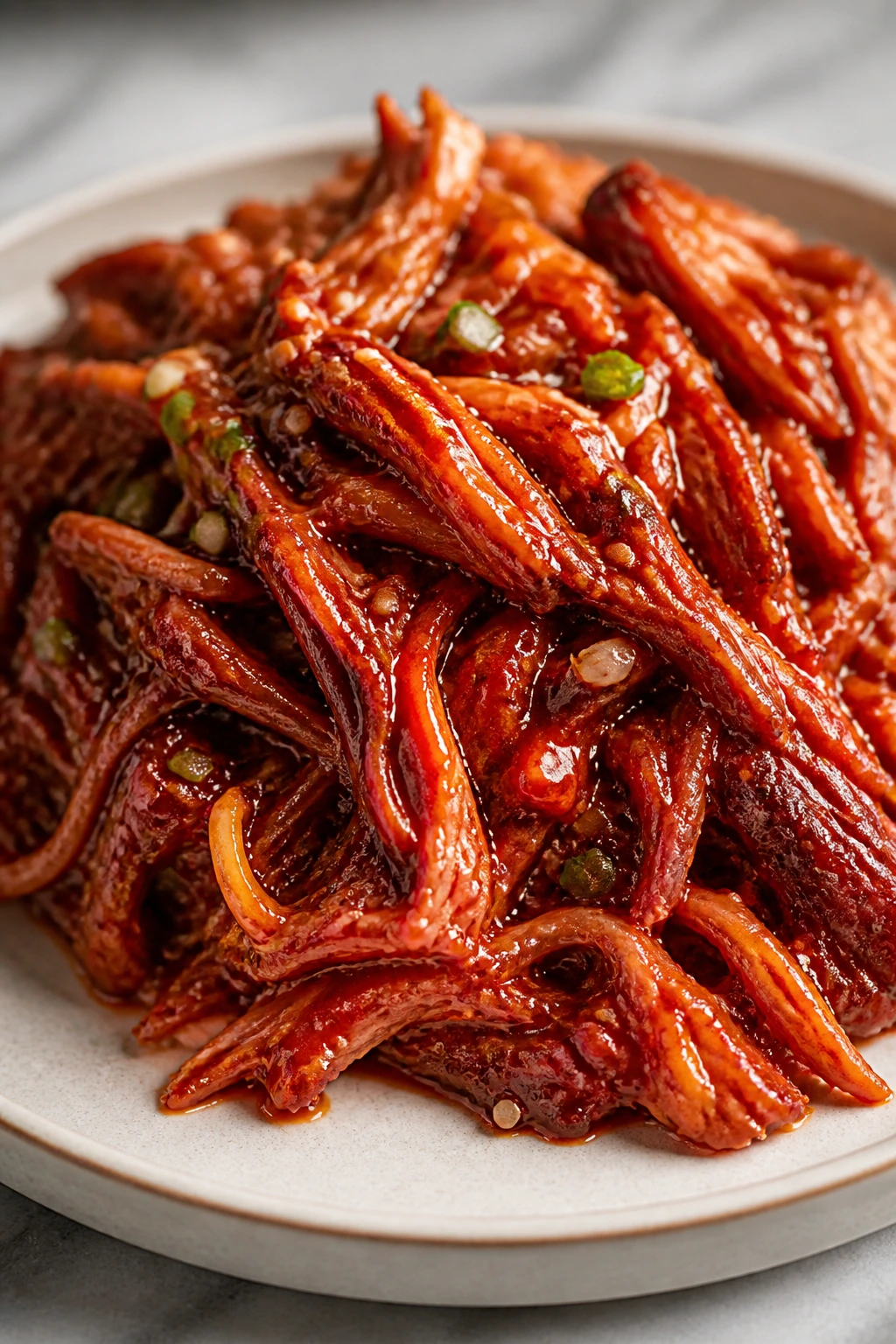
This one takes the sweet heat of Korean barbecue and gives it pork shoulder’s slow-cooked calm. The gochujang turns the sauce deep red, the vinegar keeps it sharp, and the finished pork pulls apart in long strands that soak into rice or buns. It’s the kind of pot that disappears from the serving dish faster than you expect.
Why It Works: Pork shoulder is built for long heat, and gochujang gives both spice and body. A vinegar finish keeps the sauce from tasting heavy.
Key Ingredients:
- 4 lbs pork shoulder, cut into large chunks
- 1/2 cup gochujang
- 1/3 cup low-sodium soy sauce
- 1/3 cup brown sugar
- 1/4 cup rice vinegar
- 6 garlic cloves, minced
- 1 tbsp grated ginger
- 1 large onion, sliced
- 1/2 cup chicken broth
- 1 tsp sesame oil
- 3 scallions, sliced
Quick Steps:
- Whisk the gochujang, soy, brown sugar, vinegar, garlic, ginger, broth, and sesame oil in the slow cooker.
- Add the pork and onion.
- Cook on low for 8 to 9 hours or high for 4 to 5 hours.
- Shred the pork, then stir it back into the sauce.
- Top with scallions before serving.
Equipment for This Recipe:
- 6-quart slow cooker
- Two forks
- Whisk
- Slotted spoon
How to Serve This Dish: Serve on rice with quick cucumber pickles, or pile it into soft rolls with shredded cabbage. A little extra sauce over the top is welcome.
Pro Tips for This Recipe:
- Pork shoulder can handle long cooks; don’t rush it.
- If the sauce tastes flat, a little more vinegar helps.
- Broiling the shredded pork for 2 to 3 minutes creates crisp bits that people notice.
Variations on This Dish:
- Pineapple Gochujang: Add 1 cup pineapple chunks for a sweeter edge.
- Sesame Cabbage Bowl: Serve it over shredded cabbage for more crunch and less rice.
Common Mistakes to Avoid with This Dish:
- Using pork loin: It dries out before it gets tender.
- Skipping the onion: It melts into the sauce and gives sweetness.
- Not shredding after cooking: The meat should be pulled apart so it drinks the sauce.
17. Pho-Style Beef Broth with Shredded Brisket
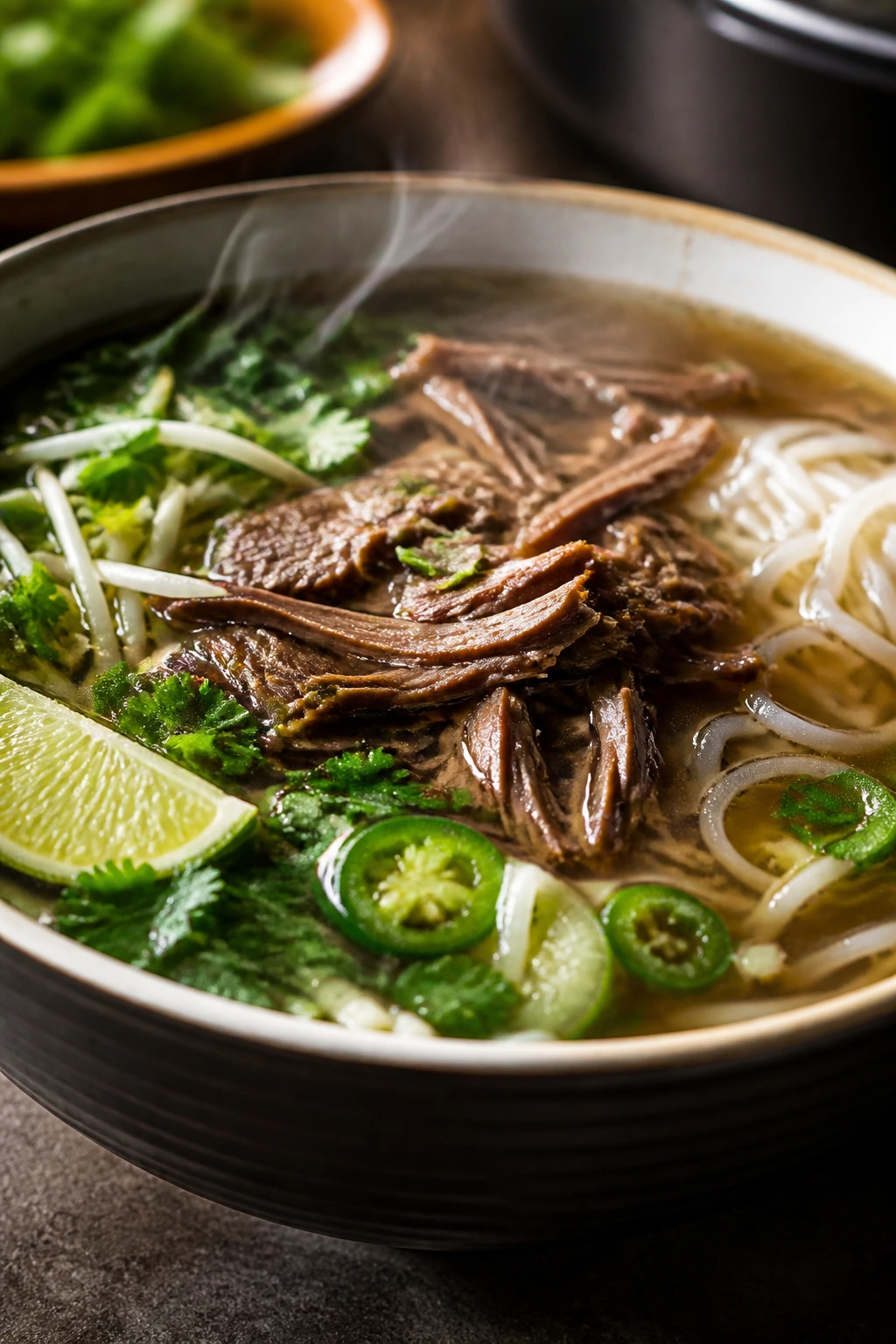
This is not a shortcut version of pho, and it shouldn’t pretend to be. It is a slow cooker beef broth with the bones and aromatics of pho—the ginger, onion, cinnamon, star anise, and fish sauce—plus brisket that breaks down into strands. Serve it with noodles and herbs, and it feels like the kind of soup people stand around for.
Why It Works: Charred onion and ginger give the broth depth, while brisket slowly gives the liquid body. The spice profile stays clear if you strain the broth before serving.
Key Ingredients:
- 3 lbs beef brisket
- 1 large onion, halved
- 4-inch piece fresh ginger, sliced
- 2 star anise
- 1 cinnamon stick
- 4 whole cloves
- 2 tbsp fish sauce
- 1 tbsp sugar
- 8 cups beef broth
- 8 oz rice noodles
- Basil, bean sprouts, lime, and jalapeño for serving
Quick Steps:
- Char the onion and ginger in a dry skillet or under a broiler until the edges darken.
- Add the brisket, charred aromatics, star anise, cinnamon, cloves, fish sauce, sugar, and broth to the slow cooker.
- Cook on low for 8 to 9 hours or high for 4 to 5 hours.
- Remove the brisket, shred it, and strain the broth through a fine mesh sieve.
- Cook the rice noodles separately, then divide them into bowls.
- Ladle the broth and brisket over the noodles and finish with herbs and lime.
Equipment for This Recipe:
- 6-quart slow cooker
- Fine-mesh strainer
- Tongs
- Broiler pan or skillet for charring
How to Serve This Dish: Put noodles in each bowl, then pour the broth over at the table with a plate of herbs and lime wedges nearby. Let people build their own bowl.
Pro Tips for This Recipe:
- Strain the broth. Cloudy pho-style soup feels heavy.
- Keep the noodles separate until serving or they turn soft and swollen.
- A little hoisin or chili sauce on the side is helpful, not required.
Variations on This Dish:
- Chicken Pho-Style Broth: Use chicken thighs and chicken broth for a lighter soup.
- Extra Herb Bowl: Add Thai basil and sawtooth cilantro if you have them.
Common Mistakes to Avoid with This Dish:
- Skipping the char on onion and ginger: That is where the depth starts.
- Cooking noodles in the broth: They steal the broth and turn gluey.
- Not straining: Spices and aromatics should flavor the soup, not float in it.
18. Hainanese-Inspired Chicken with Ginger Rice
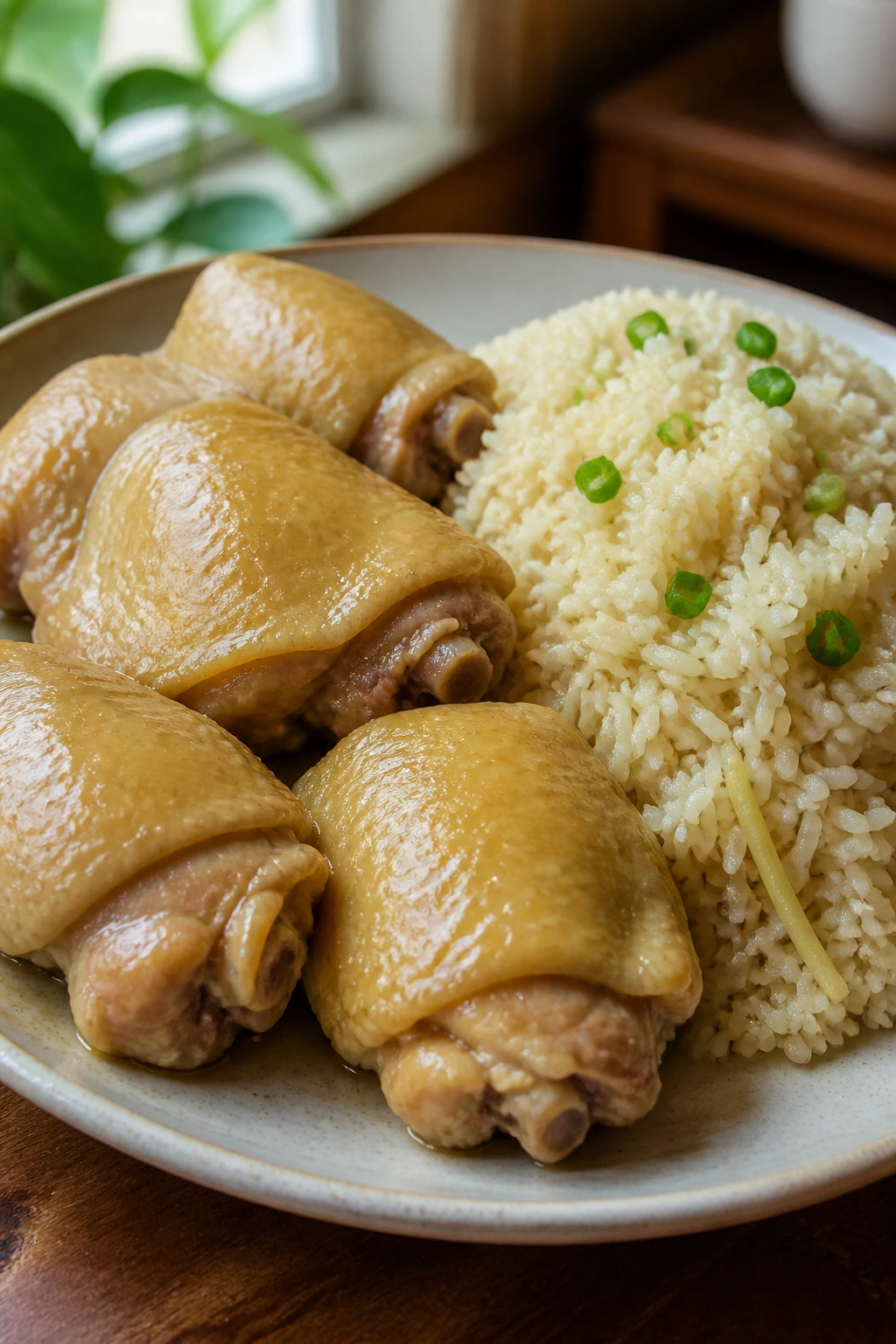
There’s a clean, quiet comfort to Hainanese chicken that suits a long day and a big table. The chicken turns tender without becoming saucy in the heavy way many slow cooker meals do, and ginger rice on the side soaks up the broth. It’s gentle food, but not dull.
Why It Works: Bone-in thighs or a whole chicken poach slowly in seasoned broth, which keeps the meat moist. Ginger and scallion carry enough aroma to make the dish feel complete without a long ingredient list.
Key Ingredients:
- 3 1/2 lbs bone-in, skin-on chicken thighs
- 1 tbsp salt
- 4 slices fresh ginger
- 4 scallions, tied in knots
- 4 garlic cloves, smashed
- 4 cups chicken broth
- 2 cups jasmine rice, rinsed
- 2 tbsp sesame oil
- 1 tbsp soy sauce
- 1 tbsp lime juice
- 2 tsp grated ginger for the sauce
Quick Steps:
- Place the chicken, salt, ginger slices, scallion knots, garlic, and broth in the slow cooker.
- Cook on low for 4 to 5 hours or high for 2 1/2 to 3 hours, until the chicken is tender and the juices run clear.
- Remove the chicken and strain the broth.
- Cook the rinsed rice with some of the strained broth and a spoon of sesame oil.
- Stir together the remaining sesame oil, soy sauce, lime juice, and grated ginger for a quick sauce.
- Slice the chicken and serve it over the ginger rice.
Equipment for This Recipe:
- 6-quart slow cooker
- Fine strainer
- Rice cooker or saucepan
- Sharp carving knife
How to Serve This Dish: Serve the sliced chicken on rice with cucumber and the ginger sauce on the side. It looks best with clean white rice and a little green on the plate.
Pro Tips for This Recipe:
- Rinse the rice well so it stays fluffy.
- Salt the broth enough to season the chicken from the inside.
- Don’t overcook the thighs; they should stay soft, not stringy.
Variations on This Dish:
- Whole Chicken Version: Use a 4- to 5-lb whole chicken if your cooker is large enough.
- Chili Sauce Finish: Add a spoon of sambal or chili crisp to the sauce for heat.
Common Mistakes to Avoid with This Dish:
- Using unseasoned broth: The chicken tastes flat if the poaching liquid has no salt.
- Cooking rice in the full broth volume without measuring: It can go mushy.
- Skipping the sauce: The dish needs that sharp, gingered finish.
19. Thai Basil Pork for Rice Plates
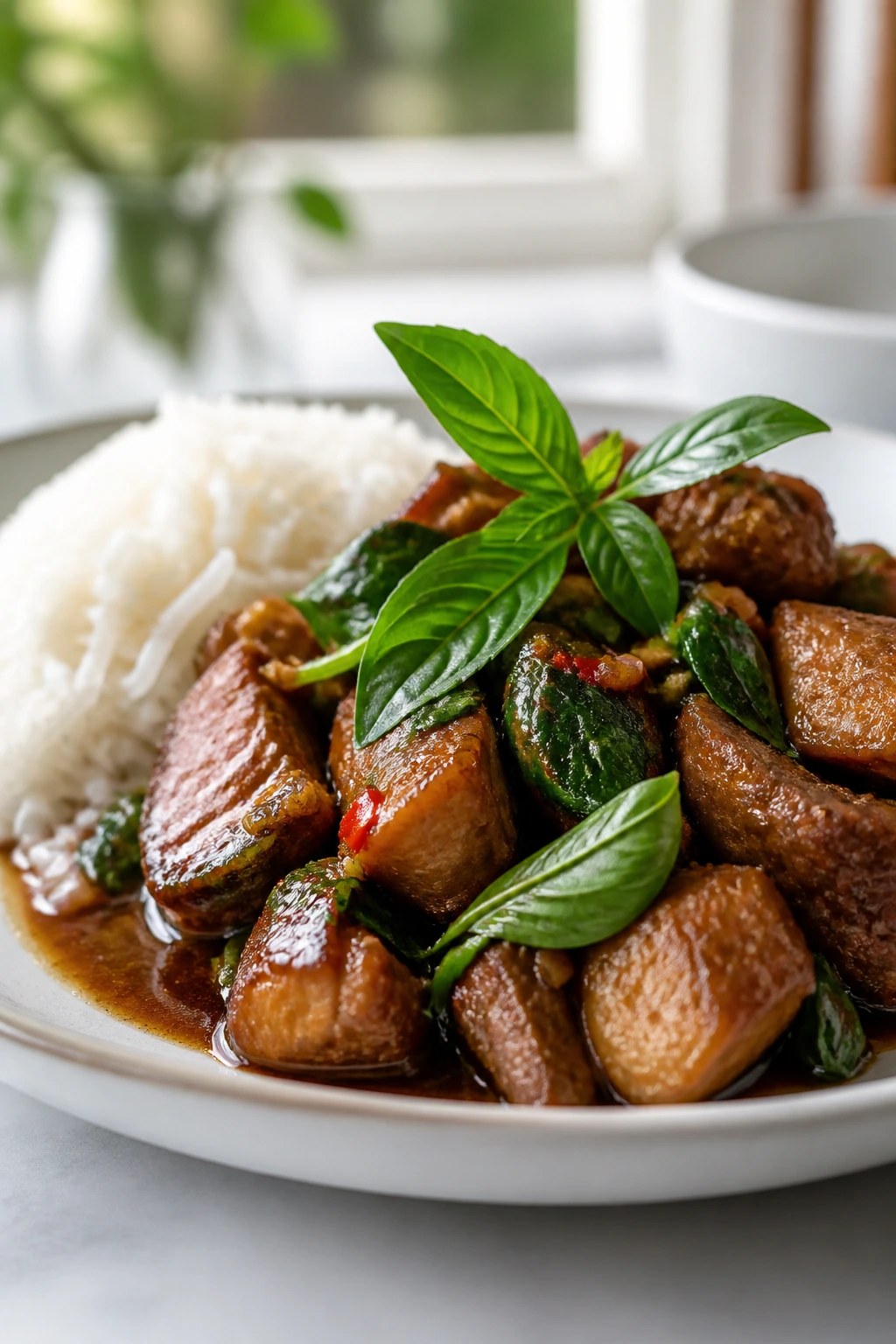
Thai basil pork is usually a quick stir-fry, but the slow cooker version gives you a deeply seasoned pork that can feed more people than a wok ever could. The basil goes in at the very end so it stays fragrant and a little peppery. It’s the kind of meal that wants hot rice and not much ceremony.
Why It Works: Pork shoulder absorbs the fish sauce, soy, garlic, and chili slowly, then the basil arrives fresh at the end and wakes up the whole pot. The result is savory and sharp, not muddy.
Key Ingredients:
- 3 lbs pork shoulder, cut into 2-inch chunks
- 1/3 cup low-sodium soy sauce
- 1/4 cup fish sauce
- 2 tbsp oyster sauce
- 1 tbsp brown sugar
- 6 garlic cloves, minced
- 2 Thai chilies, sliced, or 1 tsp chili flakes
- 1/2 cup chicken broth
- 2 cups Thai basil leaves
- 1 tbsp lime juice
- 3 scallions, sliced
Quick Steps:
- Combine the soy sauce, fish sauce, oyster sauce, brown sugar, garlic, chilies, and broth in the slow cooker.
- Add the pork shoulder and turn it to coat.
- Cook on low for 8 hours or high for 4 to 5 hours.
- Shred or chop the pork lightly, then stir in the lime juice.
- Add Thai basil and scallions right before serving.
Equipment for This Recipe:
- 6-quart slow cooker
- Two forks
- Knife and cutting board
- Wooden spoon
How to Serve This Dish: Serve over jasmine rice with a fried egg on top if you want the plate to feel complete. Cucumber slices or quick pickles keep the heat in check.
Pro Tips for This Recipe:
- Keep the basil out of the long cook.
- If you can’t find Thai basil, use regular basil plus a few mint leaves.
- A little fish sauce at the end can sharpen the flavor if it tastes soft.
Variations on This Dish:
- Ground Pork Shortcut: Brown 2 lbs ground pork first, then slow-cook it for a shorter, sauce-heavy version.
- Green Bean Add-In: Stir in trimmed green beans during the last 30 minutes.
Common Mistakes to Avoid with This Dish:
- Cooking basil all day: It loses its smell and goes dark.
- Underseasoning the pork: It needs enough fish sauce to taste like a finished dish.
- Forgetting the lime: The final squeeze matters.
20. Sweet and Sour Pork with Pineapple and Peppers
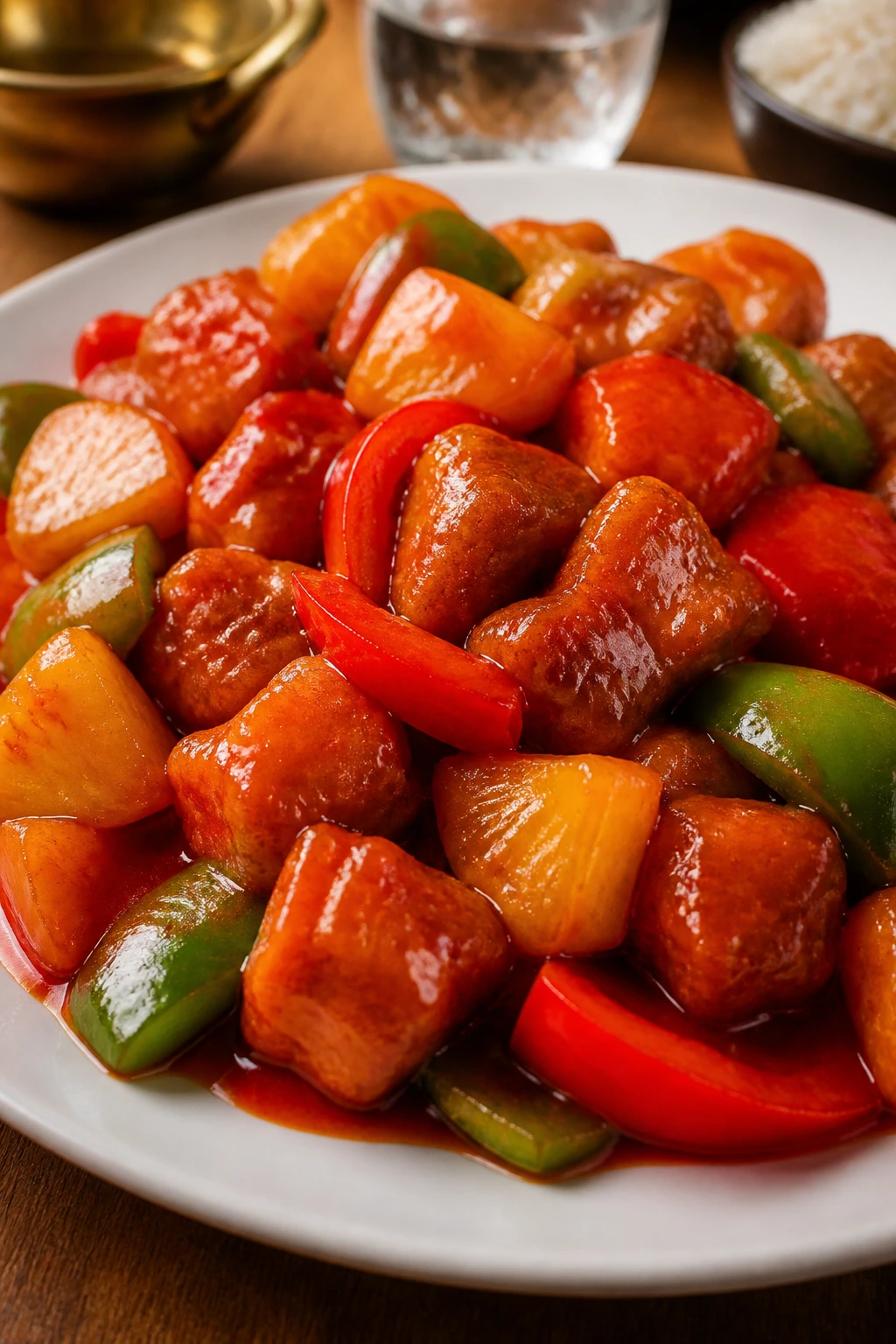
This version leans into the sauce people actually remember: tangy, glossy, and a little sticky around the edges. Pineapple keeps the sweetness bright, peppers add color and crunch, and pork shoulder gives the dish enough heft to feed a crowd without running dry. It’s straightforward, and that’s the charm.
Why It Works: The vinegar and ketchup base makes a stable sweet-sour sauce, while pork shoulder turns tender over time. Pineapple juice helps with sweetness and acidity without making the dish sugary.
Key Ingredients:
- 3 lbs pork shoulder, cut into chunks
- 1 can pineapple chunks, drained, with juice reserved
- 1 red bell pepper, sliced
- 1 green bell pepper, sliced
- 1 large onion, sliced
- 1/2 cup ketchup
- 1/4 cup rice vinegar
- 1/4 cup brown sugar
- 1/4 cup low-sodium soy sauce
- 2 tbsp cornstarch
- 3 tbsp water
Quick Steps:
- Whisk the pineapple juice, ketchup, vinegar, brown sugar, soy sauce, and onion in the slow cooker.
- Add the pork chunks and cook on low for 7 to 8 hours or high for 4 to 5 hours.
- Stir in the peppers and pineapple chunks for the last 30 minutes.
- Add the cornstarch slurry and cook 10 minutes more.
- Serve once the sauce is shiny and thick.
Equipment for This Recipe:
- 6-quart slow cooker
- Measuring cups
- Slotted spoon
- Small bowl for slurry
How to Serve This Dish: Serve it with steamed rice and a simple green vegetable like bok choy or snap peas. It also works nicely in a buffet tray with toothpicks.
Pro Tips for This Recipe:
- Reserve the pineapple juice; it does half the flavor work.
- Add the peppers late so they stay a little crisp.
- If the sauce tastes too sweet, add a spoon of vinegar instead of more soy.
Variations on This Dish:
- Pineapple-Heavy Version: Use extra pineapple chunks if you want a fruitier result.
- Spicy Sweet-Sour: Add sliced fresh chilies or chili flakes to the sauce.
Common Mistakes to Avoid with This Dish:
- Adding peppers at the start: They lose their color and bite.
- Using too much ketchup without vinegar: The sauce turns flat and sugary.
- Choosing pork loin: It dries out before the sauce finishes.
21. Char Siu Pork Bowls with Broccoli
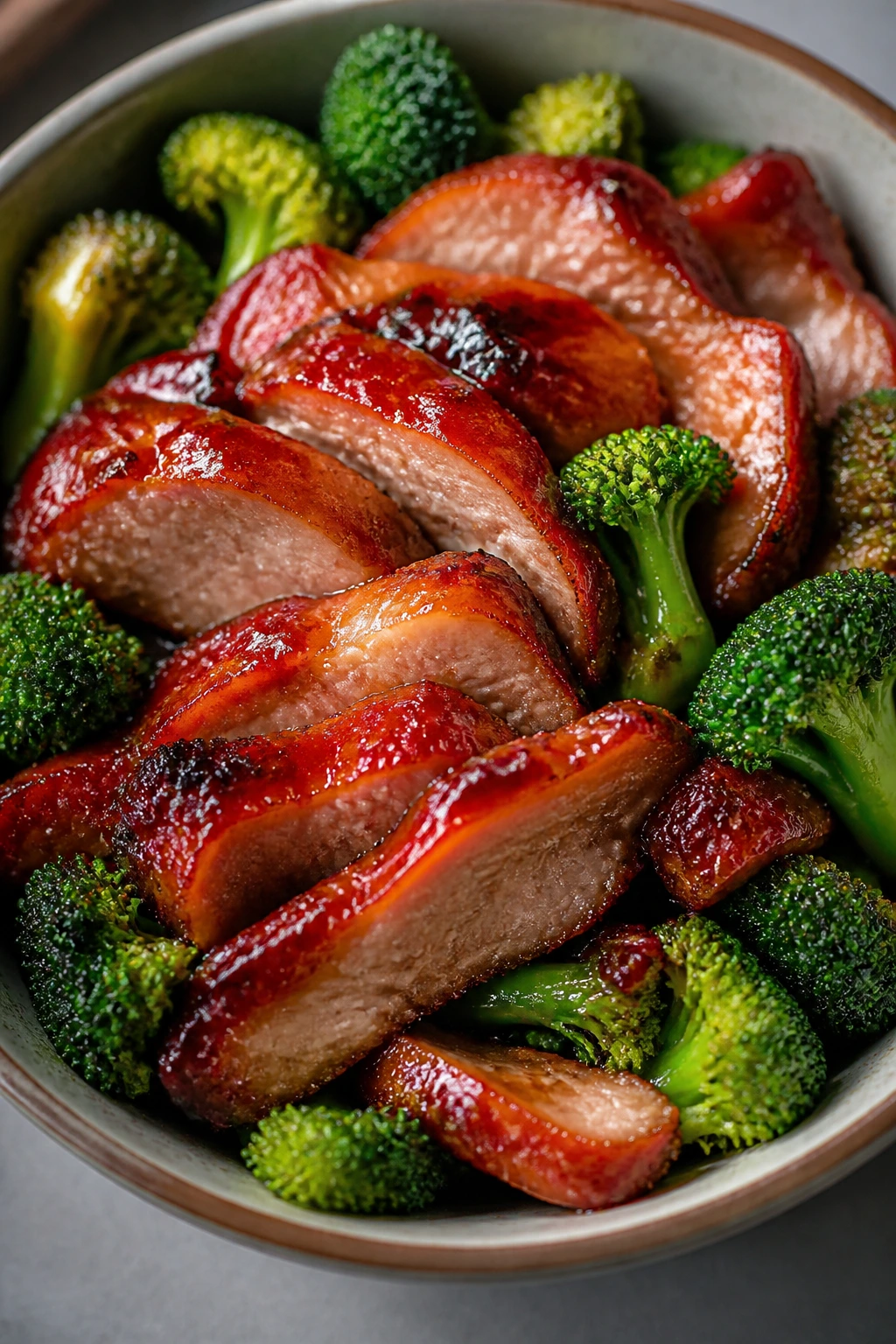
Char siu flavors are built for slow cooking when you want red-gold pork that can sit on rice and still taste like something special. Hoisin, soy, honey, and five-spice create the familiar roast-pork profile, while the slow cooker turns the pork shoulder tender enough to shred or slice. Broccoli on the side keeps the bowl from leaning too sweet.
Why It Works: Pork shoulder handles the sweet-spice glaze, and the long cook lets the seasoning sink into the meat. Broiling at the end gives you the sticky edges people expect from char siu.
Key Ingredients:
- 4 lbs pork shoulder, cut into large slabs
- 1/3 cup hoisin sauce
- 1/4 cup low-sodium soy sauce
- 1/4 cup honey
- 2 tbsp Shaoxing wine or apple juice
- 2 tbsp Chinese five-spice powder
- 4 garlic cloves, minced
- 1 tbsp grated ginger
- 1/2 cup chicken broth
- 4 cups broccoli florets
- 2 scallions, sliced
Quick Steps:
- Stir the hoisin, soy, honey, wine, five-spice, garlic, ginger, and broth in the slow cooker.
- Add the pork and coat it thoroughly.
- Cook on low for 8 hours or high for 4 to 5 hours.
- Shred or slice the pork, then spoon some sauce over it.
- Broil for 2 to 4 minutes if you want caramelized edges.
- Steam or blanch the broccoli and serve with scallions.
Equipment for This Recipe:
- 6-quart slow cooker
- Rimmed baking sheet
- Tongs
- Steamer basket, optional
How to Serve This Dish: Serve the pork over rice with broccoli on the side, or tuck it into bao with sliced cucumber. A little extra sauce goes a long way.
Pro Tips for This Recipe:
- Use pork shoulder, not loin.
- Broiling after shredding gives you the most char siu-like finish.
- If you want a deeper red tone, use a little more hoisin rather than food coloring.
Variations on This Dish:
- Bun-Style Serving: Slice the pork instead of shredding it and serve it in steamed buns.
- Mild Honey Char Siu: Reduce the five-spice slightly for a gentler version.
Common Mistakes to Avoid with This Dish:
- Skipping the broil: The caramelized top is part of the dish.
- Using too much five-spice: It can dominate fast.
- Letting broccoli sit in the sauce: Keep it separate so it stays bright.
22. Ginger Scallion Chicken for Noodles
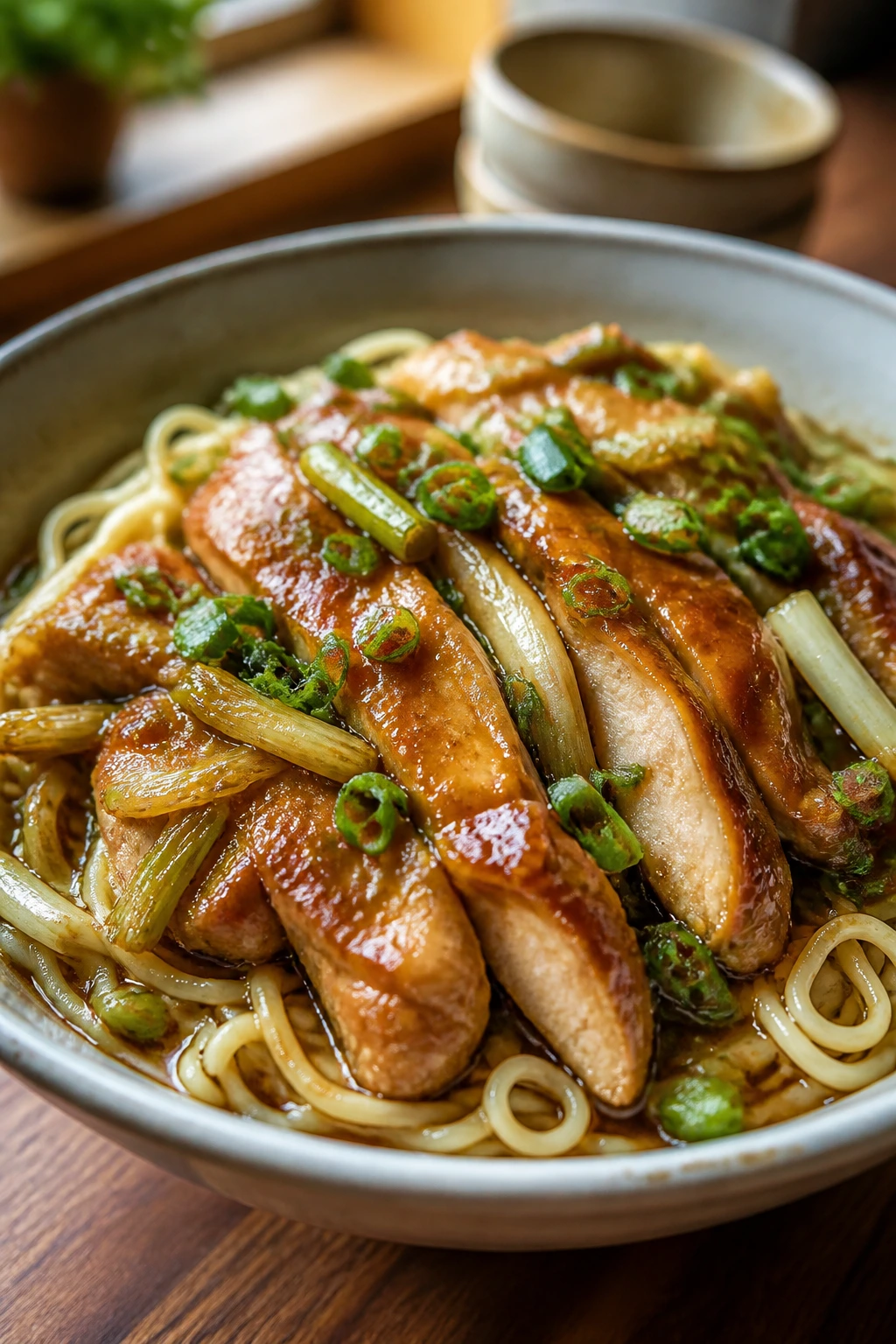
Ginger and scallion give this chicken a clean, almost brothy flavor that works especially well over noodles. The slow cooker handles the chicken, and the sauce stays simple enough that you can pile on herbs, sesame oil, or chili oil at the table. It’s understated, but not bland.
Why It Works: Chicken thighs stay tender in a light braise, and the ginger-scallion combination keeps the flavor fresh. A little Shaoxing wine or dry sherry gives the sauce a deeper edge.
Key Ingredients:
- 3 lbs boneless, skinless chicken thighs
- 1 cup chicken broth
- 1/3 cup low-sodium soy sauce
- 1/4 cup rice wine or dry sherry
- 1/4 cup chopped ginger
- 6 scallions, cut into 2-inch pieces
- 4 garlic cloves, smashed
- 1 tsp sesame oil
- 1 tbsp cornstarch
- 3 tbsp water
- Cooked noodles for serving
Quick Steps:
- Combine the broth, soy, rice wine, ginger, scallions, garlic, and sesame oil in the slow cooker.
- Add the chicken thighs and turn them over once.
- Cook on low for 4 to 5 hours or high for 2 1/2 to 3 hours.
- Remove the chicken and shred or slice it.
- Stir in the cornstarch slurry and cook 10 minutes more.
- Spoon the sauce over the chicken and noodles.
Equipment for This Recipe:
- 6-quart slow cooker
- Tongs
- Pasta pot or noodle pot
- Small bowl for slurry
How to Serve This Dish: Serve over wheat noodles, rice noodles, or rice, with cucumber ribbons on top. A drizzle of chili oil makes the bowl look and taste more finished.
Pro Tips for This Recipe:
- Use plenty of ginger; that is the point of the dish.
- Keep the scallions in big pieces so they don’t disappear.
- If the sauce tastes thin, reduce it a few extra minutes after thickening.
Variations on This Dish:
- Noodle Soup Version: Add extra broth and serve it as a light soup.
- Chili Oil Finish: Add chili oil right at the end for heat and sheen.
Common Mistakes to Avoid with This Dish:
- Overcooking the scallions: They lose their fresh taste. Keep them in large pieces.
- Using dry wine only for flavor: It should stay balanced with broth and soy.
- Serving with soggy noodles: Cook noodles separately and toss them just before serving.
23. Tikka Masala Lentils with Tomato and Cream
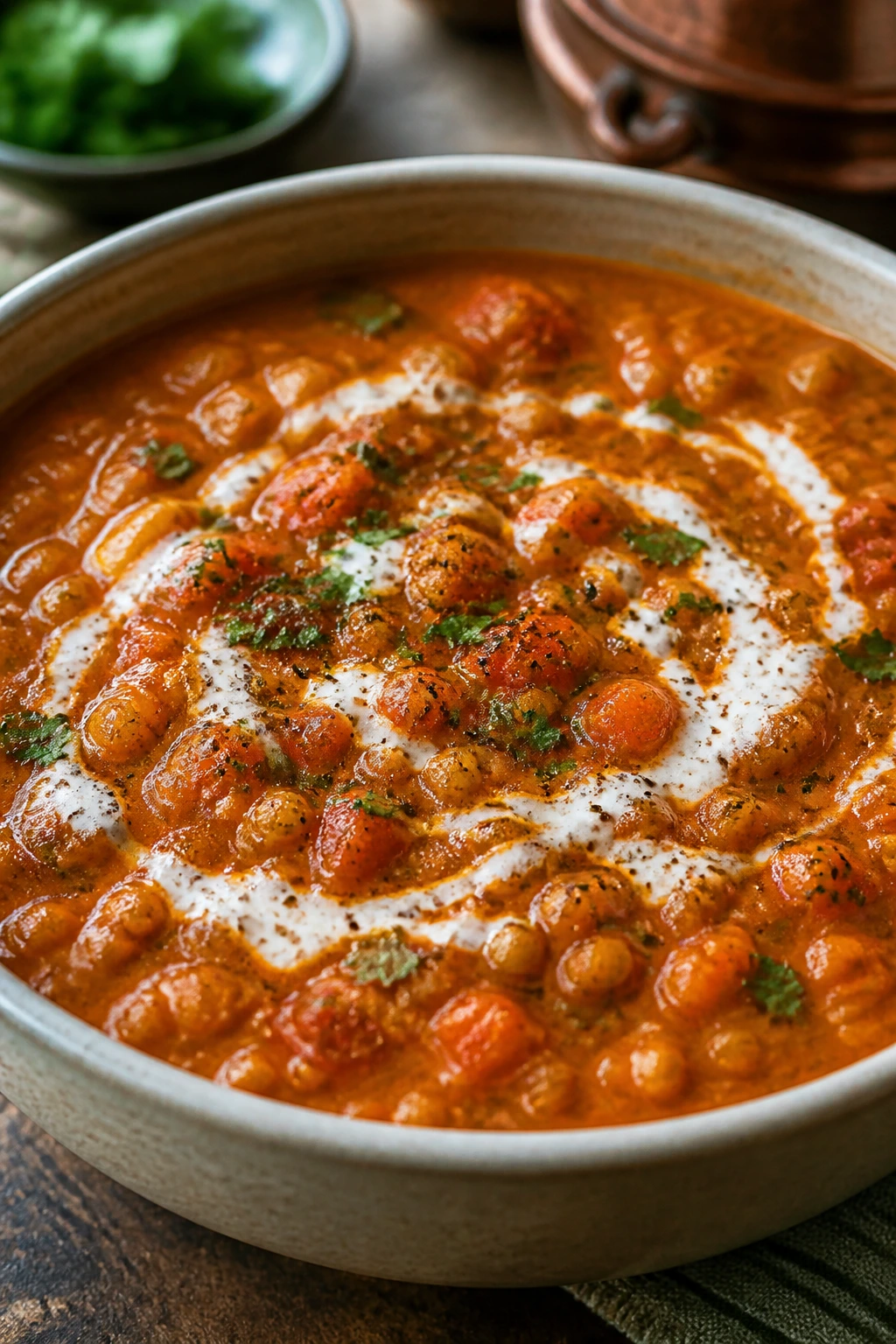
Red lentils are one of the few ingredients that can hold a crowd together without meat. They cook down into a thick base, and the tomato, garam masala, and cream make the pot feel richer than it is. This is one of the quiet winners on a buffet line.
Why It Works: Red lentils break down fast, which thickens the sauce naturally. Coconut milk or cream at the end softens the spice and gives the dish its round finish.
Key Ingredients:
- 2 cups red lentils, rinsed
- 1 large onion, diced
- 4 garlic cloves, minced
- 1 tbsp grated ginger
- 2 tbsp garam masala
- 1 tbsp ground cumin
- 1 tsp turmeric
- 1 can tomato puree, 15 oz
- 4 cups vegetable broth
- 1 can coconut milk, 13.5 oz
- 4 cups spinach
- Salt to taste
Quick Steps:
- Combine the lentils, onion, garlic, ginger, spices, tomato puree, and broth in the slow cooker.
- Cook on low for 5 to 6 hours or high for 3 to 4 hours, until the lentils are soft and thick.
- Stir in the coconut milk.
- Add the spinach for the last 10 minutes.
- Taste for salt and serve warm.
Equipment for This Recipe:
- 6-quart slow cooker
- Wooden spoon
- Measuring cups
- Ladle
How to Serve This Dish: Serve it with basmati rice or naan, and add chopped cilantro if you like a fresh finish. A spoon of yogurt on top is optional but useful.
Pro Tips for This Recipe:
- Rinse the lentils so the pot doesn’t foam.
- Red lentils cook fast; don’t leave them on high much longer than needed.
- If the curry tastes too thick, thin it with warm broth.
Variations on This Dish:
- Smoky Version: Add a little smoked paprika if you want a deeper tone.
- Root Vegetable Version: Stir in diced sweet potato or carrot at the start.
Common Mistakes to Avoid with This Dish:
- Using green or brown lentils: They won’t break down the same way.
- Adding spinach too early: It turns dark and watery.
- Skipping salt at the end: Lentils need a final check after the coconut milk goes in.
24. Nikujaga-Style Beef Stew with Potatoes
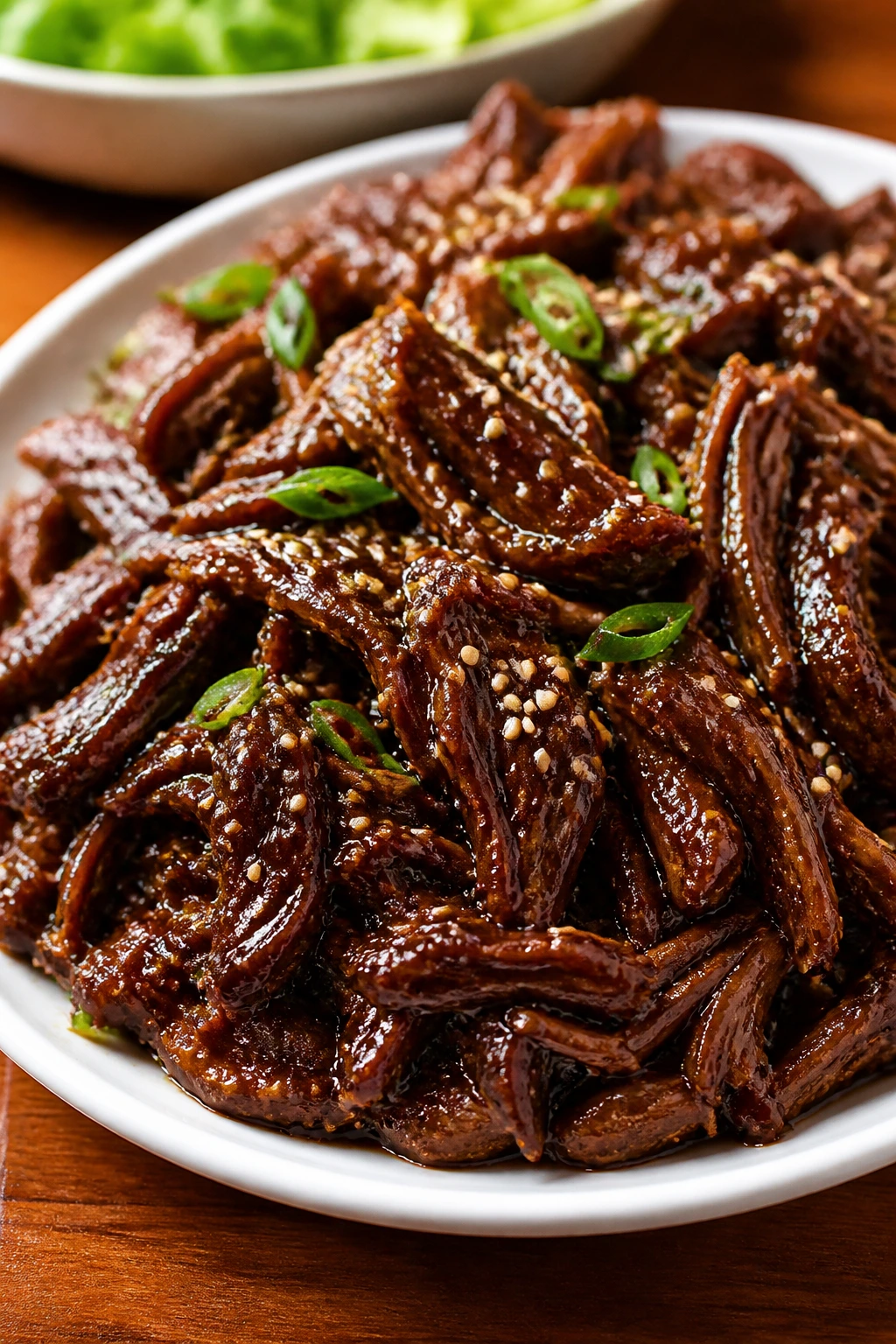
Nikujaga is a Japanese home-style beef and potato dish that feels simple until you notice how satisfying it is. In a slow cooker, the potatoes soak up the soy-mirin broth, the beef turns soft, and the whole pot settles into something sweet-salty and quietly rich. It’s excellent with rice and better the next day.
Why It Works: Potatoes hold the broth, and thin beef or stew beef takes on the soy-mirin balance beautifully. The dish doesn’t need much spice because the sauce itself has enough depth.
Key Ingredients:
- 2 1/2 lbs beef chuck, cut into chunks or thin slices
- 2 lbs Yukon gold potatoes, cut into chunks
- 3 carrots, cut into thick pieces
- 1 large onion, sliced
- 1/3 cup low-sodium soy sauce
- 1/4 cup mirin
- 2 tbsp sugar
- 4 cups dashi or beef broth
- 2 tbsp peas, optional
- 2 scallions, sliced
Quick Steps:
- Add the beef, potatoes, carrots, onion, soy sauce, mirin, sugar, and broth to the slow cooker.
- Cook on low for 7 to 8 hours or high for 4 to 5 hours.
- Stir gently once the potatoes are tender.
- Add peas in the last 10 minutes if using.
- Finish with scallions and serve.
Equipment for This Recipe:
- 6-quart slow cooker
- Wooden spoon
- Knife and cutting board
- Ladle
How to Serve This Dish: Serve it in bowls with steamed rice and a little pickled ginger on the side. It’s also good with simple sautéed greens.
Pro Tips for This Recipe:
- Keep the potato chunks large enough to stay intact.
- Use dashi if you have it; it gives the dish a cleaner Japanese flavor.
- Stir gently or the potatoes will break down too much.
Variations on This Dish:
- Chicken Nikujaga: Swap in chicken thighs for a lighter version.
- Extra-Sweet Home Style: Add another tablespoon of mirin if you want a softer sauce.
Common Mistakes to Avoid with This Dish:
- Cutting the potatoes too small: They vanish.
- Using too much liquid: This should be saucy, not soupy.
- Stirring aggressively: The potatoes will mash themselves.
25. Malaysian Coconut Chicken Curry
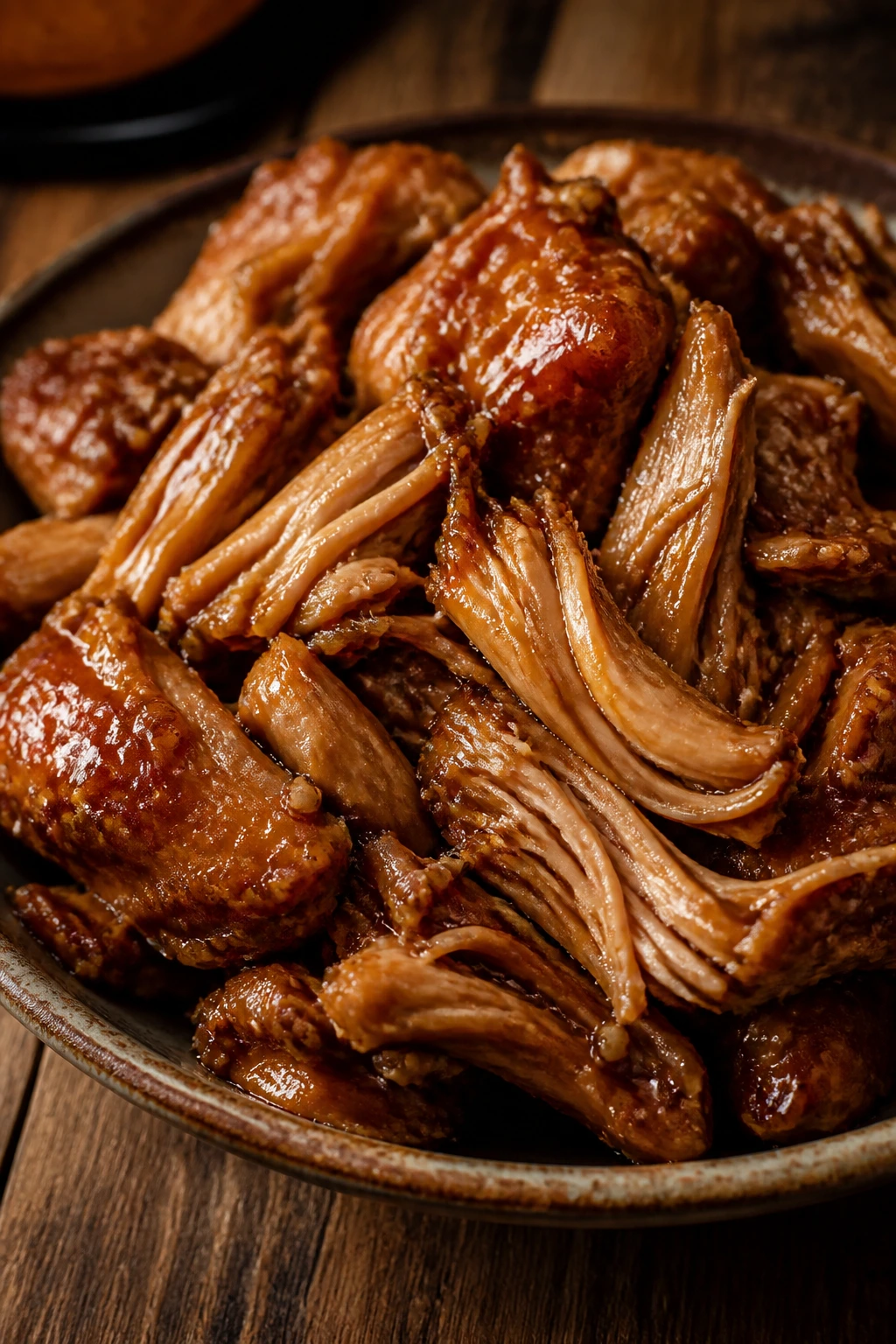
This curry brings together coconut milk, warm spice, and chicken thighs in a way that feels generous without being fussy. It’s the sort of pot that fills the kitchen with a smell people notice from another room, and it stays friendly to rice, flatbread, or even potatoes. The sauce is smooth, not sharp, which makes it easy to serve to a mixed crowd.
Why It Works: Coconut milk cools the curry powder and turmeric while chicken thighs absorb everything without drying out. Potatoes give it more bulk, which is useful when you’re feeding a lot of people.
Key Ingredients:
- 3 lbs boneless, skinless chicken thighs
- 2 cans coconut milk, 13.5 oz each
- 3 tbsp curry powder
- 1 large onion, sliced
- 1 tbsp grated ginger
- 3 garlic cloves, minced
- 1 tsp turmeric
- 2 medium potatoes, cut into chunks
- 1 cinnamon stick
- 1 tbsp brown sugar
- Juice of 1 lime
Quick Steps:
- Stir the coconut milk, curry powder, onion, ginger, garlic, turmeric, potatoes, cinnamon stick, and brown sugar in the slow cooker.
- Add the chicken thighs and coat them.
- Cook on low for 4 to 5 hours or high for 2 1/2 to 3 hours.
- Remove the cinnamon stick and stir in the lime juice.
- Taste and add salt if needed.
Equipment for This Recipe:
- 6-quart slow cooker
- Wooden spoon
- Sharp knife
- Measuring spoons
How to Serve This Dish: Spoon it over rice, then add a handful of herbs or sliced chilies if you want color. Naan or roti works well on the side.
Pro Tips for This Recipe:
- Coconut milk is the base; use the full-fat kind.
- Cinnamon stick sounds small, but it gives the curry a deeper smell.
- Lime at the end keeps the sauce from feeling sleepy.
Variations on This Dish:
- Vegetable-Heavy Curry: Add cauliflower and green beans during the last 30 minutes.
- Heat Boost: Stir in a sliced chili or a little chili paste at the start.
Common Mistakes to Avoid with This Dish:
- Using watery coconut milk: The curry loses body.
- Leaving potatoes too small: They break apart before the chicken is done.
- Skipping the lime: The finished curry needs a bright edge.
26. Soy-Braised Short Ribs with Carrots
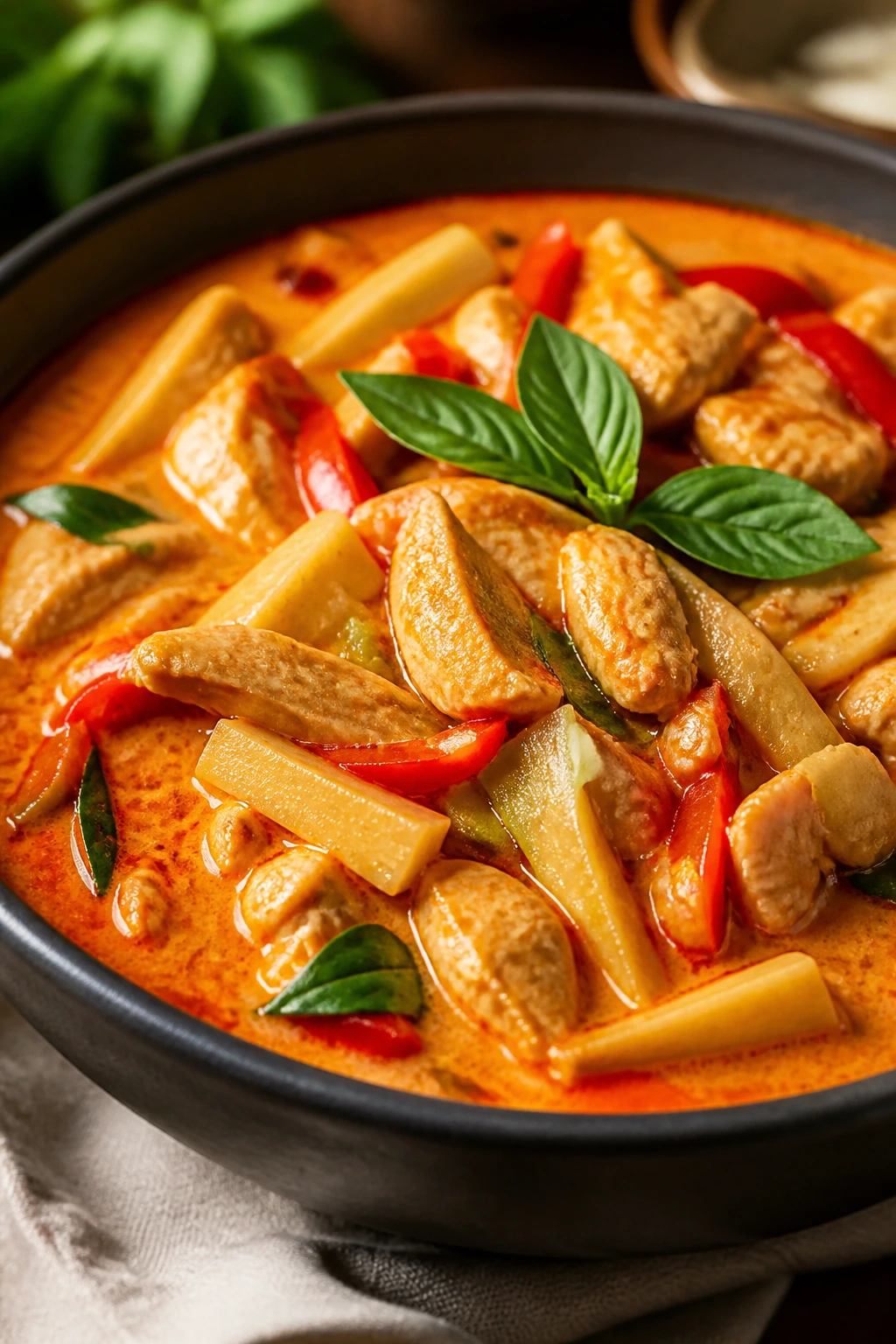
Short ribs are a luxury cut in slow cooker clothing. The soy, garlic, ginger, and star anise seep into the meat over hours, and the carrots turn soft enough to taste like part of the sauce. It feels special enough for company but easy enough to make on a normal day.
Why It Works: Short ribs are rich in fat and collagen, which means they become silky after long braising. Soy and a little sugar create a braising liquid that turns shiny and savory.
Key Ingredients:
- 4 lbs beef short ribs
- 1/2 cup low-sodium soy sauce
- 1/4 cup brown sugar
- 1/4 cup rice vinegar
- 1 cup beef broth
- 6 garlic cloves, smashed
- 1 tbsp grated ginger
- 2 star anise
- 3 carrots, cut into large chunks
- 3 scallions, sliced
- 1 tbsp cornstarch
- 3 tbsp water
Quick Steps:
- Put the short ribs, soy sauce, brown sugar, vinegar, broth, garlic, ginger, star anise, and carrots into the slow cooker.
- Cook on low for 8 to 9 hours or high for 4 1/2 to 5 hours.
- Remove the ribs and skim excess fat if needed.
- Stir in the cornstarch slurry and cook 10 minutes more.
- Return the ribs to the sauce and finish with scallions.
Equipment for This Recipe:
- 6-quart slow cooker
- Tongs
- Slotted spoon
- Small bowl for slurry
How to Serve This Dish: Serve the ribs over rice or mashed potatoes if you want a hybrid meal. A side of greens keeps the plate from feeling too rich.
Pro Tips for This Recipe:
- Bone-in ribs give the best flavor.
- Don’t over-stir once the meat is tender; it can fall apart too much.
- A little black pepper at the end sharpens the whole dish.
Variations on This Dish:
- Pear Braise: Add sliced Asian pear for a softer sweetness.
- Chili-Heat Version: Add a spoon of chili paste if you want a darker, spicier sauce.
Common Mistakes to Avoid with This Dish:
- Using boneless ribs with no fat: They dry out faster.
- Skipping the fat skim: The sauce can feel greasy.
- Not giving the sauce time to thicken: It should coat the meat.
27. Curry Coconut Tofu with Vegetables
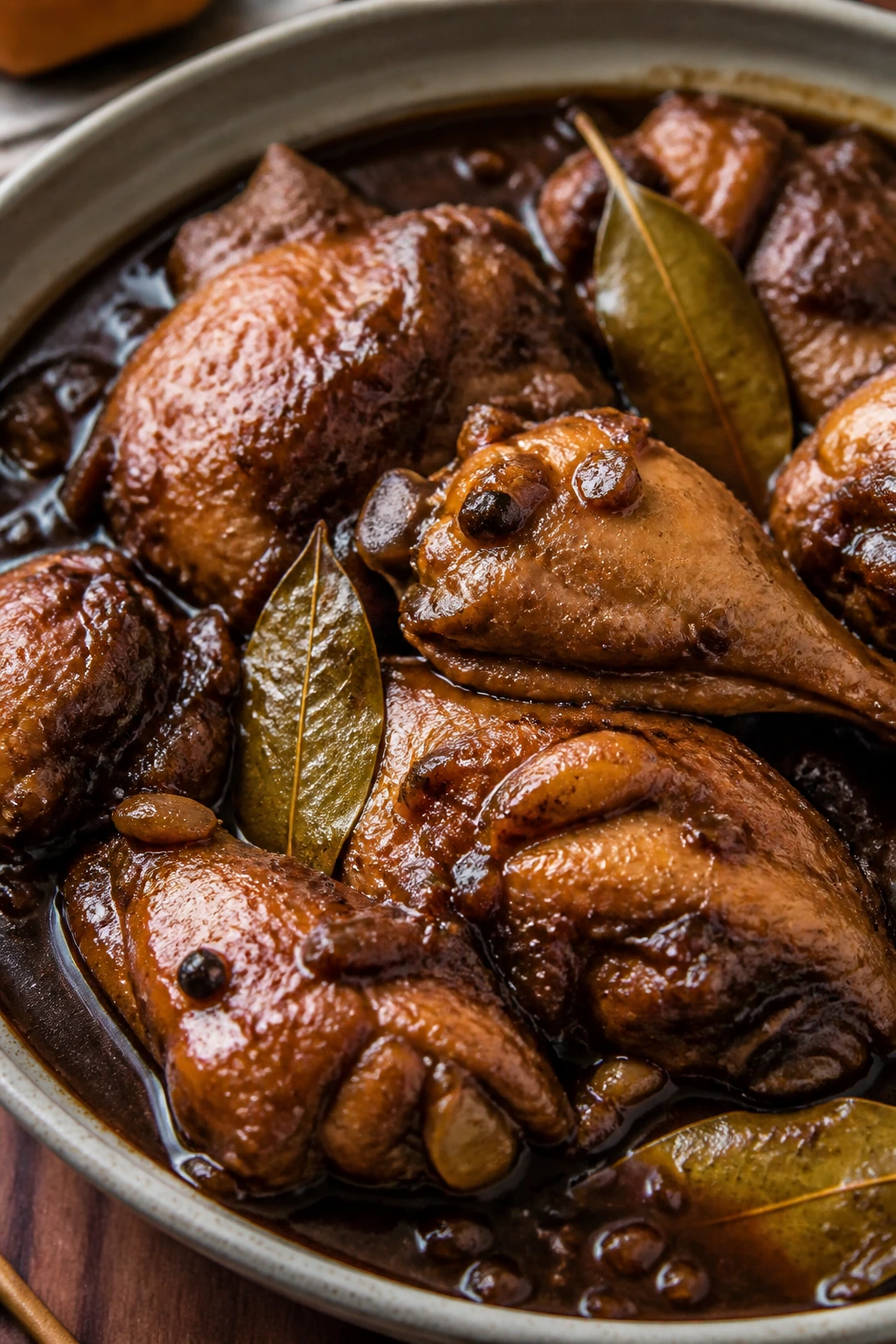
Tofu in a slow cooker only works if you respect its timing. Put it in too early and it turns spongy in the wrong way; add it near the end and it soaks up curry sauce like a sponge with manners. This pot is good for mixed groups because it feels rich without relying on meat.
Why It Works: Extra-firm tofu holds together better than softer blocks, and coconut milk gives the curry enough weight to coat vegetables. The late addition keeps the tofu intact.
Key Ingredients:
- 2 blocks extra-firm tofu, pressed and cubed
- 2 cans coconut milk, 13.5 oz each
- 3 tbsp red curry paste
- 1 large onion, sliced
- 2 carrots, sliced
- 2 cups cauliflower florets
- 1 red bell pepper, sliced
- 1 cup vegetable broth
- 2 tbsp soy sauce
- 1 tbsp lime juice
- 1/4 cup basil or cilantro
Quick Steps:
- Stir the coconut milk, curry paste, onion, carrots, cauliflower, bell pepper, broth, and soy sauce in the slow cooker.
- Cook on low for 4 to 5 hours or high for 2 1/2 to 3 hours.
- Add the tofu cubes during the last 30 minutes.
- Stir gently so the tofu stays in blocks.
- Finish with lime juice and herbs.
Equipment for This Recipe:
- 6-quart slow cooker
- Paper towels or tofu press
- Wooden spoon
- Knife and cutting board
How to Serve This Dish: Serve it over rice with chopped peanuts or sesame seeds. A squeeze of lime on each bowl makes the vegetables taste fresher.
Pro Tips for This Recipe:
- Press the tofu well so it can absorb sauce instead of water.
- Add tofu late; it needs seasoning, not punishment.
- If the sauce tastes thin, let it sit on warm for 10 minutes before serving.
Variations on This Dish:
- Chickpea-Tofu Curry: Add one drained can of chickpeas for extra bulk.
- Milder Coconut Bowl: Use less curry paste and more lime for a gentler flavor.
Common Mistakes to Avoid with This Dish:
- Using soft tofu: It breaks apart too easily.
- Adding tofu at the start: The cubes lose their shape.
- Forgetting acid at the end: The curry needs lime to stay lively.
28. Black Pepper Beef with Onions and Bell Peppers
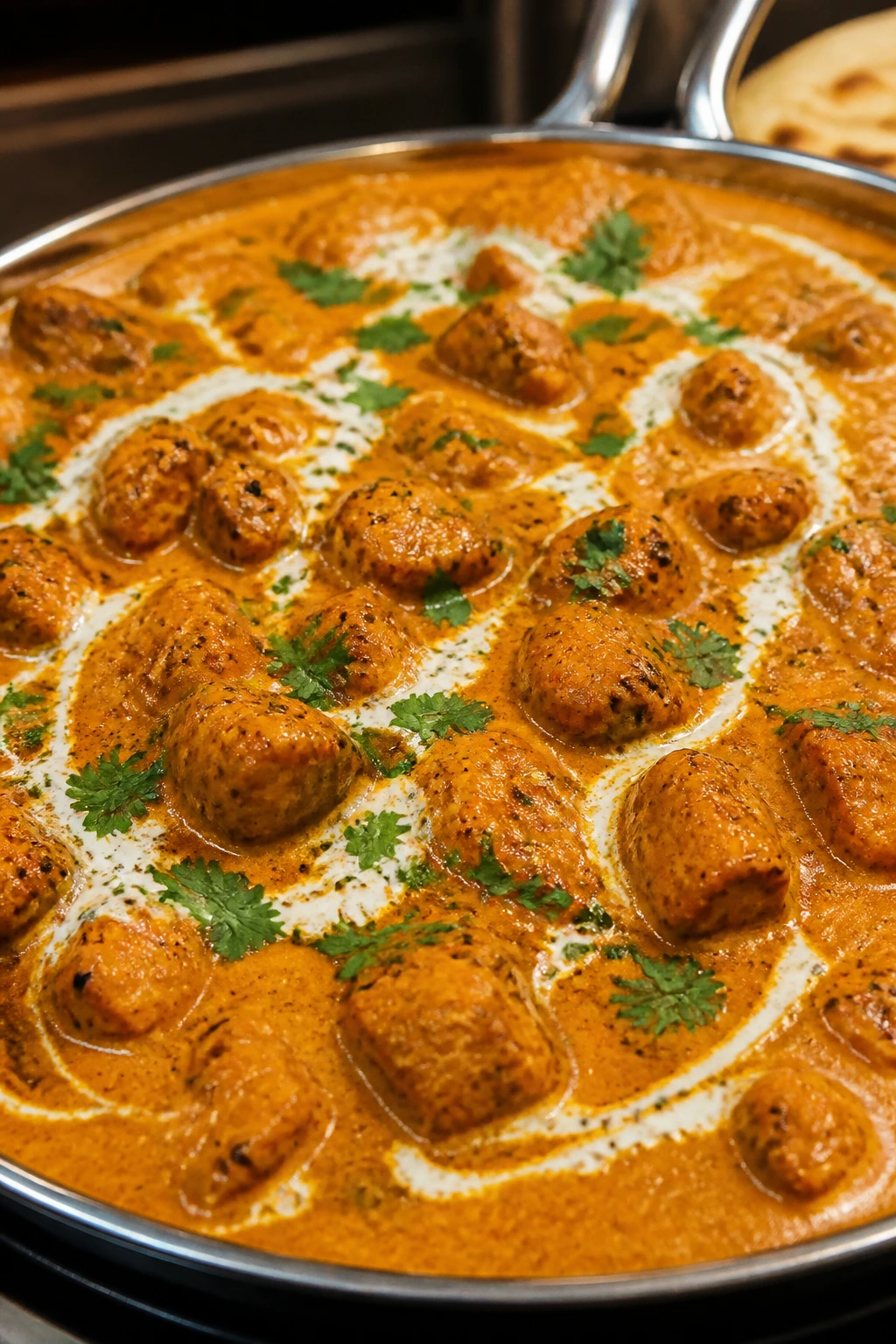
Black pepper beef should taste peppery enough to wake up your tongue, not bland enough to pass for stew. In the slow cooker, chuck roast becomes tender, onions melt into the sauce, and bell peppers go in late so they still taste like peppers. It’s a strong last dish because it feels familiar without being sleepy.
Why It Works: Beef chuck soaks up the soy-oyster sauce base, while black pepper gives the finished dish its bite. Late peppers keep the texture from going soft and tired.
Key Ingredients:
- 3 lbs beef chuck roast, cut into chunks
- 1/2 cup low-sodium soy sauce
- 1/4 cup oyster sauce
- 1/4 cup brown sugar
- 1 cup beef broth
- 4 garlic cloves, minced
- 1 tbsp grated ginger
- 1 large onion, sliced
- 2 bell peppers, sliced
- 2 tbsp freshly ground black pepper
- 2 tbsp cornstarch
- 3 tbsp water
Quick Steps:
- Whisk the soy sauce, oyster sauce, brown sugar, broth, garlic, ginger, onion, and black pepper in the slow cooker.
- Add the beef and coat it well.
- Cook on low for 7 to 8 hours or high for 4 to 5 hours.
- Stir in the bell peppers for the last 30 minutes.
- Add the cornstarch slurry and cook 10 minutes more.
Equipment for This Recipe:
- 6-quart slow cooker
- Whisk
- Measuring spoons
- Slotted spoon
How to Serve This Dish: Serve it over rice with steamed broccoli or snow peas. A few extra grinds of black pepper on top make the bowl smell sharper right away.
Pro Tips for This Recipe:
- Freshly ground pepper matters here; preground pepper tastes dusty.
- Keep the peppers late so they hold some bite.
- If the sauce tastes thin, let it sit uncovered for a few minutes after thickening.
Variations on This Dish:
- Extra-Garlic Version: Add 2 more garlic cloves if you want a stronger savory edge.
- Broccoli Pepper Beef: Swap the bell peppers for broccoli florets in the last 20 minutes.
Common Mistakes to Avoid with This Dish:
- Using too little pepper: The dish should be pepper-forward.
- Adding peppers too early: They lose their shape and color.
- Serving before thickening: The sauce should cling to the beef, not slide away.
Why the Slow Cooker Wins for Asian Crockpot Meals
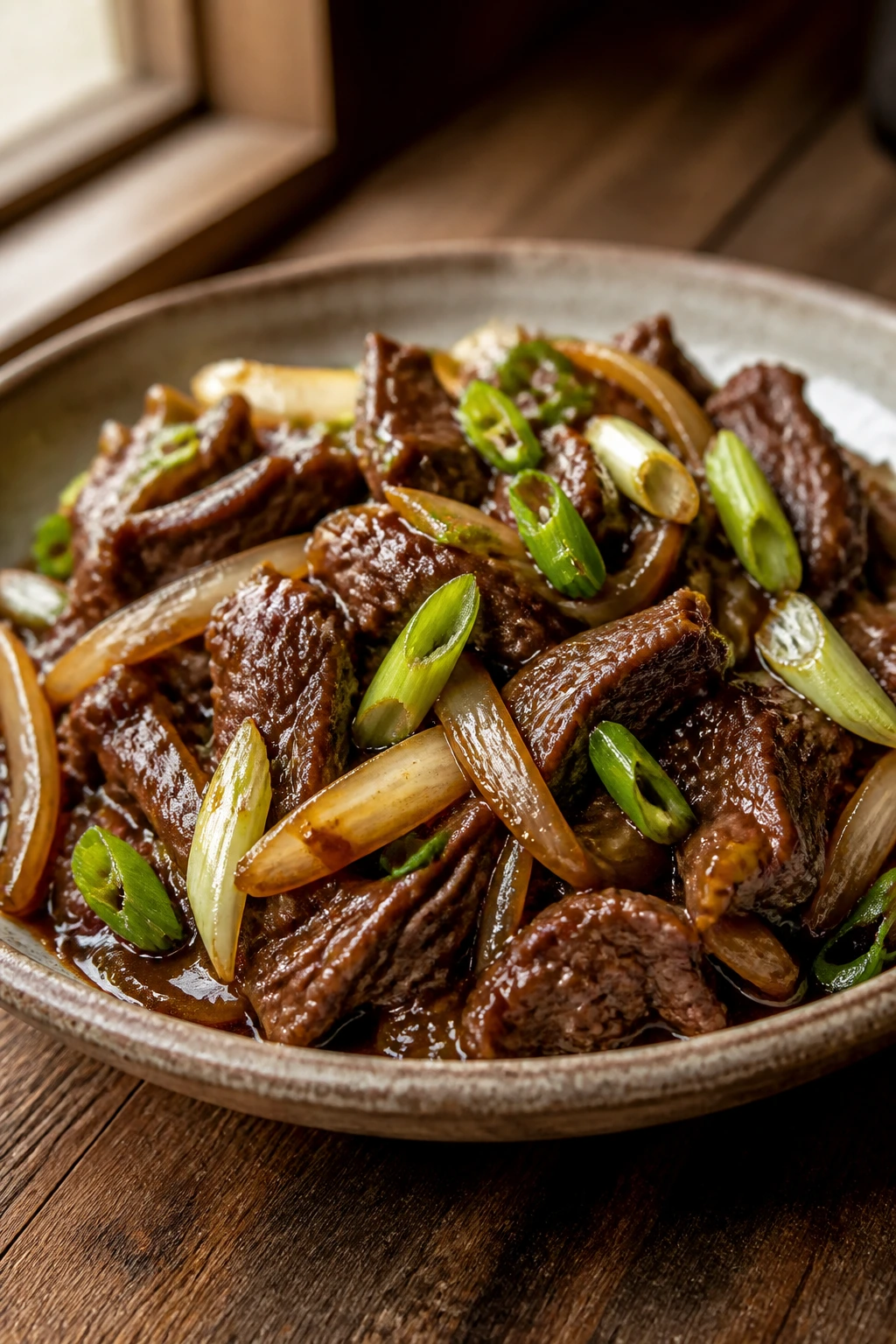
The slow cooker is at its best when the dish needs time more than speed. Tough cuts like chuck, brisket, and pork shoulder soften into useful, spoonable meat. Coconut milk curries settle into a smooth base. Soy braises and vinegar-heavy sauces turn round and balanced instead of sharp and raw.
Collagen Has Time to Melt
Beef chuck and pork shoulder are not expensive by accident. They need heat and time to turn tender, and the slow cooker gives both without forcing you to stand over a stove. That is why so many of the strongest bowls in this collection use those cuts. They’re built to wait.
Aromatics Need Room to Move
Ginger, garlic, lemongrass, scallions, cinnamon, star anise, five-spice, and curry paste all behave better when they have time to spread through the pot. But they still need a finish. A squeeze of lime, a handful of basil, or a few scallions added at the end keeps the dish from tasting flat.
The Sauce Is Half the Meal
These dishes work because they leave you with a sauce worth spooning over rice. That means using low-sodium soy when needed, keeping sweeteners in check, and thickening near the end instead of the start. If the sauce is thin, the meal feels unfinished. If it clings, people keep eating.
Essential Equipment for These Recipes
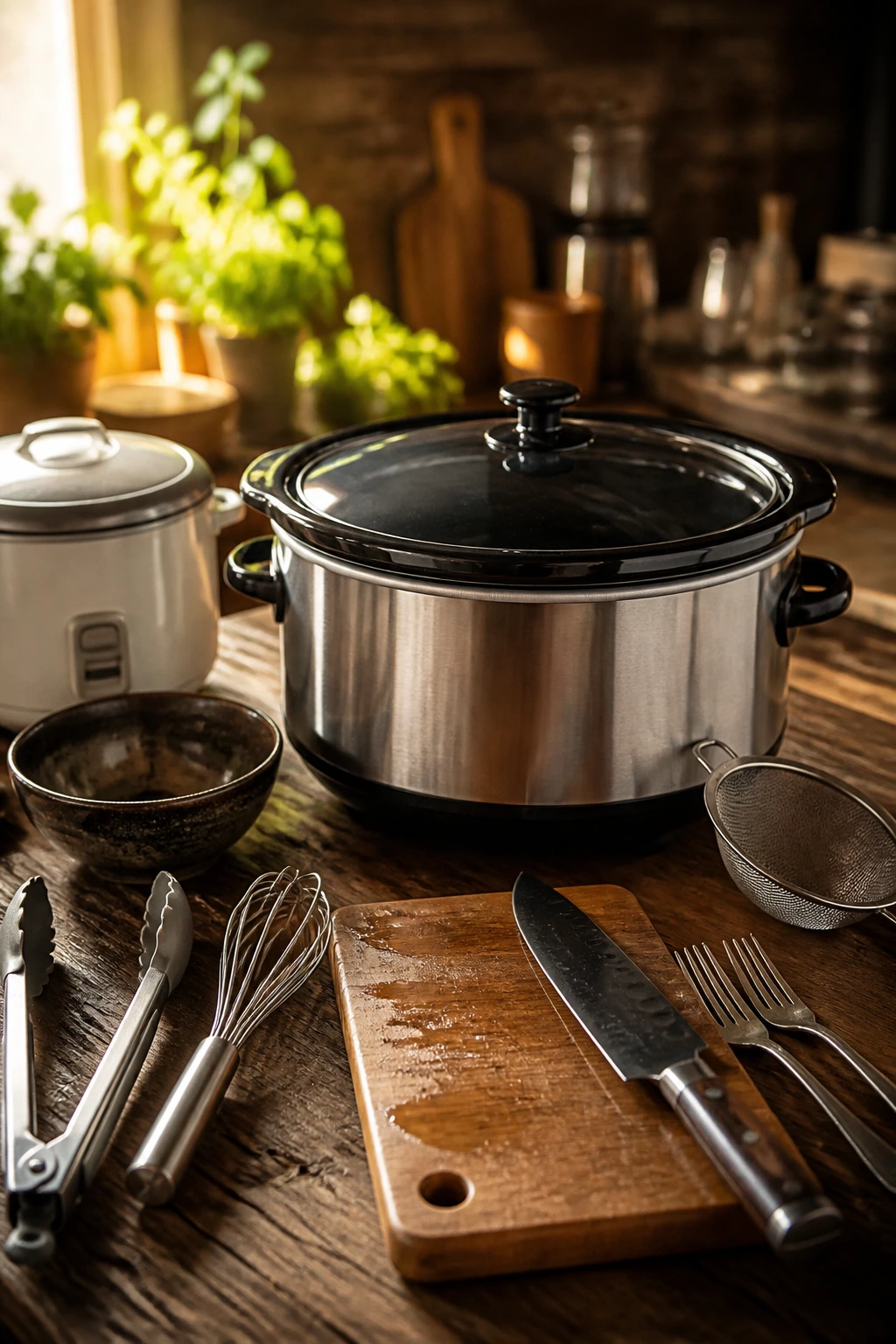
- 6-quart slow cooker: The sweet spot for most of these crowd meals; an 8-quart model helps if you regularly cook for more than eight.
- Sharp chef’s knife: A clean cut helps onions, peppers, pork, and beef cook evenly.
- Cutting board with a damp towel underneath: Keeps the board from sliding when you’re slicing faster than usual.
- Whisk: Useful for soy-based sauces, curry pastes, and cornstarch slurries.
- Tongs: Better than a spoon for moving hot meat in and out of the pot.
- Two forks: The simplest tool for shredding beef and pork.
- Fine-mesh strainer: Essential for pho-style broth and useful for removing spices or onion bits if you want a smoother sauce.
- Rice cooker or heavy saucepan: Not required, but helpful when half the meal sits on rice.
- Small bowl for slurry: You’ll use this constantly for thickening sauces.
Smart Shopping and Ingredient Tips
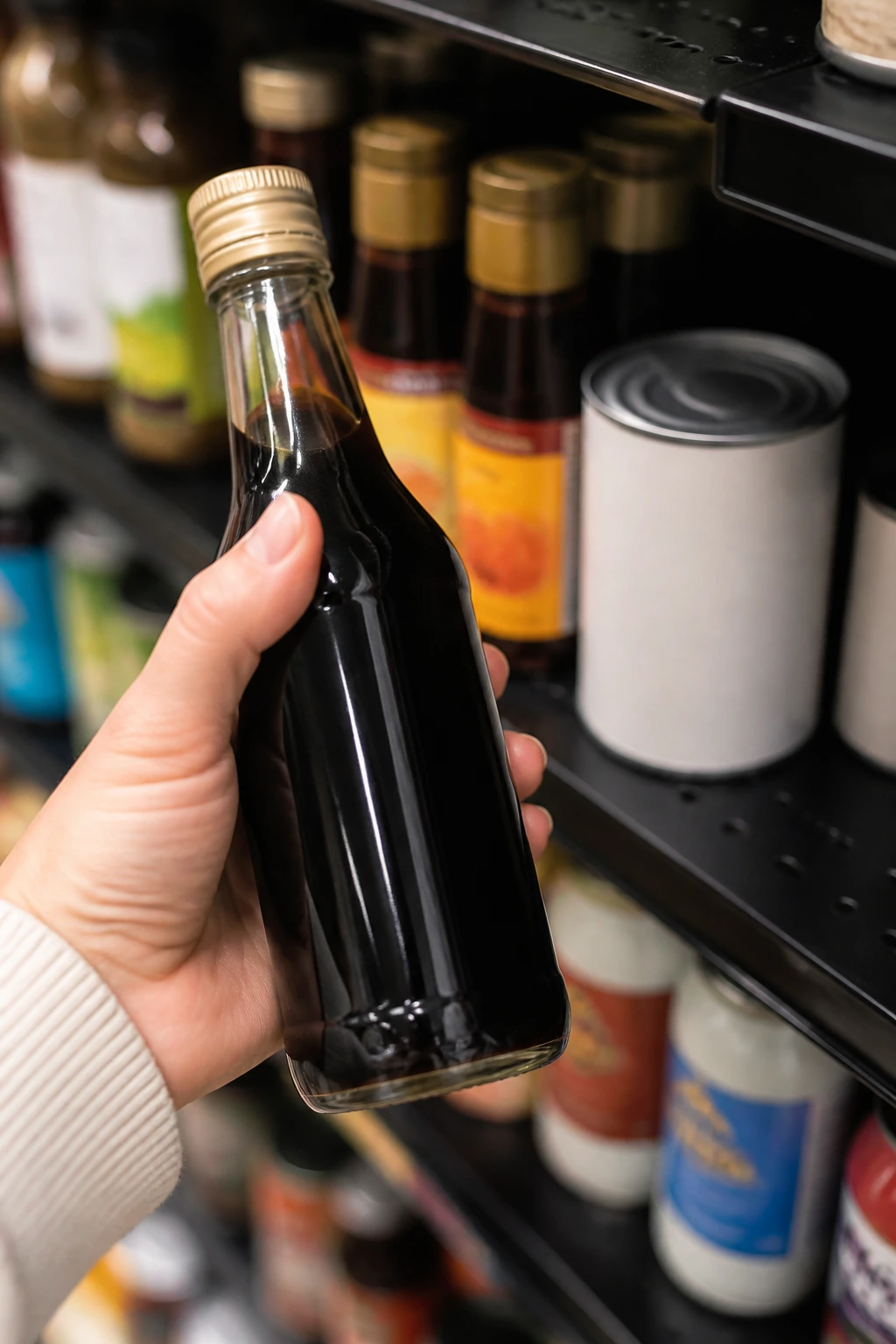
Low-sodium soy sauce is the quiet hero of this whole collection. Regular soy can push a sauce into saltiness before the sweet, sour, and aromatic parts have a chance to show up. Fish sauce is the same way: a little brings depth, too much takes over. Taste before the final seasoning, not after you’ve already salted the bowl.
Full-fat coconut milk matters in curries. The thin carton beverage that goes in coffee will not behave the same way in a slow cooker, and it won’t give you the body that makes Thai, Malaysian, or coconut chickpea curries feel complete. Shake the can before opening it, and if the cream has separated, that’s normal.
For beef and pork, buy cuts with some fat and connective tissue: chuck roast, brisket, pork shoulder, and short ribs. Those are the cuts that change in a slow cooker. Lean cuts can work for shorter cooks, but long heat strips them bare. For chicken, thighs win almost every time because they stay juicy and don’t need rescue at the end.
Curry pastes and roux cubes are worth buying from brands that list real spices and aromatics, not just salt and oil. A good red curry paste should smell like lemongrass, galangal, and chile when you open it. Japanese curry roux should melt into a thick gravy without you having to fight it.
Fresh herbs make a real difference. Thai basil, cilantro, scallions, mint, and lime do more than garnish. They reset the palate and keep the meal from tasting like one long, heavy note. If you need to skip fresh herbs, add a little extra acid at the end so the dish still wakes up.
Rice and noodles should be chosen with the serving plan in mind. Jasmine rice is the cleanest match for saucy braises, basmati works for curry, rice noodles are better with brothy dishes, and thick wheat noodles can stand up to ginger-scallion and black pepper sauces. If you want the meal to travel well, keep starches separate until the last minute.
How to Serve These Recipes
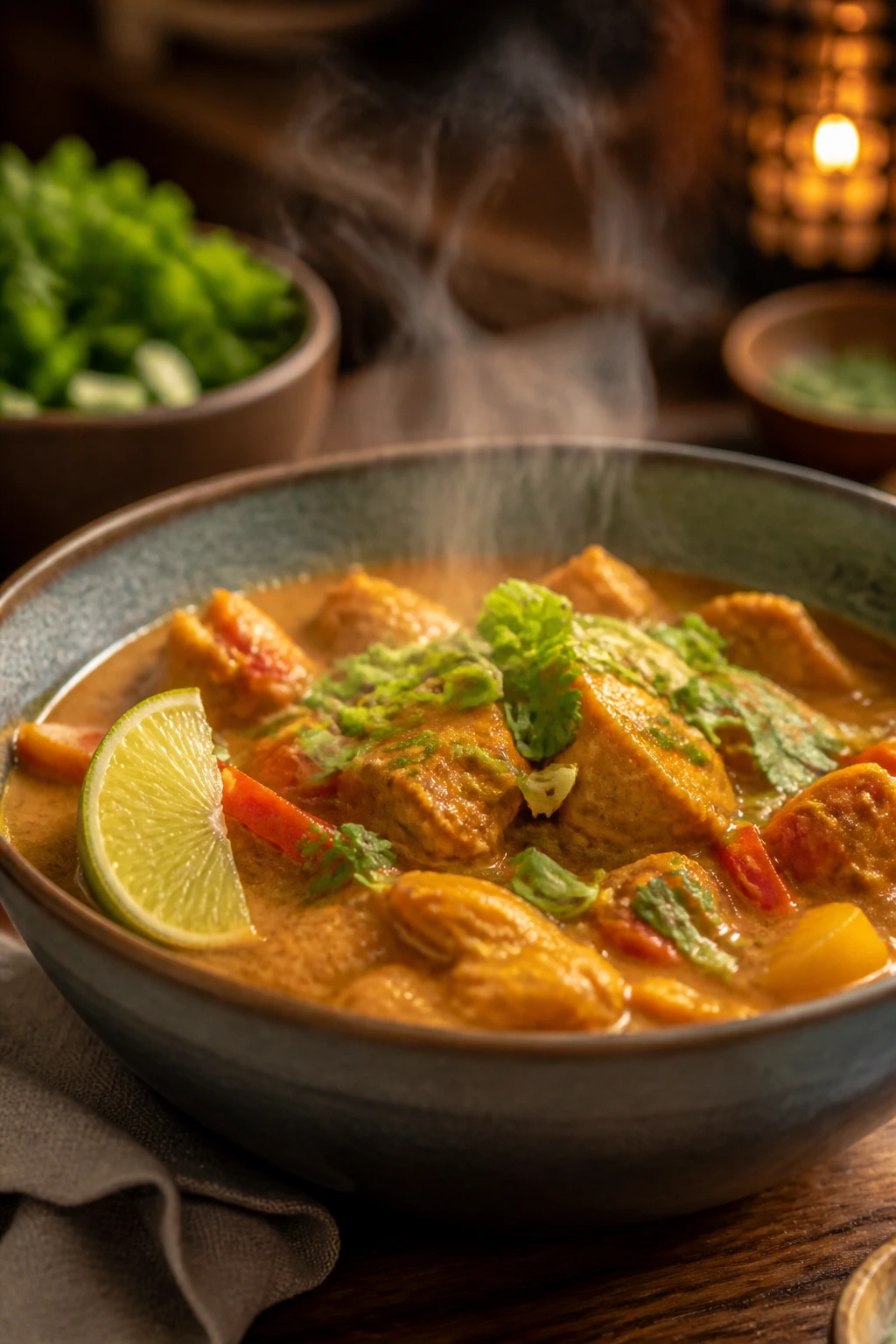
Presentation: Deep bowls work better than flat plates for almost every recipe here because they catch the sauce. Garnish with scallions, sesame seeds, lime wedges, herbs, or chopped chilies so the food looks finished rather than beige.
Accompaniments: Jasmine rice, basmati rice, rice noodles, steamed broccoli, bok choy, cucumber salad, kimchi, quick pickles, and crisp lettuce leaves all pull their weight. I’d rather have one clean vegetable than three forgettable sides.
Portions: Plan on about 1 to 1 1/2 cups of the main dish per person when rice or noodles are on the table. For heavier dishes like short ribs or beef curry, 3/4 cup can be enough if the sides are doing some of the work. If the crowd is big, make the starch first; people always take more than they admit.
Beverage Pairing: Jasmine tea fits almost everything here. A cold lager or pale ale works with soy- and chili-based dishes, while a lime soda or sparkling water with citrus helps with richer coconut curries. For a nonalcoholic table drink, cold oolong tea is a strong choice.
Additional Tips and Flavor Boosters
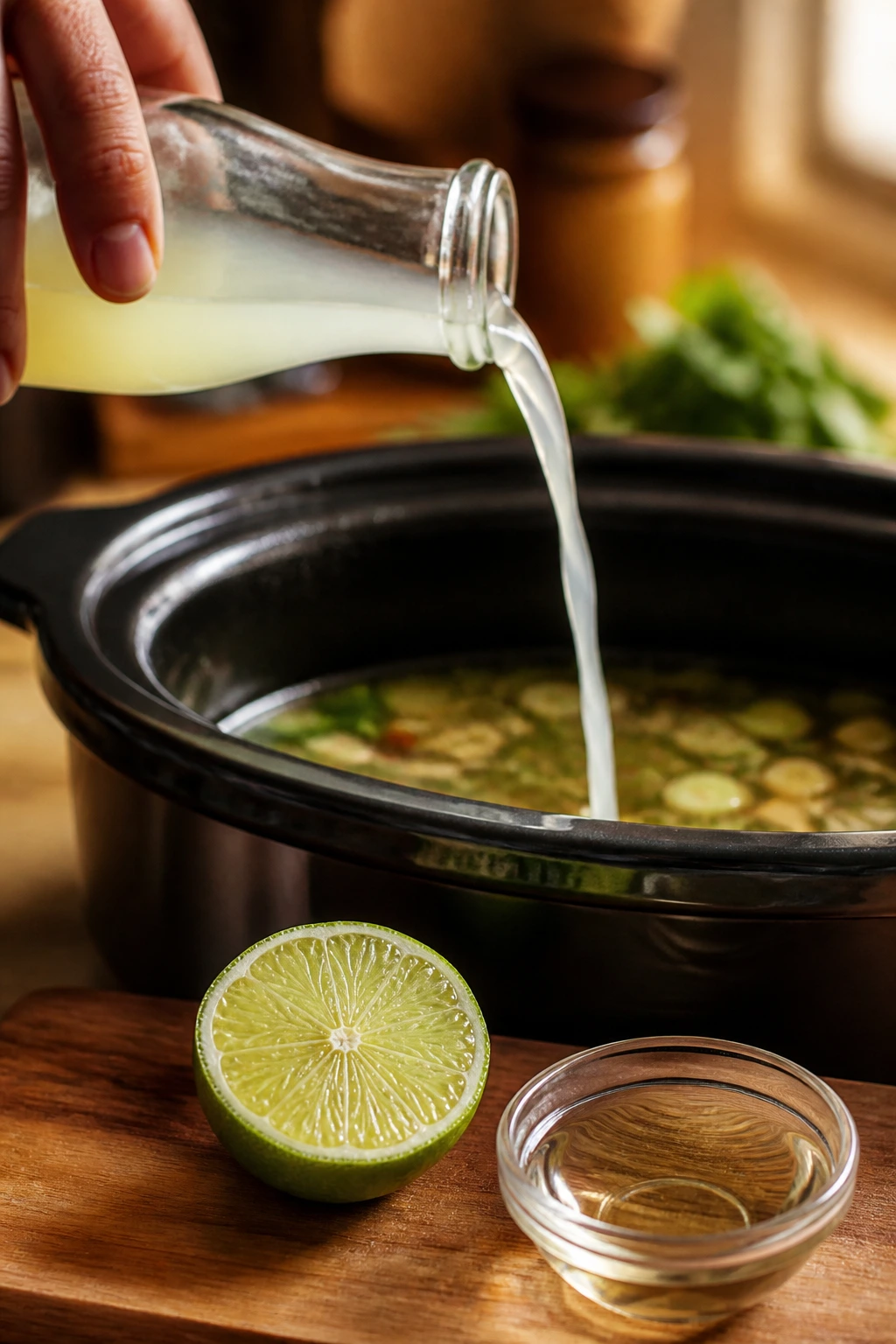
Flavor Enhancement: A final splash of rice vinegar, black vinegar, or lime juice changes a slow-cooked pot from heavy to lively. I use this trick constantly; it’s the difference between “good enough” and people asking for the pot back.
Customization: Frozen peas, baby bok choy, mushrooms, spinach, and bell peppers can all be added near the end if you want more vegetables without wrecking texture. Peanut toppings, crushed sesame crackers, chili crisp, and fried shallots are also easy upgrades.
Serving Suggestions: Keep a small tray of toppings on the table: sliced scallions, cilantro, lime wedges, sesame seeds, chopped peanuts, and chili oil. People like building their own bowl, and it takes the pressure off you.
Make-It-Yours: For gluten-free meals, use tamari or gluten-free soy sauce and check your curry paste and oyster sauce labels. For dairy-free cooking, skip cream finishes or replace them with coconut milk or cashew cream. For lower-sodium versions, cut soy sauce by a quarter and lean harder on ginger, garlic, citrus, and herbs.
Make-Ahead, Storage, and Reheating Guidance
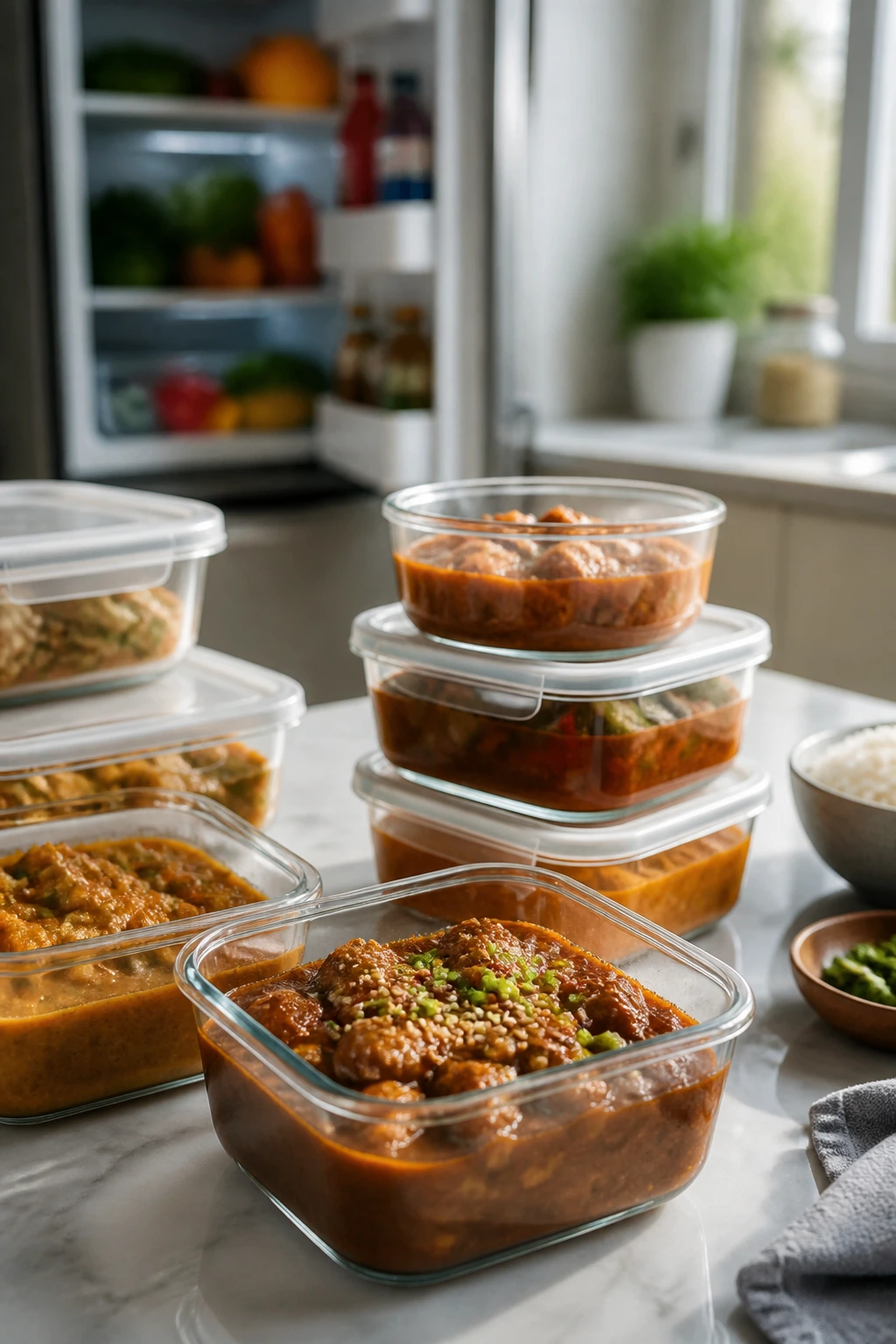
Most of these dishes keep 3 to 4 days in the refrigerator in airtight containers. Beef and pork braises usually improve after a night in the fridge because the sauce settles and the seasoning evens out. Chicken curries also hold well, though creamy finishes should be reheated gently so they stay smooth.
For the freezer, meat-heavy braises and curries usually last up to 2 to 3 months if you cool them first and pack them in portion-sized containers. Chickpea curry and lentil dishes freeze well too. Coconut-based sauces can separate a little after thawing, but a slow reheat and a good stir usually bring them back together. Dishes with tofu are better eaten within 2 to 3 days, since tofu changes texture in the freezer.
Reheat beef, pork, and chicken dishes on the stovetop over low heat with a splash of water, broth, or coconut milk. Stir often so the sauce doesn’t catch at the bottom. Microwave reheating works for individual portions, but do it in 45-second bursts and stir between rounds. If the sauce is too thick after chilling, loosen it little by little. If it’s too thin, let it simmer uncovered for a few minutes.
Rice and noodles are better stored separately. Rice keeps 3 to 4 days refrigerated and freezes well for about 1 month. Noodles are best cooked fresh, but if you must store them, toss them with a little oil first so they do not clump into a brick.
Variations and Adaptations to Try
Lower-Sodium Pantry Pot: Use low-sodium soy, unsalted broth, and a little extra ginger, lime, or vinegar to keep the flavor clear. This works across nearly every dish here, especially adobo, teriyaki, and soy braises.
Gluten-Free Rice Bowl Night: Swap regular soy sauce for tamari and use gluten-free hoisin or curry paste as needed. Serve everything over rice with cucumber, herbs, and a crisp vegetable so nobody misses the noodles.
Dairy-Free Creaminess: Coconut milk handles the job in Thai, Malaysian, and chickpea curries. For butter chicken, use cashew cream or extra coconut milk stirred in at the end, off heat.
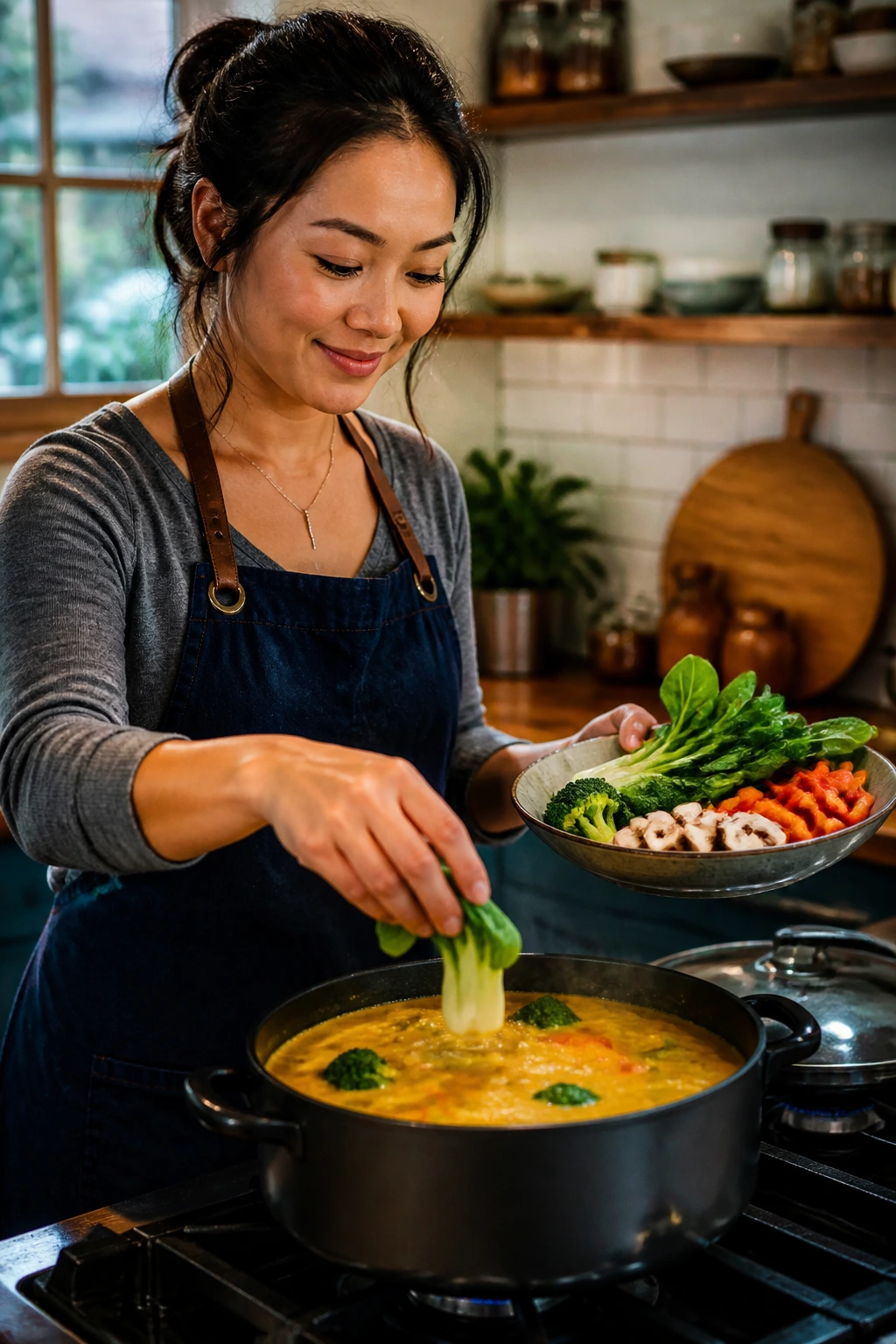
Vegetable-Forward Crowd Meal: Stretch any braise with cauliflower, carrots, mushrooms, bok choy, or sweet potatoes. Add firm vegetables early and leafy vegetables late, or they’ll slide past their best texture.
Heat-Lover’s Finish: Keep the slow cooker base moderate, then bring the fire at the table with chili crisp, sliced fresh chilies, sambal, or a spoon of spicy oil. That way you can feed both cautious eaters and the people who always ask for more heat.
Kid-Friendly Mild Pot: Cut curry paste, gochujang, doubanjiang, or chili flakes by half, then serve the hot sauce on the side. A sweeter finish from honey or pineapple also helps the dish land better with younger eaters.
Common Mistakes to Avoid
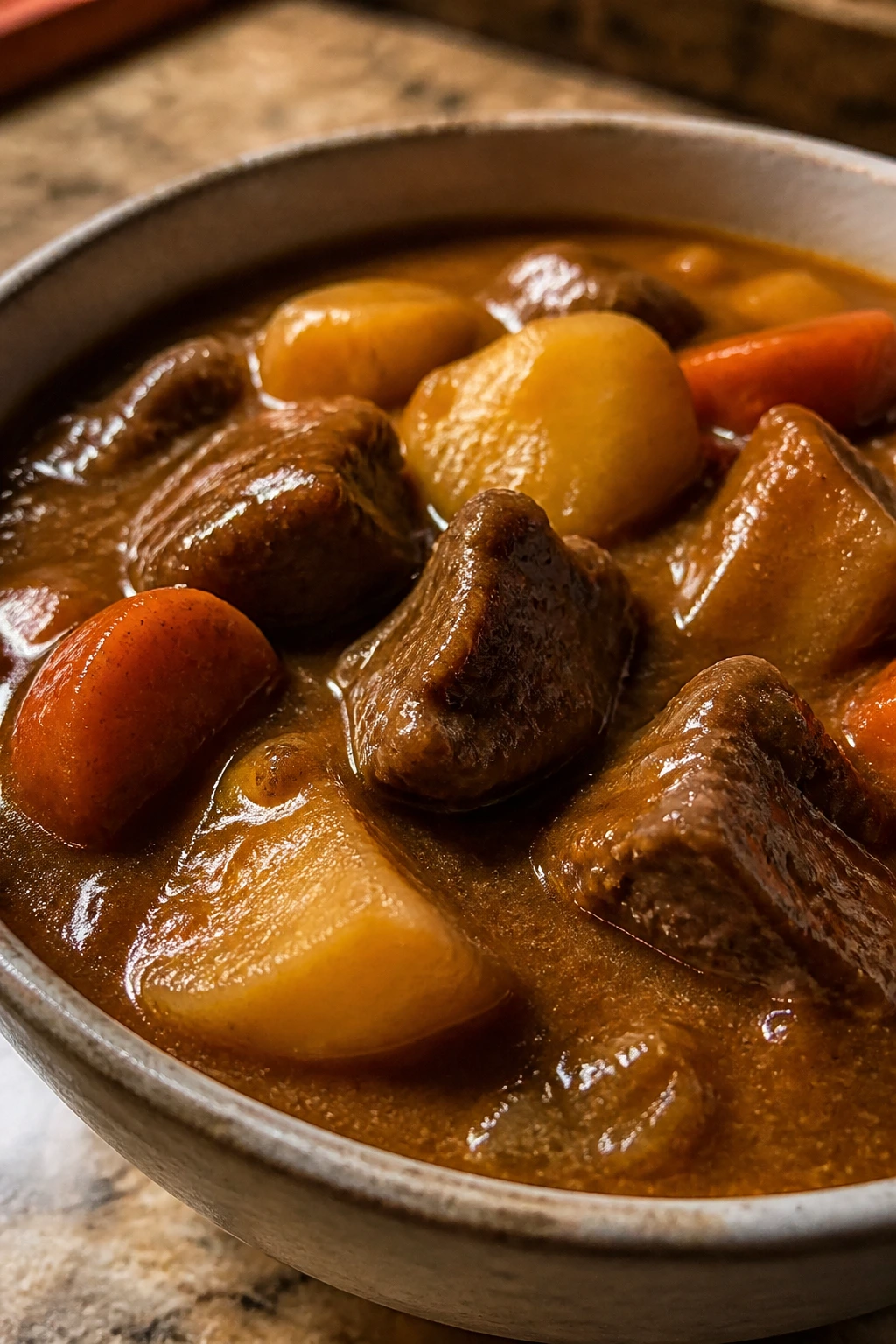
- Adding delicate vegetables too early: Peppers, bok choy, spinach, and basil all lose their shape if they cook for hours. Put them in late so they still look and taste like vegetables.
- Using lean cuts for long cooks: Chicken breast, pork loin, and sirloin can turn dry or stringy before the sauce has time to deepen. For long slow cooking, choose thighs, chuck, brisket, ribs, or shoulder.
- Skipping acid at the end: Lime, vinegar, black vinegar, or citrus is what keeps many of these meals from tasting tired. Add it after cooking, then taste again.
- Overloading the pot with sauce ingredients: More soy, fish sauce, or curry paste does not always mean more flavor. It can mean salt and burn. Start measured.
- Not thickening when needed: Several of these dishes should cling to rice or noodles. A simple cornstarch slurry near the end keeps the sauce in place.
- Cooking noodles in the slow cooker: They turn soft and swollen fast. Cook them separately and combine them at serving time.
Frequently Asked Questions
Can I use chicken breasts instead of thighs?
You can in a few shorter cooks, but breasts are less forgiving in a slow cooker. If you use them, shorten the time and watch closely; thighs are still the better choice for most of these meals.
Do I have to brown the meat first?
No, but it helps on beef and pork dishes. A quick sear adds browned flavor that the slow cooker can’t create on its own, especially for Korean beef, char siu, and short ribs.
Which recipes freeze best?
Beef braises, pork shoulder dishes, chickpea curry, and lentil curry freeze very well. Curries with a lot of dairy or tofu can still freeze, but the texture is a little less polished after thawing.
How do I keep the sauce from getting too salty?
Use low-sodium soy sauce, measure fish sauce carefully, and taste before adding extra salt at the end. Acid and a little sweetness often fix the balance better than more salt.
Can I double these recipes in one big slow cooker?
Yes, if your cooker has room for it and the lid closes properly. Keep in mind that a very full pot may need extra cooking time and thicker sauce at the end.
What if the sauce comes out too thin?
Take the lid off for 15 to 20 minutes on high, or stir in a cornstarch slurry and cook until glossy. Noodle and rice dishes need a sauce that coats, not one that runs off the plate.
Can I make these dishes milder for kids?
Absolutely. Cut curry paste, chili flakes, gochujang, and peppercorns in half, then put hot condiments on the table for adults. Sweet finishes like pineapple, honey, or a little extra coconut milk also help.
Should I cook the rice in the slow cooker too?
I wouldn’t for most of these. Rice is better cooked separately so it stays fluffy and doesn’t turn gummy under the sauce.
The Sauce Does the Heavy Lifting
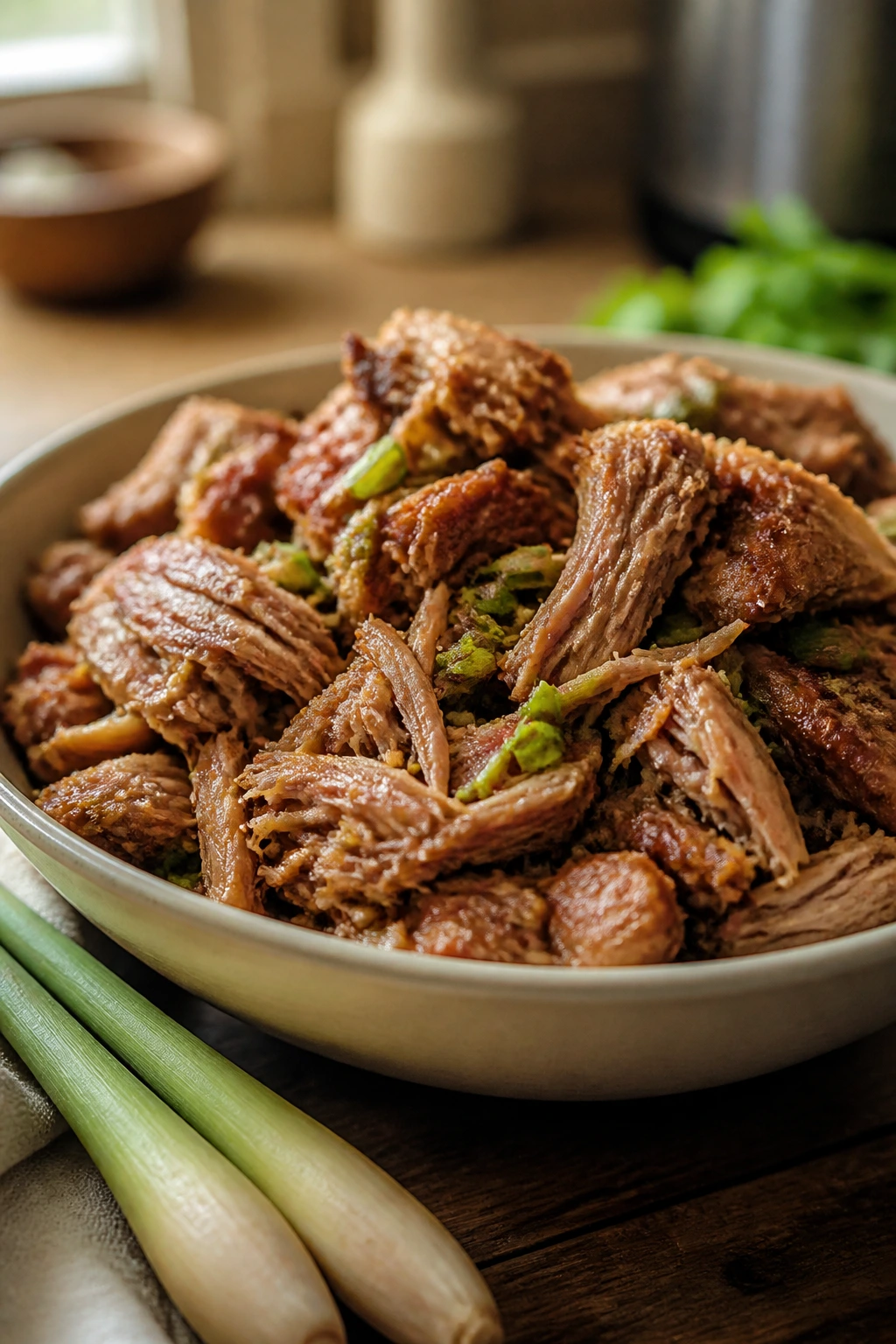
A crowded table needs food that can wait, and that’s where these slow cooker meals earn their keep. Beef shreds into glaze, chicken thighs stay soft, pork shoulder turns rich, and the curries settle into bowls that feel complete without a pile of extra work.
The real win is the finish. A squeeze of lime, a handful of basil, a little scallion, or a spoon of chili crisp can turn a pot that was merely good into one people remember. Keep that habit, and these recipes stop being just easy dinners. They start acting like the kind of meals people ask about before the slow cooker has even cooled.