



The best mimosa bars are never the ones with twenty different bottles and a tired bowl of orange wedges. They’re the ones where the bubbles stay cold, the fruit is cut to the right size, and every glass tastes a little different without turning into a sugar bomb. That’s the sweet spot for mimosa bar ideas: enough variety to make the table feel generous, enough restraint that the drinks still taste clean after the second pour.
Summer sipping makes that balancing act matter even more. Warm juice goes flat fast. Overripe fruit can drag a flute into syrup territory. And if you’ve ever watched a sparkling wine lose its lift while people are still deciding between peach and berry, you know the whole setup lives or dies on prep.
I like a bar where one dry bottle can handle a lot of flavor. Brut prosecco, cava, or champagne gives you room to play with nectar, citrus, herbs, and a few bright garnishes without everything collapsing into sweet mush. Keep the fruit cold, keep the bubbles colder, and give people choices that actually taste distinct from one another. That’s where this spread starts to earn its keep.
Why This Mimosa Bar Collection Works
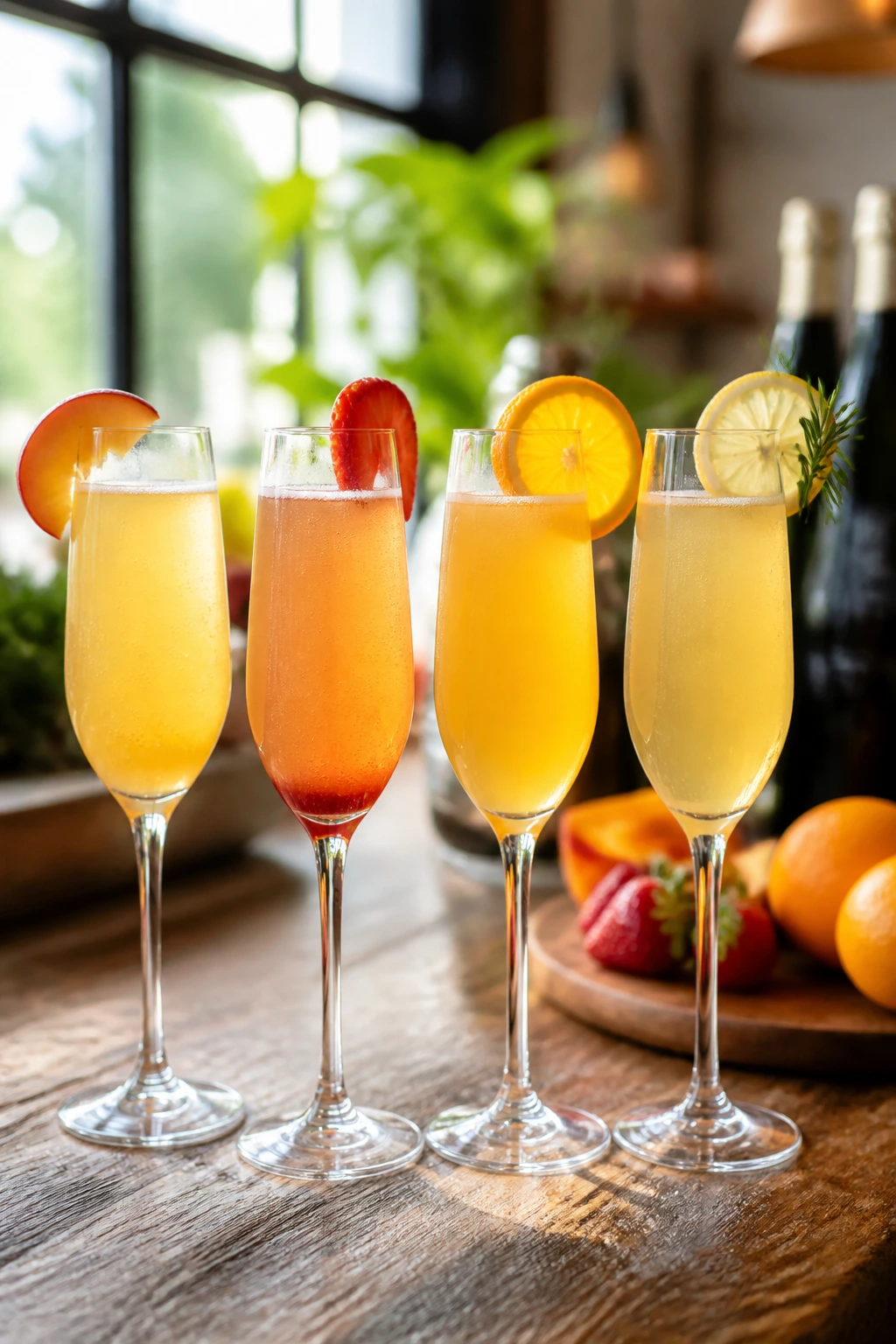
-
Built around dry bubbles: Brut sparkling wine keeps the drinks crisp, so fruit purées and juices don’t all taste like the same sugary brunch sip.
-
Easy to scale for a crowd: Most of these ideas use one bottle of sparkling wine plus a measured juice base, which makes doubling or tripling straightforward without guesswork.
-
Designed for summer fruit: Peaches, berries, melon, citrus, and herbs hold up well when the weather is warm and the fruit at the market actually tastes like something.
-
Flexible for different drinkers: Nearly every flavor here has a zero-proof swap, so guests who skip alcohol can still pour something that feels part of the bar.
-
Looks polished without much fuss: A few fruit wheels, herb sprigs, and chilled glasses do most of the visual work. No elaborate cocktail theater required.
-
Better than one giant pitcher: Separate flavor stations keep the sparkling wine fresher, and guests can pick the level of sweetness they want instead of being locked into one batch.
1. Orange Sunrise Classic
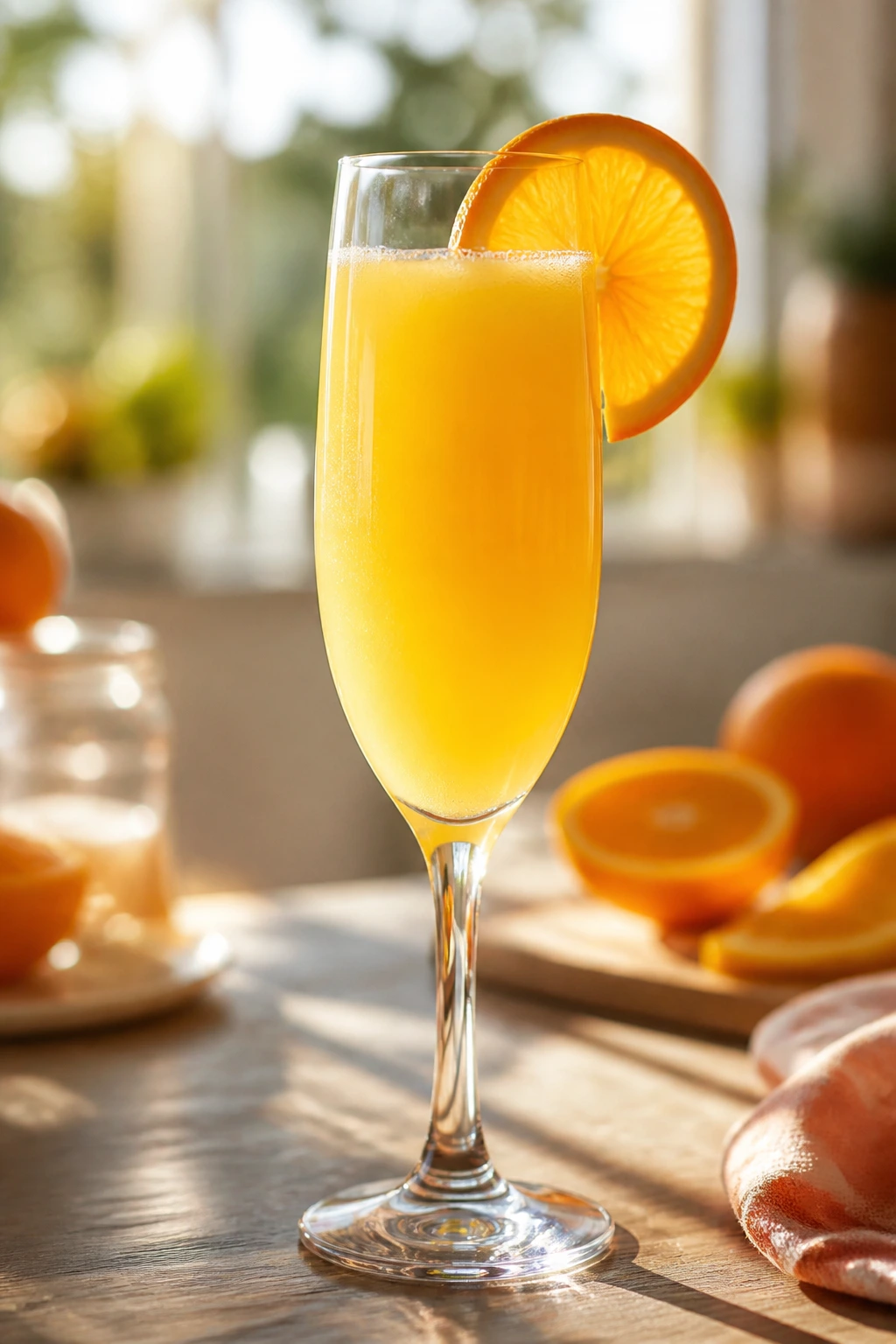
There’s a reason the classic orange mimosa never gets old. Clean citrus, cold bubbles, and a bright gold color make it the calm center of a crowded brunch table. This version is the one I reach for first because it gives you a baseline for every sweeter, bolder idea that follows.
Why It Works: Fresh orange juice has enough sweetness to round out the wine, but not so much that it turns heavy. A dry sparkling wine keeps the sip lively, and a thin orange wheel on the rim gives you aroma before the first drink.
Key Ingredients:
- 1 bottle brut sparkling wine, well chilled
- 1 1/2 cups fresh orange juice, strained
- 1 tablespoon orange liqueur, optional
- Orange wheels, for garnish
- Ice, only for chilling the juice base if needed
Quick Steps:
- Chill the sparkling wine, juice, and flutes for at least 1 hour.
- Pour the orange juice into a pitcher and stir in the orange liqueur, if using.
- Fill each flute halfway with juice, top with sparkling wine, and garnish with an orange wheel.
Equipment for This Recipe:
- Pitcher
- Citrus juicer
- Fine-mesh strainer
- Champagne flutes
How to Serve This Dish: Serve this in slim flutes with one orange wheel clipped to the rim or dropped right in. It belongs next to fruit salad, scrambled eggs, and salty bacon.
Pro Tips for This Recipe:
- Use freshly squeezed juice; bottled orange juice tastes flat here.
- Strain out pulp if you want a cleaner look in the glass.
Variations on This Dish:
- Blood Orange Swap: Replace half the orange juice with blood orange juice for a deeper color and sharper bite.
- Zero-Proof Pour: Use alcohol-free sparkling wine or chilled club soda instead of prosecco.
Common Mistakes to Avoid with This Dish:
- Using sweet sparkling wine: Sweet-on-sweet makes the drink clingy. Brut or dry cava keeps it bright.
- Pouring the bubbles too early: Add sparkling wine last or the whole glass loses lift before anyone takes a sip.
2. Peach Bellini Bar
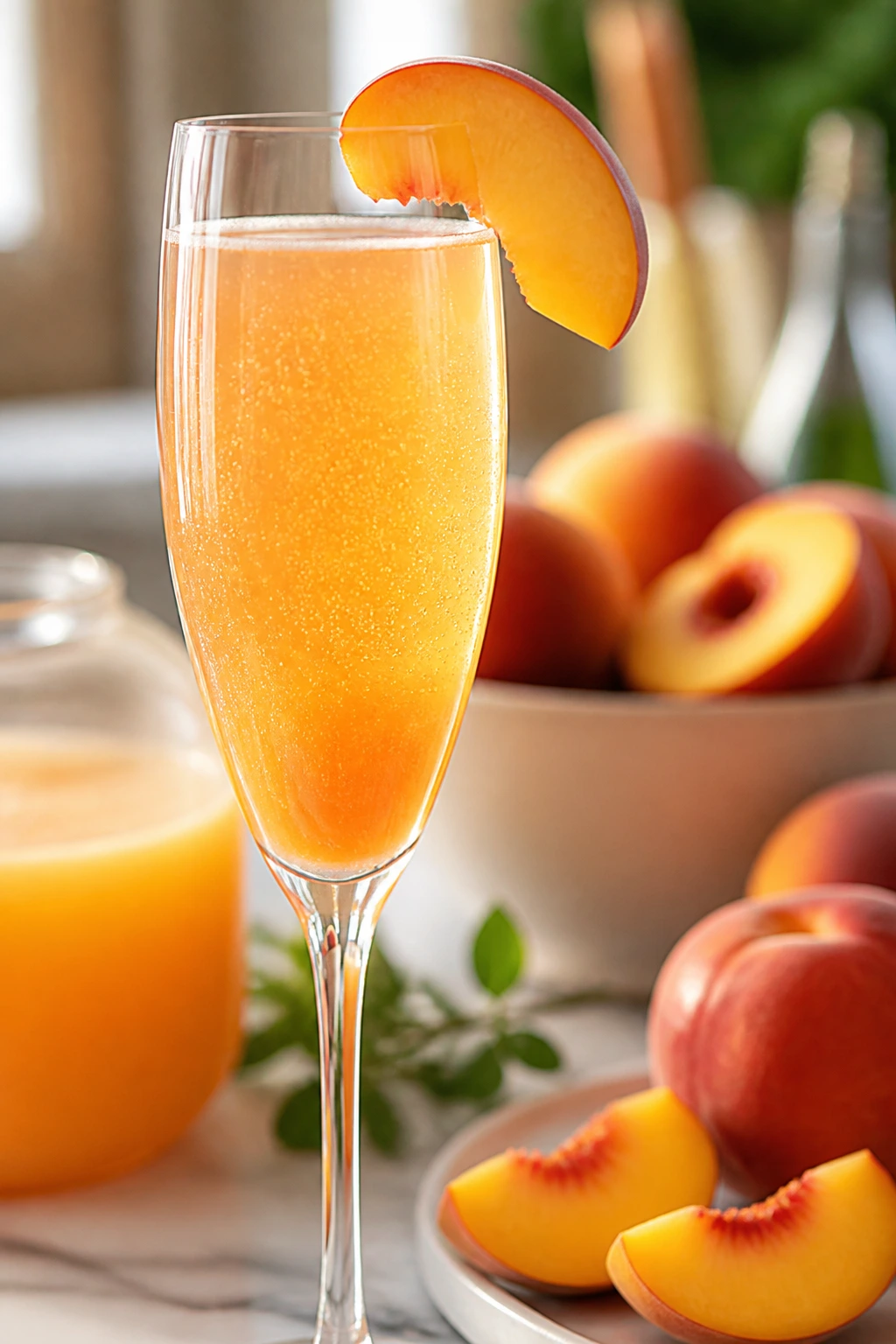
Peach mimosas lean softer and rounder than orange, with that plush, ripe-fruit taste that feels made for warm mornings. This one is all about silky texture and pale sunset color. If your peaches are fragrant and give a little when pressed, you’re in good shape.
Why It Works: Peach nectar or purée gives the drink body without needing extra sugar. The dry wine cuts through that softness, and a slice of fresh peach makes the glass look like it was arranged on purpose.
Key Ingredients:
- 1 bottle prosecco, chilled
- 1 1/2 cups peach nectar or peach purée
- 1 teaspoon lemon juice
- 2 fresh peaches, thinly sliced
- Mint sprigs, for garnish
Quick Steps:
- Chill all ingredients and slice the peaches right before serving.
- Stir the peach nectar and lemon juice together in a pitcher.
- Pour 2 to 3 ounces of peach base into each flute, top with prosecco, and garnish with peach slices.
Equipment for This Recipe:
- Pitcher
- Paring knife
- Cutting board
- Champagne flutes
How to Serve This Dish: This pours best in a flute with a thin peach slice slid down the side. It pairs well with scones, soft cheeses, or anything baked with almond.
Pro Tips for This Recipe:
- If your peach purée is thick, loosen it with 2 to 3 tablespoons of cold water.
- Taste before pouring; some nectars are sweet enough to skip any added sugar.
Variations on This Dish:
- White Peach Version: Use white peach nectar for a softer, perfume-like flavor.
- Herbal Peach: Add a crushed mint leaf or two to the pitcher for a cooler finish.
Common Mistakes to Avoid with This Dish:
- Using brown or bruised peaches: The flavor goes dull fast. Choose fruit that smells ripe and still feels firm.
- Overfilling the glass: Peach base expands when the bubbles hit it, so leave room for the pour.
3. Strawberry Lemon Fizz
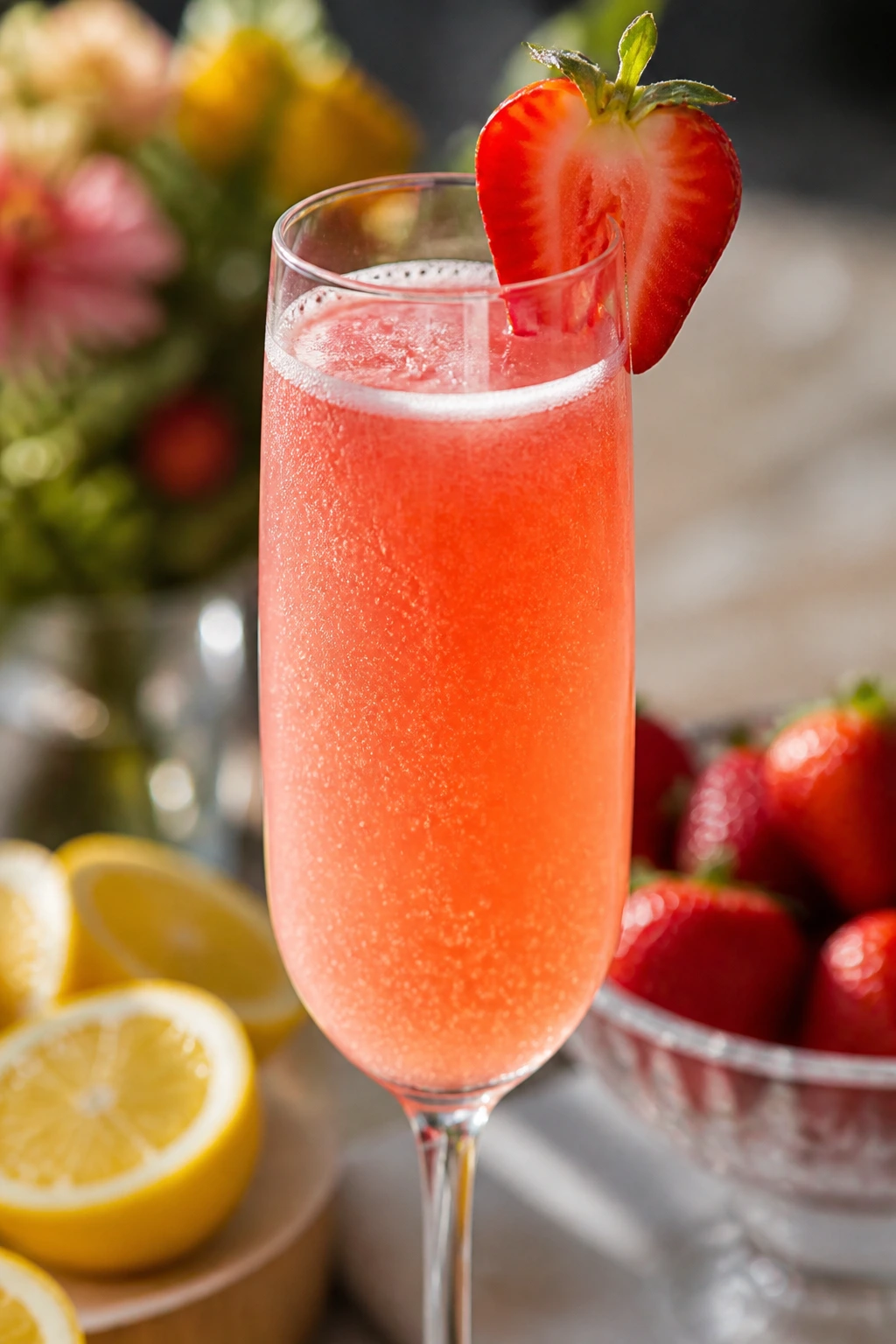
Strawberry and lemon give you the kind of sweet-tart snap that wakes up a table. This is the drink I make when I want something pink but not candy-sweet. It smells like cut berries and citrus zest, which is half the appeal.
Why It Works: Strawberries bring color and perfume, while lemon keeps the drink from drifting into jam territory. A small amount of lemon juice sharpens the berry flavor instead of hiding it.
Key Ingredients:
- 1 bottle brut sparkling wine
- 1 1/4 cups strawberry purée, strained
- 1/4 cup fresh lemon juice
- 1 teaspoon simple syrup, optional
- Fresh strawberries, sliced
Quick Steps:
- Blend the strawberries until smooth and strain if you want a cleaner pour.
- Stir the strawberry purée, lemon juice, and simple syrup in a pitcher.
- Pour, top with sparkling wine, and float a strawberry slice on each glass.
Equipment for This Recipe:
- Blender
- Fine-mesh strainer
- Pitcher
- Champagne flutes
How to Serve This Dish: Serve it ice-cold with a berry skewer across the rim. It’s sharp enough for brunch and pretty enough for a shower table.
Pro Tips for This Recipe:
- Strawberries need acid. Don’t skip the lemon unless the berries are already tart.
- If the purée seems too thick, add cold water 1 tablespoon at a time.
Variations on This Dish:
- Strawberry Basil: Add torn basil leaves to the pitcher and let them sit for 5 minutes before pouring.
- Frozen Berry Version: Use thawed frozen strawberries when fresh berries are pale or overpriced.
Common Mistakes to Avoid with This Dish:
- Leaving the purée unstrained: Seeds can make the texture gritty in a narrow flute.
- Using overripe berries only for sweetness: Soft berries lose the bright edge this drink needs.
4. Watermelon Mint Cooler
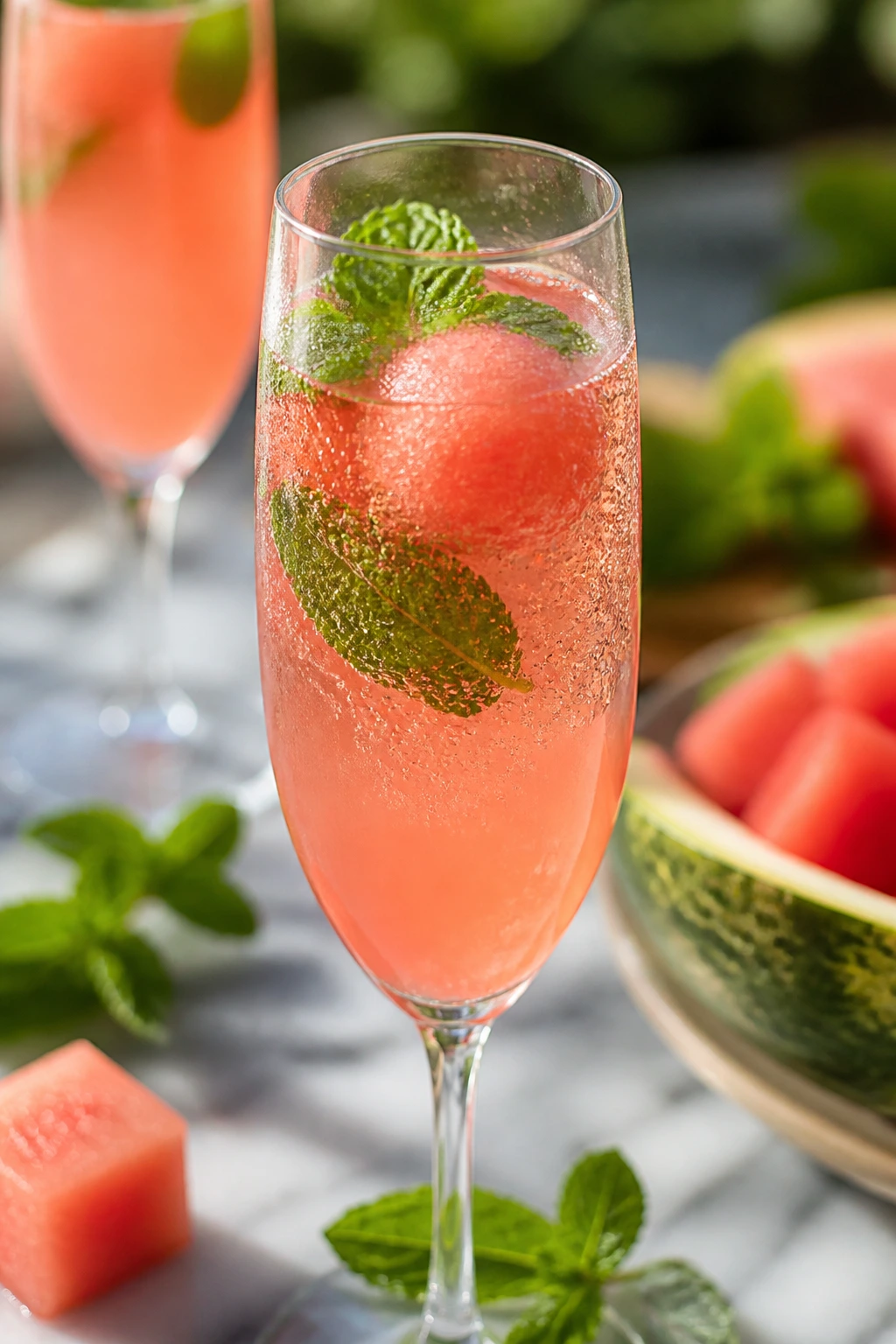
Watermelon is the easiest way to make a mimosa bar feel like summer instead of just brunch with fruit on it. The trick is keeping it clean and not watery. Mint gives the drink a cool smell before the first sip, which matters more than people think.
Why It Works: Watermelon has a mild flavor, so the mint and lime keep it from tasting thin. A dry sparkling wine adds structure, and the pale pink color looks sharp in clear glass.
Key Ingredients:
- 1 bottle cava, chilled
- 1 1/2 cups watermelon juice, strained
- 1 tablespoon fresh lime juice
- 8 to 10 mint leaves
- Watermelon balls or small cubes, for garnish
Quick Steps:
- Blend the watermelon and strain it through a fine sieve.
- Gently muddle the mint with the lime juice in a pitcher.
- Add the watermelon juice, pour into flutes, top with cava, and garnish with watermelon.
Equipment for This Recipe:
- Blender
- Fine-mesh strainer
- Muddler
- Pitcher
How to Serve This Dish: Keep the garnish simple: one mint sprig, one melon ball, done. It works best with salty foods like prosciutto, olives, or cheese straws.
Pro Tips for This Recipe:
- Strain the watermelon well or the drink will feel pulpy and heavy.
- Add the mint gently; bruised mint can turn bitter if you mash it hard.
Variations on This Dish:
- Cucumber Mint: Add 1/4 cup cucumber juice for a greener, cooler finish.
- Watermelon Lime Salt Rim: Rim the glass with lime and flaky salt for a sharper sip.
Common Mistakes to Avoid with This Dish:
- Using watery melon: Bland watermelon makes a bland drink. Taste the fruit first.
- Letting the mint sit too long: After about 20 minutes, mint can start reading grassy instead of fresh.
5. Grapefruit Rosemary Pour
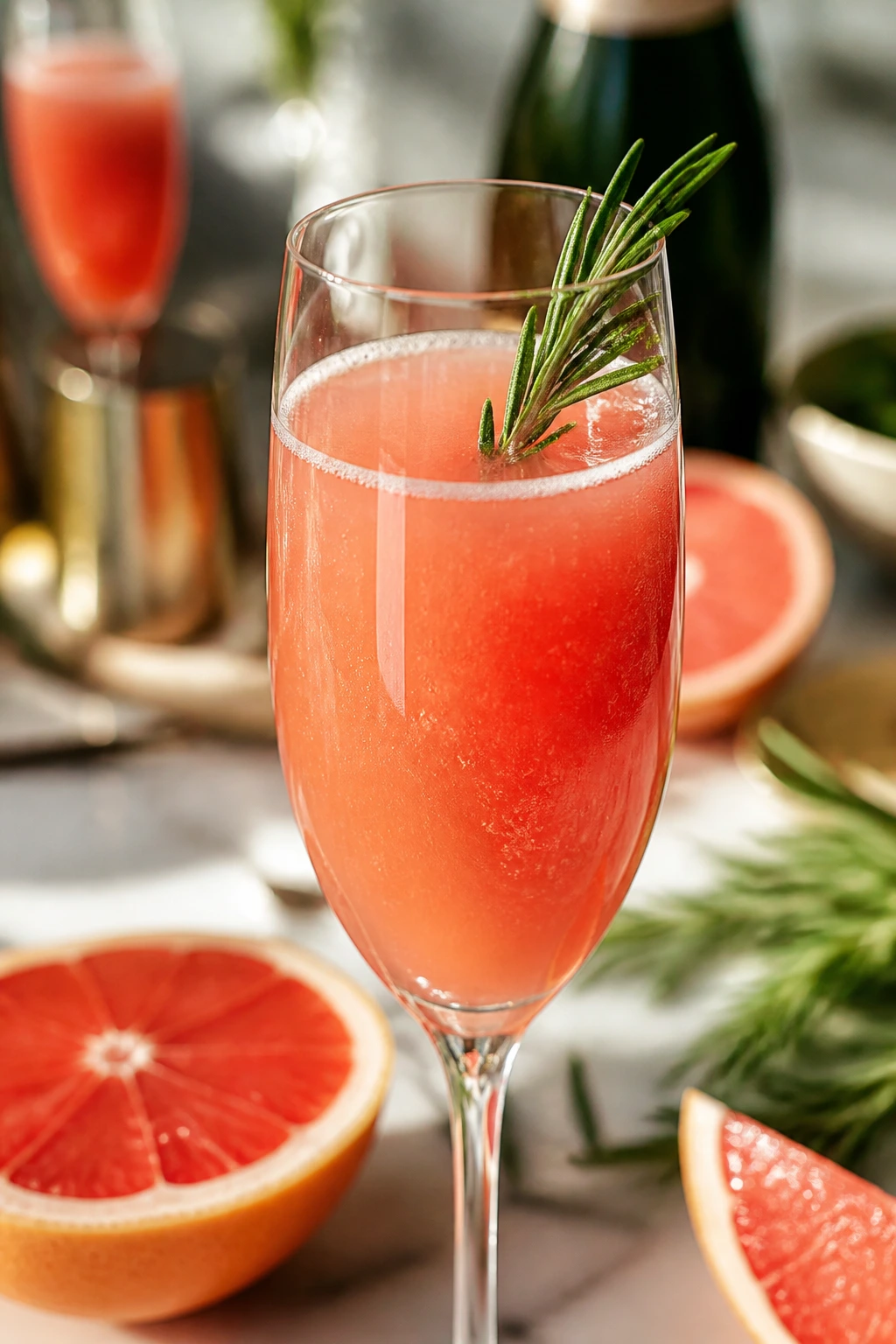
This one has a little bite, which I love. Grapefruit brings the bitterness, rosemary brings the piney scent, and the sparkling wine keeps it from getting too serious. It’s the flavor I pour when I want something grown-up without turning stiff.
Why It Works: Ruby grapefruit has more color and slightly less bite than white grapefruit, so it plays better in a flute. Rosemary syrup or a lightly bruised sprig gives the drink depth without making it taste like soap.
Key Ingredients:
- 1 bottle brut sparkling wine
- 1 1/2 cups ruby grapefruit juice
- 1 teaspoon rosemary syrup
- 2 rosemary sprigs
- Grapefruit wedges, for garnish
Quick Steps:
- Stir the grapefruit juice and rosemary syrup together in a pitcher.
- Rub a rosemary sprig between your fingers to wake up the oils.
- Pour the juice base, top with sparkling wine, and garnish with rosemary and grapefruit.
Equipment for This Recipe:
- Pitcher
- Citrus juicer
- Knife
- Champagne flutes
How to Serve This Dish: Serve it in a tall flute with a rosemary sprig tucked beside the citrus wedge. It’s especially good with smoked salmon, eggs, or anything buttery.
Pro Tips for This Recipe:
- Use just a touch of rosemary syrup; too much tastes like potpourri.
- Chill the grapefruit juice well so the bubbles stay sharp.
Variations on This Dish:
- Grapefruit Thyme: Swap rosemary for thyme if you want a softer herb note.
- Salted Grapefruit: Add one tiny pinch of fine salt to the juice base to soften bitterness.
Common Mistakes to Avoid with This Dish:
- Overdoing the herb: Rosemary can take over in a hurry. Start with less than you think.
- Using pink drink mix instead of real grapefruit juice: The flavor turns fake and syrupy fast.
6. Blueberry Lavender Bubbles
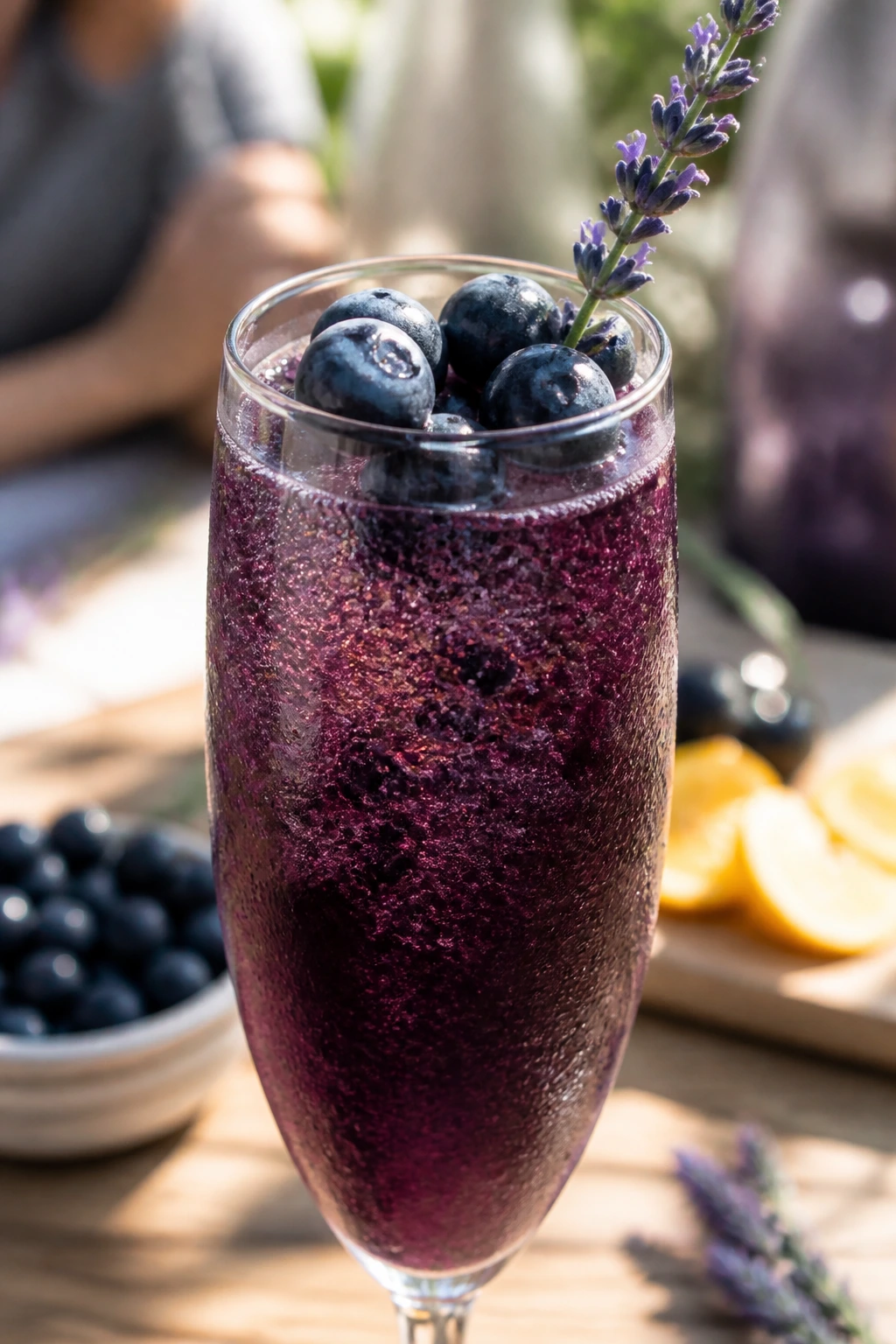
Blueberries bring a dark, jammy note, and lavender adds a floral edge that works better than people expect when it’s used lightly. This is the prettiest drink on the table if you keep the color clean and don’t muddy it with too much syrup.
Why It Works: Blueberries have enough tannin to stand up to sparkling wine, and lavender gives the nose a soft perfume without flooding the sip. A little lemon keeps the whole thing from tasting like soap or candy.
Key Ingredients:
- 1 bottle cava, chilled
- 1 1/2 cups blueberry purée or juice
- 1 teaspoon lavender syrup
- 1 teaspoon lemon juice
- Fresh blueberries, for garnish
Quick Steps:
- Blend and strain the blueberries if you want a smoother drink.
- Stir the blueberry base, lavender syrup, and lemon juice in a pitcher.
- Pour into flutes, top with cava, and drop a few blueberries into each glass.
Equipment for This Recipe:
- Blender or food processor
- Fine-mesh strainer
- Pitcher
- Champagne flutes
How to Serve This Dish: Use clear flutes and a light hand with garnish so the color stays deep and clean. It works well beside fruit tarts and vanilla pastries.
Pro Tips for This Recipe:
- Lavender syrup should be a whisper, not a shout.
- Strain hard if the berry skins are thick; this drink wants silkier texture.
Variations on This Dish:
- Blueberry Lemon: Increase the lemon juice to 2 teaspoons for a sharper finish.
- Berry Garden: Add a few crushed mint leaves if you want a fresher nose.
Common Mistakes to Avoid with This Dish:
- Too much lavender: The drink goes perfume-heavy fast.
- Using frozen blueberries without thawing: Cold berries are fine, but frozen solids won’t blend smoothly.
7. Pineapple Coconut Sparkler
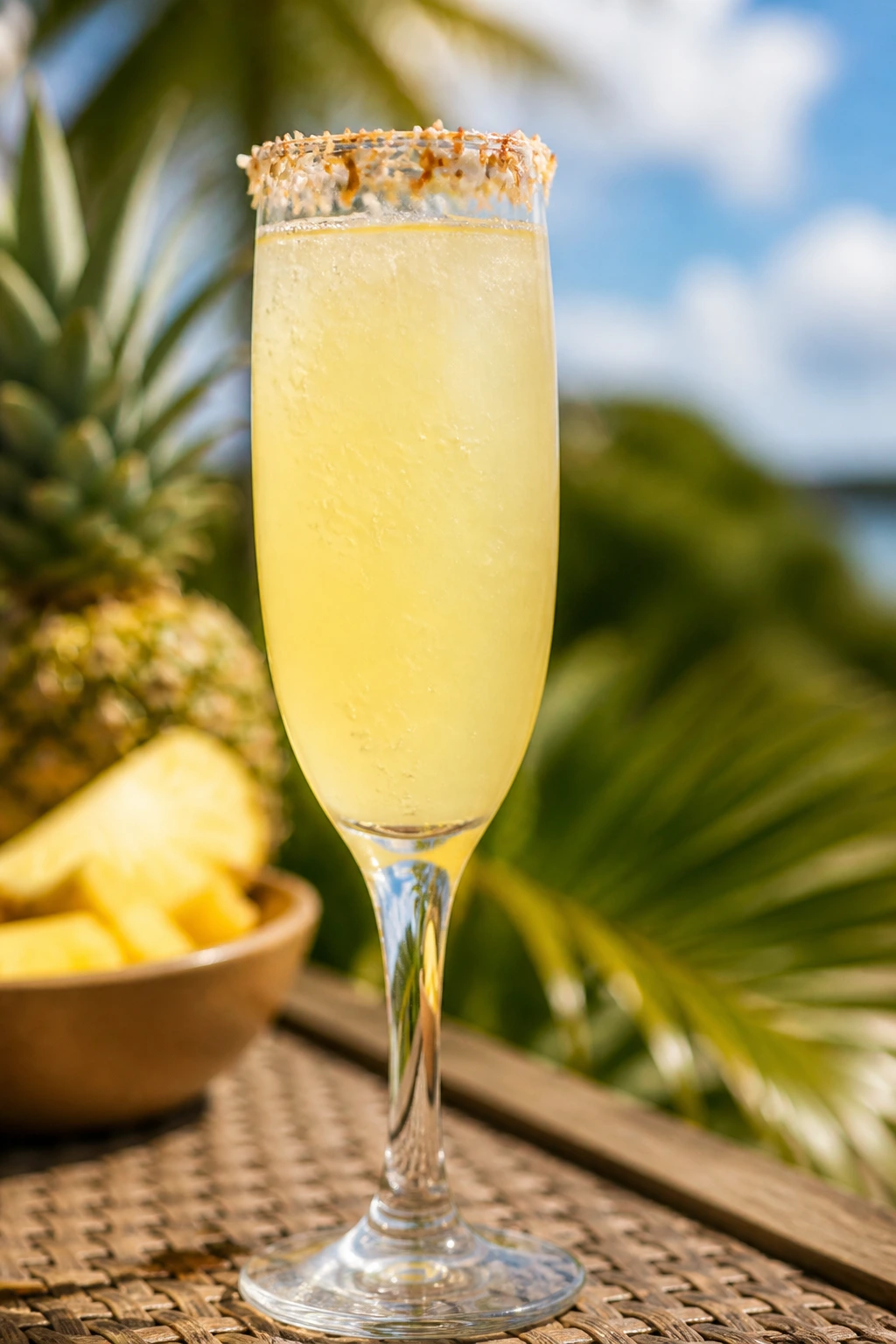
Pineapple is the loudest fruit in the room, and coconut softens it just enough to make the drink feel tropical instead of sharp. This one tastes like beach weather in a flute, but it still needs a dry base so it doesn’t become dessert.
Why It Works: Pineapple juice brings acid and sweetness, while coconut water keeps the texture light. A little toasted coconut on the rim adds aroma without turning the whole thing thick.
Key Ingredients:
- 1 bottle prosecco
- 1 1/4 cups pineapple juice
- 1/4 cup coconut water
- 1 teaspoon lime juice
- Toasted coconut flakes, for garnish
Quick Steps:
- Stir the pineapple juice, coconut water, and lime juice in a pitcher.
- Chill the mixture until it’s very cold.
- Fill each flute with the base, top with prosecco, and garnish with toasted coconut.
Equipment for This Recipe:
- Pitcher
- Measuring cup
- Champagne flutes
- Small plate for garnishes
How to Serve This Dish: A toasted coconut rim looks best on a clear glass and turns plain fruit into a little event. Pair it with shrimp, pineapple skewers, or salty snacks.
Pro Tips for This Recipe:
- Coconut water is lighter than cream of coconut and keeps the drink from feeling heavy.
- Toast the coconut just until golden; burnt flakes taste bitter here.
Variations on This Dish:
- Piña Mimosa: Use 1 tablespoon cream of coconut if you want a sweeter, richer drink.
- Pineapple Mint: Add a mint sprig to the glass for a colder finish.
Common Mistakes to Avoid with This Dish:
- Using too much coconut cream: The texture can turn cloudy and cloying.
- Skipping the lime: Pineapple without acid can taste flat and one-note.
8. Mango Lime Sunshine
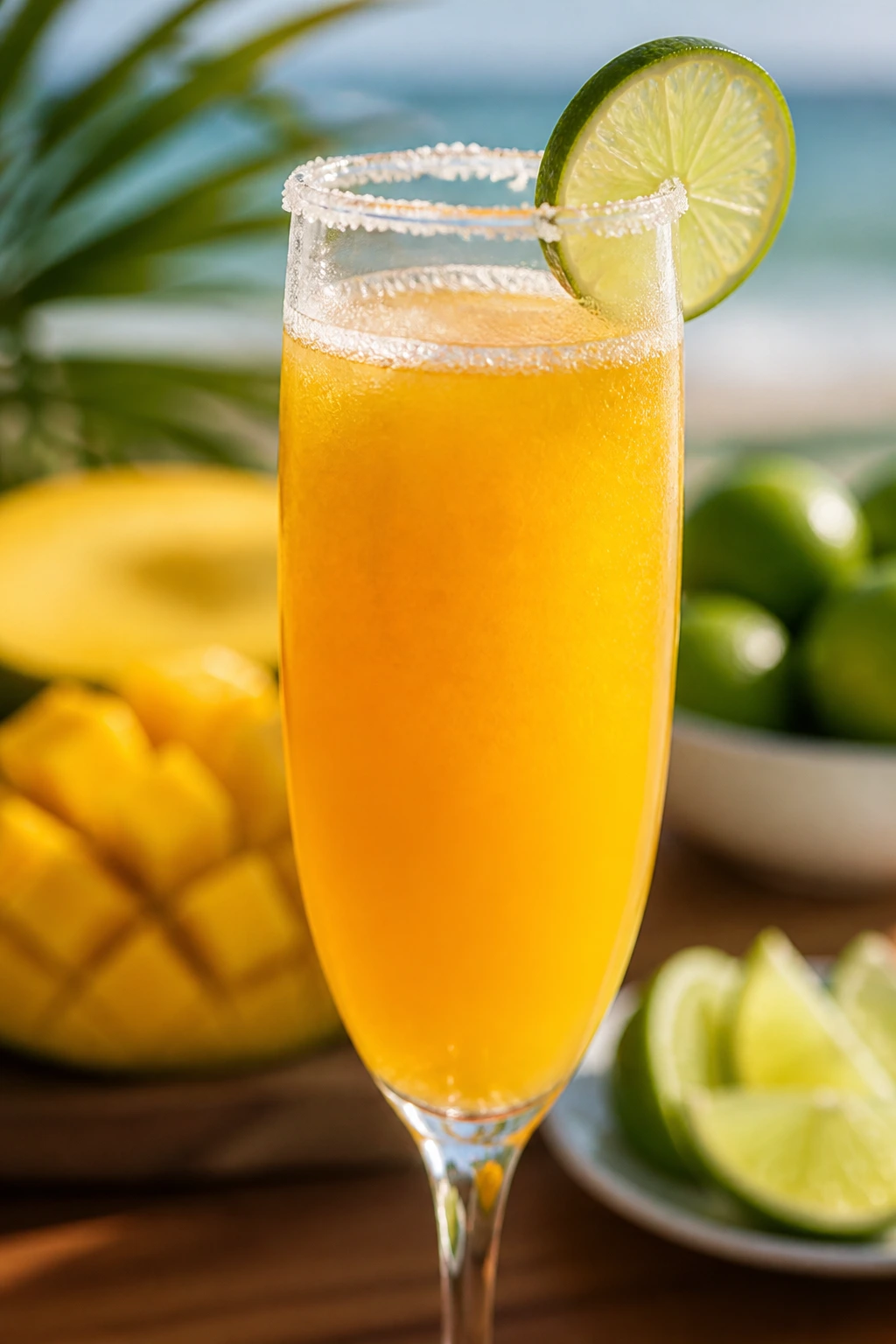
Mango brings thick, sun-ripened sweetness, and lime cuts right through it. This is one of the easiest ways to make a mimosa bar feel bold without making the drinks complicated. The color is intense, almost neon in the right light.
Why It Works: Mango purée has body, so it clings to the glass in a pleasing way, but lime keeps the sip from getting muddy. A salted rim works if you like a sharper finish.
Key Ingredients:
- 1 bottle brut sparkling wine
- 1 1/2 cups mango purée or mango nectar
- 1 tablespoon fresh lime juice
- Lime wheels, for garnish
- Chili-lime salt, optional for rims
Quick Steps:
- Stir the mango purée and lime juice until smooth.
- If using a rim, moisten the glass and dip it in chili-lime salt.
- Pour the mango base into the flute, top with sparkling wine, and garnish with lime.
Equipment for This Recipe:
- Pitcher
- Citrus juicer
- Rimming plate
- Champagne flutes
How to Serve This Dish: Serve it with the rim only if the food table has salty bites nearby; otherwise, let the fruit do the talking. It’s a strong match for spicy brunch dishes.
Pro Tips for This Recipe:
- Mango nectar is thinner than purée. Adjust with 1 to 2 tablespoons of cold water if needed.
- Taste before salting the rim; some mangos are sweet enough on their own.
Variations on This Dish:
- Mango Chili-Lime: Add a tiny pinch of chili powder to the salt rim.
- Mango Ginger: Stir in 1 teaspoon ginger syrup for a warmer finish.
Common Mistakes to Avoid with This Dish:
- Using underripe mango: The drink turns chalky instead of lush.
- Overdoing the salt rim: Too much salt makes the first sip harsh.
9. Raspberry Basil Flute
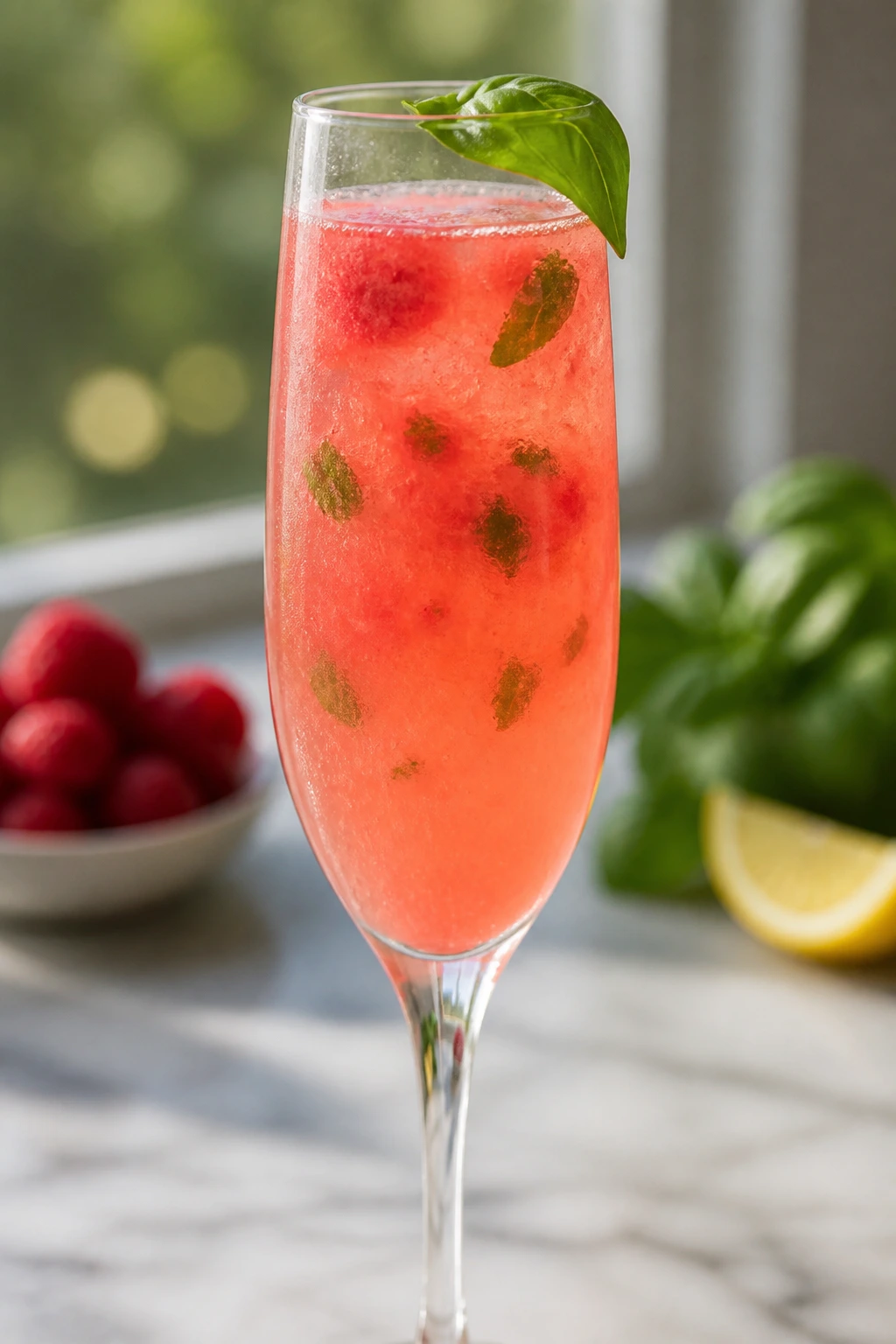
Raspberry and basil sound a little unexpected until you taste them together. The berry brings the perfume, the basil brings a green snap, and the sparkling wine keeps everything bright. It’s one of my favorites because it feels fresh without trying too hard.
Why It Works: Raspberries have enough acid to keep the drink from tasting syrupy, and basil rounds out the sharp edges with a savory note. A few torn leaves are enough; you do not need a whole garden.
Key Ingredients:
- 1 bottle prosecco
- 1 1/2 cups raspberry purée, strained
- 6 basil leaves, torn
- 1 teaspoon lemon juice
- Fresh raspberries, for garnish
Quick Steps:
- Stir the raspberry purée, lemon juice, and torn basil together.
- Let it sit for 5 minutes so the basil perfumes the base.
- Pour, top with prosecco, and garnish with fresh raspberries.
Equipment for This Recipe:
- Fine-mesh strainer
- Pitcher
- Spoon
- Champagne flutes
How to Serve This Dish: A few raspberries floating in the flute look cleaner than a crowded garnish pile. Serve with goat cheese toast or a plate of berries and cream.
Pro Tips for This Recipe:
- Strain the raspberry seeds if you want a smoother, less gritty texture.
- Tear basil by hand; a knife bruises the leaves more than it needs to.
Variations on This Dish:
- Raspberry Mint: Swap basil for mint if you want a cooler, sweeter aroma.
- Sparkling Spritz: Add 1 tablespoon raspberry syrup for a more dramatic berry color.
Common Mistakes to Avoid with This Dish:
- Over-muddling basil: The flavor can go bitter fast.
- Using too much lemon: Raspberries already bring acid; overdoing it makes the drink sharp.
10. Blackberry Sage Sparkle
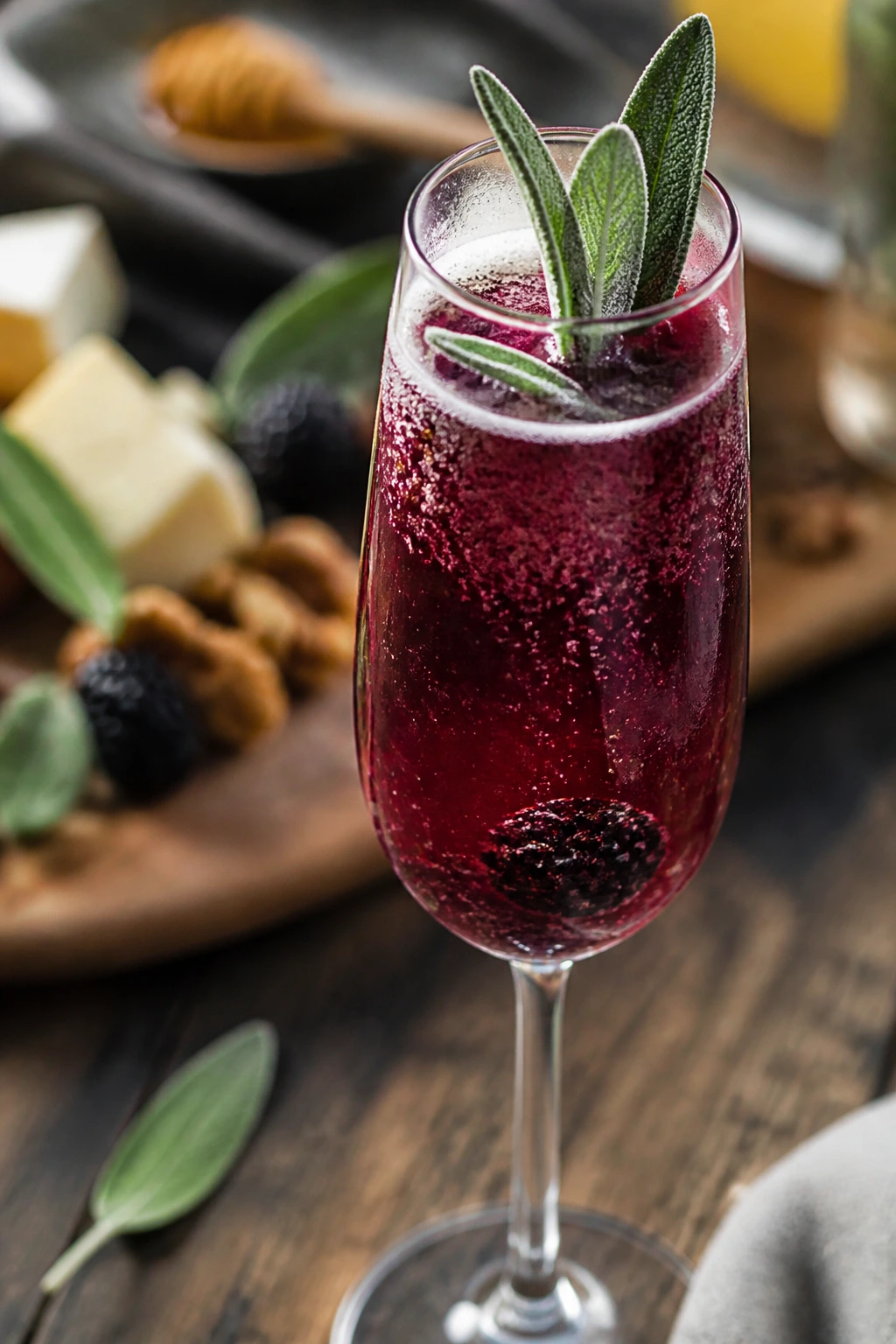
Blackberries give you that dark, almost wine-like berry flavor, and sage adds a dry, savory edge that keeps the drink from feeling sticky. This is the one I’d put next to a cheese board. It tastes like someone thought about the pairing for once.
Why It Works: Blackberries are bold enough to hold up to sparkling wine, and sage behaves better than many herbs in a sweet drink because it leans earthy instead of perfumed. A small spoonful of honey smooths the edges.
Key Ingredients:
- 1 bottle brut sparkling wine
- 1 1/2 cups blackberry purée
- 1 teaspoon honey
- 4 sage leaves
- Blackberries, for garnish
Quick Steps:
- Stir the blackberry purée and honey together until dissolved.
- Add the sage leaves and let them sit for 3 to 5 minutes.
- Pour, top with sparkling wine, and add a blackberry to each glass.
Equipment for This Recipe:
- Pitcher
- Muddler or spoon
- Fine-mesh strainer
- Champagne flutes
How to Serve This Dish: Keep the glass uncluttered and let the dark color do the work. It’s good with aged cheese, crackers, or smoked nuts.
Pro Tips for This Recipe:
- Sage gets strong quickly, so steep briefly.
- If the purée is thick, strain it once for a cleaner pour.
Variations on This Dish:
- Blackberry Thyme: Use thyme if you want less earthiness.
- Honey Blackberry: Increase the honey to 2 teaspoons if the berries are tart.
Common Mistakes to Avoid with This Dish:
- Leaving sage in the pitcher too long: The drink can turn medicinal.
- Using jam instead of berries: Jam makes the texture heavy and gloopy.
11. Blood Orange Brunch Mimosa
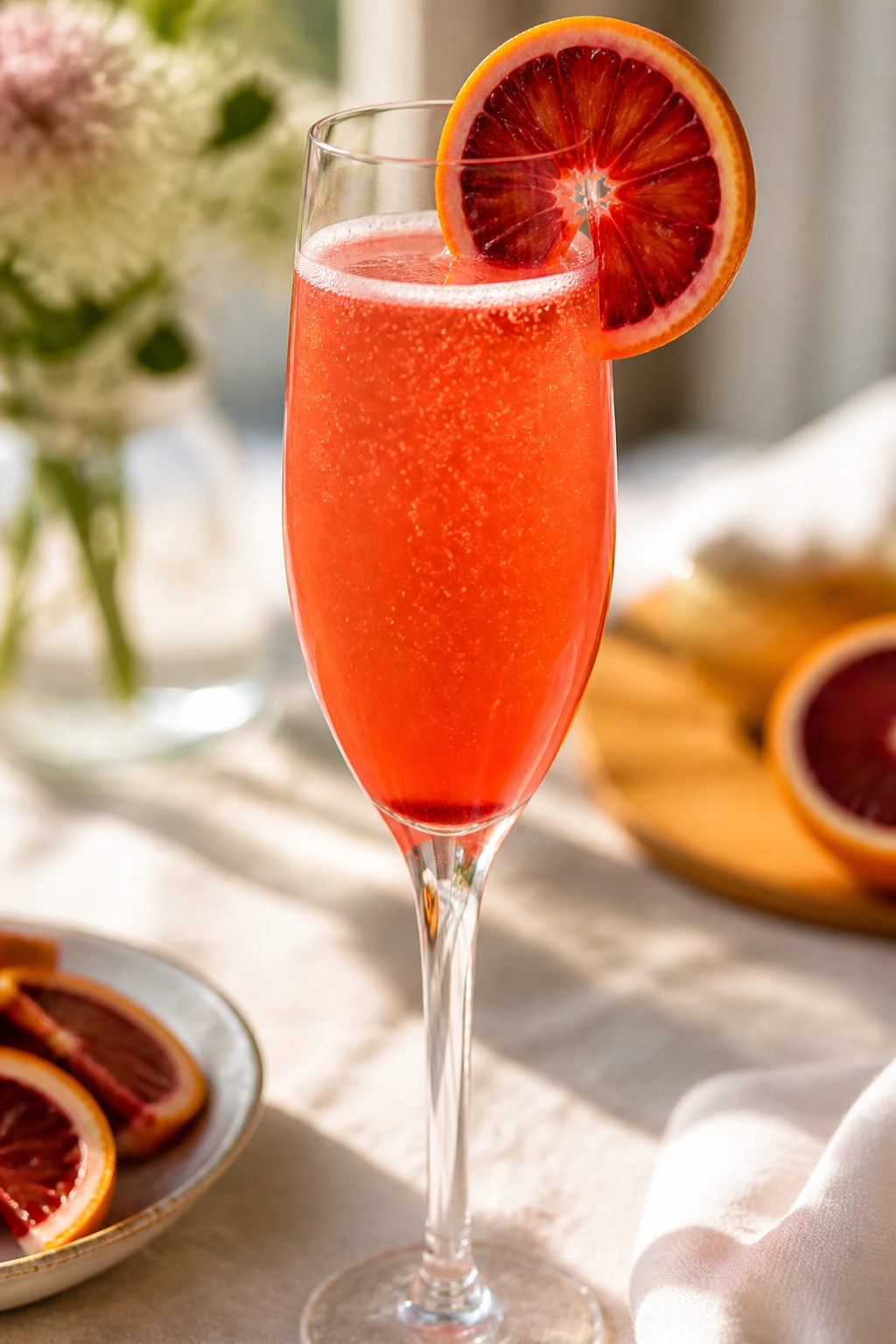
Blood orange gives you that deep ruby color people notice from across the table. The flavor is less sweet than regular orange and a little more complex, which makes it one of the best swap-ins if you want a classic that tastes a bit sharper.
Why It Works: Blood orange juice sits between sweet orange and grapefruit in flavor, so it plays nicely with dry bubbles. A thin wheel of the fruit looks dramatic without needing anything extra.
Key Ingredients:
- 1 bottle cava
- 1 1/2 cups blood orange juice, strained
- 1 tablespoon orange liqueur, optional
- Blood orange wheels, for garnish
Quick Steps:
- Chill the juice until very cold.
- Stir in the orange liqueur if you want a slightly stronger pour.
- Top with cava and garnish with a wheel of blood orange.
Equipment for This Recipe:
- Citrus juicer
- Pitcher
- Knife
- Champagne flutes
How to Serve This Dish: This is a strong match for brunch plates with smoked fish, eggs, or crisp potatoes. The color does half the decorating for you.
Pro Tips for This Recipe:
- Blood oranges can vary a lot in sweetness; taste before adding liqueur.
- Strain the juice if you want a glossy, clean look in the flute.
Variations on This Dish:
- Ruby Citrus Mix: Add a splash of grapefruit juice for extra bite.
- Lower-ABV Pour: Skip the liqueur and keep the wine-to-juice ratio tighter.
Common Mistakes to Avoid with This Dish:
- Choosing a sweet sparkling wine: It dulls the citrus edge.
- Serving it warm: Blood orange tastes flat when the glass isn’t cold.
12. Cantaloupe Honey Sparkler
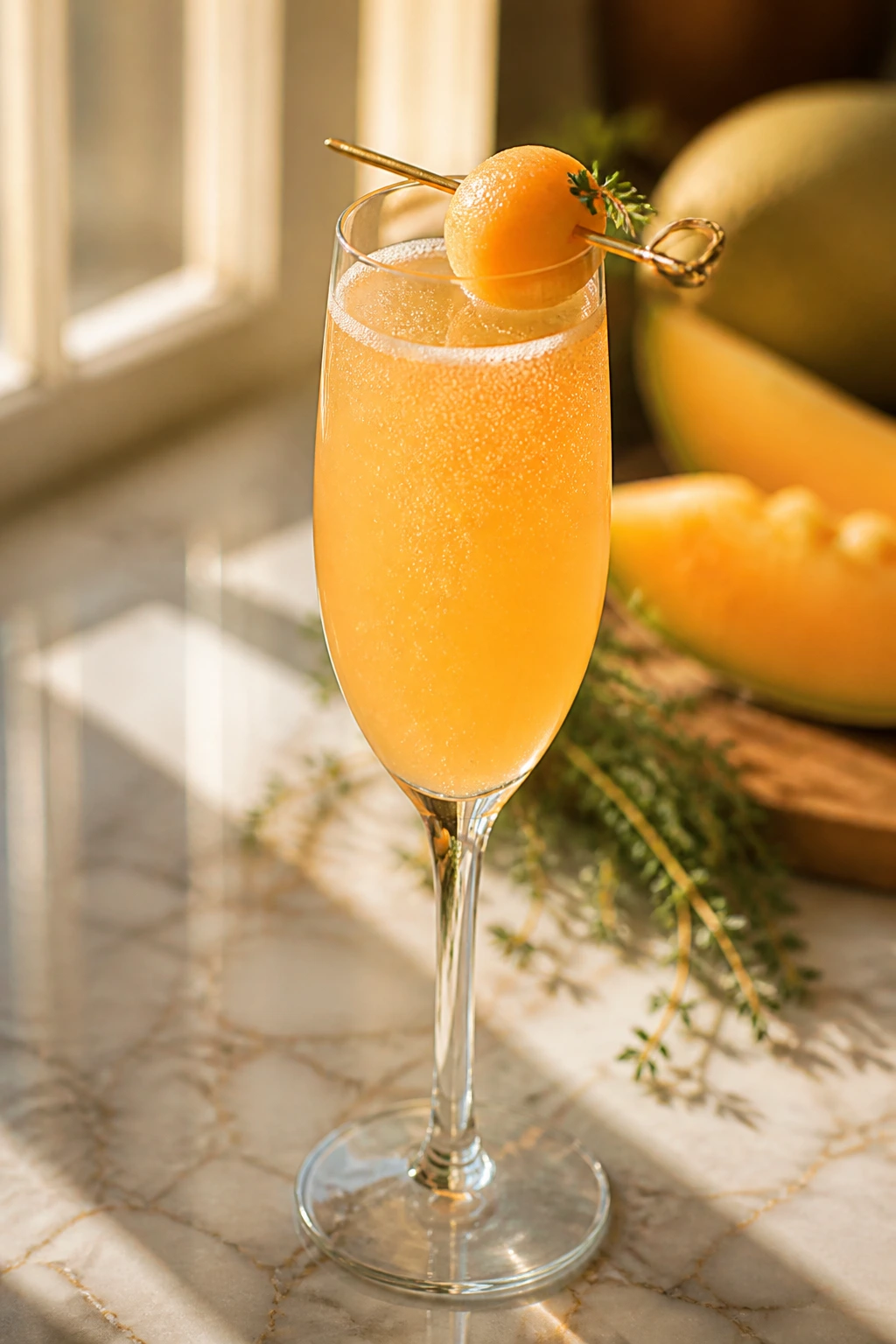
Cantaloupe is gentle, soft, and a little floral, which sounds mild until you pair it with honey and bubbles. This is the quiet drink on the table, and that’s not a flaw. Not every glass needs to shout.
Why It Works: Cantaloupe purée has a silky texture and a subtle perfume that gets lost unless you keep the recipe simple. A bit of honey boosts the melon without making it taste syrupy.
Key Ingredients:
- 1 bottle prosecco
- 1 1/2 cups cantaloupe purée
- 1 teaspoon honey
- 2 thyme sprigs
- Cantaloupe balls, for garnish
Quick Steps:
- Blend the cantaloupe until smooth.
- Stir in the honey and steep the thyme for 2 to 3 minutes.
- Pour, top with prosecco, and garnish with melon balls.
Equipment for This Recipe:
- Blender
- Fine strainer, optional
- Pitcher
- Champagne flutes
How to Serve This Dish: A melon ball on a cocktail pick looks clean and makes the drink feel finished. Serve it with prosciutto, soft bread, or a bowl of chilled fruit.
Pro Tips for This Recipe:
- Choose ripe cantaloupe with a sweet smell at the stem end.
- Thyme should stay in the background; remove it before the flavor gets woody.
Variations on This Dish:
- Minted Melon: Swap thyme for mint if you want a cooler finish.
- Cantaloupe-Lime: Add 1 teaspoon lime juice to sharpen the melon.
Common Mistakes to Avoid with This Dish:
- Using under-ripe cantaloupe: The drink ends up pale and bland.
- Over-sweetening the base: Honey should support the fruit, not bury it.
13. Honeydew Cucumber Cooler
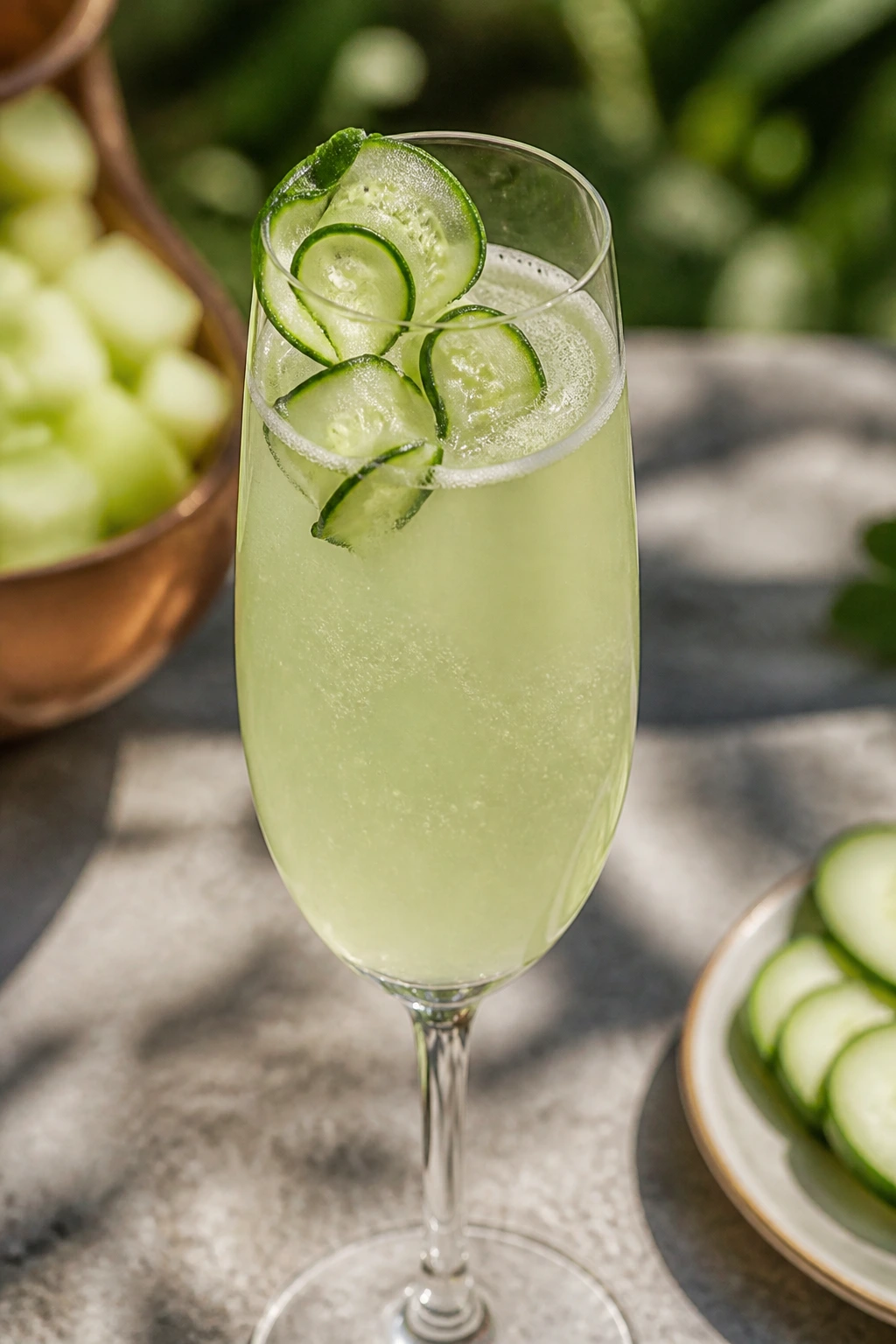
Honeydew and cucumber make a pale, cool drink that tastes like it belongs on a shaded patio. It’s light, crisp, and almost translucent if you strain it well. I like this one because it gives the bar a green note without tasting like salad.
Why It Works: Honeydew brings a soft melon sweetness, cucumber adds snap, and lime keeps the whole thing from going sleepy. If you want a drink that feels refreshing instead of dessert-like, this is the move.
Key Ingredients:
- 1 bottle brut sparkling wine
- 1 cup honeydew purée
- 1/2 cup cucumber juice or finely strained cucumber purée
- 1 tablespoon lime juice
- Cucumber ribbons, for garnish
Quick Steps:
- Blend and strain the honeydew and cucumber separately if needed.
- Stir the melon, cucumber, and lime together in a pitcher.
- Pour into flutes, top with sparkling wine, and add cucumber ribbons.
Equipment for This Recipe:
- Blender
- Fine-mesh strainer
- Vegetable peeler
- Pitcher
How to Serve This Dish: Use thin cucumber ribbons instead of thick slices so the glass stays elegant. It works well with light sandwiches and chilled shrimp.
Pro Tips for This Recipe:
- Strain the cucumber well; the pulp can make the drink look muddy.
- Add the lime last so the flavor stays bright.
Variations on This Dish:
- Garden Cooler: Add mint and a touch of basil.
- Salted Rim: A tiny pinch of salt makes the melon taste fuller.
Common Mistakes to Avoid with This Dish:
- Using thick cucumber purée: The texture gets heavy fast.
- Skipping acid: Without lime, the drink can taste flat and watery.
14. Apricot Thyme Mimosa
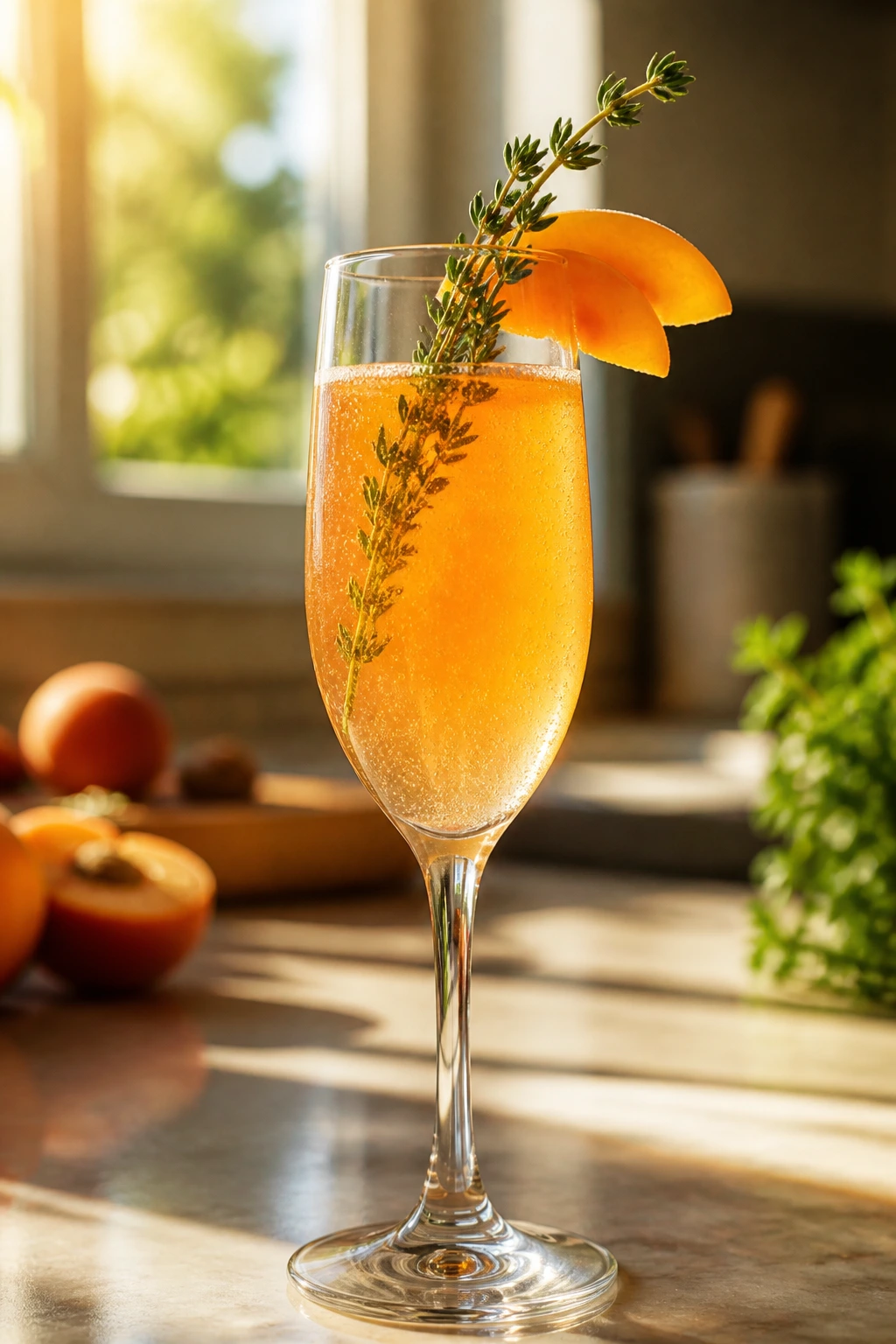
Apricot has a warm, honeyed flavor that feels a little old-school in the best way. Thyme keeps it from going soft and gives the drink a dry, herbal finish. This is a calm, polished drink, not a loud one.
Why It Works: Apricot nectar has enough body to stand up to sparkling wine, and thyme adds a savory line that keeps the sweetness in check. A short steep is enough; you’re after aroma, not stew.
Key Ingredients:
- 1 bottle cava
- 1 1/2 cups apricot nectar
- 1 teaspoon thyme syrup
- Fresh apricot slices
- Thyme sprigs, for garnish
Quick Steps:
- Stir the apricot nectar and thyme syrup in a pitcher.
- Let it sit for 3 minutes so the thyme opens up.
- Pour, top with cava, and garnish with apricot slices.
Equipment for This Recipe:
- Pitcher
- Knife
- Champagne flutes
- Spoon
How to Serve This Dish: Slice the apricots thin so they sit on the rim without slipping. This one is good with biscuits, jam, or baked fruit tarts.
Pro Tips for This Recipe:
- Apricot nectar varies a lot; taste before adding any extra sweetener.
- Remove thyme sprigs after steeping if the flavor starts to turn dry.
Variations on This Dish:
- Apricot Ginger: Swap thyme syrup for ginger syrup for more heat.
- Stone Fruit Mix: Add a splash of peach nectar to round out the flavor.
Common Mistakes to Avoid with This Dish:
- Using tart, underripe apricots: They don’t soften into the drink well.
- Letting the thyme steep too long: The herb can take over fast.
15. Lemon Elderflower Fizz
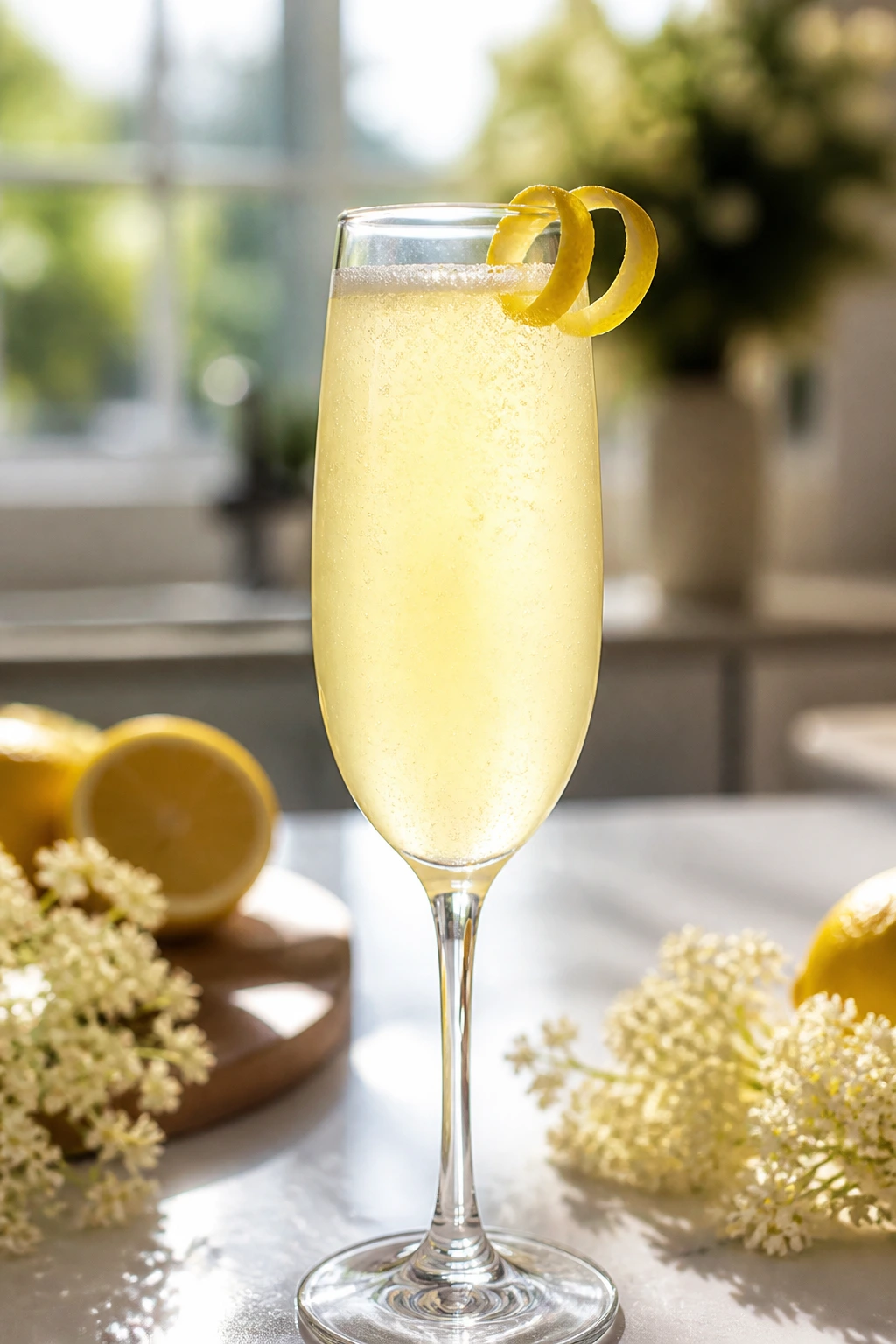
This one tastes airy and bright, with a floral note that sits right behind the citrus. Lemon gives the drink lift, elderflower gives it perfume, and the bubbles keep it all moving. It feels fancy without getting fussy.
Why It Works: Elderflower has enough sweetness to soften lemon’s sharp edge, but not so much that the drink turns syrupy. A narrow lemon peel twist makes the aroma pop the second the flute reaches your hand.
Key Ingredients:
- 1 bottle brut sparkling wine
- 1 1/4 cups lemonade, chilled
- 1/4 cup elderflower liqueur or elderflower syrup
- Lemon twists, for garnish
Quick Steps:
- Stir the lemonade and elderflower into a pitcher.
- Fill each flute halfway with the base.
- Top with sparkling wine and garnish with a lemon twist.
Equipment for This Recipe:
- Pitcher
- Peeler or zester
- Champagne flutes
- Measuring cup
How to Serve This Dish: A lemon twist is enough; this drink doesn’t need much help. It works with herb-forward snacks, light pastries, and berries.
Pro Tips for This Recipe:
- Use unsweetened or lightly sweet lemonade if you want more sparkle and less sugar.
- Twist the lemon peel over the glass before dropping it in to release the oils.
Variations on This Dish:
- Lemon Thyme: Add a thyme sprig for a drier finish.
- Sparkling Zero-Proof: Swap in alcohol-free bubbles and keep the same lemon-elderflower base.
Common Mistakes to Avoid with This Dish:
- Using too much elderflower syrup: It can taste like candy if you’re careless.
- Serving with warm lemonade: Chill the base or the bubbles will vanish quickly.
16. Cherry Vanilla Mimosa
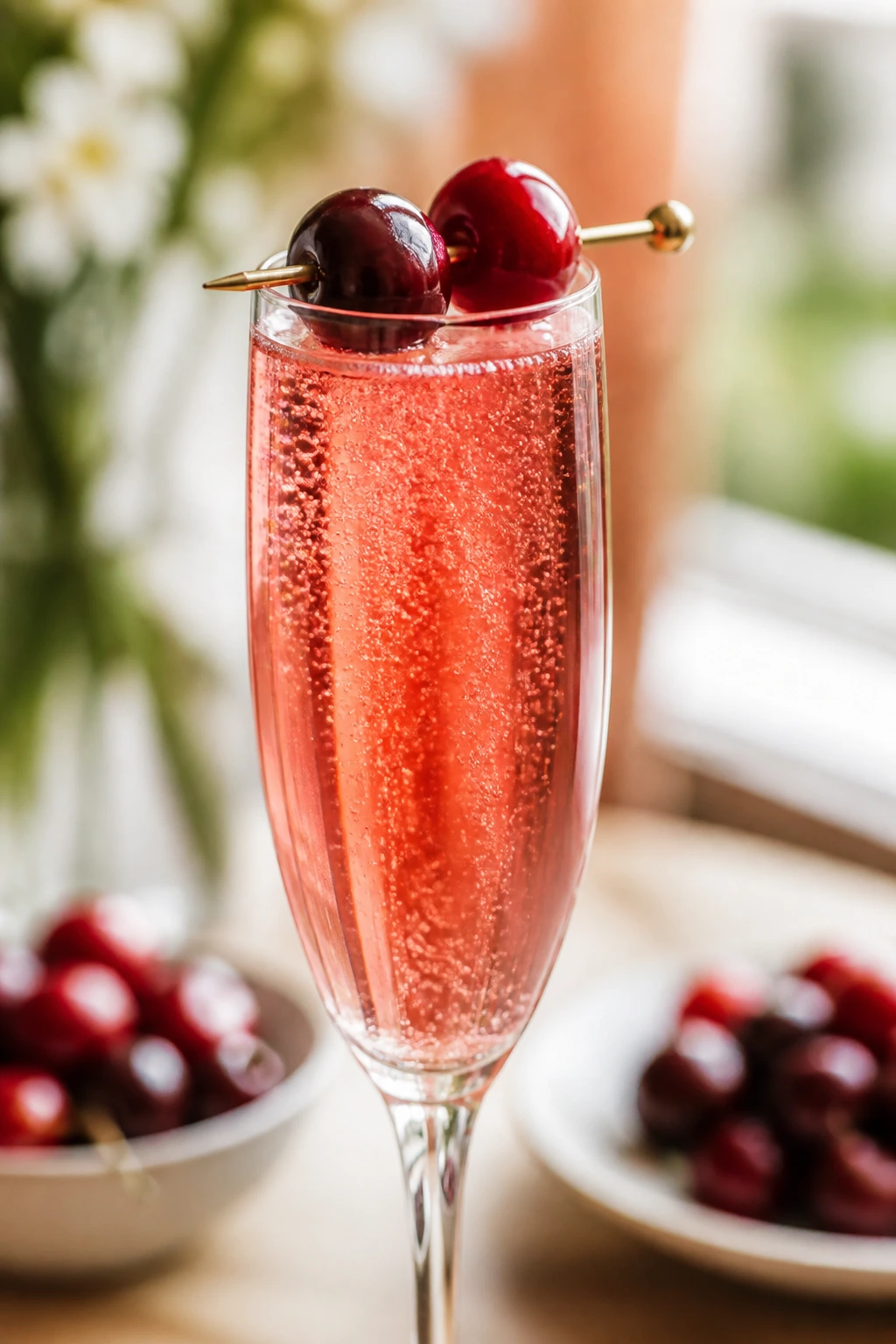
Cherry and vanilla is a softer, rounder combination than most fruit mimosas. It tastes a little like a summer dessert, but in a glass that still drinks clean if you keep the vanilla restrained. The color is deep pink, almost polished.
Why It Works: Cherry juice can be tart or sweet, which is why a little vanilla syrup gives it a plush middle without flattening the drink. Dry bubbles keep it from reading like soda.
Key Ingredients:
- 1 bottle prosecco
- 1 1/2 cups cherry juice
- 1 teaspoon vanilla syrup
- Fresh cherries, pitted if needed, for garnish
Quick Steps:
- Stir the cherry juice and vanilla syrup in a pitcher.
- Taste and adjust with a few drops of lemon juice if it feels too sweet.
- Top with prosecco and garnish with cherries.
Equipment for This Recipe:
- Pitcher
- Jigger or measuring spoon
- Champagne flutes
- Cherry pitter, optional
How to Serve This Dish: Serve with the cherry resting on a pick or dropped straight in. It works especially well with vanilla pastries or buttery breakfast bread.
Pro Tips for This Recipe:
- Use tart cherry juice if you want more backbone.
- A tiny squeeze of lemon can keep the vanilla from drifting into dessert territory.
Variations on This Dish:
- Black Cherry: Use black cherry juice for a darker, richer pour.
- Cherry Almond: Add a drop of almond extract, not more, for marzipan notes.
Common Mistakes to Avoid with This Dish:
- Adding too much vanilla syrup: The drink can taste like frosting.
- Using maraschino cherry juice: It’s too sweet and artificial for this setup.
17. Tangerine Basil Brunch Pour
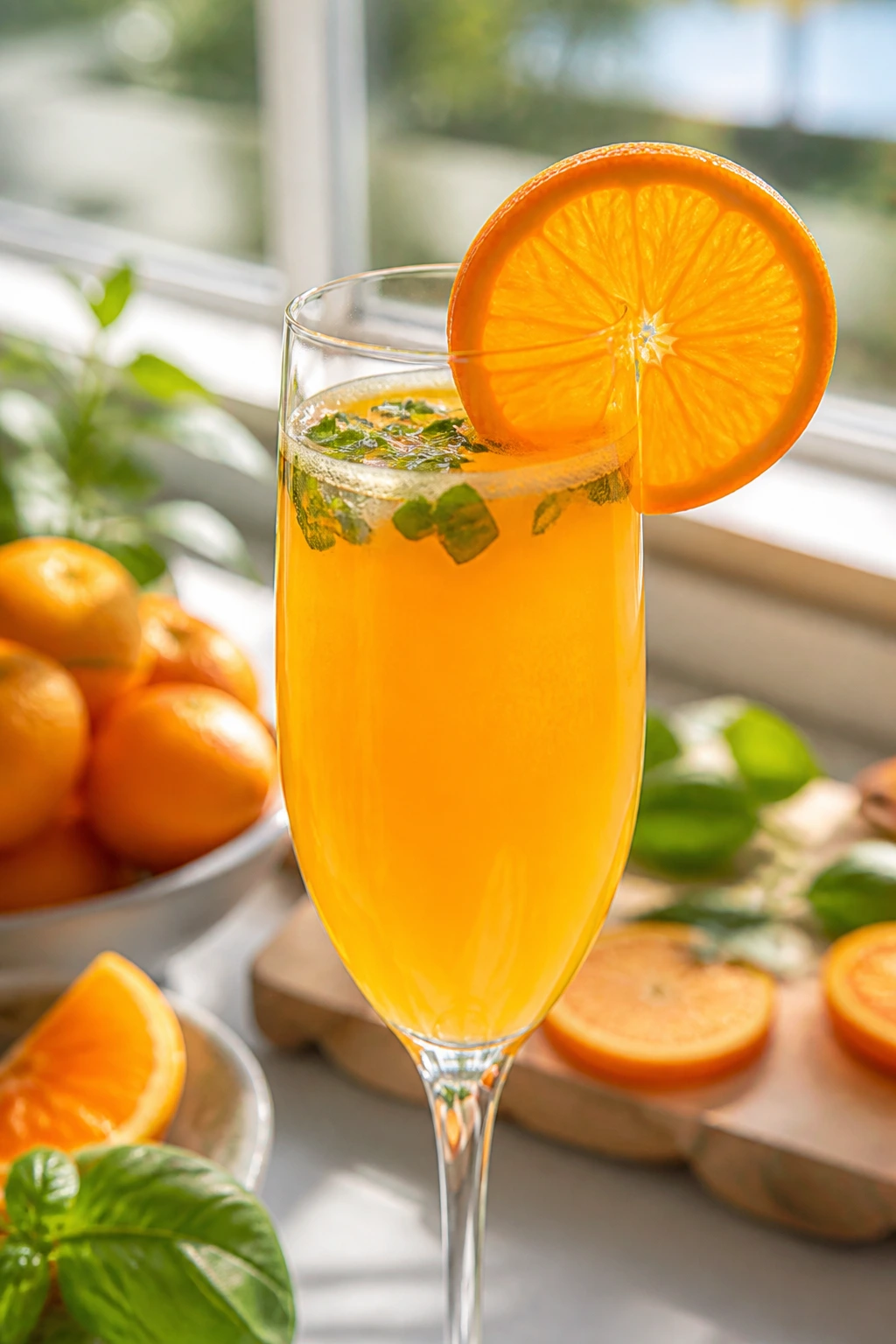
Tangerines have a sharper, brighter citrus note than orange, and that makes them a nice change of pace. Basil cuts through the sweetness and gives the drink a green, peppery smell that feels clean on a warm day.
Why It Works: Tangerine juice has enough acidity to stay lively in a flute, and basil helps it feel fresh instead of candy-sweet. A few torn leaves are enough to perfume the whole glass.
Key Ingredients:
- 1 bottle brut sparkling wine
- 1 1/2 cups tangerine juice
- 1 teaspoon simple syrup, optional
- 6 basil leaves, torn
- Tangerine rounds, for garnish
Quick Steps:
- Stir the tangerine juice and basil together in a pitcher.
- Let it sit for 5 minutes, then taste for sweetness.
- Pour into flutes, top with sparkling wine, and garnish with tangerine.
Equipment for This Recipe:
- Pitcher
- Knife
- Champagne flutes
- Fine strainer, optional
How to Serve This Dish: A tangerine round looks brighter than a wedge and sits nicely on the rim. Serve it with salty nuts or soft breakfast pastries.
Pro Tips for This Recipe:
- Basil bruises fast; tear, don’t crush.
- If the tangerines are especially sweet, skip the simple syrup entirely.
Variations on This Dish:
- Tangerine Mint: Swap basil for mint if you want a cooler finish.
- Tangerine-Ginger: Add a tiny splash of ginger syrup for more bite.
Common Mistakes to Avoid with This Dish:
- Oversteeping the basil: The herb can go peppery and dull.
- Using thick, pulpy juice: It makes the glass look cloudy.
18. Guava Ginger Sparkler
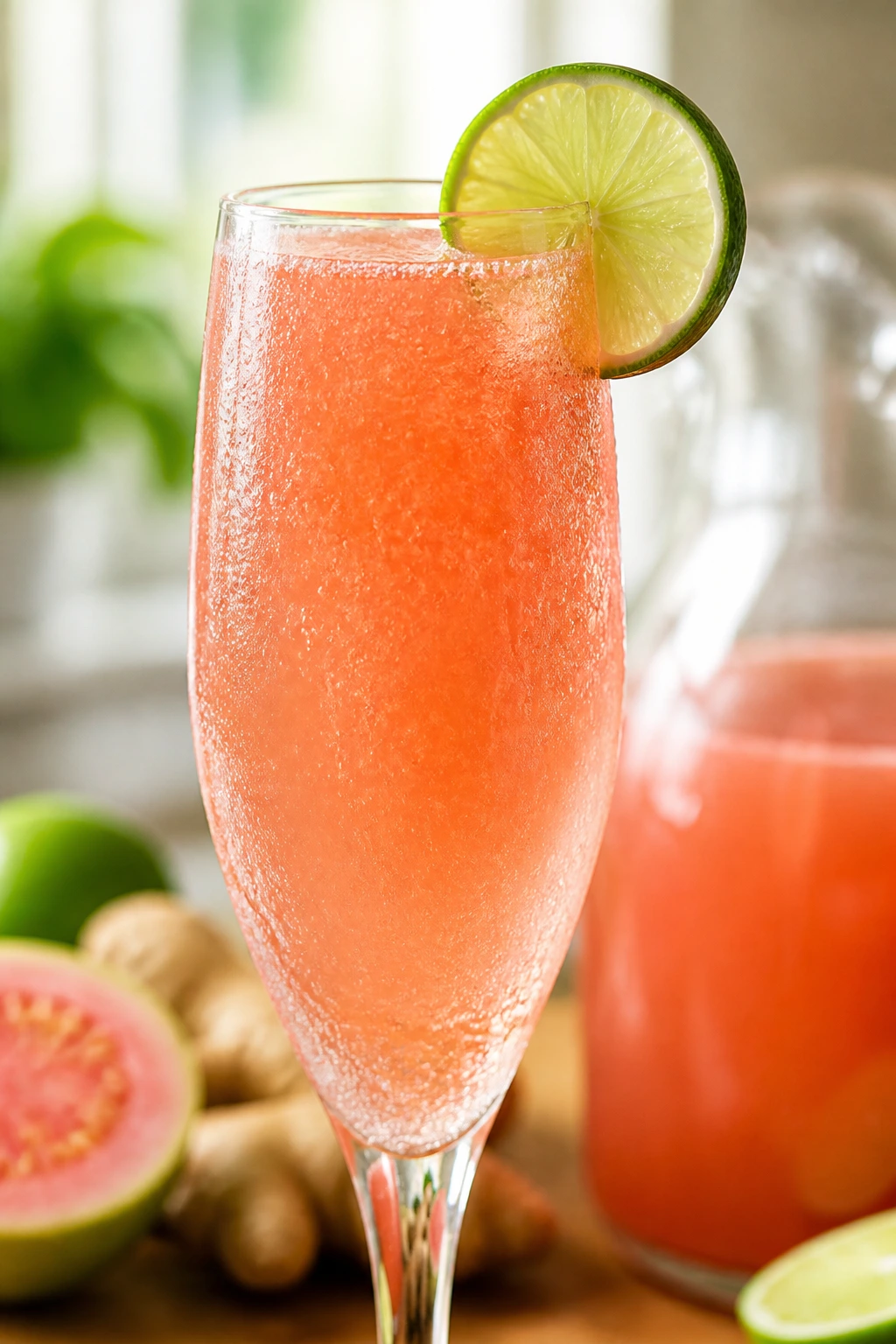
Guava is one of those flavors that smells tropical before it even hits your tongue. Ginger gives it a little heat, which is useful because guava nectar can get soft and sweet fast. This is a lively pour, not a sleepy one.
Why It Works: Guava brings perfume and body, while ginger lifts the flavor and keeps it from sinking. The combination reads bright and warm at the same time.
Key Ingredients:
- 1 bottle prosecco
- 1 1/2 cups guava nectar
- 1 teaspoon ginger syrup or fresh ginger juice
- Lime wheels, for garnish
Quick Steps:
- Stir the guava nectar and ginger together in a pitcher.
- Taste and add a touch more ginger if you want more bite.
- Top with prosecco and garnish with lime.
Equipment for This Recipe:
- Pitcher
- Measuring spoon
- Champagne flutes
- Knife
How to Serve This Dish: Keep the garnish lean so the guava color stays front and center. It’s good with spicy fruit salads or savory bites.
Pro Tips for This Recipe:
- Guava nectar varies a lot by brand; some need extra lime to stay bright.
- Fresh ginger juice is potent, so start with less than you think.
Variations on This Dish:
- Guava Lime: Add an extra teaspoon of lime juice for a sharper finish.
- Guava Chili: Add a tiny chili-salt rim if you want heat.
Common Mistakes to Avoid with This Dish:
- Using too much ginger: It can overwhelm the guava in seconds.
- Serving it too sweet: Guava already brings plenty of sugar.
19. Kiwi Mint Mimosa
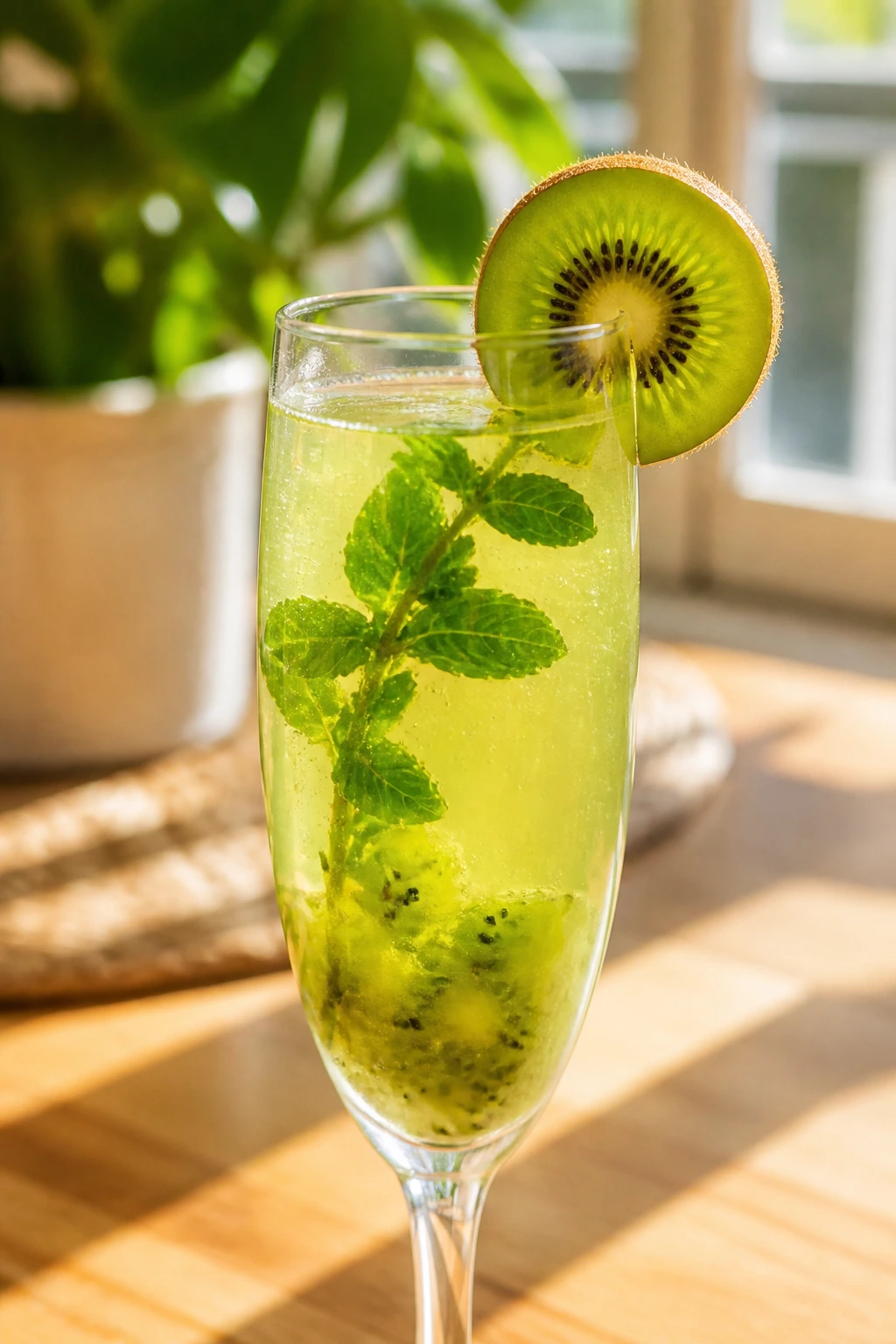
Kiwi gives you tartness and a little tang, while mint keeps the drink cold in your head before it’s cold in the glass. The color is bright green-gold if you strain it well, which makes it one of the more playful options on the bar.
Why It Works: Kiwi has enough acid to work with dry bubbles, and mint gives the drink a fresh finish that keeps it from tasting like puree. This one is best when it’s strained smooth.
Key Ingredients:
- 1 bottle cava
- 1 1/2 cups kiwi purée
- 1 teaspoon lime juice
- 6 mint leaves
- Kiwi slices, for garnish
Quick Steps:
- Blend the kiwi until smooth and strain if needed.
- Stir in the lime juice and gently press the mint leaves in the pitcher.
- Top with cava and garnish with kiwi slices.
Equipment for This Recipe:
- Blender
- Fine strainer
- Pitcher
- Champagne flutes
How to Serve This Dish: Use one thin kiwi slice per glass so the drink doesn’t look crowded. It pairs well with cucumber sandwiches and fresh fruit.
Pro Tips for This Recipe:
- Kiwi seeds are fine, but the skin is not. Peel first.
- Mint should stay bright; add it at the end if you’re making the base early.
Variations on This Dish:
- Kiwi Cucumber: Add a splash of cucumber juice for a cooler flavor.
- Kiwi Basil: Swap mint for basil if you want something less minty.
Common Mistakes to Avoid with This Dish:
- Leaving the purée unstrained when it’s too thick: The texture can feel rough.
- Using overripe kiwi: It can turn dull and overly sweet.
20. Passion Fruit Prosecco Pour
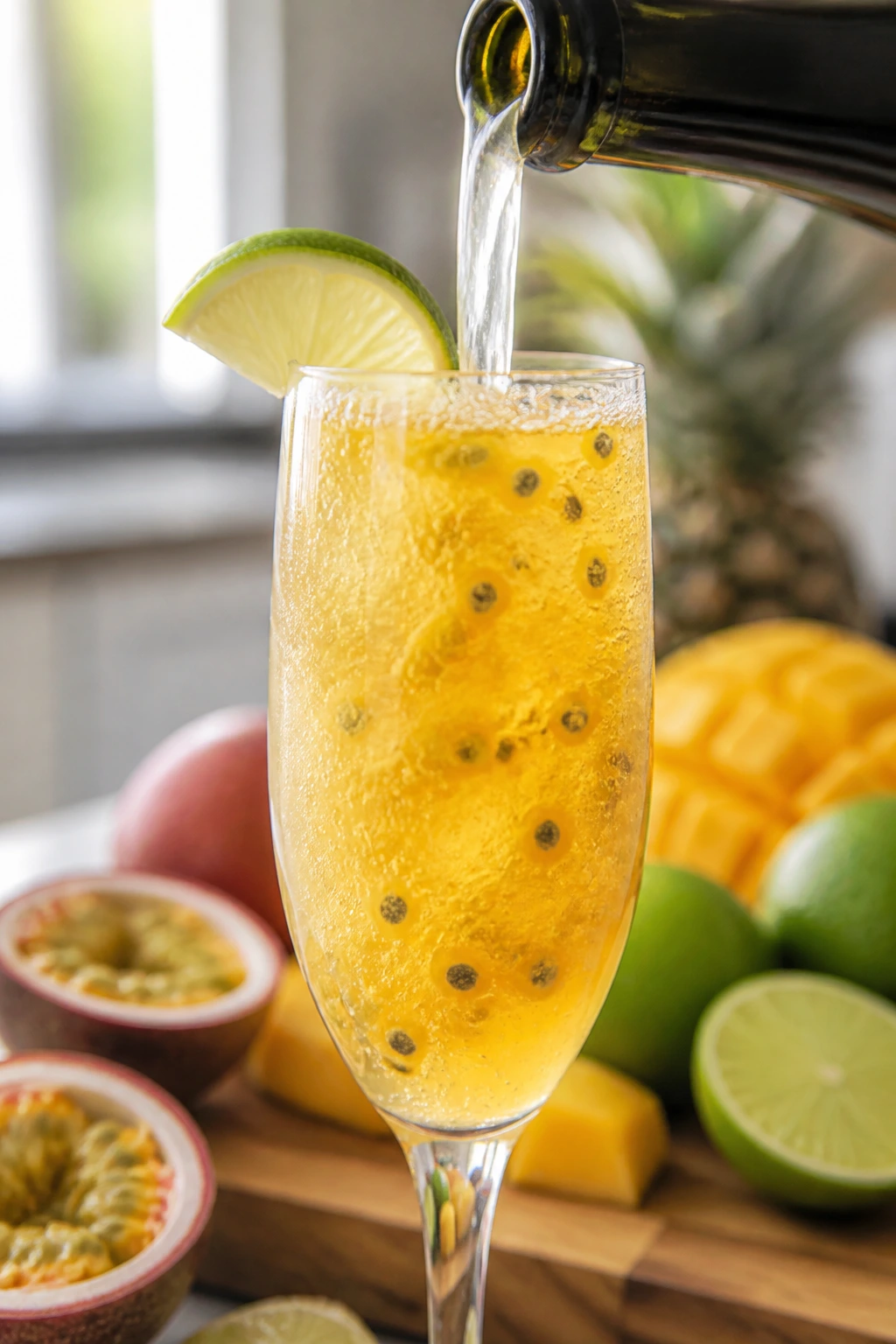
Passion fruit has a sharp, floral punch that wakes up a mimosa bar fast. It’s the flavor people notice after one sip. If you want something that tastes tropical but not lazy, this is it.
Why It Works: Passion fruit nectar already has a strong aroma, so dry sparkling wine keeps it from becoming sticky. Lime adds structure, which matters because passion fruit can be fragrant but soft.
Key Ingredients:
- 1 bottle prosecco
- 1 1/2 cups passion fruit nectar
- 1 tablespoon fresh lime juice
- Passion fruit seeds, for garnish
Quick Steps:
- Stir the nectar and lime juice together.
- If the nectar is very sweet, add another teaspoon of lime.
- Pour, top with prosecco, and finish with a few passion fruit seeds.
Equipment for This Recipe:
- Pitcher
- Citrus juicer
- Champagne flutes
- Spoon
How to Serve This Dish: A few seeds floating in the glass make it feel intentional, not messy. Serve it with tropical fruit, cheese, or plain butter cookies.
Pro Tips for This Recipe:
- Passion fruit can go sweet fast, so taste before you pour.
- Chill the nectar hard; the aroma reads better when it’s cold.
Variations on This Dish:
- Passion Fruit Pineapple: Add 1/4 cup pineapple juice for a softer finish.
- Spicy Passion Fruit: Add a tiny pinch of chili powder to the garnish sugar.
Common Mistakes to Avoid with This Dish:
- Using too much sweetener: Passion fruit does not need help from a heavy hand.
- Serving warm: The aroma flattens quickly when the drink isn’t cold.
21. Hibiscus Grapefruit Mimosa
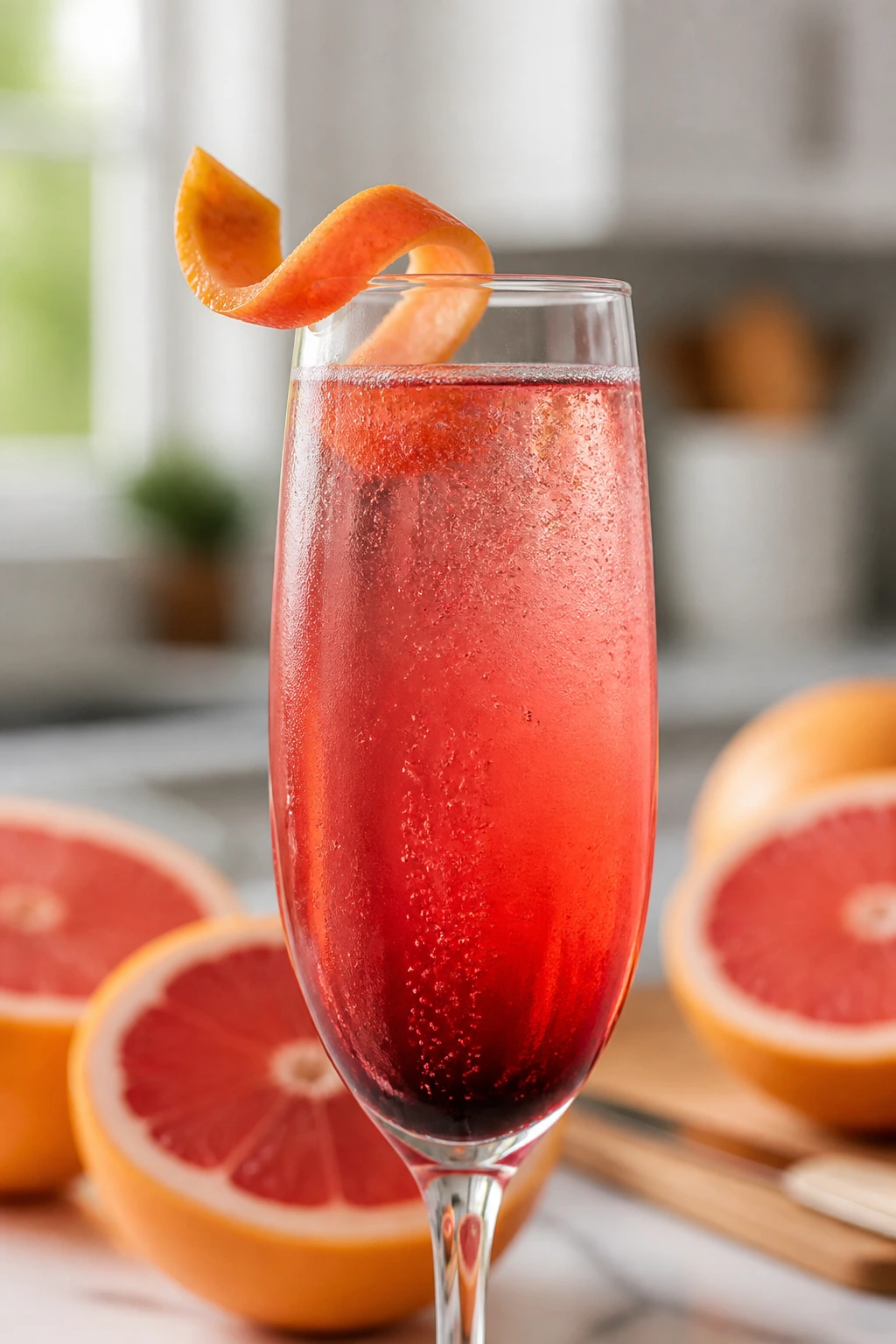
Hibiscus gives the drink a ruby color and a tart edge that plays nicely with grapefruit. This is one of the best ways to make the bar look more layered without buying a second bottle of anything fancy. It tastes sharp, floral, and just a little dramatic.
Why It Works: Grapefruit brings bitterness, hibiscus brings tang, and dry bubbles hold the line so the drink stays crisp. The color alone makes people stop and ask what’s in it.
Key Ingredients:
- 1 bottle brut sparkling wine
- 1 cup grapefruit juice
- 1/2 cup chilled hibiscus tea concentrate or hibiscus syrup
- Grapefruit peel twists, for garnish
Quick Steps:
- Stir the grapefruit juice and hibiscus together in a pitcher.
- Taste before sweetening; hibiscus can go from tart to harsh if overdone.
- Top with sparkling wine and garnish with grapefruit peel.
Equipment for This Recipe:
- Pitcher
- Tea strainer if using loose hibiscus
- Peeler
- Champagne flutes
How to Serve This Dish: Serve it in a clear flute so the color gradient shows. It looks smart beside anything citrusy or salty.
Pro Tips for This Recipe:
- Hibiscus syrup is stronger than tea concentrate; use less if that’s what you have.
- A thin peel gives better aroma than a thick wedge.
Variations on This Dish:
- Hibiscus Orange: Swap half the grapefruit for orange juice.
- Hibiscus Lime: Add a teaspoon of lime juice if you want more bite.
Common Mistakes to Avoid with This Dish:
- Making the hibiscus too strong: The drink can turn sharp and astringent.
- Using cloudy, old grapefruit juice: Fresh juice makes a huge difference here.
22. Peach Ginger Sparkler
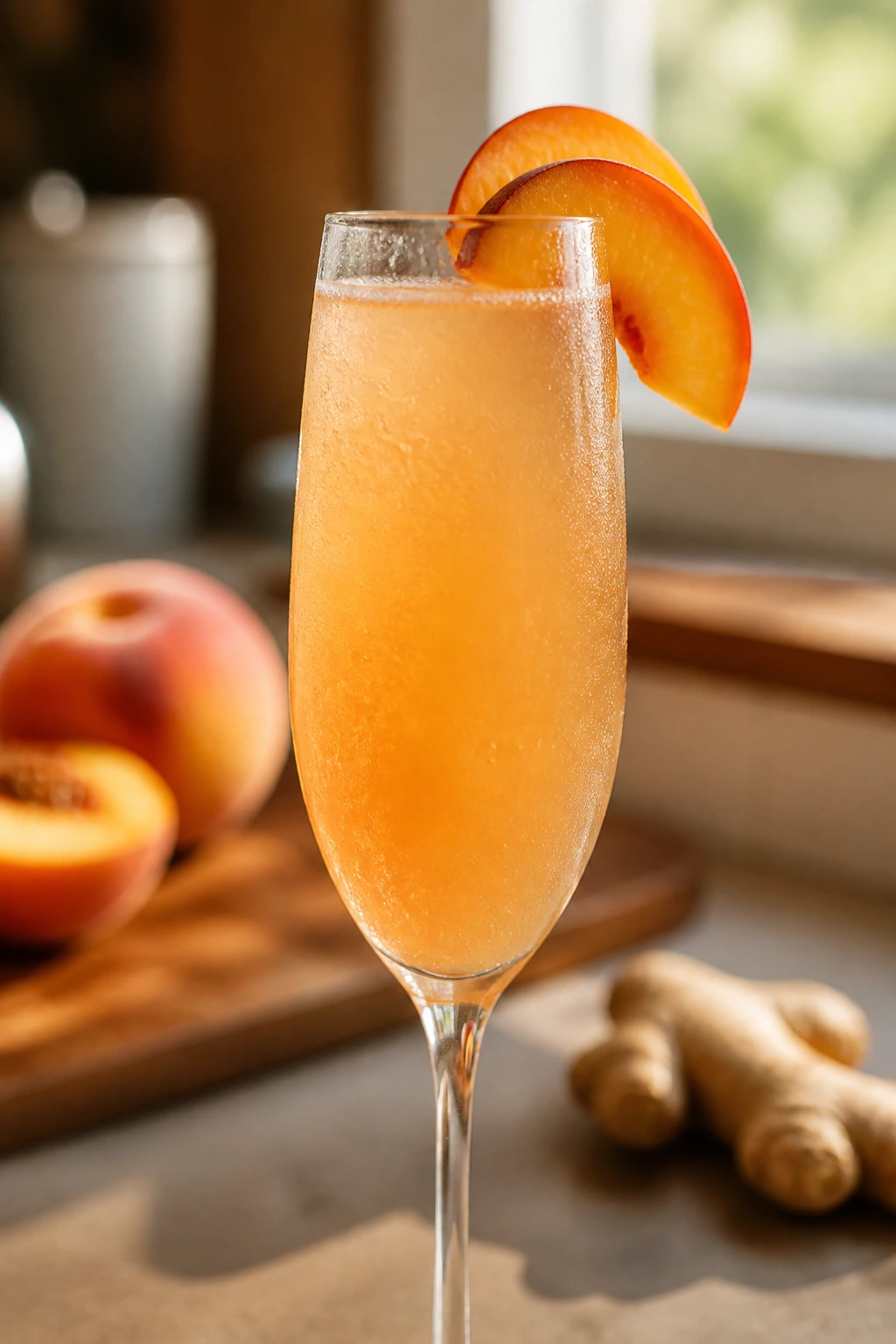
Peach and ginger is a better pair than it gets credit for. The fruit brings softness, the ginger keeps it awake, and the bubbles tie the whole thing together. This one tastes like ripe fruit with a little backbone.
Why It Works: Peach nectar can be lush, almost too lush, so ginger gives it a clean finish. A touch of lemon helps the ginger show up without making the drink harsh.
Key Ingredients:
- 1 bottle cava
- 1 1/2 cups peach nectar
- 1 teaspoon ginger syrup
- 1 teaspoon lemon juice
- Peach slices, for garnish
Quick Steps:
- Stir the peach nectar, ginger syrup, and lemon juice in a pitcher.
- Taste and adjust the ginger in tiny amounts.
- Top with cava and garnish with peach slices.
Equipment for This Recipe:
- Pitcher
- Measuring spoon
- Knife
- Champagne flutes
How to Serve This Dish: A chilled peach slice on the rim is enough. It goes nicely with pastries, ham, or a plate of sliced cheese.
Pro Tips for This Recipe:
- Ginger syrup can dominate, so add it a little at a time.
- If your peach nectar is thick, thin it with a splash of cold water.
Variations on This Dish:
- White Peach Ginger: Use white peach nectar for a softer, more floral sip.
- Peach Mint: Add mint if you want the drink to land cooler.
Common Mistakes to Avoid with This Dish:
- Using too much ginger: It quickly outruns the peach.
- Skipping lemon: Without acid, the drink can taste flat and heavy.
23. Strawberry Watermelon Mimosa
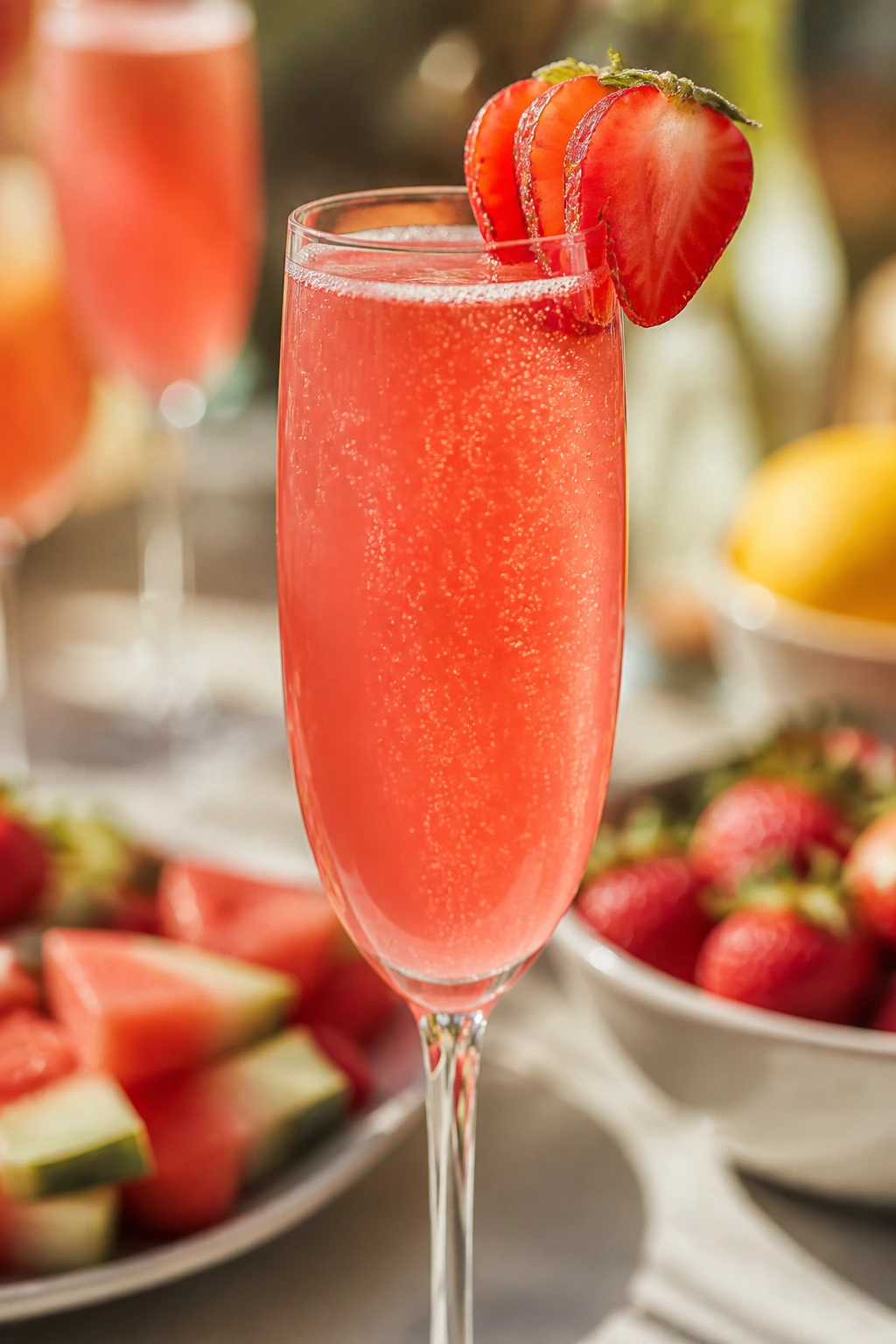
This is the pinkest drink in the bunch, and it earns that color honestly. Strawberry and watermelon together can be very soft, so the main job is keeping the base bright and chilled. Add lemon and it wakes right up.
Why It Works: Watermelon keeps the drink light, strawberry gives it perfume, and lemon stops the whole thing from tasting like fruit punch. Dry bubbles keep the finish snappy.
Key Ingredients:
- 1 bottle sparkling wine
- 3/4 cup strawberry purée
- 3/4 cup watermelon juice
- 1 teaspoon lemon juice
- Strawberry slices, for garnish
Quick Steps:
- Stir the strawberry purée, watermelon juice, and lemon juice together.
- Chill until very cold.
- Pour into flutes, top with sparkling wine, and garnish with strawberry.
Equipment for This Recipe:
- Blender
- Fine-mesh strainer
- Pitcher
- Champagne flutes
How to Serve This Dish: Serve it with a bright berry garnish and nothing too fussy. It belongs with fruit plates and light breakfast pastries.
Pro Tips for This Recipe:
- Both fruits are mild, so the lemon matters.
- Strain the watermelon juice well or the drink gets watery fast.
Variations on This Dish:
- Strawberry Basil Watermelon: Add basil for a green, fresh note.
- Frozen Fruit Version: Blend in a few frozen strawberries for a colder base.
Common Mistakes to Avoid with This Dish:
- Making it too sweet: Two soft fruits need acid, not more sugar.
- Not chilling the base: This drink fades fast if it starts lukewarm.
24. Mixed Berry Rosé Mimosa
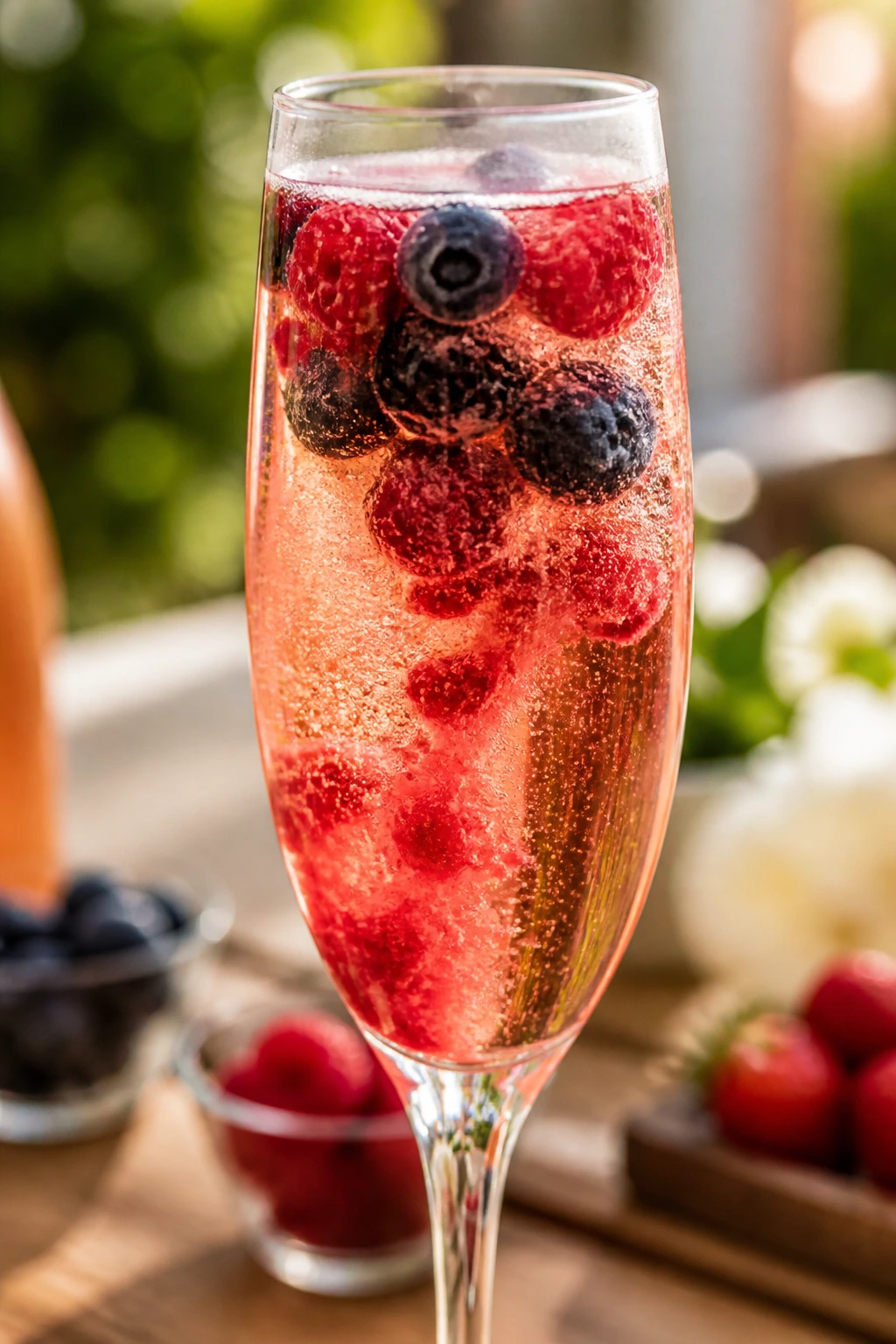
Rosé sparkling wine gives this one a soft blush before the berries even go in. It tastes a little less sharp than a brut mimosa, which is useful when you want something easy-drinking and fruit-forward. Mixed berries keep it from getting one-note.
Why It Works: Strawberries, blueberries, and raspberries each bring a different kind of sweetness, so the mix feels fuller than one berry alone. Rosé bubbles add a berry echo without extra syrup.
Key Ingredients:
- 1 bottle sparkling rosé
- 1 1/2 cups mixed berry purée or juice
- 1 teaspoon lemon juice
- Mixed berries, for garnish
Quick Steps:
- Blend and strain the berries if needed.
- Stir the berry base and lemon juice together.
- Pour, top with sparkling rosé, and add a few berries to each glass.
Equipment for This Recipe:
- Blender or food processor
- Strainer
- Pitcher
- Champagne flutes
How to Serve This Dish: This looks best in a clear glass with only a few berries dropped in. It’s a natural fit for fruit salad, pound cake, or soft cheese.
Pro Tips for This Recipe:
- Rosé wine already brings fruit notes, so go easy on added sweetener.
- If the berry mix is too thick, strain it twice.
Variations on This Dish:
- Black Raspberry: Use black raspberries or blackberries for a deeper color.
- Berry Citrus: Add a squeeze of orange or lemon to sharpen the mix.
Common Mistakes to Avoid with This Dish:
- Using only one berry and calling it mixed: A real mix tastes more layered.
- Skipping the lemon: It keeps the drink from tasting flat and candy-like.
25. White Peach Thyme Mimosa
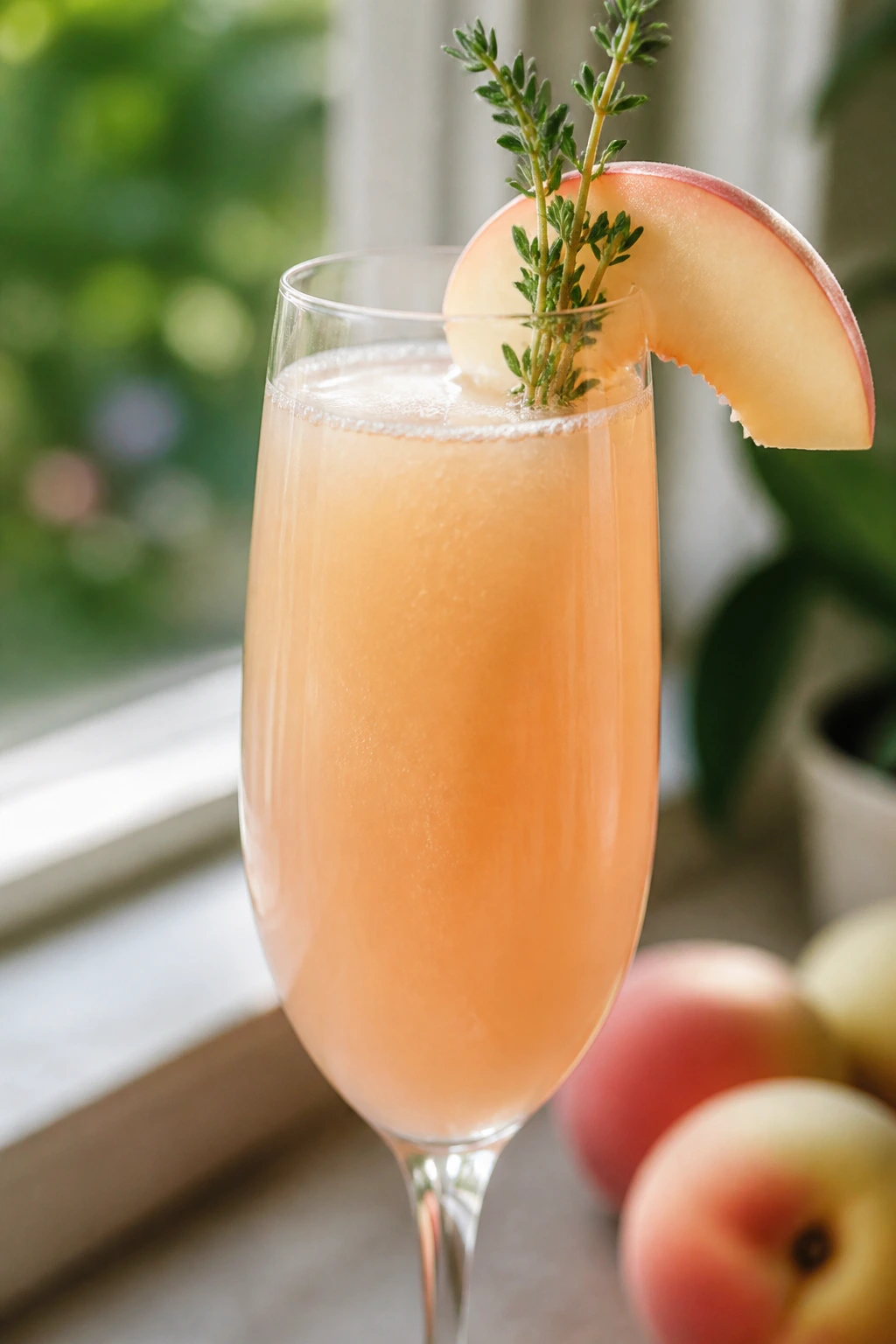
White peach has a softer, almost floral flavor than regular peach, and thyme gives it a dry finish that keeps it from drifting into dessert. This is one of the most elegant pours in the lineup, though it still takes almost no work.
Why It Works: White peach nectar is gentler and less acidic, so thyme balances it without stealing the show. The result is light, fragrant, and clean.
Key Ingredients:
- 1 bottle brut sparkling wine
- 1 1/2 cups white peach nectar
- 1 teaspoon thyme syrup
- White peach slices, for garnish
- Fresh thyme, for garnish
Quick Steps:
- Stir the white peach nectar and thyme syrup in a pitcher.
- Taste for sweetness before pouring.
- Top with sparkling wine and garnish with peach slices and thyme.
Equipment for This Recipe:
- Pitcher
- Knife
- Measuring spoon
- Champagne flutes
How to Serve This Dish: It looks especially good with pale fruit and delicate pastries. Keep the garnish small so the color stays soft.
Pro Tips for This Recipe:
- White peach can be subtler than people expect, so don’t drown it in syrup.
- Fresh thyme should be lightly slapped between your hands before garnishing.
Variations on This Dish:
- White Peach Mint: Swap thyme for mint if you want more freshness.
- Peach-Orange Mix: Add a splash of orange juice for a brighter finish.
Common Mistakes to Avoid with This Dish:
- Using strong herbs: Rosemary can overwhelm this flavor in a second.
- Oversweetening: White peach already tastes delicate; let it stay that way.
26. Pomegranate Clementine Mimosa
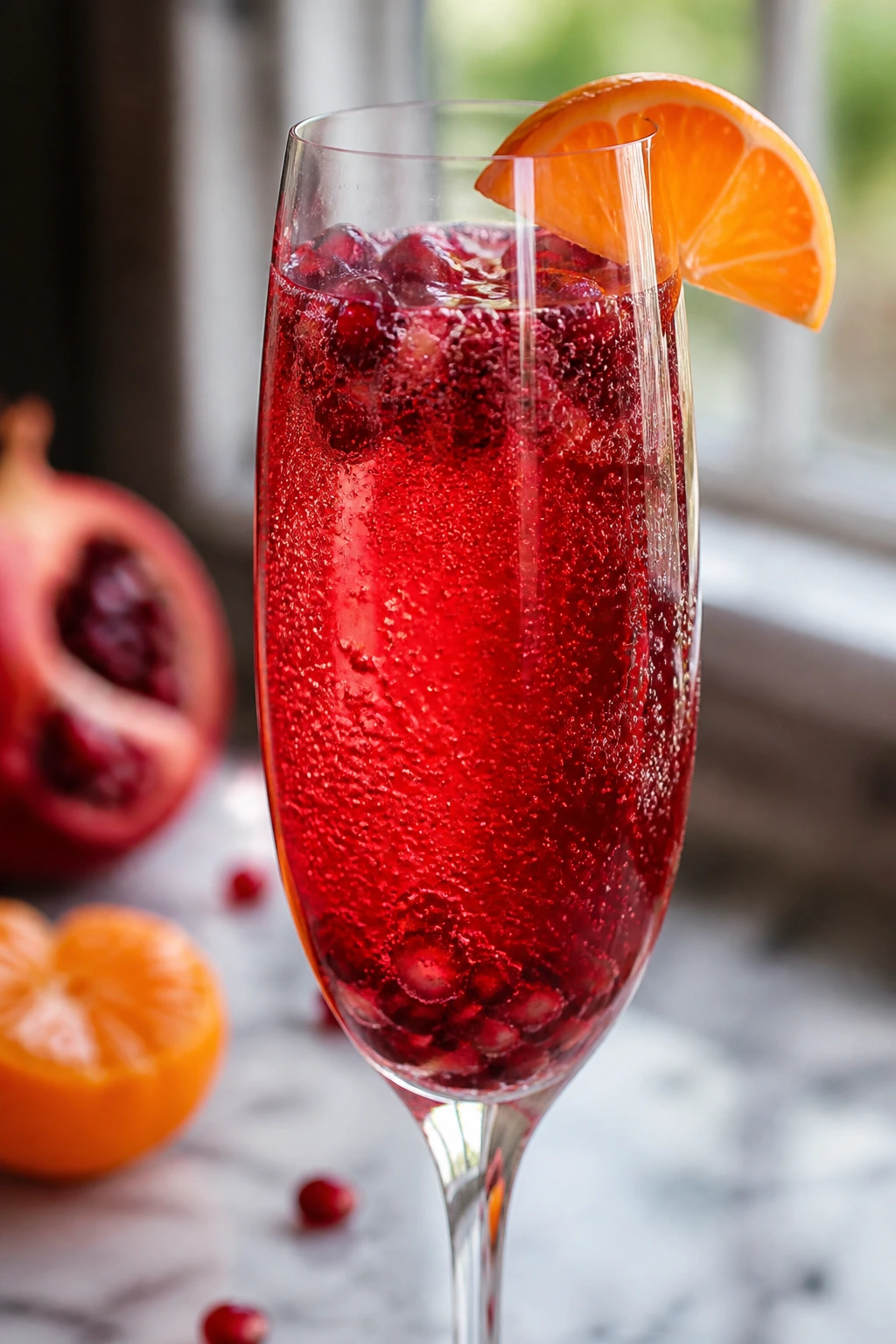
Pomegranate adds a tart backbone, and clementine softens it with a sweeter citrus note. This is a nice bridge between winter fruit and summer brunch, which sounds odd until you taste how well the colors and flavors work together.
Why It Works: Pomegranate juice is sharp enough to keep the drink lively, while clementine keeps it from turning too austere. The balance lands somewhere between bright and rich.
Key Ingredients:
- 1 bottle prosecco
- 1 1/4 cups pomegranate juice
- 1/4 cup clementine juice
- Pomegranate seeds and clementine wedges, for garnish
Quick Steps:
- Stir the juices together in a pitcher.
- Taste for balance; add a little more clementine if the pomegranate bites too hard.
- Top with prosecco and garnish with seeds.
Equipment for This Recipe:
- Pitcher
- Citrus juicer
- Fine strainer, optional
- Champagne flutes
How to Serve This Dish: A few seeds are enough to make the glass look finished. It works well with savory pastries and salty cheeses.
Pro Tips for This Recipe:
- Don’t overdo the clementine or the pomegranate loses its edge.
- Chill the juice thoroughly; this drink tastes best ice-cold.
Variations on This Dish:
- Pomegranate Orange: Swap clementine for sweet orange if that’s what you have.
- Pomegranate Rosemary: Add a rosemary sprig for a more herbal profile.
Common Mistakes to Avoid with This Dish:
- Using bottled cocktail juice that’s already sweetened: It flattens the contrast.
- Adding too many seeds: The drink should look studded, not crowded.
27. Orange Creamsicle Mimosa
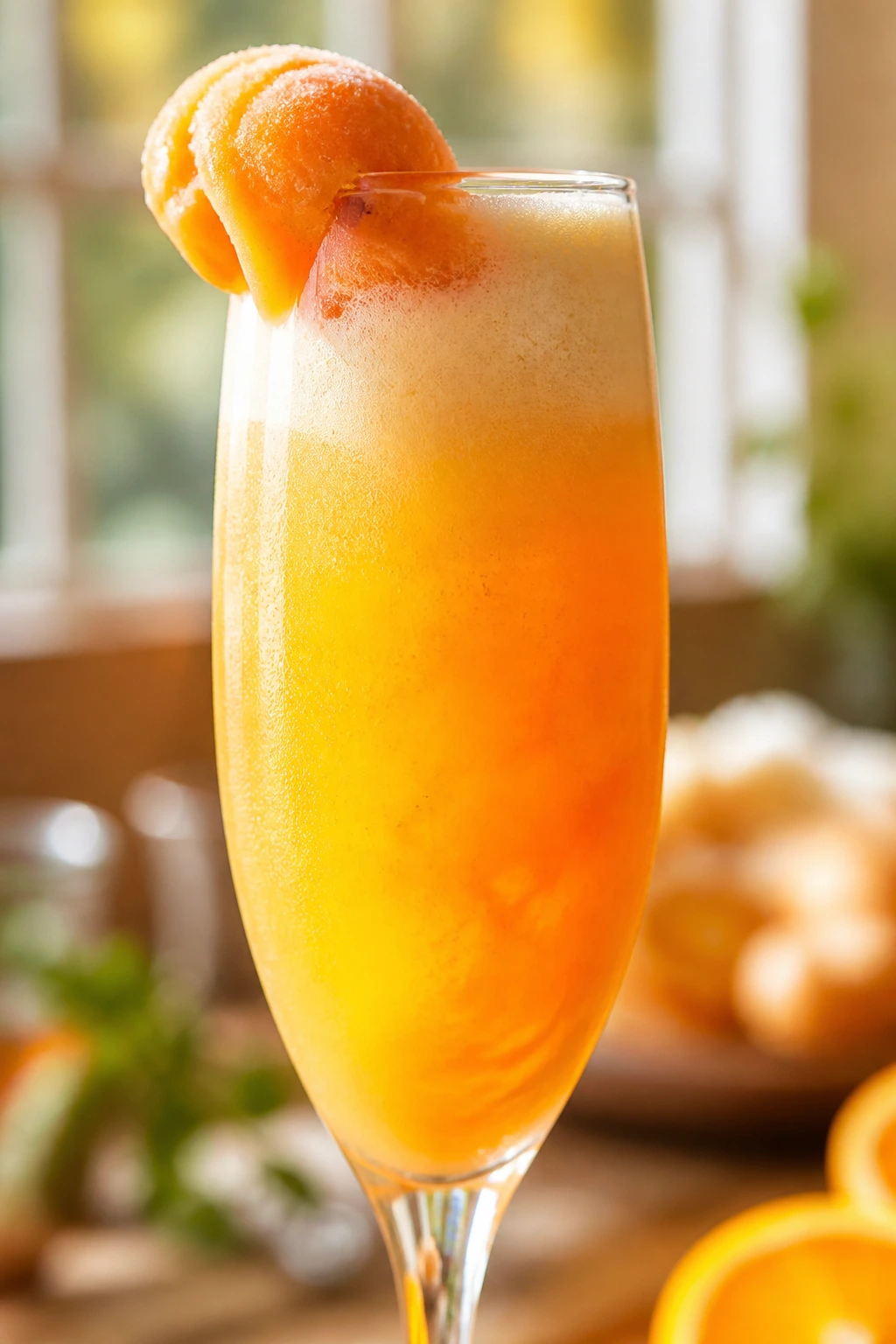
This one is nostalgic in a way that works at a brunch table. It tastes like orange and vanilla, which gives you the memory of a creamsicle without needing anything heavy. Keep the vanilla gentle and the drink stays light.
Why It Works: Orange juice gives the citrus, vanilla syrup gives the rounded sweetness, and a spoonful of orange sorbet on top can make the whole thing feel playful without requiring dairy. The bubbles keep it from sitting like dessert.
Key Ingredients:
- 1 bottle brut sparkling wine
- 1 1/4 cups orange juice
- 1 tablespoon vanilla syrup
- Orange sorbet, optional, for garnish
- Orange zest, for finishing
Quick Steps:
- Stir the orange juice and vanilla syrup in a pitcher.
- Pour into flutes, leaving a little room at the top.
- Top with sparkling wine and finish with a tiny scoop of orange sorbet if using.
Equipment for This Recipe:
- Pitcher
- Zester
- Ice cream scoop, optional
- Champagne flutes
How to Serve This Dish: Serve immediately if you add sorbet, because the top melts fast and that’s part of the fun. It pairs well with sweet breads and fruit plates.
Pro Tips for This Recipe:
- Use vanilla syrup sparingly; you’re after a creamsicle note, not frosting.
- Sorbet is optional, but if you use it, keep the scoops small.
Variations on This Dish:
- Vanilla Bean Orange: Use vanilla bean syrup for a richer aroma.
- Creamsicle Spritz: Skip the sorbet and add a splash of soda water for a lighter pour.
Common Mistakes to Avoid with This Dish:
- Making it too sweet: Orange plus vanilla can tip over fast.
- Letting sorbet sit too long before serving: It melts into foam, which is charming for about ten seconds.
28. Watermelon Lime Salt-Rim Mimosa
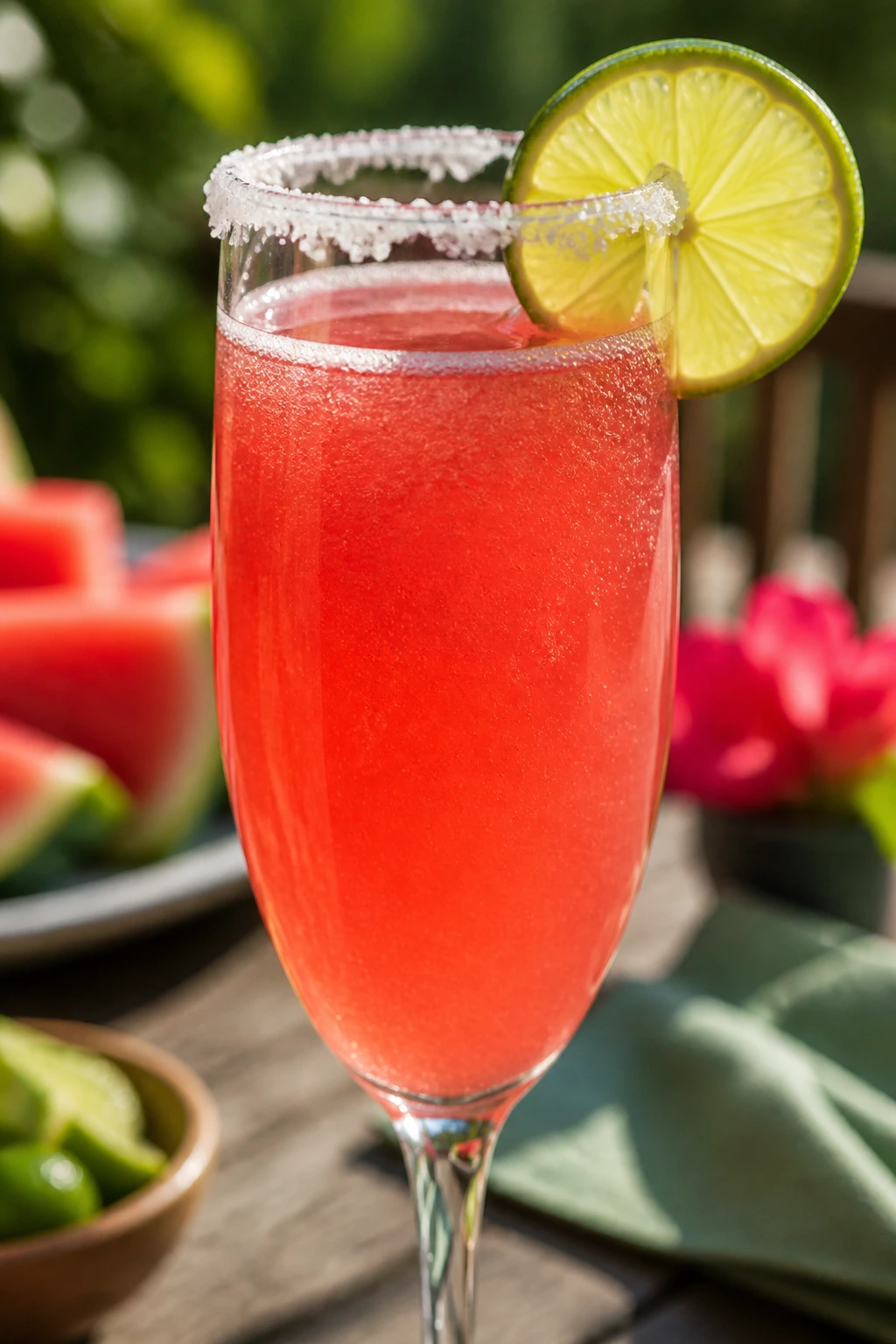
This is the loud cousin of the plain watermelon flute. The salt rim sharpens the fruit, the lime keeps it bright, and the bubbles give it lift. If your crowd likes margarita-adjacent flavors, this one goes first.
Why It Works: Watermelon is mild, so a salted rim and lime make the flavor pop. The salt also keeps the drink from tasting thin.
Key Ingredients:
- 1 bottle prosecco
- 1 1/2 cups watermelon juice
- 1 tablespoon lime juice
- Fine flaky salt, for rims
- Lime wheels, for garnish
Quick Steps:
- Rub the rim of each flute with lime.
- Dip the rim lightly in flaky salt.
- Stir the juices together, top with prosecco, and garnish with lime.
Equipment for This Recipe:
- Rimming plate
- Citrus juicer
- Pitcher
- Champagne flutes
How to Serve This Dish: The salt rim should be thin, not heavy. A lime wheel or wedge is enough; the rim does the talking.
Pro Tips for This Recipe:
- Use fine flaky salt, not coarse crystals, or the rim feels harsh.
- Chill the glasses before rimming so the salt clings better.
Variations on This Dish:
- Chili-Lime Rim: Add a pinch of chili powder to the salt.
- Mint Watermelon: Add mint if you want the drink cooler and less punchy.
Common Mistakes to Avoid with This Dish:
- Over-salting the rim: Too much salt ruins the first sip.
- Using watery melon juice: The drink loses its shape if the base is too thin.
29. Raspberry Lemon Thyme Mimosa
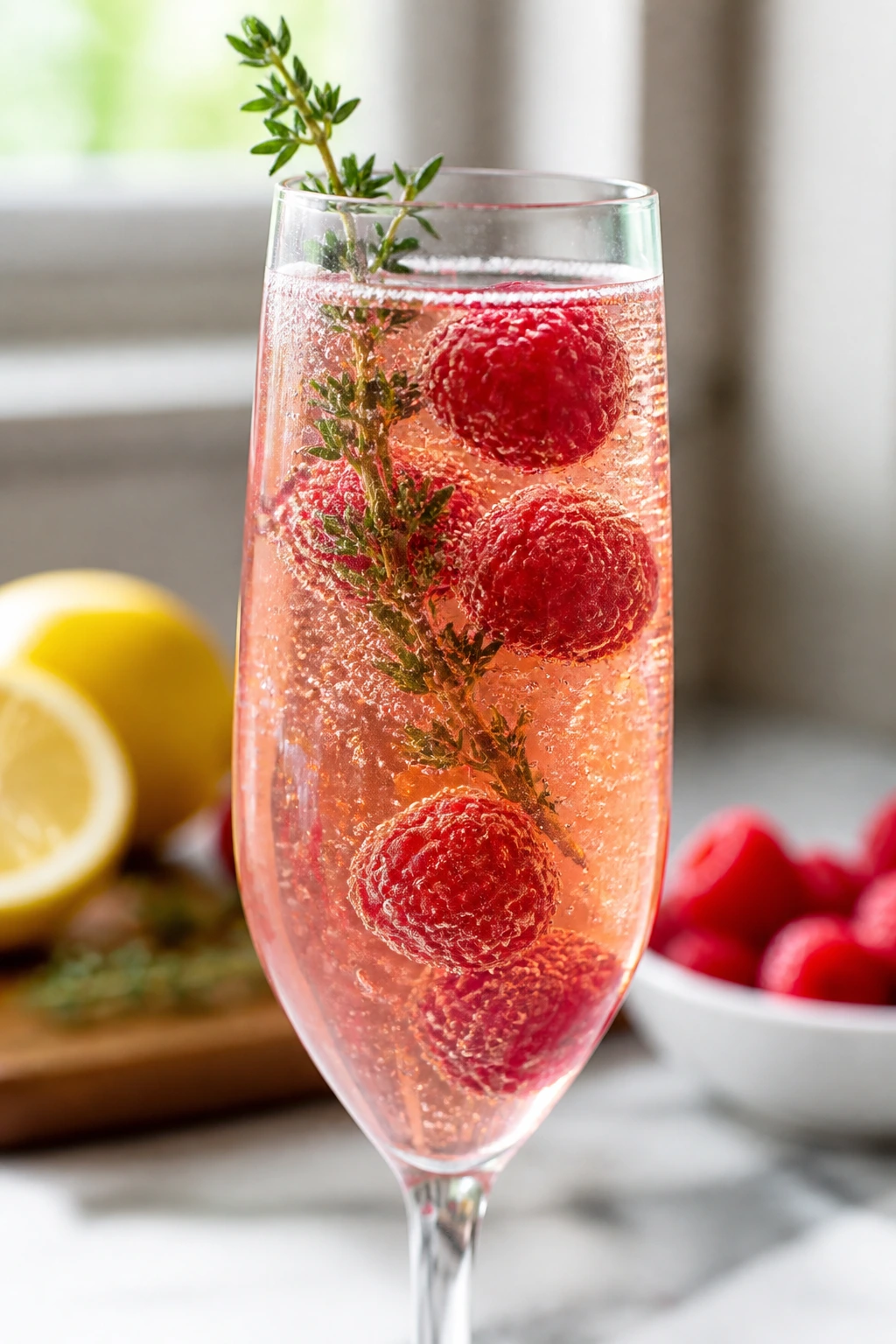
Raspberry and lemon are a familiar pair, but thyme pulls them into slightly more interesting territory. The thyme keeps the sweetness in check and gives the drink a dry, garden-y finish that works well with fruit-heavy bars.
Why It Works: Raspberry brings color and tartness, lemon sharpens the berry, and thyme adds an herbal line that keeps the glass from feeling juvenile. It’s bright, not syrupy.
Key Ingredients:
- 1 bottle cava
- 1 cup raspberry purée
- 1/2 cup fresh lemon juice
- 1 teaspoon thyme syrup
- Fresh raspberries, for garnish
Quick Steps:
- Stir the raspberry purée, lemon juice, and thyme syrup together.
- Taste and adjust the lemon if the berries are very sweet.
- Top with cava and garnish with raspberries.
Equipment for This Recipe:
- Pitcher
- Strainer, optional
- Champagne flutes
- Measuring spoon
How to Serve This Dish: This one looks best with a few raspberries floating in the middle of the glass. It pairs cleanly with anything buttery or berry-topped.
Pro Tips for This Recipe:
- Fresh lemon is worth the squeeze here.
- If the thyme syrup is strong, use half the amount and taste again.
Variations on This Dish:
- Raspberry Mint Lemon: Swap thyme for mint if you want a lighter, cooler finish.
- Raspberry Rosé: Use sparkling rosé for a softer version.
Common Mistakes to Avoid with This Dish:
- Letting the thyme dominate: The herb should sit behind the fruit.
- Using too much purée without straining: The texture can feel thick in a flute.
30. Mango Chili-Lime Mimosa
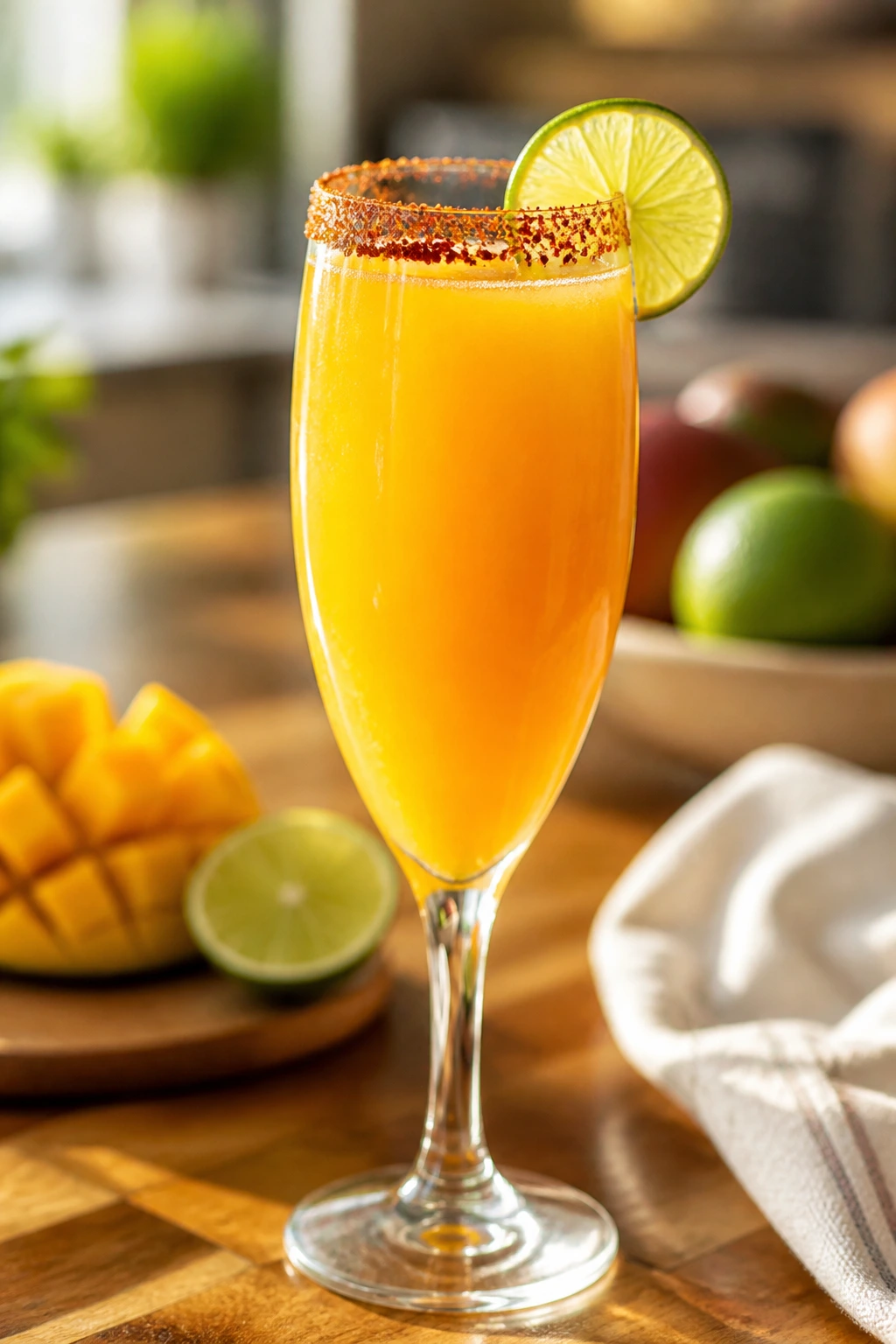
This one has attitude. Mango gives you the lush fruit base, lime slices through it, and a tiny hit of chili on the rim turns the drink from sweet to sharp. It’s the most savory-leaning option in the group, which is a useful thing to have.
Why It Works: Mango is naturally rich, so chili and lime keep it lively. The salt-and-spice rim sharpens the drink in a way plain sugar never could.
Key Ingredients:
- 1 bottle sparkling wine
- 1 1/2 cups mango nectar
- 1 tablespoon lime juice
- Chili-lime salt, for rims
- Lime wedges, for garnish
Quick Steps:
- Rim the flutes lightly with lime and chili-lime salt.
- Stir the mango nectar and lime juice together.
- Pour, top with sparkling wine, and garnish with lime.
Equipment for This Recipe:
- Rimming plate
- Pitcher
- Citrus juicer
- Champagne flutes
How to Serve This Dish: Serve it with spicy snacks or savory brunch food. The rim should be thin so the drink still tastes clean.
Pro Tips for This Recipe:
- Start with a small amount of chili; you can always add more.
- If the mango nectar is sweetened, reduce the lime only a little, not a lot.
Variations on This Dish:
- Mango Tajín-Style: Use a chili-lime seasoning blend on the rim.
- Mango Pineapple: Add 1/4 cup pineapple juice for a brighter tropical note.
Common Mistakes to Avoid with This Dish:
- Making the rim too thick: It can overpower the fruit.
- Using too much lime: You want contrast, not a sour drink.
31. Nectarine Mint Mimosa
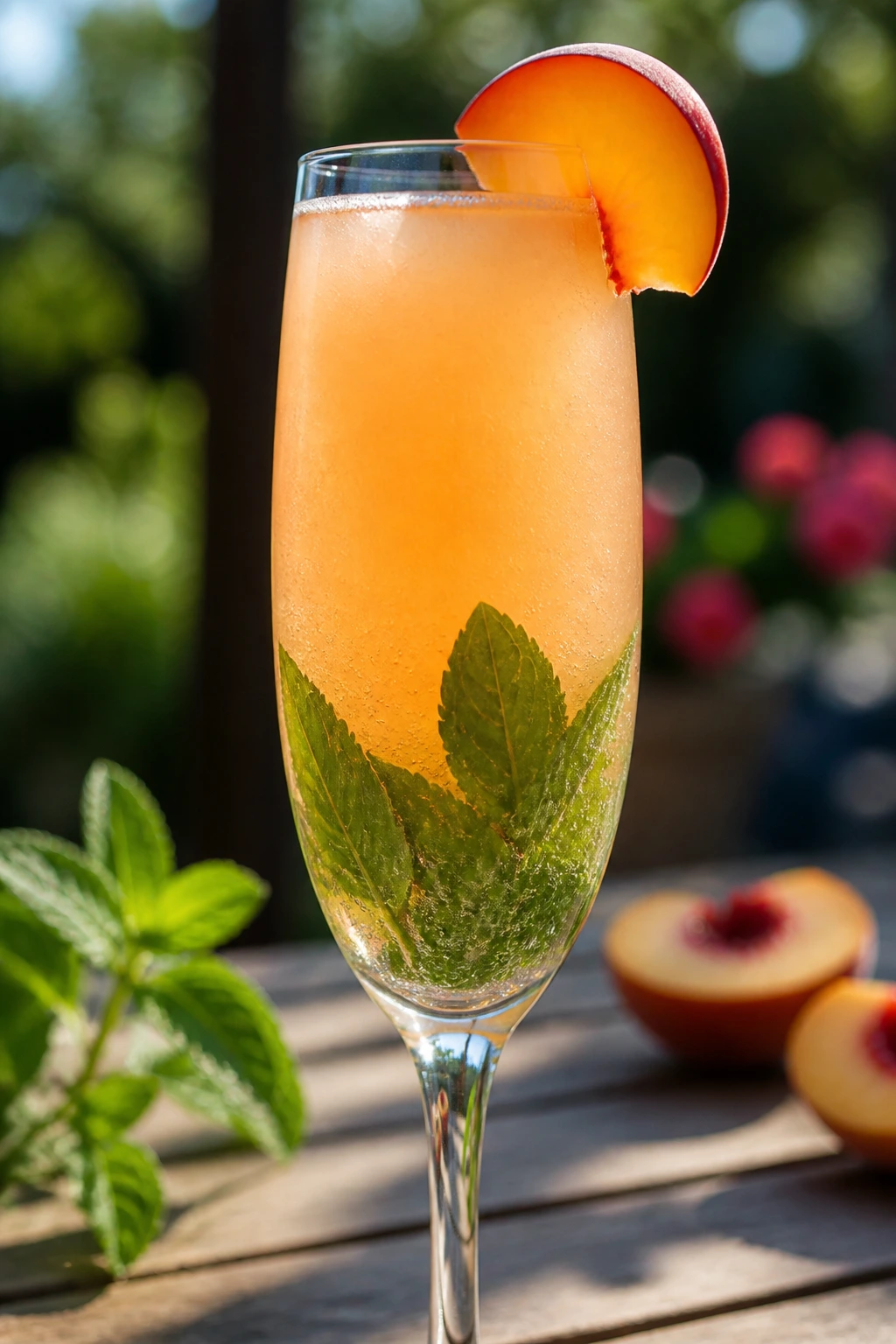
Nectarines taste like peaches with a little more snap, which makes them ideal for a cleaner mimosa. Mint cools the edges and gives the drink a fresh smell that feels right at home in warm weather.
Why It Works: Nectarines bring fruit without too much syrupy weight, and mint keeps the whole thing brisk. It’s a straightforward drink that still feels a notch brighter than plain peach.
Key Ingredients:
- 1 bottle brut sparkling wine
- 1 1/2 cups nectarine purée or nectar
- 1 teaspoon lemon juice
- 6 mint leaves
- Nectarine slices, for garnish
Quick Steps:
- Stir the nectarine base and lemon juice in a pitcher.
- Gently press in the mint leaves.
- Top with sparkling wine and garnish with nectarine slices.
Equipment for This Recipe:
- Pitcher
- Knife
- Measuring spoon
- Champagne flutes
How to Serve This Dish: A single nectarine slice on the rim is enough. It’s especially good with shortbread, pastries, or sliced stone fruit.
Pro Tips for This Recipe:
- Use ripe nectarines with a fragrant smell and no hard spots.
- Mint should be barely bruised so it stays fresh.
Variations on This Dish:
- Nectarine Basil: Swap mint for basil if you want a more savory edge.
- Nectarine Lemon: Add a little extra lemon juice for a sharper sip.
Common Mistakes to Avoid with This Dish:
- Choosing hard nectarines: They don’t give much flavor.
- Leaving mint in the pitcher too long: It can go grassy.
32. Plum Mint Sparkler
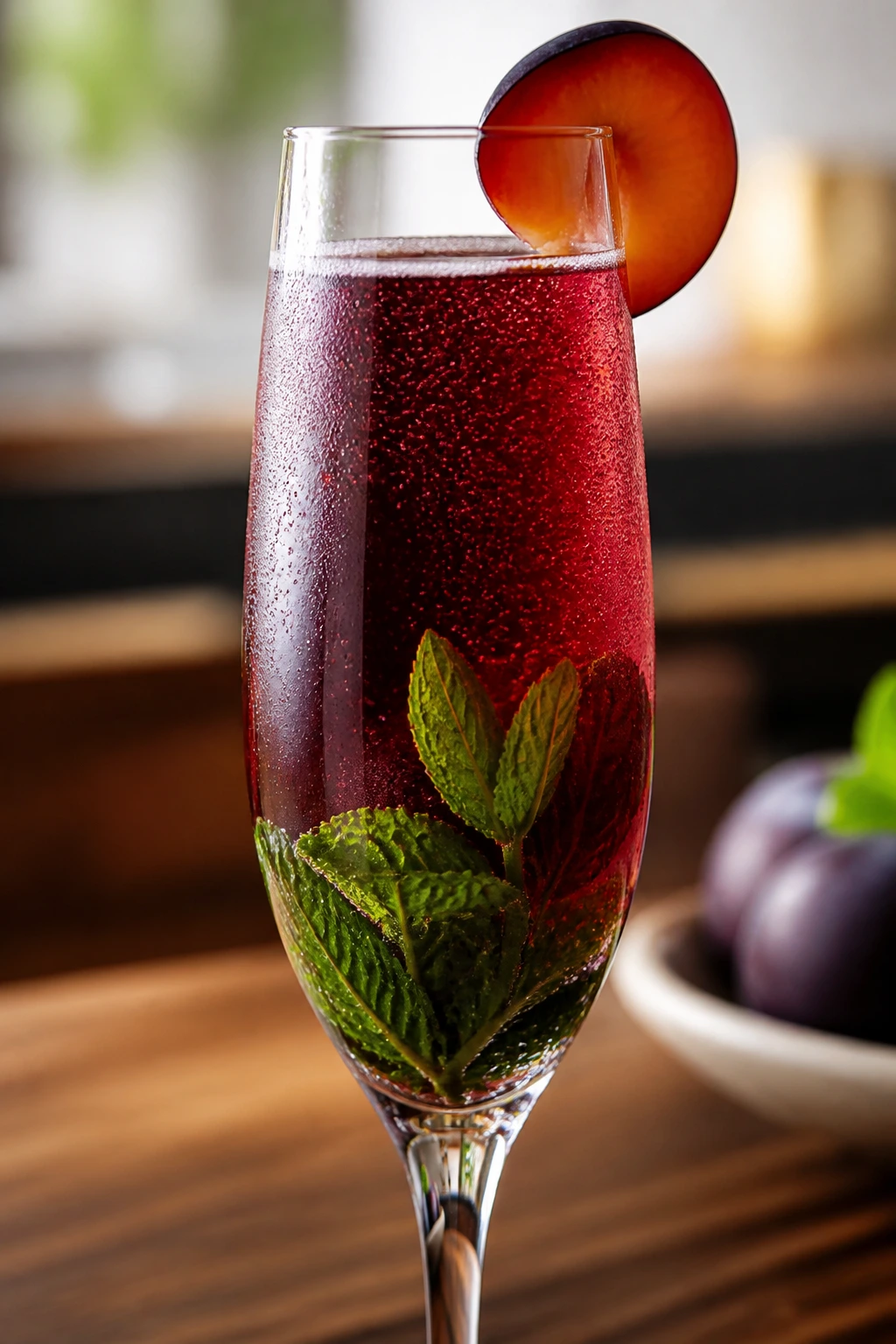
Plums are not the first fruit people reach for, which is exactly why they work. They bring a deeper, slightly tart flavor that feels more serious than peach or strawberry. Mint keeps the whole thing from getting too heavy.
Why It Works: Plum purée gives you color and depth, while mint adds a cool top note. A dry sparkling wine keeps the finish brisk.
Key Ingredients:
- 1 bottle prosecco
- 1 1/2 cups plum purée
- 1 teaspoon lime juice
- 6 mint leaves
- Plum slices, for garnish
Quick Steps:
- Blend and strain the plums if needed.
- Stir in the lime juice and gently press the mint leaves into the base.
- Top with prosecco and garnish with plum slices.
Equipment for This Recipe:
- Blender
- Fine-mesh strainer
- Pitcher
- Champagne flutes
How to Serve This Dish: This looks nicest in a narrow flute so the deep color stays concentrated. It’s good with cheese, nuts, or pastries with a little spice.
Pro Tips for This Recipe:
- Ripe plums are everything here; underripe fruit tastes flat and sour.
- A thin strain gives a smoother pour and a more elegant finish.
Variations on This Dish:
- Plum Thyme: Use thyme instead of mint for a drier profile.
- Plum Ginger: Add a tiny bit of ginger syrup if you want more heat.
Common Mistakes to Avoid with This Dish:
- Using too many mint leaves: They can swamp the plum.
- Skipping the lime: Plums need a little lift to stay bright.
33. Tropical Sunrise Mimosa
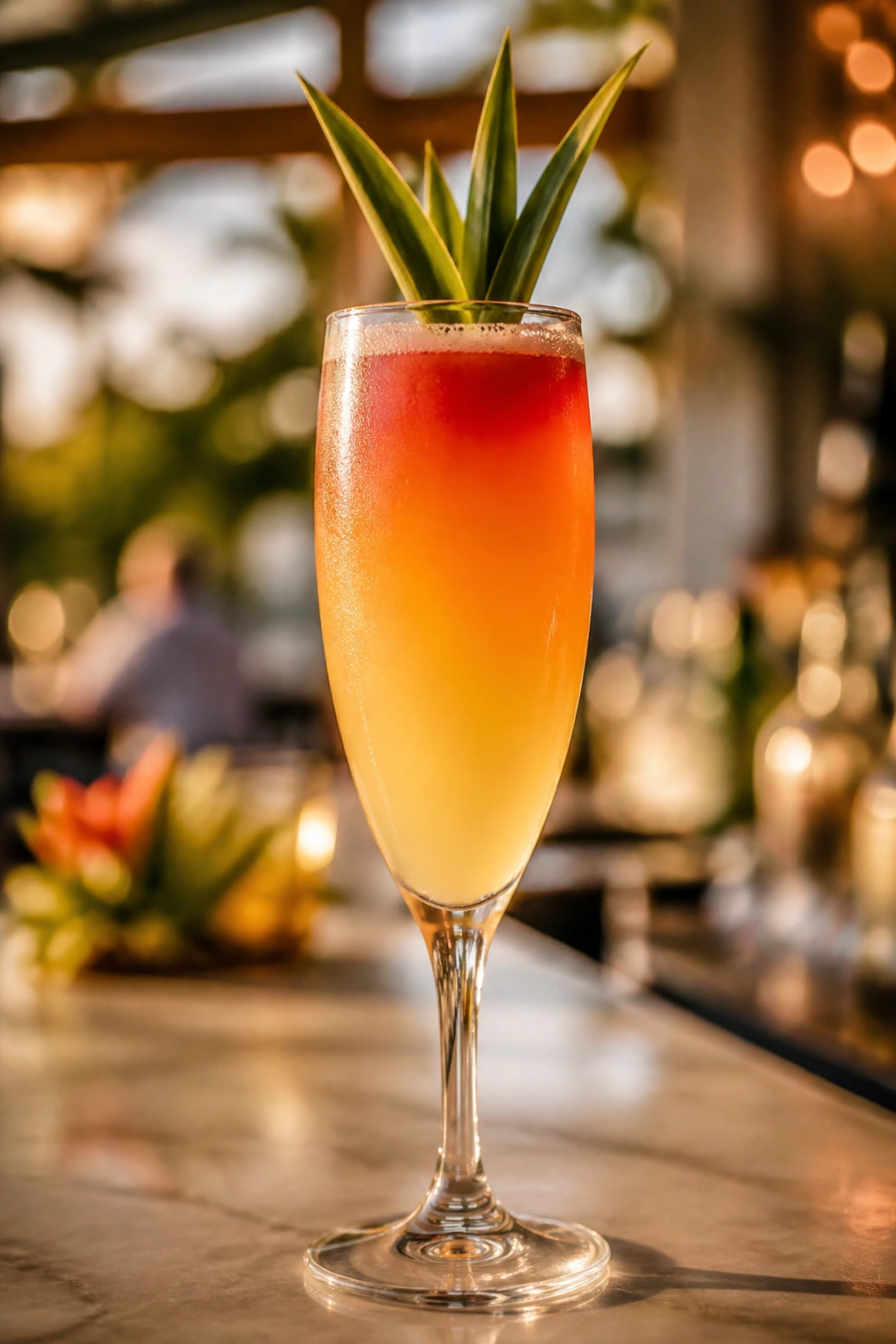
This one is made for a bar tray with clear glasses and a little room to show off the layers. Pineapple, orange, and a splash of grenadine create that sunrise look people love to photograph, but more importantly, the flavor changes as you sip.
Why It Works: Pineapple and orange bring two different kinds of sweetness, and grenadine sinks enough to make the color gradient without needing a cocktail spoon drama routine. The bubbles knit the layers together.
Key Ingredients:
- 1 bottle sparkling wine
- 3/4 cup pineapple juice
- 3/4 cup orange juice
- 1 to 2 teaspoons grenadine
- Pineapple fronds or orange wheels, for garnish
Quick Steps:
- Mix the pineapple juice and orange juice in a pitcher.
- Pour into flutes, leaving space at the top.
- Add grenadine slowly, then top with sparkling wine and garnish.
Equipment for This Recipe:
- Pitcher
- Measuring spoon
- Champagne flutes
- Bar spoon, optional
How to Serve This Dish: Serve in clear flutes so the layered color shows. It’s the most playful drink in the set, so let it have a clear stage.
Pro Tips for This Recipe:
- Add grenadine slowly down the side of the glass for the best color effect.
- Keep the juice base cold or the layers blur too quickly.
Variations on This Dish:
- Grapefruit Sunrise: Swap half the orange for grapefruit if you want more bite.
- Berry Sunrise: Add a spoonful of berry purée instead of grenadine.
Common Mistakes to Avoid with This Dish:
- Stirring after adding grenadine: You lose the layered look.
- Using too much grenadine: It turns the drink sugary and dark.
34. Cucumber Lime Sparkling Mimosa
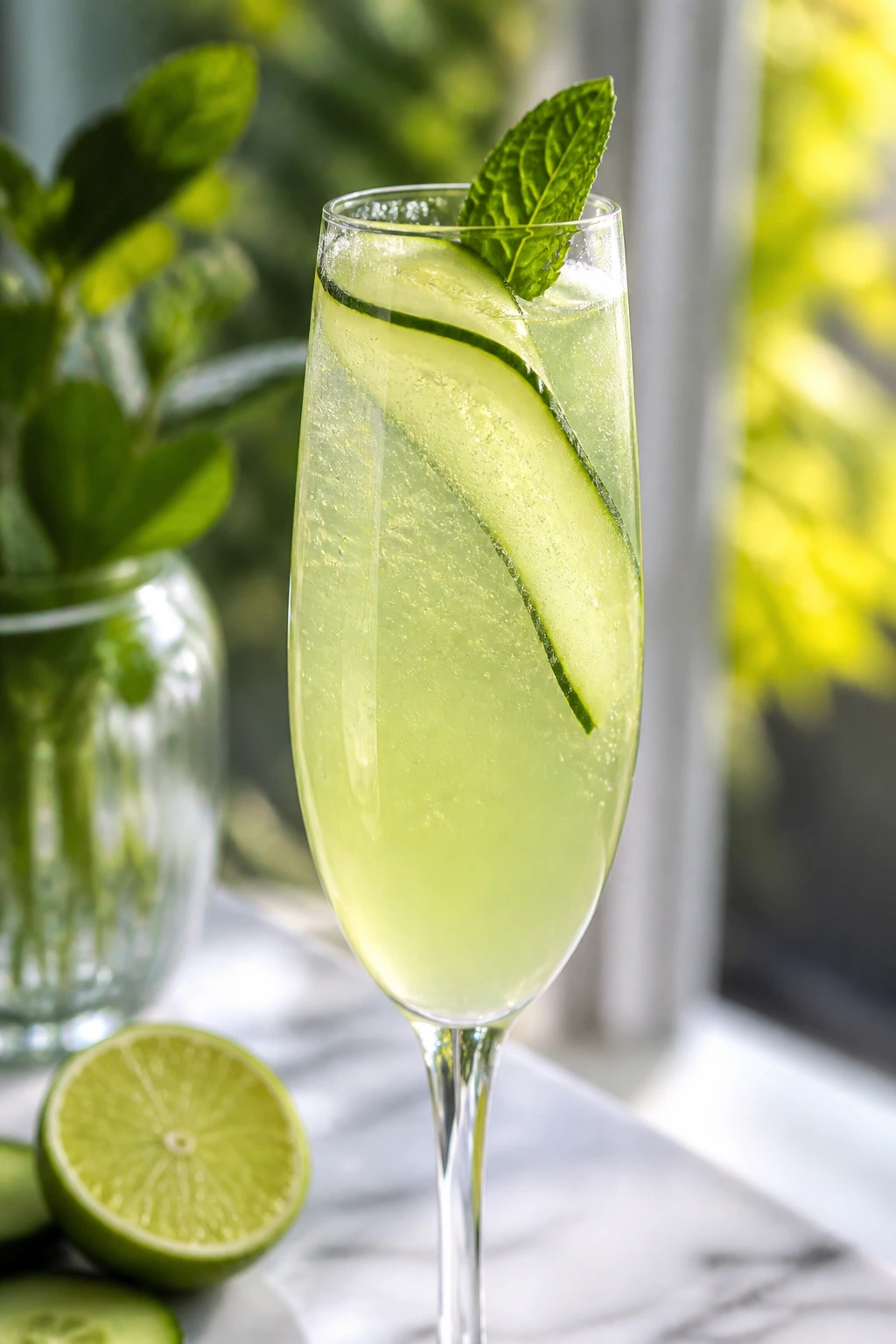
Cucumber and lime bring the bar back to crisp, cool territory after all the sweeter fruit. This is the cleanest sip in the whole collection, and it’s the one I’d put out for anyone who claims not to like sweet drinks.
Why It Works: Cucumber has a watery freshness that feels refreshing rather than sugary, and lime keeps it from tasting like spa water with bubbles. Dry sparkling wine gives the drink shape.
Key Ingredients:
- 1 bottle brut sparkling wine
- 1 1/2 cups cucumber juice or finely strained cucumber purée
- 1 tablespoon lime juice
- Mint leaves, for garnish
- Cucumber ribbons, for garnish
Quick Steps:
- Juice or blend the cucumbers and strain if needed.
- Stir in the lime juice.
- Top with sparkling wine and garnish with mint and cucumber ribbons.
Equipment for This Recipe:
- Juicer or blender
- Fine strainer
- Vegetable peeler
- Champagne flutes
How to Serve This Dish: Keep the garnish spare and elegant. The drink works well between richer bites or as a reset after a sweeter pour.
Pro Tips for This Recipe:
- Peel the cucumber only if the skin is waxy or bitter.
- Strain well; cucumber pulp can make the drink cloudy in a hurry.
Variations on This Dish:
- Cucumber Mint Lime: Add a few mint leaves to the base.
- Cucumber Salt Rim: A small salt rim can make the cucumber taste fuller.
Common Mistakes to Avoid with This Dish:
- Using too much cucumber purée: The texture gets swampy fast.
- Skipping acid: Lime is what keeps the drink alive.
35. Lemonade Berry Mimosa Bar
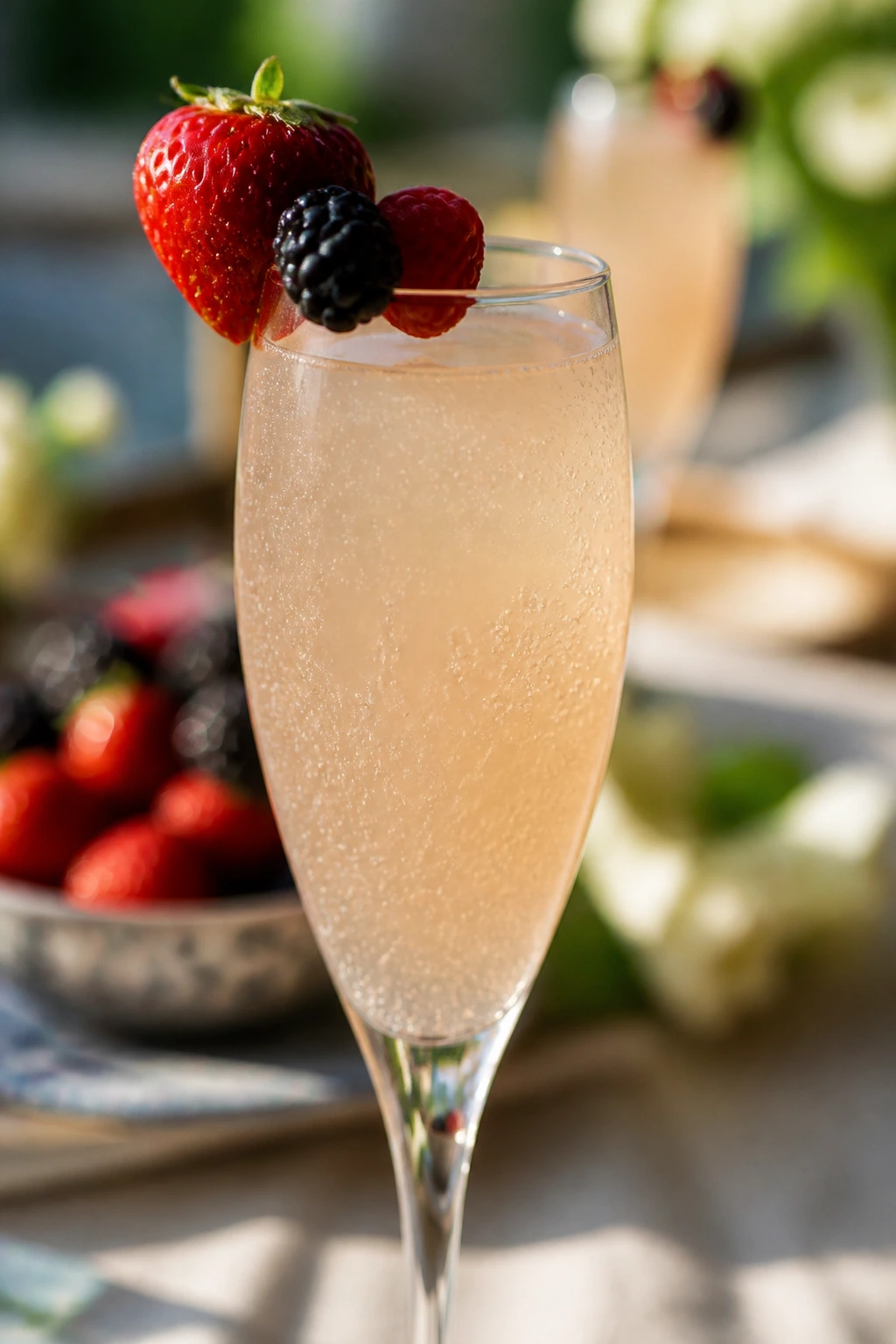
This is the easiest all-around bar idea if you want one last station that still feels summery and bright. Lemonade gives you the tart base, berries bring color, and guests can build their own version from whatever’s in the bowl. It’s simple, but not boring.
Why It Works: Lemonade gives a familiar sweet-tart frame, and berries let each glass lean more strawberry, raspberry, or mixed fruit depending on what you set out. It’s forgiving, which is a gift when you’re serving a crowd.
Key Ingredients:
- 1 bottle prosecco
- 1 cup lemonade, chilled
- 1/2 cup berry purée or muddled berries
- 1 teaspoon simple syrup, optional
- Mixed berries, for garnish
Quick Steps:
- Stir the lemonade and berry base together in a pitcher.
- Taste and add simple syrup only if the berries are very tart.
- Pour into flutes, top with prosecco, and garnish with mixed berries.
Equipment for This Recipe:
- Pitcher
- Muddler or spoon
- Fine strainer, optional
- Champagne flutes
How to Serve This Dish: Put out a berry bowl and let guests choose their own garnish. It belongs at the end of the bar because it works with almost everything.
Pro Tips for This Recipe:
- Use chilled lemonade so the bubbles stay lively.
- If you’re serving several berry options, label them so people know what they’re pouring.
Variations on This Dish:
- Strawberry Lemonade Mimosa: Use only strawberries for a classic pink pour.
- Raspberry Lemonade Mimosa: Go heavier on raspberry for a sharper finish.
Common Mistakes to Avoid with This Dish:
- Making the base too sweet: Lemonade plus berries can tip over fast.
- Setting out warm fruit: Warm berries sink the whole station.
Why a Mimosa Bar Works Better Than One Big Batch
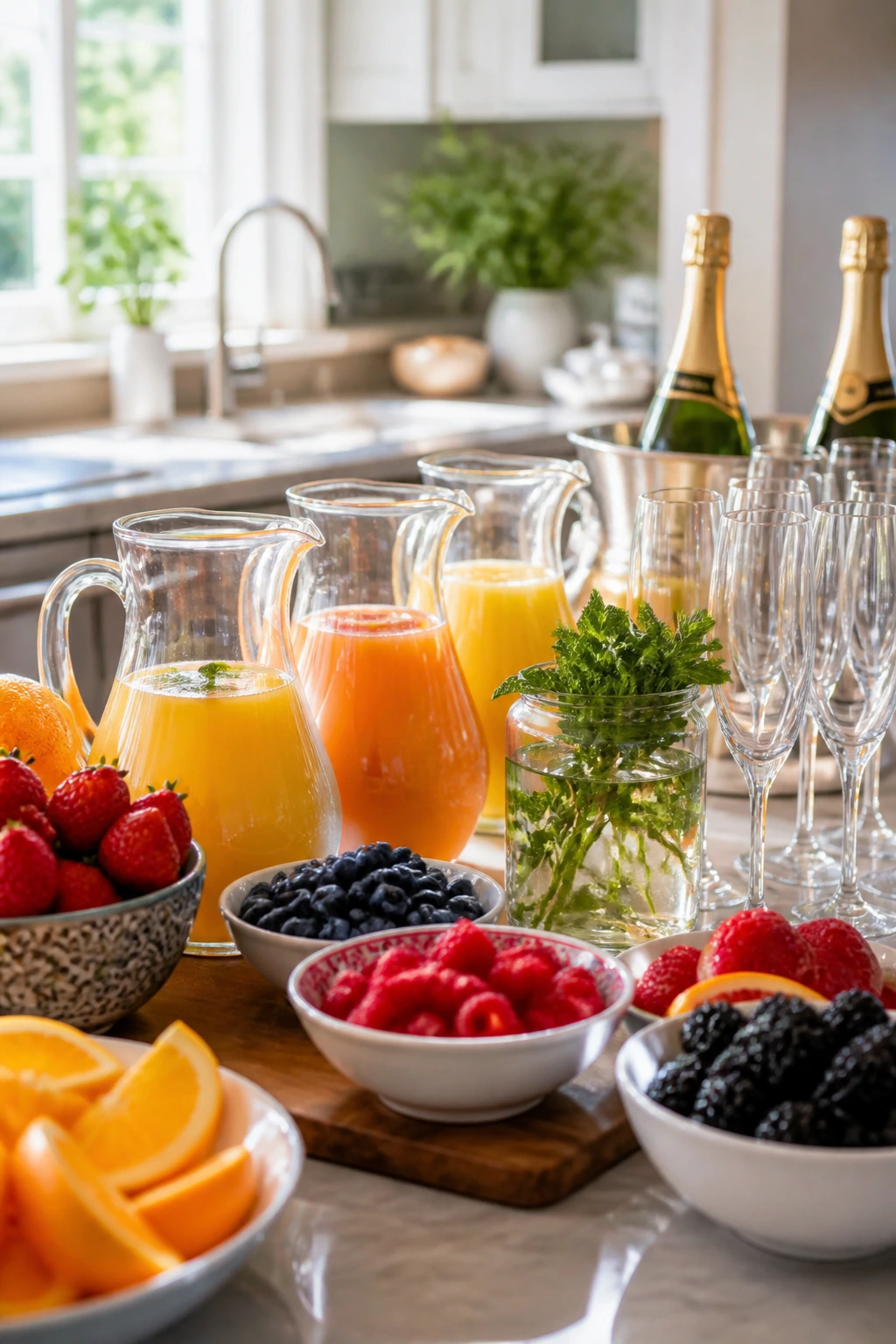
A good mimosa bar gives you control, and that matters more than people admit. Once sparkling wine gets mixed into a big pitcher, the bubbles start leaving almost immediately. A bottle poured fresh into a chilled base stays lively longer, and separate stations let guests choose the sweetness level instead of forcing everyone into the same glass.
There’s also the practical side. Summer fruit changes fast. One batch of peaches might be fragrant and sweet, while the next batch needs a squeeze of lemon and a touch of syrup to taste like much of anything. Keeping the juices, purées, and garnishes separate means you can adjust on the fly instead of discovering a problem after the first round is already poured.
I’m also partial to the visual messiness of a smart bar. Not cluttered. Just alive. A bowl of berries, a tray of citrus wheels, mint in a jar of water, ice bucket sweating beside a stack of flutes. That arrangement does more for the mood than a single pitcher ever could.
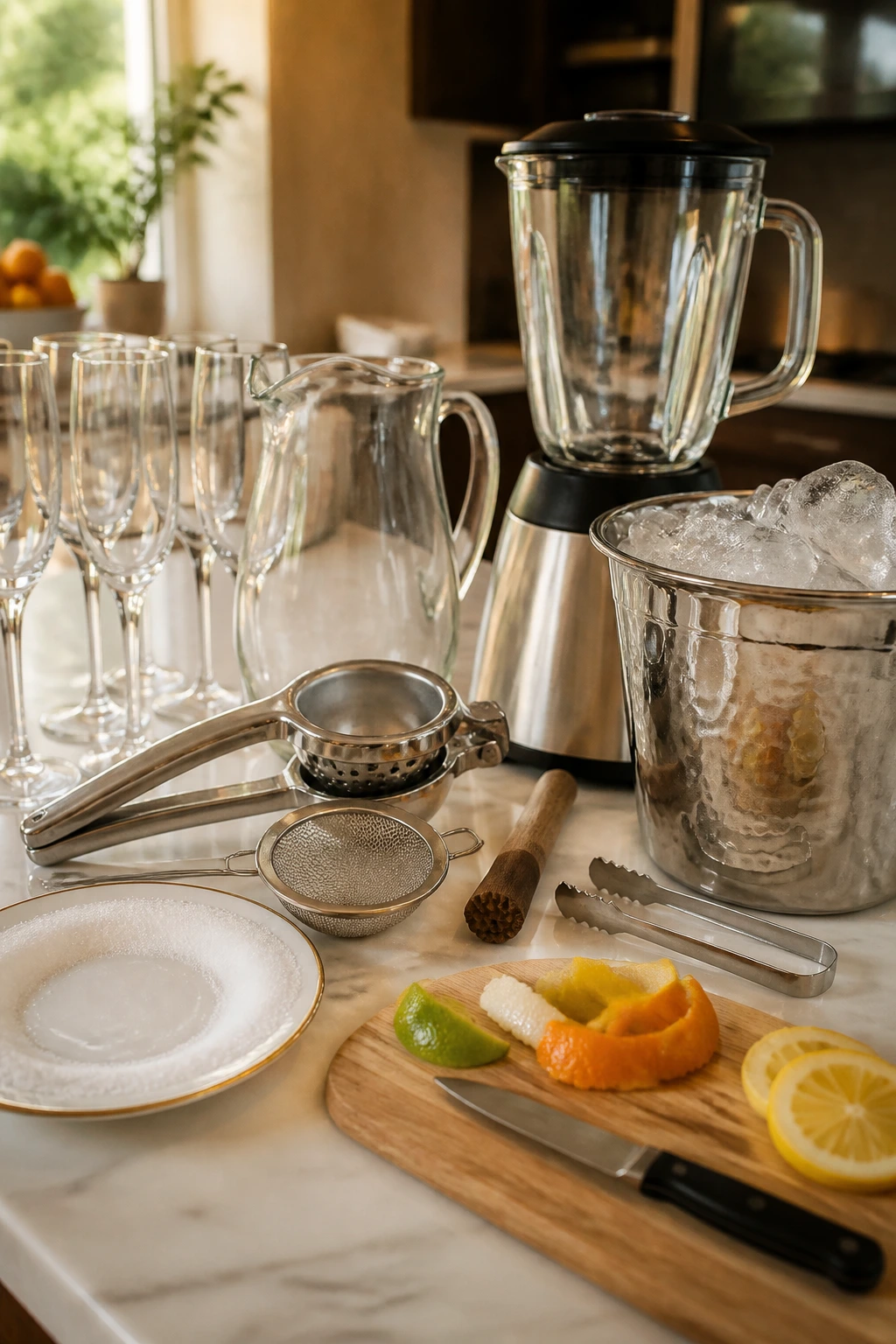
Essential Equipment for These Recipes
-
Champagne flutes or coupe glasses: Flutes hold bubbles longer; coupes look pretty but lose fizz a bit faster.
-
Pitchers or large mixing jugs: Use at least one clear pitcher for juice bases so the color reads from across the table.
-
Citrus juicer: Handheld or electric both work; fresh citrus is worth the extra squeeze.
-
Fine-mesh strainer: Essential for berry, melon, or cucumber purées when you want a smooth pour.
-
Blender or food processor: Needed for watermelon, berries, melon, kiwi, and any other fruit that behaves better puréed.
-
Muddler or sturdy spoon: Handy for herbs. You only need gentle pressure.
-
Paring knife and cutting board: For precise garnishes, peel twists, fruit wheels, and ribbons.
-
Rimming plate or shallow dish: Useful for salt, sugar, or chili-salt rims.
-
Ice bucket or insulated cooler: Keeps sparkling wine cold between pours, which is half the battle.
-
Small tongs or cocktail picks: Better than fingers when guests are building their own garnish.
Smart Shopping and Ingredient Tips
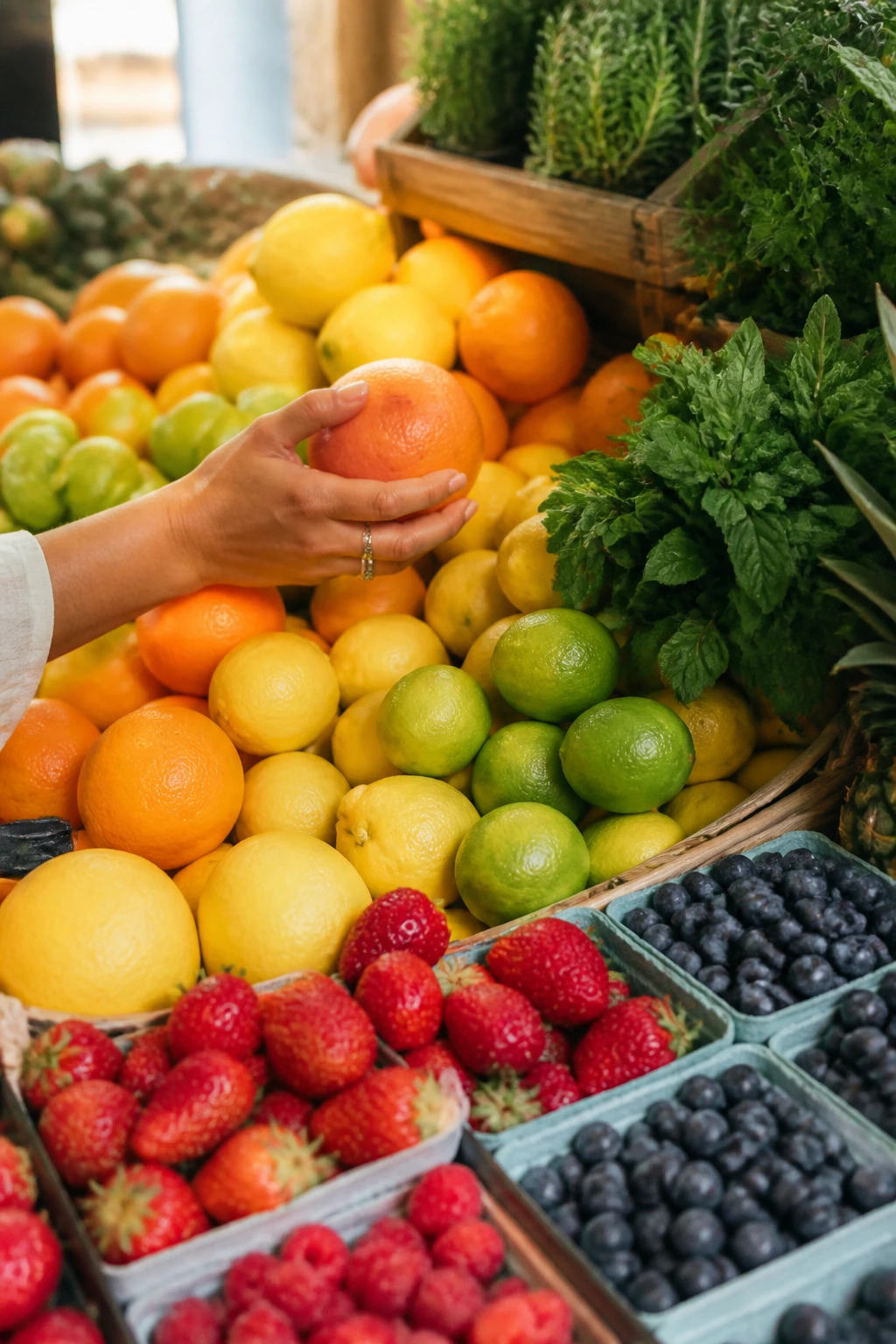
Buy the sparkling wine with the fruit in mind, not the other way around. Brut is the safest choice for most of these mimosa bar ideas because it leaves room for sweet juice, purée, and syrup without turning the drink sticky. If you prefer cava or prosecco, that’s fine; just watch the sweetness on the label and keep one dry option on hand.
Fresh citrus matters more than almost anything else here. A bruised orange or a limp lemon gives you dull juice and tired aroma, and the whole drink feels flat. Choose fruit that feels heavy for its size and smells bright near the stem end. For berries and stone fruit, buy the ripest fruit that still holds its shape. Mushy fruit makes murky purée, and murky purée makes a bad flute.
Frozen fruit is useful, not a compromise. Frozen berries, pineapple chunks, and mango pieces can save money and still taste strong, especially if you thaw them before blending. I actually like frozen fruit for purées when the fresh version looks pale or overpriced. What I would skip is bottled citrus cocktail mix unless you’ve tasted it and know it’s not overloaded with sugar.
Herbs should look perky, not dried out at the edges. Mint wilts quickly; basil bruises fast; rosemary and thyme last longer but need restraint. Keep them in a glass of water in the fridge until you’re ready to build the bar. And if you’re making flavored syrup, keep it simple: equal parts sugar and water, plus the herb or spice you actually want to taste. No drama. Just enough.
How to Serve These Recipes
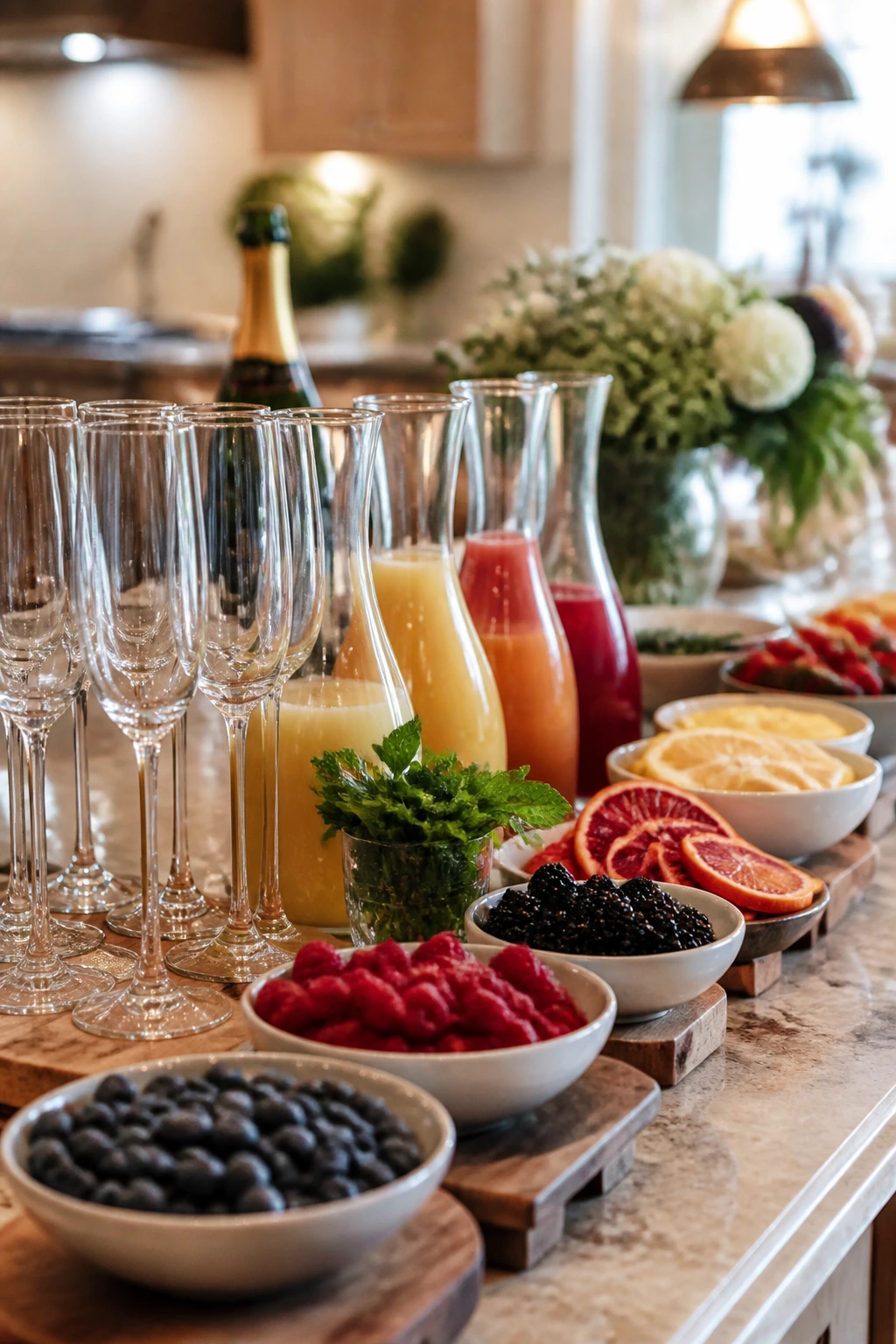
Presentation: Set the bar in a clear line: flutes first, then juice bases, then bubbles, then garnishes. Clear glass pitchers show off color, and small bowls of fruit keep the whole setup from looking like a grocery bag exploded on a counter.
Accompaniments: The best partners are salty or buttery foods that keep the sweetness in check: quiche, breakfast potatoes, smoked salmon toast, bacon, scones, cheese straws, and fruit salad. A little salt on the plate makes the drinks taste brighter.
Portions: Plan on about 2 to 3 ounces of juice base and 3 to 4 ounces of sparkling wine per glass. One 750-ml bottle usually yields about 6 smaller pours, sometimes 8 if your glasses are compact and you’re not overfilling them.
Beverage Pairing: Keep a second cooler with still water, sparkling water, or unsweet iced tea nearby. Guests who want to pace themselves will appreciate something cold and unsweet between glasses.
Additional Tips and Flavor Boosters
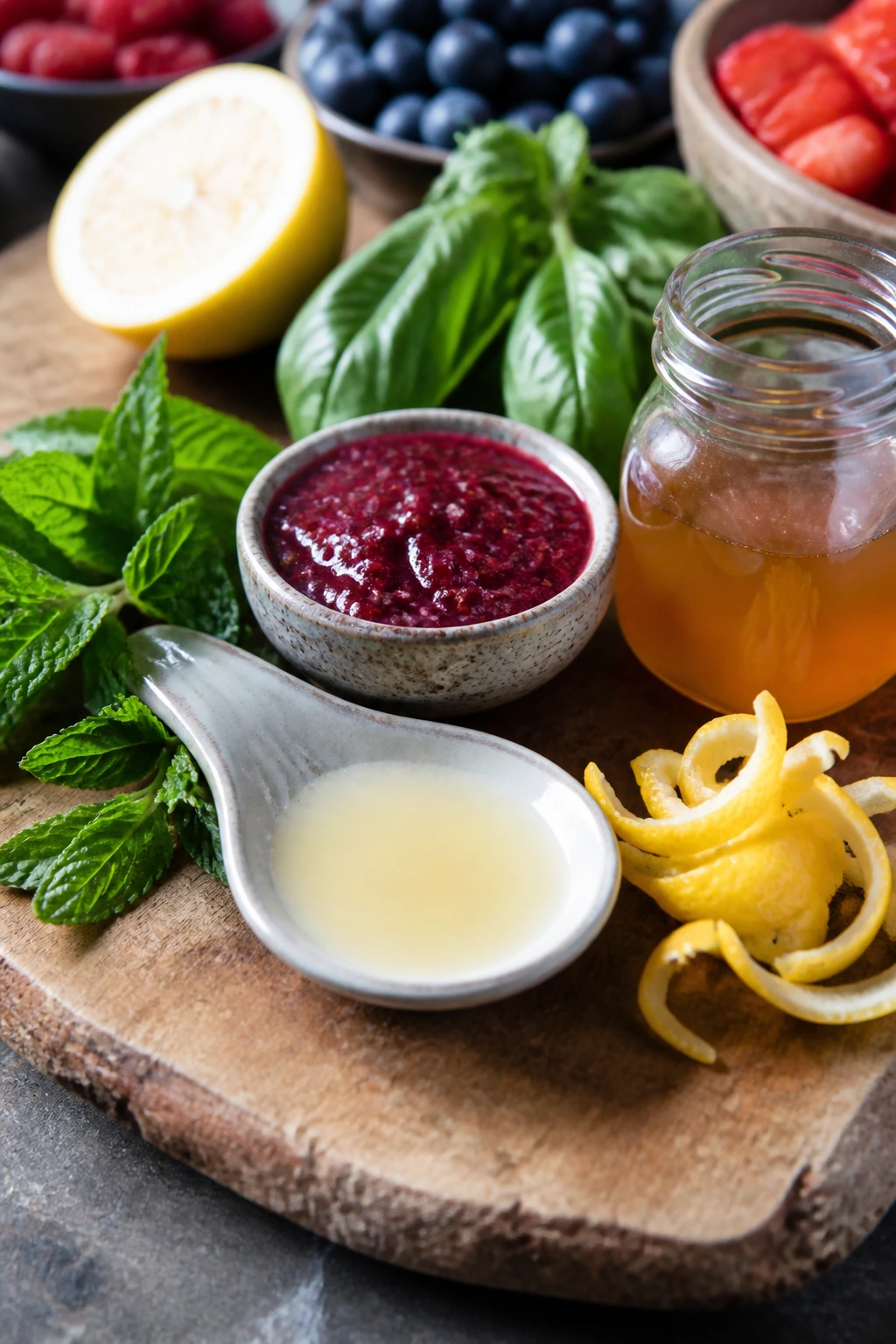
Flavor Enhancement: A teaspoon of fresh lemon juice wakes up almost every fruit base here, even the sweet ones. If a drink tastes sleepy, acid is usually the fix before extra sugar is.
Customization: Set out one neutral base and let guests add a tablespoon of berry purée, peach nectar, or grapefruit juice to their own flute. It’s faster than making 10 separate pitchers and keeps the bar from getting chaotic.
Serving Suggestions: Use one garnish that matches the base and stop there. A peach slice, a rosemary sprig, or a few berries beats a crowded cup full of fruit that falls into the drink and makes every sip awkward.
Make-It-Yours: For lower alcohol, use half sparkling wine and half club soda. For zero-proof guests, swap in alcohol-free sparkling wine and give them the same garnish treatment so nobody gets the “backup drink” feeling.
Make-Ahead, Storage, and Fizz-Saving Guidance
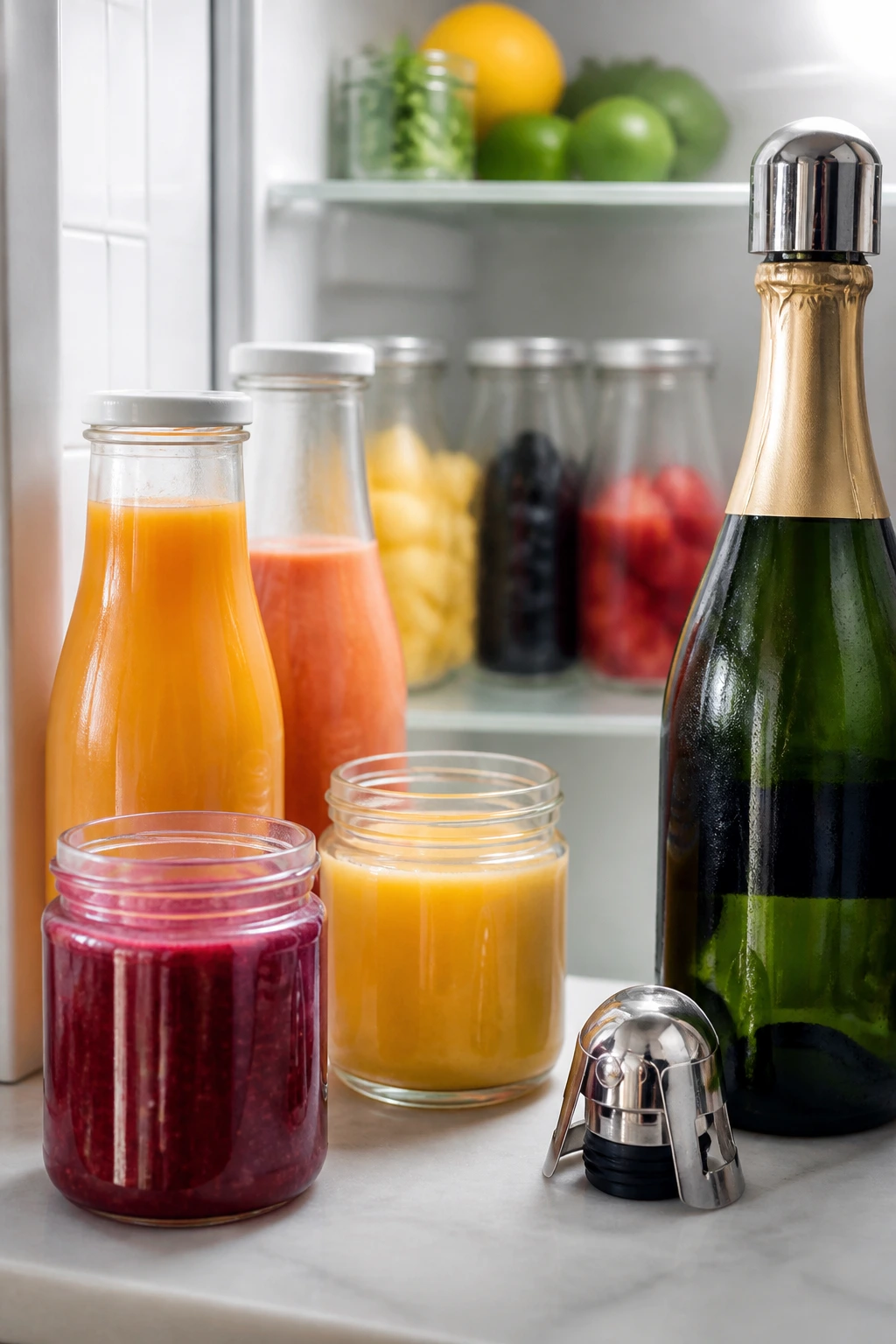
Fruit purées and juice bases can be made ahead and kept in the fridge for 2 to 3 days in sealed jars or pitchers. Citrus-heavy bases hold their edge a little longer than berry purées, which start tasting softer after a day. If you’re making herb syrup, it usually keeps for about 1 week refrigerated in a clean jar.
Sparkling wine is the fragile part. Keep unopened bottles cold until the last minute, and once a bottle is opened, use it the same day if you care about the bubbles. A stopper buys you a little time, but not much. If a batch needs to sit for a while, mix only the juice components and top with bubbles right before serving.
There is no reheating here. Flat bubbles do not come back, and warm mimosa bases taste tired. If a pitcher has been sitting out too long, move it back into the fridge and top with fresh sparkling wine later. For garnish, slice fruit the same day when possible. Citrus wheels and berry bowls can hold for 1 day refrigerated, but cut melon and peeled kiwi are best within a few hours.
Variations and Adaptations to Try
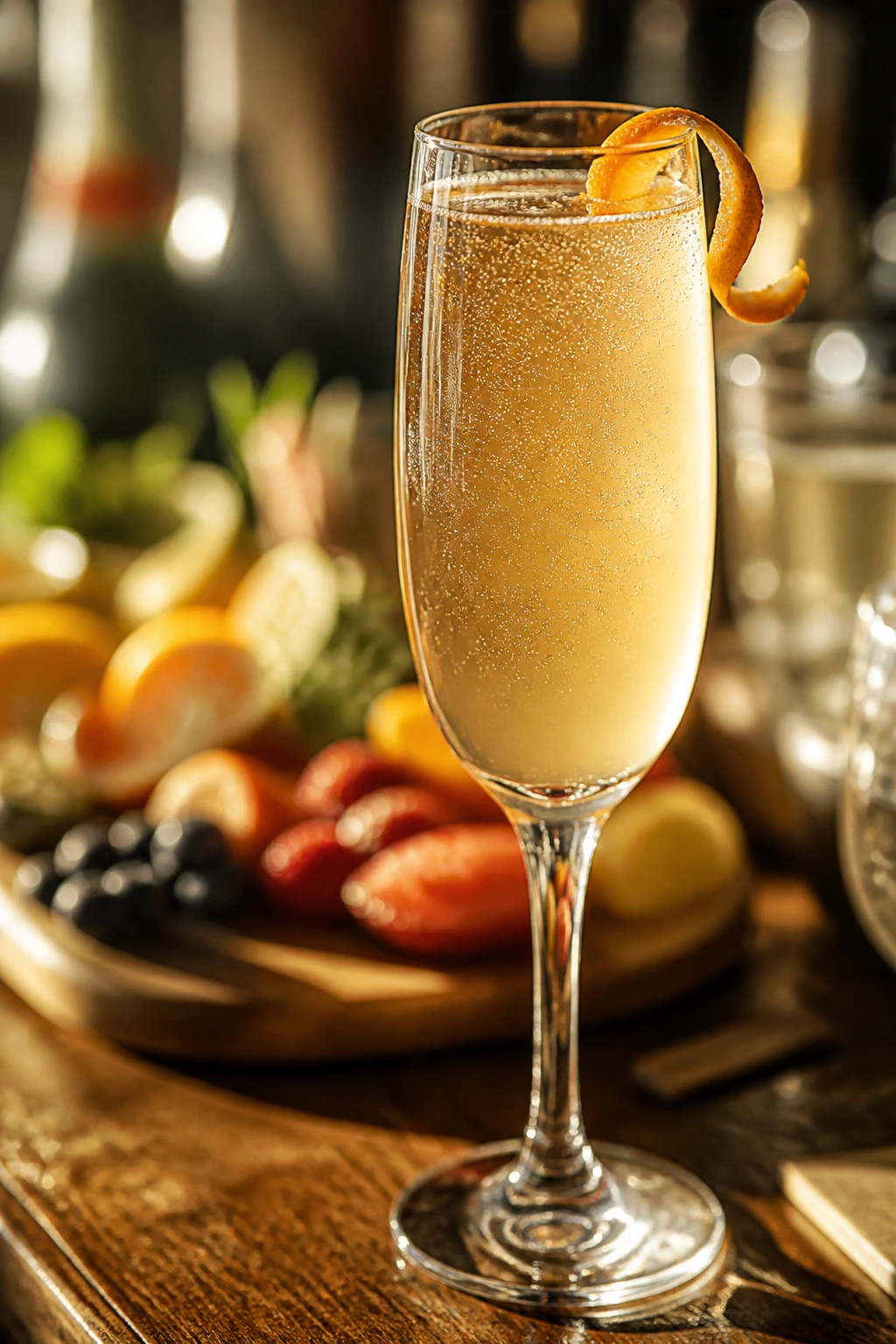
Zero-Proof Sunshine Bar: Swap every sparkling wine bottle for alcohol-free sparkling wine or very cold club soda. Keep the same juice bases and garnish board, and the bar still feels complete.
Sugar-Lighter Pour: Use brut wine, unsweetened juices where possible, and skip added syrup unless the fruit absolutely needs it. Grapefruit, cucumber, and hibiscus are your best friends here.
Herb Garden Layout: Build the whole bar around mint, basil, thyme, rosemary, and sage. This works especially well with berry, melon, citrus, and stone fruit because the herbs keep the bar from tasting one-note.
Frozen Fruit Station: Offer frozen berries, pineapple chunks, and peach slices as garnish. They chill the drink while doubling as edible ice, which is handy if the table sits in warm air for a while.
Tart-and-Bright Mix: Lean on grapefruit, lemon, lime, pomegranate, and hibiscus. This is the move for people who like drinks with less sugar and a sharper finish.
Dessert-Style Corner: Put out vanilla syrup, orange sorbet, peach nectar, and sparkling rosé. That cluster makes it easy to build the creamsicle and peach-forward options without cluttering the whole bar.
Common Mistakes to Avoid
Letting everything sit warm: Warm juice kills the drink faster than almost anything else. Chill the bases, chill the fruit, and keep the wine in an ice bucket until pouring time.
Making every glass too sweet: A lot of fruit drinks fail because the sugar keeps stacking. Brut sparkling wine, a little acid, and a restrained hand with syrup keep the bar from feeling sticky.
Skipping the strain on pulpy drinks: Berry, melon, kiwi, and cucumber purées need at least one pass through a fine sieve if you want a smooth flute. Otherwise, you get sediment in the bottom and a cloudy pour.
Overloading the garnish: A pretty bar is not the same thing as a crowded one. Too many fruit chunks slide into the glass and interrupt every sip, which is annoying fast.
Pouring the bubbles too early: Sparkling wine belongs at the last moment. If you batch the whole drink hours ahead, the thing that makes a mimosa a mimosa disappears.
Ignoring sweetness differences between juices: Some nectars are already sweetened, some aren’t, and the label won’t always tell you in a useful way. Taste first. Adjust second. That little habit saves a lot of syrupy mistakes.
Frequently Asked Questions
How far ahead can I prep a mimosa bar?
You can prep the juice bases, fruit bowls, and herb garnishes the day before. Keep everything cold and add the sparkling wine right before guests start pouring so the drinks still have lift.
What sparkling wine works best for a mimosa bar?
Brut prosecco, cava, or champagne is usually the best call because dry bubbles can handle sweet fruit without getting cloying. If your juices are very tart, an extra-dry bottle can work too, but I still prefer brut for balance.
Can I use frozen fruit instead of fresh?
Yes, and for some drinks it’s a smart move. Frozen berries, pineapple, and mango blend well for purées and can also go straight into garnish bowls as edible ice.
How do I keep the drinks from getting flat?
Keep all bubbly bottles cold, open them only when needed, and pour the sparkling wine last. If the bar is out for a long while, refill the juice bases in pitchers but hold the wine in a cooler until the next round.
Can I make these drinks without alcohol?
Absolutely. Alcohol-free sparkling wine works well, and plain club soda gives you a lighter finish. Keep the same juice bases and garnish style so the zero-proof glass feels like part of the bar, not an afterthought.
Should I use juice or purée?
Juice gives you a cleaner, lighter drink; purée gives you thicker texture and stronger fruit flavor. For berries, melon, kiwi, and peach, I like purée or nectar. For citrus, juice is usually better.
How do I stop herb flavors from taking over?
Use fewer leaves than you think, and steep them briefly. Basil, sage, and rosemary can get aggressive fast, especially in a sweet drink.
Can I batch a whole pitcher of mimosa?
You can batch the juice portion, but not the sparkling wine if you care about bubbles. Make the base in a pitcher, keep the wine separate, and combine them at the glass or right before serving.
A Bar Worth Reaching For
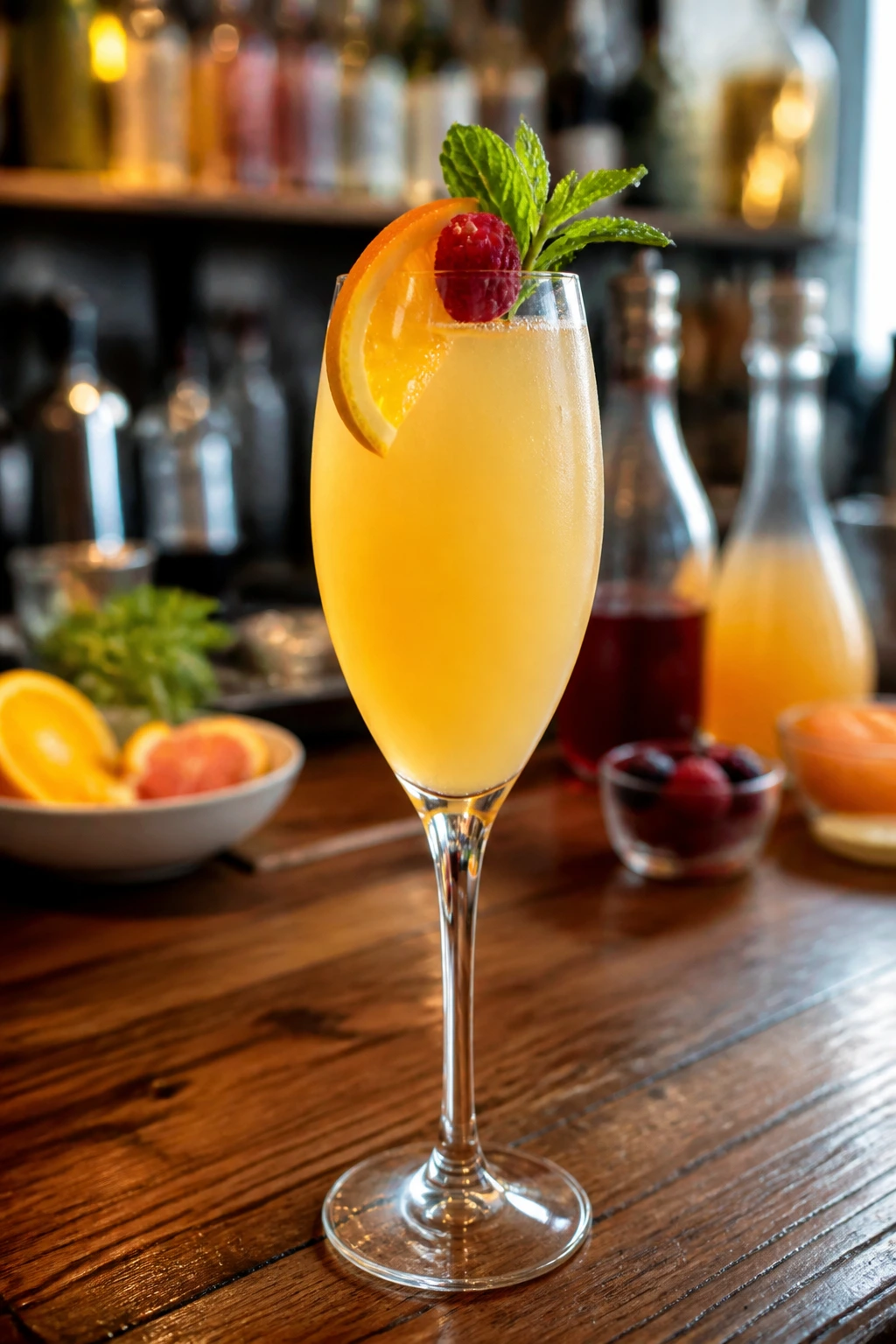
A good mimosa bar doesn’t need to be complicated. It needs cold fruit, dry bubbles, and a few flavors that each pull in a different direction: sharp citrus, soft peach, tart berries, cool herbs, a little tropical heat if you want it. That mix keeps the table interesting from the first pour to the last.
What I like most about these mimosa bar ideas is that they let you build a spread that feels generous without turning into a production. Pick three or four, keep the garnishes tight, and let the fruit do the work. That’s usually enough to make the bar feel alive.