



A good tropical smoothie pack should feel like a cold, bright interruption in a hot morning. Mango, pineapple, banana, maybe a little coconut or lime — all of it packed before the day starts, all of it waiting in the freezer like a small piece of order in a chaotic kitchen.
The trick is that a freezer pack is not just “fruit in a bag.” A loose pile of frozen produce will blend into either a watery slush or a stalled blender arm, and neither one is worth your time. What you want is balance: enough frozen fruit for body, enough creaminess to keep the sip smooth, and enough acid or aromatic lift so the drink tastes alive instead of sugary and dull.
Tropical smoothie packs work because they handle the annoying part ahead of time. Peeling mangoes at 7 a.m. is a bad use of daylight. So is trying to rescue a half-thawed banana with a spoon and a prayer. A good pack fixes those problems before they show up, and once you get the ratio right, the whole thing becomes one of those quiet kitchen habits that pays you back every time you reach into the freezer.
Why These Packs Earn Their Space in the Freezer
- Less morning friction: One frozen pack plus a pour of liquid means no peeling, chopping, or sticky mango fingers when you’re half-awake.
- Better texture control: Mango, banana, and pineapple bring natural thickness, so you don’t have to dump in a pile of ice that makes the flavor taste thin.
- Ripe fruit finally gets a job: Speckled bananas and fragrant mangoes freeze beautifully, which means fruit that might have gone soft on the counter becomes breakfast instead of trash.
- Easy to steer in different directions: A tropical base can take lime, ginger, spinach, yogurt, chia, or protein powder without turning into a blender mystery.
- Freezer-friendly by design: The pieces stack flat, keep for weeks, and can be portioned out in seconds, which is the whole point. Fast mornings deserve a little respect.
- Cheaper than repeated convenience buys: A bag of frozen mango or a batch of prepped pineapple often costs less than grabbing sweet drinks that disappear in one sitting.
The Fruit Formula Behind a Creamy Pour
The best tropical smoothie packs follow a simple pattern: one fruit for body, one fruit for brightness, and one ingredient that keeps the texture from feeling icy. That’s the core. Everything else is decoration, and sometimes decoration can get expensive or fussy fast.
Mango is the anchor in my kitchen. It freezes with a soft, almost custardy texture, and it makes the blender work less hard than pineapples do. Pineapple adds lift and snap, but pineapple alone can taste sharp and a little aggressive once frozen. Banana rounds both out. Not too much. Just enough to make the drink pour instead of slosh.
The ratio that keeps the blend smooth
A very workable starting point for one pack is 2 cups total fruit, made from some mix of mango, pineapple, and banana. If you want a thicker drink, push the fruit toward the mango-banana side. If you want it brighter and lighter, let pineapple take a bigger share, but keep something creamy in the bag — half a banana, a few chunks of mango, or even a spoonful of coconut yogurt at blending time.
Papaya and peach are useful too, but they play different roles. Papaya gives a soft, mellow body; peach adds a slightly fuzzy sweetness that works well when pineapple is strong. Both freeze fine if you cut them into small, dry pieces first. Big, wet chunks just glue themselves together into one stubborn clump.
Why banana still matters, even when people complain about it
Some people want a tropical smoothie pack with no banana taste. Fair enough. Bananas can take over if you use too much. But one small banana, especially if it’s well spotted and sliced before freezing, does a job that’s hard to replace. It thickens the drink without making it taste like ice cream, and it smooths out the sharper edges from pineapple or passion fruit.
If you want a banana-free version, the swap has to bring body from somewhere else. Avocado works, though it’s more neutral than tropical. Thick yogurt works. A spoonful of chia works after it sits for a few minutes. Skipping banana and pretending the texture will take care of itself is how you end up with a drink that tastes fine but feels thin.
Acid is not optional
Tropical fruit gets sweet fast. That’s the trap. A frozen pack can taste flat if it’s all mango and banana with nothing to wake it up. A teaspoon or two of lime juice, a little lime zest, or a small scoop of passion fruit pulp gives the blend a sharper edge. That edge matters. It makes the drink taste colder, cleaner, and less like melted candy.
Don’t overdo the acid. You’re not making ceviche. You’re trying to keep the fruit from collapsing into one sweet note, and a little brightness goes farther than people think.
Which Tropical Fruits Freeze Well and Which Ones Get Weird
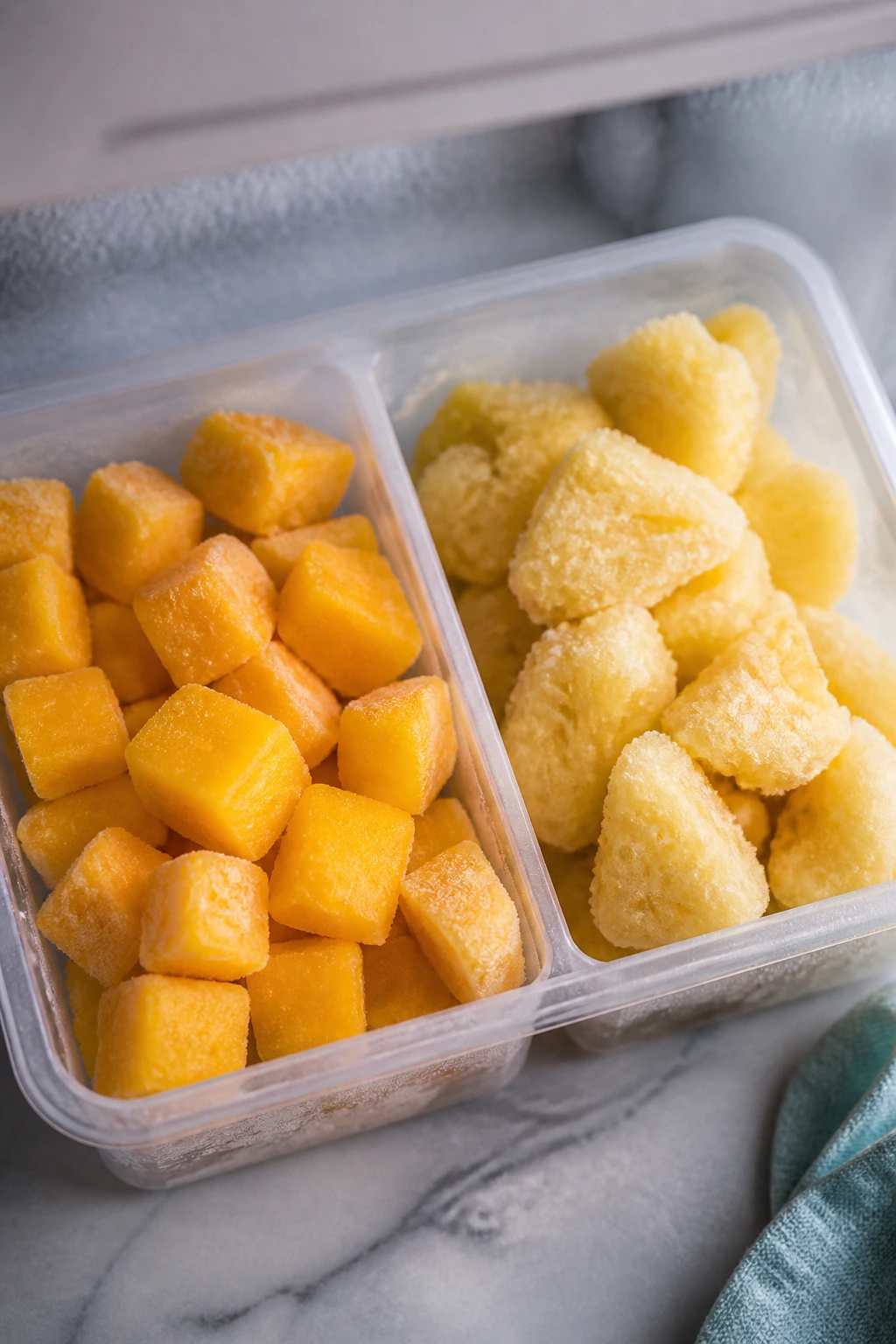
Frozen fruit is not all the same. Some pieces stay separate and cheerful in the freezer. Some turn into a frost-covered brick that needs a hammer and a bad attitude. Knowing the difference saves a lot of frustration.
Mango is one of the easiest. Use ripe mango, peel it, slice it into chunks about 3/4-inch thick, and freeze the pieces in a single layer before bagging them. Pineapple is also reliable, but it likes to stick together if the pieces are wet, so pat it dry after cutting. Banana freezes well in coins or half-moons, not whole chunks. Whole banana sections are harder on standard blenders, and they don’t break down as evenly.
The fruits that earn a permanent place in a pack
- Mango: Soft, sweet, and naturally creamy. It carries the drink’s texture.
- Pineapple: Sharp and bright. Great in smaller amounts so the flavor doesn’t go harsh.
- Banana: The quiet workhorse. It smooths and thickens.
- Papaya: Mild and silky, though the flavor can be a little musky if it isn’t ripe enough.
- Peach: Nice when you want a softer, rounder tropical profile.
- Passion fruit pulp: Tiny quantity, big payoff. It wakes the whole pack up.
Frozen coconut meat can work, but it’s not a necessity. Coconut milk or coconut water usually does the same job more cleanly. Fresh coconut chunks are charming in theory and awkward in a blender in practice.
Fruits that need a little caution
Watermelon is the classic trap. It freezes into something mealy and watery, then melts into disappointment. Honeydew and cantaloupe do the same thing unless they’re used in tiny amounts and you’re making a very light drink.
Strawberries can live in a tropical smoothie pack, but they push the flavor toward “mixed fruit” instead of “tropical.” That’s fine if that’s what you want. It’s not fine if you’re trying to keep the mango-pineapple personality clear.
Kiwi is another one that sounds more tropical than it behaves. It brings tartness, yes, but the seeds and texture can go odd after a long freeze. If you use it, use it sparingly and expect the pack to taste a little greener and more electric.
Fresh versus frozen fruit
Fresh fruit that’s at peak ripeness often freezes better than the pre-cut stuff that’s already been sitting under store lights. That’s especially true for mango and banana. If the fruit smells good and gives a little when pressed, it’s probably ready to freeze.
Store-bought frozen fruit has its place, though. Frozen mango chunks and pineapple tidbits are usually cut at a decent stage and packed quickly enough to preserve flavor. Check the ingredient list. You want fruit, not syrup, and you do not need added sugar to make a tropical pack work.
Liquid Choices That Keep the Blender Honest
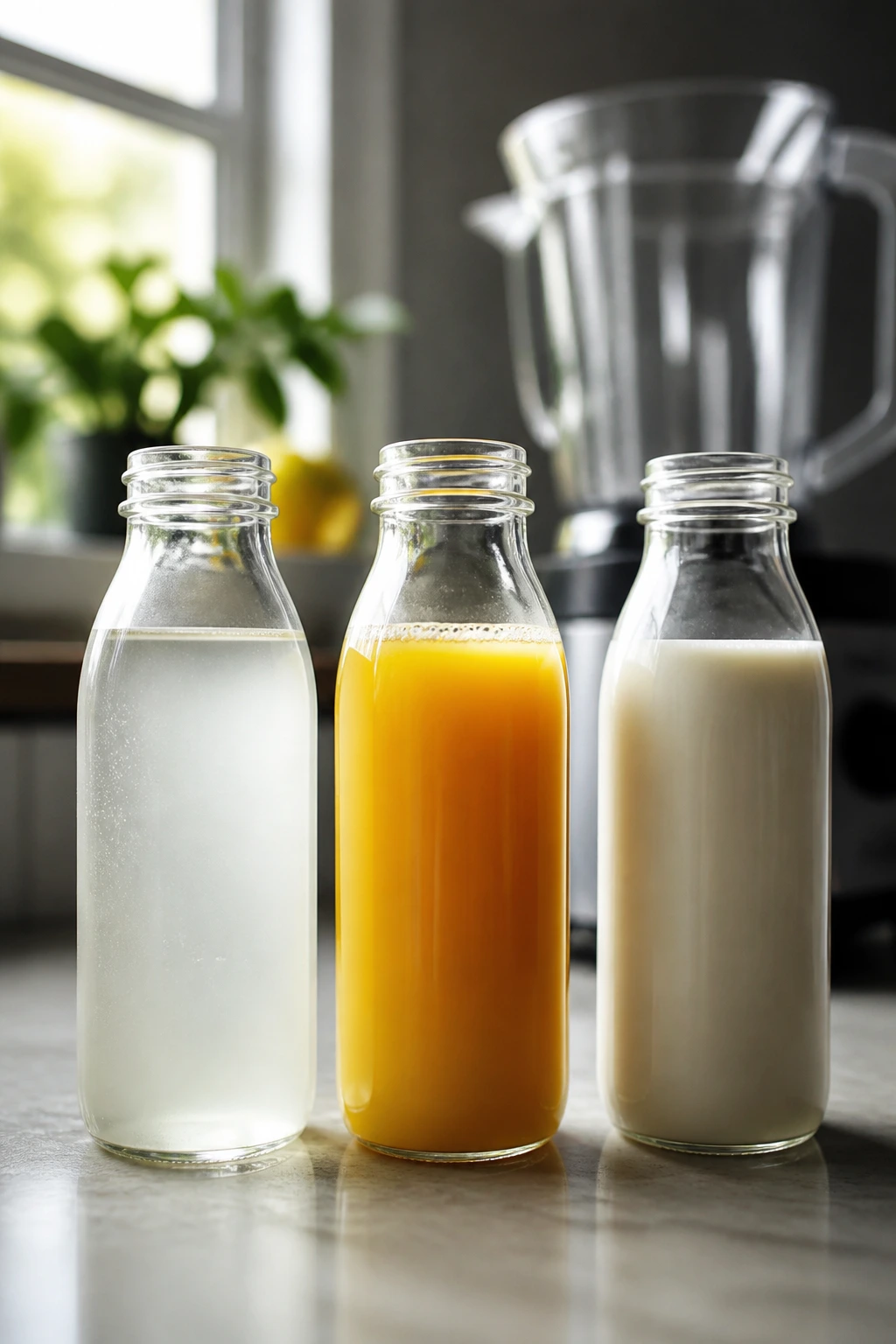
A smoothie pack does its best work when the liquid is chosen with some care. Water makes the drink thin. Juice makes it sweet fast. Coconut water, milk, yogurt, and a few other liquids all push the texture in different directions, and the wrong choice can flatten everything you just built.
Coconut water is the lightest tropical-friendly option. It keeps the flavor clean and slightly salty, which helps the fruit taste brighter. Use about 3/4 cup per pack if your blender is strong and the fruit is fully frozen. If your machine struggles, go to 1 cup and stop there unless you want a softer, looser drink.
Orange juice is where people get careless. It works, but it can overpower pineapple and mango in a hurry. A little goes a long way — usually 1/4 to 1/2 cup is enough for a pack. More than that, and the smoothie starts drifting toward breakfast punch.
Dairy, dairy-free, and the middle ground
Plain Greek yogurt is the easiest way to get a thick, spoonable smoothie without using ice. About 1/3 to 1/2 cup in the blender with the frozen pack gives a dense, creamy body. It also adds tang, which is useful when the fruit leans very sweet.
If you want dairy-free creaminess, use coconut milk, oat milk, or unsweetened almond milk. Coconut milk gives the richest result and makes the smoothie taste closer to a piña colada without any alcohol. Oat milk is softer and less distinctive. Almond milk is the lightest, though it can get a bit thin unless the fruit pack is heavy on banana or mango.
When ice helps and when it ruins the drink
Ice is a patch, not a base. Use it only if your fruit wasn’t fully frozen or your blender is weak and needs help getting the blades moving. One or two handfuls is plenty. Any more and you’re diluting the very thing that makes a tropical smoothie worth drinking.
That’s the part home cooks often miss. Ice does not make a smoothie colder in a useful way if the fruit is already frozen. It mostly makes the drink bigger and less flavorful. Cold is easy. Flavor is the harder part.
How to Pack the Bags So They Stack Like Books
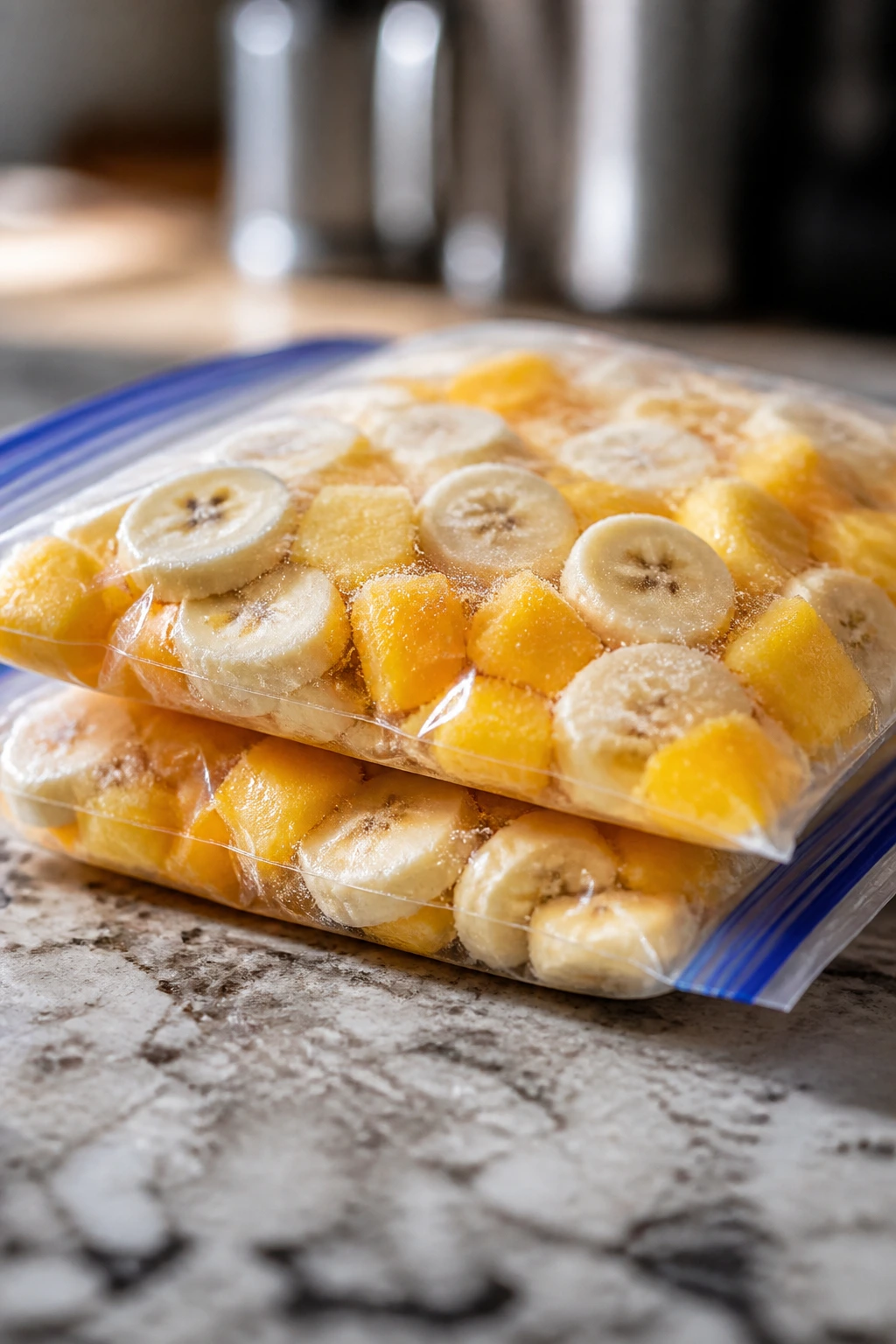
Packing is where the whole habit either becomes easy or becomes a freezer mess. The goal is flat, labeled, and portioned. No lumps. No mystery bags. No “what is this orange clump?” three weeks later.
Start with dry fruit. Dry matters more than people think. Excess surface moisture turns into ice crystals, and ice crystals are what make a smoothie taste dull and frosty instead of creamy. If you’re using fresh pineapple or peeled mango, let the cut fruit sit on a towel for a few minutes before freezing. Not for long. Just enough to lose the obvious wetness.
A clean packing rhythm
- Cut the fruit into small, even pieces. Mango and pineapple should be bite-sized, about 3/4-inch pieces, so the blender doesn’t have to fight large frozen slabs.
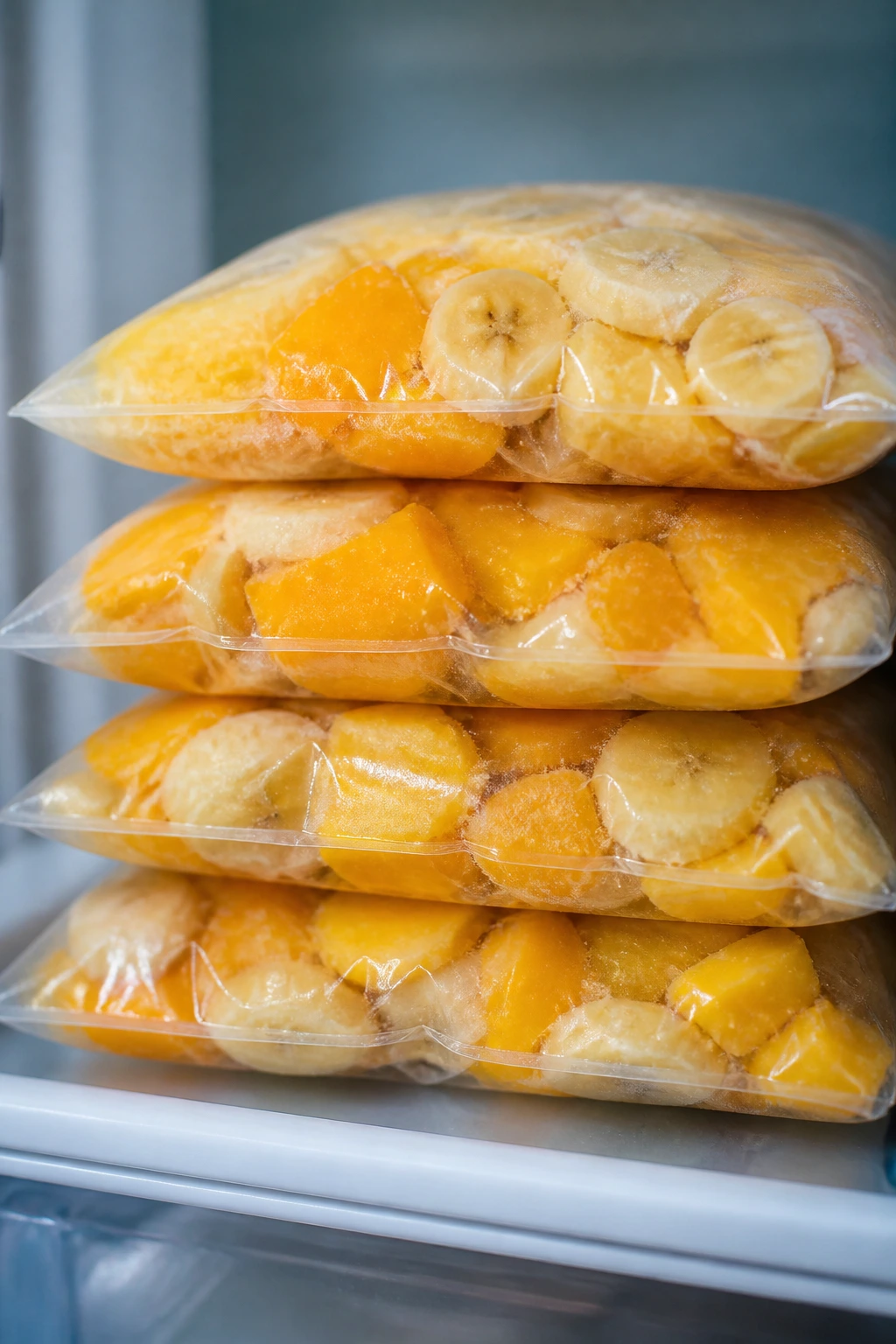
- Freeze sticky fruit on a sheet pan first. Lay the pieces in a single layer and freeze until firm, usually 1 to 2 hours. This stops the fruit from clumping into one heavy brick.
- Portion each pack with purpose. Aim for about 2 cups fruit per bag, plus any dry add-ins like chia or flax.
- Press out the air. Flat bags freeze better, stack better, and thaw a little faster at the edges.
- Label the bag. Write the fruit mix and the liquid amount right on the front. Future-you will forget. Absolutely will.
- Freeze the bag flat. Once solid, stand it up like a file folder or stack it in rows.
Reusable silicone bags work well here, though they cost more at the start. Quart freezer bags are cheaper and still do the job if you’re careful about squeezing out air. If you use containers, pick shallow ones so the pack freezes evenly instead of in a hard dome.
Why the flat freeze matters
Flat bags aren’t just about storage neatness. They freeze faster, which helps preserve texture, and they thaw more evenly when you’re ready to blend. A thick clump of fruit in the center can stay frozen while the outside softens, which is how you end up adding too much liquid just to get the blender going.
That’s why I prefer bags over deep tubs for most smoothie packs. Tubs have their place, especially if you hate disposable packaging, but flat packs are faster to use and easier to stack in a crowded freezer. Space counts. A lot.
The Fastest Way to Blend One Without a Watery Finish
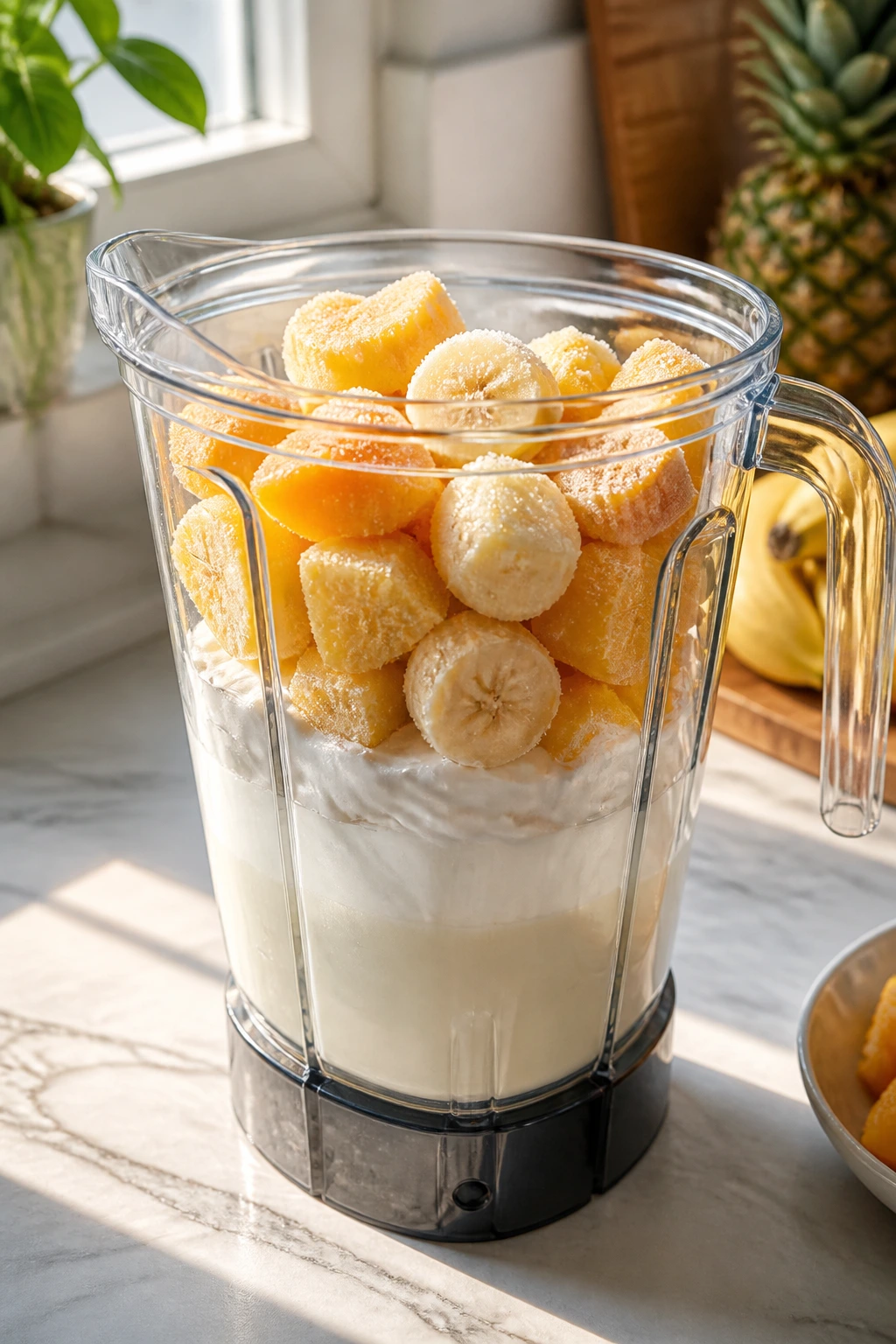
The blender stage is where people panic and add too much liquid. Don’t. Start conservatively and give the machine a chance to work.
Pour the liquid in first. That matters. It gives the blades something to catch, which is especially helpful if you’re using a standard countertop blender instead of a high-speed model. Then add yogurt or softer add-ins, then the frozen pack on top. If you dump the frozen fruit straight into a dry pitcher, the blades can lock up and you’ll be standing there poking at it like it offended you.
The blending order that usually works
- Add 3/4 cup liquid to the blender first.
- Add yogurt, coconut milk, or other soft add-ins next, if using them.
- Top with the frozen fruit pack.
- Start on low for 10 to 15 seconds.
- Increase to medium or high and blend until the fruit starts moving freely.
- Stop once or twice to scrape down the sides if needed.
- Add more liquid in 1 to 2 tablespoon splashes only if the blades stall.
If the smoothie is too thick, resist the urge to fix it with a full cup of extra liquid. That’s where the drink turns from creamy to diluted. A tablespoon or two at a time gives you control.
What a finished smoothie should look like
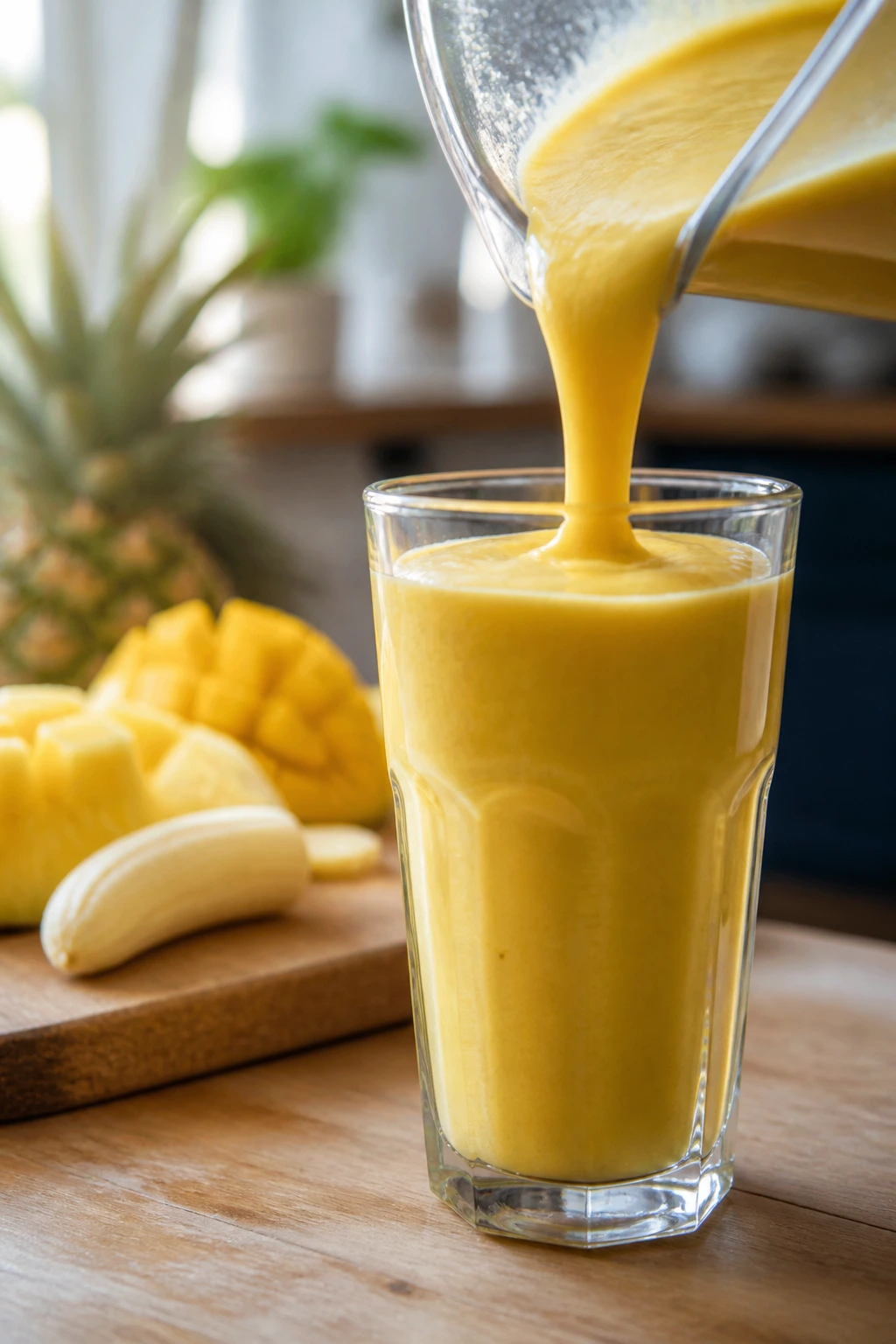
A good tropical smoothie should pour slowly, not rush out like juice. It should mound a little on a spoon and then relax. If it’s thin enough to swish around like orange juice, you’ve gone too far. If it’s so thick that the blender sounds angry and the blade keeps spinning without pulling the fruit down, add liquid in tiny steps.
High-speed blenders forgive a lot. Standard blenders ask for patience. Either way, stop blending the second the texture is even. Overblending warms the mixture and can make the fruit taste flatter than it should. Cold drinks lose their charm fast when they start heating up in the pitcher.
Smart Shopping and Ingredient Prep That Makes the Habit Easier
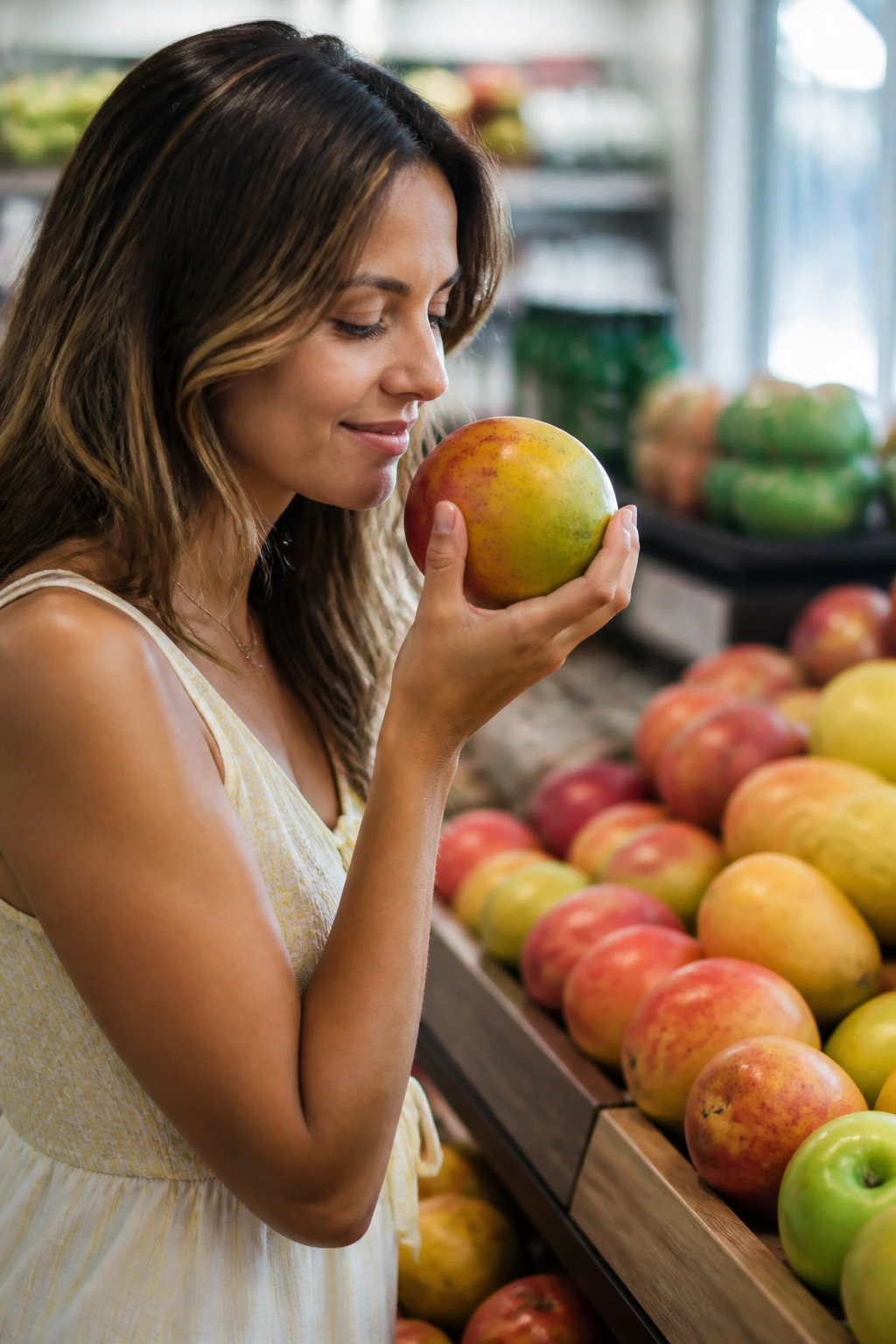
The best smoothie packs begin in the produce aisle, not in the freezer. You want fruit that tastes good before it freezes, because freezing preserves what’s already there. It does not improve bland mango. It does not rescue a sour pineapple. It just locks in whatever you bought.
For mango, smell the stem end. A ripe mango has a soft, sweet scent there, and the fruit should give slightly when you press it with your thumb. For pineapple, pick one that feels heavy for its size and smells sweet at the base. The leaves can be decorative, but the smell is the real clue. Bananas should be heavily speckled if you plan to freeze them for smoothies. Pale yellow bananas are fine to eat, but the speckled ones bring better sweetness and creaminess once they’re frozen.
How I shop for tropical packs
- Fresh mango: Buy it when it’s fragrant and slightly soft; peel and freeze it before it goes stringy.
- Frozen mango: Use it when fresh mango is expensive, underripe, or annoyingly fibrous.
- Pineapple: Buy a whole fruit if you want the brightest flavor and best texture.
- Bananas: Freeze them at peak ripeness, peeled and sliced.
- Passion fruit or lime: Use in small amounts for lift, not as the base.
- Coconut water or coconut milk: Choose unsweetened unless you specifically want a dessert-style smoothie.
Store-bought frozen fruit is not a compromise when it’s good fruit. In fact, it’s often the smarter move because it was processed fast and packed at peak condition. What you want to avoid is fruit frozen in syrup or fruit with added sweeteners. Those mixes make it harder to control flavor, and they can turn a clean tropical pack into something syrupy.
A small prep ritual that saves time later
Wash, peel, and cut the fruit all at once. Dry it. Flash-freeze it. Bag it. That four-step flow keeps the whole job from sprawling across the kitchen. If you’re making more than a few packs, set up a sheet pan line with the bag already open and the label already written.
I also like to keep one “bright” ingredient nearby — lime zest, passion fruit pulp, or a little grated ginger. It’s the sort of small thing that makes a smoothie taste intentional instead of assembled. And that is the difference between a freezer habit you keep and one that quietly dies behind a bag of peas.
How to Serve Tropical Smoothies Without Making Them Feel Like Dessert Soup
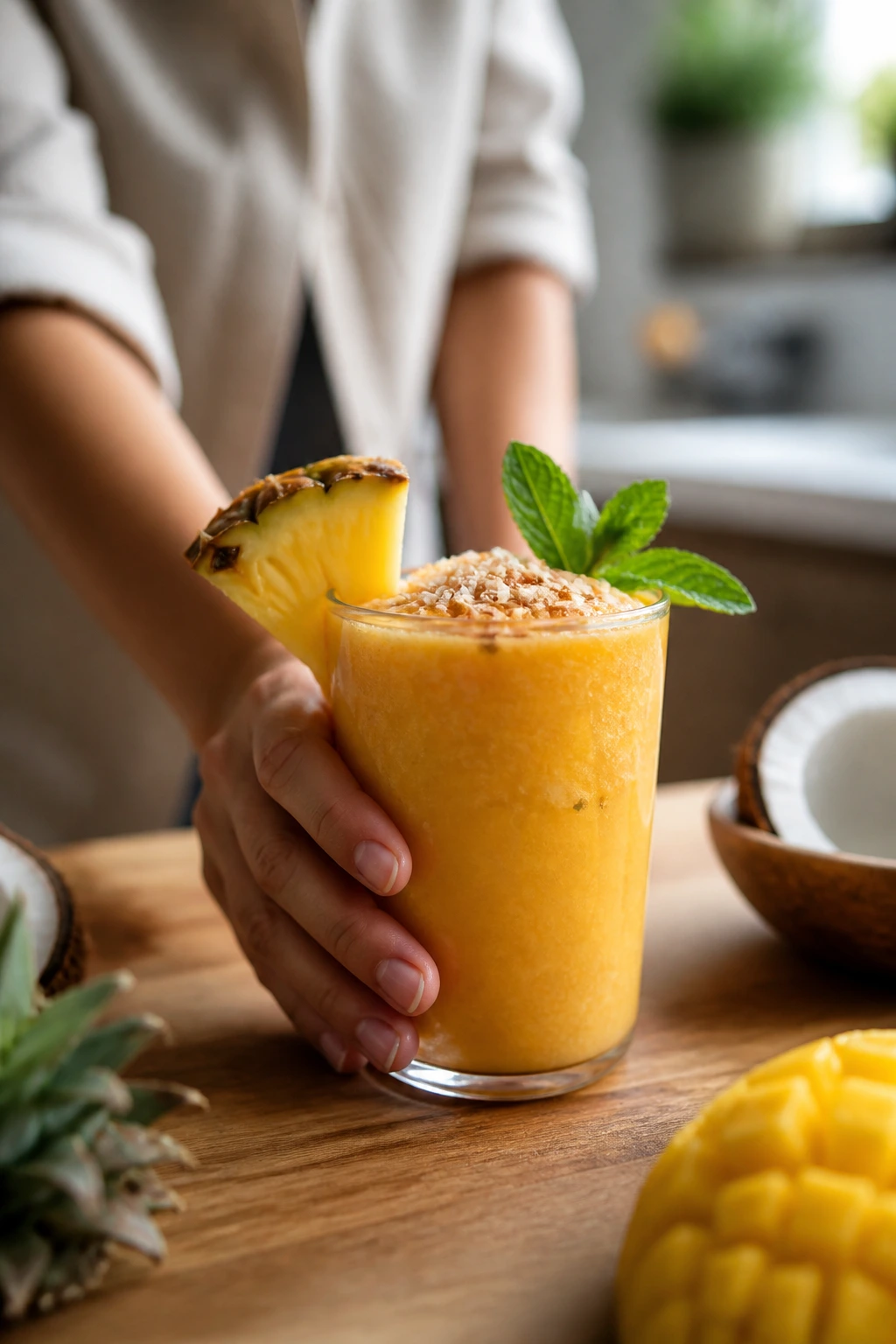
A tropical smoothie can be breakfast, a snack, a post-walk drink, or a lazy lunch companion if you build it with enough body. What it shouldn’t be is a bowl of melted fruit dressed up as something special. A little care at serving time keeps it from sliding into that territory.
Presentation
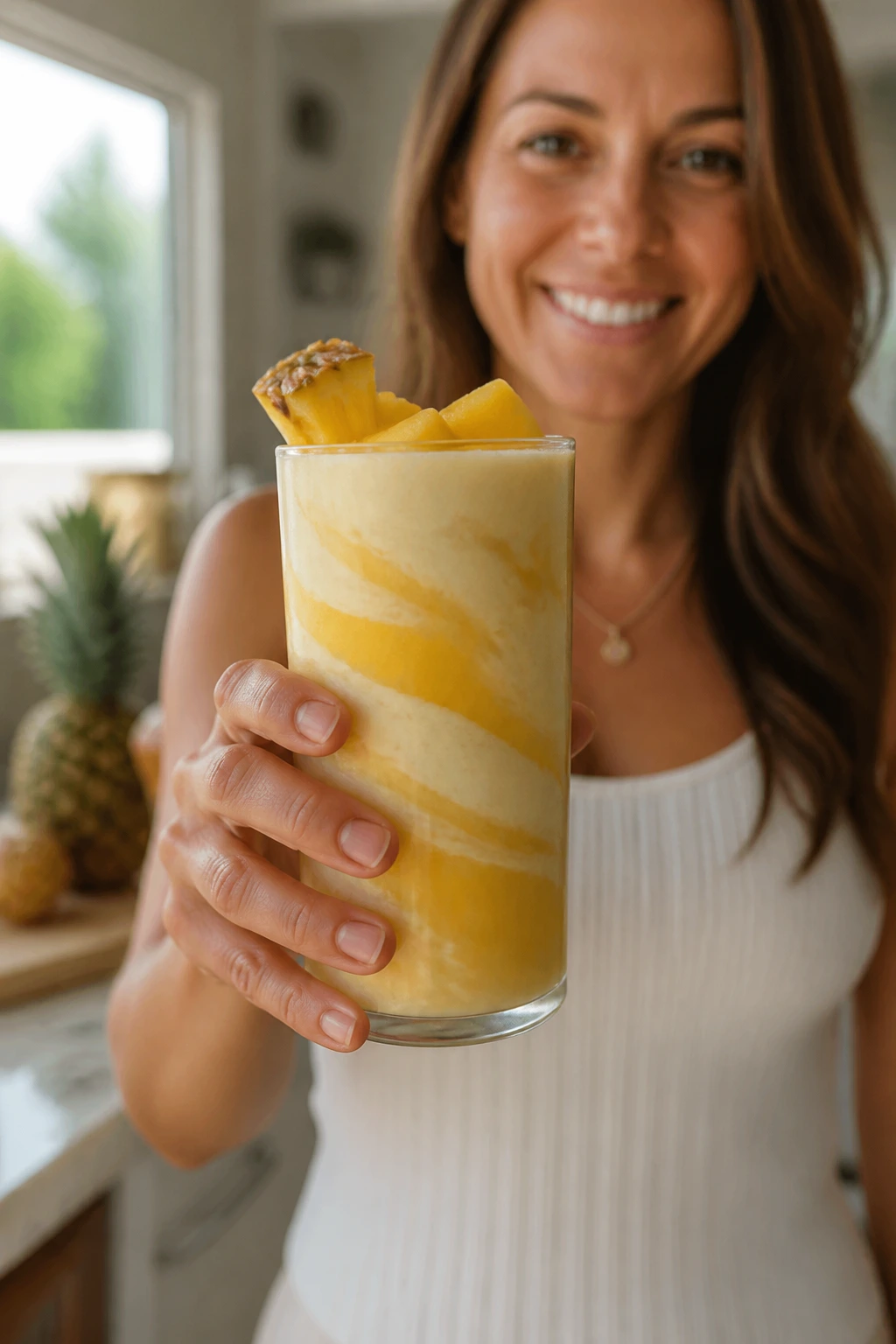
Pour the smoothie into a chilled glass if you have one. Tall and narrow glasses hold the cold better than wide tumblers, and they make a simple drink feel finished. A thin pineapple wedge on the rim, a mint sprig, or a few toasted coconut flakes on top is enough. Don’t pile on garnish like you’re opening a resort buffet.
If you’re serving it in a bowl, keep the blend thick and spoonable. Add sliced banana, toasted coconut, and a few chopped macadamias or almonds. That turns the pack into something with texture, not just color.
Accompaniments
A tropical smoothie goes well with salty things. Toast with peanut butter, a hard-boiled egg, a handful of roasted nuts, or a small omelet are all good companions. If you want it to feel more like a meal, pair it with Greek yogurt and granola, or with a slice of seeded toast and a smear of almond butter.
For a lighter setup, serve it with sparkling water and a few cucumber slices on the side. That sounds almost too simple, but it works. The bubbles reset your palate and keep the smoothie from feeling heavy.
Portions
Most adults are happy with 12 to 16 ounces if the smoothie is part of breakfast. If you’re using it as a snack, 8 to 10 ounces is usually enough. Kids often do fine with 6 to 8 ounces, especially when the smoothie has yogurt or chia and doesn’t drink like fruit punch.
Scaling is easy. Double the pack, double the liquid, but keep the ratio the same. If the blender struggles, don’t force a giant batch through a small machine. That’s how people end up with one good smoothie and one sad, thin last cup.
Beverage pairing
A smoothie is already a drink, so the pairing question gets weird fast. Still, a second beverage can make sense. Unsweetened iced tea, black coffee, or plain sparkling water all sit nicely beside a tropical smoothie without turning the meal into sugar overload. Coffee plus pineapple sounds odd until you try it. Then it just tastes like breakfast.
Make-Ahead, Storage, and Freezer Life
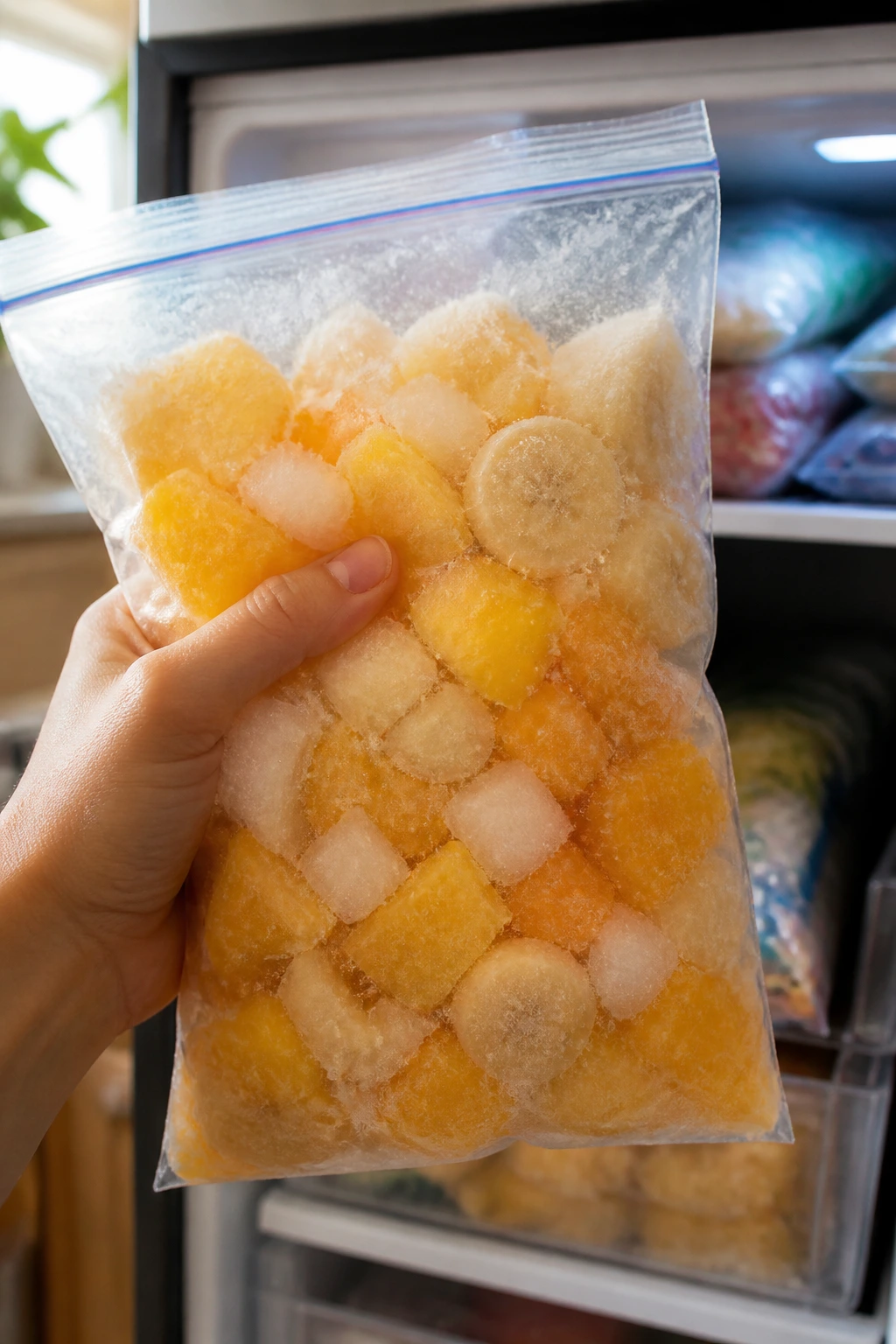
Smoothie packs are built for the freezer, but the freezer is not magic. Air still gets in. Ice crystals still form. Flavor still fades if you leave fruit sitting around for too long. The pack lasts, yes, but quality has a window.
The USDA’s general freezer guidance is useful here: food kept at 0°F stays safe indefinitely, but that does not mean it stays good forever. For smoothie packs, I like the practical range of 2 to 3 months for best flavor and texture. After that, the fruit can still be usable, but the taste gets flatter and the frozen edges can pick up that dry, papery freezer note.
How long things keep
- Unblended smoothie packs: Best within 2 to 3 months for top texture and flavor.
- Unblended packs in very airtight packaging: Can last longer, but quality will drop slowly.
- Blended smoothie in the fridge: Best used within 24 hours.
- Blended smoothie at room temperature: Do not leave it out longer than 2 hours; cut that to 1 hour if the room is hot or the drink contains dairy.
- Thawed fruit pack before blending: If it softens in the fridge for a few hours, that’s fine, but don’t let it sit around all day.
The best make-ahead rhythm
I like to prep tropical smoothie packs in batches of 4 to 6. That’s enough to matter, but not so many that the freezer becomes a fruit graveyard. Make one batch of mango-pineapple-banana, another with passion fruit and peach, and maybe one green version with spinach tucked in. Variety helps keep the habit alive.
If you make the packs on a day when fruit is on the edge of ripeness, freeze them that same day. Don’t wait. The clock is already ticking on fresh mango, and a bruised banana can go from perfect to too-fermented faster than people expect.
Thawing without ruining texture
You do not need to thaw fully. In fact, full thawing is a bad idea if you want the smoothie cold and thick. If your blender is especially old or weak, let the pack sit on the counter for 5 to 10 minutes while you gather the liquid. That tiny head start is often enough.
For standard blenders, straight from freezer to pitcher is usually fine as long as the liquid goes in first. That is the move that keeps the blades from spinning in place like they’re stuck in a snowbank.
Practical Tips for a Freezer Stash That Actually Gets Used
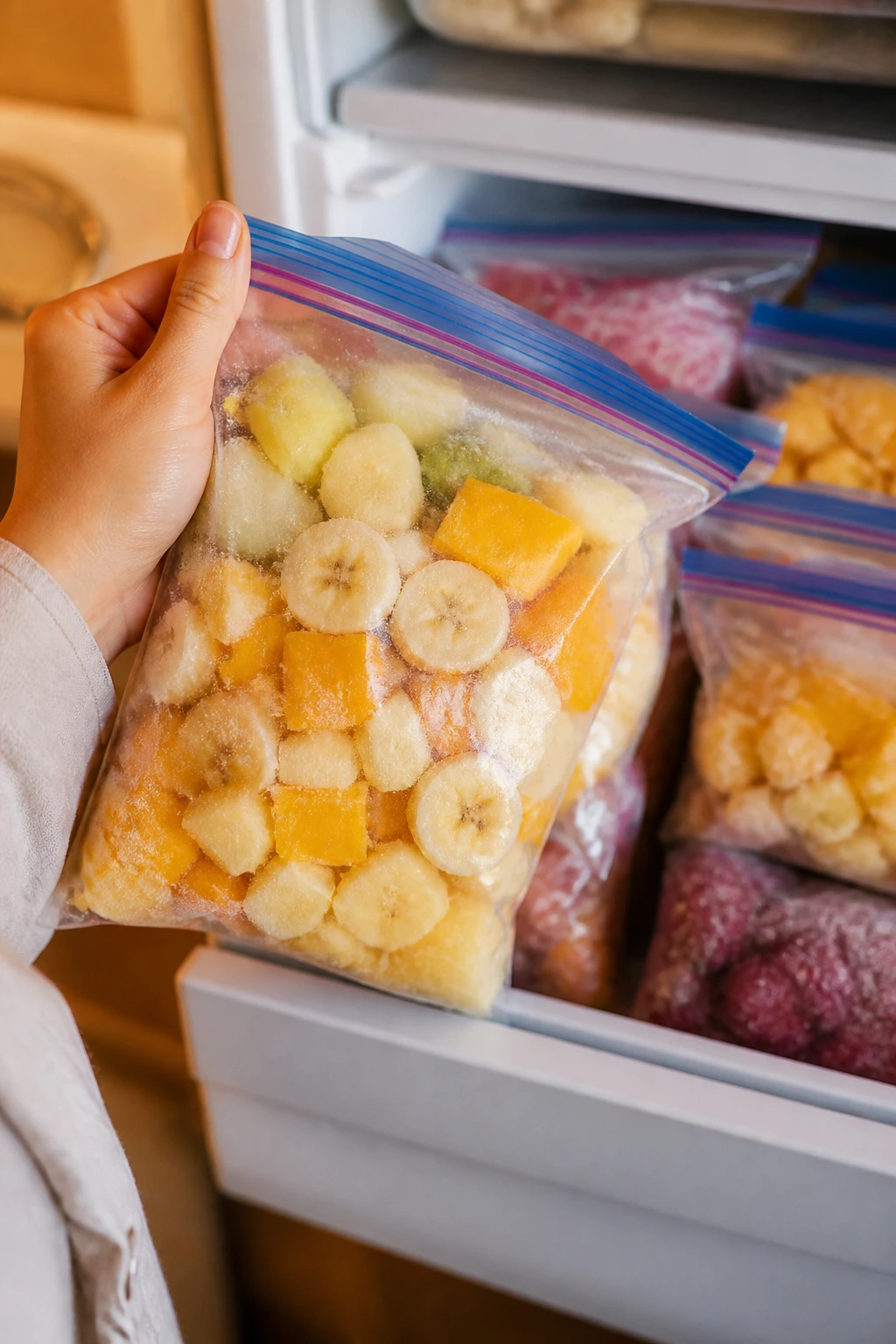
A smooth freezer system beats a clever recipe every time. If the pack is hard to find, hard to label, or hard to blend, it will sit there while you make toast again. The point is to make the habit boring in the best possible way.
Batch by flavor, not by mood. One row of mango-pineapple-banana. One row of peach-coconut-lime. One row with greens and ginger. When each pack follows a pattern, you stop thinking about what to make and start thinking about which bag to grab.
Keep one bright ingredient in every pack. Lime zest, passion fruit pulp, a small scoop of pineapple, or a little fresh ginger keeps the smoothie from tasting sleepy. Fruit sweetness gets dull in the freezer. A sharp note fixes that.
Use add-ins sparingly at first. Chia, flax, protein powder, and oats all change the liquid balance. That’s not bad, but it means you should know the base pack first. Once you understand how the plain fruit blend behaves, then you can start building more filling versions.
Freeze backup fruit in separate bags. If you have extra mango or banana slices, freeze them plain in 1-cup bags. They’re useful when a smoothie needs more body and don’t force you into one flavor every time.
Write the liquid amount right on the bag. Sounds small. Helps a lot. A note like “3/4 cup coconut water + 1 tbsp lime juice” saves you from guessing while the blender is half full.
And one more thing. Keep the freezer packs where you can see them. Not behind the dumplings, not under the peas, not wedged into a mystery drawer. If you forget they exist, they may as well not.
Common Mistakes That Turn a Good Pack into Slush
The mistakes here are not dramatic. They’re small, annoying, and easy to make. That’s exactly why they keep happening.
Using too much pineapple without enough body is the fastest route to a thin, sharp smoothie. Pineapple tastes bright frozen, but if it dominates the bag, the drink can feel watery once the ice melts off the fruit. Fix it with mango, banana, yogurt, or a spoonful of chia.
Adding liquid like you’re making soup is another common slip. The first splash is usually enough to get the blades moving. Once the blender starts, you can always add more. You cannot take it back. That’s the trap.
Freezing wet fruit in one clump gives you a bag that looks tidy and behaves like a brick. The fruit needs a little space before bagging, especially pineapple and banana. Flash-freeze sticky pieces on a tray first, then bag them once firm.
Skipping the label sounds harmless until you pull out a frozen bag and can’t remember whether it needs coconut water, almond milk, or yogurt. That’s how freezer food gets ignored. A 5-second label saves a lot of guesswork.
Trying to save a weak blend with lots of ice usually makes the drink colder and worse. Ice masks the problem for a minute, then the smoothie loses flavor as it thins. If the blender struggles, soften the pack for a few minutes or add liquid in smaller splashes.
Making every pack identical is a quiet boredom problem. Mango-pineapple-banana is a solid base, but after three in a row, people get bored and stop reaching for them. Rotate in lime, peach, papaya, ginger, spinach, or coconut so the freezer feels like a small menu rather than a repeat.
Variations and Flavor Twists Worth Freezing
The base idea is stable, but the flavor can move in a few useful directions. These variations keep the packs from feeling repetitive, and each one has a different job.
Piña Colada Morning Pack
Use pineapple, mango, and frozen banana, then blend with coconut milk instead of juice. A little shredded coconut or coconut extract pushes the flavor toward dessert territory, which is fun when you want a richer drink. This is the version I’d make for a slow breakfast or an afternoon treat, not for a post-run refill.
Green Tropics Pack
Add a big handful of baby spinach or a few thin cucumber slices to the mango-pineapple base. Keep the fruit ratio strong enough that the greens stay in the background. This is the version for people who want more color and less sweetness, and it works best with lime juice to keep the flavor clean.
Sunrise Peach Pack
Swap some of the pineapple for frozen peach and add a squeeze of orange juice at blend time. The result is softer and rounder, with less sharpness and a more mellow finish. It’s the pack I’d use when I want something gentle instead of bright-brash tropical punch.
Protein Beach Pack
Build the base with mango, banana, and pineapple, then blend in Greek yogurt, hemp seeds, or a measured scoop of protein powder. Add a little extra liquid because powders soak up more than people expect. This one makes sense after a workout or on a morning when breakfast needs to carry more weight.
Low-Sugar Lime Cream Pack
Use more mango than pineapple, skip juice, and blend with unsweetened coconut milk plus lime zest. If you want a little more body, add avocado instead of extra banana. This version is less sweet, more grown-up, and the lime keeps it from feeling flat.
Tools That Pull Their Weight
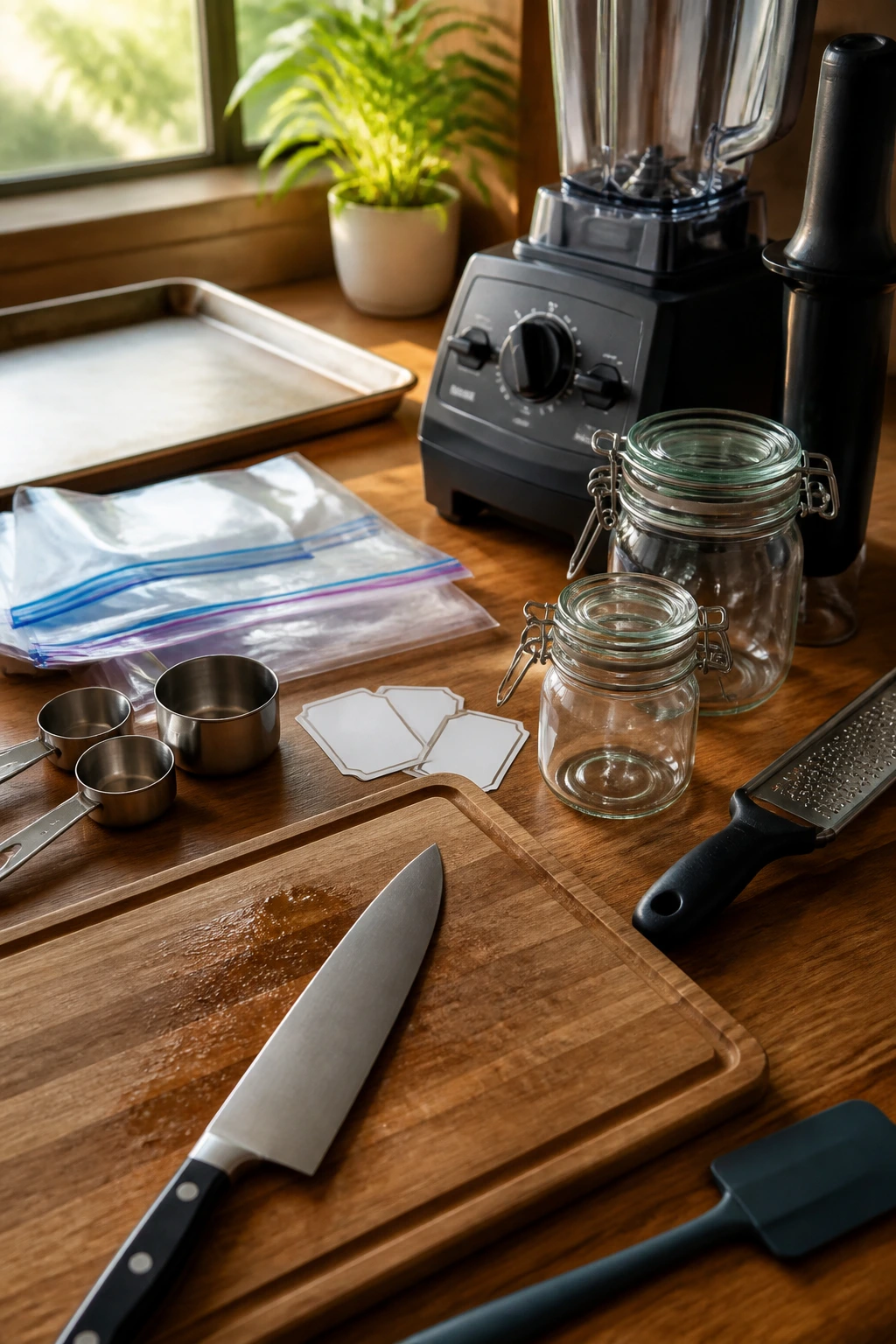
- Quart freezer bags or reusable silicone bags — Flat bags stack better and freeze faster than deep containers.
- Sharp chef’s knife — Clean cuts matter with mango and pineapple; ragged pieces freeze into awkward clumps.
- Cutting board with a damp towel underneath — Keeps the board from sliding when you’re cutting slippery fruit.
- Rimmed sheet pan — Useful for flash-freezing fruit before bagging, especially sticky pieces.
- Measuring cups — Helpful if you want each pack to taste the same every time.
- Permanent marker or freezer labels — Write the fruit mix and liquid amount on the bag.
- High-speed blender or standard countertop blender — Either works, though a weaker machine may need a little more liquid.
- Tamper or silicone spatula — Good for thick blends that need a nudge, not a shove.
- Airtight jars or shallow freezer containers — Fine if you dislike bags; just keep the portions flat and not too deep.
- Microplane or zester — Optional, but useful if you want lime zest or ginger in the pack.
Frequently Asked Questions
How much fruit should go into one smoothie pack?
A solid starting point is about 2 cups of frozen fruit per pack. That amount usually gives enough body for a single 12- to 16-ounce smoothie, especially if you’re using mango, banana, or pineapple as the base.
Can I use fresh fruit instead of frozen fruit in the pack?
Yes, but flash-freeze it first if you want the texture to stay thick and cold. Fresh fruit added straight to the blender works, but then you’ll need more ice, and that usually waters down the flavor.
What’s the best liquid for tropical smoothie packs?
Coconut water gives the cleanest tropical flavor, while coconut milk gives the richest texture. If you want something lighter, use unsweetened almond or oat milk. Orange juice works too, but keep it small so the smoothie doesn’t taste like candy.
How long can the packs stay in the freezer?
For best flavor and texture, use them within 2 to 3 months. They’ll still be safe longer if your freezer stays at 0°F, but the fruit gradually loses brightness and can pick up freezer smell if the packaging isn’t tight.
Can I add protein powder or chia seeds to the pack before freezing?
Yes, though I usually keep powders and seeds separate unless I know the ratio I like. Chia thickens the smoothie after a few minutes, and protein powder can make the blend a little pasty if you don’t add enough liquid.
What if my blender can’t handle frozen fruit?
Let the pack sit out for 5 to 10 minutes, add the liquid first, and use slightly smaller fruit pieces next time. If the blender is still struggling, blend in two stages or use a bit more liquid rather than piling in ice.
Can I make these packs without banana?
Absolutely. Use mango, avocado, Greek yogurt, or coconut milk to replace the body that banana usually brings. Without banana, you may need a little more careful balancing so the smoothie doesn’t turn thin.
How do I keep the smoothie from tasting too sweet?
Use more pineapple sparingly, keep juice under control, and add lime juice, lime zest, or a small piece of ginger. A little salt can help too — a tiny pinch wakes up the fruit and keeps the drink from tasting flat.
Can I blend the smoothie ahead of time and store it?
You can, but the texture will loosen in the fridge. Blend it, pour it into a jar, and drink it within 24 hours for the best result. Shake or stir before serving, because separation is normal.
A Cooler Kind of Breakfast
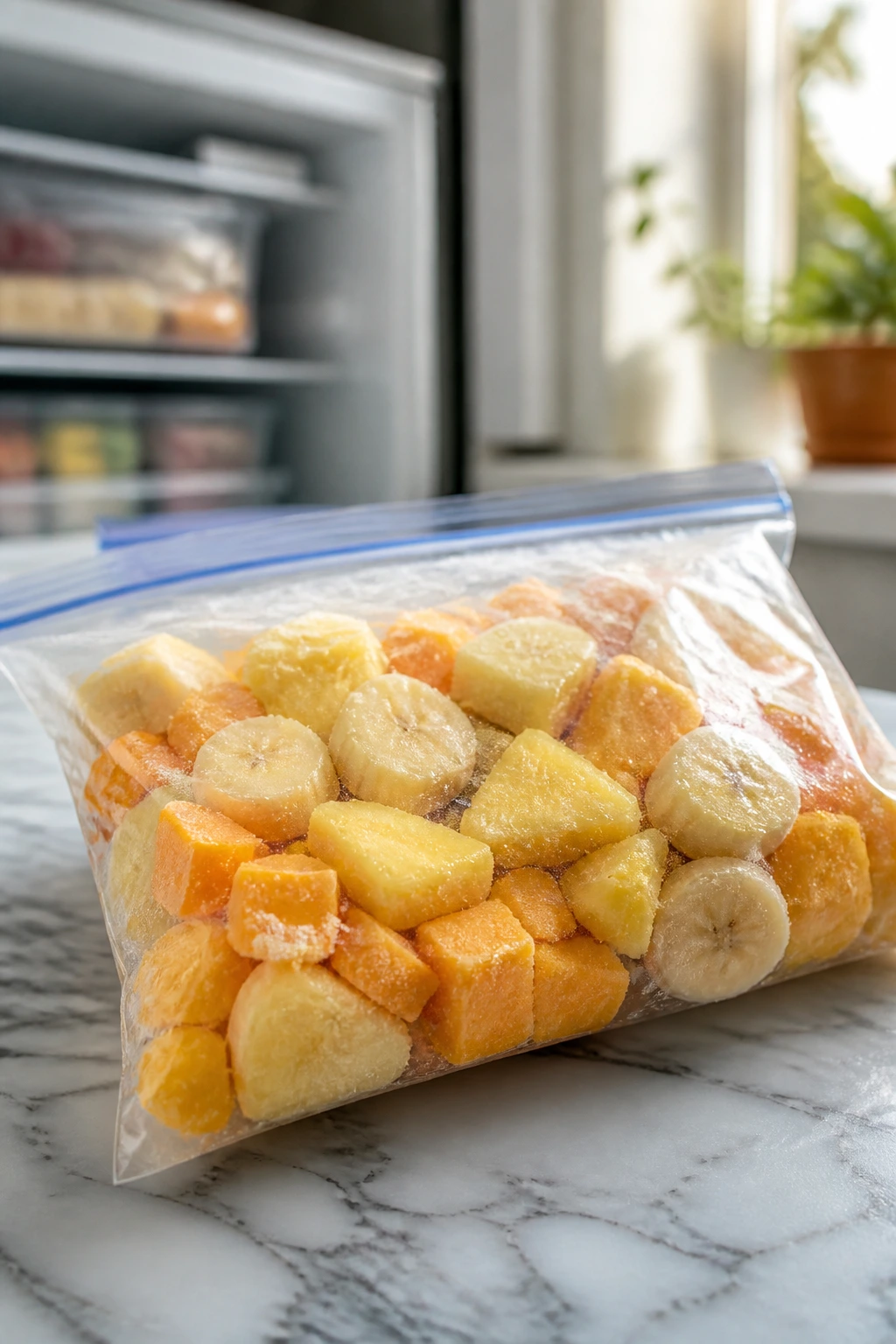
A freezer packed with fruit changes the tone of a morning. Not in a dramatic, life-altering way. In a smaller, more useful one. You reach in, grab a bag, pour, blend, and the drink tastes like you made a choice instead of reacting to a problem.
That’s what makes tropical smoothie packs worth keeping around. They don’t ask for a polished kitchen or a long prep session. They ask for ripe fruit, a little labeling discipline, and enough restraint to keep the liquid from taking over. Get those pieces right, and the rest is easy enough to repeat without thinking — which is exactly what a good breakfast habit should do.