



The gap between a bright glass of classic easy iced tea and a muddy, bitter one is about five minutes and one bad habit. Let the tea sit too long in the hot water and it turns harsh. Dump it over a mountain of ice before it’s ready, and you get flavored water with a lemon slice floating on top like a surrender flag.
I keep coming back to classic easy iced tea because it rewards attention in a way people don’t always expect from a drink this plain. Black tea, hot water, a little sugar, a cold finish — that’s the whole thing. But the order matters. Dissolve the sugar while the tea is warm, stop the steep before the tannins get bossy, and the pitcher comes out clean, amber, and calm instead of flat and gray.
There’s also a practical pleasure in making it well. A good pitcher sits in the fridge and solves more problems than it creates. It cools fast. It scales easily. It makes dinner feel a little more finished, even if dinner is a pile of grilled chicken and sliced tomatoes. And if you’ve ever wondered why a restaurant glass tastes smoother than the one you make at home, the answer is usually not a secret ingredient. It’s timing. Tea remembers how it was treated.
Why a Simple Pitcher of Iced Tea Still Works So Well
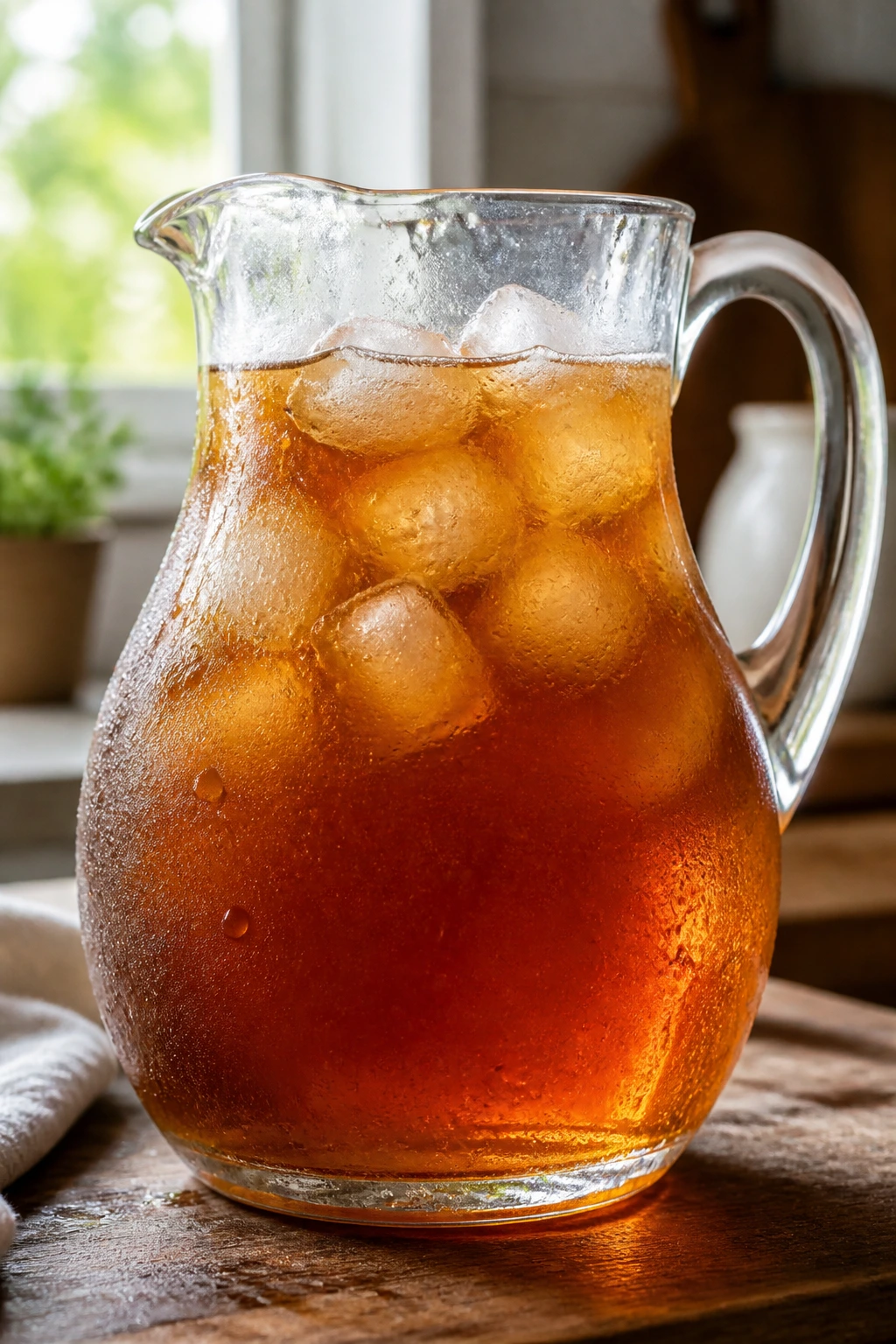
A good pitcher of iced tea is one of those things people think they know until they make a bad one. Then the whole subject gets more interesting. The drink looks humble, but it’s a small lesson in restraint: tea bags are not supposed to be punished, sugar is not supposed to be dumped in late, and ice is not supposed to do all the cooling work by itself.
I like this style of iced tea because it tastes like tea first. Not syrup. Not lemon water. Tea. The black tea gives you that clean, slightly brisk base, and the sugar rounds off the edges without turning the glass sticky. If you use enough tea for the amount of ice that’s coming, the first sip is cold and vivid instead of weak and watery.
There’s a bit of history in the glass too, even if you never think about it while pouring. Iced tea became a summer staple because it made sense in hot weather: cheap ingredients, easy scale, and a big batch that could sit in a kitchen pitcher or a restaurant dispenser and still feel welcoming. That’s still the appeal. You don’t need much. You need the right amount of each thing, in the right order, and a little patience.
And the recipe is forgiving in the right places. You can make it sweeter or sharper. You can use tea bags from the grocery store. You can serve it plain over ice, with lemon, or with mint that’s been bruised between your fingers. But there are two places where I never cut corners: the steep time and the cooling step. Get those right, and the rest falls into place almost embarrassingly easily.
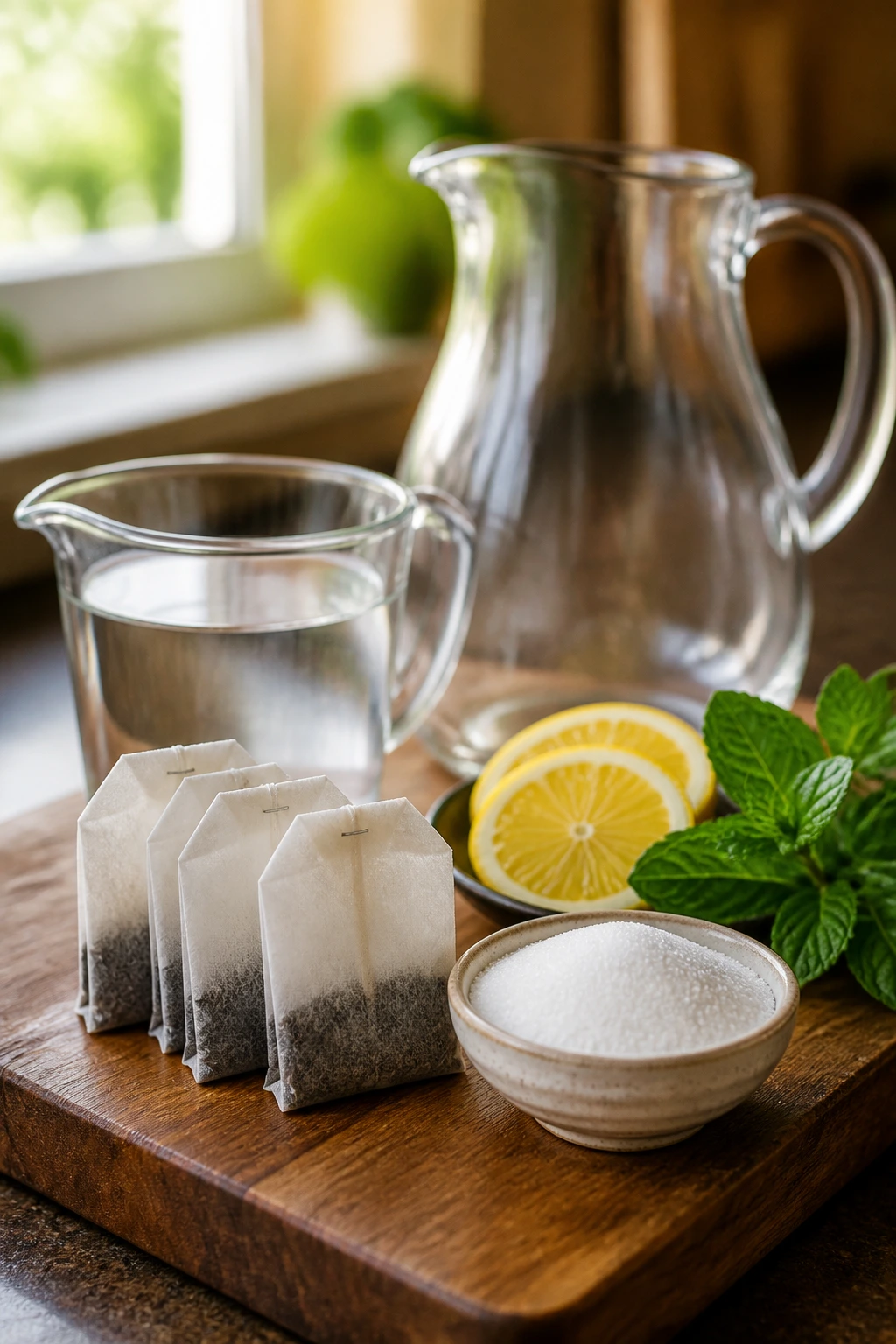
The Classic Easy Iced Tea Ingredients for One 2-Quart Pitcher
Yield: Makes about 8 cups | 6 to 8 servings
Prep Time: 10 minutes
Cook Time: 10 minutes
Total Time: 1 hour 20 minutes
Chill/Rest Time: 1 hour
Difficulty: Beginner — the method is simple, but the steep time needs a little discipline.
Best Served: Very cold, over plenty of ice, the same day.
For the Iced Tea:
- 6 black tea bags (plain orange pekoe, English breakfast, or another standard black tea; use fresh bags that still smell bright when opened)
- 4 cups water, for brewing
- 1/3 cup granulated sugar
- 4 cups cold water, for diluting and cooling
- 1 medium lemon, thinly sliced, for serving
- Ice, for serving
- 4 sprigs fresh mint, optional, for serving
This is the measured version I trust when I want a pitcher that tastes like tea instead of leftovers from a lunch counter. The ratio is strong enough to survive ice, but not so strong that the first sip puckers your face. That matters more than most people realize, because iced tea always loses a little intensity when it hits the glass.
If you want to scale it up, keep the same ratio. Double everything for a gallon. Don’t just double the ice and hope for the best. That’s how people end up with a pale pitcher and a polite apology.
Why Each Ingredient Matters in the Glass

Black Tea
- What to use: 6 black tea bags, or about 2 tablespoons loose-leaf black tea in an infuser if that’s what you have.
- Preparation: Keep the bags ready before you boil the water so you can steep immediately and control the timing.
- Substitutions: Decaf black tea works, and Ceylon or English breakfast gives a brighter, slightly sharper cup.
- Tips: Freshness matters here more than fancy origin. If the tea smells dull in the box, the finished pitcher will taste dull too.
Water
- What to use: 4 cups for brewing and 4 cups cold water for dilution.
- Preparation: Heat only the brewing water; the cold water should stay cold until the hot tea is ready to stop the extraction.
- Substitutions: Filtered water is worth using if your tap water tastes metallic or chlorinated.
- Tips: Tea magnifies what the water already tastes like. If your water is rough, the tea will be rough too.
Sugar
- What to use: 1/3 cup granulated sugar.
- Preparation: Stir it into the hot tea while the liquid is still steaming so it dissolves cleanly.
- Substitutions: Honey works if you thin it a little with the warm tea first, and simple syrup is handy if you want exact sweetness.
- Tips: Adding sugar after the tea is cold always feels like a small mistake. It leaves grit at the bottom and a sweeter first sip than last sip.
Lemon
- What to use: 1 medium lemon, sliced thin for serving.
- Preparation: Slice it right before serving so the edges stay fresh and the peel doesn’t dry out.
- Substitutions: Lime gives a sharper edge, and orange gives a softer, rounder aroma.
- Tips: Lemon in the pitcher is a choice; lemon in the glass is usually the better one. Left in the fridge overnight, slices can turn bitter at the pith.
Ice and Mint
- What to use: Plenty of ice and, if you like, 4 sprigs fresh mint.
- Preparation: Chill the glasses if you have room in the fridge or freezer, and bruise the mint lightly between your fingers before adding it.
- Substitutions: Frozen tea ice cubes are smart if you hate dilution, and frozen peach slices work when you want a little fruit without watering the drink down.
- Tips: Big cubes melt slower than crushed ice. That’s a tiny detail with a real effect.
The Simple Tools That Keep the Brew Clean
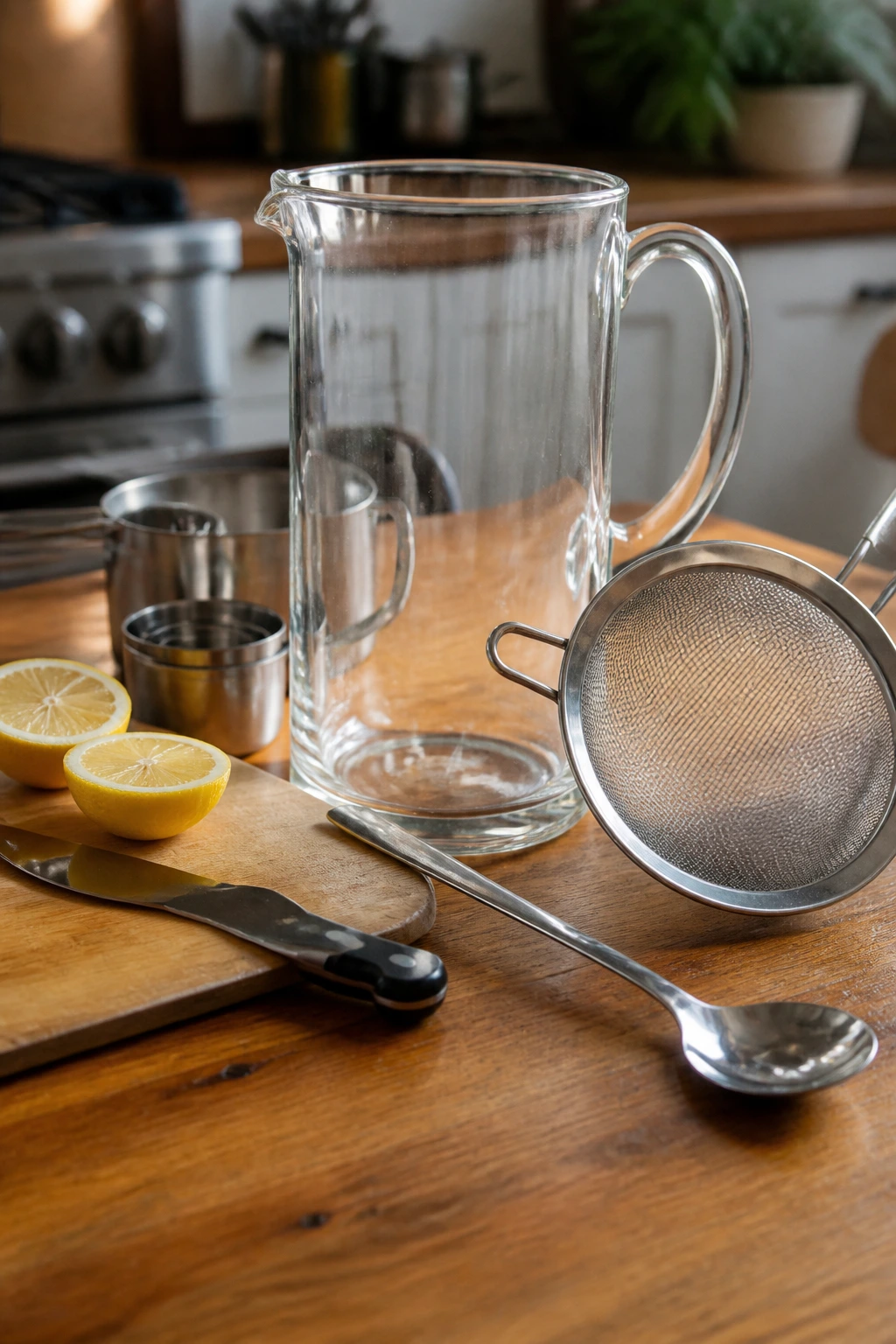
A good iced tea setup is not fussy, and that’s part of the charm. You need a few ordinary pieces of kitchen gear, not a countertop shrine of gadgets. The point is to keep the tea hot for long enough to extract flavor, then get it cold before it turns bitter or flat.
- Medium saucepan or tea kettle — Use something that holds at least 4 cups of water without sloshing all over the stove.
- Heatproof 2-quart pitcher — This is the home for the tea after brewing; thin glass that cracks with heat is a bad surprise.
- Long-handled spoon — Useful for stirring sugar into the hot tea without hovering too close to the steam.
- Measuring cups — The ratio matters, and eyeballing tea is how people end up with weak, brown water.
- Fine-mesh strainer or tea infuser — Only needed if you use loose leaf tea instead of bags.
- Sharp knife and cutting board — For clean lemon slices and mint if you want it.
- Ice cube tray — Optional, but worth having if you want tea cubes for future batches.
If your pitcher is not heatproof, let the tea cool for 10 to 15 minutes in the pan or in a different heat-safe bowl before pouring. That little pause is cheaper than replacing broken glass.
How to Brew Classic Easy Iced Tea Without the Bitter Edge
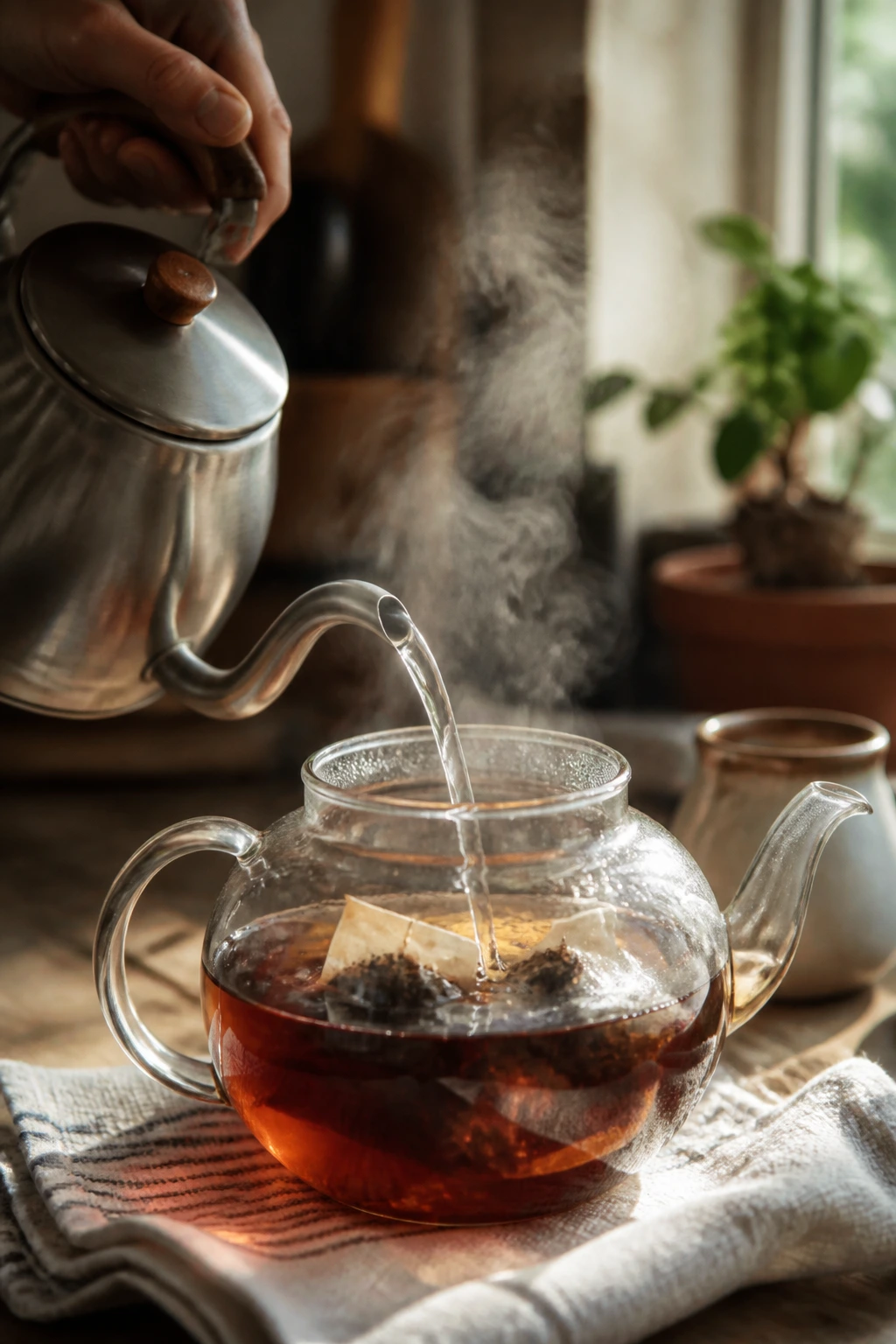
Brew the Tea Base
-
Bring 4 cups water to a full boil in a medium saucepan over high heat. If your kettle runs fierce, let the water sit off the heat for about 20 to 30 seconds before adding the tea bags.
-
Add the 6 tea bags to the hot water and steep for 4 to 5 minutes. The tea should turn a deep amber color and smell brisk, not dusty or syrupy. Do not walk away and forget it. Black tea gets dry and bitter fast once it’s oversteeped.
-
Lift out the tea bags without squeezing them against the spoon or the side of the pan. That squeeze presses extra tannins into the water and gives the tea a rough, mouth-drying finish.
-
Stir in the 1/3 cup granulated sugar while the tea is still hot. Keep stirring for 20 to 30 seconds, until the liquid looks smooth and no sugar grains are visible at the bottom.
Build and Cool the Pitcher
-
Pour the sweetened tea into a heatproof 2-quart pitcher, then add the 4 cups cold water. Stir for another 10 seconds so the strength evens out across the batch. The color should settle into a clear reddish brown, not a cloudy tan.
-
Taste the tea while it is still warm. If it needs a sharper edge, hold off on adding more sugar and plan to use lemon at the glass instead. That keeps the pitcher flexible and keeps the flavor from drifting into syrup territory.
-
Let the pitcher cool on the counter for about 15 minutes, then refrigerate it for at least 1 hour until it is fully cold. Do not pour warm tea over a full glass of ice and expect it to stay bold. The first pour will taste thin if the base isn’t chilled enough.
Serve
- Fill glasses halfway with ice, pour the tea over the top, and finish with lemon slices or mint if you want a fresher smell at the table. If the tea tastes stronger than you want after chilling, thin each glass with 2 to 3 tablespoons cold water until it lands where you like it.
That last taste test is the one people skip. Don’t. Tea changes after it chills, and the cold can either sharpen or dull the flavor depending on the brew. A quick sip before serving saves the whole batch.
How to Serve Iced Tea So It Stays Cold

Presentation: Use tall clear glasses if you have them. The amber color is half the pleasure, and a wide lemon wheel floating against the ice looks more inviting than a tiny wedge dropped into the bottom of the cup.
Accompaniments: I like this tea with salty, plain summer food: chicken salad on soft bread, tomato sandwiches with mayonnaise and pepper, grilled corn, pimento cheese crackers, or a plate of watermelon cut into cold wedges. The tea handles salt well. It also handles fat well, which is why it works so nicely next to fried food.
Portions: Count on 1 to 1 1/4 cups per person if you’re pouring into regular glasses. For a picnic or a long lunch, people usually come back for a second pour, so this 8-cup batch feeds 6 to 8 people more honestly than it looks on paper.
Beverage Pairing: If you’re serving more than one drink, put out sparkling water with lime or a small pitcher of fresh lemonade. I’d keep the pairing simple; the iced tea should stay the main glass, not compete with another flavor that’s trying to shout over it.
A small detail that helps a lot: chill the glasses if you have freezer space. Even ten minutes in a cold freezer gives you a better first pour. The tea stays colder at the rim, which sounds fussy until you taste the difference.
Small Tweaks That Make the Glass Better

Flavor Enhancement: A thin strip of lemon peel in the hot tea, pulled out after a minute or two, gives the pitcher a brighter aroma without making it sour. I prefer peel to extra juice in the base, because juice can shove the drink into sharp territory faster than you expect.
Time-Saver: If you know you’ll need tea later in the day, brew it in the morning and chill it in a shallow container for 15 minutes before moving it to the pitcher. A shallow bath of cold water around the pot cools the tea faster than waiting for the fridge to do all the work.
Cost-Saver: Standard supermarket black tea bags are fine here. Fancy tea can be lovely, but this recipe does not need a rare leaf with a story attached. What you need is fresh tea and a short steep.
Make-It-Yours: If you want less sweetness, cut the sugar down to 2 tablespoons. If you want a softer, rounder glass, use honey instead, but stir it into the tea while it’s still warm so it dissolves evenly.
Serving Trick: Add the lemon slices at the glass, not the pitcher, if you’re making tea ahead. That keeps the base cleaner and lets each person decide whether they want the citrus edge or not.
The best upgrade is probably the least flashy one: use good ice. Dense cubes melt slower, and tea served over big cubes holds its shape longer. That’s not glamorous. It’s just useful.
The Mistakes That Turn Iced Tea Flat or Harsh

-
Steeping the tea too long: The tea turns dark and smells promising, then lands in the glass with a dry, woody finish. Fix it by pulling the bags at 4 to 5 minutes, or even a little sooner if your tea bags are strong.
-
Squeezing the tea bags: People do this out of habit, and it’s a bad one. The tea gets more bitter, not more flavorful. Lift the bags out and let them drip naturally.
-
Sweetening after the tea is cold: Cold tea does not welcome sugar. It leaves a gritty layer on the bottom, and the first few sips taste different from the last. Stir the sugar into the hot tea or make a simple syrup if you want to sweeten cold tea later.
-
Skipping the chill time: Warm tea poured over ice tastes washed out before the glass is half empty. Chill the pitcher first. That one move protects the flavor.
-
Leaving lemon slices in the pitcher too long: Lemon can turn the tea sharp and a little bitter if it sits overnight. Add citrus at serving time or remove the slices before storing the pitcher.
-
Using old tea bags: Stale tea smells flat in the box and tastes flat in the cup. If the tea has been sitting open near the stove or the top of the fridge, replace it. Dry tea should smell dry and clean, not dusty.
A lot of iced tea trouble comes from treating it like a background task. It isn’t one. It’s a short process, but the short process needs attention.
Variations That Still Taste Like Iced Tea

Honey-Lemon Pitcher: Replace the sugar with 1/4 cup honey and stir it into the hot tea until fully dissolved. Honey gives the drink a rounder finish, and it plays well with lemon if you want a softer, slightly deeper sweetness.
Mint-Kissed Tea: Add 2 lightly bruised mint sprigs to the hot tea during the final minute of steeping, then remove them before chilling. This keeps the mint from taking over. You want a cool edge, not a garden in a glass.
Unsweetened Table Tea: Leave out the sugar altogether and serve with lemon slices only. This version tastes sharper and cleaner, which makes sense if you’re serving something salty or rich alongside it. I like this one with sandwiches and grilled food.
Peach Ice Cubes: Freeze leftover brewed tea, or use frozen peach slices in place of some of the ice. As the cubes melt, they keep the drink from going watery, and peaches add a soft fruit note that still feels close to the original.
Half-and-Half Style: If you want a softer, more playful glass, mix equal parts iced tea and lemonade in each serving glass rather than the pitcher. It’s still recognizably tea, but the lemon pushes the drink toward brighter, candy-leaning territory. Use it when the table wants something a little less plain.
I tend to think the best variations stay near the center. Once you start piling in too many flavors, the drink stops tasting like iced tea and starts tasting like an experiment. That’s fine once in a while. But the classic has a cleaner line.
Make-Ahead, Storage, and the Best Way to Keep It Cold
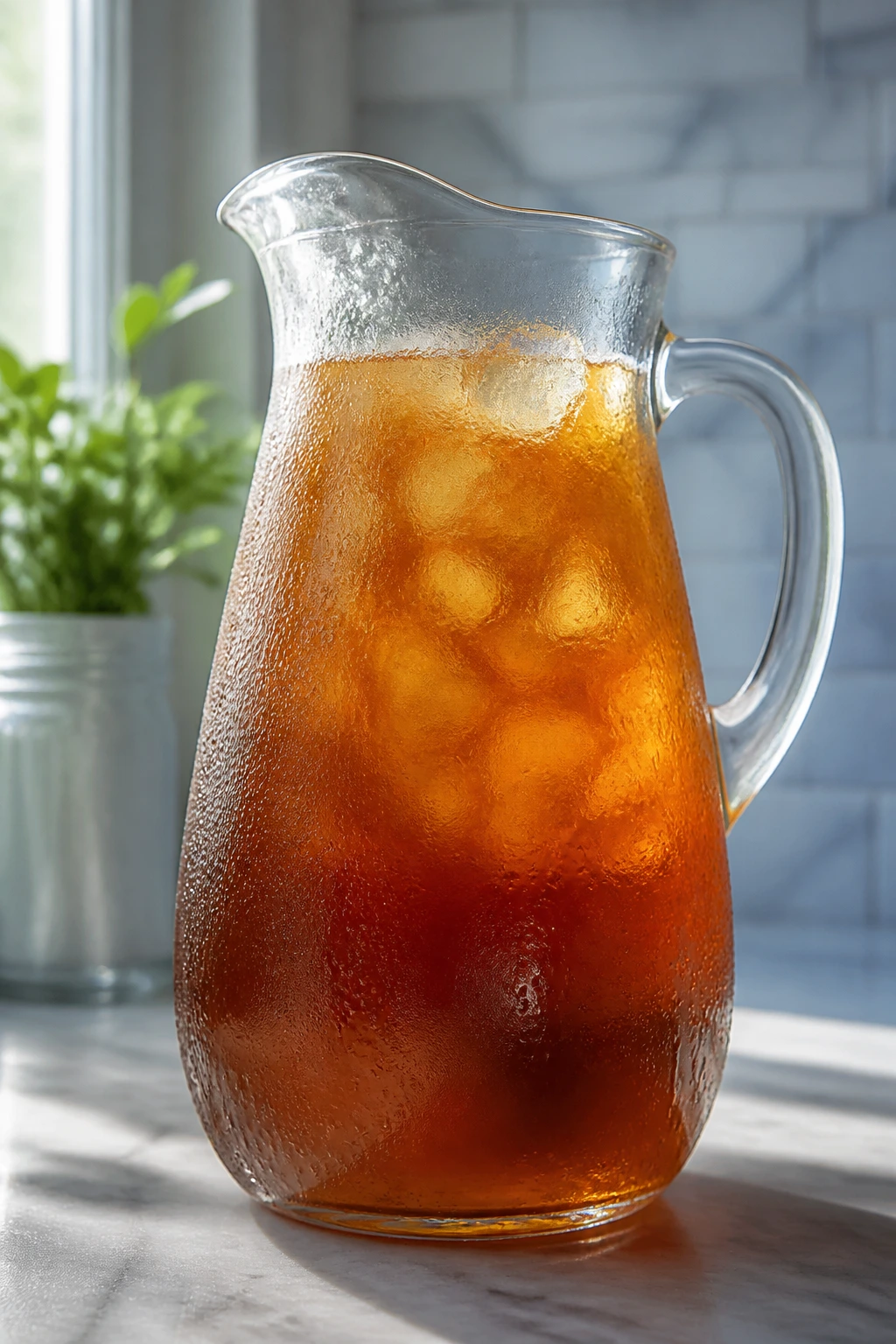
The pitcher keeps well in the fridge for 3 to 4 days if you leave the lemon slices out until serving. Cover it tightly so it doesn’t pick up onion smells, leftover garlic, or whatever else is living in the refrigerator that week. The tea may cloud a little after chilling. That’s normal. Cloudiness is a look, not a flaw.
If you’re making tea for later, the smartest move is to brew the base, sweeten it while hot, and chill it plain. Add lemon, mint, and ice only when you’re ready to pour. That keeps the flavor more stable and prevents the citrus from turning the pitcher dull. After the second day, the tea still tastes fine, but the bright edge starts to soften, which is why I usually plan to finish the batch sooner rather than later.
Room temperature is not the place for a full pitcher to sit around all afternoon. A tea drink with sugar deserves the same food-safety common sense you’d give other prepared drinks: don’t leave it out for more than 2 hours, and shorten that window if the room is very warm. If you’re serving outside, keep the pitcher in a bowl of ice or pour smaller amounts into a chilled carafe.
Freezing works best in ice cube trays. Freeze leftover tea cubes for up to 2 months and use them in the next batch so the drink doesn’t get watered down. You can also freeze a concentrated half-batch if you want a backup pitcher, then thaw it in the fridge and dilute it with cold water before serving.
I do not bother reheating a whole pitcher of iced tea. If you want hot tea, make a fresh mug. Once tea has been brewed, chilled, and lemon has been introduced, warming the entire batch dulls the flavor and makes the citrus taste tired.
Questions People Ask Before They Brew Iced Tea

Can I use loose-leaf tea instead of tea bags?
Yes. Use about 2 tablespoons loose-leaf black tea in an infuser or a fine strainer, then steep it for the same 4 to 5 minutes. Loose leaf can taste a little fuller, but bags are easier and work well here.
Why did my iced tea turn cloudy in the fridge?
Cloudiness happens when tea cools and the tannins shift. It looks odd, but it’s harmless. If the look bothers you, try filtered water and avoid oversteeping the tea.
Can I make this unsweetened?
You can, and the method stays the same. Leave out the sugar, pull the tea a little earlier if you want a cleaner edge, and let each glass take its sweetness from lemon or a separate simple syrup if needed.
How do I fix tea that tastes bitter?
The quickest fix is dilution: add a little cold water, then taste again. If the bitterness is strong, the real answer is a fresh batch with a shorter steep and no squeezing of the tea bags.
Can I cold-brew this instead?
Yes, but cold-brewed tea tastes softer and less brisk than hot-brewed tea. Put the tea bags and water in the fridge for 6 to 8 hours, then strain. It’s pleasant, but it won’t have the same classic snap.
How do I make a full gallon?
Double everything and use a pot large enough to keep the bags moving freely in the water. Crowding the tea bags makes the flavor uneven, and a cramped kettle gives you a weaker brew than you planned for.
What if I want it stronger so it doesn’t fade over ice?
Brew a concentrate by using the same 6 tea bags in 3 cups water instead of 4, then dilute with 5 cups cold water. That version holds up especially well if you’re using large glasses or slow-melting ice.
A Pitcher Worth Keeping on the Counter

Good iced tea should feel uncomplicated, not careless. There’s a difference. The tea should taste like someone paid attention to the steep, the sugar, and the chill, even if the whole process took less than half an hour of actual work.
Once you get the rhythm of it, the recipe becomes one of those small kitchen habits that keeps paying you back. You’ll stop guessing. You’ll know when the tea is deep enough, when the sugar is dissolved, when the pitcher needs one more hour in the fridge. That kind of routine is underrated, and it’s one of the nicer parts of cooking for yourself.
Keep a box of black tea in the pantry, a lemon in the fruit bowl, and a pitcher that can take hot water. The cold glass practically takes care of itself after that.
Classic Easy Iced Tea for Summer Sipping — Recipe Card

Recipe Name: Classic Easy Iced Tea for Summer Sipping
Description: A clean, lightly sweetened black tea brewed hot, diluted with cold water, and served over ice with lemon. It tastes brisk, cold, and balanced instead of bitter or watered down.
Prep Time: 10 minutes
Cook Time: 10 minutes
Total Time: 1 hour 20 minutes
Course: Beverage
Cuisine: American
Servings: 6 to 8 servings
Calories: About 35 kcal per serving
Ingredients
- 6 black tea bags
- 4 cups water, for brewing
- 1/3 cup granulated sugar
- 4 cups cold water, for diluting and cooling
- 1 medium lemon, thinly sliced, for serving
- Ice, for serving
- 4 sprigs fresh mint, optional, for serving
Instructions
- Bring 4 cups water to a boil in a medium saucepan, then remove it from the heat.
- Add the 6 tea bags and steep for 4 to 5 minutes.
- Remove the tea bags without squeezing them, then stir in the 1/3 cup granulated sugar until dissolved.
- Pour the hot tea into a heatproof pitcher and add the 4 cups cold water. Stir to combine.
- Let the tea cool for 15 minutes, then refrigerate for at least 1 hour until fully chilled.
- Serve over ice with lemon slices and mint, if using.
Notes: Steep no longer than 5 minutes if you want a clean finish. Add lemon at serving, not in the pitcher, if you plan to store leftovers. For a stronger batch, make a concentrate with 3 cups water and 6 tea bags, then dilute with cold water.