



Some pitchers disappear before the ice even starts to sweat, and tropical iced tea is one of them. Black tea gives it a dark, dry backbone; pineapple and mango round that out; lime keeps the whole thing from drifting into candy territory. That balance is the whole point. If the tea tastes weak, the fruit takes over. If the fruit gets too heavy, the tea tastes tired. You want both.
I don’t want fruit tea that drinks like melted punch from a plastic jug. I want tea first, fruit second, and a finish that still feels clean after the third glass. That means brewing the tea with some discipline, choosing juices that taste bright instead of syrupy, and chilling the pitcher long enough for everything to stop tasting separate.
The best version has a little scent before the first sip. Orange peel does that. Ginger helps too, but only if you keep it restrained. The drink should smell like a shaded porch after rain, not like a grocery-store smoothie section. Once you get the ratios right, the glass takes care of the rest.
Why This Pitcher Earns Its Keep
-
Tea still leads the sip: The black tea stays bold enough to cut through pineapple and mango, so the drink reads like iced tea first and tropical fruit second.
-
The acid keeps it awake: Lime juice and orange peel stop the sweetness from settling into something heavy, which matters more once the ice starts melting.
-
It scales without drama: A single pitcher handles a small table, and doubling the batch doesn’t ask you to rethink the method.
-
It tastes better after a short chill: Two hours in the fridge lets the tea and fruit settle into each other instead of tasting like two separate drinks in one glass.
-
It can go in a few directions: You can pull it toward sparkling, decaf, coconut, or rum without rebuilding the whole recipe from scratch.
-
It behaves well in heat: Cold tea with fruit holds up better on a hot afternoon than a lot of sweet drinks, especially if you use tea cubes or big ice.
What Tropical Iced Tea Actually Tastes Like
Black tea is what keeps this drink from turning into fruit punch with a tea-colored tint. Assam brings a malty edge, Ceylon brings a brighter snap, and both can stand up to pineapple juice without folding under the sugar. I skip delicate teas here. Darjeeling can be lovely, but its floral notes get lost once mango nectar and lime enter the chat.
Why the tea has to stay black
A tropical iced tea needs a base with enough tannin to hold the fruit in place. That tannin is the dry, slightly brisk feeling you get at the back of your tongue after a good black tea brew. It is the thing that keeps each sip from becoming sticky. Brew too lightly and the drink tastes like sweet water. Brew too long and you get that rough, almost dusty bitterness that sits on your tongue and won’t leave.
Why pineapple, mango, and lime work together
Pineapple gives you sharpness and a bit of bite. Mango brings body, which is useful because pineapple alone can feel thin once it’s diluted with ice. Lime is the cleanup crew. It keeps the mango from feeling heavy and makes the pineapple taste fresher. Orange juice sits in the middle; it doesn’t shout, but it rounds the edges.
Why I brew this hot instead of cold
Cold-brewed tea can be lovely in other drinks. Here, I prefer hot brewing because the fruit juices already bring softness, and the tea needs a little structure to stay present. Hot water pulls out the tea’s backbone fast, then a short cooling period lets the bitterness settle before the fruit goes in. That gives you clearer flavor and a cleaner color in the glass.
A lot of tropical tea recipes lean too far one way or the other. They either taste like a tea shop version of a fruit smoothie, or they taste like plain iced tea with a splash of juice and a pineapple garnish thrown on top. The version I keep coming back to lives in the middle, where tea and fruit actually talk to each other.
Pitcher Size, Chill Time, and Best Serving Window
How long does it need in the fridge? Long enough that the tea stops feeling warm in the center and the fruit stops feeling like it was poured in from two different bottles. For this recipe, I like at least 2 hours of chilling, and I’m happier with 3 if I’ve got the time.
Yield: Serves 8
Prep Time: 15 minutes
Cook Time: 10 minutes
Total Time: 2 hours 25 minutes, including chilling
Difficulty: Beginner — you’re mostly brewing, stirring, and chilling, but the steeping time and ratio matter more than raw technique.
Chill/Rest Time: 2 hours minimum
Best Served: Well chilled over ice, ideally the same day it’s mixed
The biggest mistake with a drink like this is rushing the cold. Warm tea plus cold fruit juice plus ice sounds efficient, but it usually tastes thin. Let the tea cool a bit before it meets the juices, then give the whole pitcher time in the fridge. That short wait is where the flavors stop arguing.
The Ingredient List I Reach For Every Time
For the Tea Base:
- 4 cups water
- 6 black tea bags, preferably Assam, Ceylon, or decaf black tea
- 1 strip orange peel, 2 to 3 inches long
- 3 thin slices fresh ginger
For the Tropical Blend:
- 1 cup pineapple juice, chilled
- 1 cup mango nectar, chilled
- 1/2 cup orange juice, chilled
- 1/4 cup fresh lime juice
- 1/4 cup honey or 1/3 cup simple syrup
- 1/8 teaspoon fine sea salt
- 1 cup cold filtered water
For Serving:
- About 4 cups ice, plus more for glasses
- 8 pineapple wedges
- 8 orange slices
- 8 lime wheels
- 8 fresh mint sprigs
- 1 cup chilled club soda, optional, for a sparkling finish
The list looks short, and that’s the point. Nothing here is decorative in the way people sometimes mean it. Every item changes the way the pitcher tastes, smells, or feels on the tongue.
Why Each Ingredient Pulls Its Weight
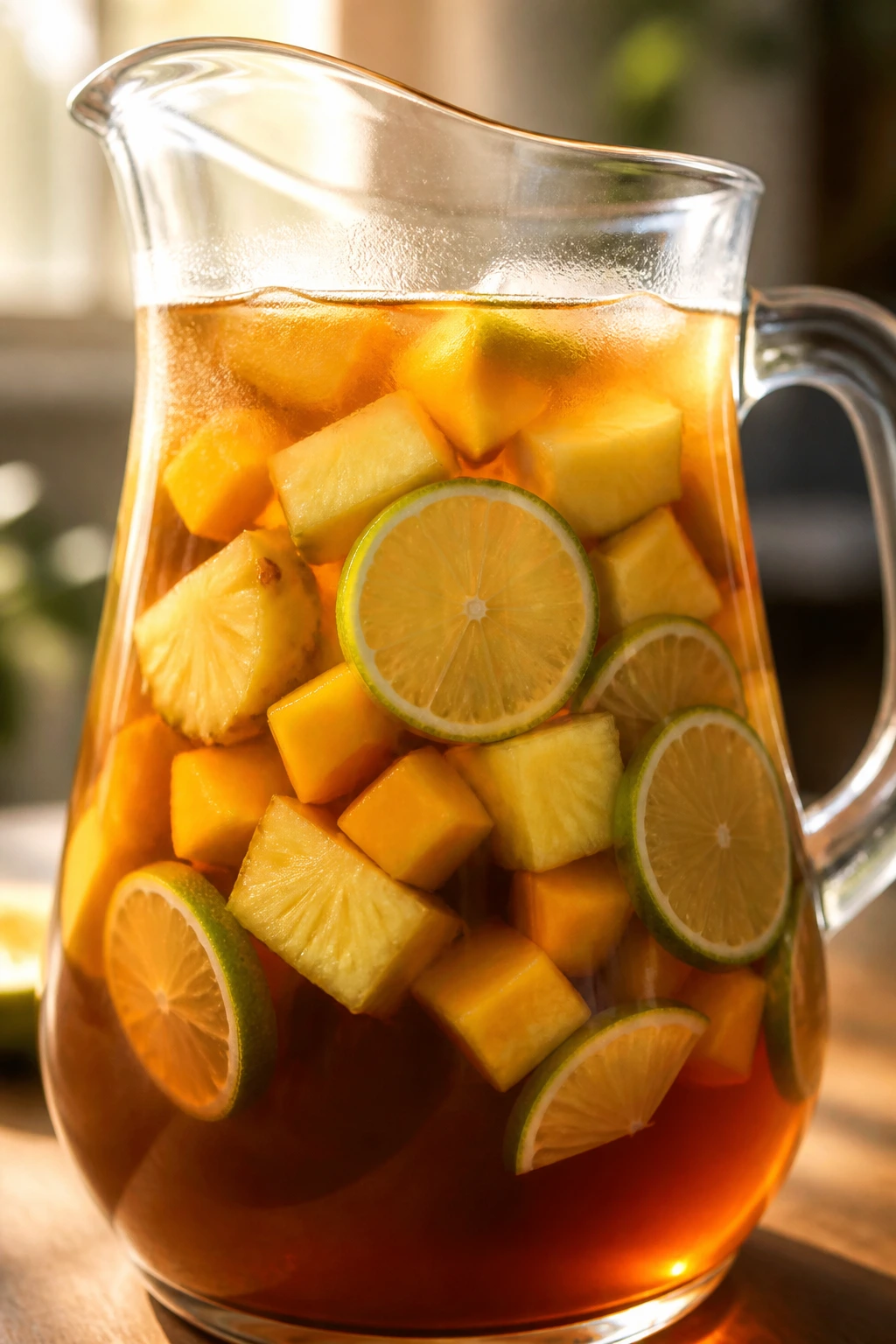
Black Tea Base
What to use: 6 black tea bags in 4 cups water. Assam gives you the most backbone, Ceylon tastes a little brighter, and decaf black tea works if you want the pitcher later in the day.
Preparation: Heat the water to just under a boil, around 200°F, then steep the tea for 4 to 5 minutes. That short steep keeps the tea bold without pushing it into bitterness.
Substitutions: Loose-leaf black tea works well if you use about 3 tablespoons in a fine-mesh infuser. Green tea can work for a lighter version, but it needs a shorter steep and a more careful hand with the fruit.
Tips: Tea bags vary more than people think. If yours are small and weak-looking, use the full 5 minutes; if they’re strong and tightly packed, start tasting at 4. Do not squeeze the bags at the end. It looks efficient. It is not.
Tropical Fruit Layer
What to use: 1 cup pineapple juice, 1 cup mango nectar, 1/2 cup orange juice, and 1/4 cup lime juice.
Preparation: Keep all the fruit juices chilled before you mix them. Shake the bottles or cans first if the pulp has settled; mango nectar especially tends to separate.
Substitutions: Passion fruit nectar can replace half the mango for a sharper drink. Peach nectar is softer and a little less tropical, but it still works. If you only have pineapple juice, add more orange juice and a touch more sweetener.
Tips: Use 100% pineapple juice if you can find it. The sweetened versions can push the drink into syrup. Mango nectar is where a lot of the body comes from, so don’t replace it with a thin juice unless you want a lighter result.
Sweetness, Acid, and Salt
What to use: 1/4 cup honey or 1/3 cup simple syrup, 1/4 cup fresh lime juice, and 1/8 teaspoon fine sea salt.
Preparation: Stir honey into the tea while it’s still warm so it dissolves cleanly. If you use simple syrup, you can add it after the tea has cooled a bit.
Substitutions: Agave syrup gives a clean sweetness and keeps the drink vegan. Maple syrup works in a pinch, but it pulls the flavor in a darker direction that I only use when I want the tea to taste more autumnal than tropical.
Tips: The salt is tiny, but it matters. It makes pineapple taste more pineapple-y and keeps mango from going flat. Lime juice does the brightening; salt does the shaping.
Garnishes and Chill Strategy
What to use: Ice, pineapple wedges, orange slices, lime wheels, mint sprigs, and optional club soda.
Preparation: Chill the glasses if you have room in the fridge, and use large ice cubes when possible. If you want to make tea ice cubes, freeze a little extra tea in an ice tray.
Substitutions: Basil can stand in for mint if you want a more herbal edge. Thin cucumber slices are good if you want the drink to lean fresher and less sweet.
Tips: Ice matters more than people admit. Small, cracked ice melts fast and waters the drink down before you get halfway through the glass. Big cubes keep the fruit and tea in balance longer.
The Gear That Makes the Brew Easier
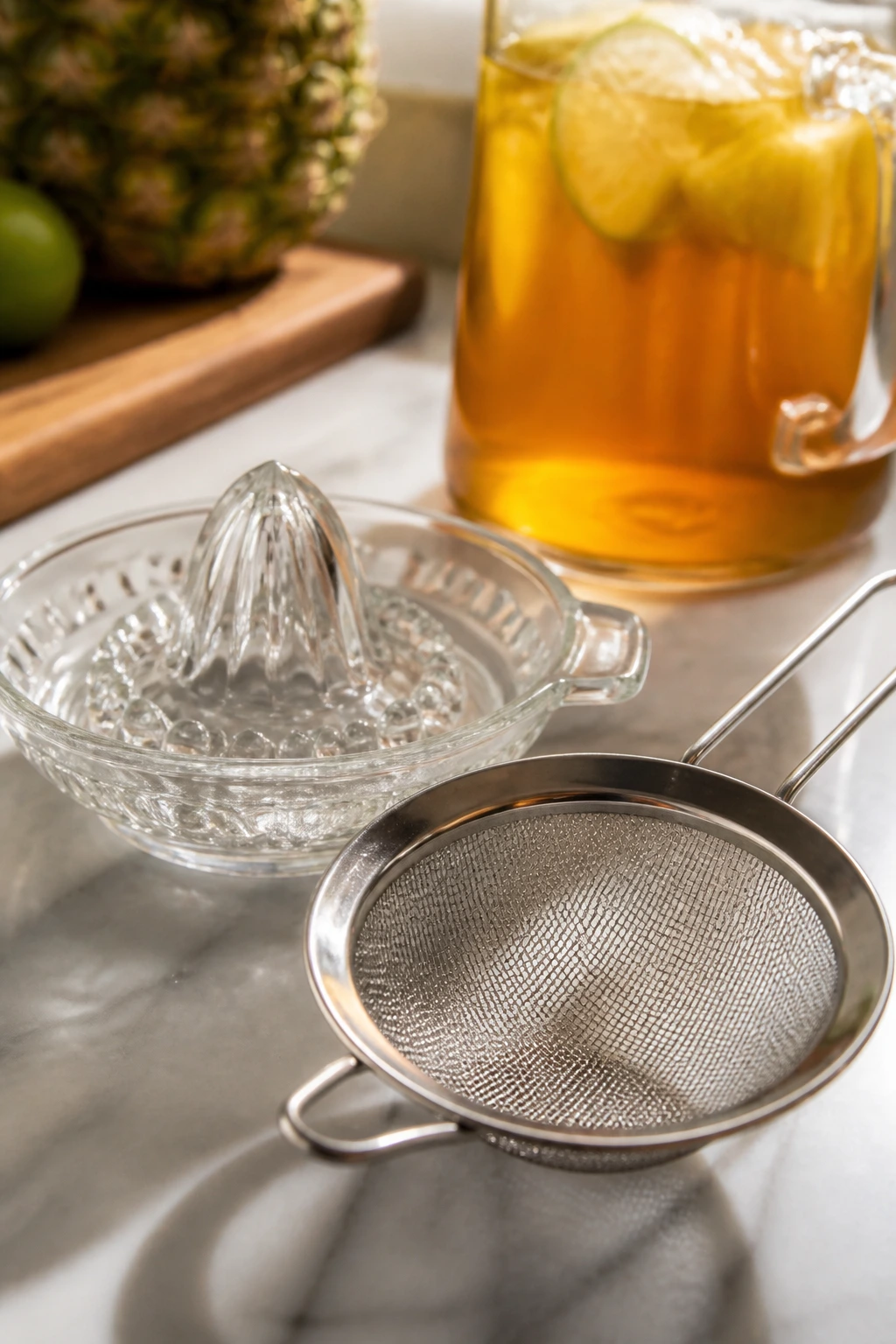
You don’t need a pile of equipment for tropical iced tea. You do want the right few things, though, because the drink shows mistakes fast.
- Medium saucepan or kettle: You need enough room to heat 4 cups of water without splashing.
- 2-quart pitcher: This gives the tea room to mix without spilling when you stir in the fruit juices.
- Fine-mesh strainer: Handy if you want to catch tiny ginger bits or orange peel scraps.
- Wooden spoon or long-handled spoon: Useful for stirring honey and the fruit base without scratching the pitcher.
- Citrus juicer: A simple handheld juicer makes the lime juice faster and keeps seeds out.
- Vegetable peeler or sharp paring knife: Best way to remove the orange peel without dragging in too much white pith.
- Measuring cups and spoons: Don’t guess on the lime or honey. The balance changes fast.
- Ice tray or freezer-safe container: Helpful if you want tea cubes instead of plain water ice.
Brewing the Tea Base Step by Step
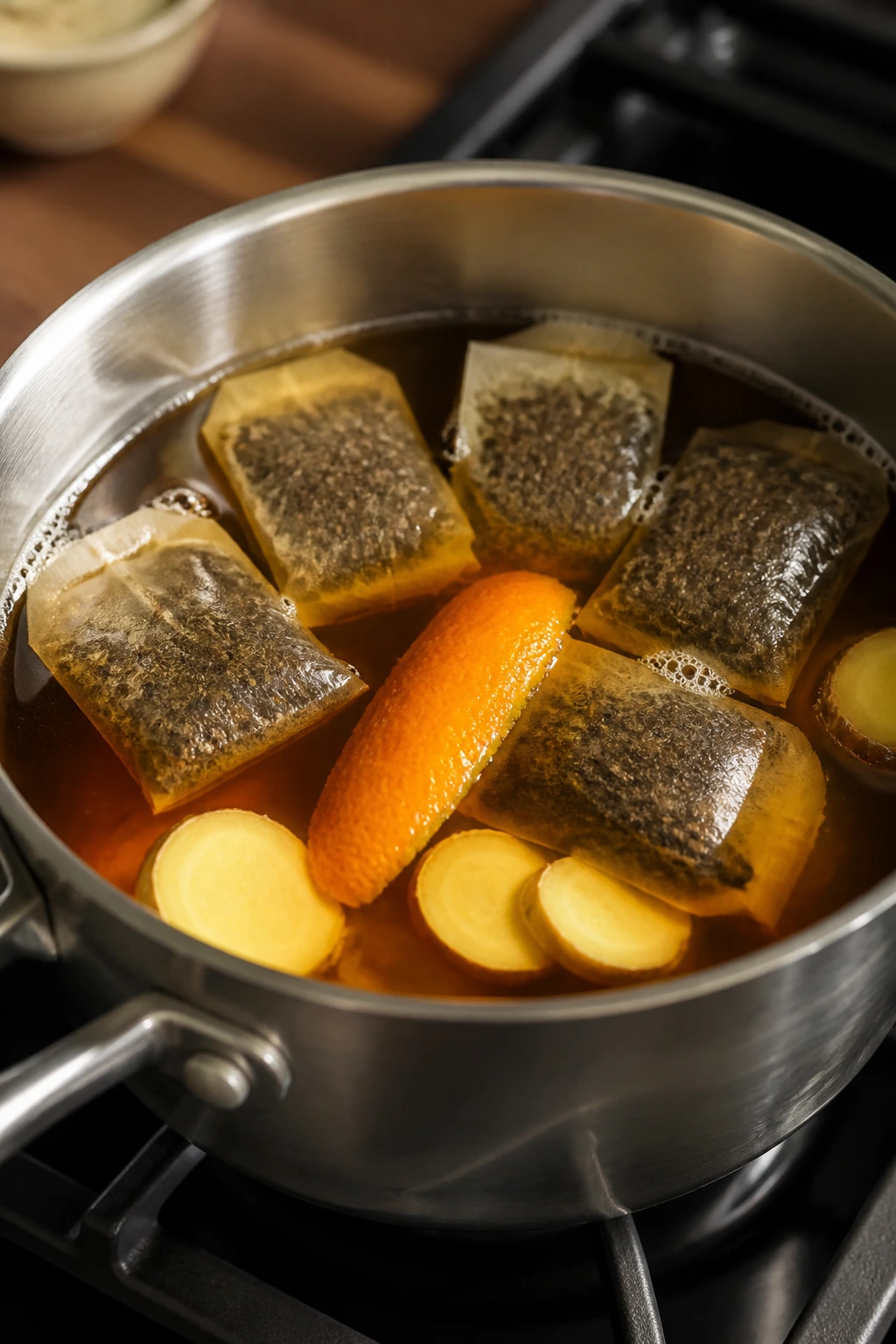
Brew the Tea Base:
-
Heat the water: Bring 4 cups water to 200°F / 93°C in a saucepan or kettle. If you do not have a thermometer, stop the water just before a full boil and let it sit for 30 seconds.
-
Steep the tea: Add 6 black tea bags, the orange peel strip, and the ginger slices. Steep for 4 to 5 minutes until the liquid turns a deep amber color and smells brisk, not harsh. Do not let it run long past 5 minutes, or the tea can turn dry and bitter.
-
Remove the solids: Lift out the tea bags, orange peel, and ginger. Let the tea drip off, but do not squeeze the tea bags. Squeezing pulls out extra tannin and makes the tea taste rough.
-
Sweeten while warm: Stir in the honey and the salt while the tea is still warm so they dissolve completely. If you are using simple syrup instead of honey, you can wait until the tea cools a little before adding it.
-
Cool the base: Set the tea aside for about 10 minutes. You want it warm, not hot, before it meets the fruit juices. That keeps the fruit from going flat and the pitcher from clouding too much.
The color should look clear and steady here, not muddy. If the tea already tastes thin, the final drink will only get weaker once the juices and ice show up.
Mixing the Tropical Pitcher and Chilling It Down
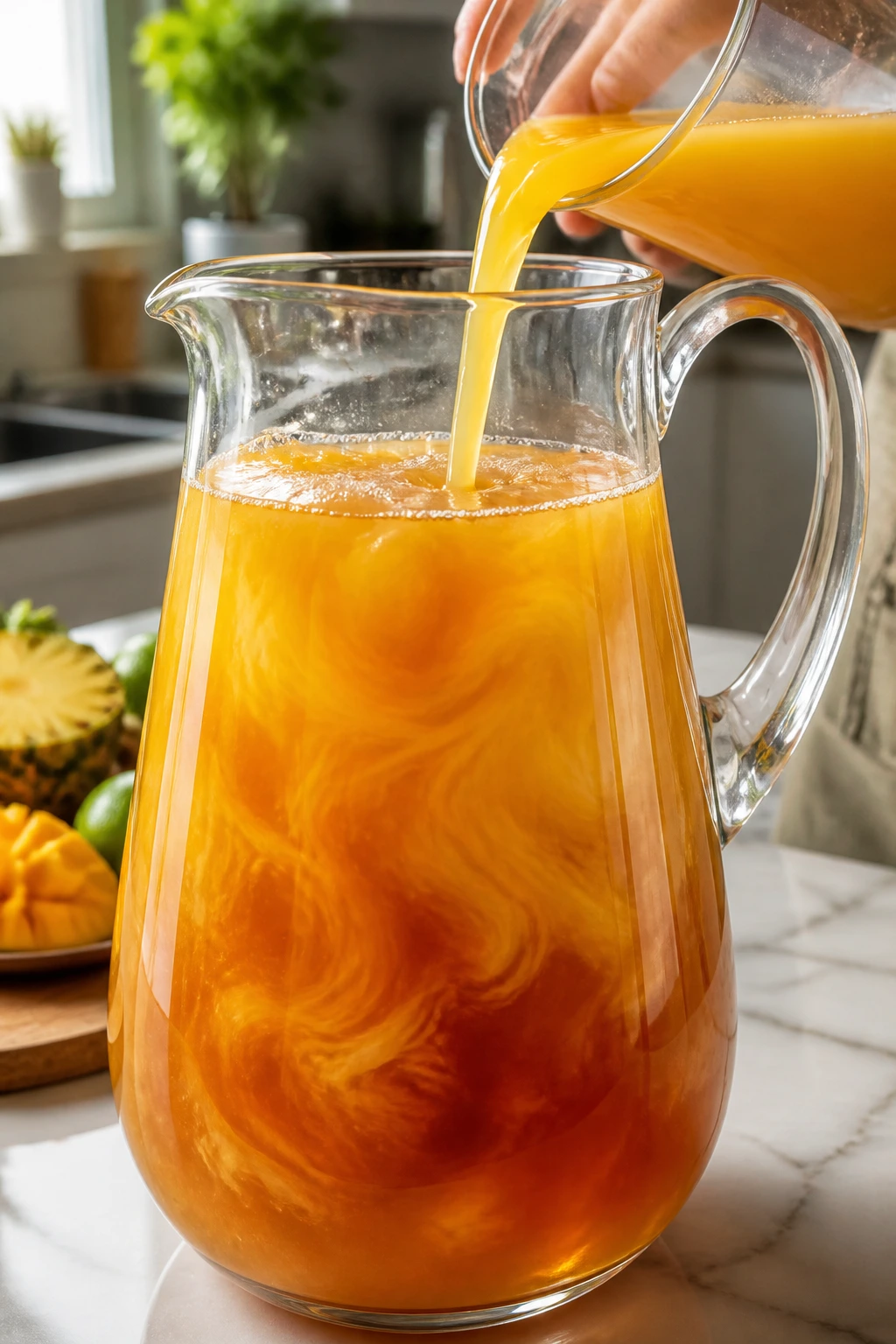
Build the Fruit Base:
-
Combine the juices: In a 2-quart pitcher, stir together the pineapple juice, mango nectar, orange juice, lime juice, cold filtered water, and fine sea salt until the mixture looks even.
-
Add the tea: Pour the slightly cooled tea into the pitcher and stir again. Taste a spoonful. If the drink needs more snap, add 1 tablespoon lime juice. If it feels too tart, stir in 1 to 2 teaspoons more honey or simple syrup.
Chill and Finish:
-
Refrigerate the pitcher: Cover and chill for at least 2 hours. The drink will taste cleaner and more blended once the tea and fruit have had time to settle together. If you serve it before it’s cold, the sweet and tart notes can feel separate.
-
Serve over ice: Fill tall glasses with about 1/2 to 3/4 cup ice each. Pour in the tea, garnish with pineapple, orange, lime, and mint, and serve right away.
-
Add fizz if you want it: For a sparkling version, top each glass with 2 to 3 tablespoons chilled club soda just before serving. Add the soda at the last second and stir gently, or you’ll knock the bubbles flat.
The drink should pour in a bright amber-gold color, not cloudy and brown. If it looks dull, it usually means the tea was oversteeped or the fruit ratio got too heavy.
The Best Way to Serve It Cold
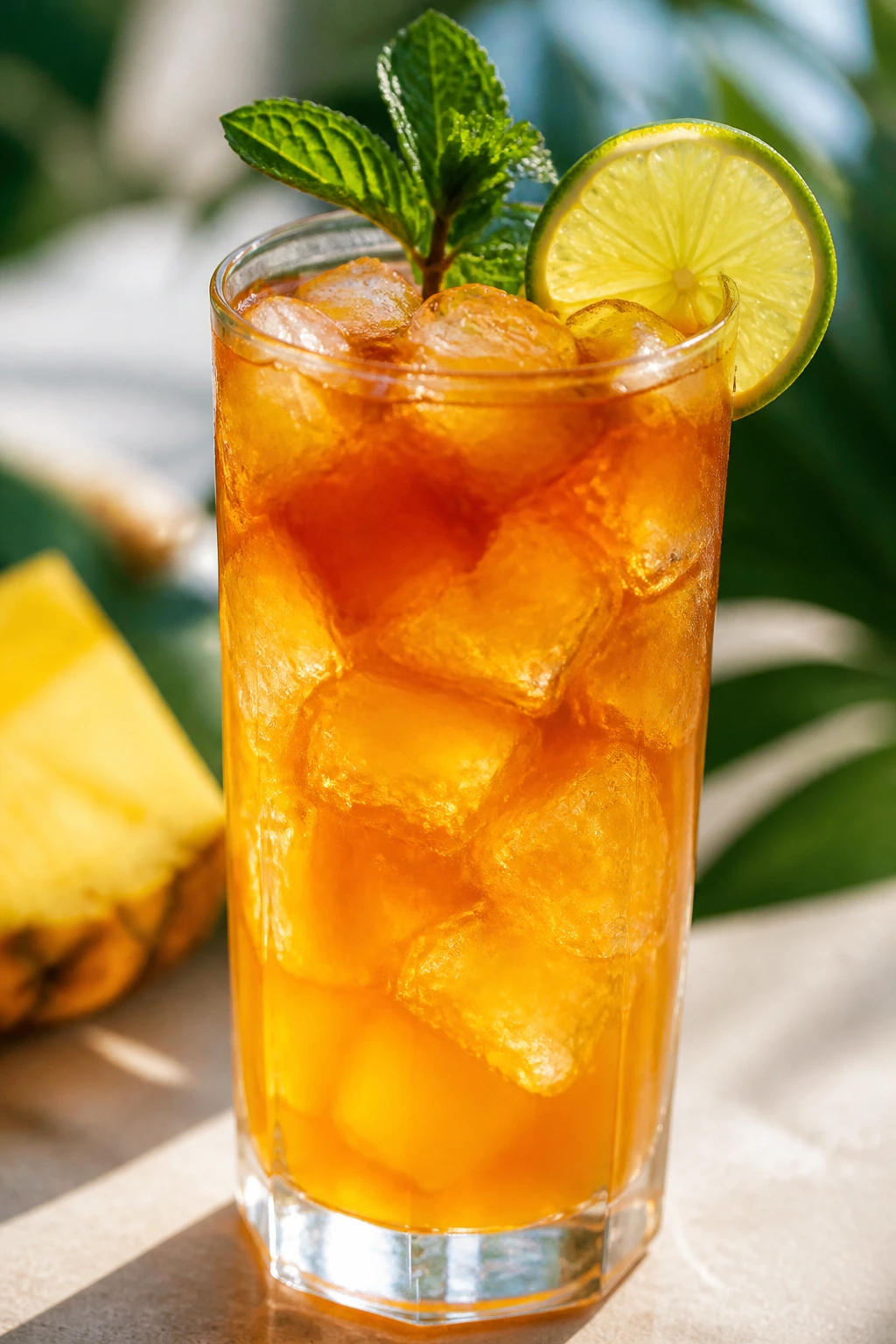
Presentation: Use tall clear glasses if you have them. Tropical iced tea looks best when you can see the color, the ice, and the fruit garnish all at once. A mint sprig slapped lightly between your palms before it goes into the glass gives the drink a fresher aroma than mint that just sits there looking polite.
Accompaniments: I like this with salty, smoky food. Grilled shrimp skewers, jerk chicken, coconut rice, plantain chips, or even a sharp cucumber salad all play nicely against the sweet fruit. If you’re serving a spread, anything with char or spice keeps the tea from feeling too soft.
Portions: Plan on about 1 to 1 1/4 cups per person if this is the main drink. If it’s one option among several, 3/4 cup per person is enough. For a crowd, double the batch and use a larger drink dispenser rather than stuffing the pitcher with too much ice.
Beverage Pairing: For a nonalcoholic table, plain sparkling water with lime is the cleanest companion. If you want something with a little more bite nearby, a dry white wine or a light rum spritz sits in the same lane without fighting the fruit.
Small Tweaks That Make a Big Difference
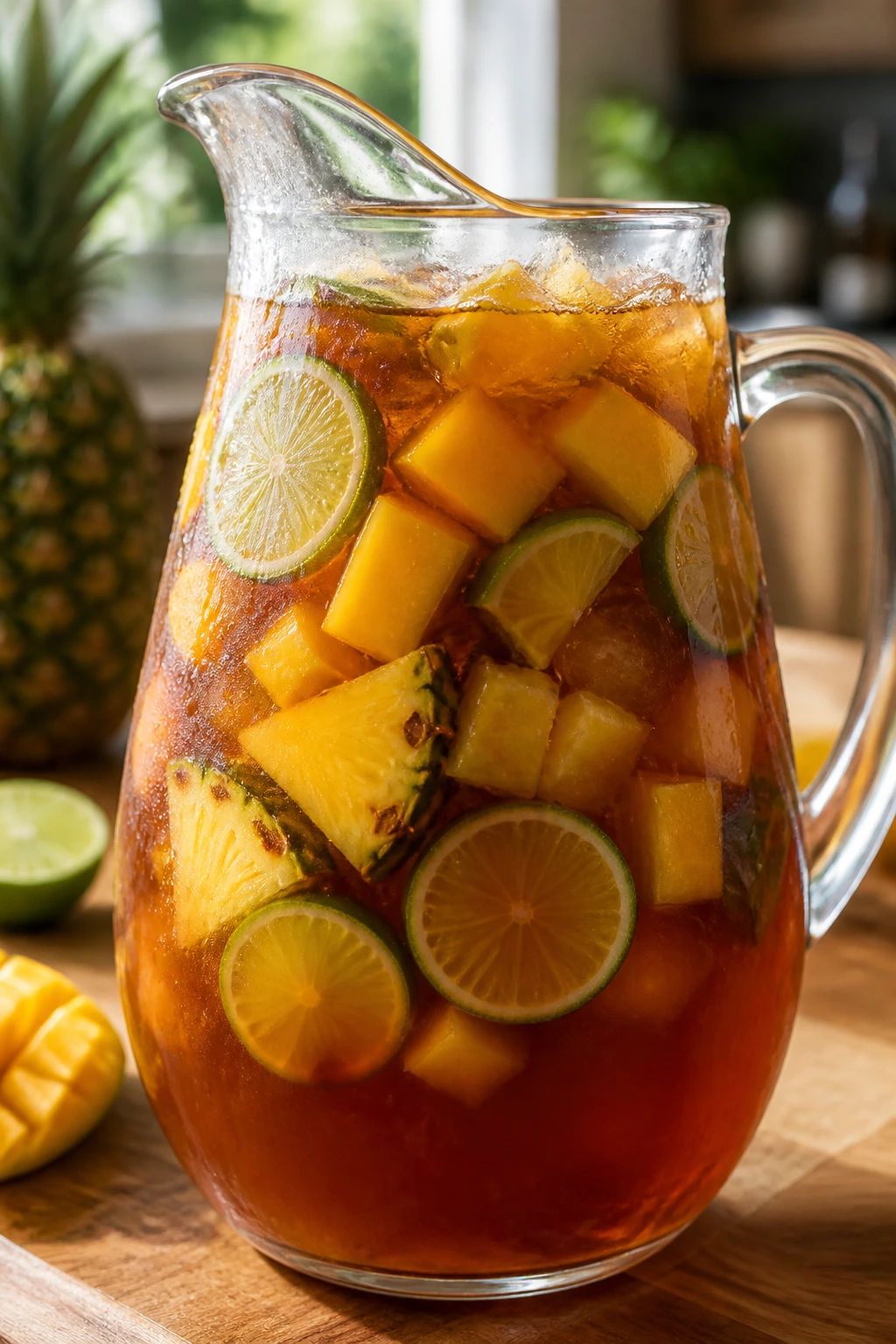
Flavor Enhancement: Freeze a few cups of pineapple juice into ice cubes and use those in the glass. They melt into the drink instead of thinning it out, which is a small thing until you’re halfway through a hot afternoon and the last sip still tastes balanced.
Customization: Swap half the mango nectar for passion fruit nectar if you want a sharper, more fragrant finish. If you prefer a softer drink, use peach nectar in place of the mango and reduce the lime slightly. The core method stays the same.
Serving Suggestions: A light sugar-and-lime rim on only half the glass is enough. Full rims can turn the first few sips into dessert. Half-rims give the drink a bright edge without making every sip sticky.
Make-It-Yours: Use decaf black tea if you plan to drink it later in the day. Agave keeps the drink vegan. Green tea gives a lighter, grassier pitcher, though I’d shorten the steep and pull back on the ginger so the tea doesn’t get lost.
A lot of people try to fix tropical iced tea with more sugar. That usually sends it in the wrong direction. More often, the fix is a little acid, a colder glass, or a juicier garnish.
Common Mistakes That Make the Pitcher Flat
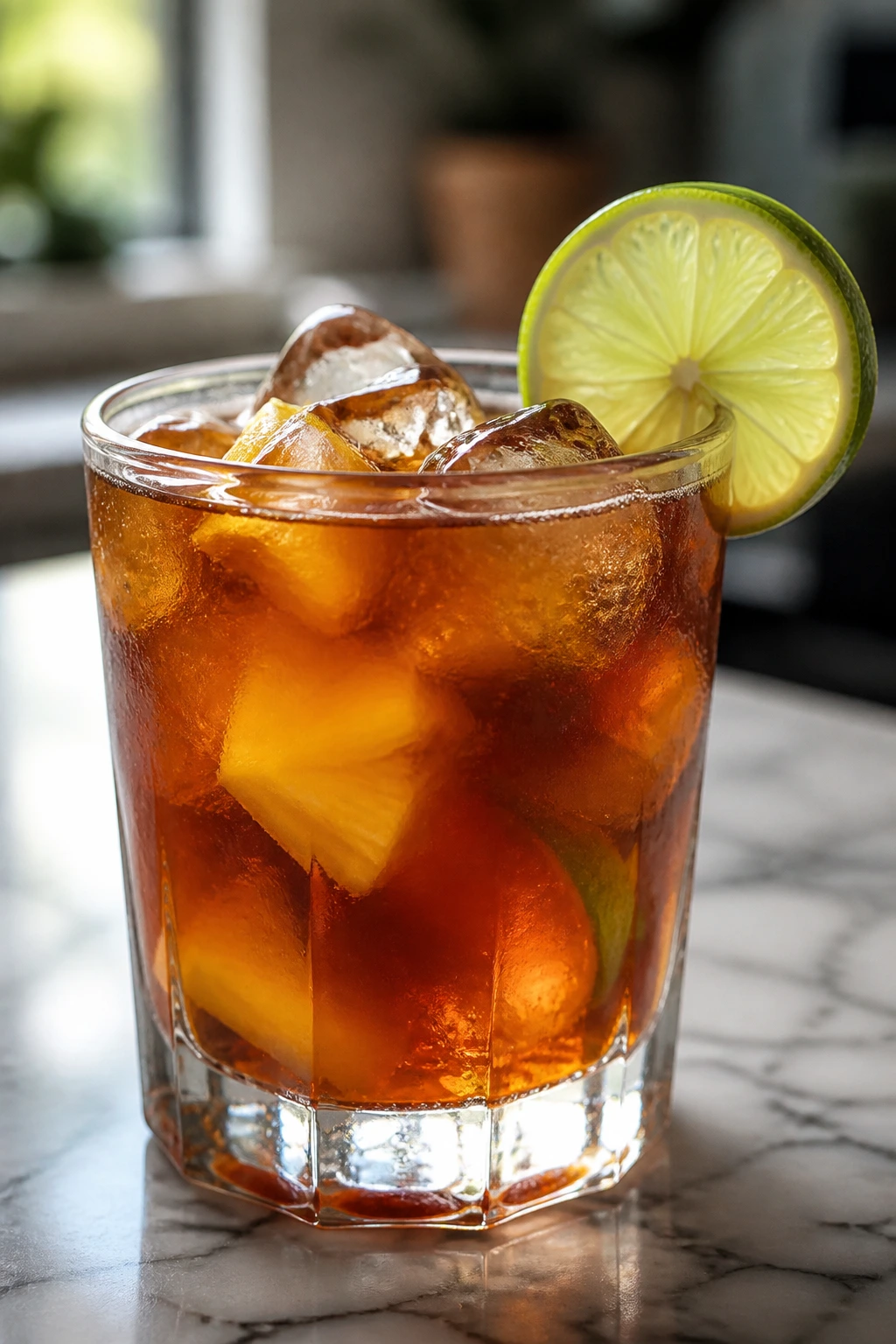
Oversteeping the tea: If the tea tastes dry, chalky, or oddly dusty, it sat too long in the water. Black tea only needs 4 to 5 minutes here. Pull the bags on time, even if the color looks slightly lighter than you expected.
Using too much fruit juice at once: The drink can turn syrupy fast if you keep pouring in mango or pineapple to “make it tropical.” The tea disappears, and what’s left feels heavy. Fix it with the exact ratios first, then adjust in small spoonfuls after you taste.
Mixing the pitcher while everything is still hot: Hot tea hitting cold juice seems efficient, but it can mute the fruit and make the whole thing taste blurry. Let the tea cool for about 10 minutes before combining. That pause matters more than people think.
Forgetting the acid: If lime juice is missing or cut too far back, the pineapple and mango can feel soft instead of bright. The drink needs that snap. Add a little more lime before reaching for more sweetener.
Serving with weak ice: Small cubes melt too fast and make the last glass taste washed out. Use big cubes in the pitcher only if you’re serving it right away, and use ice in the glass rather than the pitcher whenever possible.
Using bottled lime juice that tastes dusty or flat: Fresh lime has a cleaner, sharper edge. If bottled is your only option, use a little less at first and taste before adding more. The drink should taste lively, not canned.
Tropical Variations Worth Making
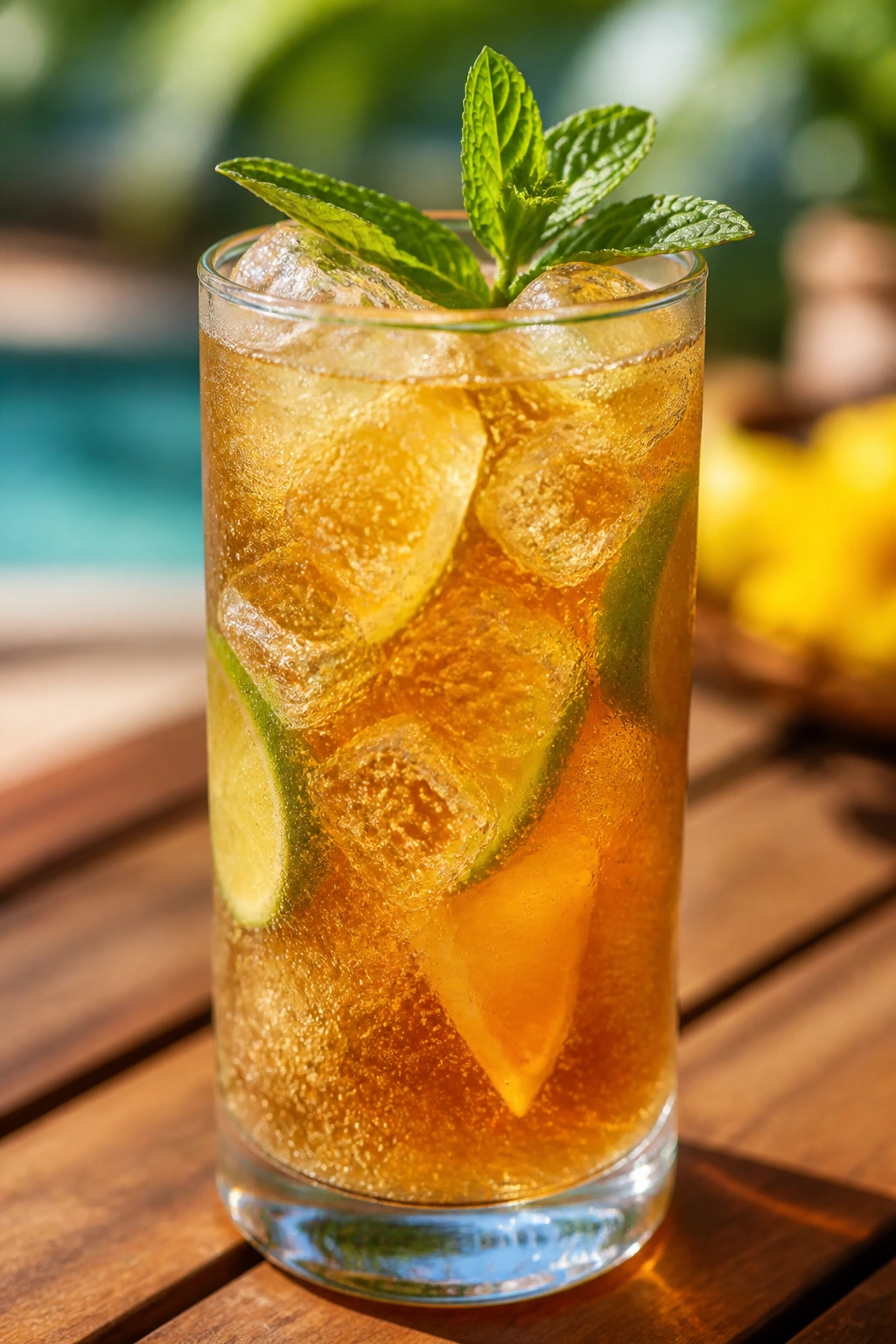
Sparkling Island Tea
Top each glass with club soda right before serving and cut the cold water in the base by 1/2 cup. This is the one I pull out for brunch or any table where people like their drinks a little lighter and more lifted. It still tastes like tea, just with more movement in the glass.
Coconut Water Cooler
Replace the 1 cup cold filtered water with unsweetened coconut water. The drink gets softer and a little rounder, which works well if the pineapple juice is strong and the mango nectar is already sweet. I would keep the lime exactly where it is, because coconut can blur the edges fast.
Passion Fruit Cut
Swap 1/2 cup of the mango nectar for 1/2 cup passion fruit nectar. The result is sharper and more aromatic, with a tang that makes the tea taste even brisker. This version is the one I make when I want the fruit to feel less smooth and more vivid.
Green Tea Glow
Use 6 green tea bags instead of black tea and steep for only 2 to 3 minutes. Pull the ginger back to 2 slices so the drink stays light instead of grassy and hot. This makes a lighter pitcher that works well when you want something less tannic and less dark in the glass.
Rum-Ready Pitcher
Keep the base as written, then add 1 to 1 1/2 ounces white rum to each adult glass. Don’t dump the rum into the whole pitcher unless you know every guest wants it that way. The base tastes cleaner when the alcohol is added glass by glass.
Keeping the Pitcher Cold Without Watering It Down
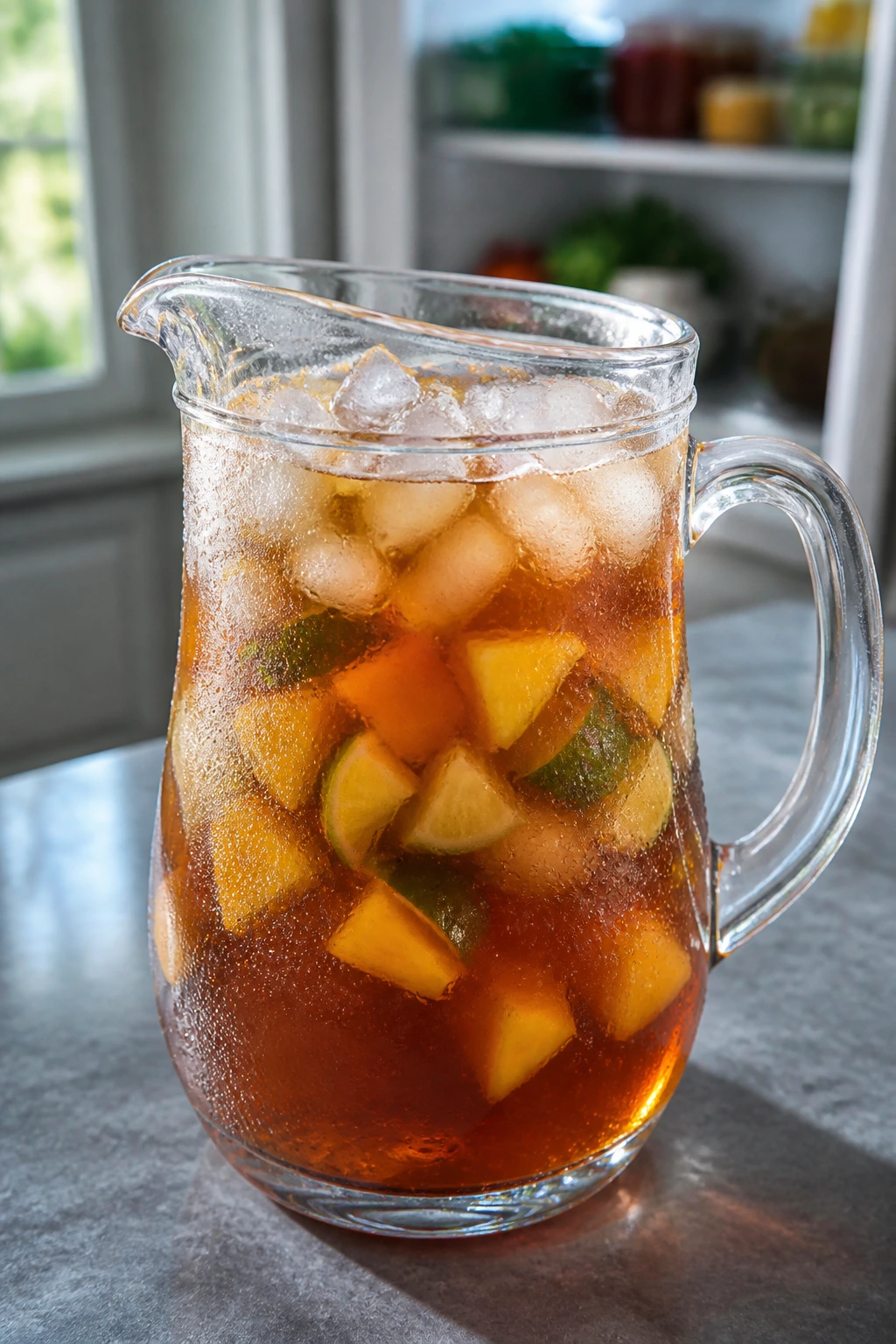
This drink keeps in the fridge, but not forever. Once the tea and fruit are mixed, the flavor is best within 24 hours, and still good for about 3 days refrigerated if the pitcher is sealed well. After that, the fruit starts to taste dimmer and the tea loses its edge.
The tea base alone lasts longer. Brewed tea can sit in the fridge for up to 5 days if it’s covered and chilled promptly. The fruit juices, once opened, should follow the dates on the package and your own nose; if a juice smells tired or tastes dull, I would not build a pitcher around it.
Do not freeze the finished drink. The texture gets odd when it thaws, and the fruit and tea separate in a way that never quite comes back together. If you want to plan ahead, freeze tea cubes or pineapple juice cubes instead. Those are useful for serving and they buy you time without diluting the glass.
If the pitcher warms up on the table, pour the leftovers back into the fridge and serve fresh ice in the next glass. I don’t bother reheating this recipe. It isn’t built for heat. It wants cold, a little shade, and enough time in the fridge to let the fruit and tea stop introducing themselves.
Questions People Ask Before the First Pour
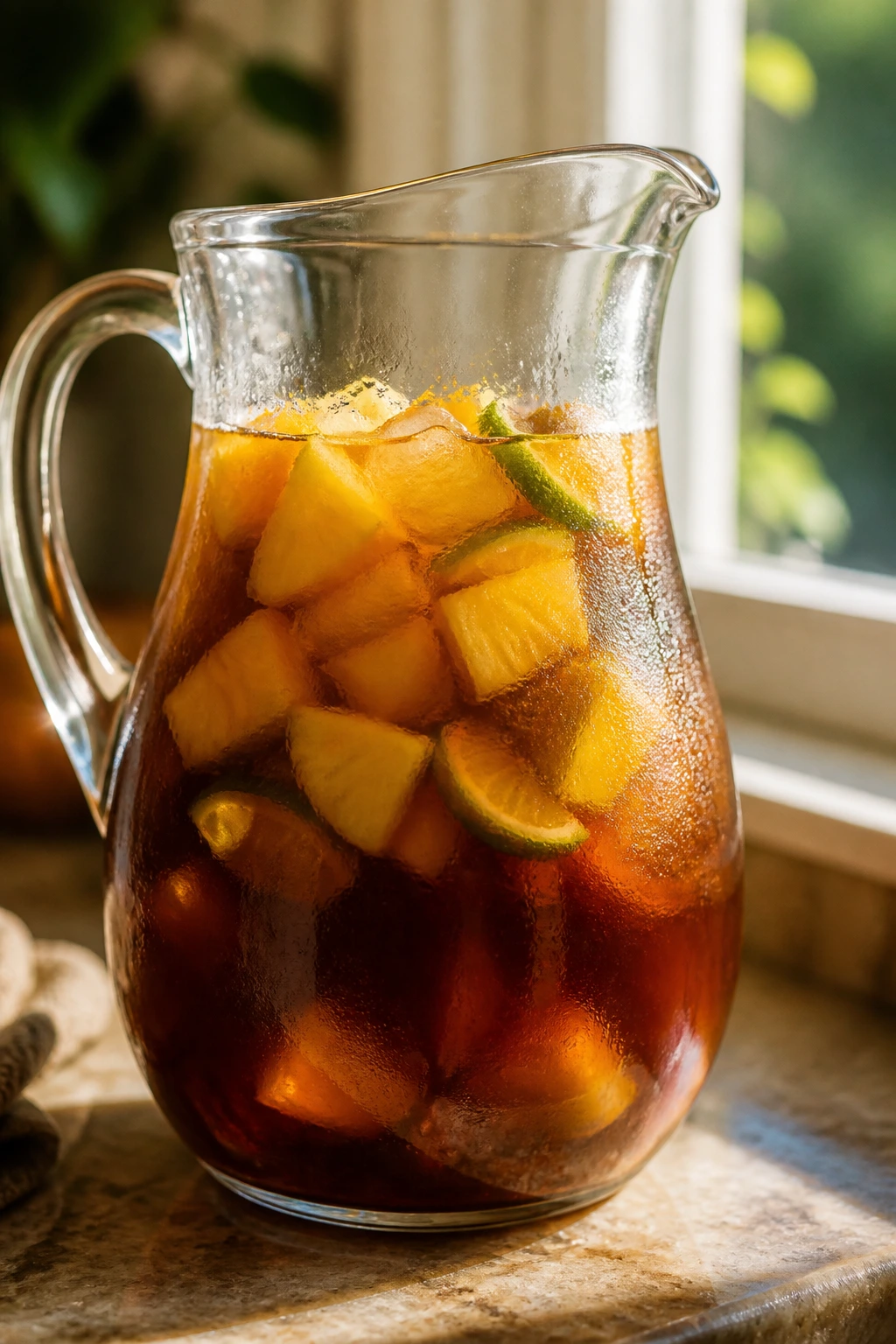
Can I use green tea instead of black tea?
Yes, but the drink changes shape. Green tea makes it lighter and a little grassier, so I’d shorten the steep to 2 or 3 minutes and use a touch less ginger. If you want a tea that disappears more into the fruit, green tea can do that.
What if I only have pineapple juice and not mango nectar?
You can still make the pitcher. Use 1 1/2 cups pineapple juice, keep the lime where it is, and add a little extra orange juice or a spoonful more honey if the drink tastes sharp. Mango nectar adds body, so without it the tea will feel thinner and a bit brighter.
Can I make this ahead of time?
Yes, and it’s smarter that way. Brew the tea base and mix the fruit base separately up to a day ahead, then combine them and chill the finished pitcher before serving. The full drink is best the same day it’s mixed, but planning the parts ahead makes the whole thing easier.
How do I keep it from turning cloudy?
Cool the tea before you mix in the juices, and remove the orange peel and ginger cleanly. Cloudiness usually comes from rushing the process or overhandling the tea bags. You want a clear amber base, not a murky one.
Can I make it fizzy without losing the bubbles?
Yes. Add club soda to each glass right before serving, not to the whole pitcher hours ahead. Stir once, gently, and stop. If you mix too hard, the sparkle dies before the glass reaches the table.
What if the drink tastes too sweet?
Add 1 tablespoon lime juice and stir, then chill for 15 minutes before tasting again. A little more cold often fixes what extra sugar made worse. If it still feels heavy, add 1/4 cup more cold water and another pinch of salt.
Can I make a caffeine-free version?
Use decaf black tea, or switch to rooibos if you want something with a deeper red color and no caffeine. Rooibos gives a soft, round base that works well with pineapple and lime, though it tastes less brisk than black tea. I’d still keep the fruit ratios the same.
A Pitcher Worth Repeating
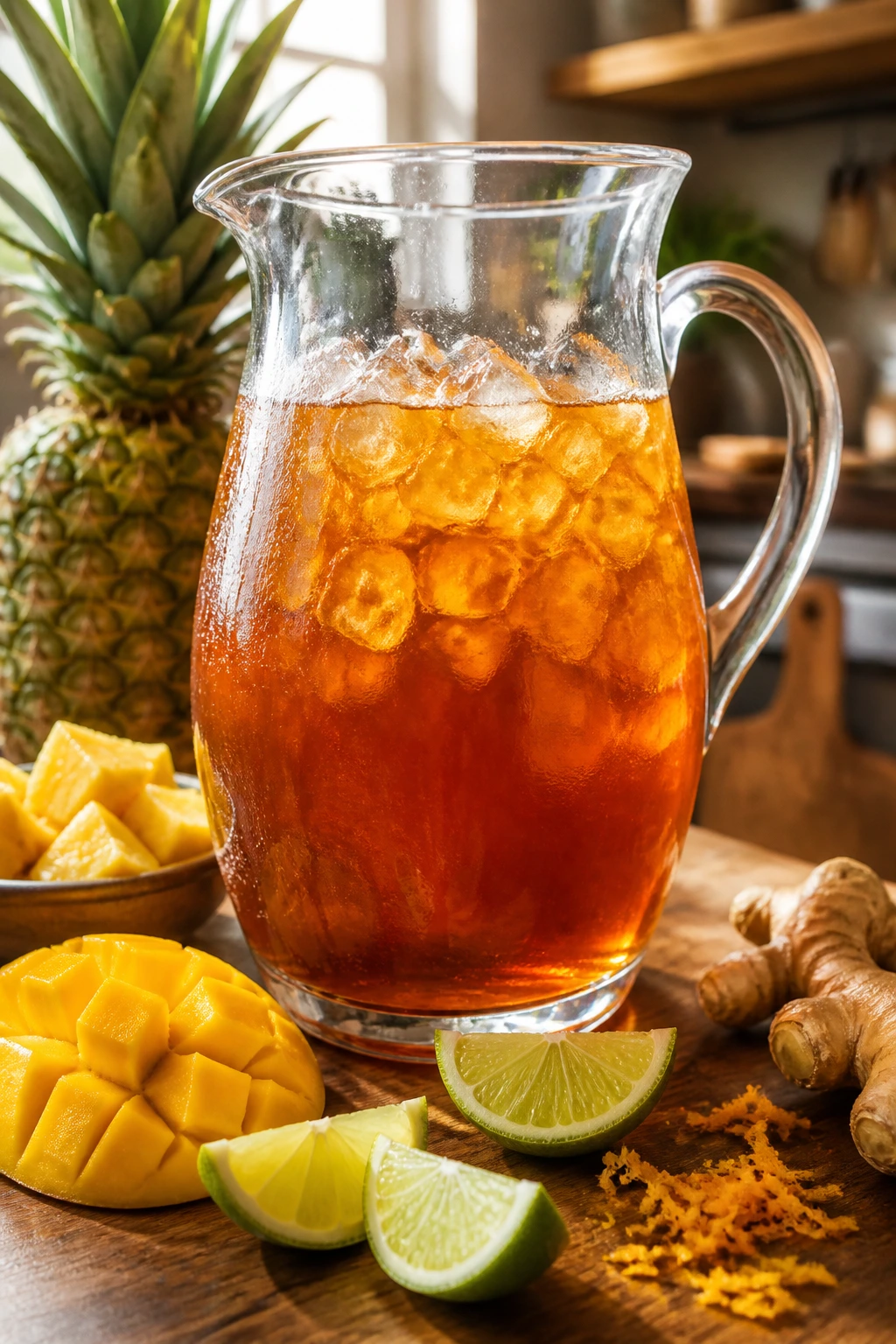
Tropical iced tea works because it respects the tea part of the equation. That sounds obvious until you taste how many versions bury the tea under juice and sugar. Here, the black tea stays present, the fruit stays bright, and the lime keeps the whole thing from slumping into syrup. That’s the difference between a drink you sip once and a pitcher you keep refilling.
Make it cold. Make it balanced. And if you find yourself reaching for a second glass before the ice has even had time to melt, that’s the recipe doing exactly what it should.
Tropical Iced Tea for Summer Sipping — Recipe Card
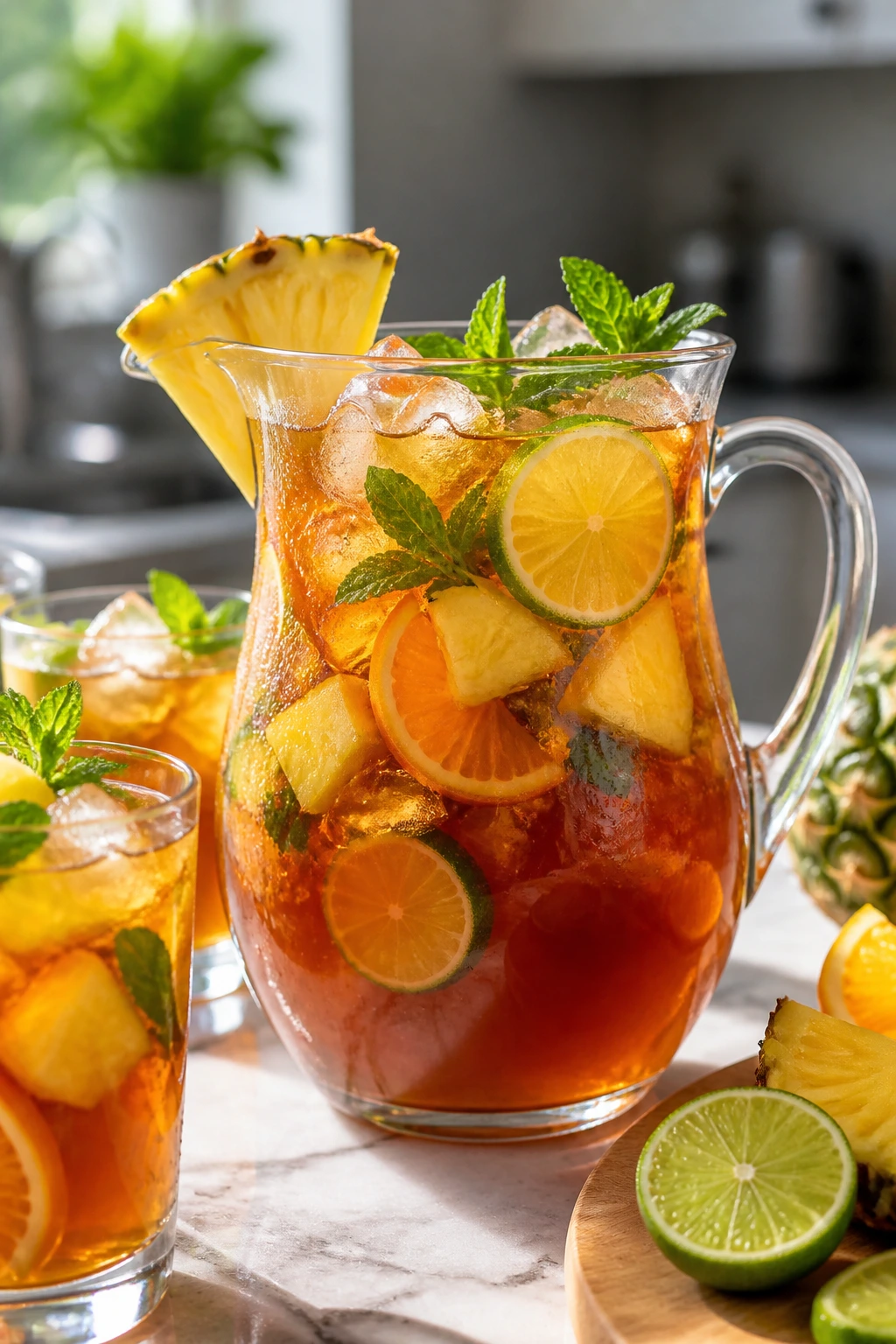
Recipe Name: Tropical Iced Tea for Summer Sipping
Description: A chilled pitcher of black tea blended with pineapple juice, mango nectar, orange juice, and lime for a drink that tastes fruity without losing its tea backbone. Serve it over ice with mint and citrus for a bright, balanced glass.
Prep Time: 15 minutes
Cook Time: 10 minutes
Total Time: 2 hours 25 minutes, including chilling
Course: Drink
Cuisine: American
Servings: 8 servings
Calories: About 80 kcal per serving
Ingredients
For the Tea Base:
- 4 cups water
- 6 black tea bags, preferably Assam, Ceylon, or decaf black tea
- 1 strip orange peel, 2 to 3 inches long
- 3 thin slices fresh ginger
For the Tropical Blend:
- 1 cup pineapple juice, chilled
- 1 cup mango nectar, chilled
- 1/2 cup orange juice, chilled
- 1/4 cup fresh lime juice
- 1/4 cup honey or 1/3 cup simple syrup
- 1/8 teaspoon fine sea salt
- 1 cup cold filtered water
For Serving:
- About 4 cups ice, plus more for glasses
- 8 pineapple wedges
- 8 orange slices
- 8 lime wheels
- 8 fresh mint sprigs
- 1 cup chilled club soda, optional, for a sparkling finish
Instructions
-
Bring 4 cups water to 200°F / 93°C in a saucepan or kettle.
-
Add the tea bags, orange peel, and ginger slices. Steep for 4 to 5 minutes.
-
Remove the tea bags, orange peel, and ginger. Stir in the honey and salt while the tea is warm, then let it cool for about 10 minutes.
-
In a 2-quart pitcher, combine the pineapple juice, mango nectar, orange juice, lime juice, cold filtered water, and salt.
-
Pour in the cooled tea and stir well. Taste and adjust with a little more lime or sweetener if needed.
-
Cover and chill for at least 2 hours.
-
Fill glasses with ice, pour in the tea, and garnish with pineapple, orange, lime, and mint.
-
For a fizzy version, top each glass with a little chilled club soda right before serving.
Notes:
Use fresh lime if you can. Freeze extra tea or pineapple juice into ice cubes if you want the drink to stay cold without thinning out. Add club soda only at the very end if you want bubbles that last.