



An orange smoothie sounds simple until you drink one that tastes thin, chalky, or weirdly bitter. A truly refreshing orange smoothie for summer sipping should hit cold first, then citrus, then a little creamy roundness — the kind that makes you pause halfway through because the first sip was better than expected.
That balance is the whole game. Fresh orange juice brings the bright top note, frozen mango and pineapple give the drink enough body to feel like a real smoothie instead of spiked juice, and a small pinch of salt keeps the sweetness from going flat. I skip banana here on purpose. Banana can take over fast, and once it does, the orange gets shoved into the background.
The version I keep coming back to uses ordinary fruit and a few careful choices: cold ingredients, enough frozen fruit to thicken the glass, and just enough yogurt to make the texture smooth without turning it heavy. It tastes clean. It looks sunny. And if you like a drink that feels cold before you even finish the first sip, this one earns its place.
Why This Refreshing Orange Smoothie Earns Its Spot
Bright citrus without bitterness: Fresh juice alone can taste a little one-note, so the whole orange and its zest bring back the smell and flavor that carton juice usually loses.
Cold without turning watery: Frozen mango and pineapple do the thickening work here, which means you do not need a mountain of ice that melts into orange slush five minutes later.
Creamy, but not heavy: Greek yogurt gives the smoothie a soft body and a slight tang, so it drinks more like a proper breakfast sip than a dessert shake.
Easy to adjust fast: A splash more coconut water loosens it, more frozen fruit tightens it, and honey is only there if your oranges lean sharp.
Good for plain mornings: There’s no fancy syrup, no sherbet, no long ingredient list. Just fruit, dairy, and a few smart balancing moves.
Flexible enough to live in the freezer: If you prep the fruit in bags, the blender work drops to about a minute, which is exactly the kind of small favor summer mornings deserve.
Quick Time, Yield, and Difficulty
If your fruit is already cold, the whole thing moves fast. That’s part of the charm.
Yield: 2 servings, about 12 ounces each
Prep Time: 10 minutes
Cook Time: 0 minutes
Total Time: 10 minutes
Difficulty: Beginner — there’s no cooking, but the order you load the blender matters more than people think.
Best Served: Right away, while the texture is cold and lightly fluffy
The Ingredient List I Use for a Clean Orange Smoothie
For the Smoothie:
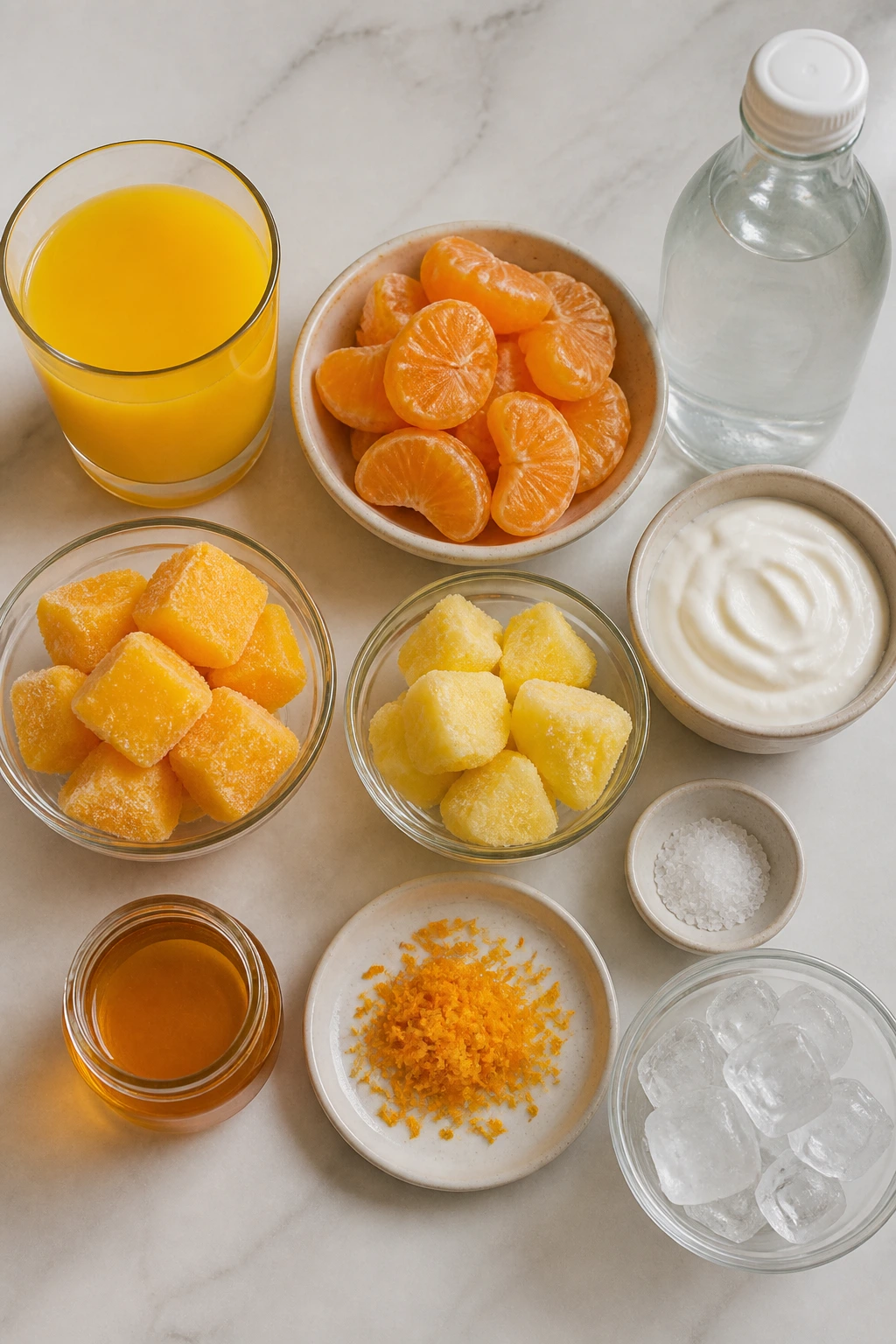
- 1 cup fresh orange juice, chilled
- 1 medium navel orange, peeled and segmented, with as much white pith removed as possible
- 1 cup frozen mango chunks
- 1/2 cup frozen pineapple chunks
- 3/4 cup plain Greek yogurt, cold
- 1/2 cup cold coconut water
- 1 tablespoon honey, optional
- 1 teaspoon finely grated orange zest
- 1/4 teaspoon fine sea salt
- 1/2 cup ice cubes, optional for a frostier texture
The list looks spare because the fruit is doing most of the work. That’s a good thing. A smoothie like this should taste alive, not decorated.
Why Each Ingredient Matters in the Glass
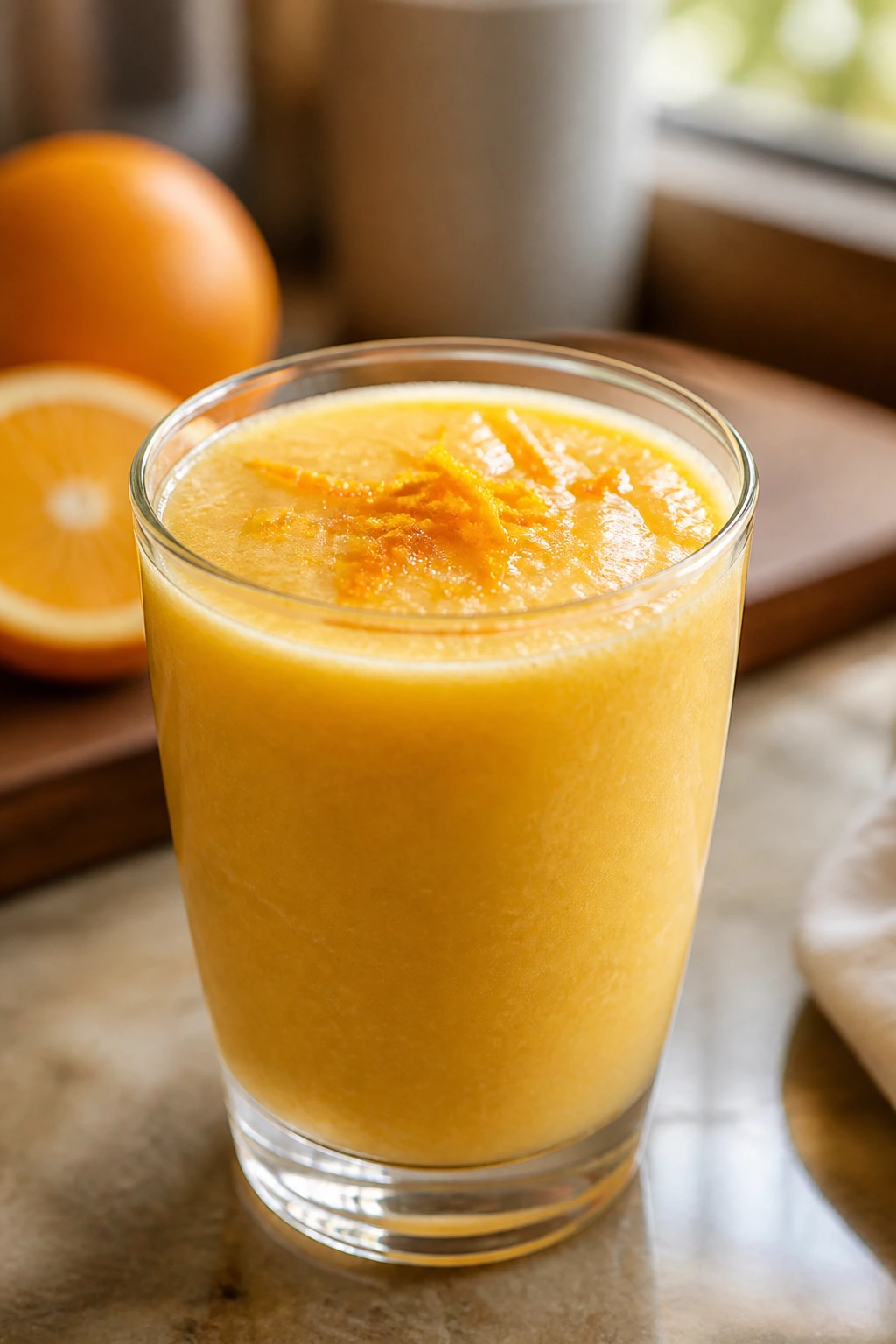
Citrus and Fruit Base
What to use: 1 cup chilled orange juice, 1 medium navel orange, 1 cup frozen mango chunks, and 1/2 cup frozen pineapple chunks.
Preparation: Peel the orange, trim away as much white pith as you can, and break it into segments so the blender does not have to fight big membranes. Keep the frozen fruit frozen until the last minute.
Substitutions: Frozen peaches can stand in for the mango, and tangerines can replace the whole orange if that is what you have on hand. If you want a slightly sharper drink, use half orange and half mandarin.
Tips: Frozen mango is the quiet hero here. It thickens the smoothie without turning it muddy, and it softens the orange into something smoother and a little rounder.
Creamy Element
What to use: 3/4 cup plain Greek yogurt, cold.
Preparation: Keep the yogurt straight from the fridge so the smoothie stays icy and the texture stays clean. If the yogurt has any liquid on top, stir it back in before measuring.
Substitutions: Plain kefir gives you a thinner, tangier drink; coconut yogurt keeps it dairy-free; vanilla yogurt pushes the blend closer to a creamsicle. All three work, but they change the mood in obvious ways.
Tips: Full-fat Greek yogurt makes the drink taste more complete, especially if you are skipping banana. Low-fat yogurt still works, but the smoothie will feel slightly sharper and less plush.
Liquids and Balance
What to use: 1/2 cup cold coconut water, 1 tablespoon honey if needed, and 1/4 teaspoon fine sea salt.
Preparation: Measure the coconut water before you start blending so you can add more in small splashes instead of pouring in half the carton. Salt goes in with the fruit, not after.
Substitutions: Cold filtered water works if coconut water is not in the kitchen. Maple syrup can replace honey, though it gives the smoothie a warmer flavor.
Tips: The salt is not there to make the smoothie salty. It sharpens the orange and keeps the sweetness from feeling sleepy. A tiny amount does more than people expect.
Finishing Touches
What to use: 1 teaspoon orange zest and 1/2 cup ice cubes if you want a frostier texture.
Preparation: Zest only the orange skin, not the white layer underneath. That white part is where the bitterness lives.
Substitutions: A pinch of vanilla or a few mint leaves can replace part of the zest if you want a different finish. If your oranges are very cold and the fruit is fully frozen, you can skip the ice.
Tips: The zest belongs in the blender, not just on top. It gives the whole glass a stronger orange smell, and smell matters here more than people admit.
The Blender Setup That Keeps It Creamy
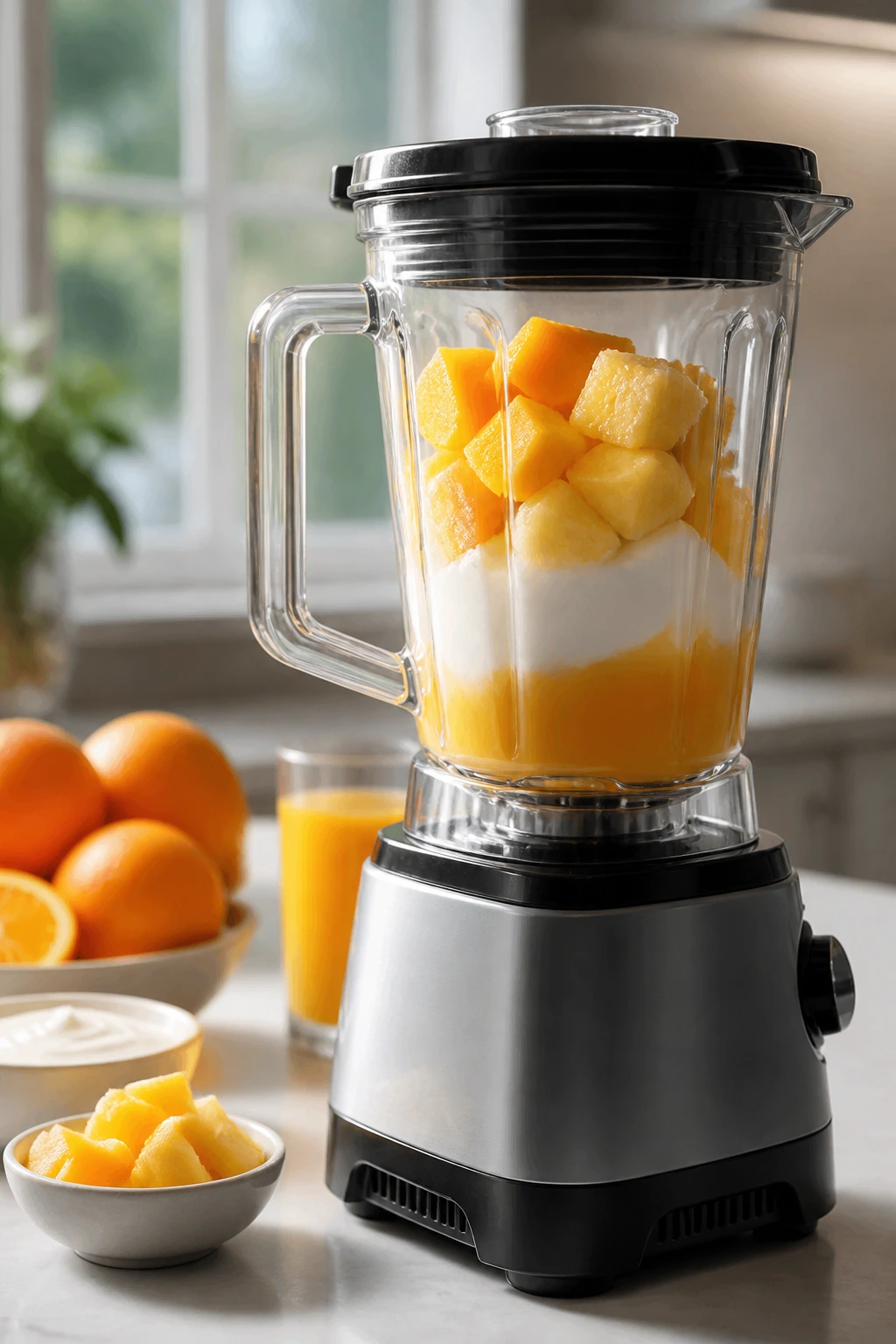
A smoothie can go from silky to stubborn fast if the blender has nowhere to grab the fruit. The trick is not fancy. It’s just the right tools in the right order.
- High-speed blender or sturdy standard blender — A powerful motor helps the frozen mango and pineapple break down without long, overheated blending. If your blender is modest, let the fruit sit out for 2 to 3 minutes before blending.
- Citrus zester or Microplane — This pulls off the orange oil cleanly. A box grater works in a pinch, but it tends to take too much peel.
- Sharp paring knife and cutting board — Useful for trimming the pith and segmenting the orange so you do not end up with chewy white bits in the drink.
- Measuring cups and spoons — The liquid ratio matters more here than in a soup or sauce. Too much coconut water turns the whole thing flat.
- Silicone spatula — Handy for scraping thick fruit down from the jar walls if the blender leaves a ring of frozen mango above the blades.
- Tall glasses or chilled tumblers — The drink stays colder longer, and a cold glass does more for the first sip than another cube of ice ever will.
How to Blend a Refreshing Orange Smoothie Step by Step
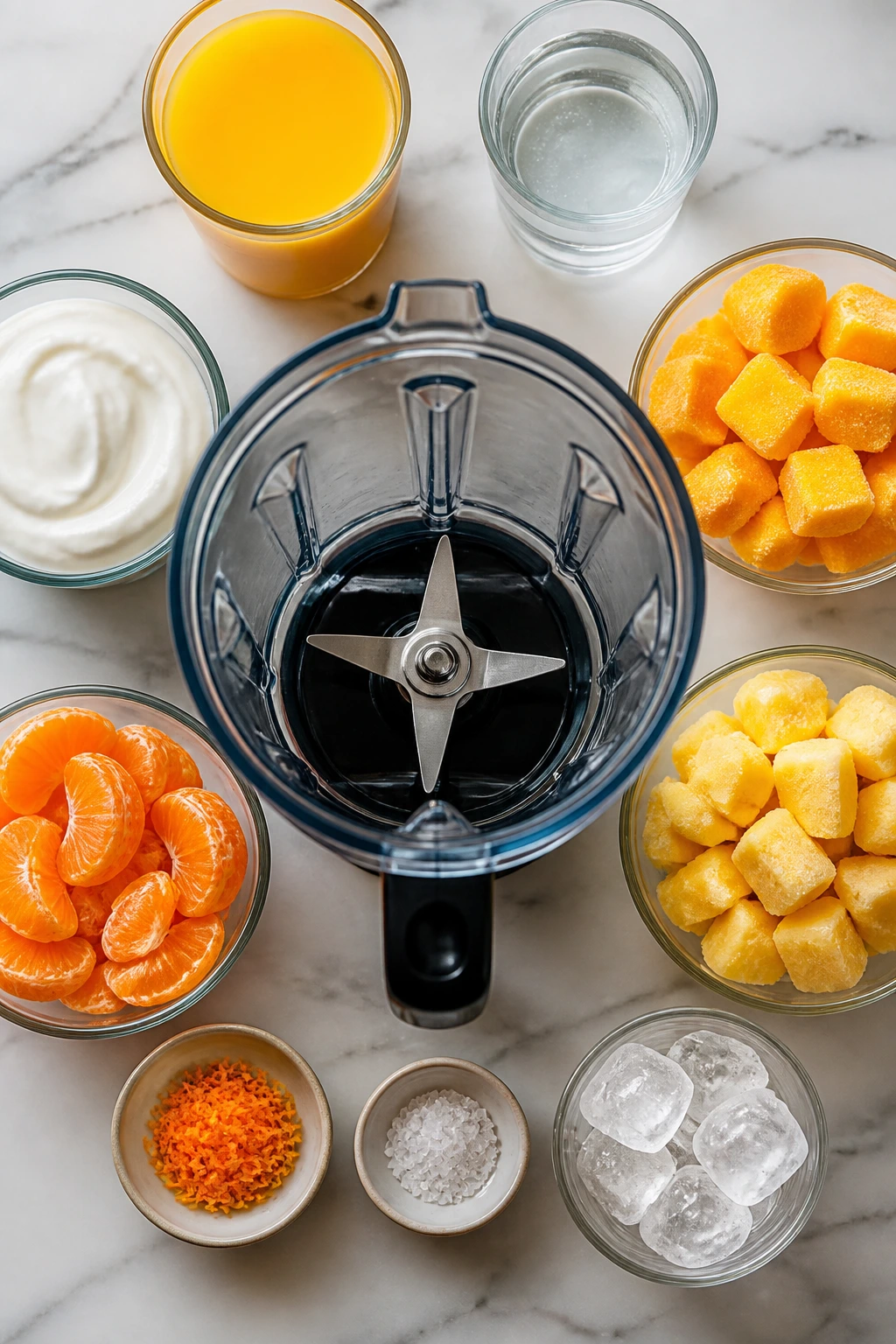
Prep the fruit and glasses
-
Chill two 12-ounce glasses in the freezer for about 5 minutes while you prep the fruit. If you forget this step, the smoothie will still taste good, but it warms faster on the counter.
-
Peel the orange and strip away as much white pith as possible. Cut the orange into segments and remove any obvious seeds. Do not leave thick pith on the fruit — that is the fastest route to bitterness.
Load the blender in the right order
-
Pour in the 1 cup chilled orange juice and 1/2 cup cold coconut water first, then add the 3/4 cup Greek yogurt. Top that with the frozen mango, frozen pineapple, orange segments, orange zest, salt, and honey if you are using it. If you want the frostiest finish, add the ice last.
-
Blend on low speed for about 10 seconds, then switch to high for 30 to 45 seconds, until the mixture looks smooth and creamy and no frozen fruit chunks are left. Stop once or twice to scrape the sides if needed. If the blades are just spinning a hole through the fruit, pause and push everything down before continuing.
Taste, adjust, and pour
-
Taste the smoothie before you pour it. If it feels too thick, add 1 to 2 tablespoons more coconut water and blend for 5 seconds. If it feels too thin, add a few more frozen mango chunks or 2 to 3 ice cubes and blend again until it mounds softly on a spoon.
-
Pour into the chilled glasses and serve immediately. The flavor is brightest in the first 10 minutes, before the foam settles and the texture loses that cold, airy edge.
How to Serve a Smoothie That Feels Intentional
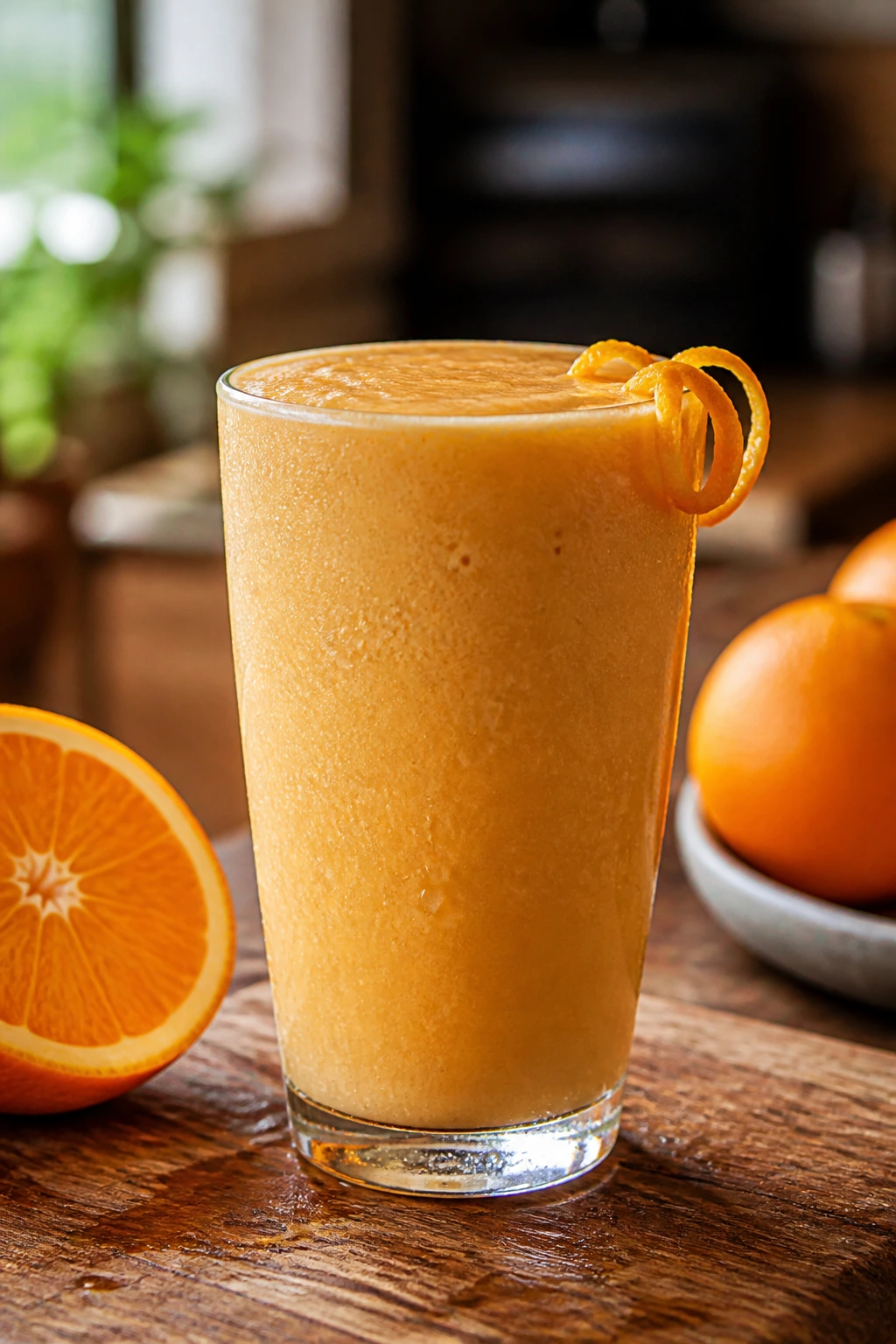
Presentation: Pour the smoothie into chilled glasses and finish each one with a thin strip of orange zest or a very thin orange wheel on the rim. If you want a cleaner look, wipe the rim with a damp towel before serving; a sticky glass makes even a good smoothie look hurried.
Accompaniments: I like this with plain toast and almond butter, a bowl of granola, or a couple of hard-boiled eggs if breakfast needs staying power. For a lighter snack, a few salted pistachios work well because the salt keeps the orange flavor from feeling too sweet.
Portions: Two full servings is the sweet spot for the recipe as written. If you pour it into smaller 8-ounce glasses, it can stretch to three, though the texture feels less thick in a smaller pour.
Beverage Pairing: If you’re serving it at breakfast, a small cup of black coffee or cold brew gives a sharp contrast. For an afternoon glass, sparkling water with a squeeze of lime keeps the citrus theme bright without turning the moment into dessert.
Tips, Tweaks, and Little Upgrades
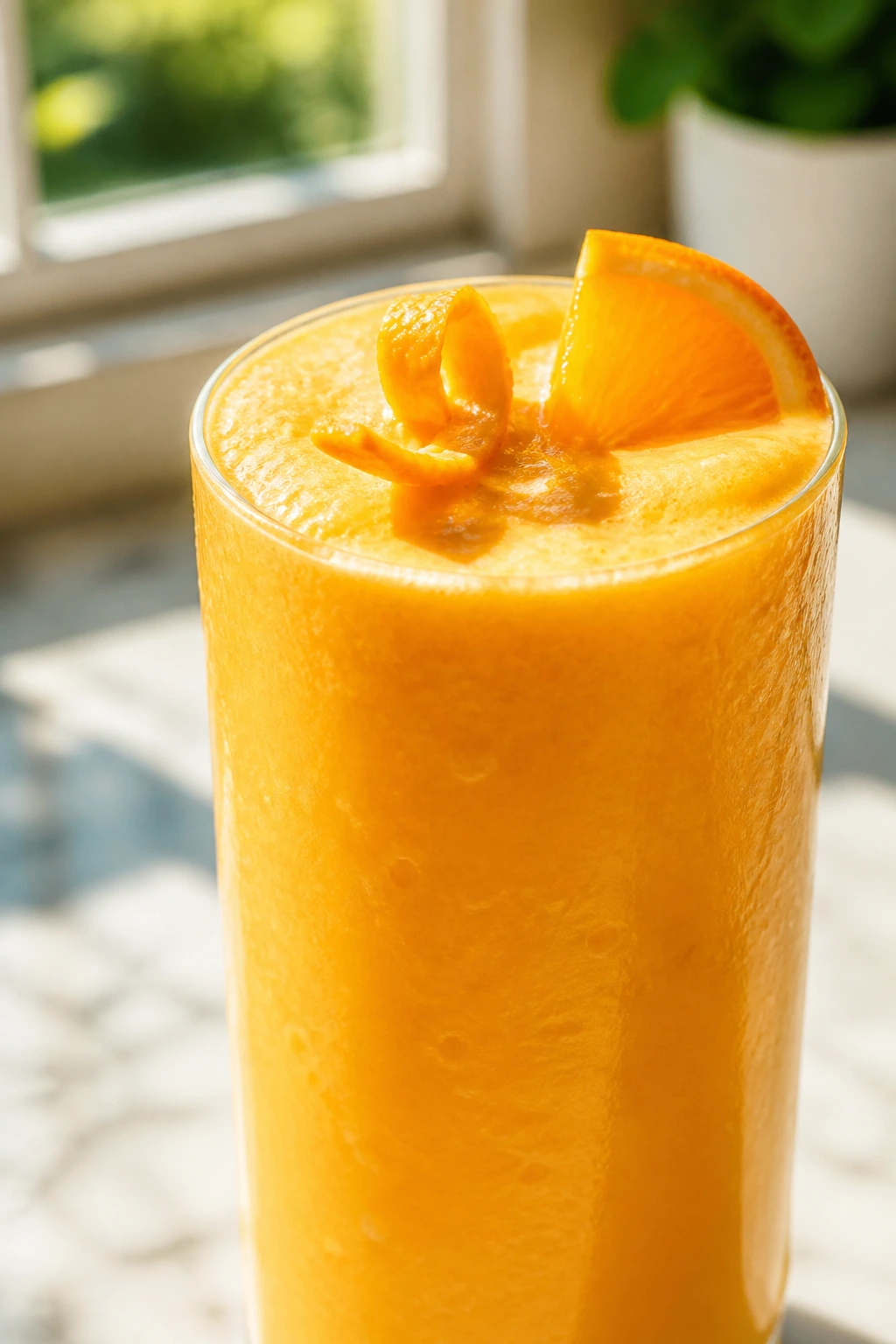
Flavor Enhancement: Rub the orange zest into the honey with the back of a spoon before it goes into the blender. The citrus oils wake up fast that way, and the orange flavor spreads through the whole drink instead of sitting on top.
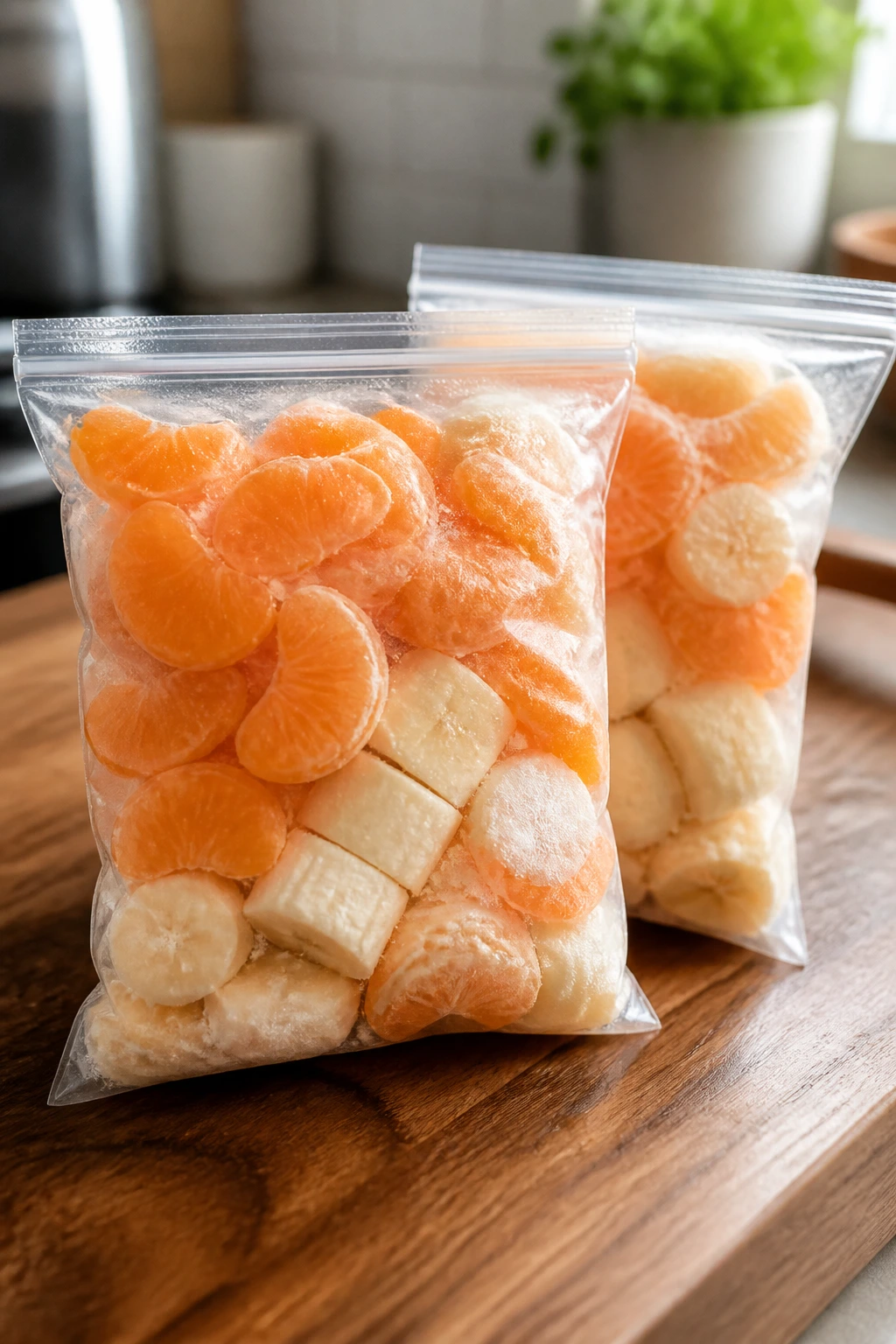
Time-Saver: Freeze peeled orange segments and mango together in small bags. The fruit breaks down faster when it’s spread out instead of clumped into one brick, and you can grab a bag without measuring in the morning.
Cost-Saver: Store-brand frozen mango is fine here. The orange is the main flavor, so there’s no reason to spend extra on fruit that is mostly there for texture.
Pro Move: If your blender is touchy, blend the orange juice, yogurt, coconut water, salt, and zest for 10 seconds before adding the frozen fruit. That gives the blades a smooth base to work with and cuts down on the stop-start whine that weak blenders make.
Make-It-Yours: For a more filling glass, add 2 tablespoons rolled oats and let the smoothie sit for 2 minutes before drinking. For a cleaner, sharper sip, skip the honey and let the fruit do the work.
Mistakes That Make Orange Smoothies Thin or Bitter
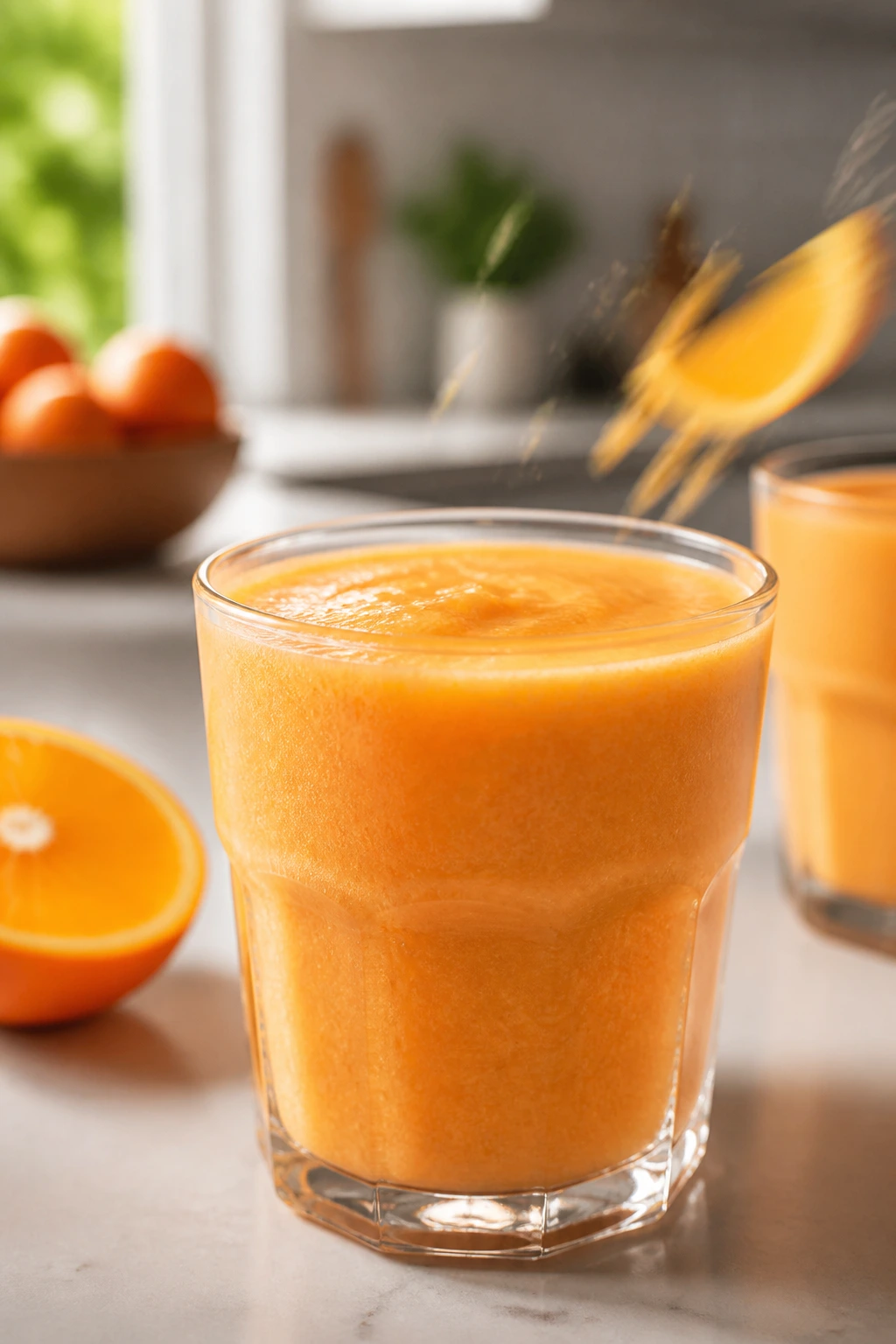
Using warm ingredients: Room-temperature juice and yogurt make the smoothie foam up and melt faster. Keep everything cold, and use frozen fruit straight from the freezer.
Overdoing the ice: Ice can help in a pinch, but too much gives you a pale, crushed-ice texture and mutes the orange. Frozen mango and pineapple should do most of the thickening.
Leaving too much pith on the orange: The white layer beneath the peel is where the bitterness hides. Trim it well, especially near the stem end, where it tends to cling in tough strips.
Sweetening before you taste: Honey is there to nudge the flavor, not hide it. Blend first, then decide whether the smoothie needs a teaspoon more.
Pouring in all the liquid at once: A blender works better when the fruit has a chance to move. Start with the measured coconut water, then only add more if the mixture is stuck.
Blending far too long: The drink can warm up from friction and lose that clean, cold finish. Once the texture turns smooth and thick, stop.
Variations Worth Trying
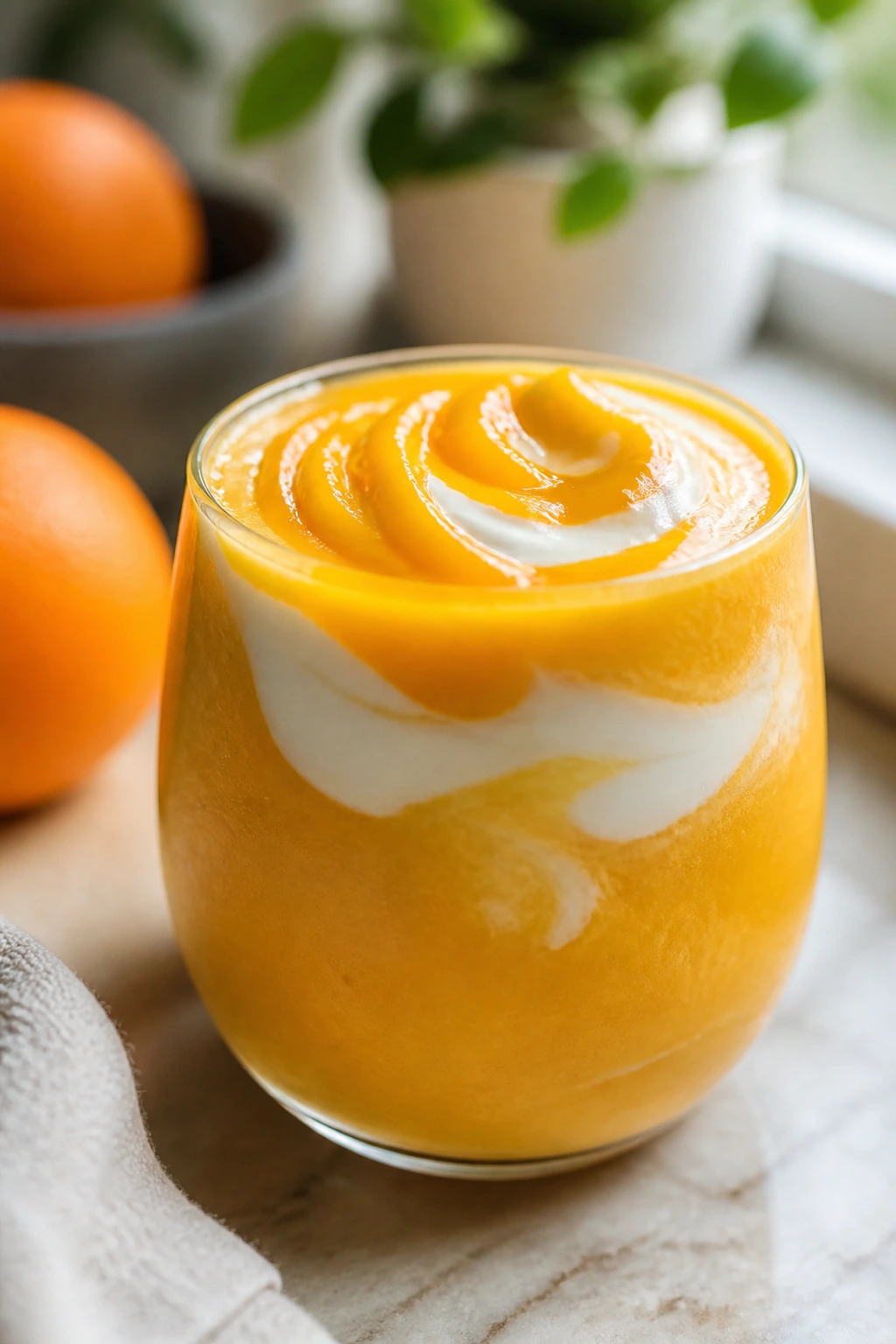
Creamsicle Morning Blend
Add 1/4 teaspoon vanilla extract and swap half the plain Greek yogurt for vanilla yogurt. The drink moves closer to an orange creamsicle, but the mango keeps it from tasting like melted candy.
Tropical Orange Cooler
Replace the pineapple with extra mango and add 2 tablespoons coconut milk. The result is softer and more tropical, with a rounder finish that leans slightly toward a beach drink.
Green Citrus Lift
Add 1 packed cup baby spinach to the blender. The color gets murkier, sure, but the orange covers the flavor well enough that you get a greener glass without a grassy taste.
Dairy-Free Citrus Chill
Use coconut yogurt instead of Greek yogurt and add another 1/4 cup frozen mango to make up for the thinner texture. The flavor stays bright, and the coconut note plays nicely with orange.
Orange Protein Blend
Add 1 scoop vanilla protein powder or 2 tablespoons hemp hearts, then reduce the coconut water by 2 tablespoons so the smoothie does not turn loose. This is the version I’d make when the glass needs to do more than taste good.
Make-Ahead, Storage, and Freezer Packs
Freshly blended is best. That is the honest answer. The texture is cold, the foam is light, and the orange aroma is at its strongest in the first few minutes after blending.
If you need to store a finished smoothie, pour it into an airtight jar or bottle and refrigerate it for up to 24 hours. Expect separation. It will settle into layers, and the top will lose some of its air. A hard shake helps, but a 10-second re-blend with a splash of orange juice is better.
For longer planning, make freezer packs instead of pre-blending the drink. Portion the frozen mango, frozen pineapple, orange segments, and zest into small freezer bags and keep them frozen for up to 2 months. In the morning, dump one bag into the blender with the orange juice, yogurt, coconut water, salt, and honey.
Do not try to reheat this. Warm orange smoothie tastes dull and a little strange, and the yogurt texture goes loose fast. If the mixture has been in the fridge and feels flat, the fix is cold liquid and a quick re-blend, not heat.
Orange Smoothie Questions People Ask
Can I use bottled orange juice instead of fresh?
Yes, though fresh juice tastes cleaner and brighter. If you use bottled juice, pick one without added sugar and lean more on the orange zest so the drink still smells like real citrus.
What if I do not want yogurt?
Use coconut yogurt or plain kefir, or replace the yogurt with 1/2 avocado and a little extra orange juice. The avocado version is less tangy, so you may want a touch more salt to keep the flavor awake.
How do I make it thicker without banana?
Add another 1/2 cup frozen mango or 2 more handfuls of ice-cold fruit, then blend in short bursts. You can also add 2 tablespoons rolled oats and let them soften for a couple of minutes before drinking.
Can I make this ahead for brunch?
Yes, but make freezer packs instead of pre-blending a pitcher. A pre-made pitcher separates fast and loses its texture, while frozen packs give you a fresh blend each time.
Why does my smoothie taste bitter?
It’s usually pith, too much zest, or oranges that were not sweet enough. Trim the white pith more carefully next time, and if the bitterness is mild, a pinch more salt and a teaspoon of honey usually smooth it out.
Can I turn this into a cocktail?
You can. Add 1 to 1 1/2 ounces of vodka, white rum, or orange liqueur per serving, then taste before adding honey because the alcohol changes how sweet it reads. Serve it cold over fresh ice in a tall glass.
Will a hand blender work here?
It will, but the fruit needs a little help. Let the frozen fruit soften for 2 to 3 minutes, use a deep jar, and blend in smaller batches so the blades do not stall.
A Cool Glass to Keep in Rotation
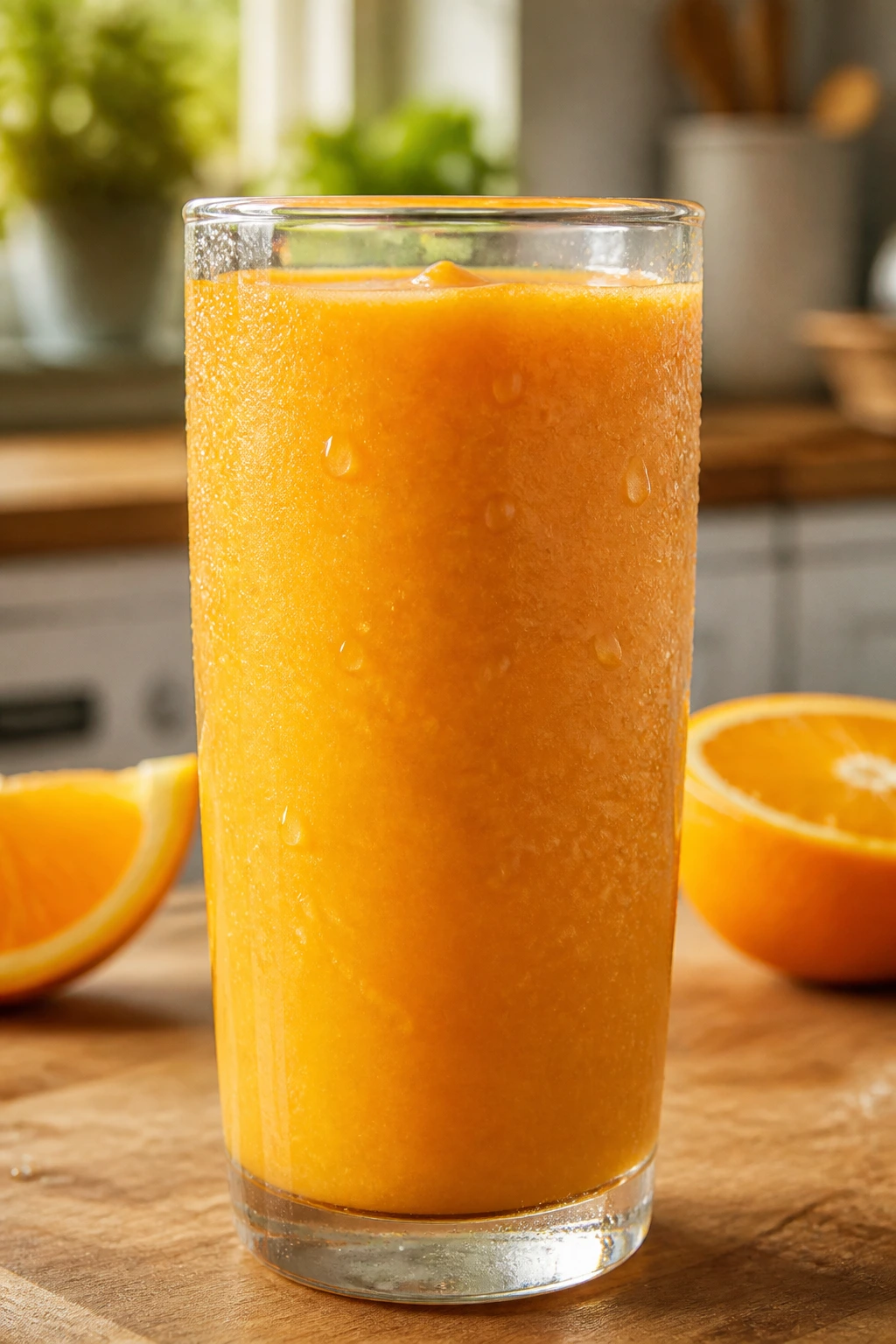
A good orange smoothie should feel like it took more thought than it actually did. That is the sweet spot. Bright citrus, cold fruit, a little cream, and just enough salt to make the whole thing pop — no extra noise, no heavy sweetness, no weird aftertaste.
Keep a bag of frozen mango in the freezer and this stops being a recipe you save for later. It turns into a five-minute habit, which is where the best summer drinks usually live.
Refreshing Orange Smoothie — Recipe Card
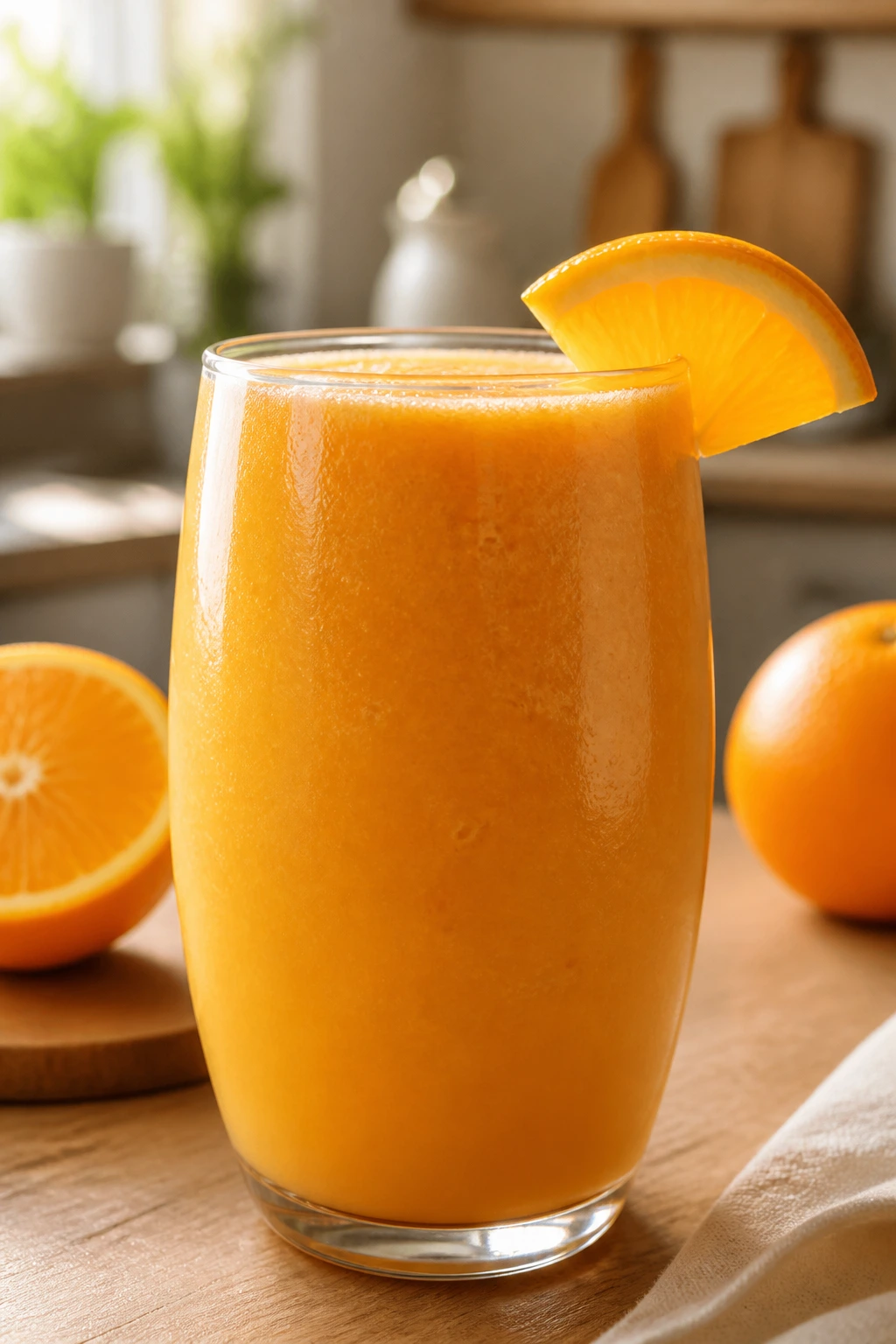
Recipe Name: Refreshing Orange Smoothie for Summer Sipping
Description: A bright, cold orange smoothie made with fresh orange juice, frozen mango, pineapple, and Greek yogurt for a creamy texture that stays lively instead of heavy.
Prep Time: 10 minutes
Cook Time: 0 minutes
Total Time: 10 minutes
Course: Drink, Breakfast, Snack
Cuisine: American
Servings: 2 servings
Calories: About 230 kcal per serving
Ingredients
- 1 cup fresh orange juice, chilled
- 1 medium navel orange, peeled and segmented, with as much white pith removed as possible
- 1 cup frozen mango chunks
- 1/2 cup frozen pineapple chunks
- 3/4 cup plain Greek yogurt, cold
- 1/2 cup cold coconut water
- 1 tablespoon honey, optional
- 1 teaspoon finely grated orange zest
- 1/4 teaspoon fine sea salt
- 1/2 cup ice cubes, optional for a frostier texture
Instructions
- Chill two glasses in the freezer for about 5 minutes and peel the orange, removing as much white pith as possible.
- Add the orange juice, coconut water, and Greek yogurt to a blender, then layer in the mango, pineapple, orange segments, orange zest, salt, honey if using, and ice if using.
- Blend on low for about 10 seconds, then on high for 30 to 45 seconds, until smooth and creamy.
- Taste and adjust with a little more coconut water for a thinner smoothie or more frozen fruit for a thicker one.
- Pour into the chilled glasses and serve immediately.
Notes: Frozen fruit gives the best texture, and the smoothie is brightest right after blending. If you want it sweeter, add honey after tasting rather than before.