



A high protein beef and broccoli recipe lives or dies by the skillet. If the pan is too cool, the beef goes gray and the broccoli tastes boiled. If the sauce is too loose, the whole thing slides into the bowl like soup with ambition. Get the heat right, though, and you get something far better: browned steak with a little chew at the edges, broccoli that still has a snap, and a savory glaze that clings to every bite.
That’s the version I want on a weeknight. Not a puddle of takeout sauce. Not a pile of mushy florets hiding a few tired strips of beef. I want a dinner that eats like comfort food but still feels lean and sturdy enough to count as a real protein-heavy meal, the kind that leaves the plate clean and the leftovers worth fighting over.
The nice thing about beef and broccoli is that the flavor logic is simple. Garlic, ginger, soy, a little sweetness, a little acid, and a hot pan. The trick is in the order, the cut of beef, and the size of the broccoli pieces. Those details matter more here than in a slow braise, because this dish gives you almost no hiding place. One bad move and the texture tells on you.
Why This High-Protein Beef and Broccoli Works So Well
-
The beef stays in charge: Using 1½ pounds of steak for 4 servings gives you a plate that tastes beef-first, not broccoli-first, which is exactly what a comforting skillet dinner should do.
-
The sauce clings instead of pooling: A cornstarch slurry thickens the pan sauce just enough to coat the meat and broccoli without turning it gluey.
-
Broccoli keeps some bite: A short steam in the skillet preserves that crisp-tender texture that makes each forkful feel fresh instead of heavy.
-
The protein lands where you want it: A serving comes in around the mid-30-gram range of protein, depending on the cut and how you portion it, so this isn’t one of those “high-protein” meals that needs asterisks.
-
It tastes rich without getting greasy: Beef broth, soy sauce, oyster sauce, garlic, and ginger build depth fast, so you don’t need cream, butter, or a thick sugary glaze to make the dish feel complete.
-
It comes together fast once the knife work is done: Slice the steak first and the cooking itself moves at a brisk clip. The actual stove time is short. Very short.
The other reason this works is texture contrast. You need the soft gloss of sauce, but you also need the seared edges on the beef and the slight resistance of broccoli florets that still squeak a little when you bite them. Without that contrast, beef and broccoli becomes one note. And one note gets old fast.
This version stays lively because nothing is allowed to stew for long. The beef sears, gets set aside, and comes back at the end. The broccoli gets just enough steam to turn bright green. The sauce reduces only until it coats the back of a spoon. That’s the whole game.
The Takeout Classic, Rebuilt for a Beef-First Plate
Beef and broccoli sits in that sweet spot between takeout nostalgia and practical home cooking. It came up through American-Chinese restaurant menus as a glossy stir-fry built for speed, but it’s become one of those dishes people keep making at home because it solves so many problems at once. It’s quick. It uses one pan. It handles rice beautifully. And it feels more substantial than a noodle bowl when you want dinner to land with some weight.
The restaurant version often leans heavier on sauce than beef, because that helps stretch the plate and keeps the cost down. Fair enough. At home, I like the opposite balance. More steak. More broccoli stems if you have them. A sauce that tastes savory and balanced instead of sugary and sticky. You still get the familiar takeout shape, but the plate eats cleaner.
There’s also a real advantage to cooking it yourself: you control the cut. Thin-sliced flank steak or top sirloin behaves differently from a random pre-cut stir-fry package that may include tough bits from three different muscles. Once you slice the beef against the grain and keep the skillet hot, the texture improves by a mile. Not a little. A mile.
The broccoli matters more than people think, too. If it’s cut too large, the stems stay raw while the tops go soft. If it’s chopped too fine, it disappears under the sauce. Bite-size florets with peeled stems sliced into coins give you a better mix. The stems taste sweeter than people expect. Use them.
Timing and Yield at a Glance
Yield: Serves 4
Prep Time: 20 minutes
Cook Time: 15 minutes
Total Time: 35 minutes
Chill/Rest Time: 15 minutes, optional, to firm the steak for cleaner slicing
Difficulty: Intermediate — the method itself is straightforward, but slicing the beef thin and keeping the skillet hot make a real difference.
Best Served: Right away, while the sauce is glossy and the broccoli still has bite.
Ingredients That Build the Pan Sauce and the Protein
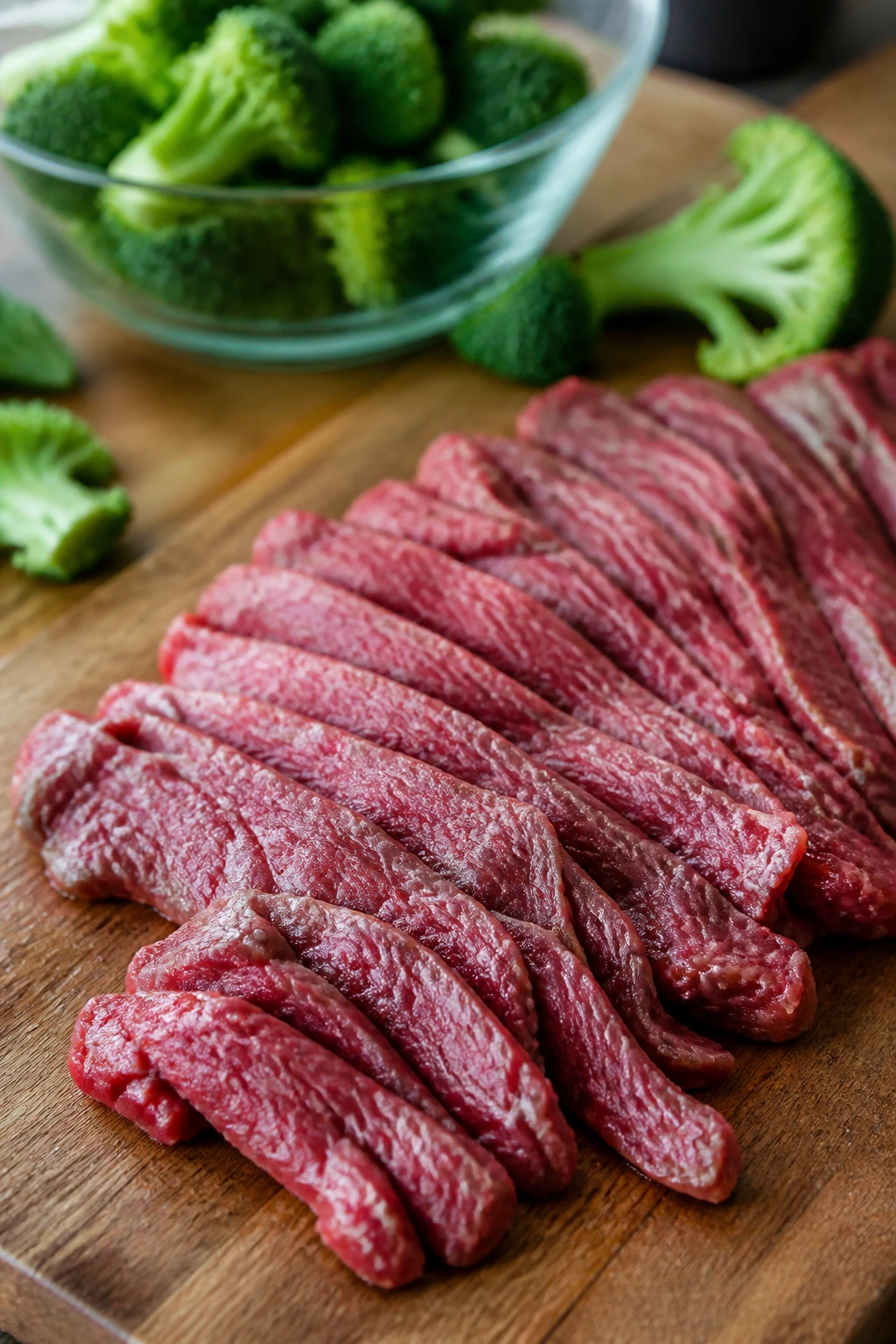
For the Beef
- 1½ lbs flank steak, top sirloin, or skirt steak, sliced ¼-inch thin against the grain
- 1 tablespoon low-sodium soy sauce
- 1 teaspoon cornstarch
- 1 teaspoon toasted sesame oil
For the Broccoli
- 1 pound broccoli florets, cut into bite-size pieces; peel and slice the stems if you want to use them
- 2 tablespoons water, for steaming in the skillet
For the Sauce
- ½ cup low-sodium beef broth
- ⅓ cup low-sodium soy sauce or tamari
- 2 tablespoons oyster sauce
- 1 tablespoon brown sugar or honey
- 1 tablespoon rice vinegar
- 1 tablespoon cornstarch
- 2 tablespoons cold water
For the Aromatics and Finish
- 1 tablespoon neutral oil, such as avocado, canola, or grapeseed
- 4 garlic cloves, minced
- 1 tablespoon fresh ginger, grated
- 2 scallions, thinly sliced
- 1 teaspoon toasted sesame oil
- ½ teaspoon red pepper flakes, optional
- 1 teaspoon sesame seeds, optional, for serving
Why Each Ingredient Matters in a Beef-and-Broccoli Skillet
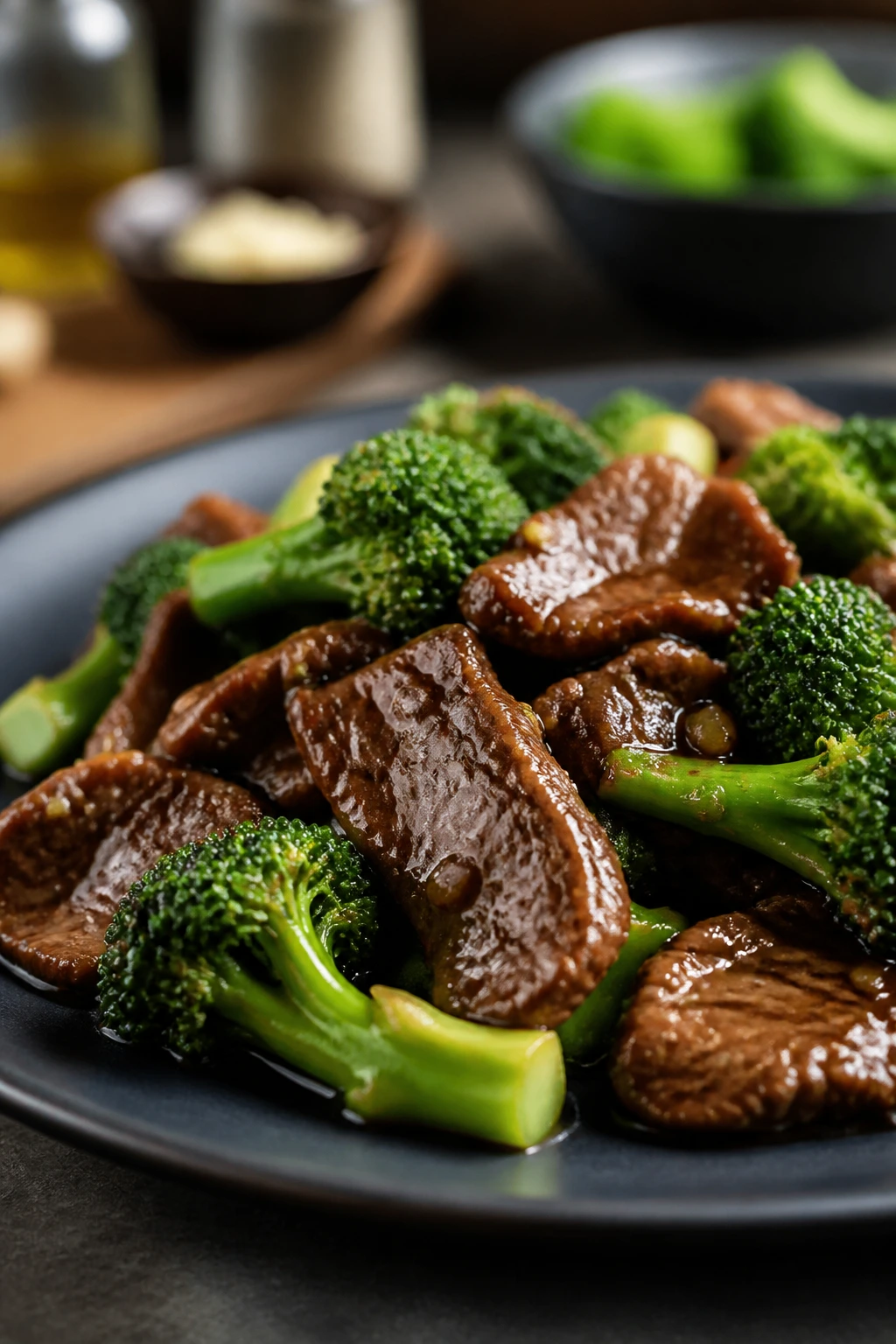
Beef
-
What to use: 1½ lbs flank steak, top sirloin, or skirt steak, sliced ¼-inch thin against the grain.
-
Preparation: If the steak feels soft and floppy, park it in the freezer for 15 minutes first. It firms up just enough to slice cleanly, which saves you from ragged, chewy strips.
-
Substitutions: Lean ground beef will work in a pinch, but the texture shifts toward a saucier skillet meal. If you want a richer bite, boneless ribeye works too, though I only reach for that when I already have it on hand.
-
Tips: Pat the beef dry before it touches the oil. Wet steak steams; dry steak browns. That small distinction is the difference between a good stir-fry and a gray one.
Broccoli
-
What to use: 1 pound broccoli florets, cut into bite-size pieces, plus the stems if they’re tender enough to peel.
-
Preparation: Cut the florets so they’re similar in size, with stems no thicker than a thumb. That keeps the pan from giving you half-crisp, half-mushy broccoli.
-
Substitutions: Broccolini, snap peas, or a handful of sliced bok choy can step in if you want a slightly different green. Frozen broccoli works too, though the texture will be softer.
-
Tips: Broccoli should stay bright green and smell clean, not sulfur-heavy. If it smells like old cabbage before it even cooks, it’s been hanging around too long.
Sauce
-
What to use: ½ cup low-sodium beef broth, ⅓ cup low-sodium soy sauce or tamari, 2 tablespoons oyster sauce, 1 tablespoon brown sugar or honey, 1 tablespoon rice vinegar, and a cornstarch slurry made with 1 tablespoon cornstarch plus 2 tablespoons cold water.
-
Preparation: Whisk the sauce ingredients in a bowl before you turn on the heat. The slurry should be mixed separately or very thoroughly, because dry starch dumped into a hot skillet clumps fast.
-
Substitutions: Tamari covers gluten-free cooks nicely. If oyster sauce isn’t in the cabinet, add 1 extra tablespoon soy sauce and 1 teaspoon honey, or use a mushroom stir-fry sauce for a deeper savory note.
-
Tips: Taste the sauce before it goes into the pan. It should taste a little too salty and a little too sharp on its own, because the beef and broccoli will dilute it once they’re tossed together.
Aromatics and Finish
-
What to use: 1 tablespoon neutral oil, 4 garlic cloves, 1 tablespoon grated ginger, 2 scallions, 1 teaspoon toasted sesame oil, and optional red pepper flakes and sesame seeds.
-
Preparation: Mince the garlic finely and grate the ginger so it melts into the sauce instead of floating around in little sharp chunks.
-
Substitutions: Garlic paste works if that’s what you’ve got. Ground ginger can stand in for fresh, but use less — about ½ teaspoon — because it tastes harsher.
-
Tips: Add the sesame oil at the end. Its flavor is fragile, and if you cook it hard for too long it loses the toasted note that makes the dish smell like a proper stir-fry.
Special Equipment That Makes the Stir-Fry Easier
-
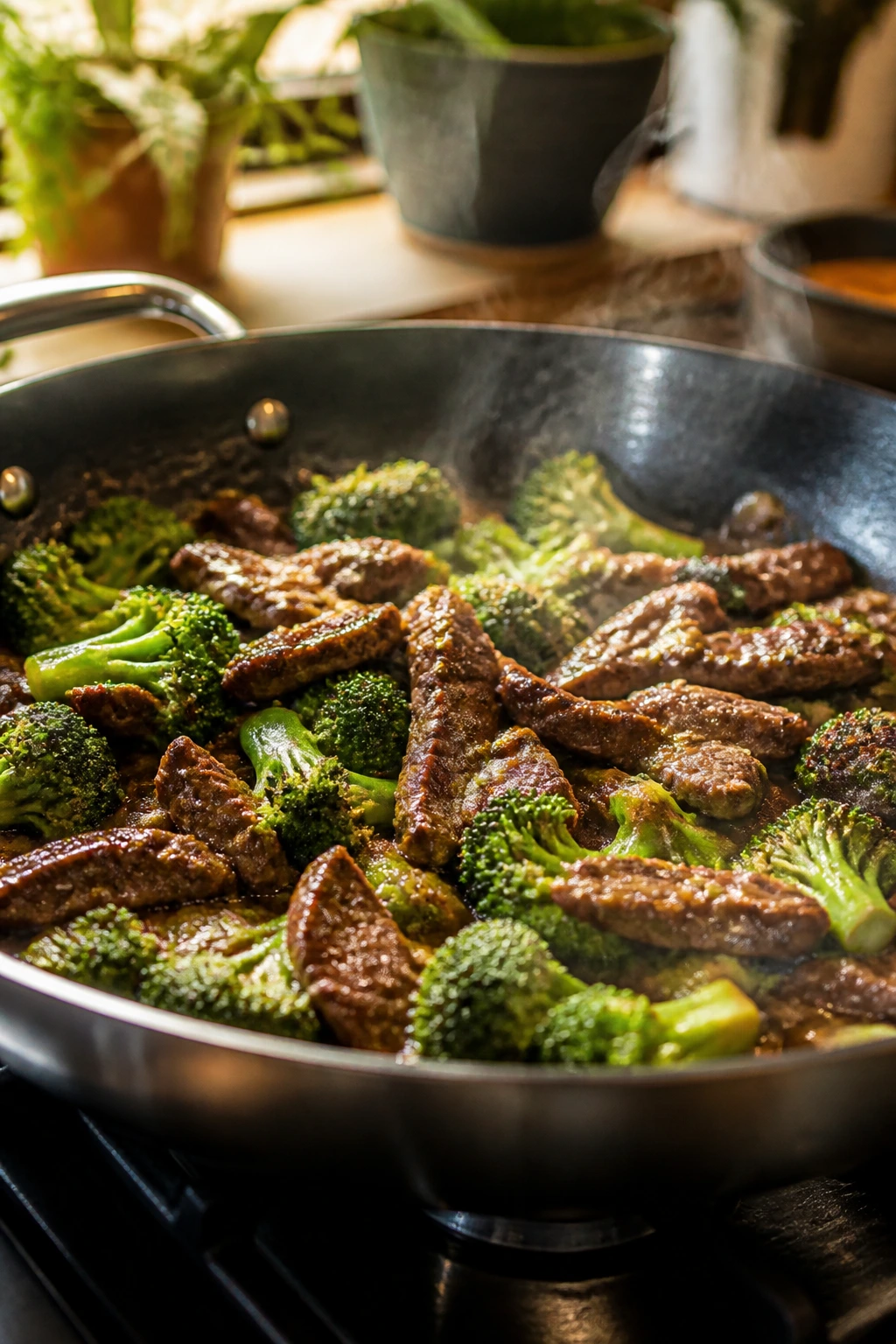
Large 12-inch skillet or wok: A wide surface helps the beef brown instead of steaming. If your burner runs weak, a broad skillet often works better than a deep wok.
-
Sharp chef’s knife: Thin beef slices depend on a clean blade. A dull knife tears the meat and makes the slices uneven.
-
Cutting board with a damp towel underneath: Keeps the board from sliding when you’re trimming the steak or chopping broccoli.
-
Medium mixing bowl: You’ll use this for the beef marinade and the sauce, so you’re not trying to whisk everything in a corner of the skillet.
-
Whisk: Essential for the sauce and the cornstarch slurry. A fork will do in a pinch, but a whisk breaks up starch more cleanly.
-
Tongs or a metal spatula: Handy for turning beef quickly and moving it out of the pan before it overcooks.
-
Measuring spoons and cups: Stir-fry moves fast. Measuring by eye is how sauce turns unbalanced.
Step-by-Step: From Raw Steak to Glossy Pan Sauce
Prep the Beef and Sauce
-
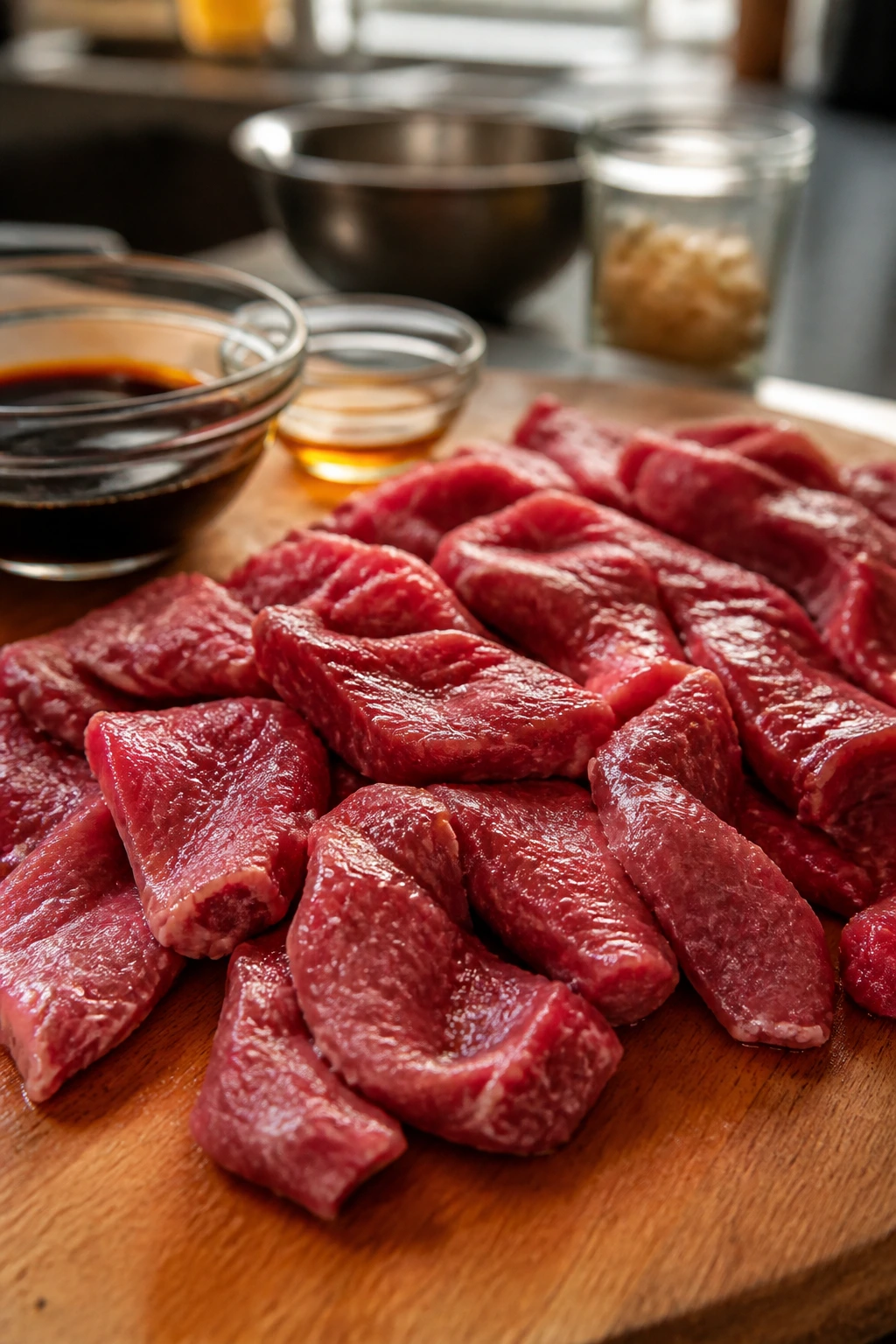
Firm the steak if needed. If the beef feels soft, freeze it for 15 minutes so it slices more cleanly. Cut it into ¼-inch strips against the grain, then pat the strips dry with paper towels.
-
Marinate the beef briefly. Toss the sliced steak with 1 tablespoon soy sauce, 1 teaspoon cornstarch, and 1 teaspoon toasted sesame oil. Let it sit while you make the sauce and prep the broccoli. Do not marinate for hours here; the goal is surface flavor, not a long soak.
-
Whisk the sauce. In a small bowl, combine the beef broth, ⅓ cup soy sauce or tamari, oyster sauce, brown sugar or honey, and rice vinegar. In a separate cup, stir together 1 tablespoon cornstarch with 2 tablespoons cold water until smooth. Keep both nearby.
Cook the Stir-Fry
-
Heat the skillet hard. Set a large skillet over medium-high heat and add 1 tablespoon neutral oil. When the oil shimmers and moves fast across the pan, you’re ready. If it smokes heavily, back off the heat a notch.
-
Sear the beef in batches. Add half the steak in a single layer and leave it alone for 60 to 90 seconds. Flip and cook another 30 to 60 seconds, just until browned at the edges. Transfer to a plate and repeat with the remaining beef. Crowding the pan will steam the meat and flatten the flavor.
-
Steam the broccoli briefly. Add the broccoli florets and 2 tablespoons water to the skillet. Cover for about 2 minutes, until the florets turn bright green and the stems give a little when poked with a fork. If your pieces are thick, give them another minute, but no more than that.
-
Add the aromatics. Uncover the pan, then stir in the garlic and ginger. Cook for about 30 seconds, just until the kitchen smells sweet and sharp. If the garlic starts to brown, move faster; browned garlic tastes bitter in this dish.
-
Pour in the sauce and thicken it. Add the whisked sauce mixture to the skillet and bring it to a steady simmer. Stir the cornstarch slurry again, then drizzle it into the pan while stirring. Let it bubble for 1 to 2 minutes until the sauce turns glossy and coats the back of a spoon.
Finish and Serve
-
Return the beef to the pan. Add the browned steak and any juices from the plate. Toss for 30 to 60 seconds, just until the beef is heated through and coated in sauce. Finish with sesame oil, scallions, and red pepper flakes if you want heat.
-
Serve immediately. Spoon the beef and broccoli over rice, noodles, or whatever base you’ve chosen. The sauce is at its best in the first few minutes, before the starch thickens it any more.
How to Serve It So the Sauce Stays Where It Belongs
Presentation:
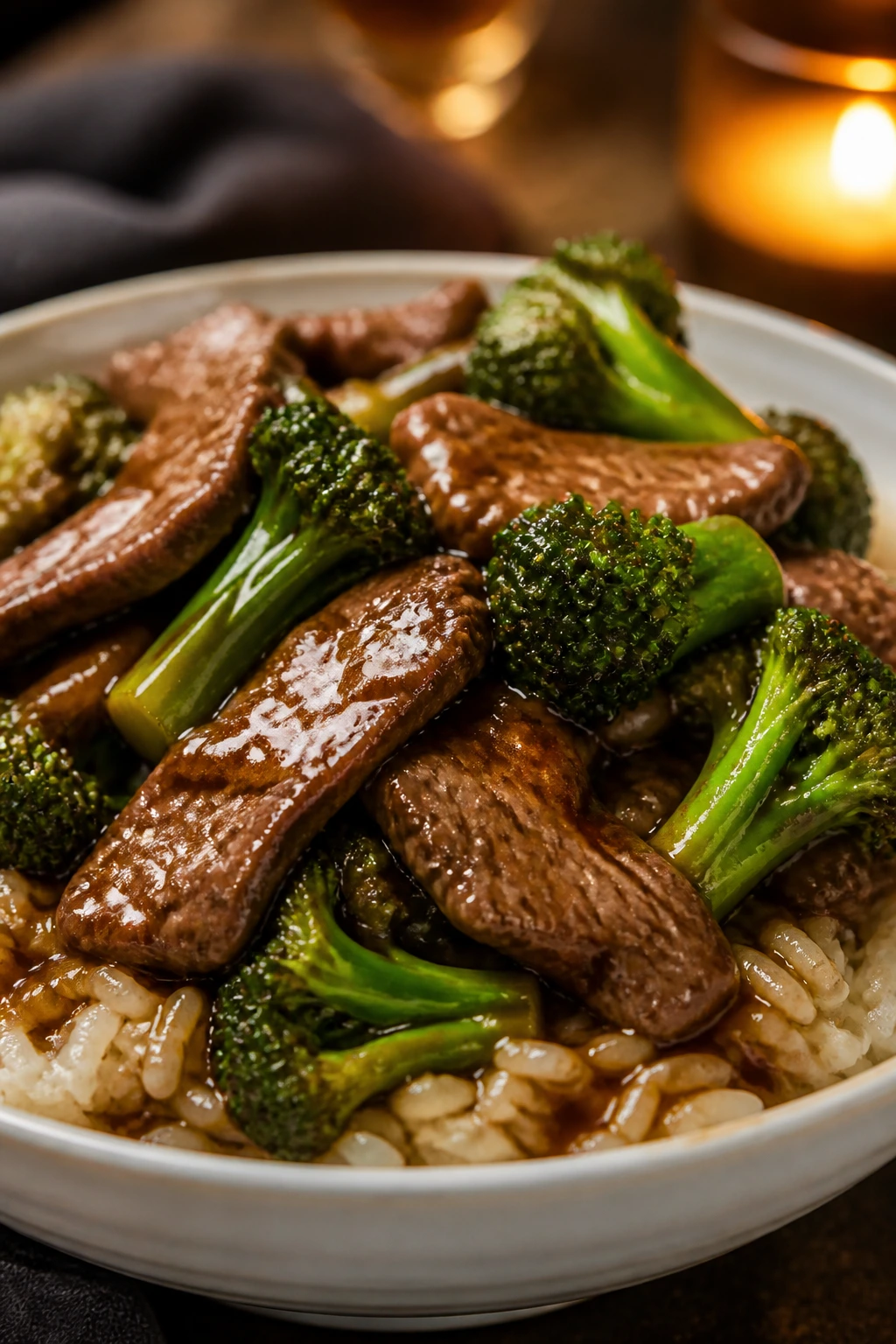
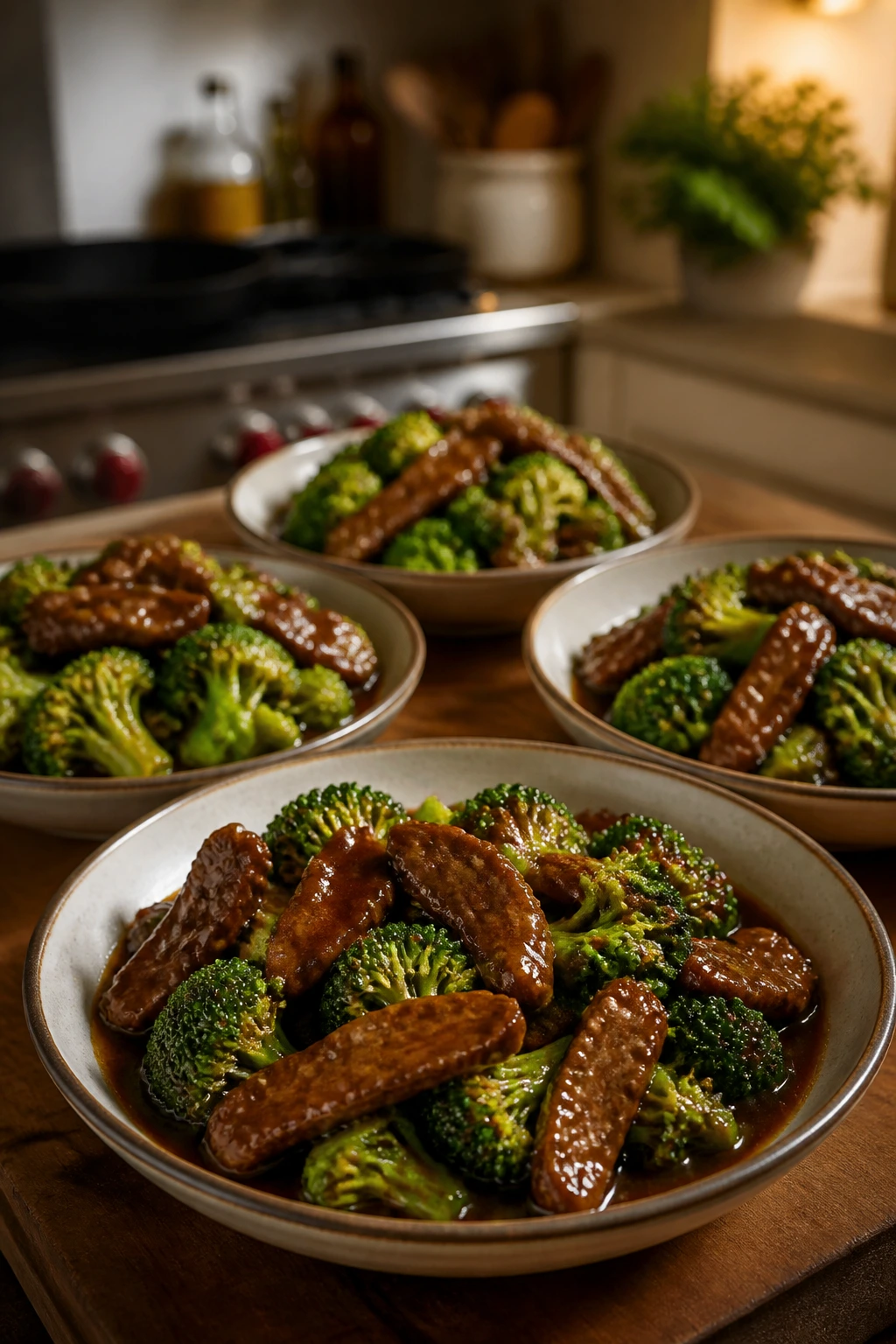
Pile the rice first, then spoon the beef and broccoli slightly off-center so the sauce runs through the grains instead of drowning everything. I like to keep a few bright broccoli tops visible on top of the bowl; they make the plate look fresh and help you see what you’re about to eat.
Accompaniments:
Jasmine rice is the cleanest match because its perfume doesn’t fight the sauce. Brown rice gives you a nuttier edge, while rice noodles turn the whole thing into a more slurpy dinner. If you want something lighter, serve it with shredded cabbage, cucumber salad, or cauliflower rice, but make sure that base is dry enough to handle the sauce.
Portions:
As written, this serves 4 as a main dish. A generous serving is about 1½ cups of the beef and broccoli plus ¾ cup cooked rice. If you’re feeding very hungry people, stretch it by adding another half pound of broccoli and another ½ pound of steak, then increase the sauce by about 25 percent.
Beverage Pairing:
A cold lager is a clean, easy match. So is iced jasmine tea, which echoes the dish’s savory notes without making the plate feel heavier. If you want wine, reach for a dry Riesling or something similarly crisp and not too sweet.
Small Tweaks That Make a Big Difference
Flavor Enhancement:
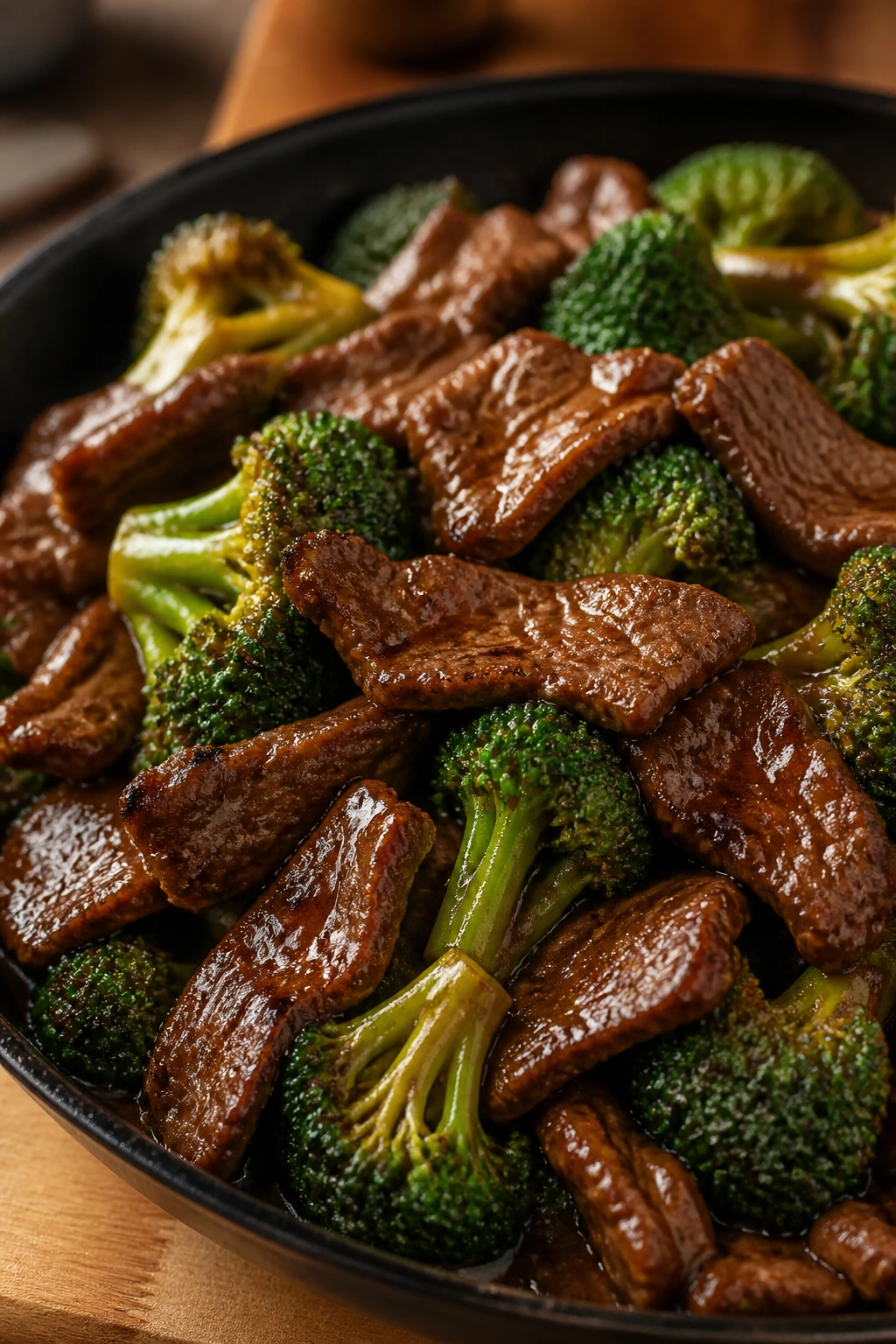
A teaspoon of chili crisp at the end changes the whole mood of the dish. Not enough to turn it fiery, just enough to give the sauce a little heat and a faintly crunchy edge if some of the fried bits cling to the beef. A tiny splash of rice vinegar right before serving also wakes up the soy and keeps the sauce from tasting flat.
Time-Saver:
Pre-slice the beef and whisk the sauce in the morning or the night before, then store both in separate containers in the fridge. Once the knife work is done ahead of time, dinner moves fast enough that the broccoli can still stay crisp.
Cost-Saver:
Top sirloin usually gives you good tenderness without the price tag of ribeye. If the cut has a little more chew than flank steak, slice it thinner than you think you should. Thin slices forgive a lot.
Texture Move:
The 1 teaspoon of cornstarch on the beef is not decoration. It gives the steak a light, slick coating that helps it sear and keeps the surface from drying out before the sauce goes in. It’s one of those small stir-fry habits that pays back every time.
Make-It-Yours:
If you want more vegetables, add mushrooms or snap peas right after the broccoli. If you want a lower-sodium version, use tamari and cut the soy sauce back by 2 tablespoons, then add a little extra rice vinegar to keep the sauce lively. The dish tolerates changes well as long as you keep the heat high and the pan moving.
Common Beef and Broccoli Problems and the Fix for Each
-
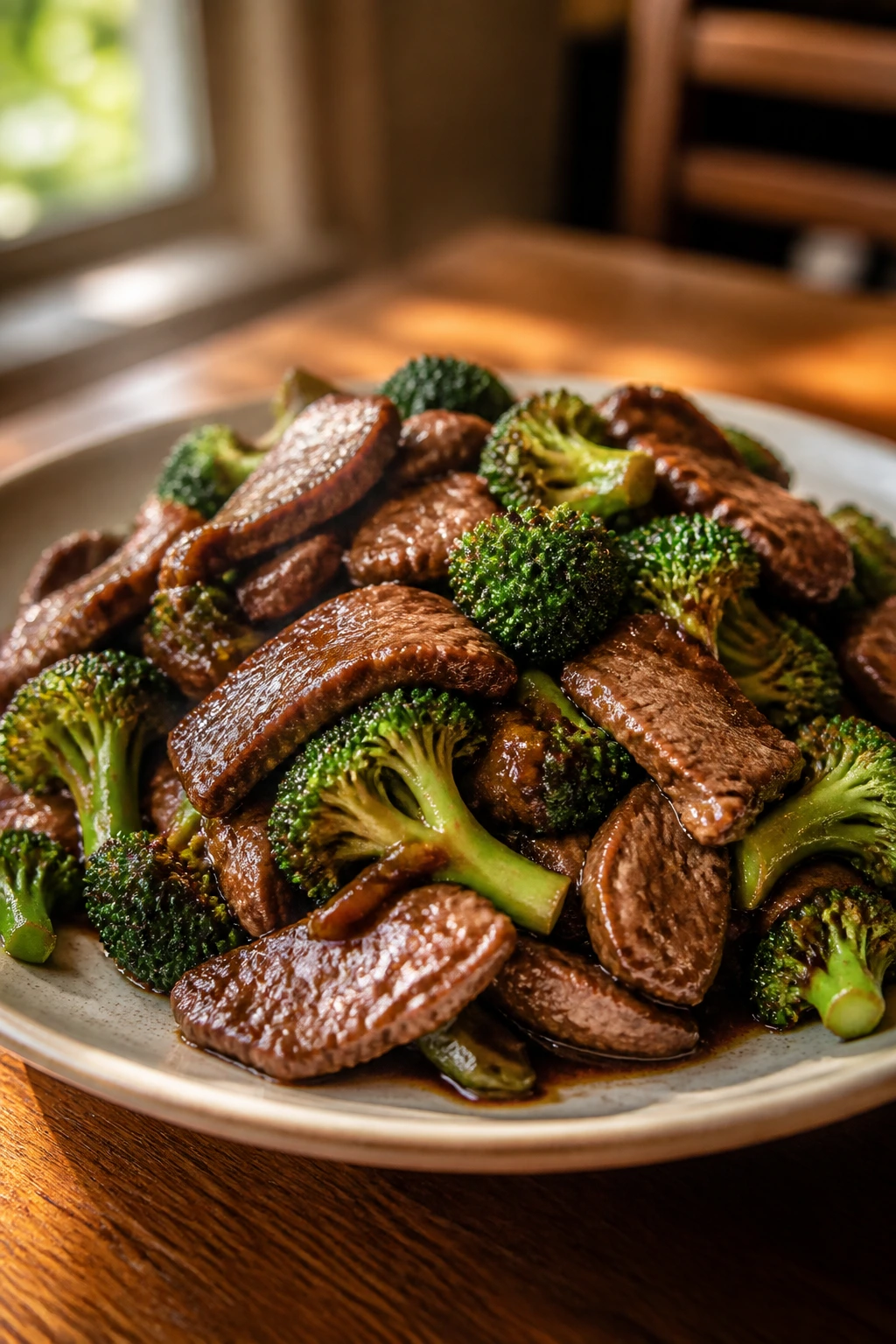
Slicing the steak the wrong way: If the beef comes out chewy and stringy, the knife likely went with the grain instead of across it. Turn the steak so the muscle fibers run sideways under your blade, and slice thinly on a slight diagonal.
-
Starting with a wet skillet or wet beef: Moisture is the enemy of browning. If the pan is crowded or the meat is damp, the beef will look pale and taste muted. Pat the strips dry and cook in batches so each piece can hit the heat properly.
-
Overcooking the broccoli: Broccoli that stays on the heat too long turns olive green and soft, then starts to smell harsh. Steam it briefly, stop while it’s still bright, and let the sauce finish the job.
-
Letting the sauce lump up: Cornstarch lumps happen when dry starch hits hot liquid. Always mix the slurry in cold water first, then stir it again before pouring it in. If you’re worried, drizzle it in slowly while the sauce is already simmering.
-
Returning the beef too early: If the steak sits in the sauce for several minutes, it loses the edge you worked to build in the skillet. Add it back at the end, toss just long enough to warm it, and get it to the table.
-
Using too much sauce for the pan size: A narrow pan makes the liquid pool instead of reduce. If the skillet looks crowded with sauce and broccoli, move to a wider pan next time or make a half batch in batches. Heat likes room.
Variations and Swaps That Still Taste Like Beef and Broccoli
Chili-Crisp Heat
Stir 1 to 2 teaspoons of chili crisp into the sauce before it goes into the pan, then finish with extra scallions. The result is still recognizably beef and broccoli, but the heat lands in little crunchy bursts instead of one blunt burn.
Mushroom Stretch
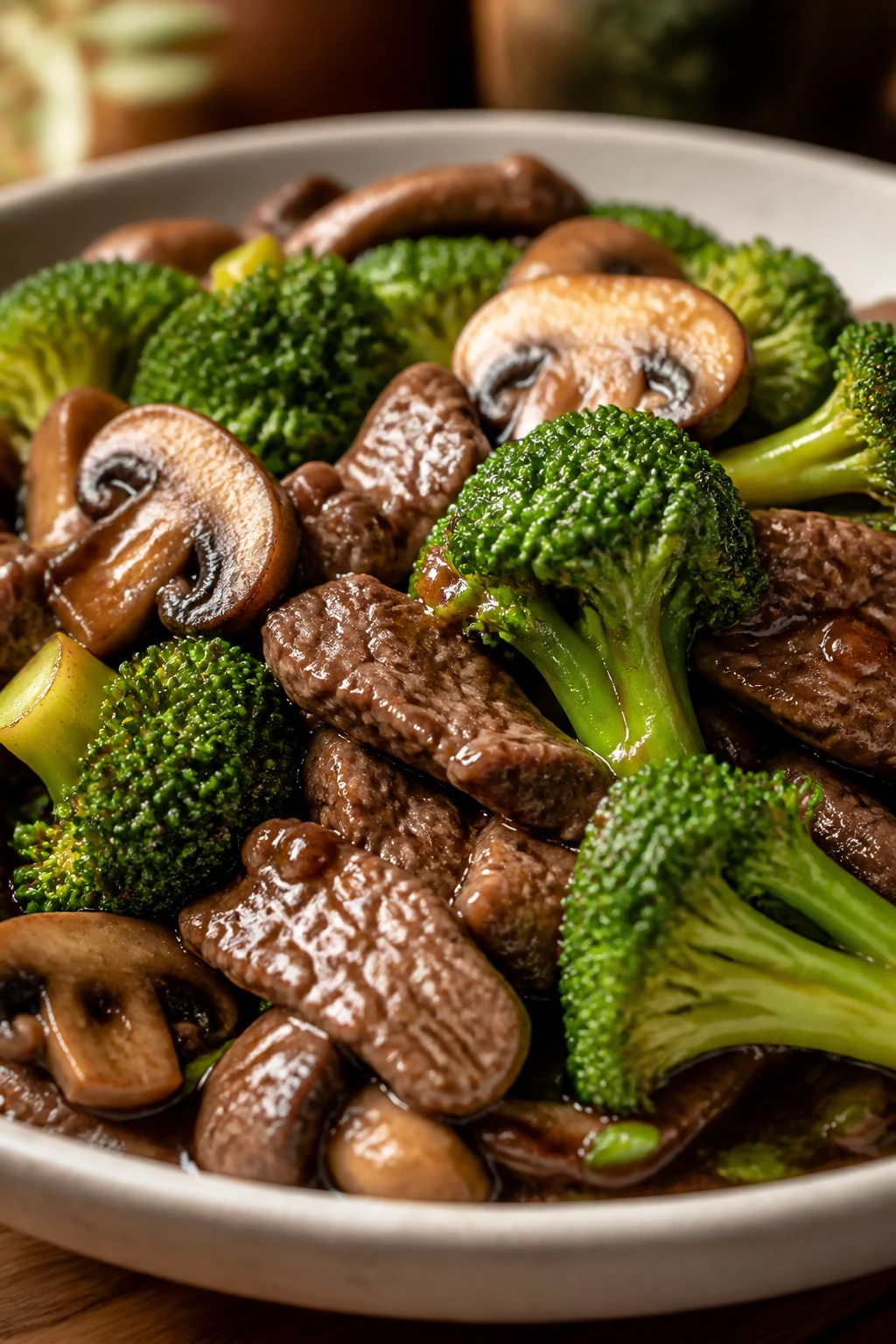
Add 8 ounces of sliced cremini or shiitake mushrooms after the beef comes out of the skillet. Let them cook until their liquid evaporates and the edges brown a little, then continue with the broccoli and sauce. This version feels deeper and stretches the pan without stealing the spotlight.
Tamari-Ginger Bowl
Swap the soy sauce for tamari and use a certified gluten-free oyster sauce. It tastes nearly the same, but the texture of the sauce can feel a touch cleaner because tamari tends to read a little rounder and less sharp on the palate.
Ground Beef Shortcut
Use 1½ pounds of 90/10 ground beef instead of sliced steak. Brown it in the skillet, drain any excess fat if needed, then add the broccoli and sauce. You lose the silky sliced-steak texture, but you gain a faster, more weeknight-friendly skillet that still scratches the same itch.
Extra-Greens Version
Add a few handfuls of baby bok choy, snow peas, or sliced green beans if you want the bowl to lean more vegetable-forward. Keep the total vegetable volume reasonable so the sauce doesn’t disappear. More greens are welcome. A swamp is not.
Make-Ahead, Storage, and Reheating Notes
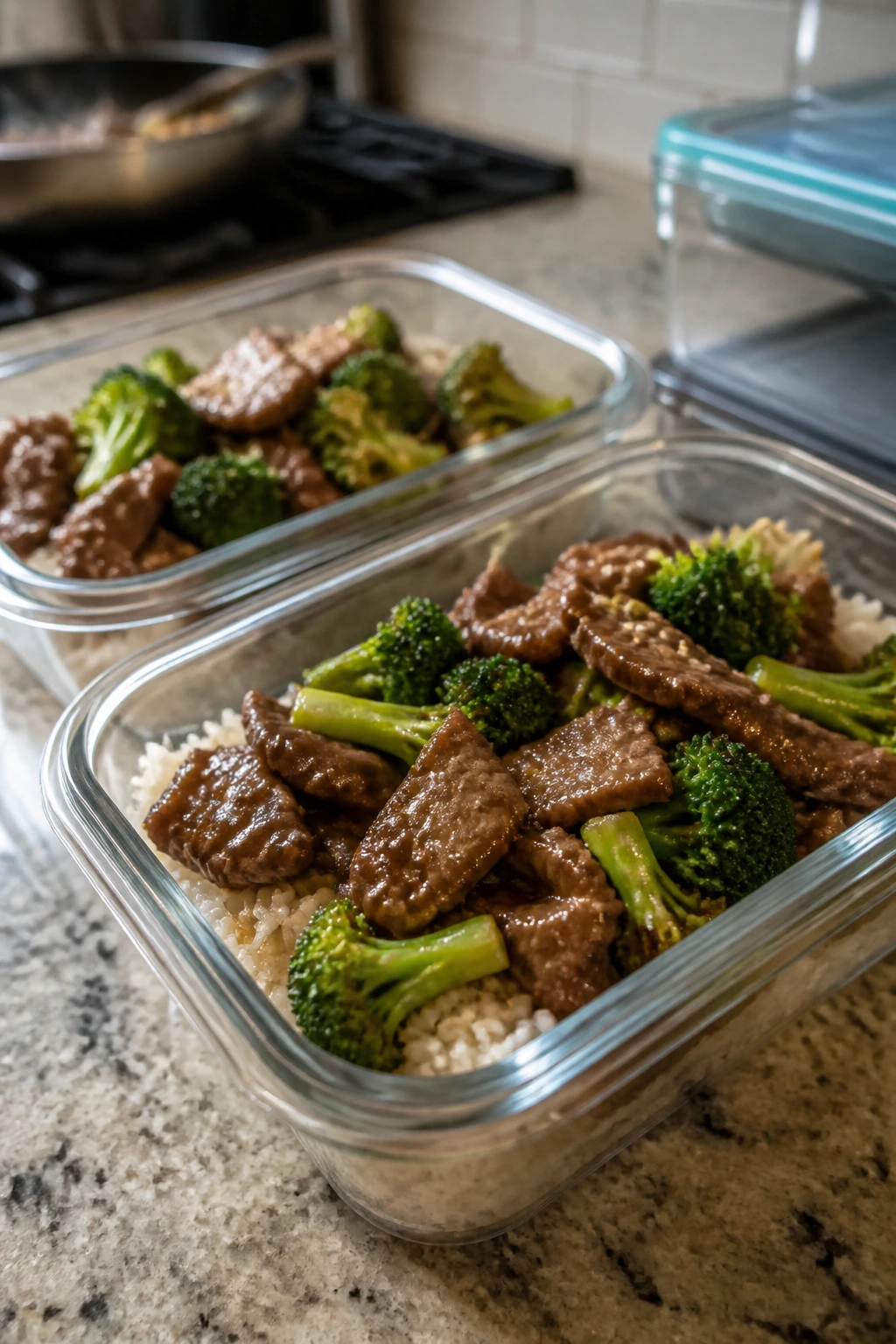
This dish is best the day it’s made, when the beef is still tender and the broccoli has a bit of crunch. Leftovers hold up well, though, and that matters for lunch the next day.
Store the cooked beef and broccoli in an airtight container in the fridge for up to 3 to 4 days. If you’re serving it over rice, keep the rice in a separate container so it doesn’t soak up all the sauce and turn heavy. The meal still eats fine once everything is reheated, but separate containers give you a much better result.
For freezing, you can keep the cooked stir-fry for up to 2 months. The beef will still taste good, but the broccoli softens after thawing. If you already know you want to freeze a batch, undercook the broccoli by about 30 seconds so it doesn’t go completely limp on reheating.
Reheat in a skillet over medium heat with 1 to 2 tablespoons of water to loosen the sauce. Cover for a minute or two, then stir until hot. The microwave works too: cover the container loosely, heat in 60- to 90-second bursts, and stir between rounds so the beef warms evenly instead of going rubbery at the edges. If the sauce thickens too much in the fridge, a splash of water or broth fixes it fast.
For make-ahead prep, the sauce can be mixed 3 days ahead and the beef can be sliced and marinated up to 12 hours ahead. Broccoli can be washed and cut 1 day ahead. If you want to do even more, blanch the broccoli for 60 seconds, shock it in cold water, drain it well, and store it separately so it reheats with less color loss.
Frequently Asked Questions
Can I use sirloin instead of flank steak?
Yes, top sirloin is one of the easiest swaps because it stays tender when sliced thin. Trim off any tough silver skin first, and cut it against the grain just like flank steak. If the pieces look thick, give them a short freeze before slicing.
How do I keep the beef tender?
Three things matter most: slice it thin, cut across the grain, and sear it fast in a hot pan. Once the beef goes back into the sauce, it only needs a short toss to warm through. Letting it bubble for several minutes is what turns it dry.
Can I make this without oyster sauce?
You can. Add 1 extra tablespoon of soy sauce and 1 teaspoon of honey for balance, or use a mushroom stir-fry sauce if you want deeper savory flavor. The dish will still work; it just won’t have quite the same restaurant-style depth.
Is frozen broccoli okay here?
Yes, but thaw it first and dry it well if you can. Frozen florets hold more surface moisture, so they can water down the pan if you dump them in straight from the freezer. If you cook them from frozen, use a very hot skillet and expect a softer texture.
Do I need a wok for this recipe?
No. A large 12-inch skillet often works better at home because it gives you more contact with the burner and more room to sear the beef in batches. A wok is fine if your stove runs hot, but it isn’t required.
What if my sauce turns out too thin?
Simmer it for another 30 to 60 seconds, then check again. If it still runs loose, mix 1 teaspoon cornstarch with 1 tablespoon cold water and add it slowly while stirring. Dry cornstarch dumped straight into the pan is how you get clumps, and clumps are annoying to rescue.
Can I use ground beef instead of sliced steak?
Yes, and it can be a useful shortcut. Brown 1½ pounds of 90/10 ground beef first, drain off excess fat if needed, then follow the rest of the recipe. The texture changes, but the soy-ginger flavor still lands in the same neighborhood.
What should I serve with it if I don’t want rice?
Rice noodles are the closest swap in texture, but cauliflower rice, shredded cabbage, or even steamed jasmine rice mixed with a little quinoa all work. Pick something that can catch the sauce without going soggy in the first minute.
A Stir-Fry Worth Repeating
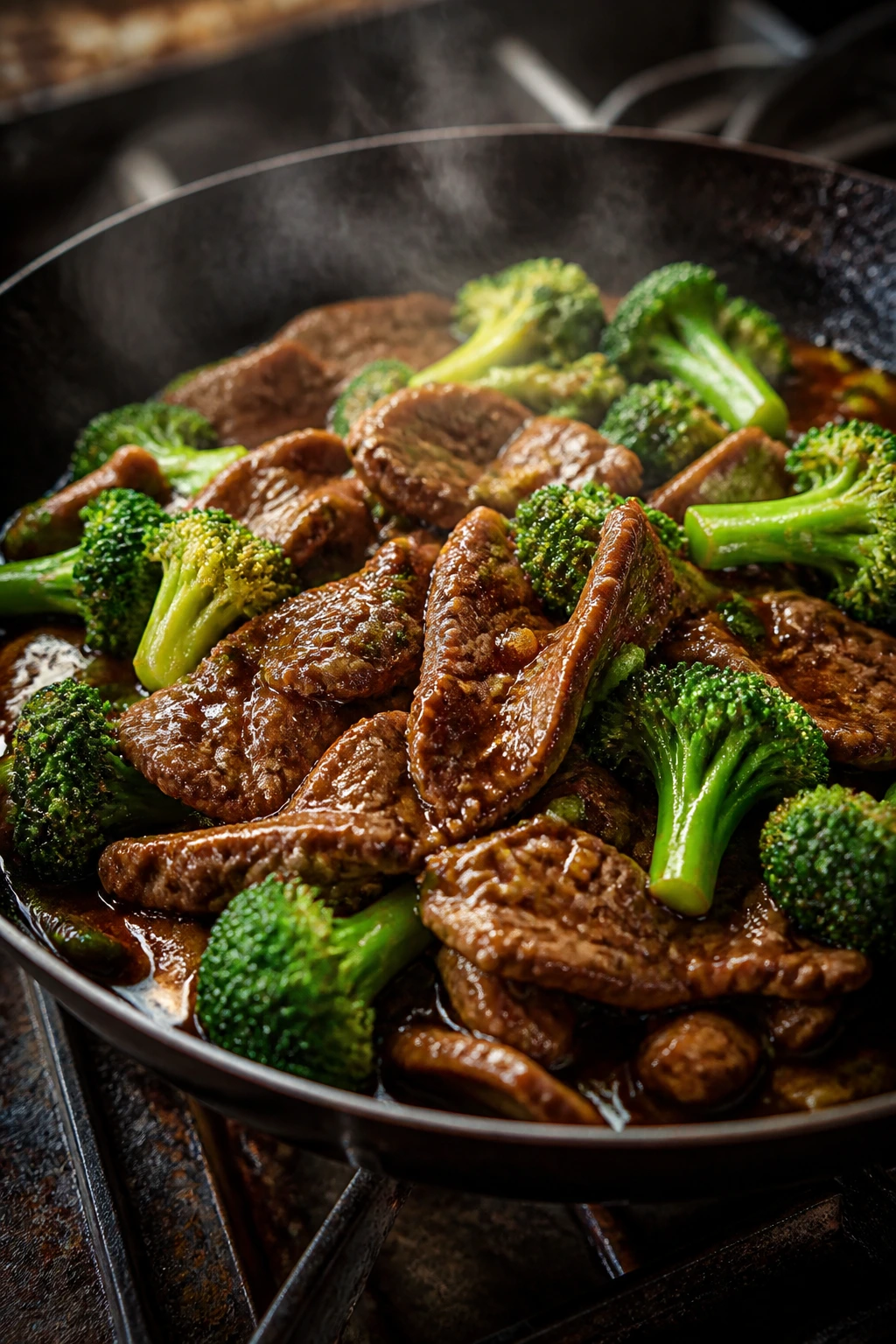
The best thing about this dish is that it doesn’t ask for much drama. A sharp knife, a hot pan, and a little attention to timing are enough. That’s not a small thing. Plenty of beef-and-broccoli dinners fail because they try to do too much, or they rush the one step that matters most.
Once you get the steak sliced right and the sauce reduced to the point where it actually clings, the whole skillet starts to feel easy. The beef tastes richer. The broccoli keeps its shape. The sauce stops acting like a puddle and starts acting like a glaze. That’s the version worth keeping.
Make it once, then make it again with a few more mushrooms or a little chili crisp. The recipe holds up to tinkering, and that’s usually a sign you’ve landed on something useful.
Comforting High-Protein Beef and Broccoli Recipe — Recipe Card
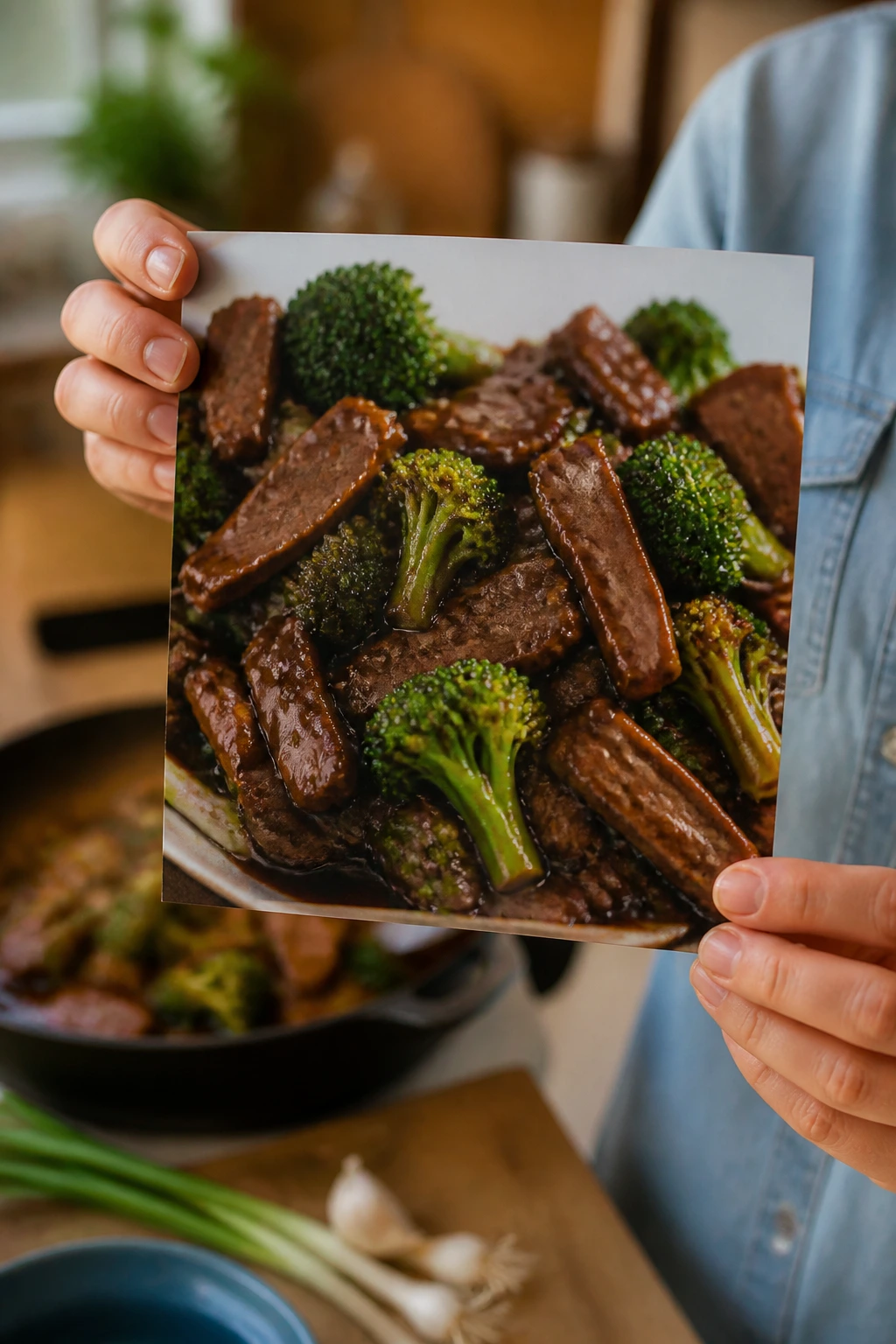
Recipe Name: Comforting High-Protein Beef and Broccoli
Description: Tender slices of beef, crisp-tender broccoli, and a glossy soy-ginger sauce come together in one hot skillet for a protein-heavy dinner that feels comforting without being heavy.
Prep Time: 20 minutes
Cook Time: 15 minutes
Total Time: 35 minutes
Course: Dinner, Main Course
Cuisine: American-Chinese Inspired
Servings: 4
Calories: About 420 kcal per serving
Ingredients
For the Beef
- 1½ lbs flank steak, top sirloin, or skirt steak, sliced ¼-inch thin against the grain
- 1 tablespoon low-sodium soy sauce
- 1 teaspoon cornstarch
- 1 teaspoon toasted sesame oil
For the Broccoli
- 1 pound broccoli florets, cut into bite-size pieces; peel and slice the stems if desired
- 2 tablespoons water, for steaming
For the Sauce
- ½ cup low-sodium beef broth
- ⅓ cup low-sodium soy sauce or tamari
- 2 tablespoons oyster sauce
- 1 tablespoon brown sugar or honey
- 1 tablespoon rice vinegar
- 1 tablespoon cornstarch
- 2 tablespoons cold water
For the Aromatics and Finish
- 1 tablespoon neutral oil, such as avocado, canola, or grapeseed
- 4 garlic cloves, minced
- 1 tablespoon fresh ginger, grated
- 2 scallions, thinly sliced
- 1 teaspoon toasted sesame oil
- ½ teaspoon red pepper flakes, optional
- 1 teaspoon sesame seeds, optional
Instructions
-
Freeze the steak for 15 minutes if needed, then slice it ¼-inch thin against the grain and pat it dry.
-
Toss the beef with 1 tablespoon soy sauce, 1 teaspoon cornstarch, and 1 teaspoon toasted sesame oil. Let it sit while you prep the sauce and broccoli.
-
Whisk together the beef broth, ⅓ cup soy sauce or tamari, oyster sauce, brown sugar or honey, and rice vinegar. In a separate cup, mix 1 tablespoon cornstarch with 2 tablespoons cold water until smooth.
-
Heat the neutral oil in a large skillet over medium-high heat until shimmering.
-
Sear the beef in batches for 60 to 90 seconds per side, then transfer it to a plate.
-
Add the broccoli and 2 tablespoons water to the skillet, cover for about 2 minutes, and cook until bright green and crisp-tender.
-
Stir in the garlic and ginger and cook for about 30 seconds, just until fragrant.
-
Pour in the sauce mixture, bring it to a simmer, then stir in the cornstarch slurry and cook for 1 to 2 minutes until glossy and thickened.
-
Return the beef and any juices to the skillet, toss for 30 to 60 seconds, and finish with scallions, sesame oil, and red pepper flakes if using.
-
Serve immediately over rice, noodles, or another base of your choice.
Notes: Slice the beef thin and across the grain for the best texture. Reheat leftovers gently with a splash of water. If you want more heat, add chili crisp at the end rather than cooking it in the sauce.