



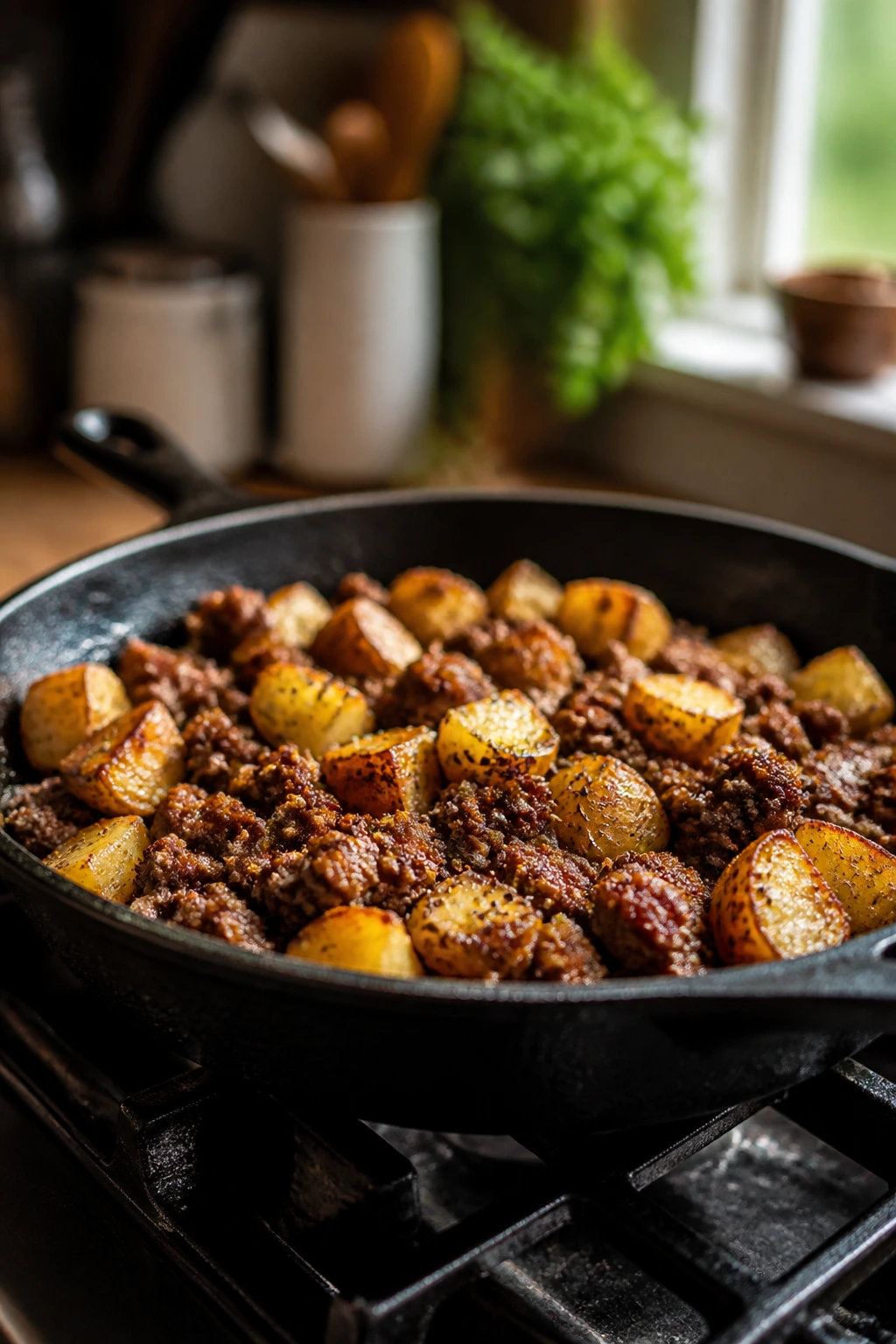
Juicy ground beef and potatoes sound plain until the pan starts talking. A little fat, a little browning, and the whole thing changes from cafeteria mush to a skillet that smells like onion, pepper, and toasted potato edges. The trick is not fancy seasoning. It is heat control, plus a few small choices that keep the beef soft and the potatoes intact.
I like this kind of dinner because it behaves like a real working meal. The beef carries the sauce, the potatoes soak up the drippings, and the onion sweetens in the background without taking over. Use Yukon Gold if you want creamy centers; use russet if you like a softer bite. I don’t recommend tiny cubes unless you enjoy chasing them around a skillet.
Once the pot is hot and the beef has had a minute to brown before you start stirring, the rest falls into place. The pan gives you a glossy, savory finish without a separate gravy, and the best part is that it still tastes like itself after a night in the fridge. The first move is the one that matters most.
Why This Skillet Dinner Earns Its Keep
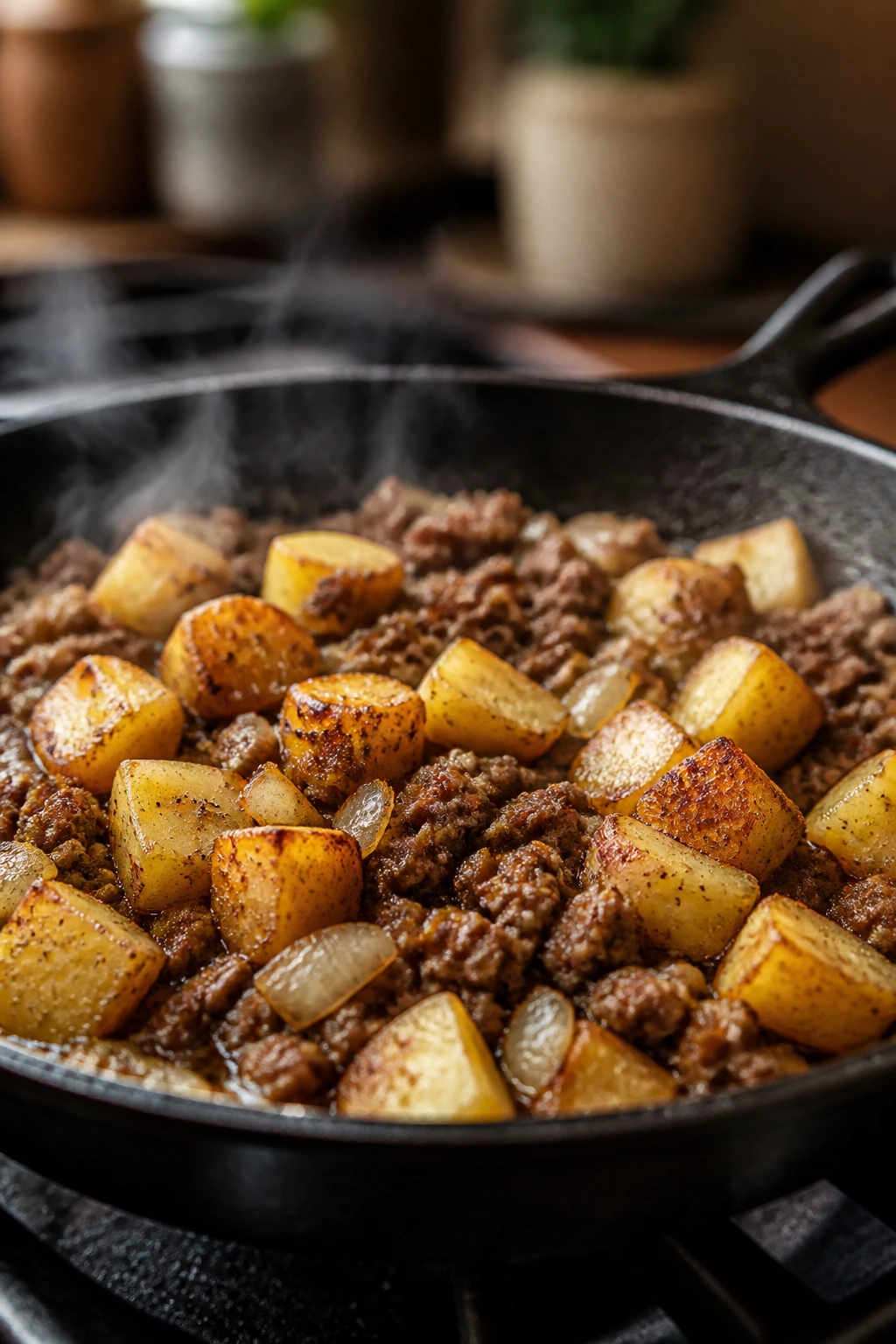
-
One skillet, one burner: Beef, potatoes, onion, and the sauce all cook in the same pan, which means the flavor stays concentrated instead of getting rinsed away in a separate pot.
-
The beef stays juicy: Browning first, then finishing with broth and butter, keeps the meat soft and glossy instead of dry and crumbly.
-
The potatoes get two textures: They brown in the fat, then steam under a lid, so the edges stay a little crisp while the centers turn tender.
-
Every ingredient has a job: The onion sweetens, the tomato paste deepens the color, and Worcestershire pulls the savory flavor forward without making the dish taste like steak sauce.
-
It works with what you already have: This is a pantry dinner with a short shopping list, and the swaps are forgiving if your fridge looks bare.
-
Leftovers hold up well: The flavors settle overnight, and a splash of broth brings the skillet back to life without turning it into soup.
Why Ground Beef and Potatoes Still Work Together
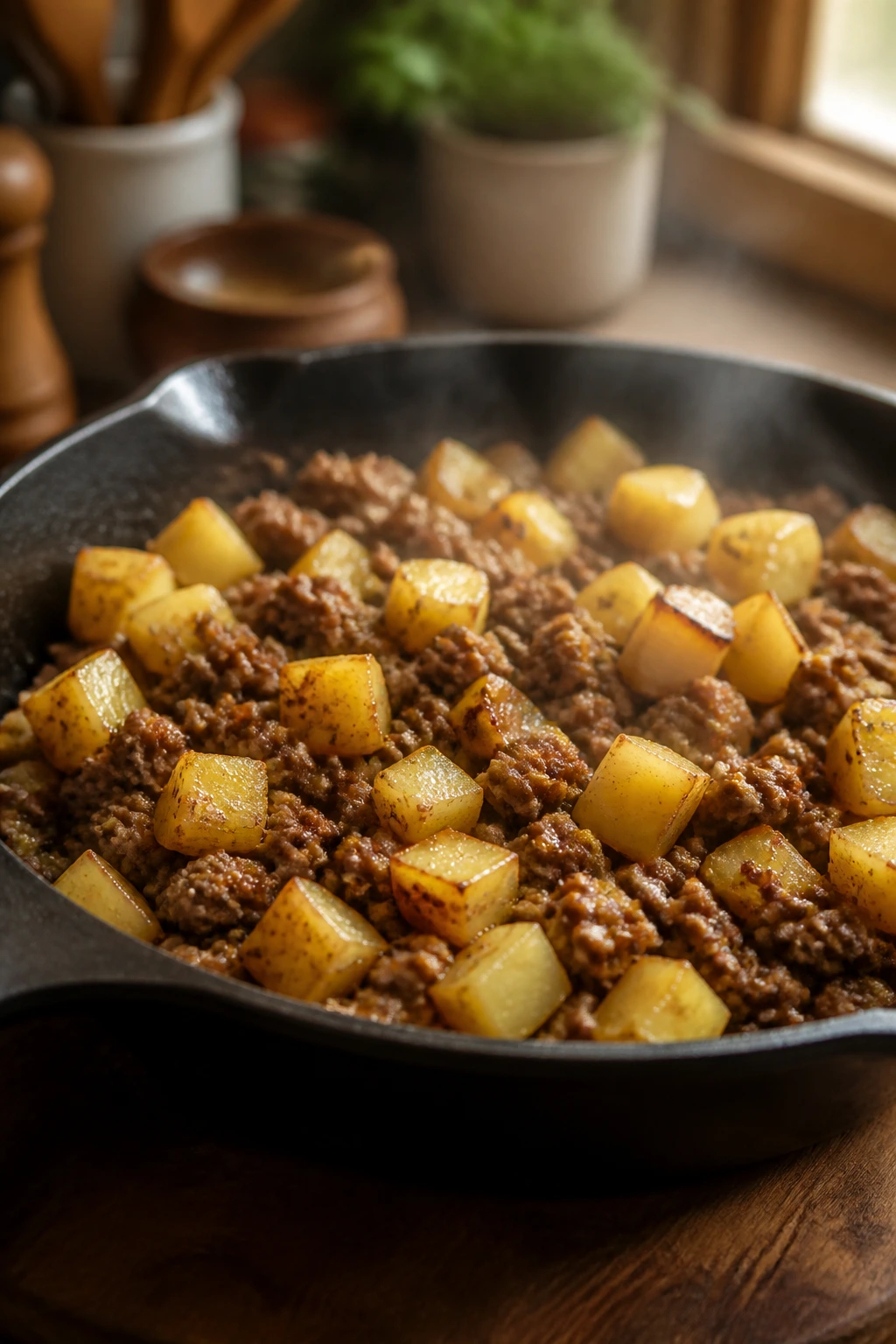
Beef and potatoes have stayed together for a reason. They are both sturdy, both cheap enough to repeat, and both happy to share a pan with onion and drippings. That sounds basic, but basic is often where the best dinners start.
The real trick is texture. Potatoes like to soak up flavor, especially when they’re cut small enough to brown before they fully soften. Ground beef, on the other hand, gives you fat and browned bits on the bottom of the skillet. Those browned bits are not decoration. They are the sauce waiting to happen.
I prefer this version over a loose hash because the skillet keeps just enough moisture to coat everything without turning the pan soupy. A hash can get dry fast if you’re not careful. A full casserole can feel heavy before you finish the first bowl. This lands in the middle: solid, glossy, and loose enough to spoon.
Yukon Gold potatoes are my pick here because they hold shape better than russets and still go creamy at the center. Russets can work, but they break down faster and can lean toward mash if you’re not watching the heat. Red potatoes stay firmer and give the dish a cleaner bite. Good, but different.
Juicy Ground Beef and Potatoes: Yield, Timing, and Difficulty
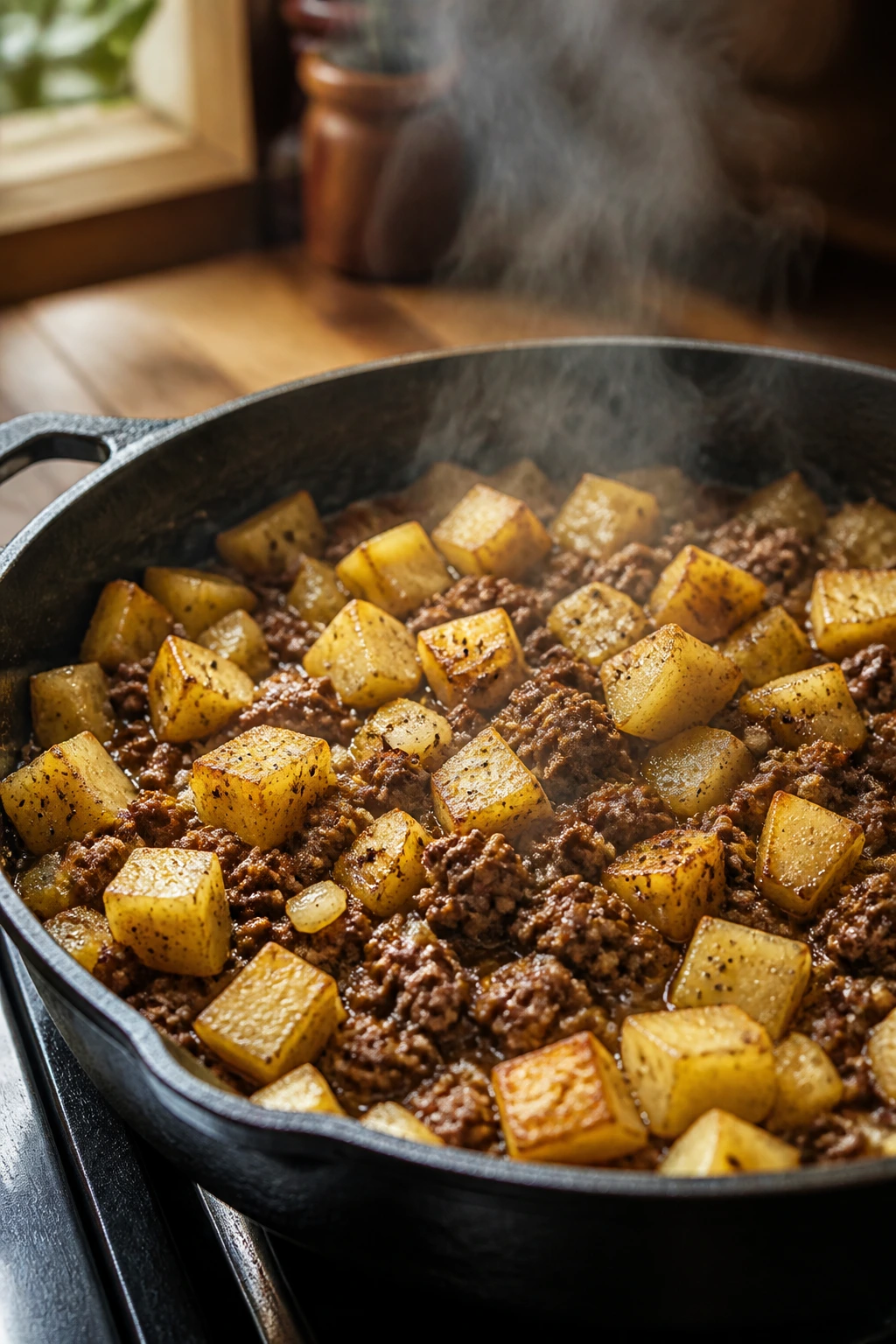
Yield: 4 hearty servings
Prep Time: 15 minutes
Cook Time: 30 minutes
Total Time: 45 minutes
Rest Time: 3 minutes
Difficulty: Beginner — the steps are straightforward, but the pan rewards attention to heat and timing.
Best Served: Right away, while the beef is glossy and the potatoes are tender at the center.
This is the kind of dinner that looks casual and behaves a little fussy about timing. Keep the cubes small, keep the pan hot at the start, then let the lid do the quieter work. That’s the whole rhythm.
What Goes Into the Skillet
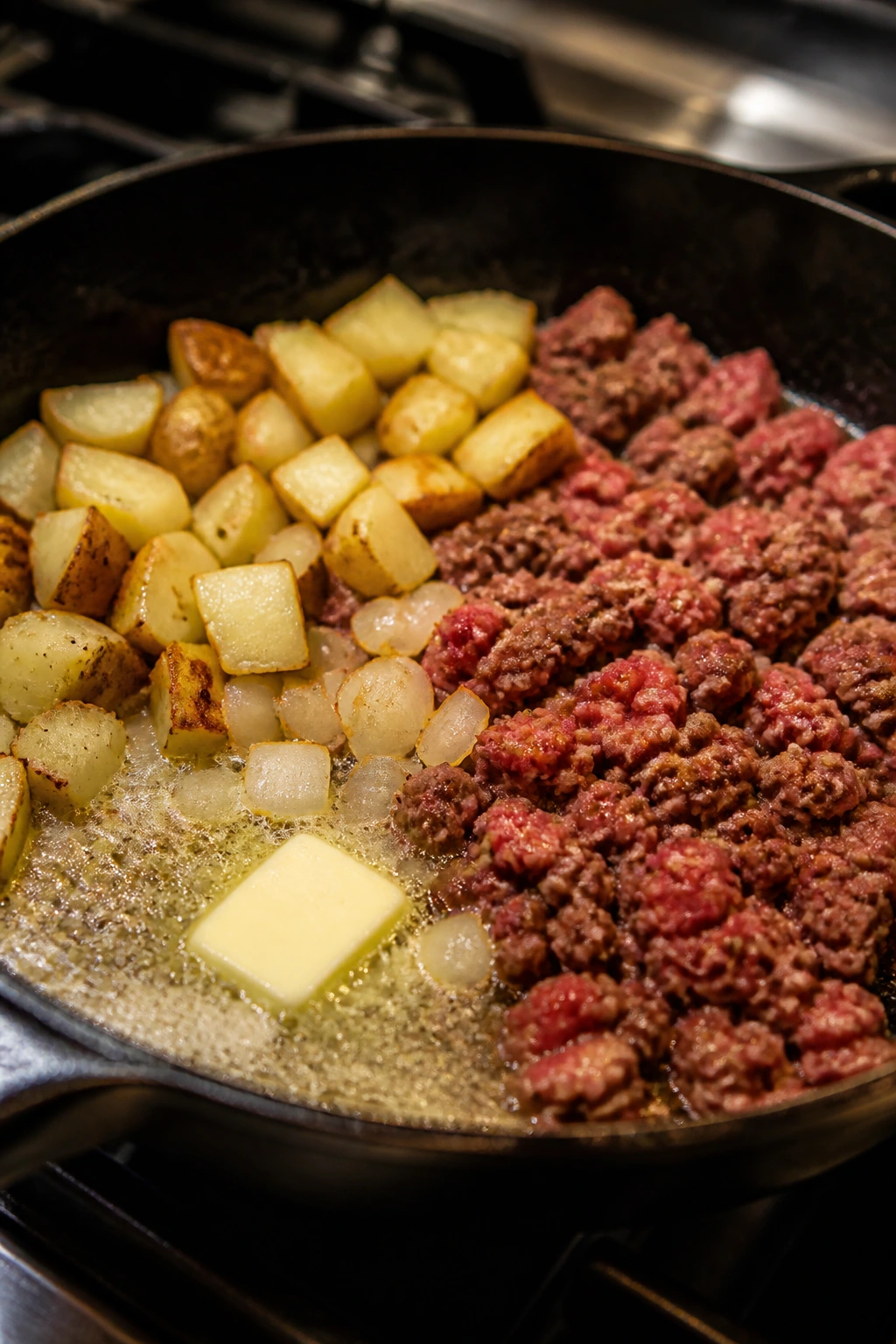
For the Skillet:
- 2 tablespoons unsalted butter, divided
- 1 tablespoon olive oil
- 1 pound ground beef, 85/15
- 1 large yellow onion, diced small
- 1 1/2 pounds Yukon Gold potatoes, scrubbed and cut into 1/2-inch cubes
- 3 garlic cloves, minced
- 1 tablespoon tomato paste
- 1 cup low-sodium beef broth
- 1 tablespoon Worcestershire sauce
- 1 teaspoon smoked paprika
- 1 teaspoon kosher salt, plus more to taste
- 1/2 teaspoon black pepper
- 1/2 teaspoon dried thyme
- 2 tablespoons chopped fresh parsley
- Pinch red pepper flakes, optional
The list is short on purpose. Nothing here is ornamental. The broth loosens the browned bits, the tomato paste gives the liquid some body, and the butter at the end makes the whole pan look and taste richer without burying the beef.
What Each Ingredient Does in the Pan
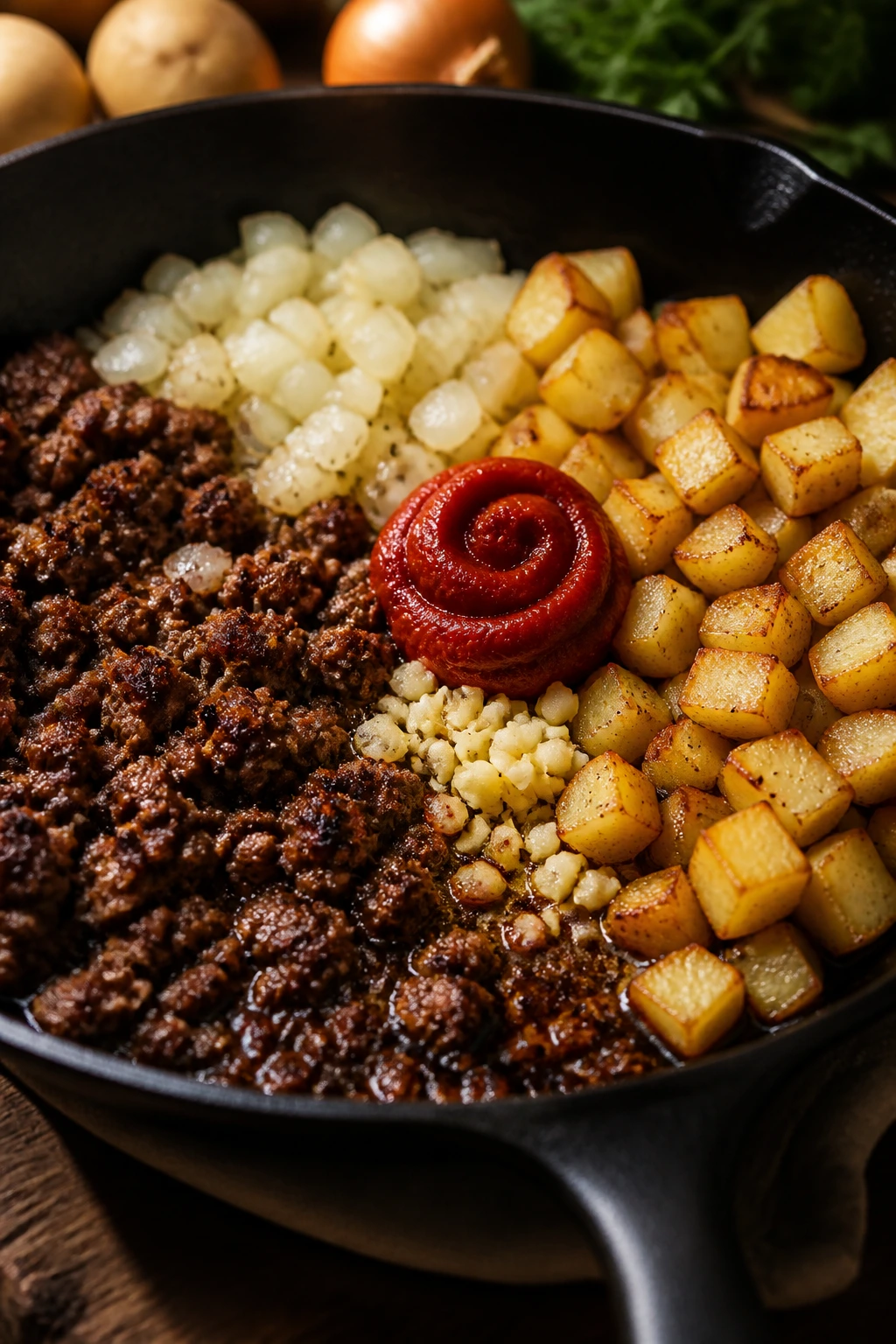
Ground Beef
What to use: 1 pound of 85/15 ground beef gives you enough fat for browning without making the skillet greasy.
Preparation: Keep it cold until the pan is hot, then break it into large chunks first and smaller pieces later. Let it sit for a minute before you touch it.
Substitutions: 90/10 works if you add a little more butter at the end; ground turkey can stand in, but it needs extra salt and a bit more oil.
Tips: Don’t chase every crumb around the pan. Bigger pieces brown better, and browned beef tastes deeper than beef that was stirred into tiny bits too soon.
Potatoes
What to use: 1 1/2 pounds Yukon Gold potatoes, cut into 1/2-inch cubes, is the sweet spot here.
Preparation: Scrub them well and cut them into even pieces so they finish at the same time. Dry them after cutting; wet potatoes steam before they brown.
Substitutions: Red potatoes hold their shape nicely. Russets will work if you like a softer skillet, though they break down sooner.
Tips: Small cubes cook faster, but too-small cubes vanish in the pan. Half-inch is the size that gives you tender centers and edges that still matter.
Aromatics and Flavor Base
What to use: 1 large yellow onion, 3 garlic cloves, and 1 tablespoon tomato paste build the base flavor.
Preparation: Dice the onion small so it softens fast. Mince the garlic and keep the tomato paste nearby; once the paste goes in, the pan moves quickly.
Substitutions: Shallots can replace the onion if that’s what you have. If you’re out of fresh garlic, 1 teaspoon garlic powder can stand in, though it won’t smell quite as sweet.
Tips: Fry the tomato paste for 30 to 45 seconds before the broth goes in. It should smell deeper and a little sweeter, not raw and tinny.
Liquids and Seasoning
What to use: 1 cup low-sodium beef broth, 1 tablespoon Worcestershire sauce, 1 teaspoon smoked paprika, 1 teaspoon kosher salt, 1/2 teaspoon black pepper, and 1/2 teaspoon dried thyme.
Preparation: Measure everything before you start cooking so you can pour and stir without hunting through the spice cabinet.
Substitutions: Regular broth works if you reduce the added salt a touch. If Worcestershire is missing, a splash of soy sauce with a few drops of vinegar can give a similar savory edge.
Tips: Low-sodium broth keeps the skillet from getting too salty after reduction. Smoked paprika is worth using here because it gives the dish a little dark, grilled depth.
Finishing Touches
What to use: 1 tablespoon of the remaining butter, 2 tablespoons chopped parsley, and a pinch of red pepper flakes if you want a little heat.
Preparation: Chop the parsley right before serving so it stays bright and doesn’t wilt into the pan.
Substitutions: Chives can replace parsley if you want a sharper finish. A small squeeze of lemon at the table works too, though I’d keep it light.
Tips: The final butter is not there to look pretty. It smooths the sauce and gives the beef that soft, glossy finish you want in the last bite as much as the first.
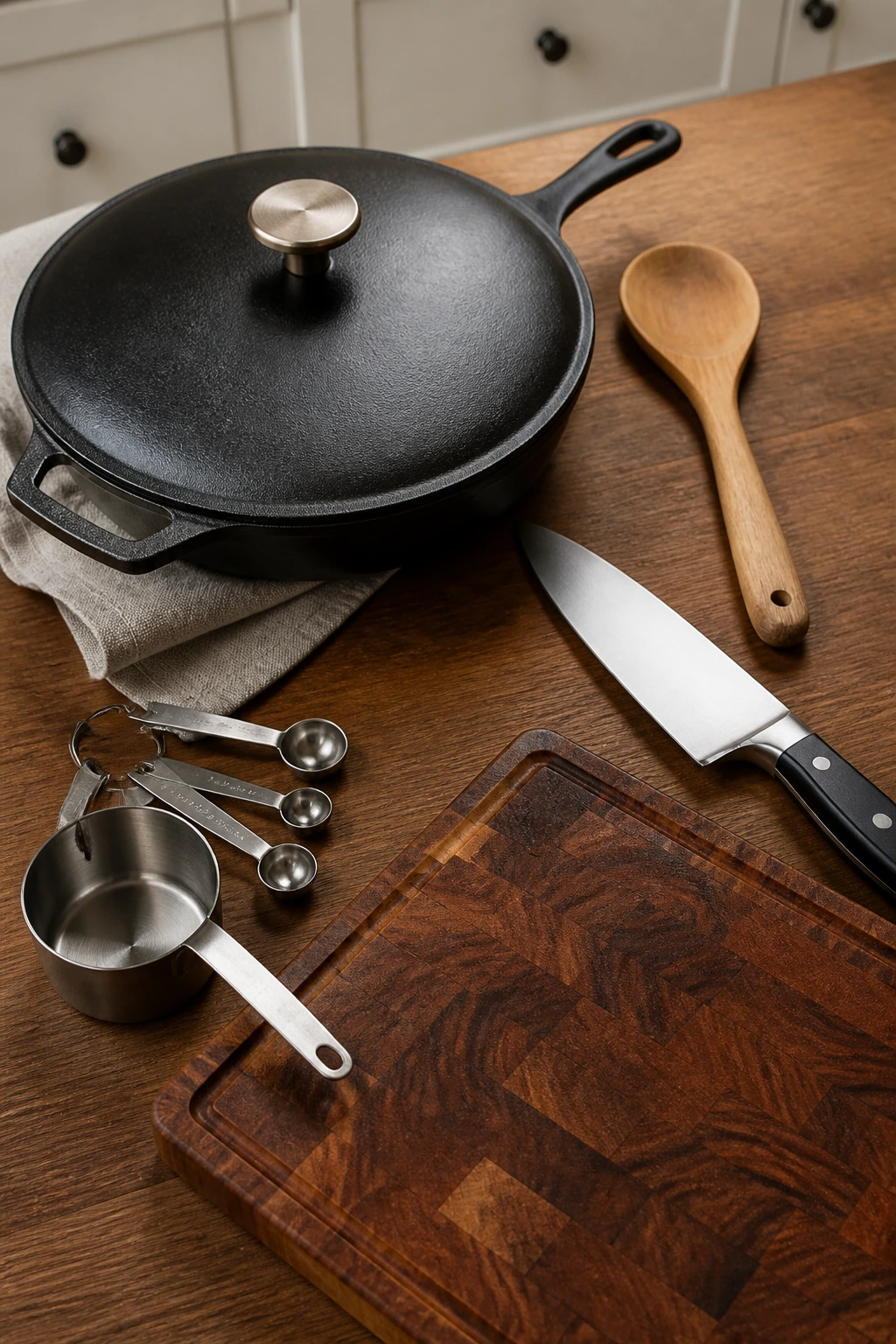
The Tools That Make the Job Easier
-
12-inch heavy skillet with a lid: Cast iron gives the best browning, but a wide stainless skillet works too. The lid matters for the potato step.
-
Wooden spoon or heatproof spatula: You need something sturdy enough to break up the beef without scraping the pan to death.
-
Chef’s knife: A sharp blade makes the potato cubes even, and even cubes cook at the same pace.
-
Cutting board: A wide board gives you room to work without pushing half the onion onto the counter.
-
Measuring spoons and measuring cup: The broth and seasoning amounts are small enough that eyeballing them leads to a watery or salty pan.
-
Small bowl or plate, optional: Useful if you want to move the browned beef aside for a minute while the potatoes catch color. You can skip it if your skillet is roomy.
If your skillet is smaller than 12 inches, the potatoes will pile up and steam too much. Cook in batches or use a second pan. Crowding is the fastest way to lose the texture you’re trying to build.
Building the Skillet, Step by Step
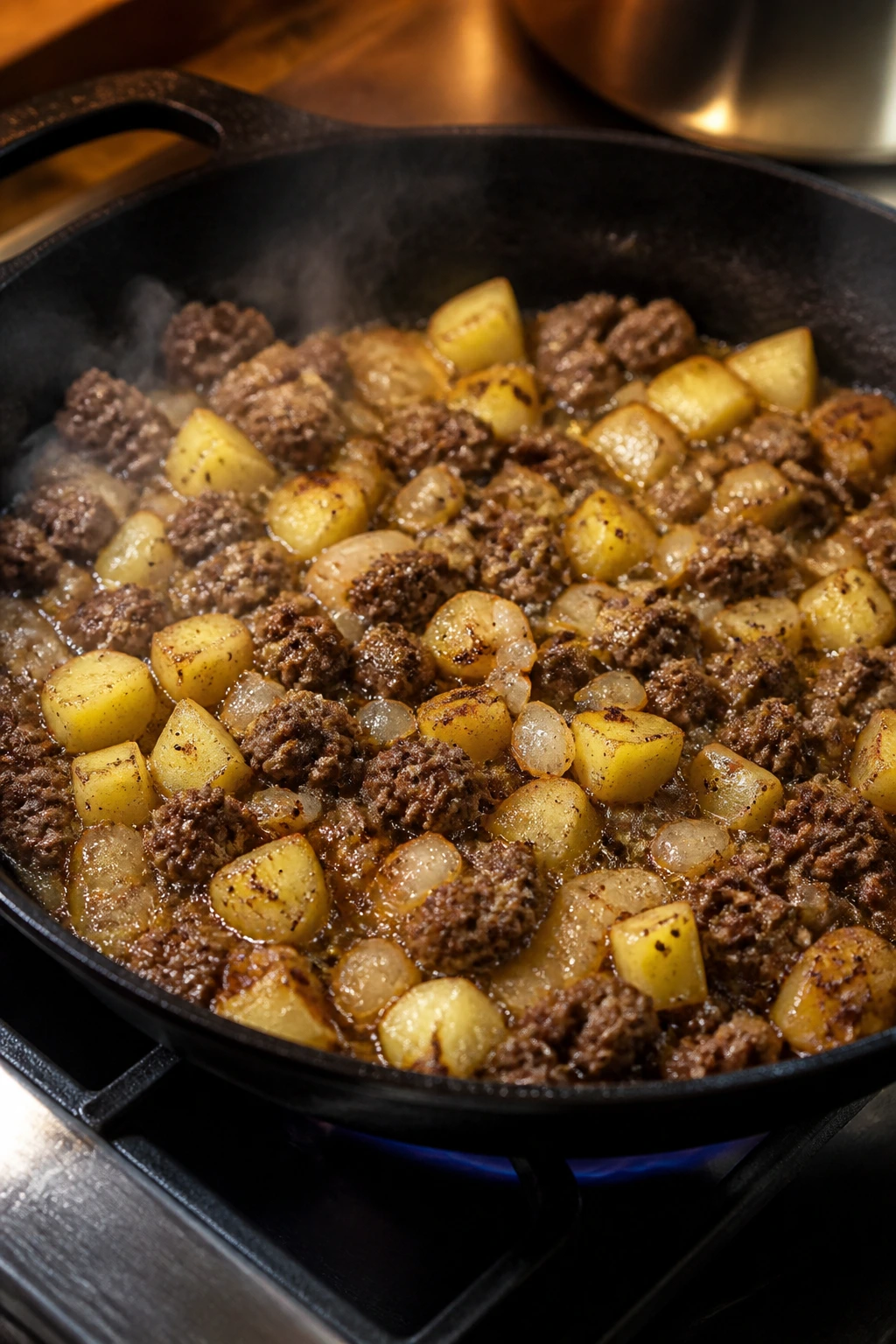
Brown the Beef and Start the Base
-
Heat 1 tablespoon olive oil and 1 tablespoon butter in a 12-inch skillet over medium-high heat until the butter foams and the fat shimmers.
-
Add 1 pound ground beef in large chunks. Let it sit untouched for 2 minutes, then break it up and cook for 5 to 6 minutes total, until browned with no pink patches. If you use a thermometer, the beef should reach 160°F / 71°C. Spoon off excess grease if needed, but leave about 1 tablespoon in the pan.
-
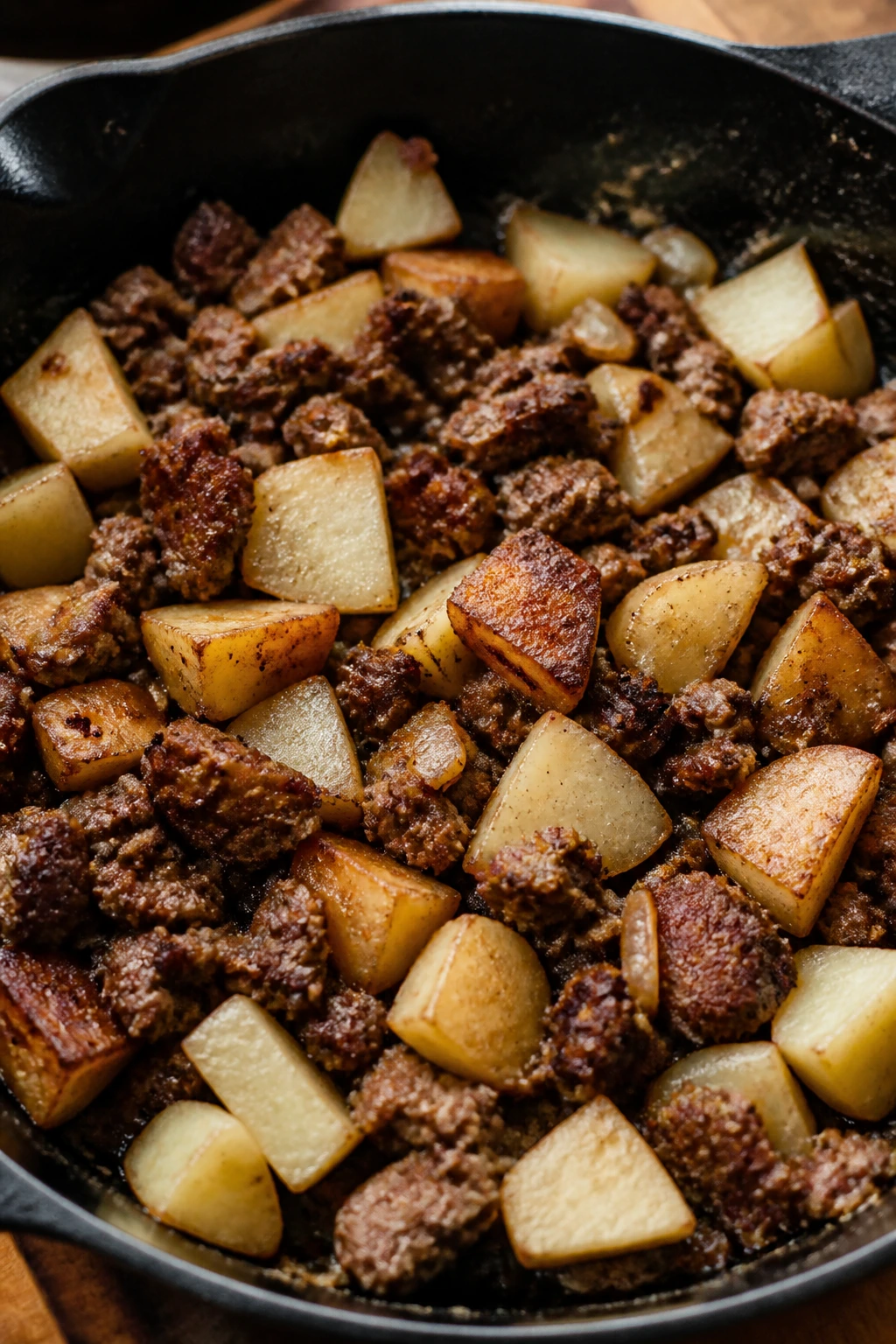
Add the onion, potatoes, 1 teaspoon kosher salt, black pepper, thyme, and smoked paprika. Cook for 5 minutes, stirring every minute or so, until the onion softens and the potato edges start to take on color.
-
Stir in the garlic and tomato paste. Cook for 30 to 45 seconds, just until the tomato paste darkens and smells sweet. Do not let the garlic scorch; if the pan is running hot, lower the heat a notch before you add it.
Simmer the Potatoes Through
-
Pour in the beef broth and Worcestershire sauce, scraping the browned bits from the bottom of the skillet. Bring the liquid to a gentle simmer.
-
Cover the skillet, reduce the heat to medium-low, and cook for 12 to 15 minutes, stirring once halfway through, until the potatoes are fork-tender but still hold their shape. If the pan looks dry before the potatoes are done, add 2 to 3 tablespoons water or broth.
-
Uncover and cook for 4 to 6 minutes over medium heat, stirring gently, until the liquid reduces and coats the beef and potatoes in a thin glaze. Do not walk away here — this is the stretch where the skillet goes from wet to glossy fast.
Finish the Skillet
- Stir in the remaining 1 tablespoon butter, then taste and add more salt if needed. Finish with parsley and a pinch of red pepper flakes, if using. Let the skillet rest for 3 minutes before serving so the juices settle and the sauce clings instead of running.
How to Serve It So the Plate Feels Finished
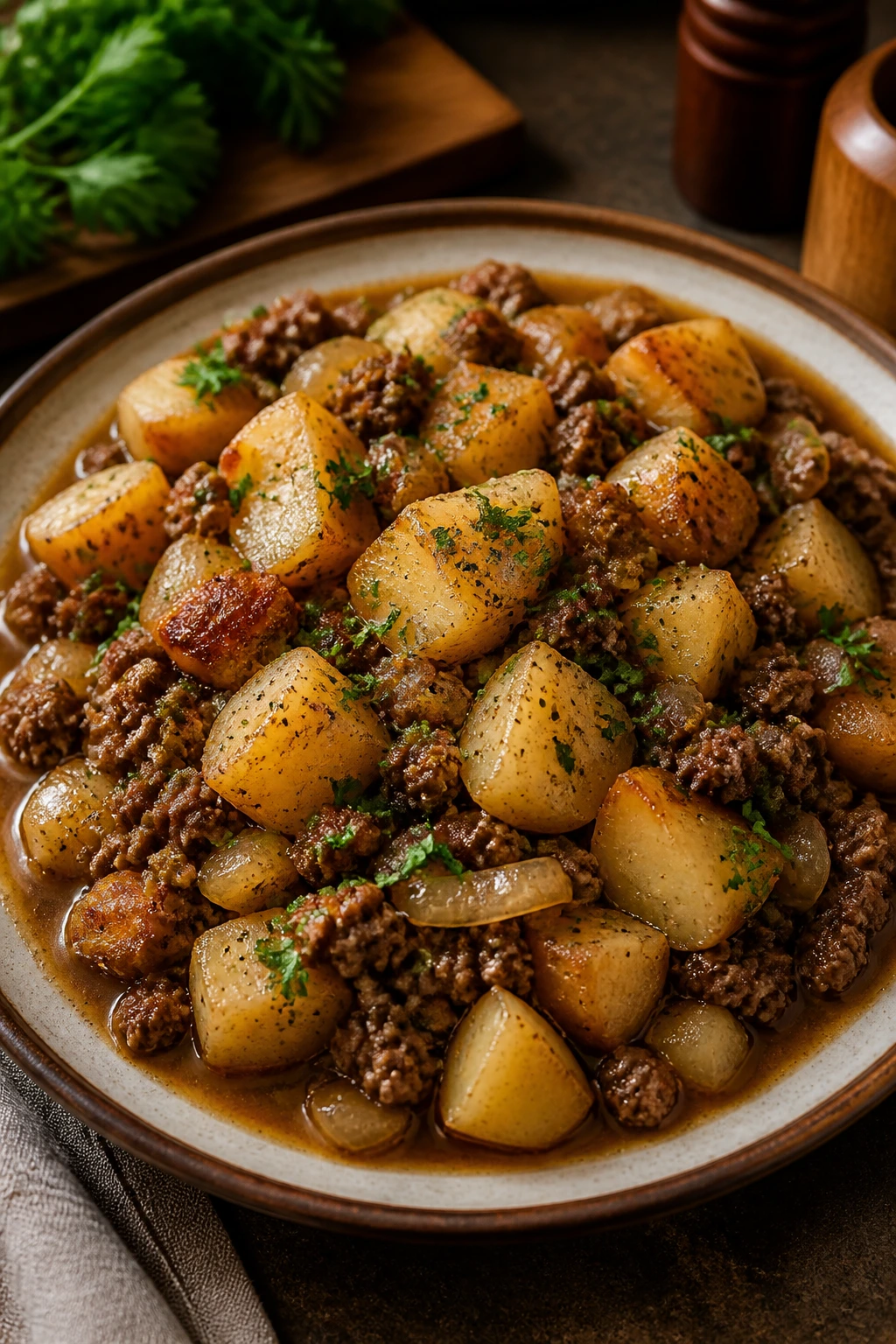
Presentation: Spoon the beef and potatoes into shallow bowls or a warmed platter so the thin sauce pools around the edges. A final scatter of parsley and black pepper is enough; the skillet already does the heavy lifting visually.
Accompaniments: A sharp green salad dressed with vinegar, buttered green beans, roasted broccoli, or a slice of crusty bread all fit naturally here. If you want a softer side, a spoonful of sour cream or plain yogurt on the table cools the paprika and adds a creamy bite.
Portions: Four generous main-course servings is the honest yield, about 1 1/2 to 2 cups per person. Stretch it to six by adding bread and a salad, or serve smaller portions with eggs on top if you want to lean it toward brunch.
Beverage Pairing: A cold lager, a dry cider, or unsweetened iced tea keeps the meal from feeling too heavy. Sparkling water with lemon works if you want something plain and sharp beside the beef.
If you’re eating leftovers, a fried egg on top is not a bad move. The yolk turns the pan juices into a quick sauce, and that little trick makes the plate feel new again.
Small Adjustments That Pay Off
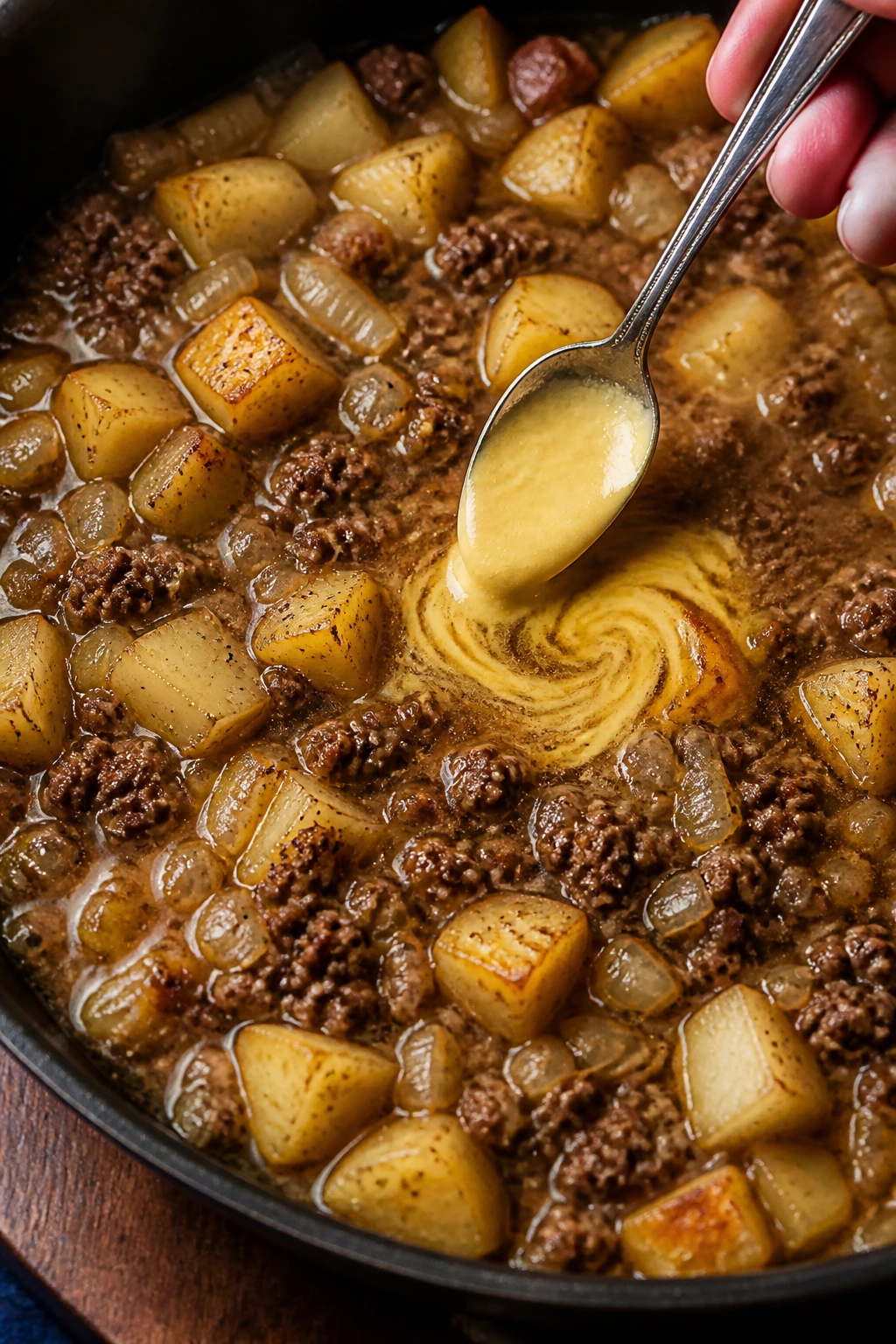
Flavor Enhancement: Stir 1 teaspoon Dijon mustard into the broth before it goes in, or finish the skillet with 1 teaspoon red wine vinegar. The small hit of acid keeps the beef from tasting flat after the broth reduces.
Time-Saver: Microwave the potato cubes in a covered bowl with 2 tablespoons water for 4 minutes, then drain and dry them before they hit the skillet. That trims a few minutes off the covered simmer and gives you a head start if your burner runs cool.
Texture Move: If you want more browned edges, leave the skillet uncovered for the last 2 minutes and let the bottom of the pan sizzle again before you add parsley. That extra minute of contact with the heat brings back the color on the potatoes.
Make-It-Yours: A handful of shredded cheddar, a fried egg, or chopped scallions changes the mood without changing the recipe. Cheddar makes it richer, the egg makes it breakfast-friendly, and scallions sharpen the finish.
Cost-Saver: If you buy 90/10 ground beef, keep the butter in the pan and don’t skip the final tablespoon. Lean beef can taste dry faster, and the extra fat helps the potatoes carry the sauce.
Mistakes That Leave the Beef Dry or the Potatoes Tough
-
Cutting the potatoes unevenly: Some pieces turn soft while others stay firm and chalky. Keep the cubes close to 1/2 inch and cut them with the same rhythm each time.
-
Stirring the beef the second it hits the pan: You lose browning and end up with gray, wet meat. Let it sit for a minute or two first, then break it up once the bottom has color.
-
Adding the broth before the tomato paste has cooked: The paste tastes raw and the sauce gets a tinny edge. Fry it for 30 to 45 seconds with the garlic so it darkens before the liquid goes in.
-
Leaving the skillet uncovered the whole time: The broth evaporates before the potatoes finish. Cover the pan for the middle stretch, then uncover only at the end when you want the glaze.
-
Seasoning only at the finish: The top tastes fine, but the potatoes underneath stay flat. Salt the pan early, then taste again after the reduction and adjust from there.
-
Using too much heat after the potatoes are tender: The beef tightens up and the sauce turns sticky instead of glossy. Once the potatoes are done, the goal is to reduce, not to scorch.
Variations That Still Taste Like Dinner
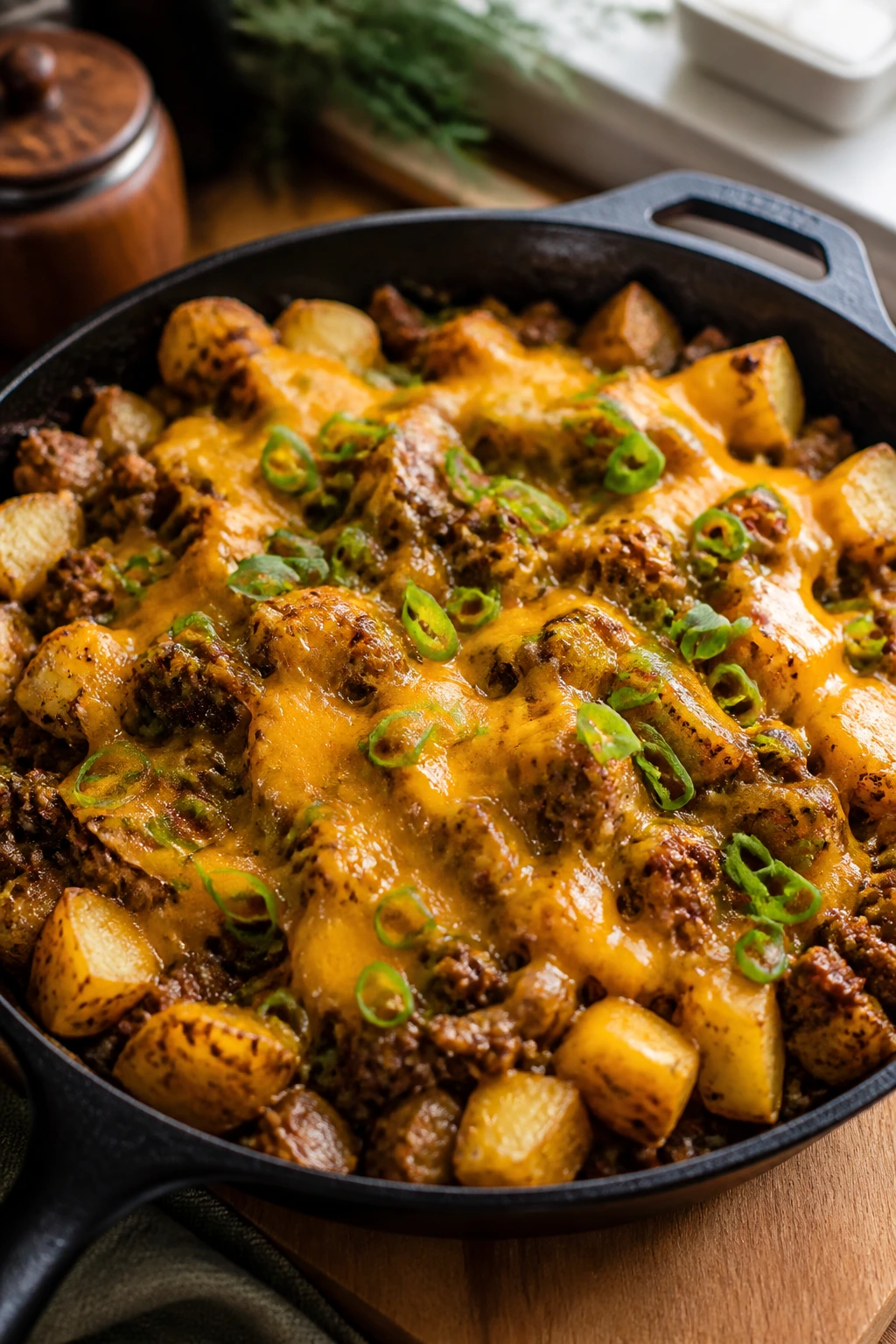
Cheddar-Top Skillet
Stir in 1 cup shredded sharp cheddar after the heat is off, then cover the skillet for 1 minute so the cheese melts into the hot potatoes and beef. A sprinkle of scallions gives it a sharper finish. This version lands closer to loaded baked potatoes, which is no bad thing.
Smoky Southwest Skillet
Swap the thyme for 1 teaspoon ground cumin and 1/2 teaspoon chili powder, then add 1 diced bell pepper with the onion and 1/2 cup corn near the end. A squeeze of lime at the table cuts the richness and keeps the skillet bright. Good with tortillas on the side.
Mushroom and Herb Skillet
Add 8 ounces sliced cremini mushrooms with the onions and let them cook until they lose their liquid and start to brown. Use a little extra broth if the pan dries out, because mushrooms soak up fat fast. The whole dish turns earthier and more savory.
Dairy-Free Version
Skip the butter and use 2 tablespoons olive oil instead, then finish with parsley and a small splash of vinegar. The dish still tastes full because the beef, onion, and broth carry the flavor. You lose the buttery gloss, but the skillet stays strong.
Root-Vegetable Blend
Replace half the potatoes with 1 cup diced carrots or parsnips. Carrots bring sweetness, parsnips go a little nutty, and both add more color to the pan. Give the carrots a few extra minutes under the lid if they’re cut larger than the potatoes.
Make-Ahead, Storage, and Reheating
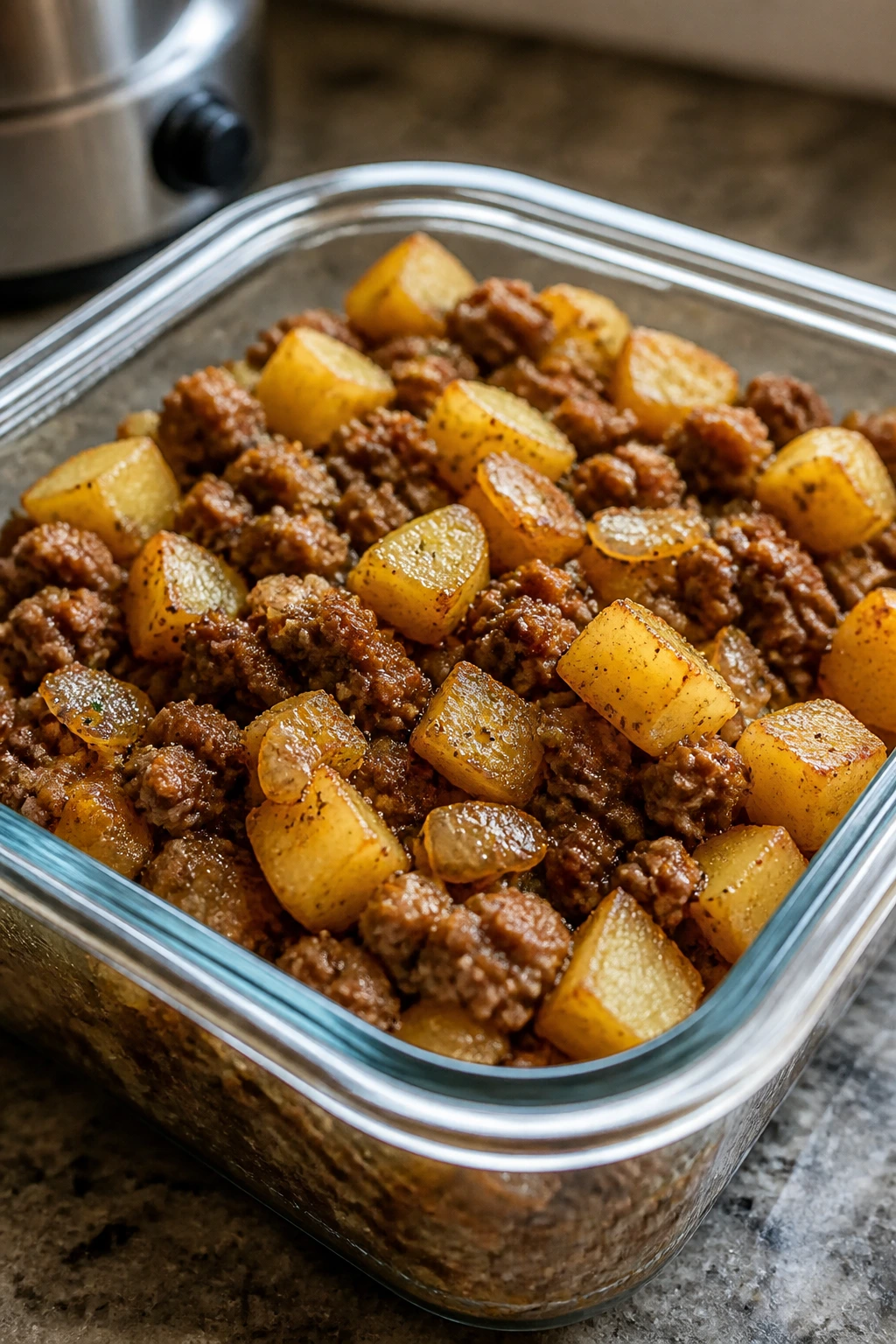
This skillet keeps well, but the potatoes do soften a bit after a day or two. That’s normal. The flavors settle into each other, and the broth gets a little richer in the fridge.
Room Temperature: Don’t leave it out for more than 2 hours. Ground beef needs the same basic food-safety handling you’d use for any cooked meat.
Refrigerator: Store leftovers in an airtight container for 3 to 4 days. If you want the best texture later, cool the skillet in a shallow container so the steam escapes faster. A deep, lidded bowl traps moisture and turns the potatoes soft faster.
Freezer: Freeze for up to 2 months in a freezer-safe container or zip-top bag. The potatoes will be softer after thawing, so this is a good move for flavor and convenience, not for crisp texture.
Reheating: The stovetop is the best path. Warm the leftovers in a skillet over medium-low heat with 1 to 2 tablespoons broth or water, cover for a few minutes, then stir and heat until hot. The microwave works in a pinch — use 60-second bursts and stir between them so the beef doesn’t dry out in one corner.
Make-Ahead: You can dice the onion and potatoes up to 24 hours ahead. Keep the cut potatoes submerged in cold water in the fridge, then drain and pat them dry before cooking. If you want to do more, brown the beef and onion ahead of time, cool them, and finish the potatoes and broth later. That keeps the final texture closer to fresh.
If you know you’ll freeze the dish, stop the final reduction a touch early. A skillet that is a little looser before freezing reheats better than one that was cooked bone-dry on the first pass.
Questions People Ask About This Skillet
Can I use russet potatoes instead of Yukon Gold?
Yes, though the texture changes. Russets break down faster and give you a softer, more rustic skillet, almost halfway between a hash and a mash. If you use them, cut the cubes a little larger and keep an eye on the covered simmer so they don’t fall apart.
What if my ground beef is very lean?
That’s workable, but lean beef needs help. Use the full amount of butter, don’t let the skillet dry out, and avoid cooking it past the point where the pink disappears. Extra-lean beef can taste a little chalky if the pan runs dry.
Can I use leftover cooked potatoes?
You can. Brown the beef and onions first, then fold in the cooked potato cubes during the final few minutes with just enough broth to coat the pan. Since the potatoes are already cooked, the sauce will be thinner and the texture less crisp, but it still makes a solid dinner.
How do I keep the skillet from getting watery?
Use the right amount of broth, keep the simmer gentle, and uncover the pan at the end long enough to let the liquid reduce. Wet potatoes are another common problem, so dry them after cutting. A watery skillet almost always comes from too much moisture and too little heat at the end.
Can I make this with ground turkey instead of beef?
Yes, but add a little more oil and season with a heavier hand. Ground turkey brings less fat and less built-in flavor, so the tomato paste, Worcestershire, and butter matter even more. I’d use the same potato amount and keep the simmer tight so the pan doesn’t go flat.
Does this freeze well?
It freezes fine for taste, though the potatoes soften once thawed. If texture matters, keep one portion in the fridge and freeze only what you know you won’t eat within a few days. Reheat it in a skillet if you want the closest thing to the original texture.
Can I add cheese or an egg on top?
Absolutely. Cheese should go on after the heat is off so it melts from the residual heat, and a fried egg turns the pan into a breakfast-for-dinner plate. I like an egg best when I’m serving leftovers, because the yolk gives the whole skillet a richer sauce.
A Final Skillet Worth Keeping Around
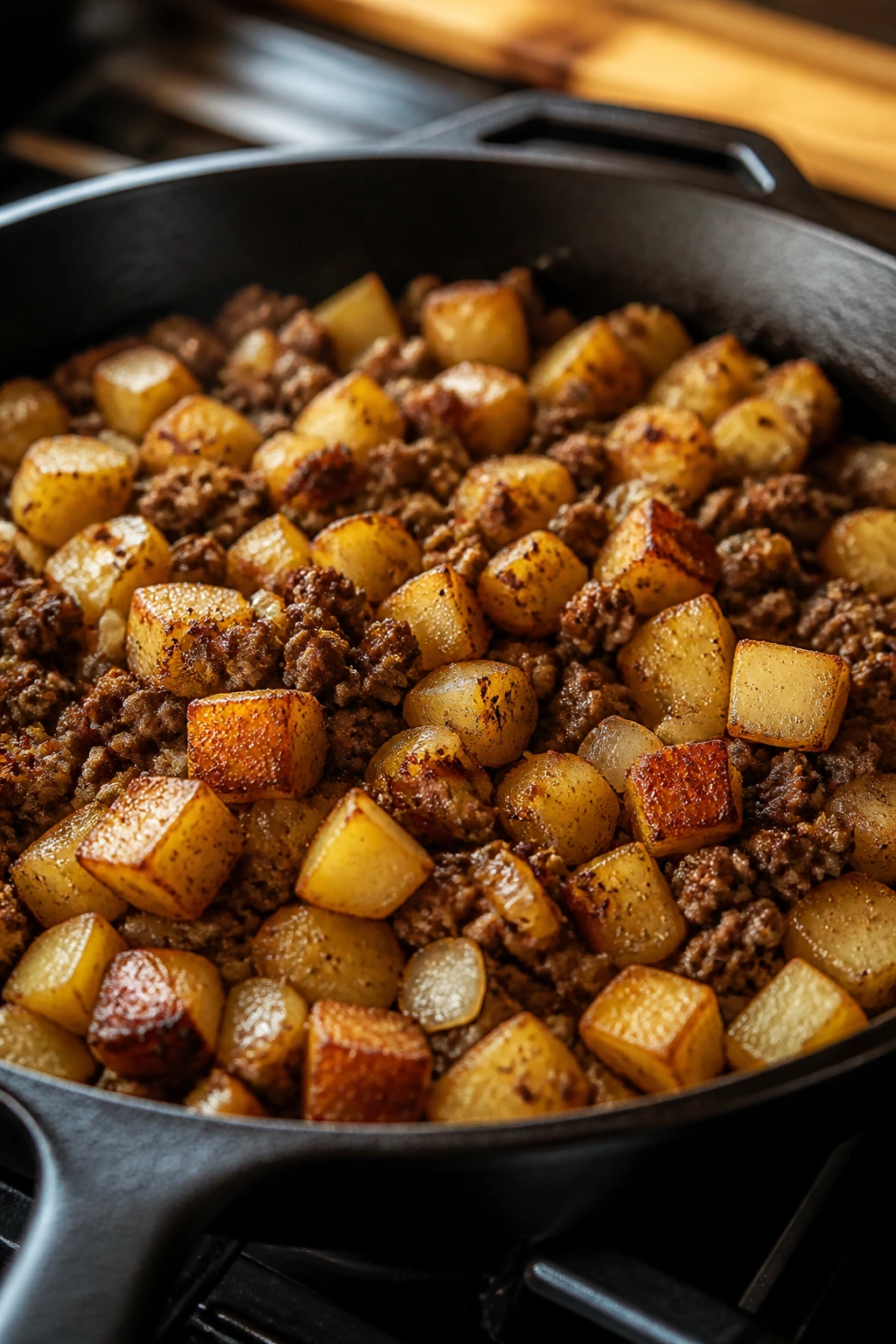
This kind of dinner works because it does not pretend to be anything else. It is beef, potatoes, onion, butter, and a short savory sauce that clings to the food instead of hiding it. That honesty is part of the appeal. So is the texture. You get browned edges, tender centers, and beef that stays soft enough to feel generous.
The recipe rewards a few small habits more than it rewards expensive ingredients. Give the beef a minute to brown. Keep the potato cubes even. Let the pan reduce at the end instead of rushing the last few minutes. Do those things, and the skillet starts acting like a meal you want to repeat.
Juicy Ground Beef and Potatoes for a Hearty Dinner — Recipe Card
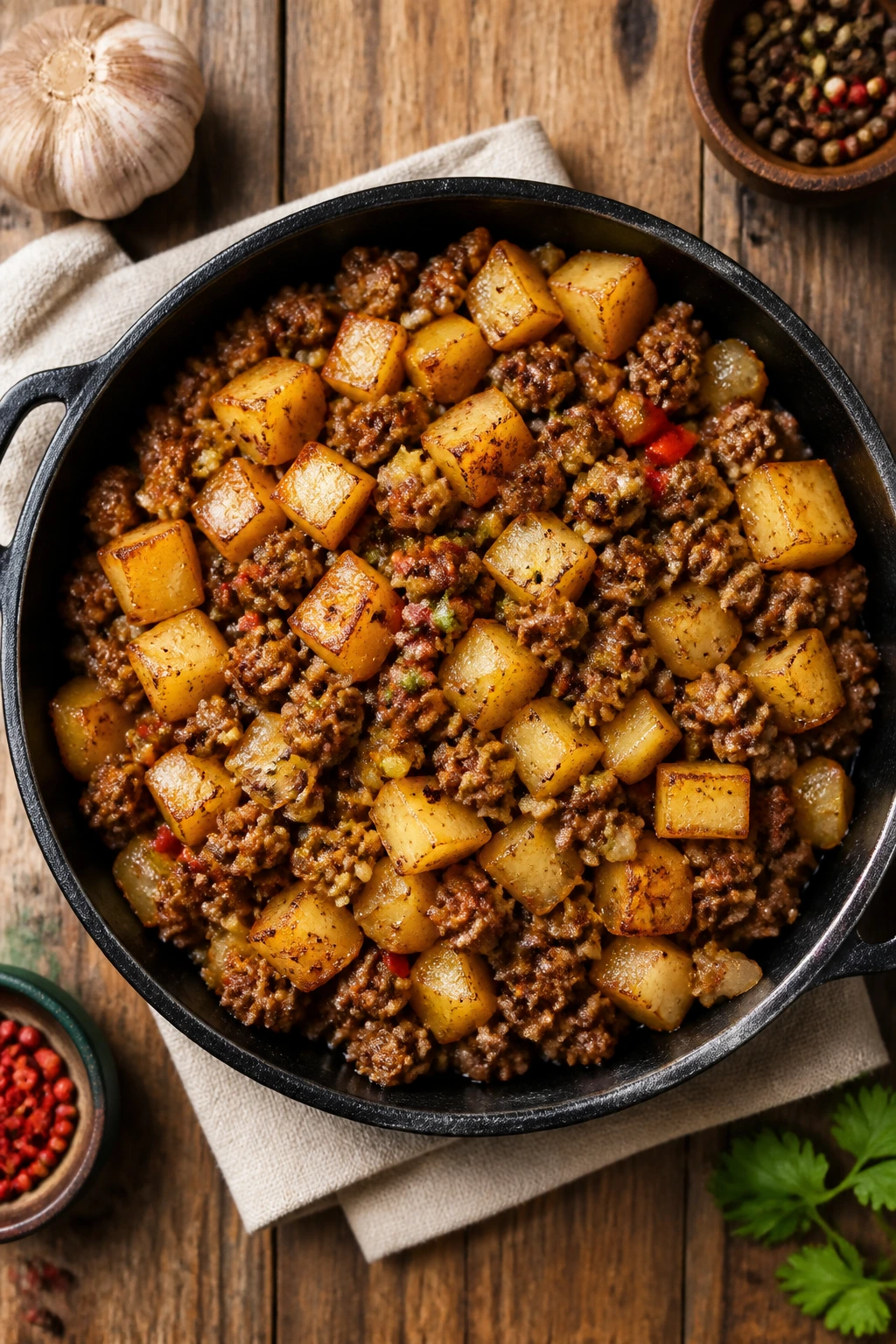
Recipe Name: Juicy Ground Beef and Potatoes for a Hearty Dinner
Description: A one-skillet beef and potato dinner with browned edges, a light savory glaze, and tender potatoes that hold their shape. The beef stays juicy, the onions turn sweet, and the final butter gives the whole pan a soft finish.
Prep Time: 15 minutes
Cook Time: 30 minutes
Total Time: 45 minutes
Course: Dinner, Main Course
Cuisine: American
Servings: 4 servings
Calories: About 470 kcal per serving
Ingredients
For the Skillet:
- 2 tablespoons unsalted butter, divided
- 1 tablespoon olive oil
- 1 pound ground beef, 85/15
- 1 large yellow onion, diced small
- 1 1/2 pounds Yukon Gold potatoes, scrubbed and cut into 1/2-inch cubes
- 3 garlic cloves, minced
- 1 tablespoon tomato paste
- 1 cup low-sodium beef broth
- 1 tablespoon Worcestershire sauce
- 1 teaspoon smoked paprika
- 1 teaspoon kosher salt, plus more to taste
- 1/2 teaspoon black pepper
- 1/2 teaspoon dried thyme
- 2 tablespoons chopped fresh parsley
- Pinch red pepper flakes, optional
Instructions
-
Heat 1 tablespoon olive oil and 1 tablespoon butter in a 12-inch skillet over medium-high heat until the butter foams.
-
Add the ground beef in chunks and cook for 5 to 6 minutes, breaking it up as it browns. Spoon off excess grease if needed.
-
Add the onion, potatoes, salt, pepper, thyme, and smoked paprika. Cook for 5 minutes, stirring often, until the onion softens and the potatoes start to brown.
-
Stir in the garlic and tomato paste and cook for 30 to 45 seconds.
-
Add the beef broth and Worcestershire sauce, scraping up the browned bits. Bring to a simmer.
-
Cover, reduce heat to medium-low, and cook for 12 to 15 minutes, stirring once halfway through, until the potatoes are fork-tender.
-
Uncover and cook for 4 to 6 minutes until the liquid reduces to a light glaze.
-
Stir in the remaining 1 tablespoon butter, then add parsley and optional red pepper flakes. Rest for 3 minutes before serving.
Notes: Use Yukon Gold potatoes for the best texture, and don’t skip the uncovered reduction at the end. If the skillet looks dry before the potatoes are tender, add broth or water a tablespoon at a time.