



Most meal-prep sausage turns soft by day two. The fix is not complicated, but it does ask for a little restraint: let the potatoes get a head start, keep the sausage slices exposed to the heat, and hold the brown sugar glaze back until the end so it caramelizes instead of turning syrupy.
If you’ve ever opened a container and found limp peppers, greasy sausage, and potatoes that taste like they were steamed under a wet towel, you already know why this matters. A tray like this lives or dies by timing. The sausage needs enough heat to brown, the vegetables need enough room to roast, and the glaze has to land when the pan is hot but not so early that the sugar scorches.
That’s the sweet spot here. Smoke, salt, Dijon, vinegar, and brown sugar can make a tray smell like dinner before it even leaves the oven, but the real payoff is texture: browned edges on the sausage, cut sides on the potatoes that go crisp and nutty, and vegetables that still have some shape when you reheat them later. I like recipes that reward a little attention with leftovers that still taste alive. This is one of them.
Why Brown Sugar and Sausage Work Better Than You’d Expect
Brown sugar on sausage sounds almost too easy, but the pairing makes sense the second it hits a hot pan. Smoked sausage already brings salt, fat, and that deep savory flavor people love; brown sugar adds a lacquer that pulls the edges toward caramel instead of just leaving the surface oily. Add Dijon and vinegar, and the glaze stops tasting sticky-sweet. It becomes sharper, darker, and far more interesting.
Meal prep is where this combination really earns its keep. Pork sausage tends to reheat with more mercy than lean chicken breast, and the glaze gives you a built-in finishing layer that keeps the whole tray from tasting flat after a night in the fridge. The trick is to treat the sugar like a finish, not a marinade. Sugar before heat is trouble. Sugar at the end is dinner.
I also like that this recipe behaves like a real sheet-pan meal instead of a tray of random leftovers pretending to be organized. Potatoes and sausage do the heavy lifting, while broccoli, peppers, and onion keep the bite from feeling one-note. A smart pan has contrast. Sweet, salty, crisp, soft, smoky, sharp. That mix keeps your second lunch from tasting like a copy of the first.
Why You’ll Keep Making This Meal Prep Tray
- Crispy edges: The sausage slices actually brown because the potatoes get a head start and the glaze goes on late enough to stick, not slide.
- Weekday-friendly portions: One tray makes six solid meal-prep containers, which means you can pack lunches without guessing how much food to pile in.
- Sweet-savory balance: Brown sugar softens the smoke in the sausage, while Dijon and vinegar keep the glaze from tasting one-dimensional.
- One pan, minimal mess: You’re washing a sheet pan, a bowl, and a small cup for the glaze. That’s it, unless you ignore the bowl and whisk everything directly on the tray, which I do not recommend.
- Reheats without drama: This holds up in the oven, air fryer, or skillet. The sausage stays juicy, and the potatoes don’t collapse into mash if you reheat them with a little care.
Timing, Yield, and the Batch Size That Fits Real Meal Prep
Yield: 6 meal-prep portions
Prep Time: 20 minutes
Cook Time: 30 minutes
Total Time: 50 minutes
Difficulty: Beginner — the method is straightforward, but the timing matters enough that you should read the steps once before you turn on the oven.
Best Served: Warm, after a 5-minute rest, or reheated the next day in an air fryer or oven.
A batch this size is generous without taking over your fridge. If you pack it with just the vegetables and sausage, you’ll get six lunch-sized portions. If you want bigger dinners, stretch it to four portions and serve it with rice, a green salad, or a fried egg on top. The recipe scales cleanly, too, as long as you give the tray enough space. Crowding kills browning faster than almost anything else.
What Goes Into the Pan
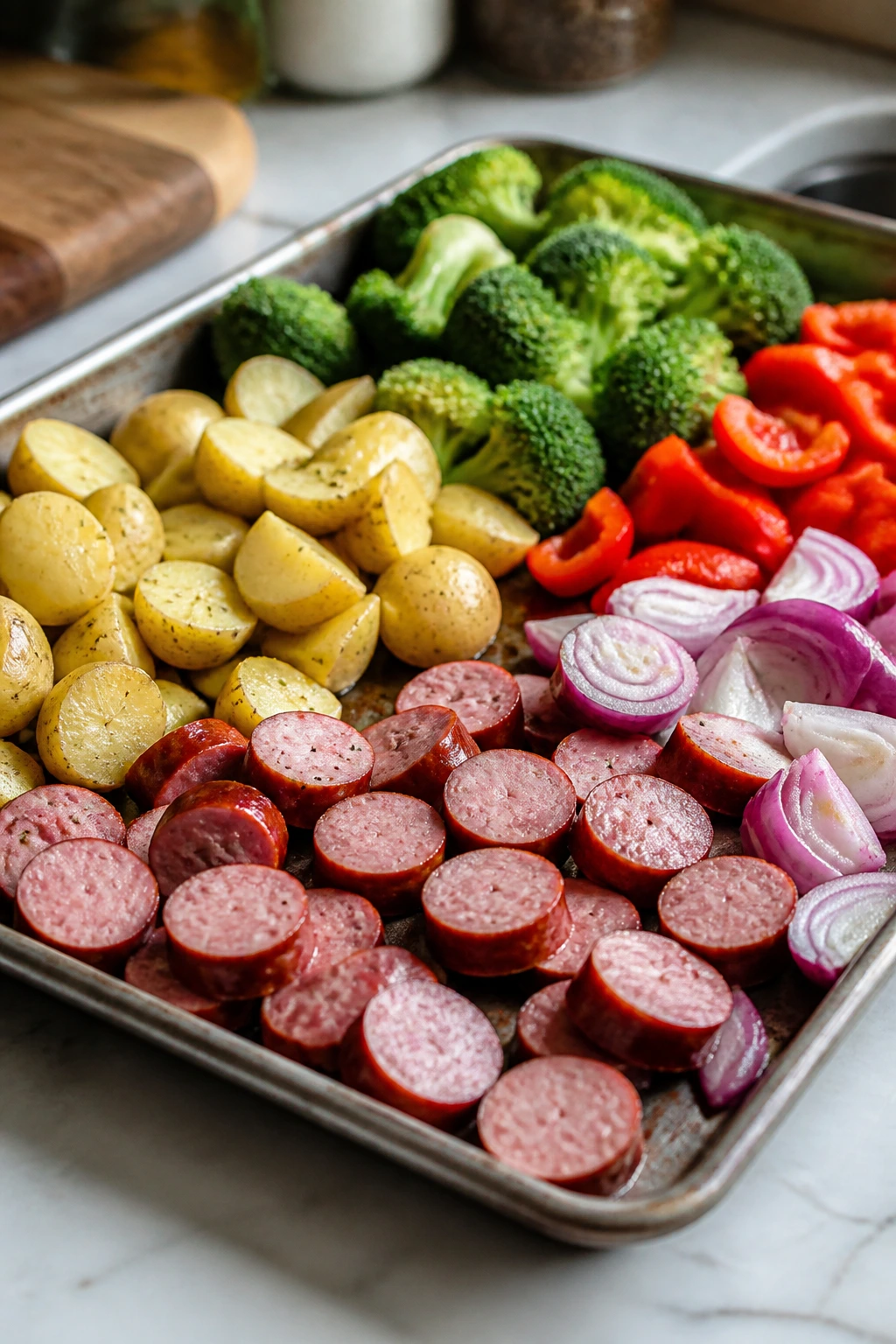
For the Tray:
- 2 pounds fully cooked smoked sausage, kielbasa, or andouille, sliced into 1/2-inch coins on a slight diagonal
- 1 1/2 pounds baby Yukon Gold or red potatoes, halved
- 2 tablespoons olive oil
- 1 teaspoon kosher salt
- 1/2 teaspoon black pepper
- 1 teaspoon smoked paprika, divided
- 2 cups broccoli florets, cut into bite-size pieces but left a little larger than a marble
- 2 bell peppers, seeded and sliced into 1-inch strips
- 1 medium red onion, cut into 1/2-inch wedges
For the Brown Sugar Glaze:
- 1/4 cup packed light brown sugar
- 2 tablespoons Dijon mustard
- 2 tablespoons apple cider vinegar
- 1 tablespoon low-sodium soy sauce or tamari
- 1 teaspoon Worcestershire sauce
- 2 cloves garlic, finely grated or minced
- 1 tablespoon olive oil
- 1/4 teaspoon crushed red pepper flakes
For Finishing:
- 1 tablespoon chopped parsley or sliced scallions, optional
- Extra black pepper, optional
What Each Ingredient Brings to the Tray
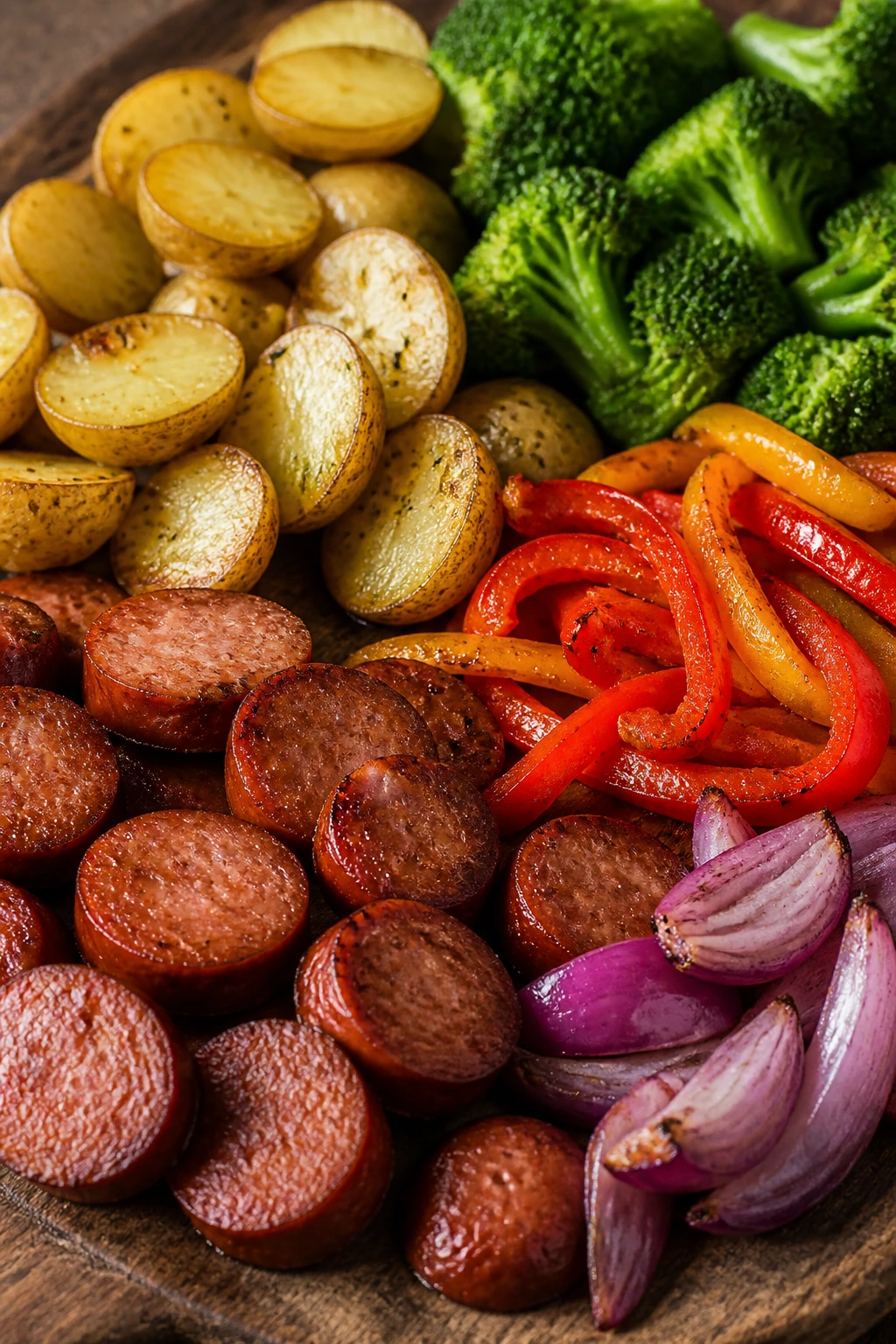
Smoked Sausage
What to use: 2 pounds fully cooked smoked sausage, kielbasa, or andouille, sliced into 1/2-inch coins.
Preparation: Pat the sausage dry before slicing, then cut on a slight diagonal so each piece has more exposed surface area.
Substitutions: Chicken sausage works if you want something leaner, and beef sausage works if that’s what you keep in the fridge.
Tips: Choose a firm casing and even slices. Thin coins curl and dry out; thick chunks stay juicy but don’t brown as fast.
Baby Potatoes
What to use: 1 1/2 pounds baby Yukon Gold or red potatoes, halved.
Preparation: Keep the halves similar in size so the cut faces finish together. If some are large, quarter them.
Substitutions: Sweet potatoes work, but they roast a little faster and soften more at the edges. Russets are fine in a pinch, though they turn fluffier and less tidy.
Tips: Potatoes need direct contact with the pan. If they’re piled up, they steam and you lose the crisp edge that makes the tray worth reheating.
Broccoli, Peppers, and Onion
What to use: 2 cups broccoli florets, 2 bell peppers, and 1 medium red onion.
Preparation: Cut the broccoli a touch larger than bite-size, slice the peppers into 1-inch strips, and keep the onion wedges fairly stout so they don’t vanish in the oven.
Substitutions: Brussels sprouts, cauliflower, green beans, or sliced mushrooms all fit the same lane, though mushrooms should go in later because they throw off more moisture.
Tips: Broccoli burns faster than people expect, so it goes in after the potatoes have already started to soften. That timing matters. A lot.
The Brown Sugar Glaze
What to use: 1/4 cup packed light brown sugar, Dijon, vinegar, soy sauce, Worcestershire, garlic, oil, and red pepper flakes.
Preparation: Whisk it in a small bowl until the sugar starts to dissolve and the mixture looks glossy rather than grainy.
Substitutions: Maple syrup can replace the brown sugar for a looser glaze, tamari can replace soy sauce for a gluten-free version, and apple cider can replace part of the vinegar if you want a softer edge.
Tips: Light brown sugar is my pick here. Dark brown sugar brings more molasses and can make the glaze taste heavier than it needs to be.
The Seasoning and Finish
What to use: 2 tablespoons olive oil, kosher salt, black pepper, and chopped parsley or scallions if you want a fresh note at the end.
Preparation: Toss the potatoes with the oil, salt, pepper, and half the smoked paprika before they ever see the tray.
Substitutions: Avocado oil works well for roasting. Fine sea salt is fine too, but use a little less because it distributes more aggressively.
Tips: Don’t rely on the sausage alone for seasoning. The potatoes need their own salt, or they taste strangely blank next to the glaze.
The Tools That Keep the Sausage Crisp
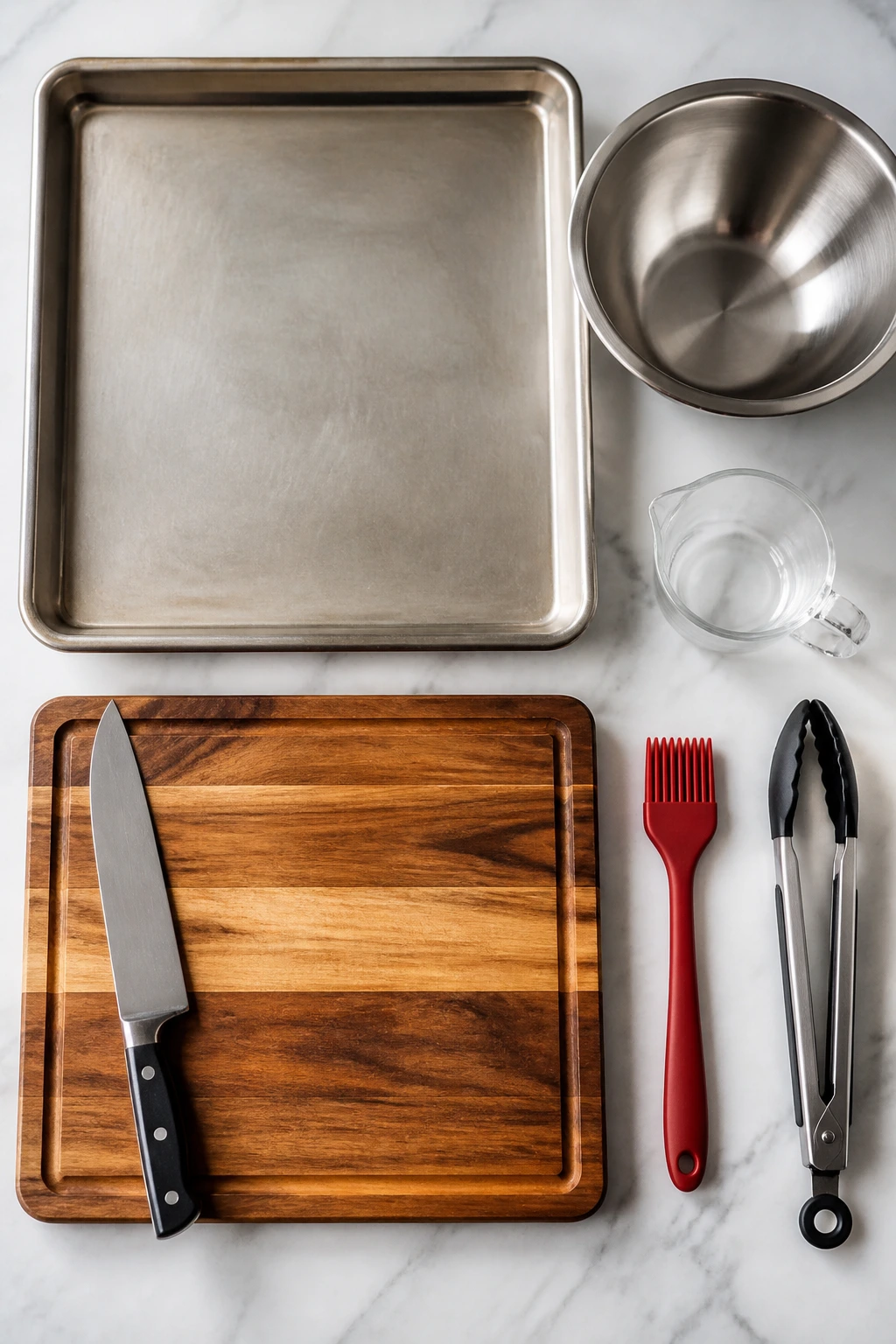
- Large rimmed sheet pan: The bigger the better; a crowded pan steams, and steam is the enemy here.
- Large mixing bowl: Use this for the potatoes and the glaze so you’re not trying to toss oily food on a hot pan.
- Small bowl or measuring cup: Perfect for whisking the glaze and keeping it ready when the tray comes out of the oven.
- Sharp chef’s knife: Sausage, potatoes, peppers, and onion all cut cleaner with a real knife rather than a dull utility blade.
- Cutting board: A stable board matters more than people think when you’re slicing sausage into even coins.
- Silicone brush or spoon: A brush spreads the glaze more evenly, but a spoon works if that’s what you’ve got.
- Spatula or tongs: You need something to turn the sausage and vegetables once without tearing the potatoes apart.
- Airtight meal-prep containers: Glass containers hold heat well and reheat cleanly, especially if you plan to use the microwave at all.
Roast the Potatoes First, Then Bring in the Rest
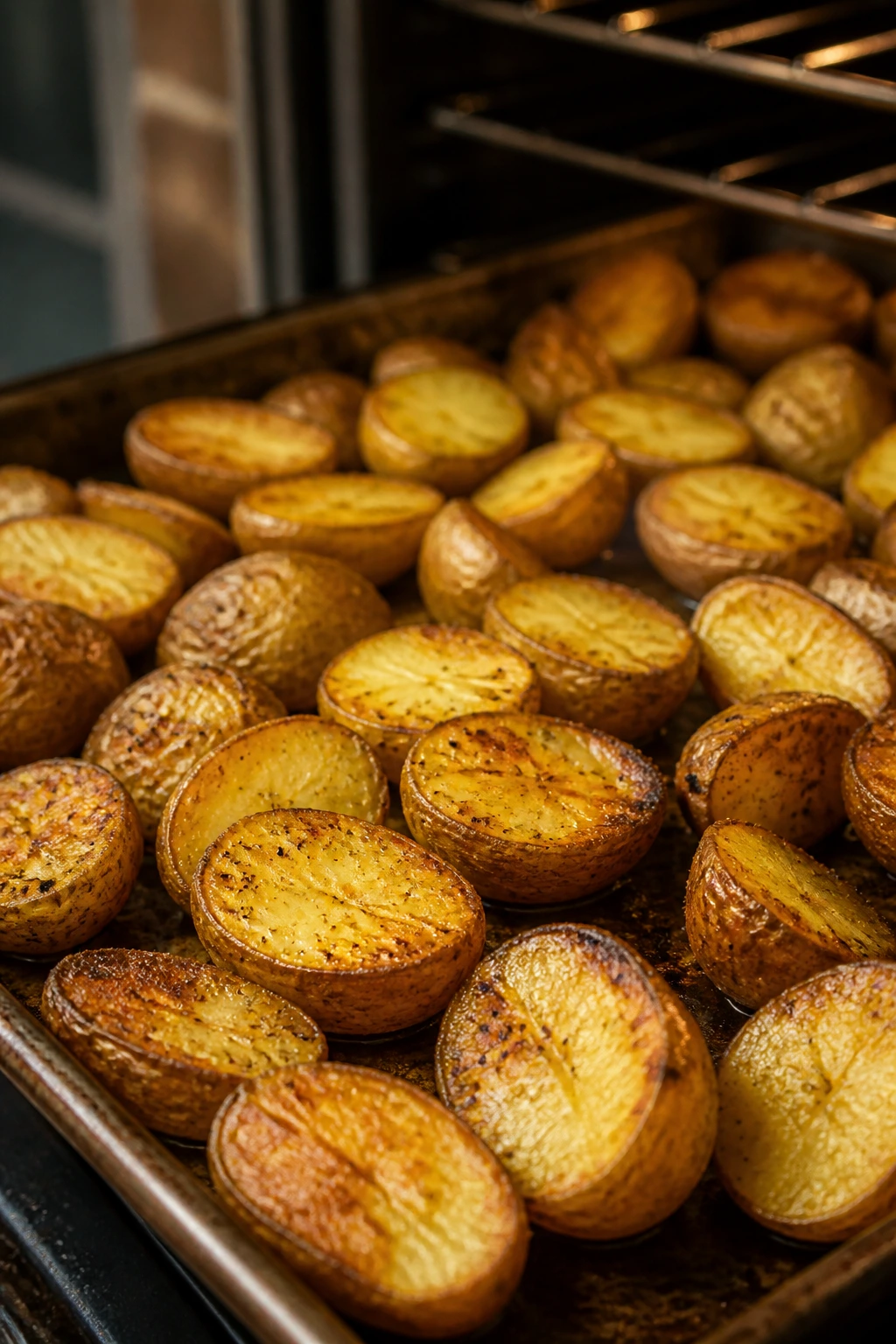
The oven does the heavy lifting here, but timing is the whole recipe. If you throw everything on the pan at once, the sausage releases fat before the potatoes are ready, the broccoli gets tired, and the glaze has no place to go except onto a soft, greasy surface. That’s not a crispy tray. That’s a compromise.
Prep the Oven and Pan
- Preheat the oven to 425°F (220°C) and position a rack in the center. If you want the fastest browning, slide the empty sheet pan into the oven while it heats so the potatoes hit a hot surface.
- If you prefer easier cleanup, line the pan with parchment, but know this: bare metal gives you better browning. I skip parchment here unless I’m dealing with a very sticky pan.
Start the Potatoes
3. In a large bowl, toss the halved potatoes with 2 tablespoons olive oil, 1 teaspoon kosher salt, 1/2 teaspoon black pepper, and 1/2 teaspoon smoked paprika. Mix until every cut side looks lightly coated.
4. Carefully spread the potatoes on the hot or prepared sheet pan, cut side down, in a single layer. Leave space around them. Roast for 15 minutes, until the cut sides are starting to turn golden and the outer edges look a little dry.
Build the Glaze
5. While the potatoes roast, whisk together the brown sugar, Dijon, apple cider vinegar, soy sauce, Worcestershire, garlic, remaining 1/2 teaspoon smoked paprika, red pepper flakes, and 1 tablespoon olive oil in a small bowl. The mixture should look glossy and thick enough to coat a spoon. If it looks grainy, keep whisking for another 20 to 30 seconds.
Add the Sausage and the Heartier Vegetables
6. Remove the pan from the oven and add the sausage, bell peppers, and onion around the potatoes. Toss gently with a spatula so the sausage and vegetables pick up a little oil from the tray, then spread everything back into a single layer. Roast for 8 minutes.
7. If the pan has more than a tablespoon or two of rendered fat, carefully spoon off the excess before glazing. Too much fat makes the glaze slide around instead of clinging to the sausage.
Finish with the Glaze and Broccoli
8. Pull the pan out again and add the broccoli florets. Drizzle or brush about two-thirds of the glaze over the sausage and vegetables, then toss lightly so the broccoli catches some of the glaze too. Return the pan to the oven for 7 to 8 minutes, until the broccoli is crisp-tender and the sausage edges are browned and sticky.
9. For darker, more caramelized edges, switch the oven to broil for 1 to 2 minutes at the end. Stay close. Sugar burns fast, and the line between lacquered and scorched is thin.
Rest and Pack
10. Let the tray sit for 5 minutes before portioning. Taste one potato and one sausage slice; if you want more brightness, drizzle the remaining glaze over the hot tray or save it for the containers.
11. Divide into meal-prep containers and scatter with parsley or scallions if using. Let the food cool before sealing the lids so you don’t trap steam and undo the crisp edges you just worked for.
How to Pack It So Lunch Still Tastes Like Dinner
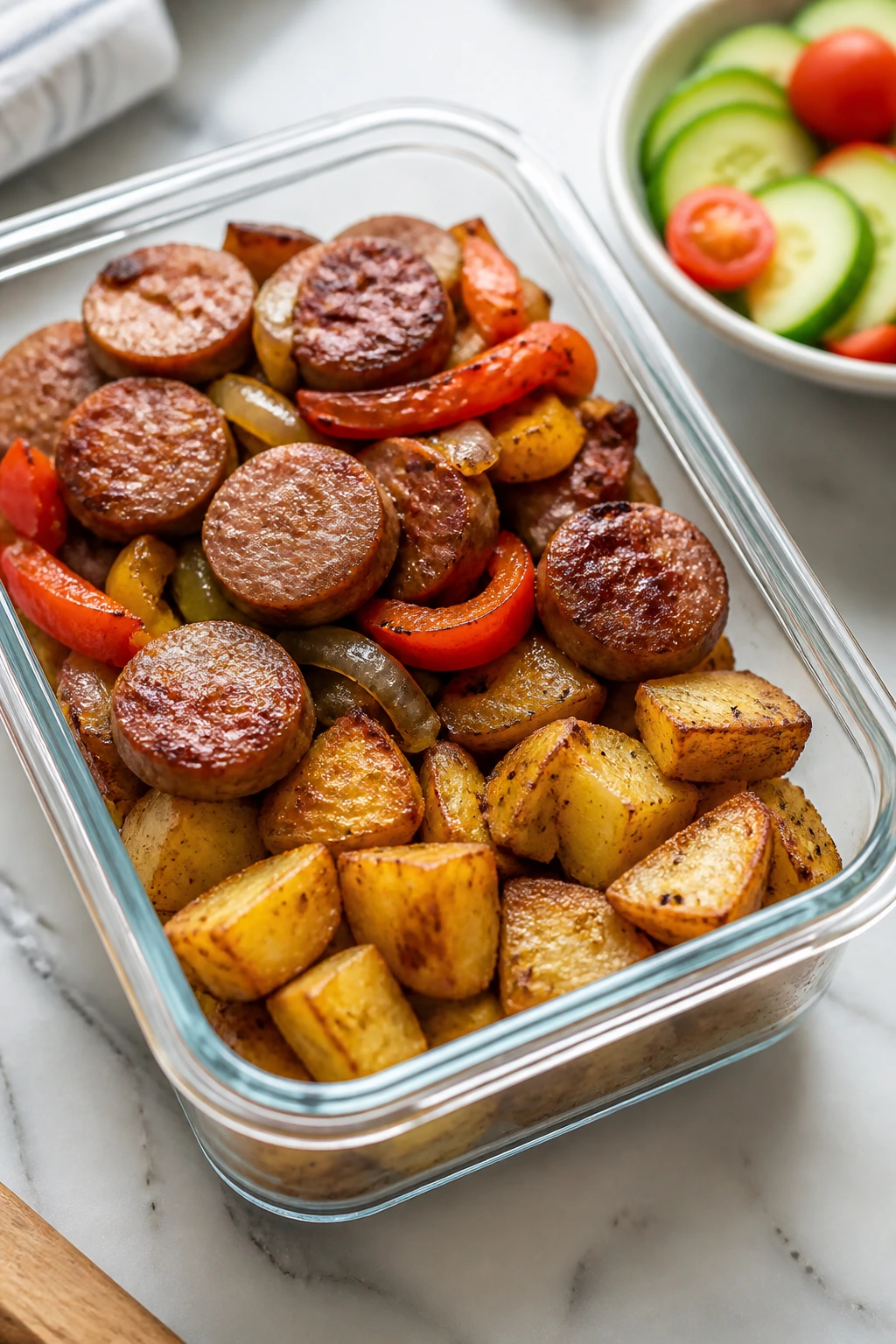
Presentation: Pack the potatoes on the bottom of each container, then layer the sausage and vegetables on top so the browned sides stay visible. A sprinkle of parsley or scallions gives the tray a fresher look and cuts through the darker glaze.
Accompaniments: A sharp green salad with lemon vinaigrette is the easiest side if you’re serving this for dinner. If you want a fuller plate, add rice, buttered noodles, or a slice of crusty bread to catch the glaze. Pickles or sauerkraut are also good here because they pull the sweetness back into balance.
Portions: Six portions makes sense for meal prep, and each one lands around 1 1/2 to 2 cups depending on how generously you pile the pan. For bigger appetites, pair the tray with a fried egg or another starch. For lighter lunches, serve it over greens and skip the extra bread.
Beverage Pairing: Unsweetened iced tea, sparkling water with lemon, or a dry hard cider all sit nicely beside the sweet-salty glaze. If you want something warm, black coffee works surprisingly well with the smoky sausage at breakfast or brunch.
Small Tweaks That Make the Tray Taste Better
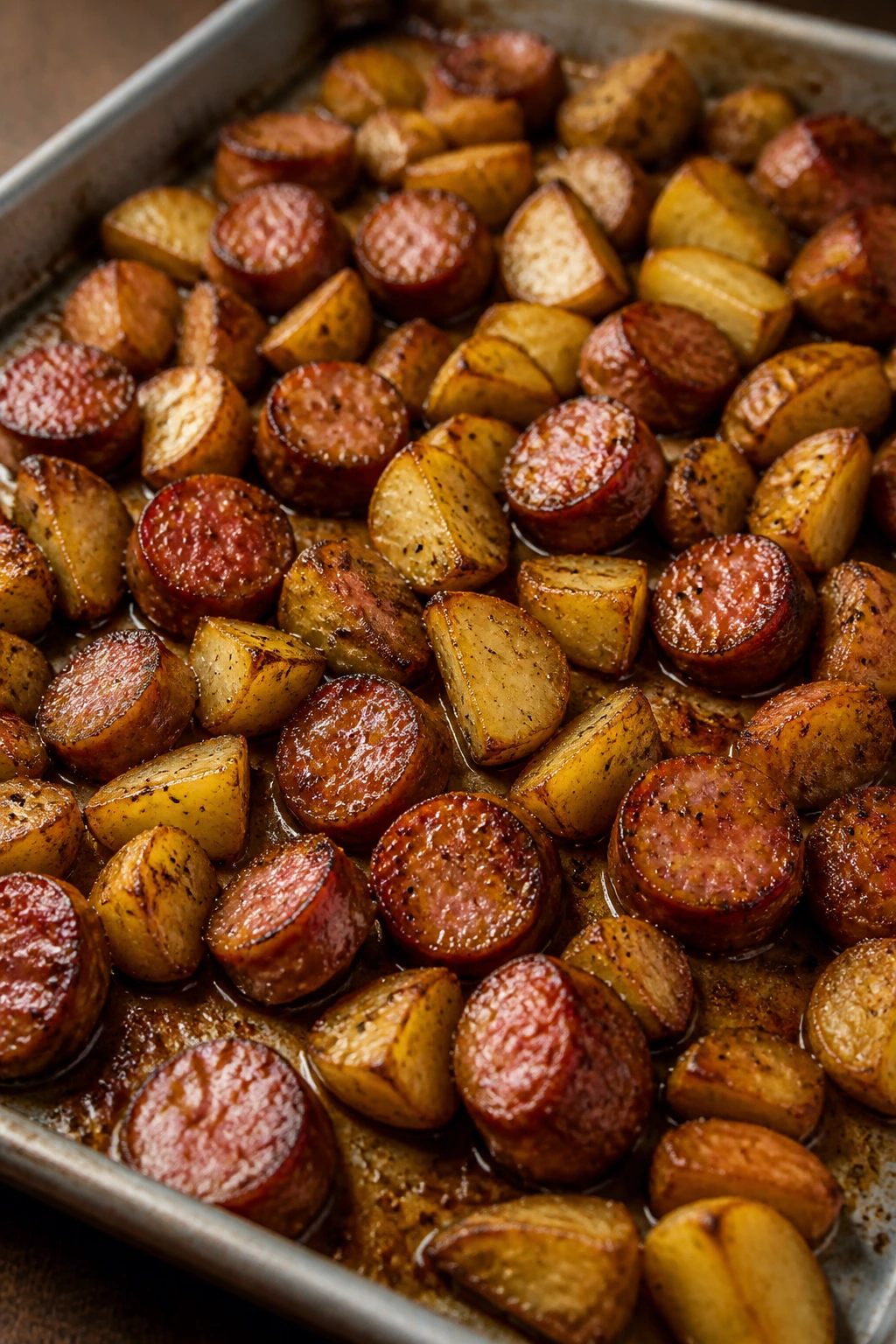
Flavor Enhancement: Stir 1 teaspoon of grainy mustard or 1 teaspoon of orange zest into the glaze if you want a sharper, brighter finish. The mustard gives the glaze a little grain and bite; the zest keeps the sugar from tasting flat after reheating.
Time-Saver: If the potatoes are large, microwave the halved pieces in a covered bowl with 1 tablespoon of water for 3 minutes, then dry them well before oiling. That shortens the roast without robbing you of the crisp edges, and it’s especially useful when you’re trying to get dinner on the table before you lose your patience.
Texture Fix: If the tray looks greasy halfway through roasting, spoon off a little rendered fat before adding the glaze. That one small move keeps the sauce attached to the sausage instead of pooling under the vegetables.
Make-It-Yours: Add 1/2 teaspoon cayenne or a spoonful of hot sauce to the glaze if you want heat. For a milder tray, leave the red pepper flakes out completely and let the vinegar do the balancing work. If you eat gluten-free, use tamari and check the sausage label carefully; a lot of smoked sausage is safe, but not all of it.
The Mistakes That Make It Soggy or Burnt
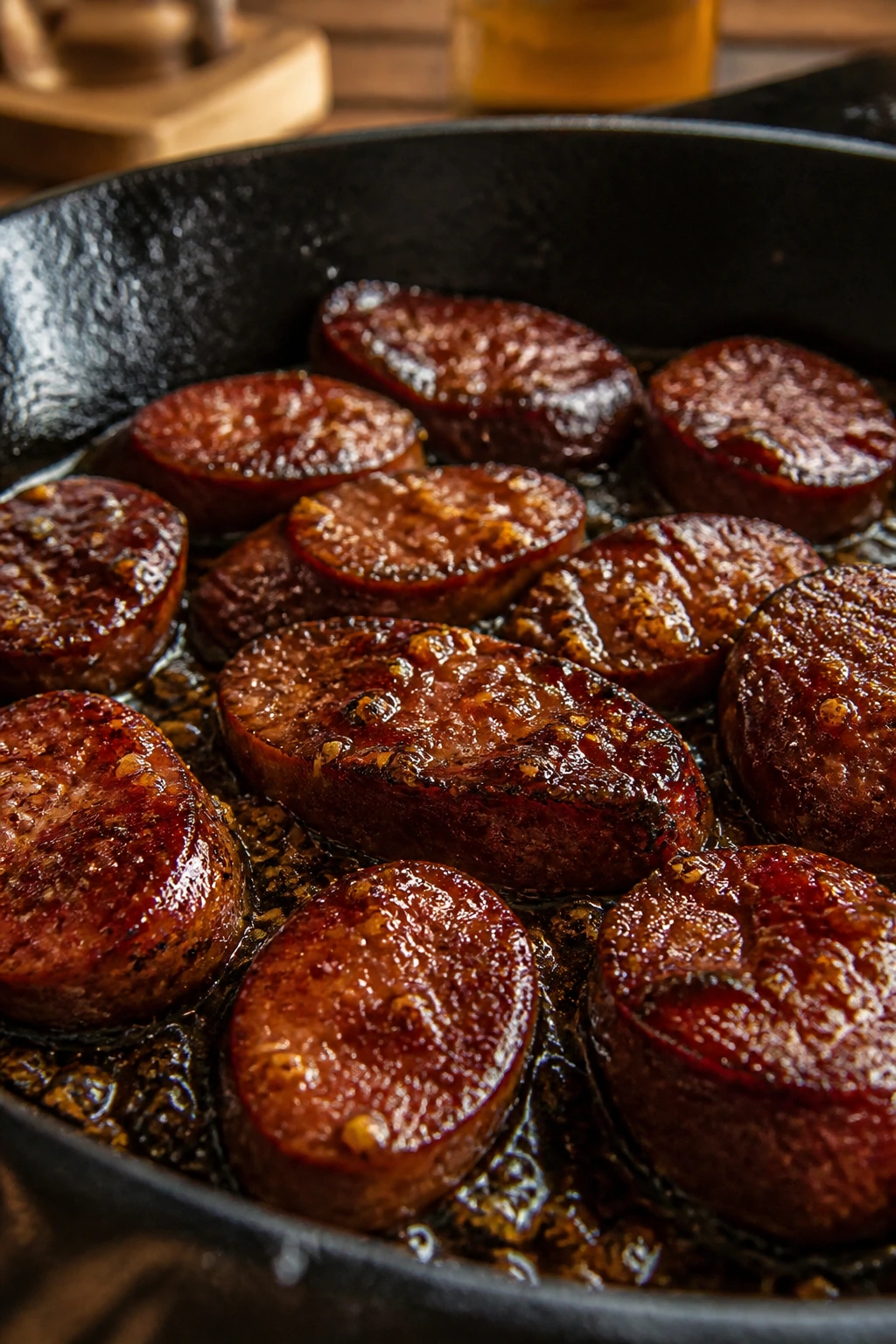
- Glazing too early: If the brown sugar mixture goes on before the sausage and potatoes have browned, it often turns sticky in the wrong way and can burn before the tray finishes. Wait until the sausage is already sizzling and the potatoes have a little color.
- Crowding the pan: If the sausage and vegetables are piled on top of each other, they steam instead of roast. Use a second sheet pan if needed. Seriously. A wide, open tray is part of the recipe, not a serving suggestion.
- Cutting everything too small: Tiny broccoli florets and thin onion slices wilt fast. Keep the vegetables sturdy so they survive the final roast and the reheat.
- Using parchment when you want deep browning: Parchment is fine for cleanup, but it softens the contact between food and metal. If you’re chasing crisp potatoes and browned sausage coins, bare metal wins.
- Skipping the potato head start: Potatoes need more time than sausage. If they go in together from the beginning, the sausage often ends up overdone before the potatoes are tender.
- Forgetting that the glaze thickens as it cooks: A glaze that looks thin in the bowl can become sticky in the oven. Don’t panic and add more sugar. Let the heat work for you.
Four Ways to Change the Tray Without Starting Over
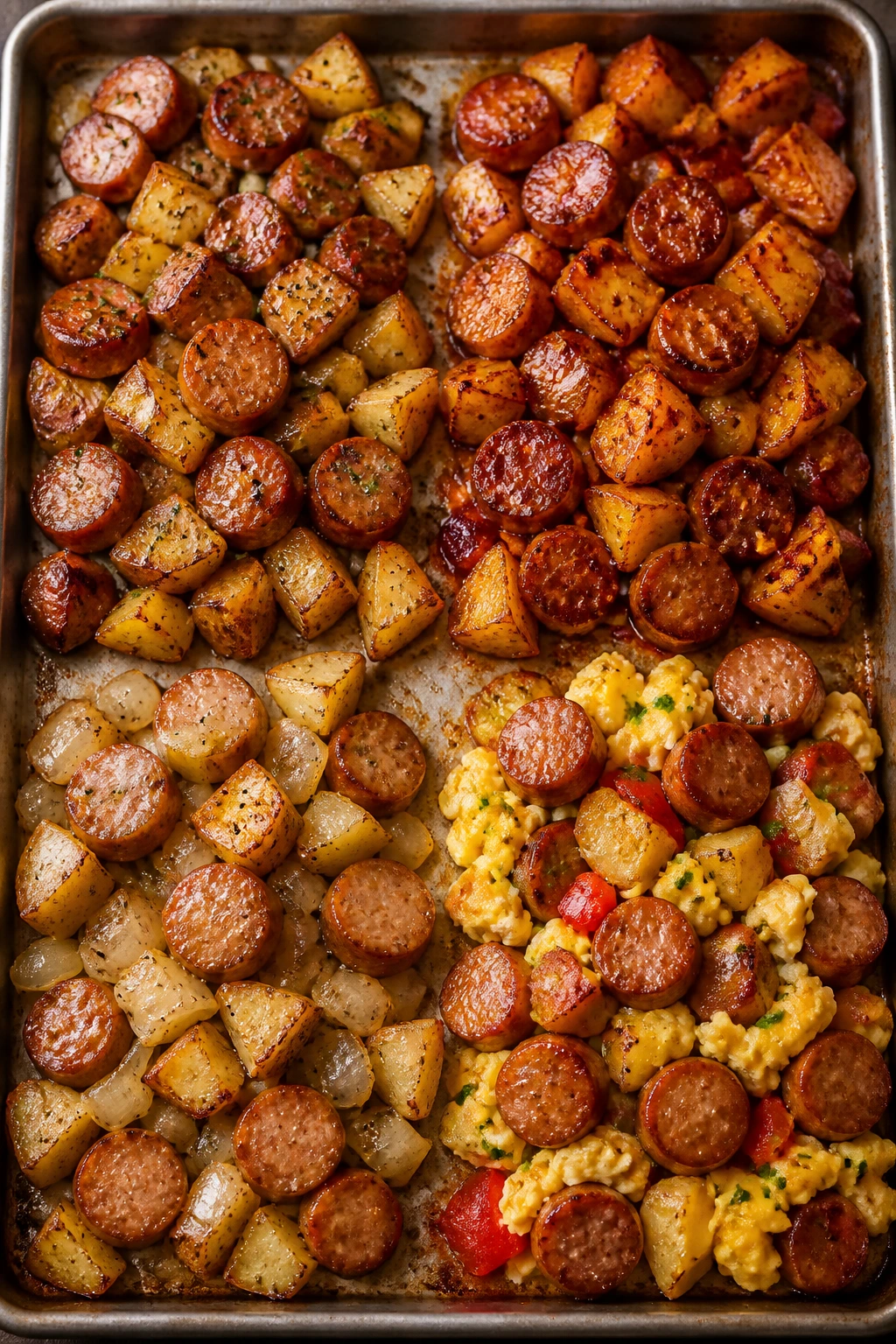
Maple-Dijon Swap
Replace the brown sugar with 3 tablespoons maple syrup and keep the Dijon, vinegar, and garlic the same. The glaze comes out looser and a little cleaner, with a woodsy note that works especially well with kielbasa. If you like breakfast sausage flavors creeping into dinner, this is the one.
Spicy Cajun Tray
Use andouille sausage, add 1 to 1 1/2 teaspoons Cajun seasoning to the potatoes, and increase the red pepper flakes in the glaze. The result has a sharper snap and a bit more heat, which helps if you usually feel like sweet glazes need a little edge. Bell peppers fit this version perfectly.
Apple-and-Onion Version
Add 1 tart apple, cut into thick wedges, during the last 10 minutes of roasting. The apple softens just enough to hold its shape, and the extra fruit acidity keeps the tray from leaning too sweet. I like this with red onion and broccoli because it tastes a little more autumnal without turning into dessert.
Breakfast Hash Mode
Swap in fully cooked breakfast sausage links or coins, cut the potatoes a little smaller, and serve each portion with a fried egg. The same glaze works, though I’d pull back the brown sugar by a tablespoon if you want the whole thing to read more breakfast hash than dinner tray. A spoonful of hot sauce on the egg makes it better.
Keeping the Crispy Bits Crisp Tomorrow
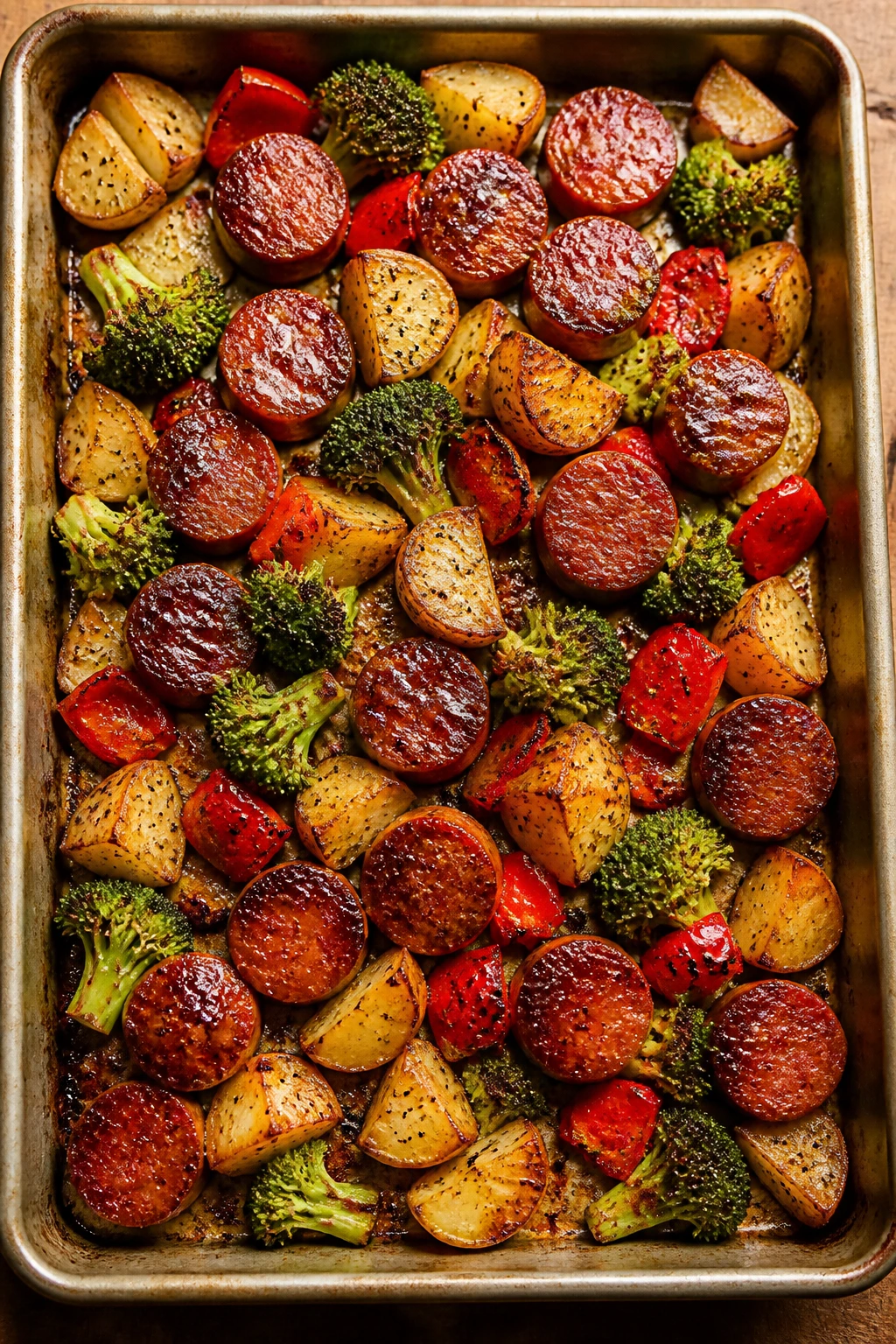
The tray keeps best if you treat it like cooked food, not a snack you can leave out for hours. Cool it for no more than 2 hours at room temperature, then pack it into airtight containers. Once it’s sealed and chilled, it will hold in the refrigerator for up to 4 days.
Freezing is possible, but I’m not wildly enthusiastic about freezing the potatoes. They soften a little on thawing, even when you reheat them carefully. If you want to freeze the batch, freeze the sausage and vegetable mix for up to 2 months and accept that the potatoes will lose some bite. The better move is to roast a fresh batch of potatoes later and freeze only the sausage portion if you know you’ll want it down the line.
For reheating, the oven is the safest bet for texture. Spread the food on a sheet pan and warm it at 400°F (205°C) for 8 to 12 minutes until the sausage is hot and the potatoes crisp back up on the edges. An air fryer works even faster: 375°F for 4 to 6 minutes, shaking once halfway through. If you use a skillet, add the portions to a lightly oiled pan over medium heat and cook for 5 to 7 minutes, stirring once or twice so the glaze doesn’t stick in one spot.
The microwave is the fallback, not the star. Use it only if you’re in a hurry, and heat in 60-second bursts so the sausage doesn’t split open. If the container looks a little dry after microwaving, a teaspoon of water or an extra spoonful of glaze helps, but I’d rather see you use a skillet for the last minute. That gives the sausage its edge back.
A little make-ahead planning helps too. You can whisk the glaze 1 week ahead and keep it in the fridge. The vegetables can be cut 1 to 2 days ahead and stored separately, dry and covered. Potatoes can be halved and held in cold water for up to 24 hours, then dried very well before roasting.
Questions People Actually Ask
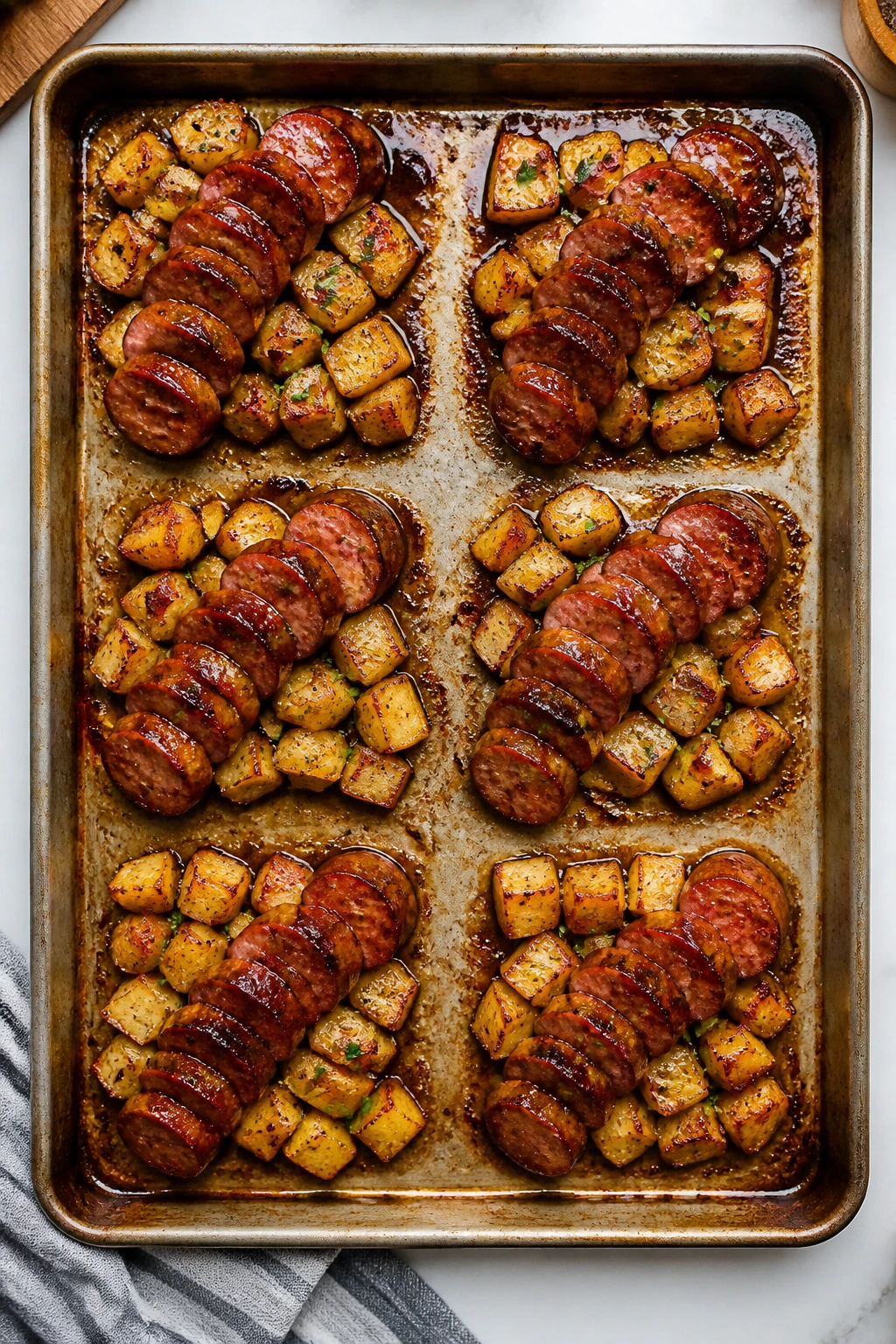
Can I use raw sausage instead of smoked sausage?
Yes, but it changes the recipe enough that I’d treat it as a different job. Raw sausage needs to cook through to 160°F in the thickest piece, and it usually gives off more fat and moisture, which can interfere with the crisping. If you want to use raw links, roast them separately or give them a longer head start before adding the glaze.
Will parchment keep the tray from browning?
A little, yes. Parchment makes cleanup easier, but it also softens the direct contact that helps the sausage and potatoes develop deeper color. If browning matters more than washing one extra pan, use bare metal with a light coat of oil.
Can I make the glaze ahead of time?
Absolutely. Whisk it up and store it in the refrigerator for up to 1 week. The sugar may settle, so give it another quick stir or shake before using. If it feels too thick after chilling, loosen it with 1 teaspoon of hot water.
What vegetables hold up best in meal prep?
Broccoli, bell peppers, red onion, Brussels sprouts, cauliflower, and green beans all hold their shape fairly well. Zucchini is the one I’d skip unless you add it at the very end, because it releases enough water to soften the whole tray. Mushrooms are fine too, but they go in later than everything else.
How do I keep the reheated meal from tasting too sweet?
Pack a sharp side with it: pickles, sauerkraut, lemony greens, or even a little extra mustard on the side. The acid wakes the tray back up. If you know you’re sensitive to sweet sauces, cut the brown sugar by a tablespoon and lean harder on vinegar and Dijon.
Can this go in the air fryer?
Yes, though you’ll need to work in smaller batches. The air fryer is best for reheating rather than cooking the whole tray from raw ingredients, because the glaze can stick to the basket and the vegetables may not brown evenly when crowded. Use it for leftovers at 375°F for 4 to 6 minutes, and you’ll get the edges back faster than with a microwave.
A Tray Worth Repeating
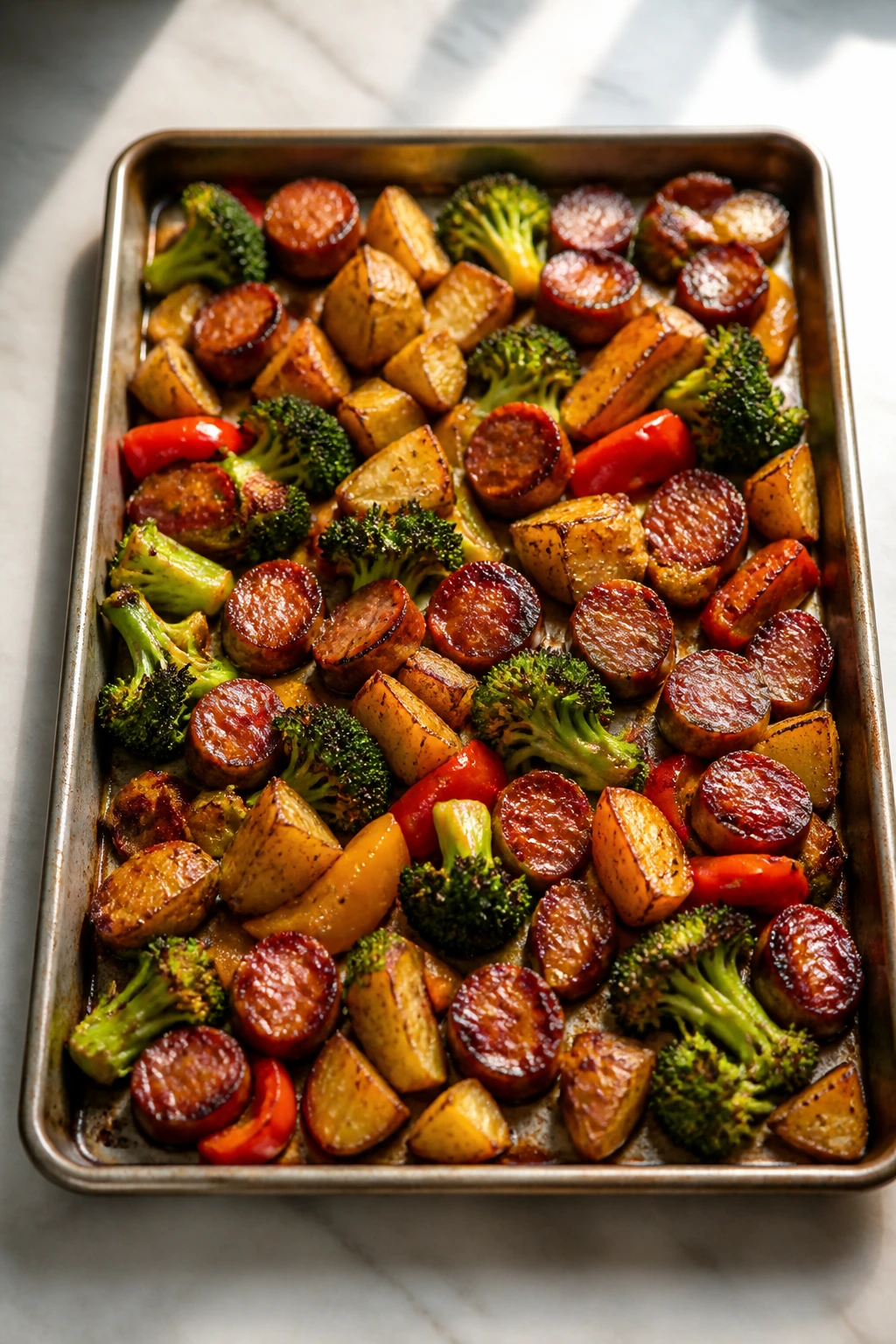
There’s a reason this kind of sheet-pan meal keeps showing up in my own rotation: it doesn’t ask for much, but it gives you back a lot if you pay attention to the order of operations. Potatoes first. Sausage second. Glaze late. That rhythm is what keeps the tray from collapsing into soft, sweet mush.
Once you get that part right, the recipe becomes sturdy enough for real life. Lunches. Quick dinners. The container you forget in the fridge until the next morning and still look forward to eating. That’s the kind of meal prep worth keeping around.
Crispy Sausage Meal Prep with Brown Sugar Glaze — Recipe Card
Recipe Name: Crispy Sausage Meal Prep with Brown Sugar Glaze
Description: A sheet-pan sausage and vegetable meal prep with browned potatoes, caramelized edges, and a glossy brown sugar-Dijon glaze. It reheats well and keeps its savory-sweet balance through the week.
Prep Time: 20 minutes
Cook Time: 30 minutes
Total Time: 50 minutes
Course: Main Course, Meal Prep
Cuisine: American
Servings: 6 servings
Calories: about 480 kcal per serving
Ingredients
For the Tray:
- 2 pounds fully cooked smoked sausage, kielbasa, or andouille, sliced into 1/2-inch coins
- 1 1/2 pounds baby Yukon Gold or red potatoes, halved
- 2 tablespoons olive oil
- 1 teaspoon kosher salt
- 1/2 teaspoon black pepper
- 1 teaspoon smoked paprika, divided
- 2 cups broccoli florets
- 2 bell peppers, seeded and sliced into 1-inch strips
- 1 medium red onion, cut into 1/2-inch wedges
For the Brown Sugar Glaze:
- 1/4 cup packed light brown sugar
- 2 tablespoons Dijon mustard
- 2 tablespoons apple cider vinegar
- 1 tablespoon low-sodium soy sauce or tamari
- 1 teaspoon Worcestershire sauce
- 2 cloves garlic, finely grated or minced
- 1 tablespoon olive oil
- 1/4 teaspoon crushed red pepper flakes
For Finishing:
- 1 tablespoon chopped parsley or sliced scallions, optional
- Extra black pepper, optional
Instructions
- Preheat the oven to 425°F (220°C) and place a rimmed sheet pan in the oven if you want extra browning.
- Toss the potatoes with olive oil, salt, black pepper, and 1/2 teaspoon of the smoked paprika.
- Spread the potatoes on the sheet pan in a single layer and roast for 15 minutes.
- Whisk the brown sugar, Dijon, vinegar, soy sauce, Worcestershire, garlic, remaining smoked paprika, red pepper flakes, and olive oil in a small bowl.
- Add the sausage, bell peppers, and onion to the pan. Toss lightly and roast for 8 minutes.
- Add the broccoli, drizzle or brush on about two-thirds of the glaze, and roast for 7 to 8 minutes more, until the vegetables are crisp-tender and the sausage is browned.
- Broil for 1 to 2 minutes if you want deeper caramelized edges, watching closely so the sugar does not burn.
- Rest for 5 minutes, then portion into containers and finish with parsley or scallions if desired.
Notes:
Use fully cooked smoked sausage for the easiest crispy result. If you want more brightness, save a little glaze for after reheating. For the best texture, reheat in the oven or air fryer instead of the microwave.