



A pan of sausage can go sideways fast. Give it too much heat and the casing splits, the fat runs out, and you’re left with something dry enough to need extra mustard to rescue it. Keep the heat too low and you get pale, rubbery links that taste more steamed than cooked. The fix is not mystery meat wizardry. It’s a brown sugar glaze, a heavy skillet, and a little patience at the end, when the sugar can melt into a shiny coat instead of burning into a bitter crust.
That sweet-savory finish does something useful that plain browned sausage never quite manages. It gives you crisp edges, a glossy surface, and a sauce that clings to the sausage instead of pooling under it like a sad puddle on the plate. I like this approach with smoked pork sausage and kielbasa because they already have enough fat and seasoning to hold up to the glaze. Fresh sausage can work too, but it needs more care and a thermometer, which I’ll get into later.
Brown sugar glaze sounds almost too simple, and that’s exactly why it works. Brown sugar brings the molasses note, vinegar keeps it from tasting like candy, Dijon adds bite, and a little butter softens the whole thing into something shiny and spoonable. Once you learn how to cook sausage this way, you stop treating it like a background ingredient and start letting it carry dinner, snacks, or a very respectable party tray.
Why Brown Sugar Glaze and Sausage Belong in the Same Pan
-
Sweet, salty, and smoky in one bite: The glaze gives the sausage a sweet edge, but the Dijon and vinegar keep the flavor from going flat. You get contrast, not cloying sweetness.
-
Fast enough for a weeknight, tidy enough for guests: Smoked sausage browns in minutes, and the glaze finishes in the same pan. That means fewer dishes and less babysitting.
-
Works as a dinner or an appetizer: Serve it over rice or mashed potatoes, or put toothpicks next to a warm platter for a snack table. The same batch can do both jobs.
-
Hard to dry out if you handle the heat right: Fully cooked sausage only needs browning and warming through, so the window for overcooking is smaller than with raw meat. That makes it forgiving.
-
The glaze can be adjusted without breaking the recipe: Want it sharper? Add more vinegar. Want it deeper? Use dark brown sugar. Want a little heat? Red pepper flakes or cayenne fit right in.
Time, Yield, and the Best Moment to Serve It
Yield: 6 servings as an appetizer or 4 servings as a main dish
Prep Time: 10 minutes
Cook Time: 18 minutes
Total Time: 28 minutes
Difficulty: Beginner — the steps are straightforward, and the glaze comes together in one skillet with no fancy technique.
Chill/Rest Time: None
Best Served: Hot from the pan, while the glaze is still glossy and the sausage edges are crisp
This is one of those dishes that looks better the moment it leaves the skillet than it does after it cools on a buffet line. The glaze thickens as it sits, so the plate should hit the table while the sauce still moves a little.
If you want to serve it for a party, keep the pan on very low heat for a short stretch and stir once in a while. Don’t walk away and let the sugar tighten into a sticky shell.
What Goes into the Pan
For the Sausage:
- 1 1/2 pounds fully cooked smoked pork sausage or kielbasa, sliced into 3/4-inch rounds
- 1 tablespoon neutral oil, only if the skillet looks dry
- 1 small yellow onion, thinly sliced
For the Brown Sugar Glaze:
- 1/2 cup packed light brown sugar
- 3 tablespoons apple cider vinegar
- 2 tablespoons Dijon mustard
- 1 tablespoon soy sauce or Worcestershire sauce
- 2 tablespoons water or unsweetened apple juice
- 2 tablespoons unsalted butter
For the Seasoning and Finish:
- 2 cloves garlic, minced
- 1/2 teaspoon smoked paprika
- 1/4 teaspoon black pepper
- Pinch of red pepper flakes, optional
- 1 tablespoon chopped parsley or sliced scallions, for serving
The ingredient list is short because it should be. Sausage already brings salt, fat, and smoke. The glaze’s job is to sharpen those edges and give them shine, not bury them under a cupboard full of spices.
Why Each Ingredient Pulls Its Weight
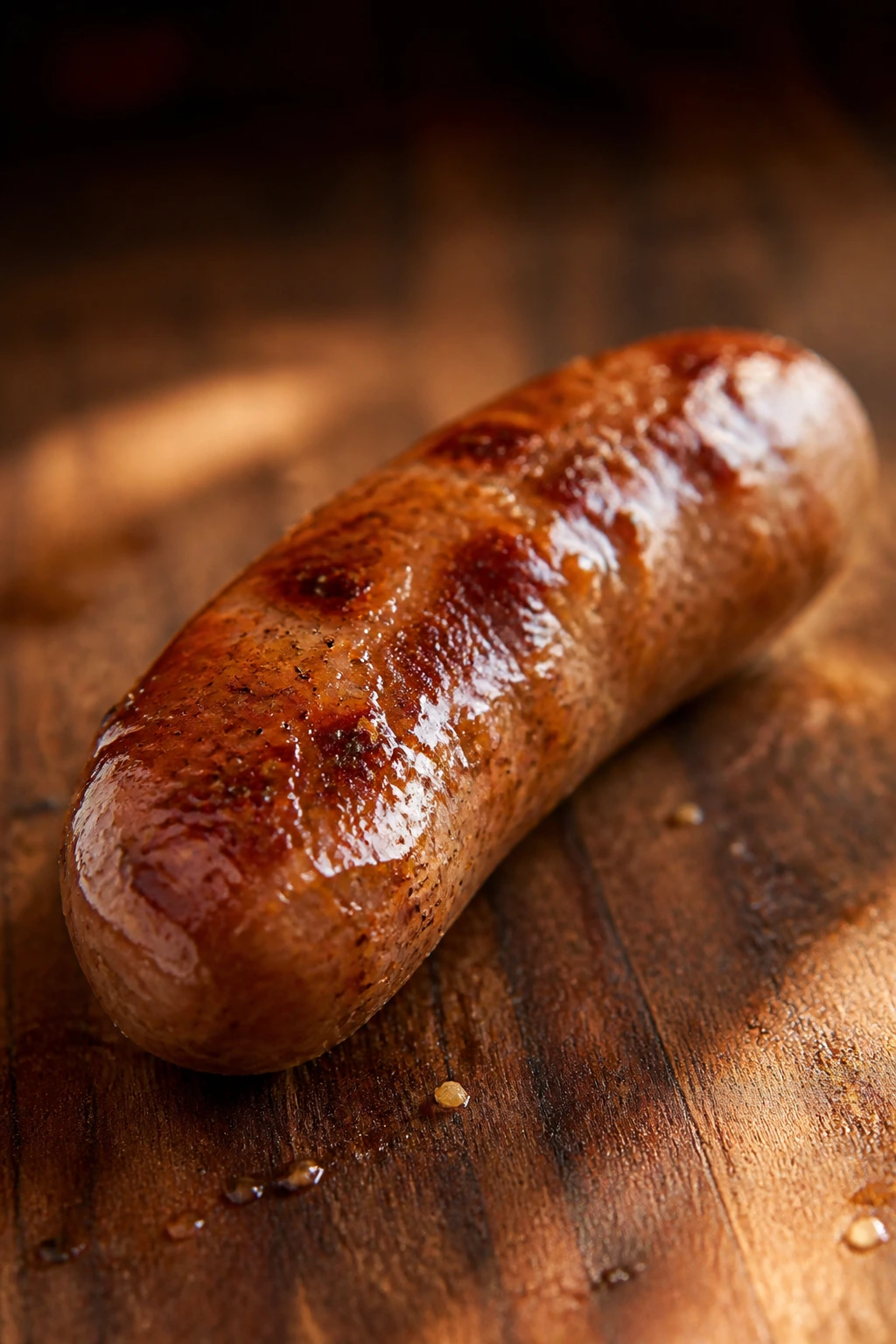
The Sausage
What to use: 1 1/2 pounds fully cooked smoked pork sausage or kielbasa, sliced into 3/4-inch rounds. That thickness gives you browned edges without turning the centers dry and tough.
Preparation: Pat the sausage dry before it hits the skillet. Surface moisture is the enemy of browning, and this dish lives or dies on that first sear.
Substitutions: Turkey sausage and chicken sausage both work, though they give a leaner result. Fresh pork sausage links can also be used, but they need to be cooked to 160°F before glazing.
Tips: Slice evenly. A thick chunk next to a thin coin means one piece will get dark while the other barely heats through. I like kielbasa here because the fat content keeps the texture plush even after the glaze goes on.
The Brown Sugar Glaze
What to use: 1/2 cup packed light brown sugar, 3 tablespoons apple cider vinegar, 2 tablespoons Dijon mustard, 1 tablespoon soy sauce or Worcestershire sauce, 2 tablespoons water or apple juice, and 2 tablespoons unsalted butter.
Preparation: Whisk the glaze before the sausage gets too far into browning. Once the pan is hot and the sugar starts to move, the whole process goes quickly.
Substitutions: Dark brown sugar gives a deeper molasses note. Maple syrup can replace up to half the brown sugar, but it burns faster, so keep the heat modest.
Tips: The vinegar matters more than people think. Without it, the glaze tastes one-note and sticky in the wrong way. That sharp little edge is what keeps the sausage from reading like dessert.
The Aromatics and Seasoning
What to use: 1 small yellow onion, 2 cloves garlic, 1/2 teaspoon smoked paprika, 1/4 teaspoon black pepper, and a pinch of red pepper flakes if you want a little burn.
Preparation: Slice the onion thin so it softens in the same time it takes to build the glaze. Mince the garlic right before you need it so it stays fragrant and doesn’t turn tired.
Substitutions: Shallots give a softer, sweeter base. If you’re short on time, 1/2 teaspoon onion powder can stand in, but a fresh onion does better work here.
Tips: Garlic goes in late. If it hits the pan too early, it can scorch under the sugar and leave the whole dish with a bitter edge. That bitter note is hard to hide.
The Finish
What to use: 2 tablespoons butter and 1 tablespoon chopped parsley or sliced scallions.
Preparation: Stir the butter in off the heat so it melts into the glaze instead of frying in the pan. Chop the herbs right before serving for the cleanest color and flavor.
Substitutions: If you want a brighter finish, use chopped dill or a few drops of lemon juice. If you want a richer one, an extra teaspoon of butter does the trick.
Tips: A little green on top matters more than people admit. The dish is dark and glossy; parsley or scallions keep the plate from looking heavy.
Tools That Keep the Glaze Where It Belongs
-
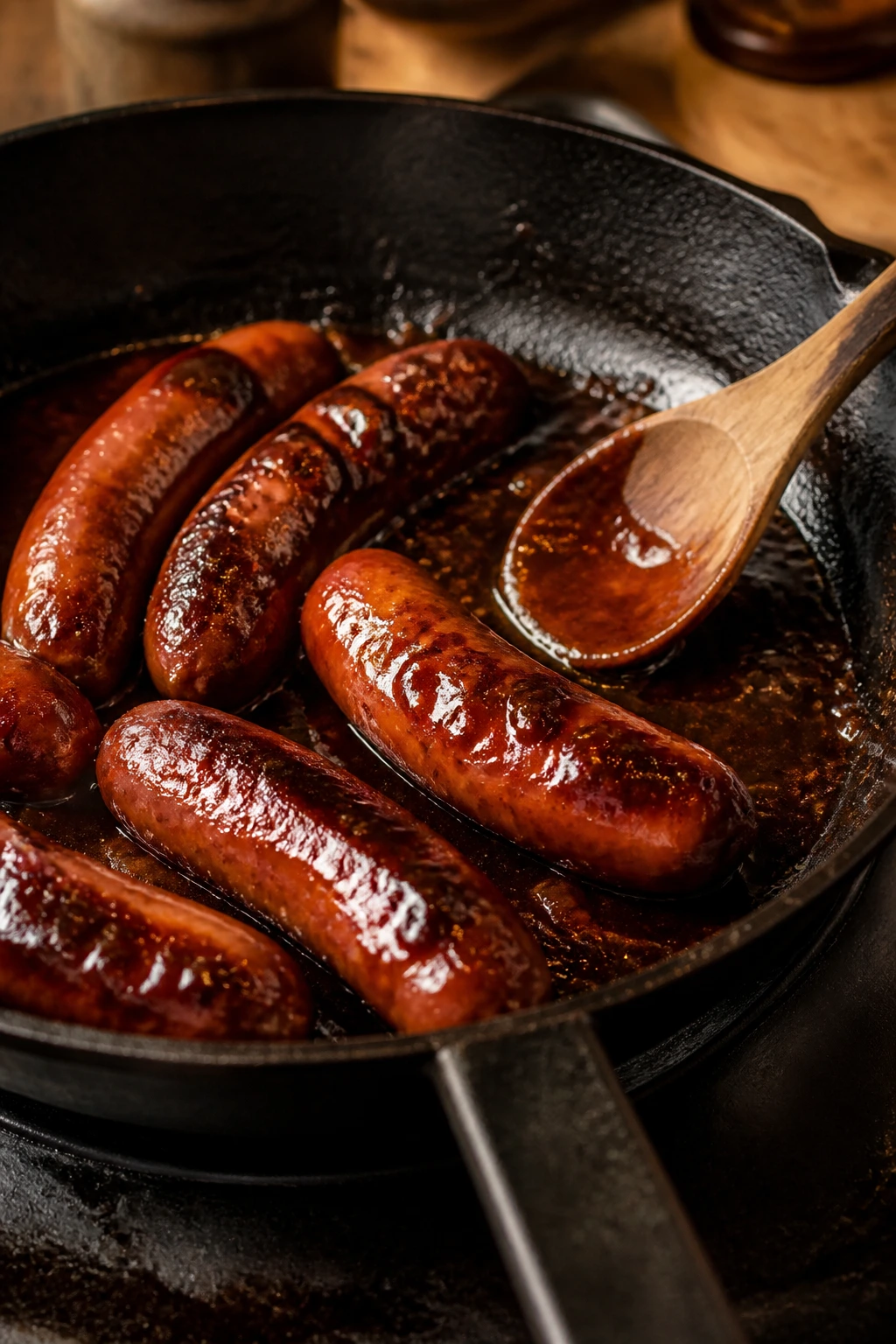
12-inch cast-iron skillet or heavy stainless skillet: A thin pan swings hot and cold too fast, which makes sugar misbehave.
-
Wooden spoon or silicone spatula: You need something that can scrape up browned bits without scratching the pan.
-
Tongs: Useful for turning sausage pieces quickly so they brown on all sides.
-
Small mixing bowl and whisk: The glaze is faster and smoother when it’s mixed before the pan gets hot.
-
Sharp knife and cutting board: Even slices mean even browning.
-
Instant-read thermometer: Essential if you use fresh sausage links and want to check for 160°F at the center.
-
Rimmed sheet pan or air fryer basket: Handy if you want to use one of the oven or air fryer versions.
A splatter screen is optional, but I do like one when the sausage is extra fatty. Brown sugar and hot fat together can pop a little, and nobody enjoys scrubbing syrup off the stove.
The Stovetop Method for Deep Browning and a Glossy Finish
Prep and Mix the Glaze:
-
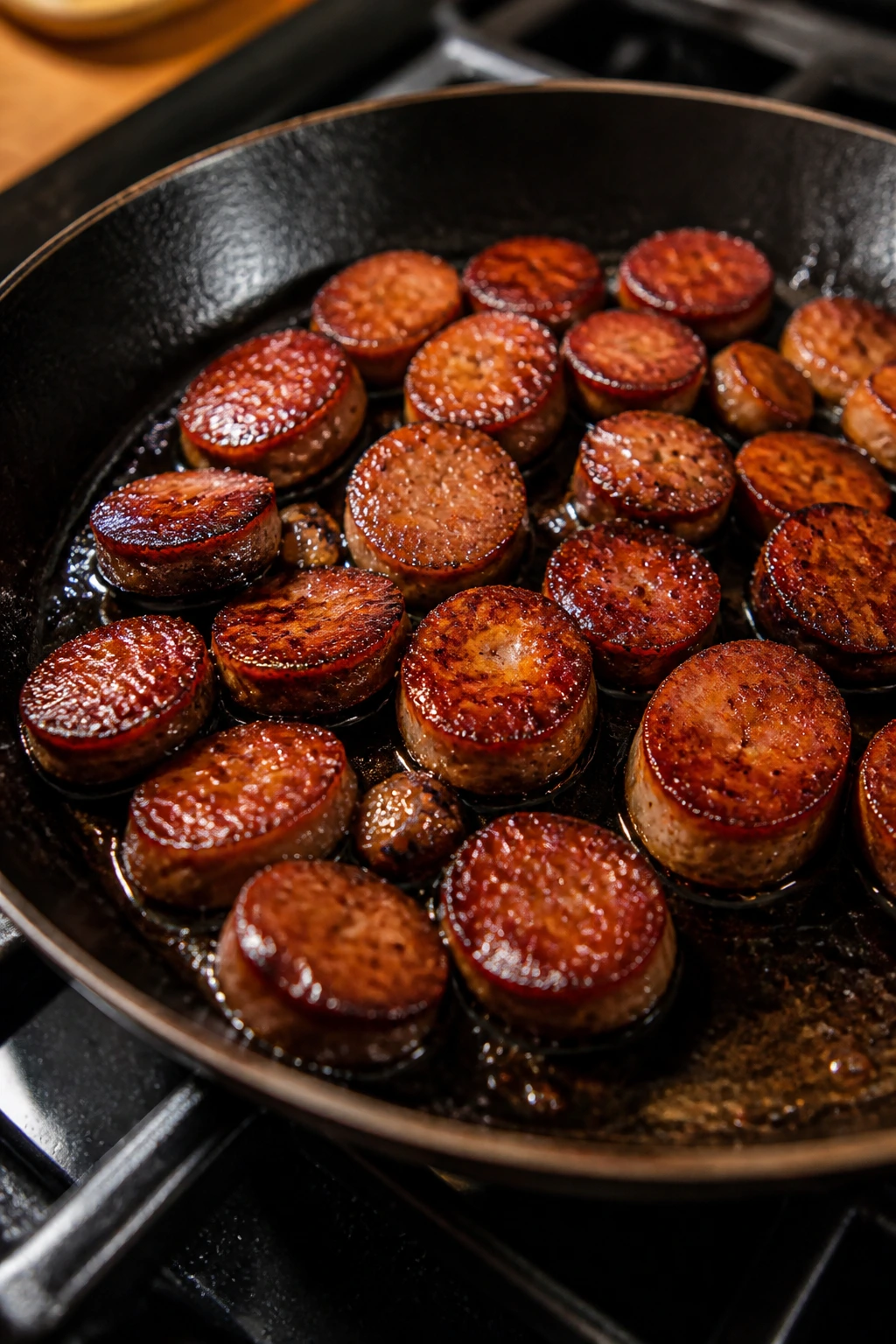
Slice and dry the sausage. Cut 1 1/2 pounds smoked sausage or kielbasa into 3/4-inch rounds, then pat the slices dry with paper towels. Dry surfaces brown faster, and this first minute decides how much flavor you build.
-
Whisk the glaze ingredients together. In a small bowl, stir the brown sugar, apple cider vinegar, Dijon mustard, soy sauce, water or apple juice, smoked paprika, black pepper, and red pepper flakes if using. Keep the butter out for now; it goes in at the end.
-
Prepare the onion and garlic. Slice the onion thin and mince the garlic. Set them near the stove so you can move without hunting for ingredients once the sausage starts browning.
Brown and Build the Pan Sauce:
-
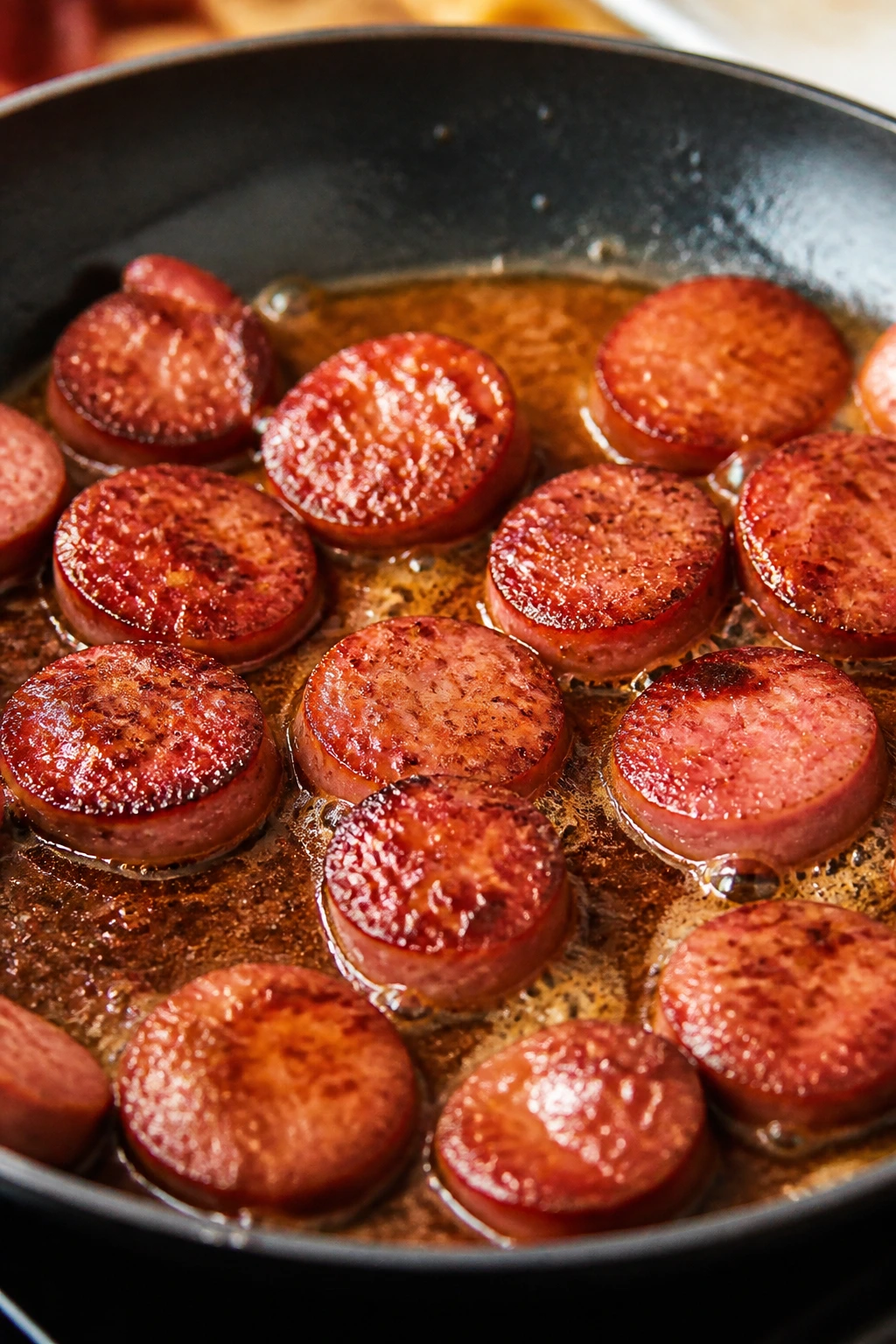
Heat the skillet over medium-high. Add the sausage to a dry skillet first if it renders enough fat; if the pan looks dry, add 1 tablespoon neutral oil. Cook in a single layer for 2 to 3 minutes per side, until the edges are deeply golden and the centers are hot.
-
Remove the sausage briefly and soften the onion. If the pan has more than about 1 tablespoon of fat, spoon off the excess, leaving a thin film behind. Add the onion and cook for 4 to 5 minutes over medium heat, stirring often, until it turns soft and translucent with a few browned edges.
-
Add the garlic and stir for 30 seconds. You want the garlic fragrant, not browned. If it starts to smell sharp or bitter, the pan is too hot.
-
Pour in the glaze and scrape the skillet. Add the whisked glaze and stir well, scraping up every browned bit from the bottom. Simmer for 2 to 3 minutes, just until the sauce looks glossy and slightly thicker than maple syrup.
Finish and Serve:
-
Return the sausage to the pan. Toss it in the glaze for 1 to 2 minutes, until every piece is coated and the sauce clings in shiny lines instead of running freely.
-
Stir in the butter off the heat. Remove the skillet from the burner and add the butter. Stir until it melts and the glaze turns satin-smooth. Finish with parsley or scallions and serve right away.
The sausage should be hot all the way through, but the real cue is visual: the glaze should stick to the spoon and leave a slow trail when you drag it across the pan. That’s the point where the sugar has reduced enough to coat, not harden.
Oven, Air Fryer, and Grill Versions
Sheet Pan Version
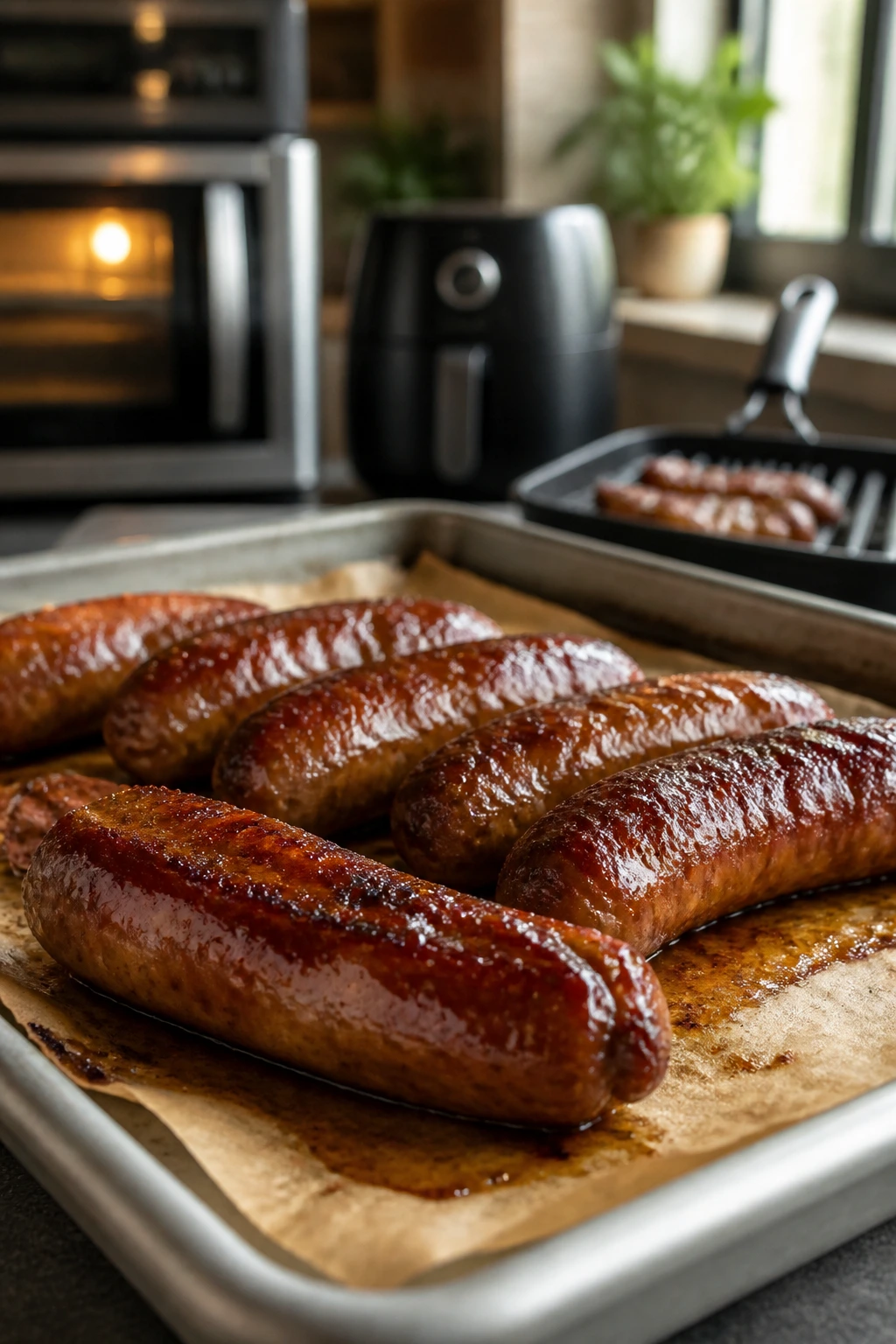
If you want to feed more people with less stove traffic, use a rimmed sheet pan lined with parchment or foil. Toss the sliced sausage and onion with a little oil, spread them out in a single layer, and roast at 425°F for 12 minutes. Brush with the glaze, stir, then roast 5 to 7 minutes more until the edges brown and the sauce bubbles in little sticky pockets.
I prefer this method when I’m making the dish for a larger table because it gives you more surface area and less stirring. You do need to watch the sugar near the end. Sugar can go from lacquer to burnt fast under a hot oven broiler, so if you want more color, use broil for 30 to 60 seconds and stand there with the door cracked open.
Air Fryer Version
Air fryers are good at crisping sausage, but they are not a place to dump a sugary glaze early and hope for the best. Cook the sausage and onion at 375°F for 8 to 10 minutes, shaking once halfway through. Warm the glaze in a small saucepan or microwave-safe bowl, then toss the hot sausage with it after cooking.
This is the cleanest route if you want crisp edges and a lighter, less saucy finish. The glaze won’t cling quite as thickly as it does in a skillet, but the sausage pieces hold their shape well and the flavor is sharp.
Grill Version
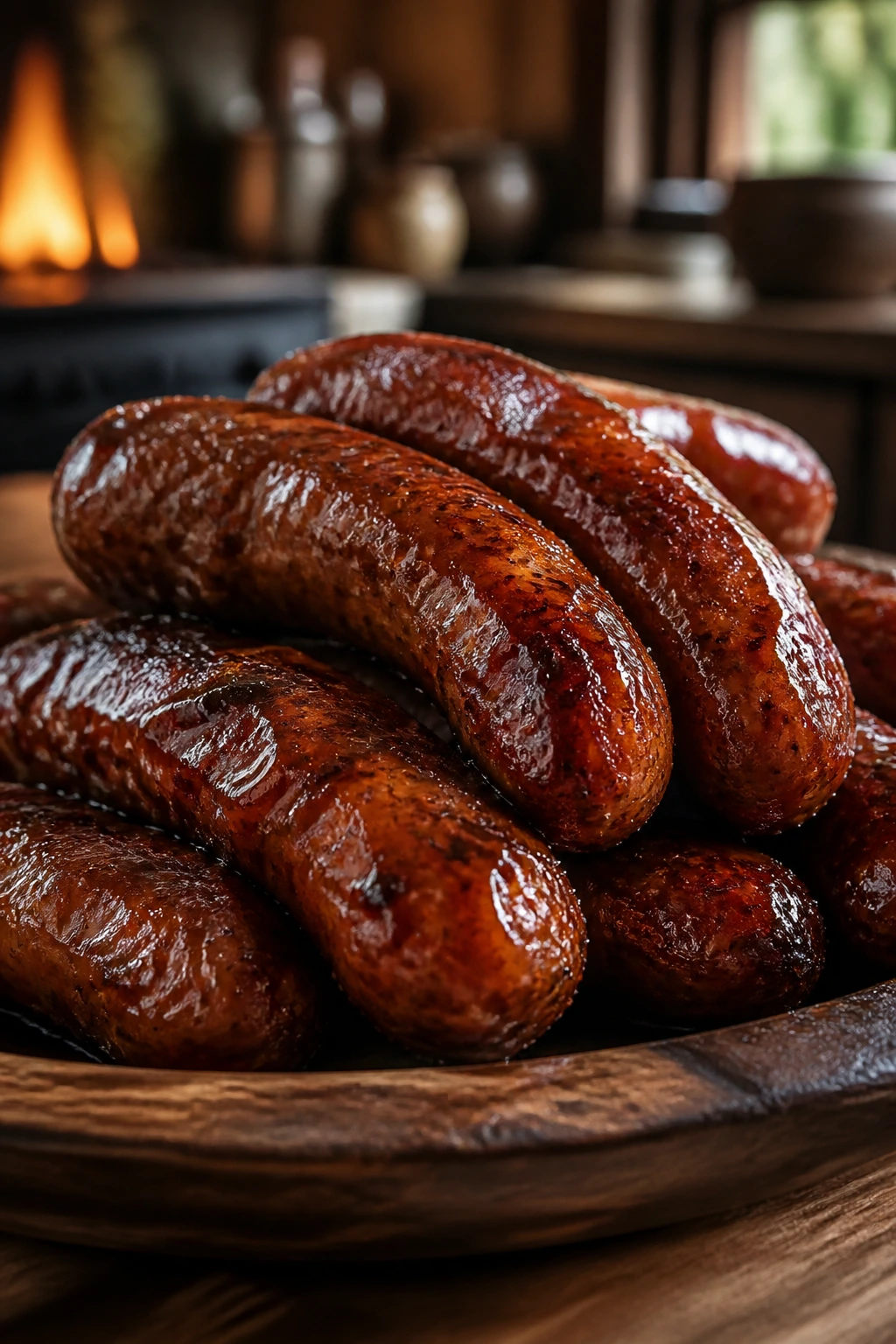
For the grill, use whole links or thick slices and cook over medium heat, not raging flames. Grill the sausage until it has clear marks and feels firm when pressed, then move it to a cooler part of the grate and brush on the glaze during the last minute or two. Keep turning it so the sugar doesn’t scorch on one side.
I like the grill version for outdoor cooking because the smoke and char add a layer the skillet can’t fake. Still, if the glaze drips too much, it can flare up. Keep the lid handy, and don’t walk away.
How to Serve It Without Letting the Glaze Take Over
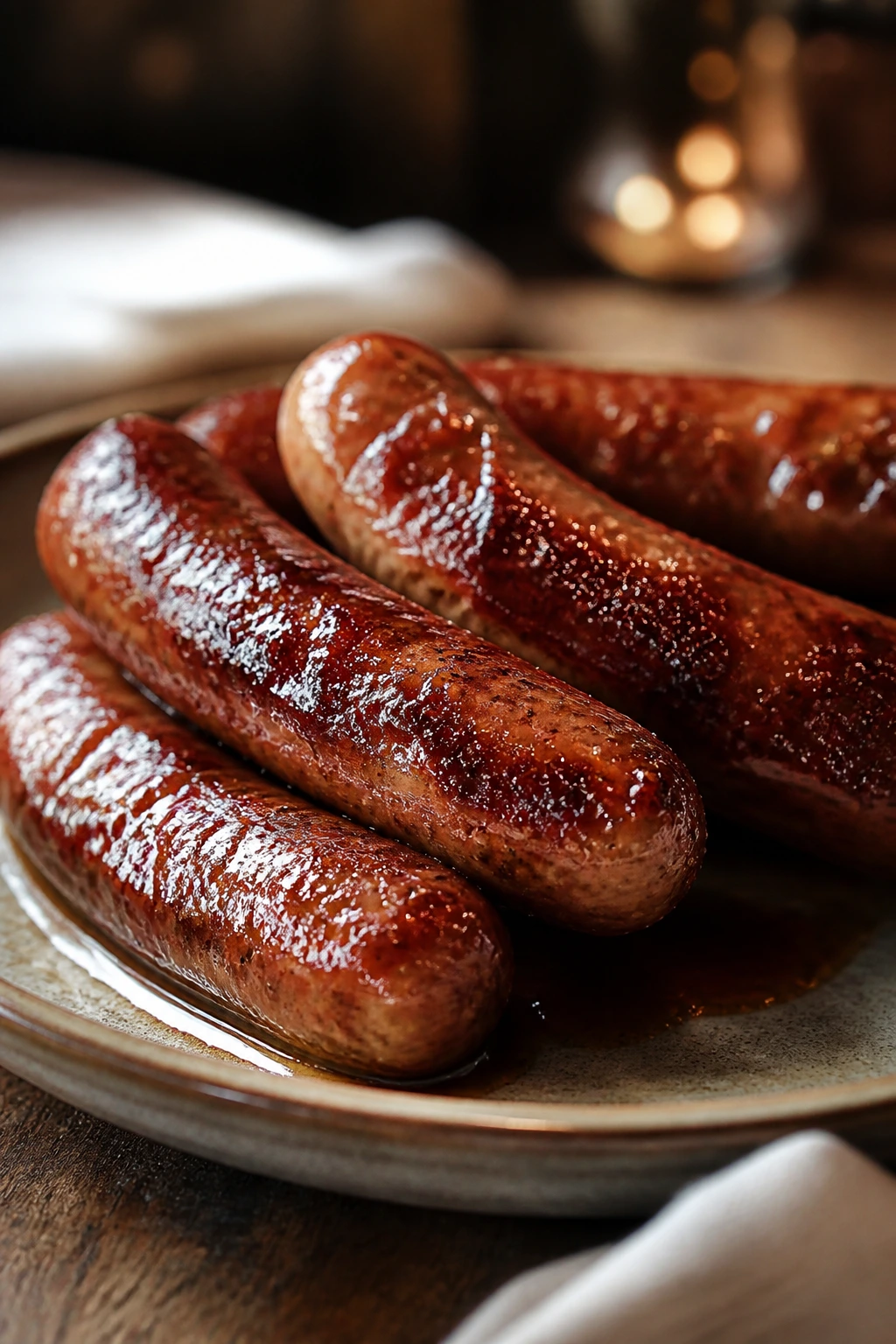
Presentation: Spoon the sausage into a warm shallow bowl or onto a platter, then drizzle just enough of the glaze over the top to make it glossy. A sprinkle of parsley or scallions keeps the plate from turning into a brown blur.
Accompaniments: Mashed potatoes, buttered rice, roasted cabbage, skillet cornbread, soft dinner rolls, and sauerkraut all make sense here. If you want a sharper plate, serve it with a mustardy slaw or vinegar-dressed green beans.
Portions: Plan on about 1/4 pound of sausage per person as a side dish and closer to 6 to 8 ounces if it’s the main event. For a party spread, one batch feeds 6 comfortably with toothpicks; for dinner, pair it with a starch and a vegetable.
Beverage Pairing: Cold lager, hard apple cider, or a dry sparkling soda with citrus works cleanly against the sweetness. If you want something nonalcoholic and less sweet, plain seltzer with lime cuts the glaze better than sugary soda ever will.
The plate should look sticky in a good way. You want shine, not flood. If there’s a deep puddle of sauce under the sausage, the glaze has gone too thin, and you probably added too much liquid or stopped reducing too early.
Tips for a Glossy, Not Gummy, Finish
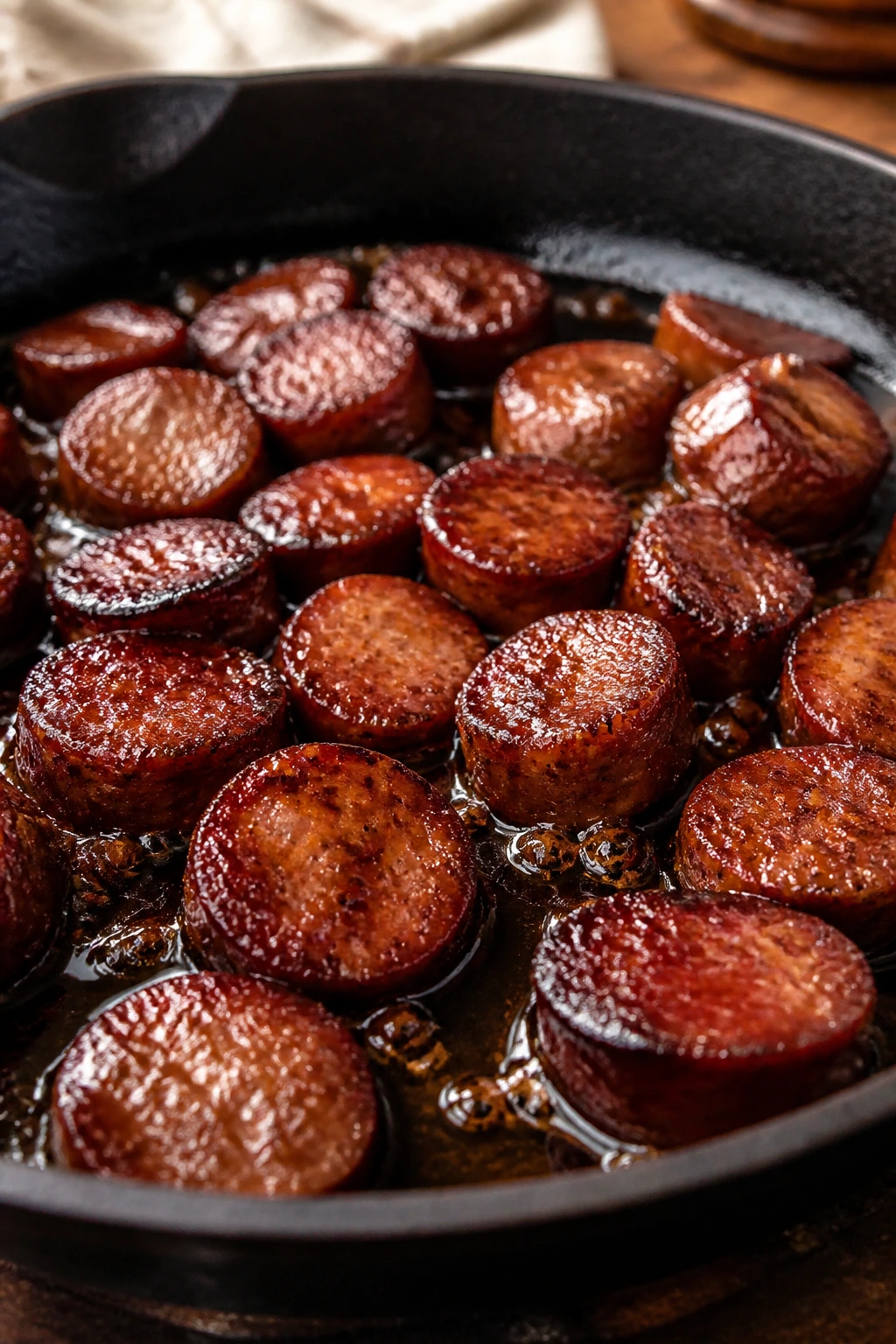
Flavor Enhancement: Stir in the butter off the heat, not while the glaze is boiling. That small move smooths the sauce and keeps the sugar from tasting sharp at the edges. If you want a deeper flavor, swap half the light brown sugar for dark brown sugar and add a teaspoon of Worcestershire.
Time-Saver: Slice the onion and mix the glaze in the morning, then refrigerate both until dinner. When it’s time to cook, you only need to brown, simmer, and finish. I do the same thing when I know a party tray is coming; it cuts the stove time down to the part that actually matters.
Pro Move: Reserve a spoonful of the glaze before it goes into the pan if you want a brighter finish on the platter. Warm it briefly and brush it over the sausage right before serving. That second coat makes the surface look lacquered.
Cost-Saver: Store-brand smoked sausage is fine here. The glaze covers a lot of sins, and you do not need premium links for this recipe to work. Spend the extra money on Dijon mustard instead; the cheap stuff can taste flat once it’s heated.
A small spoonful of mustard on the side is worth setting out too. People who like sharper flavors will reach for it, and the sweet glaze suddenly feels more layered.
Mistakes That Turn Sticky Sausage into a Mess
-
Crowding the skillet: If the sausage pieces are stacked on top of each other, they steam instead of brown. The fix is simple: cook in two batches if needed. You want space around each coin so the edges can color.
-
Letting the glaze boil hard: Brown sugar can go from glossy to scorched fast when the burner is too high. If the sauce bubbles like crazy, turn the heat down right away. A lazy simmer is what you want.
-
Adding garlic too early: Garlic burns faster than onion, especially once sugar is in the pan. If it smells bitter or starts turning deep brown, the glaze will taste harsh. Always add garlic after the onion has softened, not before.
-
Using too much liquid: A glaze that’s thin enough to pour like broth will not stick to the sausage. If that happens, simmer it a minute longer before returning the sausage to the pan. You want a spoon-coating texture, not soup.
-
Skipping the dry pat on the sausage: Wet sausage won’t sear well. It slides around and releases steam, which makes the glaze work harder than it should. A quick paper towel wipe fixes most of that problem.
-
Forgetting the sausage type: Fresh sausage and smoked sausage do not behave the same way. Smoked sausage only needs heating and browning; fresh pork sausage must be cooked through to 160°F. If you swap them without changing the method, you get either undercooked centers or overcooked skins.
Flavor Swaps That Still Taste Like Dinner
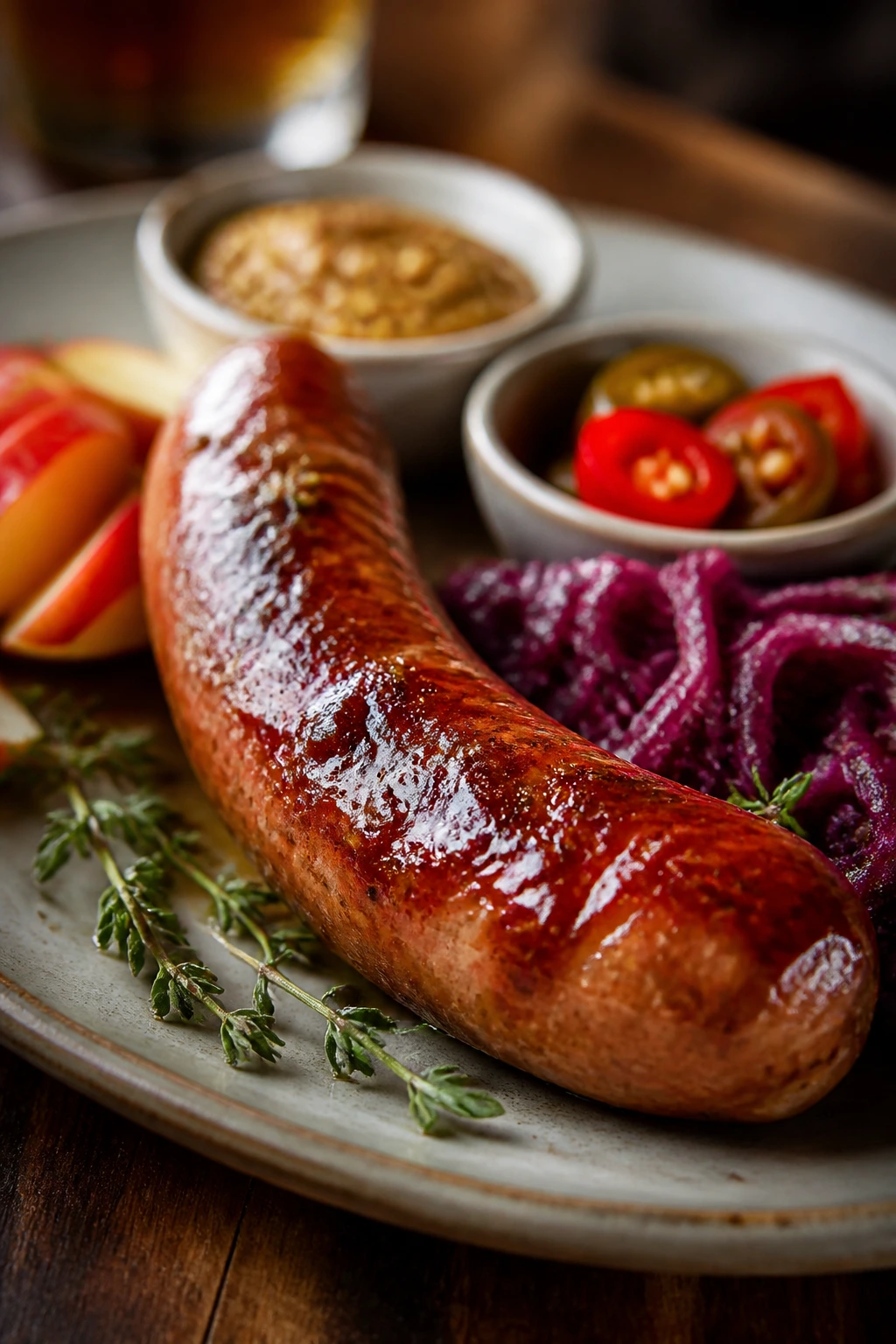
Mustard-Forward Version: Increase the Dijon to 3 tablespoons and cut the brown sugar to 1/3 cup. The glaze gets sharper and less sweet, which I prefer when the sausage itself is already heavily seasoned.
Apple Orchard Skillet: Replace the water with unsweetened apple juice and add 1 small apple, cut into thin wedges. The apple softens in the pan and leans the dish toward a fall-style dinner without turning it into dessert.
Spicy Smokehouse Kick: Add 1/2 teaspoon cayenne or 1 teaspoon chipotle powder, and use andouille instead of kielbasa. The smoke plus heat gives the glaze a darker edge, and the sweetness lands harder against the spice.
Dairy-Free, Butter-Free Finish: Skip the butter and finish the glaze with 1 teaspoon olive oil or a splash of chicken broth. The sauce won’t be as silky, but it stays glossy and the dish keeps its shine.
Whole-Link Grill Version: Keep the sausage links whole, grill them over medium heat, then brush on the glaze during the final minute. This version works well when you want cleaner servings and a more dramatic char on the outside.
Make-Ahead, Storage, and Reheating
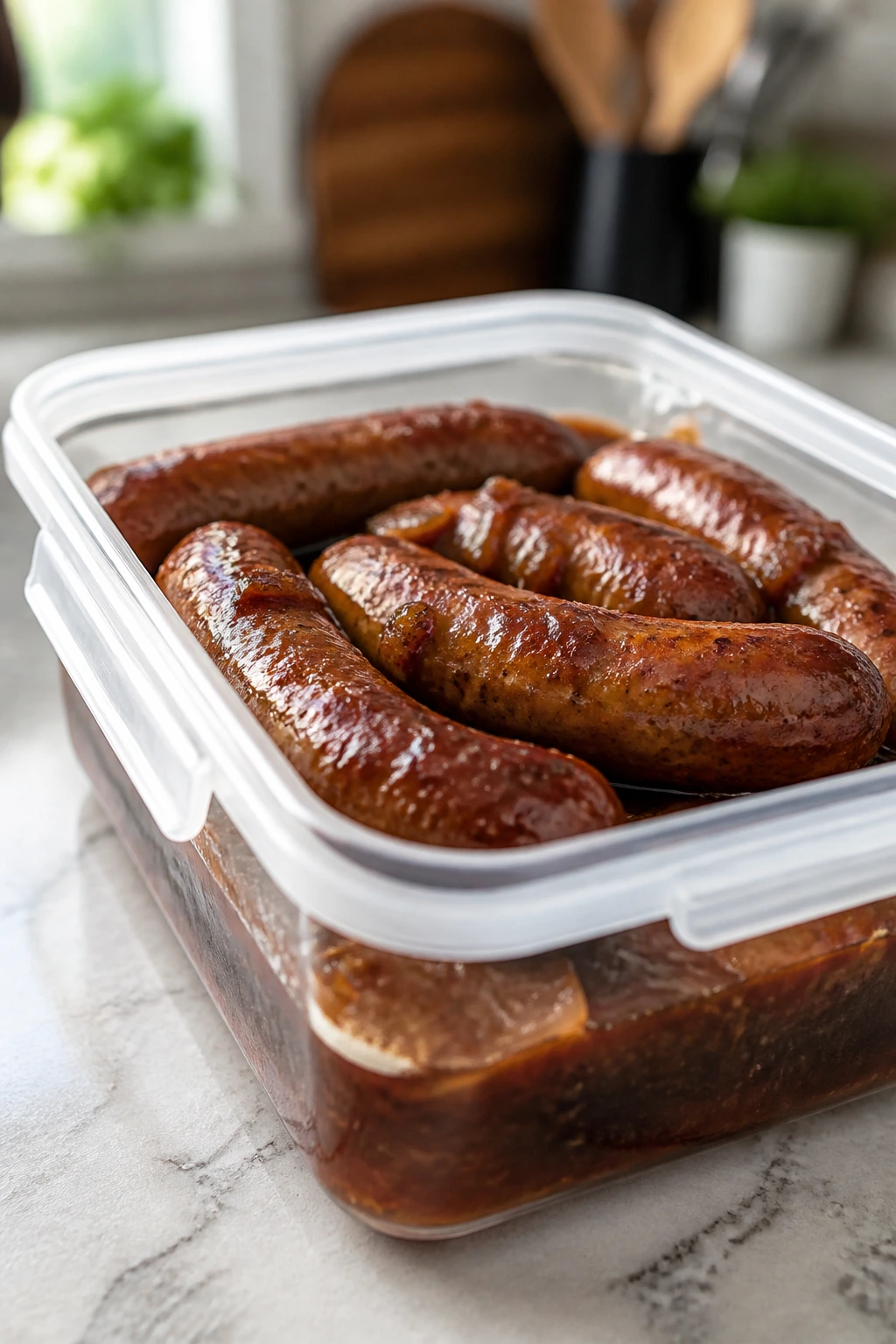
Cooked sausage with brown sugar glaze keeps well, but only if you cool it fast and store it right. Let the pan cool for no more than 2 hours, then move the sausage and sauce into a shallow airtight container. It will keep in the refrigerator for 3 to 4 days.
Freezing works too. The texture is best if you freeze it in a single layer first, then pack it into freezer bags or containers once solid. It keeps for up to 2 months, though the glaze will loosen a little after thawing and reheating.
For reheating, use low heat and a splash of water. A skillet over medium-low with 1 to 2 tablespoons of water brings the glaze back to life in about 5 minutes. If you use the microwave, cover the dish loosely and heat in 30-second bursts so the sugar does not overcook at the edges.
The glaze can also be made 3 days ahead and stored separately in the fridge. It may thicken, which is fine; just warm it gently before cooking and whisk in a teaspoon or two of water if it feels stiff. If you’re planning for a party, that head start makes the actual cooking feel almost lazy, in the best way.
Questions People Ask Before They Make It
Can I use fresh sausage instead of smoked sausage?
Yes, but you need to cook it differently. Fresh pork sausage should be browned gently and cooked to 160°F at the center before the glaze goes on. Smoked sausage is easier because it only needs reheating and browning.
Will the brown sugar glaze burn in the oven?
It can if the oven is too hot or if the sauce is put on too early. For the oven version, I like to roast the sausage first and add the glaze near the end, then finish with a short blast of heat so the sugar turns glossy instead of bitter.
How do I keep the glaze from turning grainy?
Whisk the sugar with the vinegar and mustard before heating, and don’t let the pan boil hard. Grainy glaze usually means the sugar didn’t dissolve smoothly or the sauce reduced too fast. A tablespoon of butter at the end helps smooth the texture.
Can I make this less sweet?
Absolutely. Cut the brown sugar down to 1/3 cup and increase the vinegar by 1 tablespoon, or add an extra teaspoon of Dijon. That swap keeps the glaze balanced without losing the sticky finish.
What’s the best sausage for this recipe?
Kielbasa and smoked pork sausage are the easiest choices because they have enough fat and seasoning to stand up to the glaze. Turkey sausage works if you want something leaner, but it benefits from a little oil in the pan so it doesn’t dry out.
Can I keep it whole instead of slicing it?
Yes, and whole links are good if you want a more dramatic presentation. They take a little longer to brown and glaze evenly, so rotate them often and use medium heat instead of cranking the burner.
Does this work in a slow cooker?
It does, but the texture changes. The sausage will stay soft rather than browned, which means you lose the crisp edges that make this dish interesting. If you use a slow cooker, brown the sausage first in a skillet and stir in the glaze at the end so the flavor still has some depth.
A Sticky Finish Worth Repeating
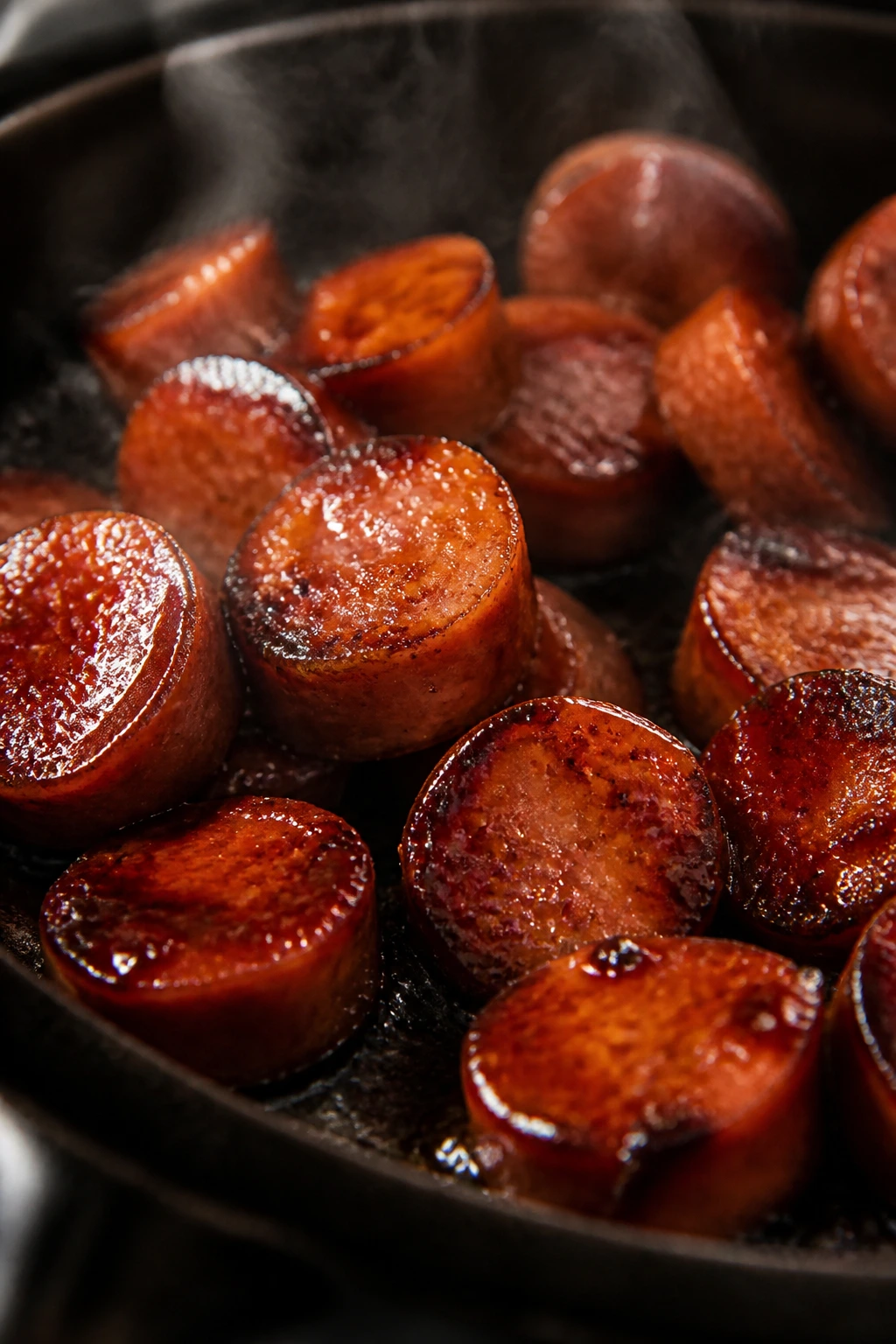
There’s a reason this kind of sausage keeps showing up at tailgates, potlucks, and weeknight dinners that need to feel less dull. The method is fast, the ingredients are cheap enough to keep around, and the result has that sweet, salty sheen that makes people hover by the stove for one more piece.
I’d make the stovetop version first, because it teaches you the rhythm of the dish: brown, reduce, coat, serve. After that, the oven, air fryer, and grill versions all start to make sense. Once you know how to manage the glaze, this is the sort of pan you can pull out without thinking too hard — and that’s the real win.
Brown Sugar Glazed Sausage Skillet — Recipe Card
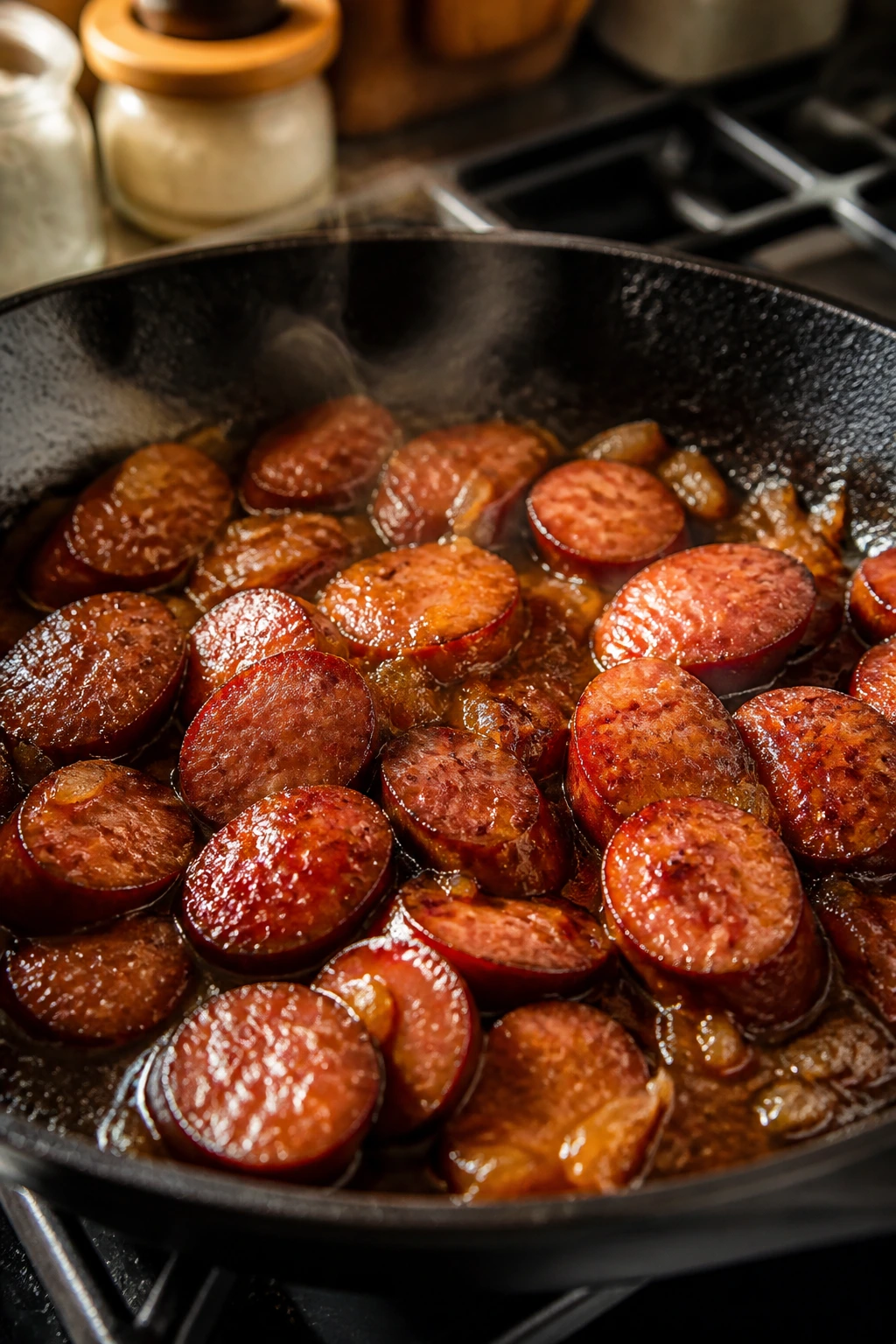
Recipe Name: Brown Sugar Glazed Sausage Skillet
Description: Smoked pork sausage or kielbasa is browned in a skillet, then coated in a glossy brown sugar glaze made with Dijon, apple cider vinegar, and butter. It’s sweet, savory, and fast enough for a weeknight but sturdy enough for a party platter.
Prep Time: 10 minutes
Cook Time: 18 minutes
Total Time: 28 minutes
Course: Appetizer or Main Course
Cuisine: American
Servings: 6 servings
Calories: About 425 kcal per serving
Ingredients
For the Sausage:
- 1 1/2 pounds fully cooked smoked pork sausage or kielbasa, sliced into 3/4-inch rounds
- 1 tablespoon neutral oil, if the skillet looks dry
- 1 small yellow onion, thinly sliced
For the Brown Sugar Glaze:
- 1/2 cup packed light brown sugar
- 3 tablespoons apple cider vinegar
- 2 tablespoons Dijon mustard
- 1 tablespoon soy sauce or Worcestershire sauce
- 2 tablespoons water or unsweetened apple juice
- 2 tablespoons unsalted butter
For the Seasoning and Finish:
- 2 cloves garlic, minced
- 1/2 teaspoon smoked paprika
- 1/4 teaspoon black pepper
- Pinch of red pepper flakes, optional
- 1 tablespoon chopped parsley or sliced scallions
Instructions
-
Pat the sausage dry and slice it into 3/4-inch rounds. Thinly slice the onion and mince the garlic.
-
Whisk together the brown sugar, vinegar, Dijon, soy sauce, water or apple juice, smoked paprika, black pepper, and red pepper flakes if using.
-
Heat a large skillet over medium-high heat. Add the sausage in a single layer, using oil only if the pan looks dry, and brown for 2 to 3 minutes per side.
-
Remove the sausage briefly if needed, then cook the onion over medium heat for 4 to 5 minutes until soft and lightly golden. Add the garlic and cook for 30 seconds.
-
Pour in the glaze and scrape up the browned bits from the pan. Simmer for 2 to 3 minutes until glossy and slightly thickened.
-
Return the sausage to the skillet and toss for 1 to 2 minutes until well coated and hot throughout.
-
Remove from the heat and stir in the butter until smooth. Finish with parsley or scallions and serve warm.
Notes:
A heavy skillet gives the best browning. If you want a sharper glaze, add a little more vinegar and a little less sugar. Reheat leftovers gently with a splash of water so the sauce turns glossy again.