



The first thing you notice is the smell. Bacon fat warming in the oven. Broccoli edges going nutty and dark. Brown sugar turning glossy in the spoon instead of clinging to the grains like wet sand.
That’s the charm of crispy bacon and broccoli with brown sugar glaze: it sounds like a side dish that might lean too sweet, too salty, or too fussy, and then it lands on the table with all three parts behaving themselves. The broccoli stays green in the middle and browned at the corners. The bacon shatters. The glaze gives everything a sticky sheen without turning the pan into candy.
I like recipes like this because they know what they are. They do not try to be delicate. They want heat, color, and contrast. If you’ve ever had broccoli that tasted like it was boiled in apology, this is the antidote. And if you’ve ever cooked bacon until it went from crisp to brittle and tasted faintly burnt, there’s a better lane here too.
Why You’ll Keep Coming Back to This Pan
- The texture has range: you get crisp bacon, tender broccoli stems, and browned florets with those tiny toasted edges that make each bite feel different.
- The glaze is doing real work: brown sugar, Dijon, and vinegar give the broccoli a sweet-salty-sharp finish instead of one-note sweetness.
- It fits a lot of plates: this side slides next to roast chicken, pork chops, salmon, scrambled eggs, or a pile of rice without feeling out of place.
- The method protects the crunch: bacon and broccoli are cooked separately first, so the florets brown instead of steaming in bacon fat.
- It scales cleanly: double it for a crowd, and it still behaves as long as you use two pans.
- Leftovers can be rescued: a hot oven brings some of the crisp back, which is more than most glazed vegetable dishes can promise.
Why the Glaze Waits Until the End
Sweet glazes are sneaky. They look harmless in the mixing bowl, then they hit a hot pan and decide to behave like they own the place. Brown sugar will caramelize fast, and if you dump it on broccoli too early, it can go from glossy to bitter in a minute or two. That’s why this dish works best when the vegetables are already browned before the glaze shows up.
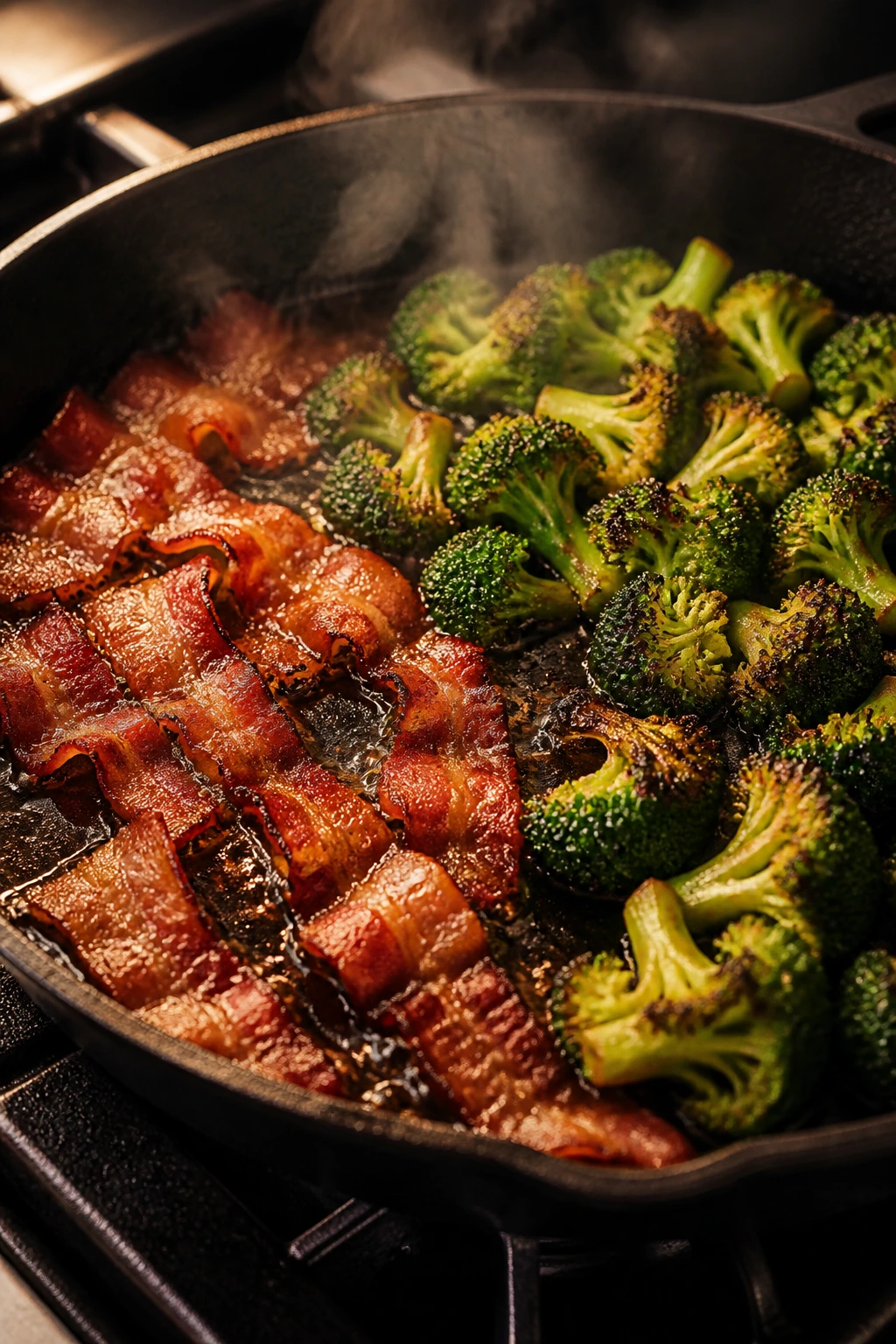
The broccoli needs dry heat first. It needs those 425°F edges and a little space between florets so the surface can blister instead of steam. Bacon needs time to render, too. If you rush it or stack it on top of the broccoli from the start, you get limp bacon and tired vegetables. Separate pans solve the problem with almost no effort.
The vinegar and mustard matter more than people think. Brown sugar alone can make the whole pan taste flat and sticky. Dijon and apple cider vinegar keep the glaze awake; they cut through the bacon fat and pull the flavor back toward savory. That little sharp edge is what keeps a second bite from feeling heavy.
There’s a reason roasted broccoli works better than steamed broccoli here. Roasting gives you enough bitterness to stand up to the glaze. Steaming would give you softness, and softness disappears under sugar. A good version of this dish has tension in it. That’s the whole point.
Timing, Yield, and the Bite You’re Chasing
Yield: Serves 4 to 6 as a side
Prep Time: 15 minutes
Cook Time: 20 minutes
Total Time: 35 minutes
Difficulty: Beginner — the cooking is straightforward, but you do need to watch the glaze so it stays glossy instead of dark and bitter.
Best Served: Warm, within 10 minutes of coming out of the oven
The sweet spot is simple: broccoli that gives a little when you bite into the stem, bacon that breaks rather than bends, and glaze that clings in a thin layer instead of pooling in the bottom of the pan. If the pan smells toasted and a little smoky, you’re in the right neighborhood.
Ingredients That Go Into the Pan
For the Roasted Base:
- 2 pounds broccoli crowns or florets, cut into 1½-inch pieces, stems peeled and sliced if thick
- 8 ounces thick-cut bacon, cut into ½-inch pieces
- 2 tablespoons olive oil
- 3/4 teaspoon kosher salt
- 1/2 teaspoon freshly ground black pepper
For the Brown Sugar Glaze:
- 3 tablespoons packed light brown sugar
- 1 tablespoon Dijon mustard
- 1 tablespoon apple cider vinegar
- 2 tablespoons water
- 1 tablespoon unsalted butter
- 2 cloves garlic, finely grated
- 1/4 teaspoon crushed red pepper flakes
For Finishing:
- 1 teaspoon lemon juice, optional
- 1 tablespoon chopped parsley or scallions, optional
What Each Ingredient Is Doing in the Pan
Broccoli
- What to use: 2 pounds of broccoli crowns or florets, with the stems peeled if they’re thick and woody.
- Preparation: Cut the florets into pieces with at least one flat side; those flat surfaces are the parts that brown well on the sheet pan.
- Substitutions: Broccolini, cauliflower, or halved Brussels sprouts all work, though Brussels sprouts need a few extra minutes in the oven.
- Tips: Dry the broccoli well after washing. Wet florets steam, and steamed broccoli is the enemy of crisp edges.
Bacon
- What to use: 8 ounces thick-cut bacon, cut into ½-inch pieces.
- Preparation: Slice it while cold so the pieces stay neat and cook more evenly.
- Substitutions: Regular bacon works, but it cooks faster and can overdo the edge more quickly. Pancetta gives a firmer, saltier bite if you want a leaner, less smoky flavor.
- Tips: Thick-cut bacon holds up better once the glaze goes on. Thin bacon can go from crisp to brittle before the broccoli finishes.
Brown Sugar Glaze
- What to use: 3 tablespoons brown sugar, Dijon mustard, apple cider vinegar, water, butter, garlic, and red pepper flakes.
- Preparation: Whisk and warm it just until the sugar dissolves and the mixture turns glossy.
- Substitutions: Maple syrup can replace part of the brown sugar for a deeper flavor, while whole-grain mustard can stand in for Dijon if that’s what you have.
- Tips: Keep the heat low. The glaze should look syrupy, not like hard candy in the making.
Seasoning and Finish
- What to use: Olive oil, kosher salt, black pepper, and a little lemon juice or herbs at the end.
- Preparation: Toss the broccoli with oil and seasoning before roasting so the surfaces brown instead of drying out.
- Substitutions: Avocado oil works in place of olive oil. A pinch of smoked paprika can replace part of the black pepper if you want extra depth.
- Tips: Taste at the end before adding more salt. Bacon brings plenty of it already.
The Tools That Make This Easier
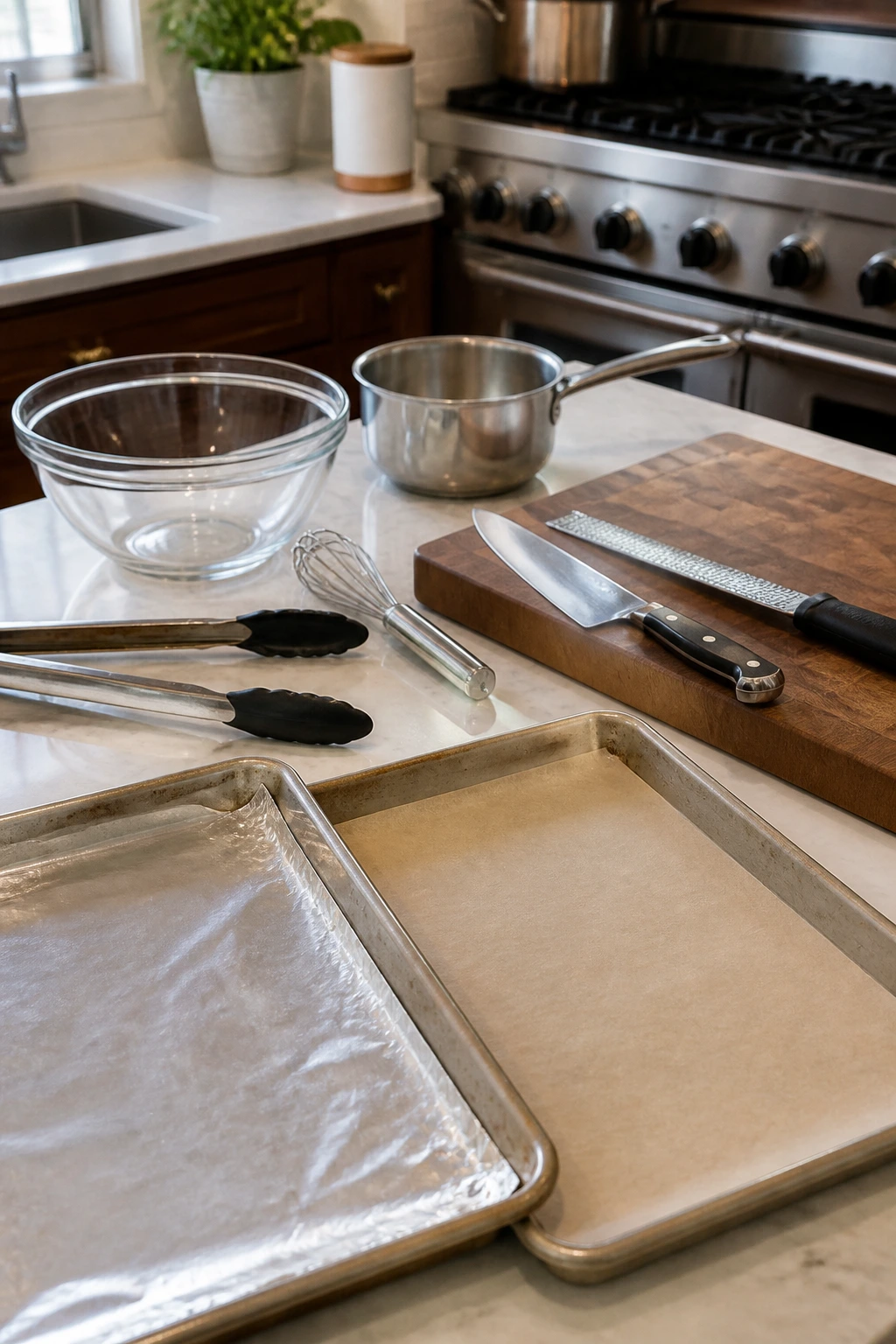
- 2 rimmed half-sheet pans — one for bacon, one for broccoli; this is the cleanest way to keep the vegetables from steaming.
- Parchment paper or foil — foil makes cleanup easier, while parchment releases the glaze a little more gently.
- Large mixing bowl — for tossing the broccoli with oil and seasoning before it hits the pan.
- Small saucepan — the glaze comes together fast, and a tiny pan keeps it from spreading out and reducing too quickly.
- Tongs — useful for turning the broccoli and moving bacon without smashing the florets.
- Chef’s knife and cutting board — you want even broccoli pieces and neat bacon cuts, not a pile of uneven scraps.
- Microplane or fine grater — handy for the garlic if you want it to melt into the glaze.
- Small whisk — keeps the brown sugar from sitting in clumps at the bottom of the pan.
How the Bacon, Broccoli, and Glaze Come Together
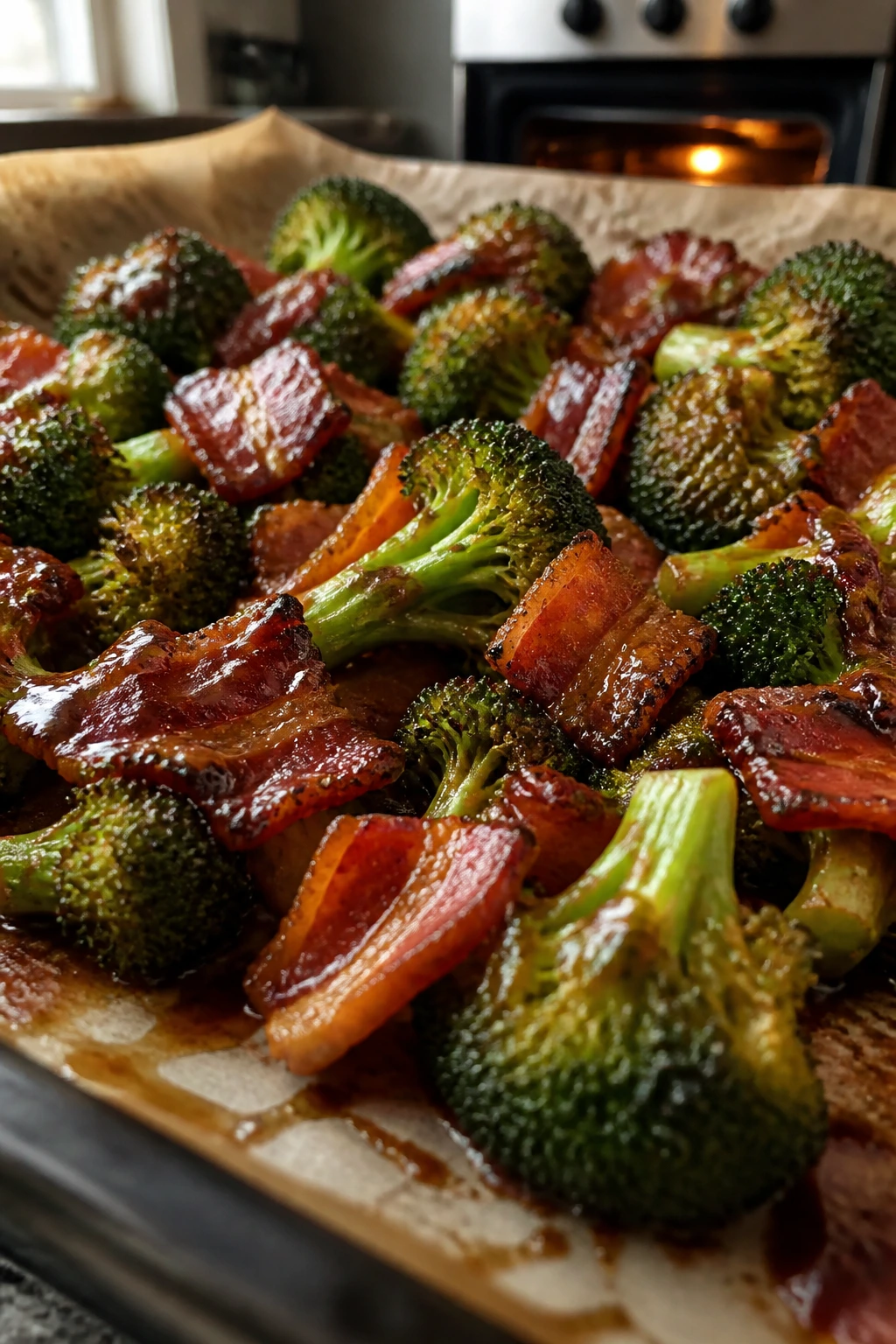
Prep the pans and the vegetables:
-
Preheat the oven to 425°F (220°C) and set two racks in the upper and lower thirds of the oven. Line two rimmed baking sheets with parchment paper or foil.
-
Cut the broccoli into 1½-inch florets, keeping the pieces as even as you can. If the stems are thick, peel the tough outer layer and slice them into coins so nothing gets wasted.
-
Cut the bacon into ½-inch pieces while it’s still cold. Cold bacon is easier to slice cleanly, and clean cuts cook more evenly.
Roast the bacon and broccoli separately:
-
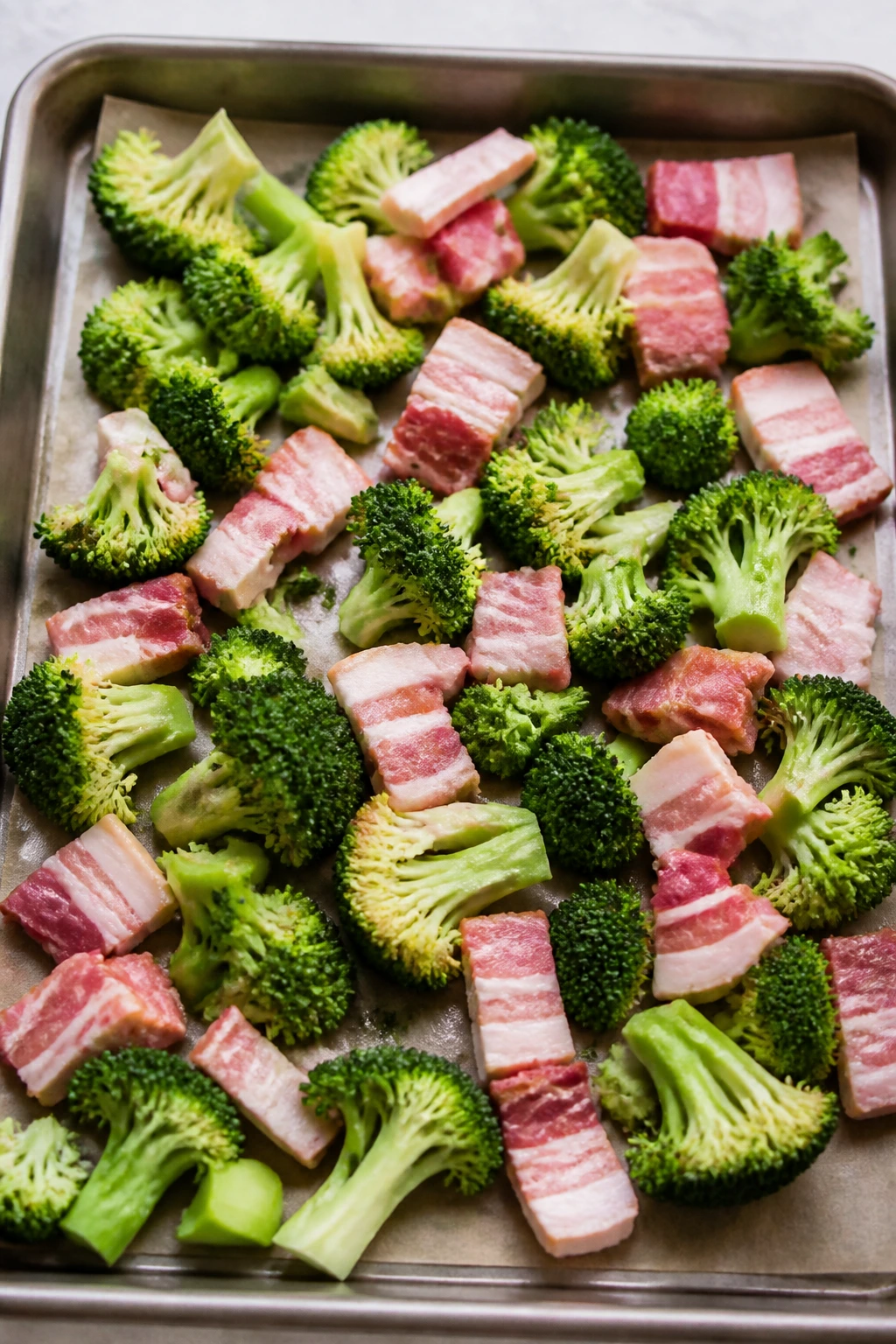
Spread the bacon pieces on one prepared baking sheet in a single layer. Roast for 8 to 10 minutes, until the fat has mostly rendered and the edges are curling and lightly browned. Transfer the bacon to a paper towel-lined plate. Do not let it go fully crisp yet; the final roast finishes the job.
-
Put the broccoli in a large bowl, drizzle with the olive oil, and season with the kosher salt and black pepper. Toss until the florets are lightly coated and the oil has reached the cut sides.
-
Spread the broccoli on the second baking sheet in a single layer, placing most of the flat sides down. Roast for 12 to 14 minutes, rotating the pan once halfway through, until the edges are browned and the stems are tender when pierced with a paring knife.
Build the glaze and finish the dish:
-
While the broccoli roasts, add the brown sugar, Dijon, vinegar, water, butter, garlic, and red pepper flakes to a small saucepan over low heat. Whisk for 1 to 2 minutes until the sugar dissolves and the glaze looks smooth and glossy. Do not boil it hard — the sugar can go grainy or burn at the edges.
-
Move the roasted broccoli to a large bowl, add the bacon, and drizzle with the warm glaze. Toss gently so the glaze coats the florets without crushing them. Return everything to one sheet pan and roast for 2 to 3 minutes more, just until the bacon crisps up and the glaze turns sticky around the edges.
-
Slide the pan onto the counter and finish with lemon juice or chopped parsley, if using. Taste a piece. If it needs a sharper edge, add a tiny squeeze more lemon; if it tastes thin, another pinch of salt can wake it up.
How to Serve It Without Making It Feel Like an Afterthought
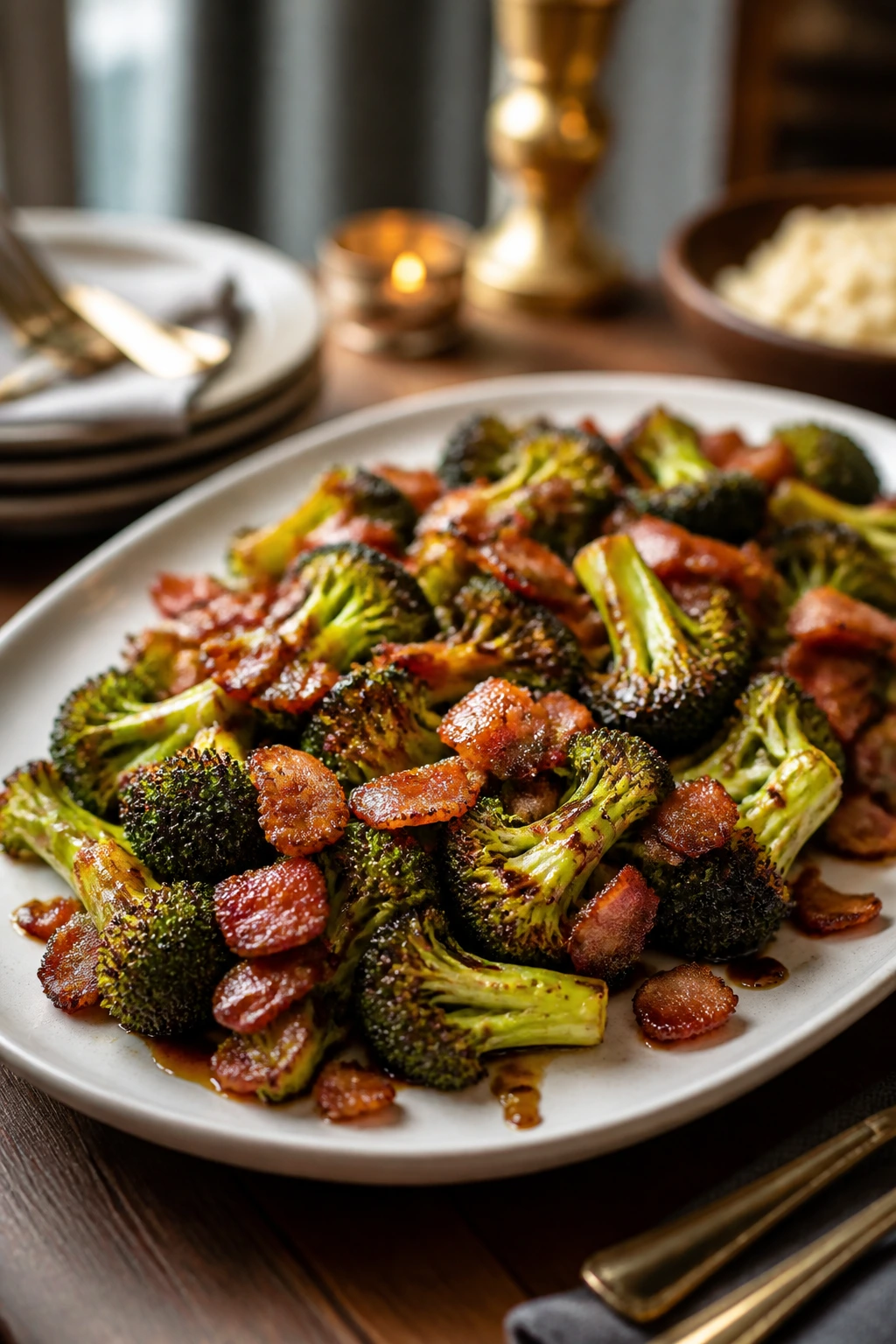
Presentation: Pile the broccoli onto a warm platter first, then scatter the bacon over the top so the crisp pieces stay visible. A little extra glaze drizzled over the top is enough; you do not need to drown the vegetables. A final grind of black pepper or a few flecks of parsley makes the plate look finished instead of tossed together.
Accompaniments: This sits neatly beside roast chicken, pork tenderloin, seared pork chops, baked ham, or simple pan-fried salmon. If you want to turn it into a lighter meal, spoon it over buttered rice, mashed potatoes, or egg noodles. The sweet-savory glaze clings to starch in a way that feels natural, not fussy.
Portions: As a side, plan on about 3/4 cup to 1 cup per person. If you’re serving it over rice or potatoes, the portions can stretch to about 2 cups per person and still feel balanced. For a large dinner, double the recipe and use two pans; crowding one pan will flatten the texture.
Beverage Pairing: A dry hard cider fits the sweet-salty profile without weighing it down. A cold lager works too, especially with roasted pork or ham. For a nonalcoholic option, unsweetened iced tea with lemon keeps the glaze from feeling heavy.
Tips, Shortcuts, and Flavor Boosters
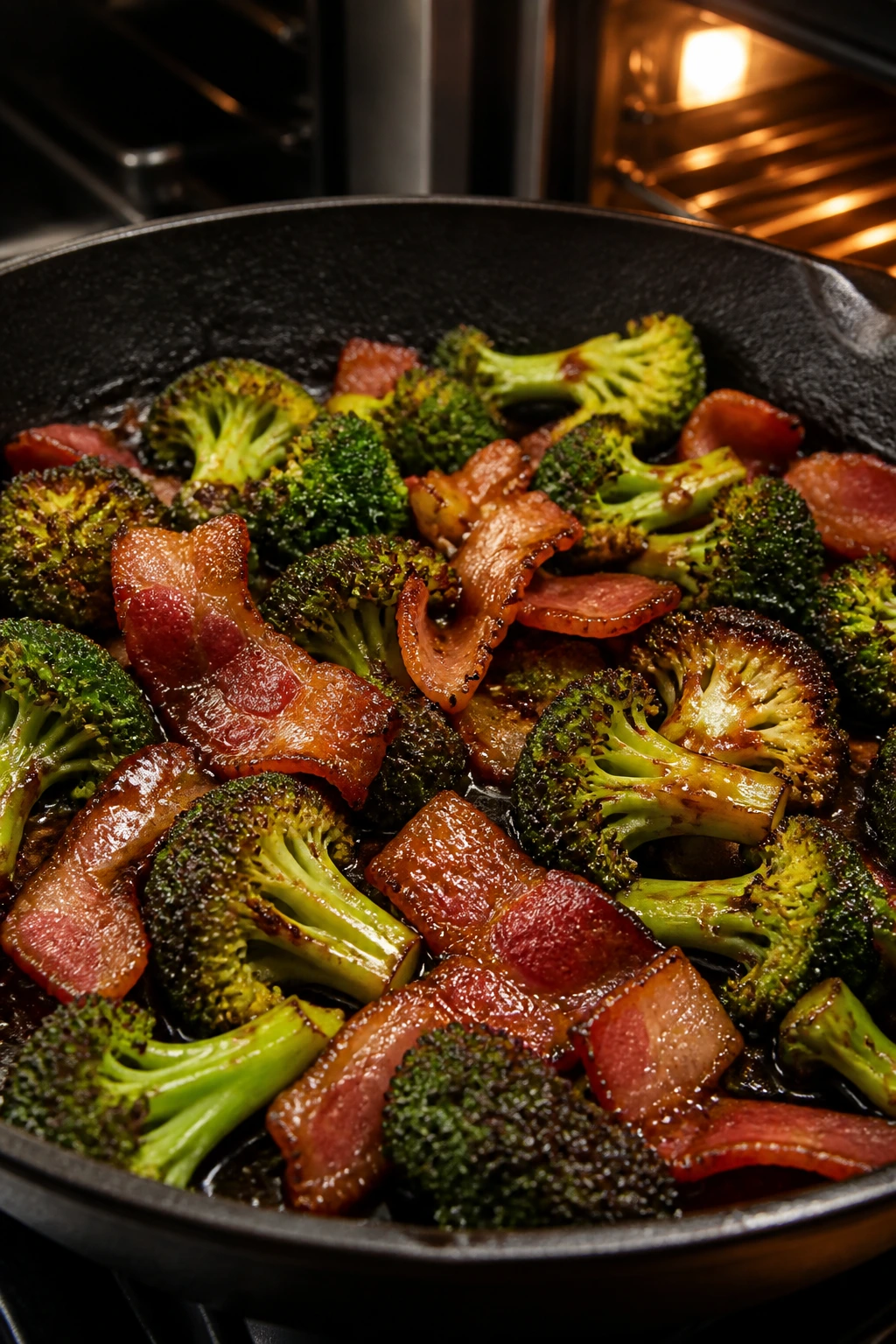
Flavor Enhancement: Add 1 teaspoon of soy sauce or Worcestershire sauce to the glaze if you want a darker, more savory finish. It won’t make the dish taste Asian or steakhouse-y; it just deepens the browned, salty edge that bacon already brings.
Time-Saver: Cut the broccoli and make the glaze up to a day ahead. Keep the broccoli dry in a sealed container lined with a paper towel, and refrigerate the glaze separately. When dinner time hits, all you need to do is roast.
Pro Move: Leave a few broccoli stems in the mix and slice them into coins. They brown beautifully and taste sweeter than people expect once the edges caramelize. I like them more than the florets sometimes.
Serving Suggestions: Finish with toasted sesame seeds, chopped chives, or parsley if you want a little color and a tiny bit of crunch. A few red pepper flakes on top make the glaze taste less sweet and more deliberate.
Cost-Saver: Buy broccoli crowns instead of pre-cut florets. The stems are usable, the price is usually friendlier, and you control the size of the pieces. It also saves you from paying for the part that gets trimmed away in the bag.
Mistakes That Turn This Side Dish Soggy or Bitter
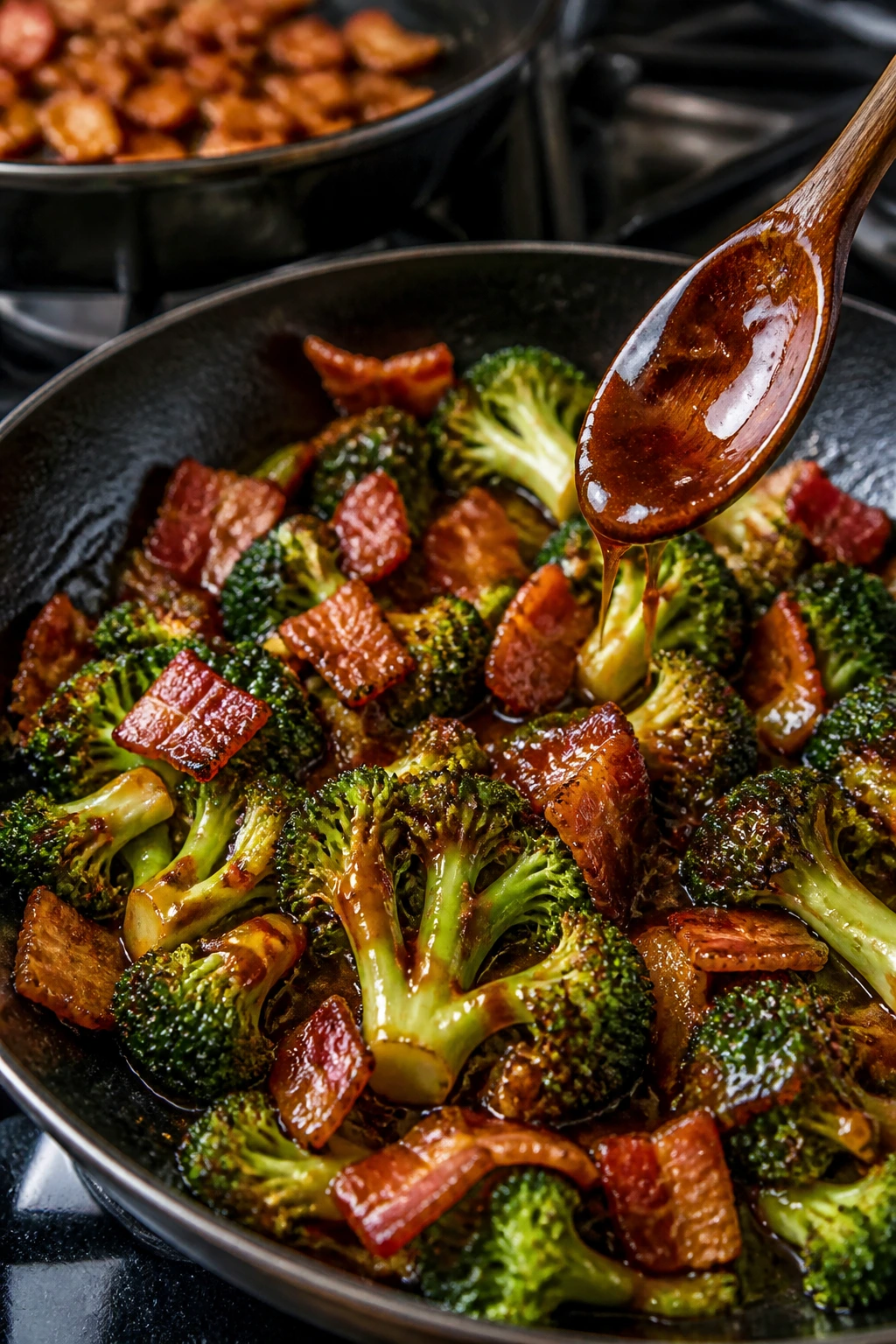
A recipe like this only looks simple. The small mistakes are what change it from crisp and glossy to tired and sticky.
-
Glazing too early: If the sugar hits the pan before the broccoli has browned, it can scorch and taste bitter before the vegetables are done. Fix it by roasting first and adding the glaze only at the end.
-
Crowding one sheet pan: Packed broccoli steams instead of browning, and bacon softens in the moisture. Use two pans or cook in batches. Space matters more than people think.
-
Skipping the drying step: Broccoli that goes into the oven wet will spit, steam, and pale out. Dry it after washing, and if the stems still feel damp, pat them with a clean towel.
-
Salting too aggressively: Bacon and glaze both carry salt, so a heavy hand at the start can push the finished dish past the line. Season lightly before roasting, then taste at the end and adjust if needed.
-
Letting the glaze boil hard: Brown sugar can turn grainy or sticky in a bad way when the heat is too high. Keep the flame low and stop as soon as the mixture looks glossy and smooth.
Variations Worth Trying
Maple-Dijon Glow
Replace 1 tablespoon of the brown sugar with 1 tablespoon pure maple syrup for a softer, woodsy sweetness. It works especially well if you’re serving the broccoli with pork chops or a ham dinner, where a deeper sweet note feels at home.
Heat-Forward Broccoli
Add 1/2 teaspoon cayenne or 1 teaspoon chili crisp to the glaze. The heat lands late, after the sugar, so it feels sharp rather than loud. I like this version with roast chicken because the smoky bacon and the chile keep each other in check.
Parmesan and Black Pepper Finish
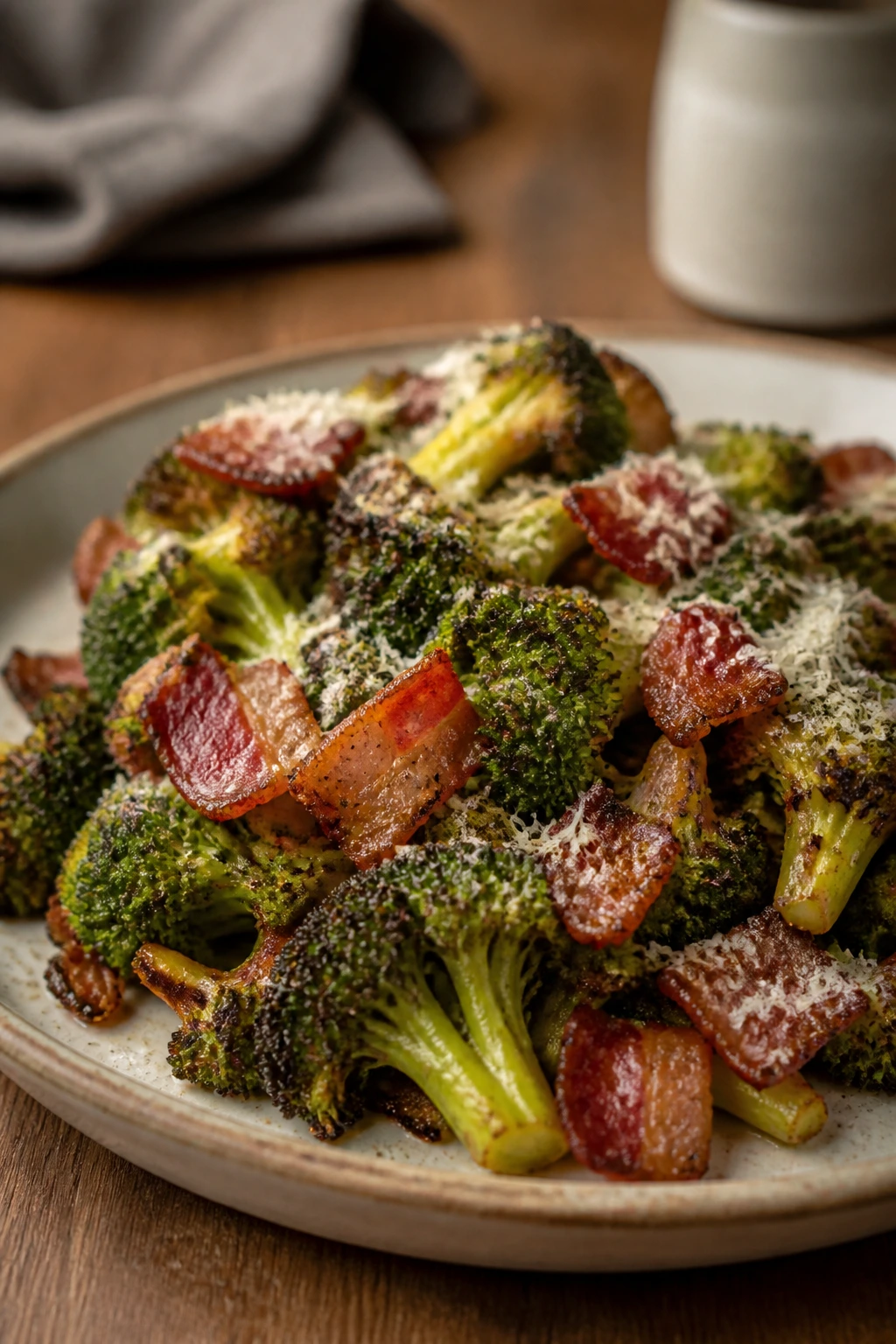
Once the dish comes out of the oven, toss it with 1/4 cup finely grated Parmesan and another crack of black pepper. The cheese clings to the glaze and gives the broccoli a salty, almost nutty finish that is good with steak or grilled sausages.
Pancetta Upgrade
Swap the bacon for 8 ounces pancetta cut into small cubes. Pancetta renders a little faster and tastes less smoky, which means the glaze reads cleaner and the dish feels a touch more savory. Reduce the first roast by a minute or two and watch the pan closely.
Keeping Leftovers Crisp Enough to Care About
This dish is best the day you make it. That’s the honest answer. Bacon is at its happiest when it’s hot and the broccoli still has a little bite.
Room temperature: Don’t leave it out longer than 2 hours.
Refrigerator: Store leftovers in an airtight container for 3 to 4 days. The broccoli will soften a little, and the bacon will lose some of its snap, but the flavor holds up better than you might expect.
Freezer: You can freeze it for up to 2 months, though the texture changes. Broccoli gets softer after thawing, so I only freeze leftovers when I know I’ll be reheating them into eggs, rice, or a hash-style breakfast.
Reheating: The best method is the oven. Spread the leftovers on a sheet pan and warm them at 400°F (205°C) for 8 to 10 minutes, or until the bacon edges wake back up. An air fryer at 375°F (190°C) for 4 to 6 minutes also works well for smaller portions. A skillet over medium heat is the third option; toss in a teaspoon of oil and stir gently for about 4 minutes.
Make-ahead: The broccoli can be trimmed and cut a day ahead. The glaze keeps in the fridge for up to 5 days and reheats quickly over low heat or in short microwave bursts. If you want the cleanest texture, keep the bacon raw until cooking day and assemble everything right before the final roast.
Questions People Ask Before Making It
Can I use frozen broccoli instead of fresh?
You can, but it will not be as crisp. Thaw it fully, dry it well, and expect a softer texture with a little less browning. Fresh broccoli gives you the best edges and the best contrast with the bacon.
Do I have to use thick-cut bacon?
No, but thick-cut bacon holds its shape better once the glaze goes on. Regular bacon cooks faster, so reduce the first roast by a couple of minutes and watch for the moment when the pieces are browned but not brittle.
What if I do not have Dijon mustard?
Use whole-grain mustard or even a small splash of Worcestershire sauce. The goal is not mustard flavor alone; it’s the sharp edge that stops the glaze from tasting flat. If you skip it completely, the dish will still work, but the glaze will taste rounder and sweeter.
Why did my glaze turn grainy?
The heat was probably too high, or the sugar was boiled too long. Brown sugar needs low heat and a short simmer. If it thickens too much, whisk in a teaspoon of warm water and keep the pan over low heat.
How do I keep the broccoli from getting mushy?
Dry the florets well, use two pans if needed, and stop roasting when the stems are just tender. If you want more browning, give the broccoli more space, not more time.
Can I make this in an air fryer?
Yes, in batches. Air fry the bacon first, then the broccoli at about 390°F (199°C) until browned around the edges, usually 8 to 10 minutes depending on your machine. Toss with the glaze at the end; do not try to glaze it too early or the sugar can stick to the basket.
Can I serve this as a main dish?
Yes, if you stretch it over rice, noodles, or mashed potatoes and add a fried egg, grilled chicken, or a few white beans. On its own, it reads as a side. With starch and protein underneath, it becomes dinner.
Is there a good way to make it less sweet?
Cut the brown sugar to 2 tablespoons and keep the vinegar and mustard where they are. You can also finish with a little lemon juice, which sharpens the glaze without making the dish taste tart.
A Pan Worth Making Again
The best part of this dish is that it knows where to draw the line. It gives you sweetness, but not dessert sweetness. It gives you bacon, but not a greasy skillet situation. It gives you broccoli, but not the sad, steamed version that gets pushed around a plate.
Once you get the timing right, the whole pan feels tidy in a way that’s almost surprising. The broccoli comes out browned and glossy. The bacon keeps its crunch. The glaze sits in the middle, tying the whole thing together without taking over. That balance is what makes it worth keeping in the rotation.
Crispy Bacon and Broccoli with Brown Sugar Glaze — Recipe Card
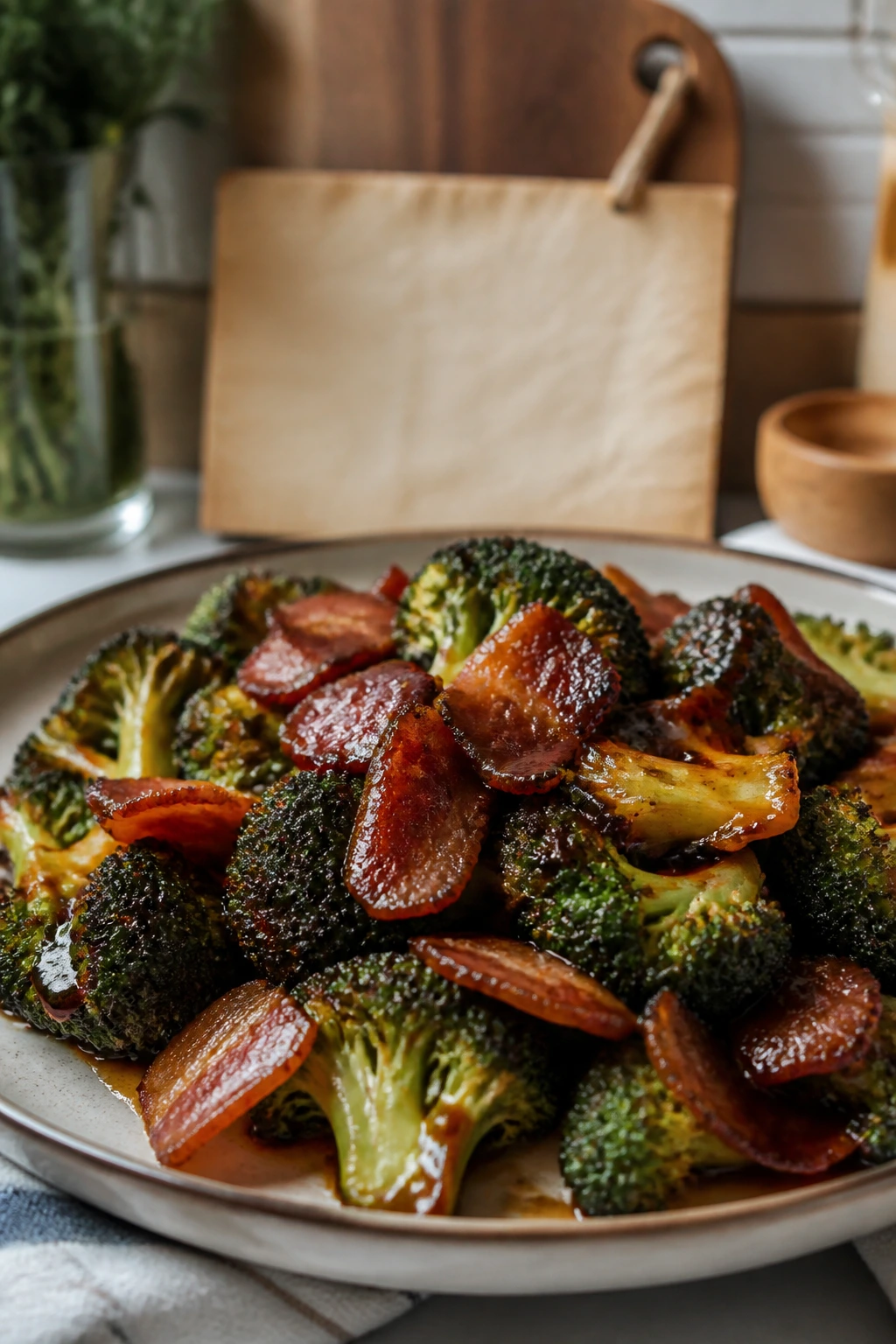
Recipe Name: Crispy Bacon and Broccoli with Brown Sugar Glaze
Description: Roasted broccoli and crisp bacon get tossed with a warm brown sugar, Dijon, and apple cider vinegar glaze. The result is sweet, salty, smoky, and sharply balanced, with browned edges and a glossy finish.
Prep Time: 15 minutes
Cook Time: 20 minutes
Total Time: 35 minutes
Course: Side Dish
Cuisine: American
Servings: 6 servings
Calories: 320 kcal per serving
Ingredients
For the Roasted Base:
- 2 pounds broccoli crowns or florets, cut into 1½-inch pieces, stems peeled and sliced if thick
- 8 ounces thick-cut bacon, cut into ½-inch pieces
- 2 tablespoons olive oil
- 3/4 teaspoon kosher salt
- 1/2 teaspoon freshly ground black pepper
For the Brown Sugar Glaze:
- 3 tablespoons packed light brown sugar
- 1 tablespoon Dijon mustard
- 1 tablespoon apple cider vinegar
- 2 tablespoons water
- 1 tablespoon unsalted butter
- 2 cloves garlic, finely grated
- 1/4 teaspoon crushed red pepper flakes
For Finishing:
- 1 teaspoon lemon juice, optional
- 1 tablespoon chopped parsley or scallions, optional
Instructions
-
Preheat the oven to 425°F (220°C) and line 2 rimmed baking sheets with parchment paper or foil.
-
Cut the broccoli into even florets and slice the bacon into ½-inch pieces.
-
Toss the broccoli with olive oil, salt, and black pepper, then spread it on one baking sheet.
-
Spread the bacon on the second baking sheet and roast both pans, removing the bacon after 8 to 10 minutes and the broccoli after 12 to 14 minutes.
-
Whisk the brown sugar, Dijon, vinegar, water, butter, garlic, and red pepper flakes in a small saucepan over low heat for 1 to 2 minutes, until smooth and glossy.
-
Toss the roasted broccoli and bacon with the warm glaze, then return everything to one baking sheet and roast for 2 to 3 minutes more.
-
Finish with lemon juice or chopped parsley if using, then serve warm.
Notes:
Use thick-cut bacon if you can; it holds up better under the glaze.
Do not boil the glaze hard, or it can turn grainy.
If the broccoli starts to crowd the pan, split it across two sheets for better browning.