



Leftover ham has a bad habit of going from glossy and promising to dry and dull in about three minutes flat. A microwave makes it rubbery. A low oven often just warms the edges without giving you anything interesting to eat.
Crispy Ham Leftovers with Brown Sugar Glaze fixes that by doing three things the right way: drying the surface, browning the meat in a hot pan, and adding the glaze at the end so it clings instead of burning. The result is salty, sticky, and a little bit caramelized at the edges, with those dark, almost candied bits that make people keep picking at the platter. If you’ve got a spiral ham, a chunk from a bone-in roast, or a few thick slices tucked into the fridge, this is the kind of treatment that makes leftovers feel intentional instead of apologetic.
The nicest part is how little fuss it takes. Ham is already cooked, so the job is not to “make dinner” from scratch. The job is to wake the meat up. That means heat high enough to brown, a glaze with enough acid to keep the sugar from tasting flat, and just enough butter or oil to help the edges crisp without frying the whole thing into a greasy mess.
Why This Glazed Ham Deserves a Second Life
- Crisp Edges First: The pan gives the ham those browned corners the oven often misses, especially on thicker slices and diced pieces.
- Sweet-Salty Balance: Brown sugar softens the salt in cured ham, while Dijon and vinegar keep the glaze from tasting one-note.
- Leftover-Friendly: This works with spiral ham, smoked ham steak, bone-in holiday ham, or any cooked ham that needs better texture.
- Fast on the Stove: From fridge to plate, you’re looking at about 25 minutes, and most of that is hands-off simmering.
- Flexible Serving: The same panful can land on biscuits for breakfast, over potatoes for dinner, or tucked beside eggs and toast.
- No Wastey Bits: Even the odd-shaped trimmings and end pieces brown well, so the slices that looked too small to matter suddenly have a job.
What to Gather Before the Skillet Goes On
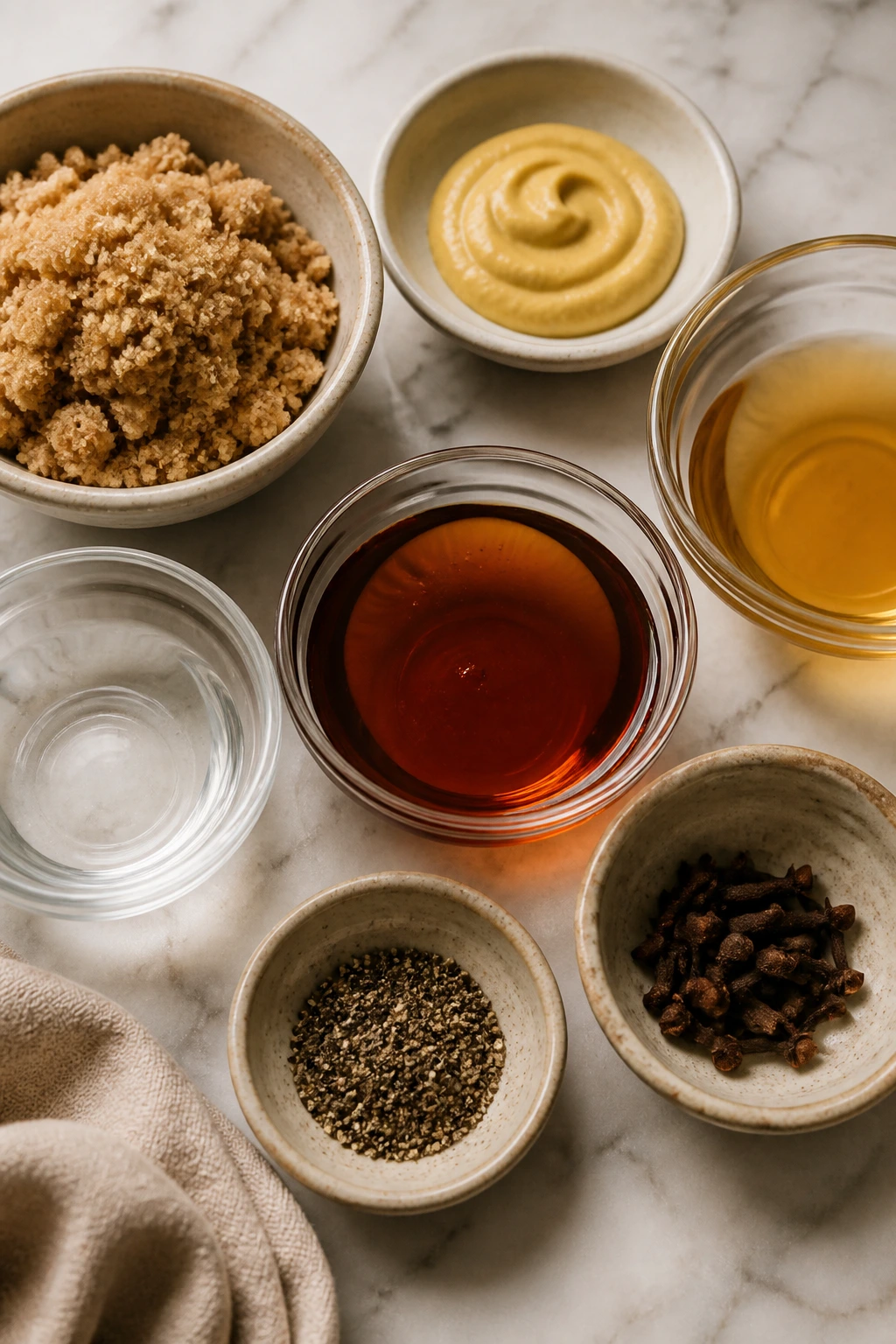
Yield: Serves 4 to 6
Prep Time: 10 minutes
Cook Time: 12 to 15 minutes
Total Time: 25 minutes
Difficulty: Beginner — the technique is straightforward, and the main skill is watching the heat so the sugar stays glossy instead of scorched.
Best Served: Warm from the skillet, while the glaze is still shiny and the edges are crisp.
For the Ham:
- 2 pounds cooked ham, cut into 1/2-inch slices or 1-inch pieces
- 1 tablespoon neutral oil, such as avocado or canola
- 1 tablespoon unsalted butter
For the Brown Sugar Glaze:
- 1/2 cup packed dark brown sugar
- 2 tablespoons Dijon mustard
- 2 tablespoons apple cider vinegar
- 2 tablespoons maple syrup
- 1/4 cup water or pineapple juice
- 1/2 teaspoon black pepper
- 1/8 teaspoon ground cloves
For Serving:
- 1 tablespoon chopped parsley or chives
Why Ham, Brown Sugar, and Mustard Belong Together
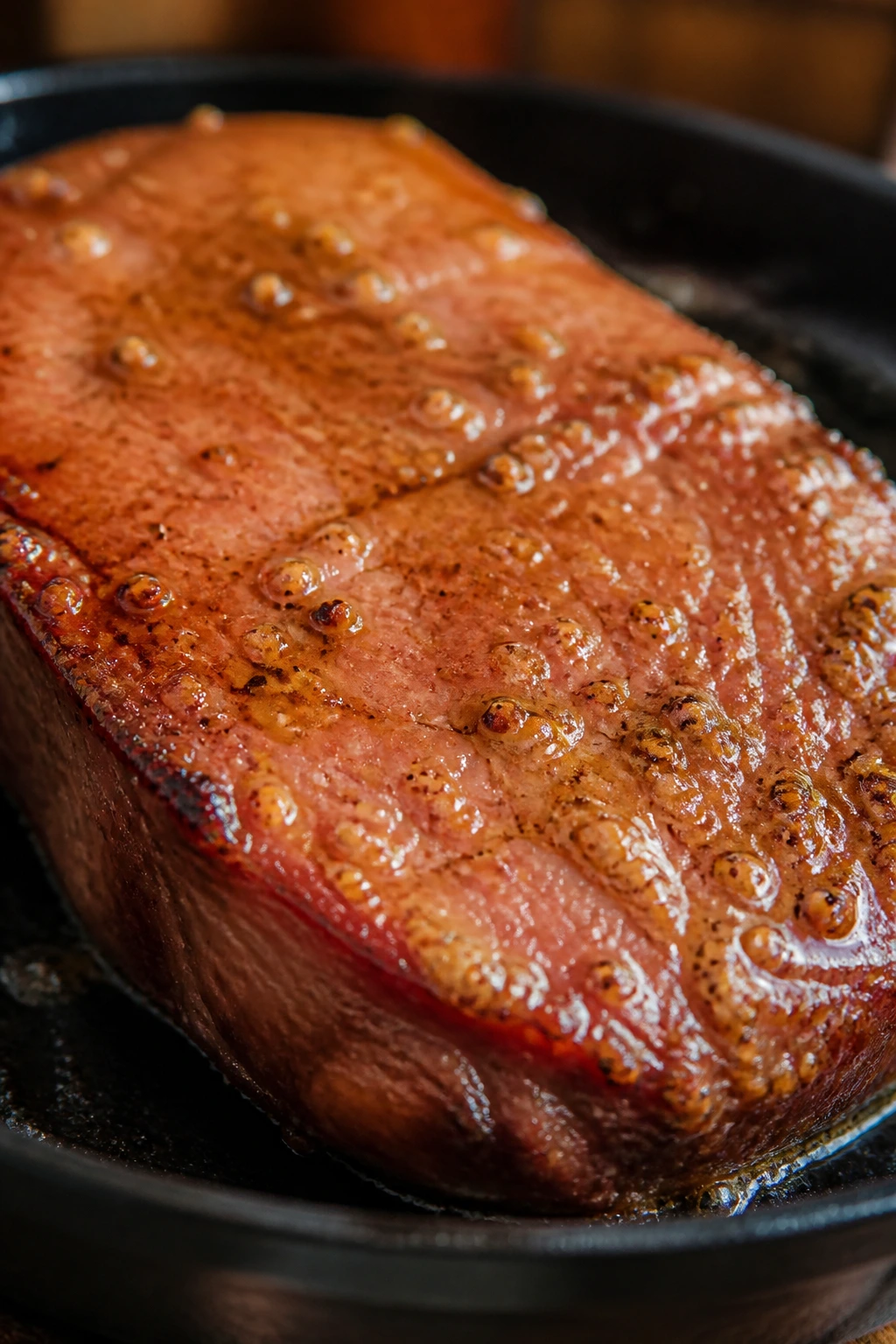
The Leftover-Ham Problem
Cold ham is already cooked, which sounds convenient until you reheat it badly and the whole thing turns stringy. The challenge is not doneness. It’s texture. Ham has enough salt, smoke, and fat already; what it usually lacks after a stint in the fridge is a fresh surface, something browned enough to taste alive again.
That’s why this recipe leans on a hot skillet rather than a long bake. The first few minutes are doing the heavy lifting. Once the edges pick up color, the meat tastes deeper and the sweet glaze has something to grab onto. If you’ve ever tried to glaze slippery, pale ham in a casserole dish and wondered why it looked busy but tasted sleepy, that’s the issue.
Why the Glaze Works Instead of Just Sticking
Brown sugar gives you sweetness, yes, but it also melts into a syrup that coats the meat. Dijon adds sharpness and a little emulsifying power, which keeps the glaze from tasting like melted candy. Apple cider vinegar cuts through the richness and helps the sugar stay bright instead of heavy. Maple syrup rounds everything out, and the black pepper gives the glaze enough edge to keep the whole thing from sliding into dessert territory.
The cloves are small but important. A pinch is enough. Too much and the ham starts tasting like a holiday candle. Just enough and you get that familiar cured-meat warmth that makes the glaze feel older than the recipe itself.
What to Use, How to Prep It, and What Actually Matters
The Ham
- What to use: 2 pounds of cooked ham, cut from a leftover roast, a spiral ham, or a ham steak.
- Preparation: Pat it dry and cut thicker pieces into even slices or bite-size chunks so they brown at the same pace.
- Substitutions: Cooked smoked turkey or thick-cut cooked pork loin can take the same glaze if ham is what you don’t have.
- Tips: Leave a little fat on the ham if you can; it renders and crisps well, while completely lean slices dry out faster.
The Glaze
- What to use: 1/2 cup dark brown sugar, Dijon, apple cider vinegar, maple syrup, water or pineapple juice, black pepper, and cloves.
- Preparation: Whisk everything together before it hits the pan so the sugar starts dissolving right away.
- Substitutions: Honey can replace maple syrup, and yellow mustard can stand in for Dijon if you want a sharper, more old-school flavor.
- Tips: Keep the glaze at a low simmer once it’s mixed; hard boiling turns it thick too fast and can leave you with gritty edges.
The Fat and Finish
- What to use: 1 tablespoon neutral oil and 1 tablespoon unsalted butter for the skillet, plus parsley or chives for the top.
- Preparation: Heat the oil and butter before the ham goes in, then add the herbs at the very end so they stay bright.
- Substitutions: Bacon fat works if you already have it in the fridge, though it will make the final flavor a little smokier.
- Tips: You want a thin sheen in the pan, not a puddle. Too much fat softens the edges and makes the ham feel sautéed instead of crisped.
The Gear That Keeps the Ham Crispy
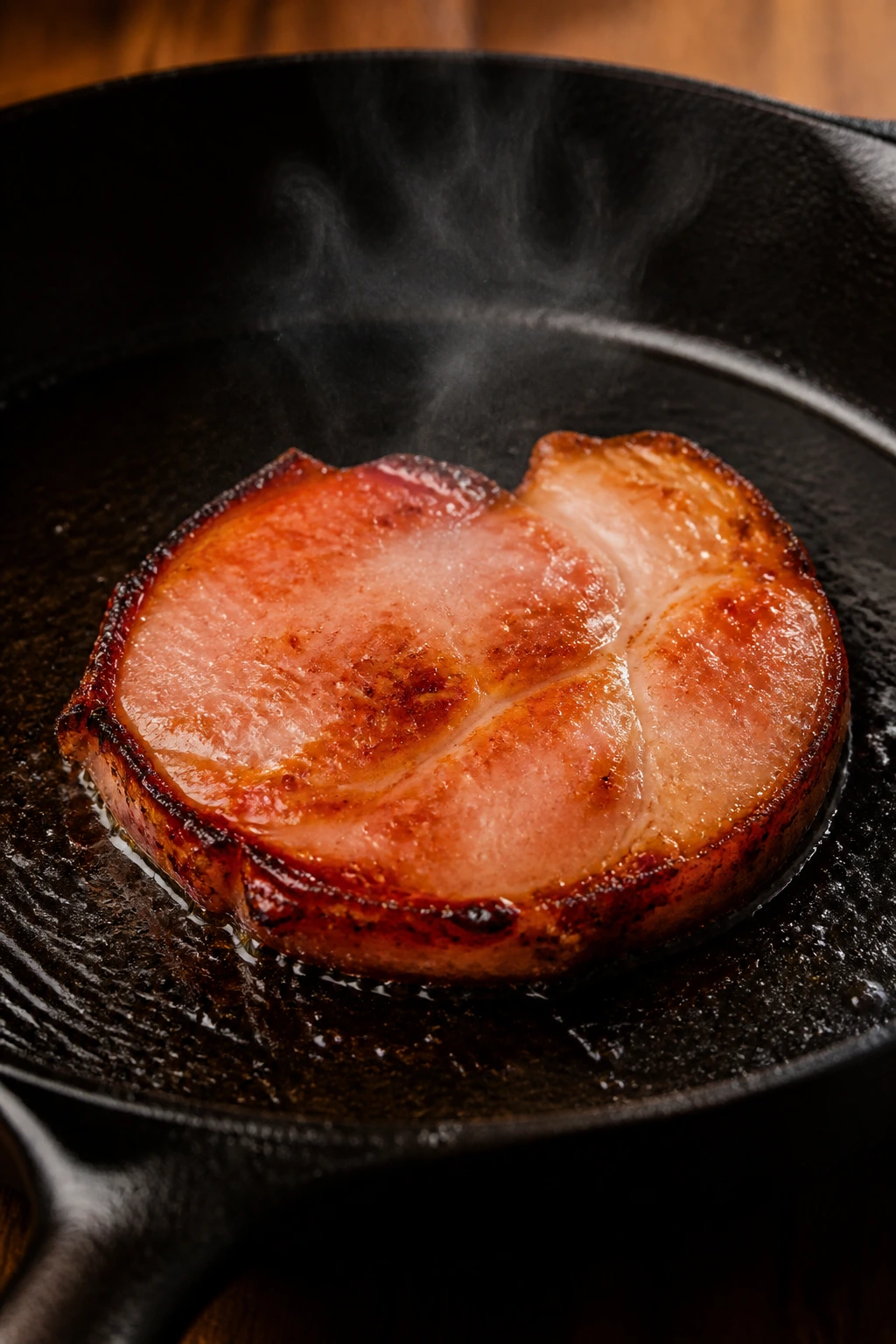
- 12-inch cast-iron or heavy stainless skillet: Holds heat well enough to brown the ham instead of steaming it.
- Small saucepan or saucier: Useful for simmering the glaze before it hits the meat.
- Tongs: Best for turning thick slices or moving sticky pieces without shredding them.
- Whisk: Keeps the brown sugar, mustard, and vinegar moving until the glaze looks smooth.
- Wooden spoon or heatproof spatula: Handy for stirring the glaze and scraping up browned bits.
- Instant-read thermometer: Optional, but useful if you want to be certain the ham is hot in the center without overcooking it.
Make the Brown Sugar Glaze
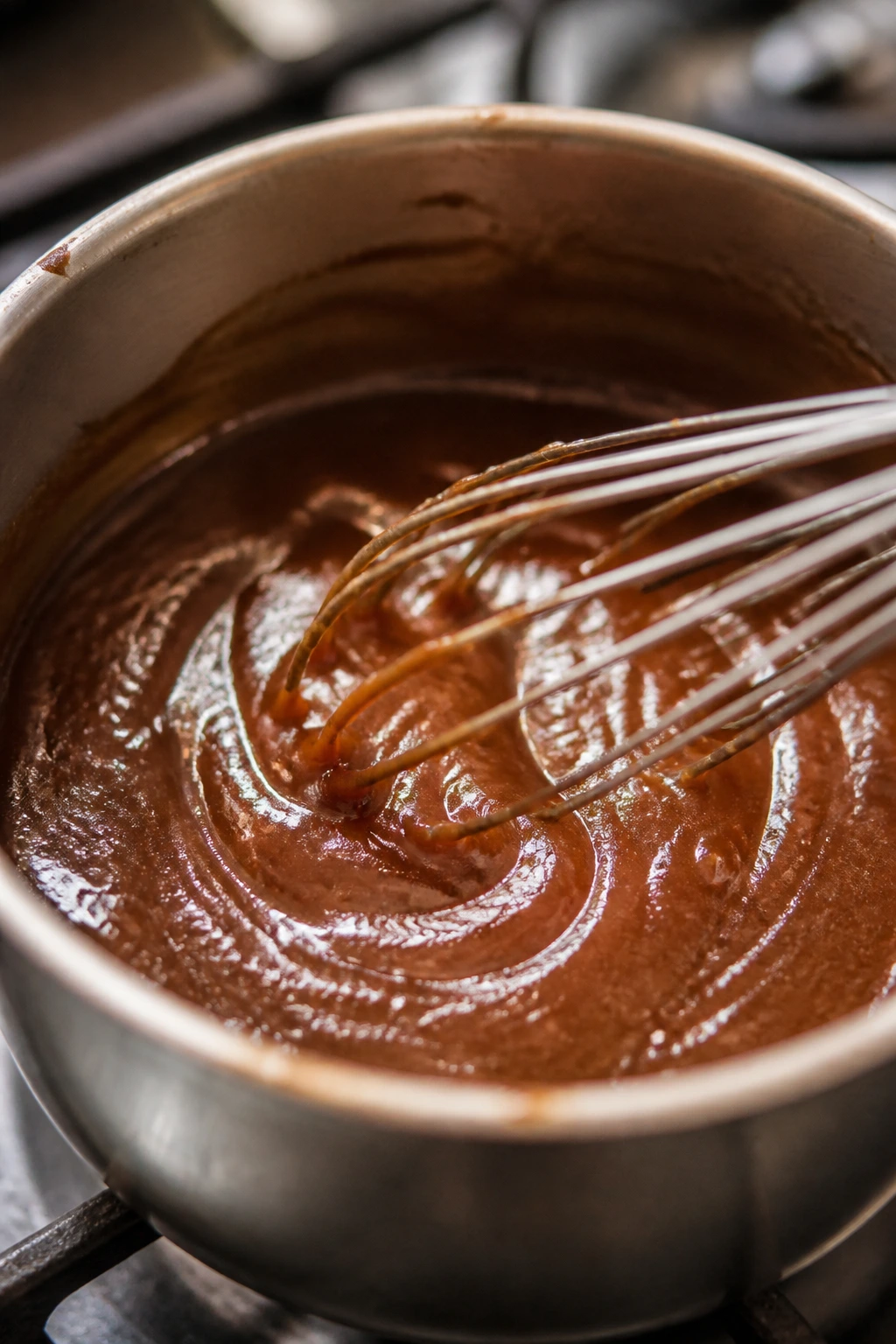
Prepare the Glaze Base:
- In a small saucepan over medium heat, whisk together the brown sugar, Dijon mustard, apple cider vinegar, maple syrup, water or pineapple juice, black pepper, and ground cloves.
- Add the butter and keep whisking until it melts and the mixture looks smooth, glossy, and slightly loose.
Simmer Until It Thickens: 3. Bring the glaze to a gentle simmer and cook for 2 to 3 minutes, stirring often, until the sugar dissolves completely and the sauce starts to coat the back of a spoon. 4. Remove the pan from the heat as soon as it looks syrupy. Do not let it boil hard; sugar goes from shiny to burnt faster than most people expect.
The glaze should smell warm and a little sharp, not like toasted candy. If it smells bitter, the heat was too high. If it looks thin but smooth, that’s fine. It will tighten up once it meets the ham in the skillet.
Crisp the Ham Until the Edges Brown
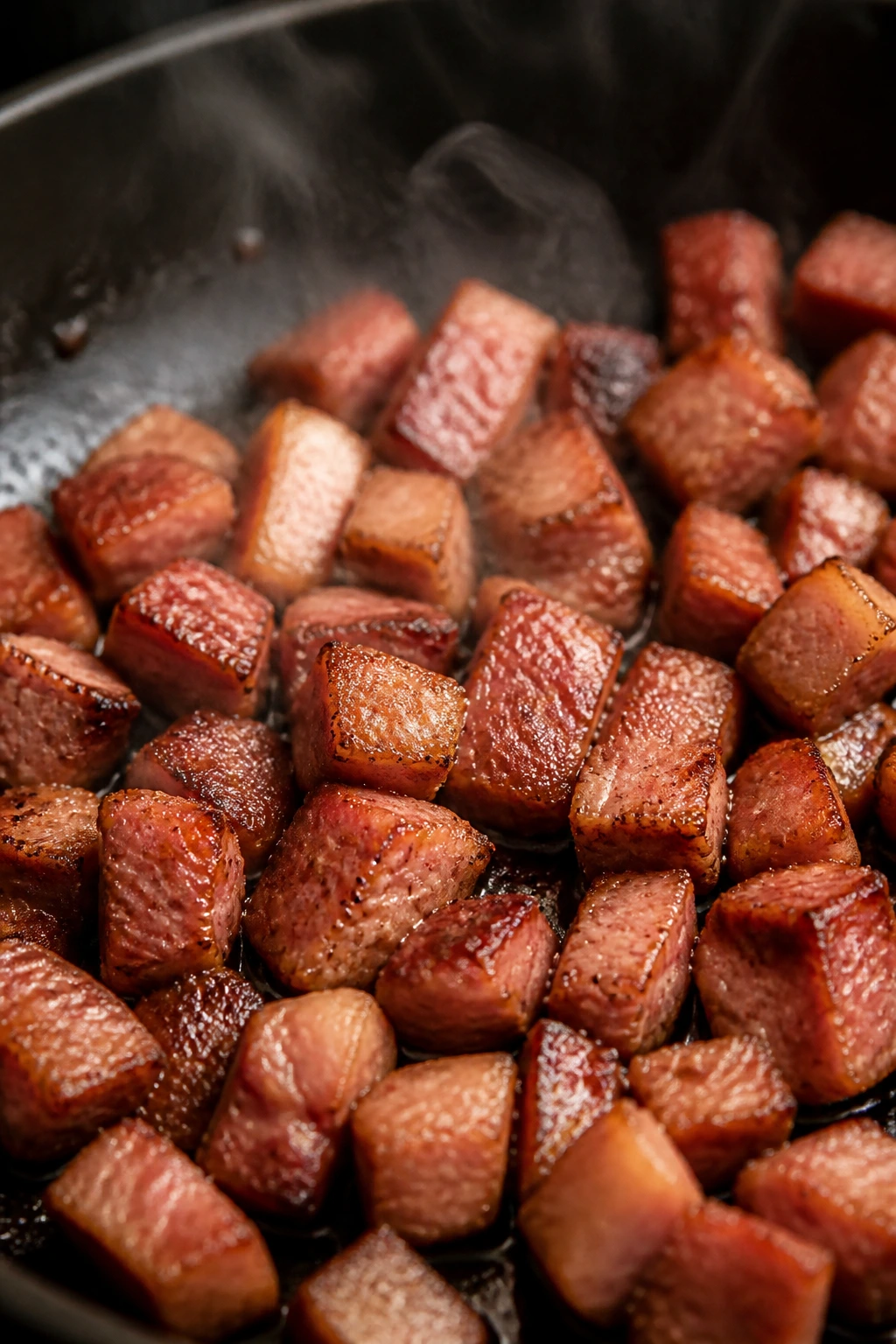
Dry and Portion the Ham: 5. Pat the ham dry with paper towels, then cut any thick slices into 1-inch pieces or half-moons if they’re especially wide. 6. Let the pieces sit uncovered for a few minutes if they feel damp from condensation. A dry surface browns faster, and moisture is the enemy of crisp edges.
Heat the Skillet: 7. Set a 12-inch skillet over medium-high heat and add the oil and butter. 8. When the butter foams and the fat starts to shimmer, add the ham in a single layer.
Brown Without Fussing: 9. Cook the ham for 2 to 3 minutes without moving it, then turn the pieces and cook for 1 to 2 minutes more, until the edges are browned and a few spots have gone deep amber. 10. If the pan looks crowded, work in two batches. Crowding traps steam, and steam softens the very texture you’re trying to build.
The smell here tells you a lot. You want browned pork and warm fat, not scorched sugar. If the ham spits a little, that’s normal. If it starts smoking hard, lower the heat before you add anything sweet.
Coat, Reduce, and Let the Glaze Stick
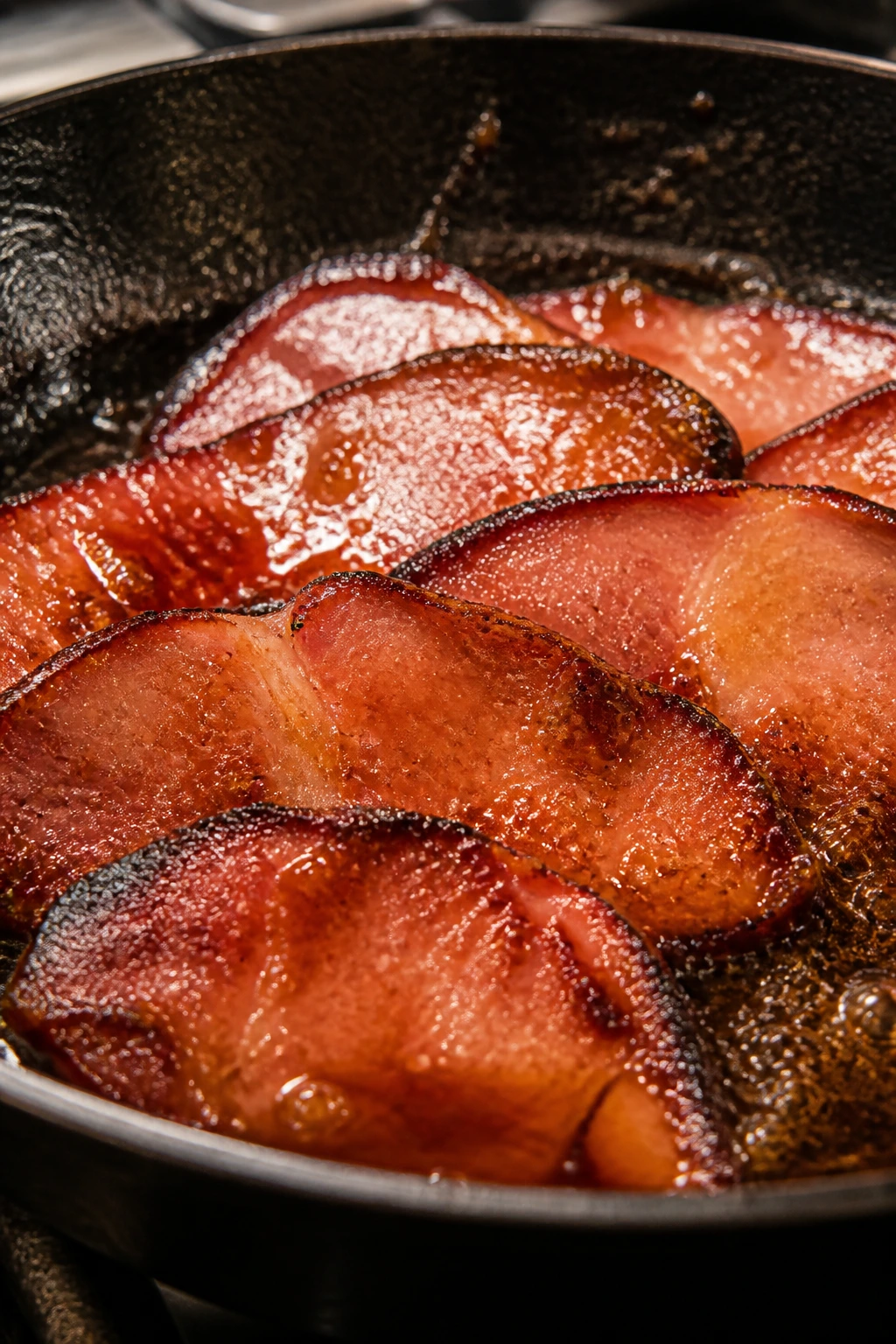
Add the Glaze at the Right Moment: 11. Lower the heat to medium-low and, if the skillet looks greasy, spoon off all but about 1 tablespoon of fat. 12. Pour in the glaze and stir to coat the ham, scraping up any browned bits from the bottom of the pan.
Finish the Stickiness: 13. Cook for 1 to 2 minutes, stirring often, until the glaze bubbles in thick, slow pops and clings to the ham in a shiny layer. 14. Toss in the parsley or chives, give everything one final stir, and transfer it to a warm platter or bowl right away. Once the glaze hits the ham, the window between glossy and sticky is short.
If you want a slightly thicker coating, let the ham sit in the pan off the heat for 30 seconds before serving. That extra beat lets the sugar settle onto the meat instead of sliding off. I like the pieces to look lacquered, not drowned. You should still see the browned edges peeking through.
How to Serve It at the Table
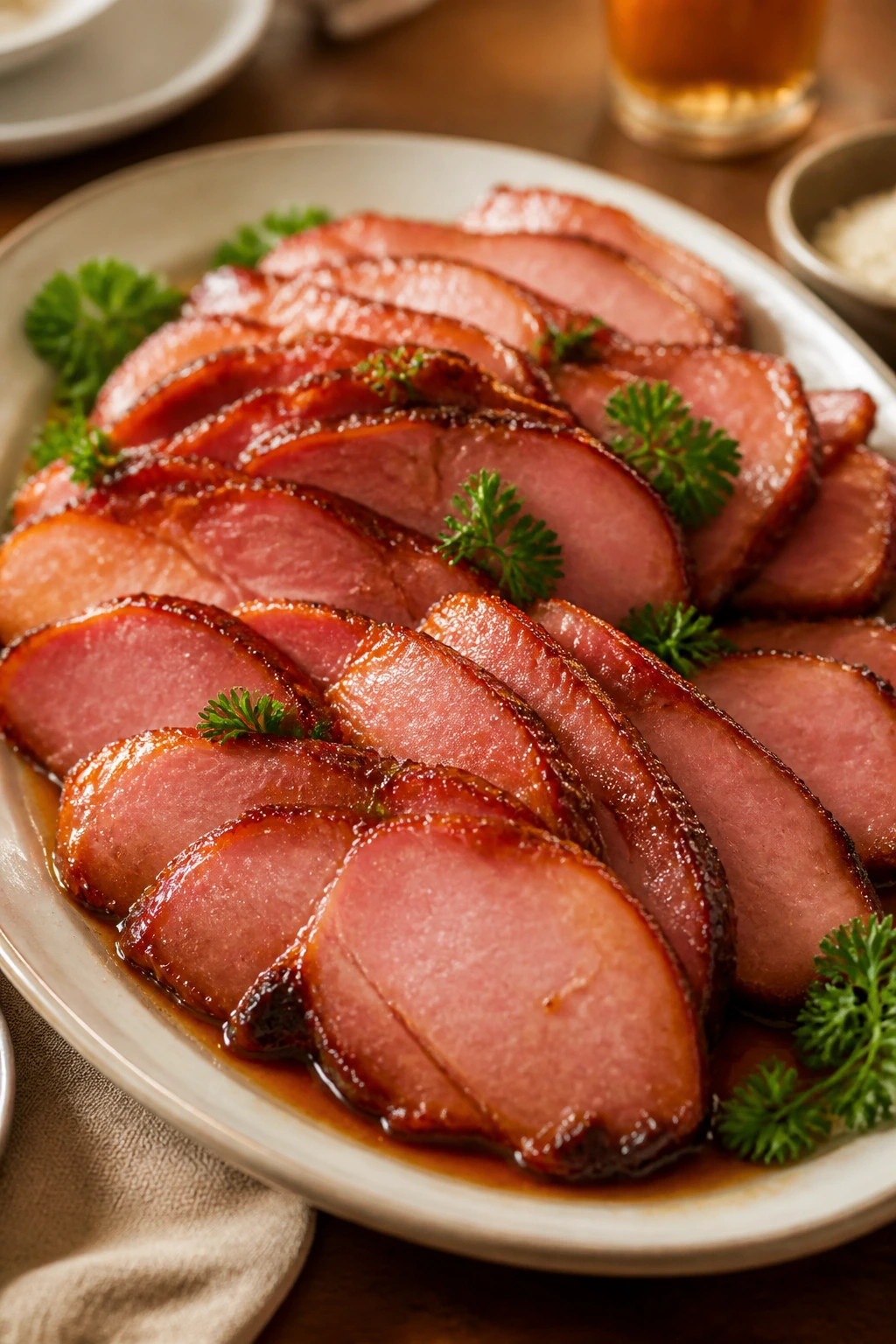
Presentation:
Pile the ham onto a warm platter or shallow bowl so the glaze gathers in the corners instead of disappearing. If you’re using slices, fan them slightly; if you used cubes, mound them loosely so the crisp edges stay visible. A scatter of chopped parsley or chives keeps the plate from looking heavy and gives the glaze a cleaner finish.
Accompaniments:
Buttermilk biscuits are the obvious partner because they catch the glaze without fighting it. Mashed potatoes, skillet potatoes, or scalloped potatoes make sense when this is dinner. For something lighter, serve it with vinegary green beans, a crisp green salad with mustard dressing, or simple buttered peas. At breakfast, a fried egg with runny yolks is the move. The yolk meets the glaze, and that’s the good stuff.
Portions:
Two pounds of ham serves 4 as a main dish or 6 if it’s part of a larger spread. If you’re serving it beside eggs, biscuits, and fruit, you can stretch it further. For a buffet, plan on about 5 ounces per person. If the ham is part of a sandwich bar, 4 ounces per person is plenty because the glaze carries the flavor hard.
Beverage Pairing:
Strong black coffee works at breakfast because it cuts the sugar. At dinner, a dry hard cider or unsweetened iced tea keeps the plate from feeling heavy. If you want wine, go for something crisp and not too oaky; the glaze hates being drowned in vanilla.
Practical Tips for Better Texture and Shine
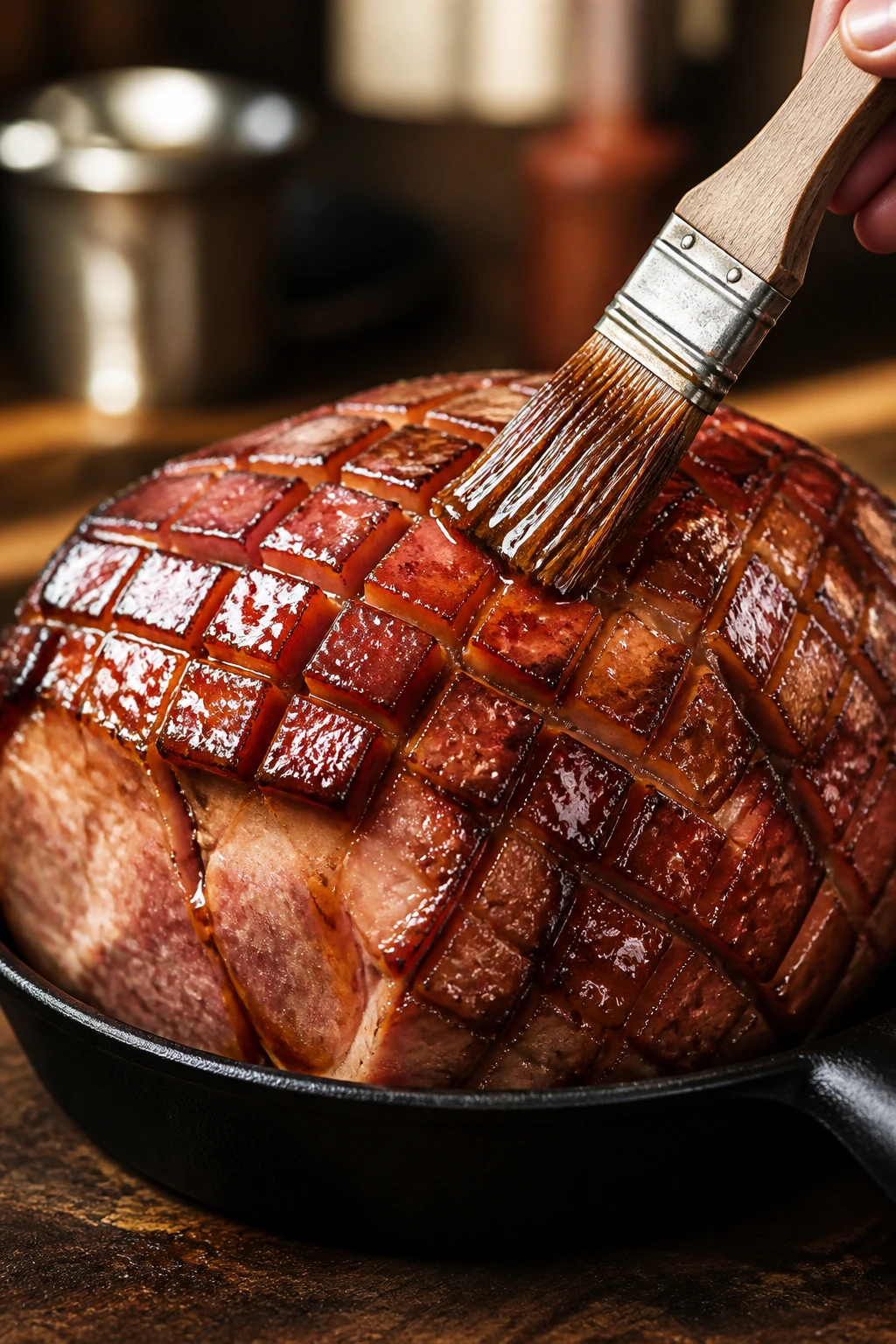
Flavor Enhancement:
Reserve 1 tablespoon of the glaze before you add it to the skillet, then brush or spoon that fresh bit over the ham right before serving. It gives you a brighter top layer and makes the platter look freshly finished instead of cooked twice.
Time-Saver:
Make the glaze in the morning or the day before and keep it in the fridge. It reheats in about 30 seconds in a small saucepan, and that tiny head start makes the whole dish feel faster when dinner time gets messy.
Pro Move:
Use a cast-iron skillet if you have one. It holds a steady hot surface, which is exactly what ham needs to brown instead of steam. A thin aluminum pan can work, but it loses heat when cold ham goes in, and that’s when the texture goes limp.
Cost-Saver:
Don’t waste the ragged end pieces from a ham roast. Dice them smaller, brown them hard, and let the glaze do the heavy lifting. Those odd pieces are often the saltiest and tastiest part anyway, especially once the edges caramelize.
Make-It-Yours:
If you like a hotter finish, add a pinch of cayenne or crushed red pepper to the glaze. If you need a gentler one for kids, leave out the cloves and use pineapple juice instead of vinegar for part of the liquid. It changes the tone without changing the basic method.
Common Mistakes That Make Ham Soggy or Burnt
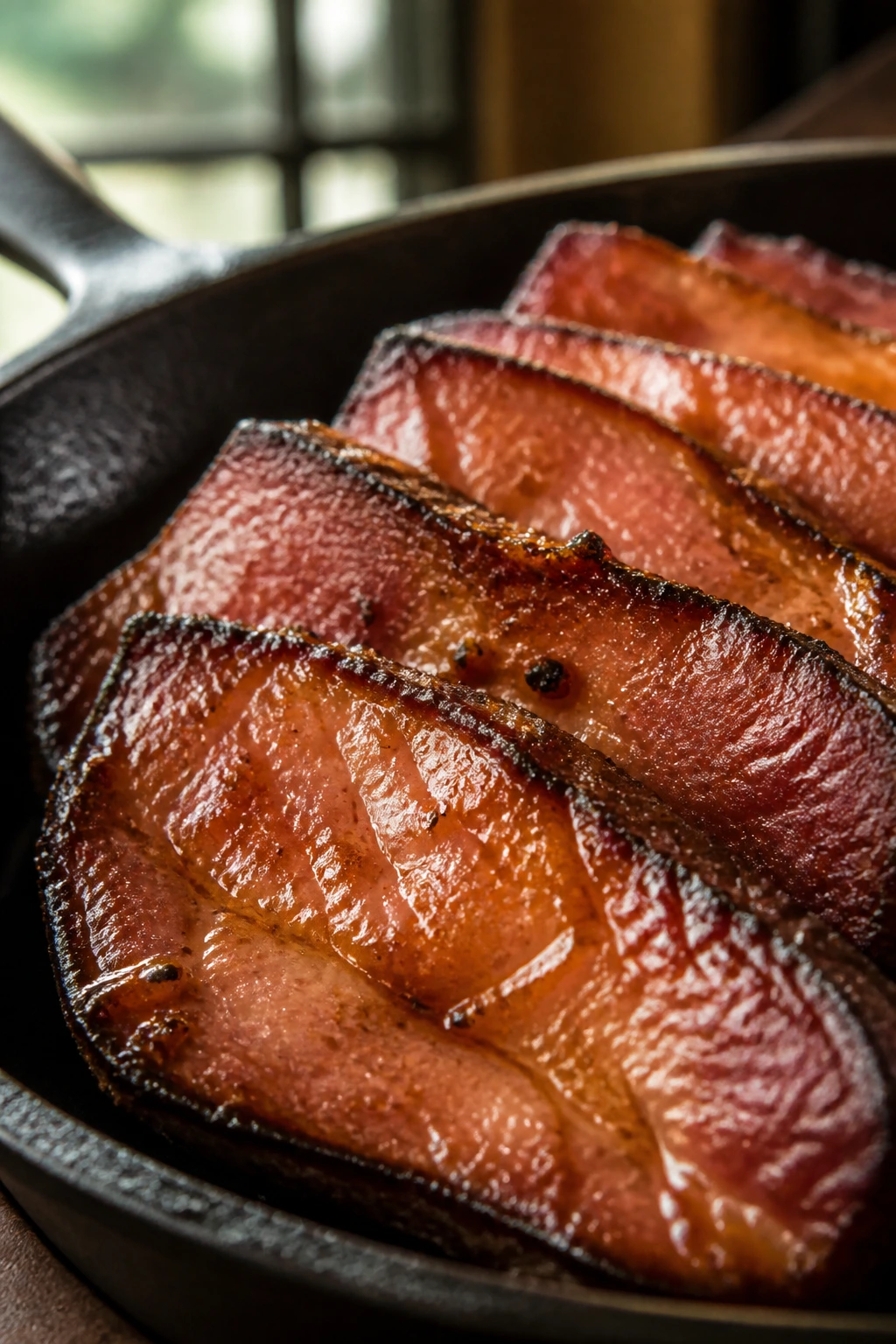
- Starting with damp ham: If the surface is wet, the pan steams before it browns. Pat the ham dry and let it sit for a few minutes if needed.
- Crowding the skillet: Too many pieces at once trap moisture and cool the pan. Brown in batches if the ham looks packed tight.
- Adding the glaze too early: Sugar in a hot pan burns fast. Brown the ham first, then add the glaze only after the edges have color.
- Using high heat all the way through: Medium-high is right for browning, but once the glaze goes in, drop the heat or the sugar will scorch.
- Salting the glaze out of habit: Ham is already cured, often heavily. Taste before you add any extra salt, and in most cases, you don’t need it at all.
- Cooking until the ham is dry as jerky: You’re warming leftover ham, not braising it. Once it’s hot in the center and the glaze is glossy, stop.
Variations That Actually Make Sense
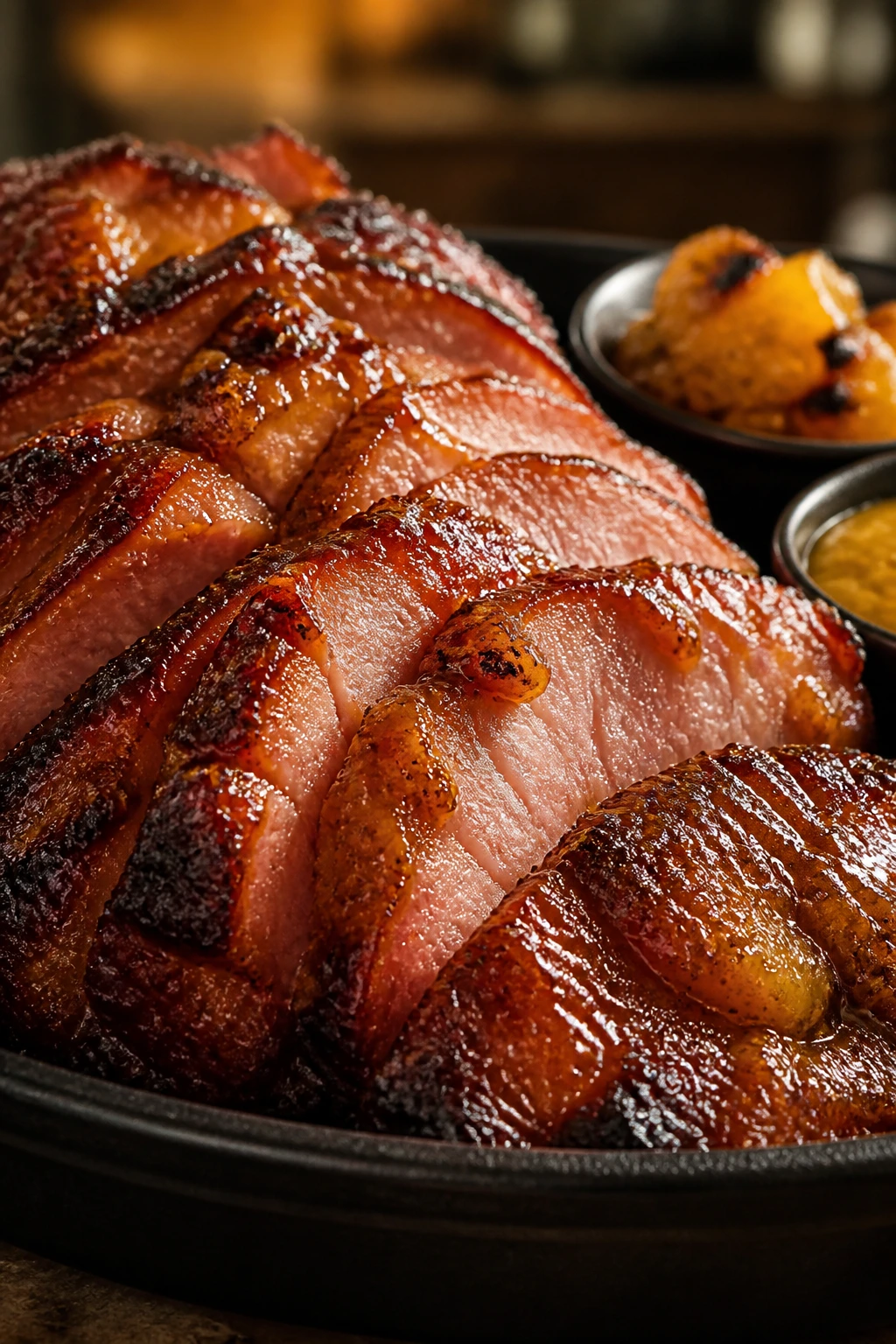
Pineapple-Maple Glaze
Swap the water for pineapple juice and add 1 teaspoon grated fresh ginger. The fruit brings a softer sweetness, and ginger gives the glaze a sharper snap that works especially well with smoked ham.
Hot Mustard Kick
Stir 1 teaspoon spicy brown mustard and a pinch of cayenne into the glaze. The extra heat cuts through the sugar and gives the ham a more diner-style edge, the kind that shows up well with fried potatoes.
Oven-Glazed Sheet Pan Ham
If you want hands-off cooking, spread the ham on a parchment-lined sheet pan and roast it at 425°F for 8 to 10 minutes. Brush on the glaze during the last 2 minutes, then run it under the broiler for 30 to 60 seconds to get darker edges. Watch it like a hawk; broilers move fast.
Honey-Bourbon Finish
Use 2 tablespoons honey in place of the maple syrup and add 1 tablespoon bourbon to the glaze. The bourbon fades into the background after cooking, leaving a deeper caramel note without tasting boozy.
Breakfast Hash Shortcut
Dice the ham smaller and toss it into a skillet with cooked potatoes and onions. Spoon the glaze over the hash at the end and top the whole thing with fried eggs. That’s the most efficient way I know to make one pan feel like a full breakfast.
Storage, Reheating, and Make-Ahead Notes
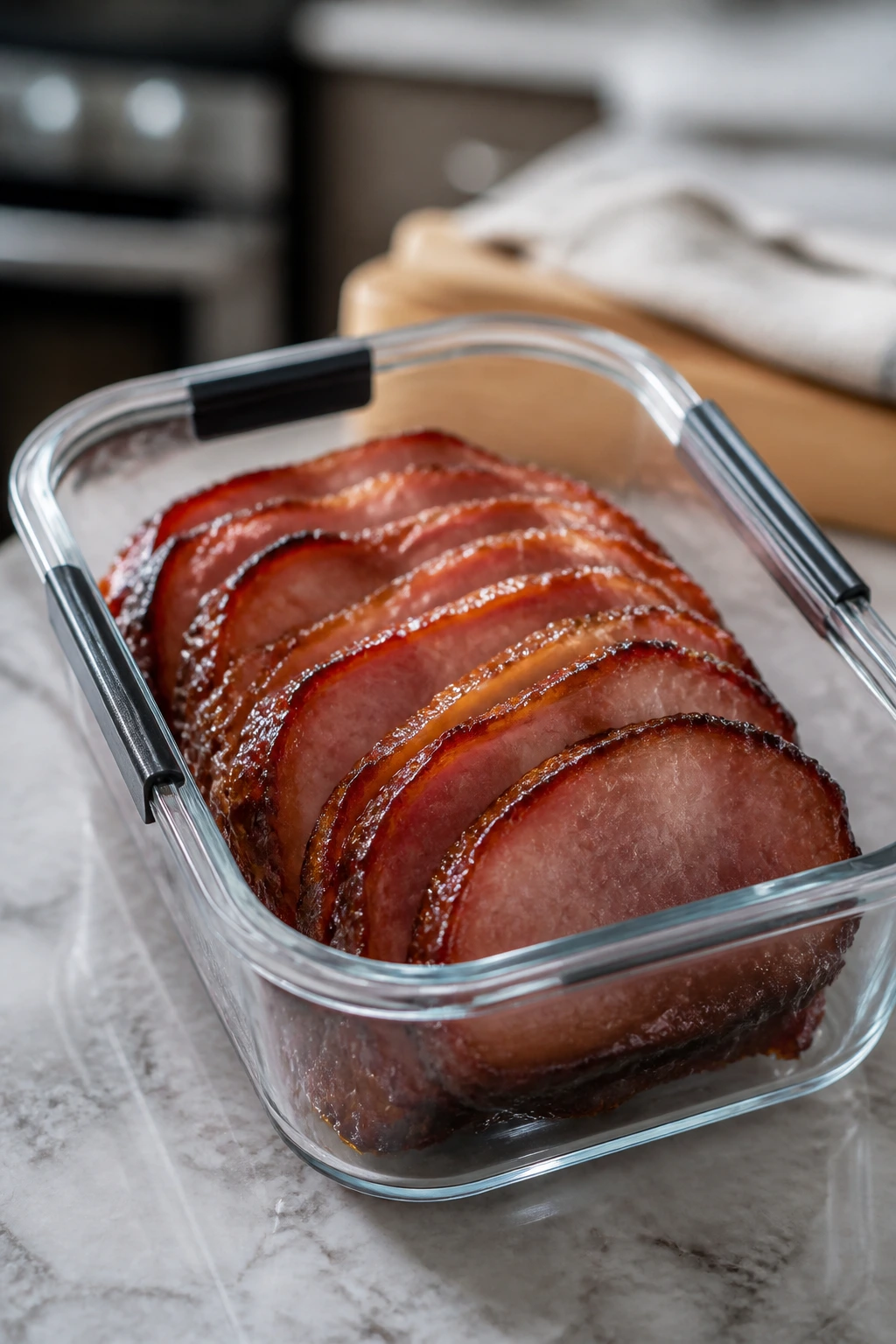
Leftover glazed ham keeps in an airtight container in the refrigerator for 3 to 4 days. The glaze will thicken as it chills, and that’s normal. If you’re stacking pieces, slip a small sheet of parchment between layers so they don’t glue themselves together.
For the freezer, pack the cooled ham in meal-size portions and freeze for up to 2 months. Freeze it flat in a zip-top bag or shallow container so it thaws more evenly. The texture won’t be quite as crisp after freezing, but the flavor holds up well, especially if you re-crisp it in a skillet after thawing.
To reheat, the best method is a skillet over medium heat with 1 to 2 teaspoons of water or a small splash of cider. Cover for a minute to warm the center, then uncover and cook for another minute to bring back some edge. An oven works too: 325°F for 8 to 10 minutes, loosely covered, then uncovered for the last 2 minutes.
The microwave is the last resort. Use short bursts and stop as soon as the ham is hot, because the glaze can go from sticky to weirdly chewy in a hurry. If you’re making the glaze ahead, it can be refrigerated for up to 3 days. Rewarm it gently before use and whisk in a teaspoon of water if it has tightened too much.
Questions Readers Ask About Crispy Ham Leftovers

Can I use thin deli-style ham instead of thicker leftover ham?
You can, but it needs a lighter hand and a shorter cook time. Thin slices brown fast and dry out even faster, so use medium heat, keep the glaze looser, and pull the pan as soon as the edges curl.
What if my ham is spiral-cut?
Spiral ham works well because the pre-cut edges grab the glaze. Separate the slices if they’re stuck together, pat them dry, and brown them in smaller batches so the cut surfaces get a little color before the sugar goes in.
Can I make the glaze ahead of time?
Yes, and it’s a smart move. The glaze keeps for 3 days in the fridge, and reheating it gently before it hits the pan saves time when the ham is already on the stove.
How do I keep the brown sugar from burning?
Brown the ham first, then lower the heat before adding the glaze. If the skillet is ripping hot when the sugar goes in, the edges can darken too fast and taste bitter before the center gets sticky.
Is pineapple juice better than water in the glaze?
Not better, exactly — just different. Pineapple juice makes the glaze softer and fruitier, while water keeps the flavor more traditional and lets the mustard and cloves stay in front.
Can I make this in the oven instead of the stove?
Yes, and it’s useful if you’re feeding a crowd. Roast the ham on a sheet pan at 425°F, glaze it near the end, and finish under the broiler for a minute if you want those darker corners.
Why did my ham turn out chewy instead of crisp?
Usually the pan was too cool or too crowded. Chewy ham means the moisture stayed trapped and the surface never had a chance to brown; next time, dry the pieces better and cook in a smaller batch.
A Sweet-Salty Finish Worth Making Again
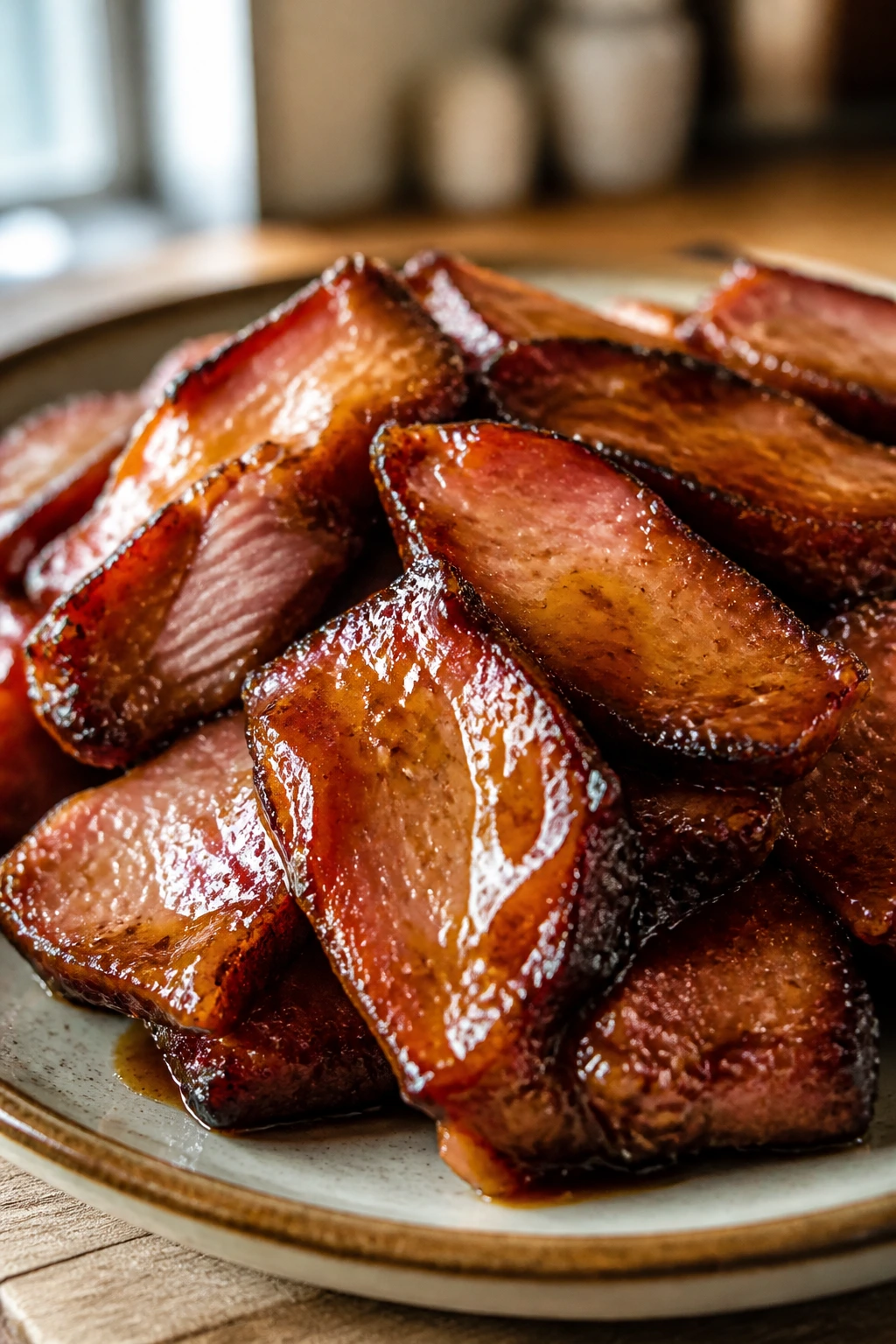
Leftover ham does not need a sad second act. Give it hot fat, a dry surface, and a brown sugar glaze that knows when to keep quiet and when to shout. That’s enough to turn plain refrigerator slices into something with brittle edges, sticky corners, and enough salt-sweet contrast to keep people standing at the stove.
The nice thing about this method is that it respects what ham already is. You’re not masking it. You’re sharpening it. And when the glaze turns glossy and the edges go dark in the pan, the whole dish tastes like somebody paid attention, which is usually what leftovers are missing.
## Crispy Ham Leftovers with Brown Sugar Glaze — Recipe Card
Recipe Name: Crispy Ham Leftovers with Brown Sugar Glaze
Description: Leftover cooked ham browned in a hot skillet and finished with a sticky brown sugar glaze made with Dijon, apple cider vinegar, maple syrup, and cloves. The edges stay crisp while the glaze turns glossy and deeply savory-sweet.
Prep Time: 10 minutes
Cook Time: 12 to 15 minutes
Total Time: 25 minutes
Course: Main Course
Cuisine: American
Servings: 4 to 6
Calories: About 320 kcal per serving
Ingredients
For the Ham:
- 2 pounds cooked ham, cut into 1/2-inch slices or 1-inch pieces
- 1 tablespoon neutral oil
- 1 tablespoon unsalted butter
For the Brown Sugar Glaze:
- 1/2 cup packed dark brown sugar
- 2 tablespoons Dijon mustard
- 2 tablespoons apple cider vinegar
- 2 tablespoons maple syrup
- 1/4 cup water or pineapple juice
- 1/2 teaspoon black pepper
- 1/8 teaspoon ground cloves
For Serving:
- 1 tablespoon chopped parsley or chives
Instructions
- Whisk the brown sugar, Dijon, vinegar, maple syrup, water or pineapple juice, black pepper, cloves, and butter together in a small saucepan over medium heat.
- Simmer the glaze for 2 to 3 minutes, stirring often, until smooth, glossy, and slightly thickened. Remove from heat.
- Pat the ham dry and cut thicker pieces into even slices or 1-inch chunks.
- Heat the oil and butter in a 12-inch skillet over medium-high heat until shimmering.
- Add the ham in a single layer and cook for 2 to 3 minutes without moving it, then turn and cook 1 to 2 minutes more until browned at the edges.
- Lower the heat to medium-low, add the glaze, and stir to coat the ham.
- Cook for 1 to 2 minutes more, stirring often, until the glaze is sticky and the ham looks lacquered.
- Transfer to a warm platter and finish with parsley or chives.
Notes:
Make the glaze up to 3 days ahead and rewarm it gently before cooking. Do not crowd the skillet. For the crispiest edges, serve the ham right away.