



A slow cooker can make dinner feel like it had a lot more attention than it actually did. That’s the whole trick behind an easy fancy crockpot meal: a little upfront work, a long quiet cook, and a finish that makes the whole thing taste braised instead of merely cooked. When the lid lifts and the kitchen smells like onions, thyme, garlic, and something rich enough to make you pause, nobody is thinking about how little you had to do after lunch.
The mistake people make with crockpot food is treating it like a dump-and-walk-away machine. It isn’t. It’s more like a patient assistant with a very specific taste for ingredients that can handle hours of gentle heat. Chuck roast, chicken thighs, pork shoulder, short ribs, white beans, mushrooms, leeks, carrots, parsnips — these are the things that stay interesting after a long nap in steam and broth. Lean chicken breast and delicate vegetables can work too, but they need more timing and a softer hand.
What turns a slow cooker dinner from plain to polished is usually the same handful of decisions: brown something first, use a concentrated savory base, keep the liquid under control, and finish with acid, herbs, or butter so the sauce wakes up at the end. Miss those pieces and the pot can taste dull, thin, or muddy. Nail them, and you get that slippery, glossy, spoon-coating sauce that feels like it should have taken much longer than it did.
Why This Easy Fancy Crockpot Style Works So Well
-
The prep happens up front, not all night: Fifteen to twenty minutes of chopping, searing, and stirring buys you hours away from the stove, which is the trade that makes slow cooking worth keeping around.
-
The right ingredients keep their shape: Chuck roast, chicken thighs, pork shoulder, and sturdy root vegetables stay tender instead of falling apart into mushy strands and flavorless cubes.
-
Concentrated seasonings do the heavy lifting: Tomato paste, Dijon mustard, Worcestershire, soy sauce, miso, broth, and wine give the pot a deeper base than plain water or a full cup of thin stock ever could.
-
A finishing hit changes the whole bowl: A spoonful of vinegar, a squeeze of lemon, a knob of butter, or a handful of parsley at the end makes the sauce taste deliberate, not one-note.
-
The slow cooker is good at tenderness, not sparkle: That sparkle — the glossy top, the fresh green herb, the little bit of salt and acid right before serving — is what makes the meal feel fancy.
-
Leftovers often improve after a rest: Beef braises, bean pots, and tomato-heavy dishes settle overnight and taste more composed the next day, which is a rare and pleasant thing in home cooking.
Why “Fancy” Doesn’t Mean Fussy in a Crockpot
The phrase easy fancy crockpot sounds a little contradictory until you stop imagining fancy as expensive. Fancy, in this context, is about the feeling on the plate: tender meat that pulls apart with almost no force, sauce that clings instead of puddling, and a finish that looks intentional. A roast with a browned crust and a spoonful of chopped parsley reads as more put-together than a more expensive meal that was boiled into submission.
That’s the part people miss. Fancy is usually built from texture and balance, not from a longer ingredient list.
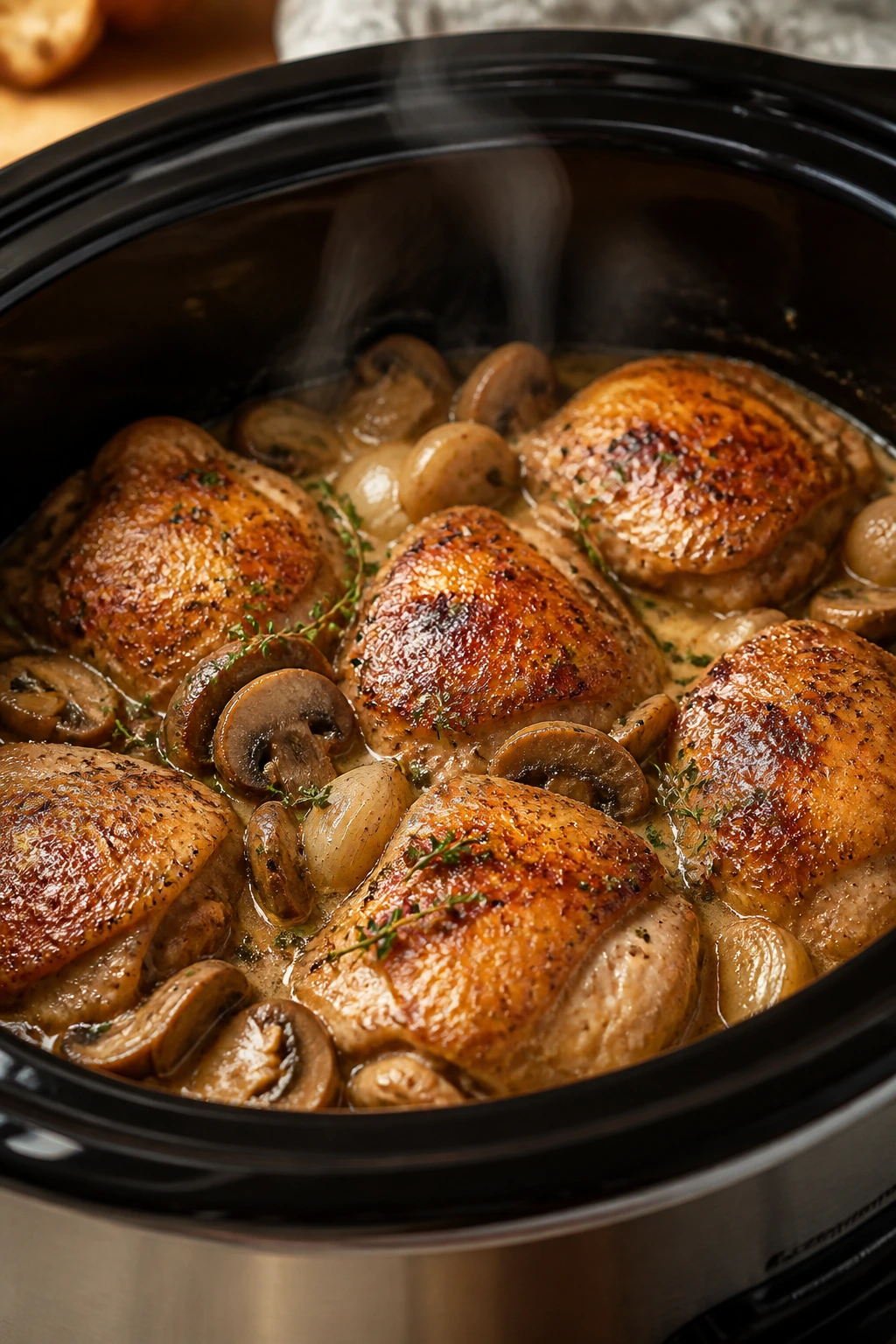
A pot of chicken thighs with mushrooms, shallots, white wine, and a splash of cream at the end can feel more elegant than a heavy casserole because the flavors are clear. A beef chuck braise with onion, tomato paste, and rosemary becomes richer when the liquid has been reduced slightly and sharpened with a little vinegar. Even a vegetarian bean stew can feel restaurant-level if the broth is savory, the vegetables are cut with care, and the top gets a drizzle of olive oil just before it hits the table.
One reason the slow cooker works so well here is that it protects tenderness while you’re busy elsewhere. But tenderness alone is not enough. You still need contrast. You want something soft against something bright, something rich against something clean, something that smells deep and brown against something fresh and green. That’s the formula, and it’s the reason a pot of food can look humble in the morning and feel like a proper dinner by evening.
The Flavor Formula That Makes a Slow Cooker Meal Taste Braised
A really good slow cooker dinner usually follows the same pattern, even when the ingredients change. Start with savory depth, give the pot a little backbone, and finish with something that cuts through the richness. That’s braising logic, and it works whether you’re cooking beef, chicken, pork, or beans.
Start with a savory base
Onions, garlic, leeks, celery, carrots, and mushrooms are the usual opening move. They’re not there to fill space. They give the liquid a kind of background sweetness that keeps the pot from tasting flat after six hours of gentle heat. If you have the time to sweat them in a skillet first, do it. If not, put them in raw and make the rest of the pot stronger.
A teaspoon or two of tomato paste, a dab of miso, or a splash of soy sauce can push the base from “pleasant” to “deep.” That little hit of concentration matters more than people think.
Add something concentrated
Slow cookers don’t evaporate much liquid, which means weak seasoning stays weak. That’s why broth alone is often not enough. A little wine, Worcestershire, Dijon, capers, anchovy paste, or even a Parmesan rind can give the sauce a bass note that plain broth can’t. I keep coming back to this because it matters: if the ingredients taste watered down before they go in, they usually taste watered down when they come out.
Give the pot enough liquid, but not a bath
The temptation is to cover everything in broth. Resist it. Most slow cooker meals need less liquid than people expect because the lid traps moisture. A roast or pot of chicken often only needs enough liquid to come partway up the ingredients, not drown them. Too much and you get soup when you wanted a braise. Too little and the bottom can scorch or the sauce can reduce too far. There’s a narrow sweet spot, and once you’ve cooked a few pots, you start seeing it by eye.
Finish with acid and fat
This is where the whole thing wakes up. A small splash of sherry vinegar, red wine vinegar, cider vinegar, or lemon juice sharpens the sauce. A pat of butter, a spoonful of crème fraîche, or a swirl of olive oil softens the edges. Add fresh herbs right at the end, not six hours earlier, unless you want them to disappear into the pot and stop being herbs at all.
That one-two punch — acid plus fat — is what makes a slow cooker meal feel composed instead of merely hearty.
Choosing Cuts, Beans, and Vegetables That Stay Beautiful After Hours
The slow cooker is honest about ingredients. If you choose something that doesn’t like long heat, it tells on you. If you choose something sturdy, forgiving, and a little fatty, it rewards you with texture that feels deliberate.
Meats that can take the heat
Chuck roast is the old reliable for beef. It has enough marbling and connective tissue to become silky after a long cook. You can cut it into large chunks or leave it whole, then shred or slice it at the end.
Chicken thighs are the best chicken for this style, full stop. They stay juicy much longer than breasts and taste richer after a few hours in broth or sauce. Bone-in thighs hold shape longer; boneless ones make serving easier.
Pork shoulder behaves like it was built for a slow cooker. It has enough fat and collagen to turn tender without drying out, and it handles sweet, savory, smoky, and acidic flavors without complaining.
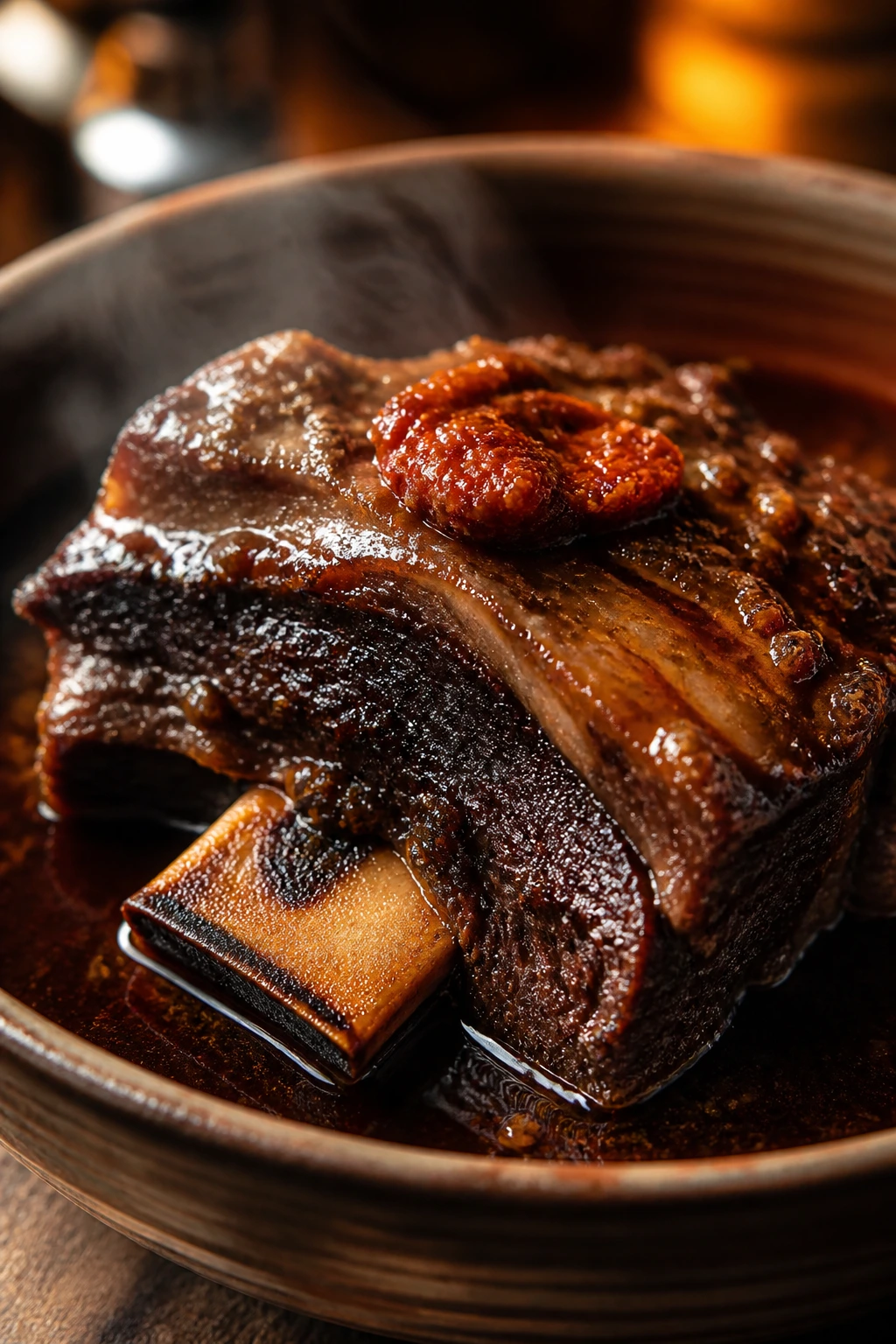
Short ribs bring their own richness, but they also ask for a little more attention because they’re more expensive and can get greasy if the sauce is thin. They’re worth it when you want dinner to feel dramatic.
Vegetables that stay in the game
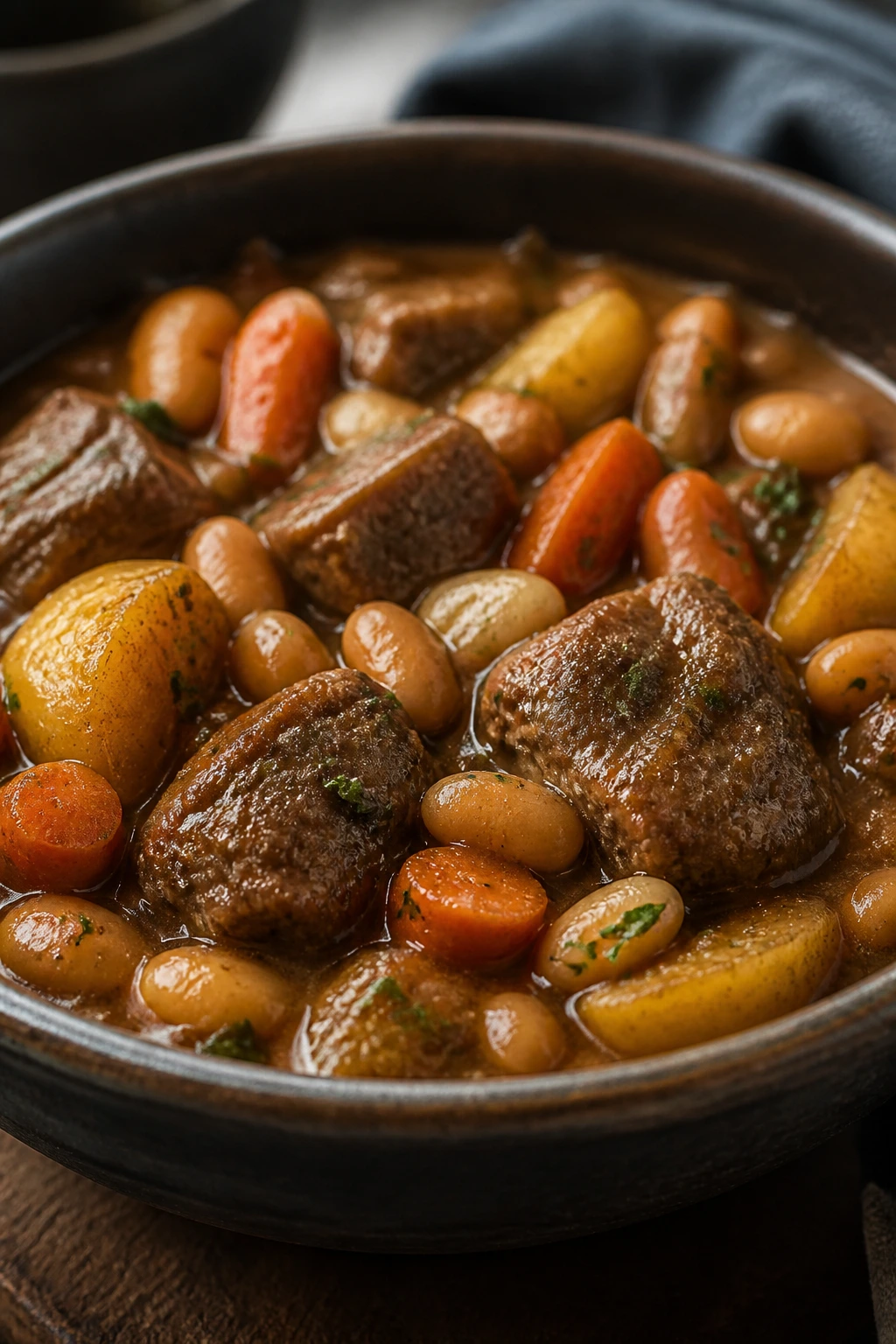
Carrots, parsnips, potatoes, celery root, and whole shallots can handle long heat, especially if they’re cut into larger chunks. A 1½-inch potato cube stays much nicer than a tiny dice that will break apart before dinner.
Mushrooms are a little different. They can go in early if you want them melted and deeply savory, or later if you want them to keep some shape. I usually prefer them in the last two hours so they keep their edges and don’t vanish into the sauce.
Cabbage and fennel are underrated here. They soften into something sweet and almost buttery, which is exactly the sort of quiet detail that makes a pot taste considered.
Ingredients to save for the end
Peas, spinach, kale, zucchini, fresh tomatoes, and delicate herbs should usually go in late or be stirred in at the very end. They don’t need six hours. They need a few minutes. If you drop them in early, they can lose color, turn limp, or simply disappear.
The same rule applies to dairy. Cream, yogurt, sour cream, and soft cheese all behave better when added near the finish. Put them in too soon and you risk splitting, graininess, or a sauce that looks tired before it reaches the table.
The size of the cut matters more than people think
Big, even pieces cook better than tiny ones. That’s boring advice, but it saves dinner. If your carrots are cut into thick coins and your potatoes into chunks close to the same size, they finish together. If you chop everything differently, you get a mix of mush and crunch, which is rarely the point.
The Ten Minutes That Change Everything
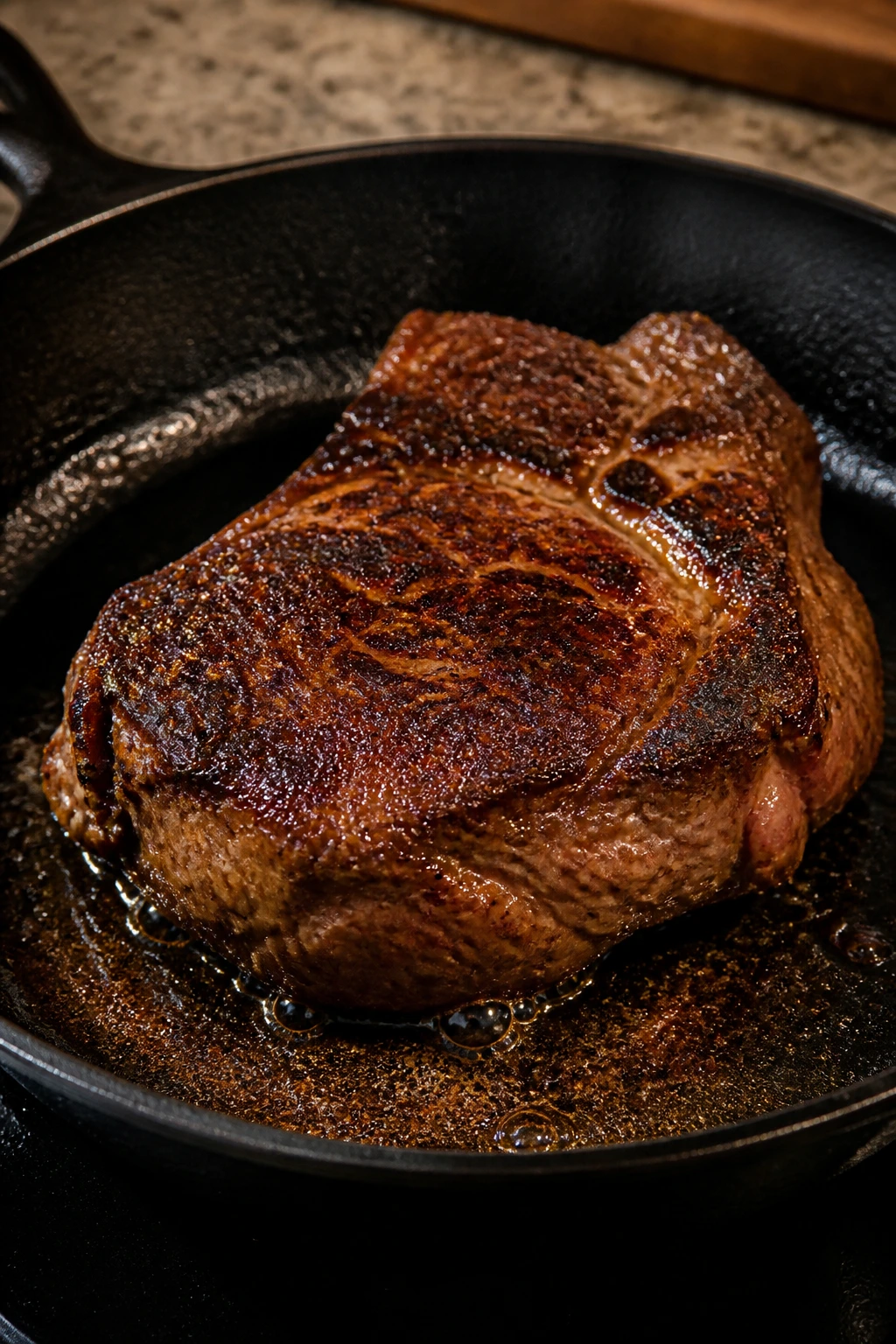
If you skip browning, the meal can still work. It just won’t have the same depth. That’s the honest version.
A hot skillet gives you browned bits, and those browned bits are flavor. They make the sauce taste roasted instead of steamed. You do not need to sear every square inch into a hard crust, either. A good 3 to 4 minutes per side on beef or pork, or until the surface turns mahogany and smells nutty, is enough to build a better base than raw meat alone.
Chicken deserves a lighter touch. A quick sear in oil until the skin is golden, or a fast browning on the side that will be exposed to the sauce, can make a big difference. If you’re using skinless thighs and the schedule is tight, even 2 minutes per side helps. That little color shift changes the whole pot.
The real bonus is the pan itself. Once you’ve browned the meat, deglaze the skillet with wine, broth, cider, or even water and scrape up the stuck bits. Pour that liquid into the slow cooker. Now you’ve moved the best part of the sear into the pot, where it can season everything else.
Nope, you do not need a complicated ritual here.
A quick, hard sear in a skillet, followed by a deglaze, is enough. That’s the whole move. It’s one of the few places in cooking where a small interruption pays off for hours.
How to Layer the Pot So Nothing Turns Mushy
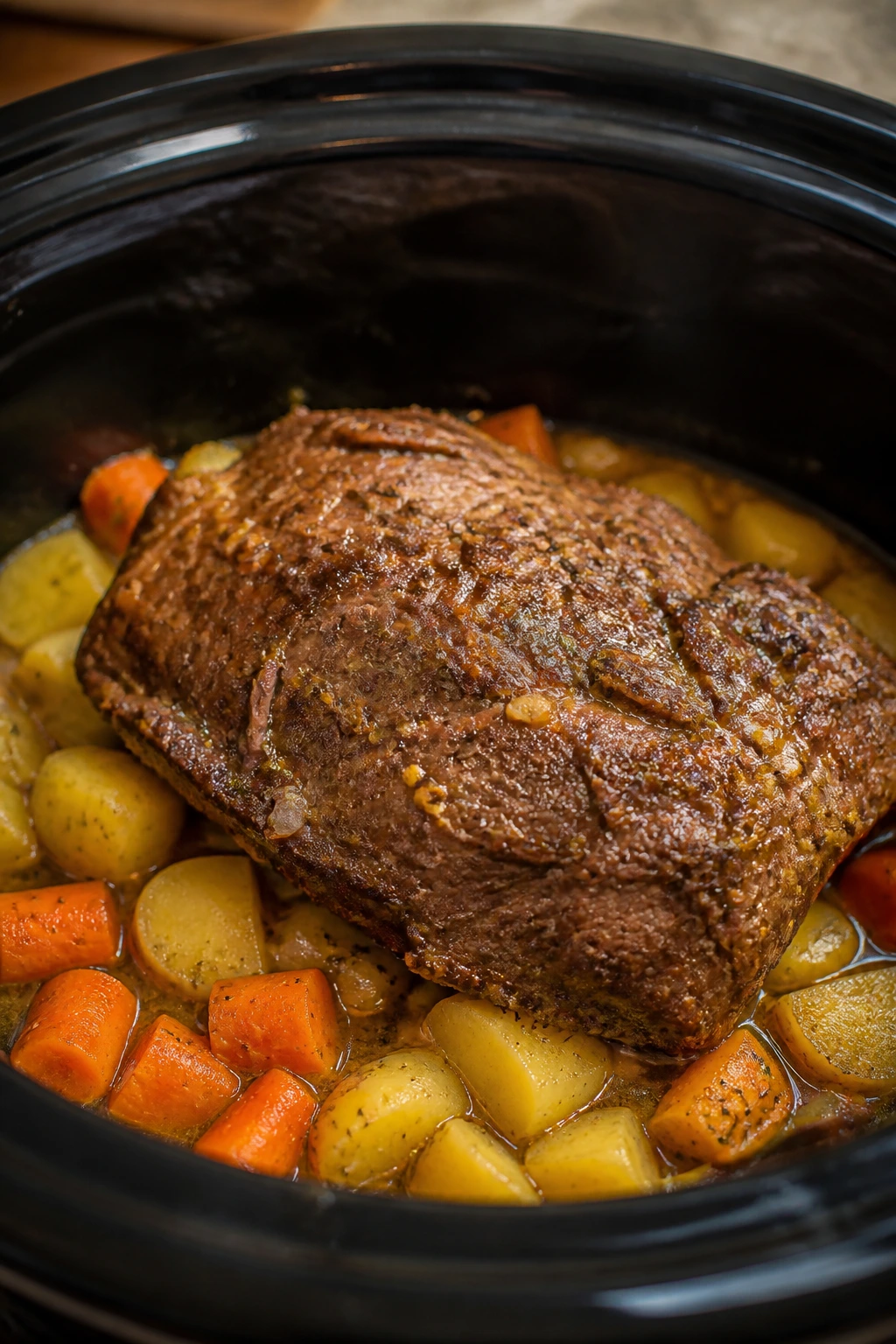
The order in which you add things matters more in a slow cooker than in a sauté pan. Everything is sitting in moisture for a long stretch, so the ingredients at the bottom get the hottest treatment. That’s useful when you know what belongs there.
Dense vegetables usually go down first. Potatoes, carrots, turnips, parsnips, celery root, and thick onion wedges can handle the heat. They act a bit like a bed for the meat and help keep the main protein from sitting directly on the bottom surface.
Meat usually goes on top or slightly nested into the vegetables, depending on the dish. The point is to let the liquid circulate around it instead of trapping it in a tight heap. For braised dishes, I like to spread the aromatics underneath, set the meat on top, and spoon the sauce over everything. It feels a little fussy when you do it, but it keeps the pot more even.
Keep the fragile stuff out of the early hours
Mushrooms, peas, spinach, kale, fresh herbs, and dairy are usually better near the end. Mushrooms can go in earlier if you want them collapsed and very soft, but if you like them with shape, wait. Spinach needs only a few minutes to wilt. Peas need the last 15 to 20 minutes. Fresh basil, dill, parsley, or chives should be stirred in right before serving.
Cut with the finish in mind
A potato cube that is too small will not survive a long cook. A carrot sliced into paper-thin coins will turn soft before you’re ready. If you want the final bowl to look composed, keep the pieces larger than you think you need. There’s a reason the old braises use thick wedges and whole shallots. They stay themselves.
Don’t pack the insert like a suitcase
Slow cookers work best when they’re at least half full and no more than about two-thirds full, depending on the size of the pot. Too empty and the food can scorch or cook unevenly. Too full and you risk overflow, poor heat circulation, and a sauce that refuses to reduce. That middle space matters.
Timing, Heat Settings, and When to Stop Touching the Lid
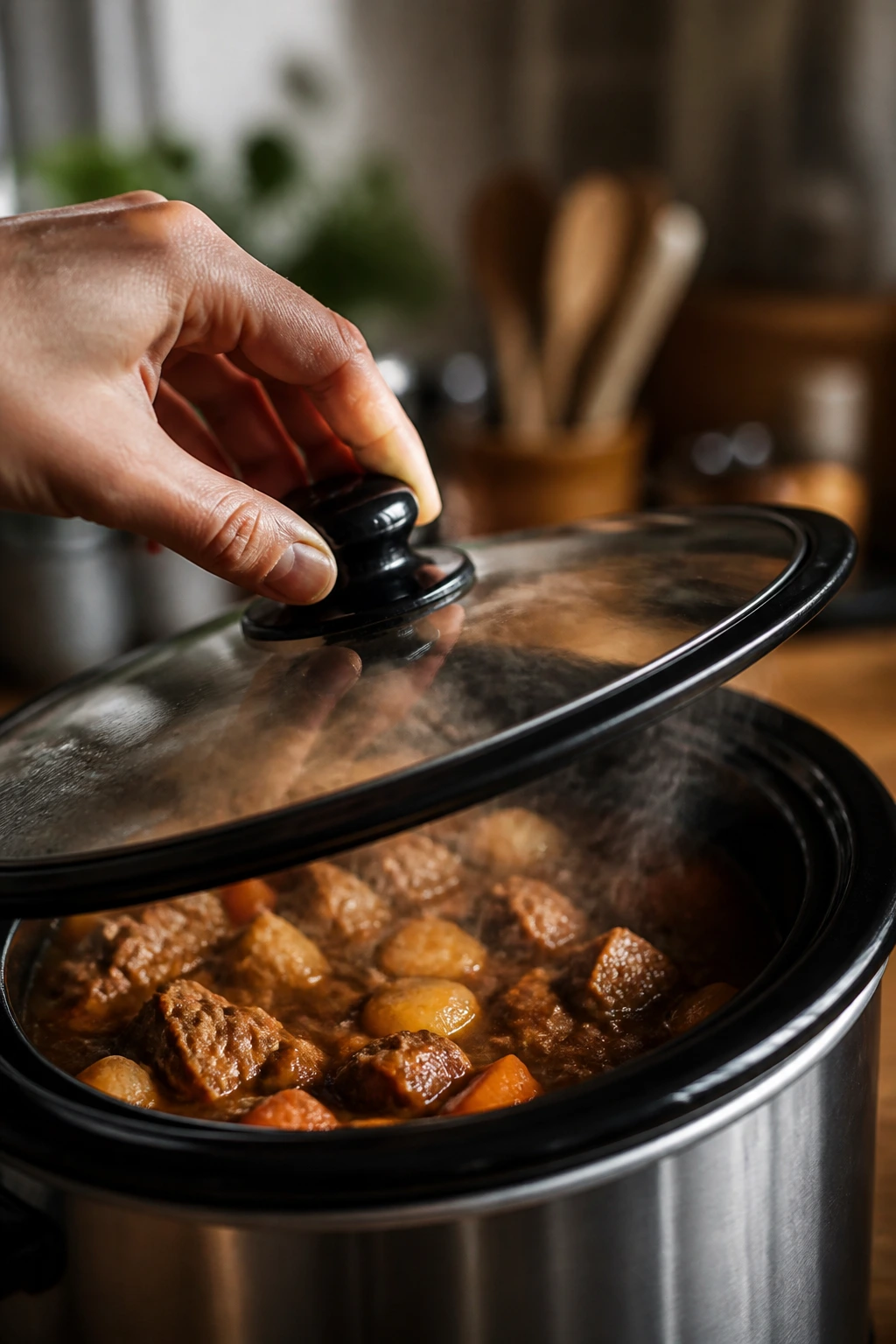
Low heat is usually kinder than high heat. It gives meat and vegetables a wider window and makes it less likely that chicken breasts dry out or potatoes collapse before dinner. A lot of classic braises do best on low for 6 to 8 hours, while quicker chicken or pork dishes may need only 4 to 6. High heat can get the job done in 3 to 4 hours for smaller cuts or saucier dishes, but it leaves less room to wander away from the pot.
That’s the trade.
If your slow cooker runs hot, start checking earlier than the recipe suggests. If it runs cool, give it a little more time and trust texture over the clock. Fork-tender beef should pull apart without a fight. Chicken should reach 165°F at the thickest part. Pork should feel tender and no longer dense or chewy. An instant-read thermometer is worth its weight in gold here.
The lid is not a suggestion
Every time you lift the lid, you lose heat and steam. One peek is not fatal. Five peeks can drag a cook out and make the final texture less even. If you need to check, do it near the end, not every hour out of nervous habit. Slow cooker food rewards patience more than attention.
Warm is for holding, not for cooking
The warm setting is useful when dinner is already done and you need to wait for people to show up. It is not the place to leave a meal all afternoon while it “finishes.” For most dishes, I treat warm as a short holding pattern, not a second cook. If the food has been sitting on warm for more than an hour or two, the texture can drift, especially with chicken and vegetables.
One practical note: if the sauce looks thin near the end, don’t panic. You can thicken it. If it looks too thick, add a small splash of broth, not a flood.
Finish the Pot Like You Meant It: Sauces, Herbs, Citrus, and Butter
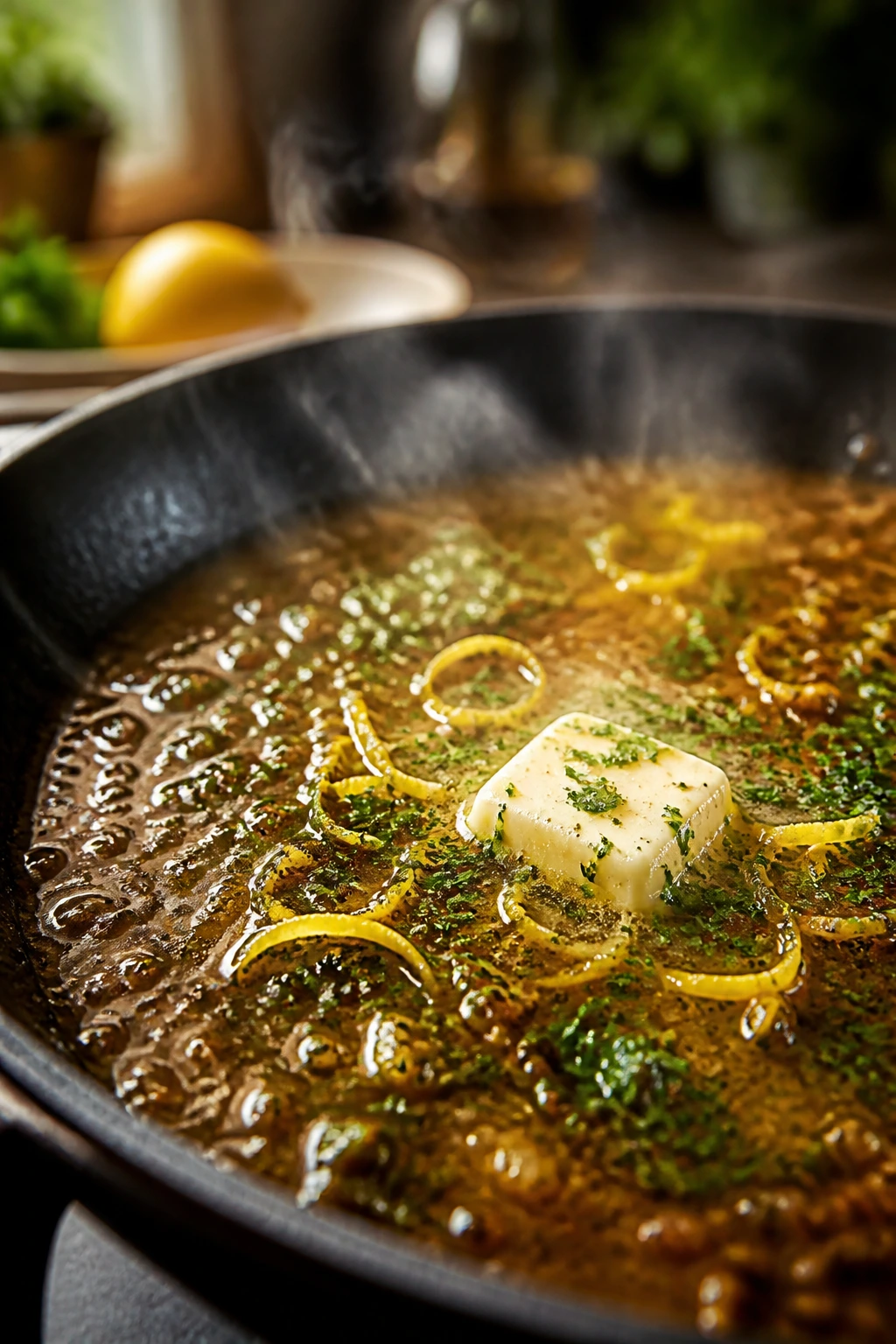
A slow cooker meal can look a little sleepy when the lid first comes off. That’s normal. The final 10 minutes are where the pot gets its manners back.
Start by tasting the sauce. Not once. Taste twice, after a quick stir. If it tastes flat, add salt in small pinches. If it tastes heavy, add acid. If it tastes sharp but thin, add a little fat. That sequence matters because you are not trying to make the dish louder. You are trying to make it balanced.
What to add at the end
- Fresh herbs: parsley, dill, chives, tarragon, basil, or cilantro, depending on the flavor profile.
- Acid: lemon juice, lime juice, red wine vinegar, sherry vinegar, cider vinegar, or a spoonful of pickle brine in the right dish.
- Fat: cold butter, olive oil, crème fraîche, or a small splash of cream.
- Body: a cornstarch slurry, a little mashed potato, or a few spoonfuls of blended beans if the sauce is thin.
A teaspoon of lemon juice can wake up a whole bowl of chicken and mushrooms. A cold knob of butter stirred into a beef sauce makes it look glossy and taste rounder. A sprinkle of parsley does more than color the top; it gives the nose a fresh note right before the first bite. That first bite matters.
Thickening without wrecking the texture
If the sauce needs help, remove the lid and let it cook on high for 10 to 20 minutes. If that still isn’t enough, whisk 1 tablespoon cornstarch with 1 tablespoon cold water and stir it into about 2 cups of sauce. Give it a few minutes to thicken. Start small. A gluey sauce is annoying to fix, and nobody wants dinner that clings like wallpaper paste.
Don’t boil dairy after the finish
Cream, sour cream, yogurt, and soft cheese can split if they’re added too early or boiled hard after they go in. Stir them in near the end with the heat low or off. If you want the sauce extra silky, temper the dairy with a spoonful of hot liquid first, then add it back to the pot.
How to Serve It So It Looks Like Dinner, Not Leftovers
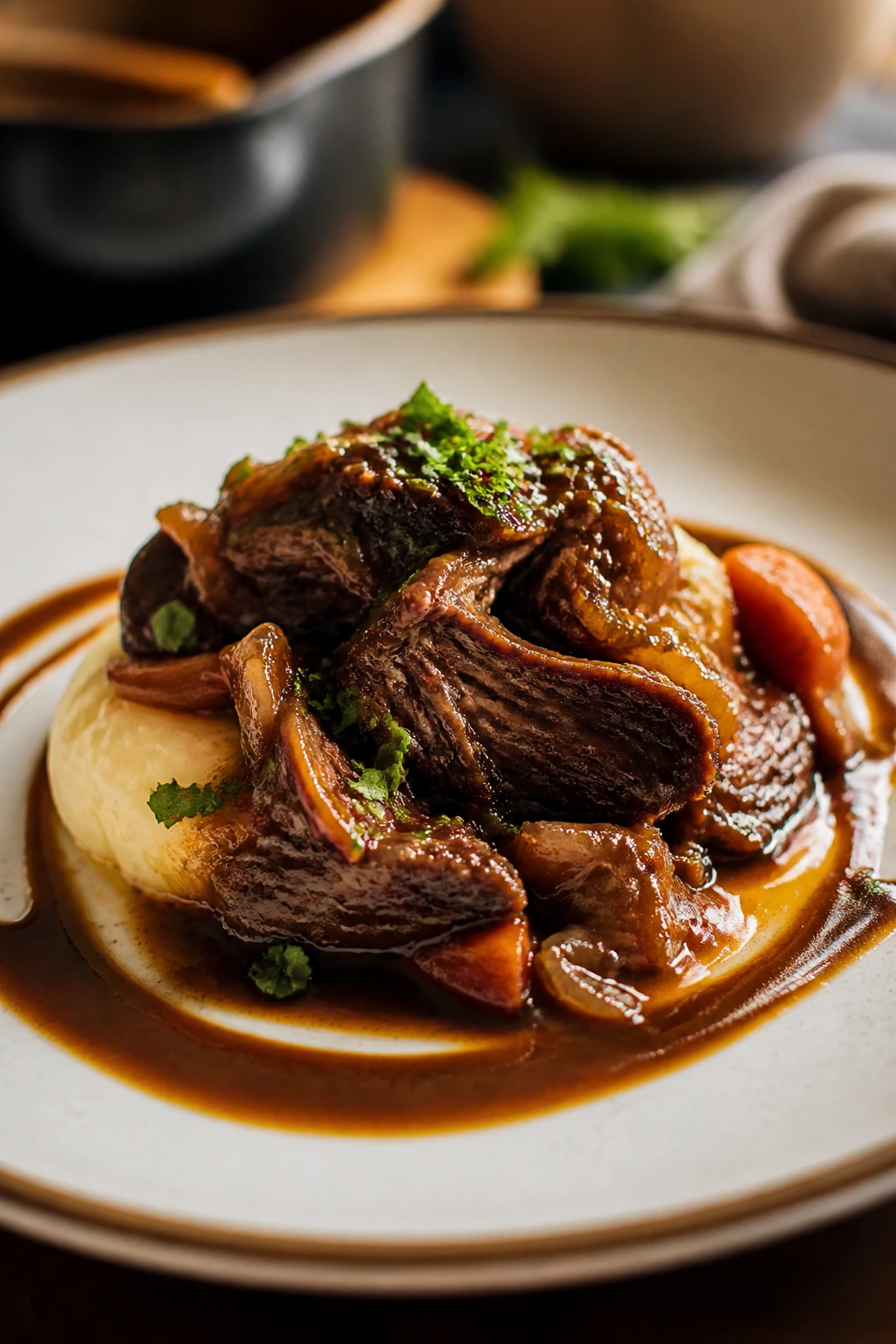
Presentation: Use a shallow bowl or wide plate instead of a deep soup bowl when the dish is saucy. Spoon the meat or vegetables in first, then ladle the sauce around the edges so you can see the shape of the food. A final scatter of chopped parsley, chives, or dill makes the plate look deliberate in a way that plain brown sauce never will.
Accompaniments: Buttered mashed potatoes, creamy polenta, egg noodles, rice, crusty bread, or roasted potatoes all make sense here, depending on the main flavor. For richer beef or pork pots, I like something plain and starchy. For chicken with mushrooms or lemon, rice or egg noodles keep the plate lighter. Add a green side too — green beans, roasted broccoli, or a sharp salad with mustard vinaigrette cuts through the richness better than another soft side.
Portions: A good serving is usually about 1 to 1½ cups of the saucy portion for a main dish, or roughly 6 to 8 ounces of meat with vegetables for an adult. If the dinner is going over mashed potatoes or polenta, the sauce can be a little looser and the portion a little smaller. If it’s the only thing on the table besides bread, lean larger. It scales down without drama and scales up as long as your cooker isn’t stuffed past two-thirds full.
Beverage Pairing: Beef and mushroom braises like a medium-bodied red, a dry cider, or sparkling water with a twist of lemon if you want something nonalcoholic. Chicken with herbs and cream tends to work better with a crisp white, iced tea, or still water with cucumber. Pork with apples or mustard likes cider in either form — hard or soft — and a little ginger on the side doesn’t hurt either.
Practical Ways to Get More Out of Set-and-Forget Cooking
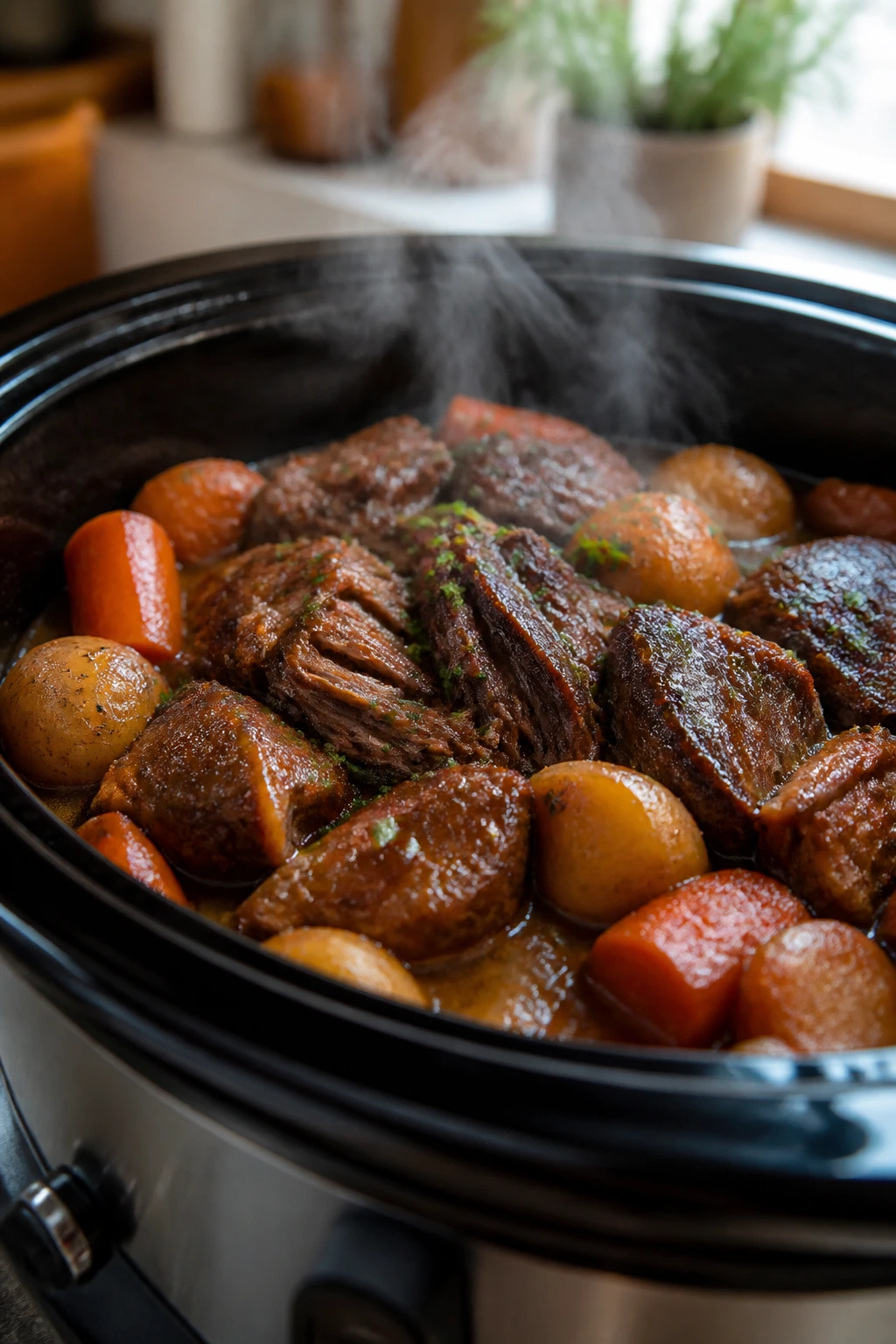
Flavor Enhancement: Keep one bright ingredient in the house at all times: lemon, vinegar, mustard, or capers. That one sharp note at the end is often what separates a sleepy pot from a meal that tastes finished. I’m partial to sherry vinegar in beef dishes and lemon in chicken dishes, but use what fits the sauce.
Time-Saver: Chop onions, carrots, and celery the night before, then store them in a container with a paper towel to catch moisture. You can also brown meat ahead of time and refrigerate it with the deglazed pan juices. That turns the actual morning-of work into little more than assembly.
Cost-Saver: Choose collagen-rich cuts and sturdy pantry ingredients. Chuck roast, chicken thighs, pork shoulder, dried beans, onions, carrots, and canned tomatoes make some of the best slow cooker dinners because they don’t need a luxury budget to taste complete. Fancy is easier when the ingredients already know how to get along.
Make-It-Yours: If you want it lighter, finish with herbs and citrus instead of cream. If you want it richer, stir in a spoonful of butter or crème fraîche at the end. For a sharper profile, use mustard and wine; for a sweeter one, add cider and onions. The same basic pot can move in a dozen directions with one or two changes.
The Slow Cooker Mistakes That Flatten Flavor or Ruin Texture
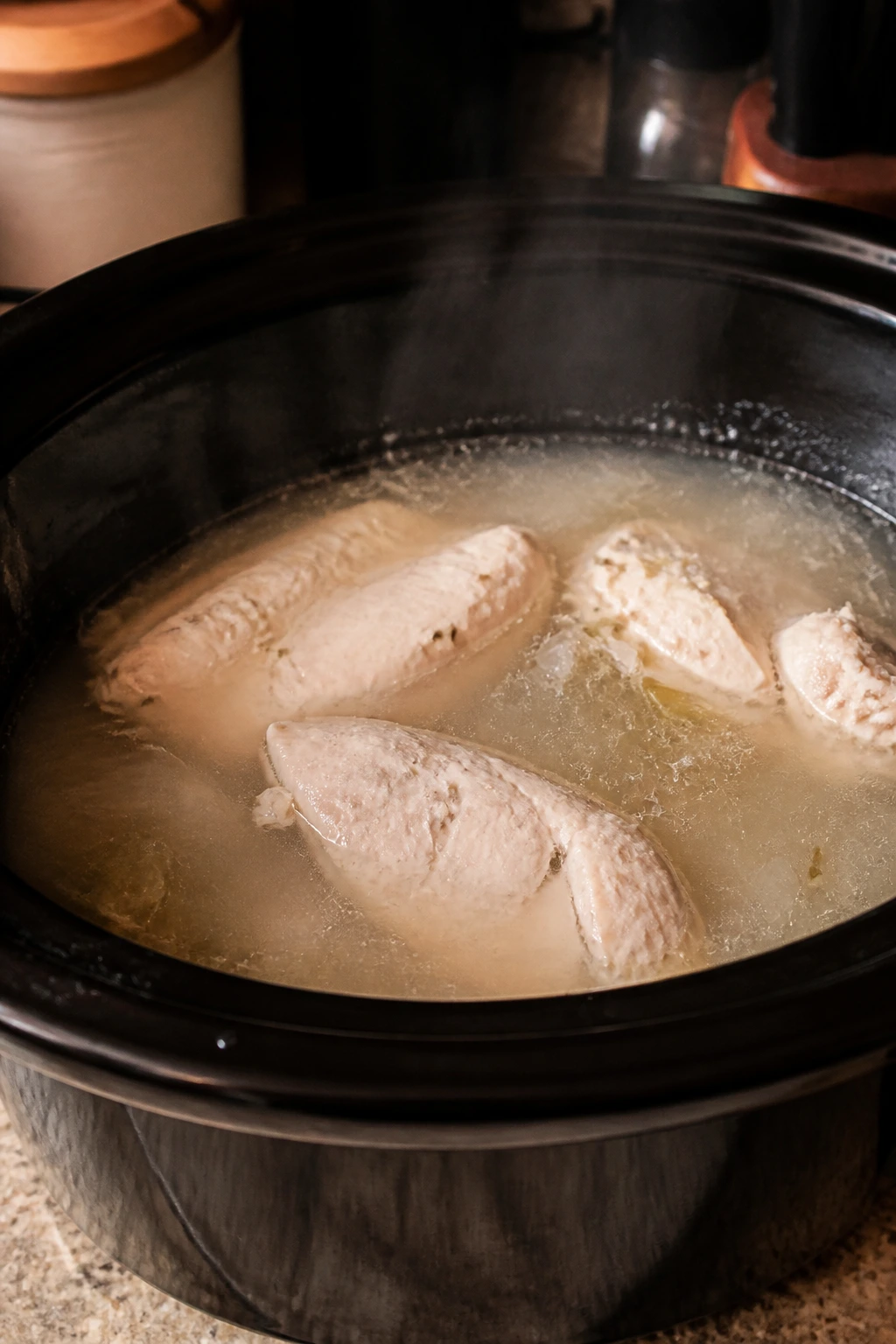
The biggest mistake is using too much liquid. Slow cookers trap moisture, so a pot that looks “dry” before cooking often turns out fine, while a pot that starts fully submerged can become thin and bland. The symptom is easy to spot: the sauce tastes like broth instead of sauce, and the meat looks pale. Fix it by starting smaller and reducing or thickening at the end.
Another common one is lifting the lid too often. The food may smell ready, but every peek steals heat and slows the cook. If you keep checking on it like a nervous parent, the timer stretches and the final texture gets less even. Let the cooker do its job.
Using lean meat too long is a fast way to end up with dry chicken or stringy pork that feels overworked. Chicken breasts can work in a slow cooker, but only if they’re in a wet sauce and pulled as soon as they hit 165°F. Thighs and shoulder cuts forgive more mistakes.
A fourth problem is adding delicate ingredients too early. Peas turn dull, spinach disappears, herbs lose their lift, and cream can split. Save those pieces for the last stretch. They matter because they give the dish a fresh edge.
Skipping salt until the end also causes trouble. The pot may taste “fine” in the middle and flat at the finish. Season in layers: a little on the meat, a little in the sauce, then a final adjustment at the end. That last pinch often does more than a whole extra splash of broth.
Smart Variations for Chicken, Beef, Pork, and Meatless Pots
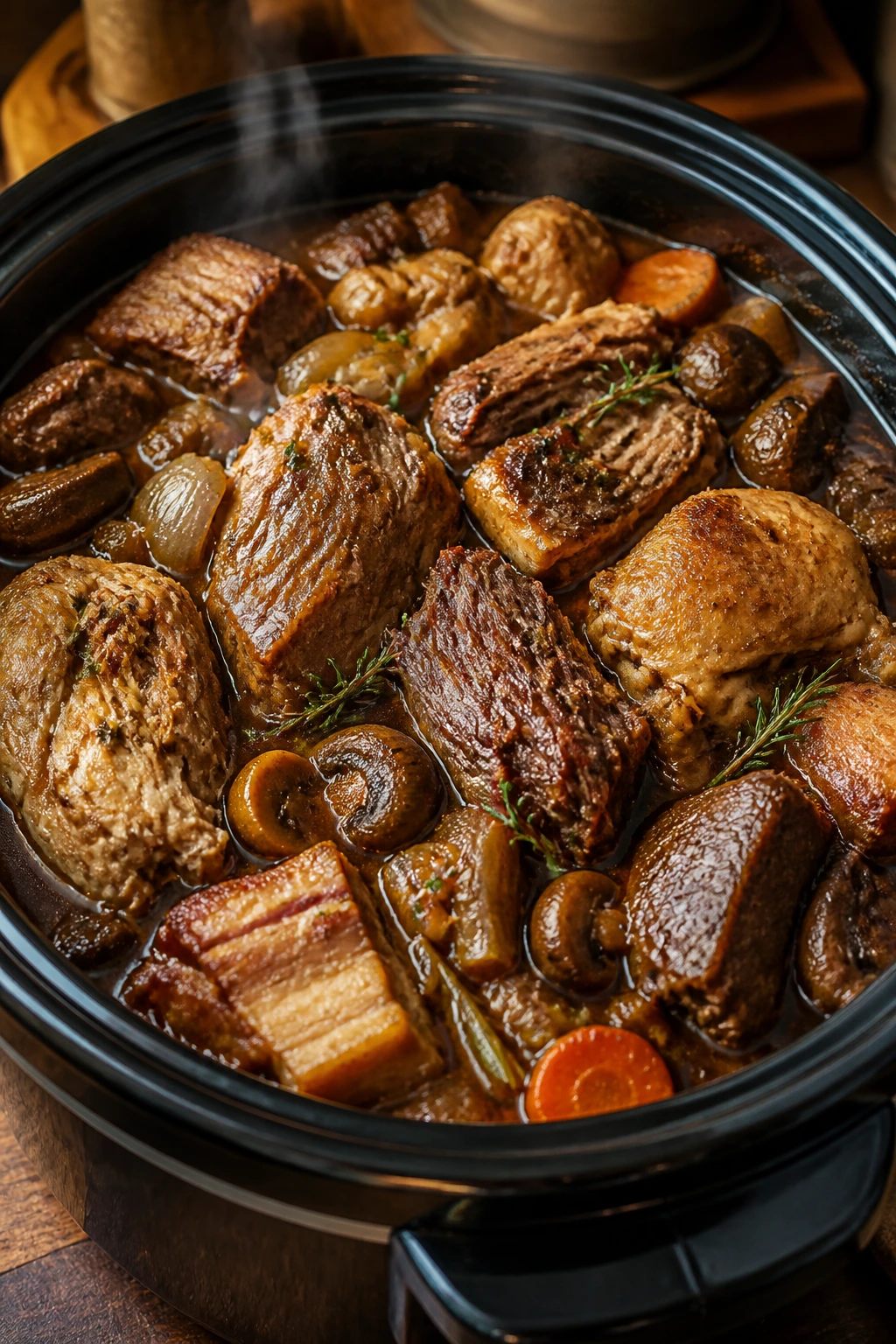
Bistro-Style Mushroom Chicken: Use bone-in or boneless chicken thighs, mushrooms, shallots, garlic, a splash of white wine, chicken broth, thyme, and a little cream at the end. It fits nights when you want the pot to feel a little dressed up without getting fussy. Serve it over rice, egg noodles, or mashed potatoes.
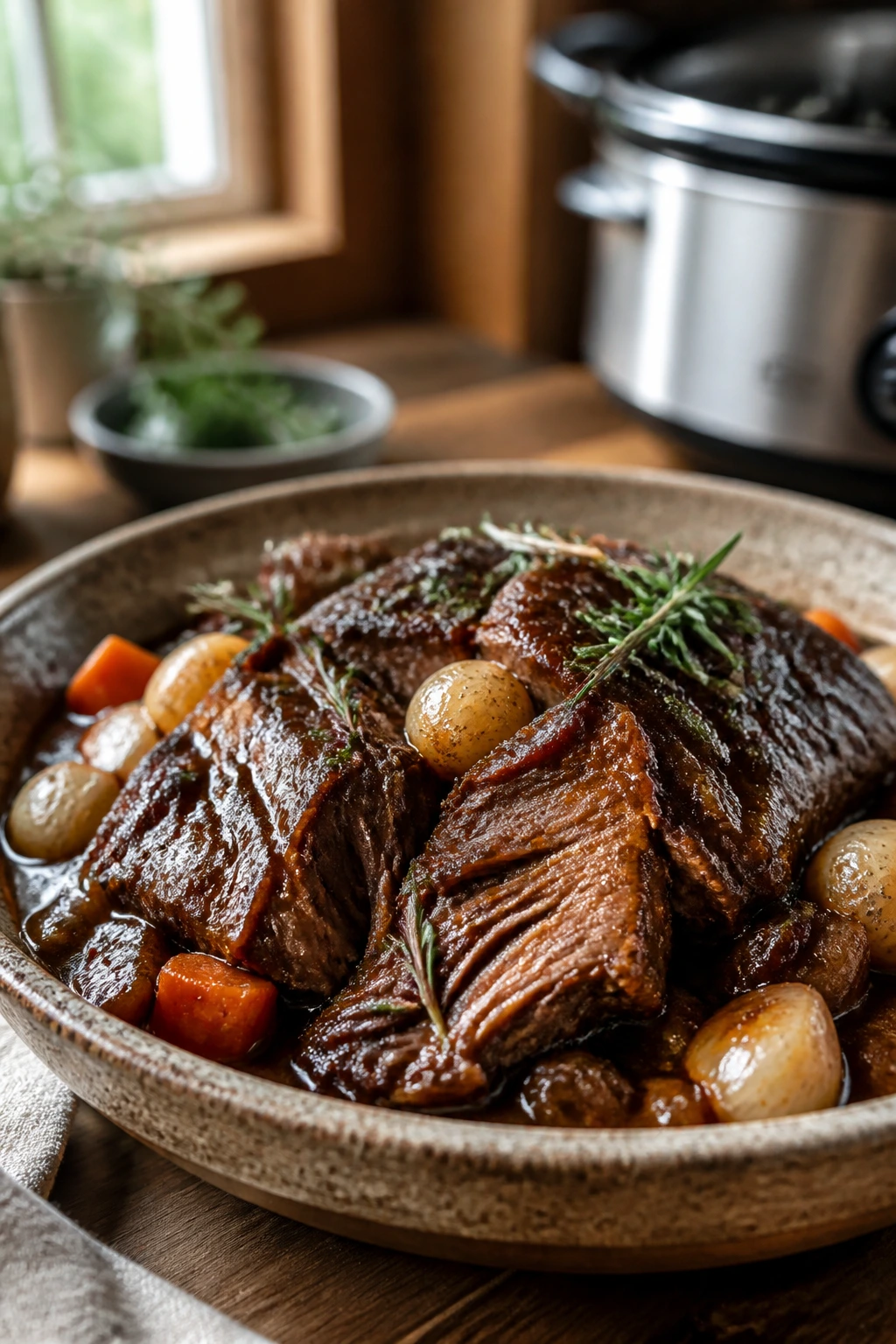
Sunday Red-Wine Beef Braise: Chuck roast, carrots, onions, celery, tomato paste, red wine, beef broth, and rosemary make the classic slow cooker dinner that tastes like it spent the afternoon in a Dutch oven. A spoonful of vinegar at the end keeps the sauce from feeling heavy. This is the one to make when you want deep, dark flavor and leftovers that hold up well.
Orchard Pork with Apples and Sage: Pork shoulder, sliced onions, apple cider, Dijon mustard, garlic, and a few apple wedges give you a sweet-savory pot that smells like it belongs in a farmhouse kitchen. The apples should be added in larger pieces so they soften without vanishing. A little grainy mustard at the end sharpens the whole thing.
Smoky Tomato Sausage Pot: Smoked sausage, canned tomatoes, bell peppers, onions, garlic, and smoked paprika give the slow cooker a big, rustic flavor that needs almost no help once it starts. This one is excellent when you want a dish that serves over rice or with crusty bread and doesn’t ask for dairy at the end. It’s less elegant than the beef braise, but it’s still polished if you finish with herbs.
Creamy White Bean and Greens Pot: Cannellini beans, leeks, garlic, carrots, rosemary, Parmesan rind, and kale turn into a bowl that feels rich without meat. A squeeze of lemon and a drizzle of olive oil at the end keep it from tasting like cafeteria soup. Serve it with toast rubbed with garlic or a rustic loaf that can handle the broth.
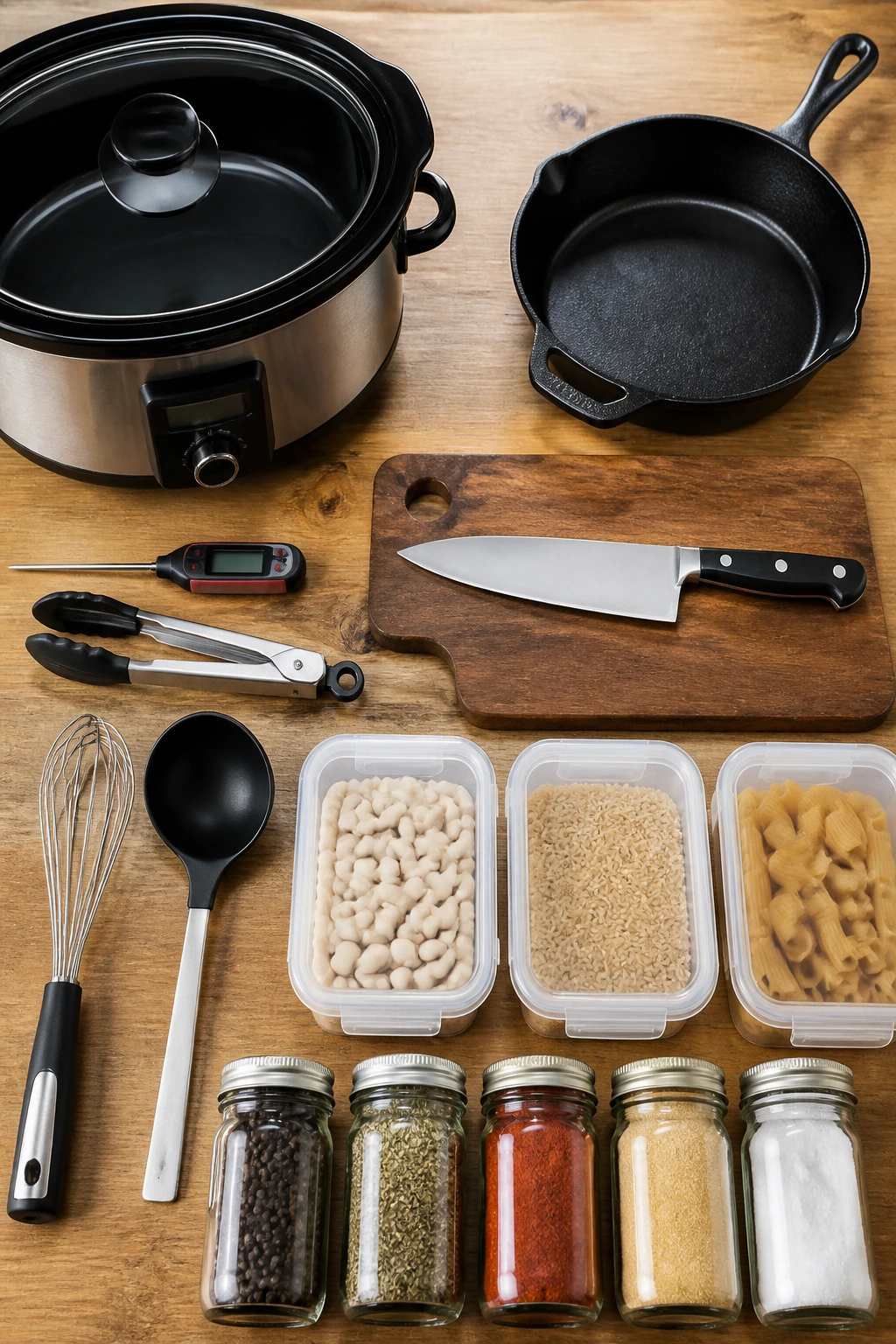
Tools and Pantry Staples That Make This Easier
-
6-quart slow cooker: The most flexible size for family meals and batch cooking; smaller inserts can work for two to three servings, but they fill up fast.
-
Heavy skillet or sauté pan: Useful for browning meat and softening onions before they go in. A little color here pays off later.
-
Instant-read thermometer: The easiest way to keep chicken from drying out and to check whether leftovers are hot enough after reheating.
-
Chef’s knife and cutting board: Nothing fancy, just something stable enough to chop onions, carrots, potatoes, and herbs cleanly.
-
Tongs: Good for moving browned meat without tearing it apart or losing the crust you just made.
-
Whisk or fork: Needed for cornstarch slurries, quick pan sauces, and smoothing out a final thickener.
-
Ladle or large spoon: Makes serving cleaner, especially when you want to spoon sauce over starch without flooding the plate.
-
Airtight storage containers: Helpful for leftovers, make-ahead vegetables, and the separate sauce if you plan to reheat in stages.
-
Optional slow cooker liner: Convenient for cleanup, though a quick soak and a little soap usually do the job if you’re not dealing with an especially sticky sauce.
-
Small microplane or zester: Not required, but handy if you want to finish the dish with lemon zest instead of another heavy ingredient.
Make-Ahead, Storage, and Reheating Without Drying Everything Out
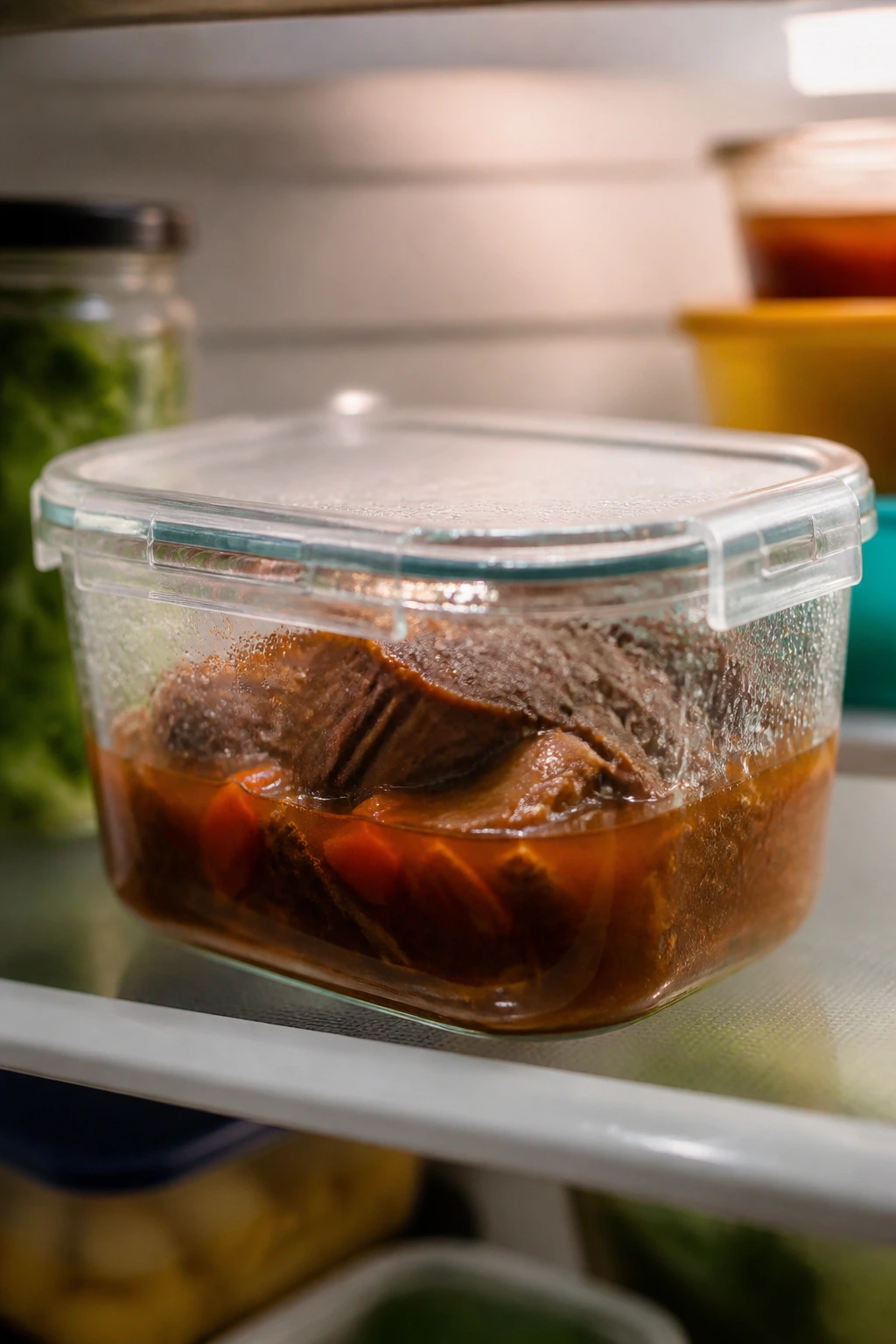
Most slow cooker braises and saucy dinners keep well in the refrigerator for 3 to 4 days if they’re cooled promptly and stored in a sealed container. Get them into the fridge within about 2 hours of cooking. If the dish includes chicken, pork, beef, beans, or tomatoes, it usually freezes well for up to 2 to 3 months. Cream-heavy dishes and anything with lots of soft potatoes are less freezer-friendly because the texture can separate or turn grainy after thawing.
If you want to prep ahead, chop vegetables and measure the dry spices the night before. You can also brown the meat ahead of time and refrigerate it, then build the pot the next morning. That kind of prep makes the morning feel easier without forcing you to cook twice. If you use wine, broth, or tomato paste in the base, mix the sauce separately and keep it chilled in a jar or container.
Reheating is where a lot of good leftovers get wrecked, so go gently. For saucy meat or bean dishes, the stovetop on low heat is the safest bet. Add a splash of broth or water, cover loosely, and stir every few minutes until the food reaches 165°F. In the microwave, use medium power and stir halfway through so the edges don’t overcook while the center stays cold. For bigger portions, a covered oven dish at 325°F works well, especially for roast-style leftovers.
A few dishes improve overnight. Beef braises, tomato-based pots, and bean stews usually taste more settled the next day because the flavors have had time to merge. Chicken with fresh herbs tends to be better on day one, but it still reheats well if you keep it moist. Add fresh herbs, a little acid, or a dab of butter after reheating, not before. That’s how you keep the leftovers from tasting like they sat too long in a closed container.
Questions People Actually Ask About Easy Fancy Crockpot Meals
What makes a slow cooker dinner taste fancy instead of plain?
Fancy comes from layers: browned meat, a savory base, enough seasoning, and a bright finish. If the pot has only broth and raw ingredients, it usually tastes soft but flat. Add a concentrated ingredient like tomato paste, Dijon, or Worcestershire, then finish with herbs or acid.
Do I really need to brown the meat first?
Need? No. Should you if you want deeper flavor? Usually yes. Browning creates darker, roasted notes that the slow cooker cannot make on its own, and the deglazed pan juices help season the sauce.
Can I put frozen meat in a crockpot?
I would not. Food-safety guidance from the USDA points away from frozen meat in slow cookers because it can spend too long warming through the unsafe temperature zone. Thaw it in the fridge first so it cooks evenly and safely.
How do I thicken a sauce that came out too thin?
Take the lid off and let it reduce on high for 10 to 20 minutes, or whisk in a cornstarch slurry at the end. Start with 1 tablespoon cornstarch mixed with 1 tablespoon cold water for about 2 cups of liquid, then add more only if needed. Too much at once can make the sauce pasty.
What if the pot tastes dull at the end?
Salt it first, then add a small amount of acid. A teaspoon of vinegar, lemon juice, or mustard can wake up a heavy sauce faster than more broth ever will. If it still feels flat, a pinch of chopped herbs gives the top some life.
Can I add cream or cheese in the morning?
You can, but I wouldn’t. Dairy behaves better at the end of cooking, because long heat can cause it to split or turn grainy. Stir it in during the last 15 to 30 minutes or after the heat is off.
Which vegetables hold their shape best in a slow cooker?
Carrots, parsnips, potatoes, turnips, celery root, onions, and fennel all do well if they’re cut in larger pieces. Mushrooms are flexible, but they’ll go soft if they cook too long. Zucchini, spinach, peas, and fresh herbs should wait until the end.
Can I leave it on warm until everyone gets home?
For a short stretch, yes. Warm is a holding setting, not an extra cooking phase, so it’s best used for about an hour or two after the food is done. If you’re keeping chicken or dairy-rich food warm for much longer, the texture starts to drift.
How do I keep chicken from drying out?
Use thighs when you can, and pull breasts as soon as they hit 165°F. A chicken breast that sits too long in slow heat turns stringy in a way that feels almost personal. If the dish is saucy, a little extra liquid helps, but the real fix is pulling it at the right moment.
The Dinner That Waits for You
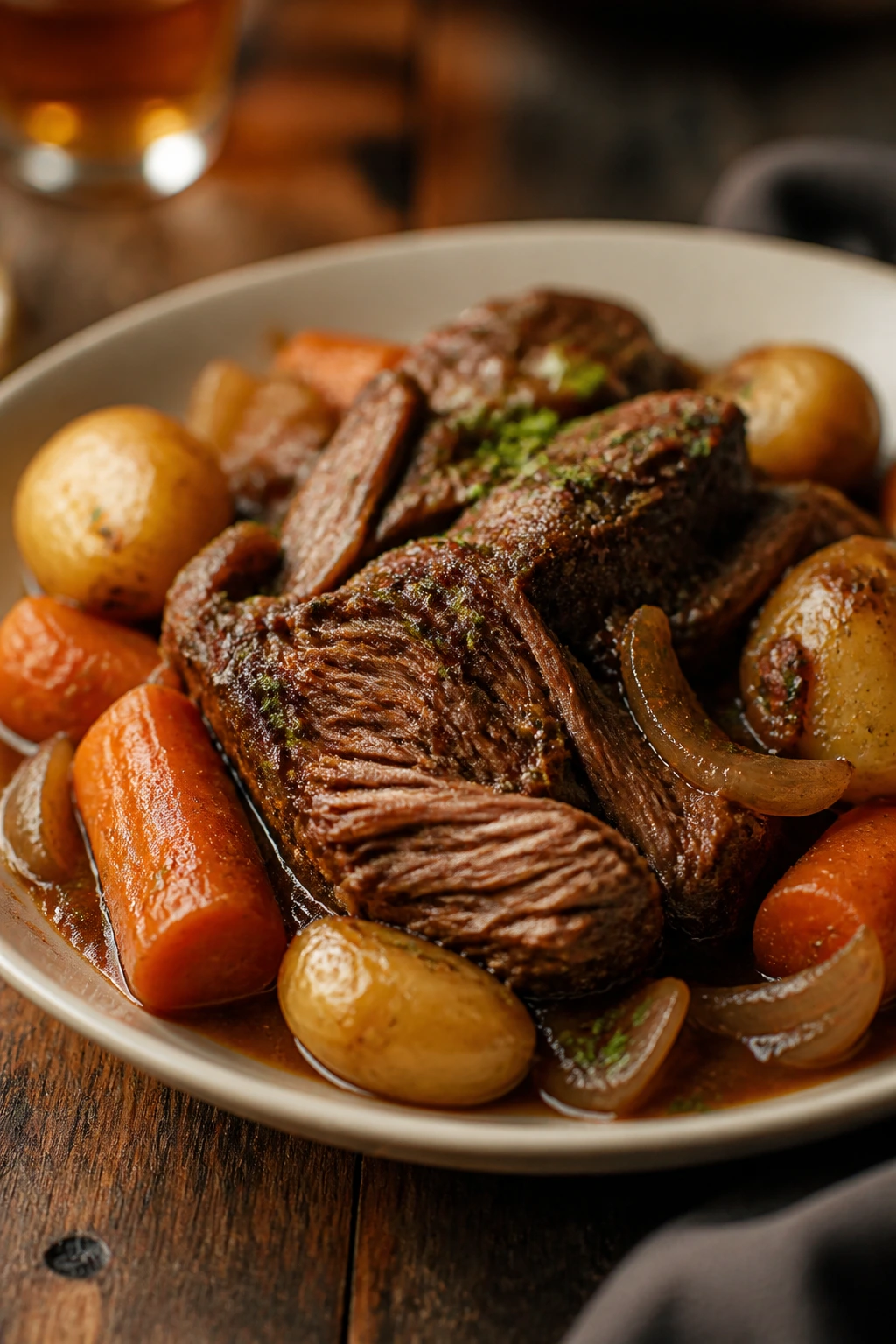
An easy fancy crockpot meal is not about pretending you cooked harder than you did. It’s about making a few smart choices early, then letting the slow cooker do what it does best: turning sturdy ingredients tender and mellow. The rest — the gloss, the brightness, the little shower of herbs — is what makes the dinner feel composed.
That’s the version worth keeping around. Not the bland dump-and-go pot that tastes like steam, and not the overworked stovetop dinner that keeps demanding attention. Just a quiet, dependable way to get a meal on the table that looks as if someone cared. The next time the day runs long, you’ll know exactly how to hand the evening over to the crockpot and still end up with something worth serving on a real plate.