



There’s a particular kind of dinner smell that means the day has already done the hard work for you. Ginger softening into soy sauce, garlic mellowing instead of burning, a little brown sugar turning the edges glossy — that’s what a good slow cooker Asian food pot gives you when you get home. Lift the lid, and the meat should not sit there in tidy slices. It should give way in thick, wet strands, with sauce clinging to the fibers instead of puddling at the bottom.
That’s the promise of a fall-apart Asian food crockpot meal, and it works because the crockpot is built for patience, not speed. Pork shoulder, beef chuck, and chicken thighs love long, gentle heat. Delicate noodles, quick greens, and crispy toppings do not. The whole game is knowing which pieces belong in the pot for hours and which ones should arrive at the end wearing a clean shirt.
The good versions taste balanced, not brown. Salt, sweet, acid, fat, heat, freshness — each one has to show up or the whole thing goes flat and sleepy. Get that balance right, and you end up with a bowl that feels deeper than the effort it took to make it. That’s the sweet spot we’re after.
Why Slow Cooker Asian Food Earns That Fall-Apart Texture
Collagen does the heavy lifting: Pork shoulder, beef chuck, and chicken thighs contain connective tissue that softens over long, low heat, which is why they shred cleanly after hours in the crockpot instead of turning dry and stringy.
The lid protects the aromatics: Garlic and ginger stay fragrant under a closed lid far better than they would in a hard stovetop boil, so the pot smells round and savory instead of scorched.
The sauce stays where you put it: A slow cooker traps steam, so you do not need nearly as much liquid as you would for a stovetop braise; that keeps soy, hoisin, miso, and broth from tasting watered down.
Cheaper cuts usually win here: A marbled pork shoulder or beef chuck roast will often taste better than a pricier lean cut because the long cook has something to work with. Fat and collagen are your friends in this style.
Fresh finish fixes the whole bowl: Scallions, cilantro, sesame seeds, a spoon of chili crisp, or a splash of rice vinegar at the end keep the food from tasting like it sat under a lid all day. It did sit under a lid all day. That’s the point.
The lid matters.
A slow cooker is not trying to behave like a wok. It cannot blister green beans or sear rice noodles into charred edges, and honestly, that’s fine. What it can do is turn a tough hunk of meat into something you can pull apart with two forks while the sauce thickens into something glossy enough to coat rice.
There’s a catch, though. The crockpot rewards ingredients that can stand a long bath, and it punishes anything fragile. That means the recipe logic has to shift before you even start. Add the sturdy parts early. Save the bright parts for the finish. That one habit changes everything.
The Sauce Formula That Keeps the Pot Glossy
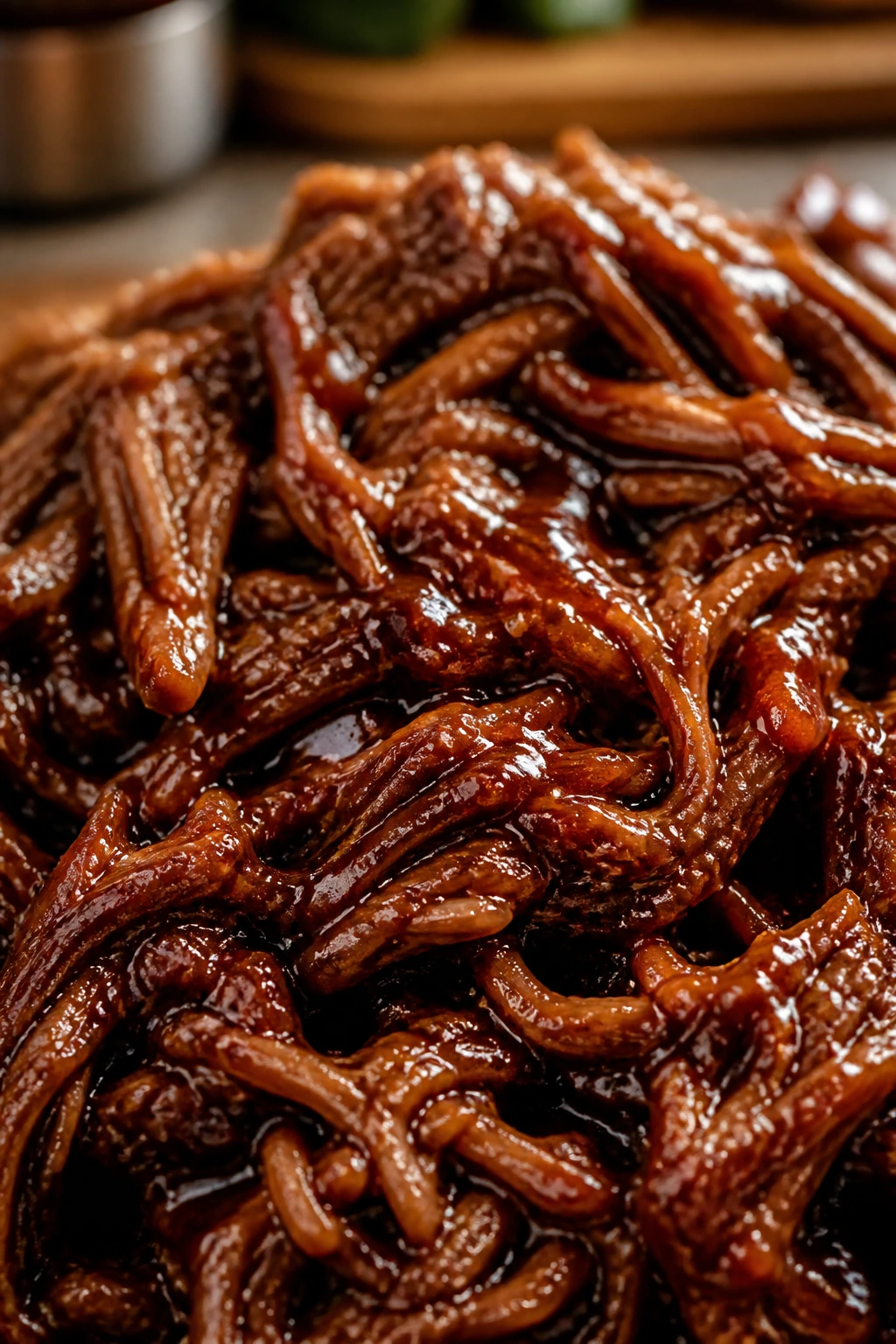
A lot of slow cooker Asian food goes wrong because the sauce is treated like background noise. It is not background noise. It is the whole bowl.
A good sauce needs four things: salt, sweetness, acid, and a body ingredient that gives it shine. Without that balance, the pot either tastes like soy sauce with a pulse or like vaguely sweet broth with no shape. The goal is a sauce that tastes a little intense before cooking, then settles into something clean and rounded after six or eight hours.
The salty backbone
Low-sodium soy sauce or tamari gives the sauce its base, and I reach for low-sodium almost every time because the crockpot does not boil away salt the way a pan on the stove does. Fish sauce can deepen the flavor in tiny amounts — half a teaspoon is often enough for a whole pot — and miso adds a soft, fermented roundness that works especially well with chicken and mushrooms.
If you use regular soy sauce without thinking, the result can cross from savory into harsh. That’s a miserable line to discover at dinner time.
Sweetness that rounds the edges
Brown sugar, honey, mirin, and even a little grated apple or pear each do a slightly different job. Brown sugar gives a darker, molasses edge. Honey makes the sauce feel shiny. Mirin brings sweetness plus a little lacquer. Pear or apple is a nice trick in Korean-style braises because the fruit softens into the sauce and makes the whole pot feel fuller.
I like sweetness in slow cooker sauces, but not in a sticky-candy way. You want the sauce to calm the salt, not smother it.
Acid and heat
Rice vinegar is the default because it’s clean and sharp without being rude. Black vinegar brings a deeper, almost smoky edge. Lime juice makes Thai-style pots wake up at the end. Chili paste, gochujang, red curry paste, or dried chile flakes handle the heat, but they do better when they are balanced by fat or sweetness.
A spoonful of acid at the end can save a pot that tastes sleepy. It sounds small. It isn’t.
Body and finish
Hoisin, miso, coconut milk, and sesame oil all do different versions of the same job: they give the sauce shape. Hoisin makes a pork glaze taste dark and sticky. Coconut milk softens heat and makes Thai-style braises creamy. Sesame oil belongs at the end, not the beginning, because its perfume disappears under long heat. Cornstarch or arrowroot gives the sauce the cling that makes rice worth cooking.
If you want a practical starting point for a 3- to 4-pound crockpot braise, this is a sturdy neighborhood to live in: about 1/2 cup soy sauce or tamari, 1/4 to 1/3 cup honey or brown sugar, 2 tablespoons rice vinegar, 1 cup unsalted broth or water, 4 cloves garlic, 1 tablespoon fresh ginger, and 1 tablespoon of hoisin, miso, or gochujang depending on the flavor direction. That is not a law. It is a map.
Pork Shoulder, Beef Chuck, and Chicken Thighs: The Best Cuts
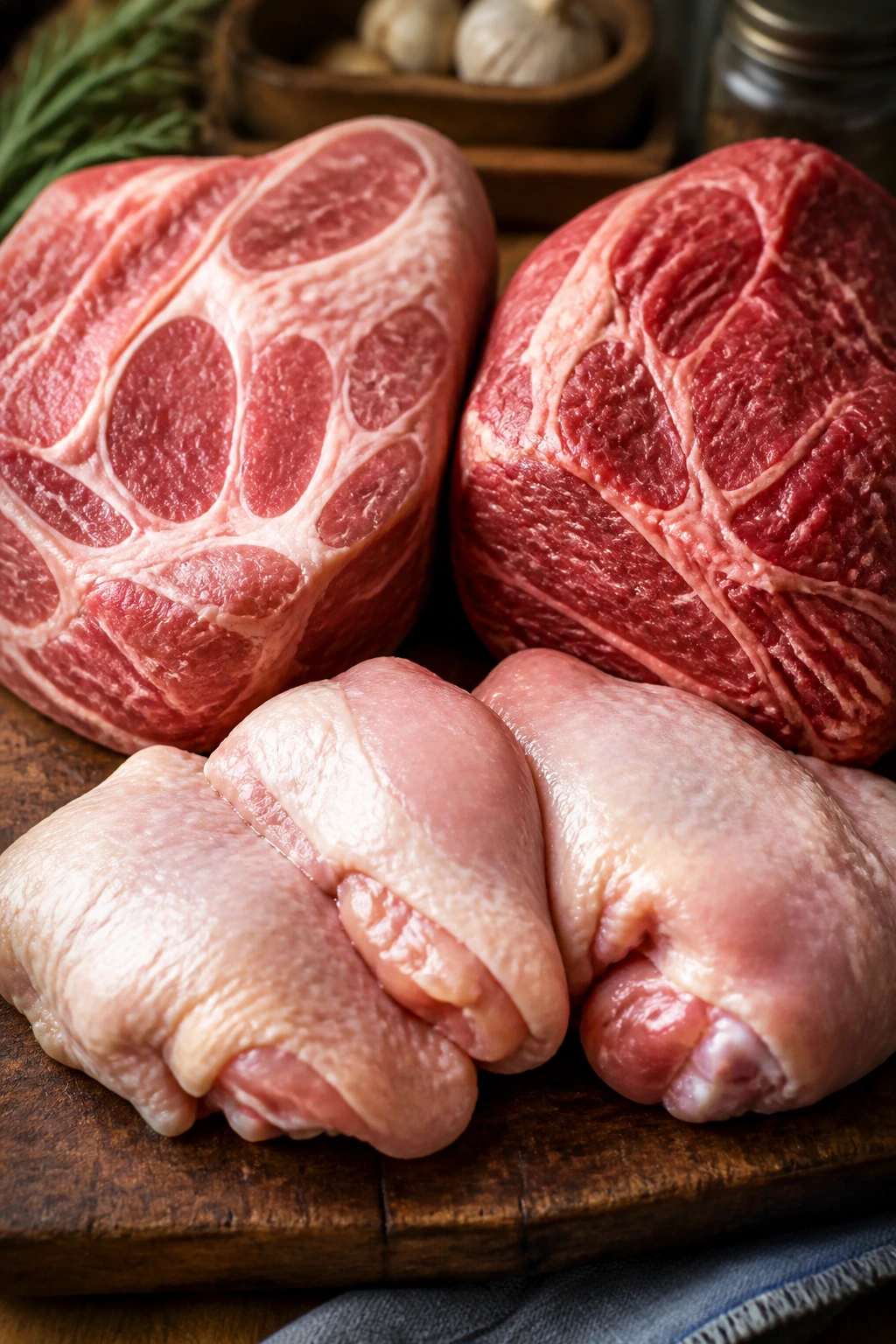
The best meat for a fall-apart Asian food crockpot meal is the kind that looks a little rough at the butcher counter. That is not an insult. It’s the signal.
Pork shoulder is the easiest place to start. It has enough fat and connective tissue to become spoon-tender after a long cook, and it takes on soy, ginger, garlic, and hoisin like it was born for them. A 3- to 4-pound shoulder is the sweet spot for most home slow cookers. Bone-in or boneless both work. If the fat cap is thick, trim it down a little, but do not carve the thing to death.
Beef chuck is the other classic. It tastes deeper than pork and holds up beautifully to dark sauces, black vinegar, star anise, five-spice, and gochujang. I like chuck in 2- to 3-inch chunks because the sauce can move around the pieces instead of sitting on the surface. If you want shredded beef, cook until the meat reaches the point where it pulls apart at around 200°F and feels almost buttery when you press it with a fork.
Chicken thighs deserve more respect than they get. Boneless, skinless thighs are tidy and forgiving. Bone-in, skinless thighs bring a little more flavor and usually stay juicier. Either way, thighs stay in the game much better than breast meat, which dries out fast and never quite shreds the way you want. Chicken thighs are safe at 165°F, but for a softer, pull-apart texture, they usually taste better a little higher — somewhere in the 175°F range.
The cuts I skip unless I have no choice
Lean pork loin, chicken breast, and steak cuts like sirloin are the wrong tools for this job. They can be eaten, sure. They can even be tasty in a sauce. They do not fall apart cleanly after a long slow cook, and they tend to dry out or turn grainy when the pot runs long.
There’s a simple test I use. If the meat already feels tender before cooking, it probably doesn’t need the crockpot. If it feels tough, chewy, and a little ugly, that’s when the slow cooker starts earning its keep.
One more thing: size matters. A whole pork shoulder that barely fits in the insert will cook unevenly. If needed, cut it into 3 or 4 big chunks so the sauce can reach every side. You are not making a showpiece roast here. You are making shredded meat that wants to drink up flavor.
Vegetables That Survive the Long Cook
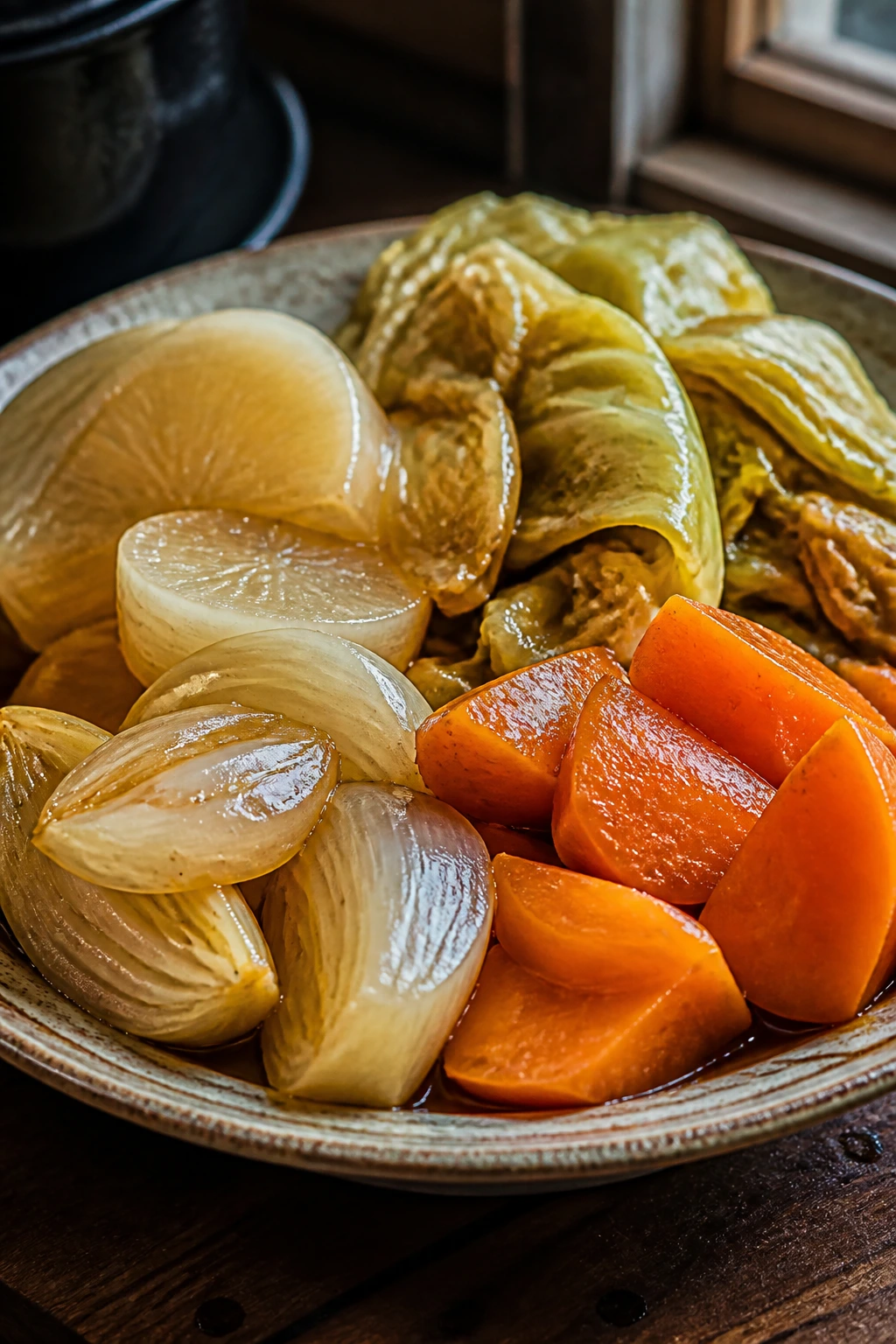
Some vegetables make it through the crockpot with their dignity intact. Some vanish into soup. You want the first group in early, and the second group near the end.
Onions are a yes. Carrots are a yes. Daikon is a big yes if you like a mild, juicy texture that soaks up sauce without falling apart. Mushrooms are excellent too, especially cremini, shiitake, and oyster mushrooms, because they give back savory liquid as they cook. Baby potatoes can work in a more Chinese- or Japanese-leaning pot, though I usually cut them in half so they drink some sauce instead of sitting there like little pebbles.
Cabbage is one of the most underrated slow cooker vegetables for this kind of food. Cut it into thick wedges and it goes soft, sweet, and silky without collapsing into sludge. I love it with pork shoulder and miso. Bok choy is a different story. The stems can go in late, the leaves even later, because the whole plant wilts fast once it gets hot.
The vegetables that want to arrive late
Broccoli, snow peas, snap peas, bell peppers, spinach, and bean sprouts are not all-day ingredients. They get limp, gray, and sad if you let them sit too long. Add them during the last 10 to 20 minutes, or better yet, steam them separately and pile them on top right before serving.
That timing is the difference between a bowl with contrast and a bowl that tastes flat and soft. The slow cooker gives you tenderness. The late vegetables give you shape.
A small warning for anybody tempted to toss zucchini into the pot because it needs using up: do not. It dissolves into a soft, watery thread mess. Same with eggplant unless you specifically want a silky, almost puree-like texture. There are places for those vegetables. This is not one of them.
Building Flavor Before the Lid Goes On
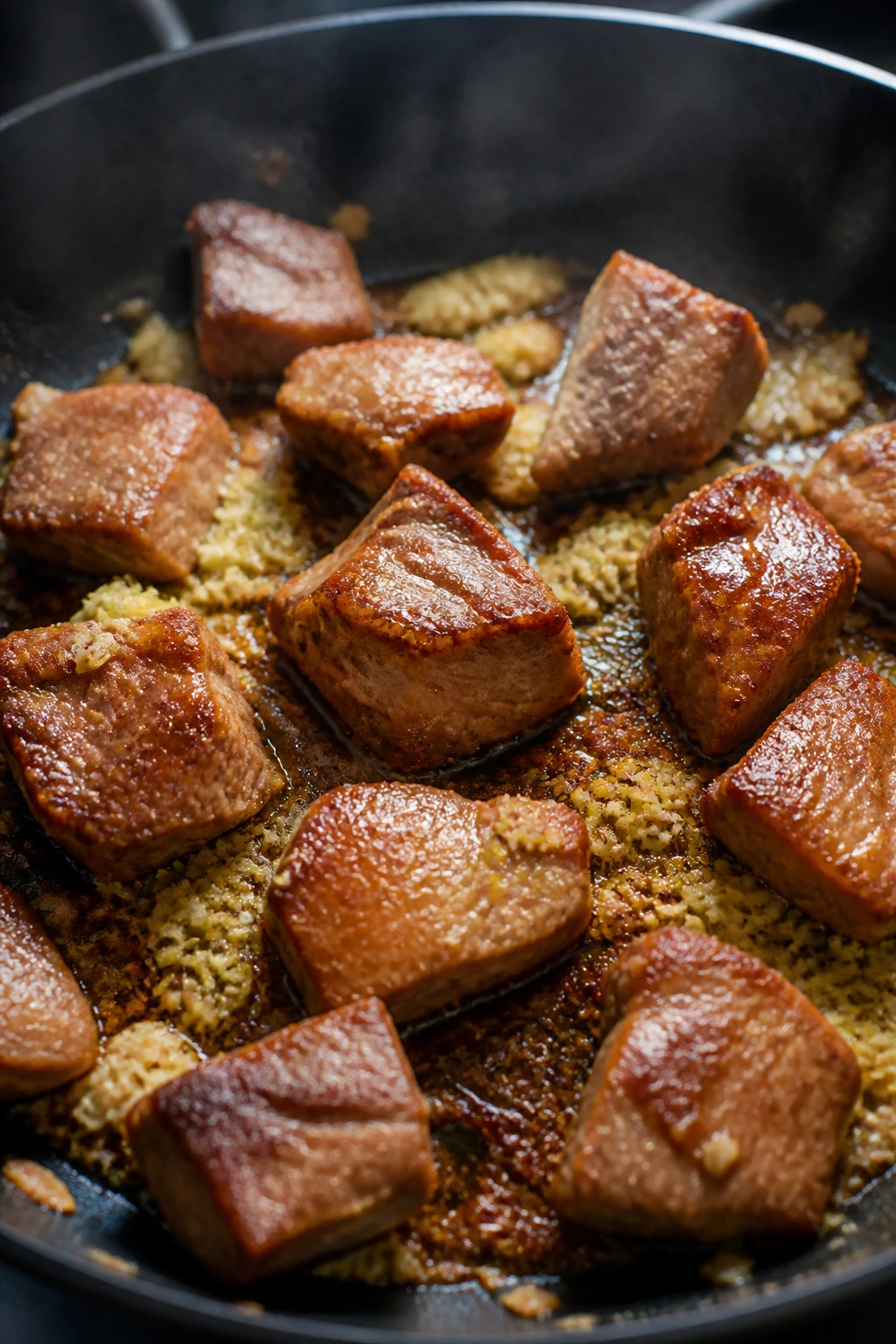
The easiest way to make slow cooker Asian food taste like somebody actually cooked it is to spend ten quiet minutes doing the boring part first. No heroics. Just heat, fat, and some scraping.
Brown the meat if you can
A skillet on medium-high heat, a little neutral oil, and a dry surface on the meat are enough. You are not trying to cook the protein through. You are trying to get some browned spots and a little fond on the pan bottom. Pork shoulder and beef chuck can take 2 to 4 minutes per side in batches. Chicken thighs usually need less.
If you skip this step, the meal still works, but the sauce loses that roasted note that makes it taste layered instead of one-dimensional.
Bloom the aromatics
Garlic and ginger need very little time in hot oil — 20 to 30 seconds is enough if they’re minced or grated. Longer than that and they can turn bitter. That same rule applies to chili paste, curry paste, and five-spice when they are being bloomed in the pan. You want them fragrant, not scorched.
A microplane or fine grater is worth the effort for ginger. You get more juice, more aroma, and fewer chewy bits in the final sauce. I keep a knob of ginger in the freezer for this reason. It grates beautifully straight from frozen.
Deglaze the pan
Pour in a splash of broth, water, rice vinegar, or even a little sake to lift the brown bits from the pan. That liquid is flavor. Scrape it up with a wooden spoon, then pour everything into the slow cooker. If you don’t deglaze, you leave half the good stuff stuck to the skillet.
Layer the pot with some thought
Hard vegetables can sit under the meat. The meat can sit in the middle. The sauce should go over everything, not just around the sides. I usually keep the liquid to a level that comes partway up the meat instead of drowning it. The slow cooker will create steam on its own; you do not need to flood the insert.
A pot that’s half-sauced and well layered usually tastes better than a pot that looks soupy. That’s counterintuitive the first time you do it. After that, it becomes obvious.
The Set-and-Forget Method, Step by Step
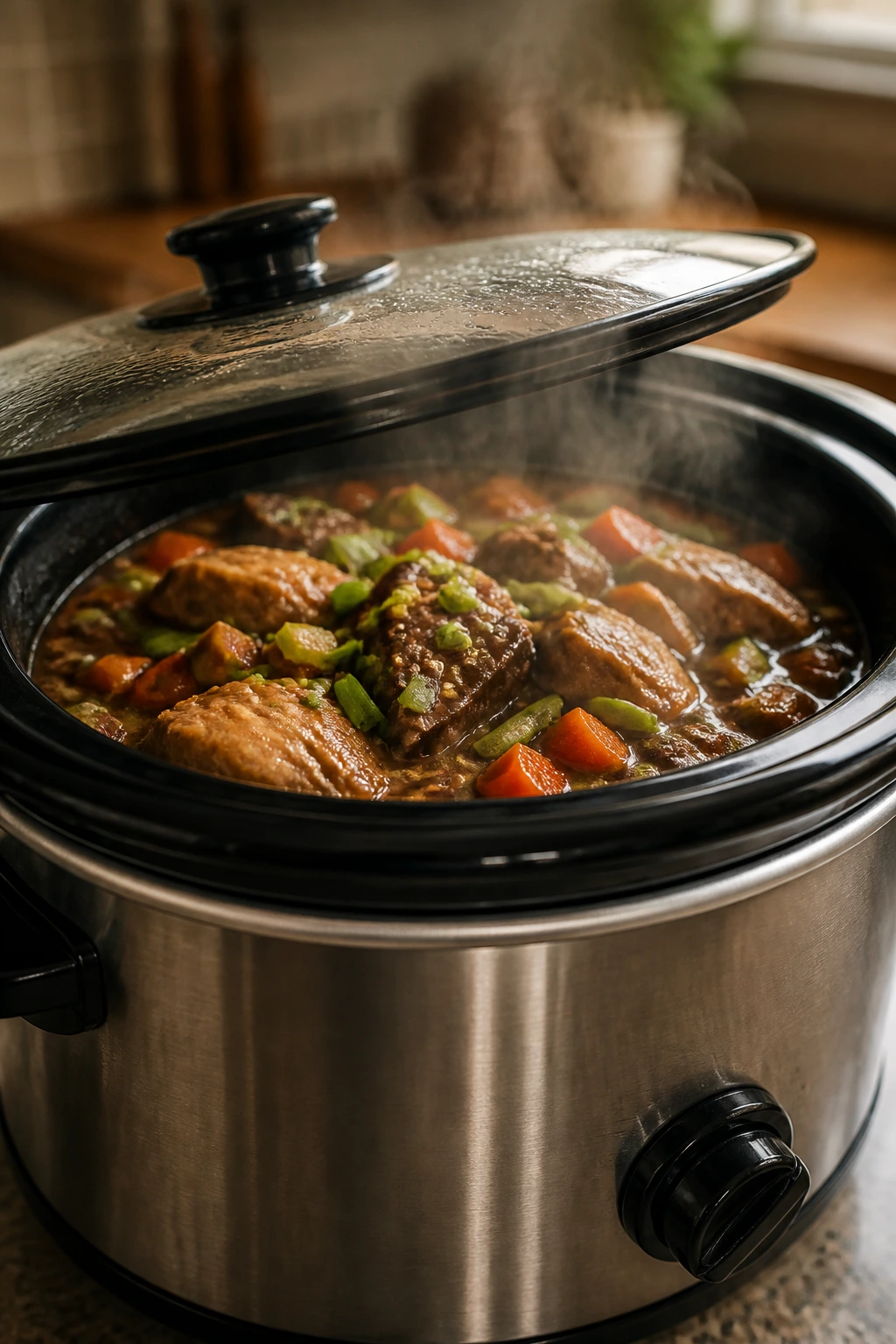
Step 1: Choose the right cut and trim it lightly.
Pick pork shoulder, beef chuck, or chicken thighs for the best shreddable texture. Trim only the thickest outside fat and remove anything that looks like hard, waxy fat. Keep some marbling. That’s the part that melts into tenderness during the cook.
Step 2: Mix a sauce that tastes a little too bold.
Combine soy sauce or tamari, a sweetener like honey or brown sugar, an acid such as rice vinegar, and aromatics like garlic and ginger. If you want more body, add hoisin, miso, gochujang, coconut milk, or a spoonful of tomato paste depending on the style. The sauce should taste a little sharp and slightly aggressive before cooking. It settles down.
Step 3: Brown the meat or bloom the aromatics if you have the time.
A quick sear on the meat or a brief sauté of ginger, garlic, and paste ingredients gives the final dish more depth. Brown in batches so the pan actually sears instead of steaming. If you’re short on time, skip the sear and add a small extra splash of acid or a teaspoon more spice to compensate.
Step 4: Load the slow cooker without crowding it.
Put sturdy vegetables like onions, carrots, daikon, or cabbage in first if you’re using them. Lay the meat on top or nest it into the vegetables, then pour the sauce over everything. Keep the insert no more than about two-thirds full. If it’s packed to the rim, the heat moves unevenly and the texture suffers.
Step 5: Cook on low for tenderness, high only when needed.
For pork shoulder or beef chuck, low for 8 to 9 hours is the safest path to a shreddable finish. High can work in 4 to 6 hours if your cooker runs hot and the cut is smaller. Chicken thighs usually need 5 to 6 hours on low or 3 to 4 on high. If your slow cooker is one of the newer models that runs fierce, start checking 30 to 45 minutes early.
Step 6: Finish the pot like you mean it.
When the meat pulls apart easily with a fork, move it to a board, shred it, and return it to the sauce. If the sauce looks thin, remove the lid and let it reduce for 15 to 20 minutes, or stir in a cornstarch slurry — about 1 tablespoon cornstarch mixed with 1 tablespoon cold water per cup of sauce. Add delicate vegetables near the end, then finish with scallions, sesame oil, herbs, lime, or chili crisp.
That last step matters more than people think. The food may be tender before it tastes finished.
How to Serve It So Every Bowl Has Crunch and Freshness
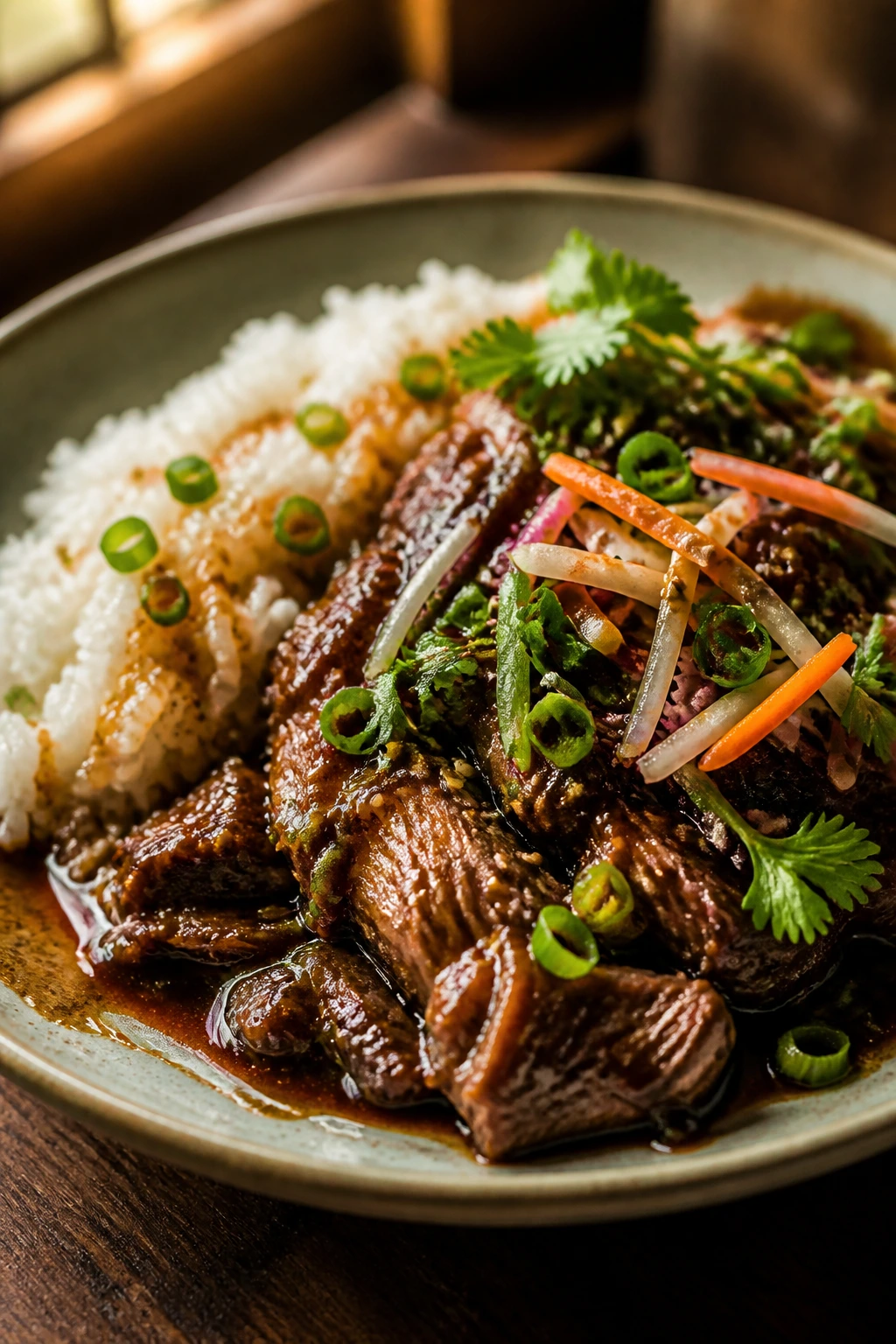
A good slow cooker bowl should not feel like one soft texture from edge to edge. Tender meat is the base, but the bowl gets interesting when you add contrast.
Presentation: Serve the meat and sauce in wide, shallow bowls instead of deep soup bowls. That gives you room to spread out the rice, tuck the meat to one side, and scatter the garnish across the surface where people can actually see it. A spoon of glossy sauce around the edge makes the whole thing look richer than a puddled mound in the center.
Accompaniments: Jasmine rice is my default for soy-ginger, hoisin, and five-spice sauces because it stays light and fragrant. Short-grain rice suits stickier glazes. Rice noodles, udon, steamed buns, or lettuce cups all work too, depending on how heavy the sauce is. I like a crisp side — cucumber salad, quick-pickled carrots and daikon, steamed bok choy, or lightly salted edamame — because the plate needs one sharp thing beside all that tenderness.
Portions: A good serving is usually about 5 to 6 ounces of cooked meat with 1 cup rice or 4 ounces dry noodles per person, depending on what else is on the table. If you are serving a crowd, stretch the bowl with extra cabbage, mushrooms, or broccoli instead of watering the sauce down. The meat should still be the main event.
Beverage Pairing: Cold jasmine tea is a clean match. A dry riesling handles sweet-salty sauces well. Light lager works if the dish leans spicy or garlicky. If you want non-alcoholic, sparkling water with lime is plain in the best way — it cuts the richness without competing.
There’s one serving move I swear by: keep the sauce a little separate from the rice until the table. Let people spoon it on themselves. Rice soaked too early can go mushy, and nobody wants a grainy puddle by the time they sit down.
Small Moves That Make the Finish Taste Brighter
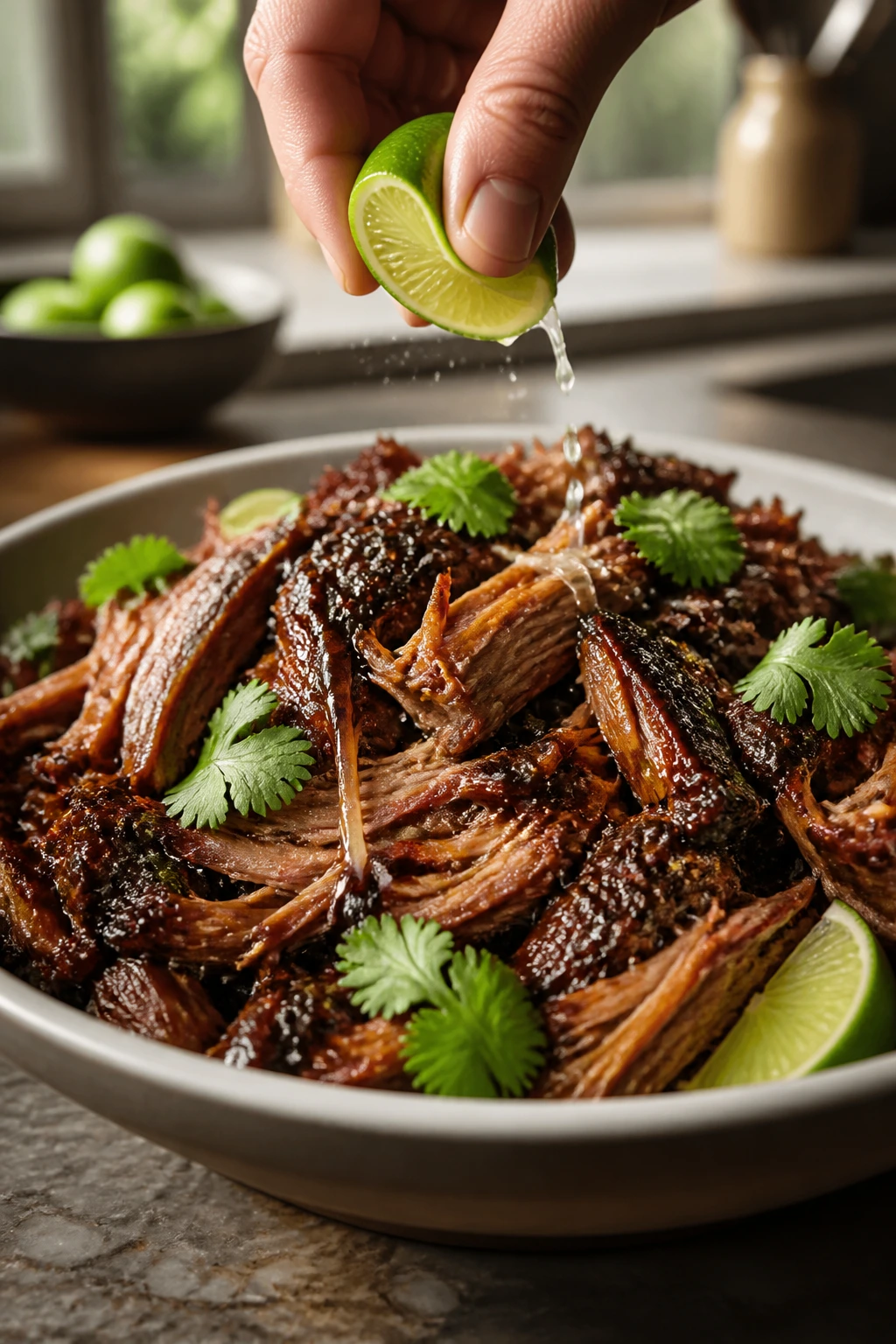
A slow cooker gives you tenderness. The little finishing moves give you a reason to remember the meal the next day.
Flavor Enhancement: Add a final splash of rice vinegar, black vinegar, or lime juice after the meat is shredded. One teaspoon can make a whole pot taste cleaner and brighter. If the sauce tastes flat, acid is usually the cheapest fix.
Texture Boost: Broil shredded pork, beef, or chicken on a rimmed sheet pan for 3 to 5 minutes after it comes out of the crockpot. Toss it with a little sauce first, then spread it out in a thin layer. The edges will caramelize and turn sticky in spots, which is exactly what you want.
Time-Saver: Mix the sauce the night before and keep it in the fridge. Grate the ginger, mince the garlic, and measure the soy, vinegar, sweetener, and paste ahead of time. Morning assembly becomes a dump-and-go job instead of a rummage through the pantry.
Cost-Saver: Buy larger packs of pork shoulder or chicken thighs when the price is good, then portion them into 2- to 3-pound bags before freezing. Those cuts thaw and braise well, and they’re usually friendlier to the grocery bill than short ribs or specialty cuts.
Make-It-Yours: Tamari makes the whole thing gluten-free. Coconut aminos will soften the salt and push the flavor sweeter. Gochujang adds heat and body. Miso adds depth. A handful of mushrooms makes the pot meatier without adding more meat. Pick one change, not seven. That’s where the best versions usually live.
I also like finishing with something crunchy — toasted sesame seeds, chopped peanuts, fried shallots, or sliced scallions. The point is not decoration. The point is bite. A bowl of soft meat and rice needs a little snap or it starts to blur together.
Mistakes That Turn a Good Pot Into a Flat One
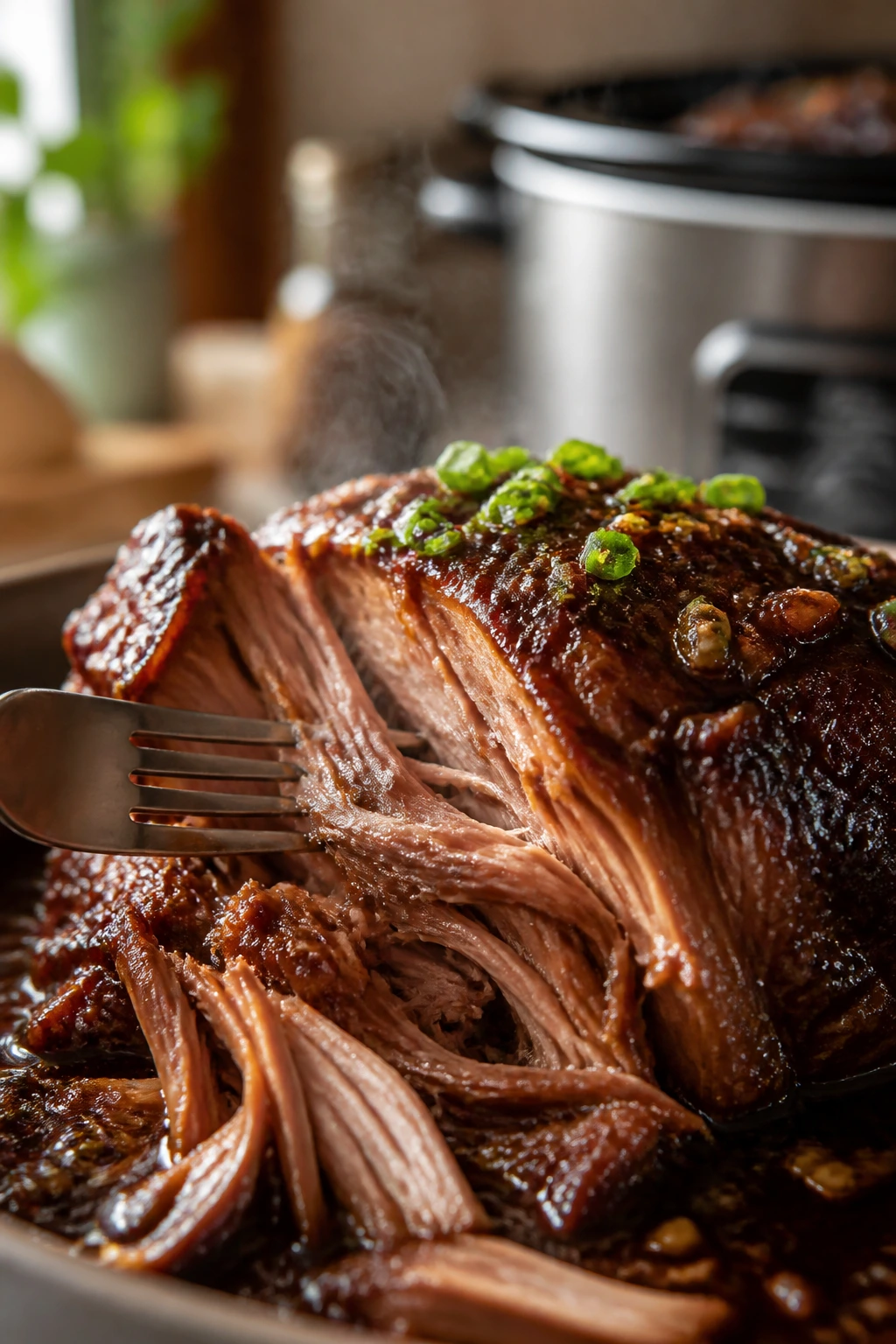
Too much liquid: This is the classic slow cooker error. The pot looks generous, but the sauce comes out thin and dull because the cooker traps moisture instead of evaporating it. Keep the liquid lower than you think, and don’t be afraid to reduce it on the stove at the end.
Using the wrong cut: Lean pork loin, chicken breast, and other low-fat cuts go dry or grainy after hours of heat. The fix is simple: choose pork shoulder, beef chuck, or chicken thighs when the goal is shreddable texture.
Adding every vegetable at the start: Broccoli, bell peppers, snow peas, spinach, and bok choy do not want eight hours of heat. Add sturdy vegetables early and tender ones at the end, or they’ll turn olive-colored and limp. If you want real crunch, keep some vegetables raw and use them as garnish.
Skimping on the finish: A pot can taste perfectly seasoned and still feel flat if nothing fresh gets added at the end. Scallions, herbs, citrus, vinegar, sesame oil, and chili crisp are not optional fluff here. They are the part that wakes the bowl up.
Thickening too early: Cornstarch can turn gluey if it sits under long heat. Use it near the end, or reduce the sauce separately after the meat is done. If you want a naturally thicker sauce, shred the meat and let it sit back in the pot for 10 to 15 minutes so it absorbs some of the liquid.
Lifting the lid too often: Every time you check, you let out heat and stretch the cook time. Trust the clock. Check once near the end, maybe twice if your cooker runs hot or the cut is small. The pot does not need a stare-down.
One more mistake that people make without noticing: they taste the sauce before adding the meat and think it’s too strong. It should taste slightly aggressive before cooking because the protein and vegetables will soften it. If it tastes perfect in the raw state, the finished version is probably underpowered.
Regional Twists Worth Trying in the Same Crockpot
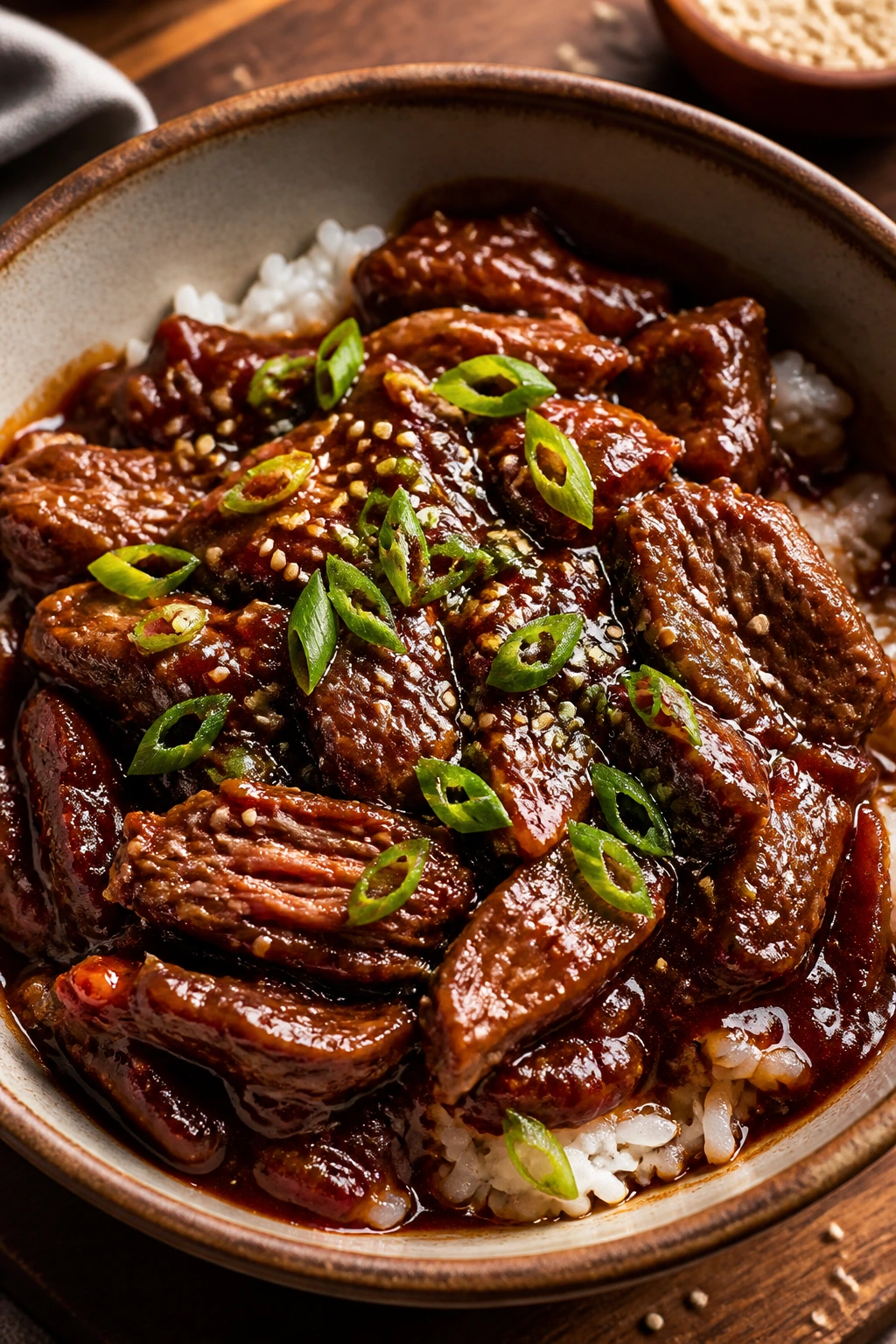
There is no single “Asian” flavor profile, and that’s a good thing. The slow cooker can handle several regional directions as long as you respect what each one needs.
Korean Gochujang Bowl: Mix gochujang, soy sauce or tamari, garlic, ginger, brown sugar, and a little pear or apple for sweetness. Beef chuck works beautifully here, though pork shoulder is excellent too. Finish with sesame oil, scallions, and toasted sesame seeds. If you like heat with depth, this one has a lot of personality.
Japanese Miso-Ginger Braise: White miso, ginger, mirin, soy, and a touch of sake or broth give the sauce a softer, rounder flavor. Chicken thighs or pork shoulder are the easiest proteins here, and mushrooms fit naturally. Add bok choy or spinach near the end so the bowl keeps some green freshness.
Thai Coconut Curry Pot: Coconut milk, red curry paste, garlic, ginger, fish sauce, and lime make a rich, fragrant sauce that works with chicken thighs or tofu. Keep the heat moderate and add basil, lime juice, or chopped cilantro at the end. This style needs freshness after the cook or it can feel too heavy.
Vietnamese Caramel Pork: A quick sugar caramel, fish sauce, garlic, shallots, black pepper, and pork shoulder create a deep sweet-savory glaze. This one loves cucumber, herbs, and lime on top. It tastes almost too dark and sticky on its own until the garnishes show up, then it clicks into place.
Gluten-Free Tamari Bowl: Swap soy sauce for tamari, check the label on hoisin or chili paste, and keep the rest of the sauce the same. This is the least fussy route if you want the same slow cooker texture without wheat. Chicken thighs and pork shoulder both work well, and rice is an easy, natural base.
If you want to keep the meal vegetarian, tofu and mushrooms can carry a slow cooker sauce, but use extra-firm tofu, press it well, and add it later than you would meat. Portobello or king oyster mushrooms bring enough chew to keep the bowl from feeling empty. Just do not expect silken tofu to survive the trip. It won’t.
The Gear and Pantry Staples I’d Keep on Hand
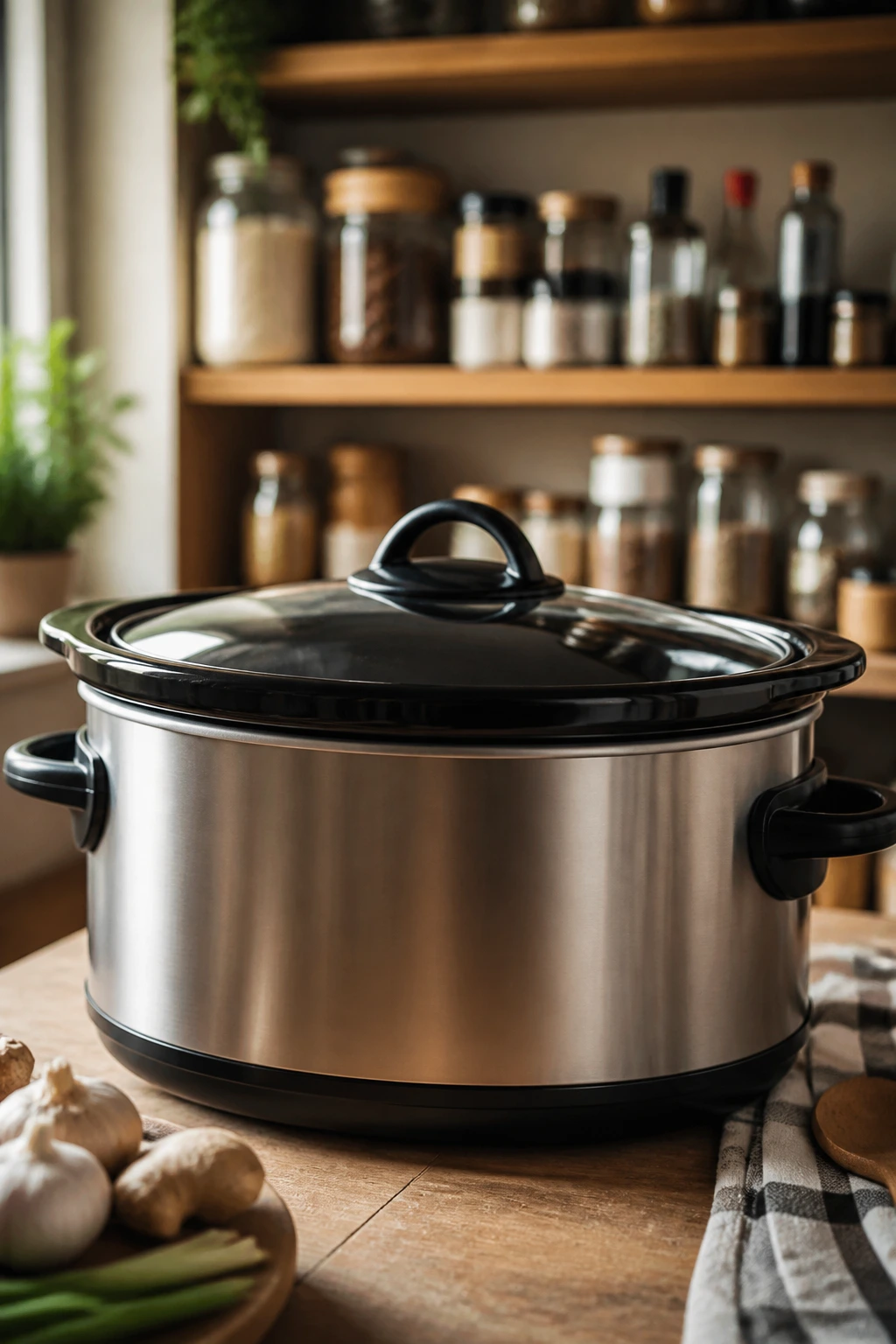
Tools I actually reach for
- 6-quart slow cooker: Big enough for a 3- to 4-pound roast, deep enough for sauce, and practical for family-style braises.
- Instant-read thermometer: Useful for chicken and for checking when pork or beef has passed “safe” and reached “shreds easily.”
- Heavy skillet or Dutch oven: Optional, but worth having if you want to brown meat or reduce sauce before serving.
- Microplane or fine grater: Best for ginger and garlic when you want the flavor to melt into the sauce.
- Tongs and two forks: Tongs move hot meat cleanly; forks handle shredding without tearing it into paste.
- Rimmed sheet pan: Great for broiling shredded meat after cooking or cooling it briefly before shredding.
- Rice cooker or covered pot: Not required, but it makes the rice side much less annoying.
Pantry staples that make this style easy
- Low-sodium soy sauce or tamari: The backbone of most savory braises.
- Rice vinegar and black vinegar: The sharp tools that keep the sauce from going flat.
- White miso, hoisin, and gochujang: Three very different body ingredients that each push the pot in a clear direction.
- Sesame oil: Use at the end, not the beginning.
- Cornstarch or arrowroot: For thickening when the sauce needs a little more cling.
- Garlic, ginger, and scallions: The everyday aromatics that carry almost every regional variation.
- Canned coconut milk: Useful for Thai-leaning pots and chicken thighs.
- Dried mushrooms or mushroom powder: Optional, but they add savory depth without making the pot taste muddy.
The pantry list does not need to be huge. Five good things beat fifteen mediocre ones. Keep the soy, the vinegar, the ginger, the sesame oil, and one body ingredient like miso or gochujang, and you can shift the flavor direction without starting from zero.
Make-Ahead, Storage, and Reheating Without Dry Meat
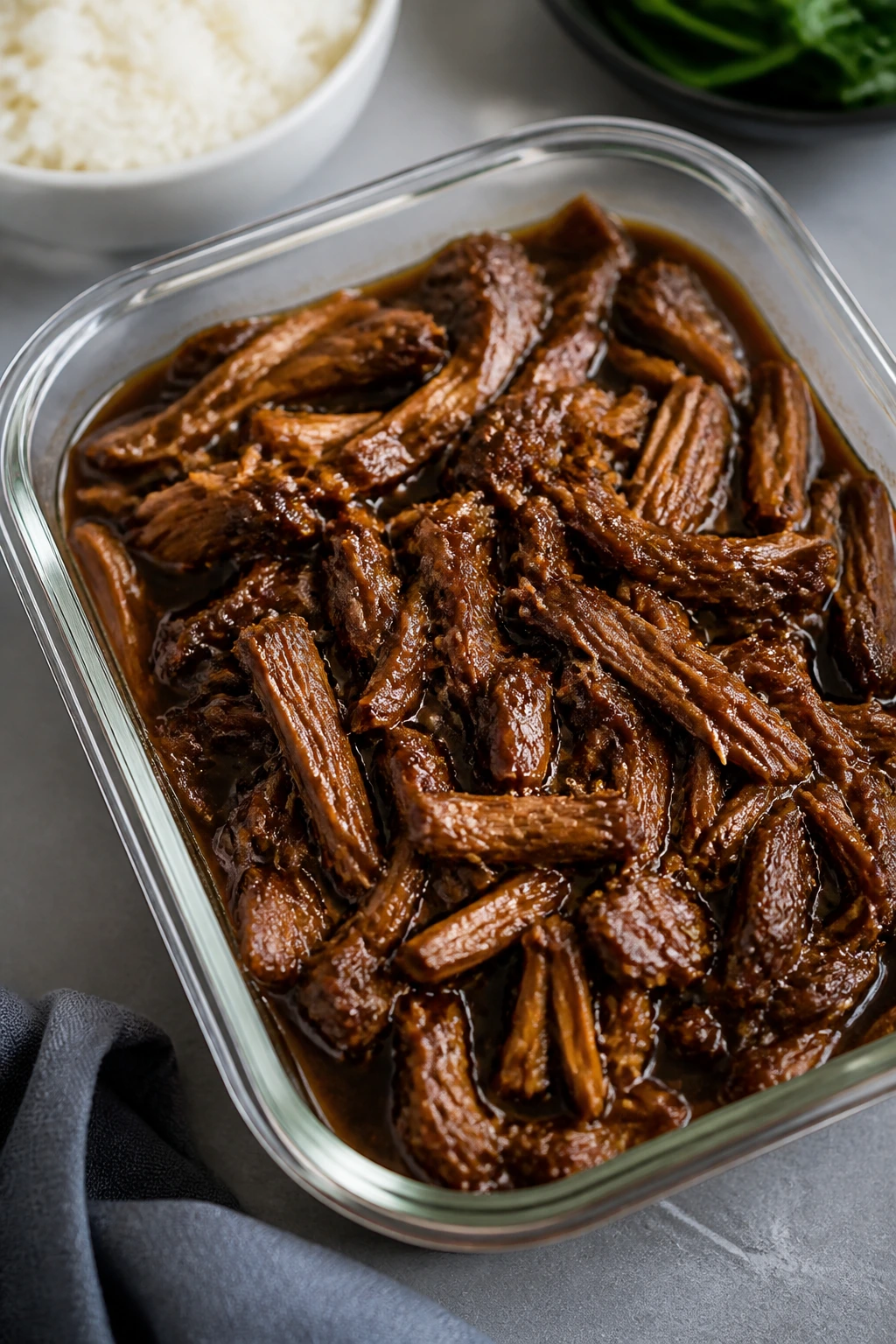
Slow cooker braises keep well, but only if you treat the leftovers like they still matter. They do.
Cool the food within 2 hours of cooking. That is the safe window. After that, divide the meat and sauce into shallow containers so the heat escapes quickly. A giant pot shoved into the fridge takes too long to cool and tends to overcook the meat from its own carryover heat.
In the fridge, most shredded slow cooker meat keeps well for 3 to 4 days. The flavor usually improves overnight because the sauce settles into the meat. That part is real. The texture of broccoli, bok choy, and fresh herbs does not improve, so keep those separate whenever you can.
Freezer life is usually best at about 2 to 3 months for meat and sauce together. Pork shoulder and beef chuck freeze well. Chicken thighs do too. Coconut milk sauces can separate a little after thawing, but whisking them gently while reheating usually brings them back together. Freeze rice separately if you want, but it tends to reheat better than people think when you add a damp paper towel over the top and microwave it covered.
For reheating, use the stove when you want the best texture. Put the meat and sauce in a covered skillet or saucepan over medium-low heat with a splash of water or broth. Stir only once or twice, and stop when the sauce is hot and glossy. The microwave works in a pinch; use medium power and short bursts so the meat does not dry out at the edges.
A few make-ahead moves help a lot: the sauce can be mixed 1 to 3 days ahead, vegetables can be chopped the day before, and meat can be trimmed and portioned early. If you’re planning a bowl with crisp toppings, keep those separate until the last second. Once peanuts, fried shallots, or scallions sit in sauce too long, they lose their job.
Questions People Ask Before They Start

Can I use chicken breast in a slow cooker Asian meal?
You can, but I would not make it my first choice if you want a fall-apart texture. Chicken breast works better if it’s added later in the cook and pulled as soon as it reaches 165°F, because extra time dries it out fast. Thighs are the better buy for almost every saucy slow cooker dish.
Do I really need to brown the meat first?
No, but the pot tastes deeper if you do. Browning gives you a little roasted edge and some fond for the sauce to pick up, which is hard to fake with raw ingredients alone. If you skip the sear, use a little more ginger, garlic, or vinegar at the end to keep the flavor from falling flat.
Why does my sauce taste too salty after slow cooking?
Because the crockpot traps moisture instead of evaporating it, the salt hangs around until the end. Start with low-sodium soy or tamari, keep the liquid moderate, and add acid or sweetness only after tasting the finished pot. If it’s already too salty, dilute with unsalted broth and serve over plain rice.
Can I put frozen meat straight into the crockpot?
I wouldn’t. Frozen meat spends too long warming through, which is a food-safety problem and can also lead to uneven cooking. Thaw it in the refrigerator first so it starts cooking evenly from the beginning.
How do I make the sauce thicker without making it gluey?
The cleanest method is to remove the meat, pour the liquid into a saucepan, and reduce it for 8 to 10 minutes. If you want to use cornstarch, mix 1 tablespoon cornstarch with 1 tablespoon cold water first, then stir it in near the end and cook just until the sauce turns glossy and lightly coats a spoon.
Can this be made gluten-free?
Yes. Tamari replaces soy sauce easily, and many brands of gochujang, hoisin, and curry paste make gluten-free versions, though the label needs checking. Serve it with rice or rice noodles and you’re already in good shape.
What if I want a vegetarian version?
Use extra-firm tofu, pressed and browned, plus mushrooms for chew. King oyster mushrooms, portobellos, and shiitakes all bring enough savory depth to carry a strong sauce. Add tofu later than meat — it only needs time to absorb the flavor, not to collapse under it.
Which rice works best with these bowls?
Jasmine rice is the easiest match for soy-ginger, hoisin, and five-spice sauces because it stays light and fragrant. Short-grain rice is better when the sauce is sticky and glossy. Rinse either one until the water runs only lightly cloudy; that keeps the grains from turning gummy.
Can I cook this on high to save time?
Sometimes. Chicken thighs and smaller pieces are fine on high, and some slow cookers run hot enough to get there fast. Pork shoulder and beef chuck usually give you better texture on low, though, because the longer, gentler heat breaks down the connective tissue without making the meat stringy.
The Bowl Worth Opening the Lid For
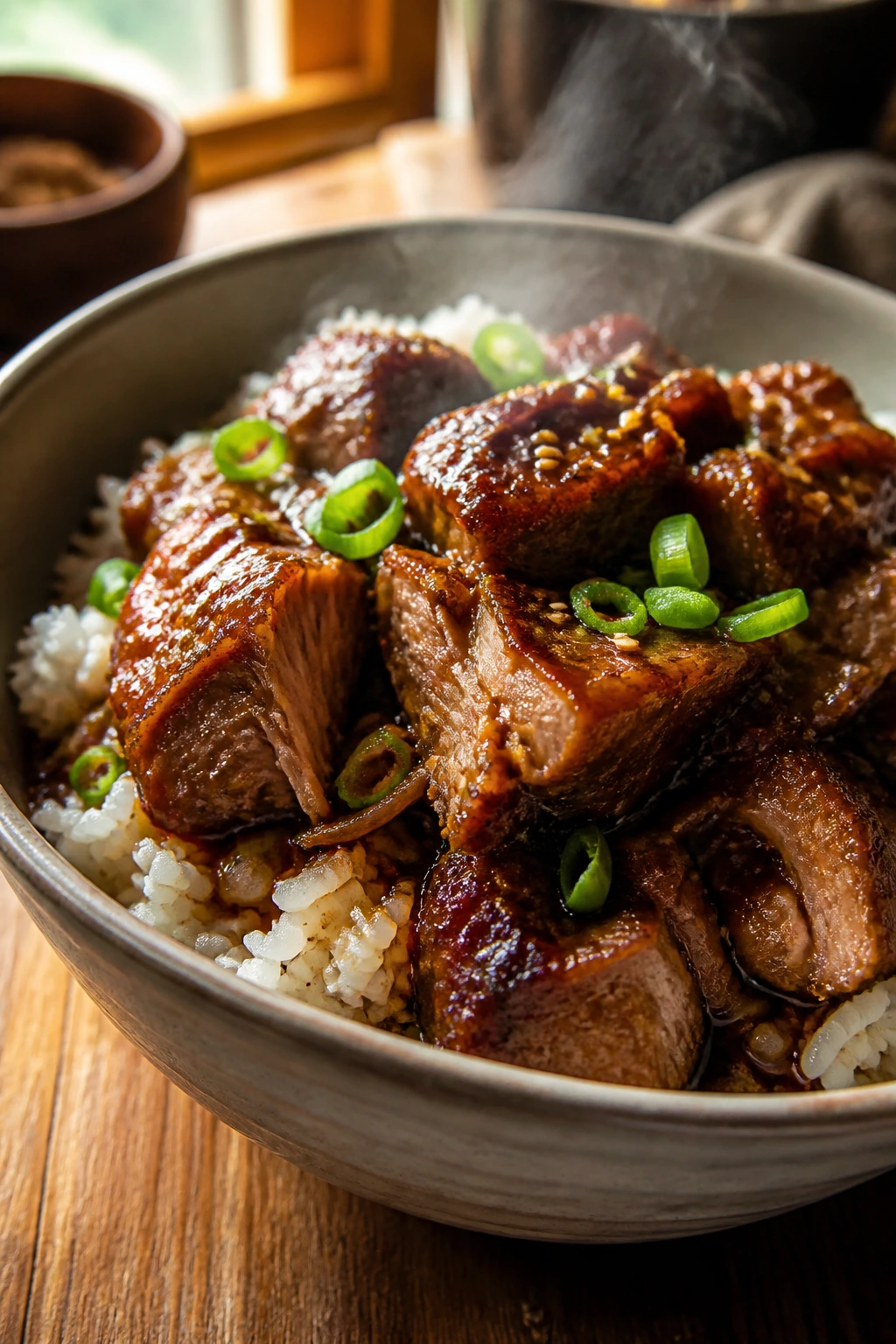
The crockpot is at its best when it’s doing the kind of work a stove hates: turning cheap, tough, ugly meat into something that falls apart cleanly and tastes like it had a plan. That is why these slow cooker Asian food bowls work. They don’t ask the appliance to be a wok. They ask it to be patient.
The real trick is not hard. Keep the liquid in check, choose cuts that want to braise, hold back the fragile vegetables, and finish with something fresh, sharp, or crunchy. Do that, and the bowl stops tasting like a long day and starts tasting like someone paid attention.
Keep a bottle of low-sodium soy, a knob of ginger in the fridge, and one good cut of meat in the freezer, and you are never far from dinner that smells finished before you even open the lid.