



A spiral-cut ham in a slow cooker feels a little like cheating, and that is exactly why this easy bourbon ham crockpot method works. You get the sticky, glossy finish of a baked ham without parking yourself in front of the oven, and the glaze has time to seep into all those little spiral cuts instead of sitting on top like a shiny hat.
The smell is the part that gets people. Brown sugar turns dark and caramel-like, bourbon loses its sharp edge and turns rounder, pineapple juice adds a little brightness, and Dijon keeps the whole thing from drifting into dessert territory. A good bourbon ham should taste sweet, yes, but also a little smoky, a little sharp, and very much like someone bothered to balance it on purpose.
That balance matters because ham is already doing a lot before you touch it. It’s salty from curing, usually fully cooked, and easy to dry out if you treat it like a raw roast. The slow cooker changes the game by warming gently and trapping steam, which means the slices stay tender while the glaze gets deeper and stickier. The trick is not to overthink it. The trick is to stop at the right temperature and let the sauce do what it’s supposed to do.
Why This Bourbon Ham Crockpot Works So Well
A crockpot is not just a convenience move here. It’s the right tool for the job.
Ham, especially a spiral-cut one, has a built-in weakness: all that exposed surface area. In the oven, that can be a liability if you forget to baste or the edges sit under dry heat too long. In the slow cooker, the ham sits in a humid little pocket of heat, so the outer slices stay plush while the glaze settles between them. That is why the first slice and the last slice taste like they came from the same recipe instead of two different planets.
There’s also the matter of timing. Since most hams sold for home cooking are already fully cooked, you are reheating and glazing, not braising a raw cut through to doneness. That means the finish line is much lower than people expect. 140°F in the center is the number to keep in your head, not some heroic three-hour overcook because the lid was on.
The bourbon adds a second layer that plain brown sugar can’t give you. After a few minutes on the stove, the harsh alcohol smell softens into something more like oak, vanilla, and dark caramel. It doesn’t shout “bourbon” in the final bite. It whispers it. And that is better.
One more reason this works: the glaze is built to handle salty meat. Sweet alone gets sticky fast and tastes flat after two bites. Add Dijon, vinegar, Worcestershire, and a little black pepper, and the sauce starts to move. That movement is what keeps a big ham from feeling heavy.
What Makes the Glaze Taste Balanced Instead of Candy-Sweet
Brown sugar by itself can make ham taste one-note. Nice for about two bites. Then it starts to feel like you’re eating dessert with a side of salt.
The fix is layering. Dark brown sugar brings molasses depth, not just sweetness. Honey rounds the edges and gives the glaze a smoother finish. Bourbon adds that warm, oaky note that makes people lean in for another bite. None of those ingredients should be obvious on their own. Together, they make the glaze taste darker and richer than the ingredient list looks.
Sweet Notes
Dark brown sugar is the backbone. I prefer it over light brown sugar because the molasses keeps the glaze from tasting thin, and it gives the sauce a deeper color when it reduces. Honey helps the sauce cling to the slices after it’s cooked, which matters if you want the glaze to stay glossy instead of running off the ham and pooling in the slow cooker.
Sharp Notes
Dijon mustard and apple cider vinegar do the quiet work here. Dijon doesn’t make the ham taste mustardy; it makes the glaze taste less flat. Vinegar is the little sting that wakes everything up. Without that hit of acid, the bourbon ham crockpot sauce can taste heavy before the second serving even lands on a plate.
Warm Notes
Bourbon, cinnamon, cloves, and orange zest are the notes that make the glaze smell like it has some memory in it. Bourbon gives a soft oak note after simmering. Cinnamon and cloves should stay in the background; if they dominate, the glaze starts to taste like a holiday candle instead of dinner. Orange zest is the bright edge that keeps the sweetness from settling too low.
Savory Notes
Worcestershire sauce is the ingredient people forget to respect. It brings a little fermented depth and makes the glaze taste more complete. A tablespoon is enough. More than that and it starts to push the sauce away from ham and toward steak sauce, which is not where you want to land.
If the glaze tastes right on the spoon, it will taste right on the ham. If it tastes too sharp in the pan, give it another minute. If it tastes too sweet, it needs vinegar or Dijon, not another scoop of sugar.
Timing, Yield, and the Right Slow Cooker Size
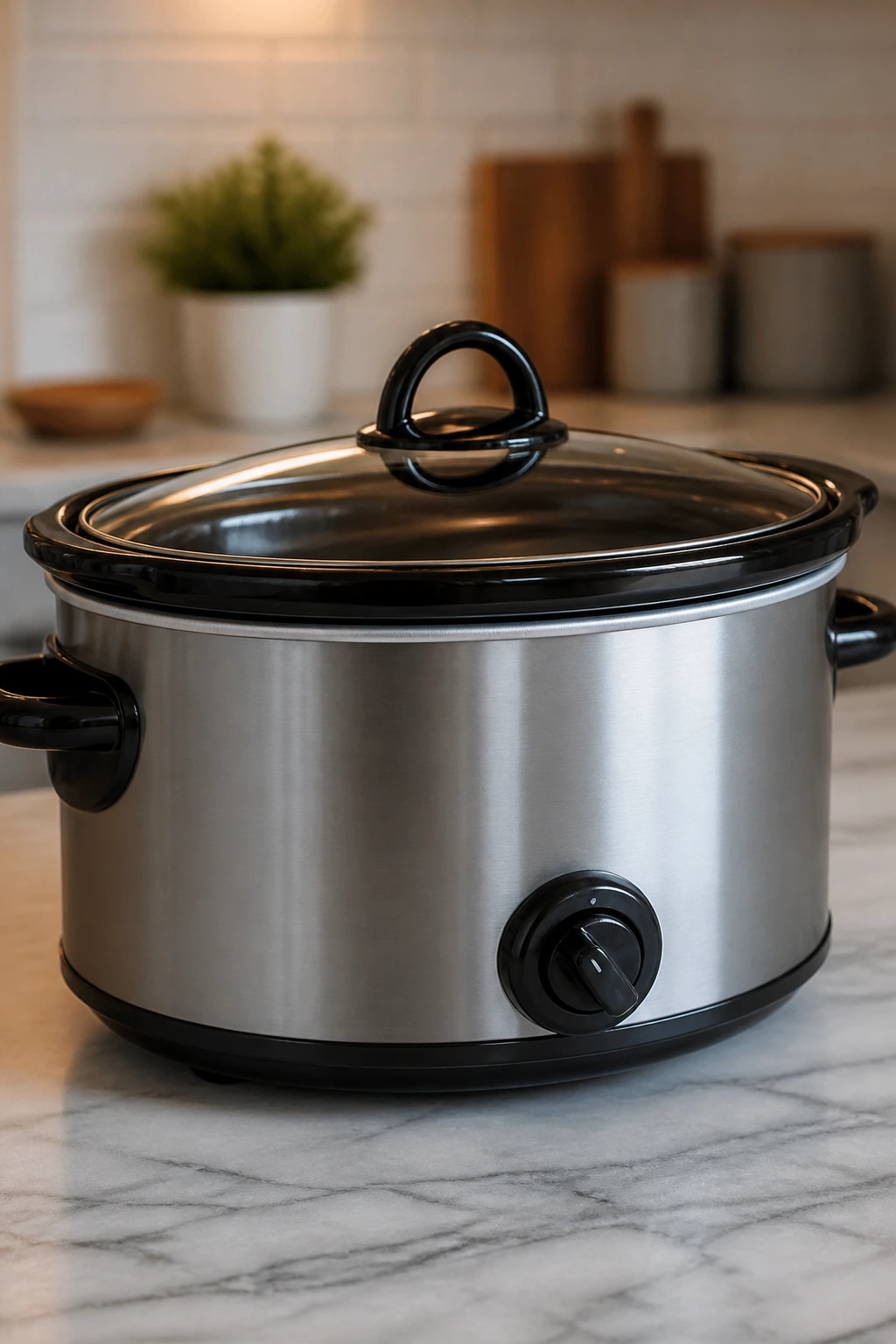
The ham size matters before you even open the packaging. A 7- to 8-pound bone-in spiral ham is the sweet spot for most oval slow cookers, and it usually feeds a table of 12 to 16 when there are sides on the table. If you’re feeding a smaller group, the leftovers are part of the appeal. If you’re feeding a bigger one, buy the right size cooker instead of trying to cram a giant ham into a pot that won’t close.
A 6-quart oval slow cooker is the minimum I’d use for this recipe, and an 8-quart model is easier if the ham is on the larger end. Round slow cookers can work in a pinch, but spiral hams sit awkwardly in them and the lid often doesn’t close cleanly. Don’t force the lid. If the ham has to be pressed down hard, the shape is wrong and the heat will be uneven.
Yield: Serves 12 to 16
Prep Time: 15 minutes
Cook Time: 3 to 4 hours
Total Time: 3 hours 15 minutes to 4 hours 15 minutes
Difficulty: Beginner — the steps are straightforward, but a thermometer keeps you from overcooking a ham that’s already fully cooked.
Chill/Rest Time: 10 to 15 minutes before slicing
Best Served: Warm, after a short rest
A small note that saves a lot of regret: this is not a “walk away for eight hours” kind of ham. The slow cooker is doing gentle reheating, not a long braise. If your cooker runs hot, start checking at the 2½-hour mark. That extra attention matters more than another hour of blind heat.
The Ingredient List You Actually Need
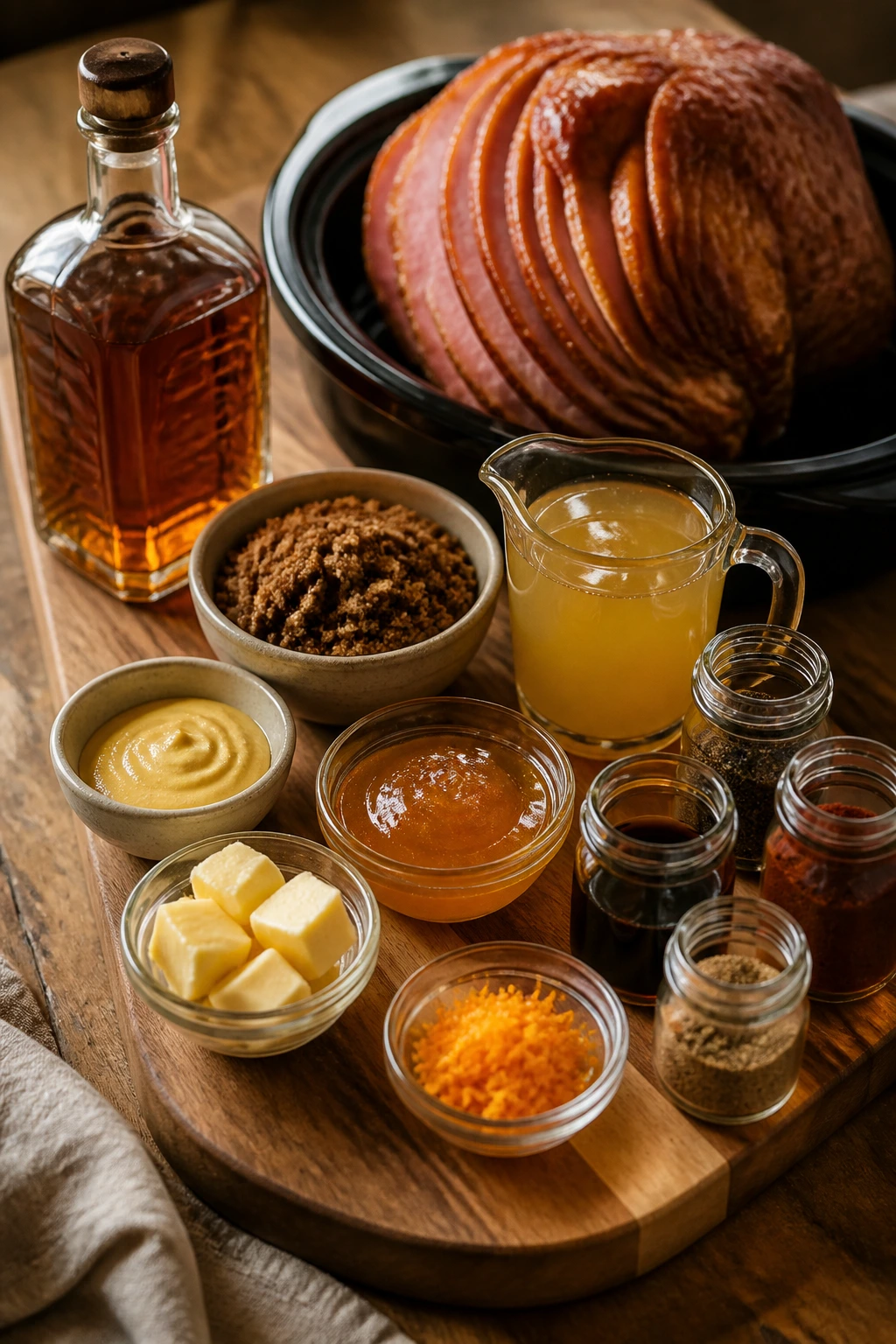
The ingredient list is short, but each item has a job. That is the best kind of recipe.
For the Ham
- 1 bone-in spiral-cut ham, 7 to 8 pounds, fully cooked, discard any packet that comes with it
- 1/2 cup unsweetened apple juice
For the Bourbon Glaze
- 3/4 cup packed dark brown sugar
- 1/2 cup bourbon
- 1/2 cup pineapple juice
- 1/4 cup Dijon mustard
- 1/4 cup honey
- 2 tablespoons unsalted butter
- 1 tablespoon Worcestershire sauce
- 1 tablespoon apple cider vinegar
- 1 teaspoon orange zest
- 1/2 teaspoon ground cinnamon
- 1/4 teaspoon ground cloves
- 1/4 teaspoon freshly ground black pepper
For Thickening
- 2 tablespoons cornstarch
- 2 tablespoons cold water
How Each Ingredient Earns Its Place
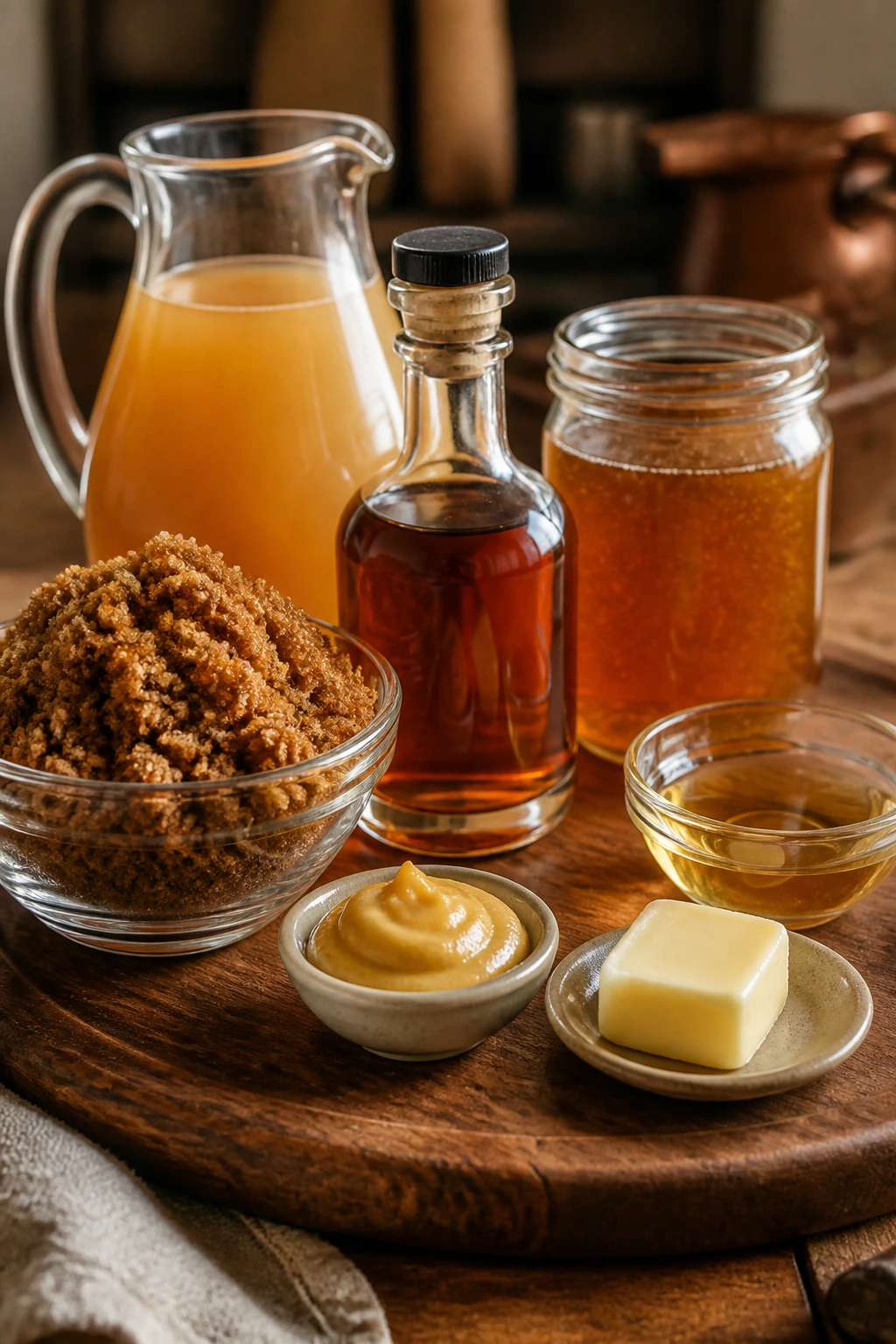
The Ham Itself
- What to use: 1 bone-in spiral-cut ham, 7 to 8 pounds, fully cooked. Bone-in hams stay juicier and slice cleaner, and spiral-cut surfaces give the glaze more places to land.
- Preparation: Remove the packaging, discard any glaze packet, and loosen a few of the top spiral slices with your fingers so the sauce can drip between them.
- Substitutions: A boneless ham works if that’s what fits your cooker; just shave 30 to 45 minutes off the heating time and check the center early. A smaller ham works too, but the glaze will look a little more concentrated.
- Tips: Pick a ham that sits comfortably in the crock without forcing the lid down. If the cooker has to fight the ham, the heat will fight back unevenly.
The Slow-Cooker Base Liquid
- What to use: 1/2 cup unsweetened apple juice. It gives the glaze a gentle fruit note and keeps the sugar from scorching on the bottom.
- Preparation: Pour it into the slow cooker before the ham goes in, so the ham sits in a thin layer of liquid right away.
- Substitutions: Water works if that’s what you have. White grape juice gives a softer sweetness, while orange juice makes the glaze brighter and a little sharper.
- Tips: Keep the base liquid modest. The ham will release its own juices, and too much liquid makes the glaze taste thin instead of glossy.
The Bourbon Glaze
- What to use: 3/4 cup dark brown sugar, 1/2 cup bourbon, 1/2 cup pineapple juice, 1/4 cup Dijon mustard, 1/4 cup honey, 2 tablespoons unsalted butter, 1 tablespoon Worcestershire sauce, and 1 tablespoon apple cider vinegar.
- Preparation: Whisk everything together in a saucepan over medium heat until the butter melts and the sugar dissolves. You want it smooth and steamy, not boiling hard.
- Substitutions: Maple syrup can replace honey, and apple juice can replace pineapple juice if you want a softer fruit note. If bourbon is off the table, use apple juice plus a teaspoon of vanilla extract.
- Tips: The bourbon should smell warm after it heats, not sharp. If the pan still smells raw and boozy after a minute or two, keep it moving until the edge softens.
Warm Spices and Thickener
- What to use: 1 teaspoon orange zest, 1/2 teaspoon ground cinnamon, 1/4 teaspoon ground cloves, 1/4 teaspoon freshly ground black pepper, 2 tablespoons cornstarch, and 2 tablespoons cold water.
- Preparation: Zest the orange before you cut it, and stir the cornstarch with cold water in a separate bowl so the slurry stays smooth.
- Substitutions: Nutmeg can stand in for cloves if that is what you have. Arrowroot works in place of cornstarch if you need a gluten-free thickener.
- Tips: Add the slurry only once the sauce is simmering. Cornstarch hates a lazy, barely warm pot; it thickens cleanest when the liquid is bubbling lightly.
Tools That Make the Job Easier
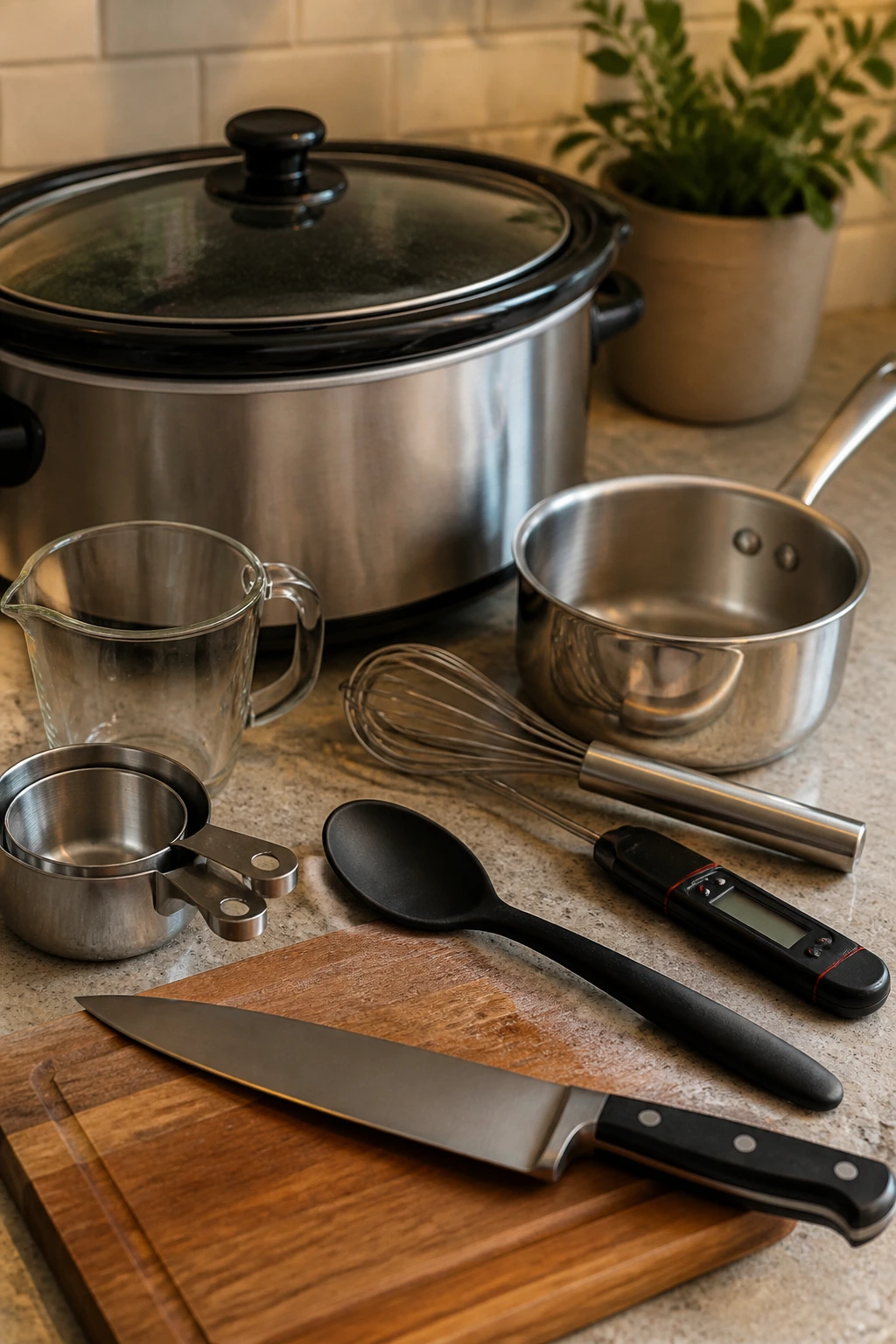
A ham this size doesn’t need fancy gear, but a few specific tools make the whole thing smoother.
- 6-quart or 8-quart oval slow cooker — The oval shape fits a spiral ham far better than a round pot, and the lid should close without being forced.
- Small saucepan — You’ll use this to dissolve the sugar, warm the bourbon, and reduce the juices at the end.
- Whisk — This keeps the glaze smooth and helps the cornstarch slurry disappear without lumps.
- Instant-read thermometer — The one tool that really matters here. It keeps you from overcooking a ham that’s already cooked.
- Silicone spoon or ladle — Good for spooning glaze over the ham without scratching the cooker insert.
- Sharp carving knife — Spiral ham is easy to slice, but a sharp knife makes cleaner slices and less shredding.
- Cutting board with a groove — Ham throws off juices when it rests, and the groove keeps your counter from becoming a swamp.
- Measuring cups and spoons — No need to guess with the glaze. The balance depends on the quantities.
- Small bowl — Handy for the cornstarch slurry.
- Foil or a clean kitchen towel — Useful for tenting the ham while it rests.
A slow cooker liner can make cleanup easier, though I still prefer scraping down a glazed insert with hot water and a soft sponge. It’s not glamorous, but it works.
The Slow Cooker Method, Step by Step
Prep the Ham and Glaze
-
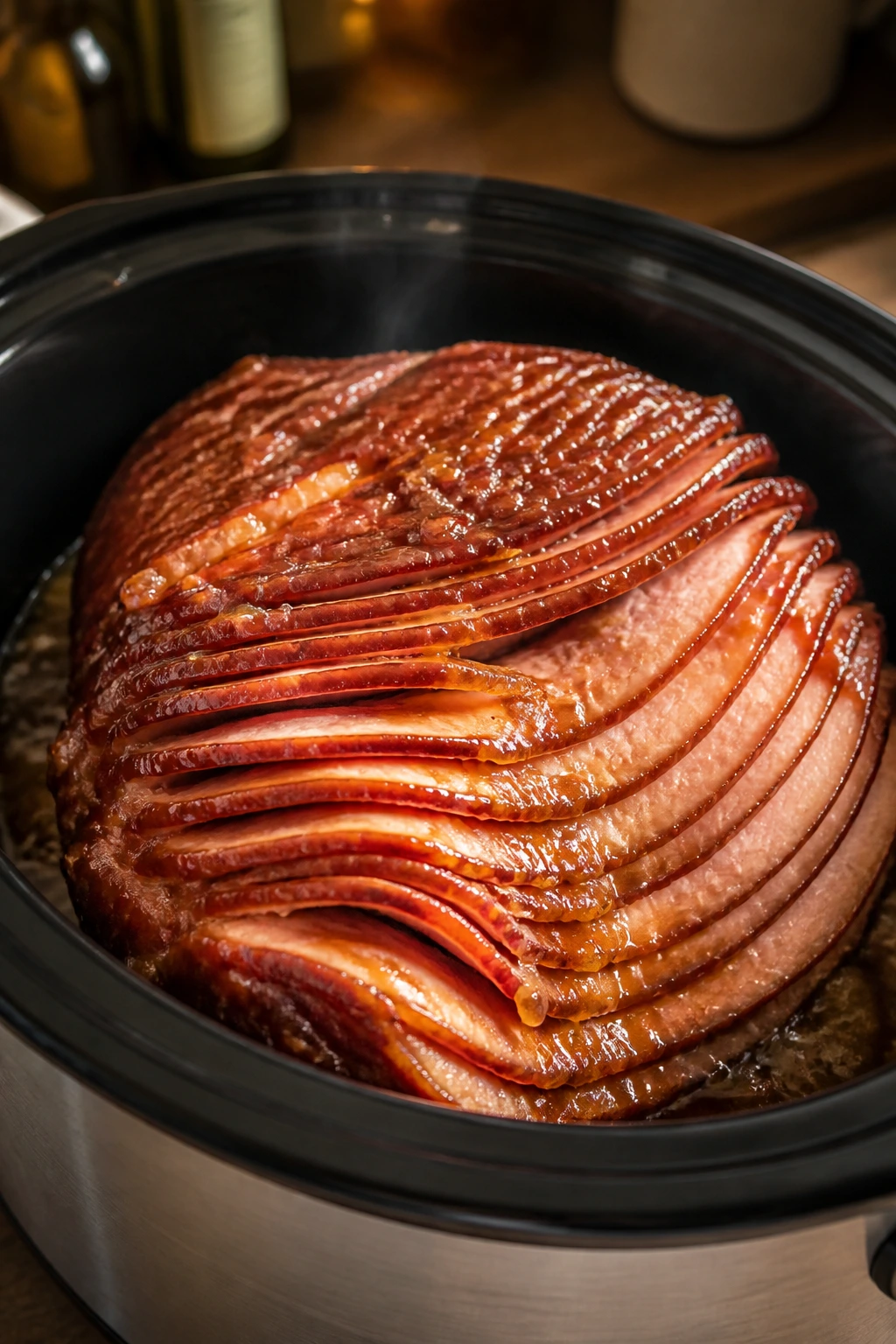
Pour the base liquid. Add 1/2 cup unsweetened apple juice to the bottom of a 6-quart or 8-quart oval slow cooker. Set the ham inside with the spiral-cut side facing up if possible. If it rocks, rotate it until it sits in the most stable position. Do not force the lid closed if the ham is too large for the cooker.
-
Build the glaze. In a small saucepan over medium heat, whisk together the brown sugar, bourbon, pineapple juice, Dijon mustard, honey, butter, Worcestershire sauce, apple cider vinegar, orange zest, cinnamon, cloves, and black pepper. Cook for 3 to 4 minutes, until the butter melts and the sugar dissolves. The mixture should look smooth and steamy, with no grainy sugar at the edges. Do not boil it hard; a hard boil can make the sugars taste bitter.
-
Pour on the first layer. Spoon about two-thirds of the warm glaze over the ham, making sure it slips into the spiral cuts and runs down the sides. Reserve the remaining glaze for the end. If you want to nudge the slices open a little with your fingers, do it now, before the ham gets hot.
Cook and Finish
-
Heat gently. Cover and cook on LOW for 3 to 4 hours, until the center of the ham reaches 140°F on an instant-read thermometer. If you happen to be nearby halfway through, spoon some of the juices from the bottom over the top. If you’re not nearby, leave the lid alone. Every lift adds heat loss, and ham does not need babysitting.
-
Rest the ham. Transfer the ham to a cutting board or serving platter and tent it loosely with foil for 10 to 15 minutes. That short rest lets the juices settle back into the meat instead of pouring out on the board when you slice it.
-
Reduce the sauce. Pour the slow-cooker liquid into the same saucepan and bring it to a gentle simmer over medium heat. In a small bowl, whisk the cornstarch and cold water until completely smooth, then stream it into the simmering liquid while whisking constantly. Cook for 1 to 2 minutes, until the sauce turns glossy and lightly thickened enough to coat the back of a spoon. If you want it thicker, simmer it another minute. If it gets too thick, whisk in 1 to 2 tablespoons of hot water.
-
Slice and glaze. Slice the ham along the spiral lines or separate it into serving pieces if it’s already loose enough. Spoon the warm glaze over the slices, then serve the rest on the side. The best plates get a little glaze on the ham and a little extra for the potatoes or rolls beside it.
How to Carve, Glaze, and Serve the Ham
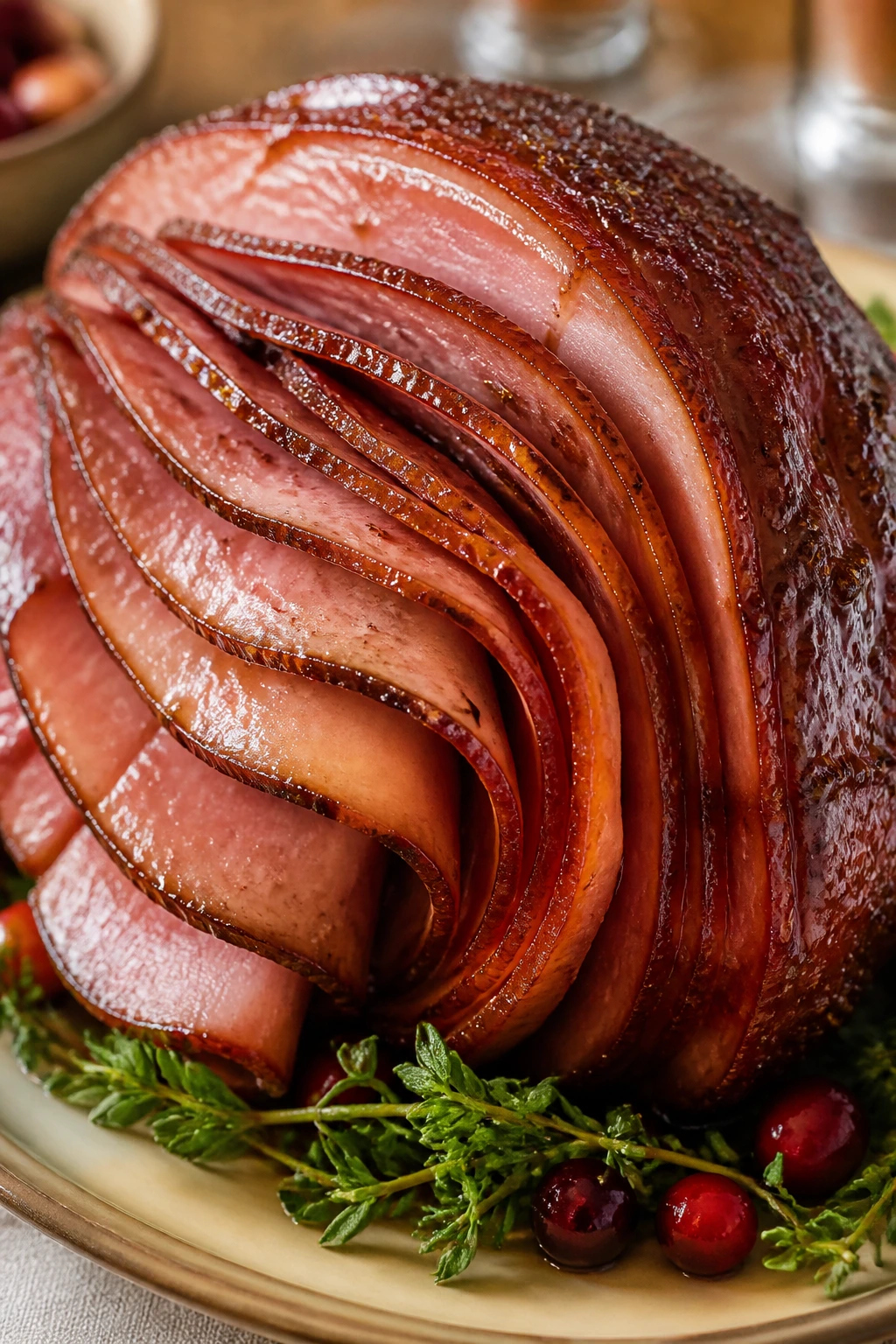
Presentation: Slice the ham on the spiral and fan the pieces slightly on a warm platter. Spoon the thickened glaze over the top so it runs into the gaps between slices instead of sitting in one shiny puddle. A few orange slices or a scatter of chopped parsley can brighten the platter, but I’d keep the garnish simple. The ham should look rich, not decorated.
Accompaniments: Creamy mashed potatoes, scalloped potatoes, buttered green beans, roasted carrots, and soft dinner rolls all play well here. If you want one sharper side, a mustardy slaw or a vinegar-based cabbage salad keeps the meal from leaning too sweet. I also like braised greens with a splash of cider vinegar, because they cut through the glaze in a way plain green beans don’t.
Portions: Plan on 6 to 8 ounces of cooked ham per adult if this is the center of the plate. If you’re serving a big spread with several sides, 4 to 6 ounces is enough. A 7- to 8-pound bone-in ham usually covers 12 to 16 people with room for leftovers, especially if you slice it thin.
Beverage Pairing: Unsweetened iced tea with lemon is the safest all-around pick. For something with a little more sparkle, dry hard cider or sparkling apple cider works beautifully against the sweet glaze. If you want an adult pairing with some backbone, a bourbon old fashioned or a rye-heavy cocktail stands up to the brown sugar and Dijon without turning the meal syrupy.
The nicest part of serving this ham is that it doesn’t need fuss. Put it on a good platter, keep the glaze warm, and let people build their own slices.
Tips That Keep the Ham Juicy and the Glaze Glossy
-
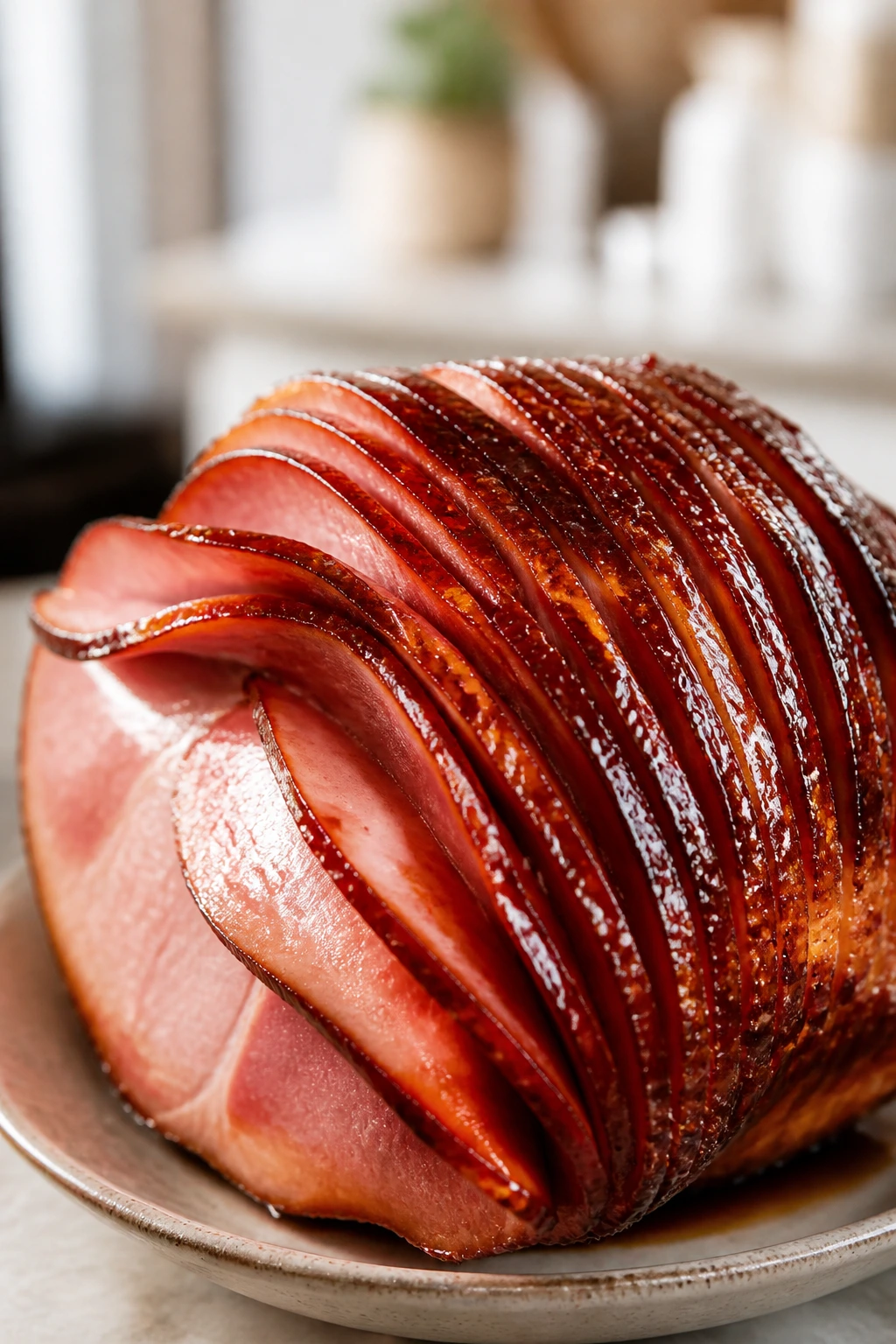
Flavor Enhancement: If you want a deeper lacquer, move a few sliced pieces to a foil-lined sheet pan after the slow cooker stage, brush them with glaze, and broil for 1 to 2 minutes. Watch them closely. A minute too long and the sugar goes from glossy to sticky-dark in a hurry.
-
Time-Saver: If the lid stays on and the ham is moving toward the thermometer target, skip the halfway basting. The steam inside the cooker does more than people think, and opening the lid every 20 minutes steals heat from the whole pot.
-
Cost-Saver: Midrange bourbon works just fine here. You’re mixing it with sugar, acid, juice, and butter, then simmering it down. Save the expensive bottle for drinking if you care about the difference.
-
Presentation: Brush the last spoonful of reduced glaze over the sliced ham right before it hits the table. That fresh shine matters more than an early coat that sinks into the meat and disappears before anyone sits down.
One more thing I like to do: keep a small bowl of glaze back for sandwiches. A thin swipe on leftover ham with mustard and sharp cheddar turns into a very different lunch, and it takes about ten seconds.
Mistakes That Dry Out the Ham or Water Down the Sauce
-
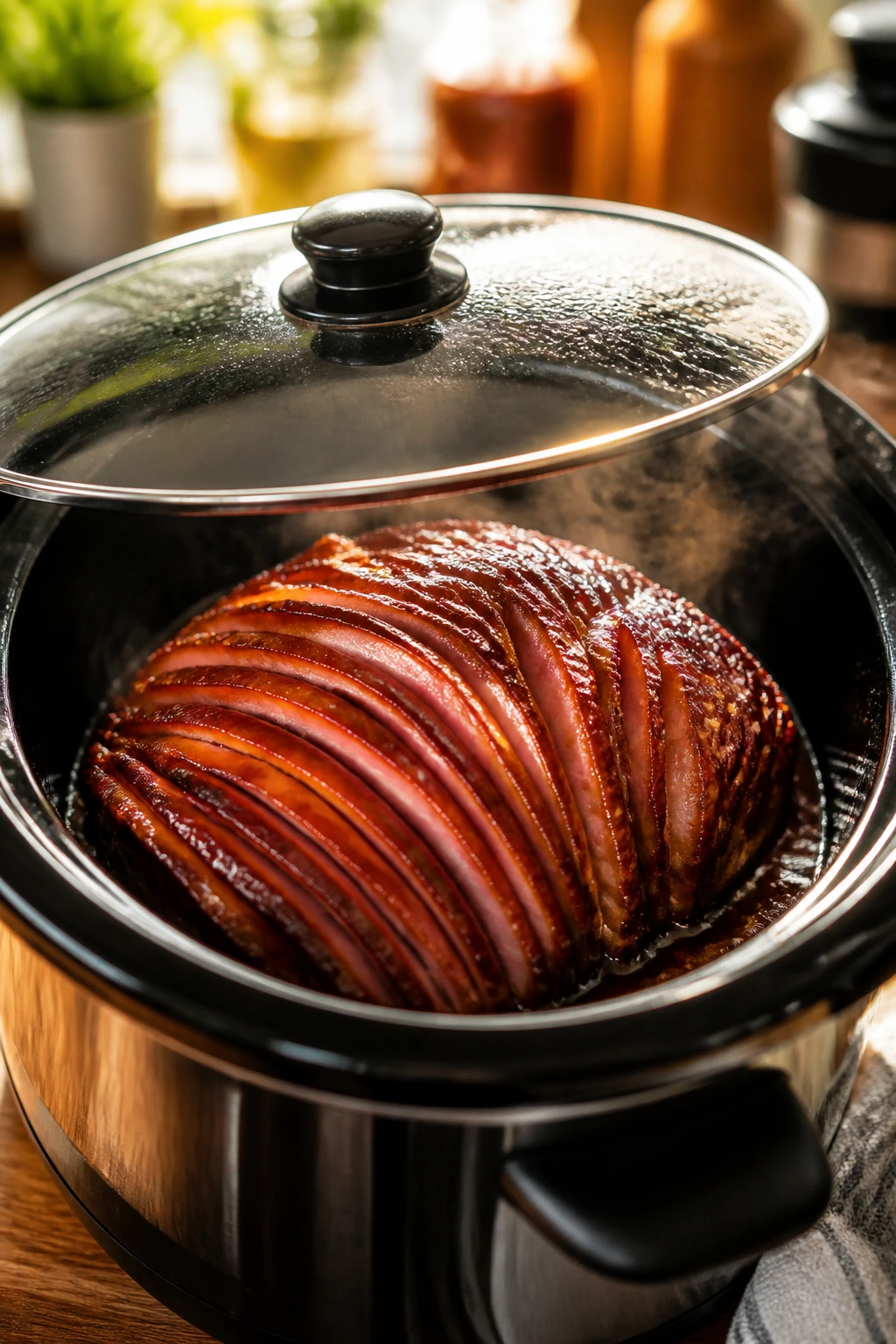
Cooking it like raw pork. A fully cooked ham does not need a long, hot bath. If you keep it in the crockpot until it feels “extra done,” the edges will turn dry and a little grainy. Stop at 140°F in the center and trust the thermometer.
-
Using high heat because you’re in a hurry. High heat tightens the outer slices faster than the inside can warm. The glaze also thickens in a weird way when the sugar hits strong heat too fast. Low heat gives the sauce time to settle and keeps the texture softer.
-
Adding too much liquid. People get nervous and flood the crock with apple juice, water, or broth. Then the glaze tastes thin and the ham sits in a sugary soup instead of a rich sauce. Stick to the 1/2 cup base liquid, then reduce the sauce afterward.
-
Skipping the cornstarch slurry. If you never thicken the cooking liquid, the glaze runs right off the ham and pools in the bottom of the serving dish. The fix is easy: whisk the cornstarch with cold water first, then add it to a simmering pot and give it a minute or two.
-
Cramming in a ham that is too large. If the lid presses hard or the ham has to be mashed into place, the cooker can’t heat evenly. The top dries, the bottom steams, and the middle warms at its own pace. Buy a smaller ham or use a bigger slow cooker.
-
Skipping the rest. I know it’s tempting to slice the ham the second it comes out. Don’t. Ten to fifteen minutes under foil lets the juices settle, and that rest keeps the slices cleaner and less stringy.
Variations for Different Tastes and Pantry Situations
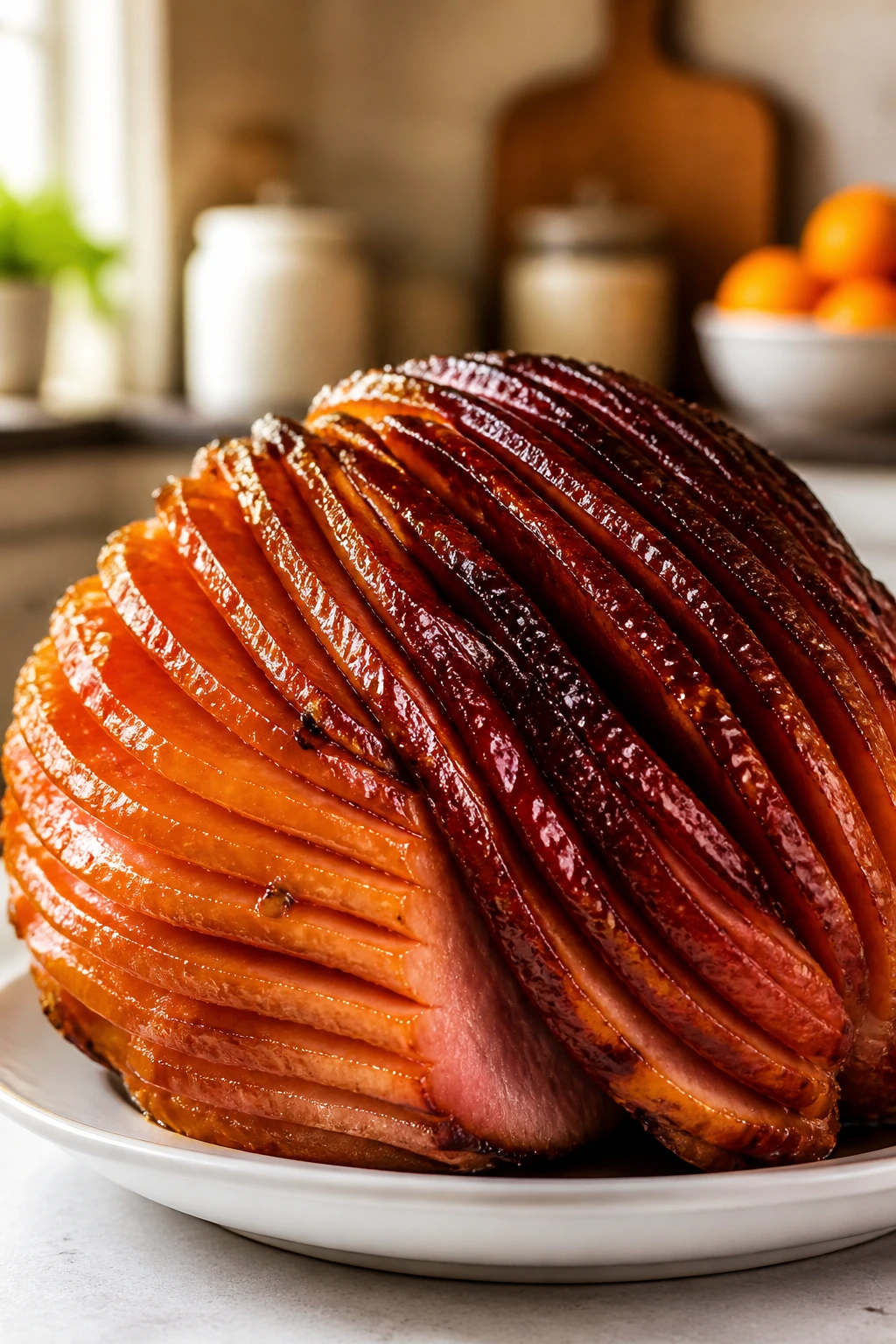
Orange-Clove Bourbon Ham: Swap the pineapple juice for orange juice and add another 1 teaspoon of orange zest. The flavor becomes brighter and a little less tropical, which is nice if you want the glaze to taste sharper and less sweet.
Maple-Dijon Ham: Replace the honey with pure maple syrup and add 1 teaspoon of whole grain mustard. The syrup gives a softer sweetness and the mustard seeds add texture, so the sauce feels a touch more rustic.
No-Bourbon Pantry Ham: Use 1/2 cup apple juice in place of the bourbon and stir in 1 teaspoon vanilla extract. You lose the oak note, but the sauce still turns dark and glossy, and the vanilla fills in some of the depth bourbon would have provided.
Spicy Bourbon Ham: Add 1/4 teaspoon cayenne or 1 teaspoon hot sauce to the glaze. The heat stays in the background, which is exactly where it should live; you’re after a gentle lift, not a burn.
Pineapple Ring Ham: Nestle drained pineapple rings around the ham during the last hour of cooking. The fruit softens and picks up the glaze, and it looks especially good when you slide a couple of rings onto the serving platter with the sliced ham.
Make-Ahead, Storage, and Reheating
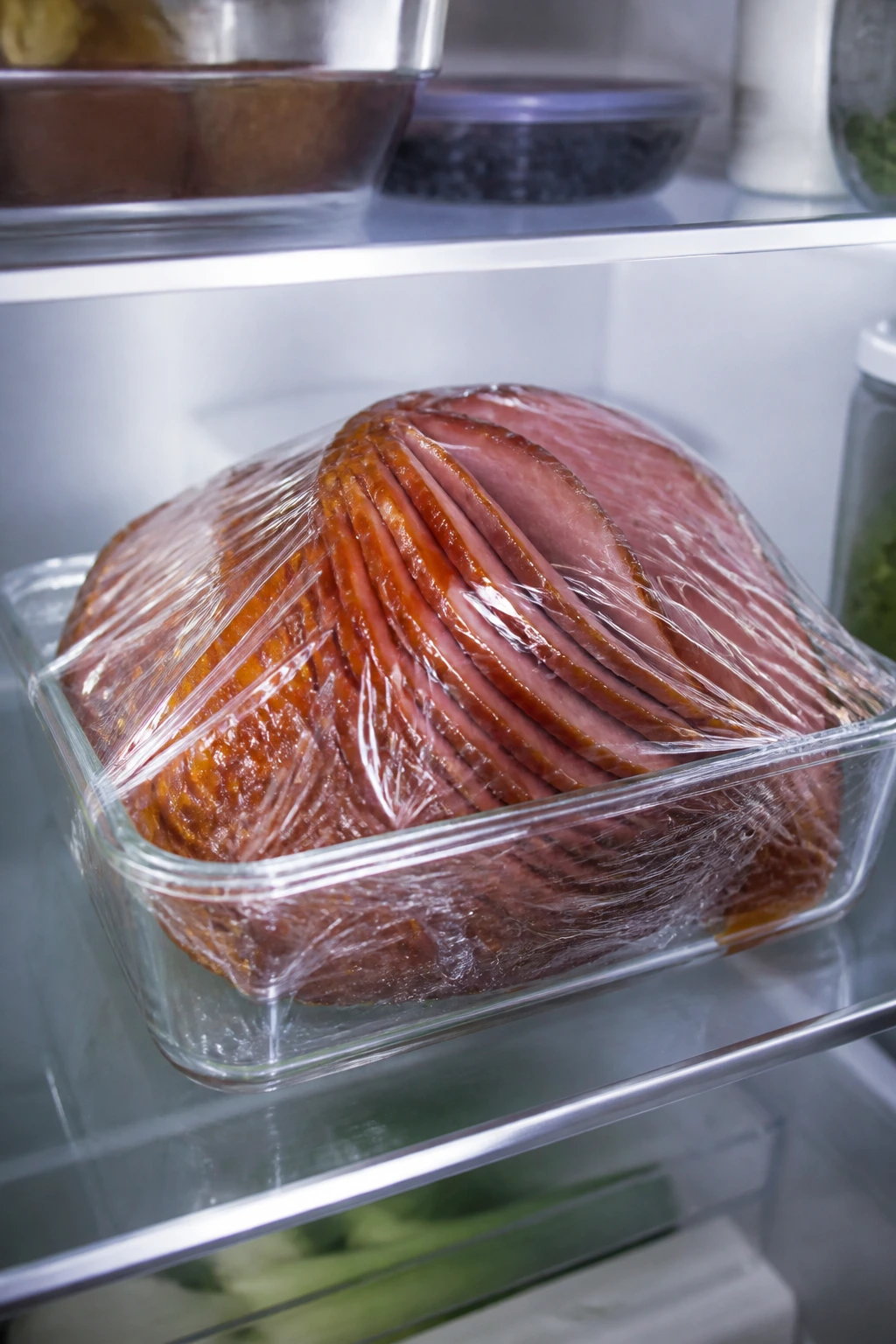
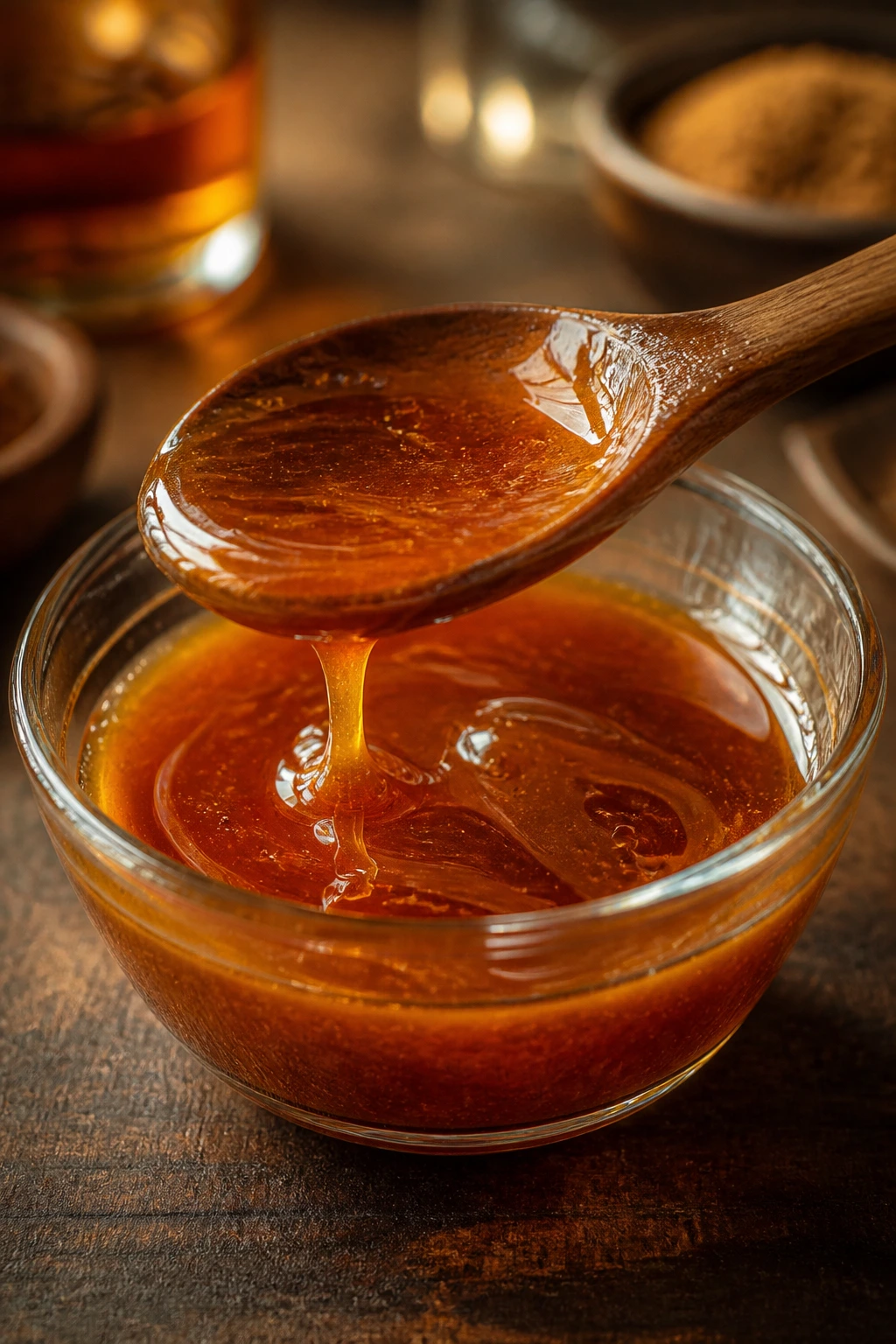
The glaze can be made ahead, and that’s the smart place to save time. Cook it through the step where the sugar dissolves, cool it, and refrigerate it in a covered jar for up to 3 days. If it thickens in the fridge, warm it gently before pouring it over the ham. The ham itself should stay in the fridge until you’re ready to cook it; there’s no benefit to preheating it early and a little risk if it sits out too long.
Leftovers keep well for 3 to 4 days in the refrigerator. Slice the ham off the bone, pack it into shallow airtight containers, and spoon a little glaze or cooking liquid over the top so the meat doesn’t dry out. If you leave it in one giant chunk, the center stays colder and the edges dry faster.
For the freezer, wrap the ham in portion-sized packs and squeeze out as much air as you can. It keeps for up to 2 months that way. I like to freeze some slices plain and some with a spoonful of glaze tucked into the bag. The glazed ones make easy lunch portions, while the plain ones are better for fried rice, split pea soup, or diced hash.
Reheating depends on how much ham you have left. For slices, a covered skillet over low heat with 1 or 2 tablespoons of water or glaze works fast and keeps the texture soft. In the oven, wrap the ham in foil and warm it at 300°F until it’s hot through, usually 10 to 20 minutes depending on thickness. The microwave is the least elegant option, but it works if you cover the slices with a damp paper towel and heat in short bursts so they do not turn leathery.
One useful rule: once the ham is out of the slow cooker, get it into the fridge within 2 hours if it’s not being eaten. That keeps the leftovers in the safe zone and saves the flavor you worked for.
Bourbon Ham Crockpot FAQ
Can I use a boneless ham instead of bone-in?
Yes, you can, and it slices neatly. Boneless ham usually heats a little faster, though, so start checking the temperature around the 2½-hour mark if the piece is smaller than 7 pounds.
Do I really need bourbon, or can I skip it?
You can skip it. Use apple juice in its place and add 1 teaspoon of vanilla extract to keep some warmth in the glaze. The flavor will be softer and less oak-heavy, but still good.
Can I cook this on HIGH to save time?
I wouldn’t. High heat dries the outer slices before the middle is fully warm, and the glaze tends to get sticky in the wrong way. Low heat gives you a softer texture and a more even finish.
What if my sauce is too thin after cooking?
Take the ham out, keep the liquid at a low simmer, and let it reduce for another minute or two. If it still looks watery, whisk in another small cornstarch slurry made with 1 teaspoon cornstarch and 1 teaspoon cold water.
How do I keep spiral ham from drying out?
Use a bone-in ham, keep the cut side up, and stop heating when the center reaches 140°F. The rest time matters too; those 10 to 15 minutes under foil help the juices settle back into the slices.
Can I make the glaze ahead of time?
Yes. It keeps for 3 days in the fridge and actually tastes a little more settled after sitting overnight. Warm it gently before using so the butter and sugar loosen up again.
What should I do if the ham is already glazed?
You can still use this recipe, but cut the brown sugar back by a couple of tablespoons so the final sauce doesn’t turn overly sweet. Store-bought glazes often lean sugary and thin, so Dijon and vinegar become even more important.
What sides cut through the sweetness best?
Anything with a little acid or bitterness helps. Think green beans with lemon, vinegar slaw, braised kale, or roasted carrots with a pinch of black pepper. Those sides keep the meal from feeling heavy.
A Ham That Disappears Fast
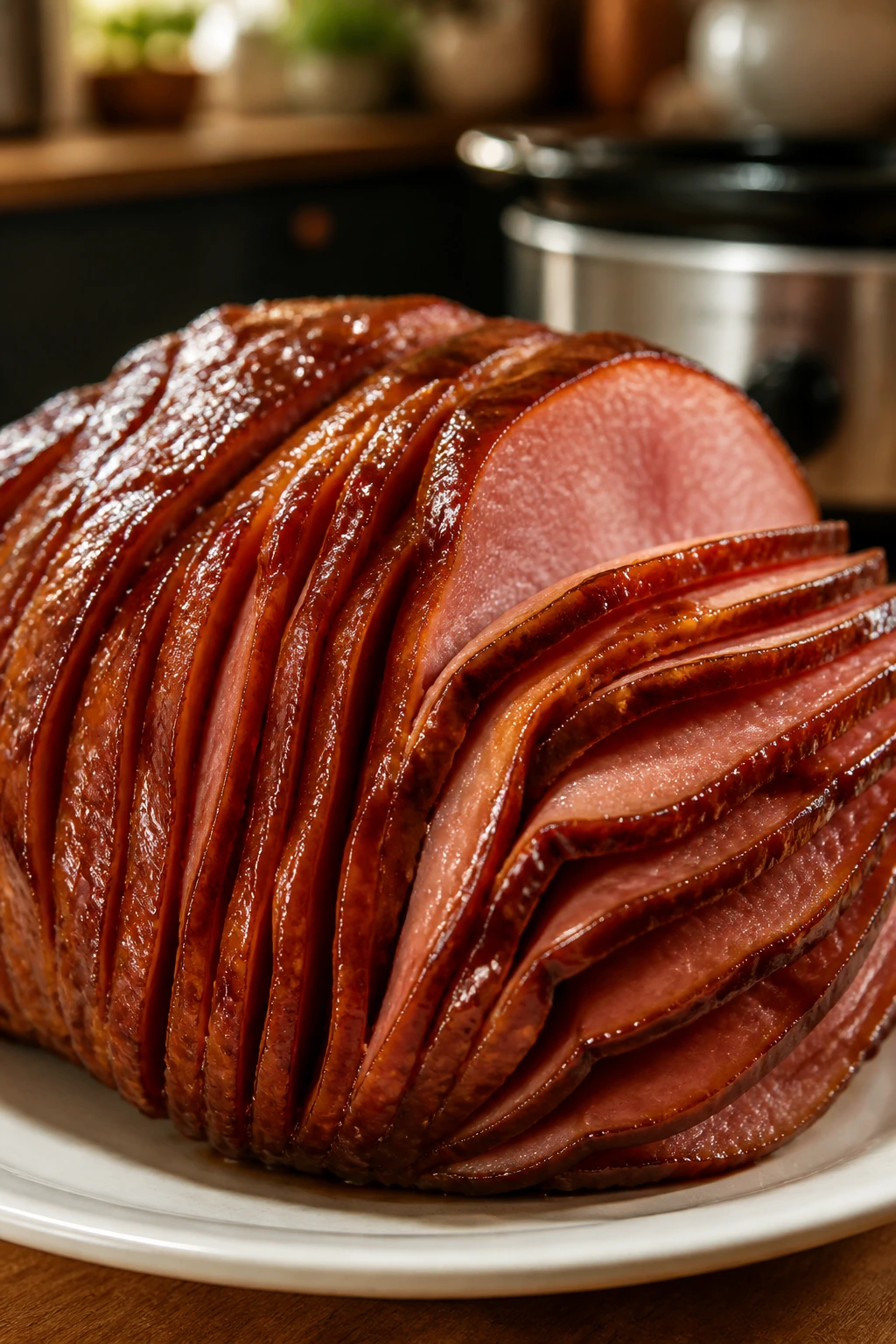
A good ham shouldn’t demand much, and this one doesn’t. The slow cooker gives you a soft, steady heat; the bourbon glaze gives you depth; the spiral cuts make sure every slice picks up sauce instead of just sitting there looking polished. That combination is simple, but it’s not dull. There’s a real difference between a ham that was warmed and a ham that was tended to, even if the tending only took 15 minutes at the sink and a thermometer check at the end.
I also like what happens after dinner. The leftovers are almost better because the glaze settles overnight and the slices pick up more flavor in the fridge. Sandwiches get better. Breakfast hash gets better. Even a plain piece of ham tucked into a biscuit starts to taste like somebody meant it.
Put it in a warm slow cooker, keep the heat low, and let the sauce do the work. The next time you need a main dish that looks generous without turning your kitchen into a circus, this is the one I’d make.
Bourbon Ham Crockpot — Recipe Card
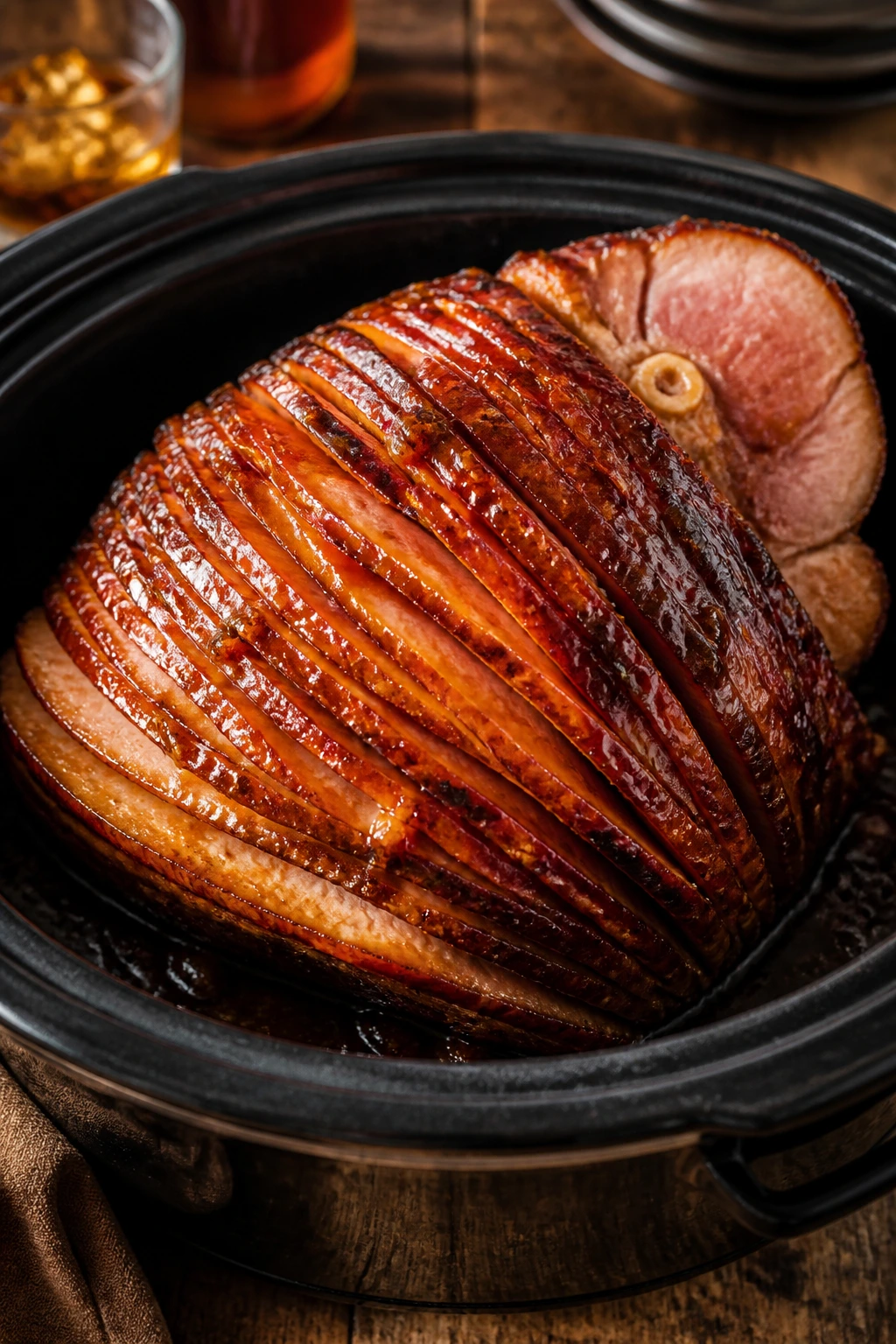
- Recipe Name: Easy Bourbon Ham Crockpot You Can Set and Forget
- Description: A bone-in spiral ham slowly warmed in a sweet-savory bourbon glaze with brown sugar, Dijon, pineapple juice, and warm spices. The result is tender, glossy, and easy to carve.
- Prep Time: 15 minutes
- Cook Time: 3 to 4 hours
- Total Time: 3 hours 15 minutes to 4 hours 15 minutes
- Course: Dinner, Main Course
- Cuisine: American
- Servings: 12 to 16 servings
- Calories: about 410 kcal per serving
Ingredients
For the Ham
- 1 bone-in spiral-cut ham, 7 to 8 pounds, fully cooked, discard any packet that comes with it
- 1/2 cup unsweetened apple juice
For the Bourbon Glaze
- 3/4 cup packed dark brown sugar
- 1/2 cup bourbon
- 1/2 cup pineapple juice
- 1/4 cup Dijon mustard
- 1/4 cup honey
- 2 tablespoons unsalted butter
- 1 tablespoon Worcestershire sauce
- 1 tablespoon apple cider vinegar
- 1 teaspoon orange zest
- 1/2 teaspoon ground cinnamon
- 1/4 teaspoon ground cloves
- 1/4 teaspoon freshly ground black pepper
For Thickening
- 2 tablespoons cornstarch
- 2 tablespoons cold water
Instructions
-
Pour the apple juice into the bottom of a 6-quart or 8-quart oval slow cooker, then place the ham inside with the spiral-cut side facing up if possible.
-
In a small saucepan over medium heat, whisk together the brown sugar, bourbon, pineapple juice, Dijon mustard, honey, butter, Worcestershire sauce, vinegar, orange zest, cinnamon, cloves, and black pepper until the butter melts and the sugar dissolves.
-
Spoon about two-thirds of the glaze over the ham, letting it seep between the slices. Cover and cook on LOW for 3 to 4 hours, until the center reaches 140°F.
-
Remove the ham and let it rest for 10 to 15 minutes. Pour the slow-cooker liquid into the saucepan and bring it to a gentle simmer.
-
Whisk the cornstarch and cold water together, then stream the slurry into the simmering sauce while whisking. Cook for 1 to 2 minutes, until glossy and lightly thickened.
-
Slice the ham and spoon the warm glaze over the top. Serve the remaining sauce on the side.
- Notes: If the ham is larger than your cooker, choose a smaller ham instead of forcing the lid closed. The glaze can be made up to 3 days ahead and kept refrigerated.