



The easiest family-style dinner win is a table with one steaming bowl in the middle and a child who gets to choose whether the broccoli lands beside the noodles or stays in its own little corner. That small bit of control changes the whole mood. A child who can scoop, skip, try, and come back later usually eats better than a child staring down a plate that feels like it was assembled by committee.
Family-style meals kids will actually eat are not about serving tiny, separate “kids’ meals” while the adults eat something better. That route is exhausting, and it teaches the wrong lesson. What works better is a shared table with a few clear parts: one familiar base, one protein kids recognize, one vegetable that isn’t overcooked into submission, and one sauce or topping that lets each person build a bite they can live with.
I care about this style of cooking because it solves two problems at once. It gets dinner on the table, and it gets kids involved without turning your kitchen into a hostage negotiation. There’s a real difference between a child helping pour shredded cheese into a bowl and a child being told to “just eat the dinner.” One of those actually leads somewhere.
Why Shared Bowls Beat Separate Kid Plates
Less pressure: When food sits in the middle of the table, it feels less like an order and more like an option. That alone can lower the instant no you get from a child who hates seeing peas touch mashed potatoes.
More control: Kids eat with their eyes first, and they care a lot about spacing, color, and texture. A shared bowl lets them choose a small scoop of each part instead of staring at a plate that already decided everything for them.
One meal, not three: You are not running a second kitchen. You’re making one dinner with enough built-in flexibility that the same roasted chicken, rice, and carrots can work for the five-year-old, the teenager, and you.
Better table habits: Passing bowls, using a spoon, and asking for a little more rice are small skills, but they matter. Dinner becomes practice instead of a battle.
Less waste: A child who can take one spoonful of corn instead of a giant pile is far more likely to finish it. Smaller portions also make leftovers easier to manage the next day.
Shared bowls also hide one of the sneakiest truths about picky eating: a lot of kids do not reject a food forever. They reject the way it arrives. A sauced-up casserole may feel like a trap, while the same noodles, cheese, and chicken served separately can look calm enough to try.
The Kid-Friendly Formula for a Meal Kids Can Edit
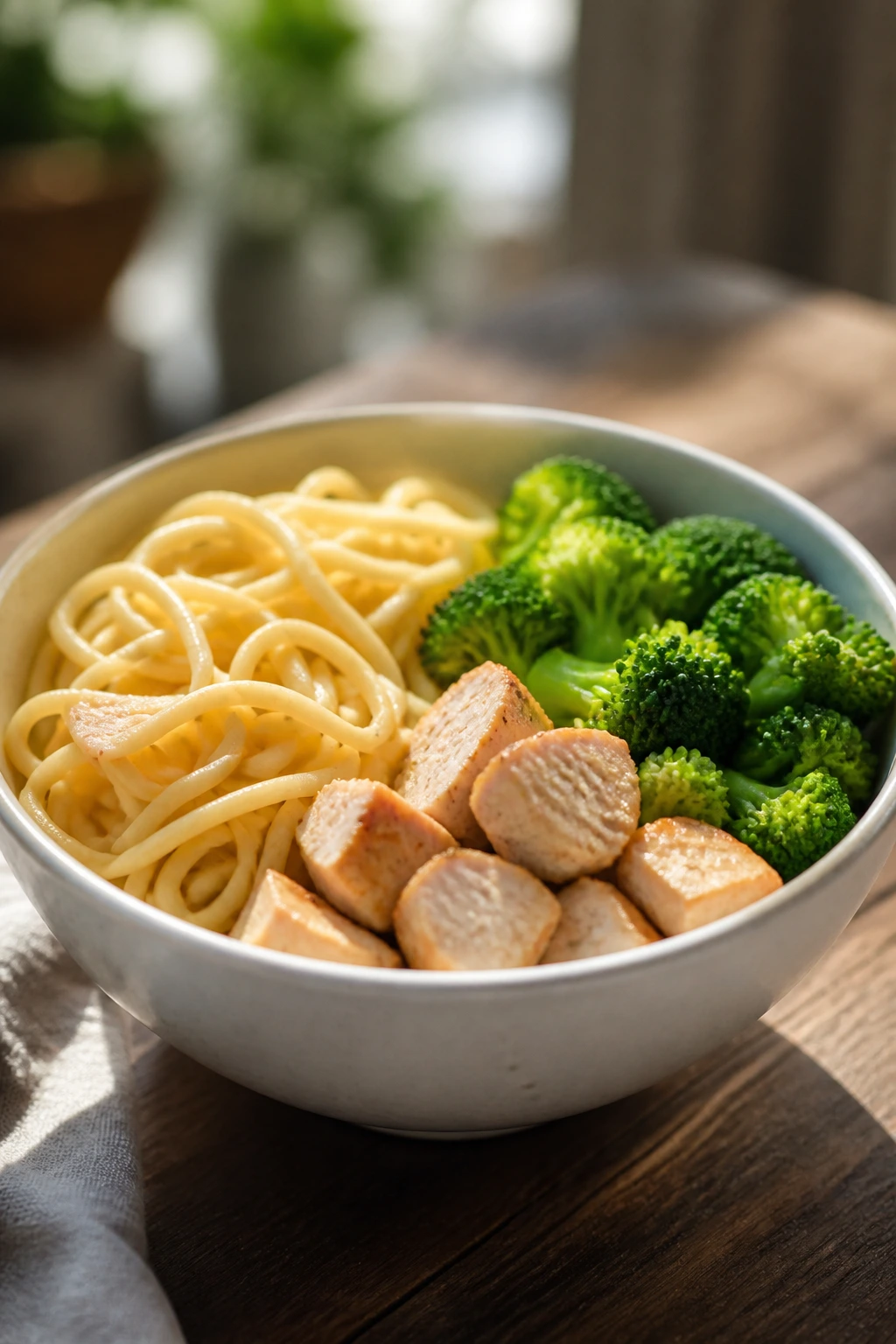
The easiest family-style dinner has structure. Not a rigid recipe. Structure. Kids do better when the table makes sense at a glance, and the fastest way to get there is to build every dinner around a few repeating pieces.
Start With One Reliable Base
Rice, pasta, tortillas, potatoes, couscous, or bread. Pick one. Pick the thing that soaks up sauce and gives nervous eaters something bland to anchor the plate. A bowl of buttered noodles is not boring if it keeps the rest of the meal moving.
Add One Protein Kids Already Trust
Roasted chicken, meatballs, eggs, beans, shredded pork, tofu cubes, or turkey crumble all work if they’re cooked plainly enough to recognize. Kids often accept protein more easily when it is not buried under a mystery sauce.
Put One Bright Vegetable on the Table
This is where color matters. Roasted carrots, cucumber slices, broccoli florets, corn, snap peas, peas, or cherry tomatoes all bring a visual break from beige food. Keep it simple. Kids do not need twenty vegetables. They need one vegetable that looks calm.
Leave Something Crunchy
Crunch changes everything. Toasted breadcrumbs, crushed tortilla chips, sesame seeds, chopped cucumbers, apple slices, or roasted chickpeas give the meal a texture that wakes up a bite. A soft dinner gets eaten less enthusiastically than one with a little snap.
Offer Sauce on the Side
Marinara, yogurt dip, ranch, salsa, soy-ginger sauce, pesto, or melted butter gives children a way to control flavor. Sauce on the side beats sauce mixed in almost every time, because it lets a child test the water without drowning the whole plate.
The formula is simple on purpose. If you can see a base, a protein, a vegetable, and one finishing element, most kids can figure out how to make dinner feel theirs.
Dinner Formats That Usually Empty Out First
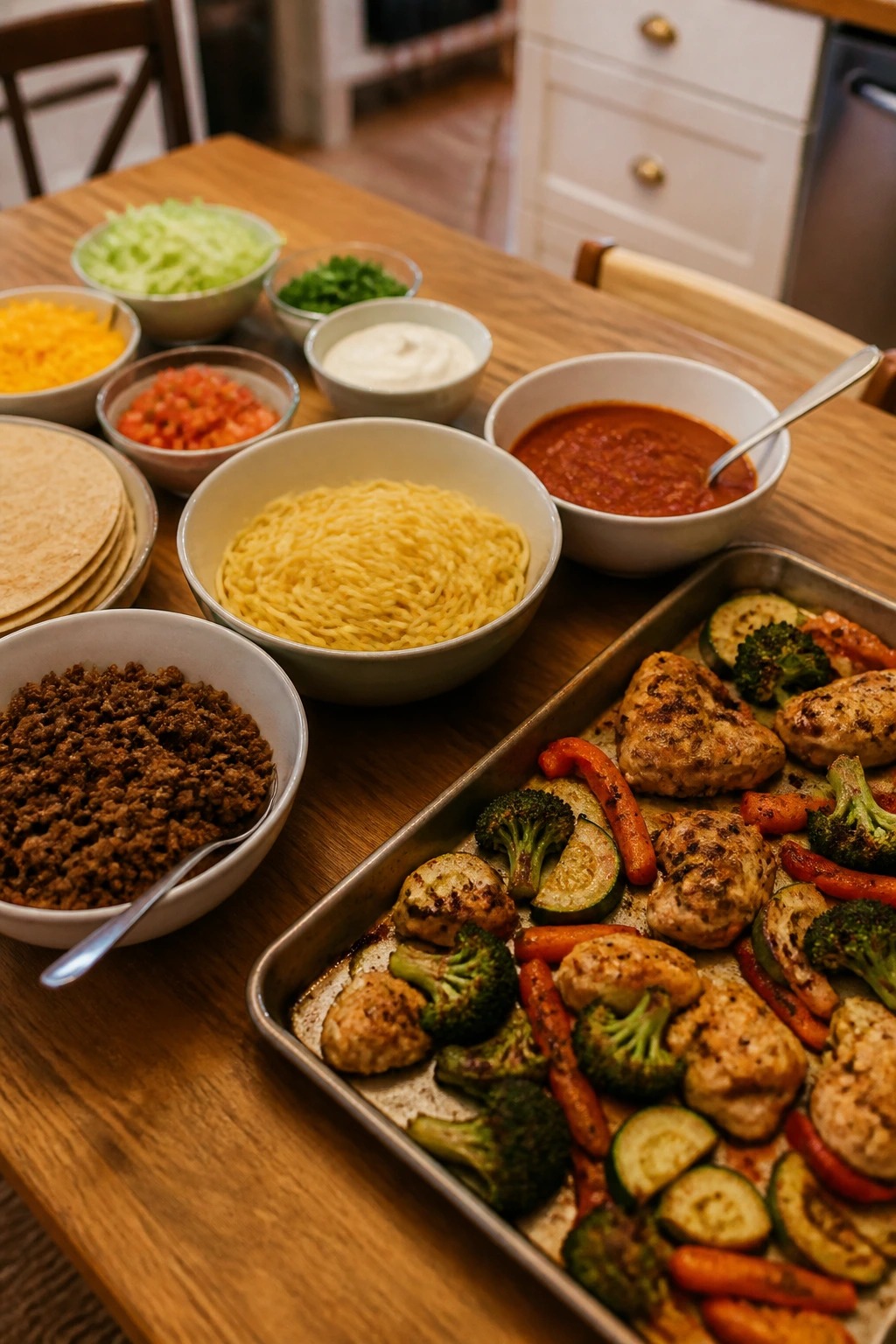
A family-style table does not need to be fancy. It needs a meal shape kids can read fast. Once you learn which formats usually work, you stop inventing dinner from scratch every night and start rotating through a few dependable patterns.
Taco Table Night
Tacos, burritos, or rice bowls are easy because every part stays visible. Put out seasoned meat, beans, rice, shredded cheese, lettuce, diced tomatoes, and tortillas or bowls. The child who hates salsa can skip it, and the child who wants three spoonfuls of cheese can build exactly that.
Pasta and Sauce Night
Cook the pasta, keep the sauce in a separate bowl, and put out grated cheese, peas, sautéed vegetables, or meatballs on the side. This works because plain noodles are a safe entry point, and kids can add sauce in the amount they can tolerate instead of getting a fully coated plate.
Sheet-Pan Dinner With a Few Sides
Roast chicken thighs, salmon, sausage, or tofu on one pan, then serve them with roasted vegetables and a starch from the stove or microwave. The sheet pan gives you the browned edges kids notice, and the side bowls give them the control they want.
Soup, Bread, and Toppings
A pot of soup can feel like a project unless you build in extras. Put out shredded cheese, crackers, croutons, yogurt, chopped herbs, or buttered bread. A plain broth with noodles may not excite an adult, but it can be the exact kind of safe dinner a tired child will actually finish.
Rice Bowls
Rice bowls are underrated because they stay flexible. Put warm rice in one bowl, then add teriyaki chicken, sautéed vegetables, cucumber, avocado, or a fried egg in separate dishes. One child can make a plain bowl; another can pile on everything.
Breakfast-for-Dinner Spread
Scrambled eggs, toast, fruit, yogurt, and roasted potatoes make a very workable shared table. Kids already know these flavors, and breakfast foods often feel less intimidating than a new dinner dish with six unknown ingredients hiding inside it.
Setting Up the Kitchen for Small Hands and Hot Pans
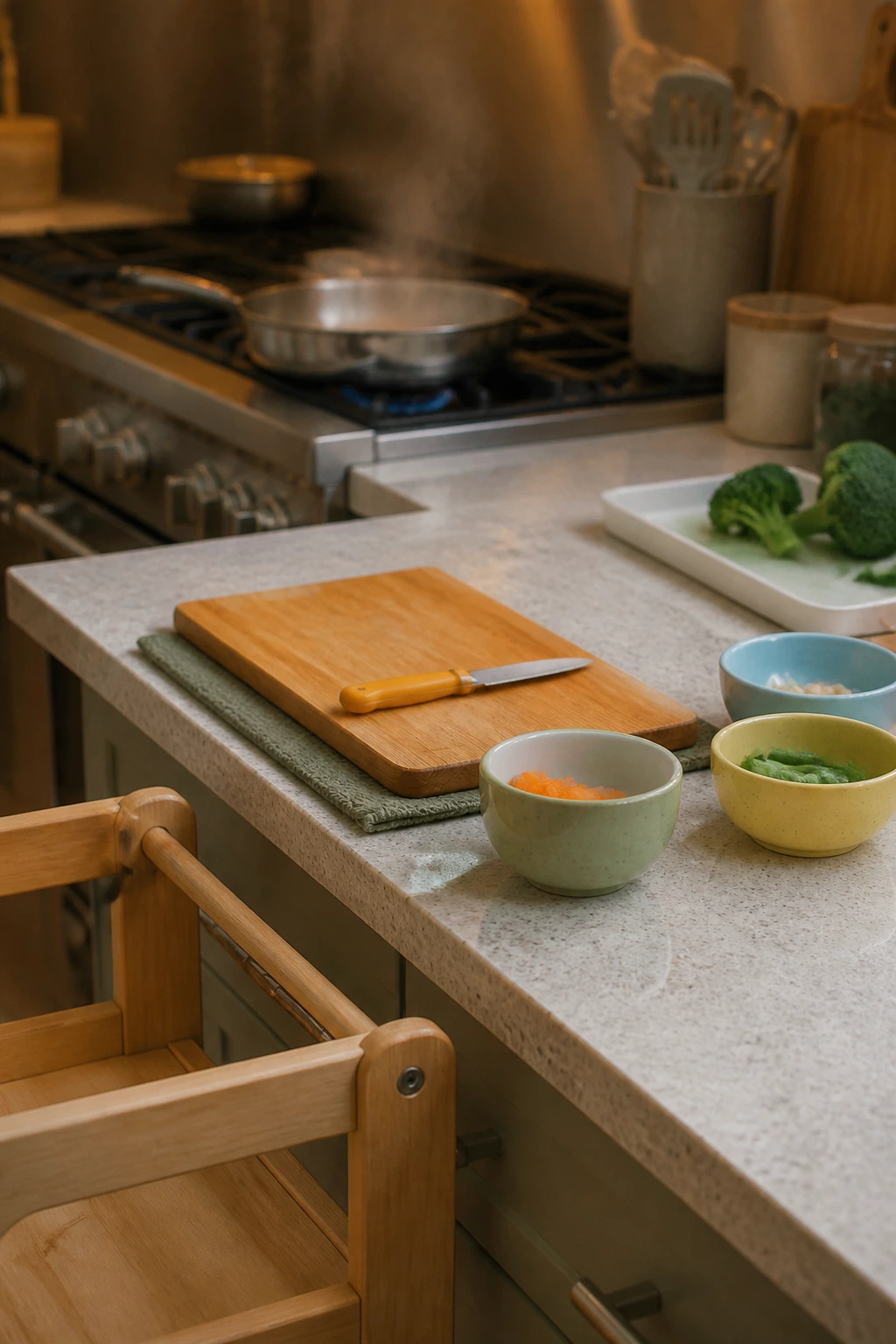
A good family-style dinner starts before the food hits the table. If the setup is messy, children hover in the wrong places, adults bump elbows, and somebody ends up asking where the spoon went while the rice cools.
Keep a hot zone and a kid zone. The hot zone is the stove, oven, and anything that just came out of either one. The kid zone is a corner of the counter or table where kids can wash lettuce, sort berries, pour pre-measured ingredients, or carry a bowl from one safe place to another.
I like to put a damp towel under the cutting board so it doesn’t skate around when a child is helping. That sounds small. It isn’t. A wobbly board is one of those little kitchen annoyances that can turn a calm task into a dropped carrot and an instant meltdown.
Use serving bowls with wide rims and spoons that are easy to grip. Tiny hands do better with a small ladle or a short serving spoon than with a giant metal spoon that clanks and tips. And if you’re bringing food to the table, set it down before calling everyone in. Hot pans on a crowded dining table are asking for trouble.
One more thing: keep a towel, a sponge, and a trash bowl close by. Children are not graceful when they are excited about dinner. Neither are adults when the pasta is getting cold.
Kid Kitchen Jobs by Age
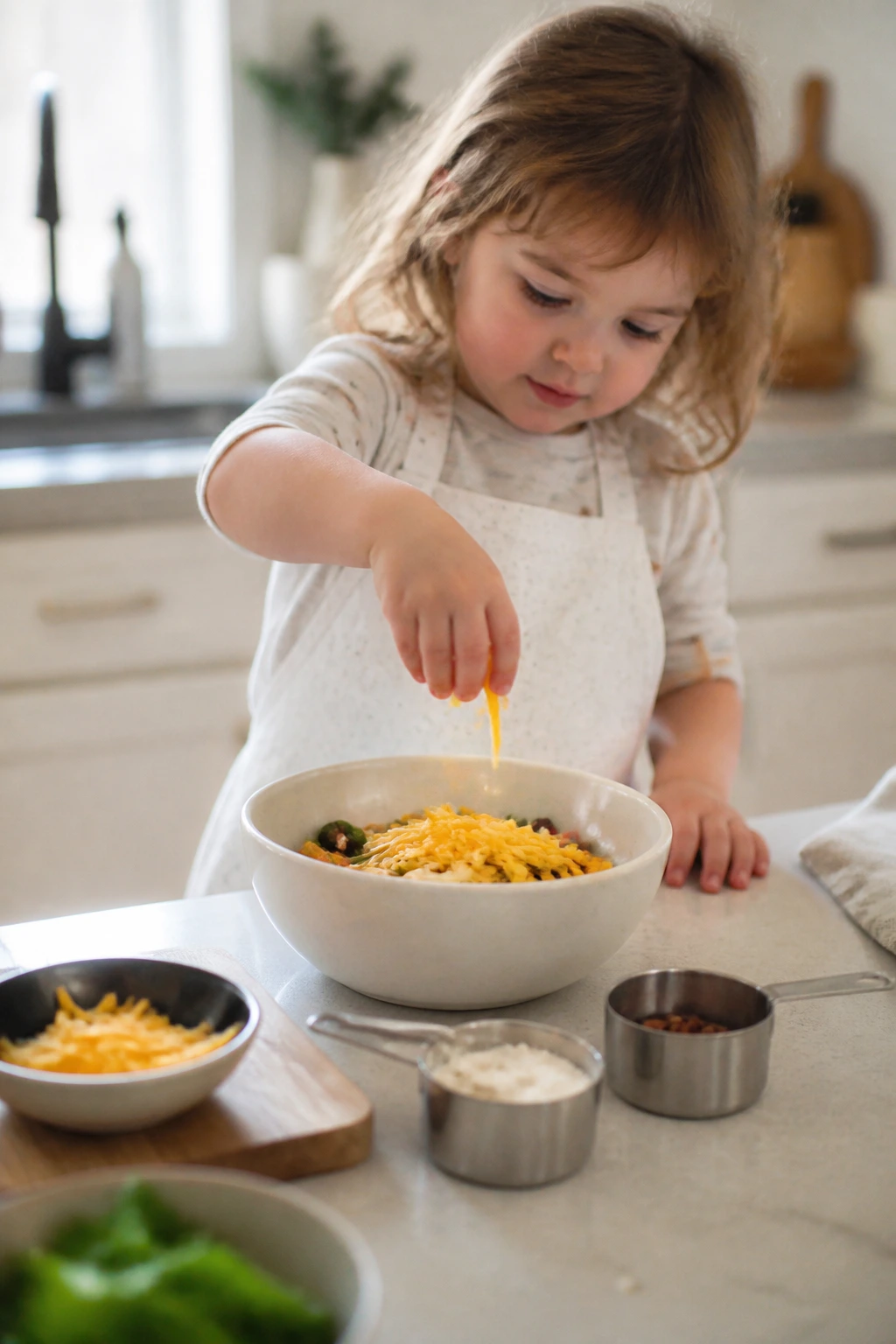
Not every child should do the same job. Some kids are ready to chop cucumbers; others are still at the stage where “helping” means dropping one grape at a time into a bowl and calling it work. Matching the task to the age keeps the kitchen calmer and gives the child a real sense of participation.
Toddlers: Simple, Messy, and Close to the Table
Toddlers can wash produce, tear lettuce, dump pre-measured ingredients into a bowl, or carry napkins to the table. They also love stirring cold things like yogurt dip or a fruit salad. Keep the tasks short. Their attention span will tell you when they are done.
Preschoolers: Stir, Sprinkle, and Count
Preschoolers can spoon shredded cheese into a bowl, mash soft potatoes, arrange veggie sticks, or place toppings into small cups. They are also perfect for counting olives, peas, or slices of fruit. That little counting game gives them ownership, which makes them more likely to eat the food later.
Early Elementary Kids: Measuring and Assembling
This is the age where kitchen work starts to feel useful. Children can measure rice, crack eggs into a separate bowl, toss salad, butter bread, and help assemble tacos or grain bowls. They still need supervision, but they can follow a sequence and feel proud when the meal reaches the table.
Tweens: Real Prep With Real Rules
Tweens can handle sharper knives, stovetop stirring, and more complicated prep if you teach one task at a time. They can make a sauce, roast vegetables, set the table, and portion leftovers. This is a good age for learning how to check whether chicken is cooked through or how to keep raw and cooked food separate.
Don’t Give the Wrong Job
A child who is too young for the task becomes frustrated. A child who is ready for more but gets handed only napkins gets bored. The right job looks a little small from the adult side and a little exciting from the child side. That sweet spot matters.
Vegetables That Actually Stay on the Plate
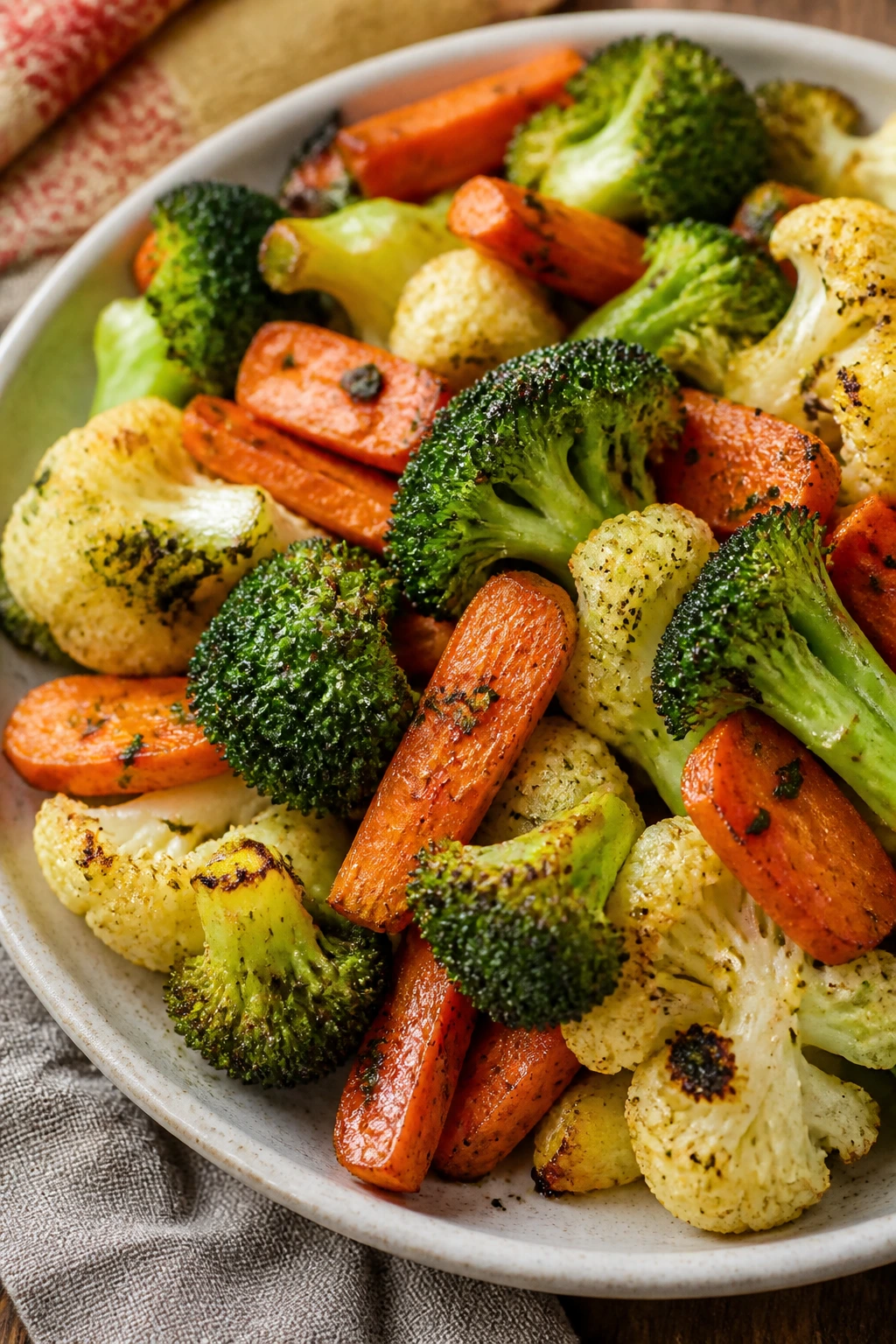
Kids do not eat vegetables because they were told to. They eat them when the texture is friendly, the flavor is not bitter, and the vegetable fits the rest of the meal instead of sticking out like a lecture.
Roasted, Not Watery
Roasted carrots, broccoli, cauliflower, green beans, and zucchini work better than boiled vegetables because they pick up color and a little sweetness in the oven. A 425°F oven gives vegetables browned edges and a firmer bite, which is easier for kids to trust than a limp, gray pile.
Raw, Crisp, and Cool
Cucumber coins, bell pepper strips, snap peas, carrot sticks, and cherry tomatoes are useful because they don’t need a lot of explaining. They stay crisp, which gives the meal a fresh break. If a child is nervous about vegetables, raw and cold can feel less threatening than hot and soft.
Small Bits in Familiar Foods
Peas in pasta, shredded zucchini in meatballs, corn in rice, or finely chopped spinach in scrambled eggs often get eaten because they are not the star of the show. They show up in the background. That is enough.
Sweet Vegetables Deserve More Credit
Roasted sweet potatoes, butternut squash, and carrots often do better with children than bitter greens. A sprinkle of salt and a drizzle of olive oil bring out their sweetness, and that sweetness matters more than a lot of adults admit.
Keep Overcooking Out of It
Overcooked vegetables are a turnoff for kids because mush reads as old food. You want broccoli with browned edges, not broccoli that collapses under the spoon. The difference is a few minutes in the oven, but the payoff is much bigger than that.
Sauces and Toppings That Win Extra Bites
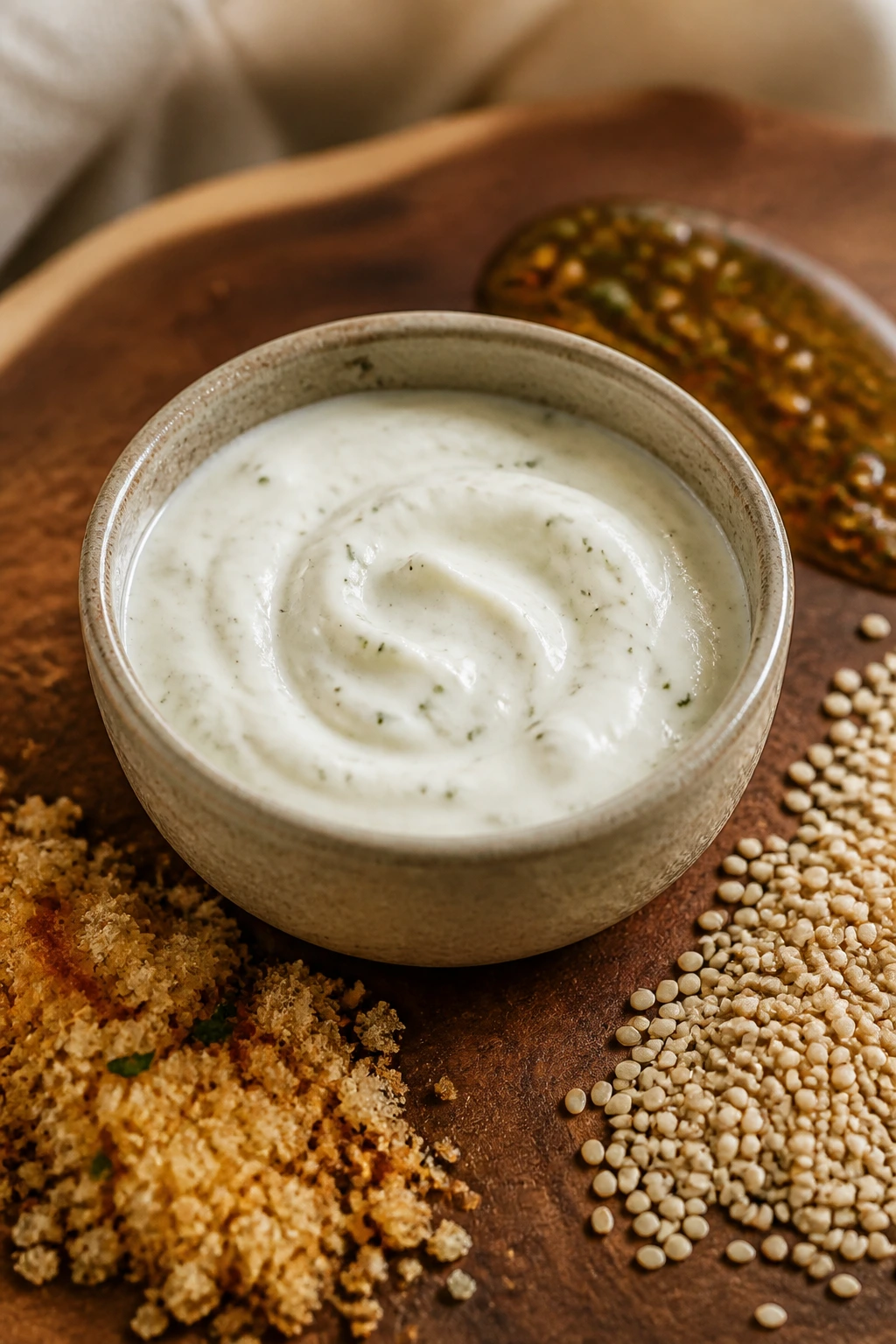
A plain bowl of food gives kids room to say no. A bowl with a dip or topping gives them a reason to say maybe.
Creamy Helps More Than You’d Think
Ranch, hummus, yogurt dip, sour cream, or a mild cheese sauce can soften the edges of a meal that feels too sharp or too dry. Put the sauce in a small bowl, not poured all over the food. Kids like to decide how much goes on.
Bright Cuts Through Blandness
A squeeze of lemon, a little salsa, a spoon of tomato sauce, or a drizzle of vinaigrette can wake up rice, chicken, or roasted vegetables. Bright flavors work because they stop the food from tasting flat. Even a child who hates “saucy food” might like a tiny dab.
Crunch Makes Food Feel More Fun
Toasted breadcrumbs, tortilla strips, crispy onions, sesame seeds, chopped nuts for older kids, or crushed crackers add texture. Use these at the end. Crunch on top stays crunchy on top.
Build Your Own Topping Tray
If you serve tacos, grain bowls, baked potatoes, or pasta, a topping tray is worth the extra dishwashing. Think shredded cheese, chopped herbs, diced avocado, chopped cucumbers, olives, and a mild dressing. A child who refused the main bowl sometimes changes their mind when they get to add the last spoonful themselves.
Sauces are not about tricking kids. They’re about giving a meal a second entry point. That’s a better deal for everyone.
How to Keep Picky Eaters Out of the Separate Dinner Trap
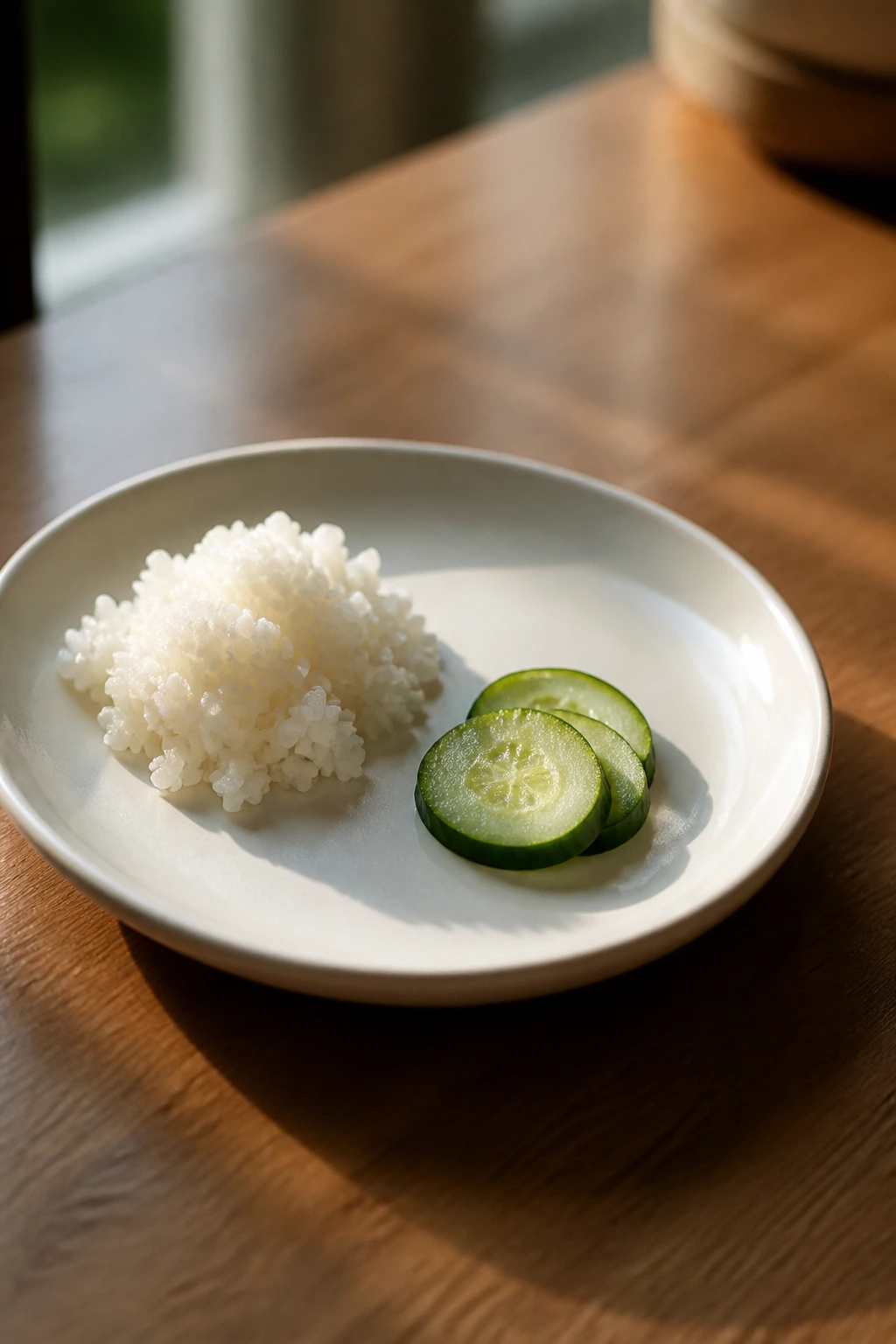
Separate meals are seductive because they stop the whining fast. They also multiply your work, and they teach children that a complaint can open a second kitchen. That’s not a trade I like.
Start with one shared meal and one safe food on the table. The safe food can be rice, bread, plain pasta, fruit, or cucumber slices. It does not need to be exciting. It just needs to be there so a child has something to eat while they decide whether to try the rest.
Keep the first serving tiny. A tablespoon of vegetables is less threatening than a piled-up spoonful. Small portions lower the emotional cost of trying something new, and they also waste less food if the first bite is a hard no.
Do not turn dinner into a contest. If a child eats the chicken and not the broccoli, that is still a useful dinner. If they smell the broccoli, touch it, or move it around with a fork, that counts as exposure too. The goal is not a perfect plate. It is a table where the food keeps showing up.
And yes, repetition matters. A child may reject roasted carrots five times and accept them the sixth. That does not mean you failed. It means the carrot had to wait for the right mood, the right texture, or the right dip. Kids are annoyingly consistent that way.
Small Fixes That Make Family-Style Nights Smoother
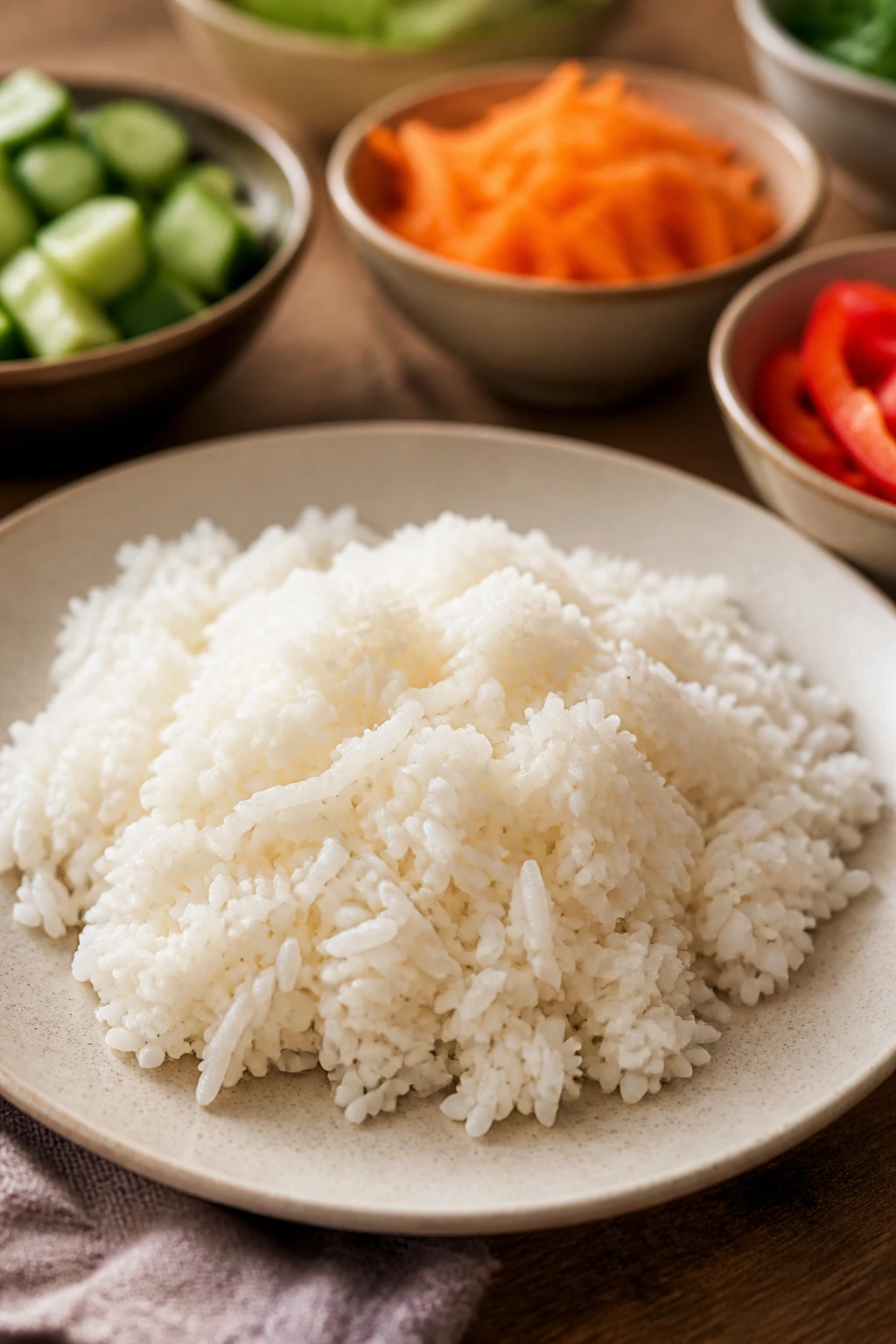
A smoother family-style dinner usually comes from tiny decisions, not grand gestures. I’d rather see one well-set bowl of rice and three useful toppings than a crowded table full of things nobody can serve neatly.
Batch the plain part first: Cook the rice, pasta, potatoes, or tortillas early and keep them warm in a covered dish. The rest of the meal can be more flexible if the base is ready and steady.
Pre-slice the crunchy things: Cut cucumbers, carrots, bell peppers, and apples before anyone sits down. Kids are more likely to eat food that is ready to grab than food that still needs work.
Use smaller serving tools: A child can manage a short spoon or small tongs more easily than an oversized serving spoon. Less slipping means less food on the table.
Keep one backup food in the room: Bread, fruit, yogurt, or plain rice can save a dinner that went sideways. I’m not talking about a second entrée. I’m talking about one safe extra so nobody leaves the table hungry.
Reset the table as you go: If a bowl gets messy or one food gets mixed into another, swap it out or move it. A clean serving bowl looks more inviting, and kids notice that faster than adults do.
Teach the carry-and-set rule: Hot dishes get carried by adults only. Kids can still help by setting spoons, napkins, and cold toppings. That keeps them involved without putting them in the path of steam and splatter.
Mistakes That Make Shared Dinners Harder Than They Need to Be
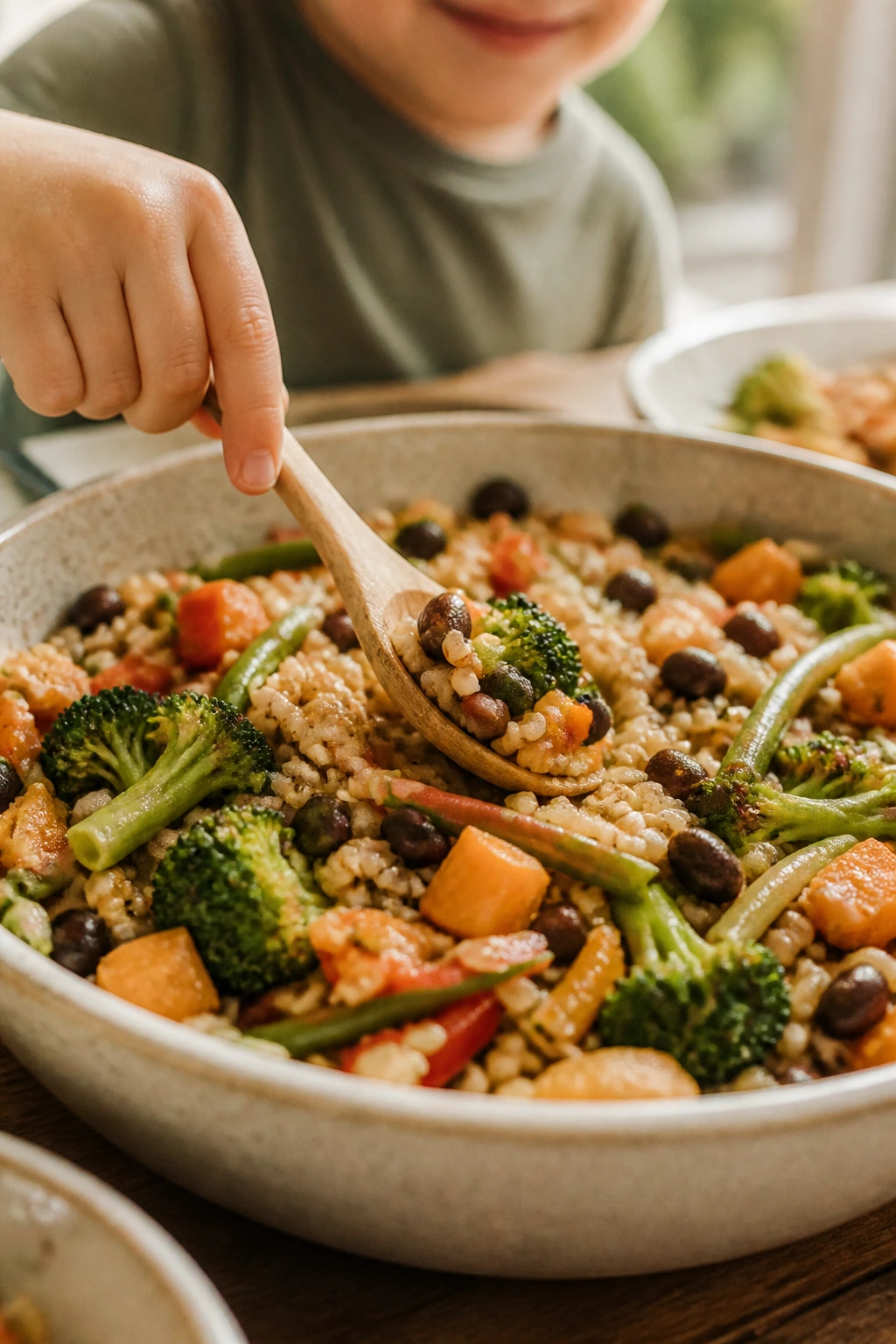
Family-style sounds easy until you accidentally make it complicated. Most of the trouble comes from a few repeat mistakes.
-
Serving everything mixed together: If the rice, sauce, vegetables, and protein are already fused into one pot, kids lose control over the bite. The fix is to keep at least one or two parts separate and let people combine them at the table.
-
Making the table too crowded: Six bowls of food can overwhelm a child before the first bite. Two or three real choices work better than a buffet that looks like a school event. Start smaller.
-
Using only unfamiliar foods: A dinner with nothing recognizable can trigger instant resistance. Keep one safe, familiar item on the table so the meal does not feel like a trap.
-
Letting food sit too long before serving: Hot food gets gummy, vegetables soften, and kids become less interested. Serve sooner, or hold components separately so the texture stays right.
-
Handing out giant portions: Big servings can scare children off before they begin. Small scoops are easier to finish and easier to ask for again.
-
Expecting clean plates every night: That rule turns dinner into pressure. Kids are more likely to eat calmly when they know the goal is to sit, try, and share the meal—not win a contest.
Variations and Alternate Approaches
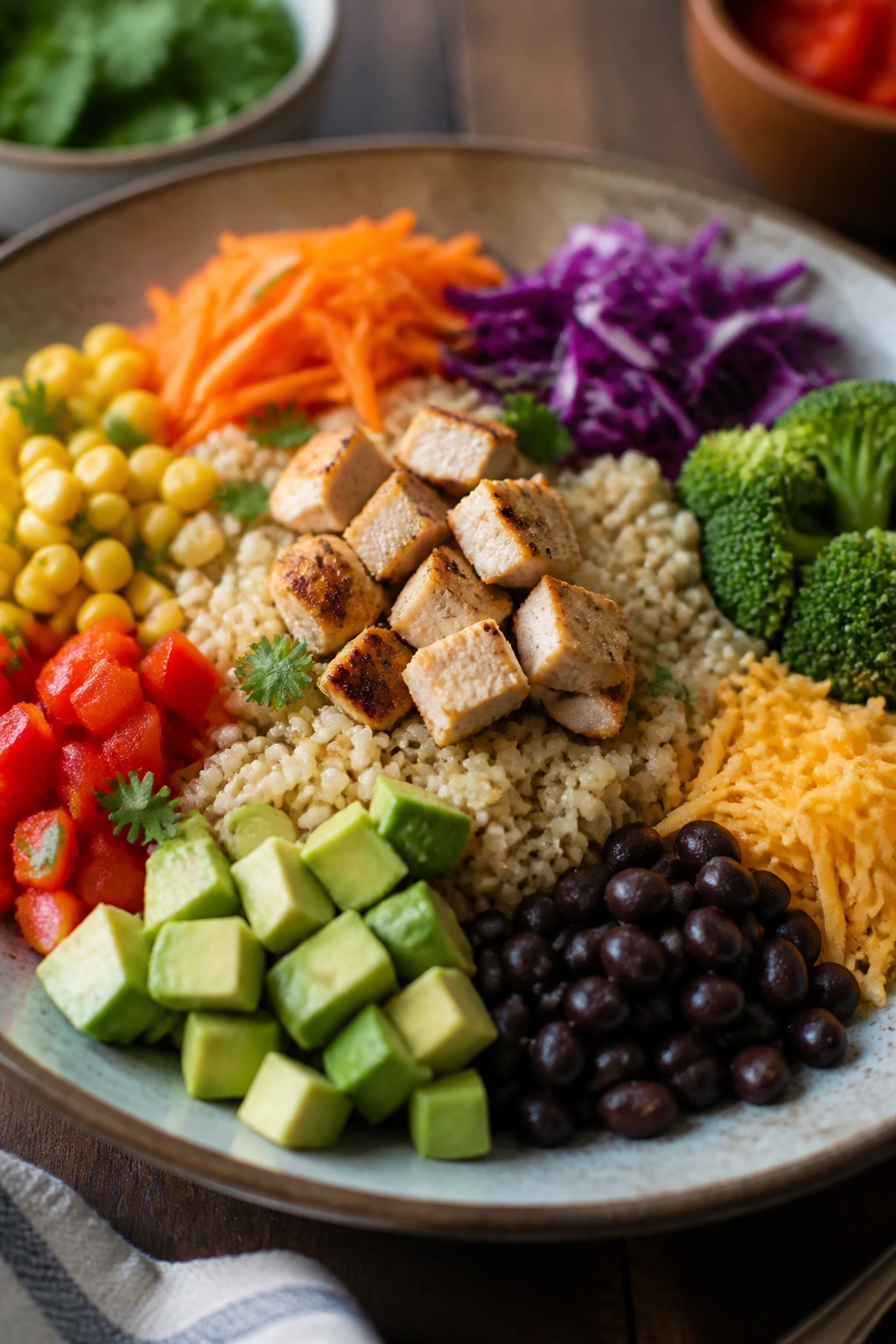
A family-style table can shift depending on the night, the ages around it, and how much energy you have left.
Taco Table Twist: Use tortillas, rice, beans, seasoned meat, and a few toppings, but keep the spice mild and the hot sauce separate. This version is good when you want the meal to feel flexible without requiring much explanation.
Soup-and-Scoop Night: Serve a thick soup, bread, cheese, and sliced fruit or cucumbers. The soup can be chicken noodle, lentil, tomato, or vegetable, but keep toppings on the side so kids can dress the bowl themselves.
Breakfast-For-Dinner Spread: Scrambled eggs, toast, fruit, sausage, and roasted potatoes make a low-pressure dinner with enough variety to satisfy different ages. It works especially well when everyone is tired and nobody wants a complicated recipe.
One-Bowl Grain Night: Rice, quinoa, or couscous with chicken, tofu, roasted vegetables, and a mild sauce gives you a dinner that scales easily. Older kids can build bigger bowls, while younger ones can pick at the parts they know.
Snack-Plate Supper: This is the loose version I pull out when the evening is chaotic. Think cheese, crackers, fruit, sliced vegetables, hummus, and leftover protein. It is not fancy, but it can keep everyone fed without turning the kitchen into a stage.
Tools That Make Family-Style Cooking Easier
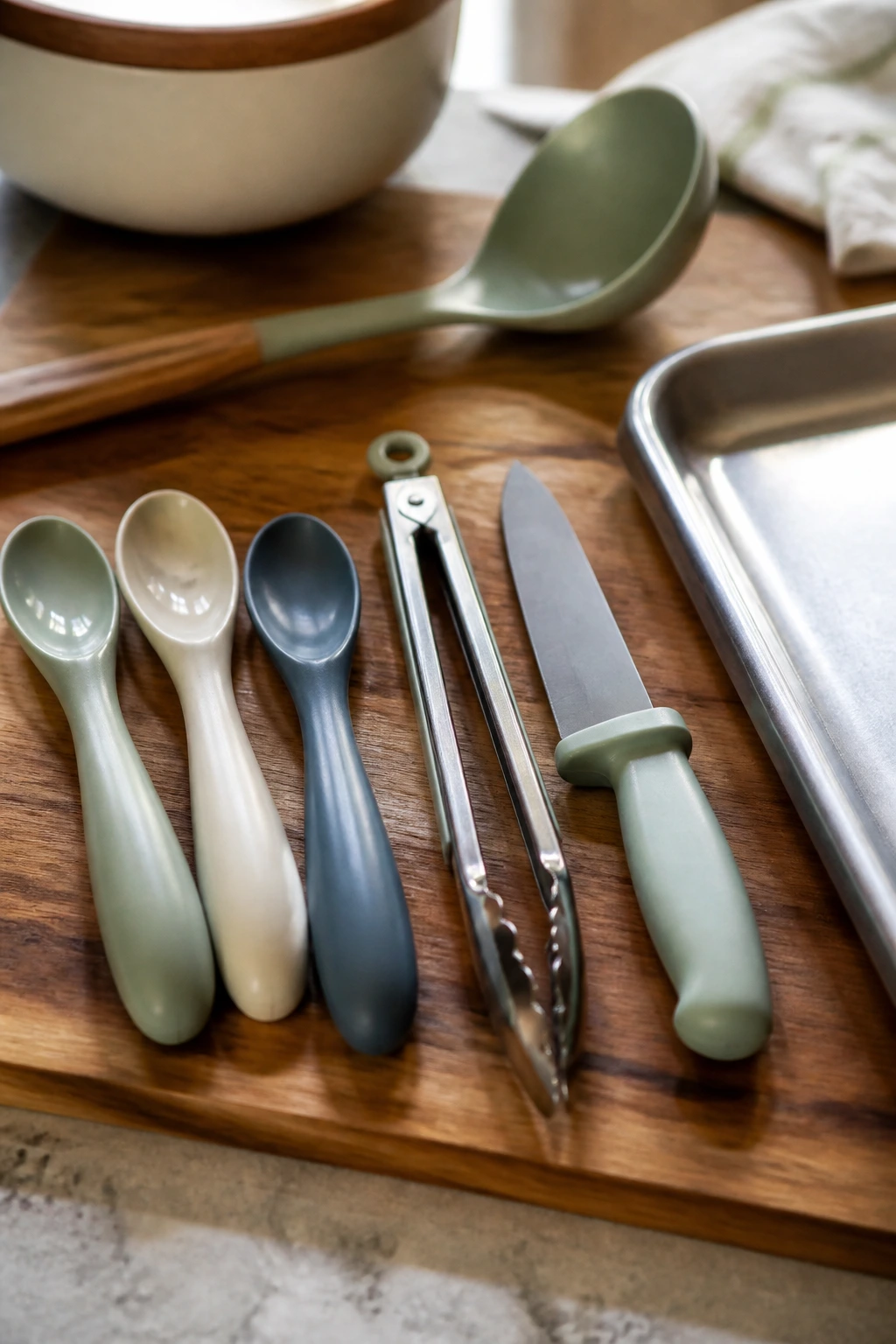
- Wide serving bowls: Shallow bowls cool faster than deep pots and let kids see what they’re getting.
- Small serving spoons: Easier for small hands to manage, and they spill less than giant spoons.
- Rimmed sheet pans: Perfect for roasting vegetables, chicken, sausage, or tofu in one layer.
- Child-safe knife: Useful for soft fruits, cucumbers, lettuce, and bananas when you’re teaching basic prep.
- Step stool: Non-negotiable if kids are helping at the counter and can’t reach safely.
- Cutting board with a damp towel underneath: Stops the board from sliding during prep.
- Tongs: Great for chicken, roasted vegetables, and pasta when you want to keep hands out of the food.
- Small prep bowls: Helpful for toppings, dips, and pre-measured ingredients.
- A sturdy ladle: Handy for soup, sauce, and rice transfer.
- Airtight storage containers: Keep leftovers separated so the food does not turn soggy overnight.
Storing Leftovers Without Turning Them Mushy
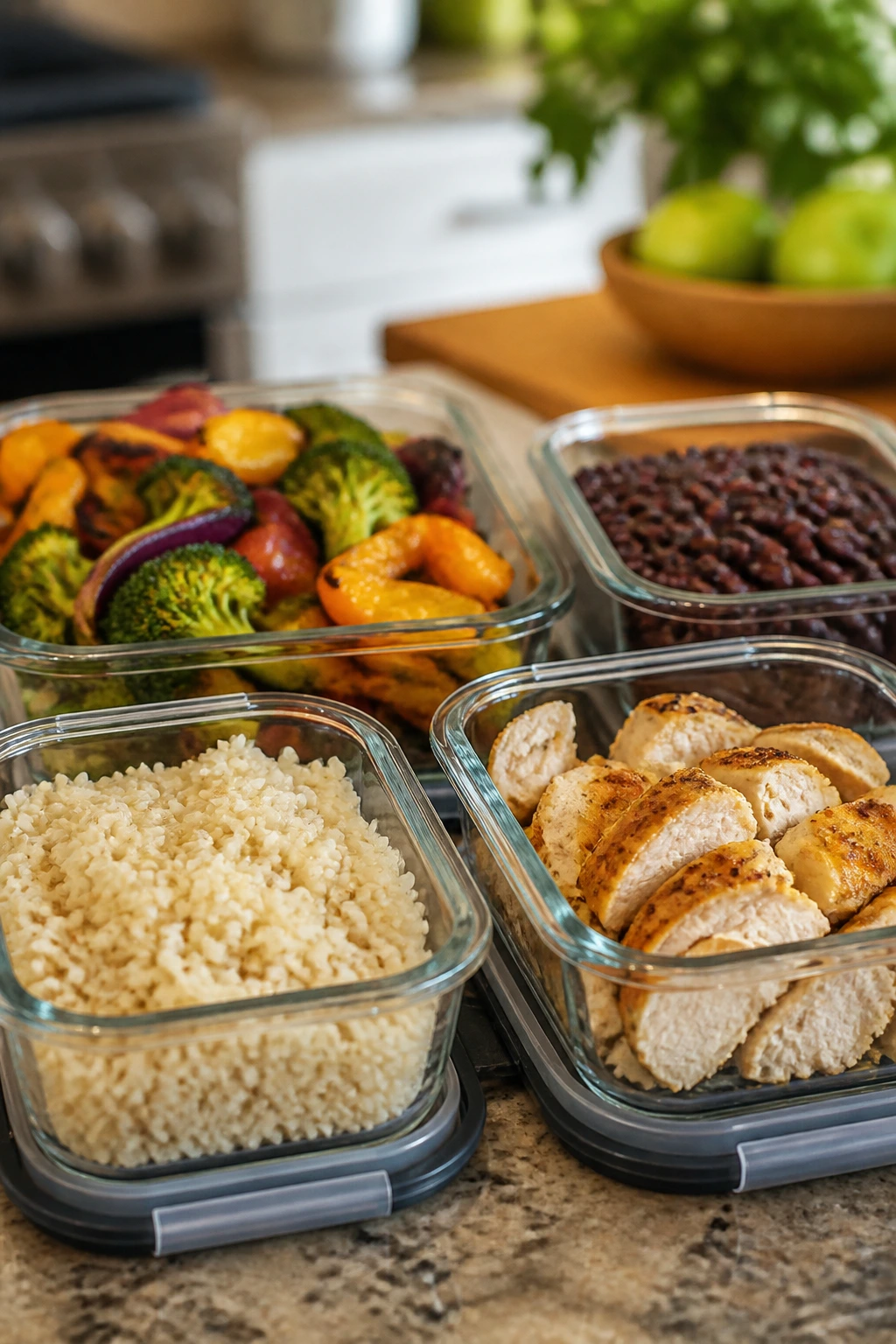
Family-style meals age better when the parts stay separate. The moment rice soaks up sauce or roasted vegetables sit in a closed container with steam, the texture starts to slide downhill.
Cooked chicken, rice, pasta, roasted vegetables, and beans usually keep 3 to 4 days in the refrigerator if they are cooled quickly and stored in shallow containers. Sauces and dips often last 4 to 5 days, while baked casseroles or mixed dishes are usually best within 3 to 4 days. If something smells off, looks slimy, or sat warm for too long, toss it.
For the freezer, plain proteins, soups, beans, sauces, and cooked grains freeze well for up to 2 to 3 months. Roasted vegetables can freeze, but they lose some of their snap, so I prefer to freeze them only when they’ll go back into soup, pasta, or a casserole.
Reheat rice and grains with a splash of water in the microwave or a covered skillet over low heat. Roast vegetables in a hot oven or air fryer for a few minutes so they regain some edge. Sauces warm best in a small saucepan over low heat. If you’re reheating a shared dinner, bring back only what you need and keep the crunchy toppings out of the fridge until the last minute.
Family-style meals are also excellent for make-ahead prep. You can cook the base, slice the vegetables, mix a dip, and roast a protein earlier in the day. Then dinner becomes assembly instead of scramble.
Questions Parents Ask Most
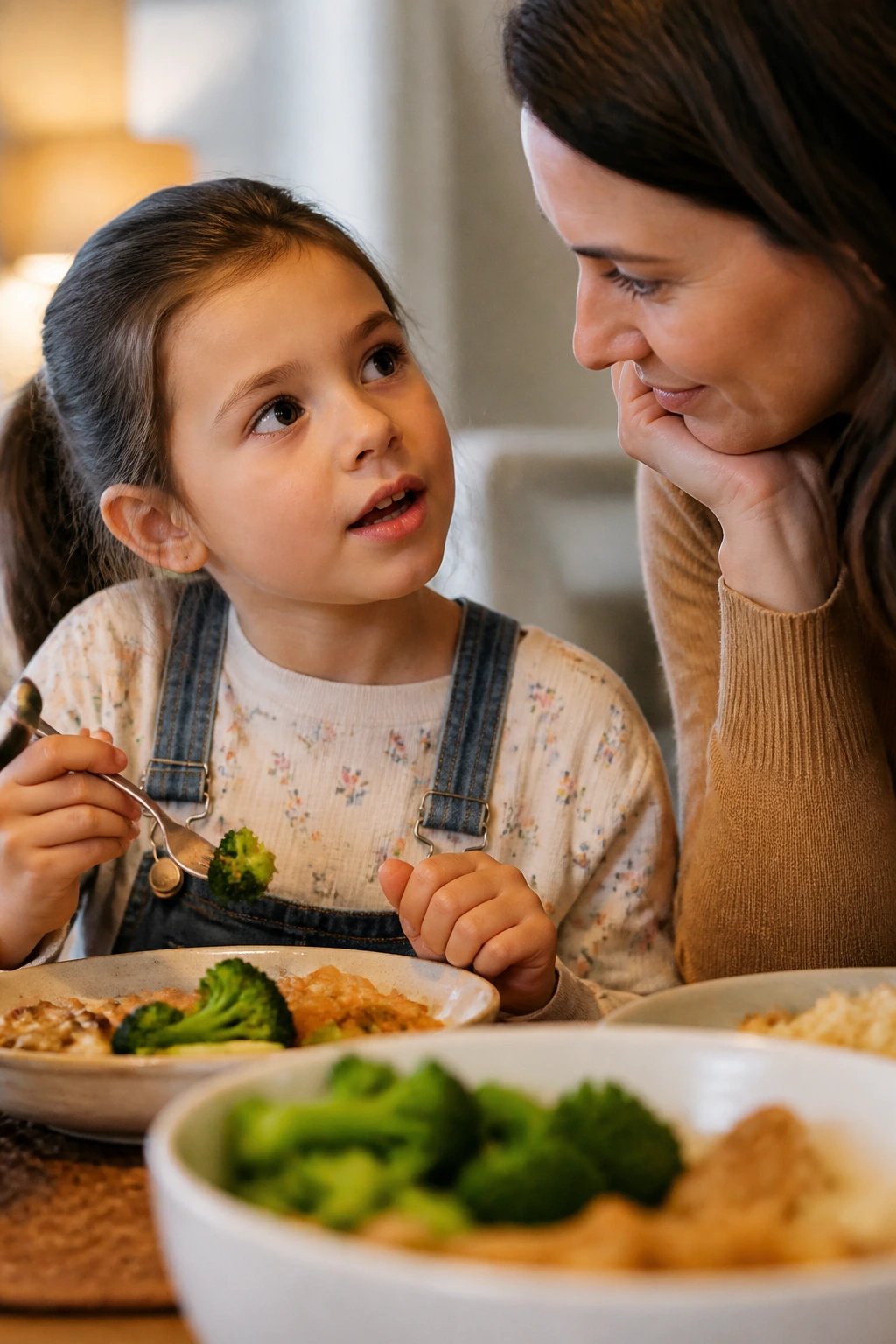
How do I get my child to try family-style dinner without forcing bites?
Put one small portion of a new food next to a familiar one and leave it alone. The less pressure you put on the bite, the more likely a child is to touch it, smell it, or taste a corner of it on their own terms.
What if my kid only eats one part of the meal?
That’s still progress. If the child eats rice, bread, fruit, or chicken and ignores the vegetables tonight, they still joined the meal, and that matters more than a perfect plate. Keep serving the vegetable in small amounts so it stays familiar.
Can toddlers help if there are hot pans in the kitchen?
Yes, but only with safe jobs. Let them wash produce, stir cold ingredients, or carry napkins, and keep them away from the stove, oven, and sharp tools. The kitchen can be participatory without being open season.
What are the best family-style meals for very picky eaters?
Taco bars, pasta bowls, rice bowls, breakfast-for-dinner spreads, and soup with toppings usually work best because each part stays separate. Kids can choose what touches what, which removes one of the biggest reasons they push back.
How do I keep food warm on the table while everyone serves themselves?
Use covered bowls, a low oven, or a warming drawer for the main hot pieces, and bring out cold toppings separately at the last minute. Deep pots trap heat, but shallow serving bowls make food easier to reach, so you have to balance warmth with access.
Can this work with gluten-free, dairy-free, or allergy needs?
Yes, if you label the bowls and keep sauces and toppings separate. Rice bowls, tacos, roasted meat, vegetables, and many soups adapt cleanly, but you’ll want separate serving utensils if you’re dealing with allergies.
What if dinner turns cold before the family sits down?
Serve hot foods in smaller batches and keep the rest covered in the oven or on the stove. A cold table is easier to fix if you bring out one component at a time instead of setting out everything twenty minutes early.
Do family-style meals save time, or do they create more work?
They save time once the table setup is part of your routine. You’re still cooking, but you’re not making separate child plates or redoing dinner because one child rejected the assembly. That’s where the time goes.
A Table Kids Want to Come Back To
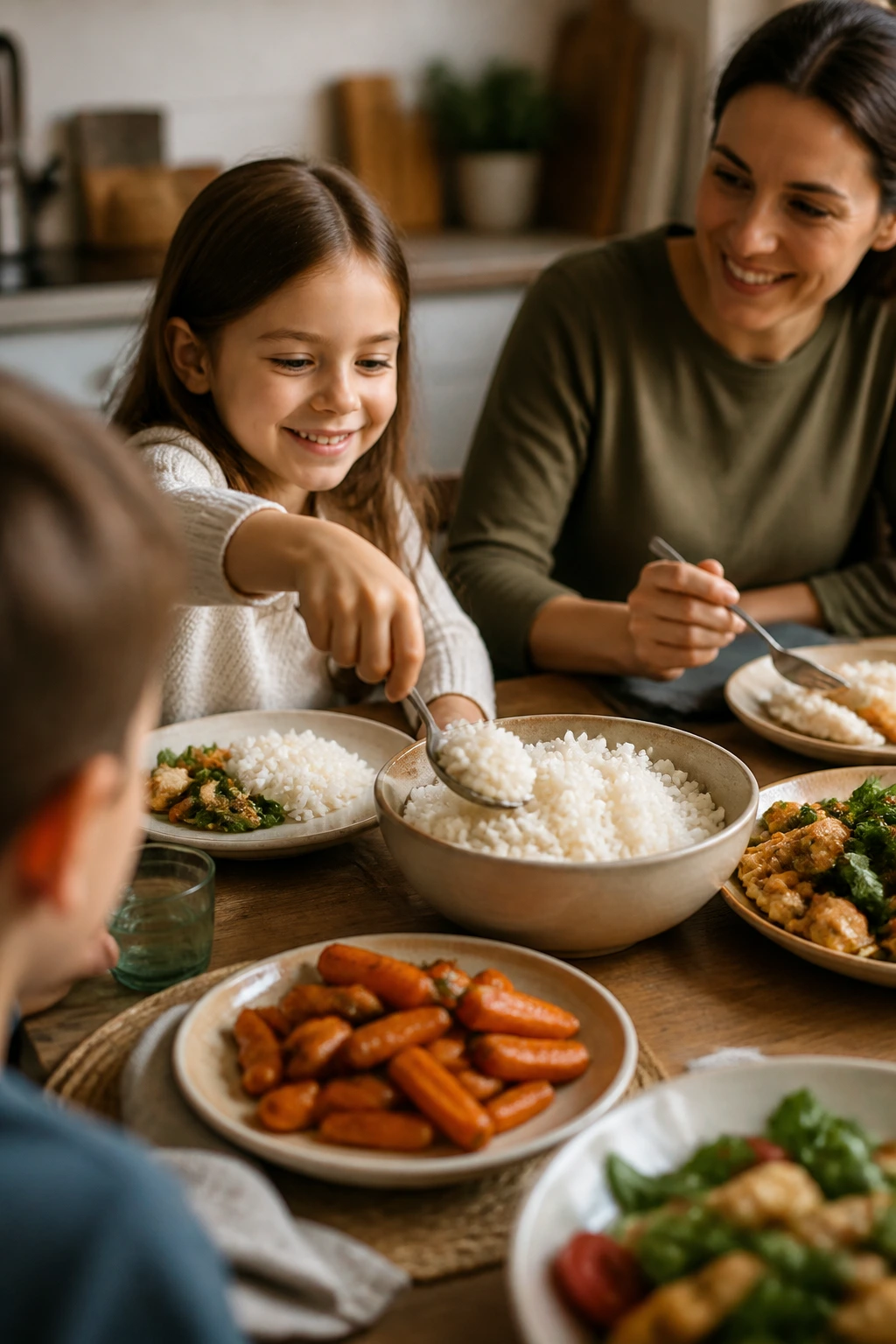
The best family-style dinners are not the prettiest ones. They’re the ones where the rice is warm, the carrots are browned at the edges, the sauce sits in a little bowl instead of drowning everything, and the child who usually says no takes a spoonful anyway.
That’s the real win here. Not perfect manners, not empty plates, not a heroic dinner nobody helped make. Just a table that feels calm enough for kids to eat from it, and open enough for them to keep coming back tomorrow.
Start with one shared bowl, one safe food, and one job a child can handle. That’s enough to change the night.