



A fruity avocado smoothie can taste like the best part of a hot afternoon: cold, plush, bright at the edges, and thick enough that you don’t gulp it down by accident. The avocado does not show up here to make the glass taste like salad. It’s the quiet texture fix, the thing that turns sharp fruit and ice into something that feels rounded and smooth on the tongue.
That part matters more than people think. Tropical fruit on its own can go watery in a blender, especially if you add enough liquid to make the blades happy. One ripe avocado changes the whole picture. The sip gets silkier, the color turns a pale green-gold, and the fruit tastes a little more expensive somehow — not in a fancy way, just in the sense that every flavor has room to breathe.
I like smoothies like this when the weather is sticky and the kitchen already feels warm before breakfast. The trick is not to bury the fruit under sugar or milk. Keep the avocado ripe, the fruit frozen, the lime bright, and the sweetener modest. That’s the line this smoothie walks, and it walks it well.
Why This Smoothie Deserves a Spot in the Blender
A smoothie should either taste cold and bright or it should not bother showing up in a glass.
- Creamy Without Feeling Heavy: One ripe avocado gives the drink that thick, almost custard-like body people usually chase with extra yogurt or a pile of ice.
- Fruit Still Leads the Show: Frozen mango and pineapple keep the flavor sharp and sunny, so the avocado stays in the background where it belongs.
- Fast Enough for a Real Morning: There’s no cooking, no simmering, and no waiting around for anything to cool. If the fruit is ready, the whole thing is done in about 10 minutes.
- Flexible Sweetness: Start with very little honey or maple syrup. The banana and mango bring their own sweetness, and it’s easier to add more than to rescue a smoothie that tastes like candy.
- Good Texture, Even in a Basic Blender: Coconut water and yogurt loosen the blend just enough, which means you get a drinkable, silky texture without flooding it with liquid.
- Easy to Scale Up or Down: The ratios hold up cleanly whether you make one tall glass or enough for two people standing near the counter with wet hair and a fan pointed at them.
Timing, Yield, and the Way It Pours
Yield: 2 large smoothies or 3 smaller servings
Prep Time: 10 minutes
Cook Time: 0 minutes
Total Time: 10 minutes
Difficulty: Beginner — the only part that asks for judgment is the sweetness and thickness at the end.
Chill Time: 10 minutes for the glasses, optional but worth it
Best Served: Right after blending, while the texture is cold and glossy
A smoothie like this does not need a long lead-in. It needs cold fruit, a ripe avocado, and a blender that can catch the mixture without whining at the bottom of the jar. If you want the glass to stay frosty a little longer, chill the serving glasses while you measure the ingredients. That tiny move buys you more than people expect.
What Goes Into the Blender
The ingredient list is short on purpose. That’s the whole point.
Fruit Base:
- 1 large ripe avocado, peeled, pitted, and cut into chunks
- 1 cup frozen mango chunks
- 1 cup frozen pineapple chunks
- 1 small ripe banana, sliced and frozen if possible
Liquid and Creaminess:
- 3/4 cup unsweetened coconut water
- 1/2 cup plain Greek yogurt
- 1 to 2 tablespoons fresh lime juice
Sweetness and Finish:
- 1 to 2 teaspoons honey or maple syrup
- 1/8 teaspoon fine sea salt
- 1/2 teaspoon finely grated lime zest, optional
If You’re Using Fresh Fruit Instead of Frozen:
- 1/2 to 1 cup ice cubes, added only as needed
Why Each Ingredient Matters in the Glass
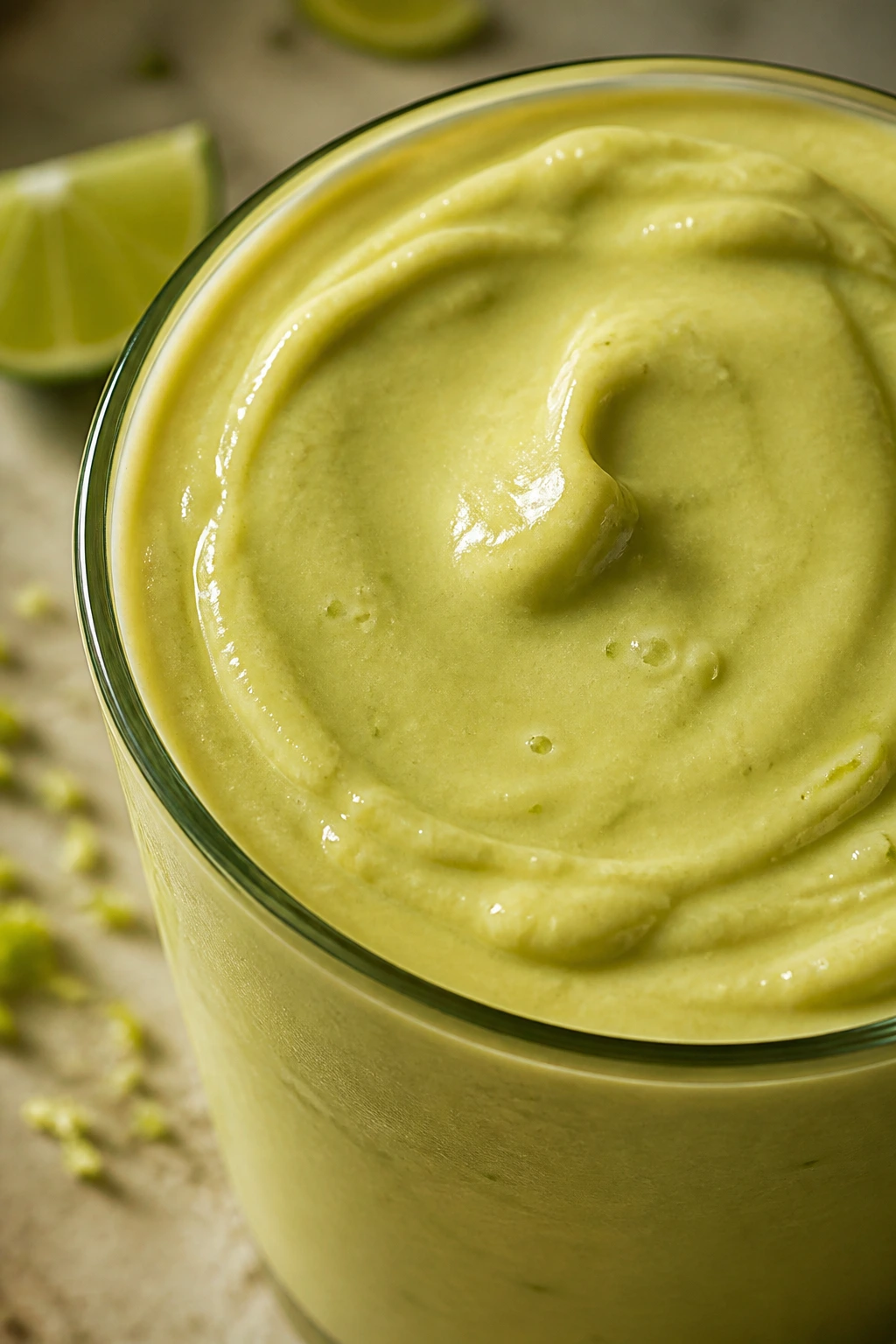
Avocado is not here to act like fruit. It’s here to act like structure.
Avocado and Frozen Fruit
What to use: 1 large ripe avocado, 1 cup frozen mango chunks, 1 cup frozen pineapple chunks, and 1 small banana, preferably frozen in slices.
Preparation: Cut the avocado into chunks so it breaks down fast, and keep the fruit frozen until the last second. The colder the fruit, the less ice you need, which keeps the flavor cleaner.
Substitutions: Frozen peaches can stand in for mango, and frozen strawberries can replace pineapple if you want a pinker, sharper smoothie. If you want to skip banana, use an extra 1/2 cup mango and 2 extra tablespoons yogurt.
Tips: The avocado should be ripe enough to yield with light pressure near the stem end. If it feels hard or has those stringy brown fibers inside, the blender will not fully hide it.
Liquid, Dairy, and Sweetener
What to use: 3/4 cup unsweetened coconut water, 1/2 cup plain Greek yogurt, 1 to 2 tablespoons lime juice, and 1 to 2 teaspoons honey or maple syrup.
Preparation: Measure the liquid before you start blending, and keep the sweetener light until you taste the finished smoothie.
Substitutions: Orange juice makes the drink sweeter and more brunch-like, while coconut milk makes it richer and a little heavier. Coconut yogurt works well if you want the smoothie dairy-free.
Tips: The first pour of liquid should be small enough that the blades can catch the fruit. Too much liquid at the start turns the smoothie thin before you’ve even had a chance to adjust it.
Salt, Zest, and Bright Finish
What to use: 1/8 teaspoon fine sea salt and 1/2 teaspoon lime zest, with mint leaves if you want a fresh garnish.
Preparation: Zest the lime before you juice it, and keep the salt measured. A pinch is enough; more than that starts to taste like a mistake.
Substitutions: Lemon zest can work in a pinch, though lime is better with mango and pineapple. Mint can replace zest if you want the top note to smell cooler and greener.
Tips: Salt does not make the smoothie salty. It wakes up the fruit, which is a different thing entirely. The difference is obvious in the first sip.
Ice and Thickness Control
What to use: 1/2 to 1 cup ice cubes only if your fruit is fresh rather than frozen.
Preparation: Add ice last, after the blade has something else to work with.
Substitutions: If you want the smoothie thicker instead of colder, use more frozen fruit instead of more ice.
Tips: Ice is a blunt tool. It chills, but it also dilutes. Frozen fruit gives you cold without flattening the flavor, and that matters more than people usually admit.
The Tools That Make Blending Easier
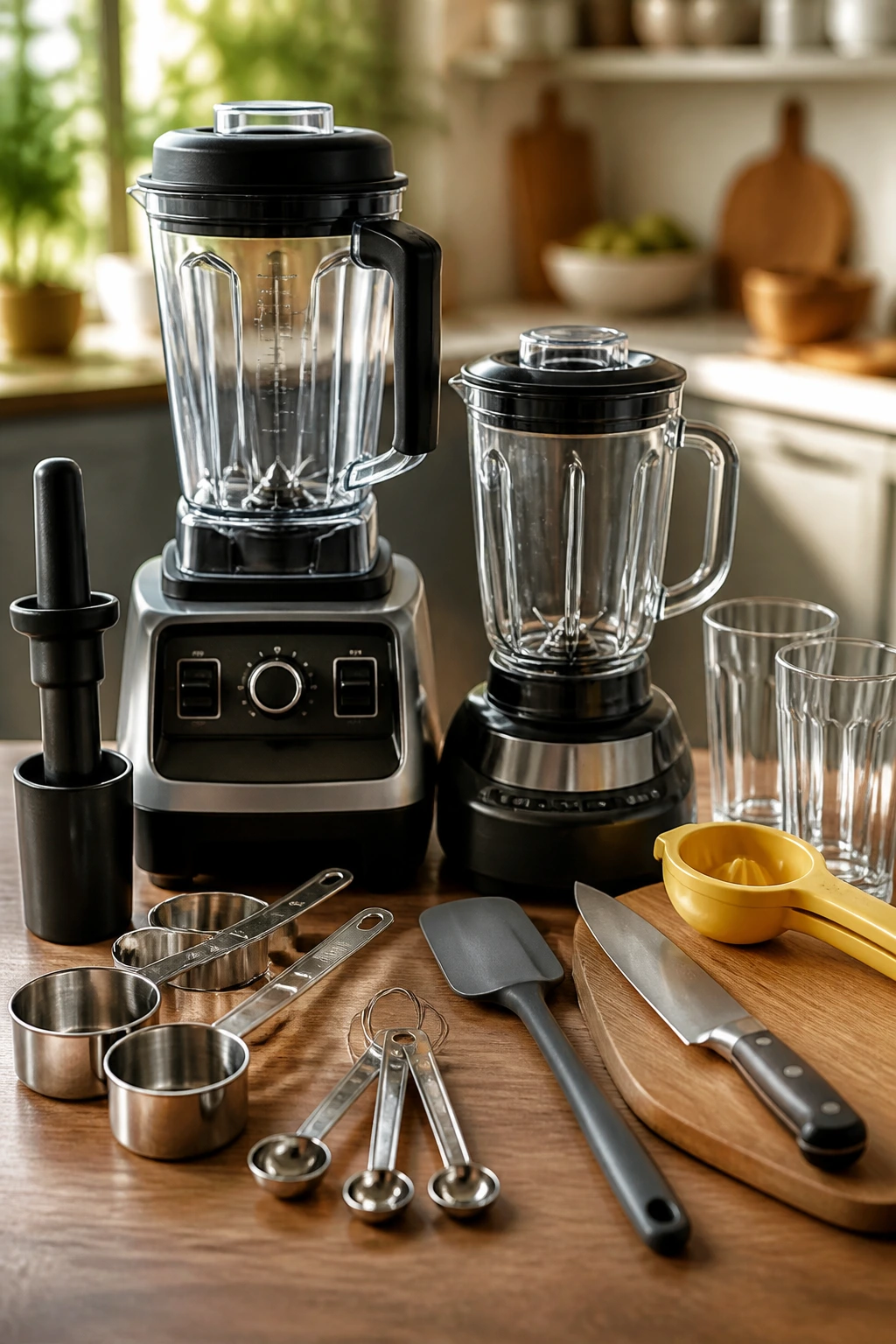
A blender can hide a lot of sins, but not a weak jar or a blunt blade.
- High-speed blender: Best for getting avocado completely smooth, especially if your fruit is frozen solid.
- Standard blender: Fine if you cut the fruit smaller and add the liquid first; you may need to stop and scrape once or twice.
- Rubber spatula: Useful for pushing the last streaks of green fruit down toward the blade without wasting a spoonful.
- Measuring cups and spoons: Smoothies look casual, but the ratio is what keeps them from turning into fruit soup.
- Sharp knife and cutting board: You’ll want clean avocado chunks and banana slices that freeze evenly.
- Citrus juicer or fork: A fork works fine for lime juice if you’re not bothering with a gadget.
- Tall chilled glasses or insulated tumblers: They keep the smoothie cold longer and make the first few sips better.
- Optional tamper: Helpful if your blender has one, though you should still resist the urge to jam it around like a baton.
How to Blend It Smooth, Cold, and Bright
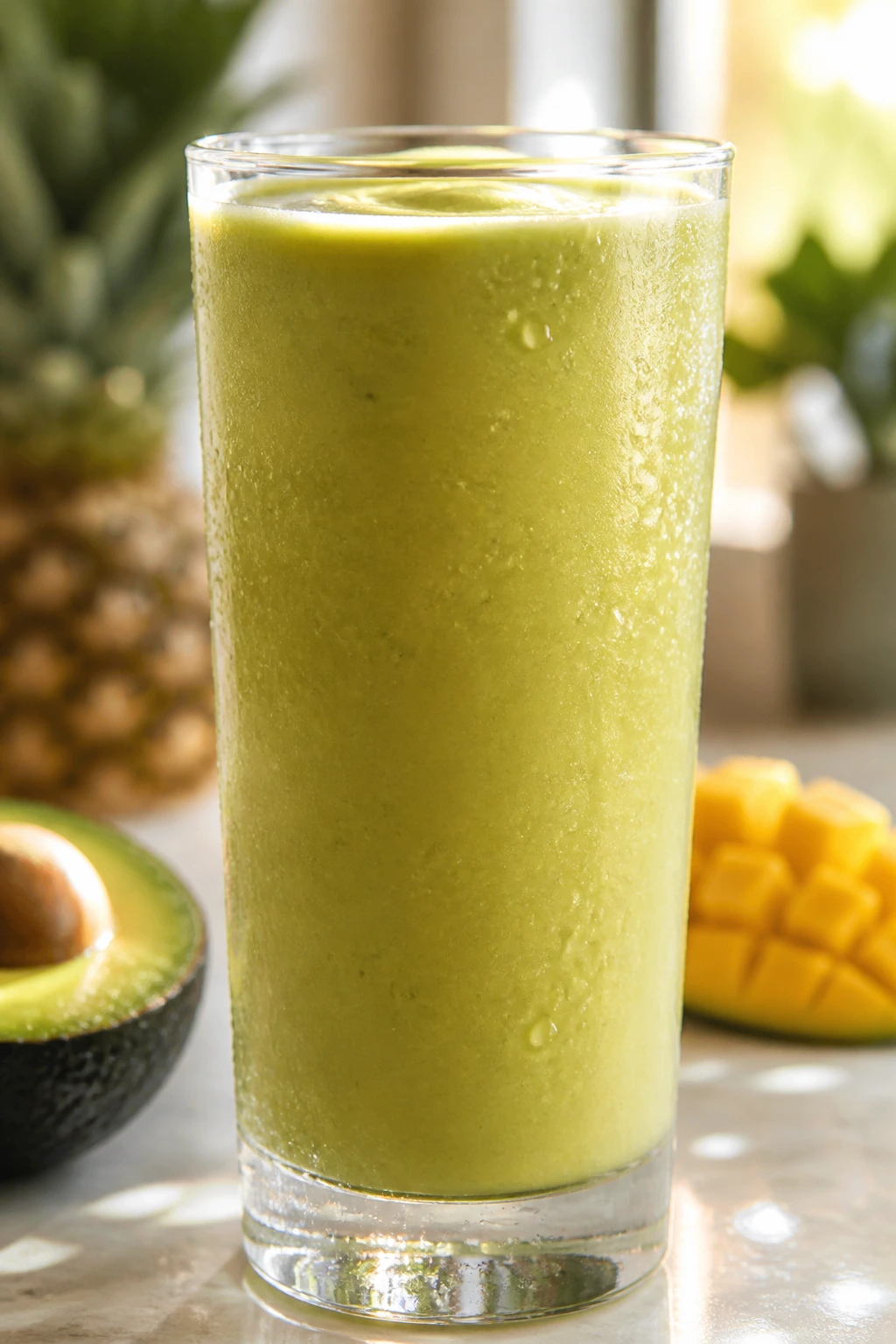
The order matters more than people think.
Prep the Fruit and Glasses:
- Chill two tall glasses in the freezer for about 10 minutes while you work. Cold glass walls keep the smoothie from warming up before you finish the first half.
- Peel and pit the avocado, then cut the flesh into chunky pieces. If your banana is not already frozen, slice it and freeze it for at least 1 hour, or use fresh banana and add the ice later.
Build the Blender Base: 3. Pour the coconut water, Greek yogurt, lime juice, honey, and salt into the blender first. The liquid needs to sit under the fruit so the blade can grab instead of spinning dry. 4. Add the avocado, mango, pineapple, and banana on top. If you’re using ice, drop it in last so it doesn’t block the fruit from moving.
Blend to the Right Texture: 5. Start on low speed for about 10 seconds, then move to high for 30 to 45 seconds, until the mixture looks smooth, glossy, and pale green-gold with no obvious fruit chunks. If the blender stalls, stop and add coconut water 1 tablespoon at a time; do not keep jamming more ice into the jar. 6. Scrape down the sides once if you see stubborn bits clinging above the blade. Then blend for another 5 to 10 seconds, just long enough to finish the texture.
Taste and Serve: 7. Taste a small spoonful. Add another teaspoon of honey if the pineapple feels too sharp, or another teaspoon of lime juice if the smoothie has gone soft and sweet. Blend for 3 to 5 seconds more. 8. Pour immediately into the chilled glasses. Garnish with mint, a little lime zest, or a thin lime wheel, and serve while the texture still feels plush.
The Best Way to Serve a Fruity Avocado Smoothie
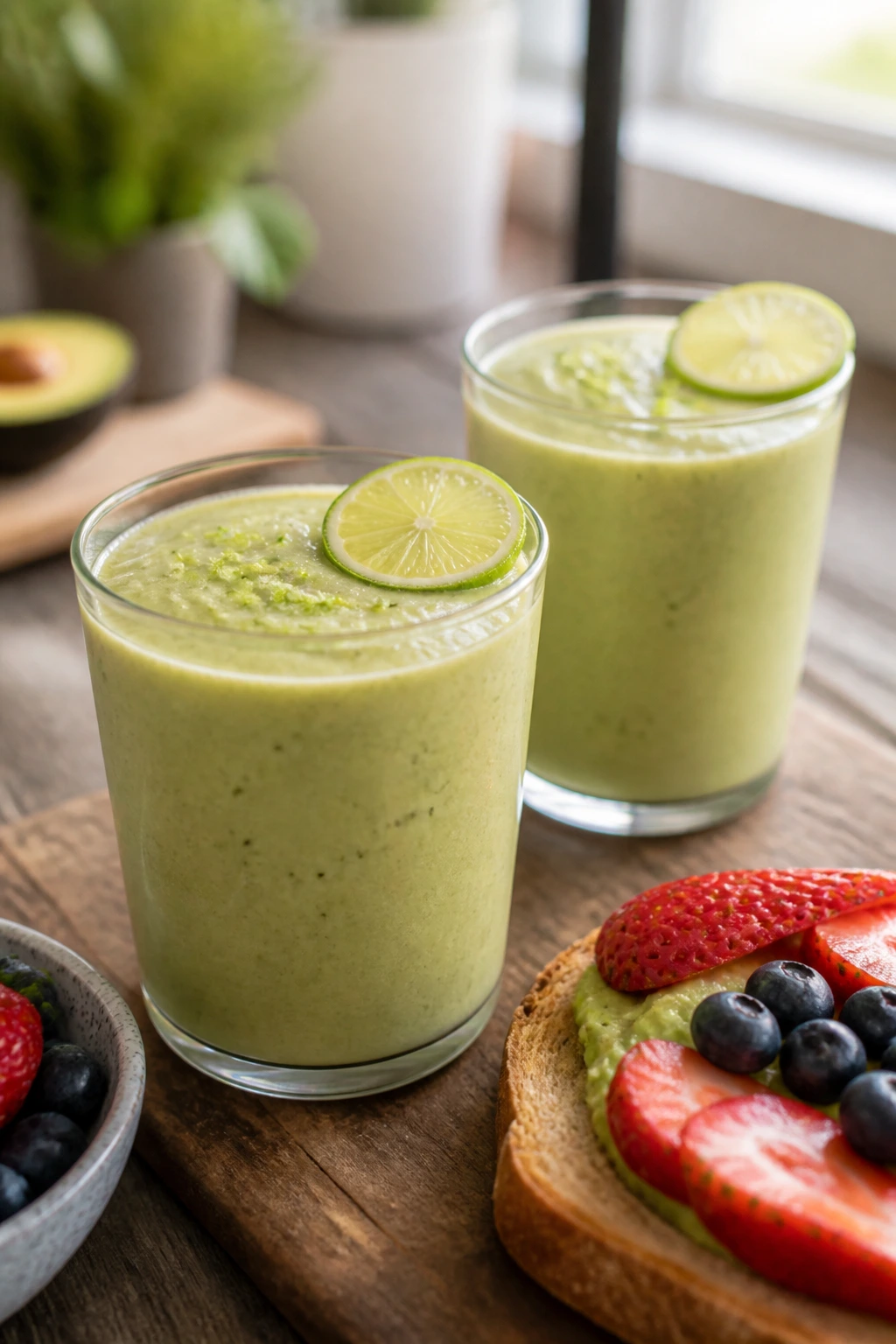
What does this want on the table? Something crisp, salty, or toast-like.
Presentation: Pour the smoothie into chilled 12-ounce glasses or insulated cups. If you want a café look, top each one with a tiny lime wheel and a pinch of zest; if you want a cleaner look, leave it plain and let the color do the work.
Accompaniments: This sits nicely beside buttered toast, avocado toast, a bowl of berries, or a small handful of granola. If breakfast needs more staying power, serve it with scrambled eggs or a slice of seeded sourdough with ricotta and salt.
Portions: The recipe makes 2 large servings that can stand in for breakfast, or 3 smaller servings if you’re serving it alongside other food. For a crowd, double the batch and blend it in two rounds instead of cramming everything into one overloaded blender.
Beverage Pairing: If you’re having this with breakfast or brunch, pair it with unsweetened iced coffee, sparkling water with lime, or a light black tea. The smoothie itself already covers the creamy side of the equation.
Small Tweaks That Make a Big Difference
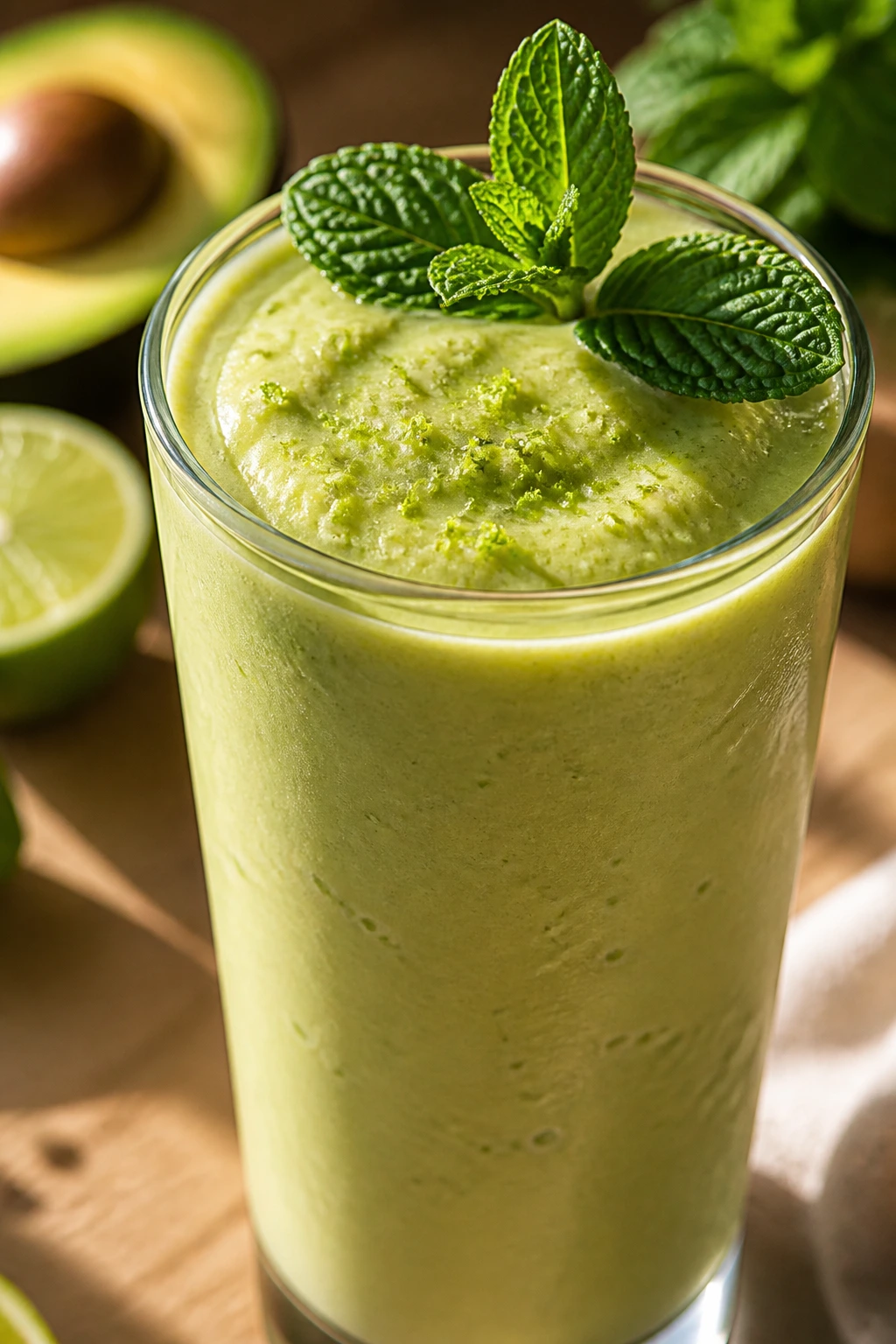
I’ve ruined enough smoothies with too much ice to know exactly where this goes sideways.
Flavor Enhancement: A little lime zest is the move I reach for first. It brightens the mango and pineapple without making the smoothie sour, and it smells fresher than another spoonful of sweetener ever will. A whisper of fresh mint also works, though I’d keep it to 3 or 4 leaves so it doesn’t take over the fruit.
Texture Control: If you want the smoothie spoon-thick, use fully frozen fruit and only 1/2 cup coconut water. If you want it more drinkable, go up to 3/4 cup liquid and blend a few seconds longer. That adjustment sounds small, but it changes the whole feel in the mouth.
Time-Saver: Make freezer packs. I like to portion mango, pineapple, and banana into single-serving bags, then keep them ready for the blender. The avocado can be added fresh, which is usually faster than trying to freeze it in a way that still tastes good later.
Make-It-Yours: For a dairy-free version, swap the Greek yogurt for coconut yogurt. For extra protein, add 1 scoop vanilla protein powder and 2 to 4 tablespoons extra liquid so the smoothie doesn’t turn chalky. If you prefer breakfast over dessert, skip the honey and let the banana carry the sweetness on its own.
Common Mistakes That Lead to a Flat or Gritty Smoothie
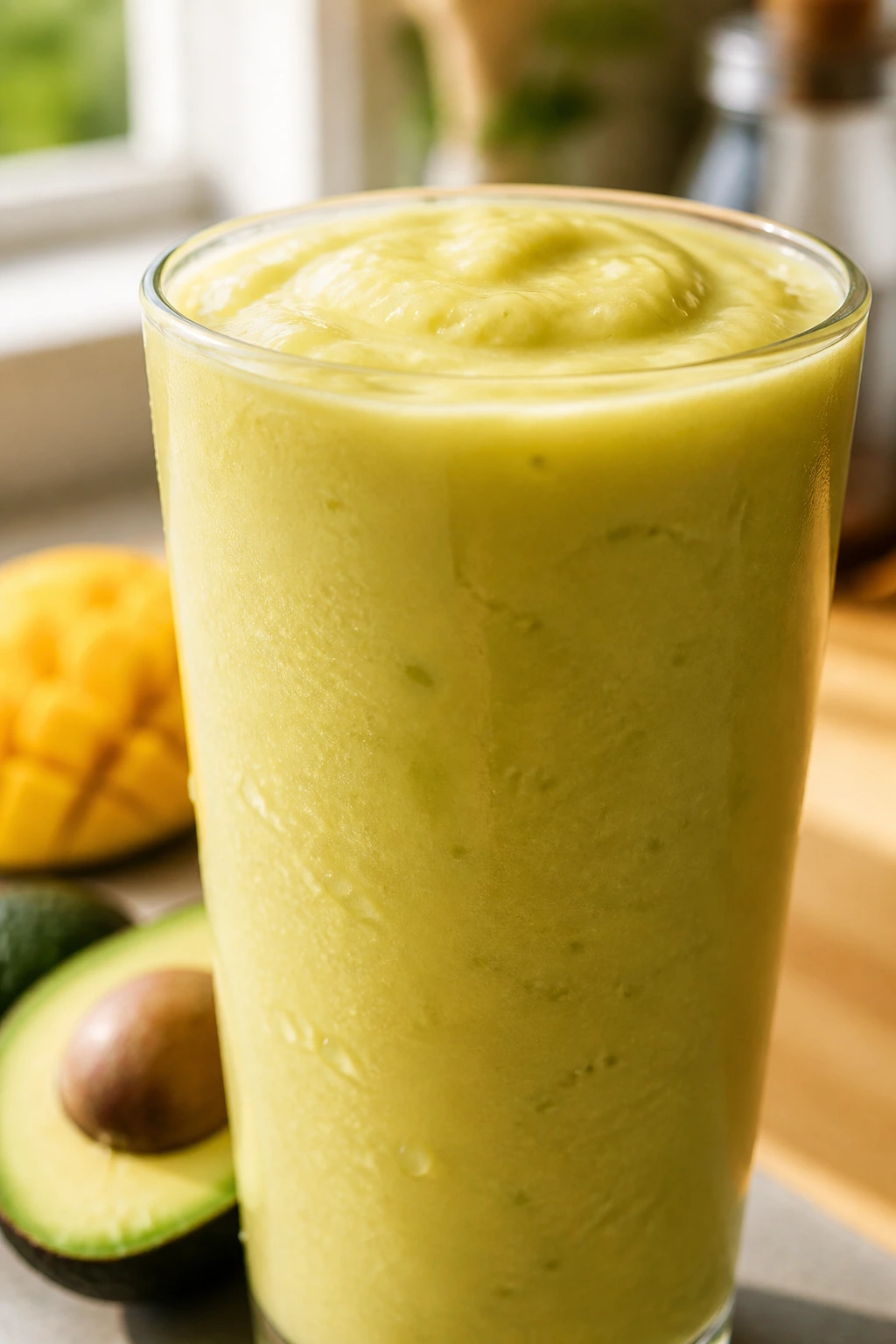
A bad avocado smoothie usually fails in one of five boring ways.
- Using an avocado that isn’t ripe enough: The texture stays grainy, and the flavor can tip bitter or grassy. Fix it by waiting until the avocado yields slightly at the stem end; if it feels hard as a ball, it’s not ready.
- Adding too much liquid right away: The smoothie turns thin and loses that creamy, spoon-coating feel. Start with the measured amount, then add only 1 tablespoon at a time if the blender needs help.
- Skipping the acid: Without lime juice, the avocado tastes heavier and the fruit tastes flatter. The citrus doesn’t make the smoothie sour; it keeps the mango and pineapple alive.
- Overloading the blender with ice: Too much ice makes the drink cold but dull, and it often leaves little shards that never fully disappear. Use frozen fruit first, then add ice only if the fruit is fresh and the mixture still needs chilling.
- Sweetening before tasting: Mango, banana, and even ripe pineapple can provide enough sweetness on their own. Add honey or maple syrup only after blending, because it’s much easier to add a teaspoon than to take one back out.
- Letting it sit too long before serving: The avocado starts to oxidize, the top thickens, and the flavor loses its snap. Blend, pour, and drink it while the glass still feels cold in your hand.
Variations That Shift the Flavor Without Losing the Creamy Base
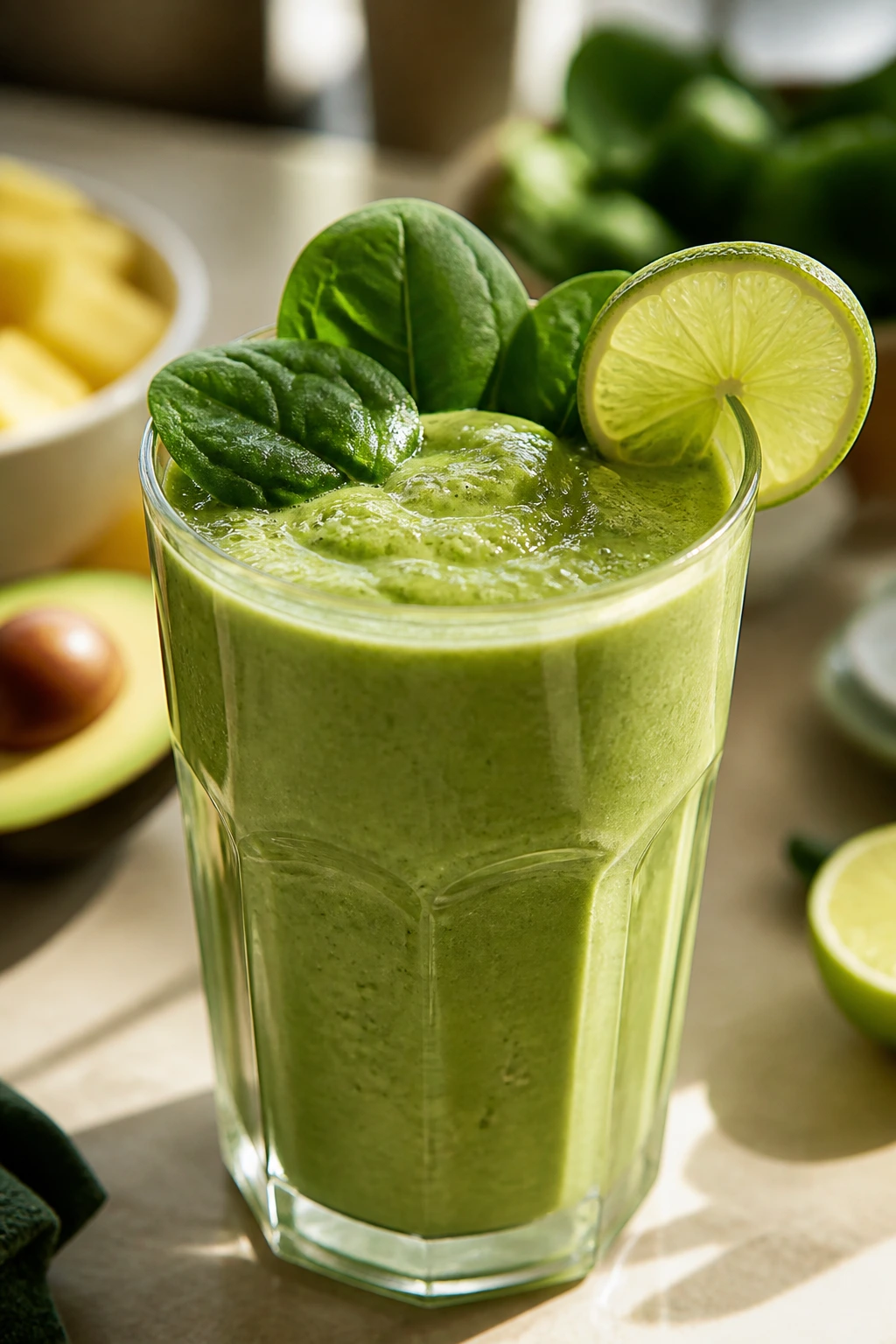
Once you know the base, the changes are easy.
Tropical Green Swing
Add 1 packed cup baby spinach and keep the rest of the fruit the same. The avocado hides the spinach well, and the lime keeps the green flavor from getting muddy. This version is the one I’d make when I want something greener without making the glass taste like a salad.
Strawberry Pineapple Shade
Swap the mango for 1 1/2 cups frozen strawberries and keep the pineapple. The smoothie turns pinker and a little tangier, with a sharper finish that feels less tropical and more fruit-shop fresh. If strawberries are very sweet, drop the honey entirely.
Protein Breakfast Blend
Add 1 scoop vanilla protein powder and replace the coconut water with 1/2 cup milk plus 1/4 cup water. Blend a little longer so the powder disappears completely. This one is sturdier, more filling, and better for mornings when the smoothie needs to act like a meal rather than a refreshment.
Dairy-Free Coconut Cream Version
Use coconut yogurt instead of Greek yogurt and swap the coconut water for light coconut milk. The drink gets richer and a little closer to a piña colada without the alcohol or the sugar bomb. I’d keep the lime in place; otherwise it can drift into heavy territory.
No-Banana Bright Pour
Leave the banana out and add an extra 1/2 cup mango plus 2 more tablespoons yogurt. The flavor becomes cleaner and less soft, which some people prefer when they want the avocado to feel like texture rather than sweetness. It’s also a good move if you’re not in the mood for banana aroma in the first sip.
Make-Ahead, Storage, and Freezer Notes
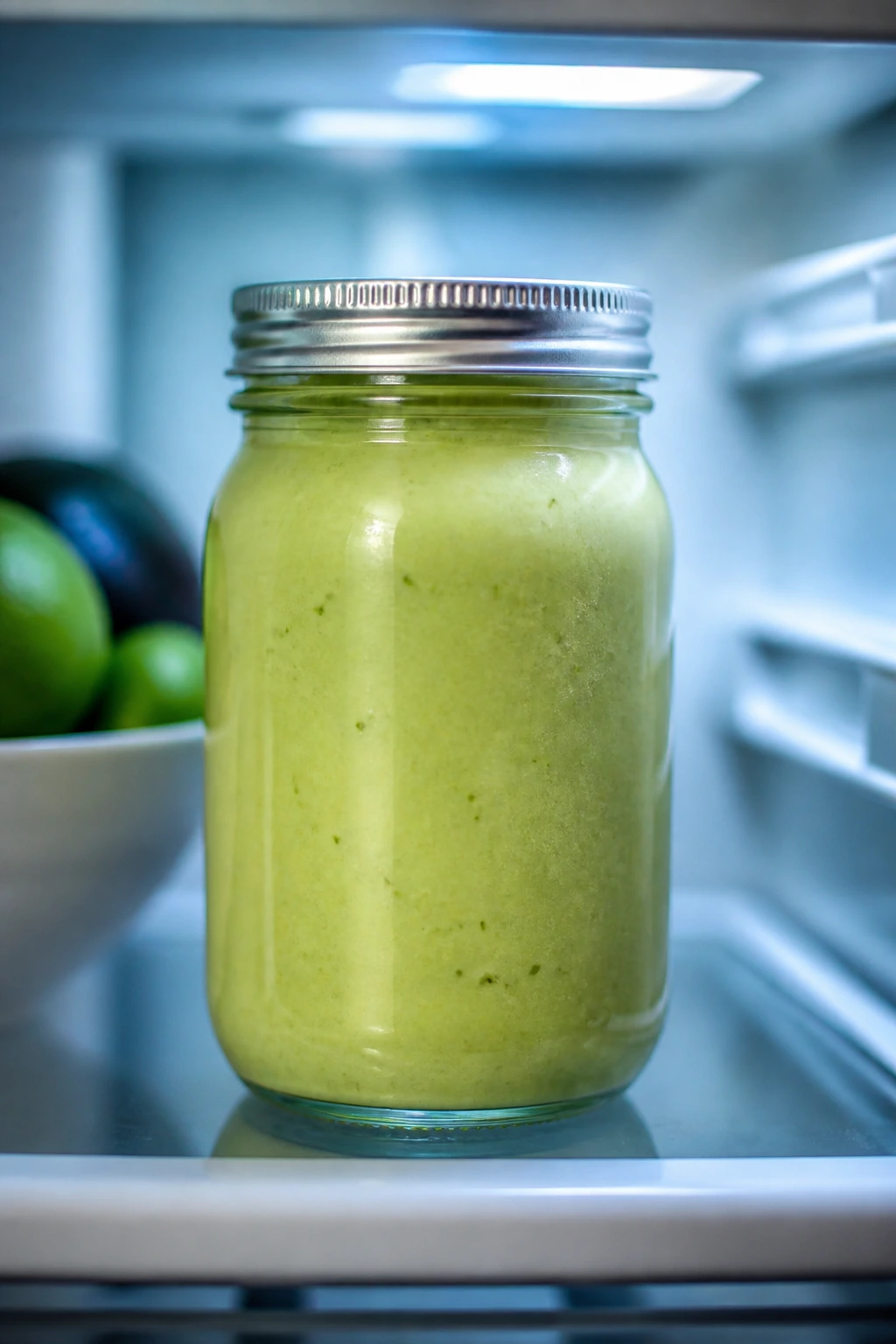
A smoothie is at its best in the first 15 minutes, before the ice melts and the avocado starts to lose its polish. That said, there are a few ways to save time without wrecking the texture.
If you need to refrigerate leftovers, pour them into an airtight jar or bottle and fill it as close to the top as you can. Less air means less browning. It will keep in the fridge for about 24 hours, though the top may darken a shade and the texture will thicken as it sits. Give it a strong shake or a quick reblend with 1 to 2 tablespoons of coconut water before drinking.
For true make-ahead prep, freeze the fruit in portions. Mango, pineapple, and banana hold up well for about 2 months in the freezer when sealed tightly. If you want to include avocado, toss the chunks with lime juice first and freeze them flat on a tray before bagging them; that keeps the pieces from sticking into one cold brick.
Another good backup is a smoothie pop. Pour any leftovers into popsicle molds and freeze them for 6 to 8 hours. They turn into a cold snack with the same creamy base, which is handy when the weather is hot enough that nobody wants to sit down with a bowl.
I would not heat this smoothie. That sounds obvious, but people do odd things in kitchens. If it freezes solid in a jar, let it sit at room temperature for 10 to 15 minutes, then reblend with a splash of liquid. That brings the texture back far better than waiting for it to thaw all the way.
Questions People Ask Before Making This Smoothie
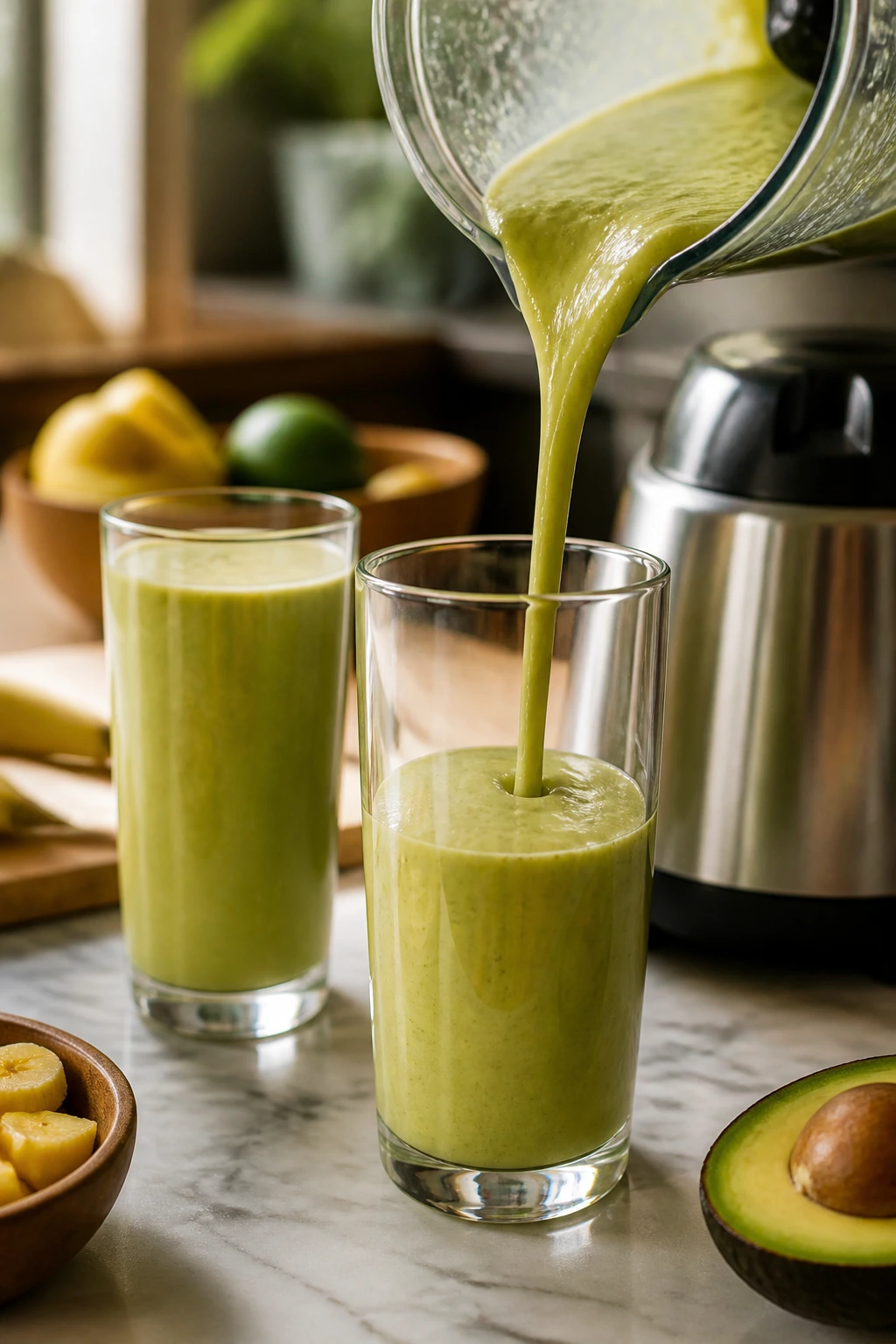
Can I make this fruity avocado smoothie without yogurt?
Yes. Use coconut yogurt for a dairy-free version, or skip the yogurt and add a little more avocado and 2 to 3 tablespoons extra liquid. The drink will still be creamy, just a little less tangy and a touch more fruit-forward.
Can I use fresh fruit instead of frozen fruit?
You can, but you’ll need 1/2 to 1 cup ice to get the same cold, thick texture. Frozen fruit is better here because it chills the smoothie without watering down the flavor, especially the mango and pineapple.
How ripe should the avocado be?
Ripe enough that it yields slightly when you press near the stem end, but not so soft that it feels mushy. A good avocado blends into silk; an underripe one blends into tiny beige pebbles that never quite disappear.
How do I keep the smoothie from tasting too much like avocado?
Use enough lime juice, keep the fruit frozen, and don’t overload the avocado. Mango and pineapple should lead, with the avocado acting like body underneath. A pinch of salt also helps the fruit taste brighter and keeps the avocado from reading heavy.
What if my blender struggles with frozen fruit?
Start with the liquids first, cut the fruit into smaller pieces, and let the frozen fruit sit for 2 to 3 minutes before blending. If it still stalls, stop and add coconut water 1 tablespoon at a time. Don’t keep adding ice just to make the blade happier; that usually makes the smoothie worse.
Can I add protein powder without making it chalky?
Yes, but use vanilla or unflavored powder and add 2 to 4 tablespoons more liquid to keep the texture smooth. Blend a few seconds longer than usual so the powder has time to disappear. If the flavor gets dull, another squeeze of lime usually wakes it back up.
How long can I keep it in the fridge?
About 24 hours in an airtight container, though it’s best much sooner. The top can darken a little from air exposure, and the mixture may separate, so shake or reblend it before drinking. After a day, the texture is still fine, but the fresh fruit edge starts to fade.
A Cold Glass Worth Making Again
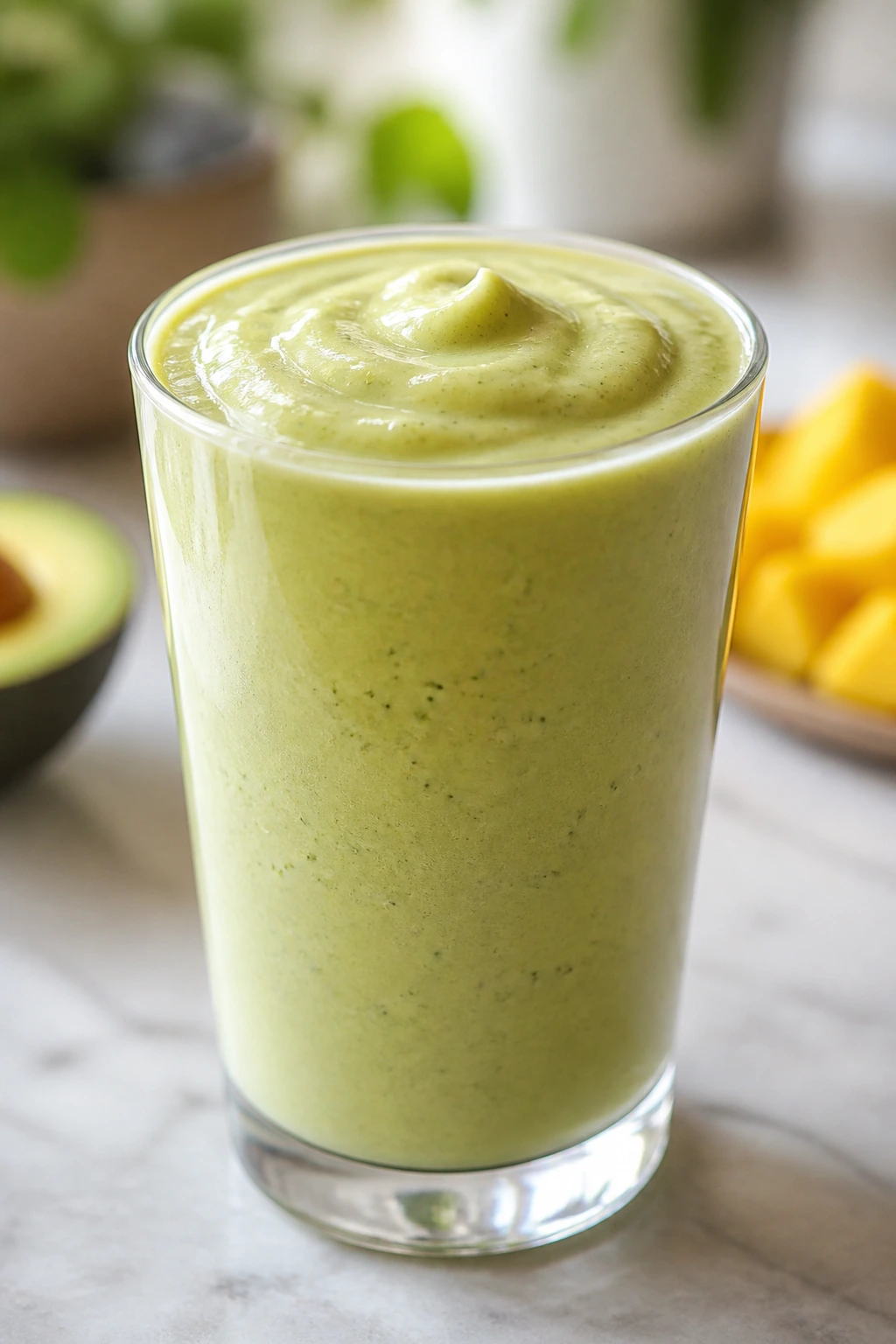
The nicest thing about this smoothie is that it does not try too hard. The avocado gives it body, the fruit keeps it lively, and the lime keeps the whole thing awake from the first sip to the last. That balance is what makes it worth repeating.
Keep a ripe avocado on hand, stash some frozen mango and pineapple in the freezer, and this turns into a ten-minute habit instead of a one-off. When the kitchen is warm and the morning feels a little too sticky, a glass like this earns its place.
Fruity Avocado Smoothie for Summer Sipping — Recipe Card
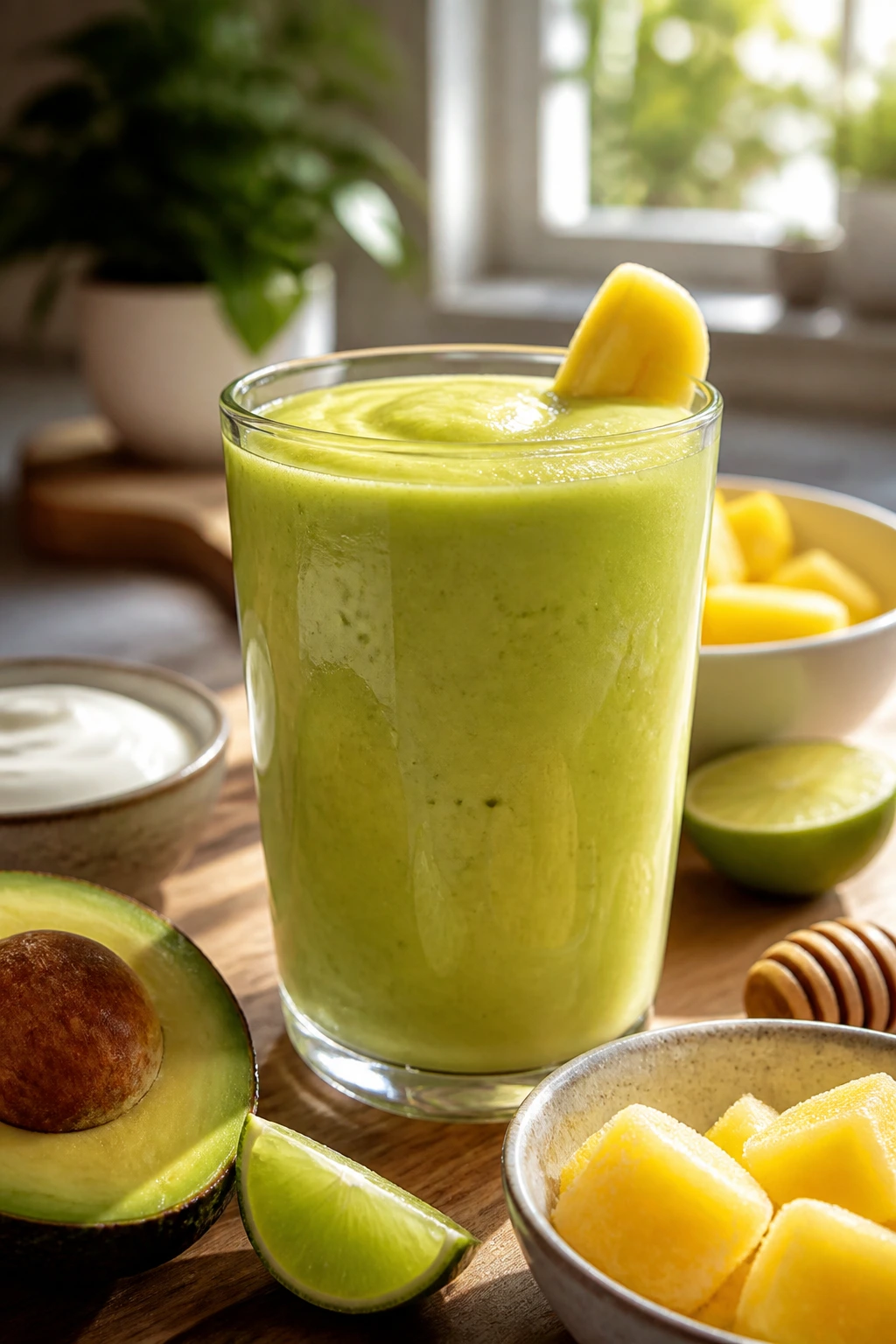
Recipe Name: Fruity Avocado Smoothie for Summer Sipping
Description: A creamy, bright smoothie made with avocado, frozen tropical fruit, lime, and a light touch of sweetness. It drinks cold and smooth, with mango and pineapple leading the flavor.
Prep Time: 10 minutes
Cook Time: 0 minutes
Total Time: 10 minutes
Course: Breakfast / Beverage
Cuisine: American
Servings: 2 servings
Calories: About 290 kcal per serving
Ingredients
- 1 large ripe avocado, peeled, pitted, and cut into chunks
- 1 cup frozen mango chunks
- 1 cup frozen pineapple chunks
- 1 small ripe banana, sliced and frozen if possible
- 3/4 cup unsweetened coconut water
- 1/2 cup plain Greek yogurt
- 1 to 2 tablespoons fresh lime juice
- 1 to 2 teaspoons honey or maple syrup
- 1/8 teaspoon fine sea salt
- 1/2 teaspoon finely grated lime zest, optional
- 1/2 to 1 cup ice cubes, only if using fresh fruit
Instructions
- Chill two glasses in the freezer for 10 minutes, then peel, pit, and chunk the avocado.
- Add coconut water, Greek yogurt, lime juice, honey, and salt to the blender first.
- Add avocado, mango, pineapple, and banana on top; add ice last if using fresh fruit.
- Blend on low for 10 seconds, then high for 30 to 45 seconds, stopping once to scrape the sides if needed.
- Taste and adjust with more lime or sweetener if desired, then blend 5 seconds more.
- Pour into chilled glasses, garnish with lime zest or mint if you like, and serve immediately.
Notes: Frozen fruit gives the thickest texture; start with less sweetener than you think you need. If the smoothie sits in the fridge, shake or reblend with a splash of coconut water before drinking.