



Cold orange juice, coconut rum, and a slow ribbon of grenadine create one of those drinks that looks more complicated than it is. A Fruity Malibu Sunrise Cocktail works because the coconut note softens the citrus instead of fighting it, and the red syrup sinks through the glass like a little flare at the bottom. When the juices are chilled and the glass is packed with ice, the whole thing tastes crisp at first and then finishes with a soft berry-pomegranate sweetness.
I like this cocktail when I want something bright but not sharp. Tequila sunrise can lean dry and a little bitey; Malibu takes the edge off, which is either a blessing or a problem depending on how you pour it. The drink only works if you respect the balance: too much grenadine and it turns sticky, too little and you lose the color that makes the whole thing worth making.
The method is simple, but there are a few small decisions that matter — the size of the ice, whether the juice is cold, how slowly you pour the red syrup, and whether you stop yourself from stirring the whole thing into one orange blur. Get those details right and the glass does the work for you. Start with the part that sells the drink before the first sip.
Why This Coconut Sunrise Keeps Getting Requested
Fast to build: You can pull this together in about 5 minutes, and most of that time goes into chilling the glass and grabbing ice.
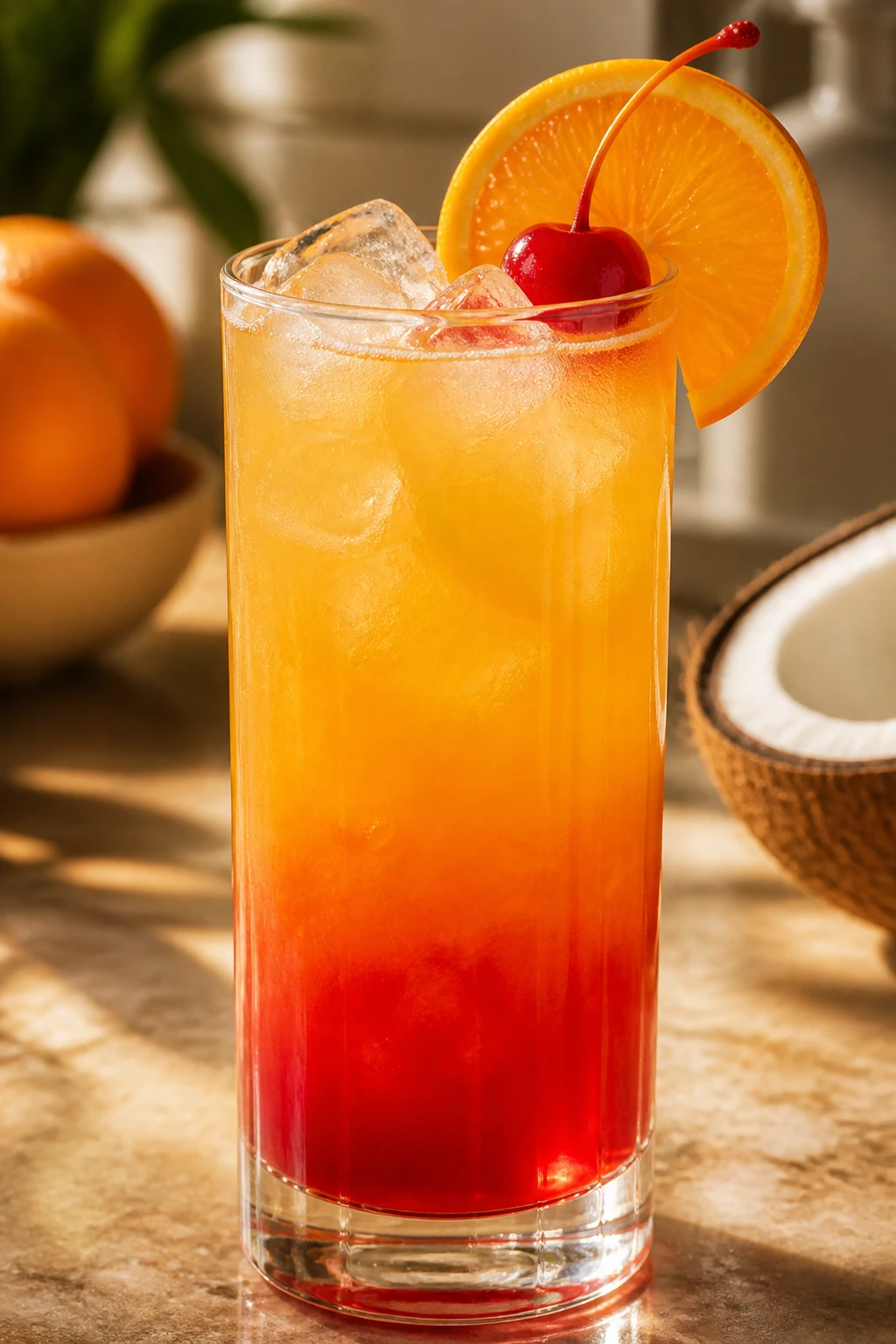
The color does the heavy lifting: That orange-to-red gradient is not decorative fluff; it tells you the grenadine will land at the bottom and sweeten the last sip instead of flattening the whole drink.
Coconut smooths the citrus edge: Malibu gives the orange juice a softer, rounder finish than a straight rum would, which keeps the drink from tasting like breakfast juice with a kick.
Easy to scale for a crowd: The ratio multiplies cleanly, so you can make 4 or 8 servings without changing the method, as long as you add the grenadine one glass at a time.
No special bar cart required: A jigger and a spoon help, but a shaker, a clear glass, and a steady hand will get you most of the way there.
Flexible sweetness: If your orange juice is sweet and your audience likes a drier drink, you can trim the grenadine by a quarter-ounce and still keep the sunrise effect.
How Malibu Softens the Classic Sunrise Flavor
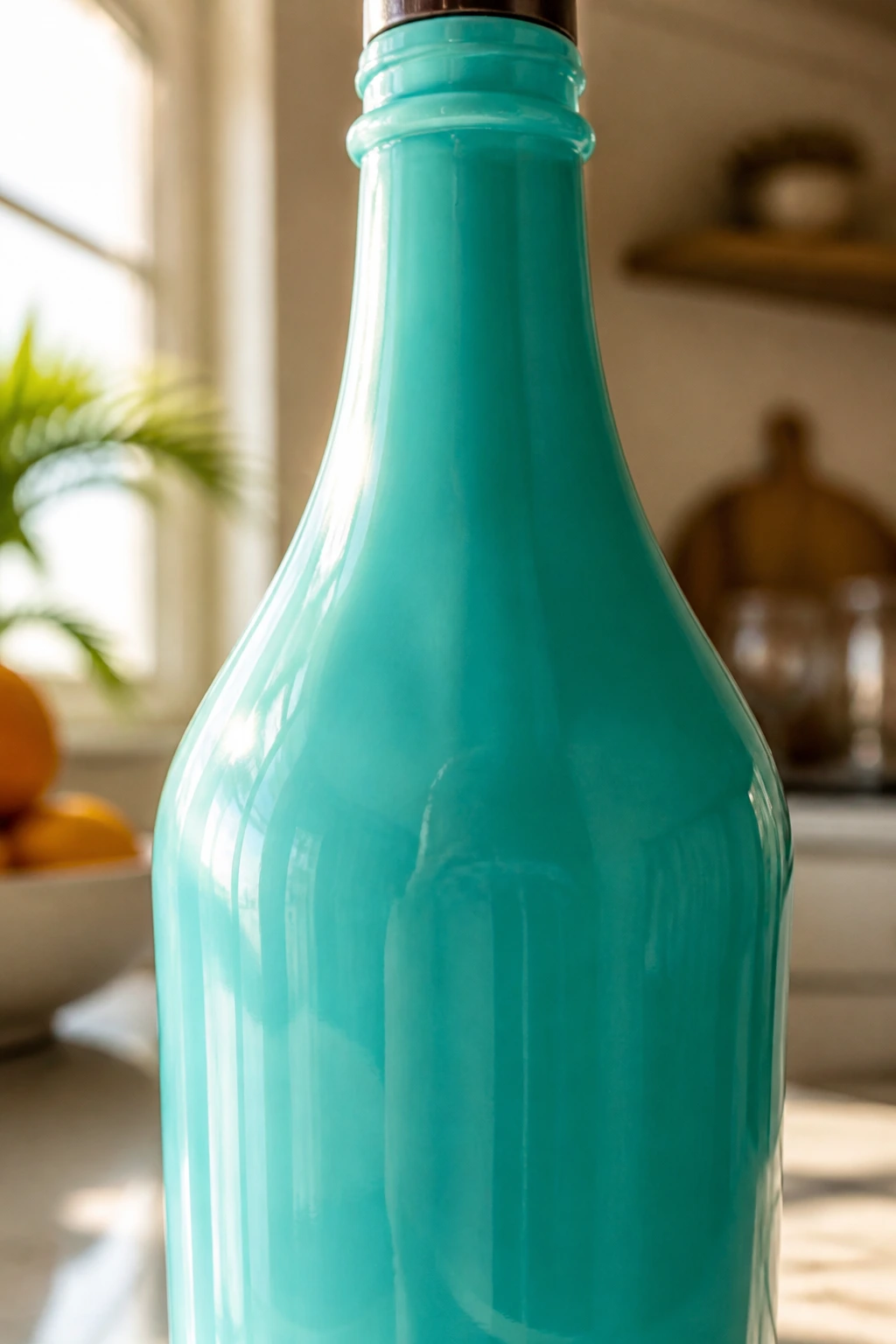
Why does Malibu change the whole mood of a sunrise cocktail? Because coconut rum doesn’t behave like a neutral spirit. It brings sweetness, yes, but also that toasted-coconut aroma that smells a little like suntan lotion in the best possible way — beachy, not cloying — and it sits right between the orange juice and the grenadine instead of competing with them.
A classic sunrise has a neat little trick: one red pour settles under the citrus and leaves a sunset line in the glass. Malibu keeps the trick intact while making the sip feel softer. The first taste lands as orange and coconut, then the pineapple wakes it up, and the grenadine waits at the bottom with that pomegranate-style sweetness that reads richer than plain sugar syrup.
I reach for this version when I want a drink that behaves like a cocktail but still feels easygoing. It’s the sort of glass that works at a backyard table, by a pool, or next to grilled food that’s a little salty or a little spicy. It does not need garnish fireworks or a complicated build. It needs cold juice, a clean pour, and enough ice to keep the whole thing bright.
That’s the part a lot of people miss. A sunrise cocktail is not about fancy technique. It’s about restraint.
The Exact Ingredients and Timing That Go Into the Glass
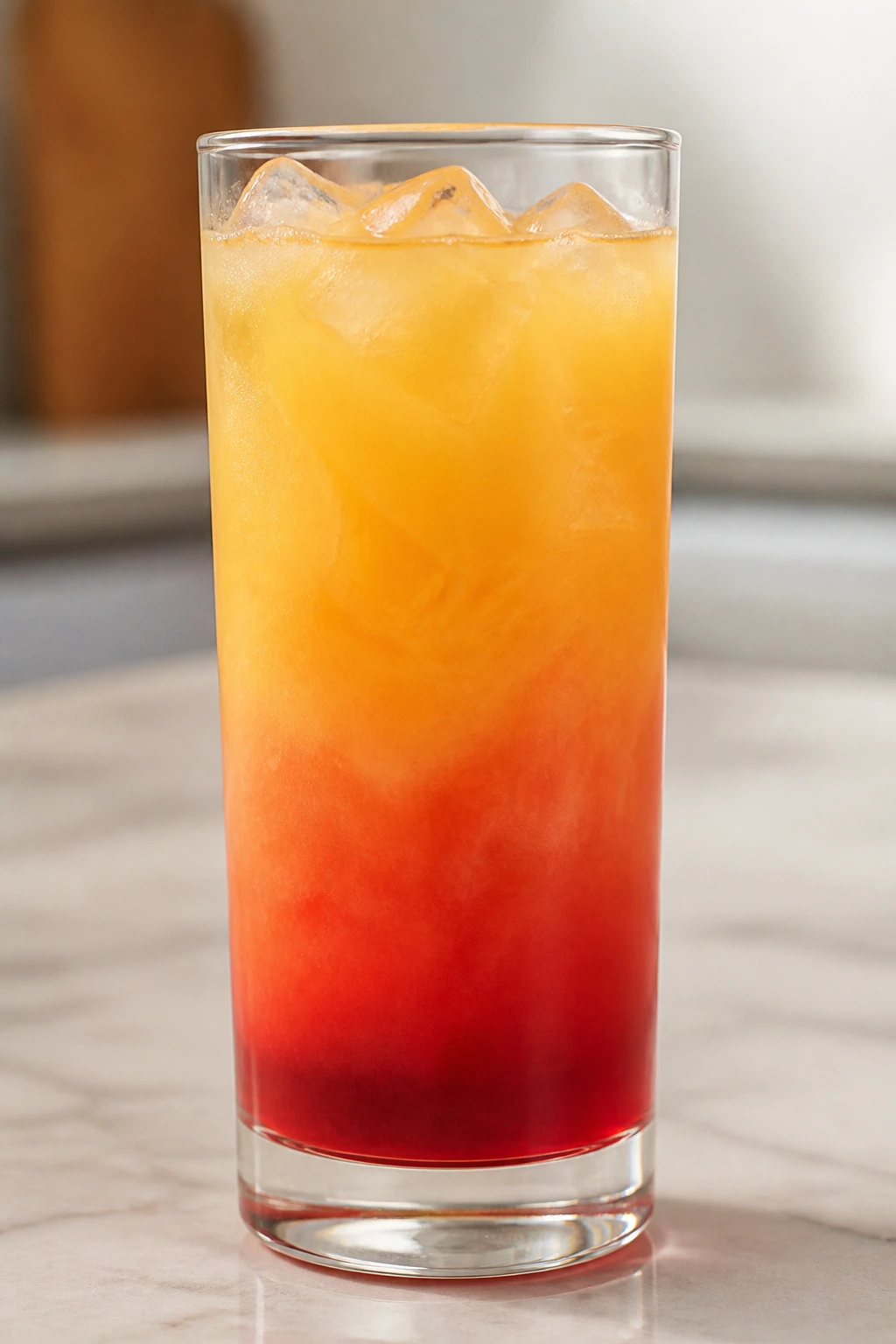
A cold, layered cocktail starts with cold ingredients. Warm orange juice melts the ice too fast, and melted ice blurs the line between the orange top and the red bottom before you’ve even taken a sip. Keep everything chilled if you can. It changes the drink more than people expect.
Yield: 1 cocktail
Prep Time: 5 minutes
Cook Time: 0 minutes
Total Time: 5 minutes
Chill/Rest Time: None required, though 5 minutes in the freezer for the glass helps the drink stay crisp
Difficulty: Beginner — the only part that asks for attention is the slow grenadine pour.
Best Served: Immediately after assembling, while the ice is still sharp and the layers are visible
For the Cocktail:
- 2 oz Malibu coconut rum, chilled
- 3 oz orange juice, chilled
- 1 oz pineapple juice, chilled
- 1/2 oz fresh lime juice
- 1/2 oz grenadine
- 1 cup ice cubes, or enough to fill a 12-ounce highball glass
For the Garnish:
- 1 orange wheel
- 1 maraschino cherry, optional
The orange juice should taste like oranges first, not sugar. If it tastes flat from the carton, the whole drink leans dull, and you end up reaching for more grenadine to fix a problem the juice created in the first place. The lime juice matters for that reason too. It keeps Malibu from drifting into syrup territory.
Why Each Ingredient Matters, One Pour at a Time
Malibu Coconut Rum
What to use: 2 oz Malibu coconut rum, chilled. This is the base of the drink, and it should smell like sweet coconut with a little rum warmth underneath.
Preparation: Keep the bottle cold if you can, or at least measure the rum while the glass is already filled with ice. Cold spirit blends cleaner and doesn’t chew through the ice as fast.
Substitutions: Any coconut rum will work here, and if you want a drier finish, swap 1/2 oz of the Malibu for white rum. If you only have plain rum, add 1/4 teaspoon coconut extract, but use it lightly.
Tips: I wouldn’t choose an aged, molasses-heavy rum for this cocktail. It muddies the orange and makes the drink feel heavier than the name suggests.
Orange Juice and Pineapple Juice
What to use: 3 oz orange juice and 1 oz pineapple juice, both chilled. Orange gives the body, pineapple gives the tropical edge, and together they make Malibu taste more like a beach drink than a dessert.
Preparation: Strain the orange juice if it’s pulpy. Tiny bits of pulp can make the drink look cloudy, which is not the end of the world, but it does blunt the clean layer you want.
Substitutions: You can swap the pineapple juice for mango nectar or passion fruit juice if you want a rounder, sweeter profile. If your orange juice is very sweet, add another 1/4 oz of lime instead of more syrup.
Tips: Orange juice loses brightness fast once it warms up. If you are building drinks for a group, keep the juice in the fridge until the second you pour it.
Lime Juice and Grenadine
What to use: 1/2 oz fresh lime juice and 1/2 oz grenadine. The lime keeps the drink from tasting flat, while the grenadine gives the red sunrise line and the last sip of sweetness.
Preparation: Squeeze the lime right before mixing if possible. Grenadine should stay sealed until service so it keeps its density and pours cleanly.
Substitutions: If you don’t have grenadine, pomegranate syrup works well. Homemade grenadine is also easy: pomegranate juice and sugar heated until the sugar dissolves, then cooled.
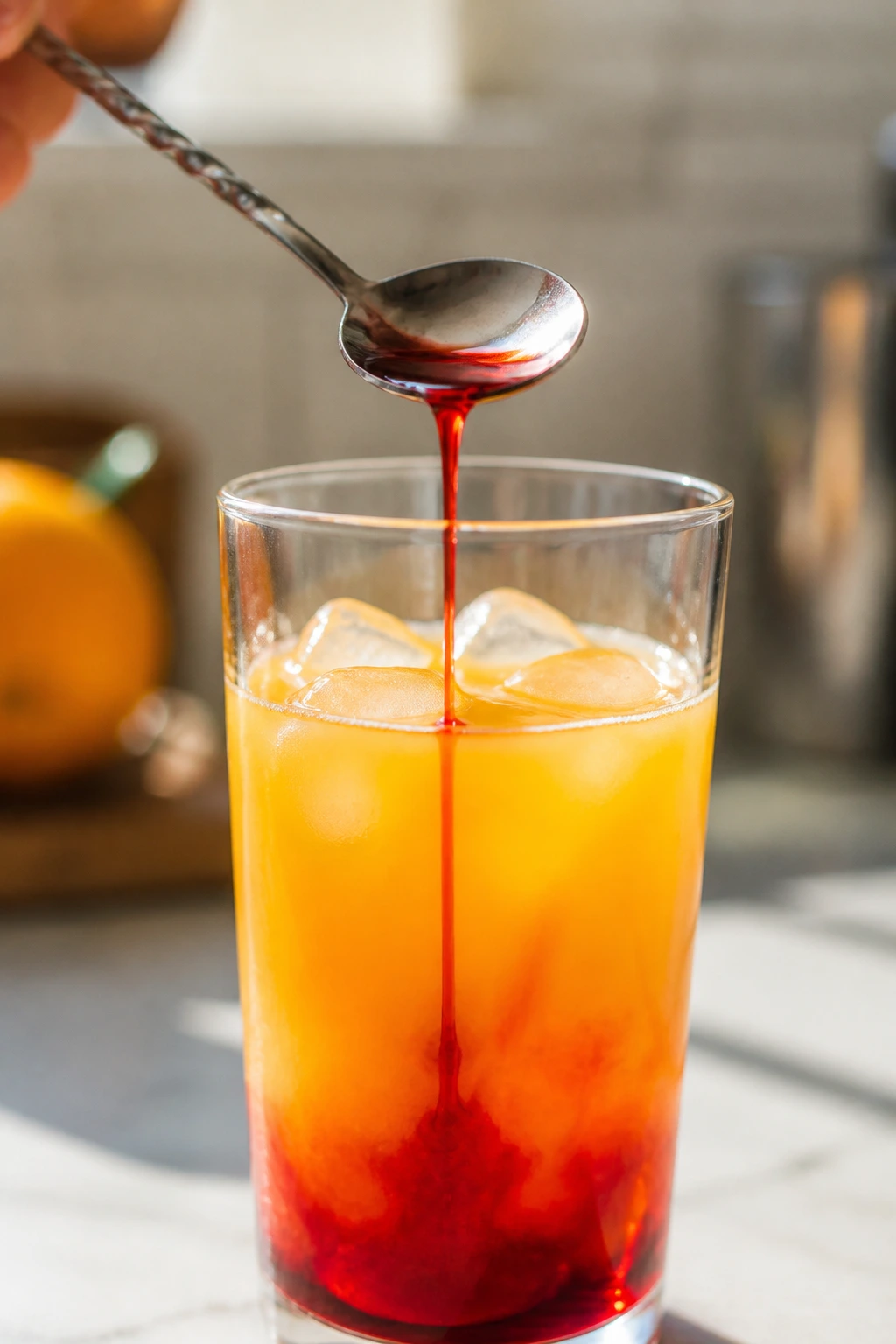
Tips: Grenadine is denser than juice because of the sugar content, which is why it sinks. Pour too fast and you lose the effect; pour slowly and the glass keeps its stripe.
Ice, Glass, and Garnish
What to use: 1 cup ice cubes, 1 orange wheel, and 1 maraschino cherry. The ice is not filler here; it slows the melt and holds the red syrup where it belongs.
Preparation: Fill the glass all the way to the top with ice so the drink stays cold and the color band has a chance to settle instead of spreading. Cut the orange wheel just before serving so it looks fresh, not dried out.
Substitutions: Large-format cubes work if you have them, though standard ice cubes are fine. If you want a cleaner, more modern garnish, use an orange peel twist instead of the cherry.
Tips: Use a clear glass if you care about the sunrise effect. A dark tumbler hides the whole point of the drink.
The Glassware and Tools That Keep the Layers Clean
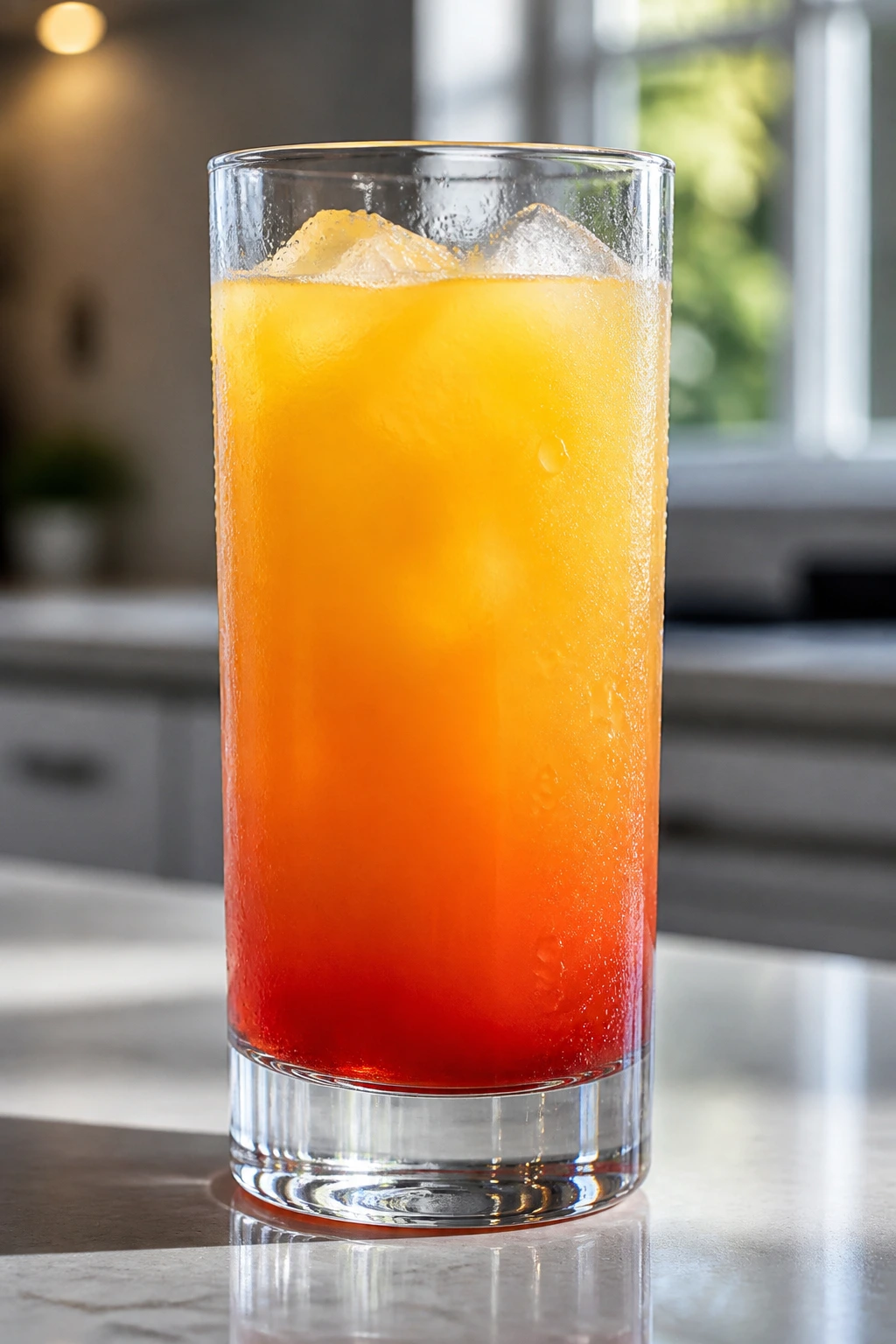
You do not need a bar cart full of shiny gear for this. You need a few tools that keep the drink cold, measured, and easy to layer. The glass matters more than people think. So does the spoon.
- 12-ounce highball or Collins glass — Tall, clear sides show the color shift from orange to red, and the shape gives the ice enough room to do its job.
- Cocktail shaker with a built-in strainer — Chills the Malibu and juices quickly and gives the cocktail a smoother texture than simple stirring.
- Jigger — Keeps the 2 oz rum and the juice measurements honest, which matters because this drink can go sweet fast.
- Bar spoon or the back of a teaspoon — Used to float the grenadine slowly so it drops without splashing.
- Citrus juicer — Helpful if you are squeezing fresh oranges or limes, especially if you like a cleaner, brighter citrus flavor.
- Paring knife and cutting board — For the orange wheel and any peel garnish.
- Fine-mesh strainer — Optional, but handy if your orange juice has too much pulp to leave the drink looking crisp.
If you do not have a shaker, a mason jar with a tight lid will work in a pinch. It is not glamorous. It gets the job done.
Shaking, Pouring, and Making the Sunrise Happen
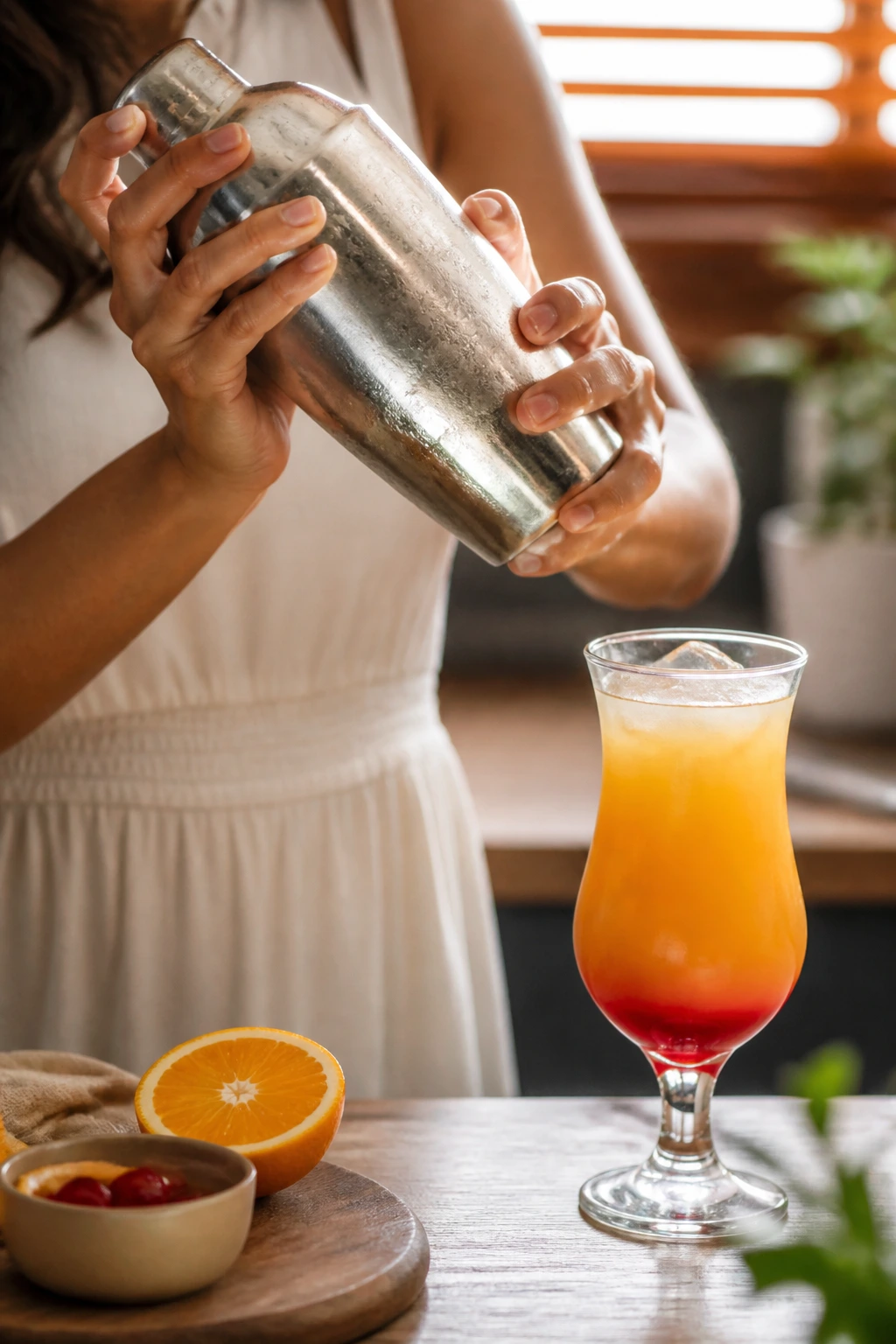
The drink tastes best when the base is cold before the grenadine ever enters the glass. That is why the order matters. If you dump everything together at once, you still get a cocktail, but you lose the little color drama that makes the drink feel special.
Chill and Prep
-
Put a 12-ounce highball glass in the freezer for 5 minutes if you have room, or fill it with ice while you build the drink. The colder the glass, the slower the melt.
-
Measure the orange juice, pineapple juice, and lime juice. If the orange juice is pulpy, strain it through a fine-mesh strainer so the finished drink looks clean.
Build the Cocktail
-
Add 2 oz Malibu coconut rum, 3 oz orange juice, 1 oz pineapple juice, and 1/2 oz lime juice to a cocktail shaker filled halfway with ice.
-
Shake for 8 to 10 seconds until the outside of the shaker frosts and the sound inside goes from sloshy to tight. Do not shake for too long or the citrus starts foaming more than you need.
-
Fill the serving glass with fresh ice, then strain the shaken mixture into the glass. Leave a little room at the top so the grenadine has space to slide down.
Create the Sunrise
-
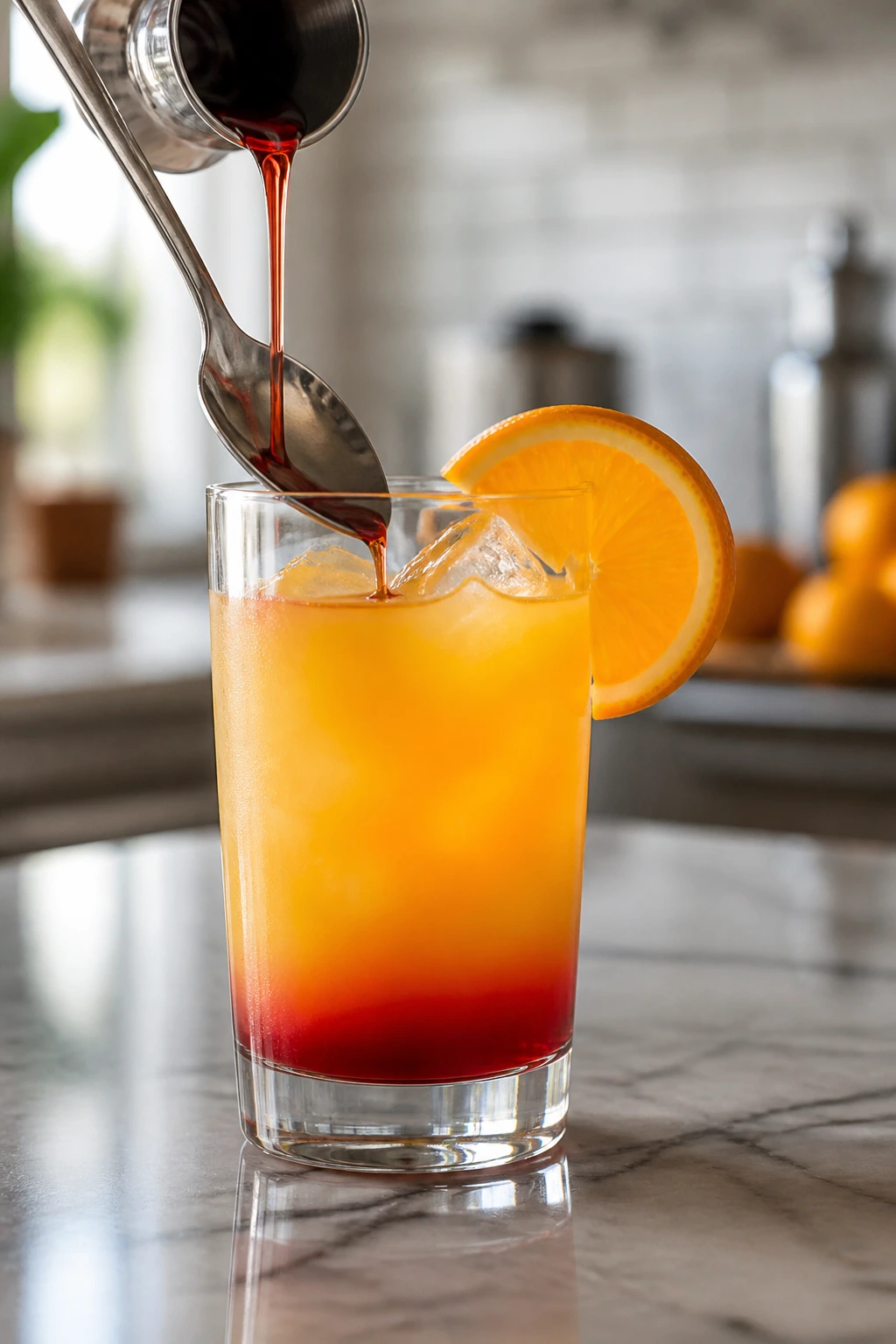
Slowly pour 1/2 oz grenadine over the back of a bar spoon or against the inside wall of the glass. It should sink in a thin red ribbon and settle at the bottom. Wait 10 to 15 seconds before adding the garnish. Do not stir. That is how the sunrise disappears.
-
Garnish with an orange wheel and, if you like the classic bar look, a maraschino cherry. Serve immediately with a straw or spoon if you want each sip to catch a little of the syrup from below.
The first sip should taste like orange, coconut, and ice-cold pineapple with a red-syrup finish underneath. If it tastes like candy from the jump, the grenadine is doing too much work.
How to Serve It So the Color Stays Visible
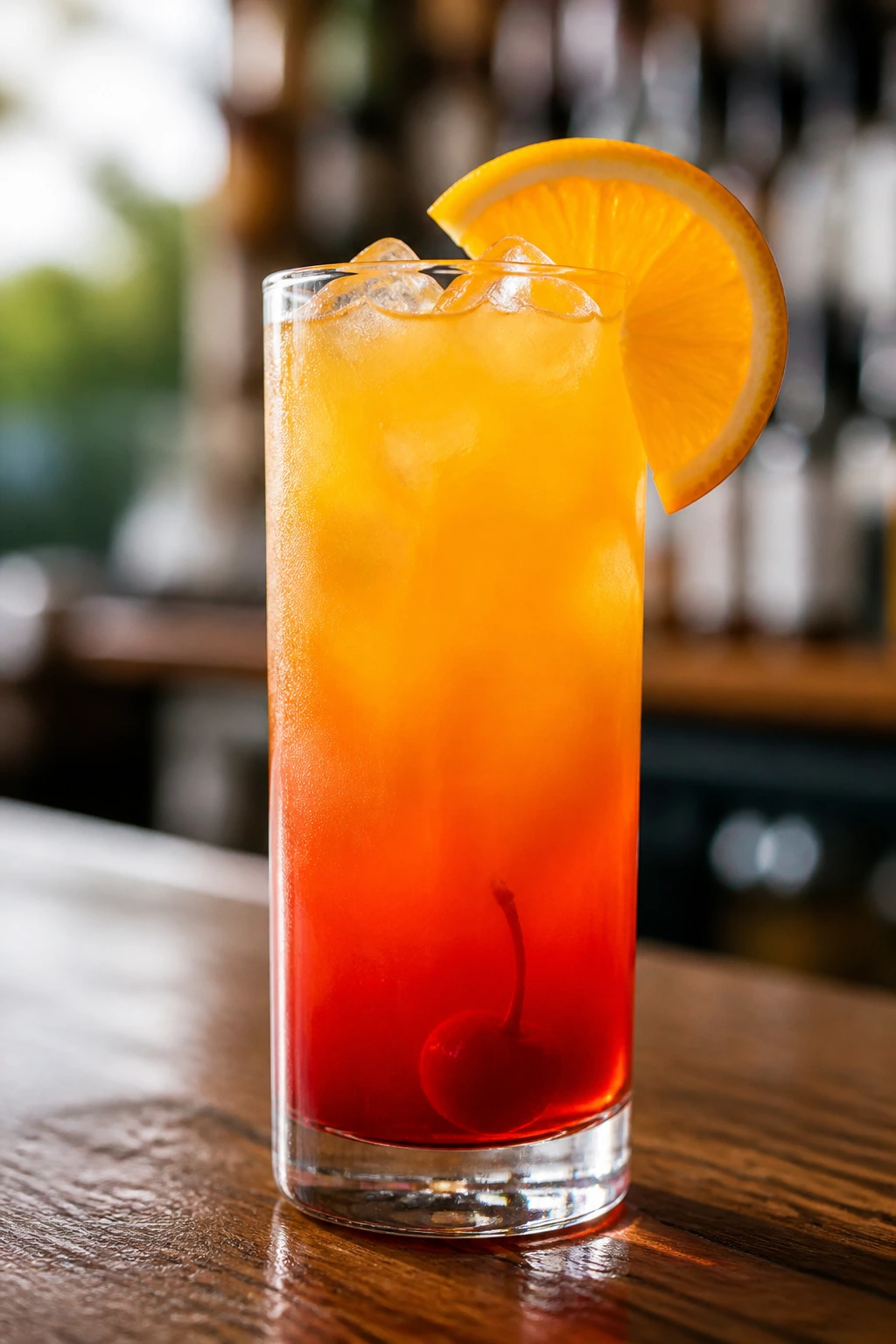
The best part of this cocktail is the glass, so I’m stubborn about presentation. A clear highball or Collins glass lets the orange body and red bottom show through, and a proper handful of ice keeps the syrup line from dissolving too fast. If you pour it into an opaque cup, you’ve removed half the appeal.
Presentation: Serve it tall and clear, with the orange wheel set on the rim or slipped halfway down the side. I like the cherry dropped in at the end because it gives the bottom layer a little visual anchor. Skip heavy sugar rims here; they distract from the color and make the first sip too sweet.
Accompaniments: Salty snacks play the nicest with this drink. Think cashews, plantain chips, coconut shrimp, grilled shrimp skewers, fruit salad with lime, or even chips and salsa if that is what is on the table. The cocktail has enough sweetness to handle a bit of spice, so jerk chicken wings or spicy grilled pineapple are both fair game.
Portions: One batch makes one generous cocktail, especially once the ice is in the glass. If you are serving a group, multiply the base by the number of drinks you need, but keep the grenadine separate and pour it into each glass right before serving. That keeps the sunrise effect from disappearing in a pitcher.
Beverage Pairing: If you want a second drink alongside it, keep it simple — chilled sparkling water with lime or unsweetened iced tea. Both keep the palate clean and stop the sweetness from hanging around too long.
Small Flavor Tweaks That Make the Drink Taste Brighter
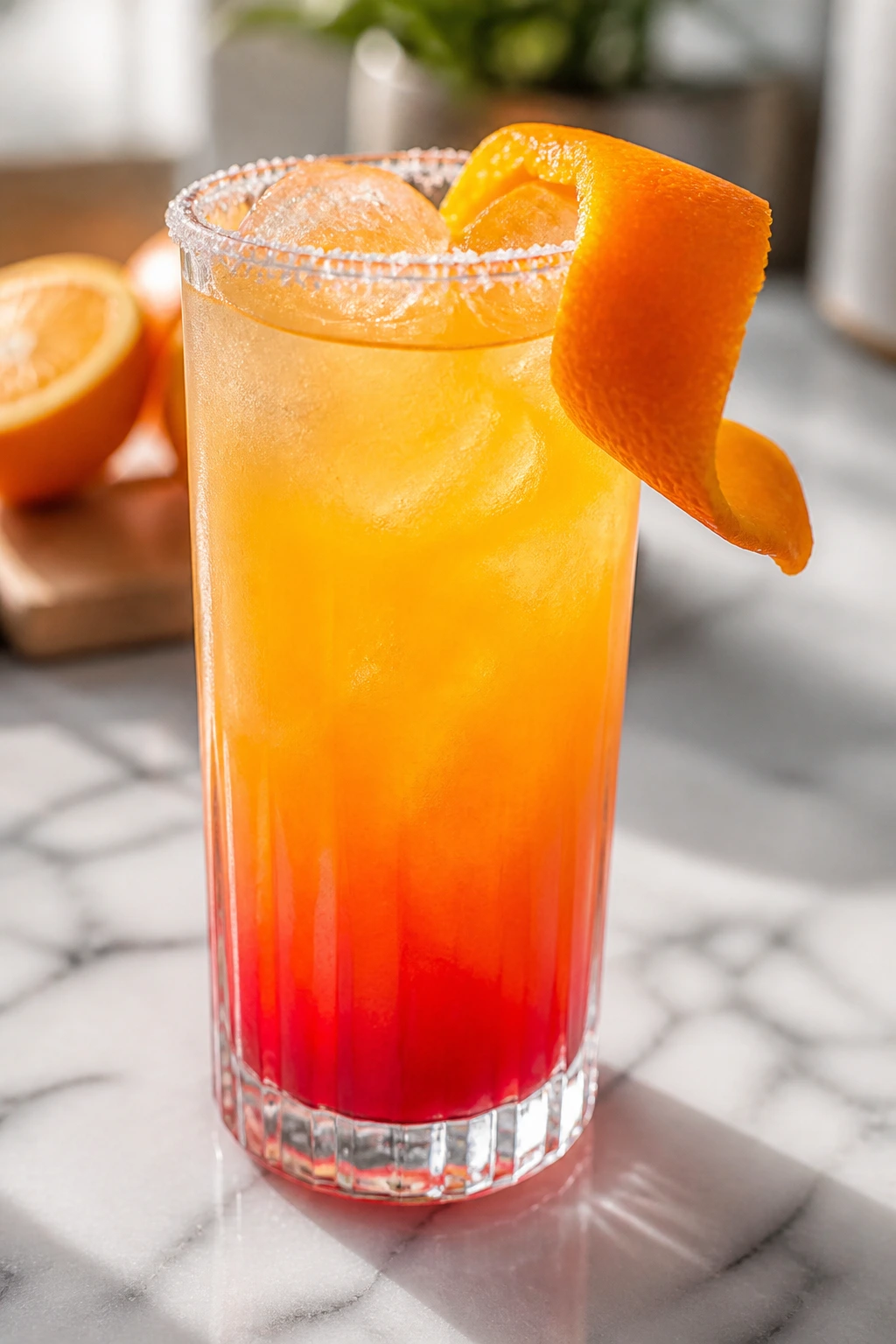
You do not need more sugar here. That is the trap. A lot of cocktail advice treats sweetness like a problem you solve by adding more syrup, and this drink punishes that instinct fast. The better move is to brighten the fruit and sharpen the edges.
Flavor Enhancement: Add 2 dashes of orange bitters to the shaker. They do not make the drink taste bitter in a harsh way; they pull the coconut and citrus together and keep the finish from wandering into syrupy territory. A tiny pinch of fine salt does a similar thing if you do not have bitters.
Time-Saver: Keep a small pitcher of orange and pineapple juice in the fridge before guests arrive. If the juices are already cold, you can build the drink without waiting on the freezer to do all the work.
Pro Move: Use a wide orange peel instead of, or in addition to, the orange wheel. Give it a quick twist over the glass so the oils hit the top of the drink. The smell makes the first sip feel fresher than it actually is.
Customization: If you like the drink rounder and more tropical, swap the pineapple juice for mango nectar. If you prefer sharper citrus, replace 1 oz of orange juice with white grapefruit juice and cut the grenadine slightly.
Make-It-Yours: For a lighter version, reduce the Malibu to 1 1/2 oz and add 1/2 oz white rum. For a mocktail-style version, use coconut water and a drop of coconut extract, then keep the orange, pineapple, lime, and grenadine in the same ratio.
A toasted coconut rim can work too, but I’d only put it on half the rim. Full rims are too much for a drink this layered.
Common Mistakes That Flatten the Color or Over-Sweeten It
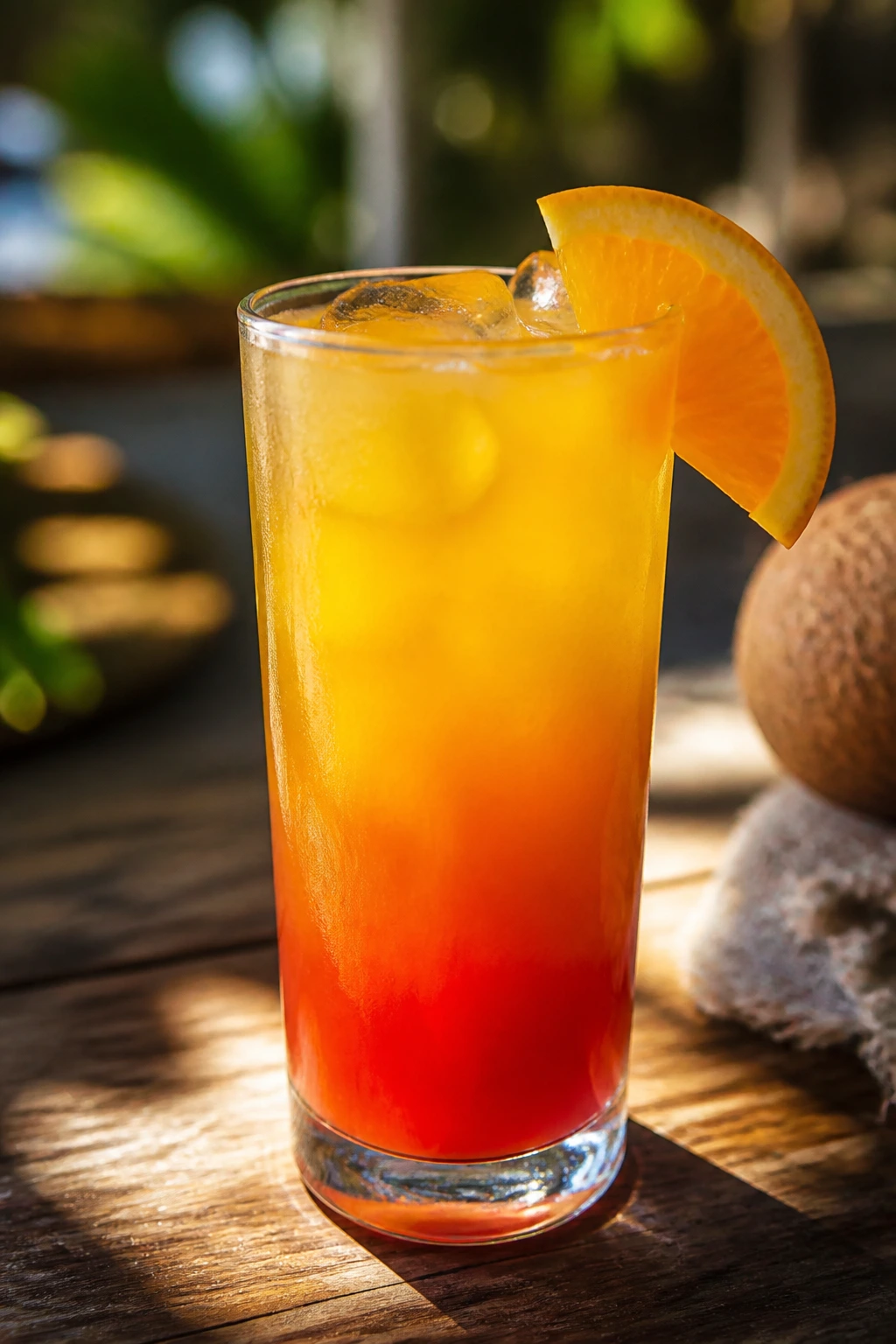
Most bad Malibu sunrise cocktails fail in the same few ways, and the fixes are boring but real. That is usually how kitchen mistakes work. Nothing dramatic. Just one small choice that pushes the glass from bright to syrupy.
-
Using warm juice or a warm glass: The drink tastes flat almost immediately, and the grenadine sinks less cleanly. Chill the juice and, if you can, freeze the glass for 5 minutes before you start.
-
Pouring the grenadine too fast: The red blends into the orange instead of settling underneath it. Use the back of a spoon or the inside edge of the glass and pour in a thin stream.
-
Going heavy on the grenadine: The first sip tastes like cherry candy, and the orange disappears under the sweetness. Stick to 1/2 oz, or cut to 1/4 oz if your orange juice is already sweet.
-
Stirring after the layers form: That is the easiest way to erase the sunrise effect. If you need to move the drink, lift the glass carefully and hand it over as-is.
-
Using crushed ice: It melts faster and smears the grenadine into the top layer. Standard cubes hold the shape better and keep the drink cold longer.
-
Skipping the lime juice: Malibu plus orange juice can taste soft and one-note without a little acid. The lime gives the drink a brighter finish and keeps the coconut from feeling too sweet.
If your drink has already mixed a bit, do not panic. It still tastes good. It just stops looking like a sunrise and starts looking like a tropical rum punch.
Variations and Adaptations Worth Trying
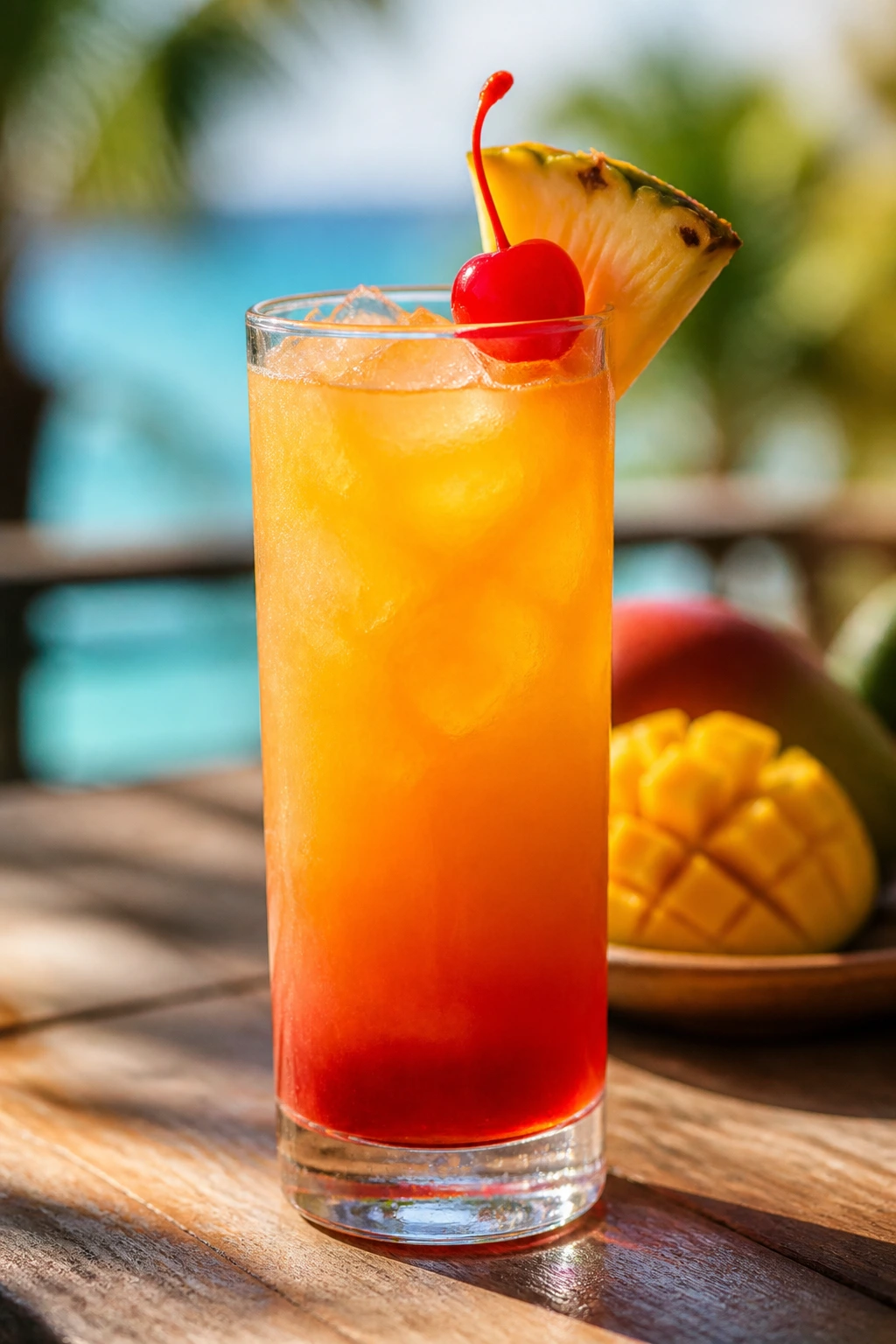
Mango Beach Sunrise: Swap the pineapple juice for 1 oz mango nectar. The drink turns a little thicker and softer, and Malibu reads more like a true tropical cocktail than a citrus spritz.
Sparkling Porch Sunrise: After you pour the grenadine, top the drink with 2 oz chilled club soda or coconut sparkling water. The bubbles lift the coconut aroma and stretch the drink a bit without flattening the color line.
Sharper Coral Sunrise: Replace 1 oz of the orange juice with white grapefruit juice and reduce the grenadine to 1/4 oz. This version tastes cleaner and less candy-sweet, which I prefer when the rest of the meal is already rich.
No-Proof Island Glow: Leave out the rum and use 2 oz coconut water plus 1/4 teaspoon coconut extract. The result is still bright, still layered, and still looks like a sunrise in the glass — handy when you want the flavor without the alcohol.
Frozen Cabana Blend: Blend the Malibu, orange juice, pineapple juice, lime juice, and a cup of ice until slushy, then drizzle the grenadine into the glass last. You lose the clean layer, but you get a cold, beach-bar texture that works when the weather is punishing.
Make-Ahead, Storage, and Batching Notes
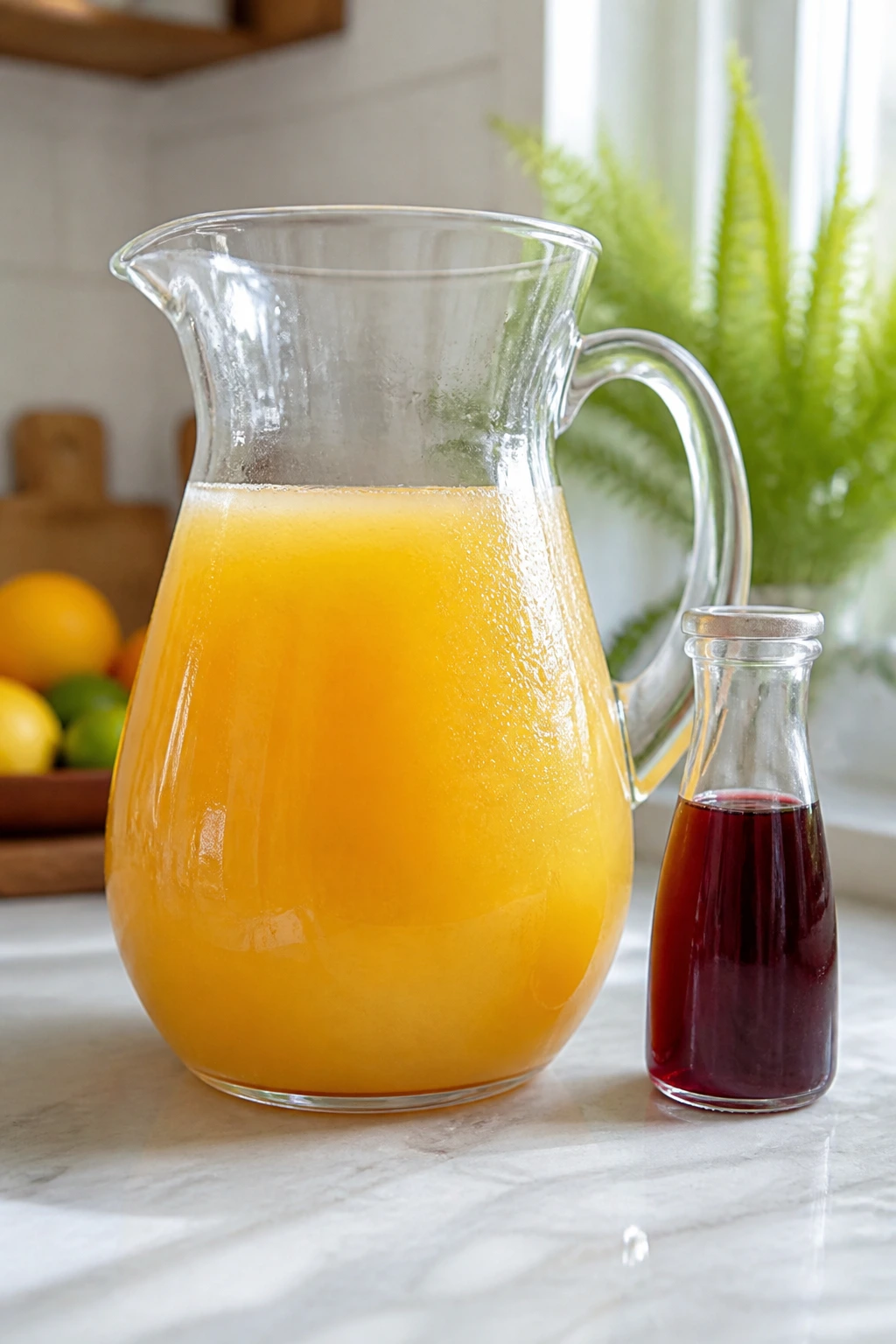
A finished Fruity Malibu Sunrise Cocktail is at its best the second it is built. After that, the ice starts diluting the body and the grenadine line softens. You can still drink it later, but the visual part fades fast, and that is half the reason people make this cocktail in the first place.
If you want to prep ahead, mix the Malibu, orange juice, pineapple juice, and lime juice together in a pitcher and refrigerate it for up to 24 hours. Keep the grenadine separate. That base will still taste fresh the next day if the juice was good to begin with, though I think the orange is brightest when you make it the same day.
For batching, multiply the base by the number of servings you need: 8 oz Malibu, 12 oz orange juice, 4 oz pineapple juice, and 2 oz lime juice makes 4 drinks. Stir the pitcher well, chill it, and pour over ice into individual glasses. Add 1/2 oz grenadine to each glass at service, not to the pitcher, unless you are fine with a mixed pink-orange drink instead of a layered one.
Leftover assembled cocktails can sit covered in the fridge for up to 1 day, but expect the ice to melt and the layers to disappear. I would not freeze the finished drink. If you want a colder batch, freeze the juice base in ice cube trays and use those cubes for a slushy-style variation later.
Fresh citrus is the part that ages fastest. If you squeeze the orange and lime ahead of time, try to use them within 24 hours and keep the container sealed so the top notes do not go dull.
Questions People Ask Before They Mix One
Can I make this with bottled orange juice?
Yes, and plenty of people do. Choose one that tastes like oranges instead of orange candy, and keep it very cold; if it seems too sweet, add a little extra lime rather than more grenadine. Fresh juice tastes brighter, but bottled juice is fine when you need speed.
Why did my grenadine mix in instead of sinking?
Usually the drink was too warm, the glass was not full enough with ice, or the grenadine was poured too quickly. Use a cold base, pack the glass with cubes, and pour slowly over the back of a spoon or against the inside edge. That gives the syrup time to settle at the bottom.
Do I really need pineapple juice?
No, but it helps. Pineapple gives the cocktail a rounder tropical note and keeps the orange from tasting too plain; if you leave it out, replace it with a little extra orange juice and maybe a touch more lime to keep the flavor awake.
What if I want the drink less sweet?
Reduce the grenadine to 1/4 oz and add a few drops of orange bitters or a pinch of salt. You can also replace 1 oz of orange juice with white grapefruit juice, which gives the drink a drier edge without changing the basic structure.
Can I batch this for a party?
Absolutely. Mix the rum and juices in a pitcher, chill it, and pour over ice one glass at a time. Add grenadine to each glass individually if you want the layered look to survive long enough for people to notice it.
What glass works best if I do not have a highball?
A Collins glass or hurricane glass works well because both are clear and tall. A mason jar can do the job too, though it is not as good at showing off the color shift. I would skip opaque cups altogether.
Can I use a different rum instead of Malibu?
Yes. Any coconut rum works, and if you want the drink a little drier, use 1 1/2 oz coconut rum plus 1/2 oz white rum. Plain rum also works if you add a tiny bit of coconut extract, but the result leans less beachy and more straightforward.
Can I make a nonalcoholic version that still looks like a sunrise?
You can. Use coconut water or a splash of coconut extract with orange juice, pineapple juice, lime juice, and grenadine. The layering still works because the syrup is denser than the juice, so you get the same red-bottom effect without the rum.
One More Sip
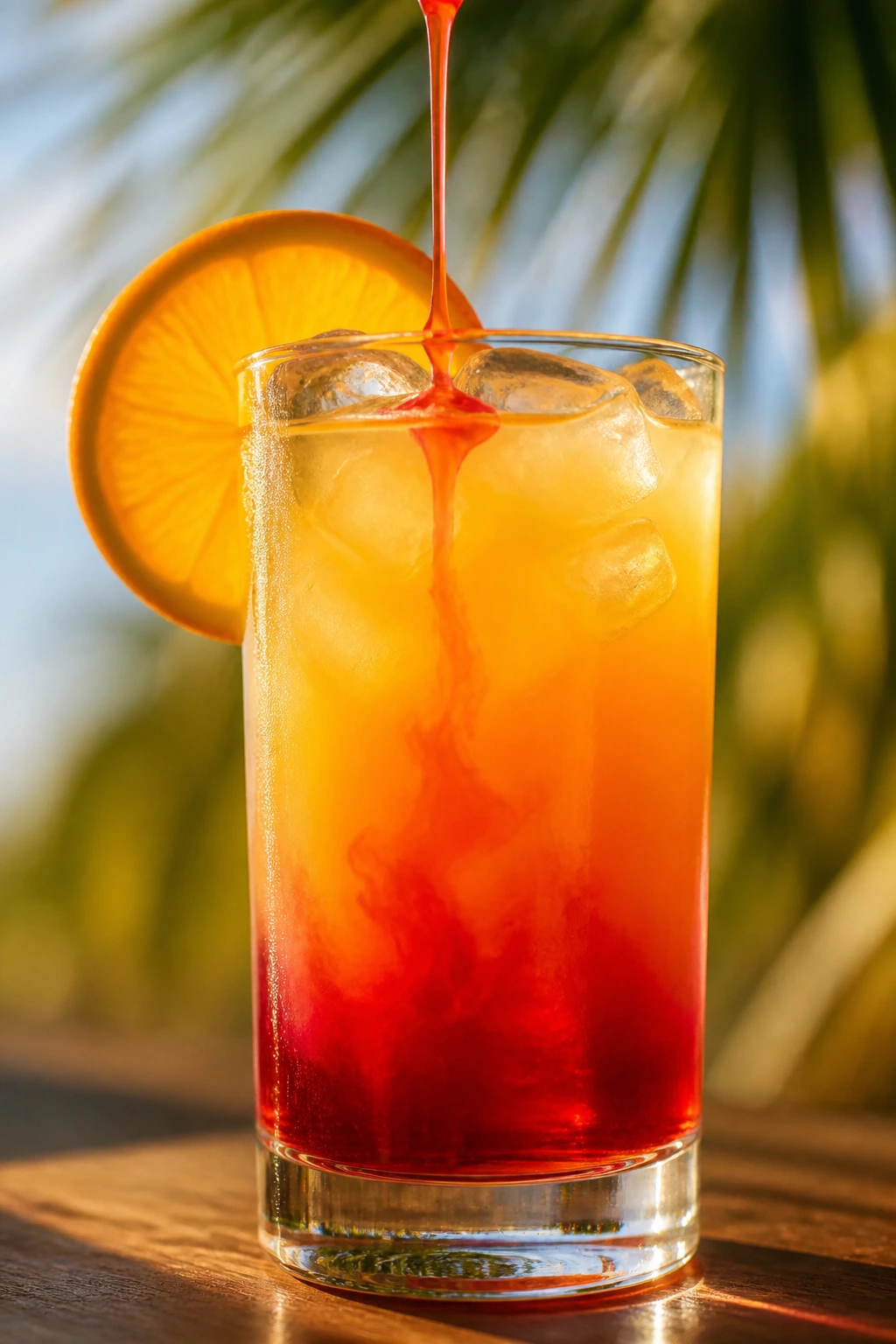
A Malibu sunrise has one job: look bright, taste cold, and leave you with that coconut-orange finish that makes you reach for the glass again. The drink is easy, but the little details matter more than you’d think — the ice, the chill, the slow pour of grenadine, the decision not to overdo the sweetness.
Make it once with well-chilled juice and a clear glass, and it stops feeling like a throwaway mixed drink. It becomes the kind of cocktail that earns its spot on the table because it knows exactly what it is, and that is usually enough.
Fruity Malibu Sunrise Cocktail — Recipe Card
Recipe Name: Fruity Malibu Sunrise Cocktail
Description: A coconut-rum sunrise with orange, pineapple, lime, and grenadine layered over ice for a bright tropical cocktail. The first sip is citrusy and soft; the last sip lands with that sweet red syrup at the bottom.
Prep Time: 5 minutes
Cook Time: 0 minutes
Total Time: 5 minutes
Course: Cocktail
Cuisine: Tropical-inspired
Servings: 1 cocktail
Calories: about 235 kcal
Ingredients
For the Cocktail:
- 2 oz Malibu coconut rum, chilled
- 3 oz orange juice, chilled
- 1 oz pineapple juice, chilled
- 1/2 oz fresh lime juice
- 1/2 oz grenadine
- 1 cup ice cubes, or enough to fill a 12-ounce highball glass
For the Garnish:
- 1 orange wheel
- 1 maraschino cherry, optional
Instructions
- Fill a 12-ounce highball glass with ice and, if possible, chill the glass for 5 minutes first.
- Add the Malibu, orange juice, pineapple juice, and lime juice to a shaker filled halfway with ice.
- Shake for 8 to 10 seconds until the outside of the shaker frosts.
- Strain into the prepared glass over fresh ice.
- Slowly pour the grenadine down the inside edge or over the back of a spoon so it sinks to the bottom.
- Garnish with an orange wheel and cherry, then serve immediately without stirring.
Notes: Chill the juice for the cleanest layer. Cut the grenadine to 1/4 oz if you want less sweetness. Pomegranate syrup works if you do not have grenadine.