



A hearty fruit salad with homemade dressing should not collapse into juice before the coffee is even poured. That’s the first thing worth saying, because too many fruit salads are built like a shrug: soft fruit, too much sweetness, and a dressing that tastes like bottled syrup. This version has structure. Grapes stay snappy, apples bring crunch, pineapple and mango add body, and the citrus dressing clings just enough to make every bite taste lifted instead of soggy.
The other thing I like here is the way the bowl behaves over time. A good fruit salad isn’t only about the first forkful. It’s about the fruit still looking like fruit after it sits on the counter for a short while, about the juices staying bright instead of muddy, about the apples not turning beige and the berries not dissolving into mash. That’s why the cut size, the fruit choice, and the order of assembly matter so much.
And yes, the dressing matters. A lot. A little orange juice, lime, honey, vanilla, and salt does more than add sweetness; it sharpens the fruit and keeps the whole bowl from tasting flat. Once you get that balance right, the salad stops feeling like a side note and starts acting like a proper dish.
Why This Fruit Salad Earns Its Spot on the Table
-
Sturdy Fruit Mix: Apples, grapes, pineapple, mango, and blueberries hold their shape longer than melon-heavy fruit salad, so the bowl still looks clean after a short chill.
-
Bright Dressing: The orange-lime dressing cuts through the sweetness instead of smothering it, which keeps the fruit tasting like itself.
-
Brunch-Friendly: It sits comfortably next to eggs, pastries, or yogurt, but it also works beside roast chicken or pork if you want something cold and fresh on the plate.
-
Make-Ahead Ready: You can cut the fruit and whisk the dressing ahead of time, then combine them at the last minute so the texture stays crisp.
-
No Dairy Needed: The base recipe is naturally dairy-free and gluten-free, which makes it easy to serve to a mixed crowd without building a separate dish.
-
Flexible Without Being Vague: If you have ripe pears, extra berries, or a handful of kiwi, they can slide in without wrecking the balance, as long as you keep the fruit sturdy.
Yield: Serves 6 to 8
Prep Time: 20 minutes
Cook Time: 0 minutes
Total Time: 20 minutes, plus 20 to 30 minutes chilling if you want it extra cold
Chill/Rest Time: 20 to 30 minutes optional
Difficulty: Beginner — there’s no heat involved, but clean knife work and good timing make a noticeable difference.
Best Served: Cold, within 1 hour of tossing
What Goes Into the Bowl
You can make fruit salad with almost anything that’s edible and sweet. That is not the same thing as making a good one. The version below leans on fruit with some backbone, so the bowl stays lively instead of sinking into its own juice.
For the Fruit Salad:
- 2 cups strawberries, hulled and quartered
- 2 cups seedless green grapes, halved lengthwise
- 2 cups blueberries, rinsed and dried
- 2 cups fresh pineapple chunks, cut into 3/4-inch pieces
- 2 medium firm apples, cored and cut into 1/2-inch cubes
- 2 medium kiwis, peeled and sliced or cut into half-moons
- 1 large mango, peeled and diced
- 2 medium navel oranges, peeled and segmented, or 1 cup mandarins
- 1 cup pomegranate arils
- 2 tablespoons fresh mint, finely sliced
For the Homemade Dressing:
- 1/4 cup fresh orange juice
- 2 tablespoons fresh lime juice
- 2 tablespoons honey
- 1 teaspoon finely grated lime zest
- 1 teaspoon vanilla extract
- 1 tablespoon poppy seeds
- Pinch of fine sea salt
A fruit salad built this way has layers of texture. The grapes pop, the apples crack a little, the pineapple gives chew, and the berries keep the whole bowl from feeling too tidy. You want a mix of shapes and firmness, not a blur of the same soft thing.
The dressing is deliberately lean. It’s not trying to turn the fruit into candy. It’s there to brighten the edges, perfume the bowl, and keep the apples from browning too quickly.
Timing, Yield, and the Right Moment to Serve It
This is the kind of salad that makes more sense when you think of it like a composed dish instead of a dumped-together bowl. The fruit is doing the heavy lifting, but the dressing and the timing decide whether the finished result feels crisp and polished or a little tired around the edges.
The yield here is generous enough for a family breakfast, a brunch spread, or a simple dessert after dinner. If you’re serving it as a side beside waffles, bacon, or a quiche, plan on the smaller end of the portion range. If it’s the main thing on the table with yogurt and granola, the portions can run larger.
I like this fruit salad best after a short rest in the refrigerator. Twenty minutes is enough to chill the bowl and let the citrus settle into the fruit. Push it much longer than that, and the softer fruit starts giving up more juice than I want. Still good. Just looser.
A quick note on serving temperature
Cold fruit tastes brighter. That sounds obvious until you’ve had a lukewarm fruit salad sitting under kitchen lights for half an hour. The mango feels softer, the grapes lose their snap, and the dressing gets flat. Keep the bowl chilled if you can, or at least work with cold fruit straight from the refrigerator.
Why the Homemade Dressing Matters
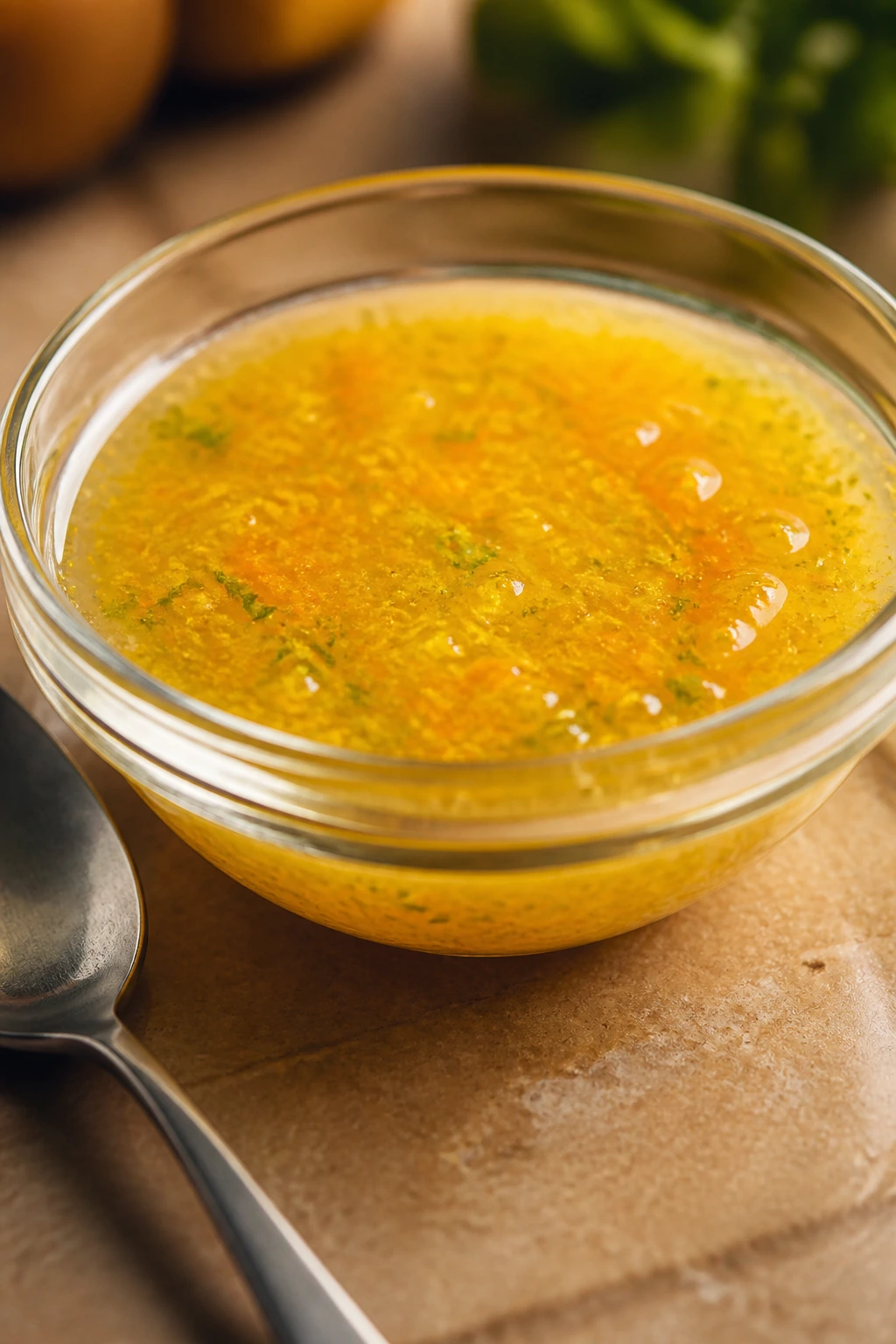
A lot of fruit salads get made with good fruit and a weak dressing, which is a shame. The dressing is not decoration. It’s the thing that ties the bowl together, and in a fruit salad this sturdy, it needs enough acidity to keep the sweetness from turning dull.
Orange juice gives you body and a rounded citrus note. Lime wakes up the pineapple and mango, which can get sleepy fast if they’re left on their own. Honey smooths the sharp edges, but not so much that the whole bowl tastes candied. Vanilla sounds small in the ingredient list, yet it softens the acid in a way that makes the dressing smell warmer and taste more finished.
Salt matters here too. A pinch is enough. It doesn’t make the salad salty; it makes the fruit taste like itself. If you’ve ever tasted a bowl of berries that seemed oddly flat even though they were perfectly ripe, salt is often the missing piece.
Why this dressing clings instead of flooding
The honey gives the dressing enough weight to coat the fruit lightly. That is the whole trick. You do not want a pool at the bottom of the bowl. You want a glossy film on the fruit pieces so every bite carries citrus, sweetness, and a little perfume from the zest.
What the vanilla is doing
Vanilla in a fruit salad can sound fussy if you’ve only seen it in cakes and custards. Here it behaves more like a bridge. It links the orange, lime, and honey so the dressing tastes rounded instead of sharp, and it’s one of those small additions that makes people ask what’s different.
Why Each Ingredient Pulls Its Weight
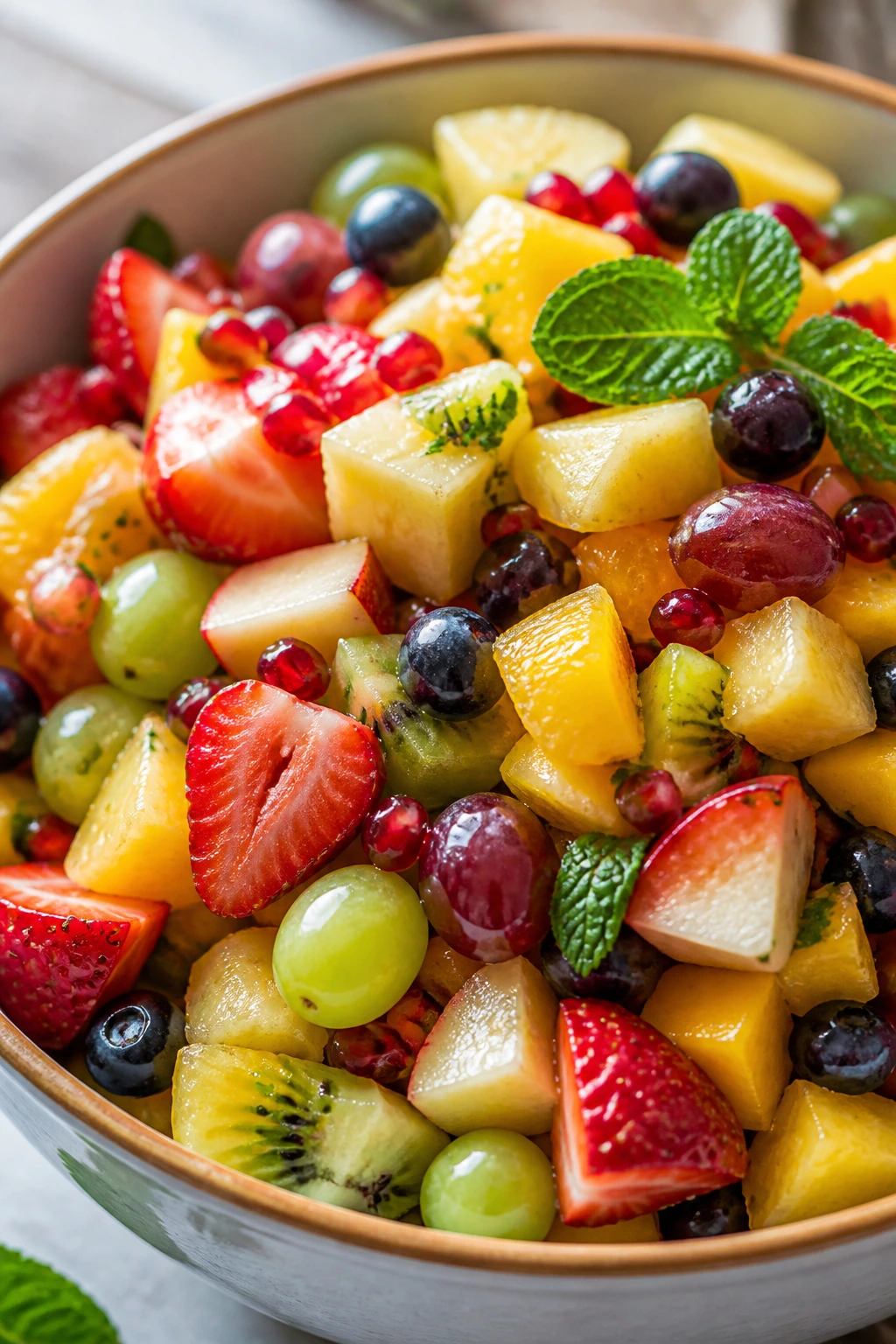
The Fruit Base
What to use: 2 cups strawberries, 2 cups grapes, 2 cups blueberries, 2 cups pineapple, 2 apples, 2 kiwis, 1 mango, 2 oranges, and 1 cup pomegranate arils give you a bowl with crunch, chew, juice, and color. The mint is the last note, not the main event.
Preparation: Wash and dry everything thoroughly, then cut the fruit into pieces that are close in size. Aim for about 1/2-inch to 3/4-inch pieces on the firmer fruit so the salad feels balanced in the spoon.
Substitutions: Use pears instead of apples, raspberries instead of some of the strawberries, or clementines instead of navel oranges if that’s what looks best at the market. Keep at least three firm fruits in the bowl — grapes, apples, pineapple, or pears — so the texture still has some bite.
Tips: Dry fruit matters more than people think. Water left clinging to berries and grapes thins the dressing and makes the bottom of the bowl soupy before you’ve even served it.
The Citrus-Honey Dressing
What to use: 1/4 cup orange juice, 2 tablespoons lime juice, 2 tablespoons honey, 1 teaspoon lime zest, 1 teaspoon vanilla, 1 tablespoon poppy seeds, and a pinch of salt create a dressing that is bright but not thin.
Preparation: Whisk until the honey disappears completely and the dressing looks glossy, not streaky. Zest the lime before you cut and juice it, or you’ll be chasing a slippery half-lime around the board like a fool.
Substitutions: Maple syrup can stand in for honey, lemon juice can replace lime, and if you don’t want poppy seeds, leave them out. The dressing still works; it just loses that tiny bit of texture and speckled look.
Tips: Taste the dressing before it hits the fruit. If the fruit is especially sweet, add an extra teaspoon of lime juice. If it tastes too sharp, add another half-teaspoon of honey and whisk again.
The Finishing Mint
What to use: 2 tablespoons fresh mint, cut into thin ribbons, is enough for fragrance without making the salad taste herbal.
Preparation: Stack the leaves, roll them tightly, and slice across the roll into thin strips. That keeps the mint from turning into ragged pieces.
Substitutions: Fresh basil works if you want the salad to lean more savory and less candy-sweet. It’s a different bowl, but a good one.
Tips: Add mint at the end, after the fruit has been dressed. If it sits in liquid too long, the color darkens and the aroma fades.
Tools That Make the Prep Easier
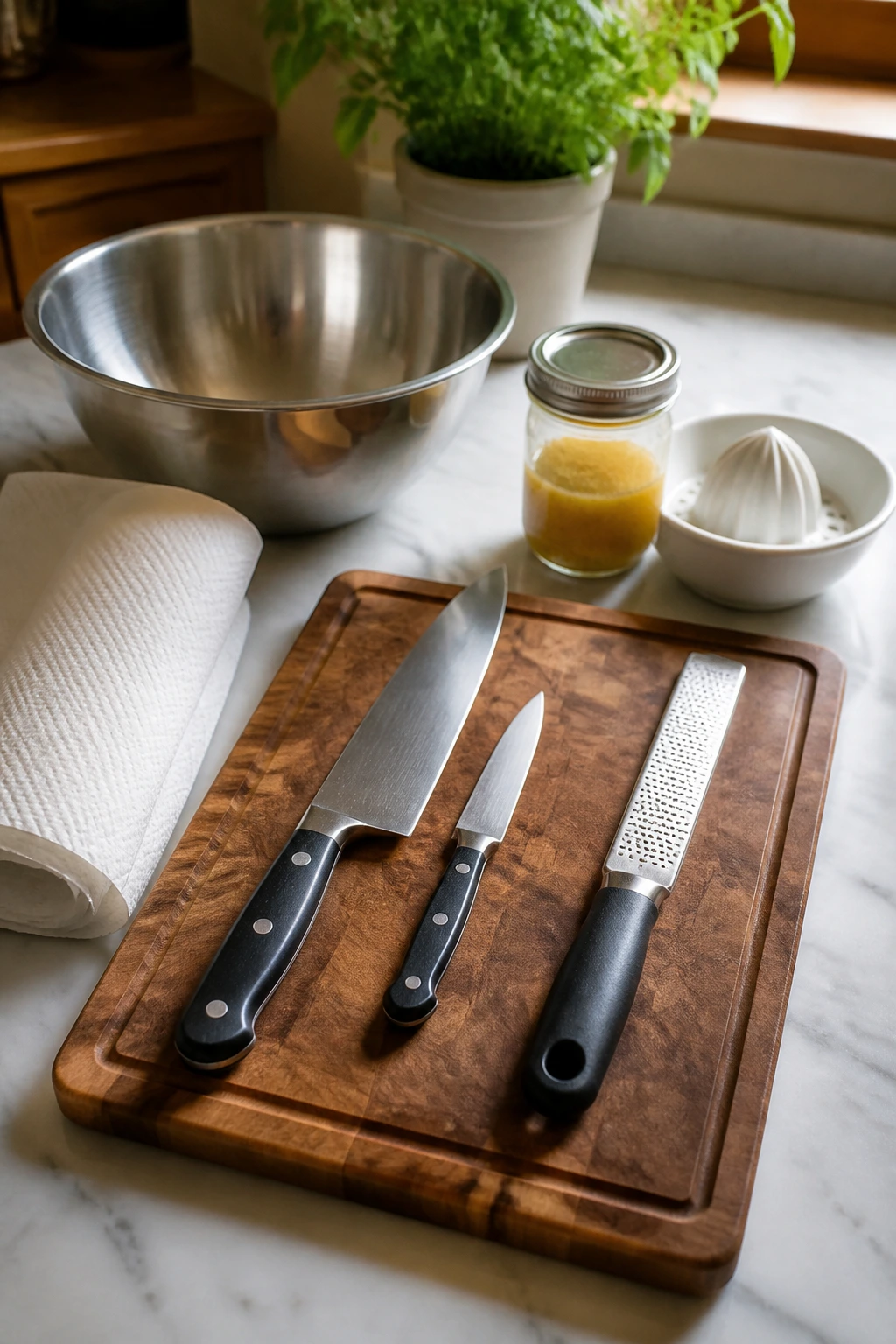
You do not need special gear for fruit salad, which is part of the charm. Still, a few tools make the work cleaner and faster.
- Large cutting board: A roomy board gives you space to cut several fruits without crowding them into a sticky pile.
- Sharp chef’s knife: Clean cuts matter here. A dull knife crushes berries and bruises apples.
- Paring knife: Handy for peeling kiwis, trimming strawberries, and cutting around the mango pit.
- Microplane or fine grater: Best for zesting the lime without pulling off the bitter white pith underneath.
- Large mixing bowl: Choose one with high sides so the fruit doesn’t bounce out when you toss it.
- Small bowl or glass jar with lid: Perfect for whisking the dressing until smooth; a lidded jar makes shaking even easier.
- Citrus juicer: Optional, but it helps squeeze the orange and lime without seeds slipping into the dressing.
- Paper towels or a clean kitchen towel: Fruit needs to be dry before it gets dressed, and these save you from watery regret.
A damp towel under the cutting board is one of those tiny practical things that saves annoyance. The board stops skidding, the knife work feels calmer, and you’re less likely to chase a grape halfway across the counter.
How to Keep the Fruit Crisp and Bright
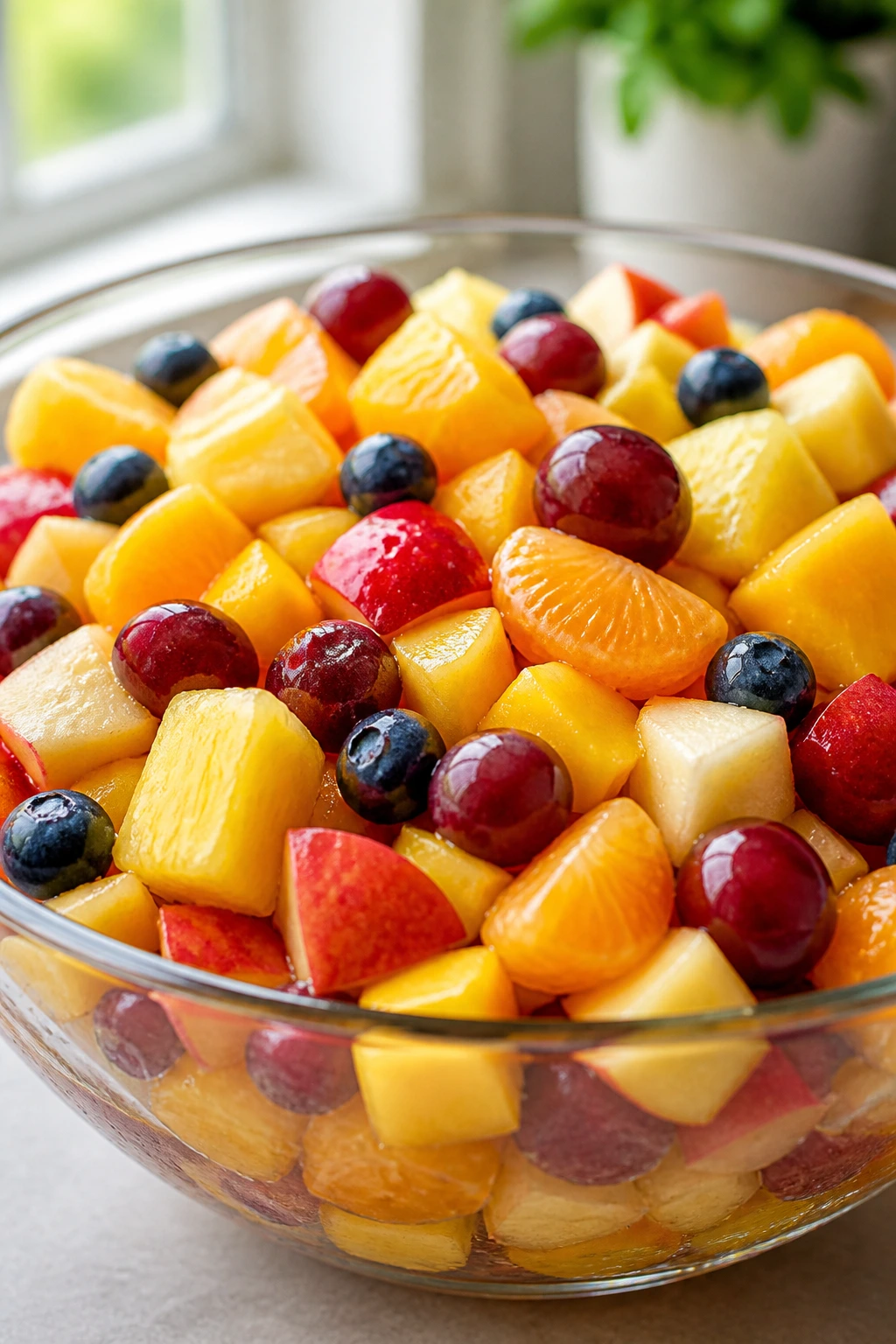
The whole game here is controlling moisture. That sounds boring until you’ve served a bowl that looked lively when it left the fridge and tired when it hit the table. Fruit salad has a short fuse, and the way you handle it decides how far that fuse stretches.
Cut the firm fruit first
Apples, pineapple, grapes, and mango should be cut before the berries and oranges. They hold their shape better, and they also give you a base to toss the more delicate fruit onto later. If you start with strawberries, they get smashed by the time the bowl is half full.
Keep the delicate fruit for the end
Blueberries, strawberry quarters, orange segments, and pomegranate arils are happier when they’re folded in near the finish. They need only a light toss. If you’re rough with them, they burst and stain the whole bowl a murky pink.
Use acid as a shield, not a flood
Citrus does help slow browning on apples and pears, but only if you keep the amount sensible. A teaspoon or two on the fruit pieces while you’re assembling can be helpful. Drowning the bowl in dressing does the opposite. It makes everything taste tired and soft before serving.
If you want apples to stay pale for a little longer, cut them last and toss them in a spoonful of the dressing or a squeeze of lime before combining them with the rest. That tiny step is worth the minute it takes.
Step-by-Step Assembly
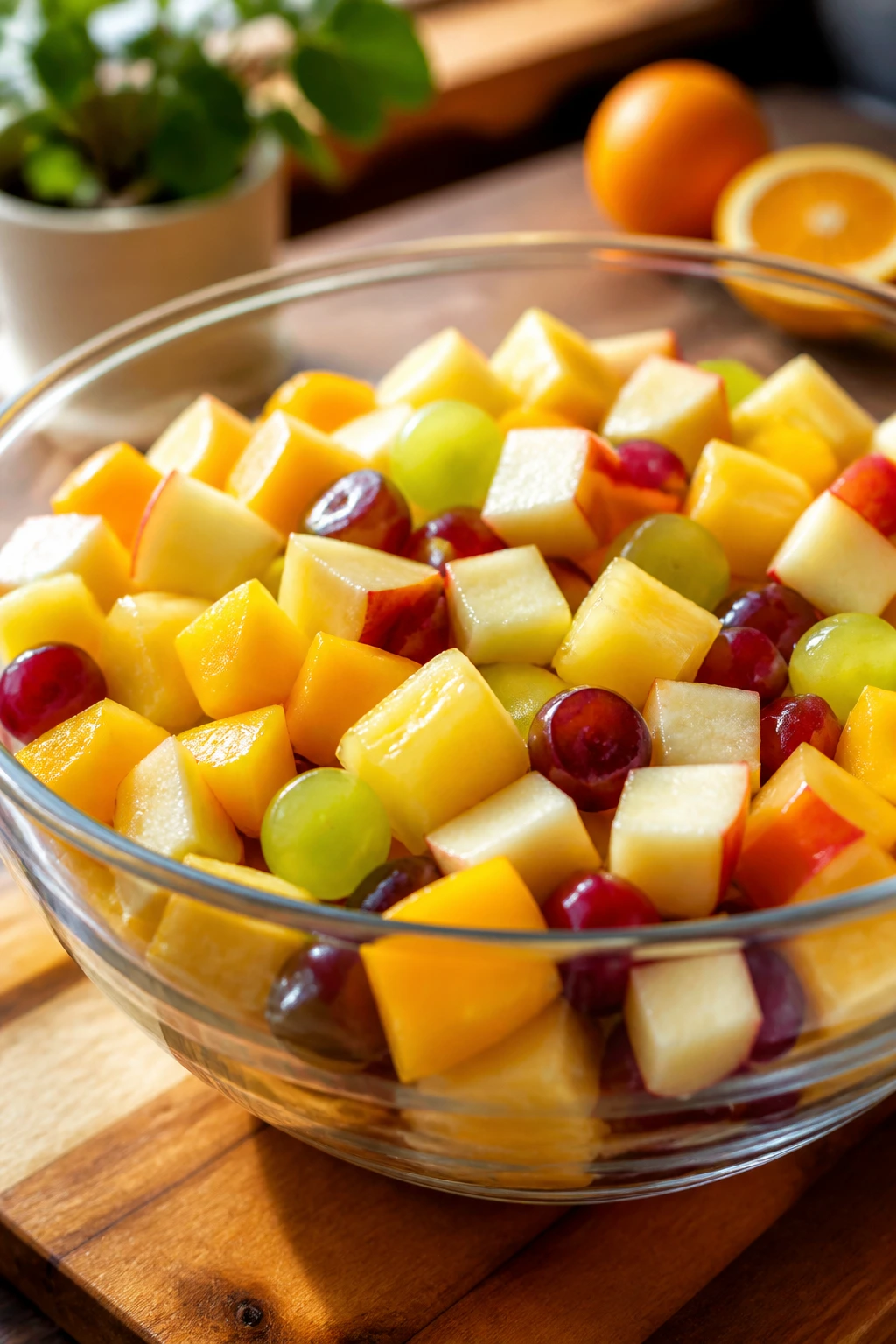
Wash, Dry, and Prep the Fruit
-
Rinse the strawberries, grapes, blueberries, pineapple, oranges, kiwis, mango, and pomegranate arils under cool water, then dry everything thoroughly with paper towels or a clean kitchen towel. Any leftover water will thin the dressing and make the salad runny.
-
Hull and quarter the strawberries, halve the grapes lengthwise, and cut the pineapple into 3/4-inch chunks. Keep the pieces close in size so each spoonful feels balanced instead of random.
-
Peel and dice the mango, peel and slice the kiwis, core and cube the apples, and segment the oranges over a bowl so you catch the juice. If you’re using apples and you need them to hold longer, toss them with a teaspoon of lime juice right away.
Make the Dressing
- In a small bowl or lidded jar, whisk together the orange juice, lime juice, honey, lime zest, vanilla, poppy seeds, and salt until the honey disappears and the dressing looks glossy. It should smell bright and a little floral, not heavy or syrupy.
Build the Salad
-
Add the pineapple, apples, grapes, mango, and oranges to a large mixing bowl first. These sturdier fruits form the base and let you toss without bruising the softer pieces later.
-
Fold in the strawberries, blueberries, kiwi, and pomegranate arils with a wide spatula or clean hands. Work gently. You want the fruit mixed, not mashed. If the berries start to stain the whole bowl, you’re mixing too hard.
Dress and Finish
-
Pour about three-quarters of the dressing over the fruit and toss gently until everything looks lightly coated. Taste a spoonful. If the fruit seems underdressed, add the rest a teaspoon at a time.
-
Scatter the mint over the top, then toss once more or leave it on the surface if you want a fresher look. Chill for 20 to 30 minutes if you want a colder bowl and a slightly more blended flavor.
-
Give the fruit one final taste right before serving. If it needs more brightness, add a little extra lime zest or a squeeze of lime juice. Do not add more honey at the end unless the fruit is genuinely tart; too much sweetness flattens the whole bowl.
How to Serve It
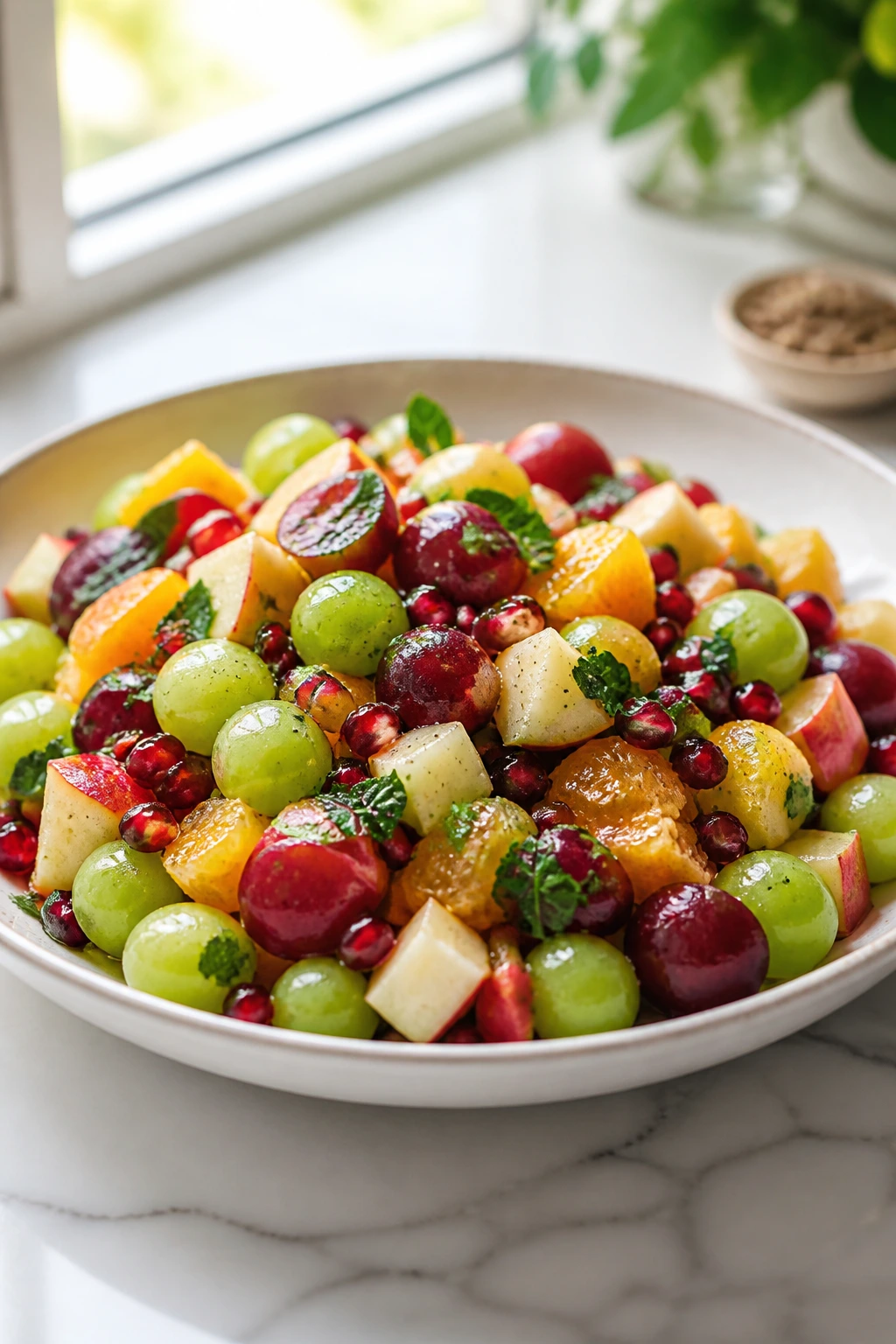
Presentation: Spoon the fruit salad into a wide, shallow bowl instead of a deep one. That keeps the colors visible and stops the fruit at the bottom from getting crushed under its own weight. If you want it to look polished, save a few mint ribbons, a handful of pomegranate arils, and a couple of grape halves for the top.
Accompaniments: This plays well with thick yogurt, granola, pancakes, waffles, French toast, baked ham, or a simple egg dish. I also like it next to roast chicken when I want something cold and sharp on the plate. For a lighter breakfast, a scoop over plain Greek yogurt with a spoonful of oats is enough to call it done.
Portions: As a side, plan on about 3/4 cup to 1 cup per person. If it’s the main thing in a breakfast bowl, 1 1/2 cups is more realistic, especially once you add yogurt or granola. For a crowd, this recipe doubles cleanly; just use a larger bowl and toss in two stages so the fruit doesn’t get bruised.
Beverage Pairing: Cold green tea, sparkling water with lime, or strong coffee all work depending on the meal. If the fruit salad is going onto a brunch table, a dry sparkling wine fits the citrus dressing nicely. Keep the drinks crisp, not sweet, or they’ll make the salad taste louder than it should.
Small Tweaks That Make a Big Difference
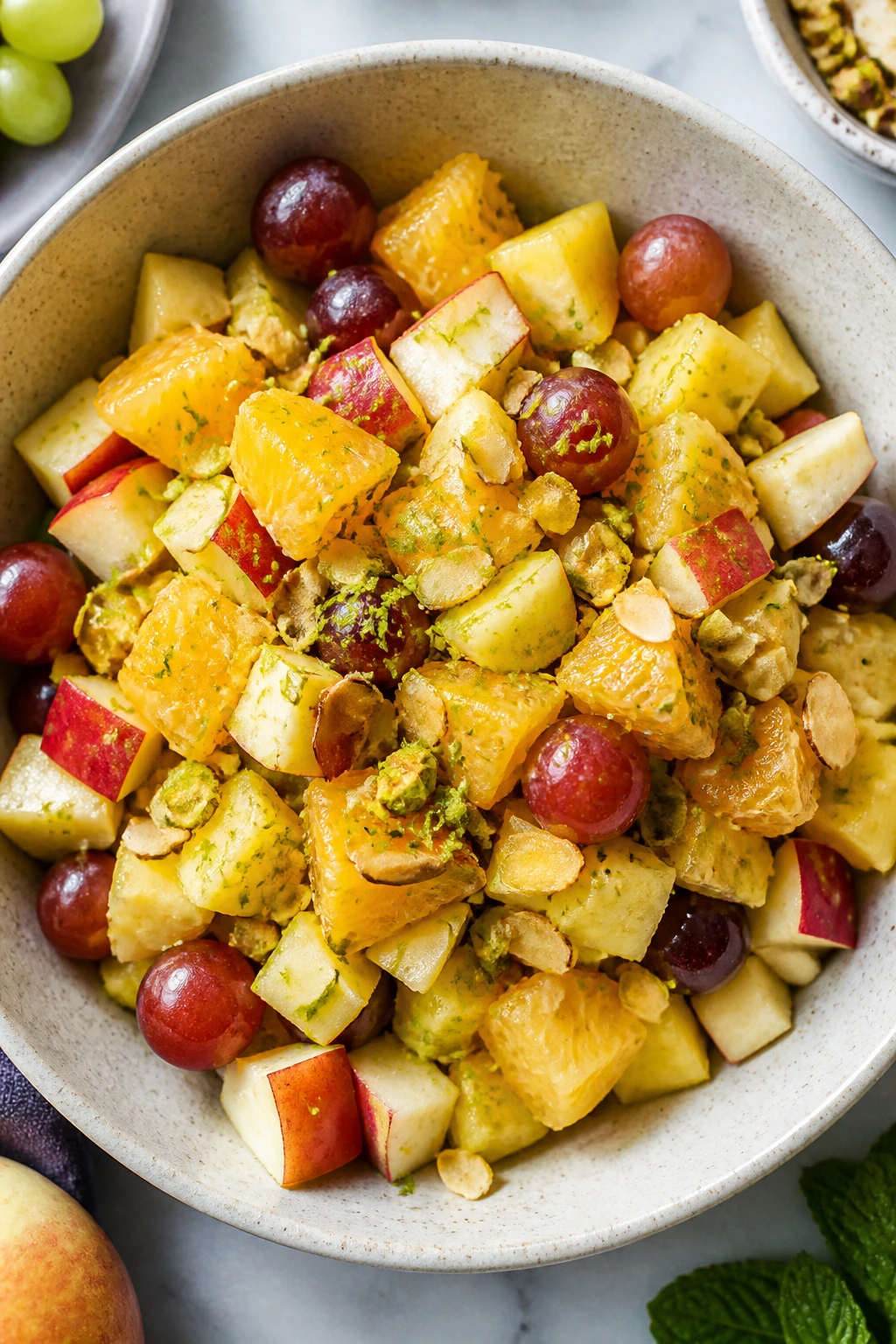
Flavor Enhancement: A tiny pinch of fine salt in the dressing does more than a tablespoon of extra honey. It makes the pineapple taste deeper and helps the oranges taste less flat. If you like a little spice, grate in a whisper of fresh ginger — not enough to announce itself, just enough to give the dressing a tail end.
Texture Upgrade: Toasted sliced almonds, pistachios, or unsweetened coconut flakes can go on top right before serving. They add crunch that lasts longer than any fruit skin, and they make the bowl feel more finished. If you’re serving the salad for brunch, this is one of those small moves that pays off.
Time-Saver: Buy pre-cut pineapple only if it looks dry and smells clean. Some cut fruit sits in too much juice and turns the bowl watery fast. If you do buy a convenience cut, drain it well and pat it dry before it goes in.
Serving Suggestions: A spoonful of extra lime zest on top wakes the whole bowl up, especially after chilling. A few basil leaves can replace the mint if you want something a little more savory. If you’re serving people who like creamier fruit salad, keep plain Greek yogurt on the side rather than mixing it into the bowl; that keeps the fruit bright and lets each person choose.
Mistakes That Turn a Fruit Salad Watery
-
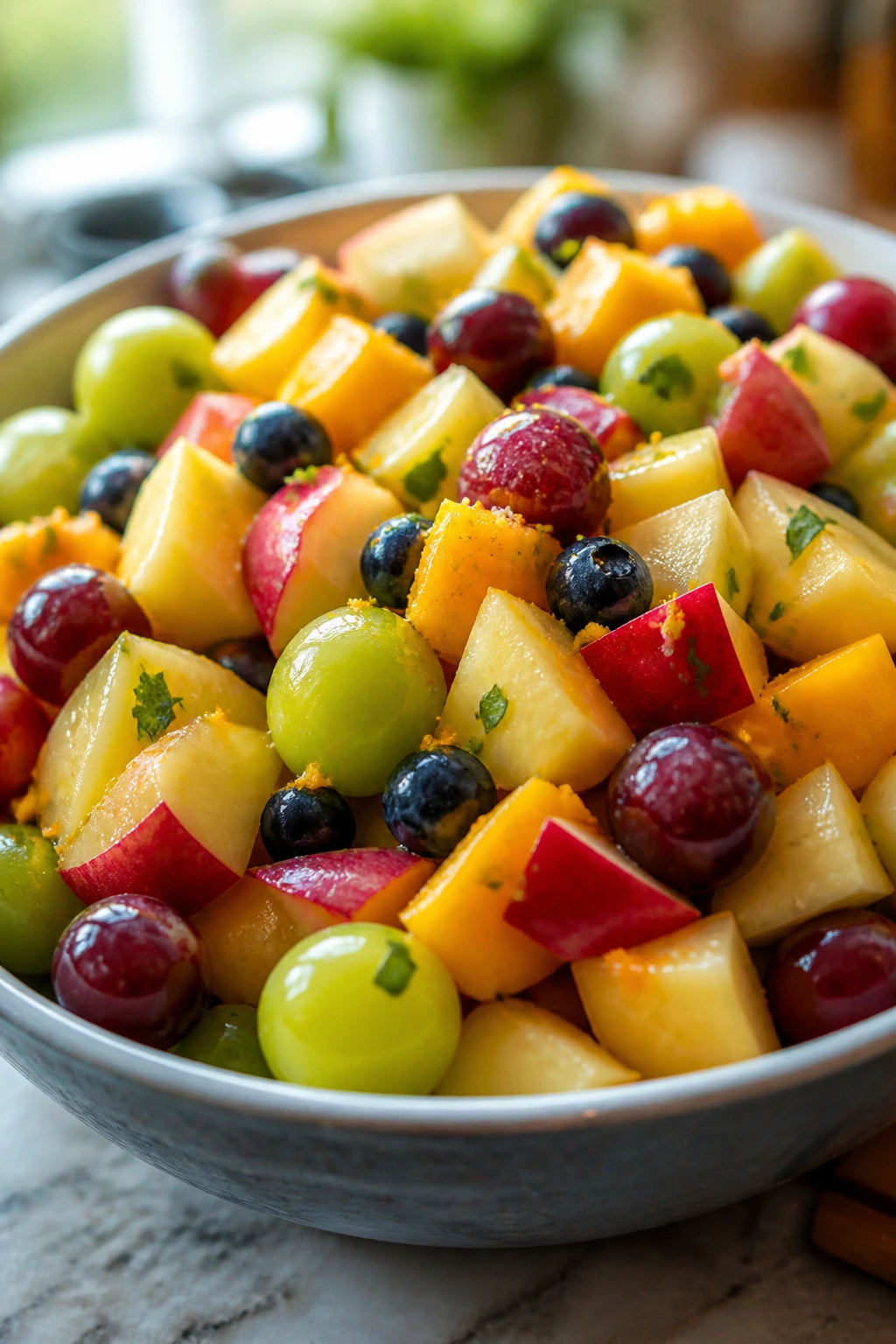
Using fruit that’s already soft. Overripe berries, bruised grapes, and mushy mango break down fast, and the salad starts tasting like juice with pieces in it. Pick fruit that still has some firmness when you press it gently, even if it means waiting a day or two to make the bowl.
-
Not drying the fruit after washing. Wet berries and grapes are one of the fastest ways to thin the dressing. Dry them well, even if it feels fussy, because a dry bowl stays crisp and a wet one slumps.
-
Adding all the dressing too early. The fruit will macerate, which is a fine thing in some desserts and the wrong thing here. Toss with most of the dressing 10 to 20 minutes before serving, then add the last bit only if the bowl still looks dry.
-
Chopping everything into tiny pieces. Small fruit cubes lose texture and turn spoonable in the wrong way. Keep the cuts medium, around 1/2-inch to 3/4-inch, so the salad still has a chew.
-
Forgetting to taste after chilling. Citrus dulls a little as the bowl gets cold. If the salad tastes shy after 20 minutes in the fridge, a squeeze of lime or a sprinkle of zest usually fixes it faster than more honey.
-
Mixing too aggressively. Strawberries split, blueberries burst, and the whole bowl ends up streaked and soft. Fold the fruit with a light hand and stop before it starts looking stirred rather than tossed.
Variations and Flavor Swaps
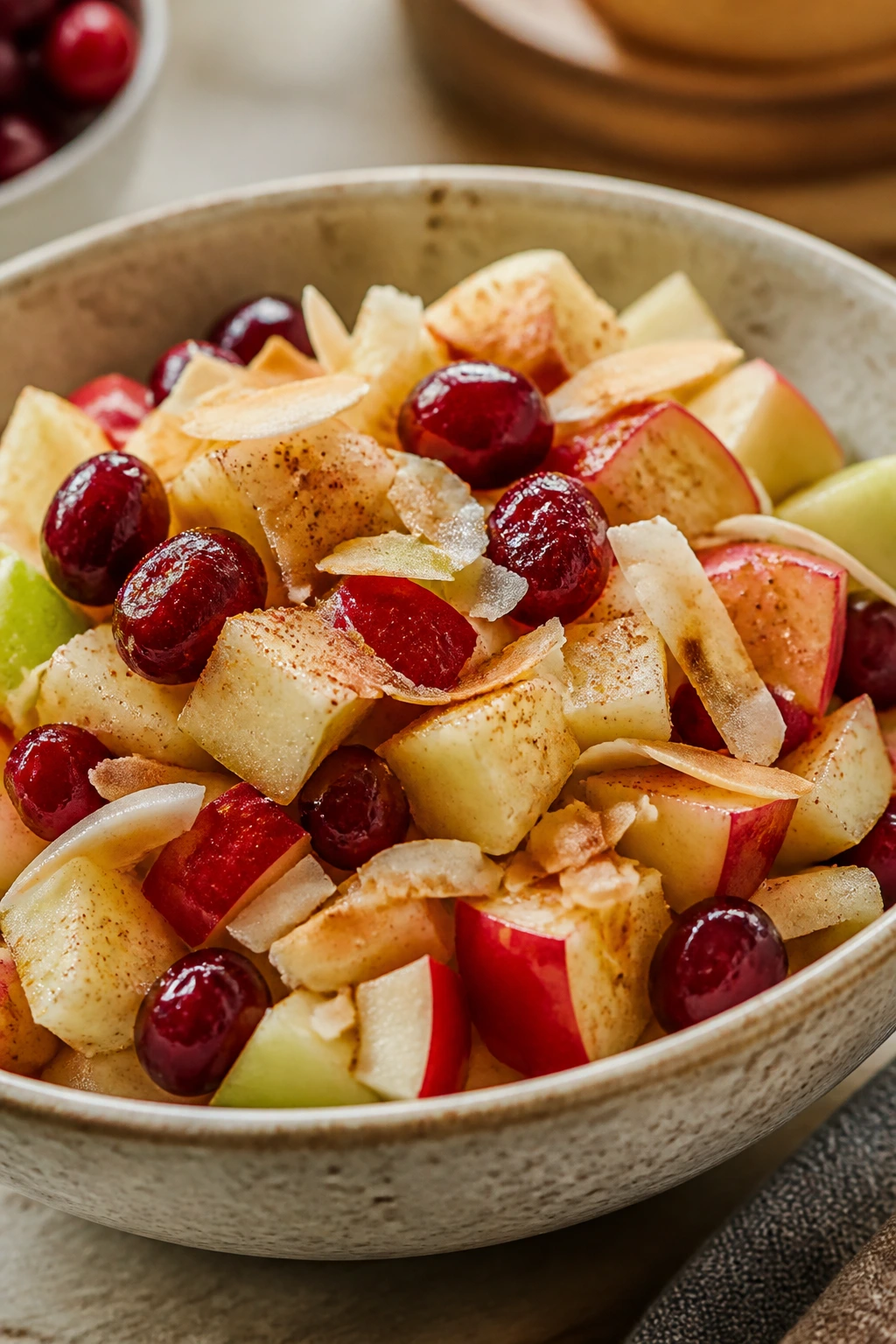
Orchard Crisp: Swap the mango for a second apple or a ripe pear, and use cranberries instead of pomegranate if that’s what you have. Add a pinch of cinnamon to the dressing. This version tastes sharper and a little more autumn-leaning, even if you serve it in the middle of a warm afternoon.
Tropical Brunch Bowl: Use pineapple, mango, kiwi, orange, and a handful of sliced banana only if you’re serving it right away. Trade the mint for toasted coconut and swap lime juice for a mix of lime and pineapple juice. It leans sweeter and softer, so it’s best for same-day serving.
Berry-and-Herb Bowl: Build the salad around strawberries, blueberries, raspberries, and blackberries, then add basil instead of mint. The dressing can stay the same, though I like a touch more lime here. The result is less fruity-sweet and more tart, which works well with yogurt or ricotta.
Winter Citrus Bowl: Use orange segments, grapefruit, mandarins, pomegranate, and thin slices of firm pear. Keep the dressing light and use a little extra zest. This is the version I’d put on a holiday table because the colors stay bright and the fruit tastes brisk rather than heavy.
Creamy Sideboard Version: Spoon plain Greek yogurt into the bottom of each serving bowl, then pile the fruit salad on top. Do not mix the yogurt through the entire batch unless you plan to serve it immediately. The contrast between cold fruit and creamy yogurt gives you the same comfort as a parfait, with less sugar and less fuss.
Make-Ahead, Storage, and Leftovers
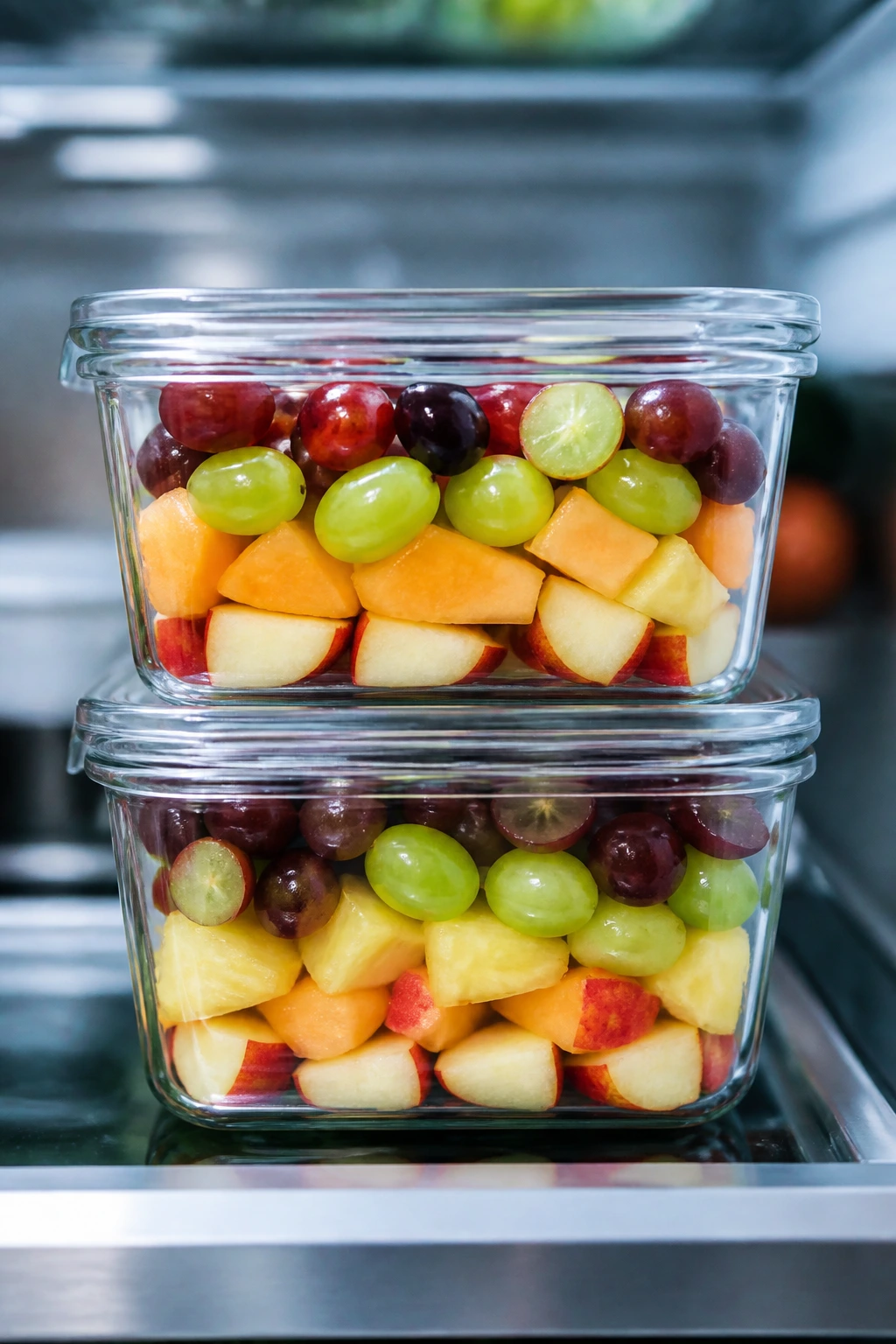
Fruit salad is one of those dishes that looks easy until you try to hold it for a few hours. Then the texture starts telling the truth. You can make parts of it ahead, but the full bowl is happiest when it’s assembled close to serving time.
The fruit can be prepped 6 to 12 hours ahead if you keep the pieces separate and dry in covered containers in the refrigerator. Apples and pears should be cut last if possible; if you must cut them early, toss them with a little lime juice and store them tightly covered. The dressing keeps for up to 3 days in a jar in the refrigerator. Shake or whisk it before using, because the honey will settle.
Once tossed, the fruit salad is best within 1 hour and usually holds nicely for about 24 hours in the refrigerator if the fruit is firm. After that, the berries soften, the citrus loosens the bowl, and the cut edges of apples and kiwi start to lose their clean look. If you have leftovers, drain off any excess juice before storing them in an airtight container. A small splash of fresh lime juice when you serve the leftovers can bring them back to life.
There is no reheating step here, and that’s a good thing. Fruit salad should stay cold. If it tastes muted after chilling, let it sit on the counter for 5 to 10 minutes and then give it a quick toss. Freezing is not worth it; the texture turns soggy when thawed, and the fruit never fully recovers. If you have too much to finish, put the leftovers into a smoothie rather than forcing them back into a salad bowl.
Frequently Asked Questions
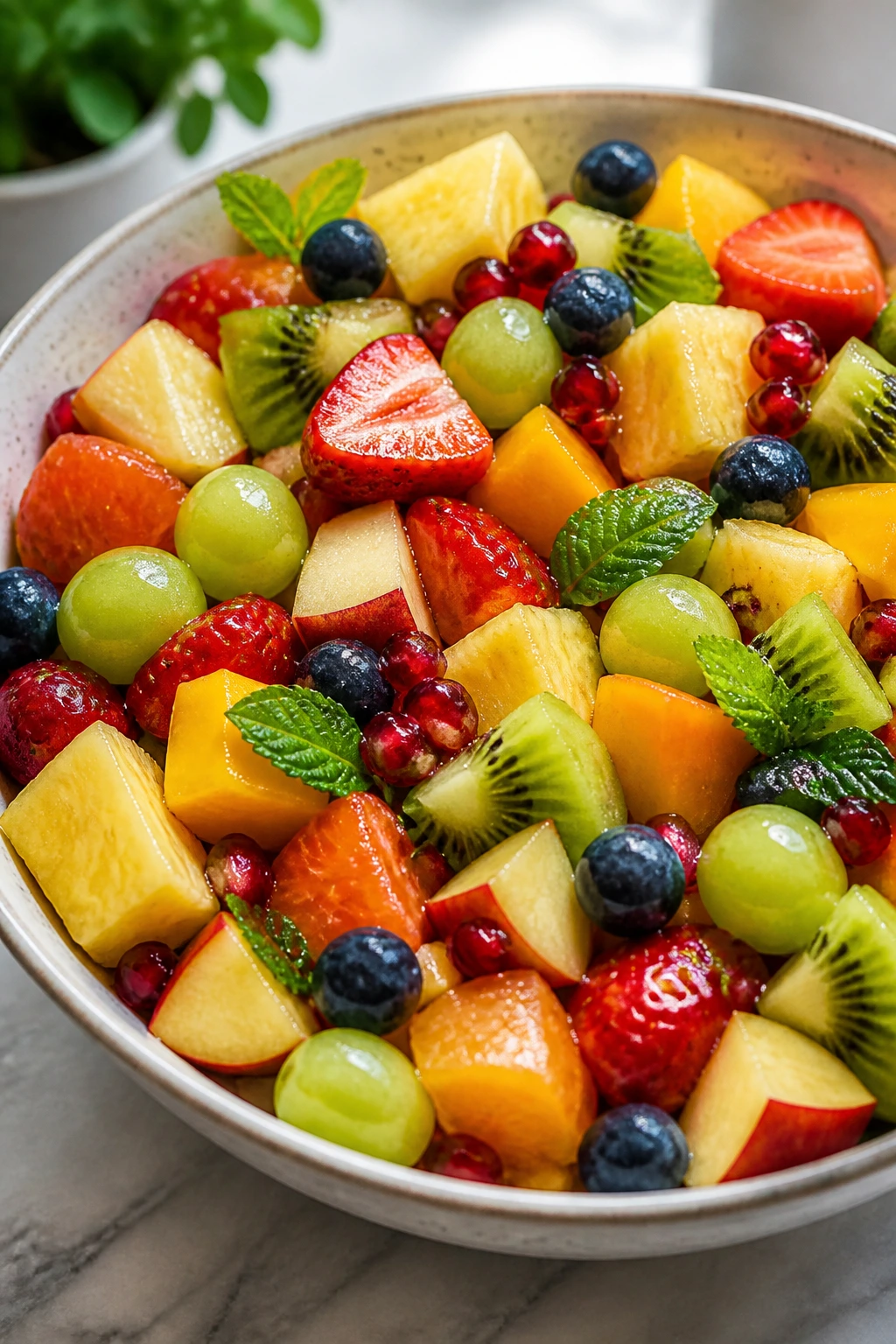
Can I make this fruit salad the night before?
You can prep the fruit and the dressing the night before, but I would hold the final toss until close to serving. If you need to assemble it ahead, keep the firmer fruit and dressing separate from the softer berries and mint, then combine everything 15 to 20 minutes before it hits the table.
What fruit holds up best in a hearty fruit salad?
Grapes, apples, pineapple, mango, and firm pears are the strongest players. They keep their shape and give the salad structure, which is why this recipe leans on them so heavily. Soft fruit has a place too, but it should not be the whole cast.
Can I use frozen fruit?
For the main bowl, frozen fruit is not my first choice. It releases too much liquid as it thaws, which turns the dressing thin and the texture soft. If you want to use frozen fruit, save it for smoothies or chill a dressing bowl by serving the fruit only after it has thawed and drained very well — and even then, expect a looser result.
How do I keep the apples from browning?
Cut them as late as you can, then toss the cubes with a little lime juice before mixing them into the salad. The acid slows oxidation and keeps the flesh pale longer. A firm apple like Honeycrisp, Pink Lady, or Fuji also helps because it bruises less during tossing.
Can I use bottled citrus juice instead of fresh?
You can, but the dressing loses some of its lift. Fresh orange and lime juice give you more fragrance, and the zest from a real lime adds a brightness bottled juice cannot match. If bottled juice is what you have, use it — just lean harder on the zest and the pinch of salt.
What if the fruit salad tastes too sweet?
Add more lime juice, a little zest, or a few extra pomegranate arils for a sharper bite. I would not reach for more honey unless the fruit is genuinely tart. Once a fruit salad turns sugary, it is hard to drag it back without more acid.
Can I add bananas?
You can, but only if the salad will be served immediately. Bananas brown fast and soften the bowl, which changes the texture in a way that tends to crowd out the sturdier fruit. If you love bananas, slice them at the very end and fold them in right before serving.
How do I scale this for a crowd without making a mess?
Double the ingredients, but toss the fruit in two batches if your bowl is small. A crowded bowl bruises fruit fast, and one overpacked stir usually does more harm than a second smaller toss. If the salad is going to sit out, keep a little dressing back and add it only if the fruit looks dry after chilling.
A Bowl Worth Repeating
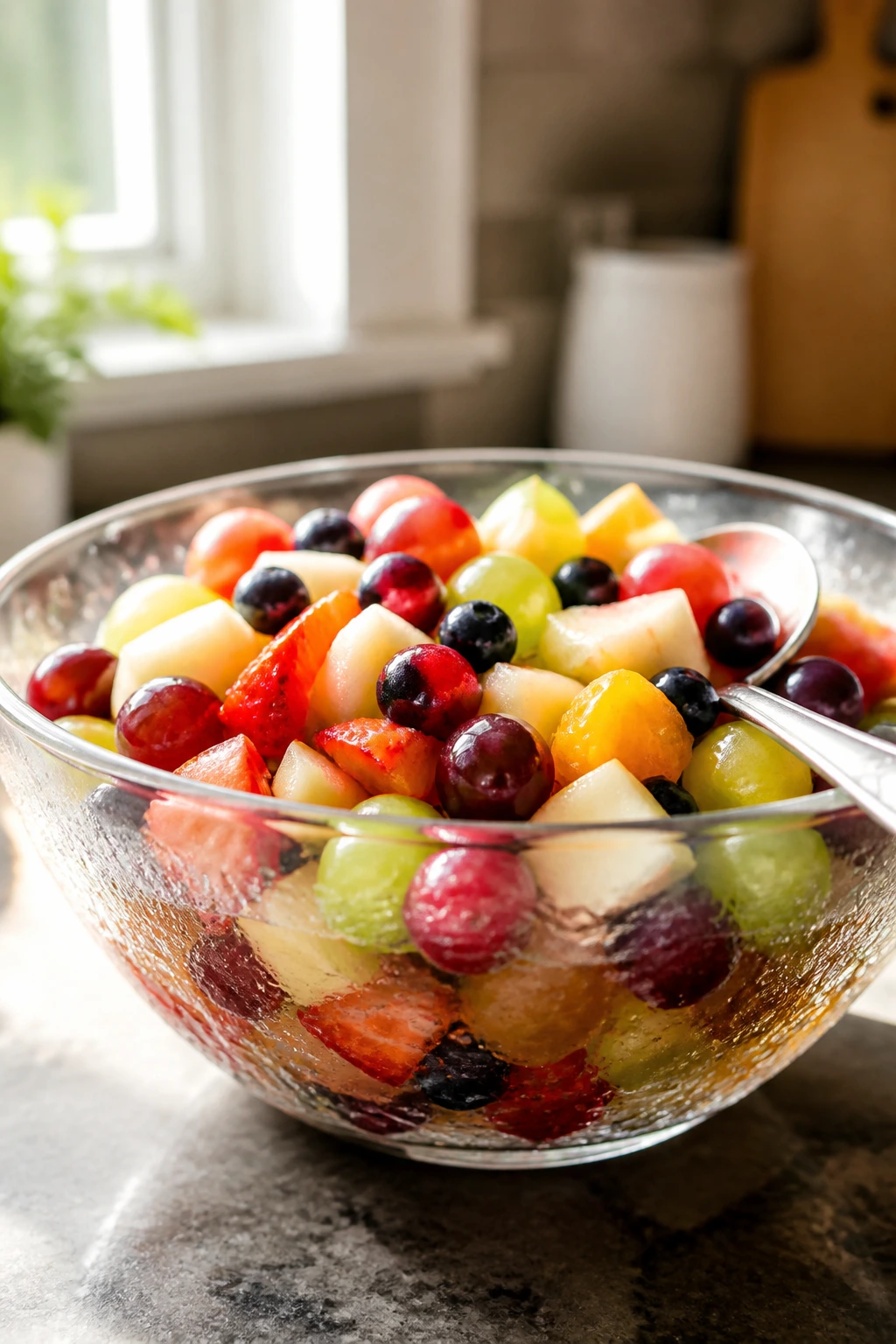
A fruit salad like this earns its place because it respects texture. That sounds plain, maybe even a little stern, but it’s the whole reason the bowl works: fruit with some backbone, citrus that wakes it up, and a light hand with the dressing so nothing gets buried under syrup. When those pieces are in balance, you get a salad that feels fresh from the first spoonful to the last.
The nicest part is that once you learn the rhythm, you stop treating it like a side dish you toss together at the last minute. You start thinking about cut size, acid, and the order of the fruit the way a cook thinks about salt in a soup. Small details. Big difference.
Hearty Fruit Salad with Homemade Dressing — Recipe Card
Recipe Name: Hearty Fruit Salad with Homemade Dressing
Description: A bright, sturdy fruit salad made with apples, grapes, pineapple, mango, berries, citrus, and pomegranate, tossed in a light orange-lime honey dressing with vanilla and mint. It stays crisp longer than soft fruit salad and tastes clean, cold, and balanced.
Prep Time: 20 minutes
Cook Time: 0 minutes
Total Time: 20 minutes, plus 20 to 30 minutes chilling if desired
Course: Breakfast, Brunch, Side Dish, Dessert
Cuisine: American
Servings: 6 to 8 servings
Calories: About 180 kcal per serving
Ingredients
For the Fruit Salad:
- 2 cups strawberries, hulled and quartered
- 2 cups seedless green grapes, halved lengthwise
- 2 cups blueberries, rinsed and dried
- 2 cups fresh pineapple chunks, cut into 3/4-inch pieces
- 2 medium firm apples, cored and cut into 1/2-inch cubes
- 2 medium kiwis, peeled and sliced or cut into half-moons
- 1 large mango, peeled and diced
- 2 medium navel oranges, peeled and segmented, or 1 cup mandarins
- 1 cup pomegranate arils
- 2 tablespoons fresh mint, finely sliced
For the Homemade Dressing:
- 1/4 cup fresh orange juice
- 2 tablespoons fresh lime juice
- 2 tablespoons honey
- 1 teaspoon finely grated lime zest
- 1 teaspoon vanilla extract
- 1 tablespoon poppy seeds
- Pinch of fine sea salt
Instructions
-
Rinse all the fruit, then dry it thoroughly with paper towels or a clean kitchen towel.
-
Hull and quarter the strawberries, halve the grapes, and cut the pineapple into 3/4-inch pieces.
-
Peel and dice the mango, peel and slice the kiwis, core and cube the apples, and segment the oranges over a bowl.
-
Whisk together the orange juice, lime juice, honey, lime zest, vanilla, poppy seeds, and salt until smooth and glossy.
-
Add the pineapple, apples, grapes, mango, and oranges to a large bowl.
-
Fold in the strawberries, blueberries, kiwi, and pomegranate arils gently.
-
Pour about three-quarters of the dressing over the fruit and toss lightly to coat.
-
Add the mint, taste, and adjust with a little more dressing if needed.
-
Chill for 20 to 30 minutes if desired, then serve cold.
Notes:
Use firm fruit for the best texture. Add apples last if you’re making it ahead. Do not freeze the finished salad; the fruit turns mushy when thawed.