



A crisp chicken curry salad should hit in layers: cold celery and cucumber first, a little sweetness from apple and grapes, then the warm, earthy curry dressing catching up a second later. If the bowl feels heavy or gloppy, something went wrong — usually too much dressing, limp greens, or chicken that never got a chance to brown.
I like this style of salad because curry can go muddy fast when it’s mixed with a blunt, overly sweet dressing. A spoonful of lemon juice, a touch of Dijon, and a good handful of toasted almonds keep the flavor sharp enough to stay interesting after the third bite. The chicken can be seared ahead of time, cooled just enough, and tossed in at the last minute so you get actual texture instead of a soft, beige heap.
This is the sort of dish that does real work at lunch and still feels useful at dinner. Spoon it into lettuce cups, pile it on toasted naan, tuck it into a pita, or leave it alone in a chilled bowl with a fork and a napkin. The details matter here. So does restraint. And that’s where the good versions separate from the forgettable ones.
Why You’ll Keep Going Back to This Salad
-
The crunch stays intact: Celery, cucumber, apple, and almonds give you four different kinds of snap, so the bowl never collapses into one soft texture.
-
The curry flavor stays bright: Lemon juice and Dijon keep the dressing lively, which matters because curry powder can taste dusty if it’s not balanced.
-
The chicken brings real body: Searing the chicken in a hot skillet gives you browned edges instead of the bland, poached texture that so many chicken salads end up with.
-
It works cold or cool: You can eat it the minute it’s assembled, or let it chill for a short stretch and serve it when the flavors have settled down.
-
It behaves well for lunch: The ingredients hold up better than leafy, mayo-heavy salads that turn limp after ten minutes in a container.
-
It’s easy to steer in different directions: A few small swaps push it toward a picnic salad, a wrap filling, or a more substantial dinner bowl.
Why This Curry Salad Feels Fresh Instead of Heavy
Curry chicken salad has been around long enough to pick up a lot of bad habits. Some versions lean too sweet. Others drown the chicken in mayo and call it a day. A few are so soft they feel like they were made to disappear in a hurry, which is not what you want here. The best version needs contrast: creamy and crisp, rich and sharp, cool and lightly warm.
That contrast is the whole trick. The curry dressing does not need to coat every leaf in a thick layer. It needs to cling. That’s a different job. A thinner, well-seasoned dressing can slide across romaine and cabbage without turning them soggy, and the chicken’s browned surface gives the bowl a deeper, roasted note that plain boiled chicken never touches.
There’s also a practical reason this recipe works so well. Cabbage and romaine are sturdy, celery stays snappy, and tart fruit like apple cuts through the richness of the mayo. You end up with a salad that eats like a meal, not like a side dish pretending to be one.
The first bite should taste clean, not muddy.
Yield: 4 main-course servings
Prep Time: 20 minutes
Cook Time: 15 minutes
Total Time: 35 minutes
Chill/Rest Time: 10 minutes
Difficulty: Beginner — the steps are straightforward, but the chicken needs enough heat to brown instead of steam.
Best Served: Slightly chilled or at cool room temperature, right after tossing.
The Ingredients That Build the Crunch
For the Chicken
- 1 1/4 pounds boneless, skinless chicken breasts or thighs, cut into 1-inch pieces
- 1 tablespoon olive oil
- 1 teaspoon kosher salt
- 1/2 teaspoon black pepper
- 1 teaspoon curry powder
- 1/2 teaspoon ground cumin
For the Curry Dressing
- 1/2 cup mayonnaise
- 1/4 cup plain Greek yogurt
- 1 1/2 tablespoons fresh lemon juice
- 1 tablespoon apple cider vinegar
- 1 1/2 teaspoons curry powder
- 1 teaspoon Dijon mustard
- 1 teaspoon honey
- 1 small garlic clove, finely grated
- 1/2 teaspoon kosher salt
- 1/4 teaspoon black pepper
- 1 to 2 tablespoons cold water, as needed
For the Salad
- 6 cups chopped romaine lettuce
- 2 cups shredded green cabbage
- 1 cup celery, thinly sliced
- 1 cup cucumber, diced
- 1 small tart apple, diced
- 1/2 cup seedless grapes, halved
- 1/3 cup red onion, very thinly sliced
- 1/3 cup toasted sliced almonds or chopped cashews
- 2 tablespoons chopped fresh cilantro or flat-leaf parsley
Why the Dressing Works Instead of Weighing Everything Down
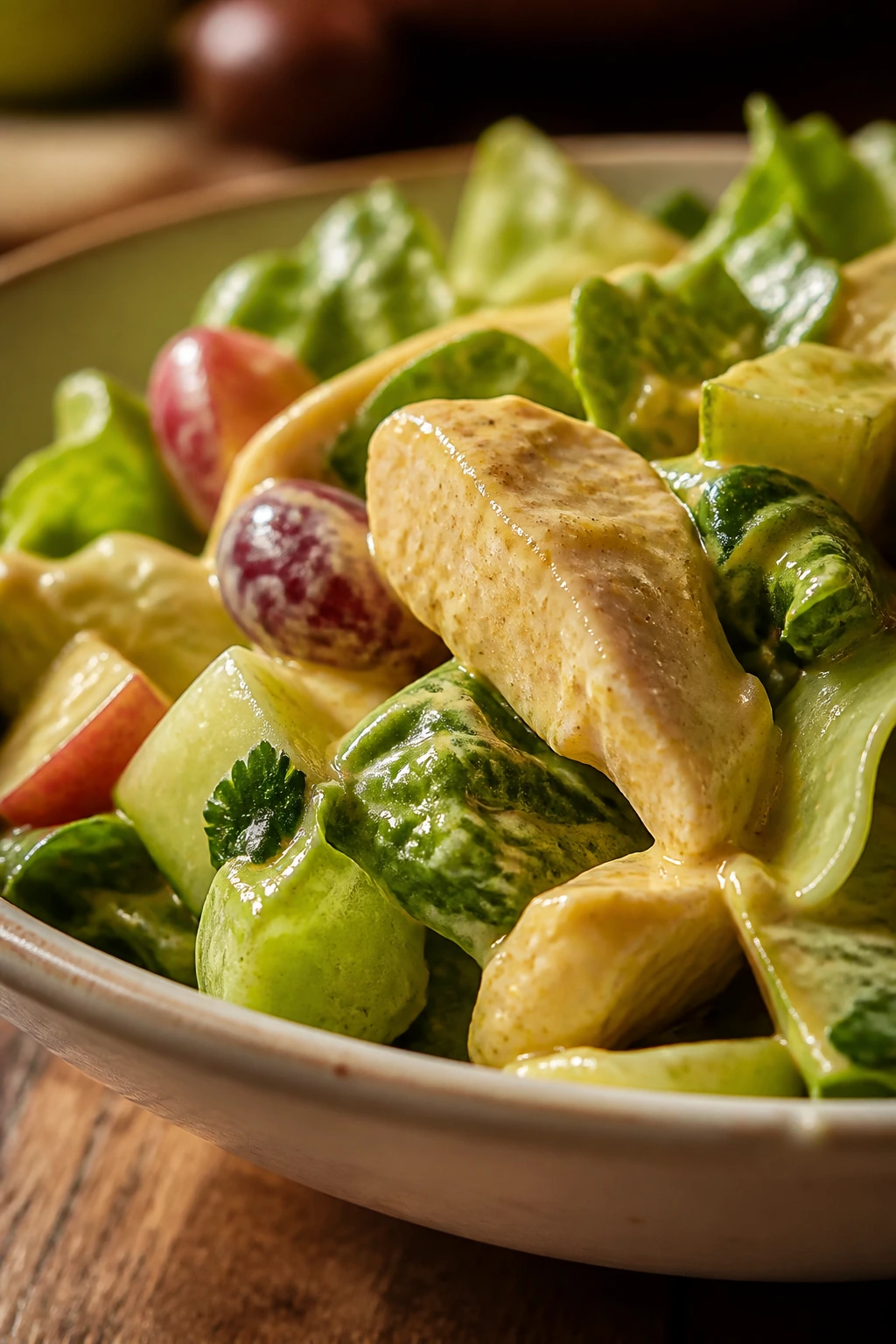
Chicken What to use: 1 1/4 pounds boneless, skinless chicken breasts or thighs, cut into 1-inch pieces. That size cooks quickly and gives you enough browned surface area for the curry seasoning to cling to.
Preparation: Pat the chicken dry before seasoning it. Wet chicken steams first and browns later, which is the wrong order for this salad.
Substitutions: Rotisserie chicken works if you need speed; use about 3 to 3 1/2 cups shredded or chopped. Turkey breast also works if that’s what you have, though it tastes leaner and benefits from a little extra dressing.
Tips: Thighs stay juicier if the salad sits for a few hours, while breasts give you a cleaner bite if you’re serving it right away. Either one is fine, but dry chicken is not.
Crisp Salad Base What to use: 6 cups chopped romaine and 2 cups shredded green cabbage, plus celery, cucumber, apple, grapes, and red onion. That mix gives you sturdy greens and a bright crunch that survives tossing.
Preparation: Chop the romaine into bite-size ribbons and slice the cabbage fairly thin so the leaves bend instead of fighting the fork. Dice the cucumber and apple into pieces that are small enough to eat in one bite.
Substitutions: Butter lettuce can stand in for romaine if you want a softer green, and napa cabbage works if you prefer a lighter crunch. Pear can replace apple, though it brings more sweetness and less bite.
Tips: If your cucumber is watery, scoop out some of the seeds before dicing. That small step keeps the dressing from pooling at the bottom of the bowl.
The Curry Dressing What to use: 1/2 cup mayonnaise, 1/4 cup Greek yogurt, lemon juice, apple cider vinegar, curry powder, Dijon, honey, garlic, salt, black pepper, and a splash of water. The mayo gives body, the yogurt adds tang, and the acid keeps the curry from tasting flat.
Preparation: Whisk until smooth before you add it to the salad. Curry powder clumps if you rush, and clumpy dressing is a drag to eat.
Substitutions: Use all mayonnaise if you want a richer dressing, or all Greek yogurt if you want something sharper and lighter. A spoonful of sour cream also works in place of the yogurt.
Tips: Use a curry powder that actually smells alive when you open the tin. If it has the scent of cardboard and dust, the dressing will taste like it too.
Crunchy Finish What to use: 1/3 cup toasted sliced almonds or chopped cashews, plus 2 tablespoons chopped cilantro or parsley. These are not background players; they’re the last thing the fork notices.
Preparation: Toast the nuts in a dry skillet over medium heat for 3 to 4 minutes, shaking the pan often, until they smell nutty and look a shade darker. Let them cool before adding.
Substitutions: Sunflower seeds, pumpkin seeds, or crispy fried shallots can replace the nuts if you need a different crunch or a nut-free option.
Tips: Add the nuts at the very end so they stay crisp. If you put them in too early, the dressing softens them, and that defeats the point.
How the Curry Powder, Acid, and Cream Play Together
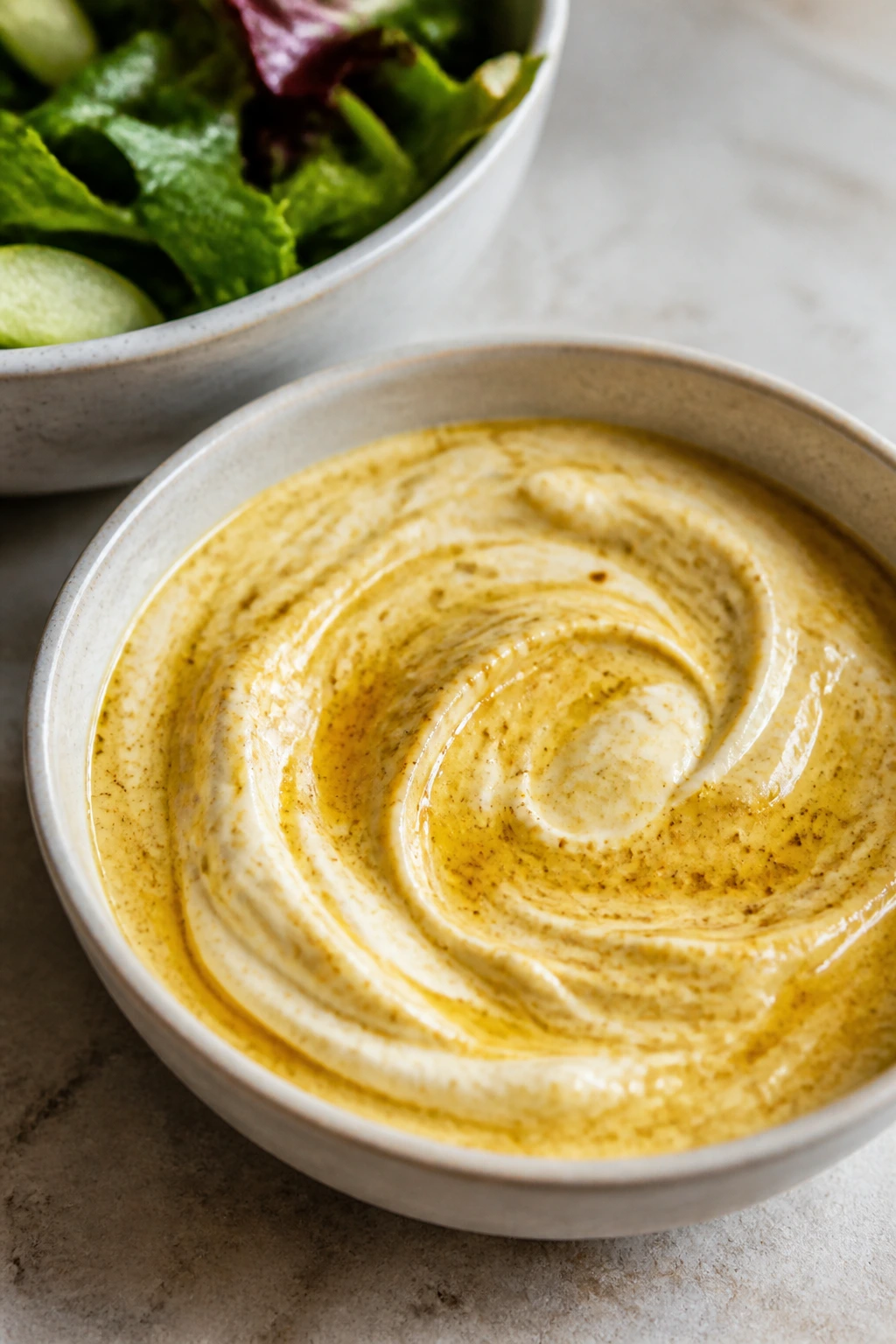
Curry powder is not a single spice. It’s a blend, and that matters here. Good curry powder usually leans on turmeric, coriander, cumin, and fenugreek, which gives the dressing warmth without turning it into a paste. If you use a blend that’s heavy on salt or paprika, the whole salad can get muddy fast.
The mayonnaise and yogurt do two different jobs. Mayo coats the chicken and greens with a rounded, rich texture, while yogurt brings a sharper edge that keeps the curry from sitting too heavy on the tongue. That little bit of apple cider vinegar pulls the dressing back into balance after the mayo does its work.
You’ll notice there’s both lemon juice and vinegar. That’s deliberate. Lemon gives a fresh, bright lift; vinegar gives a steadier tang that stays put after the salad sits for a few minutes. One alone can feel thin. Together, they keep the dressing from flattening out.
The apple and grapes are not there for decoration. They give the salad small bursts of sweetness that play against the curry, which is exactly why this kind of chicken salad works so well when it’s done right. A curry dressing without a sweet counterpoint can feel blunt. A sweet salad without acid can feel sugary. This version threads the needle.
How to Cook the Chicken So It Stays Juicy
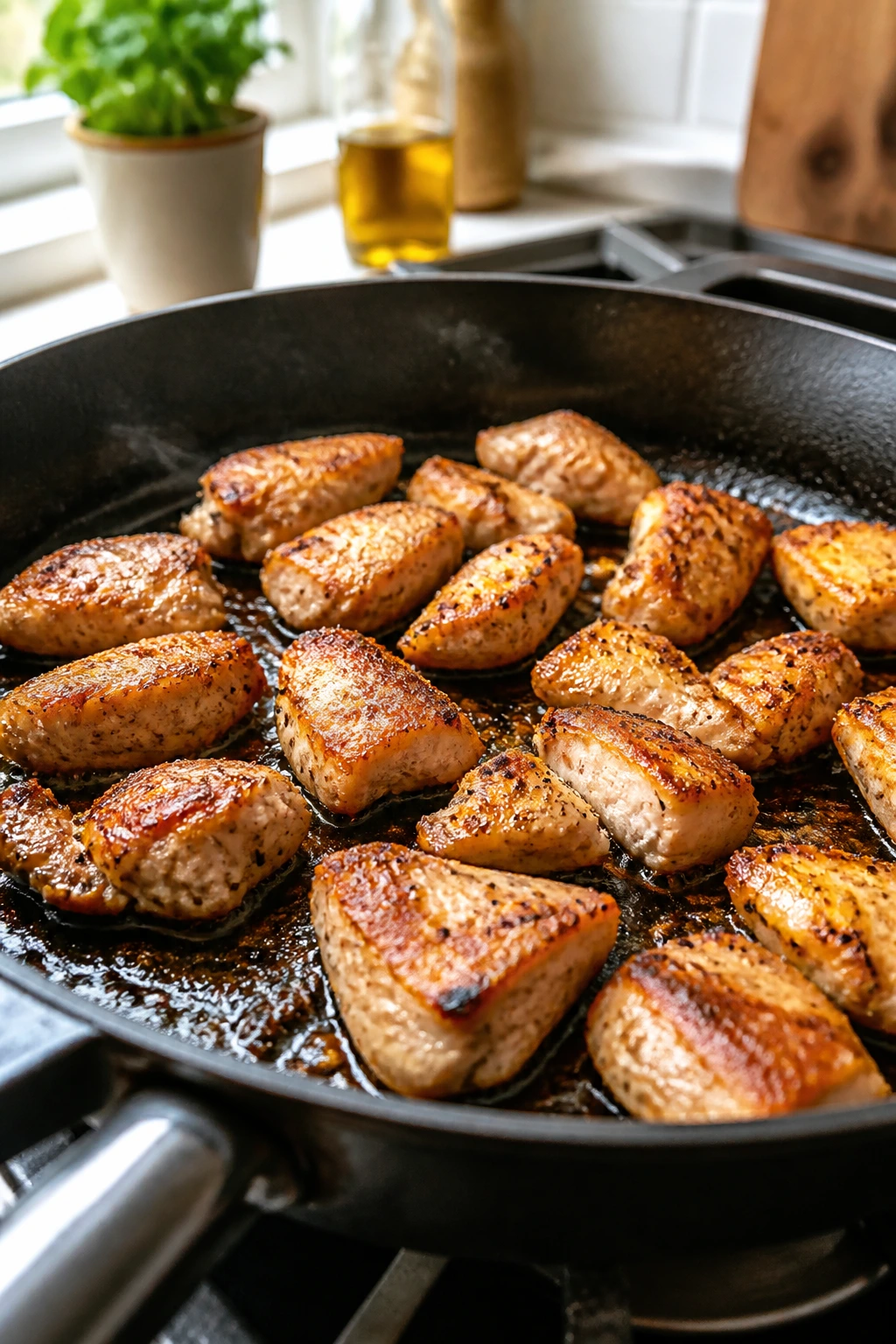
The chicken matters more than people think in a salad like this. If it’s pale and soft, the whole bowl reads as bland. If it’s dry, the dressing can’t save it. A hot skillet is the easiest fix.
Cutting the chicken into 1-inch pieces helps it cook quickly and pick up a little color on several sides. That color is flavor. It also gives you better texture in the finished salad, because little browned edges are far more interesting than a few giant cubes that stayed white and floppy in the middle.
I’d use thighs if the salad is going to sit for a while before serving. Breasts are leaner and taste cleaner, but they punish overcooking faster. Either way, the target is the same: 165°F in the center, then a short rest so the juices settle back into the meat. Skip the rest, and the chicken leaks moisture into the bowl when you cut it. That’s how salads get watery.
And one more thing. Do not crowd the pan. If the pieces are jammed together, they steam. You want a sizzle the moment they hit the oil. No busy pan. No pale chicken. Wait for the heat.
Step-by-Step From Skillet to Salad Bowl
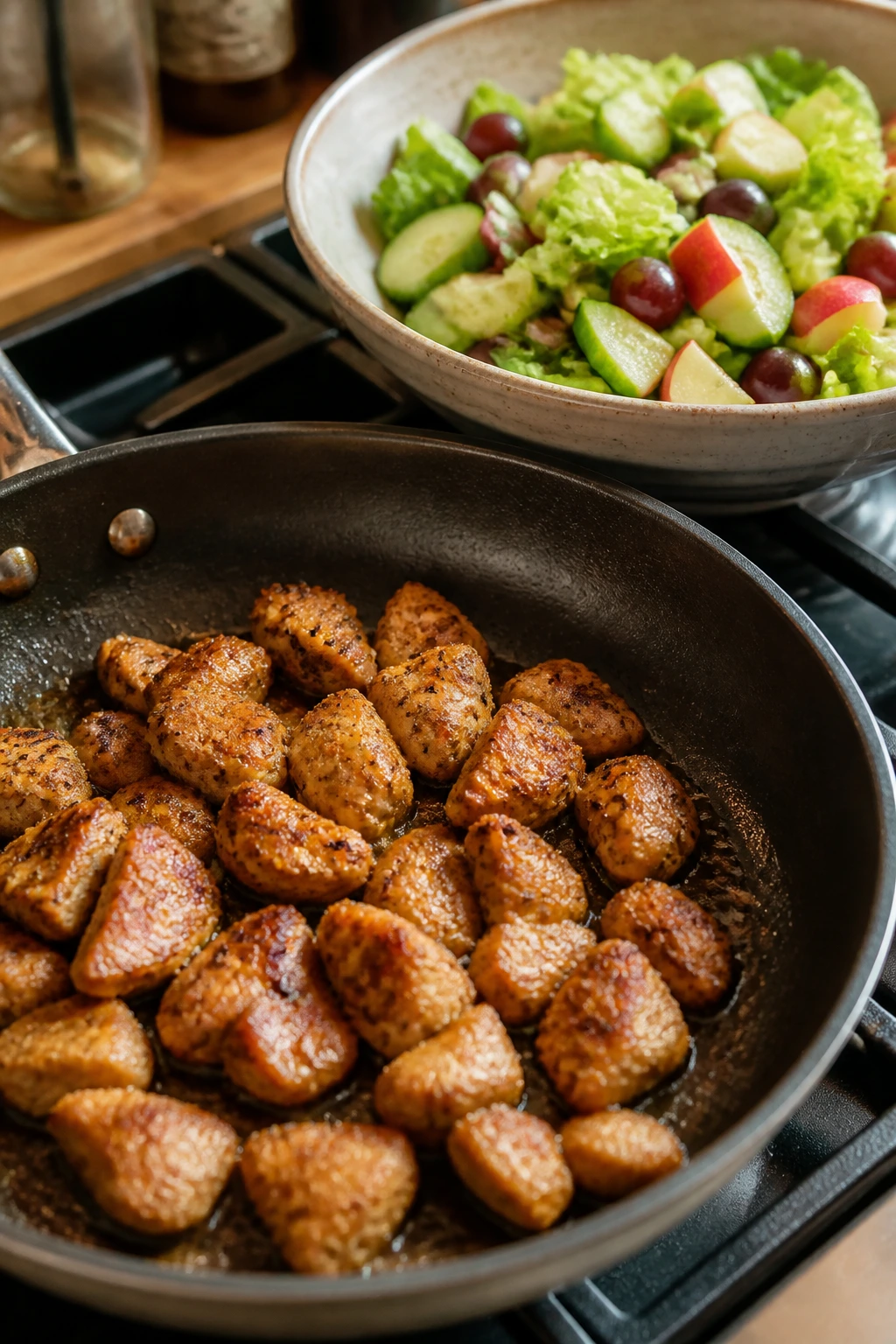
Prep the Chicken and Dressing:
-
Season the chicken pieces. Pat the 1 1/4 pounds of chicken dry with paper towels, then toss it in a medium bowl with 1 teaspoon kosher salt, 1/2 teaspoon black pepper, 1 teaspoon curry powder, and 1/2 teaspoon ground cumin until the pieces are evenly coated.
-
Whisk the dressing until smooth. In a small bowl, combine 1/2 cup mayonnaise, 1/4 cup Greek yogurt, 1 1/2 tablespoons lemon juice, 1 tablespoon apple cider vinegar, 1 1/2 teaspoons curry powder, 1 teaspoon Dijon mustard, 1 teaspoon honey, 1 small grated garlic clove, 1/2 teaspoon kosher salt, and 1/4 teaspoon black pepper. Whisk in 1 to 2 tablespoons cold water until the dressing is loose enough to coat a spoon in a thin layer. It should look creamy, not stiff.
Cook the Chicken:
-
Heat the skillet hard enough to sear. Set a 12-inch skillet over medium-high heat and add 1 tablespoon olive oil. When the oil shimmers, add the chicken in a single layer. If the pan is crowded, cook in two batches.
-
Brown the pieces without fussing with them. Cook the chicken for 3 to 4 minutes on the first side, then turn and cook for another 2 to 3 minutes, until the pieces are golden at the edges and the center reads 165°F on an instant-read thermometer. Transfer the chicken to a plate and let it rest for 5 to 10 minutes.
Build the Salad:
-
Prep the crisp ingredients. In a large bowl, combine 6 cups chopped romaine, 2 cups shredded green cabbage, 1 cup sliced celery, 1 cup diced cucumber, 1 small diced tart apple, 1/2 cup halved grapes, and 1/3 cup thinly sliced red onion. Toss once to mix the textures evenly.
-
Add the chicken and part of the dressing. Cut the rested chicken into smaller bite-size pieces if needed, then add it to the bowl. Spoon in about half the dressing and toss gently until everything is lightly coated. Stop before it looks drenched.
-
Finish with crunch and herbs. Add 1/3 cup toasted sliced almonds or chopped cashews and 2 tablespoons chopped cilantro or parsley. Toss one last time, or leave the nuts on top if you want a cleaner look and a louder crunch.
-
Taste and adjust right before serving. Add more dressing a tablespoon at a time if the bowl looks dry, or a pinch more salt and a squeeze of lemon if it tastes flat. Serve immediately for the sharpest crunch, or chill for 5 to 10 minutes if you want the flavors a little quieter and more blended.
How to Serve It on a Plate, in a Bowl, or in a Wrap
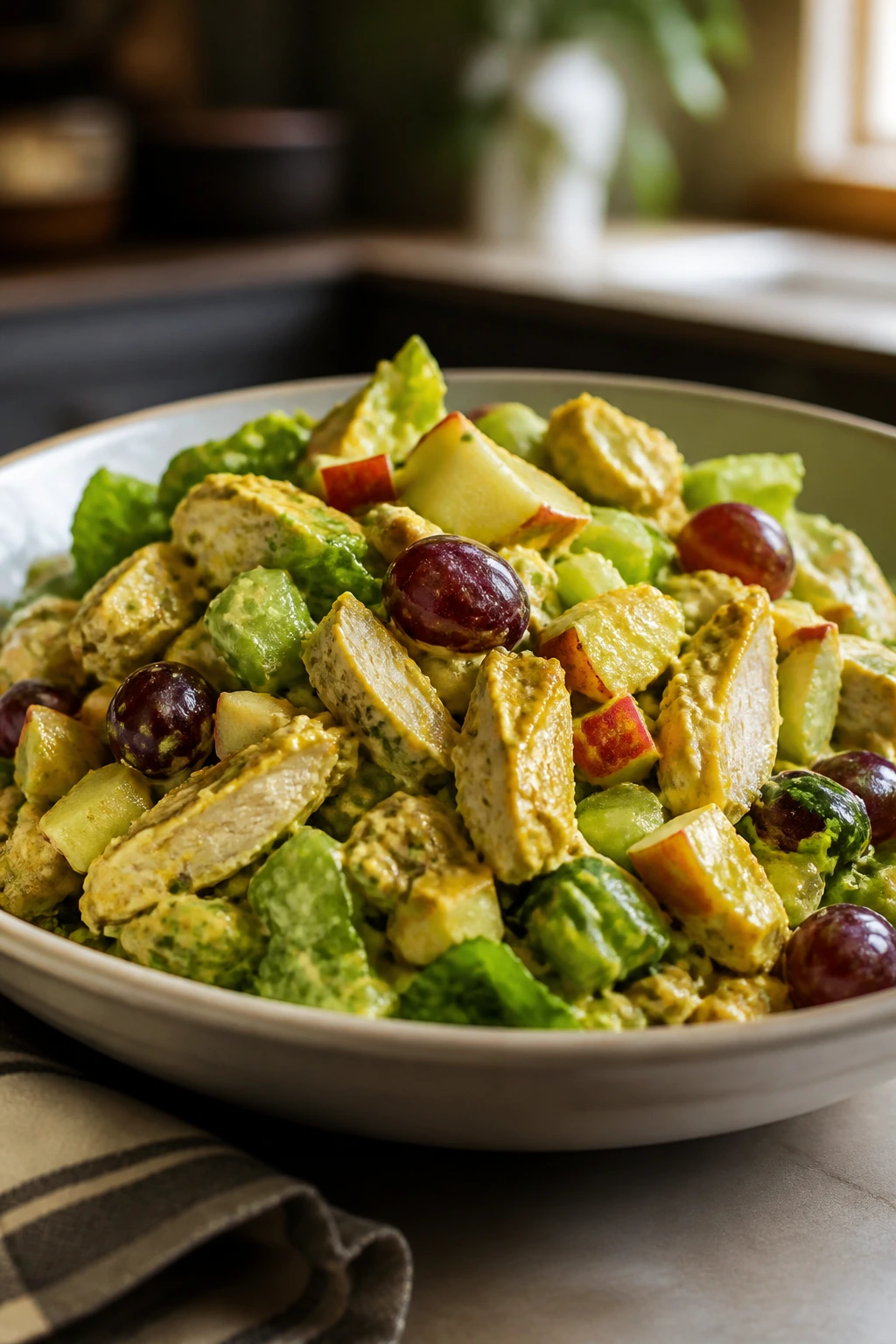
Presentation: Pile the salad into a wide, shallow bowl rather than a deep one. That keeps the romaine visible and makes the chicken, grapes, and toasted nuts stand out instead of sinking to the bottom. A few extra almonds on top right before serving make the bowl look finished without much effort.
Accompaniments: Warm naan, pita wedges, or a slice of toasted sourdough all work here. If you want something lighter, serve it with cucumber spears, cherry tomatoes, or a very plain tomato soup on the side so the curry dressing stays the main flavor.
Portions: As a main dish, plan on about 2 1/2 to 3 cups per person. If you’re serving it as part of a bigger spread, it stretches nicely to 6 smaller portions. It also holds up well stuffed into butter lettuce cups, which is a nice way to keep the crunch front and center.
Beverage Pairing: I like this with unsweetened iced tea, sparkling water with lemon, or a dry Riesling if you want something with a little fruit to match the apple and grapes. A cold lager also works if you’re eating it with naan or pita.
Practical Tips for Better Texture and Brighter Flavor
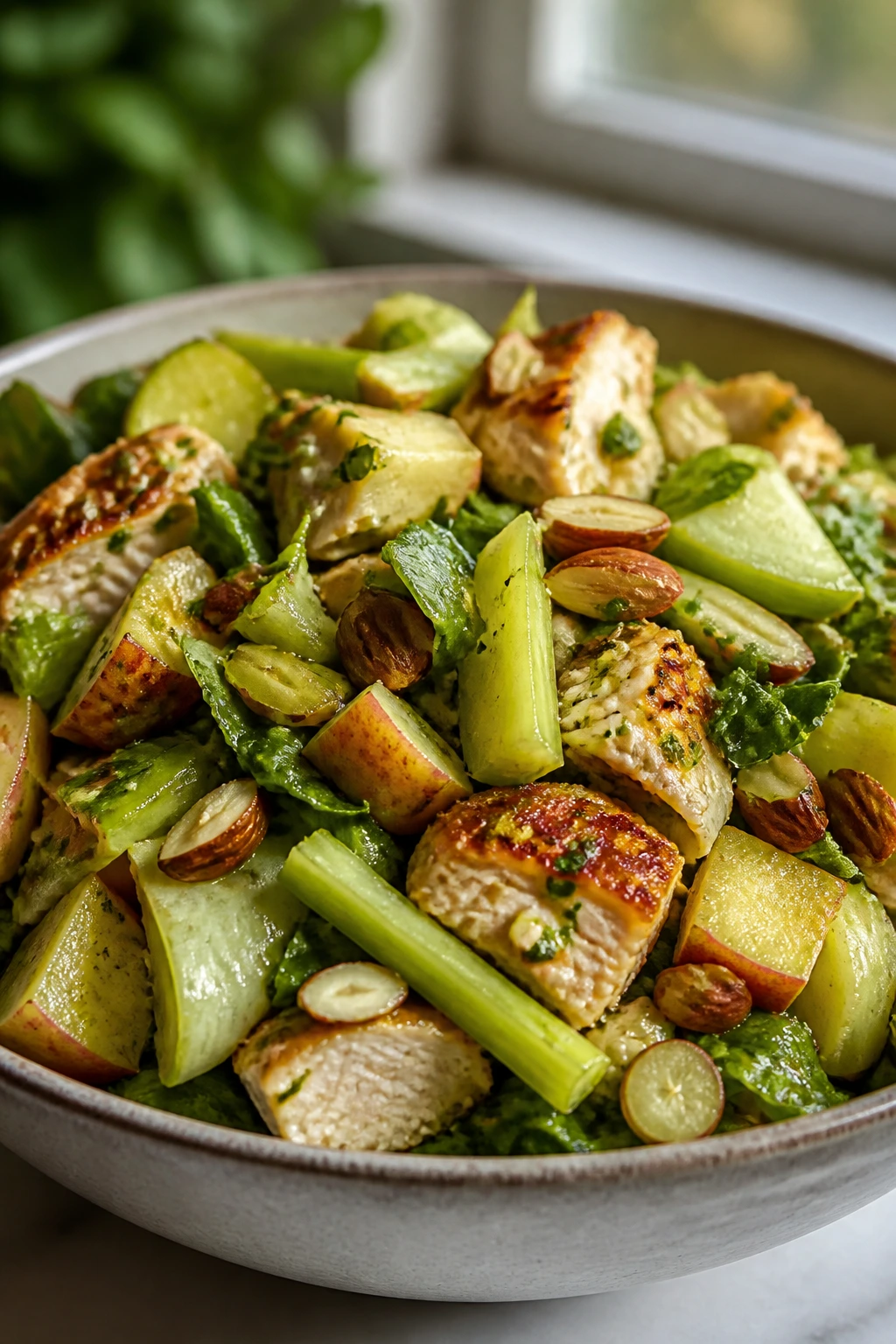
Flavor Enhancement: Stir 1 tablespoon of mango chutney into the dressing if you want a softer, fruitier curry note. It gives the bowl a little roundness without tipping it into sweetness, and it plays especially well with grapes or apple.
Time-Saver: Buy a cooked rotisserie chicken and use that when the evening is packed. Warm 1 teaspoon of olive oil in the skillet, toss the chicken with a pinch of curry powder for 30 seconds, then cool it before adding to the salad. That keeps the curry flavor present instead of making the chicken taste like an afterthought.
Texture Move: Keep the apple, celery, and cucumber pieces a little larger than instinct suggests. Tiny dice disappear once the dressing goes in. Slightly chunky cuts hold their shape longer and give you the crisp bite that makes this salad worth making.
Cost-Saver: Cabbage is your quiet budget helper here. A couple of cups of shredded cabbage adds bulk, crunch, and staying power without asking you to buy more chicken. It also lasts longer in the fridge than romaine alone.
Make-It-Yours: If you like heat, add a pinch of cayenne or a spoonful of finely diced jalapeño to the dressing. If you want a softer, more mellow version, skip the onion and use parsley instead of cilantro. The salad can handle both directions.
Common Mistakes That Make Curry Salad Flat or Soggy
-
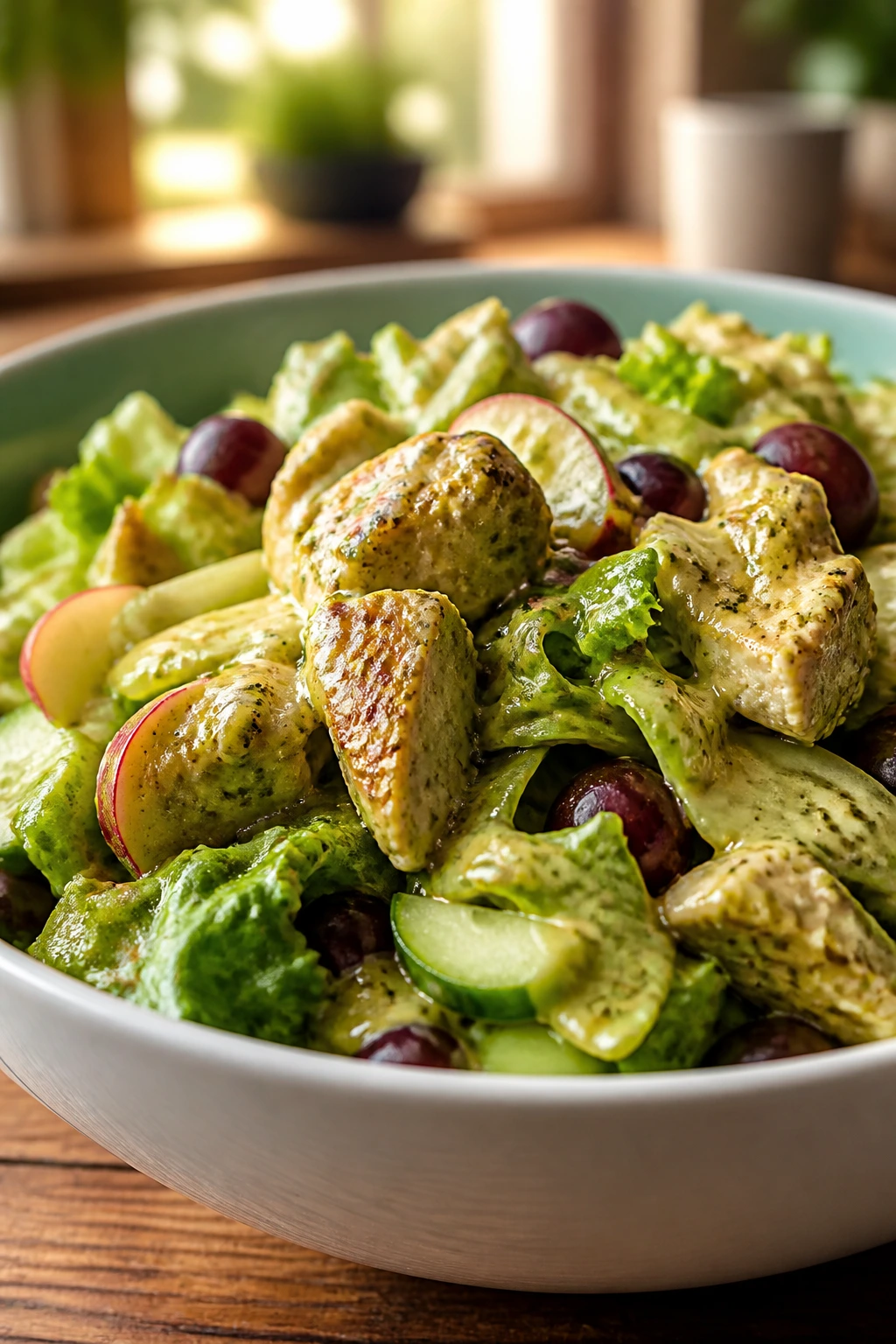
Overdressing the bowl. The salad should look lightly coated, not slick. If the dressing puddles at the bottom, the greens will wilt fast and the curry flavor will feel heavy. Start with half the dressing, toss, and add more only if the bowl still looks dry.
-
Crowding the chicken in the pan. When the pieces sit too close together, they steam and turn pale instead of browning. The fix is simple: use a wide skillet and cook in batches if you need to. Browned chicken tastes deeper and stays more interesting against the cold vegetables.
-
Using stale curry powder. Curry powder loses its punch faster than whole spices, and old curry powder tastes dusty. If the tin smells faint or flat, replace it. A fresh blend should smell warm, earthy, and a little sweet the second you open it.
-
Cutting the fruit too early. Apples turn dull and brown while they sit, especially if they’re diced small. Cut them right before assembling, or toss them with a teaspoon of lemon juice. That keeps the apple edges looking clean and tasting bright.
-
Adding the almonds too soon. Nuts that sit in dressing for ten minutes lose their snap. Add them at the end, or sprinkle them on top right before the salad hits the table. It’s a tiny change, but it makes the texture feel deliberate instead of mushy.
-
Forgetting to taste at the end. Cold salads hide salt. A bowl can taste fine in the mixing stage and still feel flat once the greens and chicken are fully coated. Taste after tossing, then add a pinch of salt or a squeeze of lemon before you call it done.
Variations That Still Taste Like the Same Dish
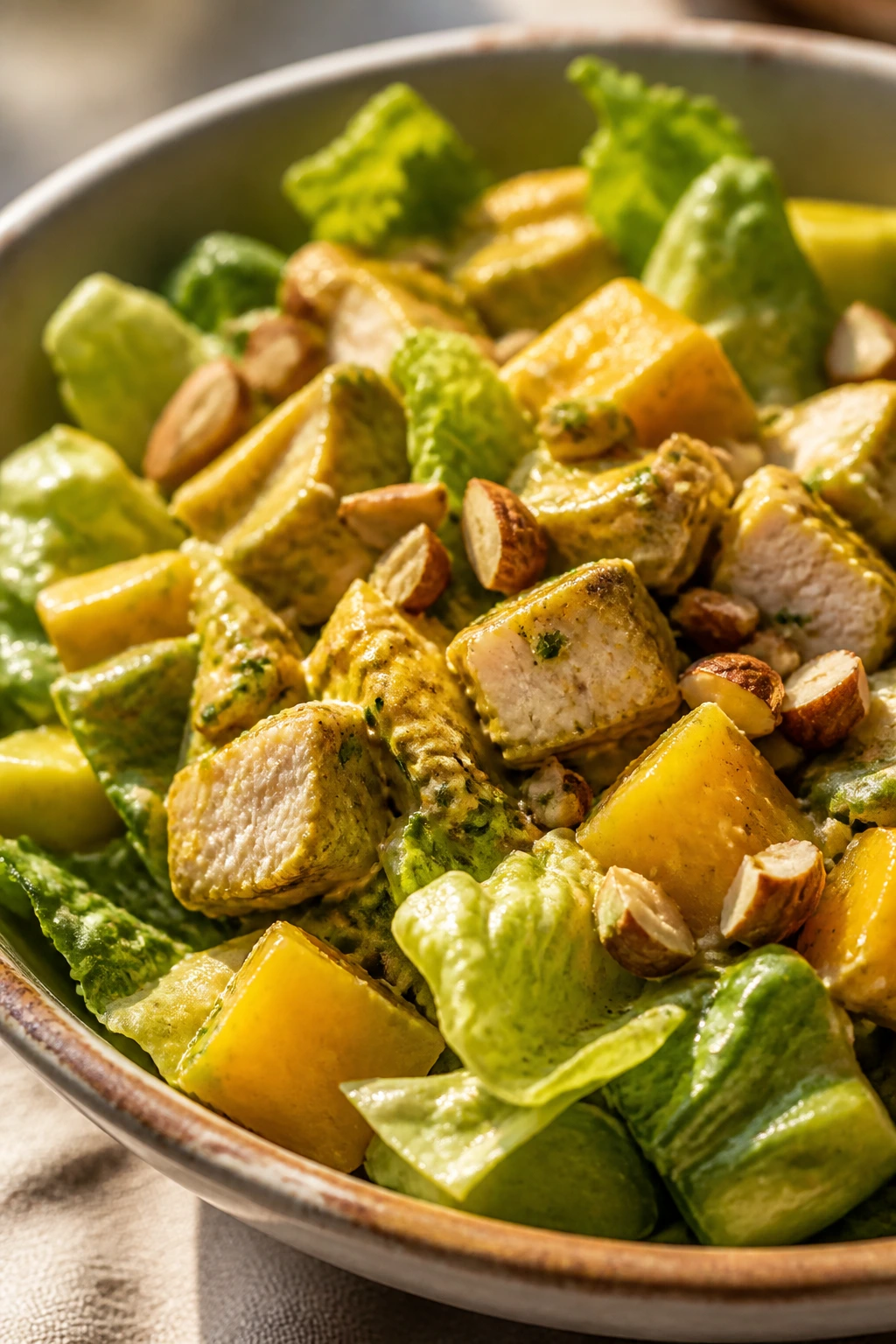
Golden Mango Version: Replace the grapes with 1 cup diced ripe mango and stir 1 to 2 tablespoons mango chutney into the dressing. The mango gives the salad a sunnier, more obvious fruit note, and the chutney makes the curry taste rounder without adding a lot of extra work.
Lighter Yogurt Cut: Use 1/2 cup Greek yogurt and only 1/4 cup mayonnaise in the dressing. You’ll get a sharper, leaner salad that still feels creamy, and it works well if you’re serving the bowl with naan or pita on the side. Add an extra teaspoon of honey if the tang feels too sharp.
No-Nuts Crunch: Swap the almonds for toasted pumpkin seeds or sunflower seeds. This keeps the salad nut-free without sacrificing texture, and the seeds hold their crunch a little longer if the salad sits in the fridge for a few hours.
Warm Bowl Version: Serve the chicken warm over the romaine and cabbage, then spoon the dressing over the top instead of tossing everything together. The greens soften just a little at the edges, which is a nice move if you want a more dinner-like bowl. Keep the chicken warm, not steaming, or the romaine will collapse.
Tools That Make the Job Easier
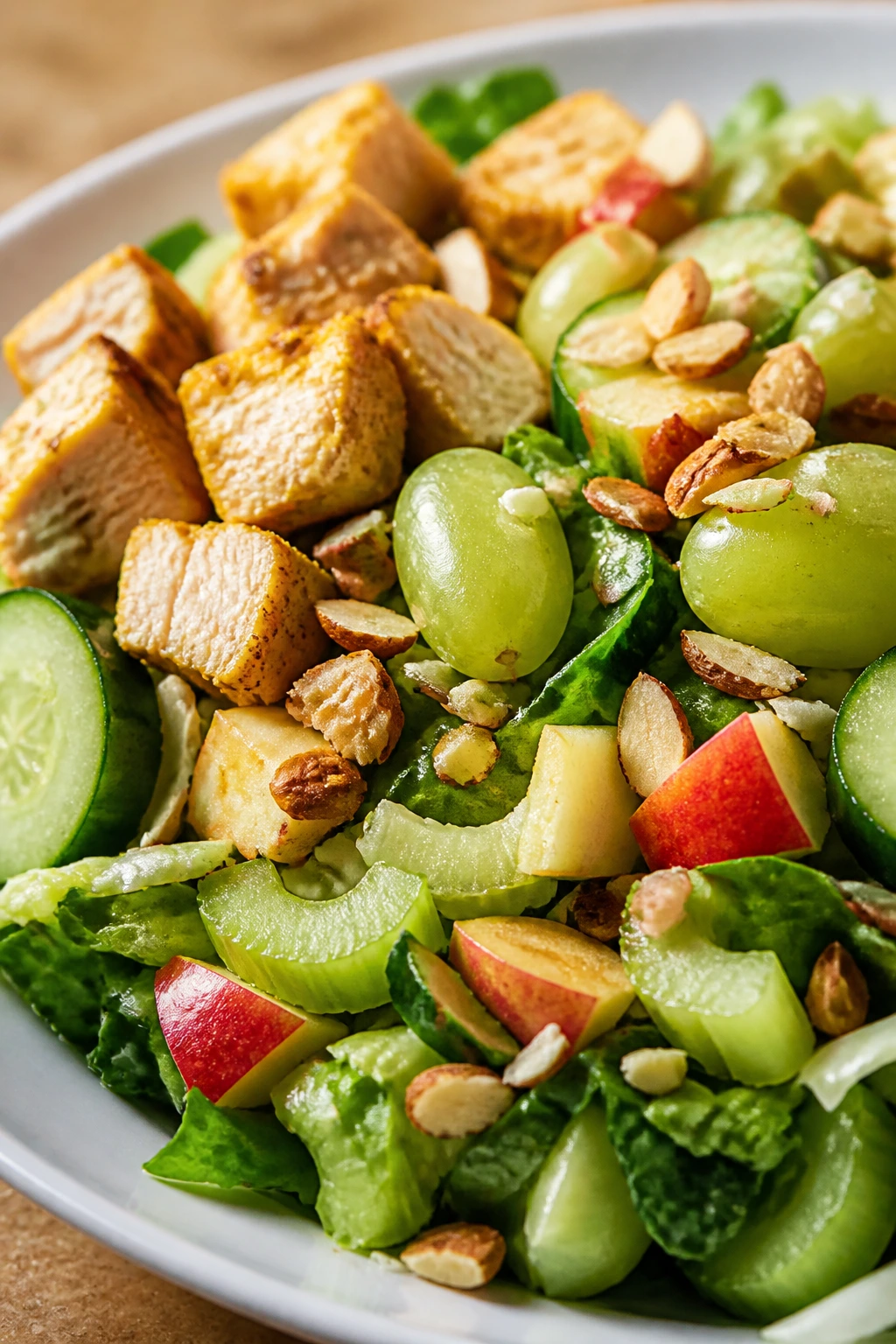
-
12-inch skillet: Gives the chicken room to brown without steaming; a smaller pan works, but you’ll need to cook in batches.
-
Large mixing bowl: Big enough to toss the greens, fruit, chicken, and dressing without knocking ingredients over the sides.
-
Small whisk: Helps the dressing stay smooth, especially once the curry powder goes in.
-
Sharp chef’s knife: Makes clean cuts on the chicken, apple, celery, and onion, which matters when the salad depends on texture.
-
Cutting board: A sturdy board keeps the chicken prep safer and faster; a damp towel under the board helps keep it from sliding.
-
Instant-read thermometer: The easiest way to check that the chicken has reached 165°F without cutting into every piece.
-
Salad spinner or clean kitchen towel: Useful for drying romaine and cabbage so the dressing clings instead of sliding off wet leaves.
-
Small dry skillet: Handy for toasting the nuts, which is a small step that pays off every time.
Make-Ahead, Storage, and Reheating Notes
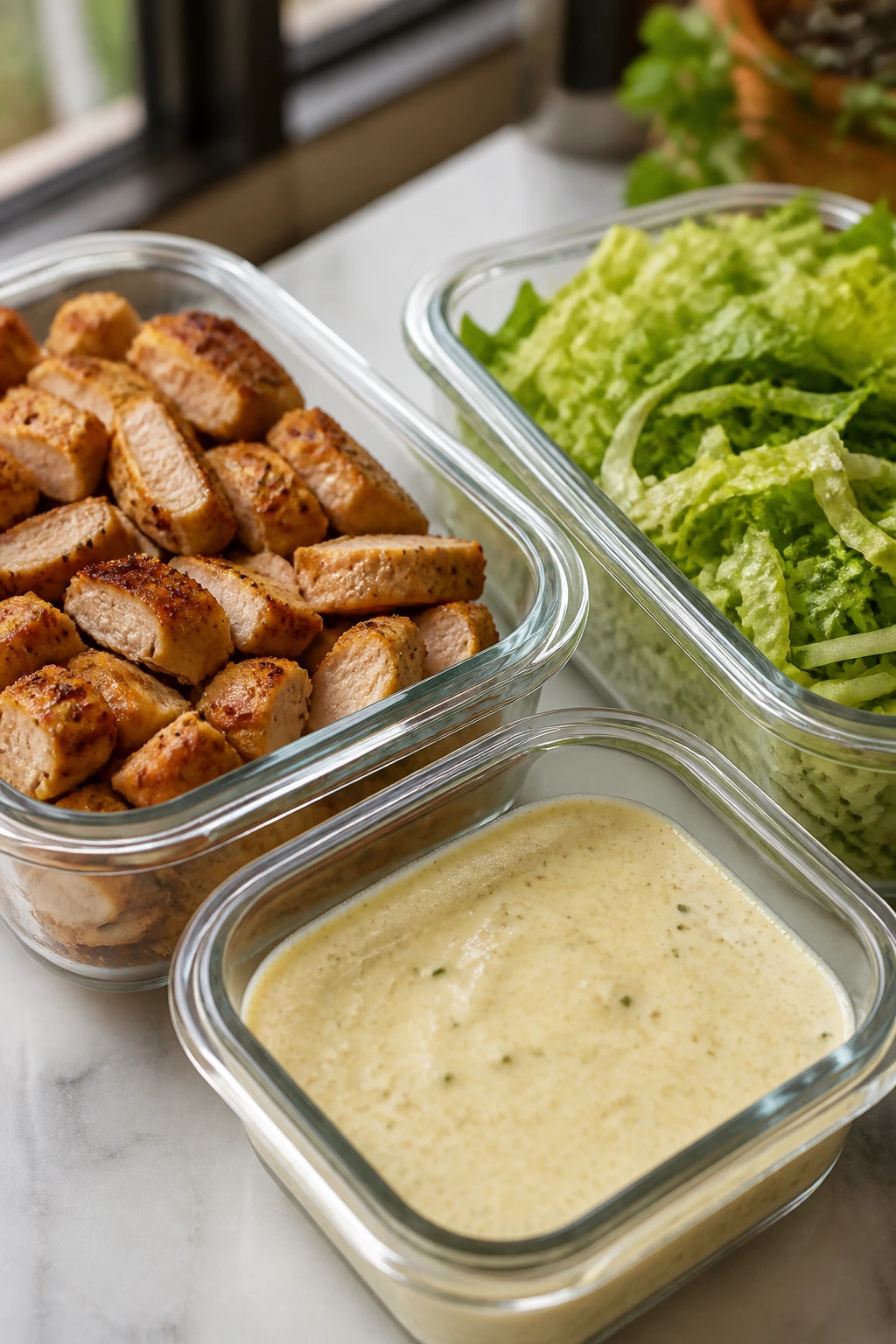
The best version of this salad is assembled close to serving time, but that does not mean you can’t break the work into parts. The chicken can be cooked and chilled for 3 to 4 days in the refrigerator, the dressing keeps well for about 4 to 5 days, and the washed greens and chopped cabbage can sit in a sealed container for 2 days if they’re dried properly.
The assembled salad is a different story. Once dressing touches the romaine, it starts losing its edge within a few hours. It will still taste fine later the same day, but the celery softens, the apples lose some sharpness, and the nuts stop snapping. If you’re packing it for lunch, keep the dressing in a separate container and add it right before eating. That one move changes the whole texture.
For freezing, only the cooked chicken is worth saving. Freeze it in an airtight container for up to 2 months, then thaw it in the fridge overnight. The dressing does not freeze well, and neither do the fresh vegetables. Mayo-based dressings can separate after freezing, and watery produce becomes limp as soon as it thaws.
If you want the chicken warm, reheat it gently in a skillet over low heat with a teaspoon of water, or in a 300°F oven for 8 to 10 minutes, just until it reaches 165°F again. Let it cool for a minute or two before tossing it with the greens. Hot chicken and cold romaine are a rough combination; warm chicken and cool greens make more sense.
Questions People Actually Ask

Can I use rotisserie chicken instead of cooking raw chicken?
Yes, and it’s the fastest shortcut here. Use about 3 to 3 1/2 cups chopped or shredded rotisserie chicken, then toss it with a pinch of curry powder and a teaspoon of olive oil so the flavor doesn’t taste flat next to the dressing.
What kind of curry powder tastes best in this salad?
Look for a blend that smells warm and layered, with turmeric, coriander, cumin, and fenugreek near the top of the ingredient list. If the jar has been sitting open for months, replace it; curry powder loses its punch faster than most people realize.
How do I keep the apple from turning brown?
Dice the apple right before you assemble the salad, or toss the pieces with a teaspoon of lemon juice. Granny Smith stays firmer and a little sharper, while Honeycrisp brings more sweetness and less bite.
Can I make this dairy-free?
Yes. Use all mayonnaise, or use mayo with a spoonful of tahini if you want a different kind of richness. Add an extra teaspoon of lemon juice to keep the dressing from tasting heavy.
Is it okay to serve the chicken warm?
It is, as long as the greens stay cool and the chicken is not steaming hot. Warm chicken over chilled cabbage and romaine gives you a better contrast than room-temperature chicken that has gone soft and rubbery.
Why does my dressing taste flat even after I add curry powder?
Usually it needs salt, acid, or both, not more spice. Add a pinch more salt or another squeeze of lemon before you reach for extra curry powder. Too much curry powder can make the dressing taste dry and dusty.
Can I use curry paste instead of curry powder?
You can, but the flavor changes fast. Curry paste pushes the salad toward Thai-style flavors, especially if it’s green or red, so use only 1 teaspoon at first and reduce the vinegar a little. It’s a different salad, not a bad one.
A Bowl That Earns Repeat Visits
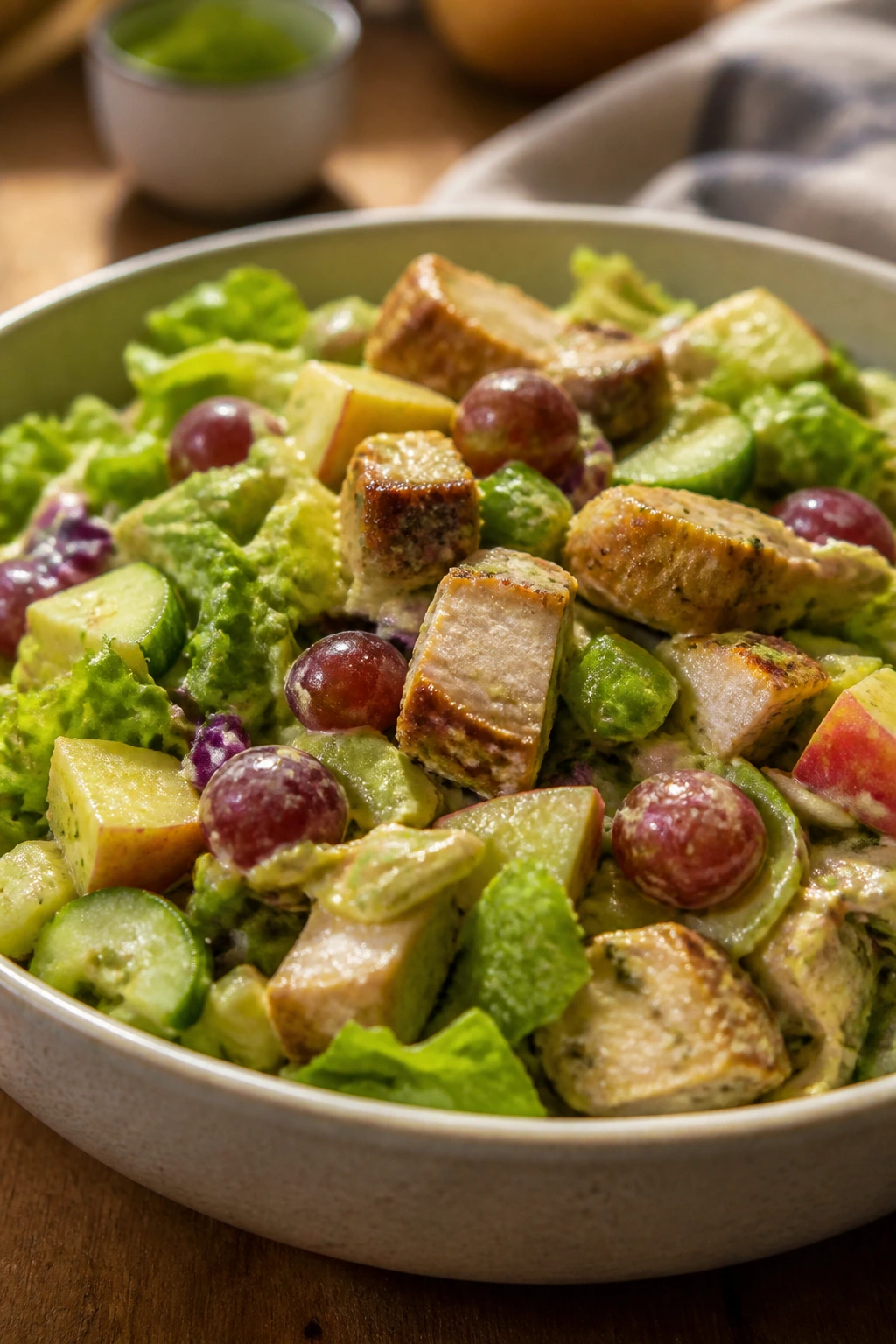
The reason this salad works is not magic. It’s structure. The chicken has browning, the dressing has acid, the greens stay crisp, and the fruit keeps the curry from settling into one flat note. Every forkful should feel slightly different from the last one.
That is the part worth protecting. Add the nuts late. Taste before serving. Keep the dressing light enough to cling, not drown. Do those things, and this becomes the kind of lunch you keep thinking about long after the bowl is empty.
Crisp Chicken Curry Salad with Homemade Dressing — Recipe Card
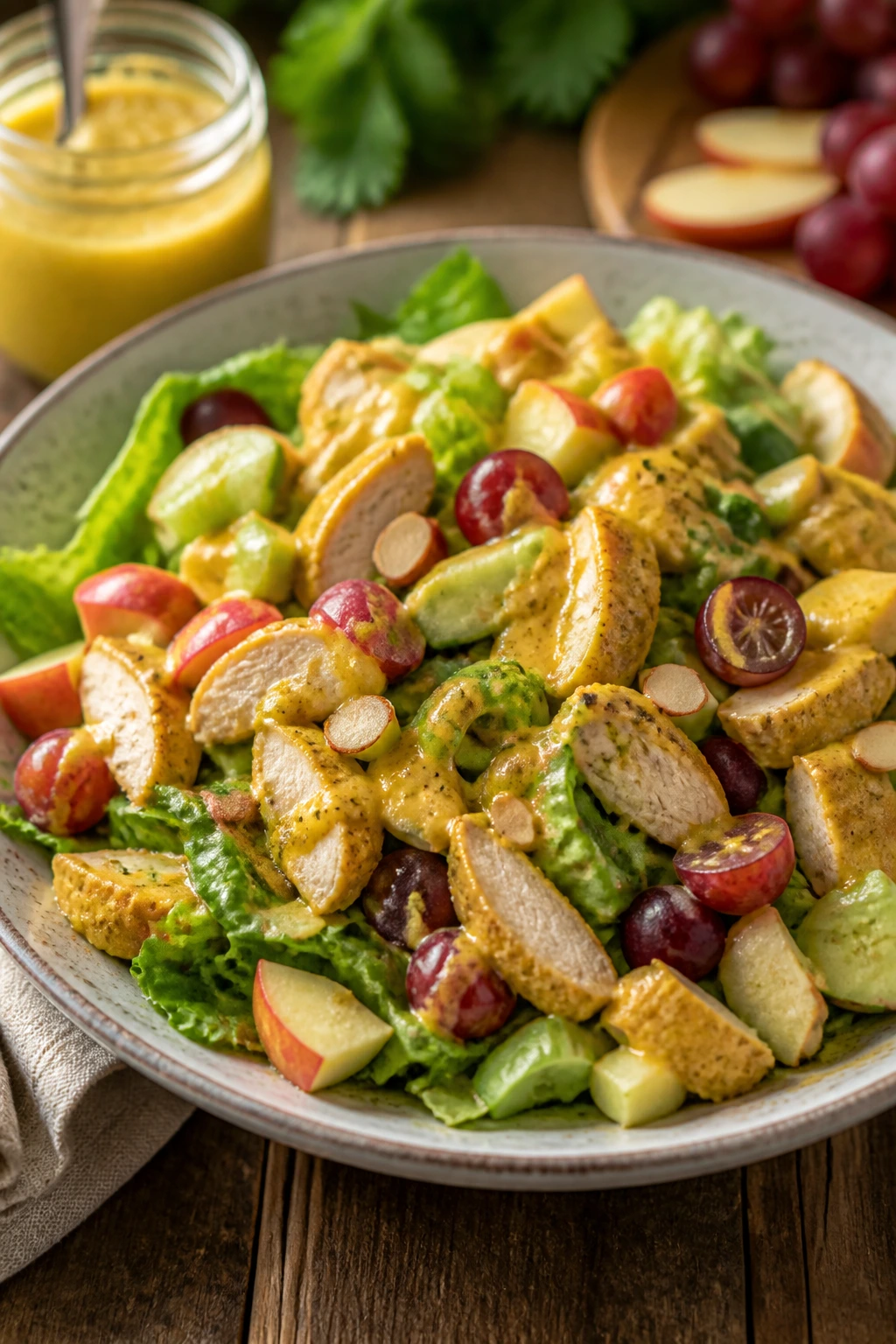
Recipe Name: Crisp Chicken Curry Salad with Homemade Dressing
Description: A crunchy chicken curry salad with seared chicken, romaine, cabbage, apple, grapes, celery, and a creamy homemade curry dressing. Light enough for lunch, substantial enough for dinner.
Prep Time: 20 minutes
Cook Time: 15 minutes
Total Time: 35 minutes
Course: Main Course, Salad
Cuisine: American-inspired
Servings: 4 servings
Calories: About 450 kcal per serving
Ingredients
For the Chicken
- 1 1/4 pounds boneless, skinless chicken breasts or thighs, cut into 1-inch pieces
- 1 tablespoon olive oil
- 1 teaspoon kosher salt
- 1/2 teaspoon black pepper
- 1 teaspoon curry powder
- 1/2 teaspoon ground cumin
For the Curry Dressing
- 1/2 cup mayonnaise
- 1/4 cup plain Greek yogurt
- 1 1/2 tablespoons fresh lemon juice
- 1 tablespoon apple cider vinegar
- 1 1/2 teaspoons curry powder
- 1 teaspoon Dijon mustard
- 1 teaspoon honey
- 1 small garlic clove, finely grated
- 1/2 teaspoon kosher salt
- 1/4 teaspoon black pepper
- 1 to 2 tablespoons cold water, as needed
For the Salad
- 6 cups chopped romaine lettuce
- 2 cups shredded green cabbage
- 1 cup celery, thinly sliced
- 1 cup cucumber, diced
- 1 small tart apple, diced
- 1/2 cup seedless grapes, halved
- 1/3 cup red onion, very thinly sliced
- 1/3 cup toasted sliced almonds or chopped cashews
- 2 tablespoons chopped fresh cilantro or flat-leaf parsley
Instructions
-
Season the chicken with salt, black pepper, curry powder, and cumin.
-
Whisk together the mayonnaise, Greek yogurt, lemon juice, vinegar, curry powder, Dijon, honey, garlic, salt, pepper, and enough water to loosen the dressing.
-
Heat olive oil in a 12-inch skillet over medium-high heat.
-
Sear the chicken in a single layer for 3 to 4 minutes, then turn and cook 2 to 3 minutes more until golden and cooked to 165°F.
-
Transfer the chicken to a plate and let it rest for 5 to 10 minutes.
-
Combine romaine, cabbage, celery, cucumber, apple, grapes, and red onion in a large bowl.
-
Add the chicken and about half the dressing, then toss gently.
-
Top with toasted almonds and chopped herbs. Add more dressing to taste and serve right away.
Notes: Dress the salad lightly first, then add more only if needed. Toast the nuts right before serving for the best crunch. If making ahead, keep the dressing separate until the last minute.