



Most tuna salad gets treated like a sandwich filler that happens to contain fish. That’s a shame. When you give tuna a real backbone — beans, potatoes, pasta, avocado, grains, crisp vegetables, something briny, something sharp — it stops tasting like a compromise and starts eating like lunch with ambition.
The trick is not piling on more mayonnaise. It’s structure. A good tuna salad has contrast in every bite: soft tuna, crunch from celery or cucumber, acid from lemon or vinegar, and enough heft from potatoes, chickpeas, farro, or bread to carry it past the “light lunch” zone. Oil-packed tuna brings a rounder flavor. Water-packed tuna needs a little more help, but it’s fine if you season it properly and don’t let it sit in a sad puddle of liquid.
I’ve built these tuna salads the way I actually want to eat them: cold when that makes sense, warm when it helps, with enough protein and texture that you don’t start hunting for crackers five minutes later. Some are deli-counter nostalgic. Some lean Mediterranean, some go curry-crazy, some land somewhere between a bowl and a proper dinner. All of them are meant to feel like a meal, not a side thought.
Why These Tuna Salads Earn Dinner Status
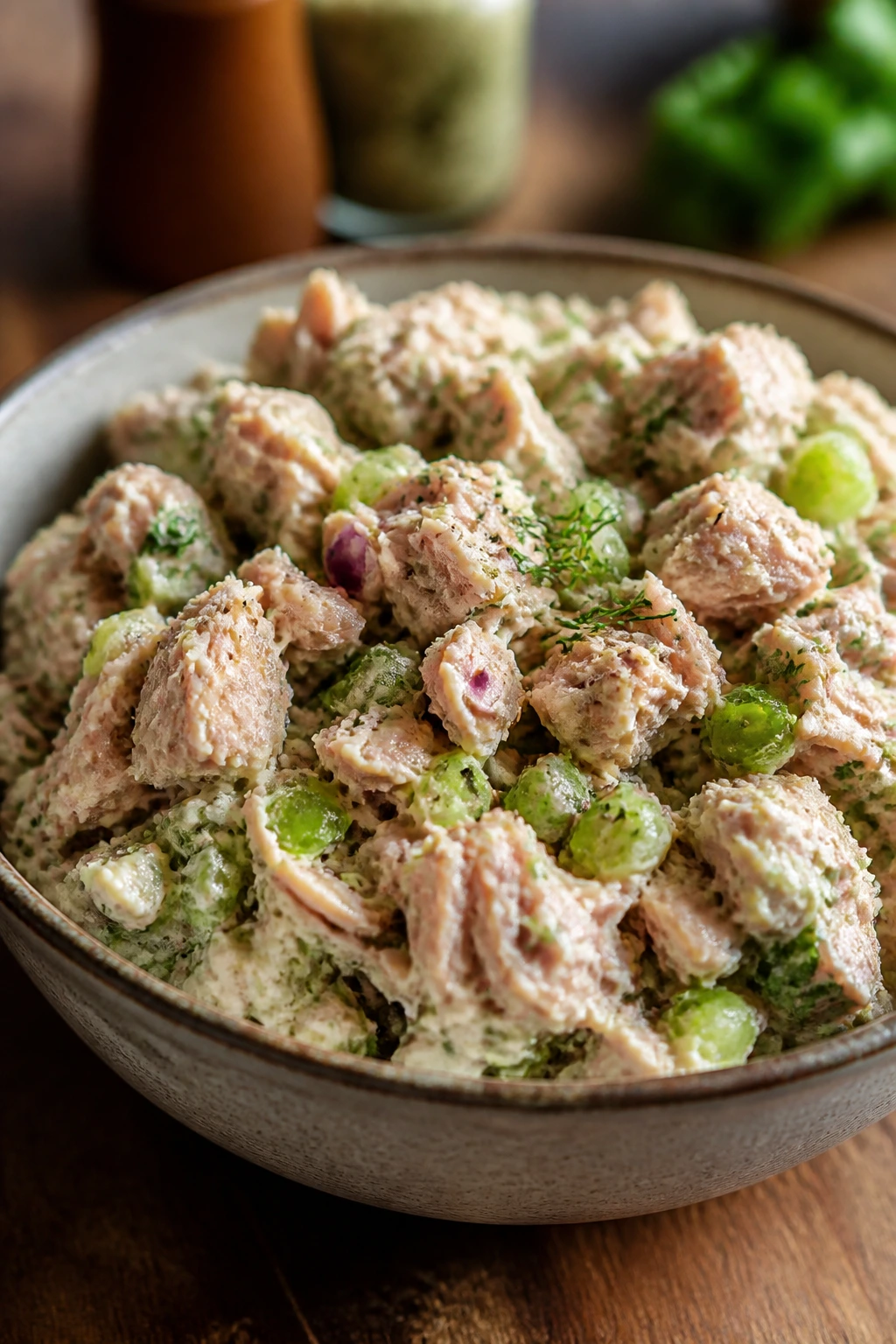
Real texture: Each recipe has at least one crunchy, creamy, or chewy element that keeps the tuna from going flat in the bowl.
Smart pantry work: Canned tuna does the heavy lifting, but beans, pasta, potatoes, rice, and bread give it actual staying power.
Fast without feeling flimsy: Most of these come together in 15 to 30 minutes, but they don’t eat like a rushed desk lunch.
Easy to scale: Make one bowl for yourself, or double the batch and park it in the fridge for a couple of lunches.
Flexible flavor lanes: You can go lemony, herby, smoky, curry-spiced, sesame-forward, or deli-style without changing the whole method.
Better than a plain sandwich: Several of these work just as well in lettuce cups, on toast, in wraps, or over greens, so you can match the format to your day.
1. Classic Deli-Style Tuna Salad with Celery and Pickles
This is the tuna salad people remember from actual deli counters, not the bland version that shows up in the back of a fridge. It’s creamy, salty, and bright enough to keep you taking another forkful instead of calling it done after two bites. The chopped egg gives it body, and the dill pickle keeps the mayo from taking over.
Why It Works:
The balance is old-school for a reason: tuna wants acid, fat, and crunch. Celery and pickle bring the snap, Dijon gives the mayo some bite, and a hard-boiled egg makes the mixture feel fuller on toast or in lettuce cups. Letting it sit for 10 minutes helps the flavors settle into each other.
Key Ingredients:
- 2 cans (5 oz each) tuna in water, drained very well — too much liquid makes the salad slack.
- 1/3 cup mayonnaise — enough to coat, not drown.
- 2 tablespoons finely diced celery — for the clean crunch.
- 2 tablespoons finely diced dill pickle — the briny edge that wakes everything up.
- 1 tablespoon minced red onion — sharp, but not loud.
- 1 teaspoon Dijon mustard — adds backbone.
- 1 hard-boiled egg, chopped — makes the salad feel more like lunch.
- 1 teaspoon lemon juice — lifts the whole bowl.
- 1 tablespoon chopped fresh dill or parsley — use what’s in the crisper.
- Salt and black pepper — season after mixing, not before.
Quick Steps:
- Drain the tuna thoroughly and flake it into a medium bowl with a fork. If it looks wet, press it lightly with the fork against the bowl.
- Stir together the mayonnaise, Dijon, and lemon juice in a second bowl until smooth.
- Fold in the celery, pickle, red onion, and chopped egg.
- Add the tuna and mix gently until just combined. Do not mash it into a paste.
- Season with salt and plenty of black pepper, then chill for 10 minutes before serving.
Equipment for This Recipe:
- Medium mixing bowl — big enough to fold without smashing the tuna.
- Fork — better than a spoon for keeping the texture intact.
- Sharp knife and cutting board — for small, even dice.
- Measuring spoons — the Dijon and lemon matter here.
How to Serve This Dish:
Pile it on toasted sourdough, stuff it into butter lettuce, or spoon it over a handful of arugula with a few crackers on the side. It also works in a halved tomato if you want something that feels diner-ish in the best way.
Pro Tips for This Recipe:
- Use dill pickles, not sweet relish; the sweet version makes the tuna taste oddly flat.
- If your tuna is packed in water, add 1 teaspoon olive oil for a rounder finish.
- Chop the celery small. Big celery chunks overpower the tuna fast.
- Chill it briefly before serving so the onion softens a little.
Variations on This Dish:
- Peppery Bistro Version: Add 1 teaspoon capers and a few grinds of black pepper for a sharper, more grown-up bite.
- No-Egg Lunchbox Mix: Skip the egg and add 2 tablespoons chopped cucumber for a lighter, cleaner texture.
Common Mistakes to Avoid with This Dish:
- Leaving the tuna watery: The salad turns thin and slips off the bread. Drain it hard.
- Using too much mayo: You want a thick, scoopable mix, not a spread that runs.
- Skipping the acid: Without lemon or mustard, the whole bowl tastes dull and heavy.
2. Avocado Tuna Salad Stuffed Into Butter Lettuce
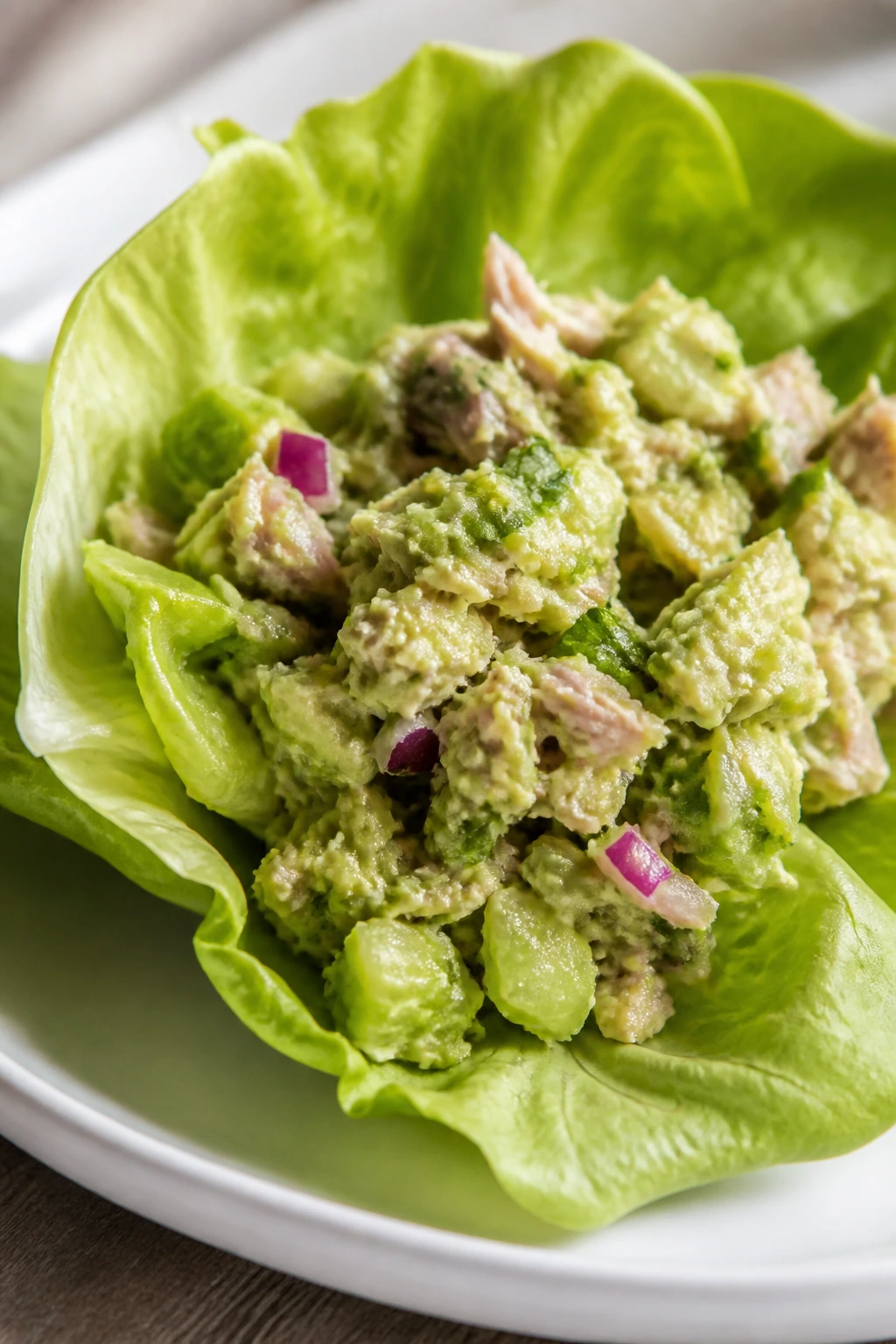
If you like tuna salad that feels fresh rather than heavy, this is the move. The avocado stands in for most of the mayo, so the texture turns lush instead of greasy. Butter lettuce gives each bite a cool, crisp shell that keeps the whole thing tidy in your hands.
Why It Works:
Avocado does two jobs at once: it binds the tuna and gives the salad a soft, rich texture that reads as more substantial than plain mayo. The cucumber keeps it from turning mushy, and a hit of lime or lemon stops the avocado from tasting flat. This one is especially good when you want a meal that still feels light on the stomach.
Key Ingredients:
- 2 cans tuna, drained — chunk light works well here.
- 1 ripe avocado — soft enough to mash but not brown in the center.
- 2 tablespoons Greek yogurt — keeps the dressing creamy and cool.
- 1 tablespoon lemon or lime juice — protects the avocado and brightens the bowl.
- 2 tablespoons minced scallions — gentler than raw onion.
- 1 small cucumber, diced — use the firm center, not the watery seed pocket.
- 1 tablespoon chopped cilantro — or parsley if cilantro is a no.
- 8 butter lettuce leaves — the edible wrappers.
- Salt and black pepper — season more than you think.
- 1 teaspoon sesame seeds — optional, but nice for a little nutty finish.
Quick Steps:
- Mash the avocado with Greek yogurt and citrus juice in a bowl until mostly smooth.
- Fold in the tuna, scallions, cucumber, and herbs.
- Season with salt and pepper, then taste again. Avocado needs more salt than most people expect.
- Spoon the tuna salad into butter lettuce leaves.
- Finish with sesame seeds and serve immediately.
Equipment for This Recipe:
- Mixing bowl — wide enough for gentle folding.
- Fork or potato masher — for the avocado.
- Paring knife — for clean cucumber dice.
- Serving platter — helps the lettuce cups stay upright.
How to Serve This Dish:
Serve two or three lettuce cups per person, with extra cucumber spears or rice crackers on the side. It’s clean, cool, and a little messy in the way good hand-held food should be.
Pro Tips for This Recipe:
- Buy an avocado that gives slightly at the stem end, not one that squishes in your palm.
- Add the citrus first. It slows browning and keeps the salad looking fresh for longer.
- If the mix feels too thick, loosen it with 1 teaspoon olive oil instead of more yogurt.
- Spoon it into the lettuce just before serving so the leaves stay crisp.
Variations on This Dish:
- Spicy Guac Tuna Cups: Add 1 minced jalapeño and a dash of hot sauce.
- Herb Garden Version: Swap cilantro for dill, chives, and parsley for a softer, greener flavor.
Common Mistakes to Avoid with This Dish:
- Using a hard avocado: It won’t mash smoothly and leaves little green lumps that feel unfinished.
- Overfilling the lettuce: The cups tear fast. Keep the scoop modest.
- Making it too far ahead: Avocado browns and cucumber loosens. Mix close to serving time.
3. Lemon-Dill Tuna Salad with White Beans
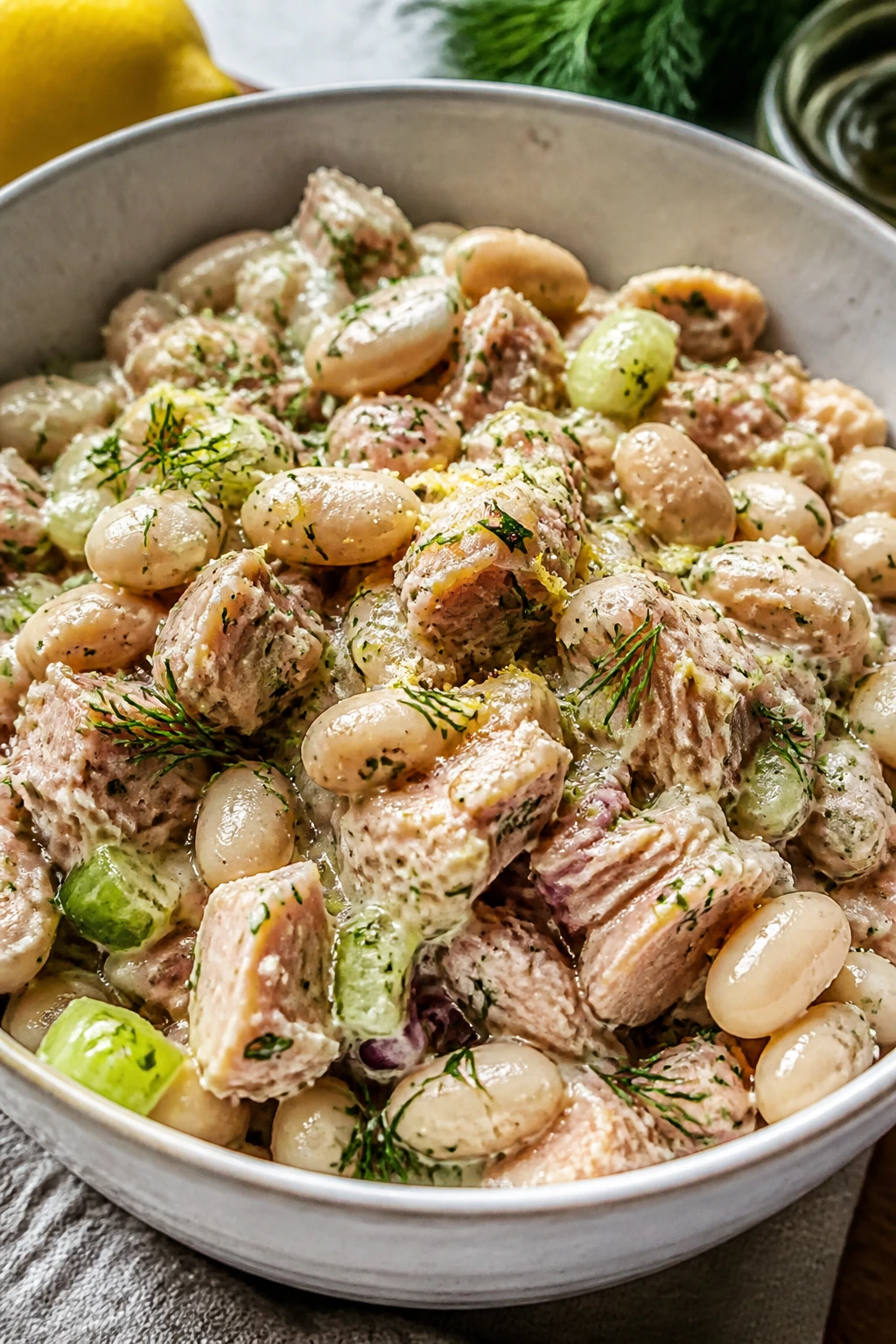
This is the one I make when I want a tuna salad that can stand up on its own without bread. White beans give it a soft, satisfying body, and the lemon-dill dressing makes the whole thing taste clean and awake. It’s the sort of bowl that disappears fast because it doesn’t feel like a compromise meal.
Why It Works:
Cannellini beans soak up dressing the way tuna doesn’t, which is exactly why they belong here. You get more volume, a creamier spoonful, and enough fiber to keep the bowl from feeling like a snack. The dill and lemon keep the beans from tasting chalky or plain.
Key Ingredients:
- 2 cans tuna, drained — flake it into medium pieces.
- 1 can (15 oz) cannellini beans, rinsed and drained — rinse well so the liquid doesn’t muddy the dressing.
- 1/4 cup Greek yogurt — the creamy base.
- 2 tablespoons olive oil — adds body and sheen.
- Zest and juice of 1 lemon — use both if the lemon is juicy.
- 2 tablespoons chopped fresh dill — the main flavor note.
- 1 celery stalk, finely minced — for crunch.
- 2 tablespoons minced red onion — a little bite.
- 2 cups arugula or baby spinach — the green bed.
- Salt and black pepper — essential here.
Quick Steps:
- Whisk the yogurt, olive oil, lemon zest, lemon juice, dill, salt, and pepper in a large bowl.
- Fold in the beans first so they get coated before the tuna goes in.
- Add the tuna, celery, and onion, then mix gently.
- Taste and adjust with more lemon or salt.
- Serve over arugula or spinach right away, or chill for 15 minutes if you want the flavors to settle.
Equipment for This Recipe:
- Large bowl — beans need room to move.
- Microplane or fine grater — for the lemon zest.
- Fork — for flaking the tuna.
- Measuring spoons — the lemon and dill need some precision.
How to Serve This Dish:
Spoon it into a shallow bowl over greens, or tuck it into warm pita with cucumber slices. It also makes a strong toast topping if you want something more structured.
Pro Tips for This Recipe:
- Warm the beans for 20 seconds in the microwave if they’re fridge-cold; they take on the dressing better.
- Do not skip the lemon zest. Juice alone tastes flatter.
- If your yogurt is very thick, stir in 1 teaspoon water to loosen it.
- Use fresh dill if you can. Dried dill works, but it tastes dustier.
Variations on This Dish:
- Caper-Lemon Version: Add 1 tablespoon capers for a sharper, more briny bowl.
- Cream-Free Version: Swap the yogurt for 3 tablespoons olive oil and a spoonful of bean cooking liquid for a silkier finish.
Common Mistakes to Avoid with This Dish:
- Skipping the bean rinse: The can liquid makes the salad cloudy and odd-tasting.
- Adding too much onion: It takes over fast in a cold salad.
- Serving it with limp greens: Use sturdy arugula or spinach so the salad has something to grip.
4. Mediterranean Tuna and Chickpea Salad
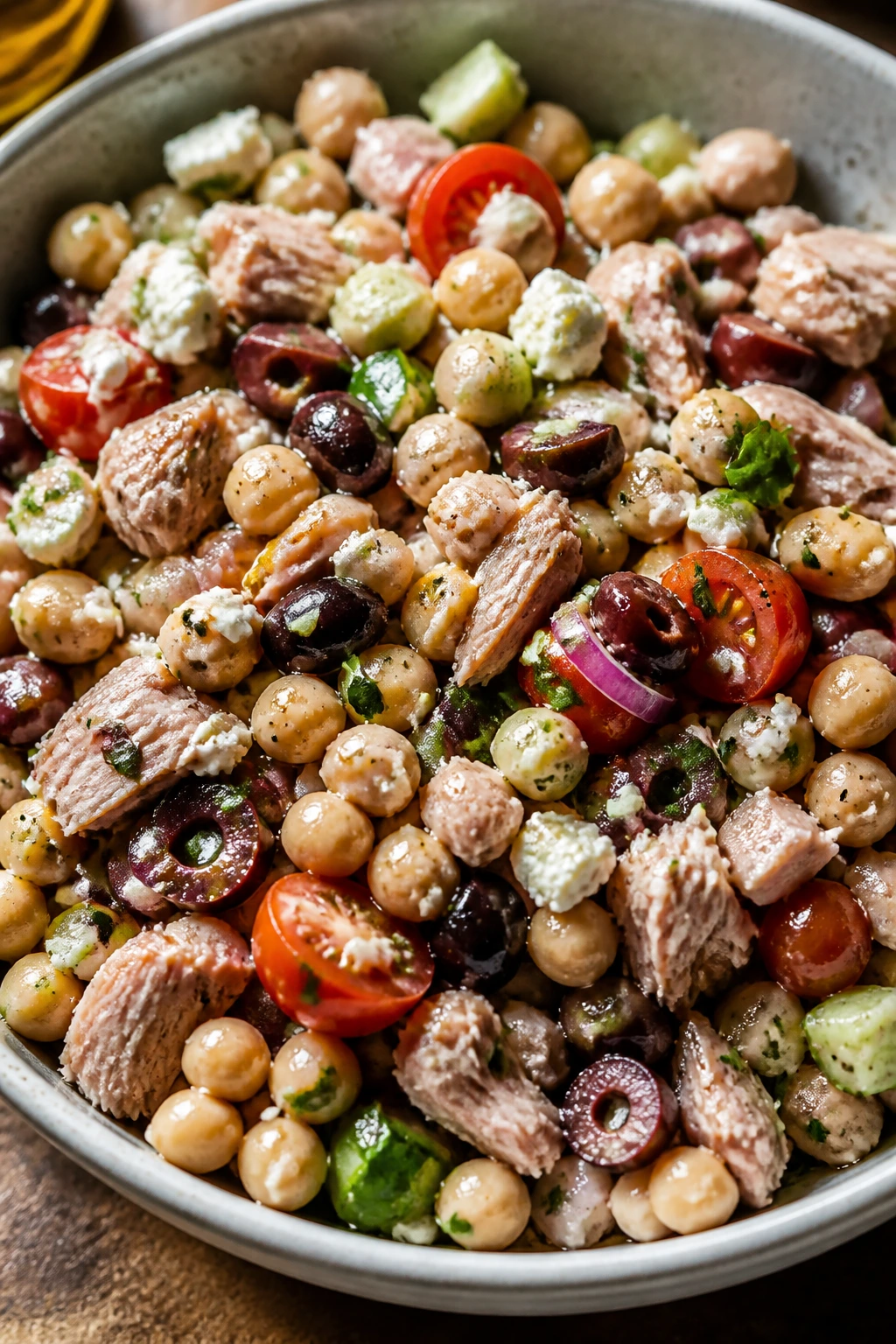
This one eats like lunch from a good café salad case. Chickpeas, olives, tomatoes, feta, and tuna all pull in the same salty-bright direction, so you don’t need much dressing at all. The result is sturdy enough to pack and still tastes better after a short rest.
Why It Works:
Chickpeas bring chew and weight, while olives and feta supply the sharp, savory notes tuna can use so well. A simple olive oil and vinegar dressing keeps the bowl from becoming gloopy. It’s a strong example of why tuna salad gets better when you stop thinking of it as one-note.
Key Ingredients:
- 2 cans tuna, drained — use solid chunks if you want a meatier bite.
- 1 can (15 oz) chickpeas, rinsed and drained — the main bulk.
- 1/2 cup cherry tomatoes, halved — juicy but not watery if cut just before mixing.
- 1/4 cup diced cucumber — keep the pieces small.
- 1/4 cup Kalamata olives, sliced — salty, dark, and worth it.
- 2 tablespoons finely diced red onion — enough for bite.
- 2 tablespoons crumbled feta — finish, not filler.
- 2 tablespoons olive oil — choose one that tastes peppery.
- 1 tablespoon red wine vinegar — the acid anchor.
- 1 teaspoon dried oregano and a handful of chopped parsley — the herb backbone.
Quick Steps:
- Whisk the olive oil, vinegar, oregano, salt, and pepper in a large bowl.
- Add chickpeas, cucumber, tomatoes, olives, and onion; toss once.
- Fold in the tuna and parsley.
- Scatter feta over the top and give the bowl one last gentle toss.
- Serve immediately or let it sit for 10 minutes.
Equipment for This Recipe:
- Large salad bowl — this one likes space.
- Sharp knife — for clean tomato and onion cuts.
- Colander — for rinsing chickpeas properly.
- Citrus press or spoon — if you want a squeeze of lemon too.
How to Serve This Dish:
Serve it with warm pita, toasted flatbread, or a thick slice of country bread. If you want to keep it lighter, spoon it over romaine and call it done.
Pro Tips for This Recipe:
- If your feta is very salty, cut back the olives slightly.
- Drain the chickpeas well and pat them dry if you want the dressing to cling.
- Add tomatoes at the end if you’re packing it for later.
- A little lemon zest makes the whole bowl smell fresher.
Variations on This Dish:
- Roasted Pepper Version: Swap the cucumber for roasted red peppers and the bowl gets sweeter and deeper.
- No-Feta Bowl: Leave out the cheese and add 2 tablespoons tahini in the dressing for a creamy, dairy-free finish.
Common Mistakes to Avoid with This Dish:
- Under-seasoning the chickpeas: They need salt, or they taste like nothing.
- Using watery tomatoes too early: They dilute the dressing.
- Overloading with feta: Too much turns the salad salty instead of balanced.
5. Tuna Pasta Salad with Peas and Dijon
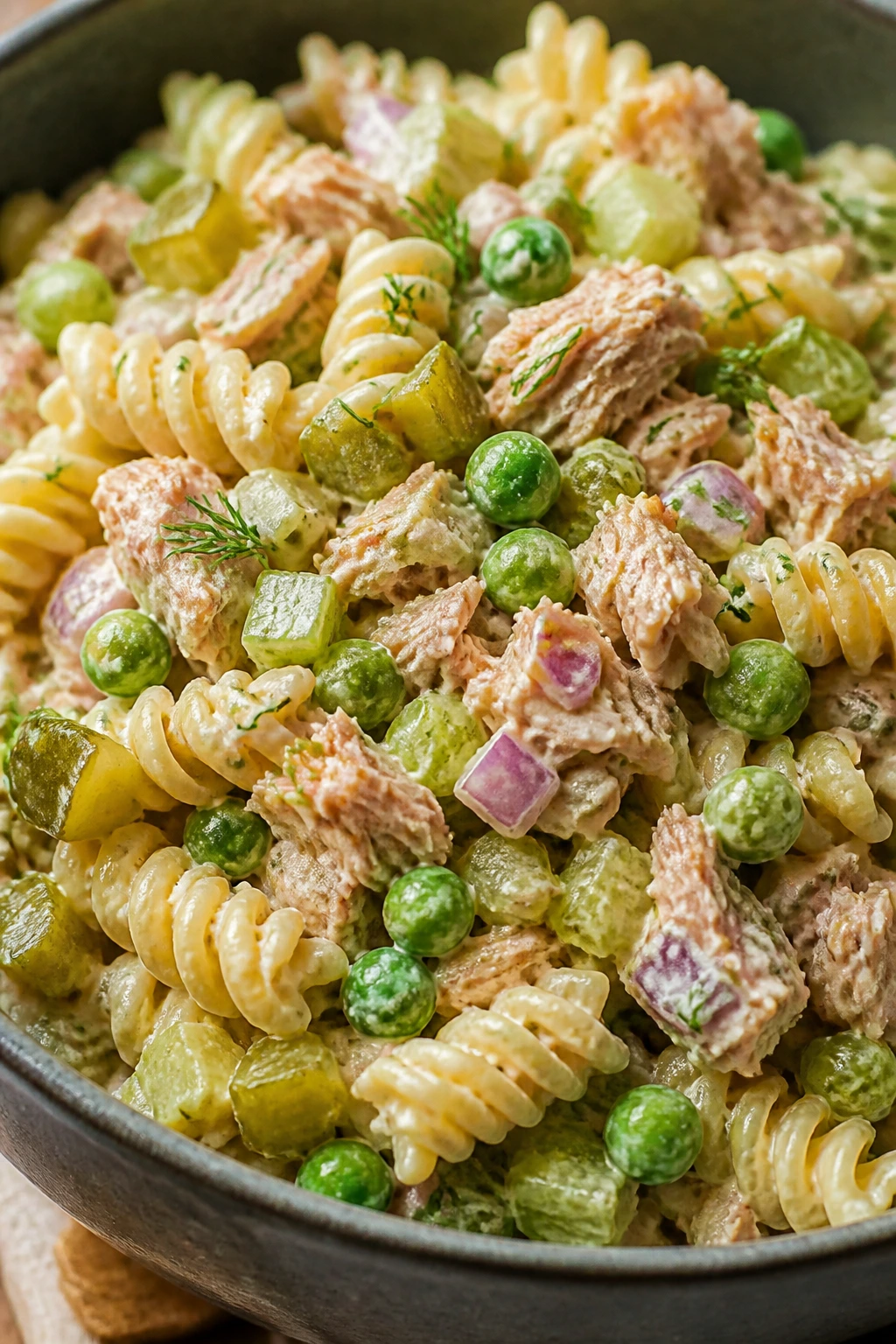
Pasta salad earns its place when it stops acting like a picnic side and starts behaving like dinner. This version is creamy, peppery, and full of little bright hits from peas and pickles. It works warm, but it gets better after chilling, which makes it a useful fridge plan.
Why It Works:
Pasta gives tuna the kind of bulk that makes a bowl feel finished. Peas bring sweetness, dill pickles add acidity, and Dijon keeps the mayo from tasting flat. If you cook the pasta properly and cool it fast, the salad stays springy instead of gluey.
Key Ingredients:
- 8 ounces short pasta, such as rotini or shells — shapes with curves hold dressing better.
- 2 cans tuna, drained — flaked, not pulverized.
- 1 cup frozen peas — thaw them under cool water or add them to the hot pasta near the end.
- 1/3 cup mayonnaise — the creamy base.
- 2 tablespoons plain yogurt or sour cream — lightens the dressing.
- 1 tablespoon Dijon mustard — gives the bowl some sharpness.
- 2 tablespoons chopped dill pickles — the briny pop.
- 1/4 cup diced celery — for crunch.
- 2 tablespoons chopped parsley — keeps the flavor green.
- 1 tablespoon lemon juice — don’t skip it.
Quick Steps:
- Boil the pasta in salted water until just shy of al dente, then drain and rinse briefly under cool water.
- Whisk mayo, yogurt, Dijon, lemon juice, salt, and pepper in a large bowl.
- Fold in tuna, peas, pickle, celery, and parsley.
- Add the pasta and toss until evenly coated.
- Chill for 20 minutes before serving so the dressing settles into the shapes.
Equipment for This Recipe:
- Large pot — for boiling the pasta.
- Colander — to drain and cool quickly.
- Large bowl — the pasta needs mixing room.
- Wooden spoon or spatula — gentle enough for tuna.
How to Serve This Dish:
Serve it in a wide bowl with sliced tomatoes or a handful of crisp lettuce underneath. It also packs well in a lunch container with a little extra black pepper on top.
Pro Tips for This Recipe:
- Salt the pasta water properly. Bland noodles make a bland salad.
- Cool the pasta fast so it doesn’t keep cooking and go soft.
- If the salad tightens up in the fridge, loosen it with 1 tablespoon milk or yogurt.
- A few chopped scallions are good here if you want more bite.
Variations on This Dish:
- Southern Dill Pickle Version: Add chopped hard-boiled egg and extra pickle for a more deli-like bowl.
- Lighter Olive-Oil Version: Swap half the mayo for olive oil and use extra lemon for a looser, brighter finish.
Common Mistakes to Avoid with This Dish:
- Overcooking the pasta: Mushy pasta ruins the whole texture.
- Mixing while the pasta is hot: The mayo can break and get greasy.
- Skipping the chill time: The flavors need a little time to settle.
6. Niçoise-Style Tuna Salad with Potatoes and Eggs
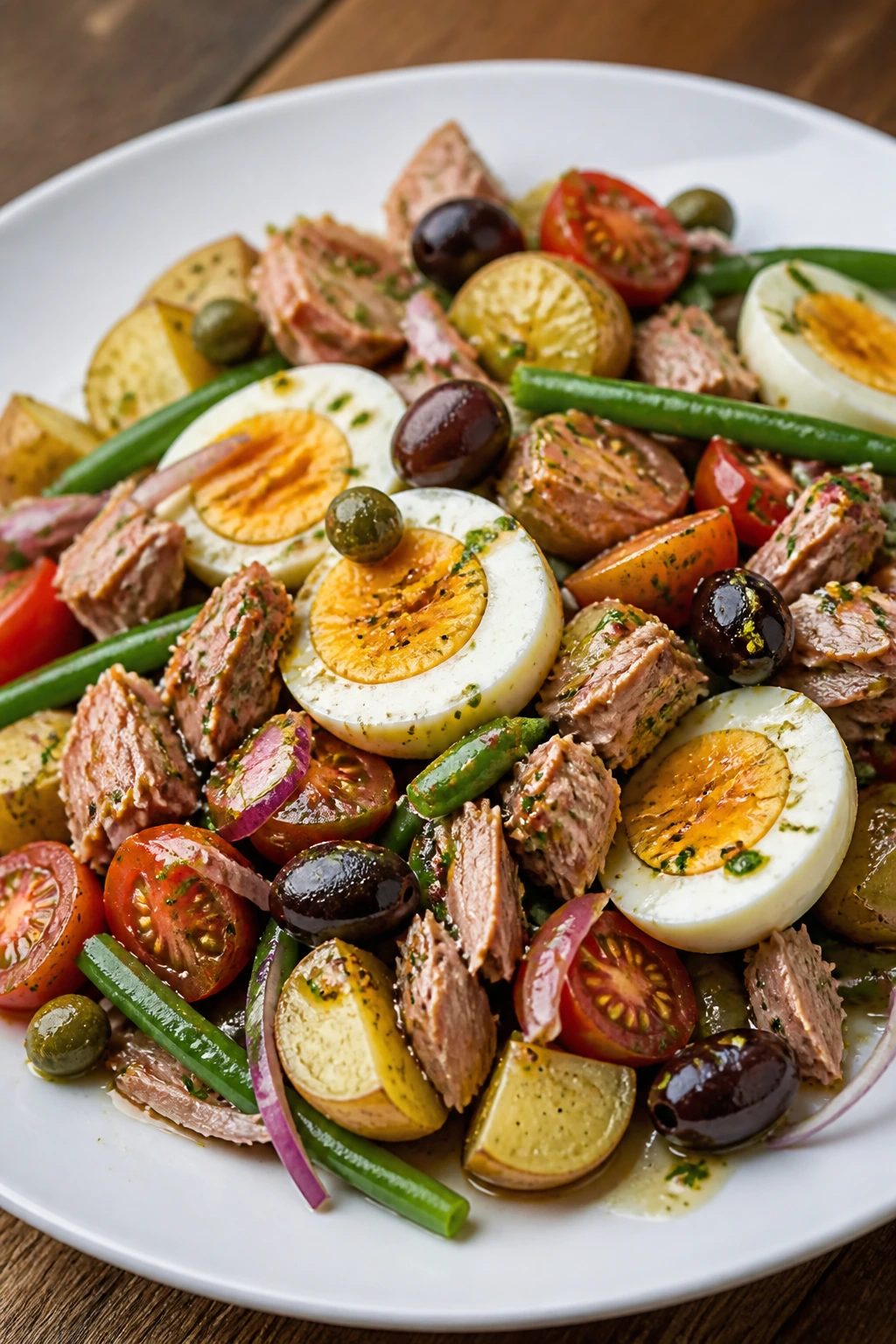
This is the heavyweight in the group. Potatoes, green beans, eggs, olives, and tuna turn a salad into something you can eat with a fork and feel done afterward. It looks composed on the plate and tastes even better once the mustardy dressing hits the warm potatoes.
Why It Works:
Niçoise-style salads work because they stack textures instead of relying on one creamy dressing to do everything. Warm potatoes catch the vinaigrette, the eggs add richness, and green beans keep the bowl from getting sleepy. Tuna fits right in because it’s savory without being heavy.
Key Ingredients:
- 1 1/2 pounds baby potatoes, halved if large — waxy potatoes hold their shape.
- 2 cans tuna, drained — or oil-packed tuna if you want a richer finish.
- 4 eggs — boiled until the yolks are set but not chalky.
- 1 cup green beans, trimmed — the bright green snap matters here.
- 1 cup cherry tomatoes — halved.
- 1/3 cup black olives or Niçoise olives — whichever you can find.
- 2 tablespoons capers — optional, but I use them.
- 3 tablespoons olive oil — for the dressing.
- 1 tablespoon Dijon mustard — the punch.
- 1 tablespoon red wine vinegar — sharp enough to wake the potatoes.
- Salt, black pepper, and chopped parsley — the finishing layer.
Quick Steps:
- Boil the potatoes in salted water for 12 to 15 minutes, until a knife slips in easily. Drain and let them steam dry.
- In the same pot, blanch the green beans for 2 to 3 minutes, then shock them under cold water.
- Whisk olive oil, Dijon, vinegar, salt, and pepper in a small bowl.
- Toss the warm potatoes with half the dressing, then arrange them with beans, tomatoes, eggs, tuna, olives, and capers on a platter.
- Spoon the remaining dressing over the top and finish with parsley.
Equipment for This Recipe:
- Large pot — potatoes and beans can share it.
- Slotted spoon — handy for the beans and eggs.
- Sharp knife — for neat egg halves and tomato cuts.
- Serving platter — this salad deserves to be arranged, not dumped.
How to Serve This Dish:
Serve it room temperature, with crusty bread or nothing at all if the potatoes are generous. It’s one of the few tuna salads that can carry a dinner plate without apology.
Pro Tips for This Recipe:
- Dress the potatoes while they’re still warm so they soak up flavor.
- Use waxy potatoes, not russets; russets break apart and muddy the bowl.
- Eggs peel easier after 10 minutes in ice water.
- Don’t overdo the dressing. The platter should look glossy, not wet.
Variations on This Dish:
- Herb Garden Niçoise: Add tarragon or basil for a softer, greener finish.
- Bean-Heavy Version: Add 1 cup cooked green beans and skip half the potatoes if you want more vegetable density.
Common Mistakes to Avoid with This Dish:
- Letting the potatoes cool completely before dressing: They absorb less flavor.
- Overcooking the green beans: They should bend, not slump.
- Crowding the platter: Give each ingredient some space so the salad looks intentional.
7. Curried Tuna Salad with Apples and Raisins
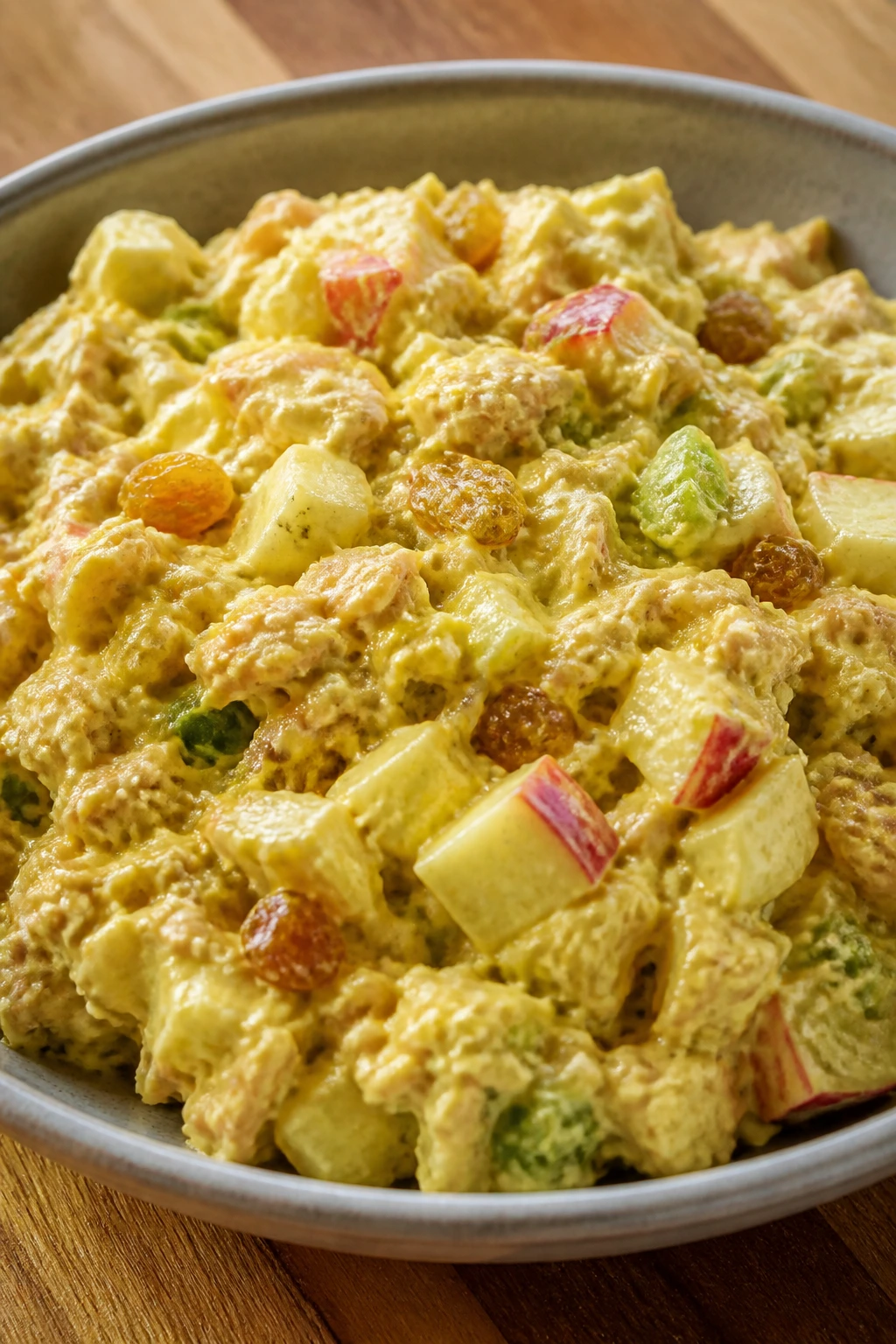
This is sweet, savory, and a little old-fashioned in the best way. Curry powder gives the mayo a warm edge, apples bring crunch, and raisins add those tiny bursts of sweetness that keep you from getting bored halfway through. It’s especially good stuffed into a pita or eaten with butter crackers.
Why It Works:
Curry powder alone can taste dusty if it’s not paired with acid and something crisp. Apple and celery do that work here, while raisins soften the edges and make the bowl feel richer than its ingredient list suggests. Tuna handles spice surprisingly well, as long as the curry stays balanced.
Key Ingredients:
- 2 cans tuna, drained — flake lightly.
- 1/3 cup mayonnaise — the creamy base.
- 1 tablespoon Greek yogurt — keeps the curry from feeling too heavy.
- 1 tablespoon curry powder — bloom it in the mayo for a second.
- 1 celery stalk, finely diced — crunch with a clean finish.
- 1/2 crisp apple, diced small — Fuji, Honeycrisp, or Gala all work.
- 2 tablespoons golden raisins — softer than dark raisins.
- 2 tablespoons chopped scallions — a mild onion note.
- 1 tablespoon lemon juice — keeps the apple from browning and adds lift.
- Salt and black pepper — finish carefully.
Quick Steps:
- Stir the mayonnaise, yogurt, curry powder, and lemon juice together until the mixture turns golden.
- Fold in the tuna, celery, apple, raisins, and scallions.
- Season with salt and pepper, then taste for sweetness and acid.
- Chill for 10 to 15 minutes so the curry has time to settle in.
- Serve on toast, in pita, or on a bed of greens.
Equipment for This Recipe:
- Mixing bowl — medium size is enough.
- Spoon or spatula — for folding without smashing the apple.
- Sharp knife — small dice matter here.
- Citrus juicer or your hand — for the lemon.
How to Serve This Dish:
It’s excellent in a pita with lettuce, or piled onto seeded bread with tomato slices. A handful of cucumber on the side makes the sweetness feel less rich.
Pro Tips for This Recipe:
- Toast the curry powder briefly in the mayo by stirring hard for 20 seconds. It wakes up the spice.
- Dice the apple small so every bite tastes balanced.
- If you like more crunch, add 1 tablespoon chopped toasted almonds.
- Use golden raisins if you want sweetness without the chewy wrinkling of dark ones.
Variations on This Dish:
- Madras Heat Version: Add a pinch of cayenne and 1 teaspoon chopped jalapeño.
- Pineapple Curry Version: Swap raisins for finely chopped pineapple and serve it in lettuce cups.
Common Mistakes to Avoid with This Dish:
- Using too much curry powder: It can turn bitter fast. Start with one tablespoon.
- Skipping the acid: The apple and raisins need lemon to stay bright.
- Cutting the apple too large: Big pieces throw off the bite.
8. Tuna Lettuce Cups with Crispy Rice and Sesame
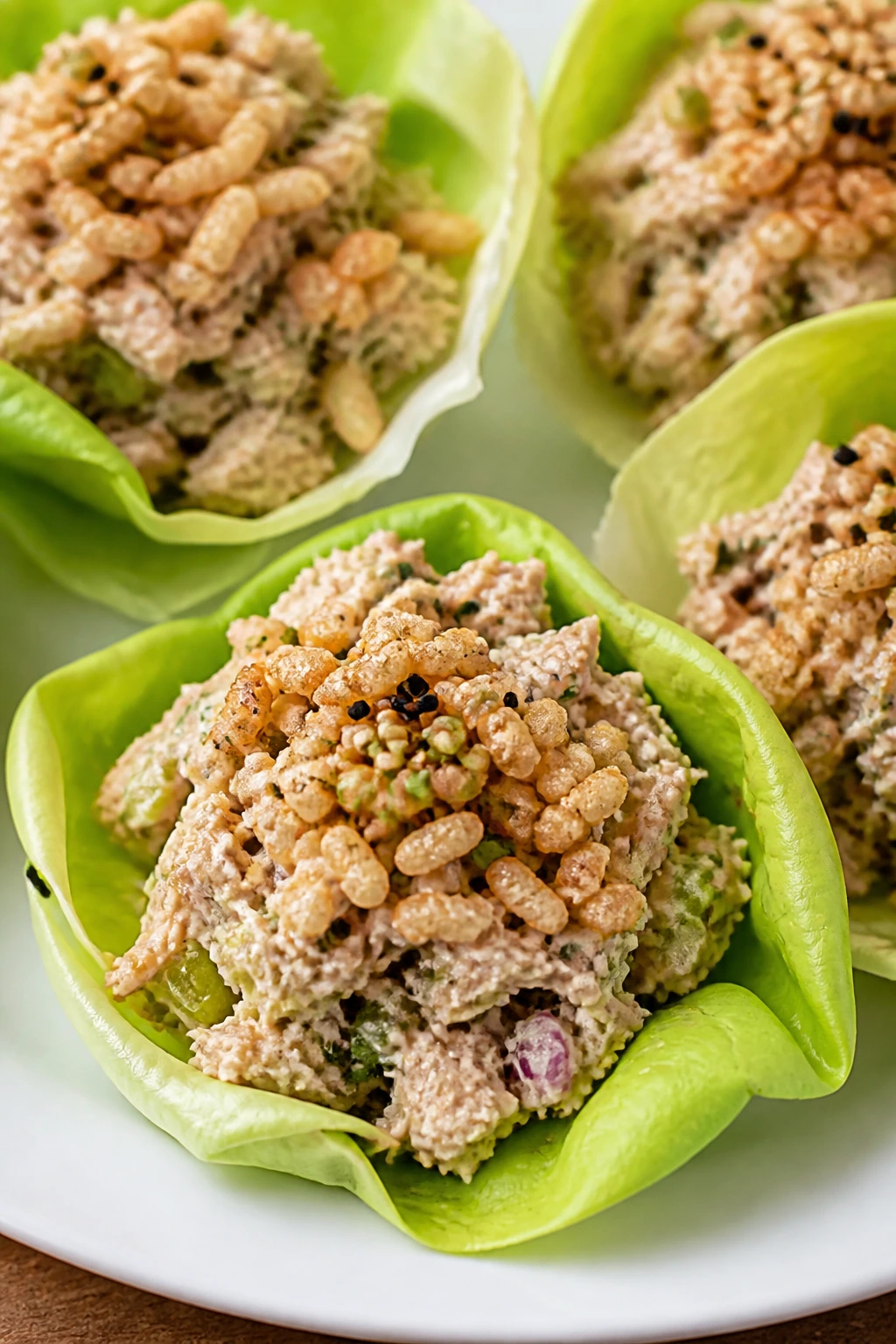
This one feels fresh, salty, and a little playful. The crispy rice gives you the kind of crackle tuna salad usually lacks, while sesame oil and rice vinegar push the flavor toward a quick lunch bowl without making it fussy. It’s a smart use for leftover rice, which I always appreciate.
Why It Works:
Cold tuna needs contrast, and crispy rice gives it the one thing plain mayo never will: texture that survives the first bite. Sesame oil adds aroma, rice vinegar keeps the bowl lively, and lettuce cups make the whole thing hand-held. This is what happens when tuna salad borrows from a rice bowl and remembers to stay light.
Key Ingredients:
- 2 cans tuna, drained — keep the flakes fairly large.
- 1/4 cup mayonnaise — just enough to bind.
- 1 tablespoon soy sauce or tamari — the salty note.
- 1 tablespoon rice vinegar — clean acid.
- 1 teaspoon sesame oil — strong stuff; measure it.
- 1/2 cup shredded carrot — for color and crunch.
- 1/2 cucumber, diced — the cooling element.
- 2 scallions, sliced — a must here.
- 1 cup cooked rice, cooled — for crisping in a skillet.
- 8 romaine or butter lettuce leaves — the cups.
- 2 tablespoons toasted sesame seeds — finish.
Quick Steps:
- Heat a skillet over medium-high heat with the cooled rice and a teaspoon of neutral oil, pressing the rice into a thin layer.
- Cook for 4 to 5 minutes per side until the edges are golden and crisp.
- Mix the tuna, mayo, soy sauce, rice vinegar, sesame oil, carrot, cucumber, and scallions in a bowl.
- Spoon the tuna mixture into lettuce leaves.
- Top with crispy rice and sesame seeds just before serving.
Equipment for This Recipe:
- Nonstick or cast-iron skillet — for crisping the rice.
- Mixing bowl — for the tuna.
- Spatula — to flip the rice without breaking it.
- Lettuce leaf keeper or platter — optional, but helpful.
How to Serve This Dish:
Serve three cups per person with extra cucumber or edamame on the side. The crispy rice should go on at the last second so it stays snappy.
Pro Tips for This Recipe:
- Use rice that has been chilled so it crisps instead of steaming.
- Don’t drown the tuna in mayo; the lettuce cups should feel bright, not heavy.
- If you like heat, a little sriracha in the dressing works nicely.
- Tear the lettuce cups only if they’re too large to fold neatly.
Variations on This Dish:
- Ginger-Sesame Version: Add 1 teaspoon grated fresh ginger and skip the mayo for a sharper bowl.
- Spicy Tuna Crunch: Stir in chili crisp and cucumber for heat with a little oil.
Common Mistakes to Avoid with This Dish:
- Crisping wet rice: It will steam and cling to the pan.
- Adding crispy rice too early: It goes soft fast.
- Overstuffing the lettuce: The cups break and the filling spills.
9. Tex-Mex Tuna Salad with Black Beans and Corn
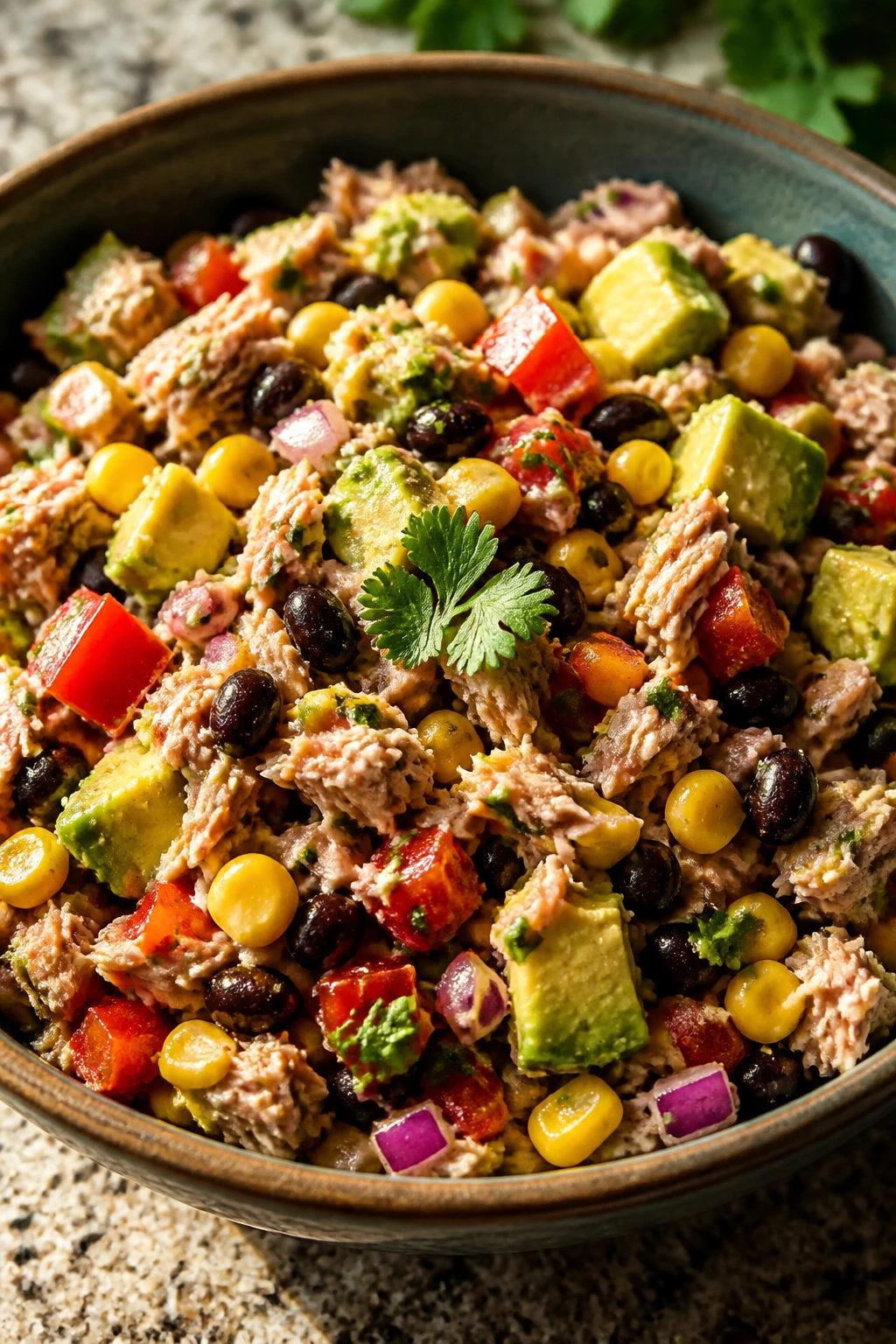
This is the tuna salad I make when I want something louder. Black beans, corn, lime, avocado, and chili powder pull the flavor in a southwest direction without turning it into soup. It’s sturdy enough for tortilla chips and easy enough for lunch on autopilot.
Why It Works:
Black beans and corn give tuna the same kind of heft you’d expect from a burrito bowl. Lime keeps the mayo or yogurt from feeling dull, and avocado adds enough creaminess that you don’t need much dressing at all. It’s a good example of how to make tuna feel warm-weather friendly without serving it plain and hoping for the best.
Key Ingredients:
- 2 cans tuna, drained — chunk light is fine here.
- 1 can black beans, rinsed and drained — rinse well to remove the can flavor.
- 3/4 cup corn, thawed if frozen — sweet corn balances the spice.
- 1/4 cup diced red bell pepper — crisp and sweet.
- 2 tablespoons minced red onion — sharp enough, but not too much.
- 1 avocado, diced — fold in gently.
- 2 tablespoons lime juice — the main acid.
- 2 tablespoons mayonnaise or Greek yogurt — your creamy base.
- 1 teaspoon chili powder — use a fresh one.
- 1/2 teaspoon cumin — for warmth.
- Chopped cilantro, salt, and pepper — to finish.
Quick Steps:
- Whisk the lime juice, mayo or yogurt, chili powder, cumin, salt, and pepper in a bowl.
- Fold in black beans, corn, bell pepper, and onion.
- Add the tuna and cilantro and mix lightly.
- Gently fold in the avocado last.
- Serve right away with chips, tortillas, or greens.
Equipment for This Recipe:
- Large bowl — to keep the avocado intact.
- Fork — for flaking the tuna.
- Knife and cutting board — for fast dice.
- Citrus juicer — lime juice makes this recipe.
How to Serve This Dish:
Spoon it into a bowl with tortilla chips tucked around the edge, or load it into warm tortillas for a rough-and-ready taco dinner. It also works over chopped romaine if you want less starch.
Pro Tips for This Recipe:
- Add the avocado at the very end so it stays chunky.
- If the salad tastes flat, it probably needs more lime and salt, not more chili powder.
- Use thawed frozen corn when fresh corn isn’t around.
- Warm the black beans briefly if you want a less fridge-cold bowl.
Variations on This Dish:
- Smoky Chipotle Version: Swap chili powder for chopped chipotle in adobo.
- Loaded Nacho Bowl: Add shredded cheddar and crushed tortilla chips on top right before serving.
Common Mistakes to Avoid with This Dish:
- Skipping the lime: The beans make the bowl heavy without it.
- Adding avocado too early: It breaks down and dulls the texture.
- Using dry cumin that tastes dusty: If your spice jar is ancient, replace it.
10. Whole-Grain Toast Tuna Salad with Tomato and Herb Mayo
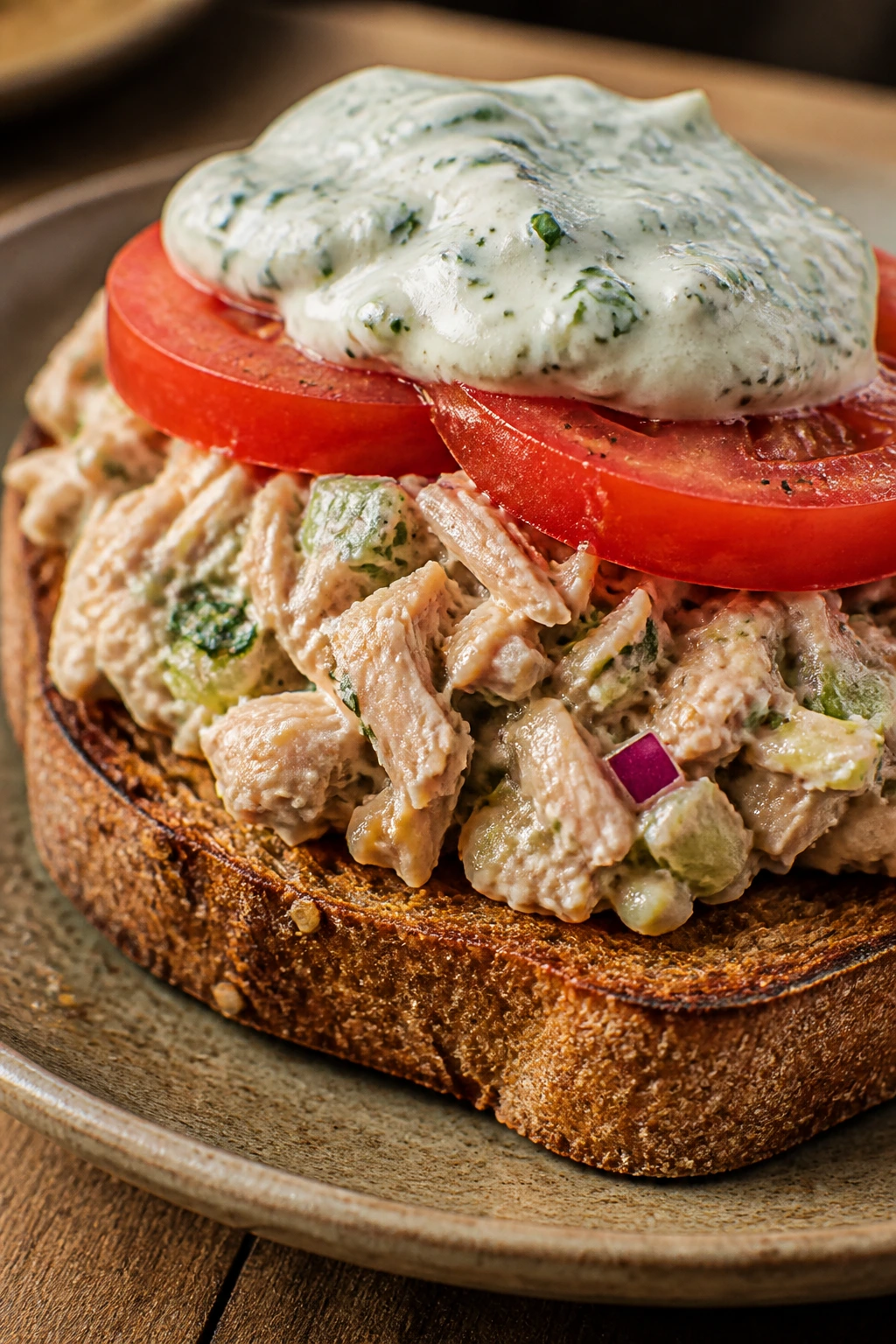
This is a straightforward, satisfying toast situation, and I mean that as a compliment. The tomato brings juice, the herb mayo brings freshness, and the whole-grain bread gives the tuna salad something sturdy to cling to. It’s the kind of lunch that feels assembled on purpose.
Why It Works:
Bread changes the job of tuna salad. Instead of being the whole meal in one bowl, it becomes a thick topping that needs enough texture to stay put. Whole-grain toast handles moisture better than soft sandwich bread, and the herbs keep the mayo from tasting dense.
Key Ingredients:
- 2 cans tuna, drained — use a fork to keep the texture chunky.
- 1/3 cup mayonnaise — the spreadable base.
- 2 tablespoons chopped basil and parsley — a green, fresh mix.
- 1 teaspoon lemon zest — brighter than juice alone.
- 4 slices whole-grain bread, toasted — sturdy toast only.
- 1 small tomato, sliced — pat it dry first.
- 1 handful baby greens — optional, but useful.
- 1 tablespoon capers — a salty spike.
- Black pepper — more than you think.
Quick Steps:
- Mix the mayonnaise, herbs, lemon zest, capers, and black pepper in a bowl.
- Fold in the tuna until it’s coated but still chunky.
- Toast the bread until deeply golden at the edges.
- Layer tomato slices and baby greens on the toast, then pile on the tuna salad.
- Finish with more black pepper and serve immediately.
Equipment for This Recipe:
- Toaster or skillet — to get the bread crisp.
- Mixing bowl — for the tuna mixture.
- Sharp knife — for the tomato.
- Paper towel — for drying the tomato slices.
How to Serve This Dish:
Serve one or two open-faced toasts per person with a cucumber salad or a few olives. If you need a more substantial plate, add a cup of soup alongside.
Pro Tips for This Recipe:
- Dry the tomatoes or the toast will soften under the salad.
- A little caper brine in the mayo gives this an even sharper edge.
- Toast the bread a shade darker than you normally would.
- Use thick-cut bread so the toast doesn’t collapse.
Variations on This Dish:
- Herbed Farmhouse Version: Add chopped chives and dill for a more garden-like profile.
- Avocado Toast Hybrid: Spread the toast with smashed avocado before topping with tuna.
Common Mistakes to Avoid with This Dish:
- Using soft bread: It goes limp under the salad.
- Skipping the dry tomato step: The whole slice slips and wets the toast.
- Under-salting the herbs: Fresh herbs need seasoning or they fade.
11. Cannellini Bean Tuna Salad with Parsley and Capers
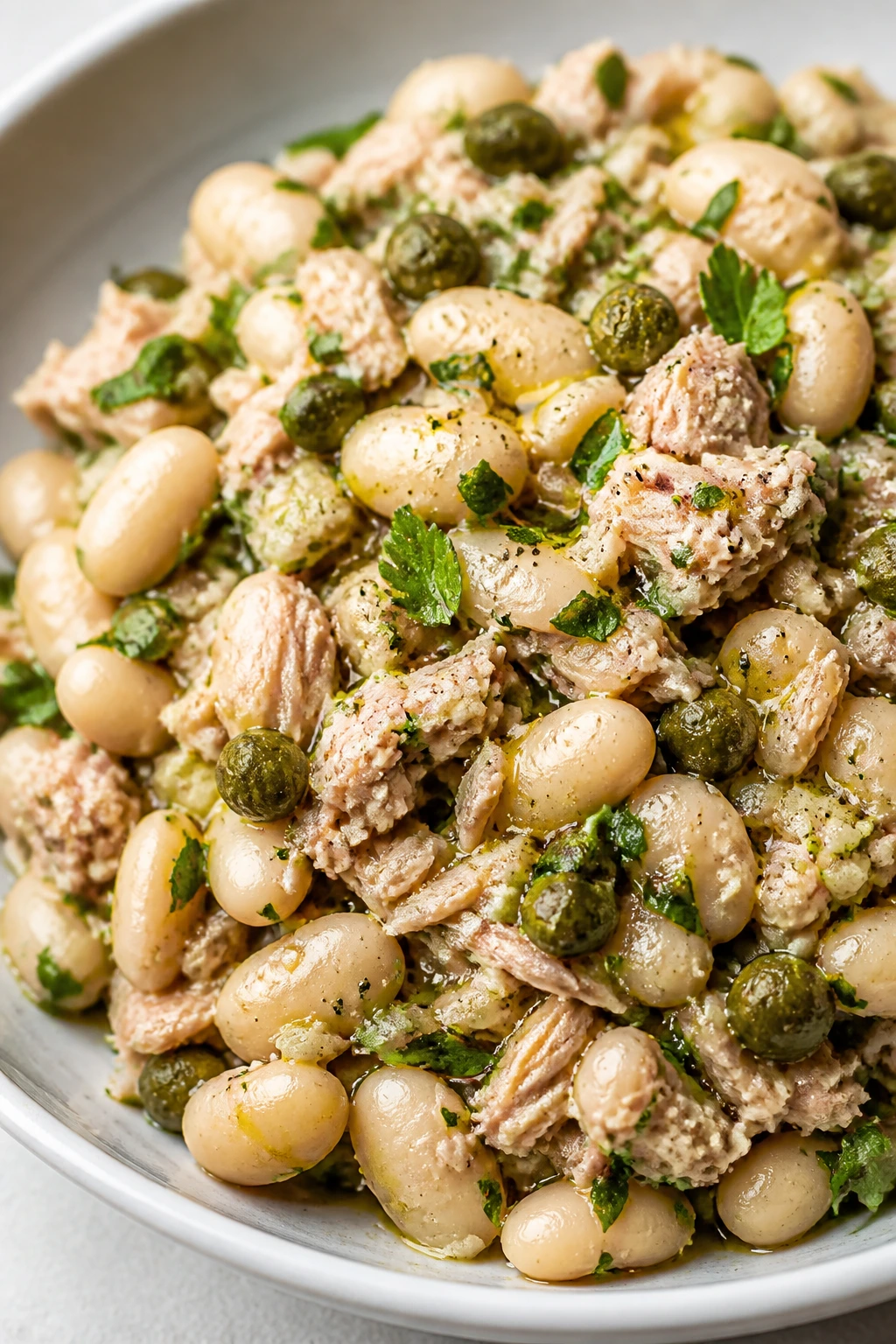
This salad is all about the soft-meets-salty contrast. Cannellini beans give it a creamy base without dairy, parsley keeps it green, and capers bring that sharp little hit that makes people keep going back for another forkful. It’s pantry food with a sharper haircut.
Why It Works:
Beans are the secret weapon in tuna salad when you want more protein and more volume without adding noodles or potatoes. Capers and lemon wake up the beans, and olive oil gives the whole bowl a slick, almost spreadable finish. It feels clean but not skimpy.
Key Ingredients:
- 2 cans tuna, drained — look for firm flakes.
- 1 can cannellini beans, rinsed and drained — the soft base.
- 2 tablespoons capers, drained — keep them in small bursts.
- 1/4 cup chopped parsley — flat-leaf works best.
- 1/4 cup diced celery — for crunch.
- 2 tablespoons olive oil — gives the salad body.
- 1 tablespoon lemon juice — essential.
- 1 teaspoon Dijon mustard — for a little backbone.
- 1/4 cup thinly sliced radishes — crisp and peppery.
- Salt and black pepper — final adjustment.
Quick Steps:
- Whisk olive oil, lemon juice, Dijon, salt, and pepper in a bowl.
- Add the beans and lightly mash about a quarter of them with the back of a fork.
- Fold in tuna, capers, parsley, celery, and radishes.
- Taste and add more lemon if the bowl feels too soft.
- Serve on greens, toast, or in a pita.
Equipment for This Recipe:
- Medium bowl — enough room for gentle mashing.
- Fork — for the beans and tuna.
- Knife — for the radishes.
- Citrus juicer — or just squeeze by hand.
How to Serve This Dish:
Serve it with sliced cucumbers and crisp bread, or spoon it into pita pockets with lettuce. It’s equally useful as a fork salad or a sandwich filling.
Pro Tips for This Recipe:
- Mash only some of the beans. If you mash all of them, the salad gets pasty.
- Drain the capers well so the brine doesn’t dominate.
- Radishes are best sliced thin, not chopped chunky.
- This tastes better after 10 minutes, once the beans absorb the dressing.
Variations on This Dish:
- Garlic-Lover’s Version: Rub the bowl with a cut garlic clove before mixing.
- No-Oil Version: Replace olive oil with a spoonful of extra bean liquid and more lemon.
Common Mistakes to Avoid with This Dish:
- Mashing every bean into paste: You lose the pleasant creaminess.
- Too many capers: The salad turns harsh and one-note.
- Serving it unseasoned: Beans always need more salt than you expect.
12. Farro Tuna Bowl with Cucumber and Feta
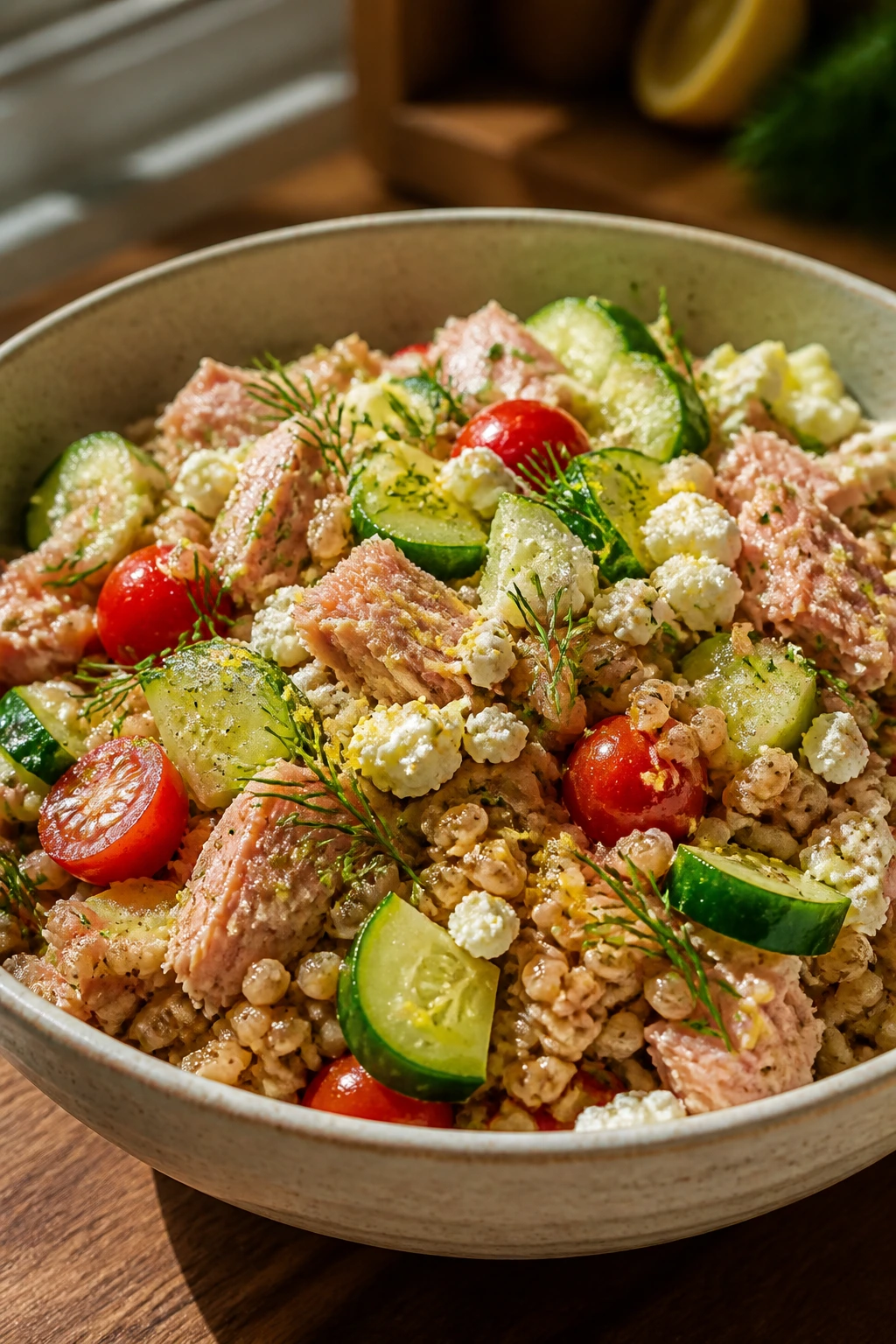
Farro changes the texture game completely. Instead of a soft salad, you get chew, grainy nuttiness, and a bowl that holds up for hours in the fridge. With cucumber, feta, lemon, and dill, it lands somewhere between a lunch bowl and a grain salad you’d actually want to finish.
Why It Works:
Farro’s chewy texture makes the tuna feel more substantial, and the grain absorbs dressing without going soggy in the first hour. Cucumber and feta give it cool, salty contrast, while dill and lemon keep the bowl from tasting earthy in a heavy way. If you’re tired of tuna salads that vanish into mayonnaise, this is a useful pivot.
Key Ingredients:
- 1 cup dry farro, cooked and cooled — about 3 cups cooked.
- 2 cans tuna, drained — flake into large pieces.
- 1/2 cucumber, diced — keep the skin on for color.
- 1/2 cup cherry tomatoes, halved — optional but helpful.
- 1/4 cup feta, crumbled — salty finish.
- 2 tablespoons olive oil — for the dressing.
- 1 tablespoon lemon juice — brightens the grain.
- 2 tablespoons chopped dill or parsley — go heavy here.
- 2 tablespoons minced red onion — optional if you like bite.
- Salt and pepper — season the grain well.
Quick Steps:
- Whisk olive oil, lemon juice, salt, pepper, dill, and onion in a large bowl.
- Add the cooked farro and toss to coat while it’s still slightly warm.
- Fold in tuna, cucumber, and tomatoes.
- Scatter feta over the top and toss once more.
- Serve warm, room temp, or chilled.
Equipment for This Recipe:
- Saucepan — to cook the farro.
- Large bowl — for tossing the grain salad.
- Colander — if you need to rinse the farro.
- Sharp knife — for cucumber and tomatoes.
How to Serve This Dish:
Serve it in a deep bowl with extra lemon on the side and maybe a slice of crusty bread. It’s filling enough to stand alone, which is the point.
Pro Tips for This Recipe:
- Cook the farro until chewy, not soft; overcooked farro goes mushy.
- Dress it while warm so it absorbs flavor.
- If you want more richness, add 2 tablespoons chopped olives.
- Keep the cucumber pieces small so they don’t dominate every bite.
Variations on This Dish:
- Herbed Market Bowl: Add mint and basil for a brighter, more spring-like flavor.
- No-Feta Version: Use chopped avocado instead of cheese for a softer, dairy-free bowl.
Common Mistakes to Avoid with This Dish:
- Cooking the farro too long: It should still have a bite.
- Adding the tuna while the grain is steaming hot: The texture gets odd.
- Under-seasoning the grain: Farro needs more salt than people think.
13. Pesto Tuna Salad with Green Beans and Cherry Tomatoes
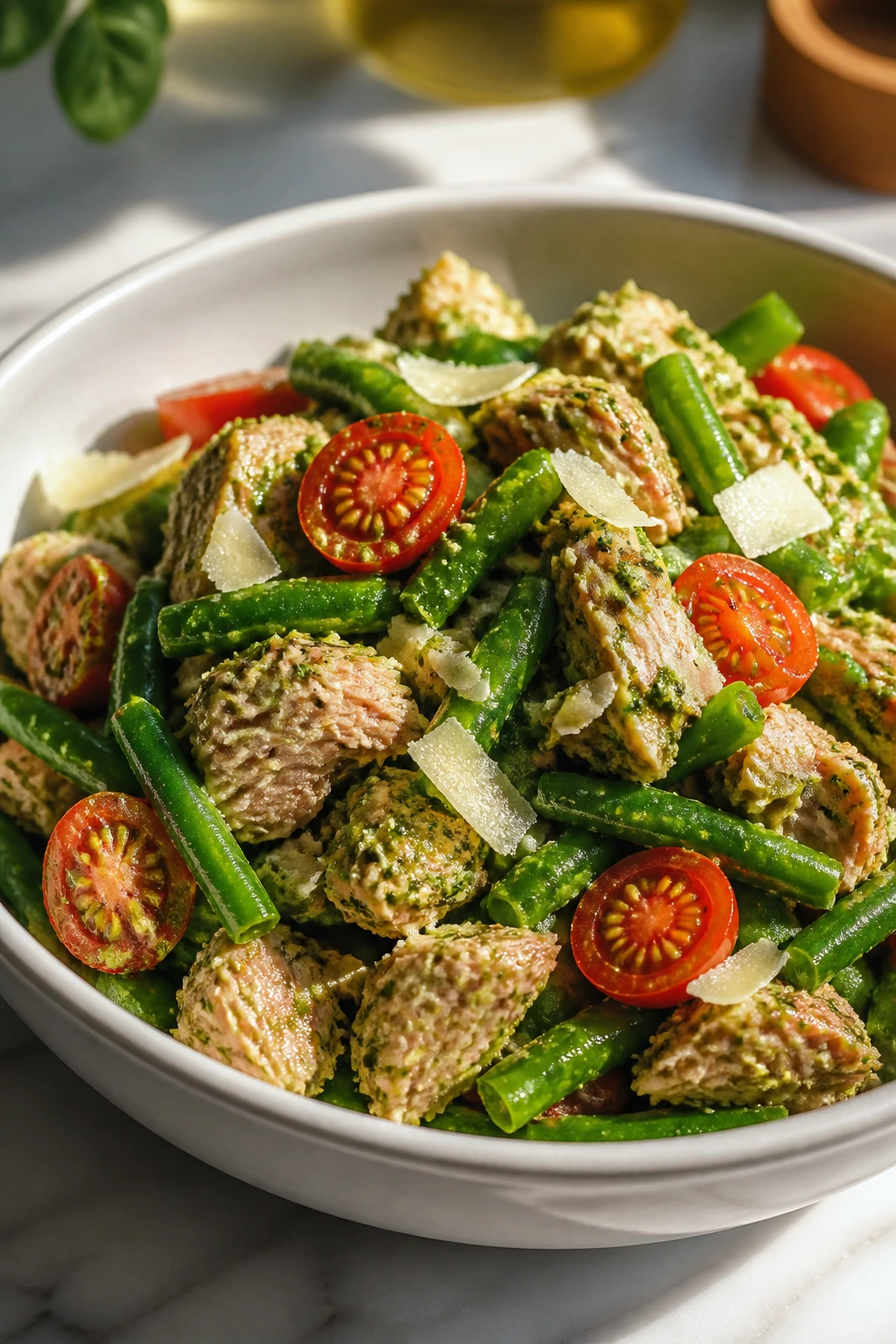
Pesto gives tuna an immediate identity. The basil and garlic do so much work that you barely need anything else, but the green beans and tomatoes keep the bowl from feeling too heavy and one-note. It’s a smart way to make a cold tuna salad taste built, not improvised.
Why It Works:
Pesto brings oil, herbs, garlic, and cheese all at once, which means the tuna doesn’t need a separate dressing. Green beans add crunch and structure, and cherry tomatoes contribute juices that cut through the richness. It’s one of those combinations that tastes like it took more effort than it did.
Key Ingredients:
- 2 cans tuna, drained — keep the flakes loose.
- 1/3 cup pesto — store-bought or homemade.
- 2 cups green beans, trimmed — blanched until bright green.
- 1 cup cherry tomatoes, halved — cut them just before serving.
- 1/4 cup shaved parmesan — optional but excellent.
- 1 tablespoon lemon juice — keeps the pesto from feeling muddy.
- 1 teaspoon olive oil — only if your pesto is very thick.
- 2 cups arugula or baby spinach — for the bed.
- Black pepper — plenty.
- Salt — only if the pesto is low-salt.
Quick Steps:
- Blanch the green beans in salted boiling water for 2 to 3 minutes, then rinse under cold water.
- Toss the pesto with lemon juice in a bowl until loosened.
- Fold in tuna, green beans, and tomatoes.
- Lay arugula in a bowl or platter and spoon the tuna mixture over it.
- Finish with parmesan and black pepper.
Equipment for This Recipe:
- Saucepan — for the beans.
- Bowl — for mixing.
- Slotted spoon — for pulling the beans out fast.
- Salad bowl or platter — for serving.
How to Serve This Dish:
Serve it with toasted focaccia or a piece of good bread to mop up the pesto. A few cucumber slices on the side make the plate feel complete.
Pro Tips for This Recipe:
- Blanch the beans briefly so they stay snappy.
- If the pesto tastes sharp or garlic-heavy, add a teaspoon of yogurt to soften it.
- Don’t cut the tomatoes too early or they’ll leak everywhere.
- This is good at room temp, which makes it easy for lunch.
Variations on This Dish:
- Sun-Dried Tomato Pesto Version: Swap half the pesto for chopped sun-dried tomatoes for a deeper, sweeter flavor.
- Mozzarella Bowl: Add torn fresh mozzarella and serve it more like a pasta-less caprese.
Common Mistakes to Avoid with This Dish:
- Overblanching the beans: Limp green beans ruin the texture.
- Using too much pesto: The salad turns oily and forgets about the tuna.
- Skipping acid: Even pesto needs a little lemon here.
14. Orzo Tuna Salad with Roasted Red Peppers
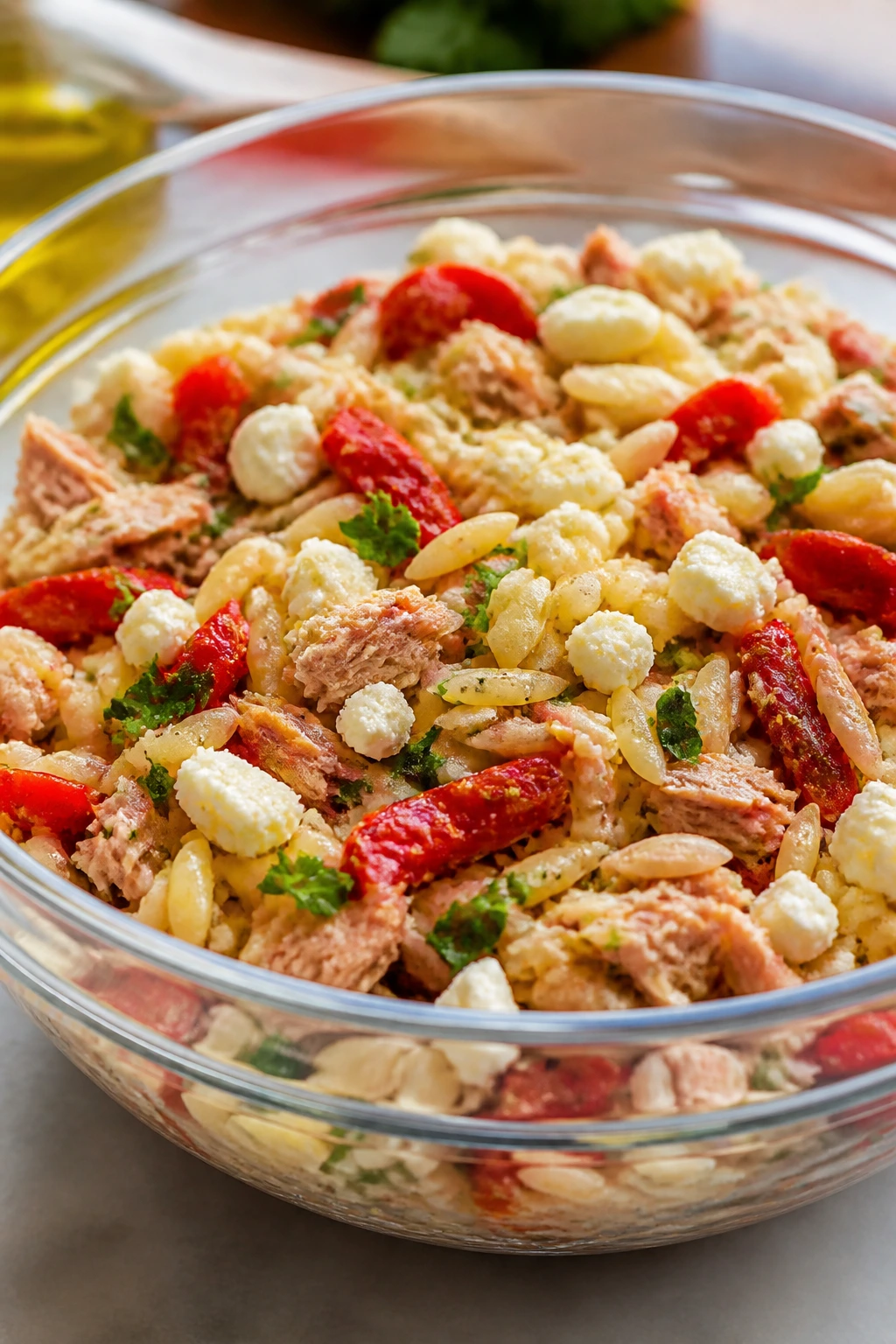
Orzo is pasta pretending to be a grain, and that’s exactly why it works here. Roasted red peppers give sweetness, feta brings salt, and tuna grounds the whole thing. It’s polished enough for a lunch box and easy enough for a weeknight bowl.
Why It Works:
Orzo catches dressing in tiny pockets, which means every bite tastes seasoned without needing a heavy sauce. Roasted red peppers soften the sharpness of tuna, and feta gives the bowl a creamy-salty finish. This recipe is best when the orzo is cooled fully, so the mix stays loose instead of clumpy.
Key Ingredients:
- 8 ounces orzo — cooked until tender but not soft.
- 2 cans tuna, drained — solid chunks are nice here.
- 1/2 cup roasted red peppers, sliced — jarred is fine if drained well.
- 1/4 cup crumbled feta — for salt and creaminess.
- 2 tablespoons chopped parsley — to freshen the bowl.
- 2 tablespoons olive oil — coats the orzo.
- 1 tablespoon red wine vinegar — keeps it bright.
- 1 teaspoon dried oregano — a little goes a long way.
- 1/4 cup diced red onion — optional if you like bite.
- Salt and pepper — season after tossing.
Quick Steps:
- Boil the orzo in salted water until just tender, then drain and cool under a little cold water.
- Whisk olive oil, vinegar, oregano, salt, and pepper in a large bowl.
- Fold in the orzo, tuna, roasted peppers, onion, and parsley.
- Add feta and toss gently.
- Serve cold or room temperature.
Equipment for This Recipe:
- Pot — for the orzo.
- Colander — for draining.
- Large mixing bowl — for tossing without breaking the tuna.
- Sharp knife — for the peppers and onion.
How to Serve This Dish:
Serve it in a bowl lined with baby spinach, or pack it with a lemon wedge and a hunk of bread. It also travels well without getting sad.
Pro Tips for This Recipe:
- Cool the orzo fast so it doesn’t soak up too much dressing.
- Drain roasted peppers well or the salad gets watery.
- Add a little extra vinegar just before serving if the pasta has absorbed everything.
- A few sliced olives work well if you want more brine.
Variations on This Dish:
- Greek Orzo Version: Add cucumber and swap oregano for dill.
- Garlic-Pepper Bowl: Toss in roasted garlic for a deeper, softer flavor.
Common Mistakes to Avoid with This Dish:
- Undercooling the orzo: It keeps steaming and softens the tuna.
- Using wet peppers: They water down the dressing.
- Too much feta too soon: Add some at the end so it stays distinct.
15. Sesame-Cucumber Tuna Salad with Rice Vinegar
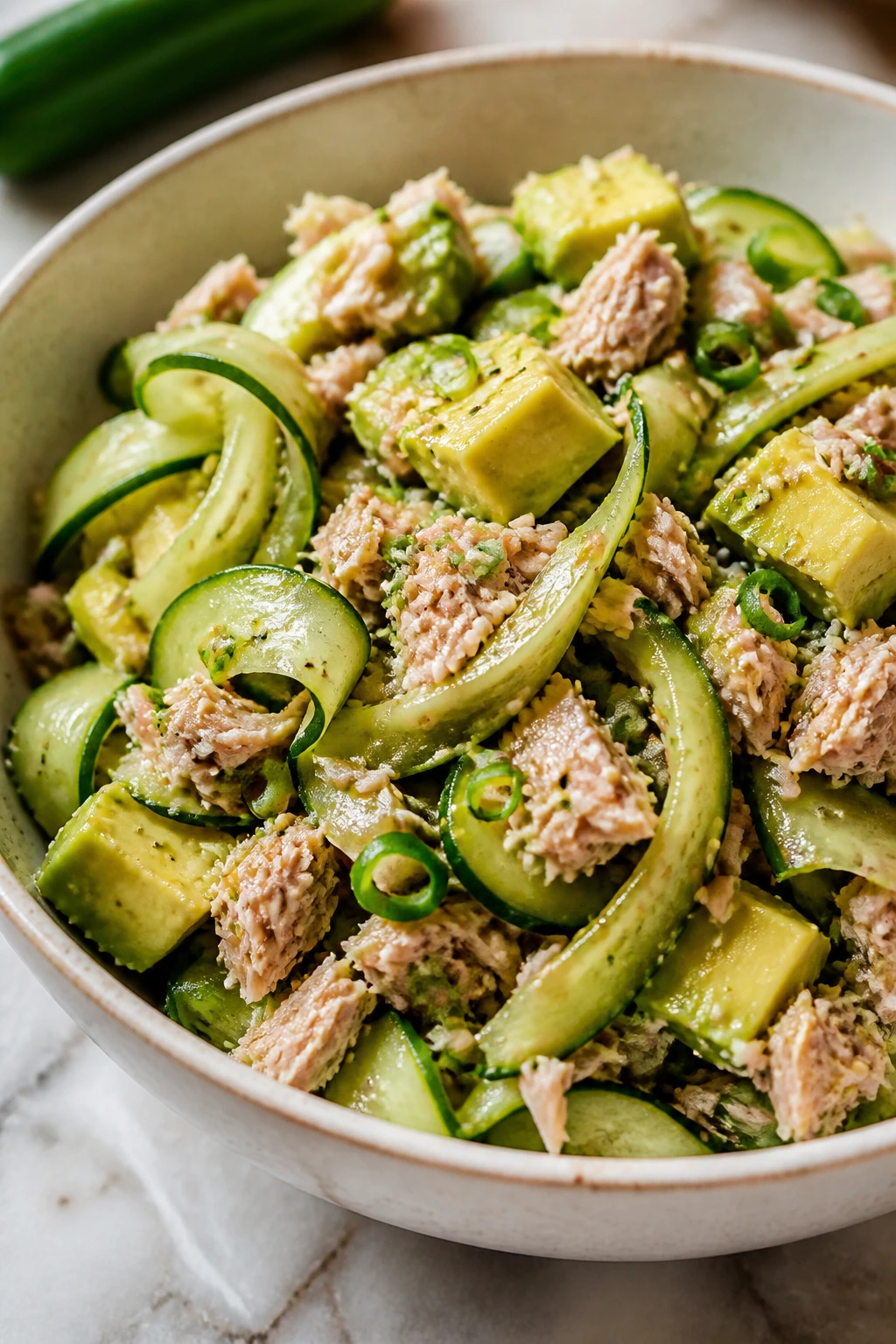
This one tastes crisp and cool, like a lunch you’d want on a hot day without tying yourself in knots over it. Rice vinegar and sesame oil make the flavor clean and sharp, while cucumber and avocado keep the texture soft enough to scoop. It’s especially good over rice, though it also works on its own.
Why It Works:
This is basically tuna salad with a more disciplined flavor profile. Rice vinegar cuts through the fishiness, sesame oil adds a toasted note, and cucumber keeps each bite watery in the right way. The avocado gives it just enough fat that you don’t miss mayo much.
Key Ingredients:
- 2 cans tuna, drained — keep it in larger pieces.
- 1 cucumber, thinly sliced — use a sharp knife or mandoline.
- 1 avocado, sliced or diced — ripe but not mushy.
- 2 tablespoons rice vinegar — the main acid.
- 1 tablespoon soy sauce or tamari — salty and savory.
- 1 teaspoon sesame oil — very potent.
- 1 tablespoon mayonnaise or Greek yogurt — optional, for body.
- 2 scallions, sliced — finish and freshness.
- 1 tablespoon sesame seeds — toasted if possible.
- 1 cup cooked rice — optional base if you want a full bowl.
Quick Steps:
- Whisk rice vinegar, soy sauce, sesame oil, and mayo or yogurt in a bowl.
- Add cucumber and scallions and toss lightly.
- Fold in tuna.
- Add avocado at the end so it stays intact.
- Serve over rice or in a bowl by itself, topped with sesame seeds.
Equipment for This Recipe:
- Mixing bowl — medium size works.
- Sharp knife or mandoline — for thin cucumber slices.
- Fork — to lift the tuna gently.
- Rice cooker or saucepan — if you want the rice base.
How to Serve This Dish:
Serve it over warm rice with extra cucumber on the side, or spoon it into small lettuce cups. A little chili crisp on top is not mandatory, but I would not argue against it.
Pro Tips for This Recipe:
- Use more cucumber than you think you need; it’s part of the point.
- If the soy sauce is strong, add a teaspoon of water to the dressing.
- Toast the sesame seeds in a dry pan for a minute or two.
- Keep the avocado separate until the last minute if you’re packing lunch.
Variations on This Dish:
- Miso-Sesame Version: Stir in 1 teaspoon white miso for a deeper savory note.
- Spicy Cucumber Bowl: Add sliced jalapeño and a little chili oil.
Common Mistakes to Avoid with This Dish:
- Overusing sesame oil: It can take over the bowl.
- Cutting cucumber too thick: Thick slices make the salad feel bulky.
- Mixing avocado too early: It smears instead of staying pleasant.
16. Yogurt-Dressed Tuna Salad with Radish and Herbs
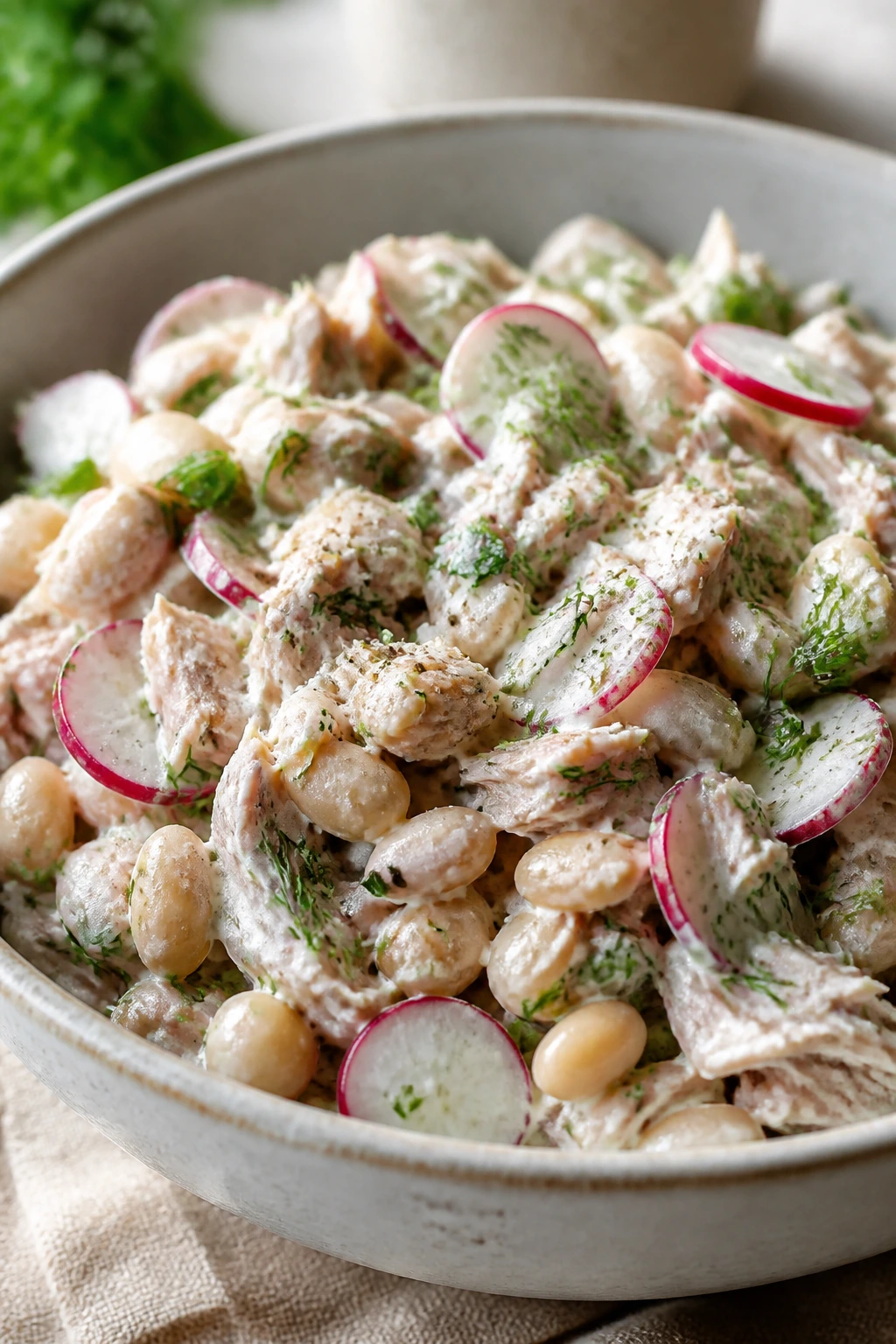
This is the cool, crisp version of tuna salad that leans on yogurt instead of mayonnaise. Radishes bring a peppery snap, herbs keep the flavor lively, and white beans make sure the bowl still feels like a meal. It’s clean without being skimpy.
Why It Works:
Greek yogurt gives you creaminess plus acidity, which means the dressing tastes lighter than mayo-based versions. White beans make the bowl more filling, and radish adds a bite you feel right away. Chives and dill give the whole thing that fresh-from-the-garden smell.
Key Ingredients:
- 2 cans tuna, drained — flake well.
- 1 can white beans, rinsed and drained — cannellini or great northern.
- 1/2 cup Greek yogurt — thick and tangy.
- 1 tablespoon lemon juice — wakes up the yogurt.
- 1 teaspoon Dijon mustard — for depth.
- 4 radishes, thinly sliced — crisp and peppery.
- 1 celery stalk, diced — for crunch.
- 2 tablespoons chopped chives — mild onion flavor.
- 2 tablespoons chopped dill — the green note.
- 1 tablespoon olive oil — smooths the dressing.
- Salt and pepper — don’t hold back.
Quick Steps:
- Whisk yogurt, lemon juice, Dijon, olive oil, salt, and pepper in a bowl.
- Fold in the beans and lightly mash a few of them.
- Add the tuna, radishes, celery, chives, and dill.
- Stir gently until coated.
- Serve over toast, greens, or warm potatoes.
Equipment for This Recipe:
- Mixing bowl — medium to large.
- Fork — for mashing some beans.
- Knife — for radishes and celery.
- Measuring spoons — the dressing depends on balance.
How to Serve This Dish:
Spoon it onto seeded toast or into a bowl with cucumbers and cherry tomatoes. It’s good cold, but it also works at room temperature if you let it sit for 10 minutes.
Pro Tips for This Recipe:
- Don’t use watery yogurt; thick Greek yogurt holds the salad together.
- Slice radishes thin or they dominate every bite.
- A little lemon zest adds more lift than extra juice alone.
- If it tastes too sharp, add 1 teaspoon olive oil.
Variations on This Dish:
- Sour-Cream Herb Version: Swap half the yogurt for sour cream if you want a softer tang.
- Dill-Heavy Bowl: Double the dill and skip the chives for a cleaner herbal edge.
Common Mistakes to Avoid with This Dish:
- Using thin yogurt: The dressing gets runny.
- Adding too many radishes: The salad turns peppery and harsh.
- Skipping the beans: Then it’s a side salad, not a meal.
17. Warm Potato Tuna Salad with Dijon Vinaigrette
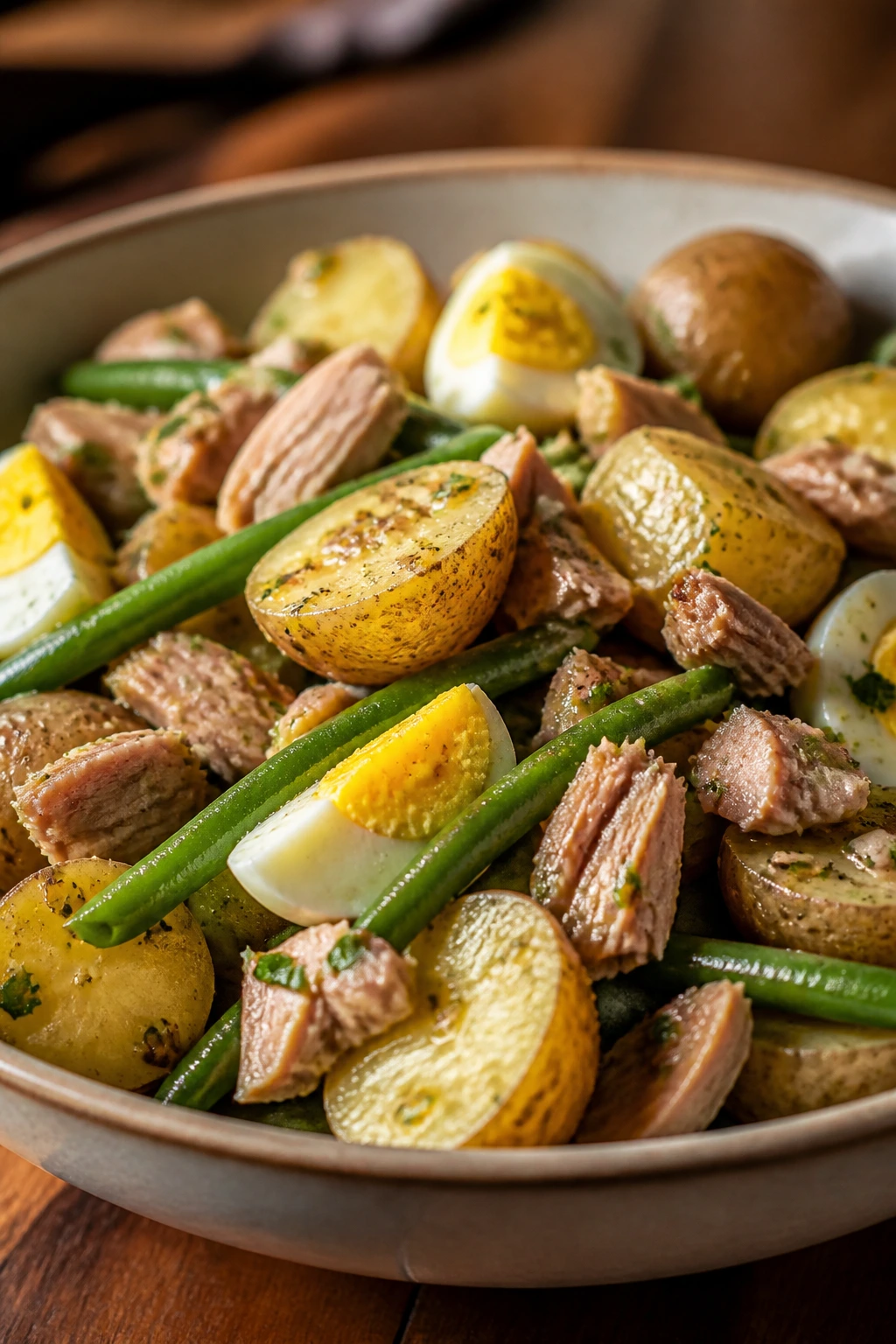
Warm potatoes change everything. They soak up vinaigrette like little sponges, so the tuna salad ends up tasting seasoned all the way through instead of only on the surface. This is the kind of bowl that works in colder months or any time you want something sturdier than a cold deli mix.
Why It Works:
Potatoes do what bread and pasta also do for tuna: they give the salad actual mass. Dijon and vinegar hit the warm potatoes first, which means the flavor goes deeper than a cold dressing ever could. Add eggs and green beans, and the whole thing turns into a proper plate.
Key Ingredients:
- 1 1/2 pounds baby potatoes — halved if large.
- 2 cans tuna, drained — oil-packed tuna is especially good here.
- 2 eggs — hard-boiled and quartered.
- 1 cup green beans, trimmed — blanched for color and crunch.
- 2 tablespoons Dijon mustard — the main flavor.
- 3 tablespoons olive oil — for the vinaigrette.
- 1 tablespoon white wine vinegar — bright and sharp.
- 2 tablespoons chopped parsley — fresh finish.
- 2 tablespoons chopped scallions — for a little bite.
- Salt and black pepper — season the potatoes well.
Quick Steps:
- Boil the potatoes in salted water until tender, 12 to 15 minutes. Drain well.
- Whisk Dijon, olive oil, vinegar, salt, and pepper in a bowl.
- Toss the warm potatoes with half the vinaigrette.
- Fold in green beans, tuna, eggs, parsley, and scallions.
- Drizzle the remaining vinaigrette over the top and serve warm or room temperature.
Equipment for This Recipe:
- Pot — for the potatoes.
- Slotted spoon — useful for the eggs or beans.
- Mixing bowl — for the vinaigrette.
- Serving bowl or platter — this one wants a little spread.
How to Serve This Dish:
Serve it as a main plate with crusty bread, or pile it into a shallow bowl with extra herbs. A little flaky salt on top right before serving helps the potatoes pop.
Pro Tips for This Recipe:
- Dress the potatoes while they’re still hot enough to absorb flavor.
- Waxy potatoes hold together better than starchy ones.
- If the vinaigrette tastes too sharp, add another tablespoon of olive oil.
- Don’t skip the scallions; they keep the bowl from feeling heavy.
Variations on This Dish:
- French Country Version: Add tarragon and a few capers.
- Smoked Paprika Potato Bowl: Add 1/2 teaspoon smoked paprika for a deeper edge.
Common Mistakes to Avoid with This Dish:
- Letting potatoes cool completely before dressing: They take on less flavor.
- Breaking the tuna into mush: Leave some larger pieces.
- Overcooking the beans: They should stay bright green.
18. Hummus Tuna Wraps with Carrot and Cabbage
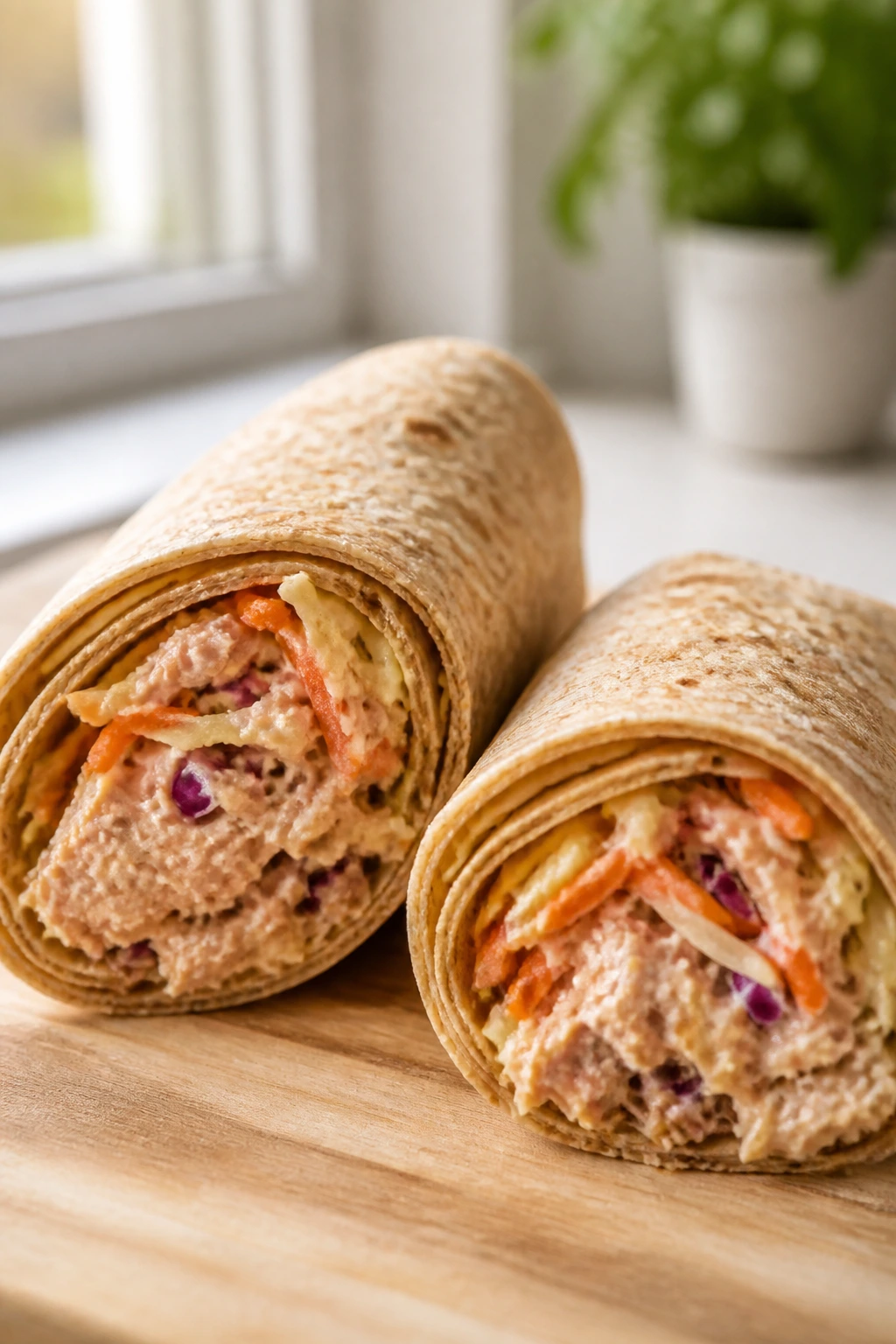
This is the easiest route when you want a tuna salad that travels well. Hummus gives the filling creaminess without mayo, while carrot and cabbage bring crunch that survives a lunch bag. It tastes clean, sturdy, and a little more modern than a standard sandwich.
Why It Works:
Hummus binds tuna in a way that feels dense and savory rather than slick. The cabbage and carrot keep the wrap crisp, and the cucumber cools the whole thing down. If your usual tuna sandwich falls apart halfway through, this version fixes that problem.
Key Ingredients:
- 2 cans tuna, drained — flaked.
- 1/2 cup hummus — plain or garlic.
- 1 tablespoon lemon juice — brightens the hummus.
- 1 cup shredded cabbage — green or red.
- 1 cup shredded carrots — for sweetness and crunch.
- 1/2 cucumber, thinly sliced — optional but helpful.
- 2 tablespoons chopped parsley — freshness.
- 4 large whole-wheat tortillas — flexible enough to roll.
- Salt and pepper — taste before wrapping.
- 1 tablespoon olive oil — optional, if the hummus is thick.
Quick Steps:
- Stir hummus and lemon juice together in a bowl until smooth.
- Fold in tuna, cabbage, carrots, cucumber, parsley, salt, and pepper.
- Warm the tortillas for 10 seconds so they roll without cracking.
- Divide the filling among the tortillas and roll tightly.
- Slice in half and serve.
Equipment for This Recipe:
- Mixing bowl — medium.
- Box grater or shredding tool — for the carrots.
- Knife — for cucumber and wrap slicing.
- Skillet or microwave — to warm the tortillas.
How to Serve This Dish:
Serve the wraps with olives, fruit, or a small pile of chips. If you want them to hold better, wrap each one in parchment and slice later.
Pro Tips for This Recipe:
- Shred the cabbage fine so it doesn’t poke out of the wrap.
- If the hummus is thick, loosen it with a teaspoon of water or olive oil.
- Don’t overfill the tortilla or it will split on the seam.
- A sprinkle of cumin works well if you want a warmer flavor.
Variations on This Dish:
- Roasted Pepper Hummus Wrap: Use red pepper hummus and add sliced roasted peppers.
- Lemon-Herb Wrap: Add dill and mint for a brighter, cooler filling.
Common Mistakes to Avoid with This Dish:
- Rolling cold tortillas: They crack. Warm them first.
- Using wet cucumber slices: They make the wrap slippery.
- Packing too much filling: The wrap won’t seal.
19. Artichoke Olive Tuna Salad with Shaved Fennel
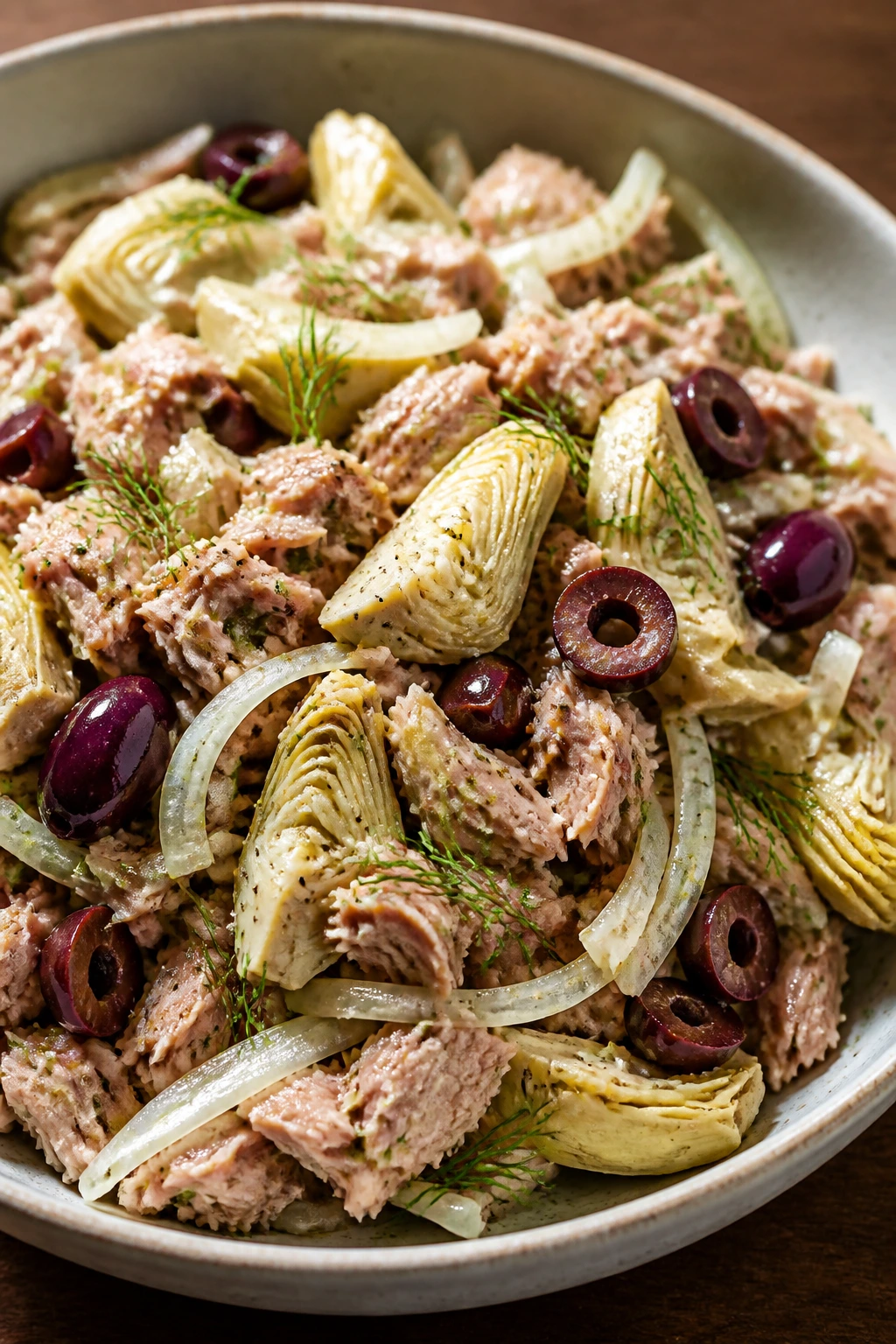
This one leans briny and a little more sophisticated without getting fussy. Artichokes, olives, and fennel create a cold salad that tastes sharp, clean, and deeply savory. It’s a strong choice when you want tuna salad that doesn’t read as ordinary lunch at all.
Why It Works:
Marinated artichokes bring acidity and a soft bite, olives supply salt, and fennel gives the salad a cool anise note that cuts through tuna nicely. Feta finishes the whole thing with creamy saltiness. It’s a very good reminder that tuna salad can borrow from antipasto and improve immediately.
Key Ingredients:
- 2 cans tuna, drained — solid flakes are best.
- 1 cup marinated artichoke hearts, chopped and drained — pat them dry.
- 1/4 cup Kalamata olives, sliced — briny depth.
- 1 small fennel bulb, shaved thin — use the fronds if you have them.
- 2 tablespoons olive oil — supports the marinade.
- 1 tablespoon lemon juice — sharpens the bowl.
- 1 teaspoon Dijon mustard — for structure.
- 2 tablespoons parsley or fennel fronds — green finish.
- 1/4 cup crumbled feta — optional but useful.
- Black pepper — generous.
Quick Steps:
- Whisk olive oil, lemon juice, Dijon, and black pepper in a bowl.
- Add fennel, artichokes, and olives, and toss to coat.
- Fold in the tuna and parsley.
- Scatter feta over the top if using.
- Serve right away or chill for 10 minutes.
Equipment for This Recipe:
- Sharp knife or mandoline — for thin fennel.
- Bowl — medium to large.
- Cutting board — fennel sheds layers.
- Colander or paper towels — to dry the artichokes.
How to Serve This Dish:
Serve it with toasted ciabatta or crostini, or scoop it over a bed of arugula. It also makes a good filling for a split baguette if you want a more substantial lunch.
Pro Tips for This Recipe:
- Dry the artichokes well or the salad gets oily and loose.
- Shave fennel as thin as you can. Thick pieces can taste fibrous.
- Use black pepper generously; it belongs here.
- If the fennel is very strong, soak it in ice water for 5 minutes first.
Variations on This Dish:
- Sicilian-Style Bowl: Add orange segments and a few pine nuts.
- No-Feta Antipasto Mix: Leave out the cheese and add more parsley and lemon.
Common Mistakes to Avoid with This Dish:
- Skipping the fennel prep: Thick slices are tough.
- Using artichokes straight from the jar without draining: The salad gets oily fast.
- Too much feta: It can hide the artichoke flavor.
20. Tuna Salad Sliders with Pickled Onions
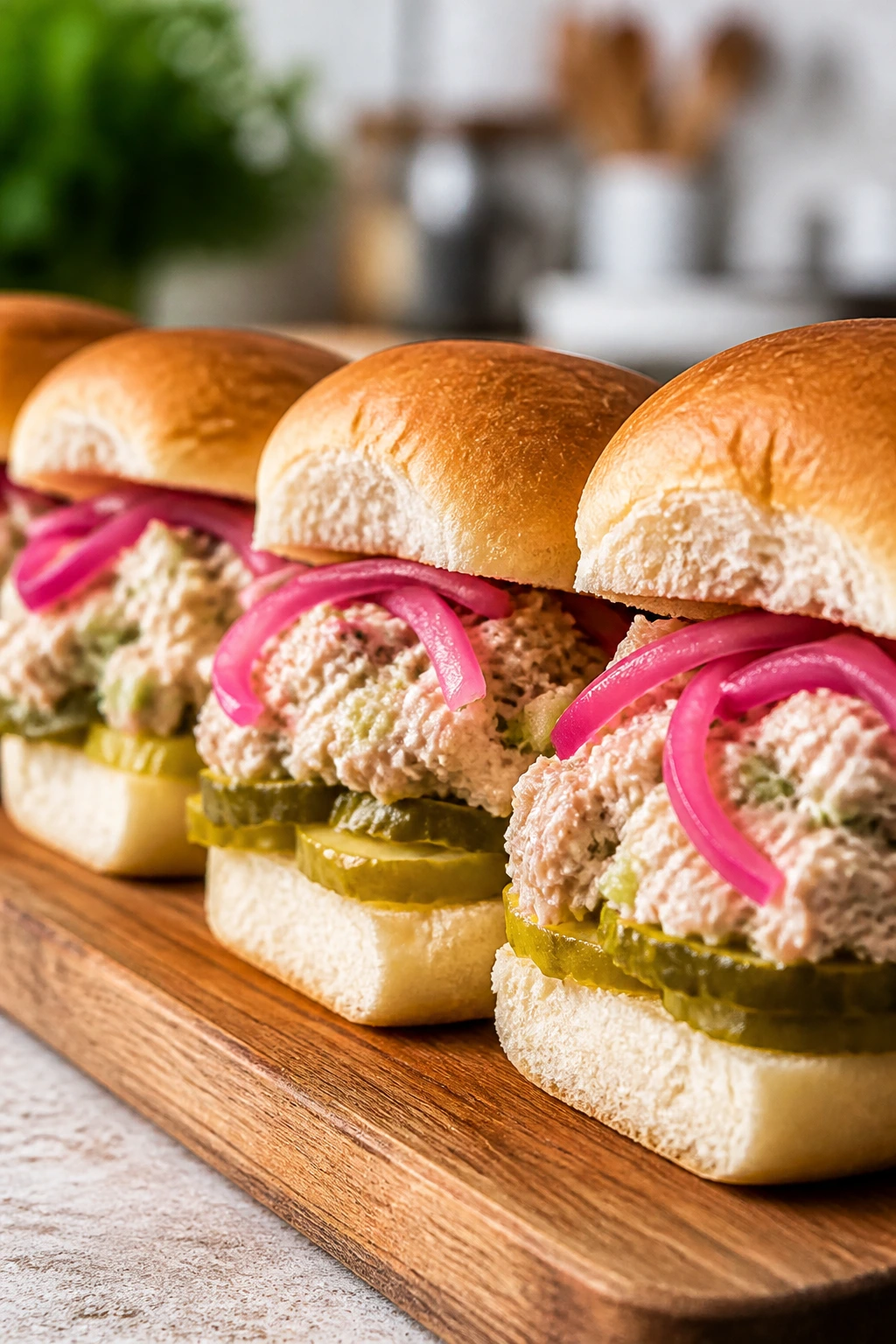
These sliders are pure comfort, but they don’t feel like a shortcut. Pickled onions cut through the creamy tuna, the soft buns make it feel like actual food, and a little lettuce keeps the filling from turning to mush. If you want tuna salad to behave like game-day food or casual dinner, this is a good lane.
Why It Works:
The slider format turns tuna salad into something more structured, which helps when you’re feeding people who want a sandwich, not a bowl. Pickled onions bring acid and crunch, and the small buns control the filling-to-bread ratio much better than a giant roll. That matters more than it sounds.
Key Ingredients:
- 2 cans tuna, drained — flaked well.
- 1/3 cup mayonnaise — the main binder.
- 2 tablespoons chopped dill pickles — for brine.
- 2 tablespoons pickled red onion — store-bought or homemade.
- 1 teaspoon yellow mustard — classic sandwich flavor.
- 1 tablespoon chopped chives — optional but good.
- 6 slider buns — soft but not flimsy.
- 6 lettuce leaves — small ones fit best.
- 1 tomato, sliced thin — pat dry.
- Salt and black pepper — season the filling.
Quick Steps:
- Mix tuna, mayo, pickles, pickled onion, mustard, chives, salt, and pepper in a bowl.
- Split and toast the slider buns lightly if you want more stability.
- Add lettuce and tomato to the bottom buns.
- Spoon tuna salad over the vegetables and top with the bun lids.
- Serve immediately before the buns soften.
Equipment for This Recipe:
- Bowl — for the tuna.
- Knife — for tomatoes and buns.
- Small spatula or spoon — for neat filling.
- Skillet or toaster — for a light bun toast.
How to Serve This Dish:
Set out the sliders with chips, sliced cucumbers, or a small pickle plate. They’re excellent for a casual spread because they hold together better than full sandwiches.
Pro Tips for This Recipe:
- Toasting the cut sides of the buns helps them resist moisture.
- Keep the tomato slices thin and dry.
- If your pickled onions are very sharp, use a little less mustard.
- Build the sliders right before serving so the buns don’t go soft.
Variations on This Dish:
- Cheddar Slider Version: Add a thin slice of sharp cheddar under the tuna.
- Spicy Party Sliders: Stir hot sauce into the mayo and use jalapeño pickles.
Common Mistakes to Avoid with This Dish:
- Overstuffing the slider buns: The filling spills out and the sandwiches split.
- Using wet tomato slices: They make the bottom bun collapse.
- Skipping the toast: Soft buns turn soggy fast.
21. Broccoli Cheddar Tuna Salad with Crackers or Toast
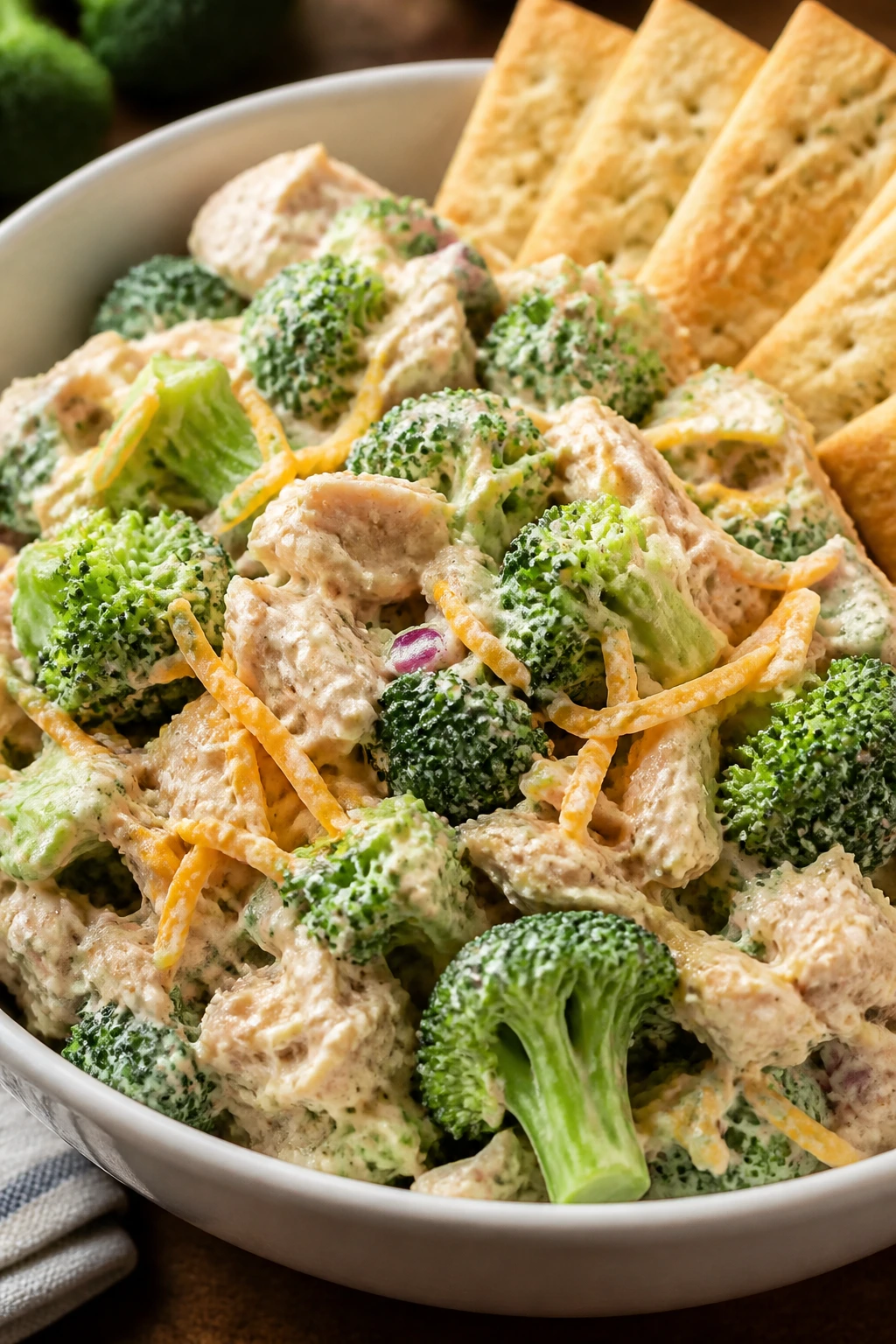
This salad is for people who want something extra satisfying and don’t care whether tuna salad is supposed to be dainty. Broccoli, cheddar, and a little vinegar make the bowl taste hearty and almost casserole-adjacent, which is exactly why it works. It’s especially good when you want a chilled meal that still feels substantial.
Why It Works:
Broccoli gives you chew and a little bitterness, cheddar adds richness, and the vinegar keeps the dairy from feeling sticky. Tuna fits because it’s mild enough to absorb the sharper flavors. If you blanch the broccoli briefly, it stays bright and crisp instead of raw and woody.
Key Ingredients:
- 2 cans tuna, drained — keep the flakes chunky.
- 2 cups broccoli florets, very finely chopped or lightly steamed and cooled — this matters for texture.
- 1/2 cup shredded cheddar — sharp cheddar is best.
- 1/4 cup mayonnaise — enough to coat.
- 1 tablespoon Greek yogurt — lightens the texture.
- 1 tablespoon apple cider vinegar — cuts the richness.
- 2 tablespoons chopped red onion — a little bite.
- 2 tablespoons sunflower seeds — the crunch layer.
- Salt and black pepper — especially black pepper.
- Crackers or toasted bread — for serving.
Quick Steps:
- If using raw broccoli, blanch it for 1 minute, then cool it quickly and chop it fine.
- Mix mayo, yogurt, vinegar, salt, and pepper in a bowl.
- Fold in tuna, broccoli, cheddar, red onion, and sunflower seeds.
- Taste and adjust with more vinegar if the bowl feels heavy.
- Serve with crackers or toast.
Equipment for This Recipe:
- Small saucepan — for blanching broccoli.
- Mixing bowl — medium to large.
- Knife and cutting board — for broccoli and onion.
- Colander — for cooling the broccoli.
How to Serve This Dish:
Serve it with sturdy crackers, rye toast, or even inside a halved baked potato. It’s rich enough to be the center of the plate, which is part of the charm.
Pro Tips for This Recipe:
- Chop the broccoli small so it doesn’t fight the tuna.
- Sharp cheddar tastes better here than mild.
- Sunflower seeds add the crunch that celery usually provides.
- If the mixture seems dense, add 1 teaspoon extra yogurt.
Variations on This Dish:
- Bacon-Broccoli Version: Add 2 tablespoons cooked bacon bits for a smoky note.
- Cauliflower Swap: Replace half the broccoli with finely chopped cauliflower for a milder flavor.
Common Mistakes to Avoid with This Dish:
- Using big broccoli florets: The texture feels awkward.
- Too much cheddar: It turns the salad greasy.
- Skipping vinegar: Then it tastes heavy instead of balanced.
22. Stuffed Sweet Potatoes with Tuna Salad and Scallions
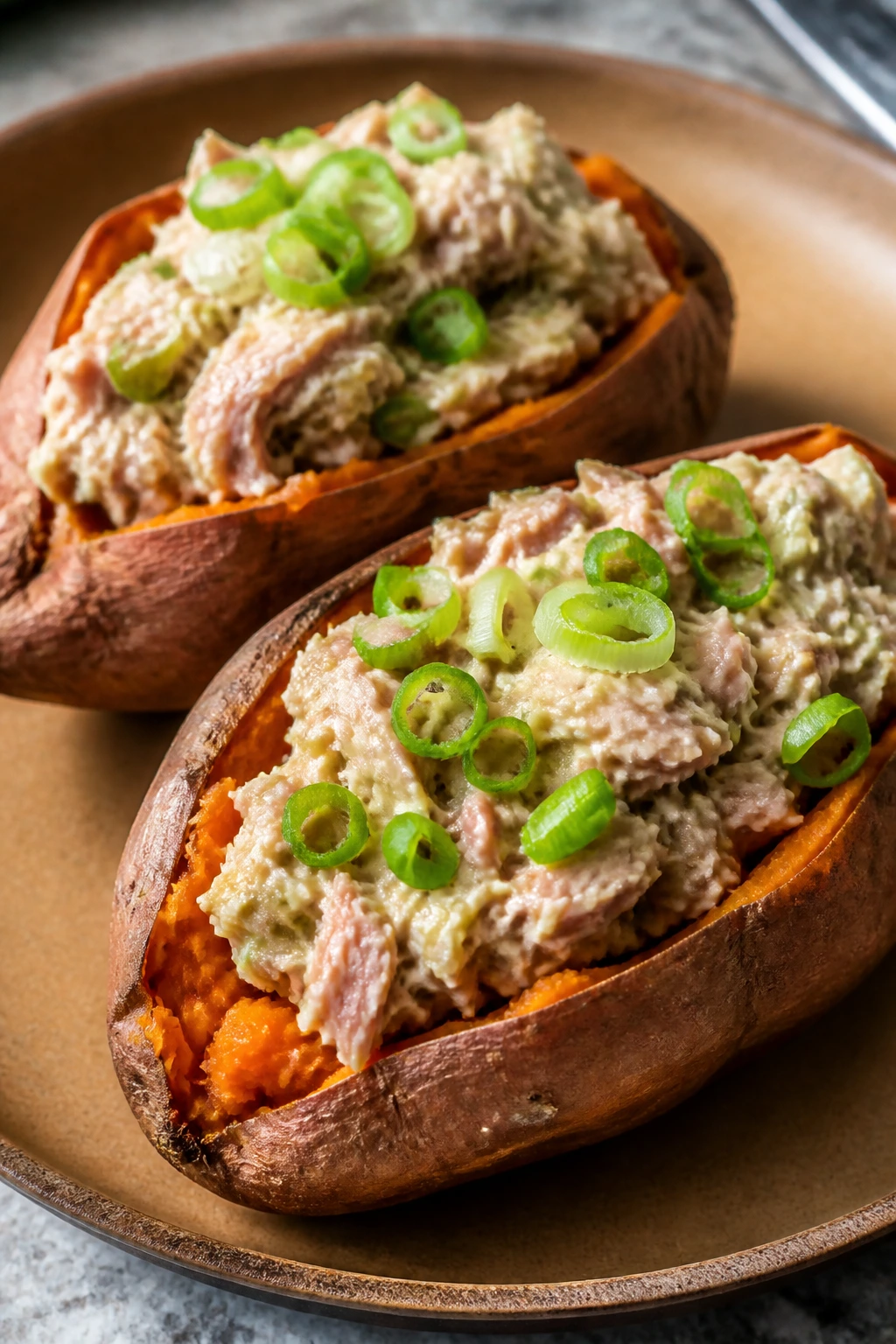
This is the one that really feels like dinner. Sweet potatoes give you warmth and sweetness, tuna salad brings protein and salt, and avocado or scallions can push it into dinner-bowl territory without much work. It’s filling in a way plain tuna salad rarely is.
Why It Works:
A baked sweet potato gives the tuna salad something soft, warm, and sturdy to land on. The contrast between sweet flesh and savory tuna is surprisingly good, especially with lime and a little hot sauce. You get a full plate without adding much beyond a can opener and a fork.
Key Ingredients:
- 2 medium sweet potatoes — scrubbed clean.
- 2 cans tuna, drained — flake gently.
- 1/3 cup Greek yogurt or mayonnaise — your choice for creaminess.
- 1 tablespoon lime juice — sharpens the filling.
- 2 scallions, sliced — for freshness.
- 1/2 avocado, diced — optional but very good.
- 1 teaspoon hot sauce — adjust to taste.
- 1 pinch cumin — just enough warmth.
- Salt and pepper — season both components.
- 1 tablespoon pumpkin seeds — optional, for crunch.
Quick Steps:
- Bake the sweet potatoes at 400°F for 45 to 55 minutes, until a knife slides in easily.
- Mix tuna, yogurt or mayo, lime juice, scallions, hot sauce, cumin, salt, and pepper in a bowl.
- Split the sweet potatoes open and fluff the insides with a fork.
- Spoon the tuna salad over each potato.
- Add avocado and pumpkin seeds on top and serve hot.
Equipment for This Recipe:
- Sheet pan — for baking the potatoes.
- Fork — for fluffing the centers.
- Mixing bowl — for the tuna salad.
- Sharp knife — for splitting the potatoes.
How to Serve This Dish:
Serve one stuffed potato per person, with a green salad if you want a second component. It looks good in a shallow bowl because the filling stays put and the orange potato edges peek out.
Pro Tips for This Recipe:
- Pierce the potatoes before baking so they don’t split unpredictably.
- If you’re short on time, microwave the potatoes until tender, then finish in a hot oven for better skin.
- Keep the tuna filling slightly tart; the sweet potato needs that contrast.
- Add avocado only at the end so it stays green.
Variations on This Dish:
- Mediterranean Sweet Potato: Use feta, lemon, and dill instead of lime and hot sauce.
- Smoky Chipotle Potato: Swap the hot sauce for chipotle in adobo and add corn.
Common Mistakes to Avoid with This Dish:
- Undercooking the potatoes: The filling can’t save a hard center.
- Making the tuna too sweet: Then the potato tastes like dessert.
- Skipping salt on the potato flesh: The contrast needs seasoning.
What Turns a Tuna Salad Into a Real Meal
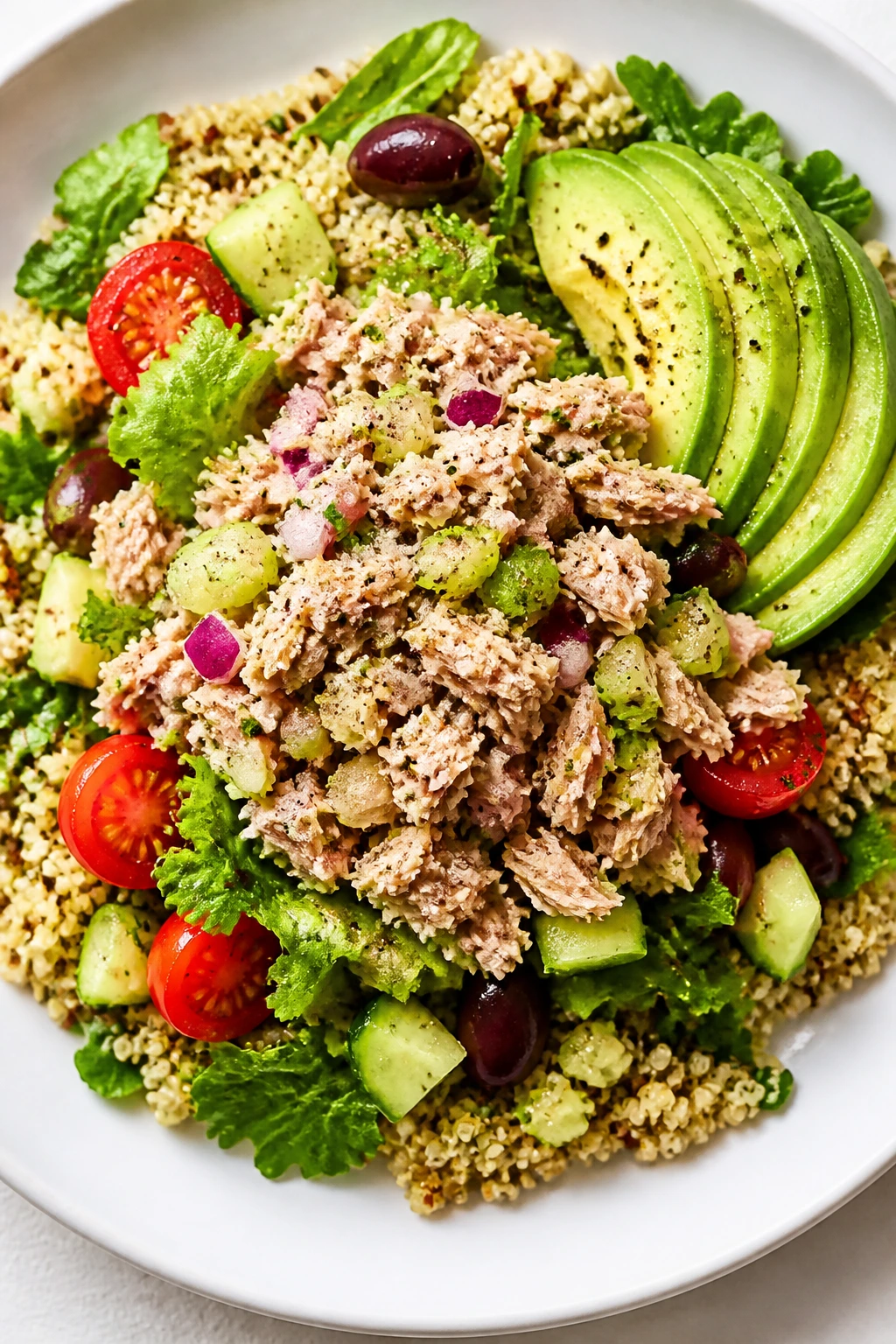
The difference is almost never the tuna itself. It’s the frame around it. A can of tuna is lean, salty, and a little dry on its own, which means the best tuna salad recipes build in fat, acid, and some kind of bulk that can take a fork to the finish line.
That bulk can come from potatoes, pasta, beans, farro, avocado, or even a serious piece of bread. What matters is texture. You want something that holds the tuna instead of disappearing under it. If the bowl only contains tuna plus mayo, the whole thing gets old halfway through. If it has crunch, brightness, and a base that soaks up flavor, it starts acting like lunch or dinner instead of a stopgap.
I also think people underestimate salt and acid in tuna salad. Pickles, capers, lemon, vinegar, mustard, olives, and pickled onion all do different jobs, and one good sharp ingredient can save a bland bowl. The trick is not piling on all of them at once. Pick one or two, then let the tuna stay the center of the plate.
The Tools That Make These Bowls Easier
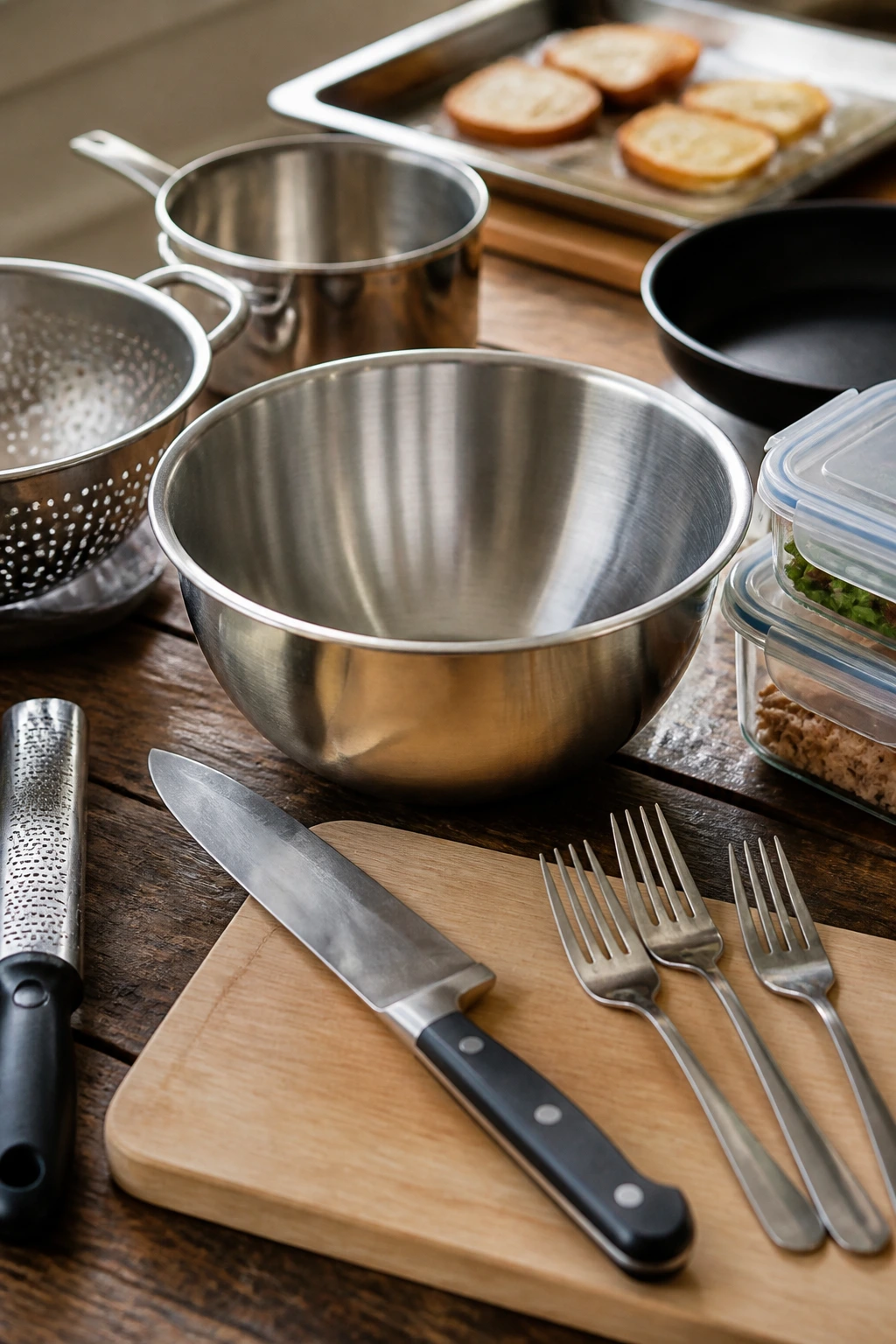
- Large mixing bowls: Tuna salad needs room to fold, especially when you’re adding grains, beans, or pasta.
- Sharp knife and cutting board: Most of the texture comes from clean, small cuts rather than huge chunks.
- Forks: One for flaking tuna, one for tasting, one for mashing beans or avocado if needed.
- Colander: Handy for beans, pasta, potatoes, and anything that needs a fast drain.
- Saucepan or pot: Needed for eggs, potatoes, beans, pasta, green beans, farro, or orzo.
- Sheet pan: Useful for sweet potatoes or toasting bread.
- Skillet: Great for crisping rice or toasting buns.
- Microplane or fine grater: Worth it for lemon zest and garlic when a little goes a long way.
- Airtight storage containers: These keep lunch salads from drying out in the fridge.
Shopping Smart for Tuna, Add-Ins, and Pantry Staples
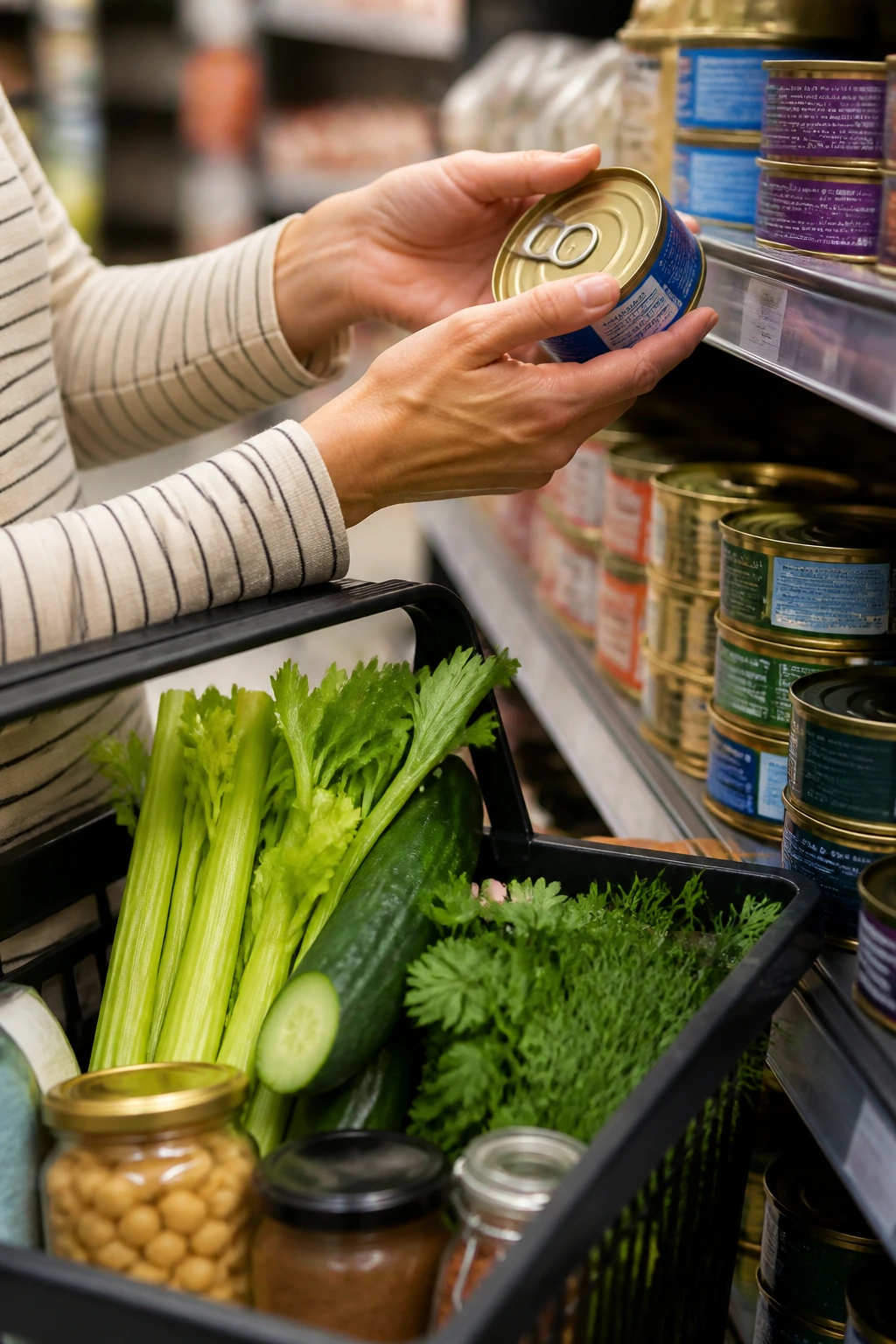
The tuna itself matters more than people think. Chunk light tuna tends to be softer, cheaper, and easier to mix into salads with avocado, beans, or pasta. Solid white albacore gives you firmer pieces and a meatier bite, which works well in Niçoise-style bowls, toast toppings, and salads with potatoes. I reach for oil-packed tuna when I want more flavor and less mayo, and water-packed tuna when the recipe already has yogurt, avocado, or a strong dressing.
For the add-ins, choose ingredients that pull their weight. Pick celery with crisp ribs, not floppy ones. Buy cucumbers that feel firm all the way through. Herbs should smell alive when you rub them between your fingers. If the dill or parsley smells dusty, skip it.
Beans and grains are the easiest way to make tuna salad feel like a full plate, but they need a little care. Rinse canned beans until the water runs clear. Cook pasta and farro until tender but still chewy. Potatoes should hold together when you toss them. That sounds obvious, but it’s the difference between a bowl with structure and one that turns into starch paste.
For briny ingredients, pick one or two strong accents instead of three or four competing ones. Dill pickles, capers, olives, roasted peppers, pickled onions, and artichokes all have a place here, but they each bring their own salt load. Once the tuna is seasoned, the rest should support it, not shout over it.
How to Plate These Tuna Salads So They Actually Look Appetizing
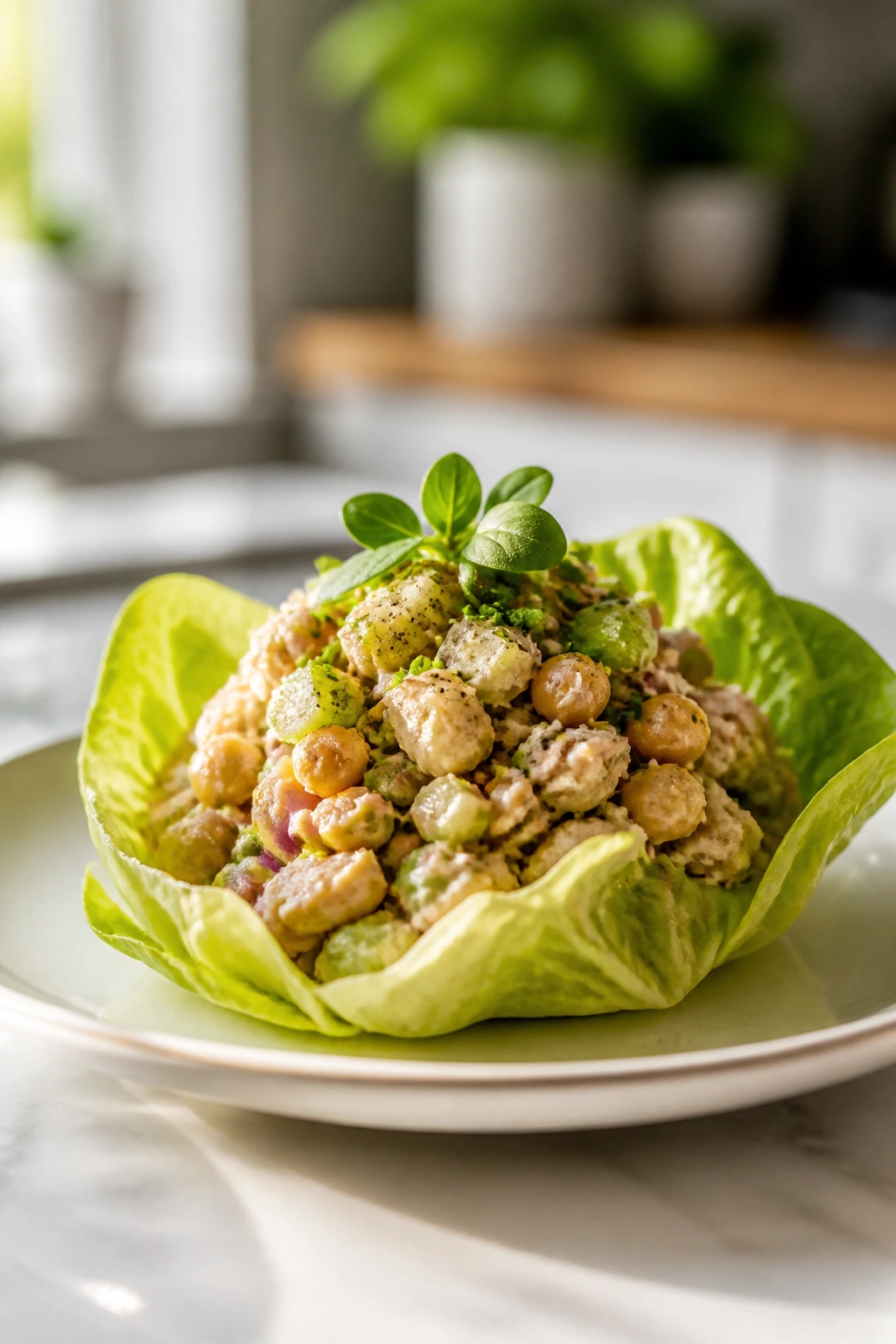
Presentation: Build height where you can. Tuna salad looks better when it’s scooped into lettuce cups, piled onto toast, tucked into a potato, or spooned over grains instead of flattened into a bowl.
Accompaniments: Use one crisp side and one starchy side when the salad needs help — crackers plus cucumber, pita plus greens, toast plus tomato, or chips plus lime wedges. That combination keeps the meal from feeling one-note.
Portions: A main-course tuna salad usually lands at about 1 to 1 1/2 cups per person, depending on how much grain, potato, pasta, or bread is underneath it. If you’re serving it as lunch, 3/4 cup plus toast is often enough.
Beverage Pairing: Cold sparkling water with lemon works with every version here. If you want something with a little more character, dry iced tea or a crisp white wine like sauvignon blanc handles lemon, herbs, and brine without getting in the way.
Little Upgrades That Change the Bowl Fast
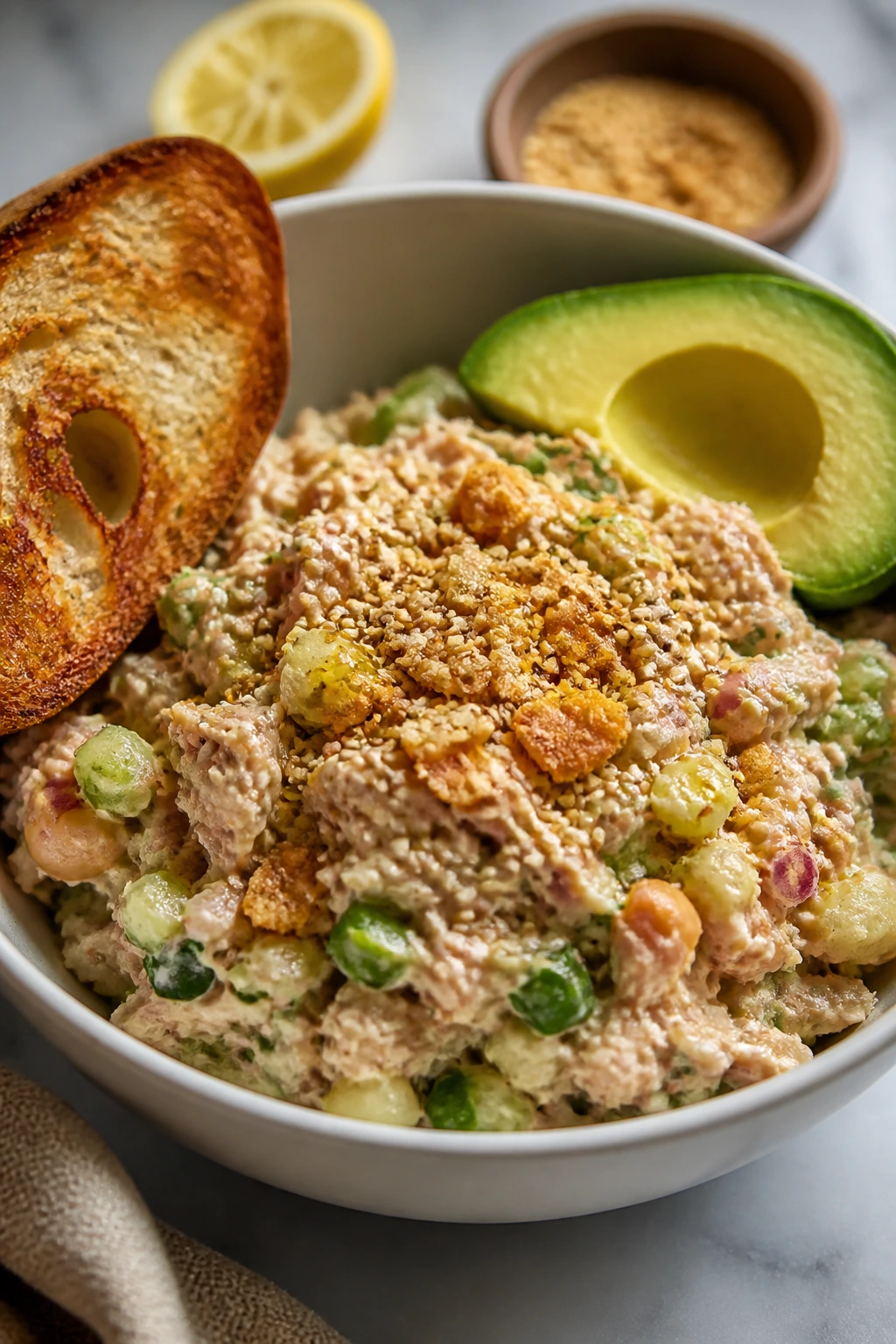
Flavor Enhancement: A spoonful of caper brine, pickle brine, or lemon juice can sharpen a heavy bowl instantly. I use this more often than extra mayo.
Texture Boost: Toasted sesame seeds, chopped sunflower seeds, crushed crackers, or crispy rice give tuna salad the crunch it usually lacks. Add them right at the end so they stay sharp.
Customization: If you want more richness, add avocado or a spoon of olive oil. If you want more tang, add mustard, yogurt, or extra vinegar. If you want more heat, use hot sauce, chili crisp, or minced jalapeño.
Make-It-Yours: For dairy-free versions, use olive oil or hummus instead of yogurt and skip the cheese. For gluten-free serving, use lettuce cups, rice bowls, baked potatoes, or corn tortillas instead of bread.
Make-Ahead, Storage, and Reheating Guidance
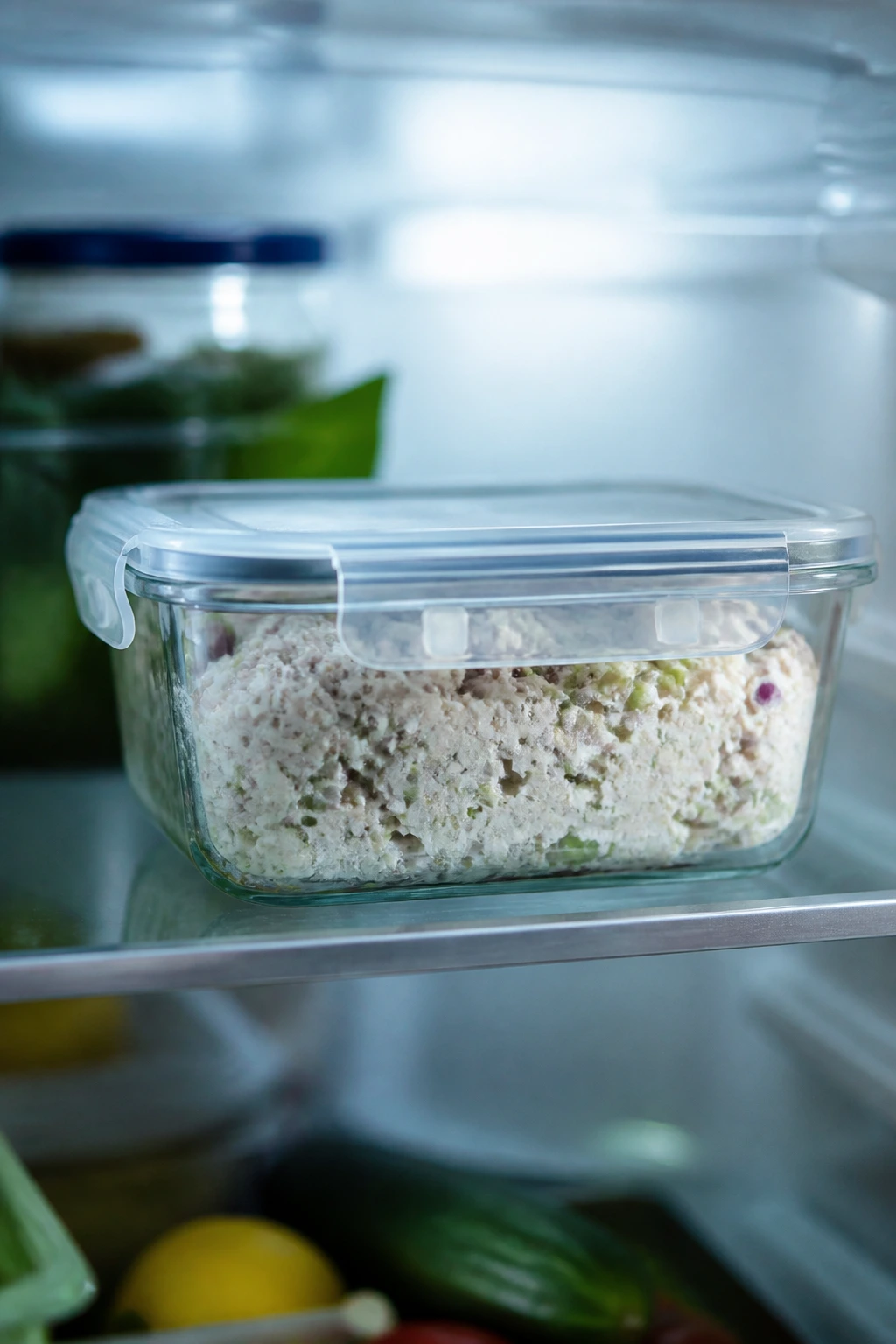
Most tuna salads keep well in the fridge for 3 to 4 days when they use mayo, yogurt, beans, or grains. The potato and pasta versions are best within 2 to 3 days, because the texture starts to soften after that. Keep them in airtight containers and press a piece of parchment or plastic wrap directly on the surface if the dressing is thick and you want to slow drying.
The one thing I would not do is freeze mayo-based tuna salad. The dressing separates, the celery and cucumber go watery, and the whole thing comes back looking tired. If you want to freeze a component, freeze the plain cooked farro, potatoes, or rice separately, then mix the tuna salad fresh later. That’s the cleanest path.
For leftovers, give the bowl a stir before serving and taste again. Cold food dulls salt and acid, so a squeeze of lemon or an extra pinch of salt often wakes it right up. If the salad feels dry after a day in the fridge, add 1 teaspoon mayonnaise, yogurt, or olive oil and stir gently. Warm potato and Niçoise-style salads can be brought to room temperature for 15 to 20 minutes before eating; they taste fuller that way. Pasta salads are fine cold, but if they’ve tightened up, a spoonful of yogurt or olive oil loosens them fast.
Easy Swaps for Different Needs and Appetites
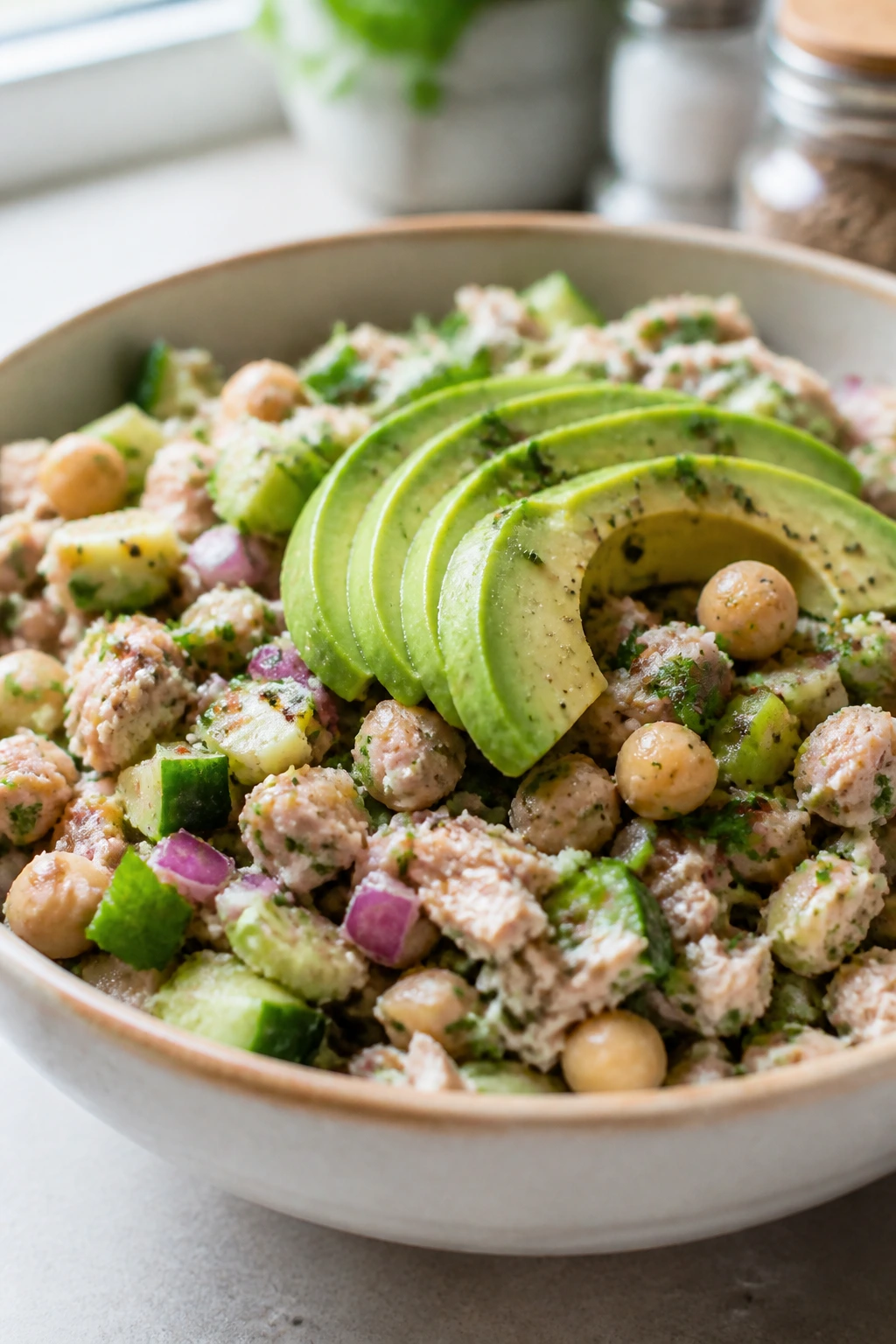
No-Mayo Creaminess: Use mashed avocado, hummus, or Greek yogurt instead of mayonnaise. The texture changes, but the tuna still gets the binding it needs.
Lower-Sodium Bowl: Choose water-packed tuna, rinse canned beans well, and lean on lemon, fresh herbs, cucumber, and celery instead of extra pickles or olives. The salad stays bright without going bland.
Gluten-Free Plate: Serve the salads in lettuce cups, over potatoes, in rice bowls, or with gluten-free crackers. Most of the recipes here already work that way without any fuss.
Kid-Friendly Mild Version: Skip onions, capers, and extra mustard, then build with tuna, sweet corn, chopped apple, or pasta. Tiny sharp ingredients can be a hard sell for younger eaters.
Warm Bowl Adaptation: Warm potatoes, farro, or sweet potatoes can make a tuna salad feel more like dinner than lunch. Add the tuna after the base cools just slightly so it doesn’t taste odd or overcooked.
Deli-Style Upgrade: Use dill pickles, celery, and hard-boiled egg, then serve the salad on toasted rye or sourdough. That route always feels dependable.
The Mistakes That Sink a Good Tuna Salad
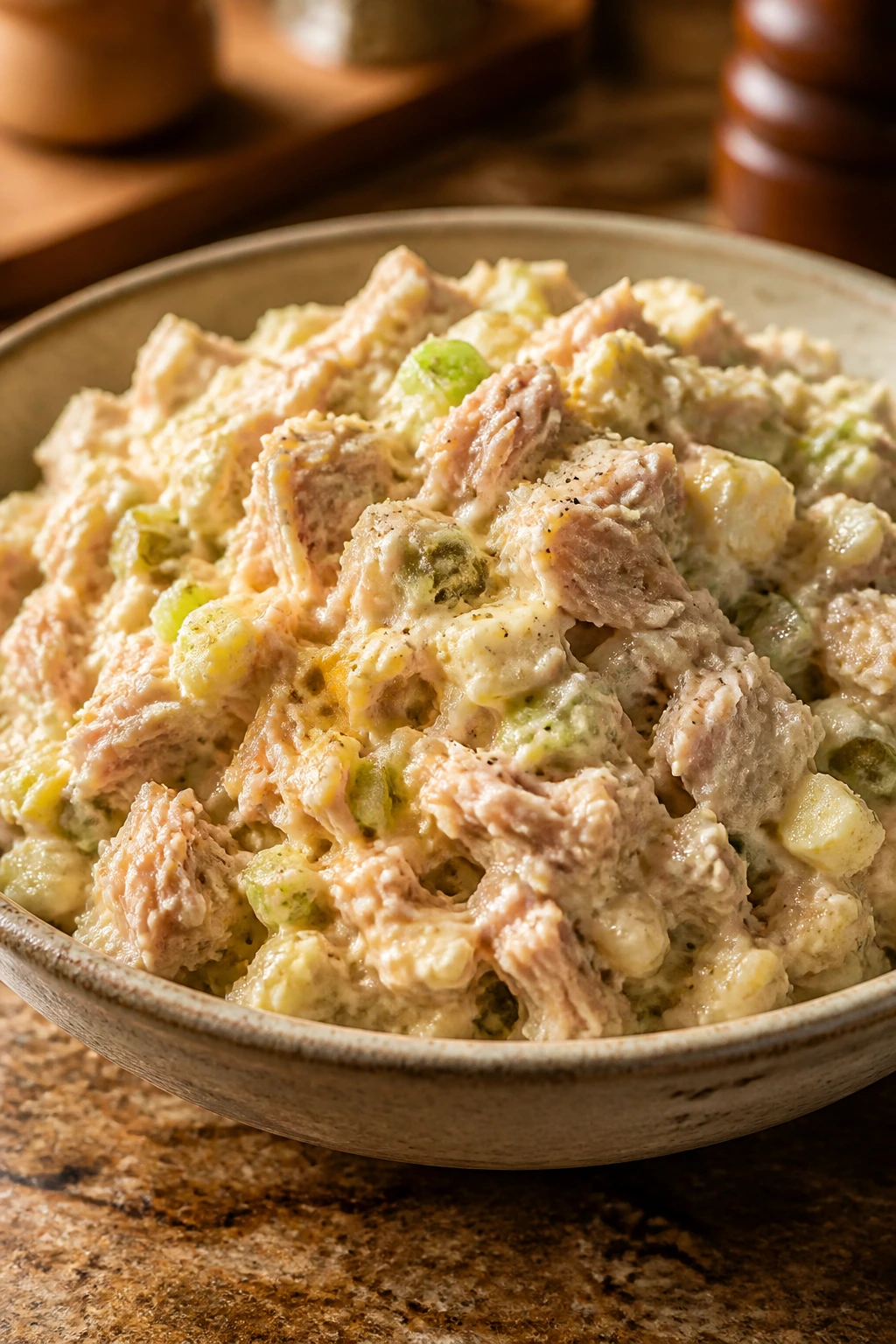
Starting with wet tuna: If the tuna isn’t drained hard, the salad goes thin and the dressing slides off everything. Press it in the can lid or against the bowl before mixing.
Using too much mayo or yogurt: A heavy hand turns tuna salad into paste. You want coating, not soup. Add the dressing gradually and stop when the mix holds together.
Skipping acid: Lemon, vinegar, mustard, pickles, or capers are what keep the bowl awake. Without one of them, even a well-seasoned salad tastes flat and tired.
Ignoring texture: If everything in the bowl is soft, the result feels dull after the first few bites. Keep one crunchy thing in every recipe — celery, cucumber, radish, seeds, or toasted bread.
Undersalting beans, potatoes, and grains: Tuna brings salt, but not enough to season a full meal. Taste the base before you add the tuna, then taste again after mixing.
Packing delicate ingredients too early: Avocado browns, tomatoes leak, crispy rice softens, and lettuce wilts. If a garnish depends on texture, add it at the last minute.
Questions People Actually Ask About These Tuna Salads
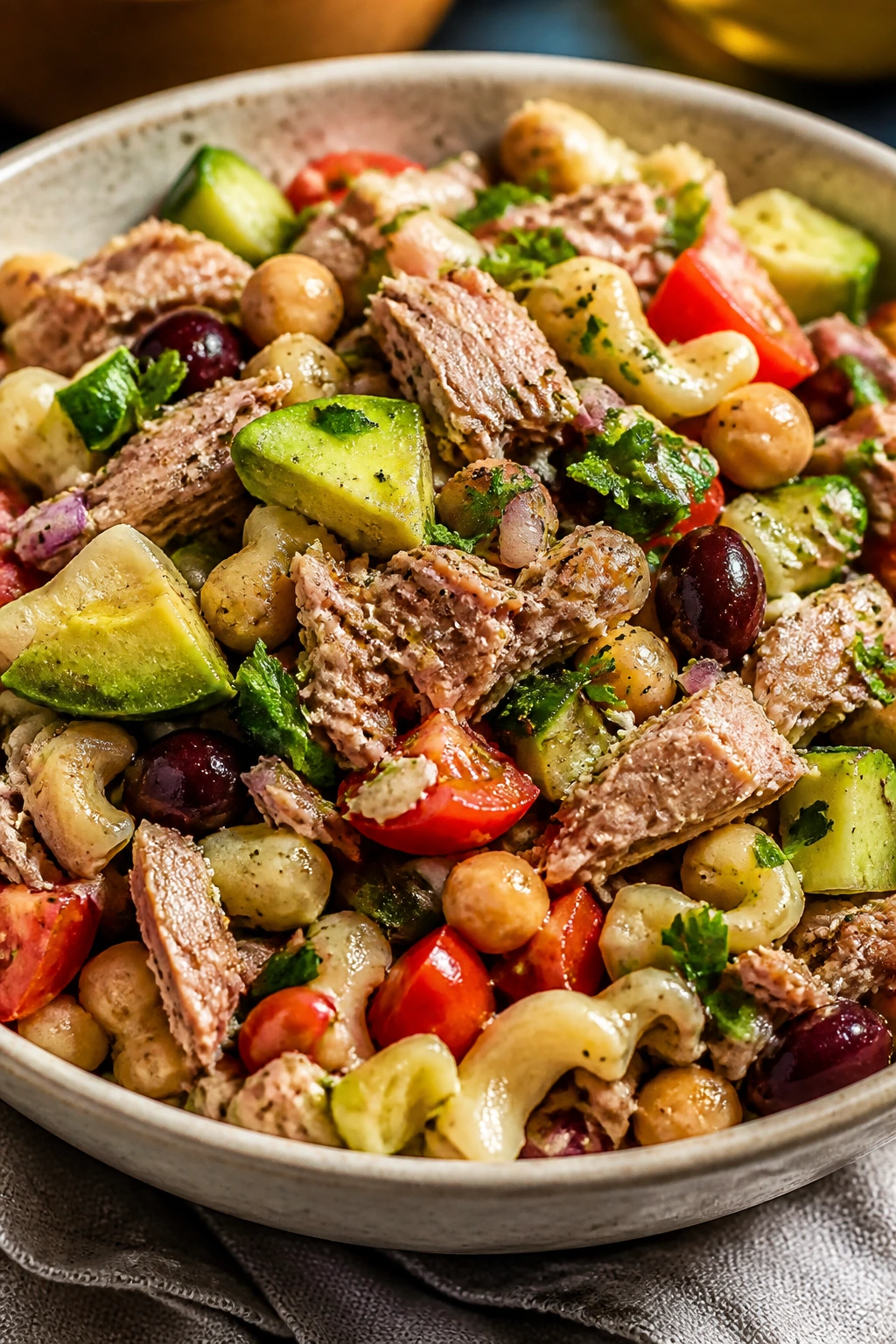
Can I use fresh tuna instead of canned tuna?
Yes, but the recipe changes a little. Seared or poached tuna works best in grain bowls, potato salads, and Niçoise-style plates, while canned tuna is the better choice for creamy deli-style mixes and wraps.
What kind of canned tuna tastes best in salad?
Solid white albacore has a firmer, meatier bite, while chunk light is softer and easier to mix into creamy salads. Oil-packed tuna brings more flavor on its own; water-packed tuna needs stronger seasoning.
How do I stop tuna salad from tasting fishy?
Drain the tuna well, add acid, and use fresh herbs or a briny ingredient like pickles or capers. Fishiness usually shows up when the salad is under-seasoned or too wet.
Can I make these tuna salads the night before?
Absolutely. Most of them improve after 20 to 30 minutes in the fridge, and several are better the next day. Keep crunchy toppings, avocado, and lettuce separate until serving.
Which versions travel best for lunch?
Bean salads, pasta salads, farro bowls, hummus wraps, and slider fillings hold up best. Lettuce cups and avocado-heavy versions are best mixed right before eating.
Can I make a tuna salad without mayonnaise?
Yes. Greek yogurt, hummus, olive oil, avocado, or a mustard vinaigrette all work. The texture will change, but the salad can still feel rich and complete.
What if my tuna salad turns out too dry?
Add a little mayo, yogurt, olive oil, or even a teaspoon of pickle brine or lemon juice. Stir gently, then taste again so you don’t overshoot and make it wet.
Can I use tuna packed in oil for every recipe?
You can, but it’s not always the best move. Oil-packed tuna works beautifully in Mediterranean, Niçoise, and herb-forward salads; in avocado or yogurt-based versions, it can feel a little too rich.
How long can tuna salad sit out?
No longer than about 2 hours, and less if the room is warm. Anything with mayo, yogurt, eggs, or potatoes should be refrigerated promptly.
What’s the best way to keep the salad from getting soggy?
Drain everything well, dry tomatoes or cucumbers if they’re watery, and hold back delicate garnishes until serving. The driest bowl is usually the one that tastes best the next day.
A Better Bowl of Tuna
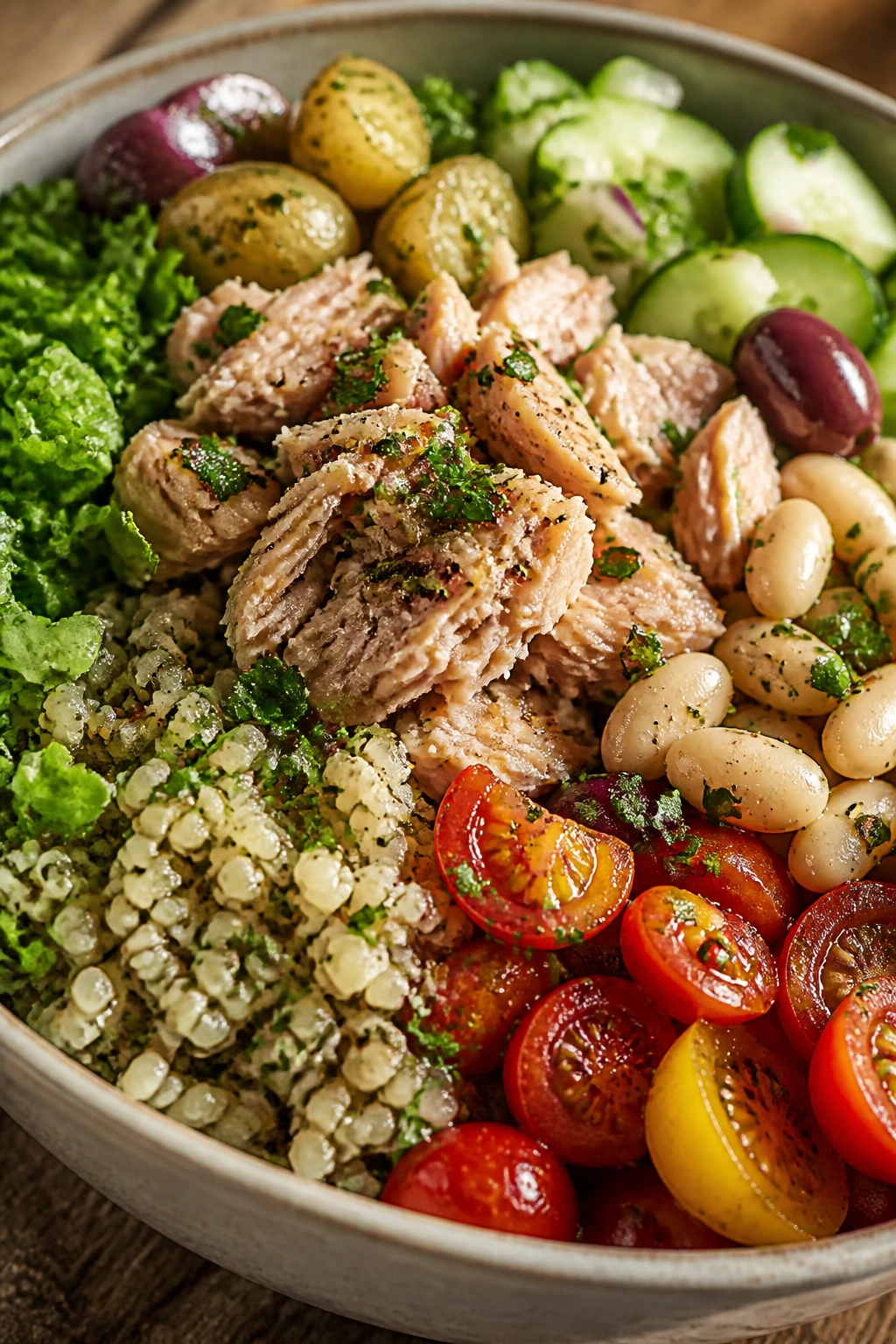
A good tuna salad doesn’t need to apologize for being simple. It just needs a little structure, a little acid, and a little more respect than a single spoonful of mayo usually gives it. Once you start building in beans, potatoes, grains, crisp vegetables, or a good piece of bread, tuna stops feeling like a fallback and starts acting like dinner.
That’s the part I keep coming back to. The best bowl is the one that holds its shape, keeps its bite, and doesn’t leave you looking for something else to eat ten minutes later. Pick one of these, make it once, then start swapping pieces around until you land on the version that disappears first from your fridge.