



A zesty cabbage slaw with homemade dressing is the side dish I reach for when the rest of the plate is rich, smoky, or fried.
It does not wilt in a hurry. Cabbage keeps its shape, the dressing clings instead of sliding off, and a short rest turns raw crunch into something sharper, brighter, and easier to eat by the forkful. That matters more than people think. A bowl of lettuce can be pretty for about eight minutes. A bowl of cabbage slaw still has backbone after the burgers are gone and somebody is reaching for seconds with a paper plate in one hand.
I like slaws that behave like both a side dish and a condiment. This one does that cleanly. The cabbage stays crisp, the carrots bring a little sweetness, the scallions add a green bite, and the dressing has enough acid to wake everything up without making the bowl taste harsh or thin. If you’ve ever bitten into a pale, watery slaw and wondered where the flavor went, this version fixes the two biggest problems: weak dressing and sloppy cut size.
The other reason it earns a place on the table is simple. It works with almost anything that has fat, smoke, salt, or heat on it. Pulled pork. Fried fish. Roast chicken. Black bean tacos. A grilled sausage tucked into a bun. The slaw doesn’t fight those foods; it clears a path through them. And the best part is that the bowl gets better after a short rest, not worse.
Why This Zesty Cabbage Slaw Pulls Its Weight
- Crunch that lasts: Shredded cabbage holds its snap for hours, so the slaw still has structure after the rest of the meal has started to cool.
- A dressing with bite: Apple cider vinegar, lime juice, and Dijon cut through fatty mains instead of getting buried under them.
- Cheap ingredients, real payoff: One small cabbage, a couple of carrots, and a few pantry items make enough slaw for a crowd without feeling stingy.
- Works as a side or topper: This is the kind of slaw that sits neatly next to ribs and also behaves on a sandwich where mayo would feel heavy.
- Better after a short rest: Fifteen minutes in the bowl softens the edges just enough for the dressing to cling to every ribbon.
- Easy to push in different directions: You can make it sharper, sweeter, spicier, or more herb-heavy without changing the basic method.
The Crunchy Bowl and the Homemade Dressing That Wakes It Up
Slaw has been around in one form or another for a long time, but the versions people remember usually split into two camps: creamy and vinegar-bright. I’ve got a soft spot for both, though I reach for the bright kind more often because it behaves better with food that’s already rich. A mayonnaise-heavy slaw can be fine with a plain sandwich. Put it next to smoked brisket or fried catfish, though, and it starts to feel like it’s covering the plate instead of helping it.
This cabbage slaw leans into the vinegar side, but it doesn’t stop there. A little honey rounds the edges. Lime juice adds a fresher snap than vinegar alone. Dijon mustard quietly holds the dressing together so it coats instead of pooling. That little bit of structure is the difference between a bowl that tastes seasoned and one that just tastes wet.
Cabbage is the reason the whole thing works. It has a firm, almost crackly texture when you slice it thin, and that texture gives the dressing something to grab. Red cabbage brings a peppery note and deep color, while green cabbage keeps the flavor clean and familiar. Carrots soften the edges with sweetness, and scallions fill in the gaps with a sharp green note that keeps each bite from tasting flat.
There’s a small practical detail here that matters a lot: the cut size. Too thick, and cabbage reads chewy. Too fine, and it turns limp fast. The sweet spot is thin ribbons, around 1/8 inch if you’re slicing by hand. That gives the dressing enough surface area without turning the bowl into confetti. Tiny thing. Big difference.
Timing, Yield, and the Sweet Spot for Serving
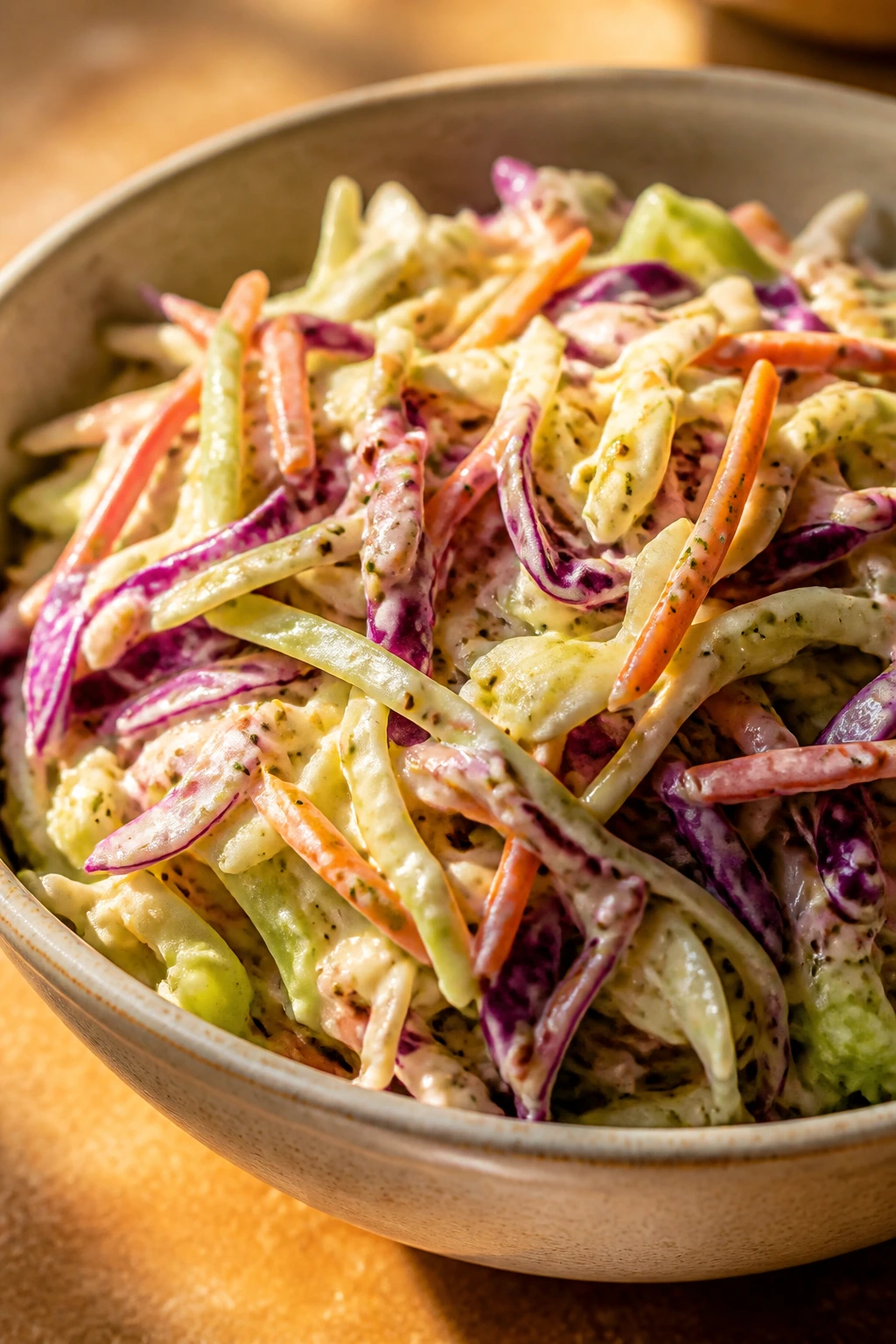
The slaw needs a little rest, but not a long one. Just enough time for the acid to soften the very outer layer of the cabbage and for the dressing to settle into the shreds.
Yield: Serves 6 as a side dish
Prep Time: 20 minutes
Cook Time: 0 minutes
Total Time: 35 minutes, including the resting time
Difficulty: Beginner — the method is mostly slicing, whisking, and tossing
Chill/Rest Time: 15 minutes
Best Served: 15 to 30 minutes after tossing, while the cabbage is still crisp and the dressing has had time to settle
What Goes Into the Bowl
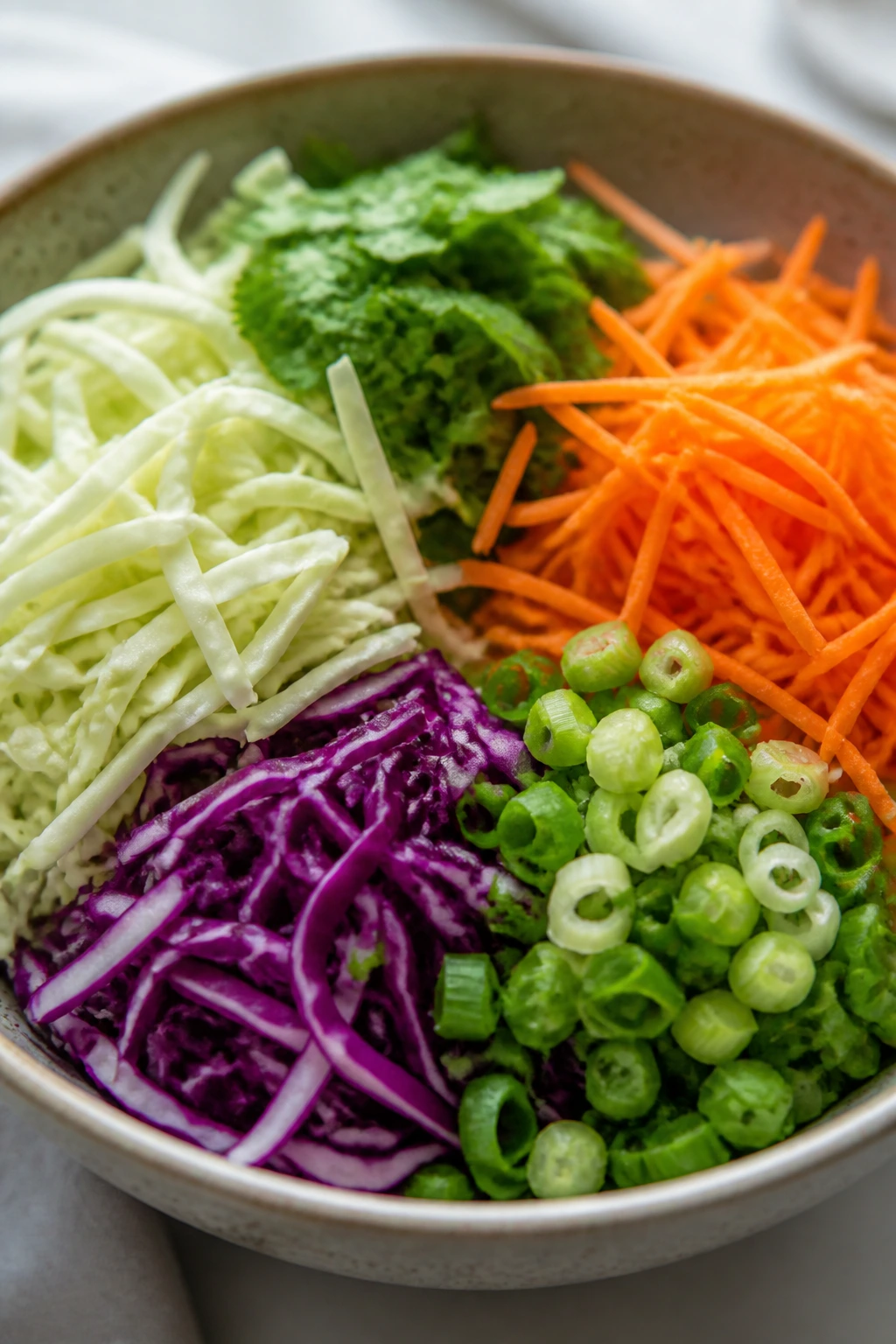
For the Slaw:
- 6 cups shredded green cabbage, from about 1 small head
- 3 cups shredded red cabbage, from about 1/2 medium head
- 1 1/2 cups shredded carrots, from about 3 medium carrots
- 3 scallions, thinly sliced
- 1/4 cup chopped fresh cilantro or flat-leaf parsley
- 1 jalapeño, seeded and minced, optional
For the Zesty Homemade Dressing:
- 1/4 cup apple cider vinegar
- 2 tablespoons fresh lime juice
- 2 tablespoons honey
- 1 tablespoon Dijon mustard
- 1 small garlic clove, finely grated
- 1/2 teaspoon celery seed
- 1/2 teaspoon kosher salt
- 1/4 teaspoon black pepper
- 1/3 cup extra-virgin olive oil
- 1 teaspoon finely grated lime zest, optional
Why Each Ingredient Earns Its Spot
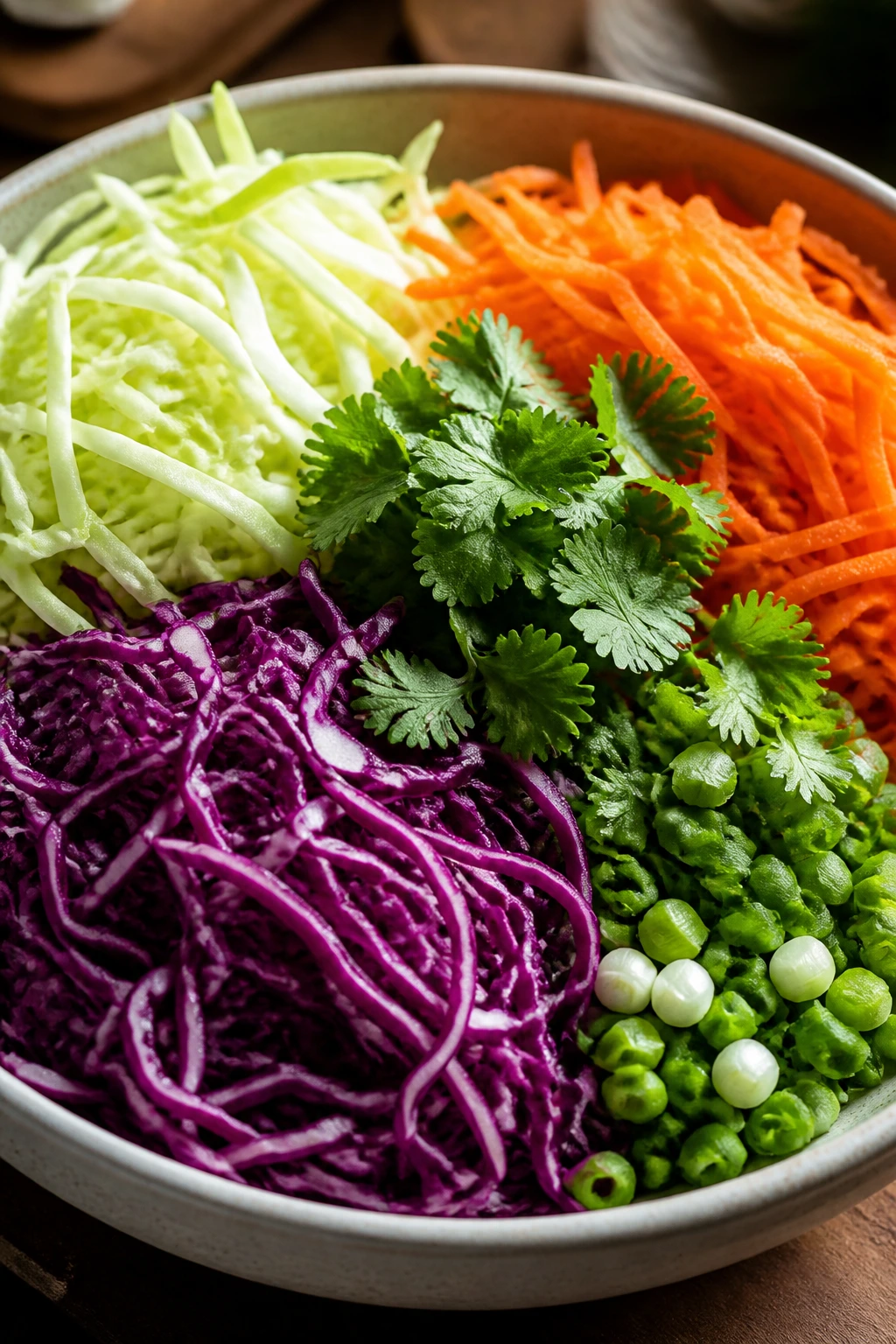
Crisp Cabbage Base
What to use: 6 cups green cabbage and 3 cups red cabbage give the slaw enough body for six side servings without becoming heavy.
Preparation: Remove the outer leaves, cut out the core, and slice the cabbage into thin ribbons. Keep the strips even; that’s what gives the bowl its tidy crunch.
Substitutions: Napa cabbage works if you want a softer, more delicate slaw, and thinly sliced Brussels sprouts can stand in when you want a more assertive bite.
Tips: Choose a head that feels heavy for its size. Tight, squeaky leaves are a good sign; floppy outer leaves usually mean the cabbage has started losing water.
Carrots, Scallions, and Herbs
What to use: 1 1/2 cups shredded carrots, 3 scallions, and 1/4 cup fresh cilantro or parsley bring sweetness, sharpness, and a green finish that keeps the bowl from tasting one-note.
Preparation: Shred the carrots on the large holes of a box grater or a food processor, and slice the scallions very thin so they spread through the cabbage instead of sitting in clumps.
Substitutions: Radishes can stand in for some of the carrots if you want peppery bite, and dill works well when the slaw is headed toward fish or potatoes.
Tips: Fresh herbs matter here. Dry herbs don’t bring enough lift, and the slaw loses the little fresh edge that makes it pop.
The Zesty Dressing
What to use: Apple cider vinegar, lime juice, honey, Dijon, garlic, celery seed, salt, pepper, and olive oil make a dressing that’s sharp, slightly sweet, and sturdy enough to cling to cabbage.
Preparation: Grate the garlic as fine as you can so it dissolves into the dressing instead of landing in aggressive little bites.
Substitutions: White wine vinegar can replace apple cider vinegar, though it tastes a little cleaner and less round. Maple syrup can replace honey if that’s what’s in the cupboard.
Tips: Dijon is doing more than flavor work. It helps the dressing emulsify, which keeps the oil and acid from separating into two layers before they hit the bowl.
Small Finishes That Change the Bowl
What to use: Lime zest and jalapeño are optional, but both push the slaw toward the kind of brightness that reads loudly next to grilled or fried food.
Preparation: Zest the lime before juicing it, and seed the jalapeño if you want heat without too much chile flavor.
Substitutions: Crushed red pepper works if you want a dry, lingering heat. A few pinches of smoked paprika can shift the slaw toward barbecue territory.
Tips: Add optional heat sparingly, then taste after the slaw rests. Fresh chile often reads stronger once it sits in acid for a few minutes.
The Tools That Make Shredding and Tossing Easier
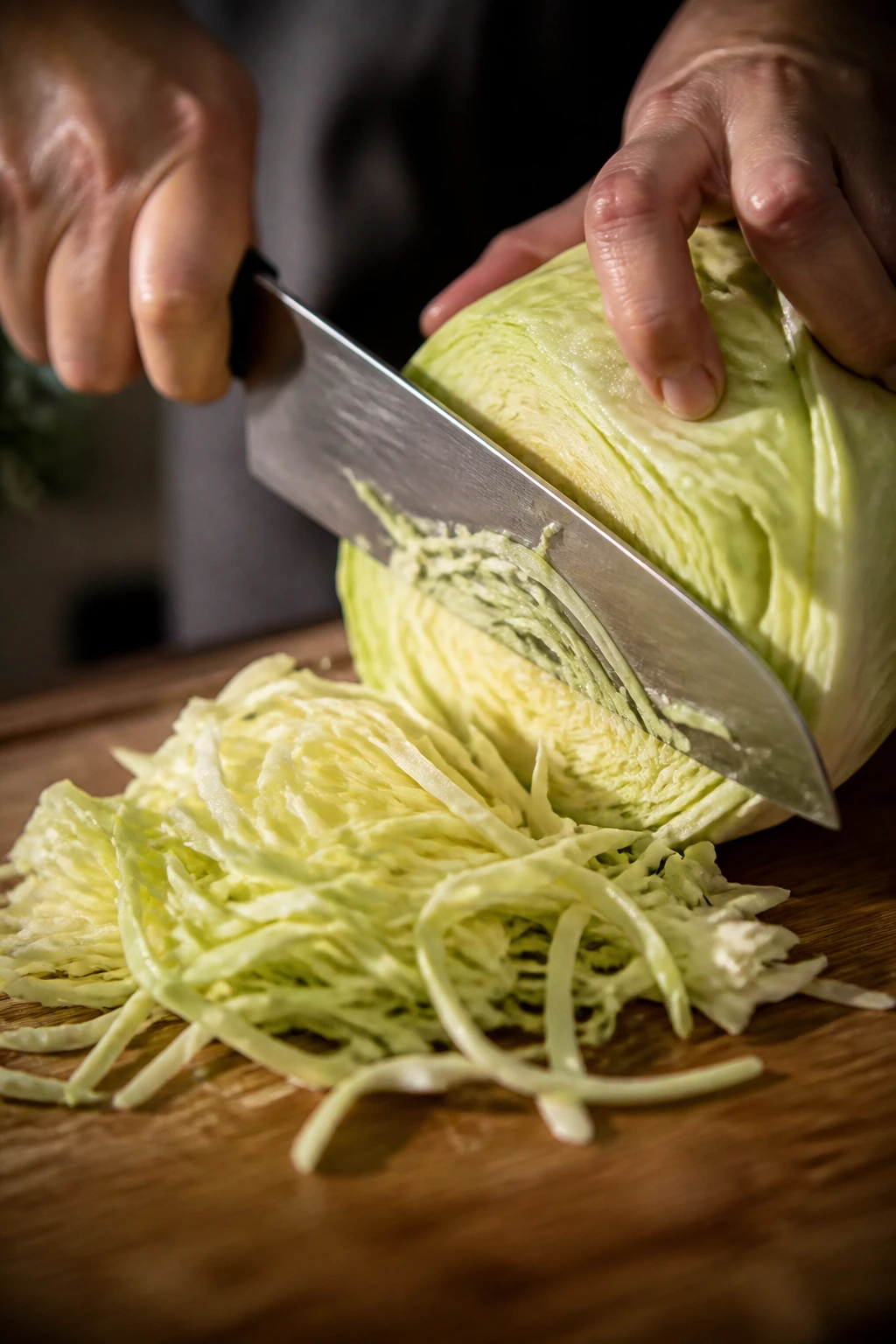
- Chef’s knife: A sharp knife gives cleaner ribbons than a dull one, which tends to crush cabbage and make the cut edges ragged.
- Cutting board with a damp towel underneath: Keeps the board from skating while you shave cabbage and carrots.
- Mandoline or food processor with slicing disc: Optional, but useful if you want fast, even shreds. A cut-resistant glove is worth using with a mandoline.
- Large mixing bowl: Bigger than you think you need. Cabbage spreads out, and a cramped bowl leads to uneven dressing.
- Small whisk or jar with a tight lid: Either one works for the dressing. I like a jar when I want fewer dishes.
- Box grater: Handy for carrots and for any quick fine shredding if you skip the food processor.
- Microplane or fine grater: Best for garlic and lime zest so they disappear into the dressing instead of sticking out.
How to Build the Slaw Step by Step
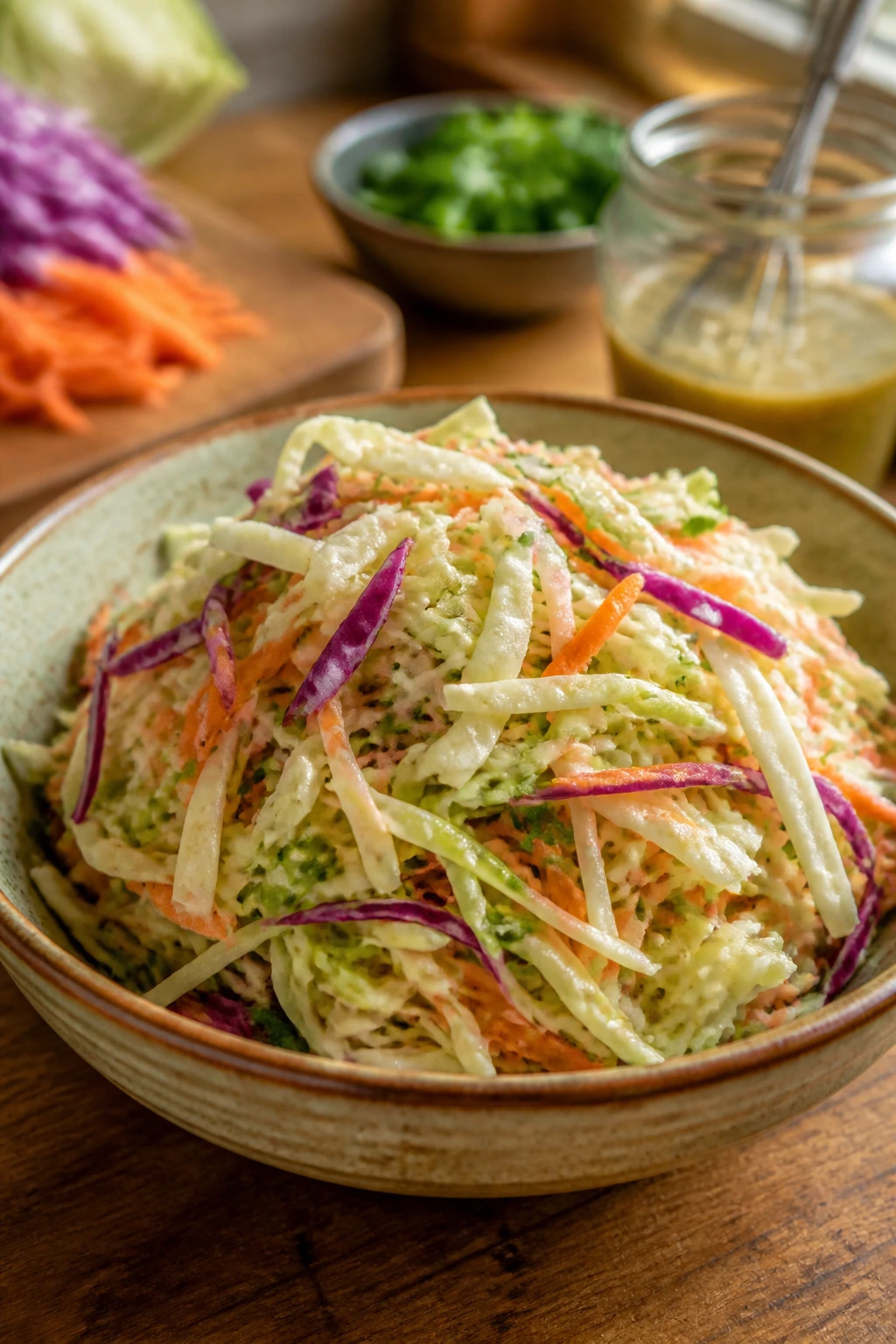
Prep the Vegetables
-
Remove any wilted outer leaves from the cabbage, then cut each head into quarters and slice out the core. Shred the cabbage into thin ribbons, about 1/8 inch wide. If the strips look too long, cut them once or twice crosswise so they’re easy to eat.
-
Shred the carrots, thinly slice the scallions, and chop the herbs. If you’re using jalapeño, seed it and mince it very finely. Keep everything loose and dry. Wet vegetables dilute the dressing and make the bowl puddle early.
Make the Dressing
-
In a small bowl or jar, whisk together the apple cider vinegar, lime juice, honey, Dijon mustard, grated garlic, celery seed, kosher salt, black pepper, and lime zest, if using. Keep whisking while you stream in the olive oil in a slow, steady line. The dressing should look glossy and slightly thickened, not broken or greasy.
-
Taste the dressing on a cabbage leaf or a spoonful of shredded carrot. It should taste a little sharper than you want on its own; the cabbage will soften the edges once it sits. If it tastes flat, add a pinch more salt. If it tastes too sharp, whisk in 1 teaspoon more honey.
Toss and Rest
-
Put the cabbage, carrots, scallions, herbs, and jalapeño in a large bowl. Pour in about two-thirds of the dressing first, then toss with tongs or clean hands for 20 to 30 seconds until the vegetables are lightly coated. Do not drown the slaw on the first pass; cabbage gives up water as it sits, and too much dressing at the start turns the bowl soggy.
-
Let the slaw rest for 15 minutes, then toss again and taste. If the bowl looks dry, add the remaining dressing a tablespoon at a time. If it’s already juicy and well coated, stop there. Serve it right away or within the next 30 minutes for the cleanest crunch.
How to Serve It Without Hiding the Crunch
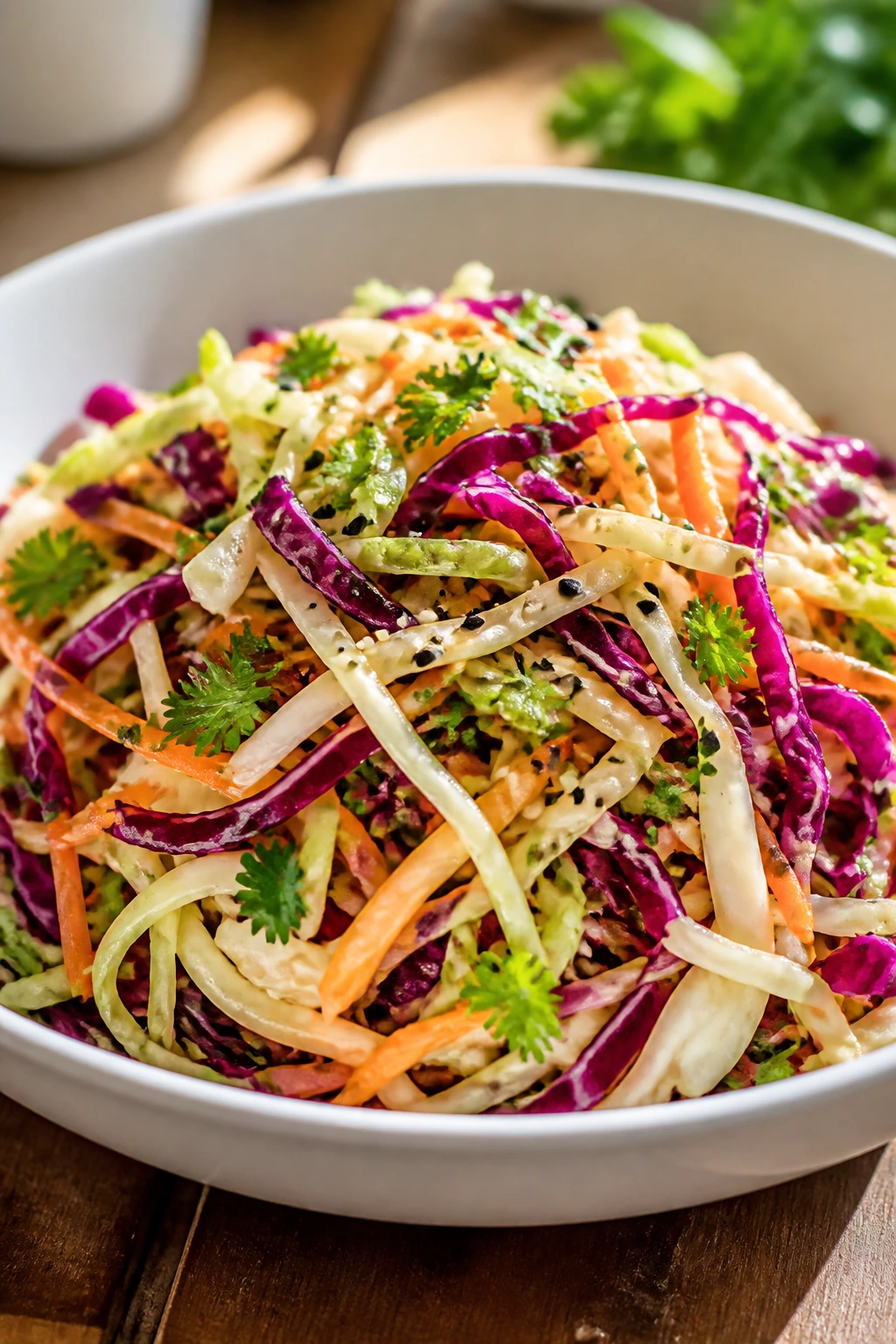
Presentation: Pile the slaw into a shallow bowl or lay it in a loose mound beside whatever main dish you’ve made. I like using tongs so the ribbons stay long and tidy instead of getting compressed into a flat heap. A final pinch of herbs or a few sesame seeds on top makes the bowl look finished without burying the cabbage.
Accompaniments: This slaw sits well next to pulled pork sandwiches, fried fish, grilled chicken thighs, roasted sausages, black bean tacos, and barbecue ribs. It also works as a cold topper on burgers and grain bowls, where the dressing wakes up beans, rice, or roasted sweet potatoes. If you serve it with a very rich main, add something plain on the side — corn bread, boiled potatoes, or a simple roll do the job.
Portions: Plan on 1/2 to 3/4 cup per person as a side dish, or closer to 1 cup if the slaw is acting as the fresh part of a sandwich or taco plate. For a bigger crowd, this recipe doubles without much fuss. Use a bowl with room, though; cabbage likes to spill over if you force it into a small container.
Beverage Pairing: I like this slaw with iced tea and lemon when the meal leans smoky, or a crisp lager if the plate is headed toward fried fish or chicken. Sparkling water with lime works too, especially when the rest of dinner already has enough richness.
Practical Tweaks for Better Flavor and Texture
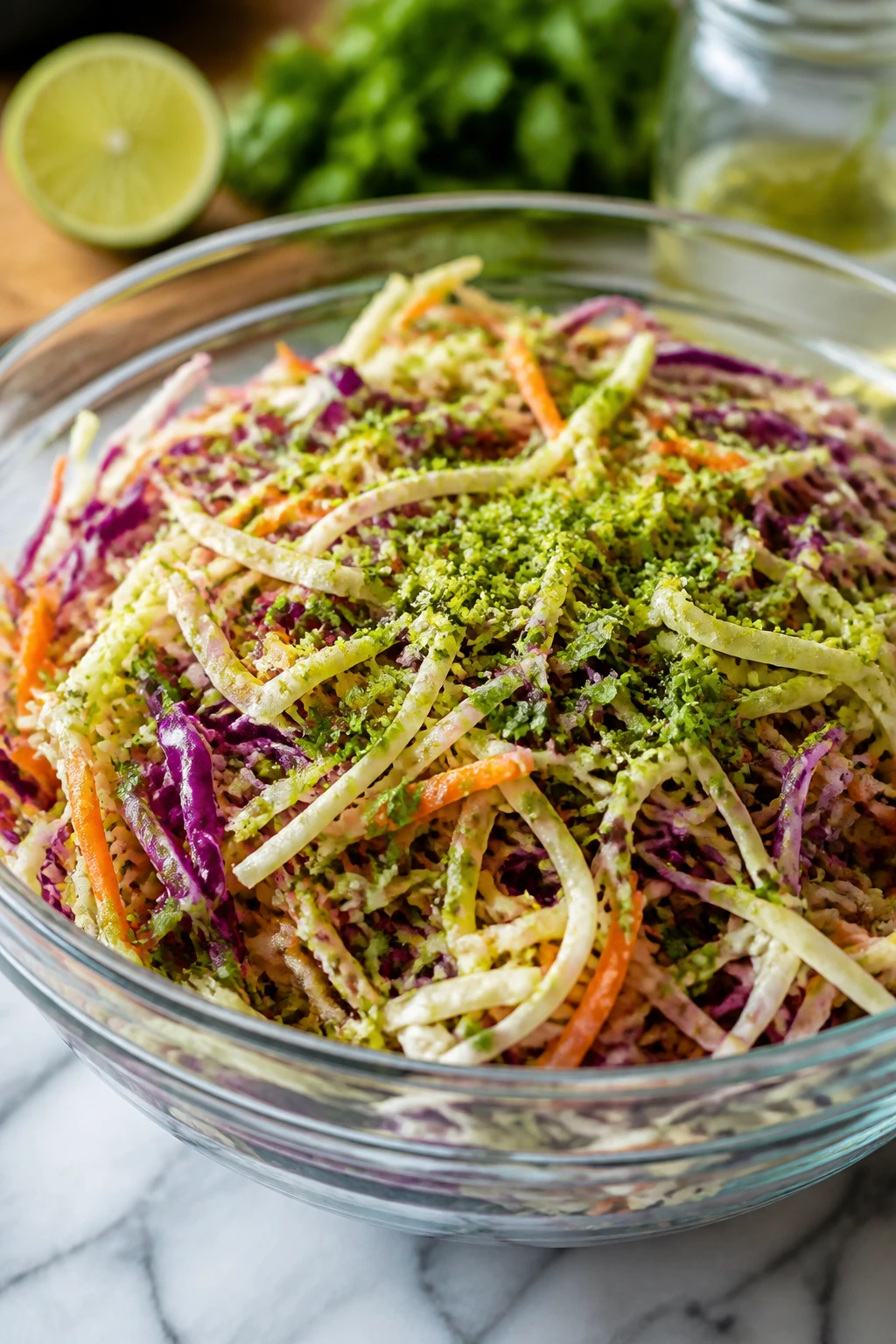
Flavor Enhancement: A teaspoon of lime zest in the dressing gives the whole bowl a brighter scent the second you toss it. If you want a little more depth, add a tiny splash of pickle brine — about 1 teaspoon — and taste before going further. It sounds odd until you try it. Then it makes sense.
Time-Saver: Bagged coleslaw mix is fine when you’re short on time, but use the finer-cut kind and add fresh scallions and herbs anyway. The bagged stuff usually needs a little help because the cabbage is cut more uniformly and can taste plain straight from the package. One quick whisked dressing still changes it a lot.
Texture Control: If you want the slaw extra crisp, salt the shredded cabbage lightly with about 1/2 teaspoon kosher salt, let it sit in a colander for 10 minutes, then pat it dry before dressing. That extra step draws out some water before it can pool in the bowl. I only do this when I know the slaw needs to sit for a while.
Make-It-Yours: For a sweeter slaw, add thin apple matchsticks or a little more honey. For more heat, use jalapeño with the seeds in or add a pinch of crushed red pepper. If you prefer a cleaner, less herbal finish, swap cilantro for parsley and keep the lime.
Mistakes That Turn Slaw Limp or Flat
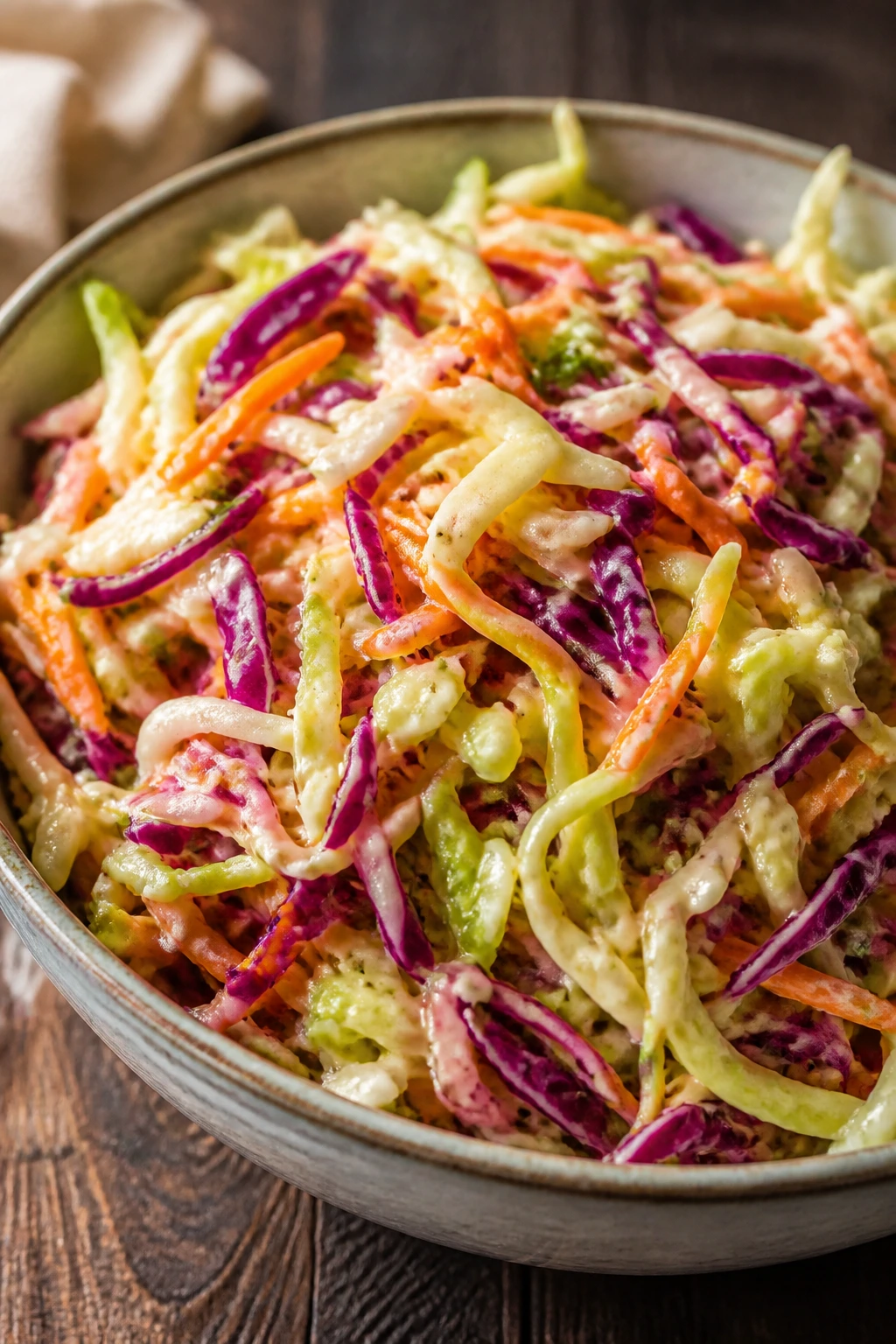
Too much dressing at the start: The most common problem is a bowl that looks fine for five minutes and then turns slick. Cabbage releases water after it’s cut, so it doesn’t need as much dressing as lettuce would. The fix is simple: use two-thirds first, rest, then add more only if the bowl still looks dry.
Shredding the cabbage too thick: Thick slices feel awkward in the mouth and never seem to absorb the dressing evenly. The slaw tastes rough instead of crisp. Aim for thin ribbons, about 1/8 inch, and keep them close in size so every bite behaves the same way.
Using a dressing that tastes balanced in the bowl before resting: Acid softens a little after it meets salt and cabbage, which means a dressing that tastes fine in the jar can read dull later. Taste the dressing on its own, then again after the slaw has rested. If the flavor fades, add a pinch more salt or a few drops of lime.
Skipping the rest entirely: This is one of those dishes that improves in the bowl for a short window. If you serve it the second it’s tossed, the dressing sits on the surface and tastes a little disconnected. Fifteen minutes gives the cabbage time to relax just enough for the flavor to settle in.
Adding watery extras without thinking: Tomatoes, cucumbers, or overly wet herbs will dilute the dressing fast. If you want those ingredients, seed or dry them well first, or keep them out altogether. Cabbage has enough going on without extra liquid making trouble.
Variations Worth Trying on the Same Base
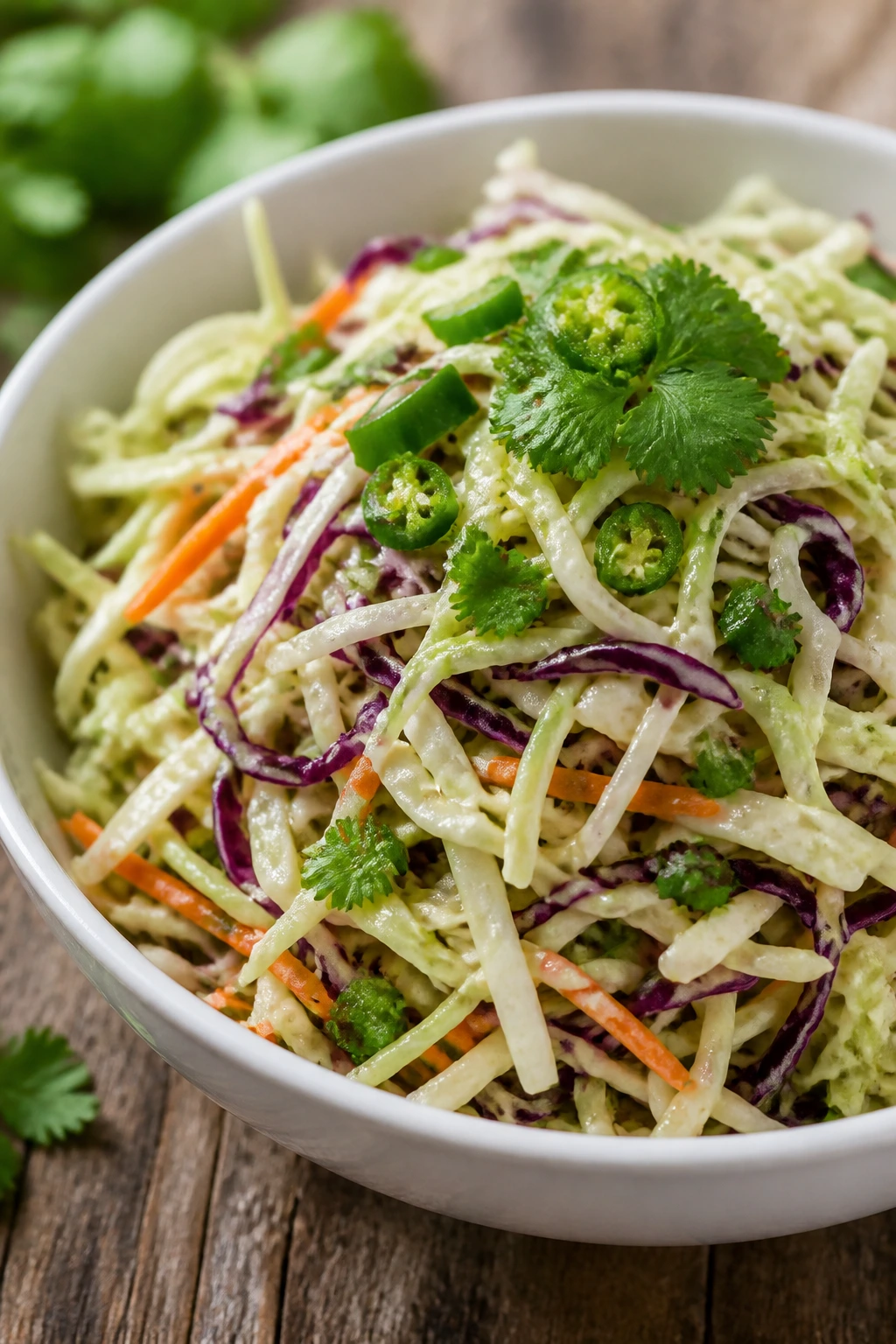
Southwest Lime Slaw: Swap the apple cider vinegar for an extra tablespoon of lime juice, add 1/2 teaspoon ground cumin, and fold in chopped cilantro and minced jalapeño. This version sits well under fish tacos, grilled shrimp, or anything with chili powder on it.
Creamy Picnic Slaw: Stir 1/4 cup mayonnaise and 2 tablespoons plain Greek yogurt into the dressing, then reduce the olive oil to 2 tablespoons. You still get the cabbage crunch, but the dressing turns softer and more spoonable, which is useful for burgers and pulled chicken sandwiches.
Apple-Fennel Crunch Slaw: Add 1 small fennel bulb, shaved very thin, plus 1 tart apple cut into matchsticks. Reduce the honey to 1 tablespoon because the apple brings its own sweetness, and the fennel gives the bowl a cool, faint anise note that works better than you’d expect with roast pork or sausages.
Sesame-Ginger Slaw: Replace the apple cider vinegar with rice vinegar, add 1 teaspoon grated fresh ginger and 1 teaspoon toasted sesame oil, then finish with sesame seeds. This one heads away from barbecue and into noodle-bowl or grilled-salmon territory fast.
Dill and Mustard Slaw: Use parsley instead of cilantro, add 1 teaspoon chopped dill, and bump the Dijon up to 2 teaspoons. It’s a sharper, more deli-style slaw that fits potato salad, cold roast chicken, and open-faced sandwiches.
Keeping It Crisp After It Sits
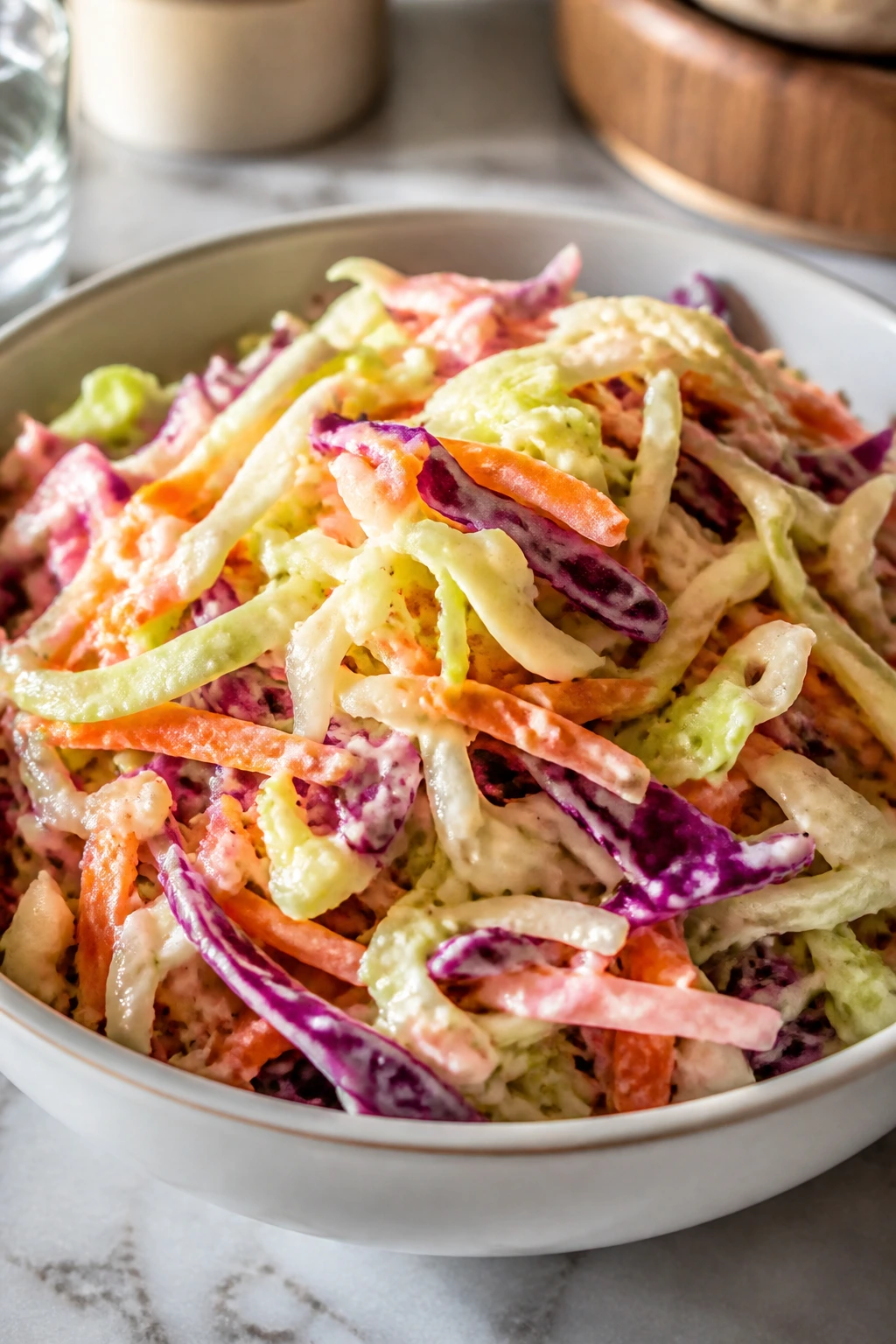
Undressed cabbage: Shredded cabbage on its own keeps well in an airtight container in the refrigerator for up to 24 hours. If you dry it well after washing, it can hold a little longer, but I like the first day best for texture.
Dressed slaw: Once the dressing hits the cabbage, the slaw keeps for about 3 days in the refrigerator. The first day has the best crunch; by day two, the edges soften a little, and by day three, the bowl becomes more tender and a little wetter. That’s not bad. It’s just different.
Dressing only: The homemade dressing lasts about 5 to 7 days in a sealed jar in the refrigerator. Shake it before using, since the oil may thicken or separate a bit. If it looks cloudy or the oil has gone sluggish, let it sit at room temperature for 10 minutes and shake again.
No freezing, no reheating: Freezing cabbage slaw ruins the texture. The shreds collapse and the dressing turns watery when thawed. There’s also no reheating step here, which is part of the charm. If the slaw tastes a little flat after chilling, revive it with a splash of vinegar or lime juice and a pinch of salt before serving.
Make-ahead habit: If you want to prep ahead for a party, shred the vegetables and make the dressing separately, then toss them 15 to 30 minutes before serving. That gives you the cleanest texture and keeps the dressing bright. If the bowl has already been dressed, leave back a small spoonful of dressing and use it as a refresh right before the platter goes out.
Questions People Ask Before Making It

Can I use bagged coleslaw mix instead of shredding cabbage by hand?
Yes, and it’s a perfectly fair shortcut. Buy a mix with both green and red cabbage if you can, then add fresh scallions, herbs, and the homemade dressing so it tastes like a real bowl instead of a bag opened over a serving dish.
How do I keep cabbage slaw from getting watery?
The main fixes are thin, even cuts, not over-dressing the bowl, and giving the slaw a short rest before serving. If the cabbage is especially juicy, salt it lightly and drain it for 10 minutes before dressing. That step sounds fussy, but it pays off when the slaw has to sit around.
Can I make this slaw the night before?
You can, but I’d keep the dressing separate and toss everything close to serving time. If you do dress it ahead, hold back a little of the dressing so you can refresh the bowl after it chills. A dressed slaw will still taste good the next day, but the crunch will soften.
What if the dressing tastes too sharp?
Add 1 teaspoon honey or maple syrup at a time until the edges round out. A pinch more salt can help too, because blandness often reads as harshness. If the acid still feels loud after that, let the slaw sit for 10 minutes; cabbage tends to calm vinegar down.
Can I make it creamy instead of vinaigrette-style?
Yes. Add mayonnaise and a little Greek yogurt to the dressing, then reduce the oil so the bowl doesn’t get heavy. The creamy version is better with sandwiches and fried food, while the vinaigrette version stays cleaner and brighter with grilled or smoky mains.
What if I don’t like cilantro?
Use flat-leaf parsley, dill, or leave the herbs out entirely. The slaw still works because the dressing and cabbage are carrying most of the flavor. I do think fresh herbs help, though, so parsley is the easiest swap if cilantro tastes soapy to you.
Is celery seed really necessary?
Not strictly, but it gives the dressing that old-school slaw flavor people expect without making it taste like a bottled dressing. If you skip it, the bowl will still be fine, just a little less anchored. A pinch of caraway can stand in if you want something more cabbage-forward.
A Bowl Worth Repeating
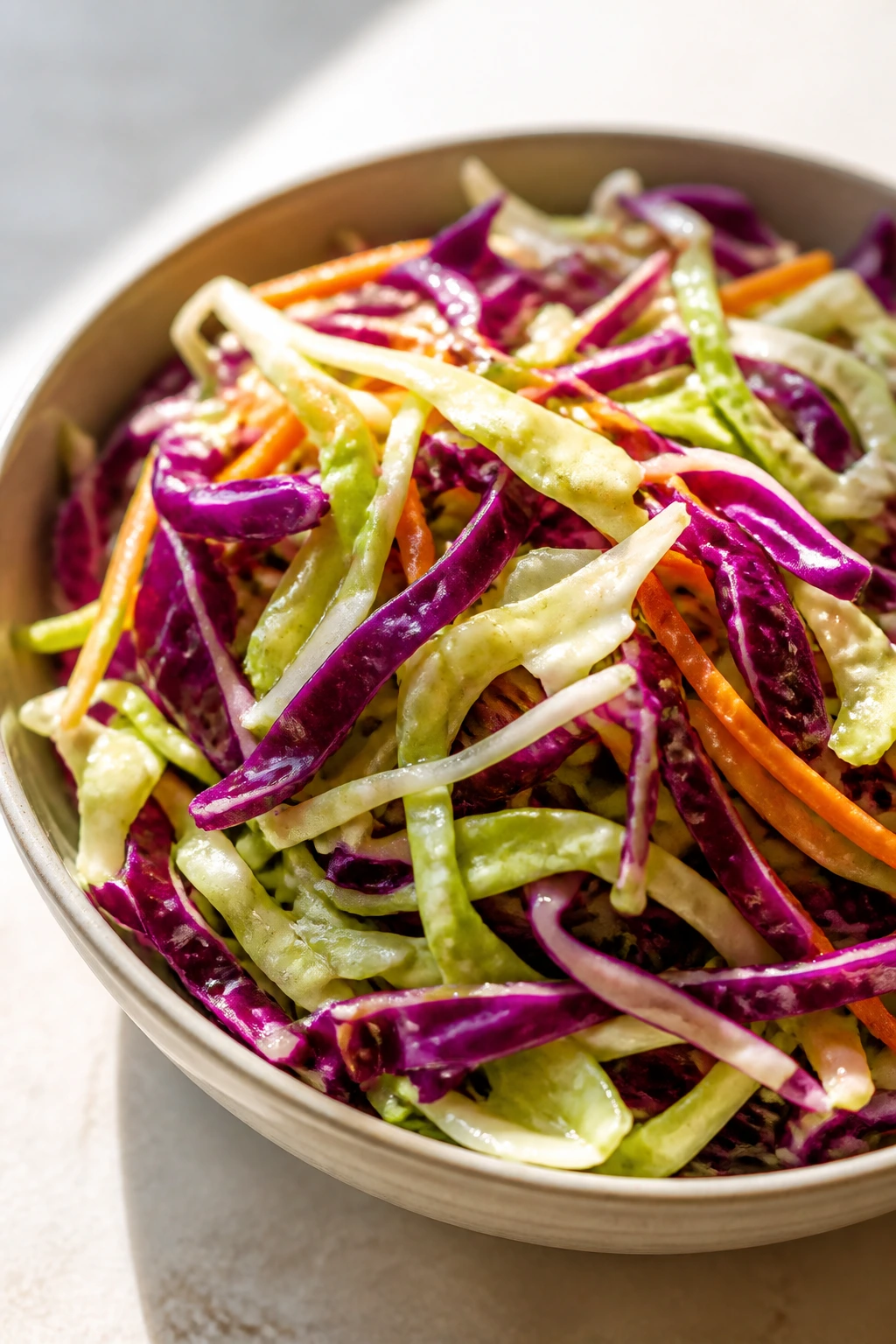
I like recipes that solve a small problem without making a fuss, and this slaw does exactly that. It gives rich food something bright to lean against, keeps its texture longer than leafy salads, and takes only a few pantry ingredients to pull off. That’s a useful kind of side dish. Not flashy. Just reliable in the way you wish more picnic food would be.
The part I keep coming back to is the dressing. Once it’s balanced — sharp enough, a little sweet, a little salty — it makes plain cabbage taste like something that planned to be eaten beside barbecue, tacos, or fried chicken from the start. Keep a cabbage in the crisper and this bowl stops being a special project. It turns into an easy habit.
Zesty Cabbage Slaw with Homemade Dressing — Recipe Card
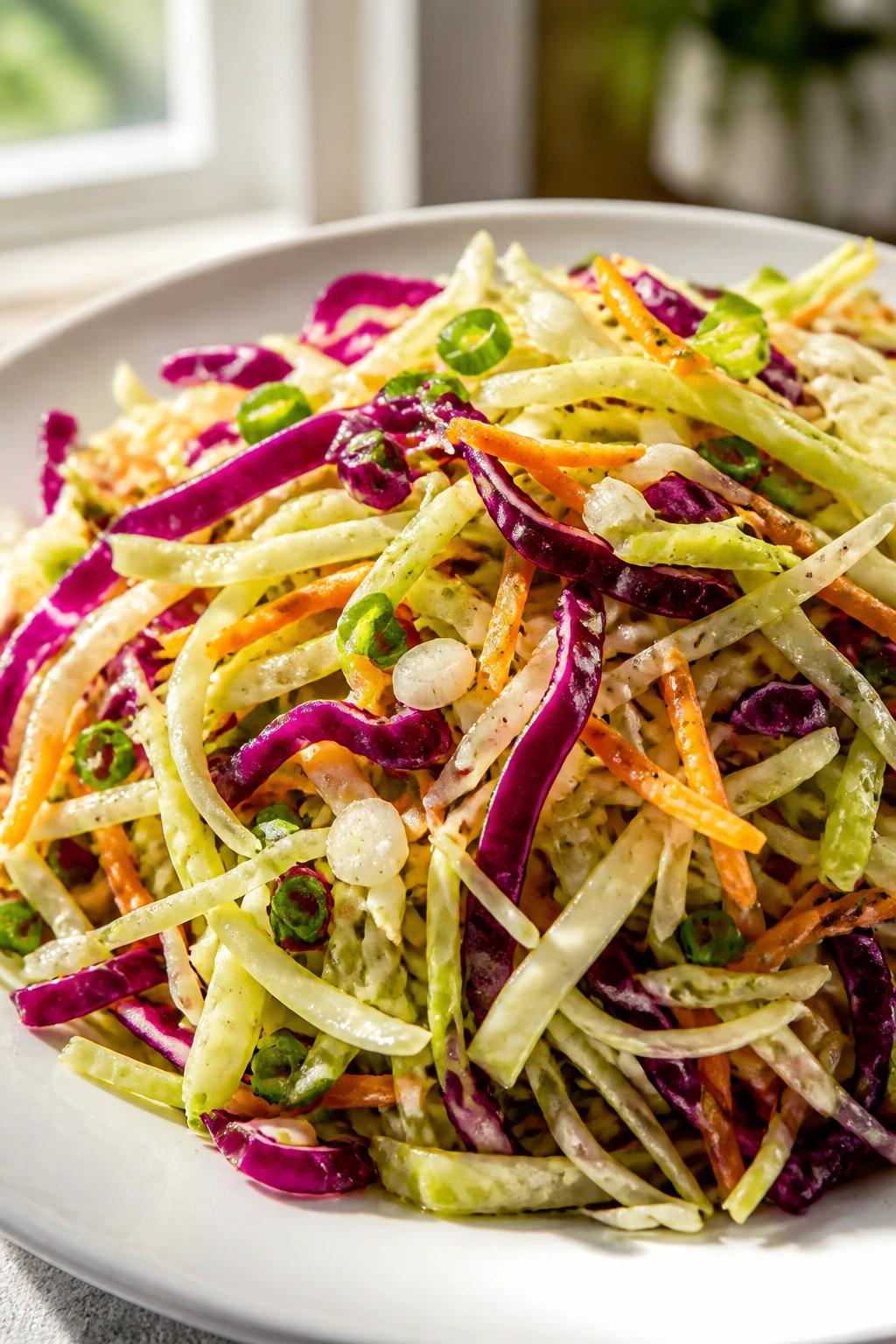
Recipe Name: Zesty Cabbage Slaw with Homemade Dressing
Description: Crisp green and red cabbage, carrots, scallions, and herbs tossed in a bright apple cider vinegar and lime dressing. The slaw stays crunchy, tastes sharp and fresh, and fits beside everything from barbecue to tacos.
Prep Time: 20 minutes
Cook Time: 0 minutes
Total Time: 35 minutes, including 15 minutes resting
Course: Side Dish
Cuisine: American
Servings: 6 servings
Calories: 160 kcal
Ingredients
For the Slaw:
- 6 cups shredded green cabbage, from about 1 small head
- 3 cups shredded red cabbage, from about 1/2 medium head
- 1 1/2 cups shredded carrots, from about 3 medium carrots
- 3 scallions, thinly sliced
- 1/4 cup chopped fresh cilantro or flat-leaf parsley
- 1 jalapeño, seeded and minced, optional
For the Zesty Homemade Dressing:
- 1/4 cup apple cider vinegar
- 2 tablespoons fresh lime juice
- 2 tablespoons honey
- 1 tablespoon Dijon mustard
- 1 small garlic clove, finely grated
- 1/2 teaspoon celery seed
- 1/2 teaspoon kosher salt
- 1/4 teaspoon black pepper
- 1/3 cup extra-virgin olive oil
- 1 teaspoon finely grated lime zest, optional
Instructions
-
Trim the cabbage, remove the cores, and shred both heads into thin ribbons. Shred the carrots, slice the scallions, chop the herbs, and mince the jalapeño if using.
-
Whisk together the vinegar, lime juice, honey, Dijon, garlic, celery seed, salt, pepper, and lime zest. Stream in the olive oil and whisk until the dressing looks glossy and slightly thickened.
-
Combine the cabbage, carrots, scallions, herbs, and jalapeño in a large bowl. Pour in about two-thirds of the dressing and toss until lightly coated.
-
Rest the slaw for 15 minutes, then toss again and taste. Add more dressing if needed, then serve chilled or at cool room temperature.
Notes: Hold back a little dressing if the slaw needs to sit longer. For a sharper finish, add a squeeze of lime right before serving.