



A ground beef and broccoli recipe only works if both parts keep their own personality. The beef needs to brown hard enough to taste meaty, not gray and steamed, and the broccoli needs to stay green and crisp at the edges instead of collapsing into the sauce like overcooked cafeteria vegetables. Get those two things right and the whole pan turns into something that feels bigger than the ingredient list.
That’s why I like this version with ground beef instead of sliced steak. It cooks faster, costs less, and gives you a saucy skillet that clings to rice, noodles, or a spoon eaten standing at the stove. The texture is different from classic broccoli beef, sure. More rustic. More weeknight. But that’s not a compromise in my book; it’s the whole point.
The sauce matters, too. Too thin and it slides off everything. Too salty and the whole pan tastes like soy sauce with a few vegetables floating around in it. The sweet spot is a glossy, garlicky, lightly sweet brown sauce that settles into the craggy bits of beef and leaves a sheen on the broccoli florets. That’s the part people remember.
Why This Beef-and-Broccoli Skillet Earns Its Spot on the Dinner List
Fast browning, short steaming, one pan: The beef gets a deep brown color in about 6 to 8 minutes, and the broccoli only needs a brief cover to turn tender-crisp.
Sauce that actually sticks: Cornstarch gives the pan sauce a shiny body, so it coats each bite instead of pooling under the beef.
Budget-friendly without tasting stripped down: Ground beef brings enough fat and flavor to carry the sauce, especially if you choose 85/15 or 90/10 and drain the excess.
Flexible enough for rice, noodles, or a fork: The skillet works over jasmine rice, brown rice, lo mein noodles, or even cauliflower rice if that’s how you like to eat.
Good leftovers, not sad leftovers: Reheated ground beef keeps its texture better than many thin-sliced stir-fries, and the sauce tastes even rounder the next day.
Broccoli gets treated like a main player: It doesn’t disappear here. The florets keep their bite, catch the sauce, and still taste like broccoli when you get to the last forkful.
How the Classic Broccoli Beef Flavor Changes When Ground Beef Takes Over
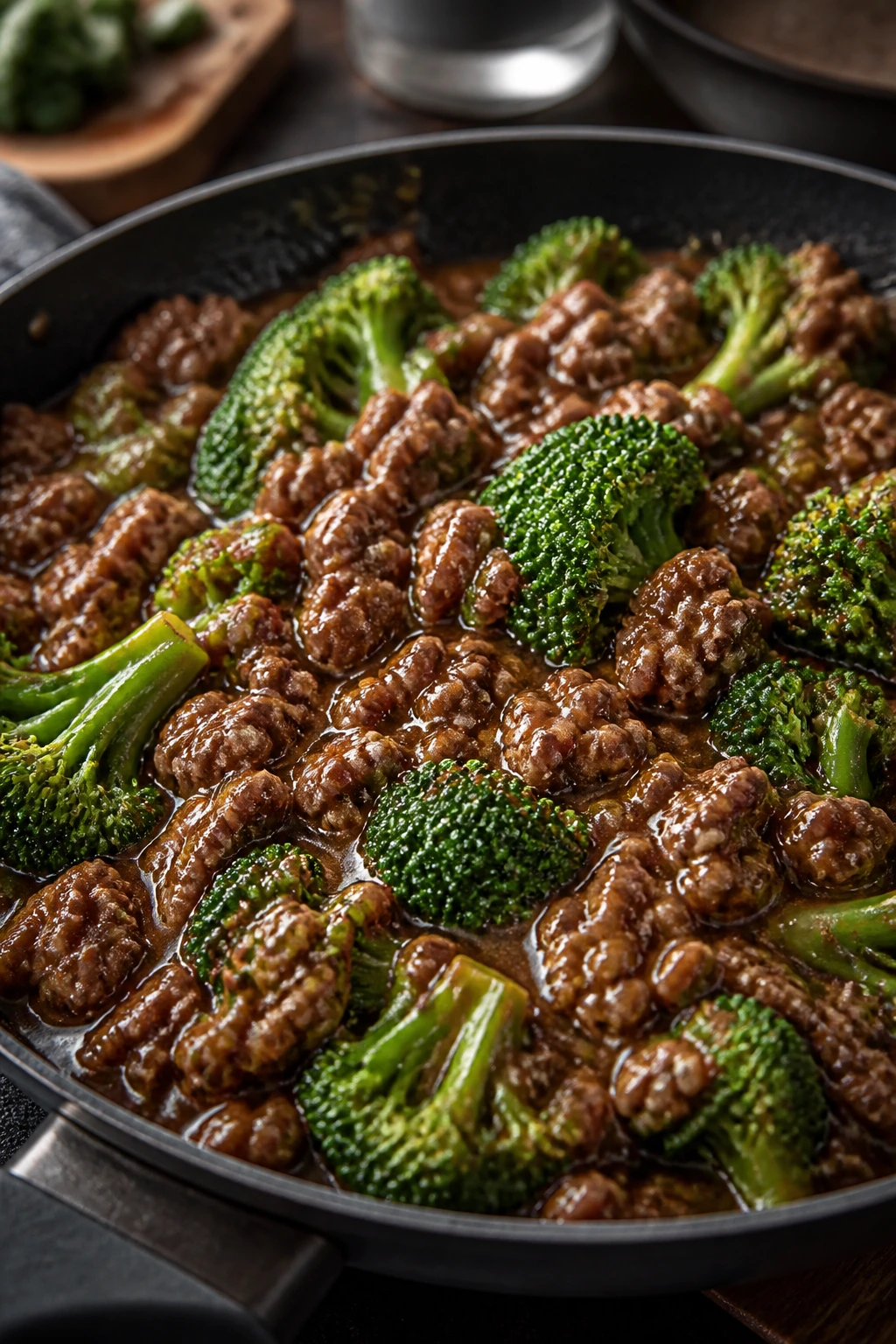
Broccoli beef started as a Chinese-American takeout staple: sliced beef, glossy sauce, and enough broccoli to make the plate look brighter. Ground beef changes the rhythm. You lose the steak-like chew, but you gain a more even, savory base that mingles with the sauce instead of sitting inside it. That makes the dish feel cozier, almost like a cross between stir-fry and skillet dinner.
I think that’s why this version works so well for home cooking. Sliced beef asks for knife skills, careful marinating, and a hot pan that can punish you if you hesitate. Ground beef asks for attention, not heroics. Break it up. Brown it well. Let the sauce do the rest. That’s a much friendlier ask on a Tuesday night when the onions still need peeling and the rice is not cooking itself.
There’s also a flavor thing that’s easy to miss. Ground beef has more exposed surface area than strips of steak, so every bit of seasoning gets into more of the meat. Garlic, ginger, soy, oyster sauce, and sesame oil don’t just coat the outside; they weave through the whole pan. The result tastes deeper than the ingredient list suggests, which is exactly the kind of dinner I like. A little deceptive. In a good way.
Fast Facts for a No-Drama Weeknight Skillet
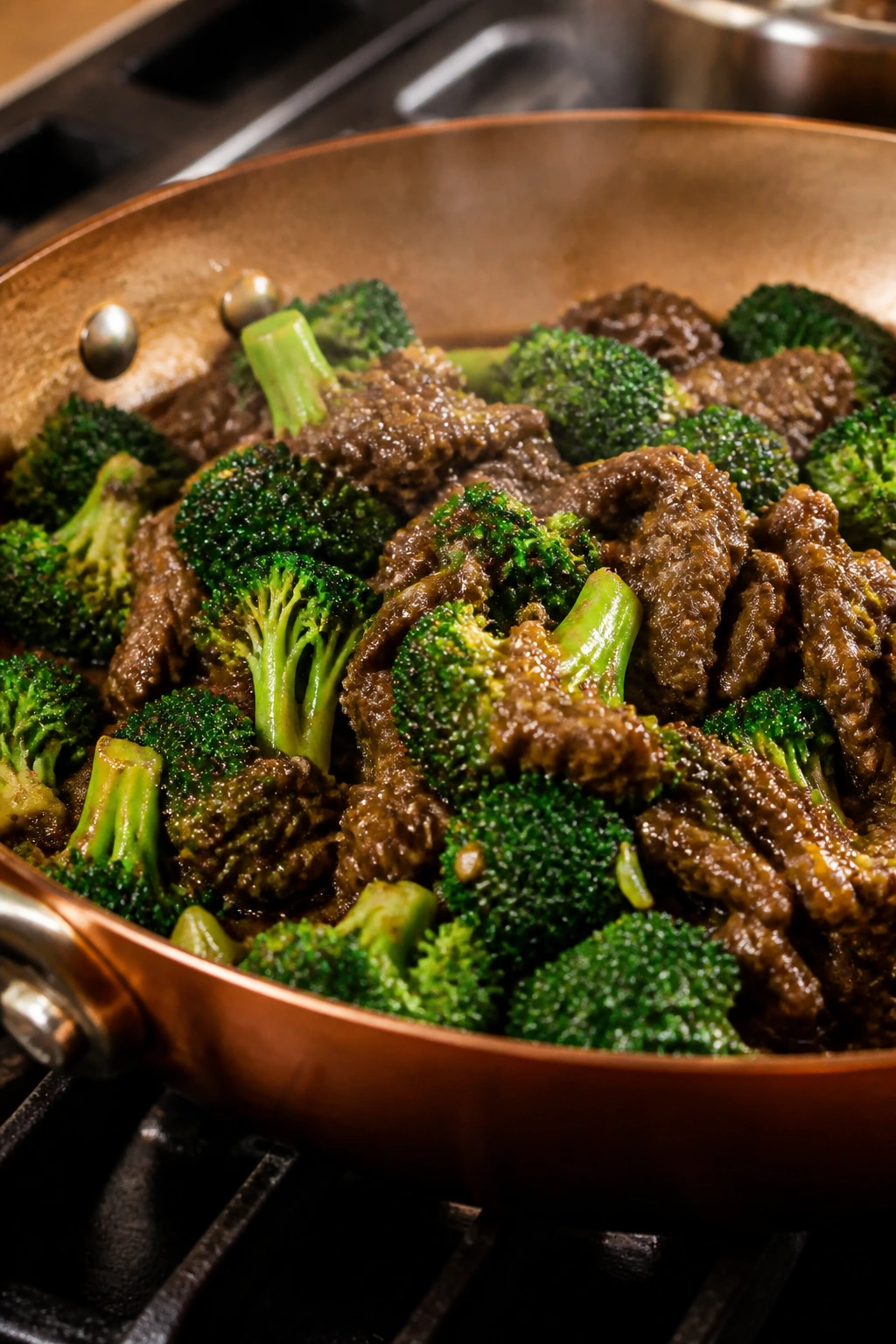
Yield: Serves 4 to 6
Prep Time: 15 minutes
Cook Time: 20 minutes
Total Time: 35 minutes
Difficulty: Beginner — the steps are straightforward, but the skillet needs your attention so the beef browns and the broccoli stays bright.
Chill/Rest Time: None
Best Served: Hot from the pan over rice or noodles
That timing assumes you’re using fresh broccoli and a wide skillet. If you start with frozen florets or a smaller pan, give yourself a little extra breathing room. Not a full crisis. Just enough slack that you’re not rushing the sauce while the onions are still catching up.
The Ingredient List for a Hearty Ground Beef and Broccoli Recipe
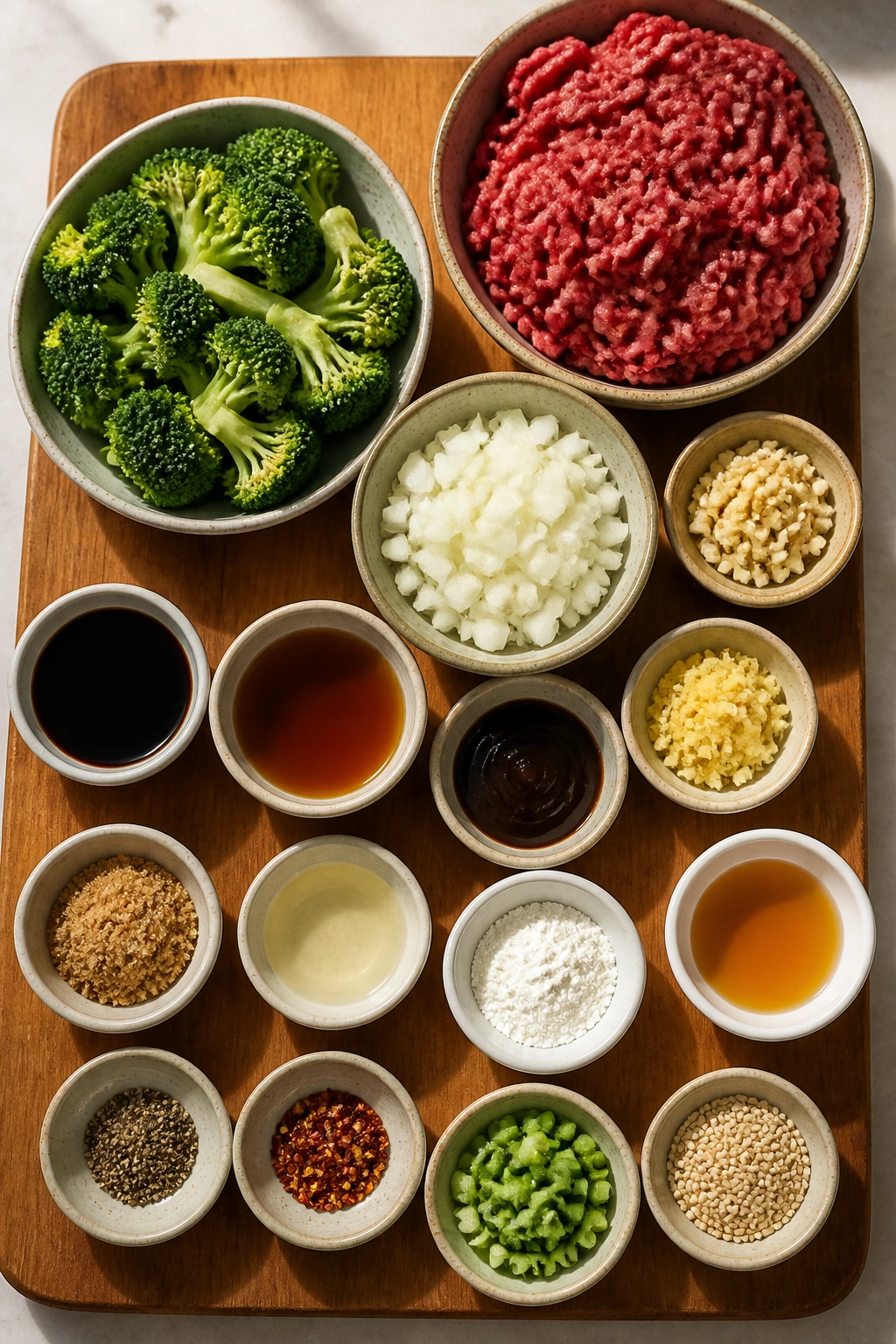
For the Beef and Broccoli:
- 1 1/2 pounds ground beef, 85/15 or 90/10
- 1 tablespoon neutral oil, only if the beef is very lean
- 1 medium yellow onion, diced
- 4 cloves garlic, minced
- 1 tablespoon fresh ginger, grated
- 5 cups broccoli florets, cut into bite-size pieces from about 2 medium heads
- 1/4 cup water, for steaming the broccoli
For the Sauce:
- 1/2 cup low-sodium soy sauce or tamari
- 1/2 cup beef broth
- 1 tablespoon oyster sauce
- 1 tablespoon packed brown sugar or honey
- 1 tablespoon rice vinegar
- 1 tablespoon cornstarch
- 1 teaspoon toasted sesame oil
- 1/2 teaspoon black pepper
- 1/4 teaspoon red pepper flakes, optional
For Finishing:
- 2 green onions, thinly sliced
- 1 teaspoon toasted sesame seeds, optional
Why Each Ingredient Matters in the Pan
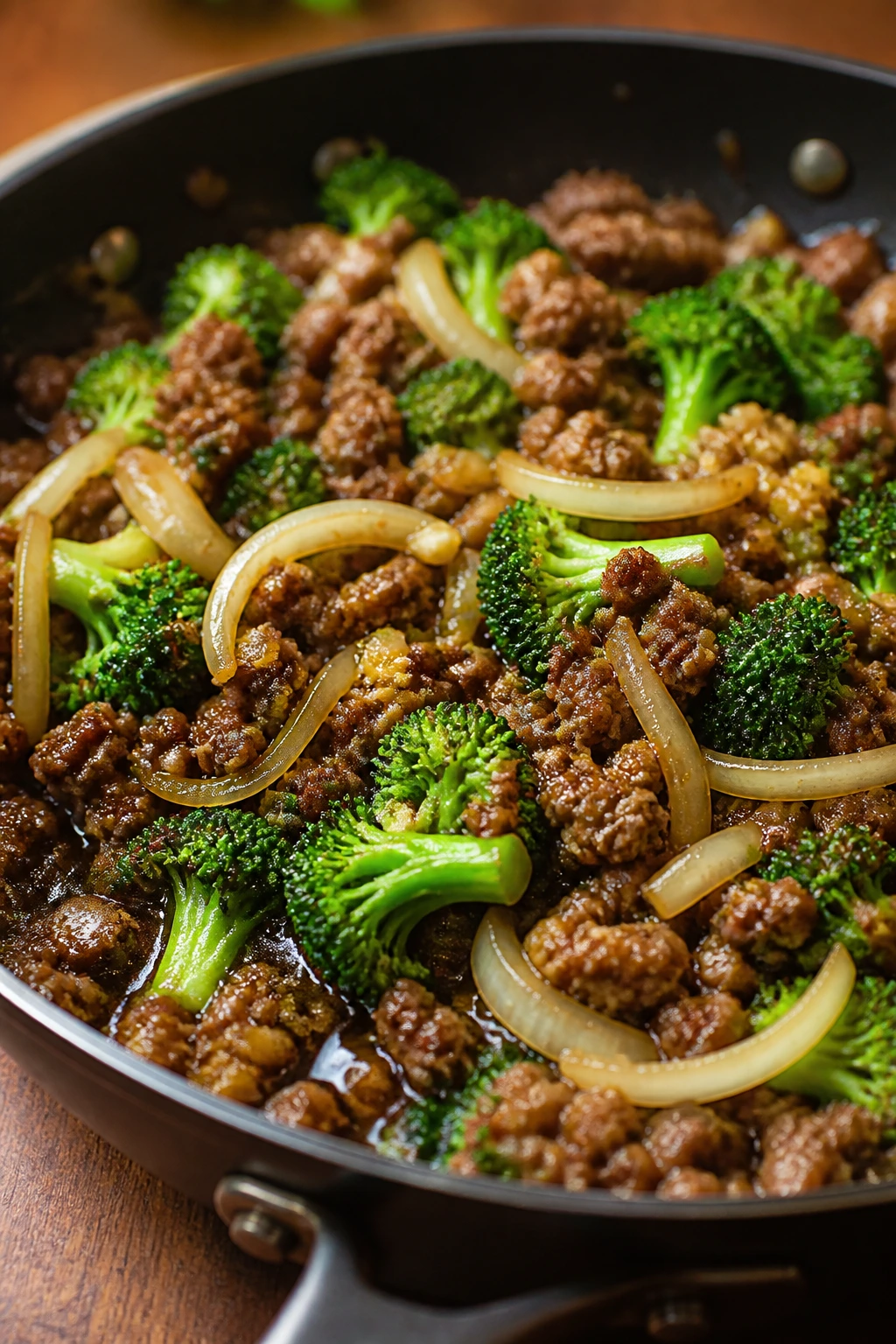
Ground Beef
What to use: 1 1/2 pounds ground beef, ideally 85/15 for fuller flavor or 90/10 if you want less fat in the pan.
Preparation: Pull it out of the fridge while you chop the vegetables so it loses some chill before it hits the skillet. Break it into large chunks first, then smaller crumbles as it browns.
Substitutions: Ground turkey or ground chicken can work, though they need a touch more oil and a little extra seasoning. If you use turkey, I’d add a teaspoon of Worcestershire sauce for depth.
Tips: Don’t use ultra-lean beef unless you mean to. A little fat helps the sauce taste rounded, and you can always drain off a tablespoon or two after browning.
Broccoli
What to use: 5 cups fresh broccoli florets, cut so the biggest pieces are about 1 to 1 1/2 inches wide.
Preparation: Trim the thick stems if they’re woody, then cut the florets into even sizes so they steam at the same rate. If you like, peel and slice the stems; they cook a little slower and bring a nice crunch.
Substitutions: Broccolini, cauliflower florets, or a mix of broccoli and snap peas all work, though each gives the skillet a different texture. Frozen broccoli can be used in a pinch, but it needs extra care so it doesn’t water down the sauce.
Tips: Dry the florets after washing them. Water clinging to the broccoli ends up in the pan, and extra water is the fastest way to make the sauce thin.
Onion, Garlic, and Ginger
What to use: 1 medium yellow onion, 4 cloves garlic, and 1 tablespoon fresh ginger.
Preparation: Dice the onion fairly small so it melts into the beef. Mince the garlic and grate the ginger right before cooking; both lose some punch if they sit around for too long.
Substitutions: Shallots can replace the onion, and jarred ginger works if that’s what you have. Garlic powder can pinch-hit in an emergency, but fresh garlic is worth the few extra seconds.
Tips: Don’t rush this part. The onion should turn translucent and sweet at the edges, not brown and bitter, before the garlic and ginger go in.
Sauce Base
What to use: 1/2 cup low-sodium soy sauce or tamari, 1/2 cup beef broth, 1 tablespoon oyster sauce, 1 tablespoon brown sugar or honey, 1 tablespoon rice vinegar, 1 teaspoon toasted sesame oil, 1 tablespoon cornstarch, 1/2 teaspoon black pepper, and optional red pepper flakes.
Preparation: Whisk everything in a bowl until the cornstarch disappears. It should look cloudy but smooth, with no tiny white lumps hiding on the bottom.
Substitutions: Tamari makes the sauce gluten-free. If you don’t keep oyster sauce around, use an extra teaspoon of soy sauce plus an extra teaspoon of brown sugar, though the flavor will be a little flatter.
Tips: Use low-sodium soy sauce unless you like aggressive salt. This pan reduces quickly, and regular soy sauce can crowd out the rest of the flavor.
Finishing Ingredients
What to use: 2 green onions and 1 teaspoon toasted sesame seeds.
Preparation: Slice the green onions thin so they stay bright and fresh on the hot beef. Keep the sesame seeds optional, but they do bring a little toastiness.
Substitutions: Chopped cilantro works if you want a sharper finish, though it changes the flavor direction. A squeeze of lime can work too, especially if you like the sauce a little brighter.
Tips: Add the green onions after the heat is off. If they cook too long, they lose their snap and turn muddy.
The Tools That Make This Stir-Fry Easy to Cook
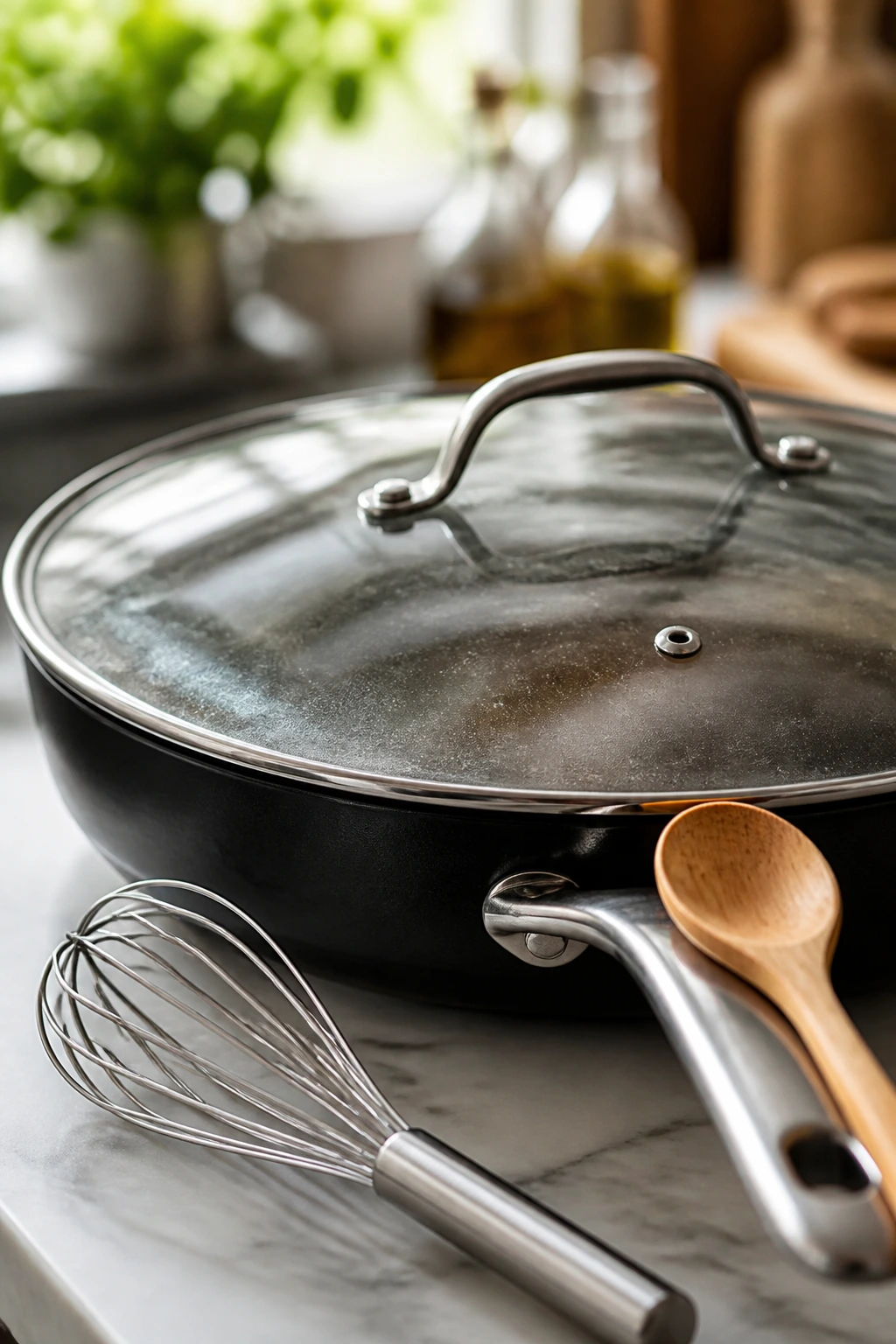
- 12-inch skillet with a lid: Wide enough to brown the beef instead of steaming it, and the lid helps trap a little steam for the broccoli.
- Wooden spoon or flat spatula: A flat tool makes it easier to break up the beef and scrape up the browned bits.
- Small mixing bowl: For whisking the sauce before the pan gets busy.
- Whisk: Keeps the cornstarch from clumping, which matters more than people think.
- Chef’s knife: For chopping broccoli, onion, and green onions without hacking at them.
- Cutting board: A sturdy board keeps the prep from sliding around while you work.
- Measuring cups and spoons: The sauce needs the right balance; eyeballing soy sauce is how dinner turns salty.
- Colander or fine-mesh strainer: Handy for washing broccoli and draining it well before cooking.
Step-by-Step: Building the Skillet from Raw Beef to Glossy Sauce
Prep the Vegetables and Sauce:
-
Whisk the sauce first. In a small bowl, whisk together the soy sauce, beef broth, oyster sauce, brown sugar, rice vinegar, cornstarch, sesame oil, black pepper, and red pepper flakes if using. Keep whisking until the mixture looks smooth and the cornstarch disappears.
-
Prep the broccoli and aromatics. Cut the broccoli into bite-size florets, dice the onion, mince the garlic, and grate the ginger. If the broccoli pieces are wildly different sizes, trim the big ones now. Even pieces cook evenly; giant florets stay stubborn and small ones go soft.
Brown the Beef and Build the Base:
-
Heat the skillet over medium-high heat. Add the ground beef to a large skillet and let it sit for about 30 seconds before you start breaking it apart. That first pause helps the underside brown instead of steaming.
-
Cook the beef for 6 to 8 minutes. Break it up as it cooks, stirring occasionally, until it’s deeply browned and no pink remains. If there’s more than about 2 tablespoons of fat in the pan, carefully drain off the excess. Leave a little behind for flavor; dump out the whole pan and you’ll lose the good stuff.
-
Add the onion and cook for 2 to 3 minutes. Stir the diced onion into the beef and cook until it turns translucent and the edges pick up a little color. The pan should smell savory and sweet, not sharp.
-
Stir in the garlic and ginger. Cook for 30 to 45 seconds, just until fragrant. Do not let the garlic sit on high heat by itself; it can turn bitter in a blink.
Cook the Broccoli and Finish the Sauce:
-
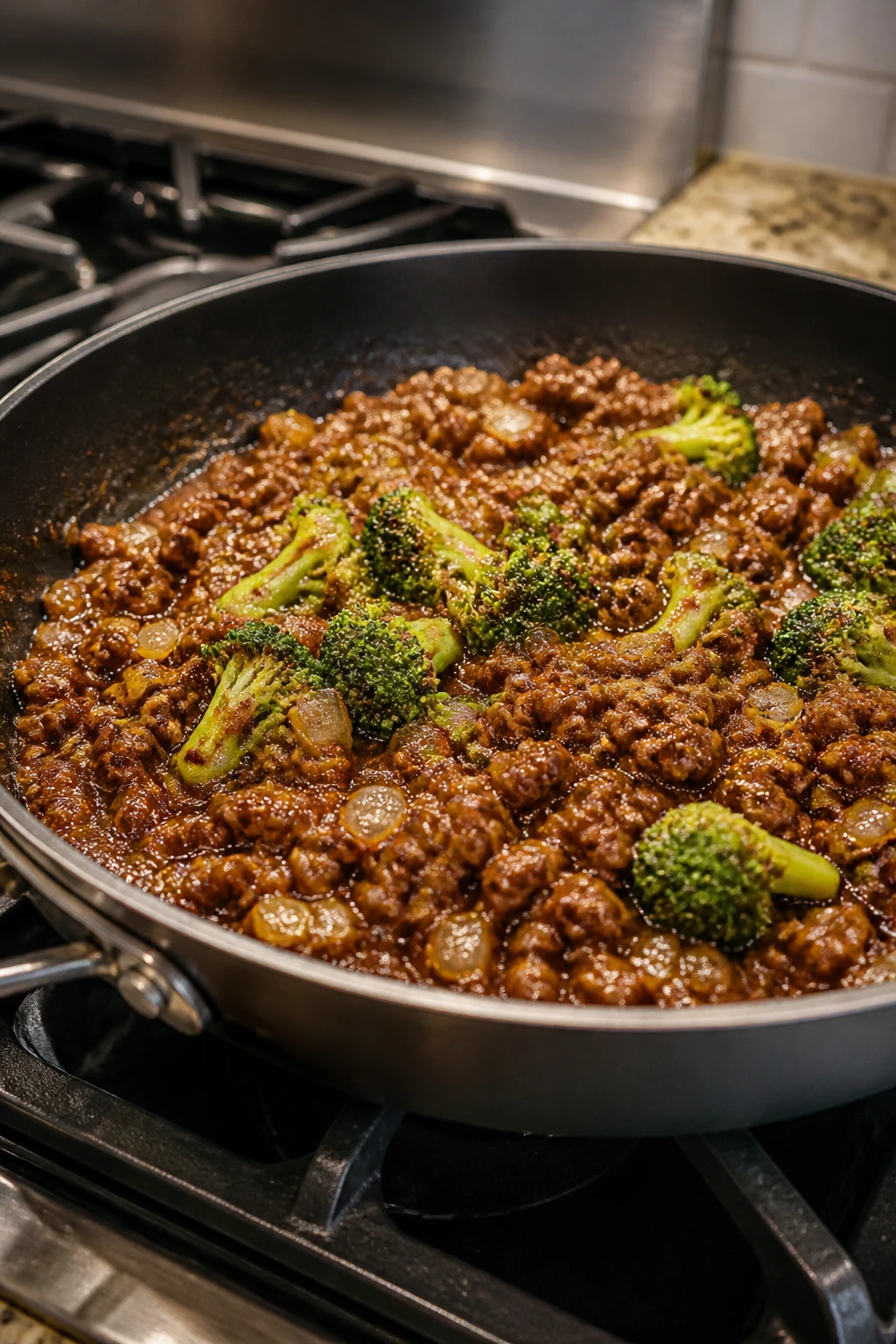
Add the broccoli and water, then cover. Scatter the broccoli over the beef, pour in the 1/4 cup water, and cover the skillet for 3 to 4 minutes over medium heat. The broccoli should turn bright green and still have some resistance when pierced with a fork.
-
Pour in the sauce and simmer until glossy. Uncover the skillet, stir in the sauce, and cook for 2 to 3 minutes, stirring often, until the liquid thickens and clings to the beef and broccoli. If the sauce starts to look too thick before the broccoli is tender, add 1 to 2 tablespoons water and keep stirring. You want a glossy coat, not a paste.
-
Finish and serve. Turn off the heat, stir in the sliced green onions, and sprinkle on sesame seeds if you’re using them. Taste one bite before serving; if it needs more brightness, a tiny splash of rice vinegar wakes it up fast.
How to Serve It So Dinner Feels Complete
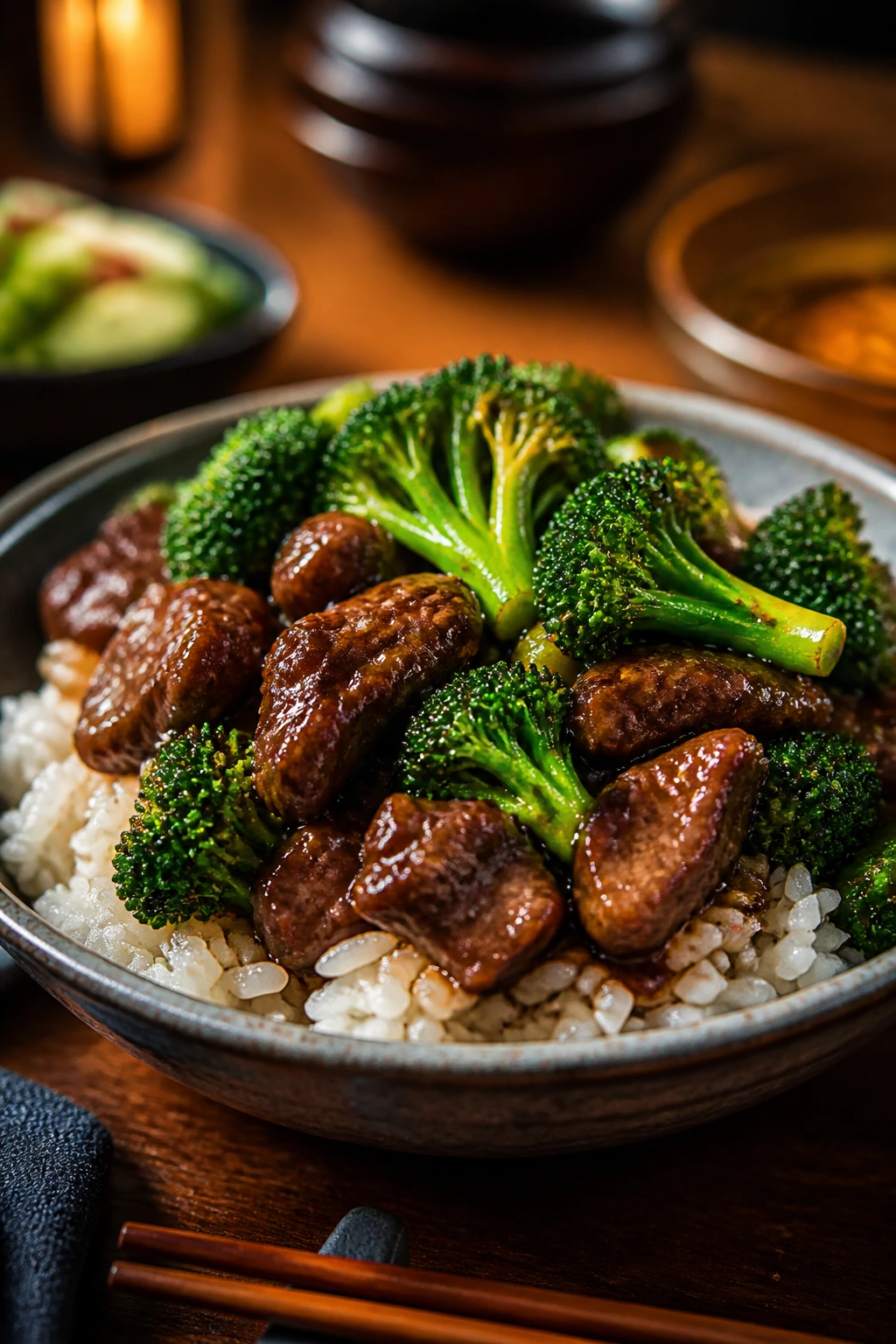
Presentation: Spoon the beef and broccoli over a bowl of steaming jasmine rice or tuck it beside noodles in a shallow bowl. I like to pile the broccoli on top where you can see the green, then let the sauce run down into the rice below.
Accompaniments: Plain rice is the safest and best match because it catches the sauce without competing with it. Brown rice adds a nuttier edge, while lo mein noodles make the whole dish feel more like takeout. A crisp cucumber salad or quick sautéed bok choy makes a clean side if you want more vegetables.
Portions: A good serving is about 1 1/2 cups of the beef-and-broccoli mixture per person, plus rice or noodles if you’re building a full plate. For smaller appetites, this stretches nicely across 6 portions. For bigger eaters, you can serve it as 4 generous bowls and nobody will feel shortchanged.
Beverage Pairing: Iced green tea works because it cuts the salt and keeps the meal light. A dry lager or a sparkling water with lime also fits the savory-sweet sauce without getting in the way.
Small Tweaks That Change the Whole Pan
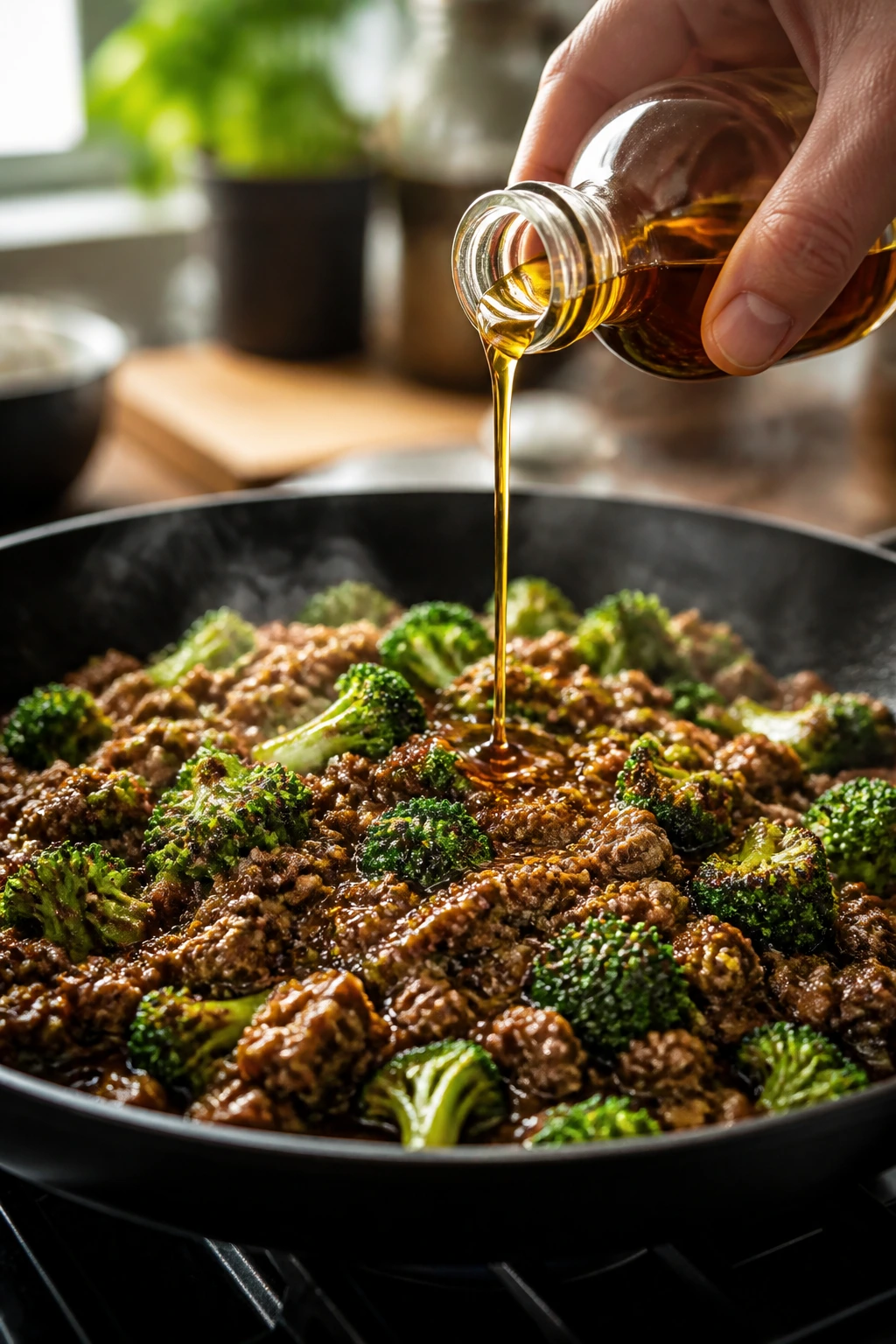
Flavor Enhancement: A teaspoon of toasted sesame oil added at the very end gives the skillet a deeper nutty smell than if you cook it hard from the start. I also like a tiny splash of rice vinegar right before serving, because it cuts through the beef fat and keeps the sauce from feeling heavy.
Time-Saver: Pre-cut broccoli florets save a real chunk of prep time, especially if you rinse and dry them the day before. A small bag of pre-minced garlic can work in a pinch, though I still think freshly grated ginger does more work than people give it credit for.
Cost-Saver: When ground beef is on sale, buy extra and portion it into 1 1/2-pound packages for the freezer. One onion, one broccoli crown, and pantry sauce ingredients can stretch a modest pack of beef into a full dinner without feeling thin.
Texture Boost: If you like broccoli with more bite, cut the florets slightly larger and shave 30 seconds off the covered steam time. Smaller florets soften fast, so don’t chop them into confetti unless you want a gentler texture.
Make-It-Yours: If you want the sauce sweeter, use honey instead of brown sugar. If you want it sharper, add another teaspoon of rice vinegar. Tiny changes matter here; the sauce is a narrow lane, and that’s a good thing.
Common Mistakes That Leave the Broccoli Limp
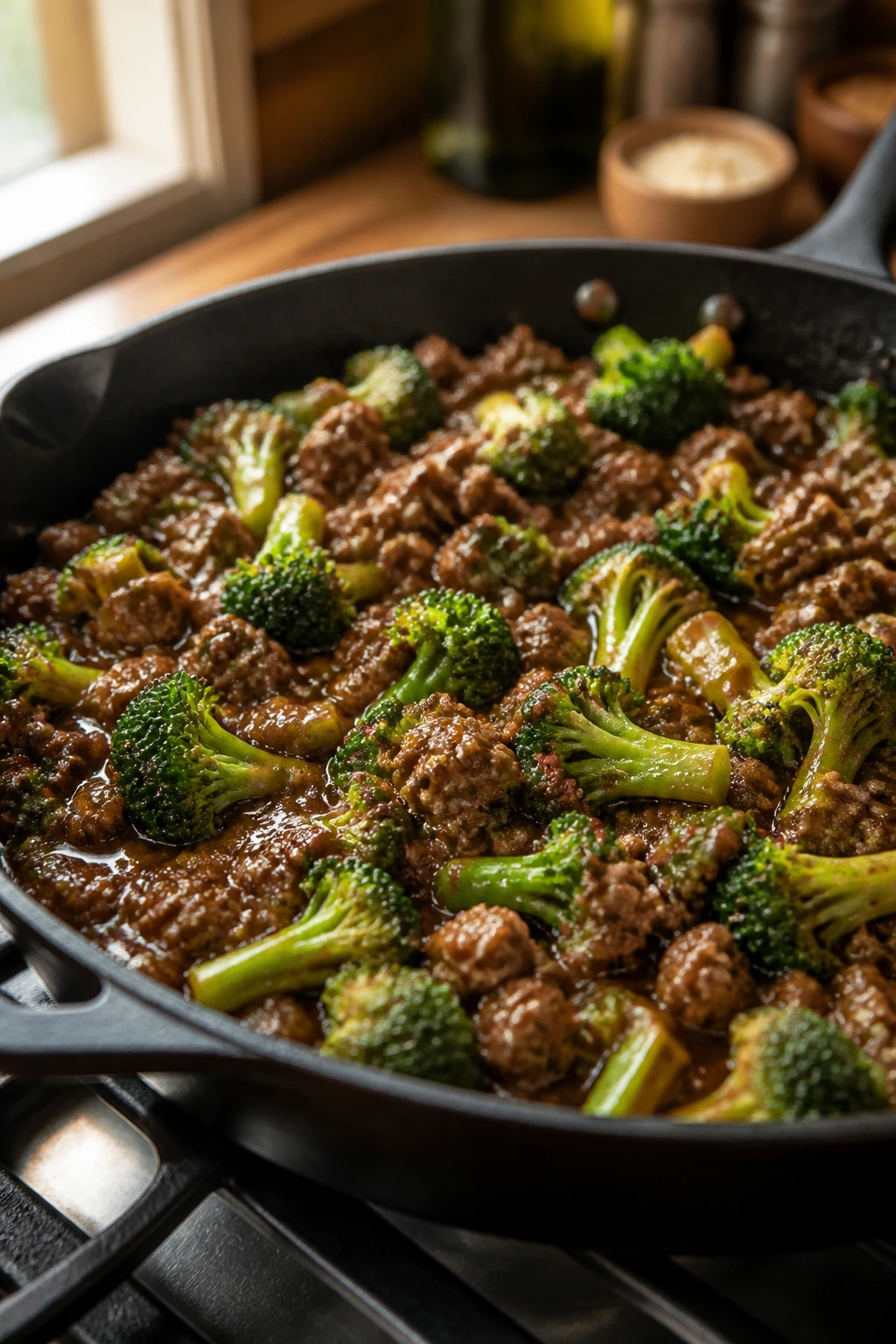
Crowding the skillet: If the pan is overloaded, the beef releases moisture and steams instead of browning. The fix is simple: use a 12-inch skillet, and if your pan is smaller, cook the beef in two rounds.
Adding the broccoli too early: Broccoli that cooks for too long turns olive-green and soft, then it starts to taste muted. Wait until the beef is browned and the aromatics have cooked before you add the florets and the water for steaming.
Skipping the cornstarch slurry: A sauce made from soy sauce and broth alone stays thin and runs off the ingredients. Whisk the cornstarch into the cold sauce before it hits the pan so it thickens into that glossy coating people expect from a good skillet.
Using regular soy sauce without tasting first: Full-sodium soy sauce can easily overpower the beef and broccoli, especially after the pan reduces. Start with low-sodium soy sauce, then taste at the end and add salt only if the pan truly needs it.
Cooking the garlic too long: Garlic burns faster than onion, and once it goes brown the whole skillet can taste harsh. Add it after the onion softens, cook it briefly, and move on.
Letting the sauce boil hard for too long: If you reduce it aggressively, the sauce turns sticky and the salt gets louder. A steady simmer is enough. You want it to coat a spoon, not cling like glue.
Variations Worth Cooking More Than Once
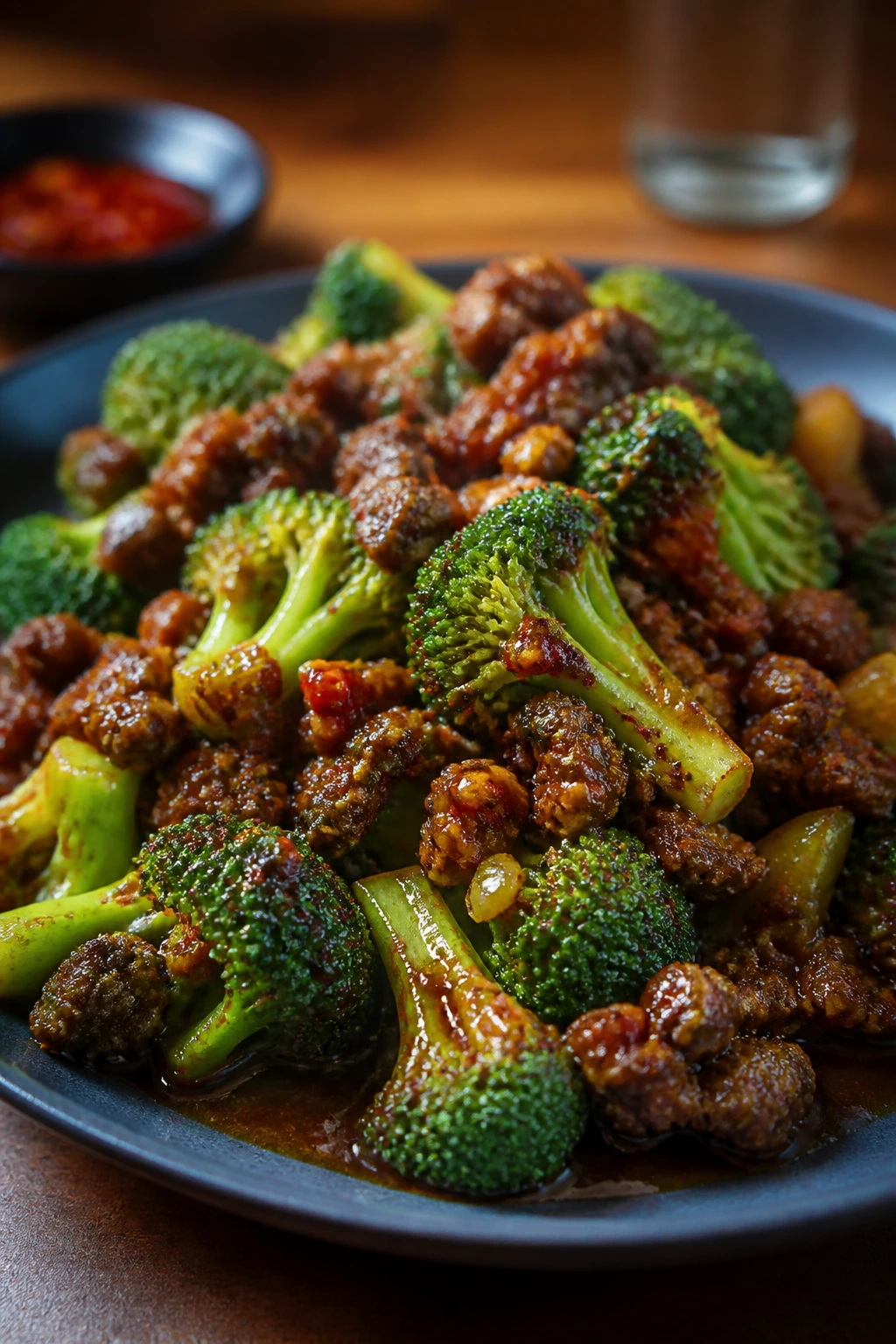
Spicy Chili Crisp Skillet: Stir in 1 to 2 tablespoons chili crisp at the end and cut the brown sugar to 2 teaspoons. The crispy chile oil gives the beef a slow burn and a little texture, which I like with jasmine rice.
Mushroom-Heavy Version: Add 8 ounces sliced cremini mushrooms after the onion and cook them until they give up their liquid and start to brown. They absorb the sauce like little sponges and make the whole skillet feel fuller without adding much cost.
Gluten-Free Tamari Bowl: Swap the soy sauce for tamari and use a gluten-free oyster sauce, or replace the oyster sauce with an extra teaspoon each of tamari and brown sugar. The flavor stays close to the original, and the texture remains the same if you keep the cornstarch.
Lean Turkey Swap: Use ground turkey instead of beef, add 1 tablespoon neutral oil at the start, and keep the garlic and ginger generous. Turkey needs that extra fat and seasoning to avoid tasting flat, but the sauce still carries the dish nicely.
Make-Ahead, Storage, and Reheating That Actually Works
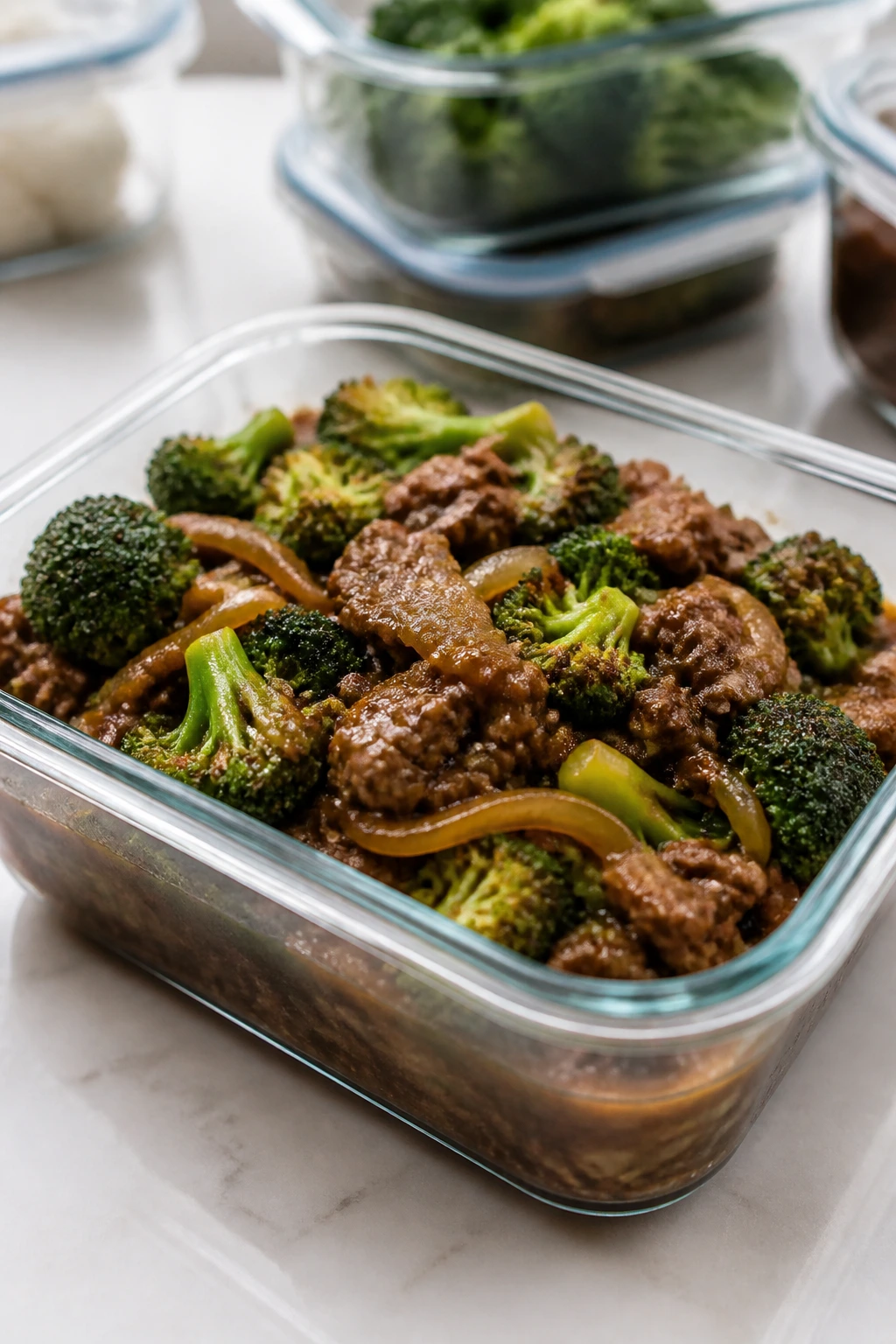
This skillet holds up well in the refrigerator for 3 to 4 days in an airtight container. Store the rice or noodles separately if you can, because the sauce softens grains fast and nobody likes a bowl that turns soggy by lunchtime.
For the freezer, you can keep the beef-and-broccoli mixture for up to 2 months. The broccoli will soften after freezing, so I prefer to undercook it by about a minute if I know I’m freezing half the pan. Cool the food quickly before packing it up, then freeze it in shallow containers so it chills fast instead of sitting warm in the center.
Reheat on the stovetop in a skillet over medium heat with 1 to 2 tablespoons of water to loosen the sauce. Cover for a minute, stir, then uncover and cook until hot. The microwave works too — use short bursts and stir between them — but the skillet gives you back a little of the original texture.
You can also make parts ahead. The sauce can be whisked and refrigerated for up to 3 days, the broccoli can be washed and cut a day ahead, and the onion, garlic, and ginger can be prepped the morning of cooking. If you’re planning a week of lunches, I’d keep the scallions separate and add them fresh after reheating. That small step keeps the whole dish from tasting flat.
Questions People Ask Before They Cook It

Can I use frozen broccoli instead of fresh?
Yes, but thaw it first and pat it dry so it doesn’t dump extra water into the pan. Frozen broccoli tends to soften faster than fresh, so add it near the end and shorten the covered steam time by about a minute.
What fat percentage of ground beef works best?
85/15 gives the best flavor balance in my kitchen. 90/10 is fine if you want a leaner pan, but 80/20 needs more draining or the sauce can get greasy.
Can I make this without oyster sauce?
You can. Use an extra teaspoon of soy sauce and an extra teaspoon of brown sugar, then taste before serving. The sauce will be a little less deep, but the skillet still works.
How do I keep the broccoli bright green?
Cook it only until it turns vivid green and still has a slight bite. The moment it starts looking olive, you’ve gone too far. If you blanch broccoli separately, shock it briefly in cold water, then drain well before adding it to the beef.
What if my sauce turns out too thin?
Let it simmer uncovered for another minute or two, stirring often. If it still won’t thicken, mix 1 teaspoon cornstarch with 1 tablespoon cold water and stir that slurry into the skillet.
Can I swap in ground turkey or chicken?
Yes, and both work. Add a tablespoon of neutral oil at the start, because poultry is leaner than beef and needs a little help in the pan. I’d also keep the garlic and ginger on the generous side.
Is this good for meal prep?
It is, with one condition: store the rice separately and undercook the broccoli a touch. The beef reheats well and the sauce stays flavorful, but the vegetables get softer each time you warm them.
A Reliable Dinner That Doesn’t Make a Fuss
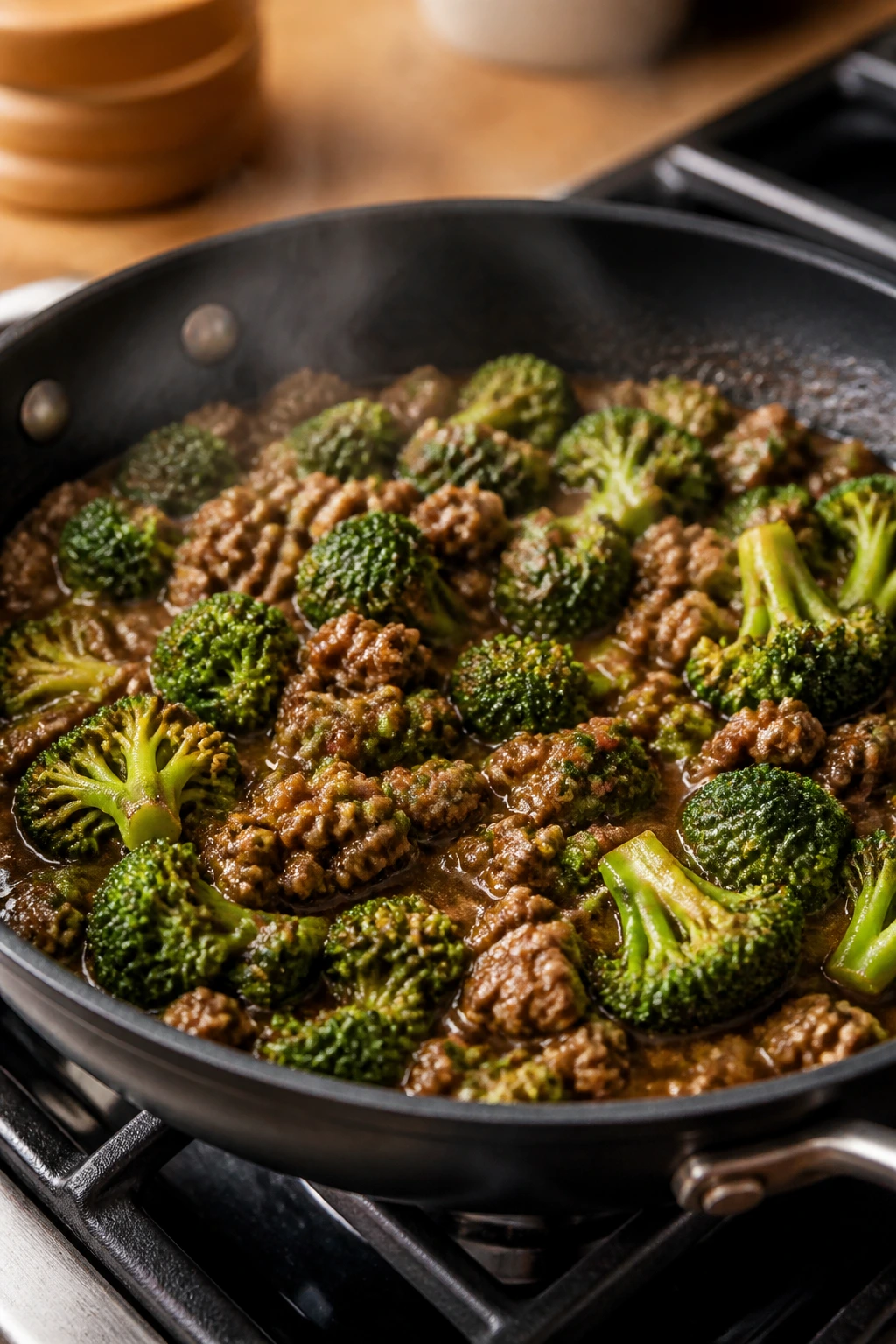
A skillet like this earns trust by doing the basics well. Brown the beef. Keep the broccoli crisp. Make the sauce glossy enough to coat everything without drowning it. That’s the whole game, and once you’ve cooked it once, the rest is muscle memory.
I like recipes like this because they don’t ask for a special mood or a rare trip to the store. They ask for a pan, a knife, and a little attention. If you keep those three things in line, this ground beef and broccoli dinner comes out savory, balanced, and solid enough to make again without thinking too hard about it.
Hearty Ground Beef and Broccoli Skillet — Recipe Card
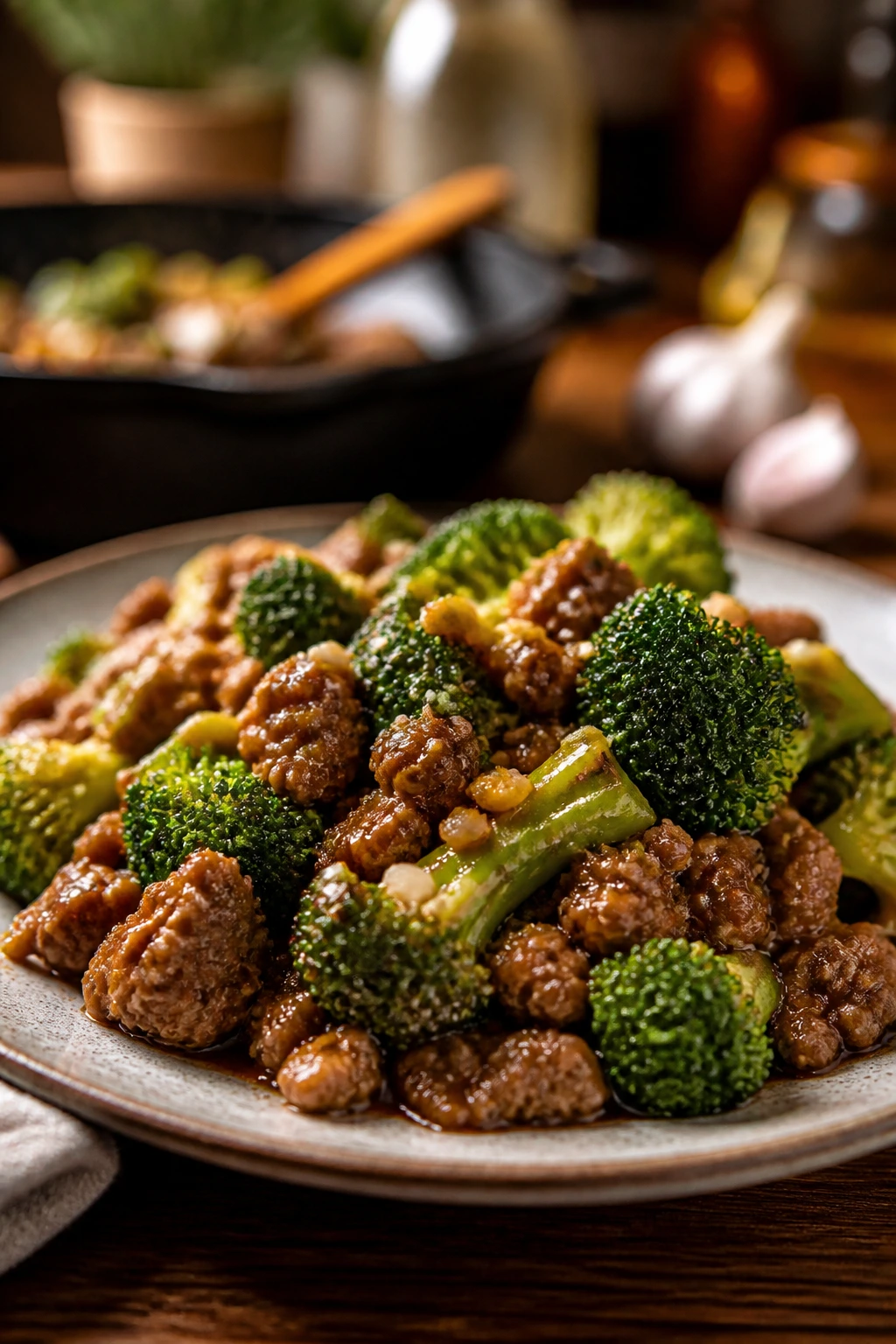
Recipe Name: Hearty Ground Beef and Broccoli Skillet
Description: A savory ground beef and broccoli skillet with garlic, ginger, and a glossy soy-sesame sauce. It’s built for rice or noodles and finishes with tender-crisp broccoli that still tastes like broccoli.
Prep Time: 15 minutes
Cook Time: 20 minutes
Total Time: 35 minutes
Course: Dinner, Main Course
Cuisine: American, Asian-Inspired
Servings: 4 to 6 servings
Calories: About 390 kcal per serving, not including rice or noodles
Ingredients
For the Beef and Broccoli:
- 1 1/2 pounds ground beef, 85/15 or 90/10
- 1 tablespoon neutral oil, only if needed for lean beef
- 1 medium yellow onion, diced
- 4 cloves garlic, minced
- 1 tablespoon fresh ginger, grated
- 5 cups broccoli florets, cut into bite-size pieces
- 1/4 cup water, for steaming
For the Sauce:
- 1/2 cup low-sodium soy sauce or tamari
- 1/2 cup beef broth
- 1 tablespoon oyster sauce
- 1 tablespoon packed brown sugar or honey
- 1 tablespoon rice vinegar
- 1 tablespoon cornstarch
- 1 teaspoon toasted sesame oil
- 1/2 teaspoon black pepper
- 1/4 teaspoon red pepper flakes, optional
For Finishing:
- 2 green onions, thinly sliced
- 1 teaspoon toasted sesame seeds, optional
Instructions
-
Whisk together the soy sauce, beef broth, oyster sauce, brown sugar, rice vinegar, cornstarch, sesame oil, black pepper, and red pepper flakes until smooth.
-
Heat a large skillet over medium-high heat and cook the ground beef for 6 to 8 minutes, breaking it up as it browns. Drain excess fat if needed.
-
Add the diced onion and cook for 2 to 3 minutes, until translucent and lightly golden at the edges.
-
Stir in the garlic and ginger and cook for 30 to 45 seconds, just until fragrant.
-
Add the broccoli and 1/4 cup water, cover the skillet, and steam for 3 to 4 minutes until bright green and crisp-tender.
-
Pour in the sauce and simmer for 2 to 3 minutes, stirring often, until glossy and thick enough to coat the beef and broccoli.
-
Turn off the heat, stir in the green onions, and top with sesame seeds if using.
-
Serve hot over rice or noodles.
Notes:
Use low-sodium soy sauce or the pan can turn salty fast. If you plan to freeze leftovers, undercook the broccoli by about 1 minute so it stays firmer after reheating.