



A sloppy joe sandwich should be messy on purpose, not sloppy because the filling is thin and the bun gives up halfway through dinner. When the beef is browned properly, the sauce is simmered until it clings, and the bread gets toasted just enough to hold its ground, the whole thing eats like a full meal instead of a rushed compromise.
That balance matters more than most people admit. Too many versions lean so hard on ketchup that they taste sweet, flat, and vaguely tomato-ish, like someone warmed up a condiment and called it dinner. The better move is older and simpler: brown the meat, soften the onion and pepper until they lose their raw edge, then build a sauce with enough vinegar, mustard, and Worcestershire to keep the sweetness in check.
I like a sloppy joe that has some heft to it. Not dry. Not soupy. The filling should mound on a spoon and slide slowly, the way a good chili does when it’s just thick enough to stay put. Get that part right, and the rest is easy.
Why You’ll Love This Sloppy Joe Recipe
-
Thick, not drippy: The filling simmers until it holds together, so the bottom of the bun doesn’t collapse after two bites.
-
Balanced flavor: Ketchup, tomato paste, Worcestershire, mustard, vinegar, and smoked paprika keep the sauce from tasting like sweet tomato paste with a new name.
-
Built for a real dinner: A pound and a half of beef, plus onion and bell pepper, makes enough food to feel substantial without stretching the filling too far.
-
Easy to finish your way: Sharp cheddar, dill pickles, or a little slaw fit neatly on top and change the texture in a good way.
-
Leftovers are useful: The filling gets deeper after a night in the fridge, which means tomorrow’s sandwich can taste even better than tonight’s.
Yield: Makes 6 to 8 sandwiches
Prep Time: 15 minutes
Cook Time: 30 minutes
Total Time: 45 minutes
Difficulty: Beginner — the steps are straightforward, but the filling needs a patient simmer so it lands thick instead of runny.
Best Served: Warm, right after the buns are toasted
Chill/Rest Time: None required
For the Sloppy Joe Filling:
- 2 tablespoons neutral oil
- 1 1/2 pounds 85/15 ground beef
- 1 large yellow onion, finely diced
- 1 green bell pepper, finely diced
- 2 cloves garlic, minced
- 1 cup ketchup
- 2 tablespoons tomato paste
- 1/2 cup low-sodium beef broth
- 2 tablespoons Worcestershire sauce
- 1 tablespoon Dijon mustard
- 1 tablespoon apple cider vinegar
- 1 tablespoon packed light brown sugar
- 1 teaspoon smoked paprika
- 1 teaspoon chili powder
- 1/2 teaspoon kosher salt
- 1/2 teaspoon black pepper
- 1/8 teaspoon cayenne pepper, optional
For Serving:
- 6 to 8 soft sandwich buns, split
- 2 tablespoons unsalted butter, softened
- Dill pickle chips or sliced sharp cheddar, optional
How the Beef, Sauce, and Buns Work Together
Ground Beef
What to use: 1 1/2 pounds of 85/15 ground beef gives you enough fat for flavor without leaving the skillet greasy.
Preparation: Keep it cold until you’re ready to cook, then break it into small chunks in the pan so it browns instead of steaming.
Substitutions: Ground turkey, ground chicken, or plant-based crumbles all work, though leaner options need a little extra oil and a sharper hand with seasoning.
Tips: If you use beef that’s much leaner than 85/15, add 1 more tablespoon of oil at the start; otherwise the skillet can go dry before the onion softens.
Aromatics
What to use: 1 large yellow onion, 1 green bell pepper, and 2 cloves garlic form the base.
Preparation: Dice the onion and pepper finely — about 1/4-inch pieces — so they melt into the filling instead of staying chunky and sliding out of the bun.
Substitutions: Red bell pepper brings a softer sweetness, while poblano gives a little more character without turning the dish spicy.
Tips: Cook the onion and pepper long enough for the onion to turn translucent and the pepper to lose its raw snap; if they stay crisp, the filling tastes rushed.
Sauce Base
What to use: 1 cup ketchup, 2 tablespoons tomato paste, 1/2 cup beef broth, 2 tablespoons Worcestershire sauce, 1 tablespoon Dijon mustard, 1 tablespoon apple cider vinegar, and 1 tablespoon brown sugar make the sauce.
Preparation: Measure the sauce ingredients before you turn on the heat; once the beef is in the pan, you won’t want to stop and hunt for the mustard.
Substitutions: Honey can replace brown sugar, red wine vinegar can stand in for apple cider vinegar, and coconut aminos or soy sauce can replace Worcestershire in a pinch.
Tips: Tomato paste needs a short cook in the hot pan to lose its raw edge. If you skip that step, the sauce can taste tinny instead of deep.
Buns and Finishing Touches
What to use: 6 to 8 soft sandwich buns, split, plus 2 tablespoons softened butter for toasting, make the sandwich worth eating.
Preparation: Slice the buns cleanly and toast the cut sides until they’re golden and a little crisp.
Substitutions: Potato rolls, brioche buns, Kaiser rolls, or gluten-free sandwich buns can all work if they’re sturdy enough to hold the filling.
Tips: A soft bun is not the same thing as a weak bun. Pick one with enough structure to survive a saucy filling, or you’ll be mopping dinner off your plate.
The Tools That Keep the Process Simple
-
12-inch skillet or wide sauté pan: The wider surface helps the beef brown instead of steaming; a deep, narrow pot traps moisture and slows everything down.
-
Wooden spoon or heatproof spatula: You need something sturdy enough to break up the meat and scrape the bottom of the pan clean.
-
Chef’s knife: A sharp knife makes the onion and pepper prep faster and safer, especially when you want a fine dice.
-
Cutting board: Use a stable board; a damp towel underneath keeps it from slipping while you chop.
-
Measuring cups and spoons: The sauce is balanced by small amounts of vinegar, mustard, and sugar, so eyeballing it is a bad habit here.
-
Small bowl or measuring jug: Handy for mixing the sauce ingredients before they hit the pan.
-
Rimmed baking sheet or toaster: A baking sheet under the broiler toasts buns quickly; a toaster works too if you’re making a smaller batch.
-
Slotted spoon, optional: If your beef renders extra fat, a slotted spoon helps you lift the filling without carrying too much grease with it.
Brown, Simmer, and Build the Sandwiches
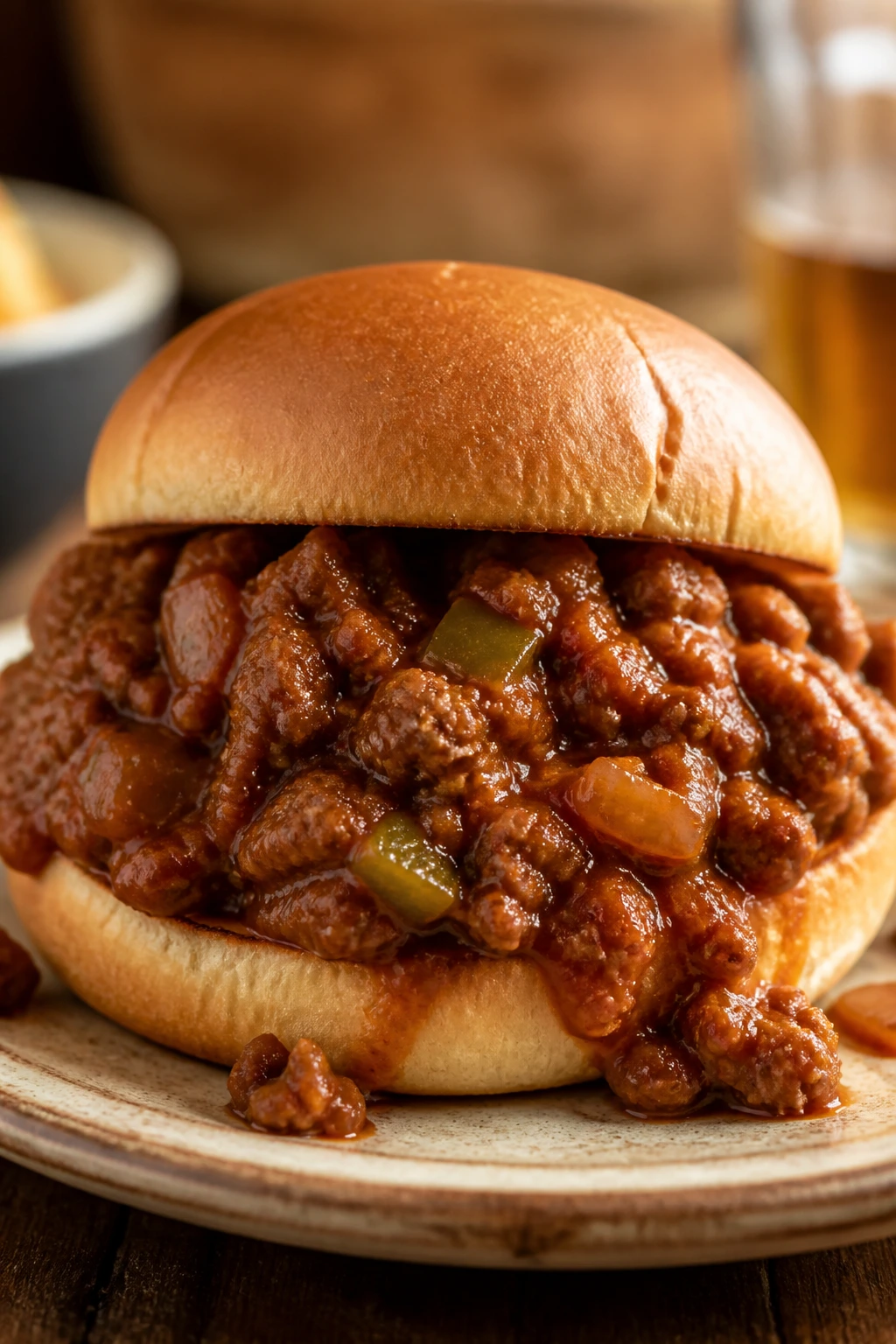
Prep the Vegetables and Sauce:
-
Dice the onion and bell pepper finely, mince the garlic, and measure all the sauce ingredients before you heat the pan. That small bit of prep keeps the cooking rhythm steady.
-
Split the buns and set them aside. If you plan to broil them, line a rimmed baking sheet with foil so the butter and crumbs don’t stick.
Cook the Filling: 3. Heat the 2 tablespoons of neutral oil in a large skillet over medium-high heat until it shimmers. Add the onion, bell pepper, and 1/2 teaspoon of kosher salt, then cook for 5 to 7 minutes, stirring often, until the onion turns translucent and the pepper softens.
-
Stir in the garlic and cook for 30 seconds, just until fragrant. Do not let the garlic sit long enough to brown; burnt garlic tastes bitter fast.
-
Add the ground beef, break it up with a spoon, and cook for 6 to 8 minutes, until the meat is no longer pink and the edges have browned in spots. If the skillet looks crowded, push the meat into a single layer and give it a minute before stirring again.
-
If there is more than a tablespoon or two of excess fat in the pan, carefully tilt the skillet and spoon off the extra. Leave a little behind — that fat carries flavor — but do not leave a puddle.
-
Stir in the tomato paste, smoked paprika, chili powder, black pepper, and cayenne, if using. Cook for 1 minute, stirring constantly, until the tomato paste darkens slightly and the spices smell warm instead of raw.
-
Pour in the ketchup, beef broth, Worcestershire sauce, Dijon mustard, apple cider vinegar, and brown sugar. Stir well, scraping up any browned bits from the bottom of the skillet. Those little stuck pieces matter; they’re where a lot of the flavor lives.
-
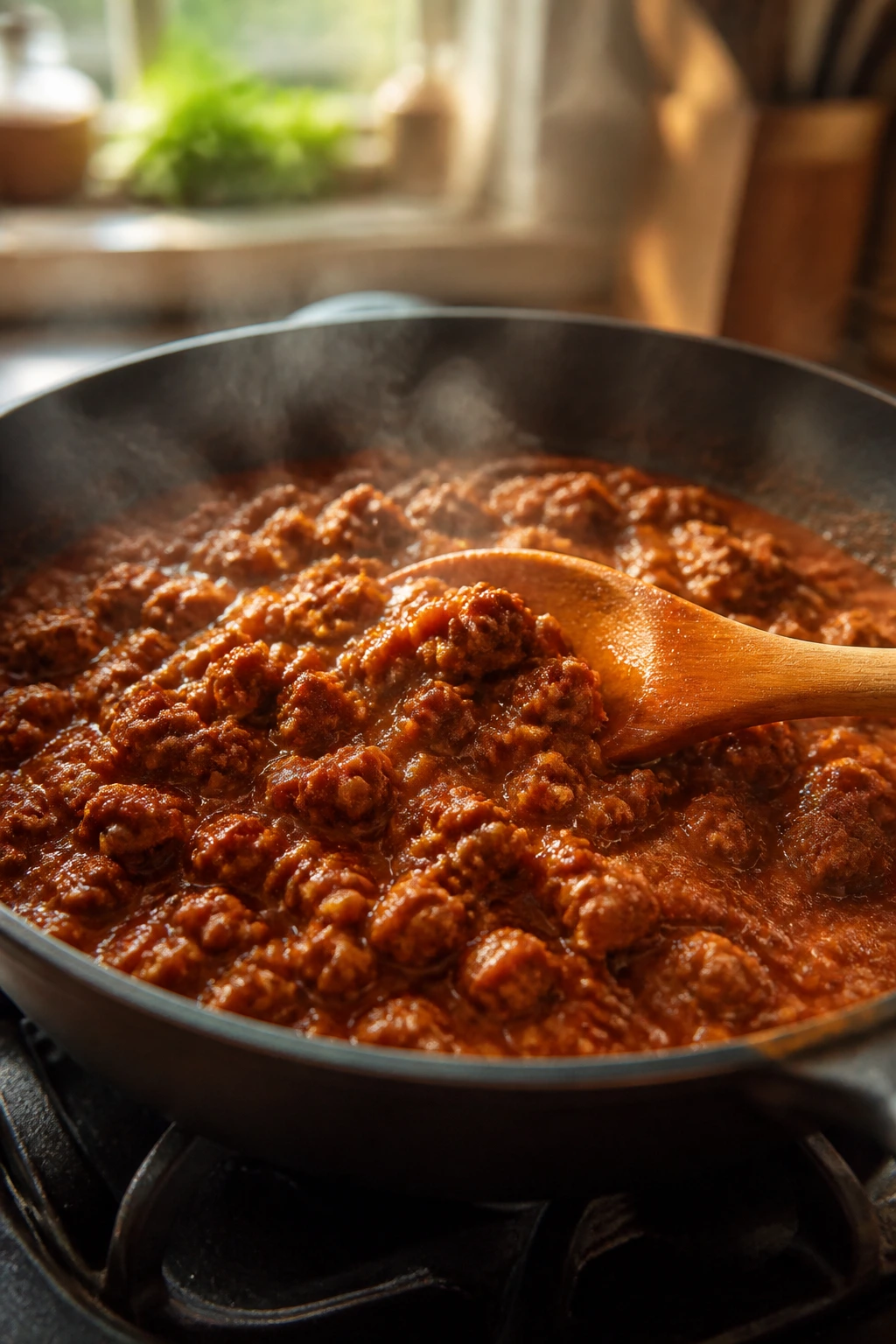
Bring the mixture to a gentle simmer, then reduce the heat to medium-low and cook uncovered for 10 to 12 minutes, stirring every couple of minutes, until the sauce looks glossy and thick enough to mound on a spoon. If it still runs like chili, keep going for another 2 to 3 minutes.
Toast and Assemble: 10. While the filling simmers, spread the cut sides of the buns with the softened butter. Toast them in a skillet over medium heat or under the broiler for 1 to 2 minutes, until the surfaces are golden and lightly crisp.
-
Taste the filling and adjust. If it feels too sweet, add 1 teaspoon more vinegar or a little more mustard. If it tastes flat, add a pinch more salt. If you want heat, a few dashes of hot sauce work better than dumping in more cayenne.
-
Spoon the filling onto the bottom buns, using about 1/2 to 3/4 cup per sandwich depending on the size of the roll. Add pickles or cheddar if you want them, then cap with the top buns and serve right away.
Why This Sandwich Works on a Real Dinner Table
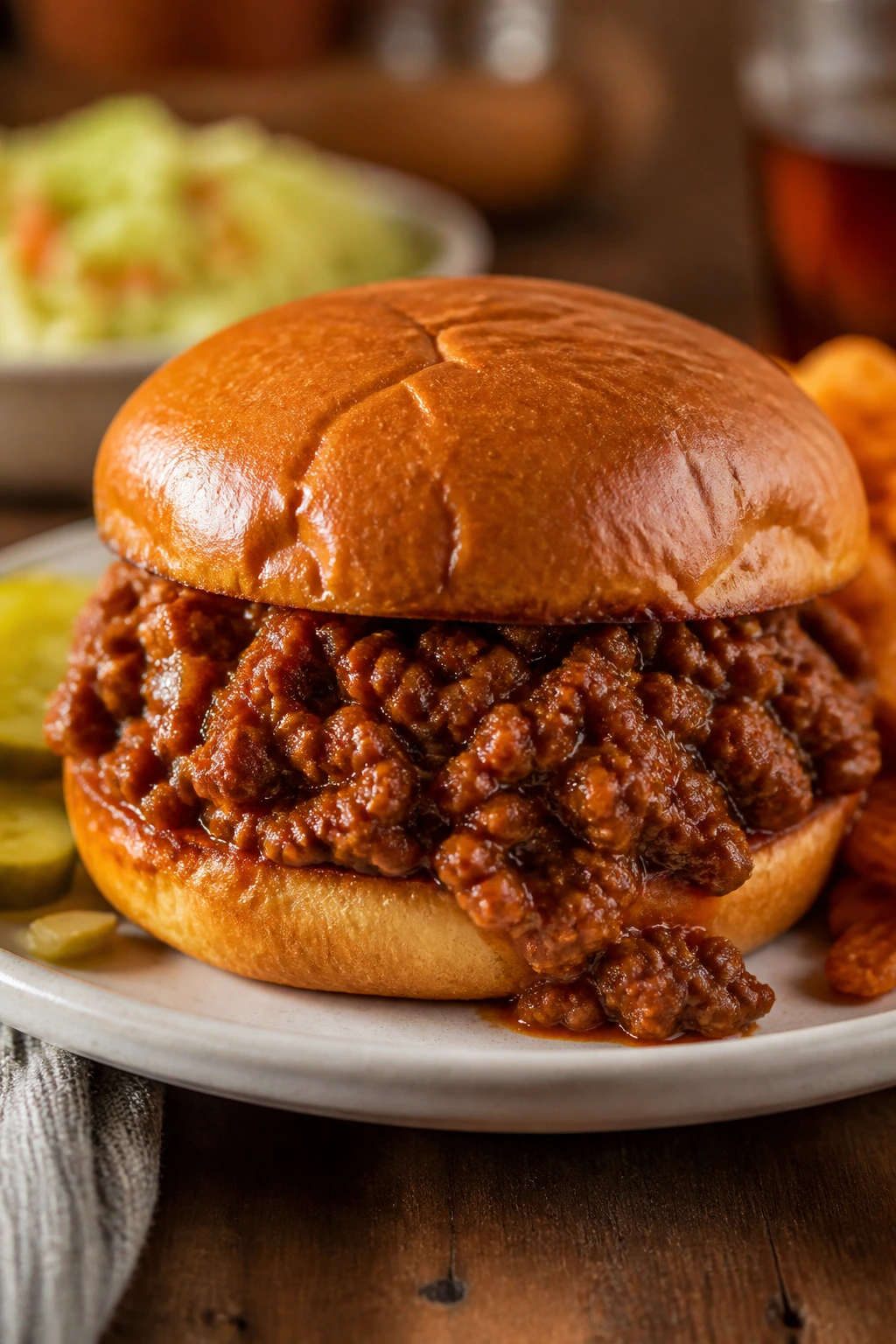
A sloppy joe shouldn’t ask the rest of dinner to do all the work. That’s why I like serving it with sides that bring crunch, salt, or a little cold contrast. The sandwich is warm and soft; the side should wake your mouth up a bit.
Presentation: Spoon the filling slightly higher in the center of the bun so it spills just a little at the edges instead of sliding out in one heavy mass. If you’re serving this to people who care about clean plates, go open-faced and let them use a fork for the first few bites. It feels casual, but it’s also easier to manage when the filling is generous.
Accompaniments: Vinegary coleslaw is my first pick because it cuts the sweetness in the sauce. Oven fries, potato wedges, kettle chips, or a simple cucumber salad all make sense here too. If you want a more traditional plate, add dill pickle spears and a pile of sweet corn or buttered green beans.
Portions: One sandwich per person is fine if you’ve got fries or slaw alongside it. If the buns are smaller, plan on 1 1/2 sandwiches for bigger appetites, or build the plate around a heaping 3/4 cup of filling per sandwich. This recipe makes enough to feed 6 hungry people or 8 lighter eaters without leaving everyone short.
Beverage Pairing: Cold cola works because the fizz cuts through the rich beef. Unsweetened iced tea with lemon does the same job with less sugar. If you want an adult drink, an amber ale or a mild lager sits nicely beside the tangy sauce without trampling it.
Small Moves That Pay Off
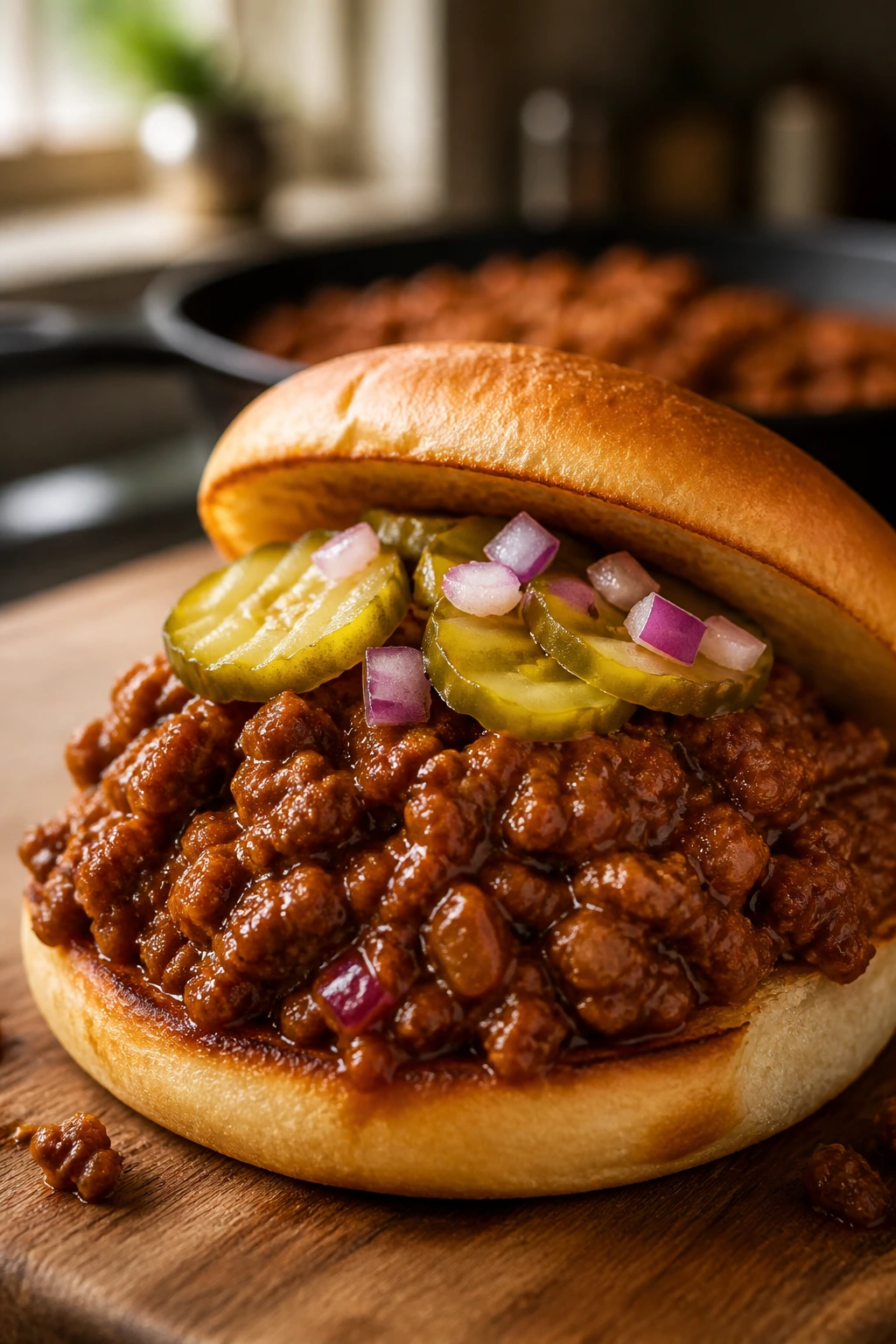
Flavor Enhancement: A teaspoon of pickle brine stirred in at the end sharpens the sauce without making it sour. I like it better than adding more sugar, because it wakes up the beef instead of turning the filling into barbecue sauce in disguise.
Texture Control: Keep the pan uncovered during the simmer. If you cover it, condensation drops back into the sauce and the filling stays loose for too long. The goal is a glossy, spoon-coating texture, not a stew.
Time-Saver: Chop the onion and pepper together in a food processor with just 2 or 3 quick pulses if you want to move fast. Stop before they become a paste. You still want tiny pieces with some shape, not vegetable mush.
Cost-Saver: 80/20 ground beef is cheaper than leaner blends, and it works well here as long as you drain off the excess fat after browning. That little extra richness actually helps the filling taste fuller.
Make-It-Yours: If you like a little bite, add a few sliced pickles right under the filling before you close the bun. If you want more heft, a slice of sharp cheddar melted over the top gives the sandwich a darker, saltier edge.
Common Sloppy Joe Mistakes That Make Dinner Harder Than It Needs to Be
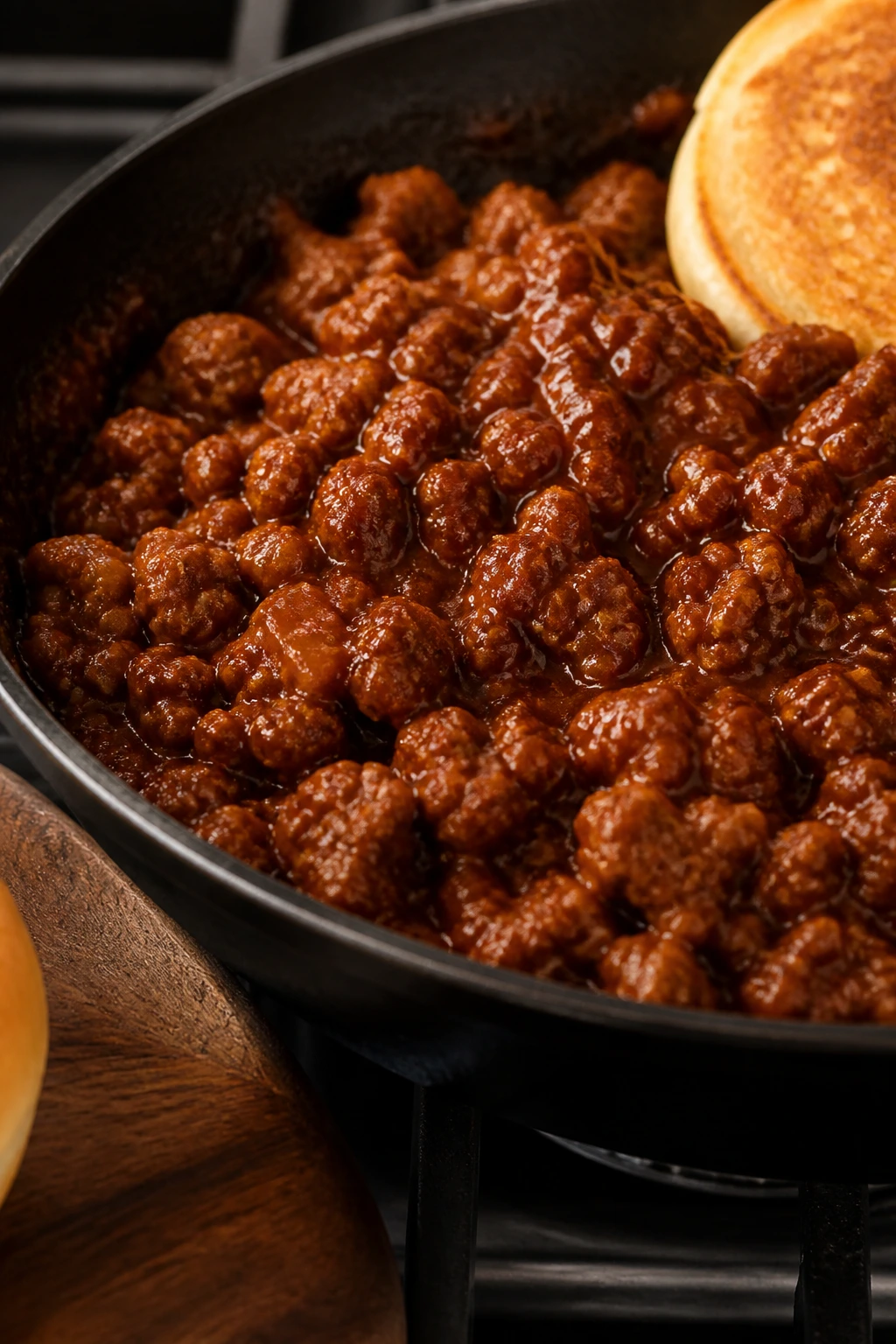
Using too much ketchup and not enough balance: The filling turns sweet and one-note, and the meat gets buried under a sticky red glaze. Fix it with mustard, vinegar, and a little Worcestershire, then taste again after the simmer.
Stopping the simmer too early: If the sauce still slides around the skillet like soup, it will soak the bun almost immediately. Keep cooking until the filling clings to the meat and barely moves when you drag a spoon through it.
Skipping the bun toast: Soft buns are fine for a turkey sandwich. They are not fine for a filling this wet. Toasting creates a dry, crisp layer that buys you a few more minutes before the bottom starts to surrender.
Crowding the skillet with too much meat: If the beef piles up, it steams instead of browns, and the flavor stays pale. Brown in a wide skillet, and if your pan is small, do the beef in two batches.
Forgetting to taste at the end: Worcestershire, broth, ketchup, and buns all carry salt, so the seasoning can swing one way or another fast. A final taste with a small spoon is the difference between a good filling and one that feels strangely flat.
Variations That Still Taste Like Sloppy Joes
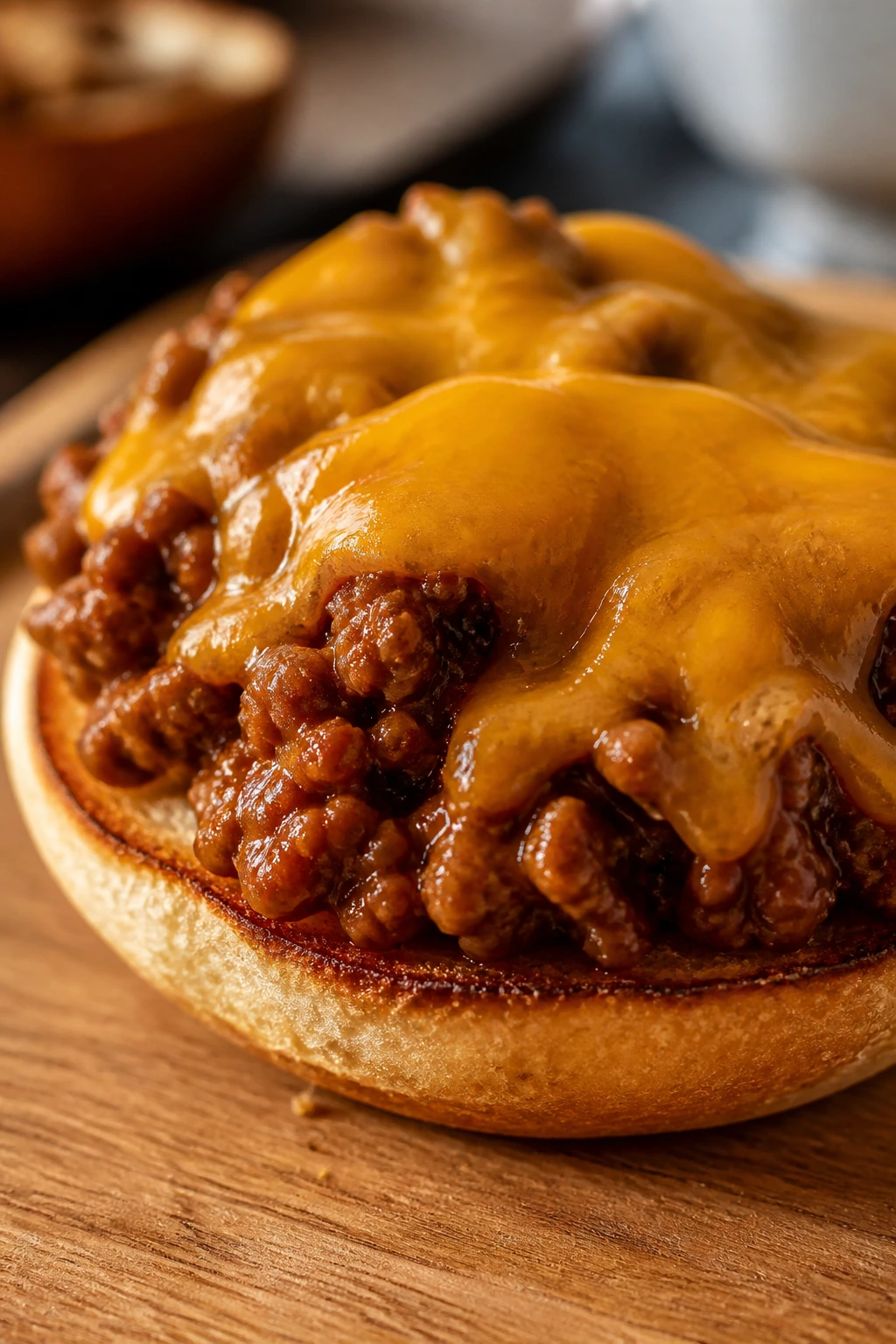
Sharp Cheddar Melt
Lay a slice of sharp cheddar over the hot filling just before you close the bun, then cover the pan for 20 to 30 seconds so the cheese softens. The salty edge of cheddar cuts the sweetness and makes the sandwich feel heavier in a good way.
Spicy Pickleback Joe
Add 1 to 2 teaspoons of hot sauce and 1 teaspoon of pickle brine to the sauce during the last minute of simmering. Finish with a few dill pickle chips on top. That extra acid keeps the sandwich bright, especially if your ketchup runs sweet.
Turkey Skillet Joe
Swap the beef for 1 1/2 pounds of ground turkey and add 1 extra tablespoon of oil at the start. Turkey needs a firmer hand with seasoning, so don’t hold back on the salt, pepper, and paprika. It’s lighter, but it still needs to taste like dinner, not diet food.
Mushroom-Stretched Joe
Finely chop 8 ounces of cremini mushrooms and cook them with the onion and bell pepper until their liquid evaporates. The mushrooms make the filling deeper and stretch the meat without making the sandwich feel thin. I like this one when I want a second night of leftovers.
Open-Faced Knife-and-Fork Version
Spoon the filling over toasted Texas toast or thick sliced sourdough instead of using sandwich buns. This works well when you want the filling to stay in full view and you’d rather not chase it around a soft roll.
Make-Ahead, Storage, and Reheating Notes
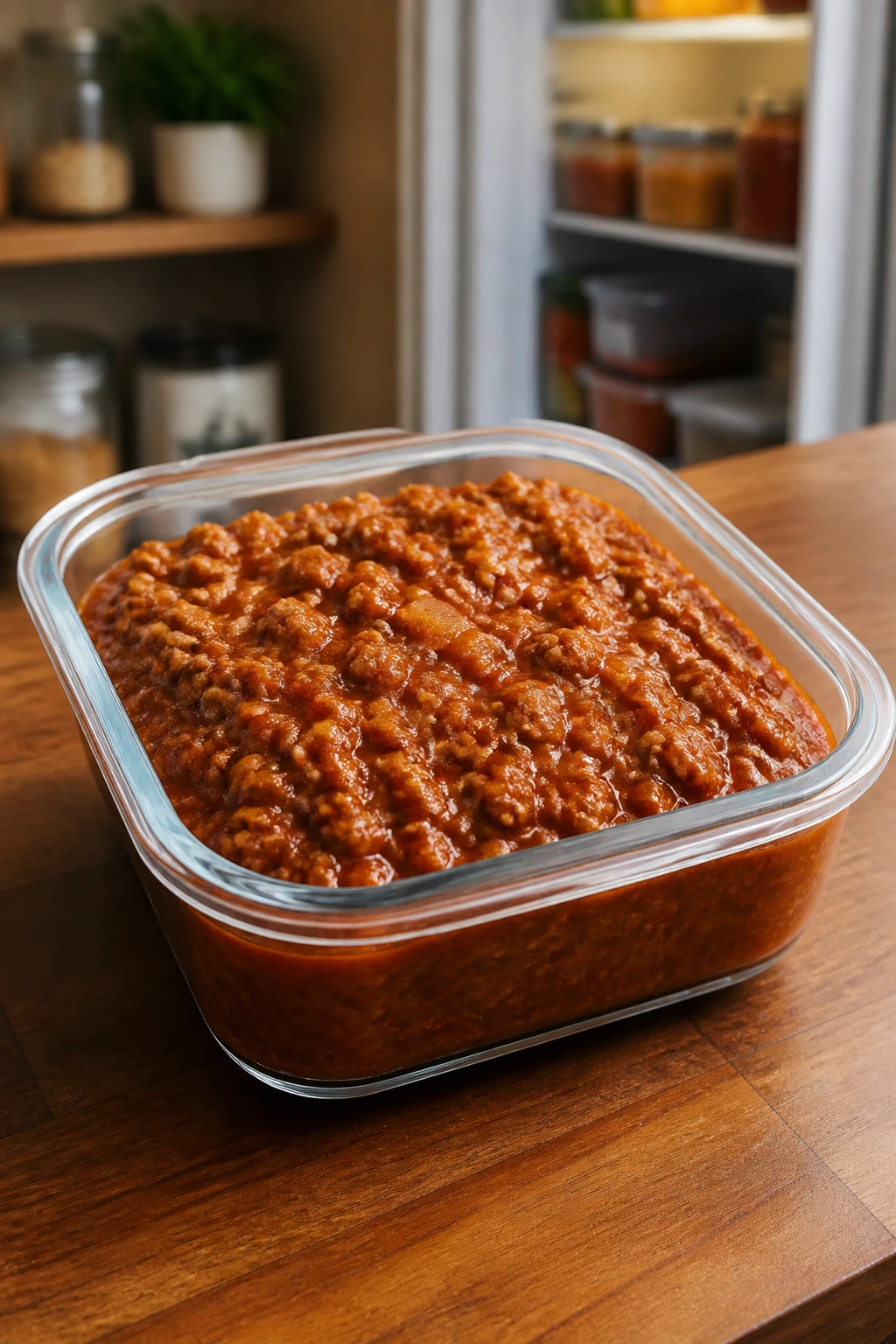
The filling stores well, which is part of the reason I keep coming back to it. If you want to make it ahead, cook the beef mixture completely, cool it in a shallow container, and refrigerate it within 2 hours. The flavor settles in overnight, and the sauce usually tastes a little more rounded the next day.
In the fridge, the filling keeps for 3 to 4 days in an airtight container. For the freezer, pack it into freezer bags or containers and freeze for up to 2 months. Flattening the filling in a freezer bag helps it thaw faster and more evenly, which is a small thing until you’re hungry and impatient.
Reheat it on the stovetop over low heat with a splash of beef broth or water, stirring every minute or so until it’s hot all the way through. If you’re using the microwave, cover the container loosely and heat in 60-second bursts at about 50% power, stirring between bursts so the edges don’t dry out. The buns should be toasted fresh each time; reheated buns go soft in a hurry, and nobody needs that.
If the filling thickens too much after chilling, loosen it with 1 to 2 tablespoons of broth at a time. If it seems too loose after reheating, let it bubble uncovered for a minute or two. The texture should land thick enough to spoon, not pour.
Questions People Ask Before They Make It
Can I make the filling a day ahead?
Yes, and I’d argue it tastes better after a night in the fridge. The onion, beef, and sauce have time to settle into each other, and the tomato paste loses some of its sharpness.
What ground beef works best?
I like 85/15 because it has enough fat for flavor without turning the filling greasy. If you go leaner, add a little oil and watch the skillet more closely so the meat doesn’t dry out.
How do I keep the filling from tasting too sweet?
Use the vinegar and mustard like they matter, because they do. If the filling still tastes sugary after simmering, add another teaspoon of vinegar or a small splash of pickle brine before serving.
Can I use ground turkey or chicken instead of beef?
Yes. Use a tablespoon more oil, season a little more aggressively, and don’t let the sauce overpower the meat. Turkey especially benefits from the Worcestershire and smoked paprika.
What if my filling is too thin?
Keep it simmering uncovered. Most thin sloppy joe filling just needs another 3 to 5 minutes on the heat so the liquid can reduce and the sauce can tighten.
Can I freeze sloppy joe filling?
Absolutely. Freeze it once it’s fully cooled, and use it within 2 months for the best texture. Thaw it in the fridge overnight, then reheat slowly with a splash of broth.
Can I make this in a slow cooker or oven instead of the stovetop?
You can, but brown the beef first or the texture turns flat. After that, transfer the cooked filling to a slow cooker on low for 1 to 2 hours, or place it in a covered Dutch oven in a low oven until everything is hot and the sauce has thickened a bit.
Why I’d Make This Again
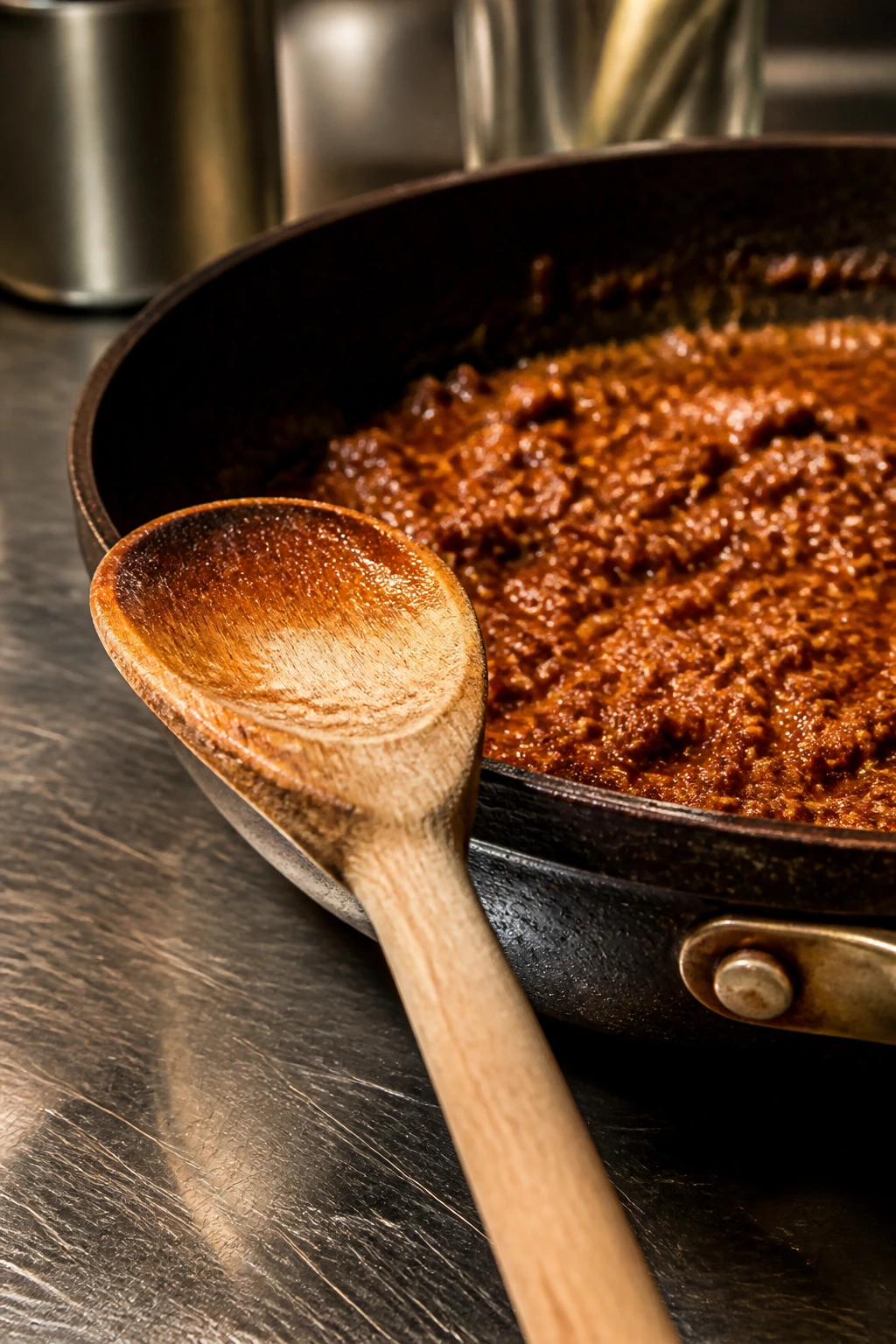
A good sloppy joe doesn’t need polish. It needs balance. The beef has to taste browned, the sauce has to land tangy instead of sugary, and the bun has to stay sturdy long enough to make the last bite worth chasing.
That’s why this version works for me. It eats like a real dinner, not a throwback sketch of one, and it holds its shape just long enough to let the flavor do the talking. Keep the simmer honest, toast the buns, and this one earns its place in the regular rotation.
Hearty Sloppy Joes Sandwich — Recipe Card
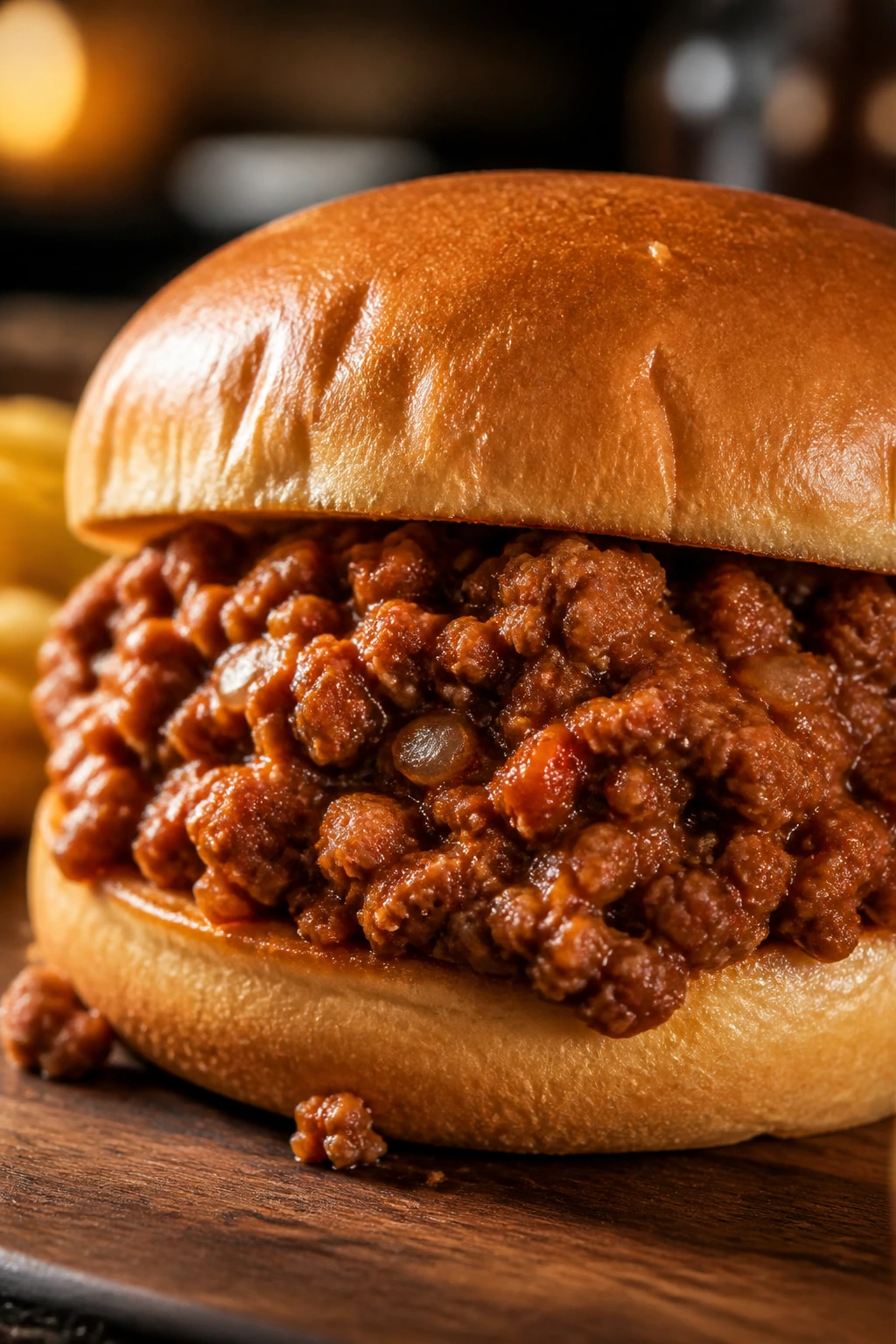
Recipe Name: Hearty Sloppy Joes Sandwich
Description: A thick, tangy ground beef sloppy joe filling with onion, bell pepper, ketchup, tomato paste, and a balanced sweet-sour sauce piled into toasted buns.
Prep Time: 15 minutes
Cook Time: 30 minutes
Total Time: 45 minutes
Course: Dinner, Main Course
Cuisine: American
Servings: 6 to 8 sandwiches
Calories: About 470 kcal per serving
Ingredients
For the Sloppy Joe Filling:
- 2 tablespoons neutral oil
- 1 1/2 pounds 85/15 ground beef
- 1 large yellow onion, finely diced
- 1 green bell pepper, finely diced
- 2 cloves garlic, minced
- 1 cup ketchup
- 2 tablespoons tomato paste
- 1/2 cup low-sodium beef broth
- 2 tablespoons Worcestershire sauce
- 1 tablespoon Dijon mustard
- 1 tablespoon apple cider vinegar
- 1 tablespoon packed light brown sugar
- 1 teaspoon smoked paprika
- 1 teaspoon chili powder
- 1/2 teaspoon kosher salt
- 1/2 teaspoon black pepper
- 1/8 teaspoon cayenne pepper, optional
For Serving:
- 6 to 8 soft sandwich buns, split
- 2 tablespoons unsalted butter, softened
- Dill pickle chips or sliced sharp cheddar, optional
Instructions
-
Heat the oil in a large skillet over medium-high heat. Cook the onion and bell pepper with salt until soft, about 5 to 7 minutes.
-
Add the garlic and cook for 30 seconds.
-
Add the ground beef and cook, breaking it up, until browned and no longer pink, 6 to 8 minutes. Drain excess fat if needed.
-
Stir in the tomato paste, smoked paprika, chili powder, black pepper, and cayenne, then cook for 1 minute.
-
Add the ketchup, broth, Worcestershire, Dijon, vinegar, and brown sugar. Stir well and bring to a gentle simmer.
-
Reduce the heat to medium-low and cook uncovered for 10 to 12 minutes, stirring often, until thick.
-
Butter and toast the buns until golden.
-
Spoon the filling onto the buns and add pickles or cheddar if using. Serve warm.
Notes: Toast the buns or the filling will soften them fast. If the sauce tastes too sweet, add a little more vinegar or mustard. Leftover filling keeps 3 to 4 days in the fridge and freezes well for up to 2 months.