



There are chicken salads that sit in the fridge like a compromise, and then there are chicken salads you keep circling back to with a fork while you’re “just checking the seasoning.” Herbed Greek yogurt chicken salad belongs in the second camp. It’s cool and tangy, but not sharp in a way that makes your face pucker. The chicken stays tender, the celery stays crisp, and the dill and parsley give the whole bowl that unmistakable smell of a kitchen where lunch was made with a knife, a bowl, and a little patience.
A lot of chicken salad goes wrong because people try to make it rich without giving it any shape. They dump in too much mayo, then add onion, then add grapes or relish or whatever is rolling around in the fridge, and the final bowl tastes muddy. This version is cleaner. The Greek yogurt brings body and a light tartness, the Dijon adds backbone, and a small amount of mayonnaise smooths the edges so it still feels like chicken salad instead of seasoned yogurt with poultry in it.
It also has that old-family-table quality people mean when they say a recipe feels like it came from Nonna. Not because it is fussy. Because it isn’t. You can taste the lemon. You can see the herbs. You get the snap of celery and the quiet bite of onion. And the chicken itself matters, which is usually the giveaway. If the chicken is dry, the whole thing collapses. If it’s handled gently, this salad tastes like a cold lunch that knows exactly what it is.
Why This Bowl Earns Its Keep
-
Creamy without the heaviness: Greek yogurt gives the salad a thick, spoonable texture, while a couple tablespoons of mayonnaise round off the tang so the dressing doesn’t turn too lean or too sharp.
-
Herbs stay in the spotlight: Dill and parsley are folded in at the end, so you taste fresh green notes in every bite instead of a bland, pale dressing that forgot why it was there.
-
The chicken stays juicy: A gentle poach keeps the breast meat soft enough to shred, but still firm enough to hold its shape in the bowl. That matters more than people think.
-
It eats well cold: Some creamy salads get gluey after a chill in the fridge. This one relaxes into itself after 20 to 30 minutes and gets better as the lemon and salt settle in.
-
Works in more than one setting: Spoon it into pita bread, mound it over romaine, tuck it into lettuce cups, or stack it on toasted sourdough with tomato slices. Same bowl, different mood.
-
The texture has actual contrast: Celery, onion, scallions, and optional nuts keep the soft chicken from turning into paste. There’s a little crunch, a little cream, a little bite. That balance is the whole point.
The Flavor Story Behind the Bowl
The best chicken salad has a clear point of view. It doesn’t wander. It doesn’t need sweet fruit to wake it up, and it doesn’t need a gallon of mayo to feel complete. This one leans Mediterranean in the way a home cook often does without naming it: lemon, dill, parsley, Dijon, olive oil, and a clean, salty finish. Those are pantry moves, not restaurant tricks.
That old-school family feeling comes from restraint. Nonna-style cooking, whether it’s from an Italian kitchen or a Greek one or a house that borrowed from both, usually knows when to stop. A little onion goes a long way. A little garlic is plenty. The herbs are chopped fine so they perfume the dressing without taking over. Nothing is trying to be loud.
And the chicken itself? It should taste like chicken. That sounds obvious. It isn’t. If you poach it too hard, it goes stringy and dry. If you drown it in a dressing that’s too loose, the bowl turns watery and sad. When the chicken is gently cooked and the dressing is built with thick Greek yogurt, you get a salad that feels cool and bright, but still substantial enough to count as lunch without a pile of chips on the side.
One more thing. This is the kind of recipe that improves your fridge. Not in a glamorous way. In a practical one. A covered bowl of this salad means tomorrow’s lunch is already handled, and the ingredients don’t turn limp the way lettuce does. That’s worth keeping around.
A Quick Look at Time, Yield, and Difficulty
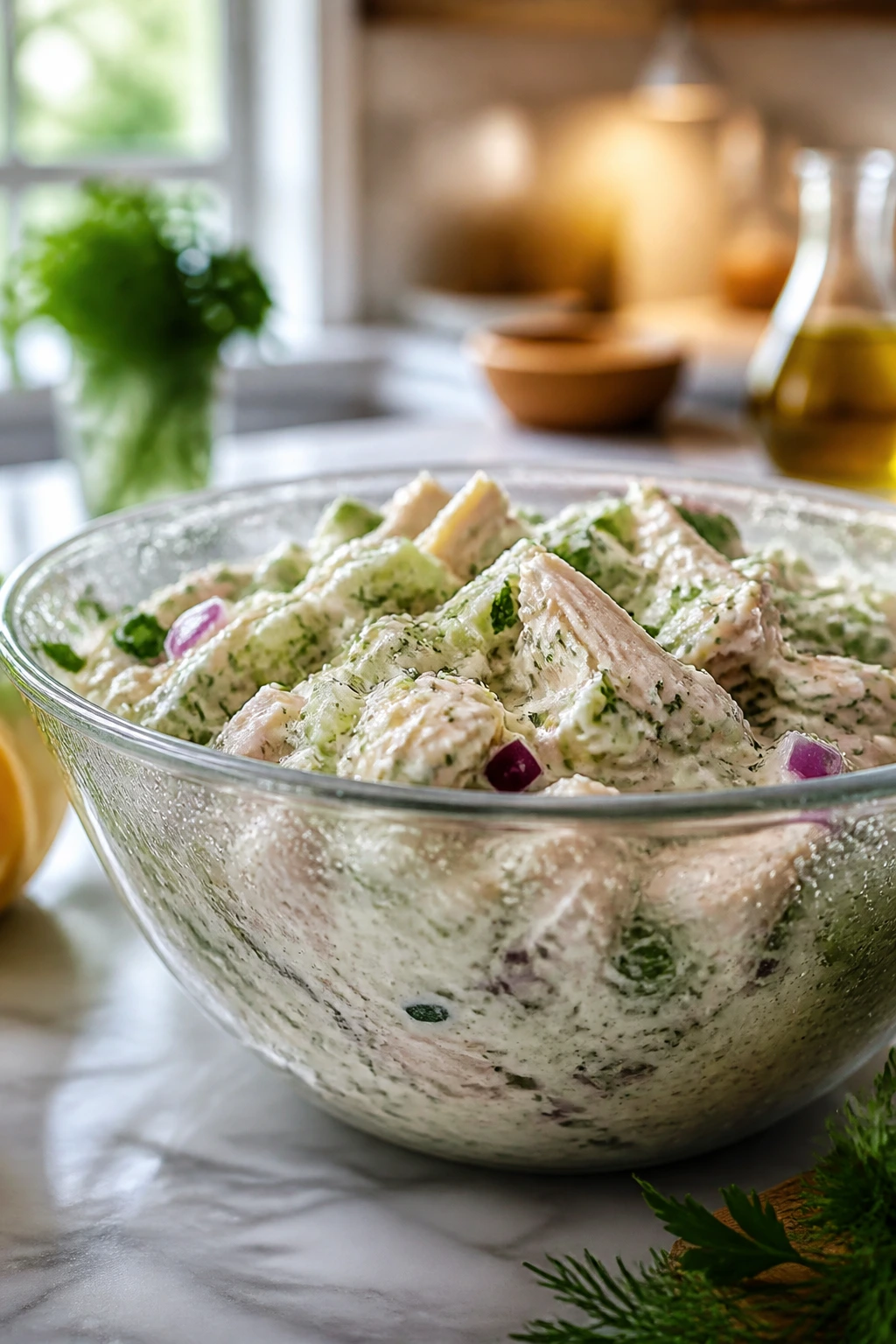
Yield: Serves 4 to 6
Prep Time: 20 minutes
Cook Time: 15 minutes
Total Time: 35 minutes, plus 20 to 30 minutes chilling if you want the flavors to settle
Difficulty: Beginner — the method is straightforward, but the chicken needs gentle heat and a little attention so it stays juicy.
Chill/Rest Time: 20 to 30 minutes is helpful, and the salad can chill longer if needed
Best Served: Cold or lightly chilled
What Goes Into the Bowl and Why It Matters
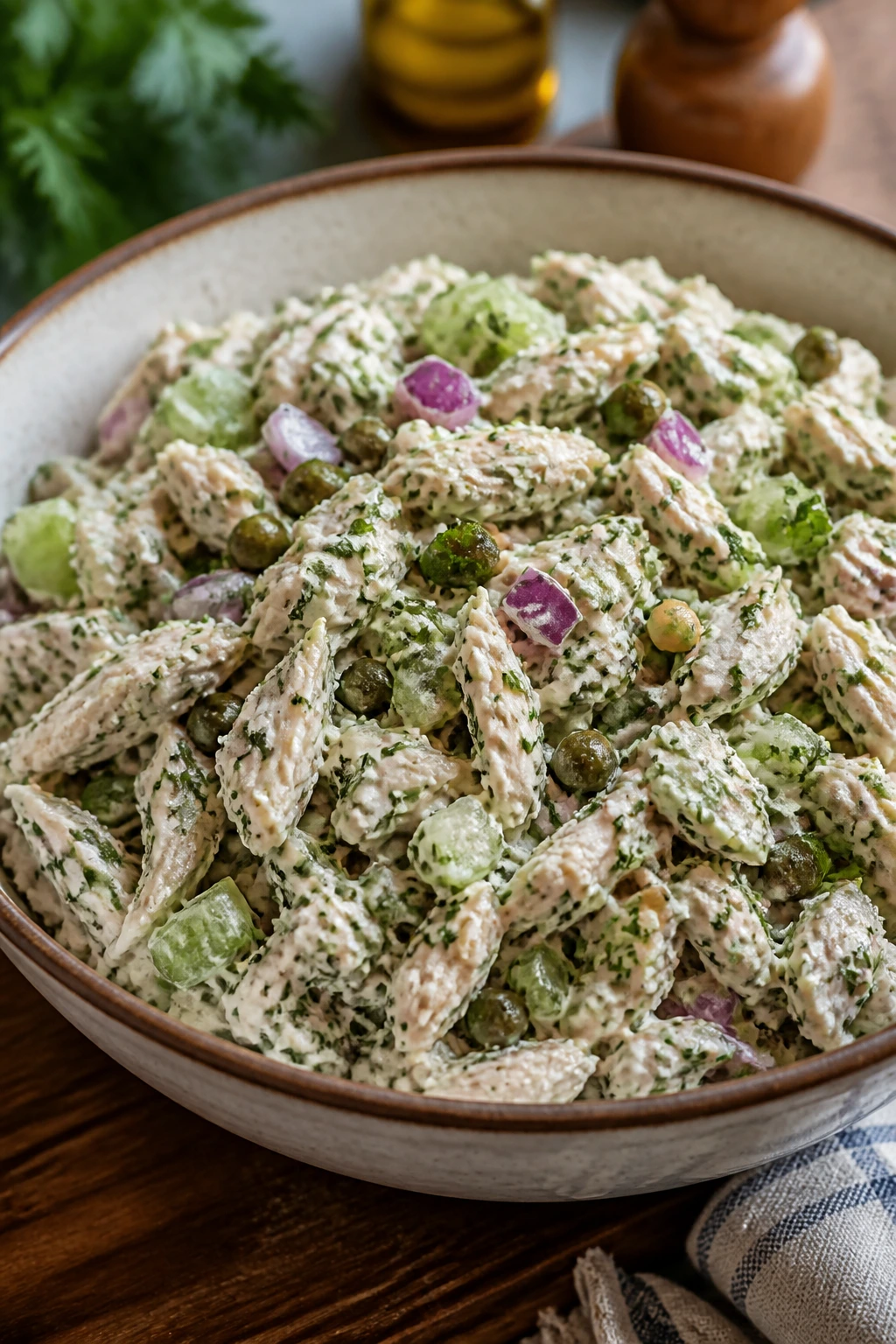
For the Chicken and Poaching Liquid:
- 1 1/2 pounds boneless, skinless chicken breasts
- 4 cups low-sodium chicken broth
- 1 bay leaf
- 6 black peppercorns, lightly crushed
- 1 strip lemon peel
- 1 teaspoon kosher salt
For the Herb Yogurt Dressing:
- 1 cup full-fat plain Greek yogurt
- 2 tablespoons mayonnaise
- 1 tablespoon Dijon mustard
- 1 tablespoon fresh lemon juice
- 1 teaspoon lemon zest
- 1 small garlic clove, finely grated
- 2 tablespoons extra-virgin olive oil
- 1/2 teaspoon kosher salt
- 1/4 teaspoon black pepper
For the Salad:
- 2 celery ribs, finely diced
- 1/4 cup red onion, finely diced
- 2 scallions, thinly sliced
- 1/4 cup chopped fresh dill
- 2 tablespoons chopped flat-leaf parsley
- 2 tablespoons capers, drained and chopped, optional
- 1/3 cup toasted sliced almonds or chopped walnuts, optional
The Ingredient Logic, Piece by Piece
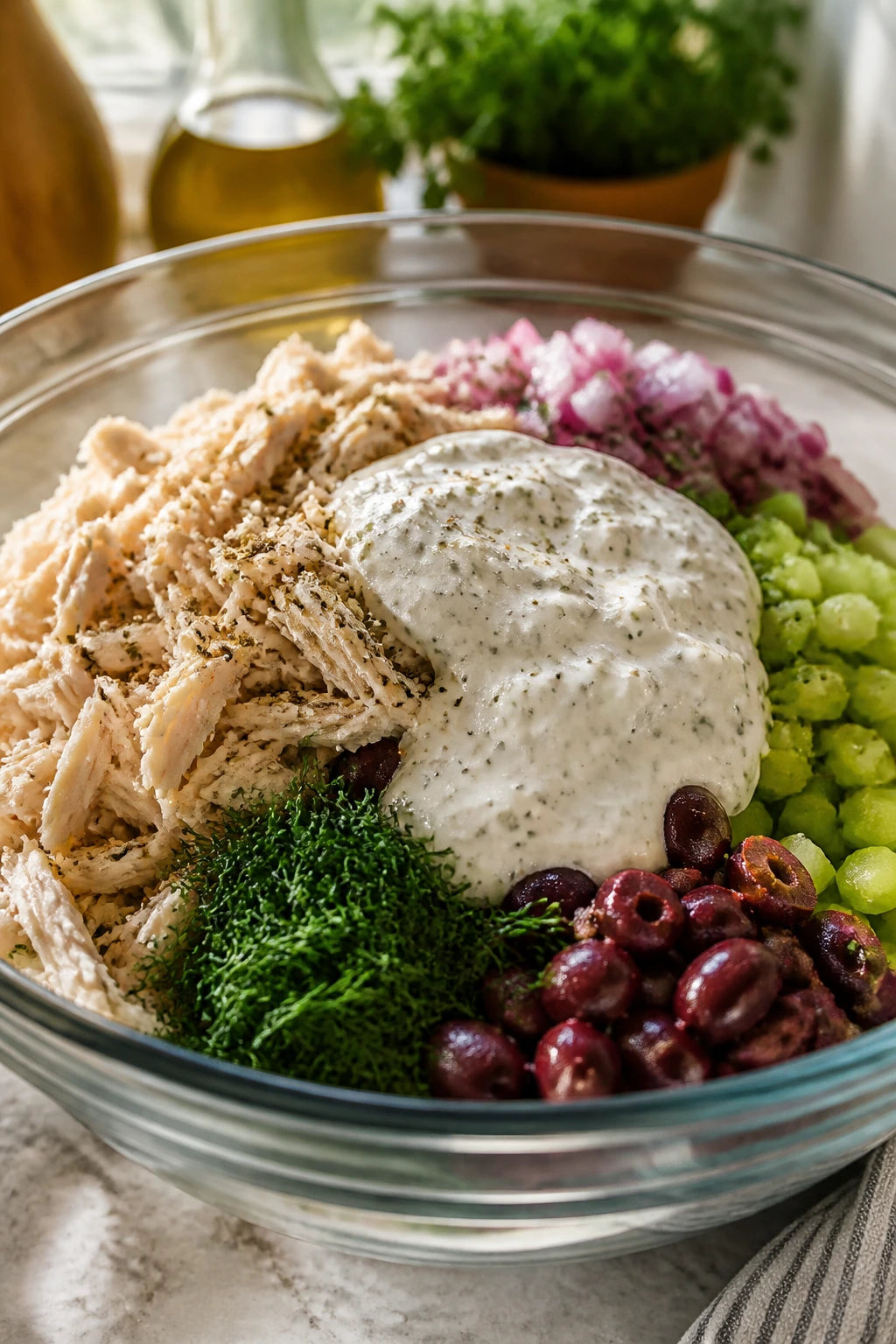
Chicken and Poaching Liquid
What to use: 1 1/2 pounds boneless, skinless chicken breasts, 4 cups low-sodium broth, 1 bay leaf, 6 peppercorns, 1 strip lemon peel, and 1 teaspoon kosher salt.
Preparation: Keep the breasts whole for poaching so they cook evenly, then cool them before chopping or shredding into bite-sized pieces.
Substitutions: Rotisserie chicken works if you’re short on time; use about 4 cups chopped meat. Boneless thighs work too, and they bring a little more flavor, though the texture is softer.
Tips: The broth should barely simmer, not boil. Hard bubbling tightens the chicken and gives you dry, ragged shreds instead of clean, juicy pieces.
Greek Yogurt Dressing
What to use: 1 cup full-fat Greek yogurt, 2 tablespoons mayonnaise, 1 tablespoon Dijon, lemon juice, lemon zest, garlic, olive oil, salt, and black pepper.
Preparation: Whisk the dressing until smooth before adding any herbs or vegetables. If the yogurt has a lot of surface liquid, stir it first so the bowl doesn’t end up thin.
Substitutions: You can use all Greek yogurt if you want the lightest version, or swap in labneh for an even thicker, tangier base. Sour cream works in a pinch, but it tastes rounder and a little less bright.
Tips: Full-fat yogurt holds up better than low-fat. Low-fat versions often taste thin after the salad chills, and they’re more likely to turn watery once the chicken and vegetables go in.
Herbs, Crunch, and Briny Bits
What to use: 2 celery ribs, 1/4 cup red onion, 2 scallions, 1/4 cup dill, 2 tablespoons parsley, and optional capers and toasted nuts.
Preparation: Dice the celery and onion small enough that they distribute evenly. You want little bursts of crunch, not big hard chunks that interrupt every bite.
Substitutions: Cucumber can replace some of the celery if you want a softer, fresher feel, and mint can stand in for part of the dill if you’re chasing a more Greek salad profile. If onions are too sharp for you, soak them in cold water for 10 minutes and drain well.
Tips: Chop the herbs just before mixing so they stay fragrant. If you chop them too far ahead, the cut edges darken and the flavor gets flatter.
Optional Finishers
What to use: 2 tablespoons capers and 1/3 cup toasted sliced almonds or walnuts.
Preparation: Drain the capers well and toast the nuts until they smell nutty and the edges deepen by a shade or two.
Substitutions: If capers feel too briny, use finely chopped green olives. If nuts are off the table, crisp sunflower seeds or pumpkin seeds bring a similar crunch.
Tips: Add the nuts right before serving if you want them to stay crisp. If they sit in the dressing for hours, they soften faster than you’d expect.
The Tools That Make the Job Easier
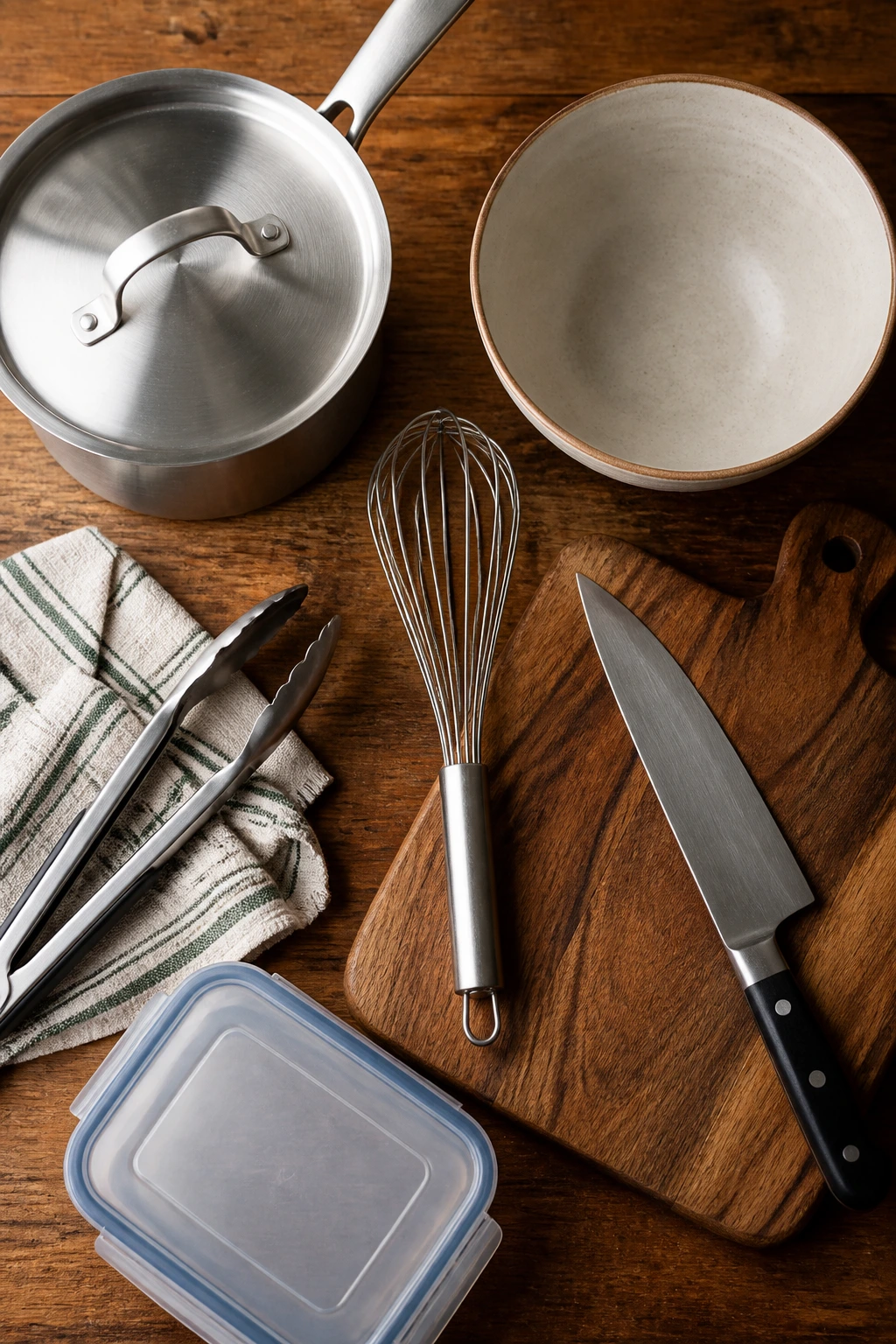
-
Medium saucepan with a lid: This is for poaching the chicken gently; a wide pan works better than a tall one because the breasts sit in an even layer.
-
Large mixing bowl: Use a bowl with enough room to toss without flinging dressing onto the counter.
-
Sharp chef’s knife: A dull knife crushes herbs and onions instead of slicing them cleanly.
-
Cutting board: A damp kitchen towel under the board keeps it from sliding when you chop celery and onions.
-
Whisk: You want the dressing smooth before the chicken goes in.
-
Tongs or a slotted spoon: Helpful for lifting the chicken out of the poaching liquid without tearing it apart.
-
Measuring spoons and cups: Don’t guess on the lemon juice or Dijon. The dressing depends on those small amounts.
-
Container with a tight lid: For chilling the finished salad without it picking up fridge smells.
Poach the Chicken Without Drying It Out
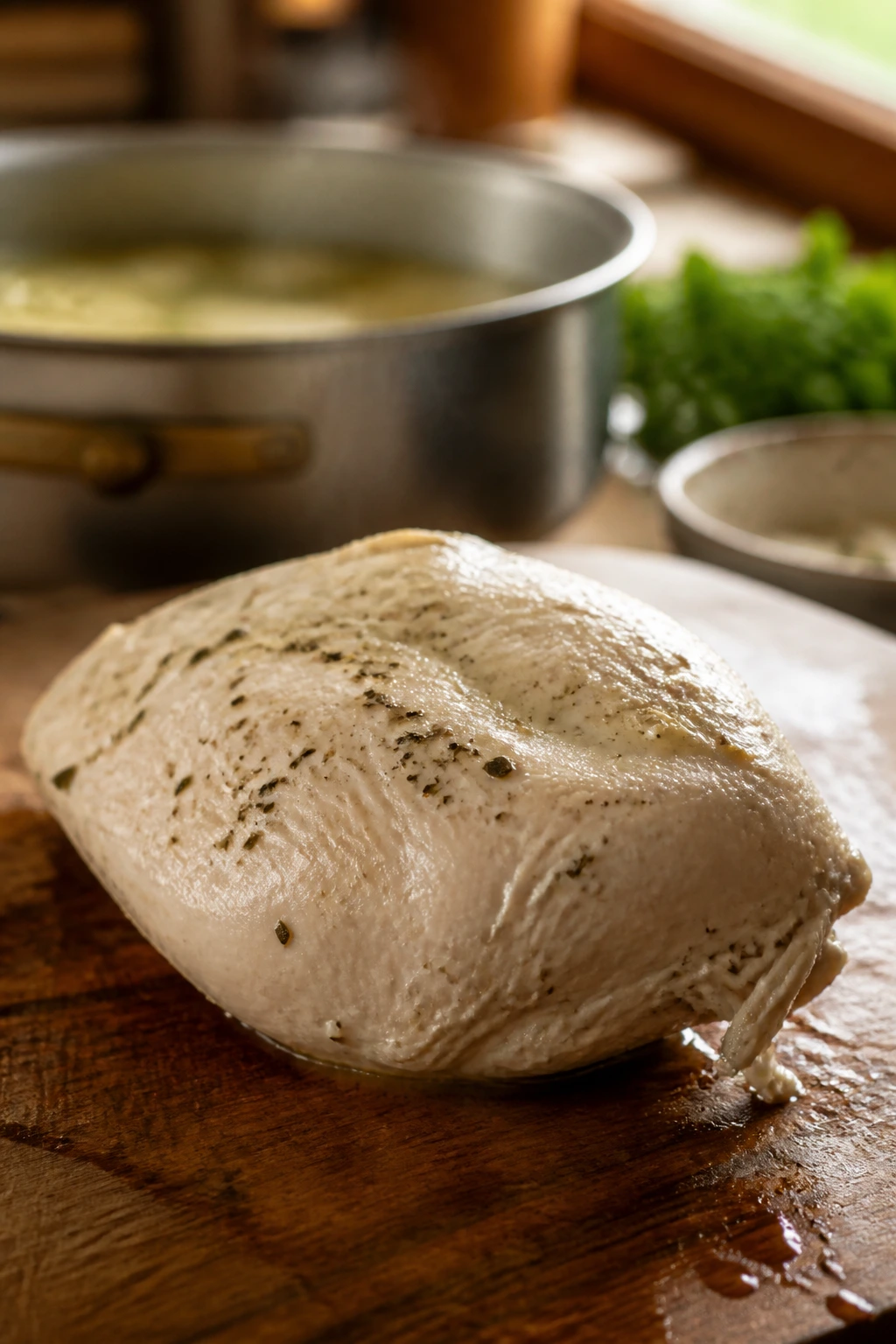
Poach the Chicken:
-
Combine the poaching liquid in a medium saucepan: 4 cups low-sodium chicken broth, 1 bay leaf, 6 lightly crushed black peppercorns, 1 strip lemon peel, and 1 teaspoon kosher salt.
-
Add the chicken breasts in a single layer and set the pan over medium heat. Bring the liquid to a bare simmer, not a boil, with tiny bubbles around the edges and only an occasional bubble in the middle.
-
Lower the heat to medium-low and cover the pan partially. Cook for 12 to 15 minutes, until the thickest part of the chicken reaches 165°F and the meat feels springy but not hard when pressed. Do not let the broth boil hard; that’s the fastest way to turn good chicken into dry strings.
-
Turn off the heat and rest the chicken in the hot liquid for 10 minutes. This little pause matters. It keeps the meat juicy and gives the center time to finish gently.
-
Move the chicken to a cutting board and let it cool for another 5 to 10 minutes until you can handle it comfortably. Then chop it into bite-sized pieces or shred it with two forks, depending on how chunky you like your salad.
Mix the Dressing:
-
Whisk the Greek yogurt, mayonnaise, Dijon, lemon juice, lemon zest, grated garlic, olive oil, 1/2 teaspoon kosher salt, and black pepper in a large bowl until glossy and smooth. Taste it. It should be tangy first, then savory, then lightly lemony at the end.
-
Adjust the seasoning now, not later. If the dressing tastes flat, add another small pinch of salt or a few drops of lemon juice. If it tastes too sharp, another spoonful of yogurt will soften it.
Build the Salad:
-
Fold in the celery, red onion, scallions, dill, parsley, capers if using, and toasted nuts if using. Stir until everything is coated evenly. You’re looking for a thick, spoonable mixture, not a loose dressing with chicken floating in it.
-
Add the chicken and toss gently until every piece is coated. If the chicken is shredded, be a little careful here so you don’t mash it into paste. If it’s chopped, you can mix more freely.
-
Chill the salad for 20 to 30 minutes before serving if you have the time. The lemon calms down, the onion loses its raw edge, and the whole bowl tastes more settled. Taste again after chilling and add a pinch of salt or a squeeze of lemon if needed.
How to Serve It Without Making It Heavy
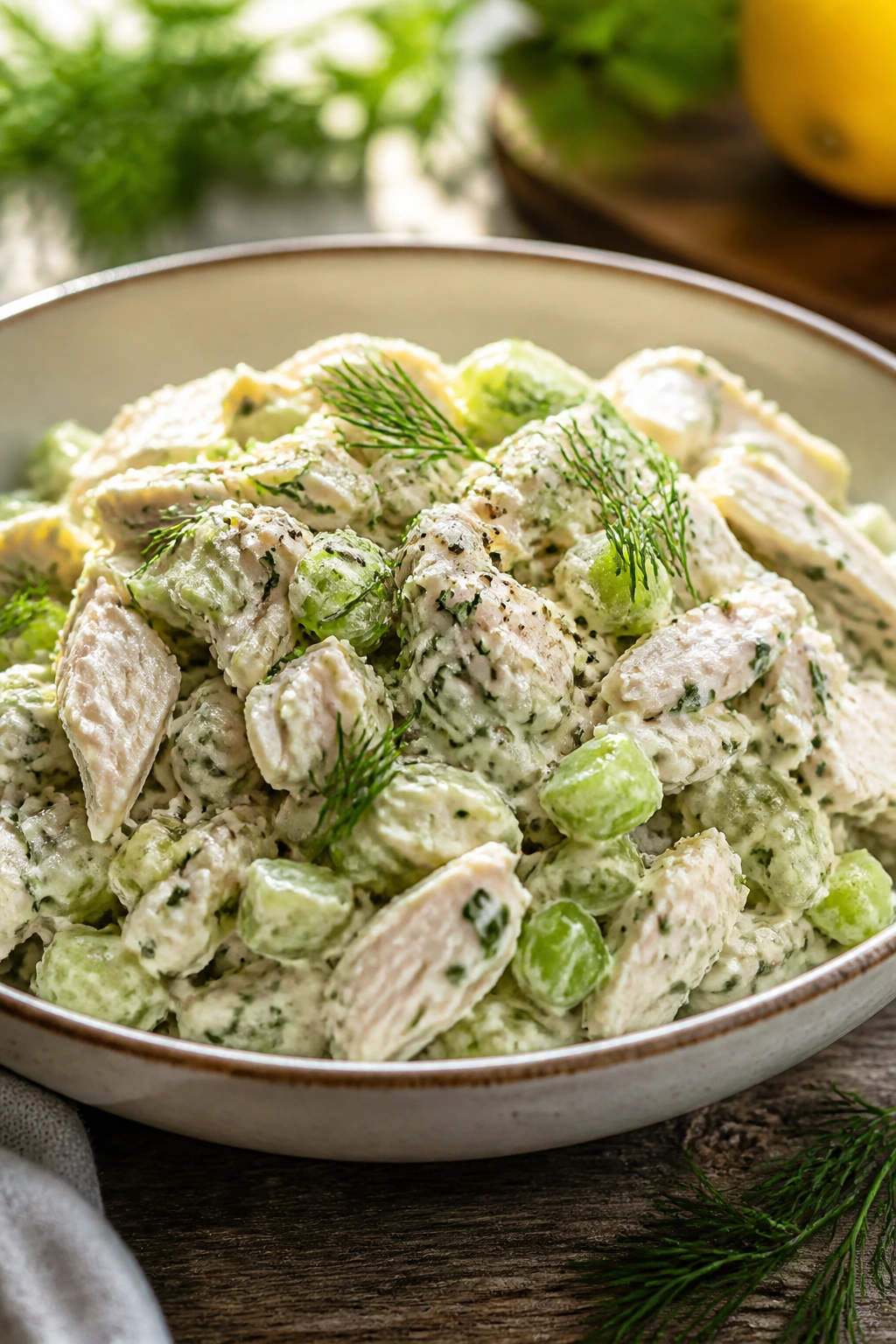
Presentation: Spoon the salad into a shallow bowl instead of a deep one so you can see the herbs, celery, and chicken pieces instead of a pale mound. A scatter of dill on top and a few extra chopped nuts give it a finished look without making it fussy.
Accompaniments: Toasted sourdough, warm pita, seeded crackers, or crisp romaine hearts all work. If you want a fuller plate, add sliced cucumbers, tomatoes with a little salt, or a simple olive-and-feta tray on the side. I also like it with a few kettle chips when lunch needs crunch and no one is pretending otherwise.
Portions: Plan on about 3/4 cup to 1 cup per person for lunch, a little less if it’s one part of a larger spread. The recipe serves 4 to 6 depending on whether you pile it into sandwiches or serve it with sides.
Beverage Pairing: A cold sparkling water with lemon keeps the herbs bright, and a dry white wine like Pinot Grigio or Vermentino matches the lemony yogurt without fighting it. For a nonalcoholic route, unsweetened iced tea with a slice of cucumber is a neat fit.
Small Moves That Make the Salad Better
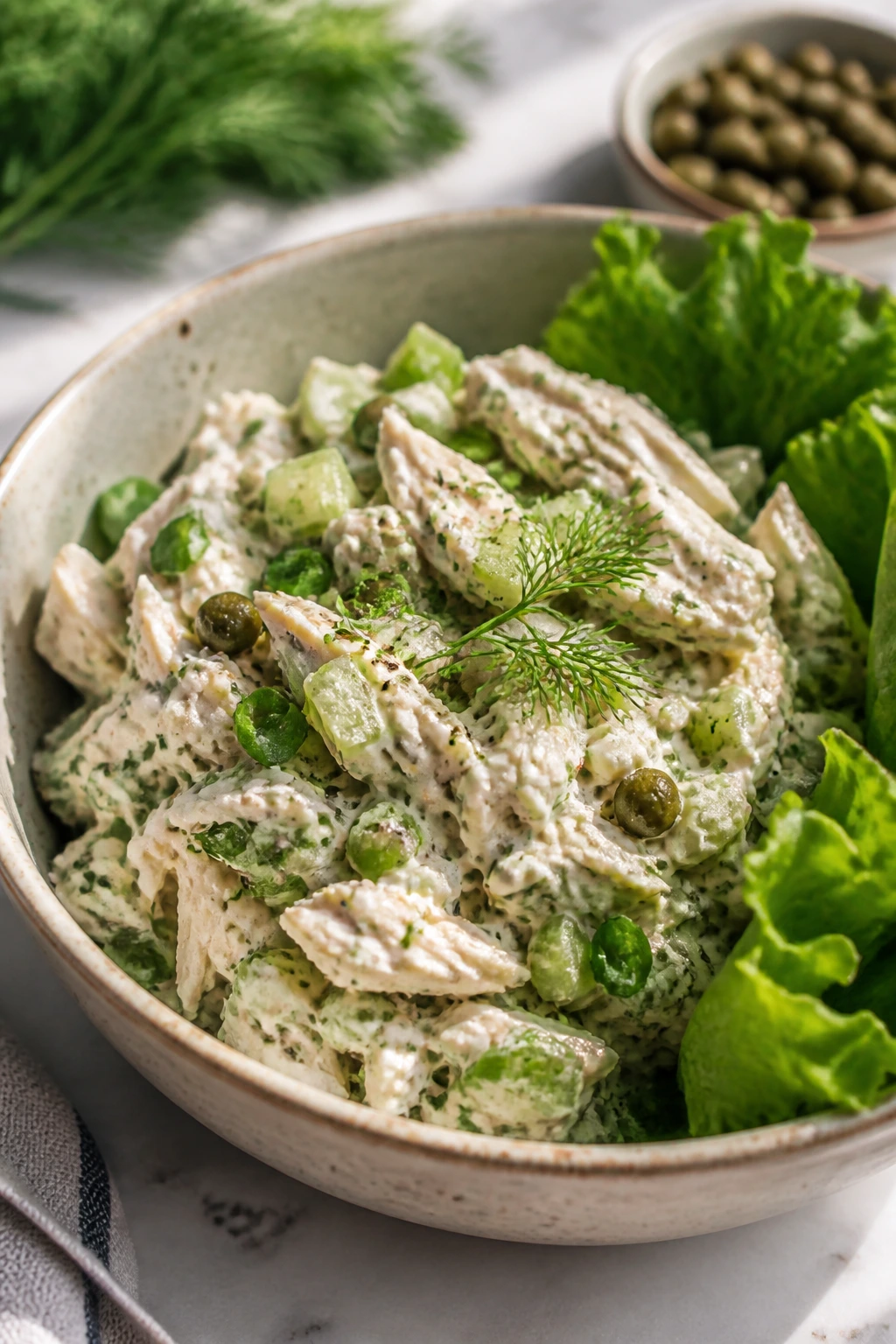
Flavor Enhancement: Stir in the tiniest splash of olive brine or a spoonful of chopped capers if you want the salad to taste more savory. You don’t need much. A little briny note wakes up the yogurt and keeps the bowl from tasting soft around the edges.
Time-Saver: Poach the chicken a day ahead, cool it completely, and store it whole in the fridge. Cold chicken chops more neatly, and you can mix the salad in about 10 minutes the next day.
Cost-Saver: If dill is expensive or the bunch looks tired, lean more heavily on parsley and scallions. The salad still tastes fresh, and you won’t miss the extra herb as much as you think.
Texture Trick: Hold back half the celery and add it just before serving if you like your chicken salad with a sharper crunch. The first batch softens overnight; the second batch gives you that fresh snap when the bowl comes out of the fridge.
Make-It-Yours: A pinch of dried oregano gives the dressing a stronger Mediterranean note, while a small handful of chopped green olives turns the whole thing saltier and more assertive. Both are good. Neither needs much.
Mistakes That Make the Bowl Fall Flat
-
Boiling the chicken hard: The breast meat turns stringy and dry, and no dressing can hide that. Keep the liquid at a gentle simmer and rest the chicken in the broth after cooking.
-
Skipping the seasoning check on the dressing: Greek yogurt tastes flatter than mayo, so if you stop before tasting, the salad can read bland and strangely sour. Fix it with salt, lemon juice, and a tiny extra spoonful of Dijon if needed.
-
Adding all the celery and onion too early if you want more crunch: After a long chill, the celery softens and the onion mellows. If you want more bite, keep part of each back and fold it in right before serving.
-
Using low-fat yogurt because it sounds lighter: Low-fat yogurt often turns thin once it meets chicken and vegetables. The salad loses its body and can look watery after an hour in the fridge.
-
Overloading the bowl with add-ins: Too many extras make the dressing cloudy and the flavor confused. Pick one briny note or one crunchy note, not six.
-
Mixing while the chicken is still hot: Hot chicken melts the yogurt base, loosens the dressing, and makes the herbs wilt. Cool the meat until you can handle it comfortably.
Three Ways to Change the Bowl
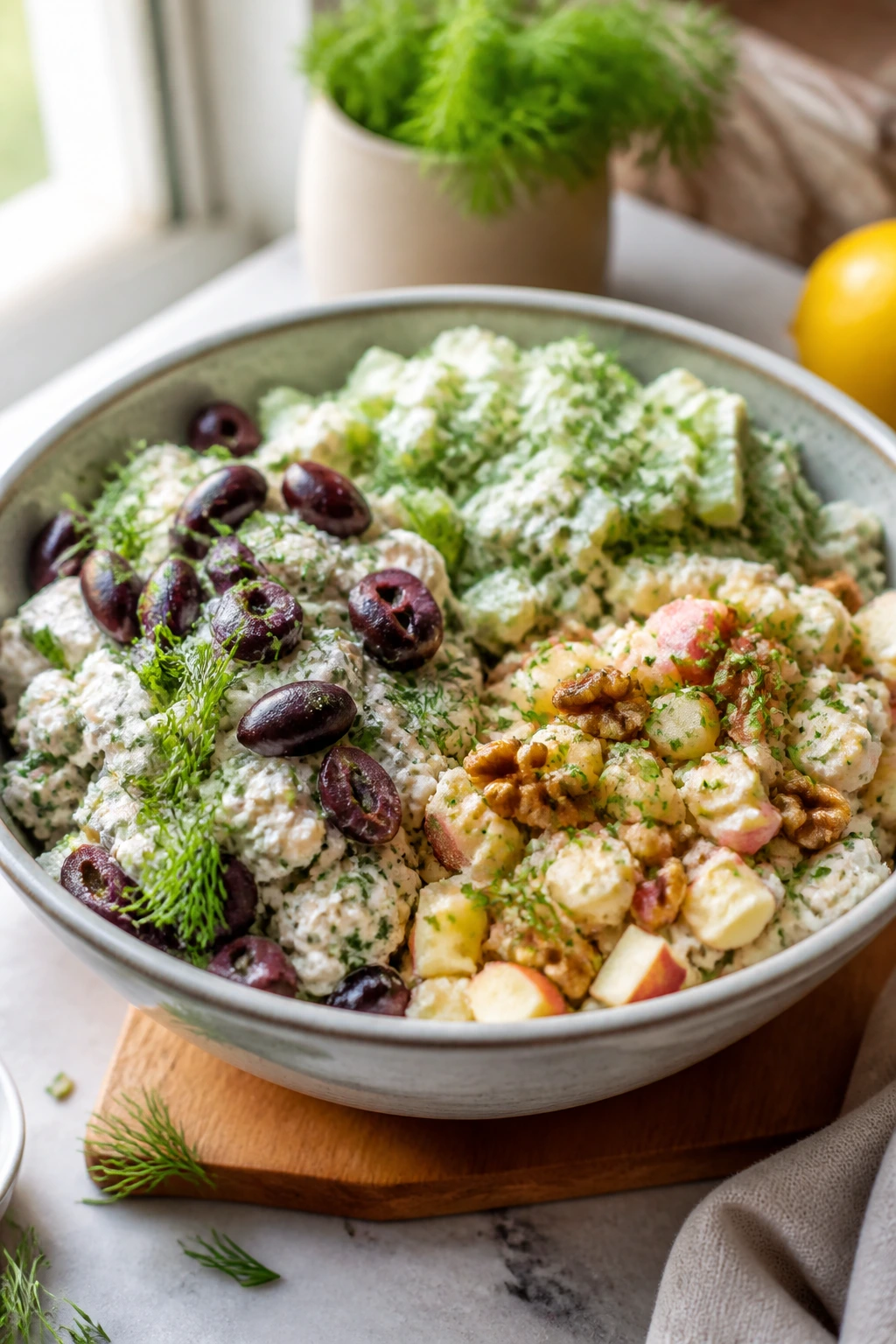
The Olive-Leaf Version: Add 1/4 cup finely chopped Kalamata olives and reduce the salt by a small pinch. This version tastes saltier and more assertive, which works well if you’re serving it in pita with cucumber and tomato.
The Orchard Crunch Version: Fold in 1/2 cup finely diced apple and use walnuts instead of almonds. It brings a faint sweetness and a firmer bite, and it’s a nice move if you want something that feels a little more lunch-counter than mezze platter.
The Dairy-Quiet Version: Replace the mayonnaise with an extra 2 tablespoons of Greek yogurt and add 1 more teaspoon of olive oil. The dressing gets tangier and lighter, though it will be a bit less silky than the original.
The Lettuce-Cup Lunch: Keep the recipe exactly the same, then serve it in butter lettuce leaves with sliced cucumbers and a dusting of dill on top. The same salad suddenly feels sharper and more refreshing, especially when you want something that eats cleanly with one hand.
The Rotisserie Shortcut: Use 4 cups chopped rotisserie chicken and skip the poaching step entirely. Mix the chicken with the dressing and let it sit for at least 15 minutes so the store-bought meat picks up some of the lemon and herb flavor.
Make-Ahead, Storage, and Chilling Notes
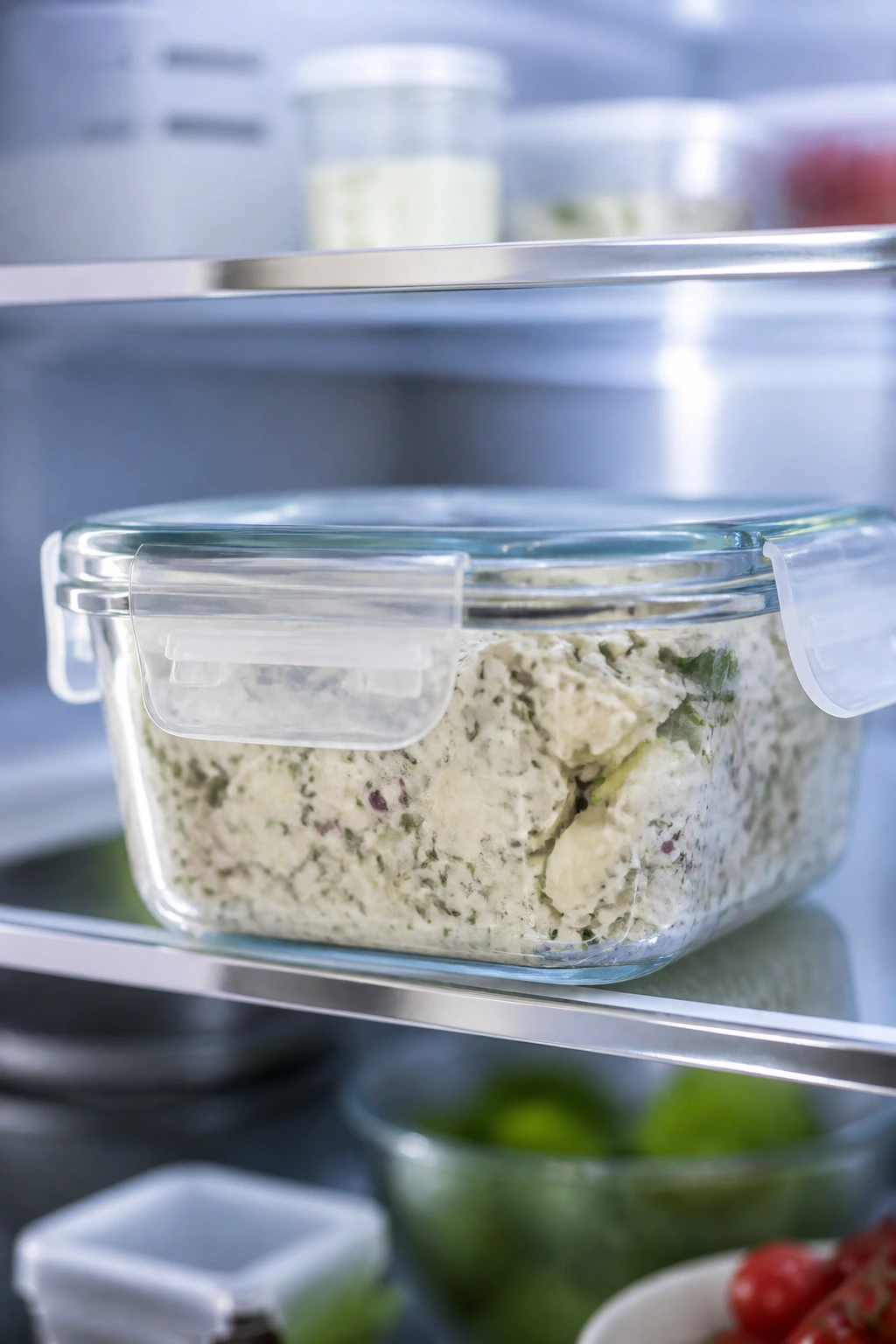
This salad keeps well in the refrigerator for 3 to 4 days in a sealed container. The flavor usually settles in by the first hour, and by the next day it tastes more cohesive, though the celery softens a little. If you like a sharper crunch, save a bit of the celery, onion, or nuts and stir them in right before serving.
I do not recommend freezing the finished salad. Greek yogurt tends to separate after thawing, and the texture turns grainy and loose. The chicken itself can be frozen separately for up to 2 months after poaching, but freeze it plain, not mixed with the dressing. Once thawed in the fridge, chop it and mix fresh.
If you want to work ahead, poach the chicken and make the dressing up to 2 days in advance. Keep them in separate containers. The dressing holds well, and the chicken stays cleaner when it isn’t sitting in the yogurt overnight. The herbs are the one part I’d treat more carefully; chop them the day you plan to serve, or at least within a few hours of mixing.
For serving leftovers, give the salad a quick stir, then taste it again. Cold food hides salt. A small pinch at the end often brings the whole bowl back to life. If the mixture seems thick after a day in the fridge, loosen it with 1 to 2 teaspoons of lemon juice or a spoon of Greek yogurt, not a splash of water unless you have no other option.
Questions People Actually Ask
Can I use rotisserie chicken instead of poaching it myself?
Yes, and it’s the easiest shortcut here. Use about 4 cups chopped rotisserie chicken, then go straight to the dressing and mixing steps. The salad will be a little saltier, so taste before adding any extra salt.
What if my Greek yogurt is very thick?
That’s not a problem. Thick yogurt actually helps the salad hold together, but if it feels stiff once mixed, loosen it with 1 teaspoon of lemon juice or 1 teaspoon of olive oil at a time until it becomes spoonable.
Can I make this chicken salad without mayonnaise?
You can. Swap the 2 tablespoons of mayonnaise for 2 more tablespoons of Greek yogurt, though the dressing will taste a little sharper and less rounded. A spoonful of olive oil helps bring back some silkiness.
How do I keep the salad from getting watery?
Cool the chicken before mixing, drain capers well, and don’t use watery cucumbers unless you seed them first. Also, use full-fat yogurt and avoid dumping in too much lemon juice at once.
Is it better served right away or after chilling?
Both work, but a short chill gives the flavor a better shape. About 20 to 30 minutes is enough to take the edge off the onion and let the herbs and lemon settle into the chicken.
Can I swap dill for another herb?
Yes. Parsley, mint, tarragon, or chives all work in different ways. Mint makes it brighter and cooler, tarragon leans more French than Mediterranean, and chives give you a softer onion note.
What should I do if the dressing tastes too tart?
Add a small spoonful of mayonnaise or a little more olive oil to round out the acidity. If you still want more softness, a pinch of sugar can help, but I’d reach for more yogurt or mayo first.
Can I serve this as a sandwich filling for meal prep?
Absolutely, though I’d toast the bread so it doesn’t go soggy. Sourdough, seeded rye, and pita all hold up better than soft sandwich bread, especially if the salad has been chilled overnight.
A Bowl Worth Keeping Cold
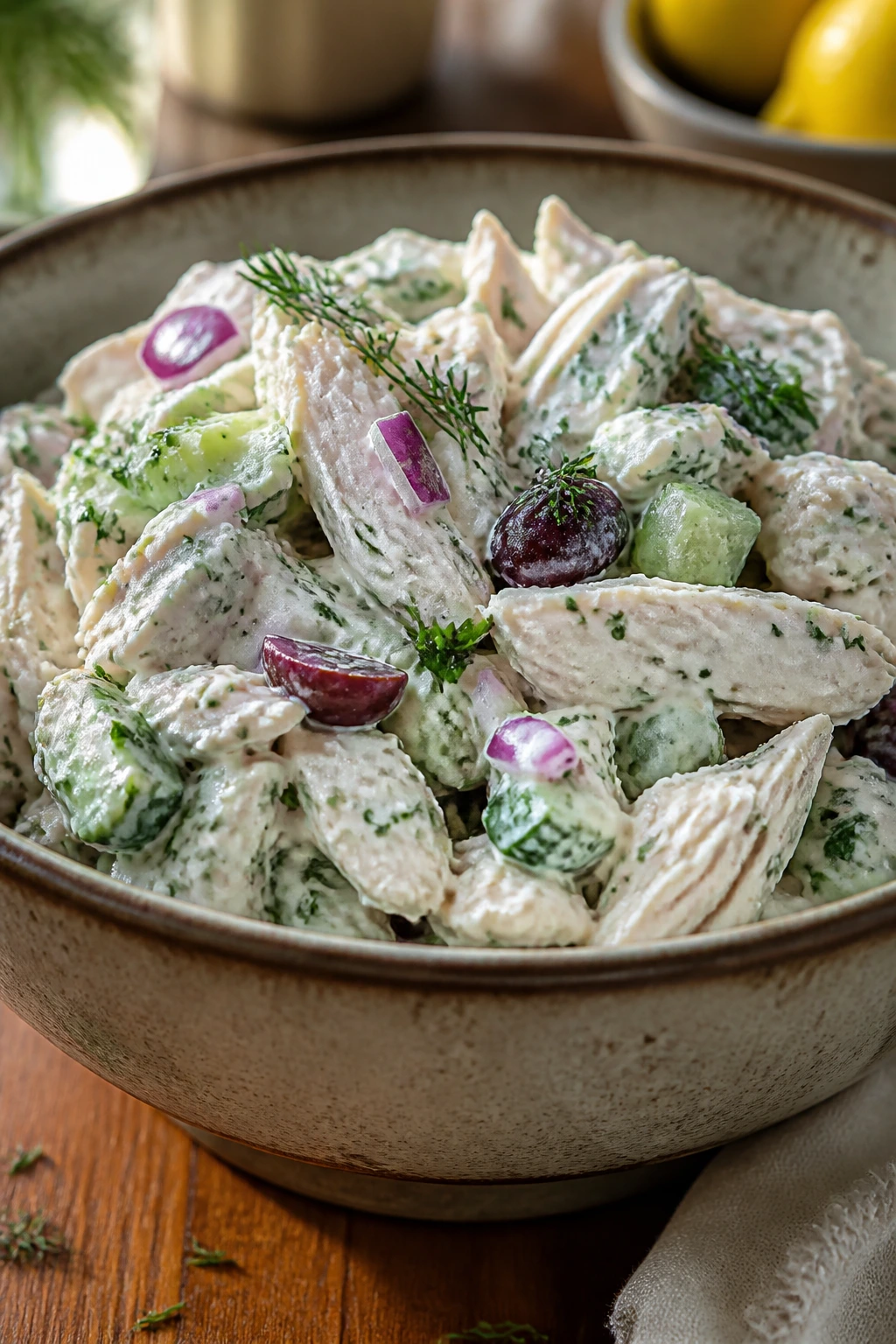
There’s a reason this kind of chicken salad sticks around. It does a lot with a short ingredient list, and it never asks you to pretend that light food has to taste thin or apologetic. The Greek yogurt keeps it bright, the herbs keep it alive, and the poached chicken gives it the soft, steady texture that makes people reach for a second spoonful.
Make it once, then tweak it a little. Add more dill if you like the green note louder. Pull back the onion if you want it softer. Throw in olives, almonds, or a handful of chopped apple if that’s the sort of bowl you want on your table. The nice thing about a salad like this is that it still behaves when you make it your own.
Herbed Greek Yogurt Chicken Salad Like Nonna Used to Make — Recipe Card
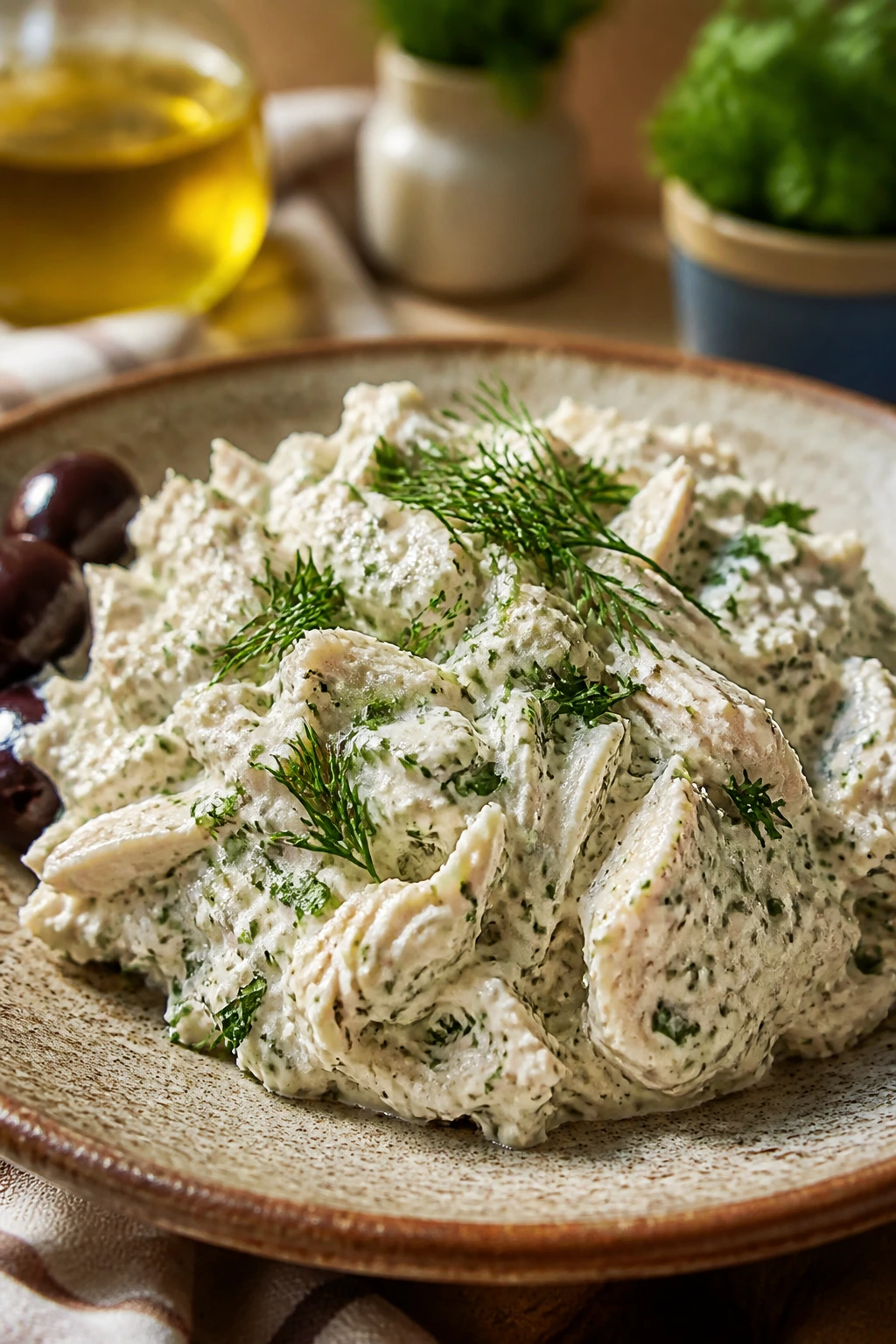
Recipe Name: Herbed Greek Yogurt Chicken Salad Like Nonna Used to Make
Description: Tender poached chicken mixed with Greek yogurt, lemon, Dijon, dill, parsley, celery, and a little mayonnaise for a cold chicken salad that’s creamy, bright, and sturdy enough for sandwiches or lettuce cups.
Prep Time: 20 minutes
Cook Time: 15 minutes
Total Time: 35 minutes, plus 20 to 30 minutes chilling
Course: Lunch, Main Course
Cuisine: Mediterranean-Inspired
Servings: 4 to 6
Calories: about 290 kcal per serving
Ingredients
For the Chicken and Poaching Liquid:
- 1 1/2 pounds boneless, skinless chicken breasts
- 4 cups low-sodium chicken broth
- 1 bay leaf
- 6 black peppercorns, lightly crushed
- 1 strip lemon peel
- 1 teaspoon kosher salt
For the Herb Yogurt Dressing:
- 1 cup full-fat plain Greek yogurt
- 2 tablespoons mayonnaise
- 1 tablespoon Dijon mustard
- 1 tablespoon fresh lemon juice
- 1 teaspoon lemon zest
- 1 small garlic clove, finely grated
- 2 tablespoons extra-virgin olive oil
- 1/2 teaspoon kosher salt
- 1/4 teaspoon black pepper
For the Salad:
- 2 celery ribs, finely diced
- 1/4 cup red onion, finely diced
- 2 scallions, thinly sliced
- 1/4 cup chopped fresh dill
- 2 tablespoons chopped flat-leaf parsley
- 2 tablespoons capers, drained and chopped, optional
- 1/3 cup toasted sliced almonds or chopped walnuts, optional
Instructions
-
Poach the chicken in the broth with bay leaf, peppercorns, lemon peel, and salt over medium heat until it reaches 165°F, about 12 to 15 minutes.
-
Rest the chicken in the hot liquid for 10 minutes, then cool slightly and chop or shred it.
-
Whisk the Greek yogurt, mayonnaise, Dijon, lemon juice, lemon zest, garlic, olive oil, salt, and pepper until smooth.
-
Fold in the celery, red onion, scallions, dill, parsley, capers, and nuts if using.
-
Add the chicken and toss gently until evenly coated.
-
Chill for 20 to 30 minutes, then taste and adjust with more salt, lemon, or pepper if needed.
Notes: Rotisserie chicken works as a shortcut; the salad keeps 3 to 4 days in the fridge; add nuts just before serving if you want the crunchiest texture.