



Light salad ingredients with homemade dressing can be a small triumph or a soggy disappointment, and the difference usually comes down to the details nobody writes down. A bowl of limp lettuce, cut-too-thin cucumber, and bottled vinaigrette that tastes like sweet vinegar is not a salad. It’s a regret in a bowl.
The good version is much more specific. Crisp greens. Cucumber that still snaps when you bite it. Radish for heat. Herbs for lift. A dressing that coats the leaves instead of drowning them. That’s the whole trick, and it’s why the same basic ingredients can feel either brisk and clean or flat and watery.
I keep coming back to salads like this because they solve a real problem: you want something light, but you don’t want to feel like you’ve ordered punishment for lunch. USDA’s MyPlate gets one thing exactly right when it pushes produce to half the plate, but a salad only works when the produce has texture, salt, acid, and a little fat to carry it. Olive oil is not the enemy here. It’s the reason a lemony vinaigrette tastes alive instead of sharp.
And the homemade dressing matters more than people think. Once you learn how to balance acid, oil, salt, and a touch of sweetness, the ingredients stop fighting each other. The whole bowl gets easier to build. A good salad starts with the produce, sure, but it really comes together in the whisking bowl.
Why This Style of Salad Works
- More crunch, less weight: A light salad should feel cool and crisp on the fork, with vegetables that still have snap after dressing touches them.
- Homemade dressing gives you control: Bottled dressings often lean too sweet or too salty; making your own lets you steer the flavor toward lemon, herbs, mustard, or yogurt.
- You can keep it filling without making it heavy: A few ounces of lean protein, a spoonful of seeds, and a sharp dressing do more for satiety than dumping on cheese or oily croutons.
- The bowl holds up better for lunch: When greens are dry and the dressing is separate until the end, the salad stays edible instead of collapsing by the time you sit down.
- One set of ingredients can branch in different directions: The same cucumber, greens, and lemon vinaigrette can go Mediterranean, herb-heavy, citrusy, or sesame-forward with a few small swaps.
- You get more flavor from fewer ingredients: A good radish, a clean herb, and a dressing with enough salt beat a crowded bowl of random toppings every time.
What “Light” Actually Means in a Salad Bowl
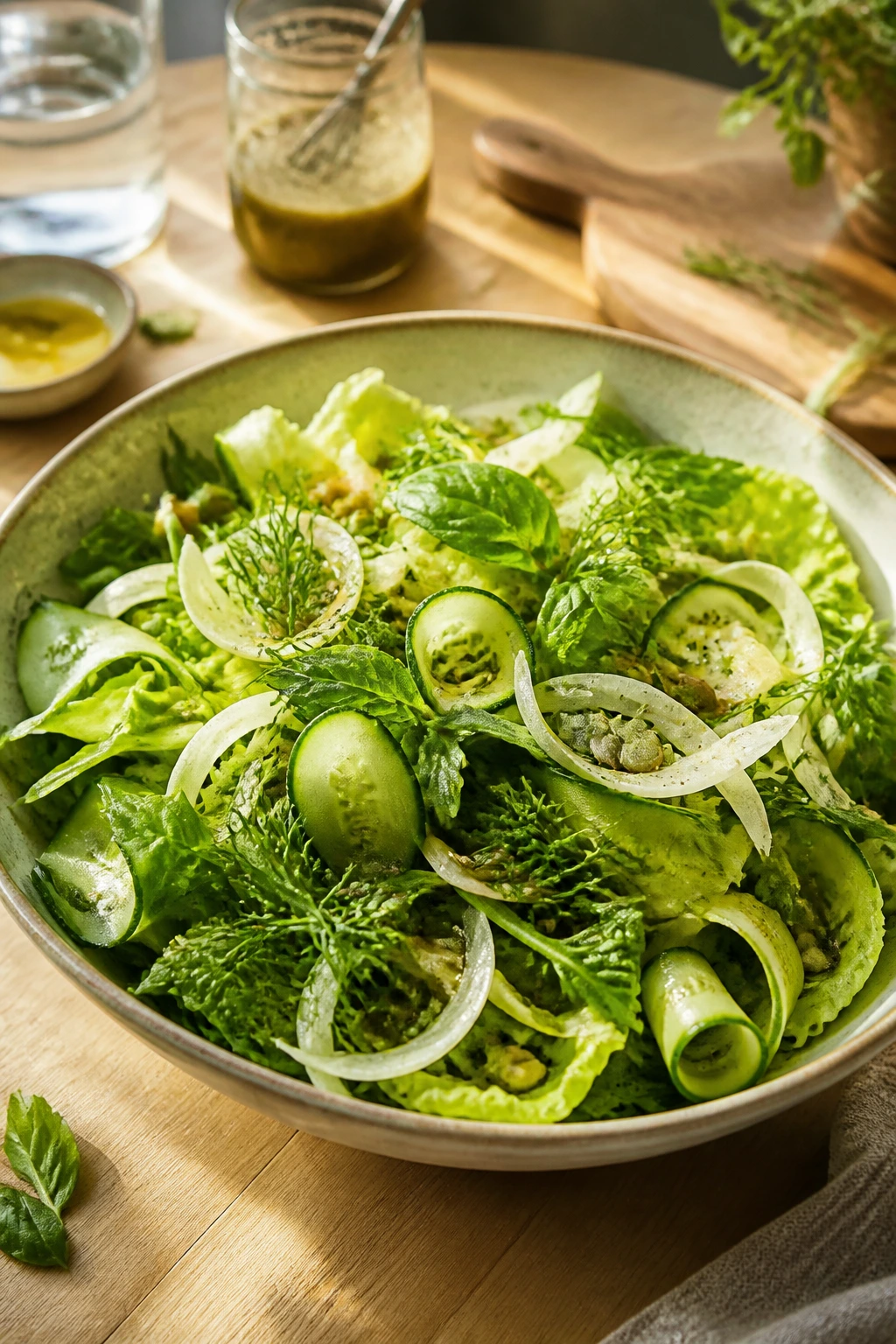
Light does not mean tiny. It does not mean plain, either. A light salad is really a question of structure: high water content, clean flavors, a modest amount of fat, and ingredients that don’t fight each other for attention.
The bowl should feel bright on the palate. Not creamy in the heavy sense, not loaded with a dozen toppings, not buried under shredded cheese. A light salad can still have protein and crunch. What it should not have is that dense, sleepy feeling you get from too much oil, too much cheese, or too many soft ingredients all in one place.
Weight vs. volume
A lot of people confuse “light” with “less food.” That’s the wrong test. A bowl with 3 packed cups of greens, 1 cup of crisp vegetables, 3 to 4 ounces of lean protein, and 1 tablespoon of seeds can feel satisfying without sitting like a brick. The volume comes from produce; the weight comes from restraint.
That’s why the cut matters so much. Thin radish slices, half-moon cucumber, shaved fennel, and torn herbs all give you more perceived abundance than one big chunk of avocado or a mountain of grated cheese. Your mouth reads variety as fullness. Your stomach reads it too, just a little later.
Why fat still matters
Salad people sometimes get weird about oil, which is silly. A tablespoon or two of olive oil helps a dressing cling to the leaves, and it helps your body absorb fat-soluble nutrients from carrots, tomatoes, and dark greens. That’s not a theory stitched together from diet slogans; it’s basic food chemistry.
So the goal is not “fat-free.” The goal is “fat in the right place.” A tablespoon in the dressing does more than a random glug over the bowl. It distributes flavor, softens sharp acid, and keeps the greens from tasting dry and metallic.
The half-plate rule that actually helps
The USDA’s half-plate produce model works well here because it gives you a clear floor. If the bowl is built around greens and vegetables first, you’re less likely to treat the salad like a side dish with a few decorative leaves on top.
I like that rule because it keeps the salad honest. Once the produce is doing the heavy lifting, everything else can stay small and sharp. The protein doesn’t need to be huge. The cheese doesn’t need to be everywhere. The dressing can be clean and bright, which is usually the whole point.
Greens That Stay Crisp and Taste Like Something
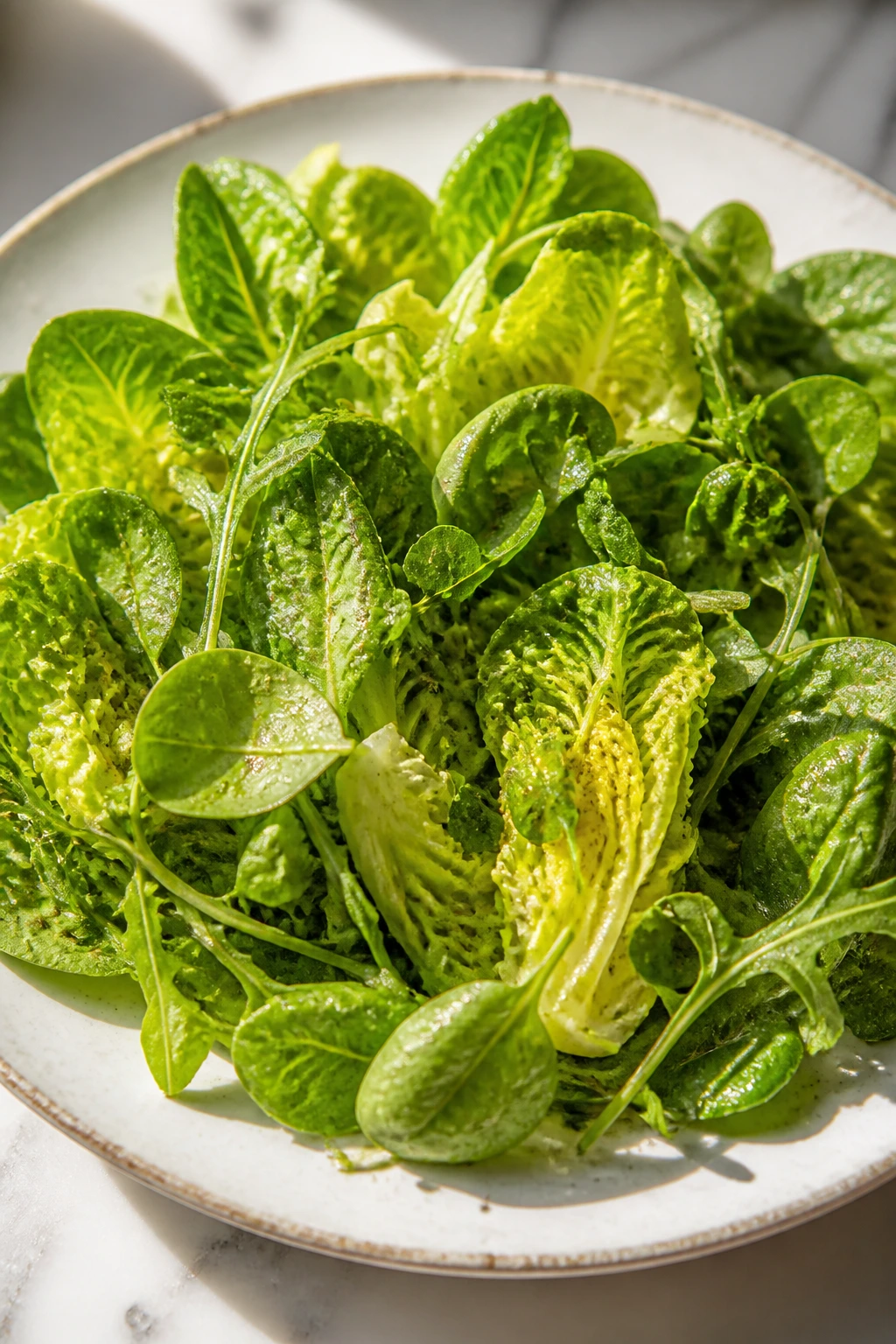
A salad lives or dies by its greens. You can rescue a bland vinaigrette with a sharp herb or a good lemon, but you cannot rescue limp, wet lettuce without starting over. Wet lettuce is a tax on lunch.
The best light salad greens have one of two jobs: they either carry dressing in soft leaves, or they give you a crisp bite that keeps the bowl awake. My usual shortlist leans toward butter lettuce, romaine hearts, little gem, arugula, baby spinach, and watercress. Each one behaves differently, and that’s useful. Not all salads should feel the same.
Soft greens with a gentle bite
Butter lettuce and little gem are the kind of greens that make a salad feel calm. Their leaves are tender but not flimsy, and they hold a light vinaigrette in their folds without breaking apart. I reach for them when I want a salad that tastes clean and almost silky, especially with cucumbers, herbs, and a lemon-Dijon dressing.
Baby spinach sits in the same neighborhood, though it’s a little more delicate and can go slippery if you drown it in dressing. Use smaller leaves if you can. The big ones are fine, but they need more cutting and they wilt faster once salt hits them.
Peppery greens with more attitude
Arugula and watercress bring the kind of bitterness and pepper that wakes up a salad fast. A small handful goes a long way. I usually mix them with a milder green, because a full bowl of arugula can dominate everything else, especially if the dressing has mustard or citrus already built in.
Watercress is one of those greens people forget about, which is a shame. It tastes like freshness with a little bite at the end. When you mix it with cucumber and fennel, the salad gets a sharp, almost mineral edge that bottled dressing can never fake.
Crunch first, then flavor
Romaine hearts and little gem deserve more credit than they get. They’re sturdy, crisp, and forgiving when you’re tossing a bowl for lunch. Romaine especially is the one I use when I know the salad will sit for a minute before eating.
Iceberg can still work, by the way. It gets dismissed a lot, but thinly shredded iceberg gives you a cold, clean crunch that fits a very light salad. Just don’t expect it to carry the flavor on its own. It needs herbs, salt, and a dressing with actual personality.
Vegetables That Add Volume Without Turning Watery
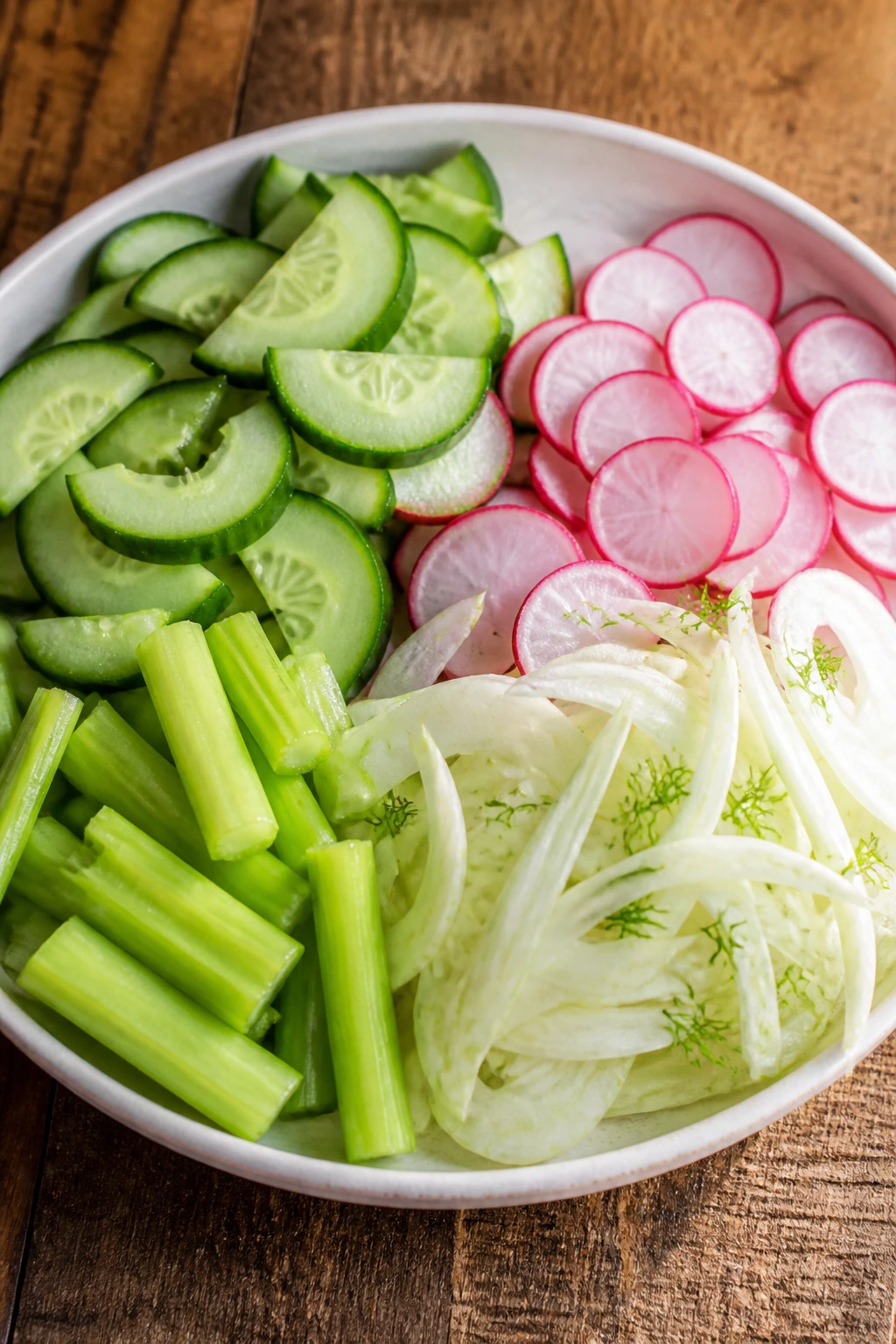
Cucumbers are the obvious choice, but they’re only one piece of the picture. A truly light salad gets its volume from vegetables that are crisp, clean, and cut well enough to stay that way after dressing touches them.
The best ones tend to be the vegetables that taste like freshness before they taste like anything else: cucumber, radish, celery, fennel, snap peas, bell pepper, shaved carrot, and sometimes jicama. You do not need all of them. Two or three is enough if the cuts are right.
The vegetables that earn their place
Cucumber is the backbone. Use it for moisture and cooling. I like half-moons about 1/4 inch thick because they stay crisp without feeling chunky. If the cucumber is especially watery, salt the slices lightly and let them sit for 10 minutes, then blot them dry.
Radishes add heat and snap. Thin slices work best, especially if you’re mixing them with mild greens. If you shave them too thick, the sharpness can feel aggressive instead of refreshing. That’s a small change, but it matters.
Celery and fennel are underrated in light salads. Celery gives you clean crunch and a little herbal bitterness. Fennel, shaved thin with a knife or mandoline, adds a cool anise note that works beautifully with lemon, orange, or dill.
Keep water in check
Tomatoes can belong in a light salad, but they have to be handled with some respect. Cherry tomatoes cut in half are better than big wedges because they give you more surface area and less slime. Salt them right before serving, not 20 minutes early, or the bowl will start making its own dressing in the bottom.
Shaved carrot is another good option when you want sweetness without softness. Raw carrot ribbons hold up well and add a tiny bit of body. I prefer a vegetable peeler or a julienne peeler over a box grater, because grated carrot goes limp fast and tastes more like filler.
Cut size changes the whole salad
This part sounds fussy until you taste the difference. Thin slices give the salad elegance. Slightly thicker cuts give it crunch. Random chunks make it feel like a chop salad that forgot what it wanted to be.
A light salad should feel precise. Not precious. There’s a difference.
Fruit and Herbs for Bright, Quick Flavor
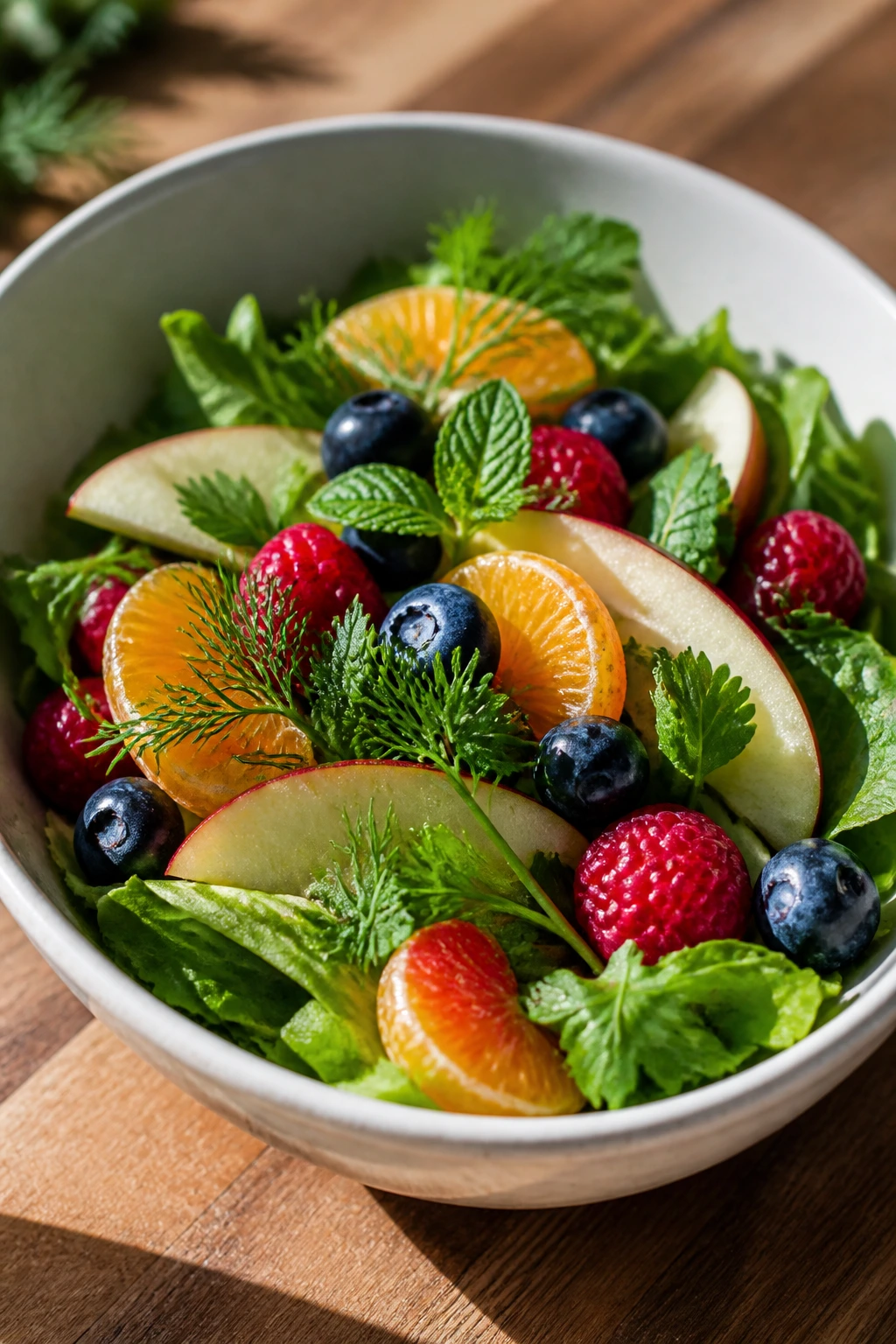
A light salad needs some kind of spark, and that spark usually comes from fruit or herbs. Not a lot. Just enough to break up the green and make your mouth pay attention.
I like fruit in salads when it acts like a bright accent, not dessert. A handful of berries, a few citrus segments, thin apple slices, or a scattering of pomegranate seeds can make the whole bowl taste more awake. Herbs do the same thing, only faster.
Sweetness should stay in the background
Berries are the easiest win. Strawberries sliced thin, blueberries halved if they’re large, or raspberries left whole if they’re sturdy enough all work. Use about 1/4 to 1/2 cup per serving and stop there. More than that and the salad starts tilting toward fruit salad, which is a different category entirely.
Apple and pear are excellent when you want crunch with a little sweetness. Slice them thin and toss them with a drop of lemon juice so they stay bright. Green apple gives you tartness; ripe pear gives you softness. Both work, but they behave differently in the bowl.
Citrus is probably the cleanest match for a light salad. Orange segments, grapefruit, or even a few tangerine pieces can lift cucumber and fennel in a way that feels almost unfair. Remove the membranes if you can. It takes a minute and makes the texture better.
Herbs are not garnish
Parsley, dill, mint, chives, basil, and cilantro each change the bowl in a different way. Dill and cucumber are old friends for a reason. Mint with citrus or melon can feel almost cold in the best possible way. Parsley is the all-purpose leaf that makes everything else taste clearer.
Basil needs a gentler hand. Tear it instead of chopping it into wet confetti. Chives should be snipped, not smashed. Cilantro can carry a salad hard if you like it, but it should be used with some intention because it can take over fast.
A small herb pile does more than a big handful of cheese. That’s my opinion, and I’ll stand by it.
Protein and Crunch That Keep the Bowl Satisfying
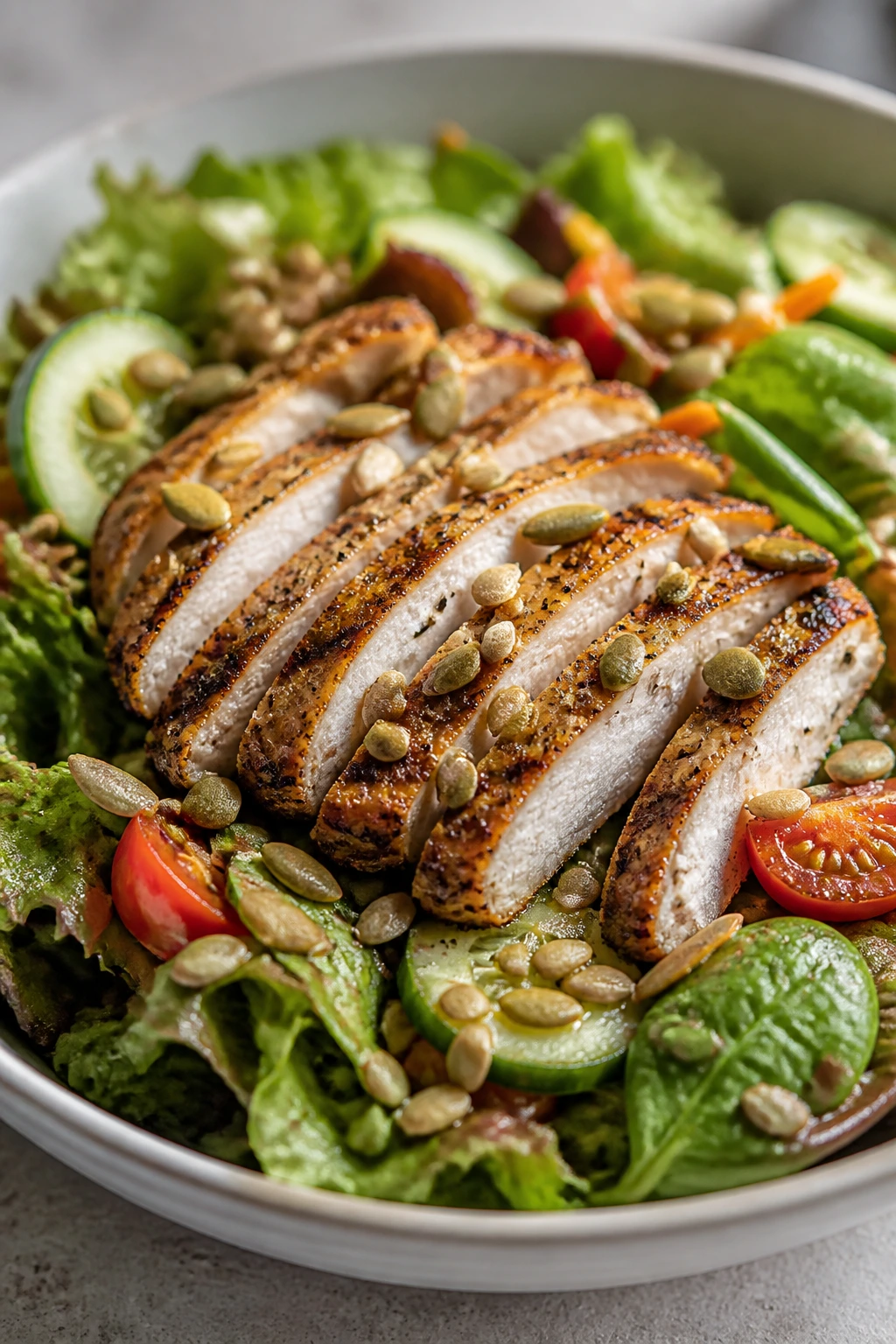
A light salad still needs something that tells your brain, “This is lunch.” Without that, you end up eating greens and dressing and then wondering why you’re still hungry an hour later.
The best add-ins are the ones that stay small and clean: grilled chicken breast, poached shrimp, flaked salmon, hard-boiled eggs, tofu, chickpeas, toasted nuts, and seeds. You do not need a lot of any of them. A modest portion gives the bowl enough shape without making it feel dense.
Lean protein works best when it stays simple
Chicken breast, sliced thin, is the easiest fit if you season it well and don’t overcook it. Shrimp is even lighter in texture and pairs well with lemon, cucumber, and dill. Flaked salmon works if you want something richer, but keep the portion a little smaller because the fish brings its own fat.
Hard-boiled eggs belong here too, especially if you want a classic lunch salad feel. One egg, maybe two if the rest of the bowl stays sharp and green, is usually enough. If you want a plant option, firm tofu or chickpeas both work, though chickpeas bring more heft and should be used in a measured way.
Crunch should stay small and fresh
Nuts and seeds are useful because they add texture without taking over the bowl. Toast them lightly in a dry skillet for 3 to 5 minutes until they smell nutty and a little warmer than room temperature. That tiny step changes the whole salad. Raw seeds are fine, but toasted ones taste more alive.
I like sliced almonds, pumpkin seeds, sunflower seeds, and chopped pistachios for a light salad. Use roughly 1 tablespoon per serving if you want the crunch without a heavy finish. More than that and the salad starts to feel like a snack mix wearing lettuce as a disguise.
Cheese is optional, and I mean that. Feta, goat cheese, and shaved Parmesan can be wonderful, but a light salad usually needs only 1 to 2 tablespoons. Enough to notice. Not enough to coat everything.
The Homemade Dressing Formula That Clings Instead of Pooling
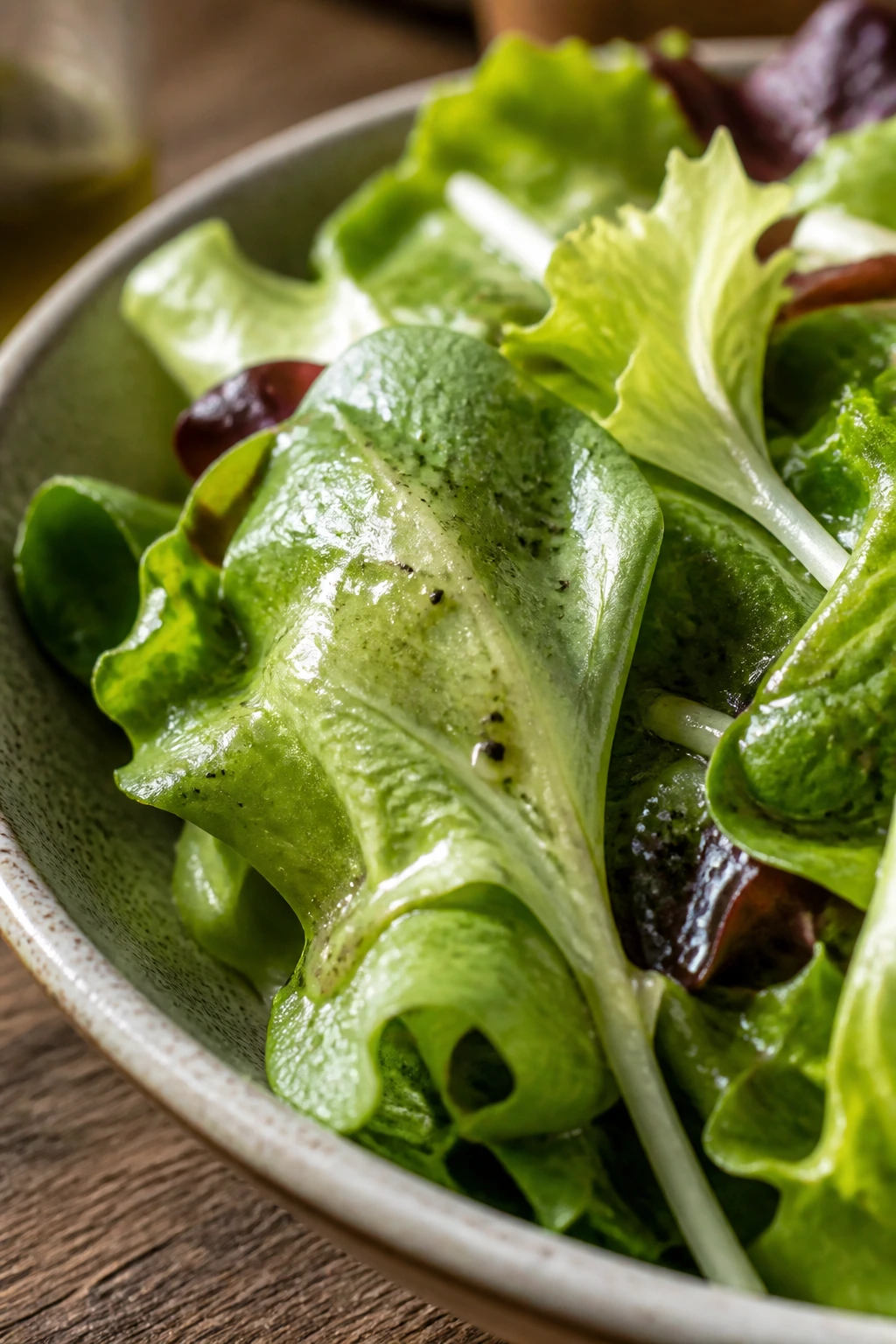
A homemade dressing should not sit under the salad like a puddle. It should grab the leaves, gloss them lightly, and leave enough sharpness that you notice each bite. If it looks oily or broken, you’ve probably gone too far.
The basic idea is simple: acid, oil, salt, and an emulsifier. That last piece is what keeps the dressing from separating into a slick on top and vinegar at the bottom. Dijon mustard is the classic move, but yogurt, tahini, or a little miso can work too.
The ratio I trust most
For delicate greens, I like 2 parts oil to 1 part acid. For sturdier leaves like romaine or shredded cabbage, 3 parts oil to 1 part acid feels right. If you’re making a dressing for butter lettuce or baby spinach, err on the lighter side so the leaves don’t collapse.
A simple version for one medium salad looks like this:
- 2 tablespoons extra-virgin olive oil
- 1 tablespoon lemon juice or white wine vinegar
- 1 teaspoon Dijon mustard
- 1/2 teaspoon honey or maple syrup
- Pinch of kosher salt
- Fresh black pepper
Whisk until the mixture turns cloudy and thick enough to coat a spoon. If you shake it in a jar, give it a hard 15-second shake, then check the texture. It should look glossy, not oily.
Why the emulsifier matters
Dijon does more than add flavor. It helps the oil and acid hold hands for long enough to coat the salad evenly. A tiny bit of honey softens the sharpness without making the dressing sweet. Salt wakes everything up. Without it, even a good vinaigrette tastes unfinished.
A spoonful of plain Greek yogurt can make a lighter creamy dressing that still feels fresh. Tahini turns lemon into something nutty and smooth. Miso gives you salt and depth without needing much else. Those are all tools, not rules.
Taste the dressing the right way
Taste it on a leaf, not on a spoon. The spoon tells you what the liquid tastes like in isolation. The leaf tells you how the dressing will behave in the bowl, and that’s what actually matters.
If the dressing tastes too sharp, add a pinch more salt before you add more sweetener. If it tastes flat, a little lemon zest usually does more than another splash of acid. If it feels heavy, thin it with a teaspoon of water and whisk again.
Five Dressing Styles That Work on Light Salads
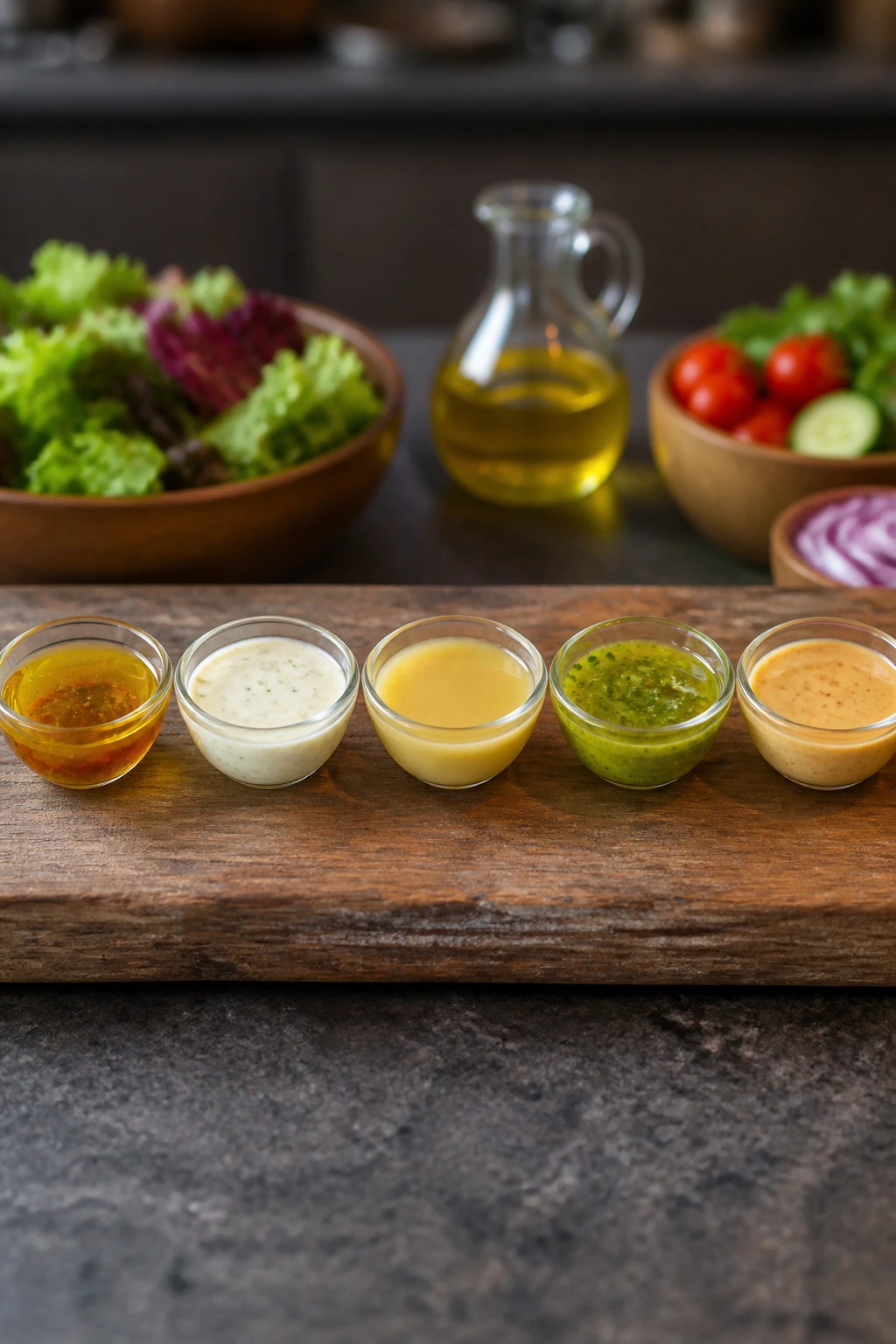
There are a lot of ways to dress a salad, but most light bowls only need one of five directions. The trick is matching the dressing to the ingredients so the whole thing sounds like one sentence instead of six different voices talking over each other.
- Lemon-Dijon Clean Sweep: Olive oil, lemon juice, Dijon, and a little honey make a dressing that works with romaine, cucumber, parsley, and chicken. It tastes bright and clean, with enough mustard to keep it from feeling thin.
- Herbed Yogurt Whisper: Thin Greek yogurt with lemon juice, a splash of water, chopped dill, salt, and pepper. It’s especially good with celery, radish, and shaved fennel because the creaminess softens the sharper vegetables without turning the salad heavy.
- Honey-Lime Snap: Lime juice, olive oil, honey, and a tiny pinch of chili flakes. This one is sharp and lively, which makes it a strong match for avocado, shrimp, cabbage, or corn if you want a little sweetness in the mix.
- Miso-Sesame Shine: White miso, rice vinegar, toasted sesame oil, neutral oil, and a splash of water. It brings salt and depth without needing cheese, and it’s excellent with cucumber, snap peas, baby spinach, or shredded napa cabbage.
- Tahini-Citrus Coat: Tahini, lemon juice, garlic, water, and salt. This one can feel creamy while still staying light if you thin it enough that it drips from the spoon in a slow ribbon instead of a paste.
The common thread is balance. None of these should taste flat. None of them should taste like dessert. If you can eat a leaf by itself after dipping it, and it tastes bright but not harsh, you’re in the right zone.
How to Build a Salad So Every Bite Feels Balanced
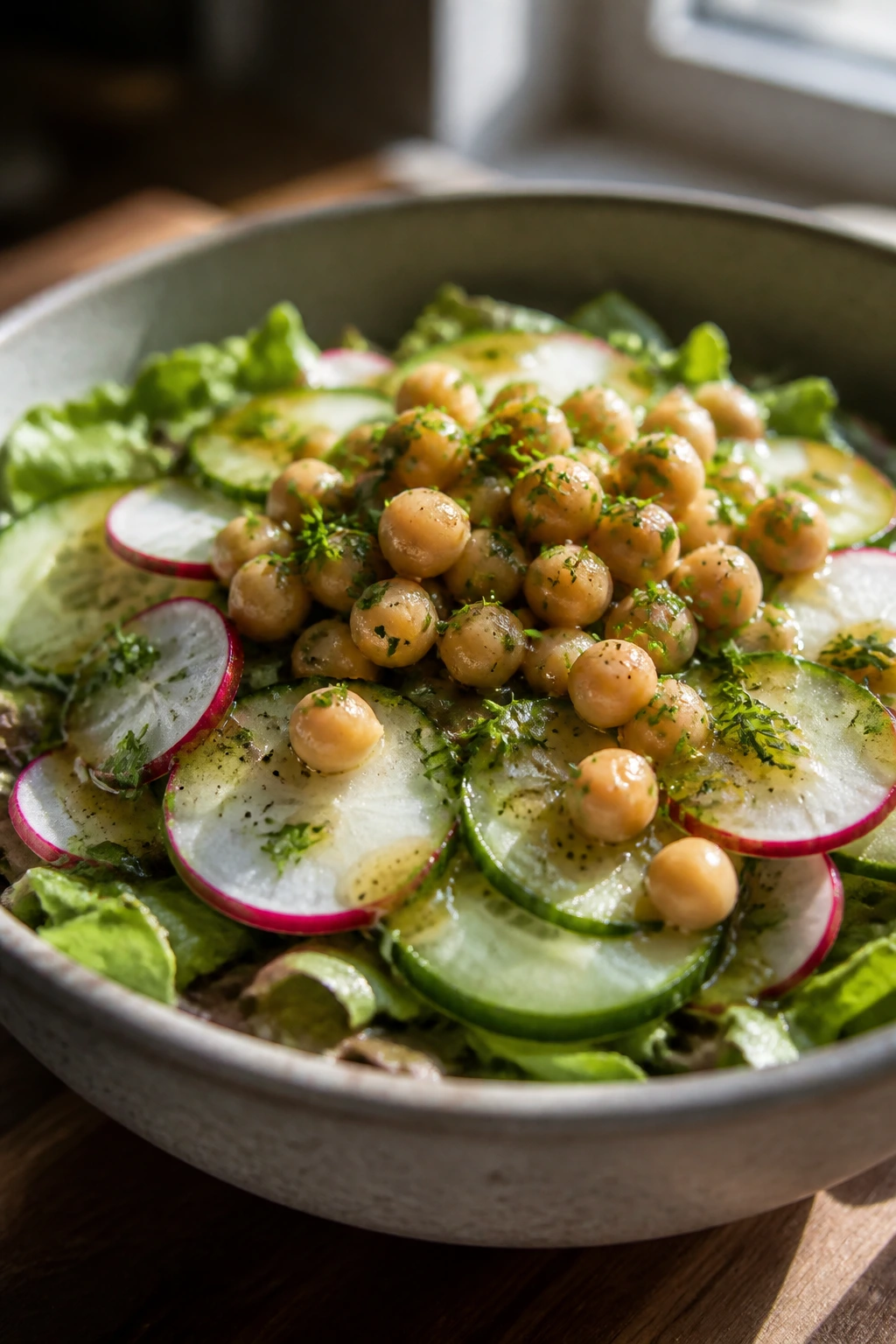
The best light salad isn’t a pile of ingredients. It’s a little construction project.
A good bowl has rhythm: greens first, then crunch, then something acidic or sweet, then protein, then dressing, then a final hit of herbs or seeds. If you dump everything in at once, the lettuce bruises and the fragile pieces sink to the bottom where nobody notices them.
Start with dry greens
Use 2 to 3 packed cups of greens per person as a lunch baseline. Put them in a large bowl, and make sure they’re dry enough that the dressing can actually cling. If the leaves still feel damp, stop and dry them. I’d rather lose two minutes than eat wet salad.
A salad spinner earns its place very quickly. So does a clean kitchen towel if you do not have one. Wrap the leaves, press gently, and let the towel do the work. Don’t mash the greens. You’re drying them, not making pesto.
Add the sturdy pieces first
Cucumbers, radishes, fennel, celery, carrots, chickpeas, chicken, and seeds should go in before the delicate herbs and any soft fruit. That way the heavier ingredients distribute through the bowl and don’t all end up in one clump.
If you’re using tomato or avocado, put them in last. Tomatoes bleed juice; avocado bruises if you toss it too hard. Better to fold them in gently right before serving, after the dressing is already mixed through the tougher ingredients.
Dress in stages
Start with half the dressing. Toss the salad. Look at the leaves. If they’re glossy and lightly coated, stop there. If the bowl still looks dry, add another spoonful or two. The salad should taste seasoned, not slick.
Wide bowls are easier than deep bowls because you can toss without smashing the ingredients. Use your hands or tongs and move gently from the bottom up. Ten seconds is often enough. If you keep tossing because it feels like you should, you’ll overwork the greens.
A small finishing sprinkle of seeds or herbs makes the whole thing feel deliberate. Not dressed up. Deliberate. That’s the word.
Smart Shopping and Prep That Keep the Produce Perky
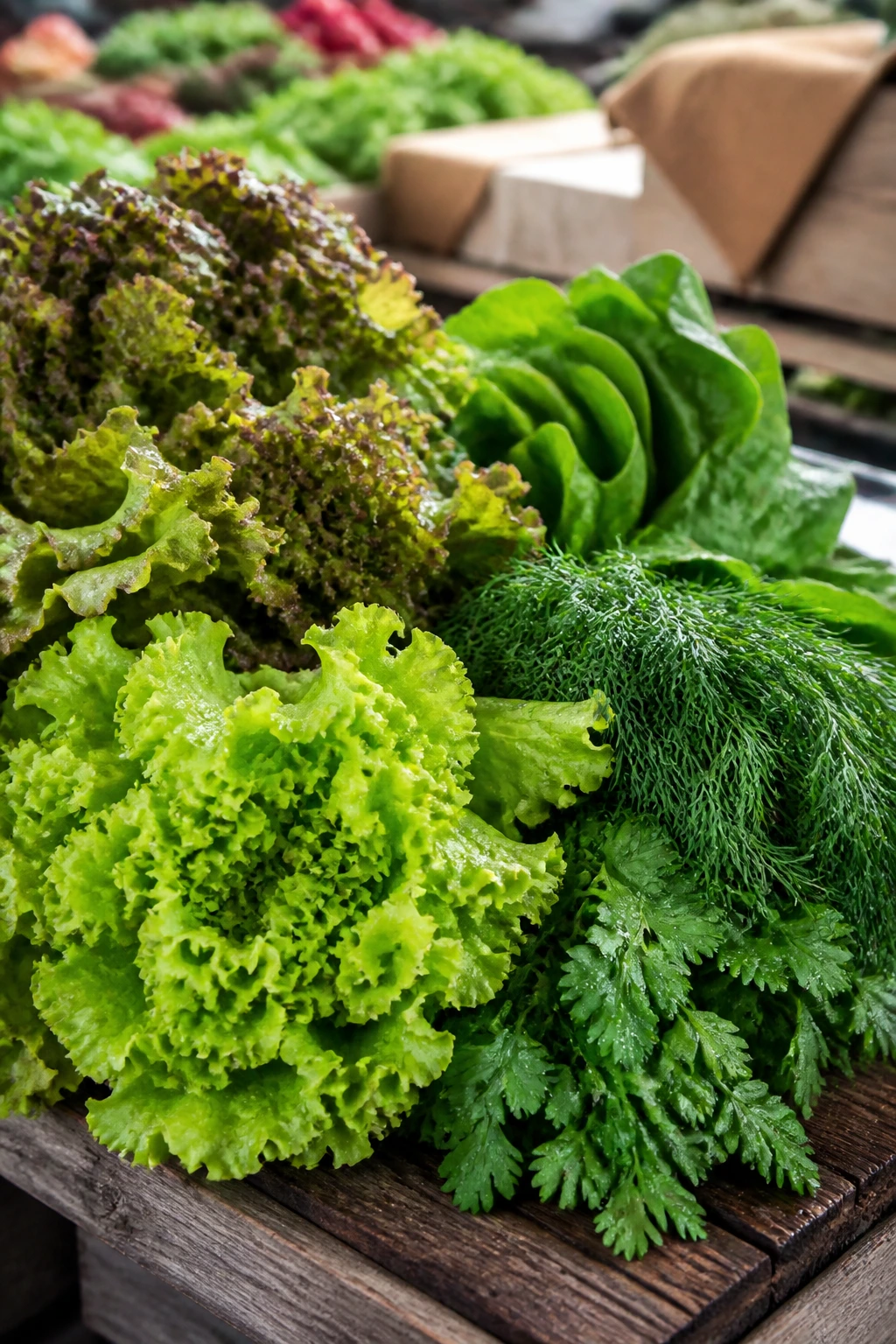
The ingredients for a light salad are not expensive, but they are unforgiving. If the greens are tired, the herbs are limp, or the nuts taste stale, the whole bowl feels second-rate before you even open the dressing jar.
When I shop for a salad like this, I look for ingredients that seem to have some spring left in them. Not perfect produce. Just produce that still has a little bounce.
What to look for at the market
- Greens: Leaves should look dry, not wet, and the stems should feel firm rather than floppy. Bagged greens are fine if there’s no condensation and no brown edges.
- Cucumbers: Pick ones that feel heavy for their size with skin that looks taut, not shriveled. Soft ends mean they’re past their best.
- Radishes: The tops, if attached, should be perky. The roots should feel hard, not rubbery.
- Herbs: Stems should stand up in a glass of water instead of flopping over immediately. If the leaves are blackened or slimy, skip them.
- Citrus: Lemons and limes should feel heavy. Thin-skinned fruit usually gives more juice.
- Nuts and seeds: Smell them before you buy if you can. If they smell like cardboard or oil paint, they’re tired.
What I buy first and what I buy last
Greens, cucumbers, herbs, citrus, and a dressing base can be bought earlier. Avocado, berries, and tomatoes should be bought closer to the day you plan to eat them. That saves you from the awful moment when a beautiful salad gets dragged down by one mushy ingredient.
If the market only has rough-looking herbs, I skip them. That sounds picky, but it’s not. A tired bunch of parsley can flatten a salad faster than a little extra salt can fix it.
Prep in the order that protects texture
Wash, dry, and store greens first. Slice the sturdy vegetables next. Keep fruit and avocado separate until the end. Make the dressing in a jar so it’s already ready when the bowl is assembled.
A paper towel tucked into the storage container is a small thing that pays off. It catches stray moisture and keeps the leaves from slipping into that damp, refrigerator smell nobody wants in a salad.
Tools That Make Salad Work Less Messy
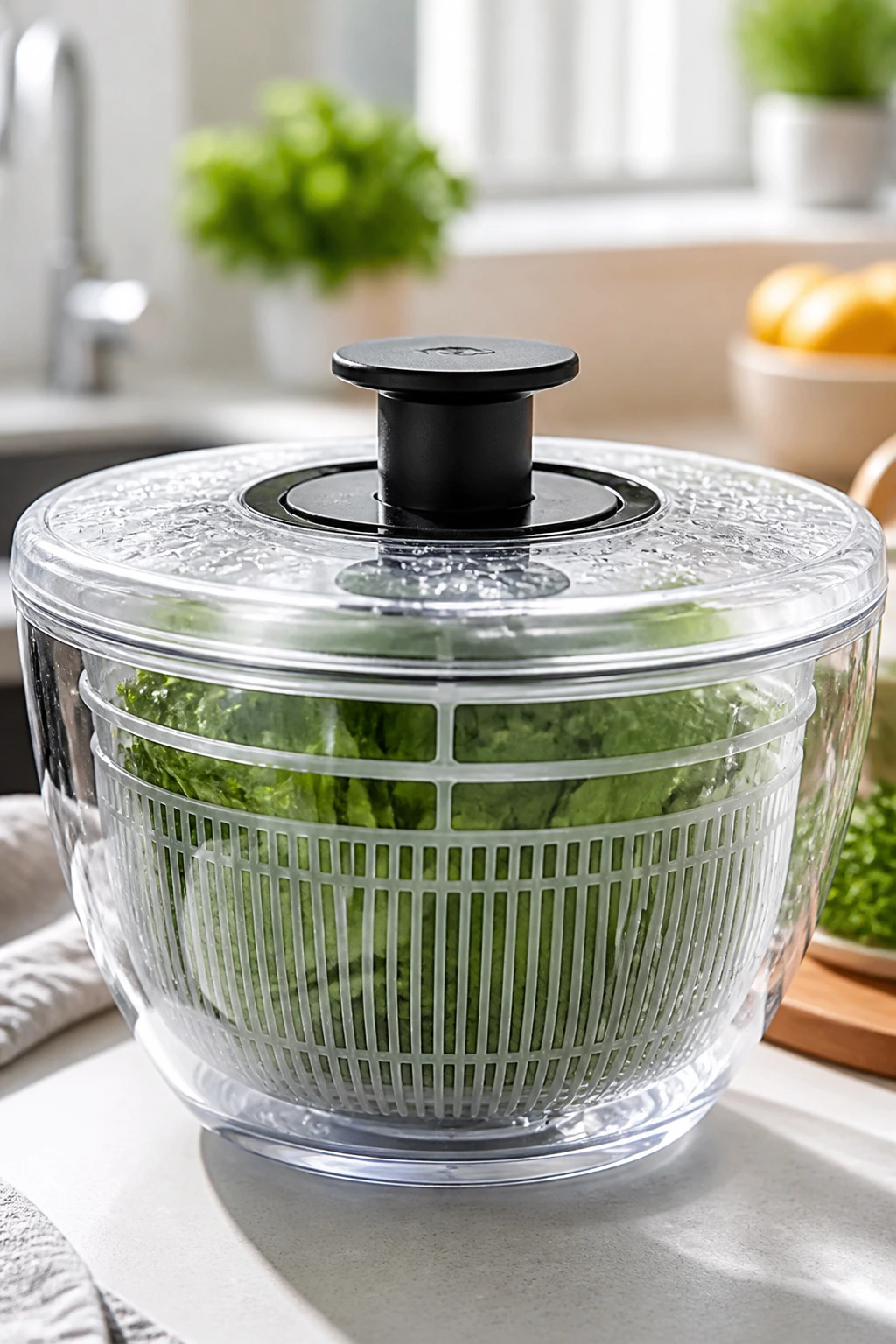
You do not need a cabinet full of gadgets to make a good salad. You do need a few tools that remove friction, because salad prep gets annoying fast when the knife is dull or the greens are wet.
- Salad spinner: The fastest way to dry washed greens. If you don’t own one, use a clean towel and dry the leaves in batches.
- Sharp chef’s knife: A dull blade crushes herbs, bruises lettuce, and turns cucumber into uneven chunks.
- Cutting board with a damp towel underneath: Keeps the board from sliding while you shave fennel or slice radishes.
- Large mixing bowl: A wide bowl gives you room to toss without smashing delicate ingredients.
- Measuring spoons: Handy for dressing so you can keep acid, oil, and salt in check instead of free-pouring.
- Jar with a tight lid: The easiest way to shake up dressing and store leftovers without extra dishes.
- Microplane or fine grater: Good for lemon zest, garlic, or ginger if your dressing needs a little lift.
- Mandoline, optional: Excellent for fennel, radish, or cucumber if you want paper-thin slices. Use the guard. Always.
- Tongs or clean hands: Tongs are neat; hands give you more control. I use both depending on the bowl.
- Storage containers with paper towels: Best for keeping washed greens dry and crisp for a few days.
A salad spinner and a good knife are the two things I’d refuse to give up. Everything else is useful. Those two are the workhorses.
Small Moves That Make the Bowl Better
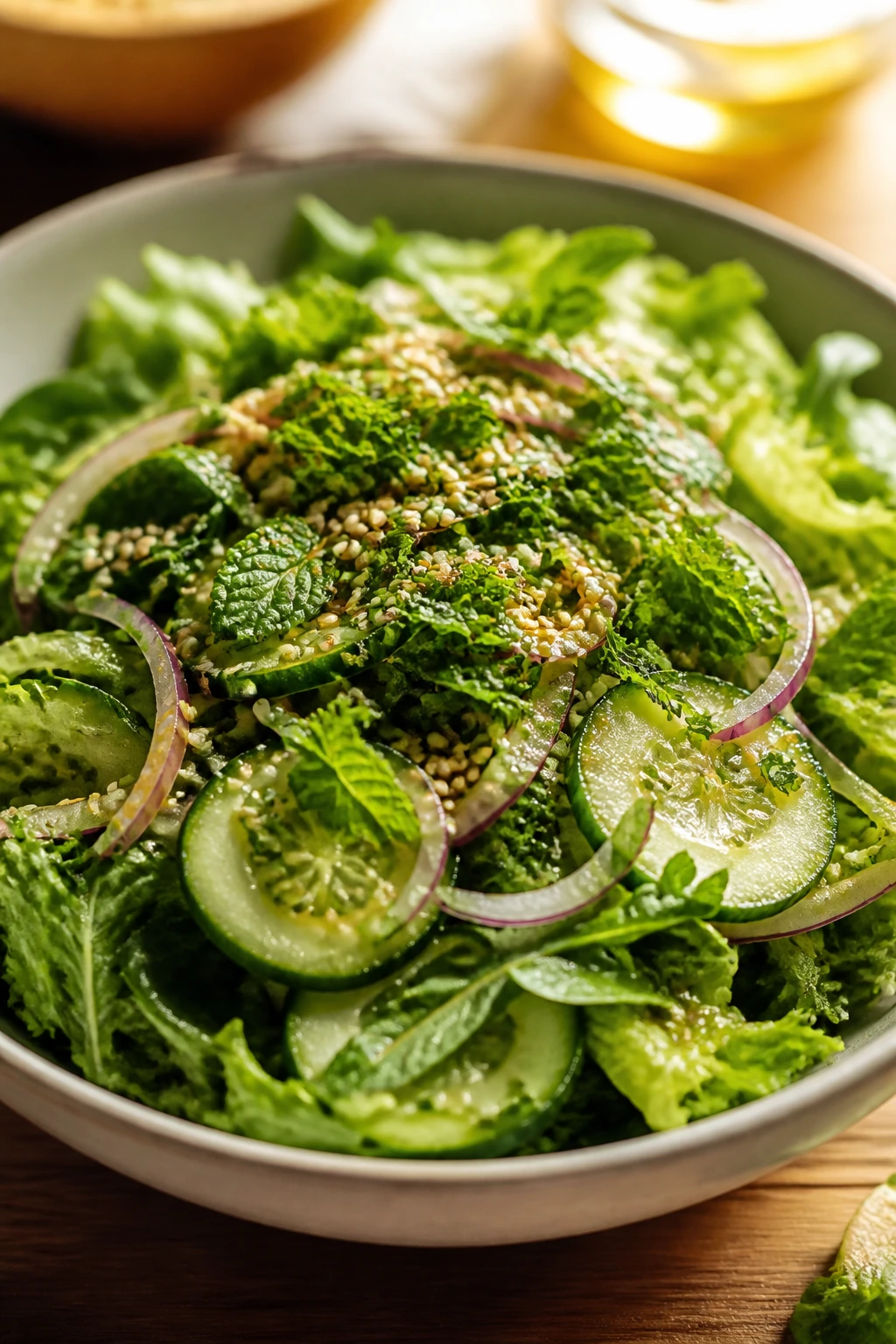
A light salad gets better with a few tiny habits that look fussy until you taste the result.
Temperature control matters. Chill the greens for 10 minutes before serving if you’ve got the space. A cold bowl keeps cucumbers crisp and helps the dressing stay on the leaves instead of sliding off. I do not bother chilling the dressing unless it contains yogurt or tahini; room-temperature olive oil pours and emulsifies more easily.
Salt the dressing, not the leaves. If you season the salad at the bowl level, the salt can land unevenly and pull moisture out of the vegetables before you’re ready to eat. Salt the vinaigrette, taste it, then toss.
Use one rich thing, not five. A few slices of avocado, a spoonful of feta, or a handful of toasted nuts is enough. Stack too many rich ingredients and the whole bowl stops feeling light, even if the greens are still technically in charge.
Taste with your fork before serving. This sounds almost silly, but one bite tells you whether you need more acid, more salt, or one sweet note like apple or orange. A dressing can taste balanced in the jar and under-seasoned on the leaves.
Keep a crunchy finish. Seeds, nuts, shaved carrots, or radish slices on top give the first bite some life. Once those disappear, the salad should still hold together underneath. If the top layer is the only interesting part, the bowl was built wrong.
Common Mistakes That Make Light Salads Feel Flat
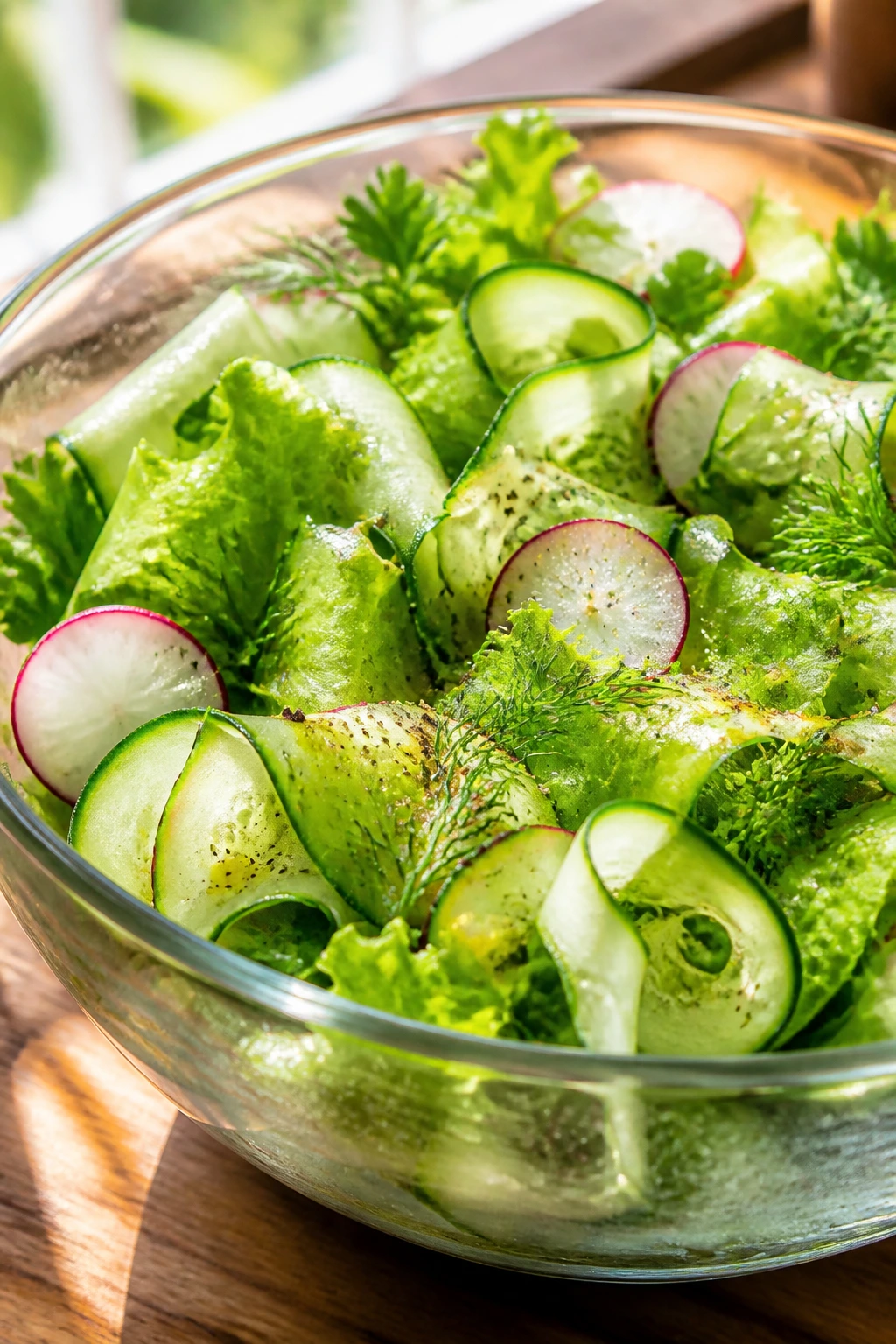
A light salad is easy to overthink and easy to underbuild. Both directions cause trouble. The good news is that the problems are predictable once you know what to look for.
- Using wet greens: The dressing slides right off, and the bottom of the bowl turns swampy. Spin the leaves dry and blot any stubborn water with a towel before dressing.
- Overloading with soft ingredients: Too much avocado, too many tomatoes, or a pile of cheese makes the bowl taste dense. Keep soft elements to one or two per salad, not the whole cast list.
- Dressing too early: Even a good vinaigrette will wilt tender greens if it sits too long. Dress right before serving, or keep the dressing on the side until the last minute.
- Forgetting salt: A salad without enough salt tastes like separate ingredients arranged near each other. Season the dressing, taste it, and adjust before it hits the bowl.
- Making every cut the same size: Uniform tiny pieces can feel mushy; huge pieces feel awkward. Mix shaved, sliced, and torn ingredients so every bite has a little variation.
- Letting the dressing get too sweet: A little honey is useful. A sweet dressing on light greens tastes cloying fast. If the bottle habit has trained you to expect sweetness, dial it back and use more lemon or vinegar instead.
One more thing: people often think the fix for a bland salad is more dressing. Usually it’s better seasoning, better acid, or one sharper ingredient. More dressing is a blunt instrument. Not a precise one.
Variations for Different Moods and Diets
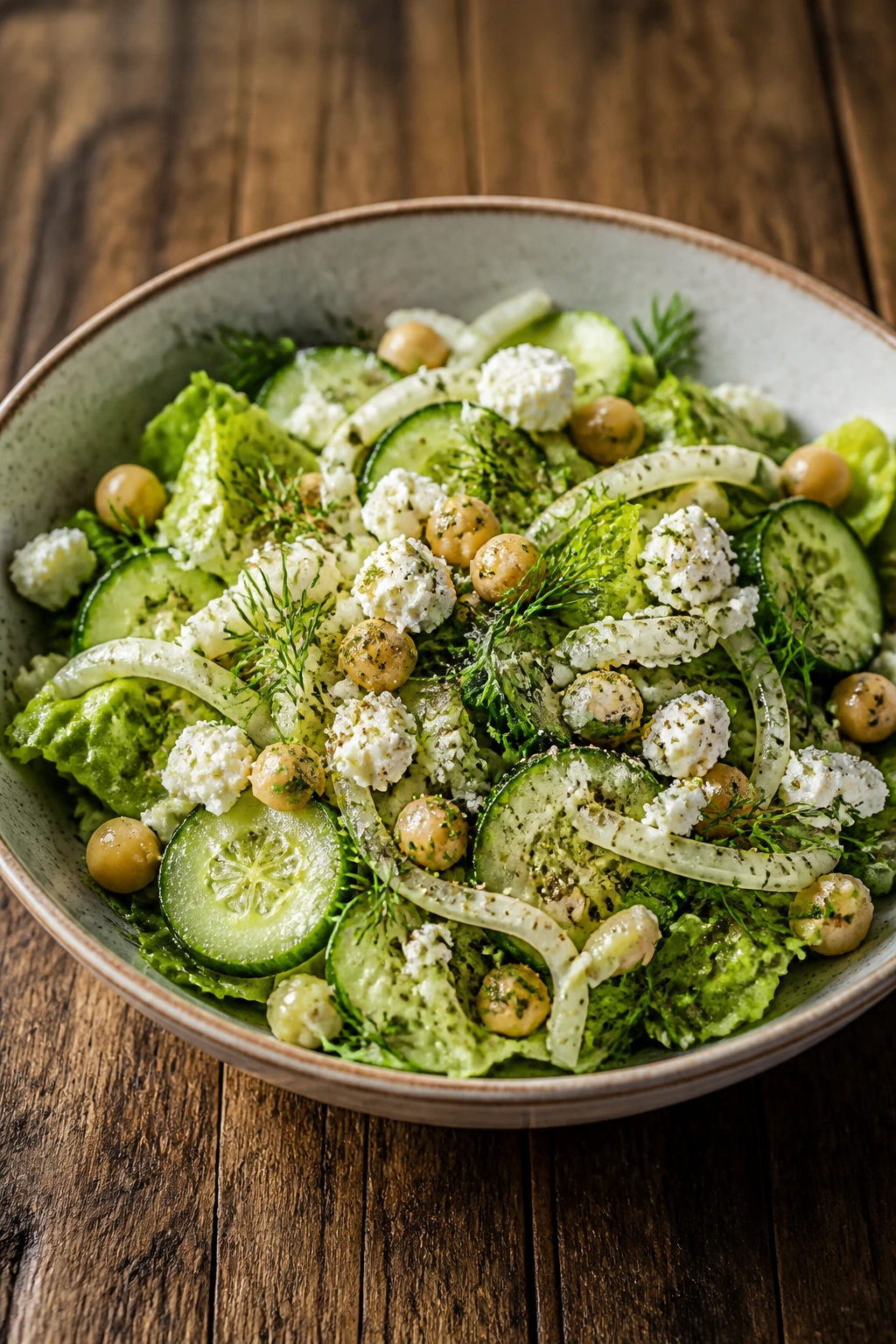
The nice part about a light salad template is that it changes easily. You can move it toward Mediterranean, citrusy, creamy, crunchy, or plant-based without rebuilding the whole thing.
- Mediterranean Bright Bowl: Use romaine, cucumber, fennel, dill, chickpeas, and a lemon-oregano vinaigrette. Add a small crumble of feta if you want a salty edge, but keep the cheese modest so the bowl stays clean.
- Citrus and Avocado Lunch Salad: Butter lettuce, orange segments, avocado, radish, and pumpkin seeds with a lime-Dijon dressing. This version feels soft and bright at the same time, which makes it a good lunch when you want something calm but not boring.
- Crunchy Market-Garden Salad: Romaine, celery, snap peas, shaved carrot, parsley, and toasted sunflower seeds with a simple white wine vinaigrette. It’s all about snap and freshness, and it works especially well with grilled chicken.
- Sesame-Lime Slaw Salad: Shredded napa cabbage, cucumber, scallions, cilantro, and edamame with a miso-sesame dressing. This leans a little more toward crunch than leafiness, which is useful when you want a salad that eats like a full bowl.
- Dairy-Free Creamy Herb Salad: Mixed greens, cucumber, herbs, avocado, and tahini-citrus dressing. The tahini gives you richness without cheese or yogurt, and the result still tastes clean because the lemon keeps it moving.
- Brunch-Style Salmon Salad: Baby spinach, radish, cucumber, dill, flaked salmon, and capers with a lemon-herb vinaigrette. A few capers do a lot of work here; they add salt without turning the whole bowl into a deli salad.
If you need the salad to feel more filling, add protein first, not more oil. If you need it to feel lighter, add more herbs and a sharper acid, not less flavor. That distinction matters more than most people think.
Make-Ahead, Storage, and Leftover Strategy
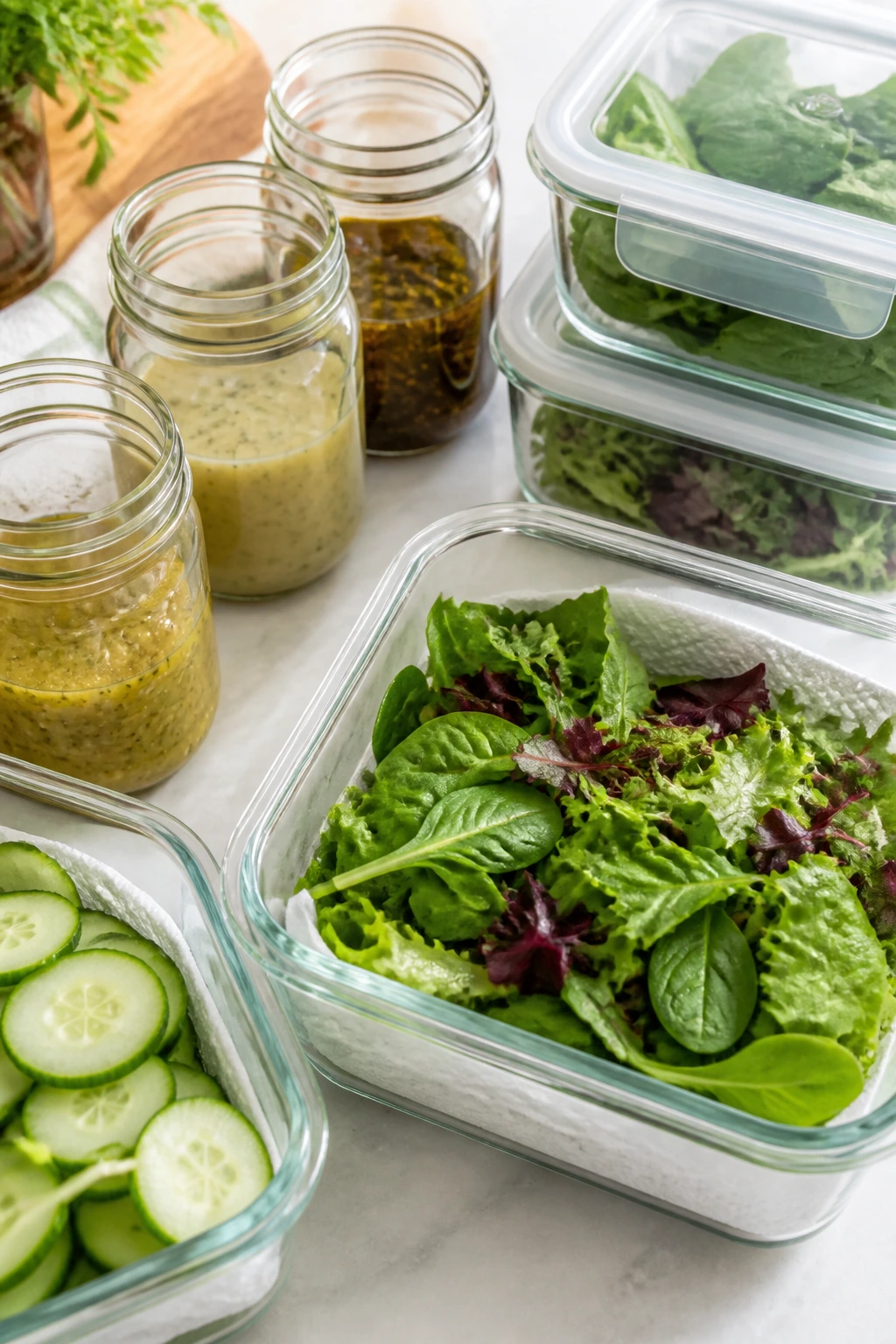
Fresh salad ingredients are fragile in different ways, so storage has to respect the texture of each component. Throwing everything into one container is how you end up with limp lettuce and a dressing that tastes oddly tired.
Washed, dried greens usually keep 3 to 5 days in the fridge if you line the container with a paper towel and close it tightly. If the towel gets damp, replace it. Tender greens like baby spinach and arugula may need to be used closer to the front of that window.
Cut cucumbers, radishes, celery, and fennel generally keep 2 to 3 days in a sealed container, especially if you tuck in a dry paper towel. If the slices start looking wet or the cucumbers release a puddle, drain them and blot them before serving.
Fresh herbs are more delicate. Dill and parsley keep well for a few days if they’re wrapped in a slightly damp paper towel and placed in a container or jar. Basil is fussier and tends to brown if chilled too hard, so I use it sooner rather than later.
Homemade vinaigrette holds for 1 to 2 weeks in the fridge in a jar with a tight lid. Yogurt-based dressings are better used within 3 to 4 days, and tahini-based dressings usually stay good for 5 to 7 days. If the oil solidifies, set the jar in warm water for 5 minutes and shake it again.
A dressed salad with tender greens is best eaten right away or within an hour. If the bowl contains sturdy cabbage, kale, or romaine, it can survive a bit longer, but it still gets less lively with time. For lunch prep, keep the dressing separate and toss only when you’re ready to eat.
Avocado and cut fruit should be handled last. A little lemon juice helps slow browning on avocado and apples, but not forever. They still belong close to serving time.
Salad Questions People Ask Most
What are the best light salad ingredients if I want lunch to keep me full?
Start with a sturdy green like romaine or little gem, then add cucumber, radish, and one lean protein such as chicken, shrimp, tofu, or eggs. A tablespoon of seeds or nuts helps too, but the bowl stays light if you keep the rich add-ins small and let the vegetables do most of the work.
Can a homemade dressing be creamy and still feel light?
Yes. The key is thinning it enough that it coats rather than sits in the bowl. Greek yogurt, tahini, or even a little avocado can give you creaminess without the dense feel of a heavy store-bought dressing, especially when lemon or vinegar keeps the flavor sharp.
Which greens hold up best if I’m packing salad for lunch?
Romaine hearts, little gem, butter lettuce, and shredded cabbage hold up better than tender baby spinach or loose spring mix. If you want the salad to survive a few hours, keep the dressing separate and add soft fruit or avocado at the last minute.
How do I stop cucumbers and tomatoes from making the bowl watery?
Salt them lightly only if you’re using them right away, or blot them after they sit for a few minutes. Cherry tomatoes cut in half are usually easier to manage than large wedges, and cucumbers sliced a little thicker stay crisp instead of turning slippery.
What if my dressing tastes too sharp?
Add a pinch more salt first, then a tiny bit of honey or maple syrup if it still feels harsh. Too much acid without enough salt reads as sour, not bright, and a teaspoon of olive oil won’t fix that by itself.
How much dressing should I use on one salad?
Start with about 1 to 2 tablespoons per serving, depending on the greens. Delicate lettuce needs less; romaine, cabbage, or a heartier bowl can take a little more. The leaves should look lightly glazed, not soaked.
Can I make a light salad without lettuce at all?
Absolutely. Shredded cabbage, fennel, cucumber, celery, herbs, and shaved carrots can carry a salad on their own, especially with a citrus or sesame dressing. That style is crisp, sturdy, and easier to prep ahead than a tender-leaf bowl.
Is cheese a bad idea in a light salad?
Not at all, but it should behave like a seasoning, not a main ingredient. A small crumble of feta, a few shavings of Parmesan, or a spoonful of goat cheese is enough to add salt and richness without burying the fresh vegetables.
A Bowl Worth Repeating
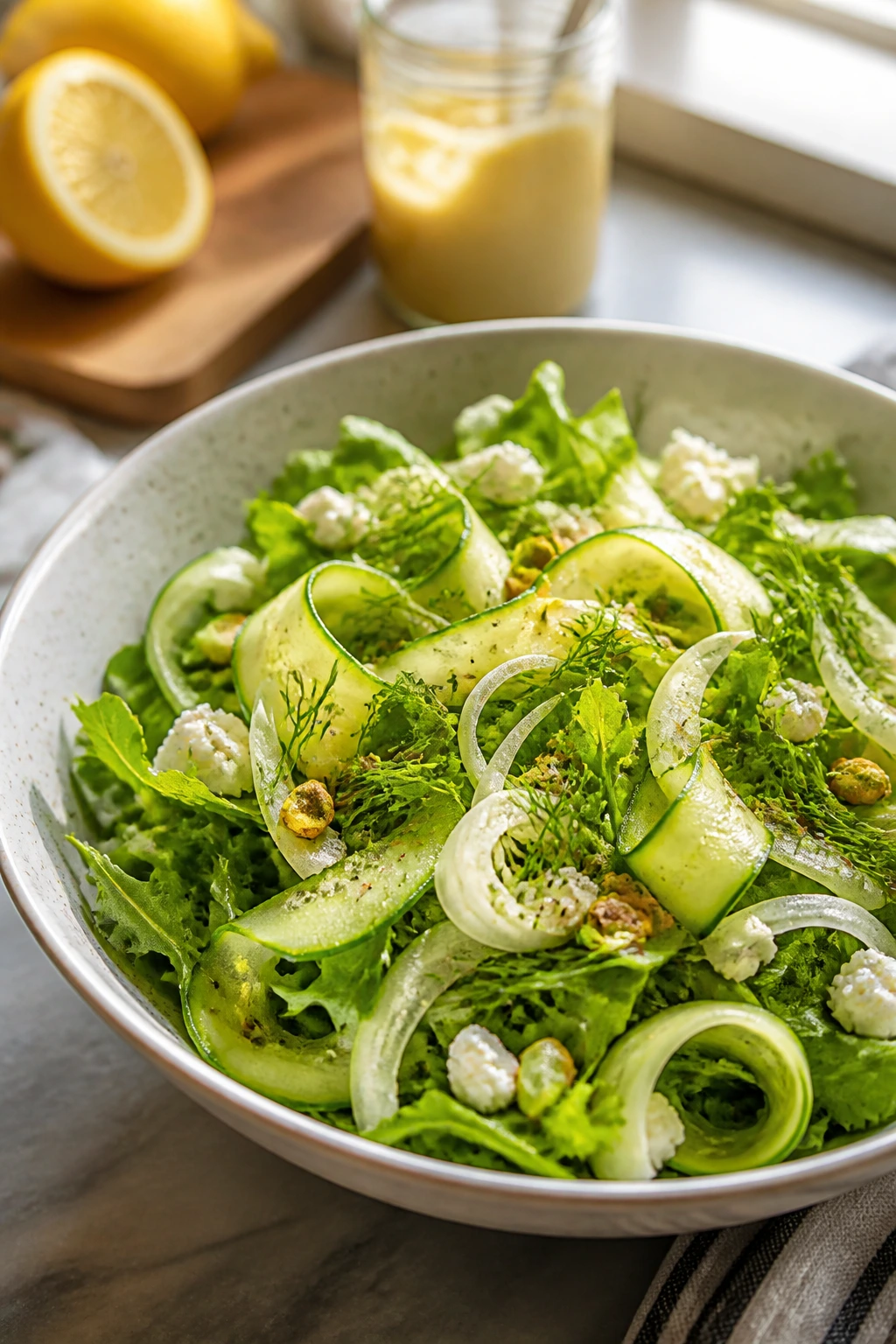
A good light salad isn’t an apology for not cooking something bigger. It’s a deliberate bowl with a clear point of view: crisp leaves, sharp dressing, a few carefully chosen vegetables, and just enough richness to keep you interested. That’s why these salads work when so many others feel like a side dish pretending to be lunch.
Keep a lemon, a jar of Dijon, and a decent olive oil in the kitchen, and half the work is already done. Add a couple of sturdy greens, one crunchy vegetable, and one bright finishing note, and you’ve got a salad that can stand on its own without getting loud about it.
Once you start building bowls this way, the tired old pile of lettuce stops being the default. It becomes the exception.