



A hearty watermelon feta salad with homemade dressing sounds like something that should fall apart the second you set it on the table. Too sweet. Too wet. Too fragile. But when it’s built with a little discipline, it eats like a full plate instead of a garnish that wandered away from the main course.
The trick is contrast, and lots of it. Cold watermelon needs salt. Creamy feta needs acid. Peppery greens need something glossy enough to cling without drowning them. Add cucumber for snap, avocado for heft, and toasted pepitas for that small, loud crunch that makes the whole bowl feel finished. If you’ve ever had a watermelon salad that tasted like fruit salad in a salad bowl, this version fixes the problem by treating every ingredient like it has a job.
I like block feta here because the pre-crumbled stuff can feel dry and chalky. I also like to dry the watermelon after cutting it, which sounds fussy until you taste the difference. Water that clings to the cubes steals the dressing, thins the salt, and leaves the bowl looking a little sad. A few paper towels and ten extra seconds change that completely.
Why This Salad Works So Well
A salad built around watermelon can go wrong in two directions. It can turn sugary and flat, or it can get watery and forgettable. This one avoids both because every bite has a different texture: juicy fruit, crisp cucumber, soft avocado, crumbled feta, and those toasted pepitas that crackle under your teeth.
The homemade dressing matters more than people think. Lime gives the fruit a sharper edge, Dijon helps the oil and juice stay together, and a little honey smooths the whole thing out without making it cloying. The dressing should taste a touch brighter than you expect before it hits the bowl. Watermelon has a way of softening acid on contact, and that’s a feature here, not a flaw.
- Sweet and salty in the same forkful: The feta lands on the watermelon like a salt lick in the best possible way, which keeps the fruit from tasting one-note.
- Built for texture, not just color: Arugula, cucumber, avocado, and pepitas keep the salad from eating like chilled melon chunks on leaves.
- The dressing does real work: Lime, Dijon, and garlic keep the bowl sharp enough to handle the sweetness without becoming heavy.
- Fast without feeling lazy: The only cooking is a quick toast for the pepitas, and that step earns its keep.
- Easy to scale up: Double it for a potluck, or cut it in half for lunch; the balance stays the same as long as you hold back the dressing until the end.
- Flexible in a useful way: Add chickpeas, chicken, or farro and the bowl starts to feel like dinner instead of a side.
Timing, Yield, and When to Serve It
Yield: Serves 4 to 6 as a side, or 2 to 3 as a light meal
Prep Time: 20 minutes
Cook Time: 3 minutes
Total Time: 23 minutes
Difficulty: Beginner — the steps are straightforward, but the order matters if you want the salad to stay crisp and clean.
Chill/Rest Time: 10 minutes optional for salting and draining the cucumber
Best Served: Right after tossing, while the watermelon is cold and the feta still holds its shape
This is the kind of salad that does not want to sit around in a warm bowl. It should come to the table cold, glossy, and a little sharp. If you’re planning to serve it to guests, have everything cut and chilled before you whisk the dressing.
The Watermelon and Feta Lineup
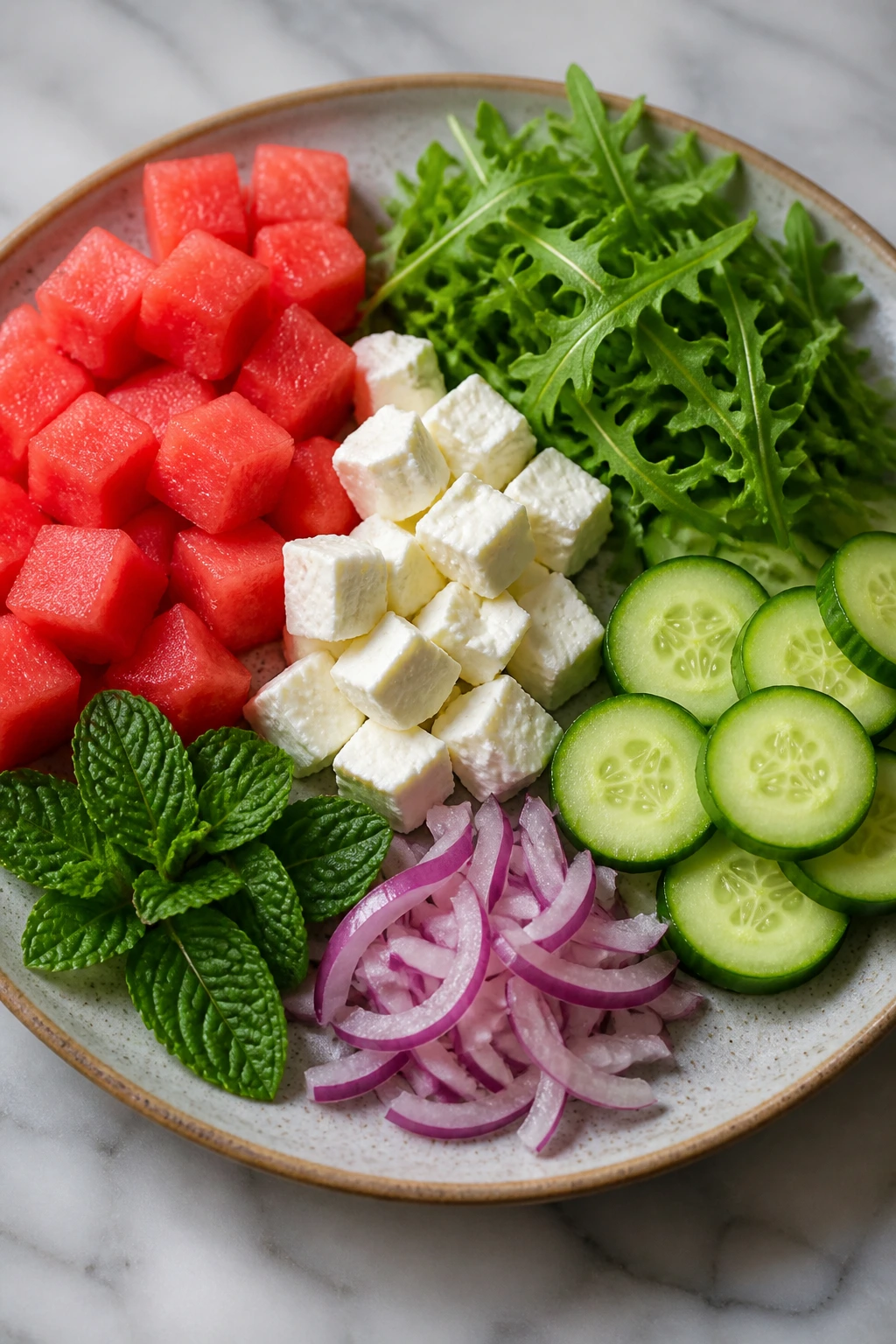
For the Salad:
- 6 cups seedless watermelon, cut into 1-inch cubes and patted dry
- 4 cups baby arugula
- 1 large English cucumber, halved lengthwise, seeded, and thinly sliced
- 1/2 small red onion, very thinly sliced
- 1 ripe avocado, diced
- 1 cup feta cheese, crumbled from a block if possible
- 1/3 cup pepitas
- 1/4 cup fresh mint leaves, torn
For the Dressing:
- 1/4 cup extra-virgin olive oil
- 3 tablespoons fresh lime juice
- 1 teaspoon lime zest
- 1 tablespoon honey or maple syrup
- 1 teaspoon Dijon mustard
- 1 small garlic clove, finely grated
- 1/2 teaspoon kosher salt, plus more for the cucumber
- 1/4 teaspoon black pepper
- 1/4 teaspoon crushed red pepper flakes, optional
The ingredient list is short on purpose. A salad like this gets mushy when you start stacking too many extras on top of it. Every item here earns a bite of attention, and none of them is there because the bowl needed more decoration.
Why Each Ingredient Pulls Its Weight
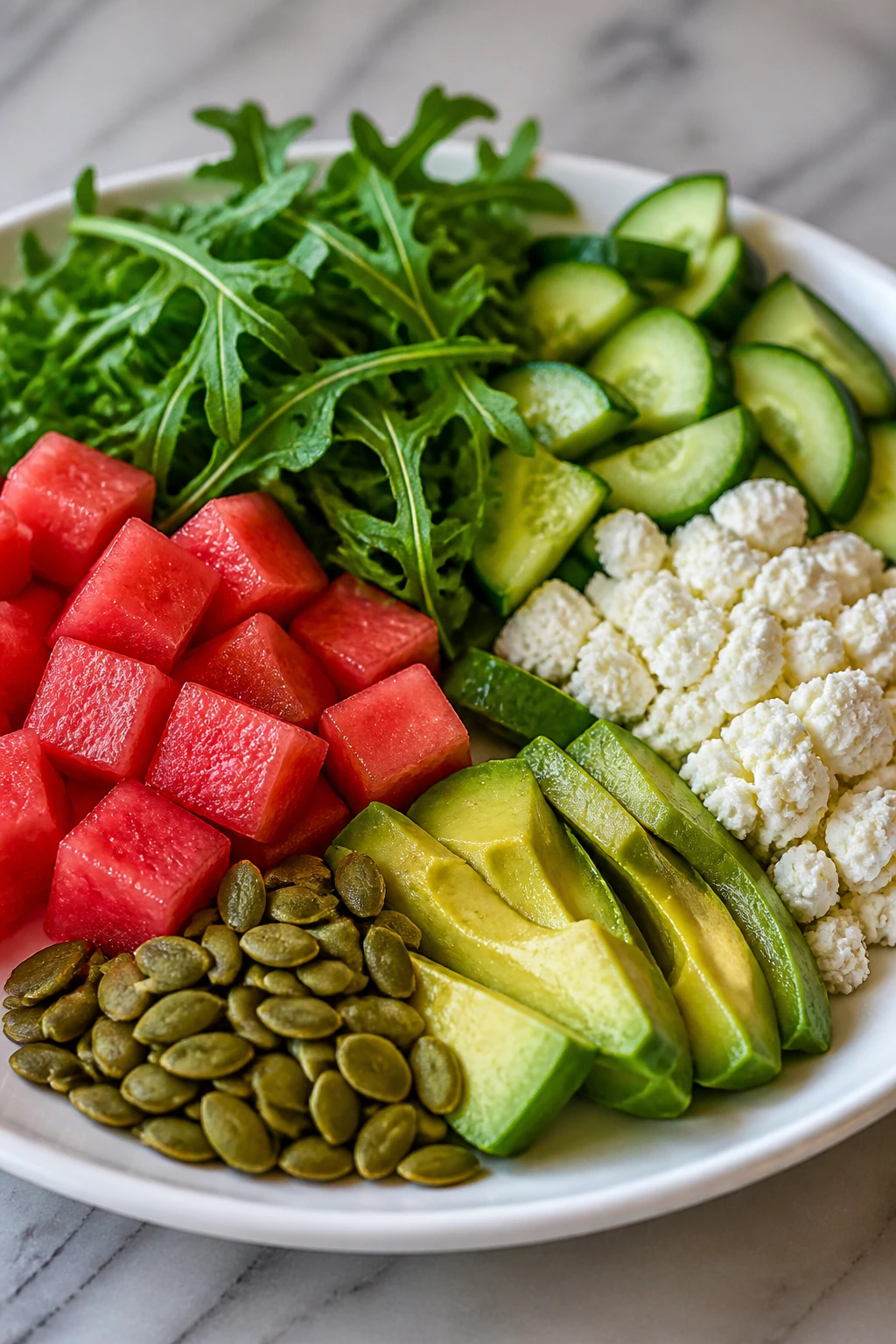
Watermelon, Arugula, and Cucumber
What to use: Pick 6 cups of seedless watermelon with deep color and a heavy feel for its size, then add 4 cups of baby arugula and 1 large English cucumber. The cucumber should be firm and seed-light, not the watery kind that leaves puddles in the bottom of the bowl.
Preparation: Cut the melon into roughly 1-inch cubes so it stays intact when tossed. Slice the cucumber thinly, then salt it briefly and pat it dry; arugula needs no more than a quick rinse and a thorough spin.
Substitutions: Baby spinach can stand in for arugula if you want a milder green, and Persian cucumbers work well if English cucumbers are not available. If watermelon is too bland, cantaloupe can replace half of it, though the salad will lean sweeter.
Tips: Cold produce matters here. Watermelon straight from the fridge stays firm, and arugula that has been chilled before serving keeps its shape longer after the dressing goes on.
Feta, Avocado, and Pepitas
What to use: Use 1 cup of feta crumbled from a block, 1 ripe avocado diced into bite-size pieces, and 1/3 cup pepitas toasted until fragrant. Those three ingredients are the backbone of the salad’s heft.
Preparation: Crumble the feta by hand so you get irregular pieces instead of dust. Dice the avocado at the very end, and toast the pepitas in a dry skillet just before assembly.
Substitutions: Goat cheese can replace feta if you want a softer, tangier bite, while chopped pistachios or sunflower seeds can stand in for pepitas. If you need a dairy-free bowl, skip the feta and add a little extra salt plus a few more seeds.
Tips: Block feta packed in brine has a cleaner salty flavor and a better texture than the dry tubs of pre-crumbled cheese. Avocado should be ripe enough to yield under a thumb press, but not so soft that it turns to paste when folded in.
Mint, Onion, and the Sharp Bits
What to use: You need 1/4 cup torn mint leaves and 1/2 small red onion sliced as thinly as you can manage. These are the sharp, bright parts that keep the salad from leaning sleepy.
Preparation: Tear the mint right before serving so it stays aromatic. If the onion tastes too aggressive, soak the slices in ice water for 5 minutes, then dry them well.
Substitutions: Basil can replace mint if you want a softer herbal note, and shallot can replace red onion when you want less crunch and a little more sweetness. A few chopped chives also work if you want the onion flavor without the bite.
Tips: Don’t skip the onion entirely unless you have to. That thin little edge of sharpness is what makes the watermelon taste more like itself.
The Lime-Honey Dressing
What to use: The dressing needs 1/4 cup extra-virgin olive oil, 3 tablespoons lime juice, 1 teaspoon lime zest, 1 tablespoon honey or maple syrup, 1 teaspoon Dijon, 1 small grated garlic clove, salt, pepper, and a pinch of red pepper flakes if you like a little heat.
Preparation: Whisk it until the dressing looks glossy and slightly thickened. The lime zest goes in before the oil, which helps the aroma spread through the bowl instead of sitting on top.
Substitutions: Lemon juice works if limes are not on hand, though it gives the salad a slightly rounder edge. Agave can replace honey for a vegan version, and a tiny splash of rice vinegar can sharpen the finish if your fruit is especially sweet.
Tips: Taste the dressing on its own, then again after it hits the salad. Watermelon blunts acid more than you’d expect, so the dressing should be brighter than you think it ought to be.
The Tools That Make Assembly Easy
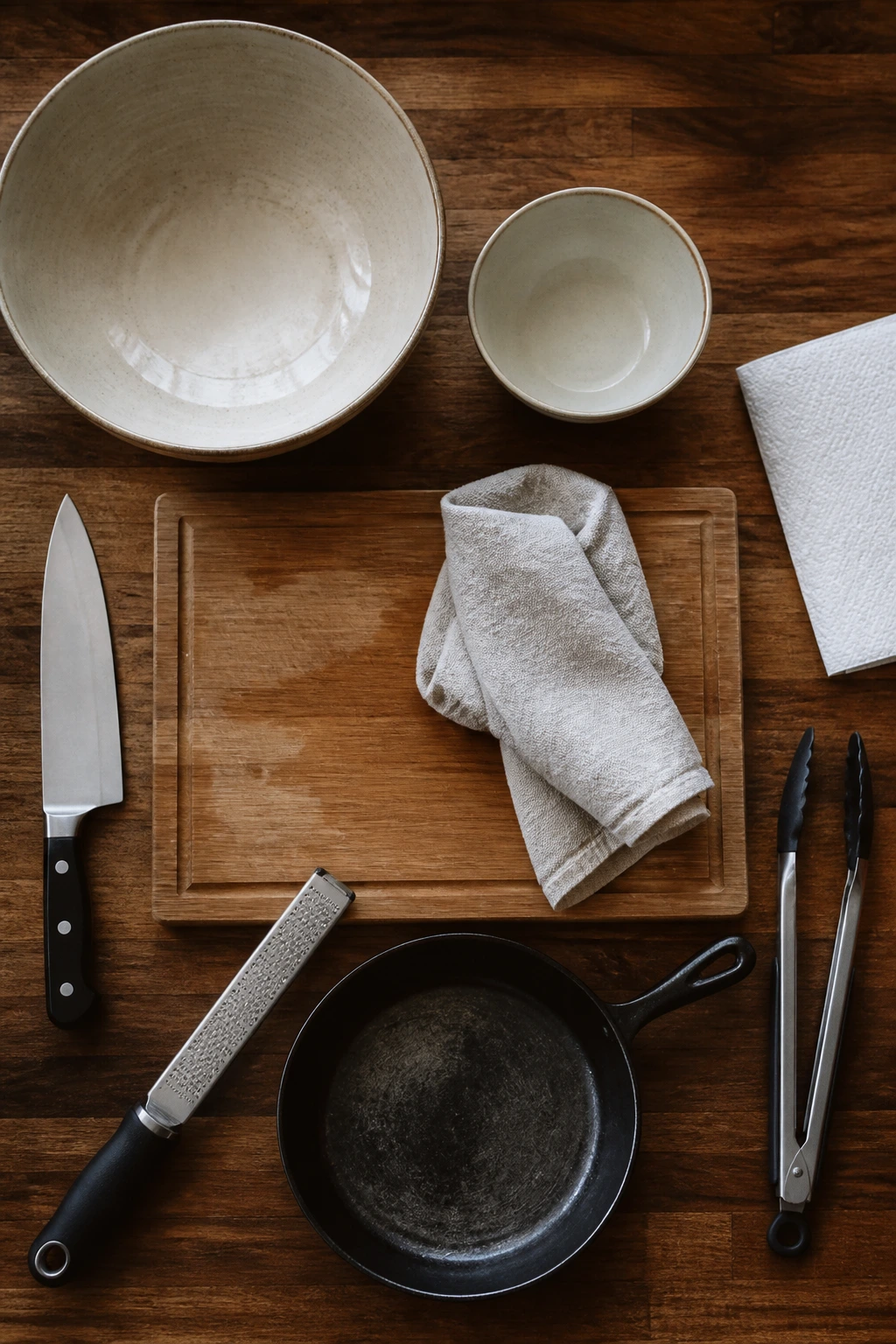
- Large salad bowl — wide enough to toss without crushing the fruit.
- Small mixing bowl or jar — for the dressing; a jar with a lid makes shaking easy.
- Sharp chef’s knife — clean cuts matter with watermelon and cucumber.
- Cutting board with a damp towel underneath — keeps the board from sliding while you cube the melon.
- Fine grater or microplane — best for the garlic and lime zest.
- Dry skillet, 8 to 10 inches — for toasting the pepitas.
- Paper towels or a clean kitchen towel — useful for drying the watermelon and cucumber.
- Salad tongs or two big spoons — gentler than a whisk when you’re folding in the fruit.
Nothing fancy is required. A salad like this rewards ordinary tools used carefully.
How to Build the Salad Without Soggy Leaves
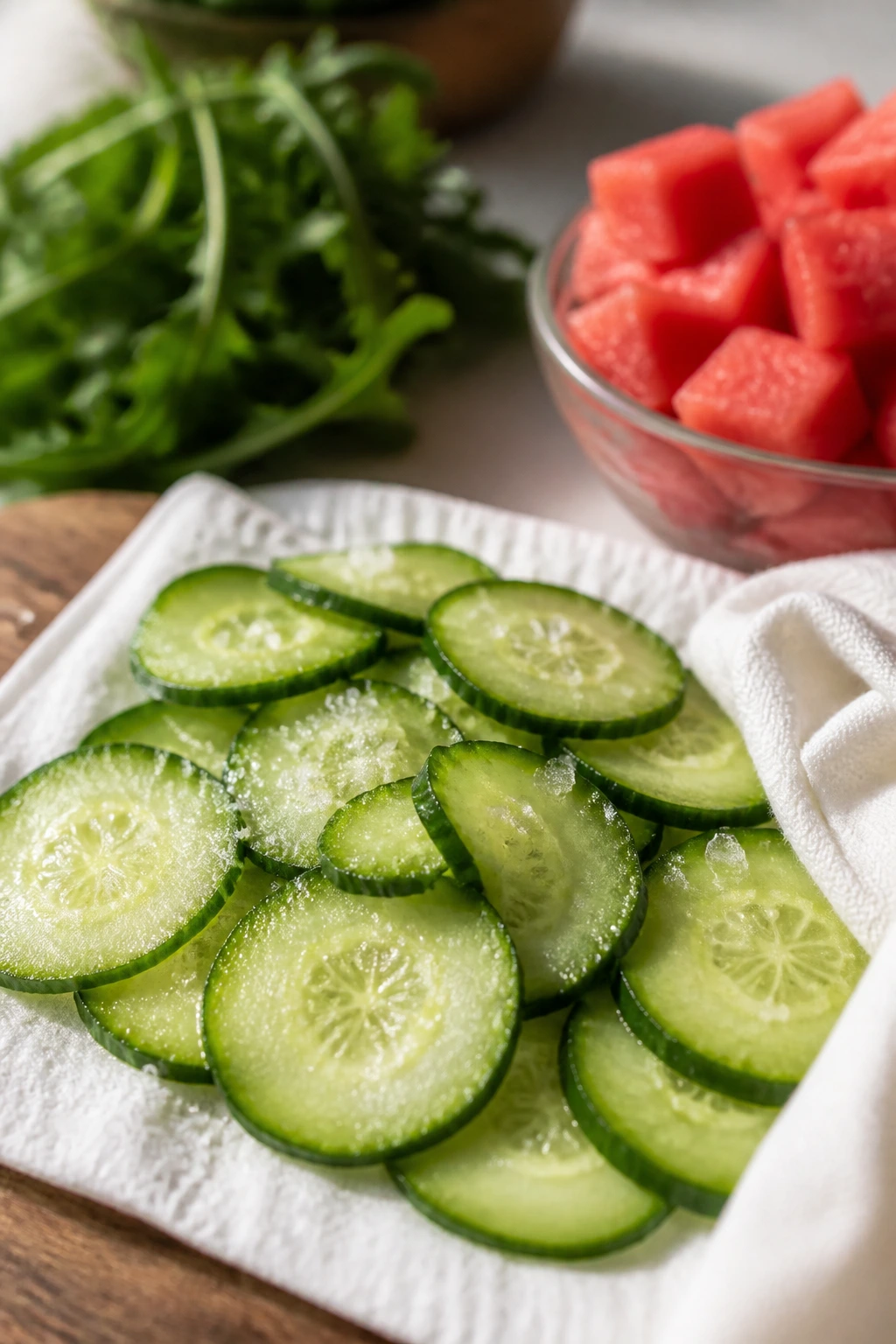
Prep the Produce:
-
Place the sliced cucumber in a bowl and toss it with 1/4 teaspoon of the kosher salt. Let it sit for 10 minutes, then pat it dry with paper towels. This step pulls out extra moisture before it can leak into the bowl.
-
Cut the watermelon into 1-inch cubes and lay them on paper towels for a minute or two. Pat the tops dry, especially if the melon has been sitting in its own juice. You want the cubes cold and dry, not slick.
-
Thinly slice the red onion. If it smells harsh enough to make you wince, soak the slices in cold water for 5 minutes, drain them, and blot them dry.
Toast and Whisk:
-
Set a dry skillet over medium heat and add the pepitas in a single layer. Toast them for 2 to 3 minutes, shaking the pan often, until they begin to pop and smell nutty. Stop as soon as the color deepens a shade or two; pepitas move from toasted to bitter quickly.
-
In a small bowl or jar, whisk together the olive oil, lime juice, lime zest, honey, Dijon mustard, grated garlic, remaining 1/4 teaspoon kosher salt, black pepper, and red pepper flakes if using. The dressing should look smooth and a little thick, not separated and thin.
Assemble the Base:
-
Add the arugula, cucumber, and red onion to the large bowl. Drizzle on about 2 tablespoons of the dressing and toss gently until the leaves are lightly coated. They should look glossy, not slick.
-
Fold in the watermelon, avocado, feta, and mint. Add a little more dressing, then stop and taste before pouring in the rest. You may not need every drop if the fruit is very sweet or the feta is especially salty.
Finish and Serve:
- Scatter the toasted pepitas over the top and give the bowl one last gentle toss. Taste again for salt and lime, then serve right away while everything still feels cold and lively.
If you want to make the salad feel more polished, hold back a few feta crumbles, a few mint leaves, and a spoonful of pepitas for the top. The bowl looks more intentional that way. More important, you get a clean first bite.
How to Serve It at the Table
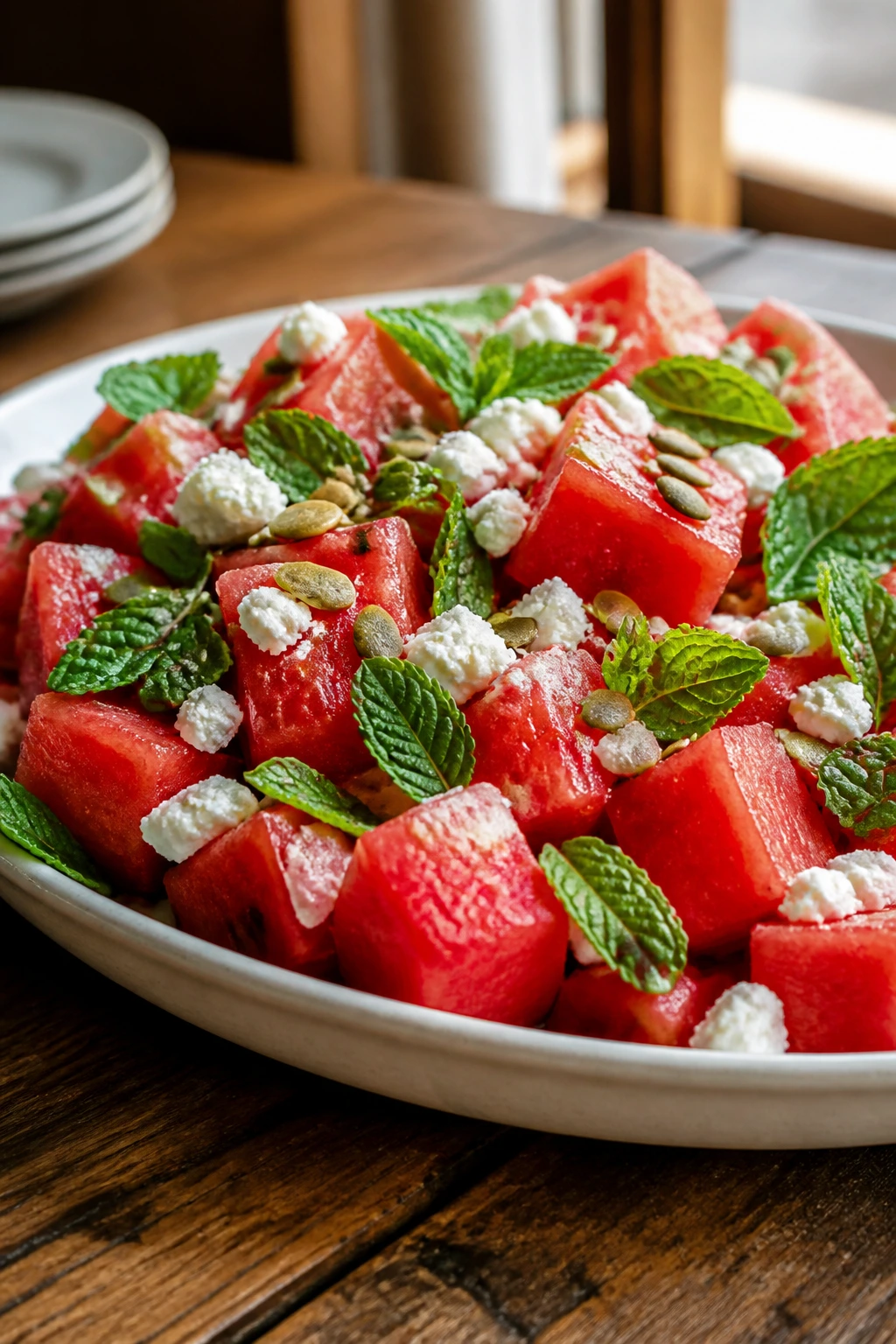
Presentation: Spoon the salad onto a shallow platter or a wide, low bowl so the watermelon cubes stay visible instead of sinking under the greens. The feta, mint, and pepitas look best when they sit on top rather than disappearing into the mix. A final crack of black pepper across the surface gives the bowl a finished look and a little extra bite.
Accompaniments: This salad sits naturally next to grilled chicken, seared shrimp, lamb chops, or a piece of simply roasted salmon. If you want to keep the meal vegetarian, serve it with warm pita, hummus, or a bowl of farro on the side. A slice of crusty bread is useful too, mostly because the dressing at the bottom of the bowl is worth chasing.
Portions: As a side, plan on about 1 generous cup per person. As a light lunch, 2 cups feels right if you add chickpeas, grilled chicken, or farro. If you’re scaling it up for a crowd, keep the dressing separate and toss in two batches so the last bowl does not turn watery before it reaches the table.
Beverage Pairing: Sparkling water with lime keeps things sharp and clean. If you want something with more character, a dry rosé or a cold, crisp white wine works well because both handle the salt and fruit without fighting the dressing.
There’s a reason this salad does well on a platter. It looks generous, but it isn’t fussy. That matters when the bowl is supposed to be eaten fast, not admired for ten minutes and left to sulk.
Practical Tweaks That Improve Flavor and Texture
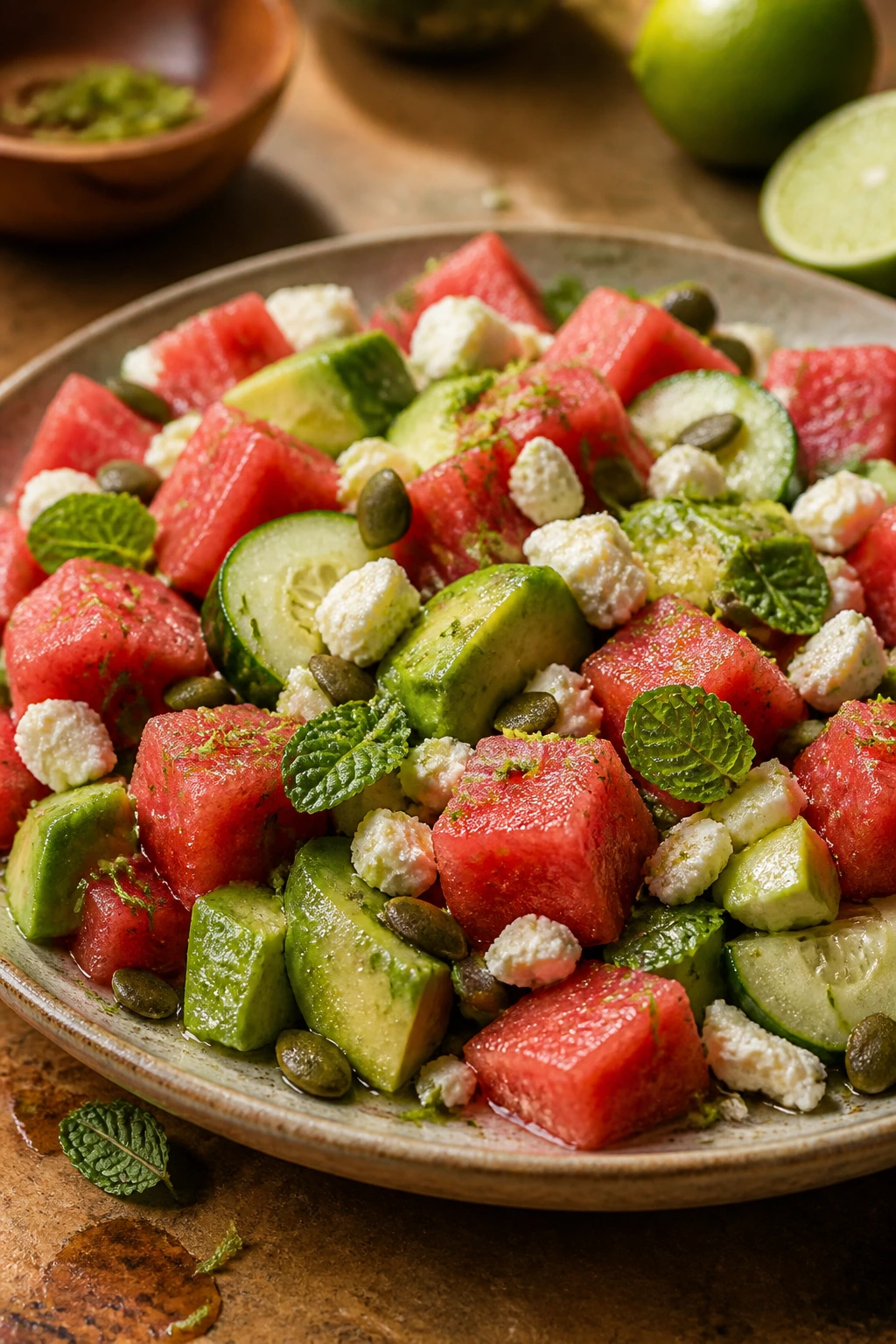
Flavor Enhancement: Add 1 teaspoon of lime zest to the dressing and keep a little extra zest for the top. The oils in the zest make the mint smell louder and the watermelon taste cleaner, which is a small move with a big payoff.
Time-Saver: Salt the cucumber first, then whisk the dressing while it drains. You get the moisture out of the vegetable and the dressing ready without wasting a minute standing at the counter.
Pro Move: Keep the avocado and pepitas separate until the very last toss. Avocado bruises easily, and pepitas lose their crunch once they sit in dressing for more than a short while.
Cost-Saver: Buy a block of feta instead of the pre-crumbled tubs. It usually tastes better, and the texture is closer to what you want in a salad that needs distinct bites, not dusty little shards.
Make-It-Yours: If your watermelon is pale or underwhelming, add a tiny splash more lime juice and a pinch more salt before serving. That combination wakes up weak fruit faster than piling on more sweetener, which only makes the bowl flatter.
I also like to keep a few things off the salad until the plate is in front of people. A little more feta, a few more pepitas, maybe an extra ribbon of mint. It’s not about showing off. It’s about giving the top layer the same energy as the first forkful.
Mistakes That Turn a Fresh Salad Watery
-
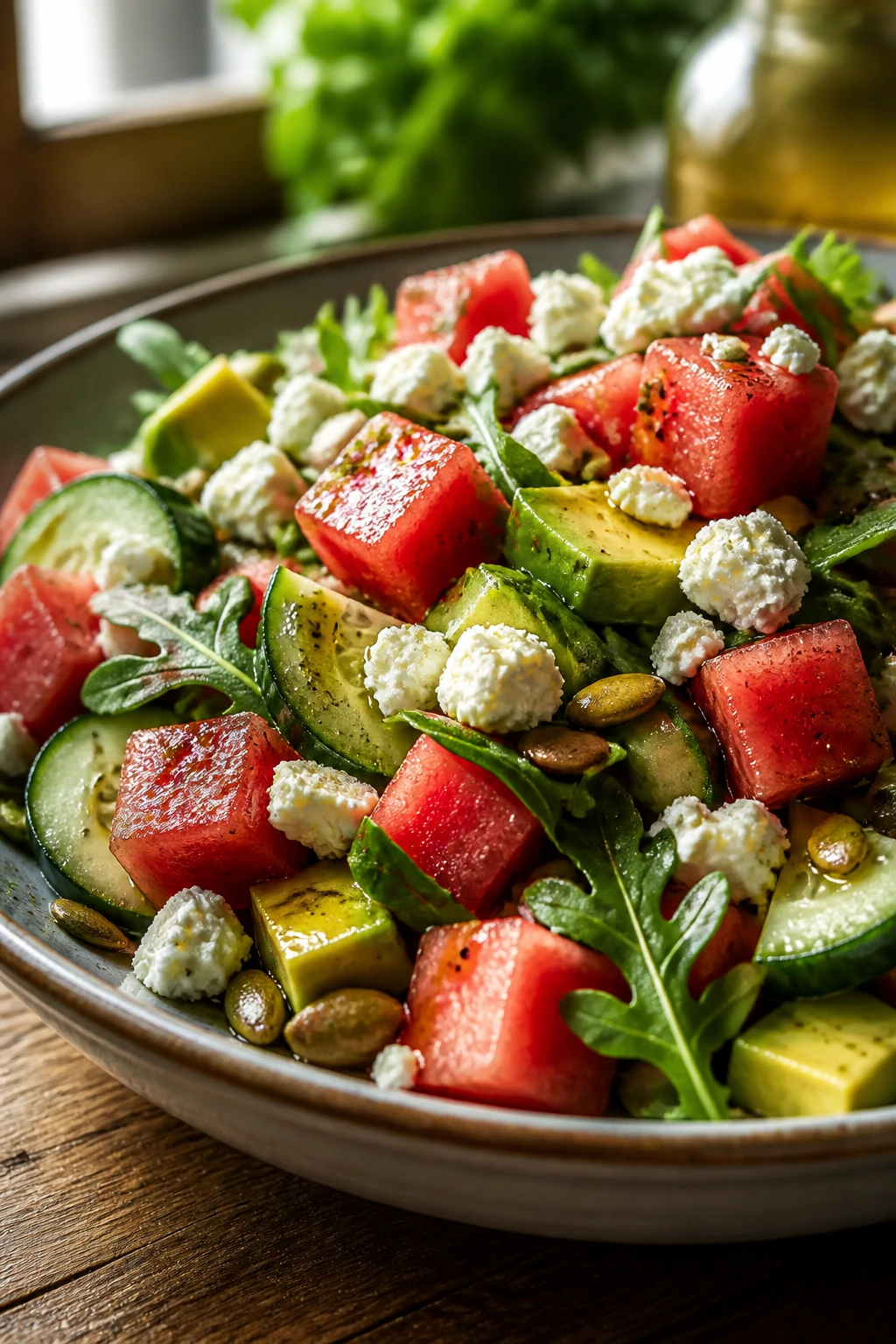
Using wet watermelon straight from the cutting board — The cubes drip into the dressing and thin everything out. Pat the fruit dry, and if it’s especially juicy, leave the cubes on paper towels for a couple of minutes before assembly.
-
Dressing the whole bowl too early — Arugula wilts, avocado bruises, and the watermelon starts leaking into the greens. Toss the base first, then fold in the fruit and cheese right before serving.
-
Skipping the cucumber drain — English cucumber still carries enough water to mess with the texture. A quick salt-and-pat step keeps the bowl cleaner and helps the dressing cling instead of sliding off.
-
Using feta that’s too dry and salty — Some pre-crumbled feta tastes like chalk with salt on it. Block feta in brine gives you a softer crumble and a cleaner finish, which matters in a salad with a short ingredient list.
-
Overdoing the honey — Too much sweetener makes the dressing taste flat once it meets the melon. The watermelon already brings plenty of sweetness; the dressing should lift it, not compete with it.
-
Forgetting to taste after tossing — The bowl changes after the dressing hits the fruit and cheese. Taste a forkful before you bring it out, then add salt, lime, or a few more pepitas if it needs a sharper edge.
This salad is simple enough that every small mistake shows. That’s the nice part and the annoying part. Get the texture right, and it feels effortless.
Variations That Still Taste Like the Original
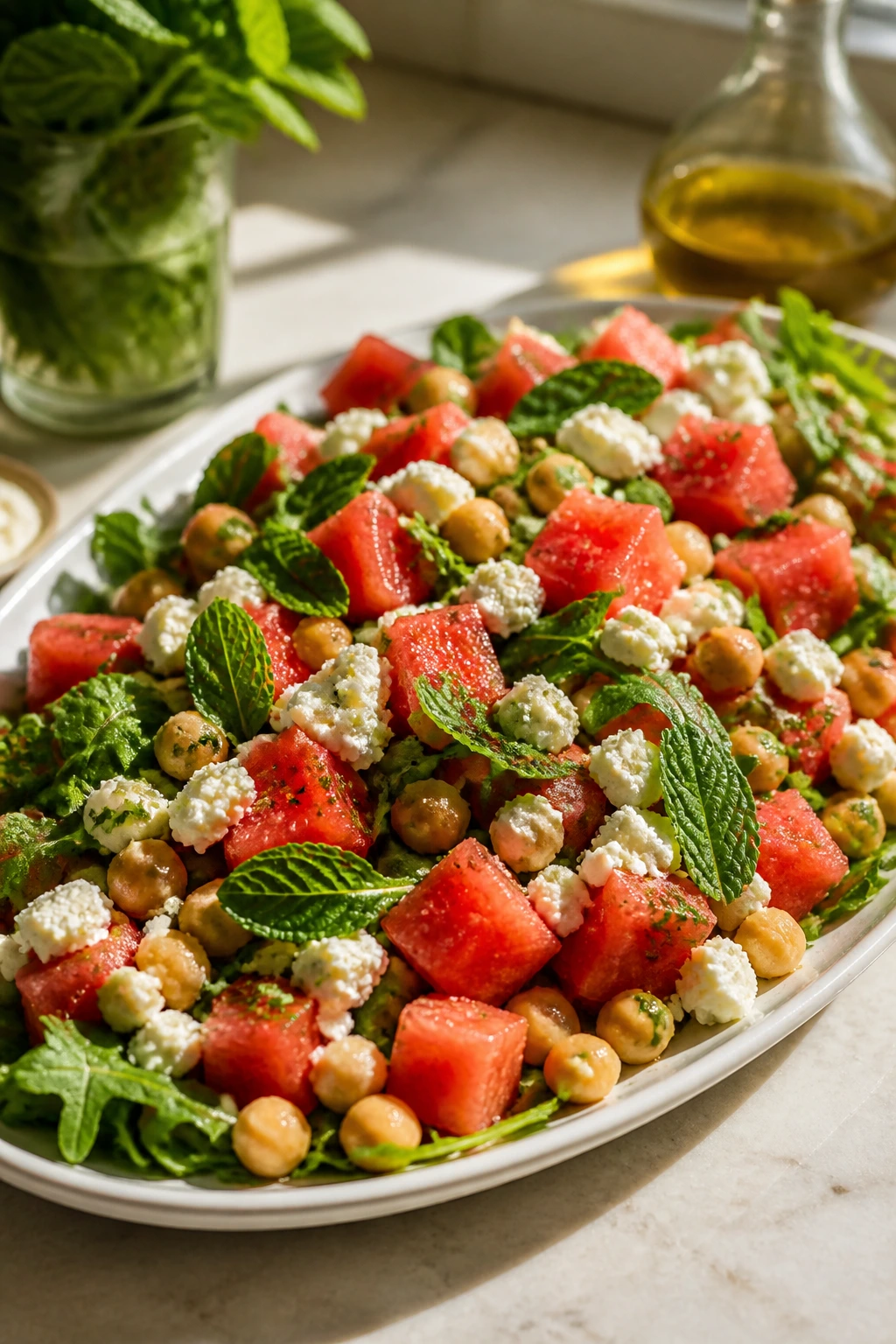
Protein-Forward Lunch Bowl
Add 1 to 1 1/2 cups cooked chickpeas or 2 cups shredded rotisserie chicken. Chickpeas keep the vegetarian feel intact, while chicken turns the salad into a fuller lunch without stealing the flavor of the watermelon.
Chili-Lime Edge
Swap the mint for cilantro, add 1 small minced jalapeño, and increase the crushed red pepper flakes to 1/2 teaspoon. This version tastes brighter and a little louder, which works well if you want the salad next to grilled meats or tacos.
Dairy-Free Garden Bowl
Leave out the feta and add 1/3 cup toasted almonds or sunflower seeds plus a few extra pinches of salt. The result loses the creamy-salty bite, so the dressing needs a little more lime and the avocado becomes more important.
Farro-Boosted Dinner Salad
Fold in 2 cups cooked farro that has cooled to room temperature. Farro drinks up the dressing and gives the bowl more chew, which makes the whole thing feel sturdy enough for dinner.
Olive and Herb Detour
Add 1/4 cup chopped kalamata olives and a few basil leaves along with the mint. The olives push the salad toward Mediterranean flavors, and the basil rounds off the sharpness of the onion and lime.
Keep the watermelon as the center of the plate no matter which direction you go. If another ingredient starts to dominate, you’ve wandered too far.
Storing the Parts and Making It Ahead
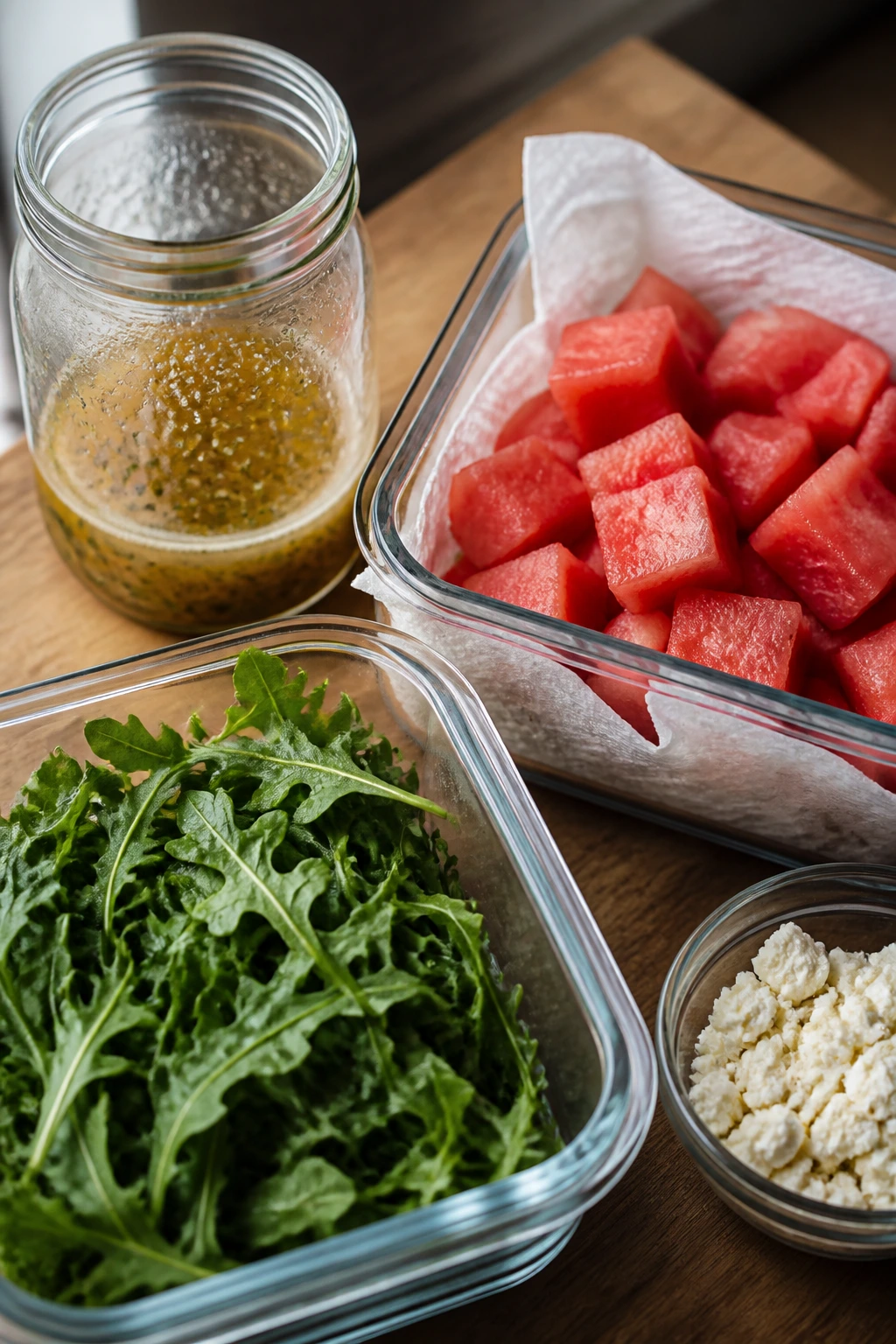
The assembled salad is at its best right away. Give it an hour at the most if you absolutely have to, and even then it will be softer than it was at the start. The watermelon starts to release juice, the feta softens, and the arugula loses its crisp edge. That’s not a failure. It’s just what happens when juicy fruit meets salt and acid.
If you want to make it ahead, split the components. The dressing keeps well in a sealed jar in the refrigerator for up to 5 days. Shake it hard before using because the oil will separate and the garlic settles at the bottom. Toasted pepitas stay crunchy for about 2 weeks in an airtight container at room temperature.
Watermelon cubes can be cut up to 2 days ahead and stored in a lined container in the fridge, though they’re best within 24 hours. Cucumber and onion are best cut the same day, but they can be prepped a few hours early if you store them separately and dry them again before assembling. Avocado should be cut at the last minute; once it starts to brown, it changes the look of the whole bowl.
Freezing does not help this salad. Watermelon turns soft and strange after thawing, and the cucumber and greens become unusable. If you have leftovers, keep them refrigerated and eat them cold within 1 day. The flavor is still pleasant the next day, but the texture will lean softer and a little wetter.
Questions People Ask Before Making It
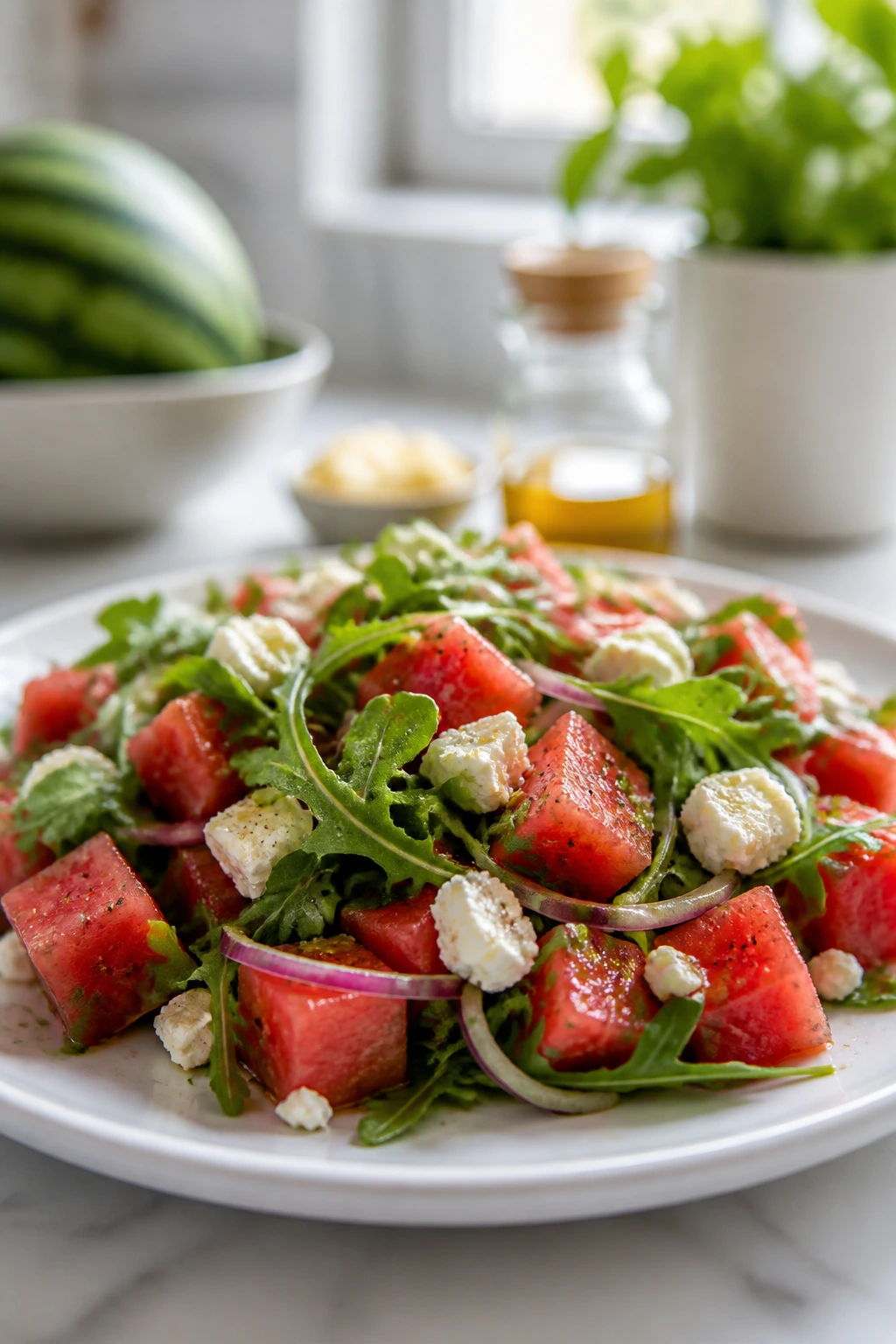
Can I make this salad ahead for a party?
Yes, but keep the components separate until just before serving. You can wash and dry the greens, cube the watermelon, toast the pepitas, and mix the dressing earlier in the day. Add avocado, feta, and dressing at the last minute so the bowl stays crisp.
What kind of feta tastes best here?
Block feta packed in brine is the one I reach for. It crumbles in uneven pieces and tastes less dry than the tubs of pre-crumbled cheese, which matters because watermelon and cucumber already bring a lot of moisture to the bowl.
How do I keep the salad from getting watery?
Dry the watermelon, salt and drain the cucumber, and dress only what you plan to eat right away. The biggest mistake is tossing everything together and letting it sit; the fruit will shed juice, and the greens will lose their snap.
Can I use bottled dressing instead of homemade?
You can, but choose one with sharp citrus or a clean vinaigrette base rather than a thick creamy one. Creamy dressings tend to fight the watermelon, and anything too sweet makes the fruit taste less fresh.
What can I add to make it a main dish?
Chickpeas, grilled chicken, shrimp, or cooked farro all work. Chickpeas keep it vegetarian and sturdy, while farro soaks up the dressing in a way that makes the bowl feel more like dinner than a side.
Is pre-cut watermelon okay?
Yes, if it looks and smells fresh. The cut edges should be bright and the fruit should not sit in cloudy juice at the bottom of the container; if it does, drain it well and pat the cubes dry before adding them to the salad.
Can I skip the mint?
You can, but the salad loses some of its cool, clean finish. Basil or a mix of basil and chives makes the best substitute if mint is not your thing.
A Salad That Eats Like a Meal
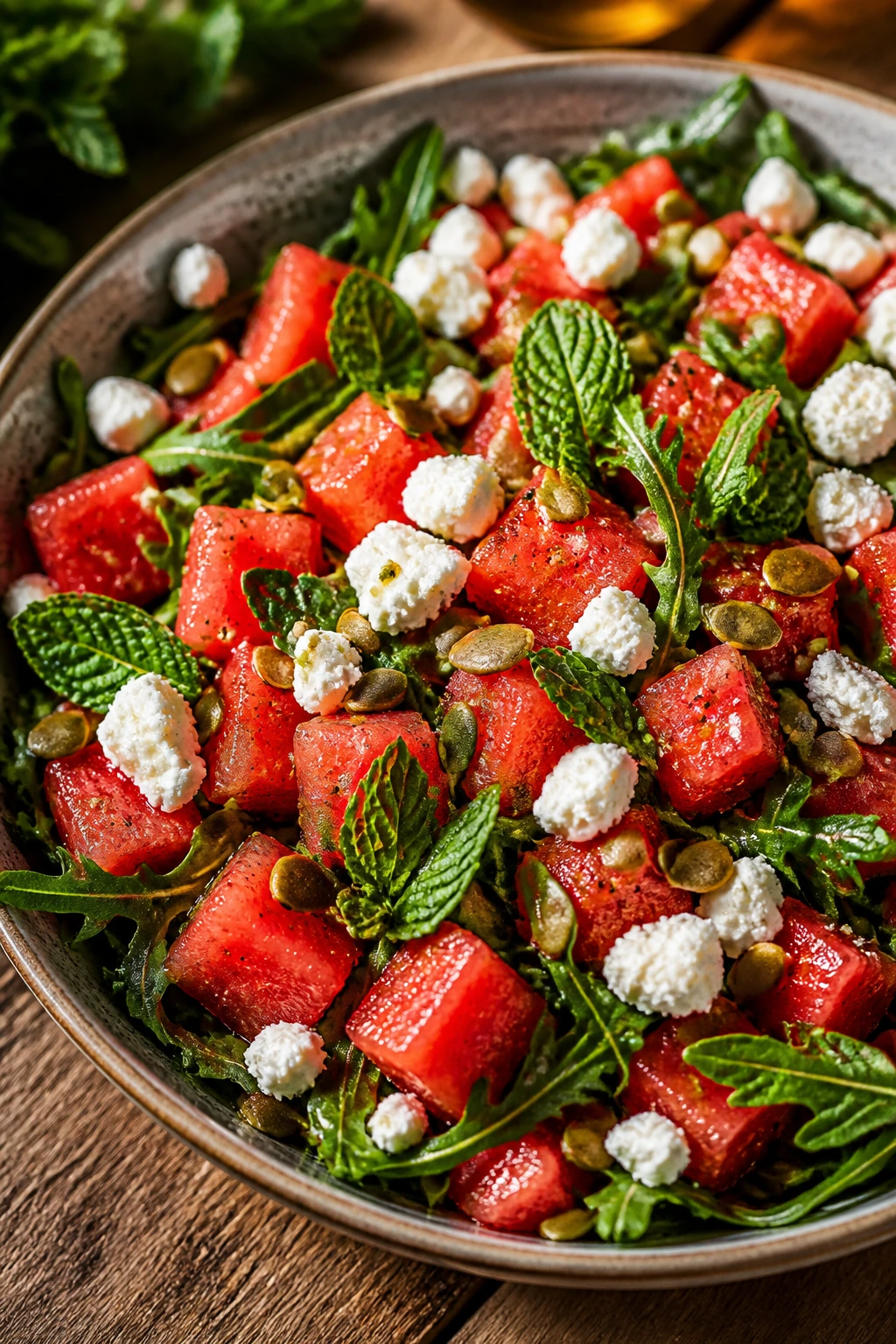
A bowl like this works because it keeps making sense as you eat it. The first bite is watermelon and lime. The next one catches feta and mint. Then the pepitas show up and remind you that crunch matters more than most people admit. Nothing sits there looking decorative. Every ingredient does a job, and the salad feels complete because of that discipline.
I’ll take that over a giant bowl of fruit and cheese that can’t decide what it wants to be. Keep the fruit dry, the dressing sharp, and the pepitas separate until the end, and the whole thing holds its shape long enough to matter. The next time you bring home a watermelon that smells worth cutting into, this is the bowl to make.
Hearty Watermelon Feta Salad with Homemade Dressing — Recipe Card
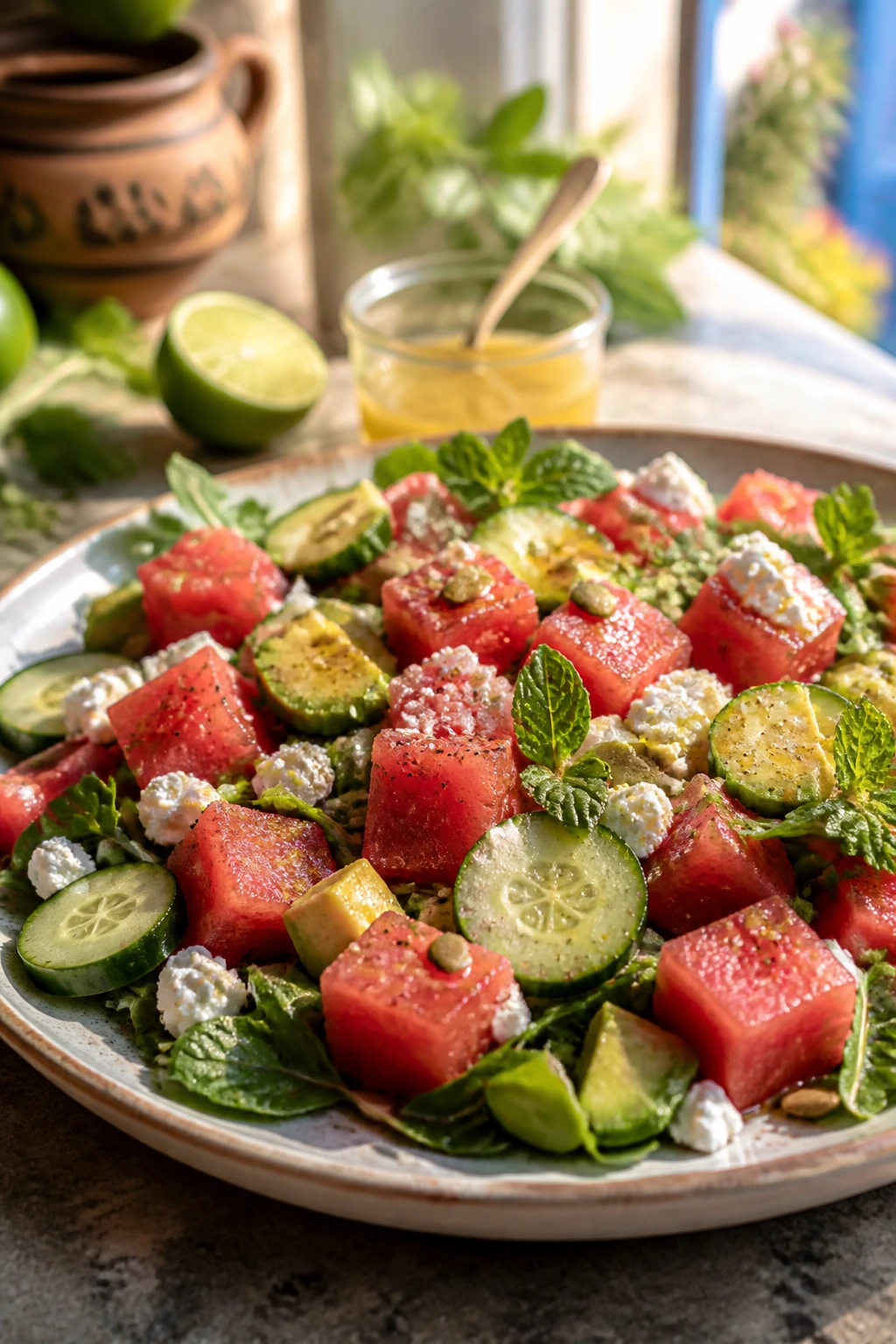
Recipe Name: Hearty Watermelon Feta Salad with Homemade Dressing
Description: A cold, salty-sweet salad with juicy watermelon, peppery greens, cucumber, avocado, feta, mint, and a lime-honey vinaigrette. It eats like a side dish that knows how to stand on its own.
Prep Time: 20 minutes
Cook Time: 3 minutes
Total Time: 23 minutes
Course: Salad, Side Dish, Light Lunch
Cuisine: Mediterranean-Inspired
Servings: 4 to 6
Calories: About 250 kcal per serving
Ingredients
For the Salad:
- 6 cups seedless watermelon, cut into 1-inch cubes and patted dry
- 4 cups baby arugula
- 1 large English cucumber, halved lengthwise, seeded, and thinly sliced
- 1/2 small red onion, very thinly sliced
- 1 ripe avocado, diced
- 1 cup feta cheese, crumbled from a block if possible
- 1/3 cup pepitas
- 1/4 cup fresh mint leaves, torn
For the Dressing:
- 1/4 cup extra-virgin olive oil
- 3 tablespoons fresh lime juice
- 1 teaspoon lime zest
- 1 tablespoon honey or maple syrup
- 1 teaspoon Dijon mustard
- 1 small garlic clove, finely grated
- 1/2 teaspoon kosher salt, plus more for the cucumber
- 1/4 teaspoon black pepper
- 1/4 teaspoon crushed red pepper flakes, optional
Instructions
-
Toss the cucumber slices with 1/4 teaspoon salt and let them sit for 10 minutes. Pat them dry.
-
Pat the watermelon cubes dry with paper towels and slice the red onion thinly. If the onion is sharp, soak it in cold water for 5 minutes and dry it well.
-
Toast the pepitas in a dry skillet over medium heat for 2 to 3 minutes, shaking often, until fragrant and lightly puffed.
-
Whisk the olive oil, lime juice, lime zest, honey, Dijon, garlic, remaining 1/2 teaspoon salt, black pepper, and red pepper flakes into a smooth dressing.
-
Toss the arugula, cucumber, and onion with about 2 tablespoons of the dressing in a large bowl.
-
Fold in the watermelon, avocado, feta, and mint. Add more dressing a little at a time, then stop when the salad looks lightly coated.
-
Scatter the pepitas over the top and serve right away.
Notes: Keep the avocado and pepitas separate until the final toss if you want the cleanest texture. If the watermelon tastes especially sweet, add a little more lime juice and salt at the end. This salad is best eaten fresh, not stored after dressing.