



A light salad with homemade dressing should taste like cold crunch, lemon zest, and a little salt on the back of your tongue—not like a bowl of tired leaves wearing bottled sauce. When the greens are dry, the vegetables are cut with a bit of care, and the dressing is whisked until it turns glossy, the whole thing changes character. It stops feeling like something you should eat and starts feeling like something you want to go back for.
The difference is usually smaller than people expect. One good lemon, a teaspoon of Dijon, and enough olive oil to coat the leaves without pooling in the bottom of the bowl can turn plain produce into a salad that feels composed, not random. I’ve seen so many salads fail because someone treated the dressing like an afterthought; the dressing is the point. Without it, you just have chopped vegetables.
I like this style of salad because it’s honest. It doesn’t hide behind five cheeses, a pile of croutons, or a thick creamy sauce that smothers everything. You get crisp romaine, soft spinach, cucumber, radish, tomato, a little avocado if you want it, and a lemon-Dijon vinaigrette that wakes everything up. Get those pieces right, and the bowl tastes clean instead of thin.
Why You’ll Keep Making This Salad
-
Crisp without feeling empty: Romaine, spinach, cucumber, and radish give you volume and snap, so the salad feels substantial even before you add protein.
-
The dressing stays bright: Fresh lemon juice, Dijon, garlic, and olive oil make a vinaigrette that tastes sharp in the best way, not flat or sugary.
-
Fast enough for weeknights: Once the greens are washed and dried, the whole salad comes together in about 20 minutes, and most of that is slicing.
-
Easy to scale up or down: Double the vegetables for a bigger table, or cut everything in half and keep the same dressing ratio for one generous lunch.
-
Flexible enough for the pantry: Swap parsley for dill, feta for shaved parmesan, or sunflower seeds for almonds without breaking the recipe.
-
Good at more than one job: Serve it beside roasted fish, tuck it next to a sandwich, or add chickpeas and call it lunch. The bowl plays nice with other food.
What Makes a Salad Feel Light Without Feeling Empty
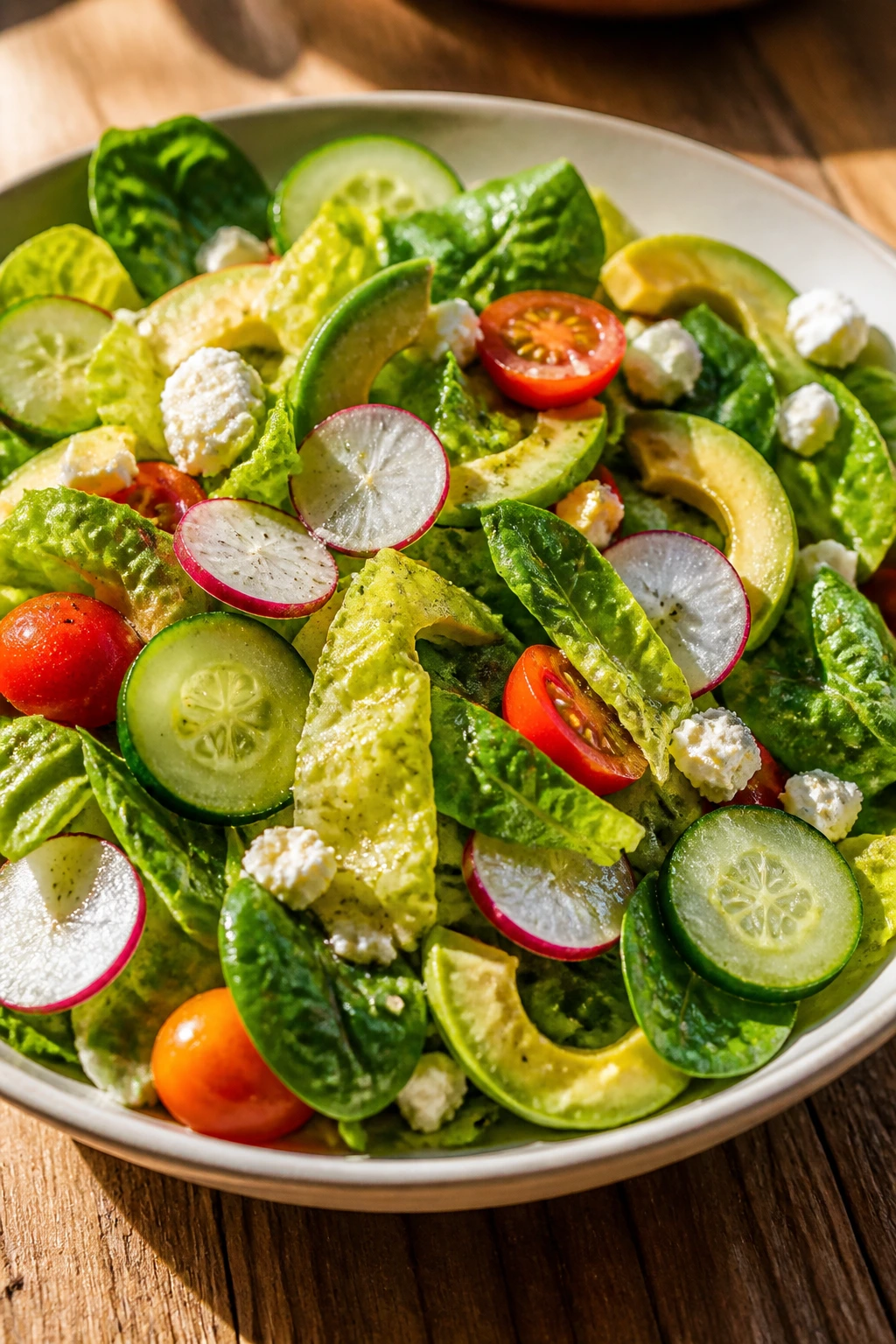
Light does not mean sad. It does not mean tiny, either. A salad can be light because the ingredients are mostly water-rich, the dressing is thin enough to coat instead of bury, and the crunch comes from actual vegetables rather than a stack of fried extras.
The trick is balance. Romaine and cucumber bring cold snap. Spinach fills in the gaps and softens the bite. Tomato gives juice, radish gives pepper, and a small amount of avocado or feta adds enough richness to keep the bowl from feeling like a garnish pretending to be lunch. That’s the sweet spot.
Water, Crunch, and Acid
The body of a light salad usually comes from produce that has a high water content and a clean bite. Cucumber, tomato, lettuce, and herbs all pull their weight here because they taste fresh even when they’re simple.
Acid does the heavy lifting on flavor. A salad dressed with lemon feels brighter than one dressed with a lot of oil and almost no acid. You want the first bite to wake up your mouth. If it feels a little too sharp on the spoon, that’s fine; the greens will soften it as soon as you toss.
Why a Little Fat Still Matters
Fat is not the enemy here. It’s what carries the lemon, keeps the garlic from tasting harsh, and gives the leaves a sheen instead of a puddle. A tablespoon or two of olive oil per serving goes a long way when the rest of the ingredients are fresh and crisp.
Skip the instinct to drown everything. A light salad gets heavy fast when the dressing crosses from coating to saturating. Once the bowl starts looking glossy in a wet way, you’ve gone too far. No drama. Just stop and save the rest for another salad tomorrow.
Salt Is the Quiet Fix
Salt is what keeps a simple salad from tasting thin. Not a lot. Just enough to make the tomatoes taste sweeter, the cucumber taste colder, and the dressing taste finished.
I like to think of salt in a salad as a spotlight rather than a hammer. A pinch in the dressing, maybe another pinch on the tomatoes if they’re bland, and the whole bowl wakes up. That small move matters more than another spoonful of oil ever will.
The Greens That Hold Their Shape in the Bowl
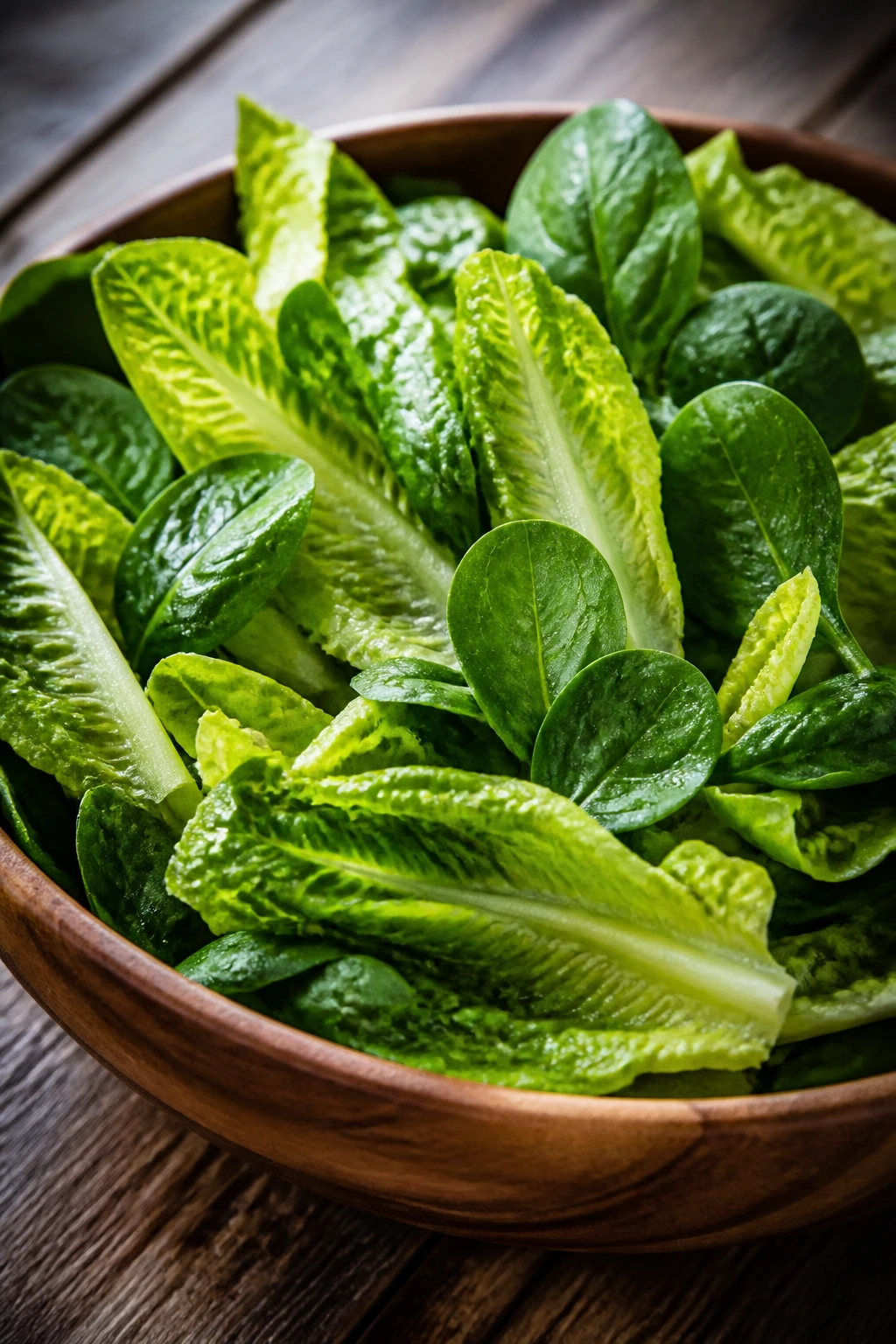
Romaine is the backbone here. It has enough crunch to hold up under dressing, and it gives you those pale, crisp ribs that snap when you bite down. Baby spinach softens the mix so the bowl doesn’t feel all edge and no body.
I do not reach for iceberg unless I want almost nothing but crunch. Iceberg can be refreshing, sure, but it gets boring fast. Romaine has more flavor, more structure, and more staying power after the dressing hits it. If you’ve ever watched a salad slump in five minutes, you know why that matters.
Romaine Does the Heavy Lifting
Use about 3 cups chopped romaine for this recipe. Chop it into pieces you can actually fork in one bite, usually around 1-inch strips. Whole leaves make the salad fussy.
Wash it well and dry it better than you think you need to. Water clinging to the ribs will dilute the lemon dressing and leave a slick puddle at the bottom of the bowl. If you own a salad spinner, this is its moment.
Baby Spinach Adds a Softer Bite
Baby spinach fills in the spaces between the romaine pieces and gives the salad a gentler texture. You don’t need to chop it unless the leaves are huge; whole baby spinach leaves work fine.
I like spinach here because it picks up dressing without collapsing the way some tender lettuces do. It softens at the edge of each bite, which makes the salad feel fuller without making it heavy. That little bit of contrast is doing more than it looks like.
When to Use Butter Lettuce or Arugula
Butter lettuce is the right swap if you want something softer and more delicate. It will not stay as crisp as romaine, but it gives the salad a plush texture that works well with lemon and herbs. Arugula is the opposite move. Peppery, sharp, and a little rude—in a good way.
If you use arugula, don’t use so much that it takes over. About 1 cup mixed in with the romaine is enough to give the salad a peppery edge without making every bite taste like a mustard leaf. Too much and it starts shouting.
The Crisp Vegetables That Give the Bowl Its Snap
Cucumber, tomato, radish, and red onion are the vegetables that make this salad feel alive. They each do a different job, and if you skip one, the bowl can feel flatter than you want.
I like to think of this part as rhythm. Cucumber gives the first cold crunch. Tomato gives the juicy pause. Radish gives a peppery snap. Onion brings sharpness, but only if you treat it lightly and don’t slice it like a slab of lumber.
Cucumber Brings the Cold Crunch
Use one medium cucumber, or a couple of Persian cucumbers if that’s what you have. English cucumber is the easiest because the skin is thin and the seeds are small. Slice it into half-moons, not coins so thick that they bulldoze the other ingredients.
If the cucumber skin is waxy or bitter, peel it in stripes. That keeps some color while softening the edge. I also like to pat cucumber slices dry for a minute after cutting; they’ll still be crisp, but they won’t dump extra water into the bowl.
Cherry Tomatoes Should Taste Like Tomatoes
Use about 1 cup of cherry tomatoes and cut them in half. Halving them does two things: it releases a little juice into the dressing, and it keeps each bite from feeling like a water balloon waiting to happen.
If your tomatoes are bland, salt them very lightly after cutting and let them sit while you prep the rest. The salt pulls out the best part of the flavor. Not a lot. Just enough to make them taste like they were grown somewhere, which, frankly, is the whole point.
Radishes Keep the Salad Awake
Radishes are the sleeper ingredient. They look decorative until you bite one and get that peppery little sting. Slice them thin enough that they layer into the salad instead of sitting there like raw punctuation marks.
If you’ve only ever had radishes in thick chunks, try them thin. They bring sharper flavor and a cleaner crunch that fits the salad theme better. I prefer them raw and very thin here. No roasting, no fuss, no cover-up.
Red Onion Needs a Light Hand
A quarter cup of red onion, sliced paper-thin, is plenty. If you use more, the onion starts overpowering the dressing and everything else tastes like it’s standing too close to a trumpet. If the onion is sharp, soak the slices in cold water for 5 minutes, then drain well.
That quick soak is worth it. It takes the burn out of the onion without flattening the flavor. You still get bite, just not the kind that makes you reach for bread after one forkful.
The Lemon-Dijon Dressing That Keeps Things Bright
Three tablespoons of olive oil, two tablespoons of fresh lemon juice, one teaspoon of Dijon, a little honey, and a small grate of garlic—that’s the kind of dressing that makes a light salad taste finished. Not fancy. Just sharp, smooth, and alive.
The Dijon matters more than most people expect. It helps the oil and lemon come together, which means the dressing clings to the greens instead of separating into slick and sour. If you’ve ever eaten a salad where the lemon sat on top and the oil sank to the bottom, you already know why that matters.
The Basic Ratio, With a Small Twist
A common vinaigrette starts around a 3-to-1 oil-to-acid ratio. For this salad, I push the acid a little higher so the flavor stays bright against the mild greens. Three tablespoons oil to two tablespoons lemon keeps the dressing lively without making it abrasive.
Honey is there to round the edges, not to sweeten the salad. One teaspoon is enough. If you can taste it as “honey” instead of just “smoothness,” you’ve probably gone too far. The garlic should whisper, not shout.
How to Get the Dressing to Emulsify
Whisk the lemon juice, Dijon, honey, garlic, salt, and pepper together first. Then drizzle in the oil slowly while whisking. You should see the dressing turn slightly opaque and glossy, not broken and oily.
A jar works too. Cap it and shake hard for 10 to 15 seconds. That’s often easier than whisking if you’re cleaning up alone or making the salad between other tasks. If it separates later, that’s normal. Shake again. Done.
Taste It for the Salad, Not by the Spoon
Raw dressing should taste a little sharp. If it tastes perfect on the spoon, it may be too soft once it hits the greens. The leaves mute acidity, especially if they’re romaine and spinach.
If the dressing feels too sour, add 1/2 teaspoon more honey or 1 teaspoon of water. If it tastes flat, add a pinch more salt or a squeeze more lemon. Tiny changes. That’s where the good salads live.
Serving, Timing, and Ingredient List
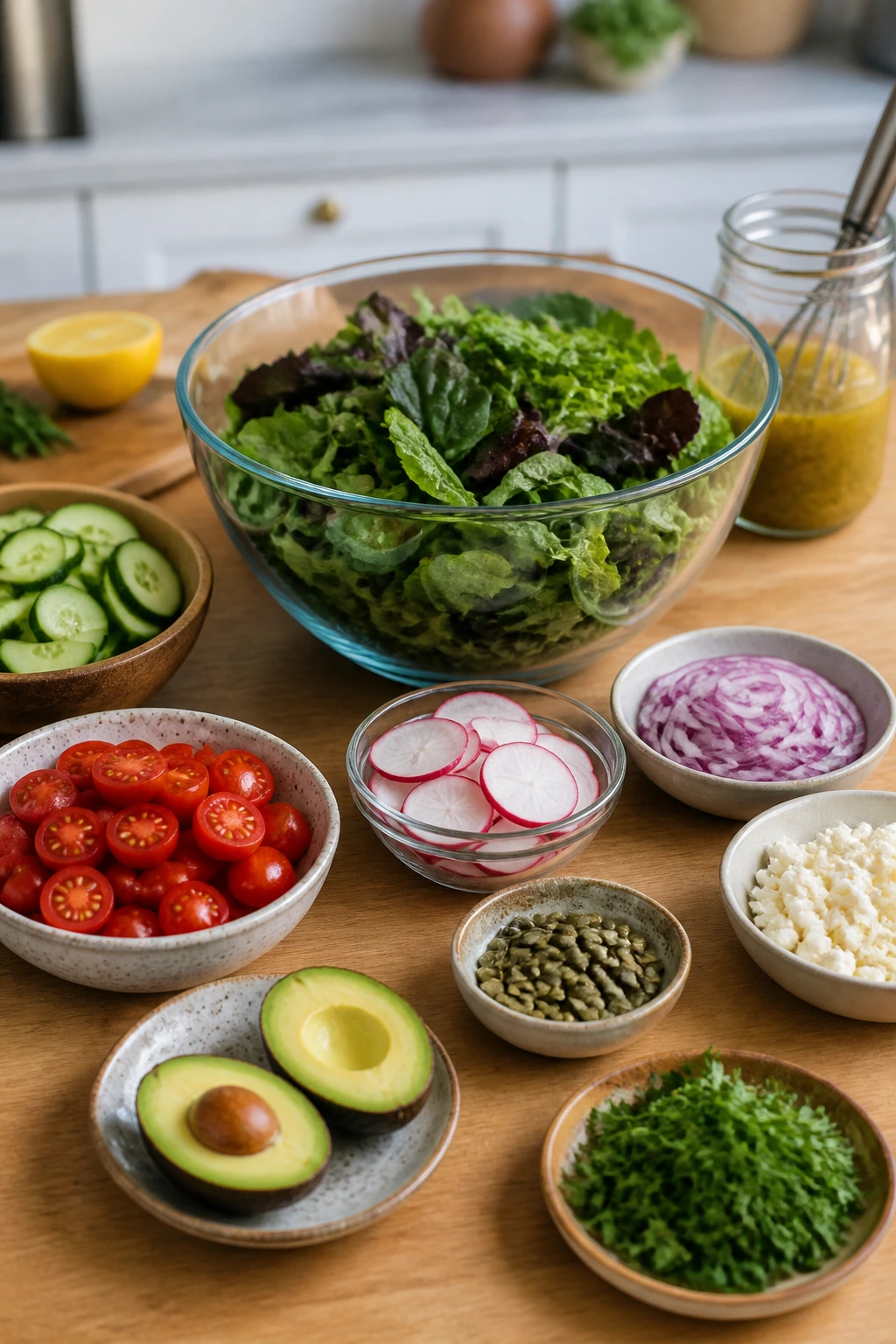
Yield: Serves 4 as a side, or 2 as a light main with protein
Prep Time: 20 minutes
Cook Time: 4 minutes
Total Time: 24 minutes
Difficulty: Beginner — this is mostly slicing, whisking, and a quick toast for the seeds.
Chill/Rest Time: 5 minutes if you want to soften the onion in cold water
Best Served: Right after tossing, while the greens are cold and the dressing still clings in a thin sheen
For the Salad:
- 3 cups romaine lettuce, chopped and thoroughly dried
- 3 cups baby spinach, rinsed and dried
- 1 medium cucumber, halved lengthwise and sliced into half-moons
- 1 cup cherry tomatoes, halved
- 1/2 cup radishes, thinly sliced
- 1/4 cup red onion, paper-thin slices
- 1 avocado, pitted, peeled, and diced
- 2 tablespoons chopped fresh dill or parsley
- 1/4 cup crumbled feta cheese, optional
- 1/4 cup sunflower seeds or sliced almonds, toasted
For the Homemade Dressing:
- 3 tablespoons extra-virgin olive oil
- 2 tablespoons fresh lemon juice
- 1 teaspoon Dijon mustard
- 1 teaspoon honey or maple syrup
- 1 small garlic clove, finely grated or mashed to a paste
- 1/4 teaspoon fine sea salt
- 1/8 teaspoon black pepper
- 1 teaspoon water, if needed to thin
Ingredient Breakdown: What Each Piece Does
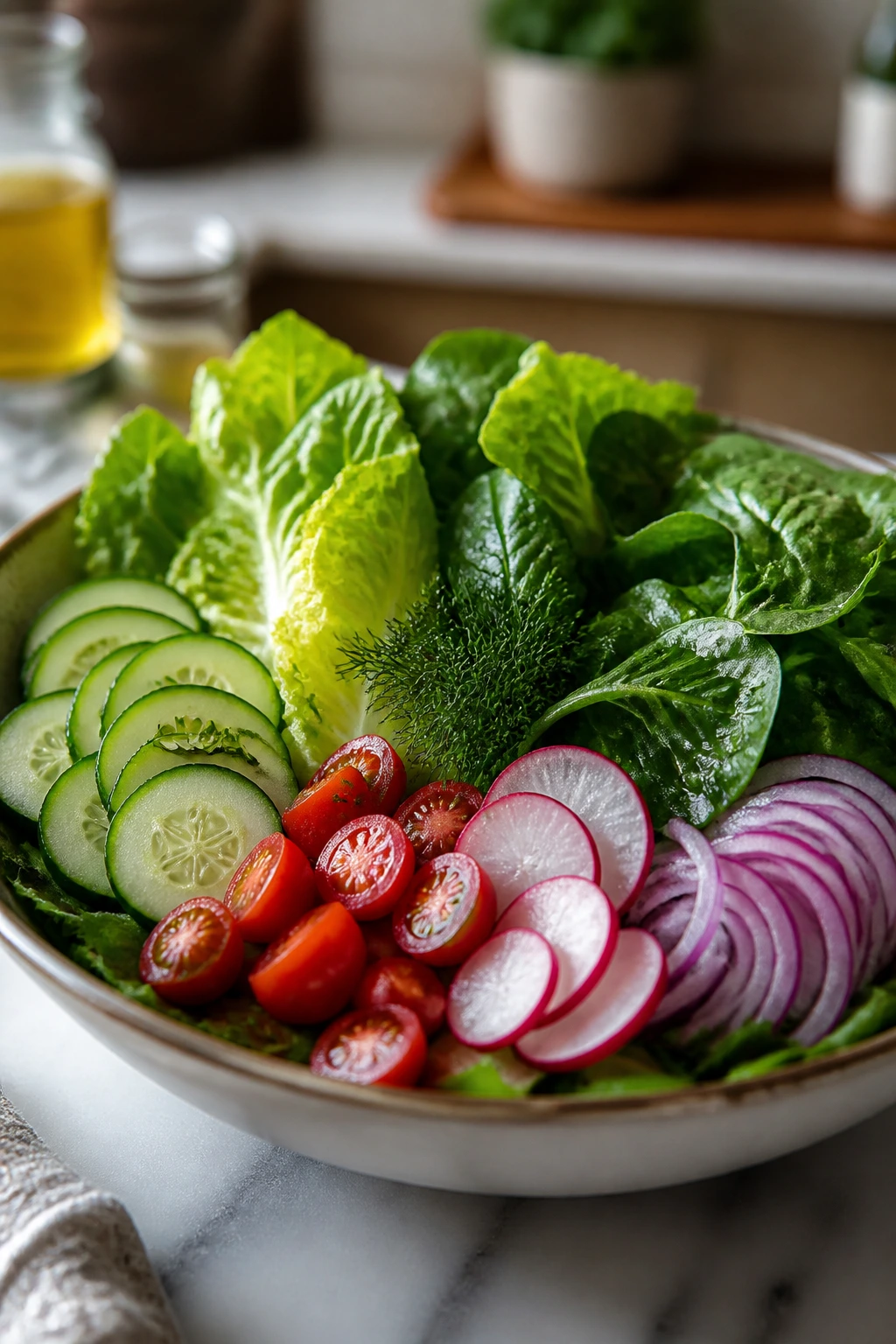
Greens and Base
What to use: 3 cups chopped romaine and 3 cups baby spinach give the salad a sturdy crunch with enough softness to keep it from feeling strict or dry.
Preparation: Chop the romaine into bite-sized pieces and leave the spinach whole unless the leaves are very large. Dry both greens until they feel almost silky, not damp.
Substitutions: Butter lettuce gives a softer result, and spring mix works if you want more tenderness. If you like a peppery note, swap 1 cup of the spinach for arugula.
Tips: Dry greens are non-negotiable here. If water is still clinging to the leaves, the dressing thins out and the whole salad tastes less lively.
Crisp Vegetables
What to use: 1 cucumber, 1 cup cherry tomatoes, 1/2 cup radishes, 1/4 cup red onion, and 2 tablespoons fresh dill or parsley form the main vegetable layer.
Preparation: Slice the cucumber thin, halve the tomatoes, cut the radishes paper-thin, and keep the onion slices delicate. If the onion is sharp, soak it in cold water for 5 minutes and drain well before using.
Substitutions: Celery, shaved fennel, or thin bell pepper strips can stand in for one of the crunchy vegetables. If tomatoes are weak and flavorless, skip them and add more cucumber or a few ribbons of fennel instead.
Tips: Keep the cuts varied. Thin radish slices and half-moon cucumber pieces give the salad more texture than a pile of uniformly diced vegetables ever will.
Crunch and Cream
What to use: 1/4 cup toasted sunflower seeds or sliced almonds, 1 avocado, and 1/4 cup crumbled feta, if you want a little richness.
Preparation: Toast the seeds in a dry skillet until fragrant, then cool them before adding. Dice the avocado at the last minute and crumble the feta gently so it stays in small, salty bits.
Substitutions: Pumpkin seeds, chopped pistachios, or hemp hearts all work. For a dairy-free version, leave out the feta and lean on herbs and seeds for flavor and texture.
Tips: Add these ingredients at the end. Avocado bruises easily, feta breaks down quickly, and seeds lose their crisp edge if they sit in dressing too long.
Homemade Dressing
What to use: 3 tablespoons olive oil, 2 tablespoons lemon juice, 1 teaspoon Dijon, 1 teaspoon honey or maple syrup, 1 small garlic clove, salt, pepper, and a teaspoon of water if needed.
Preparation: Whisk or shake the dressing until it looks slightly thick and unified, not streaky. Taste it before it touches the greens and adjust in tiny steps.
Substitutions: White wine vinegar can replace some of the lemon, and maple syrup can stand in for honey. If you’re out of Dijon, use a very small pinch of mustard powder, though the emulsion won’t be as smooth.
Tips: Fresh lemon tastes cleaner than bottled juice. The difference is not subtle in a salad this bare-bones; the dressing has nowhere to hide.
Special Equipment for a Cleaner Toss
-
Large salad bowl: Use one wide enough to toss without scattering cucumber slices across the counter.
-
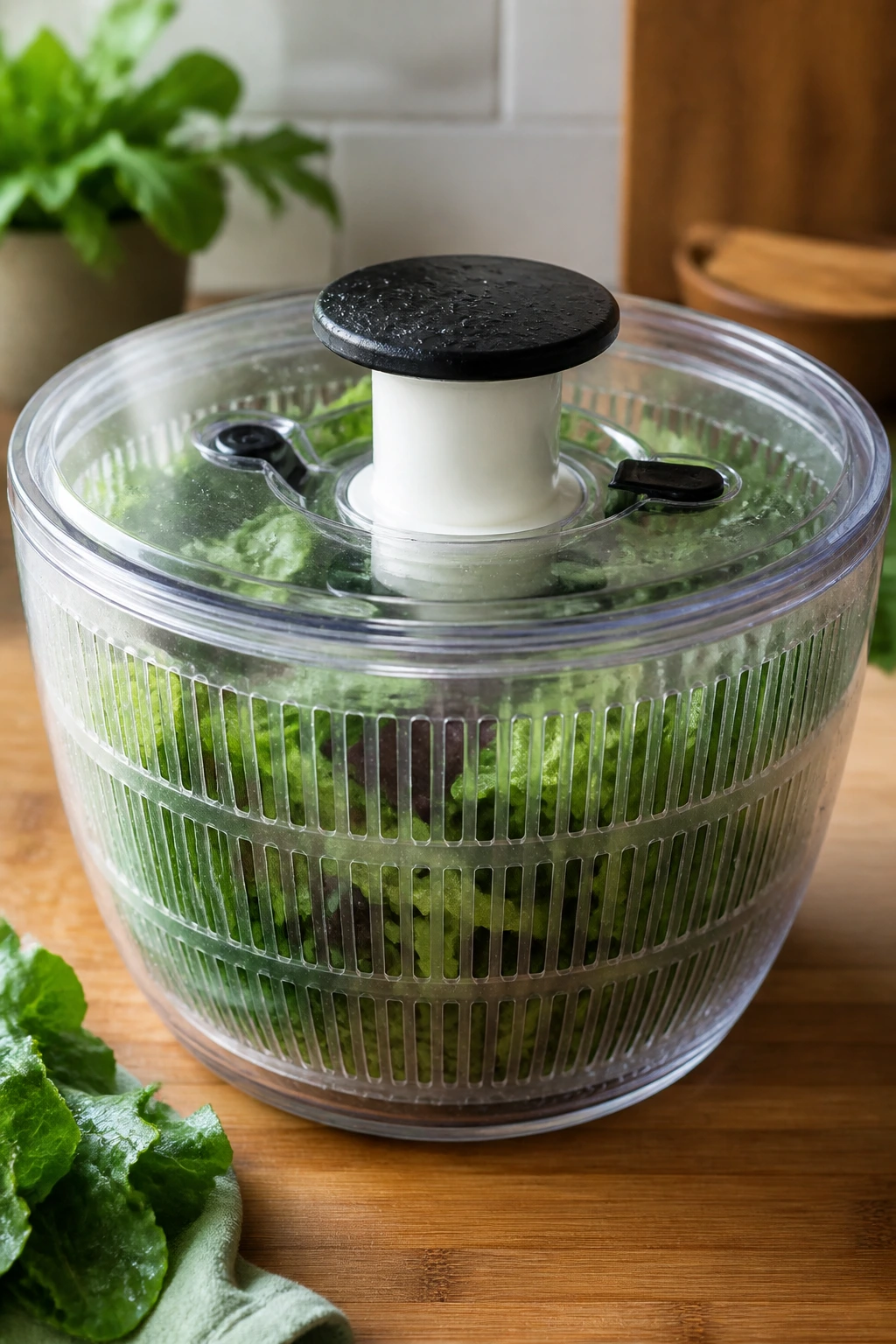
Salad spinner: Worth owning if you make salads more than once in a while. Dry greens are the difference between crisp and soggy.
-
Chef’s knife: You want a sharp blade for thin onion, neat cucumber slices, and tomatoes that don’t crush under the edge.
-
Cutting board: A stable board matters more than people think; slippery boards make thin slicing annoying and unsafe.
-
Small whisk or jar with a tight lid: Either one works for the dressing. A jar is faster, a whisk lets you taste and adjust in the same bowl.
-
Microplane or fine grater: Handy for the garlic, especially if you want it to disappear into the dressing instead of sit in little sharp bits.
-
Dry skillet: Only needed if you’re toasting raw seeds or almonds. Four minutes on medium heat is usually enough.
Step-by-Step: Build the Salad So It Stays Crisp
Prep the Produce
-
Wash the greens thoroughly. Rinse the romaine and spinach under cold water, then dry them in a salad spinner until no visible water clings to the leaves. If you don’t own a spinner, lay the greens on a clean kitchen towel and pat them dry, then let them sit for a few minutes so the surface moisture evaporates.
-
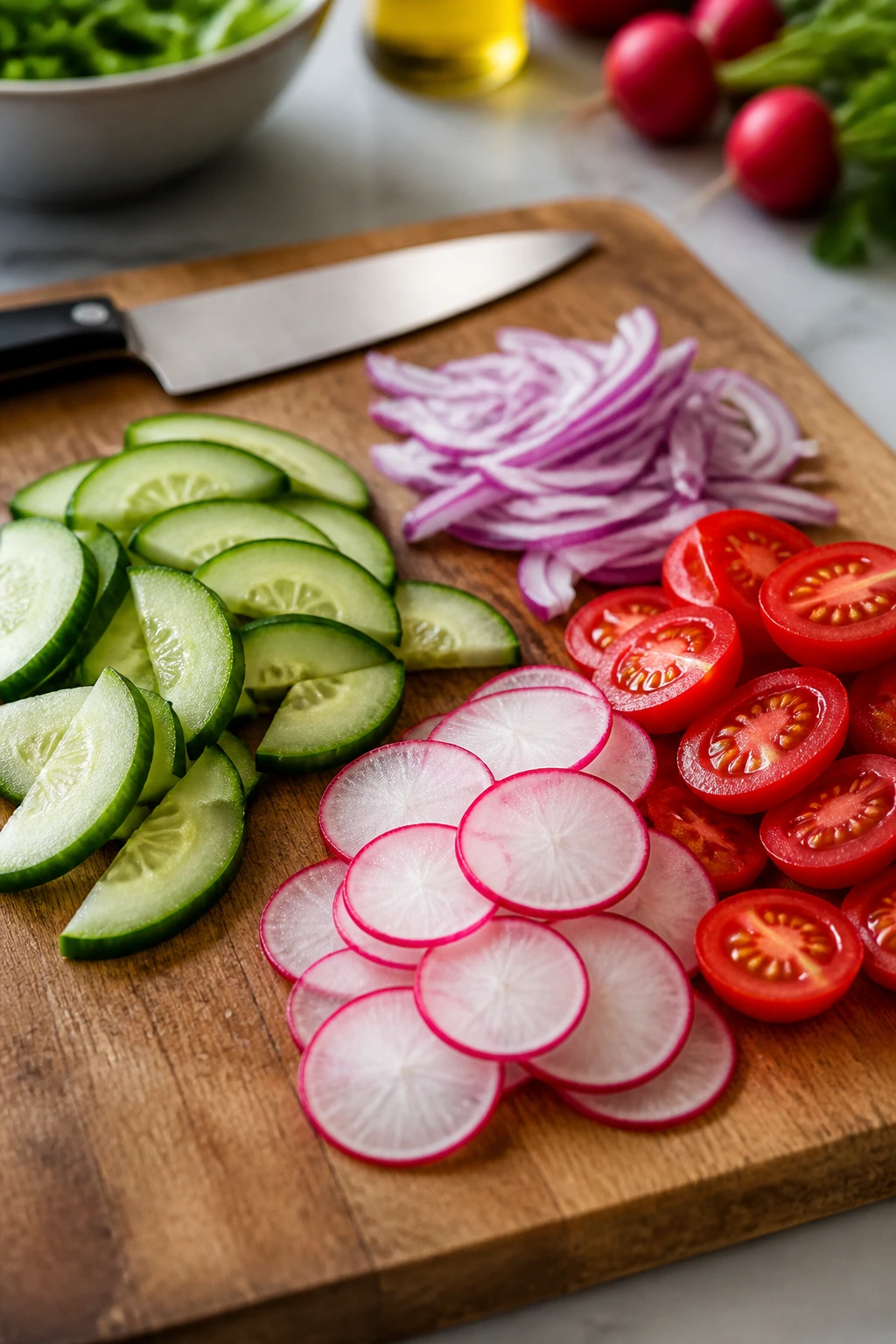
Slice the vegetables with intention. Cut the cucumber into thin half-moons, halve the cherry tomatoes, slice the radishes paper-thin, and cut the red onion into very fine slivers. If the onion looks sharp, soak it in cold water for 5 minutes, then drain and blot dry.
-
Toast the seeds if they are not already toasted. Heat a dry skillet over medium heat and add the sunflower seeds or sliced almonds. Stir often for 3 to 4 minutes, until they smell nutty and pick up a little color. Do not walk away here; seeds go from toasted to burned in a blink. Transfer them to a plate so they cool instead of overcooking in the hot pan.
Mix the Dressing
-
Whisk the dressing ingredients together. In a small bowl or jar, combine the olive oil, lemon juice, Dijon mustard, honey, garlic, salt, and pepper. Whisk or shake for 10 to 15 seconds, until the mixture looks glossy and lightly thickened.
-
Taste and adjust before dressing the salad. Dip a leaf or a cucumber slice into the dressing and taste it. If it feels too sharp, add 1 teaspoon of water or another 1/2 teaspoon of honey. If it tastes flat, add a tiny pinch of salt or a squeeze more lemon. The dressing should taste a little louder than you think it should.
Assemble and Finish
-
Build the greens in a large bowl. Add the romaine and spinach first, then scatter in the cucumber, tomatoes, radishes, onion, and herbs. If you’re using feta, leave it out for a moment so it doesn’t get crushed during tossing.
-
Toss with a lighter hand than you expect. Pour in about two-thirds of the dressing and toss gently with clean hands or salad tongs until the leaves look lightly coated. Add more dressing only if the bowl still looks dry. You want a sheen, not a puddle.
-
Finish with the delicate ingredients and serve immediately. Fold in the avocado, feta, and toasted seeds at the very end so they stay intact. Give the salad one final taste, add a pinch of salt if needed, and serve right away while the greens are still crisp and the cucumber still tastes cold.
How to Serve It Without Weighing It Down
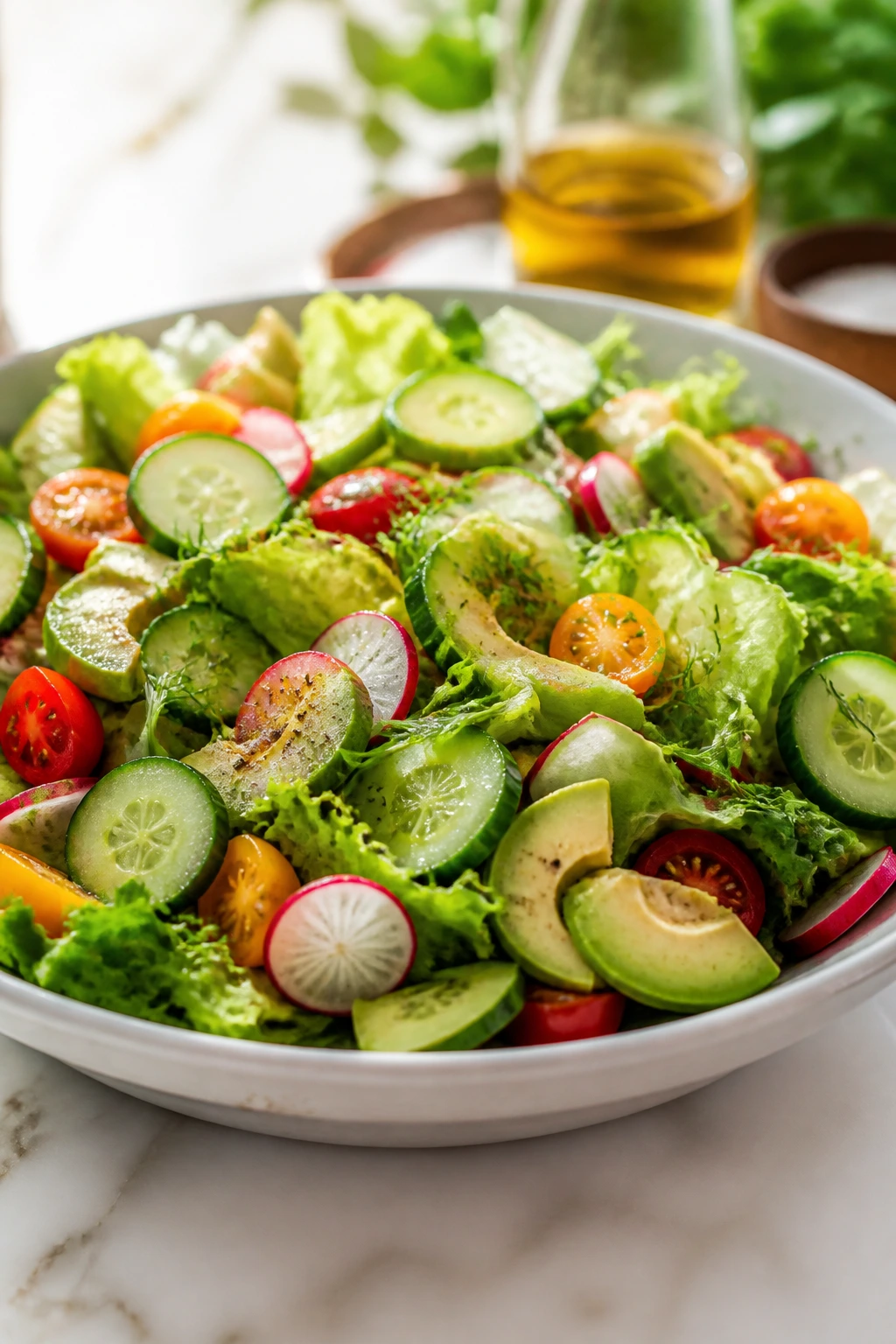
Presentation: Use a wide shallow bowl or a flat platter if you want the salad to look bright and tidy. Pile the greens loosely, then scatter the cucumber, radish, tomatoes, and avocado so every forkful has a little variety instead of a dense pile in the center.
Accompaniments: This salad sits nicely next to grilled chicken, baked salmon, seared shrimp, or a simple omelet. For a lighter meal, pair it with crusty bread and a small bowl of tomato soup, or serve it beside roasted potatoes if you want more starch on the plate.
Portions: As a side, plan on 1 generous cup per person. As a main, this recipe serves 2 if you add protein or 4 if you serve it with bread and something else on the table. If you’re feeding a larger group, double the vegetables before you double the dressing; people usually want more crunch, not more oil.
Beverage Pairing: Sparkling water with lemon fits the clean flavors perfectly. Unsweetened iced tea is another good match because it doesn’t fight the dressing. If you want wine, a crisp Sauvignon Blanc or a dry Pinot Grigio stays out of the way and lets the lemon do its thing.
Smart Tips for a Sharper, Cleaner Finish
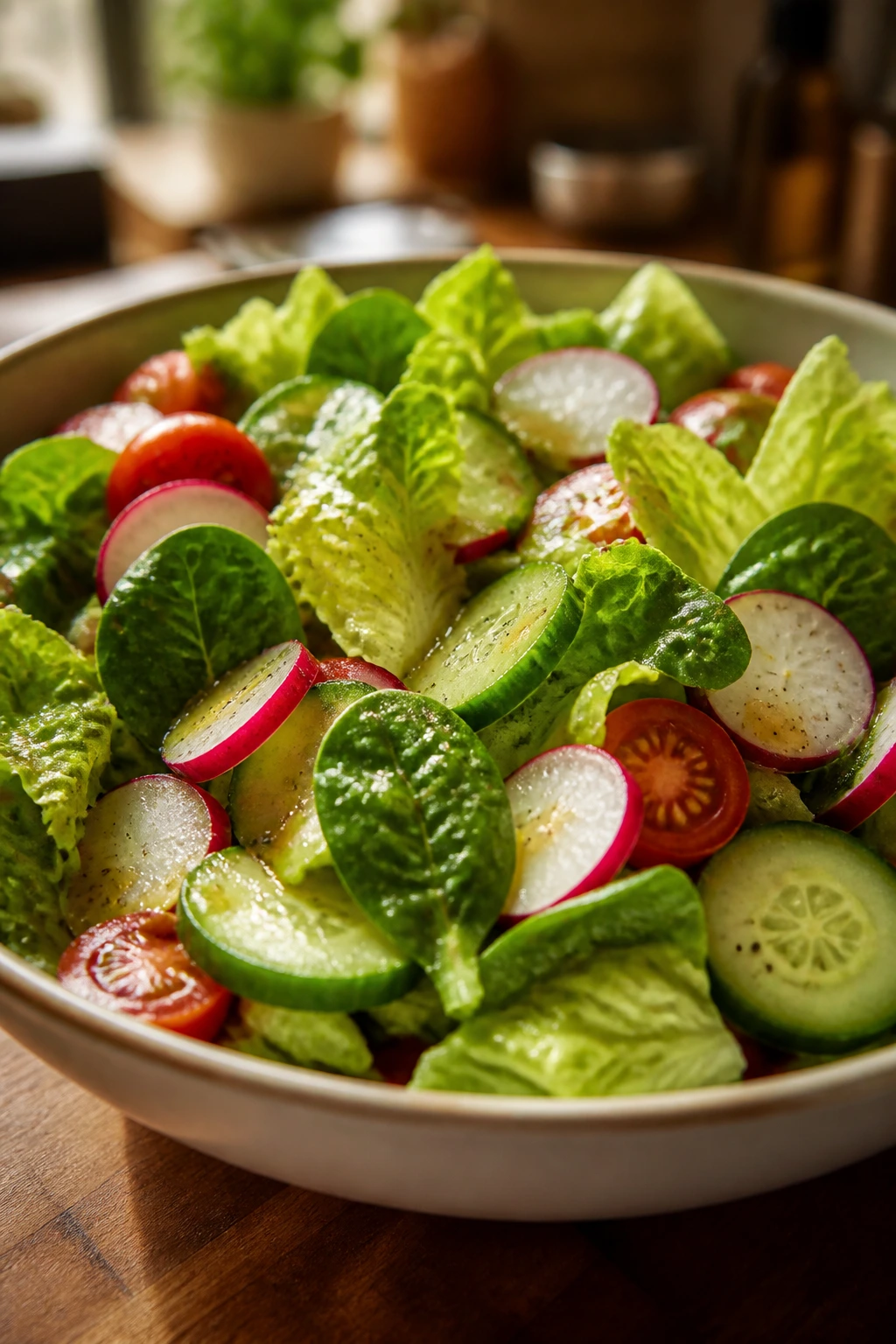
Flavor Enhancement: Grate a little lemon zest into the dressing. Half a teaspoon is enough to make the lemon taste more alive without turning the whole bowl into citrus perfume. If you like a more pronounced finish, add a tiny pinch of flaky salt right before serving.
Time-Saver: Wash and dry the greens a day ahead, then store them in a lined container. A paper towel in the bottom and another on top keeps condensation from turning the leaves soggy. The dressing can be made five days ahead and stored in the fridge, which makes the whole salad feel almost laughably easy.
Cost-Saver: Buy whole romaine hearts instead of pre-chopped greens. They’re cheaper, they stay crisp longer, and you can control the cut size. Pre-cut salad mixes are convenient, but they often come with broken leaves and extra moisture you did not ask for.
Texture Move: Toast the seeds even if the package says they’re ready to eat. That brief heat gives them a fuller flavor and a more noticeable crunch. Let them cool before adding them; warm seeds can wilt the lettuce at the contact points.
Make-It-Yours: For dairy-free, skip the feta and add more seeds or a spoonful of hemp hearts. For a more filling version, fold in chickpeas, grilled chicken, or sliced hard-boiled eggs. If you want a sharper salad, add a few shavings of fennel or a handful of arugula.
Common Mistakes That Turn a Fresh Salad Limp
-
Starting with wet greens: The salad looks fine for about ten seconds, then the dressing slides off and collects at the bottom. Fix it with a real dry-down—spinner, towel, or both—until the leaves no longer feel slick.
-
Dressing the salad too early: Once the lemon hits the greens, the clock starts. If the bowl sits for 20 minutes, the romaine loses its snap and the spinach begins to fold over. Dress right before serving, or keep the dressing on the side.
-
Cutting everything the same size: A bowl of identical cubes feels flat and weirdly engineered. Keep the cucumber in half-moons, the radish thin, the tomatoes halved, and the onion even finer so the textures actually play against each other.
-
Using too much dressing at once: A light salad turns heavy the minute every leaf is glossy and dripping. Start with two-thirds of the dressing, toss, then decide if the bowl needs the rest. It usually doesn’t.
-
Adding avocado too early: Avocado bruises fast and softens under stirring. Add it after the first toss so it stays in clean chunks instead of disappearing into the greens.
-
Letting the dressing taste flat: If the lemon isn’t bright, the whole salad tastes dull no matter how good the produce is. Fix it with a pinch more salt or another squeeze of lemon, not with more oil.
Variations You Can Pull Off With Pantry Ingredients
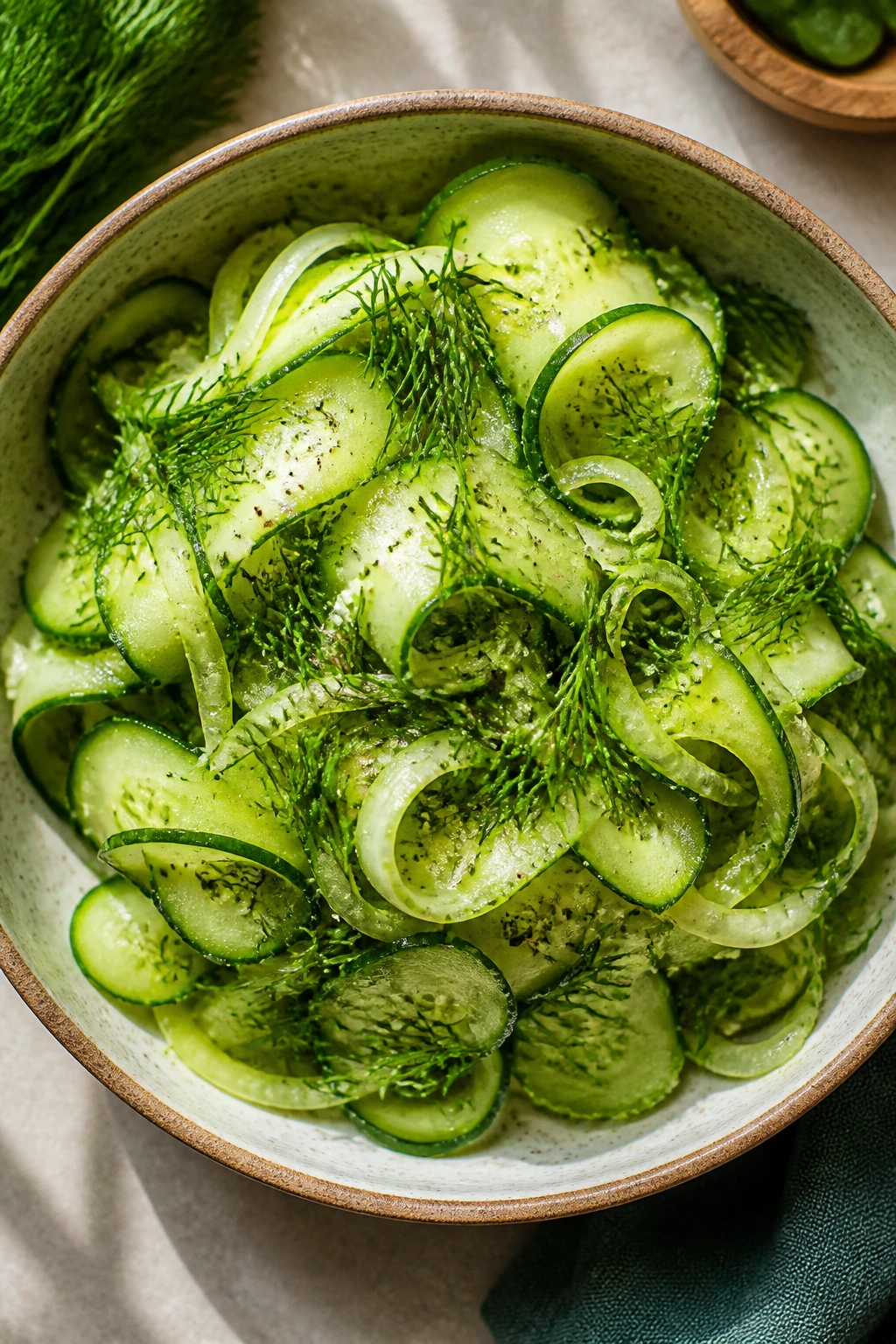
Cucumber-Dill Garden Bowl
Double the cucumber, leave out the tomatoes, and use dill as the main herb instead of parsley. The result tastes cooler and greener, with a flavor that leans toward picnic food in the best sense. I like this version when the produce is strong but the tomatoes aren’t worth buying.
Apple-Fennel Crisp Salad
Swap the radishes for thin slices of fennel and add half a crisp apple cut into matchsticks. The fennel brings a faint anise note, and the apple gives a sweet snap that keeps the salad bright. Use a little extra lemon in the dressing so the fruit doesn’t make the bowl feel sweet.
Protein-Packed Lunch Bowl
Add 1 cup cooked chickpeas or 2 cups shredded rotisserie chicken to turn the salad into a full lunch. Chickpeas give a soft, earthy contrast; chicken makes it feel more traditional and a little more filling. If you go this route, increase the dressing by another tablespoon of lemon and another tablespoon of olive oil.
Mediterranean Pantry Bowl
Add a handful of kalamata olives, keep the feta, and swap parsley for oregano. This version feels saltier and deeper, with a stronger savory note that works well next to grilled fish or roasted vegetables. Use a slightly lighter hand with the extra salt in the dressing because the olives already carry their own brine.
No-Dairy Seeded Bowl
Leave out the feta and replace it with an extra 2 tablespoons of sunflower seeds plus 1 tablespoon of pumpkin seeds. The salad stays crisp and clean, but it gains more crunch and a fuller, nuttier finish. If you want the bowl to feel a little richer without dairy, add a few sliced avocado fans on top right before serving.
Make-Ahead, Storage, and What to Do with Leftovers
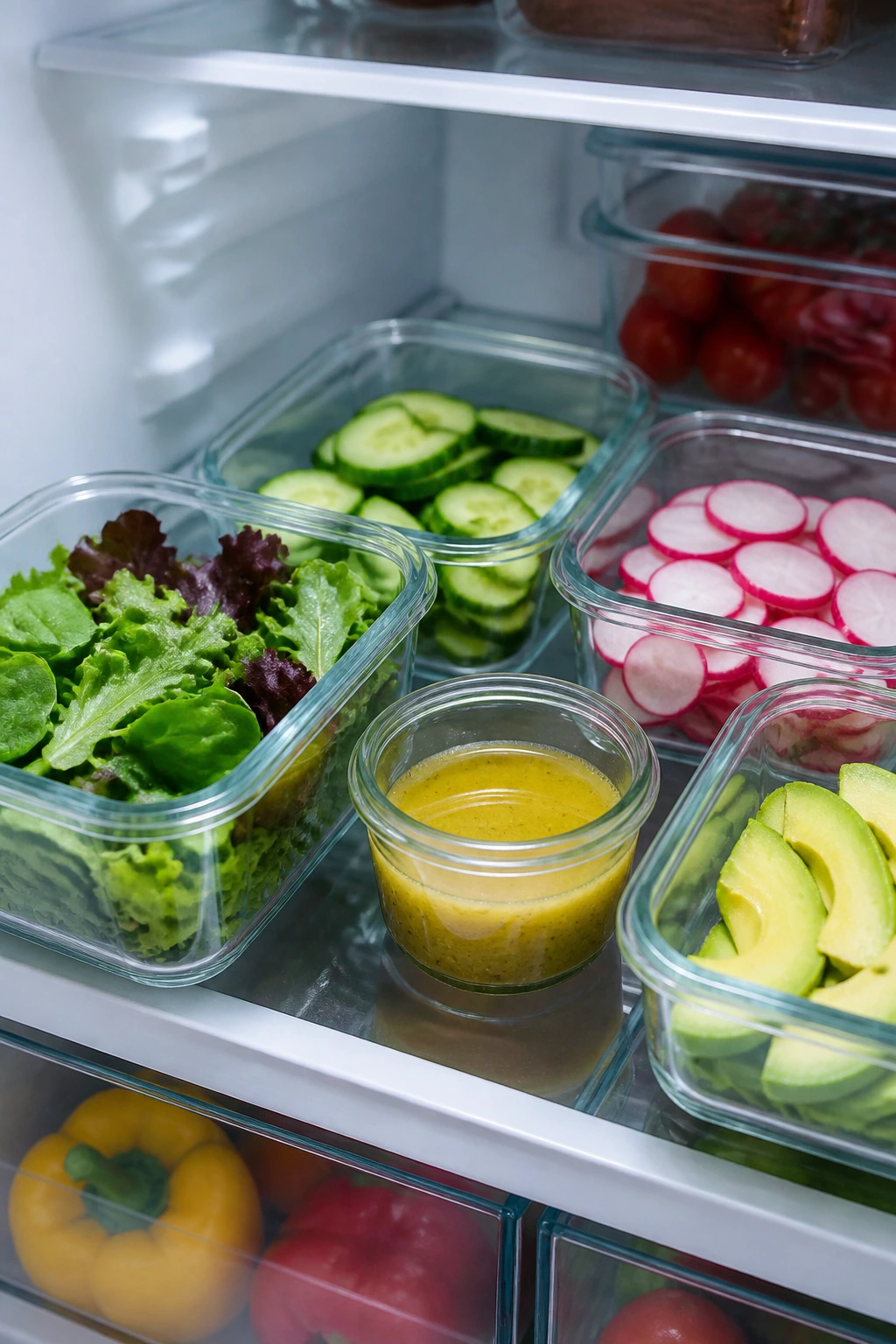
The assembled salad is best eaten right away. Once it’s dressed, the greens start to soften within 20 to 30 minutes, and the avocado begins to lose its clean color even faster. That doesn’t make it unsafe; it just makes it less good.
For make-ahead prep, store the components separately. Dry greens keep well for 2 to 3 days in the fridge if you line the container with paper towels and keep the lid tight. Sliced cucumber and radishes hold for about 24 hours in sealed containers, though cucumber is best when sliced the same day. Tomatoes are better left whole until just before serving, because cut tomatoes lose their shape and start watering down the bowl.
The dressing keeps in the refrigerator for up to 5 days. It may thicken slightly or separate in the cold, which is normal. Let it sit at room temperature for about 10 minutes, then shake or whisk it again before using. If it seems stubborn, add 1 teaspoon of water and stir until it loosens.
I do not recommend freezing the assembled salad. Greens, cucumber, tomato, and avocado do not thaw into anything worth eating. The dressing can be frozen for up to 1 month if you really want to save it, but fresh lemon always tastes cleaner, so I’d make a smaller batch instead of freezing a bottle and hoping for the best.
If you’re packing leftovers, keep the dressing off the salad and the avocado separate. A dressed salad can be eaten within a couple of hours, but once it sits overnight it turns soft and a little tired. Undressed leftovers are still useful: tuck them into a wrap, pile them next to eggs, or spoon them over a grain bowl.
Questions People Ask Before Making It
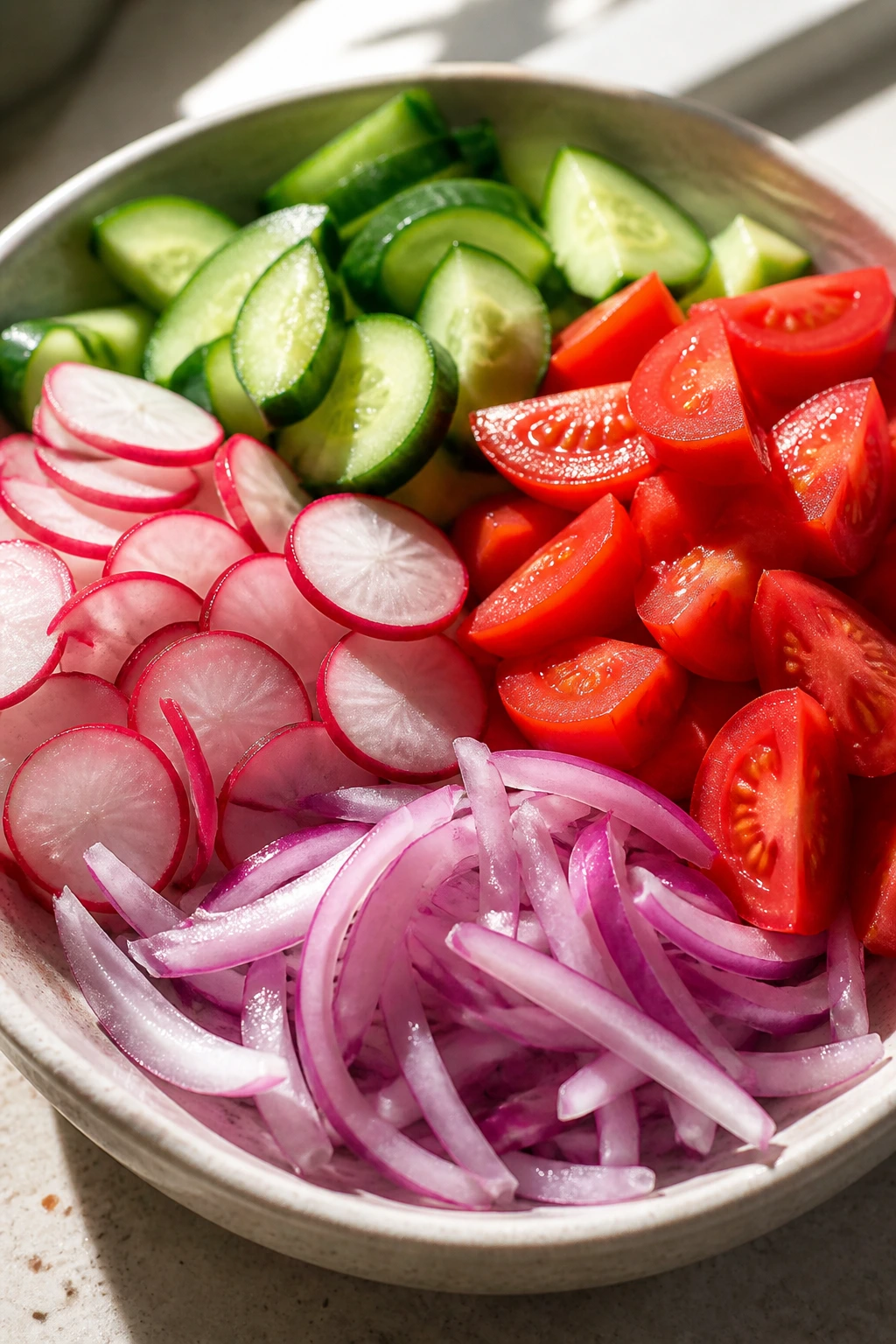
Can I use bagged salad greens instead of washing my own?
Yes, and sometimes that’s the smart move on a busy day. Just open the bag and dry the greens again if there’s any condensation inside, because bagged greens often carry enough moisture to dull the dressing.
What if I don’t have Dijon mustard?
Use a tiny pinch of mustard powder if you have it, or leave the mustard out and whisk harder to combine the oil and lemon. The dressing will separate a little faster without Dijon, but the flavor still works if you taste and adjust the salt.
Can I make the dressing without honey?
You can use maple syrup, or leave the sweetener out if you prefer a sharper vinaigrette. Without it, the dressing tastes cleaner but a bit more angular, so add the lemon in small increments and stop when it tastes bright instead of harsh.
How do I keep the avocado from turning brown?
Add it at the last second and toss it as little as possible. If you’re packing the salad for later, squeeze a few drops of lemon over the avocado chunks and keep them separate until serving time.
What’s the best way to turn this into a main dish?
Add protein, plain and simple. Grilled chicken, chickpeas, seared shrimp, or hard-boiled eggs all work, and you usually need about 4 to 6 ounces per person for the salad to feel like dinner instead of a side.
Why does my salad taste watery even when I use good ingredients?
That’s almost always a drying problem or a tomato problem. Wet greens and juicy cut tomatoes both thin the dressing, so dry the greens fully and cut the tomatoes close to serving time.
Can I swap the feta for something else?
Yes. Goat cheese makes the salad creamier, shaved parmesan gives it a saltier edge, and you can skip cheese completely if you lean harder on herbs and toasted seeds. Just keep the amount modest so the salad still feels light.
Is this salad okay for meal prep?
It works well if you prep the parts separately. Greens, chopped vegetables, dressing, and toppings can all live in different containers, then you combine them when you’re ready to eat. Once tossed, though, it’s a same-day salad.
A Bowl Worth Repeating
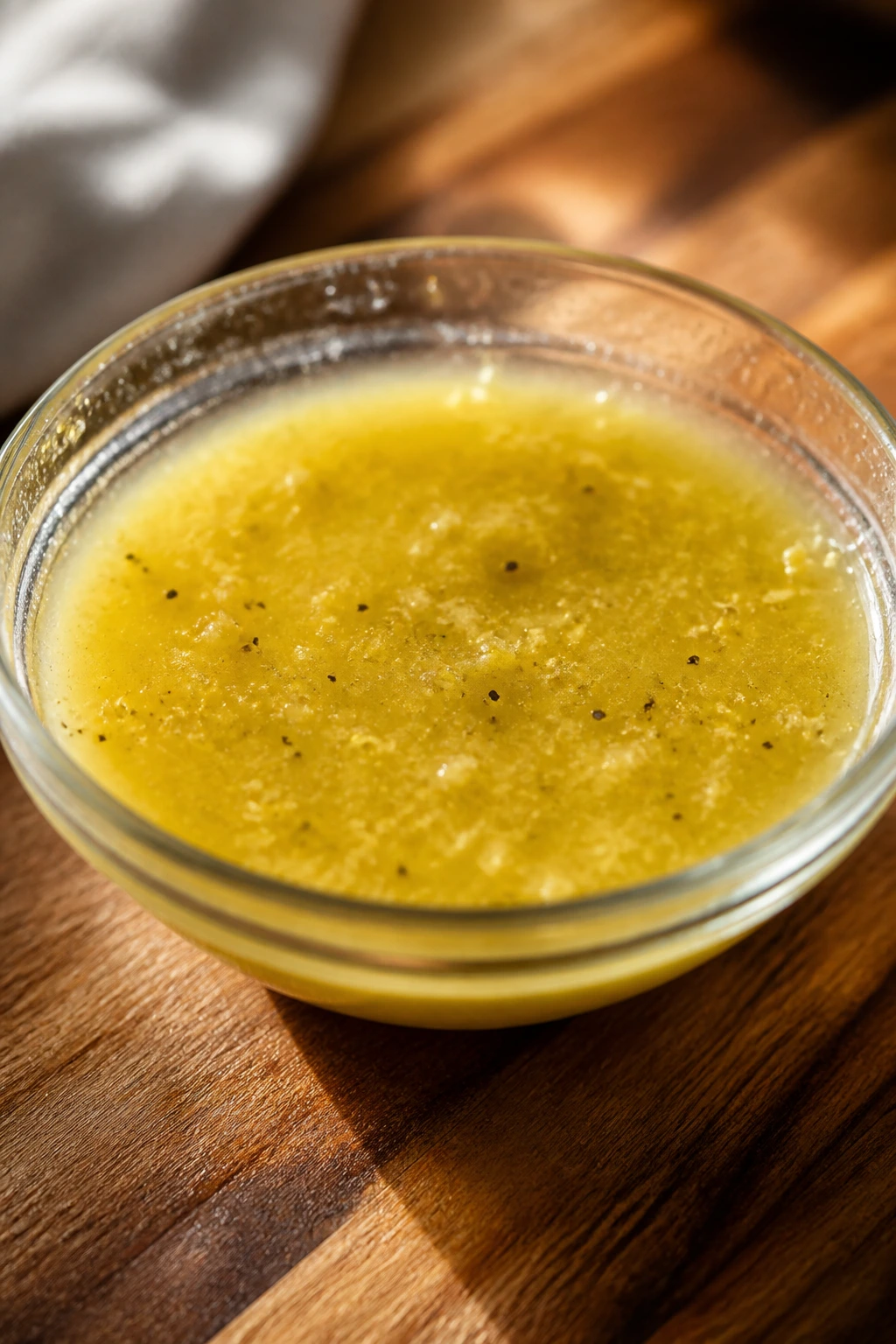
The appeal of a light salad with homemade dressing is not mystery. It’s restraint, and a little confidence with a knife. Keep the greens dry, keep the lemon bright, and stop the moment the bowl starts to look glossy instead of soggy. That’s the whole trick, and it’s a good one.
What I like most is how adjustable it is without losing its shape. You can make it brighter, greener, saltier, more filling, more herb-heavy, or more bare-bones, and it still reads as the same clean, crisp bowl. Make it once, then change one small thing the next time. That’s how a salad stops being a side note and starts becoming the one you keep making without thinking.
Light Salad with Homemade Dressing — Recipe Card
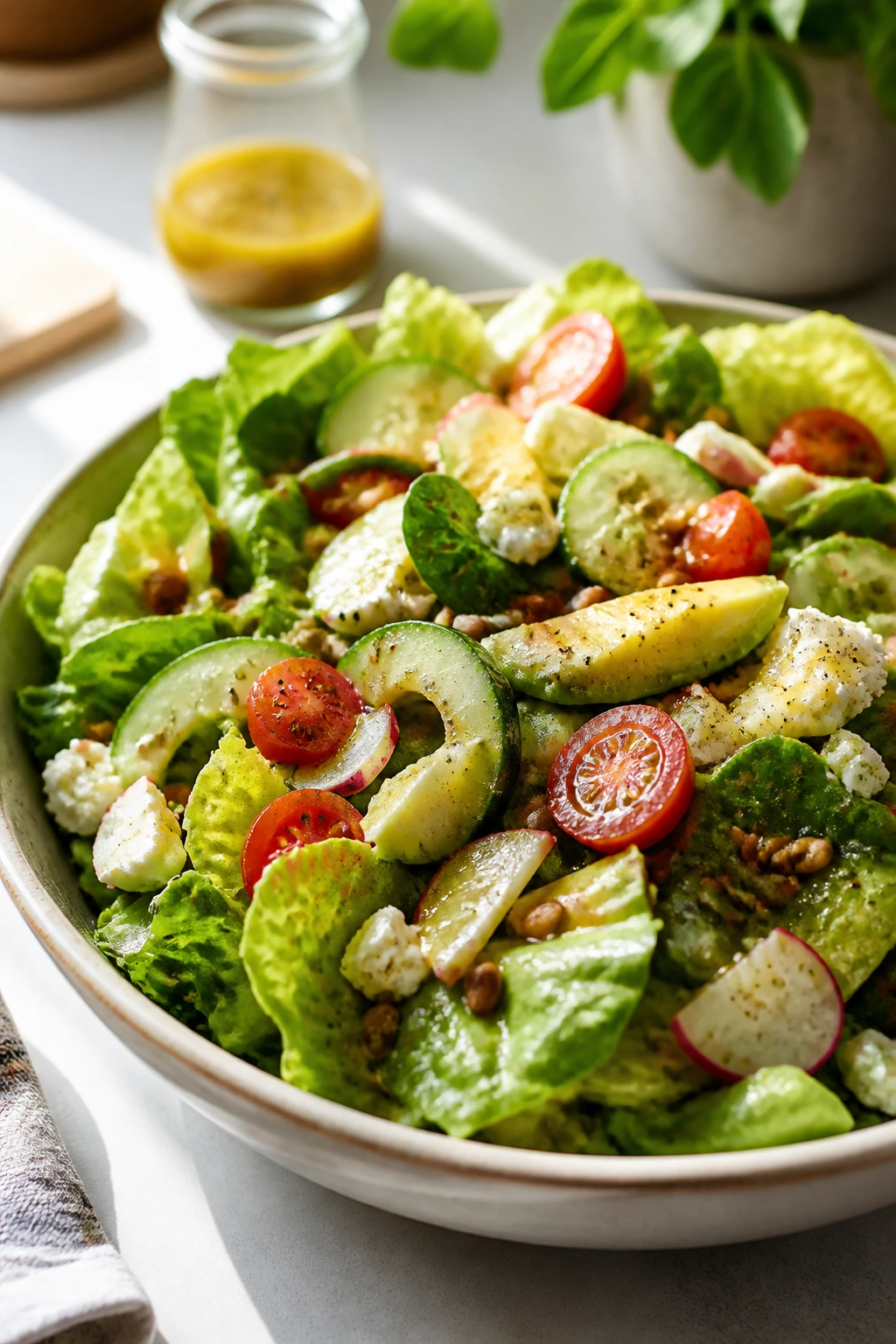
Recipe Name: Light Salad with Homemade Dressing
Description: A crisp romaine-and-spinach salad with cucumber, cherry tomatoes, radishes, avocado, feta, toasted seeds, and a bright lemon-Dijon vinaigrette. It’s clean, cold, and sharp enough to stand on its own or sit beside just about anything.
Prep Time: 20 minutes
Cook Time: 4 minutes
Total Time: 24 minutes
Course: Salad, Side Dish
Cuisine: American
Servings: 4 servings
Calories: about 250 kcal per serving
Ingredients
For the Salad:
- 3 cups romaine lettuce, chopped and thoroughly dried
- 3 cups baby spinach, rinsed and dried
- 1 medium cucumber, halved lengthwise and sliced into half-moons
- 1 cup cherry tomatoes, halved
- 1/2 cup radishes, thinly sliced
- 1/4 cup red onion, paper-thin slices
- 1 avocado, pitted, peeled, and diced
- 2 tablespoons chopped fresh dill or parsley
- 1/4 cup crumbled feta cheese, optional
- 1/4 cup sunflower seeds or sliced almonds, toasted
For the Homemade Dressing:
- 3 tablespoons extra-virgin olive oil
- 2 tablespoons fresh lemon juice
- 1 teaspoon Dijon mustard
- 1 teaspoon honey or maple syrup
- 1 small garlic clove, finely grated or mashed to a paste
- 1/4 teaspoon fine sea salt
- 1/8 teaspoon black pepper
- 1 teaspoon water, if needed to thin
Instructions
-
Wash and dry the greens. Rinse the romaine and spinach well, then dry them thoroughly in a salad spinner or with clean towels.
-
Slice the vegetables. Cut the cucumber, tomatoes, radishes, and red onion into thin, bite-sized pieces. Soak the onion in cold water for 5 minutes if you want it milder, then drain and dry it.
-
Toast the seeds. Warm a dry skillet over medium heat and toast the sunflower seeds or almonds for 3 to 4 minutes, stirring often, until fragrant. Cool them on a plate.
-
Make the dressing. Whisk together the olive oil, lemon juice, Dijon, honey, garlic, salt, pepper, and water until glossy and lightly thickened.
-
Build the salad. Add the romaine, spinach, cucumber, tomatoes, radishes, onion, and herbs to a large bowl.
-
Toss with dressing. Pour in about two-thirds of the dressing and toss gently until the leaves are lightly coated. Add more only if needed.
-
Finish and serve. Fold in the avocado, feta, and toasted seeds just before serving. Taste, adjust with a pinch of salt if needed, and serve immediately.
Notes: Dress just before serving for the best texture. The dressing keeps up to 5 days in the fridge. Add chickpeas, chicken, or shrimp if you want to turn it into a main dish.