



A good summer smoothie should fog the glass, hit the tongue cold, and taste like fruit instead of melted ice. That’s the standard. If it pours like pink milk or turns watery halfway through the drive to the park, something went wrong in the prep, not the blender.
That’s why smoothie prep for summer sipping is worth a little forethought. The freezer can do most of the hard work if you treat it like a prep station instead of a dumping ground. Freeze the fruit in the right shape. Portion the liquid. Keep the add-ins separate when they need to stay dry. A few small habits save you from the two classic smoothie disappointments: a bland slush or a blender that growls like it wants an apology.
I’m firmly in the frozen-fruit camp for warm weather. Fresh fruit has its place, but once the temperature rises, frozen chunks do a better job of giving you body, chill, and a clean fruit flavor without relying on a pile of ice cubes that dilute everything. Get the prep right once, and the blender starts feeling less like a chore and more like the fastest cold drink in the kitchen.
Why a Freezer-First Routine Works
- Cold without dilution: Frozen fruit chills the smoothie from the inside, so you don’t have to drown the blend in ice and lose flavor.
- Faster mornings: Pre-portioned packs cut the decision-making down to seconds, which matters when the kitchen is already hot.
- Cleaner texture: A controlled mix of fruit, liquid, and add-ins blends smoother than the “throw everything in and hope” method.
- Less waste: Overripe bananas, soft peaches, and berries that are a day from collapse become usable instead of forgotten.
- Easier budgeting: Buying fruit in bulk and freezing it in portions usually costs less than grabbing fresh berries every few days.
- Better consistency: When the ratios stay the same, the smoothie tastes like a recipe instead of a surprise.
Start With a Freezer Formula, Not a Random Blend
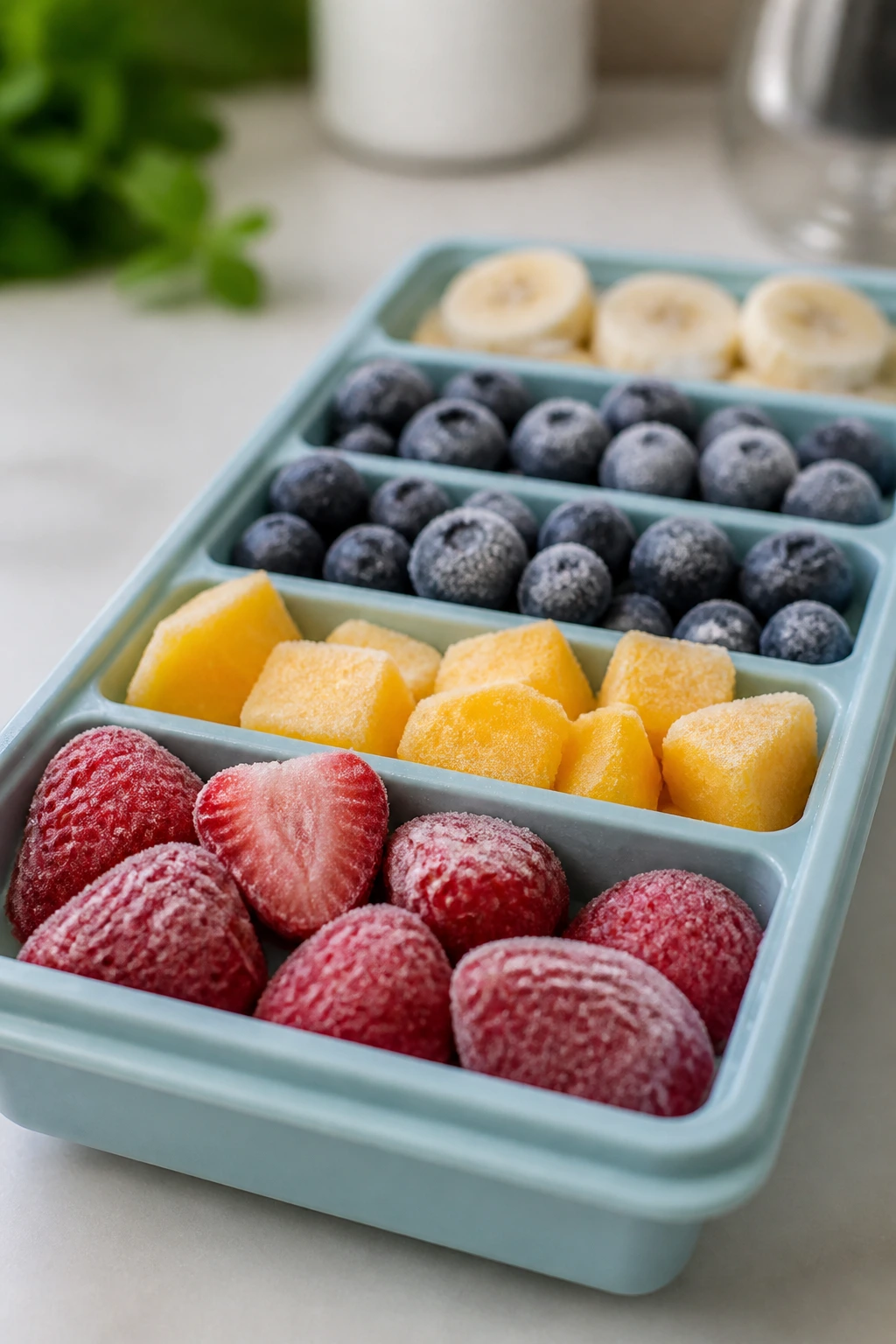
A smoothie gets much easier once you stop treating it like a blank canvas and start treating it like a ratio problem. The quickest starting point is 2 parts frozen fruit to 1 part liquid, then adjust from there depending on how thick you want the drink. That is the base I reach for most often, and it holds up whether I’m making a berry smoothie, a peach blend, or something greener.
The 2:1 Rule in Real Life
A typical single-serving smoothie starts with 1½ to 2 cups frozen fruit and ½ to 1 cup liquid. If you want something spoon-thick, closer to a bowl than a drink, stay on the lower end of the liquid. If you want it easy to sip through a straw, give it another splash and stop before the blender turns the whole thing foamy.
The common mistake is assuming more liquid means a smoother smoothie. It usually means a thinner one. That’s all.
When to Add Creaminess
If you like a smoother, richer sip, add ¼ to ½ cup Greek yogurt, kefir, silken tofu, or a ripe banana. Each one changes the texture in a different way. Greek yogurt adds body and a tart edge, kefir gives a lighter tang, silken tofu goes soft and neutral, and banana brings that familiar milkshake-like thickness people either love or tolerate.
A spoonful of nut butter also changes the game. 1 tablespoon is enough to make a berry smoothie taste fuller without turning it into peanut butter soup.
When to Skip Ice
Ice feels like the obvious summer fix, but it’s often the wrong one. Use it only when your fruit is mostly fresh or your blender needs help moving the blades. If you already have a freezer full of fruit, ice just waters the flavor down. Frozen mango, pineapple, banana, and berries can do the chilling for you.
Which Fruits Freeze Well and Which Ones Need a Little Help
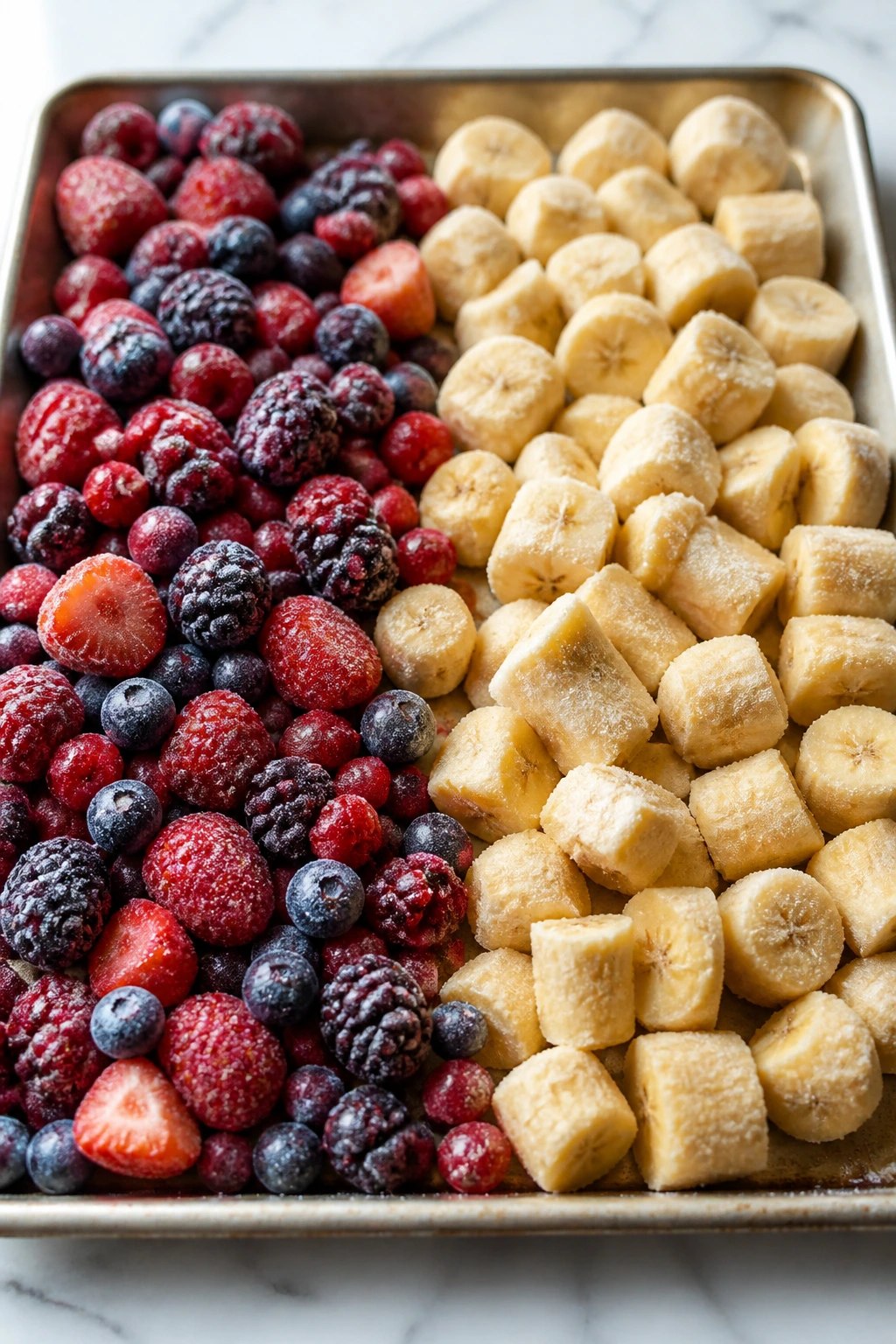
Some fruit turns into the kind of frozen cube that blends cleanly. Some fruit turns into a hard, flavorless little brick that fights back. Knowing the difference saves a lot of frustration.
Berries are the easiest place to start. Blueberries, strawberries, raspberries, and blackberries freeze well, though raspberries and blackberries soften fast once thawed, so they should go from freezer to blender without sitting on the counter. Mango and pineapple are the other heavy hitters. They stay bright, sweet, and easy to blend, and they bring enough natural sugar to make a smoothie taste lively even if you keep added sweeteners out of the picture.
Bananas deserve their own rule. Peel them first, slice them into coins, then freeze them on a tray before bagging them. Whole frozen bananas are a wrestling match; sliced bananas are cooperative. A ripe banana with a few brown spots gives better flavor than a green one, and a frozen slice gives creaminess that feels almost unfair.
The Fruit That Holds Its Shape Best
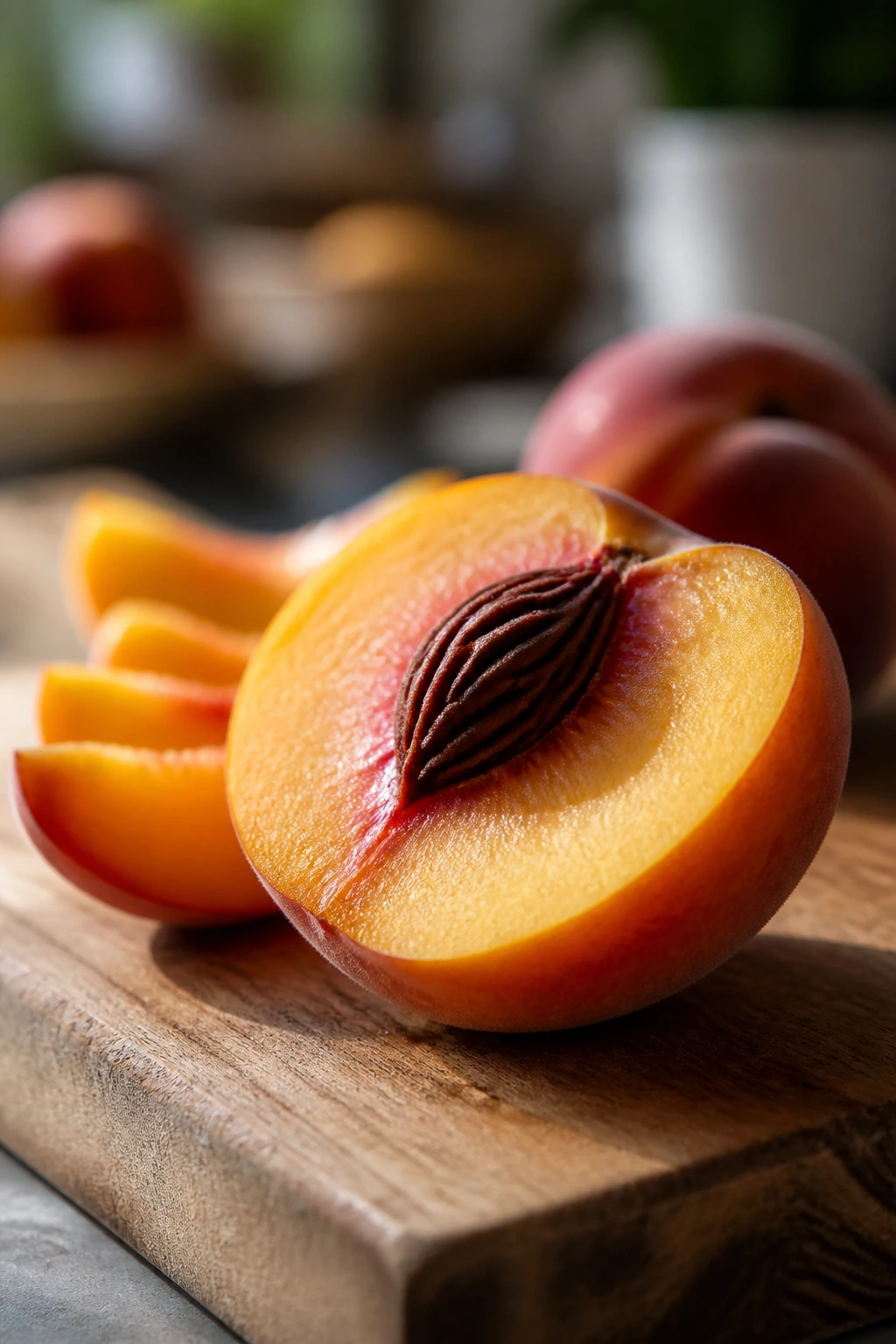
Stone fruit is excellent if you prep it correctly. Peaches, nectarines, cherries, and apricots all work well, but pit them first and freeze them in a single layer. If the fruit is underripe, the smoothie can taste flat, so use stone fruit that already smells fragrant and yields slightly at the stem or seam.
Melon is trickier. Cantaloupe and honeydew can work in a light summer blend, but they don’t bring much body once frozen. I use them with berries or lime, not as the star. Watermelon is even looser. Lovely fresh. A little temperamental in the freezer.
Avocado is the odd one people forget about. A few chunks add a creamy, almost lush texture without a strong flavor. It’s the secret weapon in a green smoothie when you want silkiness but do not want your drink to taste like salad dressing.
What Needs a Little Acid
Apples, pears, and bananas brown after cutting. A squeeze of lemon or lime slows that down, though it won’t stop oxidation forever. Toss sliced fruit with 1 to 2 teaspoons of citrus juice per cup of fruit if you’re freezing it for later use, especially apples and pears. It buys time and keeps the color from going tired and gray.
Liquids, Yogurt, and the Part Everyone Gets Wrong
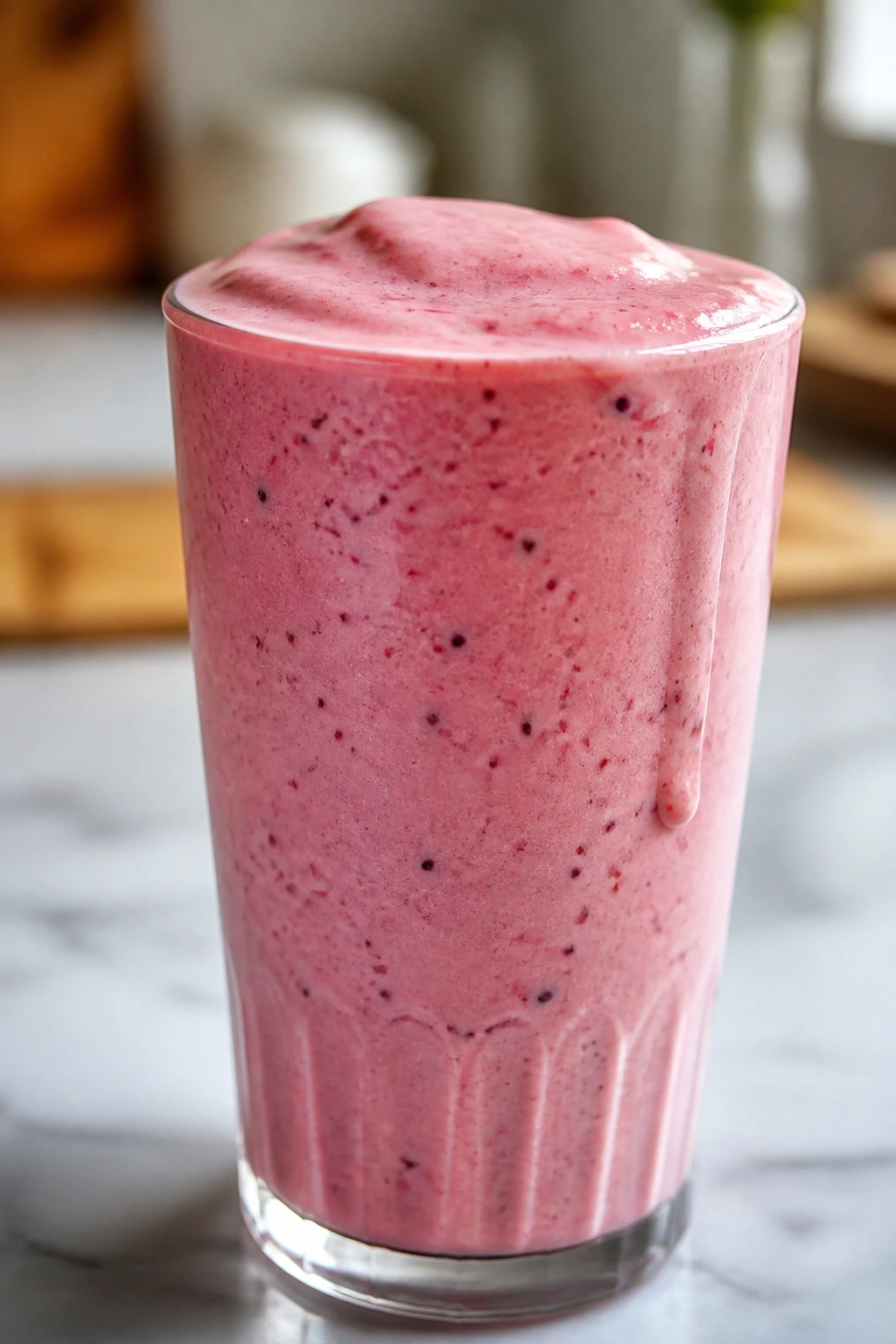
The liquid in a smoothie should support the fruit, not wash it out. That sounds obvious, but people still reach for too much juice because it tastes safe. It rarely is. Juice makes the drink sweeter and thinner, and by the third sip you’re usually drinking fruit syrup with a little texture.
Water is underrated. If your fruit is very ripe, especially mango, banana, pineapple, or peach, plain cold water keeps the flavor clean. It also lets the fruit stay in charge. Coconut water works when you want a lighter, more refreshing blend, though it adds a distinct taste that won’t fit every fruit combo. I like it with pineapple, lime, mint, and spinach. I do not like it with blueberry and cocoa. That combo gets muddy fast.
Milk and plant milk bring body. Dairy milk gives the smoothest, roundest sip. Oat milk is the best plant milk for texture because it has some natural starch and doesn’t taste thin. Almond milk is lighter and can work, but it doesn’t do much heavy lifting on its own. If you want a thicker smoothie with almond milk, add more frozen fruit or a spoonful of oats.
Yogurt, Kefir, and the Cold-Tangy Route
Greek yogurt adds a sharp, creamy backbone. Use ¼ to ½ cup per serving and stop there unless you want the smoothie to taste like a frozen breakfast bowl. Kefir is looser and tangier, which makes sense if you want something drinkable and bright. It’s especially good with berries, peaches, or cherries, where the tartness helps the fruit taste more alive.
If you’re dairy-free, silken tofu is a solid move. Not glamorous. Very useful. A quarter block blended with berries or mango makes the drink creamier without any obvious tofu flavor, especially if you include vanilla, citrus zest, or a ripe banana.
Building Smoothie Packs Without Making a Frozen Brick
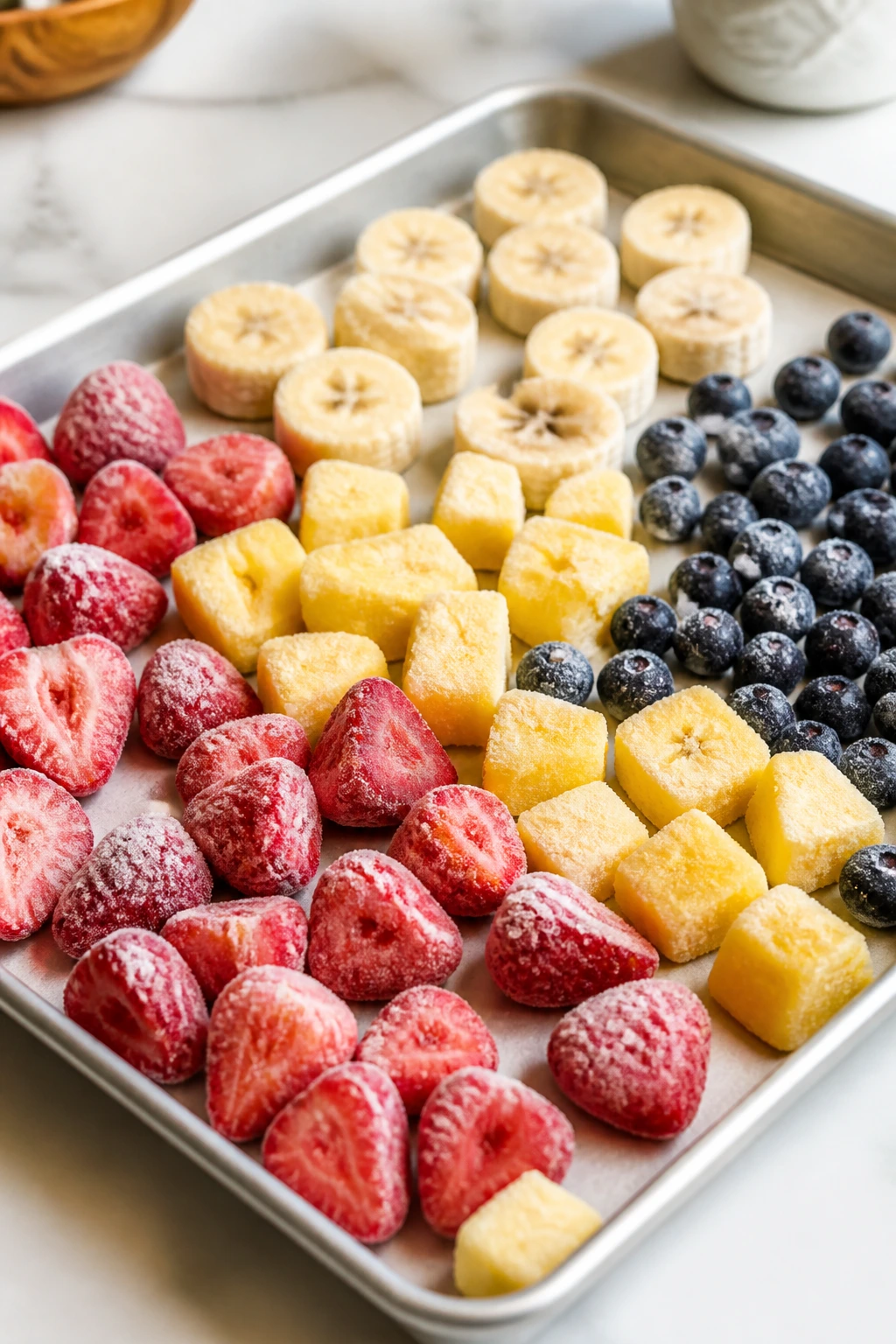
A good smoothie pack should behave like a tidy little meal in the freezer. It should pour or dump into the blender easily, not arrive as one giant chunk that bangs around the jar like a hockey puck. The trick is to freeze components in the right order and the right shape.
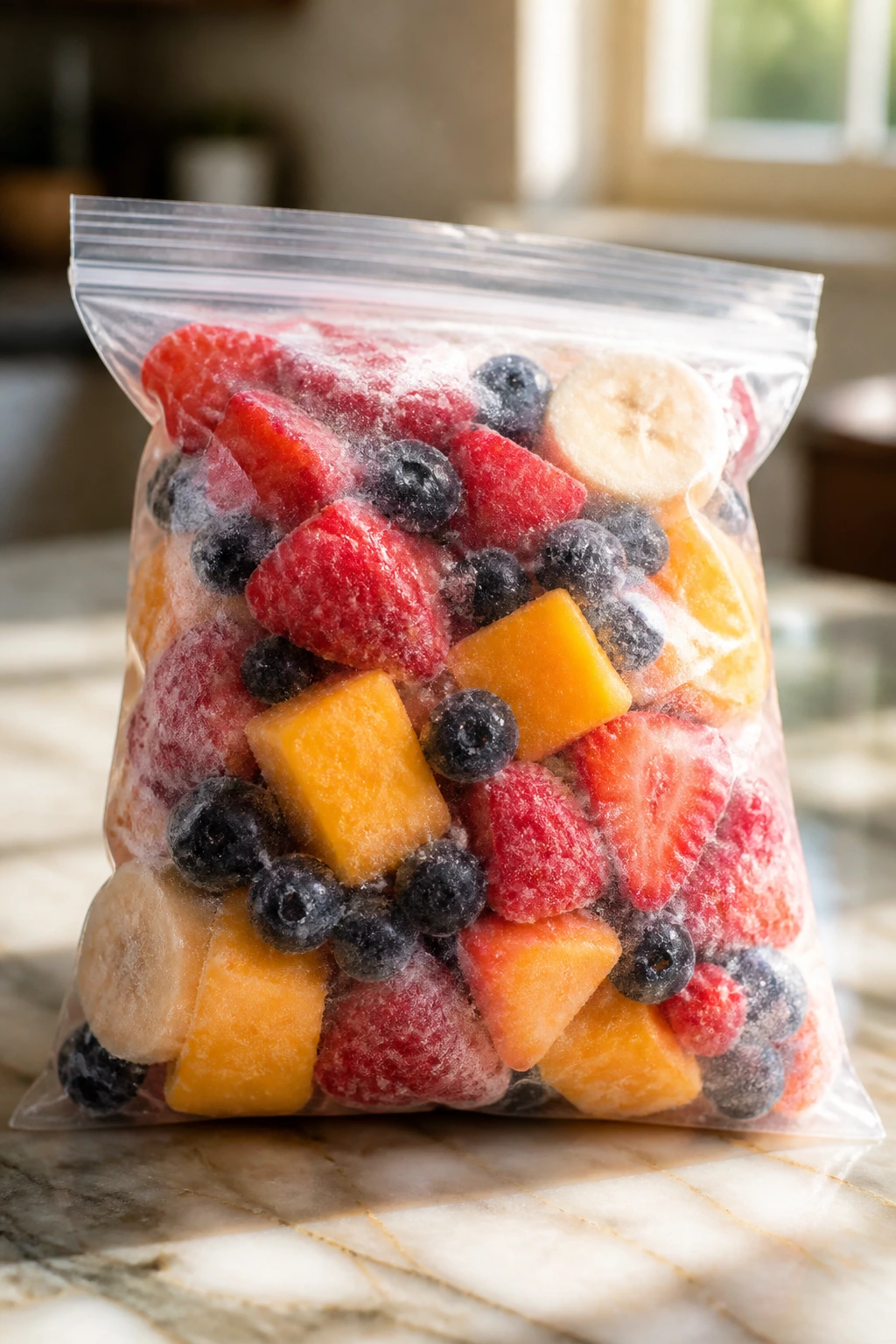
Start with a lined sheet pan if you’re prepping more than a couple of packs. Spread berries, sliced bananas, diced peaches, mango chunks, or pineapple in a single layer and freeze them until hard. That usually takes 2 to 4 hours depending on size and freezer temperature. Once the pieces are firm, move them into bags or reusable containers. That one step keeps them from fusing into a solid block.
For the actual packs, aim for 1½ to 2 cups total fruit per bag if it’s a single serving. Add greens, seeds, or a small portion of oats if you want them frozen with the fruit. Keep wet ingredients like yogurt, nut butter, and milk separate unless you’re freezing them in cubes or small portions. Mixed directly into a bag, they can stick to the fruit in clumps and make the blending order awkward.
Labels Save You From Guesswork
Write the liquid amount right on the bag. That matters more than people think. If the pack already contains bananas and mango, you may need only ½ cup liquid. If it’s berries and spinach, you might want ¾ cup. A tiny bit of labeling saves you from making the same smoothie too thick three mornings in a row and then too thin on the fourth.
I also like to date the bags, not because the fruit suddenly dies on a schedule, but because it prevents the “What is this? Frozen green stuff?” mystery.
The Blending Order That Keeps Texture Thick Instead of Foamy
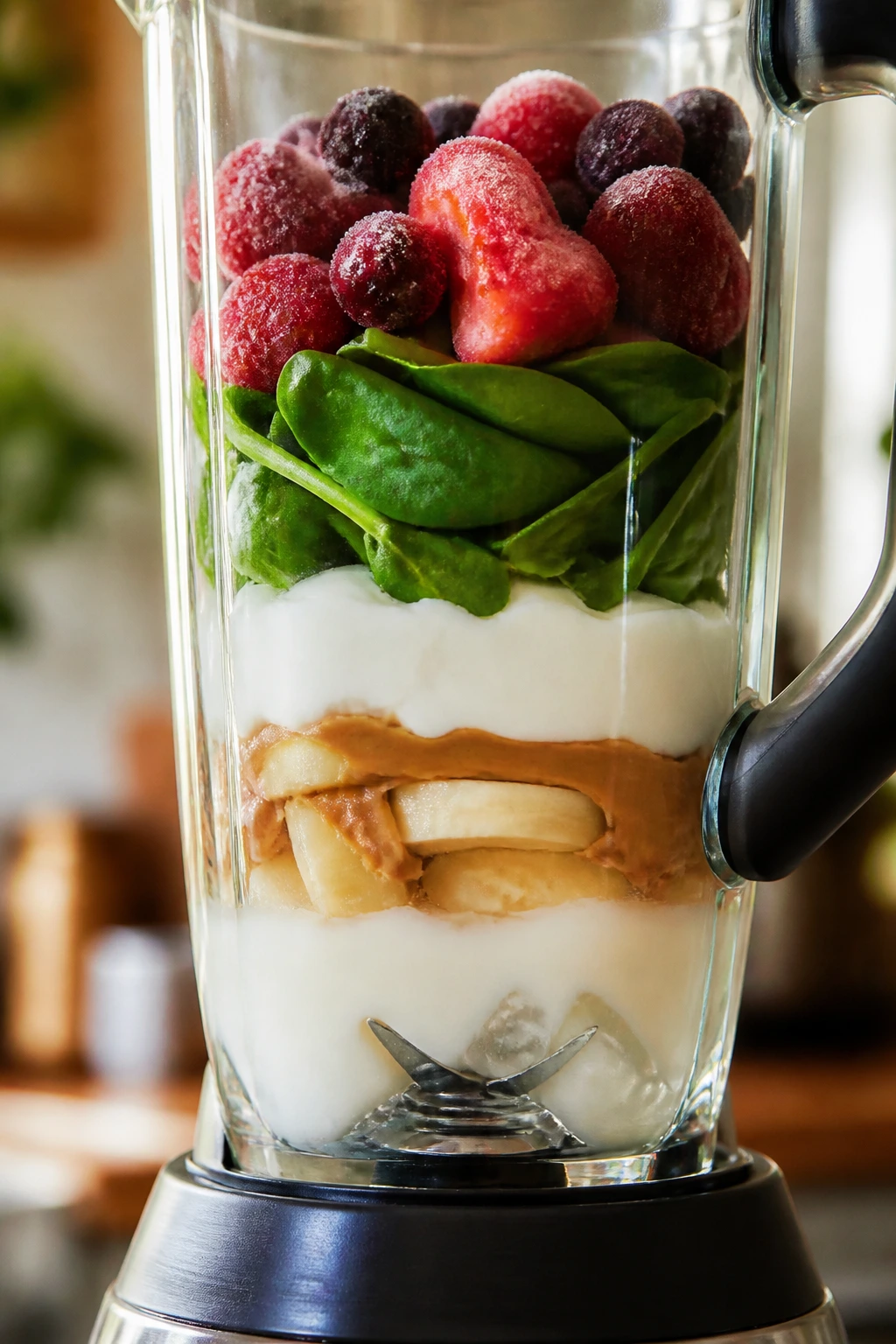
Blending order matters. A lot. If you dump frozen fruit directly onto dry powders and a tiny splash of liquid, the blades just spin around in a cold crater and the motor starts sounding offended. A better order gives the blender a running start.
Pour the liquid in first. Then add softer ingredients: yogurt, nut butter, protein powder, spinach, or silken tofu. Frozen fruit goes on top, with the hardest pieces last. That placement gives the blades something to grab immediately, and once the liquid starts moving, the rest follows.
Use short pulses at the start. Five or six quick bursts are usually enough to break the top layer, and then you can blend steadily. If the smoothie stalls, stop the machine and scrape down the sides or add liquid 1 to 2 tablespoons at a time. That tiny increment matters. Big splashes often turn a thick smoothie into a thin one before you can react.
Foamy Smoothies Usually Need Less Blending, Not More
Foam is the warning sign people ignore. If the smoothie looks airy and pale, the blender probably ran too long or whirled too much liquid into the mix. Blend until the ice and fruit are smooth, then stop. A few tiny berry flecks are fine. A milkshake of bubbles is not.
High-speed blenders forgive mistakes better than standard ones, but they still reward good ratios. If your machine struggles, cut the frozen pieces smaller. Half-inch chunks are kinder than giant hunks. A blender is a tool, not a miracle.
Greens, Seeds, Protein, and Other Add-Ins That Earn Their Space
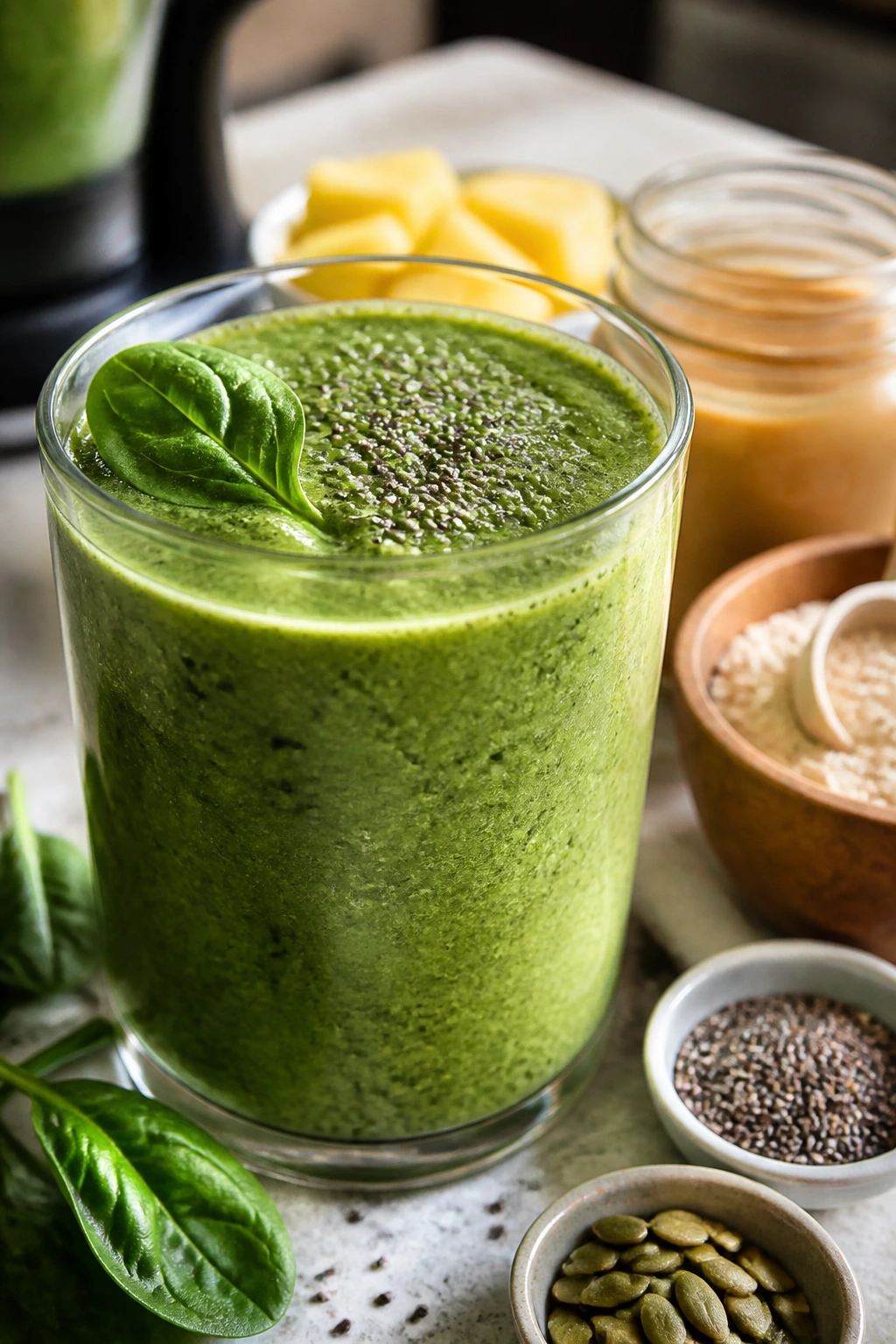
Add-ins can make a smoothie more filling, but they can also drag it into strange territory if you use too many at once. I’m a fan of restraint here. One green, one thickener, one flavor booster, maybe one protein source. That’s enough.
Baby spinach is the easiest green to hide. It has a mild flavor and disappears fast, especially in berry or pineapple blends. Use 1 to 2 packed cups per serving if you want a green smoothie that still tastes like fruit. Kale works too, but it wants more help. Strip the stems, chop it small, and pair it with pineapple, mango, banana, or citrus so the taste doesn’t hang around in the aftertaste.
Chia seeds and ground flaxseed are tiny but useful. 1 tablespoon of either can thicken the drink after it sits for a few minutes. That’s handy if you like a colder, more spoonable texture. Oats add body and make the smoothie more breakfast-like. A quarter cup is enough for most single servings.
Protein Without the Chalky Surprise
Greek yogurt is the easiest protein add-in because it already fits the texture of a smoothie. Protein powder takes more care. Start with ½ scoop, not a full scoop, unless you already know the brand blends well. Vanilla usually plays nicer than unflavored, and chocolate can be fantastic with banana and peanut butter if you don’t overdo the powder.
Nut butters are great, but they make the blend heavier. Almond butter tastes a little softer, peanut butter is louder, sunflower seed butter is the best choice if you need a nut-free option. A tablespoon or two is enough. More than that and the smoothie starts to feel like breakfast paste.
A pinch of salt sounds odd until you taste the difference. It sharpens berries, wakes up mango, and keeps banana from tasting one-note. Tiny amount. Huge payoff.
Keeping a Smoothie Cold Without Watering Down the Flavor
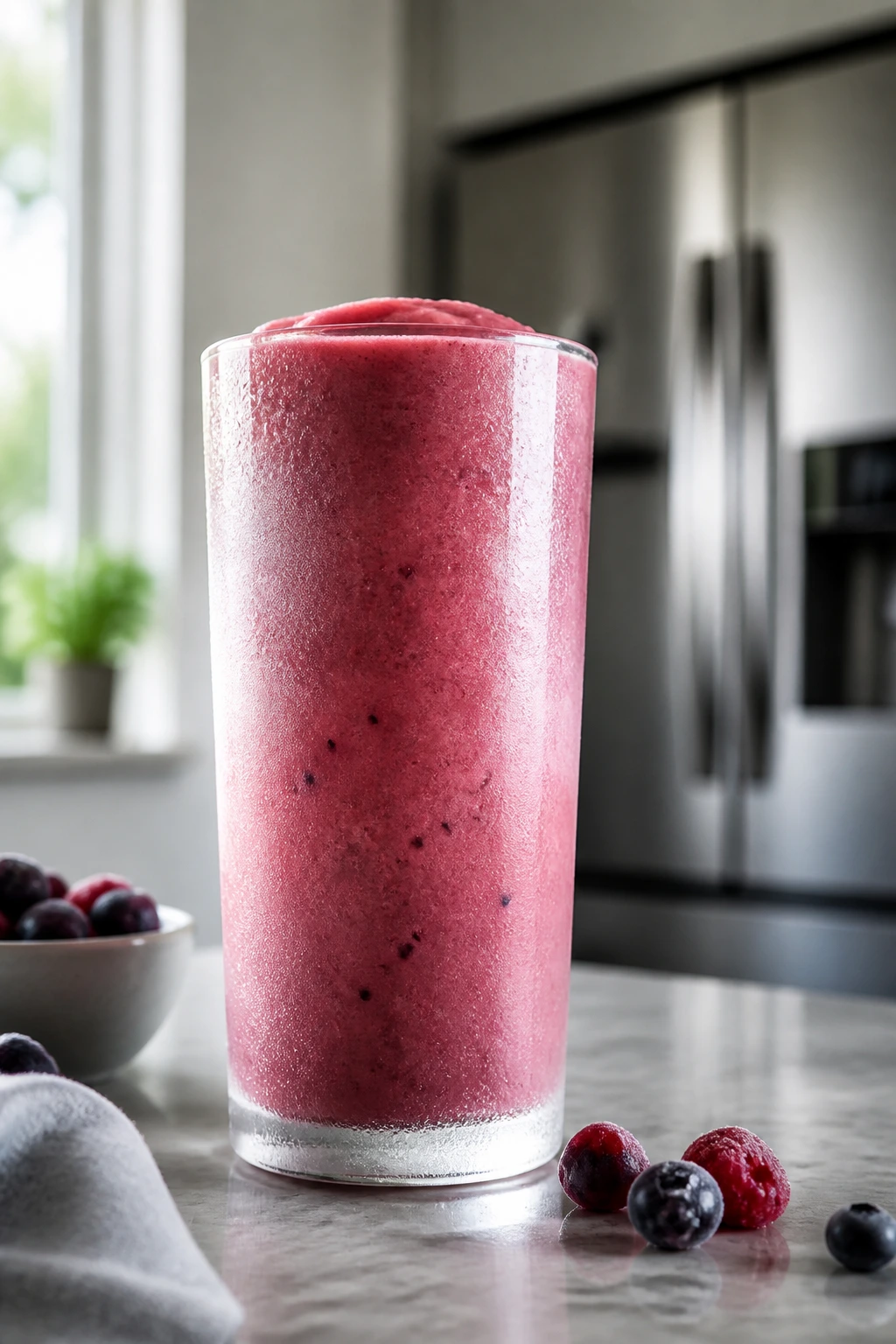
The best summer smoothie is cold all the way through, not just on the first sip. That means you want the drink chilled before it ever reaches the glass and kept cold after it’s poured. The simplest trick is to chill the serving glass or bottle in the freezer for 10 to 15 minutes before blending. It sounds fussy. It works.
If you’re carrying a smoothie out the door, use an insulated tumbler with a tight lid. A metal cup does a better job than a flimsy plastic one, especially if you’re dealing with a thick fruit blend that you want to sip over half an hour. The smoothie will still change a bit over time—nothing frozen and blended stays perfect forever—but it holds up better when the container is cold to begin with.
I’m also a fan of blending a touch thicker than you want the final drink to be. As it sits, even a well-made smoothie softens. If you plan to drink it in the car, make it just thick enough that the straw still stands up, then give it a vigorous shake before the first sip. That little cushion buys you time.
When Ice Helps and When It Hurts
Use ice when your fruit is mostly fresh or your blender needs a little help. Use frozen fruit when you care about flavor. If you need the smoothie to stay cold for a while, frozen fruit plus a chilled container beats ice almost every time. Ice can be a rescue tool. It should not be the main ingredient wearing a disguise.
How to Serve a Smoothie So It Feels Intentional
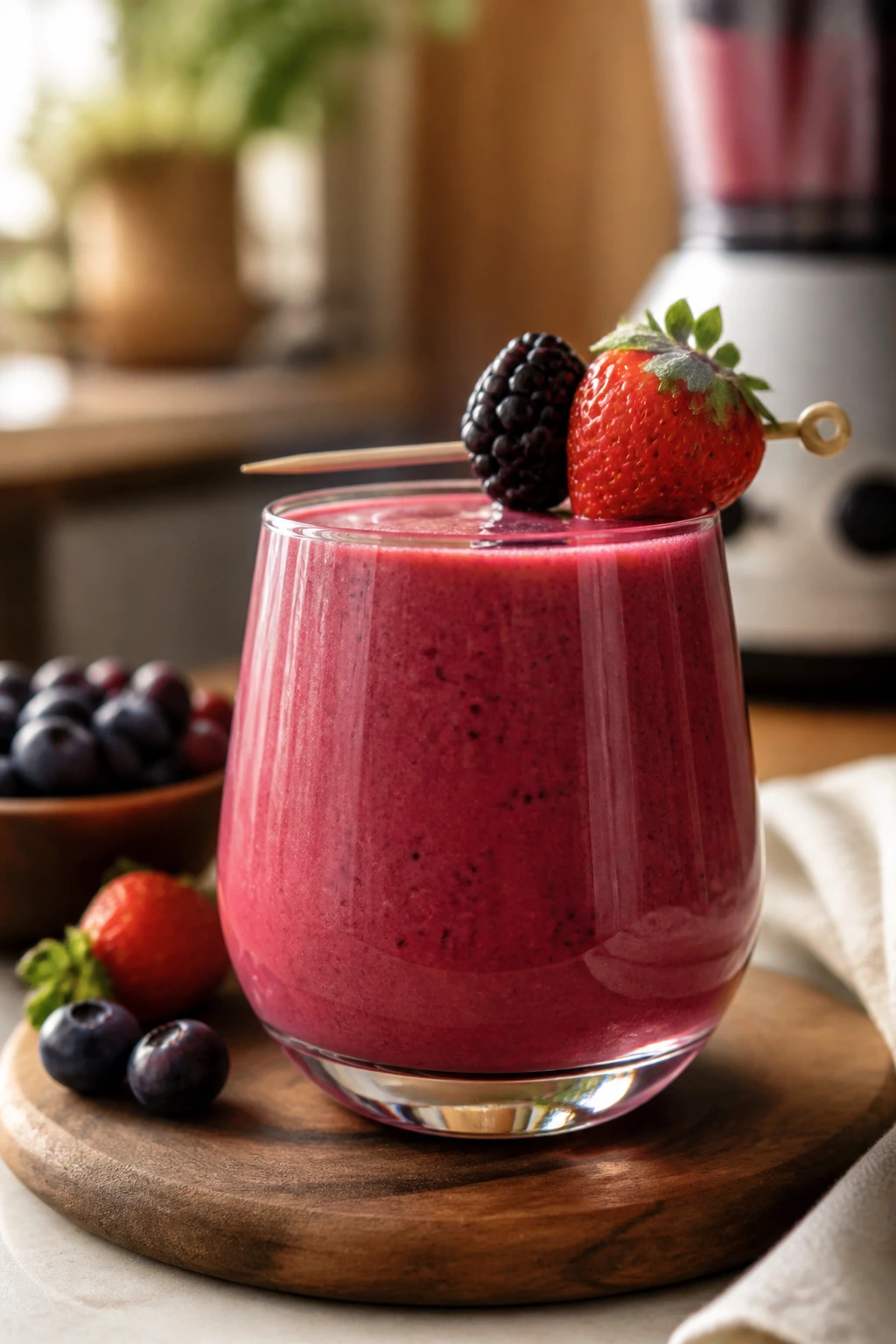
A smoothie tastes better when it looks like someone meant to make it. That sounds vain. It isn’t. We eat and drink with our eyes first, and a little care makes the whole thing feel worth the blender noise.
Presentation: Pour the smoothie into a cold glass, mason jar, or insulated cup and leave a little room at the top for a garnish. A few berry halves, a peach slice tucked on the rim, a dusting of chia seeds, or a sprinkle of toasted coconut gives the drink a finished look. If the smoothie is thick enough for a spoon, layer it with granola in a bowl and keep the toppings crisp until the last second.
Accompaniments: A smoothie can stand alone, but I like it with something dry and crunchy on the side—toast, a seeded cracker, a small bowl of granola, or a handful of almonds. Fruit-heavy smoothies also sit nicely next to eggs or a simple breakfast sandwich if you’re trying to make the drink part of a real meal instead of a sugar rush.
Portions: A single serving usually lands at 12 to 16 ounces for a drinkable smoothie and 8 to 12 ounces for a thicker one. For kids, start smaller. A 6 to 8 ounce cup is often enough, especially when the smoothie is rich with banana or yogurt. If you’re scaling for a crowd, keep the ratio the same and blend in batches rather than forcing one overfilled blender to do too much.
Beverage Pairing: If the smoothie is breakfast, cold brew or iced coffee fits well beside it. For a lighter afternoon drink, plain sparkling water or unsweetened iced tea keeps things from feeling overly sweet. A smoothie doesn’t need another sweet beverage next to it. That’s too much sugar in one sitting and not enough contrast.
Storage, Make-Ahead, and Food Safety Rules That Matter
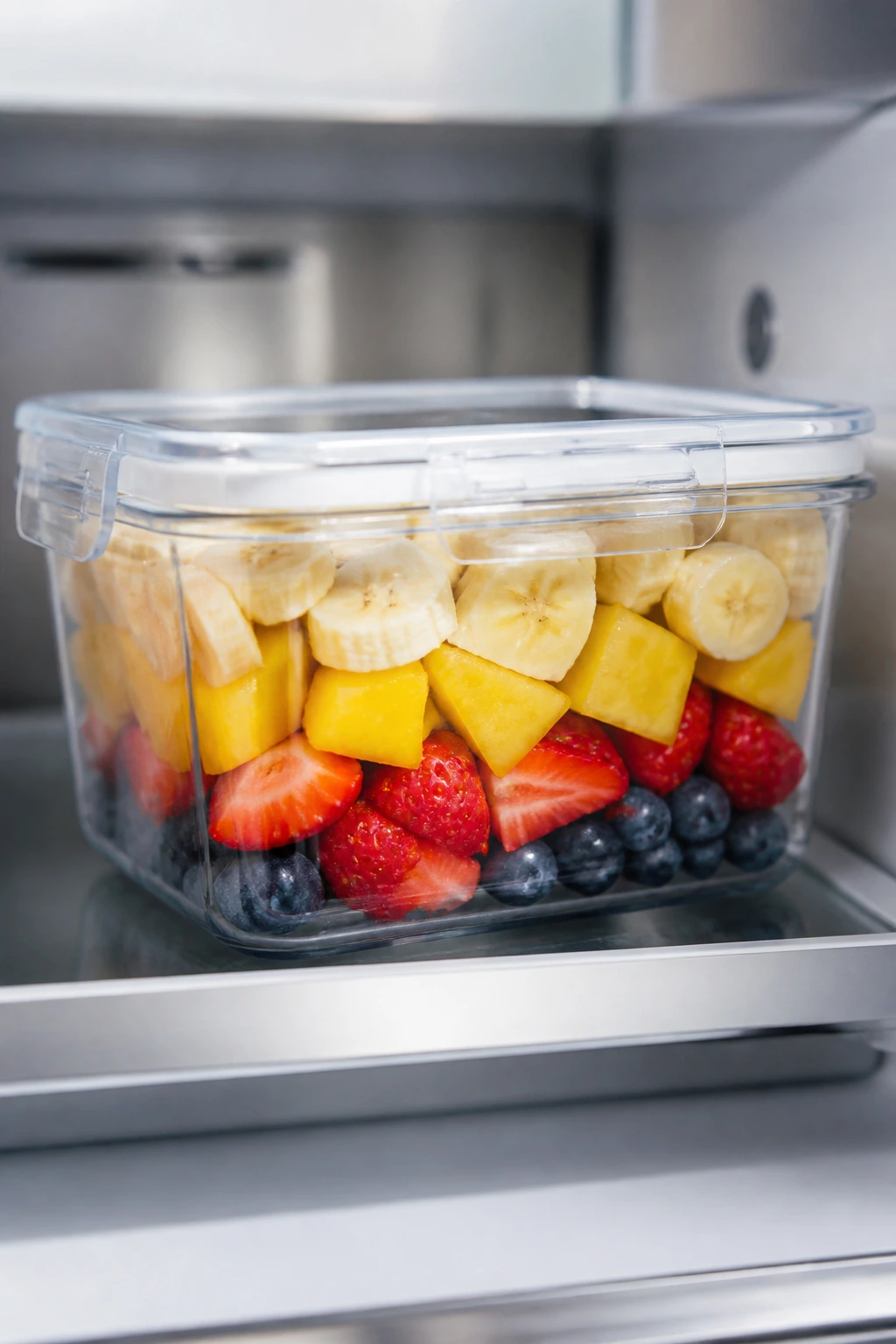
Smoothie prep is only useful if the components survive the fridge and freezer without turning weird. The good news is that most of the work can be done ahead, and the timing rules are simple.
Cut fruit like melon, pineapple, mango, and berries keeps 3 to 4 days in the refrigerator when stored in airtight containers. Apples and pears are trickier because they brown, so they’re best cut the day you plan to use them unless you toss them with a little lemon or lime juice. Bananas are the least forgiving once peeled, which is why I freeze them in slices instead of trying to keep them fresh and hopeful.
Frozen smoothie packs hold up best for 2 to 3 months when sealed well and kept flat. They can last longer, but flavor slowly fades and freezer burn starts creeping in at the edges. If you’re using reusable containers, press out as much air as possible. Air is the enemy here. It dries fruit and dulls flavor.
The Food-Safety Part Nobody Wants to Hear
If a smoothie contains dairy, yogurt, kefir, or fresh fruit puree, do not leave it on the counter for hours. General food-safety guidance is simple: refrigerate within 2 hours, or within 1 hour if the room is hot enough that you’d rather be sitting under a fan than standing by the sink. Blended smoothies are not shelf-stable.
A blended smoothie keeps best in the refrigerator for about 24 hours. You can stretch that to 48 hours if you don’t mind separation and a softer texture, but the drink is at its best sooner. Shake it hard, stir it, or give it a quick reblend before drinking. If it smells sour or tastes dull in a way that feels off, toss it. That’s not the place for optimism.
Small Upgrades That Make the Glass Better
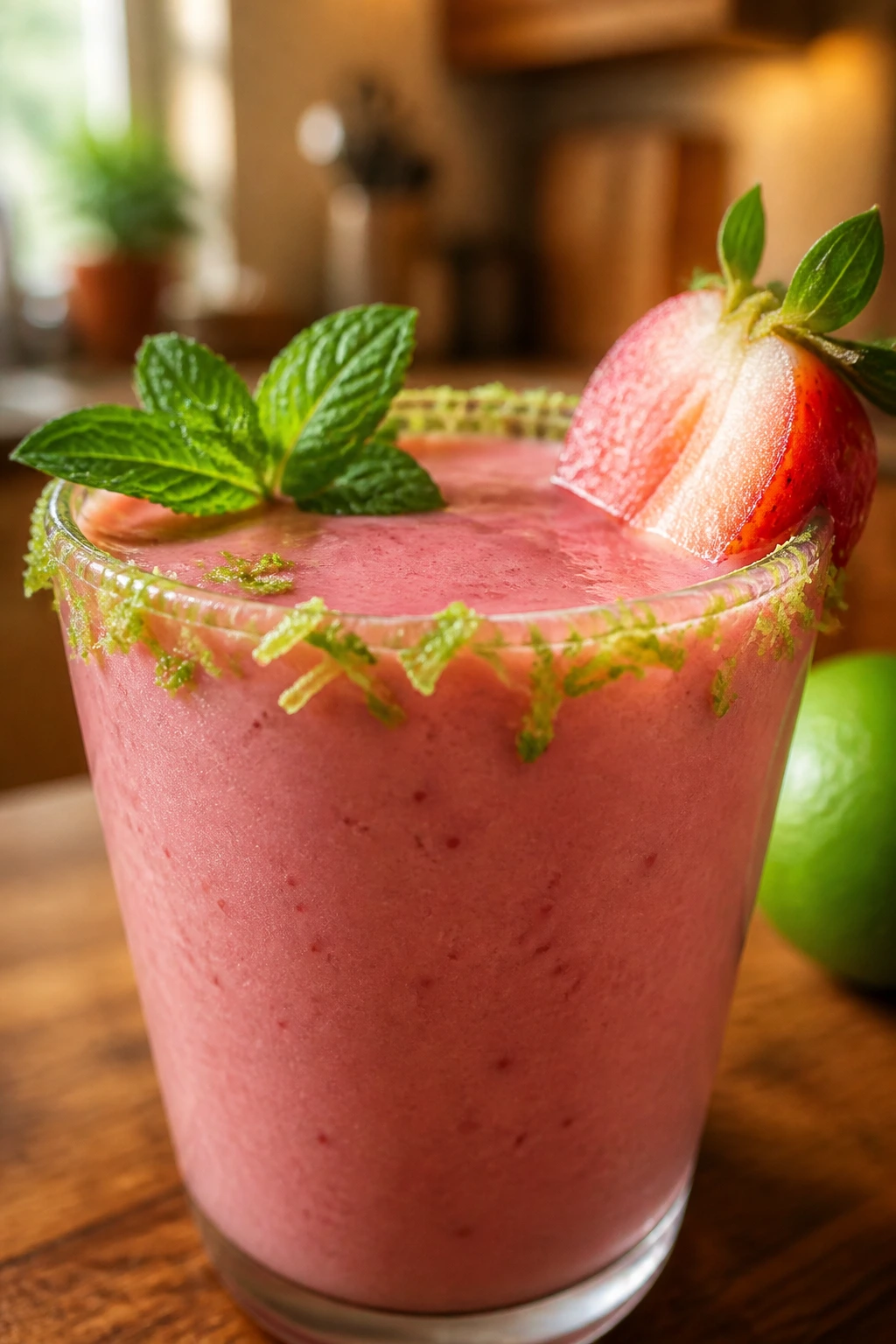
The base formula matters more than the fancy extras, but a few small touches turn an ordinary smoothie into something you’ll actually want twice in one week.
Flavor Enhancement: A teaspoon of citrus zest, a few mint leaves, a pinch of salt, or a tiny piece of fresh ginger can lift a fruit smoothie without making it taste spiced. I especially like lime zest in mango or pineapple blends. It wakes up the whole glass.
Time-Saver: Freeze ripe bananas in labeled snack-size bags and keep a tray of berries in the freezer at all times. If you use yogurt often, freeze it in ice cube trays so you can drop in one or two cubes instead of measuring from a tub while half asleep.
Texture Fix: If a smoothie comes out too thick, add liquid in 1 tablespoon increments and blend for 5 seconds between additions. If it comes out too thin, add more frozen fruit, not a mountain of ice. A few frozen mango chunks can rescue a watery berry blend fast.
Make-It-Yours: For a dairy-free version, use oat milk and silken tofu or avocado. For a higher-protein blend, use Greek yogurt and a half scoop of protein powder. For a lower-sugar drink, lean on berries, spinach, cucumber, lime, and unsweetened liquid. For a dessert-leaning smoothie, use banana, cocoa, and peanut butter, then stop before it becomes a milkshake in denial.
Common Smoothie Prep Mistakes and How to Fix Them
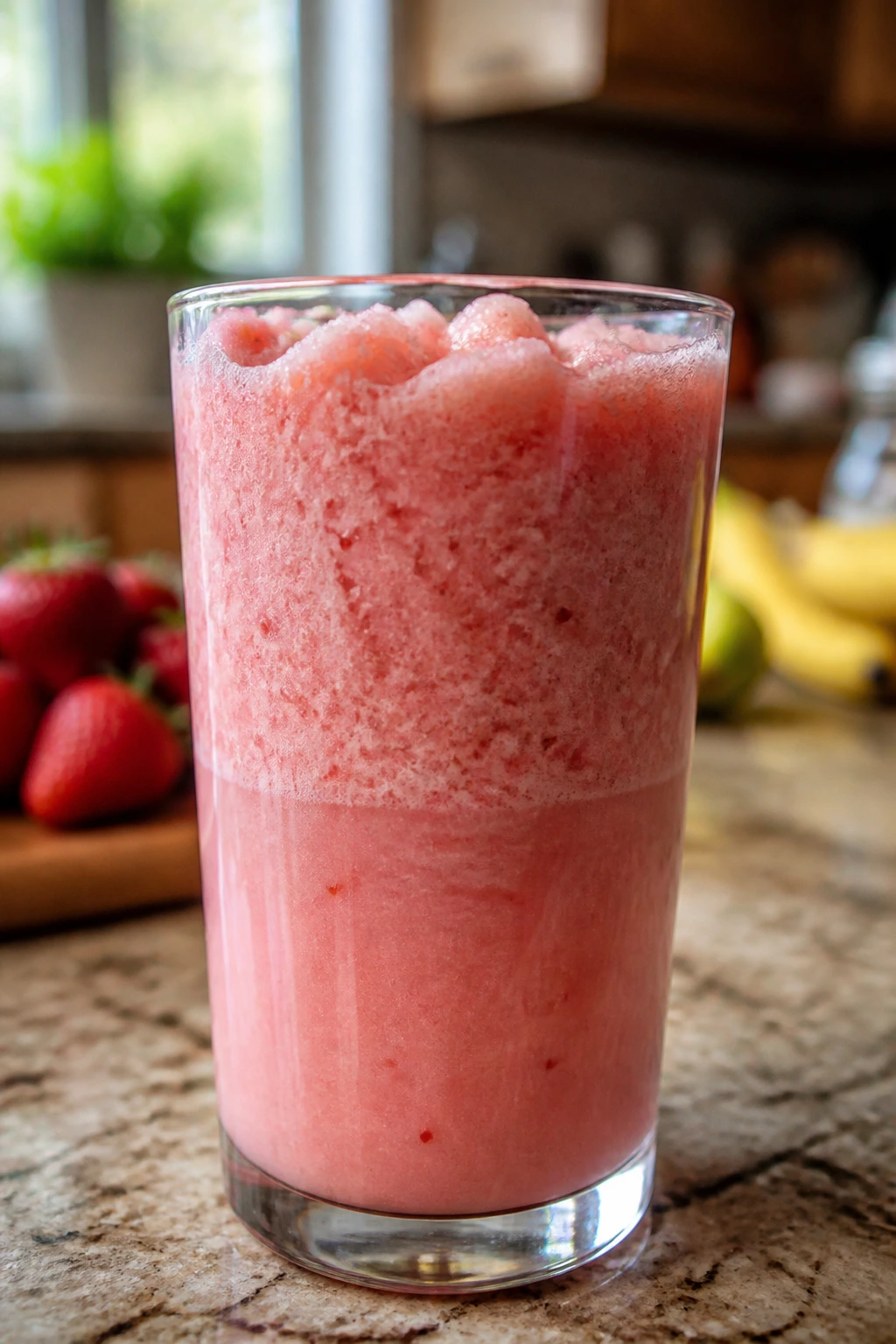
The errors here are small, but they show up in the glass immediately. You can taste every one of them.
Too Much Ice: The smoothie gets cold but tastes vague, like fruit that wandered into a snowstorm. The fix is simple: use more frozen fruit and less ice, then taste before adding anything else.
Wet Fruit Going Straight Into the Bag: Fresh fruit tossed into a freezer pack can freeze into a slick mass that sticks together and releases too much water when blended. Pat fruit dry before freezing, and spread it out on a tray first if it’s juicy.
Overfilling the Blender: If the jar is packed to the top, the blades can’t move the contents evenly. Blend in batches or reduce the portion size. A crowded blender is usually a lazy blender, and the result is chunky in the wrong way.
Too Many Add-Ins at Once: Protein powder, chia, peanut butter, oats, spinach, cocoa, and frozen fruit can sound smart on paper. In the glass, they can fight each other. Pick one thickener, one protein source, and one or two flavors. More isn’t better. It’s just more.
Skipping the Taste Check: People sweeten before tasting because they assume the fruit needs help. Sometimes it does. Often it doesn’t. Blend first, sip second, then decide whether you need honey, maple syrup, a date, or nothing at all.
Storing the Smoothie Too Long: A smoothie sitting in the fridge for a day or two starts separating, and the flavor can flatten fast. Make the packs ahead, not the blended drink. That keeps the texture fresh and the fruit brighter.
Flavor Variations That Keep the Routine from Going Stale
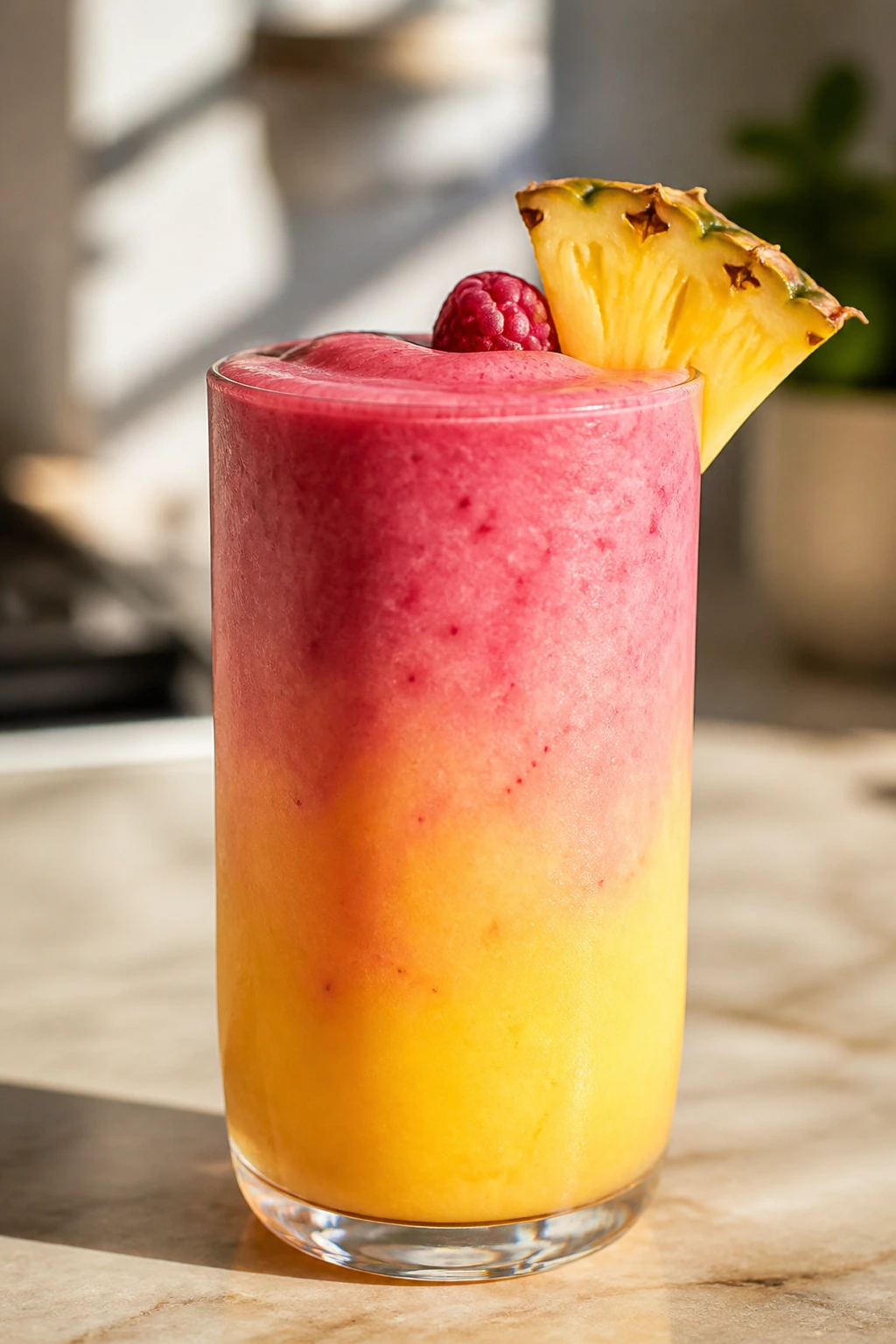
The easiest way to stick with smoothie prep is to stop making the same glass over and over. You do not need a hundred new recipes. You need a few dependable lanes.
Tropical Porch Pack: Pineapple, mango, banana, and coconut water make a bright blend that tastes sunny even when it’s served in a plain jar. Add lime juice if you want it sharper, or a spoonful of yogurt if you want more body.
Berry-Green Cooler: Frozen strawberries, blueberries, spinach, and oat milk give you a deep berry flavor with enough green to feel balanced. A tablespoon of chia helps it thicken slightly as it sits, which is useful if you’re drinking it slowly.
Peach Pie Breakfast: Frozen peaches, banana, Greek yogurt, cinnamon, and a small handful of oats make a smoothie that tastes closer to breakfast than dessert. I like this one with a pinch of salt and a little vanilla. It’s soft, round, and oddly comforting for a cold drink.
Chocolate-Banana Recovery Blend: Frozen banana, cocoa powder, peanut butter, and milk create a smoothie that drinks like a milkshake but works better as a post-workout breakfast. A few ice cubes help if the banana wasn’t fully frozen. Keep the cocoa modest unless you want the drink to go bitter.
Citrus-Kefir Snap: Orange segments, pineapple, kefir, and a small piece of fresh ginger make a sharp, bright blend that wakes up a sluggish afternoon. This is the one I reach for when I want something cold but not heavy.
Tools That Make Smoothie Prep Simpler
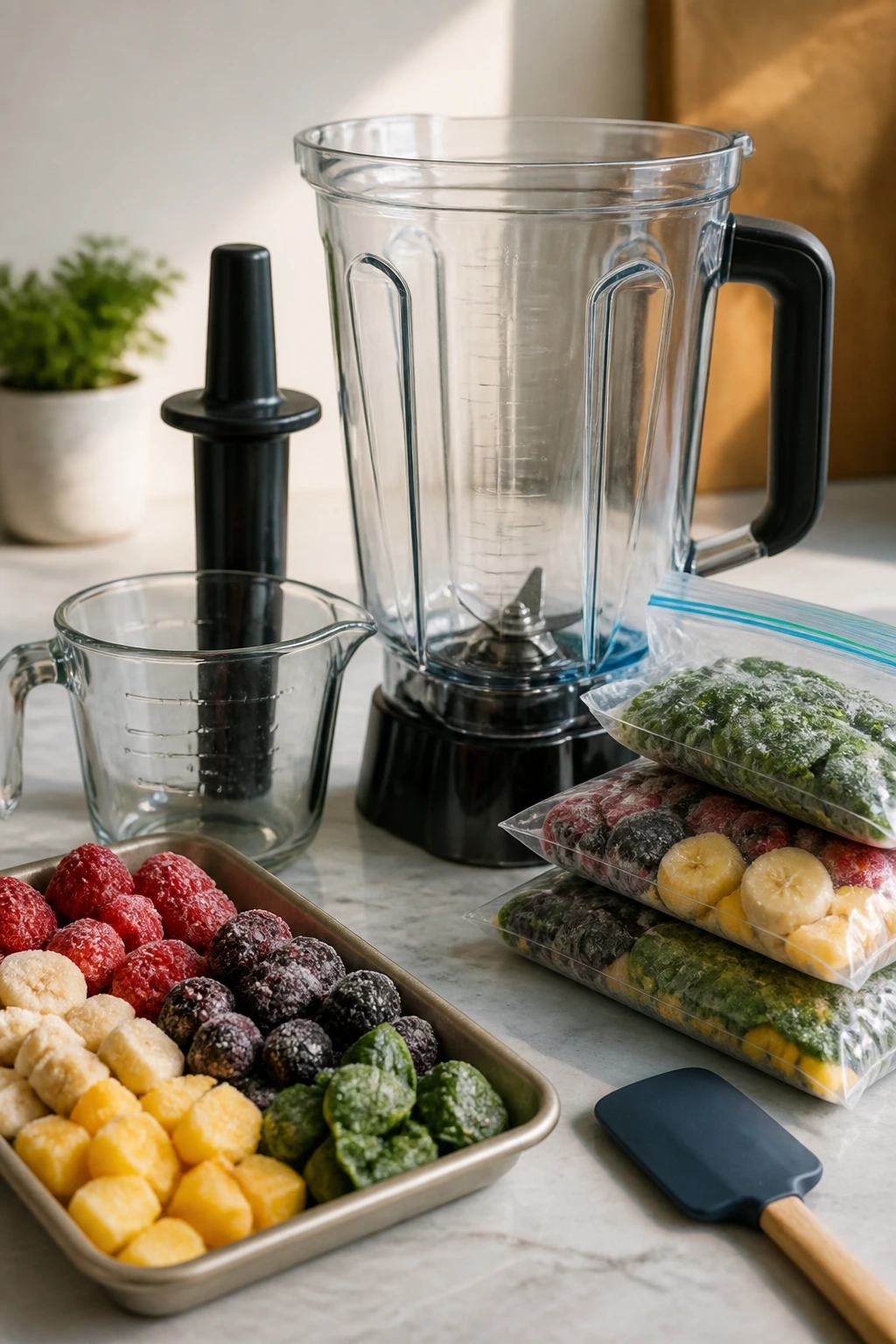
- High-speed blender or sturdy standard blender: A stronger motor handles frozen fruit better, but a standard blender works if you cut the fruit small and add liquid first.
- Sheet pans: These are useful for flash-freezing fruit in a single layer so the pieces do not glue together.
- Freezer bags or reusable containers: Use them for pre-portioned smoothie packs; flatter bags take up less space.
- Measuring cups: Helpful when you want the same texture every time instead of a different blend every morning.
- Labels and a marker: Date the packs and write the liquid amount right on the bag.
- Ice cube trays: Great for freezing yogurt, nut butter, citrus juice, or even leftover coffee for specific blends.
- Spatula or tamper: A tamper helps move frozen ingredients toward the blades; a spatula helps scrape the sides if your blender doesn’t have one.
- Zester or microplane: Optional, but useful if you like citrus zest or fresh ginger in your blends.
Frequently Asked Questions
What is the best frozen-to-liquid ratio for a smoothie?
Start with 2 cups frozen fruit to 1 cup liquid for a drinkable smoothie, or use a little less liquid if you want it thicker. If the blender stalls, add liquid in small splashes rather than pouring in a big extra cup all at once.
Can I prep smoothie packs with bananas?
Yes, and bananas are one of the best ingredients for it. Peel them first, slice them into coins, and freeze them on a tray before bagging so they do not turn into one large frozen lump.
How long do smoothie packs last in the freezer?
They taste best within 2 to 3 months when sealed well and kept flat. They can still be safe after that, but the flavor slowly fades and freezer burn becomes more likely at the edges.
Can I use fresh fruit instead of frozen fruit?
You can, but the texture changes a lot. Fresh fruit makes the smoothie thinner, so you’ll usually need ice or a frozen thickener like banana, mango, or avocado to get that cold, creamy body.
Why does my smoothie separate after sitting?
Separation usually means the blend was too thin or sat too long. Add a little more frozen fruit, yogurt, chia, or oats next time, and shake or stir the drink before sipping if it has been in the fridge.
How do I make a smoothie thicker without adding ice?
Use more frozen fruit, a few spoonfuls of Greek yogurt, half a banana, or a tablespoon of chia seeds. Frozen mango and avocado are especially good at building thickness without watering down the flavor.
Can I freeze yogurt or milk in smoothie packs?
You can freeze yogurt in portions, and milk can be frozen in cubes, but both change texture a bit. I prefer freezing yogurt in small cubes and keeping milk or oat milk separate so the pack stays easier to handle.
What if my blender struggles with frozen fruit?
Let the fruit sit at room temperature for 2 to 3 minutes, add liquid first, and cut the frozen pieces smaller next time. If the machine still sounds stuck, stop it, scrape the sides, and blend in short pulses instead of running it nonstop.
Are smoothie packs good for kids?
Yes, as long as you keep the flavors simple and the portion small. Start with berries, banana, yogurt, and a mild liquid like milk or oat milk, then skip aggressive add-ins like lots of ginger or too much protein powder.
Cooling Down Without Watering Things Down
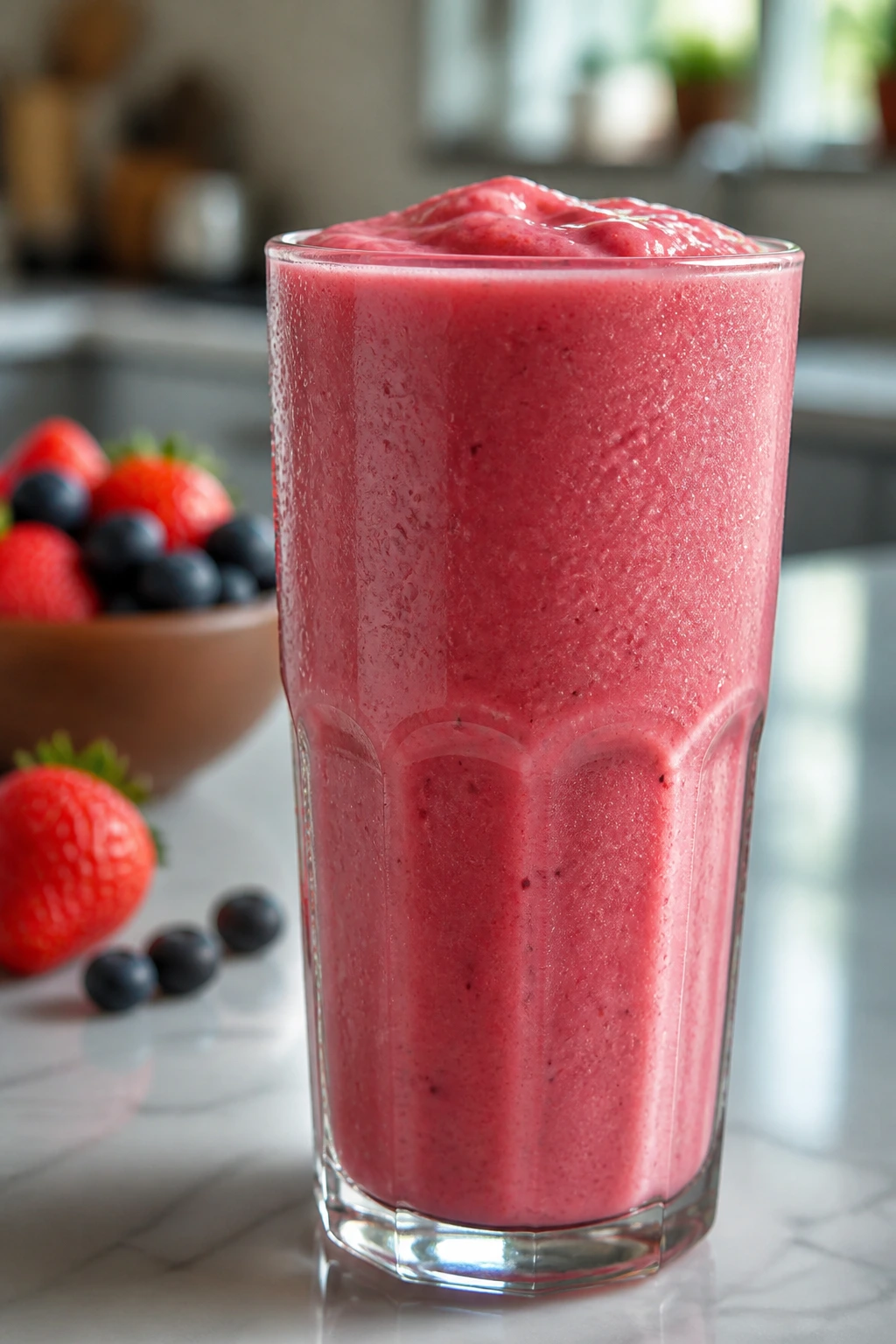
The best smoothie prep is boring in the best way. The fruit is cut, the bags are labeled, the liquid is waiting, and the blender has almost nothing to argue with. That calm setup is what gives you a cold drink that still tastes like fruit instead of a compromise.
And the payoff is not abstract. It’s the first sip on a hot afternoon when the smoothie is thick enough to cling to the straw, the berries still taste bright, and there’s no watery ice melt sliding to the bottom of the cup. That’s the version worth repeating.
Keep one tray of fruit in the freezer and one stack of labeled packs in reach, and summer sipping starts feeling less like work and more like the easiest cold habit in the kitchen.