



A good beef and broccoli sauce does one thing better than the takeout version that lands in a paper carton on a tired night: it keeps the beef tender all the way to the last bite. Not watery. Not gluey. Not that sad, too-dark gravy that tastes like soy sauce and regret. The sweet spot is a glossy sauce that clings to the meat and slips around the broccoli just enough to coat every floret.
That texture matters more than people think. Beef gets chewy when the slice is too thick, when the pan is crowded, or when the meat sits in heat long enough to turn from seared to stewed. Broccoli goes from bright and crisp to swampy in a blink. The sauce has to arrive at the table at the exact right thickness — shiny enough to look finished, loose enough to keep moving in the pan.
This version is built around those small details. Thin-sliced beef, a short marinade, a quick high-heat sear, and a sauce that gets its body from cornstarch and a little oyster sauce instead of a sugar bomb. It’s the kind of dinner that rewards paying attention for ten minutes, then pays you back with a bowl that smells like garlic, ginger, and browned meat the second the lid comes off the skillet.
Why This Beef and Broccoli Sauce Earns a Spot in the Rotation
- The beef stays soft, not stringy: slicing the steak against the grain and cooking it fast keeps each bite supple instead of dry and ropey.
- The sauce clings to the meat: cornstarch and oyster sauce give it that lacquered finish that stays on the beef instead of puddling under the rice.
- Broccoli keeps its color and bite: a short steam in the pan leaves the florets bright green with just enough snap in the stems.
- The flavor is deep without a long simmer: garlic, ginger, soy, beef broth, and a touch of brown sugar build a savory base in minutes.
- It stretches cleanly into a full meal: one skillet of beef and broccoli sauce goes a long way over rice, noodles, or even a pile of cabbage.
- Leftovers hold up better than most stir-fries: if you reheat it gently, the beef stays decent and the sauce loosens back up without turning greasy.
Yield: Serves 4
Prep Time: 20 minutes
Cook Time: 12 minutes
Total Time: 32 minutes
Chill/Rest Time: 15 minutes for the beef marinade
Difficulty: Intermediate — the steps are straightforward, but the heat has to stay high and the timing has to stay tight.
Best Served: Hot, straight from the skillet, over rice or noodles while the sauce is still glossy.
A Takeout Classic With Better Texture at the Center
Beef and broccoli sits in that sweet spot between comfort food and weeknight stir-fry. It’s familiar enough that nobody at the table needs convincing, but it still gives you room to do one thing better than the version you’d get from a foil container: make the beef taste like beef.
The dish depends on contrast. Tender slices of flank steak or sirloin. Broccoli that still has a little chew. Sauce that’s salty, savory, faintly sweet, and thick enough to grip a spoon for a second before sliding off. The broccoli should not disappear. The beef should not get lost in sauce. Everything should stay distinct, even while it’s coated.
If you’ve ever had a version that tasted flat, the problem was usually not the broccoli. It was the pan. A stir-fry is not the place to babysit meat over medium heat until it surrenders. Hot pan. Short cook. Fast movement. That’s the whole trick, and it matters here more than it does in a lot of other dinner recipes.
Take your time with the slicing and then move briskly once the skillet is hot. That’s the rhythm. Slow at the cutting board, fast at the stove. Weirdly satisfying, too.
Why the Beef Stays Tender Instead of Chewy
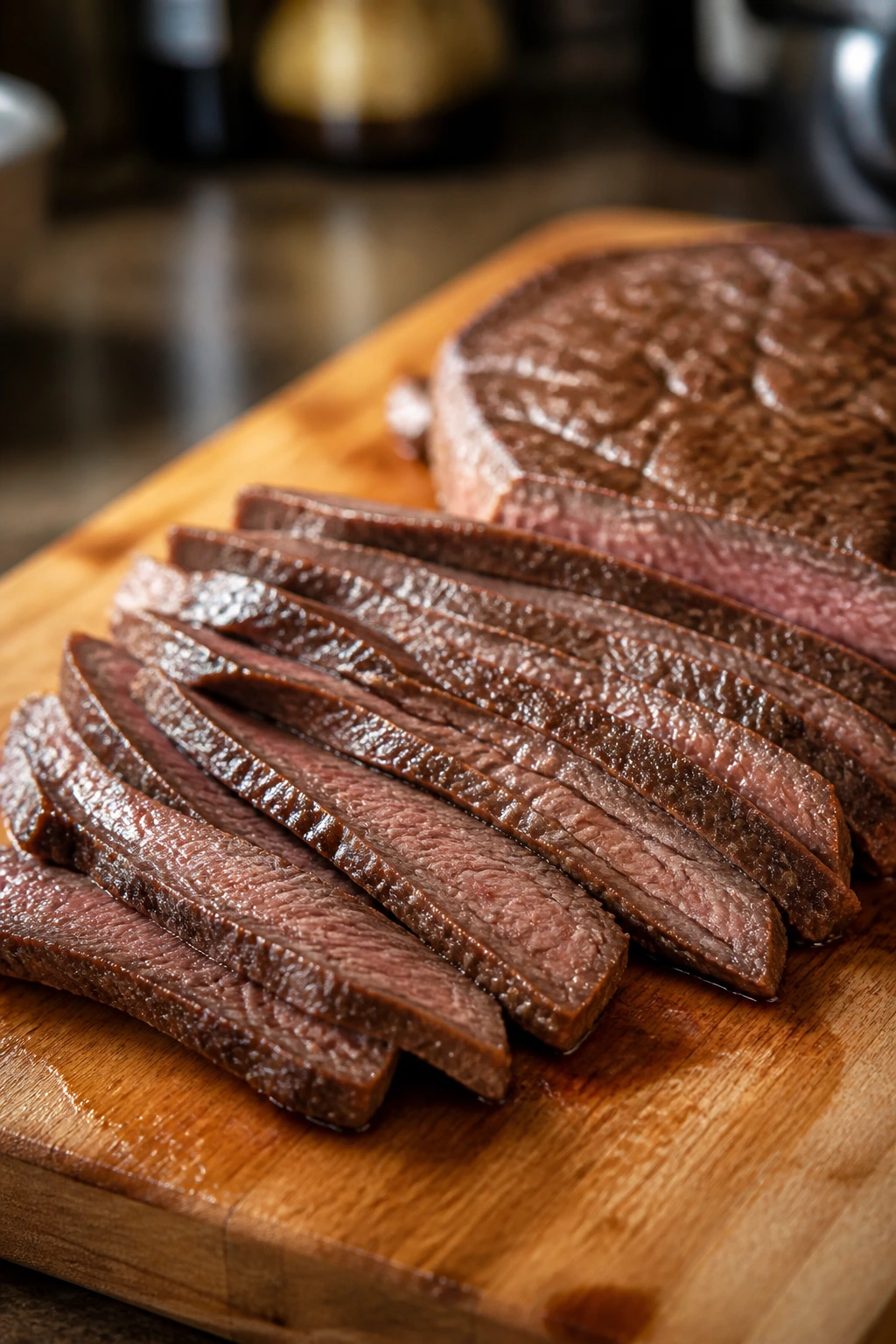
The difference between silky beef and rubbery beef usually comes down to three things: the cut, the slice, and how long it stays in the pan. Get those right, and the sauce can do its job without trying to rescue dry meat.
Slice Across the Grain, Always
Look at the direction of the muscle fibers before you cut. You want the knife to cross those lines, not follow them. When the grain runs long and you slice with it, the strips hold together in tough threads. Slice across it and the same steak breaks into shorter fibers that feel soft when you bite down.
A partial freeze helps. Fifteen to twenty minutes in the freezer firms the meat just enough to make thin slicing easier. You don’t want it frozen solid. You want the outside slightly stiff so the knife can cut clean sheets instead of squishing the steak around on the board.
The Short Marinade Does More Than Add Flavor
A little soy sauce, rice wine, cornstarch, and sesame oil gives the beef a light coating that helps it sear and stay glossy. That cornstarch layer is doing useful work here. It keeps the surface from drying out so fast and helps the sauce cling later.
Do not turn the marinade into a bath and walk away for hours. This isn’t braising. Too much time in salty liquid can make the beef taste cured instead of fresh. Fifteen minutes is enough. A bit longer is fine if the slices are thin, but the sweet spot is still short.
High Heat Means Fast Cooking
The pan should be hot before the beef goes in. Not warm. Hot enough that the oil shimmers the moment it hits the surface. The beef should sizzle, not sigh. If the meat sits in a lukewarm skillet, it will leak juice, steam, and lose the tight texture you were after.
That’s why you cook in batches if the pan is small. Crowding is the enemy here. A dense layer of meat drops the temperature, and once that happens, you’re not stir-frying anymore. You’re making gray beef in its own steam. Nobody wants that.
The Ingredient List You’ll Want on the Counter
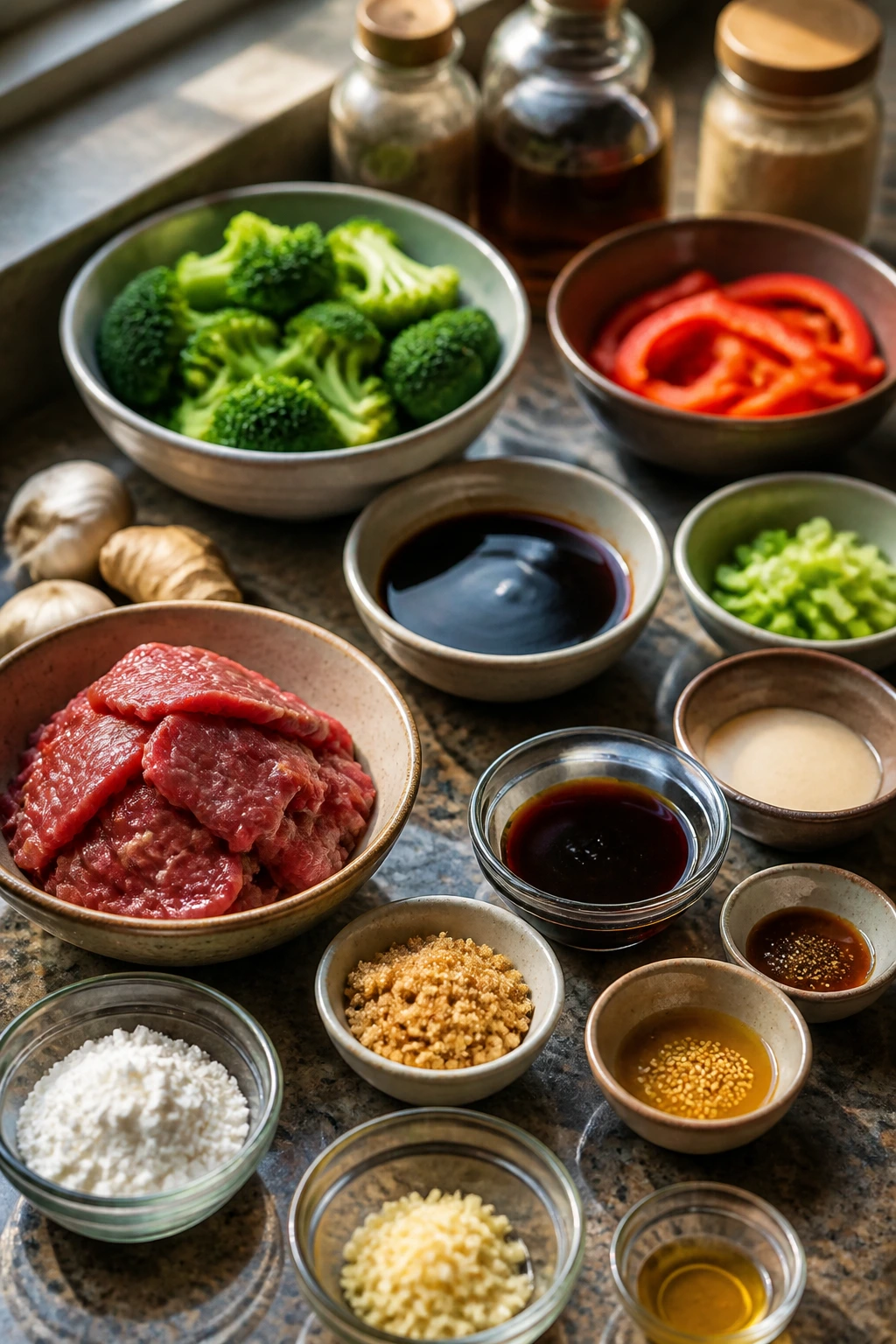
For the Beef and Marinade:
- 1 1/2 pounds flank steak, top sirloin, or flat iron steak, sliced thinly against the grain
- 1 tablespoon low-sodium soy sauce
- 1 tablespoon Shaoxing wine or dry sherry
- 1 tablespoon cornstarch
- 1 teaspoon toasted sesame oil
- 1/4 teaspoon fine sea salt
For the Sauce:
- 1/2 cup low-sodium soy sauce
- 1/2 cup low-sodium beef broth
- 2 tablespoons oyster sauce
- 1 tablespoon packed light brown sugar
- 2 teaspoons rice vinegar
- 1 tablespoon cornstarch
- 2 tablespoons cold water
- 4 cloves garlic, minced
- 1 tablespoon fresh ginger, grated
For the Vegetables and Finish:
- 1 tablespoon avocado oil or peanut oil
- 1 pound broccoli florets, cut into bite-size pieces
- 2 scallions, thinly sliced
- 1 teaspoon toasted sesame oil
- 1 tablespoon toasted sesame seeds, optional
- Pinch of red pepper flakes, optional
A quick note on the beef: if the store only has sirloin, that’s fine. Don’t wait around for the “perfect” cut and make a second trip. Good slicing matters more than culinary romance here.
What Each Ingredient Does in the Sauce and Stir-Fry
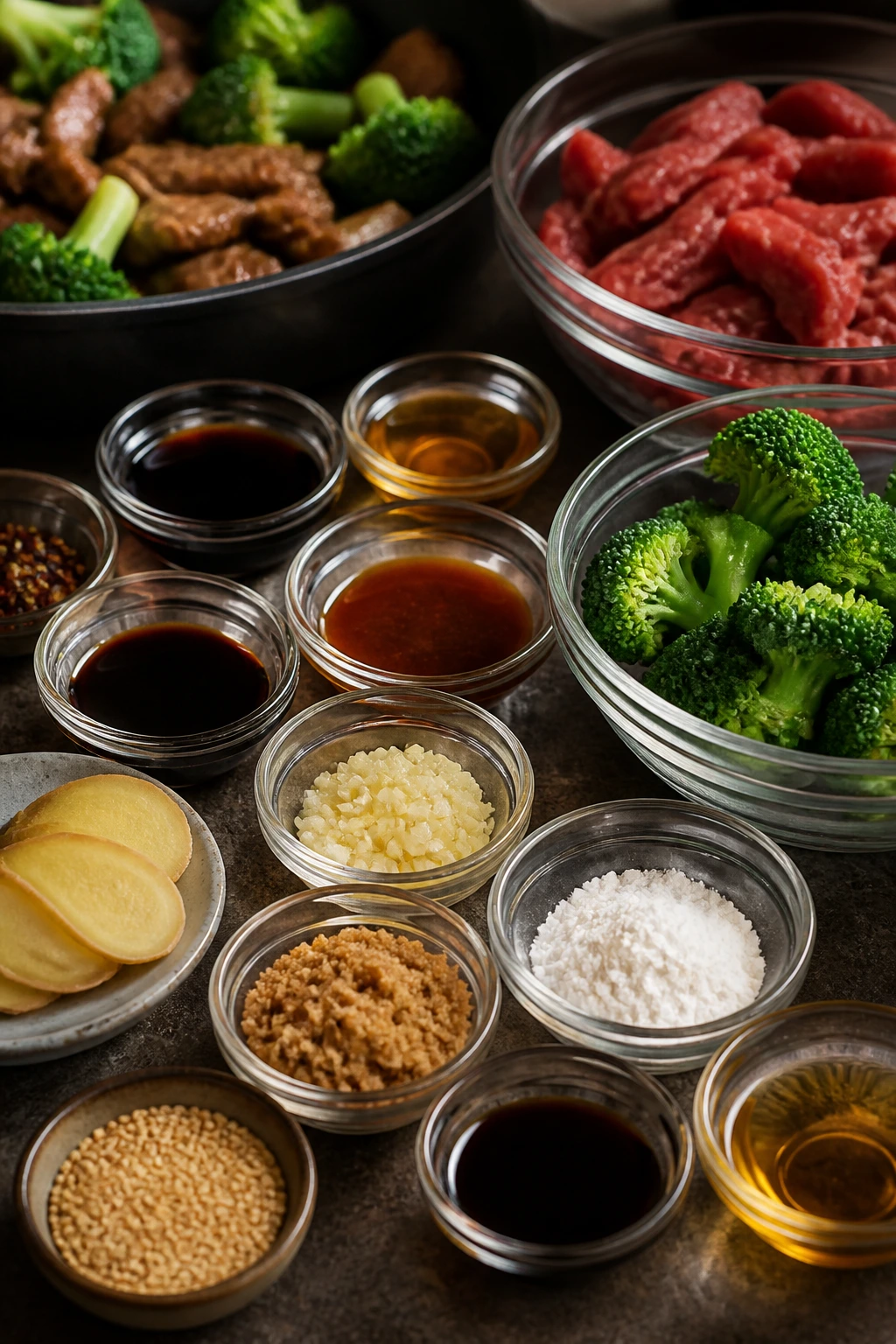
Beef
- What to use: 1 1/2 pounds flank steak, flat iron, or top sirloin. Flank gives the most classic texture; sirloin is slightly softer and easier to find.
- Preparation: Slice the meat very thin, across the grain, and pat it dry before the marinade goes on. If the knife keeps dragging, chill the steak for 15 minutes first.
- Substitutions: Skirt steak works if it’s sliced thinly; even boneless short rib can work, though it’s richer and takes a firmer sear. Chicken thigh strips can take the same treatment if beef isn’t what you’ve got.
- Tips: Cut the strips about 1/4 inch thick. Thick strips are the main reason home-cooked beef and broccoli turns chewy.
Sauce Base
- What to use: 1/2 cup low-sodium soy sauce, 1/2 cup low-sodium beef broth, 2 tablespoons oyster sauce, 1 tablespoon brown sugar, and 2 teaspoons rice vinegar.
- Preparation: Whisk the liquid ingredients together before the pan gets hot so the cornstarch can dissolve evenly and the garlic doesn’t burn while you’re fumbling for measuring spoons.
- Substitutions: Tamari stands in for soy sauce if you need gluten-free sauce. If you’re out of oyster sauce, a spoonful of hoisin plus an extra splash of broth gives a softer, sweeter finish.
- Tips: Low-sodium soy is the safer pick. Regular soy can push the sauce into salty territory fast, especially after it reduces in a hot skillet.
Broccoli
- What to use: 1 pound broccoli florets cut into bite-size pieces, with the thick stems peeled and sliced if you want to use them.
- Preparation: Keep the florets similar in size so they cook at the same pace. Tiny bits go soft before the bigger ones turn tender.
- Substitutions: Broccolini, snap peas, or a mix of broccoli and sliced mushrooms can step in. Cauliflower works too, though it takes a minute longer to soften.
- Tips: Dry broccoli cooks better than damp broccoli. If the florets are wet from washing, shake them well or blot them with a towel so they steam instead of sputter.
Aromatics and Finish
- What to use: 4 cloves garlic, 1 tablespoon fresh grated ginger, 1 teaspoon toasted sesame oil, 2 scallions, and an optional pinch of red pepper flakes.
- Preparation: Grate the ginger finely so it melts into the sauce. Mince the garlic small enough that it softens fast and doesn’t burn in the pan.
- Substitutions: Garlic paste works in a pinch. Ground ginger can replace fresh ginger at about 1/4 teaspoon, though the flavor lands flatter and a little dusty.
- Tips: Add the sesame oil at the end. If it spends too long on the heat, the aroma gets muted, and that nutty smell is half the point.
Cornstarch
- What to use: 1 tablespoon in the marinade and 1 tablespoon in the sauce.
- Preparation: Whisk the sauce cornstarch with cold water before it hits the pan. That little slurry is what turns the broth into a silkier glaze.
- Substitutions: Arrowroot can work, but it tends to make a more slippery sauce. Use the same amount.
- Tips: Cornstarch needs heat to thicken. If the sauce still looks thin after 30 seconds of simmering, give it another half minute before you panic.
The Tools That Keep Stir-Frying Calm
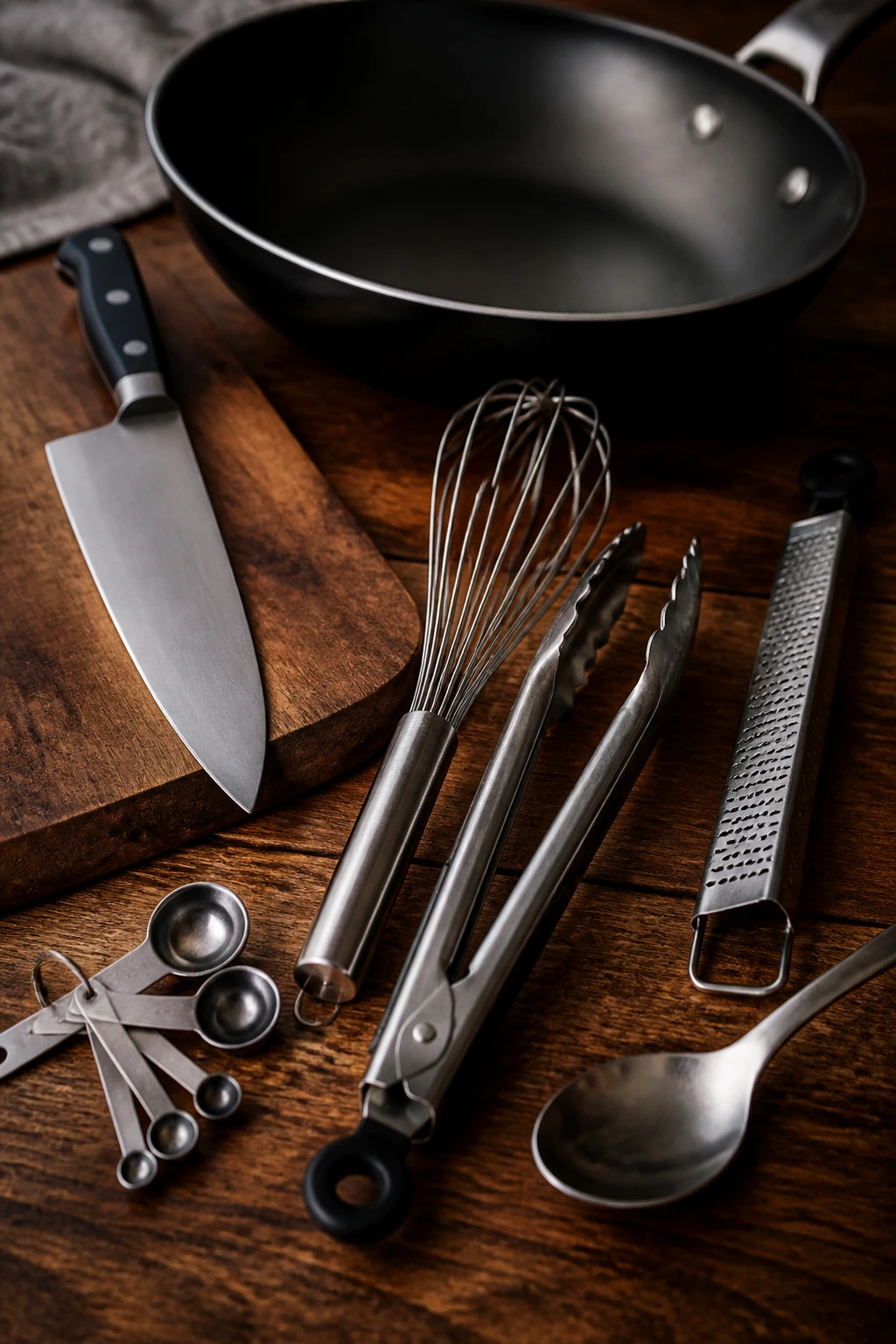
A stir-fry looks quick because the cooking is quick. The prep is the part that makes or breaks it. Put everything within arm’s reach before you turn on the heat, because once the beef starts searing, there’s no graceful time to hunt for a spoon.
- 12-inch cast-iron skillet or wok: Big enough to sear the beef in a single layer. A wok is nice, but a wide skillet does the job without fuss.
- Sharp chef’s knife: Thin slicing is much easier with a knife that doesn’t crush the meat.
- Cutting board with a damp towel underneath: Keeps the board from sliding when you’re cutting cold beef into narrow strips.
- Medium mixing bowl: Useful for the marinade and the sauce.
- Whisk: Helps dissolve the cornstarch so you don’t get floury lumps in the pan.
- Tongs or a spatula: Tongs give better control when you’re moving beef in and out of the skillet.
- Microplane or fine grater: Makes the ginger disappear into the sauce instead of bobbing around in little fibrous threads.
- Measuring cups and spoons: Stir-fries move too fast for guessing.
- Slotted spoon: Helpful if you decide to blanch the broccoli briefly before it hits the pan.
One quiet bonus: use a skillet with some weight. Thin pans cool off too fast when the beef lands, and that’s how you lose the sear before it starts.
Marinate, Sear, and Sauce the Pan
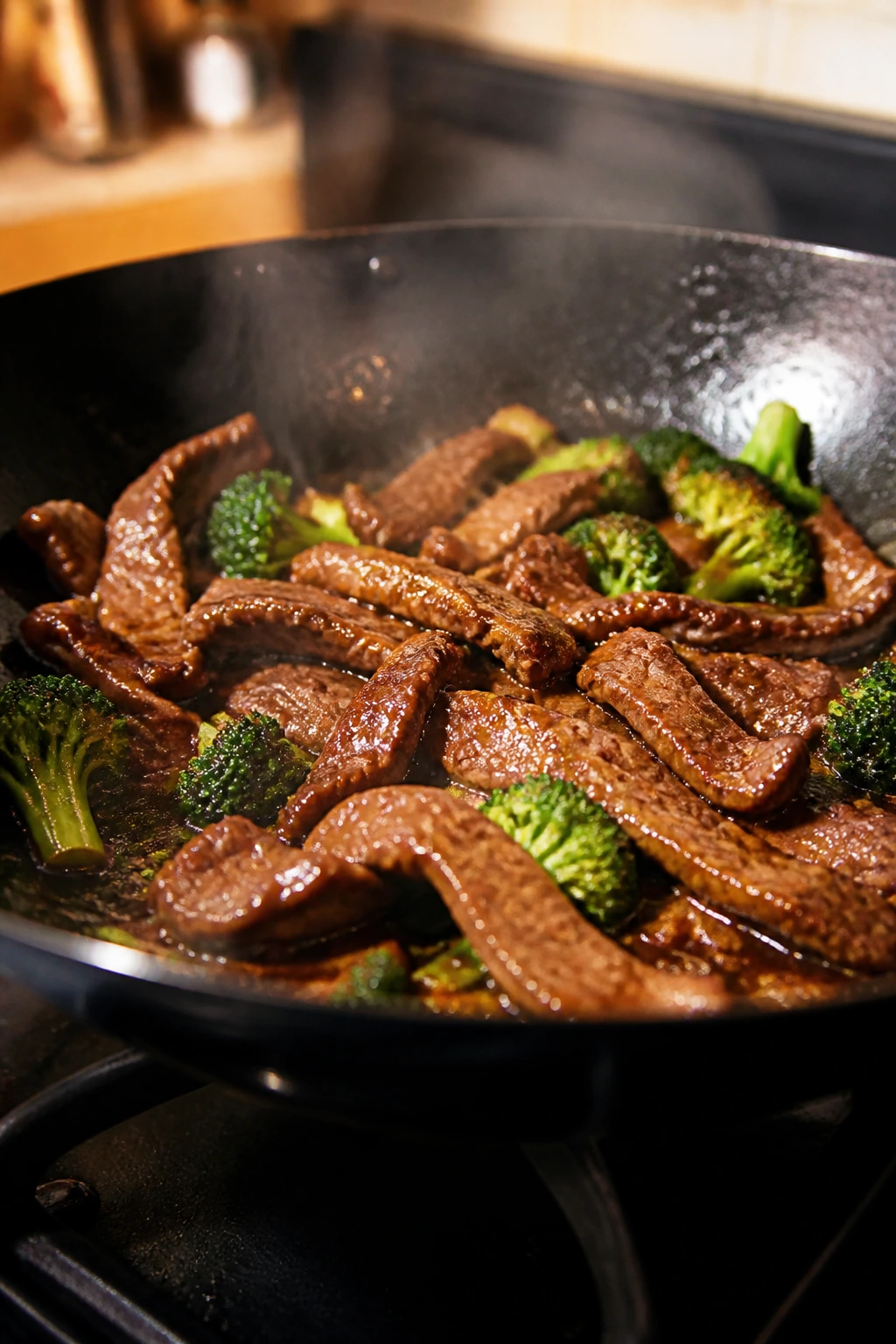
Prep the Beef
-
Partially freeze the steak for 15 to 20 minutes if it feels soft and slippery at the cutting board. Slice it thinly, about 1/4 inch thick, across the grain so the finished beef stays tender instead of stringy.
-
Toss the sliced beef with the marinade ingredients — 1 tablespoon soy sauce, 1 tablespoon Shaoxing wine or dry sherry, 1 tablespoon cornstarch, 1 teaspoon sesame oil, and 1/4 teaspoon salt — in a medium bowl. Stir until every strip looks lightly coated, then let it rest for 15 minutes while you make the sauce.
-
Whisk the sauce ingredients together in a second bowl: 1/2 cup soy sauce, 1/2 cup beef broth, oyster sauce, brown sugar, rice vinegar, 1 tablespoon cornstarch, and 2 tablespoons cold water. Add the garlic and ginger last. The mixture should look smooth and a little cloudy, not clumpy.
Cook the Vegetables and Beef
-
Heat the oil in a 12-inch skillet or wok over medium-high heat until it shimmers. Add the broccoli florets and 3 tablespoons of water, then cover the pan for 2 minutes. The florets should turn bright green and start to soften at the stems while still feeling crisp when pierced with a knife. Remove them to a plate.
-
Turn the heat up to high and add the beef in a single layer. Let it sear for 60 to 90 seconds on the first side, then turn the strips and cook for another 30 to 60 seconds. Work in batches if needed. Do not crowd the pan — if the strips overlap, they’ll steam and lose their texture.
-
Return the broccoli to the pan if it’s easier to fit everything, then lower the heat to medium. Add the garlic and ginger and stir for about 20 seconds, just until fragrant. The garlic should smell sweet and sharp, not browned.
Finish the Sauce
-
Give the sauce another whisk and pour it into the skillet. Stir constantly as it bubbles. In 30 to 60 seconds, it should go from watery to glossy and thick enough to coat the back of a spoon. If it gets thicker than you want, splash in 1 to 2 tablespoons of water.
-
Add the beef back to the pan and toss for 30 to 45 seconds until every strip is coated and the broccoli looks lacquered. Finish with the remaining teaspoon of sesame oil, scallions, and sesame seeds or red pepper flakes if you want a little heat.
-
Take the skillet off the heat and let it sit for 1 minute before serving. That tiny pause helps the sauce settle onto the beef instead of running to the bottom of the bowl.
The whole thing should smell like ginger and browned steak by the end. If it smells burnt, the heat ran too far. If it smells timid, the pan wasn’t hot enough.
How to Plate It So the Dinner Feels Complete
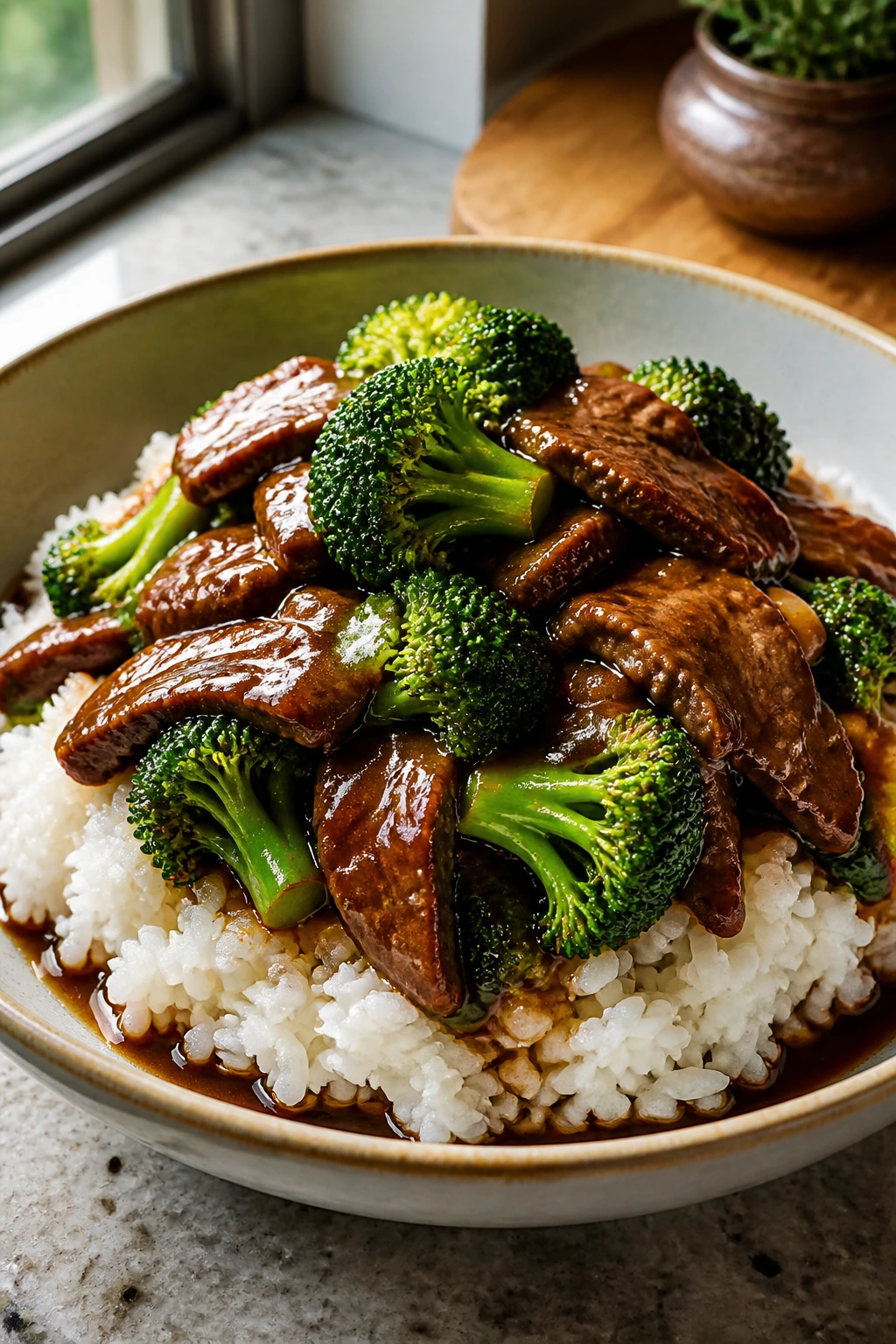
Presentation: Spoon the beef and broccoli sauce over a mound of steamed jasmine rice in wide bowls so the sauce can pool at the edges. The broccoli should sit on top, not disappear underneath the rice; that little bit of height makes the bowl look finished, and it keeps the florets from going limp under their own weight.
Accompaniments: Plain jasmine rice is the cleanest match because it catches the sauce without stealing focus. If you want something with more chew, lo mein noodles or even sesame noodles work well. A quick cucumber salad dressed with rice vinegar, a pinch of sugar, and a few sesame seeds gives the plate a cold, sharp contrast that cuts through the savory sauce.
Portions: Plan on about 1 1/2 cups of the finished stir-fry per adult when rice is part of the plate. If you’re serving it without rice, the beef and broccoli sauce will feel more substantial, so 2 cups per hungry eater is a safer target. The recipe stretches neatly to 6 if the rice bowl is generous.
Beverage Pairing: Cold jasmine tea fits the ginger and garlic without fighting the soy. A light lager or a dry Riesling also plays nicely with the sauce’s salt-sweet balance. Skip anything heavy and syrupy; the dish already brings enough body.
Small Moves That Make the Pan Taste Deeper
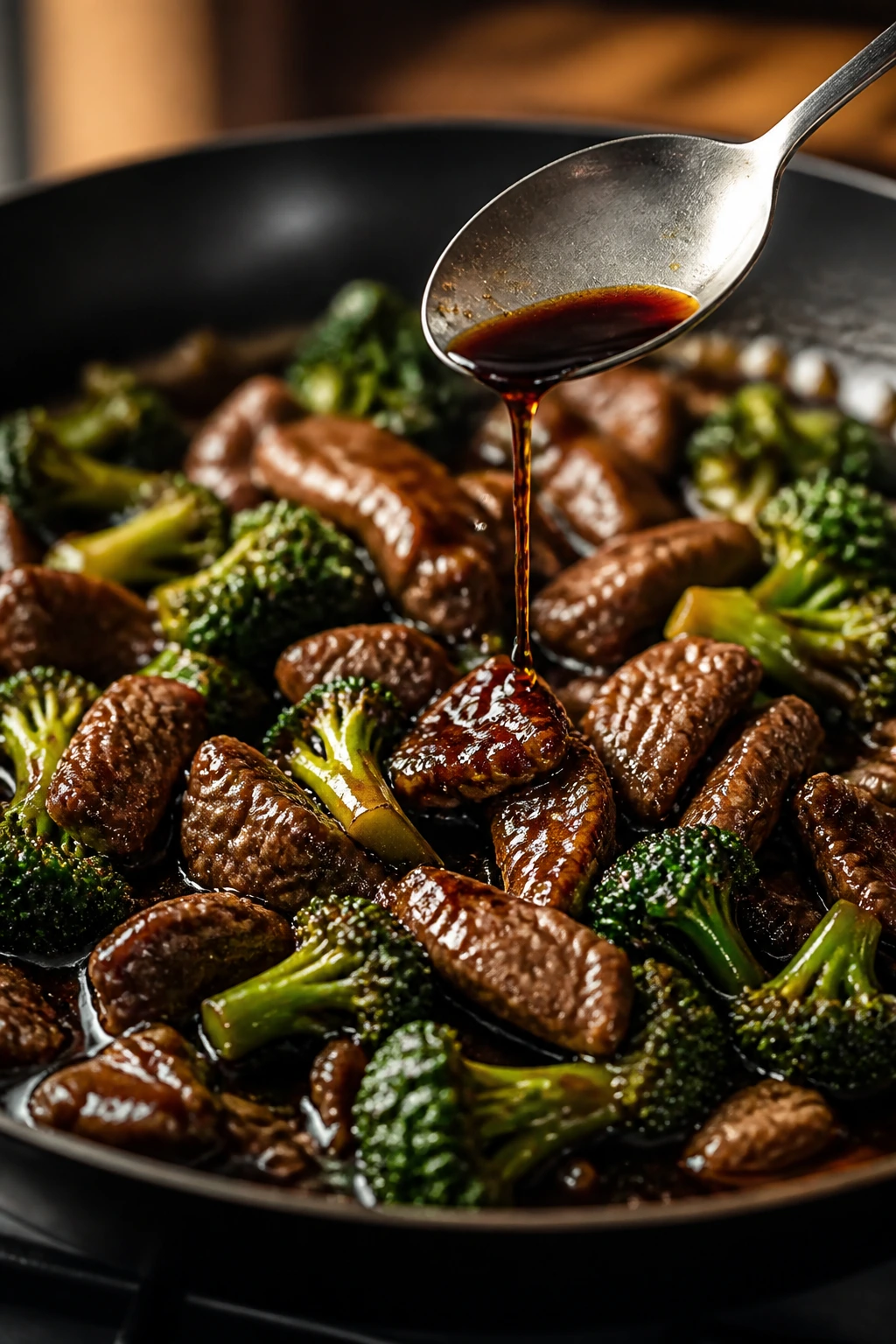
Flavor Enhancement: A teaspoon of black vinegar or rice vinegar stirred in at the end wakes the sauce up if it tastes a little too round. It sharpens the edges without making the dish sour. If you like heat, a spoonful of chili crisp on top gives the bowl a deeper, toastier burn than red pepper flakes alone.
Time-Saver: Slice the beef and mix the sauce in the morning, then keep both covered in the fridge until dinner. The broccoli can be trimmed the day before and stored in a container lined with a paper towel. That leaves only the actual cooking — and this is one of those meals that feels half as long when the prep is already done.
Cost-Saver: If flank steak is pricey where you shop, top sirloin usually gives you a decent result for less money. You can also stretch the meal with 8 ounces of sliced mushrooms. They drink up sauce fast and bring a meaty texture of their own.
Make-It-Yours: For a less salty bowl, reduce the soy sauce by 2 tablespoons and add a little more broth. For a brighter finish, toss in a handful of sliced snap peas during the last minute so the pan gets more crunch without more work. And if you like a richer sauce, a tiny knob of butter stirred in off the heat makes it rounder — not traditional, maybe, but it works.
The Mistakes That Turn Tender Beef Chewy
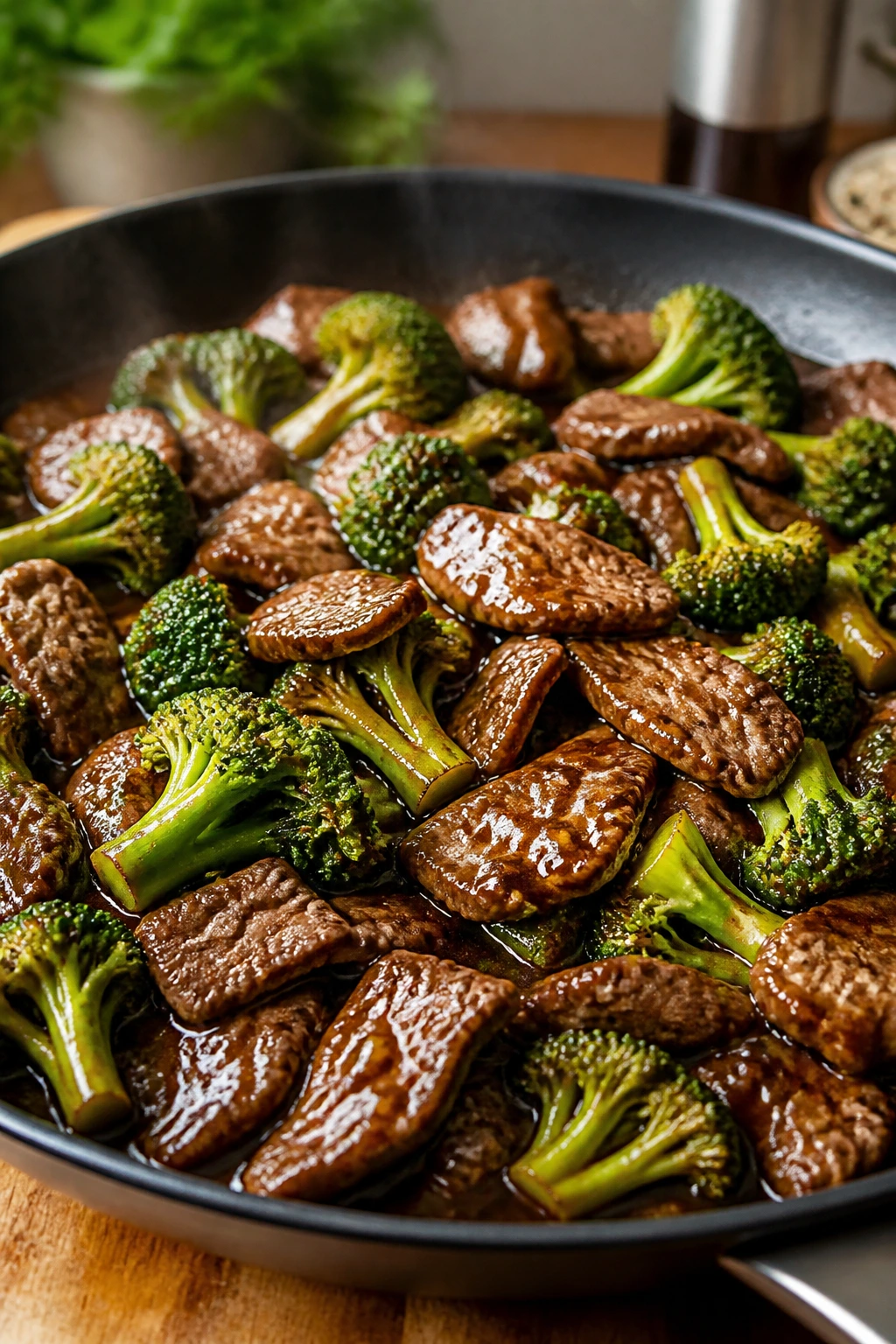
Cutting with the grain. This is the one that sabotages the whole dish before the pan even gets hot. If the slices look long and stringy on the board, they’ll eat that way too. Rotate the steak and cut across the fibers, even if it feels awkward.
Letting the beef sit in the hot pan too long. The beef should barely be done when you pull it out. If you’re waiting for every strip to turn deep brown all the way through, you’ve already gone too far. The sauce finishes the job later, and that final toss only takes seconds.
Crowding the skillet. A pan packed with meat lowers the heat and creates steam. The beef turns gray and soft, but not in a good way. Work in batches, even if it means an extra minute of cooking. That minute is cheaper than tough steak.
Adding the garlic too early. Garlic burns fast in a hot skillet. If it goes in before the pan cools slightly, it turns bitter and the whole sauce picks up that harsh edge. Add it after the beef is out and after the broccoli has had a brief steam.
Using too much sauce without enough heat. A thin pan of liquid isn’t what you want. The sauce should simmer hard for a moment, then thicken to a sheen. If it stays loose, give it another 30 seconds, not a mountain of extra cornstarch.
Skipping the broccoli dry-off. Wet florets dump extra water into the pan and thin the sauce at the exact moment you want it to cling. Shake them dry after washing, and if they still look glossy with water, blot them once with a towel.
Variations That Fit the Same Pan
Spicy Garlic-Heat Version: Add 1 to 2 teaspoons of chili crisp or a minced fresh chile with the garlic and ginger. The heat lands at the finish instead of sitting on the tongue the whole time, which keeps the sauce sharp rather than muddy. This is the version I’d make if the rice bowl needed a little wake-up.
Extra-Saucy Takeout Style: Increase the beef broth by 1/4 cup and add another 1 teaspoon cornstarch to the sauce. You’ll get more glossy sauce for spooning over rice, and the dish will look a little closer to the oversized, saucy style people usually expect from a restaurant carton. Go easy on the soy if you do this, or the extra liquid won’t save you from salt.
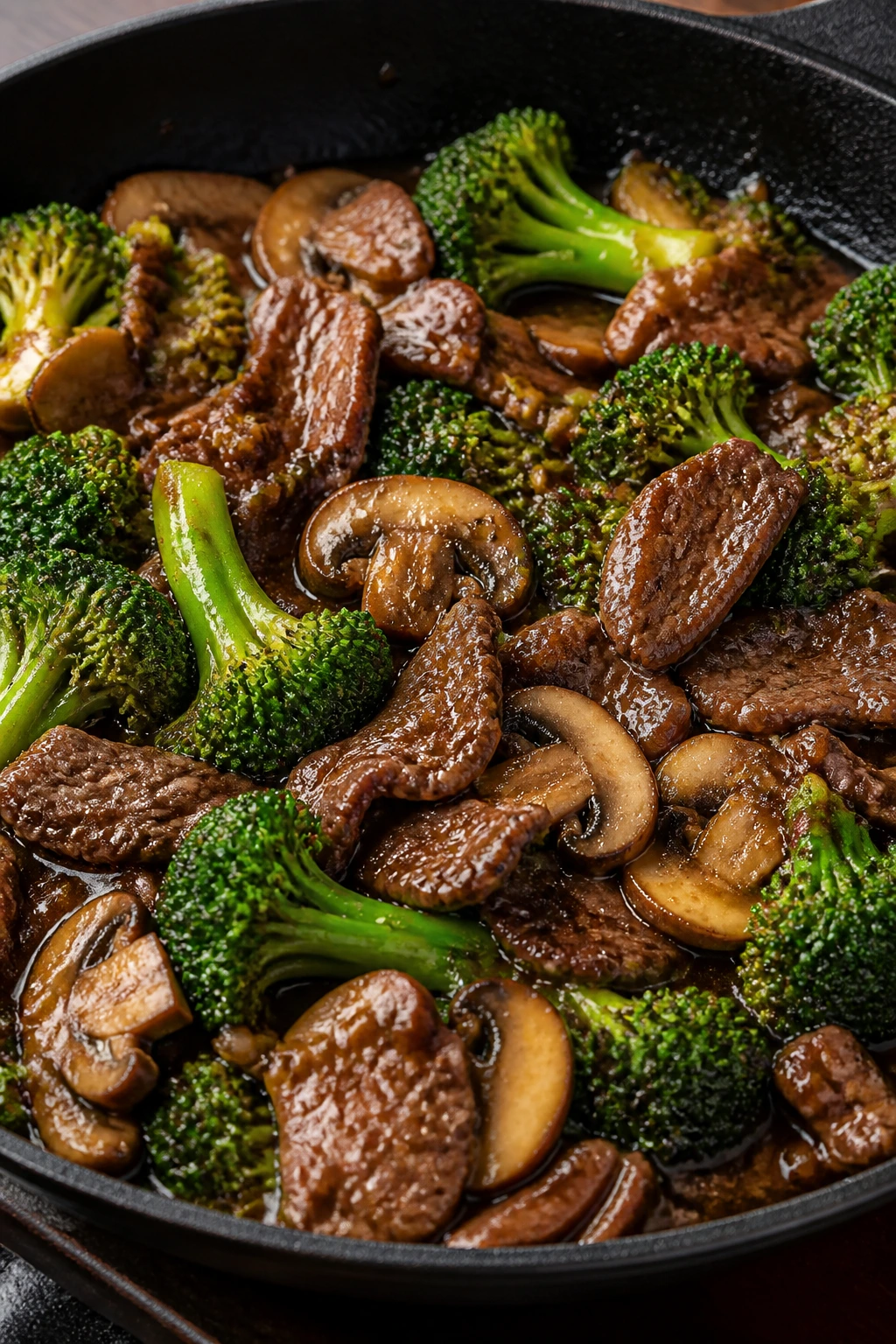
Mushroom and Broccoli Skillet: Add 8 ounces of sliced cremini mushrooms after the beef comes out. Let them brown for 3 to 4 minutes before the garlic goes in. They bring a deeper, almost steak-like flavor and make the dish feel broader without changing its bones.
Gluten-Free Tamari Swap: Replace the soy sauce with tamari and use a gluten-free oyster sauce, or swap the oyster sauce for extra tamari with a pinch more brown sugar. The flavor stays close to the original, and the sauce still gets the same glossy finish.
Lower-Sodium Version: Use reduced-sodium soy sauce, unsalted beef broth, and slightly more rice vinegar to keep the sauce lively. The dish will taste cleaner and less heavy, especially if you’re serving it over plain rice. I like this version when I know there will be leftovers, because salty sauces can wear you out by the second bowl.
Keeping Leftovers Tender, Not Limp
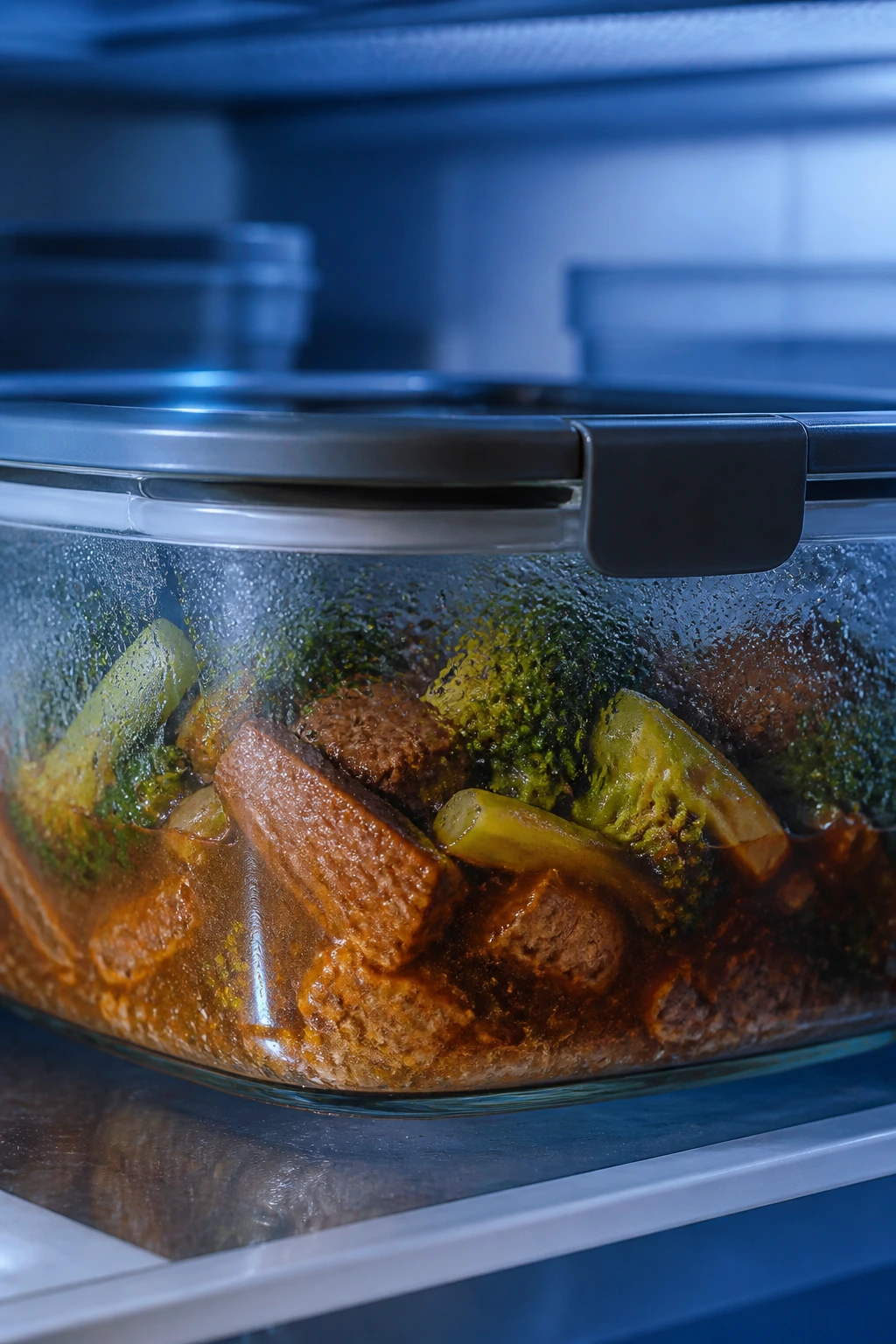
This dish keeps in the fridge for 3 to 4 days in a sealed container. The broccoli will soften a bit overnight — that’s normal — but the beef and sauce stay useful if you reheat them with a little care. If you know you’ll have leftovers, keep the rice separate so it doesn’t drink all the sauce.
For the freezer, the beef and sauce can hold for up to 2 months, though the broccoli texture will get softer after thawing. If you want a better frozen result, freeze the beef and sauce without the broccoli, then cook fresh florets when you reheat. Pack it flat in a freezer bag so it thaws faster and reheats more evenly.
The best reheating method is a skillet over medium-low heat with 1 to 2 tablespoons of water. Stir until the sauce loosens and the beef is hot through, usually 3 to 5 minutes. The microwave works in a pinch, but use short bursts at 50% power and stir between them so the sauce doesn’t split and the beef doesn’t toughen from the edges inward.
For make-ahead prep, the sauce can be mixed up to 3 days ahead, the beef can be sliced and marinated up to 8 hours ahead, and the broccoli can be cut 1 day ahead if you store it dry and covered. I would not leave the beef in the marinade overnight unless the slices are very thick and you know your soy sauce is mild. Even then, you’re gambling a bit.
This is one of those dishes that tastes best fresh, but it does not fall apart the way some stir-fries do. The sauce carries the leftovers more than the vegetables do, and that helps.
Questions People Ask Before They Cook It
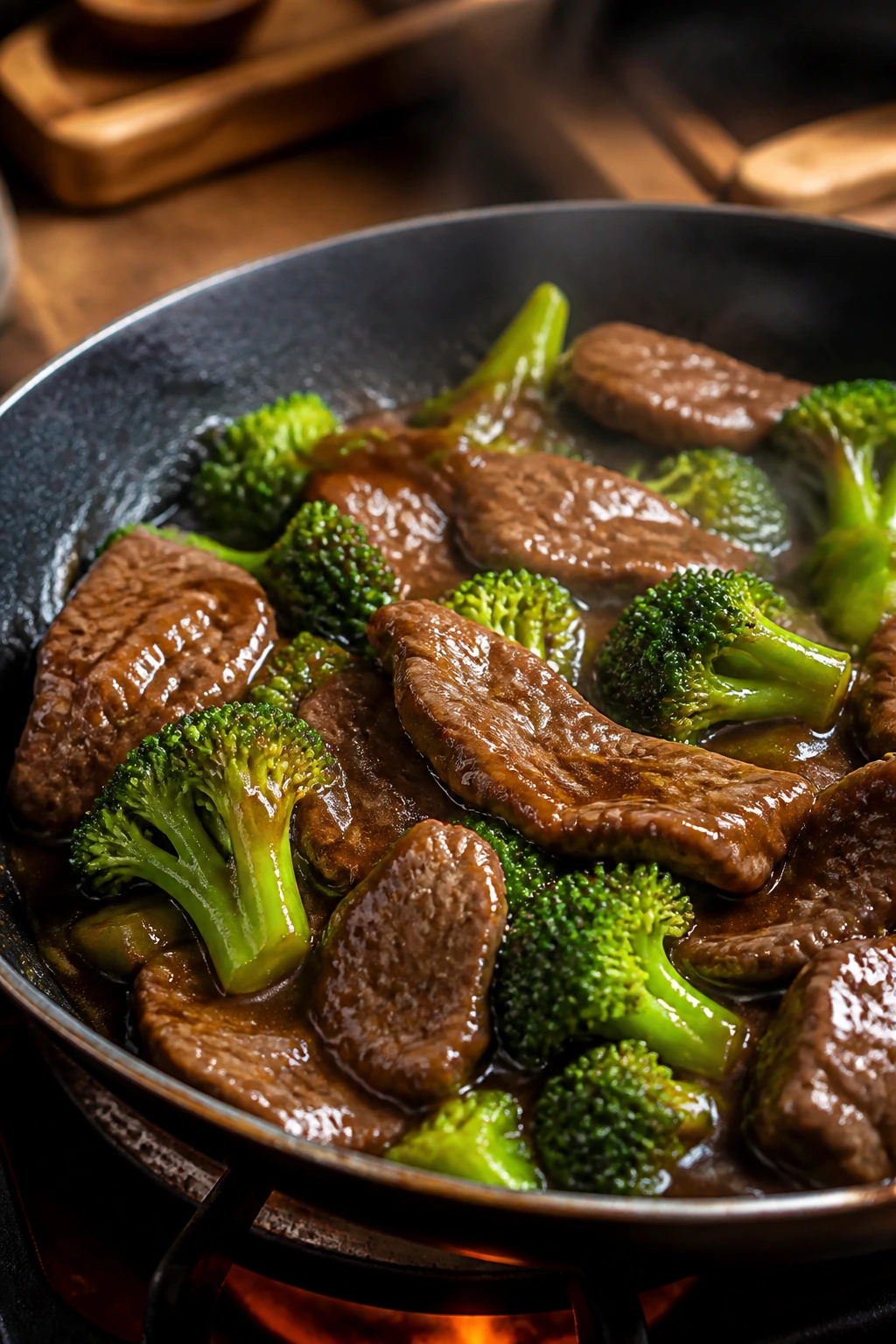
What cut of beef works best for beef and broccoli sauce?
Flank steak is the classic pick because it slices cleanly and stays tender if you don’t overcook it. Top sirloin is a little easier to find and still works well. Flat iron is another strong option if you want something soft with a bit more beef flavor.
Can I use frozen broccoli instead of fresh?
Yes, but thaw it first and pat it dry. Frozen broccoli brings extra water into the pan, so it needs a little more heat and a shorter steam time to avoid going mushy. Fresh broccoli gives you a firmer bite and a brighter color, which is why I reach for it when I can.
Why does my sauce turn thin instead of glossy?
Usually the pan wasn’t hot enough, or the cornstarch didn’t have time to thicken. Let it bubble for another 30 seconds before adding more starch. If you still need more body, whisk 1 teaspoon cornstarch with 1 tablespoon cold water and stir that in slowly.
Can I make this ahead for meal prep?
Yes, but keep the rice separate and reheat the stir-fry gently in a skillet. The beef stays better that way than it does in the microwave. If meal prep is the goal, slightly undercook the broccoli so it still has some bite after reheating.
What if I don’t have oyster sauce?
Use hoisin sauce for a sweeter result, or add an extra tablespoon of soy sauce plus a little more brown sugar and broth. You’ll lose some of the deep savory note, but the dish will still taste finished. Oyster sauce adds a round, brown-tinged depth; it’s useful, not magical.
Can I double the recipe without changing anything else?
You can double the ingredients, but do not double the beef in one batch in the pan. Cook the meat in smaller batches so it sears instead of steaming, and thicken the sauce in a wide skillet so it doesn’t take forever to come together. Bigger recipes need more pan surface, not just more confidence.
How do I keep the beef tender after reheating?
Reheat it gently with a splash of water and stop as soon as it’s hot. High heat on leftovers dries the thin slices fast, which is why the microwave often disappoints. A skillet gives you more control and helps the sauce loosen back up.
A Hot Skillet, a Glossy Sauce, and Dinner Sorted
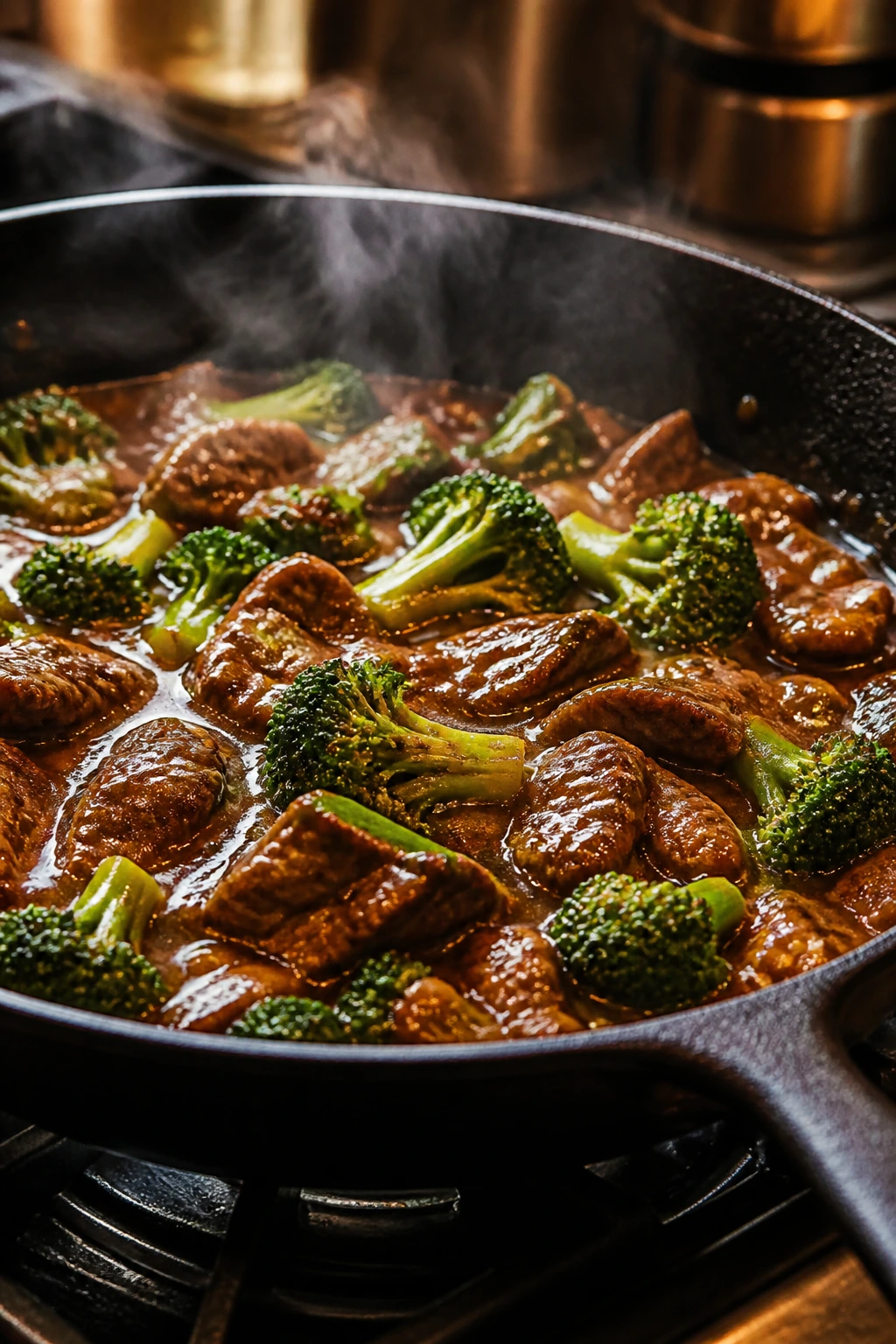
There’s a reason beef and broccoli hangs on in so many home kitchens. It’s fast, yes, but speed isn’t the real selling point. The real draw is that one skillet can give you tender beef, crisp broccoli, and a sauce that tastes like it took longer than it did.
I like recipes that ask for attention in the right places. This is one of them. You slice carefully, you move quickly, and you stop cooking before the beef has time to turn stubborn. That’s the whole personality of the dish, and honestly, it’s a good one.
Tender Beef and Broccoli Sauce for a Hearty Dinner — Recipe Card
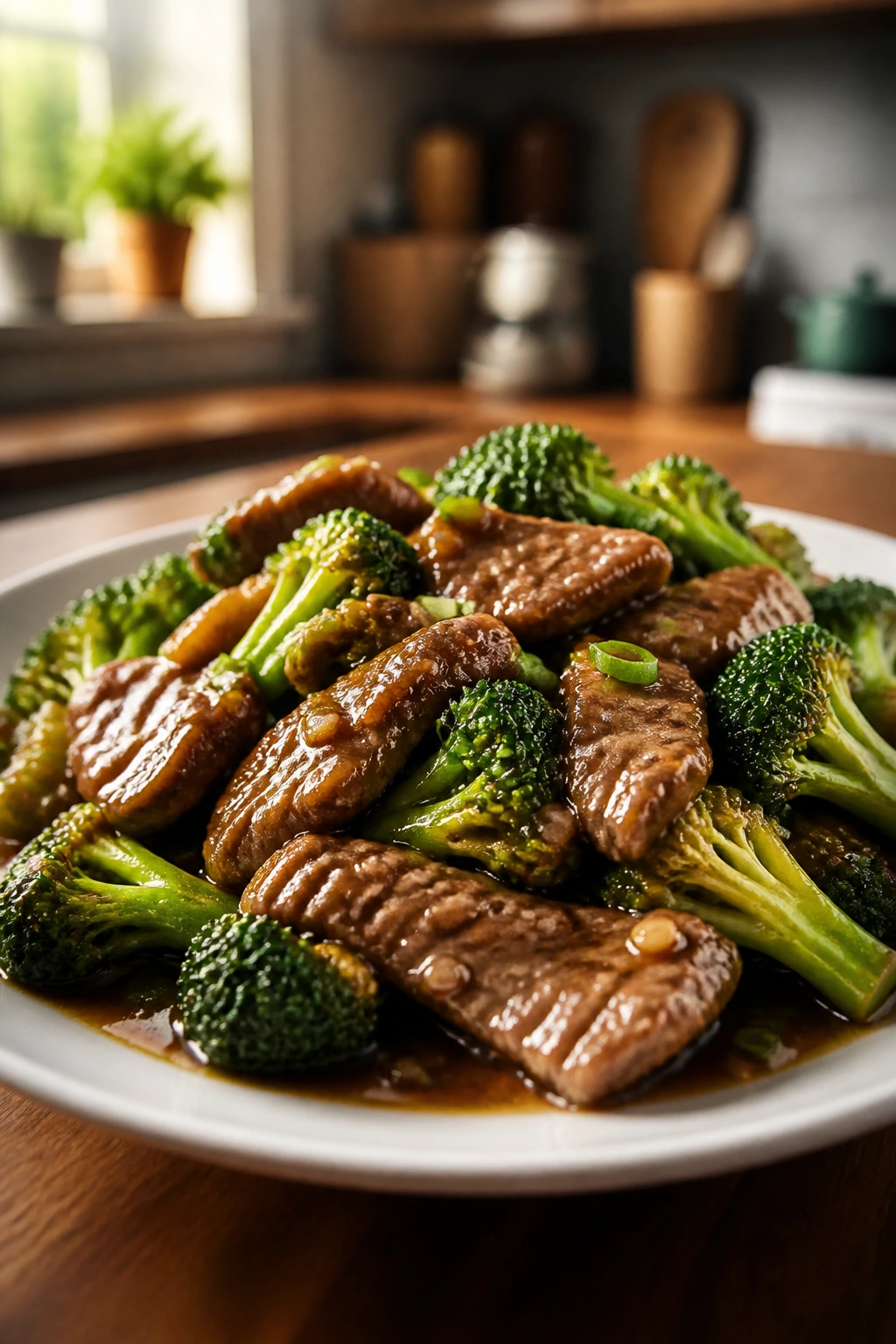
Recipe Name: Tender Beef and Broccoli Sauce for a Hearty Dinner
Description: Thin-sliced beef and crisp broccoli are tossed in a glossy garlic-ginger sauce that clings to every bite. The quick sear and short simmer keep the steak tender and the vegetables bright.
Prep Time: 20 minutes
Cook Time: 12 minutes
Total Time: 32 minutes
Course: Main Course, Dinner
Cuisine: American-Asian Inspired
Servings: 4 servings
Calories: About 410 kcal per serving
Ingredients
For the Beef and Marinade:
- 1 1/2 pounds flank steak, top sirloin, or flat iron steak, sliced thinly against the grain
- 1 tablespoon low-sodium soy sauce
- 1 tablespoon Shaoxing wine or dry sherry
- 1 tablespoon cornstarch
- 1 teaspoon toasted sesame oil
- 1/4 teaspoon fine sea salt
For the Sauce:
- 1/2 cup low-sodium soy sauce
- 1/2 cup low-sodium beef broth
- 2 tablespoons oyster sauce
- 1 tablespoon packed light brown sugar
- 2 teaspoons rice vinegar
- 1 tablespoon cornstarch
- 2 tablespoons cold water
- 4 cloves garlic, minced
- 1 tablespoon fresh ginger, grated
For the Vegetables and Finish:
- 1 tablespoon avocado oil or peanut oil
- 1 pound broccoli florets, cut into bite-size pieces
- 2 scallions, thinly sliced
- 1 teaspoon toasted sesame oil
- 1 tablespoon toasted sesame seeds, optional
- Pinch red pepper flakes, optional
Instructions
-
Partially freeze the steak for 15 to 20 minutes, then slice it thinly against the grain.
-
Toss the beef with 1 tablespoon soy sauce, Shaoxing wine, cornstarch, sesame oil, and salt. Rest for 15 minutes.
-
Whisk the sauce ingredients together until smooth.
-
Heat oil in a large skillet or wok over medium-high heat. Add broccoli and 3 tablespoons water, cover for 2 minutes, then remove.
-
Increase heat to high and sear the beef in a single layer for 60 to 90 seconds per side, cooking in batches if needed. Remove while still slightly pink.
-
Lower heat to medium, add garlic and ginger, and stir for about 20 seconds.
-
Whisk the sauce again, pour it into the pan, and simmer until glossy and thickened, about 30 to 60 seconds.
-
Return the beef and broccoli to the pan and toss for 30 to 45 seconds. Finish with sesame oil, scallions, sesame seeds, and red pepper flakes if using.
Notes: Slice the beef across the grain for the tenderest texture. Reheat leftovers gently in a skillet with a splash of water. If the sauce thickens too much, loosen it with 1 to 2 tablespoons of water.