



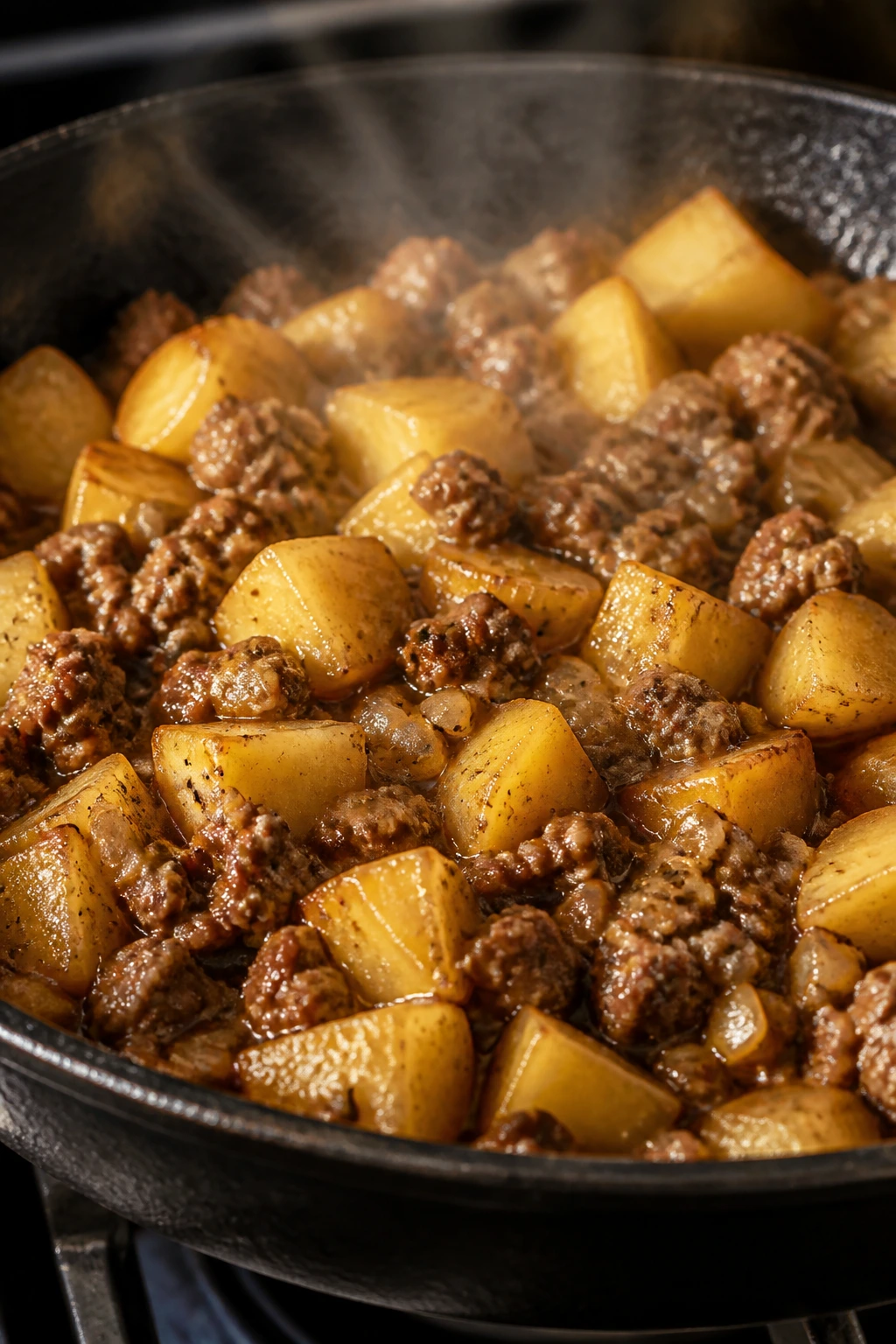
A skillet of hamburger and potatoes is the kind of dinner that looks plain until the onions start to sizzle in the beef fat and the whole kitchen smells like supper is already solved. The first few minutes matter more than the ingredient list suggests. Get the heat right, and the ground beef stays soft, the potatoes turn creamy at the edges, and the gravy clings instead of sliding off in a thin brown puddle.
The trouble with a lot of hamburger and potatoes recipes is that they treat the pan like a dumping ground. Beef, potatoes, liquid, lid, done. That usually gives you either dry crumbles with bland cubes or a swampy skillet with potatoes that never quite lose their raw center. Tender hamburger and potatoes need a little order: browning first, seasoning at the right moment, then a covered simmer that gives the potatoes time to soften before the liquid cooks away.
That balance is what makes this version worth keeping. It eats like a full meal, not a side dish in a hurry. There’s savory beef, soft onion, Yukon Gold potatoes that hold their shape, and a glossy gravy that tastes like it had more work than it did. Once you’ve made it this way, the one-pan dinner starts to feel less like a fallback and more like a reliable answer.
Why This Hamburger and Potatoes Skillet Works
-
The beef browns before it braises: Browning the ground beef first gives the finished skillet those dark, savory bits you can taste in every forkful, instead of a pale, boiled flavor.
-
Yukon Gold potatoes stay tender instead of collapsing: Their waxy, buttery flesh softens in the simmer without turning to mash, which is exactly what this pan needs.
-
Tomato paste and Worcestershire deepen the gravy fast: A small amount is enough to make the broth taste cooked and rounded, not thin and one-note.
-
The lid does the slow part for you: Covered heat lets the potato cubes steam through in about 18 to 22 minutes, while the sauce keeps enough moisture to stay silky.
-
A short uncovered finish fixes the texture: Those last few minutes without the lid tighten the sauce so it coats the beef and potatoes instead of pooling under them.
-
It uses ordinary ingredients with a smart order: Nothing here is fussy, but the sequence matters. That’s the whole trick.
Yield: Serves 6
Prep Time: 20 minutes
Cook Time: 35 minutes
Total Time: 55 minutes
Difficulty: Beginner-Intermediate — the method is straightforward, but the skillet needs a little attention so the potatoes turn tender before the sauce tightens too much.
Best Served: Hot from the skillet after a 5-minute rest
What Tender Hamburger and Potatoes Look Like When They’re Done Right
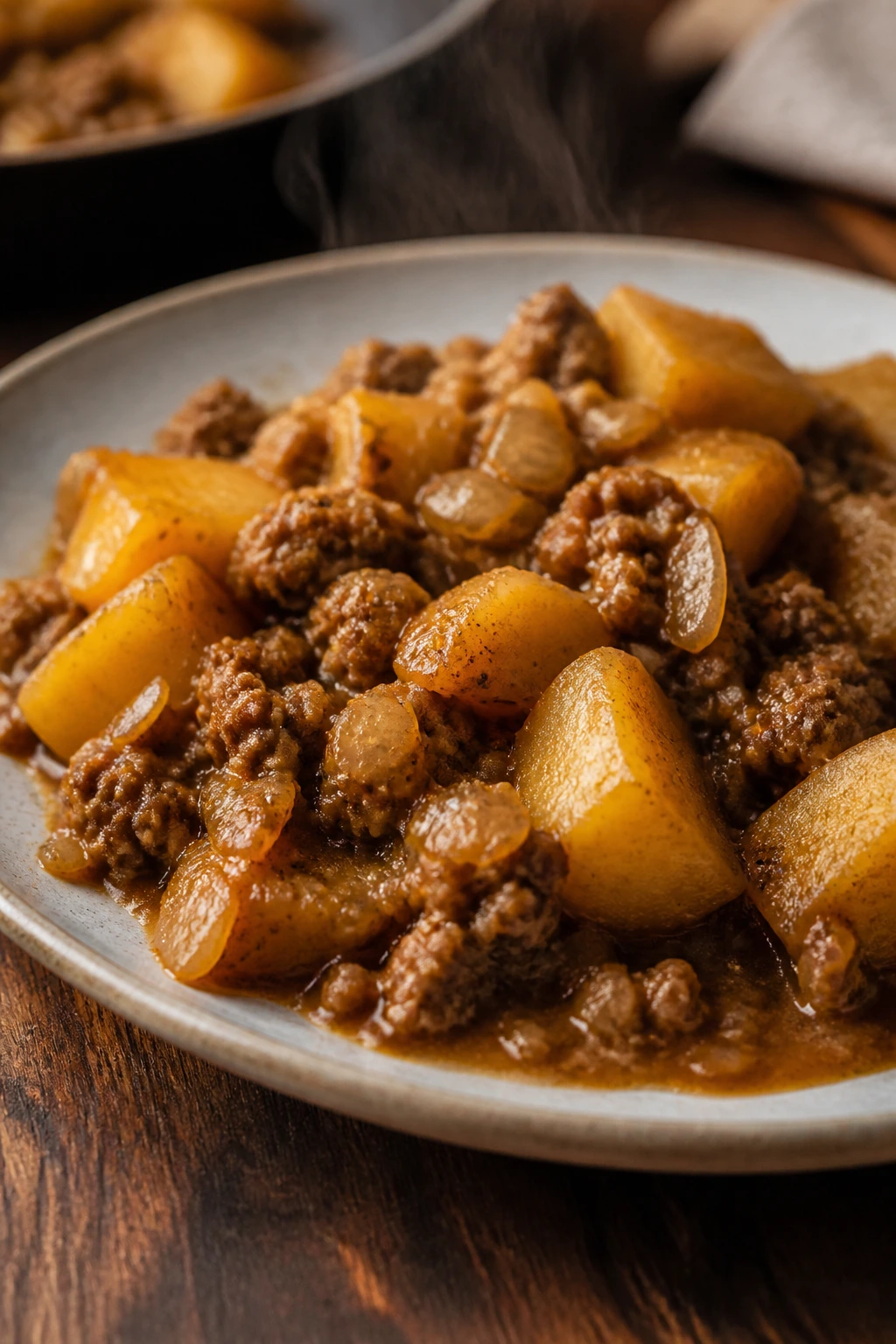
This dish sits between a hash and a stew, and that’s why it works on a weeknight when you want something filling without dragging out six pans. The potatoes should be soft enough that a knife slips through without pushback, but they should still hold a clean edge when you scoop them. The beef should be broken into tender crumbles, not little dry pebbles.
A good skillet of hamburger and potatoes also has a scent that tells you you’re on the right track. First comes the sweet smell of onion, then the darker, meaty note from the browned beef, then the warm lift of paprika and thyme as they hit the hot fat. That layered smell is what a lot of rushed versions miss. They taste like ingredients, not dinner.
I like this dish best when the gravy is thin enough to move, thick enough to cling, and salty enough that the potatoes don’t taste blank. That sounds picky, but it’s the difference between a pan you finish and a pan you keep spooning from while standing at the stove. Tender hamburger and potatoes should feel generous, not heavy.
The Short Ingredient List for Tender Hamburger and Potatoes
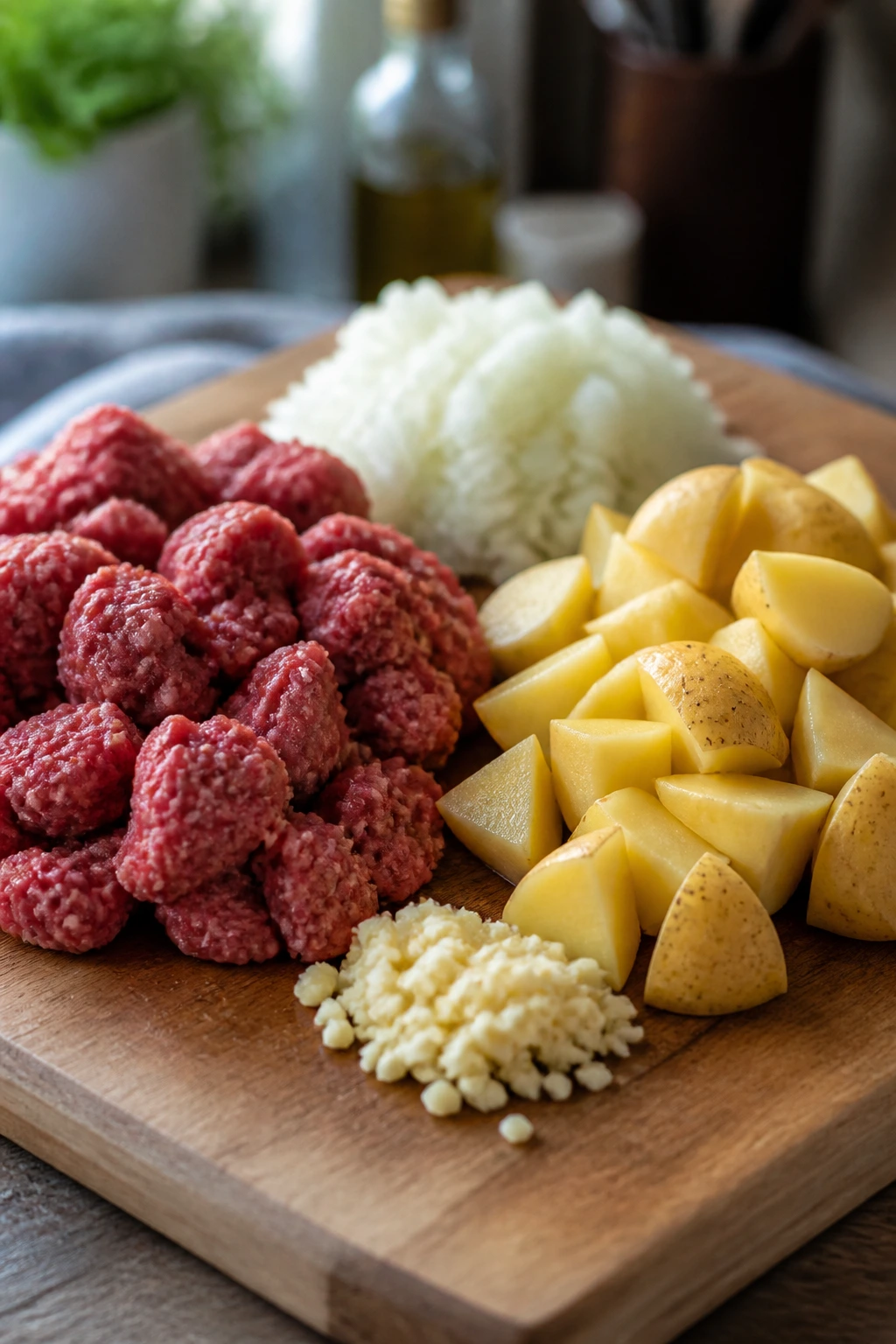
- 1 1/2 pounds ground beef, 80/20 or 85/15
- 1 1/2 pounds Yukon Gold potatoes, scrubbed and cut into 1/2-inch cubes
- 1 medium yellow onion, diced
- 3 cloves garlic, minced
- 1 tablespoon olive oil
- 2 tablespoons unsalted butter
- 2 tablespoons all-purpose flour
- 2 cups low-sodium beef broth
- 2 tablespoons tomato paste
- 1 tablespoon Worcestershire sauce
- 1 teaspoon kosher salt, plus more to taste
- 1/2 teaspoon black pepper
- 1 teaspoon smoked paprika
- 1 teaspoon dried thyme
- 1 bay leaf
- 2 tablespoons chopped parsley, for serving
Why Each Ingredient Matters in the Pan
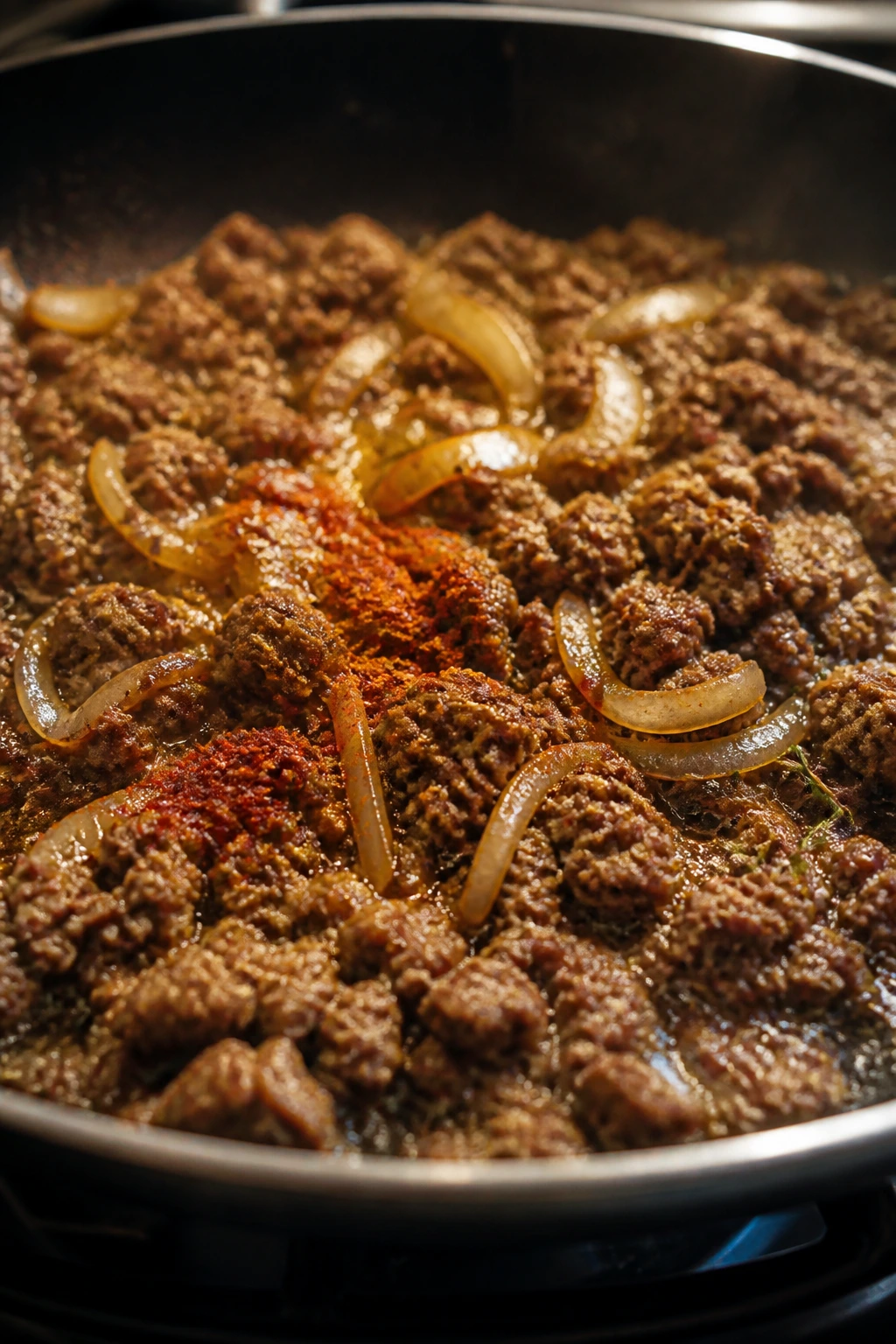
Ground Beef
What to use: 1 1/2 pounds of ground beef, ideally 80/20 or 85/15. That fat level gives the pan enough drippings to cook the onion and build flavor without turning the final dish greasy.
Preparation: Let the beef sit out for 10 minutes while you prep everything else so it drops the refrigerator chill. Break it into rough chunks when it hits the pan, then let it brown before you fuss with it too much.
Substitutions: Ground turkey works if you want a leaner skillet, and ground chicken can do the job too, though both need a little extra butter for flavor. Plant-based crumbles can work in a pinch, but they won’t give the potatoes the same drippings.
Tips: If your beef is very lean, add a little more butter or oil at the start. A dry, lean pan is where this dish starts tasting flat.
Potatoes
What to use: 1 1/2 pounds Yukon Gold potatoes, cut into 1/2-inch cubes. That size gives you tender centers without turning the potatoes into mush before the sauce reduces.
Preparation: Scrub them well and cube them as evenly as you can. If the pieces are mismatched, the tiny ones will collapse while the big ones stay firm in the middle.
Substitutions: Red potatoes hold their shape nicely, and baby potatoes cut in half work too. Russets are usable, but they break down faster, so peel them and keep the cubes a little larger.
Tips: A quick rinse after cutting helps remove loose starch, but dry them well before they go into the pan. Wet potatoes steam; dry potatoes soften with a little more texture.
Aromatics and Seasonings
What to use: 1 medium yellow onion, 3 cloves garlic, 1 teaspoon kosher salt, 1/2 teaspoon black pepper, 1 teaspoon smoked paprika, 1 teaspoon dried thyme, and 1 bay leaf. This group gives the dish its backbone.
Preparation: Dice the onion small enough that it softens in the time it takes the beef to brown. Mince the garlic finely so it disappears into the gravy instead of burning in little sharp bits.
Substitutions: A sweet onion works if that’s what you have, and a pinch of onion powder can help if your fresh onion is small. Fresh thyme can replace dried thyme; use 1 tablespoon chopped fresh leaves.
Tips: Paprika wants hot fat, but garlic does not. Stir garlic in after the beef has browned and the flour has already had a minute to toast, or it can turn bitter.
Broth, Tomato Paste, and Worcestershire
What to use: 2 cups low-sodium beef broth, 2 tablespoons tomato paste, and 1 tablespoon Worcestershire sauce. This trio turns a plain skillet into something that tastes slow-cooked.
Preparation: Stir the tomato paste into the hot fat before adding broth so it darkens a bit and loses its raw edge. Keep the broth measured and ready; once the potatoes go in, the simmer moves quickly.
Substitutions: Chicken broth can work if that’s what’s in the pantry, though the flavor will be lighter. Soy sauce can replace part of the Worcestershire in a pinch, but use a little less because it leans saltier.
Tips: Low-sodium broth gives you control. Regular broth can make the skillet taste briny before the gravy has a chance to reduce.
Thickener and Finish
What to use: 2 tablespoons all-purpose flour, 2 tablespoons unsalted butter, and 2 tablespoons chopped parsley. The flour thickens the sauce; the butter makes it glossy; the parsley keeps the finish from looking dull.
Preparation: Let the flour cook in the fat for about 30 seconds before you pour in the broth. Chop the parsley at the end so it stays bright.
Substitutions: Cornstarch can thicken the gravy if you need a gluten-free version; use 1 tablespoon mixed with 1 tablespoon cold water and stir it in near the end. Sour cream or a splash of heavy cream can soften the finish if you like a richer skillet.
Tips: Cold butter stirred in at the end gives the gravy a smoother feel than adding more flour ever will. Don’t skip the finishing herb, even if it seems minor.
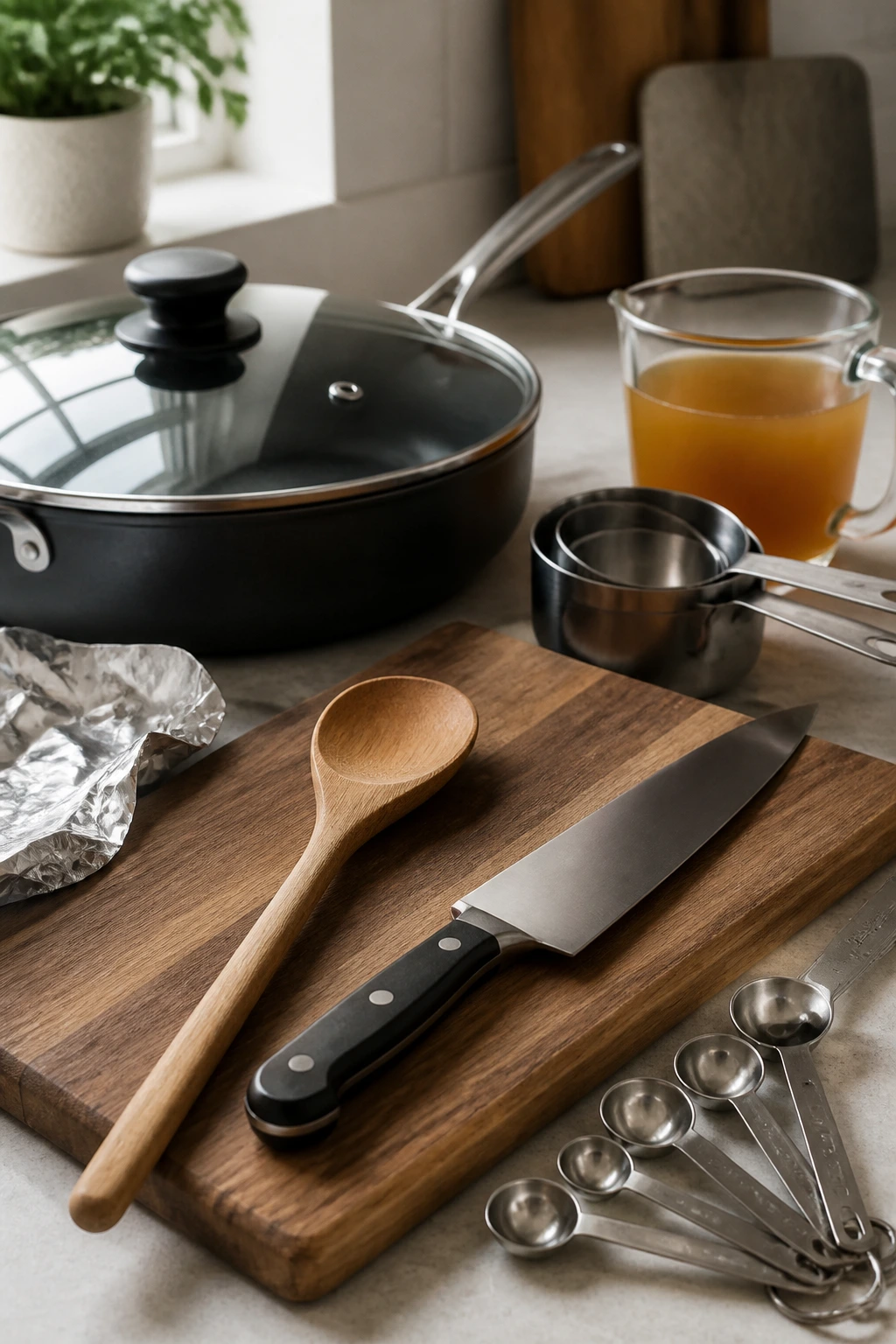
The Tools That Make This Dinner Easier
-
12-inch skillet with a lid: Big enough to hold the potatoes in a single layer without crowding; a tight-fitting lid helps them steam properly.
-
Wooden spoon or sturdy spatula: Best for breaking up the beef and scraping the browned bits off the bottom.
-
Chef’s knife: A sharp knife makes the onion and potatoes safer and faster to cut.
-
Cutting board: Use a large one so you can keep the potatoes in roughly the same size.
-
Measuring cups and spoons: The broth and flour need to be measured cleanly so the gravy turns out the right thickness.
-
Liquid measuring cup: Helpful for pouring the broth without sloshing it all over the stovetop.
-
Lid or foil if your skillet has no cover: A sheet of foil tucked around the rim can stand in for a lid when you need the steam to stay put.
How to Cook the Hamburger and Potatoes Skillet
Prep the potatoes and liquid first:
-
Scrub the potatoes and cut them into even 1/2-inch cubes. Dice the onion, mince the garlic, and stir together the beef broth, tomato paste, and Worcestershire in a measuring cup until the tomato paste mostly dissolves.
-
Set the beef out of the refrigerator while you prep the rest if you have the time. It does not need to be warm, just not icy-cold in the center.
Brown the beef and start the base:
-
Heat a 12-inch skillet over medium-high heat. Add the olive oil and butter, then cook the onion for 3 to 4 minutes, stirring often, until it turns translucent and the edges start to soften.
-
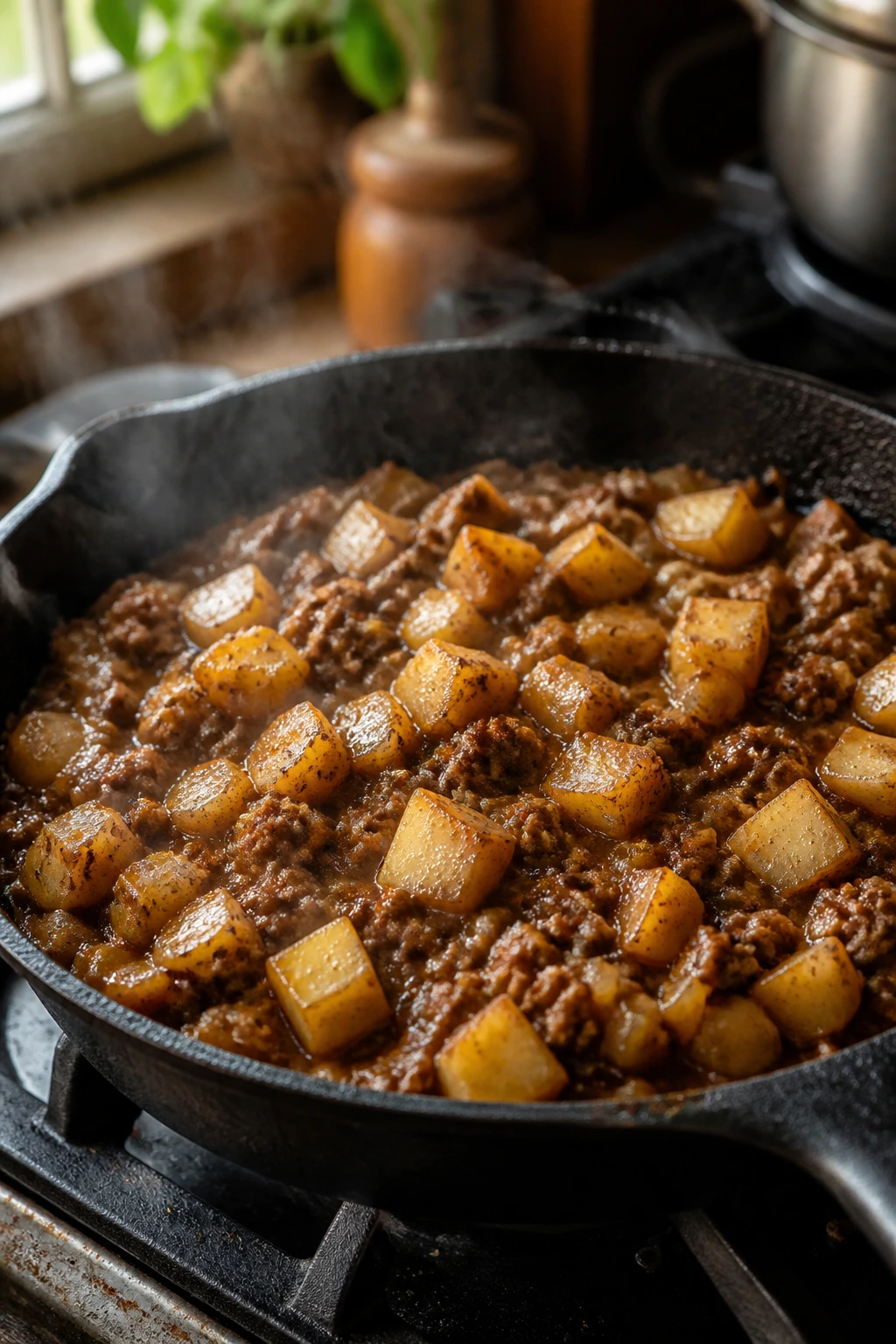
Add the ground beef, salt, black pepper, smoked paprika, and thyme. Break the meat into medium crumbles and cook for 6 to 8 minutes, until it is browned and no longer pink. If there is a lot of fat in the pan, spoon off most of it, but leave about 1 to 2 tablespoons for flavor.
-
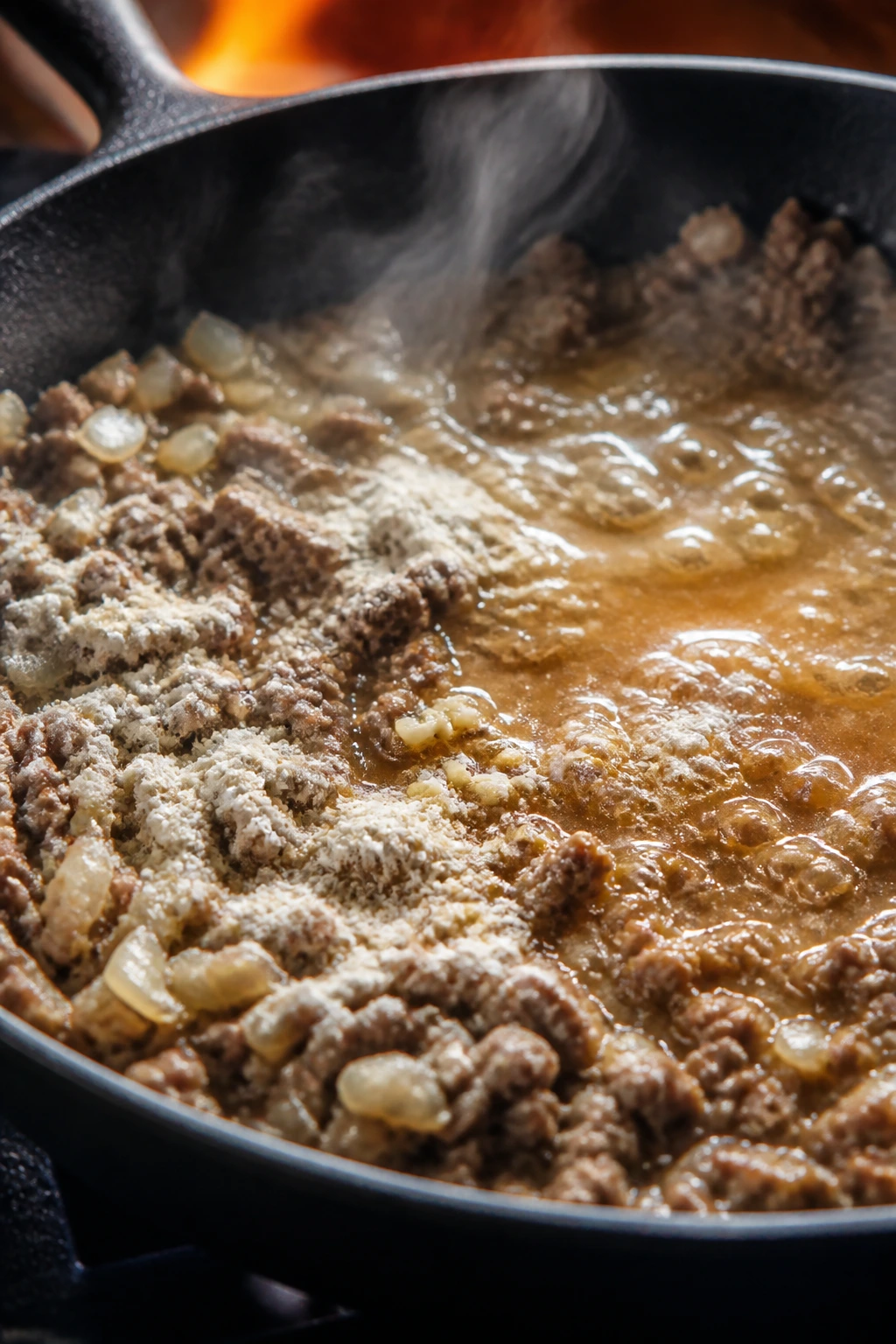
Stir in the garlic and flour and cook for 30 to 45 seconds, just until the garlic smells sweet and the flour no longer looks dry. The pan should smell meaty and a little toasty, not sharp.
Build the gravy and simmer the potatoes:
-
Pour in the broth mixture slowly while scraping the bottom of the skillet with your spoon to lift the browned bits. Add the potatoes and bay leaf, then bring the pan to a steady simmer.
-
Cover the skillet, reduce the heat to medium-low, and cook for 18 to 22 minutes, stirring once halfway through. The potatoes are ready when a knife slides into the center with almost no resistance and the liquid has thickened into a light gravy.
-
Uncover the skillet and simmer for 3 to 5 minutes more, stirring gently, until the sauce coats the beef and potatoes instead of sitting thin at the bottom. Ground beef should reach 160°F / 71°C in the center.
Finish and rest:
- Remove the bay leaf and stir in the parsley. Taste and adjust with a pinch more salt or black pepper if the gravy tastes shy. Let the skillet rest for 5 minutes before serving so the sauce settles and clings better.
How to Serve It Without Letting the Gravy Run Everywhere
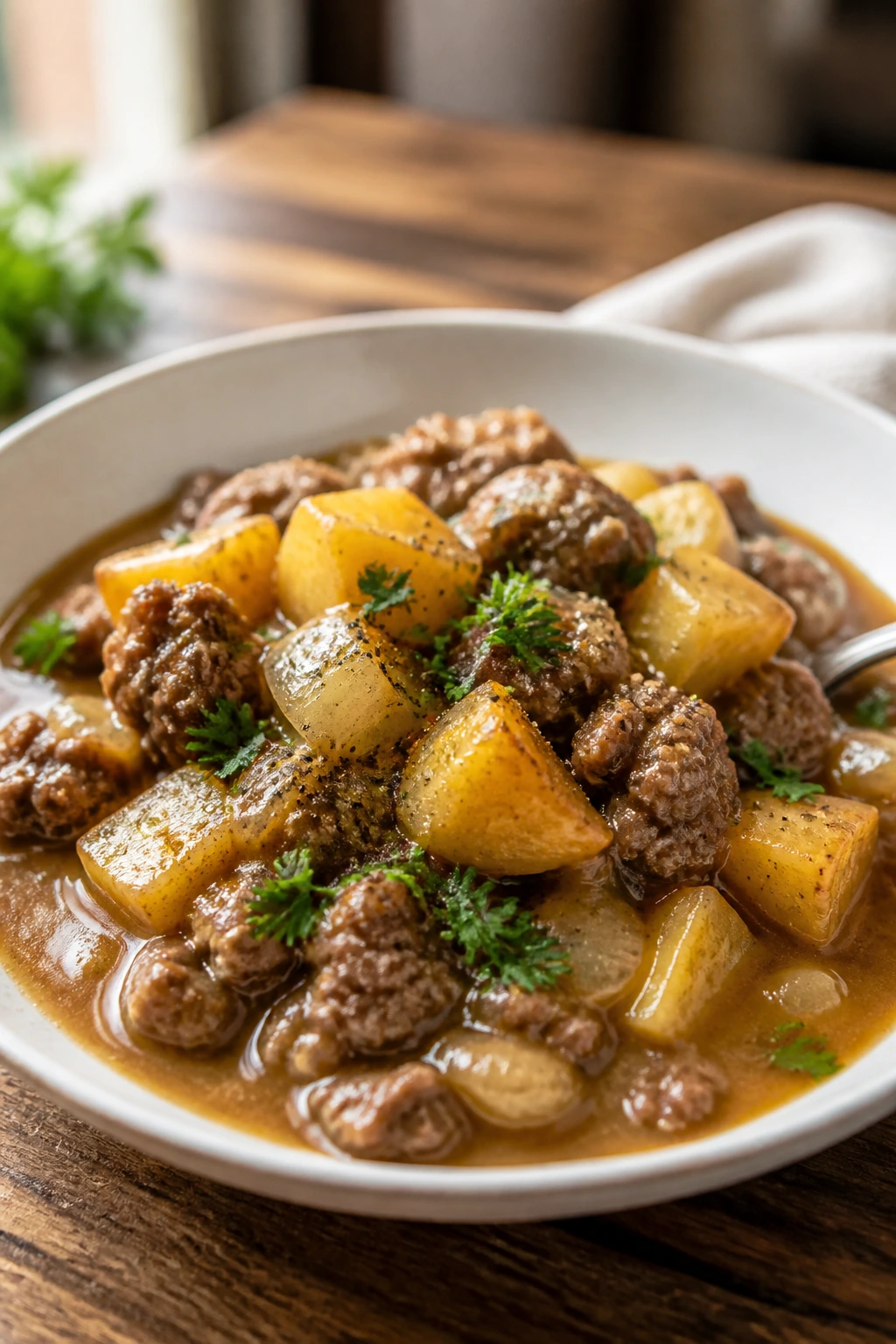
Presentation: Spoon the hamburger and potatoes into shallow bowls or wide plates so the gravy has somewhere to settle. A small scatter of parsley and a few grinds of black pepper on top make it look finished without hiding the texture underneath.
Accompaniments: A crisp green salad with vinegar dressing cuts the richness well, and buttered green beans fit the plate without asking for attention. Warm dinner rolls or a slice of sturdy sourdough are worth having around because the pan juices deserve to be mopped up.
Portions: Plan on about 1 1/2 cups per adult if there’s bread or a side dish on the table. If this is the only thing on the plate, 2 cups is more realistic, especially for people who like a bigger dinner.
Beverage Pairing: I like unsweetened iced tea with lemon or a cold lager because both keep the skillet from feeling heavy. Dry apple cider also works if you want something with a little more bite.
Small Tweaks That Make a Big Difference
Flavor Enhancement: A teaspoon of Dijon mustard stirred into the broth mixture gives the gravy a deeper, more rounded taste without turning it tangy in a loud way. You won’t taste mustard; you’ll taste more beef.
Time-Saver: Cut the potatoes before anything else and keep them in a bowl of cold water while you work on the onion and beef. Drain them well before they go into the skillet so they don’t water down the sauce.
Pro Move: Near the end of cooking, press a few potato cubes against the side of the skillet with your spoon. Their starch loosens into the gravy and gives it a thicker, more homemade feel.
Cost-Saver: If you buy 85/15 ground beef instead of the leanest pack on the shelf, you usually get better flavor and better browning. A little extra fat in this dish is useful, not wasteful.
Make-It-Yours: A spoonful of sour cream off the heat softens the gravy and gives the skillet a diner-style finish. If you like a brighter edge, a few chopped scallions on top wake the whole thing up.
Where This Dish Usually Goes Wrong
-
Cutting the potatoes too large: Big cubes look fine in the bowl, then sit stubborn and firm in the middle while the gravy reduces around them. Keep them around 1/2 inch so they finish in the same window as the sauce.
-
Draining off every bit of fat: People get nervous about grease and wipe the skillet nearly dry. Then the onion and flour have nothing to cook in, and the dish turns flat fast. Leave a thin slick in the pan.
-
Boiling the skillet hard instead of simmering it gently: A hard boil breaks the potatoes apart and makes the beef grainy. You want small bubbles, a lid, and steady heat.
-
Adding the broth before the flour has cooked for a moment: Raw flour tastes dusty and thickens unevenly. Give it 30 to 45 seconds in the fat so it loses that floury edge.
-
Under-seasoning the potatoes: Potatoes absorb salt like sponges, and ground beef alone will not season them enough. Taste the gravy at the end and correct it, or the whole dish can feel muted.
-
Skipping the rest at the end: Straight off the burner, the sauce can look a little loose. Five minutes off the heat lets it settle, thicken, and cling where it should.
Variations for Cheese, Mushrooms, Spice, and Dairy-Free Needs
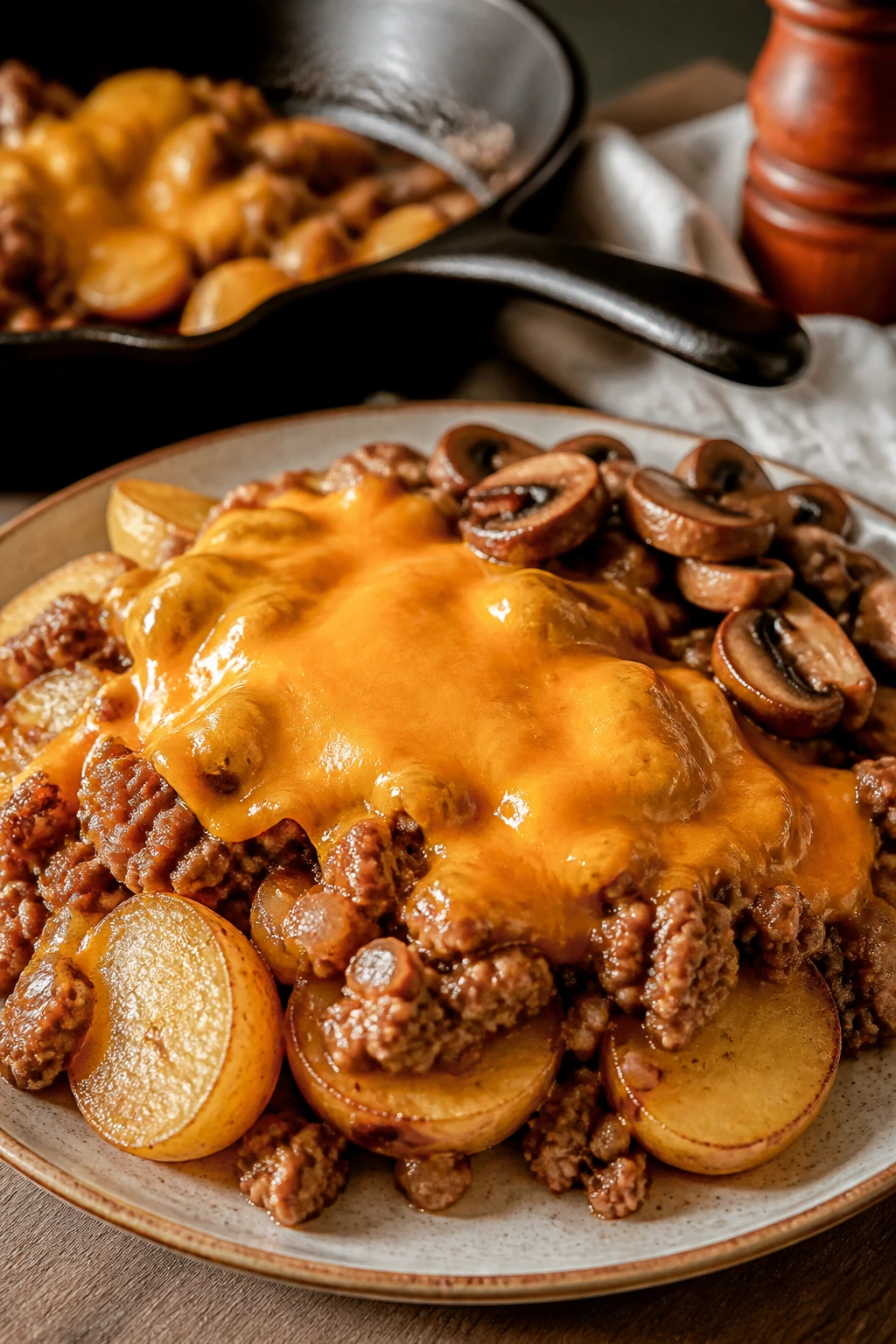
Cheddar-Blanket Skillet: Stir in 1 to 1 1/2 cups shredded sharp cheddar after the potatoes are tender and the heat is low. Cover the skillet for 1 minute so the cheese melts into the top instead of clumping in strings.
Mushroom-Forward Version: Add 8 ounces sliced cremini mushrooms with the onion and cook them until they give off moisture and start to brown. The mushrooms add a deeper, woodsy flavor that makes the pan taste closer to a rustic braise.
Spicy Red Pepper Skillet: Add 1/4 to 1/2 teaspoon cayenne with the paprika and finish with chopped pickled jalapeños. That sharper heat works well if you like the beef to keep up with the potatoes instead of sitting politely beside them.
Creamy Country Finish: Off the heat, stir in 1/4 cup sour cream or 1/3 cup heavy cream. The sauce turns paler and richer, and it coats the potatoes in a softer, more diner-style way.
Ground Turkey Swap: Use 1 1/2 pounds ground turkey and add 1 extra tablespoon butter at the start. Turkey does not bring much fat on its own, so that little addition matters more than people think.
Make-Ahead, Storage, and Reheating
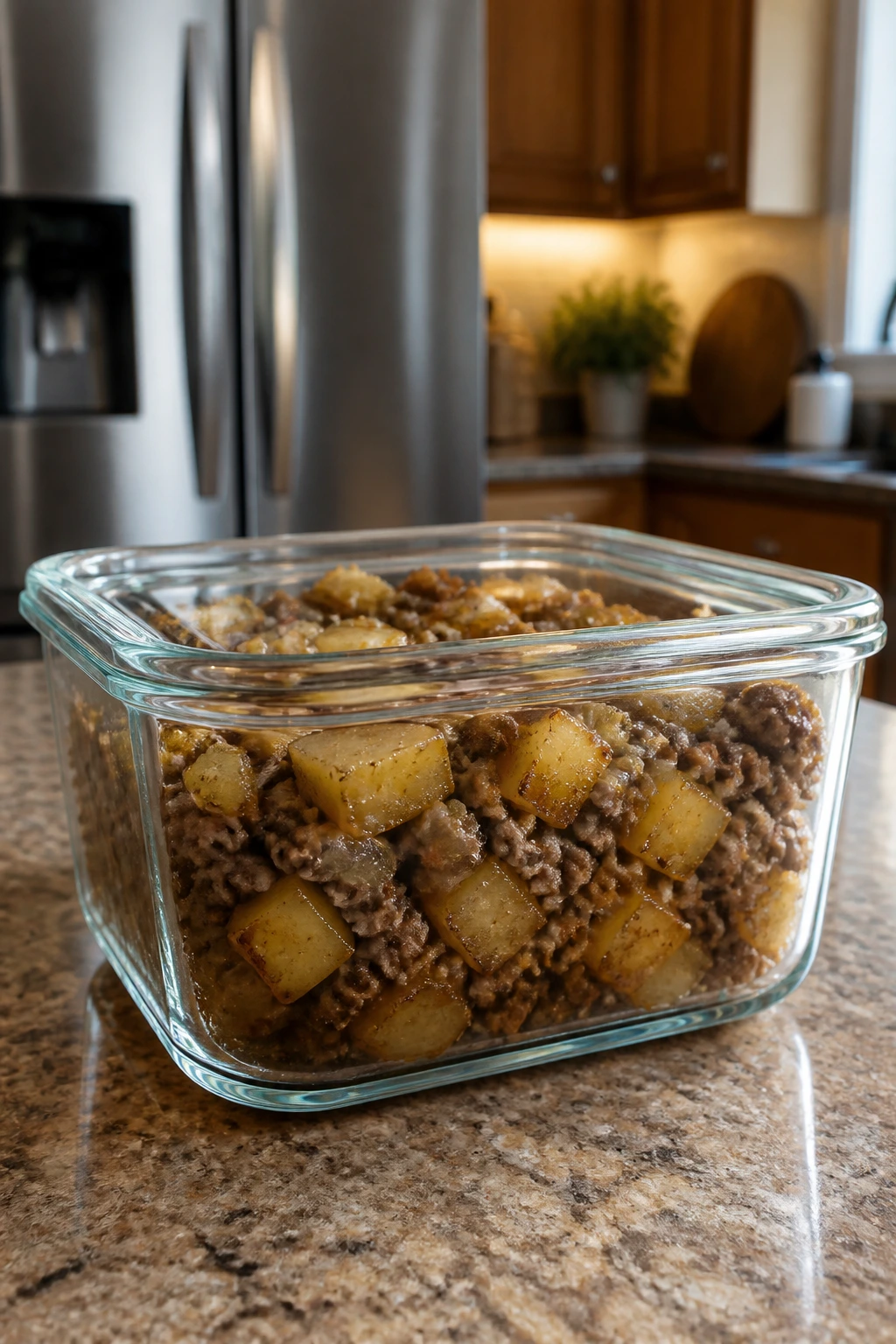
Hamburger and potatoes keeps well in the refrigerator for up to 4 days in a sealed container. Let it cool for no more than 2 hours before packing it away, and do not leave it sitting on the stove for half the evening while you answer the phone or clean the counter. Food safety is one of those boring details that saves the whole dish.
The freezer works too, though the potatoes soften a bit after thawing. Freeze the cooled skillet in airtight containers for up to 2 months. Thaw it overnight in the refrigerator before reheating so the center warms evenly instead of giving you hot edges and a cold middle.
For reheating, the stovetop wins. Put the leftovers in a skillet with 2 to 3 tablespoons of broth or water, cover, and warm over medium-low heat for 8 to 10 minutes, stirring once or twice, until steaming hot. The added liquid loosens the gravy back up and keeps the beef from drying out.
The microwave is fine if you’re in a hurry, but use short bursts and stir between them. Without that pause, the potatoes heat unevenly and the beef can get tough around the edges. If you want to make part of the dish ahead, dice the potatoes and keep them submerged in cold water in the refrigerator for up to 24 hours, then drain and dry them before cooking. That small bit of prep makes the actual dinner move fast.
Questions People Ask Before They Cook It
Can I use russet potatoes instead of Yukon Gold?
Yes, but peel them first and cut them a little larger, around 3/4 inch, because they break down faster. Russets give you a softer, starchier skillet, which can be good if you want the sauce to thicken more, but they are less neat than Yukon Gold.
What ground beef percentage works best?
80/20 is my first pick because the fat carries the flavor and helps the onion and flour cook properly. If you buy 90/10, add a little extra butter or oil at the start so the pan does not dry out.
Do I have to brown the beef before adding the potatoes?
Yes. Browning the beef first creates the savory base that makes this recipe worth making, and it also gives you fat to cook the onions and flour. If everything goes in raw at once, the potatoes steam, the beef boils, and the flavor gets thin.
Can I make this in a Dutch oven instead of a skillet?
Absolutely. A Dutch oven gives you more room and holds heat well, which is useful if your burner runs hot or your skillet is shallow. Keep the heat lower than you think, because heavy pots can reduce a sauce faster than a thin skillet does.
What should I do if the sauce is watery at the end?
Uncover the pan and simmer for another 3 to 5 minutes, stirring gently so the potatoes do not break apart. If it still looks loose, mash a few potato cubes against the side of the skillet or stir in 1 teaspoon of flour mixed with 1 tablespoon cold water.
Can I add vegetables to this without ruining the texture?
Yes, but keep them in the right size and timing. Frozen peas can go in during the last 3 minutes, and diced carrots should be cut small enough to soften along with the potatoes. Big vegetable chunks will lag behind and throw off the texture.
Does it freeze well after it’s fully cooked?
It freezes better than many potato dishes, though the potatoes will be a little softer after thawing. If you know you plan to freeze it, undercook the potatoes by a minute or two during the first cook so they do not go too soft when reheated.
A Skillet Worth Keeping in Rotation
There’s a reason hamburger and potatoes keeps showing up on real dinner tables. It is not fancy, and it does not need to be. When the beef is browned with enough restraint, the potatoes are cut small and evenly, and the gravy gets a few minutes to thicken at the end, the whole skillet tastes like more than the sum of its parts.
I like recipes like this because they reward attention instead of money. A decent pan, a little patience, and a lid do most of the work. The result is filling, sturdy, and warm in the way a weekday dinner should be.
Make it once as written, then start nudging it toward your own kitchen habits. Add cheese if you want melt, mushrooms if you want depth, or a spoon of sour cream if you like the gravy softer. The pan will take it.
Tender Hamburger and Potatoes — Recipe Card
Recipe Name: Tender Hamburger and Potatoes
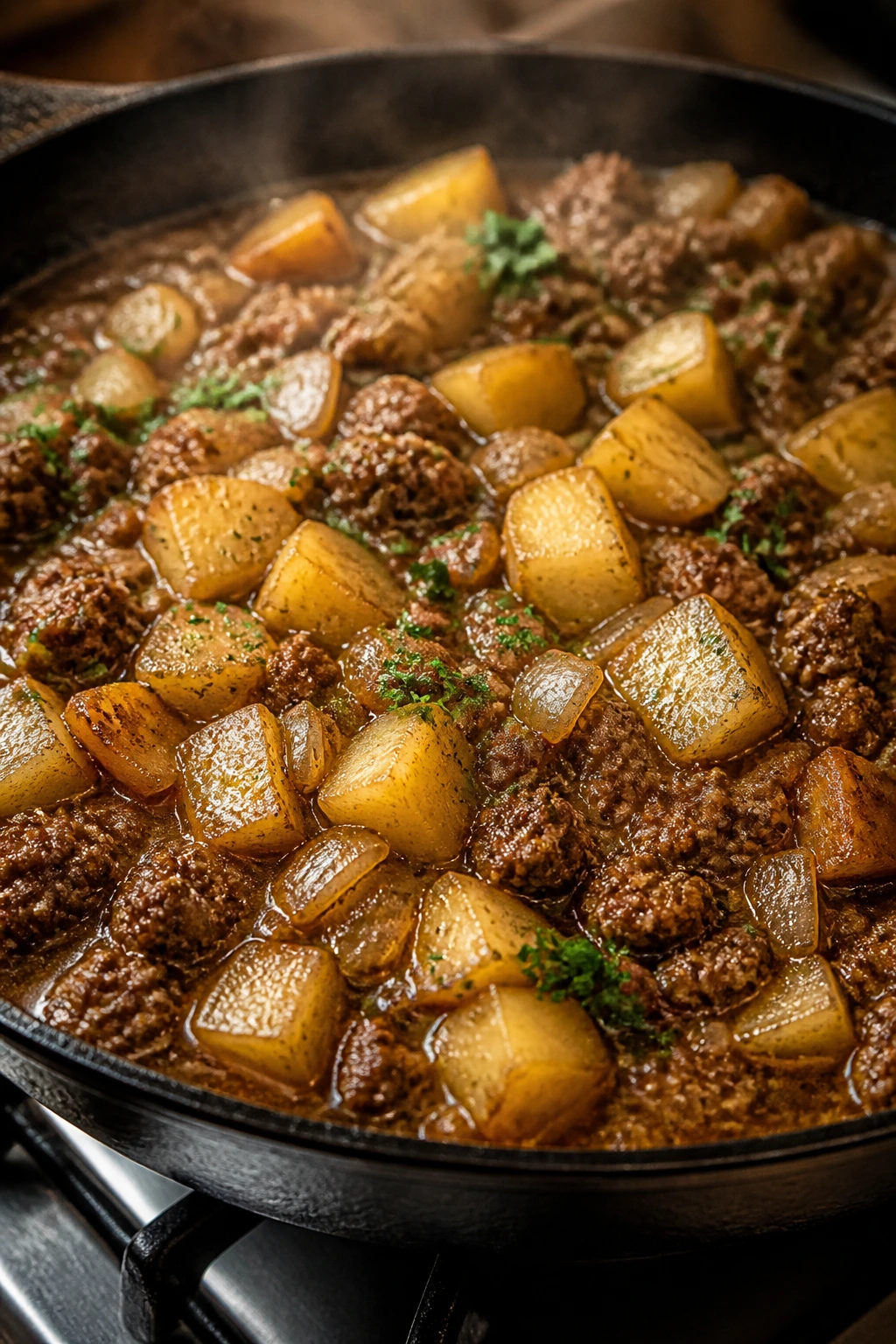
Description: Ground beef, Yukon Gold potatoes, onion, and a savory broth gravy cook together in one skillet until the potatoes are tender and the beef stays soft. The finished dish lands between a hash and a stew, with a rich, spoonable sauce that clings to every bite.
Prep Time: 20 minutes
Cook Time: 35 minutes
Total Time: 55 minutes
Course: Dinner, Main Course
Cuisine: American
Servings: 6 servings
Calories: About 400 kcal per serving
Ingredients
- 1 1/2 pounds ground beef, 80/20 or 85/15
- 1 1/2 pounds Yukon Gold potatoes, scrubbed and cut into 1/2-inch cubes
- 1 medium yellow onion, diced
- 3 cloves garlic, minced
- 1 tablespoon olive oil
- 2 tablespoons unsalted butter
- 2 tablespoons all-purpose flour
- 2 cups low-sodium beef broth
- 2 tablespoons tomato paste
- 1 tablespoon Worcestershire sauce
- 1 teaspoon kosher salt, plus more to taste
- 1/2 teaspoon black pepper
- 1 teaspoon smoked paprika
- 1 teaspoon dried thyme
- 1 bay leaf
- 2 tablespoons chopped parsley, for serving
Instructions
-
Scrub and cube the potatoes, dice the onion, mince the garlic, and stir together the beef broth, tomato paste, and Worcestershire sauce.
-
Heat the olive oil and butter in a 12-inch skillet over medium-high heat. Cook the onion for 3 to 4 minutes until softened.
-
Add the ground beef, salt, pepper, smoked paprika, and thyme. Brown for 6 to 8 minutes, breaking it up as it cooks, then drain excess fat if needed.
-
Stir in the garlic and flour and cook for 30 to 45 seconds.
-
Pour in the broth mixture, scraping up browned bits from the pan. Add the potatoes and bay leaf.
-
Bring to a simmer, cover, reduce heat to medium-low, and cook for 18 to 22 minutes, stirring once halfway through, until the potatoes are tender.
-
Uncover and simmer for 3 to 5 minutes more until the sauce thickens. Remove the bay leaf, stir in parsley, taste, and adjust seasoning.
-
Rest for 5 minutes before serving.
Notes: Yukon Gold potatoes give the best texture here. If the skillet looks dry before the potatoes are tender, add 1/4 cup broth and cover again. Reheat gently with a splash of broth so the sauce loosens back up.